


DiamondCentric
-
Posts
2,631 -
Joined
-
Last visited
Never
Content Type
Profiles
Forums
Events
News
Tutorials & Help
Major League Baseball Videos
Guides & Resources
Store
Downloads
Gallery
Everything posted by DiamondCentric
-

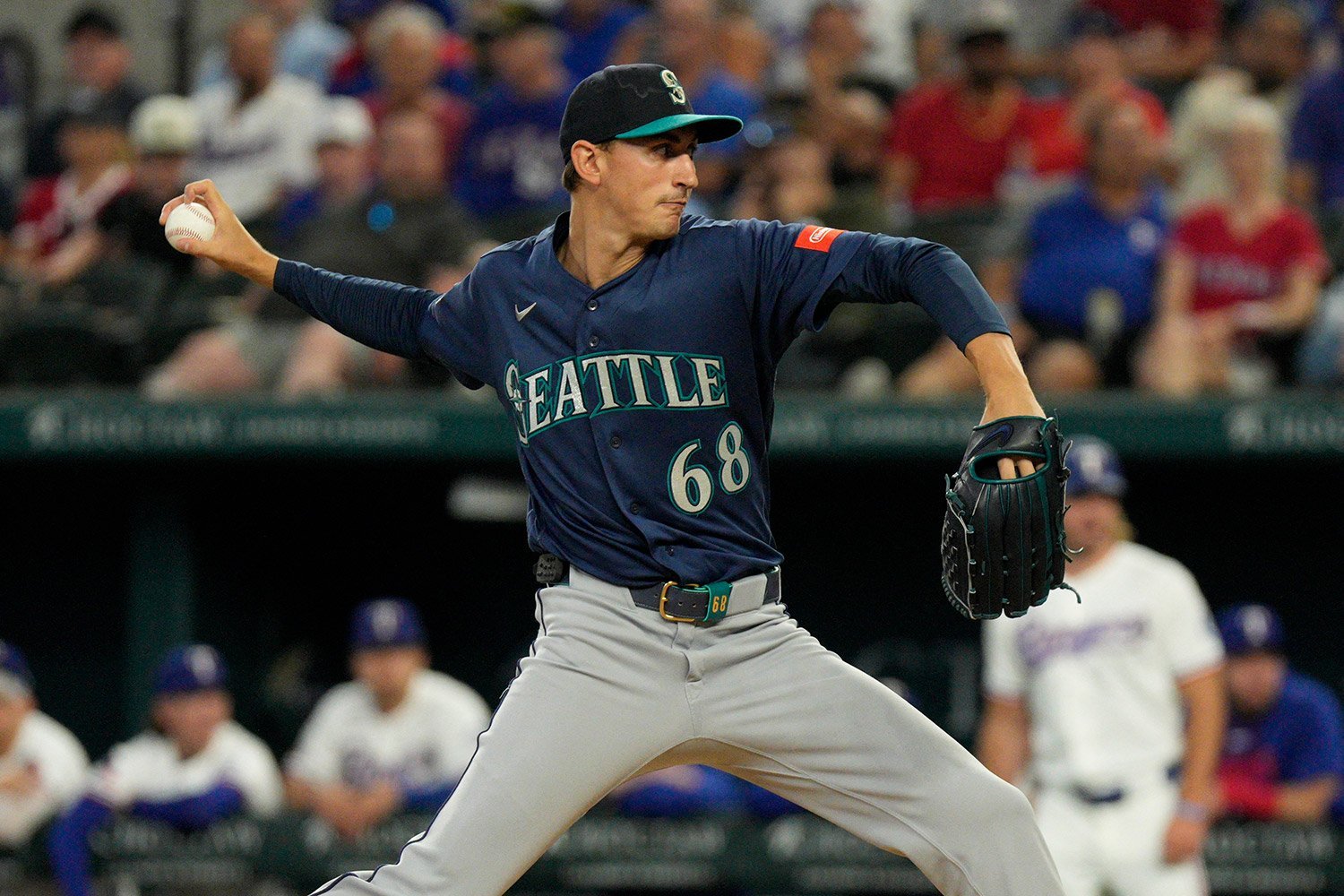 The Seattle Mariners are listening on most of their starting rotation, according to Jeff Passan of ESPN. Passan reported Saturday afternoon that multiple teams have engaged on right-handed pitcher George Kirby, as well as right-hander Luis Castillo and Emerson Hancock. The Cubs' biggest need at this deadline is pitching. All three of these players would provide Chicago with the quality innings they need. View the full article
 -
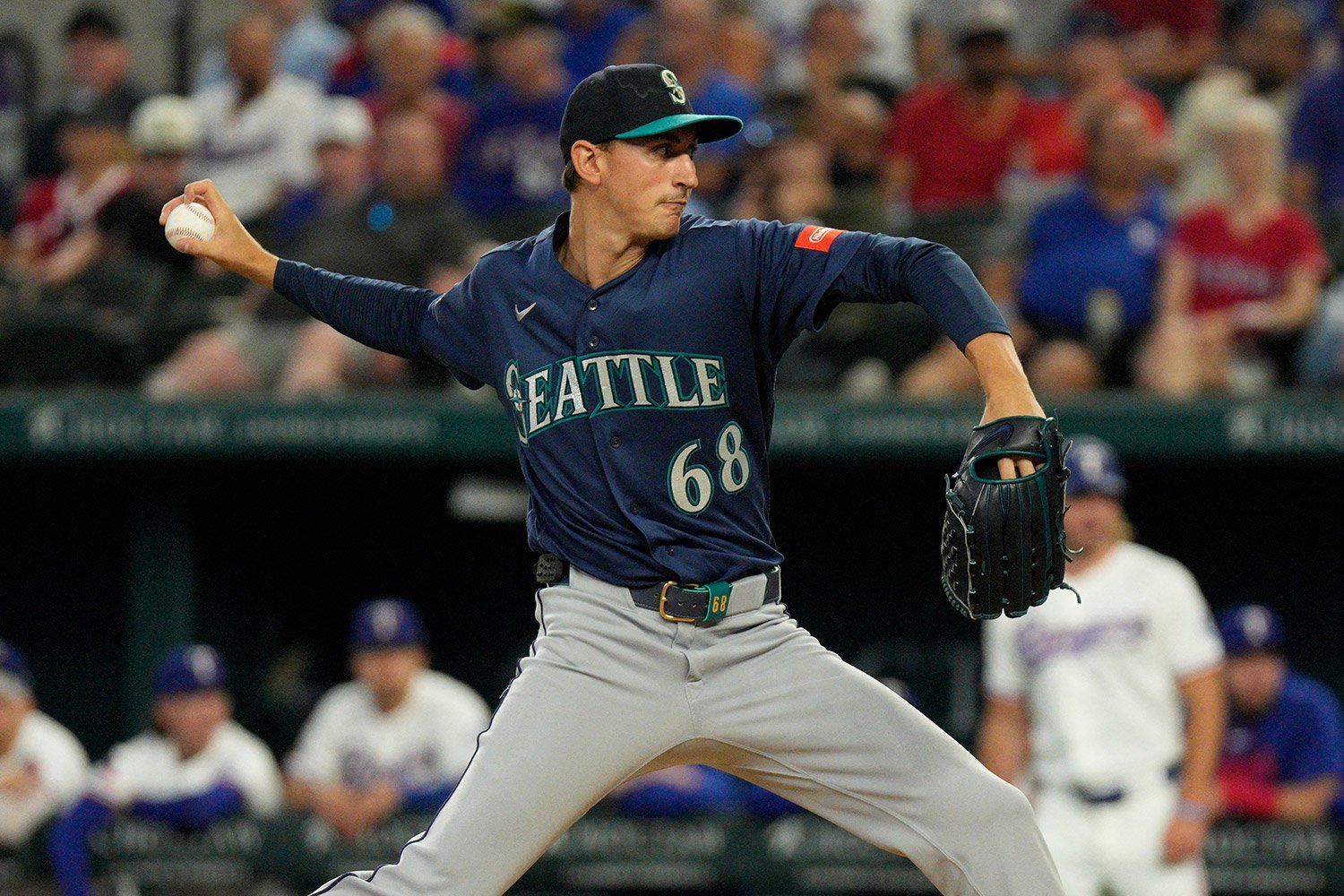 The Seattle Mariners are listening to offers for most of their starting rotation, according to Jeff Passan of ESPN. Passan reported Saturday afternoon that multiple teams have engaged on right-handed pitcher George Kirby, as well as right-hander Luis Castillo and Emerson Hancock. The Brewers have been in the market and connected to multiple starters. If they don’t land the bigger fish, like Tarik Skubal or Casey Mize, any of the Mariners rotation options could be options. View the full article
 -
 The New York Mets sent A.J. Minter to the Minnesota Twins for two lottery ticket prospects. How can infielders Billy Amick or Bruin Agbayani become legit prospects? View the full article
 -
Minnesota Twins Land A.J. Minter — Bullpen Fix Or A Band-Aid?
DiamondCentric posted an article in Twins Daily
 The Minnesota Twins acquired reliever A.J. Minter from the New York Mets. The cost was reasonable, but is he really the solution to the bullpen? View the full article
 -
The Royals Do Not Need to Blow Things Up at the Deadline
DiamondCentric posted an article in Royals Keep
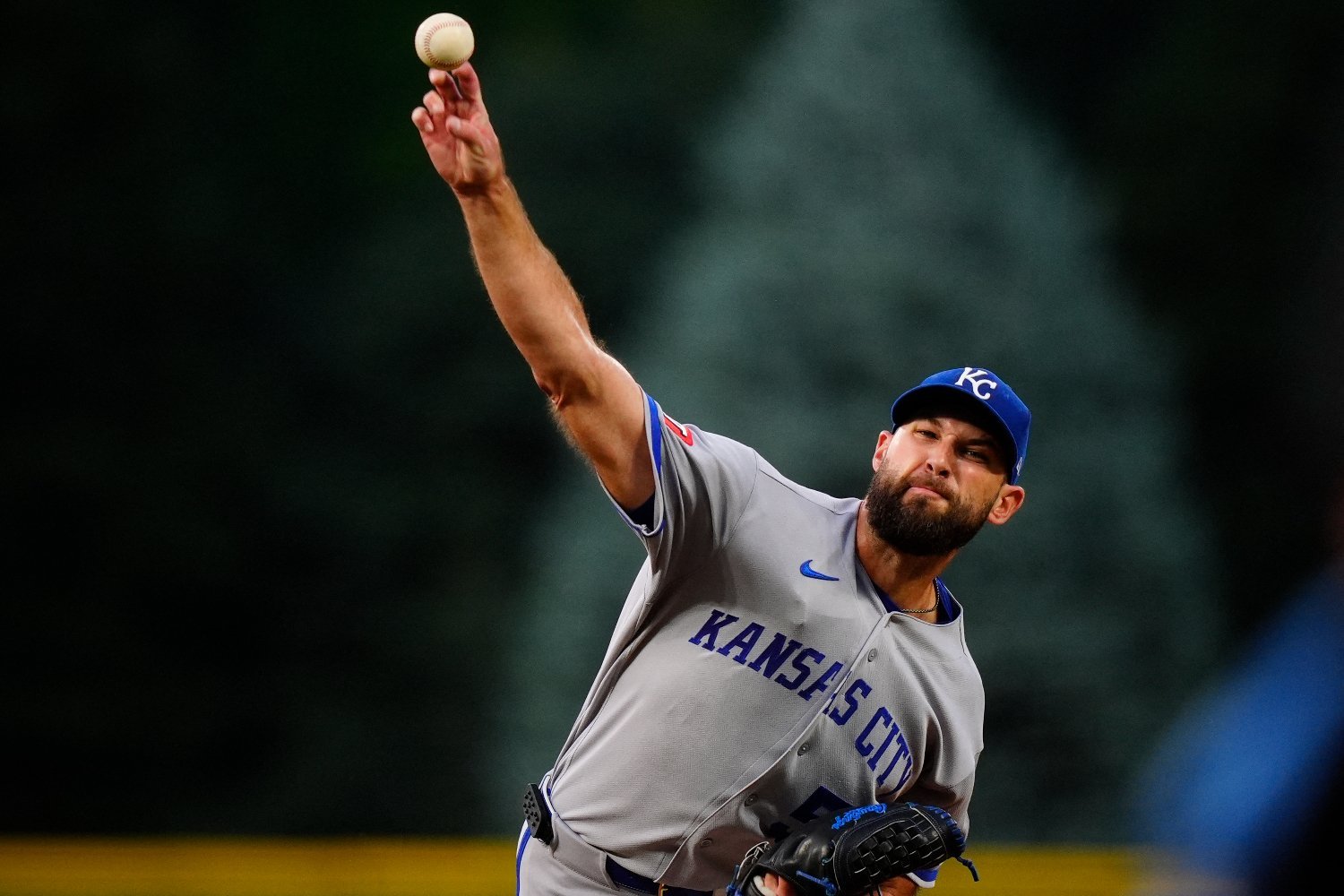 It's been a tough week for the Kansas City Royals, a common theme of the 2026 season, unfortunately. After taking two of three in Detroit over the past weekend, the Royals lost two of three to the Minnesota Twins in Minneapolis, both in walk-off style. Thursday was particularly brutal, as the Royals blew a three-run lead with two outs in the ninth inning as Lucas Erceg and Matt Strahm were unable to close out a brilliant start by Noah Cameron (eight innings of one-hit, shutout ball). Safe to say, Kody Clemens had been one of the Royals' main adversaries over the past couple of seasons. If that wasn't enough, the Royals dropped their first game of their three-game set in Colorado against the Rockies on Friday. Colorado is 43-67, worse than the 46-65 Royals. However, the Rockies, led by Tomoyuki Sagano, absolutely shut down the Royals, with a home run by Carter Jensen being the lone Kansas City run in a 3-1 loss. Right now, frustration is at an all-time high with Royals fans. After Thursday's brutal loss, it seems like many fans are calling for a complete overhaul, not just of the roster, but of the organization in general. That frustration has been amplified by reports that the Royals are going to hold onto pitcher Michael Wacha, Seth Lugo, Daniel Lynch IV, and Alex Lange by Monday's Trade Deadline. After such a brutal season, it's easy to think that the Royals should throw in the towel, clear the organization, and do a complete overhaul from top to bottom. Granted, the Royals need to make moves. They need to improve, and they cannot have another season like this one, especially with a new stadium on the horizon and franchise star Bobby Witt Jr having the option to opt out by the 2030 season. That said, Kansas City doesn't need to blow things up by Monday, or even by the end of the 2026 season. The Royals' Lineup Can Bounce Back Quickly Once Healthy There's no question that injuries have absolutely decimated this team. Of the 26 players that made the Royals' Opening Day roster, eight are currently on the IL. That includes key hitters like Maikel Garcia, Vinnie Pasquantino, and Kyle Isbel Since 2024, Garcia, Isbel, and Vinnie have been the Royals' second, third, and fourth-most valuable players, based on fWAR. They have combined for a 14.4 fWAR from 2024 to 2026. This year, they have combined for a 2.0 fWAR, with Garcia accounting for 1.5 of that total. That said, these three could easily be fully healthy again in 2027 after a ton of nagging injuries that need a full offseason to recover from. These injuries haven't been major ones, but nagging ones that have not just kept them on the shelf, but have impacted performance, especially on the offensive end. With those three hitters back, the Royals could be in good shape for a quick turnaround in 2027. The Royals have seen Michael Massey bounce back and take hold of the second base job in 2026. After a slow start, Isaac Collins has been one of the Royals' best left fielders since Alex Gordon, with a 102 wRC+, .712 OPS, and 0.7 fWAR (and this was despite a disastrous first month defensively). Nick Loftin has emerged as a productive player, with a 105 wRC+ and 0.7 fWAR while filling in for Garcia at third. Lastly, the Royals have seen the development of two key recent draft picks: Carter Jensen (2021 Draft) and Jac Caglianone (2024 Draft). They have fWAR marks of 2.0 and 1.1, respectively, and have combined for 32 home runs this year. Here's a look at a potential 2027 Royals lineup, before JJ Picollo adds anyone this offseason. Jensen Witt Jr. Cags Garcia Pasquantino Massey/Loftin Perez Collins Isbel/Tolbert/FA Outfielder That's a pretty good lineup at first glance. And if the Royals add someone like Taylor Ward or Seiya Suzuki this offseason? Well, the lineup gets a whole lot better and more competitive. The Royals' Pitching Staff Needs Stability While the Royals' lineup is in a good place for 2027, the pitching staff is a little shakier. Kansas City was decimated by injuries to Cole Ragans, Kris Bubic, and Carlos Estevez this season. Those were three pitchers who were key in 2024 and 2025 and would have had a positive impact on this pitching staff if they had been healthy. Ragans, Bubic, and Estevez have combined for a 12.5 fWAR over the past three years. This is despite only one year from Estevez and a ton of missed time over those three years due to injury from Ragans and Bubic. This healthy trio would have had a major impact on the Royals' pitching staff, especially Estevez, who would have helped a bullpen that's been absolutely disastrous. Unlike the lineup, the Royals have to absorb these injuries and potential losses to the pitching staff in 2026. Bubic and Estevez will likely be gone this offseason, as they will both be free agents. Ragans won't be back until mid-season in 2027 due to surgery, and he may need to move to the bullpen initially to preserve his arm, much like Bubic in 2025. The rotation has seen the emergence of Luinder Avila this year, and Noah Cameron has bounced back in his past two starts after taking over pitch-calling duties and making some adjustments with his pitch mix. However, with Bubic and Ragans out of the rotation, the Royals need stability. When looking at options on the 40-man roster, the returns of Alec Marsh, Ryan Bergert, and Stephen Kolek for 2027 are hazy. Ben Kudrna is hurt and unproven, and Steven Zobac hasn't advanced beyond Double-A. Thus, it's understandable why the Royals wouldn't want to trade Lugo and Wacha, especially with a free-agent starting pitching class that isn't great. Tarik Skubal is a prize that's out of their price range (and is probably going to the Dodgers, anyway). Sonny Gray is 36, the same age as Lugo and one year older than Wacha. Robbie Ray, Shota Imanaga, Zac Gallen, Kevin Gausman, and Chris Bassitt are proven, but all have qualifying offers, meaning the Royals would have to forfeit draft picks to sign them. The Royals need to add draft capital, not lose it. The Royals see the free-agent market and may feel that if they trade Lugo and/or Wacha, they will need to replace them with a pitcher of equal or lesser production value who would cost just as much, if not more. Hence, Kansas City may be more comfortable pitching assets they know and are comfortable with here than taking a flier on free agents who may not even sign with the Royals in the first place (thus putting their rotation even more in a bind). The bullpen is a much different story. Not only do the Royals need an overhaul, but they also need to change their approach to acquiring and using relievers. Not only have they struck out on so many veteran pieces during the Picollo era (Will Smith, Chris Stratton, Matt Strahm, etc.), but they have also let guys go who have been productive in other organizations and would've been a lot cheaper (Jonathan Bowlan, Collin Snider, Will Klein, etc.). Picollo needs to address the bullpen's lack of chase and make an adjustment, whether through acquisition or development. That said, fixing a bullpen can be done in the offseason and much more quickly if they do it right. The White Sox did this by making slight adjustments to the bullpen, making it at least tolerable. Now, they are at the top of the AL Central division. The Royals could learn from what the White Sox did this offseason, fixing the bullpen with a mix of outside acquisitions and promoting the right kind of arms. The Royals Still Need to Be Active at the Deadline Kansas City doesn't need to "give away" players. They may not be trading Wacha, Lugo, Lynch and Lange because the offers they are receiving right now are inadequate. That seemed to be the case with Lugo last year, who wasn't getting the kind of trade package that was deemed acceptable by Picollo and the Royals. While trading is fun, the Deadline doesn't always have a great track record of return "success" for those "rebuilding" teams, especially for starting pitchers. That said, the Royals shouldn't avoid any Deadline deals. They still need to make this team better. One way is to improve the bullpen. They can do that with their current trade assets, such as Lane Thomas and John Schreiber. They also need to be open to deals on guys who may be tough to let go of at first glance (which is why I think they should push to trade Lynch, especially given the return for A.J. Minter ). Picollo did that last year with Freddy Fermin. While both are currently on the IL, Bergert and Kolek have been a great return. Kansas City is in the midst of a tough year. However, it's easy to forget that the projections on this 2026 team were solid (around the 82-83 win mark, which was better than their 2024 projections). They are more solid in the outfield than they were in 2024 and 2025, when they had winning seasons. For as critical as people have been of Matt Quatraro, he's had two winning seasons in four years. For context, Ned Yost, a Royals Hall of Famer, didn't have his first winning season until his fourth year. It's easy to think that this franchise is hopeless, and it has felt that way at times. However, the Royals need to be judicious at this Deadline. Their farm system is improving, with prospects at the lower levels receiving more acclaim (they have four in the Top-100, according to Pipeline). They have a chance to add to that system with the right moves, as well as some controllable talent who could thrive in a change of scenery. The Royals don't need a blow-up. However, they don't need to sit on their hands either. We have roughly 48 hours to find out. View the full article
 -
With Kremer, the Twins Have Six Starters. Now Use Them.
DiamondCentric posted an article in Twins Daily
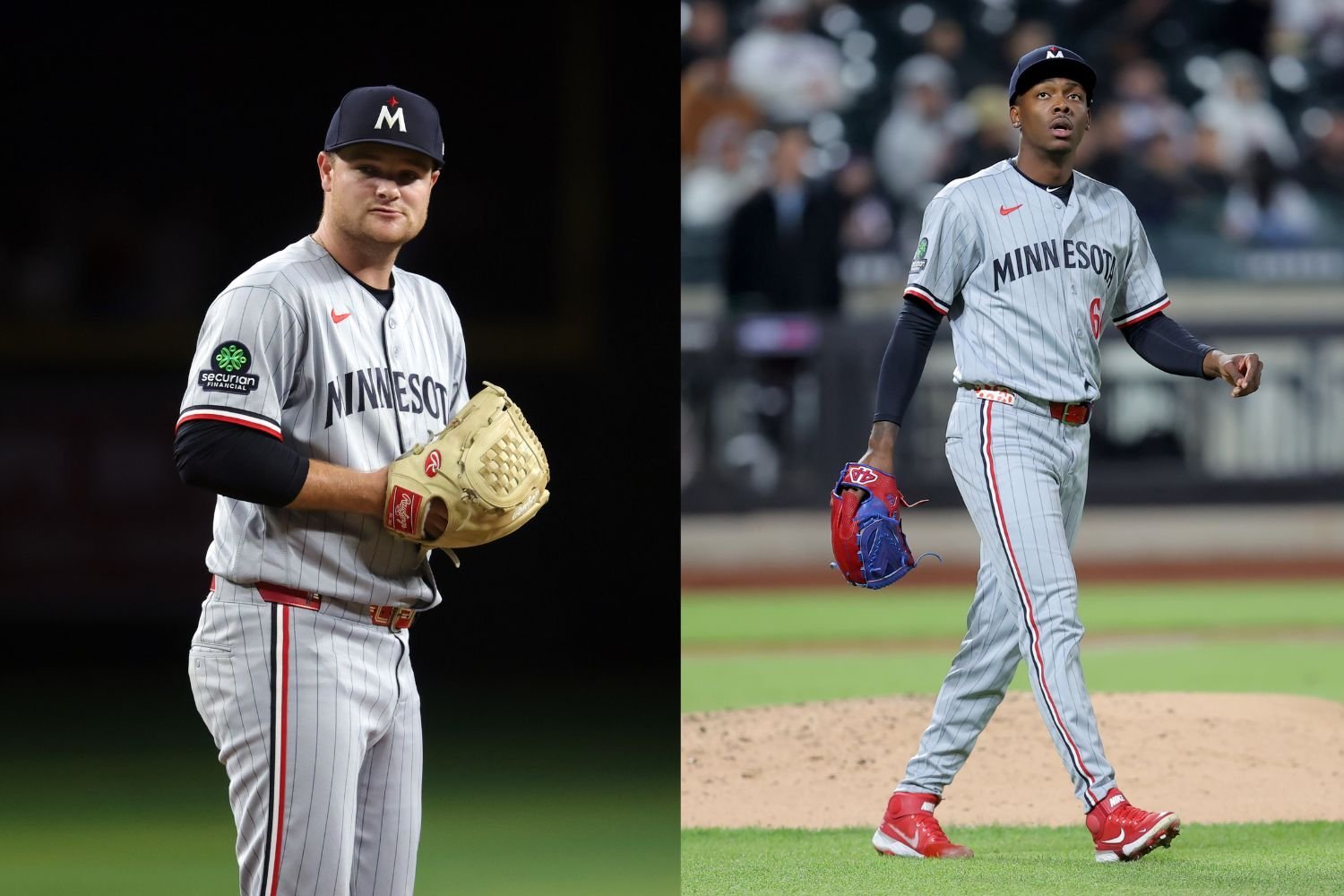 The Twins' rotation depth has been a challenge all season and remains so. The three most reliable pitchers - Bailey Ober, Taj Bradley, and Joe Ryan - have missed time with injuries or continue to battle arm fatigue. Other options like Simeon Woods Richardson, Mick Abel, and David Festa are either gone or out indefinitely. Dean Kremer's addition late Friday night provides backup, but his rough ERA (though solid xFIIP) might be more suited to limited use than a full starter's load. There are a few options now with Kremer. One is to send someone down to AAA or put them on the IL to simply get some rest. That might be Zebby Matthews, who has mostly trended down since July 1st. And Connor Prielipp is certainly due to ice the arm. But the bigger problem is that the whole rotation feels like they're running on fumes. With two interesting rookie arms in Prelipp and Kendry Rojas, I propose a somewhat inelegant solution: run a six-man rotation that is a stealth seven-man rotation. The order would go something like this: Ryan, Bradley, Ober, Zebby Matthews, Kremer, and finally a Prielipp-Rojas Piggyback. If this began after the Mariners series, each Twins starter would get about eight more starts. Each would get an extra day of rest. And if you ever wanted to skip a turn, you could give the rookie duo (or anyone else) an extra week off as needed. The biggest win here would be for the two rookies. Assuming each threw no more than three innings in each outing, they would essentially throw an additional 24 innings each. If you wanted to weigh it further, one could spend a little extra on Rojas. Last year, he managed 70 innings in the minor leagues and his brief major league appearance. Currently sitting at 49 innings total, that means you could lean on Rojas to throw four innings if needed. Prielipp is just shy of 100 innings, having managed 82 last year. Keeping that count low—not to mention spacing it out—would be paramount to his success after his recent return from the IL. If needed, one could even give each a day to go five innings, and alternate them every go-around. But the combo remains best, especially for durability. A Prielipp-Rojas combo would give the Twins something they have needed since the early days of Francisco Liriano: an elite lefty starter. While taking two roster spots, six innings from the combo would be as deadly as any generic lefty is to the Twins lineup. There is a good argument that if the team makes the playoffs, the Prielipp-Rojas combination might be an even better option for a Game Three start than Ober. More so, manager Derek Shelton could get cute in a smart way: start Prielipp, go to a top elite right-hander like Andrew Morris if there’s any trouble, and hopefully force the team to make an early switch, before going right back to a lefty with Rojas. Maybe it’s not enough. While more time off did not necessarily work well for either Ryan or Matthews (who looks like he might be hitting his innings limit) coming out of the All-Star Break, an extra day of rest might just be enough for the rest of the season. Plus, there is a good chance—more likely than not—someone else will be heading to the IL for one reason or another. Setting up the piggyback now simply structures it in for the rest of the season. Most teams do not run six-man rotations for a reason: teams simply do not have six good enough starters. The Twins have gotten lucky this year; after losing three critical arms, two rookies have helped to fill the space, but it will require some creativity to go the distance. It also leaves the bullpen with only six arms, which could easily get taxed. But hard choices need to be made. This team has not exactly built itself around elite arms. That provides an opportunity to rethink elite and focus on stability. If the Twins are pushing some chips as they seem to be doing, a rotation balanced around health and longevity is perhaps what the team needs. View the full article
 -
 It's trade deadline time! Let's check in on all of the Boston Red Sox's affiliates as various prospects audition for other teams around the league. Triple-A Worcester Red Sox Series @ Norfolk Tides (Baltimore Orioles): 3-1 Season Record: 54-47 The WooSox won behind an explosive 10th inning and a great game from Franklin Arias. Seth Martinez opened what was a bullpen game for Worcester, turning in an inning of two-run work. He allowed the pair of runs on four hits, walking one and striking out another. Osvaldo Berrios entered next and despite issuing four walks and allowing a hit, Berrios kept the Tides scoreless through his inning and a third of work. Noah Song took over in the third following Berrios and worked through 2⅓ innings, the longest appearance of any WooSox pitcher on Friday. He allowed one run on a hit and two walks, striking out four before Tyler Uberstine got the call. Uberstine allowed a hit and struck out one in 1⅓ frames. Sam McWilliams took the mound next, spinning a perfect two innings for Worcester as he struck out four batters. Angel Bastardo then shoved an inning of one-hit, three strikeout ball, earning the win for the evening. Wyatt Olds took the bottom of the tenth, intent on preserving Worcester’s lead. He succeeded, but not without trouble. He allowed three runs (one unearned) on two hits as he closed out the win. After going hitless in his first two games with Worcester, Arias showed out on Friday evening. The top prospect went 3-for-5 with a walk and four RBIs as he helped lead Worcester to a late win. Andrew Knizner also turned in a three-hit performance, driving in a run. Arias got the WooSox started early, settling in with a leadoff home run in the first inning. Knizner followed Arias with an RBI double later in the inning, scoring Mikey Romero. Down by one run in the seventh, Arias took it upon himself to tie the ballgame. He drove Tsung-Che Cheng home with his first Triple-A double. In the tenth, Brett Harris gave Worcester the lead on a single to left field, scoring Braiden Ward. Jason Delay added to the lead with a soft single to short, scoring Allan Castro. Harris then scored on a Kristian Campbell single to center as Delay advanced to second. Cheng drove in Delay on a single to right before Arias drove in Cheng and Campbell on a single, capping off a six-run tenth inning. Double-A Portland Sea Dogs Series vs. Harrisburg Senators (Washington Nationals): 1-3 Season Record: 52-47 Portland’s bullpen fell apart late, wasting an outstanding effort from Anthony Eyanson. Eyanson lasted 4⅔ innings and made full use of his outing. Of the 20 batters Eyanson faced, ten were sent back to the dugout on strikes, a season high for the Red Sox No. 2 prospect. Eyanson allowed two runs on four hits, issuing two walks before Jeremy Wu-Yelland took over. Wu-Yelland finished the fifth inning and opened the sixth, allowing two runs on one hit and five walks. Reidis Sena took over in the sixth, but earned the loss for his poor performance on Friday. Across 2⅔ innings, Sena allowed three runs on five hits and a walk. He struck out four but it wasn’t enough to stop the game from getting away. Center fielder Matt Frazier took the final frame of action in his first career pitching appearance. He allowed two runs on two hits and issued three walks, but struck out three in Portland’s loss. The Sea Dogs reached base 19 times, but left 15 runners on base and went a lowly 1-for-13 with runners in scoring position. Ronald Rosario helped Portland take the lead in the third inning as he reached on a fielding error, scoring Jack Winnay and Brooks Brannon. Brannon tied the game in the sixth, scoring Ahbram Liendo and Nelly Taylor on a sharp single to left field. After going down by two runs again, Will Turner tied the game in the seventh, scoring Nate Baez on a two-run shot, his 11th of the year. The Sea Dogs’ offense wasted a solid start and let the opportunity for victory slip through their hands as they failed to capitalize in key moments. High-A Greenville Drive Series @ Asheville Tourists (Houston Astros): 4-0 Season Record: 43-54 A massive seven-run sixth inning lifted Greenville to its fifth straight win. Devin Futrell was a large part of Greenville’s success on Friday night as he turned in six innings of shutout pitching. Futrell was excellent, allowing four hits and issuing three walks as he struck out eight and earned his fifth win of the season. Trennor O’Donnell got the ball going into the seventh and turned in two shaky innings of work. He allowed three runs on five hits and two walks, but didn’t fully let the game get away from him. Joey Gartrell took the final inning of Friday’s contest. He allowed one run on three hits, issuing one walk and striking out two as he closed out the win. On the other side of the ball, Greenville went 3-for-7 with RISP as Hudson White drove in three runs. Antonio Anderson got the Drive on the board in the second inning, driving in Ronny Hernandez on a bases-loaded groundout. In the sixth, the Drive exploded for seven runs. Yoeilin Cespedes kickstarted the rally as he crossed home on a wild pitch. Maximus Martin then drove in Luke Heyman on a single to center, advancing Hernandez to second. Hernandez then scored on a Stanley Tucker sac fly. With Martin and Yophery Rodriguez aboard, Hudson White added three runs with his first homer of the season. Isaiah Jackson then stepped to the plate and launched his 15th homer of the season, going back-to-back with White and capping off a monstrous inning. The Drive didn’t score again, but it wasn’t necessary as they rolled to a four-run win. Low-A Salem RidgeYaks Series @ Kannapolis Cannon Ballers (Chicago White Sox): 2-2 Season Record: 43-56 Sadbiel Delzine, who impressed through two and a half months in the Florida Complex League, made his second Low-A start on Friday night. He turned in an excellent 4⅓ inning appearance, allowing one run on two hits. Delzine issued two walks and struck out five of the 17 batters he faced before Ethan Walker took over. Walker struggled through 2⅔ innings, allowing three runs on two hits. He issued four walks and struck out two. Yermain Ruiz took the ninth frame, allowing two more runs on two hits as Kannapolis put the ballgame out of reach. All but two of Salem’s batters tallied at least one hit in Friday’s action, but the Yaks struggled to put runs on the board. Adonys Guzman was responsible for both of Salem’s RBIs on Friday. Guzman struck first in the fifth, giving the RidgeYaks a one-run lead following a solo homer to left field. After the Cannon Ballers tied it, Guzman gave Salem the lead once more with a soft single to center, scoring Andrews Opata in Salem’s only hit with RISP on Friday. Salem’s offense didn’t do any damage aside from Guzman as they fell. View the full article
 -
 R.J. Gordon turned in his most efficient start of the season Friday, just as the organization is shaking up its major league pitching staff. The No. 18 prospect in Grand Central Mets' July prospect top 20 went seven innings at Reading, allowing three runs on six hits. He walked none and struck out seven. Most impressively, he did it on just 89 pitches because he lived in the zone all night (62 strikes). A consequence of that command was Gordon being touched up for two home runs, but the organization will take the ratio. He has slowly built up his workload up after suffering a lat injury in the spring. His stats have suffered as a result of so many short outings: Friday's start lowered his ERA with the Ponies to 6.02 (he rehabbed at St. Lucie before joining Binghamton). He appears to be fully back after working deep into a game for the first time this year. As for the game, the Ponies' bullpen gave up a run in the bottom of the eighth and two more in the bottom of the ninth, and Binghamton lost 6-5. Elsewhere in the organization: Syracuse lost 10-1 to Rochester. The Red Wings scored nine runs in the third inning to decide it. Jihwan Bae broke up the Red Wings' shutout bid with an RBI grounder in the ninth. Brooklyn was blown out 14-4 by Winston-Salem. The Cyclones fell into a hole early as the Dash scored six runs in the second inning. Yonatan Henriquez homered in the loss. St. Lucie was shut out 5-0 by Dunedin. The Blue Jays scored all their runs in the bottom of the eighth. Mets starter Ethan Lanthier allowed one hit over four innings. DSL Mets Blue and DSL Mets Orange split their games. Blue lost 10-6 to the DSL Marlins, while Orange routed DSL Tigers 1, 9-2. New York Mets Transactions New York Mets traded LHP A.J. Minter to Minnesota Twins for minor league INFs Bruin Agbayani and Billy Amick. New York Mets recalled RHP Xzavion Curry from Syracuse Mets. New York Mets recalled RHP Jonathan Pintaro from Syracuse Mets. New York Mets placed LHP Cionel Pérez on the 15-day injured list retroactive to July 30, 2026. Left forearm strain. New York Mets sent RHP Austin Warren on a rehab assignment to Brooklyn Cyclones. Nine-Run Third Buries Syracuse Mets starter Jack Weisenburger gave up one hit over the first two innings, but then allowed the first six batters in the third to reach base. Back-to-back singles and a walk loaded the bases, and consecutive two-run doubles made it 4-0. A two-run home run followed, and Weisenburger was done. Dan Hammer came on and allowed a single and walk to make it eight in a row, before recording a strikeout. Another walk loaded the bases, and after a second strikeout, a two-run single and an RBI single made it a nine-run inning. Matt Seelinger, Joe Jacques and Ofreidy Gómez combined for five innings of one-run ball after the third. Syracuse's lone run came when Jihwan Bae grounded into a force-out with the bases loaded in the ninth, scoring Cristian Pache, who had walked. Player AB R H RBI BB K Jihwan Bae, 2B 5 0 1 1 0 r Nick Morabito, CF 5 0 0 0 0 1 Ronny Mauricio, DH 4 0 1 0 0 1 Ryan Clifford, RF 4 0 0 0 0 3 Christopher Morel, 3B 4 0 1 0 0 0 MJ Melendez, LF 1 0 0 0 1 1 Cristian Pache, LF 1 1 0 0 1 1 Christian Arroyo, 1B 4 0 1 0 0 1 Ben Rortvedt, C 3 0 1 0 1 1 Zack Short, SS 3 0 2 0 1 1 Totals 34 1 7 1 4 11 Player IP H R ER BB K HR Jack Weisenburger 2 6 6 6 1 1 1 Dan Hammer 1 3 3 3 2 3 0 Matt Seelinger 2 1 1 1 0 3 1 Joe Jacques 1 1 0 0 1 2 0 Ofreidy Gómez 2 2 0 0 1 0 0 Totals 8 13 10 10 5 9 2 Binghamton Crumbles After Building Lead Gordon got early run support when Chris Suero and Nick Lorusso homered back-to-back in the third. Reading tied the game with a two-run homer in the fourth, but the Ponies responded with two runs in the fifth, on singles by Suero, Jose Ramos and Kevin Parada, to make it 4-2. Reading got one back in the bottom half on a solo homer. JT Schwartz led off the eighth with a home run for a 5-3 advantage. Reading answered again with a run in the bottom half. Garrett Stratton then blew the save in the ninth, his second blown save in three days. Back-to-back singles with one out put runners at the corners, An RBI groundout then tied the game, and after an intentional walk set up a force at any base, a single ended it. Rumble Ponies second baseman Mitch Voit continued his hot start at Double-A, reaching base three times with two hits and a walk. The 2025 first-round draft pick has a .417/.563/.750 slash line through his first three games with Binghamton. Player AB R H RBI BB K Mitch Voit, 2B 4 0 2 0 1 0 Chris Suero, DH 5 2 2 1 0 1 Nick Lorusso, 3B 5 1 2 1 0 2 Jose Ramos, RF 5 1 1 0 0 2 D'Andre Smith, CF 4 0 1 0 1 1 Kevin Parada, C 5 0 2 2 0 1 JT Schwartz, 1B 4 1 1 1 0 2 Matt Rudick, LF 4 0 0 0 0 2 Wyatt Young, SS 2 0 1 0 2 0 Totals 38 5 12 5 4 11 Player IP H R ER BB K HR R.J. Gordon 7 6 3 3 0 7 2 Saul Garcia 1 2 1 1 1 2 0 Garrett Stratton 0 2/3 3 2 2 1 0 0 Totals 8 2/3 11 6 6 2 9 2 Winston-Salem Piles On Late Against Brooklyn The big blow in the second was a grand slam off Juan Arnaud, who had come on for starter Frank Camarillo with the Cyclones trailing 2-0. Brooklyn cut the margin to 6-3 after six, but the Dash responded with two runs in the seventh, five in the eighth and one in the ninth. Rehabbing major leaguer Austin Warren helped keep Brooklyn in the game with a scoreless third. He struck out one as he threw 14 pitches. Joel Diaz followed and threw three scoreless innings of long relief. Henriquez got Brooklyn on the board in the third with a solo homer, his fourth of the season. Colin Houck singled home a run and Chase Meggers walked with the bases loaded in the sixth to halve the deficit. The Cyclones' other run scored in the seventh, on a sacrifice fly by Randy Guzman. Player AB R H RBI BB K Yonatan Henriquez, CF 5 1 1 1 0 2 JT Benson, RF 5 1 1 0 0 3 Randy Guzman, LF 4 0 2 1 0 1 Ronald Hernandez, DH 3 1 0 0 0 1 Jamari Baylor, 3B 2 0 1 0 2 0 Antonio Jimenez, SS 3 1 0 0 0 1 Colin Houck, 2B 4 0 1 1 0 0 Trace Willhoite, 1B 3 0 0 0 1 2 Chase Meggers, C 3 0 0 1 1 1 Totals 32 4 6 4 4 11 Player IP H R ER BB K HR Frank Camarillo 1 2/3 5 4 4 0 3 0 Juan Arnaud 0 1/3 1 2 2 1 1 1 Austin Warren 1 0 0 0 0 1 0 Joel Díaz 3 1 0 0 0 3 0 Calvin Ziegler 0 1/3 1 2 2 3 0 0 Cristofer Gomez 0 2/3 0 0 0 1 1 0 Josh Blum 0 2/3 4 5 4 1 2 0 Ryan Dollar 1 1/3 0 1 1 4 1 0 Totals 9 12 14 13 10 12 1 St. Lucie Falls Apart Late In Loss The game was scoreless until the Jays broke through against piggyback pitcher Christian Rodriguez in the eighth. The inning started with a walk, a hit batter and consecutive RBI singles to make the score 2-0. A throwing error on the second hit moved the runners up a base each. After two outs, another hit batsman reloaded the bases, and then a two-run double pushed the margin to 4-0. A wild pitch brought in the fifth run. Rodriguez was on the mound for all of it. Lanthier walked three and struck out one in his outing. He threw half his 52 pitches for strikes. Mets batters were held to five hits and two walks and struck out 12 times. Five different players had one hit each. Player AB R H RBI BB K Branny De Oleo, 2B 3 0 0 0 1 2 Marco Vargas, SS 4 0 0 0 0 2 Aiden Robbins, RF 2 0 1 0 1 0 Cole Mathis, 1B 4 0 1 0 0 0 Yovanny Rodriguez, C 4 0 1 0 0 1 Simon Juan, DH 4 0 1 0 0 1 Kuhio Aloy, LF 3 0 0 0 0 2 Bohan Adderley, CF 4 0 1 0 0 2 Dylan Carey, 3B 4 0 0 0 0 2 Totals 32 0 5 0 2 12 Player IP H R ER BB K HR Ethan Lanthier 4 1 0 0 3 1 0 Christian Rodriguez 4 3 5 5 3 4 0 Totals 8 4 5 5 6 5 0 Top-20 Prospect Performance Jonah Tong: DNP Jack Wenninger: DNP Ryan Clifford: 0-for-4, 3 K Elian Pena: DNP Nick Morabito: 0-for-5, K Jacob Reimer: DNP Mitch Voit: 2-for-4, BB Jonathan Santucci: DNP Zac Thornton: MLB Chris Suero: 2-for-5, HR, K Will Watson: DNP Wandy Asigen: 0-for-3, 2 R, BB, K Eli Serrano III: DNP Randy Guzman: 2-for-4, K Dylan Ross: DNP Ryan Lambert: DNP Antonio Jimenez: 0-for-3, K R.J. Gordon: 7 IP, 6 H, 3 R, 3 ER, 0 BB, 7 K Jonathan Pintaro: DNP Marco Vargas: 0-for-4, 2 K View the full article
 -
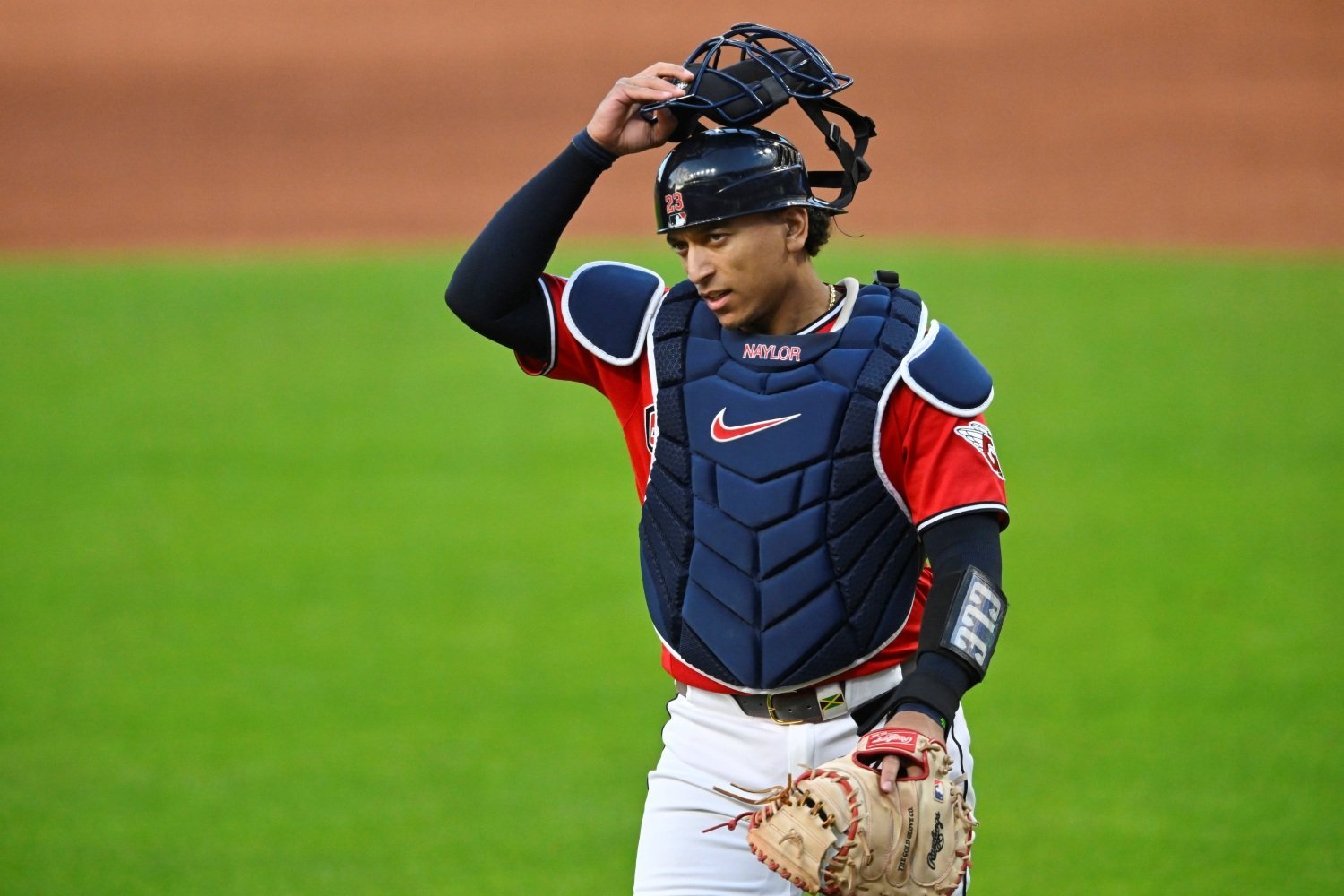 Always operating on multiple levels, the Milwaukee Brewers made their first major trade of the season Saturday morning—but the focus of it appears to be 2027 and beyond, rather than 2026. Milwaukee is sending Craig Yoho and Blake Perkins to the Cleveland Guardians in a deal that nets them catcher Bo Naylor, according to Jon Heyman of the New York Post and Robert Murray of FanSided. More to come. View the full article
 -
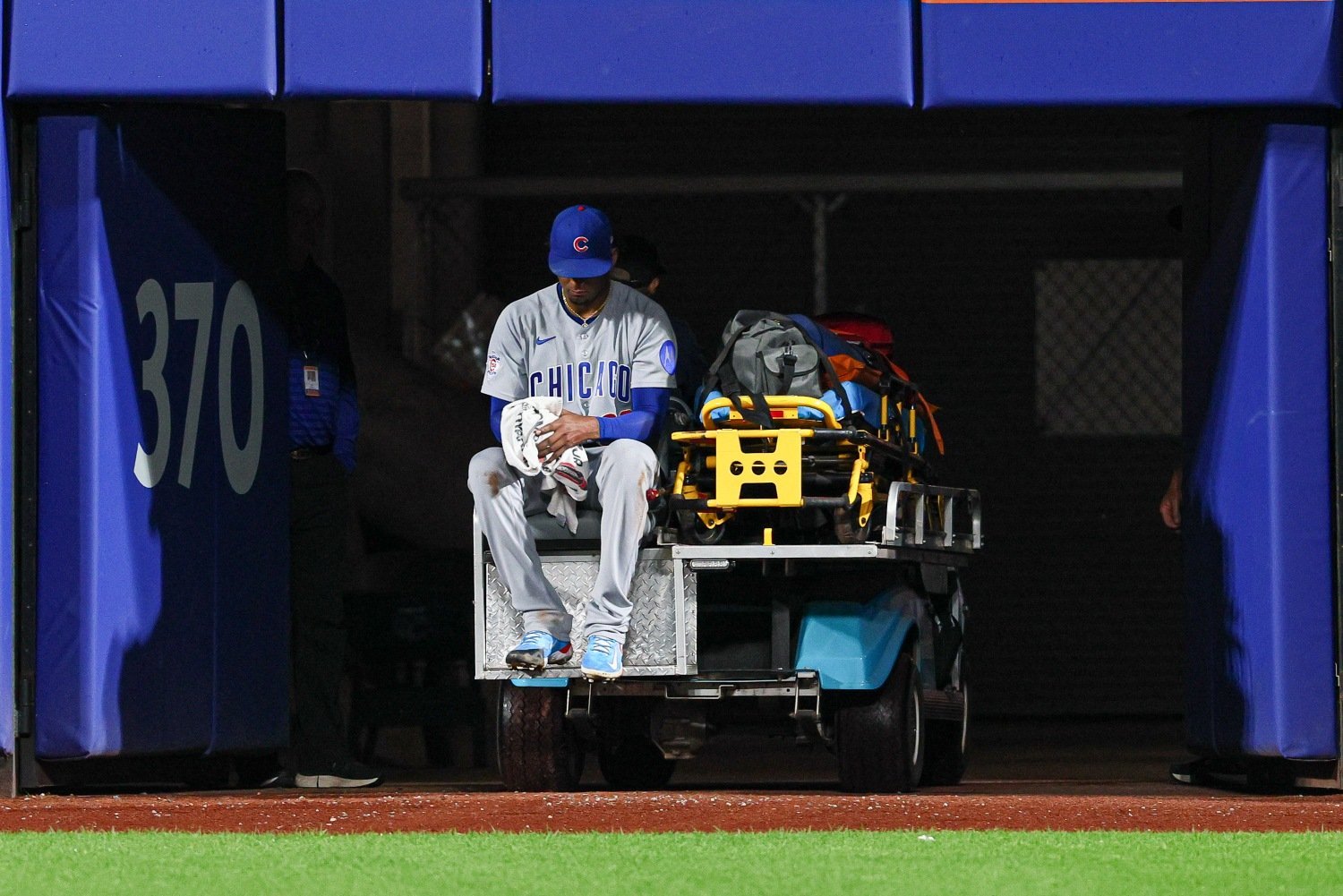 Injured Chicago Cubs starter Edward Cabrera began his rehab assignment with Triple-A Iowa Friday night. In the I-Cubs clubhouse, he might have bumped into teammates Ethan Roberts and Hoby Milner, who are each already on the same path back to the majors. Meanwhile, over the weekend, the Cubs will put Justin Steele and Daniel Palencia back on mounds at Wrigley Field, as each builds toward rehab assignments of their own. From their perches on the rubber, each hurler might spot Ben Brown, still on flat ground but throwing daily in his own quest to return this year. Out in Arizona, in the searing heat of the sun but removed a bit from the heat of the Chicago spotlight, Hunter Harvey and Shelby Miller are doing the same thing: steady buildup. Each is on a throwing program that gives them at least an outside shot of contributing down the stretch, although the fact that they're so geographically remote reflects the figurative distance between them and big-league readiness neatly. That's not a normal amount of important rehab work being done by pitchers for a playoff hopeful. Those are eight names, including three or four who would have appeared on any list of the 10 most important hurlers to the 2026 Cubs if you'd made such a tally in March. It's tempting to imagine a world in which even half of them—let's say Cabrera, as a starter, and Palencia, Milner and Steele as relievers—come back at full strength and transform a below-average pitching staff into a World Series-caliber one, just in the nick of time. No sooner can you conjure that mental image, though, than you surely flash on another, less welcome one. It's Monday evening, and you're watching Jed Hoyer's post-trade deadline press conference. And in your gut, you feel a cold fury you can't fully place, until his voice comes into focus and you hear it: "We obviously, you know, weren't able to get anything bigger across the finish line here, but we feel very confident about our pitching staff. We have a lot of guys coming back." With just over two days to go before the trade deadline Monday evening, the Cubs haven't yet made a notable addition to their pitching staff, save the emergency pickup of David Peterson in late June. Peterson has been good and looks like he'll stick in their rotation for the balance of the year, but the bullpen has received reinforcement only via minor moves, and the team has yet to pounce on a higher-end starting pitcher. It's far too early to worry much that they won't do so; they understand the scope and the urgency of their need for help on the mound. It's essential, though, that we all avoid falling into the trap of the planning fallacy. The plan, of course, is to have Cabrera make two or three more rehab starts—his first one didn't go great; it might not have moved him closer to a return—and then reinsert him into the rotation. The plan is for Milner (out since June after an emergency appendectomy) to be back in the big-league pen very soon, and for Roberts to follow, with each taking the place of journeymen whom you'll soon forget were ever Cubs. (Sorry to the Jake Woodford family, but it's true.) The plan is for Palencia to reclaim his place at the back end of the pen. None of that is guaranteed, though. The injury histories on Cabrera, Roberts and Palencia are way too checkered to depend on that at all. Milner's particular problem—physically recovering from a relatively serious internal surgery takes time, and he was never as imposing as your average pitcher, anyway—is intractable. Meanwhile, Steele, Brown, Harvey and Miller are all very high-upside potential boosts for the bullpen, but it's too much to say that any of them are even part of the plan. Even the Cubs themselves are merely holding out hope on those four, and the difference between a plan and hope is the difference between a house and a housefly. Nor are all the team's currently healthy options assured of staying that way. The ages and injury histories of guys like Matthew Boyd, Shota Imanaga and Javier Assad are not in their favor. Even if the team gets a couple of key arms back soon, they might lose a couple, at the same time or shortly before or after. The Cubs absolutely must make multiple, significant upgrades to their pitching staff via trade in the next two days, unless they're comfortable punting on this season and praying on next year instead. That position feels untenable, given where they are as an organization, so their urgency should remain very high. Adding a starter has to remain a priority. Adding a could-be closer should be next on the list. That's a tall order, and one that neither Hoyer nor the farm system from which he's attempting to deal is well-suited for. If the Cubs don't find a way to fill it, though, they'll make a disappointing and early October exit. Knowing all of that, they remain very active. The team has talked to the Mets not only about starters Freddy Peralta and Clay Holmes, but about right-handed relievers Luke Weaver and Huascar Brazobán and lefty Brooks Raley. They remain engaged with the Angels on Reid Detmers, and they've talked to the Tigers about multiple available pitchers, though sources familiar with the conversations said the team is more likely to obtain Casey Mize than Tarik Skubal if they end up making a deal with former Cubs front-office wonk Scott Harris. In a perfect world, the team would acquire Emerson Hancock of the Mariners, who is available if the return is big enough and if they get immediate help on offense. That would mean giving up Pedro Ramírez, but the Cubs would also have to add "at least" one more good piece (likely a prospect), according to a source familiar with Seattle's plans. Hoyer excels at casting wide nets. He doesn't do nearly as well at the more important task of hauling in his quarry. That has to change this weekend, because the Cubs can't afford to count on gettng healthy at the right time. The odds of that are far too long. View the full article
 -
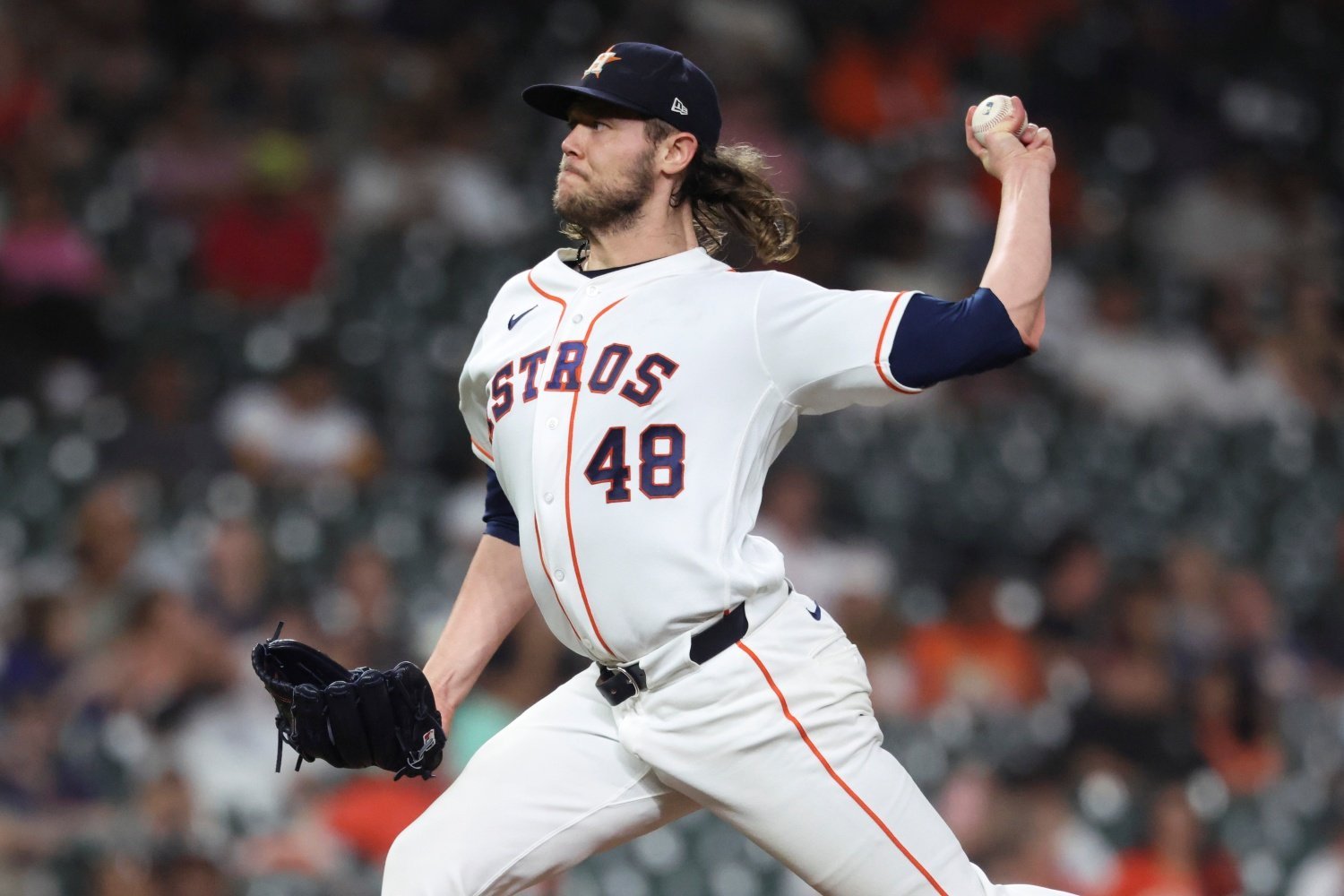 Before the season began, the Brewers appeared to have an elite set of left-handed options out of the bullpen. While some of those players have performed well at times this year (such as Aaron Ashby and DL Hall), others (like Jared Koenig and Ángel Zerpa) have been unable to deliver, betrayed in one form or another by their arms. Pressed into extremely heavy duty, Ashby has started to waver, especially over the last two months. Left-handed relief help is a need as the trade deadline approaches and will be crucial for the Brewers down the stretch. Here are three options that shouldn’t cost too much, but could leave a big impact, leaning on our DiamondCentric Trade Candidates rankings. Steven Okert – Astros It’s Year Two of Okert being a dominant lefty setup man. The southpaw has become an expert at upsetting hitters’ timing, with a fastball-slider combination that makes him death on fellow lefties but also handles righties well enough to be a high-leverage arm. He’s a free agent at the end of the season. Okert has resurrected his career with the Astros after a rough 2024 in Minnesota. He’s pitched to a 2.66 ERA and 2.92 FIP in 125 innings in his two years in Houston. His slider, by far the best of his pitches, has been worth 10 runs, and opposing hitters are slugging .292 off it. Look for that slider to continue to be his most common pitch if he were to put on a Brewers uniform, but the Crew do love to help hurlers find a fastball they can lean on more. José Suarez – Athletics It's true that there are many relievers available this summer who have sexier arsenals. Suarez operates with a mix led by two fastballs that each sit in the low-to-mid-90s. He doesn’t offer a whole lot of funk in his delivery, and he’s never been considered a premium relief weapon. He’s already pitching for his third team this year. However, the A’s gave him a sweeper and told him to mothball his sinker, and the results have been dazzling. He can miss bats with his changeup to righties and with the sweeper and a tighter slider to lefties. He’s under team control for one more year after this. He might even be able to start for you next season. Suarez struggled for the Braves and Mariners earlier this season before picking it up with the Athletics, pitching to a 3.79 ERA (4.18 FIP) in 38 innings. Like Okert, Suarez’s best pitch is his slider with a run value of 3, and with another year of control, Suarez could be a middle-innings reliever the Brewers target not only for the remainder of this year, but for 2027, as well. Brent Suter – Angels Suter won’t miss bats. Yes, he must pitch in front of a good defense, and yes, you need to leave a little margin for error. As second lefties in a playoff bullpen go, though, you really can’t beat Suter. He’s so deceptive and so good at commanding his changeup-and-sinker-forward arsenal that almost no pitcher in the league limits hard contact as well. He fills up the zone; he gets ground balls; he works quickly. He’s a tremendous complementary piece in almost any relief corps, capable of coming into a dirty inning and defusing the bomb before it can go off. He just needs to pitch in medium leverage, rather than high leverage, because you never know when some mishit grounder will trickle through the infield and cause a problem. That shouldn’t be a huge problem for the Brewers, who are consistently one of the better defensive teams in the league. The former Brewer has pitched to a 4.26 ERA (3.56 FIP) in 61 1/3 innings so far for the Angels. Suter wouldn’t cost much, as he’s a rental (and 36 years old), but he could be a solid bullpen arm for the Brewers come October. These arms aren’t exactly needle-movers, but the Brewers need reliable, left-handed options in the postseason, Sure, they could make a bigger swing for a frontline starter or a higher-end reliever like Mason Miller, but arms like the ones listed above can provide immense value the rest of the year as well. Personally, Okert would be the top option out of these three, but any of the group could help. Given the Astros' newfound status as likely buyers, Suter might be the most realistic target. What are your thoughts? Should the Brewers acquire a left-handed relief arm, and if so, whom? View the full article
 -
 This Made kid seems pretty good. Just how different might affiliate rosters look as of Tuesday? We offer a few possibilities. Transaction: RHP Deivy Gonzalez assigned to DSL Brewers Gold Signed out of Panama in late May, the 17-year-old 6'3" Gonzalez will be making his pro debut when he enters a game. Nashville Pre-Game Media Notes Final: Nashville 4, Charlotte (White Sox) 2 Box Score and Game Log Via the Sounds, game details, and we encourage readers to always review affiliate write-ups as part of their Link Report routine: Sounds' Offense Comes Alive Late to End Three-Game Slide As is the norm, purely from a game standpoint that also includes postgame individual player spotlight facts, there is little for me to type here, please devour that linked read. That being said, surely there is a clamoring among the masses right now for some movement involving new challenges for the loaded Biloxi lineup. Let's all agree that the movement we may eventually see won't involve formal roster moves this weekend. One can imagine that the Brewers will include mid-level and smaller (throw-in pieces, not a big fan of that term) in at least one, if not multiple deals prior to Monday's deadline. Tyler Black was on base three times Friday, but is he essentially just taking up 40-man roster space before he reaches no options left status? That sounds harsh, but it's a realistic take. Brock Wilken, age 24, (three K's, one walk Friday, now batting .176) is just one year older than Blake Burke, they are both June babies. Is it such an insult to Wilken if he is swapped directly back to Biloxi for Burke on Tuesday? Here's the current Nashville roster. Compared to the Biloxi dynamo, the position player group is not very deep or certainly glamorous, but Rick Sweet does need to fill out a lineup card nightly. There are players here who are not long-term cogs, such as pending outfield minor league free agents Luis Matos and Jacob Hurtubise. Do moves there free up what would be very aggressive promotions of Josh Adamczewski or Josiah Ragsdale? How annoying (and not his fault) is the multi-month designated hitter stint for Jeferson Quero? Even though ideally an Andrew Fischer bump would include playing defense often, there are DH bats tied up in Quero's bat. Can we finally get a formal update on Quero's injury? The organization is often silent on farmhand injury issues (hello, HIPPA), but 40-man roster players seem to be open for regular updates - well, at least 26-man MLB roster updates. Frustrating to be sure. I was able to watch much of Coleman Crow's outing (yes, jinxed the no-hit bid), and he's yet another that could be part of a deadline deal: Talk about a quantum leap season - the Brewers brought catcher Darrien Miller back for 2026 though he was a minor league free agent last fall. Seems as though it would take a 40-man roster spot to prevent Miller from seeking greener pastures this October. Miller turns 26 in March; there will be interest. Blake Perkins on alert - Speaking of minor league free agents to be, hello Eduardo Garcia and Freddy Zamora. Care to sacrifice your AAA at-bats down the stretch for a certain 19-year-old? Catch up with the latest Biloxi pre-game audio interview archives - Catcher Matthew Wood is the most recent interviewee Biloxi Pre-Game Media Notes Final: Biloxi 14, Montgomery (Rays) 8 Box Score and Game Log Made Makes History in Shuckers Win Over Biscuits - Baseball's Top Prospect Puts on a Show with 5-Hit, 7-RBI, 2 Home Run Stat Line Against Montgomery VIDEO highlight package via WLOX - Includes brief Blake Burke postgame interview Jesús Made is clearly the 19-year-old referenced above. You all got it right! That first home run swing was so mild it was as if Made were swatting a mosquito from in front of his face, yet the distance! The second swing, oh my, and did that ball ever get ten feet off the ground? The already untouchable one cemented his status. Made does owe Voice of the Shuckers Javik Blake a new laptop keyboard, because the CAPS LOCK key is clearly stuck in place. Both Javik's 'X' feed and that of the team are loaded beyond compare, dive in and review the past 24 hours or so of posts. Burke, Fischer, Adamczewski, Boeve all within in video form. It was an unfortunate outing for reliever Garrett Hodges (he'll bounce back), but as your box score review will reveal, other mound efforts were middling at best, a few too many walks for RHP Braylon Owens, and there were 11 free passes distributed by the Shuckers. Given the focus elsewhere this season, one may ask, "do the Shuckers employ pitchers?" Yes folks, they do. This game marked #22 against the Rays' Montgomery affiliate since the beginning of May (that's a lot!), with this weekend's games about to complete the 2026 set. That familiarity can be fun for fans as well, since this was start #5 against the Shuckers for 21-year-old Biscuits RHP Gary Gill Hill, and I will never tire of saying "Gary Gill Hill". Via the web: "Mother Rosalind Gill, who was born in Barbados, allows Gary to qualify and play for the Great Britain national baseball team." Postponed: Lansing (Athletics) at Wisconsin Game One Starts at 4:10 PM Saturday. Wilson Pre-Game Media Notes Final: Fredericksburg (Nationals) 11 Wilson 9 Box Score and Game Log Warbirds Fall Short in Marathon Loss - Tying Run Stranded in the Ninth It feels like Frias' line specific to Wilson (27 games) should be greater than .236/.331/.425 because his highlight clips are always pretty spectacular. Ten of his 25 Warbirds hits have gone for extra bases: This was a fun defensive clip: A reminder, Brady Ebel turned 19 years old a week ago today: Is Ebel going to be an "every other month" kind of player? Sample is small but check out the monthly splits. Infielder (occasional CF) Juan Ortuno walked four times, just two games after a five-walk effort. His OBP is up to .397, and the 19-year-old has received 76 free passes (65 BB, 11 HBP) vs. 59 K's this season (16.2% K rate). Ortuno stole his 23rd base Friday, but he's been caught 11 times. As the game summary made prominent, the Warbirds drew 12 walks, in addition to HBP's of Brailyn Antunez and Alexander Frias, who thankfully each stayed in the game. Warbirds pitching was not strong here as once again, your box score review will reveal. Cancelled, rain: DSL Brewers Gold at DSL Brewers Blue The sibling rivalry game will not be made up. Gold holds a 2.5 game lead in its division, so if this spares them a loss, so be it. Brewers Blue in a hole (standings for both). My Link Report duties will expand significantly Saturday, jumping from three to seven games. Yet I have no concerns because I will be celebrating with the glorious one-night-only return of the Beach Chickens in Biloxi. May you and the seagulls in your lives enjoy a wonderful day and evening. Organizational Scoreboard including starting pitcher info, game times, MiLB TV links, and box scores Current Milwaukee Brewers Organization Batting Stats and Depth Current Milwaukee Brewers Organization Pitching Stats and Depth View the full article
 -
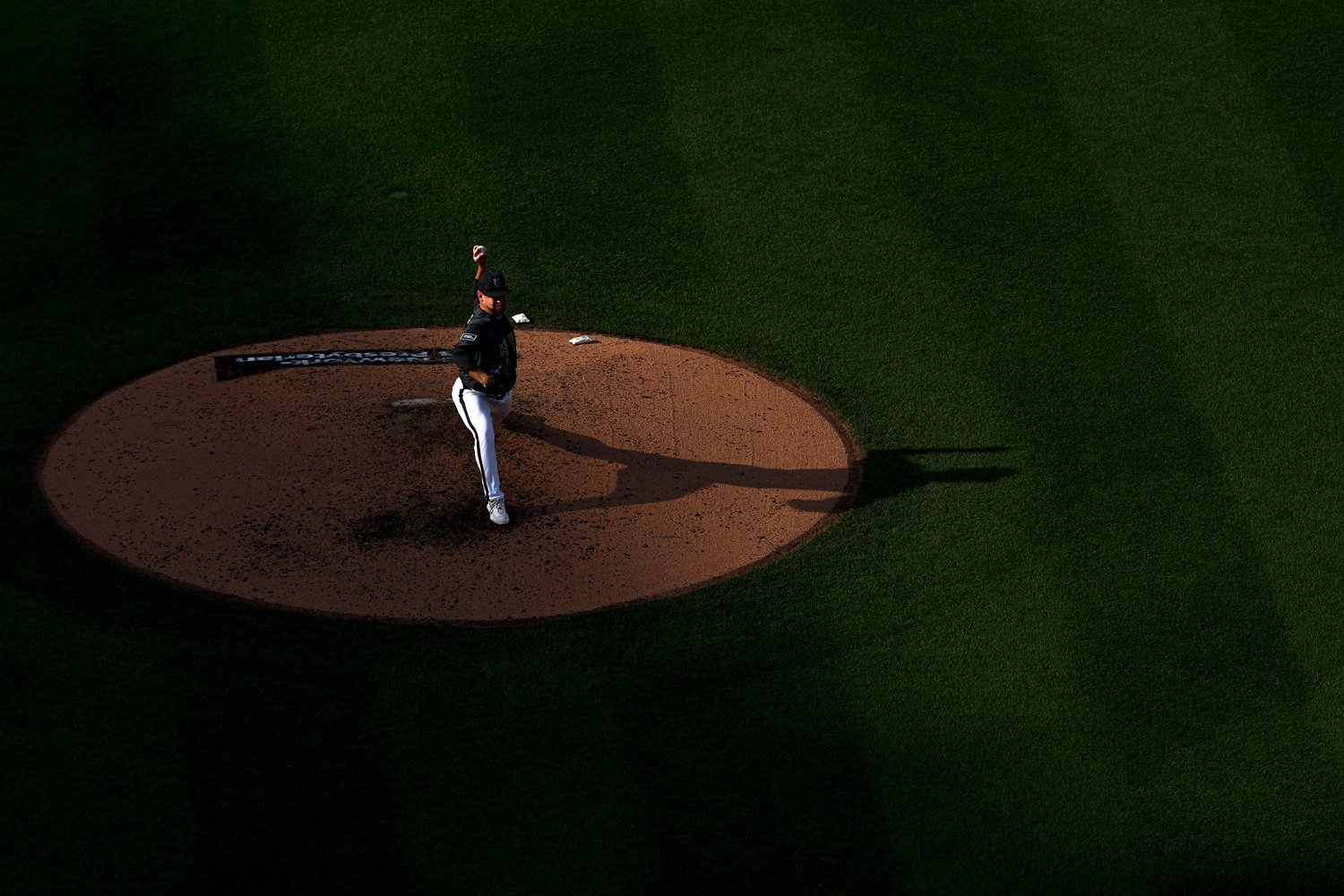 The Minnesota Twins made their first splash of the 2026 trade deadline late Thursday evening, acquiring left-handed reliever AJ Minter from the New York Mets in exchange for Bruin Agbayani and Billy Amick. On the surface, it was exactly the type of move Twins fans had been hoping to see. The bullpen desperately needed another late-inning arm, and Minter immediately gives Minnesota one of the better left-handed relievers available on the market. As exciting as the addition itself was, an even more intriguing detail surfaced shortly afterward. In his trade recap for The Athletic, Will Sammon reported, "Minter is owed $3.3 million after Monday before becoming a free agent this offseason. The Mets are not paying down any of the remaining salary, said a person with knowledge of the situation." For most organizations, that line probably wouldn't generate much discussion. For the Twins, though, it stands out. For years, Minnesota has operated differently than many contenders at the trade deadline. Rather than simply absorbing contracts, the Twins have often preferred to include additional prospect value in exchange for financial relief. When they acquired Chris Paddack from the Padres and Jorge López from the Orioles, both trades included cash considerations to help offset the remaining salary. There are many more examples. That has become part of the organization's identity. If there was an opportunity to have the selling team eat money, the Twins almost always took it. That's what makes the Minter trade feel different. Minter is making $11 million this season before becoming a free agent this winter. While Minnesota is only responsible for the final $3.3 million, that's still a significant investment for roughly two months of relief pitching. This is an organization that has rarely shown a willingness to spend that kind of money on a bullpen arm. As The Athletic's Dan Hayes pointed out on X, the last time the Twins had an $11 million reliever on their roster was Joe Nathan. The Twins obviously aren't paying Minter's full salary, but paying more than $3 million for two months of a reliever is still noteworthy. To put that into perspective, Taylor Rogers entered the season as the highest-paid reliever on the roster at $2 million. The Twins are now paying roughly 50 percent more than that for just the final two months of Minter's contract. That may not seem like a huge financial commitment compared to many of baseball's biggest spenders, but it represents a noticeable departure from how the Twins have traditionally approached these types of deals. It also happens to align with everything Tom Pohlad has been saying publicly. Ahead of the trade deadline in an interview with the media, Pohlad acknowledged that if the Twins want to become the kind of organization they aspire to be, they can't continue operating with one of the league's smaller payrolls. "We might have a magical year this year, but a $100 million payroll is not going to get the job done for trying to accomplish the kinds of things we want to accomplish." Those comments were encouraging, but they were still only words. Twins fans have heard optimistic messaging before. What they've wanted to see is action. While one trade certainly doesn't erase years of frustration, this is at least an encouraging first step. The Twins had every opportunity to ask the Mets to pay down part of Minter's remaining salary. Instead, they simply took on the contract themselves. That may not be groundbreaking around Major League Baseball, but it absolutely is in Minnesota. It also raises an interesting question about whether Pohlad truly intends to operate differently than previous generations of ownership. Nobody should be declaring victory after one move, and one $3.3 million commitment doesn't suddenly erase years of payroll limitations. More moves will have to follow before anyone can confidently say that the first name matters more than the last name. Still, if Pohlad was looking for a way to begin changing the perception surrounding the organization, this was a pretty good place to start. Perhaps the biggest takeaway isn't AJ Minter himself. It's what this newfound willingness to absorb salary could mean over the next few days. If the Twins are genuinely willing to take on contracts instead of insisting that the selling club pay down salary, their list of potential trade targets becomes significantly larger. Expensive players naturally require less prospect capital because the acquiring team is assuming the financial burden. For years, that market has essentially been closed to Minnesota. Take Kevin Gausman as an example. The veteran right-hander is still owed more than $7 million over the remainder of this season on an expiring deal. Under the Twins' previous operating philosophy, a contract like that likely would have been a nonstarter unless Toronto agreed to eat a substantial portion of the money while receiving a better prospect package in return. If the Twins are actually willing to absorb contracts like that, the equation changes dramatically. Instead of paying with premium prospects, the Twins can use payroll flexibility as part of the acquisition cost. That opens the door to talented veterans who may have previously been unavailable simply because of the dollars attached to their contracts. There's still a long way to go before the trade deadline passes, and one move doesn't establish a trend. The Twins will ultimately be judged by what they do over the next several days, not just by their first trade. Even so, it's hard to ignore the symbolism of this deal. After an offseason full of promises, followed by Pohlad publicly saying that a $100 million payroll isn't enough to accomplish the organization's goals, the Twins responded by making a move they simply haven't made in the past. Paying the entirety of Minter's remaining salary won't make headlines across baseball, but in Minnesota it represents a meaningful philosophical shift. Maybe it's just one trade. Maybe it's the first sign of a new way of doing business. Either way, it's a promising start. What do you make of the Twins absorbing the rest of Minter's salary? Is this the first indication that Tom Pohlad is serious about increasing payroll, or do you need to see more before believing things have truly changed? Leave a comment below and start the conversation! View the full article
 -
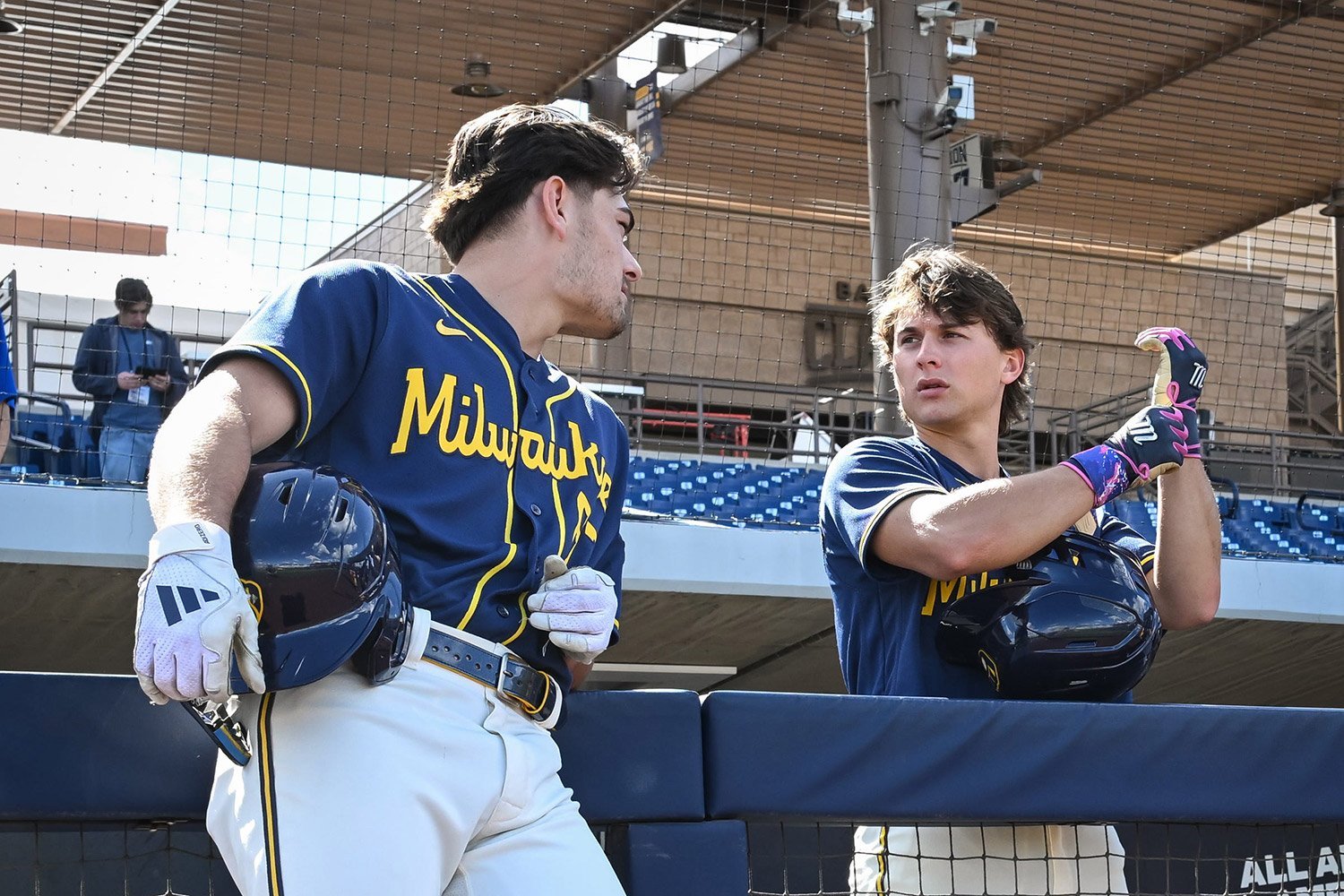 Last week, Eric Longenhagen and Brendan Gawlowski released an updated pre-trade deadline top 100 prospect list that included some really fun rankings for the Brewers. Jesús Made remains the top overall prospect according to the site and their lone prospect with a Future Value (FV) ranking of 65. The writers gush over the speed and electricity in his hands from both sides of the plate, and the fact that he has maintained a well-above-average 14.6% K-rate at such a young age in Double-A. Luis Pena checks in at 25th overall with a 55 FV, without much commentary given his extended absences this season. The rankings list four more Brewers Prospects, the first three of which are all ranked much higher than at any time before. 42. Alexander Frias, 50 FV 63. Brady Ebel, 50 FV 68. Tyson Hardin, 50 FV 106. Jeferson Quero, 50 FV FanGraphs says, “Frias is a Freak with crazy bat speed and physical projection, the guy on the list with the best shot to have a Junior Caminero type of rise.” That is a wildly exciting comp for Frias, and would mean the Brewers could have another top ten prospect in the near future. The post also lists some key data for each prospect, and only three players have a higher Max Exit Velocity than Frias, and all of them are at least two years older than he is. Age Chase% Contact% Max Exit EV90 Launch HardHit% Jesús Made 19 24.9% 80.7% 111.2 105.2 6 40.2% Luis Peña 19 33.6% 77.2% 116.3 104.7 4 37.6% Alexander Frias 18 29.6% 74.3% 116.3 105.3 3 46.7% Brady Ebel 18 18.4% 75.1% 109.9 101.8 9 35.9% Jeferson Quero 23 33.8% 71.0% 111.4 104.7 15 40.2% Ebel isn’t currently on any other top 100 lists, and FanGraphs had this to say: “Even though Ebel is one of the younger players on the list, his feel for the game is advanced. He has an almost mesmerizing ability to get himself a clean hop on defense." This is also quite a jump in ranking for Hardin, with this write-up: “Forret and Hardin are some of the best bets in the upper minors to develop plus command or better, and Hardin in particular has taken major strides toward that outcome over the last 18 months.” Hardin has cruised through the Brewers minor league system and could help this year’s MLB team either on the field or as part of a trade package before Monday’s deadline. As for Quero, he has maintained his ranking on the site which had this to say, “Quero’s combination of relative youth, athleticism and power keeps us on him even though he has been just fair (a .320 xwOBA) across 140 games at Triple-A since he returned from a labrum tear and hamstring injury that caused him to miss basically all of 2024 and the first six weeks of 2025. While other sites might have Andrew Fischer, Josh Adamczewski, Braylon Payne, Jett Williams, Bishop Letson, Blake Burke, Josh Knoth, Marco Dinges, or another prospect ranked higher than some of the players Fangraphs ranked, it is further proof of the profound depth and quality of the Brewers' farm system right now. The Brewers are in an enviable position both in terms of long-term outlook and trade deadline buying power. View the full article
 -
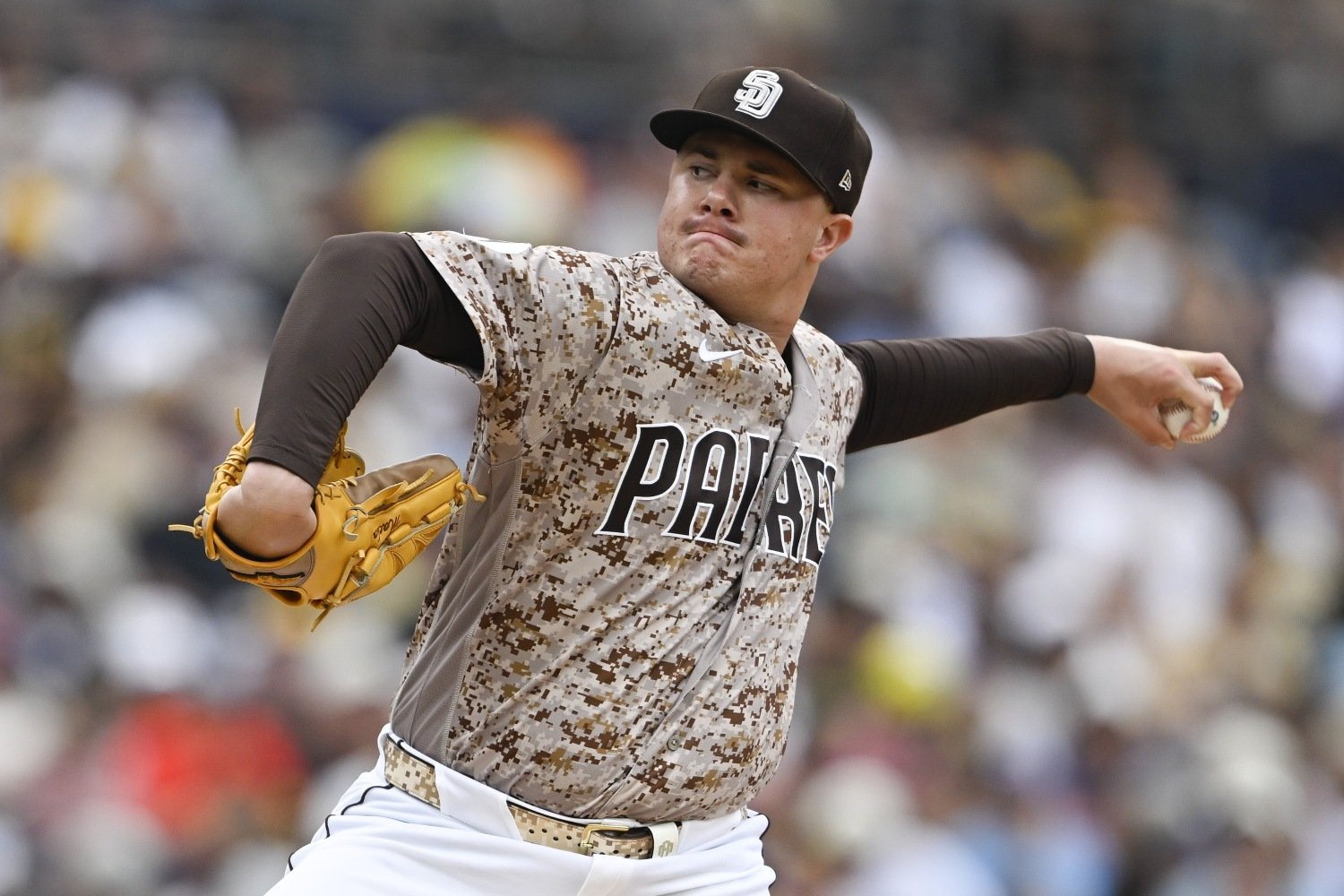 The Cubs, along with just about every other major-league club, have been quiet leading up to the MLB trade deadline, which is Monday at 5 PM CT. A huge number of teams are, as usual, clustered around the fringes of the playoff races in each league, so all parties are waiting as long as possible to see whether they should buy or sell—or which way that one team they really want to deal with is going to go. After a couple of minor moves by the Minnesota Twins rolling into the weekend, things are bound to pick up. When they do, the Cubs should be right in the middle of the action. Of the 24 teams who aren't currently leading their division, 18 sit within 5.5 games of a Wild Card spot. The Cubs don't need to wait and wonder the way many of those teams do, though. They've maintained a firm grip on the National League's top Wild Card spot and have every reason to be aggressive over the next few days. The San Diego Padres are a different story. San Diego enters the weekend at 56-54, just one game behind the spiraling Phillies for the final Wild Card spot. They're 14 games behind the Dodgers in the NL West, though, making a division title feel all but impossible. If the Padres decide their postseason odds aren't worth betting on, they suddenly become one of the more fascinating teams to watch. And one name should immediately jump to the top of the Cubs' wish list: Adrián Morejón. Morejón made his major-league debut in 2019 as a 20-year-old, but injuries kept him from becoming the impact arm many expected early in his career. However, he's since turned into one of the premier setup arms in baseball. Through 57 1/3 innings this season, Morejón owns a 3.14 ERA backed by an even better 2.56 expected ERA. He's also piled up 64 strikeouts, while issuing just 15 walks. The surface numbers are excellent; the underlying metrics are even better. His hard-hit rate, barrel rate and average exit velocity all rank in the 92nd percentile or better among major-league pitchers. He generates whiffs at an elite rate, gets hitters to chase pitches outside the zone frequently and ranks in the 99th percentile in ground-ball rate. Few pitchers in the game can throw 100-MPH sinkers. Even fewer can do it from the left side. Fewer still consistently pound the strike zone. That's what makes Morejón different. His sinker routinely reaches triple digits, but the velocity isn't the only thing that makes it special. He commands it exceptionally well, constantly forcing hitters into weak contact. His changeup might be even more impressive. Thrown around 92 MPH with devastating late drop, he gets whiffs on more than half of batter swings against it. Then there's the slider, which features an outstanding movement profile and gives hitters another completely different look. He'll even mix in an occasional four-seam fastball just to keep opponents from keying on the sinker. Morejón would immediately become one of the Cubs' most trusted late-inning relievers. He's entering free agency after the season, making him a true rental. Before then, though, he has the ability to completely change a postseason bullpen. If the Padres decide to sell, they'll almost certainly try to cash in now, rather than risk losing him for nothing a few months from now. For the Cubs, the fit is obvious. Even if Chicago's bullpen were fully healthy, adding Morejón would make perfect sense. Considering all of the injuries they've dealt with throughout the year, he feels like an even bigger priority. So what would it cost? The Padres already have plenty of talented young pitching throughout their organization, so position players would likely be the focus in any return. Luckily for the Cubs, that's where they have some real organizational depth. Jonathon Long stands out as a possible piece. Chicago's No. 9 prospect is slashing .282/.364/.449 at Triple-A Iowa, with 41 extra-base hits through 96 games. Long alone doesn't get a deal done, but he feels like a strong foundation. Another interesting possibility is Kane Kepley. The Cubs' No. 6 prospect and second-round pick in the 2025 MLB Draft has quickly established himself as one of the safest position-player prospects in the organization. Across 90 games this season, Kepley is slashing .258/.436/.413 while drawing an eye-popping 92 walks and stealing 49 bases. His hit tool, speed, and defense give him an incredibly high floor. He's never going to become a 25-home run hitter, but his athleticism and ability to get on base should allow him to impact games in plenty of other ways. It might be that San Diego decides to both buy and sell, spinning off Morejón as a hedge because of his impending free agency but looking to upgrade the big-league roster in some other area at the same time. In that case, they're likely to demand Pedro Ramírez, who feels like too much to give up for a half-season of Morejón's services. If the price tag is any lower than that, though, the Cubs shouldn't hesitate. It's incredibly difficult to find a left-handed reliever who throws 100 MPH, misses bats, limits hard contact, pounds the strike zone and keeps the ball on the ground. Morejón does all of it. If Chicago is serious about making a deep postseason run, this is exactly the kind of move contenders make. View the full article
 -
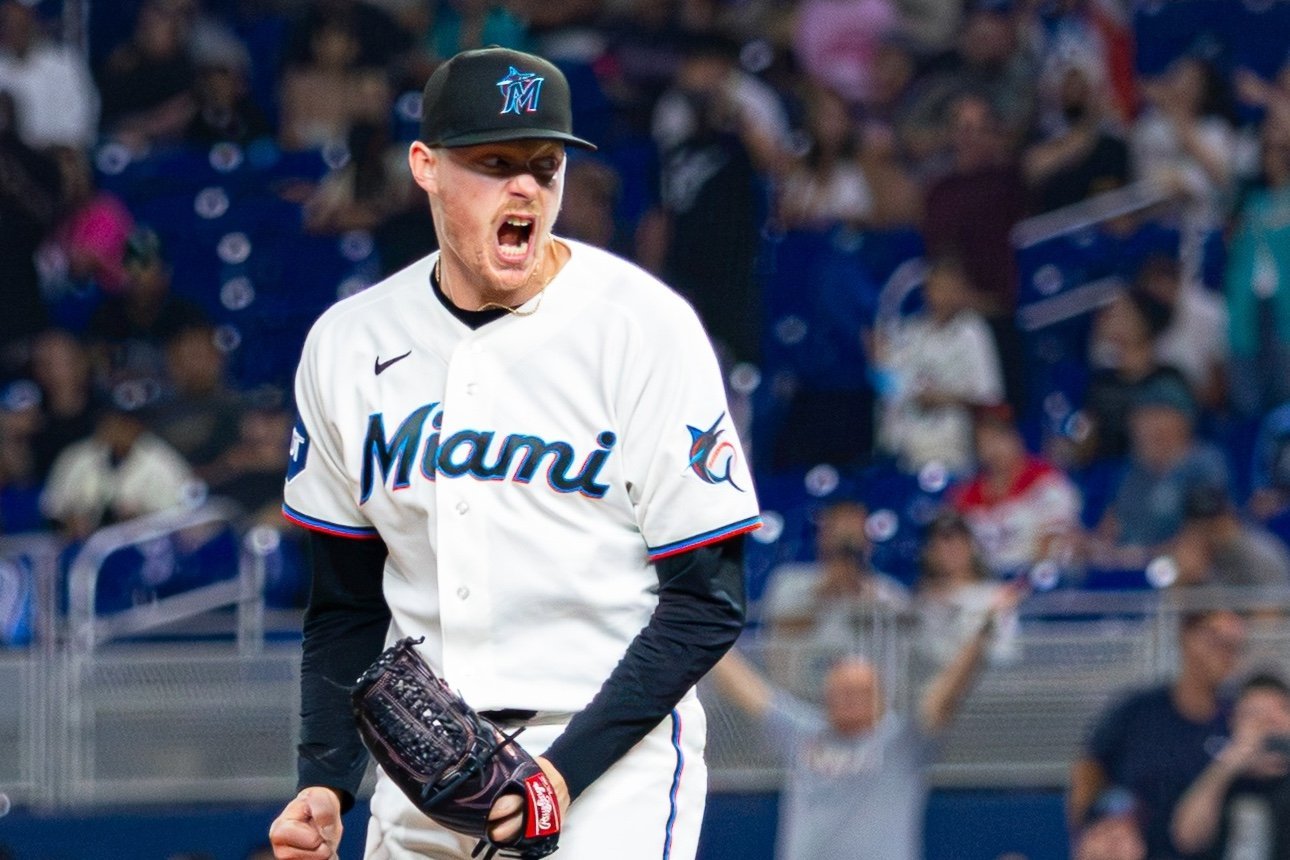 We know that the Miami Marlins are open-minded to doing almost anything prior to Monday's MLB trade deadline, but anticipating specific moves is especially difficult this year. History teaches us that the vast majority of big leaguers who switch teams in deadline deals are either pending free agents or a year away from free agent eligibility, and the Marlins have very few of those. Pete Fairbanks was supposed to be their obvious trade candidate under these circumstances. Outside of a minimum-length injured list stint in late April/early May, the veteran closer has been available, throwing gas...and perplexingly bad. He owned a 6.83 ERA and 5.17 FIP entering the All-Star break, having already matched a single-season career-high with seven home runs allowed. The break did him no favors as Fairbanks had another dispiriting performance in Milwaukee on July 19, blowing a 2-0 lead and extending the club's losing streak to six games at the time. No save situations presented themselves over the next week, so Fairbanks wasn't utilized again until July 26. Since then, he has been flawless—four appearances, 12 batters faced, 12 batters retired. It is the longest streak of perfection that we've seen from the 32-year-old during his Marlins tenure. It took only seven pitches for him to secure Friday's victory against the New York Mets, marking his most efficient inning of the season. There haven't been notable changes to Fairbanks' velocity or pitch mix in this microscopic sample. He is still heavily reliant on fly balls (Friday's final out would have cleared the fence of 15 MLB ballparks, according to Statcast). He is constantly getting ahead in the count, but that has quietly been a strength of his throughout 2026 with a personal-best 66.9% first-pitch strike rate. Fairbanks is owed about $4 million through the end of the regular season, though the Marlins won't be motivated to move him simply to cut costs when they already have MLB's lowest payroll. They will be weighing whether the upside of the young players being offered in exchange for him outweighs the production he'd provide in August and September during their pursuit of a postseason berth. View the full article
 -
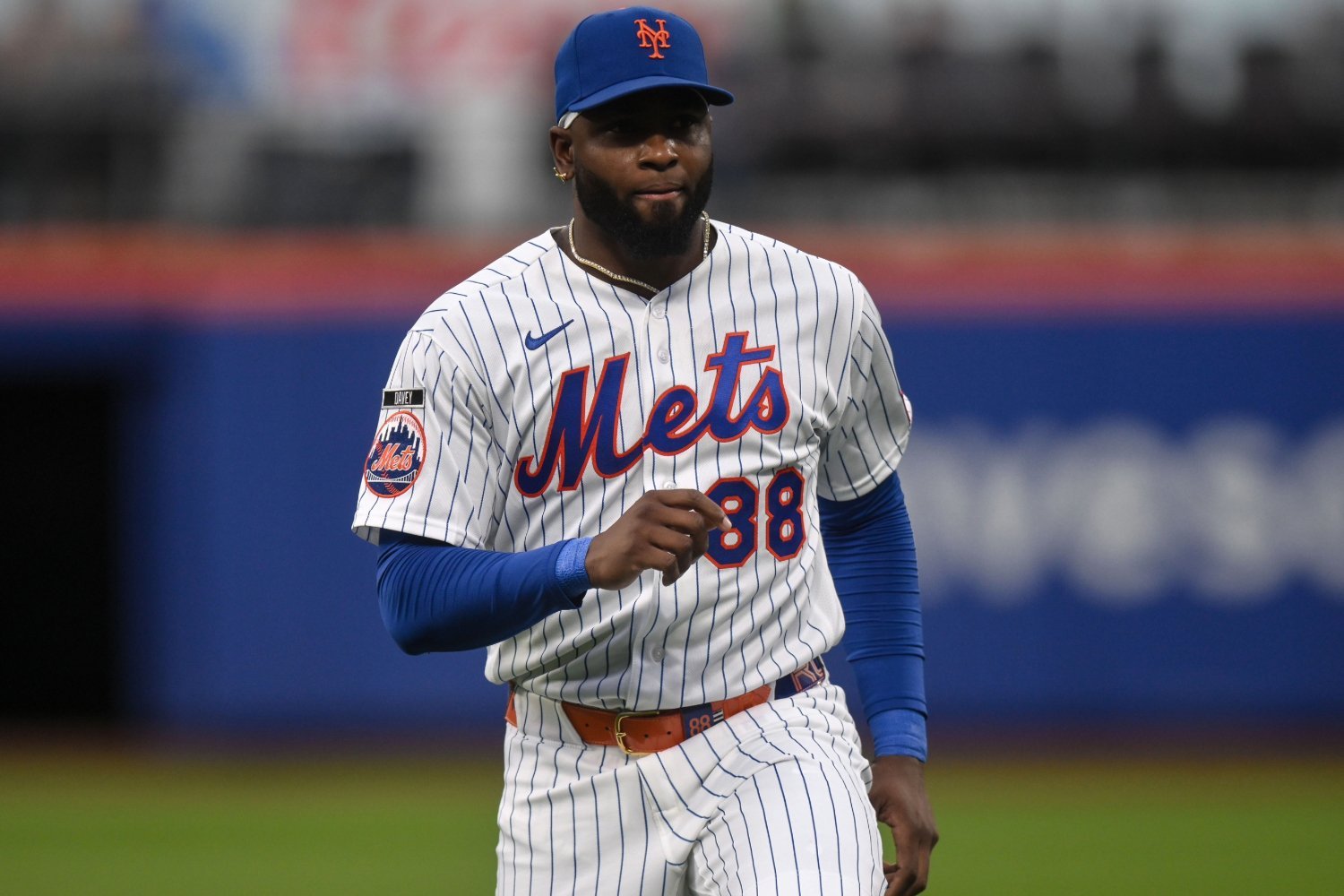 As the trade deadline approaches, the New York Mets will entertain trading everything that isn’t nailed down. So, outside of Juan Soto and their stockpile of pre-arbitration stalwarts, everyone should, and probably will, be on the block. However, that doesn’t mean they will engage in a full-on fire sale. For instance, the Mets might listen to offers for Francisco Lindor, but I seriously doubt any organization would make an offer that’s too good to refuse. And to a much lesser degree, the Mets shouldn’t listen to the offers that try to pry Luis Robert Jr. away. On the surface, the Mets should thank any team willing to take on Robert and the remainder of his contract. He’s on a $20 million salary for this season and has a $22 million team option for 2027, with a $2 million buyout. Considering he has once again missed considerable time to injury, has a wRC+ of 83, and has graded out as, at best, an average center fielder, it’d be a small miracle if any team was even willing to take on his buyout. I mean, who in their right mind would trade for this? Luis Robert Jr. Past Three Seasons Season Team GP AVG OBP SLG wRC+ Off Def WAR 2024 CHW 100 0.224 0.278 0.379 84 -6.7 -2.1 0.5 2025 CHW 110 0.223 0.297 0.364 84 -6.6 4.3 1.3 2026 NYM 32 0.200 0.302 0.336 83 -3.4 0 0.1 242 0.220 0.29 0.366 84 -16.7 2.2 1.9 For three straight seasons, Robert has been injured, ineffective, and wildly infuriating. Throw in A.J. Ewing’s impressive debut in center field, and Robert is now the league’s most expensive fourth outfielder. Yet, despite all of the recent evidence, it’s hard to give up on a player who did this. Luis Robert Jr First Four Seasons Season Team GP AVG OBP SLG wRC+ Off Def WAR 2020 CHW 56 0.233 0.302 0.436 99 0.7 3.2 1.3 2021 CHW 68 0.338 0.378 0.567 155 20.1 3.8 3.4 2022 CHW 98 0.284 0.319 0.426 111 6.7 1 2.1 2023 CHW 145 0.264 0.315 0.542 129 20.5 9.1 5 367 0.278 0.326 0.499 124 48 17.1 11.8 Robert has never been, and probably never will be, a beacon of health, but his first four seasons were exceptional. He blended above-average defense with tons of power, and averaged 4.66 WAR per 600 plate appearances. He, as the cool scouts like to say, was a toolshed, and that doesn’t appear to have changed, even as he approaches 30. Robert’s average swing speed of 76.2 MPH is the 23rd-fastest among players with 50 or more swings this season. And his sprint speed of 29.1 feet per second is in the 92nd percentile. The power-speed combination that made him a borderline star is still present, and he has suddenly started to display a more refined approach. Even when Robert was a successful hitter, his approach at the plate left a lot to be desired. He rarely walked and struck out too much, and it all stemmed from his propensity to swing at just about anything. But in 2026, he has reigned in his aggressiveness and has the best walk and strikeout figures of his career. Luis Robert Career Plate Discipline Season BB% K% BB% - K% O-Swing% Z-Swing% Swing% O-Contact% Z-Contact% Contact% Zone% 2020 8.8% 32.2% -23.4% 39.8% 80.7% 57.4% 45.0% 71.6% 61.1% 43.0% 2021 4.7% 20.6% -15.9% 40.3% 85.0% 61.4% 52.2% 84.9% 73.6% 47.3% 2022 4.2% 19.2% -15.0% 43.3% 83.7% 61.5% 59.2% 85.2% 75.2% 45.0% 2023 5.0% 28.9% -23.9% 40.5% 78.1% 58.3% 47.4% 81.0% 68.7% 47.3% 2024 6.6% 33.2% -26.6% 35.9% 72.7% 53.1% 43.8% 80.2% 67.1% 46.7% 2025 9.3% 26.0% -16.7% 32.5% 76.3% 53.3% 50.2% 80.0% 70.5% 47.6% 2026 12.7% 22.2% -9.5% 33.9% 67.1% 48.7% 53.2% 87.9% 74.5% 44.5% Total 6.60% 26.50% -19.9% 38.30% 78.00% 56.70% 49.80% 81.30% 69.80% 46.30% Now, 126 plate appearances is not a huge sample, but all the statistical indicators suggest his new approach should be somewhat sticky. That doesn’t mean he’ll finish the year with a walk percentage only 9.5% lower than his strikeout rate, but none of his gains feel suspect. If you swing less, you should walk more, and if you swing at better strikes, you should make more contact. As I’m sure you’re wondering, there is a paradox we have to address: How is it possible for Robert to simultaneously post the best plate discipline figures of his career, while swinging as hard as ever, and also have the lowest wRC+ of his career? Well, there are two things at play. Robert has certainly had his fair share of bad luck this season. He has a BABIP of .231, and his xwOBA of .317 far outstrips his actual wOBA of .289. But with his combination of bat speed and walk rate, his xwOBA lags far behind his peers. Among players with 50 batted ball events, only 14 have paired a walk rate of 12% or better with an average swing speed of 75 MPH or greater, and it’s basically a who’s who of MLB superstars. Rk. Player Year PA BB% Bat Speed wOBA xwOBA LA Sweet-Spot % Barrel% Hard Hit % EV50 Adjusted EV Whiff % Swing % 1 Alvarez, Yordan 2026 473 15.4 76.1 0.445 0.475 41.9 18.6 53.7 105.4 97.5 19.4 42.7 2 Wood, James 2026 513 16.8 76.9 0.403 0.424 40.7 21.5 58.5 106.3 98.5 31.3 38.2 3 Judge, Aaron 2026 261 16.1 76.1 0.385 0.415 33.6 21.7 57.3 105.3 97.8 32.2 42.9 4 Trout, Mike 2026 405 18.5 75.1 0.37 0.398 35.8 17.8 47.8 103.2 96 23.1 39.3 5 Murakami, Munetaka 2026 313 18.2 75.1 0.393 0.378 30.7 20.3 60.1 104.7 97.8 42.6 41.4 6 Kurtz, Nick 2026 426 18.1 78.2 0.384 0.375 38.8 18.2 57.4 106.2 98.2 36.5 43 7 Acuña Jr., Ronald 2026 248 14.5 76 0.34 0.372 32.9 13.2 43.4 101.7 95.1 29.9 46.1 8 Greene, Riley 2026 454 12.6 75.6 0.358 0.371 38.2 15.3 50.5 102.9 96 29.7 46.3 9 Caminero, Junior 2026 467 12.2 79.9 0.388 0.369 28.4 13 50.5 105.6 97.3 22.6 42.6 10 Schwarber, Kyle 2026 457 14.2 77.1 0.388 0.368 39.6 17.9 52.2 104 96.8 34.6 44.3 11 Bauers, Jake 2026 386 13.5 76.8 0.373 0.36 36.5 13.6 53.9 103.8 97 27.6 40.8 12 Anthony, Roman 2026 130 15.4 75.5 0.31 0.352 40.8 9.3 47.4 102.1 95.8 28.1 37.2 13 Robert Jr., Luis 2026 126 12.7 76.2 0.289 0.309 20.7 3.7 40.2 102.1 95.3 26.7 48.7 14 Raleigh, Cal 2026 324 12 75 0.262 0.29 34.8 11.8 33.7 99.3 93.7 31.2 51.7 Outside of Jake Bauers, who is in the midst of a breakout season at age 30, any self-respecting baseball fan should know who these guys are. If you swing really hard and walk a bunch, you should be a great hitter. However, you’ll notice that Robert’s xwOBA lags way behind, and it all comes down to his minuscule barrel rate. [As a quick aside, what the Capital-F is going on with Cal Raleigh?] Barrel rate is quite simple. It’s the percentage of batted balls that have at least an expected batting average of .500 and slugging percentage of 1.500 based on their exit velocity and launch angle. The harder a player hits the ball, the greater the range of launch angles that will result in a barrel. This relationship is why EV50, which takes the average of a batter’s 50% hardest hit balls, and barrel percentage per batted ball event have a much stronger correlation (0.793) than launch angle sweet spot (0.276). Robert’s EV50 of 102.1 MPH isn’t as sterling as his swing speed, but it still ranks 57th out of the 436 hitters who have 50 batted ball events, and it’s his highest mark since 2021. Despite hitting the crap out of the ball, to use a technical term, Robert has a barrel percentage of 3.7%, which ranks 360th. Based solely on his EV50, you’d expect Robert to have a barrel percentage of 11.6%, which is the single largest underperformance in all of baseball. That being said, this isn’t just bad luck. Robert’s launch angle sweet spot percentage of 20.7% is 432nd out of 436, but it does present a tremendous amount of upside. For his career, he has a launch angle sweet spot percentage of 35.4%. With his swing speed, exit velocities, and newfound approach, simply posting a launch angle sweet spot percentage of 30%, which would still rank 339th, would vault his production well above league average. Whether it's a mechanical or timing issue, Robert has found it more difficult to impart his best contact on balls that he has lifted this season. However, even over the prior two seasons, when he posted a wRC+ of 84, he was able to get far more lift on his best batted balls. His dearth of squared-up balls in the 25 to 30 degree range is what has dragged his barrel rate and production down. It has been three seasons since Luis Robert Jr. has even been an average player, but all of the attributes that made him a borderline star are still there. His power and speed remain excellent. He’s making more contact on pitches in the zone, while walking more than ever. On top of that, he bats right-handed and can actually play center field. With the rest of the Mets’ outfield batting from the left side, having a right-handed power bat who can play all three positions as your fourth outfielder seems like a good idea. When you factor in his current surface-level production and contract, the Mets aren’t going to get anything in return for Luis Robert Jr. that’s as interesting as Luis Robert Jr. himself. At the very least, the Mets should see if he’s worth that $20 million option, because there’s a player in there that’s worth far more than that. View the full article
 -
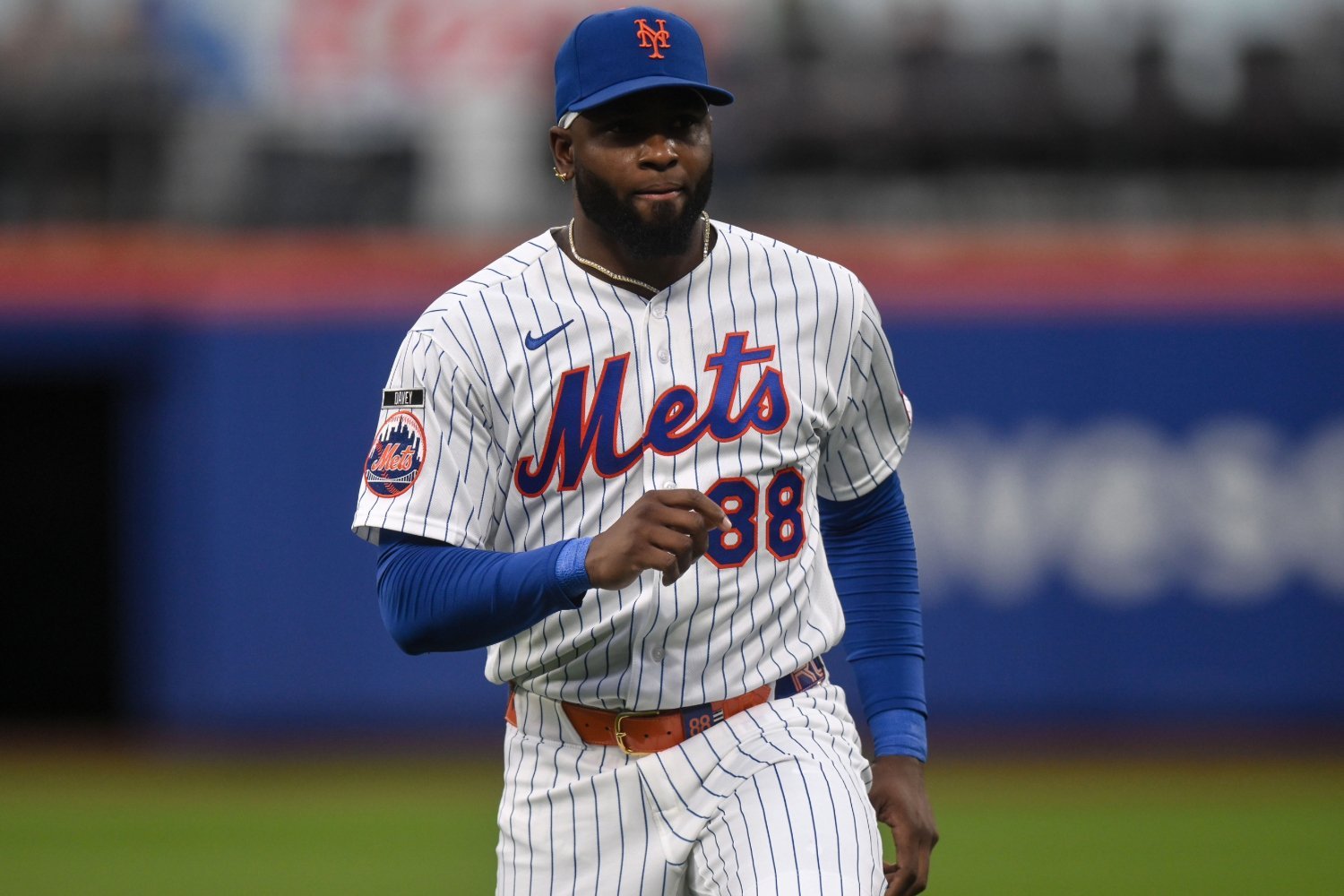 As the trade deadline approaches, the New York Mets will entertain trading everything that isn’t nailed down. So, outside of Juan Soto and their stockpile of pre-arbitration stalwarts, everyone should, and probably will, be on the block. However, that doesn’t mean they will engage in a full-on fire sale. For instance, the Mets might listen to offers for Francisco Lindor, but I seriously doubt any organization would make an offer that’s too good to refuse. And to a much lesser degree, the Mets shouldn’t listen to the offers that try to pry Luis Robert Jr. away. On the surface, the Mets should thank any team willing to take on Robert and the remainder of his contract. He’s on a $20 million salary for this season and has a $22 million team option for 2027, with a $2 million buyout. Considering he has once again missed considerable time to injury, has a wRC+ of 83, and has graded out as, at best, an average center fielder, it’d be a small miracle if any team was even willing to take on his buyout. I mean, who in their right mind would trade for this? Luis Robert Jr. Past Three Seasons Season Team GP AVG OBP SLG wRC+ Off Def WAR 2024 CHW 100 0.224 0.278 0.379 84 -6.7 -2.1 0.5 2025 CHW 110 0.223 0.297 0.364 84 -6.6 4.3 1.3 2026 NYM 32 0.200 0.302 0.336 83 -3.4 0 0.1 242 0.220 0.29 0.366 84 -16.7 2.2 1.9 For three straight seasons, Robert has been injured, ineffective, and wildly infuriating. Throw in A.J. Ewing’s impressive debut in center field, and Robert is now the league’s most expensive fourth outfielder. Yet, despite all of the recent evidence, it’s hard to give up on a player who did this. Luis Robert Jr First Four Seasons Season Team GP AVG OBP SLG wRC+ Off Def WAR 2020 CHW 56 0.233 0.302 0.436 99 0.7 3.2 1.3 2021 CHW 68 0.338 0.378 0.567 155 20.1 3.8 3.4 2022 CHW 98 0.284 0.319 0.426 111 6.7 1 2.1 2023 CHW 145 0.264 0.315 0.542 129 20.5 9.1 5 367 0.278 0.326 0.499 124 48 17.1 11.8 Robert has never been, and probably never will be, a beacon of health, but his first four seasons were exceptional. He blended above-average defense with tons of power, and averaged 4.66 WAR per 600 plate appearances. He, as the cool scouts like to say, was a toolshed, and that doesn’t appear to have changed, even as he approaches 30. Robert’s average swing speed of 76.2 MPH is the 23rd-fastest among players with 50 or more swings this season. And his sprint speed of 29.1 feet per second is in the 92nd percentile. The power-speed combination that made him a borderline star is still present, and he has suddenly started to display a more refined approach. Even when Robert was a successful hitter, his approach at the plate left a lot to be desired. He rarely walked and struck out too much, and it all stemmed from his propensity to swing at just about anything. But in 2026, he has reigned in his aggressiveness and has the best walk and strikeout figures of his career. Luis Robert Career Plate Discipline Season BB% K% BB% - K% O-Swing% Z-Swing% Swing% O-Contact% Z-Contact% Contact% Zone% 2020 8.8% 32.2% -23.4% 39.8% 80.7% 57.4% 45.0% 71.6% 61.1% 43.0% 2021 4.7% 20.6% -15.9% 40.3% 85.0% 61.4% 52.2% 84.9% 73.6% 47.3% 2022 4.2% 19.2% -15.0% 43.3% 83.7% 61.5% 59.2% 85.2% 75.2% 45.0% 2023 5.0% 28.9% -23.9% 40.5% 78.1% 58.3% 47.4% 81.0% 68.7% 47.3% 2024 6.6% 33.2% -26.6% 35.9% 72.7% 53.1% 43.8% 80.2% 67.1% 46.7% 2025 9.3% 26.0% -16.7% 32.5% 76.3% 53.3% 50.2% 80.0% 70.5% 47.6% 2026 12.7% 22.2% -9.5% 33.9% 67.1% 48.7% 53.2% 87.9% 74.5% 44.5% Total 6.60% 26.50% -19.9% 38.30% 78.00% 56.70% 49.80% 81.30% 69.80% 46.30% Now, 126 plate appearances is not a huge sample, but all the statistical indicators suggest his new approach should be somewhat sticky. That doesn’t mean he’ll finish the year with a walk percentage only 9.5% lower than his strikeout rate, but none of his gains feel suspect. If you swing less, you should walk more, and if you swing at better strikes, you should make more contact. As I’m sure you’re wondering, there is a paradox we have to address: How is it possible for Robert to simultaneously post the best plate discipline figures of his career, while swinging as hard as ever, and also have the lowest wRC+ of his career? Well, there are two things at play. Robert has certainly had his fair share of bad luck this season. He has a BABIP of .231, and his xwOBA of .317 far outstrips his actual wOBA of .289. But with his combination of bat speed and walk rate, his xwOBA lags far behind his peers. Among players with 50 batted ball events, only 14 have paired a walk rate of 12% or better with an average swing speed of 75 MPH or greater, and it’s basically a who’s who of MLB superstars. Rk. Player Year PA BB% Bat Speed wOBA xwOBA LA Sweet-Spot % Barrel% Hard Hit % EV50 Adjusted EV Whiff % Swing % 1 Alvarez, Yordan 2026 473 15.4 76.1 0.445 0.475 41.9 18.6 53.7 105.4 97.5 19.4 42.7 2 Wood, James 2026 513 16.8 76.9 0.403 0.424 40.7 21.5 58.5 106.3 98.5 31.3 38.2 3 Judge, Aaron 2026 261 16.1 76.1 0.385 0.415 33.6 21.7 57.3 105.3 97.8 32.2 42.9 4 Trout, Mike 2026 405 18.5 75.1 0.37 0.398 35.8 17.8 47.8 103.2 96 23.1 39.3 5 Murakami, Munetaka 2026 313 18.2 75.1 0.393 0.378 30.7 20.3 60.1 104.7 97.8 42.6 41.4 6 Kurtz, Nick 2026 426 18.1 78.2 0.384 0.375 38.8 18.2 57.4 106.2 98.2 36.5 43 7 Acuña Jr., Ronald 2026 248 14.5 76 0.34 0.372 32.9 13.2 43.4 101.7 95.1 29.9 46.1 8 Greene, Riley 2026 454 12.6 75.6 0.358 0.371 38.2 15.3 50.5 102.9 96 29.7 46.3 9 Caminero, Junior 2026 467 12.2 79.9 0.388 0.369 28.4 13 50.5 105.6 97.3 22.6 42.6 10 Schwarber, Kyle 2026 457 14.2 77.1 0.388 0.368 39.6 17.9 52.2 104 96.8 34.6 44.3 11 Bauers, Jake 2026 386 13.5 76.8 0.373 0.36 36.5 13.6 53.9 103.8 97 27.6 40.8 12 Anthony, Roman 2026 130 15.4 75.5 0.31 0.352 40.8 9.3 47.4 102.1 95.8 28.1 37.2 13 Robert Jr., Luis 2026 126 12.7 76.2 0.289 0.309 20.7 3.7 40.2 102.1 95.3 26.7 48.7 14 Raleigh, Cal 2026 324 12 75 0.262 0.29 34.8 11.8 33.7 99.3 93.7 31.2 51.7 Outside of Jake Bauers, who is in the midst of a breakout season at age 30, any self-respecting baseball fan should know who these guys are. If you swing really hard and walk a bunch, you should be a great hitter. However, you’ll notice that Robert’s xwOBA lags way behind, and it all comes down to his minuscule barrel rate. [As a quick aside, what the Capital-F is going on with Cal Raleigh?] Barrel rate is quite simple. It’s the percentage of batted balls that have at least an expected batting average of .500 and slugging percentage of 1.500 based on their exit velocity and launch angle. The harder a player hits the ball, the greater the range of launch angles that will result in a barrel. This relationship is why EV50, which takes the average of a batter’s 50% hardest hit balls, and barrel percentage per batted ball event have a much stronger correlation (0.793) than launch angle sweet spot (0.276). Robert’s EV50 of 102.1 MPH isn’t as sterling as his swing speed, but it still ranks 57th out of the 436 hitters who have 50 batted ball events, and it’s his highest mark since 2021. Despite hitting the crap out of the ball, to use a technical term, Robert has a barrel percentage of 3.7%, which ranks 360th. Based solely on his EV50, you’d expect Robert to have a barrel percentage of 11.6%, which is the single largest underperformance in all of baseball. That being said, this isn’t just bad luck. Robert’s launch angle sweet spot percentage of 20.7% is 432nd out of 436, but it does present a tremendous amount of upside. For his career, he has a launch angle sweet spot percentage of 35.4%. With his swing speed, exit velocities, and newfound approach, simply posting a launch angle sweet spot percentage of 30%, which would still rank 339th, would vault his production well above league average. Whether it's a mechanical or timing issue, Robert has found it more difficult to impart his best contact on balls that he has lifted this season. However, even over the prior two seasons, when he posted a wRC+ of 84, he was able to get far more lift on his best batted balls. His dearth of squared-up balls in the 25 to 30 degree range is what has dragged his barrel rate and production down. It has been three seasons since Luis Robert Jr. has even been an average player, but all of the attributes that made him a borderline star are still there. His power and speed remain excellent. He’s making more contact on pitches in the zone, while walking more than ever. On top of that, he bats right-handed and can actually play center field. With the rest of the Mets’ outfield batting from the left side, having a right-handed power bat who can play all three positions as your fourth outfielder seems like a good idea. When you factor in his current surface-level production and contract, the Mets aren’t going to get anything in return for Luis Robert Jr. that’s as interesting as Luis Robert Jr. himself. At the very least, the Mets should see if he’s worth that $20 million option, because there’s a player in there that’s worth far more than that. View the full article
 -
 During parts of five seasons with the Florida Marlins, Josh Willingham hit 63 home runs, including three walk-off bombs. The first of those three blasts came on this day 20 years and off a Hall of Fame closer. Against Billy Wagner, Willingham played the role of hero at Dolphins Stadium on Aug. 1, 2006. His walk-off pinch-hit two-run blast lifted Florida to a 6-5 win over the New York Mets. The Marlins had never led as they came to bat in the bottom of the ninth against Wagner. Wagner threw just three pitches, but that’s all Florida needed to complete the comeback. Trailing 5-4, catcher Miguel Olivo started the rally by lining Wagner’s first offering to centerfield for a single. Pinch hitter Wes Helms moved him over to second one pitch later with a successful sacrifice bunt. With lead-off man Alfredo Amézaga 0-for-3 with two strikeouts, the Marlins turned to Willingham to grab a bat. Willingham turned on the first pitch he saw from Wagner over the “teal tower” in left field for the walk-off two-run blast. Prior to Willingham’s shot, Florida had never led but it did draw even twice. After the Mets took an early 1-0 lead on a Carlos Delgardo single in the top of the first, Cody Ross answered with an RBI double in the bottom of the inning. Carlos Beltrán’s two-run home run highlighted a three-run third inning for the Mets to go up 4-1, but a two-run blast from Hanley Ramírez and an RBI double from starting pitcher Scott Olsen drew Florida even in the fourth. The Mets regained the lead, 5-4, on José Reyes’ solo bomb off Randy Messenger to lead off the seventh. While Willingham delivered the Marlins with the lone pitch he saw for the evening, Ramírez and Olivo each finished with two hits. Former Marlins All-Star catcher Paul Lo Duca had three hits, a run scored and an RBI for the Mets. Reyes scored three of the five New York runs. Over parts of 11 seasons in the big leagues, Willingham hit 195 home runs, including five walk-offs. His first came as a member of the Marlins and against a seven-time All-Star on this day two decades ago. View the full article
 -
 Friday saw another split for the four San Diego Padres full-season affiliates. The Triple-A El Paso Chihuahuas were pounded by Albuquerque 14-8, the Double-A San Antonio Missions were toppled by Amarillo 8-5, the High-A Fort Wayne TinCaps beat Great Lakes 5-2 and the Low-A Lake Elsinore Storm cruised past Stockton 15-5. Padres Minor-League Transactions None. Big Offensive Nights Not Enough As Chihuahuas Tumble Dustin Harris went 4-for-5 and Nick Solak 3-for-4, each homering, driving in a pair and scoring twice, but the host Triple-A El Paso Chihuahuas gave up runs in seven of nine innings in a 14-8 loss to the Albuquerque Isotopes. Ethan Salas, the 20-year-old Padres Mission No. 1 prospect, went 0-for-3 with two walks and a run scored as the designated hitter in his third game after going 5-for-8 with four extra-base hits in his first two games. Harris, the leadoff hitter, and Solak, the cleanup hitter, combined for seven of the Chihuahuas' nine hits. El Paso also drew seven walks, with Salas and Clay Dungan having a pair. Harris homered for the second night in a row and third time this series, hitting a solo homer in the fourth inning, and Solak a two-run shot in the seventh to pull within 11-8. Harris' blast not only was his third in four games, but his third since joining the Chihuahuas on July 10 and ninth this season, while Solak's was his 13th this year. Chihuahuas right-handed starter Evan Fitterer got just one out, giving up two runs on a hit and a walk and no strikeouts. Right-hander Logan Gillaspie gave up three runs in 3⅔ innings and right-hander Yasmiel Tamarez three runs in two innings, then right-hander Justin Yeager with five runs in two innings and one run in the ninth inning. EP_0731.mp4 Player AB R H RBI BB K Dustin Harris 5 2 4 2 0 1 Mason McCoy 5 0 0 0 0 2 Carlos Rodríguez 5 0 1 0 0 2 Nick Solak 4 2 3 2 1 0 Ethan Salas 3 1 0 0 2 2 Will Wagner 3 1 1 0 1 1 Blake Hunt 2 1 0 1 1 0 Clay Dungan 2 1 0 0 2 0 Bryce Johnson 4 0 0 2 0 2 Player IP H R ER BB K HR Evan Fitterer 1/3 1 2 2 1 0 0 Logan Gillaspie 3 2/3 5 3 2 0 1 0 Misael Tamarez 2 2 3 3 3 2 1 Justin Yeager 2 6 5 5 1 1 3 Ethan Routzahn 1 1 1 1 0 1 1 Missions Lose Grasp As Sod Poodles Pull Away After five scoreless innings, the Double-A San Antonio Missions could match the output by the host Amarillo Sod Poodles in an 8-5 loss, their fourth straight loss. Right-hander Andrew Thurman gave up three runs in 5⅓ innings on three hits and two walks with four strikeouts. Right-hander Garrett Hawkins, Padres Mission's No. 17 prospect, also gave up three runs in 1⅔ innings on four hits and a walk with no strikeouts, then right-hander Bernard Jose allowed a pair of runs in one-third of an inning on two hits and a walk. Left-hander Igor Gil got the final two outs. Albert Fabian had two of the Missions' six hits (all singles) and scored a run, while Wyatt Hoffman had a hit and scored twice. Thurman had a one-hit shutout going into the sixth before giving up a walk, a one-out RBI double and an RBI single before being lifted in what would be a five-run inning. The Missions came back with a four-run seventh as Kai Roberts drew a bases-loaded walk, Brendan Durfee had an RBI grounder that was booted by the third baseman, Ryan Jackson plated a run on a double-play grounder and a wild pitch brought in another to make it 5-4. Amarillo got another in the seventh and two more in the eighth before Roberts' ninth-inning groundout brought in the final run. Player AB R H RBI BB K Ryan Jackson 4 0 1 1 0 0 Tirso Ornelas 4 0 0 0 0 3 Jake Cunningham 3 0 1 0 0 0 Albert Fabian 4 1 2 0 0 0 Luis Verdugo 3 0 0 0 1 0 Kai Murphy 4 1 1 0 0 1 Wyatt Hoffman 3 2 1 0 0 2 Kai Roberts 3 1 0 2 1 1 Brendan Durfee 4 0 0 1 0 2 Player IP H R ER BB K HR Andrew Thurman 5 1/3 3 3 3 2 4 0 Garrett Hawkins 1 2/3 4 3 3 1 0 0 Bernard Jose 1/3 2 2 2 1 0 0 Igor Gil 2/3 0 0 0 1 1 0 3 Pitchers Combine On 2-Hitter, Alex McCoy Shines In TinCaps' Win Right-handed starter Maikel Miralles didn't allow a hit but did give up two runs while combining with two relievers on a two-hitter as the High-A Fort Wayne TinCaps overwhelmed Great Lakes 5-2. Ryan Wideman, Padres Mission's No. 4 prospect, stole two bases to boost his minors-leading total to 60. Alex McCoy, Padres Mission's No. 14 prospect, went 3-for-4 with a walk, an RBI, a run scored and two stolen bases, while Carlos Rodriguez had two hits and scored a run. Kerrington Cross, Luke Cantwell and Jack Costello were on base twice. McCoy scored the go-ahead run in a three-run eighth on a wild pitch. While not allowing a hit for five-plus innings, Miralles did walk five as he struck out three, with one of the two runs he allowed in the sixth unearned. He walked the bases loaded to begin the sixth before right-hander Nick Falter took over. A Rodriguez passed ball and a sacrifice fly put the Loons up 2-1. Falter struck out the next two hitters, then yielded a leadoff single to foil the no-hit bid. Right-hander Will Varmette also allowed just one hit in two innings, earning his third save of the season. Left-hander Kash Mayfield, Padres Mission's No. 2 prospect, had his usual Friday start skipped as he deals with a lingering hamstring injury, according to Dennis Lin of The Athletic. Mayfield would be a possible trade chip in any deadline deal. McCoy put the TinCaps up 1-0 with his Midwest League-leading 26th double in the top of the sixth, then Justin DeCriscio tied it 2-2 on a double-play grounder in the seventh. In the eighth, McCoy singled, stole second (his 19th) and went to third on a one-out wild pitch. After Cantwell walked, McCoy scored on another wild pitch, then Rosman Verdugo hit an RBI ground-rule double and Kasen Wells a bases-loaded run-scoring single to make it 5-2. FW_0731.mp4 Player AB R H RBI BB K Justin DeCriscio 4 1 1 0 0 1 Ryan Wideman 5 0 1 0 0 2 Alex McCoy 4 1 3 1 1 1 Kerrington Cross 4 0 1 0 1 0 Luke Cantwell 3 1 1 0 1 0 Rosman Verdugo 4 1 1 1 1 1 Carlos Rodriguez 5 1 2 0 0 1 Jack Costello 2 0 0 0 2 0 Kasen Wells 4 0 2 1 0 0 Player IP H R ER BB K HR Maikel Miralles 5 0 2 1 5 3 0 Nick Falter 2 1 0 0 0 3 0 Will Varmette 2 1 0 0 0 0 0 Yimy Tovar Goes Deep Twice For First Storm Homers In Win Yimy Tovar went 4-for-4 with his first two Low-A homers and four RBIs as the Lake Elsinore Storm rolled to a 15-5 win over the host Stockton Ports. George Bilecki had a triple and two doubles with three RBIs and two runs scored, Ty Harvey had two hits and three RBIs and Conner Westenburg and Jose Verdugo each had two hits. Storm left-handed starter Kruz Schoolcraft, Padres Mission's No. 5 prospect, went four innings, allowing just one run on four hits but with six walks and four strikeouts. Right-hander Jeferson Villabona had two shutout innings with three strikeouts, right-hander Yoesmerli Beltre allowed four runs in 1⅔ innings and right-hander Rordy Mejia finished with 1⅓ shutout innings, striking out four. https://padresmission.com/san-diego-padres-top-prospect-rankings/kruz-schoolcraft-r130/ Trailing 1-0 after the first, the Storm took the lead for good on Verdugo's run-scoring single and Bilecki's RBI triple. Tovar, who hit one homer this year in the Arizona Complex League, drilled his first with the Storm in the fourth inning, and a second two-run shot in the seventh inning. Player AB R H RBI BB K Conner Westenburg 5 1 2 1 0 0 Ty Harvey 6 0 2 3 0 1 Bradley Frye 5 0 1 0 1 1 Jorge Quintana 6 1 1 0 0 0 Yoiber Ocopio 3 3 1 0 1 1 Yimy Tovar 4 3 4 4 1 0 Jose Verdugo 4 2 2 1 0 0 Dylan Grego 1 1 0 0 0 0 George Bilecki 4 2 3 3 1 1 Qrey Lott 3 2 0 2 0 1 Player IP H R ER BB K HR Kruz Schoolcraft 4 4 1 1 6 4 0 Jeferson Villabona 2 2 0 0 0 3 0 Yoesmerli Beltre 1 2/3 3 4 4 3 2 1 Rordy Mejia 1 1/3 1 0 0 0 4 0 Padres Mission's Top 20 Prospect Performance Ethan Salas: 0-for-3, 2 BB, 2 K Kash Mayfield: DNP Miguel Mendez: DNP Ryan Wideman: 1-for-5, 2 K Kruz Schoolcraft: 4 IP, 4 H, 1 R, 1 ER, 6 BB, 4 K Jorge Quintana: 1-for-6 Ty Harvey: 2-for-6, 3 RBI, 1 K Kale Fountain: Injured, out for season Tucker Musgrove: DNP Coleman Borthwick: In Arizona Lamar King Jr.: DNP Braedon Karpathios: DNP Jagger Haynes: DNP Alex McCoy: 3-for-4, 2B, 1 RBI, 1 BB, 1 K Truitt Madonna: DNP Jesus Castro: DNP Garrett Hawkins: 1⅔ IP, 4 H, 3 R, 3 ER, 1 BB, 0 K Elliot Lascelles: In Arizona Winyer Chourio: DNP Rosman Verdugo: 1-for-4, 2B, 1 RBI, 1 BB, 1 K View the full article
 -
Twins 5, Mariners 3: Big Blasts Push Minnesota Over .500
DiamondCentric posted an article in Twins Daily
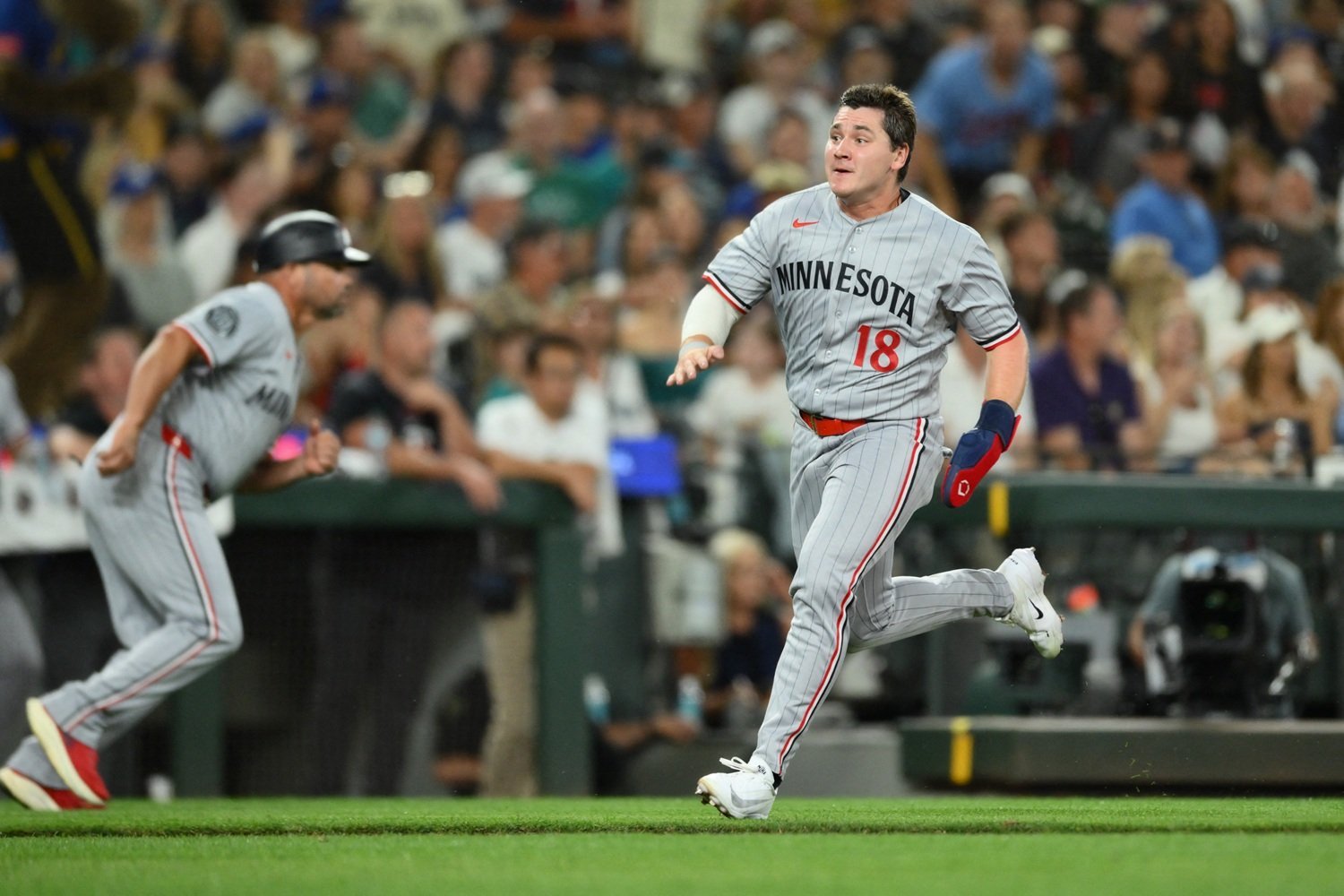 Box Score Zebby Matthews: 5+ IP, 4 H, 3 ER, 2 BB, 10 K Home Runs: Brooks Lee (16), Royce Lewis (11), Ryan Jeffers (10) Top 3 WPA: Luke Keaschall (.240), Royce Lewis (.150), Brooks Lee (.120) Win Probability Chart (via FanGraphs) No preamble tonight. The author is annoyed at how late this game started. Zebby Matthews barely knew what happened. At one point he was a starter anointing the beginning of the game; 30 pitches later, matters were turgid and anxious. What happened? Cole Young struck out on four pitches. Randy Arozarena walked following the same amount of offerings - a contradiction Matthews would have to ponder only after his night ended. Dominic Canzone then shot a double into right, but the righty with the iron jaw delivered three sliders to Julio Rodríguez to strike him out. Another four-pitch walk. Perhaps that one confounded our hero: he spent nine pitches on a weary and not particularly intimidating version of Cal Raleigh, with the final selection—a no-nothing hanger of a changeup—making its home in the right field stands after bouncing. Two runs. Finally, a strikeout to end the frame. The inning was so extended and lethargic that the Twins literally traded for another pitcher while it happened. Unbothered, Minnesota responded with a fruitful frame of their own. Josh Bell doinked a pitching wedge into right field and watched the two following batters get out. But just when it seemed like the Twins might waste an opportunity with a leadoff runner, Brooks Lee worked the count to 3-1, got a cement mixer, and deposited the pitch 367 feet away into the right-field stands. Gifted a tied game, Matthews pitched like a rejuvenated man, coaxing a strikeout from Colt Emerson and a groundout from Victor Robles. The latter may have been a 10-pitch excursion, but at least fortune turned towards him, radiating a golden, warm smile. This could be the start of the redemption. Cole Young vaporized a solo homer. Though it appeared we were in for a barn-burner, the early action receded, giving way to the common ebbs and flows of a baseball game. It would be inaccurate to say that nothing happened; rather, action settled. Chances rose and fell. Runners occasionally reached base only to slowly trudge back to their dugouts after their teammates failed to bring them home. The innings flipped like the pages in a good book, and we were suddenly in the seventh with the same score that ended the second. The bullpens were now in control. Never a more terrifying thing. Like giving nuclear codes to a drunk at a bar. Jose A. Ferrer had earned the final two outs of the sixth, so he was sent out in the seventh to continue his work. His first sinker to Royce Lewis missed high. His second sinker almost cleared the Mariners bullpen. A rally killer? Not so fast. Alan Roden collected an infield single and Lee flew out. By now, Mariners manager Dan Wilson had seen enough of his lefty and called in Eduard Bazardo to quell the rally. On a 1-1 count, he unleashed one of his signature boring sinkers to Luke Keaschall, and the young infielder was able to pull his hands in enough to line the pitch safely down the left field line, sending Roden gallivanting around the bases with a gait and hustle reminiscent of a middle schooler running home on the last day of school. Kody Funderburk handed off to Tommy Nance who handed off to Andrew Morris. No Mariner could score. In the meantime, Ryan Jeffers gave the bullpen a little more breathing room with a 372-foot blast when Bazardo's sweeper was sweepless in Seattle. Yoendrys Gómez emerged to end the ninth and keep the good vibes going as re-enforcements made their way out west. The righty didn't make it easy; attitudes grew terse and muscles tensed as he walked two batters, but Gómez settled down and punched out Mitch Garver on a sweeper to notch the save. Notes: Post-Game Interview: What’s Next? The Twins and Mariners take mercy on those East of the Rockies, with a delightful 3:10 PM Saturday start. Connor Prielipp is set to take the mound opposite Logan Gilbert. Bullpen Usage Spreadsheet MON TUE WED THU FRI TOT Rojas 0 0 52 0 0 52 Funderburk 0 27 0 0 19 46 Gomez 0 0 0 21 25 46 Rogers 0 0 0 27 0 27 Morris 0 0 0 12 6 18 Anderson 0 13 0 0 0 13 Adams 0 11 0 0 0 11 Nance 0 0 0 0 11 11 View the full article
 -
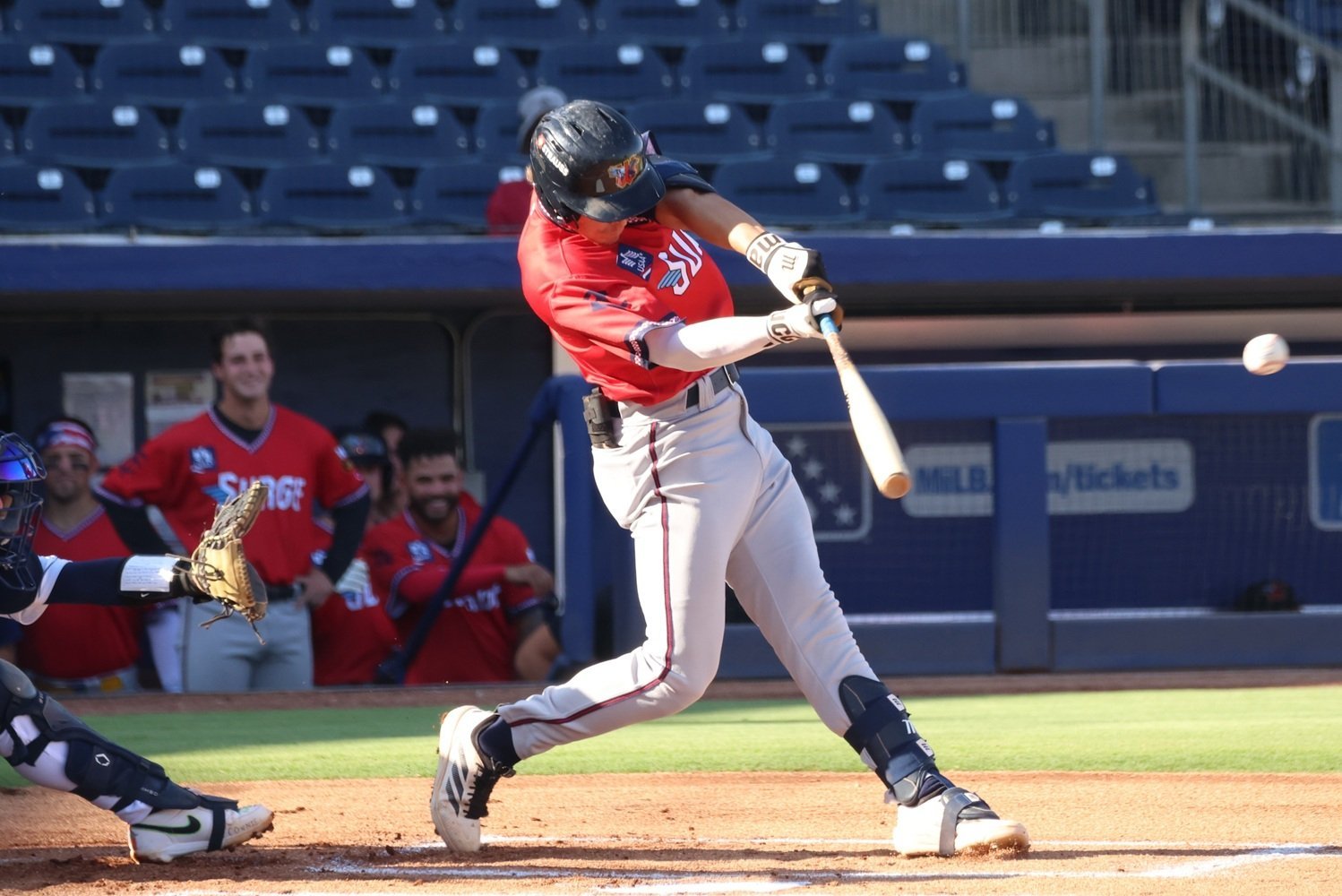 TRANSACTIONS Another Day, Another Trade The Twins are in Seattle taking on the Mariners. On Friday night, they had a nice come-from-behind win. Shortly after the game started, news came out that the Twins had acquired right-handed starting pitcher Dean Kremer from the Orioles. The Twins sent outfielder Jhomnardo Reyes to the Orioles in return. Emmanuel Rodriguez had his rehab assignment transferred to Cedar Rapids. From the sounds of it, he could play on Saturday and Sunday for the Kernels before returning to the Saints. Yesterday, we highlighted three players that the Twins had signed as undrafted free agents from the MLB Draft League. On Friday, Kurt Barr and Finnegan Wall were assigned to the FCL Twins. More NDFAs!! RHP Aidan Russell was also assigned to the FCL Twins. The Twins signed him from the Healdsburg Prune Packers of the Pacific Empire League. The 22-year-old pitched at San Diego State from 2023 through 2026. This season, he made 21 appearances out of the bullpen and went 6-2 with six saves and a 2.54 ERA. Also assigned to the FCL Twins was outfielder Bryce Fowler. A native of Madison, Mississippi, he pitched and played outfield in high school. He spent 2022 and 2023 in Hattiesburg at the University of Southern Mississippi. He redshirted the first year and played in 10 games the second season. In 2024, he went to Pearl River Community College, one of the top junior college schools in the country. He hit .419 (1.181) and then went to Alabama where he started in right field in 2025. He moved to center for his redshirt senior year and hit .320/.413/.488 (.901) with 19 doubles, six homers, and 15 stolen bases. (if you want to see an impressive walkoff celebration, click here) How excited was Fowler to sign with the Minnesota Twins? From what I've heard, it may have been similar to his reaction after this catch, probably. Fowler's teammate at Alabama, another redshirt senior Hagan Banks. He spent 2022-2026 with the Crimson Tide. He primarily pitched out of the bullpen. In 2024, he made three starts but was injured in mid-March, had surgery, and didn't pitch again until 2025. In 2025, he had 10 walks and 18 strikeouts in 19 1/3 innings. In 2026, he went 2-0 with six saves. In 23 1/3 innings, he walked eight and had 31 strikeouts. LHP Jack Walker was released from the FCL Twins roster. SAINTS SENTINEL St. Paul 4, Omaha 10 Box Score The Storm Chasers scored in their first three innings, took a two-inning break, and then they scored in their final three times to bat. Aaron Rozek started and gave up four runs (3 earned) on six hits and two walks. He struck out three batters. The nice thing is he was able to end with a scoreless fourth inning. Garrett Acton worked a scoreless fifth inning with a strikeout as he continued his rehab. Grant Hartwig gave up one run in the sixth on two hits. Alejandro Hidalgo got the seventh inning, and he gave up four runs on six hits. He did strike out three batters. Marco Raya gave up a solo homer in the ninth. In the third inning, Kyler Fedko drove in David Banuelos and Walker Jenkins with his 16th double. In the fourth inning, Cody Morissette drove in Ben Ross with his ninth Saints double. Soon after, Morissette scored on a Banuelos sacrifice fly that tied the game at 4-4 in the fourth. Ben Ross was 2-for-3 with a walk. He was the only Saints batter with more than one hit. He also stole his 10th base. Fedko and Morissette had RBI doubles. Walker Jenkins hit his 16th doubles, and Tanner Schobel added his 14th double of the season. WIND SURGE WISDOM Wichita 1, Springfield 6 Box Score This was one of the better all-around games for the Wind Surge in 2026. It really was a solid pitchers’ duel for the first six innings. The Surge were pitching a shutout until the ninth inning. The offense gave them a small lead and then added on late in the game. It’s essentially how you might write it up. Garrett Spain put the Twins on the scoreboard with his 16th home run. It gave the team a 1-0 lead in the top of the fourth. In the seventh inning, Spain scored on a single by Jaime Ferrer. Then Ferrer scored a couple batters later on a Marek Houston single to make it 3-0. In the top of the eighth inning, Brandon Winokur provided the power for an opposite field homer. It was his fourth since joining the Wind Surge. With Jake Rucker on in the ninth, Houston hit his fifth homer to give his team a 6-0 lead. Sam Armstrong started for the Wind Surge after a few bullpen appearances. He tossed five shutout innings. He gave up two hits, walked two and had four strikeouts. William Fleming gave up a single in a perfect sixth. Paulshawn Pasqualotto walked one and hit one but struck out three batters over two scoreless innings. Hunter Gregory gave up a run on three hits in the ninth inning. The Wind Surge have seen a lot of Cardinals top pitching prospect and fifth overall pick in the 2025 draft, Liam Doyle. On April 14, the Surge scored three runs on four hits in 2/3 of an inning against him. On April 19th, Doyle completed four innings and gave up just one run on two hits. He had one walk in each of those games. Jump ahead to May 29, Wichita scored two runs (1 earned) on two hits, a hit batter, and four walks. On June 16, he gave up four runs on three hits and four walks in 4 1/3 innings. In this game, he gave up just one run (on the 0-2 pitch that Garrett Spain homered on) on four hits in 5 2/3 innings. He also had a career-high 10 strikeouts. Marek Houston continues to surprise, amaze, shock and most importantly, hit. Drafted as a glove-first shortstop in 2025, he had a breakout offensive season at Wake Forest that catapulted him into the first round. Could he put up solid offensive numbers and move up based on his strong defense? Could he carry the 2025 success into 2026? After going 3-for-5 with his fifth home run and 16th stolen base, he is now hitting .336/.410/.546 (.956) with eight doubles, a triple, and five homers in 29 games for the Wind Surge. That comes after he hit .325/.406/.461 (.867) with 14 doubles, a triple and five home runs in 56 games with the Kernels. He also leads the organization with 40 stolen bases and has been caught just four times. Garrett Spain was 2-for-4 with his 16th homer. Jorel Ortega went 2-for-4. KERNELS CHRONICLES Cedar Rapids 2, Peoria 0 (Suspended in 3rd inning) Box Score Tornado sirens were blaring throughout Cedar Rapids, but the Kernels kept playing. At least for a little while. The game was suspended in the bottom of the third. The teams will complete the nine-inning game on Saturday before playing the regularly scheduled game (7 innings). Danny De Andrade will be on first base. Dameury Pena will have a 2-0 count. We’ll write more tomorrow after the game goes final. Here are a couple of quick highlights. With one out in the bottom of the first, Eduardo Tait and Danny De Andrade hit back-to-back home runs. The most encouraging thing about the three innings that were played has to be the performance of Dasan Hill. There’s no denying that 2026 has been a disappointing season for the young southpaw. He’s struggled with control and command. The 20-year-old came into the game with a 1-8 record and a 6.64 ERA. While he had struck out 71 batters in 42 innings, he also gave up 39 hits and 37 walks. On Friday night, Hill worked three scoreless innings. He gave up two hits. He had six more strikeouts. And, maybe most important, he had ZERO walks. Forty-three of his 54 pitches were strikes. That’s a remarkable 79.6% Coming into the game, just 58.1% of his 890 pitches this season were strikes. At the end of the day, the suspended game might have been the best thing for the Twins organization and the development of Dasan Hill. Maybe. MIGHTY MATTERS Fort Myers 1, Palm Beach 2 Box Score The Mussels got a strong pitching performance. Unfortunately, the bats just did very little on Friday. Matt Barr made his first start for the Mussels this year. He was injured at the start of the season, and he struggled early in his rehab assignment in the FCL this year, so he stayed there after his rehab concluded. He was added to the Mussels roster days ago. However, he was very impressive in this start. He went four innings. He gave no runs on three hits. He walked one and had five strikeouts. He touched 96.5 mph. That’s a pretty nice performance! Callan Fang came in and gave up two runs on three hits and two walks over 2 1/3 innings. He struck out five batters. Mike McKenna went 1 2/3 innings and got all five batters that he faced out. Brent Franciso gave up one hit in a scoreless ninth inning. The offense had just one run on just two hits in the game. Surprising to see the struggle because they worked nine walks. They also had 13 strikeouts. Six players struck out twice. Quentin Young was 1-for-3 with a walk. Bryan Acuna had the other hit, the lone RBI, and a walk. Calvin Scholvin made his professional debut in this game. He batted seventh and played shortstop. He went 0-for-3 with a walk and two strikeouts. Three players that made their professional debuts on Thursday were also in the lineup in this game. Aidan Teel led off and went 0-for-3 with a walk and two strikeouts. Vahn Lackey DHd and batted second. He was 0-for-4 with two strikeouts. Carson Tinney batted third and played behind the plate. He went 0-for-2 with two walks and two strikeouts. Also of note, Jhomnardo Reyes batted cleanup and played in left field. He went 0-for-2 and walked twice in what turned out to be his final game in the Twins organization. COMPLEX CHRONICLES DSL Twins, DSL Rockies Box Score This game was postponed before it even got started due to lightning. The teams hope to make up the game next weekend. PLAYERS OF THE DAY Hitter(s) of the Day Marek Houston (Wichita): 3-for-5, HR(5), SB(16), R, 3 RBI, 2 K Pitcher(s) of the Day Sam Armstrong (Wichita): 5 IP, 2 H, 0 R, 2 BB, 1 HBP, 4 K, 63 pitches, 42 strikes (66.7%) Dasan Hill (Cedar Rapids): 3 IP, 2 H, 0 R, 0 BB, 6 K, 54 pitches, 43 strikes (79.6%) Matt Barr (Fort Myers): 4 IP, 3 H, 0 R, 0 BB, 5 K, 47 pitches, 36 strikes (76.6%) PROSPECT SUMMARY Check out the Prospect Tracker for much more on our Twins Top 20 prospects after seeing how they did today. Notice that the prospect rankings have been updated to include the Twins 2026 Draft picks. #1 - OF Walker Jenkins (St. Paul) - 1-for-5, 2B(15), R, 2 K (batted first, played CF) #2 - C Vahn Lackey (Fort Myers) - 0-for-4, 2 K (batted second, DHd) #5 - SS Marek Houston (Wichita) - 3-for-5, HR(5), R, 3 RBI, SB(16), 2 K (batted first, played SS) #7 - C Eduardo Tait (Cedar Rapids) - 1-for-2, HR(19), R, RBI, K (batted second, played catcher) #9 - LHP Dasan Hill (Cedar Rapids) - 3 IP, 2 H, 0 R, 0 BB, 1 HB, 6 K, 54 pitches, 43 strikes (79.6%) #10 - OF Hendry Mendez (St. Paul) -1-for-4, (Batted fifth, played LF) . #13 - C Carson Tinney (Fort Myers) - 0-for-2, 2 BB, 2 K, CS(1) (batted third, Catcher) #14 - C/OF Khadim Diaw (Wichita) - 1-for-5, 2 K (batted second, Catcher) #15 - 3B/CF Brandon Winokur (Wichita) - 1-for-4, HR(4), R, RBI, 2 K (batted third, played CF) #17 - 3B/SS Quentin Young (Ft. Myers) - 1-for-3, BB, 2 K, CS(8) (batted sixth, played 3B) #18 - RHP Ryan Gallagher (St. Paul) - 5 2/3 IP, 3 H, 1 ER, 3 BB, 6 K, 94 pitches, 56 strikes (59.6%) UPCOMING PROBABLES Saturday, August 1 St. Paul @ Omaha (6:05 pm CT) - RHP Ricky Castro (2-1, 4.00 ERA) Wichita @ Springfield (6:35 pm CT) - RHP Riley Quick (0-0, 9.00 ERA) Peoria @ Cedar Rapids (6:35 pm CT) - RHP Justin Mitrovich (1-0, 1.80 ERA) Palm Beach @ Ft. Myers (6:05 pm CT) - TBD FCL Twins - Season Complete. DSL Yankees @ DSL Twins (9:00 am CT) - TBD CURRENT W-L Records Minnesota Twins: 56-55 St. Paul Saints: 60-45 Wichita Wind Surge: 38-60 Cedar Rapids Kernels: 38-59 Fort Myers Mighty Mussels: 52-46 FCL Twins: 33-26 DSL Twins: 11-29 Please feel free to ask questions about the teams, the rosters, and discuss today’s games, or anything else Twins minor-league related! View the full article
 -
BREAKING: Twins Acquire Starting Pitcher Dean Kremer from Orioles
DiamondCentric posted an article in Twins Daily
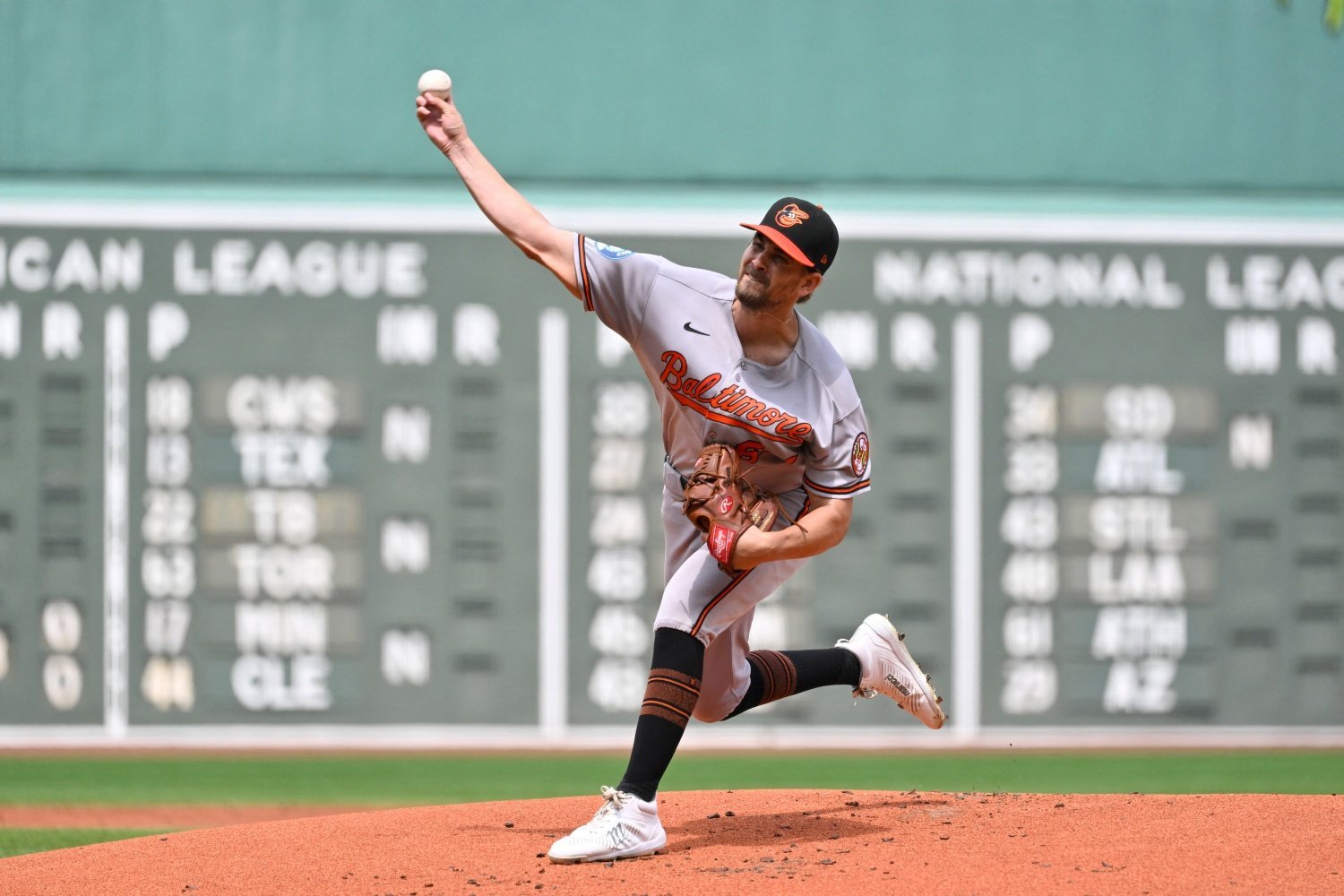 The Minnesota Twins have doubled down on their stated intention to support the existing roster and make a push for the postseason. On Friday night, they made the biggest move for a starting pitcher of the trade deadline period to date, scooping up Orioles right-hander Dean Kremer. Ken Rosenthal of The Athletic broke the news on Twitter. Kremer, 30, has only made seven starts this season, and his numbers are ugly: 1-4 with a 6.50 ERA. He missed significant time with a quad strain. He's also never been an above-average pitcher, per se. However, he's made 130 big-league starts and demonstrated a durable ability to keep his team in games. With plus ride on an average-ish fastball from his three-quarters arm angle, he can be tough when his command is there. Under team control for one more season, Kremer offers medium-term security at the back end of the rotation, as the Twins try to navigate a playoff push with a rotation that features inexperienced arms and no pitcher with a track record of pitching successfully past about the end of August in the majors. He's making $5.75 million this season, so he's still owed slightly under $2 million for the balance of the campaign. If he helps the team survive the mudfight for either the AL Central crown or a Wild Card berth, that will be a bargain. More to come. View the full article
 -
Price For Tigers' Tarik Skubal 'Enormous'; Are Brewers Still In?
DiamondCentric posted an article in Brewer Fanatic
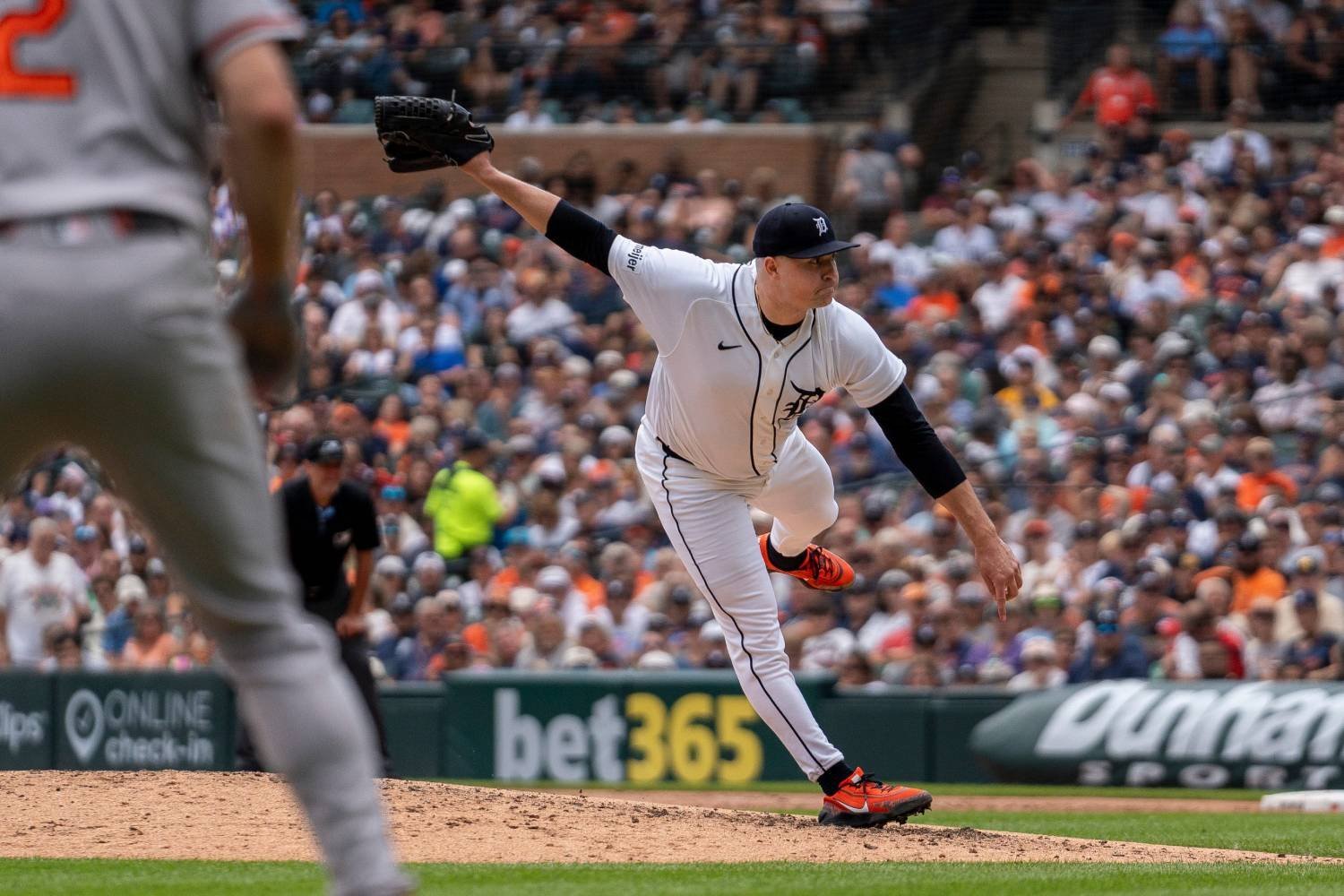 The battle for Tarik Skubal has forced teams to push more chips into the pot. Who is still in the game is another question. Are the Milwaukee Brewers? According to MLB insider Jon Heyman, the cost to acquire the two-time reigning AL Cy Young Award winner from the Detroit Tigers is "enormous." Heyman uses that word after talking with multiple executives who are interested in acquiring Skubal. That is not a surprise. Skubal is the most coveted player on this year's trade market, with the deadline to make a deal Monday at 5 p.m. CT and a true ace available to bolster a team during a push to make the postseason or to win a World Series. The three teams most often talked about for Skubal are the Brewers, the Los Angeles Dodgers and the Tampa Bay Rays. Other teams such as Atlanta and the Chicago Cubs are thought to be secondary players for Skubal, but could become primary options by increasing their package of players going to the Tigers. The Brewers (NL Central), Dodgers (NL West) and Rays (AL East) are all first-place teams in their respective divisions and possess the prospect capital and young major-league talent to get a deal done. View the full article
 -
Red Sox's Pursuit of Marlins' Otto Lopez Dead in the Water
DiamondCentric posted an article in Talk Sox
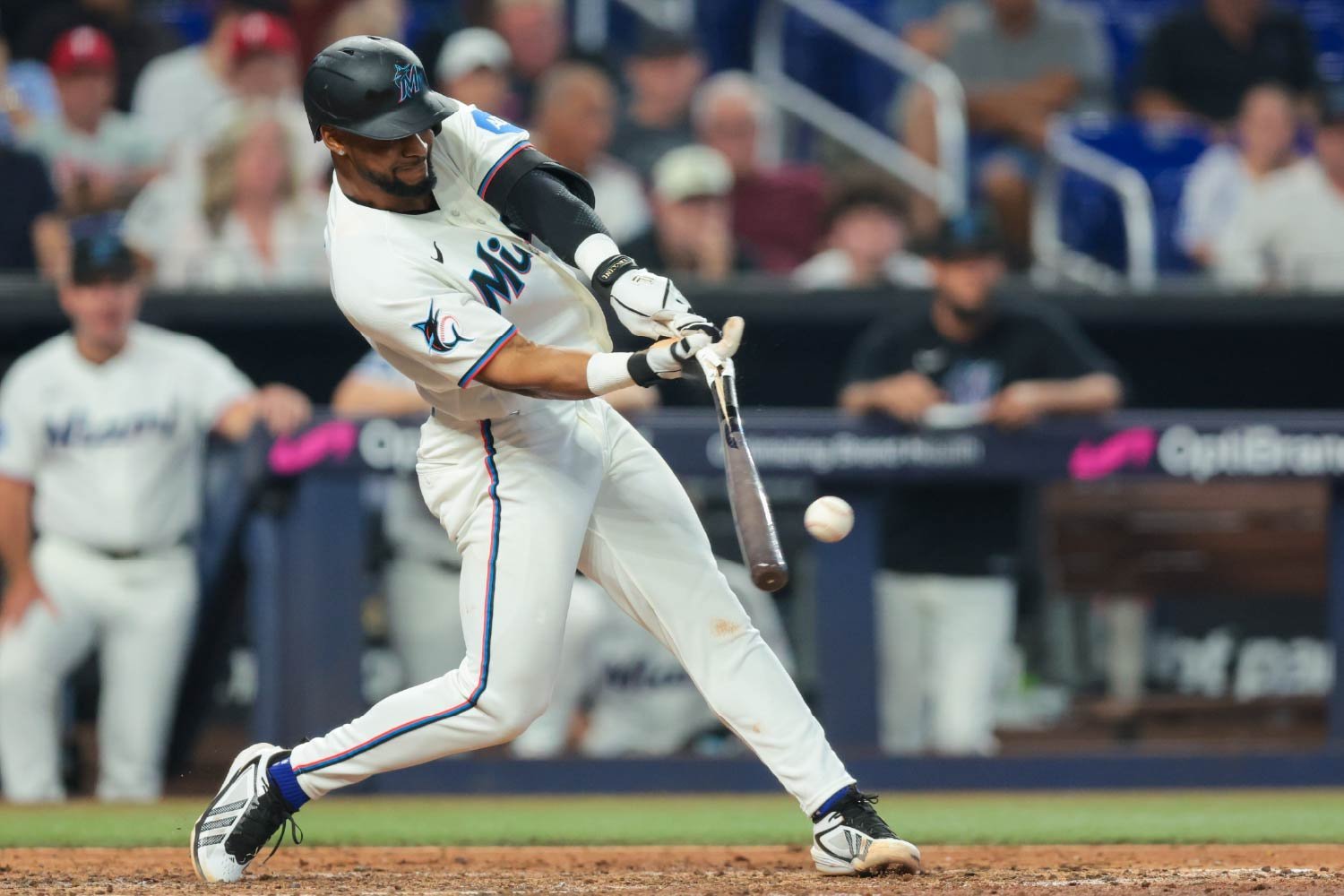 The Red Sox have been searching for a shortstop in recent days as the 2026 MLB trade deadline nears. It was reported earlier in the week that the Red Sox had interest in Miami Marlins shortstop Otto Lopez. Sean McAdam of MassLive is reporting that those talks are "dead", with the two sides not having communicated as much in recent days. McAdam added that the Marlins are not motivated to move Lopez with years of club control remaining. It can be assumed that the Red Sox will remain active in talks to acquire a shortstop, with Angels Zach Neto and Nationals CJ Abrams remaining the best options for Boston to acquire before Monday night at 6:00pm EST. View the full article
