


DiamondCentric
-
Posts
2,631 -
Joined
-
Last visited
Never
Content Type
Profiles
Forums
Events
News
Tutorials & Help
Major League Baseball Videos
Guides & Resources
Store
Downloads
Gallery
Everything posted by DiamondCentric
-

Logan Henderson Back With Brewers, Set To Start Today
DiamondCentric posted an article in Brewer Fanatic
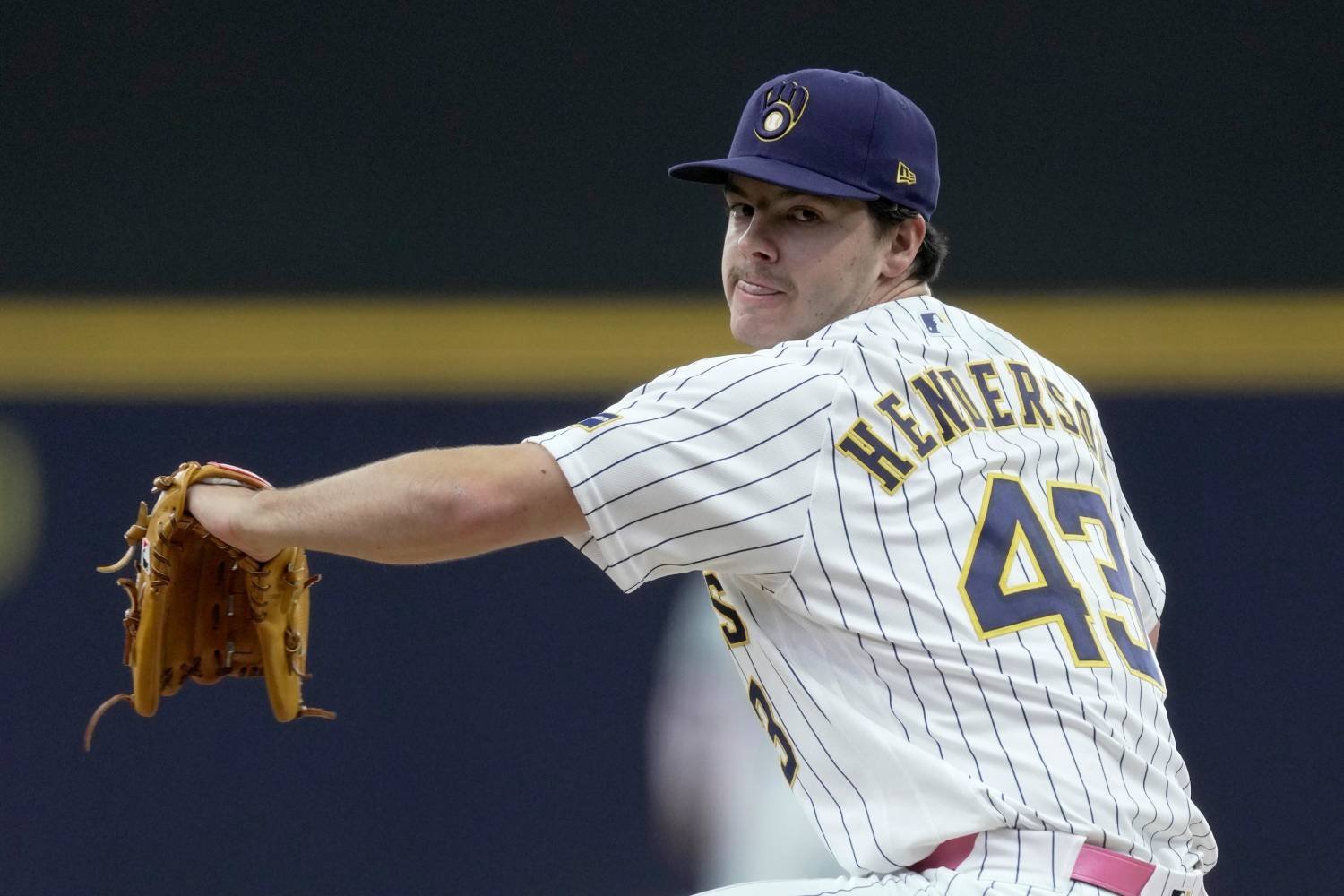 The Milwaukee Brewers have one of their key arms back. Right-hander Logan Henderson was activated from the 15-day injured list and will start for the Brewers in Thursday's series finale against the St. Louis Cardinals. Right-hander Garrett Stallings was optioned to Triple-A Nashville. Henderson has been out since late May with a strained lower back. Henderson was not on the Opening Day roster and then made an early spot start before coming up again in early May. Overall, he has made five starts and pitched 23 innings, with a 2.42 FIP (2.74 ERA) along with a 6.7% walk rate and 33.3% strikeout rate. If Henderson goes 2⅓ innings today, he will match the number of innings he pitched last year with the Brewers in his MLB debut season. Henderson also returns to the rotation as the Brewers have lost veteran right-hander Brandon Woodruff, who is considering shoulder surgery with a new injury. Stallings made two appearances since being called up June 30, including his MLB debut. In those two outings, Stallings pitched two scoreless innings, allowing a hit, walking one and striking out four. View the full article
 -
Marlins All-Star special and updated state of the rotation
DiamondCentric posted an article in Fish On First
 With the MLB All-Star break right around the corner, Kevin Barral and Isaac Azout discuss what the experience is like behind the scenes with Fish On First's resident All-Star, AJ Ramos. The guys also catch up on the Marlins' continued stretch of excellent play, Janson Junk's return to the starting rotation and the loss of Owen Caissie to a calf injury You can find Fish Unfiltered and Fish On First LIVE on the Fish On First YouTube channel, Apple Podcasts, Spotify or wherever else you get your pods. AJ was one of five Marlins representatives at the 2016 All-Star festivities, joined by Giancarlo Stanton, José Fernández, Marcell Ozuna and Fernando Rodney. He recalls getting the news of his selection straight from team owner Jeffrey Loria. Stanton won the Home Run Derby that year, while the American League won the All-Star Game itself, 4-2. Marlins manager Clayton McCullough confirmed on Thursday that Max Meyer will not participate in the game this year. Otto Lopez is expected to be used off the bench. View the full article
 -
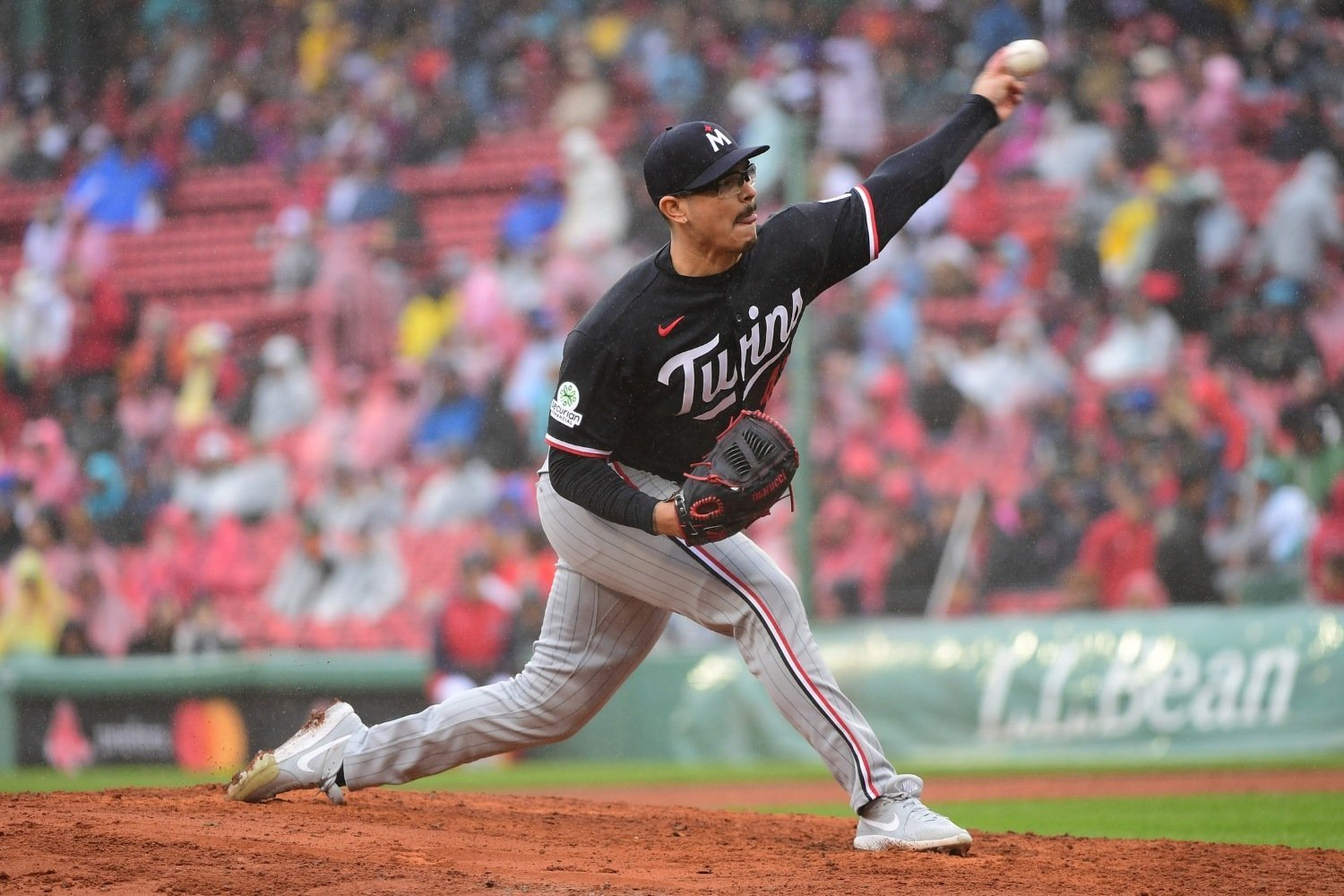 The Twins will have to finish the 2026 season without one of their veteran left-handed relievers. Anthony Banda told reporters that he recently underwent surgery to repair his injured lat, ending his season. The veteran southpaw expects to be fully recovered in time for spring training next February. While the news isn't entirely surprising, it officially closes the door on any chance of Banda returning for a late-season playoff push. Banda was placed on the 15-day injured list earlier this month with what the Twins initially described as a lat strain. At the time, manager Derek Shelton acknowledged the injury was significant and suggested Banda's recovery would be measured in months rather than weeks. There was still some optimism that he could return, but this specific surgery eliminates that possibility. Minnesota will eventually transfer him to the 60-day injured list once it needs another spot on the 40-man roster. Although Banda's overall numbers don't jump off the page, he had quietly become one of the Twins' more dependable relievers before getting hurt. He finished the year with a 4.46 ERA across 34 1/3 innings, but those numbers were heavily skewed by a difficult start to the season. Beginning on May 5, Banda posted a 1.33 ERA over his final 20 1/3 innings. That stretch came with some favorable fortune, including a .259 batting average on balls in play and a 90.6% strand rate, but he consistently gave the Twins quality innings during that stretch. That's a difficult arm to lose for a bullpen that has struggled to find consistency all season. Minnesota's relievers own a collective 5.24 ERA, tied with the Royals for the worst mark in Major League Baseball. Even if Banda's dominant stretch wasn't completely sustainable, his absence leaves the Twins with even fewer reliable late-inning options as they continue to chase a postseason berth. Despite those bullpen struggles, Minnesota remains in the thick of the American League playoff race, sitting just a half-game out of a Wild Card spot. For now, Taylor Rogers and Kody Funderburk become the club's primary left-handed relief options, while Kendry Rojas was recalled to provide additional length out of the bullpen. If the Twins remain in contention over the next few weeks, adding another bullpen arm could become an even bigger priority before the trade deadline. For Banda, the injury comes at an unfortunate time in his career. After spending 2025 with the Dodgers, Banda struggled during the postseason and found himself designated for assignment in February because he was out of minor league options. The Twins acquired him by sending international bonus pool space to Los Angeles, hoping his recent success would carry over to Minnesota. Financially, the Twins still have a decision looming this offseason. Banda is earning $1.625 million this season and remains arbitration eligible for 2027. Minnesota will need to determine whether to tender him a contract before November, and the progress of his recovery will likely factor into that decision. Unfortunately for both Banda and the Twins, they'll have to wait until 2027 to find out whether he can continue building on his success with the club. View the full article
 -
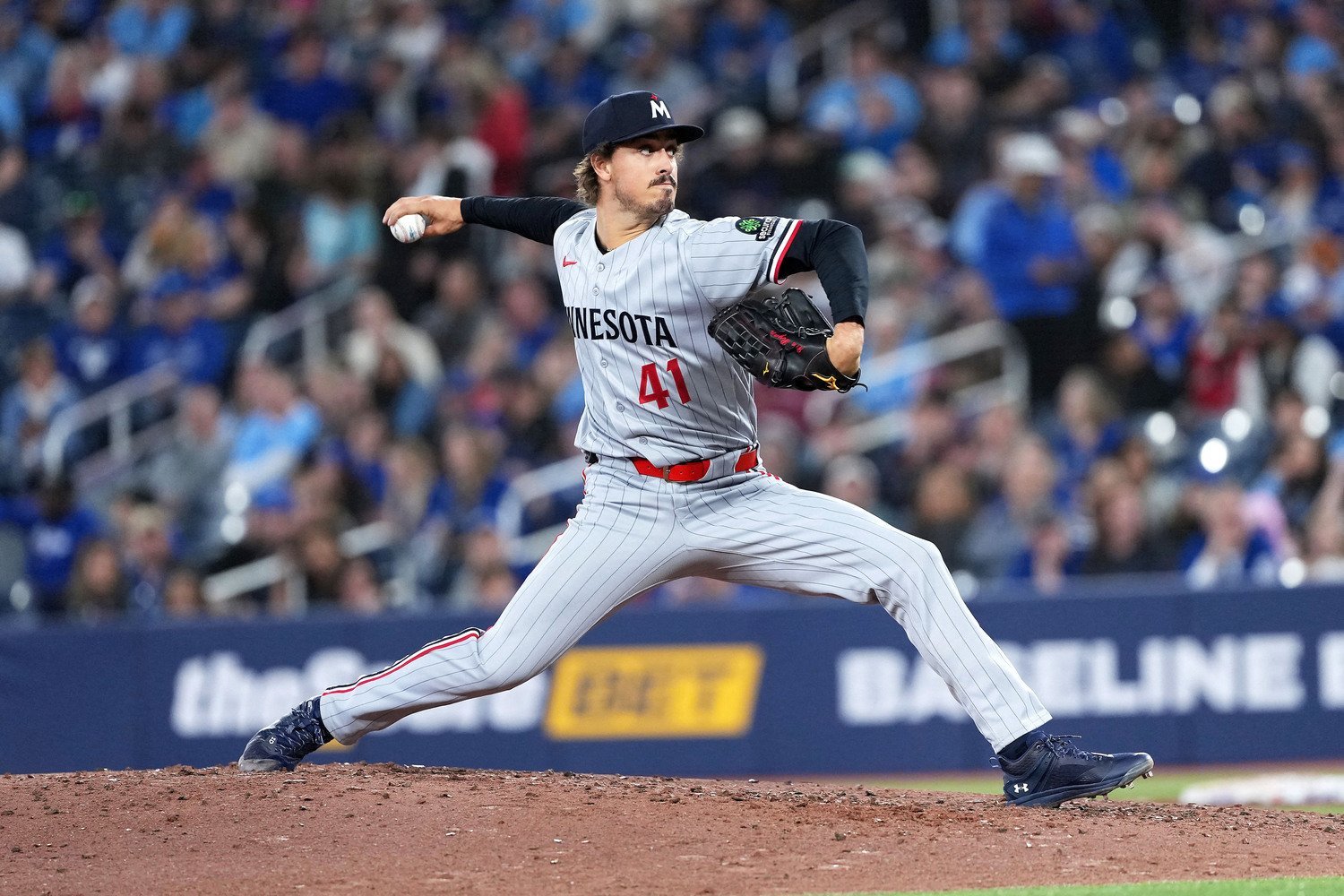 I'm still not ready to entertain the possibility that the Blue Jays will be sellers at the trade deadline. As I write this, the Jays are six games below .500 with a -38 run differential. They're only three games back of a Wild Card spot, but they would have to surpass three teams (and stave off several more) to put themselves in the playoff picture. If Toronto can't stop losing over the next couple of weeks, eventually Ross Atkins will have to face reality. But we're not there yet. For now, this is still the team that made it to Game 7 of the World Series last year. This is still the team with a top-five payroll in the sport. This is still a team that should absolutely have eyes on the playoffs. Of course, if they're going to get there – and give themselves the best chance to advance when they do – they'll have to bring in some reinforcements. The Blue Jays need another starting pitcher. Dylan Cease is a stud and Kevin Gausman is a horse, but I'm worried about Trey Yesavage and Spencer Miles running out of steam down the stretch. I'm also concerned by what we've seen from Shane Bieber so far, and I'm not counting on anything from Max Scherzer at this point. Patrick Corbin can rejoin the rotation as needed, but the Blue Jays can and should aim higher. I know I just named seven guys there, but if the 2026 Blue Jays have taught us anything, it's that we shouldn't ever worry about having too much starting pitching. If the Jays ever end up in a situation where they do have too many guys, they can figure it out then, but that possibility shouldn't affect their deadline strategy. So, Toronto needs to shop for a starter. There are plenty of options to consider, but thankfully, DiamondCentric has a list of the top 40 trade candidates I can use to narrow my search. Let's take a look at some of the top-ranked names. Tarik Skubal (No. 1) Not happening. I'd love to see the back-to-back Cy Young winner in Toronto, but the Blue Jays aren't in a position to make this kind of blockbuster. We can reconsider Tarik Skubal if they go on a 15-game winning streak. Joe Ryan (No. 2) DiamondCentric's second-highest-ranked trade candidate is a much more realistic target for the Blue Jays. The Twins ace might cost nearly as much as Skubal in terms of prospects; he's making a lot less money, and he's still under team control through arbitration in 2027. However, that's exactly why he makes sense for Toronto. If the Jays were to trade for Skubal and still miss the playoffs, it would be a disaster. If they trade for Joe Ryan and miss the playoffs this year, it would be disappointing, but they would go into 2027 with Cease, Ryan, and Yesavage atop their rotation. That's a great top three to build around, and even in his final year of arbitration, Ryan will come significantly cheaper than re-signing Gausman (or an equivalent free agent replacement). Here's what DiamondCentric's Matthew Trueblood has to say about Ryan: Reid Detmers (No. 4) Reid Detmers is under team control for two more seasons after this one. The left-hander would bring some much-needed variation to Toronto's rotation; the only lefty on their depth chart right now is Corbin. The downside with Detmers is that he's never pitched a full, qualified season. He threw a career-high 148.2 innings back in 2023. The next year, he technically threw 165.1 frames, but almost half of those were at the Triple-A level. In 2025, he threw 63.2 innings, all of them out of the bullpen. Detmers has looked great this year, but ultimately, the Blue Jays need a high-floor guy more than they need a high-ceiling guy right now. Kevin Gausman (No. 6) The next-highest starting pitcher on our rankings is a very familiar face, given that he already pitches for the Blue Jays. Jim Scott wrote an interesting piece about the possibility of Toronto flipping Gausman at the deadline, but I still think DiamondCentric's No. 6 trade candidate is staying put. Freddy Peralta (No. 7) My gut reaction here was no. The Blue Jays should stay away from Freddy Peralta. He's a rental, and he's pitching uncharacteristically poorly. Then I reconsidered. For one thing, Peralta won't cost anything close to the kind of prospect return the Tigers will demand for Skubal. And even in a down year, he has already reached 100 innings with a mid-4.00s ERA. His upside is similar to Ryan's, and his floor would still improve Toronto's staff. Here's what Matthew Trueblood wrote about Peralta: Sonny Gray (No. 8) I'm a big fan of Sonny Gray, who has been one of the more underrated frontline starters in the game for years. Since 2019, he has made 200 starts with a 3.44 ERA. In that span, he ranks fourth in FanGraphs pitching WAR behind Zack Wheeler, Gausman, and Logan Webb. His ERA right now is a career low, and his underlying numbers are as strong as ever. His strikeout rate is down, but he hasn't had any trouble compensating in other ways. Here's the problem: Gray is a very expensive rental. He'll have about $10 million in 2026 salary remaining at the deadline, plus a $10 million buyout on his mutual option at the end of the year. The Blue Jays could probably get the Red Sox to eat some of that money, but the way to do that would be to offer some enticing prospects to a division rival. I don't see that happening. José Soriano (No. 10) There's a lot to like about José Soriano, who owns a career 3.77 ERA and 4.13 xERA in 430 innings. The 27-year-old has come back to earth since his phenomenal March/April, but he's a reliable pitcher with plenty of skills the Jays would love to build on. Like his teammate Detmers, Soriano is under contract through the 2028 season, and I'm more convinced of his high floor. However, I'm less convinced the Angels will be shopping him. I think they'd only give him up for a price higher than the Jays might be willing to pay. Here are Trueblood's thoughts: Casey Mize (No. 12) This is another one where I'll say, "Let's reconsider if the Jays go on a winning streak." Casey Mize is a free agent after the year, and the Blue Jays cannot give up too much for a rental unless their playoff odds are significantly higher three weeks from now. What's more, the other rentals I've discussed so far (Skubal, Peralta, and Gray) all have longer track records of success. When it comes to Mize, the Tigers will be hoping his old prospect pedigree and excellent first-half results convince a team to pay a frontline-starter price for a pitcher who had never warranted that label before. Some teams might be willing to do that, but Toronto shouldn't be one of them. View the full article
 -
Bailey Ober Reinstated, Kendry Rojas Recalled, Prielipp to IL
DiamondCentric posted an article in Twins Daily
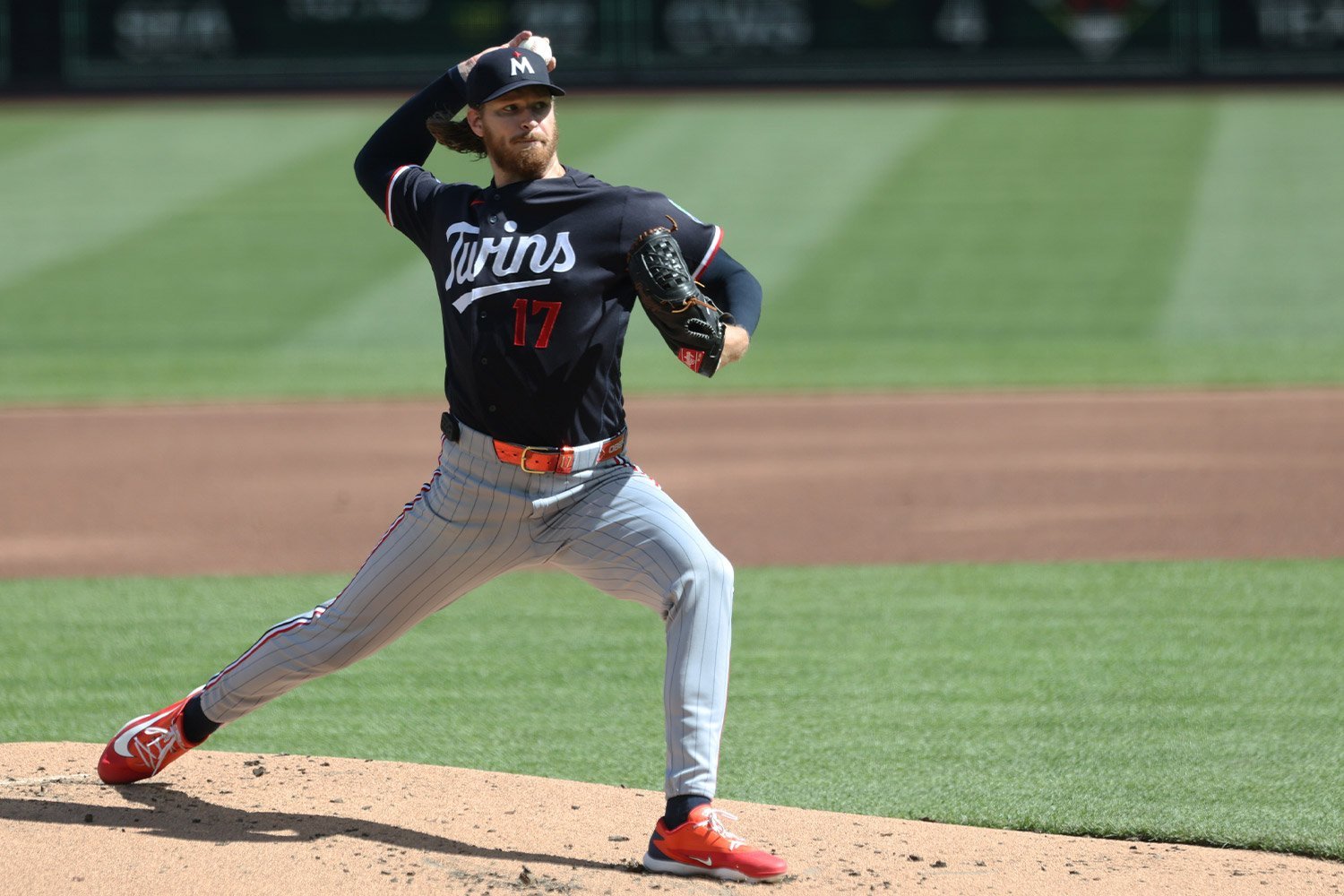 Bailey Ober has completed his rehab assignment and been returned to the active roster prior to the finale against the Guardians. He threw 8 1/3 innings in two rehab starts with Cedar Rapids and St. Paul. Prior to going on the injured list, Ober had 12 starts for the Twins, with a 4.59 ERA and 4.98 FIP. He's had his ups and downs but the hope is that he can provide some veteran depth in a rotation that has showed promise at times. Along with Ober being reinstated, LHP Kendry Rojas was recalled from Triple-A. He's bounced between the majors at Triple-A this year. In his time in the majors, he has looked promising, throwing 16 1/3 innings over six appearances. In that time, he has struck out 18 hitters, but also walked 13. If he can improve the walk rate, there is plenty of promise in the young lefty, either as a starter, or more likely as a relief option going forward. The last move made was that Connor Prielipp has been placed on the 15-day injured list with a finger blister on his left middle finger. Prielipp has been solid in the rotation this year, most recently pitching on Wednesday, giving up three runs over five innings pitched in a game the Twins won in walk-off fashion. On the year, Prielipp has a 5.00 ERA and a much better 3.90 FIP. In 66 2/3 innings, he has recorded 71 strikeouts over 13 appearances. The timing of the injured list stint could be beneficial with the All-Star Break right around the corner, so Prielipp could miss fewer games as long as the blister doesn't turn into a longer-lasting issue. He was not scheduled to start until after the break, so he won't miss a start until after the All-Star break is finished. View the full article
 -
Other Execs Weigh In On Whether Padres Will Trade Mason Miller
DiamondCentric posted an article in Padres Mission
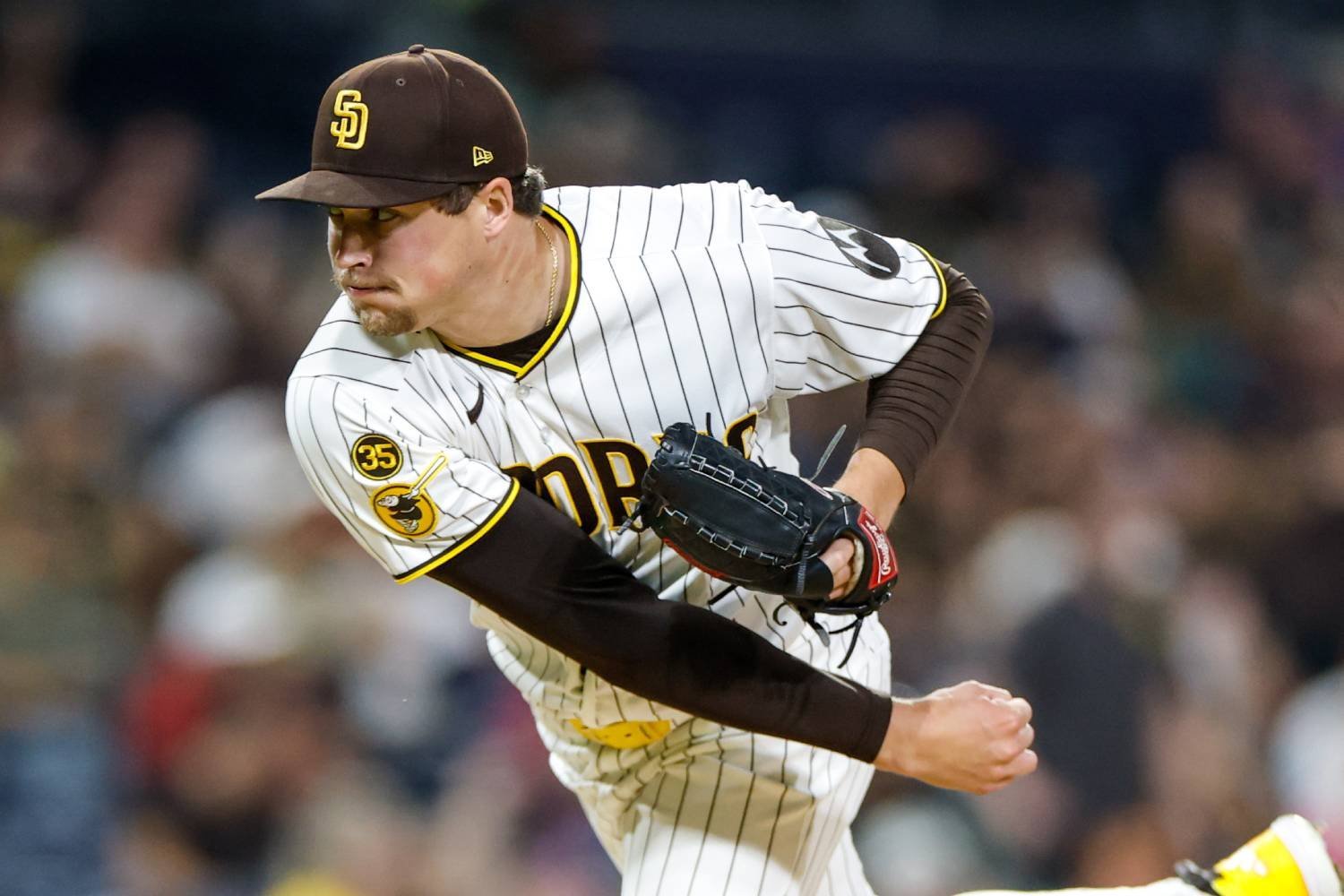 Could A.J. Preller make another blockbuster move involving Mason Miller at this year's trade deadline? Other front offices certainly think it is a possibility for the San Diego Padres, as MLB.com's Mark Feinsand laid out in this article. Preller, the Padres' president of baseball operations and general manager, made a huge splash at last year's deadline when he sent four prospects, led by shortstop Leo De Vries (at the time MLB Pipeline's No. 3 prospect in baseball), to the A's for Miller and left-handed starter JP Sears. In addition to his devastating repertoire as a closer, Miller is also attractive as he still has three more years of club control. That would benefit the Padres in terms of what they would get back from a team if Preller decides to sell. The Padres entered play Thursday at 45-45 and 4½ games out of the third and final NL wild-card spot. “They have to consider it if they keep playing like this,” an NL executive said. “They won’t get De Vries-type value back for him, but they’ll still do well if they trade him.” “I would think he would be capable of two Top 100 [players] or a Top 100 and another two players that are organizational Top 10s or so,” an NL executive said. “But I’m not sure they would feel it would be worth it.” View the full article
 -
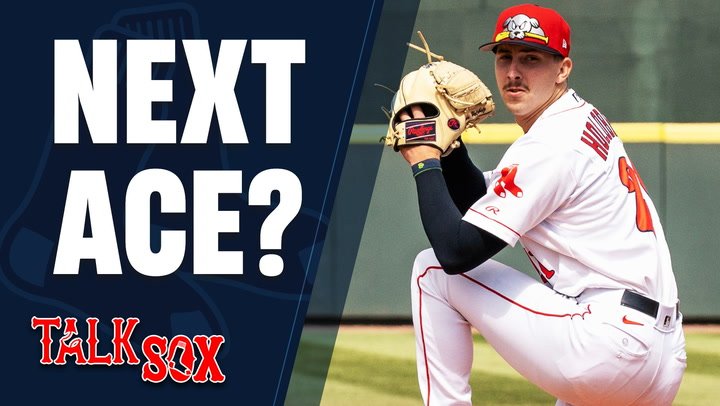 John Holobetz is a rising star in the Boston Red Sox pipeline. After acquiring him in the Quinn Preister trade, the Pottsville, PA native has flexed one of the more deceptive fastballs in baseball. In this video, we'll break down how the current Portland Sea Dogs starter is leveraging his extension, release point, and control to rise up the rankings and inch closer to the big leagues. View the full article
 -
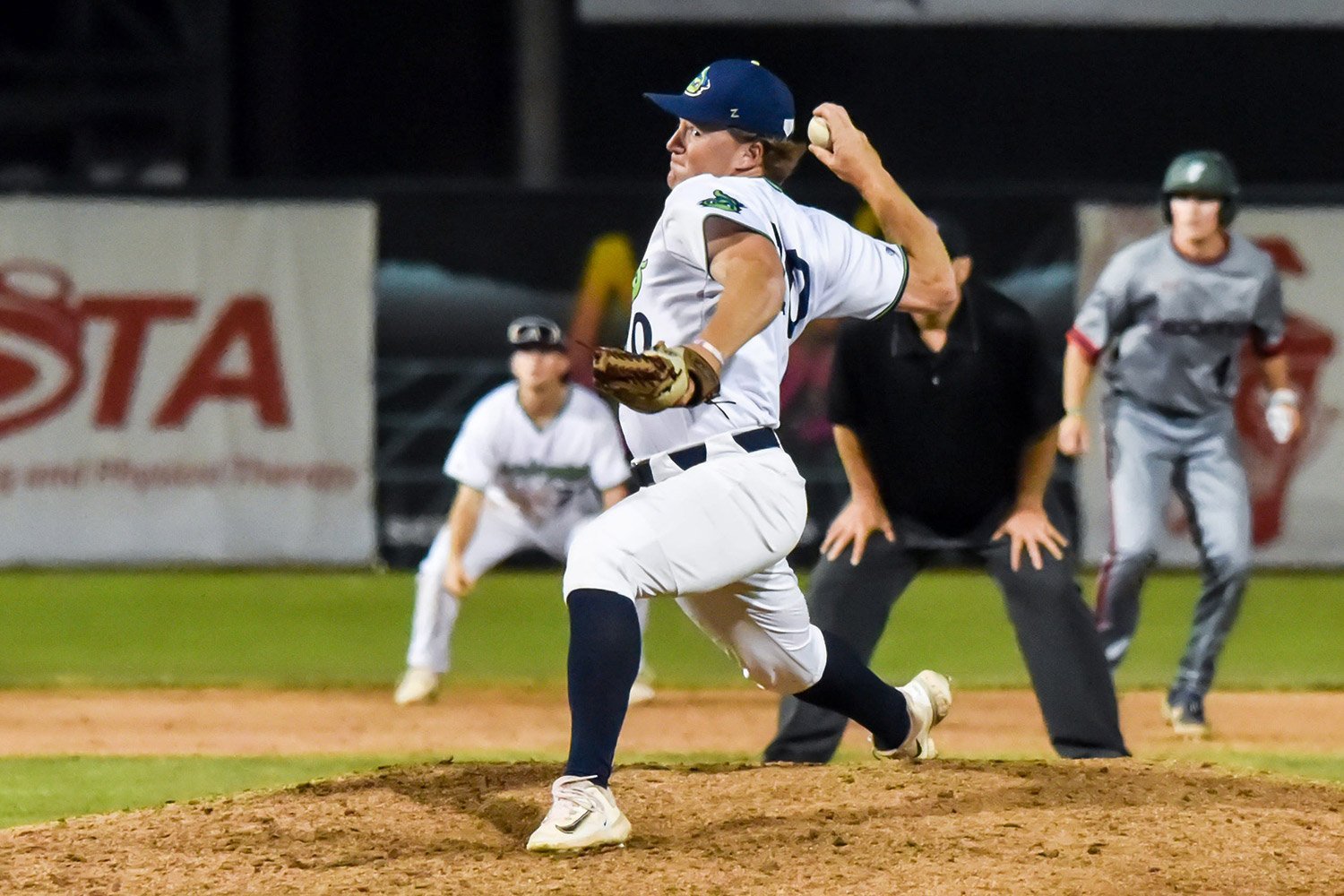 With the 2026 draft right around the corner, we wanted to take a look at how the draft class from one year ago is doing in their first year in the Royals organization. With Mondays being an off day across the minor leagues, all stats mentioned are as of Monday, July 6. Round 1, Pick 23: Sean Gamble, OF, IMG Academy Gamble was taken 23rd overall and started his professional career after signing for $4 million and forgoing his commitment to Vanderbilt. In 2026, he was assigned to Single-A Columbia. Over his first two months, he has struggled at the plate, with a .567 OPS through 63 games. He has struck out at a pretty high rate (25.2%). He hasn’t hit for much power yet, but has shown the ability to steal bases, with 19 stolen bases in 23 attempts. It’s likely too early to worry, as many young players struggle offensively when they start their careers. The hope is that Gamble will begin to show more promise offensively as the season continues. He’s currently ranked as the #5 prospect on Royals Keep. Round 1, Pick 28: Josh Hammond, SS, Wesleyan Christian Academy Hammond was taken five picks after Gamble out of Wesleyan Christian Academy in High Point, NC. Similar to Gamble, he did not make his professional debut until 2026. He’s also played this season at Single-A Columbia and has played most of his games at shortstop, but quite a few at third base as well. He’s played 42 games at shortstop and 28 at third base, along with two at DH as well. He’s been solid offensively, hitting five home runs with three triples and 17 doubles as well. His 20.7% strikeout rate is something to keep an eye on if he climbs up to the next level in the future. The 19-year old also has a 9.1 % walk rate, along with 18 stolen bases in his first 74 games played. His solid start has had him climb up to the #3 prospect in the Royals system. Round 2, Pick 61: Michael Lombardi, RHP, Tulane Lombardi has also been playing this year at Single-A Columbia. He was mainly used as a relief pitcher in his final year at Tulane, but the Royals have tried him as a starter this year. His 2.44 ERA looks solid, but the 3.45 FIP tells a slightly different story. Both numbers are still solid in his first year of professional ball. He’s struck hitters out at a high rate (13.72 K/9), but also walked batters at a pretty high rate as well (5.52 BB/9). This is not uncommon for young pitchers, so the Royals are hoping those numbers can improve going forward. Round 2, Pick 71: Justin Lamkin, LHP, Texas A&M Lamkin started the year at High-A Quad Cities, and after six starts with a 1.27 ERA and 3.45 FIP along with 38 strikeouts over 28 ⅓ innings, was called up to Double-A. In two starts, he looked solid, throwing 11 ⅓ innings and a respectable 4.09 FIP. Unfortunately, he was put on the seven-day IL and then transferred to the 60-day IL with an undisclosed injury, so hopefully this is not something that gets in the way of his development long term. Round 3, Pick 97: Cameron Millar, RHP, Alhambra HS (Martinez, CA) Millar has played this year at the Complex League, pitching in six games (five starts). He’s thrown 16 ⅔ innings and has recorded 25 strikeouts. The home run rate is high (2.70/9), but it’s a small sample, so it's hard to extrapolate if this will be an issue long term or not. He’s an intriguing arm and someone to keep an eye on, as he is ranked #13 in the Royals system. Round 4, Pick 128: Nolan Sailors, OF, Creighton Drafted out of Creighton, where he was a four-year starter, Sailors was a high-average hitter, hitting for a .913 OPS in his time with the Blue Jays. He got his professional career started after being drafted, playing in 32 games with High-A Quad Cities, where he looked comfortable at the plate (.780 OPS), and he stole 17 bases in 21 attempts. In 2026, he played again at High-A, where he continued similar production with a .777 OPS and 23 stolen bases over 65 games played. Round 5, Pick 158: Aiden Jimenez, RHP, Arkansas Jimenez started his collegiate career at Oregon State in 2023 and then missed the 2024 season due to Tommy John surgery. He pitched the 2025 season with Arkansas, where he threw 42 ⅓ innings, mostly out of the bullpen for the Razorbacks. He didn’t pitch in game action in 2025 after being drafted, but has pitched at High-A this year, throwing 48 innings in 14 appearances (seven starts, seven relief). Some of his underlying numbers have not been great, but the 22-year-old is still early in his career. The 5.79 FIP and 1.50 HR/9 along with a low strikeout rate (6.19 K/9) are concerning if they don’t improve going forward. Round 6, Pick 188: Tyriq Kemp, SS, Baylor Born in the Netherlands, Kemp played two seasons with Baylor, where he hit for a solid slash line of .305/.403/.446 with nine home runs over 108 games played. He got his first taste of professional ball after being drafted, playing with Single-A Columbia, and he struggled offensively, which is not uncommon for players in their professional debuts. Over 16 games played, he posted a .683 OPS, but did have five stolen bases in eight attempts as well. In 2026, he moved up a level, playing at High-A, where he has played both middle infield positions. He’s posted at .786 OPS with seven home runs and 21 stolen bases, so he has taken clear steps forward since being drafted. Keep an eye on how he continues to develop, as he has shown some promise over the past year. Round 7, Pick 218: Bryson Dudley, P, Texas State Dudley was drafted out of Texas State where he pitched as a relief pitcher. Over 50 ⅓ innings with the Bobcats, he struck out 53 hitters, but also showed some struggles with his control, where he walked 31 hitters. The Royals were intrigued with his pitch mix and saw promise, taking him in the seventh round. After being drafted, he pitched at Single-A, striking out 22 hitters in 13 ⅓ innings in nine games, recording two saves. He was placed at High-A and subsequently placed on the full-season injury list at the beginning of the 2026 season. Round 8, Pick 248: Brooks Bryan, C, Troy Bryan did not make his professional debut until this season, where he has played at Single-A Columbia. He’s played in 33 games (as of July 6) and looked very solid at the plate, with a slash line of .319/.406/.496. He’s added six stolen bases, which is more than he stole in any season while at Troy. He’s currently on the 7-day IL, where he was placed on June 1. Round 9, Pick 278: Shane Van Dam, P, NC State Van Dam started his collegiate career at SUNY Cortland, but pitched the final two years with NC State, where he served as mostly a reliever out of the Wolfpack bullpen. In 2026, he’s pitched in 15 games, starting 11 of them, so the Royals are trying him as a starter to start his professional career. The states have been a bit tough, as he has a 5.34 ERA with 48 strikeouts over 57 ⅓ innings pitched. At just 22 years old, he still has time to adjust, but if he doesn’t succeed as a starter, a move to the bullpen could be in his future. Round 10, Pick 308: Max Martin, P, UC Irvine Martin got his first taste of professional ball last year after being drafted, pitching in four games, where he threw 6 ⅔ innings, recording six strikeouts and not giving up a run. Between Single-A and High-A in 2026, he’s thrown exclusively out of the bullpen, and he has thrown 35 ⅔ innings over 24 appearances and recorded 30 strikeouts, along with giving up just one home run. He’s an intriguing arm as a mid-round pick, and time will tell if he can continue to make adjustments to continue climbing the organizational ladder as he gets deeper into his career. Round 11, Pick 338: Hunter Alberini, P, Arizona Alberini appeared in four games, pitching six innings after being drafted last year at High-A Quad Cities. He started the year at High-A again, appearing in 10 games, but struggling mightily with his control, walking 17 batters in 9 ⅔ innings pitched. He was sent to Single-A Columbia in late May and has looked better since being demoted, with four walks in 11 ⅓ innings pitched. Hopefully, this reset is what he needed to start having regular success out of the bullpen. Round 12, Pick 368: Matthew Hoskins, P, Georgia Hoskins is no longer in the Royals organization, as he was acquired by the Tampa Bay Rays as the PTBNL as part of the Kameron Misner deal, which was completed in November of 2025. Hoskins is currently pitching in the Complex League for the Tampa Bay organization, where he has pitched in 11 games, throwing 12 innings with eight strikeouts, 12 walks, and eight hit batters. Some of the stats are rough around the edges, but Tampa saw enough in him to choose him instead of cash considerations in return for Misner. Round 13, Pick 398: Tyson Moran, SS, Ontario Playing in 38 games in the Arizona Complex League, Moran has hit seven home runs and hit for a slash line of .315/.389/.562, which is a solid start to his professional career for the Canadian. He has shown some promise and is someone who is looking to carve out a role for himself as a mid-round pick to have some success. Round 14, Pick 428: JC Vanek, 1B, Chipola Vanek got into 14 games at Single-A after being drafted and has played this year at the same level. He has shown a little bit of power, hitting seven home runs in 58 games with a .772 OPS. He’s played mostly first base, but also played a few games in the corner outfield as well. His bat will have to carry him at a position that has a high bar to be a successful big leaguer. Round 15, Pick 458: Connor Rasmussen, IF, Tulane Rasmussen has bounced mostly played second base, but also played some third base as well. He started the year at Single-A, where he hit well enough (.816 OPS) to get promoted to High-A, where he has not seen the same success, but still looked decent in his first 10 games with Quad Cities. His defensive versatility will help him, so it will be interesting to see where he plays in the future and if more positions are added to his defensive repertoire. Round 16, Pick 488: Randy Ramnarace, P, New Haven Ramnarace didn’t get into a game with the organization until this season, where he has appeared in 18 games out of the bullpen for the Fireflies in Columbia. He’s thrown 28 innings and has recorded 20 strikeouts with 29 walks, so getting his control under control, no pun intended, will be key to having success going forward. Round 17, Pick 518: Luke Pelzer, OF, Illinois-Chicago Playing in 19 games after being drafted, he absolutely crushed Single-A pitching, which earned him the opportunity to play at High-A this year. His offense has not slowed down over his first taste of a full professional season, hitting for a .929 OPS over 61 games, with three home runs, six triples, and 17 doubles on the year. He’s played left field this year, but can also play in right field and played a little bit of centerfield in college as well. If he continues to hit like this, it won’t be long before he gets called up again. Keep an eye on this late-round pick to make a little noise on prospect lists if this success continues. Round 18, Pick 548: Grayson Boles, P, St. Augustine HS (San Diego, CA) Pitching in the Arizona Complex League, Boles has thrown 10 innings this year and has recorded 20 strikeouts, with nine walks. This type of production isn’t too uncommon for young pitchers, but he clearly has raw stuff and is someone the Royals believe in. The development might just take a bit of time to see it come to fruition. Round 20, Pick 608: Kamden Edge, P, Northern OK Tonkawa Edge made his professional debut after being drafted, pitching 14 ⅓ innings over 9 appearances with 17 strikeouts in Single-A. He’s pitched this year out of the bullpen exclusively at High-A, where the strikeouts are still occurring at a high rate (45 in 32 ⅔ innings). For a late-round pick, he is having success early. The Royals signed all but one player from the draft class, but I wanted to mention him, and we can check out how he did this year as well. Round 19, Pick 578: Dylan Wood, P, Franklin HS (Oak Grove, CA) Wood decided to pursue a collegiate career and pitched the 2026 season with the University of Georgia, where he appeared in six games and threw 4 ⅔ innings. He struggled with his control, walking nine batters in that span, but did strike out seven. He has since entered the transfer portal and has not announced where he will be transferring this next year. Which of these prospects are you most intrigued by and excited by a year after the Royals drafted them? View the full article
 -
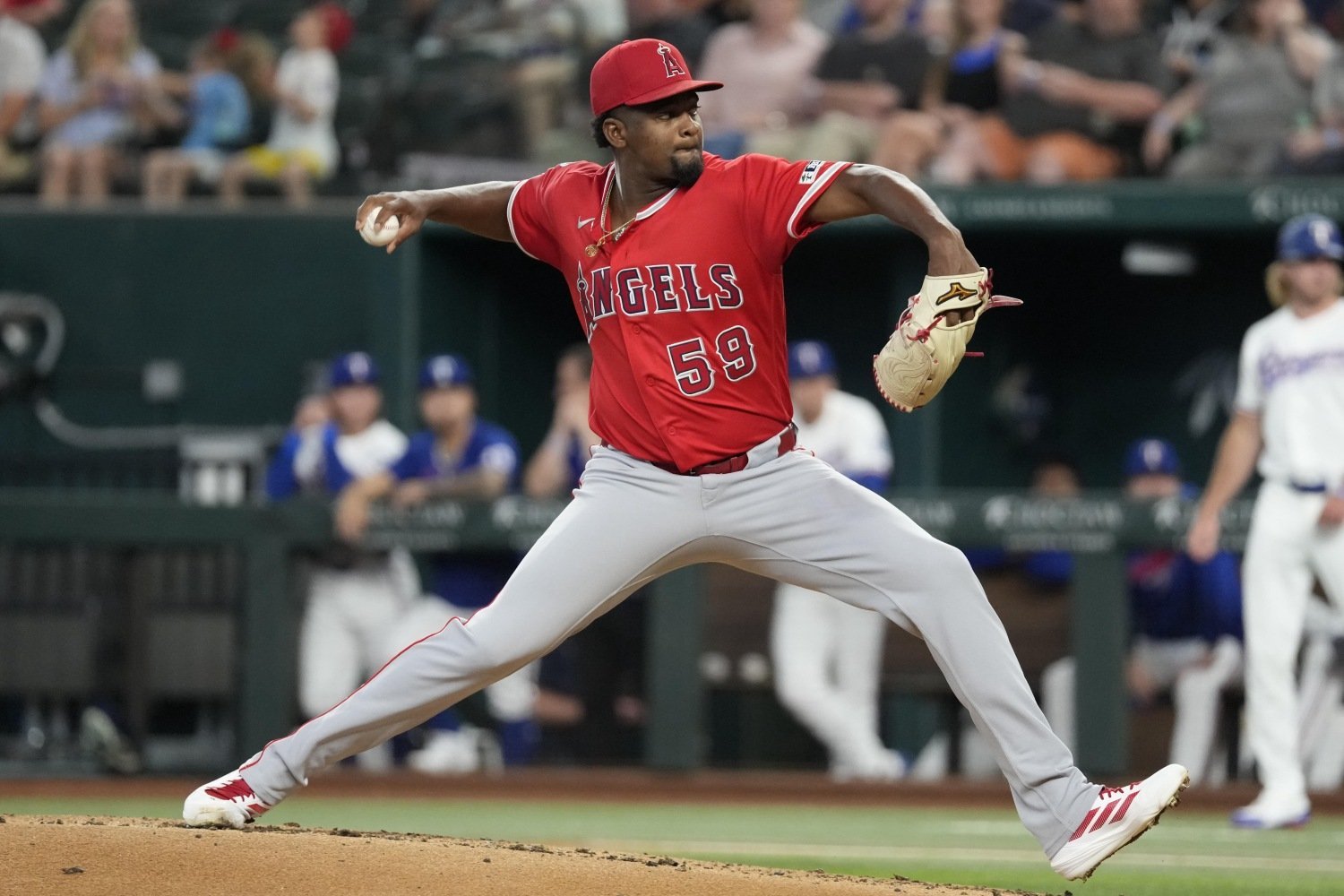 As so many Cubs seasons do, the 2026 campaign seems to have hit a nadir during a trip to Colorado. The road-tripping North Siders dropped the first two games of a three-game stay at Coors Field in early June, the second of which brought them down to .500, at 34-34. They'd been in a long downward spiral even before getting to Denver, and losing two of three to the worst team in the National League seemed to make things clear. This team was going nowhere. And then, as they'd already done once this year, they got blazing-hot. It hasn't quite matched the 20-3 stretch they enjoyed in April and early May, but since losing that second game to the Rockies, Chicago is 18-6. They've won or split seven of their last eight series, including their series win in Baltimore to start this week. They're back in the catbird seat in the NL Wild Card race, even if catching the Brewers in the NL Central remains a pipe dream. They're buyers. They were almost always going to be buyers, given what they have invested in this season, but this hot streak was enough to seal the deal. Plainly, though, they're not a juggarnaut. Even this run of three wins every four games has felt rough-edged and dangerous. They've gotten thinner in the pitching department even while racking up victories. They also don't have a great, deep farm system from which to make trades, the way (for instance) the Brewers and Dodgers do. The question of whether to improve is now settled, but a tougher one now rises: How should they improve? What are their options, and how can they best choose between them? There's a case to be made for bolstering the team's shaky bullpen, above all else. The relief corps has been decimated by injuries, and by the need to use several players whom they'd hoped to deploy mostly in relief (Colin Rea, Ben Brown, Javier Assad) as starters, instead. It helps that relievers are usually the cheapest thing to acquire each July. However, this team has issues too profound to permit them to focus solely on this year—and their pitching issues run much deeper than a thinness in the pen. For today, let's consider three options they could pursue instead, each of whom are controllable starting pitchers, rather than rentals or one-inning relievers. I'll introduce each using the capsule on our DiamondCentric Top Trade Candidates list, and then get into why each is an interesting fit for Chicago. Ok, the Edward Cabrera thing hasn't worked out as hoped. But the worst thing Jed Hoyer and company could do would be to learn the wrong lesson from that misstep. They haven't done a great job with Cabrera, and now, he's hurt, but it's not an arm injury that has him on the shelf, and there were glimpses of greatness early on from him. Rather than shy away from acquiring another guy with stuff ahead of command, they should try again. Soriano is a name they bandied about with the Angels last summer, and he'd be a perfect fit for the team's stellar infield defense. He's also a bat-missing flamethrower with two more years of team control beyond 2026. He would cost a pretty penny in prospect capital (think Jefferson Rojas), but he has a chance to start Game 1 in a playoff series for you this year, or next, or the one after. That upside is not to be dismissed lightly. Detmers ranks higher on our trade candidates list, because he's been pitching better than Soriano lately. As a lefty with more finesse and less power, he's also a bit more Cubs-y than Soriano is. If the price is the same, I would rather have Soriano, but in reality, the price on Soriano might be substantially higher. In that case, staying in their lane might make more sense for the Cubs, who would get a controllable starter with frontline upside, either way. The layers of complexity on this one might be too much to overcome, but again, here's a player with ample team control, upside and an obvious fit with the Cubs, in terms of pitching philosophy and the need for a plus defense. Intradivisional trades only get harder to make when the centerpiece will be in their new prospective home for multiple seasons, and harder still when one side is having a massively disappointing season that forces them to rethink what they hoped would be their emerging core. The Pirates might not make an amenable trade partner right now, but Mlodzinski could help the Cubs immediately in the bullpen or be stretched out gradually to start for them late in the season. This is the kind of target Hoyer should aim for over the balance of the month. The Cubs shouldn't be all-in on 2026; they're not good enough for that. They have clear and urgent needs, though, and they need to avoid the colossal failure that would be missing the playoffs. Adding a pitcher who can patch the holes that will be left by the departures of Shota Imanaga, Jameson Taillon and Matthew Boyd (and more, perhaps) this winter while also boosting the team's chances down the stretch is the best possible course. It's just not going to be easy. View the full article
 -
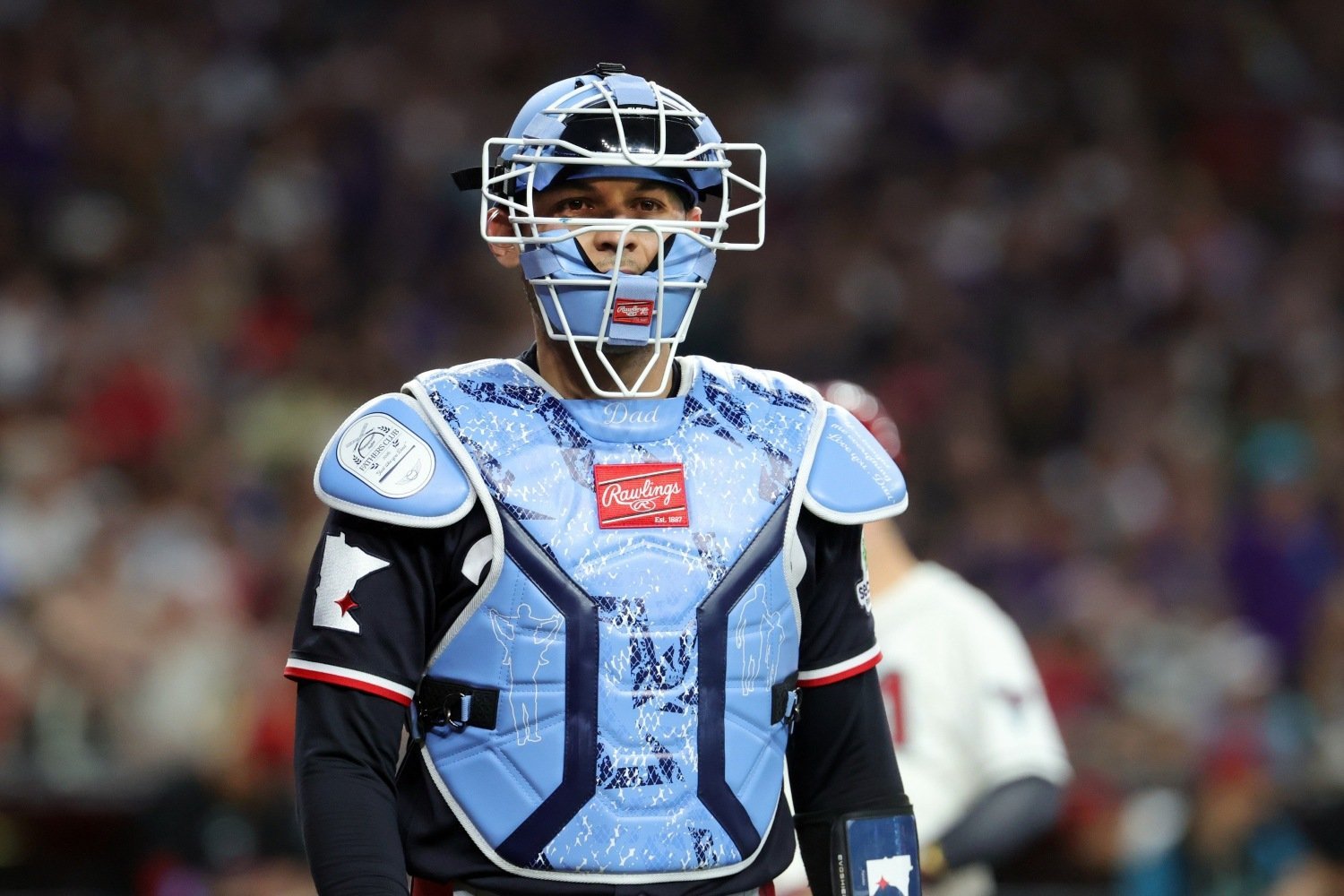 Alex Jackson will make his 15th start of the season Thursday afternoon, as the Twins go for a pivotal sweep of the Guardians at Target Field. Surprisingly, that doesn't feel ominous in the least. Jackson came into this season as a .153/.239/.288 hitter—a former top-10 overall pick turned journeyman, whom the Twins became the seventh team to trade for in a paripatetic 12-year pro career. Even after they dealt for him, the team went out and added Victor Caratini to supplant him as the backup to Ryan Jeffers, stashing Jackson at Triple-A St. Paul to start the season. Now, though, he's become a surprisingly vital ingredient in the team's unexpected surge toward the postseason. In his first 14 starts behind the plate, Jackson is 9-5. For the second year in a row, he's showing plus bat speed, and results to match. He's batting .314/.340/.431. He's struck out 15 times and drawn zero walks in 53 plate appearances, so that batting line isn't exactly sustainable, but to suggest he'll revert to his previous career norms would be to rashly dismiss what has been not only a tangible improvement, but an impressive bit of hard-won hustle value. Jackson is a plus athlete for a catcher. He even has average-plus raw sprint speed, according to Statcast. That makes his surge in bat speed, which happened last year in Baltimore, unsurprising; he just needed longer than initially hoped to learn how to get off his 'A' swing. More surprisng, though, is the way he's applied that athleticism every time he takes the field, with a relentlessness and tenacity that have endeared him to fans, teammates and coaches alike. Jackson has three bunt hits this season. He also hustles down the line on ground balls harder than anyone else on the team. On Saturday against the Yankees, for instance—despite searing heat, the demands of catching under those conditions, and a preposterous combination of hidebound rulemaking and poor preparation that meant the Twins could each wear only one jersey during the game, rather than changing once or twice over nine innings as catchers usually do in such heat—Jackson busted it out of the box on a routine double-play ball in the sixth inning. He beat it out, keeping a rally going. The Twins didn't even go on to score in the frame, but that moment was one distillation of a trend that has been on full display whenever Jackson gets onto the field: effort and hustle in the extreme. TDY1eXFfWGw0TUFRPT1fQUFNQUFGWlFYd1lBRDFzRVhnQUhVQUpTQUFBR0J3Y0FCZ1pVVTFVQ0JRUUdWbFJR.mp4 The bunts Jackson has laid down and the grounders on which he's put pressure on the defense by running hard are good examples of the same traits he shows behind the plate: unselfish dedication to the team. It's an impressive attitude for a player who has rarely stayed with any organization for very long and didn't get especially generous treatment from the one he's in now. Jackson hasn't been a great defender, in the measurable ways. He's not a good pitch framer, and hasn't navigated the ABS system well. He's not excellent at blocking pitches, though he does have an elite throwing arm. In terms of managing a young and not-very-talented pitching staff, though, he's been great. Between the hustle on offense and the situation management on defense, he's gotten the team over the hump nine times in 14 tries since coming up to take Jeffers's spot when the starting catcher got hurt. Yes, the Twins clearly still trust Caratini more. No, this won't necessarily stop them from demoting Jackson (even at the risk of losing him on waivers) when Jeffers returns from the IL. However, when you're a fringy playoff hopeful with a star-caliber catcher and that guy goes down for over six weeks, you brace for a handful of extra losses. In 15 starts, you have to accept that you might lose 10. If the Twins were 4-10 in Jackson's starts, entering Thursday, they'd be lagging the Tigers, in fourth place in the AL Central. They'd be 5.5 games out of the final AL Wild Card spot, with several teams clustered ahead of them. As it is, they're 2 games back in the division and a half-game behind the Rangers for the last prospective playoff berth. Not all of that difference is attributable to Jackson, of course. The team has stepped up in various ways over the last few weeks to salvage their season, staying alive longer than was expected of them. They've also gotten a bit lucky, along the way. But Jackson's motor and his surprising competence are echoes of what the team got right from the moment they acquired Kody Clemens, and of what they've gotten from Ryan Kreidler since turning to him in a similar pinch earlier this year. They're giving chances to guys who had nearly run out of them, and those guys are finding success. That's a testament to the team's scouting and analytics groups and to their coaches, but it's also a testament to the dedication, perseverance and baseball IQ of those players. Jackson is as good a symbol of that as anyone. He's the guy the team saw something in and proactively acquired, but whom they didn't quite trust until they were left with no alternative—and who has essentially saved their season, once the chance to do so arose. View the full article
 -
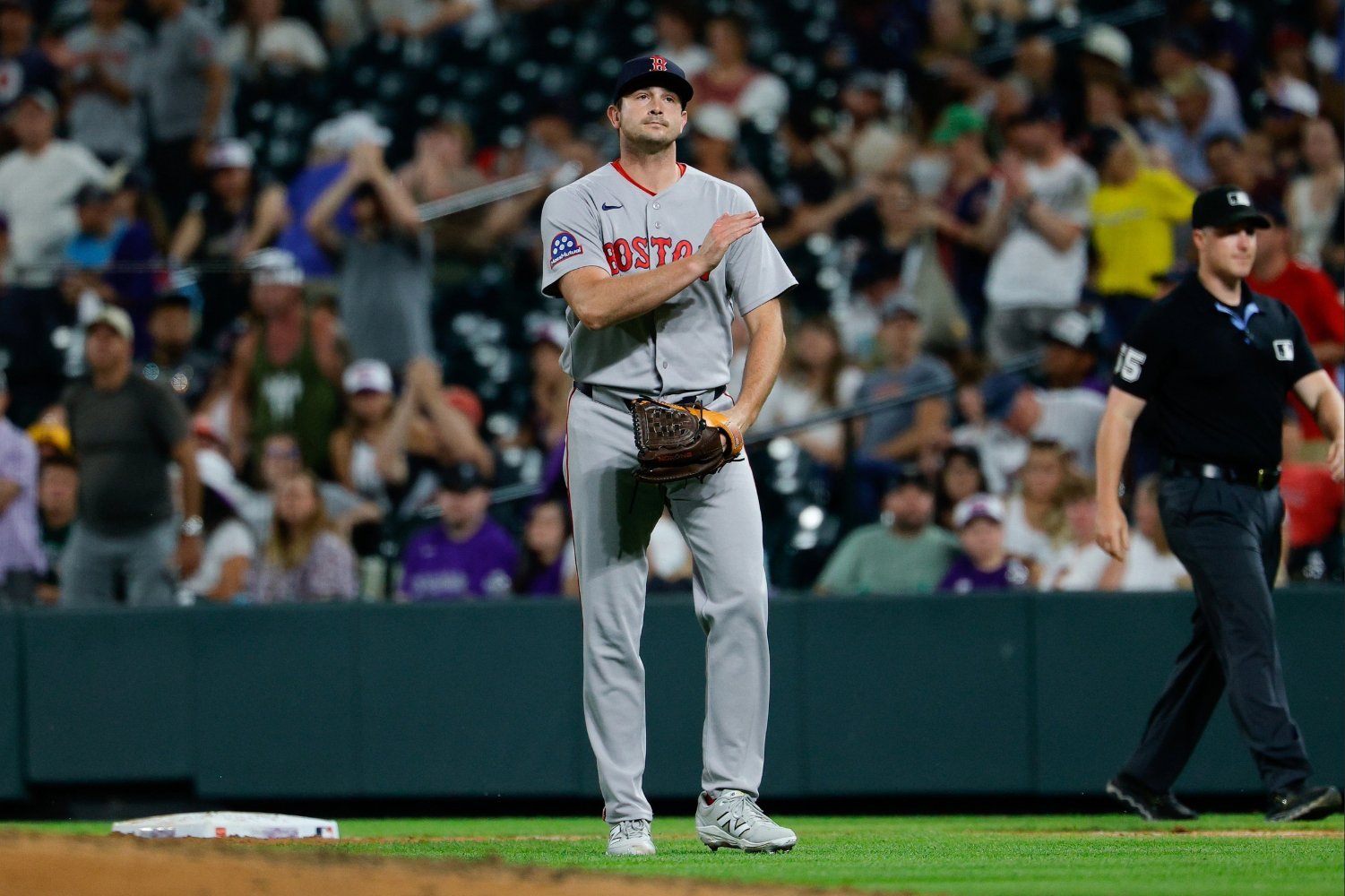 According to multiple sources with ties to the Boston Red Sox, the Pittsburgh Pirates have submitted an offer for "multiple MLB players" on the roster. Garrett Whitlock is a confirmed part of the Pirates' offer. There are no indications as to their other request(s), though their need for bullpen help suggests perhaps another reliever, such as Aroldis Chapman or Justin Slaten, would be sensible. They have the fourth-ranked scoring offense in baseball, so it's unlikely that they'd seek one of the hitters from the Sox's moribund lineup. No indications have been given as to their proposed return, though I've corroborated with multiple sources that Jared Jones and Bubba Chandler are not part of the deal. It hardly goes without saying, but any dreams about Paul Skenes coming over are also unrealistic. At this time, no deal is reportedly close to completion. The front office almost certainly will hold out hope that they can keep their sinking ship buoyant before agreeing to a sell-off, and their pre-All-Star-Break stretch against the Angels, White Sox, and Mets has given them the perfect chance to get back on track before the second half. View the full article
 -
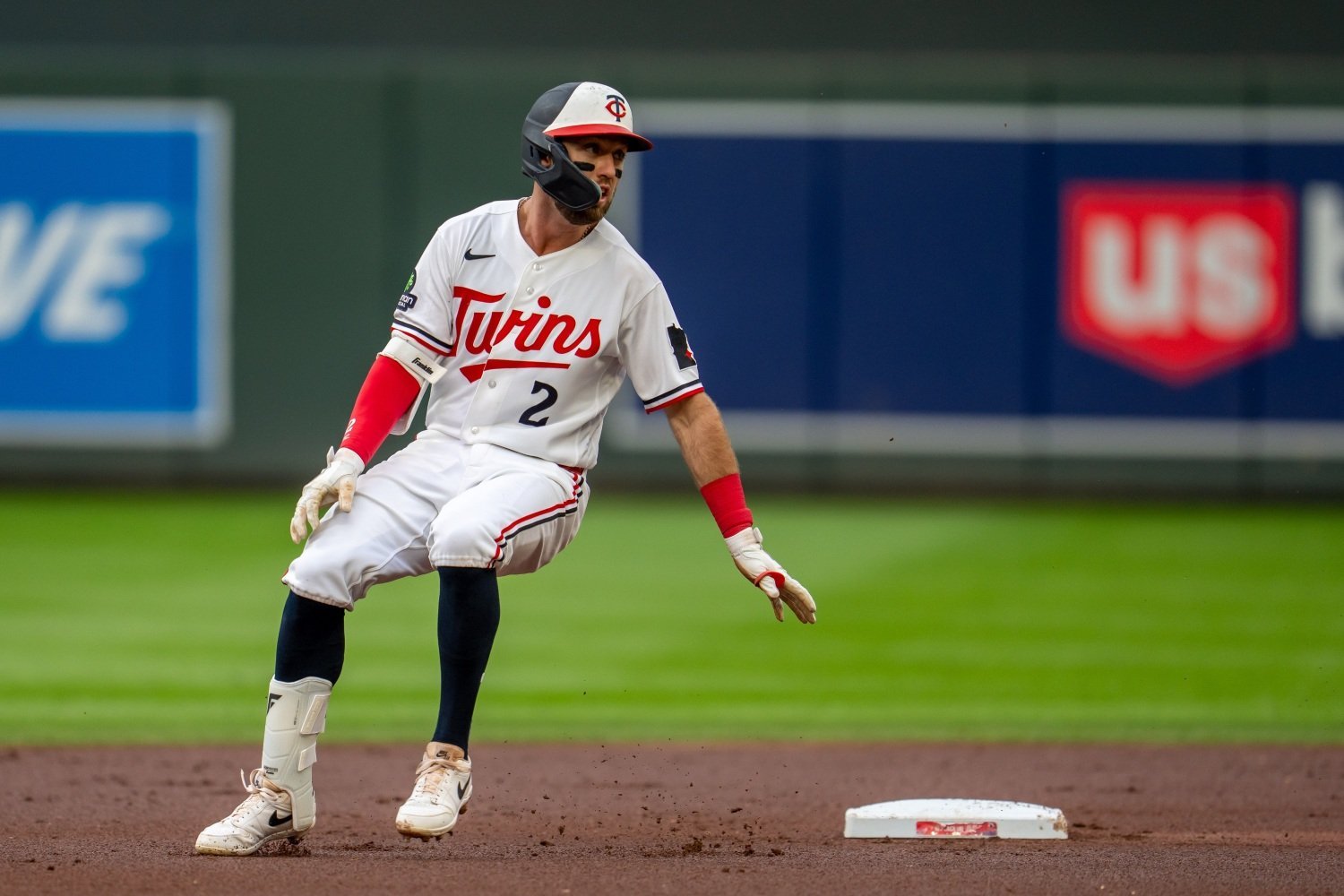 Derek Falvey's final season leading the Twins' baseball operations department will always be remembered for the sheer volume of moves he made. Faced with a disappointing season, Falvey orchestrated a historic selloff at the trade deadline, completing more than 10 trades as he reshaped the organization's future before departing at the end of the year. Some of those deals brought back highly regarded prospects. Others cleared payroll or addressed long-term organizational needs. Looking back now, though, the best trade Falvey made during his final season wasn't one of the blockbuster deadline deals. It came three months earlier, when he quietly acquired Kody Clemens from the Philadelphia Phillies for cash considerations. On April 26, the Twins sent cash to the Phillies to acquire Clemens after he had been designated for assignment. It was an emergency move after Luke Keaschall suffered a broken forearm, leaving the Twins in need of another infielder. Rather than wait and hope Clemens cleared waivers, Falvey jumped the line to ensure he landed in Minnesota. At the time, the move barely generated a reaction, because there wasn't much reason to believe Clemens would become anything more than organizational depth. Already, the likes of Jonah Bride and Mickey Gasper were conditioning fans not to expect much from such additions. Before joining the Twins, Clemens owned a career .611 OPS across 402 major-league plate appearances. He had hit just 14 home runs while striking out 102 times, compared to only 22 walks. Players with that type of production don't typically become useful contributors, especially in their late 20s. Clemens had been designated for assignment for a reason, and expecting him to suddenly blossom into an everyday player would have been unrealistic. But Falvey and the Twins clearly saw something the rest of baseball didn't. They didn't have to trade for Clemens. They could have waited to see if he cleared waivers or simply targeted another player who was already available. Instead, they specifically identified Clemens as someone worth acquiring immediately. Whatever they saw has paid off in a massive way. Since joining the Twins, Clemens has posted a .763 OPS with a 108 wRC+. He ranks second on the team with 35 home runs, third with 96 RBIs, third with 3.2 fWAR, and second in Win Probability Added, trailing only Byron Buxton. Those aren't the numbers of a bench player or a temporary injury replacement. They are the numbers of one of the most valuable players on the roster. The value becomes even greater when considering what Clemens costs. He has produced all of that while making the league minimum, after being acquired for what amounted to just a couple extra months' worth of a minimum-salary player's earnings. That matters for this version of the Twins. Since the end of the 2023 season, ownership has steadily reduced payroll, limiting the organization's ability to improve through free agency. Finding an above-average everyday player making the minimum salary is exactly how a team operating under financial constraints stays competitive. Just as importantly, Clemens has been available virtually every day. Since joining the Twins, he ranks fourth on the team in plate appearances and has yet to spend any time on the injured list. In a season where injuries have once again tested the club's depth, that reliability has been incredibly valuable. His defensive versatility has only increased his importance, as the Twins have used him at first base, second base, left field, right field, and even center field. Few players have given the Twins more flexibility when filling out the lineup card, allowing the Twins to shuffle pieces around while keeping Clemens' bat in the lineup almost every day. The scary part is that he may not even be slowing down any time soon. Over the past 30 games since June 1, Clemens owns an .895 OPS with 10 home runs and 23 runs scored, both of which lead the Twins during that stretch. Rather than cooling off after an unexpectedly productive first couple of months, he has become one of the hottest hitters on the team and continues to exceed every expectation anyone had when the Twins acquired him. Looking back, it's remarkable how insignificant the trade felt at the time. Falvey's final season featured a whirlwind of transactions, including a historic trade deadline selloff that reshaped the organization. Some of those deals may eventually prove to be franchise-changing, but none have already delivered the kind of value the Clemens trade has. For cash, the Twins acquired one of their best hitters, one of their most valuable players, and one of the best bargains on the team. Considering the acquisition cost, his league-minimum salary, and everything he has produced, it's hard to argue any move Derek Falvey made during his final season with the Twins has aged better than the trade for Kody Clemens. Do you think Kody Clemens was the best trade Falvey made last season? Leave a comment below and start the conversation! View the full article
 -
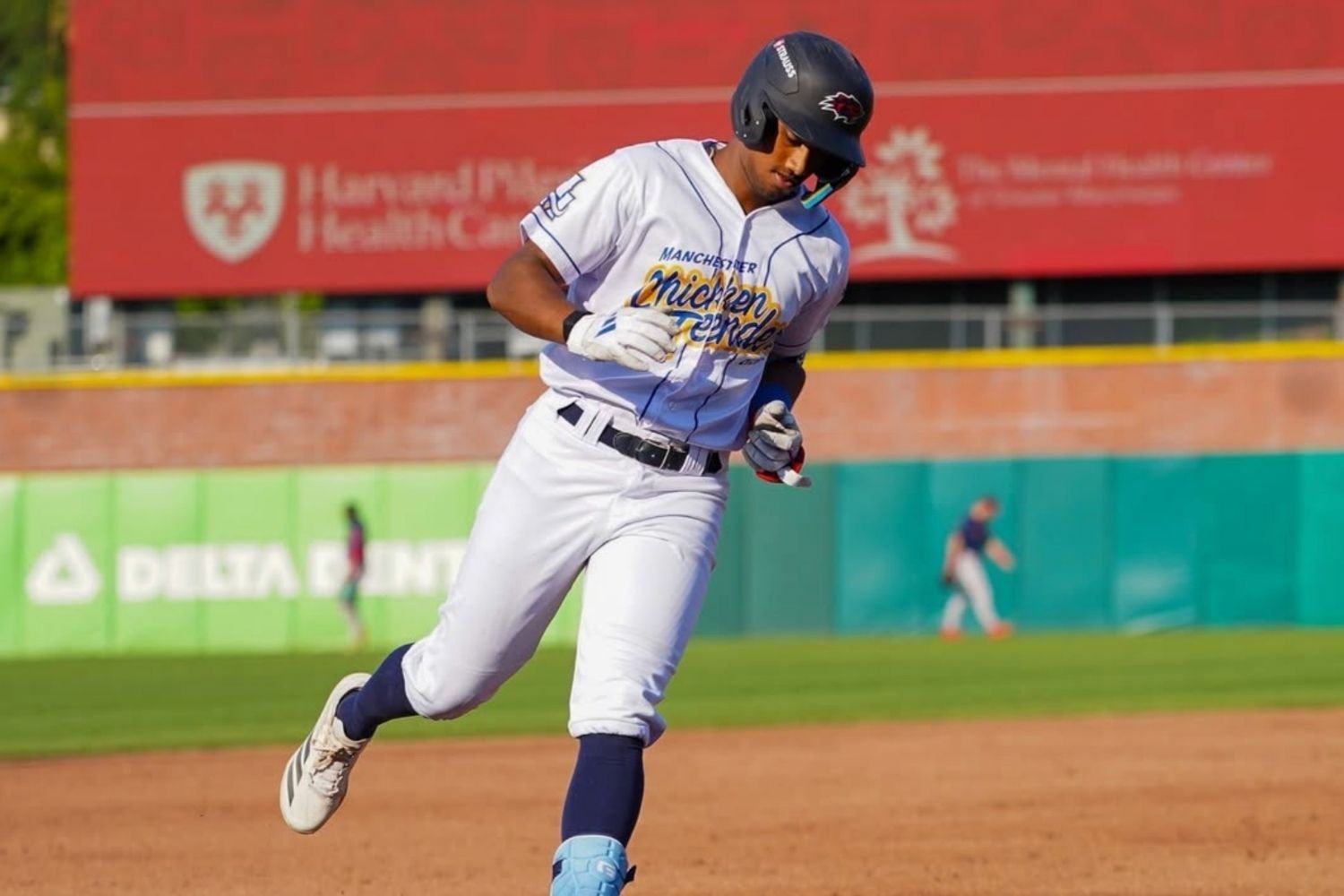 Blue Jays Affiliate Overview (July 7-8) Triple-A Buffalo Bisons Series vs Scranton Wilkes-Barre RailRiders (New York Yankees): 0-2 Season Record: 42-47 Double-A New Hampshire Fisher Cats Series vs Portland Sea Dogs (Boston Red Sox): 1-1 Season Record: 42-39 High-A Vancouver Canadians Series vs Everett AquaSox (Seattle Mariners): 1-1 Season Record: 35-48 Single-A Dunedin Blue Jays Series vs Lakeland Flying Tigers (Detroit Tigers): 0-2 Season Record: 38-44 FCL Blue Jays Week Record: 0-1 Season Record: 31-17 DSL Blue Jays Blue Week Record: 1-1 Season Record: 12-16 DSL Blue Jays Red Week Record: 1-0 Season Record: 13-13 Triple-A Buffalo Bisons Season Record: 42-47 Series vs Scranton Wilkes-Barre RailRiders (New York Yankees) July 7: Buffalo opened a new series on Tuesday, this one against the Scranton Wilkes-Barre RailRiders. It was a game that the Bisons will want to forget immediately. They used six pitchers to get through nine innings, and every one of them gave up at least one run, with five of them surrendering at least two runs each. Davis Schneider would provide all of the runs on the scoreboard for Buffalo. He drew a bases-loaded walk in the third inning, scoring Jay Harry. Then in the bottom of the eighth inning, Schneider connected on a fastball down the middle for a two-run home run. The blast came off the bat at 103.7 mph and went 426 feet to center. While the bats were relatively quiet, the RailRiders brought the fireworks; they hit six home runs, including a grand slam. Buffalo dropped this one 18-3. July 8: On Wednesday, it was Max Scherzer taking the mound for another rehab start; it went south from the very beginning. Scherzer gave up three singles in the top of the first inning, followed by a sacrifice fly and then a soul-crushing 426-foot, three-run home run. In the second inning, it was a single, stolen base, an error and another sacrifice fly that brought home the fifth run of the game for the RailRiders. For the game, Scherzer threw four innings, gave up six hits, five runs (four earned), and struck out five. CJ Van Eyk came in for Scherzer to begin the fifth and threw five scoreless innings to keep the game somewhat close. Unfortunately for Buffalo, they would get a single by Carlos Mendoza and then head into the ninth still with just that one hit. In the ninth, though, they would get on the scoreboard. Davis Schneider singled, moved to third on two passed balls, and then scored on Je'Von Ward's sacrifice fly to center. After a hot stretch last week with the bats, Buffalo falls in back-to-back games with almost no fight from the lineup at the plate. The final score was 5-1, with the Bisons losing. Double-A New Hampshire Season Record: 42-39 Series vs Portland Sea Dogs (Boston Red Sox) July 7: Postponed July 8, Game 1: In the first game of the series against the Portland Sea Dogs, Gage Stanifer was on the mound for New Hampshire. He started off well; he struck out the second batter of the game and got a double play to end the first inning. He never really had good control of his slider or splitter, so much of his time was using the fastball a lot. He hung a slider to the first batter of the second inning, who hit it well for a solo home run. In the third inning, he got behind the second batter of the inning 2-0 and left a fastball over the plate that again was hit for a solo home run. In the fourth inning, Stanifer again fell behind the first batter 2-0 and ended up leaving a fastball over the middle of the plate two pitches later; it was deposited over the fence for the third solo home run he gave up. He came out a few batters later after allowing a soft single, getting a pop-up, then walking two after the third error in the field. His day was done at 80 pitches. The fastball was again very good at times, but he needed all of his pitches to get further in the game. He went 3.1 innings, gave up four hits, three runs, allowed four walks, and struck out five again. Offensively, Nick Goodwin led off the first inning with a solo home run and was followed by Arjun Nimmala hitting a solo shot in the third inning. That was all the offense for New Hampshire who had just three hits in seven innings. New Hampshire lost this one 3-2. July 8, Game 2: In the second game of the doubleheader, the offense was much better and again led by Nick Goodwin. He went 3-for-3 in the game, with two doubles. Dub Gleed doubled in a run in the second inning and was then brought home by a two-run blast from Carter Cunningham. Eddie Micheletti Jr. added a sacrifice fly the next inning, with Patrick Winkel hitting an RBI single in the fourth along with Victor Arias bringing in a run on a groundout. New Hampshire would go on to win 6-2. High-A Vancouver Season Record: 35-48 Series vs Everett AquaSox (Seattle Mariners) July 7: Eric Snow and Sam Shaw each had three-hit nights as the two hitters have been some of the best hitters for Vancouver since joining the team this season. Snow drove in the first two runs of the game in the first inning for Vancouver, and then scored for a three-run first inning. Dylan Watts walked three batters for the fifth start in a row, but was able to limit the damage, only allowing one run in four innings. The Canadians added some power in the second inning, with Alex Stone leading off the second with a solo homer, before Shaw added two more runs with a homer of his own. Peyton Williams joined in the fun with the third homer of the inning, and the Canadians got ahead with an eight-run lead. Watts gave up his only run of the game with a homer to Luis Suisbel in the fourth, and Jack Nedrow replaced him in the fifth. Suisbel homered on him in the sixth, and then Nedrow gave up his second homer in the seventh inning, which made it a four-run game. Shaw gave an insurance run, walking with the bases loaded, which was well needed as Nedrow gave up two more runs in the eighth inning. Jonathan Todd was able to help the Canadians win after replacing Nedrow and getting the five outs needed to get out of the eighth and the ninth. July 8: It was a really close game as Holden Wilkerson and Adam Maier had a pitching duel, as both starters had a quality start, allowing a single run each. The Canadians had a chance to add more after Manuel Beltre drove in their first run in the third, but Eric Snow grounded out into a double play, which ruined the rally. Things took a turn for the worse when the bullpen replaced Wilkerson, who had his longest outing of the season, as Jay Schueler gave up five runs in the seventh inning, including a grand slam to Josh Caron. The offense was not able to give a response as the Canadians lost the second game of the series. Single-A Dunedin Blue Jays Season Record: 38-44 Series vs Lakeland Flying Tigers (Detroit Tigers) July 7: The Jays’ pitching faltered in the first game of the series against Lakeland, as the best pitcher of the evening for them was the position player Dariel Ramon, who pitched two scoreless innings in relief. The Jays were the first to strike on offense with Juan Sanchez driving in Jake Cook in the first, and despite the Tigers taking the lead in the second, the Jays were able to bounce back with an RBI groundout from Raimundo De Los Santos. Blake Purnell, Luis Victorino, and Diego Dominguez subsequently gave up 13 runs in three innings, putting Dunedin way behind, and even after Blaine Bullard’s three-RBI night with a homer and a double, there was nothing the offense could do to recover from that deficit, for a disappointing start to the series. July 8: The Tigers just seemed to have the number of Dunedin’s pitching, as although they didn’t go for double-digit runs like the previous game, no pitcher for the Jays was able to get out unscathed, as each one gave up two runs or more. Giacomo Taschin gave up three homers to start the game, and despite a Blaine Bullard RBI double in the third, the Jays were already down four to one in the fourth inning. Angel Obando gave up two runs in the sixth, and the Jays were only able to score one more run on a Will Cresswell single. Lluveres Severino gave up a two-run homer in the eighth, and the Jays lost the second game of the series despite outhitting the Tigers 13 to 11, as they left 15 men on base. FCL Blue Jays Season Record: 31-17 July 7: Tuesday saw the FCL Blue Jays and FCL Yankees face off. Colby Holcombe got the start on the mound in a rehab appearance and went two innings, only allowing a lone hit and striking out one. Seojun Moon came on in the fourth inning and had probably his worst game of the year. He allowed a home run to Wilberson De Pena, as well as a sacrifice fly and a two-run double in the inning. The Blue Jays started chipping away at the deficit, though. Enmanuel Bonilla stole home in a double steal to get the scoring started. In the sixth inning, the Blue Jays got two bases-loaded walks, a bases-loaded balk, and an RBI groundout from Andres Arias. A wild pitch in the seventh tied the game for the Blue Jays. An RBI groundout from David Guzman tied the game again in the eighth inning, before the game eventually landed in extra innings. A sacrifice fly by the Yankees would be the only run scored in the extra frame, though, as the Blue Jays lost this one 8-7. Guzman was the best hitter for the Blue Jays, going 3-5, with two runs, an RBI, and a walk. DSL Blue Jays Blue Season Record: 12-16 July 7: Jose Andrades had the mound on Tuesday for BJB in the game against the White Sox DSL team (WSX). While Andrades did run into some trouble in the second and fourth innings, he managed to escape each inning just giving up one run: an RBI double and an RBI single off the bat of Felix Lebron. Outside of those two hits, Andrades struck out seven batters in his four innings and put BJB in a good position to win the game, as they had the lead 3-2 when he exited the game. In the first inning, Fabian Gonzalez scored on a fielder's choice to give BJB the early lead. In the second, Luis Felipe tripled home Isay Veras to give BJB the lead back. A throwing error in the fourth allowed Randy Soto to score and gave BJB the lead for good. Both Caricote and Soto had RBI singles in the fifth, giving BJB some much-needed insurance runs, as they coughed one up in the seventh. BJB would win this one 5-3. July 8: Tomoya Kinjo continued to struggle in a big way on Wednesday, so much so that it is becoming worrisome whether he will put things together. Kinjo is already 23 years old and should be doing much better against 17- and 18-year-olds. Kinjo walked six and gave up three runs in his two innings of work. After the game, he has an ERA of 9.45 and a ridiculous WHIP of 2.70 in 13.1 innings for the season. He wasn't the only pitcher shuffling with his command, as BJB pitchers walked 13 in the game. You can imagine what happened with all of the walks: They would come around and score in bunches. BJB saw 11 Pirates Gold runners cross home plate in the game. The bats struggled just as much, only managing five hits, and they struck out 10 times. Juan Caricote continued to be a bright spot. He went 2-for-3 with an RBI double in the third inning. The other two runs BJB would score in the game came from a wild pitch and a balk. BJB fell 11-3. DSL Blue Jays Red Season Record: 13-13 July 7: Postponed July 8: Darwin Nuñez and Ayberson Ortega led the way with their bats on Wednesday for BJR. Both had two hits in the game. Nuñez went 2-for-3, with an RBI double in the fifth, and Ortega went 2-for-3 with a two-RBI single in the fourth inning. Alieski Torres started the game and threw three scoreless innings, keeping his ERA for the season at zero. He has been one of the better pitchers in the DSL for the Blue Jays. BJR needed a Luis Nunez sacrifice fly in the top of the sixth inning to win the game, as their bullpen coughed up a run late into the game. BJR won the game 4-3. Transactions 07/08/26 Toronto Blue Jays sent RHP Max Scherzer on a rehab assignment to Buffalo Bisons. 07/07/26 Buffalo Bisons activated C William Simoneit from the Development List. 07/07/26 Toronto Blue Jays optioned LF Yohendrick Piñango to Buffalo Bisons. 07/07/26 Toronto Blue Jays recalled RHP Chad Dallas from Buffalo Bisons. 07/07/26 Dunedin Blue Jays activated 3B Aldo Gaxiola from the 7-day injured list. 07/07/26 Sent C Owen Carapellotti on a rehab assignment to FCL Blue Jays. 07/07/26 New Hampshire Fisher Cats activated SS Arjun Nimmala from the 7-day injured list. View the full article
 -
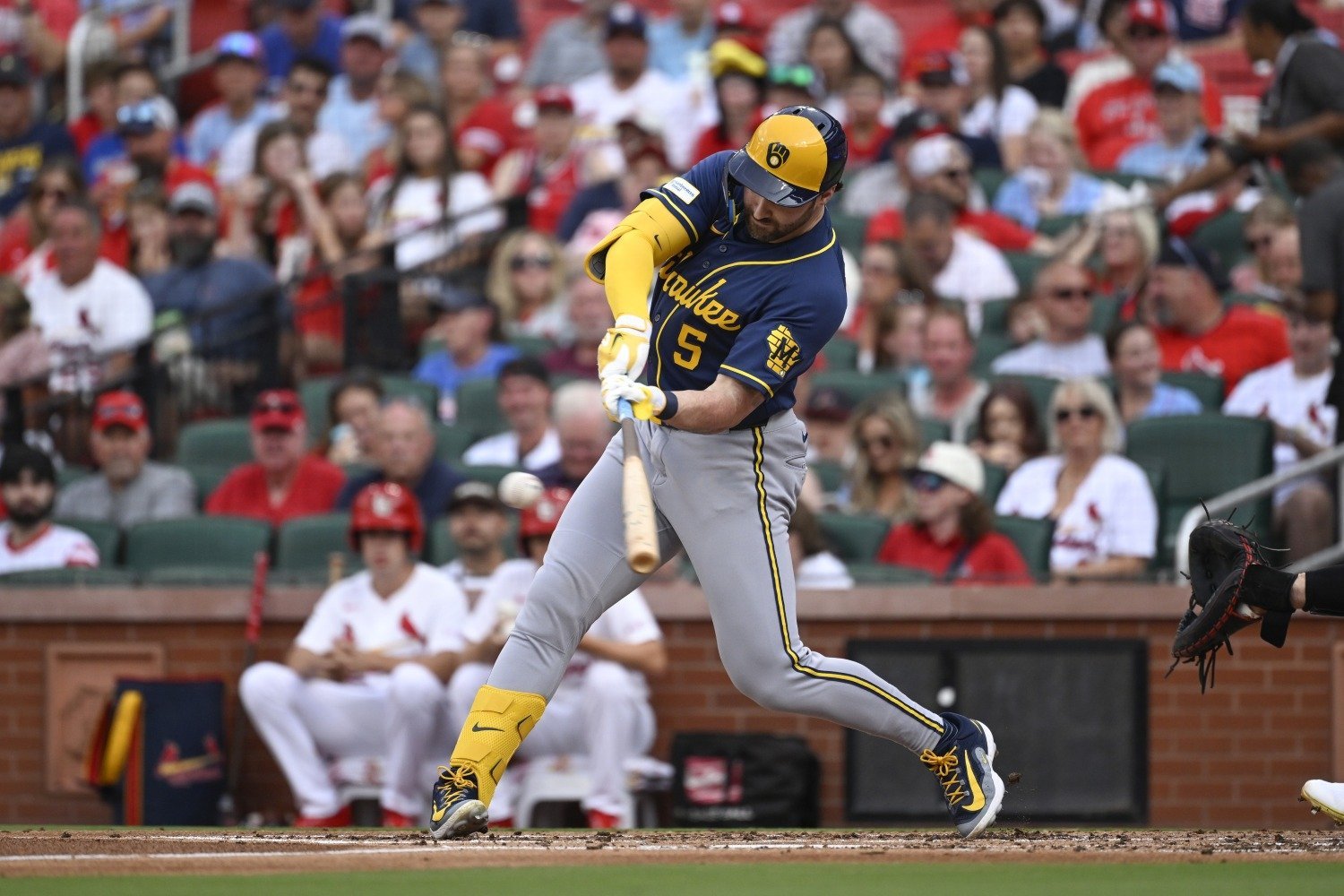 Though the Brewers finally lost a game against the Cardinals Wednesday night, Garrett Mitchell did the same thing he's done in several recent Brewers wins: hit the ball hard, often. He had two hits, including a double, pushing his OPS for 2026 to .831. Though he still has just eight home runs, that was his 18th double, to go with three triples. He's batting .276/.366/.465 on the campaign, though for many, the most important column on his Baseball Reference page is 'PA'. Already, Mitchell has come to the plate 293 times, nearly matching the combined total (302) he had in 2024 and 2025. Before this season, Mitchell had only once collected more than 78 plate appearances in a month; that came in August 2024. In no previous season did he even appear in the majors during May or June. This year, he's had at least 79 plate appearances in each month. At last, he's had the runway to take off as a player. Many worried that when he finally found that runway, he would crash and burn. His profile at the plate—with an extreme swing-and-miss tendency and too many ground balls—seemed like it might doom him to a future as a fourth outfielder, or (if injuries eroded his raw talent) even less. There were some calls last offseason for the Brewers to move on from Mitchell already, and if he hadn't been extremely cheap to retain, they might even have done it. The takeoff has gone off without a hitch, though, and the air flow over Mitchell's wings appears to be well-balanced. It's not just about being healthier than ever, and it's not just about getting more reps and more experience against top-flight pitchers. It's also because Mitchell has made a real and crucial swing change, which probably looks subtle but has changed his game in a radical way. We can use Statcast's excellent visualizations of players' swings in animated movement-tracking form to spot the tweaks Mitchell has made. To do so, let's start by comparing what Mitchell looked like in 2024 (the only other time he's gotten enough playing time in a season for Statcast to build a composite animation of him) to what he looks like now, at the first major checkpoint of the swing—when his hands drop into the slot from which his swing fires. This is our starting point, because it is (in one sense) the starting point of the swing, but it's also a large share of the difference we're going to dig into. In the past, Mitchell had what hitting people call a "long front arm" early in his swing. Look how much higher he's ratcheted his front shoulder in the image on the left, and how it's already turning outward more than he's doing this season. As a result, note the fact that his hands are more centered within his frame on the right, even though he's positioning them to extend his arms through the swing already. Mitchell's weight begins to shift forward a hair sooner this year, but his front shoulder stays closed longer and his hands stay back a hair better. Now, here's where Mitchell was in each season, at the next major checkpoint in a swing—the moment when his attack angle becomes positive. In other words, this is when his bat stops working down from behind his shoulder into the hitting zone and starts moving slightly uphill, to get on plane with the incoming pitch. The differences are much more subtle here, because already, most of them are just remnants of the change he made to how he starts his swing. On the right side of each image, notice the difference in the two numbers below the attack angle. At the moment when he begins to get on plane with the pitch, his bat is angled more toward the opposite field this season. His swing is also flatter, with less downward tilt from his handle to his barrel. Why? because the change to keep his front shoulder in a bit longer early in the swing has allowed him to flatten out the swing to catch up with pitches above his belt. In the past, the early rotation of his upper body forced him to create a steeper plane. If he didn't do so, back then, he would sap his own power and be too short through the hitting zone, ending up with a weakly-hit ball off the end of the bat. This year, because of that earlier change, Mitchell can be more linear and longer through the hitting zone even if he needs to swing flatter than is his default. He still has the option of dipping more for low and bendy pitches, but he doesn't lose bat speed or the ability to cover his preferred timing window, either way. Mitchell is also swinging notably faster this year, by the time he reaches his contact point. That's because of the slightly later rotation of the shoulder, too. There's more torque in his swing; it's more violent. Swinging a bit flatter has meant a few more whiffs and no fewer ugly swings, but it's allowed him to wait longer to make his swing decision, which has contribued to his very strong walk rate. He's also able to square up a wider variety of pitches, so despite a bit more error baked into his address of the ball, there's less glaring a hole in his swing. Will Mitchell remain this good all year, if he stays healthy? It's hard to say. He still swings and misses a lot, for a guy who doesn't hit for all that much power and often hits it on the ground. But maybe a quick comparison to two players with similarly superb bat speedcan elucidate why what Mitchell is doing is working, even if it's not working as well for him as for either of them. First, here are visuals of Kyle Schwarber's swing at the same two moments as we studied above for Mitchell. Schwarber has almost identical bat speed to Mitchell's, and like the new version of Mitchell, he swings fairly flat. On the left, you can see that his hands get into their firing position without the long from arm; he's ready to rip through the ball. However, Schwarber doesn't create as much early bat speed as Mitchell does. The Brewers center fielder has his hands much deeper in the hitting zone when he gets his barrel out from behind his body than Schwarber does when he gets to the same point. On the right, you can see that Schwarber is coming much closer to square to the path of the incoming pitch than Mitchell is when he starts to work uphill. He's going to catch the ball farther in front of his body, with his bat angled much more toward the pull field. That's why Schwarber produces titanic pull-side power so consistently, whereas Mitchell does so rarely. Again, though, Mitchell is ahead of Schwarber in producing early bat speed. He can be late and still hit the ball hard; Schwarber doesn't have that luxury. Here are the same two images for fellow Brewers slugger Jake Bauers. Bauers creates that early bat speed and keeps his hands back, just like Mitchell. He gets around the ball more, like Schwarber, which is why he's produced more power than Mitchell has. However, he's compelled to be steeper to the ball, just as Mitchell was a couple of years ago. He's put himself in great positions to be on time, but when he's not, he doesn't have much chance to catch the ball with his barrel. His timing window is somewhat narrow; so is Schwarbers. Increasingly. Mitchell's is wide, giving him a margin for error in one dimension that he's sacrificed in another. Mitchell is unique. No one else who swings this fast is this oriented toward the opposite field. He's creating so much bat speed while still getting into the hitting zone that he can afford to catch the ball deep. It's a quintessentially Brewers way to hit; only they could help a player with so much bat speed engineer such a non-damage-focused approach. And yet, it seems to be the perfect one for him. It's preserved much of what made him intriguing over his previous, injury-plagued stints, but it's also introduced more adaptability. Whatever his flaws, Mitchell is emerging as something very close to an All-Star center fielder. His rejiggered swing gets the credit for that, and in turn, the Brewers and the player get a lot of credit for the diligent adjustments and perseverance to achieve that transformation while keeping Mitchell healthy and ready to play every day. View the full article
 -
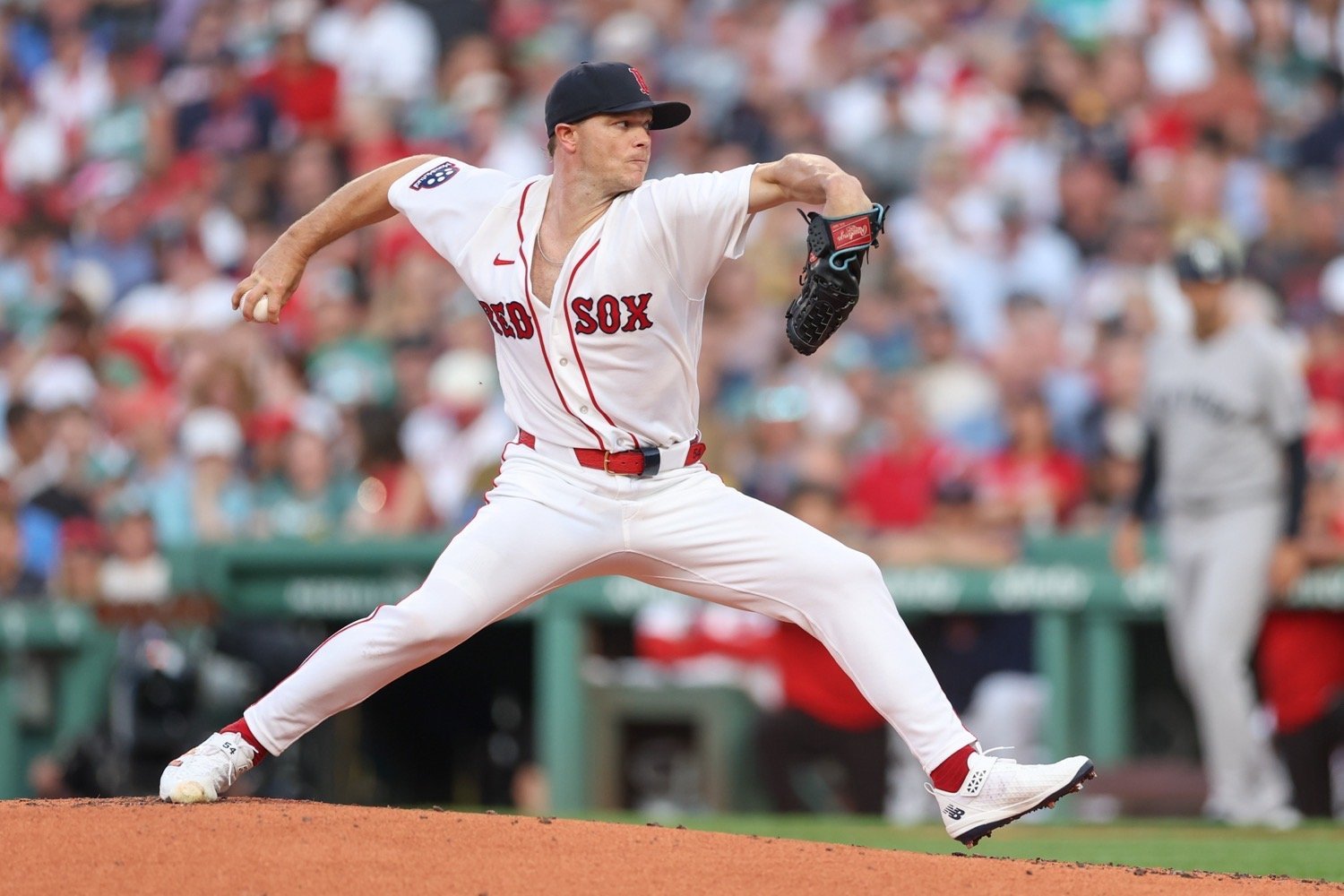 The Boston Red Sox are 9-2 over their last 11 games and one of the hottest teams in all of baseball. While their season ebbs and flows with their offense, it's their pitching groups that are likely to receive most of the attention at the upcoming deadline. Ken Rosenthal of The Athletic is reporting that several teams are interested in Boston Red Sox starting pitcher Sonny Gray. Gray has long been one of the best non-ace starting pitchers in Major League Baseball, and is on his way to a career year at 36. Through 16 starts, the bulldog has pitched to a 2.61 ERA, though a 3.61 FIP suggests some regression may be in his future, and a 16.4% K-BB rate. In short, he's been one of the few bright spots for a team that had high aspirations at the start of the season. Under normal circumstances, he would fetch a healthy return in any trade; the impending lockout in his age-37 season, along with a mutual option for 2027, is anything but "normal". Ultimately, the right-hander could end up being a rental rather than a piece a team can count on for this season and next. Obviously, this will have an impact on the return the Red Sox can get on the trade market. The Red Sox are very much in the playoff race. Do you think they should trade Gray? Let us know in the comments! View the full article
 -
 Boston Red Sox Affiliate Recap Triple-A Worcester Red Sox Season Record: 43-42 Game 1 of Doubleheader The WooSox faced off against the Rochester Red Wings (Washington Nationals) in a doubleheader. In the first seven-inning game, Worcester pulled off a late comeback with one swing in their 5-4 victory. After the Sox gave up two runs heading into the bottom of the fifth, Braiden Ward made it 2-1 with a sacrifice fly. Now trailing 4-1 in the bottom of the sixth, a pair of walks from Jason Delay and Kristian Campbell, and a single from Allan Castro loaded the bases with two outs. Tyler McDonough came up to the plate and crushed a grand slam to right-center, completely flipping the game, 5-4. That was his only hit of the day, but he made this one count. On the mound, it was a decent effort across seven innings. Hayden Mullins started the game and struggled to find the strike zone, throwing more balls than strikes. He still only gave up one run and struck out three batters. Noah Song came in after Mullins and threw two innings with one earned run. Devin Sweet earned the win with his 1 ⅔ inning appearance, giving up two runs (one unearned due to an error); Wyatt Olds recorded the final out for his third save. Standout Performances: Tyler McDonough: 1-for-3, HR, R, 4 RBI Braiden Ward: 2-for-4, RBI, 2 SB Allan Castro: 2-for-3, R, SB Game 2 of Doubleheader In the second seven-inning contest, Worcester jumped on top early and cruised to a 10-2 victory. The offense stayed hot, piling on 10 runs on 10 hits and five walks. Max Ferguson was the standout, going 2-for-3 with a homer and two RBIs. Vinny Capra added two hits, including a two-run double; Mickey Gasper (solo homer), Kristian Campbell (2-for-3), and Tyler McDonough (double, walk) all reached multiple times. The big blow came in the third, when Worcester scored five runs. Newly acquired third baseman Brett Harris, brought in from the Athletics, hit his first homer as a member of the Red Sox organization. He hit a grand slam with a 101.4 exit velocity in the first inning, giving Worcester an early 4-0 lead. It was a clean bullpen game through seven innings. Seth Martinez was the WooSox's opener, tossing two innings with one unearned run and four strikeouts. Angel Bastardo earned the win with his two-inning outing while giving up a homer in the fourth, followed by Eduardo Rivera with two perfect, three-strikeout frames, then Sam McWilliams pitched the last inning, throwing a perfect frame with two strikeouts. Standout Performances: Max Ferguson: 2-for-3, HR, 2 R, 2 RBI, SB Brett Harris: 1-for-4, HR, R, 4 RBI Kristian Campbell: 2-for-3, 2 R, BB, SB Vinny Capra: 2-for-4, 2B, R, 2 RBI Double-A Portland Sea Dogs Season Record: 44-38 Game 1 of Doubleheader Although a low-scoring game, it was home run city in the first seven-inning game of the doubleheader as the Sea Dogs defeated the Fisher Cats (Toronto Blue Jays) 3-2. All three Sea Dogs runs came on solo home runs. Johanfran Garcia, Miguel Bleis, and Ronald Rosario each went deep, driving in the club's only runs. Garcia tied the game 1-1 in the second, Bleis’ homer gave the Sea Dogs a 2-1 lead in the third, and Rosario took back the lead 3-2 in the fourth. Portland tallied just four hits, but they made them count, drawing five walks to keep the pressure on. Starter Dalton Rogers grinded through five innings for his first win of the season, allowing both of New Hampshire’s runs on two homers and striking out five, though he issued five walks. Patrick Halligan slammed the door with a dominant two-inning save: one hit, no walks, and five strikeouts to close it out. Standout Performances: Patrick Halligan: 2 IP, 1 H, 5 K Miguel Bleis: 1-for-3, HR, R, RBI, BB, SB Johanfran Garcia: 1-for-3, HR, R, RBI Ronald Rosario: 1-for-3, HR, R, RBI Game 2 of Doubleheader Portland's juice ran out in the second game of the doubleheader, taking a 6-2 defeat to the Fisher Cats. The Sea Dogs matched New Hampshire’s hit total with eight hits, but could not string them together for runs, stranding six runners in scoring position. Jack Winnay was one of the offensive bright spots, going 2-for-4 with a run scored and an RBI, while Johanfran Garcia stayed hot with a 2-for-3 day. Nate Baez chipped in a double (Portland’s only extra-base hit) and an RBI, while Miguel Bleis, Ahbram Liendo, and Marvin Alcantara each added a hit. The bats went quiet outside the fifth inning. Max Carlson took the loss after New Hampshire tagged him for four earned runs on five hits over three innings; the Fisher Cats broke it open with a three-run second and kept adding on. Cooper Adams gave up two more runs over his two innings of relief; Jeremy Wu-Yelland threw a clean inning with two strikeouts. Portland's arms issued just one walk all game; the damage came on hard contact rather than free passes. High-A Greenville Drive Season Record: 32-48 A tough loss for the Greenville Drive, who got blown out 16-3 to the Grasshoppers (Pittsburgh Pirates). It was an all-around rough day for Greenville. The offense had three runs on only four hits and one walk, while the pitching and defense were poor; two costly errors led to five unearned runs. As a group, they went 1-for-7 with RISP, but it did not seem to matter if they brought in those runs. Enddy Azocar started the game out with a bang, smashing a leadoff homer (10th of the season) off highly touted prospect Seth Hernandez, putting the Drive on top early, 1-0. The one-run lead lasted until the fourth inning, when Kyson Witherspoon gave up a two-run home run. The Grasshoppers kept extending their lead sporadically throughout the game, pushing it to a ridiculous 16-1 lead entering the ninth. The Drive chipped away at the deficit in the ninth inning after Isaiah Jackson crushed a two-run homer (13th of the season), then a groundout ended the game 16-3. Witherspoon was cruising through the first three innings, but Greensboro got to him in the fourth and fifth. His final line: 4 ⅔ IP, 5 H, 3 ER, 2 BB, 4 K. Low-A Salem RidgeYaks Season Record: 34-48 A big first inning paved the way for a 5-2 RidgeYaks victory over the Fireflies (Kansas City Royals). Salem got hot immediately with a four-run first inning, and that was all they needed, piling up 11 hits on the day. Anderson Fermin led the way with a 3-for-4, two-RBI night out of the seven-hole, with the middle of the order doing most of the damage: Kleyver Salazar chipped in a 2-for-3 day with a walk and an RBI single. Starlyn Nunez went 2-for-4 with an RBI single as well (all RBI singles came in the first inning). Justin Barry added a run-scoring knock in the fourth, extending Salem’s lead to 5-0. The pitching staff was the backbone. Cole Tolbert was amazing in his three no-hit innings, striking out six and walking two. After Luis Cohen was tagged for both of Columbia's runs over 2 ⅔ innings, Harry Blum came in and earned the win with 2 ⅓ scoreless, one-hit frames, then Joey Gartrell closed it out for his second save of the season: a clean inning with two strikeouts. Salem's arms combined to hold the Fireflies to six hits and two runs while racking up 12 strikeouts. Standout Performances: Cole Tolbert: 3 IP, 0 H, 0 ER, 2 BB, 6 K Anderson Fermin: 3-for-4, 2 RBI Kleyver Salazar: 2-for-3, R, RBI, BB Starlyn Nunez: 2-for-4, R, RBI View the full article
 -
 Chicago Cubs Transactions Chicago Cubs sent RHP Phil Maton on a rehab assignment to Iowa Cubs. Bethancourt's Three-Run Homer Backs Wantz As Iowa Cubs Top St. Paul The Iowa Cubs beat the St. Paul Saints 3-1, riding one big swing and a strong night from the pitching staff. St. Paul took a 1-0 lead in the first inning on a sacrifice fly, but Iowa answered in the second. Chas McCormick and James Triantos opened the inning with back-to-back singles, and Christian Bethancourt followed with a three-run home run to left field, his ninth of the season. That was all the scoring Iowa needed. Andrew Wantz held the line and earned the win with 5 2/3 innings of one-run baseball, allowing three hits and two walks while striking out seven. Luis Peralta recorded the final out of the sixth with a strikeout, and Phil Maton looked good, striking out three over 1 2/3 hitless innings. Vince Reilly worked around a walk over the final 1 1/3 innings for his second save. Owen Miller led the offense with a 3-for-4 night, and all three of his hits were doubles. Triantos finished 2-for-4 with a run scored, and McCormick added a single, a walk, and a stolen base. Iowa outhit St. Paul 8-3 and left six runners on base. Brett Bateman entered the game as a replacement for Jonathon Long, who went 0-for-3 with a walk. Player AB R H RBI BB K Owen Miller 4 0 3 0 0 0 Jonathon Long 3 0 0 0 1 1 Brett Bateman 0 0 0 0 0 0 BJ Murray 4 0 1 0 0 1 Moisés Ballesteros 4 0 0 0 0 0 Chas McCormick 3 1 1 0 1 1 James Triantos 4 1 2 0 0 0 Christian Bethancourt 3 1 1 3 0 1 Ben Cowles 3 0 0 0 0 1 Hayden Cantrelle 3 0 0 0 0 1 Player IP H R ER BB K HR Andrew Wantz 5 2/3 3 1 1 2 7 0 Luis Peralta 1/3 0 0 0 0 1 0 Phil Maton 1 2/3 0 0 0 0 3 0 Vince Reilly 1 1/3 0 0 0 1 0 0 Six-Run Sixth Sends Smokies Past Biloxi The Knoxville Smokies erased an early deficit and pulled away with a six-run sixth inning to beat the Biloxi Shuckers 9-6. Biloxi struck first with three runs in the second inning on a pair of run-scoring doubles off Brooks Caple, but Caple settled in from there. He finished with a quality start, allowing three runs on three hits over six innings while walking two and striking out six to earn the win. Owen Ayers got Knoxville back in it in the third with a two-run homer to right field, his 16th of the season, scoring Jefferson Rojas. The sixth inning broke the game open. Carter Trice walked, and Edgar Alvarez and Karson Simas singled to load the bases. Ethan Hearn ripped a two-run double, Alex Madera and Alex Ramírez followed with run-scoring singles, and Ayers capped the rally with a two-run single before being thrown out at second on the throw home. The six-run frame gave Knoxville an 8-3 lead. Biloxi got three back in the seventh against Tyler Schlaffer, who recorded just one out, but Marino Santy struck out three over 1 2/3 innings to stop the bleeding. Trice answered with a solo homer, his 11th, in the bottom of the seventh, finishing 2-for-2 with two walks and two runs. Luke Little worked a perfect ninth for his first save. Ayers went 2-for-5 with four RBI. Player AB R H RBI BB K Alex Ramírez 5 1 1 1 0 0 Jefferson Rojas 4 1 1 0 1 0 Owen Ayers 5 1 2 4 0 1 Andy Garriola 4 0 0 0 0 2 Carter Trice 2 2 2 1 2 0 Edgar Alvarez 3 1 1 0 1 1 Karson Simas 3 1 1 0 1 1 Ethan Hearn 3 1 1 2 1 2 Alex Madera 4 1 2 1 0 0 Player IP H R ER BB K HR Brooks Caple 6 3 3 3 2 6 0 Tyler Schlaffer 1/3 3 3 3 2 1 0 Marino Santy 1 2/3 0 0 0 2 3 0 Luke Little 1 0 0 0 0 1 0 Eighth-Inning Homer Sinks South Bend In Cedar Rapids The South Bend Cubs carried a one-run lead into the eighth inning, but a two-run homer handed them a 3-2 loss to the Cedar Rapids Kernels. Nazier Mulé started and gave South Bend four solid innings, allowing one run on one hit with two walks and two strikeouts. Cedar Rapids scored its first run in the opening frame when a run came home on a fielding error. South Bend tied the game in the third. Christian Olivo reached, and Matt Halbach doubled him home with a line drive to left. The Cubs took a 2-1 lead in the sixth when Miguel Useche reached, moved into scoring position, and came home on Olivo's sacrifice fly. Jackson Brockett was excellent in relief, tossing three scoreless innings with one hit allowed and four strikeouts. But Eli Jerzembeck could not hold the lead in the eighth. After a one-out walk, Cedar Rapids connected on a two-run homer to left center that put the Kernels ahead for good. Jerzembeck took the loss and the blown save, allowing two runs on two hits in one inning. South Bend managed just three hits, doubles by Jose Escobar and Halbach, and a single by Useche, while drawing five walks. The Cubs stranded eight runners and went quietly in the ninth. Josiah Hartshorn struck out three times, and Kane Kepley went 0-for-5 out of the leadoff spot. Player AB R H RBI BB K Kane Kepley 5 0 0 0 0 0 Josiah Hartshorn 4 0 0 0 0 3 Jose Escobar 3 0 1 0 1 0 Matt Halbach 4 0 1 1 0 1 Miguel Useche 3 1 1 0 1 1 Michael Carico 2 0 0 0 2 2 Logan Poteet 4 0 0 0 0 2 Michael Hallquist 2 0 0 0 1 0 Christian Olivo 2 1 0 1 0 1 Player IP H R ER BB K HR Nazier Mulé 4 1 1 1 2 2 0 Jackson Brockett 3 1 0 0 0 4 0 Eli Jerzembeck 1 2 2 2 1 1 1 Pelicans Plate Six In First Without A Hit As Martinez-Gomez Dominates The Myrtle Beach Pelicans scored six first-inning runs without recording a hit and rode six scoreless innings from Luis Martinez-Gomez to an 11-8 win over the Fredericksburg Nationals. Fredericksburg's control problems fueled the opening rally. Alexis Hernandez walked, Alexey Lumpuy was hit by a pitch, and Eli Lovich walked to load the bases. Hernandez scored on a wild pitch during Derniche Valdez's walk, Geuri Lubo was hit by a pitch to force in Lumpuy, and walks to Jairo Diaz and Jose Silva brought home two more. A fielding error on Edward Vargas' grounder scored Lubo, and Hernandez capped the inning with a sacrifice fly. In all, the Pelicans drew five walks and took two hit-by-pitches in the frame. Valdez added a solo homer, his seventh, in the second, and Ivan Cespedes hit his first of the season in the third for an 8-0 lead. Martinez-Gomez was outstanding, allowing one hit and one walk over six scoreless innings while striking out seven for a quality start and the win. The bullpen then made it interesting. Jhon Rosario allowed a three-run homer in the seventh, and Sam Mettert gave up five runs over the final two innings, including four in the ninth. Hernandez added an RBI single in the seventh, and Diaz launched a two-run homer in the eighth, finishing with three RBI, to provide the cushion. Player AB R H RBI BB K Alexis Hernandez 2 1 1 2 2 0 Alexey Lumpuy 2 1 0 0 2 2 Eli Lovich 4 1 0 0 1 2 Derniche Valdez 4 2 2 1 1 1 Geuri Lubo 3 2 0 1 1 2 Jairo Diaz 3 2 1 3 2 0 Jose Silva 3 1 0 1 2 2 Ivan Cespedes 3 1 1 1 2 0 Edward Vargas 4 0 0 1 0 0 Player IP H R ER BB K HR Luis Martinez-Gomez 6 1 0 0 1 7 0 Jhon Rosario 1 2 3 3 2 2 1 Sam Mettert 2 4 5 5 0 3 2 Top-20 Prospect Performance Jefferson Rojas: 1-for-4, BB, R Pedro Ramirez: DNP Jaxon Wiggins: DNP Josiah Hartshorn: 0-for-4, 3 K Kevin Alcantara: DNP Ethan Conrad: DNP Kane Kepley: 0-for-5 Owen Ayers: 2-for-5, HR, 4 RBI, K Jonathon Long: 0-for-3, BB, K Kaleb Wing: DNP James Triantos: 2-for-4, R Brooks Caple: 6 IP, 3 H, 3 ER, 2 BB, 6 K Mason McGwire: DNP Ty Southisene: DNP Will Sanders: DNP Juan Cabada: DNP Eli Lovich: 0-for-4, BB, 2 K Ariel Armas: DNP Jostin Florentino: DNP Grant Kipp: DNP View the full article
 -
3 Cubs Prospects Who Are Skyrocketing Into July
DiamondCentric posted an article in North Side Baseball
 The Chicago Cubs have three prospects who are skyrocketing towards The Show thanks to recent performances. In this video, we'll break down the numbers of 2025 first-rounder Ethan Conrad, switch-hitting thrasher Josiah Hartshorn, and rising 25-year-old catcher Owen Ayers. Enjoy! View the full article
 -
 The joke wrote itself Wednesday evening: Zach Thornton got yanked while pitching a perfect game. What has happened to the game we love? Thornton won't be upset about it, because the quick hook lined him up to return to New York. The major-league club has not named a starter for Sunday's game against the Boston Red Sox. Thornton can fill that spot on three days' rest after throwing just 30 pitches in Game 1 of a doubleheader at Norfolk. And, he can do it after looking impressive. The left-hander struck out five of the six batters he faced, If Thornton is recalled this weekend, the question then becomes: is he coming up to stay? He has made two previous trips to The Show for spot starts, both against the Philadelphia Phillies. His second outing was good: one run, seven strikeouts over six innings. But his Triple-A numbers aren't great (4.30 ERA, 1.38 WHIP, 11.0 percent walk rate, 4.3 percent home run rate in 37 2/3 innings), so maybe this will be just another day trip. Or, with Kodai Senga and Tobias Myers mired in long relief and the Mets able to give young players a look in the second half, this may be the 24-year-old Thornton's big chance. The rundown of Wednesday's affiliate action: Syracuse split its doubleheader, winning Game 1, 9-3, and losing Game 2, 3-2. The teams made up Tuesday’s rainout. Christopher Morel drove in five runs in the opener with a two-run home run and a bases-loaded double. Ryan Clifford supplied the offense in Game 2 with a two-run homer in the first inning. Binghamton pitchers allowed 21 hits in a 13-4 loss to Hartford. The Rumble Ponies trailed, 12-1, after five innings. Jose Ramos and Nick Lorusso homered in the losing effort. John Bay’s RBI single in the first was Brooklyn’s only offense in a 4-1 loss to Wilmington. Starter Jose Chirinos allowed two runs over five innings. St. Lucie failed to protect a two-run lead in the late innings and lost, 5-4, to Jupiter. The Hammerheads scored three in the seventh to go in front. Trey Snyder was 3-for-4 with an RBI and a run scored for the Mets.. DSL Mets Blue topped the DSL Marlins, 8-7, in eight innings. The winning run scored on a passed ball as Royner Bravo drew a walk in the bottom of the eighth. Dayron Oramas came in from third. Oramas finished 2-for-5 with two RBIs and two runs scored. Starter Leyvi Rodriguez threw three hitless innings. Mets Transactions New York Mets sent RHP Dedniel Núñez on a rehab assignment to Syracuse Mets. New York Mets designated RHP Matt Seelinger for assignment. New York Mets placed RHP Austin Warren on the 15-day injured list. Right forearm strain. New York Mets recalled RHP Tobias Myers from Syracuse Mets. New York Mets selected the contract of RHP Xzavion Curry from Syracuse Mets. Morel Breaks Out In Opener; Clifford Contributes Before Wednesday, Morel was 2-for-13 with six strikeouts for Syracuse since signing a minor-league deal with New York on July 1. He’s working to get back to the majors after being released by the Miami Marlins on June 26. Christian Arroyo opened the scoring with an RBI double in the first. The Mets also got RBIs from Clifford and Cristian Pache. Ryan Lambert worked a scoreless fifth and sixth in relief. Dedniel Nunez gave up a pair of runs in the third as he made his first rehab appearance with Syracuse. The parent club moved him up from Binghamton this week. Nunez has made five rehab appearances overall, spread out over St. Lucie, Binghamton and Syracuse. The Mets were four outs away from a sweep in the nightcap, until Matt Turner served up a two-run double to Christian Encarnacion-Strand in the bottom of the sixth. Clifford homered in the top of the first to put the Mets ahead, 2-0. Yonny Hernandez followed Clifford's blast with a single. That turned out to be the Mets' last hit in the game. Joe Jacques and Joey Gerber each threw two scoreless innings in a bullpen game. Player AB R H RBI BB K Nick Morabito 2 0 1 0 3 0 Jihwan Bae 3 1 1 0 2 0 Christian Arroyo 3 2 1 1 2 0 Cristian Pache 5 1 1 1 0 1 Ryan Clifford 4 2 1 1 0 3 Yonny Hernández 2 1 0 0 2 0 Christopher Morel 3 1 2 5 1 0 Hayden Senger 4 0 1 0 0 1 Zack Short 4 1 1 0 0 1 Player IP H R ER BB K HR Zach Thornton 2.0 0 0 0 0 5 0 Dedniel Núñez 0.2 1 2 2 2 0 0 Daniel Duarte 1.1 1 0 0 1 2 0 Ryan Lambert 2.0 0 0 0 1 2 0 Dylan Ross 1.0 2 1 1 0 1 0 Player AB R H RBI BB K Jihwan Bae 2 1 0 0 1 0 Nick Morabito 2 0 0 0 1 2 MJ Melendez 3 0 0 0 0 1 Ryan Clifford 3 1 1 2 0 0 Yonny Hernández 3 0 1 0 0 0 Ben Rortvedt 3 0 0 0 0 1 Vidal Bruján 3 0 0 0 0 1 Christopher Morel 3 0 0 0 0 0 Zack Short 1 0 0 0 1 1 Player IP H R ER BB K HR Ben Simon 1.0 2 1 1 0 0 0 Joe Jacques 2.0 0 0 0 0 1 0 Joey Gerber 2.0 1 0 0 0 3 0 Matt Turner 0.2 3 2 2 1 0 0 Nate Lavender 0.1 0 0 0 0 1 0 Binghamton Buried Early At Hartford The Yard Goats got starter Max Green for six runs in the second inning, and from there, the rout was on. Green allowed eight hits, including a home run, over 2 2/3 innings. Zack Peek and Gabriel Rodriguez dug the hole deeper by combining to allow six more runs in the fourth and fifth. Shortstop Wyatt Young was brought on to work the eighth. He allowed Hartford's final run. The offense got contributions from Ramos, Lorusso, JT Schwartz (3-for-5), and Luis Robert Jr. (2-for-4, run scored), who stayed in New York state to continue his minor-league rehab. Robert (back) played eight innings in center field in his Binghamton debut. He was in Syracuse last week. Player AB R H RBI BB K Luis Robert Jr. 4 1 2 0 0 1 Nick Roselli 1 0 0 0 0 1 Jose Ramos 5 1 1 2 0 2 Nick Lorusso 4 1 2 1 1 0 JT Schwartz 5 1 3 0 0 1 Kevin Parada 5 0 0 0 0 1 Vincent Perozo 4 0 2 1 0 0 Wyatt Young 4 0 0 0 0 0 Nick Lucky 4 0 0 0 0 1 Jaylen Palmer 2 0 1 0 2 0 Player IP H R ER BB K HR Max Green 2.2 8 6 5 0 1 1 Zach Peek 1.1 4 2 2 1 1 1 Gabriel Rodriguez 0.1 3 4 3 2 1 0 Danis Correa 1.2 2 0 0 1 4 0 Carlos Guzman 1.0 2 0 0 1 2 0 Wyatt Young 1.0 2 1 1 0 0 0 Brooklyn Fails To Build On Early Lead The Cyclones managed just the one run despite collecting eight hits and two walks. Brooklyn hitters struck out 12 times as they left nine runners on base. Corey Collins and Daiverson Gutierrez had two hits apiece, while Mitch Voit went 1-for-5 from the leadoff spot. Chirinos gave the Cyclones length, but he was erratic, walking five over his five innings. He allowed two hits and struck out three. Hoss Brewer, Bryce Jenkins and Josh Blum each tossed a scoreless inning in relief, but Hunter Hodges surrendered two runs in the seventh. Player AB R H RBI BB K Mitch Voit 5 0 1 0 0 1 Yonatan Henriquez 4 0 1 0 0 3 Ronald Hernandez 3 1 0 0 1 1 Corey Collins 4 0 2 0 0 2 John Bay 4 0 1 1 0 1 Daiverson Gutierrez 4 0 2 0 0 0 Jamari Baylor 3 0 0 0 1 0 Colin Houck 4 0 0 0 0 3 Trace Willhoite 3 0 1 0 0 1 Player IP H R ER BB K HR Jose Chirinos 5.0 2 2 2 5 3 0 Hoss Brewer 1.0 2 0 0 0 0 0 Hunter Hodges 1.0 2 2 2 1 2 0 Bryce Jenkins 1.0 0 0 0 0 1 0 Josh Blum 1.0 2 0 0 1 0 0 St. Lucie Rally Canceled Out By Late Collapse Before blowing a late lead, the Mets erased a 2-0 deficit with two runs in the second and single runs in the third and sixth. Branny De Oleo's RBI single and Jeremy Rodriguez's RBI groundout tied the game, 2-2, in the second. Snyder put the Mets ahead in the third with an RBI single. He scored the Mets' fourth run on an error after stealing second base in the sixth. The Mets' middle relief was excellent until Joel Lara surrendered three runs in the seventh. He had worked two scoreless frames before that, following scoreless outings by Tyler McLoughlin (1 1/3 hitless innings, three strikeouts) and Joel Díaz (two innings, two strikeouts). Antonio Jimenez reached three times and stole a base from the leadoff spot. Player AB R H RBI BB K Antonio Jimenez 3 1 2 0 1 1 Elian Peña 4 0 0 0 0 0 Trey Snyder 4 1 3 1 0 0 Julio Zayas 3 0 0 0 1 2 Chase Meggers 4 1 0 0 0 2 Branny De Oleo 4 1 1 1 0 3 Simon Juan 3 0 0 0 1 0 Jeremy Rodriguez 4 0 1 1 0 0 Taylor Darden 2 0 0 0 1 0 Jackson Hauge 1 0 0 0 0 0 Player IP H R ER BB K HR Luis R. Rodriguez 0.2 2 2 2 2 2 0 Tyler McLoughlin 1.1 0 0 0 1 3 0 Joel Díaz 2.0 0 0 0 0 2 0 Joel Lara 3.0 2 3 3 4 2 0 Ernesto Mercedes 1.0 1 0 0 1 1 0 Top-20 Prospect Performance Jonah Tong: DNP Jack Wenninger: DNP Ryan Clifford: 1-for-4, 1 RBI, 3 K (Game 1); 1-for-3, HR, 2 RBI (Game 2) Elian Pena: 0-for-4 Nick Morabito: 1-for-2, 3 BB, SB (Game 1); 0-for-2, BB, 2 K (Game 2) Jacob Reimer: DNP Mitch Voit: 1-for-5, K Jonathan Santucci: DNP Zach Thornton: 2 IP, 0 H, 0 R, 0 BB, 5 K Chris Suero: DNP Will Watson: DNP Wandy Asigen: DNP Eli Serrano III: DNP Randy Guzman: DNP Dylan Ross: 1 IP, 2 H, 1 R, 1 ER, 1 K Ryan Lambert: 2 IP, 0 H, 0 R, 1 BB, 2 K Antonio Jimenez: 2-for-3, 2B, BB, SB, K R.J. Gordon: DNP Jonathan Pintaro: DNP Marco Vargas: DNP View the full article
 -
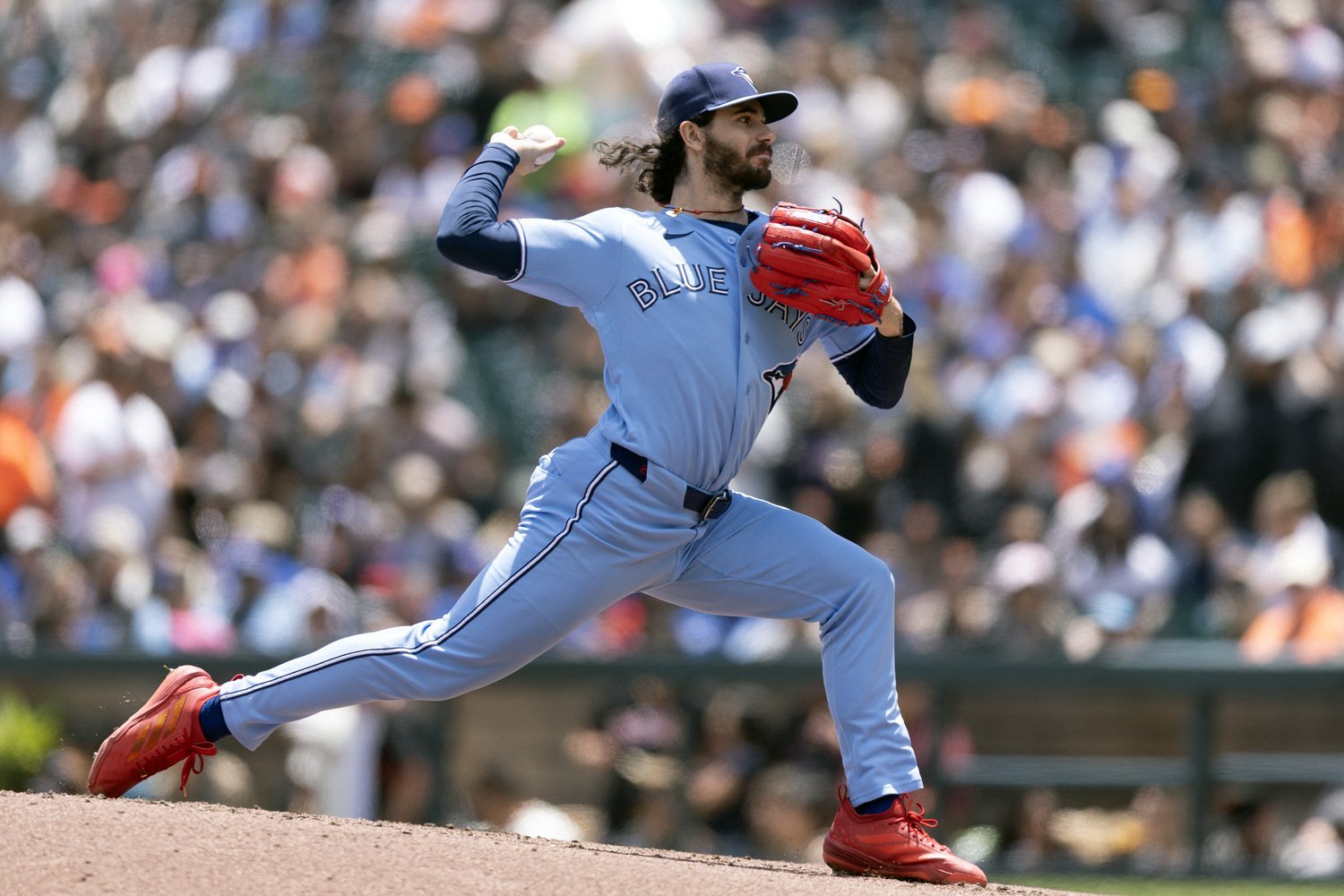 Any other day, the story would be about Vladimir Guerrero Jr. breaking his home run drought and the Jays offense breaking open for 10 runs. Just the fifth time this season they’ve notched double digits and the first time since May 9. Kazuma Okamoto’s grand slam, George Springer going back-to-back with Vladdy (just the second time the Jays have done that all season), the power of the stuffed dragon, Daulton Varsho putting his body on the line in center. All of that ended up being secondary; it was the Dylan Cease show in San Francisco. Cease was perfect through four innings, striking out six to that point before issuing a walk to Willy Adames with two outs in the fifth. A swinging strikeout of the next batter, Bryce Eldridge, would end the inning and keep the no-hit bid alive. The sixth inning started with a leadoff walk, followed by another pair of Ks and an easy groundout. The seventh inning looks like a smooth one on paper, but Jung Hoo Lee’s nine-pitch AB was a grind ending in a flyout, and Ernie Clement had to make a nifty play on the final out of the inning to keep the Giants hitless. Eldridge led off the eighth and hit a ball to deep center field. The ball had an xBA of .770, but xBA doesn’t account for Varsho being an absolute maniac. With a lot of fielders, you might think they gave it a little extra to preserve the chance of a no-hitter. Varsho, I think, makes this play even if the Jays are down 10 runs. Crashing into the wall motivates him. It certainly seemed to motivate Cease too, who reached back to strike out the next two batters and put him three outs away from history. On the third pitch to the leadoff batter, Cease’s 118th of the day, Heliot Ramos drove a sinker into center to break up the no-hitter. Ramos’ hit had an xBA of .880, the highest of any Giant on the day, so this wasn’t a case of bad luck necessarily, just bad timing. Cease would be lifted from the game and would exit to a standing ovation. Tyler Rodgers finished it off with four pitches, and that was that. Cease’s final line: 8 IP, 1 H, 0 ER, 3 BB, 11 K. Cease’s game score of 88 is the best of any Jays starter this season, eclipsing his own previous high-water mark of 79 just last week against Seattle. In fact, Cease has six of the top 10 starts by game score for Toronto this season. This outing also marks the 10th time this season that Cease has thrown 100 or more pitches, with 118 setting a new career high. Dave Stieb is, of course, the first Blue Jay we think of when we talk about coming close to a no-hitter. Stieb, famously, took three no-hit bids to within an out of immortality before finally getting it done on Sept 2, 1990. He remains the only Blue Jay to ever achieve the feat. Toronto has the second longest active no-hitter drought, with only the Cleveland Guardians waiting longer (Len Barker in 1981). Brandon Morrow in 2010 came within an out of the no-no and struck out 17 on his way in one of the most impressive starts in Blue Jays history. Morrow’s game score of 100 is the Jays’ all-time best. Bowden Francis went into the ninth inning twice in 2024 before surrendering his first hit to the leadoff batter in both games. Marco Estrada took a perfect game into the eighth inning in 2015 (game score of 90), but his pitch count (129) and the game condition (Jays would win in the 12th inning) were against him. Then, of course, there was Roy Halladay’s second ever start. On Sept 27, 1998, Doc took a no-hitter into the ninth inning before losing it and the shutout (he still got the complete game) on a solo home run to Bobby Higginson. Doc’s game score of 89 was just one point better than Cease’s yesterday. Halladay would memorably go on to record a no-hitter (and a perfect game) with Philadelphia. Cease, in the reverse of Halladay, already has a no-hitter on his resume, having achieved it with the San Diego Padres in 2024. Wednesday marked the third time Cease has entered the ninth inning with no hits, having done it with the White Sox as well. That no-hit attempt was broken up by Luis Arraez, who was standing in the on-deck circle for the Giants yesterday – a fact that was certainly on Cease's mind. After the game, when asked if this start would give him a leg up on securing the starting role in the upcoming All-Star Game, Cease deflected and suggested that Cam Schlittler would be the likely starter. Yet, with John Schneider getting the final call, there may be a case for Cease to join Stieb and Halladay as the only previous Midsummer Classic starters with Toronto. View the full article
 -
 Riley Quick is an up-and-coming prospect for the Minnesota Twins. The 2025 MLB Draft pick touts a 6-foot-6 frame and is well over 200 pounds (he's a former offensive lineman). In this video, we'll break down the other components of Quick's game that make him intimidating on top of his large frame. We'll also break down when to expect him to debut in Minneapolis. View the full article
 -
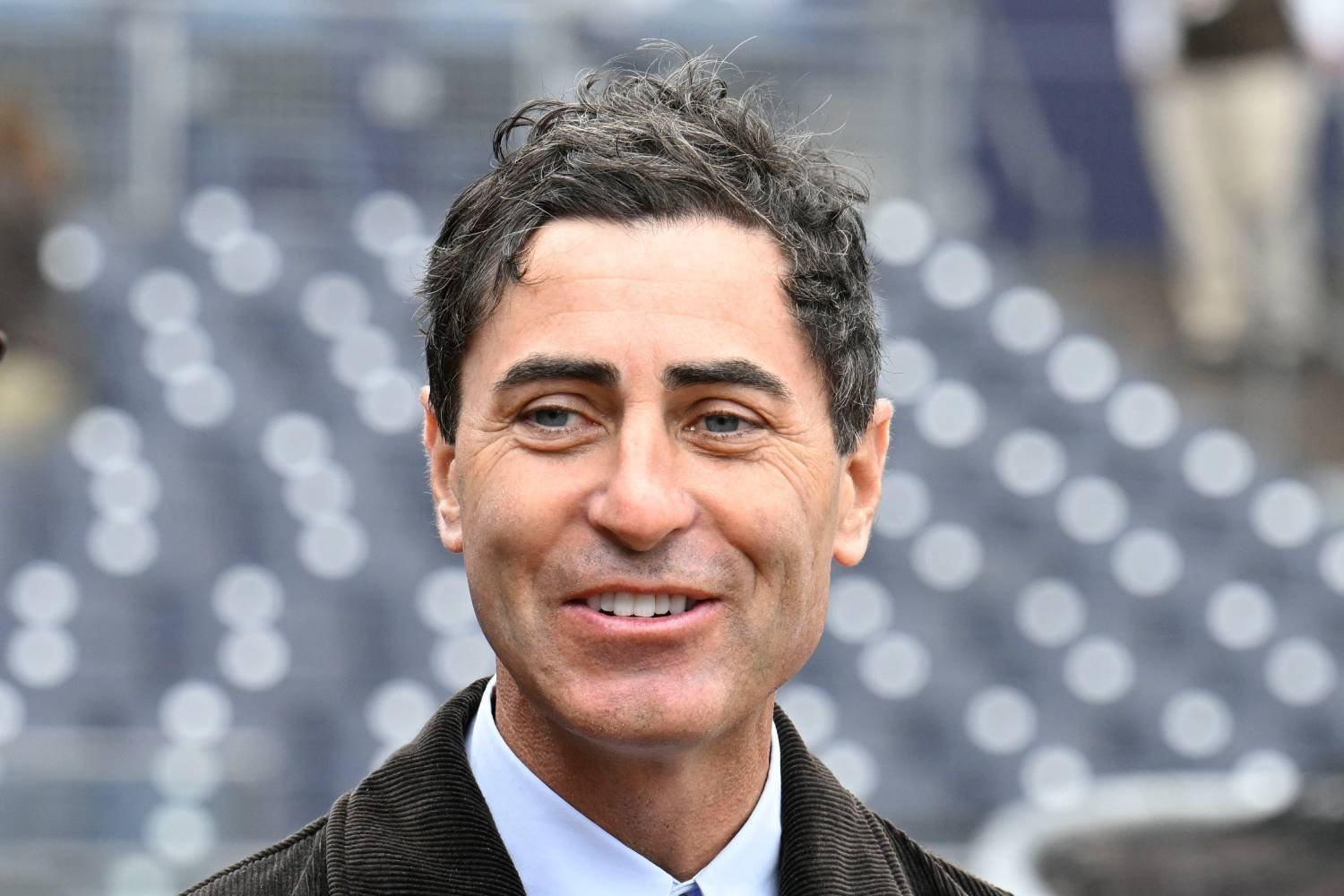 Editor's note: Padres Mission spoke with two industry experts about the state of the San Diego Padres' minor-league system, what they have done right, what they have done wrong and how they got to this state. This is the first of four articles on the subject. There is no question about it. The San Diego Padres enter this weekend’s draft with the worst minor-league system in baseball. So says Baseball America, MLB Pipeline, The Athletic and ESPN. That is the price the Padres have paid, and more specifically president of baseball operations A.J. Preller, to keep the major-league roster in contender status. The churn of acquiring prospects either through the draft or international free agency, developing said prospects, then shipping out those prospects to add talent to the major-league roster has taken a significant toll on the organization. No trade deadline took a bigger bite out of the system than 2025, when Preller made five deals on deadline day that reaped seven players, but shipped 14 to other franchises. Basically, they traded half a full minor-league affiliate, including one of the top prospects in all of baseball, for those seven players, all but one added to the major-league roster. The exiting talent originally came to the organization from all avenues. Six were their own draft picks (one from 2021, five from 2024), three were international free agents (2017, 2019, 2024), two were undrafted free agents (2022, 2024), one was a minor-league free agent (2024), one was a Rule 5 pick (2023), and another arrived in a trade (2024). The headliner in that exit party, of course, was shortstop Leo De Vries, who was a top-five prospect in all of baseball at the time the Padres shipped him to the A’s for all-world closer Mason Miller and left-handed starter JP Sears. The cost for outfielder Ramon Laureano and first baseman Ryan O’Hearn was five draft picks from 2024, including second-round left-hander Boston Bateman, third-round shortstop Cobb Hightower and fourth-round right-hander Tyson Neighbors. But it really left the cupboard pretty bare. And as we approach the 2026 trade deadline of Aug. 3, the Friars are on the outside of the playoff picture and need a roster boost. So the big question is: What do the Padres have left to deal and is it enough to acquire anything of consequence? The biggest assets the Friars have are Padres Mission’s No. 1 and No. 2 prospects, catcher Ethan Salas and left-handed starter Kash Mayfield. Right-hander Miguel Mendez, our No. 3 prospect, and center fielder Ryan Wideman, No. 4 in our rankings, are also certain to be hot names bandied about in front-office discussions. Any deals the Padres make this year in order to contend will make an already-barren system more so. “It's the thinnest it's been probably since after A.J. Preller's first year, when he traded Trea Turner and a bunch of other prospects to try to build a win-now roster and that didn't work,” said Keith Law, senior baseball writer at The Athletic who analyzes prospects across the sport. “And then he went about it kind of his way after that, I think, in terms of trying to really lean heavily into scouting, player development, building a huge stable of prospects and then using those guys later on to build a roster and to trade to try to supplement that roster. “But I think we sort of now have reached the other end of that cycle, right? He's gone all the way sort of up the mountain and now we've come back down the other side, where it's Ethan Salas, and maybe an interesting pitcher or two. And I do like Ty Harvey, so I don't want to be too dismissive, but it's kind of Ethan Salas and not a lot else.” No one ever wants to admit they are the worst at anything from a professional point of view, but sometimes simple analysis tells the story. “Anybody with the Padres will tell you they don't view it that way (as the worst system),” said Sam Dykstra, a senior reporter at MLB Pipeline. “They always think that the next crop of good Padres players or good next trade pieces are in the organization, people just haven't seen it yet. We're starting to see a little bit of that spring through this year, but it's still something that, I mean, you trade away a Leo De Vries, you trade away as many other just depth pieces that they have in recent years and I would struggle to say it's a deep system in any way. Now, again, there are still some interesting pieces here, there have been some nice breakouts this year, some nice development stories. But as far as overall health of the farm system, it's still pretty tough.” That will make Preller's job more difficult as the trade deadline approaches if the Padres are buyers. View the full article
 -
Opinion: Twins TV Hits a Grand Slam with All Analyst Broadcast
DiamondCentric posted an article in Twins Daily
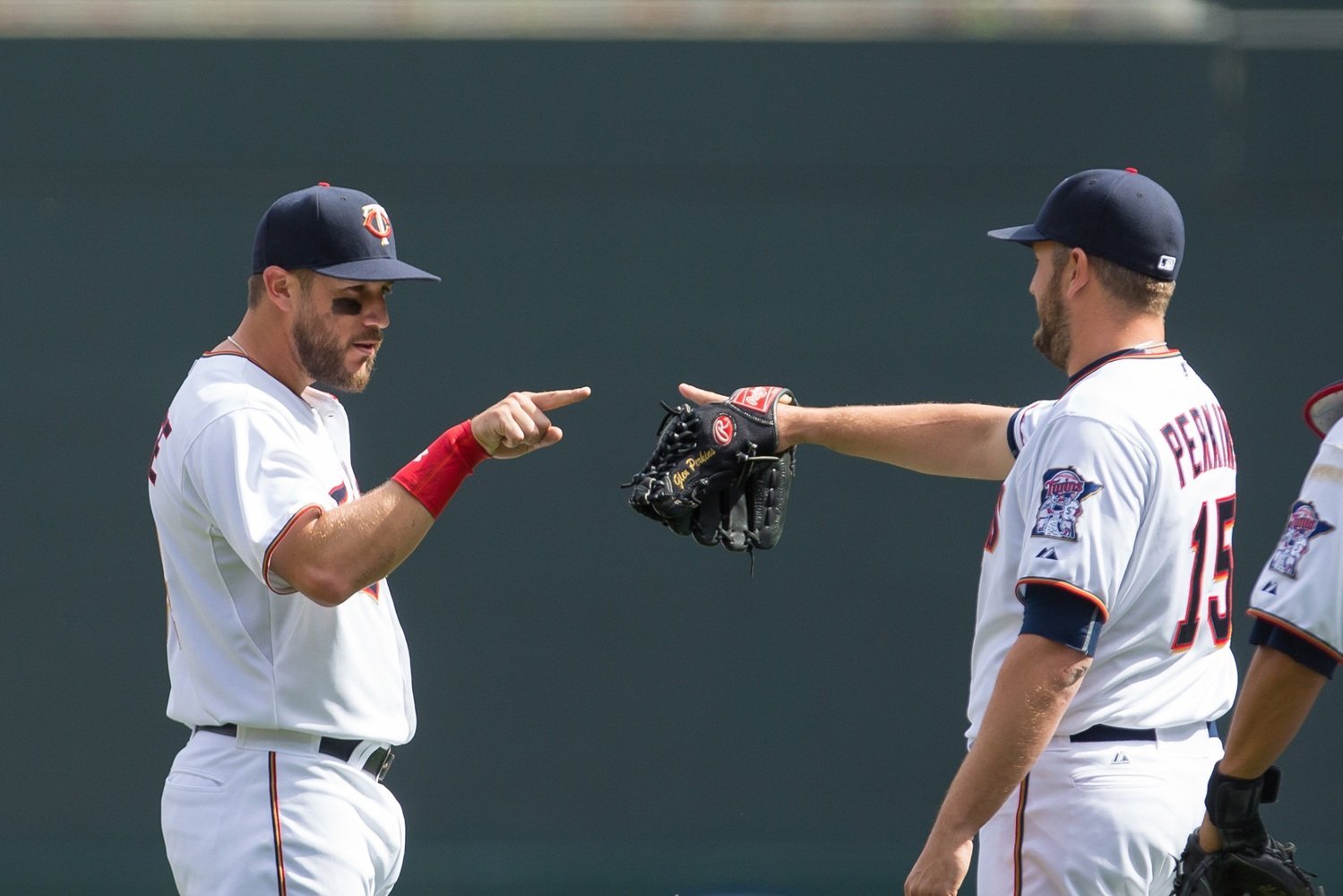 The beauty of the baseball season is that it is a long season, that it is a marathon and not a sprint. After 162 games, the best teams separate themselves from the others. The difficulty of the baseball season for players and for fans is that it is a long season. Players have to figure out a routine and that could certainly get monotonous. It's the same for most fans, even die-hard fans. The routine of watching most of the 162 games can get a little stale, especially if you are a fan of a team that isn't very good. It can also be true of great team. So sometimes teams and players need to mix up. Days off, completely away from the field are important. Taking batting practice in the batting cage instead of on the field. Taking the second bus from the hotel instead of the first bus to the ballpark. Maybe something as simple as wearing your pants to your knees. Likewise, for fans, we need to find different ways of watching. Maybe on your big living room TV. Maybe on a laptop grilling or sitting near a campfire. Maybe it's listening on the radio on a Saturday afternoon with a fishing pole in your hand on the pontoon. Maybe it's as simple as hearing different voices. Twins fans are really lucky. Dick Bremer and his iconic voice was welcomed into our homes calling Twins fans for 40 seasons. This coming weekend, he will be welcomed with open arms as one of the most deserving members of the Minnesota Twins Hall of Fame. Cory Provus was the radio voice for the Twins for a dozen years. He has now been in the TV booth for a few seasons. Enjoying the All-Analyst Broadcast is not in any way a knock on Provus. I think most know just how good he is behind the microphone. He does probably 150 Twins games each year. He's fantastic calling college football and college basketball in the offseason. He also has a young family. I'm sure an extra series off here and there is a great thing. We all want a quality work-life balance, right? Early in his career, Bremer teamed with Tommy John, Jim Kaat and Harmon Killebrew. For a long time, Bremer worked mostly with Bert Blyleven. That was fun early on and when the "Circle Me Bert" became a thing. If we're being honest, the Blyleven experience is why many of us started watching the game on mute. Sure, you occasionally missed Blyleven expanding the English dictionary, even getting himself suspended. What we learned from that is that on TV you can see what's happening. You don't need to have the play detailed to the same level as is needed on the radio. When Blyleven retired from the booth, the Twins decided to go with analyst-by-committee. Remember how much we enjoyed Tom Kelly's takes and stories the first time that he was in the booth. Roy Smalley had been around for a while. Justin Morneau came on board in 2019. The Twins tried out the likes of Torii Hunter (which made us all a bit nervous to hear what he might say). Glen Perkins got more and more time. LaTroy Hawkins was on for a few years before joining the coaching staff this year. Trevor Plouffe and Denard Span have been added in the last couple of years. I always thought that mixing up his in-booth partners brought out the best in Bremer. He seemed rejuvenated by the opportunity to work with more players. Few know the game of baseball and the history of the Minnesota Twins than Bremer, but he let his analyst be the "star" of the broadcast. He set them up for success. He asked questions that he likely knew the answers to, but he knew that the audience wanted to hear the opinions of the former players. Last year, the Twins tried something new. Because of the popularity of the former players involved in the broadcasts, they put together an All-Analyst broadcast. Instead of the traditional play-by-play announcer and an analyst. the broadcast was solely called by the analysts. In 2025, Morneau, Perkins and Plouffe were in the booth. Pablo Lopez joined the broadcast and impressed us all. The three former players were teammates with the Twins from 2010-2013 The Twins and Twins.tv brought back the All-Analyst broadcast. This year's class added another former teammate, Denard Span. It is clear that the four players have strong and lasting relationships. Those teams weren't always good, but the players were close and remain close. It is completely entertaining to hear them share stories about their playing years, but it's also fun to hear them analyze the game from their experiences. Luke Keaschall made his first start in center field on Wednesday night. He had played some center field in Cedar Rapids in 2013 before his Tommy John surgery. Just recently, he has moved from second base to the outfield. Denard Span talked about how he played center field only in the minor leagues, but when he was called up, he had to play right field. He discussed the differences between the three outfield spots. They also discussed Span's "walk off grand slam!" Trevor Plouffe discussed the challenges he had coming up as a shortstop, getting some time at second and third base, and then being thrown into the corner outfield spots. He talked about the difficulty and differences between the infield and the outfield. On Tuesday, the highlighted a trip he made to the A's bullpen and got a good laugh about it. Pablo Lopez spent an inning with the broadcasters on Tuesday night. They talked about his "success" as a hitter in the National League earlier in his career. They also talked about him taking 14 Twins players with less than one year of service time to a tailor who made custom suits for each. He talked about Martin Prado being the guy who paid it forward to him. Wednesday night's game began with Morneau and Perkins in the booth while Trevor Plouffe sat by the foul pole in left field, and Denard Span sat by the foul pole in right field. In the first inning, Span reached toward a ball that Kody Clemens knocked off the top of the wall, maybe 10 feet from him. Later, he "jumped" for a long foul ball over his head. His broadcast teammates laughed and mocked him in the way only teammates can. Meanwhile in left field, Trevor Plouffe told the TV audience that he had his wallet, and it had a few $20 bills in it. He said that he would give a $20 to those that came up to him and mentioned it to him. It didn't take long for a line to come up to him, get a $20 and take a picture and shake his hand. In fact, at one point he ran out of money. Soon after, Twins owner Tom Pohlad and Dustin Morse showed up in left field. Pohlad handed Plouffe some more $20s and they made fans of several more people. Then they went over to see Denard Span in right field, and Pohlad gave him some money to hand out to fans as well. I think that the experience "humanized" Tom Pohlad to some Twins fans who, to this point, have only read quotes or heard negative things about the family. Pohlad appeared to be having a great time talking to the broadcasters, chatting with the fans, and being present. It is exactly the kind of thing that he needs to do to simply start the process of gaining fan confidence. (Yes, proving it by spending more and pushing payroll back to the 2023 and 2024 levels would also have a huge impact.) Asked if they wanted to hand out some money from the broadcast booth, Morneau and Perkins both said that they'd rather have a hot dog. The next half-inning, there was Tom Pohlad, placing a huge hot dog in front of them. That's when Span and Plouffe rejoined Perkins and Morneau in the booth. Of course, it's always fun when we get to see the Twins win, especially against an AL Central foe. But both games have been really good baseball games. The Twins won 3-1 on Tuesday night. And Alan Roden played hero in the Twins walk-off win on Wednesday night. The Twins and Guardians will play one more game this series. We get to enjoy one more game with the four analysts working together. What topics will they cover today? What stories will they share? Will there be any surprises, such as additional former players joining them, or unique angles, or stories we haven't heard before? And could we be so bold as to ask for another Twins win? What are your thoughts on the All-Analyst Broadcast? Is it something you would like to see more of? Is it brilliant, or is it crazy? Is it perfect as is, one series each season, to help us all with the long season? Share your thoughts below. I'm sure the Twins would love to hear what you think? The people behind Twins TV would love to hear it as well. Whether you love it or hate it, let them know. Another question for discussion? Are there other former Twins players that you would like to see in the TV booth? View the full article
 -
 Drew Beam spun a quality start, striking out seven over seven innings as the Northwest Arkansas Naturals edged Wichita. Kendry Chourio tossed three scoreless frames for the Quad Cities River Bandits, who rode Angel Acosta, Ramon Ramirez, and Blake Mitchell to a rout of Peoria. Gavin Cross doubled and tripled in Omaha's comeback bid before a walk-off loss, and Stone Russell homered in the Columbia Fireflies' defeat against Salem. Royals Transactions Kansas City Royals sent 1B Vinnie Pasquantino on a rehab assignment to Omaha Storm Chasers.The Kansas City Royals signed free-agent RHP Justin Topa to a minor-league contract. Omaha Rallies To Tie But Falls On Late Grand Slam The Omaha Storm Chasers erased a four-run deficit to draw even in Louisville, but a ninth-inning grand slam sent them to a 12-8 loss to the Bats. Omaha's offense came in bursts, starting with a five-run second inning. Luca Tresh doubled home a run, leadoff man Cross followed with a two-run ground-rule double, and John Rave added a run-scoring groundout to make it 5-2. After the Bats pulled ahead, Omaha chipped back to make it a game again in Louisville. Peyton Wilson and Brandon Drury delivered run-scoring singles in the seventh, and Matthew Lugo reached on an error in the eighth, scoring Andrew Velazquez to tie the game at 8-8. Cross led the effort, going 2-for-4 with a double, a triple, and two RBIs. Drury reached base three times, walking twice and driving in a run, while Drew Waters scored twice. Starter Mason Black, who's moved back to a starting role since being optioned back to Omaha, struggled through four innings, allowing seven runs, six earned, on 10 hits, including five home runs, with one walk and three strikeouts. The bullpen kept Omaha within reach until the ninth, when Ben Sears retired nobody and surrendered a walk-off grand slam, charged with four runs in the loss. Omaha left nine runners on base and went 4-for-10 with runners in scoring position. They are now 38-50 this season. Player AB R H RBI BB K Gavin Cross 4 1 2 2 1 0 John Rave 4 0 0 1 1 1 Vinnie Pasquantino 3 0 0 0 2 0 Brett Squires 0 0 0 0 0 0 Matthew Lugo 5 1 1 0 0 0 Drew Waters 4 2 1 0 1 1 Peyton Wilson 5 0 1 1 0 2 Brandon Drury 3 1 1 1 2 0 Rudy Martin Jr. 0 0 0 0 0 0 Luca Tresh 5 1 1 1 0 2 Andrew Velazquez 2 2 0 0 2 1 Player IP H R ER BB K HR Mason Black 4 10 7 6 1 3 5 Ethan Bosacker 2 1 1 0 4 3 0 Justin Topa 2 1 0 0 0 1 0 Ben Sears 0 1/3 3 4 4 1 0 1 Naturals Break Through Late To Beat Wichita The Northwest Arkansas Naturals scored three runs in the eighth inning to pull away for a 7-5 win over the Wichita Wind Surge. Northwest Arkansas built its lead steadily throughout the contest. Sam Kulasingam drove in a run with a groundout in the third, Omar Hernandez singled home a run in the fourth, and Jack Pineda homered in the fifth. Clinging to a 4-3 lead in the eighth, the Naturals broke through. Leadoff man Carson Roccaforte singled in a run, and Kulasingam and Spencer Nivens each drew bases-loaded walks to push the margin to 7-3. Hernandez paced the offense with a 4-for-5 night and an RBI. Pineda added three hits, two doubles, and a home run, while Colton Becker also collected three hits. Kulasingam finished with a triple and two RBIs, and Nivens drove in two more. Roccaforte reached base twice and scored twice out of the leadoff spot. Beam, the Royals' No. 7 prospect at Royals Keep, turned in a quality start, working seven innings and allowing three runs on five hits, with one walk, seven strikeouts, and two home runs allowed. The Naturals stranded 11 runners, but went 5-for-13 with runners in scoring position. They also did enough to hold on after Wichita pushed across two in the ninth. Northwest Arkansas is now 33-48 this season. Player AB R H RBI BB K Carson Roccaforte 4 2 1 1 1 2 Jack Pineda 4 1 3 1 1 0 Sam Kulasingam 4 1 1 2 1 0 Spencer Nivens 3 0 1 2 2 0 Jorge Alfaro 4 0 0 0 0 4 Daniel Vazquez 5 0 2 0 0 0 Colton Becker 5 1 3 0 0 1 Omar Hernandez 5 1 4 1 0 0 Justin Johnson 4 1 0 0 1 1 Player IP H R ER BB K HR Drew Beam 7 5 3 3 1 7 2 Zachary Cawyer 2 3 2 0 1 2 0 River Bandits Pull Away Late In Rout Of Peoria The Quad Cities River Bandits scored in four separate innings and broke the game open late for a 10-4 win over the Peoria Chiefs. Quad Cities jumped ahead with three runs in the second, as Erick Torres singled home a run and Acosta followed with a two-run single. Peoria answered to take the lead, but the River Bandits regained control. Mitchell, the Royals' No. 4 prospect at Royals Keep, homered in the fifth, and Asbel Gonzalez, the No. 9 prospect, and Ramirez, the No. 6 prospect, drove in key runs in the seventh. The biggest blow came in the eighth, when Jose Cerice homered, Acosta singled in a run, and Ramirez capped the frame with a two-run double for a 10-4 lead. Acosta led the way, going 3-for-4 with a triple and three RBIs. Ramirez added two doubles and three RBIs, Derlin Figueroa collected three hits, and leadoff man Gonzalez reached base three times and scored twice. Chourio, the Royals' top prospect at Royals Keep, set the tone on the mound, throwing three scoreless innings with two hits allowed and four strikeouts. The bullpen wobbled in the middle innings but slammed the door late, as the final three relievers combined for four scoreless innings to win their sixth straight game. Quad Cities left six on base and went an impressive 7-for-14 with runners in scoring position. The River Bandits are now just one game under .500 at 39-40. Player AB R H RBI BB K Asbel Gonzalez 4 2 2 1 1 1 Blake Mitchell 5 1 2 1 0 1 Ramon Ramirez 4 0 2 3 0 0 Luke Pelzer 5 0 1 0 0 3 Derlin Figueroa 4 1 3 0 0 1 Tyriq Kemp 4 0 1 0 0 1 Jose Cerice 4 2 2 1 0 0 Erick Torres 3 2 1 1 1 1 Angel Acosta 4 2 3 3 0 0 Player IP H R ER BB K HR Kendry Chourio 3 2 0 0 0 4 0 Nick Conte 2 4 4 4 2 3 0 Tyson Guerrero 1 1 0 0 1 0 0 Max Martin 2 1 0 0 0 1 0 L.P. Langevin 1 0 0 0 0 3 0 Fireflies Fall After Early Deficit To Salem The Columbia Fireflies could not recover from a four-run first inning and dropped a 5-2 decision to the Salem RidgeYaks. Salem plated four runs in the first and added another in the fourth, leaving Columbia to climb out of a five-run hole for most of the night. The Fireflies finally got on the board in the fourth when Russell homered to right field, and they added another in the fifth when Yandel Ricardo doubled home Sean Gamble. That was as close as Columbia would come, as the offense managed just six hits and struck out 12 times in a three-run loss. Ricardo, the Royals' No. 10 prospect, led the group with two hits, a double, and an RBI, and Russell's home run accounted for Columbia's other run. Starter Shane Van Dam allowed five runs, four earned, on nine hits over five innings, with four strikeouts and no walks. The bullpen was sharp behind him, as Dash Albus and Andy Basora combined for four scoreless innings, but Columbia's offense could not close the gap. The Fireflies left seven runners on base and went 0-for-4 with runners in scoring position. The loss drops Columbia back under .500 at 41-42. Player AB R H RBI BB K Josh Hammond 3 0 0 0 1 1 Sean Gamble 4 1 1 0 0 3 Yandel Ricardo 4 0 2 1 0 1 JC Vanek 4 0 0 0 0 1 Stone Russell 4 1 1 1 0 1 Henry Ramos 3 0 1 0 1 1 Hyungchan Um 2 0 1 0 1 0 Jhosmmel Zue 4 0 0 0 0 1 Josi Novas 4 0 0 0 0 3 Player IP H R ER BB K HR Shane Van Dam 5 9 5 4 0 4 0 Dash Albus 2 1 0 0 0 2 0 Andy Basora 2 1 0 0 2 2 0 Top-20 Prospect Performance Kendry Chourio: 3 IP, 2 H, 0 R, 4 K David Shields: DNP Josh Hammond: 0-for-3, BB, 1 K Blake Mitchell: 2-for-5, HR, 1 K Sean Gamble: 1-for-4, 3 K Ramon Ramirez: 2-for-4, 2 2B Drew Beam: 7 IP, 5 H, 3 R, 1 BB, 7 K, 2 HR Carson Roccaforte: 1-for-4, BB, 2 K Asbel Gonzalez: 2-for-4, BB, 1 K Yandel Ricardo: 2-for-4, 2B, 1 K Michael Lombardi: DNP Ben Kudrna: DNP Justin Lamkin: DNP Felix Arronde: DNP Blake Wolters: DNP Steven Zobac: DNP Austin Charles: DNP Daniel Vázquez: 2-for-5 Kamden Edge: DNP Warren Calcano: DNP View the full article
 -
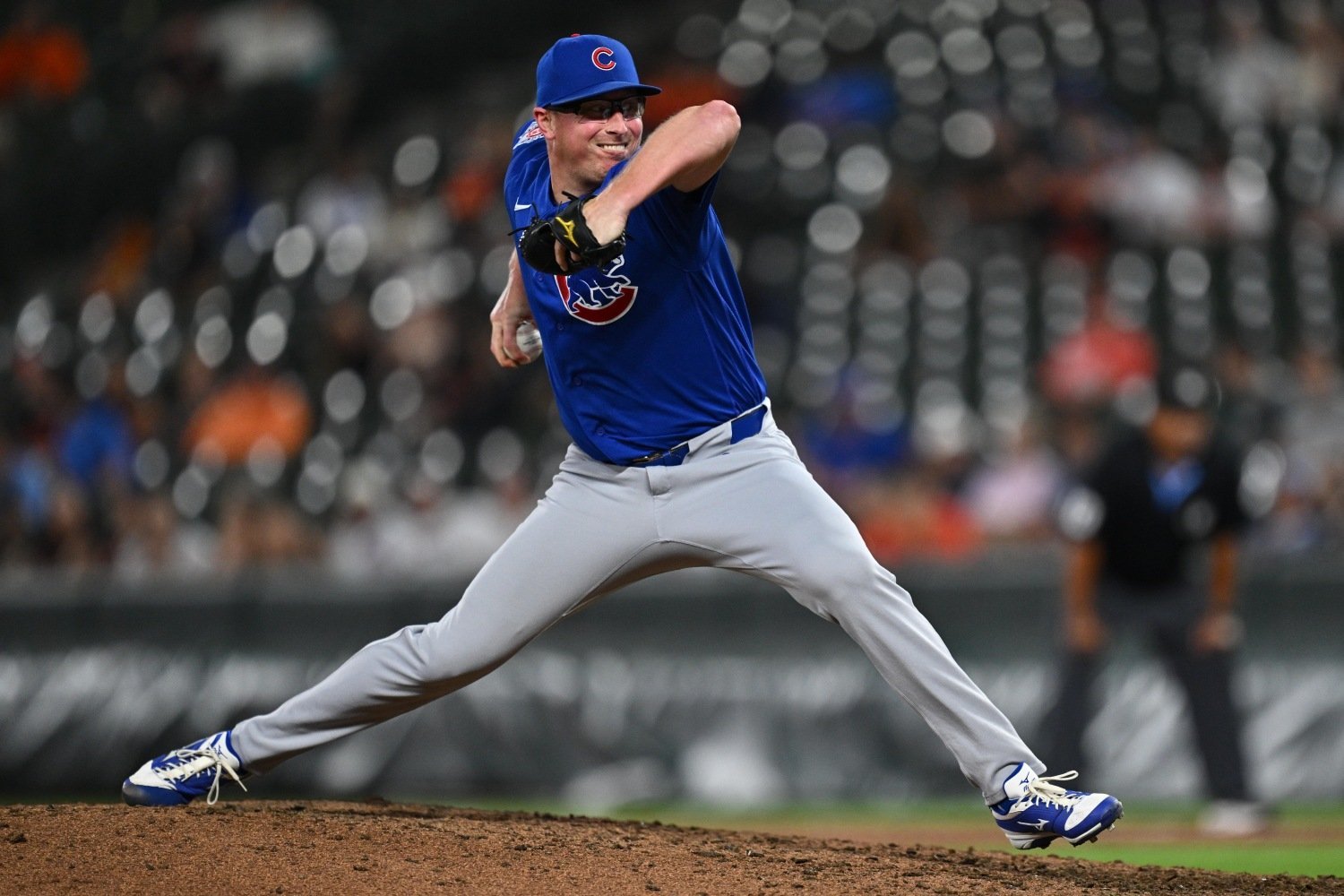 If Tuesday night’s victory over the Baltimore Orioles was any indication, the Cubs might start looking to Trent Thornton to pitch in higher-leverage opportunities going forward. The right-hander notched his second save of the season with a scoreless ninth inning. This was in a game that was after an off day, which is to say that the bullpen was rested. Craig Counsell had his pick of the litter, and he picked Thornton. That is quite the leap for a guy who started the season in Iowa and wasn’t called up to the big-league club until early May. It’s also quite the leap for me, because I have a small bias: I have a really hard time believing in relievers who don’t rack up big strikeout numbers. This makes Thornton and his minuscule 12.5% strikeout rate hard for me to embrace. No qualified pitcher has a lower strikeout rate. Combine that with a walk rate a tick above league average, and you have what looks to be a frustrating bullpen arm. But should I trust Thornton more? Counsell is certainly starting to, and he knows way more than I do. The thing is, Thornton has gotten results. His 2.63 ERA out of the bullpen is one of the best on the team. However, any advanced metric would suggest that is entirely smoke and mirrors. He has a 5.03 xERA and a 5.28 FIP. His .171 BABIP (batting average on balls in play) is the sixth-lowest among pitchers with at least 20 innings pitched, according to FanGraphs. For context, league-average BABIP is .288 so far this season. So, he doesn’t strike a lot of people, but he gets them out when they put the ball in play. What’s the big deal? Maintaining a BABIP that low isn’t usually a product of any particular skill; it’s luck. Put enough balls in play and eventually some of them will find a hole. That being said, there’s still a scale to BABIP. Some pitchers run higher ones, and others lower ones. Can’t Thornton just be one of the guys that runs a low one? The answer is yes, though probably not as low as .171. Here's what Thornton has going for him: entering Wednesday’s action, he is posting a 50.6% ground ball rate and just a 13.9% line drive rate. By giving up a lot of ground balls, Thornton avoids giving up extra-base hits, and by allowing so few line drives, he avoids the type of contact that generally leads to a high batting average. So why does his FIP think he is getting so lucky? Even though he is keeping the ball on the ground, the former Tar Heel is still getting lucky when you consider how few of those ground balls manage find the outfield grass: Batted Ball Type Batting Average Expected Batting Average BA-xBA Ground Ball .125 .271 -.146 Line Drive .500 .529 -.029 Fly Ball .263 .295 -.032 He’s getting better results on line drives and fly balls than expected, though not egregiously so. It’s the ground balls that really stick out. In fact, among 411 pitchers who have recorded at least 25 ground balls this year, only one has a more significant gap between his batting average allowed and his expected batting average than Thornton, per Baseball Savant. If you sort through all of Thornton’s outs recorded on the ground, you’ll definitely see some web gems: M3k2QTFfWGw0TUFRPT1fVjFJQUJRY01Yd01BQ3daVVhnQUhCRlVIQUFNSFZWQUFBUUZRQWxJR0JBdFFDVlpm.mp4 Because of the high number of ground balls he has been able to induce, Thornton is uniquely positioned to take advantage of an infield defense that is arguably the best in baseball. The Cubs as a team have allowed a .224 batting average on ground balls this year, second-lowest in baseball. Their -.027 gap between that batting average and their expected batting average is also the second-lowest. Is Trent Thornton getting lucky? Almost certainly. With the highest ground ball rate among the pitchers on the active roster, though, he should be expected to be getting a little bit lucky, given the infield defense behind him. You create your own luck. Rather, Alex Bregman, Dansby Swanson, Nico Hoerner and Michael Busch create it, for Thornton. He's not a relief ace. Still, I have almost talked myself into him being a serviceable bullpen arm for the Cubs for the remainder of the season. That alone has a lot of value to the team right now. View the full article
