


DiamondCentric
-
Posts
2,631 -
Joined
-
Last visited
Never
Content Type
Profiles
Forums
Events
News
Tutorials & Help
Major League Baseball Videos
Guides & Resources
Store
Downloads
Gallery
Everything posted by DiamondCentric
-
 The Minnesota Twins are Yoendrys Gomez's fourth organization in the last 13 months. After being designated for assignment by the Tampa Bay Rays, the Twins claimed him off waivers and have seemingly turned him into an elite bullpen arm. How have they pulled this off? View the full article
 -

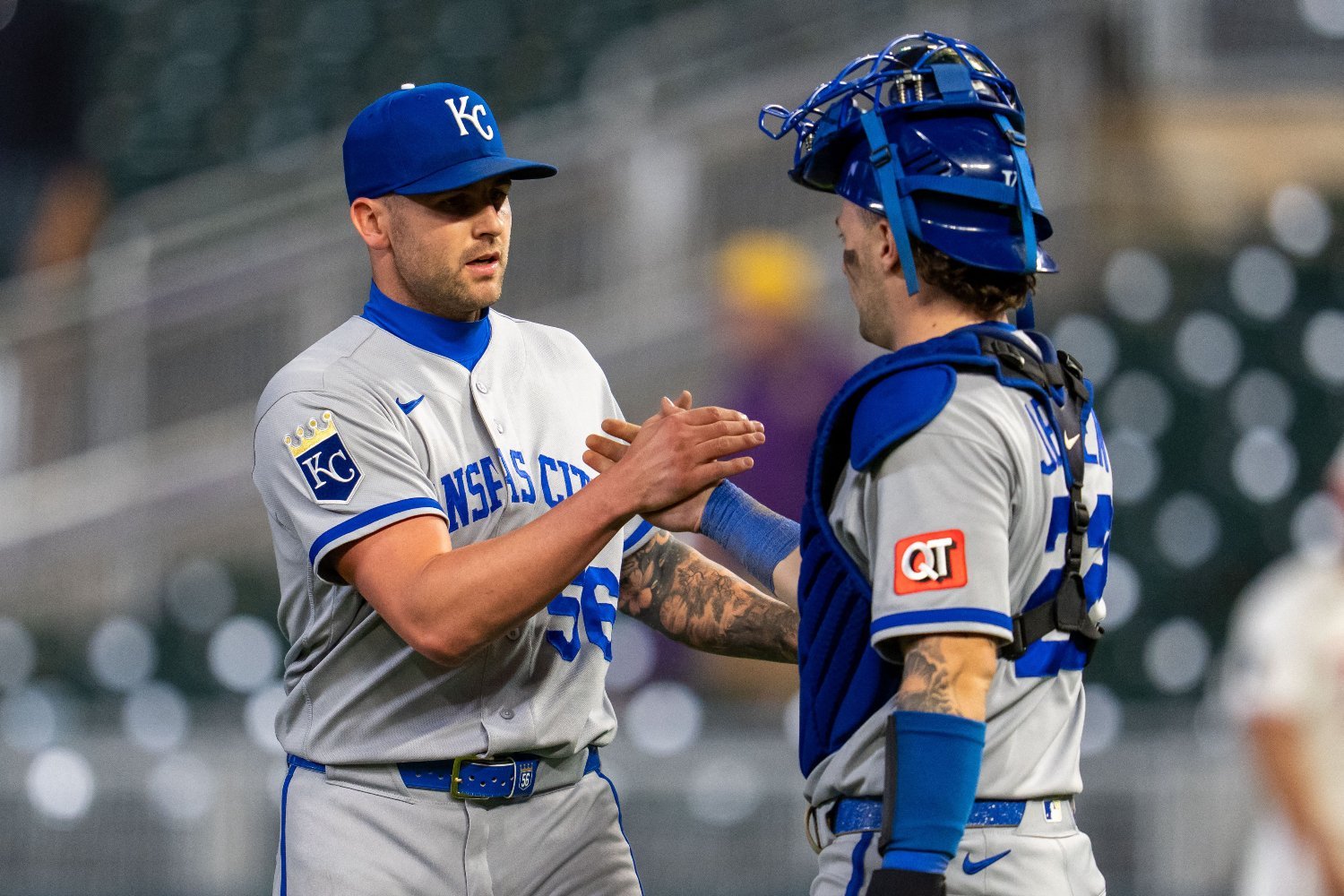 It was a solid start to June for the Kansas City Royals. After starting the road trip with three straight losses to the Rangers in Arlington, the Royals ended up going 5-2 in a seven-game stretch against the Reds and Twins, respectively. Instead of a traditional Week in Review, I will review the past week through the lens of four metrics produced by Royals players. That includes two hitters and two pitchers. Not only will I highlight that number for that particular player, but also what those metrics could mean for them and the Royals as we hit the dog days of summer during the 2026 MLB season. Michael Massey's 10 Hits When it comes to Royals hitters over the past week, no Kansas City position player was hotter at the plate than Massey. Over the past seven days, Massey collected 10 hits, which led all Royals hitters over that time frame. In 26 at-bats, he also slashed .385/.385/.615 with a 1.000 OPS. The Kansas City second baseman also led Royals hitters with two home runs this week, with his latest coming on June 4th in Minneapolis against Twins pitcher Mike Paredes. In 146 plate appearances this season, Massey is slashing .263/.283/.460 with a .743 OPS. He also has six home runs, 16 runs scored, and 20 RBI in 50 games. When it comes to his Statcast profile, Massey is barreling the ball and hitting the ball hard, pulling the ball in the air effectively, and not whiffing or striking out a whole lot at the plate. That said, the xwOBA is significantly lagging the wOBA, and he is chasing a lot while not walking much. While walking is not necessarily a sign of "surefire" success, it can help a hitter when the BABIP isn't trending in the right direction. Then again, Massey has never been a high-walk hitter over his career, and at least he's making up for the lack of walks with a low number of strikeouts and power to boot. With Jonathan India going on the 60-Day IL due to being out for the season because of a shoulder injury, the Royals needed Massey to step up at the keystone if they wanted to make a push toward the postseason. While the Royals are still 12 games under .500, the former Illinois product trending in the right direction is an encouraging development for this Kansas City lineup. Now, he just has to stay healthy, which has been a challenge in the past. 15 Strikeouts to Zero Walks for Noah Cameron After posting a 5.40 ERA and 1.61 WHIP in six starts and 31.2 IP, it looked like Cameron was on his way to some major regression in 2026 after posting a 2.99 ERA in 138.1 IP a season ago. Not only did he give up 40 hits in April, but he also gave up five home runs, a sign that opposing hitters were locked in on his profile and approach. To Cameron's credit, he's been slowly getting better and more efficient with every start this season. In May, the St. Joseph, Missouri product posted a 3.43 ERA and 1.10 WHIP in four starts and 21 IP. He allowed only 17 hits and didn't give up a single homer. Cameron also improved his BB/K ratio from 2.55 in April to 3.33 in May. Thus, the lefty was making the proper adjustments after a challenging first month of play. This past week, Cameron was the Royals' best pitcher statistically. In two starts, he posted a 0.69 ERA and 0.31 WHIP in 13 IP. The lefty also only gave up four hits, struck out 15 batters, and didn't allow a single walk in his past two outings. Those kinds of efforts were a big reason why the Royals won in his last start against the Twins and should've won the previous start against the Reds (the bullpen imploded, unsurprisingly). Here's a look at Cameron's TJ Stuff+ summary from his Sunday start against Minnesota. Royals fans should pay attention to his strong chase and whiff rates, which led to eight strikeouts in six innings of work. In addition to posting a 31.7% chase and 25% whiff rate, he also had a .208 xwOBACON. That ability by Cameron to limit hard contact is a big reason why he's not just limited home runs allowed, but runs in general. Cameron's stuff also looked strong on Sunday, especially his changeup, curveball, cutter, and slider, which all had TJ Stuff+ marks of 100 or higher (he had an overall 99 TJ Stuff+). The main issue with Cameron is that he doesn't have a great four-seamer, as evidenced by the pitch's 92 TJ Stuff+ mark on Sunday. However, he does an excellent job of locating the pitch, which makes it hard for hitters to square it up despite its lackluster characteristics. Below is his pitch description chart on the four-seam fastball from Sunday's win, and notice how he peppers the edges and avoids the middle-middle zone. He only gave up one hit on the four-seamer, which was a mistake up in the zone. However, he limited any other kind of production due to his solid command of the pitch. If Cameron keeps this up, he could make a push to be a Royals' All-Star pitching representative. 1.113 OPS from Jac Caglianone Caglianone was pulled from Saturday's game and didn't play Sunday due to a shoulder injury he suffered when colliding with the wall in Friday night's game. That said, though he had only 18 at-bats this week, Cags was the best overall Royals hitter this week. In his weeklong sample, the former Florida Gator slashed .389/.522/.611 with a 1.113 OPS. Cags also launched a home run, scored three runs, collected four RBI, and stole a base. Another positive from this week was his plate discipline, as he walked four times and struck out five times. Here's a look at his home run, which came against Cincinnati pitcher Brandon Leibrandt on June 1st. Not only has Cags changed his look with high socks (which look good on him), but he is also hitting the ball harder than ever. When looking at his TJ Statcast summary since June 1st, he's looking elite in his barrel, hard-hit rate, exit velocity, launch angle, and walk metrics. The only drawbacks with Cags' profile from this past week are that he's chasing a lot (12th percentile O-Swing%) and not making a ton of contact on pitches in the strike zone (22nd percentile Z-Contact%). However, it's hard to be too nitpicky, especially when so many of his percentiles rank in the 98th percentile or higher. Hopefully, getting some rest today and the day off tomorrow will help Cags come back close to 100 percent for this upcoming homestand against the Rangers and Astros. The Royals need his power and bat in the lineup, especially with Salvador Perez nursing a thumb injury that has kept him out of the lineup for the past two days. Manager Matt Quatraro inserted Caglianone in the cleanup spot against righties recently, and Cags will likely keep that spot if he continues to produce at the plate like he did over the past seven days. Three Saves in Three Opportunities for Alex Lange With Lucas Erceg imploding over the past month, Quatraro has been open to utilizing anyone in the bullpen to close out games. Well, the Royals may have found their solution, and it didn't take all that long. Lange has taken over closer duties recently, and he's thrived in his return to the role (he saved 26 games for the Tigers in 2023). In four outings and four IP this week, Lange didn't allow a run, had a 1.25 ERA, and struck out seven batters while only walking two. Most importantly, he collected three saves in three opportunities, with his most recent coming in Saturday's 3-2 comeback win. Lange has always been a pitcher with strikeout ability and a propensity for generating swing-and-miss. While he has struggled with walks (12.1% BB%) and barrels allowed (14.7% barrel rate), his 25% K% ranks in the 67th percentile, and his 31% whiff rate ranks in the 88th percentile. That strikeout and whiff rate is an upgrade over what they were getting with Erceg this season (30th percentile K% and 17th percentile whiff%). When looking at his TJ Stats summary from June 1st to June 6th, many of his other metrics have been even more impressive, which shows why he's been so trusted by Quatraro in the ninth inning recently. In addition to a 1.90 FIP, Lange produced a 38.9% K%, 27.8% K-BB%, and 39.4% whiff%. Those are great results, though his TJ Stuff+ numbers weren't quite as impressive, as evidenced by his 100 overall TJ Stuff+. His changeup and sinker were good pitches; however, this week. They had grades of 56 and 64, respectively. Thus, Lange has at least a couple of pitches in his arsenal that can be put away offerings. Whether Lange keeps the closer job long-term will depend on his ability to throw strikes and limit the hard contact. His 47.9% zone rate was slightly below average, and .491 xwOBACON was REALLY below average. It will be hard for Lange to have consistent success in the closer's position unless he's able to show improvement in at least one of those categories going forward. Still, the former Lee's Summit West High School product has been a great pickup by GM JJ Picollo, especially since he only cost the Royals about $1 million. While he started slowly, that could've been because he pitched fewer than 20 IP over the past two seasons due to injury. His first month of play could've been an "extended Spring Training" of sorts, especially after such a long layoff against Major League hitters. After posting a 7.11 ERA in 12.2 IP in April, he posted a 2.38 ERA in 11.1 IP and has a 0.00 ERA in four IP. Hence, Lange has demonstrated that he has gotten some of the rust off and could be the kind of reliever who could get back to his 2023 form. If that's the case, the Royals could not just have their closer for the remainder of the 2026 season, but a reliever who could be key for Kansas City in 2027 and beyond. View the full article
 -
Turning to Anthony Swarzak to Save the Twins Pitching Staff
DiamondCentric posted an article in Twins Daily
 The philosophy behind starting pitching usage has dramatically changed over the past few decades, but relief roles are more or less the same. There are starters you hope can at least give you five innings; relievers who go one inning (maybe two once in a blue moon); and basically nothing in between. The 2026 Twins should explore that area in-between. A Near Change of Course Once upon a time, it appeared the Twins were going to start to break free from the restraints of the modern pitching staff. Back in November 2021, former Twins GM Thad Levine said this: “I think with the challenge comes opportunity. We’re going to be as creative as we can be in terms of not being necessarily hemmed into the notion of, 'It has to look exactly the way it has always looked.' We may end up looking at this from the lens of how many multi-inning guys can we add to a staff and how far does that take us?” Nick Nelson reacted to that news here at Twins Daily at the time, and some goofball named Tom shared his thoughts in the comments: So What Happened? The situation changed from winter, when Levine made those comments, to spring. The Twins' bullpen stunk in 2021, and they were coming off an 89-loss season. It was easy for the Twins front office to see a tough road ahead. Then Jhoan Duran returned from missing most of the 2021 season, converted to a bullpen role during spring, and completely dominated (salute to the 2022 Sire of Fort Myers). Griffin Jax, who was mostly an afterthought after failing as a starter, also blossomed in a relief role. Those two breakouts and an unexpected 30-21 record through May caused the course to change and the Twins to stick with a conventional approach to the pitching staff. The rotation influenced that decision, as well, with the addition of Sonny Gray and the emergence of Joe Ryan. At the time, it was the right call … But What About Now? Levine is long gone, but the org should revisit this idea. A glass-half-full view of the 2026 Twins is that they’re only two games out of a playoff spot and shouldn’t jeopardize any chance they have by experimenting. A glass-half-empty view is that the Twins still have four teams between them and a Wild Card spot, and this pitching staff is currently a hot mess express. To their credit, the Twins have already started tinkering with the recipe which they tried to follow to open the season. Matt Wallner and Royce Lewis were demoted. Brooks Lee has moved off shortstop. Kody Clemens is… playing some center field!?!?!? Things have also changed on the pitching side, but that’s due to need, more than anything else. This bullpen was always going to be an adventure, but the rotation being decimated by injury has really junked the overall pitching formula. Navigating this current pitching staff through games may be the most challenging task any manager across baseball faces. Derek Shelton needs an Option C, beyond just starting pitchers and primarily single-inning relievers. Enter the Swarzak I’d like to introduce a new stat I’m naming after former Twins great Anthony Swarzak. The elements of a Swarzak are: A relief appearance. Of more than two innings (seven or more outs). On fewer than four days' rest. I took to Baseball-Reference’s Stathead search to get some info on how often these outings occur. Through May of this year, there were 127 Swarzaks across the majors, with six for the Twins. Meanwhile, Nationals reliever Brad Lord has seven Swarzaks, himself. Over the past five seasons, the Twins have totaled 39 Swarzaks. The Giants had 32 of them just in the 2022 season, which is the single-season high in that sample. That Giants team had only two pitchers make 20-plus starts, which tells you what kind of team ends up trying to reengineer the bullpen. Unfortunately, it’s easy to envision that also being the case for this 2026 Twins team. Let’s Take a Moment to Remember Some Guys In the Target Field era (since 2010), Anthony Swarzak leads not only all Twins in this metric dedicated to him, but all of baseball. Swarzak had 39 Swarzaks. The second-place Swarzaker had 30 (T.J. McFarland). Swarzak’s single-season high was 12, which he accomplished twice and is one off from the single-season record from this period. The Minnesota Twins' all-time (since 1961) leader in Swarzaks is Bill Campbell with 62; nobody else even has 50. The other guys with 40 or more are (let's play Remember Some Guys!): Señor Smoke, Juan Berenguer, with 48; Tom Burgmeier, with 46; and Mike Trombley, with 45. Campbell also holds the single-season Twins record with 29 Swarzaks in 1976. I was shocked it wasn’t Mike Marshall, who had “only” 16 Swarzaks for the 1979 Twins. So, there’s a good case this stat should be called a Campbell instead, but that doesn’t have the same ring to it. Challenges of Building a Bullpen with Multiple Swarzaks 1. Leverage. If you use one of your arms in a Swarzak, he’s not going to be available for a few games. Having a paint-by-numbers bullpen makes things incredibly simple for a manager. Trying to play jazz with it is sketchy and creates opportunities for second-guessing. For me, this concern blows up any notion of completely eliminating roles or general usage expectations. I think a bullpen still needs at least four arms reserved for higher-leverage work, who almost exclusively throw single innings. That way, you have those guys ready to deploy when you need them the most. 2. Adoption and implementation. This one is a distant second, but everybody would need to be on board. The front office, manager/coaching staff, and players would need to be on the same page about this approach. For some guys, disrupting the rhythm and predictability of their current role is not going to go over well, at least at first. 3. Deviation is dangerous. If this strategy is implemented and fails, everyone is eventually getting fired. There’s a reason why nobody has really given this strategy a try, and I don’t think it’s because teams have universally determined it’s not going to work. So Where Does That Leave Us? I still feel strongly that a team is eventually going to build a staff with a bunch of Swarzaks and become trendsetters. It just might not work out the first time it’s attempted. Don’t expect this revolution to come from a contending or high-payroll team. This is going to come from a forward-thinking team with a zig in mind, when everyone else is zagging. It’s easy to think of the Tampa Bay Rays in that regard, and they have produced a number of Swarzak-type guys. But why not us? Jeremy Zoll isn’t even supposed to be at this stage of his career. As a guy not even in his 40s yet, he figures to have a long career in baseball ahead, even if things eventually turn sour here. Shelton might be on his last legs as a manager, and he’s painted into a corner with this current pitching staff. Why not experiment? What’s there to lose right now? Joe Ryan, Taj Bradley and Zebby Matthews figure to be good sources of innings, but we’re already seeing Connor Prielipp struggle to hold up to the demands of pitching on a major-league starter’s schedule. Mick Abel is working his way back, but they’ll want to handle him carefully. The same can be said about Bailey Ober, Kendry Rojas and David Festa, whenever they return from the IL. The Twins Are Already Experimenting John Klein and Mike Paredes are among the faces of a new strategy the Twins have been tinkering with down on the farm. A few pitchers are regularly throwing four innings (or at least that’s the intention) every four days. These are still primarily starting pitchers, allowing them to work on a schedule as if they were in a traditional rotation rather than an unstructured mop-up role. This approach has well-positioned those arms to become Swarzaks. It’s starting to appear that Marco Raya, C.J. Culpepper and Alejandro Hidalgo may start ramping up in similar roles with the Saints, as well. But What Would This New Pitching Staff Look Like? If we map things out as the active roster is currently constructed, it’s not going to look all that appealing, to be honest. There’s just no way of getting around the reality of the situation. This pitching staff is in trouble, and there is no magic wand. Let’s do it anyway. Here’s how things would look with the current active roster. Traditional starters throwing every fifth game: Joe Ryan, Taj Bradley, Zebby Matthews Starting every sixth game to lighten his load: Connor Prielipp Swarzaks: Andrew Morris, Travis Adams, Mike Paredes, Cody Laweryson Traditional single-inning/high-leverage relievers: Yoendrys Gómez, Anthony Banda, Taylor Rogers, Eric Orze, Justin Lawrence, If this strategy were implemented, it would probably be wise to drop Lawrence and replace him with another Swarzak-type guy like Klein, Raya or even the recently acquired Austin Voth. Again, it’s not the prettiest picture, but it’s a way to navigate through a chunk of your schedule when you only have 3 3/4 starting pitchers—not three third or fourth starters, but 15 fourths of a credible starting pitcher. Even when some of these guys on the IL return from injury, it’s not as if they’ll be able to provide much length for a while. A fully staffed version of this plan may have Rojas and Festa as Swarzaks. Maybe even Ober would be in that role. Cole Sands would join the high-leverage group, and Abel could be on a similar schedule as Prielipp, at least when he first gets back. Conclusion I’m sure most everyone is going to hate this idea, and I get it. It’s fun watching aces pitch deep into games on a regular basis. Those guys are increasingly difficult to find. Rob Manfred would also hate this idea. Aces are marketable. He’s floated out the possibility of implementing rules that would incentivize teams to leave their starters in longer. In the past, MLB had the Atlantic League test out teams losing their DH if their starter didn’t go at least five innings. The Players' Association would probably hate this idea, too. A lot of the earnings structure for pitchers revolves around starting or throwing innings. This might suppress pitcher salaries to some degree. Heck, I’m sure several of the players and coaches would hate this. Regardless, in the context of the 2026 Minnesota Twins, I think it’s a worthwhile experiment. Long live Anthony Swarzak. View the full article
 -
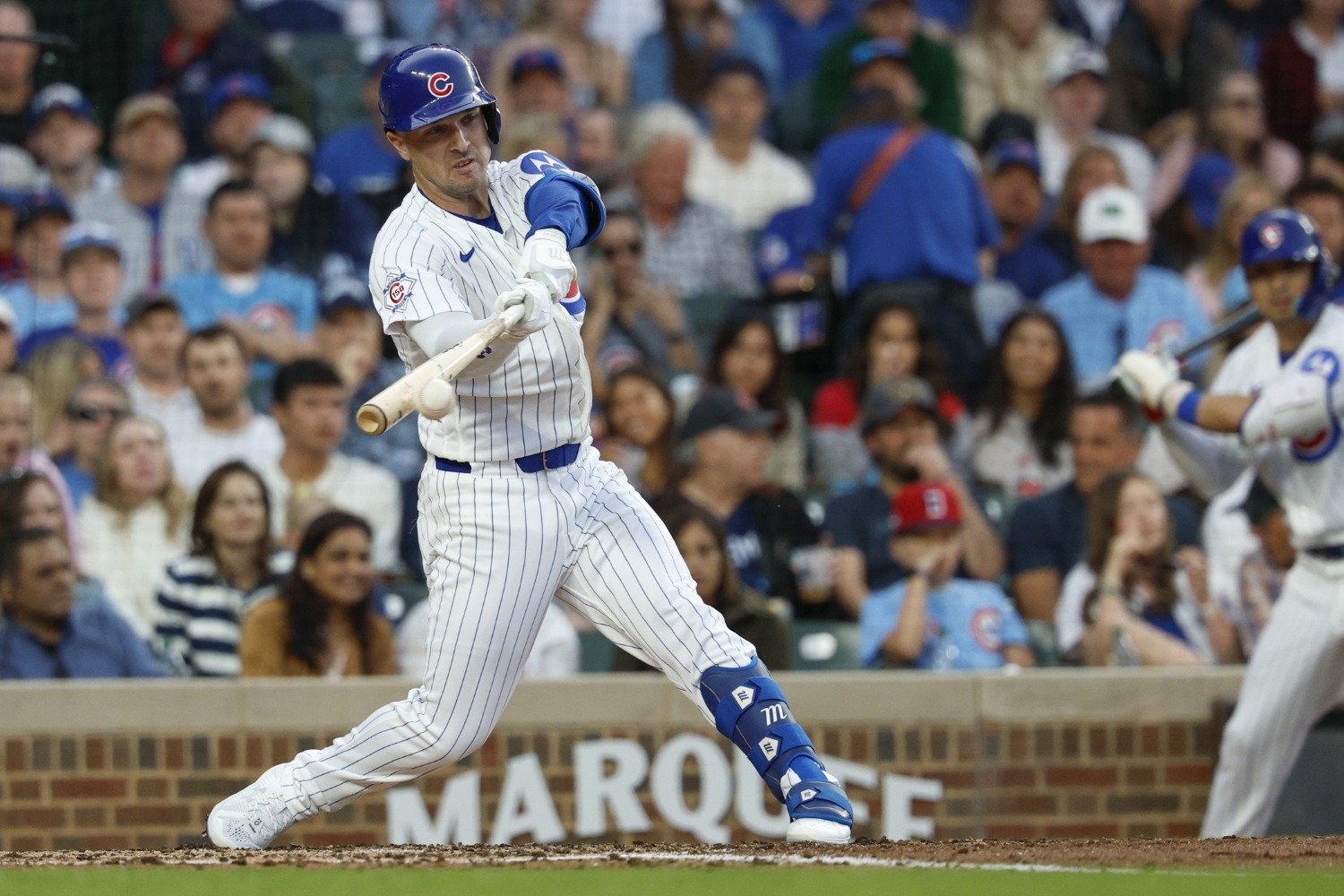 Whether it was at the point of his signing with the Chicago Cubs or the games that have been played since, no shortage of internet ink has been spilled about the skill set and performance of Alex Bregman. A hitter with only moderate power, the plate discipline component recognized as a pillar of his offensive game was expected to be a boon for his own performance and for the collective. His patience at bat has been as expected, but it's come without some of the benefits that one might typically expect. Arguably, his vaunted approach has become a detriment, instead of a source of value, to the team. In general, patience is an undeniably positive trait to possess as a hitter. However, therein lies a tipping point. There is a threshold where patience erodes production, because a player either won't or can't actually hit the ball consistently well enough to generate hits or power. It's a spiral in which Bregman currently finds himself mired. On the surface, Bregman's reluctance to chase is doing its job. He's in the 88th percentile in chase rate, the 83rd in whiff rate, and the 73rd in strikeout rate. The strikeout number itself stands at 17.1%, which trails only Nico Hoerner among Cubs regulars. His 9.9% walk rate is above average, but reads as very similar to the 10.3% mark he posted with Boston last year. At this point, it should be noted that Bregman's bag isn't parlaying discipline into walks. His career walk rate sits at 11.7% against a 13.6% career strikeout rate. So it's not necessarily a concern that his strikeout rate is up a touch while the walk rate is lower than his peak years in Houston. He was never trying to take pitches just to draw walks. Instead, the much larger concern lies in what that discipline is designed to do, but is no longer doing. Bregman's aim in being so selective is to generate hard, aerial contact. Since he broke into the league in 2016, his 86.4% contact rate ranks 36th among nearly 600 qualifying players. His 5.5% swinging strike rate ranks 20th among that same group. While he was never a masher—his 38.4 Hard-Hit% sits 291st—there's been a real and substantial loss of thump when he makes contact, which forces us to ask: is his approach starting to work against him? Is it part of his power outage? In terms of the actual plate discipline numbers, Bregman's 40.6% swing rate isn't that unusual. It's identical to the number he posted with the Red Sox in 2025, and almost perfectly in line with his 40.2% career mark. What's unusual, though, is his swing rate inside of the strike zone. Bregman is swinging in the zone 57.4% of the time, which would be tied with 2019 for the lowest in his career. As a result, he's sitting at a 22.3% called strike rate—currently the highest mark of his career, and about three percentage points above his career average. For the visual learners, here's what that looks like. This is Bregman's swing rate from 2016 to 2025: With any zone visual such as this, you expect there to be heavy red over the heart of the zone and then progressively fade the farther it gets. If we could see the percentages, we'd see the middle-middle portions read at or around 70 percent and the other more favorable parts of the zone in the 60s. That stands in heavy contrast to the chart we see in 2026: That up-and-in spot is a concerning element of its own. But over the heart of the zone, there's much less action overall. Percentages here are topping out in the mid-60s in the heart before quickly fading into the 50s—not that that should read as a surprise, when the cumulative rate has come down. In Bregman's case, it's not even that he needs to be more adventurous in expanding the zone to create more opportunities. He's simply missing those that already exist in the most obvious part of the zone in which he could be creating impact. That's further reflected in Statcast's zone-designated run value. Run value is divided into four areas of the zone: heart, shadow, chase, and waste. In chase and waste, Bregman is working with a positive run value. Even in the shadow of the zone, he's at a -5 run value that is actually his best mark since 2019. In the heart of the zone, however, he's working with a -15. That's the worst value of his career in that area (and not particularly close to any of its predecessors). Further, Bregman's swing percentage on pitches designated "meatballs" is at 63.3%, also representing a career low. A hitter who is too patient looks like one whose swing trends look good on the surface—as in, this guy restrains himself from hacking wildly—but with a waning contact rate. Bregman's 83.1 Contact% is his lowest since 2016 (as is his 88.7% contact rate on pitches inside the zone). Someone who's too patient is unable to parlay that contact into anything impactful. Bregman's hard-hit rate is down to its lowest mark in four years, while his .101 isolated power is more than 100 points lower than his career average. We also (gulp) have to acknowledge that it's possible Bregman is swinging less because he knows his swing is worse. The Cubs made a big bet on his loss of bat speed after a quad strain last year being temporary. They might have already lost that bet. Here's a chart showing his rolling swing speed over 100-plate appearance windows since the start of Statcast bat-tracking. The red line is the point at which he hurt his leg and missed almost two months last year: Uh-oh. Again, this isn't a player who is set in his ways and unwilling to take risks. Bregman would probably have made a larger adjustment to his approach by now, if he felt that he could. He needs to start swinging more, especially at pitches in the heart of the strike zone—but maybe he can't, at least the way he's always been able to. That would be terrible news for the Cubs. View the full article
 -
 Columbia exploded for a 16-2 win behind Sean Gamble's four RBIs and Kendry Chourio's five innings, while Henry Ramos drove in five. Northwest Arkansas rallied for a 9-6 win as Carson Roccaforte's ninth-inning grand slam capped a four-RBI day, with Tommy Molsky retiring the side for the win. Omaha could not hold an early eight-run cushion, as Henry Williams struck out seven over six innings before the bullpen faltered in a 9-8 loss to Columbus. Royals Transactions No Roster Moves Storm Chasers Blow Eight-Run Lead In Late Collapse At Columbus Omaha jumped on Columbus immediately and never trailed until the final inning, but a 9-8 loss spoiled a fast start. The Storm Chasers scored four times in the first, as Drew Waters singled home John Rave, Abraham Toro tripled in two runs, and Gavin Cross singled in another. They added three more in the second when Brett Squires launched a three-run homer, his eighth, to make it 7-0. Kameron Misner homered in the fourth, his 13th, for an 8-1 edge. Williams turned in a strong start, allowing three runs on four hits over six innings with one walk and seven strikeouts. It was one of his best outings with the Storm Chasers since being promoted from Northwest Arkansas. Unfortunately, the Storm Chasers' bullpen could not protect the lead. Columbus chipped away across the sixth, seventh, and eighth before plating three in the ninth against Dan Altavilla, who recorded just one out while surrendering three runs and took the loss. Misner finished 2-for-4 with a home run, two runs, and an RBI, and Toro added two hits and two RBIs. Omaha left 15 runners on base while going 4-for-11 with runners in scoring position. Player AB R H RBI BB K John Rave 3 2 0 0 2 1 Kameron Misner 4 2 2 1 0 0 Brett Squires 4 2 1 3 1 2 Luca Tresh 4 0 0 0 1 2 Drew Waters 5 1 2 1 0 2 Abraham Toro 5 1 2 2 0 1 Gavin Cross 3 0 2 1 1 0 Connor Kaiser 4 0 0 0 0 3 Kevin Newman 4 0 0 0 0 2 Player IP H R ER BB K HR Henry Williams 6 4 3 3 1 7 3 Anthony Gose 1 2 1 1 0 1 0 Andrew Pérez 1 1 2 2 2 2 1 Dan Altavilla 1/3 3 3 3 1 0 1 Roccaforte's Ninth-Inning Grand Slam Lifts Naturals Past Midland Northwest Arkansas trailed entering the ninth before erupting for five runs to beat Midland 9-6. The Naturals had pulled even in the fifth, when Alberto Rodriguez singled home Rudy Martin Jr. and Jack Pineda singled in another run, and Martin homered in the seventh, his sixth, to pull within one. The decisive rally came in the ninth: Rodriguez singled in Omar Hernandez to tie it, and Roccaforte followed with a grand slam, his 14th home run, to put the game away. Frank Mozzicato struggled with his command in the start yesterday, allowing three runs on one hit over 4 2/3 innings while walking six and striking out four before the game was suspended due to weather. Once the game started back up again on Sunday, Augusto Mendieta and Dennis Colleran combined to go 3 2/3 IP and allow three runs, with Mendieta allowing two and Colleran allowing one. Mendieta struck out two and Colleran struck out none. Neither walked any batters in their Sunday outings. Molsky closed the game for the Naturals and earned the win with two-thirds of a scoreless inning and a strikeout. Roccaforte finished 2-for-5 with four RBI, and Rodriguez went 3-for-4 with two RBI. Martin Jr. reached base three times, scored three runs, and stole two bases. Northwest Arkansas left four runners on base and went 4-for-10 with runners in scoring position. Unfortunately, the second game was canceled due to the weather and won't be made up. Player AB R H RBI BB K Carson Roccaforte 5 1 2 4 0 2 Jack Pineda 3 0 2 1 1 0 Sam Kulasingam 3 1 0 0 1 2 Spencer Nivens 3 0 0 1 0 2 Daniel Vazquez 4 0 1 0 0 1 Omar Hernandez 4 1 1 0 0 0 Rudy Martin Jr. 3 3 2 1 1 0 Connor Scott 3 0 0 0 0 1 Colton Becker 0 1 0 0 0 0 Alberto Rodriguez 4 2 3 2 0 1 Player IP H R ER BB K HR Frank Mozzicato 4 2/3 1 3 3 6 4 0 Augusto Mendieta 2 1/3 4 2 2 0 2 1 Dennis Colleran Jr. 1 1/3 2 1 1 0 0 0 Tommy Molsky 2/3 0 0 0 0 1 0 Fireflies Pile On 18 Hits In 16-2 Rout Of Fayetteville Columbia jumped ahead early and never let up, scoring in eight of nine innings to bury Fayetteville 16-2. The Fireflies put up three in the first when Gamble launched a three-run homer, his third, and added three more in the second on Ramos' three-run homer, his third. From there, the lead only grew, with a seven-run surge over the seventh and eighth innings, capped by Hyungchan Um's grand slam, his fourth home run, in the eighth. Chourio gave the Fireflies a solid start, allowing two runs on six hits over five innings with one walk and three strikeouts. Ramos finished 3-for-6 with a home run and five RBI, Gamble went 2-for-4 with a double, a homer, and four RBI, and Yandel Ricardo and JC Vanek each added two hits. The bullpen of Yeri Perez, Henson Leal, and Andy Basora combined for four scoreless innings. Columbia left seven runners on base and went 7-for-16 with runners in scoring position. With the win, the Fireflies improved their record to 27-30. Player AB R H RBI BB K Henry Ramos 6 2 3 5 0 0 Josh Hammond 6 1 2 0 0 2 Yandel Ricardo 6 2 3 1 0 1 Jhosmmel Zue 4 2 2 0 0 1 Josi Novas 1 1 1 0 1 0 Sean Gamble 4 3 2 4 2 2 Hyungchan Um 4 1 1 4 1 1 Stone Russell 5 1 1 1 0 1 JC Vanek 5 2 2 0 0 0 Roni Cabrera 5 1 1 0 0 1 Player IP H R ER BB K HR Kendry Chourio 5 6 2 2 1 3 1 Yeri Perez 2 2 0 0 1 3 0 Henson Leal 1 1 0 0 2 2 0 Andy Basora 1 0 0 0 0 2 0 Top-20 Prospect Performance Kendry Chourio: 5 IP, 6 H, 2 R, 2 ER, 1 BB, 3 K David Shields: DNP Sean Gamble: 2-for-4, 2B, HR, 4 RBI, 3 R, 2 BB, 2 K Blake Mitchell: DNP Josh Hammond: 2-for-6, 1 R, 2 K, 1 SB Ramon Ramirez: DNP Drew Beam: DNP Asbel Gonzalez: DNP Ben Kudrna: DNP Carson Roccaforte: 2-for-5, 2B, HR, 4 RBI, 1 R, 2 K Yandel Ricardo: 3-for-6, 1 RBI, 2 R, 1 K, 1 SB Felix Arronde: DNP Blake Wolters: DNP Michael Lombardi: DNP Luinder Avila: DNP Steven Zobac: DNP Frank Mozzicato: 4 2/3 IP, 1 H, 3 R, 3 ER, 6 BB, 4 K Daniel Vazquez: 1-for-4, 1 K Warren Colcano: DNP Shane Panzini: DNP View the full article
 -
 For the week, Wilson (5-1) and Wisconsin (3-2) were series winners, while Nashville (3-3) and Biloxi (3-3) came up with draws. Transaction: OF Greg Jones activated from AAA Nashville’s 7-day injured list Game Action: Nashville Pre-Game Media Notes Final: Nashville 3, Jacksonville (Marlins) 1 Box Score Via a Sounds’ press release, game details: Sounds Steal Series Finale to Earn Split Nashville’s committee pitching approach paid off as six pitchers combined to stifle the Jumbo Shrimp, with starting RHP Easton McGee leading the way with just 37 pitches thrown over 3 innings (0 R, 0 H, 1 BB, 3 Ks). 22-year old DH Luke Adams (1-for-3, HR, walk, RBI, SB) hasn’t shown any rustiness since being sidelined for over six weeks with a wrist injury, smacking his 3rd homer in his last 4 games after hitting 3 homers in a rehab stint in Arizona. As the linked game report noted, SS Cooper Pratt (1-for-3, walk, 2 SBs) singled and scored on a double steal to grab the late lead, before 3B Eddys Leonard (1-for-3, HR, RBI) snapped a recent hitting drought for more breathing room. LHP Mark Manfredi Sr. (2 IP, 1 R, 3 Ks), RHP Will Childers (2.87 ERA) and RHP Jacob Waguespack (1.66 ERA) stranded 8 batters over 4 innings of busy relief work. RHPs Reiss Knehr (1.83 ERA) and Kaleb Bowman sailed through their frames a little more easily, with Bowman benefitting from OF Greg Jones’ game-ending assist to earn his first Save of 2026. Sounds’ Extras: Though he was batting 9th, 2B Freddy Zamora still led the team with 2 hits. He’s 8-for-20 with 8 RBIs over his last 6 games. The hard-won victory keeps the Sounds just a half-game behind first place Rochester in the 20-team International League. OF Luis Lara rested for a 5th consecutive game, but he’s not been placed on any injured list, so hopefully he’ll return to action in the coming week. Next week’s outlook: Nashville (38-25) hosts Rays’ affiliate Durham (24-39) this week for 6 games, with RHP Tyson Hardin (1.61 ERA in 22 1/3 AAA IP) most likely to start the series opener on Tuesday. Biloxi Pre-Game Media Notes Game One Final: Montgomery (Rays) 2, Biloxi 0 (in 11 innings) Box Score Game Two Final: Montgomery 4, Biloxi 1 (in 7 innings) Box Score Via the Shuckers’ website, game details and we encourage readers to review affiliate write-ups as part of their Link Report routine: DeBerry and Letson Dominate in Shuckers Losses Biloxi came up short in both contests despite having 2-on, nobody out in the bottom of the 6th inning of a then-scoreless Game One, then leading 1-0 entering the 7th inning of Game Two. To potentially make matters worse, SS Jesus Made exited the second game after a slight collision in the field, though a Forum viewer didn’t think it was anything serious: “He walked off easily on his own, and likely precautionary due to the DH. He looked ok but probably a little sore on his leg. Fingers crossed here.” Inheriting RHP Jaron DeBerry’s 6 innings of shutout work from Saturday’s suspended game, RHP Edwin Jimenez (3 IP, 0 R, 2 H, 1 BB, 0 Ks) and LHP Jesus Broca continued that stellar effort with 4 scoreless innings of their own to keep the first contest 0-0 through 10 innings. Broca ultimately took the hard-luck loss by conceding a 2-run homer in the top of the 11th inning. C Matt Wood reached 3rd base with one out in the 6th inning of the first game and OF Dasan Brown did as well as the Manfred Man in the bottom of the 10th inning, but neither were brought home safely. The team produced just 3 hits in that game (DH Darrien Miller 2-for-5, double), while going 0-for-11 with runners in scoring position and stranding 12 baserunners. In the nightcap battle for first place in the Southern League’s South Division, starting 21-year old RHP Bishop Letson’s best outing (6 IP, 0 R, 3 H, 1 BB, 8 Ks) of 2026 went for naught as the bullpen couldn’t hold a slim 1-0 lead and offense went 0-for-7 with runners in scoring position. In that second game, back-to-back singles by Wood and Made to open the contest produced no runs, and the team was also unable to cash in on 1-out hits in the 4th and 6th innings. However, the crushing blow was the ground ball triple play off the bat of OF Mark Coley II which negated the team’s comeback attempt in the bottom of the 7th inning while trailing 3-1. Shuckers’ Extras: Wood (2-for-6, 3 walks) and Coley (2-for-6, double, RBI) were productive across the two games, while RHP Nick Merkel delivered one scoreless relief inning in the second contest. Sparkplug 2B Dylan O’Rae wasn’t in the starting lineup of either game, but he did deliver a pinch-bunt in the 10th inning of Game One and play one inning of defense. For the second time in 4 days, Montgomery’s manager was tossed in the second game of a doubleheader, this time arguing over whether a foul ball was actually a hit-by-pitch. Next week’s outlook: Biloxi (28-26) travels to Birmingham (21-35) for a 7-game series against the White Sox affiliate. Wisconsin Pre-Game Media Notes Rain Out: Wisconsin at Cedar Rapids Via the Timber Rattlers’ website, rain out details: Sunday Rainout in Cedar Rapids Even in a canceled game (which will not be made up), the linked game report has us covered with the essentials, including video to prove that DH Marco Dinges did smack a homer even if it’s now been erased from statistical memory. Starting RHP Travis Smith did manage to throw 39 pitches (1 1/3 IP, 4 R (3 ER), 2 H, 2 BB, 1 K) before the rains pressed delete on his outing. He’ll be glad for a do-over and produce a better result next time out, no doubt. SS Luis Pena also won’t mind his error being erased, while 2B Daniel Dickinson can forget his caught stealing. Next week’s outlook: Wisconsin (29-24) return home to battle Dodgers’ affiliate Great Lakes (33-22) for 6 games, commencing on Tuesday. Wilson Pre-Game Media Notes Final: Wilson 11, Salem (Red Sox) 9 Box Score Via the Warbirds’ website, game details: Wilson Victorious Over Salem in Slugfest Conceding 3 unearned runs in the 1st inning and a grand slam in the 8th inning isn’t usually a recipe for success, but Wilson batters put up 11 runs in between to keep their hot streak going. First inning blunders by both teams helped produce a 3-2 advantage for Salem, as the inning included 2 errors, an everybody’s safe fielders’ choice, a strikeout-reached-via-passed-ball which also scored a run, a run-scoring wild pitch and a run-scoring balk. Four doubles from 1B Luis Lameda (2-for-3, walk, HBP, 2 RBIs) and DH Jadyn Fielder (2-for-4, HBP, RBI) spread across the first, second, fifth and sixth innings helped Wilson keep pace and ultimately grab a 9-5 lead through six frames. After starting RHP Jayden Dubanewicz exited after 50 pitches (2 IP, 3 R (0 ER), 1 H, 2 BB, 4 Ks) and RHP Enniel Cortez (2 2/3, 2 R, 4 H, 0 BB, 2 Ks) conceded a game-tying triple in the 5th inning, RHP Ismael Yanez (1 1/3 IP, 0 R, 1 K) did well to strand the inherited runner and then work around a 2-on, nobody out threat in the 6th inning. OF Pedro Ibarguen (2-for-4, HR, HBP, 3 RBIs) looked to have delivered the decisive blow via a 2-run homer for an 11-5 lead in the 7th inning, but a grand slam off RHP Eric Prado (1 1/3 IP, 4 R (3 ER), 2 Ks) forced the entry of RHP Jose Meneses (1 2/3 IP, 0 R, 2 Ks), who retired all 5 batters faced for his 4th Save. Warbirds’ Extras: SS Brady Ebel (3-for-5, RBI) and OF Handelfry Encarnacion (1-for-3, 2 walks) each reached base 3 times, as the Warbirds out-hit Salem 12-to-9 and had ample opportunities to score (6-for-19 with runners in scoring position). The teams combined for 6 errors, 6 unearned runs, a passed ball, wild pitch and a balk. However, the 4 hit-by-pitches were all delivered by Salem pitchers. Next week’s outlook: Wilson (31-26) travel to Lynchburg, Virginia for six games against Guardians’ affiliate Hill City (27-30), starting on Tuesday. We hope that you enjoy the Minor League Link Report. On Monday, our Dominican Summer League clubs commence play at 10:00am CST (Brewers Blue at Red Sox Red; Braves at Brewers Gold), while the ACL Brewers host the ACL Dodgers at 8:00pm CST. The Milwaukee Brewers also begin their series at the Athletics (in Las Vegas) at 9:05pm CST. Organizational Scoreboard including starting pitcher info, game times, MiLB TV links, and box scores Current Milwaukee Brewers Organization Batting Stats and Depth Current Milwaukee Brewers Organization Pitching Stats and Depth View the full article
 -
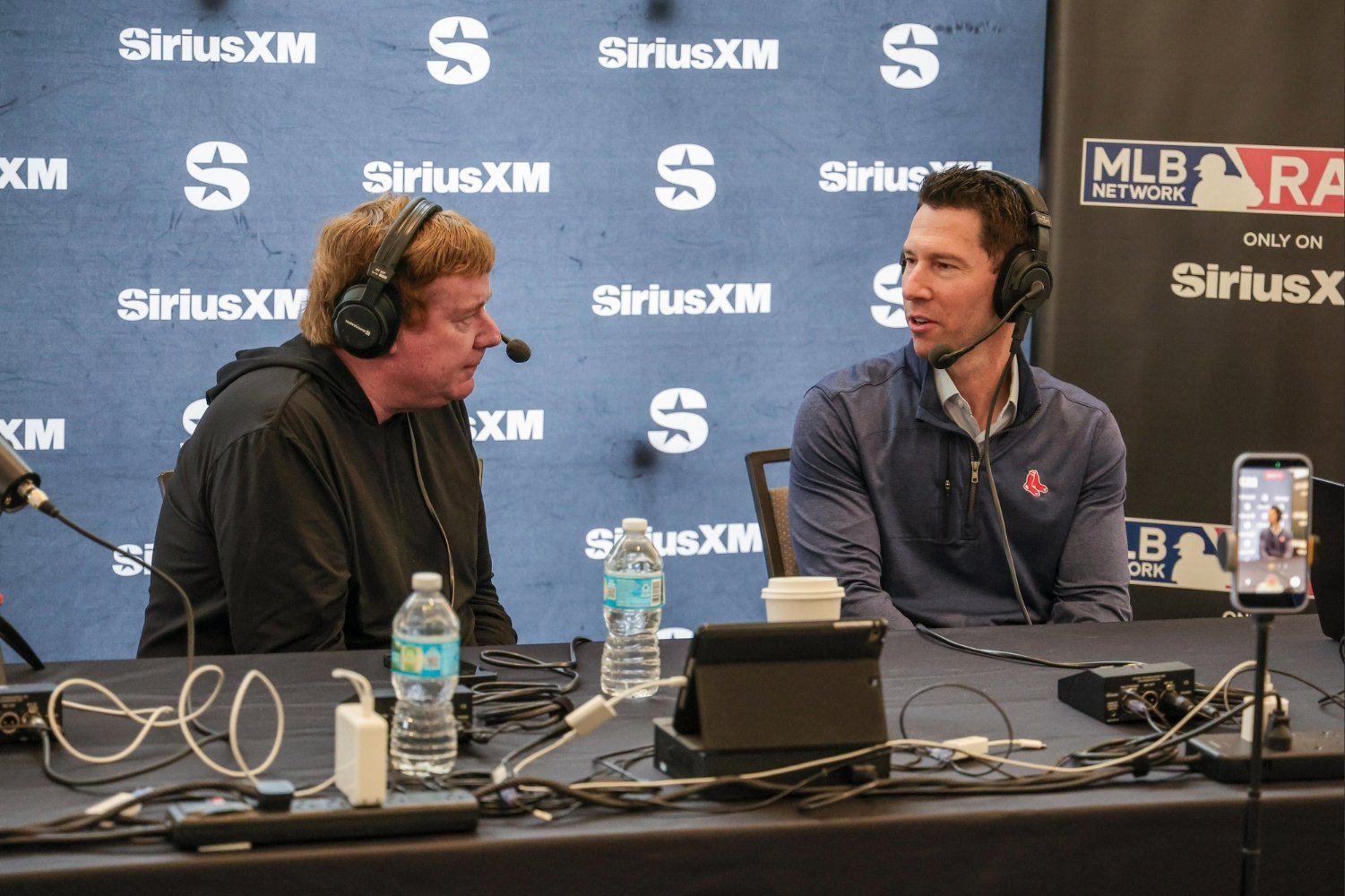 The 2026 season has been a nightmare for the Boston Red Sox. They are nine games under .500 and sit four games behind the last American League wild-card spot. They have missed the production of star players Garrett Crochet and Roman Anthony, who have both dealt with prolonged stints on the injured list. In addition, they have struggled offensively, ranking in the bottom five of the league for runs scored. With the trade deadline less than two months away, the team needs to decide whether it is going to be sellers or attempt to salvage the season by adding reinforcements. Last season, their second-half turnaround was fueled by the arrival of many top prospects that added life to the lineup. However, with those same prospects already on the big-league roster, the team needs to focus on the trade deadline to bring in some offense. While their lineup has been lackluster, the pitching staff has been a strength. The breakouts of prospects like Payton Tolle and Connelly Early, paired with the free-agent acquisitions of Sonny Gray and Ranger Suarez, have given Boston a capable rotation while Crochet has been out. With a blend of youth and experience anchoring the staff and Crochet’s impending return, the team finds itself with depth they could use to rebuild its offense. Given their place in the standings, Boston should focus on targets that offer both positional versatility and long-term value in addition to immediate help. 3 Red Sox Trade Targets Who Can Upgrade Infield #3 Isaac Paredes (Houston Astros) Speculation about a potential trade between the Red Sox and the Houston Astros has been ongoing since the idea of Jarren Duran being available surfaced. The breakout of Roman Anthony last season, combined with the emergence of Wilyer Abreu and Ceddanne Rafaela, has left Boston with a crowded outfield. Despite a slow start, Duran’s combination of power and speed makes him a valuable piece that could garner Boston a significant return. Isaac Paredes would offer the Red Sox a combination of right-handed power and strong plate discipline that could help balance out the lineup. While he has had a slower start to the season, batting .238/.332/.388, he is still an elite pull-hitter and offers positional versatility, also playing second and first. At 27 years old and under team control for two more seasons, Paredes could make an immediate impact while continuing to grow alongside Boston’s young core. #2 Luis Arraez (San Francisco Giants) While Luis Arraez is not the most flashiest name on the trade market, he offers something that the Red Sox desperately need: stability. He's never been known power, but his reliability as an elite contact hitter who hardly strikes out would help an offense that has struggled to generate runs. This season, he is batting .325/.364/.436 and ranks second in the MLB in hits. His value also extends beyond the batter’s box with his ability to play first base, offering Boston another versatile player to help build its depth. This season, the team has seen a revolving door of injuries with Trevor Story being the most recent to land on the 60-day IL. Before his injury, the duo of Marcelo Mayer and Story in the middle infield has been lackluster, with both batting below .225. In the first game without Story, Mayer moved back to shortstop, the position he played for most of his career. Getting Arraez would solidify that change, more than likely pushing Story to the bench (or third base) for the remainder of the season. #1 Matt Shaw (Chicago Cubs) A name that has circled around the league since last offseason, Shaw is an ostensible prospect with high upside who could be a plug-and-play option for the Red Sox. After signing Alex Bregman and extending Nico Hoerner, the Cubs have found themselves with a surplus of infield options, but limited spots available. Shaw’s solid bat, along with his ability to play nearly every infield position as well as the corner outfield spots, makes him a valuable but potentially pricey trade target. While Shaw has spent time on the injured list, he is currently working through a rehab assignment and should be available soon. Before his injury, he was batting .242/.291/.400, all improvements from his rookie season, as he continues to develop. The Cubs have been vocal about their search for starting pitching, and Boston’s depth of major-league arms and prospects could open the door for trade discussions. Shaw would not only offer an immediate boost to their lineup, but also offer long-term value as a developing piece alongside the team's core. View the full article
 -
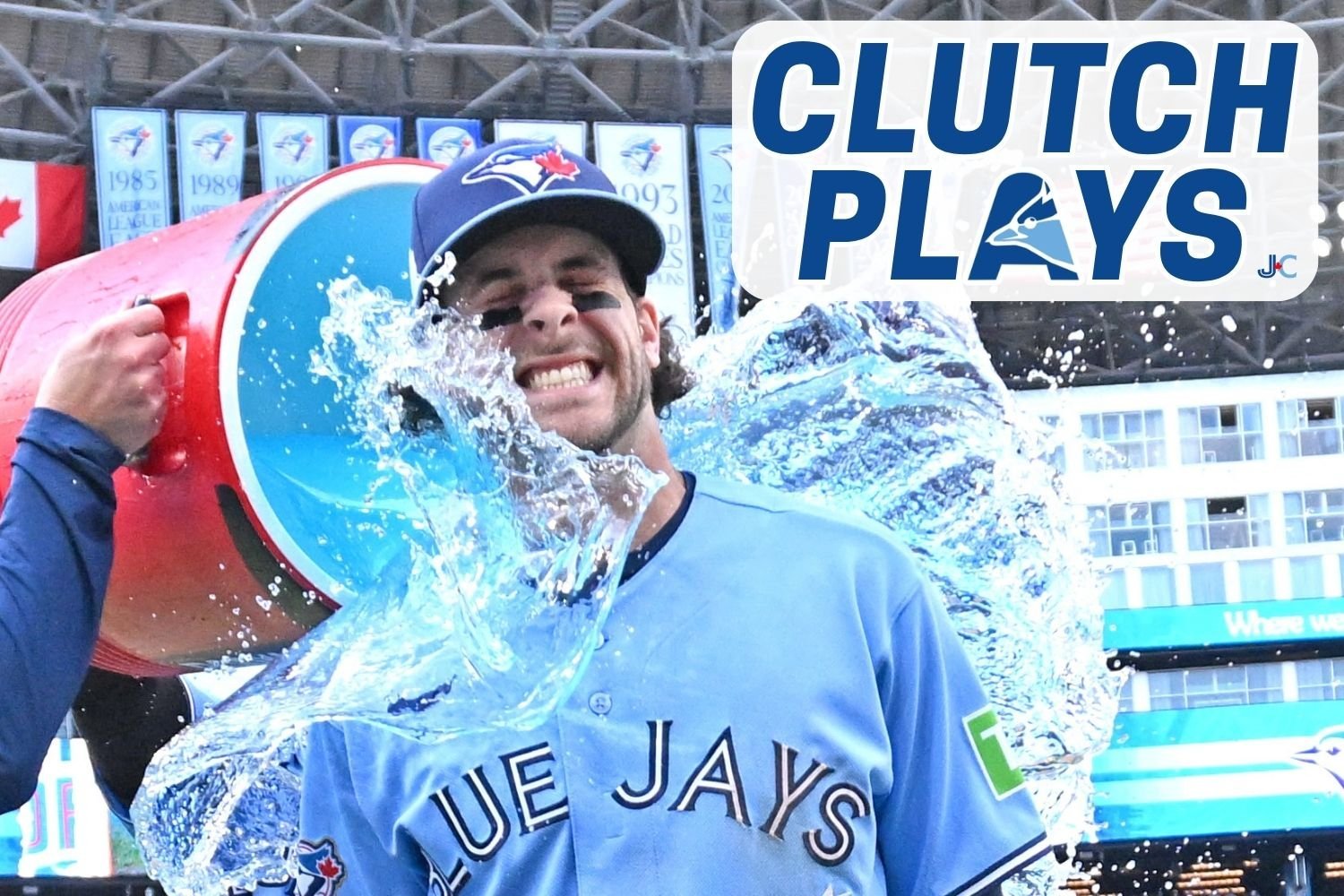 Welcome back to Blue Jays Clutch Plays, a recurring post that highlights the six most pivotal plays (three pitching, three hitting) from the past week of Blue Jays baseball, according to MLB's win probability model. Click here to read last week's edition. The Blue Jays began the week in dire straits, further spiraling from their weekend collapse in Baltimore by stumbling to losses in the first two games of their series in Atlanta. Despite facing Chris Sale on a bullpen day in the series finale, though, they pulled through to avoid the sweep and then took two of three from the Orioles at home over the weekend. After yet another uneven week in which they continued to do just enough to maintain their place in the standings, they're within two games of .500 with the Phillies coming to town on Monday. Pitching 3. Braydon Fisher: Pete Alonso Strikeout, Top 1, 6/6 (+7.7% WPA) Toronto pitchers didn't find themselves in a truly perilous situation once this week, so while none of these plays will necessarily stand out at the end of the season, it gives us a good opportunity to appreciate some moments that would otherwise fall under the radar. Braydon Fisher fanning Pete Alonso in the first inning on Saturday is a great example. After the first two batters reached and moved into scoring position, Fisher got Alonso and then Coby Mayo to navigate through the danger. 2. Connor Seabold: Blaze Alexander Force Out, Top 7, 6/7 (+9.5% WPA) MLB decided not to post a video of this force out that the Jays got on a bunt play, but we promise it happened! It also ended up playing a sizeable role in the Blue Jays escaping the seventh inning en route to the series win on Sunday. The #9 hitter, Blaze Alexander, laid down a bunt with runners on first and second with one out in a one-run game, but it backfired as Brandon Valenzuela was able to force Tyler O'Neill at third. Instead of having a second-and-third situation with one out, runners remained at first and second, which matters because... 1. Tyler Rogers: Taylor Ward GIDP, Top 7, 6/7 (+17.5% WPA) ...Tyler Rogers came in and promptly induced an inning-ending double play. Here, Taylor Ward fell behind 0-2 on a couple of sinkers but laid off a couple of sliders to stay alive. So, Rogers went right back to the bowling-ball sinker, and Ward topped it, spinning it to Ernie Clement at second to start the 4-6-3. Rogers would get two more outs in relief in the eighth as well. Hitting 3. Kazuma Okamoto: 2-run HR, Top 2, 6/2 (+18.2% WPA) This is the one big knock the Jays managed against Bryce Elder in Tuesday night's loss to the Braves. With the runner in motion at first on the payoff pitch, Kazuma Okamoto got a sinker that Elder left a little too high over the outer half of the plate and launched it the other way into the seats in front of Atlanta's signature Chop House to tie the game. 2. Brandon Valenzuela: 2-run HR, Bot 5, 6/5 (+23.4% WPA) Valenzuela has turned into a revelation at catcher. The rookie backstop is on fire with the bat in his hands, and on Friday night, he punished a hanging breaking ball that Brandon Young visibly regretted as soon as it left his hand. Things would unravel soon after this in the only game the Jays lost over the weekend, but Valenzuela is now up to seven home runs after adding a blast on Sunday and leads Toronto position players in fWAR. 1. Ernie Clement: 3-run HR, Bot 3, 6/6 (+26.1% WPA) Clement was in the middle of everything during the Jays' consecutive wins against the Orioles on Saturday and Sunday. He got a hanging breaker himself here from Kyle Bradish, and while he didn't hit it that hard or far, he did what he does best: caught the ball out front and pulled it. Baltimore made it close later on but failed to regain the lead as this homer broke the game open and paved the way for Toronto to tie, and eventually win, the series. View the full article
 -
New York Mets Minor-League Hitters of the Month: May 2026
DiamondCentric posted an article in Grand Central Mets
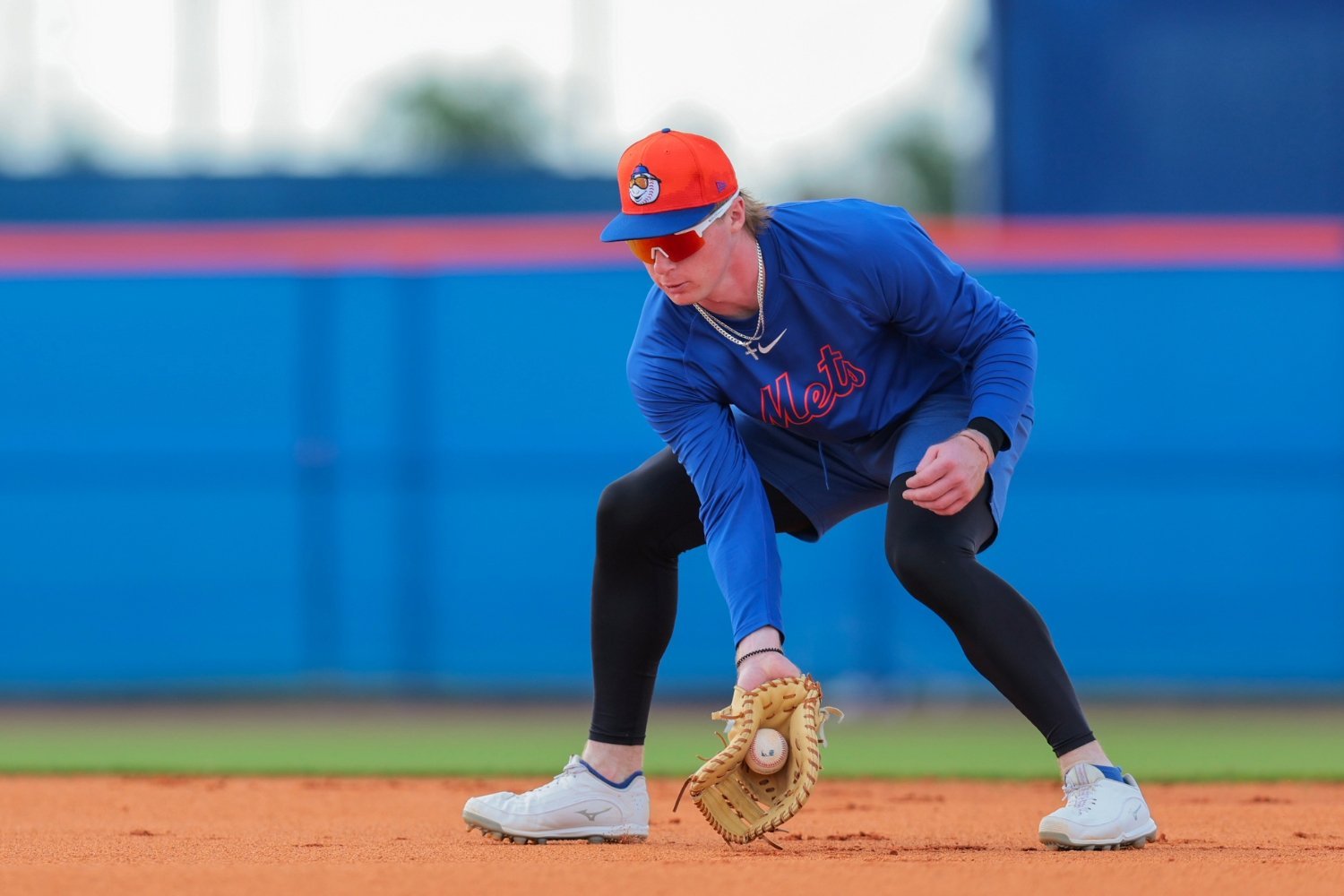 Entering action this past weekend, the New York Mets' offense ranked 29th in hitting fWAR (3.0) this season, ahead of only the Colorado Rockies (2.8). That's not exactly where anyone thought it'd be when the team took the field on Opening Day. The struggles plaguing the big-league club have traversed their way through the Mets' system. Despite this, there were a handful of players who avoided such problems. One of the team's best prospects took big strides, and a career minor-leaguer improved his April OPS by more than 50 percent. Neither of them, though, compete with the man on top of the podium, who *checks notes* wasn't in MLB/MiLB on New Year's Day. Monthly stats referenced are from milb.com at the player's listed level. Prospect rankings are from Grand Central Mets. Ranking Mets' Best Minor League Hitters from May 3. Ryan Clifford - AAA (Syracuse, No. 5 Prospect) Clifford, the second player who came to New York -- along with current San Francisco Giants outfielder Drew Gilbert -- in the Mets' trading of Justin Verlander back in 2023, has steadily risen through the club's minor league system since that deal. He paced Syracuse in runs and home runs last month. G (AB) Slash Line (OPS) XBH (HR) R RBI 27 (103) .233/.308/.534 (.842) 14 (8) 23 18 The .842 OPS Clifford posted in May was 54 points higher than his April OPS (.786). His strikeout percentage also dropped nearly seven percent (35.8% to 29.1%) month over month. When Clifford first came to New York, the outlook as a first baseman with the MLB team looked bleak. There's an opportunity now, though, for him to establish himself as the team's long-term solution at the position. Once he demonstrates the improvements he made in May are legitimate, he could find himself on the big-league roster. 2. Jose Ramos - AA (Binghamton) Ramos, 25, has bounced around the minor leagues for years. He initially signed a minor-league contract with the Los Angeles Dodgers at age-18. He elected free agency after the 2025 season and inked a deal with New York. Eventually, he was assigned to Binghamton. There, he proved April showers -- a .580 OPS -- do indeed bring May flowers. G (AB) Slash Line (OPS) XBH (HR) R RBI 24 (84) .262/.392/.476 (.868) 8 (5) 13 18 A .288 month-to-month improvement in OPS? That will play. Ramos' batting average on balls in play (BABIP) going from .189 in April to .321 in May certainly aided this. However, when you consider Ramos' career BABIP over nearly 2,700 MiLB plate appearances is .327, you're inclined to believe April was an aberration. Let there be flowers in June, July and beyond. 1. JT Benson - A/High-A (St. Lucie/Brooklyn) Benson, a 24-year-old outfielder out of Louisville, wasn't in a farm system on Jan. 1. He spent 2025 with the Evansville Otters of the Frontier League after going undrafted the prior season. The Mets signed him in March and promptly assigned him to St. Lucie. He wasted little time getting acclimated to that setting. G (AB) Slash Line (OPS) XBH (HR) R RBI 13 (48) .292/.370/.667 (1.037) 10 (2) 7 9 The above numbers earned Benson a promotion to Brooklyn on May 19. His OPS there last month (.697 in 10 games) isn't as sparkling as it was in St. Lucie, but it's far from terrible. And his strikeout percentage is nearly five percent lower (28.2% from 33.3%) despite the rise in competition. For a guy who literally was not in an MLB system until roughly 90 days ago, Benson's start has been mighty impressive. His speed -- 24 steals in 80 games for the Otters, four triples and four steals at St. Lucie -- makes him a really intriguing prospect. It could carry him further than anyone expected. Honorable Mentions: Ronald Hernandez (High-A, Brooklyn), Jamari Baylor (A-St. Lucie/High-A, Brooklyn) View the full article
 -
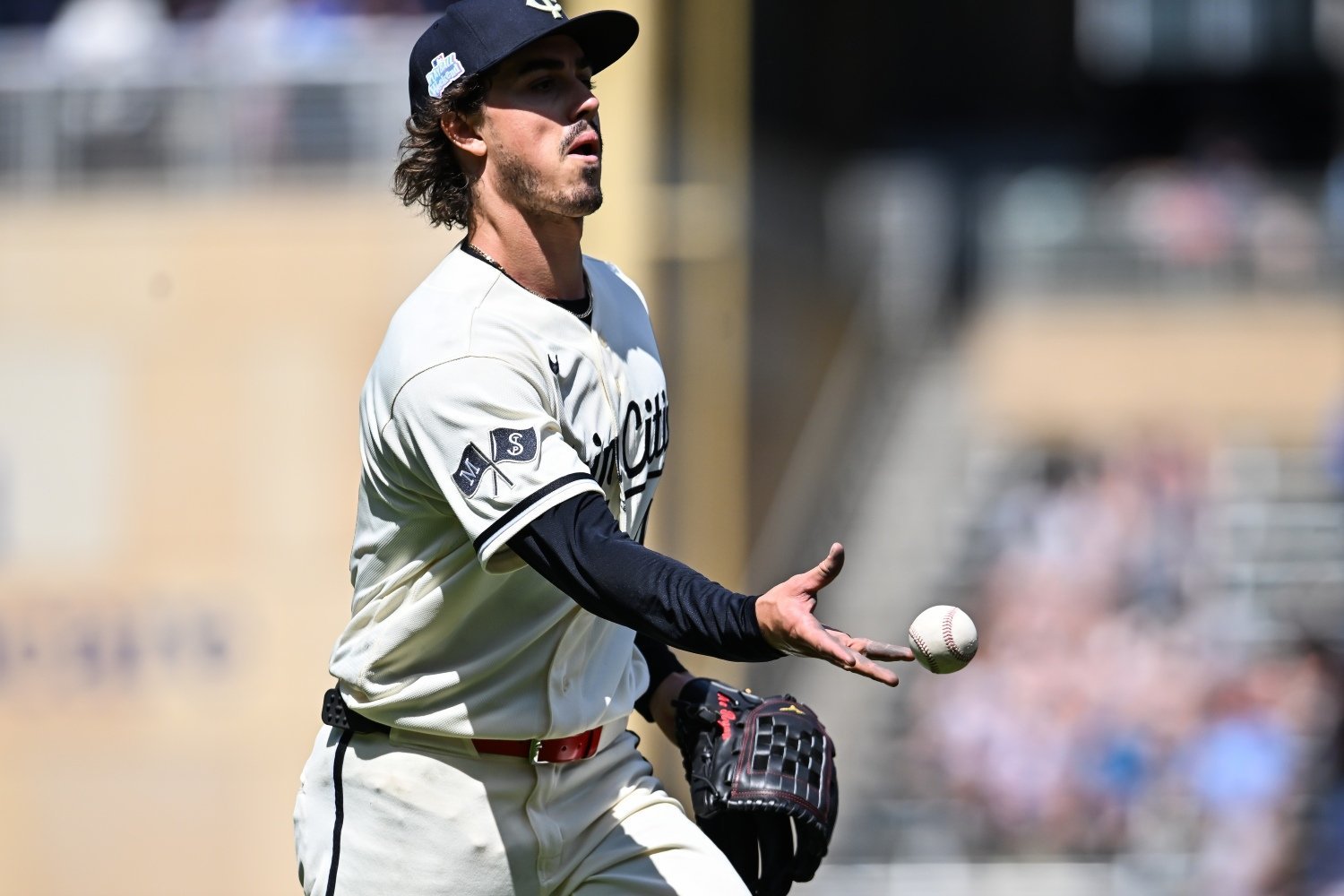 Week in a Nutshell Last week saw the Twins face a couple of AL Central opponents. A week after losing two of three to the White Sox in Chicago, they saw the Sox for another three games, this time at home. They then welcomed the last-place Kansas City Royals in a four-game set. They went 3-4 in an up-and-down week, taking two of three from Chicago but then allowing the limping Royals to claim three of four. The Twins will start this week with an off day, before visiting the Tigers in Detroit. This weekend, they'll loop back to Target Field and encounter the Cardinals. Weekly Snapshot: Mon, 6/1 through Sun 6/7 Record: 3-4 Run Differential: -5 Standing: 3rd Place in AL Central (7 GB) Game-by-Game Results: Game 61 | MIN 9, CWS 6: Twins Snap Five-Game Skid Behind Tristan Gray's Grand Slam Tristan Gray: 1-3, HR, 5 RBI Game 62 | MIN 6, CWS 4: As Connor Prielipp Learns Ropes, Twins Rally Past White Sox Keaschall, Gray, Jackson: 6-12, 5 RBI Game 63 | CWS 8, MIN 0: Twins Get Shut Out for The First Time This Season In Loss to White Sox Buxton, Lee, Larnach: 0-11, 1 BB Game 64 | KC 8, MIN 6: It was Like Tug-of-War Between Two Pigs in the Mud Caratini: 3-4, 1 HR, 2 RBI Game 65 | MIN 5, KC 3: Sixth Inning Ambush Fuels Comeback Win Matthews: 7 IP, 5 H, 2 ER, 4 BB, 2 K Game 66 | KC 3, MIN 2: Late-Inning Momentum Swings and Costly Mistake Decide the Game Ryan: 6 IP, 6 H, 1 R, 2 BB, 5 K Game 67 | KC 6, MIN 5: Cameron Dominates Twins Again, Rally Falls Short As Royals Take Series Morris: 1 2/3 IP, 3 H, 3 R, 0 BB, 4 K NEWS & NOTES One of the bigger news items from this past week was the Twins trading right-handed pitcher Simeon Woods Richardson to the Toronto Blue Jays for cash considerations. This came after the Twins designated him for assignment or release after Woods Richardson started 0-7 with a 7.74 ERA and a 6.17 FIP. As they try to cobble together a viable bullpen, meanwhile, they acquired righty reliever Justin Lawrence from the Pittsburgh Pirates. Lawrence has made three appearances for the Twins, throwing 2 ⅔ innings, striking out four with three walks, and giving up zero runs. Royce Lewis was recalled after tearing up Triple-A pitching. He's played two games (one at second base and one at first base) since being recalled. He'll probably move around the diamond for a while, depending on who else is in the lineup on any given day. The Twins pulled the trigger quickly on returning him to the big leagues, and will have to hope he rediscovers the magic that made him a good hitter until about August 2024. HIGHLIGHTS The Joe Ryan Experience has continued, with Ryan throwing another very good start against the Royals on Saturday. This came after throwing six innings against the White Sox on Monday night, giving up four runs over six innings—good enough for his fourth win on the season, though not good enough to satisfy Ryan. He's been solid for the majority of the year, with a 4-3 record and a 3.07 ERA over 14 starts. The closer it gets to the trade deadline, the more Ryan's name will come up in national conversations. Another highlight from the week came in that Monday night contest, when Tristan Gray hit a grand slam in the fourth inning off White Sox starter David Sandlin. The grand slam helped the Twins to a 9-6 win over the second-place Sox. On Friday, Zebby Matthews threw seven innings, giving up two runs, which was a nice bounce-back after a tough previous appearance. This was a solid start for a rotation suddenly looking for more depth, after some of the depth has disappeared due to injuries or poor performance. LOWLIGHTS Unfortunately, Byron Buxton was taken out of the game on Friday night after making a catch and running into the wall in center field. He was officially removed with an injury to the same shoulder he injured earlier in the season. He is considered day-to-day, and the Twins are hoping and expecting him to return for Tuesday’s series opener against the Tigers—but it's not a great sign that he wasn't available to pinch-hit with the game on the line Sunday afternoon. The Twins' bullpen has been a storyline all year, and the inconsistencies showed this past week. The bullpen threw 27 innings over the seven games, which is more than you typically want a shaky bullpen to throw over a seven-game stretch. They had a few good outings, but the 5.24 relief ERA and their -0.60 WPA tell the real story. The latter figure was fourth-worst in the majors. TRENDING STORYLINES Another thing to keep an eye on is how Connor Prielipp is adjusting to hitters adjusting to him. His start against the White Sox on Tuesday was a nice (though not dominant) rebound after two difficult outings. The follow-up on Sunday was similarly good, but equally un-great. Prielipp has had ups and downs, but his development into a solid starting pitcher is one of the most important things to track throughout this season for Minnesota. Matt Wallner is looking to follow in Lewis’s footsteps and earn a call back up to the big-league club. He's been crushing Triple-A pitching to the tune of .275/.359/.897 since being demoted in mid-May, with five home runs, six doubles, and eight walks over 80 at-bats. If he continues this hot stretch, he could be back at Target Field in short order. Speaking of crushing Triple-A pitching, former first-round pick Kaelen Culpepper has looked the part of a top prospect this year, hitting 14 home runs in 56 games played with the Saints, recording a .862 OPS along with 13 stolen bases. With Lewis changing positions and Brooks Lee moving to third base, don’t be surprised to see Culpepper with the Twins in the very near future, if he continues to produce at the level he has so far this year. LOOKING AHEAD The Twins start the week with a long-awaited off day. Their last day off was Thursday, May 21. They'll head to Detroit and play three games against the Tigers, who have (surprisingly) struggled this year. Both clubs are looking to turn things around before it gets too late. The Twins would love to take advantage of a struggling rival before hosting the second-place Cardinals. It should be a fun and interesting week. MONDAY, JUNE 8: OFF DAY TUESDAY, JUNE 9: TWINS @ TIGERS - RHP Taj Bradley vs RHP Troy Melton WEDNESDAY, JUNE 10: TWINS @ TIGERS - TBD vs LHP Framber Valdez THURSDAY, JUNE 11: TWINS @ TIGERS - RHP Zebby Matthews vs RHP Keider Montero FRIDAY, JUNE 12: CARDINALS @ TWINS - TBD vs TBD SATURDAY, JUNE 13: CARDINALS @ TWINS - TBD vs TBD SUNDAY, JUNE 14: CARDINALS @ TWINS - TBD vs TBD View the full article
 -
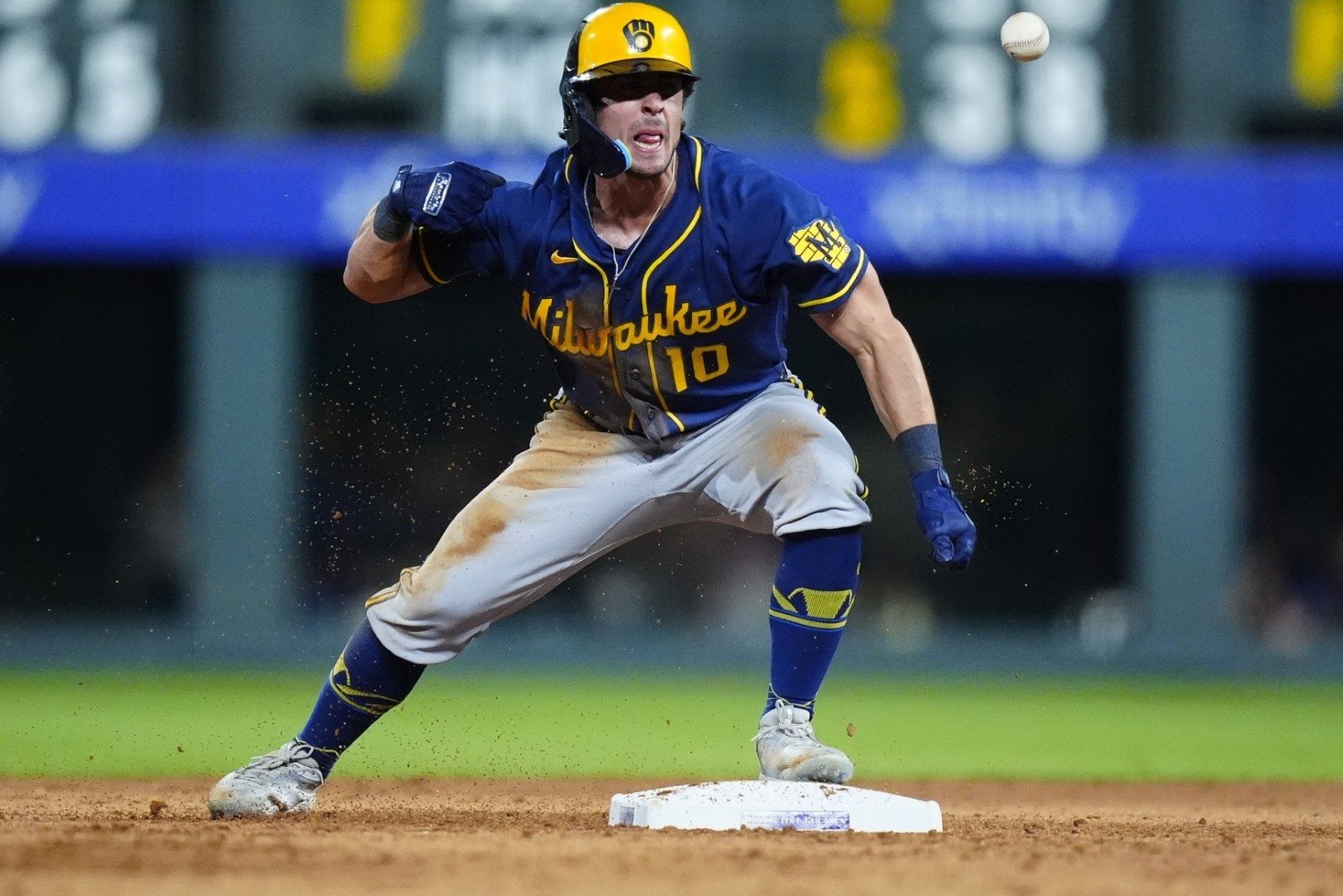 Weekly Snapshot: Record Last Week: 5-2 (Overall: 40-23) Runs Scored Last Week: 61 Runs Surrendered Last Week: 30 Standing: 1st in NL Central Game 57 (6/1) | MIL 16, SF 2 Game 58 (6/2) | MIL 8, SF 3 Game 59 (6/3) | SF 1, MIL 0 Game 60 (6/4) | SF 12, MIL 9 Game 61 (6/5) | MIL 9, COL 7 Game 62 (6/6) | MIL 7, COL 1 Game 63 (6/7) | MIL 12, COL 4 Game 57 | Brewers 16, Giants 2 MIL Starter: Shane Drohan (4.0 IP, 4 H, 2 BB, 2 ER, 5 K) Top Performers: Christian Yelich (3 H, BB, 2 RBI) Jackson Chourio (2 H, 2 BB, 2B, 3 RBI) Jake Bauers (H, 4 BB) Due to an influx of injuries, Shane Drohan was back on the mound in a starting role on Monday, though it was the Brewers offense stealing all the headlines. They’d unload on the Giants pitching staff, tallying 16 runs on 18 hits and scoring off every pitcher they’d face, taking game one convincingly. Jackson Chourio’s 2-run double (+15.4 WP%) Game 58 | Brewers 8, Giants 3 MIL Starter: Kyle Harrison (5.2 IP, 4 H, 2 BB, ER, 12 K) Top Performers: Christian Yelich (2 H, 2 BB, 2 RBI) Brice Turang (2 H, BB, 2 RBI) Jake Bauers (H, HR, 3 RBI) Kyle Harrison was on the bump to face his old club on Tuesday, and he dominated. In Harrison’s 5.2 innings of work, he struck out 12 batters for the second time on the season, while Jake Bauers’ 3-run home run in the first inning set the tone for the eventual 8-3 win. Jake Bauers’ 3-run shot (+22.8 WP%) Game 59 | Giants 1, Brewers 0 MIL Starter: Robert Gassar (5.0 IP, 5 H, BB, ER, 5 K) Top Performers: Chad Patrick (4.0 IP, 3 H, 2 BB, 0 ER, 4 K) Robert Gassar was back in the big leagues for the third game of the set against San Francisco. Gassar turned in a quality start, and Chad Patrick cleaned up the four innings behind him with no damage, but Giants twirler Logan Webb flirted with a no-hitter on the other side on the way to handing the Brewers a 1-0 loss. Luis Renifo’s leaping grab (+2.4 WP%) Game 60 | Giants 12, Brewers 9 MIL Starter: Coleman Crow (2.1 IP, 9 H, 2 BB, 6 ER, 2 K) Top Performers: Jackson Chourio (3 H, 2 HR, 4 RBI) DL Hall (2.1 IP, H, 0 BB, 0 ER, K) Brice Turang (2 H, 2B) San Francisco split the series on Thursday after jumping out to an early lead on Coleman Crow, then getting to both Grant Anderson and Jake Woodford. The bats fared a bit better, as Jackson Chourio went deep twice with the Brewers facing off against Adrian Houser, but that wasn’t enough as a late comeback attempt fell short in the 12-9 final. Jackson Chourio’s 2-homer day Game 61 | Brewers 9, Rockies 7 MIL Starter: Brandon Sproat (5.0 IP, 7 H, 2 BB, 3 ER, 2 K) Top Performers: Jake Bauers (3 H, 2 2B, 3 RBI) Craig Yoho (2.0 IP, 0 H, 2 BB, 0 ER, 3 K) Sal Frelick (2 H, 2B, BB, RBI) Drama was in store for the Brewers as they shifted to Coors Field on Friday to take on the Colorado Rockies. With just one hit to their name heading into the 9th inning the Brewers would mount a furious comeback, scoring four runs in both the 9th and 10th inning to snatch a win back, despite the Rox mounting a comeback of their own. Sal Frelick knocks in a pair (+42.8 WP%) Game 62 | Brewers 7, Rockies 1 MIL Starter: Jacob Misiorowski (7.0 IP, 4 H, 3 BB, R, 0 ER, 8 K) Top Performers: Brice Turang (2 H, 2 HR, 2 RBI) Jake Bauers (H, 4 BB, HR, RBI) David Hamilton (4 H, HR, RBI) Jacob Misiorowski eliminated any doubt on Saturday, in a start highlighted by the Miz shaking off his own manager en route to 7 more innings of dominant baseball. Brice Turang and David Hamilton then led the show with the bats, as Turang popped a pair of homers and Hamilton notched 4 hits for the second time in his career. Turang’s pair of jacks Game 63 | Brewers 12, Rockies 4 MIL Starter: Shane Drohan (6.1 IP, 5 H, BB, 3 ER, 4 K) Top Performers: Jackson Chourio (3 H, 2 2B) Garett Mitchell (3 H, 2 2B, 3B, 2 RBI) Andrew Vaughn (3 H, 3B, RBI) The Brewers completed the sweep of the Rockies Sunday afternoon behind another strong outing from Shane Drohan and another offensive explosion that saw the Crew collect 12 runs on 17 hits, highlighted by a seven-run explosion in the 6th inning. Gary Sánchez goes deep (+18.3 WP%) Transactions: 06/06/26 - Placed RHP Quinn Priester on the 60-day injured list with Right thoracic outlet syndrome. 06/06/26 - Placed LHP Brian Fitzpatrick on the 15-day injured list with a left elbow injury. 06/06/26 - Acquired RHP Joel Kuhnel from the Athletics for cash. 06/06/26 - Selected the contract of LHP Drew Rom from AAA Nashville. 06/05/26 - Placed LHP DL Hall on the 15-day injured list. Left pectoral strain. 06/05/26 - Designated RHP Jake Woodford for assignment. 06/05/26 - Recalled RHP Craig Yoho from AAA Nashville. 06/05/26 - Recalled LHP Brian Fitzpatrick from AAA Nashville. 06/03/26 - Placed LHP Rob Zastryzny on the 15-day injured list with a left trapezius strain. (Retroactive to May 31, 2026) 06/03/26 - Recalled LHP Robert Gasser from AAA Nashville. Looking Ahead: Monday, 6/8 - Brewers @ Athletics - 9:05 PM CT Tuesday, 6/9 - Brewers @ Athletics - 9:05 PM CT Wednesday, 6/10 - Brewers @ Athletics - 8:05 PM CT Friday, 6/12 - Phillies @ Brewers - 6:40 PM CT Saturday, 6/13 - Phillies @ Brewers - 6:10 PM CT Sunday, 6/14 - Phillies @ Brewers - 1:10 PM CT View the full article
 -
 San Diego Padres affiliates took three of four Sunday, with the Triple-A El Paso Chihuahuas rolling to an 11-5 win over Sugar Land, the Double-A San Antonio Missions bouncing Wichita 7-4, the High-A Fort Wayne TinCaps falling to Lake County 3-2 and the Low-A Lake Elsinore Storm prevailing in 11 innings over Fresno 7-5. Padres Minor-League Transactions El Paso Chihuahuas placed LHP Fernando Sanchez on the 7-day injured list. Lake Elsinore Storm activated 1B Luke Cantwell from the 7-day injured list. German Marquez Shines In Rehab Start As Chihuahuas Win Padres right-handed starter German Marquez was superb in his second rehab start with four scoreless innings and allowing just one hit, while Nick Solak and Nick Schnell each drove in three runs as the host Triple-A El Paso Chihuahuas poured it on late for an 11-5 victory over the Sugar Land Space Cowboys. The Chihuahuas (27-36) won the final two of this six-game series. Marquez, coming back from forearm nerve irritation that landed him on the 15-day injured list May 3, walked one and struck out two while throwing 47 pitches (28 strikes). He has allowed just two hits and no runs in 6⅓ innings. Marquez ran into a little trouble in the third inning. A leadoff walk was erased by a caught stealing, then he hit the next batter, who successfully stole second. A groundout moved the runner to third before Marquez struck out Cavan Biggio. Solak, who had three hits and scored three times, and Clay Dungan hit homers for the Chihuahuas. Carlos Rodriguez had a fifth-inning single to keep his hitting streak going at 14 games, matching Mason McCoy for the longest on the team this year. El Paso had an early 2-0 lead on sacrifice flies by Carlos Rodriguez and Schnell in the first and fourth innings, then saw Sugar Land go up 3-2 with a three-run fifth. In the bottom of the six, the Chihuahuas started to click with another sac fly, this one from Blake Hunt, before Dungan smacked his six homer of the season, a two-run shot to break the tie for a 5-3 lead. The Space Cowboys added a run in the top of the seventh, but the Chihuahuas came back with three more in the bottom half on Nate Mondou's RBI single and Schnell's two-run double and an 8-4 advantage. That scenario repeated itself in the eighth as the Space Cowboys got another run to pull within 8-5, then the Chihuahuas clawed back with three more in the bottom half as Solak lined an opposite-field three-run homer, his ninth of the year, that just cleared the wall. Solak has homered in seven of his last 14 games. Chihuahuas left-hander Jackson Wolf came on after Marquez exited and gave up all five runs in 3⅓ innings on eight hits and a walk while punching out four. Right-hander Alek Jacob earned his third save by striking out three in 1⅔ innings. EP_0607.mp4 Player AB R H RBI BB K Mason McCoy 5 1 1 0 0 2 Carlos Rodríguez 3 1 1 1 1 0 Nick Solak 5 3 3 3 0 0 Marcos Castañon 5 1 2 0 0 2 Will Wagner 5 1 2 0 0 1 Nate Mondou 4 1 1 1 0 2 Nick Schnell 3 1 2 3 0 0 Blake Hunt 2 0 0 1 1 2 Clay Dungan 3 2 2 2 1 1 Totals 35 11 14 11 3 10 Player IP H R ER BB K HR Germán Márquez 4 1 0 0 1 2 0 Jackson Wolf 3 1/3 8 5 5 1 4 1 Alek Jacob 1 2/3 1 0 0 0 3 0 Totals 9 10 5 5 2 9 1 Luis Verdugo Homers As Missions Finish Big Series Against Wichita Luis Verdugo hit his first homer in nearly a month as the Double-A San Antonio Missions scored six runs over the middle three innings for a 7-4 win over the host Wichita Wind Surge. The Missions (25-32) took five of six games in the series, including the final four. They allowed eight runs in the five wins. Carson Tucker, Ethan Salas, Braedon Karpathios, Kai Murphy and Kai Roberts each had two hits for the Missions, while Albert Fabian drove in two runs without a hit. Verdugo's homer was a two-run shot, his third of the season and first since May 12. He also homered in the April 2 season opener. Missions right-handed starter Ian Koenig, making his second start of the series, didn't have the same success as he did Tuesday, when he allowed just one hit and an unearned run with seven strikeouts over seven innings. This time, Koenig went four innings and gave up three runs on four hits with five walks and a pair of strikeouts. Left-hander Omar Cruz allowed a run in two innings, right-hander Francisco Pena had a hitless eighth and right-hander Josh Mallitz struck out four over two shutout innings for his second save of the year. Verdugo went deep in the fourth inning to put the Missions up 2-1, then Roberts, Tucker and Salas opened the fifth with consecutive singles to make it 3-1. A one-out wild pitch brought in another run and Fabian's groundout plated Salas for a 5-1 lead. In the sixth, after Wichita scored twice in the fifth, Verdugo walked, took second on a one-out wild pitch and scored on Murphy's single to right to go up 6-3. Wichita again countered with a run in the sixth. It stayed 6-4 until the ninth, when Salas had a leadoff single, stole second (his 12th of the year) and went to third on a wild pitch. After a popout, Fabian hit a sac fly to bring in Salas. SA_0607.mp4 Player AB R H RBI BB K Carson Tucker 5 1 2 0 0 1 Ethan Salas 5 2 2 1 0 0 Romeo Sanabria 5 0 1 0 0 2 Albert Fabian 4 0 0 2 0 0 Braedon Karpathios 4 1 2 0 1 1 Luis Verdugo 3 2 1 2 1 1 Francisco Acuna 3 0 0 0 1 0 Kai Murphy 4 0 2 1 0 1 Kai Roberts 3 1 2 0 0 1 Totals 36 7 12 6 3 7 Player IP H R ER BB K HR Ian Koenig 4 4 3 3 5 2 1 Francis Peña 1 0 0 0 1 0 0 Omar Cruz 2 1 1 1 0 3 1 Josh Mallitz 2 1 0 0 0 4 0 Totals 9 6 4 4 6 9 2 Jake Cunningham Homers Again, But First-Inning Errors Sink TinCaps Jake Cunningham hit his fourth homer in three games, but it was a pair of unearned runs in the first inning that paved the way for the host High-A Fort Wayne TinCaps' 3-2 loss to the Lake County Captains. It was the TinCaps' fifth straight loss to conclude the six-game series in which Fort Wayne (24-33) gave up double-digit runs three times. Coming off a three-homer game Friday, tying a club record, Cunningham smashed a solo shot on the first pitch he saw in the bottom of the first for his team-leading 14th of the season. Cunningham's blast made it a 2-1 game after the Captains scored twice in the top of the first thanks to throwing errors by starting pitcher Jamie Hitt and third baseman Zach Evans on back-to-back bunts. Lake County added another run in the fourth on a triple and an RBI single. The TinCaps pulled within 3-2 in the sixth inning on consecutive singles by Justin DeCriscio and Rosman Verdugo to open the frame, a Cunningham walk to load the bases and Alex McCoy's sacrifice fly. Hitt was solid for four innings, allowing all three runs, but only one was earned. He walked two, struck out four and gave up four hits. Left-handers Javier Chacon and Braian Salazar each went two scoreless innings and right-hander Tucker Musgrove, Padres Mission's No. 14 prospect, a perfect ninth. Chacon fanned three and Musgrove two, while that bullpen trio allowed just one hit. FW_0607.mp4 Player AB R H RBI BB K Justin DeCriscio 4 1 1 0 0 1 Rosman Verdugo 4 0 1 0 0 1 Jake Cunningham 2 1 1 1 2 1 Alex McCoy 2 0 0 1 1 1 Kavares Tears 4 0 0 0 0 3 Jack Costello 4 0 0 0 0 1 Zach Evans 4 0 1 0 0 0 Oswaldo Linares 3 0 0 0 1 1 Kasen Wells 4 0 1 0 0 2 Totals 31 2 5 2 4 11 Player IP H R ER BB K HR Jamie Hitt 4 4 3 1 2 4 0 Javier Chacon 2 1 0 0 1 3 0 Braian Salazar 2 0 0 0 0 0 0 Tucker Musgrove 1 0 0 0 0 2 0 Totals 9 5 3 1 3 9 0 Storm Notch 11-Inning Victory Over Grizzlies Conner Westenberg scored on a wild pitch and Jose Verdugo singled home another run in the top of the 11th as the Low-A Lake Elsinore Storm pulled out a 7-5 victory over the host Fresno Grizzlies. The win in the finale gave the Storm (33-24) a split of the six-game series. The Storm have a two-game lead over Rancho Cucamonga in the California League's South Division. Ryan Wideman, Padres Mission's No. 5 prospect, homered, scored twice and stole his minors-leading 37th base. Verdugo and Luke Cantwell, just activated off the seven-day injured list, had two hits apiece, while Jorge Quintana, Padres Mission's No. 6 prospect, drove in two runs and Kerrington Cross reached base three times with a hit and two walks. Storm right-handed starter Carlos Medina went 4⅓ innings, allowing two runs on five hits and a walk with three strikeouts. After right-hander Nick Falter gave up a pair of runs on two hits and two walks with a pair of strikeouts in 2⅓ innings, the next four relievers allowed just one unearned run over the final 4⅓ innings. Fresno scored twice in the bottom of the seventh to tie the game 4-4, both teams scored once in the 10th. Cantwell singled in Verdugo, who was the zombie runner and went to third on a passed ball. In the top of the 11th, Westenburg was the zombie runner and went to third on a groundout and scored on a wild pitch. Cross walked with two outs, stole second and scored on Verdugo's single to left for a 7-5 lead. Storm right-hander Brandon Langley overcame a two-out walk to earn the save, the first of the year in his debut season. LE_0607.mp4 Player AB R H RBI BB K Ryan Wideman 3 2 1 1 0 1 Yoiber Ocopio 2 0 1 0 0 0 Kerrington Cross 4 1 1 1 2 2 Jose Verdugo 6 1 2 1 0 2 Luke Cantwell 5 0 2 1 0 1 Yimy Tovar 1 0 0 0 0 0 Truitt Madonna 5 1 1 0 0 2 Bradley Frye 4 1 1 0 0 2 Jorge Quintana 5 0 1 2 0 1 Dylan Grego 3 0 0 0 0 0 Conner Westenburg 2 1 0 0 0 0 Qrey Lott 5 0 0 0 0 3 Totals 45 7 10 6 2 14 Player IP H R ER BB K HR Carlos Medina 4 1/3 5 2 2 1 3 0 Nick Falter 2 1/3 2 2 2 2 2 0 Carson Swilling 1/3 1 0 0 1 0 0 Sean Barnett 1 0 0 0 1 2 0 Will Koger 2 3 1 0 1 3 0 Brandon Langley 1 0 0 0 1 1 0 Totals 11 11 5 4 7 11 0 Padres Mission's Top 20 Prospect Performance Ethan Salas: 2-for-5 Kash Mayfield: DNP Miguel Mendez: DNP Kruz Schoolcraft: DNP Ryan Wideman: 1-for-3, HR, 1 K Jorge Quintana: 1-for-5, 1 K Ty Harvey: On injured list Kale Fountain: Injured, out for season Braedon Karpathios: 2-for-4, 1 K Lamar King Jr.: DNP Jagger Haynes: DNP Alex McCoy: 0-for-2, 1 K Truitt Madonna: 1-for-5, 2B, 2 K Tucker Musgrove: 1 IP, 0 H, 0 R, 0 BB, 2 K Garrett Hawkins: DNP Michael Salina: DNP Eric Yost: DNP Rosman Verdugo: 1-for-4, 1 K Bryan Balzer: DNP Deivid Coronil: DNP View the full article
 -
 Fish On First staffers react to the latest Miami Marlins series and prepare you for what lies ahead. Sunday's show was hosted by Jeremiah Geiger and featured panelists Ely Sussman and Nate Karzmer. You can find Fish Unfiltered and Fish On First LIVE on the Fish On First YouTube channel, Apple Podcasts, Spotify or wherever else you get your pods Our next FOF LIVE episode will be Thursday at approximately 6:30 p.m. ET following the Marlins-Diamondbacks series finale. View the full article
 -
Twins Minor League Report (6/7): St. Paul Shuts Out Once Again
DiamondCentric posted an article in Twins Daily
 TRANSACTIONS No moves were made on Sunday. Saints Sentinel St. Paul 3, Indianapolis 0 Box Score John Klein: 2 2/3 IP, 3 H, 0 ER, 3 BB, 1 K HR: None Multi-hit games: Kyler Fedko (2-for-4, 2B, R), Tanner Schobel (2-for-4) The Saints shut out their opponent on Sunday. It was a surprisingly tame match for International League standards. Indianapolis simply never got anything going against St. Paul’s litany of pitchers. John Klein? Effective, if not wildly so with three hits and three walks against him. Ty Langenberg? The star of the show. The one who delivered 2 1/3 efficient frames in arguably his best showing in a Saints uniform. Marco Raya? Even more efficient by netting two shutout frames with just 13 pitches. Then Kody Funderburk and C.J. Culpepper finished the job, with both hurlers needing fewer than 10 pitches to do so. St. Paul as a whole threw 110 pitches. It was as if the entire Indianapolis lineup had a tee time to make. The pitching success rendered St. Paul’s relatively meager offensive showing more than enough to claim the win. Tanner Schobel brought in a run in the fourth off an infield single—and though the lineup could have napped at the plate the rest of the game and still won—they tacked on thanks to a two-run single by Aaron Sabato in the fifth. Sabato ended play with a .975 OPS on the season, the eighth-best mark in the International League. Third-ranked Pirates prospect Hunter Barco provided bulk innings for Indianapolis, tossing four frames while surrendering three earned runs. Wind Surge Wisdom Wichita 4, San Antonio 7 Box Score Cory Lewis: 4 IP, 3 H, 2 ER, 2 BB, 3 K HR: Billy Amick (14), Jorel Ortega (2) Multi-hit games: Jorel Ortega (2-for-4, HR, R, 2 RBI) The team soon to be formerly known as the Wind Surge came up short on Sunday. Donning the moniker “Turbo Tubs” that will eventually become the team’s permanent name, Wichita didn’t appear especially turbo-ed, though they had chances (whatever that means). They plated a trio of runs off starter Ian Koenig, yet are likely kicking themselves for not scoring more, as the righty walked five in a scattershot outing. Instead, all the Wind Surge could muster against the starter was one run in the second, and two in the fifth. That’s Billy Amick in there somewhere amongst the rain haze, we promise. Amick now has 14 homers on the season, as he’s now tripled what was his career long ball total at the season’s start. His meager .212 batting average betrays a healthy .341 OBP and a robust .475 slugging percentage, giving him a prototypical slashline for a slugging corner infielder. Jorel Ortega added on in the sixth with a solo homer, his second shot of the season. Only former Volunteers could go long on Sunday, evidently. Unfortunately, Wichita pitching matched the sloppiness of the endured weather. Cory Lewis continued to struggle in his attempt to rebound from a disastrous 2025 season; his AA ERA this year sits at 5.60, a disappointing number given his mark across 66 innings with the team two years ago was 2.59. Sam Ryan coughed up three runs in his lone inning of work. Then Nick Mikolajchak became the third pitcher to fail in shutting out the Missions. Zach Vennaro and Paulshawn Pasqualotto finally delivered zeroes, but by then, it was too late. Uber prospect turned ordinary top-100 guy, Ethan Salas, caught for the Missions, collecting two hits in five at-bats. Kernels Nuggets The Kernels started play on Sunday before rain quickly squashed any hopes of completing nine innings. The game was canceled and will not be made up later. Mussel Matters Fort Myers 3, Lakeland 5 Box Score Ramiro Villanueva: 3 IP, 1 H, 2 ER, 3 BB, 3 K HR: None Multi-hit games: Ryan Sprock (2-for-3, 3B, R, 2 RBI), Graham Brown (2-for-4, RBI), Luis Fragoza (2-for-4) The Mighty Mussels were bested late on Sunday. Perhaps the second inning best portends how the game was to go: Ryan Sprock led off the frame with a triple, only to be stranded as his next two friends went down whiffing, and the third flew out. Then pitcher Ramiro Villanueva walked two—and nearly escaped the inning without allowing a run—only for a single to plate both runners. Villanueva also balked. It didn’t end up mattering. But a balk always foretells grave matters. And if it wasn’t for Sprock, the Mighty Mussels would have walked away from Sunday embarrassed instead of merely beat. The DH lived up to the position’s namesake: he added a sacrifice fly in the sixth, and drove in another run with a single in the eighth. Then he stole second. That’s a lot of bases, and a significant amount of runs, given that Fort Myers only scored thrice, credited to just one player. Graham Brown added on with a game-tying single, yet the Mighty Mussels pitching that bent all game finally broke for good, surrendering two in the bottom half of the frame in what became the game’s deciding effort. Dameury Pena stole his 17th base of the season, tying him for the 10th-most in the Florida State League. Lakeland DH Nick Dumesnil ranks as the Tigers’ 23rd-best prospect. He walked twice in four plate appearances. TWINS DAILY PLAYERS OF THE DAY Twins Daily Minor League Pitcher of the Day – Ty Langenberg Twins Daily Minor League Hitter of the Day – Jorel Ortega PROSPECT SUMMARY Here’s a look at how the Twins Daily Top 20 Twins Prospects performed: #4 – Connor Prielipp (Twins) - 4 1/3 IP, 4 H, 2 ER, 1 BB, 7 K #10 – Gabriel Gonzalez (St. Paul) - 1-2, R, 2 BB #12 – Andrew Morris (Twins) - 1 2/3 IP, 3 H, 3 ER, 0 BB, 4 K #13 – Hendry Mendez (St. Paul) - 1-4, K #14 – Quentin Young (Fort Myers) - 0-4, 3 K #17 – C.J. Culpepper (St. Paul) - 1 IP, 1 H, 0 ER, 0 BB, 0 K #20 – Kyle DeBarge (Wichita) - 0-4, BB, K MONDAY’S PROBABLE STARTERS FCL Braves @ FCL Twins (11:00 AM) - TBD DSL Twins @ DSL Mets Orange (10:00 AM) - TBD View the full article
 -
 MIAMI, FL - After a rough weekend in Queens, where the New York Mets swept the Miami Marlins, they bounced back and have now won five out of six games and two straight series. It was capped off with a 4-1 win over the Tampa Bay Rays. For the first time since April 1st and 7th, Marlins starting pitcher Sandy Alcantara has completed seven innings or more in back-to-back starts. After his worst start of the season against the Toronto Blue Jays, Alcantara has flipped the switch. On Sunday against a good Tampa Bay Rays team, he went seven innings, allowing one run on five hits and one walk while striking out seven. Alcantara is now five strikeouts away from 1,000 in his career and has now surpassed Josh Johnson on the franchise's all-time wins leader list, moving into third place. Ricky Nolasco holds the most wins (81) in franchise history. "I think it's a lot of strikeouts," Alcantara said in Spanish. "I thought that I should've gotten there a long time ago, but because of the injury, that held me back...1,000 strikeouts are coming up and excited for the opportunity and hopefully I can stay healthy for many more years and to do it with this organization that is giving me the opportunity to be here everyday to come out onto this field every fifth day and compete." The lone run Alcantara surrendered came in the top of the third inning. Yandy Diaz knocked in an RBI single to give the Rays a 1-0 lead. Sandy went on to shutout the Rays offense the rest of the way through. With recent starting pitching injuries, the Marlins have been forced to have multiple bullpen games. In a way, Alcantara going deep into games gives the pen a reset day and with the off day on Monday, everyone should be available for Tuesday's game against the Diamondbacks. Following Sunday's start, Alcantara leads Major League Baseball with 89 1/3 innings pitched, just ahead of Philadelphia Phillies starter Christopher Sanchez. "You kind of circle his day, when he's going to pitch," Clayton McCullough said postgame. "You feel like you can bank six or more innings from him, and that's what really he's done all season long and especially over the last couple. Not only the length, but the quality he's had in a terrific year as a whole." Alcantara had his defense making plays behind him as well through most of his start as well. In the top of the first inning, Kyle Stowers snatched a 104.1 mph lineout from Richie Palacios that would've very likely been an extra-base hit. In the fourth inning, Javier Sanoja stole an extra-base hit from Junior Caminero, as he ended up grounding into a double-play. Owen Caissie then stole a home run from Cedric Mullins. In the top of the seventh, Alcantara struck out Victor Mesa Jr., but Joe Mack threw out Mullins, who was trying to steal second. Originally called safe, the Marlins challenged the call and it was overturned for the double-play. "I feel great when they get execute those plays out there," Alcantara said. "It's more easy and fresh when they make those plays for you out there. You feel more comfortable." Rays recently turned starter Griffin Jax kept the Marlins offense at bay, shutting them out for five innings of work. The Marlins got to the Rays bullpen in the bottom of the sixth inning with Garrett Cleavinger on the mound. Liam Hicks worked a walk and Otto Lopez drove him in on an RBI triple, his third of the season. It tied the game at one apiece. Kyle Stowers then drove Lopez in on a sacrifice fly, giving the Marlins a 2-1 lead with Alcantara on the mound. In the bottom of the seventh inning, McCullough deployed Esteury Ruiz off his bench to hit for Owen Caissie. Ruiz worked a fourth straight walk. Jakob Marsee followed him with a walk as well and they went for a double steal, which was successful. Joe Mack grounded into a fielder's choice and catcher Hunter Feduccia was not able to make the grab when the throw from shortstop Taylor Walls came in, allowing both Ruiz and Marsee to score, extending the Marlins lead, 4-1. Ruiz, who the Marlins acquired from the Los Angeles Dodgers over the offseason has been what the Marlins needed and potentially even more. In 32 games with the Marlins, he is slashing .196/.300/.471/.771 with three home runs, six RBI and a 110 wRC+. Ruiz stole his 11th base of the season, joining Marsee (16), Xavier Edwards (11) and Lopez (10) as the Marlins are now the only team in the Majors with four players with 10-or-more swiped bags on the season. The Marlins continue to lead Major League Baseball with 76 stolen bases. "The amount of pressure that he puts on people, the opposing pitchers and catchers when he's on base, and you see the amount of pick-offs," McCullough said. "Then his ability to get extra 90 feet, he goes and does a lot of great things on the bases. I think that is the inherent pressure that and the stress he puts on people when he's out there." With the win, the Marlins improve to 31-35 on the season, now just four games below .500 and 3.5 games out of the final Wild Card spot. The Marlins will have a day off on Monday and are back at it on Tuesday to begin a three game set against the Arizona Diamondbacks. Max Meyer is slated to face former Marlin Zac Gallen at 6:40 pm EST. View the full article
 -
3 Cubs Right-Handed Hitters Who Need to Step Up
DiamondCentric posted an article in North Side Baseball
 The Chicago Cubs have an interesting split going on. Right-handed hitters have hovered around or below a 100 wRC+, while lefties have been much better. As explored by our own @Yirsandy Rodríguez this all came to fruition even after the Cubs effectively swapped Kyle Tucker for Alex Bregman. In this article, we’ll go over three right-handed hitters who need to step up for a squad that’s aiming to turn the season around. Dansby Swanson Swanson is the first name that deserves plenty of attention. While he was once a No. 1 overall pick and has one of the better gloves in all of professional baseball, the bat has been lagging behind with his struggles lying in a couple of areas. For starters, he just isn’t hitting the ball very hard. That all starts with bat speed. Swanson is swinging, on average, at 71.2 miles per hour, putting him in the 36th percentile. That below-average metric has a domino effect on a few other analytics, as Swanson has also clocked in an average hard-hit percentage of 41.2% (49th percentile) and a below-average barrel rate of 7.2% (40th percentile). This is more than just a quality of contact issue, though. Swanson is hitting a career-worst .180 with just a .285 on-base percentage, and a huge reason for that is his lack of contact. The former Vanderbilt Commodore is striking out 23.3% of the time, dropping him in the 36th percentile among big league hitters. His whiff rate is even further below the league-average watermark, as his 30.5% mark has him in the 18th percentile. An elite baserunner and fielder, Swanson will always have a high floor. But he'll never live up to his ceiling with this kind performance at the plate. Seiya Suzuki It’s a contract year for Seiya Suzuki, yet so far in 2026, his bat hasn’t produced quite the level of production we saw from him just a season ago. While Suzuki does have nine homers in just a little over 200 trips to the plate, the real issue has lied in his in-zone contact. Suzuki doesn’t venture out of the zone much, as he finds himself in the 83rd percentile in chase rate. However, he’s whiffing almost 27% of the time, which is one of the higher marks in MLB. Suzuki’s walk percentage is up a tick, operating at 11%, a sign of his improved plate approach. Yet the 31-year-old has struggled against secondaries, with batting averages below the Mendoza line against both off-speed and breaking pitches. His hard-hit rate, barrel percentage, and bat speed are all better than the league average, so it’s really about just making contact more often and capitalizing from there. Alex Bregman Last, but certainly not least, the Cubs need more out of their star third baseman. Alex Bregman signed a five-year, $175 million contract with the North Siders this past offseason, just months removed from his one-year stint with the Boston Red Sox. Approach-wise, Bregman has done his job and proven to be a savvy veteran on this Cubs’ offense. He is among the top quarter of the league in squared-up rate (89th percentile), chase rate (88th percentile), whiff rate (83rd percentile) and strikeout rate (73rd percentile), yet the hard-hit numbers have not been there for the 32-year-old. The former Houston Astros corner infielder has a below average hard-hit rate and just a .681 OPS in his first season with the Cubs. He remains an elite defender at third base (+3 outs above average), but much like Swanson, the bat simply needs to improve to be worth the value of Bregman’s contract. View the full article
 -
 Box Score: Starting Pitcher: Connor Prielipp: 4 1/3 IP, 4 H, 2 ER, 1 BB 7 K (77 Pitches, 51 Strikes, 66%) Home Runs: Josh Bell (6) Bottom 3 WPA: Andrew Morris (-0.36), Brooks Lee (-0.21), Luke Keaschall (-0.11) Win Probability Chart (Via BaseballSavant): The Royals came into the year with fairly high expectations, and with today's rubber match, they had a chance to take a series against the Twins—which would, uh, not do that much for their prospects this year, really. Their pitching has been hurt, and their perennially light-hitting offense hasn't done enough to make up for it. However, they did start lefty Noah Cameron, who is a solid young pitcher who has feasted on Minnesota's lineup in the past, including earlier this year. Connor Prielipp took the mound for the Twins, hoping to bounce back after a series of rough starts. He did manage to pitch into the seventh inning his last time out, and looked good to start his outing today, showing good command of his slider-fastball combination. Through three innings, Prielipp had five strikeouts, one hit allowed, and finished the third by making Bobby Witt Jr. look foolish on a curveball below the zone for a weak-swing strike three. By then, the Twins had taken the lead. Kody Clemens, now the Twins' best hitter when Byron Buxton sits, led off with a sharp single to right. He stole second during the at-bat of starting first baseman Royce Lewis, who would eventually dribble a grounder to Witt—who inexplicably booted the ball, allowing Lewis to reach and Clemens to get to third base. Ryan Kreidler battled Cameron and eventually grounded a ball to the 5.5-hole that Witt could only record one out on. Twins 1, Royals 0. Prielipp's command wavered a bit in the fourth, perhaps due to the Twins lineup going down 1-2-3 in about 15 seconds in the bottom of the third. Maikel García rifled a liner right to Clemens in left field for a fortunate out, but Vinnie Pasquantino doubled on a fastball, and Nick Loftin doubled the opposite way on another heater to tie the game. Prielipp allowed another hit to lefty Carter Jensen to begin the fifth, and after striking out pinch-runner extraordinaire Tyler Tolbert trying to bunt with two strikes, he was relieved in favor of Andrew Morris with the top of the order coming up. Although Morris was able to strike out Witt, that was sandwiched by singles to Lane Thomas and García, the latter bringing in Jensen for the go-ahead run. He then faced the shriveled husk of Starling Marte, who had struck out feebly against Prielipp twice, but this time, he got a sinker to his liking on the inner half and crushed it 441 feet, breaking the game wide open. Cameron looked done after the fifth inning, but the Royals coaching staff coaxed another inning out of him while the Twins lineup offered no resistance—literally, since all three hitters struck out. The seventh and eighth innings were more of the same. Fourteen Twins hitters were retired in a row between the fourth and eighth innings. That would end in the ninth, when Orlando Arcia led off with a walk, Clemens flipped a single to left, and Josh Bell yanked a three-run home run to offer a glimmer of hope against Royals rookie Beck Way. Trevor Larnach then blooped a double to left, which prompted the Royals to turn to their closer, Lucas Erceg. It wouldn't end there. Victor Caratini pinch-hit for Jackson and singled to score Larnach, and Tristan Gray followed with a bloop single to bring up Brooks Lee. Leemade good contact, but flied out to the warning track in left field to end the game. Stuff I'm Tracking: Lewis showed a little more fight in his at-bats. He was able to make contact on his first plate appearance, leading to Witt's error. In his second trip to the plate, Lewis fell behind 0-2, and although his takes looked pretty flinchy, he worked the count to 3-2 before lining a ball to left field for a sharp single (112 MPH). He lined out in the seventh, albeit with a .560 expected batting average. Morris just hasn't been able to string good outings together. You get the sense that if he threw just a little harder and had just a little more depth on his breaking stuff, he could carve out a career as an impact reliever, but as he is, there isn't enough swing-and-miss. Maybe he could carve out a career as a bulk pitcher for a team with a big ballpark, or a better defense. Teams are not afraid to throw Austin Martin strikes as his offensive numbers continue to plummet. With Matt Wallner heating up at Triple-A St. Paul (.896 OPS), you wonder if a switch could be coming. Witt struck out three times and made the error that led to the Twins' first run. Opponents should win when that happens, considering the dearth of talent surrounding the star shortstop. He was removed in the seventh with right knee soreness, which might explain the off day. What’s Next: The Twins head to Detroit to face the struggling Tigers. Taj Bradley (5-2, 3.56 ERA) faces Troy Melton (2-0, 1.74 ERA) in the opener, as Bradley looks to prove his health and the Tigers try to escape the cellar of the AL Central. Postgame Interviews: Coming soon Bullpen Usage Chart: WED THU FRI SAT SUN TOT Morris 0 48 0 0 41 89 Laweryson 26 0 0 0 36 62 Orze 26 16 0 17 0 59 Lawrence 19 24 0 0 12 55 Paredes 0 50 0 0 0 50 Rogers 12 11 0 15 0 38 Gómez 0 18 0 14 0 32 Banda 0 8 14 0 0 22 Adams 0 0 16 0 0 16 View the full article
 -
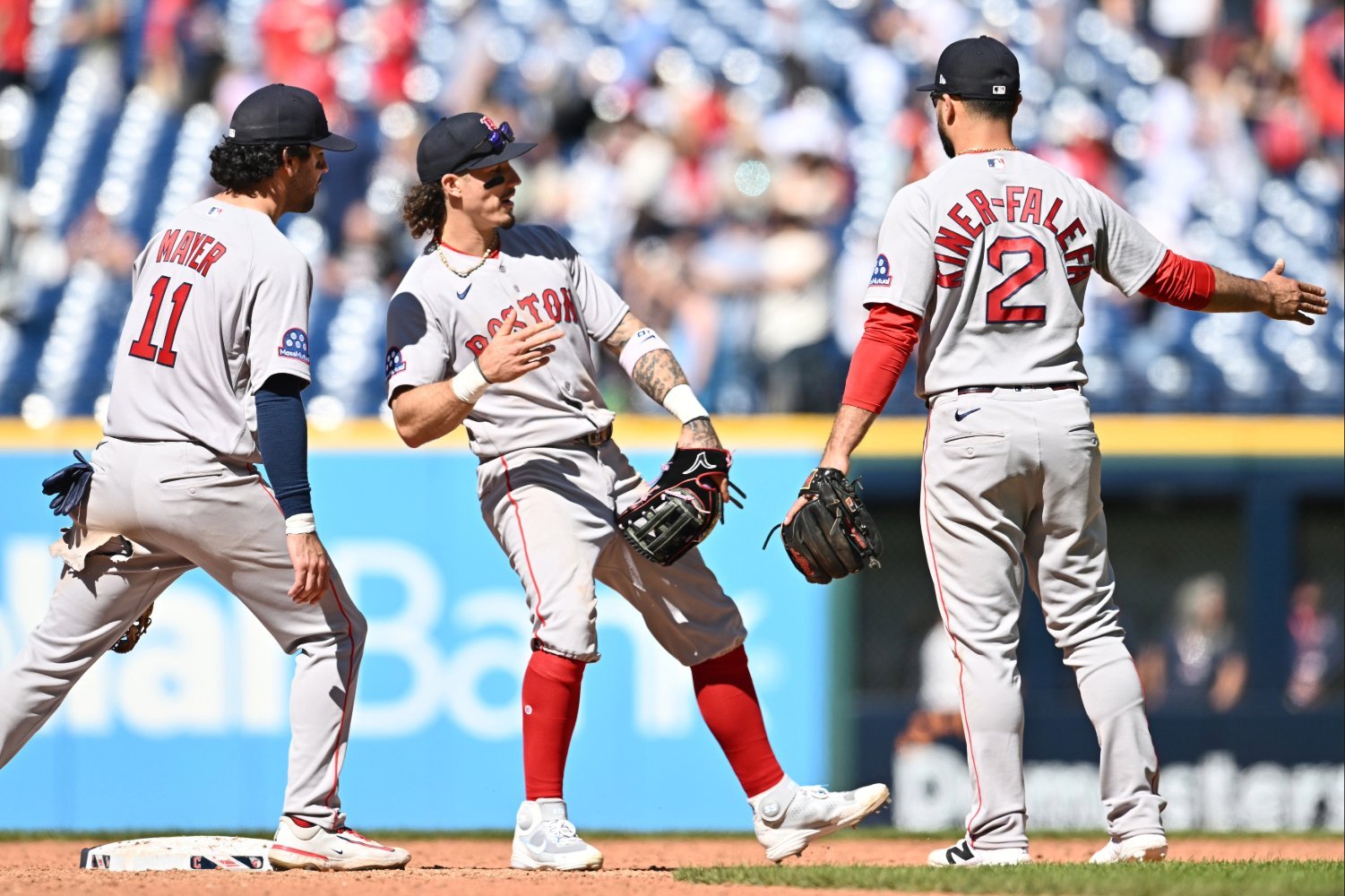 How does that old saying go? “April showers bring May hopes that the baseball season isn’t already a complete wash?” No… wait… that doesn’t sound right. Regardless, it seemed like a valid thought for Boston Red Sox fans who had sat through a March/April where everything that could go wrong, pretty much did. Whether it was the measly 12-19 start, numerous underperformance across the board, a coaching purge of epic proportions, or a seemingly backbreaking injury to ace Garrett Crochet to top it all off, hope lied in the idea that a new month meant an opportunity to turn the page and start anew. With May now in the rearview, it’s become abundantly clear that with the 2026 Boston Red Sox — who, let’s not forget, were 9-19 at Fenway this season entering June and hasn’t won a series there since April 6-8 vs. Milwaukee — the more things change, the more they stay the same. Here is a look into how the offense, rotation, and bullpen all graded out for May. Grading Red Sox's Offense By now, everyone knows if the Red Sox are going to turn things around, they’re going to need a massive resurgence from an offense that, outside of Willson Contreras and Wilyer Abreu, borderline sleep-walked through the opening March/April stretch. A run that saw them last in the American League in OBP (.309), SLG% (.351), OPS (.666) , wRC+ (84), HR (21), and WAR (2.6), as well as the bottom-third in batting average, runs, hits, and BB%. While May saw Contreras continue his hot start, slashing .315/.394/.528/.922 with 4 HR, 13 RBIs, and a wRC+ of 151, it wasn’t as kind to Abreu, who saw his OPS fall from .855 to .695 and K% increase from 17.5% to 20.7%. Add in injuries to Roman Anthony and Trevor Story, and an already-thin lineup was on the verge of completely collapsing. Injuries, however, not only opened the door to the unlikeliest of heroes like Nick Sogard (.721 OPS, 102 wRC+ in 12 games), Isiah Kiner-Falefa (.980 OPS, 1 HR, 8 RBI, 177 wRC+ in 19 games), and Micky Gasper (.333/.364/.392/.756 in 17 games), the later of which has seemingly taken over the starting catcher duties according to Chad Tracy (thanks to his consistent approach at the plate). That also doesn't mention also the continued emergence of Ceddanne Rafaela and re-emergence of Jarren Duran. Rafaela has taken a strong start and ran with it, not only continuing to decrease his K% (down to 19.6% from 22.9%) but also beginning to flex more power with his 4 homers, 13 RBI, .480 SLG and .826 OPS, earning him some more at-bats as Boston’s everyday No. 2 hitter. Where the Red Sox’s real power surge in the month of May came from was the aforementioned revival of Jarren Duran who saw his line of .170/.231/.250/.481 in March and April increase to .261/.331/.548/.879, and also managed to provide clutch hit after clutch hit, walloping a team-high nine home runs and 22 RBI. Even with these standout individual performances, the Sox offense as a whole was a bit of an enigma in May. As a team, they were able to climb into the top-10 league wide in AVG, OBP, SLG, OPS, hits, doubles, triples, stolen bases, WAR, and BABIP, the latter of which they led all of baseball in. However, their Achilles heel for the month continued the trends that has plagued the offense all season thus far; the inability to take ball four with a 7.5 BB% (24th in MLB), avoid strike three with 227 strikeouts (19th in MLB), make solid contact with HardHit and Barrel percentages of 35.3% (28th in MLB) and 6.8% (23rd in MLB), and maybe most telling, the inability to hit in clutch spots with a .227 average with RISP (23rd in MLB) and even-worse .178 average with RISP with two outs (24th in MLB), leading to a still middle-of-the-pack 4.0 runs per game, good for just 18th in MLB and 9th in the AL. While there have been some positives to take away with how Boston’s offense seemingly improved, at least on the stat sheet in May, the eye test shows there are still too many stretches of inconsistencies and uncompetitive at-bats when the situation calls for more to give anything better than a C+ grade. Position Players Name March / April May Wilyer Abreu A+ B Roman Anthony C+ C+ Willson Contreras A A+ Jarren Duran F A Caleb Durbin D+ D Mickey Gasper N/A A+ Isiah Kiner-Falefa D A+ Marcelo Mayer B- D+ Andruw Monasterio C D+ Carlos Narvaez C- C- Ceddanne Rafaela B A Nick Sogard N/A B- Trevor Story D- D Connor Wong B- B Masataka Yoshida B- C+ Grading Red Sox's Rotation Record: 10-8 If the month of May showed Red Sox fans anything, it’s that they have two blossoming stars and hopefully foundational pieces for the rotation for years to come in Connelly Early and Payton Tolle. Both young southpaws have simultaneously taken the reins and filled the hole left by Garrett Crochet and then some, combining to go 5-2 with a 2.70 ERA, 60 strikeouts and 14 walks in 60 IP across 10 starts. When looking on the veteran side of things, Sonny Gray dominated going a team best 4-0 in five starts with a 2.00 ERA, .219 average against, and once again looking like the Gray of old in terms of strikeouts, doubling his K% from 13.1% in March/April to 26.2% in May. If there were to be one potential concern for the rotation, it comes in the form of the other vet on the staff in Ranger Suarez. His first three starts of the month against the Astros, Phillies, and Royals were phenomenal, posting a dominant 0.66 ERA and 2.12 FIP while allowing just one earned run over 13.2 IP. His last two starts of the month versus the Braves and Guardians, however, tell a different story, as he was roughed up for nine earned runs on 14 hits over 10 innings of work, spiking his ERA to 3.80. While the stats may show the Red Sox rotation still sits middle of the pack both in the AL and league as a whole, they also show a vast improvement from where they sat at the end of April, improving in ERA, opponent batting average, WHIP, FIP, K%, hits allowed, strikeouts, and WAR. The hope now is they can continue this success and get Crochet back healthy to really take them to that next level, and of course, give them a more bonafide option than the opener/Bello route they’ve had to take recently. Until then, the rotation finishes May with an A- grade. Grading Red Sox's Bullpen Record: 3-6 Boston’s bullpen was a bit of a mixed bag in May due in part to a couple of key injuries to Justin Slaten and Garrett Whitlock, as well as the decision to piggyback Brayan Bello off of an opener, that being either Jovani Moran or Tyler Samaniego — neither of whom have shined in that new role. We’ll start with Slaten, who returned from an oblique injury that sidelined him most of April and originally looked like his usual dominant self, tossing 4.2 scoreless innings in five outings before a four-run implosion against Minnesota ballooned his ERA to 5.40 and FIP to 5.16 for the month. Going forward, he will certainly be looked to as the bridge to Aroldis Chapman — who did his usual stuff in 10 shutout appearances, holding hitters to a .114 average against and tallying a 38.5 K% — a role that Garrett Whitlock (3.12 ERA, 34.3 K% in 8.2 IP) had been operating as before hitting the injured list with left knee inflammation. If not him, then the Sox might lean on Ryan Watson (3.94 ERA, .220 AVG in 16.0 IP), who has seemingly found success as a multi-inning arm after a disastrous start to his tenure in Boston. When speaking of multi-inning arms, though, there may be no bigger weapon outside of Chapman in the bullpen than Brayan Bello, who as a reliever has a 0.71 ERA, 1.69 FIP, and holding opponents to a .215 average against while increasing his K% to 22.7% and decreasing his BB% to 3.1% as opposed to 11.3% for each as a starter. [Unfortunately, he's since been optioned to the minors, but the idea of making him a long reliever is still tantalizing.] Where the Red Sox have started to run into problems within their bullpen is the lack of consistency and reliability. As previously mentioned, transitioning Moran (4.38 ERA) and Samaniego (5.40 ERA) back-and-fourth between opener and traditional reliever has seemingly hurt them both with their numbers falling off drastically from where they were after April. As for veteran lefty Danny Coulombe, his numbers only continue to get worse with a 7.36 ERA in 3.2 innings after posting a 6.14 in 7.1 in March/April. And then there’s Greg Weissert, who may be the model of confusion, posting a 3.27 ERA for the month and continuing to show he seems to be just fine when the pressures at its smallest, owning a .227 average against with the bases empty and .216 in low-leverage situations. However, ramp it up and have guys on base for him and forget it, as his average against jumps to .296 in medium leverage and .429 in high leverage with a .313 with men on base and .269 with men in scoring position — not to mention the 21 inherited runners he’s allowed to score, tied for the sixth-most in baseball. He constantly leaves fans wondering why he’s still the arm called upon in those situations. Much like the rotation, Boston’s bullpen finds itself improving in an abundance of league stats that puts them in the top 10 in a lot of categories. That being said, unlike the rotation that seems to be working as a full unit, it feels as though right now the pen is being carried by a three-headed monster of Chapman, Slaten, and the occasional Bello appearance. That mixed with concerns for the injury histories of Whitlock and Slaten and the up-and-down stretches a few of the previously mentioned arms are currently going through has made me not as high on the state of the pen as I was the rotation, earning the unit a B+ grade. Pitchers Name March / April May Brayan Bello F- B+ Jake Bennett N/A C Aroldis Chapman A A+ Danny Coulombe F F- Garrett Crochet D+ N/A Connelly Early B+ B+ Alec Gamboa N/A A Sonny Gray C+ A+ Tyron Guerrero N/A C Zack Kelly B- B- Jovani Moran A C+ Tyler Samaniego A C- Justin Slaten A- B+ Ranger Suarez B+ B- Payton Tolle B A+ Ryan Watson F B- Greg Weissert D- C- View the full article
 -
 It's time to check back in with another San Diego Padres mock draft. The MLB Draft is just five weeks away. This class is as muddled as any I've covered, though it's plenty deep in talent. You can find our mock consensus board here. Let's check in on some player profiles it's currently mocking to the Padres with their first few picks in July. Draft aficionados will be used to the concept of a cold weather arms rising throughout the cycle. They don't all look like Brody Bumila, though. The 6'9 two-sport star committed to Texas has been making waves in recent weeks. Padres Mock Draft, No 21: Brody Bumila, LHP, Bishop Feehan HS, MA As you might expect from such a unique frame, there's unique stuff to match. Bumila relies on a fastball that has been as high as 101 mph. It sits in the high 90s, coming at hitters from a drop-and-drive delivery and a lower launch, with good ride at the top of the zone making it a nightmare for prep hitters in MA. There's plenty of work to do on the secondary arsenal. Bumila relies most heavily on a changeup, thrown in the low 80s, but he'll mix in a slider and a curveball too. This is a size and stuff over polish prep arm in what could be one of the higher risk, higher reward plays of the entire class. Padres Mock Draft, No. 97: Tyson LeBlanc, SS, Kansas LeBlanc has had a sensational year at Kansas after spending his first two collegiate seasons at Louisiana State Eunice. He's a rapid riser up draft boards with a solid blend of skills, tools, and production. Setting up from the right side of the plate, LeBlanc has a marginally open stance with an ear high hand set. He has a modified toe tap in his swing, twisting his foot into the ground before unleashing a swing underpinned by good bat speed. There's a good combination of bat-to-ball skills and batted ball data here. LeBlanc has crushed 24 home runs and counting entering Super Regional play, to go with a 140 wRC+. The only real orange flag on offense is a chase rate higher than you'd like to see, though it's not unmanageable. LeBlanc has solid supplementary tools. He should steal a dozen bases or so a year, with above-average speed. He has good actions in the infield to pair with an above-average arm. While he likely won't stick at shortstop at the next level, he should find a home on the dirt somewhere. He's been one of the most well-rounded college hitters in the country in 2026. View the full article
 -
New York Mets Minor-League Pitchers of the Month: May 2026
DiamondCentric posted an article in Grand Central Mets
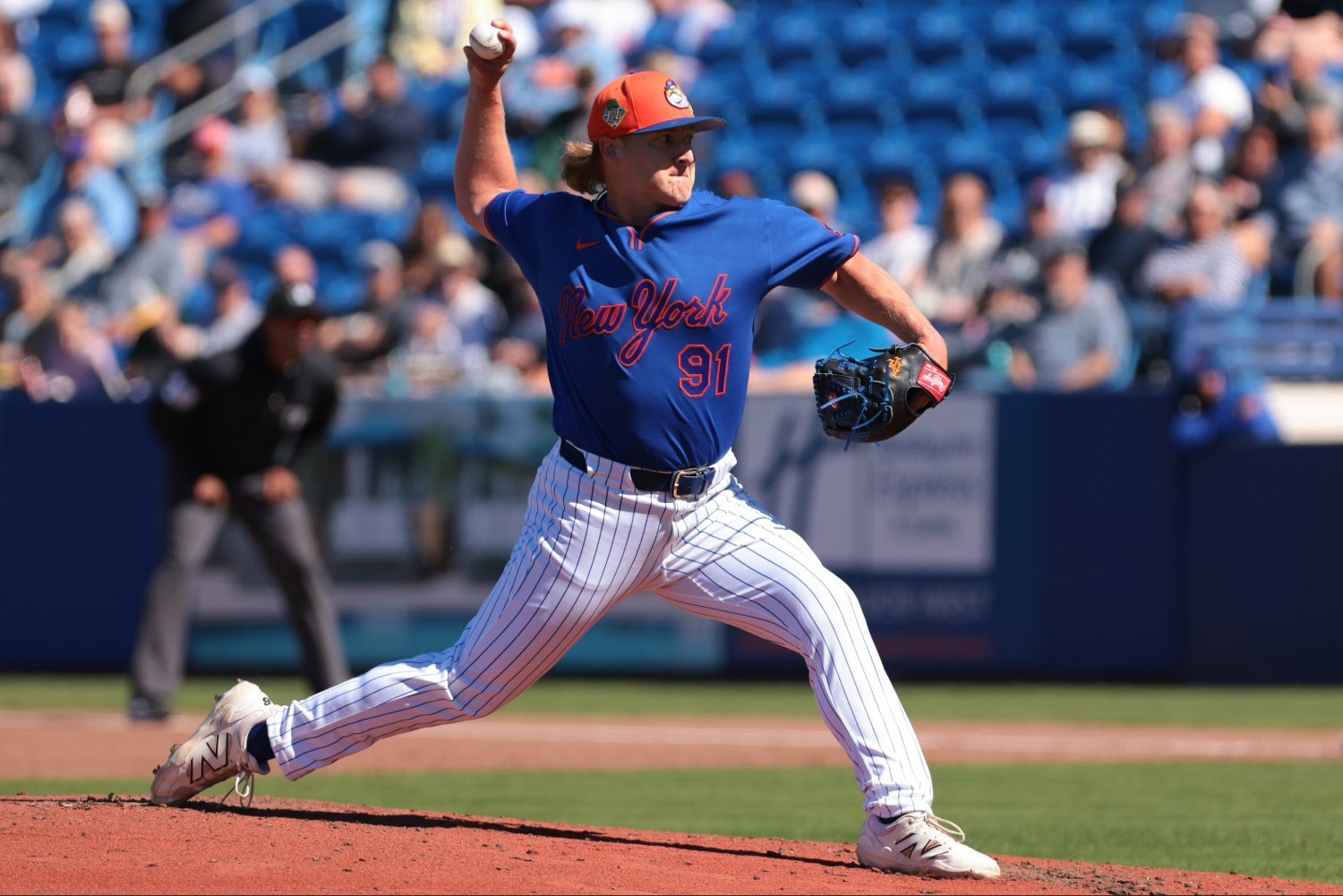 It's no secret that the New York Mets' 2026 season, thus far, has been defined by a lack of offense. Meanwhile, the pitching staff has done all it can to help the team tread water. Jonah Tong got the opportunity to assist with that mission over the last few weeks. Unfortunately, he provided mixed results and was shuttled back to Syracuse earlier this week. There are only two other arms in the Top 10 of our Prospect Rankings here at Grand Central Mets, both of whom were solid, if unspectacular, during May. A quick dive into the Mets' system's depths, though, gives a glimpse of what could be coming down the pipe. Monthly stats referenced are from milb.com at the player's listed level. Pitchers eligible for inclusion on this list must have pitched at least 10 innings. Prospect ranks are from Grand Central Mets. Ranking Mets' Best MiLB Pitchers in May 3. Jonathan Pintaro - AAA (Syracuse, No. 20 Prospect) Pintaro, who made his MLB debut in June 2025, returned to the MLB roster last month and produced as well as anyone could have hoped. In 3 2/3 innings for the big-league club, he didn't allow a hit, struck out three batters and walked only one. G (GS) IP H R (ER) K/BB 8 (0) 10.2 4 6 (4) 17/5 Prior to his promotion, the 28-year-old right-hander was carving up opponents for Triple-A Syracuse. A home run allowed in his first game back with Syracuse sent him tumbling to a still strong 3.38 ERA, and his WHIP (0.84), BAA (.111) and K/9 (14.34) were all excellent. It wouldn't be shocking to see him back in Queens sooner than later. 2. Hunter Hodges - High-A (Brooklyn) The Mets signed Hodges, 23, as an undrafted free agent following the 2024 MLB Draft. The TCU product sparkled as a reliever his final year in college, posting a 1.86 ERA, 33 strikeouts and 13 walks in 19 1/3 innings. He moved from St. Lucie to Brooklyn after 29 appearances in 2025 and absolutely dominated the South Atlantic League this May. G (GS) IP H R (ER) K/BB 9 (0) 11.2 4 1 (0) 20/4 Hodges' biggest issue has been command. His BB/9 stood at 6.1 with the Horned Frogs in 2024 and at 7.1 across the minors in 2025. Last month, though, he pulled it down to 3.1. If this proves not to be an aberration, Hodges will be primed to take another step through the organization and could appear on the MLB radar. 1. Channing Austin - High-A (Brooklyn) Austin, like Hodges, was an undrafted free agent in 2024. The former USC Trojan was unlike Hodges, though, in that his final collegiate season lacked flair. His ERA before signing with the Mets was 6.28, with 17 strikeouts and 15 walks in 14 1/3 innings. It's hard to fathom those numbers came from the same person who made mincemeat of opposing hitters last month. G (GS) IP H R (ER) K/BB 4 (4) 21.2 10 2 (2) 30/9 Austin, a Brooklyn native, had three starts with 5-plus innings pitched and no earned runs in May. The lone start in which he didn't reach either threshold, he struck out 10 in 4 1/3 innings. His monthly numbers? A patently absurd 0.83 ERA, 0.88 WHIP, .133 BAA and 12.46 SO/9. The 24-year-old's incredible stretch earned him a promotion to Double-A Binghamton on May 26. His final start for his hometown minor league team saw him go 6 2/3 innings with one hit, one walk and eight strikeouts. Austin is quickly gaining steam and is set to become a big name in national circles once he starts treating the Eastern League the same way he treated High-A. Honorable Mentions: Douglas Orellana (AA-Binghamton), Nicolas Carreno (A-St. Lucie) View the full article
 -
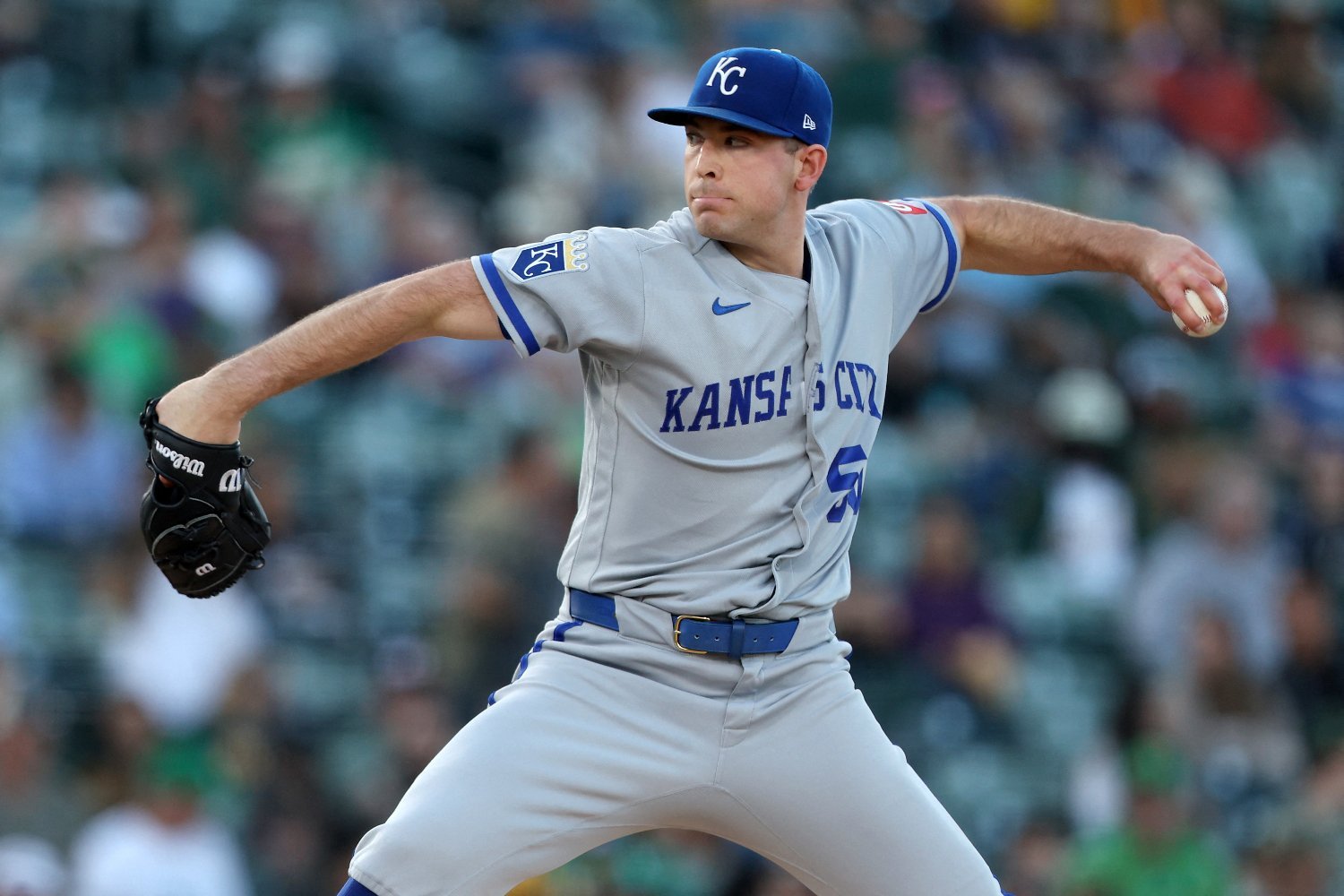 In USA Today's Bob Nightengale's latest Sunday Notebook, he reported that the Kansas City Royals aren't ready to become sellers on the trade market just yet. Still, they have been receiving some interest from the Sacramento Athletics in Kris Bubic, which could be an intriguing situation with Bubic set to hit free agency next offseason. Here's what Nightengale said about the Royals (and Minnesota Twins) regarding their decision to be sellers or buyers at the Trade Deadline, even though they have a losing record. However, in his bullet-point list of rumors around the league, he noted that the Sacramento Athletics are interested in acquiring Bubic. An All-Star a year ago, the 28-year-old has seen some regression this year. In 50.1 IP, he has a 4.11 ERA, 1.23 WHIP, 3.77 FIP, and 12.1% K-BB%. According to TJ Stuff+ summary data, his zone rate and xwOBACON have been slightly below average this season. However, his TJ Stuff+, chase, and whiff rates have all been above average, which explains the buzz he's getting on the trade market. The A's are currently 30-34, having regressed hard after a strong start to the season. Their rotation has been an Achilles' heel for the club, as they rank 27th in starter ERA and 28th in starter WHIP. In terms of what they have in the rotation currently, rookie J.T. Ginn has been phenomenal (2.74 ERA in 65.2 IP), and Jeffrey Springs has been serviceable (4.37 ERA in 70 IP). They also have a promising arm in Gage Jump, who's seen as a Top-100 prospect by multiple outlets. Other than that, however, the starting pitching staff has been thin, especially with veterans Aaron Civale and Luis Severino on the IL. The Athletics rank 26th in K-BB% with a 10.1% mark, so Bubic would boost this rotation immediately. Furthermore, the former Stanford product grew up in Northern California, so he would likely welcome a move to Sacramento, despite the hitter-friendly home ballpark. MLB Pipeline ranked the A's 18th in its Farm System rankings, and they have intriguing top-100 prospects like Jump, pitcher Jamie Arnold, and shortstop Leo De Vries. While it's unlikely that the A's would want to deal a Top-100 prospect for Bubic, this is an A's team that hasn't made the postseason since 2020, during the shortened COVID season. Bubic has been on the 15-Day IL since May 18th due to left elbow soreness. According to a June 4th report by MLB.com Royals beat writer Anne Rogers, Bubic is on a regular bullpen schedule. No timetable has been released on Bubic's rehab schedule or probable return to the Kansas City rotation. View the full article
 -
 Let's take a look at everything happened down on the farm on Saturday. Boston Red Sox Affiliate Recap Triple-A Worcester Red Sox Series vs. Buffalo Bisons (Toronto Blue Jays): 4-1 Season Record: 31-28 Worcester won for the third straight night behind a big sixth inning. Eduardo Rivera was almost perfect in his two-inning starting effort. He allowed one baserunner on a walk and struck out two more as he lowered his ERA to 3.04. Garrett Whitlock made a one-inning rehab stint next, allowing a hit and two walks as he began to work back to his big league return. Things began to unravel for the WooSox as Noah Song entered the game. Song allowed two runs on five hits across two innings, but prevented any further damage. Jacob Webb took the next two innings, allowing one more run on one hit as he K’d three. Webb earned the win despite getting a blown save. Angel Bastardo closed the game with a two-inning appearance. He allowed one more run but sealed the game with his efforts. The WooSox momentum carried over from Friday’s offensive success to Saturday. Allan Castro and Tyler McDonough led the team with two RBIs apiece. McDonough has been on fire recently and he bumped his batting average up to .375 on Saturday with a 1-for-2 performance. It was Matt Thaiss who opened up the scoring for Worcester, doubling in the second and driving in Tsung-Che Cheng. Thaiss then crossed home on a Vinny Capra double later in the first frame. Despite his success in getting on base, McDonough isn’t known for his power stroke. However, in the second inning, he hit his first homer of the year, adding to the lead. With the game tied in the sixth, the WooSox poured on four runs to put the game out of reach. Castro doubled to left field, scoring Thaiss and Capra. Capra was then driven home on a sac fly from McDonough. Braiden Ward joined the party with a soft single to left, advancing to second as he drove in Nathan Hickey. Double-A Portland Sea Dogs Series vs. Hartford Yard Goats (Colorado Rockies): 2-3 Season Record: 28-27 Portland fell 10-8 behind shaky pitching despite five RBIs from Ahbram Liendo Despite a solid start to the season, Jedixson Paez has run into trouble as of late. The recent struggles continued on Saturday, though he showed signs of improvement. Over 3 ⅔ frames of work, Paez allowed three hits and two runs. However, he didn’t allow a walk and struck out five batters. The Sea Dogs staff really fell apart when Caleb Bolden took the mound in the fourth. Over the next one and ⅔ innings Bolden allowed five runs on four hits before Erik Rivera took over. Rivera couldn’t keep the Yard Goats in check, letting up another three runs (one unearned) on three hits before turning the ball over to Cade Feeney. Feeney put together the best outing for Portland’s staff, allowing two more hits as he finished the game. After driving in four runs during Friday’s contest, Liendo’s hot streak continued as he drove in five more on Saturday. With the bases loaded in the second, Liendo hit a high fly ball to shallow center field that dropped in. He turned a routine pop-out into a double as the ball got behind the center fielder, racing around first and getting into second with ease. Facing a seven-run deficit in the sixth, Liendo struck again. He drove in Nelly Taylor on a sac fly and advanced Miguel Bleis to third. Bleis scored later in the inning on a sac fly from Marvin Alcantara that cut the lead to five. Liendo struck yet again in the eighth, driving in Bleis on an RBI single. Caden Rose, who advanced to third on the single, scored on a pickoff attempt as Portland slowly closed the gap. Nate Baez then drove Liendo in on a single as the Sea Dogs brought themselves within two. It wasn’t enough, however, as the offense stalled in the ninth. High-A Greenville Drive Series @ Rome Emperors (Atlanta Braves): 2-3 Season Record: 22-32 Greenville got back into the win column behind another dominant outing from Kyson Witherspoon. Witherspoon earned the first win of his professional career as he continued to build back from a disappointing start to the season. Over 5 ⅓ innings, the longest start of his career so far, Witherspoon allowed four hits and just one run. He sent six batters back to the dugout on strikes as he again showed flashes of his high upside. P.J. Labriola took the next two innings, allowing one more run and striking out three more before turning the ball over to Matt McShane. McShane closed out the final inning and change, allowing two more runs on four hits. He struck out three as he sealed the win for the Drive. Three players had multi-hit games for the Drive’s offense as they wreaked havoc on the basepaths. In the third inning, Jack Winnay hit his tenth homer of the season to tie the game 1-1. Not to be outdone, Mason White then stepped to the plate and hit his tenth of the year as the pair went back-to-back. In the fourth, Luke Heyman drove in Yoeilin Cespedes on a double play. In the seventh, Isaiah Jackson stole third and advanced home on a throwing error as Winnay advanced to second. Ronny Hernandez then joined the home run party, hitting his fourth of the year and establishing a five-run lead. To add some cushion, Enddy Azocar drove in White on a single to bring the final score to 7-4. Low-A Salem RidgeYaks Series @ Wilson War Birds (Milwaukee Brewers): 1-4 Season Record: 24-32 Salem’s struggles continued on Saturday as they struggled to convert ten hits into runs. Jacob Mayers put together another impressive stat line as he sports a 2.51 season ERA. Over three and ⅔ innings, Mayers allowed two runs on as many hits, striking out six. Christian Foutch took over next, throwing 2 ⅔ innings of no-hit ball. He allowed four walks however, but he struck out three. Nicolas De La Cruz took the mound in the seventh and posted an identical stat line to Foutch, four walks and three strikeouts while allowing no hits. Drew Allmer looked to play the hero as Salem’s offense took the lead in the tenth. However, Allmer fell short. He allowed two singles as Wilson walked it off in the tenth. Andruw Musett recorded the first three-hit game of his season as three others had multiple hits. However, the RidgeYaks fell short when it came time to drive runs in, going 2-for-12 with runners in scoring position and stranding nine. Musett put Salem on the board with an RBI single in the first inning. He followed that up with another single, this one to tie the game in the eighth inning. He scored Andrews Opata both times. In the tenth, Stanley Tucker grabbed the lead with a sac fly that scored Starlyn Nunez. Despite the RidgeYaks finding some late life, it wasn’t enough to avoid defeat. View the full article
 -
 Chicago Cubs Transactions Chicago Cubs signed free agent RHP Andrew Wantz to a minor league contract. Chicago Cubs recalled RHP Javier Assad from Iowa Cubs. Chicago Cubs optioned RHP Ethan Roberts to Iowa Cubs. Iowa Breaks Through With Four-Run Third To Top Toledo The Iowa Cubs scored seven runs on 10 hits to beat the Toledo Mud Hens, 7-5. The game was tied 3-3 entering the bottom of the third, when Iowa took control. Ben Cowles singled home James Triantos, Justin Dean doubled to score Ben Cowles and Scott Kingery. Brett Bateman followed with a double that brought in Dean, putting Iowa ahead 7-3. Bateman finished 3-for-4 with a run and an RBI, Triantos went 2-for-3 with two RBI, and Dean went 2-for-3 with two runs and two RBI. Matthew Boyd took the start and worked five innings, allowing seven hits and five runs, all earned, including three home runs, while walking one and striking out five. Tyler Ferguson followed with two scoreless innings, allowing two hits, walking none, and striking out three. Iowa left four runners on base. Player AB R H RBI BB K Brett Bateman 4 1 3 1 0 1 Matt Shaw 3 1 1 1 1 1 BJ Murray 3 0 0 0 0 0 Owen Miller 3 0 0 0 0 1 James Triantos 3 1 2 2 0 0 Christian Bethancourt 3 0 0 0 0 0 Ben Cowles 3 1 1 1 0 1 Scott Kingery 3 1 1 0 0 0 Justin Dean 3 2 2 2 0 1 Player IP H R ER BB K HR Matthew Boyd 5 7 5 5 1 5 3 Tyler Ferguson 2 2 0 0 0 3 0 Jefferson Rojas And Knoxville Pour It On In 14-Run Night The Knoxville Smokies scored 14 runs on 15 hits to defeat the Birmingham Barons, 14-5. After Knoxville trailed early, the bottom of the fifth turned the game into a rout as the Smokies plated eight runs. Carter Trice homered to score Andy Garriola, Alex Ramirez walked with the bases loaded to push home a run, Jefferson Rojas added a sacrifice fly, and Andy Garriola capped the inning with a three-run home run, making it 12-5. Rojas finished 3-for-3 with two home runs, three runs, and three RBI, Garriola went 2-for-5 with three RBI, and Ariel Armas collected four hits. Tyler Schlaffer took the start and pitched four innings, allowing seven hits and five runs, all earned, while walking three and striking out seven. Jace Beck followed with three scoreless innings, walking two and striking out three, and Tyler Ras added two scoreless innings with two strikeouts. Knoxville left seven runners on base. Player AB R H RBI BB K Alex Ramírez 3 1 0 2 1 2 Jefferson Rojas 3 3 3 3 1 0 Owen Ayers 4 2 3 2 1 0 Andy Garriola 5 2 2 3 0 0 Carter Trice 3 1 1 2 1 1 Devin Ortiz 1 0 0 0 0 1 Edgar Alvarez 4 1 1 1 1 0 Karson Simas 4 2 1 0 1 2 Ariel Armas 5 1 4 0 0 0 Hayden Cantrelle 4 1 0 0 1 2 Player IP H R ER BB K HR Tyler Schlaffer 4 7 5 5 3 7 0 Jace Beck 3 0 0 0 2 3 0 Tyler Ras 2 0 0 0 0 2 0 South Bend Launches Four Homers In 13-2 Romp The South Bend Cubs scored 13 runs on 12 hits to beat the Quad Cities River Bandits, 13-2. South Bend blew the game open in the top of the fourth with three home runs. Christian Olivo homered to score Drew Bowser, Josiah Hartshorn followed with a solo home run, and Miguel Useche added a two-run home run to make it 8-0. The Cubs tacked on three more in the seventh, when Drew Bowser walked with the bases loaded, a run scored on a double play, and Kane Kepley singled home another. Hartshorn finished 3-for-5 with a home run and three RBI. Useche homered and drove in two, and Bowser went 2-for-4 with a double. Will Sanders took the start and worked four scoreless innings, allowing two hits, walking three, and striking out three. JP Wheat added a scoreless inning, and Koen Moreno pitched four innings, allowing six hits and two runs, both earned, with one home run and six strikeouts. South Bend left 11 runners on base. Player AB R H RBI BB K Kane Kepley 4 2 1 1 2 0 Ty Southisene 5 2 2 0 1 0 Josiah Hartshorn 5 1 3 3 0 1 Cole Mathis 5 2 1 2 1 0 Miguel Useche 3 2 1 2 2 1 Alex Madera 5 1 0 0 1 1 Justin Stransky 4 1 1 1 0 0 Drew Bowser 4 1 2 1 1 0 Christian Olivo 4 1 1 2 0 0 Player IP H R ER BB K HR Will Sanders 4 2 0 0 3 3 0 JP Wheat 1 2 0 0 0 0 0 Koen Moreno 4 6 2 2 0 6 1 Myrtle Beach Bats Go Quiet In 4-2 Loss At Charleston The Myrtle Beach Pelicans managed just two hits and fell to the Charleston RiverDogs, 4-2. The Pelicans trailed 2-0 before mounting their only offense in the top of the sixth. Alexis Hernandez singled home Edward Vargas, and Eli Lovich grounded out to bring in Darlyn De Leon, tying the game at 2-2. Charleston pulled away with two runs in the bottom of the eighth. Hernandez and Darlyn De Leon accounted for the only two hits, and De Leon also drew a walk. Dominick Reid took the start and pitched five innings, allowing five hits and two runs, both earned, while walking one and striking out one. Edwardo Melendez followed with three innings, allowing one hit and two runs, both earned, with one walk and one strikeout. Myrtle Beach left four runners on base. Player AB R H RBI BB K Alexis Hernandez 4 0 1 1 0 0 Eli Lovich 4 0 0 1 0 2 Logan Poteet 4 0 0 0 0 2 Michael Carico 2 0 0 0 2 1 Derniche Valdez 4 0 0 0 0 0 Yahil Melendez 4 0 0 0 0 3 Geuri Lubo 3 0 0 0 0 1 Edward Vargas 2 1 0 0 1 1 Darlyn De Leon 2 1 1 0 1 0 Player IP H R ER BB K HR Dominick Reid 5 5 2 2 1 1 0 Edwardo Melendez 3 1 2 2 1 1 0 Top-20 Prospect Performance Jefferson Rojas: 3-for-3, 1 2B, 2 HR, 3 RBI, 1 BB Jaxon Wiggins: DNP Pedro Ramirez: DNP Kevin Alcantara: DNP Josiah Hartshorn: 3-for-5, 1 2B, 1 HR, 3 RBI, 1 K Ethan Conrad: DNP Kane Kepley: 1-for-4, 1 RBI, 2 BB Jonathon Long: DNP James Triantos: 2-for-3, 1 2B, 2 RBI Cole Mathis: 1-for-5, 2 RBI, 1 BB Owen Ayers: 3-for-4, 1 2B, 1 HR, 2 RBI, 1 BB Brooks Caple: DNP Juan Cabada: DNP Kaleb Wing: DNP Angel Cepeda: DNP Dominick Reid: 5 IP, 5 H, 2 R, 2 ER, 1 BB, 1 K Jostin Florentino: DNP Ty Southisene: 2-for-5, 1 BB Will Sanders: 4 IP, 2 H, 0 R, 0 ER, 3 BB, 3 K Brandon Birdsell: DNP View the full article
 -
 Let's take a look at everything happened down on the farm on Saturday. Boston Red Sox Affiliate Recap Triple-A Worcester Red Sox Series vs. Buffalo Bisons (Toronto Blue Jays): 4-1 Season Record: 31-28 Worcester won for the third straight night behind a big sixth inning. Eduardo Rivera was almost perfect in his two-inning starting effort. He allowed one baserunner on a walk and struck out two more as he lowered his ERA to 3.04. Garrett Whitlock made a one-inning rehab stint next, allowing a hit and two walks as he began to work back to his big league return. Things began to unravel for the WooSox as Noah Song entered the game. Song allowed two runs on five hits across two innings, but prevented any further damage. Jacob Webb took the next two innings, allowing one more run on one hit as he K’d three. Webb earned the win despite getting a blown save. Angel Bastardo closed the game with a two-inning appearance. He allowed one more run but sealed the game with his efforts. The WooSox momentum carried over from Friday’s offensive success to Saturday. Allan Castro and Tyler McDonough led the team with two RBIs apiece. McDonough has been on fire recently and he bumped his batting average up to .375 on Saturday with a 1-for-2 performance. It was Matt Thaiss who opened up the scoring for Worcester, doubling in the second and driving in Tsung-Che Cheng. Thaiss then crossed home on a Vinny Capra double later in the first frame. Despite his success in getting on base, McDonough isn’t known for his power stroke. However, in the second inning, he hit his first homer of the year, adding to the lead. With the game tied in the sixth, the WooSox poured on four runs to put the game out of reach. Castro doubled to left field, scoring Thaiss and Capra. Capra was then driven home on a sac fly from McDonough. Braiden Ward joined the party with a soft single to left, advancing to second as he drove in Nathan Hickey. Double-A Portland Sea Dogs Series vs. Hartford Yard Goats (Colorado Rockies): 2-3 Season Record: 28-27 Portland fell 10-8 behind shaky pitching despite five RBIs from Ahbram Liendo Despite a solid start to the season, Jedixson Paez has run into trouble as of late. The recent struggles continued on Saturday, though he showed signs of improvement. Over 3 ⅔ frames of work, Paez allowed three hits and two runs. However, he didn’t allow a walk and struck out five batters. The Sea Dogs staff really fell apart when Caleb Bolden took the mound in the fourth. Over the next one and ⅔ innings Bolden allowed five runs on four hits before Erik Rivera took over. Rivera couldn’t keep the Yard Goats in check, letting up another three runs (one unearned) on three hits before turning the ball over to Cade Feeney. Feeney put together the best outing for Portland’s staff, allowing two more hits as he finished the game. After driving in four runs during Friday’s contest, Liendo’s hot streak continued as he drove in five more on Saturday. With the bases loaded in the second, Liendo hit a high fly ball to shallow center field that dropped in. He turned a routine pop-out into a double as the ball got behind the center fielder, racing around first and getting into second with ease. Facing a seven-run deficit in the sixth, Liendo struck again. He drove in Nelly Taylor on a sac fly and advanced Miguel Bleis to third. Bleis scored later in the inning on a sac fly from Marvin Alcantara that cut the lead to five. Liendo struck yet again in the eighth, driving in Bleis on an RBI single. Caden Rose, who advanced to third on the single, scored on a pickoff attempt as Portland slowly closed the gap. Nate Baez then drove Liendo in on a single as the Sea Dogs brought themselves within two. It wasn’t enough, however, as the offense stalled in the ninth. High-A Greenville Drive Series @ Rome Emperors (Atlanta Braves): 2-3 Season Record: 22-32 Greenville got back into the win column behind another dominant outing from Kyson Witherspoon. Witherspoon earned the first win of his professional career as he continued to build back from a disappointing start to the season. Over 5 ⅓ innings, the longest start of his career so far, Witherspoon allowed four hits and just one run. He sent six batters back to the dugout on strikes as he again showed flashes of his high upside. P.J. Labriola took the next two innings, allowing one more run and striking out three more before turning the ball over to Matt McShane. McShane closed out the final inning and change, allowing two more runs on four hits. He struck out three as he sealed the win for the Drive. Three players had multi-hit games for the Drive’s offense as they wreaked havoc on the basepaths. In the third inning, Jack Winnay hit his tenth homer of the season to tie the game 1-1. Not to be outdone, Mason White then stepped to the plate and hit his tenth of the year as the pair went back-to-back. In the fourth, Luke Heyman drove in Yoeilin Cespedes on a double play. In the seventh, Isaiah Jackson stole third and advanced home on a throwing error as Winnay advanced to second. Ronny Hernandez then joined the home run party, hitting his fourth of the year and establishing a five-run lead. To add some cushion, Enddy Azocar drove in White on a single to bring the final score to 7-4. Low-A Salem RidgeYaks Series @ Wilson War Birds (Milwaukee Brewers): 1-4 Season Record: 24-32 Salem’s struggles continued on Saturday as they struggled to convert ten hits into runs. Jacob Mayers put together another impressive stat line as he sports a 2.51 season ERA. Over three and ⅔ innings, Mayers allowed two runs on as many hits, striking out six. Christian Foutch took over next, throwing 2 ⅔ innings of no-hit ball. He allowed four walks however, but he struck out three. Nicolas De La Cruz took the mound in the seventh and posted an identical stat line to Foutch, four walks and three strikeouts while allowing no hits. Drew Allmer looked to play the hero as Salem’s offense took the lead in the tenth. However, Allmer fell short. He allowed two singles as Wilson walked it off in the tenth. Andruw Musett recorded the first three-hit game of his season as three others had multiple hits. However, the RidgeYaks fell short when it came time to drive runs in, going 2-for-12 with runners in scoring position and stranding nine. Musett put Salem on the board with an RBI single in the first inning. He followed that up with another single, this one to tie the game in the eighth inning. He scored Andrews Opata both times. In the tenth, Stanley Tucker grabbed the lead with a sac fly that scored Starlyn Nunez. Despite the RidgeYaks finding some late life, it wasn’t enough to avoid defeat. View the full article
 -
 Columbia overcame an early deficit for a 6-3 victory behind Roni Cabrera and Michael Lombardi, while Frank Mozzicato fired 4 2/3 scoreless innings before Northwest Arkansas was suspended with the Naturals leading 1-0. Omaha dropped a 3-2 decision on a late home run despite Kevin Newman's two hits, and Quad Cities was overwhelmed 13-2 as Erick Torres and Angel Acosta each collected three hits in the loss. Royals Transactions No Roster Moves Newman's Two Hits Not Enough As Omaha Drops 3-2 Decision The Omaha Storm Chasers fell 3-2 to the Columbus Clippers despite a strong relief effort from the bullpen. Newman led the offense with two hits, including a double, and an RBI, and Peyton Wilson added two hits and a run batted in. Drew Waters reached base twice with a hit and a walk and scored a run. Omaha trailed 1-0 entering the fifth, when Newman doubled to right field to score Abraham Toro and tie the game. The Storm Chasers took the lead in the seventh, as Wilson singled to center to bring home Waters for a 2-1 advantage. The lead did not hold. In the bottom of the seventh, Columbus answered with a two-run home run to left center that scored the go-ahead and winning runs. Oscar Rayo turned in the most effective outing on the mound, working 2 1/3 scoreless innings while allowing one hit, walking one, and striking out four. Ben Sears opened the game with two innings, surrendering one run on two hits with one walk and three strikeouts. Eric Cerantola allowed two runs on one hit in the seventh, including the decisive home run. Omaha left five runners on base and went 3-for-7 with runners in scoring position. Player AB R H RBI BB K Peyton Wilson 4 0 2 1 0 1 Matthew Lugo 2 0 0 0 1 1 Kameron Misner 3 0 1 0 0 1 Luca Tresh 3 0 0 0 0 2 Brett Squires 3 0 0 0 0 2 Abraham Toro 3 1 1 0 0 2 Drew Waters 2 1 1 0 1 0 Luke Maile 3 0 1 0 0 2 Kevin Newman 3 0 2 1 0 0 Player IP H R ER BB K HR Ben Sears 2 2 1 1 1 3 0 Oscar Rayo 2 1/3 1 0 0 1 4 0 Luke Jackson 1 2/3 0 0 0 0 1 0 Eric Cerantola 1/3 1 2 2 1 0 1 Mozzicato Tosses Scoreless Innings As Naturals Lead 1-0 In Suspended Game The Northwest Arkansas Naturals led the Midland RockHounds 1-0 when the game was suspended after 4 1/2 innings. It will continue on Sunday afternoon, with Sunday's scheduled game starting 35 minutes after the suspended game is completed. The offense managed just two hits to that point, but it was enough for the lead. Jack Pineda doubled and drew a walk, and Daniel Vazquez added a single. Sam Kulasingam reached base twice on a walk and scored the game's only run. The lone run came in the fourth inning. Kulasingam came around to score on a sacrifice fly to center field off the bat of Spencer Nivens, who picked up the run batted in to put the Naturals ahead 1-0. Mozzicato kept Midland off the board, allowing just one hit over 4 2/3 innings before the stoppage. He walked six and struck out four while working around traffic. The former first-round pick also showed some excellent defense with a diving play made on a failed bunt right before the rain delay hit. Northwest Arkansas left two runners on base and went 0-for-2 with runners in scoring position. The Naturals are hoping to close out the game on Sunday and collect their 25th win of the season. Player AB R H RBI BB K Carson Roccaforte 2 0 0 0 0 1 Jack Pineda 1 0 1 0 1 0 Sam Kulasingam 1 1 0 0 1 1 Spencer Nivens 1 0 0 1 0 1 Daniel Vazquez 2 0 1 0 0 0 Omar Hernandez 2 0 0 0 0 0 Rudy Martin Jr. 1 0 0 0 0 0 Connor Scott 1 0 0 0 0 1 Alberto Rodriguez 1 0 0 0 0 1 Player IP H R ER BB K HR Frank Mozzicato 4 2/3 1 0 0 6 4 0 Torres And Acosta Collect Three Hits Each As River Bandits Fall 13-2 The Quad Cities River Bandits were beaten 13-2 by the South Bend Cubs. Torres and Acosta each tallied three hits to pace the offense, and Derlin Figueroa supplied both Quad Cities runs with a home run. Ramon Ramirez added a hit and scored a run, and Blake Mitchell drew two walks. South Bend built the game open in the fourth inning, plating four runs on a pair of home runs and a two-run shot to push the lead to 8-0. The visitors continued to add on, scoring three more in the seventh and another in the eighth. Quad Cities finally got on the board in the eighth when Figueroa homered to right field to score Ramirez and cut the deficit to 12-2. Blake Wolters struggled in his start, allowing eight runs, all earned, on eight hits over 3 2/3 innings. He walked four, struck out three, and surrendered three home runs. Nick Conte provided the lone bright spot from the staff, retiring all his batters over 2 1/3 scoreless innings. The River Bandits left nine runners on base and went 0-for-10 with runners in scoring position. Quad Cities will be looking to salvage the series on Sunday, hoping to win their 25th game of the year against the division-leading Cubs. Player AB R H RBI BB K Asbel Gonzalez 5 0 1 0 0 2 Blake Mitchell 3 0 0 0 2 1 Ramon Ramirez 4 1 1 0 0 0 Luke Pelzer 3 0 1 0 1 1 Derlin Figueroa 4 1 1 2 0 1 Jose Cerice 4 0 0 0 0 1 Tyriq Kemp 4 0 0 0 0 2 Erick Torres 4 0 3 0 0 1 Angel Acosta 4 0 3 0 0 0 Player IP H R ER BB K HR Blake Wolters 3 2/3 8 8 8 4 3 3 Nick Conte 2 1/3 0 0 0 0 0 0 Ryan Ure 1 1 3 3 2 0 0 Mason Miller 1 1/3 2 2 2 2 0 0 Diego Guzman 0 2/3 1 0 0 0 0 0 Cabrera Drives In Two As Fireflies Rally Past Fayetteville 6-3 The Columbia Fireflies rallied from an early deficit to defeat the Fayetteville Woodpeckers 6-3. Cabrera led the way with two hits and two runs batted in, and Henry Ramos drove in two runs. Yandel Ricardo and Jhosmmel Zue each added two hits, and Zue scored a run. Trailing 3-1 in the sixth inning, Columbia took control. Cabrera singled to right to score JC Vanek and bring the Fireflies within one, and Ramos followed with a single to center that scored Connor Rasmussen and Cabrera, putting Columbia ahead 4-3. The Fireflies tacked on two more in the seventh, as Hyungchan Um walked with the bases loaded to force in Ricardo, and Vanek delivered a sacrifice fly to score Zue for the 6-3 final. The Fireflies also got some solid defense in the win, highlighted by some sensational glovework by 2025 first-round pick Sean Gamble. Lombardi started and allowed three runs, all earned, on three hits over four innings, walking four and striking out five with one home run allowed. The bullpen slammed the door as Dash Albus, Hunter Alberini, Brandon Herbold, and Jhon Reyes combined for five scoreless innings. Columbia left eight runners on base and went 3-for-11 with runners in scoring position. Columbia now has 26 wins for the season and will look to earn win No. 27 on Sunday. Player AB R H RBI BB K Henry Ramos 5 0 1 2 0 2 Josh Hammond 5 0 0 0 0 3 Yandel Ricardo 5 1 2 0 0 1 Jhosmmel Zue 4 1 2 0 1 0 Sean Gamble 4 0 0 0 0 1 Hyungchan Um 3 1 1 1 1 0 JC Vanek 3 1 0 1 0 1 Connor Rasmussen 4 1 1 0 0 0 Roni Cabrera 4 1 2 2 0 0 Player IP H R ER BB K HR Michael Lombardi 4 3 3 3 4 5 1 Dash Albus 1 1/3 1 0 0 0 1 0 Hunter Alberini 2 1 0 0 0 2 0 Brandon Herbold 0 2/3 0 0 0 0 1 0 Jhon Reyes 1 1 0 0 0 2 0 Top-20 Prospect Performance Kendry Chourio: DNP David Shields: DNP Sean Gamble: 0-for-4, 1 K Blake Mitchell: 0-for-3, 2 BB, 1 K Josh Hammond: 0-for-5, 3 K Ramon Ramirez: 1-for-4, R Drew Beam: DNP Asbel Gonzalez: 1-for-5, 2 K Ben Kudrna: DNP Carson Roccaforte: 0-for-2, 1 K Yandel Ricardo: 2-for-5, R, 1 K Felix Arronde: DNP Blake Wolters: 3 2/3 IP, 8 H, 8 R, 8 ER, 4 BB, 3 K, 3 HR Michael Lombardi: 4 IP, 3 H, 3 R, 3 ER, 4 BB, 5 K, 1 HR Luinder Avila: DNP Steven Zobac: DNP Frank Mozzicato: 4 2/3 IP, 1 H, 0 R, 0 ER, 6 BB, 4 K Daniel Vazquez: 1-for-2 Warren Colcano: DNP Shane Panzini: DNP View the full article
