


DiamondCentric
-
Posts
2,631 -
Joined
-
Last visited
Never
Content Type
Profiles
Forums
Events
News
Tutorials & Help
Major League Baseball Videos
Guides & Resources
Store
Downloads
Gallery
Everything posted by DiamondCentric
-

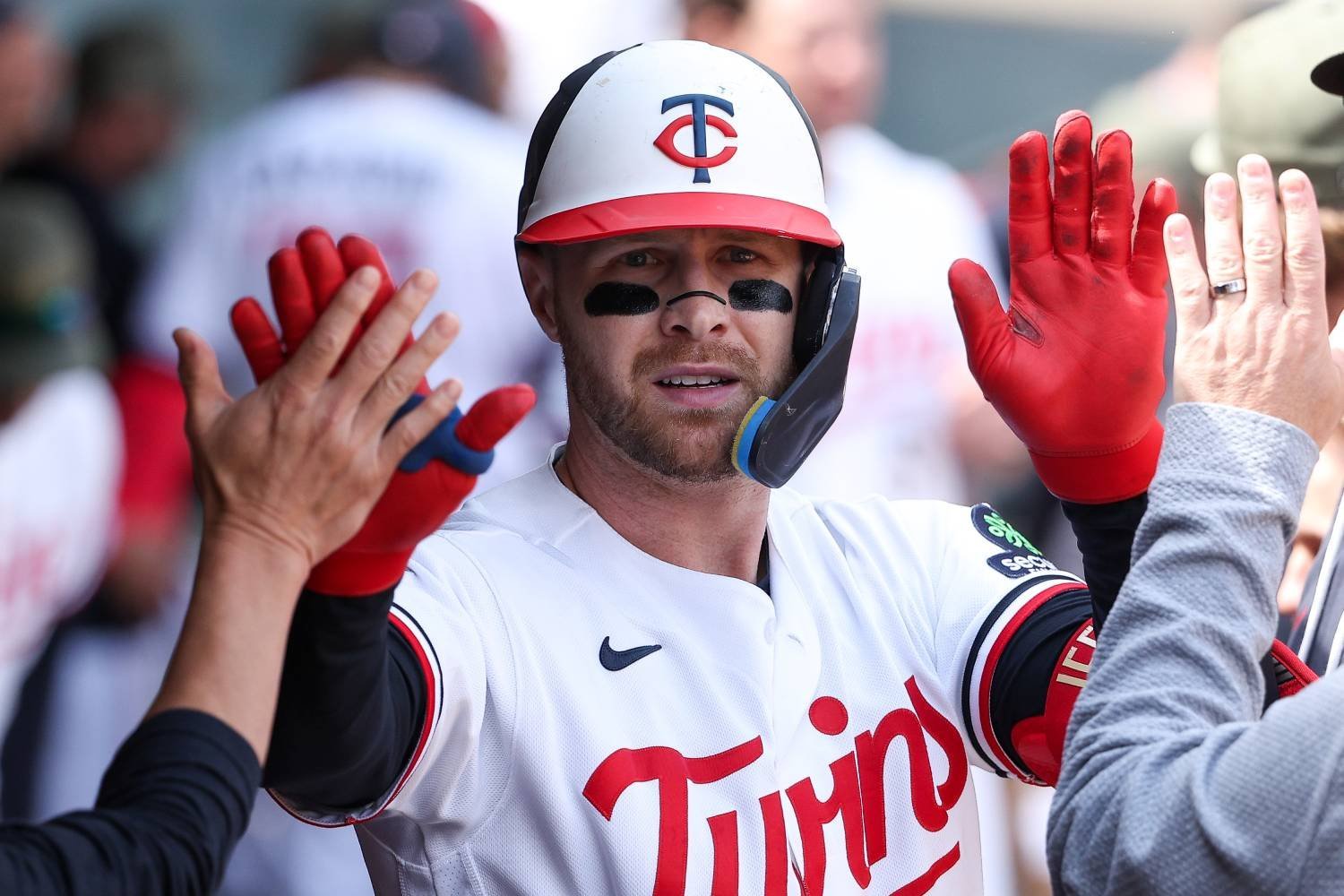 In addition to the major news of former first-round pick Royce Lewis being sent to Triple-A St. Paul, the Minnesota Twins made more than a handful of other moves Tuesday ahead of the second game of the series against the Houston Astros. The most noteworthy of those moves is catcher Ryan Jeffers going on the 10-day injured list with a broken left hamate bone, which could sideline him anywhere from one to two months. Here is the complete list of moves: Optioned third baseman Royce Lewis to the Triple-A St. Paul Saints. Placed catcher Ryan Jeffers on the 10-day injured list with a left hamate bone fracture. Designated right-handed reliever Justin Topa for assignment. Selected the contract of catcher Alex Jackson from the Triple-A St. Paul Saints. Selected the contract of shortstop Orlando Arcia from the Triple-A St. Paul Saints. Recalled right-handed reliever Travis Adams from the Triple-A St. Paul Saints. Transferred right-handed reliever Garrett Acton (strained right shoulder) from the 15-day injured list to the 60-day injured list. In other words, Lewis, Jeffers and Topa off the Twins' 26-man roster, with Arcia, Jackson and Adams now on the 26-man roster. Acton was moved to the 60-day IL to make room on the 40-man roster. There does appear to be one more 40-man move coming as FanGraphs lists the Twins with 41 players on the 40. View the full article
 -
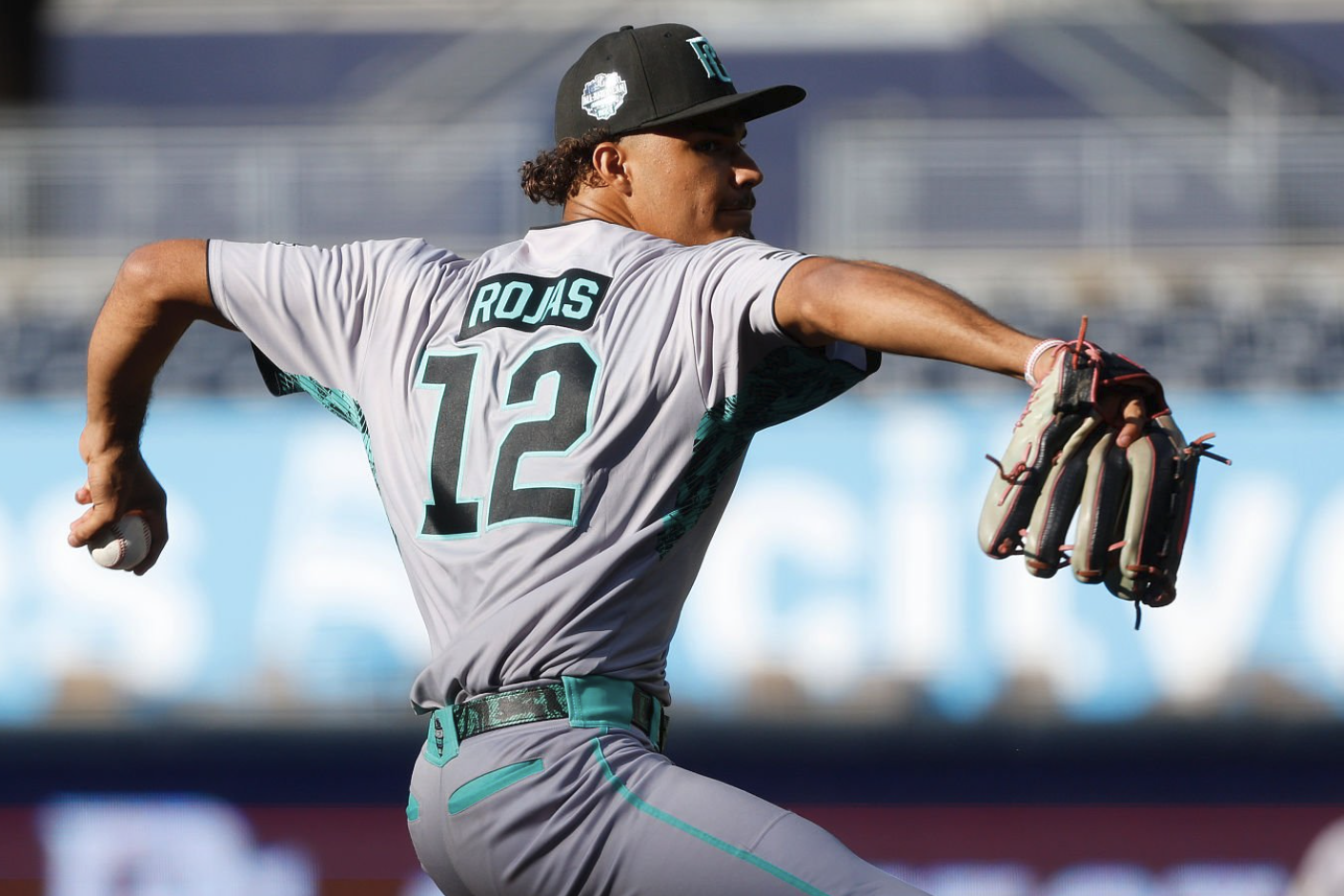 Leading up to the 2026 MLB Draft, Fish On First brings you a series of scouting reports on top prospects in this draft class who could realistically wind up in Miami. Overview Position: LHP Height: 6’4″ Weight: 190 pounds School: Marjory Stoneman Douglas HS (FL) Commitment: Miami Gio Rojas is a 6’4”, 190-pound left-handed pitcher who plays at Marjory Stoneman Douglas High School in Parkland, Florida. Rojas is one of the top pitching prospects in this draft class. He’s also considered one of the top high school prospects in the class. Rojas is signed to play college baseball at the University of Miami. Rojas comes from one of the best high school baseball factories in the country. Stoneman Douglas has produced seven MLB players, including Anthony Rizzo, Jesús Luzardo, and Roman Anthony. Rojas is expected to become the first Stoneman Douglas player to be selected in the first round of the MLB Draft. On the mound, Rojas possesses a three-pitch mix including his fastball, slider, and changeup. Rojas’s fastball sits 92-96 mph and tops out at 98 mph. His fastball has plus spin that normally ranges from 2,500 to 2,700 RPM. Rojas’s slider is his best secondary pitch, sitting in the low 80s with 2,600-2,800 RPM of spin and sweeper movement. He has a good feel for his low-80s changeup and it has proven to be effective against right-handed batters. During his senior season, Rojas helped Marjory Stoneman Douglas High secure their seventh consecutive state title. He posted an 11-1 record in thirteen starts with a 0.59 ERA, 0.70 WHIP, seventeen walks, and 124 strikeouts in 71 innings pitched. Strengths Plus fastball Good spin rate and feel on all of his pitches Pounds the strike zone Projectable body frame Frontline starter upside Weaknesses Needs to throw his changeup with more consistency Struggles to repeat his delivery Pro Comparison: Cole Ragans Projection: Top 15 pick Bottom Line Gio Rojas is a blue-chip prospect with a high floor and still has room to develop into a better pitching prospect. On MLB Pipeline, Rojas is the tenth-ranked draft prospect. He’s also the fourteenth-ranked draft prospect on ESPN. On Perfect Game, Rojas is the third-ranked prospect and the top-ranked pitcher in the Class of 2026. He’s also the second-ranked prospect in the Sunshine State, only behind Jacob Lombard. The Marlins will have the 14th overall pick in the 2026 MLB Draft. They have had mixed results historically when taking prep pitchers in the first round. Josh Beckett (1999) became a World Series hero and Trevor Rogers (2017) peaked as an All-Star, but the likes of Jeff Allison (2003), Chad James (2009) and Tyler Kolek (2014) never even reached the big leagues. Most recently, Noble Meyer (2023) has fallen short of expectations thus far. If Miami can land the hometown kid, Rojas would be an excellent addition to their farm system. More 2026 MLB draft profiles RHP Cameron Flukey OF Eric Booth Jr. 3B Ace Reese LHP Carson Bolemon RHP Jackson Flora INF Jacob Lombard OF AJ Gracia View the full article
 -
 Royce Lewis is on the struggle bus and has been for the majority of the last three seasons. Whether it's a demotion to Triple-A Saint Paul for a reset or a trade, Royce Lewis is in desperate need of a change of scenery. View the full article
 -
Anatomy Of An At-Bat: Tyrone Taylor's Game-Tying Shot
DiamondCentric posted an article in Grand Central Mets
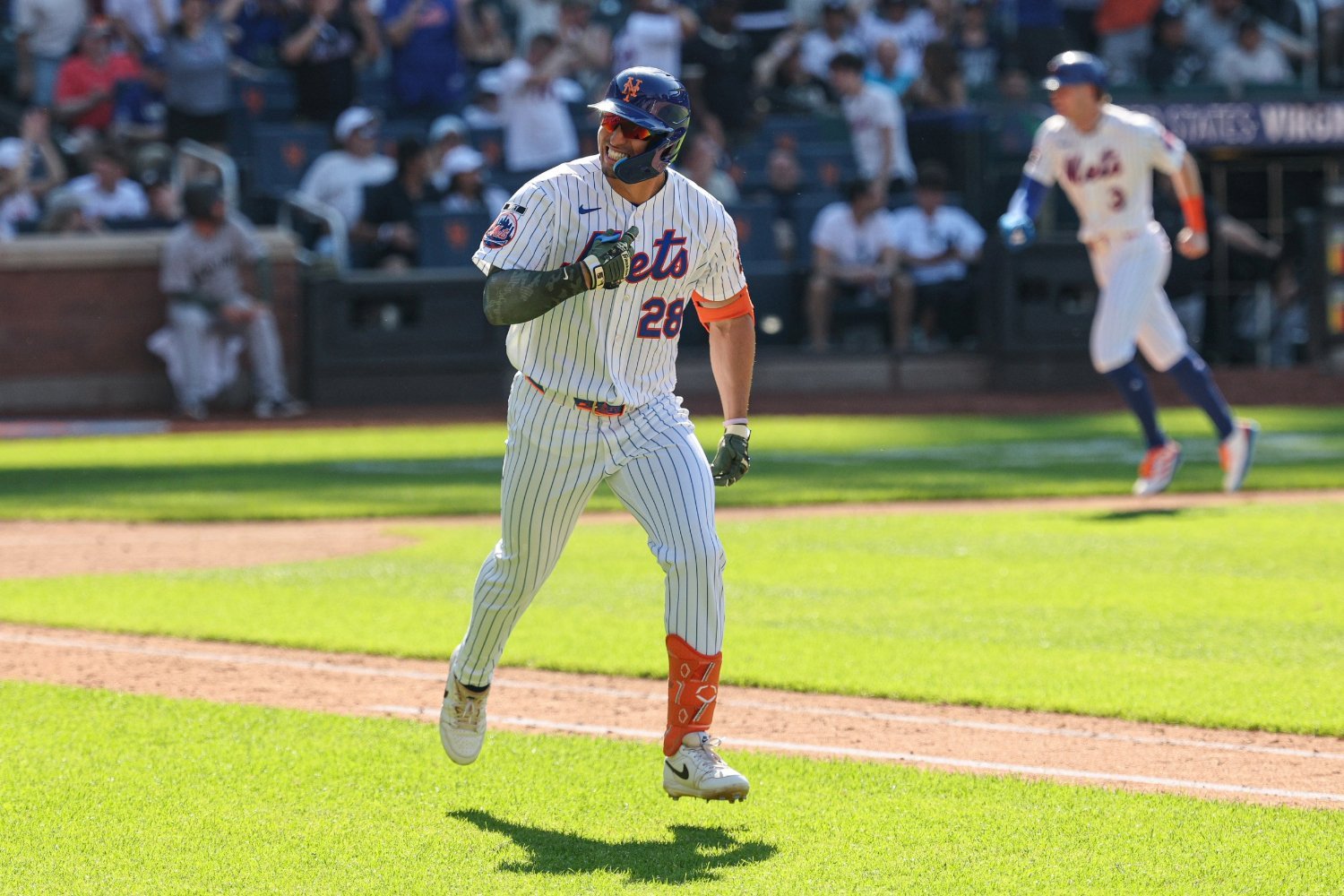 Without Tyrone Taylor and his heroic swing in the bottom of the ninth, the narrative of the game would have been one of continued defensive mishaps and disappointing at-bats with runs in scoring position. Luckily, the New York Mets don't have to live in that reality, as Taylor completely erased the New York Yankees' lead in the ninth inning of the rubber match of the Subway Series. To the naked eye, the at-bat was cut and dry; Taylor received a first-pitch curveball that deserved to be hit over the fence and then some. But there was some intuition and baseball IQ shown by Taylor before and during that at-bat that should get a lot of props. ckR3QXlfWGw0TUFRPT1fVlFSU1hWTlFYd29BRFFkWFZnQUhWVk5VQUZnTlZ3QUFCMUpXQlFWV0JWSlRDRlJm.mp4 In Taylor's at bat in the seventh inning, he hit a fastball at 104 mph straight to the left fielder Max Schuemann. Coming into his at-bat against a fastball-heavy closer in David Bednar, he knew there was a likelihood he would not get one on the first pitch. Bednar’s curveball is the pitch he uses the least and feels the least confident in. The pitch this season has a .412 batting average against. However, Bednar threw a curveball to the prior hitter Mark Vientos. So, with that knowledge, Taylor came up with a plan to anticipate on Bednar’s curveball on the first pitch and sure enough, it came. An 80 mph curveball hanging in the middle of the plate came and went 404 feet to left field. A questionable call from catcher Austin Wells to call his closer’s worst pitch in such a big moment. Taylor in one swing took a 6-3 Mets deficit to a tie game. Famously, the Mets had not won a game they were trailing after the eighth inning since 2024. Thanks to Taylor’s swing and Carson Benge’s walk off, that streak is now broken. View the full article
 -
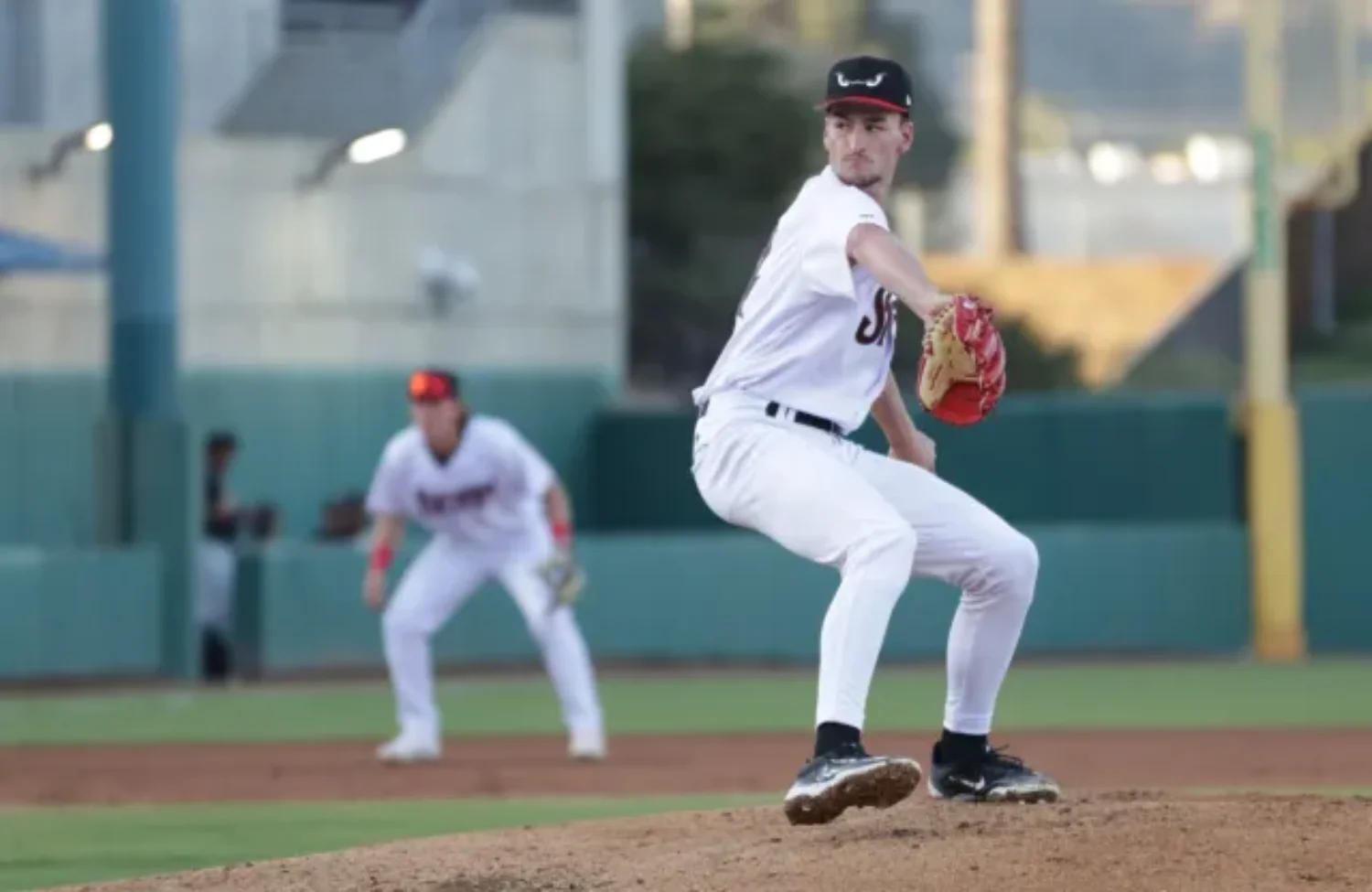 Checking in on the San Diego Padres prospects who made a mark in the last week: Kash Mayfield, LHP, High-A Fort Wayne Season stats: 3-1, 1.52 ERA, 7 games (all starts), 29⅔ IP, 9 H, 5 R, 5 ER, 1 HR, 13 BB, 35 K, Just a few months after turning 21 years old, the 2024 first-round draft choice (25th overall) out of Elk City High School in Oklahoma is seeing his star rise in the early stages of 2026. The 6-foot-4, 200-pound left-hander allowed one hit and struck out a career-high nine with no walks over five shutout innings as the Fort Wayne TinCaps beat the Cedar Rapids Kernels 12-3 Friday. He threw just 56 pitches, including 43 strikes. Mayfield hasn't allowed a run in five of his seven starts this year and currently has a 12-inning scoreless streak. If that sounds like a remarkable performance, it is. The only thing is that Mayfield has three other five-inning, one-hit outings this year, which have contributed to his 1.52 ERA, 0.74 WHIP and 0.99 opponent batting average, all of which lead the Midwest League. His latest outing earned Mayfield, Padres Mission's No. 2 prospect, the Midwest League Pitcher of the Week award. Against the Kernels, Mayfield retired the first 13 batters of the game and struck out nine of the 16 batters he faced. He also induced 16 swinging strikes. He has a 32.7% strikeout rate and 12.1% walk rate. Of his 13 walks, five came in one game. The MLB averages for both are 22.2% and 8.6%. Mayfield has also excelled at limiting contact. While his four-seamer velocity is low (91 mph range), his ability to locate the ball, along with an excellent slider and changeup, helps with the strikeout and contact success. In his seven starts, he has allowed three hits twice. In the other five, Mayfield allowed one hit in three and no hits in the other two, with both of those coming in his first two starts of the season. In his pro debut last year at Low-A Lake Elsinore, Mayfield made 19 starts and had a 2.97 ERA in 60⅔ innings. He had a 34.1% strikeout rate and 10.9% walk rate. Mayfield's domination, thanks to his ability to pitch and not just throw the ball past hitters, at High-A could lead to a quick promotion to Double-A San Antonio, where he could work with catcher Ethan Salas, Padres Mission's No. 1 prospect. Not that he isn't working with a good catcher currently (see next item). Lamar King Jr., C, High-A Fort Wayne Season stats: .278/.399/.400, 34 games, 6 2B, 1 3B, 2 HR, 14 RBI, 20 BB, 29 K, 8 SB, 1 CS The fourth-round draft pick in 2022 out of Calvert Hall College High School in Maryland has been an on-base machine. The right-handed hitter, son of former Seattle Seahawks defensive end Lamar King, currently has a 27-game on-base streak going, needing an infield single in the ninth inning Saturday to keep that streak alive. Over five games last week against the Kernels, King had three straight multi-hit games and went a combined 7-for-22 with three RBIs. While King—Padres Mission's No. 10 prospect—only drew one walk last week, he has 10 already in May after having 10 through the entire month of April, which has helped build a very nice .399 on-base percentage. After going 0-for-3 Tuesday, King went 2-for-5 in each of his next three games, scoring a run each game. He hit his first triple of the season Wednesday. His three multi-hit games last week gave him eight for the season. Since April 14, King ranks fifth in the Midwest League with a .341 batting average and 10th with a .434 OBP. King's pro debut was delayed until late 2024 by shoulder surgery. He played in 62 games between the Arizona Complex League and Low-A Lake Elsinore, putting up a .271/.379/.421 slash line with two homers and 32 RBIs. He spent 84 games back at Lake Elsinore in 2025 and was a bit better offensively, registering a slash line of .286/.370/.408 with four homers, 37 homers and 18 stolen bases. That earned him a promotion to Fort Wayne, where he appeared in 34 games with a .233/.289/.300. He didn't homer and drove in seven with three steals. That led him to a return to the TinCaps this year and he is thriving. His hit tool has developed quite a bit since being drafted, while the power has yet to follow. King has just two homers this year to go along with six doubles and that triple. He figures to stay at Fort Wayne until at least Salas is promoted to Triple-A, depending on how the Padres see his progress behind the plate. His shoulder injury has some seeing him moving to first base. Jesus Castro, RHP, Low-A Lake Elsinore Season stats: 0-1, 3.55 ERA, 6 games (all starts), 25⅓ IP, 26 H, 11 R, 10 ER, 1 HR, 10 BB, 25 K Just a few weeks shy of turning 19, the right-handed starter turned in his best performance of the season in the Storm's 4-0 shutout of the Rancho Cucamonga Quakes. Castro struck out a career-high nine while going 5⅔ innings for the second consecutive start. His nine strikeouts were two better than his previous game and one more than he had last year in a Dominican Summer League game that was his previous career best. The younger brother of another Padres pitching prospect, San Antonio Missions right-hander Manuel Castro, hasn't allowed more than three runs in any of his six starts this year and blanked the Quakes despite allowing a season-high seven hits. He also fell an out shy of matching his career high for innings (six), which he did twice last year in the DSL. While he has walked 10, four of those came in a single game. He didn't walk anyone in his previous start. Castro hasn't popped up on national top-30 lists for the Padres, but could by the end of the year if he continues these types of performances. Kerrington Cross, 1B-3B, Low-A Lake Elsinore Season stats: .288/.464/.507, 29 games, 6 2B, 2 3B, 2 HR, 16 RBI, 21 BB, 22 K, 3 SB, 0 CS Back for a second stint with the Storm after a 14-game cameo in his pro debut a year ago, the 24-year-old was the Padres' seventh-round draft choice in 2025 out of Cincinnati. He has been in the middle of a fun Storm offense and last week went 8-for-17 with three doubles, a homer and eight RBIs. He also drew six walks. His best game against the Quakes was Friday, when he came off the bench and went 2-for-2 with a two-run homer in a 14-0 victory. Cross also had the tie-breaking two-run double in Saturday's 4-2 win. The Honolulu native posted a .190/.433/.214 slash line in his brief time with Lake Elsinore last year, but that has changed in a big way this time around. He has shown an ability to get on base as he drew 14 walks last year and has 21 in 29 games this year. He spent all four years in college at Cincinnati, putting up a .396/.526/.647 slash line as a senior with 12 homers, 50 RBIs and 15 steals in 56 games and was named Big 12 Conference Player of the Year. During his career with the Bearcats, he finished third in runs scored and fourth in hits, homers and triples, while winding up fifth in RBIs. The positional versatility on the infield corners should serve him well, but he will have to continue to hit in order to keep progressing in the system. A move to the outfield, at least to increase his defensive value, isn't out of the question, either. Victor Lizarraga, RHP, Double-A San Antonio Season stats: 2-4, 6.37 ERA, 8 games (6 starts), 29⅔ IP, 29 H, 24 R, 21 ER, 3 HR, 20 BB, 24 K The 22-year-old right-hander was born in San Diego but signed with the Padres in 2021 as an international free agent out of Mexico. He climbed the system to reach Double-A San Antonio as a 20-year-old in 2024, but has stayed with the Missions each of the next two years. His 2026 got off to a rocky start as he allowed seven runs while getting just one out in his second start of the season, then followed that with six runs in 1⅓ innings. But since then, he has been much better. That includes his start Saturday against the Wichita Wind Surge in which he went six innings, allowing two runs (one earned) on six hits with no walks and a season-high eight strikeouts, just two K's shy of his career high set in 2024 with the Missions. Lizarraga has had an issue with control as shown by his 20 walks (14.8% walk rate) this year and five hit batters while not having big strikeout stuff. This start followed two appearances out of the bullpen the previous week against the Midland RockHounds in which he pitched a total of eight innings, allowing one run on six hits with three walks and three strikeouts. In his last five games, he has allowed a much-improve .225 opponent batting average (.271 for the season). Perhaps those relief outings against the RockHounds could be a sign of a better role for him down the line if his numbers as a starter don't improve. View the full article
 -
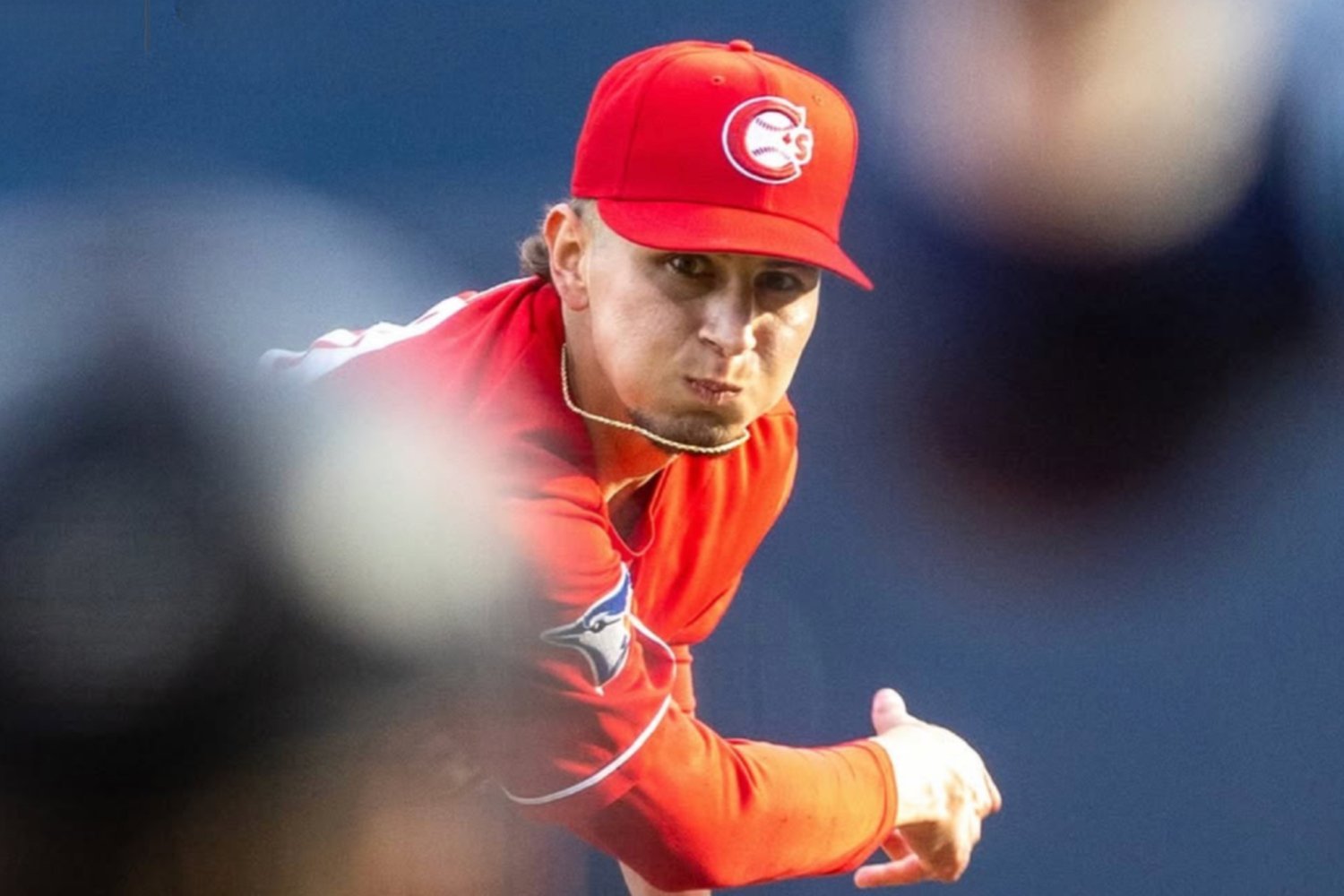 Here we are, a little more than one month into the minor league season, and we have made our first in-season update to the Jays Centre Top 20 Prospect rankings. It has been a roaring start for some and a slow crawl for others. Let's check out a few of our prospects that moved up and down the rankings, as well as a couple of new entries to the list altogether. Blue Jays Top 20 Prospects: Key Risers No. 3 Johnny King, SP - Vancouver Canadians Johnny King has been a force to be reckoned with down in High A for the Vancouver Canadians. At just 19 years old, he has been slowly ramping up his pitch count and innings over the first month of the season, but those innings have been fantastic. He currently has an ERA of 0.81 to go with a sparkling batting average against of just .130. He is not allowing many hits at all, just 10 in seven games and 22.1 innings pitched. He is still excelling with some great swing and miss numbers, striking out 35.9% of hitters, but the walks have seen a jump up to 15.2% so far this season. Fastball command may be a key factor in the walk rate rising, and it could be because his fastball now sits in the mid-to-upper 90s at times, which is a great sign for his overall stuff. He just needs to control it more frequently, which he should, with more experience. No. 10 Sean Keys, 1B/3B - New Hampshire Fisher Cats Sean Keys has taken the Double-A world by storm in the first month-plus of the season. At one point, he was the hottest and best hitter at the level, launching 10 home runs in just 36 games played, to go with a slash line of .290/.413/.581 and a wRC+ of 155. He has been getting on base, taking walks, hitting for power, and limiting the whiffs some. He has a walk rate of 12.7% and a strikeout rate of 26.0%. If he keeps going at this pace, he could see the bump up to Triple-A Buffalo sooner rather than later. No. 8 Yohendrick Piñango, OF - Buffalo Bisons/Toronto Blue Jays Yohendrick Piñango was enjoying a solid beginning to his year at Triple-A Buffalo, slashing .288/.370/.488, with three home runs, two stolen bases, and a wRC+ of 122 over 22 games. His jump in the rankings, though, largely comes from his first 16 games as a Toronto Blue Jay. He has hit .333/.373/.438, launching one home run with three walks and just six strikeouts. There may not be enough room in the Blue Jays’ outfield for playing time when everyone is healthy, but he is certainly making a case for more at-bats at the moment. Blue Jays Top 20 Prospects: Key Fallers Landen Maroudis, SP - Vancouver Canadians Landen Maroudis has actually pitched well at times this season, and his velocity has started to return to its 2024 level. Over eight games and 27.1 innings pitched, he has a 4.61 ERA and a 3.93 FIP. His walk rate is down considerably this season at 9.6%, but his strikeout rate is only 20.8%. He has been getting outs, but he needs to see his swing and miss stuff tick back up. Brandon Barriera, SP - Dunedin Blue Jays Brandon Barriera had put together a couple of good starts before the injury bug again landed him on the IL. The numbers weren't great as a whole this season (5.29 ERA, 5.43 FIP), but four of his last five games saw him give up no runs or one run. Hopefully, he returns soon and gets back in a groove on the mound. Yeuni Munoz, OF - Released Yeuni Munoz didn't play a lot of games with the Blue Jays organization due to injuries, but he did show a good ability to hit the ball hard and often. Toronto released the outfielder before the season. Blue Jays Top 20 Prospects: Newcomers No. 17 Nolan Perry, SP - Dunedin Blue Jays/Vancouver Canadians Nolan Perry began the season with Single-A Dunedin and has been making up for lost time quickly. He missed the 2025 season with Tommy John surgery, but you wouldn't know it by watching him this year; he has been one of the best pitchers in the minor leagues. Over five games and 22 innings with Dunedin, he pitched to a 1.71 ERA and 2.50 FIP, with a strikeout rate of 41% and a walk rate of just 7.7%. Single-A hitters couldn't get much contact against him, and when they did, it wasn't very good either, with his batting average against coming in at .114. After a promotion to High-A Vancouver, Perry hasn't lost a step, as his numbers have gotten even better. In two games, he has pitched 10 innings with 18 strikeouts (47% strikeout rate), only allowing one run (0.90 ERA). This season, Perry has been using a deep pitch mix when he attacks hitters and does so with a good deal of command on all of his pitches. The fastball is in the mid-90s and occasionally has gotten into the upper 90s, with good ride up in the zone. The pitch comes with a very good amount of induced vertical break as well (averaging 18 inches at Dunedin). His slider and curveball are fantastic pitches with sharp break and tunnel well off of his four-seam fastball. Perry also has above-average extension on his pitches at 6.5 feet. His fourth pitch, a changeup, needs some more work, but it could be a good pitch down the line as well. Perry currently ranks in the 92nd percentile or better in strikeout rate (98th), K-BB% (98th), BAA (97th), SwStr% (94th), WHIP (99th), ERA (93rd), FIP (92nd), and xFIP (97th). This is all in his first season back after Tommy John surgery. Assuming he keeps improving and his command gets even better, we could see him make the jump up to Double-A New Hampshire at some point and cement himself as one of the best pitching prospects in the Blue Jays organization. No. 20 Dylan Watts, SP - Dunedin Blue Jays Dylan Watts has pitched in eight games for Dunedin and has thrown 23.1 innings. Currently, he has a 4.63 ERA and a 4.57 FIP, with a 26.2% strikeout rate, a 9.7% walk rate, and a batting average against of .272. Watts has five pitches he can control effectively, and that deep pitch mix has done well at generating swing and misses so far this season. He has a mid-90s four-seam fastball, which has great ride up in the zone, with 17.5 inches of induced vertical break and 10 inches of horizontal break. His sinker can be the reverse of his four-seam fastball, with more horizontal break than induced vertical break. His strikeout pitches are his cutter and changeup, coming in at whiff rates above 40% and 60%. His last pitch is a slider, and it generates a high percentage of whiffs, but he currently doesn't throw it much. Look for Watts to keep working on his pitch mix and finding a way to minimize contact from hitters. If he can get into a good spot and string together some better games, he could get the bump up to High-A Vancouver come June or July when the next wave of promotions is likely to happen. View the full article
 -
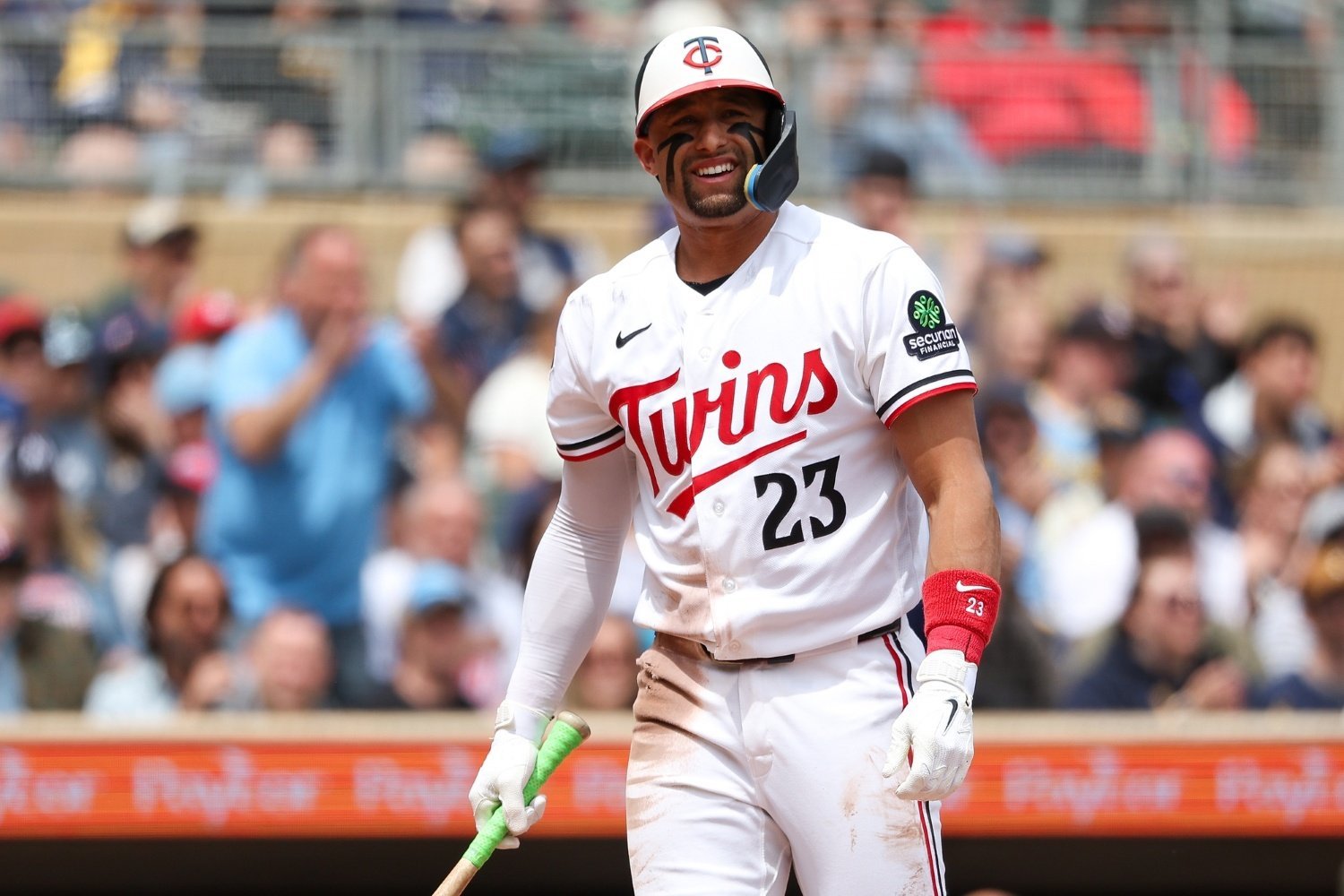 Farming out outfielder Matt Wallner was never going to be the last of the Twins' major moves, as the team shakes up its roster and tries to accelerate its move toward a new core and away from the bitter failures of the last season and a half. Monday night saw Kendry Rojas take (at least for now) Simeon Woods Richardson's place in the starting rotation. On Tuesday, the club optioned Royce Lewis to the minors and designated reliever Justin Topa for assignment. Dan Hayes of The Athletic broke the news on Twitter. Topa, 35, fell off the ledge after clinging to it all season, never quite able to clamber to a safer perch. He made 23 appearances and gutted out a pair of saves, but he only made it through 19 innings and finishes his Twins tenure with an 8.05 ERA. He struck out 12 and walked 11, and a wobbly showing in which he let the Astros back into the game Monday night was the final straw. With Lewis, the story is much longer and more interesting, but much more of it has already been told. He can't get on time right now. His winter work with a private hitting coach has borne no fruit, making him less unorthodox but no more effective than he was in his lost 2025 campaign. When his at-bats remained uncompetitive after a two-day benching to reset and refocus, the writing was on the wall, just as it was for Wallner earlier this month. Replacing Lewis on the roster will be veteran utility infielder Orlando Arcia, who signed a minor-league deal with the team in the spring and stayed with the club despite not making the 26-man roster in March. Arcia, 31, offers steady (though no longer rangy) defense for an infield that needed help on that front. He's also hit very well for Triple-A St. Paul this season, with a .318/.376/.556 line in over 160 plate appearances. Arcia and Tristan Gray are expected to serve as a modified platoon at third base for the short term, according to a source briefed on the team's thinking, though Derek Shelton will have some discretion in which way to tip the greater share of playing time and whether to include Ryan Kreidler in that rotation. For the Twins, it's still worth hoping for and trying to engender a Lewis rebound, but that can no longer be Plan A. Like Wallner, Lewis heads to the minors without a guarantee of a return trip, and with the team's plans rapidly shifting in another direction. For now, top infield prospect Kaelen Culpepper will remain with the Saints, but he's knocking on the door to the majors. An infield that includes (in whichever alignment) Brooks Lee and Culpepper is now more likely to be the team's medium-term plan than is anything that involves Lewis. Cutting Topa creates a spot for Arcia on the 40-man roster, but there might be more shuffling ahead, as the team awaits more information on the injured wrist of catcher Ryan Jeffers. With Jeffers in limbo, Gray set to welcome a new child to his family and two veteran relievers (Matt Bowman and John Brebbia) eligible to become free agents Tuesday if not added to the roster. there are still moving pieces here. If the team wants to call up either Bowman or Brebbia, they'd need to create a second opening on the 40-man. A third spot could be needed for catcher Alex Jackson, should Jeffers land on the IL. It's even possible Lewis will go to Ft. Myers for a more complete reset, rather than to St. Paul. For now, though, it's clear that another phase of a longer-running shakeup is underway. This piece will be updated as the details of the roster moves are announced. View the full article
 -
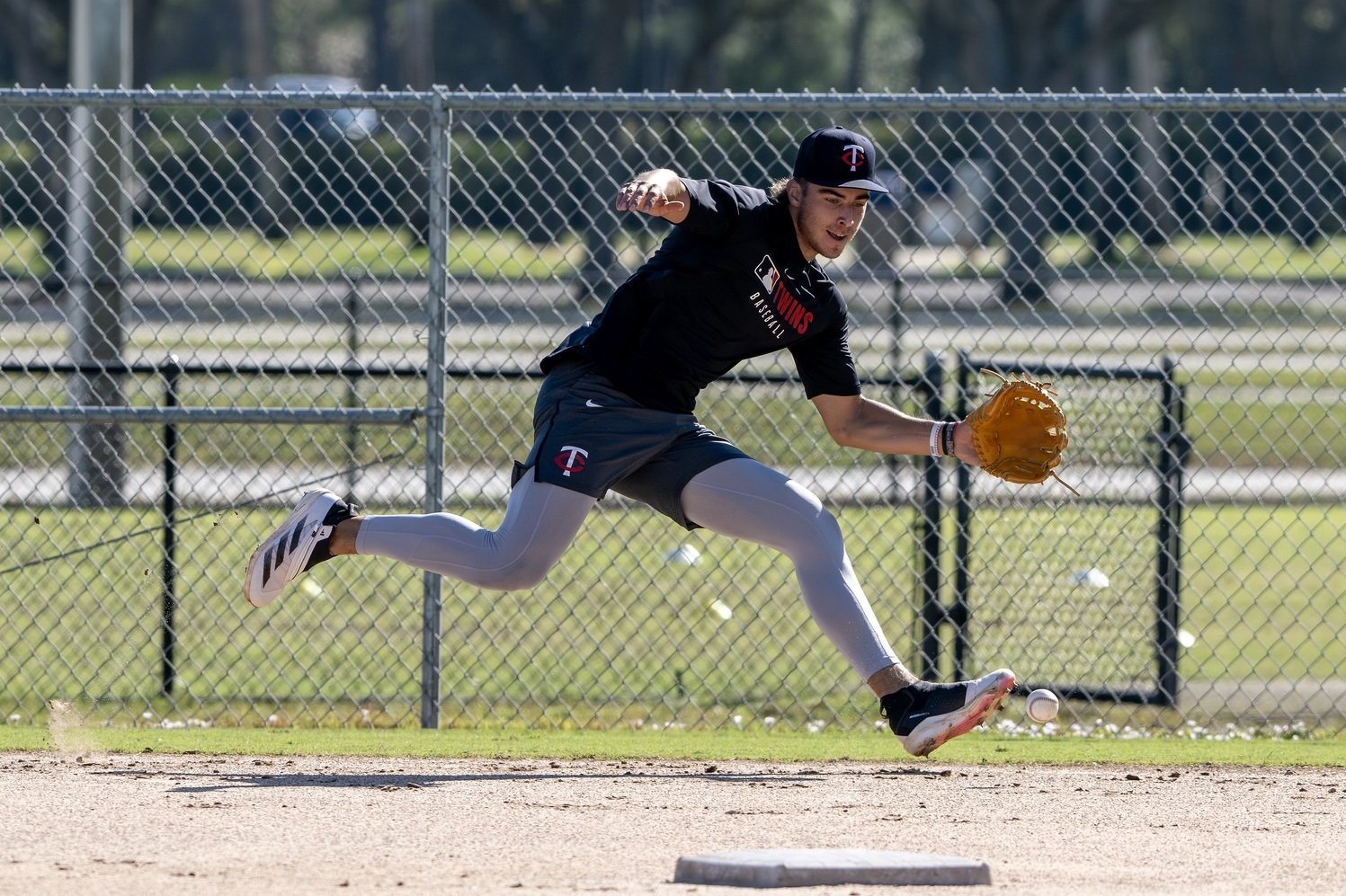 The Twins' farm system is in good health, with several top-100 prospects, depending on your list of choice. It's also top-heavy, in a good way: the best of their talent is clustered in the upper minors or has already touched the brass ring that is the majors. Connor Prielipp has looked excellent in his first five big-league starts, while Walker Jenkins, Emmanuel Rodriguez, and Kaelen Culpepper are all playing (or injured) in Lowertown. Who are the next prospects knocking on the door of industry-wide top-100 prospect lists? Let’s dig in. For the purpose of this thought exercise, I omitted anyone who has appeared on a top-100 prospect list in the last 12 months. That includes Eduardo Tait, Dasan Hill, and Charlee Soto. Here are the next three prospects who could soon garner such consideration. Marek Houston, SS, Cedar Rapids 32 G, 149 PA, .295/.358/.417 (.775), 3 HR (9 XBH), 8.1 BB%, 20.1 K%, 8SB (89%), 102 wRC+ Houston was the 16th overall pick in the 2025 draft and entered pro ball with a reputation as a truly exceptional defensive shortstop. The question about his profile has been ‘will he hit’? So far, he’s held serve. It’s been solid, if unspectacular. After an initial 12-game stretch at Cedar Rapids in 2025 in which he looked tired, Houston returned in 2026, looking much more ready for the challenge. Through 32 games, he’s been a contact-driven league-average hitter. Houston makes good swing decisions. He doesn’t chase much (around 23%) and makes contact frequently. His patient approach hasn’t translated into free passes, though. In college, Houston walked 13-15% of the time. As a pro, it's just 8.1% so far. This is an area of his game that, if improved, would mitigate some of the worries about a dearth of power. Still, Houston is off to a much better start in 2026. He may never be an impact bat, but the glove is so good, it might not matter. If he continues to be an above-average hitter for the level, he’ll start earning top-100 consideration due to the value of his defense in a premium position. Yasser Mercedes, OF, Cedar Rapids 26 G, 119 PA, .333/.445/.657 (1.102), 7 HR (16 XBH), 16.8 BB%, 21 K%, 15 SB (88%), 187 wRC+ You know what the Twins could really use? A win on the international market. It’s been pretty barren the past few years, while the Brewers are seemingly unearthing top prospects the world over on a regular basis. Enter Yasser Mercedes, a 21-year-old born in Puerto Rico who was part of the 2022 international free agent class because his family later moved to the Dominican Republic. He's returning to Fort Myers at the beginning of 2026 for his third stint at the level. It all came together rather quickly this year. Mercedes looked like a different player at Fort Myers, putting up a 107.4 mph EV90 with vastly improved bat-to-ball skills and a much better approach. He’s already stolen 72 bases in his last three campaigns, so there’s another useful facet of his game. Mercedes is a little passive in the zone, so he’ll need to pick his moments to attack pitches he can do damage on, but if his remarkable improvements continue, he’ll be rocketing up lists by midseason. Riley Quick, RHP, Cedar Rapids 17.2 IP, 1.53 ERA, 2.91 FIP, 40.9 K%, 12.1 BB% When interviewed immediately after the 2025 draft, Sean Johnson described Riley Quick as ‘a prospect we had a first-round grade on’. So it has proven to be. Quick left his last start at Cedar Rapids with thumb cramps, struggling to throw strikes. That’s about as difficult as his life has been in 18 pro innings to date. He’s already put Fort Myers in the rear-view mirror, and the stuff looks just as dominant at Cedar Rapids. Quick already has a diverse arsenal. While his fastballs (four-seam and two-seam) aren’t elite shape-wise, they have enough velocity behind them (sitting 96 mph) to be effective in the lower minors. The Twins have ramped up Quick’s cutter usage, and his slider and changeup are both rocking chase rates north of 50%. On top of all this, it’s around seven feet of extension for the 22-year-old. Quick will be in Double-A before the end of the season, at least. If the quality of the strikes remains solid, he’ll continue to fly through the minors and be a top-100 prospect before the end of the season. View the full article
 -
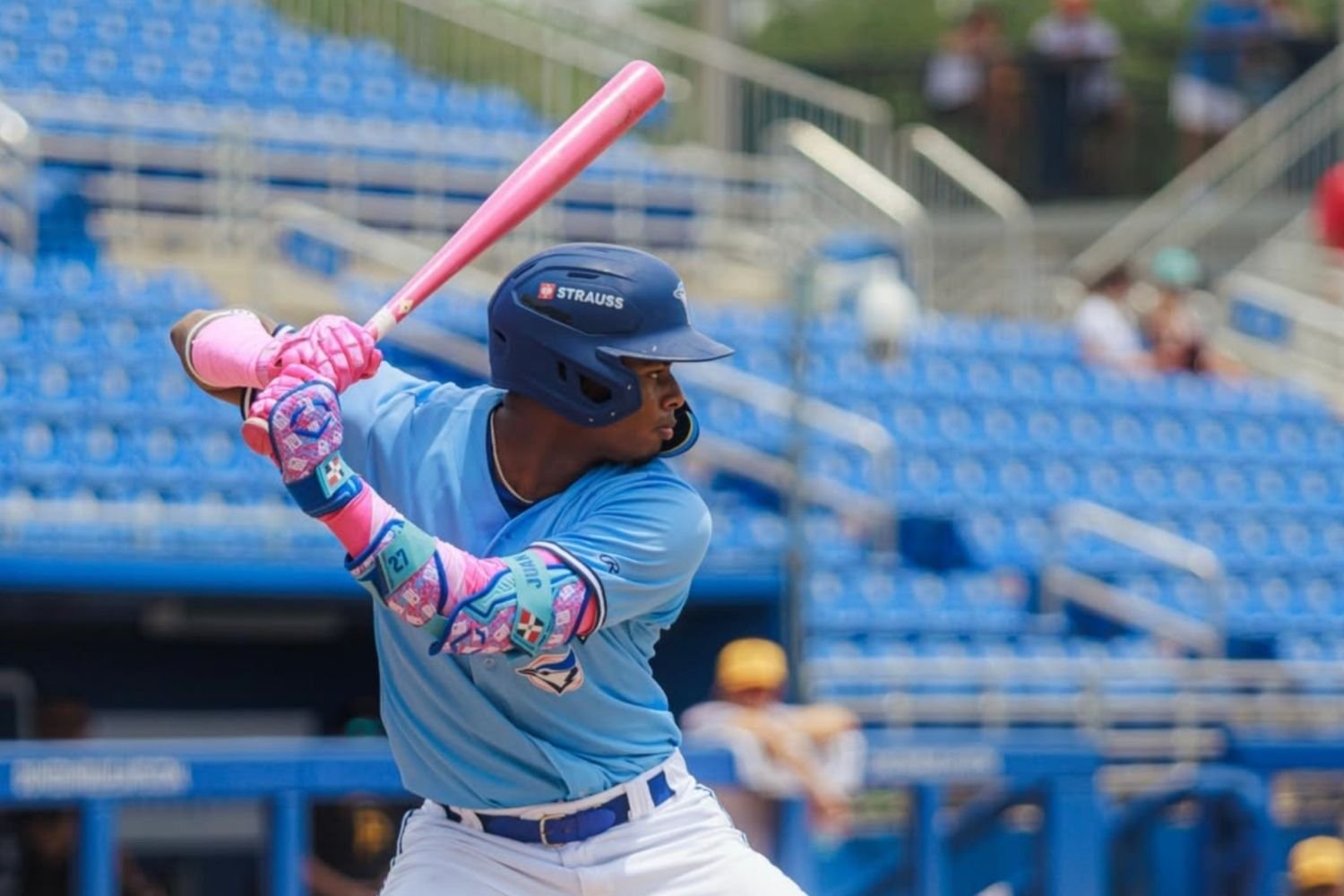 Blue Jays Affiliate Overview (May 16-May 18) Triple-A Buffalo Bisons Series vs Worcester Red Sox (Boston Red Sox): 4-2: Season Record: 23-22 Double-A New Hampshire Fisher Cats Series vs Reading Fighting Phils (Philadelphia Phillies): 3-4 Season Record: 22-15 High-A Vancouver Canadians Series vs Everett AquaSox (Seattle Mariners): 3-3 Season Record: 16-23 Single-A Dunedin Blue Jays Series vs Tampa Tarpons (New York Yankees): 2-4 Season Record: 15-24 FCL Blue Jays Week Record: 4-1 Season Record: 11-1 Triple-A Buffalo Bisons Season Record: 23-22 Series vs Worcester Red Sox May 16: Buffalo got a little bit of a gift on Saturday, as it seemed the good karma they have built up by enduring an endless amount of postponed games the last two seasons was cashed in. Josh Fleming was on the mound and was excellent. Over five innings, he kept Worcester to only one extra-base hit and three singles, while only walking one. At the plate, Buffalo had the power swing going early in this one. In the second inning, Josh Rivera launched his sixth home run of the season, a solo shot to left field. The blast had an exit velocity of 103.1 mph and went over the fence, landing 391 feet from home plate. Two batters later, Je'Von Ward smacked his second home run in as many games. His was nearly identical off of the bat, 103.9 mph, and it went 383 feet. After a 31-minute rain delay, the game was called after Worcester hit in the top of the fifth, giving Buffalo the 2-0 win and moving them to two games above .500. May 17: After a decent streak of games where the bats couldn't miss the ball, Buffalo went cold on Sunday and didn't get anything going at the plate. They were able to get three singles and four doubles, but nothing would come of it, as they were shut out in the game. Josh Kasevich had one of the hits and one of the walks, raising his batting average for the season to .293. Austin Voth pitched rather well, throwing five innings, only surrendering four baserunners (three hits and one walk). He did give up one run, a solo blast in the third to Nathan Hickey. Pat Gallagher came in for Voth to start the sixth inning, and things went south fast for Buffalo. Gallagher coughed up three runs on a single, triple, and a double to the three batters he faced, handing it off to Hayden Juenger. Juenger would not fare much better, giving up another run on an RBI single, before he loaded the bases up with a walk to Hickey. Braiden Ward would ground out and let Buffalo off the hook of a massive inning. With Buffalo down 4-0, they would go down in order the remainder of the game, 12 up and 12 down. The loss brought the Bisons back to the edge of .500 for the season. Double-A New Hampshire Season Record: 22-15 Series vs Reading Fighting Phils (Philadelphia Phillies) May 16: The Saturday tilt between the New Hampshire Fisher Cats and the Reading Fightin Phils was one to forget for New Hampshire. From the start of the game, things went south for the Fisher Cats. Starting pitcher Jackson Wentworth only went one inning and gave up an unearned run. After that the relievers were pile driven into submission. Reading ended the game with 22 hits, seven walks, and the Fisher Cats had three errors. That is 32 baserunners. On the other side, New Hampshire couldn't get on base, only managing four singles and one walk. New Hampshire lost this one 20-0. May 17, Game 1: In the first game of the Sunday doubleheader, Chris McElvain was on the mound for New Hampshire against Reading and had one of his best starts. He went six innings, only allowed two hits, didn't give up a run, and only walked two batters. He struck out four hitters. Conor Larkin came on for the seventh and pitched a clean inning with a strikeout to finish off the seven-inning shutout. The New Hampshire offense was not its usual dominating self, but they did manage five hits and two runs. Victor Arias had an RBI single in the third, and Eddie Micheletti Jr. launched his sixth home run of the year in the sixth inning. New Hampshire would win game one 2-0. Game 2: Game two of the doubleheader was just as lacking in the hitting department for both teams. New Hampshire managed just four hits, and only two hitters (Jay Harry and Nick Goodwin) collected those four hits. Goodwin had an RBI single and an RBI double, with Victor Arias adding an RBI groundout. It wasn't enough, as Reading managed five runs on five hits, and New Hampshire lost 5-3 High-A Vancouver Season Record: 16-23 Series vs Everett AquaSox (Seattle Mariners) May 16, Game 1: Landen Maroudis had his first blow-up start for the Canadians, as he gave up eight hits, a walk and six runs in a little over three innings of work. That raised his season ERA to 4.61 and earned him his first loss of the season. The offense tried to catch up, with Tucker Toman leading the charge with a three-RBI night, but the AquaSox got up to a 7-2 lead in the top of the fourth inning after Reece Wissinger replaced Maroudis and gave up a two-run double. An error from Peyton Williams made the lead even bigger in the sixth inning, and although the Canadians scored two more runs off of a bases-loaded walk from Williams and a sac fly from Dub Gleed, that was the closest it got, as they couldn’t hit Brock Moore, who took the win for Everett. Game 2: Gilberto Batista started for the Canadians in the second game of the doubleheader and gave up an RBI double in the first inning with two outs. Kendry Chirinos tied it up with an RBI double of his own, and it remained tied until the fourth inning, when Batista’s shaky command led to a bases-loaded walk to lose the lead for Vancouver. Kelena Sauer took over in the fifth inning for Vancouver and faced trouble himself, with a leadoff triple setting up the inning for failure. He allowed two runs in two innings, while giving up three hits and two walks, despite striking out four batters. Matt Scannell’s first homer of the season brought the lead to two, but Jonathan Todd gave up two more runs in the seventh, for another disappointing Vancouver loss. May 17: The Canadians were able to turn it around on the last game of the series, as an Alexis Hernandez solo shot and a two-RBI Peyton Williams double made it an early 3-0 lead. Daniel Guerra’s newfound velocity has led him to be a breakout pitching prospect for the Jays, as he had his second double-digit strikeout game of the season. He allowed a single run in the third on a triple to Josh Caron but was able to limit damage other than that. Danny Thompson Jr. relieved Guerra in the fourth inning, and although he immediately gave up a solo shot, he also pitched well despite some shaky command, striking out four batters in 2.1 innings. The Canadians' offense also took those runs right back, as after Peyton Williams hit a triple, Carter Cunningham hit a two-run homer to bring the lead back to three. Another two-run homer, this time from Manuel Beltre, gave the Canadians their seventh run of the game and gave them insurance for a shaky Trace Baker appearance, who came in after Juanmi Vasquez pitched two scoreless innings, allowing the Canadians to win at least the last game of the series. Single-A Dunedin Season Record: 15-24 Series vs Tampa Tarpons (New York Yankees) May 16: The Dunedin Blue Jays got 12 hits on the night, but were outhit by the Tarpons in a near blowout. Eric Snow got it going for the Jays with an early RBI single to score Blaine Bullard, but starter Dylan Watts gave up the first run for the Tarpons in the first after two errors were committed in a row. Watts gave up four singles in the second inning to allow another two runs. The Jays were able to get to Henry Lalane again in the fifth inning with two RBI doubles from Snow and Juan Sanchez, to even up the game. Eduar Gonzalez replaced Watts in the fourth inning, and in the fifth inning loaded the bases, before walking in a run. Franly Urena was able to replace him and get out of the inning, however. A David Beckles double tied it up once again for the Jays, but Urena gave up four runs in the seventh inning, and Luis Victorino gave up two more runs, putting the Jays in a big hole that they couldn’t recover from. May 17: Jack Nedrow’s second professional appearance and first start was another scoreless one; this time, Nedrow had his first quality start and first win. Dariel Ramon was able to get on through a fielding error to the pitcher and stole second, and Jake Cook moved him over to third on a single. Blaine Bullard grounded into a force out, but Ramon was able to score. Bullard stole second base and after Parker struck out, Juan Sanchez just missed a homer off the top of the wall for a booming RBI double to give the Jays a two-run lead. The Tarpons could not touch Nedrow, who only gave up four hits and a walk all day, and after he was replaced by Edgar Gallegos, they still couldn’t get anything going off him either, as he went three innings with only one hit given up for his first save of the season. Aldo Gaxiola had the cherry on top with a two-run shot in the top of the ninth inning to end the series off with a bang. FCL Blue Jays Season Record: 11-1 May 16: In the Saturday FCL matchup for the Blue Jays squad, Seojun Moon was on the mound to start against the FCL Yankees. Moon pitched well again, going two innings and allowing just an infield single, to go with three walks, and no runs. He struck out three batters. Miguel Pantoja came in after him and was equally as good. He threw three innings, allowing just one hit; he struck out six, didn't give up a run, but did surrender four walks. On the offensive side, Sam White drove in a run in the first, as did Brock Tibbitts. A couple of bases-loaded walks, a wild pitch, and a Kennew Blanco single put the Blue Jays team up six in the sixth. The Yankees got things going in the bottom of the seventh, putting up six runs to push the game into extra innings. In the seventh, Tim Piasentin doubled in a run, Owen Gregg tripled in three runs, and Angel Guzman had an RBI single. The Blue Jays won this one, 11-7. May 18: Jake Bloss started this one for the FCL Blue Jays and pitched 2.1 clean innings, only allowing one hit and striking out three batters. Tim Piasentin drove in a run when the Yankees team committed an error in the second inning. A double steal for the Yankees tied the game in the third inning. Sam Shaw would quickly break the tie with a two-run blast to right field. In the sixth, five runs would score for the Blue Jays, this time on an Owen Gregg single, a Brock Tibbitts single, and a Pascual Archila bases-loaded walk. The Blue Jays would go on to win this one, 8-4. View the full article
 -
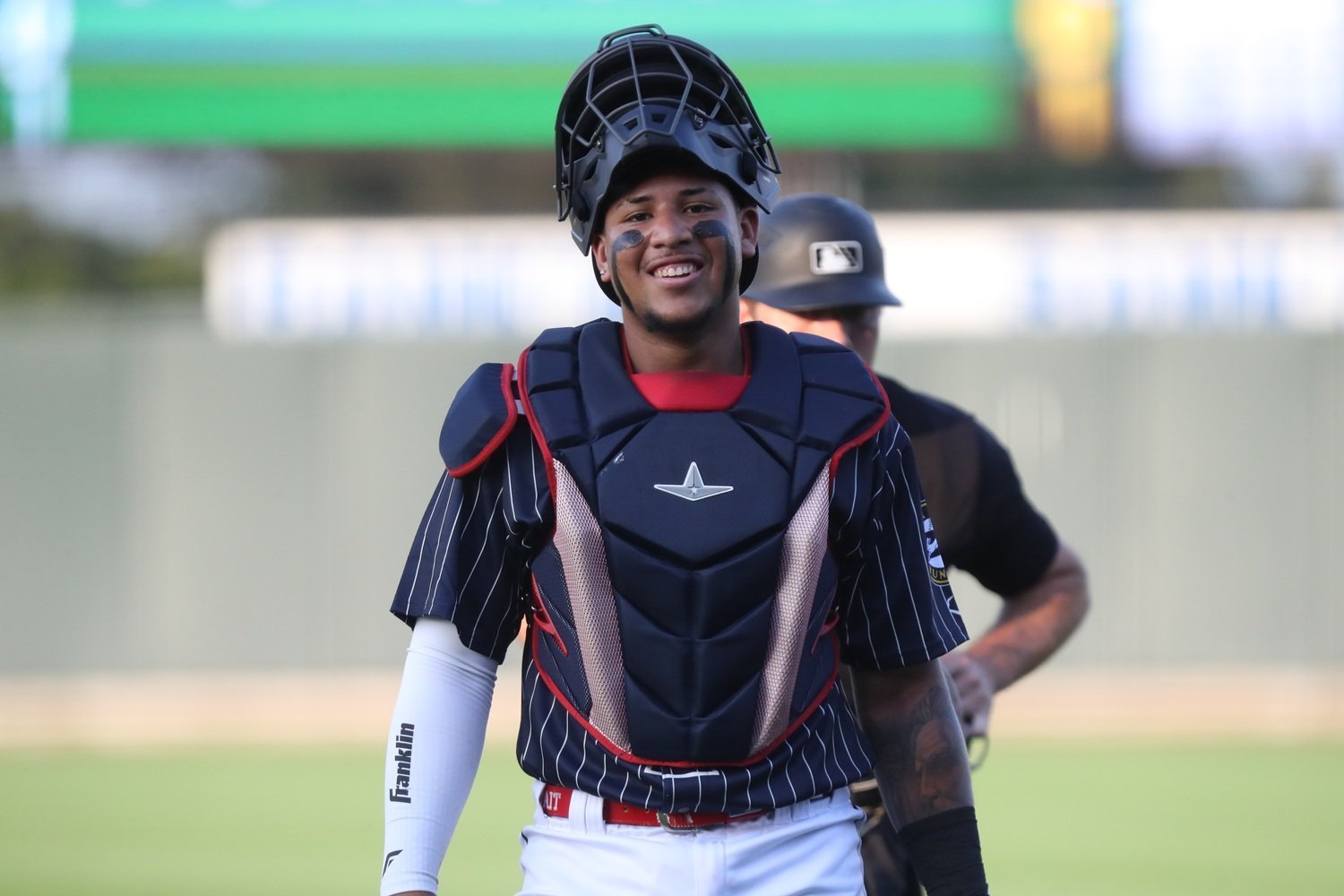 When the Twins traded Jhoan Duran at last summer’s trade deadline, many fans may have focused their attention on Mick Abel, since he was considered big-league ready. However, the return package also included one of the more fascinating catching prospects in the minors. Eduardo Tait’s professional journey began quietly when he signed with the Phillies out of Panama for just $90,000 in January 2023. It did not take long for evaluators to notice him. A .917 OPS during his debut in the Dominican Summer League helped him to pop on the prospect radar, and he backed up the excitement in 2024 by hitting .302 with an .842 OPS while reaching full-season ball before his 18th birthday. By the middle of last summer, Tait had climbed from Single- A to High-A, earned a Futures Game appearance, and eventually landed in the Twins organization as part of the Duran trade. He closed the season with a playoff push in the High-A Midwest League and entered 2026 as one of the youngest and most intriguing catching prospects in a Twins system that has lacked catchers in recent years. The Twins elected to send Tait back to the Midwest League to begin the 2026 season, and the early results have been something of a mixed bag. Through his first 34 games, the left-handed hitting catcher owns a .227/.308/.430 (.738) slash line with six home runs and eight doubles. The raw power production has remained encouraging, but his overall offensive value has dipped slightly, with his wRC+ falling from 103 last season to 87 this year. At first glance, that might appear disappointing. Context matters heavily here. Tait is still just 19 years old and has faced older pitchers in all but five of his plate appearances this season. He is more than three years younger than the average Midwest League player, with only Rainiel Rodriguez and Luis Pena younger among position players in the league. That age gap is significant, especially for a catcher handling the physical and mental demands of the position while also trying to develop offensively. The Twins are also experimenting with having pitching coaches call pitches from the dugout at lower levels of the minors, a practice already common in college baseball. In this setup, coaches have real-time information available during the game, which can streamline pitch selection. The catcher, meanwhile, relies on recall and memory, which can become challenging amid constant in-game adjustments, matchup changes, and pinch hitters. For Tait, it adds another layer of development to work through as he continues to adjust to the demands of professional catching. The tools that made Tait intriguing in the first place remain very visible. His bat-to-ball skills are impressive for a player this young, and he consistently produces loud contact when he squares baseballs up. He has shown the ability to drive the ball to all fields for extra bases, although much of his home run power still comes to the pull side. The six early-season home runs are an encouraging sign that his power continues to trend upward against more advanced pitching. At the same time, his strengths and weaknesses are closely connected. Tait makes contact so frequently that he often expands the strike zone too aggressively. His 41% chase rate in 2025 highlighted that issue, and while his walk rate has improved modestly from 7.4% to 8.2% this season, the approach still needs refinement. Pitchers are increasingly willing to challenge him outside the zone because they know he is capable of putting almost anything in play. There are signs of growth beneath the surface, though. Even with the increased strikeout rate, the improved walk rate suggests Tait is at least beginning to work deeper counts and identify pitches he can damage. For a teenage hitter facing much older competition, developmental progress often matters more than the surface slash line. Defensively, Tait’s long-term outlook behind the plate continues to improve as well. He has plenty of arm strength and has made encouraging strides with his receiving and blocking. Evaluators may never project him as a plus defensive catcher, but he has shown enough improvement to believe he can remain at the position long term. That matters immensely for his overall value because his offensive profile becomes much more impactful if he stays behind the plate. The Twins do not need Tait to dominate the Midwest League at 19 years old. What they need is continued development in his approach, continued defensive growth, and evidence that the power can translate consistently against advanced pitching. So far, there are still plenty of reasons to believe in that trajectory. Catching prospects often develop more slowly than players at other positions because of the workload and complexity of the job. Tait is already holding his own offensively while being one of the youngest everyday players in the league. Even with some statistical regression, the combination of age, contact ability, raw power, and defensive progress still gives him the look of a potential long-term major league catcher. The next step in his development is less about raw production and more about refinement. If Tait can continue improving his swing decisions without sacrificing his natural contact ability, the offensive upside becomes much more substantial. Pair that with adequate defense behind the plate, and the Twins may have landed one of the more underrated catching prospects in baseball when they acquired him last summer. What stands out about Tait’s performance so far this year? Leave a comment and start the discussion. View the full article
 -
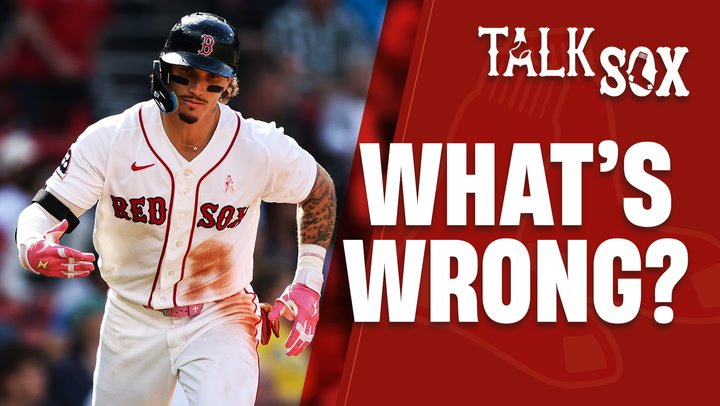 After back-to-back impressive seasons with at least 15 home runs, 20 stolen bases, and a batting average above .250, Jarren Duran is struggling mightily out of the gates to start the 2026 season. In this video, we'll dive into the reason behind his spike in strikeout rate and dampened exit velocity. Does the 29-year-old still have what it takes to be a high-level bat in the Red Sox lineup? We break it all down here! View the full article
 -
 Nolan McLean is one of baseball's biggest and brightest young talents. The former two-way prospect out of Oklahoma State is sporting a winning MLB record, an earned run average hovering around two, and looks untouchable when he's on. What separates him from the pack? We break it all down in this video about the New York Mets' starter! View the full article
 -
Jackson Merrill's Early Struggles Have Multiple Root Causes
DiamondCentric posted an article in Padres Mission
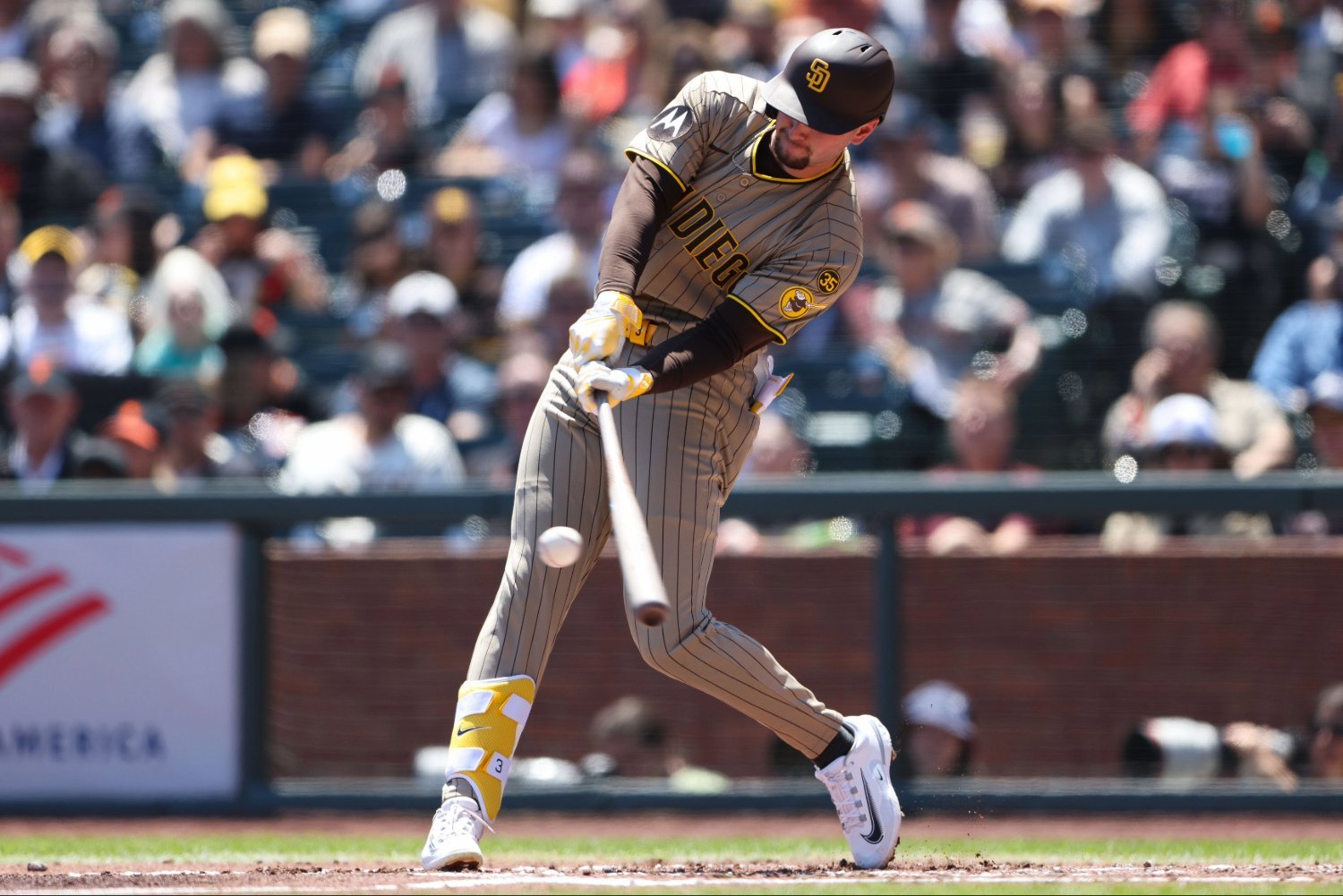 You could forgive Jackson Merrill for a sophomore slump in 2025. It would even be tough to label it such. The San Diego Padres' young star dealt with a variety of injuries seemingly from the jump, facing a hamstring strain, a concussion, and an ankle injury before the season reached its end, to say nothing of the lingering effects in between. As a result, he experienced a decline just about everywhere on the stat sheet. Yet even clear of such health woes, things have only gotten worse thus far in 2026. As he approaches 200 plate appearances for the year, Merrill is bogged down in a .206/.274/.329 line. He's striking out at a 26.1 percent clip and has a wRC+ of 72. His power has waned, with a .124 isolated power number that represents a 69-point drop from even last year's 15-point decline in that regard. Just about the only positives to emerge to this point in the year are an increased walk rate (8.0 percent) and eight steals that put him halfway to his career-high. As the Padres struggle to find sustained production on offense, Merrill's early struggles have been right at the forefront with no such injury excuses on which to fall back. The issue with Merrill's early performance this year isn't even in the performance itself. It's the absence of an obvious explanation for why he's underperforming. Generally, one can look at a player's underlying trends and find a catalyst that speaks to the origins of the struggle. Matters of the approach are a particularly notable factor in performance variance. Merrill's case isn't so apparent, however. For example, here are his swing trends over the course of his three years in the league: 2024: 34.3 O-Swing%, 79.8 Z-Swing%, 56.7 Swing% 2025: 37.8 O-Swing%, 79.1 Z-Swing%, 58.3 Swing% 2026: 36.3 O-Swing%, 80.6 Z-Swing%, 56.1 Swing% There isn't anything remarkably different in the approach there. Even his swing distribution against different pitch types has remained within three percent over that stretch of time. Instead of the issue being in the approach, Merrill's problem lies in the execution. He's just not making enough contact. Here are those trends over three years: 2024: 66.0 O-Contact%, 87.6 Z-Contact%, 81.0 Contact%, 10.8 SwStr% 2025: 58.6 O-Contact%, 83.7 Z-Contact%, 75.5 Contact%, 14.1 SwStr% 2026: 60.3 O-Contact%, 83.4 Z-Contact%, 75.1 Contact%, 14.0 SwStr% That's a pretty cut-and-dry case right there. Even though his swing rate is at the lowest point of his career, he's not managing to translate that into anything meaningful. This is especially true against off-speed pitches. The rate of swings against that pitch type has only increased by a single percentage point, but his whiff rate against off-speed offerings has jumped from 26.0 percent in 2024 to 34.8 percent in 2026. It's possible that some of this, especially the off-speed element, is due to an increased swing speed. At 73.3 MPH, Merrill's swing is harder than ever. Conventional baseball wisdom, however, indicates that you don't need to swing hard to make meaningful contact. Is it possible that Merrill is simply swinging too hard in a way that's stifling his ability to make contact? It would represent an obvious connection between an approach that has stayed the same despite contact metrics that have dropped off since his rookie season. He's also been coming in with a steeper swing in the last two years than in the first. His attack angle in 2024 was just six degrees against a 10-degree angle in 2025 and a nine-degree angle thus far in 2026. A faster, steeper swing occurring alongside wilting contact numbers seems to be where we may find the root of the issue for Merrill. Especially with a hard contact rate that sits up in the 84th percentile (48.3 percent). That's our intersection. The approach has been steady, but the swing has become more aggressive and, at the same time, steeper. That means when contact is there, it's of a harder variety, but we also see less of it. That's also why the biggest issue in his contact has been with the off-speed, which feeds off a hitter's aggression. It's not that Merrill is swinging at the wrong pitches. He's swinging at them in the wrong manner. Whether or not this is something fixable within the confines of a baseball season remains to be seen. It's not a pure mechanical tweak like footwork but something that manifests more out of mindset or instruction. That means an adjustment will have to come courtesy of Merrill's own fix or from hitting coach Steven Souza Jr. Doing so in the midst of a 162-game grind is far easier said than done. View the full article
 -
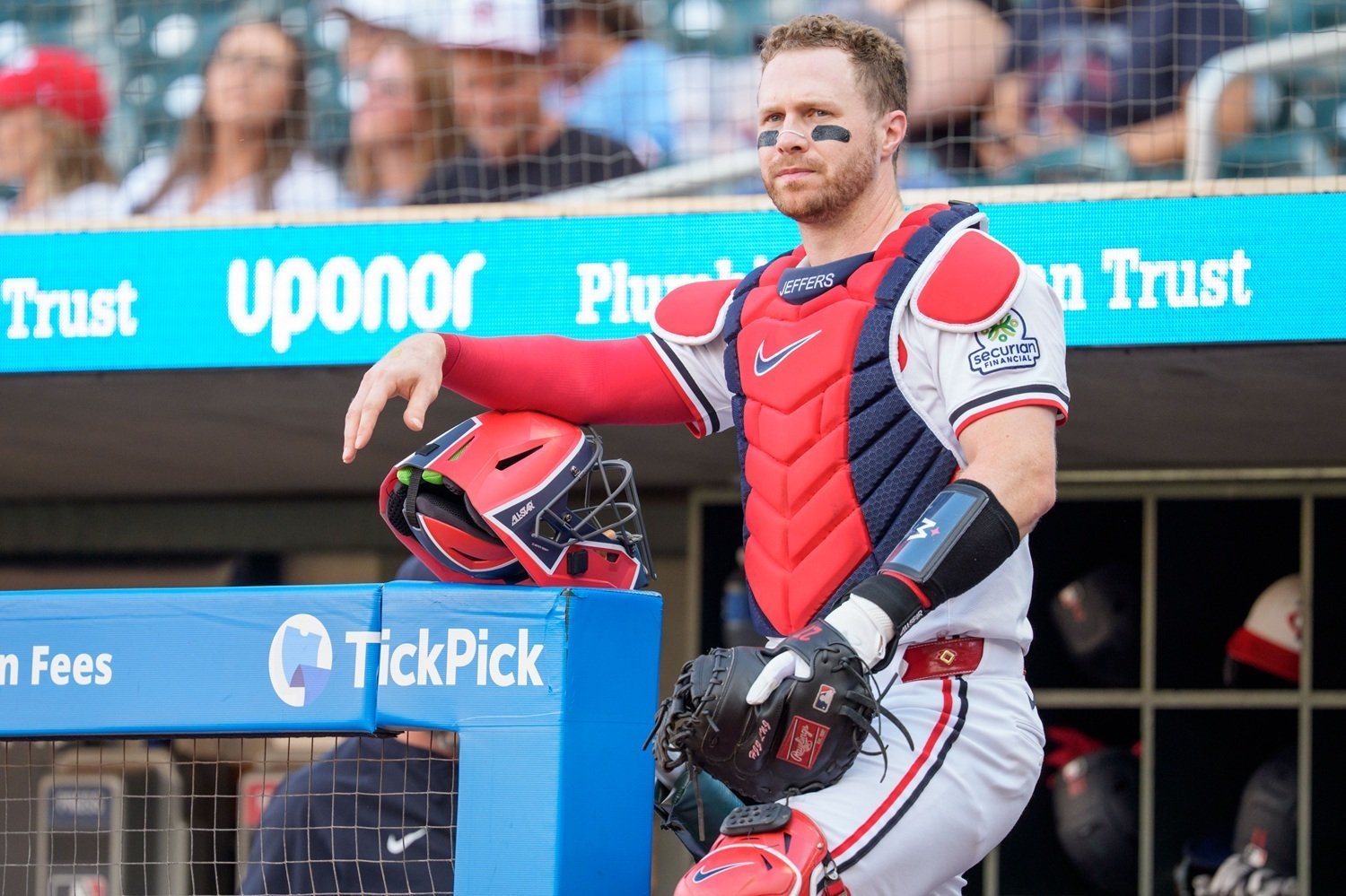 The Minnesota Twins earned a 6-3 victory over the Houston Astros on Monday night, but the win came with an unsettling development behind the plate. Catcher Ryan Jeffers exited the game late after suffering what the club is calling a left wrist sprain. Jeffers will undergo an MRI on Tuesday morning after leaving during the middle of an at-bat in the eighth inning. The injury occurred after he fouled off the first pitch from Astros reliever AJ Blubaugh and shattered his bat. Jeffers initially stayed in the box and took two pitches for balls before calling timeout and signaling that something was wrong. “I was kind of going through the mental battle of whether I could swing or not, and then made the decision,” Jeffers said after the game. “We’ll know more tomorrow.” Manager Derek Shelton and athletic trainer Masa Abe came out to check on Jeffers before he walked off the field and headed to the clubhouse. Veteran catcher Victor Caratini entered as a pinch hitter and remained in the game behind the plate. The timing could not be worse for the Twins because Jeffers has been playing the best baseball of his career. He finished Monday’s game 1-for-3 with a double and a run scored, continuing a scorching start to the season. Through his first stretch of games in 2026, Jeffers is slashing .295/.408/.541 with seven home runs and 26 RBIs while emerging as one of the most productive offensive catchers in baseball. For a Twins lineup that has dealt with inconsistency throughout the year, Jeffers has been one of the few dependable middle-of-the-order bats. His combination of patience, power, and quality contact has elevated his value significantly as he approaches free agency following the season. If the MRI reveals a more serious injury, Minnesota may need to make a roster move quickly. Jeffers and Caratini are currently the only catchers on the Twins’ 40-man roster, leaving the organization thin on immediate depth. That situation would likely open the door for Alex Jackson to return to the major leagues. The veteran backstop has quietly put together a strong offensive season at Triple-A St. Paul, hitting .239/.295/.511 (.806) with notable power production across 95 plate appearances. The Twins can survive injuries at several positions because of their organizational depth, but catcher is not one of them. Losing Jeffers for any extended period would remove one of the club’s best hitters and force Minnesota to rely heavily on Caratini while searching for additional help. For now, the organization and its fans will wait for Tuesday’s MRI results, hoping that one awkward swing did not sideline one of the most important players in Minnesota’s lineup. View the full article
 -
Right idea, wrong elbows for Miami Marlins in recent trades
DiamondCentric posted an article in Fish On First
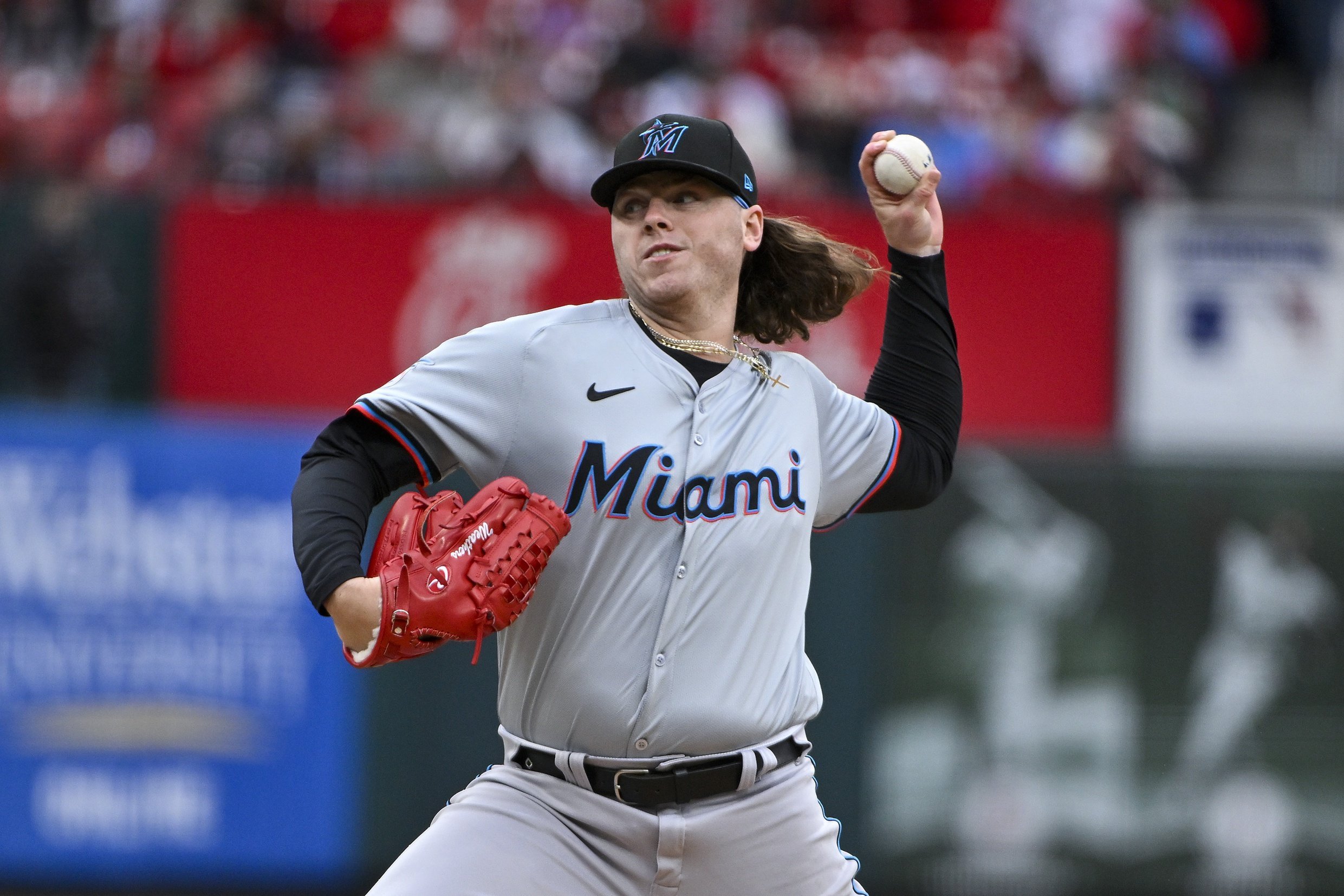 If you're a Miami Marlins fan, you'd be forgiven for thinking the franchise is cursed right about now. Well, that thought has probably occurred to you before—there's been ample evidence over the years from countless other calamities. Mostly, this is in response to last week's gut-wrenching news that Robby Snelling is sidelined with a UCL sprain. Snelling is meeting with a surgeon on Thursday. This could just as easily be about fellow top prospect Kevin Defrank's biceps injury. Or Aiva Arquette's struggles to stay on the field. Or the fact the Marlins seem to have a better chance of winning a Super Bowl than winning a series at Tropicana Field. Then again, it could be the fact that so many of the players Miami has chosen to move on from recently are doing well. Troy Johnston is a .300 hitter. Dane Myers and Joey Weimer have been better than any of the new faces manning Miami's bench, all while former first-round pick JJ Bleday continues to look like a stud. Proof after proof that the Marlins just can't have nice things. Most bemoaned of all among many fans right now, though? The trading of Edward Cabrera and Ryan Weathers. Chiefly, the focus there has been on Weathers; Cabrera at least netted an active member of the 26-man roster in Owen Caissie. Meanwhile, Weathers has been worth nearly as much as Sandy Alcantara WAR-wise while producing a career best 3.58 ERA so far this season, yet was traded for a package that won't help at all in 2026. That certainly proved tough to swallow during the Chris Paddack era, as Weathers obviously could have helped flip the M on a couple of those early Marlins losses, and has continued to gnaw as other starters have struggled. While Caissie did single-handedly win a couple games for Miami early on, he's struggled mightily as of late while Cabrera has been a consistent source of production for the Cubs. There has been a fair bit of dismay about the fact the Marlins might have been able to do better in terms of trade return if they had waited. Much like the time when the Marlins chose to move on from Jesús Luzardo—a trade that looked reasonable enough, until it didn't. However, during a tough stretch like this one, it's important to remember that not every decision the Marlins make is the wrong one. That's especially so for when it comes to the cases where a mountain of evidence suggests Miami is selling high on a player. Given the financial constraints ownership chooses to operate the team under (no quarrel from this author if you want to view that as a mistake), they had to move some of their pitching depth this offseason in order to fill out the roster. Years of injury history suggested that the Marlins were picking the right elbows to trade when they opted to move Cabrera and Weathers. In Cabrera's case, in addition to the injury history, there was also a years-long Jekyll and Hyde pattern of production where it was anyone's guess whether he would toss six strong innings or try to walk six within a single frame. In short, if the Marlins were going to trade two pitchers this winter, the only two choices were the ones that were moved. Unfortunately for the Marlins front office, the last two weeks have made both deals look foolish. The Weathers one is an outright travesty from a "competing in 2026" mindset. There's no question that having even one more arrow in the MLB-ready pitching quiver would make a world of difference to Miami right about now. So while it may come as small comfort to fans, it just seemed like a good time to remind folks to continue to trust the process. Sometimes it goes south, sometimes it works out in a big way, as it has with many members of this current Marlins roster. It's also a long season. Plenty of time for more data to come in and change the perception here. Yet the fact that there is a clear, consistent process for the Marlins? It remains a refreshing change of pace. View the full article
 -
Shota Imanaga Needs a New Way to Change Up on the Brewers
DiamondCentric posted an article in North Side Baseball
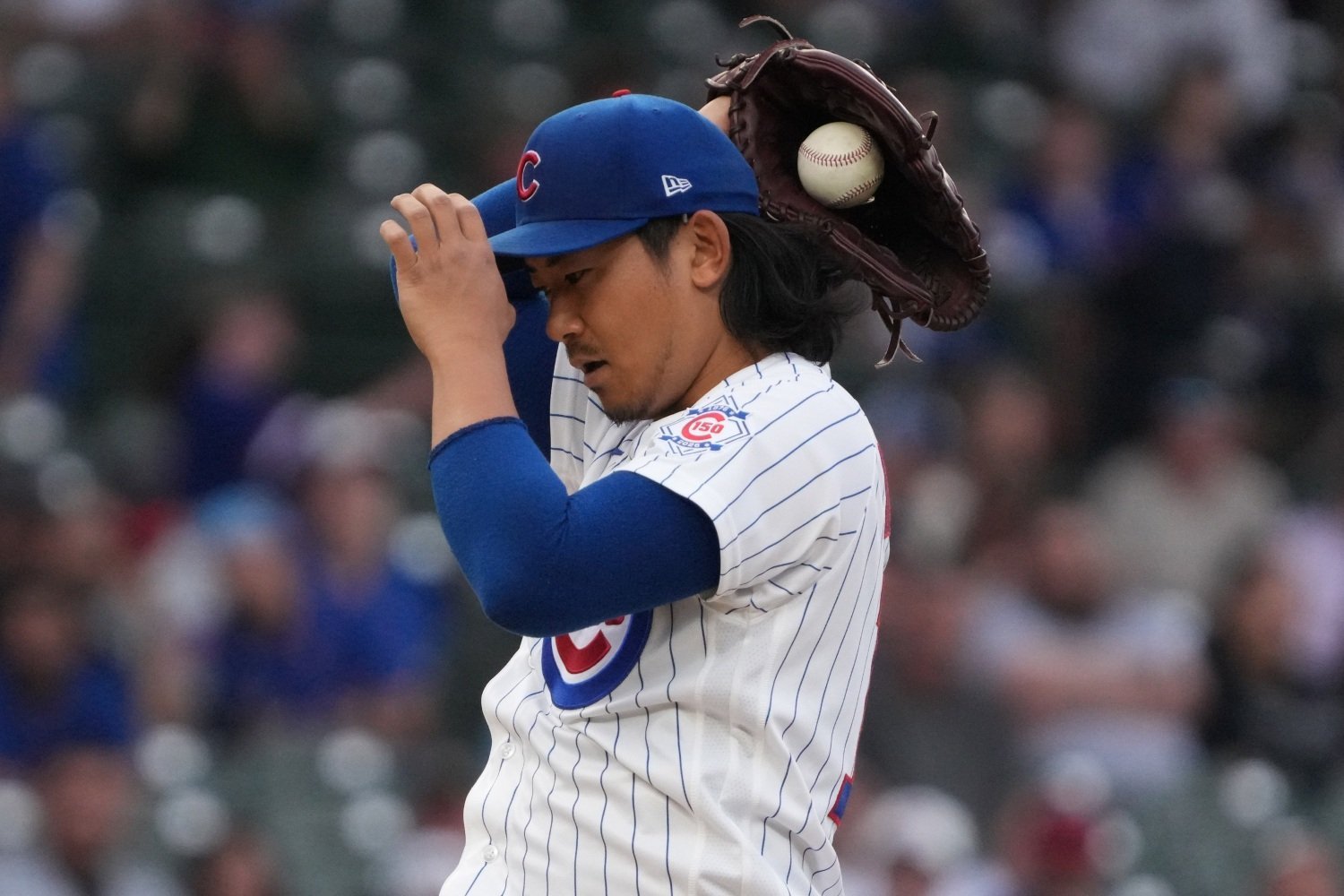 Entering his start against the Brewers on May 29, 2024, Shota Imanaga had a 0.84 ERA in his first ride of the MLB circuit. That didn't last. Milwaukee put a hurt on him, scoring seven runs on eight hits in 4 1/3 innings. Ever since, the team has been Imanaga's bugaboo—just as they have been for the Cubs, as a whole. Last May 4, Imanaga had a very good start going at Uecker Field in Milwaukee, before he pulled up lame while covering first base. The hamstring strain sidelined him for the better part of two months, and he wasn't the same down the stretch. However, last August 21, he did have a great start: seven innings of two-run ball (albeit in a disappointing 4-1 loss) against the then-rolling Brewers, at Wrigley Field. That was a brilliant piece of pitchcraft, too, because it came via a major departure from his usual plan of attack. Here are all of Imanaga's starts from last season (including the playoffs), by pitch mix: In only one regular-season game did his splitter usage dip beneath 20%: August 21. Imanaga felt that the Brewers had a tell they were using to sit on his splitter, going back to 2024, so he shoved that pitch to the back burner and went after them another way. It wasn't enough to win, because of a lack of run support, but it was a great tactic. It worked, in that he pitched deep into the game and kept Milwaukee from breaking away. When the two teams met again in October, though, the magic ran out. Imanaga tried to lean on his fastball and away from the splitter again, but this time, the Brewers punished him. Coming into 2026, he knew he'd need a new wrinkle against the Cubs' top rivals. Suffice it to say, the one he tried did not work. Here's the same chart as above, but for 2026. This year, Imanaga has had good feel for the splitter, and he's trusted it as much as ever. He still doesn't think he can sneak it past the Brewers, thouygh, so he tried something truly novel: going to his sinker a lot. Having multiple lefties in the Milwaukee batting order (Brice Turang, Jake Bauers, Christian Yelich, Sal Frelick) made that more viable, but it's clear that Imanaga would have done something different even if he'd faced a righty-loaded version of the Crew. He threw 11 of his 16 sinkers to righties. Clearly, he was hoping to give his toughest opponents a look so different that it would take them aback. Just as clearly, it didn't work. The Brewers tagged him for eight runs, this time, and he didn't escape the fifth inning. One way or another, for the Cubs to get where they want to go this season, they'll need to beat the Brewers. Right now, one of their few remaining reliable starters doesn't have a roadmap in which he's confident against that team. That's bad news, and Monday's was a bad game—but Imanaga is a master of adjustments, and might have a better plan next time he runs into Milwaukee. View the full article
 -
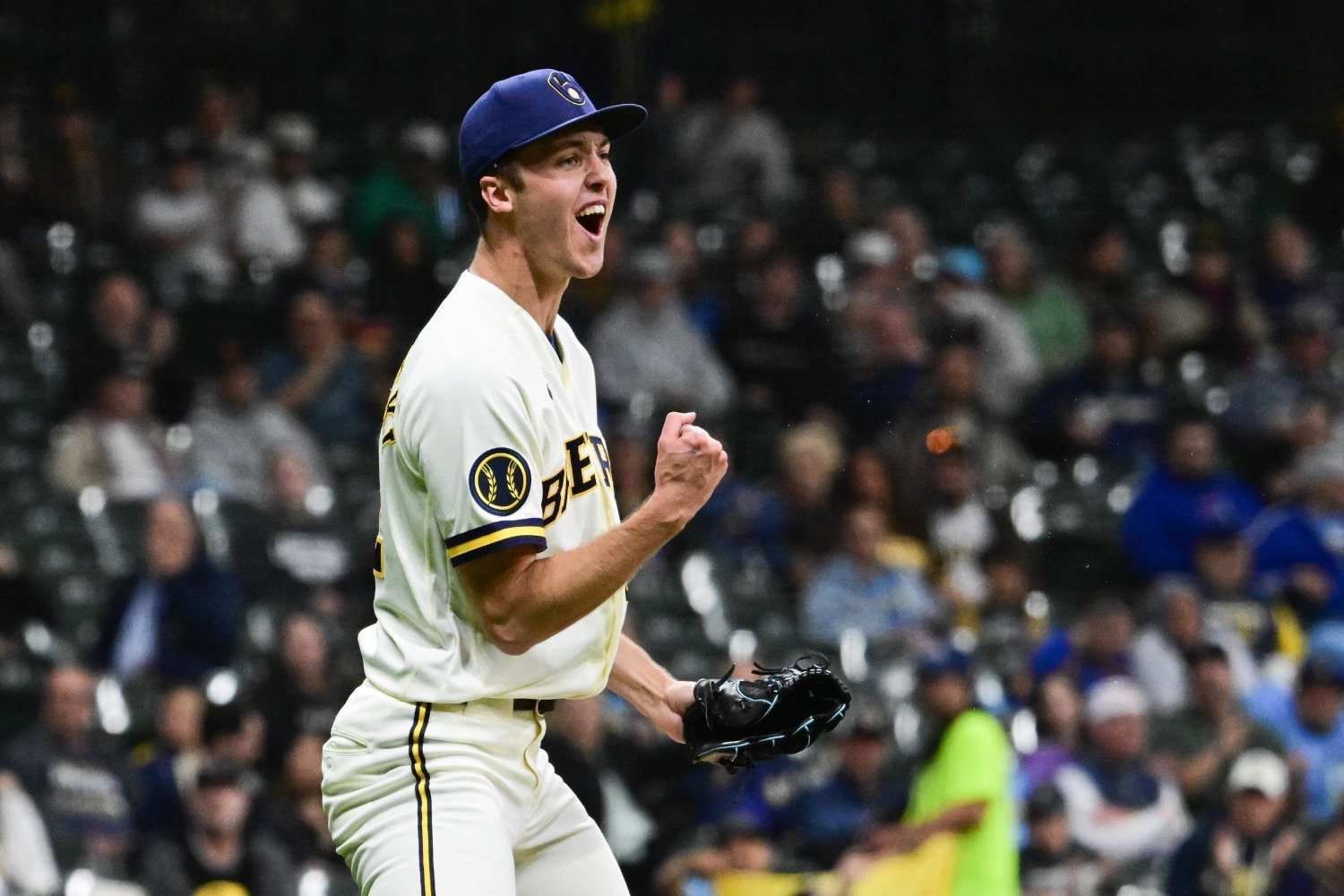 Jacob Misiorowski took over baseball headlines last year by being a flamethrowing rookie who was controversially nominated to the All-Star game after just five career games. At the time, his numbers looked good, but things deteriorated in the second half, during which he posted a 5.36 ERA over 40 ⅓ innings. Now, he has recaptured the attention of fans across the sport—not because of some gimmick or contentious award, but because he has simply been dominant. He's currently tied with Cristopher Sánchez for the most strikeouts in MLB (80) and has absurd Statcast numbers, landing in the top decile for several statistics, including whiff rate (39.5%) and barrel rate (3.0%). He’s just nine starts into the season, but after 51 innings, how do his other rate stats compare to some of the best pitching seasons in Brewers history? Here are the top five single-season performances by descending fWAR and how Misiorowski’s current numbers stack up. fWAR IP ERA FIP K% BB% Ben Sheets (2004) 8.0 237.0 2.70 2.65 28.2% 3.4% Corbin Burnes (2021) 7.5 167.0 2.43 1.63 35.6% 5.2% Teddy Higuera (1987) 6.7 261.2 3.85 3.25 22.1% 8.0% Mike Caldwell (1978) 6.3 293.1 2.36 2.94 11.1% 4.6% Teddy Higuera (1988) 5.9 227.1 2.45 2.80 21.5% 6.6% Jacob Misiorowski (2026) 1.9 51.0 2.12 2.27 39.6% 8.4% Because nearly five decades separate Caldwell’s 1978 campaign and Misiorowski’s current work, there are quite a few differences that jump out almost immediately, with pitcher workload being perhaps the most notable. Caldwell’s workload in 1978 was already a Herculean task by his standards, but the culture of the modern game likely means that no Brewer will ever get anywhere close to that number of innings again. In fact, the only player to pitch more than 200 innings for Milwaukee since 2012 was Corbin Burnes in 2022. Burnes just barely crossed the milestone marker, logging 202 innings of work. Another key difference is strikeout rates, which have steadily climbed over the years. While Caldwell managed to accumulate 6.3 fWAR with a strikeout rate that would’ve been the worst among qualified pitchers in 2025, the team’s modern aces (Burnes and Misiorowski) have thrived by punching as many tickets as they could. Misiorowski is the most extreme example of this contemporary pitching philosophy, which seems to prioritize dominance in shorter spans over longevity. Of his nine starts so far, only one has been more than six innings. It doesn’t help that he has been exiting games early due to cramping in his legs, but those injuries are a side effect of averaging 92 pitches per start, 61% of which are fastballs that average nearly 100 mph. To some, this may seem like a problem, but to the Brewers, this is sort of the desired outcome. So while he might not be able to reach the counting-stat excellence of preceding franchise greats, he has a solid chance of having one of the most impressive rate-stat seasons in Milwaukee history. Assuming he maintains his current rate stats for the remainder of the year, this is where he’d stand compared to every other qualified pitching season for the Brewers. ERA 2.12 (1st) FIP 2.27 (2nd) K% 35.6% (1st) AVG .161 (1st) WHIP 0.90 (1st) Figures like SIERA and expected statistics are excluded because we don’t have data for earlier seasons. Naturally, maintaining this torrid pace is much easier said than done. There’s still a chance that, like last year, the wheels of his season start to fall off once we approach the dog days of summer. Conversely, a year of working with Chris Hook and the Brewers’ pitching development program can do wonders for a young baseball talent, and there’s good reason to believe that he’s much closer to his true potential than he was as a rookie. Strikeouts and whiffs are up, walks are down, and he’s no longer solely reliant on his fastball to get through at-bats. There are still plenty of things to nitpick, like how inefficient his outings can be or what things will look like if he does experience diminished velocity in later innings, especially since he opts to fill up the zone. Can he continue to get away with a three-pitch arsenal that’s really more like a two-pitch arsenal? Maybe, but it’d be nice to have some more fun offerings. The question of where this season by Misiorowski will land in the history of all-time great campaigns by Brewers pitchers is one worth revisiting at the end of the season, even if it’s not the only year we’ll be on watch. In fact, it’d be quite surprising for a player to peak at just 24 years old, so his best years may even be ahead of him. The organization has had no shortage of premier pitching talent over the years, but finding someone of his caliber may be a first. This season should be the first of many to prove it. View the full article
 -
A Dive Into The Numbers Of The Royals' Baffling Road Woes
DiamondCentric posted an article in Royals Keep
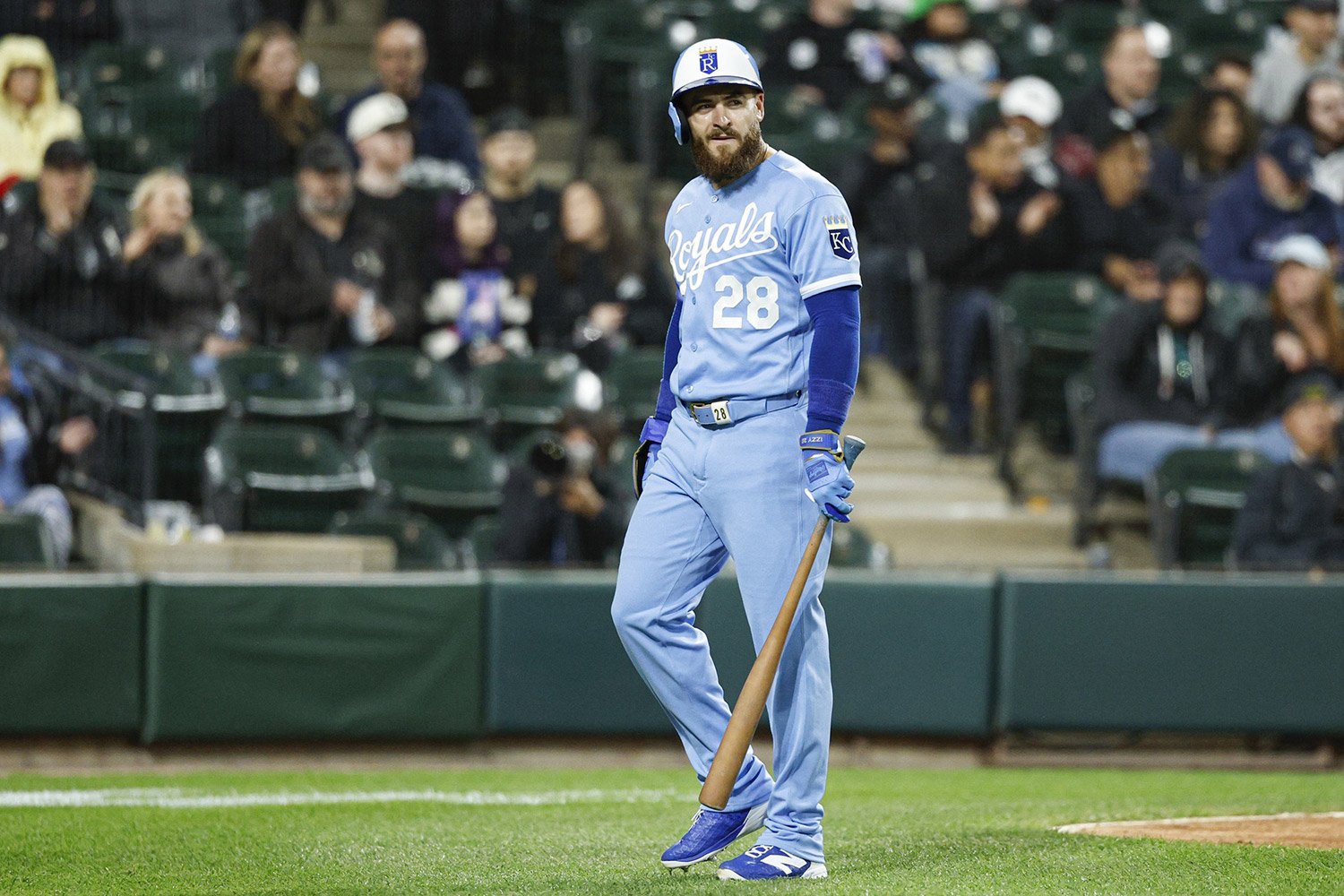 The quote “distance makes the heart grow fonder” is about how separation from a loved one can make the love for them greater. With how the Royals are playing on the road, that quote could not be more true. To put it bluntly, the Royals are the worst team in baseball when it comes to playing on the road. They’ve gone a measly 7-17 while away from the K, which is the worst road record in all of MLB. They’re also on the longest losing streak of any team in the majors, losing all six of their road games so far. But the question is, why are the Royals losing so much on the road, and is there any way to fix it? Bad Against Righties, But Inexplicably Only On The Road Let’s start off with the offense, which has been the main problem for the Royals away from home. Looking at the stats while at the K, the Royals are hitting .265/.349/.436, which are not bad numbers, especially at home. But those numbers take an absolute nosedive when the Royals play anywhere else. The Royals have a league-worst batting average of .213 to go along with a .286 OBP and .336 slugging. Those numbers are abysmal, especially for a team with one of MLB’s biggest stars in Bobby Witt Jr. in the lineup. It gets even worse when you dive deeper. Against right-handed pitchers, the Royals are hitting a league-worst .211, which is the exact opposite of what the team is hitting at home, as they are hitting .279 at home against righties, which is a league-best. The Royals' offense has struggled with scoring runs throughout the season, and that struggle could not be more apparent in their recent road games. On the road so far, the Royals have a league-worst batting average of .174 with runners in scoring position and are hitting .100 with the bases loaded. Those numbers are ridiculously low, and it shows that the Royals’ hitters are anti-clutch in moments like this. The Pitching Fares Better, But Just Barely Pitching, on the other hand, is not as bad as the hitting, but it is certainly not helping the Royals win ballgames. The team has an ERA of 4.63 on the road, which isn’t terrible, but compared to their home ERA of 3.84, it certainly could be better. The pitching staff is also allowing a triple slash of .263/.347/.448, which is not enough to help a struggling offense. What makes this situation worse is that the Royals have relied on their pitching to get them through rough patches like this, but now that the pitching is struggling, the Royals don’t really have that to lean on. With Cole Ragans and Ryan Bergert both out, the Royals' pitching depth certainly hasn’t panned out the way that they had hoped. The only starting pitchers who have had success this season are Michael Wacha and Stephen Kolek, but that success won’t last. The bullpen has seen success from Daniel Lynch IV, Lucas Erceg, and Eli Morgan, but everyone else hasn’t really stepped up like they did last season. So where do the Royals go from here? There are a few options that the Royals could go with. The first, and the one that seems the most likely, is to keep things where they are and just trust that the players you have now will improve over the course of the season. This plan has a better chance of not working than working, but the roster is what it is, and the fans will have to put up with it for the foreseeable future. Another option is to make some moves at the deadline. JJ Piccolo can use some of the pitching depth he has at his disposal and trade it for a reliable bat who excels in driving in runs or more bullpen arms. The third, and most drastic option, is to blow it all up and trade players who could give you the most value (Wacha, Ragans, Witt, Kyle Isbel, etc.) This option would make more sense if the woes for the Royals were to continue, but we’re still in May, so the chances of this happening are slim to none. However, there is a lot of value you could get by making big trades like this. Hopefully, the Royals won’t get to that point and that this team will improve as the season goes on, but only time will tell. View the full article
 -
 The Kansas City Royals' offense has been a frustrating dilemma this year. On one end, the Royals rank decently in some categories. According to Fangraphs, they rank 15th in batting average, 15th in OPS, and 18th in OBP. Those are serviceable numbers, especially given where they were as an offense at the beginning of the season. Conversely, Kansas City ranks 23rd in runs scored, 19th in ISO, and 19th in wRC+. Thus, it's no surprise that the Royals are 20-27 heading into Monday's home game against the Boston Red Sox (Update: they lost 3-1 and are now 20-28). They just have not gotten enough consistent production to be a winning ballclub at this time. Many different solutions have been proposed by Royals fans: Vinnie Pasquantino and Salvador Perez hitting lower in the order, more at-bats for Jac Caglianone, and Maikel Garcia out of the leadoff spot are a few that make a lot of sense. However, one intriguing idea that hasn't been thrown out too much is giving more at-bats to veteran outfielder Starling Marte. The Royals signed Marte late in Spring Training, and he's primarily been utilized as a bench player by manager Matt Quatraro. Marte has only played in 18 games and accumulated 48 plate appearances this season. That said, when he has played, the 37-year-old outfielder has been productive. He's slashing .302/.354/.372 with a .726 OPS and 104 wRC+ this season. He hasn't hit a home run, and his ISO and BB/K ratio are paltry at .070 and 0.23, respectively. However, he has shown the ability to make effective, hard contact this year, as reflected in his Statcast percentiles via TJ Stats. Could Marte provide the Royals the spark they need with more regular at-bats? Or is Marte's stat line just a product of a hot start that is due for regression soon? Marte Hitting Better Against Righties Than Lefties This Year (But Has That Been Typical?) With only 48 plate appearances this year, Marte doesn't have a huge sample size to work with. However, it's been interesting to see his splits this year, as they contrast with how Quatraro has utilized him. Of his 48 plate appearances, 34 of them have come against lefties. He typically has been the right fielder against left-handed starting pitchers, with Caglianone getting the day off in right field against southpaws. However, while Marte is hitting .300 against lefties, his OPS is only .686. Conversely, his OPS against righties is .819 (albeit in just 14 plate appearances). When looking at his Statcast percentile splits via TJ Stats, he also seems to be hitting the ball harder and with more exit velocity against lefties than righties as well. Against righties, Marte chases less (20.8% O-Swing% against righties; 37.3% O-Swing% against lefties), launches the ball better (44.4% LA Sweet-Spot% against righties; 33.3% LA Sweet-Spot% against lefties), has a better hard-hit rate (55.6% hard-hit rate against righties; 23.8% hard-hit rate against lefties), and barrels the ball more as well (22.2% barrel rate against righties; 4.8% against lefties). Thus, Marte may not exactly be the platoon "bat" that Quatraro thinks that he is, based on the various levels of splits data. What's also interesting about Marte is that he was better against lefties last year, and we're seeing an inverse of what he did against pitchers splits-wise with the Mets. That is evident in his Statcast splits percentiles from 2025 via TJ Stats. Against lefties, Marte had a better hard-hit rate (50.5% to 32.8%), a better pull air% (14.4% to 9.5%), and a better xwOBA (.324 to .301). That said, it wasn't like the difference between Marte's performance against righties and lefties was dramatic (like Vinnie Pasquantino this year, for example). Marte's wOBA was .321 against lefties and .329 against righties, and his barrel rate was 6.8% against lefties and 8.0% against righties. Thus, I am not sure Marte should be seen as simply a hitter who should only hit against lefties, like a Lane Thomas, for example. Here's a look at Thomas' Statcast splits this season with the Royals, and the difference in his performance against lefties and righties is quite dramatic. Thus, based on the data, one could argue that Marte deserves more at-bats this season. For him to do that, he needs to get more plate appearances against righties and shouldn't be seen as just a left-handed pitcher's only option, whether that's in the starting lineup or off the bench in key pinch-hitting spots. Marte Showing Positive Bat Speed and Exit Velocity Trends This Year There's no question that at 37 years old, the Dominican-born native is showing some declining skills. According to Baseball Savant, Marte ranks in the 8th percentile for sprint speed. That said, bat speed, which can decline with age, has actually been pretty decent. Marte is averaging 72.5 MPH on his swings, which ranks in the 60th percentile and is only 0.1 MPH lower than a season ago. His fast-swing rate, which measures swings of 75 MPH or higher, is down over 10 percent from a year ago. It was 33.2% in 2025 with the Mets, and it's 23.1% this year with the Royals. However, he's been showing a positive trend in bat speed over the course of the 2026 season, despite a tough stretch, as shown below in his bat-speed rolling chart. He saw a decline from his 35th competitive swing to roughly his 50th competitive swing. After his 50th swing, he's seen that bat speed increase, and he's been above the MLB average in bat speed since the 57th-58th competitive swing. In addition to better bat speed as he has gained more at-bats, the same could be said of his exit velocity on batted balls, which has spiked as well after some initial valleys at the beginning of the season. Marte started the year well with his first 14 batted balls being above-average in terms of exit velocity. However, that exit velocity declined dramatically from the 14th batted-ball mark to the 22nd batted-ball mark. He's turned things around since that 22nd batted-ball mark and has now been back above league average in terms of exit velocity. That's a sign that he's not only swinging the bat faster, but squaring up and making better contact as well, with more plate appearances. As a result, his xwOBA rolling trend, which is a better indicator for future success than wOBA, is moving up in the right direction, showing that he could only be more productive with more games played. Here's a look at Marte's xwOBA rolling chart this year, via Savant. Granted, Marte didn't do well in his lone pinch-hit at-bat on Monday night in the Royals' 3-1 loss, as he struck out against Red Sox closer Aroldis Chapman. That lowered his batting average to .295 and his OPS to .711. Still, despite that strikeout, his xwOBA chart is trending in the right direction and has sat well above the league average since his 35th plate appearance this year. Who Does Marte Take At-Bats Away From? If Marte is going to receive more at-bats, who sits as a result? I would argue that Salvador Perez and Isaac Collins should be the main ones affected by an increase in Marte's at-bats. The latter makes the most sense when looking at how Royals outfielders have performed this year so far. In terms of Perez, Marte would make sense as a guy who can be in the DH spot and give Salvy a night off against righties with Jensen behind the plate. Salvy is struggling this year with a .201 average and .590 OPS in 192 plate appearances. Conversely, Salvy's splits against lefties have been way better than against righties. He is hitting .227 with a .709 OPS against lefties. Against righties? He's only hitting .197 with a .556 OPS. The Statcast splits share a similar story, as shown below. I think it's perfectly reasonable for Marte to replace Perez at DH once a week, at the very least, maybe two, depending on the pitching matchups that particular week. That preserves Salvy's stamina and gives Marte more opportunities for at-bats against righties. Another option would be to replace Collins once a week with Marte in left field. Marte may be a riskier defensive option (though Collins' -3 OAA this year is pretty brutal), but Collins has been a mixed bag against righties this year. The .244 average and .740 OPS against righties are great, especially compared to his .178 average and .512 OPS against lefties. However, the Statcast percentiles show that Collins is a little more strikeout-prone against righties than lefties. His whiff rate against lefties is five percent lower, and his Z-Contact% is 6.7% higher as well. He also has a 50% hard-hit rate against lefties compared to 40.7% hard-hit rate against righties, as well as a 91.1 MPH average EV against lefties, which is 2.5 MPH higher. I'm not saying Marte should completely replace Collins. However, once a week seems sufficient, especially since Collins can be very hot and cold at times at the plate. He is hitting .130 with a .174 slugging percentage in his last 24 at-bats. The former Brewers outfielder could use a day off, with Marte taking his place in the lineup and in left field. It's not a major change, which is what the Royals need, especially with Vinnie and Salvy not looking dramatically better at the plate lately. Kansas City needs an impact hitter, and that likely will have to come through the trade market. That said, the Royals need all the positive production they can get on their active roster, especially since it's too early to make a trade. Quatraro might as well roll the dice and see what else Marte has left in the tank, especially against right-handed starting pitchers. View the full article
 -
 Box Score: Starting Pitcher: Kendry Rojas: 4 IP, 2 H, 0 R, 1 BB, 3 SO - 46 Pitches, 31 Strikes, 10 Whiffs = Average 4-Seam Velo: 96.0 MPH Home Runs: Josh Bell 2 (5) Top 3 WPA: Bell (0.30), Rojas (0.22), Eric Orze (0.09) Win Probability Chart (Via BaseballSavant): You Win Some... The Twins got some really encouraging performances Monday night. Josh Bell hadn't homered in over a month and was doing a frighteningly good impression of a player who's completely cooked. He entered the game batting .176/.176/.235 for the month of May, with 20 strikeouts and zero walks in 51 plate appearances. Bell has always been a streaky hitter, but that level of lostness is uncharted territory. Were it not for the concurrent death spirals of the careers of Matt Wallner and Royce Lewis, Bell might have been a focus of more conversation in recent days as someone who could lose their roster spot, or at least be placed on the IL with some semi-phantom injury. Almost any time such a thing is happening, though, there is at least some reason for it behind the scenes—and, therefore, more hope than you might guess, at a glance. In Bell's case, the mitigating circumstance is that he's been sick for much of this month, dealing with fluid loss and sapped strength. Players play through illness all the time, and it can't be used as an excuse for poor performance, so they'll rarely even admit to the issue. It does affect performance, though, just as it affects anyone else when they try to slog through a workday with a head cold or a stomach virus. Beginning to feel like himself again, perhaps, Bell broke out of his funk in a huge way Monday night. He hit two homers that were relatively low liners, but on which there was still no doubt of the outcome off the bat, and he lashed what turned out to be an important RBI single in the bottom of the sixth. A better Bell would go a long way to getting this Twins offense into the consistent groove they've sought all year. Meanwhile, Kendry Rojas put on an equally impressive show. His command was better than it's been in any of his other big-league outings, as he hammered away on the glove side of the plate with his four-seamer and showed the ability to drop in his changeup for strikes. He pitched just four innings, but only needed 46 pitches to do it and induced 10 whiffs by the visiting Astros. Though he'll have to find more consistency with his slider to replicate this in the future, Monday was a big step in his development as a potential starter. ... You Lose Some... It was inevitable, and is inarguably what's best for the team, but that probably won't give Simeon Woods Richardson a great deal of solace. He's (semi-)officially out of the starting rotation now, after the team plainly planned a piggyback of Rojas and Woods Richardson Monday night. Rojas left after four frames so that Woods Richardson could make a multi-inning appearance in relief, and it was nice that he was protecting a lead when he came in—but that's the kind of thing you do to emphasize how important a guy's new role is, when both you and he know his new role is a smaller and less important one. Woods Richardson only got one inning in, as it happened, because of the weather's disruptive influence on the game. He stayed on the plate, though he didn't have command of his curveball. Clearly pacing himself for an almost-normal outing, he didn't tap into the extra velocity the team surely hopes he might access as a reliever, but it was a first appearance in what's likely to be his new standard gig. It went fairly well, and Woods Richardson took the right attitude. Far, far more worrisome for the Twins than Woods Richardson's loss of a job is the danger that they might have lost their best player for a little while, on about as innocuous a play as you can imagine. After fouling off a pitch on which his bat broke, Ryan Jeffers initially stayed in the game—but two pitches later, he called for the trainer and departed. After the game, the team said Jeffers was being evaluated for a left wrist sprain. Though catchers play through dings that bad and worse, this figures to sideline Jeffers for at least a short time. If it's any more than a very mild sprain, it could (and probably should) land him on the injured list; no one's wrist ever got better by catching 120 pitches a day averaging 90 miles per hour. The truth, though, is that losing Jeffers for any meaningful stretch would mark the end of even half-hearted hopes of the Twins competing this season. He has a team-best .949 OPS. He's garnered the respect and trust of the pitching staff, thin though that group might be. Without Jeffers, even a hot streak from Bell wouldn't make this a very robust offense, and (despite Victor Caratini's ABS wizardry) they'll probably lose a bit on the run prevention side, too. It's breath-holding time—although, come to think of it, you were probably already holding your breath while you waited to see how long Byron Buxton will be sidelined by his hip flexor problem. Ok, let it out. Catch a few deep gulps of air. Now: hold your breath again. ... And Some Days it Rains. The game was delayed by nearly two hours right at its midpoint, with the Twins up 3-0 in the bottom of the fifth. You can make a pretty strong case that it just should have been banged, and the Twins declared the winners; it was official once they got through the top of the fifth. In some future version of the league, mid-game rain delays of more than 90 minutes will probably be banned, and we'll all be better for it. Baseball is an outdoor game, which is a wonderful thing. We're meant to live in contact and conversation with nature, and not to conquer it outright. Sometimes, it's ok to let Mother Nature win. This is a level of philosophizing that would make both Rob Manfred and whoever's running the MLB Players Association these days puke, but it's also pragmatic. Neither fans nor players benefit from long rain delays, and despite your wisecracks to the contrary, they're not moneymakers for teams, either. What's Next The Astros and Twins continue their three-game set Tuesday night, under clearer skies—but it's going to get chilly, with temperatures dipping into the 40s by the late innings. Lance McCullers Jr. (2-3, 6.86) gets the ball for the visitors, while Zebby Matthews (1-0, 0.00) makes his second start of the year for the Twins. First pitch is at 6:40 PM CT. Bullpen Usage Chart THURS FRI SAT SUN MON TOT Morris 0 24 0 12 16 52 Orze 0 0 26 0 19 45 Topa 0 0 0 11 31 42 Rogers 0 23 0 8 11 42 Gómez 0 7 11 0 11 29 Banda 0 8 0 18 0 26 Garcia 0 0 0 22 0 22 Woods-Richardson 0 0 0 0 18 18 Adams 0 0 0 0 0 0 View the full article
 -
 Transactions: Biloxi Shuckers released RHP Joe Corbett. RHP Joshua Quezada assigned to Wilson Warbirds from Nashville Sounds. Corbett, 29 years old, was signed in February and had split 2026 between Nashville and Biloxi. A 10th round pick by the Rangers in 2019, some background on that winter signing by the Crew can be found here. As for Quezada, it was quite a week, and we spotlighted that within our Minor League Forum's Transaction Thread. It's not a new transaction, but we are blessed to have a source to provide various Brewers organizational injury-related updates, and we learn more about Nashville corner infielder Luke Adams' still-pending status here. Each day, we kick off a discussion thread, almost an "as it happens" thread, on our Minor League Forum. With the usual light Monday schedule of only rookie-level games (Dominican Summer League yet to begin), that thread is often brief. The latest Monday thread contained updates on the Nashville stolen gloves situation, and yes, even pre-season Dominican action. Final: ACL Mariners 11, ACL Brewers 8 Box Score and Game Log The 4-8 Maryvale club scored eight runs for a consecutive game, both losses, though it was a lovely 84-degree evening temperature at first pitch, It was an interesting pairing to begin the game on the mound, two 20-year-old's working their way back from summer 2024 Tommy John surgeries. RHP Hayden Robinson, drafted in the 14th round in 2023 out of a Louisiana high school, dazzled in six Maryvale appearances in 2024 before suffering his elbow injury, and somewhat remarkably was pitching again for the A-Crew just a touch over 12 months later, leading us to believe that he underwent the still very serious but less invasive internal brace form of TJ, making seven brief starts in 2025. This was his second start this summer, and the stat line shows Robinson will need to push forward past early results, as assuredly he will. LHP Joey Broughton tore his UCL just prior to the 2024 draft, allowing the Brewers to pluck him with a 13th round pick out of a Michigan high school and ink him to a well over-slot $535,000 bonus away from a University of Pittsburgh commitment. Broughton, unlike Robinson, did not pitch in the regular season last summer, making his pro debut on May 5th. This was his 3rd appearance. After a superb pro debut, 19-year-old RHP Ma'Kale Holden has walked eight and plunked another one over 6.2 innings in his two follow-up appearances. 20-year-old Venezuelan RHP Ismael Yanez is a 4th year pro and a rare 3rd-year Arizona League Brewer. The pair wrapped up mound work in this game, as your box score review showed. Maryvale baserunners were successful on seven of eight SB attempts, with RF Alexander Frias leading the way with three without being caught. Frias was able to run wild because of a double, single, and two walks. Frias was replaced defensively in the bottom of the 8th, after he had just contributed in a three-run Maryvale top of the inning that closed the gap to what would be the final 11-8 score. No indication in the game log that this was injury related. Nine of Frias' 17 hits thus far have gone for extra bases; he'll be playing in this beast mode all season at just 18 years old. It's notable that Frias' mid-level bonus of $350,000 is shaping up as a bargain. More expensive to sign, CF Brailyn Antunez ($900,000) and LF Kenny Fenelon ($1.3 million) each had two base knocks that included a double, for Antunez, his 1st two-bagger (his other two XBH's are home runs), 4th double for Fenelon (6th XBH). $1.1 million infielder Cristopher Acosta shifted from short to third base, he singled and walked as he tries to overcome a dreadful start at the plate. Review the error section of the box. Both teams were sloppy leading to unearned runs, with the Crew more heavily penalized. The team is in action again Tuesday evening, along with the rest of the organization. Both the Sounds and Timber Rattlers play at 10:05 Central on Tuesday, so I'll be sampling some Jeff Hem and Chris Mehring during my four-hour drive to a New Hampshire getaway this morning. Hoping you all enjoy your week, thanks for making the Link Report part of your day. Organizational Scoreboard including starting pitcher info, game times, MiLB TV links, and box scores Current Milwaukee Brewers Organization Batting Stats and Depth Current Milwaukee Brewers Organization Pitching Stats and Depth View the full article
 -
Nolan McLean Has Almost No Weaknesses As A Rookie
DiamondCentric posted an article in Grand Central Mets
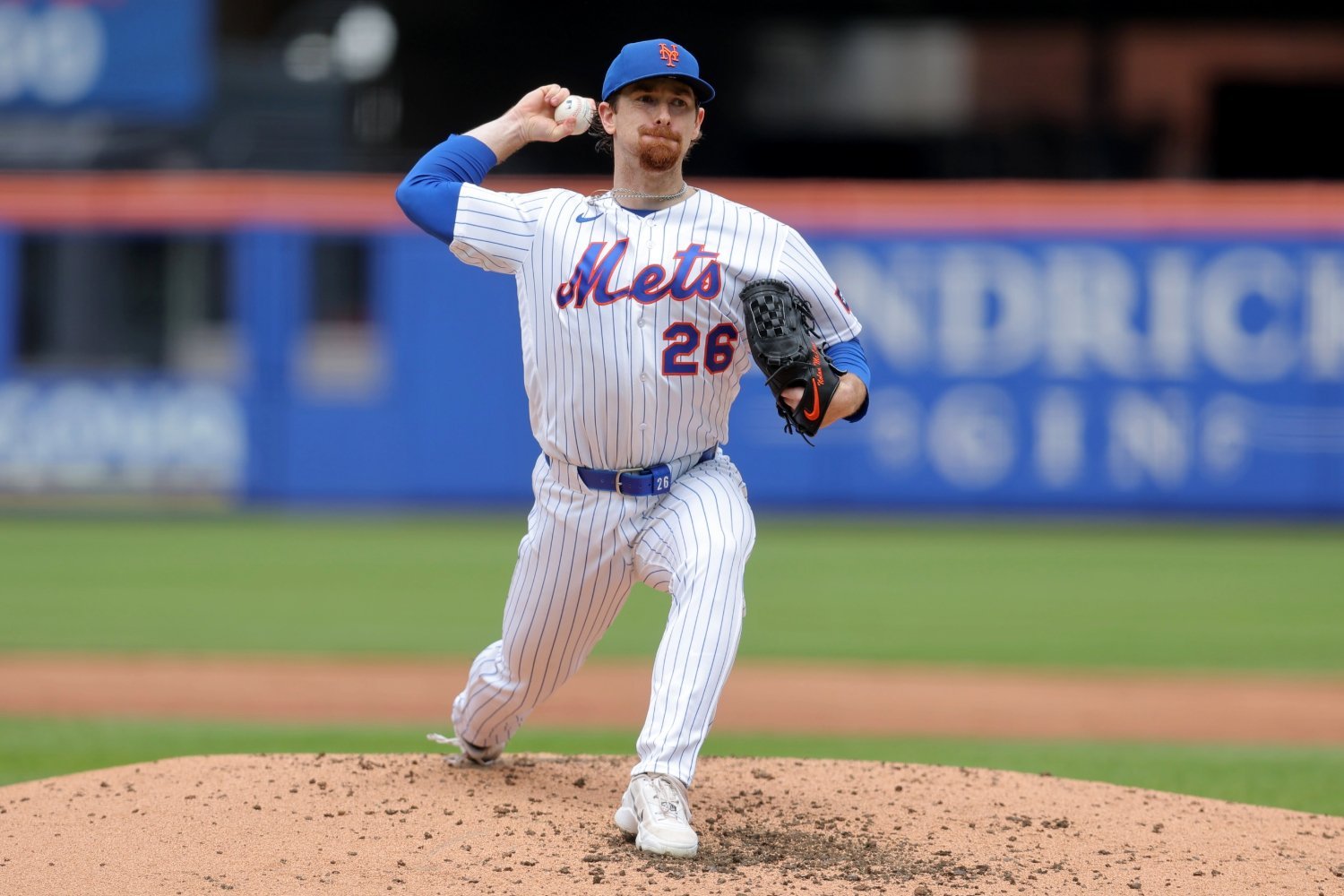 It probably shouldn’t be a shock to anyone to be hearing this, especially after how he looked last year, but Nolan McLean is off to a remarkable start in 2026. Let’s take a deep dive into his advanced analytics to break down why he is giving hitters such fits, as the 24-year-old does have a unique aspect that not many others possess. Nolan McLean’s Background Nolan McLean was originally a two-way prospect out of Oklahoma State. He actually held the bat over his shoulder until he broke into the upper ranks of the Mets’ farm system, too. The guy had a decent amount of power, but he struck out a lot and started hanging out below the Mendoza line a little too much. Once he started focusing on just pitching, his stuff elevated to a whole new level. An Otherworldly Strikeout Rate McLean broke out last year, logging a 2.06 earned run average and a 5-1 record over eight starts and 41 innings. Bridging the gap between last season and this time around, the 24-year-old righty competed at the World Baseball Classic and once again looks dominant. What makes him such a promising young star? It starts with every pitcher’s favorite stat: the strikeout rate. McLean is living well above the league average, punching out 31.5 percent of the hitters he’s faced to this point. A fastball riding in at an average of just over 95 miles per hour helps, as it has plenty of arm-side movement to go with a sinker that he can break off as well. McLean sports a 32 degree arm angle, meaning he can push plenty of horizontal movement on those primary pitches. Generating Soft Contact McLean may have a high strikeout rate, but it’s no secret that everyone allows contact from time to time. Even some pitchers with high punchout totals get hit around, but does McLean? No. His average exit velocity allowed is one of the better rates in all of baseball at just 86 miles per hour. That puts him in the top 10 percent of all pitchers. He also allows a relatively low barrel percentage, and his hard-hit rate is lower than the league average to complement his assortment of proof that he knows how to control the contact game. Pitch Variety But what’s the weapon that most 24-year-old hurlers don’t have? Along with having a high-octane fastball/sinker combo, McLean is sporting a six-pitch arsenal. He spins that sinker in at 37% of the time, and then it’s a gradual decrease from using the four-seamer 18% of the time to a changeup that gets utilized on just 8% of his offerings. This is the type of arsenal you’ll see some of the elite pitchers build out as they get into their primes. Seth Lugo with the Kansas City Royals is a prime example of someone who developed a deeper arsenal as he got older. But, sometimes, you’ll get the occasional starter who has the velocity AND the mix, like a Paul Skenes or in this case, Nolan McLean. So far, the curveball is his most dangerous offering, as McLean has 22 strikeouts in 29 at-bats finished and has allowed just one hit off of it. That’s a ridiculous .034 batting average against for McLean’s curve. Four of his six offerings have an opposing batting average south of the Mendoza line. Keeping the Ball Out of the Air Is there anything to tweak with McLean’s game? You’d really have to nitpick to do it, but one thing I’ve noticed over a small sample size is a spike in line drive rate. It’s up to 29% from just 20% a season ago. Consequently, the righty has forced just a 42% ground ball rate, so opposing hitters are elevating off of him, but he has so many options and so much movement on his pitches that it still isn’t quality contact. As long as that average exit velocity stays down, he’ll continue to be one of the more dominant pitchers in today’s game. View the full article
 -
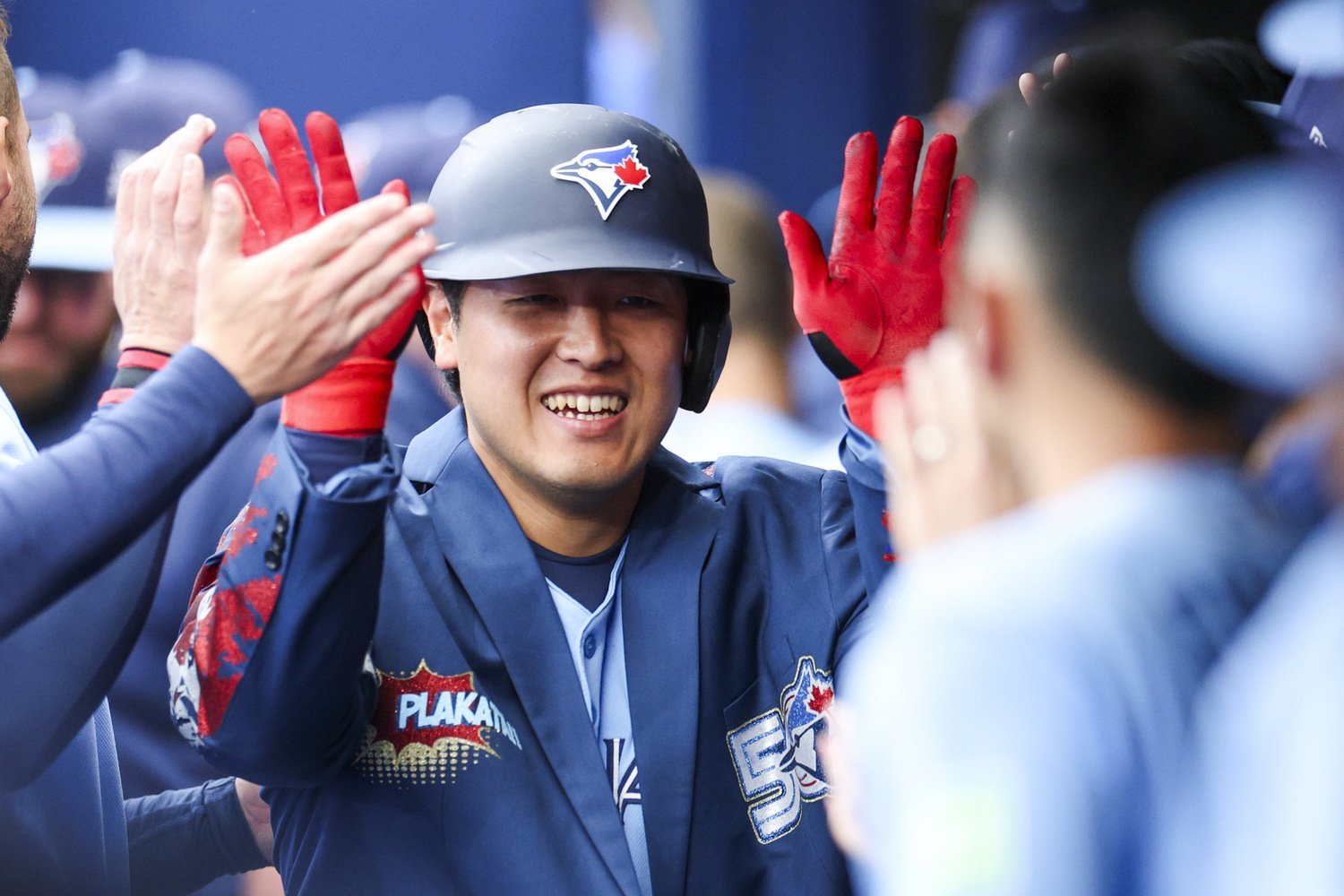 Hitting major league pitching is hard. Hitting major league pitching as a rookie is even harder. Pitchers routinely throw 100+ mph, breaking pitches move just a little bit more, and the challenge extends beyond the batter's box. Even if traditional rookie hazing has mostly disappeared, first-year players still have to adjust to heavier travel schedules, heightened expectations, and performing in front of millions of eyes every night. Kazuma Okamoto is different from your typical rookie. Not only is he dealing with all the aforementioned rookie struggles, but he’s also doing it all while making an adjustment from Japan to North America. That can be a significant adjustment of its own, and it wouldn’t have been a surprise at all to see Okamoto struggle in his first go-around in the big leagues. Not only has Okamoto been impressive, but he’s also already on the shortlist for one of the best rookie seasons in Blue Jays history. The Blue Jays have only had one player in franchise history to win the Rookie of the Year Award (Eric Hinske, 2002), and if Kazuma keeps up his start to the season, he has a real chance to win the award in what is a crowded AL rookie class. Coming into the series against the Yankees, Okamoto is hitting .233/.319/.448, with 38 hits, 10 home runs, and 27 RBI in 44 games played. Good enough for a 116 wRC+ and 1.0 fWAR. Pace that out over the rest of the regular season, he’d be on pace for 134 hits, 35 home runs, 95 RBI, and 3.6 fWAR. Of course, projecting full-season totals in May comes with caveats. Pace assumes health, consistency, and the absence of a prolonged slump, all things that can easily happen over a 162-game season. But just for fun, what would it look like if Okamoto did maintain his current pace? Where would he rank among the best Blue Jays rookies of all time? Let’s take a look. (Note: Rookie status is based on a player’s final rookie-eligible season.) Power Production Home Runs 1. Kazuma Okamoto, 2026 - 35 2. Eric Hinske, 2002 - 24 3. J.P. Arencibia, 2011 - 23 ISO (min. 400 PA) 1. Shawn Green, 1995 - .222 2. Rowdy Tellez, 2019 - .222 3. J.P. Arencibia, 2011 - .219 4. Kazuma Okamoto, 2026 - .215 Hard-Hit Rate* 1. Kazuma Okamoto, 2026 - 54.1% 2. Alejandro Kirk, 2021 - 46.9% 3. Lourdes Gurriel Jr., 2018 - 45.1% *Exit velocity data only goes back to 2015 The home run pace is the obvious headline. Hinske’s franchise record of 24 suddenly looks very reachable, and Okamoto could easily become the first Blue Jays rookie to eclipse 30 home runs. What makes the power production especially believable is that the underlying quality of contact supports it. Okamoto’s hard-hit rate isn’t just good for a rookie; it’s elite by any standard. Overall Production wRC+ (min. 400 PA) 1. John Olerud, 1990 - 122 2. Eric Hinske, 2002 - 121 3. Kazuma Okamoto, 2026 - 116 fWAR (position players) 1. Eric Hinske, 2002 - 4.8 2. Kazuma Okamoto, 2026 - 3.6 3. Cavan Biggio, 2019 - 2.6 The power numbers grab the headlines, but Okamoto has been productive across the board. The 3.6 fWAR he's on pace for would rank as the second-best rookie campaign by a Blue Jays position player. Traditional Stats Hits 1. Alfredo Griffin, 1979 - 179 2. Eric Hinske, 2002 - 158 3. Dámaso García, 1980 - 151 4. Kazuma Okamoto, 2026 - 134 RBI 1. Kazuma Okamoto, 2026 - 95 2. Eric Hinske, 2002 - 84 3. J.P. Arencibia, 2011 - 78 Strikeouts 1. Kazuma Okamoto, 2026 - 187 2. Eric Hinske, 2002 - 138 3. J.P. Arencibia, 2011 - 133 The swing and miss is still present, and with it, the strikeout total will likely be a rookie record. But in the modern game, that trade-off becomes easier to live with, given elite power production. And Okamoto has provided plenty of that this season. Historically, the Blue Jays haven’t produced many offensive debut seasons at this level. Hinske remains the franchise’s only Rookie of the Year winner, and even some of the organization's best homegrown hitters (Olerud, Vladimir Guerrero Jr., Jesse Barfield, George Bell) didn't immediately produce at this level. If Okamoto simply maintains his current level of production, he’ll have a case for one of the best rookie seasons in franchise history. There is also reason to believe that Okamoto’s numbers could be even better. On pace numbers take his 44-game season so far and project them over the rest of the season, but Okamoto’s season can look incredibly different depending on where you split it. Despite a strong showing in his first week, Okamoto's season started relatively poorly. He was chasing too much, and by April 17, he was hitting just .188/.263/.290 with two home runs and four RBI. The following day, Okamoto made some changes at the plate, including moving farther back in the batter’s box (more on the adjustment here). That tweak has given him more time to catch up to velocity and recognize breaking balls while also helping him cover pitches on the outer half more effectively. From that point on, he started raking. Okamoto has hit .266/.358/.564 with eight home runs and 24 RBI since he made that change. The real answer is that Okamoto is probably not the player he’s been post-stance change, and he’s probably not the player he was before; the true talent lies somewhere in the middle. But if you believe that Okamoto is closer to the latter than the former, then those Blue Jays rookie records could be even more in reach. Now, as challenging as it is to be a rookie, Okamoto was expected to be an impact offensive player off the bat. He’s 30 years old, and unlike a typical 22-year-old rookie, he has eight seasons of professional baseball under his belt. Beyond the individual accomplishments, Okamoto’s success could have broader implications for the organization. Their recent success could make the organization more comfortable shopping in the NPB market, and the Blue Jays have already ramped up their overseas scouting in recent offseasons. It may lead to increased interest in players like Hiromi Itoh and Teruaki Sato, who seem likely to be posted for the 2027 season. Kazuma Okamoto has already put together an outstanding start to his MLB career, and if he can keep this up, Blue Jays fans may be witnessing one of the greatest rookie seasons in franchise history. Stats, rankings, and paces updated prior to games on May 18. View the full article
 -
Ceddanne Rafaela Is Officially A Red Sox Building Block
DiamondCentric posted an article in Talk Sox
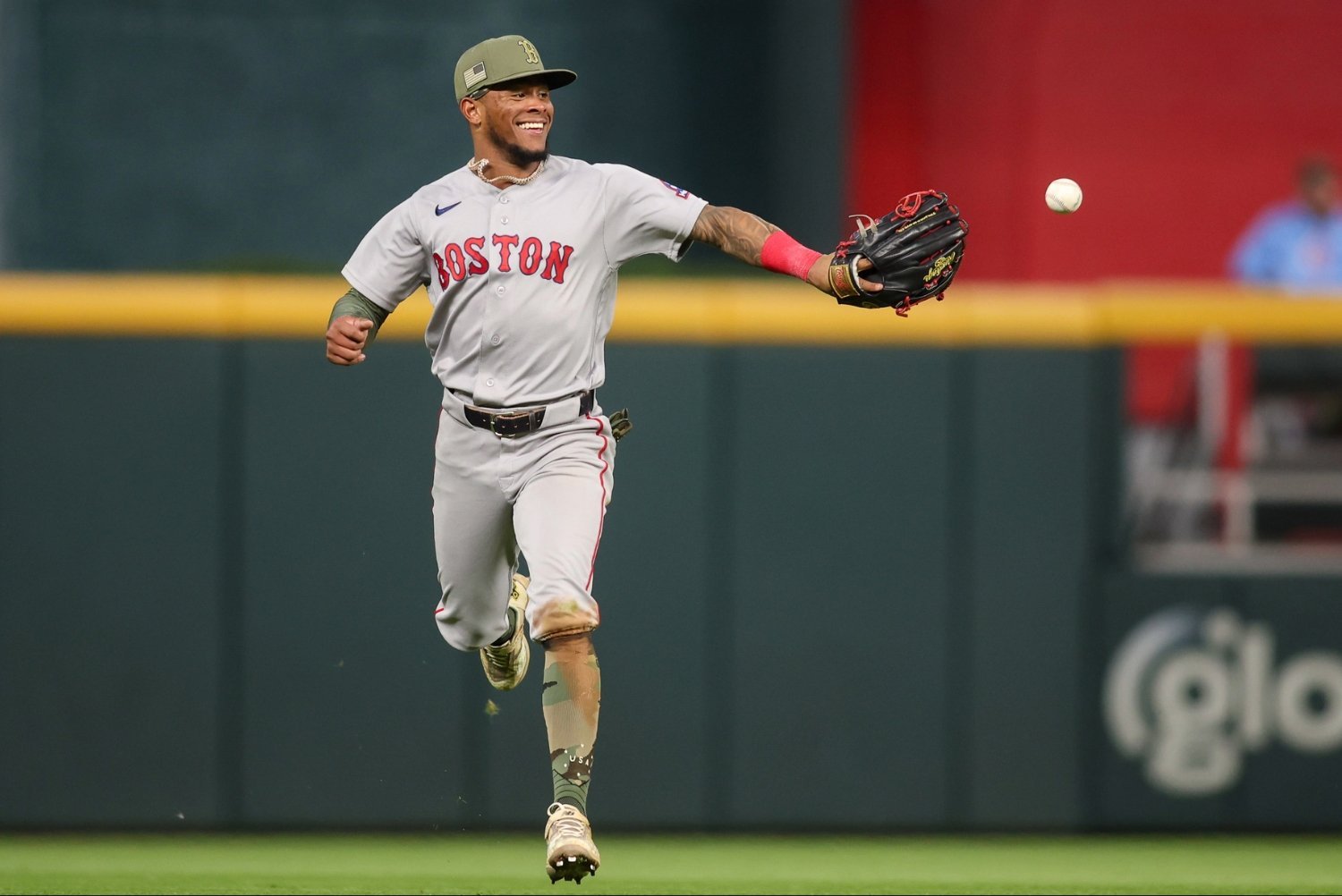 The Boston Red Sox have all the makings of a strong foundation on the 2026 roster, they just need everything to come together. Roman Anthony was playing well below his ability when a right wrist sprain sidelined him on May 7; Marcelo Mayer has been playing Gold Glove-caliber defense at second and his bat seems to be slowly heating up; Wilyer Abreu has been the best offensive player on the team and is squarely in the conversion to take home a third straight Gold Glove in right field. The name flying under the radar when it comes to foundational pieces, though, is Ceddanne Rafaela. He signed an eight-year, $50 million contract before the 2024 season that will keep him around through 2031 and is only paying out an average annual value of $6.25 million a season. Talk about an absolute steal. The player he’s most consistently compared to, the Cubs' Pete Crow-Armstrong, signed a six-year, $115 million contract before the 2026 season. If Rafaela keeps playing like he currently is, his contract could be the steal of the league and he should be viewed as a major building block for this franchise moving forward. In the easiest of all discussions, Rafaela’s defense is arguably second to none in Major League Baseball. He’s as sure of a thing as you can be in center field and the discussion about moving him to second base ever again needs to be over. According to Baseball Savant, Rafaela currently is in the 99th percentile with an astonishing +6 Outs Above Average and the 81st percentile in Arm Strength. His expected catch percentage is at 87%, but his actual catch percentage outpaces that at 93%. If there’s a ball hit to center field, you can just feel that Rafaela is going to be able to track it down in a way that looks routine but is often anything but. The start of the season was flukey, and he misplayed a few balls that tanked his defensive metrics, but he’s shined since then and has all but completely righted the ship. I had the opportunity to see this catch in St. Louis in person and no one in the stadium believed he’d actually get to this ball, let alone make the catch. Even Cardinals fans gave him a standing ovation as he ran off the field at the end of the inning. What’s been most surprising for Rafaela though, is his offense has finally come around. He’s currently slashing .284/.354/.432 with a .352 wOBA, 120 wRC+, and 1.4 fWAR. Interim manager Chad Tracy has moved Rafaela up in the lineup since Alex Cora was fired, but the center fielder has stayed solid and produced from any position in the lineup he’s been asked to hit in. What is arguably more impressive is that the swing-and-miss has started to leave his profile; his strikeout percentage is 22% so far this season, but his walk rate is the highest it’s been in his career at 6.1%. While that’s not an ideal figure, you’ll take it on a guy who, up to this point, was willing to swing at anything that was thrown his way at the plate. His plate discipline has been so much better in 2026 and no matter which manager has been calling the shots, it’s obvious that they trust him to come through when it matters most. Plus, his clutch gene has been on display again this season. With incredible defense and an improved offensive profile, Ceddanne Rafaela may be the biggest bargain on the roster right now. His contract is incredibly team friendly and he’s playing way above how much money he’s making. Don’t be surprised if Craig Breslow receives calls around Rafaela if the team continues this downward trajectory, but it would be foolish for the front office to circle him as a piece worth moving. Ceddanne Rafaela will likely be an All-Star for the Red Sox this year and for good reason. He’s been showing out in all facets of the game in 2026. He’s a foundational piece as the team starts to turn their attention to 2027 and beyond, and his contract means the team has more money to allocate for other names to bring in to help make the team better and, hopefully, compete for a World Series championship in the near future. View the full article
 -
Marlins have historic night against baseball's best team
DiamondCentric posted an article in Fish On First
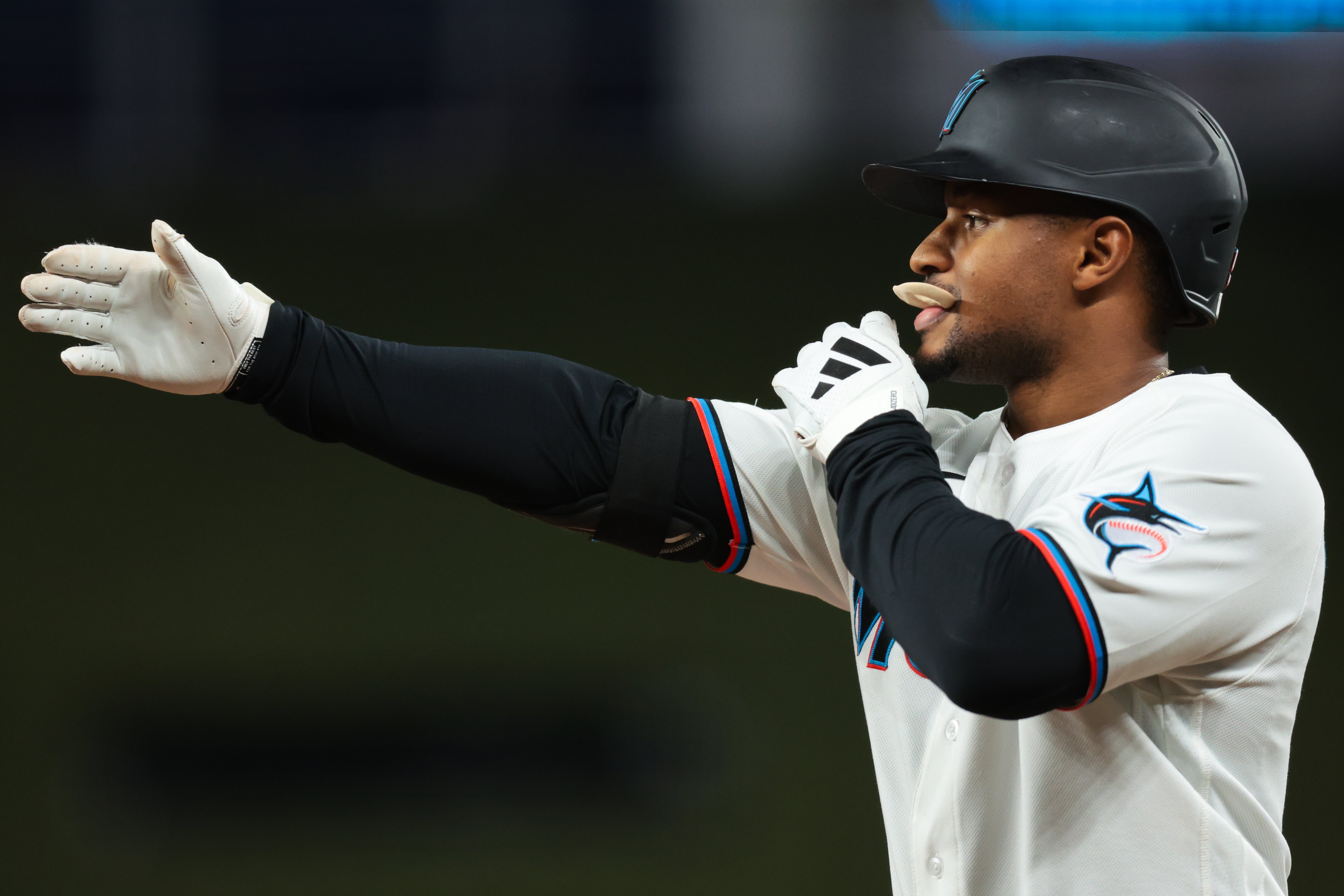 MIAMI, FL — The mighty Atlanta Braves weren't so mighty on Monday night against the Miami Marlins, slaughtered by a final score of 12-0. For the Marlins, it was their highest-scoring game of the 2026 season and they produced all of that offense within the first five innings. They accomplished this against a Braves team that holds a huge lead on top of the National League East and entered the game with Major League Baseball's highest winning percentage. "A lot of really good at-bats today," Marlins manager Clayton McCullough said. "It was nice to see us string a bunch of them together to create traffic, and then be able to cash in. (Javier) Sanoja's grand slam was probably the icing on that. Those couple innings I think as a group we really just put together high-quality at-bats." Javier Sanoja, who going into the previous series against the Tampa Bay Rays had only two hits during the month of May, came out of the Trop with a multi-hit game, both doubles, now followed by his first career grand slam. "You get off to a nice start during the year, then you hit a rough patch," McCullough said. "I think that's what Javi is getting back to, not try to swing yourself out of every plate appearance to make up for a previous plate appearance or a previous stretch of at-bats. The ability to like make contact is always there, and at times, it can be a detriment where you get yourself out." Sanoja became the ninth player in Marlins history and the first since Justin Bour (June 10, 2016 at Arizona) to hit a grand slam while batting ninth in the lineup. He also became the fourth non-pinch-hitter to hit a grand slam while batting ninth in the lineup, joining Enrique Hernández, Dontrelle Willis and Chris Hammond. Xavier Edwards followed Sanoja and hit his fifth home run of the season, marking back-to-back homers for the Marlins in the bottom of the fifth inning, making it a 12-0 game. His homer was off left-handed pitcher Aaron Bummer, marking his third home run off a left-handed pitcher. Sanoja and Edwards became the second pair of Marlins teammates in franchise history to hit back-to-back home runs with the first homer being a grand slam, joining Derrek Lee and Charles Johnson (April 7, 1998 at PHI). Rookie catcher Joe Mack enjoyed his best night at the plate since being recalled by the Marlins earlier this month. His RBI groundout opened the scoring in the second inning. Including a single and a bases-loaded walk later on, he drove in four total runs after entering Monday with only two through 12 career games. McCullough called it "his best collection of at-bats in a game." "Today was actually was pretty good," Mack said. "Having that good lead allowed me to slow it down, but the game really hasn't sped up on me all too much. Just being able to control it and kind of take a deep breath when you need to is definitely a big help." Mack is now slashing .225/.262/.300/.562 with six RBI and a 56 wRC+. It's been his defense that has certainly impressed, but the bat seems to be coming around as he has a hit in three straight games. Provided with plenty of run support, Max Meyer showed no mercy against the Braves. He tossed six innings of two-hit ball, striking out six. His season ERA is now down to 2.85 through 10 starts this season. Although he threw his fastball more than any other pitch (31%), it is his slider and sweeper that continues to be dominant. He had six whiffs on the slider and four of his six strikeouts came on the sweeper. Meyer through 10 starts now has a 2.85 ERA, 3.06 FIP, 10.06 K/9 and 3.19 BB/9. He is the only qualified starter in baseball who has yet to suffer a loss this season. He is also the sixth pitcher in Marlins history to not be charged with a loss through 10 starts to begin a season. The Marlins are now 7-3 when Meyer takes the mound for the Marlins. "He just continues to show the pitches and how his mix and everything has really come together," McCullough said. "He's such a better pitcher on the mound, but I think even the maturity was obscene from him, and he's just able to handle anything that comes his way during a game and just kind of put it behind him and keep going." Nearly six years removed from being selected with the third overall pick of the 2020 MLB Draft, Meyer is truly beginning to live up to the hype. This was the first time since 9/17/23 that the Marlins have defeated a team by 12 runs or more. It also marked the first 12-0 win in franchise history. With the win, the Marlins are now 22-26, four games under .500 and with a chance for a series split on Tuesday with Braxton Garrett taking the mound. For the Braves, it'll be Martin Pérez. First pitch is at 4:10 pm on Marlins.TV. View the full article
