


DiamondCentric
-
Posts
2,631 -
Joined
-
Last visited
Never
Content Type
Profiles
Forums
Events
News
Tutorials & Help
Major League Baseball Videos
Guides & Resources
Store
Downloads
Gallery
Everything posted by DiamondCentric
-

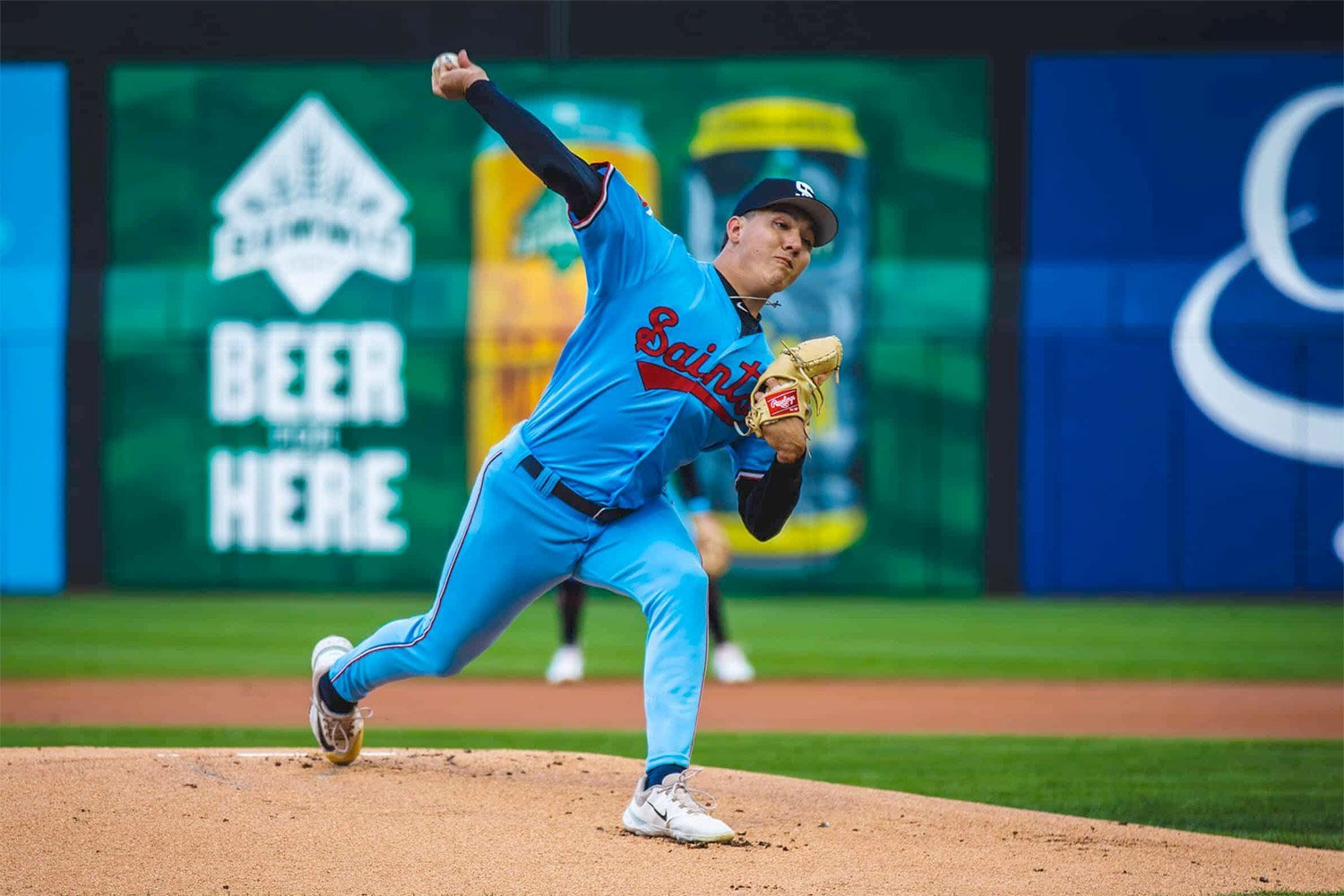 Twins Daily recently held a public vote on our top 20 prospects ranking, and the newest addition, coming in ranked 16th overall, is right-handed pitcher Ryan Gallagher. Who is Gallagher, and why is he climbing prospect lists? Bats: L / Throws: R Age: 23 Stats in 2025: (High-A, Double-A) 121.2 IP 133 SO 4.07 ERA 1.21 WHIP Rule 5 Eligible: After 2028 Season ETA: 2027 Ranking to Start 2026: NR What’s to Like It’s interesting to look at Gallagher’s raw stuff because he doesn’t overpower hitters, throwing his fastball at approximately 91 mph. While he doesn’t throw super hard, he is still intriguing due to his command and his changeup and slider, which he uses both to get swing and misses. He was acquired at the 2025 trade deadline from the Chicago Cubs along with Sam Armstrong for utility player Willi Castro. In 2025, he pitched with the Cubs High-A and Double-A teams before finishing the year with the Twins Double-A team in Wichita. Across those three stops, he threw 121.2 innings, racking up 133 strikeouts, and having a 4.07 ERA and 1.21 WHIP. At 23 years old, he is still being used as a starter but could end up as a multi-inning reliever, similar to how the Twins have used other prospects in recent years. Gallagher offers a bit more upside and is someone to keep an eye on if he can remain a starter throughout his time in the minors. What’s Left to Work On Gallagher will need to continue to be a strike thrower if he hopes to have success. He has walked six batters over his first seven innings in Triple-A, but his history of throwing strikes suggests it will not be a big problem going forward. Gallagher has a repeatable delivery and is someone who could be used in multiple roles, either as a starter or a multi-inning reliever. Proving his worth as a starter at Triple-A will be key in him not moving into a role that others like Pierson Ohl or Travis Adams have slid into, which isn’t a bad role, but not one he is likely to want to take if he, or the Twins, had the choice. What’s Next? Gallagher is currently at Triple-A St. Paul, so he is on the doorstep of the major leagues. He will continue to develop as a starter, but the key will be to keep throwing strikes and gain more experience against higher-level competition. He will likely spend the majority of the year at Triple-A with a chance to make his major league debut, depending on team need and his own personal development over the next few months. Gallagher still has upside and will look to prove that he was worth betting on at the 2025 trade deadline in his first full year in the Twins organization. View the full article
 -
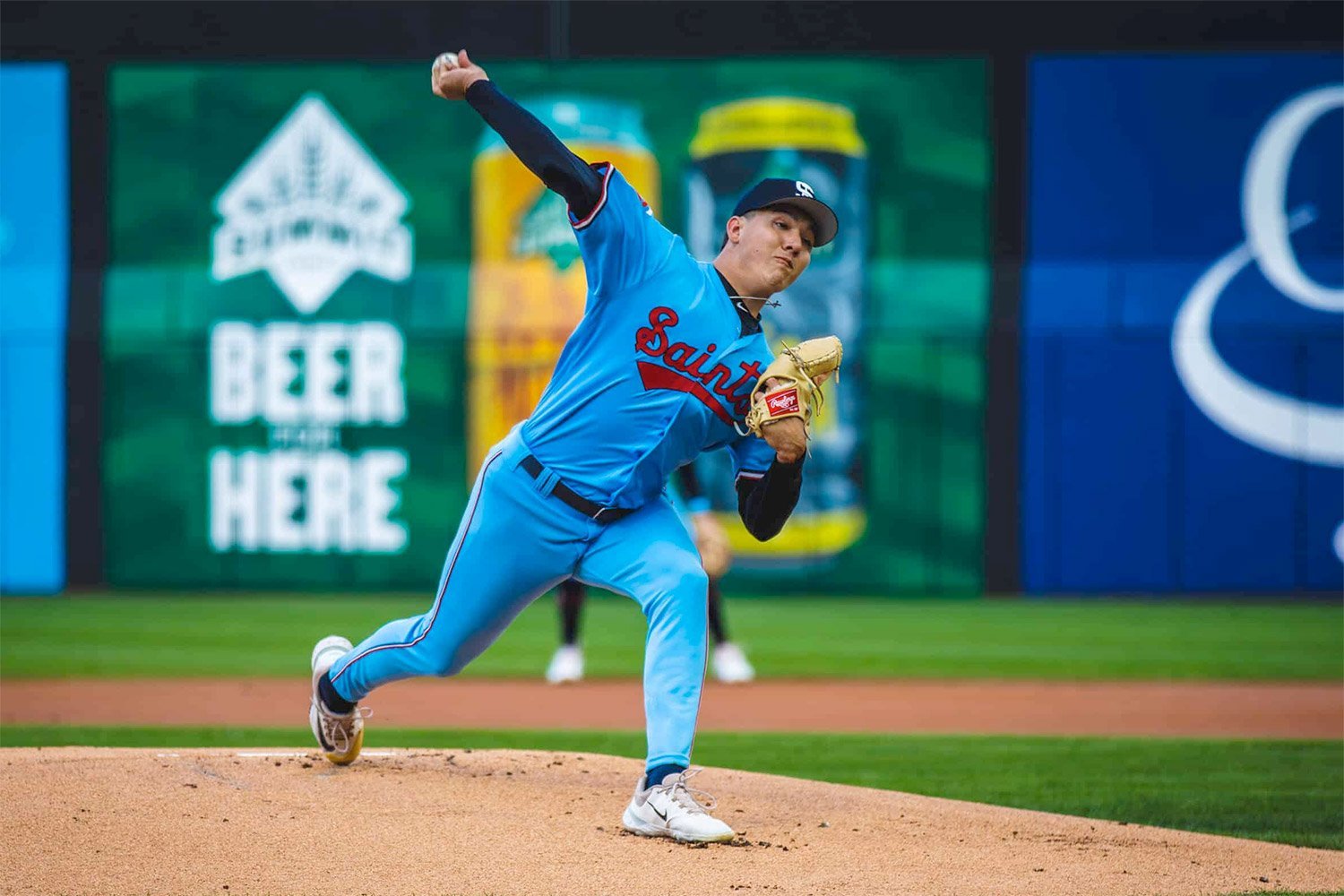 Twins Daily recently held a public vote on our top 20 prospects ranking, and the newest addition, coming in ranked 16th overall, is right-handed pitcher Ryan Gallagher. Who is Gallagher, and why is he climbing prospect lists? Bats: L / Throws: R Age: 23 Stats in 2025: (High-A, Double-A) 121.2 IP 133 SO 4.07 ERA 1.21 WHIP Rule 5 Eligible: After 2028 Season ETA: 2027 Ranking to Start 2026: NR What’s to Like It’s interesting to look at Gallagher’s raw stuff because he doesn’t overpower hitters, throwing his fastball at approximately 91 mph. While he doesn’t throw super hard, he is still intriguing due to his command and his changeup and slider, which he uses both to get swing and misses. He was acquired at the 2025 trade deadline from the Chicago Cubs along with Sam Armstrong for utility player Willi Castro. In 2025, he pitched with the Cubs High-A and Double-A teams before finishing the year with the Twins Double-A team in Wichita. Across those three stops, he threw 121.2 innings, racking up 133 strikeouts, and having a 4.07 ERA and 1.21 WHIP. At 23 years old, he is still being used as a starter but could end up as a multi-inning reliever, similar to how the Twins have used other prospects in recent years. Gallagher offers a bit more upside and is someone to keep an eye on if he can remain a starter throughout his time in the minors. What’s Left to Work On Gallagher will need to continue to be a strike thrower if he hopes to have success. He has walked six batters over his first seven innings in Triple-A, but his history of throwing strikes suggests it will not be a big problem going forward. Gallagher has a repeatable delivery and is someone who could be used in multiple roles, either as a starter or a multi-inning reliever. Proving his worth as a starter at Triple-A will be key in him not moving into a role that others like Pierson Ohl or Travis Adams have slid into, which isn’t a bad role, but not one he is likely to want to take if he, or the Twins, had the choice. What’s Next? Gallagher is currently at Triple-A St. Paul, so he is on the doorstep of the major leagues. He will continue to develop as a starter, but the key will be to keep throwing strikes and gain more experience against higher-level competition. He will likely spend the majority of the year at Triple-A with a chance to make his major league debut, depending on team need and his own personal development over the next few months. Gallagher still has upside and will look to prove that he was worth betting on at the 2025 trade deadline in his first full year in the Twins organization. View the full article
 -
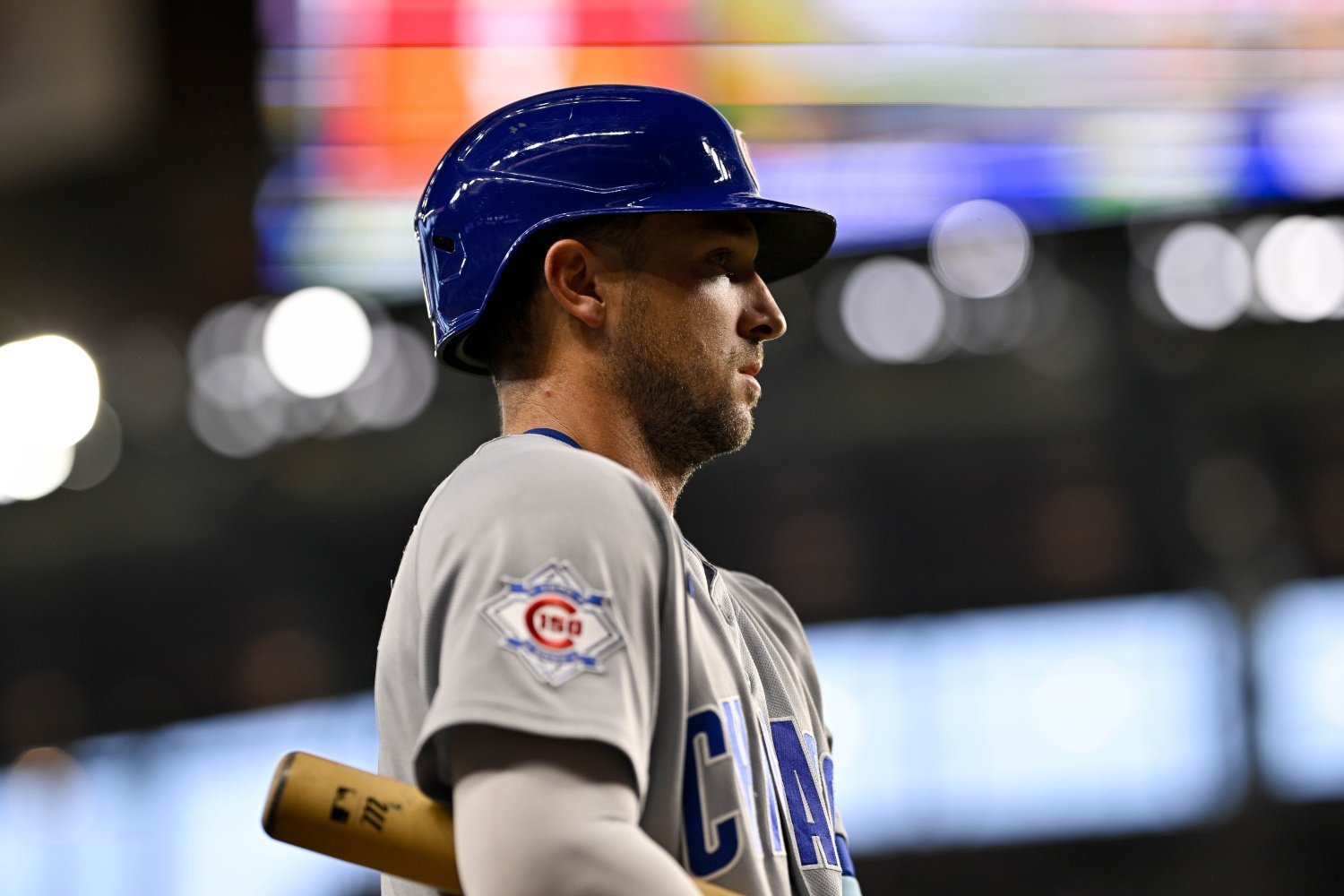 In every start he's had against right-handed opposing pitchers this year, Alex Bregman has slotted in between two left-handed hitters, or between one lefty and one switch-hitter. In theory, that should punish whichever manager is trying to outguess Craig Counsell that day for any effort to get a left-on-left matchup with the likes of Michael Busch or Moisés Ballesteros, or to turn around Ian Happ to what has historically been his weaker side. Bregman, sitting in the middle, should get an advantageous matchup. Reality was never that well-suited to theory in this regard. Bregman has very narrow platoon splits for his career, and though he hammered them last year, he'd been pedestrian against lefties for the previous few seasons. This year, he's getting on base against them at a .400 clip, but he's only slugging .325—hardly the kind of punishment one is looking to dole out when a team wants to turn to a matchup guy for lefties on either side. Of the nine walks he's drawn, two have been intentional, when the other team decided they were fine with him being on base and elected not to risk having him beat them. More troubling, though, is the fact that Bregman has struggled mightily against right-handed pitching so far. He's batting just .227/.301/.336 in those same-handed platoon showdowns, which is most of the reason for an ugly .661 OPS in the first 5% of his five-year deal with the Cubs. He's not hitting for power. He's not hitting much, at all. Admittedly, there's a little bit of real cause for concern beneath the surface. Bregman's bat speed is down about 1 MPH this year. That's not a glaring issue, in a vacuum, because it's still at a level where many hitters succeed, and he's never been dependent on bat speed, anyway. He's also much slower afoot, with a sprint speed starting to reach positively plodding levels, and it's not fun to watch when Ballesteros and Bregman end up on the bases at the same time. On balance, though, Cubs fans would be fine with that—if only they (and especially Bregman) were on a bit more often. Most of the numbers would tell you not to worry, and if you're taking a far-sighted perspective, you shouldn't. What makes Bregman special at the plate is his command of the strike zone, and he's still chasing at an exceptionally low rate. What makes him special is his ability to hit the ball squarely and cleanly, on a line, and he's still doing that at a healthily above-average clip, too. So, why has he been so unproductive? Bregman is hitting a few more ground balls. He's whiffing a bit more. And his swing isn't producing the pulled fly balls that made him just dangerous enough to force pitchers to throw him lots of slightly less bangable balls, which he would then deposit into the outfield for singles and doubles. The cause of all these symptoms is the same: he's seeing a crazy number of breaking balls. This is the breakdown of pitch percentage by pitch type group and season for Bregman's whole career, but you can subdivide it in any of several ways and end up in the same place. Last month, he saw more breaking balls than he had in all but two or three previous months of his career. This month, it's much higher: he's seeing more breaking pitches than fastballs. It's true if you break things down by handedness. It's true if you break them down by count. Bregman is simply getting a steady diet of breaking stuff, and it's affecting his profile. As good as Bregman is, even he can't consistently square up sliders, without being unready for the fastball. As he always has, he's running great batted-ball numbers and an exceptionally low whiff rate on heaters, but much worse numbers on breaking balls. It's just that breaking balls suddenly make up a much larger share of the pitches he sees, so the bad things that happen when he goes to pitch his signature swing on a fastball and gets a breaking ball instead are piling up, while fewer of the good things that happen when he gets what he's looking for are there to counterbalance it. The dynamic of hitting between lefties so often could be part of the issue. For most of his career, Bregman has batted in lineups loaded with righty bats, so maybe pitchers are trying some new things against him in the rhythm of a different kind of order. It's more likely, though, that they're seeing his slightly reduced bat speed and attacking it. While your first instinct might be to guess that bat speed helps one hit fast pitches, what it really does is to let one make later decisions. Bregman is still making good ball-strike decisions, but as his bat slows down, it gets harder for him to wait long enough to deliver the barrel to stuff that bends, without being too late on the stuff that's hard and straight. That doesn't mean any of this is permanent. The rate at which the league has thrown him breaking balls over the last two weeks is surely unsustainable. It has something to do with the teams the Cubs have happened to face; it has something to do with what he's looked like on those pitches. He'll make an adjustment in the cage, and the team will face some pitchers who don't like their breaking ball as much, and it will level out. For now, though, Bregman has a real challenge on his hands. The league is assailing him with pitches that aren't his preferred targets. He'll have to figure out how to make them stop, or to profit from their refusal to do so. View the full article
 -
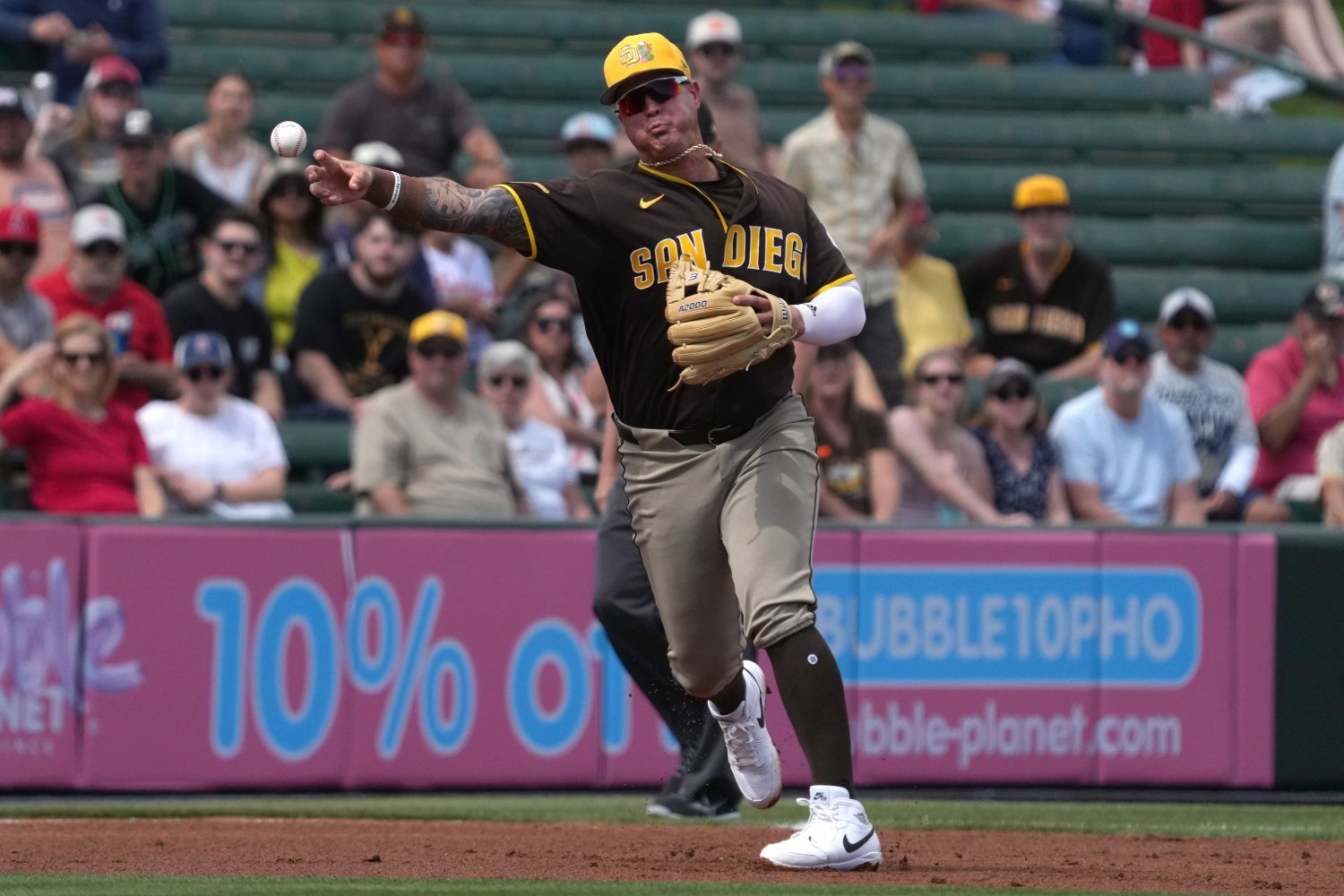 José Miranda might not have been the biggest name the San Diego Padres moved for this winter, but he could be the most important. As a former top prospect with a knack for making contact, he offers the kind of infield depth and offensive stability a lineup like the Friars' desperately needs. The Minnesota Twins signed Miranda in the second round back in 2016, but it took a few years for everything to click. When it did, it was loud. His 2021 breakout saw him tear through the minors with a .344 average and a massive .973 OPS. That performance forced Minnesota’s hand, leading to a 2022 debut where he proved he belonged, putting up a solid .751 OPS over 125 games as a rookie. This winter, Miranda landed in San Diego on a minor-league deal, putting an end to a four-year run with the Twins that had its fair share of highs and lows. For the 27-year-old, it’s about more than just a change of scenery, it’s a chance to prove he’s still the same hitter who looked like a cornerstone just a few years ago. After a shoulder injury derailed his 2023 season and left him with a career-low .211 average, he showed real life in 2024, bouncing back with a solid .763 OPS and proving that his bat is still capable of starter-caliber production. Last season, he spent the majority of the year back in the minors after losing himself at the plate. If there was any doubt about his health, Miranda silenced it early this spring. He tore through the Cactus League with a .304 average, even putting together an impressive 5-for-6 stretch with six RBIs in his first two games. It was the kind of 'torrid' start that nearly forced him onto the Opening Day roster and proved that the talent Minnesota gave up on is very much alive. At his peak, Miranda is a contact-first machine. While half the league is swinging for the fences and living with high strikeout rates, he lives on making contact and forcing the defense to make plays. It’s a profile that fits like a glove in this Padres order, especially when you consider how often the offense has gone cold the moment you get past the 'Big Three' at the top of the card. If San Diego can help him find the rhythm that injuries stole from him over the last two years, they might have found the steal of the 2026 offseason. Right now, Miranda is doing exactly what he needs to do in El Paso, making a significant impact on the team. He’s already knocked four balls out of the park this season in Triple-A, hence his robust .196 ISO. With a solid .774 OPS and several months of the season left to play, he’s making it harder and harder for the Padres to keep him in the minors if the big-league offense hits a snag. At 27, Miranda is entering his prime, and his ability to plug holes at first, third, or DH gives Craig Stammen the kind of tactical flexibility the Padres crave. In a 162-game grind where rest days and 'tweaked' hamstrings are inevitable, having a guy who can provide a professional at-bat while moving around the diamond is a massive luxury. Slotting Miranda into a lineup that already features Fernando Tatis Jr., Manny Machado, and Xander Bogaerts takes the pressure off. He wouldn't be expected to carry the team on his back; he just needs to be a 'link in the chain' doing his job and keeping the line moving when the stars need a lift. The Padres have built a reputation for finding overlooked talent and giving careers a second act. José Miranda may not be the flashiest name in the system right now, but as the summer heat hits and the NL West race tightens, he could quietly become the depth piece that keeps San Diego’s October dreams on track. View the full article
 -
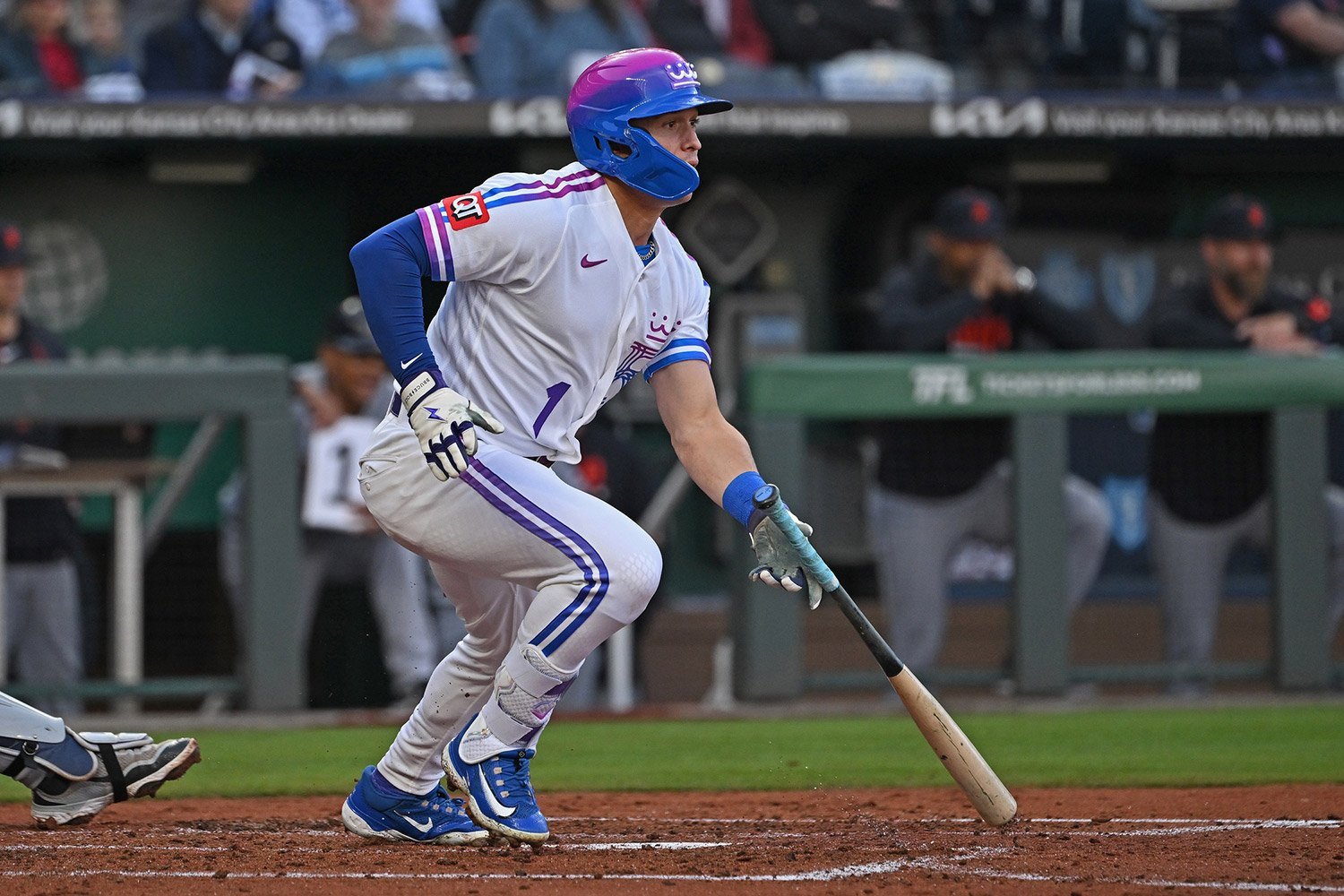 The month of April was certainly one to forget for the Royals. The team finished the month with a 12-19 record, good for last place in the AL Central. While lackluster pitching didn’t help, it was the offense that caused most of the struggles. However, that all has mostly changed when the calendar flipped to May. The Royals so far have gone 7-3 to open the month and are now only two games back in the weak American League Central division. Much of the recent success has come from the offense stepping up. But can the Royals sustain this level throughout the rest of the season? Let’s find out. At first glance, the Royals had a pretty mediocre month, boasting a team batting average of .247 and an on-base percentage of .331. However, a deeper look into the numbers shows that the Royals’ real struggle on offense was scoring runs, especially in high-leverage situations. The Royals thrived in low-leverage situations in April, with the team leading all of MLB in batting average (.303), OBP (.386), and OPS (.869). On the other hand, the Royals had a batting average of .231 with runners in scoring position and .219 in high leverage situations, meaning that the Royals were not producing hits when it really mattered. They also were not patient when it mattered, as the team produced a 7.3% walk rate and a 23.6% K rate. How have things changed? To put it simply, the Royals are finally driving in runs when it matters most. While their batting average of .242 is worse than last month, the Royals now have a batting average of .331 with runners in scoring position. In terms of leverage, the team has almost flipped their averages: the Royals have a batting average of .154 in low-leverage situations compared to their high-leverage batting average of .294. The team has also shown patience as their walk rate has dropped to 8.6%, but they are still striking out at a 22% clip. So, can the offense continue to produce when it matters? The answer to the question remains to be seen. While it is promising to see the Royals hitting better when it matters, there is still a long season ahead. It is not guaranteed that the team will hit this well throughout the year, but hopefully the Royals will learn from April and continue to build upon their recent success in May and beyond. View the full article
 -
Brewer Fanatic Minor League Hitter of the Month: April 2026
DiamondCentric posted an article in Brewer Fanatic
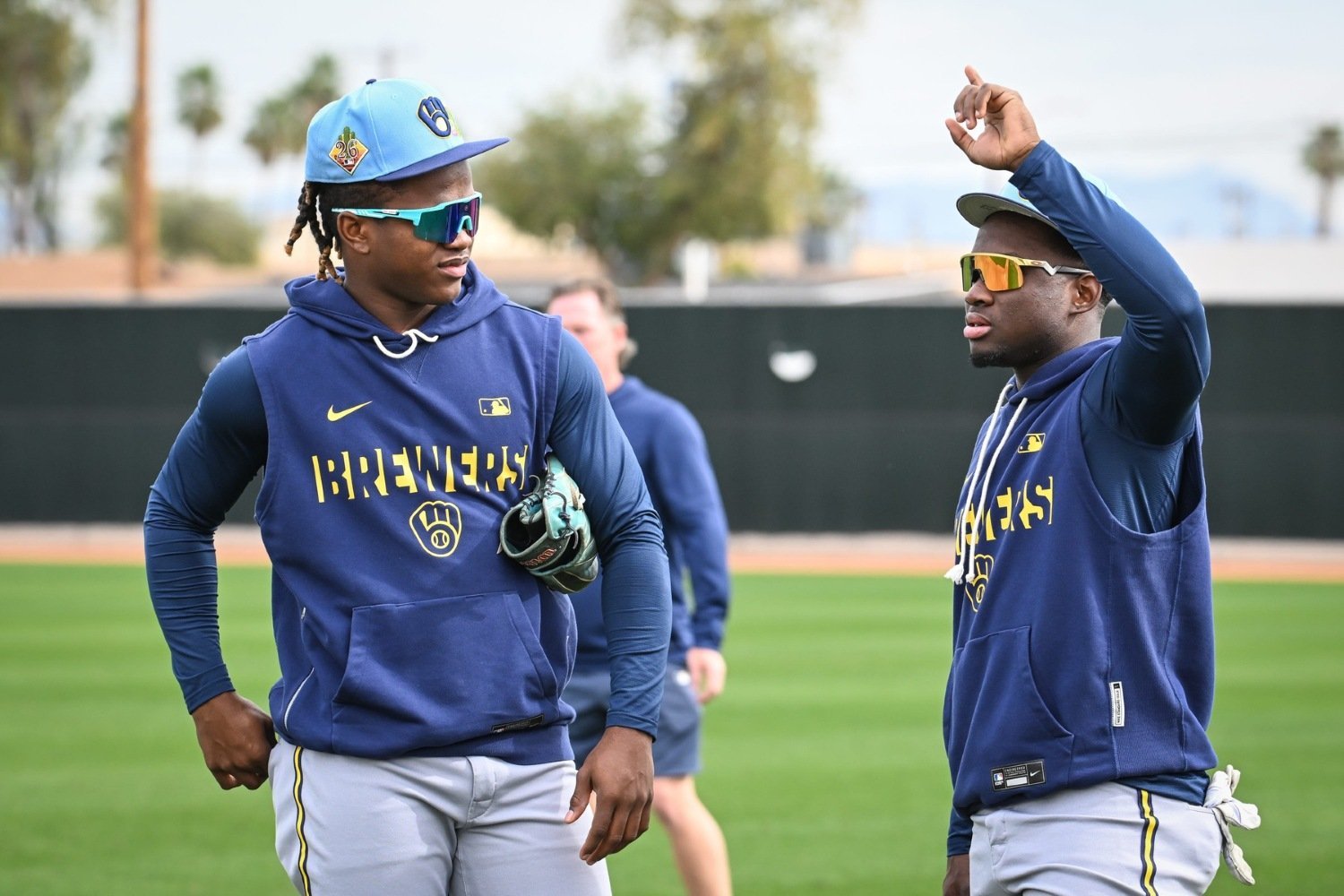 Offense has been an issue at times for the major-league club, and for the various affiliates. However, despite an arduous April, some Brewers farmhands did very well, indeed. Let’s look over these players who have delivered amazing Aprils for the organization. C Darrien Miller, Biloxi Shuckers (Double-A) .257/.552/.429 in 35 ABs with 1 HR and 5 RBIs I’ve been high on Miller as a below-the-radar prospect before, but there was nothing below the radar about his April. Miller drew 17 walks and was plunked six times, while striking out only 15 times. Miller didn’t just get on base more than half the time. He displayed some potency at the plate, too, with three doubles and a solo homer. Miller could force his way to Nashville if he keeps this performance up, though at 25 years old and after needing so much time to achieve competence in Double-A, the majors still seem far away. 1B Blake Burke, Biloxi Shuckers (Double-A) .242/.342/.586 in 99 ABs with 8 home runs and 20 RBIs Burke is arguably the best power prospect in the Brewers system, and arguably the team’s first baseman of the future. His April was about power, with a total of 17 extra-base hits. Burke, though, isn’t a one-dimensional three-true-outcomes player. When he gets on base, he is a threat to run, going 9-for-10 in stolen bases. Like Miller, he could be forcing his way to Nashville before long, and he's younger and toolsier. SS Jesus Made, Biloxi Shuckers (Double-A) .290/.385/.460 in 100 ABs with 2 home runs and 16 RBIs Made, the top prospect in the Milwaukee organization, had an excellent April for the Shuckers, providing an all-around offensive package of power, speed, hitting for average, and getting on base. While it is an open question whether he or recently-extended Cooper Pratt will be the Brewers’ Shortstop of the Future, Made’s offense could make him viable at multiple positions on the diamond. He may not be long for Biloxi if he keeps this up. LF/2B Josh Adamczewski, Wisconsin Timber Rattlers (Advanced-A) .305/.446/.593 in 59 ABs with 5 homers and 14 RBIs Adamczewski has erupted as a pure hitter in 2025, and it’s included a power surge that could send him up the ladder. Like current Brewer Tyler Black, Adamczewski could always hit; the question was finding him a defensive home that could keep him in the lineup. However, his amazing April stats could see him flying south to Biloxi before summer. CF Luis Lara, Nashville Sounds (Triple-A) .324/.416/.519 in 108 ABs with 5 homers and 13 RBIs Lara has had a breakout year with the Sounds. Too early to say that? Well, his five home runs in March and April already set a career high for the 21-year-old, who’s already established excellent hit-for-contact skills, defense, and speed. His OBP skills are up a notch, too, as he’s walked more than he struck out. This is a quantum leap in the power department, and Lara is making a case to head to American Family Field sooner, rather than later. Overview While Burke and Made have been adding to their top prospect resumes, and Adamczewski and Miller are showing some real signs of having offensive breakouts, it’s really impossible to argue against the leveling up that Luis Lara’s shown while playing as a 21-year-old in Nashville. Already having a floor as a reliable fourth outfielder in the Blake Perkins mold, Lara’s now making the case as a potential future regular. Congratulations to Luis Lara, Brewer Fanatic’s Minor League Hitter of the Month for April 2026. Offense has been an issue at times for the major-league club, and for the various affiliates. However, despite an arduous April, some Brewers farmhands did very well, indeed. Let’s look over these players who have delivered amazing Aprils for the organization. C Darrien Miller, Biloxi Shuckers (Double-A) .257/.552/.429 in 35 ABs with 1 HR and 5 RBIs I’ve been high on Miller as a below-the-radar prospect before, but there was nothing below the radar about his April. Miller drew 17 walks and was plunked six times, while striking out only 15 times. Miller didn’t just get on base more than half the time. He displayed some potency at the plate, too, with three doubles and a solo homer. Miller could force his way to Nashville if he keeps this performance up, though at 25 years old and after needing so much time to achieve competence in Double-A, the majors still seem far away. 1B Blake Burke, Biloxi Shuckers (Double-A) .242/.342/.586 in 99 ABs with 8 home runs and 20 RBIs Burke is arguably the best power prospect in the Brewers system, and arguably the team’s first baseman of the future. His April was about power, with a total of 17 extra-base hits. Burke, though, isn’t a one-dimensional three-true-outcomes player. When he gets on base, he is a threat to run, going 9-for-10 in stolen bases. Like Miller, he could be forcing his way to Nashville before long, and he's younger and toolsier. SS Jesus Made, Biloxi Shuckers (Double-A) .290/.385/.460 in 100 ABs with 2 home runs and 16 RBIs Made, the top prospect in the Milwaukee organization, had an excellent April for the Shuckers, providing an all-around offensive package of power, speed, hitting for average, and getting on base. While it is an open question whether he or recently-extended Cooper Pratt will be the Brewers’ Shortstop of the Future, Made’s offense could make him viable at multiple positions on the diamond. He may not be long for Biloxi if he keeps this up. LF/2B Josh Adamczewski, Wisconsin Timber Rattlers (Advanced-A) .305/.446/.593 in 59 ABs with 5 homers and 14 RBIs Adamczewski has erupted as a pure hitter in 2025, and it’s included a power surge that could send him up the ladder. Like current Brewer Tyler Black, Adamczewski could always hit; the question was finding him a defensive home that could keep him in the lineup. However, his amazing April stats could see him flying south to Biloxi before summer. CF Luis Lara, Nashville Sounds (Triple-A) .324/.416/.519 in 108 ABs with 5 homers and 13 RBIs Lara has had a breakout year with the Sounds. Too early to say that? Well, his five home runs in March and April already set a career high for the 21-year-old, who’s already established excellent hit-for-contact skills, defense, and speed. His OBP skills are up a notch, too, as he’s walked more than he struck out. This is a quantum leap in the power department, and Lara is making a case to head to American Family Field sooner, rather than later. Overview While Burke and Made have been adding to their top prospect resumes, and Adamczewski and Miller are showing some real signs of having offensive breakouts, it’s really impossible to argue against the leveling up that Luis Lara’s shown while playing as a 21-year-old in Nashville. Already having a floor as a reliable fourth outfielder in the Blake Perkins mold, Lara’s now making the case as a potential future regular. Congratulations to Luis Lara, Brewer Fanatic’s Minor League Hitter of the Month for April 2026. View the full article
 -
Will We Get a Bo Bichette Turnaround Moment This Season?
DiamondCentric posted an article in Jays Centre
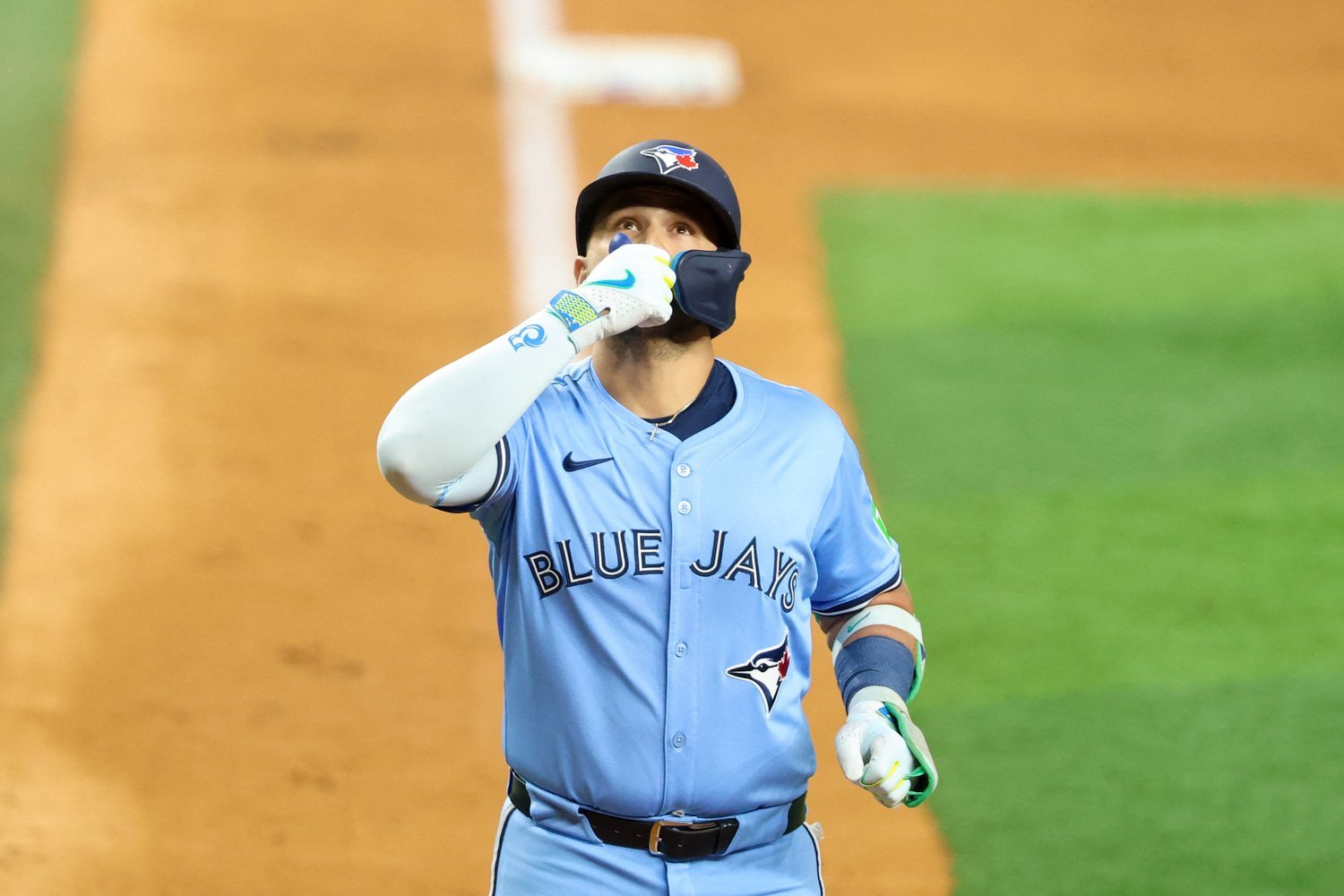 The 2025 Blue Jays had a season so magical we’re likely to talk about it for a generation. The home stretch and finish of the season is what will stick the most in our memories, while the start of the season might have been mostly forgotten if not for the team seeming to play the same song again this year. Through 36 games in 2025, the Jays were 16-20, a record identical to that of this year’s team six weeks into the season. Last year, they started May with a pair of wins and then dropped four in a row – again, identical to this season. The 2026 Jays have since dug themselves into an even deeper hole. The 2025 team returned to .500 on May 12; right now, Toronto sits at 18-23 heading into play on Tuesday night. The game and the at-bat many credited with turning the team around last season happened towards the end of May. Going into their game on May 28, 2025, the Blue Jays held a 26-28 record and sat third in the AL East. Through eight innings, Toronto had left eight runners on base and was mired in a 0-0 draw with Texas (five Jays pitchers on a bullpen day combined to one-hit the Rangers and keep the game within reach). Ernie Clement led off the ninth inning with a single and was standing on second base with two outs in what looked like a carbon copy of so many failed innings before it. That was, of course, until Bo Bichette, called on as a pinch-hitter for the first time in his career, took an 0-1 pitch, sent it into the front row of the left field bleachers and single-handedly turned the Jays' season around. That might seem like hyperbole, but Jesse Burrill wrote, “You could argue this was the point where everything started for this team.” Manager John Schneider touted that game as the one that flipped the switch and put the Jays on the path they ended up on. They would win nine of their next 10, get above .500 and put themselves in position to take over the division by July. Now, with Bichette gone, where might we find that spark? Cory Sparks looked at how Ernie Clement is doing so far as a Bichette replacement, and while the power profiles are certainly different, Clement has had enough clutch hits that he could come up with the spark that ignites the season. Sam Charles talked about the roster ramifications of Addison Barger’s return, but with that return short-lived, maybe the season will turn around as quickly as Yohendrick Piñango did on his way to Buffalo, and maybe it will be one of the guys that keeps a roster spot that comes up with the magic. It’s early May, and it’s a long season, but if Toronto is going to turn the ship around, that work needs to start this month. Of course, for the flip side, we don’t have to go any further back than the season before the magical ‘25. Through 36 games in 2024, the Jays sported a record of, you guessed it, 16-20. The turning point we’re looking for now never came for that team, and they never got above .500 and would sit fifth in the division from mid-June until game 162. Through some combination of parity, luck and schedule oddities, this year’s Jays team is only one game out of a Wild Card spot. On May 12, 2025, they were two back, and it was five games on the same date in 2024. We seem to be at a crossroads, and the path that is taken from here will make all the difference. View the full article
 -
 There was a time when covering a baseball team online felt almost limitless. Traffic climbed every year. Social media rewarded links. Search engines sent readers directly to articles. Digital advertising money flowed more freely, and national outlets aggressively expanded local coverage. For a market like Minnesota, that meant more writers, more perspectives, and more opportunities for Twins fans to engage with the team on a deeper level. That version of the internet is disappearing. The latest reminder came when Aaron Gleeman announced he was leaving The Athletic after the company asked him to move away from Twins coverage and focus more broadly on Major League Baseball from a national perspective. Gleeman declined and instead relaunched his independent subscription platform, AaronGleeman.com. His decision says a lot about the current state of sports media. For years, national outlets viewed local team coverage as a major growth area. Hiring respected beat writers created loyal audiences and helped establish credibility in regional markets. But the economics have shifted. Large companies increasingly want scale, national conversations, and content that can appeal to the widest possible audience. The Twins still matter deeply to Minnesota fans, but local coverage no longer fits as neatly into the business model many national companies are chasing. That doesn't mean interest in the Twins is disappearing. In many ways, the opposite is true. Fans still crave daily coverage, analysis, prospect discussions, podcasts, and community interaction. The challenge is that the systems that once supported independent publishing are being squeezed from multiple directions at the same time. Social media platforms increasingly suppress links that send users away from their apps. Years ago, a well-timed article could spread organically across Twitter or Facebook and bring in thousands of readers. Now, algorithms prioritize native content that keeps users scrolling instead of clicking away to outside websites. Search behavior is also changing rapidly. Artificial intelligence tools increasingly answer questions directly inside search engines or chat interfaces, reducing the number of clicks users make to actual articles. Someone searching for Twins statistics, trade rumors, or prospect reports may receive a summarized answer without ever visiting the source material that produced the information in the first place. For publishers, those changes are impossible to ignore. The digital media industry has spent the last few years navigating constant instability, and sites covering teams like the Twins are feeling pressure from every direction. Social media companies increasingly bury outbound links, AI-generated summaries are cutting into traditional search traffic, and advertising revenue has softened as businesses grow more cautious with spending during an uncertain economy. That combination creates a difficult environment even for established brands. Smaller independent outlets feel the pressure even more because they rely heavily on loyal readers, direct traffic, subscriptions, and advertising revenue to survive. Is that something Twins fans should worry about? A little. But the impact on communities like Twins Daily is somewhat muted compared to many corners of online publishing, because the foundation has always been different. Twins Daily was not built around viral social media moments or disposable clickbait headlines. It was built around a community that consistently values thoughtful discussion, prospect coverage, and independent reporting. That distinction matters now more than ever. Sites that depended heavily on algorithm-driven traffic are discovering how fragile those systems can be once platforms change priorities. Independent communities with loyal readers are better positioned to adapt because the audience intentionally chooses to return every day. That relationship is far more stable than chasing temporary engagement spikes through social media outrage or manufactured controversy. Twins Daily has already survived storms that wiped out other outlets. COVID disrupted advertising markets across sports media. MLB labor stoppages froze traffic during critical parts of the offseason. Economic uncertainty repeatedly forced publishers to scale back coverage or shut down entirely. Through all of it, the site continued operating, because readers treated it like more than content. They treated it like a community. That does not make the current environment easy. Independent publishing remains difficult, especially as technology reshapes how information is distributed and consumed. But it does reinforce why local coverage still matters. Fans want people who understand the history of the organization, the farm system, the personalities in the clubhouse, and the emotional swings that define a baseball season in Minnesota. National coverage can provide breadth. Independent local coverage provides connection. Gleeman’s decision to bet on that connection instead of accepting a broader national role may end up being one of the defining sports media stories in Minnesota this year. It reflects a growing realization that sustainable coverage may increasingly come from direct relationships between writers and readers rather than giant media companies chasing scale. The media landscape around the Twins is changing quickly. Some outlets will shrink. Others may disappear entirely. More writers may eventually choose subscription models or independent platforms over traditional media structures. But the core audience is still here. People still care about the Twins. They still want smart analysis. They still want prospect breakdowns, game reactions, and long form stories that go deeper than surface level takes. As long as that remains true, independent coverage still has a future. The platforms may change. The business models may evolve. The internet itself may look completely different five years from now. But the demand for authentic voices and communities built around shared passion is not going anywhere. View the full article
 -
 Blue Jays Affiliate Overview (May 9-May 11) Triple-A Buffalo Bisons Series vs Lehigh Valley IronPigs (Philadelphia Phillies): 4-2 Season Record: 19-20 Double-A New Hampshire Fisher Cats Series vs Portland Sea Dogs (Boston Red Sox): 4-1 Season Record: 19-11 High-A Vancouver Canadians Series vs Eugene Emeralds (San Francisco Giants): 2-4 Season Record: 13-20 Single-A Dunedin Blue Jays Series vs Bradenton Marauders (Pittsburgh Pirates): 2-4 Season Record: 13-20 FCL Blue Jays Week Record: 5-0 Season Record: 7-0 Triple-A Buffalo Bisons Season Record: 19-20 Series Opponent: Lehigh Valley IronPigs (Philadelphia Phillies) May 9: RJ Schreck continued his torrid stretch in May, collecting four more hits on his way to leading Buffalo to a victory Saturday. He smashed his second home run of the series with Lehigh Valley and hit another double, bringing that total to five for the week as well. Buffalo kicked the scoring off with two bases-loaded walks in the second inning, one each by Carlos Mendoza and William Simoneit. In the third inning, Josh Kasevich added a run with an RBI single, scoring Jonatan Clase. Then, after a Charles McAdoo walk, Riley Tirotta smoked a ball 108.1 mph over the left field fence for a three-run home run. The lead didn't last long, as CJ Van Eyk coughed up four unearned runs in the bottom of the third inning and Devereaux Harrison surrendered three more runs in the fifth. With Buffalo now trailing by a run, Josh Rivera squeaked a ball over the left field fence at just 93.1 mph for a solo shot. The next inning, Schreck came to the plate and pummeled a ball 104.1 mph for a two-run home run and gave Buffalo the lead for good. Tanner Andrews pitched the ninth and struck out two. Earning the save and the win for Buffalo, 9-7. May 10: On Sunday, Buffalo put an exclamation point on the week-long series with Lehigh Valley, as the bats were sizzling hot. Four players had multiple hits, and three of them had at least three hits, including RJ Schreck. He will surely be disappointed when Buffalo leaves Lehigh. He tallied 15 hits in the series, six doubles, two home runs, and 16 RBI. In the game Sunday, he had four of the RBI, one on an RBI single in the first inning, two from a two-RBI double in the fifth, and the last one on an RBI single in the eighth. While Schreck was a big performer in the game, Willie MacIver had an even bigger day. He had himself a 4-for-5 day, with four RBI, a double, and a home run. The home run was a three-run blast that went just over 400 feet to right-center field. Ismael Munguia stayed hot at the plate as well, collecting three hits in the game and raising his batting average at Triple-A to .359. On the mound, Josh Fleming pitched five innings of one-run ball and handed it over to the bullpen with a big lead. The bullpen did its job and finished the game, only allowing one unearned run. Brendon Little continues to push for a promotion back to the big league club. He pitched another scoreless inning and struck out one. Buffalo ran away with this game and won 11-2, pulling to within one game of their kryptonite .500 record. Double-A New Hampshire Season Record: 19-11 Series vs. Portland Sea Dogs (Boston Red Sox) May 9: Postponed May 10: In the Sunday finale between New Hampshire and Portland, the Fisher Cats got to see one of the top breakout starting pitchers in the minor leagues, Anthony Eyanson. New Hampshire struggled with him in his Double-A debut, only managing four hits off of him in four innings. Victor Arias did launch a home run in the second inning. Jace Bohrofen added a two-run home run in the sixth, and Jorge Burgos brought in a run with a groundout in the seventh. Franklin Arias and Brooks Brannon carried the Portland offense to a big day, as the Fisher Cats lost 12-4. High-A Vancouver Season Record: 13-20 Series vs Eugene Emeralds (San Francisco Giants) May 9, Game 1: The Canadians had a doubleheader against the Emeralds, and Dub Gleed got them on the board in the first at-bat of the game with a homer off of Yunior Marte. Landen Maroudis was the starter for this game and dealt with shaky command, walking four batters in four innings. He allowed the Emeralds to tie it up in the second inning, but in the fourth inning, the Canadians pulled ahead with a J.R. Freethy two-RBI single. Maroudis had a scoreless fourth inning, but in the fifth inning walked the leadoff batter and was pulled for Eminen Flores. Flores walked the next batter, then gave up a three-run homer to give the lead back to the Emeralds. Trace Baker struggled as well, as after a Maddox Latta error, he allowed three more runs to score, putting the Canadians down four. In the seventh inning, Peyton Williams walked and Alexis Hernandez hit his first homer of the season to bring it back within two runs, but the Canadians couldn’t capitalize, losing the first game of the doubleheader. May 9, Game 2: The offense sputtered for the Canadians after a relatively high-scoring first game, as Vancouver only had four hits against the Emeralds. On the other hand, Gilberto Batista gave up five runs, with four of them coming in the second inning, as his ERA climbed to 8.46 on the season and he earned his second loss of the season. The Canadians got one run after Carter Cunningham tripled and Manuel Beltre then drove him in with a single, but that was all they could do against the domineering Emeralds. May 10: The Canadians put up a fight in the last game of the series. Although Daniel Guerra struggled for the first time this season, giving up seven runs in just over three innings, Vancouver didn’t give up. The Canadians were able to get a couple of runs in on a Hayden Gilliland double, but were down 12-2 after Juanmi Vasquez gave up five more runs once Guerra was taken out. Carter Cunningham started the comeback with his seventh homer of the year, scoring Williams and himself, and after a Gleed sac fly in the ninth, Alexis Hernandez hit his second homer in two games to bring it within four runs. Sadly, the lead was insurmountable, and the Canadians fell short once again against Eugene. Single-A Dunedin Season Record: 13-20 Series vs Bradenton Marauders (Pittsburgh Pirates) May 9: After a dominating start in his first rehab game, Silvano Hechavarria could not get out of the first inning. He got two quick outs immediately, but then allowed a hit, walk and another hit for the first run of the game. Juan Sanchez then committed a fielding error, and Hechavarria lost all control, with three wild pitches in a row leading to four runs scored in the first. Diego Dominguez replaced him and got out of the first inning, but in the second inning, disaster struck once again for Dunedin. Dominguez allowed the first four hitters on base, and after an RBI groundout, allowed a three-run homer for another big inning for Bradenton. The Jays got on board with a Dariel Ramon double leading to a JoJo Parker RBI single, but the Marauders got that run back the inning after. Yorman Licourt hit a sac fly in the bottom of the ninth, but it was much too little and too late. May 10: Dylan Watts took the bump for the last game of the series and didn’t have his best stuff or command. He allowed two hits and a walk right away in the first inning, with the Jays going down early. Yorman Licourt answered back in the second inning, however, as the Cuban outfielder hit a 102.1 mph homer to left center to take the lead. Watts allowed his second run of the game right after in the third inning, as he walked three more batters and allowed a game-tying single. Once again, the Jays got the run back; this time, Owen Gregg and Blaine Bullard got on base, and after Eric Snow moved the runners over, JoJo Parker hit a sac fly. Franly Urena and Carson Myers pitched well in relief for the Jays after the lead was taken back, as they combined for five scoreless innings while striking out five batters. The Jays also got some insurance runs, as they hit three doubles in a row from Bullard, Snow, and Parker to make it 5-2. Jack Eshleman got his fifth save of the season despite allowing another run, but the Jays ended the series on a high note after struggling against Bradenton. FCL Blue Jays Season Record: 7-0 May 9: The FCL Blue Jays faced off against the FCL Yankees on Saturday. It was the minor league debut on the mound for Toronto Blue Jays prospect Seojun Moon. He had a shaky first inning, giving up a single and a walk, but gathered himself and finished the inning with three groundouts between the baserunners. In the second inning, Moon started strong, getting two strikeouts, one swinging and one looking, before a popout ended the inning and his debut. Next up was Miguel Pantoja, who fired off four innings and struck out six, only allowing two hits. On the offensive side of the ball, the Blue Jays took an early lead in the second inning on a Pascual Archila two-run single. A sacrifice fly from Sam White, a wild pitch, and a bases-loaded walk scored three more the next inning. A groundout and an error allowed two more to score for the Blue Jays in the seventh, as they went on to win 7-4. They had only managed four hits, but 10 walks (three by Tim Piasentin) carried them to victory. May 11: It was another banner day for the Toronto Blue Jays' FCL pitching on Monday. Four pitchers combined for nine innings of one-run ball, which was unearned. Giacomo Taschin went three innings with five strikeouts, and Deiker Pineda matched the five strikeouts and went two innings. On offense, the second innings saw the Blue Jays score three runs: one on a Kennew Blanco groundout, and then one each on RBI singles from Rafael Flores and Angel Guzman. Later in the game, Tim Piasentin added an RBI single, and so did Pascual Archila. The FCL Blue Jays would beat the FCL Phillies 7-1. View the full article
 -
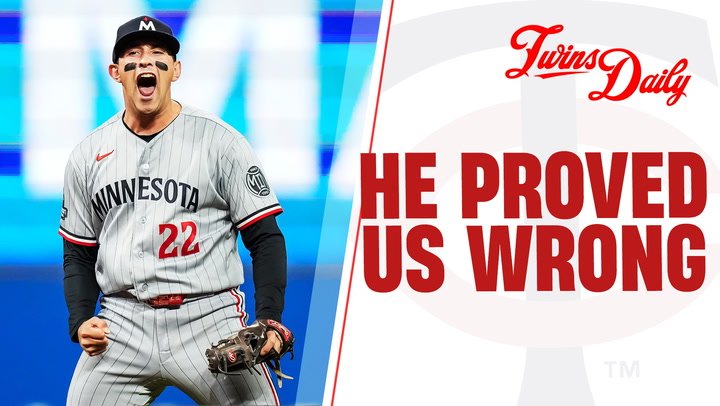 After two inconsistent seasons, plenty of people were starting to question whether Brooks Lee would ever live up to the hype. Now in year three, the former first-round pick is beginning to prove a lot of doubters wrong. View the full article
 -
 Alex and Maddie sit down to recap the Tigers and Rays series. They dive into why Payton Tolle and Connelly Early both deserve to stay in the rotation even as other starters get healthy. Next, they preview the upcoming Phillies series and talk through why the Red Sox have a good chance to win the series, especially if Wilyer Abreu keeps hitting against left-handed pitching. They talk through Jarren Duran’s decision to delete his Instagram account and why his immaturity is likely the biggest thing holding him back. Finally, they discuss the likely upcoming Giants fire sale to see if there are any possible targets on that roster, besides Rafael Devers, before wrapping up with a discussion about what a possible Trevor Story trade to the Mets could look like. Listen on Apple Podcasts: https://podcasts.apple.com/us/podcast/the-talk-sox-podcast/id1783204104 Listen on Spotify: https://open.spotify.com/show/3qPrPXEngu0CxgTmlf0ynm Listen on iHeartRadio: https://www.iheart.com/podcast/263-the-talk-sox-podcast-244591331/ Listen on Pocket Casts: https://pca.st/4tmd121v Watch on YouTube: https://www.youtube.com/@talksox View the full article
 -
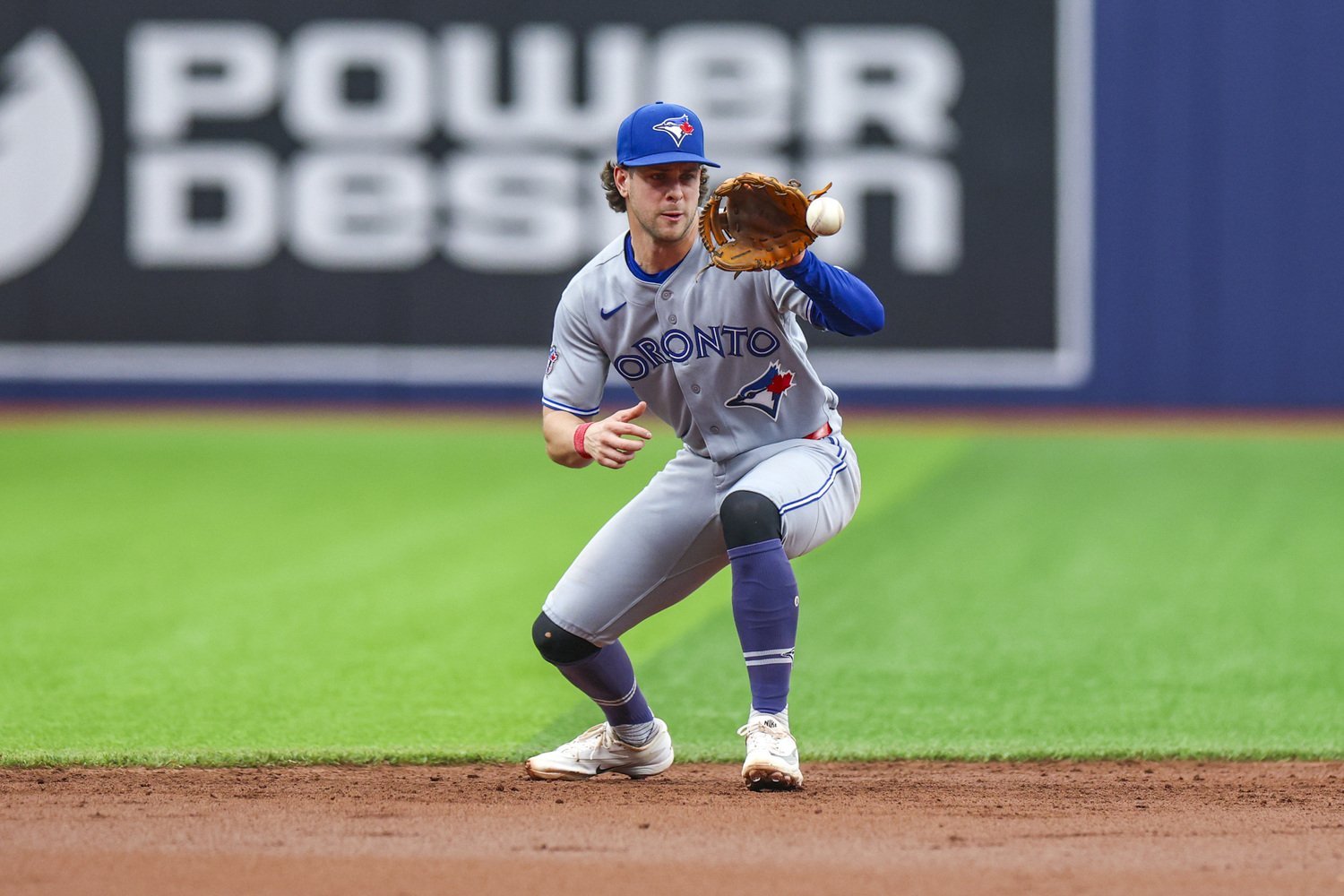 The Blue Jays have placed an emphasis on defense when it comes to roster building for years now. They’ve gone out of their way to trade for notoriously good defenders like Matt Chapman, Daulton Varsho, Myles Straw, and Andrés Giménez. They’ve found value in defensive-minded free agents like Kevin Kiermaier and even turned fringe roster pickups like Ernie Clement, Tyler Heineman, and Nathan Lukes into important pieces on winning teams, each of them with high defensive floors as essential skills. The Jays have long understood that preventing the other team from scoring a run is just as good as scoring one of your own. This philosophy has paid off, because the Jays have been one of baseball’s best defensive organizations in recent seasons. Baseball Savant explains Fielding Run Value (FRV) as, “Statcast’s metric for capturing a player’s measurable defensive performance by converting all of Statcast’s individual defensive metrics from different scales onto the same run-based scale, which can then be read as a player being worth X runs above or Y runs below average.” That’s baseball nerd for “Fielding Run Value is a statistic that takes into account a bunch of different defensive stats and combines them into one number.” Similar to WAR, players accumulate FRV throughout a season, they can gain both positive and negative fielding runs, and the larger the sample we’re working with, the more we can read into it. Blue Jays players accumulated more FRV than any other team in both 2024 and ‘25. And if you’re more of a traditionalist, and analytics aren’t for you, just take the fact that the Jays also won back-to-back American League Team Gold Glove awards in 2023 and ‘24 and enjoy the rest of the article. Defense is obviously something the organization has taken a lot of pride in, which is why the errors piling up early in 2026 feels so uncharacteristic. Errors are back-breaking plays. Best case scenario, they allow a runner to advance a base, and at their worst, they allow a runner that should have been out to reach base, or score a run. As I mentioned at the beginning of this article, the Jays have been one of the worst defending teams in baseball this season when it comes to errors, yet they remain near the top of the leaderboard when it comes to total FRV. There could be a couple of reasons for this. Firstly, errors are as subjective as they’ve ever been. An official scorer watches the game and determines how to “score” each play. If you’re a long-time fan, you may have heard or noticed that fewer and fewer plays are being scored as errors, and you’d be right. In the 2000 season, players accumulated 3447 errors, compared to 2451 in 2025. That’s almost 1000 more errors over the same number of games, or a 29% decrease in the number of errors just 25 years later. Without having gone through all of the plays, there’s a chance that official scorers have been particularly tough on the Jays' fielders compared to those on other teams when it comes to determining what’s an error and what isn’t. Errors, as we understand them, also don’t tell the full story. For example, it’s more than possible that a good defender with great range gets to a ball and then makes an error that a slower defender wouldn’t have even had the chance to make a play on. The other, much more concrete explanation is that the Blue Jays have remained close to the top of the FRV leaderboard because their catchers are elite. It’s well known that Alejandro Kirk is one of the best defensive catchers in the sport. Since 2022, he’s accumulated the second most fielding run value of any player in baseball, behind only Patrick Bailey of the Giants. But he’s been hurt since early April! This year, the Jays’ backstops – Tyler Heineman, Brandon Valenzuela, and Kirk (before his injury) – have combined to lead catching groups in fielding run value. Catchers are unique when it comes to FRV because they have way more opportunities to collect it. Blocking, framing, and throwing are weighed heavily in the formula, which is why we often see catchers separated from the other positions when it comes to tracking their defensive value. If we sort FRV by infielders and outfielders, excluding catchers, we can see that the Jays are still good, with a top 10 ranking, but not nearly as elite on the whole. So, what can we take away from this when it comes to the Jays and their defense? Well, if you’re a Jays fan, feel comforted that during the years they were considered one of the best defensive teams in baseball, total errors and fielding percentage saw them more as an average team anyway. There’s a lot more to baseball defense than these traditional stats take into account. You can also feel comforted that defensive statistics are among those that take the longest to normalize. Small samples can throw them out of whack very quickly. Fielders have far fewer opportunities than hitters or pitchers, so one or two weird or unlucky plays can make a great defender look average when it comes to advanced defensive metrics, especially this early in the season. At the same time, what has happened on the field has had consequences for the Blue Jays’ actual record. Ernie Clement, who was elite as a defender in 2025, with +10 fielding runs as a utility infielder, has been worth -2 as a defender so far in 2026. Daulton Varsho and Andrés Giménez are regarded as two of the game’s best up-the-middle defenders, but they’ve also fallen behind the pace, having been worth just +1 and +2 defensive runs, respectively, after being worth +6 apiece in injury-shortened 2025 seasons. The Jays are off to a disappointing start to a season that they entered with very high expectations, so keep an eye on their defensive statistics going forward. Once they start to improve, expect their record to improve along with it. View the full article
 -
As Late Bloomers Go, Colin Rea is an All-Timer
DiamondCentric posted an article in North Side Baseball
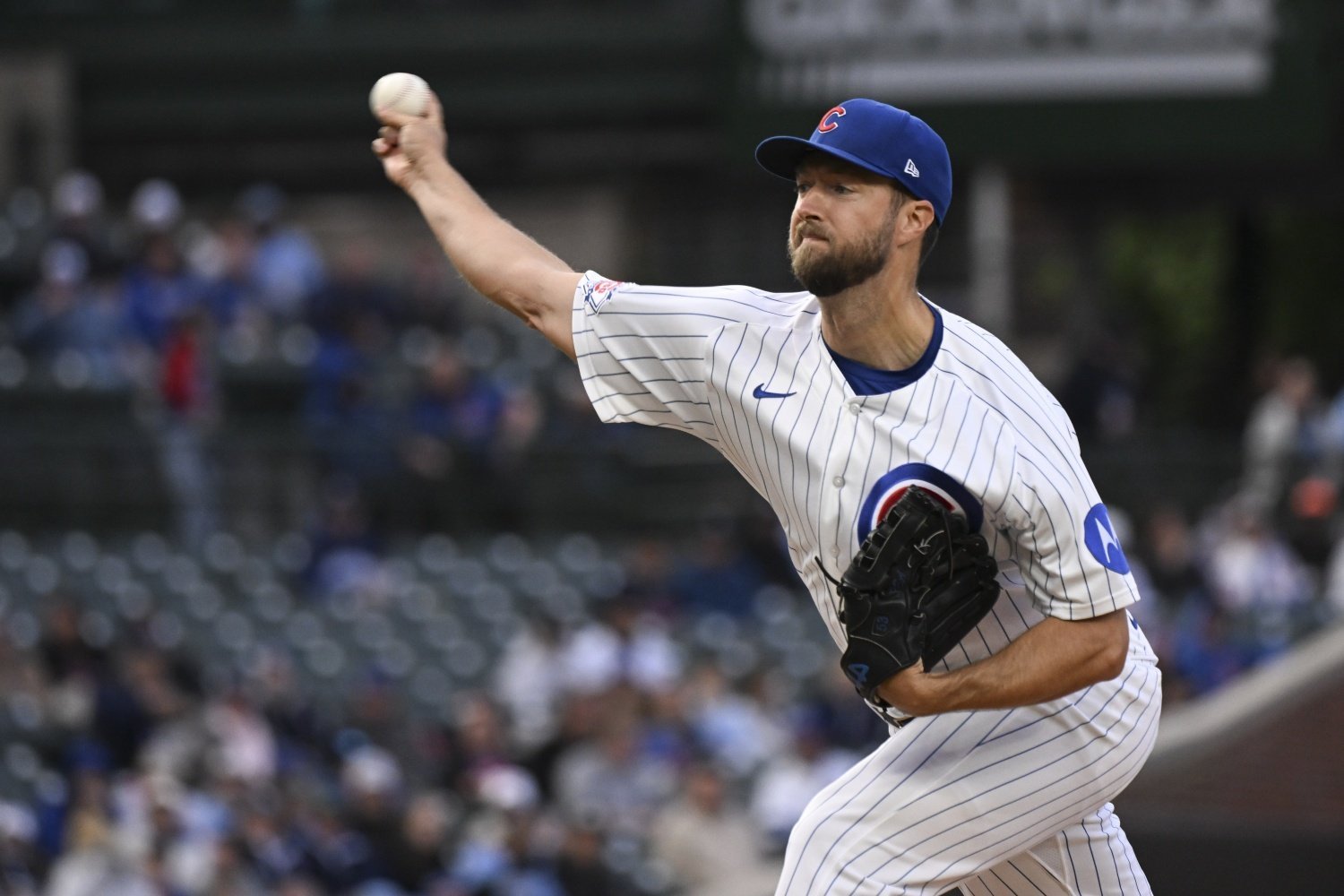 If Colin Rea pitches six innings Tuesday night in the northwest suburbs of Atlanta, he'll reach 650 for his career. That's not exactly a significant milestone, in the historical context of the big leagues. It's remarkable, however, because Rea is less than two months shy of his 36th birthday, and almost exactly half of his career frames have come in the last two years. On May 13, 2024, Rea threw an unremarkable quality start: 6 innings, 3 earned runs, 1 walk, 5 strikeouts against the Pirates. To that point in his career, 'unremarkable' had been a pretty good encapsulation of Rea. He'd finally gotten some traction in the majors the previous year, with the Brewers, but before that, injuries had slowed his long ascent to the majors—so much so that he spent time pitching in Japan before coming back and finding a new toehold Stateside. He finished the night with 323 1/3 innings pitched in the majors, over the nearly 13 full years since he was drafted in June 2011, and a 4.56 ERA. Since then, though, Rea has spent almost all his time in the starting rotation of either Milwaukee or the Cubs. No, that wasn't quite the plan, in either place, but one way or another, Rea keeps being needed—and he keeps meeting the need. Over the last two years, 'quality' has been the word that best defines him, and there's nothing unremarkable about his career, anymore. In addition to doubling his career volume in his mid-30s, he's posted a 4.21 ERA in the last 320-plus frames. Born Jul. 1, 1990, Rea is the oldest possible person who could be listed at age 35 for this season at Baseball Reference; the baseball age convention is to give the player's age on June 30 of the season in question. If he were born one day earlier, he'd be listed as 36, instead. Nonetheless, he has more innings pitched since the start of his age-33 season (365, since 2024) than he had before that. More importantly, he's become so established that it's relatively easy to see him pitching another 350 innings or more—something that would have been almost unthinkable when he turned 33, in the middle of a 2023 season in which he was an up-and-down swing man for the Brewers. Among pitchers whose age-33 season came in 2005 or later, 34 have pitched at least 700 innings from that point to the end of their career. Mostly, though, those are long-time stars and potential Hall of Famers. Max Scherzer, Justin Verlander, Zack Greinke and Roy Halladay are on the list. So are slightly lesser workhorses like Adam Wainwright, Tim Hudson and Mark Buehrle. There are several guys who pitched that much because that's just what you did back then—soak up innings at the back of a rotation throughout your mid-30s: Aaron Harang, Kyle Lohse, Ryan Dempster, Jeremy Guthrie. Only six of those hurlers actually pitched more after the start of their age-33 campaign than they did before it. Two guys (Jose Contreras and Hiroki Kuroda) pitched more in MLB after 33 than before, but they'd had long careers in Cuba and Japan, respectively, before coming to the United States. The main six—the six pitchers of this century whom we might call real comps for Rea, if he can turn in another couple of seasons like his last three—are: Chris Bassitt Rich Hill Derek Lowe Miles Mikolas Charlie Morton Ryan Vogelsong Two of these guys (Hill and Morton) are heroes of the player development revolution; they became stars late in careers that started out seemingly doomed by injury trouble or extreme hittability. Unlike them, though, Rea has no high-spin curveball story, and no multi-year, eight-figure contracts await him. Bassitt was in the same draft class as Rea, but is 16 months his senior, which means he's listed as two years older than Rea. Like Rea, he was a late-round pick, but unlike Rea, he gained a modicum of prospect buzz and reached the bigs on a normal trajectory; he was waylaid almost solely by injuries. Morton and Lowe each pitched fairly big numbers of innings before turning 33; they just stuck around long enough to be more voluminous in their old age than in their younger days. Bassitt and Mikolas had each thrown more than 500 innings before their age-33 seasons, so even though Bassitt shares that draft history with Rea and Mikolas went overseas like Rea did, each was much more established much earlier than Rea was. Remember, at the beginning of his age-33 campaign, Rea had only amassed 279 innings in the bigs. That really only leaves Ryan Vogelsong as a true match for what Rea went through, and what he might hope to achieve. Vogelsong is a fascinating case, too. He had some injuries—you really can't end up on this kind of list without some—but that wasn't his main problem. His main problem was that he was bad. After being a fifth-round pick in 1998, Vogelsong pretty quickly proved he was too good for the minors, but he wasn't good enough for the majors in any of his first seven seasons there. At almost the same age Rea did, though, he went to Japan, and he came back as something a whole lot like what Rea is now. Vogelsong came back from NPB to the team who had initially drafted him: the Giants. With them, from ages 33-37, he had a 3.89 ERA and pitched almost 800 innings. He was even useful (and occasionally heroic) in the postseason, en route to the team's 2012 and 2014 World Series rings. Baseball Prospectus still runs a regular feature called the Vogelsong Awards, honoring players who weren't in their annual preview book but end up having a significant impact in the majors. Rea hasn't ever been quite as good as Vogelsong was in 2011 and 2012, but he's already showing more staying power than Vogelsong did. At age 35, Vogelsong went over a cliff. His velocity dipped from 91-92 MPH to 89-90, and the rest of his stuff couldn't make up for the loss. Rea, by contrast, is sitting just under 94 MPH in average velocity, virtually exactly where he was last year and harder than he'd ever thrown before that. He's also using seven different pitches, including a slider and a splitter that each miss bats at above-average rates. In a perfect world, the Cubs would have Rea working in long relief. We know that for sure, because they came into the season planning on that. It was never all that likely to stay that way for long, though, and now, it looks like Rea will be in their rotation all season. He should be. He's earned it. And if he keeps doing this much longer, he'll be the best virtually anonymous late-blooming pitcher in recent memory. It's not enough to earn him a chapter in the next book about tech in baseball or to make his grandkids ultra-rich, but Rea is a shining example of persistence, resiliency, and having your best years just when everyone else is hanging them up. View the full article
 -
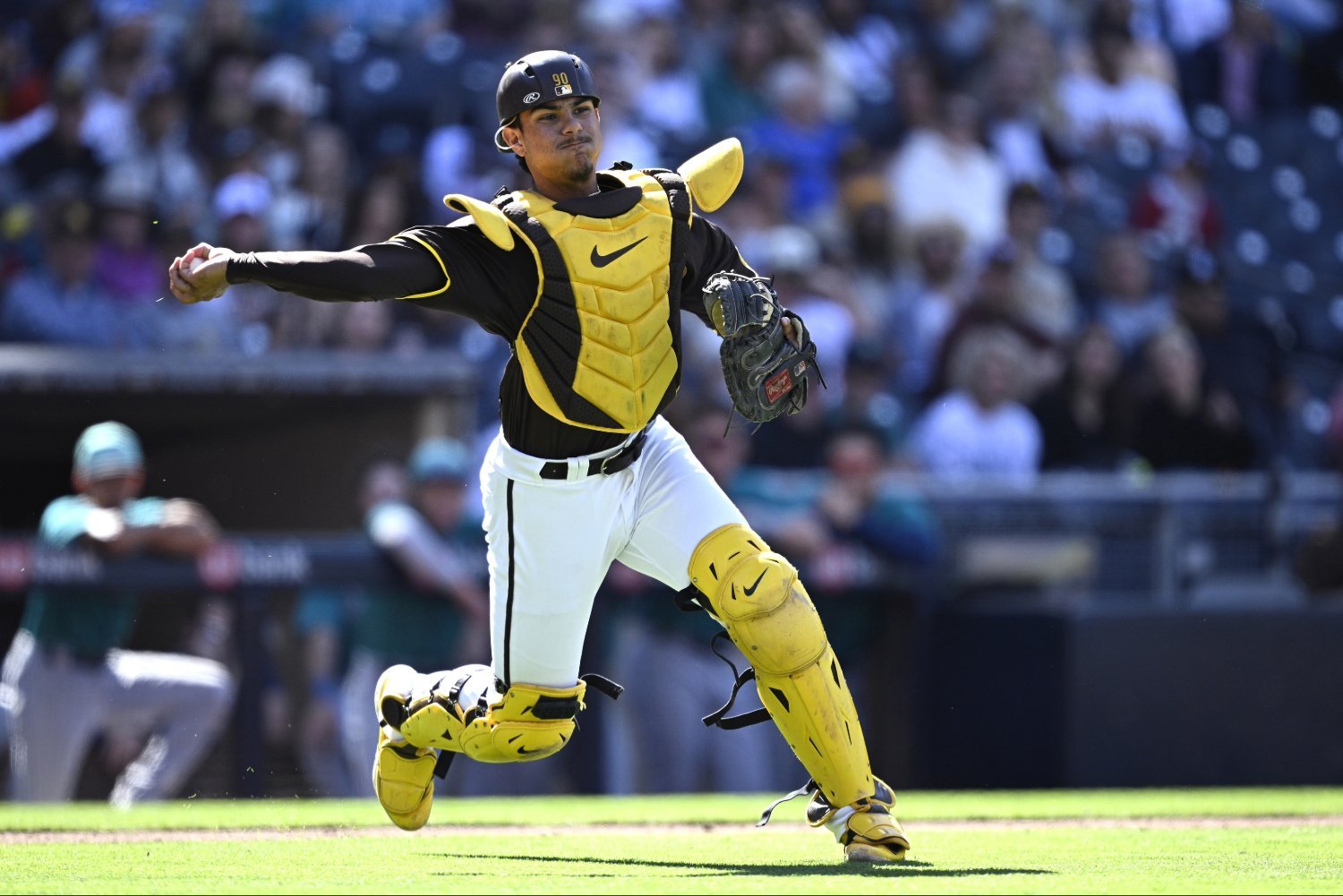 When Ethan Salas burst onto the Single-A scene as a 17-year-old back in 2023, it might’ve been easy to expect to see him playing home games at the top level for the San Diego Padres by now. Especially when he was up a level with Double-A San Antonio at the same age. Between injuries and subsequent uneven performance in the years since, however, he remains a catcher for… Double-A San Antonio. Perhaps not for long, however. Clear of a 2025 back injury that limited him to only 10 games, Salas has come out of the gates scorching for the Missions. As of mid-May, he’s slashing .320/.396/.546 with a 151 wRC+. His 23.4 percent strikeout rate sits around his career norm in the minor leagues, while his 11.7 percent walk rate is indicative of the improved discipline he demonstrated in his minuscule sample last season. What’s more impressive is the rate at which he’s performed over this last stretch of games. Salas has recorded hits in 11 of his last 15 contests. Eight of those outings have featured multiple hits. All of his home runs have come in that stretch, with nine total walks against 12 total strikeouts. It’s resulted in a percentile distribution that looks rather visually appealing: This isn’t a matter of a hitter finding a random hot stretch. He’s making a ton of contact and elevating the ball to the pull side. When those two things are working in conjunction with one another, good things tend to happen. Hence, the gaudy line you see before you through his first 110-ish plate appearances of 2026. The question is whether any of this will actually matter to A.J. Preller. Last year, we saw Preller trade his No. 1 prospect in Leo De Vries for a relief pitcher. Of course, Mason Miller isn’t just any relief pitcher (especially not thus far in 2026), but moving a middle infield prospect of his caliber amid the context of an aging group of veterans on the major-league roster still raises questions about how much value is placed on prospects for this organization and its leader. As Salas now begins to recoup his value, both in trade and in future projection for the Padres, is there a chance he’s the next marquee prospect to land with a new organization? This one is a bit more difficult to envision than the trade of De Vries. Don’t get it twisted. De Vries’ upside is massive. The Padres also have Manny Machado, Xander Bogaerts, and Jake Cronenworth around the infield in the long-term. Only Cronenworth is a viable trade candidate among that group, and the organization has been inclined to hold onto him through multiple bouts of trade rumors. On paper, there is personnel in place at a position which De Vries would be likely to occupy (with the “on paper” phrasing doing a lot of heavy lifting in that sentence). Salas faces much softer obstacles on his path to the big leagues. Sure, the Padres have two catchers with multiple years of team control in place; Freddy Fermin is arbitration-eligible through 2029 and Luis Campusano carries his through 2028. Fermin is a defensive-forward backstop without much to speak of in the bat. Campusano represents the inverse, with the organization demonstrating a prior reluctance to even allow him to catch given what some of his defensive metrics looked like. There are no established veterans on long-term deals standing in Ethan Salas’ way. And if he’s going to continue to look like he has this year, his promotion to the next level could be aggressive. It wouldn’t be entirely unreasonable to expect to see him in San Diego before year’s end if the current trajectory is even remotely maintained. When one factors in the positional context, trading Salas in the same way that De Vries was shipped out would be a really tough sell for Preller. Luckily, it’s one that he may not feel as inclined to make now that Salas has trended back toward ascent rather than spending time in Stagnation City. View the full article
 -
 Sweet Lou, Comrade Cody, and Ol Gregg discuss a rare series win in Cleveland and a series loss against the Nationals. I'm sure Victor Wembanyama will also be mentioned. Listen using Apple Podcasts: https://podcasts.apple.com/us/podcast/the-twins-off-daily-podcast/id1741266056 Listen using Spotify: https://open.spotify.com/show/4tb78XlurcPTYYSsARdbD7 Listen using iHeartRadio: https://www.iheart.com/podcast/263-the-twins-off-daily-podcas-167548600/ Listen using Pocket Casts: https://pca.st/nvclbt0w Watch on YouTube: https://www.youtube.com/@twinsdaily View the full article
 -
 The early returns on the Minnesota Twins bullpen have been exactly what everyone expected and somehow still worse. After shipping out reliable arms at last year’s deadline and following it up with an offseason spending plan best described as aggressively nonexistent, the front office entered the season with a relief corps held together by hope, minor league options, and a few guys who threw hard in a previous life. Through the first stretch of games, that theory has been put to the test. Leads have vanished quickly. Tie games have turned into deficits before the broadcast team can finish reading the pitching change graphic. Somewhere, a whiteboard labeled “Bullpen Plan” has simply been erased and replaced with a shrug emoji. For one Minnesota family, those late-inning adventures have become a weekly concern. “He just sits there in his chair and starts whispering things like ‘just throw a strike’ over and over,” said his daughter, Shannon. “At first, we thought he was talking to us. Then we realized he was addressing someone named Eric, who definitely could not hear him.” George Williams, the grandfather and a lifelong Twins fan, has reportedly developed a routine. When the starter exits the game, he leans forward. When the first reliever allows a baserunner, he exhales sharply. When the inherited runners score, he begins what family members have described as “low volume negotiations with the universe.” “It’s not yelling,” said his grandson, Tyler. “It’s worse. It’s like he’s trying to reason with the bullpen. Like if he explains it calmly enough, they’ll stop giving up doubles.” Concern reached a new level last Tuesday when the grandchildren attempted an intervention. With their grandfather briefly stepping away, they quickly inserted a DVD of the 1991 World Series, hoping to redirect the evening toward a happier memory. “We thought if he came back and saw Kirby Puckett rounding the bases, it might reset things,” said granddaughter Emma. “Instead, he looked at the TV, looked at us, and said ‘nice try’ before switching it back just in time to watch another walk.” Family members have begun discussing long-term solutions. “We’ve talked about limiting his exposure to innings seven through nine,” Shannon said. “Maybe just telling him games end after six now. He doesn’t check the standings as much as he used to. It might work.” There have also been attempts to reframe the experience. “I told him it’s about the journey, not the result,” said his son-in-law Mark. “He asked me to leave.” Neighbors have taken notice as well. One reported hearing faint commentary drifting through an open window. “It sounded like someone calmly listing every available bullpen arm in Triple A,” the neighbor said. “Then there was a long pause and a sigh. I’ve never heard a sigh like that.” Despite everything, the grandfather remains committed. “He won’t turn it off,” Emma said. “We’ve tried. He says if he’s watched this long, he’s going to see how it ends.” For now, the family has adjusted. They keep the remote nearby. The 1991 DVD remains on standby. And when the bullpen door opens, they give him space, knowing that what follows is less a baseball game and more a test of endurance. “He’ll be back tomorrow,” Shannon said. “He always is. He says maybe this time will be different.” No one in the room has the heart to argue. View the full article
 -
Jack Ralston hasn't gotten his opportunity yet, but it's coming
DiamondCentric posted an article in Fish On First
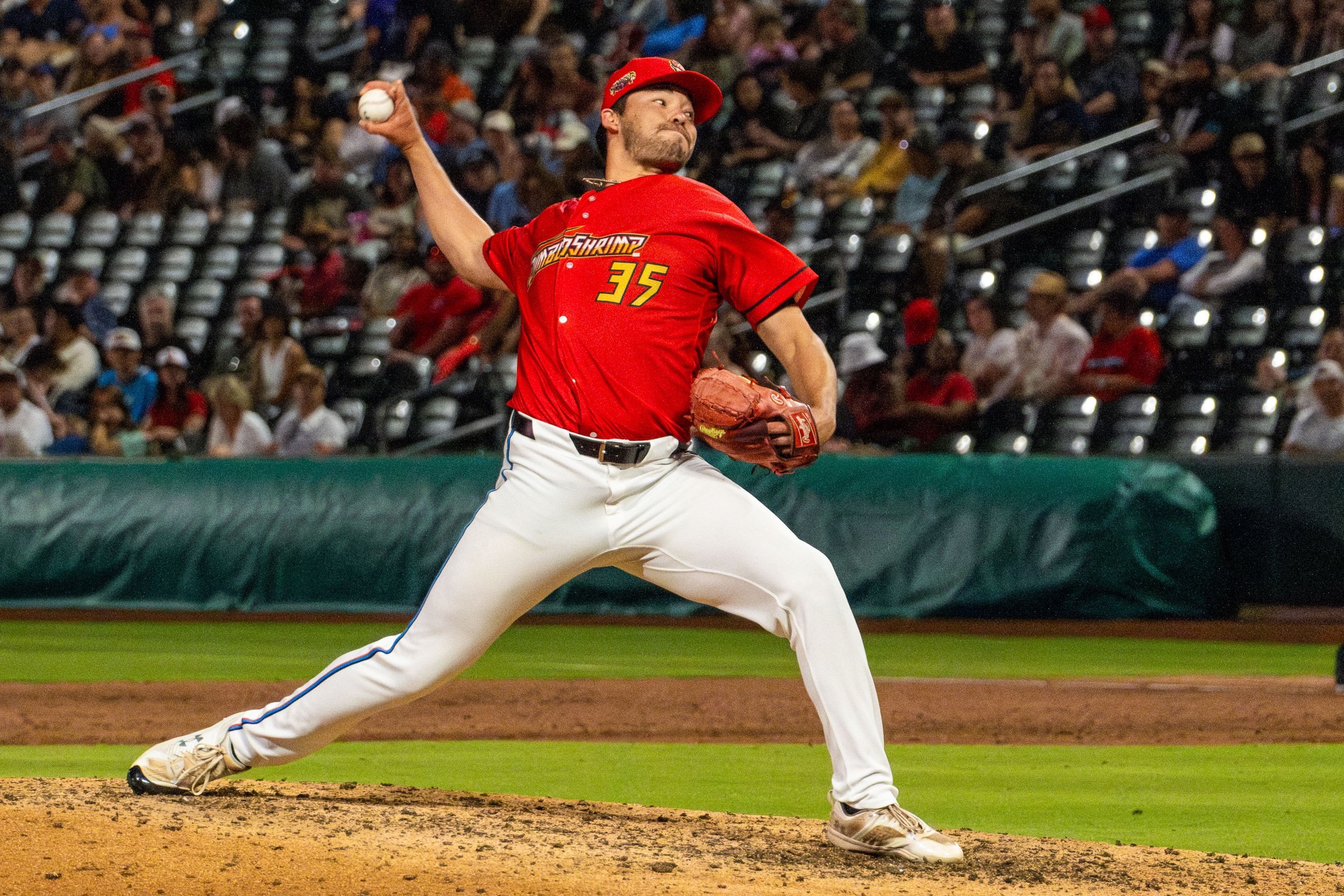 Drafted in the seventh round in 2019 out of UCLA, Jack Ralston has spent his entire professional career as a reliever. After signing with the Miami Marlins as a minor league free agent this offseason, he is quickly becoming the latest example of the organization finding value in overlooked arms. Through 13 appearances this season with Triple-A Jacksonville, he owns a 1.27 ERA with a 0.98 WHIP and 31 strikeouts in just 21 ⅓ innings. The walks are still a little high at 4.64 BB/9, but compared to last season’s 6.75 BB/9, that's a significant improvement. The Marlins bullpen has been pretty effective overall in 2026, but Ralston can help them reach even greater heights. One adjustment has changed everything With the AAA data we have from last season, it is easy to see what has changed for Ralston this year. In 2025, he threw all three of his pitches over 29% of the time (fastball 37.8%, splitter 32.3%, slider 29.8%). In 2026, everything has changed tremendously. His splitter usage has jumped all the way to 52.1% while his fastball usage has dropped to just 21.5%. His slider usage has stayed relatively similar at 26.3%. Everything has followed with this adjustment. Ralston has done a tremendous job limiting damage this season, allowing just 0.42 home runs per nine while opponents are averaging only 4.22 hits per nine compared to 8.16 last year. The swing-and-miss has taken a huge step forward as well as he is now striking hitters out at a 13.08 K/9 clip, up from last season's 11.30. Additionally, the quality of contact against him has dropped as opponents are slugging just .173 after posting a .376 SLG last season. While Ralston's walk rate is still a little high, hitters still have not been able to consistently reach base against him as opponents own just a .244 OBP against Ralston this season compared to a .371 OBP last year. Overall, hitters own just a .417 OPS against him this year. Compared to a .747 OPS last season, it's clear just how effective the adjustments to his pitch mix have been. When could we see him? It is always tougher to determine sustainability with relievers as their results can fluctuate heavily from year to year, but through a 13-game sample, it is clear the adjustments Ralston and the Marlins made over the offseason have paid off. The 28-year-old doesn't need to be waiting by his phone quite yet. The Marlins 40-man roster is currently full and Ralston isn't on it. However, this team has shown a willingness to demote struggling players and cycle through fresh arms when needed. During this current stretch of 26 games in 27 days, pitching depth will inevitably be leaned on. Ralston could be next in line to debut. View the full article
 -
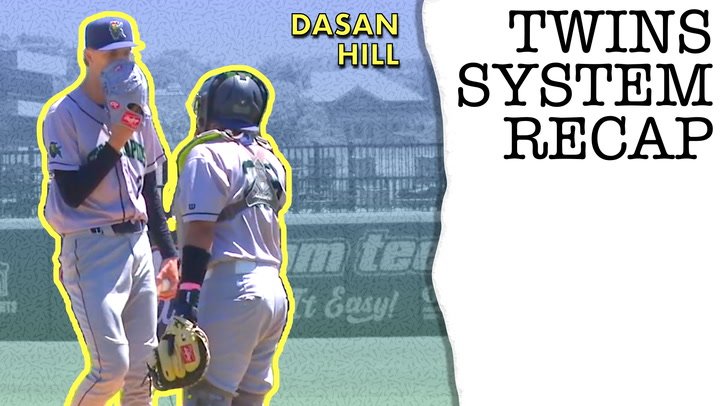 Today's video is a roundup of all this weekend's action across the system. Among the top performers were Zebby Matthews, Brandon Winokur, Dasan Hill, Matthew Dalquist, and Jaime Ferrer. View the full article
 -
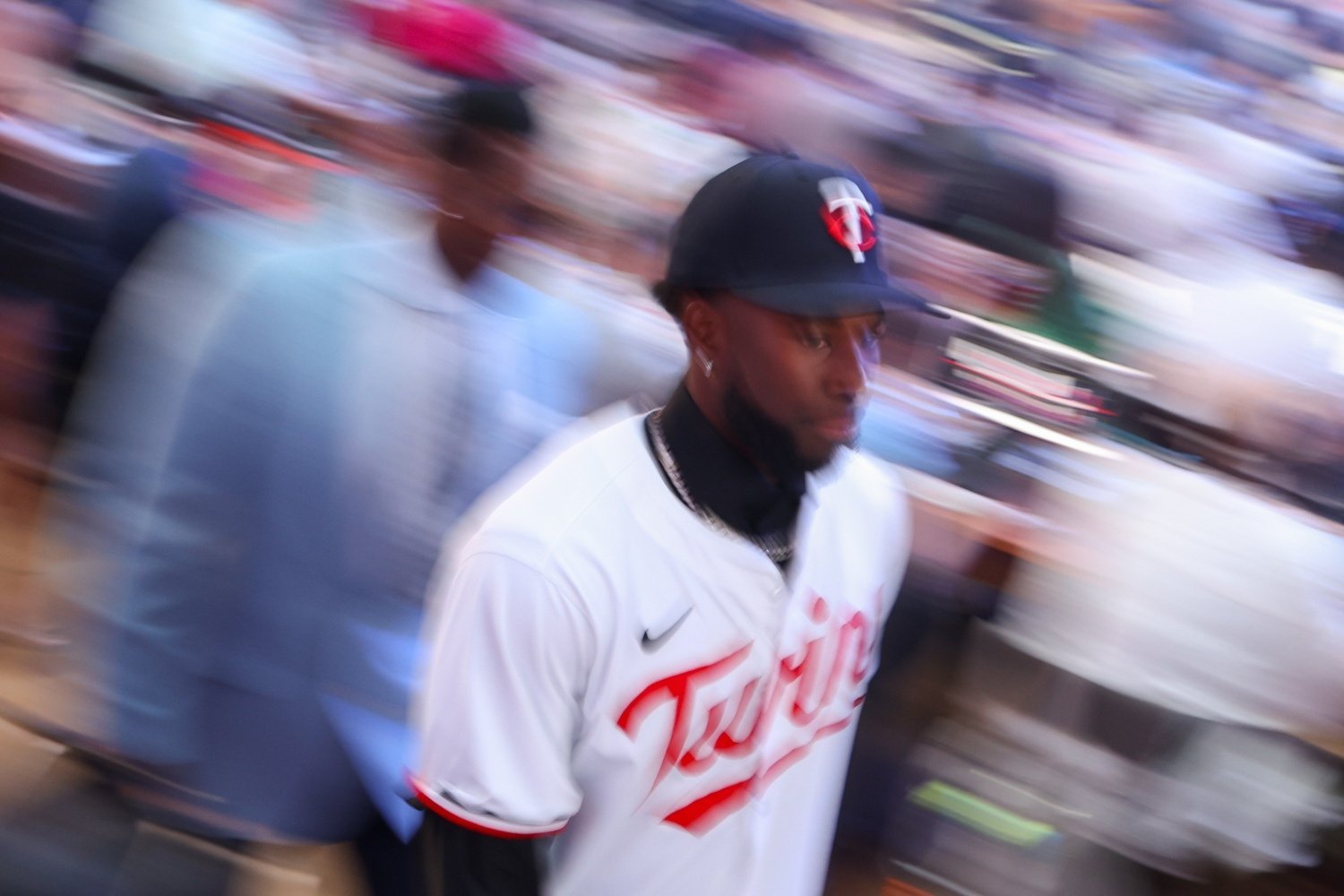 If the Triple-A season were a round of golf, Kaelen Culpepper might be two under par through the first five holes. It’s not been a scorching start, but he’s within touching distance of a great front nine. Botched metaphor aside, Culpepper has surpassed 30 games at St. Paul, so it’s time to dig into his numbers and make some initial assessments of his performance. Upon first glance, it’s a solid start. Through 34 games, Culpepper is hitting .250/.335/.465, with 8 home runs among 15 extra-base hits. He’s walking a healthy 10.4% of the time, and striking out just 20.1% of the time, good for a 103 wRC+ through the first month-plus of games. Not bad. Let’s start with Culpepper’s bat-to-ball skills. Is he making enough contact? Definitely. Culpepper is running an overall contact rate of 79.2% (on the high end of average for a big leaguer). His in-zone contact rate is 89.5% (an average big-leaguer hovers around 85%). Why is this significant? Well, Culpepper’s data hasn’t been widely publicly available since he debuted in 2024. Additionally, before 2026, he hadn’t played a game at the Triple-A level. This is his first month at the doorstep of the majors, which makes what we've seen so far really encouraging stuff. Coming out of college, scouting reports had mixed reviews on Culpepper’s ability to hit for power. He wasn’t a prolific power hitter in college, maxing out at 11 home runs in his junior season in an environment that maximizes offensive production. Conversely, it was a pretty right-handed swing with good bat speed that looked geared towards maximizing pull-side loft. How is all that playing out in Lowertown? Pretty well, so far. After clubbing 20 home runs in 113 MiLB games in 2025, Culpepper has 8 more through 31 in 2026, with those 15 extra-base hits overall. His exit velocity numbers look solid, too. He’s currently running an average EV of 91 mph, with a MaxEV of 110.2 mph. We can shoehorn those numbers confidently into a 50-55 power grade, good for somewhere in the range of 20-26 home runs in a given season. Culpepper is hitting the ball hard with regularity, running a hard-hit rate of 48.2%, well above the major-league average of around 38%. Ok, so far, so good. What about that pesky ground ball rate though? Culpepper ran a ground ball percentage of 50% in 2025—problematically high, no matter how hard you hit the ball or how solid your bat-to-ball skills are. He’s cut that significantly in the early going in 2026. It’s currently sitting at 43.2%, in the region of where it should be, with an average launch angle of 12.4°. Far too rosy a picture so far, right? There has to be a bugaboo in this increasingly solid-looking offensive profile? Well, there is. Culpepper chases a lot. His current rate sits at 31.1%, which is high enough that it could expose him a bit in the majors. It’s not crippling, though. For context, there are around 100 big-league hitters who currently have a higher chase rate. Culpepper has always chased. He was an aggressive swinger in college. That’s a trait the Twins aren’t afraid of drafting. It’ll likely always be part of his game. How he’s chased has changed, though, which is a development worth spending a moment on. The scouting report is out on Culpepper. Breaking and off-speed stuff, down and away. Here’s the simplest visual possible, the number of pitches he’s been thrown at Triple-A to date, by zone location. That’s a lot down and away. Here’s the good news, though. While Culpepper is still chasing a lot, he’s chasing less down and away, and more inside. Why is that helpful? Inside is Culpepper’s nitro zone. Peep the visual below, which shows Culpepper’s slugging percentage by zone location. If you’re going to chase, chase where you can do damage, and show that it's a result of having honed your focus on one productive part of the strike zone, rather than a result of being defensive or deceived. Through the end of the week-long series in Vegas, Culpepper was running a .269 BABIP. There’s not much about his contact skills, quality of contact, or batted-ball profile to suggest there’s some underlying issue here. In short, despite his solid 103 wRC+, I think Culpepper is about to heat up and produce more. The Twins are encouraged by Culpepper’s play at shortstop. He’d easily be the Twins' best defensive infielder right now. I feel relatively confident calling him likely to be an average big-league shortstop (complimentary), if not slightly better. His arm will allow the skill set to work excellently at third base, too (don’t tell Royce, anyone). If his first 34 games at Triple-A can be relied on, Culpepper can soon fill several voids the Twins desperately need him to. An above-average defensive infielder, and at the very least, a solid, two-win, everyday player. In another 30 games or so, I expect him to be knocking on the door a little more loudly. View the full article
 -
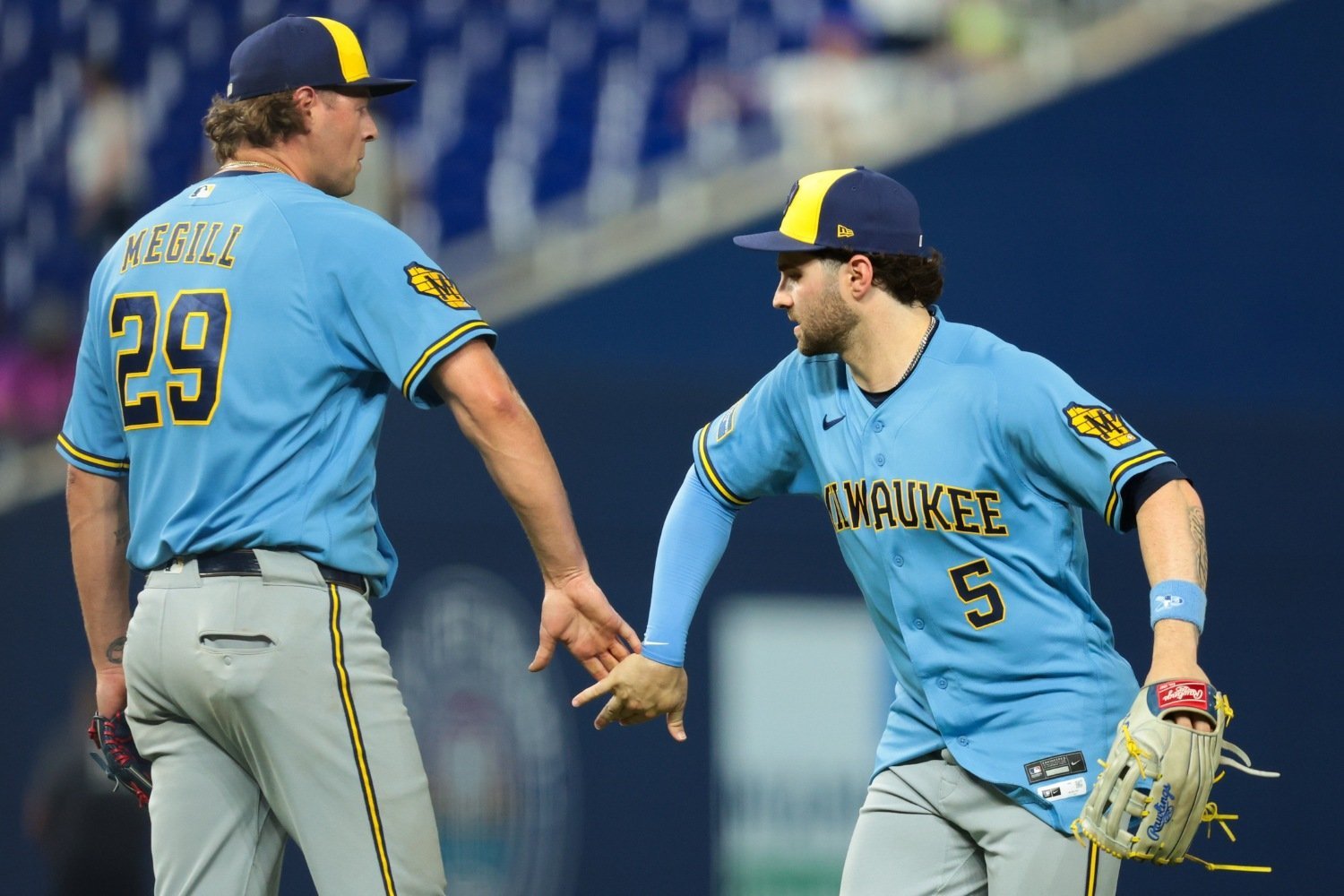 After his struggles reached their apex in a blown save on April 14, Trevor Megill’s results have flipped for the better. Megill has allowed just one earned run in his last nine outings, picking up four holds and an extra-innings save while settling in as a productive setup man ahead of Abner Uribe. It hasn’t been a run of favorable luck, either. Megill has been legitimately dominant during this stretch, missing barrels and posting excellent strikeout and walk rates. Most of his major ERA estimators since April 16 are below 2.50. {C}%3C!%2D%2Dtd%20%7Bborder%3A%201px%20solid%20%23cccccc%3B%7Dbr%20%7Bmso-data-placement%3Asame-cell%3B%7D%2D%2D%3E--> Date BF ERA xERA FIP SIERA Hard Hit K% BB% K-BB% Through 4/14 29 14.40 7.90 4.12 5.00 52.6% 17.2% 13.8% 3.4% Since 4/16 33 1.00 1.75 1.34 2.21 35.0% 33.3% 6.1% 27.3% The turnaround has not come from Megill rediscovering the lost fastball velocity that plagued him in his first several outings. In fact, his velocity has continued to decrease ever so slightly, even at the time of year when he starts rounding into form. His heater averaged 99 mph last May, but it’s at just 96.9 mph this month. Sitting 96-to-98 now looks even more like his new normal than an early-season blip on the radar. At that velocity, Megill’s fastball remains a magnet for loud contact instead of the overpowering pitch it was when it regularly touched triple digits. It’s performed more reliably during this stretch, though, largely because Megill has used it more strategically. {C}%3C!%2D%2Dtd%20%7Bborder%3A%201px%20solid%20%23cccccc%3B%7Dbr%20%7Bmso-data-placement%3Asame-cell%3B%7D%2D%2D%3E--> Date FB MPH FB Exit Velo FB Hard Hit FB wOBA FB xwOBA FB Whiff% Through 4/14 97.5 98.7 77.8% .520 .595 16.7% Since 4/16 97.2 91.0 57.1% .299 .402 22.9% For starters, Megill has made his pitch mix far less predictable. Here’s how he attacked hitters through that blown save: Since that outing, Megill has not only decreased his overall fastball usage and thrown more curveballs, but also mixed those pitches more evenly in most count situations. It’s become harder for hitters to pick up on patterns and sit on a certain pitch. As a fireballing late-inning reliever, Megill has never needed to be a command pitcher. His breakout with the Brewers stemmed mostly from throwing more pitches in the strike zone, not locating them in perfect spots. With reduced velocity, his old approach of trying to throw every pitch down the middle—knowing his fastball would stay true through the zone, while his curveball would drop below the knees—is no longer viable. Instead, Megill appears to be targeting more specific locations when playing his fastball and curve (which is essentially a short, tight gyrospin slider at this point) off one another. In those early weeks of the season, his command was sporadic, but the middle of the zone still looked like his focal point. Lately, his location has looked more deliberate. Megill is keeping his fastball around the top of the zone to righties, allowing him to land more in-zone curveballs out of the same tunnel for takes and weak contact. Against lefties, he’s setting up chases on back-foot breaking balls with low fastballs shaded inside. In addition to throwing more high fastballs, Megill is also backspinning them a bit more, and his release height is slightly higher. Those changes have increased the carry on his heater, improving its induced vertical break from 19.1 inches to 20 inches during this stretch. Small improvements like that can be the difference between a barreled ball and a swing slightly underneath his fastball. Without its best velocity, Megill needed new strategies to keep hitters from timing it up. He’s made some impressive progress on the fly in response to his struggles, allowing him to remain a key piece in the Brewers’ bullpen—for now. View the full article
 -
 We have finished the first month of play, and it is time to update the Royals Top 20 Prospects List over at Royals Keep. Both staff and readers voted, and after the results were calculated, the list is now ready to be revealed. The Royals' Top 20 Prospects List saw some notable changes from the preseason, including the addition of two new prospects, which we will break down. Let’s jump into it below. Kansas City Royals Top 20 Prospect List Kendry Chourio RHP A (Previously #4) David Shields LHP A+ (Previously #3) Sean Gamble OF/2B A (Previously #6) Blake Mitchell C A+ (Previously #2) Josh Hammond SS A (Previously #7) Ramon Ramirez C A+ (Previously #8) Drew Beam RHP AA (Previously #9) Asbel Gonzalez CF A+ (Previously #10) Ben Kudrna RHP AAA (40-Man) (Previously #5) Carson Roccaforte CF AA (Previously #16) Yandel Ricardo SS A (Previously #11) Felix Arronde RHP AA (Previously #12) Blake Wolters RHP A+ (Previously #17) Michael Lombardi RHP A (Previously #18) Luinder Avila RHP MLB (40-Man) (Previously #12) Steven Zobac RHP AA (40-Man) (Previously #15) Frank Mozzicato LHP AA (Previously #20) Daniel Vazquez SS AA (Previously #14) Warren Calcaño SS DSL (Previously #19) Shane Panzini RHP AAA (Previously Unranked) In this new list, 19 of our 20 from our preseason rankings remain, with former top prospect Carter Jensen being the only one graduating from the list after starting the 2026 season on the MLB roster. Pitcher Panzini joins the list after pitching primarily in Triple-A Omaha. The biggest risers in the farm system were pitchers. Chourio ascended to the No. 1 prospect in the Royals system while Shields rose to No. 2. Wolters and Lombardi had the biggest rises in terms of rankings, as they both ascended four spots each to No. 13 and No. 14, respectively. Lombardi has been one of the best strikeout pitchers in the Fireflies rotation, while Wolters recently earned a promotion from Low-A to High-A Quad Cities this past week. data:image/gif;base64,R0lGODlhAQABAPABAP///wAAACH5BAEKAAAALAAAAAABAAEAAAICRAEAOw== Mozzicato rose from No. 20 in the preseason rankings to No. 17 in our latest update. The ERA is brutal at 6.65, but he has a 21.7% K% and has shown some intriguing stuff on his pitches, though control and command have been less than stellar to begin the year. The sooner Kansas City moves Mozzicato to the bullpen full-time (he's made six starts), the better his outlook (and current statline in Double-A) will be. Also in Double-A, Beam rose from No. 9 to No. 7, despite sporting a 4.88 ERA and 6.63 FIP in 27.2 IP. The strikeouts haven't been there for Beam to begin the year, as illustrated by a 13.6% K%. However, he could be due for a positive bounce-back when the weather heats up, and he gets more settled against Texas League hitting. Roccaforte saw the biggest rise of position players, going from No. 16 to No. 10 in our updated rankings. The former University of Louisiana-Lafayette product is hitting only .240 and has a 31.4% strikeout rate. However, he has an .889 OPS and nine home runs for the year, putting him on pace for 20+ home runs this season. data:image/gif;base64,R0lGODlhAQABAPABAP///wAAACH5BAEKAAAALAAAAAABAAEAAAICRAEAOw== The first two selections of the 2025 MLB Draft also saw rises in the rankings, with Gamble moving from No. 6 to No. 3 and Hammond moving from No. 7 to No. 5. Quad Cities prospects Ramirez and Gonzalez also moved up to No. 6 and No. 8, respectively, two spots up from their preseason rankings. Gonzalez is hitting .287 with a .772 OPS and has three home runs, while Ramirez is hitting .305 with a .916 OPS and six home runs. data:image/gif;base64,R0lGODlhAQABAPABAP///wAAACH5BAEKAAAALAAAAAABAAEAAAICRAEAOw== While the Royals' farm system rankings saw some rises from pitchers in the lower levels, it seemed like arms in the upper levels saw drops in the rankings in this latest edition. Kudrna, who made the 40-man roster this offseason and started in Triple-A, dropped from No. 5 to No. 9, and he could see an even bigger drop in our next rankings, especially with him likely out for the year due to elbow surgery. Avila dropped from No. 12 to No. 15, mostly due to an uneven start in the Majors this year. Furthermore, it seems the Royals are committed to him as a reliever for now, which lowers his ceiling and, thus, his prospect ranking. Zobac hasn't pitched this year due to injury, and that explains why he dropped one spot in this updated edition. The biggest position player drop was Mitchell, who went from No. 2 to No. 4 in the updated rankings. The former first-round pick has six home runs and a walk rate of 30.6% in 121 plate appearances. However, he has a strikeout rate of 32.2% and is hitting just .200. It seems hard to believe that the 30% K rate in High-A will decline in Double-A and beyond. Vazquez also saw a dip, going from No. 14 to No. 18 in these latest rankings. Hopes were high with Vazquez going into the year after a strong Arizona Fall League campaign, and he is hitting .273 with a .360 OPS in 128 plate appearances. However, he has not shown much power, as evidenced by a .696 OPS. Ricardo and Arronde stayed pat after up-and-down campaigns in Columbia and Northwest Arkansas, though they have been playing better recently. Calcano hasn't played in the States yet, which explains why he's remained stagnant in the rankings. He is still 19 years old and should matriculate to the Arizona Complex League at some point. New Addition: Shane Panzini, RHP, Triple-A Omaha, No. 20 Panzini joins the list after missing out on the preseason list. The numbers haven't been great for Panzini in Omaha so far. The former Northeast prep pitcher is posting an ERA of 11.42 and a WHIP of 2.25 in 17.1 IP. His FIP isn't much better at 8.45, and he is also sporting a 4.5% K-BB%. Thus, there's some argument to be made that Panzini isn't a Top-30 prospect in the Royals system, let alone a Top-20 one. However, with some proper tweaks, Panzini could develop into a pretty good reliever at the Major League level, especially if he can get through the rough park factors of Werner Park in Omaha and Triple-A in general. According to TJ Stats, his four-seamer (57.1% usage) and curveball (25.7% usage) are his most utilized pitches. That said, they are also his weakest pitches in terms of TJ Stuff+, with marks of 91 and 96, respectively. On the other hand, his secondary pitches, including his slider (7.5% usage), cutter (5.1% usage), and changeup (4.6% usage), all have a TJ Stuff+ mark of 100 or better, as seen below via his TJ Stuff+ Season Summary. Panzini isn't generating much chase (19.5%) or whiff (20.8%) and is getting hit hard, as evidenced by his .451 xwOBACON. However, some modifications in pitch mix could do wonders for his results. A higher usage of the cutter and slider and a lower usage of the four-seamer and curveball could help make all four of those pitches more effective and his line better overall. I do think Panzini pitches better when the weather improves, as his stuff has been a bit stunted by the rough weather in Omaha and other Midwestern cities where the Storm Chasers have played this year. Despite those velocity issues with the conditions, he has produced some intriguing movement, especially on his four-seamer, which has a 17.6 iVB. Jared Perkins of Just Baseball and Royals Pipeline Podcast (on KC Sports Network) pointed out the iVB on Panzini during an early Omaha outing this year. data:image/gif;base64,R0lGODlhAQABAPABAP///wAAACH5BAEKAAAALAAAAAABAAEAAAICRAEAOw== The numbers aren't good, and Panzini is trending toward being another Chandler Champlain, who is no longer in the Royals organization after two rough seasons in Omaha. However, I think Panzini deserves some patience and time to work through things on the mound in Omaha. The seeds are there to be a successful MLB reliever. He just needs to adjust his pitch mix and try to get more on his four-seamer, which has a great foundation for vertical movement (velocity is the issue). View the full article
 -
 Christopher Morel just had his best moment as a Miami Marlin. Frankly, there aren't any other nominees. Sunday afternoon against the Washington Nationals, with one out in the bottom of the eighth inning and the game tied 2-2, Morel stepped up to the plate. His task: drive the ball deep enough to score Esteury Ruiz from third base. Morel delivered, getting just enough of Gus Varland's 0-2 slider to bloop a single into center field. His first RBI of the 2026 season was a game-winner. The 26-year-old free agent acquisition has been limited to nine games thus far due to an oblique strain that he suffered on Opening Day. It's unreasonable to hold that against him—oblique injuries have become increasingly prevalent in baseball, impacting even the best-conditioned athletes. That being said, Morel has blatantly failed the eye test both before and after his absence, with discouraging results to boot. In the meantime, other internal options have emerged as better candidates to fill the role that was originally envisioned for him. How much more of this are the Marlins willing to tolerate? There are several different tiers of major league free agent signings. Morel is an example from the lowest tier—talented enough to receive guaranteed money, but so unproductive that the team had all the leverage. On the heels of back-to-back sub-replacement-level seasons, the burden of proof has been on him from the beginning to demonstrate that things would be different this time. The only consistent aspect of Morel's game through the years has been elite bat speed. That remains intact. Since comprehensive tracking began in 2023, his career average has been approximately 76 mph; in 2026, he's averaging 75.7 mph (second-highest among Marlins players). However, Morel is not generating any in-game power whatsoever. During spring training, he registered one measly extra-base hit in 46 plate appearances. In 47 additional opportunities across minor league rehab and MLB regular season action, he hasn't increased that total. Combining all of those reps, he is slugging .195 in 2026. If Morel is not bringing the threat of homering to the table, he doesn't belong at the table. He has always and will always strike out in abundance, perennially ranking below the 10th percentile in whiff rate. And he is the epitome of the word "positionless." The Marlins have prepared him primarily at first base since signing him because he has proven to be a liability at every other infield and outfield spot during his career. By all accounts, that transition has gone poorly. Half of his starts since being reinstated from the IL have come as Miami's designated hitter. Morel was supposed to have an outsized importance to the Marlins at the beginning of the season while some of their top hitting prospects incubated at Triple-A Jacksonville. But now, Joe Mack has joined the big league club. The Marlins have (appropriately) thrown him in the deep end, starting him behind the plate in six of his first seven games on the active roster. That has freed up their leading run producer, Liam Hicks, to primarily play first base. Connor Norby, who entered this year in a similar situation as Morel, has looked far more adept at his new position while tightening up his plate discipline. There is no case for either of them to sacrifice playing time in favor of Morel. Plus, reinforcements are on the way. Griffin Conine on track to return from the injured list by month's end and Kemp Alderman is learning the position with Triple-A Jacksonville, starting at 1B three times in his last eight games View the full article
 -
Payton Tolle Has Earned A Long-Term Spot In Red Sox's Rotation
DiamondCentric posted an article in Talk Sox
 “Just be ready.” Those were the words former Worcester manager Chad Tracy kept telling Payton Tolle as he waited to step on the mound again. The last time the young left-hander had pitched was April 12 when he tossed five shutout innings against the Columbus Clippers. In that game Tolle was dominant, tossing five shutout innings while striking out six. The left-hander being a force in Triple-A was nothing new, but how he’s handled his secondary pitches showed he was a different pitcher from 2025. “He landed his off-speed for strikes and when he lands his off-speed for strikes and then runs it up to 98 with that big extension, he’s very difficult to deal with. That was the biggest focus with Dan and Noah [pitching and bullpen coaches]. Let’s not get too fine about it, let’s land it, it’s like we need the breaking ball over the plate for a strike. We need the changeup in the zone for a strike. And then it plays even more and they can’t just sit on a fastball,” Tracy explained when asked on April 21 about when asked by the media what Tolle had shown to begin the season for a call-up to make sense. Tolle would indeed be recalled on April 23 to pitch against the New York Yankees and showed he was ready. While the Red Sox would ultimately lose the game 4-2, Tolle gave the team everything he had by pitching six innings and allowing just one earned run on three hits and a walk. He also struck out 11 batters including five straight to begin his outing. His fastball topped out at 99.5 mph during the outing, and he managed to generate 18 whiffs. The Yankees as a team have handled fastballs extremely well in 2026 with Ben Rice, Aaron Judge, Cody Bellinger and Austin Wells all having a run value of three or greater. Run Value is a metric that helps measure the impact a hitter has on run scoring with a positive value indicating runs created. Rice, who leads the team against fastballs with a Run Value of nine, has a .400 batting average and a 1.240 slugging percentage against fastballs in 2026. Against Tolle he went 1-for-3, his lone hit coming off of the sinker while being struck out on a fastball. And just as Tracy had stated about what made Tolle ready for the major leagues, the left-hander went out and did just that. Leading with his fastball for 49% of his pitches, his best weapon was supplemented by mainly his sinker and curveball as the latter generated seven whiffs and was a strike 80% of the time it was thrown. Thanks to that, Tolle was able to get eight whiffs with his fastball, the pitch being put in play just five times while only one ended up as a hit. The sinker was just as useful despite not generating any whiffs. Instead, Tolle was able to land it for a strike 61% of the time including for five first pitch strikes. His cutter was just as effective, using it 12% of the time and getting two whiffs on it while landing it for a strike 73% of the time. The pitch was used against both right-handed and left-handed batters. Overall, he tossed 93 pitches on the evening with 68% of them going for strikes. But unlike in 2025 where his first start was his best performance, Tolle continued to pitch well and in his third start against the Detroit Tigers, the left-hander dominated even when mother nature looked to create chaos. Tossing seven innings, Tolle cruised against the Tigers’ lineup as he allowed just one hit and one walk to the Tigers offense while striking out eight. He also allowed two unearned runs to score during a very wet sixth inning. Tolle’s night began by retiring the first 12 batters he faced until Riley Greene led off the fifth inning with a double. Then the sixth inning came. As the weather worsened and fans were told to take shelter, Tolle remained on the mound throughout the downpour. The weather situation played a role in a rough sixth inning as Tolle hit the first batter and with one out allowed his lone walk of the evening. With two on and one out, Carlos Narváez attempted to pick off the runner on first base only to throw the baseball into right field and allow both runners to advance. Then Matt Vierling stepped to the plate and hit a ground ball at Andruw Monasterio at third base who attempted to throw home. It was offline and got past Narváez, allowing both runners to score. Despite that, Tolle remained poised on the mound, striking out the next two batters and getting the team out of the inning without any more damage being done. When looking at the pitch usage, it was very similar to the Yankees outing where he led with his four-seam fastball with a 36% usage rate while the sinker and curveball both supplemented it as they were used 23% and 18%, respectively. His cutter and changeup saw a tick in increased usage at 16% and 7%. Overall Tolle managed to generate nine whiffs, with eight of them coming between the fastball and curveball. Just like with the Yankees, Tolle was often in the strike zone, getting a strike with his fastball 77% of the time including six first-pitch strikes. And just like the Yankees, the Tigers are also a good fastball hitting team with seven players having a Run Value of at least one, with three of them having a value of three. Of those seven players, only Spencer Torkelson, Riley Greene, and Dillon Dingler were in the lineup. The three of them went a combined 1-for-9 against Tolle and the only hit was off a sinker. Since returning to the majors, Tolle has been throwing strikes and utilizing the strike zone with all of his pitches. His fastball has mostly been in the upper-two-thirds of the strike zone or in the bottom left of the strike zone from the catcher’s perspective. Compared to 2025 where it was mainly located on the upper half of the strike zone and towards the left-handed batter’s box, the pitch has been located better. The curveball has also seen an improvement, not just in pitch usage but where he’s landing it. During his time in the majors last season, Tolle used it just 18 times with it mostly landing on the upper inside portion of the plate if you were a left-handed batter. Now, the pitch has a more varied location. Most of the time Tolle seems to be landing it in the upper third of the strike zone or at the bottom of the zone with it occasionally hitting the inside corner of the left-handed batter’s box. It has seen a vast improvement in missing bats, being whiffed on 52.4% of the time. His sinker on the other hand has the most varied locations when you look at his pitch contour. The pitch has had a few locations he frequents with it, being mostly the inside portion of the plate to left-handed hitters. The pitch has mostly been up and in or down and in with the occasional down and away from the left-handed batter’s box (though if you’re to look at it from the right-handed box it would be the opposite). With his sinker and curveball able to change the vertical eye level of a hitter, Tolle has been able to make hitters guess with his cutter. When thrown up in the zone, the pitch has been in a similar location to the curveball only a bit more inside if you’re a right-handed hitter. The pitch has also been thrown down and away from left-handed hitters (or down and inside to a right-handed hitter), helping him to generate a chase rate of 29.7% All of this has allowed his fastball to be even better. So far in 2026, the pitch has been thrown 113 times and batters are hitting .063 against it and slugging just .156 and whiffing on it 30.5% of the time. Batters are just 2-for-32 against the pitch this season, having struck out 15 times against it. Prior to his most recent start against the Tampa Bay Rays, Tolle had yet to give up a hit with his cutter, curveball and changeup as batters are a combined 0-for-16 against them. In 2025 batters, went 4-for-11 against those same three pitches. The Red Sox will now be faced with a difficult decision once the rotation returns to full strength: Do they option Tolle back to Triple-A to gain an extra year of control, or do they keep him in the rotation? Should the team want to win every night and get back into playoff contention, the answer should be obvious after Tolle’s display of dominance during his time in the majors. Since being recalled, he’s looked like the ace many envisioned, having allowed just seven earned runs across his 22 2/3 innings. View the full article
 -
 Facing Hunter Feduccia to lead off the fourth inning and throwing a four-seam fastball on a 2-2 pitch, Kevin Gausman notched the 2000th strikeout of his career. Of those 2000, 510 have come in that count. It also marked the 468th time that Gausman had sat down the leadoff hitter of an inning on strikes. Since joining the Blue Jays in 2022, Gausman has recorded 839 of his strikeouts. That total has him sitting seventh all-time with the Jays. Another 105 this season and he’ll catch Jimmy Key for sixth place. Gausman is a free agent at the end of this season, so if he has plans on cracking the top five, he’ll likely need to sign an extension. In 2023, Gausman notched 237 strikeouts, leading the AL and marking the fourth-highest single-season total ever for a Blue Jays pitcher. It was most by a Jays pitcher who didn’t go on to win the Cy Young Award. His 205 Ks in 2022 and 189 Ks in 2025 sit as the eighth and 13th best seasons in franchise history. Gausman was the Opening Day starter for Toronto this season and came out of the gates flying, chalking up 11 strikeouts against a free-swinging Athletics team and setting his high-water mark for the season (so far). He had 10 Ks in his next start, making it the 21st time Gausman notched double-digit strikeouts in a game with Toronto. His career best mark is 13 strikeouts in a game, a feat he achieved twice in Toronto, both in 2023. In one of those games, against Seattle, Gausman struck out Cal Raleigh and Teoscar Hernández three times each (Jordan Romano would face them later in the game and secure golden sombreros for both hitters). After those two starts, Gausman has cooled off some and hasn’t had more than five strikeouts in a game since (he would leave the milestone game with five Ks). In fact, in his last three starts going into the milestone game, he’d had three or fewer Ks, his lowest for a three-game stretch in Toronto. Not since 2014 in Baltimore has Gausman had a three-start stretch with so few strikeouts (he went 3-2-3 then too). Having spent the bulk of his career in the AL East, it should be no surprise that each of the three active players Gausman has struck out the most also spent a chunk of time here. Xander Bogaerts has gone down on strikes against him 13 times, while Trevor Story represents 15 of Gausman’s career Ks. No one is close to Aaron Judge’s 20, though. Just over 1.4% of the time when Judge has struck out in his career, he’s looked at the mound and seen Gausman standing there. Ahead of this season, we had Gausman as the 25th best Blue Jay of all time and the only active pitcher to make the Top 50. If we made a list of the Top 50 Contracts in Blue Jays History, there’s a fair shot that Gausman would have placed even higher. His five-year, $110 million deal was notably $5 million less than the deal Robbie Ray would get on his way out of Toronto. Gausman stepped into that ace role and earned a spot as one of the franchise’s greats. Here’s to 2000 more! View the full article
 -
 The New York Mets entered the week of May 11 as the worst team in the league with a 15-25 record and a .375 winning percentage. That’s certainly not where owner Steven Cohen, president of baseball operations David Stearns, and manager Carlos Mendoza wanted to be after almost a month and a half into the season. The offense has been the main culprit of the mediocre Mets season, as they are dead last in wRC+ with an 81 mark. It’s baffling how a team with such a talented collection of hitters manages to underperform almost on a daily basis. In fact, things have been so bad that MJ Melendez leads the Mets in wRC+ among hitters with at least 50 plate appearances, with a 143 mark. He has played almost exclusively against right-handers, which is why he isn’t quite an everyday guy, but who knows where New York would be without him? Understanding MJ Melendez's Jekyll-and-Hyde Season Melendez is slashing a solid .271/.352/.500 with two home runs in 55 trips to the plate. That’s the good news. The bad news is that it doesn’t look all that sustainable if we look at his plate discipline profile. An accurate way to put Melendez’s current stat line would be a savage fight between his quality of contact and his plate discipline metrics. The former is aided by a 63.3 percent hard-hit rate, a 95.7 mph average exit velocity, and a 16.7 percent barrel rate. The latter, however, paints a grim picture. Melendez’s 30.8 percent chase rate is below-average, but it’s not nearly as problematic as his horrible 37.1 percent whiff rate, which would be among the league’s worst if he were a qualified hitter. The situation results in a 34.5 percent strikeout rate, which certainly doesn’t portend a continuation of his .271 batting average. You can tell that Melendez has been getting away with some luck, judging by his .407 batting average on balls in play (BABIP) and his .290 xwOBA, which pales in comparison to his .374 wOBA. Expected stats say that the lefty-hitting slugger should have a .191 batting average and a .372 slugging percentage. So, yes, Melendez is punishing the ball when he hits it, but in reality, that hasn’t happened that often. In fact, he hasn’t swung that often, with his 47.9 percent swing rate qualifying as his lowest mark since 2023. He is trying to be ‘patient’ at the plate, as his 27.3 percent first-pitch swing rate is the lowest of his career. In the process, he has been letting a lot of hittable balls go by, as his 69.2 percent meatball swing rate is considerably lower than the league average of 76.2 percent and his career mark of 82.7 percent. Melendez’s 33.3 pull air percentage, however, is one of the highest in the league. To sum up, he often takes pitches, trying to find the right one, and when he does, his intention is to put up a powerful swing to his pull side. It seems that, in the process, he has lost a lot of his contact skills, which weren’t great to begin with. Of course, these are all conclusions based on a limited sample, so it might as well just be some unfiltered noise. But it will be interesting to see where Melendez’s 2026 tendencies take him, and if he can keep thriving with such a selective approach at the plate. View the full article
