


DiamondCentric
-
Posts
2,631 -
Joined
-
Last visited
Never
Content Type
Profiles
Forums
Events
News
Tutorials & Help
Major League Baseball Videos
Guides & Resources
Store
Downloads
Gallery
Everything posted by DiamondCentric
-

 There are plenty of ways a front office can respond to internal turmoil. Some teams hold press conferences. Others reshuffle leadership or leak carefully worded statements. The Minnesota Twins, however, have opted to call in a former reliever with a well-documented interest in the unknown. According to multiple extremely serious sources, the Twins have hired former pitcher Anthony Swarzak to locate Joe Pohlad, who has reportedly been living in hiding somewhere inside Target Field since being pushed out of his spot at the top of the organization earlier this year. The move came after ownership elevated Tom Pohlad into a more prominent leadership role, a decision that insiders say did not sit particularly well with Joe. “Blindsided,” was the word used by one team employee. “Also ‘vanished,’ which is less of a feeling and more of a logistical problem.” The transition in ownership power was framed publicly as a natural evolution. Privately, it has apparently led one member of the Pohlad family to disappear into the concrete wilderness of the ballpark itself. Despite the Twins’ early-season attendance struggles, Joe Pohlad has proven remarkably difficult to locate. Entire sections of the stadium have gone unused on game days, creating what one team official described as “ideal hiding conditions if you’re committed to the bit.” Enter Swarzak, who arrived at the ballpark with a level of confidence that suggested this was not his first cryptid-adjacent assignment. “People forget, I’ve been preparing for something like this my whole career,” Swarzak said, scanning the left field concourse like it might start moving. “You spend enough time in bullpens, and you start to notice things. Patterns. Sounds. The feeling that you’re not alone, even when the attendance says otherwise.” He emphasized that the situation requires a delicate approach. “This isn’t just a missing person,” Swarzak explained. “This is someone who has chosen to blend into his environment. That’s classic sasquatch behavior. Elusive. Intelligent. Probably has access to premium seating.” Swarzak noted that the low attendance at Target Field has made the search both easier and more unsettling. “In a full stadium, you can lose a guy in the crowd. Here, if you see movement, it means something. Or someone. And sometimes, it’s just the tarp. But sometimes it’s not.” Season ticket holders have taken the news in stride, though not without skepticism. “I remember Swarzak talking about sasquatch back in the day,” said one fan. “If anyone’s going to find a hiding billionaire, it’s probably the guy who already believes something is out there.” Another fan pointed toward the upper deck. “I haven’t seen anyone up there in weeks,” he said. “If Joe Pohlad is just hanging out, watching games alone, that might be the best seat in the house.” Swarzak insists there have been signs. “We’ve got traces,” he said, holding up what he described as “compelling evidence,” which looked suspiciously like a half-eaten hot dog. “You don’t leave something like this behind unless you’re comfortable. He’s settled in.” He paused, looking out over an empty section of seats. “He’s adapting,” Swarzak said. “Learning the rhythms. Becoming part of the stadium. At some point, you stop chasing and start thinking like him.” For now, the search continues. The Twins remain hopeful that Joe Pohlad will eventually emerge, either through Swarzak’s efforts or simple boredom. Too late, however, the team realized that they weren't carefully overseeing the Champions Club renovations this winter. It's possible a new, secret lair has been built, and that Joe will never need to emerge at an inopportune moment again, If you hear something echo through the concourse late in the game, don’t ignore it. “That’s usually when they move,” Swarzak said. View the full article
 -
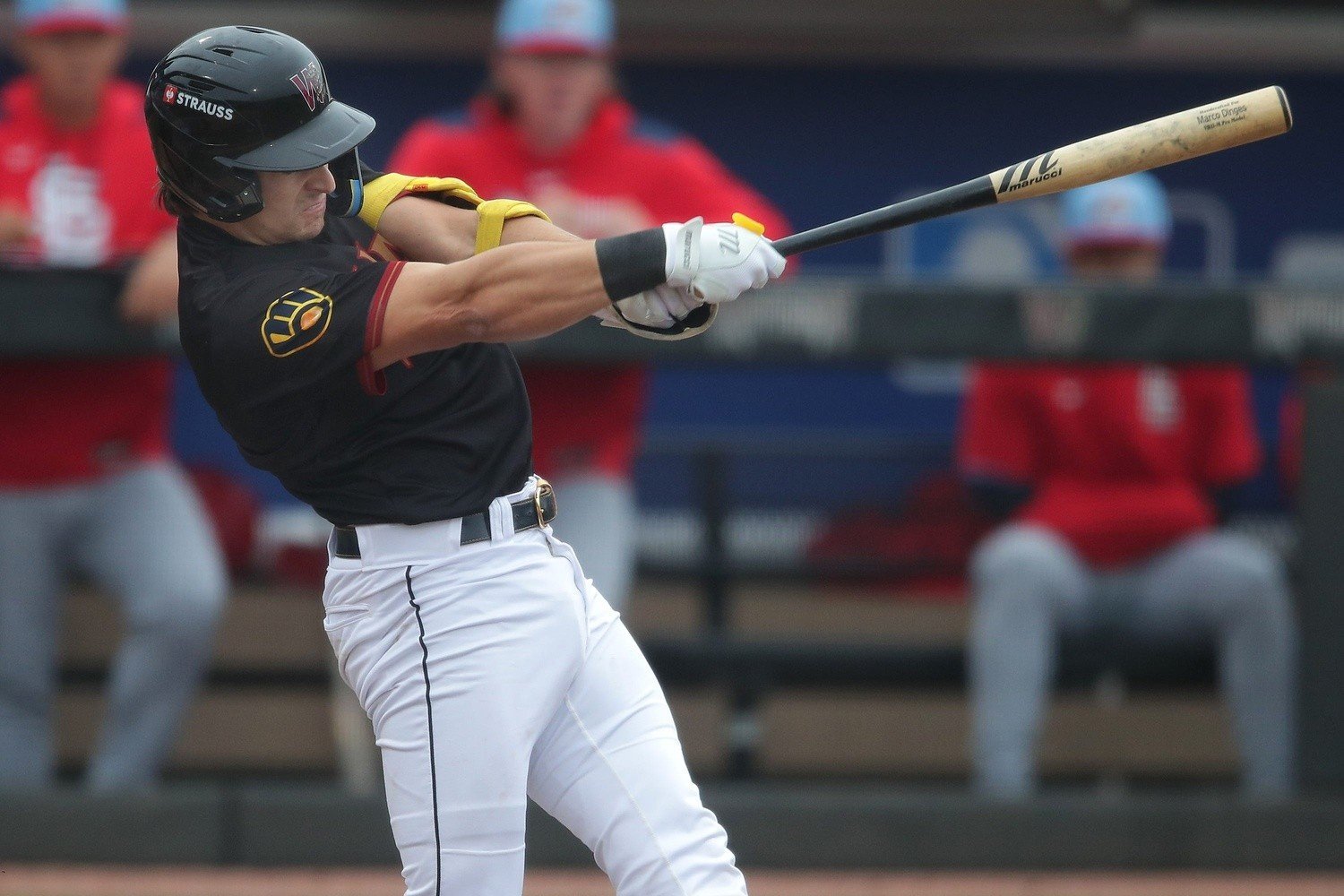 Nashville Sounds’ Prospects in Brewer Fanatic Top 20 Prospects: Jett Williams #3, Cooper Pratt #4, Jeferson Quero #7, Luis Lara #11, Luke Adams #13, Brock Wilken #15 Nashville’s offense had been a one‑man show early, but this week marked the first signs of the lineup starting to resemble a real AAA group. Lara leads the club in hits, runs, home runs, steals, and OPS. Lara continued to mash this week with three homers and an OPS over 1.100. Lara had a 116 wRC+ in the pitcher-friendly Southern League last season, but no one expected the power output to show up so suddenly and consistently this season. Lara has made a compelling early case as the organization’s top all-around outfield prospect in the first month of play. However, this week the Sounds started to show signs that some of the other touted prospects’ bats are waking up, scoring 43 runs in seven games. Quero paced the team with 10 hits (four doubles and two homers) and seven RBI in six games. Quero consistently impacted the ball hard all week. As a result, he raised his season average 82 points, from .185 to .267. You can check out Quero’s bomb from Saturday here. Quero wasn’t the only player getting off the I‑80 express this week. Both Pratt and Williams finished the weekend strong, pushing their season averages above the Mendoza Line. Elevated to the leadoff position for the weekend, Pratt had six hits in four games, including his first triple and first home run at AAA. Williams slipped down in the order and responded nicely with seven hits (six singles, one homer). Wilken’s season-long slash line still looks pretty gruesome (.161/.303/.276), but he started to elevate the ball a bit more (52.7% fly-ball rate) on his way to collecting hits in six of seven games last week. Wilken also had his first AAA triple. Biloxi Shuckers’ Prospects in Brewer Fanatic Top 20 Prospects: Jesus Made #1, Blake Burke #14 After a torrid start to the season, Made showed that he is, in fact, human after all, in going 5-for-25 (.550 OPS) for the week. After a three-hit day on Thursday, the Brewers’ top prospect scuffled over the weekend. He went 1-for-14, with the lone hit coming on a late double Saturday. Made did drive in four and add four stolen bases, and now sports a season-long line of .295/.398/.489. Burke had another strong week, though he has just one home run in his last 14 games. On Wednesday, the Shuckers were down to their last out when Burke came up clutch with a laser to right field to tie the game. The Shuckers then went on to win in the 10th. On Sunday, Burke came up just short of his 8th home run of the season, and settled for a stand-up triple instead. One player that was absent from all the pre-season Brewers’ prospects rankings was second baseman Dylan O’Rae. O’Rae continued his hot start to the season, reaching base 10 times (seven hits, three walks) and also stole eight bases. On Wednesday, O’Rae set a Biloxi record with five stolen bases: O’Rae has a .410 BABIP through 21 games, so it remains to be seen if he can sustain his .338/.453/.455 line. But for now, it’s been a really pleasant surprise to see O’Rae performing so well atop the Shuckers’ lineup after he missed the 2025 season. Wisconsin Timber Rattlers’ Prospects in Brewer Fanatic Top 20 Prospects: Luis Pena #2, Andrew Fischer #8, Marco Dinges #10, Josh Adamczewski #12, Braylon Payne #16 The Wisconsin Timber Rattlers’ offense continues to be the squad to watch in the Brewers’ system and potentially all of minor league baseball. Through 19 games, the Rattlers lead the Midwest League in wins (13), home runs (26), and OPS (.860). They also rank second in runs scored (123). They might also lead the league in time spent admiring moon shots as Payne and Dinges in particular took their time in styling a few of their bombs this week. The back-to-back-to-back homer barrage on Thursday seemed to leave the Fort Wayne crowd and outfielders in awe. The season-long individual leaderboard in the Midwest League is littered with Rattlers. Payne (1.288), Adamczewski (1.239), and Dinges (1.135) are all in the top five in the league in OPS. Pena, who hasn’t played after losing consciousness in the dugout on Wednesday, ranks 10th at .974. Payne led the charge in what is sure to be a “Player of the Week” performance with four home runs in five games. For the week, Payne posted a ludicrous .450/.542/1.150 line (1.642 OPS). He added eight runs, seven RBI, and two steals while setting the tone atop the Rattlers’ lineup. It’s thrilling to think what a future Brewers outfield of Jackson Chourio, Lara, and Payne could look like in the not-too-distant future. Dinges wasn’t too far off Payne’s absurd ratios, going 9-for-19 with two home runs and a team-high eight RBI for the week. That was good for a .474/.583/.895 line for the week. Clearly, Midwest League pitchers want no part of Dinges, as he added five walks and now has a higher walk rate (23%) than strikeout rate (20%) on the season. Adamczewski came into the week with a team-high five home runs, but did not connect on any long balls this week. He did match Dinges with a team-high 14 times on base (eight hits and six walks), and like Dinges, he’s walked more than he’s struck out this season (22.8% versus 17.5%). After his WBC showcase, Fischer entered the season as one of the Brewers’ more buzz-worthy prospects, but so far this season, he has been overshadowed by his teammates. Fischer hit three homers of his own this week, including his first professional two-homer game. Fischer (10 K in 5 games this week) will need to cut down on the strikeouts (35.5% season-long K rate) going forward. Finally, two other Rattler players who are just outside of Brewer Fanatic’s Top 20, but on most other top 30 lists deserve some recognition as well. 2025 seventh-round pick Josiah Ragsdale had an .888 OPS for the week, with five hits, four walks and some stellar defense. 2023 third-round pick Eric Bitonti connected on his second homer of the season, to bolster his .794 OPS for the week. Wilson Warbirds’ Prospects in Brewer Fanatic Top 20 Prospects: Brady Ebel #19 With so many of the system’s top prospects graduating from the Carolina Mudcats last season, the inaugural Wilson Warbirds roster was always going to be light on star power. There are a few names worth tracking and hopefully a few more will emerge as the season draws on. Ebel, a comp pick in last year’s draft, showed some promising signs this week, collecting five hits (two doubles), four walks, and two steals in five games. First baseman Frederi Montero led the Warbirds with eight hits and a .982 OPS for the week. Montero also hit one of the two Wilson home runs for the week. a{text-decoration:none;color:#464feb}tr th,tr td{border:1px solid #e6e6e6}tr th{background-color:#f5f5f5} That’ll do it for this week’s trip around the farm. We’ll be back next week to see who’s heating up, who’s adjusting, and who’s forcing their way into the conversation. Sound off in the comments with your biggest takeaways or any prospects you want us to keep a closer eye on. View the full article
 -
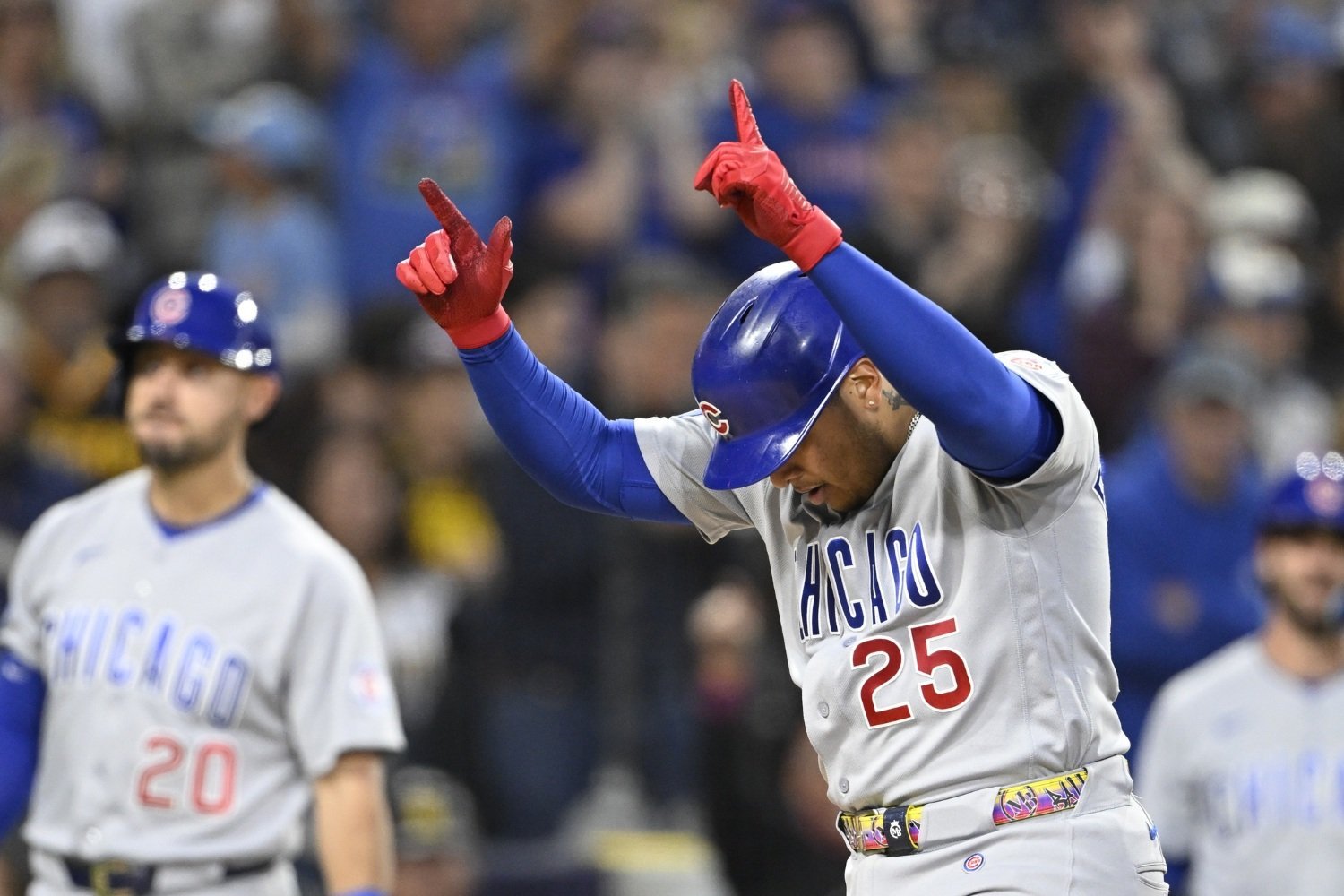 Given his lack of a defensive position (and, somehow worse, the times when he does have one), you won't find Moisés Ballesteros near the top of any WAR leaderboard. He doesn't have the two-part value to drive up that number. If you were to flip the order over to wRC+, however, you'd find him pretty quickly. In fact, with a 216 wRC+ in 69 plate appearances, Ballesteros trails only Yordan Alvarez for the major-league lead. As obscene as that figure is, the rest of the stat sheet is no more subtle. His slash goes .387/.435/.710. He's hit five home runs, barreled 13.7% of his batted balls, and hit 56.9% of all his batted balls hard. That latter figure sits in the 97th percentile for the league. Perhaps most encouraging about the start from Ballesteros is that virtually everything he's producing is coming on the strength of exactly what we thought his skill set was. The power has outperformed what might have been expected, given his launch angle throughout his previous pro career, but he's also been aggressive, while managing consistent contact. That's long been the book on Ballesteros: he's not particularly patient, but he's able to adapt his swing to drive the ball and avoid strikeouts. Contact and swing trends each illustrate exactly that. Given how seamlessly the profile has manifested in nearly a full-time role, is it possible that his skill set could help him stave off what seems like inevitable regression? There are already some factors that lay down the groundwork for at least a modest step back in production. His batting average on balls in play sits at an astronomical .442. His 49.4% swing rate and 32.8% chase rate are higher than the league average. Extreme batted-ball fortune from a rookie hitter who's been aggressive at the plate seems like a recipe for a big comedown—especially when that rookie is one of the slowest players in baseball. While those elements may work in conjunction with one another to create regression (as they have, repeatedly, throughout baseball history), it's also entirely possible that the profile and what we've seen in the swing thus far from Ballesteros will keep him ensconced among the top hitters in the league. For one, the contact rate has remained strong. Ballesteros makes contact on nearly 80% of swings. He's also using the zone to evenly distribute his contact all over the field: It's much more difficult to get a read on a hitter when his tendencies are less apparent than most. Ballesteros has pulled the ball and gone up the middle 34% of the time each, with another 32% headed to the opposite field. That'll make the opposition's adjustments more difficult. If he was a dead-pull guy, for example, you could work the outer part of the zone to get some softer contact out of him. Given how adept Ballesteros has been at hitting the ball all over the field, however, that becomes much more difficult if you're an opposing arm. He can do that because his swing has some extraordinary characteristics. Ballesteros's average bat speed this year is 73.8 MPH, up from 72.7 last year. His contact point has moved 5 inches farther in front of his frame, and that intercept point comes with his bat working uphill in the ideal attack angle range 61.4% of the time, a near-elite rate. It's one thing to expect regression. The early combination of BABIP and aggression for a rookie have spelled doom for many of Ballesteros's predecessors. Those two factors could certainly be responsible for at least a mild step back on the stat sheet in the future. At the same time, there's a profile afoot here that could allow him to fend it off in a way that few hitters are equipped to do. A contact-oriented yet adaptable swing has allowed him to absolutely thrive to this point. That blend should continue to carry him, regardless of what adjustments may be on the horizon from the opposition. View the full article
 -
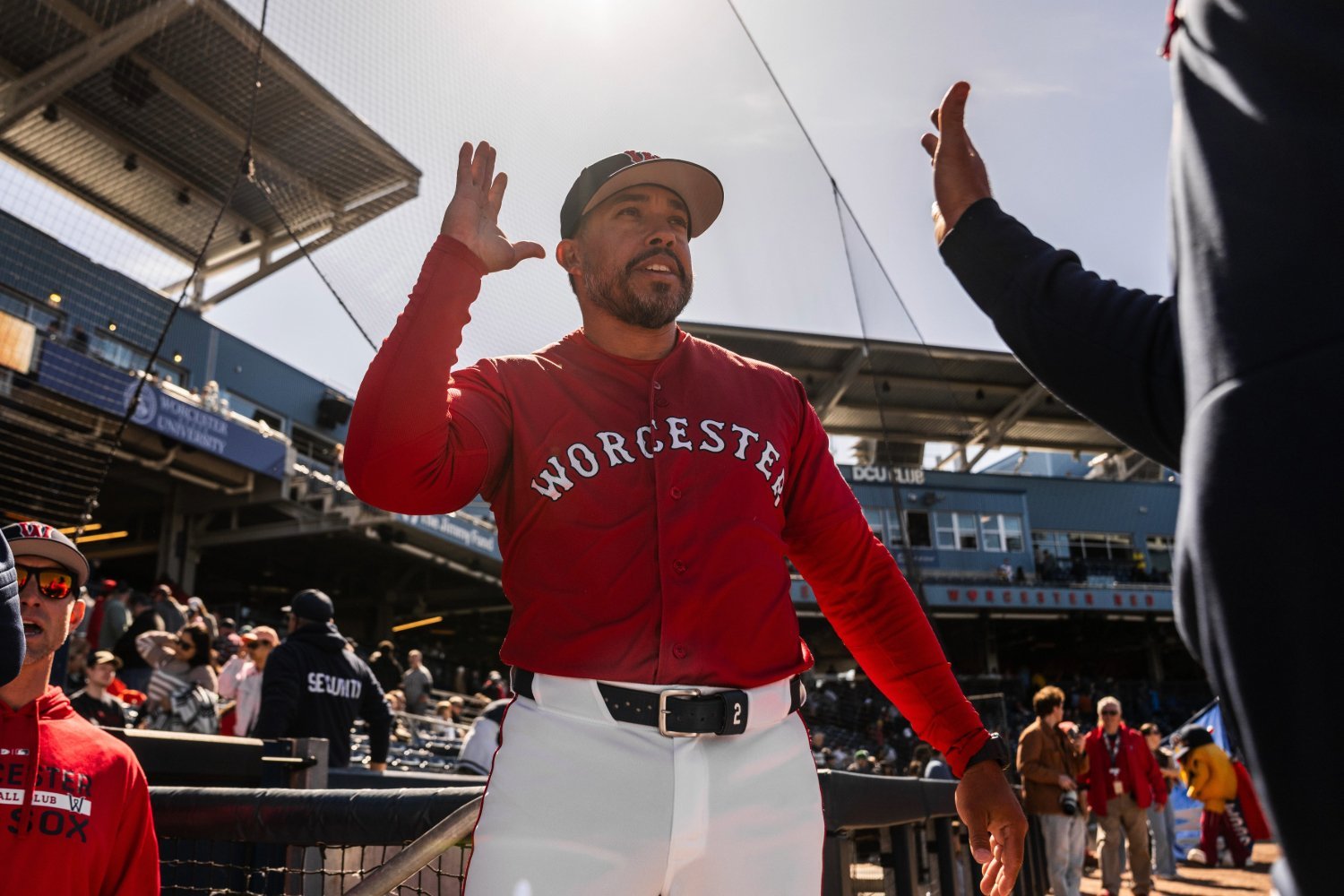 Worcester, Ma — “That’s one I’ll definitely keep for sure,” Iggy Suarez said as he pointed to the lineup card from Worcester’s 6-2 victory over the Syracuse Mets on April 26. It was Worcester’s 15th win of the season, but more importantly, it was Suarez’s first since being named interim manager of the Worcester Red Sox. To say that the last 24 hours had been crazy for Suarez would be an understatement. Everything moved quickly not just for him, but also for Chad Tracy as he got ready to fly to Baltimore to take over the major-league club. As things were happening behind the scenes and Tracy vanishing from the dugout, Suarez was the one who took over as he so often did whenever his predecessor was called away into the clubhouse. But this time it was different, and he had a feeling something was up as Tracy vanished around the third inning but never returned for the remainder of the game. That was when he knew something big happened. “I’m coming in from coaching third and kind of a little bit of craziness is going on in the tunnel where Trace is being pulled in the direction where he had to be on a phone call. And that half inning ends, I go out and coach third and I realize Trace is not in the dugout yet. I’m like okay, maybe it’s a long conversation,” Suarez explained to the media gathered at his first meeting as interim manager. “After a couple innings, I ran in there [the clubhouse] real quick to kind and see what was going on and got the cliff-note version of what had happened. Trace let me know really quick, and quick hug and had to run back out here because there was a game I had to finish managing. “It was a whirlwind to kind of realize what was happening. And it was tough to process it at that point, the last couple innings were kind of a blur and a little bit of a haze." Suarez joined Tracy’s coaching staff in 2025 after serving as the manager of Greenville from 2018 through 2024. It was a long road for Suarez, but he was now managing at the same level he last played professional baseball in for the very same organization he now worked for. Born and raised in Queens, New York, Suarez was drafted in the 24th round in 2003 by the Boston Red Sox. He would go on to play for them through the 2009 season, making it all the way to Pawtucket. During his time in the organization, Suarez played a total of 730 games, hitting .243/.318/.321 while splitting time between shortstop, second base and third base. He would retire shortly after leaving the Red Sox system after 2009, playing from 2010 until 2013 in independent baseball. Then, in 2014, he returned to the team he started his professional career with the Lowell Spinners, but this time as a coach. After two years, he was named the manager of the Spinners. In his first season, he led the short-season squad to 47 wins and a playoff appearance. Suarez would only manage the Spinners for two years before being named the next manager of the Greenville Drive. He managed the team for six seasons, winning 365 games there until he was moved to Worcester to serve under Tracy as his defensive and third base coach. “I’m glad we had a quick game today, it’s an earlier game. To get back into the routine because I want to keep these guys moving.” And yes, Suarez still coached third today even after his promotion to interim manager. In his first game managing at the Triple-A level, the WooSox played great as starter Jack Anderson tossed four shutout innings before giving way to a relay of pitchers that included Eduardo Rivera, Jacob Webb and Tommy Kahnle to close it out. Offensively, the team was led by a three-hit performance from Nate Eaton that included a three-run home run to left field. Kristian Campbell, Vinny Capra and Matt Thaiss also drove in runs while the team as a whole walked six times. “I was hoping I was gonna get it. Right out of the gate, yeah? It was cool, still a different environment right, still gotta adjust to it,” Suarez said after the game in his office when asked by media about the win. It was all smiles, Suarez sitting in what would become his office, though he refused to have Tracy’s stuff removed. He wanted his predecessor to have a moment to breath first and have some time before they changed anything. Though, on the television in the office was none other than Tracy as he went to the mound and called on Zack Kelly to get the final out of the seventh inning in Baltimore. “I’m pretty sure he’s feeling the same way where it’s like, let’s get this game going. Let’s get the rhythm of the game and that’s where we’re comfortable." Just as Tracy had previously coached players now on the Red Sox, the situation is the same for Suarez as he previously coached players such as Kristian Campbell, Nick Sogard, Nathan Hickey and Mikey Romero when they were with the Greenville Drive earlier in their respective careers. “I’ve played under him as a manager before in High-A and we had a great year that year. I’d expect it to be very similar to the program that Trace was running and just keep this thing going,” Sogard explained when asked by the media about his relationship with Worcester's new interim manager. “I’m an intense guy. I’ll be in there with the players the same way Trace was. I’ll be going about it the way I’ve been going about it. Try to be the same, nothing is going to change. I may have a little more serious look on my face during games,” Suarez stated to media Sunday morning. Much like how the Red Sox are in good hands with Chad Tracy, the WooSox appear to be in the trusted care of Suarez. The former Boston farmhand will now continue what he does best, working with and developing the next generation of Red Sox stars. View the full article
 -
 Chicago Cubs Minor League Report - April 26 Affiliate Overview Triple-A Iowa Cubs Series vs. Louisville Bats (Cincinnati Reds): Bats win series 4–2 Season Record: 13–13 Double-A Knoxville Smokies Series vs. Chattanooga Lookouts (Cincinnati Reds): Lookouts win series 4–2 Season Record: 10–11 High-A South Bend Cubs Series at Dayton Dragons (Cincinnati Reds): Tied 3–3 Season Record: 11–7 Single-A Myrtle Beach Pelicans Series at Fayetteville Woodpeckers (Houston Astros): Woodpeckers win series 6–0 Season Record: 9–12 Triple-A: Iowa Cubs Season Record: 13–13 Series Opponent: Louisville Bats (16–11) Series Standing: Lose 2–4 April 26: The Iowa Cubs fell to the Louisville Bats, 12-6, in Sunday’s series finale, dropping the series, 4-2. The Bats took a 5-0 lead their first time to the plate and never looked back, taking a 12-2 lead after five. Eric Yang (1-for-4) drove in the Cubs’ first run with an RBI-single in the second and Justin Dean (3-for-4) drove in the team’s second run in the fifth on his own RBI-single. Dean’s three-hit effort was his first multi-hit performance of the season. Iowa would plate four in the eighth, getting run-scoring singles from BJ Murray (3-for-4), James Triantos (1-for-5) and Hayden Cantrelle (1-for-2). Kevin Alcántara would also draw a walk with the bases loaded in the frame. Murray’s three-hit game was his third such performance in his last five. Paul Campbell took the loss in the start, allowing seven runs on seven hits over three innings of work. Double-A: Knoxville Smokies Season Record: 10–11 Series Opponent: Chattanooga Lookouts (16–5) Series Standing: Lose 2-4 April 26: The Knoxville Smokies earned a 7-2 victory over the Chattanooga Lookouts in Sunday’s finale but the Lookouts ultimately claimed the series win, 4-2. Chattanooga took a 2-0 lead after the first but Knoxville rallied with three runs in the third to take the 3-2 lead. Alex Madera (2-for-4) had an RBI-single and Alex Ramírez (4-for-5) launched a two-run homer, his first of the season. Ramírez’ four hits in the ballgame marked a season high. Nick Dean earned the win out of the bullpen, firing four scoreless innings, allowing just one hit, striking out five while issuing no walks. Frankie Scalzo Jr. and Luis Martinez-Gomez each tossed two shutout frames, combining to allow just one hit and seven punchouts. The Smokies put the game out of each in the eighth, pushing four runs across the plate, and would cruise to the 7-2 win. High-A: South Bend Cubs Season Record: 11–7 Series Opponent: Dayton Dragons (10–10) Series Standing: Tied 3–3 April 26: The South Bend Cubs were blanked by the Dayton Dragons, 3-0, in Sunday’s ballgame to split their series at Day Air Ballpark. The Dragons jumped out to a 2-0 lead after runs in the first and second and would later add some insurance in the sixth with their third run of the contest. The Cubs were held to just four hits offensively, two of which came off the bat off Matt Halbech, who went 2-for-4, his fourth multi-hit game of the series. Ethan Flanagan took the loss in the start, allowing two runs on four hits over four innings of work, picking up three strikeouts along the way. Single-A: Myrtle Beach Pelicans Season Record: 9–12 Series Opponent: Fayetteville Woodpeckers (9–12) Series Standing: Lose 0–6 April 26: The Myrtle Beach Pelicans were swept by the Fayetteville Woodpeckers after falling in Sunday’s de facto doubleheader, falling 6-5 in the resumption of Saturday’s suspended contest and 6-2 in the regularly scheduled ballgame. Game 1: Play resumed in the seventh, where the Woodpeckers would rally for four runs to tie the game at 5-5. The ballgame would eventually head to extra innings, where the hosts would walk off the Pelicans in the 10th. Game 2: Myrtle Beach dropped their sixth-straight game with a 6-2 defeat to Fayetteville in seven innings. The Pelicans took the lead in the first with a run but the Woodpeckers scored two in the second and three in the third to take a 5-1 lead. Fayetteville extended the lead to 6-2 with a run in the sixth. Myrtle Beach would plate a run in the seventh but were unable to mount a larger rally. View the full article
 -
 Blue Jays Affiliate Overview (April 25-April 26) Triple-A Buffalo Bisons Series vs. Columbus Clippers (Cleveland Guardians): 3-3 Season Record: 13-14 Double-A New Hampshire Fisher Cats Series vs. Reading Fightin Phils (Philadelphia Phillies): 2-3 Season Record: 10-8 High-A Vancouver Canadians Series vs. Tri-City Dust Devils (Los Angeles Angels): 3-3 Season Record: 9-12 Single-A Dunedin Blue Jays Series vs. Fort Myers Mighty Mussels (Minnesota Twins): 1-5 Season Record: 9-12 Triple-A Buffalo Bisons Season Record: 13-14 Series Opponent: Columbus Clippers (Cleveland Guardians) April 25: Postponed April 26, Game 1: It was another doubleheader on tap for Buffalo on Sunday afternoon. The pitchers only needed to cover seven innings because of the shortened game, and they struggled to do so. They would end up walking eight Columbus batters, but were ultimately able to pitch around most of them. Josh Fleming, who started the game for Buffalo, had the most trouble of the pitchers; he walked three across his four innings of work. Two of his walks came in the first inning and aided the Clippers in getting a run across home plate. Buffalo answered quickly, getting a monster half inning of their own in the bottom of the second. It started with Josh Kasevich knocking in two runs on a single to right field. RJ Schreck followed up the single with a big three-run home run to right field. His third blast of the season had an exit velocity of 96 mph and went high in the air with a launch angle of 39°. Oddly enough, Riley Tirotta added on a run in the bottom of the fifth that had the same 39° launch angle, but a snail's pace of an exit velocity (90.1 mph). Brendon Little was one of the arms out of the bullpen and had a little bit of trouble. He walked two but was able to escape the jam, continuing his scoreless streak by getting Nolan Jones to line into a double play. Tanner Andrews closed the game out with a scoreless inning of his own in the ninth, his first save of the season. Buffalo pulled back to .500 with the 6-2 win. April 26 Game 2: Buffalo once again looked to finally break the .500 mark with a win in game two of this doubleheader. CJ Van Eyk went deep into the shortened game, almost making it through the fifth inning. He wasn't flawless, though, as he gave up three runs in the third inning on three straight RBI singles. The big inning for Columbus took the lead back from Buffalo, who had jumped out on top with a Charles McAdoo solo home run in the bottom of the second inning. He crushed the ball 422 feet to left field at an exit velocity of 104.7 mph. McAdoo had been in a slump recently, seeing his batting average fall to below .290. Down two runs in the bottom of the sixth, Josh Rivera launched a two-run home run to square things back up and ultimately send the game into extra innings. It was the closest Buffalo had come to breaking the .500 mark on the season, but it wasn't meant to be. In the eighth, Columbus got a two-run home run from Juan Benjamin off of Devereaux Harrison. Buffalo couldn't match them in the bottom half of the inning, and they lost 6-4. Double-A New Hampshire Season Record: 10-8 Series vs. Reading Fightin Phils (Philadelphia Phillies) April 25: Postponed April 26: The New Hampshire Fisher Cats had an uphill climb in this one, as they started in the hole when the Fightin Phils scored three in the third inning. Fisher Cats starter Fernando Perez gave up an RBI double to Bryan Rincon, and then Alex Binelas hit a two-run home run. Reading added another run on a groundout in the fourth, before Eddie Micheletti Jr. finally got New Hampshire on the board with a solo home run. Kehden Hettiger hit a solo homer of his own to put Reading back up four. Sean Keys brought the game to within three with an RBI single to center in the sixth, but again the Fightin Phils answered with an RBI double this time. New Hampshire would be hard-pressed for hits in this one and ultimately runs, as they fell short, losing 6-2. High-A Vancouver Season Record: 9-12 Series vs. Tri-City Dust Devils (Los Angeles Angels) April 25: The Vancouver Canadians once again got a solid start from Austin Cates, whose uptick in velocity has contributed very well to his effectiveness. He went five scoreless innings, leaving in line for the win, as the Canadians took the lead in the fourth on a Jacob Sharp single. The Canadians got an insurance run in the seventh inning despite Matt Scannell getting caught stealing at third base, as J.R. Freethy was still able to drive in Manuel Beltre at second. The Canadians were one out away from getting out of the eighth inning unscathed after Juanmi Vasquez got two quick outs, but he gave up a hit to Matt Coutney. Kelena Sauer came in to replace Vasquez and gave up a double to Ryan Nicholson, though Coutney was held at third. Sauer induced a grounder at third to Beltre, who couldn’t come up with it cleanly, which allowed a run to score. Unfortunately for the Canadians, they would allow two more runs to score on two more hits, relinquishing the lead. They got one more chance in the bottom of the ninth, and despite Dub Gleed striking out, Maddox Latta walked, then stole second base, Scanell walked, then Beltre got hit by a pitch to load the bases up. Freethy came up and struck out swinging, and the red-hot Carter Cunningham could not get it done, as he grounded out to first to end the game on a heartbreaker. April 26: The Canadians hoped to end the series on a win to clinch the series, but the Dust Devils had other plans. Landen Maroudis put up another scoreless outing, going 3.1 innings, finally showing the promise that people expected out of him before his injury. A solid fourth inning where a Carter Cunningham walk led to an Arjun Nimmala double to put runners on second and third. Peyton Williams hit a sac fly, then Alexis Hernandez drove in Nimmala with a single, which knocked out the starter Keythel Key. Tucker Toman walked, then Gleed reached on an error, loading the bases for Brennan Orf, who grounded into a force out but allowed a runner to score. Gilberto Batista once again followed Maroudis in relief, and the young Dominican pitched well through three innings before a disastrous seventh inning struck. After a leadoff double, Batista was able to induce two grounders, hopefully only allowing a single run to score, but his command faltered, walking the next two batters, then giving up a single to the third. Carson Pierce couldn’t stop the bleeding after he replaced Batista, walking the bases loaded, and then the Dust Devils took the lead on a Ryan Nicholson single. Pierce then gave up a three-run homer, making a comeback seem unlikely. The Canadians fought back a little in the eighth, getting two more runs, but Jonathan Todd gave them up right back in the ninth, stopping the comeback attempt there. Single-A Dunedin Season Record: 9-12 Series vs. Fort Myers Mighty Mussels (Minnesota Twins) April 25: The D-Jays really wanted to turn it around after going 1-3 in the first four games of the series. Starter Brandon Barriera’s velocity finally ticked up a bit; he touched 96 mph on his fastball and showed off his sharp slider, striking out four batters in two innings of work, giving up only an unearned run. Lluveres Severino replaced him and also went two scoreless, and Mussels’ pitcher Ramiro Villanueva went four shutout innings, as the game was close heading into the fifth inning. The fifth inning went horribly for the Jays, as the Mussels were all over Brayden Heidel, who gave up five hits and six runs, five of them being earned. The defense didn’t help either, as they gave up two errors, leading Carson Myers to also give up two unearned runs after he replaced Heidel. Yorman Licourt and Will Cresswell hit a couple of doubles to prevent the Jays from going scoreless, but the lead was insurmountable, making it so that the Jays lost their series against the Mussels. April 26: Victor Arias returned on rehab assignment after starting the season injured, but was one of only three Dunedin players to get on base, as the Jays were no-hit by the Mighty Mussels. The Jays got some solid pitching performances from Troy Guthrie, whose strong command has led to a great start, as well as Reece Wissinger, whose stuff has been lighting up the models with his high-riding fastball. Unfortunately for them, they each gave up a run, and Franly Urena gave up a run as well, leading to a 3-0 loss on a night where the Jays did not have it going offensively. View the full article
 -
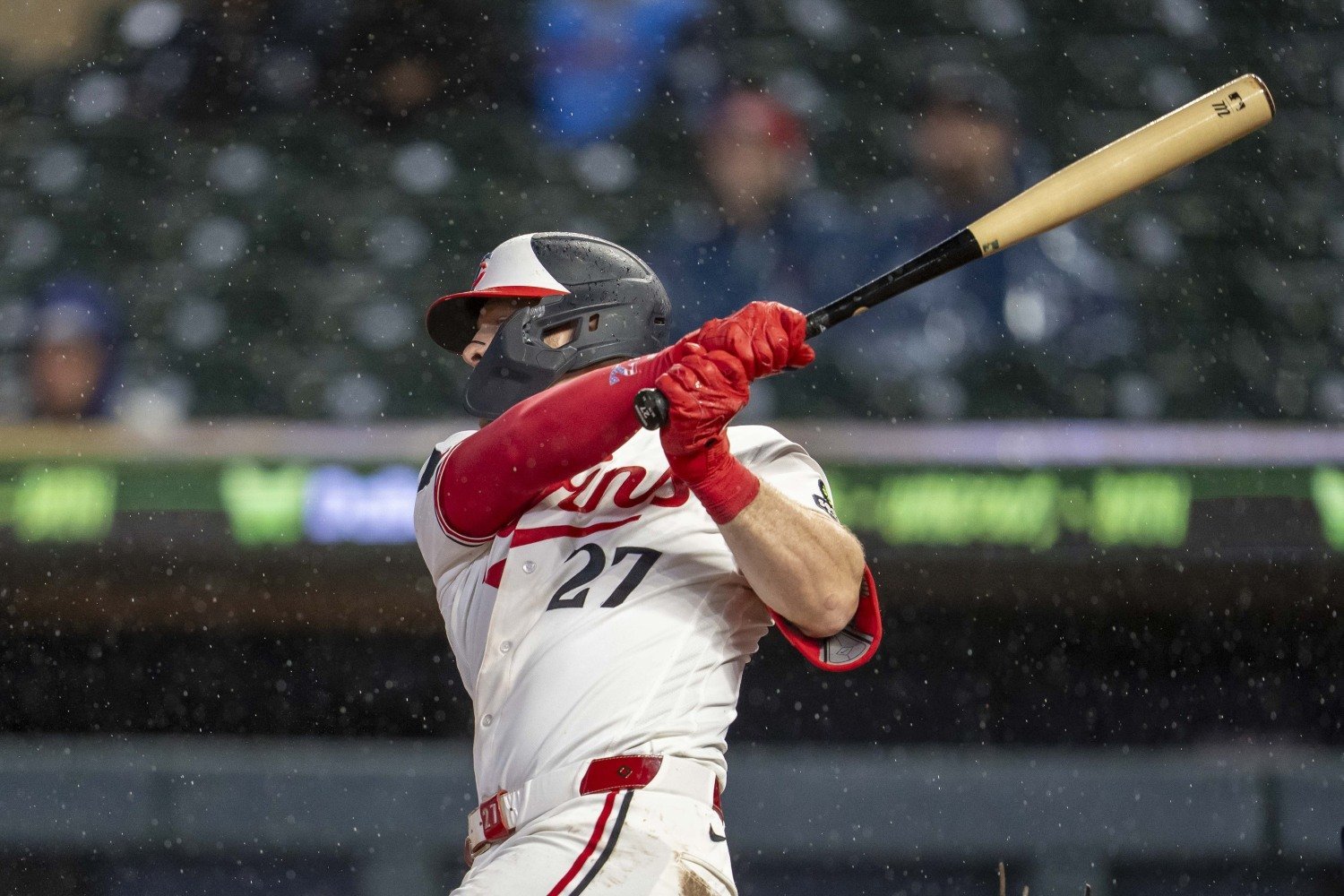 Through the first month of the 2026 season, the Twins’ lineup has been a mix of early surprises, consistent contributors, and slow starts. With both traditional stats and advanced metrics in mind, these confidence rankings reflect current production and how sustainable each player’s performance looks moving forward, as well as my not-so-professional opinions. After all, we'd be kidding ourselves if we pretended that confidence isn't influenced by our subjective senses of each player. 13. James Outman There isn’t a ton to say here. Outman last had an above-average OPS+ in 2023 when he finished third in the N.L. Rookie of the Year voting. His current role on the team is as a defensive replacement and pinch-runner. Let us all hope it stays that way, because more James Outman at-bats would not be good for the Twins. 12. Matt Wallner Wallner was projected to be one of the Twins’ best bats this year, and now that it's almost May, fans are calling for Wallner to be removed from the roster in favor of one of the top prospects in St. Paul. Wallner’s current strikeout rate renders even a great slugger inviable, but worse, his groundball rate has soared to 50%, well above the 44.2% MLB average. The Forest Lake native’s defense has been atrocious, too. Wallner likely doesn’t have a ton of time to turn his season around with top prospects waiting in St. Paul. The bat speed is still there—kind of—but the 28-year-old must rediscover his 2024 form to rocket back into the top half of this list. 11. Luke Keaschall One of the bright spots down the stretch in 2025, Keaschall has been abysmal so far this season. He currently has the lowest OPS of the Twins’ qualified hitters, at .551. The advanced metrics don’t back him up, either, with his xwOBA, average exit velocity, and hard-hit percentage all far below average. Keaschall doesn’t strike out, whiff, or chase often, but he doesn’t walk much, either, so his quality of contact will need to improve as the season progresses. 10. Kody Clemens Like Keaschall, Clemens is struggling to repeat his impressive 2025. Following a 19-homerun year for the Twins, Clemens is currently slashing .194/.275/.371, with 3 homers in 70 plate appearances. He’s striking out at a 30% rate. Still, Clemens’s advanced metrics signal he has gotten slightly unlucky so far, with both his xSLG and xBA being higher than his actual values. His average exit velocity and barrel percentage are still very high as well, so I’m on the side of still giving Clemens some time to figure it out. Be it at first base or second, he's a better defender than the obvious alternatives. 9. Royce Lewis The No. 1 overall pick in 2017, Lewis is slashing .196/.308/.393 with 3 homers in 65 plate appearances so far this year. He, too, is striking out at a 30% rate, but unlike Clemens, his advanced metrics don’t reveal any signs of bad luck so far. One positive to see is that his walk rate is way up, to 12.3%. Lewis did spend some time on the injured list with a knee injury, and the 26-year-old should have plenty of time to figure it out this year—although he's already feeling the pressure from the next guy up on this list. 8. Tristan Gray The Twins acquired Gray from the Red Sox in late January. After making the team out of spring training, Gray has been good off the bench, slashing .292/.340/.500 with 3 home runs in 54 plate appearances. Somewhat startlingly (unless, I guess, you've been watching the Twins over the last 20 months), Gray seems to be a material threat to Lewis's playing time; the organization might just have him climbing their own confidence rankings. 7. Victor Caratini This may be a hot take considering Caratini’s slash line is currently .222/.318/.278, but hear me out. Caratini’s line hides a few things. First, his xBA is .046 points higher, at .268, and a similar story can be told about his xwOBA, which is higher than his wOBA by .075. While his average exit velocity, barrel percentage, and hard-hit percentage are all low, he is getting unlucky so far, so we should expect some positive regression. Second, the 32-year-old’s approach is solid right now, with his chase percentage, whiff percentage, and strikeout percentage all easily better than average. Caratini is a good, veteran hitter who put up a 111 OPS+ in 2024 and a 102 OPS+ in 2025, and I think he will be around those numbers come year's end. Caratini may not be the most dynamic hitter on the Twins, but by September, I think he will be one of the most consistent and sneak into the top 5 of this list. 6. Trevor Larnach Larnach’s name was floated around everywhere this offseason, given the abundance of left-handed outfielders the Twins have and the amount of money he was due. However, he began the season with the team and has been solid so far, slashing .259/.419/.397 in 74 plate appearances. Larnach hasn’t played much, given the number of lefties the Twins faced early in the year, but there are some positives to see in Larnach’s game so far. His walk rate is currently 5th in MLB, and his expected stats are all above his actual stats. Larnach has been around a league-average hitter the past 4 seasons, so it's fair to expect this level of output going forward, though the walk rate will probably diminish at some point. 5. Brooks Lee In a somewhat insane turn of events, Brooks Lee leads qualified Twins hitters in OPS so far this season. Despite this, Lee’s advanced metrics are all still bad, and his expected statistics (xwOBA, xBA, and xSLG) are all at or below the 18th percentile in MLB, as well as being below his actual values. Lee turning around his season has bought him some time in the big leagues, although his defense at short hasn’t improved. Since these confidence rankings are based on the present, Lee is this high. However, it wouldn’t surprise me (or probably anyone else) in the slightest if Lee regressed back to what we saw for the majority of last year, which would consequently drop him on this list. 4. Josh Bell Tied for the team lead in RBI, Bell has been solid for the Twins, slashing .235/.333/.378, with 3 homers in 114 plate appearances. Bell is another Twin who has expected stats above his actual ones—especially the slugging percentage, which is .029 points ahead of his actual number. The 33-year-old slugger is above-average in strikeout rate and walk rate, and while his average most likely won’t clear .250, he should hit around 20 homers. By season's end, Bell should finish as one of the best hitters on the Twins—if he is still on the team. Should he exceed that 20-homer number by a large margin, Bell could find himself at number 1 on this list. 3. Byron Buxton After a slow start, Buxton is starting to get untracked. He's slashing .229/.292/.450 in 120 plate appearances, and he's hit 6 home runs. A .742 OPS isn’t what fans or management expect from the superstar center fielder, but this is the clear best hitter on the Twins, in my opinion. Despite the slow start, the two-time All-Star is the best bet to level off at a high plateau on this benighted roster. The 3rd spot on this list goes to Buxton, not only for his production so far this year, but out of respect for what he represents as a Twin. He is the most dangerous hitter in the lineup, day in and day out, and Buxton will look to get back to his “usual” production as we move into the summer months. 2. Austin Martin Martin has been a breath of fresh air so far this season, slashing .327/.500/.455 in 76 plate appearances. The style of baseball Martin is playing is different than what has been asked of him in the past. His chase rate and walk percentage are elite, albeit with some matchup advantages players to whom we might compare them don't enjoy. While Martin’s power statistics and advanced metrics aren’t strong, those aren’t his strengths, and the team has recognized that now. Out of all the hitters on the team right now, I’d choose Martin if I needed a base runner. While the abundance of lefties to start the season has helped the former 5th overall pick, Martin’s performance has driven fans to ask if he should be starting every day. 1. Ryan Jeffers A free agent at the end of the season, Jeffers is the best hitter on the Twins so far this season. His .282/.414/.465 slash line in 88 plate appearances accounts for an .879 OPS, which would lead the team if he were qualified. His approach has gotten better, with his chase rate, whiff rate, strikeout percentage, and walk percentage all improving this year. His xwOBA, xSLG, average exit velocity, and barrel percentage have all increased as well, ranking at or above the 76th percentile in MLB. The advanced metrics support his start at the plate, and time will tell if he can keep this up, but to me, getting Jeffers to sign an extension should be a priority as the season progresses. Whether he is a Twin in 2027 or not, the rest of the season should be fun, getting to watch Jeffers in the box and behind the plate. As the season progresses, these rankings will inevitably shift with adjustments, injuries, and regression, both positive and negative. For now, they offer a snapshot of where each hitter stands and what the Twins can realistically expect from their lineup as they push deeper into May and beyond for 2026. View the full article
 -
Nico Hoerner's Advanced Analytics Will Shock You
DiamondCentric posted an article in North Side Baseball
 The Cubs extended Nico Hoerner on a 6-year, $141 million deal earlier this season. So far, he's putting together his most impressive season yet. In this video, we'll dive into his whiff rate, strikeout rate, walk rate and discuss how his speed leads to above-average base-running and elite defensive range at the second base position. View the full article
 -
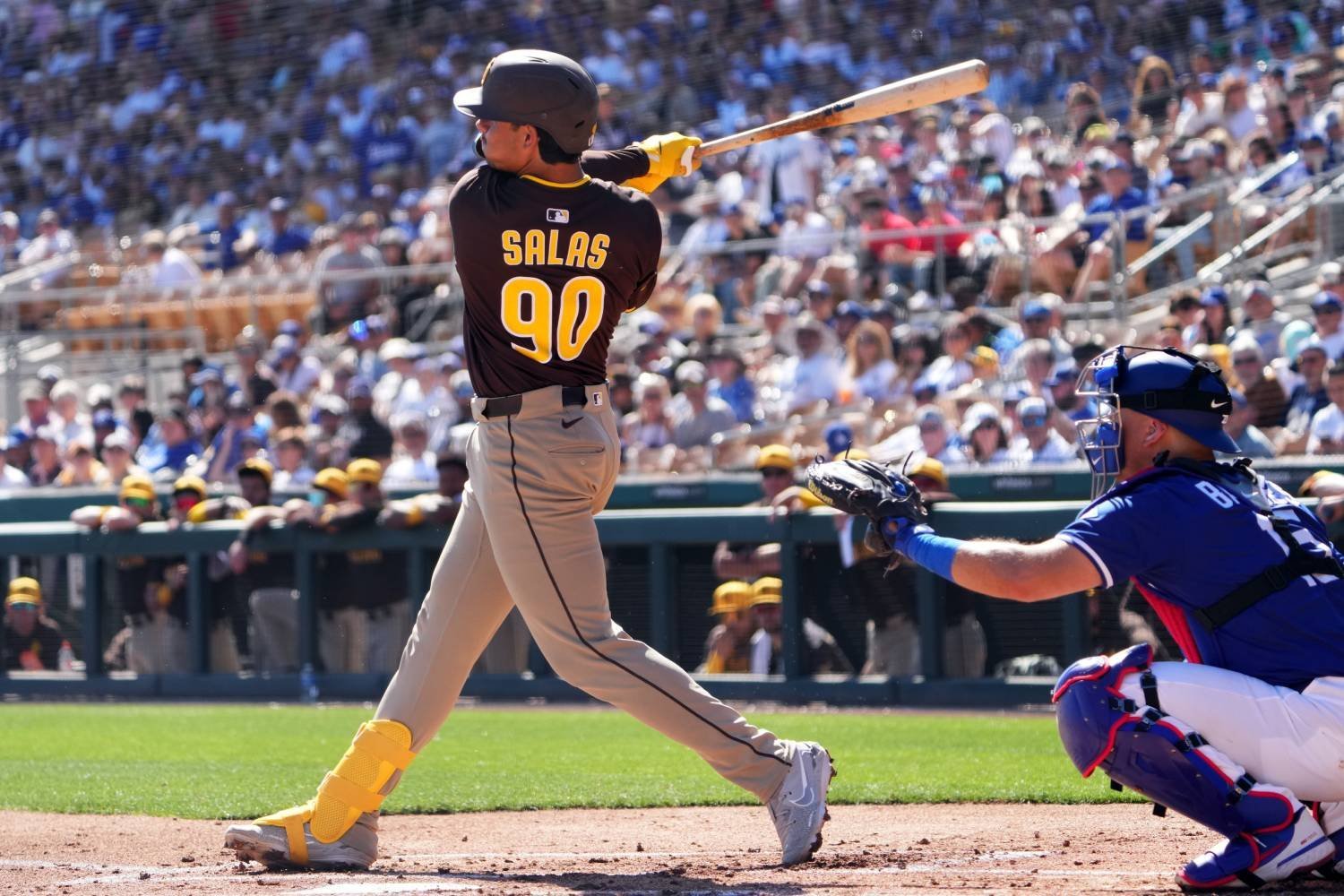 These last two weeks have been revealed more about various players in San Diego Padres' system, as many have started to carve out their season-long identity. There are a handful of players who are building on expectations, more than we can fit into Padres Mission's standouts and disappoints. Still, let's check in with the recent movers and how the Padres on rehab assignments are doing. Padres Rehab Report RHP Lucas Giolito While technically not a rehab assignment (Giolito was optioned to the Low-A Lake Elsinore after signing), it is a buildup of his arm to return to the majors. Giolito's first start Saturday looked every bit of a spring training debut. He threw 63 pitches (40 strikes) and allowed just two hits, both doubles, while striking out four and walking three. Giolito's command was definitely shaky, but it was in a low-stakes environment. One thing to worry about was Giolito appeared to injure his right hand when he attempted to snag a line-drive comebacker at head level. It was a glancing blow that didn't seem to bother him that much initially. The manager was already on his way out to the mound to remove Giolito from the game and didn't appear to ask the pitcher about his hand. RHP Griffin Canning (ruptured left Achilles) Canning made his third and fourth starts since his 30-day rehab assignment began April 4, all with Triple-A El Paso. The progress feels a little slow, as he threw 67 pitches in 2⅔ innings April 16, then 45 in 1⅔ innings Wednesday. On April 16, Canning allowed one hit but walked four, allowing six runs, only two of which were earned, while striking out six. On Wednesday, the right-hander was lifted after throwing 31 pitches in the second inning, allowing a pair of runs on three hits and two walks with no strikeouts. Canning figures to have at least one if not two more outings before the Padres have to make a decision on his status, whether to recall him from his rehab assignment for further medical evaluation or to activate him to the 26-man roster. LHP Yuki Matsui (strained left groin) Matsui has made six appearances over the last two weeks after only three in the first 15 games for El Paso. Four of those six were one-inning outings, with his latest one going two scoreless innings Sunday. He allowed a total of nine hits and three runs, including two homers, with one walk and nine strikeouts. His rehab assignment also began April 4, but his return would seem to be more imminent than Canning's. His two innings Sunday could point to going back-to-back as the last thing to check off before rejoining the Padres. RHP Jeremiah Estrada (right elbow tendinitis) Estrada made his first rehab appearance Friday for Low-A Lake Elsinore, pitching a perfect seventh inning, striking out one. He also got a fly out and a popup, throwing 10 of his 14 pitches for strikes. He went on the 15-day injured list April 10, and this appearance was a good sign for a relatively quick return to the Padres, as long as he doesn't suffer any setbacks. Padres Farm System Standouts IF-OF Pablo Reyes (Triple-A El Paso) The versatile Reyes has been a significant offensive contributor thus far for the Chihuahuas. Reyes has reached base in all 18 games he has played and leads the team with a .438 on-base percentage. He was given the day off on Sunday, but has a six-game hitting streak during which he is hitting .360 (9-for-25) with two doubles and four RBIs. Reyes has five multi-hit games this season to go along with six steals. C Ethan Salas (Double-A San Antonio) Salas also got a well-deserved day off Sunday, but he too has been red-hot of late. Padres Mission's No. 1 prospect not only hit his first two homers of the season in games Friday and Saturday, but he is on an 14-for-37 run with two doubles and eight RBIs with six walks and eight strikeouts. That has raised his early-season average from .125 to .296. Salas has been hitting mainly out of the leadoff spot, scoring seven runs and going 3-for-3 on steal attempts. MINORS_SALAS_0426.mp4 OF Alex McCoy (High-A Fort Wayne) The 6-foot-5, 240-pound McCoy has been the hottest hitter in the Padres' system. Before going 0-for-3 Saturday, McCoy had a 15-game hitting streak in which he put up a slash line of .356/.361/.678 with a 1.039 OPS. He had seven doubles, four homers and nine RBIs during the streak, which was the longest in TinCaps history since a 15-gamer by Fernando Tatis Jr. in 2017. All four of McCoy's homers this season came during his hitting streak, which began after a 1-for-8 start to the season. He had six multi-hit games during the run. MINORS_MCCOY_0426.mp4 Padres Farm System Disappointments LHP JP Sears (Triple-A El Paso) The other player the Padres acquired in the Mason Miller trade, Sears had a rough spring (10 runs in 10⅔ innings) as he made a bid to be part of the Friars' rotation or at least the long man out of the bullpen, thus being optioned to Triple-A. He has followed that with a poor beginning to the regular season. That includes allowing 11 runs over his last two starts, giving up 11 hits (three homers) with six walks and five strikeouts in 9⅓ innings. He gave up seven runs on eight hits and five walks in 3⅓ innings on April 17. Sears' struggles are part of the reason the Padres were concerned about their rotation depth, hence why they went out and got Lucas Giolito. In five starts, Sears has a 7.15 ERA in 22⅔ innings. LHP Omar Cruz (Double-A San Antonio) After making his MLB debut with two relief appearances in 2025, Cruz started this season at Triple-A El Paso. All six of his appearances there were in relief and he went just four innings, compiling an 18.00 ERA, giving up eight runs on nine hits (two homers) with six walks and six strikeouts. On Saturday, he was demoted to Double-A San Antonio. He made his Missions debut Sunday, striking out three in two scoreless innings. LHP Kruz Schoolcraft (Low-A Lake Elsinore) Let's be clear: This is Schoolcraft's first true professional season after getting a token start at Lake Elsinore following his selection as the 25th overall pick in last summer's draft out of an Oregon high school. So why pick on him here? Facts are facts and Schoolcraft will use his experience in these four starts to make himself better. He pitched a career-high three innings in each of his last two outings, going 57 pitches April 17 and 51 on Friday. Combined, he gave up 11 hits and six runs (four earned) with two walks and three strikes in each of those games. Those starts came after two in which he allowed 10 runs in 1⅓ innings, with six hits and six walks against one strikeout. His season ERA sits at 15.95. View the full article
 -
Amidst A Struggling Offense, Should Connor Wong Get More Playing Time?
DiamondCentric posted an article in Talk Sox
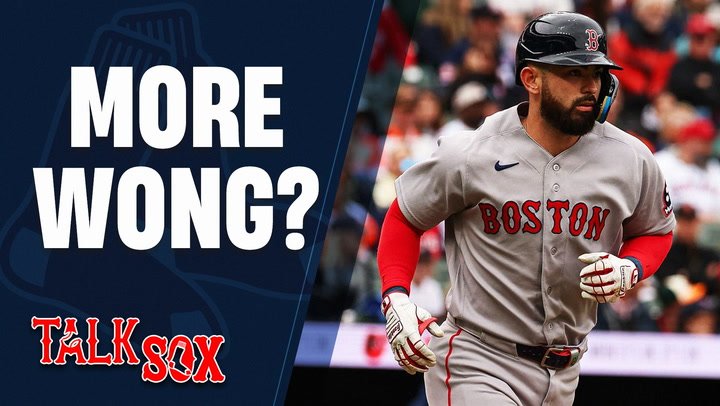 The Red Sox's backup catcher, Connor Wong, has shown significant offensive improvement early in 2026 compared to his injury-hampered 2025 campaign. Carlos Narvaez, Boston's primary catcher, is struggling at the same time. Should there be a push to get Wong more playing time? View the full article
 -
Toronto Blue Jays 2026 Top Prospect Rankings: No. 1 Trey Yesavage
DiamondCentric posted an article in Jays Centre
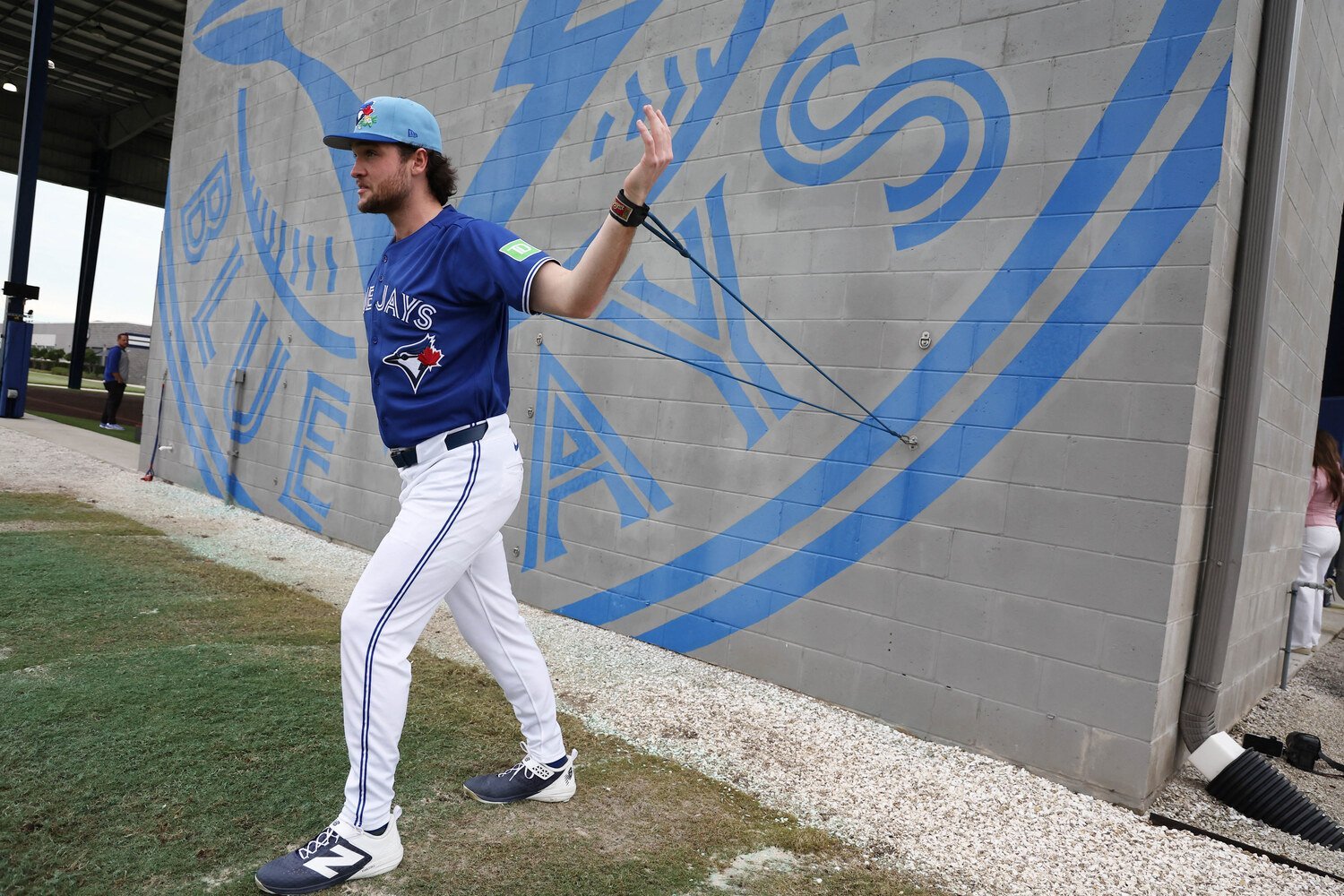 We are finally here. We've unveiled the entire Jays Centre Top 20 Prospects list, and now have reached the number one spot. Trey Yesavage is a man who needs no introduction. He debuted at the end of the 2025 season and proceeded to become a star during the Toronto Blue Jays’ magical run to the World Series. If you can believe it, he is still a prospect, so, on the day of his 2026 debut, let's dive into what makes him deserving of our top spot. If you haven't read our previous articles, you can do so now before continuing: No. 20 to 16 No. 15 to 11 No. 10: Jake Bloss No. 9: Yohendrick Pinango No. 8: Victor Arias No. 7: Juan Sanchez No. 6: Gage Stanifer No. 5: Johnny King No. 4: Arjun Nimmala No. 3: Ricky Tiedemann No. 2: JoJo Parker Yesavage made his way to the Toronto Blue Jays organization in 2024, when they drafted him in the first round (20th overall), out of East Carolina University. The Blue Jays opted to hold him out of games that season and then start him at Single-A Dunedin to begin 2025. He started his magical season with a rough game, one in which he walked six batters and showed terrible control. It didn't take long for him to right the ship, as he had three double-digit strikeout games over his next six starts. The phenomenal aspect of those performances might have actually been his control; he only walked two over 29.2 innings in that span. He was then promoted to High-A Vancouver, where the strikeouts continued to rack up, but the walks did as well. He wasn't long for High-A Vancouver, only pitching in four games there, for a total of 17.1 innings, and allowed just three runs. It was then off to Double-A New Hampshire, where he walked 11 batters in his first five starts. Ultimately, he adjusted and found his control again, walking zero over his last three starts there. Triple-A Buffalo was his next stop and proved to be a real challenge for him, as he walked 11 in six appearances and gave up seven earned runs. The Blue Jays were nonetheless ready to get Yesavage to the major league level, having him debut on September 15. It's what happened next that cemented him as a legend to Blue Jays fans. The team made him a part of the postseason roster, and he didn't disappoint, firing 5.1 no-hit innings against the hated New York Yankees and striking out 11 on his way to one of the best performances of the 2025 playoffs. In fact, only he was really able to outdo himself. It took seven innings of three-hit ball against the Los Angeles Dodgers in the World Series to do it. He would end up striking out 12 batters on that magical night in Los Angeles, and while he couldn't help the Blue Jays to the ultimate win, he earned the kind of legendary status that will last all of time. What To Like When you look at Yesavage, the biggest thing to like about him is his swing-and-miss stuff, and he has a lot of it. In the minor leagues during the 2025 season, he had a strikeout rate of 41.1% (100th percentile). In his three games in the majors before the playoffs started, his strikeout rate was 25.8%, and it rose to 35.6% in the playoffs. What makes him so good is that, to pair with his elite strikeout stuff, he is able to keep hitters from making good contact. He held minor league hitters to just a .156 batting average and major league hitters to a .236 batting average. The uniqueness in Yesavage's delivery and his pitch arsenal really drives the whiffs to crazy levels. He has a pitch release of over seven feet, one of the highest in all of baseball. While his arsenal features some really good pitches, he relied mostly on three: a four-seam fastball, a splitter, and a slider. The four-seam fastball had around 19.5 inches of induced vertical break (iVB). Couple that with his release height and attack angle, and it proved to be an extremely difficult pitch for hitters to square up. His splitter was his next best pitch and dove on hitters. With 31.5 inches of actual vertical drop, it was nearly unhittable. His slider became a huge weapon in the playoffs when he lost the command of his splitter; it had the same effect with a different type of break. What To Work On Yesavage really had only one major thing holding him back at times from becoming a star: his control. He tamed it in the playoffs last year, but in the minor leagues in 2025, he had a walk rate of 10.5% (48th percentile). In the majors, it was 11.3% (10.1% in the playoffs), and this year, it has been 12.5% on his rehab assignment. You can see just from his playoff games how vital curtailing the walks is to him becoming an ace starting pitcher. He walked just one in the 11-strikeout game against the Yankees and zero in his 12-strikeout game against the Dodgers in the World Series. In the three starts he made between those games in the playoffs, he walked nine and only struck out a combined 15 hitters. His strike rate in the minor leagues last year was 64.8% (78th percentile). This shows he might be searching for the strikeouts a little too much and could improve his performances by not nibbling on the edges and instead trusting his stuff in the zone a little more. This should also improve his length in games, as he won't rack up as many pitches with deep counts and strikeouts. What's Next Yesavage is going to make his season debut for the Blue Jays tonight, Tuesday, April 28. He can give them a huge boost, as their starting rotation has been decimated by injuries and bad play so far in 2026. If he can start the season just as hot as he finished 2025, he can almost single-handedly turn the Blue Jays’ season around and give them the boost of energy and excitement that the team very much needs right now. It will be important that he doesn't try to do too much, but if he can keep the walks down, he could quickly become the ace in waiting behind Kevin Gausman and Dylan Cease. View the full article
 -
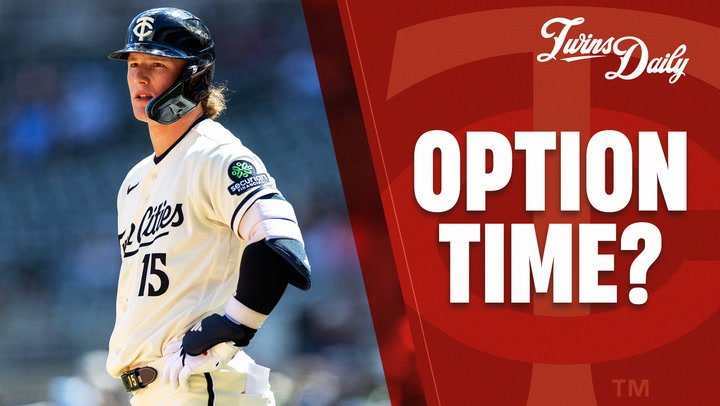 It’s been a rough start to the season for Luke Keaschall, and the Minnesota Twins may have a decision to make. Would a reset in Triple-A be the right move? View the full article
 -
Concerns & Positives With The Brewers During This Losing Stretch
DiamondCentric posted an article in Brewer Fanatic
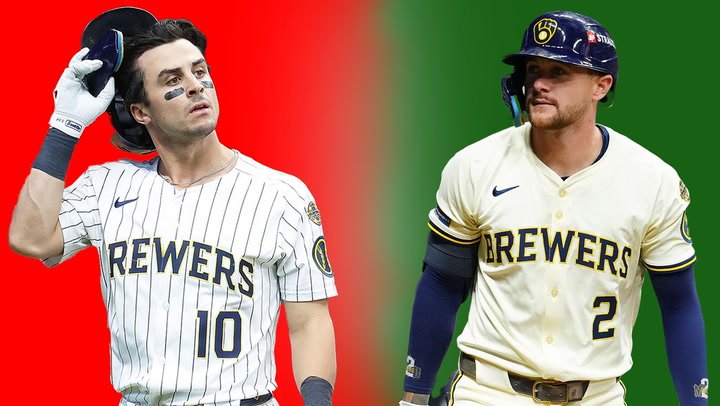 Tied for last in the Central, the Milwaukee Brewers have clear flaws. Sal Frelick, Joey Ortiz, and others aren't hitting, and most of their lineup isn't hitting for power. Jackson Chourio, Andrew Vaughn, and Christian Yelich will be back in the next couple of weeks to a month to fix that. Jacob Misiorowski, Brandon Woodruff, and the rest of the rotation have dominated, but most of the bullpen haven't gotten the job done. View the full article
 -
The Royals Need to Improve Their Offense on the Road
DiamondCentric posted an article in Royals Keep
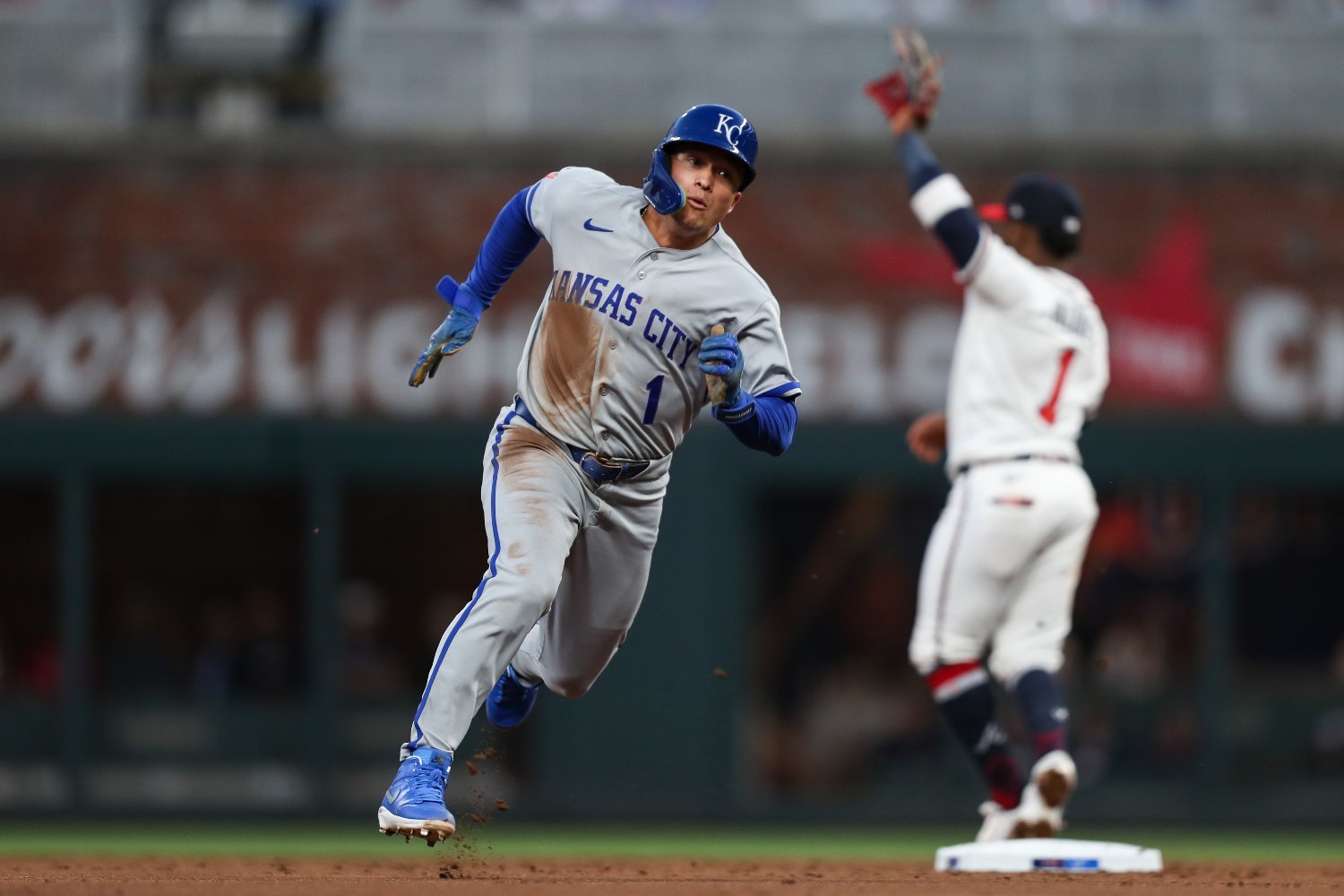 The Royals' offense seemed to take a turn in this most recent homestand. In the last seven days, Kansas City scored 41 runs, the most among MLB teams over that span. They also ranked first in OPS (.971), batting average (.310), and OBP (.396), and also had 26 walks to 35 strikeouts, good for a BB/K ratio of 0.74. Even though they went 4-2 against the Orioles and Angels this past week, the Royals looked like the team they were projected to be in the offseason. They also demonstrated a strong ability to come back and hit in the clutch in this homestand, something that had evaded them all season until this most recent series against the Angels. However, the Royals will hit the road to start a six-game West Coast road trip against the Sacramento Athletics and the Seattle Mariners. While Kansas City is 9-7 this year at Kauffman Stadium, they are 2-10 on the road and, most recently, winless on their road trips to Detroit and the Bronx. So what has been the difference for the Royals at home and on the road? The offense has been good at Kauffman and atrocious away from Kansas City. Thus, let's take a look at what the Royals have done as a team and individually at home and on the road, and what will be some key things for fans to pay attention to as Kansas City goes up against the Athletics and Mariners this week. The Royals Have Been Excellent at Home Offensively Kansas City has gotten a lot of grief for its offensive performance this season. While they haven't been bad, they've struggled to be consistent. That is evidenced by ranking 15th in average, 17th in OBP, 16th in OPS, 20th in home runs, and 23rd in runs scored. That's not as bad as their 11-17 record indicates, but it's certainly not up to the standard that they are capable of. How do we know that the Royals are capable of more? Well, at home, Kansas City has been a Top-10 offense, at least according to wRC+. Below is a list of MLB teams and their performance in some important hitting categories, which include the following: BB% K% ISO wOBA wRC+ Here's a look at that table of data, as organized by team wRC+. At home, the Royals have been surprisingly led by the bottom of their lineup. Kyle Isbel, Kansas City's No. 9 hitter, leads in home wRC+ at 178.8. Isaac Collins, who usually hits between 6 and 8, is second with a 164.1 wRC+. Maikel Garcia leads off for the Royals, but he's been their third-best hitter at home on a wRC+ end with a 157.3 mark. At home, the Royals have 12 hitters with a wRC+ over 100. The only regular hitters who do not have such wRC+ marks are Vinnie Pasquantino (54.5) and Salvador Perez (70.4). Tyler Tolbert has a -100 wRC+, but that is a skewed sample (he only has one plate appearance at home). Thus, despite all the naysays, Kansas City has been a good offensive team, and the numbers back it up. It's just that it's only been at Kauffman Stadium so far this year. The Road Numbers Have Been Bleak (Though Competition Has Been Tougher) So, we know that the Royals' offense has been awesome at the K. Unfortunately, it's been the polar opposite for this hitting group on the road through 12 games. Here's a look at MLB team metrics, as organized by wRC+, utilizing the same metrics as the table in the section above. Notice where the Royals rank in this one. As fans can see, the Royals rank dead last in road wRC+. And not just last, but last by a considerable margin. Their 57.5 wRC+ is not only 61.1 points worse than their home wRC+ but also 17.6 points worse than the second-worst team's road wRC+ (the Mariners, whom they play this weekend). Let's take a look at how the Royals hitters have fared so far this year away from Kauffman on an individual basis. While the Royals had 12 hitters who had wRC+ marks of 100 or better at home, they only have four hitters in that range. That includes Caglianone (107.3), Bobby Witt Jr. (124.3), Jensen (131.1), and Elias Diaz (370.9). That said, Diaz's numbers should be taken with a grain of salt, as he only has three plate appearances. Conversely, some Royals who have performed well at home have been brutal on the road. Collins, who has the second-best home wRC+, has the worst road wRC+ with a -75 mark (he hasn't gotten a single hit this year away from the K). Perez joins Collins in the negative wRC+ club with a -2.2 mark. Furthermore, Jonathan India (38.2), Starling Marte (35.7), Garcia (31.9), Isbel (19.8), and Michael Massey (14.1) all have wRC+ marks under 40. That's a sizeable number, and a big reason why they have performed so poorly on the road so far this year. Some have held their own on the road, much to the Royals' surprise. Cags has been just as good on the road as he is at home, based on wRC+. Loftin has a wRC+ under 100, but not by much. Vinnie's 61 wRC+ on the road isn't good, but it's better than what he's been doing at Kauffman this year. A big difference is that the road schedule has been harder for the Royals than their home slate in April. On the road this year, they've played the Braves, Guardians, Tigers, and Yankees. All four teams are at or near the top of their respective divisions. Conversely, at home this year, they've played the Twins, Brewers, White Sox, Orioles, and Angels. Of that group, only the Brewers have a winning record, and it's just 14-13. Hence, some of that context has to be taken into account given the Royals' road woes. Still, even with the boost in competition, the gap between their home and road hitting performance has been stark and needs to be addressed on this upcoming road trip. What Should We Be Looking For in This Road Trip? The Royals will face an Athletics team that is first in the AL West with a 15-13 record but a -8 run differential. The Mariners have a 14-16 record and a -1 run differential. Thus, these road opponents will be much easier than those they faced in the previous four series away from Kauffman. Still, it will be important for Kansas City to demonstrate that they can hit away from the K, especially with the pitching, especially the bullpen, regressing a bit this season. Collins, Isbel, and Massey will be key secondary hitters who need to show that they can hit well, not just at the K, but in other ballparks as well. In terms of primary hitters, Salvy and Maikel need to show that they can be much better on the road, as their struggles have weighed down the Royals at the top of the batting order. My hope is that the confidence from this past homestand will carry over to this road trip, especially in their first series at Sutter Health Park, which is the second-most hitter-friendly ballpark in baseball over the past two seasons, according to Statcast Park Factors. Thus, this is the kind of ballpark, as well as the opposing pitching staff (the Athletics rotation ranks 26th in ERA), that can help the Royals get out of their offensive funk on the road. Of course, the Royals need to actually hit and produce runs on the road in this upcoming trip, especially in Sacramento. A solid series against the Athletics could help build some much-needed momentum for a Mariners series against a Seattle team that's 6-4 in their last 10 games. A poor hitting series in the State Capital of California? Well, the Royals will have a tougher time scoring runs at T-Mobile Park in Seattle, which has the second-lowest scoring Park Factor in baseball over the past two years (only Texas' Globe Life Field is worse). Seeing Collins, Garcia, Isbel, Massey, and Salvy turning it around on the road in this upcoming series against the Athletics would not just be a good start for the Royals on this trip, but also for future trips on the road for the remainder of the 2026 season. View the full article
 -
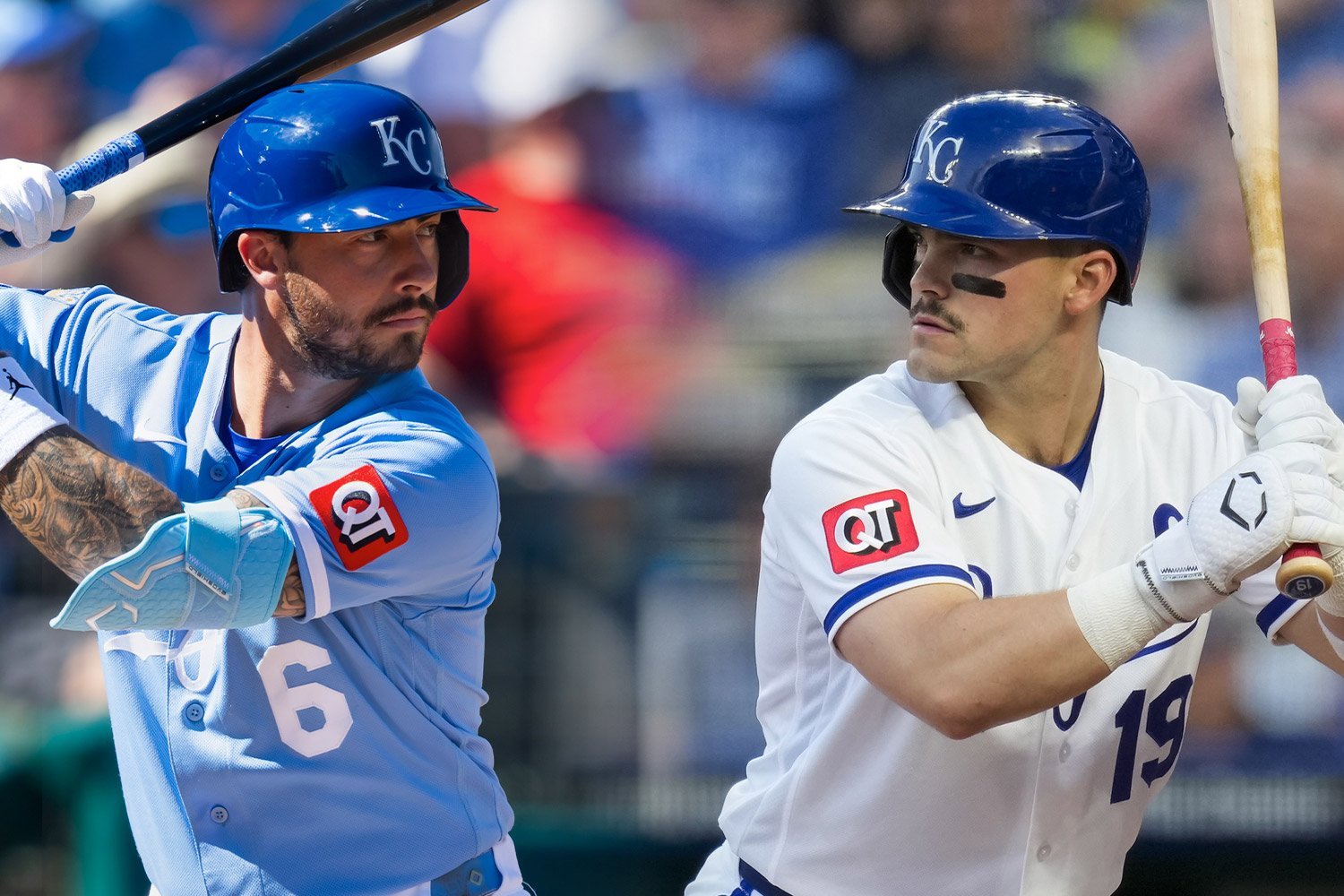 To talk about Michael Massey’s trajectory over the past few years requires us to look for a moment at the story we’ve been telling about Jonathan India. The Jonathan India for Brady Singer trade in November 2024 was made to fill a very specific need: The Royals, at the time, were desperate for a leadoff hitter. In a 2024 when many things went right, the leadoff spot included a rotating cast of characters with below-average cumulative production. They tried Maikel Garcia, Garrett Hampson, Massey, Nick Loftin, and Tommy Pham there. They even slotted Freddy Fermin into leadoff for a couple of games. While the 2025 rallying cry for improvement was “No offense from our outfield! No offense from our outfield,” the 2024 cry was frequently “No offense leading off!” The slashline for the leadoff spot was .228/.270/.334 in 2024 and ranked dead-last across MLB in OBP. So, coming off a 2024 season when starting pitching was a bright spot, the Royals dealt a homegrown starting pitcher in Singer to bring in a leadoff hitter in India. Defensively? Kansas City didn’t need a second baseman; they needed a leadoff hitter. And the philosophy on defensive positioning was, “We’ll try guys in different spots. We’ll figure it out.” And as we all know now, the 2025 season chugged along, and Jonathan India didn’t shine on either offense or defense. He wasn’t the leadoff hitter fans hoped to see, and he wasn’t even leading off anymore by the end of the season. He hit a career-low .233/.323/.346. But one thing that stands out about this entire scenario is how much grace India was granted following a poor season. Everyone was quick to offer excuses for why he didn’t have a great first year as a Royal: He was joining a new team, he was learning new positions as the club tried him out at third base and in left field, and he was dealing with a host of minor injuries. He was out of sync. He wasn’t himself. He didn’t have the stability he needed. That was the narrative. The thinking to start 2026 was that with the stability of moving back consistently to second base, he’d find himself again. What’s so interesting about this story we’ve told about Jonathan India is that it feels very different from the story we’ve told about Michael Massey, even though, I’d argue, their circumstances aren’t all that dissimilar. Massey had a good 2024. Yes, he was out quite a bit with injuries. And, yes, one of those was his recurring lower back injury that might flare up again at any moment. But in a year when the Royals made the playoffs, Massey was a solid member of the team when healthy, offensively and defensively. Across 100 games, he accumulated 1.5 fWAR, was an above-average fielder, and slashed .259/.449/.743 with an OPS+ of 108. It was only because the front office brought India into the fold that Massey’s role on the team went through a big shake-up. While trying the new “leadoff hitter” in various spots on the field, Massey too was moved around between second, left field, and the bench. And then? He didn’t have a great year. He didn’t contribute nearly as much as he did in 2024. And the narrative seemed to be: Massey’s just not very good. But one thing I haven’t been able to shake in watching this play out and reading/hearing about Massey’s role is that no one seems to grant him the same grace as India. But let’s think about what really happened: Just like India, Massey was asked to learn new positions. He was, by some accounts, demoted away from his natural position at second to make way for a new guy, and that was after he’d had a good year. He was thrown out of sync, too, and essentially lost his job as the everyday second baseman. What I want to argue here is that perhaps India has been extended a little too much grace for his lackluster performance and that Massey hasn’t been given enough. Had India never entered the picture, what might Massey have done as the everyday second baseman last year? We’ll never know. But the moment we find ourselves in presently is that India is dealing with another minor injury, we have a very solid leadoff man now in Garcia, following his breakout season last year, and Massey is, at least for now, the everyday starting second baseman once again. As has been widely reported, he worked a lot on his swing mechanics in the offseason. (I’d posit he was working on his confidence as much as his swing.) He’s a thoughtful player who seems grounded and ready to go. And he’s showing flashes of what made him good in the past. As Mike Gillespie wrote about earlier this week, it’s Massey’s time to seize the moment. Plus, India becomes a free agent after the 2026 season, while Massey is under team control through 2028. I hope he sticks as the everyday guy at second. Just like everyone said to start this year — that India just needs that consistent stability of his natural position to turn things on — maybe that’s what Massey needs, too. That, and a little grace. View the full article
 -
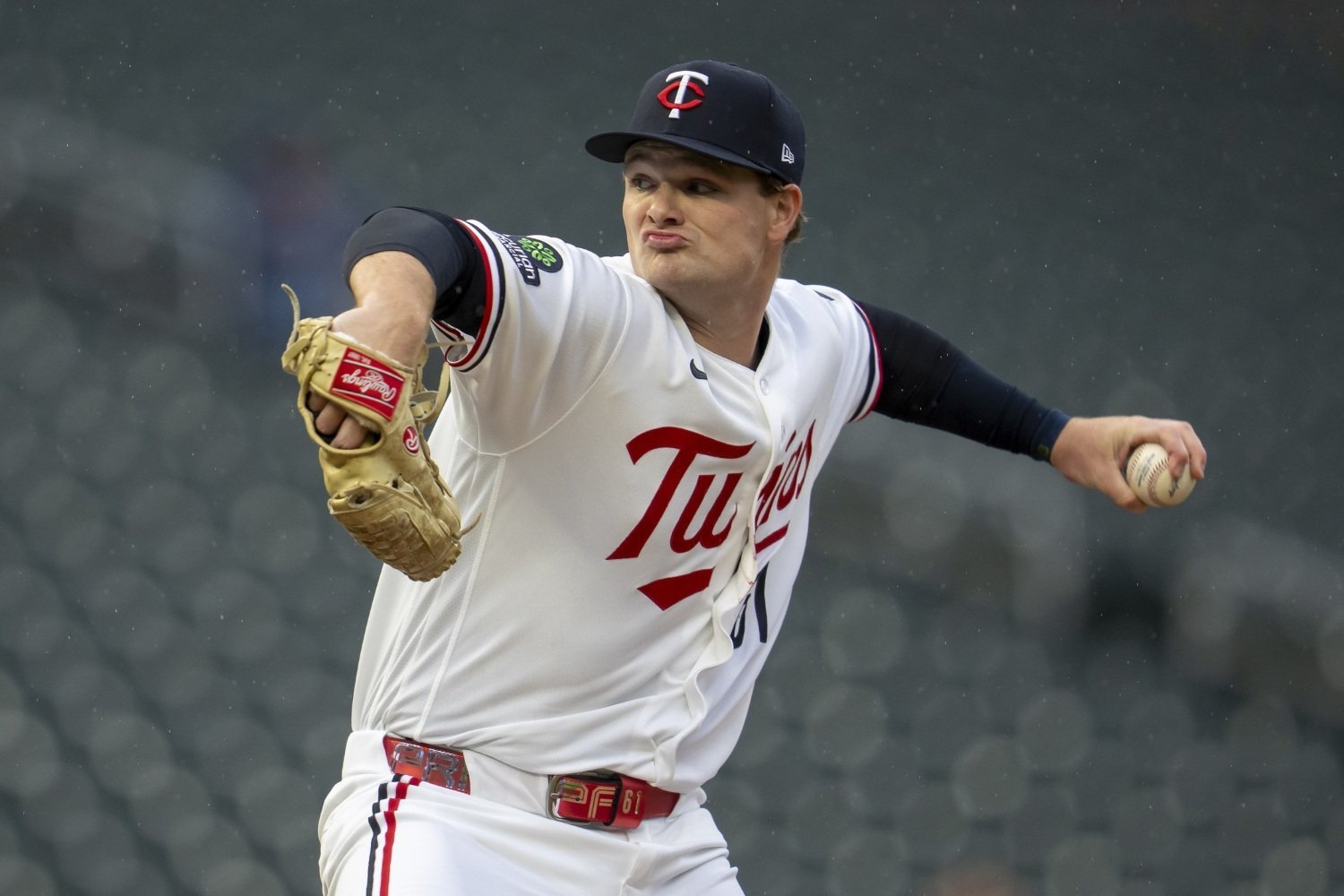 It's only been two starts, but it's not too early to get deeply intrigued by Connor Prielipp's slider. Hell, it's practically too late. Where have you been? Why hasn't this fascination been gripping you for weeks, months, or years already? For now, though, we'll let you slide on that part. Let's focus on the present, and savor what has been an encouraging pair of starts by the young southpaw since his promotion to the majors earlier this month. Though he's run into a couple of rocky spots and given up four runs in his first nine big-league innings, it's felt more like Prielipp might have held his opponents to less than like they might have produced more. On Monday night in Minneapolis, he gave up just two runs in five frames against the Marinersne of them came home when Tristan Gray, struggling to read a foul fly ball not far behind third base but twisting toward the stands, had to accelerate slightly as he ran into the tarp, leaving him unable to get off a throw quickly and strongly enough to retire J.P. Crawford on what became a very shallow sacrifice fly. As it happens, though, that very pitch is a good place to start our discussion of what has made Prielipp stand out so much in these two outings. It was 3-1 on Mariners second baseman Cole Young, but Prielipp went to his slider—because that's what Prielipp does. Of the 166 pitches he's thrown in his first two appearances in the majors, Prielipp has selected the slider 78 times (47%). He is, above all, a slider monster. In the past, that profile—a slider-first lefty—wouldn't work in the starting rotation. Right now, though, it looks like Prielipp can make it work. For one thing, the pitch is really, really good, in a vacuum. Some context might help us see just how good that is. Here are the pitch movement and velocity profiles of three lefty pitchers. Two of them have made the American League All-Star team and drawn serious Cy Young Award consideration within the last half-decade. Prielipp doesn't have the run on the fastball or the consistent depth on the curve that Cole Ragans can boast. He doesn't have the velocity or carry on the heater that Shane McClanahan had at his best, before going through an elbow surgery wringer similar to the one Prielipp went through during an overlapping span. Of these three lefties with similar size, stuff, command and arm slots, though, Prielipp's is the standout slider. The similarities to the best of Ragans's version of the pitch are almost eerie. Here's Prielipp putting away a batter with his sharp breaker. WU8yQTlfVjBZQUhRPT1fQmxVRUFnVldVUUlBREFCVVhnQUhVMU5RQUZoUkFWTUFWQUZVVWdRQ0J3RmRVUXNG.mp4 Here's Prielipp looking very similar in shape, but throwing the pitch harder, with the same result. TzA0VmxfWGw0TUFRPT1fVndGU1VWQUdYZ3NBQ0ZGVUJBQUhBbFZTQUZnR0JsUUFCVklHQWdjQUFBQUJCVkZX.mp4 Prielipp's slider even has a similar spin profile to those of Ragans and McClanahan, but he can achieve a bit more velocity—or, at other times, more movement, at the expense of velocity. That's where he branches off from these two encouraging comparators, but also (perhaps) how he can eventually meet up with them on the high road among junior-circuit lefties. Notice that the distribution of Prielipp's shapes on the slider was a bit wider—the yellow blob a bit bigger—for Prielipp than for Ragans or McClanahan. Now, consider this, too: The above only shows his first start's slider movements. Here's another look at it, with a line drawn through the slider blob to show the orientation along which he manipulated the shape of the pitch against the Mets. Compare that to this chart, which corresponds to the above but for his start Monday against Seattle. The feel he showed for the slider on Monday has a chance to make him special. On a chilly, rainy night, Prielipp didn't throw quite as hard or get quite as much sheer spin as he did in his amped-up debut in New York. He showed the ability to shift the offering east and west, though, which proved important. In the game in New York, Prielipp got seven whiffs on 24 swings on the slider, but he also allowed eight batted balls in play with the pitch. Five of those were hit at least 95 miles per hour; four of them went for hits. On Monday night, he got six whiffs on 16 slider swings. The Mariners put six balls in play on the pitch, but only one was hit hard, and none went for hits. Prielipp's slider is, in truth, two or three different pitches. Pitchers say there are three ways for a good breaking ball to get outs: Strike-to-ball: the good, old-fashioned chase-inducer, aimed at getting a whiff; Ball-to-strike: the one that should freeze a batter, usually with a noticeable early break and more velocity difference from the fastball, prompting them to give up on a pitch that lands in the zone; and The in-zone: a pitch nasty enough to miss bats or induce weak, useless contact even when it both starts and ends inside the zone, with a blend of power and spin that a hitter can't outmuscle. Prielipp has shown all three of these, though it's not yet clear how consistently he can execute each. One thing is clear, though: there's no count in which he won't go to the slider. We saw him use it for a key out on a 3-1 pitch, above. Here are 10 instances of him starting right-handed batters with a slider on an 0-0 count, just in these two games. It's not as simple as one version of the pitch being confined to a given count or to a given matchup. Prielipp will throw a sharp, biting strike-to-ball slider on the first pitch in one at-bat against a given hitter, then take advantage of the fact that they're looking for that pitch by going ball-to-strike the next time. Indeed, he did just that to Julio Rodríguez Monday night. He's eager to get ahead, but doesn't feel any need to use his fastball to do so. That the in-zone slider—the one that slashes across the whole zone but never really threatens not to be within in—works so well to righties is a testament to its viciousness. Now, here are 10 of the whopping 36 times Prielipp has already thrown a slider with two strikes, trying (in various ways) to put hitters away. It's actually not an exceptional out pitch yet. Prielipp has seven strikeouts with it, but a pitch with this much potential can eventually put batters away at a better rate than 19.4%. Hitters are sitting on that pitch in those two-strike counts, though, which has allowed Prielipp to put them away with other stuff at times. He got two strikeouts with his fledgling curveball Monday night, and another with his changeup. Meanwhile, he's showing the capacity to use that slider in multiple forms even within similar counts and situations. The ball-to-strike slider isn't a great option with two strikes, but Prielipp certainly made some hay with the version that stays in the zone the whole time. Even when he leaves the pitch up, its firmness and sidespin make it deceptive. Neither Prielipp nor the slider are finished products. Hitters will adjust; they'll punish his mistakes more often. He needs to find ways to make them respect his fastball a bit more, but the four-seamer lives in the movement dead zone and his sinker doesn't really play to righties. He hasn't stepped into the majors and overwhelmed the best hitters in the world, the way some slightly higher-caliber pitching prospects have over the last few years. However, Prielipp's slider should have your full attention now. It's the best individual pitch in the Twins rotation, and it could become the engine of the rookie's drive for a long-term home in the starting group. View the full article
 -
 At times, pitchers have appeared aware of the hole in Garrett Mitchell's swing. Knowing his struggles against high fastballs and his excellence against breaking pitches around the bottom of the zone, they've consistently thrown him more hard pitches and fewer spinning ones than the average hitter. Right-handers have tried to beat him with the north-south game, pairing high fastballs with changeups below the zone. For the most part, though, opponents have yet to match the extreme nature of Mitchell's swing with a commensurate extremity of approach. In fact, many pitchers this year have dialed things back to a more standard mix. It's part of the reason why Mitchell has posted a career 116 wRC+ despite a 34.5% strikeout rate, including a 126 wRC+ (with a 37.9% strikeout rate) to begin the 2026 season. He still gets enough low fastballs and mistake breaking balls, which he obliterates thanks to his elite strength and bat speed. Mitchell has been pitched more like a normal hitter this year, but he's anything but that. Normal hitters have weaknesses, and many of them have one at the top of the zone, but Mitchell's bat is nearly guaranteed to miss anything elevated. For his career, he has put the ball in play on just 9.5% of swings against fastballs in or above the upper third of the zone (the league average during that span is 27.3%, nearly three times higher). He's whiffed on 54% of those swings and managed just four hits in 76 at-bats, a .053 batting average. With such a low success rate, there's an argument for throwing traditional pitch sequencing out the window, and that there's no need to show Mitchell anything but high fastballs until he proves he can touch them. Repeatedly executing that pitch is easier said than done, though, especially with the knowledge that the moment a pitcher misses below the letters, Mitchell will make them pay. That, along with disjointed playing time throughout his injury-riddled career, may be why no team had attempted such an approach. As Matt Trueblood laid out last week, a lower top line of the strike zone has also made it harder for pitchers to put the ball in places that force Mitchell to lean into his own weaknesses. Throwing it where he can't handle it often means throwing it where he can afford to lay off it and get ahead in the count, under the new, ABS-tailored zone. That changed over the weekend, when the Pittsburgh Pirates came to Milwaukee and peppered Mitchell with an onslaught of high fastballs. In three games, 37 of the 44 pitches he saw were fastballs, and 24—a whopping 54.5% of all pitches and nearly two-thirds of the heaters—were high. The approach worked. Mitchell pieced up a couple of mistake pitches, hitting a 108-mph lineout and a 100-mph double on fastballs around his belt line, but he went just 1-for-10 in the series, with three strikeouts. If there was a silver lining, it's that two of those strikeouts came against Paul Skenes in the series opener. As the weekend progressed, Mitchell began fouling off most of those high fastballs, instead of missing them entirely. That's an expected improvement after seeing the same pitch so many times, but Mitchell still looked thoroughly overmatched, swinging late and underneath those balls to softly clip them foul. Even knowing with near certainty that those high fastballs were coming, he still put those pitches in play on just two of 14 swings (14.3%) and whiffed on 35.7% of them. Here are all of those swings compiled on video: Mitchell high FBs.mp4 While most teams may not execute elevated fastballs as consistently as the Pirates did, their success could embolden more pitchers to take that extreme approach against Mitchell. Earlier in the week, the Detroit Tigers threw him high heaters 34.8% of the time. He tripled off one of those pitches but whiffed on 71.4% of swings against them, going 2-for-9 in the series. By being selective and capitalizing on pitches in his hot zones, Mitchell has produced despite having one of the sport's most extreme cold zones. To his credit, he has also spent significant time trying to close that hole in his swing path. None of that work has yielded improvement, though, and teams could start targeting that weakness more aggressively. In his fifth season, Mitchell may finally be staring down the ultimate test of whether his swing path will work against big-league pitching. View the full article
 -
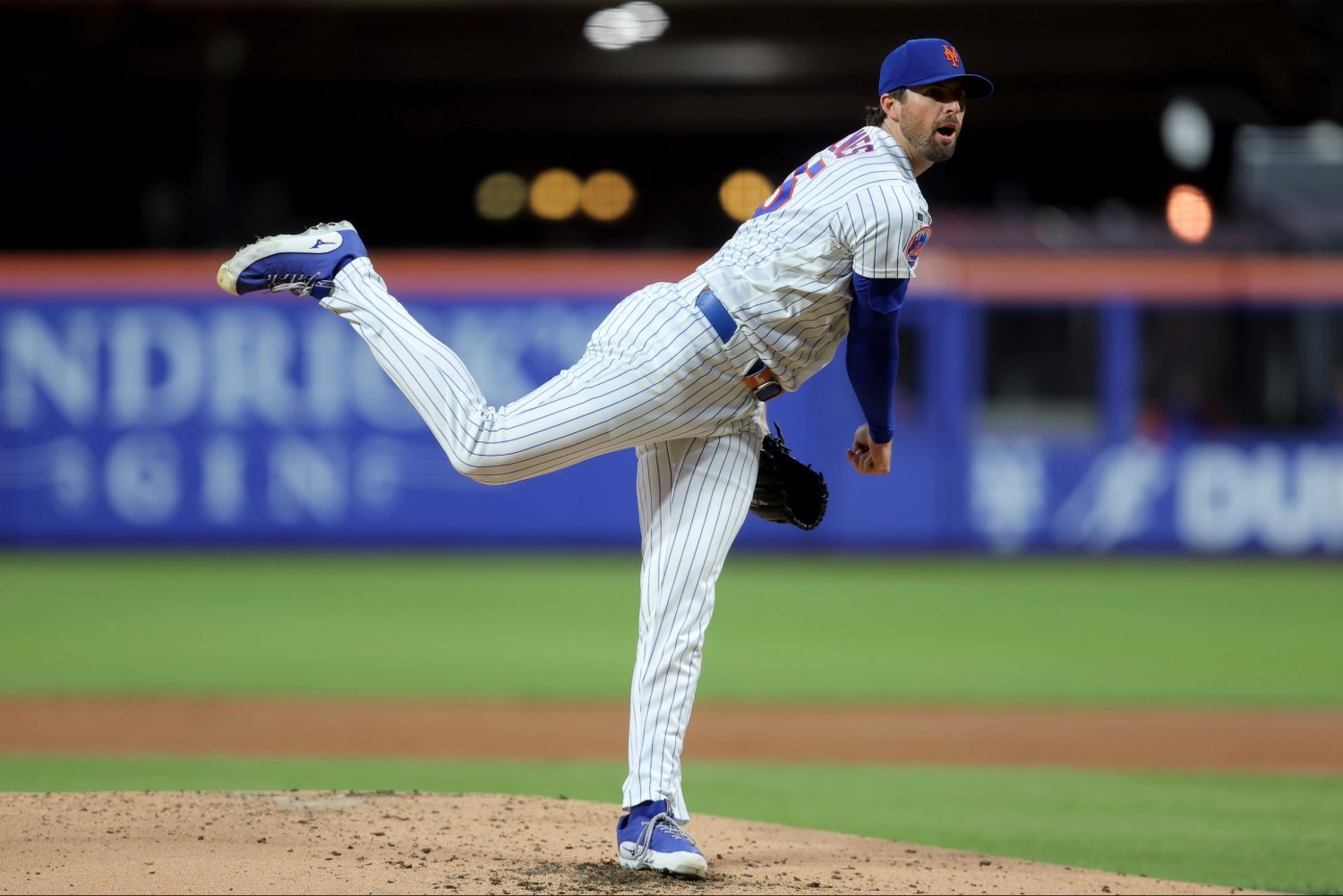 Even though it’s very early in the year and Clay Holmes has only made five starts, if you leave out the one game he pitched in 2020, he’s currently sporting his lowest ERA of his career. You’d think that a guy with a 2.10 ERA and 1.03 WHIP would be dominant, but has Holmes really been as good as his surface numbers suggest? Holmes’ underlying data suggests that he’s been outperforming his expected stats, hence his 4.28 FIP and 4.35 SIERA. Even his expected earned run average is double his ERA, sitting at 4.20. There are a couple of different factors that are playing into Holmes’ situation. So far through 30 innings of work, Holmes has only struck out 19 batters, which is a 15.8% clip. It’s a below-average mark putting him in the 18th percentile. He hasn’t allowed an unhealthy amount of walks, but he is currently giving out free passes at a near-league-average 8.3% rate, good for the 59th percentile among all qualified pitchers. He’s done a respectable job of keeping balls in the yard, only giving up three home runs thus far. That equals a 0.9 HR/9 IP ratio, which is more than workable; him allowing home runs at a league-average clip isn’t what’s really blowing up his FIP and SIERA. Clay Holmes' Change of Role and Results Since Joining Mets Since Holmes joined the Mets last season, his FIP sits at 4.17, whereas it had previously been in the threes and twos dating back to the 2021 season with the Yankees. This is as a result of him striking out less batters causing his FIP to rise, while maintaining around the same walk rate. Since his early campaigns in Pittsburgh, each year since 2021 he’s been walking around 8% of batters. Holmes has never lacked the ability to compensate for that with strikeouts. He averaged around a 26% strikeout rate between 2021 and 2024, while with the Pirates and Yankees. During this stretch of four seasons, his FIP sat between 2.65 (his best) and 3.28 (his worst). Remember that Holmes was primarily a reliever his whole career until joining the Mets. When he worked out of the bullpen, he worked with three pitches; a sinker, slider, and sweeper. Since converting to a starter, he’s worked with at least five different pitches each of the last two seasons, including a cutter that's getting bashed to the tune of a .500 slugging percentage. This is the difficult of converting relievers. They often don't have deep-enough arsenals to power past lineups multiple times through. Better command will go a long way, but Holmes' underlying numbers will remain terrifying until and unless he can find a mix of more than two or three pitches that works. View the full article
 -
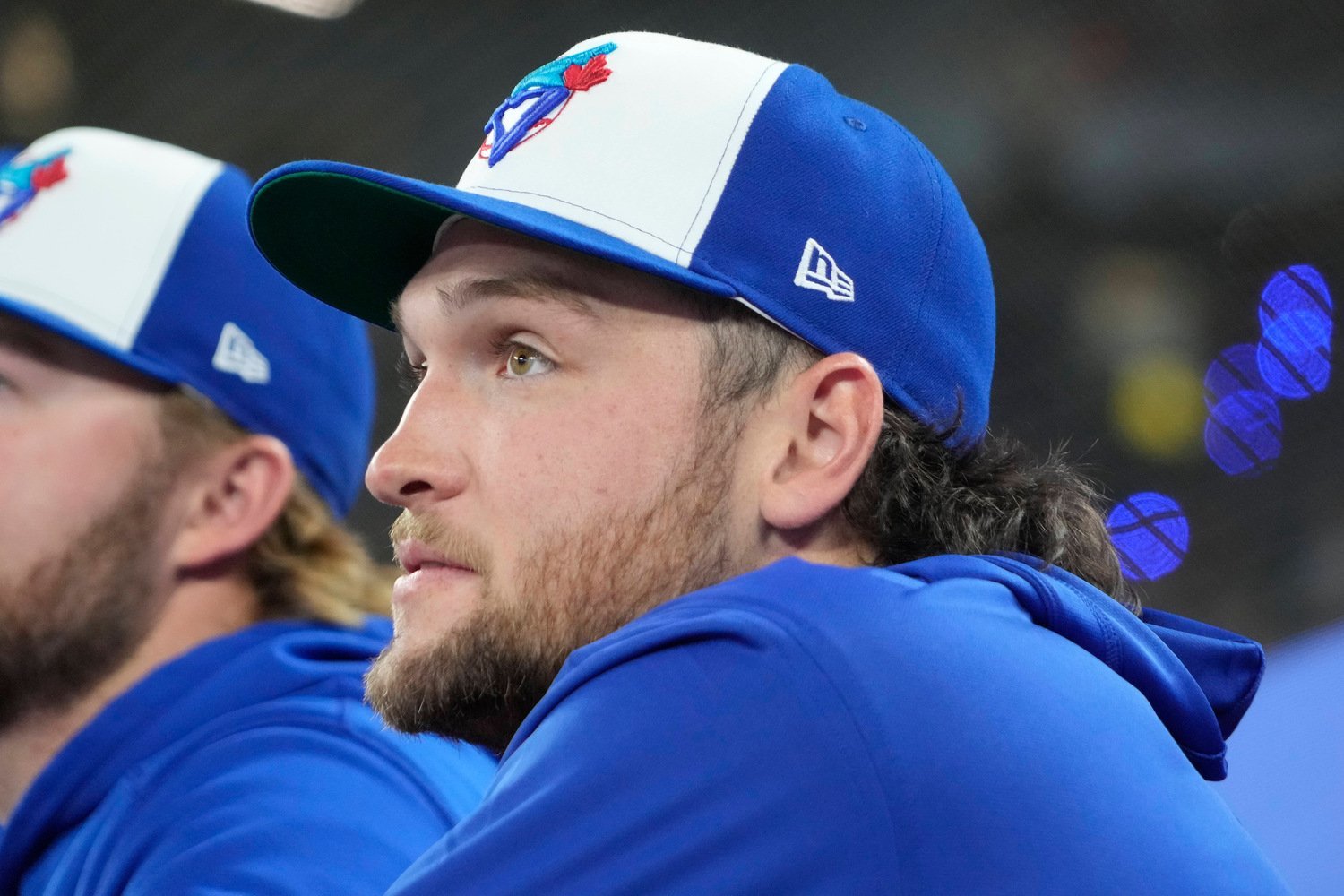 It may have been a long wait for the Toronto Blue Jays and their fans. But that wait is finally over now, as rookie phenom Trey Yesavage is set to make his 2026 debut for the Blue Jays tonight against the Boston Red Sox. Yesavage has been sidelined since spring training due to a shoulder impingement. As a result, the young 22-year-old right-hander needed some time to ramp up his activity and build up his arm strength before getting into any major league game action. He managed to get into four rehab games in the Jays’ minor league system, posting an 0-1 record with a 7.50 ERA and a 1.75 WHIP over 12 innings of work. More importantly, however, he looked strong and confident while doling out 16 strikeouts in the process. The Blue Jays will look to Yesavage to help stabilize their starting rotation going forward, as it has been significantly hit with injuries and inconsistency to start the year. The 22-year-old top pitching prospect took the world by storm last year when he ascended the Jays’ entire minor league system to make his major league debut towards the end of the 2025 season. Not only did Yesavage impress, but he played a major role in the Blue Jays' run to an AL pennant and near-World Series victory. He would finish with a 1-0 record, 0.3 bWAR, a 3.21 ERA with 16 strikeouts in 14 innings of work during the regular season, along with a 3-1 record, a 3.58 ERA, and a 1.05 WHIP, together with a whopping 39 strikeouts in 27 2/3 innings during the playoffs. The Steamer projections at FanGraphs currently have Yesavage making 27 appearances for Toronto this season, including 20 starts, registering an 8-7 record with a 3.90 ERA, 1.6 fWAR, and 9.7 K/9 across 124 total innings. If he can simply meet those expectations, he will make a huge impact on the Blue Jays this year. If he surpasses expectations, he could be the ultimate difference-maker in Toronto making the postseason once again. With Yesavage entering the Jays’ starting five, Eric Lauer was set to move to the bullpen going forward. After a promising first start to 2026, Lauer has struggled mightily, resulting in a 1-3 record, a 6.75 ERA, a 1.54 WHIP and -0.3 bWAR in five outings. A relief role might have given him the opportunity to turn his game around after excelling in the role last season for the Blue Jays. However, with Max Scherzer joining many of his teammates on the IL, it seems as if Lauer will remain in the rotation for at least a little longer. As for Yesavage and his start today, he will be going head-to-head against another top prospect, Payton Tolle of the Red Sox, in a battle for young pitching supremacy. He will likely be on a pitch limit as he eases back into action. That is because the goal is sustainable success. The Blue Jays want to ensure that their prized piece will be effective for them in the long run, both this year and beyond. View the full article
 -
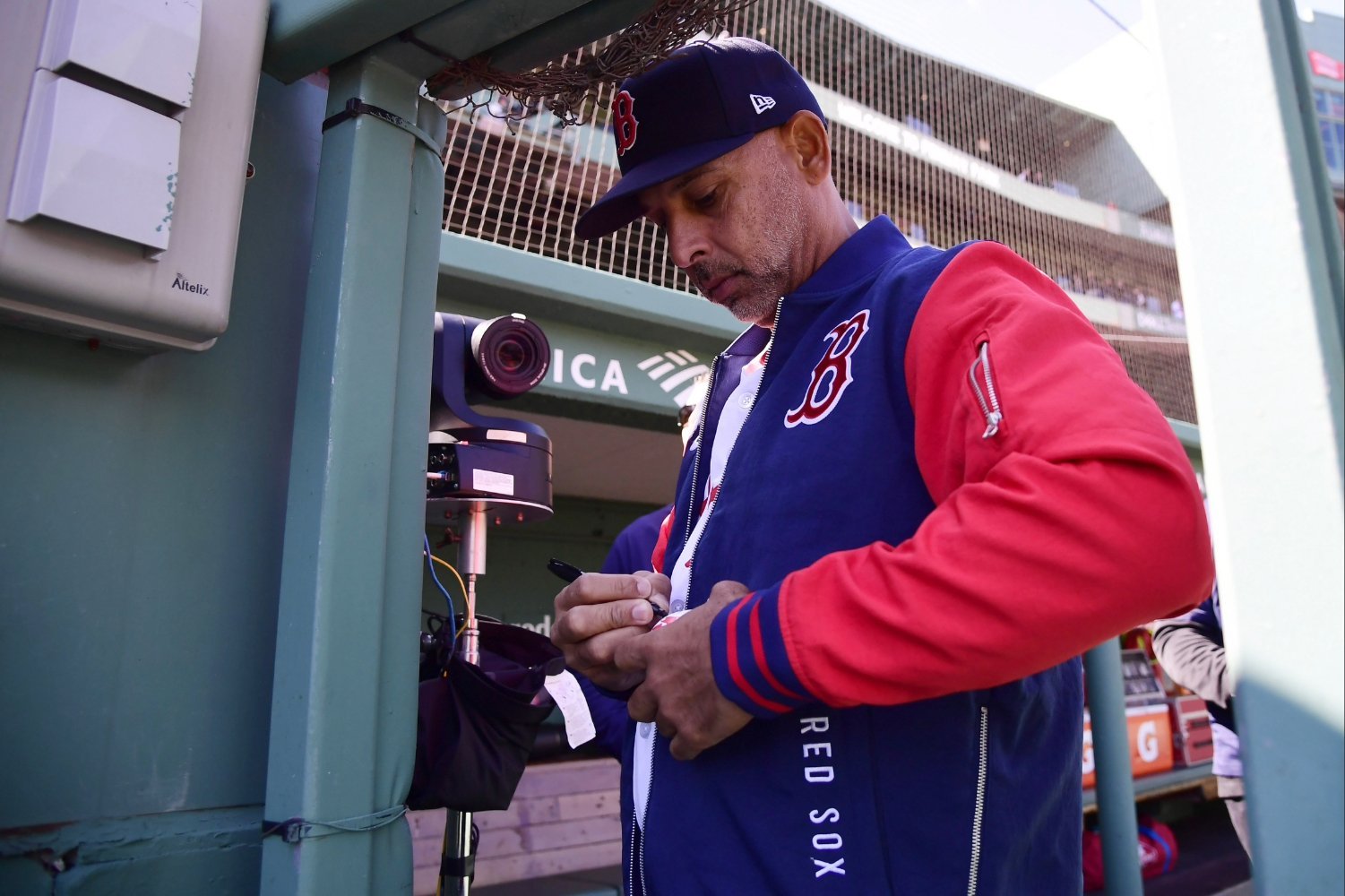 How does one grade 620 wins, eight years, three postseason appearances, and one World Series? The Alex Cora era in Boston is over, and with it, the end of a tumultuous tenure. In 2018, Cora stepped into the managerial role left vacant by John Farrell, who was fired after five seasons with the club. Cora was the bench coach of the Houston Astros for two seasons, winning a World Series with the club in 2017. During the ALCS in the same year, Cora interviewed for the open position in Boston, and was announced as the franchise’s newest manager in late October. He was initially signed to a three-year deal from 2018 to 2020, with an option for 2021. It was a storybook first season for the new manager. He was supported by a star-studded roster featuring Mookie Betts, Xander Bogaerts, Rafael Devers, and Chris Sale. The Red Sox were dominant, finishing with a league-best 108 wins and cruising through the playoffs. They dispatched the New York Yankees and Houston Astros with ease in four and five games, respectively. Facing off against the Los Angeles Dodgers in the World Series, Cora became just the fifth rookie manager to win the championship as the Red Sox won their fourth ring of the 21st century. The triumphant season led to a one-year contract extension as Cora seemed well-suited to serve as the Red Sox's manager of the future. He was beloved by his players, communicating with them in both English and Spanish, often seen sitting atop the dugout steps chatting with his coaching staff. Despite that early success and his positive relationships with his players, his scandal rocked the Red Sox. In November 2019, Cora was accused of playing a major role in the Astros' sign stealing affair. Cora was spared punishment for the time being so a separate investigation into the 2018 Red Sox could take place. In January 2020, a report published by The Athletic accused Cora and the Red Sox of using a replay room during the regular season in order to steal opposing catcher's signs. After the scandal came to light, Cora and the Red Sox mutually agreed to part ways. It was a dramatic turnaround for Cora, falling from the peak of the baseball world to the depths in just over a year's time. In April, MLB commissioner Rob Manfred issued a suspension through the 2020 playoffs for Cora, based solely on his role in the Astros scandal. Manfred didn’t impose any punishment in relation to the Red Sox replay scandal because the investigation didn’t conclude that Cora was aware of its occurrence. Manfred did, however, note that Cora didn’t “effectively communicate to Red Sox players the sign-stealing rules that were in place for the 2018 season.” Cora was welcomed back to Fenway with open arms following the 2020 season. He signed to a two-year contract with a club option for the 2023 and 2024 seasons. The following season, Cora led the club to its first playoff berth since the 2018 championship season. The Red Sox qualified as a wild card, facing the Yankees in a one-game series. After beating New York in a game for the ages, Boston beat the Tampa Bay Rays in the ALDS to advance to the league championship series. The storybook run would end here, as the Red Sox fell in six games. Following the playoffs, it was announced that the Red Sox exercised their option to extend Cora’s contract through the 2024 season. Boston struggled through the 2022 and 2023 seasons, finishing with 78 wins in each and placing fifth out of five teams in the American League East. Despite the unsavory results from those years, players backed up his leadership at every turn. From 2018 on, the roster was stripped from its peak. With the front office trading away Mookie Betts and letting Xander Bogaerts walk in free agency, many felt like Cora wasn’t given competitive rosters. He emphasized the importance of a consistent offensive approach throughout his tenure, though he wasn’t always supplied with offense-focused rosters. Following the 2023 season, the Red Sox hired Craig Breslow to be the newest Chief Baseball Officer. The 2024 season showed signs of improvement, the Sox finished third in the East but ended the season 81-81. Following a rocky start to the 2025 season, Breslow made a blockbuster trade, sending Rafael Devers to San Francisco for a slew of prospects. Despite having a close relationship with Devers, Cora backed up the trade, at least publicly aligning with a front office that had inherited his services. The Red Sox made the playoffs for the third time in Cora’s eight-year tenure, but lost to the Yankees in a three-game wild card series. While Cora’s commitment to the Red Sox never faltered, it seemed as if Boston’s front office had other ideas. Just four weeks into the 2026 season, Cora and many key members of his staff were fired in a stunning front office shakeup after disappointing early results. In a press conference the morning after the firing, Red Sox President Sam Kennedy made it clear that there was no ill-will towards Cora. “AC's impact on Boston and our city will be felt forever. The memories that we all shared from 2018 are gonna last a lifetime." Cora leaves behind a mixed legacy and one that is tainted by questionable decisions from the Red Sox ownership group. He led the club to its most dominant championship and is the third-winningest manager in franchise history, but he also dealt with embarrassment and never-ending frustration from the fanbase. Cora leaves behind a complex legacy, but his leadership during the 2018 championship season set a standard that will define Red Sox baseball until the team's next title. View the full article
 -
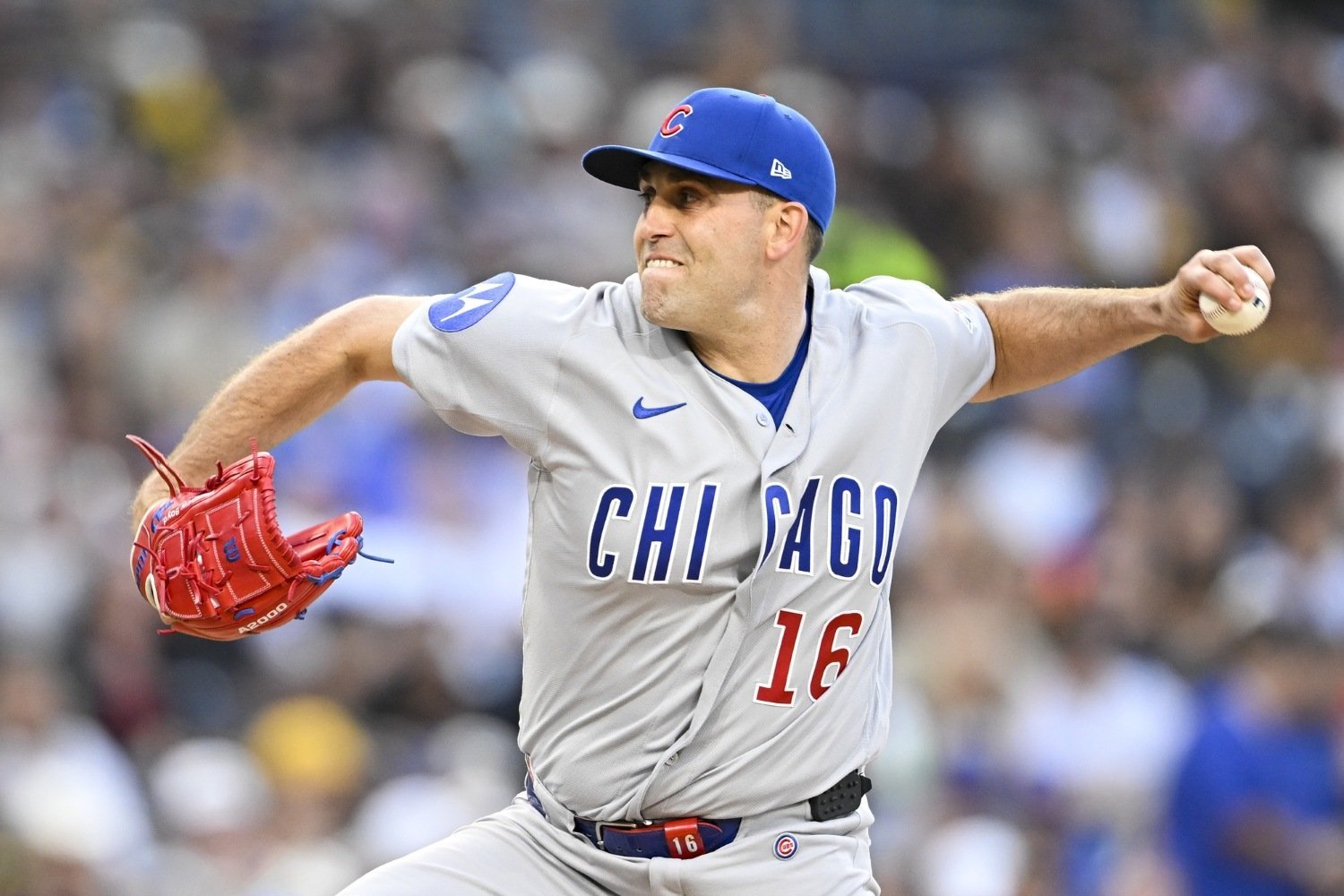 In defense of Matthew Boyd and Moisés Ballesteros, neither was put in a position to succeed on Monday night. Craig Counsell tried to force-fit his young designated hitter into the extremely valuable defensive position he played in the minors, but Ballesteros is a poor receiver—a poor defender behind the plate, in general. He's still young enough to dream on him eventually developing as a catcher, if that's what the team wanted to most, but what the team wants most is to win in 2026, so they have him in the majors, where he can be a key cog in their lineup. Ballesteros is a star-caliber hitter, so the team decided it would be an untenable waste to send him to Triple-A Iowa to start the season. That was a right and reasonable choice, but it came with a cost. Ballesteros isn't a big-league catcher right now, and has no business catching for a team that wants to win games. He doesn't inspire confidence in his pitchers with the way he receives pitches, calls the game, blocks pitches in the dirt or handles the running game. The team is trying to find reps for him behind the plate so that they don't have to entirely let go of the glimmer, but each time they do so, it hurts the team. Pairing Ballesteros with Boyd to form the battery Monday night was especially peculiar. Boyd lives at the edges of the zone and succeeds with contrasts in movement and speed. He's not strictly reliant on piling up called strikes, but he needs opposing batters to be antsy in the box. He needs them to feel defensive about the zone, and he needs them to be off-balance. Putting a rookie who struggles with every aspect of the defensive art of catching made it unlikely that Boyd would have a good night; putting Ballesteros behind the plate made it unlikely that he would have a good one. The trouble began in the bottom of the first. Boyd missed inside with his fourth pitch of the day, to the Padres' Ramón Laureano, and immediately, he tapped the bill of his cap to challenge it. He knew he was wrong almost right away, but you can't take back a challenge once you issue one. Boyd's regret was obvious. He was flustered by an inability to locate the way he wanted to in the first at-bat of the game, and any pitcher is still burning off some pent-up adrenaline for the first handful of pitches in a game. Further frustrated by his folly, Boyd lost Laureano on the next pitch. One batter later, he laid a 1-0 fastball so nicely in the middle of the zone to Jackson Merrill that he was lucky only to surrender an RBI single. He never really settled in. With a chance to escape a major jam having surrendered just that one run, he made a mistake to Ty France (an excellent clutch hitter), and it became a 3-0 game. Ballesteros did what he does best in the top of the third, though, changing the game with one fell stroke. The bases were loaded, and Padres starter Randy Vásquez tried to crowd Ballesteros with his a cutterish slider. He failed, because Ballesteros is a short guy with short levers who stands way off the plate. Come to think of it, trying to attack him there was foolish, anyway. Ballesteros launched a grand slam to right field to thrust the Cubs into the lead. But he was quickly put back into his place, and the Cubs with him. Boyd allowed a double by Manny Machado and a single by Xander Bogaerts with one out in the third. Machado had to hold at third on the Bogaerts hit, so there was hope to avoid giving up a run, but on a 1-1 pitch to Miguel Andujar, Boyd missed with a backdoor curveball. It wasn't that close a miss, just as the pitch in the first hadn't been that close. Because he felt like his pitcher had executed his pitch (and perhaps misjudged his own position when he caught the ball), though, Ballesteros challenged again. The Cubs were thwarted, and that left them out of challenges for the rest of the game. Ballesteros's bad decision—the pitch wasn't high-leverage enough to challenge unless Ballesteros were about 69% confident of an overturn. Given the location of the pitch, it was a coin flip. In trying to bail out his struggling starter, he put the team behind the 8-ball, instead. The Padres would score just once in the third, but in the fifth, they chased Boyd immediately, with a Machado double. Ben Brown came on and collected two quick, harmless outs—and he should have had the third, with the lead intact. Unfortunately, home plate umpire Dan Merzel missed on what should clearly have been strike three to France. It's not Merzel's fault. Brown missed his spot badly, and Ballesteros (too small to reach subtly on a ball like this) made it look like a bad pitch. More importantly, though, the Cubs had questioned him on two previous occasions on which he was right, so they'd lost the right to challenge. That's not on him; it's on Boyd and Ballesteros. Brown, coming in for his share of blame, then walked France on a non-competitive pitch. On a 1-2 count to Nick Castellanos, he lost focus on France, who stole second—a process made much easier by Ballesteros choosing to appeal for a check-swing strike instead of throwing through against one of the slowest players in baseball. (Castellanos didn't go around.) On a two-run Castellanos single, the Padres retook the lead, for good. Along the way, they had one more real chance to flip the script again. In the top of the seventh, Pete Crow-Armstrong drew a leadoff walk. He stole second and advanced on a convoluted fielder's choice, so he carried the tying run at third base with one out. Michael Busch went down on strikes, though, which left it up to Alex Bregman. Here's a visual look at that showdown, between Bregman and Padres reliever Jason Adam. Each of the first two pitches of the showdown were sliders just off the outer edge of the plate. Merzel called the first one a strike. It was pretty clear Bregman knew it wasn't one, but he had no recourse. When Adam repeated his pitch type and location, Bregman had no choice but to swing, but he came up empty. He battled from there, a little, but the Cubs' best chance to level things went by the wayside because they couldn't challenge a call. Ballesteros is a bad framer, but he did well with the ABS system last year at Iowa. Boyd is a savvy veteran who knows better than to challenge a pitch himself, especially in that early situation. Because each slipped just a little bit, though, a game got away from the team Monday night. It was a brutal way to lose a game, not least because Ballesteros being installed behind the plate in the first place seemed to set all the wheels of it in motion. The Cubs got too cute in a game against a good team. They'll have to be smarter, as well as better, to rebound and take the series. View the full article
 -
Pete Fairbanks, Marlins collapse in walk-off loss to Dodgers
DiamondCentric posted an article in Fish On First
 Just like in game one at Chavez Ravine last season, the Miami Marlins were walked off by the Los Angeles Dodgers, this time by a final score of 5-4. In the ninth inning, the Marlins led 4-2 and went to their $13M man, Pete Fairbanks. The veteran closer walked both Andy Pages and Dalton Rushing to begin the inning. Shohei Ohtani knocked in a ground-rule double that drove Pages in. With runners on second and third with one out, Fairbanks fell behind 3-0 to Freddie Freeman before intentionally walking him. Manager Clayton McCullough and pitching coach Daniel Moskos made a mound visit together along with head athletic trainer L.J. Petra. After a couple seconds of examination and no throws from Fairbanks, he came out of the game. Miami went to Tyler Phillips, who was given as much time as he needed to warm up. With the bases loaded, he struck out Will Smith swinging. The Dodgers' final hope was their big ticket free agent signing, Kyle Tucker. Tucker shook off his tough start to this season by smacking a base hit to center field on the second pitch of the at-bat, walking it off for the Dodgers. Fairbanks landed only nine of his 23 pitches for strikes. Following the game, Marlins manager Clayton McCullough told reporters in LA that he exited the game with an "unusual sensation" in his right thumb. "He was shaking his hand a little bit and somebody mentioned it's worth to go out there and just take a look and see if there was anything to it," McCullough said. "He did mention something about his thumb, and so at that point definitely you lean on the side of caution and just come in and get him evaluated and see what comes." Going into Monday night's series opener, Los Angeles Dodgers pitcher Yoshinobu Yamamoto had five consecutive quality starts, but the Marlins offense broke that streak, and the aforementioned Yamamoto turned in his worst start of the season. "We took some really, really close pitches and tough pitches," McCullough said. "(Yamamoto) is going to get some strikeouts, and it's high caliber stuff. For us to get four walks, really make him work, and get his pitch count up and on top of that, to come through with a big hit by Liam, you want to be able to create traffic and stress pitchers, but to be able to come through when guys are on there is what it's all about. As a whole, against one of the best starting pitchers in this league, our guys just grinded out at-bats and gave ourselves some chances. We knew that we got a big hit from Liam, and so they did a nice job against him." Yamamoto, in five innings of work, surrendered four runs (three earned) on five hits and four walks (season-high). In the top of the fourth inning with the bases loaded, Javier Sanoja reached first base on an E6 from Dodgers shortstop Hyeseong Kim, allowing the runner on third, Otto Lopez, to score. In the ensuing inning, Marlins catcher Liam Hicks, who was going into his third at-bat against Yamamoto, took him deep for his team-leading sixth home run of the season. Hicks was able to time up Yamamoto's splitter just right, taking him 348 feet deep to right field at 101.1 mph. Hicks, the former Rule 5 draft pick, is now slashing .311/.350/.544/.894 with six home runs, 27 RBI and a 143 wRC+. Hicks is now second amongst MLB players in RBI and ranked 10th in the National League in slugging percentage. A Dodgers bullpen that entered the series opener with a 4.26 ERA, which is towards the middle of the pack in MLB this season, allowed one hit, which came off former Fish Jake Eder in the top of the ninth inning. Overall, the Marlins went 2-8 with runners in scoring position and left seven on base. Chris Paddack, who made his sixth start of the season, allowed two runs on four hits, one walk and struck out one. Both runs came in the bottom of the first inning. Shohei Ohtani and Freddie Freeman knocked in back-to-back hits, and Teoscar Hernández drove both in on an RBI single. From that point on, he allowed just one more hit in three innings of shutout baseball. In the first, Paddack threw 19 pitches, but overall, averaged about 17 pitches per inning. His fastball was his best pitch on the night, topping out at 95.5 mph and averaged 93.4 mph. He also generated three whiffs with the pitch. The lone strikeout for Paddack came in the bottom of the third inning, when he got Shohei Ohtani to swing on his curveball. "Some tough luck runs in the first, but to hang in there and looking at the way it went, for him to go four innings tonight and to leave with us leading the game, I thought he threw the ball very well again," McCullough said. " He filled it up, mixed speeds very well. That's what I asked of him tonight and he did his part." Paddack, who was set to face the Dodgers lineup for a third time through, was taken out before he had the chance to do so. The Marlins had to use six relievers, with two of them throwing on back-to-back days in Andrew Nardi and Calvin Faucher. With Paddack having only thrown 67 pitches, this is the third recent example of McCullough taking out his starter with a low pitch count despite solid results. He did it with Janson Junk on Wednesday against the St. Louis Cardinals and again on Sunday against the San Francisco Giants with Max Meyer throwing a season-low 77 pitches through five innings of work. "The third time through certainly factored in," McCullough said regarding the quick hook with Paddack. "Chris is a real pro and competitor. He wanted to go back out there and just explained my rationale for why I felt our best path tonight was to turn it over and pass it along...I think each day, I look at what's the best way to win that game." The Marlins are now 13-16 on the season and are tasked with facing Shohei Ohtani the pitcher on Tuesday night at 10:10 pm ET. Janson Junk will take the mound for the Marlins for his sixth start of the season. View the full article
 -
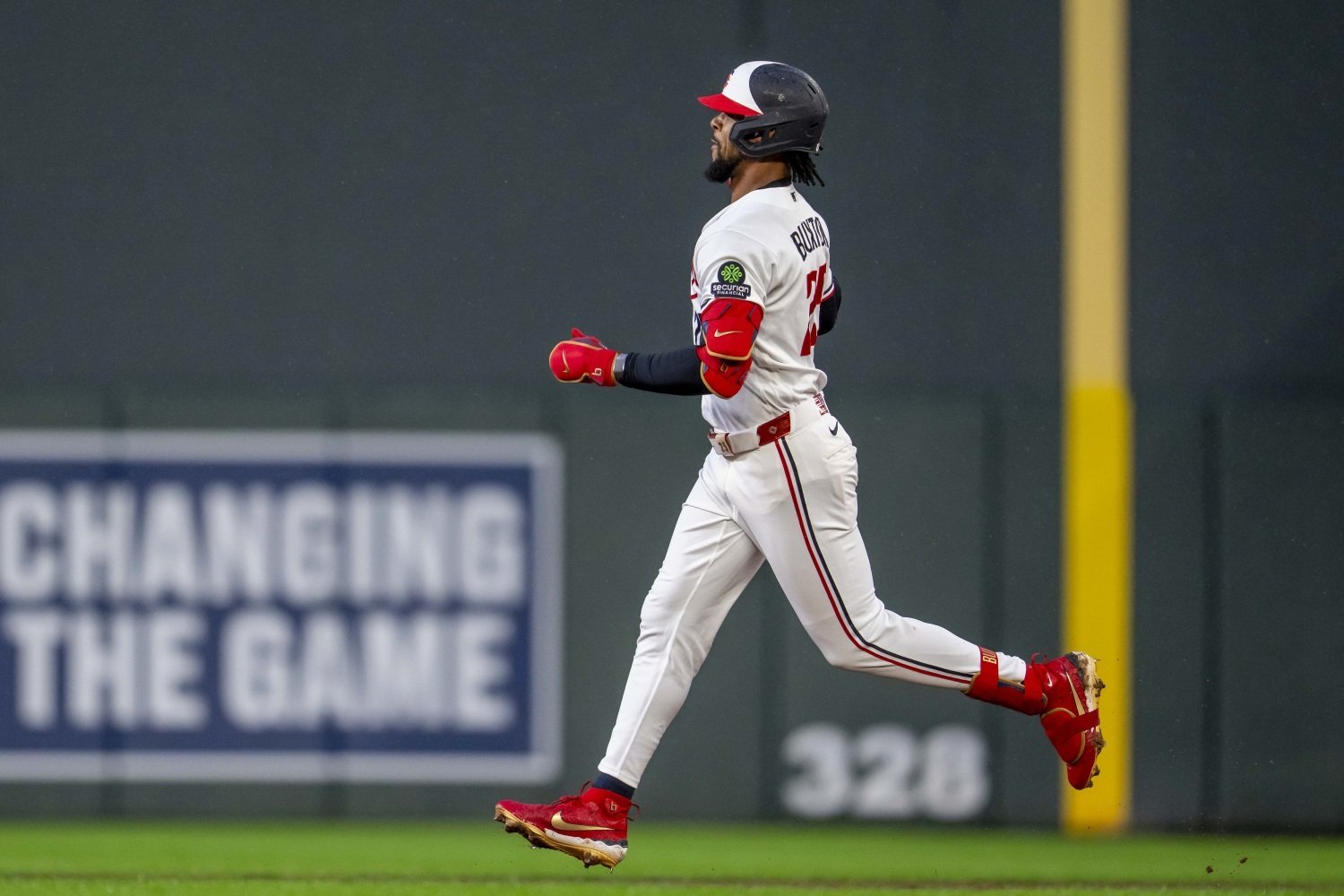 Box Score Starting Pitcher: Connor Prielipp 5 IP, 1 H, 2 ER, 5 K, 3 BB (84 pitches, 49 strikes) Home Runs: Byron Buxton (6), Kody Clemens (3) Top 3 WPA: Connor Prielipp 0.16, Kody Clemens 0.11, Luke Keaschall 0.11 Win Probability Chart (via FanGraphs): After a day filled with rain and cold that kept most fans at home, the Minnesota Twins returned to Target Field looking to stop the bleeding. A surprising 11-7 run to open the season quickly turned into the version of the Twins many expected. Entering this one, they had dropped 9 of their last 10, including a five-game losing streak and a sweep at the hands of the Tampa Bay Rays. The failures feel more real than the successes did, and the tone around the team and fanbase had shifted in a hurry. Meanwhile, the Seattle Mariners came to town with their own issues. Despite high expectations, they entered the night at 14-15, still searching for consistency. With a small, bundled-up crowd and morale already trending down, the Twins could not afford another slow start, especially against multi-time All-Star Luis Castillo. They did not wait around. The Twins got on the board in the second inning, when Luke Keaschall lined an RBI double to give them an early lead. That carried into the third. Ryan Jeffers knocked in a run with a single before Kody Clemens broke things open with a three-run homer to right field, his third of the season, pushing the lead to 4-0. An inning later, Byron Buxton added a two-run shot of his own. Just like that, the Twins had the early cushion that had been missing during their skid. They kept applying pressure. By the time Castillo exited after five innings, the Twins had tagged him for seven earned runs while striking out only three times, a sharp contrast from the swing and miss issues that defined the past week. And maybe the biggest shift came in the spots that had been killing them. After a stretch where runners in scoring position felt like a dead end, the Twins flipped it, finishing 5-for-12 in those situations. Timely hitting showed up when they needed it. On the mound, Connor Prielipp made his Target Field debut and backed up the promise he showed in his first outing, during the Mets series on the road trip. He allowed just one hit over five innings. His command wavered at times, with three walks including back-to-back in the fifth, but he limited damage, allowing two runs while striking out five and generating 11 swings and misses. It was another very strong step for a young arm showing a lot of promise. When the game turned over to Andrew Morris in long relief, the Mariners made things a bit more interesting. Cal Raleigh connected on a two-run homer in the eighth to cut the lead to 8-4. Still, Morris did enough. Over three innings, he allowed four hits and two runs, limiting damage and keeping the game under control. The offense answered right back. In the bottom of the eighth, Jeffers and Clemens each delivered RBI singles, both with runners in scoring position, pushing the lead back out and putting the game away. It was the same theme all night. When chances were there, the Twins cashed in. The Twins closed out an 11-4 win, their first since April 21, earning Prielipp his first major-league win. It moves them to 13-16 as they try to work their way back toward .500 and steady a season that started to slip. What’s Next The Twins will look for their first series win since taking two of three from the Boston Red Sox on April 14. Joe Ryan is set to take the ball for a 6:40 p.m. first pitch, facing Logan Gilbert in a matchup of frontline starters. Postgame Interviews Bullpen Usage Chart THU FRI SAT SUN MON TOT Morris 37 0 0 0 40 77 Orze 0 10 9 0 0 19 Topa 0 0 0 10 0 10 Rogers 0 0 15 0 14 29 Banda 9 7 0 9 0 25 Funderburk 0 0 0 20 0 20 Acton 0 0 18 0 0 18 Sands 0 0 0 7 0 7 View the full article
 -
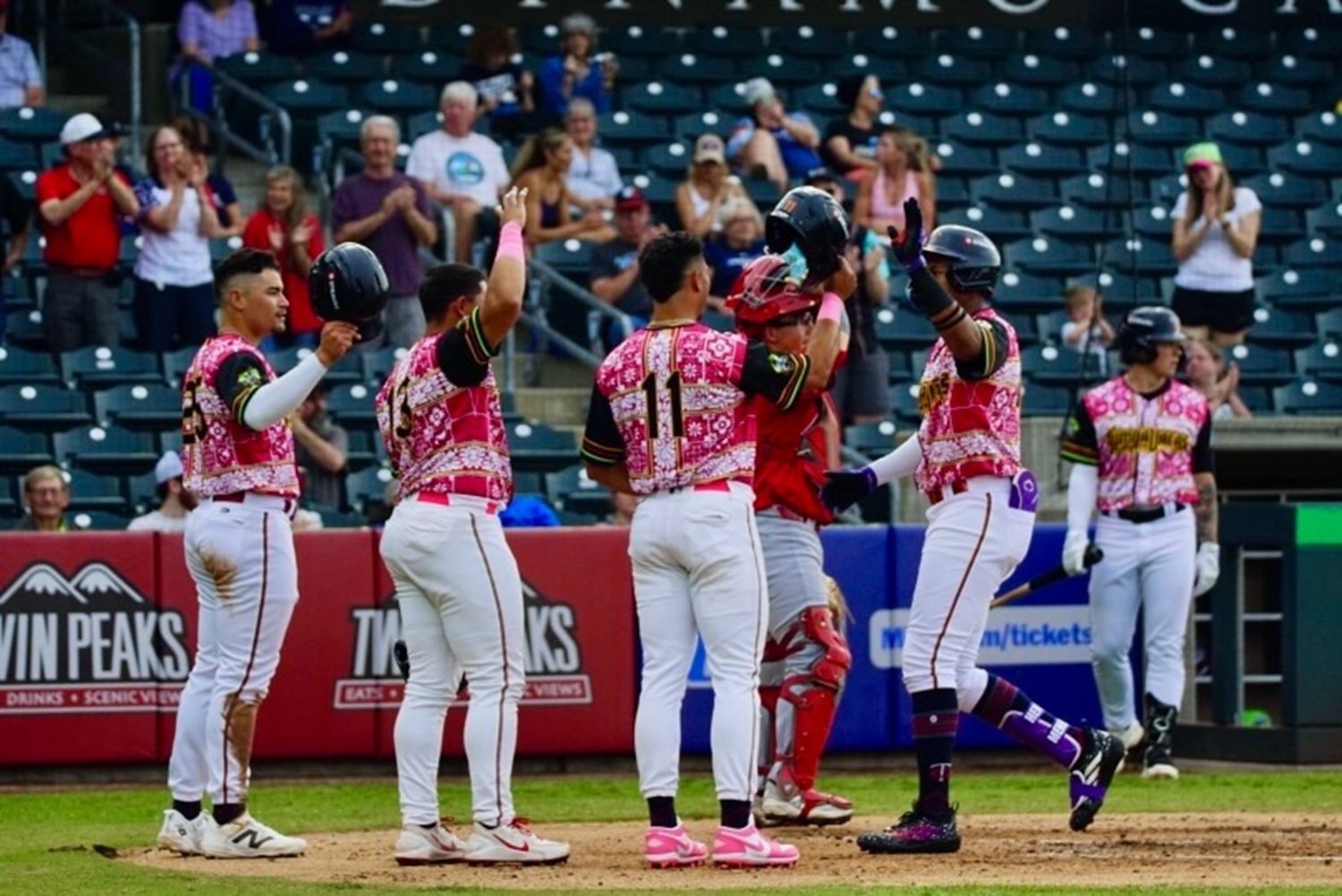 The early portion of the minor-league season is often more noise than signal, but that doesn't mean there aren't meaningful trends worth tracking. For the Twins, a handful of hitters are beginning to separate themselves, not just with strong box-score lines, but also with underlying indicators that point to real development. Two of those names arrived in recent trade-deadline deals that reshaped the organization’s roster, and their early success is starting to shift the conversation around those moves. Another is a longtime system piece who has steadily worked his way back into relevance. Together, they offer a snapshot of a farm system that blends upside, patience, and timely acquisitions into tangible production. C Eduardo Tait – Cedar Rapids Kernels How He Got Here: Tait began his professional career quietly, signing out of Panama with the Phillies for just $90,000 in January 2023. It didn't take long for that modest investment to look like a bargain. He posted a .917 OPS in the Dominican Summer League during his pro debut, drawing early projections of a steady, offense-first backstop. That momentum carried into 2024, when he hit .302 with an .842 OPS and climbed from Single-A to High-A before his 19th birthday. His performance earned him a Futures Game selection and elevated his prospect status significantly. At the trade deadline, the Twins made him a key return piece in the deal that sent Jhoan Duran to Philadelphia. Tait finished the year in Cedar Rapids and gained valuable postseason experience in the Midwest League. Hitting the Hot Button: Tait is holding his own against older competition and thriving. Over five games this week, he went 6-for-21 with two doubles, two home runs, and six runs driven in. Across 18 games this season, he owns a .924 OPS with four homers and five doubles. What makes this production even more impressive is his age relative to the rest of the league. Tait is more than three years younger than the average Midwest League player and has faced almost exclusively older pitching. His ability to generate impact contact in those conditions speaks to an advanced offensive profile that continues to trend upward. OF Hendry Mendez – Wichita Wind Surge How He Got Here: Mendez has long been known for his feel at the plate. After signing with the Brewers for $800,000 in January 2021, he wasted little time proving he could hit, posting a combined .316 average between the Dominican Summer League and the Arizona Complex League in his first professional season. He reached High-A as a teenager in 2023, then became part of a trade package to Philadelphia that offseason. While his bat-to-ball skills remained consistent through 2024 and 2025, questions lingered about his power output. That narrative began to shift late last season, when he finished strong in Double-A after a deadline deal sent Harrison Bader to Philadelphia and brought Mendez to the Twins. Hitting the Hot Button: Mendez is showing a more complete offensive game early this season. Over the past week, he recorded four hits in 17 at-bats, including two doubles and a home run, while walking five times compared to just three strikeouts. That approach has helped him post a .409 on-base percentage during that stretch. For the season, Mendez is slugging above .550 and carrying a .935 OPS in Double-A, all while being more than two years younger than the average player at the level. The added power, paired with his natural plate discipline, is turning him into a far more dynamic offensive threat. C/OF Ricardo Olivar – Wichita Wind Surge How He Got Here: Olivar has taken a longer and less linear path through the organization. Signed as an international free agent in July 2019, his development was delayed by the pandemic, and he did not make his professional debut until 2021 in the Florida Complex League. That introduction proved challenging, but a return to the level in 2022 changed everything. He dominated that season, earning MVP honors while posting an OPS north of 1.000. From there, Olivar steadily climbed the ladder, producing solid numbers at Single-A in 2023 and continuing that success into 2024, when he reached Double-A. Last season, he hit .264 with a .768 OPS, adding 13 home runs and 13 doubles in 93 games. Hitting the Hot Button: Now in his third stint at Double-A, Olivar may be finding another gear. In five games this week, he went 7-for-17 with a double, four home runs, and seven runs batted in. The highlight came during a two-homer performance against Northwest Arkansas. At 24, Olivar is no longer one of the youngest players on the field, but his recent surge looks like that of a hitter beginning to fully translate his tools into production. If his power continues to show up consistently, he could quickly move into a more prominent role in the system. The common thread among this trio is impact. Tait is proving he belongs despite his age, Mendez is adding power to an already polished approach, and Olivar is showing signs of a breakthrough after years of steady progression. What stands out about this group is how differently they have arrived at this point Yet, all three are producing in ways that demand attention. What stands out about this trio of prospects? Leave a comment and start the discussion. View the full article
 -
Phil Maton Activated, Returns To Cubs' Bullpen
DiamondCentric posted an article in North Side Baseball
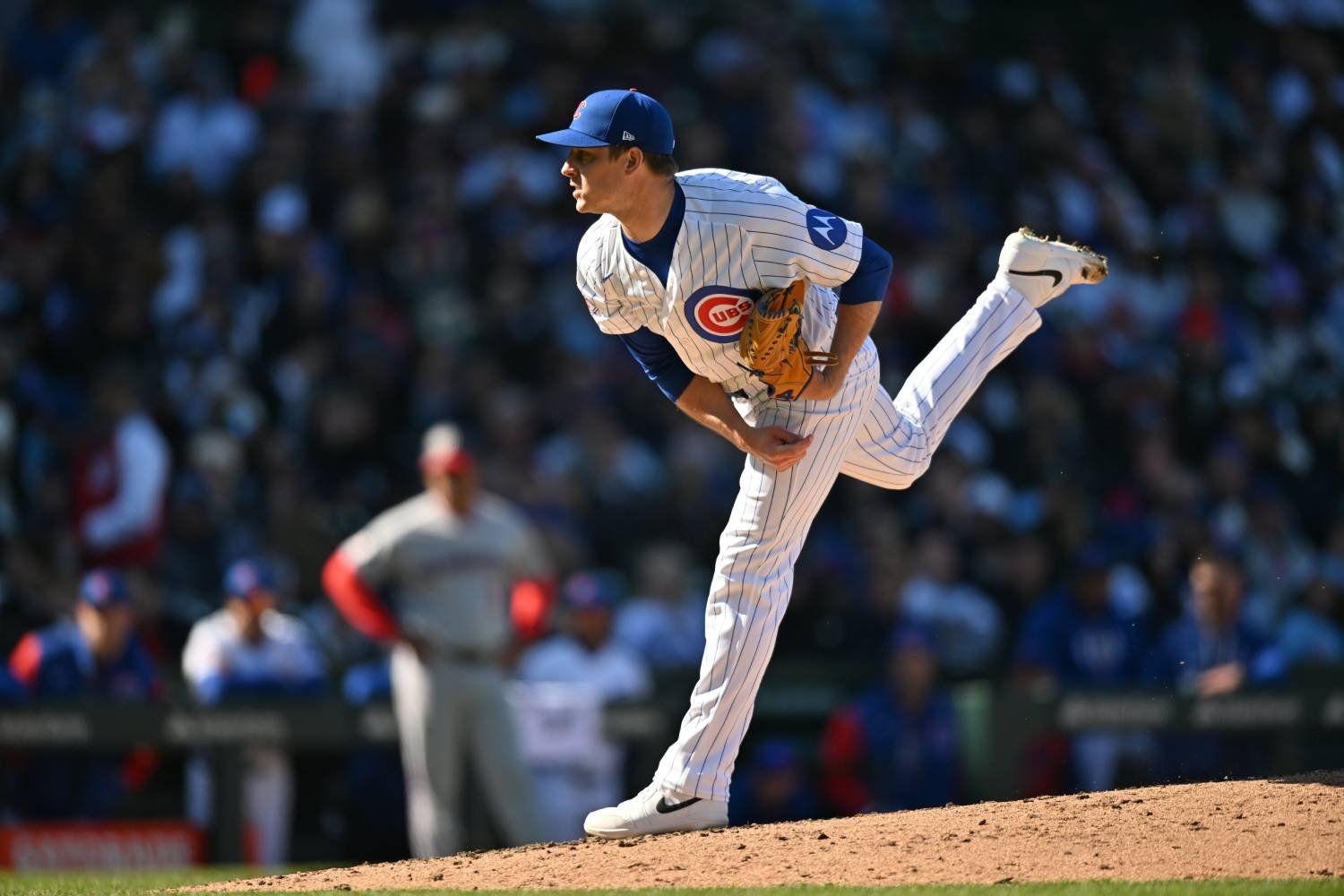 After a rough medical start to the season, the Chicago Cubs are starting to get some of their arms back. The latest is right-handed reliever Phil Maton, who was activated Monday off the 15-day injured list. Left-handed reliever Charlie Barnes, who was called up Sunday, was sent back to Triple-A Iowa. Maton is a welcome veteran addition to the Cubs' bullpen. He has been on the IL since April 10 with tendinitis in his right knee and threw one scoreless inning Friday for Iowa. He was not off to a great start after signing as a free agent in November. In four innings over five appearances before going on the IL, Maton had a 13.50 ERA, allowing six runs on six hits, including a homer, with four walks and five strikeouts and two hit batters. Maton made his MLB debut in 2017 and has a 4.06 ERA. He started 2025 with the St. Louis Cardinals, then was dealt to the Texas Rangers at the trade deadline. He had a combined 2.79 ERA in 63 games and 61⅓ innings. Barnes did not pitch Sunday and has one three-inning appearance in his two call-ups this season. View the full article
