


DiamondCentric
-
Posts
2,631 -
Joined
-
Last visited
Never
Content Type
Profiles
Forums
Events
News
Tutorials & Help
Major League Baseball Videos
Guides & Resources
Store
Downloads
Gallery
Everything posted by DiamondCentric
-

It’s Time for the Twins to Call Up Emmanuel Rodriguez
DiamondCentric posted an article in Twins Daily
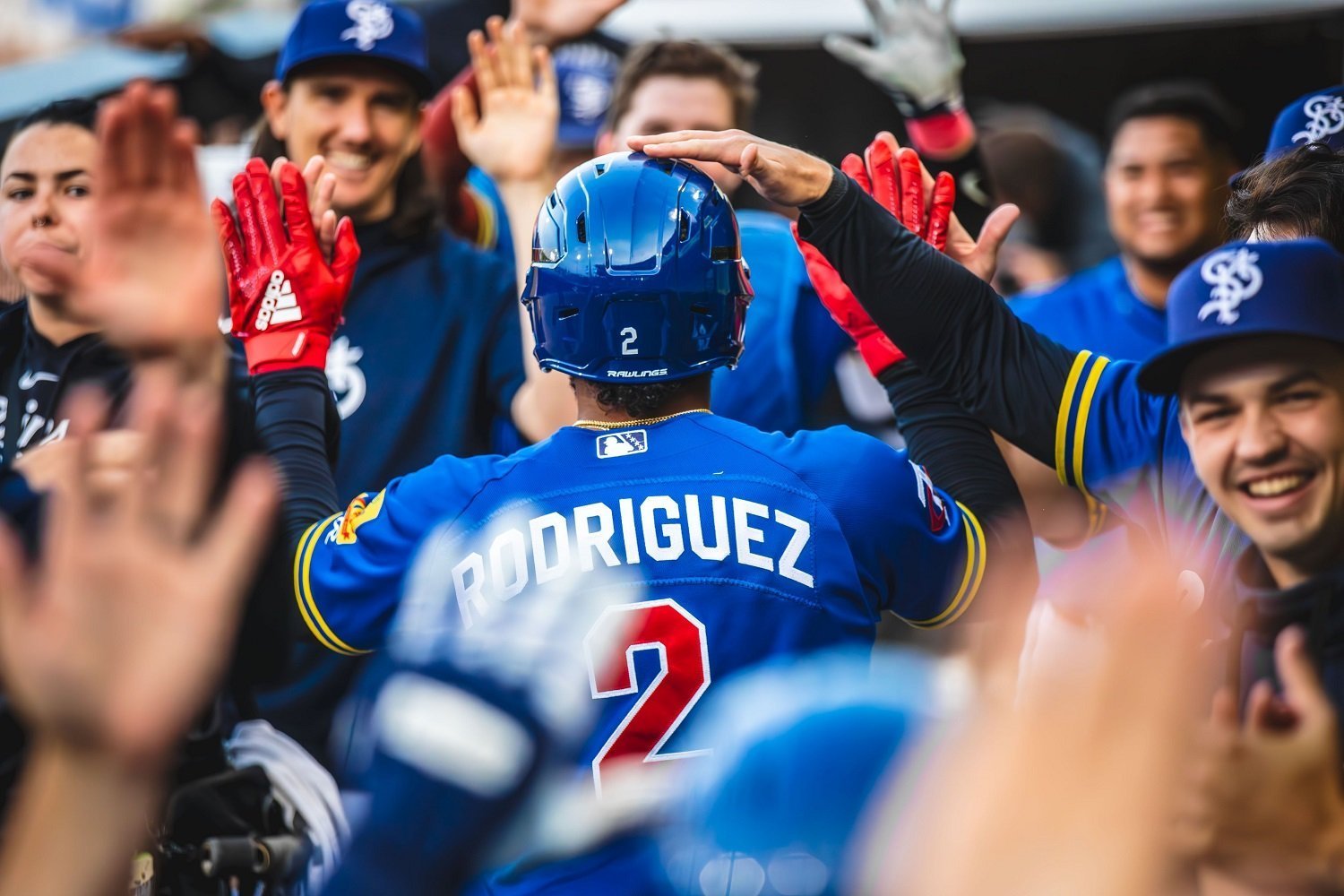 The Minnesota Twins have done plenty to feel good about early in the season, but this past weekend was a reminder that good vibes do not always equal sustainable offense. Against the Cincinnati Reds, Minnesota found itself grinding through multiple tight games, struggling to deliver the one big swing that changes everything. That swing exists in St. Paul, and it's attached to Emmanuel Rodriguez. At some point, a team that has overperformed needs to decide whether it's content staying afloat or ready to push forward. The Twins are at that crossroads already. If they want to keep this early momentum from fading into mediocrity, the answer is obvious: Call up Rodriguez. The Spark This Lineup Lacks There is a difference between scoring runs and threatening to score runs. Right now, Minnesota is doing just enough of the former while lacking too much of the latter. Rodriguez changes that instantly. Few prospects in baseball can impact a game with one swing the way he can. His elite bat speed and natural strength have produced some of the loudest contact in the organization, including a 116.6-mph home run over the weekend that traveled 439 feet and left no doubt off the bat. That kind of power is not just impressive. It's disruptive. Pitchers have to approach him differently. Mistakes do not get fouled off or rolled over. They get punished. That's exactly what this lineup is missing. Nothing Left to Prove in Triple-A At a certain point, development stops being about refinement and starts being about opportunity. Rodriguez has reached that point. He has now spent parts of three seasons at Triple-A (74 games), producing across the board and flashing the same elite traits that have kept him on top prospect lists for years. Across his minor-league career, he owns a .913 OPS with a massive .423 on-base percentage, showing both patience and impact power. He owns the four hardest-hit balls in the organization this season, including a 451-foot grand slam that jumped off his bat at 113.6 mph. This isn’t a new trend for him as he’s been posting numbers like that throughout his career. In 2025, his 109.1-mph EV90 placed him in the 99th percentile at Triple-A, while his top mark of 113.6 mph sat in the 95th percentile. This season, he's barreling the baseball more than ever as well, with a hard-hit rate up to 50%, and no one at Triple A has a harder hit. Even this season, the underlying indicators remain strong. He is walking, hitting the ball hard, and continuing to show that rare blend of power and on-base ability that plays at any level. Keeping him in St. Paul is no longer about development, and it’s time for the Twins to make a move. The Injury Clock Is Real This is the uncomfortable part of the conversation, but it cannot be ignored. Rodriguez has dealt with injuries throughout his career, ranging from knee and thumb issues to hip and oblique problems. He has averaged well under a full season’s worth of games, with durability being the one thing that has consistently held him back. That reality should not scare the Twins away from promoting him. It should push them toward it. There are only so many bullets in the gun. If Rodriguez is going to impact this organization, it should happen in Minneapolis, not in St. Paul. Waiting for the perfect moment risks missing the moment entirely. Fit Matters Less Than Impact Yes, the Twins already have left-handed hitters. Yes, the roster construction is not perfect to accommodate Rodriguez's arrival. That should not matter. Rodriguez is not a depth piece or a bench option. He's a potential difference maker. When a player has this kind of upside, you do not wait for a perfect opening. You create one. Move pieces around. Rotate the outfield. Let him DH when needed. The specifics can be figured out later. What cannot be manufactured is his skill set. The Twins have surprised people to start the year, but surprises fade quickly when the offense stalls. This weekend showed just how thin the margin can be when timely hitting disappears. This week has already yielded more evidence of the same, in another way. Matt Wallner came nowhere near catching a catchable ball on the hit that won the game for the Mets Wednesday night. Rodriguez has plus speed and has a chance to play a good amount of center field in the majors. Moved to right, he would be a markedly above-average defender—and a huge, immediate upgrade over Wallner in the field. Rodriguez represents more than just a prospect promotion. He represents urgency. He represents upside. He represents the willingness to turn a good start into something more meaningful. At some point, a team has to decide it wants more. For the Twins, that decision should come with one phone call to St. Paul. Is the time right to call up Rodriguez? Leave a comment and start the discussion. View the full article
 -
Royals Minor League Report: Walk-Off Magic In Quad Cities
DiamondCentric posted an article in Royals Keep
 Ramon Ramirez powered a Quad Cities walk-off with three hits and five RBI while Asbel Gonzalez drove in the winner. Emmanuel Reyes fired four scoreless frames for the River Bandits. Blake Wolters struck out five over five innings as Josh Hammond homered in the Columbia Fireflies' win. Sam Kulasingam added three hits in a Northwest Arkansas loss. Aaron Sanchez took the loss for Omaha after allowing six runs, while Abraham Toro drove in two. Royals Transactions No Roster Moves Toro's Two RBI Not Enough In Omaha's Loss To Toledo Omaha struck first in the top of the opening frame when Kameron Misner drew a walk, stole second, and came around on an Abraham Toro RBI single to put the Storm Chasers up 1-0. The lead did not last. Toledo answered with back-to-back solo home runs in the bottom of the second to take a 2-1 advantage, then added another solo shot in the third to push in front 3-1. The game slipped away in the fifth. Omaha pulled within one in the top half when John Rave scored on a Toro groundout to make it 3-2, but Toledo erupted in the bottom of the fifth with a four-run outburst that included a two-run double and a bases-loaded walk that drove in another run, widening the margin to 7-2. A solo home run in the eighth finalized the 8-2 result. Abraham Toro led Omaha's offense with two RBI on a 1-for-4 night. Drew Waters added a double, and Misner reached base three times with a hit and two walks out of the three spot. The Storm Chasers managed just three hits as a team and stole four bases. Starter Aaron Sanchez took the loss after giving up six runs (five earned) on six hits and two walks across four innings, surrendering three home runs and striking out four. Bailey Falter provided the lone bright spot from the bullpen, striking out four over 2 1/3 innings of relief. Player AB R H RBI BB K John Rave 4 1 0 0 1 1 Drew Waters 5 0 1 0 0 0 Kameron Misner 2 1 1 0 2 1 Abraham Toro 4 0 1 2 0 1 Luca Tresh 1 0 0 0 2 0 Josh Rojas 3 0 0 0 0 0 Connor Kaiser 1 0 0 0 0 0 Gavin Cross 4 0 0 0 0 2 Tyler Tolbert 3 0 0 0 1 1 Kevin Newman 4 0 0 0 0 2 Player IP H R ER BB K HR Aaron Sanchez 4 6 6 5 2 4 3 Ethan Bosacker 1 1 1 1 2 1 0 Bailey Falter 2 1/3 2 1 1 0 4 1 Eric Cerantola 2/3 1 0 0 0 1 0 Naturals Fall Short Against Wichita Northwest Arkansas fell into an early hole and never fully recovered. Starter Frank Mozzicato surrendered an RBI double, another RBI double, and a three-run home run in the top of the first as the Wind Surge opened a 5-0 lead before the Naturals took a swing. Northwest Arkansas responded in the bottom of the first with RBI groundouts from Brett Squires and Daniel Vazquez that scored Carson Roccaforte and Rudy Martin Jr., cutting the deficit to 5-2. The Naturals chipped two more runs back in the third on RBI singles from Sam Kulasingam and Jorge Alfaro. The biggest frame came in the bottom of the fourth. Canyon Brown opened it with a solo home run to left, and later in the inning, Sam Kulasingam lashed a two-run single that gave the Naturals a 7-6 lead. Wichita took the lead right back in the top of the fifth with a two-run home run, then added an insurance solo shot in the eighth for a 9-7 final. Kulasingam was the offensive standout, going 3-for-3 with two RBI and two walks. Carson Roccaforte added two hits, two runs, a walk, and a stolen base out of the leadoff spot. Canyon Brown contributed the solo home run. Frank Mozzicato's rough outing covered 1 2/3 innings, six earned runs on five hits and four walks with two strikeouts. Caden Monke followed with 2 1/3 scoreless innings and four strikeouts, and Oscar Rayo absorbed the loss after allowing two runs over three innings. Player AB R H RBI BB K Carson Roccaforte 4 2 2 0 1 0 Rudy Martin Jr. 2 2 0 0 2 1 Sam Kulasingam 3 1 3 2 2 0 Brett Squires 4 0 1 1 1 1 Daniel Vazquez 4 0 0 1 0 0 Jorge Alfaro 3 0 1 1 1 1 Dustin Dickerson 4 0 1 0 0 2 Canyon Brown 3 1 1 1 1 1 Justin Johnson 4 1 1 0 0 0 Player IP H R ER BB K HR Frank Mozzicato 1 2/3 5 6 6 4 2 1 Caden Monke 2 1/3 0 0 0 0 4 0 Oscar Rayo 3 2 2 2 0 2 1 Andrew Morones 1 1 1 1 0 1 1 Brandon Johnson 1 0 0 0 0 2 0 Ramirez's Five-RBI Night Fuels River Bandits Walk-Off Over Lansing Quad Cities trailed most of the night before Ramon Ramirez and Asbel Gonzalez took over late. Ramirez opened the scoring with an RBI double in the bottom of the fourth that plated Gonzalez for a 1-0 lead. Lansing flipped the game in the top of the fifth on a three-run home run, moving in front 3-1. Ramirez evened the score in the bottom of the sixth, lifting a two-run home run to left-center that scored Gonzalez. The game was decided in the eighth and ninth innings. With Gonzalez and Blake Mitchell aboard in the bottom of the eighth, Ramirez ripped a two-run double to left to give the River Bandits a 5-4 lead. Lansing tied it with a run in the top of the ninth. In the bottom of the ninth, Jose Cerice singled, and Asbel Gonzalez followed with a walk-off single to center that scored Cerice for a 6-5 win. Ramon Ramirez finished 3-for-4 with a home run, two doubles, and five RBI out of the cleanup spot. Asbel Gonzalez added three hits, three runs, and two stolen bases. Starter Emmanuel Reyes delivered four scoreless innings, allowing just one hit with four walks and three strikeouts. Yimi Presinal earned the win with 1 2/3 innings of relief. Player AB R H RBI BB K Nolan Sailors 4 0 1 0 1 0 Asbel Gonzalez 5 3 3 1 0 0 Blake Mitchell 3 1 0 0 1 1 Ramon Ramirez 4 1 3 5 0 0 Derlin Figueroa 4 0 0 0 0 2 Austin Charles 4 0 1 0 0 0 Jose Cerice 4 1 2 0 0 0 Tyriq Kemp 2 0 0 0 2 0 Erick Torres 3 0 1 0 0 0 Player IP H R ER BB K HR Emmanuel Reyes 4 1 0 0 4 3 0 Kamden Edge 1 2/3 1 3 3 2 4 1 Hunter Alberini 1 2/3 2 1 1 1 2 0 Yimi Presinal 1 2/3 1 1 1 1 2 0 Hammond Homers, Wolters Fans Five As Fireflies Down Augusta The Columbia Fireflies took down Augusta 6-2 behind a multi-hit attack at the top of the order and a steady turn from starter Blake Wolters. Augusta struck first on a solo home run in the top of the first, but Columbia answered in the bottom half when Brooks Bryan grounded into a force out that scored Henry Ramos to even it at 1-1. Augusta regained the lead on an RBI single in the second, and Columbia responded again when Henry Ramos singled home Daniel Lopez. Josh Hammond then homered to left-center in the bottom of the third to push Columbia ahead 3-2. The Fireflies broke it open in the bottom of the seventh. Josh Hammond doubled home Henry Ramos to extend the lead. Brooks Bryan followed with a sacrifice fly that scored Sean Gamble, and a Hyungchan Um flyout brought Hammond home on a throwing error, capping a three-run frame for the 6-2 final. Henry Ramos paced the lineup with a 4-for-5 night that included a double, an RBI, and two stolen bases out of the leadoff spot. Josh Hammond went 3-for-3 with a home run, a double, two runs, two RBI, and a walk. JC Vanek chipped in two hits. Blake Wolters earned the win, striking out five over five innings while allowing two runs on four hits and two walks. Henson Leal added two hitless innings, and Max Martin closed with two scoreless innings and two strikeouts. Player AB R H RBI BB K Henry Ramos 5 2 4 1 0 0 Sean Gamble 3 1 1 0 1 2 Josh Hammond 3 2 3 2 1 0 Brooks Bryan 3 0 0 2 0 0 Hyungchan Um 4 0 0 0 0 2 JC Vanek 3 0 2 0 1 1 Stone Russell 4 0 1 0 0 0 Daniel Lopez 3 1 0 0 1 1 Connor Rasmussen 4 0 0 0 0 1 Player IP H R ER BB K HR Blake Wolters 5 4 2 2 2 5 1 Henson Leal 2 0 0 0 2 0 0 Max Martin 2 1 0 0 0 2 0 Royals Top-20 Prospect Performance Carter Jensen: DNP Blake Mitchell: 0-for-3, BB, K David Shields: DNP Kendry Chourio: DNP Ben Kudrna: DNP Sean Gamble: 1-for-3, BB, 2 K Josh Hammond: 3-for-3, 2B, HR, 2 RBI, BB Ramon Ramirez: 3-for-4, 2 2B, HR, 5 RBI Drew Beam: DNP Asbel Gonzalez: 3-for-5, RBI, 2 SB Yandel Ricardo: DNP Felix Arronde: DNP Luinder Avila: DNP Daniel Vazquez: 0-for-4, RBI Steven Zobac: DNP Carson Roccaforte: 2-for-4, BB, SB Blake Wolters: 5 IP, 4 H, 2 R, 2 ER, 2 BB, 5 K, HR (W) Michael Lombardi: DNP Warren Calcaño: DNP Frank Mozzicato: 1 2/3 IP, 5 H, 6 R, 6 ER, 4 BB, 2 K, HR View the full article
 -
What are your Marlins vs. Giants series predictions?
DiamondCentric posted an article in Fish On First
 Once again in 2026, I will be monitoring Miami Marlins predictions from our valued SuperSubs, Fish On First staffers and livestream guests. Individual article pages like this one will be created prior to every Marlins series and featured prominently on the FOF site. Consistent participation is key if you want to win this annual contest. Submissions only take a few seconds. Scoring system A "perfect" series is worth three points: Earn one point for predicting which team will win the upcoming series Earn one point for predicting the precise number of victories for each team Earn one point for predicting the “Series MVP” who accumulated the highest win probability added (WPA) during the series as calculated by FanGraphs (could pick a player from either team) Here is a reminder of what the 2025 season leaderboard looked like. FOF staffer Jeremiah Geiger currently sit atop the 2026 leaderboard, which will be updated between every Marlins series. If you are a SuperSub, leave a comment with your Prediction Time picks on this page, or join the Marlins Discord Server and submit there. We'll feature them on the upcoming Fish On First LIVE episode and track your points throughout the season! Any picks submitted prior to the first pitch of the series opener will be counted. If you are not a SuperSub, please consider signing up here to support the FOF staff. Series preview notes Probable starting pitchers: RHP Sandy Alcantara (MIA) vs. RHP Adrian Houser (SF) on Friday RHP Eury Pérez (MIA) on LHP Robby Ray (SF) Saturday RHP Max Meyer (MIA) vs. RHP Landon Roupp (SF) on Sunday The Marlins rank ninth in MLB with a 103 wRC+ and 13th in MLB with a 3.87 FIP. They are 4-6 in their last 10 games and have a 2-7 record on the road this season. The following Marlins players are on the injured list: Griffin Conine (10-day IL), Ronny Henriquez (60-day IL), Adam Mazur (60-day IL) and Christopher Morel (10-day IL). Out for the past month due to an oblique strain, Esteury Ruiz is being reinstated for this series. The Giants ranks 25th in MLB with an 84 wRC+ and 17th in MLB with a 4.03 FIP. They are 5-5 in their last 10 games and have a 5-7 record at home this season. The following Giants players are on the injured list: Harrison Bader (10-day IL), Hayden Birdsong (60-day IL), José Buttó (60-day IL), Sean Foley (60-day IL), Sam Hentges (15-day IL), Jared Oliva (10-day IL), Joel Peguero (15-day IL), Randy Rodríguez (60-day IL), Reiver Sanmartin (60-day IL), Daniel Susac (10-day IL) and Rowan Wick (60-day IL). View the full article
 -
David Festa Nears Return From Injury As Twins Weigh His Future Role
DiamondCentric posted an article in Twins Daily
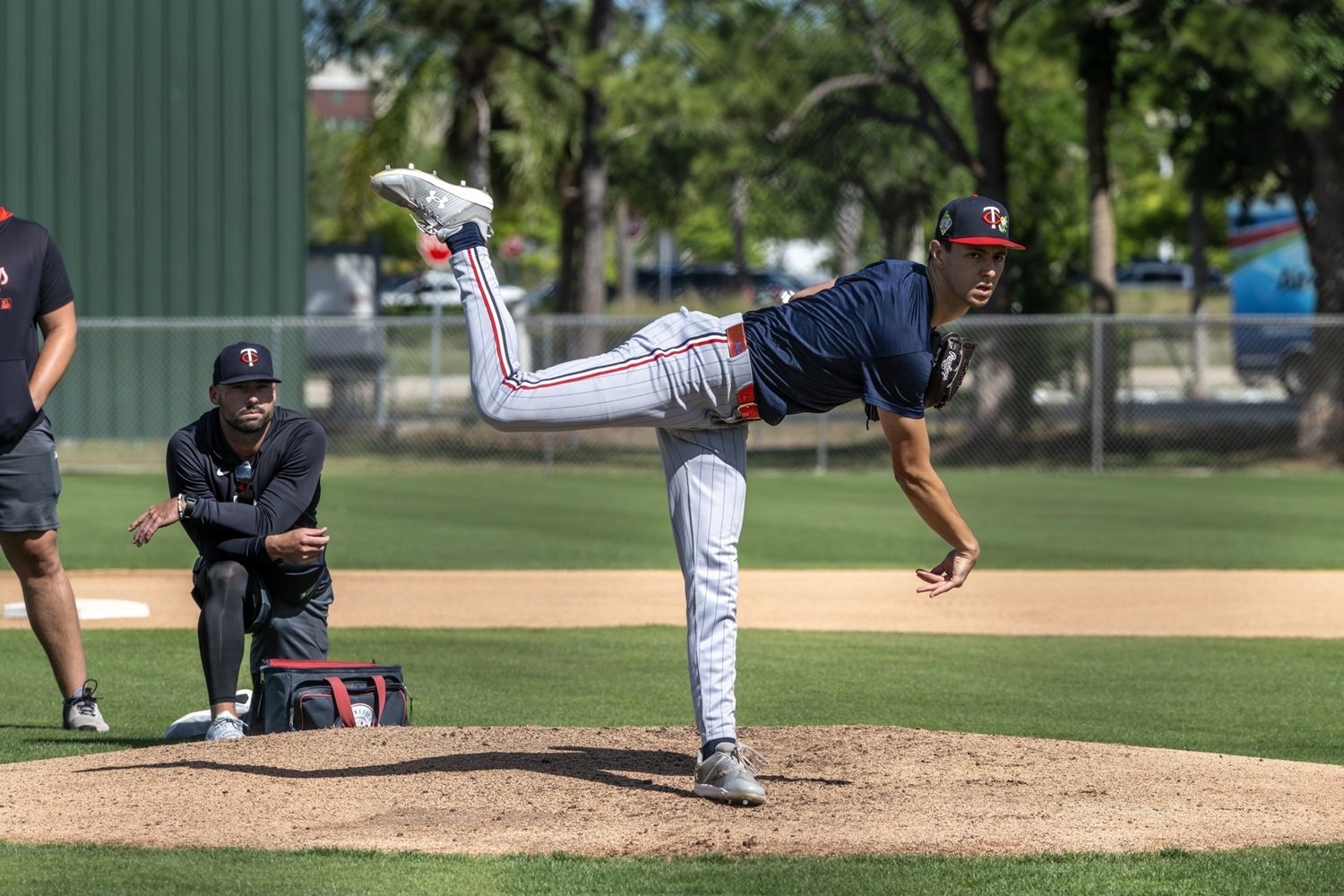 Right-hander David Festa is inching closer to getting back on a mound after dealing with a shoulder issue that surfaced during Spring Training. The next step in his progression is scheduled to come this week, as Festa is expected to face live hitters. If that goes well, a rehab assignment should not be far behind, putting him on a clearer path back to the Twins pitching staff. That timeline alone would be encouraging, but Festa’s situation carries another layer of intrigue. The Twins are in need of bullpen reinforcements, and his power arsenal could make him a natural fit in a relief role. General manager Jeremy Zoll acknowledged that the organization is actively evaluating how Festa might be used once he is healthy. “I know the role conversation remains a relevant question,” Zoll said. “We’re going to have more to come probably next week on that.” The uncertainty surrounding his role is tied, in part, to a string of health interruptions. Festa dealt with thoracic outlet syndrome symptoms during the 2025 season, and this spring brought a new issue. He was diagnosed with a shoulder impingement, an injury the Twins have indicated is unrelated to last year’s TOS concerns, but still enough to halt his throwing program for a couple of weeks. “I’ve kind of felt it on and off the last week or two,” Festa said in spring training. “Didn’t really say anything, because sometimes when you’re building up, you don’t always feel great. But once my bullpen wasn’t as good as it probably should’ve been, I just spoke up and got an image done. And everything lines up pretty well with what I’m feeling.” Following an MRI, Festa received an injection and was shut down for roughly two to three weeks. Now, with that downtime behind him, the focus shifts toward ramping back up and proving he can handle game intensity again. Originally a 13th-round pick in 2021, Festa moved quickly through the minor leagues and debuted in June 2024. His rookie season showed flashes of real promise. After a rocky introduction, he settled in with a 3.81 ERA and 69 strikeouts across his final 54.1 innings. His ability to miss bats with a three-pitch mix stood out immediately. Expectations rose heading into 2025, but the results never quite matched the underlying talent. Festa posted a 5.40 ERA over 53.1 innings, though inconsistency and lingering health concerns likely played a role. Even so, his 130 strikeouts against 42 walks in 117.2 career innings point to a pitcher with more upside than his surface-level numbers suggest, reinforced by a 4.27 FIP that paints a more optimistic picture. That upside is exactly why the Twins have a decision to make. As a starter, Festa has shown he can turn a lineup over and generate swings and misses. In shorter bursts, his velocity and raw stuff could tick up even further, potentially making him a high-leverage weapon out of the bullpen. That possibility becomes even more relevant when looking at the current state of Minnesota’s relief corps. The Twins have operated with the lowest average fastball velocity among MLB bullpens, a profile that can work when command and sequencing are sharp but leaves little margin for error. Adding a pitcher like Festa, who can bring power and miss bats, could give the group a different look and help balance the group. For now, the priority is simple. Festa needs to get through live batting practice, build up innings, and prove his shoulder can hold up. Once that box is checked, the Twins will have a much clearer picture not just of when he can return, but also of how he can make the biggest impact. View the full article
 -
 Welcome to the 2026 MLB Consensus Draft Board. This is the fifth version of the board, which started in 2022 as a top 30. Since then, it’s expanded to around 150 players on an annual basis, featuring at eight different team sites. So what is the Consensus Board? How is it made? How should it be used? The concept is loosely based on Arif Hasan’s NFL Consensus Board. It’s meant to be a tool for folks getting interested in the MLB Draft. As I was learning about the draft, I struggled to navigate wildly varied rankings and evaluations of players. The Consensus Board takes every major publicly available board and combines them into a consensus ranking, eliminating some of the noise and variance of an extremely challenging evaluation process. We’ve found this process to be useful in ranking players in appropriate ranges through around the first five rounds of the draft. On the board, you’ll find player names, handedness, listed height and weight, age, and a write-up, walking through their strengths and opportunities as a prospect. As we go through the cycle, these will be updated with tweaks, final college stats, etc. Every time a major outlet (Baseball America, ESPN, The Athletic, etc.) releases an updated list, the consensus ranking shifts. As such, the board is a lagging reflection of what the industry thinks of the class and its key players. The final Consensus Board will incorporate at least 10 other boards as inputs. New MLB Mock Draft Board Features There are a few important features to point out to help you navigate the board. There’s a search bar to help you find players of interest. If you click ‘expand’ the board will focus on the writeup you are engaged with, in addition to one immediately above it and one immediately below it. Additionally, you’ll find the logo of your team next to their draft slots to help understand where they are picking. There will be a player slotted there, based on their consensus ranking. Rather than using that ranking as an indicator of who they might actually pick, it’s more useful to use it as a proxy for what caliber of talent is available at that slot. We’ll dig in deeper to team-specific mock drafts later in the cycle. The last important note is that this year the board features ‘push’ updates. It updates automatically every hour. The board is typically updated with new write-ups five days per week, so check back regularly for updates. At #23, The Chicago Cubs Select: Logan Reddemann, RHP, UCLA Reddemann has surged up draft boards, after not featuring prominently on pre- or early-season lists. A transfer from San Diego, the 6-foot-2 righty has turned a developmental corner for an outstanding UCLA team and is putting it all together in his draft-eligible junior season. Reddeman has a little bit of a jerky delivery to the plate. Even so, he keeps the baseball well hidden behind his frame until release, creating some deception for hitters and making the ball difficult to track. Reddemann is an excellent strike thrower, which (in concert with an uptick in velocity this year) has left Big Ten hitters with little chance against his stuff. Reddemann relies on a fastball that sits 94-96 mph, but can grab 98 mph. There's a sinker and a cutter, too, to round out a trio of fastballs. He has a slider, which he throws in the low 80s, although it tends to blur with his cutter, and a high-70s curveball to round out a diverse arsenal of pitches. He's striking out over 30% of hitters through mid-April, and walking less than 5%. If that trend continues, he has a chance to be a top-20 pick. Though it's in the same range of the first round, this would be a different type of pick than Jordan Wicks was in 2021; Reddemann is more of a high-upside power arm. View the full article
 -
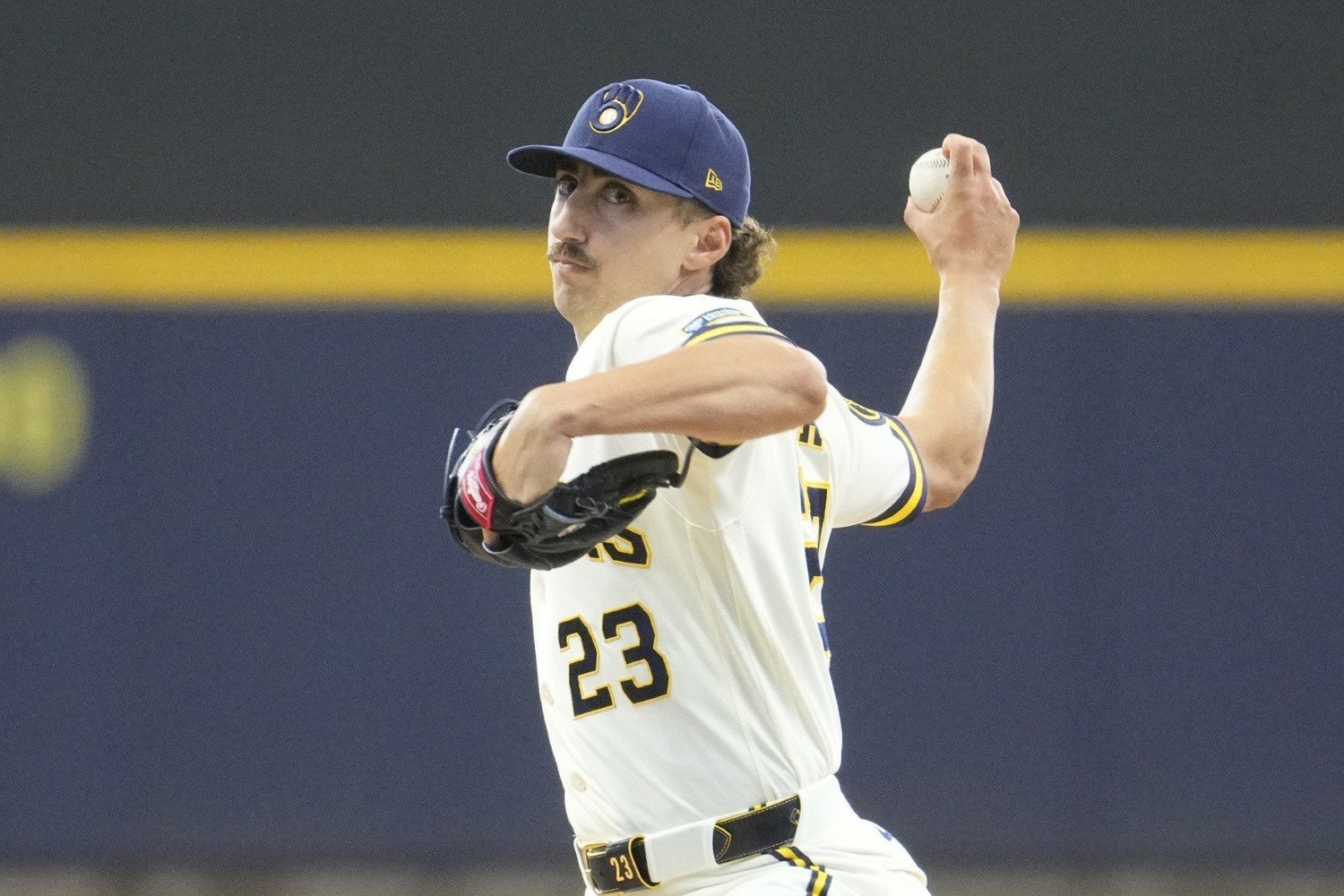 The Brewers continued in their ways this winter, when they traded erstwhile ace (and impending free agent) Freddy Peralta to the New York Mets in exchange for starter Brandon Sproat and shortstop Jett Williams. Williams ended up starting his season in Nashville, but Sproat earned a spot in the rotation—a chance to build on four solid starts with the Mets in 2025. He struggled in his first Brewers start against the Chicago White Sox, giving up 7 earned runs in only three innings. The next two appearances came out of the bullpen. First, he followed Logan Henderson against the Royals, giving up 4 earned runs in 3 2/3 innings. He then followed Kyle Harrison and Grant Anderson against Washington, throwing 3 2/3 innings again but only giving up one earned run. Sproat turned in his best start for the Brewers last week against the Blue Jays, pitching 6 2/3 innings, allowing 1 run on 4 hits and a walk while striking out 6. The strikeouts and walks are his Brewers bests so far this season, so what really changed between these appearances? Well, first and foremost, he threw strikes. When you have stuff as good as Sproat's, filling up the zone is always good advice, but Sproat didn't do it over his first few outings, topping out at a 52.3% zone rate. Against the Jays, that figure climbed to almost 59%, making life tougher on opposing batters by getting the hurler ahead in counts. This is an encouraging development, and hopefully, it'll be one that carries over to future starts. Sproat’s pitch usage has evolved across the early season, as well. His most common pitch across his first three outings was his sinker, but in his start against the Blue Jays, he utilized cutters (32%) and sweepers (20%) more often. His sinker was still a factor (17%), but not as frequently as in his first three starts. Additionally, Sproat only threw his sinker once against lefties versus Toronto, while throwing it 11 or more times to lefties in his previous three appearances. It’ll be interesting to see whether he's simply decided to junk the sinker to opposite-handed batters. The utilization of Sproat’s cutter is eminently notable. He used it sparingly against righties through the first two games, throwing only seven of them in total in those matchups. His appearance in relief against Washington saw a 50/50 split: he threw eight of them to both lefties and righties. Against Toronto, Sproat utilized it more against righties than lefties, 15 to 9, and if it continues to be the pitch he uses the most, the splits will likely remain the same going forward. One last thing to notice about Sproat’s strategy to attack hitters: his best Brewers start saw him eschew one of his best pitches. His changeup vanished into thin air against Toronto, after throwing that 17% of the time in his prior appearance against Washington. He utilized his changeup 14% of the time in his four starts with the Mets. Given this sudden change, it isn’t a stretch to imagine that the Brewers want him to use his other pitches before his changeup—although it might also be that they want him to gain a better feel for the changeup, making it more distinct from his sinker before reintroducing it. Thursday will be a good follow-up exam after Sproat passed the test of the defending American League champions. The Tigers are middle-of-the-road in walk and strikeout rate, so look for him to attack the zone boldly again. With a solid defense behind him, Sproat should be able to produce consistent starts all season like the one he did last Thursday. After all, the Brewers have always figured out the pitching, and while there may be bumps in the road, Sproat has all the tools to figure it out in Milwaukee. View the full article
 -
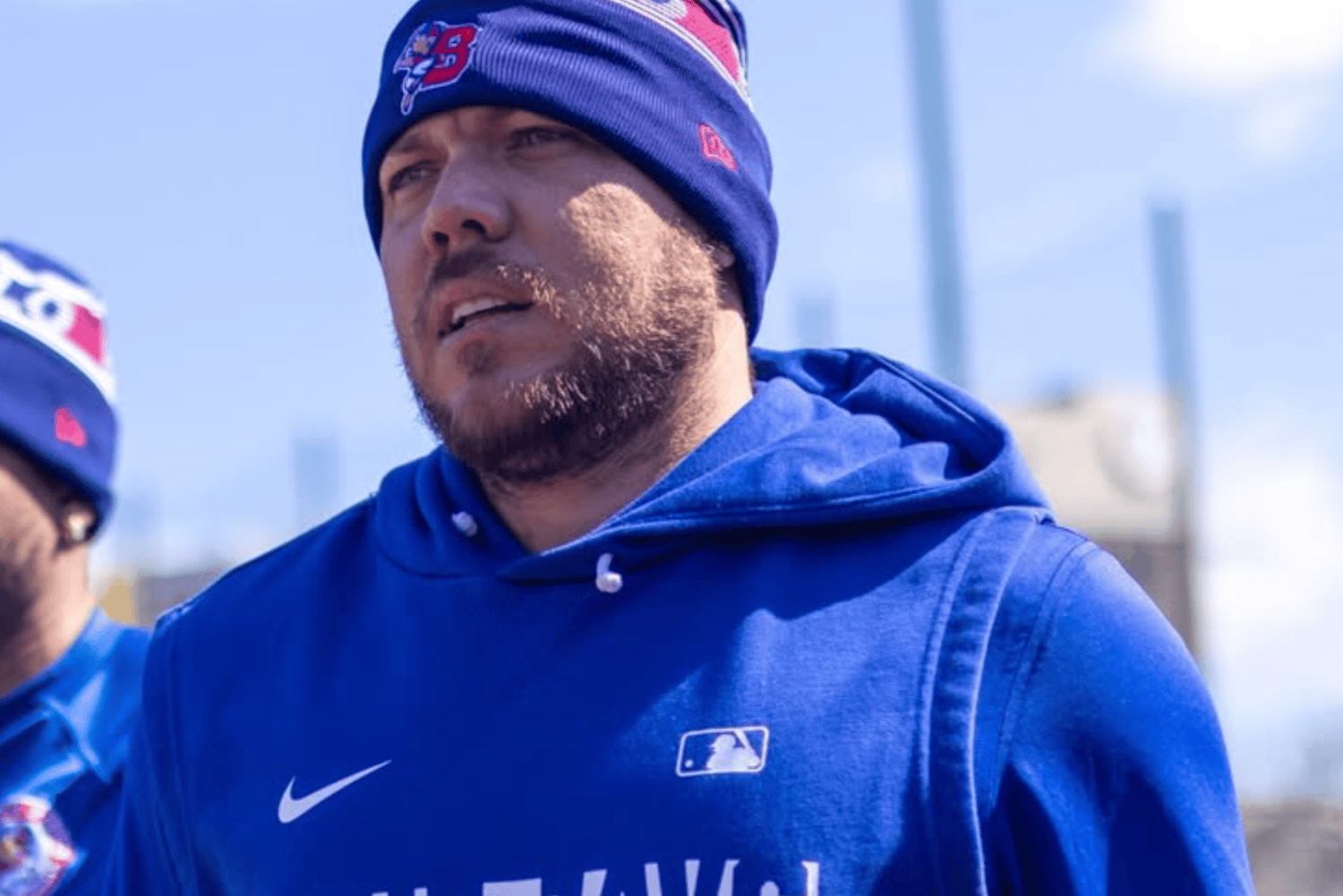 Baseball can change, and baseball can change fast. Just take a look at Yariel Rodríguez. In 2024, he was a key piece in the starting rotation, making 21 starts and pitching to a respectable 4.47 ERA. In 2025, he joined the bullpen and was dynamite in the first half, with a 2.47 ERA and a 25.6% K rate. He quickly became a key high-leverage reliever for the team. But all that seems like a distant memory. Yariel struggled in the second half. His velocity dropped, the strikeouts followed, and everything else (walks, WHIP, and ERA) went in the wrong direction. With that, the man who was relied on heavily in the first half of the season was left off the playoff roster and has since found himself much further down on the depth chart. In what was a surprising move this offseason, the Blue Jays outrighted him off the 40-man roster entirely, and he went unclaimed on waivers. Rodríguez was then at a turning point in his career. He could accept that this was just the new normal and ride buses in the minor leagues for the remaining two years of his four-year deal, or he could get back to work and try to figure out how to get back to Toronto and help the big league team. So far in the minors, it looks like he chose the latter. Through Buffalo’s first 21 games of the season, Rodríguez has appeared in six of them (prior to games on April 21), throwing 8.2 IP, and early returns look promising. He has a respectable 3.12 ERA, a 1.04 WHIP, and he’s holding opposing hitters to a .133 batting average against. Under the hood, the numbers look even better. He’s sporting a 21.7% swinging-strike rate, which has led to an exceptional 47.2% K rate. That’ll play. Missing bats was never really the issue for Rodríguez; his problems had been a decline in velocity and in command. At first look, the walks are still elevated (13.9% BB rate), but he has been able to find the strike zone more consistently, currently sitting at 59% (95 of his 161 pitches have been strikes), which is up from the 56.5% he was at in the second half of 2025. As for his velocity? It's still down from the 96.1 mph he averaged in the first half of 2025, but in the second half, he sat around 95 mph, and that's right where he sits currently. 95 mph is still playable in the big leagues. In a small sample, the results have been promising, but it's how he’s getting the results that really stands out. He’s completely changed his pitch mix, throwing his fastball significantly less and leaning more heavily on his splitter. Here’s the pitch mix in 2025: And in 2026: So far, the splitter has led to exceptional results. Rodríguez has thrown 50 splitters this year. Here is how they have performed: Whiffs - 20 (40% of all splitters) Balls - 21 (42%) Fouled off - 3 (6%) Called Strikes - 2 (4%) Balls in play - 3 (6%) Hits allowed - 1 (2%) This has led to an outstanding 74.1% whiff rate (whiffs divided by total swings). There is certainly some small sample noise contributing to this, but you don't achieve high numbers like this by accident. For context, Trey Yesavage's splitter had a 57.1% whiff rate, and Brendon Little’s knuckle curve was at 55.6% in 2025. Major league hitters won't swing and miss as often as Triple-A bats, but still, Yariel Rodríguez has unlocked something with this wipeout pitch. So, should the Blue Jays call him up? Well, the simple answer is no. The small-sample change is encouraging, and with his revamped pitch mix, there is a legitimate case that he’s trending back to being a major league-calibre arm. But baseball is a game of adjustments; word of Yariel’s splitter will get around the league, and other lineups will adjust. This is similar to what happened to Little and his knuckle curve: He was striking out the world with that pitch, but other teams have learned to take it, and as a result, Little has been far less effective since. How Rodríguez reacts to these inevitable adjustments will give the Blue Jays a better sense of whether he’s ready to rejoin the team. There is also the issue of the players in front of him. No one has warranted losing their job. For as injury-prone as the Blue Jays have been as a whole, the bullpen has largely remained intact. Jeff Hoffman has had his struggles, but even if he’s removed from the closer role, he’ll still be on the roster. Louis Varland, Braydon Fisher, and Tyler Rogers have been terrific. And the Blue Jays risk losing Tommy Nance (out of options) or Spencer Miles (Rule 5 pick) if they decide to demote them from the roster. There simply isn’t a spot for Rodríguez on the roster right now. There’s also the issue that he is no longer on the 40-man. Chase Lee is likely the first name called up if there is a need for a right-handed pitcher in the bullpen, and the impending returns of Yesavage, José Berríos, and Yimi García are likely going to have an effect on the bullpen as well. Barring any unforeseen circumstances, Yariel's return to the big leagues is not likely anytime soon. For now, Yariel Rodríguez can’t focus on that. He just needs to focus on what he can control, and right now, that's what he’s been doing on the pitcher's mound. If the splitter continues to miss bats at an elite level, then the Blue Jays will not be able to ignore him, and the conversation quickly becomes not if he’ll rejoin the big league team, but when. View the full article
 -
 Jackson Cluff's three-run homer gave Syracuse a late lead before Worcester walked off 7-6, with Jihwan Bae driving in three. Will Watson allowed four runs over 5 1/3 innings as Binghamton fell 8-1, though Jacob Reimer collected four hits. Brooklyn dropped a 4-3 walk-off to Hudson Valley despite Ronald Hernandez's RBI double. Frank Camarillo turned in five strong innings, and Elwis Mijares earned the win as St. Lucie beat Palm Beach 5-2. Mets Transactions New York Mets activated RF Juan Soto from the 10-day injured list. New York Mets sent LHP A.J. Minter on a rehab assignment to Syracuse Mets. New York Mets optioned C Hayden Senger to Syracuse Mets. Cluff Homers But Syracuse Falls In Worcester Walk-Off The Syracuse Mets took a late lead on Jackson Cluff's three-run home run but fell 7-6 to the Worcester Red Sox on a walk-off in the bottom of the ninth at Polar Park. Cluff went 2-for-4 with three RBIs, a run scored, a home run, and a walk. Ji Hwan Bae also drove in three runs, finishing 2-for-5 with a two-RBI double. Cristian Pache added a 2-for-4 effort, and leadoff hitter Nick Morabito drew three walks and scored a run. Trace Willhoite went 1-for-3 with a run scored and a walk. Starter Brandon Waddell was tagged for three runs on four hits in three innings, walking none and striking out three. Jonathan Pintaro followed with three scoreless innings, allowing three hits and striking out one. A.J. Minter worked an inning and allowed a run. Alex Carrillo took the loss, and Daniel Duarte recorded a blown save after surrendering two hits and a run in the ninth. Syracuse fell behind 3-0 in the bottom of the first before rallying. In the fifth, Bae doubled home Cluff and Morabito to cut the deficit to 3-2. The Mets surged ahead in the sixth when, with Vidal Bruján and Pache aboard, Cluff launched a three-run home run to put Syracuse in front 5-3. Worcester pulled within 5-4 with a run in the seventh before Syracuse added another in the eighth on a Bae RBI groundout that scored Willhoite. Worcester tied the game in the eighth on a bases-loaded walk against Carrillo. In the ninth, a game-tying double and an RBI single off Duarte delivered the walk-off. Syracuse struck out seven times and left 10 runners on base. Player AB R H RBI BB K Nick Morabito 2 1 0 0 3 1 Ji Hwan Bae 5 0 2 3 0 0 Ronny Mauricio 4 0 0 0 1 1 Ryan Clifford 3 0 0 0 2 2 Vidal Bruján 4 1 1 0 1 1 Cristian Pache 4 1 2 0 1 0 Jackson Cluff 4 2 2 3 1 1 Trace Willhoite 3 1 1 0 1 1 Onix Vega 4 0 1 0 0 0 Player IP H R ER BB K HR Brandon Waddell 3 4 3 3 0 3 0 Jonathan Pintaro 3 3 0 0 0 1 0 A.J. Minter 1 3 1 1 0 0 0 Ryan Lambert 2/3 0 1 1 3 1 0 Alex Carrillo 2/3 0 1 1 3 2 0 Daniel Duarte 1/3 2 1 1 1 0 0 Rumble Ponies Manage Just One Run In Lopsided Loss The Binghamton Rumble Ponies managed only one run on seven hits and fell 8-1 to the Erie SeaWolves at Mirabito Stadium. Jacob Reimer was the lone offensive bright spot, going 4-for-4 and scoring the team's only run. Cleanup hitter Chris Suero and Kevin Parada each collected a hit. Eli Serrano III delivered the team's RBI with a double in the fourth inning and added a walk. Starter Will Watson took the loss, falling to 0-3 after allowing four runs on six hits over 5 1/3 innings. Watson walked one and struck out six while giving up a three-run home run in the second. Felipe De La Cruz worked 1 2/3 innings without a hit but walked two and allowed a run. Zach Peek surrendered three runs on a hit and two walks in one inning. Saul Garcia followed with a scoreless inning and a strikeout. Erie opened the scoring in the top of the second on a three-run home run off Watson. In the third, a run-scoring single made it 4-0. Binghamton got on the board in the fourth when Reimer reached and scored on Serrano's double to left, but that was the only answer. Erie added a run in the seventh on a sacrifice fly against De La Cruz. In the eighth, the SeaWolves poured on three more runs against Peek on an RBI double and a sacrifice fly. Binghamton struck out 11 times as a team, with Marco Vargas fanning twice. The Rumble Ponies left seven runners on base. Player AB R H RBI BB K A.J. Ewing 4 0 0 0 0 1 Marco Vargas 4 0 0 0 0 2 Jacob Reimer 4 1 4 0 0 0 Chris Suero 4 0 1 0 0 1 Eli Serrano III 3 0 1 1 1 0 Jose Ramos 4 0 0 0 1 0 Kevin Parada 3 0 1 1 0 0 Nick Lorusso 4 0 0 0 3 0 Wyatt Young 3 0 0 0 0 2 Player IP H R ER BB K HR Will Watson 5 1/3 6 4 4 1 6 1 Felipe De La Cruz 1 2/3 0 1 1 2 1 0 Zach Peek 1 1 3 3 2 0 0 Saul Garcia 1 0 0 0 0 1 0 Walk-Off Home Run Sinks Cyclones In Hudson Valley The Brooklyn Cyclones lost 4-3 to the Hudson Valley Renegades at Heritage Financial Park on a walk-off home run in the bottom of the ninth. Ronald Hernandez went 1-for-4 with an RBI double. John Bay collected an RBI single among his 1-for-4 line. Daiverson Gutierrez went 1-for-3 and scored twice. Leadoff hitter Mitch Voit walked and scored a run. Cleanup hitter Corey Collins added a hit and a walk. Starter Noah Hall struggled across three innings, allowing three runs, two earned, on five hits and four walks while striking out four. Parker Carlson followed with two scoreless innings, retiring all six batters he faced. Cristofer Gomez went two innings while allowing two hits, one walk, and two strikeouts. Bryce Jenkins took the loss after giving up the walk-off solo home run and falling to 0-1. Brooklyn struck early in the top of the first. Voit drew a walk and came home on Collins's sacrifice fly to right. Later in the inning, Hernandez doubled home Gutierrez to push the Cyclones ahead 2-0. Hudson Valley answered in the bottom of the second with an unearned run, then took a 3-2 lead in the fourth on a two-RBI single against Hall. Brooklyn tied it in the sixth when Bay singled home Gutierrez to make it 3-3. In the bottom of the ninth, the Renegades led off the frame with a solo home run against Jenkins to end the game. The Cyclones struck out nine times and left five runners on base. Player AB R H RBI BB K Mitch Voit 3 1 0 0 1 0 Antonio Jimenez 4 0 0 0 0 1 Daiverson Gutierrez 3 2 1 0 0 2 Corey Collins 3 0 1 0 1 0 Ronald Hernandez 4 0 1 1 0 1 John Bay 4 0 1 1 0 1 Colin Houck 3 0 1 0 1 1 Yohairo Cuevas 3 0 1 0 1 1 Kevin Villavicencio 3 0 0 0 0 1 Player IP H R ER BB K HR Noah Hall 3 5 3 2 4 4 0 Parker Carlson 2 0 0 0 0 0 0 Cristofer Gomez 2 2 1 0 1 2 0 Bryce Jenkins 1 1 1 1 0 0 1 Camarillo And Mijares Lead St. Lucie Past Palm Beach The St. Lucie Mets rallied from an early deficit to beat the Palm Beach Cardinals 5-2 at Clover Park. Cleanup hitter Julio Zayas led the way with a 2-for-4 performance that included a double and an RBI. Branny De Oleo went 1-for-4 with an RBI single. Sam Biller added a double, an RBI, and a walk. Leadoff hitter Elian Peña reached three times with a hit and two walks and scored once. Chase Meggers drew three walks, and JT Benson went 1-for-4 and scored a run. Starter Frank Camarillo kept St. Lucie within striking distance with five innings of work, allowing two runs on five hits and one walk while striking out five. He gave up a two-run home run in the second. Nate Lavender followed with a scoreless inning and two strikeouts. Elwis Mijares earned the win with two innings of one-hit ball and two strikeouts. Tyler McLoughlin closed it out with a scoreless ninth and two more strikeouts for his first save. Palm Beach jumped ahead 2-0 in the top of the second on a two-run home run off Camarillo. St. Lucie answered in the bottom of the fourth. Benson singled home AJ Salgado, and De Oleo followed with an RBI single that scored Benson to tie the game at 2-2. The Mets took the lead for good in the seventh. Zayas doubled home Peña to make it 3-2, and Salgado added a sacrifice fly that scored Sam Robertson. In the eighth, Biller doubled home Meggers to push the lead to 5-2. The Mets struck out 12 times and left nine runners on base. Player AB R H RBI BB K Elian Peña 3 1 1 0 2 1 Sam Robertson 4 1 0 0 0 2 Randy Guzman 3 0 0 0 1 2 Julio Zayas 4 0 2 1 0 1 AJ Salgado 3 1 0 1 0 2 JT Benson 4 1 1 0 0 0 Chase Meggers 1 1 0 0 3 1 Sam Biller 2 0 1 1 1 1 Branny De Oleo 4 0 1 1 0 2 Player IP H R ER BB K HR Frank Camarillo 5 5 2 2 1 5 1 Nate Lavender 1 0 0 0 0 2 0 Elwis Mijares 2 1 0 0 1 2 0 Tyler McLoughlin 1 0 0 0 0 2 0 View the full article
 -
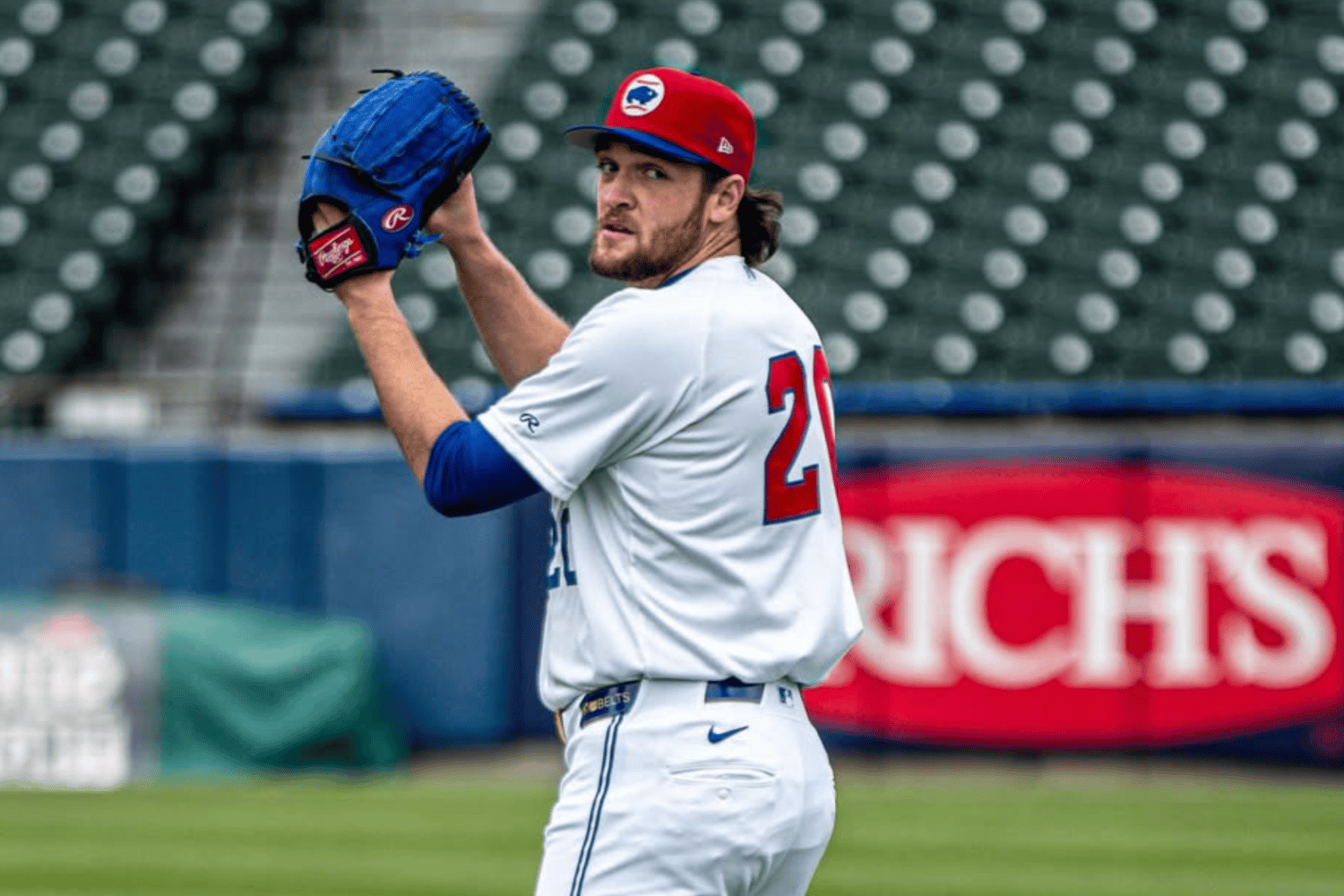 Blue Jays Affiliate Overview (April 21 – April 22) Triple-A Buffalo Bisons Series vs. Columbus Clippers (Cleveland Guardians): 1-1 Season Record: 11-12 Double-A New Hampshire Fisher Cats Series vs. Reading Fightin Phils (Philadelphia Phillies): 0-2 Season Record: 8-7 High-A Vancouver Canadians Series vs. Tri-City Dust Devils (Los Angeles Angels): 2-0 Season Record: 8-9 Single-A Dunedin Blue Jays Series vs. Fort Myers Mighty Mussels (Minnesota Twins): 1-1 Season Record: 9-8 Triple-A Buffalo Bisons Season Record: 11-12 Series Opponent: Rochester Red Wings (Washington Nationals) April 21: Tuesday was hopefully the last Trey Yesavage day in the minor leagues. With him on the mound for Buffalo, there was building hope and anticipation that the team could get back to .500 and then finally break through that barrier. It wasn't meant to be, as Yesavage struggled with his control in the game and made some costly errors as well. In the top of the first inning, Yesavage made a fielding error and a throwing error on a ball hit to him after a walk to Travis Bazzana, which allowed Bazzana to score. The next batter singled, driving in another run and putting Buffalo in a 2-0 hole. In the top of the third, Yesavage gave up a lead-off double, walked the bases loaded, then walked in a run, before being pulled from the game. His replacement, Brendan Cellucci, couldn't stop the bleeding, as he gave up a sacrifice fly to the first batter he faced. Yesavage's final line was 2.1 innings pitched, two hits, four runs (two earned), four walks, and only two strikeouts. Hopefully, he did enough to make his next start for the big league club, because the results weren't there at all. At the plate, you could say the hitters followed Yesavage's lead and didn't put up much of a fight. They got an RBI double from Josh Kasevich and an RBI single from William Simoneit. Simoneit ended up raising his average for the season up to .318. The rest of the team struggled, as they only totaled four hits for the game and fell to Columbus 5-2, dropping to two games below the .500 mark. April 22: In the second game of the series against the Columbus Clippers, Buffalo got some lights-out performances from the bullpen to slam the door and take the win. Austin Voth started the game and had some trouble in the first two innings. He ended up surrendering three runs (two unearned), thanks to an error by second baseman Carlos Mendoza. Voth wouldn't make it out of the third inning, and once the bullpen came into the game, Buffalo pitchers cranked up the swing-and-miss stuff. Jorge Alcala, Chase Lee, Michael Plassmeyer, Brendon Little, and Jesse Hahn would combine to throw 6.1 innings, not allow a run, strike out 12, and give up just one hit. Little pitched in his seventh game since being demoted from the big league club, and his ERA still stands at zero. It might not be too much longer before he gets called back up to the Toronto bullpen. Mendoza made up for his first-inning error by helping to tie the game up at three in the fifth inning. He had an RBI single, and Yohendrick Pinango added another run on a sacrifice fly. Buffalo continued to fight, especially when Columbus relief pitcher Daniel Espino came into the game in the bottom of the eighth inning. Pinango led the inning off with a single, Charles McAdoo was hit by a pitch, then RJ Schreck singled to load up the bases. Riley Tirotta came up to the plate and worked a bases-loaded walk, scoring Pinango to take the lead. The walk was Tirotta's third of the game, to go along with a single. After Espino was replaced on the mound by Jake Miller, Rafael Lantigua added to the Buffalo lead with an RBI single. The Bisons would turn to Hahn in the ninth, and he came through, striking out two and securing the win for Buffalo, 5-3. Double-A New Hampshire Season Record: 8-7 Series vs. Reading Fightin Phils (Philadelphia Phillies) April 21: The series kickoff against the Reading Fightin Phils on Tuesday was one to forget for the New Hampshire Fisher Cats. The Fisher Cats struck first in the fourth inning, when Jace Bohrofen launched his sixth home run of the year. New Hampshire starting pitcher Jackson Wentworth made it through 3.2 innings clean, but then the rails came off, and he came crashing down. With two outs in the fourth, the Fightin Phills scored nine runs. Bryan Rincon homered, Austin Murray homered, and Alex Binelas hit a grand slam. In the eighth inning, down seven, Sean Keys continued his torrid hot start to the season, this time with a home run on a line drive to left field. New Hampshire would lose this one 9-3. April 22: The Fisher Cats struggled against the Fightin Phils for a second consecutive day in this one. They only managed six hits and two runs, with Alex Stone driving in a run on an RBI single in the seventh inning and Jorge Burgos scoring on an error as well. Alex Binelas kicked off the scoring in the fourth with a two-run home run against New Hampshire starting pitcher Chris McElvain. McElvain went a solid six innings and just surrendered the two runs, but Reading took the lead in the eighth on an RBI triple and a sacrifice fly. New Hampshire couldn't get the offense going again, as they fell 4-2. High-A Vancouver Season Record: 8-9 Series vs. Tri-City Dust Devils (Los Angeles Angels) April 21: The Blue Jays and the Canadians both played series with the Angels and their High-A affiliate, respectively. The Canadians started off the season slowly, just like their major league club, and both hoped to turn it around. Vancouver came out guns blazing, as the recently promoted Peyton Williams got the game going in the first with a sac fly, before Jacob Sharp knocked in two more runs on a single to put the Canadians up 3-0 without looking back. Landen Maroudis seems to have put his rough 2025 behind him, as he once again had a strong start, going the longest he’s gone all season and striking out four again. His returned velocity has also come with improved command, as he didn’t walk a single batter. The offense continued to tack on runs, as Matt Scannell took the lead to five in the third on a two-RBI single, and in the fourth inning, they exploded for seven runs, as they batted around the Dust Devils. Gilberto Batista got the win, but struggled a bit with his command, walking three batters and only striking out one. He would have gone unscathed if not for a Williams throwing error, but instead gave up three unearned runs. The Canadians tacked on another four runs, and Juanmi Vasquez had his first scoreless appearance of the season to end it off. Seven of the Canadians hitters had two hits or more, and Arjun Nimmala led the way with three hits, two doubles, and a walk. April 22: Game two of the series had a completely different flow than the first one, as the pitching was on display this time. Daniel Guerra continued to impress after being named the Northwest League Pitcher of the Week in the previous week, going five two-hit innings, striking out three, but also walking three. He faced some trouble in the fourth inning, as he walked the bases loaded, but was able to come out of it unscathed. The offense was harder to come by this game, but Arjun Nimmala scored J.R. Freethy on an RBI double to break the tie in the fourth, and Tucker Toman got his 13th RBI of the season on a sac fly in the sixth. Aaron Munson got his first hold of the season, with two scoreless innings, and Kelena Sauer’s return to pitching after missing 2025 has been great. He recorded his first save of the season, striking out four batters over two no-hit innings. Single-A Dunedin Season Record: 9-8 Series vs. Fort Myers Mighty Mussels (Minnesota Twins) April 21: The D-Jays took advantage of some poor defense from the Mighty Mussels, with the Jays stealing four bases and creating havoc on the basepaths, which resulted in rushed plays and four errors from the Mussels. Dariel Ramon got to third after stealing a base and moving up on a throwing error, and after Blaine Bullard walked and stole second, that put Juan Sanchez up at the dish. A fielding error allowed Sanchez to take first while Ramon and Bullard both scored. Troy Guthrie relied on his newfound slider to generate a lot of chases and showed off his advanced command again. He struck out four in four innings and only allowed one run in the bottom of the fourth. Dylan Watts continued the strong pitching for Dunedin, as the high-powered reliever sat 96 mph with his four-seam fastball and struck out four batters in three innings, but allowed a run to tie the game in the sixth. David Beckles came up clutch for the Jays, as after Adrian Pinto doubled, Beckles drove him in for the winning run. Jack Eshleman shut the door in the eighth and ninth for his third save of the year, highlighted by a clutch pickoff to end the game. April 22: José Berríos made his second rehab start and dominated Single-A hitters, to the tune of four scoreless innings, with five Ks, only allowing three hits. The veteran righty went up to 55 pitches, and hopefully should soon provide reinforcement to the major league club, which has been struck mightily by the injury bug. The Jays offense couldn’t support Berríos’ start, however, as they struck out thirteen times and struggled to get on base, with only four hits and three walks on the night. Juan Sanchez had his first extra-base hit of the season with a 104.5 mph scorcher to center field, but the Jays could not capitalize. Franly Urena threw two scoreless innings after Berríos was taken out, but Lluveres Severino struggled after walking a batter, committing a throwing error on a pickoff attempt, then walking another batter before hitting a batter to load the bases. Diego Dominguez replaced him and struck out a batter, but allowed two inherited runs to score on a single for the only runs of the ballgame. Transactions 04/21/26 C Patrick Winkel assigned to New Hampshire Fisher Cats. 04/21/26 Toronto Blue Jays signed free agent C Patrick Winkel to a minor league contract. 04/20/26 Dunedin Blue Jays placed C Jaxson West on the 7-day injured list. 04/20/26 RHP Aiden Taggart assigned to FCL Blue Jays from Dunedin Blue Jays. View the full article
 -
 Owen and Jesse are elated to break down the Jays' first series win since Opening Weekend, as they take two of three from the Angels. They start by taking a broad look at where the Jays are at on the season and look for reasons to be optimistic going forward. They then get into Dylan Cease's hot start, but look for areas of improvement to get him deeper into games, talk about Vladimir Guerrero Jr.'s hitting streak, which included a homer in the series, and give credit to Patrick Corbin for his start on Saturday. The guys get into Jeff Hoffman's continued struggles and frustrations with Eric Lauer before previewing the upcoming series against the Cleveland Guardians. Listen on Apple Podcasts: https://podcasts.apple.com/us/podcast/the-jays-centre-podcast/id1846108462 Listen on Spotify: https://open.spotify.com/show/3Bi7SzfpcqMo5xYWnbCeoL Listen on iHeartRadio: https://www.iheart.com/podcast/263-the-jays-centre-podcast-300304824/ Listen on Pocket Casts: https://pca.st/2qk9wqxd Watch on YouTube: https://www.youtube.com/@jayscentre View the full article
 -
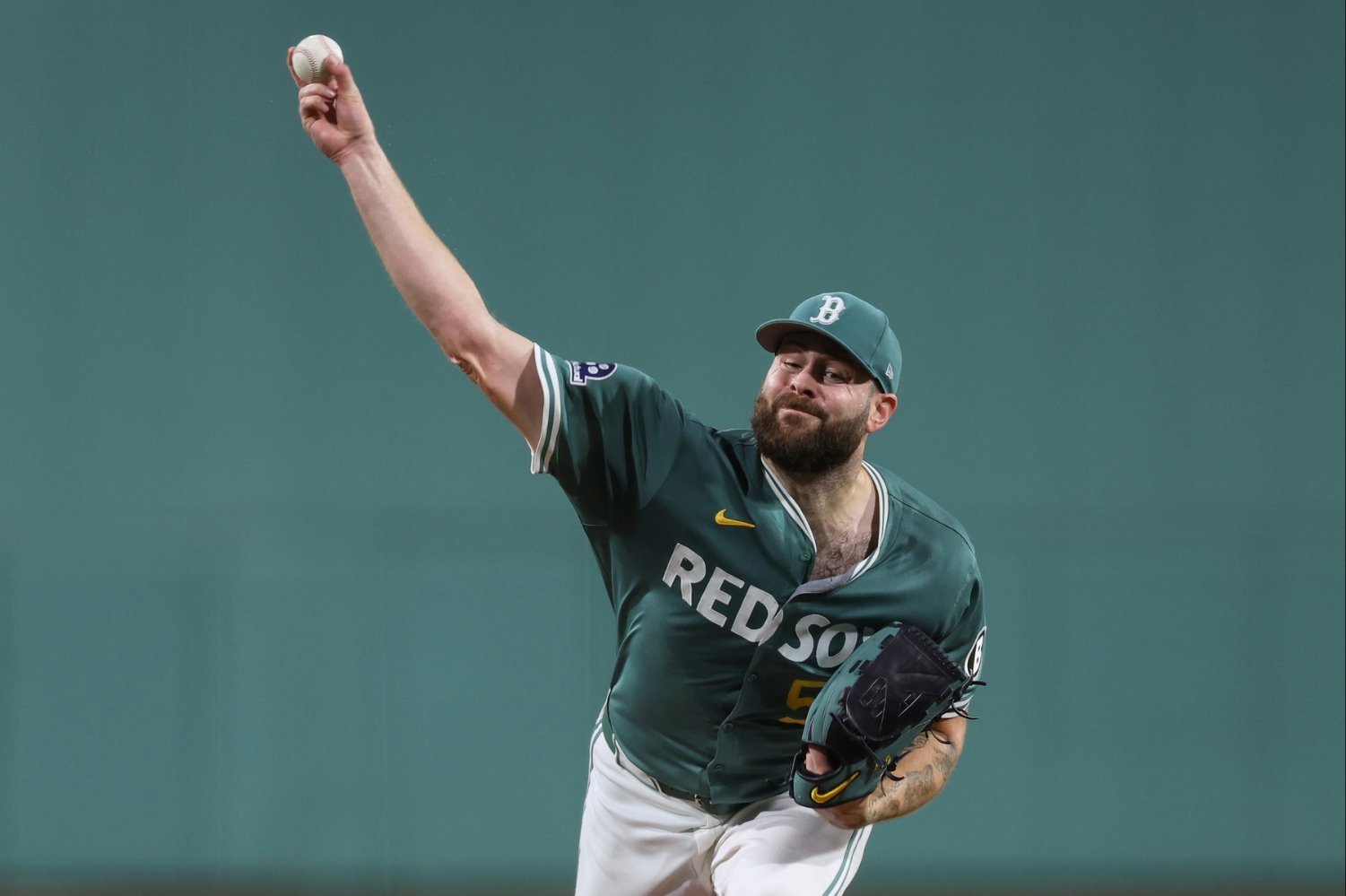 The San Diego Padres made perhaps the only noteworthy transaction remaining in early 2026 (non-trade division) in agreeing to a one-year deal with starting pitcher Lucas Giolito on Wednesday. In a vacuum, such a deal should be a welcome addition. There's also reality to consider, however. The Padres began the season with something of a patchwork rotation that has only been further depleted by the absence of Nick Pivetta and repeated setbacks in Joe Musgrove's return from Tommy John surgery. They'd already been hoping for rebounds from Germán Márquez and Walker Buehler and received mixed results from each. Matt Waldron was called back into service prior to last weekend. Griffin Canning remains on rehab assignment ahead of what will be an eventual debut at some point in the near future. With so much abstract in the picture, the fact that Giolito is a solid veteran with a track record that reads even more so should help to provide something a little more certain. At the same time, certain factors leave one to wonder where the realistic expectations fall. It's been a while since Giolito was at his height. He bookended the COVID year of 2020 with exceptional seasons in 2019 (5.2 fWAR) and 2021 (4.0 fWAR). He struggled in 2022, pitched for three teams in 2023, and had a 2024 that was entirely lost to injury. There was something of a rebound across 26 starts with the Boston Red Sox last year (2.0 fWAR), but the strikeouts were down, the walks were up, and he didn't pitch in the postseason because of an elbow issue. As such, any optimism over Giolito's addition to the mix is going to come on paper. When he's at his best, he's able to deploy his four-seam-slider-change combination to run up a fair bit of strikeouts (24.6 percent for his career). He can also eat innings effectively, averaging 5.6 innings per start in each of his last two seasons. In general then, you're looking at an arm that isn't exactly going to mow down opposing hitters, but can work efficiently enough to keep you in games and work deep enough into them. That's what the projection models are considering, too. Steamer, for example, has him at a 4.68 ERA, 20.6 K%, and 9.6 BB%. ZiPs is only slightly better at a 4.58 ERA, the same strikeout rate, and an 8.9 percent walk rate. Back in 2021, Giolito had two pitches (slider and change-up) that ranked above average by Stuff+. Now, it's only the change-up. The name of the game is stability, though. If Giolito can provide the Friars with that, then the signing is worthwhile regardless how the stat sheet shakes out. As an innings-eater, Giolito's presence alone forced ZiPS' playoff projections to increase for San Diego by 10 percent in the wake of signing the veteran. That's easily more than any other team with which he could have signed, with the Chicago Cubs' 8.1 percent increase falling in second. Even if he's not going to bring the swing-and-miss upside he was flashing on the South Side of Chicago a handful of years ago, he should be able to help fortify a unit that sits in the bottom half of the league in innings pitched by their starting pitchers (and sits among the league's worst in that regard over the past week). Reality for the Padres is not knowing what the timeline looks like for Pivetta or Musgrove. Michael King doesn't have the cleanest of histories in his own right, and each of Márquez and Buehler have been start-to-start in their performance. Canning is a total wild card. So, while the rotation has probably performed better than expected, there's too much uncertainty lurking to let a pitcher who can raise the floor of the group sign elsewhere. Especially at an entirely reasonable price point. Giolito, even with a decline in his performance over the last handful of seasons, offers the team's best chance at stability at this early stage of the season. That's why you make a signing like this. You're not looking for the upside. You're in it for the innings and relatively consistent performance, considering the bullpen you can roll out as his reinforcements. Even the most grounded-in-reality type of thinker can understand the benefit of pursuing that kind of stability. View the full article
 -
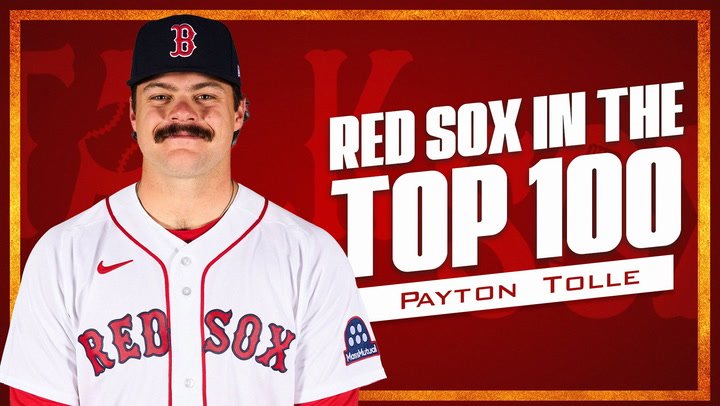 A dominant first pro season, Payton Tolle overwhelms hitters with his fastball, but does he have enough with the secondaries to reach his potential of a middle-rotation arm? View the full article
 -
Connor Prielipp Shines In Debut; Riley Quick Remains Dominant
DiamondCentric posted an article in Twins Daily
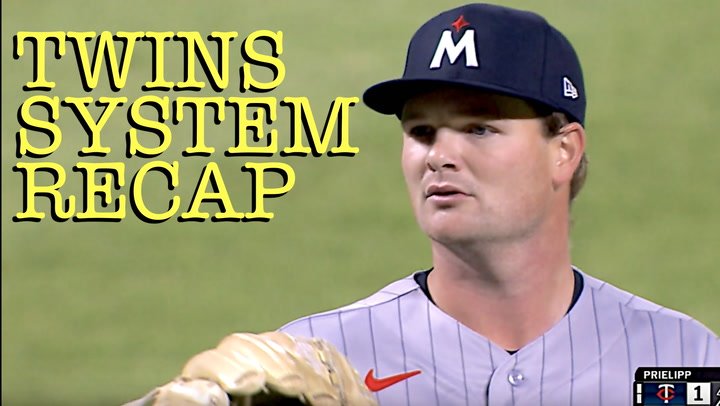 Twins System Recap: Connor Prielipp made his Major League debut tonight, as did Kendry Rojas. Prielipp looked great, striking out six batters while not issuing a walk over four innings. He surrendered a pair of runs. Rojas managed to pitch two scoreless innings, but it was more of an adventure. Down on the farm, Riley Quick kept rolling for Fort Myers, who won thanks to another shutout performance and a timely hit from Dameury Pena. Also, Ricardo Olivar slugged a pair of homers tonight. View the full article
 -
Why Chris Paddack will get more chances despite 6.38 ERA
DiamondCentric posted an article in Fish On First
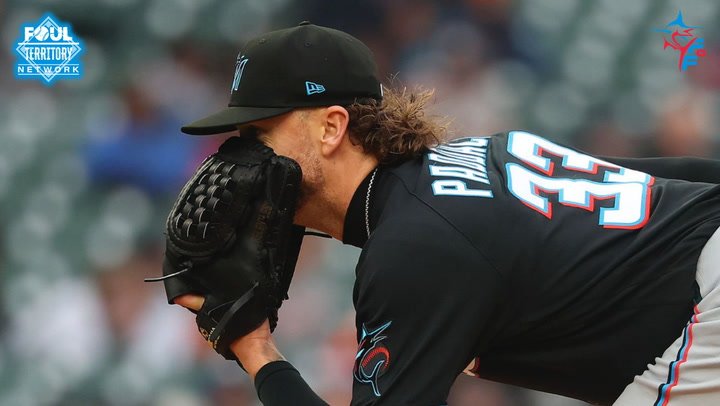 Fish On First LIVE discusses what has contributed to Chris Paddack's ineffective first month as a Marlin, including a few reasons for optimism. View the full article
 -
 Chicago Cubs Minor League Report: April 21 Affiliate Overview Triple-A Iowa Cubs Series vs. Louisville Bats (Cincinnati Reds): Cubs trail 1–0 Season Record: 11–10 Double-A Knoxville Smokies Series vs. Chattanooga Lookouts (Cincinnati Reds): Lookouts lead 1–0 Season Record: 8–8 High-A South Bend Cubs Series at Dayton Dragons (Cincinnati Reds): Lead 1–0 Season Record: 9–4 Single-A Myrtle Beach Pelicans Series at Fayetetville Woodpeckers (Houston Astros): Woodpeckers lead 1–0 Season Record: 9–7 Triple-A: Iowa Cubs Season Record: 11–10 Series Opponent: Louisville Bats (13–9) Series Standing: Trail 0–1 April 21: The Iowa Cubs opened their series with the Louisville Bats with a 10-3 defeat. The Bats jumped out to a 6-0 lead after four, thanks to a five-spot in the third, and held on the rest of the way. The Cubs scored all three of their runs in the home-half of the fourth, thanks to Dylan Carlson’s (1-for-4) three-run home run, his first of the season. BJ Murray went 3-for-4, extending his hitting streak to six games. Chas McCormick also posted a multi-hit effort, going 2-for-3. Paul Campbell took the loss in the start, allowing seven runs, six earned, over 4 2/3 innings of work, striking out two. Double-A: Knoxville Smokies Season Record: 8–8 Series Opponent: Chattanooga Lookouts (13–3) Series Standing: Trail 0-1 April 21: The Knoxville Smokies were blanked in their series opener vs. the Chattanooga Lookouts, 4-0. The Lookouts scored all four of their runs in the second to claim their fifth-straight win. Andy Garriola and Karson Simas each posted two-hit nights. It was Garriola’s fourth two-hit performance in seven games. Nick Dean took the loss in the start, allowing four runs on five hits over three innings of work, picking up three strikeouts. Dawson Netz, Vince Reilly and Tyler Ras combined for six shutout innings in relief, yielding just three hits and whiffing six batters. High-A: South Bend Cubs Season Record: 9–4 Series Opponent: Dayton Dragons (9–4) Series Standing: Lead 1–0 April 21: The South Bend Cubs used a six-run rally in the ninth to earn a 16-10 shootout victory on Tuesday night. The Dragons took a 3-0 lead after two before the Cubs got on the board in the third through Christian Olivo’s solo blast, his first of the year. Dayton pushed the lead to 5-1 with two more runs in the bottom-half of the frame before South Bend posted two runs in the fifth, with Kade Snell (2-for-4) and Matt Halbach (2-for-6) picking up RBI knocks. Snell would later pick up another RBI on a sacrifice fly in the seventh, capping another two-run frame that would tie the contest at 5-5. The Cubs took their first lead of the ballgame with five runs in eighth, through an RBI-groundout from Justin Stransky (0-for-4), a three-run double from Cole Mathis (1-for-6) and an RBI-single from Snell, his third of the contest. Dayton would bring the game level with four runs in the home-half of the eighth but the Cubs erupted for six runs in ninth to put the game away. Stranksy was hit by a pitch with the bases loaded to give South Bend the lead and Halbech would put the contest out of reach with a three-run single to make it 16-10. Ethan Flanagan allowed one run on three hits over four innings of work, striking out four, and Ethan Bell would earn the win with two scoreless frames, allowing just one hit. Single-A: Myrtle Beach Pelicans Season Record: 9–7 Series Opponent: Fayetteville Woodpeckers (4–12) Series Standing: Trail 0–1 April 21: The Myrtle Beach Pelicans suffered a 6-2 defeat to the Fayetteville Woodpeckers to open their series on Tuesday night. The Woodpeckers took a 3-0 lead in the second and pushed their advantage to 4-0 with a run in the fourth. The Pelicans got on the board with a pair of runs in the seventh through RBI-singles from Josiah Hartshorn (2-for-5) and Michael Carico (1-for-4). Fayetteville would grab those runs right back in the home-half of the frame and would go on to earn the 6-2 win. Dominick Reid suffered the loss in the start, allowing three runs on five hits over three innings of work, picking up one strikeout. View the full article
 -
 Welcome to the 2026 MLB Consensus Draft Board. This is the fifth version of the board, which started in 2022 as a top 30. Since then, it’s expanded to around 150 players on an annual basis, featuring at eight different team sites. So what is the Consensus Board? How is it made? How should it be used? The concept is loosely based on Arif Hasan’s NFL Consensus Board. It’s meant to be a tool for folks getting interested in the MLB Draft. As I was learning about the draft, I struggled to navigate wildly varied rankings and evaluations of players. The Consensus Board takes every major publicly available board and combines them into a consensus ranking, eliminating some of the noise and variance of an extremely challenging evaluation process. We’ve found this process to be useful in ranking players in appropriate ranges through the first five (or so) rounds of the draft. On the board, you’ll find player names, handedness, listed height and weight, age, and a write-up, walking through their strengths and weaknesses as a prospect. As we go through the cycle, these will be updated with tweaks, final college stats, and more. Every time a major outlet (Baseball America, ESPN, The Athletic, etc.) releases an updated list, the consensus ranking shifts. As such, the board is a lagging reflection of what the industry thinks of the class and its key players. The final Consensus Board will incorporate at least 10 other boards as inputs. New MLB Mock Draft Board Features There are a few important features to point out to help you navigate the board. There’s a search bar to help you find players of interest. If you click ‘expand,’ the board will focus on the writeup you are engaged with, in addition to one immediately above it and one immediately below it. Additionally, you’ll find the logo of your team next to their draft slots to help understand where they are picking. There will be a player slotted there, based on their consensus ranking. Rather than using that ranking as an indicator of who they might actually pick, it’s more useful to use it as a proxy for what caliber of talent is available at that slot. We’ll dig in deeper to team-specific mock drafts later in the cycle. The last important note is that this year, the board features ‘push’ updates. It updates automatically every hour. The board is typically updated with new write-ups five days per week, so check back regularly. At #3, The Minnesota Twins Select: Jackson Flora, RHP, UC Santa Barbara Flora pitched behind No. 2 overall pick Tyler Bremner in 2025, and returns a year later to headline the Gauchos' rotation, himself a contender to be a top-three pick. Flora has an ideal frame for a starter, standing 6-foot-5 and weighing 205 pounds, with some additional strength still to be added. After pitching primarily as a reliever as a freshman, Flora took on a starting role as a sophomore and thrived, managing a 3.15 FIP in 75 innings, while striking out close to 28% of the hitters he faced. The stuff is loud. Flora primarily relies on a fastball, slider, and changeup combination, though he does access a cutter and curveball occasionally, too. It's a high-spin fastball (up to 2,600 RPM), topping out at 100 MPH from a low release height. Flora throws two iterations of his slider, a harder version around 87 mph, and a sweeper that generates 19 inches of horizontal movement. To add to this intriguing arsenal, Flora has been an excellent strike thrower in college, walking just 5.5% of hitters in 2025. Flora has separated himself as SP1 early in the 2026 cycle. There's room for development and refinement of his pitch shapes and arsenal, but this is front-of-the-rotation arm talent and upside. At the moment, he's the type of player Twins fans can expect the team to be discussing when they're on the clock this July. Demographically, he'd be an unusual choice for this team, but then again, the front office has undergone some major changes recently. It's a whole new world. View the full article
 -
Three Takeaways from the New Royals Stadium Announcement
DiamondCentric posted an article in Royals Keep
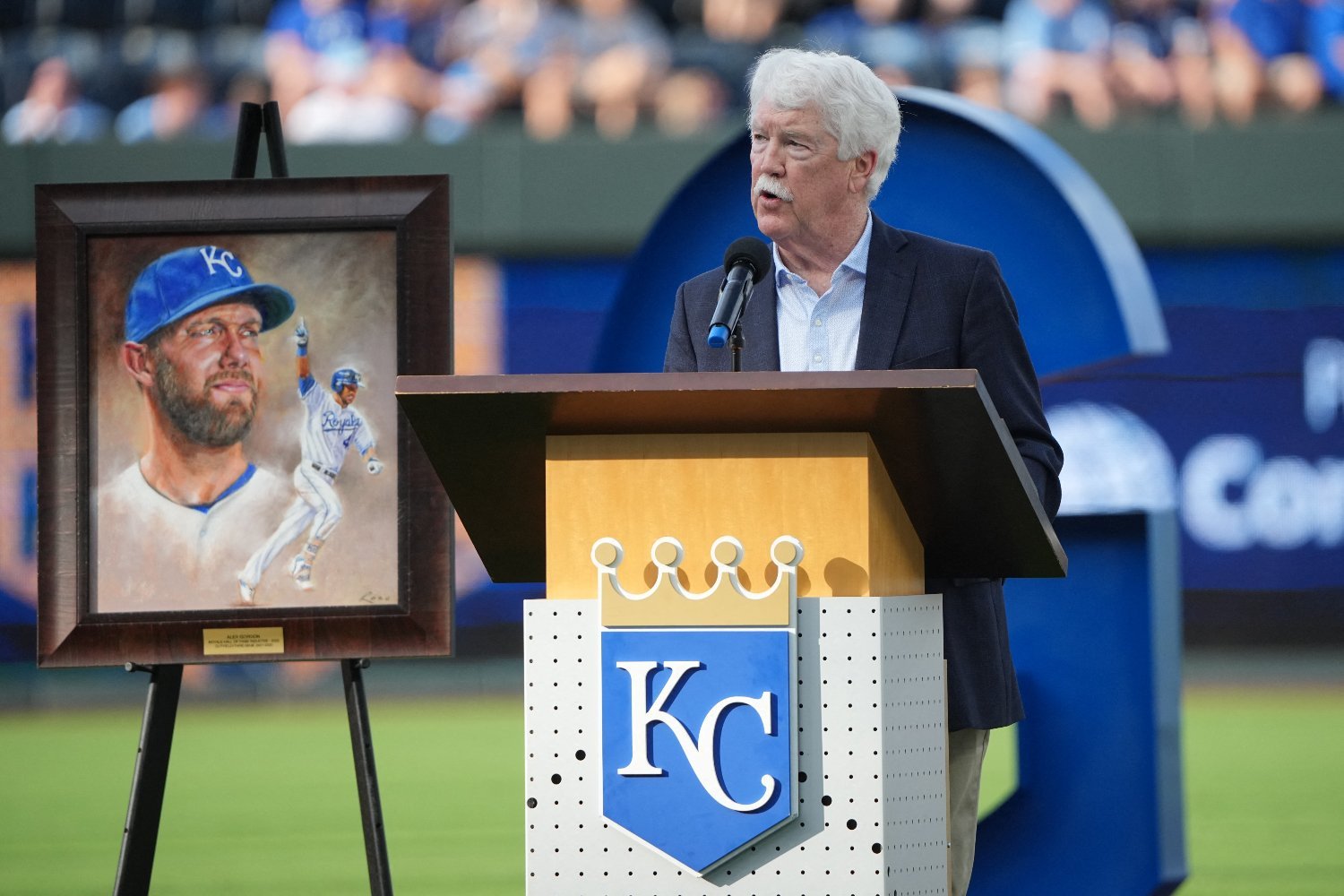 On Wednesday morning, owner John Sherman and the Kansas City Royals made an important announcement about the future ballpark. Sherman had been forthright about not staying at Kauffman Stadium and the Truman Sports Complex after the lease expired in 2031. However, on Wednesday, after years of keeping things close to the chest and working with city and state officials, the Royals shared their future plans following their tenure at Kauffman. The full press conference aired around 10 a.m. and is available in its entirety on the Royals' YouTube channel. The stadium announcement took place at The American restaurant in Crown Center. There were rumblings that the Royals were looking to build a ballpark around Washington Square Park, which is right across the street from the iconic Union Station. However, a new report, based on rumors from city officials on Tuesday, stated that the stadium wouldn't be in Washington Park, sparking speculation that it would take over the Crown Center area. In the press conference, Sherman announced that the new stadium would take over the Hallmark headquarters located just south of Crown Center and east of the Liberty WWI Memorial. The Royals and the Hall family, who run Hallmark Cards, reached a deal that would allow the Royals to overtake that space, with Hallmark relocating its headquarters. The Royals' new ballpark project would preserve not just Crown Center (and allow for possible revitalization), but also keep Washington Square Park as a space for mixed-use development. Despite rumors of possibly moving to North Kansas City or to Kansas (like the Kansas City Chiefs), the Royals have committed to staying in Kansas City, Missouri, for the long term. Thus, let's take a look at three takeaways from the new Royals stadium renderings and plan, as well as the future of Kauffman Stadium. The Royals' Stadium Plan Is a Win-Win For the Team and City Listen, I know there's controversy with any stadium that takes public funds. It's definitely a lose-lose situation in many ways. If a city says no to supporting a stadium with tax dollars (or bonds), it risks losing the team to another city that's more than willing to offer those incentives. As someone who grew up in Northern California, I saw how multiple teams in Oakland were ripped away from the city because they couldn't come up with something quickly enough. Do I believe tax dollars should go to more important public resources? Absolutely. But it's no fun losing a sports team that means so much to a city and a community. I don't think the Royals were ever in danger of moving under Sherman. After all, Sherman grew up in the metro and is a lifelong Kansas Citian. That said, failure to come up with something could've perhaps encouraged him to sell, which could've left the future of the Royals in Kansas City in doubt. With this deal with the city and state of Missouri, Sherman and the Royals ownership group get what they need to build a state-of-the-art 21st-century ballpark in the heart of the city. Additionally, businesses or homes do not need to be displaced in order to make this a reality. That was the main issue with the East Crossroads plan a couple of years ago when the tax went to a vote. It wasn't necessarily the tax that was the issue; it was the plan that seemed ill-conceived and unfavorable to local businesses, especially as some would've been displaced by eminent domain. The Dodgers Stadium history in Chavez Ravine should serve as a precedent for what a team and city should NOT do to build a ballpark. Lastly, the Royals will invest to make this ballpark a reality. According to reports, the Royals will put in $2 billion in private investment for this $3 billion ballpark project. Thus, this move, on a financial front, is not just a win for the Royals in upgrading their home ballpark, but also for downtown Kansas City, giving the area the attraction that has been missing without being a total drain on public resources. The Stadium Could Make Kansas City a Hub for Baseball Fans When visiting Chicago, one common sight is many out-of-town fans arriving by train, whether it's Amtrak or the South Shore Line, to watch a Cubs game (or a White Sox game if you want to make the trek south on the L Train). The same could be said for fans in New York, Boston, or San Francisco. For many downtown stadiums, baseball is the magnet for travelers who want to visit and spend time in a metropolis. As great as Kauffman Stadium is, its remote location on the outskirts of Kansas City and Jackson County makes it one of the farthest from its respective downtown. Only the Braves and Rangers were farther away than the Royals. However, the Rangers and Braves had developments around their respective ballparks, unlike the Royals, whose ballpark is surrounded by industrial buildings and a highway. If you were visiting from out of town and you wanted to go to a baseball game? You will need a car or be prepared to pay a sizeable amount for an Uber/Lyft, especially if you are staying in the downtown Kansas City area. It's worth it for a one-time visit, but it definitely deters visitors without vehicles from going to multiple games in a series. In its proposed location? Fans can get to the ballpark on the Streetcar, whether from the UMKC area or the River Market. Furthermore, fans can take the Amtrak from out of town to Union Station and go immediately to a baseball game. Not a lot of ballparks have that luxury. That should entice baseball fans from Missouri, Nebraska, and Iowa to take the train and watch a game within walking distance of the stadium. This trend would make Kansas City not just a hub for baseball, but for visitors who want to watch baseball and experience everything Kansas City has to offer, especially downtown and along the Streetcar route. This "train trip" appeal is not limited to St. Louis for baseball fans in the Midwest. Enjoy the Tailgating at Kauffman While You Can The reality is that parking will look different at the new Crown Center stadium than at the Truman Sports Complex. That's not a bad thing. Public transportation is easier downtown. Patronizing restaurants and bars before a game is easier as well. Downtown ballparks like Oracle Park in San Francisco, Target Field in Minneapolis, Coors Field in Denver, and Busch Stadium in St. Louis offer plenty of attractions for baseball fans of all ages and interests that do not require entrance into the stadium. Many downtown Kansas City businesses will benefit from the new stadium. Furthermore, patrons will also benefit from more choices than they are used to, especially if they're willing to go a little farther on the Streetcar line. That said, some time-honored traditions will be lost for Royals fans who grew up going to baseball games at the Truman Sports Complex. Tailgating in the parking lot will be one of those traditions lost. Now, tailgating at a baseball game is a much different affair from tailgating at an NFL or College Football game. Tailgating at a football game is a no-holds-barred affair that pretty much takes a whole day and then some (it was common for many Chiefs fans to camp in their cars in a line outside the parking lot the night before a Chiefs game). It requires a plethora of food, beverages, and yard games to pass the time (and technology if you're a fantasy football fan). Conversely, tailgating at a baseball game is a much tamer affair. It's a smaller get-together that depends on the day of the week and the time of year. Yes, grills are involved, but they are Weber Smokey Joes, much smaller than the massive smokers and drums seen on a Sunday gameday outside of Arrowhead Stadium. Instead of brisket, ribs, and pulled pork, it's typically burgers and dogs. In terms of beverages, it's only 2-3 before heading into the park (unless one is a college student or a raging alcoholic), and it's a more laid-back vibe. If going to an NFL tailgate is a Frat-House kegger, an MLB tailgate, especially at Kauffman Stadium, is like a backyard BBQ on a Friday after work. Some of the appeal of those kinds of tailgates will be lost with the move to the new ballpark in 2030 or 2031 (the projected dates, as the Royals' lease with the Truman Sports Complex expires after 2031). From the renderings, gameday parking will not be in lots but on the streets and in parking garages. One can't do the current TSC tailgating experience in such environments, unfortunately. Thus, for the time being, Royals fans should enjoy their tailgating experience outside of Kauffman Stadium while they can. Because by the time the new ballpark opens by 2030 or 2031, the Kansas City baseball tailgate will have gone the way of the dodo. View the full article
 -
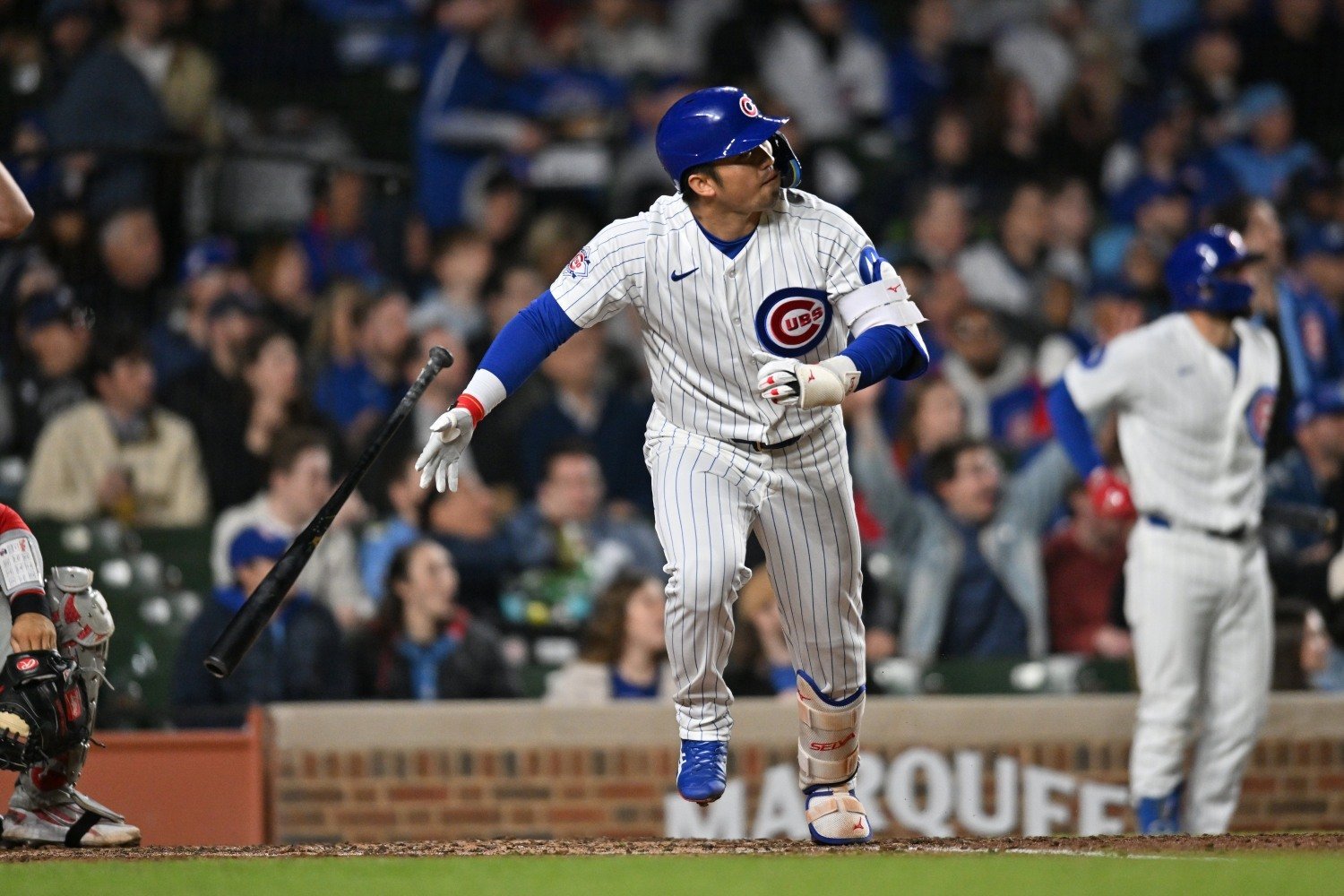 It's not just you. The Cubs' offense has been boom-or-bust this season. The offense is completely dependent on sequential hitting, which leads to some frustrating nights in front of the TV. The Cubs, who lack a reliable 40-homer hitter to anchor the lineup, rely on clusters of hits to score. They're more about depth than star power, even after making a splash by signing Alex Bregman this winter. That makes their performance with runners in scoring position even more important than it usually is. Overall, the Cubs' hitting with runners in scoring position (RISP for short) has been solid: they're 12th in the league with a .256/.346/.393 slash line. In their 15 wins, they've excelled. In their nine losses, though, yeesh: .118/.205/.147. That's uglier than looking at the Cubs pitching IL list. Of course, teams don't hit as well in losses as wins, but Chicago is the most volatile team in the league. Their batting average in losses plummets by .224, relative to their wins. By comparison, the league average is .088. The dynamic with OPS is the same, with a .661 difference (league average: .245). The Cubs aren't just streaky, they're the most boom-or-bust team in the entire league. With a lineup bereft of a legitimate superstar bat, when several players struggle, the entire offense can crater. Corner outfielders Ian Happ and Seiya Suzuki, for example, are really fighting it with RISP. Currently, they are 7-for-42 with 21 strikeouts in these situations. Michael Busch and Pete Crow-Armstrong are also scuffling to start the campaign, which cuts down the number of baserunners and makes the failures with RISP appear more stark. Any struggle in this lineup will make the offense sputter. What does this mean going forward? Probably not as much as one would think. The Cubs recently won a game 2-1 against the Mets, wherein they went 0-for-9 with RISP. With their elite defense and complementary pitching staff, they don't lack alternative ways to win games. They should be fine over the course of the remaining games, but don't be shocked if their offense cools off again for a stretch. After all, it's a reflection of how the roster is constructed. View the full article
 -
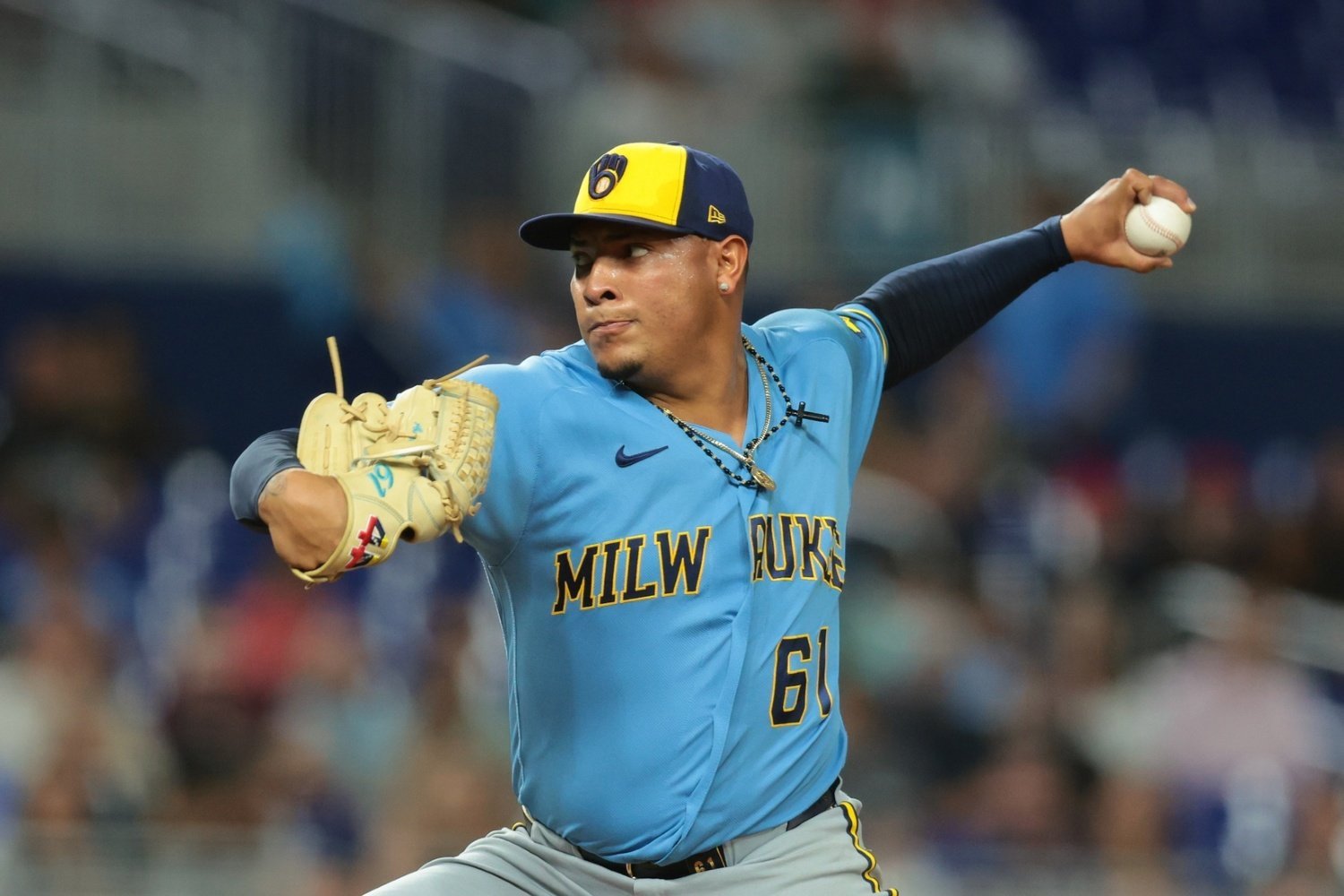 Ángel Zerpa's tenure with the Brewers has gotten off to a rocky start. The hard-throwing left-hander has picked up two holds and two saves in 10 appearances, but he's also blown two saves and struggled to a 5.73 ERA, 6.45 xERA, and 4.78 FIP, with as many walks (five) as strikeouts. That's not what the Brewers envisioned when they acquired Zerpa from the Kansas City Royals over the offseason in exchange for Isaac Collins and Nick Mears. They believed—and still do—that he can be a dominant high-leverage reliever near the back of their bullpen. Zerpa's results in Kansas City never quite followed his great stuff, which is headlined by a power sinker that averages just 3.2 inches of induced vertical break with 17.3 inches of arm-side run. "I think it's frustrating from our standpoint, because I think he's so much better than what he's shown so far," said pitching coordinator Jim Henderson, who specializes in working with the team's relievers. "I think that there's just so much more in there." Because he left Brewers camp to pitch for Team Venezuela in the World Baseball Classic, Zerpa didn't get the amount of work with Henderson, Chris Hook, and the rest of the team's pitching coaches that they would have preferred. That's left them working things out on the fly in regular-season games. The Brewers deployed Zerpa across multiple innings in three of his first seven outings, the last of which saw him surrender four runs when he returned for a second frame. His last three outings have each been one-inning engagements, as the team has reevaluated whether he's suited to handle multiple ups in an appearance. They also want to make his delivery simpler and more consistent. As the rare reliever who pitches out of the windup with the bases empty, Zerpa has more movement than usual in his delivery. Those tweaks are much easier to make in a preseason setting. "I think we would have done those things in spring training, we just kind of missed those opportunities with the Classic," Henderson said. "So now we're just trying to attack those things, the simplified things, and get it more consistent for him." While the Brewers have not gotten as far as they would have liked by now in facilitating a breakout, one of the adjustments they have made has Zerpa on the right track. At the time of the trade, it looked like they could unlock his upside by turning his slurve-like breaking ball into a harder and shorter slider that appeared more like a fastball out of his hand. They did exactly that. "He's kind of a power guy," Henderson said, "so what can you do that can power this breaking ball in front? So we kind of settled on just wanting to throw it harder, maybe even just a little bit shorter, on the tip of the plate, and just match what he does intensity-wise [with the sinker] with a good breaking ball." Because he doesn't have long fingers, all of Zerpa's pitches have lower-than-average spin rates. By trying to throw a bigger breaking ball, he was working against his capabilities. "With guys trying to make bigger sweepers, if you don't have the fingers long enough, it kind of slips out on you, and I think that's kind of what was happening to him," Henderson said. "When he tried to make it big, he wasn't able to work in front of it or work around it as much as if somebody with a little longer fingers were." Because he's no longer trying too hard to spin the ball for bigger movement, Zerpa is now throwing the slider from a lower arm angle, much closer to his sinker. His release points are now similar enough that hitters shouldn't see that slider pop out of his hand earlier than his heater, which seemed to be the case at times earlier in his career. "It's not a big focus for us, but you can definitely tell that there's a little something there that's recognizable for the hitter when you see the slot change," Henderson said. "Just trying to have these two pitches funneled together is important." Starting the sinker and slider from the same tunnel should lead to more swings and misses and chases outside the zone, two significant missing pieces that have kept Zerpa from putting everything together. Instead, his 17.3% whiff rate is nearly identical to last year, and his chase rate has decreased from 26.6% to 19.2%. That's because poor command has left those pitches in the middle of the zone, instead of where they play best at the bottom. Even with too many pitches around the belt, Zerpa is still inducing ground balls at an elite 62.2% rate. The Brewers have tailored his side work toward getting the ball down more consistently. Zerpa no longer throws flat-ground pen sessions with a standing catch partner, which creates a higher target; all of his work is with catchers on a knee or in a squat, replicating where he needs to locate in games. "It's a good sinker," Henderson said. "The results are actually still fine, even when it's elevated. Can't imagine what it's going to be when we get it to the lower third." The ingredients in Zerpa's left arm are still there. In some ways, he's closer to that breakout than he was at the end of last year. For now, though, there's still work left to get everything into place. "He pitched fantastic in the Classic," Henderson said. "I think that's always tough. You come off this high and this intensity, and then you come back down a little bit, even though it's in the big leagues, and then we ask him to go multiple [innings]. It's a lot to handle, and I just don't think we've got to the crispest version of him yet. So I'm looking forward to getting him in a consistent kind of role here and getting him going." View the full article
 -
 The Toronto Blue Jays started their season with a three-game sweep over the Athletics. Since then, Toronto has gone 7-13, including losing five of six games to the Colorado Rockies and the Chicago White Sox, the two worst teams last season. It's not the start the team or fans had hoped for after their World Series trip last fall. There have been issues across the board that explain why the team has struggled. However, the offense has been a massive problem. Among all MLB teams, the Blue Jays rank 23rd in runs, 23rd in home runs, and 18th in OPS (following their game on April 22). Another glaring issue has been Toronto's unwillingness to be aggressive on the bases. The Blue Jays are tied for 28th in stolen bases with only eight on the season. This part of the game has not been a priority for the past four seasons, since John Schneider took over as manager, and their run total has been noticeable. In each of those four seasons, the Blue Jays ranked in the bottom half of the league in stolen bases but still finished in the top half in runs, except in 2024, their only losing season of the four. These teams relied on their above-average on-base and slugging skills to score runs and win games. Year Record Runs Scored (MLB Rank) Stolen Bases (MLB Rank) OPS (MLB Rank) 2022 92-70 775 (4th) 67 (21st) .760 (2nd) 2023 89-73 746 (14th) 99 (21st) .746 (11th) 2024 74-88 671 (23rd) 72 (27th) .702 (17th) 2025 94-68 798 (4th) 77 (28th) .760 (3rd) On the season, only five Blue Jays have a stolen base: Andrés Giménez has four, and Daulton Varsho, Ernie Clement, George Springer, and Vladimir Guerrero Jr. each have one. With the team struggling to score runs this season, a philosophy change may be needed until the power numbers improve — their .695 OPS right now isn't cutting it. None of the players on the current roster, perhaps excepting Giménez, seems to have the desire to steal. Since 2022, Giménez has the highest stolen base percentage per opportunity, but it is only 2.2 percent. However, according to Baseball Savant, the Blue Jays have nine players whose sprint speeds were at or above the MLB average of 27 feet per second as recently as last season. Those players are Giménez, Varsho, Springer, Clement, Myles Straw, Addison Barger, Davis Schneider, Nathan Lukes, and Jesús Sánchez. Under the disengagement rule (affecting pick-off attempts or steps off the rubber) implemented in 2023, pitchers are allowed to attempt two disengagements per batter. If they try to pick a runner off a third time, they have to get the runner out, or else it's called a balk and the runner advances a base. This rule, along with larger bases and the pitch clock, has led to an increase in stolen base attempts across the league. So, the Blue Jays have the means to change their philosophy around stealing bases and getting runners in scoring position. Their power has been slow to get started this season, so they need to make a change to start scoring more runs. When a team has a steal threat on first base, it puts pressure on the defense. They will shift players accordingly, which opens holes, but the Blue Jays don't encounter this. Teams know the Blue Jays likely won't steal, so they can play their normal double play or shift positioning depending on the batter. With a below-average OPS, Toronto is currently on pace to finish worse than in 2024, when they finished last in the AL East. It may be the time to make some changes and increase their aggressiveness on the basepaths. View the full article
 -
New York Mets 2026 Top Prospects Rankings: Nos. 1-5
DiamondCentric posted an article in Grand Central Mets
 The countdown is over. After reviewing the best of the New York Mets’ farm system, we now get to analyze the cream of the crop: the top five prospects. If you missed any of the prospects ranked previously, you can find them here (6-10), here (11-15), and here (16-20). Without further ado, here are the best five prospects on the Mets, as voted by our front-page writing staff. No. 5: Ryan Clifford, 1B/OF (Triple-A Syracuse) 2025 stats: .237/.356/.470, 137 wRC+, 29 HR, 7 SB, 25.6 K%, 14.7 BB% Acquired in 2023 in the Justin Verlander trade, the 22-year-old Clifford is a powerful lefty hitter with a ton of swing and miss in his game, but also some relevant power. Last year, he hit 29 home runs between Double-A and Triple-A, and finished the 2025 season with a 137 wRC+ despite a low .237 batting average. So far in 2026, Clifford has used a recent hot streak to bump his season-long numbers up to a respectable 111 wRC+ and .813 OPS. He should continue to rake in the minors, but the way his contact skills (or lack thereof) translate to MLB is in serious question. He hits the ball hard and can certainly work a walk, as last year’s 14.7 percent rate between the two upper minor levels suggests, but he will need to cut his strikeout rate to succeed. Defensively, he can cover first base and the two outfield corners, and has respectable arm strength and range for the latter, even if he’s not a Gold Glover in the making. If given an everyday role, there are 30 home runs in Clifford’s bat in the majors. Will the rest of his offensive game develop enough for him to be an above-average offensive producer at the highest level, especially when pitchers know he struggles with breaking balls down in the zone? No. 4: Jonah Tong, SP (Triple-A Syracuse) 2025 stats: 113 2/3 IP, 1.43 ERA, 1.68 FIP, 40.5 K%, 10.6 BB%, 0.92 WHIP (Minor Leagues) 18 ⅔ IP, 7.71 ERA, 4.31 FIP, 25.3 K%, 10.3 BB%, 1.77 WHIP (MLB) Perhaps you have heard or read about Tong being compared to Tim Lincecum here or there. While it’s an obvious exaggeration and he is a long shot to have such an impactful career, Tong does bear some resemblance to the former Giants ace in pitching style. Tong boasts an explosive delivery with an incredibly high arm angle, but also excellent extension. As a result, his fastball, arguably his best pitch, has that highly sought-after ride effect, with about 20 inches of induced vertical break (IVB). He complements it with a very solid changeup that he throws with a Vulcan grip, a curveball, and a slider he rarely uses. Last year, Tong was a beast in the minors, posting a 1.43 ERA with 179 strikeouts in just 113 ⅔ innings between Double-A and Triple-A. He was then promoted to the majors, perhaps rushed because of the team's circumstances, and posted a 7.71 ERA in 18 ⅔ innings, but with a much more competent 4.31 FIP. Tong is not exactly off to a hot start in Syracuse this year, with a 5.66 ERA in 20 ⅔ innings, but remains very much in the organization’s plans, as they refused to include him in the Freddy Peralta trade. If the curveball or slider can take a step forward to join the heater and the changeup in that plus (or even plus-plus) tier, he could be something special. No. 3: A.J. Ewing, OF (Double-A Binghamton) 2025 stats: .315/.401/.429, 147 wRC+, 3 HR, 70 SB, 18.6 K%, 12.1 BB% Ewing is a 21-year-old outfielder who hasn’t had a single stint of below-average offensive play in the minor leagues since being drafted in 2023. Last year, h posted a brilliant .315/.401/.429 line in 564 plate appearances between Single-A, High-A, and Double-A, with a 147 wRC+ and a whopping 70 stolen bases. After that, he went on to put up a 169 wRC+ in spring training and is off to a blistering start in Double-A, with a 166 wRC+ in 60 trips to the plate. It’s safe to say we will see him in Triple-A soon. Ewing’s swing is not designed to hit a lot of home runs because of its downward attack angle, but he does hit a lot of liners, and ground balls for a plus-plus runner aren’t the worst idea in the world. He has star potential if he can develop 15-homer power, but even five or ten per season would make him a starter with his speed-and-defense skillset. No. 2: Carson Benge, OF (MLB) 2025 stats: .281/.385/.472, 150 wRC+, 15 HR, 22 SB, 17.7 K%, 13.1 BB% We promise you, Benge is much better than this. He can do much more than posting a .136/.219/.197 line with a 25 wRC+. Keep in mind he was probably rushed to the majors and he has just 48 games of experience above Double-A: 24 in Triple-A last year, and 20 in MLB in 2026. At his best, Benge can be a 20-20 club fixture with excellent on-base skills and a high-contact profile. Last year, between High-A, Double-A, and Triple-A, he hit 15 home runs, stole 22 bases, and posted a 150 wRC+ in just 116 games. In time, Benge will be fine. He needs to make some key adjustments, such as lifting the ball more consistently and working on his timing to do some damage on fastballs, but the potential is there for him to be an All-Star. No. 1: Nolan McLean, SP (MLB) 2025 stats: 113 2/3 IP, 2.45 ERA, 3.66 FIP, 27.2 K%, 10.7 BB%, 1.13 WHIP (Minor Leagues) 48 IP, 2.06 ERA, 2.97 FIP, 30.3 K%, 8.5 BB%, 1.04 WHIP (MLB) McLean is already an ace. There, I said it. And I don’t even feel guilty about it. With 13 MLB starts between 2025 and 2026 and a pristine 2.30 ERA in 78 ⅓ innings, I’ve seen enough. Excellent fastball velocity (95.6 mph on average this year, in the 68th percentile), a six-pitch repertoire, and a bulldog demeanor on the mound are the primary elements in his profile. His pitch-movement profile is gross (in the best way), with a sweeper that generates 20+ inches of glove-side movement and a sinker with 18 inches of arm-side movement: There isn’t much to say about McLean other than the fact that he looks ready to dominate MLB hitters for years to come. Once a two-way player, the Mets did well to get him to focus on the mound exclusively, because he is already in the top tier of young pitchers in MLB. View the full article
 -
 Fish On First staffers react to the latest Miami Marlins series and prepare you for what lies ahead. Wednesday's show was hosted by Alex Carver and featured panelists Kevin Barral, Jeremiah Geiger, Nate Karzmer and Alex Krutchik. The following topics were covered: Janson Junk pulled after only 56 pitches Jakob Marsee's best series of the season How much longer is Chris Paddack's rotation spot safe? Esteury Ruiz joining the Marlins active roster Austin Slater designated for assignment Previewing and predicting the next series against the San Francisco Giants You can find Fish Unfiltered and Fish On First LIVE on the Fish On First YouTube channel, Apple Podcasts, Spotify or wherever else you get your pods. Our next FOF LIVE episode will be Sunday at approximately 8:00 p.m. ET following the Marlins-Giants series finale. View the full article
 -
Nick Schnell's two-run walk-off homer in the 10th lifted Triple-A El Paso past Reno 13-11. Victor Lizarraga's six-strikeout, four-inning start backed Double-A San Antonio's 3-2 doubleheader-opening win on Tirso Ornelas' homer, but the Missions dropped the nightcap 2-1. High-A Fort Wayne fell 9-3 to Wisconsin. Jose Verdugo drove in two runs to cap a three-run ninth inning in Low-A Lake Elsinore's walk-off win, beating Visalia 8-7. Padres Minor-League Transactions San Antonio Missions placed LHP Luis Gutierrez on the 7-day injured list. San Diego Padres optioned RHP Lucas Giolito to Lake Elsinore Storm. Schnell's 10th-Inning Walk-Off Caps Wild Chihuahuas Win Nick Schnell hit a two-run walk-off homer in the bottom of the 10th inning as the El Paso Chihuahuas survived a furious eighth-inning rally to beat the Reno Aces 13-11. It was Schnell's second homer of the game, finishing 3-for-6. Clay Dungan went 4-for-5 with a home run and two runs scored, and Carlos Rodríguez added three hits and two RBIs from the two-hole. Nate Mondou hit a two-run home run in the sixth that pushed an El Paso lead to 11-4. Leadoff hitter Samad Taylor opened the scoring with a solo home run in the first. The Chihuahuas led 11-4 after the sixth, but the Aces scored once in the seventh and six times in the eighth. Starter Griffin Canning, making his four rehab appearance, lasted 1⅔ innings, allowing two runs on three hits with two walks and no strikeouts. Alek Jacob earned the win after 2⅓ innings of one-run ball with two strikeouts. EP_0422.mp4 Player AB R H RBI BB K Samad Taylor 5 2 2 2 1 1 Carlos Rodríguez 6 0 3 2 0 1 Sung-Mun Song 5 1 3 1 1 0 Marcos Castañon 6 1 2 0 0 2 Nate Mondou 6 1 1 3 0 1 Jase Bowen 0 1 0 0 0 0 Nick Schnell 6 2 3 3 0 0 Mason McCoy 4 1 2 0 0 2 Clay Dungan 5 2 4 1 0 0 Anthony Vilar 2 2 0 1 3 1 Player IP H R ER BB K HR Griffin Canning 1 2/3 3 2 2 2 0 0 Misael Tamarez 2 1/3 2 1 1 2 3 0 Yuki Matsui 2/3 2 1 1 0 1 1 Logan Gillaspie 2 1/3 2 1 1 0 4 0 Justin Yeager 2/3 3 5 5 2 0 1 Alek Jacob (W) 2 1/3 1 1 1 0 2 1 Missions Split Doubleheader In Pair Of Tight Games Tirso Ornelas hit a two-run homer and also robbed a homer as the San Antonio Missions opened a doubleheader with a 3-2 win over the Amarillo Sod Poodles. The Missions dropped the nightcap 2-1. Kai Roberts and Ethan Salas had back-to-back doubles in the third to tie the game 1-1 and Ornelas homered in the fourth to put El Paso up 3-1. Braedon Karpathios drew two walks and stole a base. Starter Victor Lizarraga turned in a strong outing, working four innings while allowing one run on four hits with four walks and six strikeouts. Harry Gustin worked the fifth and earned the win despite allowing a run that cut the lead to 3-2. Johan Moreno went the final two innings, allowing no hits while walking one and striking out one to lock down his first save. In the second game, the Missions managed only six hits and lost despite limiting the Sod Poodles to three hits. Starter Eric Yost took the loss after working four innings, allowing one earned run on three hits with three walks and six strikeouts. Amarillo scored runs in the second and fifth innings. Leandro Cedeño led the offense with a 2-for-2 day plus a walk, and Karpathios went 2-for-3 with a double and a run scored. Carson Tucker drove in San Antonio's only run with a single to right in the bottom of the seventh that scored Karpathios. SA_0422.mp4 FIRST GAME Player AB R H RBI BB K Ethan Salas 3 0 1 1 0 0 Francisco Acuna 3 0 1 0 0 2 Romeo Sanabria 3 0 0 0 0 0 Leandro Cedeño 2 1 0 0 1 1 Tirso Ornelas 3 1 1 2 0 1 Braedon Karpathios 1 0 0 0 2 1 Ryan Jackson 3 0 1 0 0 1 Carson Tucker 3 0 0 0 0 1 Kai Roberts 2 1 1 0 0 0 Player IP H R ER BB K HR Victor Lizarraga 4 4 1 1 4 6 0 Harry Gustin (W) 1 2 1 1 2 1 0 Johan Moreno (S) 2 0 0 0 1 1 0 SECOND GAME Player AB R H RBI BB K Kai Murphy 4 0 0 0 0 2 Francisco Acuna 3 0 0 0 0 1 Romeo Sanabria 3 0 0 0 0 3 Leandro Cedeño 2 0 2 0 1 0 Kai Roberts 0 0 0 0 0 0 Ryan Jackson 3 0 1 0 0 0 Braedon Karpathios 3 1 2 0 0 0 Albert Fabian 3 0 0 0 0 1 Carson Tucker 3 0 1 1 0 2 Chris Sargent 2 0 0 0 0 0 Ethan Salas 1 0 0 0 0 0 Player IP H R ER BB K HR Eric Yost (L) 4 3 1 1 3 6 0 Andrew Moore 1 0 1 1 2 1 0 Andrew Dalquist 2 0 0 0 2 2 0 Rodriguez Homers But TinCaps Fall To Wisconsin The Fort Wayne TinCaps were beaten 9-3 by the Wisconsin Timber Rattlers. The game ended with one out in the bottom of the eighth inning due to a medical emergency in the Timber Rattlers' dugout. Alex McCoy plated Zach Evans with an infield single in the first to give Fort Wayne an early 1-0 lead. That extended his Midwest League-leading hitting streak to 13 games, tying the club record held by Jonny Homza (2021) and Nerwilian Cedeno (2024) since Fort Wayne moved to High-A. Fort Wayne's Carlos Rodriguez delivered a solo homer, his first of the year, in the bottom of the second to cut the early deficit to 4-2. Wisconsin scored twice in the third and twice more in the fifth for an 8-2 lead. Dylan Grego knocked in Kavares Tears with a single in the seventh. Starter Isaiah Lowe took the loss after working three innings, allowing six runs (four earned) on six hits with three walks and three strikeouts. FW_0422.mp4 Player AB R H RBI BB K Kasen Wells 4 0 1 0 0 1 Zach Evans 4 1 1 0 0 0 Lamar King Jr. 3 0 1 0 1 0 Alex McCoy 4 0 1 1 0 0 Kavares Tears 2 1 0 0 1 1 Jake Cunningham 3 0 0 0 0 1 Carlos Rodriguez 3 1 1 1 0 0 Rosman Verdugo 2 0 0 0 1 0 Dylan Grego 3 0 1 1 0 2 Player IP H R ER BB K HR Isaiah Lowe (L) 3 6 6 4 3 3 0 Clark Candiotti 2 2 2 1 0 2 0 Clay Edmondson 1 0 0 0 1 3 0 Tucker Musgrove 2/3 1 1 1 2 2 0 Braian Salazar 1 1/3 1 0 0 0 2 0 Verdugo, Storm Walk Off Visalia With 3-Run Ninth The Lake Elsinore Storm walked off the Visalia Rawhide 8-7, scoring three runs in the bottom of the ninth. Jose Verdugo delivered the walk-off two-run single, scoring Justin DeCriscio and Truitt Madonna. Trailing 7-5, The ninth-inning rally began with a Ryan Wideman walk and a DeCriscio single. Madonna singled to center to score Wideman, then pinch-hitter Bradley Frye dropped a bunt single to load the bases before Verdugo lined his walk-off knock to left. Madonna led the Storm at the plate, going 3-for-5 with two doubles, two runs scored, and an RBI. Leadoff hitter Wideman finished 2-for-4 with two doubles, two RBIs, a walk, a run scored. He had a sixth-inning two-run double that pulled Lake Elsinore within 7-5. DeCriscio added two hits, including a solo home run in the first, and reached base three times. Verdugo finished 2-for-5 with two RBIs. Starter Jesus A. Castro turned in four innings, allowing three runs (two earned) on four hits with two walks and two strikeouts. Will Koger picked up the win after a scoreless ninth in which he allowed one hit and a walk. Nick Falter was sharp in middle relief across three scoreless innings with four strikeouts. LE_2_0422.mp4 Player AB R H RBI BB K Ryan Wideman 4 1 2 2 1 1 Justin DeCriscio 4 2 2 1 0 0 Truitt Madonna 5 2 3 1 0 0 Victor Duarte 2 0 0 0 2 1 Bradley Frye 1 0 1 0 0 0 Jose Verdugo 5 0 2 2 0 0 Jorge Quintana 3 0 0 0 1 1 Luke Cantwell 3 0 0 0 1 1 Kerrington Cross 0 0 0 0 0 0 George Bilecki 3 1 0 0 1 2 Conner Westenburg 4 2 1 0 0 1 Player IP H R ER BB K HR Jesus A. Castro 4 4 3 2 2 2 1 Rordy Mejia 1 4 4 4 0 1 0 Nick Falter 3 2 0 0 0 4 0 Will Koger (W) 1 1 0 0 1 1 0 Padres Top-20 Prospect Performance Kash Mayfield: DNP Ethan Salas: 1-for-4, 2B, RBI Kruz Schoolcraft: DNP Bradgley Rodriguez: DNP Humberto Cruz: DNP Miguel Mendez: DNP Ty Harvey: DNP Jorge Quintana: 0-for-3, BB, K, SB Kale Fountain: DNP Ryan Wideman: 2-for-4, 2 2B, R, 2 RBI, BB, K Jagger Haynes: DNP Lamar King Jr.: 1-for-3, BB Romeo Sanabria: 0-for-6, 3 K Truitt Madonna: 3-for-5, 2 2B, 2 R, RBI Michael Salina: DNP Garrett Hawkins: DNP Kavares Tears: 0-for-2, R, BB, K Deivid Coronil: DNP Francis Pena: DNP Bryan Balzer: DNP EP_0422.mp4 SA_0422.mp4 FW_0422.mp4 View the full article
-
 As Nashville labored through another uneven night in Quinn Priester's season debut, Biloxi and Wisconsin continued to stack wins and standout performances. Will the AA and A+ squads begin to apply upward pressure on the organization? It's still early, but it's worth pondering. Transactions: Milwaukee Brewers sent RHP Quinn Priester on a rehab assignment to Nashville Sounds. Milwaukee Brewers signed free agent OF Mark Coley II to a minor league contract and assigned him to Biloxi Shuckers Nashville pre-game media notes Charlotte (White Sox) 9, Nashville 4 Box Score As always, you are encouraged to read the official round-up from the team’s site: Two Early Grand Slams by Charlotte Costs Sounds Quinn Priester’s season debut at Nashville did not go to plan on Wednesday night. Slated for three innings and 45 pitches, the righthander did not finish the first inning after tossing just 12 of 29 pitches for strikes (3BB, HBP and 2K). Peter Strzelecki came on and allowed a grand slam on his second pitch, the first of two salamis Strzelecki would allow in his 1.1 IP of work. After two innings it was 9-1 Charlotte and the Knights cruised to an easy victory. The Sounds saved some face with four runs on eight hits, all singles. Tyler Black had his third consecutive multi-hit game and also stole a base. Black has positioned himself for a call-up to the big league club as soon as this weekend. Jeferson Quero and Eddys Leonard also had multi-hit efforts in the defeat. It’s been a tough April for the Sounds’ offense overall. Through 22 games, the team ranks last in the 20-team International League in home runs (12), 19th in runs (95), and 17th in OPS (.695). Cooper Pratt (.169/.290/.186) has struggled atop the Sounds’ lineup and while Jett Williams has gotten on base (.198/.337/.272) he hasn’t yet shown himself to be an option for the Brewers’ infield either. Brock Wilken (.118/.284/.206) has also labored early on. Certainly, the peaks and valleys will even out over the season, and it’s still very early. However, with so many other highly touted prospects raking to start the season at the lower levels, it will be interesting to see how the Brewers prioritize player development. When could the roster spots of players like Ethan Murray or Freddy Zamora become vulnerable in favor of someone with more upside? Biloxi pre-game media notes Biloxi 6, Rocket City (Angels) 5 Final/10 Box Score Extra Innings Win Highlights Wild Afternoon for Shuckers Speaking of Biloxi, one such player generating buzz for a promotion — or at least inclusion on Brewers’ prospect lists — is Dylan O’Rae. O’Rae continued his assault on AA pitching and catching batteries on Wednesday, with three more hits and a Biloxi team-record five stolen bases in the Shuckers’ win. The diminutive O’Rae (.387/.494/.532) has looked absolutely locked in to start the season, reaching base in every game he’s had a plate appearance in, while setting the table for Jesus Made and Blake Burke. Jordyn Adams picked up right where he left off after yesterday’s three RBI performance, with a solo shot in the second inning to give the Shuckers the early 1-0 lead. It was the second homer in as many days for the 26 year-old right fielder, courtesy of Biloxi’s X account: Unfortunately, Raudi Rodriguez (#15 Angels prospect and MLB Pipeline’s top-rated Rocket City prospect) struck again in the third inning, homering for the second time this series as part of a two-run rally off Shuckers starter Bishop Letson that put the Trash Pandas ahead. For Letson (4IP 5H 2R 2ER 2BB 2K) there was at least some progress in the results, if not the process as he set a season-high in innings, with a season-low in runs allowed. The Shuckers tied the game in the fifth when Eduardo Garcia legged out an infield single to score Jesus Made. The inning also featured the first caught stealing of the season for slugger Blake Burke, who had been a perfect 8/8 on the season. It looked like a potential missed double steal, as Burke didn’t bother to slide into second, but Made didn’t break for home. The final few frames were a bit of a seesaw affair. Solo tallies in the 8th and 9th gave Rocket City a two-run lead heading into the bottom of the ninth, but the Shuckers’ best hitters pulled off a two-out rally. O’Rae singled up the middle, just out of Rodriquez’s reach to extend the game. Next, Made walked in front of Burke, who then smashed the game-tying double to right that handcuffed the fielder allowing both runners to score: The knock gives Burke 16 RBI in 17 games this season, good for second-best in the Southern League. Burke was stranded at second, and after Rocket City took the lead in the 10th inning, it looked like heartbreak might be in store for Biloxi. However, Adams drew a walk to put the winning run on and then Mark Coley II tapped one back to the mound that the pitcher threw away to bring in the winning two runs. Coley was only announced as a signing earlier in the day and got the walk-off celebration in his first game of the season: Additional Video: Eduardo Garcia infield single for RBI to tie the game O’Rae’s 5th SB of the game, a club record Letson strikeout to retire the side in the 3rd Tyson Hardin (0-1, 6.75 ERA) will take the mound on Thursday as the Shuckers look to take the first three games of the series. Wisconsin pre-game media notes Wisconsin 9, Fort Wayne (Padres) 3, F/8 Box Score Wednesday night’s game was called mid-action in the bottom of the 8th, due to a medical emergency in the Rattler’s dugout: (h/t to @JH Lee for providing the update in the BF MiLB forum) We hope it was precautionary and that everyone is ok. EDIT and UPDATES as of Link Report Overnight Post Time: (You may refer to our forum thread at this link, but for now, the most recent update as shown below is relatively positive): On to game action… Right-hander Ethan Dorchies (5IP 2H 2R 1ER 0BB 4K) turned in his best outing of the season on Wednesday night. Dorchies, who is very young for the level (19 all season), was able to shake off an early unearned run as a result of an Andrew Fischer throwing error. Besides a solo home run allowed, Dorchies looked to be on cruise control, needing just 64 pitches (45 strikes, 8 whiffs, 8:2 GO:FO ratio) to get through his outing. The Rattlers’ offense gave Dorchies all the offense he needed with a four-run rally in the second, and then added on two more in the third. Tayden Hall, Luis Pena and Josiah Ragsdale provided the run-scoring hits, which you can find below. Pena also turned in this diving stab and wild looking throw: Josh Adamczewski (.314/.478/.771), another player who may soon apply upward pressure in the organization, added another multi-hit day and scored three times. He’s looking better in the outfield too: Braylon Payne had two hits and stole a base. Lefty Wande Torres will take the mound on Thursday. On Friday, it will be an exciting matchup for the Rattlers’ offense versus Kash Mayfield (Padres #4 overall prospect and 25th overall pick in the 2024 draft) who has allowed just one hit in 12 IP to start the season. Additional Video: Hall RBI single Pena RBI Single Ragsdale 2-run single Eric Bitonti RBI Single Wilson pre-game media notes Delmarva (Orioles) 11, Wilson 7 Box Score Wilson Rally Falls Short at Delmarva The Wilson Warbirds dropped an 11–7 decision to the Delmarva Shorebirds on Wednesday night despite a strong late push. Wilson fell behind 7–0 through three innings before getting on the board in the fourth on Frederi Montero’s two‑run homer, his second of the season, via the Wilson X account: The Warbirds made the game tight in the seventh, erupting for four runs to pull within one at 7–6, but Delmarva answered immediately with a decisive four‑run bottom half. Montero continued to lead the offense, finishing with three hits and four RBI. Jose Anderson chipped in with a double and a run scored, while catcher Luis Corobo reached base four times (three hits and a walk) and knocked in two. Wilson added a run in the eighth but couldn’t complete the comeback, ultimately settling for the four‑run loss. Additional Video: Corobo RBI single Montero 2 RBI single Luis Lameda RBI single Enderson Mercado (3IP 6H 7R 5ER 3BB 6K) started and took the defeat for the Warbirds. RHP Jarrette Bonet (1-0, 3.18) will take the hill on Thursday. I'm interested in hearing your thoughts on how the Brewers prioritize their player development this season. Which top prospects will be the first to advance this season? What happens if its May or June and some of these players are still toiling away at Nashville? Organizational Scoreboard including starting pitcher info, game times, MiLB TV links, and box scores Current Milwaukee Brewers Organization Batting Stats and Depth Current Milwaukee Brewers Organization Pitching Stats and Depth View the full article
 -
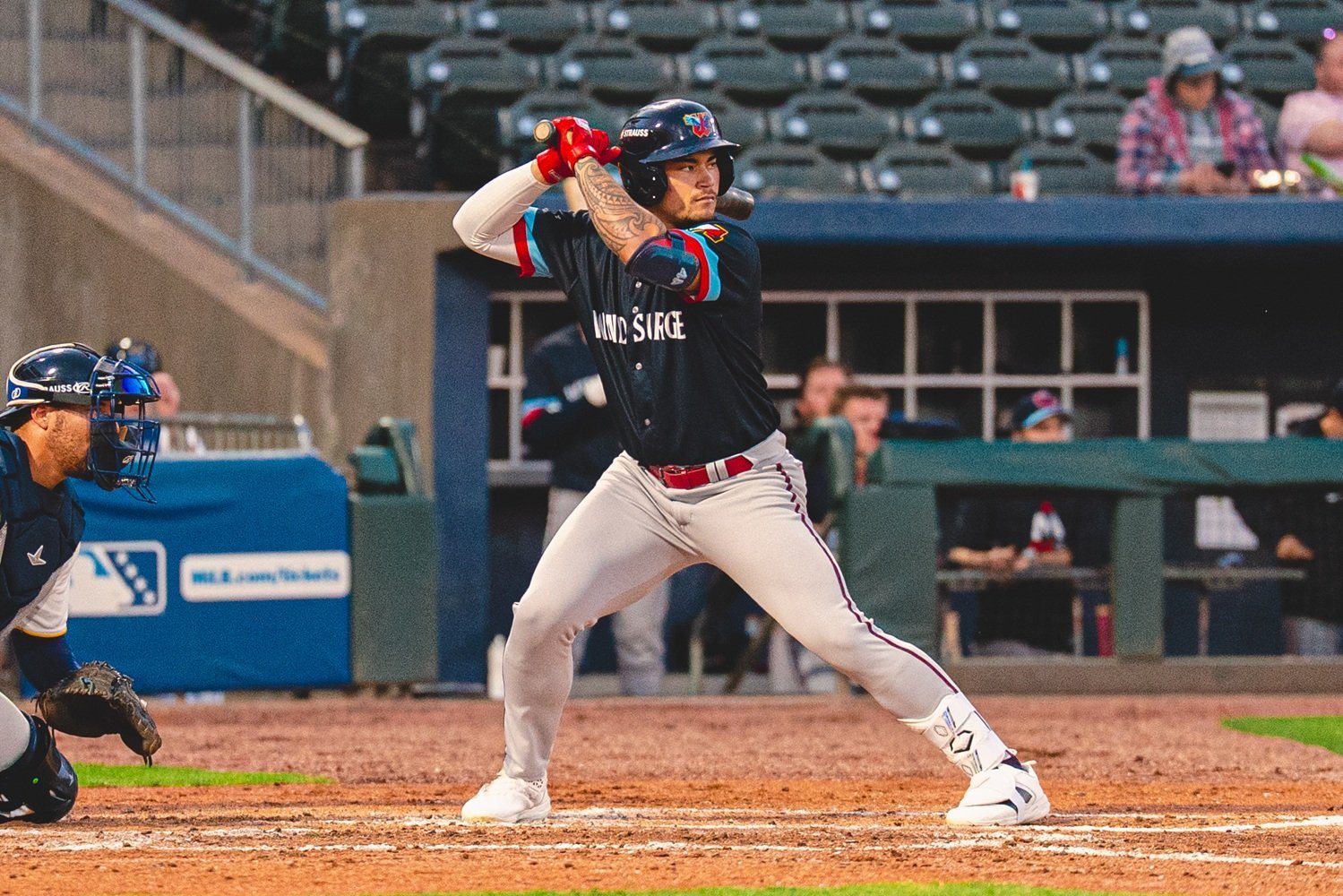 TRANSACTIONS RHP Travis Adams transferred to AAA St. Paul on rehab RHP Raul Brito moved to the Development List. RHP Luis García signed and sent to AAA St. Paul OF/INF Ryan Kreidler optioned to AAA St. Paul LHP Connor Prielipp recalled by Twins RHP James Ellwanger placed on 60-day IL with a right elbow sprain RHP Jose Olivares returned to AA Wichita Saints Sentinel St. Paul 0, Indianapolis 12 Box Score Andrew Bash: 2 2/3 IP, 6 H, 5 ER, 4 BB, 3 K HR: None Multi-hit games: Aaron Sabato (2-for-3, 2B) It was all bad. Baseball is a genteel game ripe for purple prose and rosy words, yet sometimes someone just gets waxed. That was the Saints’ fate on Wednesday. Starter Andrew Bash was harassed early. So was reliever Grant Hartwig. By the time Travis Adams entered for his ritual butt-kicking, the scoreboard sang for nine runs—a sour tune turned even uglier by three runs dashed onto the rehabbing righty. Only Aaron Rozek found Wednesday’s matters pleasant. The lefty tossed 2 1/3 scoreless innings. As for St. Paul’s hitters, Walker Jenkins reached base twice, a walk and his second double of the year, Aaron Sabato collected a pair of hits including his third double, and little else of note occurred. The 1984 presidential election held more drama. Part of the Saints’ struggles may be explained by their opponent: MLB’s 84th-ranked prospect, Hunter Barco. The former second-round hurler tossed five shutout innings with just 64 pitches. Wind Surge Wisdom Wichita 9, NW Arkansas 7 Box Score Ty Langenberg: 3 IP, 5 H, 4 ER, 4 BB, 2 K HR: Ricardo Olivar 2 (2, 3), Kala’i Rosario (4) Multi-hit games: Hendry Mendez (2-for-3 2 2B, 2 R, RBI, BB), Kala’i Rosario (2-for-4, HR, R, 3 RBI), Ricardo Olivar (2-for-4, 2 HR, 2 R, 4 RBI) The Wind Surge won a high-scoring affair on Wednesday. Good things happen when you score five runs in the first inning. Earl Weaver may have said that once. Ben Ross and Hendry Mendez drilled RBI doubles in the opening frame before Ricardo Olivar blasted a three-run homer to left-center. Three batters walked. Former seventh-overall pick, Frank Mozzicato was down big, early. Though the runs would satiate most teams, the Wind Surge continued to add on. Kala’i Rosario singled in a run in the second before smacking a two-run blast in the fifth. It’s hard to find a more non-chalant homer than this one. Olivar homered once more in the eighth. Perhaps Naturals' pitchers should have stopped throwing him strikes. NW Arkansas doesn’t claim a major top prospect. Their best player, center fielder Carson Roccaforte, reached base three times in the game. He’s their 17th-ranked prospect. Kernels Nuggets Cedar Rapids 2, Peoria 5 Box Score Dasan Hill: 4 IP, 4 H, 3 ER, 0 BB, 7 K HR: None Multi-hit games: Marek Houston (3-for-5, 2B, R) The Kernels suffered an ordinary loss on Wednesday. Dasan Hill Nolan McLean-ed it; that is to say, he looked incredible through the game’s first three frames before unwinding in the fourth. The first third of the game? Near immaculate. The lefty racked up seven strikeouts, appearing to be the next coming of Randy Johnson, if the Big Unit had been a slender prep Texan. But, that fourth. Hill allowed four hits, the final of which a three-run shot that soiled what was once a great start. So it goes. Offensively, the Kernels signaled a tepid performance with a third-inning RBI double by Jacob McCombs before concluding their outburst with an Eduardo Tait two-bagger in the seventh; a Marek Houston single in the ninth was their final base runner of the day. Rainiel Rodriguez, the 32nd-ranked prospect in baseball, caught for the Chiefs and walked once in four plate appearances. Mussel Matters Fort Myers 2, Dunedin 0 Box Score Riley Quick: 3 IP, 1 H, 0 ER, 0 BB, 3 K HR: None Multi-hit games: Dameury Pena (2-for-4, 2 RBI), Eduardo Beltre (2-for-4) The Mighty Mussels pitched a shutout on Wednesday. Riley Quick started. That no one scored is no surprise. The Blue Jays started the game with an infield single, then—perhaps in a rage spurned by such insolence—Quick retired the next batters he faced. The rage of the mighty is powerful and us mere mortals are helpless to act in its wake. Facing off against Quick was one “Berríos.” Of course, that accented “i” gives away the game: José, the former longtime Twin, started for Dunedin on a rehab assignment. The 31-year-old fired four shutout innings with five strikeouts. He also probably bought his teammates BBQ or something before the game. Once the Mighty Mussels were done struggling against a literal big leaguer, they found the runs needed to win the game. Two walks and a hit by pitch in the seventh loaded the bases. Yilber Herrera whiffed on three straight heaters. Dameury Pena did not. He smacked the first pitch he saw into right field, scoring the only two runs of the ballgame for either squad. 2025 first-rounder, JoJo Parker, played shortstop for Dunedin, singling and walking in five plate appearances. He is the 39th-best prospect in MLB according to MLB.com. TWINS DAILY PLAYERS OF THE DAY Twins Daily Minor League Pitcher of the Day – Riley Quick Twins Daily Minor League Hitter of the Day – Ricardo Olivar PROSPECT SUMMARY Here’s a look at how the Twins Daily Top 20 Twins Prospects performed: #1 – Walker Jenkins (St. Paul) - 1-3 2B, BB #3 – Emmanuel Rodriguez (St. Paul) - 1-3 2K #4 – Eduardo Tait (Cedar Rapids) - 1-5 2B, RBI, K #5 – Connor Prielipp (Twins) - 4 IP, 4 H, 2 ER, 0 BB, 6 K #6 – Dasan Hill (Cedar Rapids) - 4 IP, 4 H, 3 ER, 0 BB, 7 K #7 – Gabriel Gonzalez (St. Paul) - 0-4 #8 – Kendry Rojas (Twins) - 2 IP, 2 H, 0 ER, 3 BB, 0 K #9 – Marek Houston (Cedar Rapids) - 3-5, 2B, R #11 – Riley Quick (Fort Myers) - 3 IP, 1 H, 0 ER, 0 BB, 3 K #13 – Brandon Winokur (Cedar Rapids) - 1-4, 3 K #14 – Quentin Young (Fort Myers) - 1-3, BB, 2 K #16 – Hendry Mendez (Wichita) - 2-3, 2 2B, 2 R, RBI, BB #17 – Kyle DeBarge (Wichita) - 1-5, R, 2B, K #19 – Khadim Diaw (Cedar Rapids) - 1-4, K THURSDAY’S PROBABLE STARTERS St. Paul @ Indianapolis (10:05 AM) - RHP John Klein Wichita NW Arkansas (7:05 PM) - RHP C.J. Culpepper Cedar Rapids @ Peoria (6:35 PM) - RHP Jason Doktorczyk Dunedin @ Fort Myers (6:05 PM) - RHP Matthew Dalquist View the full article
