


DiamondCentric
-
Posts
2,631 -
Joined
-
Last visited
Never
Content Type
Profiles
Forums
Events
News
Tutorials & Help
Major League Baseball Videos
Guides & Resources
Store
Downloads
Gallery
Everything posted by DiamondCentric
-

 Akil Baddoo’s late three-run homer completed Nashville’s comeback win. Andrew Fischer homered, but Biloxi lost by a run. Wisconsin was short-staffed in defeat, while Wilson conceded many two-out runs in their loss. Transactions: INF/OF Jihwan Bae transferred to AAA Nashville’s 60-day injured list from 7-day injured list Game Action: Nashville Pre-Game Media Notes Final: Nashville 7, Louisville (Reds) 6 Box Score Via the Sounds, game details, and we encourage readers to always review affiliate write-ups as part of their Link Report routine: Akil Baddoo Hits Go-Ahead Homer as Sounds Win Third Straight - All Nine Starters Record a Hit for Nashville A 40.6 MPH infield single off the bat of OF Tyler Black with two outs, nobody on and the Sounds trailing 6-2 in the bottom of the 6th inning was apparently the spark required to unlock the Nashville offense en route to a 7-6 come-from-behind victory. OF Akil Baddoo’s three-run blast in the following frame registered at 106.3 MPH, giving Nashville the only lead it would require behind a strong bullpen effort. Prior to that blast, OF Brandon Lockridge (1-for-4, walk, 2 RBIs) and 2B Ethan Murray (1-for-3, double, HBP, RBI) had come through with clutch two-out hits to keep the Sounds in the game. RHP Kaleb Bowman, RHP Blake Holub (1 IP, 0 R, 2 Ks), LHP Jared Koenig (1 IP, 0 R, 0 Ks) and RHP Cameron Wagoner (1 IP, 0 R, 1 K) shut Louisville out over the final four frames, with Bowman bouncing back after allowing three runs in the 5th inning, including a two-run shot to old friend Orlando Arcia. In the 9th inning, a two-out infield single and stolen base gave Louisville a chance against Wagoner, but he struck out Noelvi Marte on five pitches to preserve the victory. Every Nashville batter collected at least one base knock, as the squad out-hit the Bats 11-8, with 3B Brock Wilken (2-for-5, double) and C Andrick Nava (2-for-4, RBI in his first game since August 1) leading the way. Each of Wilken, Nava, Lockridge, Murray, 1B Blake Burke (1-for-3, triple, walk) and SS Jonathan Ornelas (1-for-3, walk) reached base twice. Sounds’ Extras: RHP Carlos Rodriguez (2 IP, 3 R, 2 H, 2 BB, 3 Ks) got the short start and RHP Brandon Sproat (2 IP, 0 R, 2 H, 2 BB, 2 Ks) tossed two scoreless frames, with Sproat doing a better job of getting out of trouble. The game started after a 31-minute rain delay. Louisville coach Peterson Plaz must have been determined to exit on schedule, as he was ejected in the 4th inning after Sproat picked off a baserunner. Koenig’s first six sinkers topped out at 91.6 MPH, but his last two sinkers reached 93.4 and 93.1. Friday’s outlook: RHP Tyson Hardin gets the chance to deliver Nashville a fourth consecutive victory at Louisville, which would clinch the series for the Sounds. Biloxi Pre-Game Media Notes Final: Birmingham (White Sox) 3, Biloxi 2 Box Score Via the Shuckers’ website, game details: Letson Ties Career High with 9 Strikeouts, Fischer Blasts Homer in Shuckers Loss - Fischer pulls into tie for the 8th-most home runs in a season in Minor League Baseball’s Modern Era After back-to-back one-run victories at home, Biloxi found itself on the opposite side of the ledger in this nail-biter, but starting RHP Bishop Letson (4 2/3 IP, 2 R, 4 H, 4 BB, 9 Ks) and 1B Andrew Fischer (1-for-3, HR, 2 walks, 2 RBIs) reinforced their prospect pedigree. The Shuckers out-hit their opponents 7-5 and had fewer errors (2 vs. 1), but a 1-for-10 evening with runners in scoring position led to 12 stranded baserunners, including at least one every inning from the 2nd through the 9th frames. Fischer was thrown out trying to go from 1st to 3rd to end the 7th inning, while pinch runner Dylan O’Rae was gunned down at home on an infield grounder in the 8th inning. Shuckers’ Extras: RHP Ryan Birchard struck out 3 of 5 batters faced but conceded the game-winning run in the top of the 9th inning, done in by a walk, stolen base, infield single to the catcher and run-scoring wild pitch. DH Mike Boeve (1-for-1, 3 walks) reached base four times, while each of C Matt Wood (2-for-4), OF Braylon Payne (1-for-4, walk), OF Josh Adamczewski (1-for-4, walk) and OF Damon Keith (1-for-3, double, walk) came aboard twice. Middle relievers LHP Jesus Broca (1 1/3 IP, 0 R, 0 H, 0 BB, 1 K) and RHP Travis Smith (2 IP, 0 R, 0 H, 2 BB, 3 Ks) were solid, including Broca stranding two baserunners inherited from Letson in the 5th inning. Friday’s outlook: RHP Jaron DeBerry is the scheduled starter, as Biloxi seeks a 3-1 home series advantage with a victory. Wisconsin Pre-Game Media Notes Final: Beloit (Marlins) 4, Wisconsin 1 Box Score Via the Timber Rattlers’ website, game details: Beloit Snaps Rattlers Winning Streak Wisconsin’s staff, including position player Luiyin Alastre (2 IP, 0 R, 1 K in relief), helped overcome the late scratch of scheduled starter Jayden Dubanewicz, but the offense came up short on Thursday. Unfortunately, another concern arose in the bottom of the 6th inning, when LHP Bjorn Johnson exited after facing just two batters. Johnson, who’s been dominant since mid-May (1.31 ERA with 26 Ks in prior 20 2/3 IP), had pitched two innings two days prior. While both teams struggled with runners in scoring position (Wisconsin 2-for-10, 12 stranded; Beloit 2-for-11, 10 stranded), the Sky Carp’s four extra base hits were critical (vs. one for Wisconsin). RHP Joshua Quezada (2 1/3 IP, 1 R, 1 H, 0 BB, 6 Ks) was a standout performer for the Timber Rattlers, stranding two baserunners for spot starter RHP Chandler Welch (2 2/3 IP, 2 R, 3 H, 4 BB, 1 HBP, 3 Ks) and striking out 6 of 8 batters faced. Welch had reached a season-high 71 pitches before coming out in the third inning. Timber Rattlers’ Extras: 1B Tayden Hall (2-for-4, double) had a multi-hit game and the team’s only extra-base hit, but he also flew out with the bases load to end the top of the 7th inning. DH Daniel Dickinson joined him with two hits (2-for-4, walk), while stealing his 56th base. Similar to Johnson, RHP Tanner Perry (2/3 IP, 0 R, 0 Ks) had also thrown two innings two days prior, but he got the call to finish out Johnson’s inning before giving way to Alastre for the final two frames. Leading 4-1 as they prepared to face position player Alastre for a second frame, Sky Carp hitting coach Michael Ryan was ejected to start the bottom of the 8th inning. Friday’s outlook: LHP Andrew Healy gets the start, as Wisconsin seeks to boost their series lead to 3 games to 1. Wilson Pre-Game Media Notes Final: Fredericksburg (Nationals) 7, Wilson 3 Box Score Via the Warbirds’ website, game details: Warbirds Beaten by Nationals After Big Seventh Inning - Mills Stays Hot with Homer The squad battled valiantly for six innings, grabbing a 1st inning lead on C Rylan Mills’ two-run blast, then knotting the contest 3-3 on 2B Moises Polanco’s two-out RBI single in the 6th inning. Starting RHP Luke Roupe (4 IP, 3 R, 4 H, 4 BB, 4 Ks) was solid through three innings but conceded two runs while trying to get the final out of the 4th inning. RHP Diustin Mayorquin (2 2/3 IP, 4 R, 3 H, 3 BB, 5 Ks) then emulated him by retiring the first six batters he faced in relief, only to issue three consecutive walks (and four runs) while attempting to get the last out of the 7th inning. That’s now nine consecutive losses for Wilson, with three games remaining on their inaugural baseball campaign, as they struggle to hang onto their well-earned winning record (now 64-63 on the season). Warbirds’ Extras: Hitting 9th, Polanco (2-for-4, RBI) was the team’s only player to register a multi-hit game, though each of OF Pedro Ibarguen (1-for-2, 2 walks), Mills (1-for-4, HR, walk, 2 RBIs), DH Kevin Garcia (1-for-3, walk) and SS Filippo Di Turi (1-for-4, HBP) reached base at least twice. RHP Andrew Gaines came in with a bang (first pitch HBP) but ultimately put up a good line in relief: 1 1/3 IP, 0 R, 2 Ks. SS Trey Ebel was out of the lineup for the second consecutive game, while OF Handelfry Encarnacion missed his fifth straight contest. Hopefully they’ll both return to action before Wilson’s season ends this Sunday. Friday’s outlook: 19-year-old RHP Dariel Jaquez (9.00 ERA with 26 Ks in 28 ACL innings) is slated to make his Low-A debut, as Wilson need a win to snap their nine-game skid. We hope that you enjoy the Minor League Link Report. On Friday, Wilson kicks off the four-game minor league slate at 5:35pm CST. The Milwaukee Brewers also play at the Reds at 5:10pm CST. Organizational Scoreboard including starting pitcher info, game times, MiLB TV links, and box scores Current Milwaukee Brewers Organization Batting Stats and Depth Current Milwaukee Brewers Organization Pitching Stats and Depth View the full article
 -
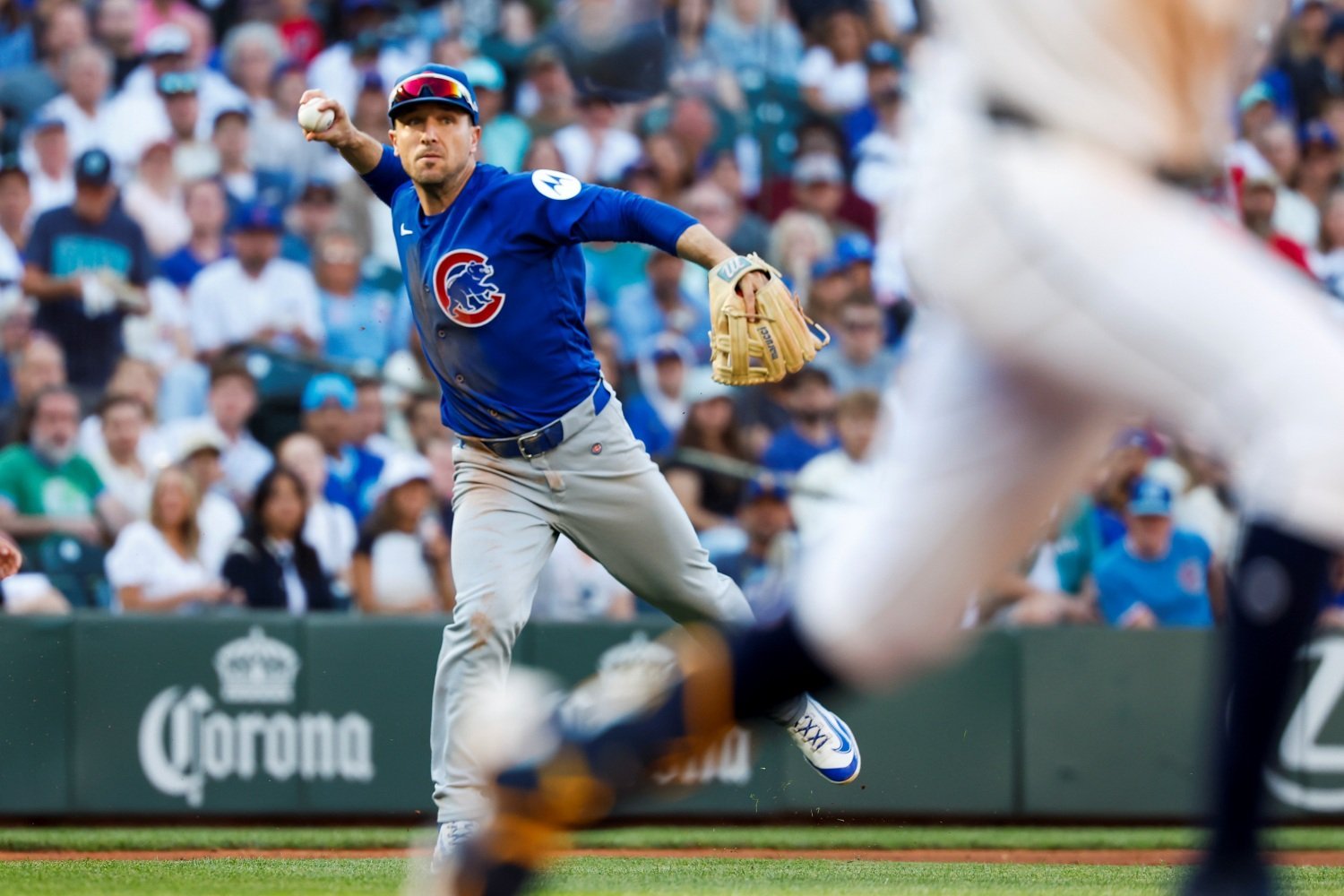 William Contreras didn't hit it correctly, but he hit it hard. In the top of the eighth inning Thursday night, Ryan Zeferjahn had gotten the first two outs easily, and he fired a 98-MPH sinker that ran in and down toward Contreras on the first pitch. Overeager, Contreras swung hard but (inevitably) topped the ball, hitting it almost straight down in front of his own left foot. It left his bat at over 90 MPH, but most of that energy went straight into the ground. However, in the unseasonable September heat and near the end of the game, the area around home plate was hard and bouncy. The ball shot 30 feet in the air and sailed down the third-base line. Nine times out of 10, that batted ball is foul, but something about the spin and the bounce kept this one fair. It didn't land until it was about 10 feet past the third-base bag, and when it did, it was still fair. It was the kind of oddball schtoinker that threatens to be the spark from which a wildfire rally starts. Fortunately for the Cubs, Alex Bregman was there. Bregman read the soaring bouncer perfectly, picking a short hop on the run and throwing almost immediately across the diamond to retire Contreras and end the inning. It looked like a good play; it was actually a great one. That's pretty much par for the course for Bregman this year. As I wrote two months ago, his defense has never been better, but the places and ways in which he's improved are so subtle that they're often missable. He doesn't look like the second-best defensive third baseman in the game every time he takes the field, but that's what he's been this season. He's mostly been good at third throughout his career, but somehow, at age 32, he's improving, instead of losing value with the leather. Dansby Swanson and Bregman communicate and cooperate brilliantly on the left side of the infield, but that's only part of the story. Bregman has learned to better utilize his tools on defense, too. He's playing a bit deeper and a half-step closer to the line this year than last season, and after two years of improving mostly on the strength of cleaning up plays to his right, he's now excelling by ranging well to his left. As the above attests, though, he can still get to and play balls on the line, too. Playing deeper is the real key to everything. It means he has more time to flag balls down and more momentum behind him when he goes from fielding the ball to throwing it. Speaking of throwing it, though, that's the most fun change to observe. A few years ago, Bregman has a good chance to field the ball above, but throwing out the runner is a lot more iffy. He's not a big guy; he still doesn't have even average raw arm strength. However, he's gotten a whole lot more accurate—including knowing when to put more oomph on one, and when bouncing the throw makes sense or doesn't. Beginning in 2024, Bregman cleaned up his throws to first. His on-target rate (the percentage of his throws that arrive within a five-foot fan around first base and between 1 and 7 feet above the ground) is a career-best 84.5% this season; he was in the mid-70s from 2021 through 2023. On plays like the one he made Thursday night, even if Bregman got the tricky footwork and pick right, past versions of him wouldn't have made life so easy for his first baseman; there's a good chance the runner would have ended up being safe. In the modern game, almost no one is better than ever at age 32. So far, though, it looks like Bregman might be the exception. His makeup is off the charts; that's always been part of the appeal. Watching him make plays like that one (amid one of the hottest streaks of his career at the plate, no less), however, it gets easier to remember that makeup isn't just about keeping the clubhouse a happy place. Bregman's focused, intelligent, obsessive work has made him worth 13 Defensive Runs Saved this year. That's as big a reason why the Cubs are a virtual lock to make the playoffs as the fact that he's broken out of his early offensive funk and become the third heat of the Chicago offense. He's winning games for the team in every way possible. View the full article
 -
 Drew Beam struck out nine over eight innings as Northwest Arkansas beat Arkansas 4-1, and Zachary Cawyer added a scoreless inning for the save. Henry Williams matched him with six scoreless innings in Omaha's 7-1 win, backed by home runs from Gavin Cross, Brett Squires, and Carson Roccaforte. David Shields allowed three runs in four innings as Quad Cities fell 5-3 despite Jose Cerice's two-run homer. Connor Rasmussen homered for Columbia, which lost 5-1 at Myrtle Beach. Kansas City Royals Transactions No Roster Moves Three Homers And Four Unearned Runs Carry Omaha Past St. Paul The Omaha Storm Chasers hit three home runs and took advantage of three St. Paul errors in a 7-1 win. Squires opened the scoring with a solo home run, his 25th, in the first. The third inning turned on defense. Luca Tresh singled, Omar Hernandez reached on a fielding error, and Cross hit into a fielder's choice that a throwing error by the shortstop turned into two runs. Roccaforte added a solo home run, his fourth, in the fourth. Omaha built the lead again in the fifth. Hernandez singled, Cross doubled him to third, and Alejo Lopez reached on a fielder's choice on which the shortstop threw the ball away again, scoring Hernandez. Squires drove in Cross with a sacrifice fly. Cross closed the scoring with his 17th home run in the seventh. Cross finished 2-for-4 with a double, a home run, two runs, and one strikeout. Squires went 1-for-3 with two runs batted in. Hernandez was 1-for-3 and scored twice. Roccaforte went 1-for-4 with three strikeouts. Omaha left four runners on base and went 0-for-7 with runners in scoring position. Williams, our August Pitcher of the Month for Omaha at Royals Keep, handled the start, working six scoreless innings on four hits and one walk with seven strikeouts for a quality start. Luke Little gave up a solo home run in his inning of work, allowing one hit and one walk with a strikeout. Lucas Erceg allowed a hit and a walk without a run and struck out one. Ben Sears allowed one hit and one walk and did not give up a run. The Storm Chasers are now 60-72. Player AB R H RBI BB K Gavin Cross 4 2 2 1 0 1 Alejo Lopez 4 0 0 0 0 2 Brett Squires 3 1 1 2 0 0 Abraham Toro 3 0 0 0 1 0 Carson Roccaforte 4 1 1 1 0 3 Peyton Wilson 4 0 1 0 0 1 Jacob Berry 4 0 0 0 0 0 Luca Tresh 4 1 1 0 0 0 Omar Hernandez 3 2 1 0 0 0 Player IP H R ER BB K HR Henry Williams 6 4 0 0 1 7 0 Luke Little 1 1 1 1 1 1 1 Lucas Erceg 1 1 0 0 1 1 0 Ben Sears 1 1 0 0 1 0 0 Beam's Nine Strikeouts Carry Northwest Arkansas To A 4-1 Win Beam gave the Northwest Arkansas Naturals eight innings and the bullpen only three outs to get in a 4-1 win at Arkansas. The Naturals scored first in the fourth. Sam Kulasingam singled, moved to third on a groundout, and scored on a Daniel Vazquez sacrifice fly. The sixth was the decisive inning. Luke Pelzer singled to open it and stole second. He moved to third on a groundout and scored on a Vazquez double. Justin Johnson followed with a run-scoring single, and Northwest Arkansas led 3-1. The Naturals tacked on in the eighth. Kulasingam doubled, Vazquez reached on a fielding error, and Johnson reached on a throwing error by the third baseman as Kulasingam came home. Pelzer went 2-for-4 with a run scored. Kulasingam was 2-for-4 with a double and two runs. Vazquez went 1-for-3 with a double and two runs batted in. Johnson was 1-for-4 with a run batted in and two strikeouts. Johnson also flashed some leather at the hot corner. Northwest Arkansas struck out 12 times, left five runners on base, and went 2-for-8 with runners in scoring position. Beam allowed three hits and one earned run over eight innings, walked nobody, and struck out nine. The only damage against him was a solo home run, and the outing qualified as a quality start. Cawyer finished it with a scoreless inning, walking one and striking out one for his sixth save. With the win, the Naturals improved to 54-73 this season. Player AB R H RBI BB K Luke Pelzer 4 1 2 0 0 1 Sam Kulasingam 4 2 2 0 0 1 Spencer Nivens 4 0 0 0 0 1 Daniel Vazquez 3 1 1 2 0 0 Justin Johnson 4 0 1 1 0 2 Connor Scott 4 0 0 0 0 1 Canyon Brown 4 0 0 0 0 1 Alberto Rodriguez 3 0 0 0 1 3 Angel Acosta 4 0 0 0 0 2 Player IP H R ER BB K HR Drew Beam 8 3 1 1 0 9 1 Zachary Cawyer 1 0 0 0 1 1 0 Cerice's Two-Run Homer Not Enough For Quad Cities At Peoria The Quad Cities River Bandits managed three hits in a 5-3 loss at Peoria. Quad Cities struck first in the fourth. Blake Mitchell was hit by a pitch, and Jose Cerice followed with a two-run home run, his sixth. Peoria answered with three runs in the bottom half on a run-scoring double and a two-run home run, then added two more in the sixth on another two-run home run. The River Bandits got one back in the eighth. Stone Russell walked, Nolan Sailors reached on a fielder's choice and advanced on a fielding error, and Asbel Gonzalez grounded into a force out that moved Russell to third. Russell scored on a wild pitch during a Mitchell walk. Ramon Ramirez then grounded into a double play to end the threat. Cerice went 1-for-4 with the home run and two runs batted in. Austin Charles was 1-for-4 with a double. Tyriq Kemp went 1-for-3 with a walk. Mitchell drew two walks and scored a run. Quad Cities drew five walks, struck out 15 times, went 1-for-5 with runners in scoring position, and left six runners on base. Shields, the Royals' No. 2 prospect, took the loss, allowing three runs on three hits over four innings with no walks and five strikeouts, with a home run accounting for two of the runs. Ethan McElvain gave up two runs on two hits in two innings with three strikeouts and a home run allowed. Yimi Presinal allowed a hit and a walk without a run and struck out one. Jackson Cleveland struck out three in a scoreless inning without allowing a baserunner. The River Bandits are now 68-56 and sit in second place in the West Division of the Midwest League. Player AB R H RBI BB K Nolan Sailors 3 0 0 0 1 2 Asbel Gonzalez 4 0 0 0 0 2 Blake Mitchell 1 1 0 0 2 1 Ramon Ramirez 4 0 0 0 0 2 Jose Cerice 4 1 1 2 0 1 Austin Charles 4 0 1 0 0 2 Tyriq Kemp 3 0 1 0 1 1 Erick Torres 3 0 0 0 0 1 Stone Russell 3 1 0 0 1 3 Player IP H R ER BB K HR David Shields 4 3 3 3 0 5 1 Ethan McElvain 2 2 2 2 0 3 1 Yimi Presinal 1 1 0 0 1 1 0 Jackson Cleveland 1 0 0 0 0 3 0 Rasmussen's Home Run Accounts For Columbia's Only Run The Columbia Fireflies had seven hits and one run in a 5-1 loss at Myrtle Beach. The third inning decided it. With two outs and nobody on, a single put a runner aboard, a throwing error by third baseman Ivan Sosa put a second runner on, and a three-run home run followed. None of the three runs were earned. Rasmussen answered in the fourth with a solo home run, his fifth, and that was the extent of the Columbia offense. Myrtle Beach added a run in the fifth on a bases-loaded walk that came home on a wild pitch, and another in the seventh on a bases-loaded hit by pitch. Rasmussen finished 2-for-3 with a walk, a run scored, and a run batted in. Gabriel Silva was 1-for-2 with a double. Henry Ramos, JC Vanek, Sean Gamble, and Sosa each had a hit. The Fireflies struck out 12 times, went 0-for-6 with runners in scoring position, and left eight runners on base. Ryan McDonagh took the loss, giving up three unearned runs on two hits over three innings with a walk, two strikeouts, and a home run allowed. Alberto Toribio allowed one run on two hits in three innings, walking two and striking out four. Andy Basora gave up a run on two hits in his inning. Grant Fontenot struck out two in a scoreless inning without allowing a hit or a walk. The Fireflies are back to .500 at 64-64, good for 5th in the South Division of the Carolina League. Player AB R H RBI BB K Henry Ramos 4 0 1 0 0 1 JC Vanek 3 0 1 0 0 0 Roni Cabrera 1 0 0 0 0 1 Camden Johnson 2 0 0 0 1 1 Sean Gamble 4 0 1 0 0 2 Jhosmmel Zue 2 0 0 0 0 1 Gabriel Silva 2 0 1 0 0 0 Connor Rasmussen 3 1 2 1 1 0 Tyson Moran 4 0 0 0 0 2 Ricson Gonzalez 4 0 0 0 0 2 Ivan Sosa 4 0 1 0 0 2 Player IP H R ER BB K HR Ryan McDonagh 3 2 3 0 1 2 1 Alberto Toribio 3 2 1 1 2 4 0 Andy Basora 1 2 1 1 0 1 0 Grant Fontenot 1 0 0 0 0 2 0 Top-20 Prospect Performance Kendry Chourio: DNP David Shields: 4 IP, 3 H, 3 R, 3 ER, 0 BB, 5 K Josh Hammond: DNP Blake Mitchell: 0-for-1, 2 BB, K Sean Gamble: 1-for-4, 2 K Ramon Ramirez: 0-for-4, 2 K Zion Rose: DNP Asbel Gonzalez: 0-for-4, 2 K Carson Roccaforte: 1-for-4, HR, RBI, 3 K Taylor Rabe: DNP Yandel Ricardo: DNP Justin Lamkin: DNP Drew Beam: 8 IP, 3 H, 1 R, 1 ER, 0 BB, 9 K Michael Lombardi: DNP Jack Slightom: DNP Felix Arronde: DNP Angeibel Gomez: DNP Ben Kudrna: DNP Steven Zobac: DNP Blake Wolters: DNP View the full article
 -
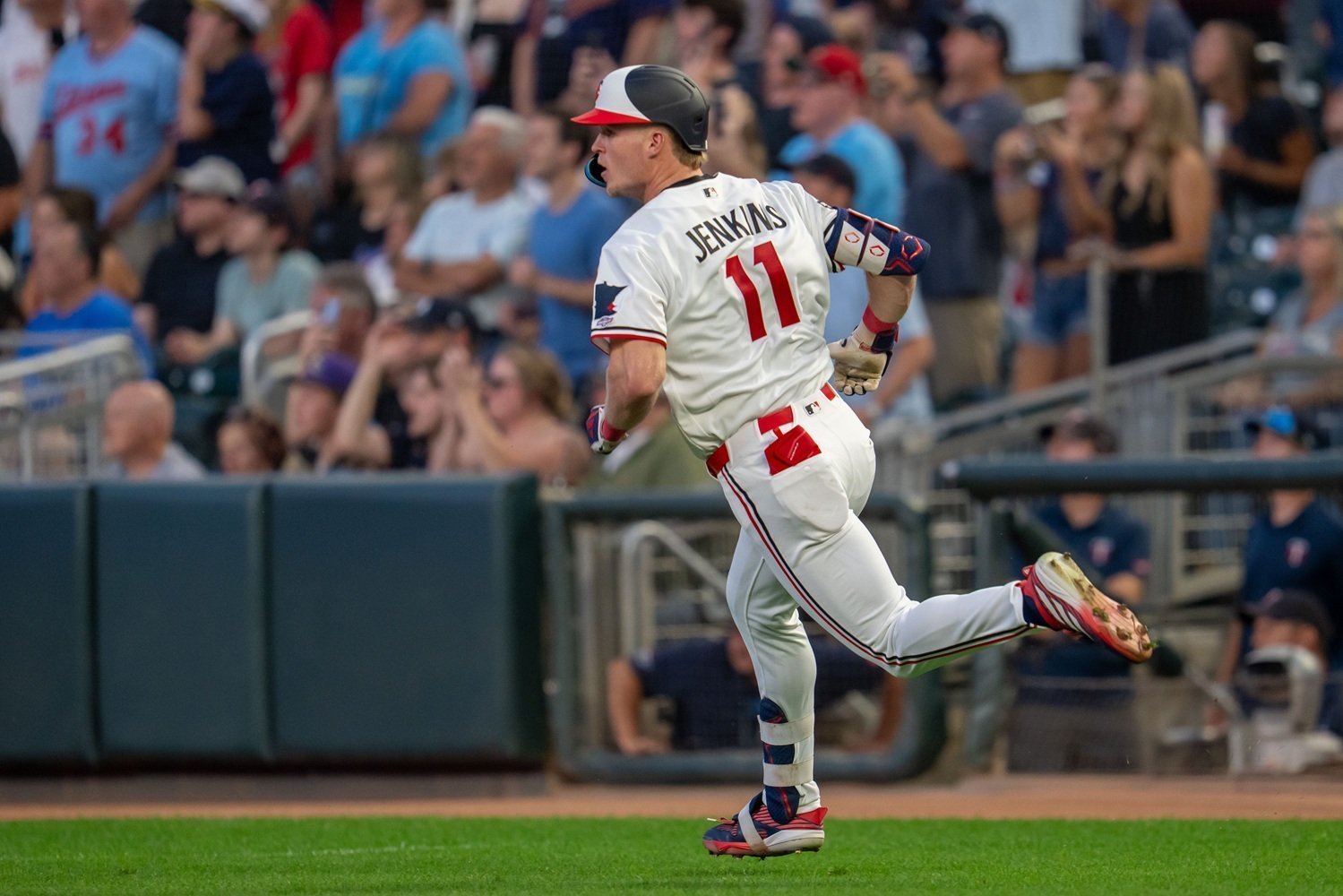 Not every prospect can live up to the hype. That's always been true in baseball, but it feels even more relevant in the modern game. Today, every at-bat can be watched, every swing can be dissected, and nearly every performance can be tracked in real time. A prospect can go from an unknown quantity to a household name in a matter of months. The Minnesota Twins have had their share of highly touted prospects in the Target Field era over the past decade and a half. Some became stars. Others became solid big leaguers. Some never came close to reaching the expectations placed upon them. For this list, I'm looking at the Twins' top prospects as they were viewed at the time, rather than how their careers ultimately unfolded. This isn't a ranking of the best big-league players. It is an attempt to put each prospect's hype into historical context. The rankings below are based primarily on each player's peak standing on major prospect lists. Honorable Mentions OF Trevor Larnach: Larnach was one of the organization's premier prospects after being selected 20th overall in 2018. His combination of power and patience made him one of the more intriguing bats in the system, but injuries and inconsistency prevented him from reaching the same prospect heights as those on this list. SS Nick Gordon: The fifth overall pick in 2014, Gordon immediately became one of the more recognizable names in the Twins' system. His prospect stock fluctuated as he moved through the minors, but his draft pedigree and shortstop potential earned him consideration. RHP Kyle Gibson: Gibson was one of the Twins' top pitching prospects after being selected in the first round of the 2009 draft. Much of his prospect hype came during the early part of the following decade as he moved quickly through the Minnesota farm system. 10. OF Max Kepler Peak Ranking: #30 by Baseball America (2016) Kepler doesn't immediately jump off the page when discussing the Twins' all-time prospect rankings, but his placement here is a testament to how much depth Minnesota has had in its farm system. The German outfielder was an international signing who steadily climbed through the organization. By 2016, Baseball America viewed him as the No. 30 prospect in baseball. Kepler's combination of size, athleticism, defensive ability and emerging power made him one of the more intriguing young players in the organization. He jumped up national rankings after posting a .947 OPS at Double-A as a 22 year old. He wasn't viewed as a future superstar on the level of some players higher on this list, but he was considered a legitimate top-30 prospect in the sport. 9. OF Aaron Hicks Peak Ranking: #19 by Baseball America (2010) Hicks was one of the first Twins prospects of this era to generate significant national attention. Selected 14th overall in the 2008 draft, Hicks developed a reputation as an athletic center fielder with impressive tools. His speed, defensive ability and switch-hitting potential gave scouts plenty to dream on. By 2010, Baseball America ranked him No. 19 overall. That ranking reflected the belief that Hicks could become an impact two-way center fielder. He eventually reached the majors with Minnesota before finding his best success later in his career with the Yankees. 8. SS Austin Martin Peak Ranking: #19 by Baseball America (2021) Martin arrived in Minnesota with plenty of prospect pedigree. The Twins acquired him from Toronto as part of the return for José Berríos at the 2021 trade deadline. He had been selected fifth overall by the Blue Jays in 2020 and entered the Twins' organization as a player with a strong offensive reputation based on his college experience. Baseball America ranked Martin as the No. 19 prospect in baseball in 2021. The former Vanderbilt standout's combination of contact ability, plate discipline and athleticism made him an intriguing prospect, even as questions about his ultimate defensive home remained. 7. OF Emmanuel Rodriguez Peak Ranking: #17 by Baseball Prospectus (2025) Rodriguez represents one of the more recent additions to this list. The Twins signed him as an international free agent in 2019, and his offensive potential quickly made him one of the organization's most exciting prospects. His combination of raw power, plate discipline and athleticism allowed him to climb national prospect rankings despite some questions about his long-term defensive home. By 2025, Baseball Prospectus ranked Rodriguez No. 17 overall. There was legitimate belief that Rodriguez possessed some of the best offensive upside in the Twins' system. However injuries have slowed his development and he has yet to debut. 6. RHP José Berríos Peak Ranking: #17 by Baseball Prospectus (2016) Berríos was one of the most highly regarded pitching prospects in the Twins system during the early 2010s. Minnesota selected him 32nd overall in 2012, and he quickly began climbing prospect rankings. His fastball, breaking ball and athletic delivery gave scouts the ingredients of a potential frontline starter. By 2016, Baseball Prospectus ranked Berríos No. 17 overall. Unlike some names on this list, Berríos ultimately came relatively close to meeting his prospect expectations. He became a durable major-league starter and earned multiple All-Star selections after establishing himself in Minnesota. 5. OF Alex Kirilloff Peak Ranking: #9 by MLB Pipeline (2019) Kirilloff was viewed as one of the best pure hitters in the minor leagues. The Twins selected him 15th overall in 2016, and he immediately began making a name for himself. After missing significant time with an elbow injury, Kirilloff returned to the field and quickly reminded everyone why Minnesota had been so excited about his offensive potential with a .970 OPS in 2018. By 2019, MLB Pipeline ranked him ninth overall. Kirilloff's combination of hitting ability, power and offensive polish made him look like a potential middle-of-the-order cornerstone. He was one of the rare Twins prospects who entered the top 10 nationally before reaching the majors. Unfortunately, injuries forced him to retire early. 4. SS Royce Lewis Peak Ranking: #5 by MLB Pipeline (2019) The Twins selected Lewis first overall in 2017, and the expectations were enormous from the beginning. His athleticism immediately stood out. Lewis had plus speed, impressive defensive tools and the potential to develop into a dynamic offensive player. As he moved through the minors, his tools continued to make him one of the most exciting prospects in baseball. MLB Pipeline ranked Lewis No. 5 overall in 2019. At that point, the Twins had a potential franchise shortstop developing in their system. Injuries would dramatically alter his development path, but that doesn't change how highly he was regarded before reaching the majors. 3. 3B Miguel Sanó Peak Ranking: #4 by MLB Pipeline (2014) Few Twins prospects generated as much excitement as Sanó. Signed out of the Dominican Republic, Sanó quickly became known for his enormous raw power. His physical tools were impossible to ignore, and scouts believed he had the potential to become one of baseball's most dangerous power hitters. MLB Pipeline ranked him No. 4 overall in 2014. There were questions about his strikeout rate and defensive home, but the offensive upside was so significant that those concerns didn't prevent Sanó from reaching the top tier of the prospect rankings. For a period of time, Sanó looked like the potential centerpiece of the next great Twins lineup. 2. OF Walker Jenkins Peak Ranking: #3 by MLB Pipeline (2025) Jenkins doesn't have the longest track record on this list, but his prospect pedigree is undeniable. The Twins selected Jenkins fifth overall in 2023, and he immediately began showing why Minnesota believed he could become a cornerstone player. His combination of hitting ability, power, athleticism and defensive potential gave him one of the highest ceilings in the organization. By 2025, MLB Pipeline ranked Jenkins No. 3 overall. More importantly, it wasn't based on one loud tool. Jenkins' profile was remarkably well-rounded, giving evaluators confidence that he could become an impact major-league player. The hype surrounding Jenkins has been enormous, and it puts him in rare company in Twins history. 1. OF Byron Buxton Peak Ranking: #1 by Baseball America, Baseball Prospectus and MLB Pipeline (2014) There is really only one choice for the top spot. Buxton wasn't simply one of the best prospects in Twins history. He was considered the best prospect in all of baseball. The Twins selected him second overall in 2012, and his combination of elite speed, center-field defense, athleticism and emerging offensive ability quickly pushed him toward the top of every prospect ranking. In 2014, all three major prospect publications agreed: Baseball America, Baseball Prospectus and MLB Pipeline ranked Buxton No. 1 overall. That's an extraordinary level of consensus. Prospect rankings can vary significantly from one publication to another. One evaluator might love a player's power while another questions the hit tool. Buxton didn't have that problem. Across the industry, there was widespread belief that he possessed the tools to become a franchise-changing player. He eventually became an All-Star and one of the most dynamic players in the sport, even if injuries prevented him from reaching the consistent superstar production many envisioned. And that is ultimately what makes this exercise interesting. The question isn't who had the best Twins career. It's who generated the most excitement before their career had been written. By that standard, Buxton’s unanimous No. 1 ranking remains the benchmark. Walker Jenkins came close to reaching that level before his major-league debut, and he will still be considered a prospect this winter. There’s a chance he could move up this list before next season, but it’s already difficult to ignore what he has accomplished throughout his professional career. How would you rank the prospects of the Target Field era? Leave a comment and start the discussion. View the full article
 -
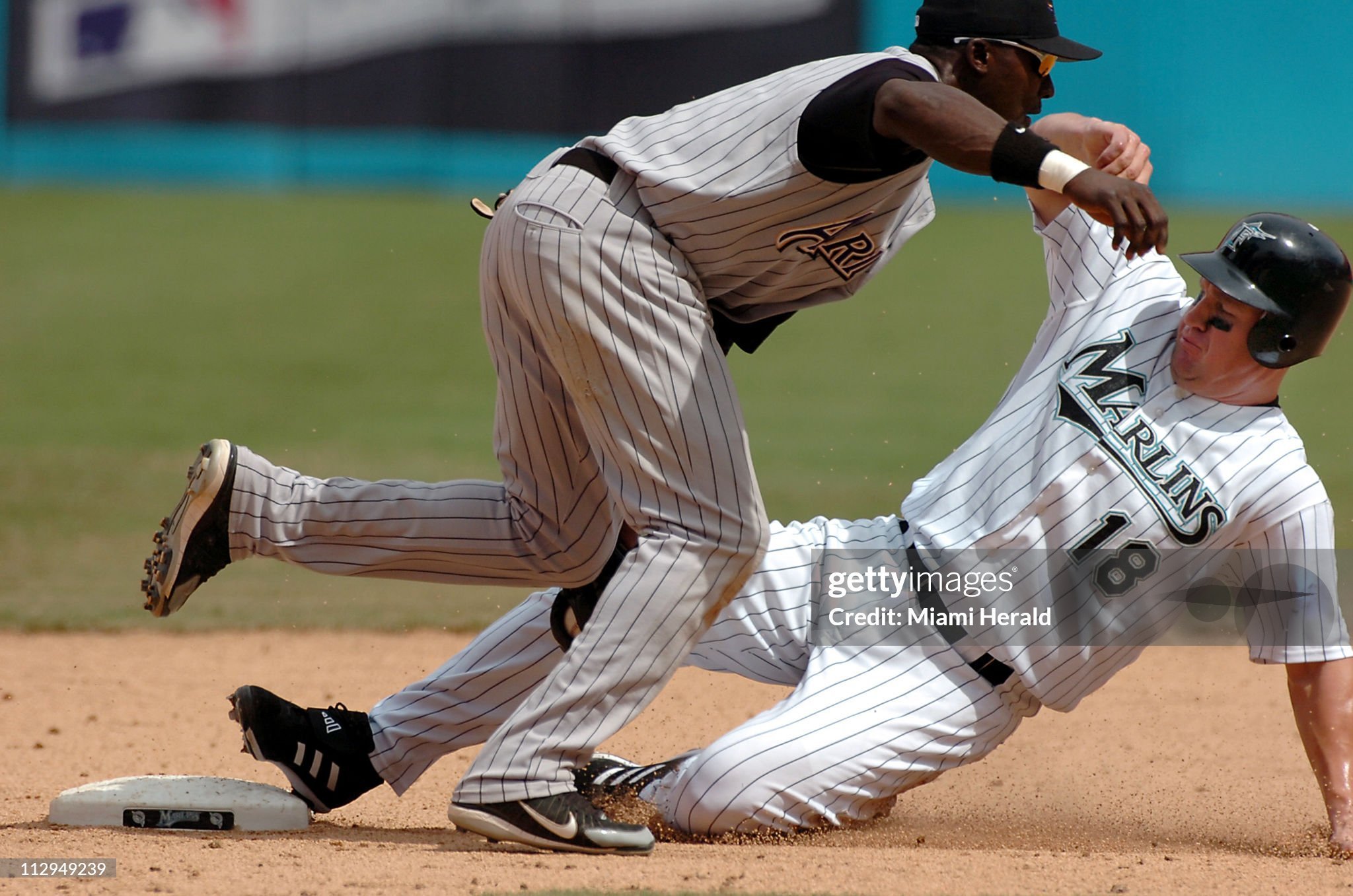 With a three-game sweep of the Milwaukee Brewers to open the month of September 2006, the Florida Marlins became the first team in Major League Baseball history to get back to .500 after falling 20 games below earlier in the season. The very next night, they became the first team to get over .500 after falling 20 games below. They did so on this day 20 years ago and in improbable fashion. Down five runs in the sixth, the Marlins scored eight unanswered runs to stun the Arizona Diamondbacks in a Labor Day matinee, 8-5. As the Marlins came to bat in the bottom of the sixth at Dolphins Stadium on Sept. 4, 2006, they had managed just one hit off Arizona starter Enrique González. Trailing 5-0, Florida would take the lead with six runs in the inning. Each of them scored with two outs. Alfredo Amézaga singled to open the inning but after Jeremy Hermida hit into a fielder’s choice and Hanley Ramírez flied out, it looked to be another quiet inning. Instead, Florida responded with five straight hits. One pitch after Dan Uggla singled, Miguel Cabrera broke up the shutout with an RBI single to cut the lead to 5-1. Not known for his speed, Josh Willingham followed by legging out an infield hit to load the bases. Mike Jacobs then cut the lead to 5-3 with a two-run single. Arizona stuck with González, which proved to be a mistake. Ahead in the count of Joe Borchard, González left one out over the plate and the Florida right fielder crushed it to right-center field for the go-ahead three-run home run. What had been a 5-0 deficit when the inning started had become a 6-5 lead for the Marlins. After Renyel Pinto stranded the tying run at third in the top of the seventh, Uggla put the exclamation point on the comeback with a two-run homer in the bottom of the frame. Taylor Tankersley and Joe Borowski each worked 1-2-3 innings to slam the door on the Diamondbacks. For Arizona, most of the offense came early. The Diamondbacks plated four runs in the first against Florida starter Brian Moehler with two coming on a double by Conor Jackson. The Diamondbacks extended the lead to 5-0 on Eric Byrnes’ solo home run to lead off the fifth. Despite having just one hit through six innings, Amézaga, Uggla and Jacobs each finished the night with two. Byrnes and Orlando Hudson each had two hits for Arizona. While Borowski picked up the save for the Marlins, Randy Messenger worked a 1-2-3 sixth to earn the win. In addition to getting over .500 for the first time, the five-run comeback served as the biggest of the season for the Marlins. It came on this day two decades ago. View the full article
 -
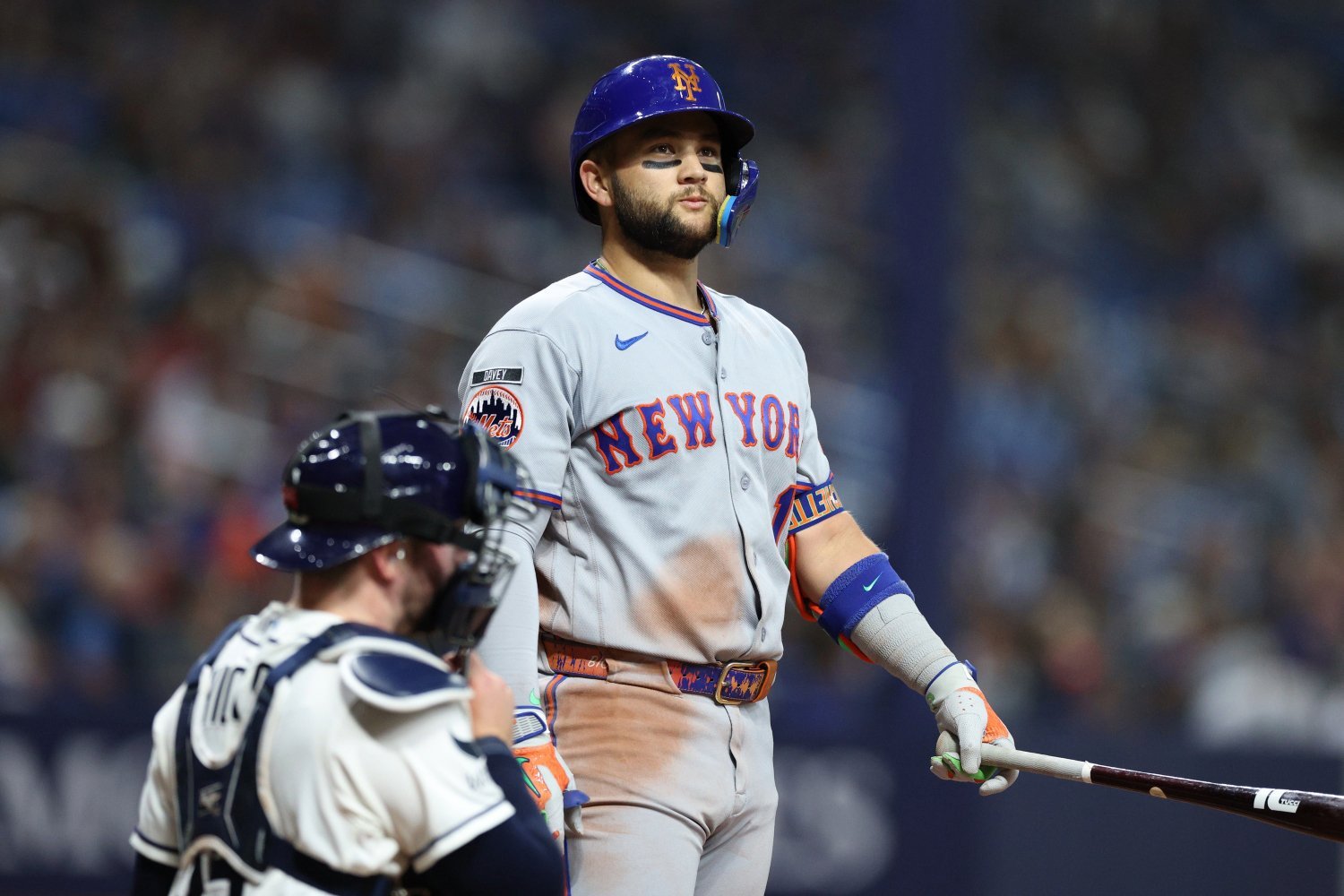 Fresh off writing the New York Mets’ hitters of the month piece for August, an odd detail caught my eye: Bo Bichette had an excellent 135 wRC+ in August, but managed to produce a negative win probability added (WPA). This isn’t a cause for alarm, but it is interesting. Those stats (wRC+ and WPA) are strongly correlated because hitting well is good for winning, so I figured further investigation was necessary. There are a few ways a hitter can hit well without helping his team’s chances of winning. The first is to rarely come up with runners on base or in scoring position. As great as a leadoff double is, the single that knocks them in improves your chances of winning more. The second is doing damage when the game is not close. If you’re up eight or down eight in the late innings, even a grand slam doesn’t change your odds all that much. The third is not having many leverage opportunities. And somehow, Bichette managed a trifecta. Of Bichette’s 109 plate appearances in August, 69 came with no runners on, and only 23 came with runners in scoring position. To make matters worse, Bichette saved his slugging for when the bases were empty. All four of his home runs, five of his seven doubles, and his lone triple came with no runners on. Bo Bichette Bases Empty Men On Total PA 69 40 109 1B 7 10 17 2B 5 2 7 3B 1 0 1 HR 4 0 4 BB 6 3 9 SO 14 6 20 Ave 0.270 0.324 0.290 OBP 0.333 0.375 0.349 Slugging 0.571 0.378 0.500 BB% 8.70% 7.50% 8.26% K% 20.29% 15.00% 18.35% On top of having no one on, three of Bichette’s August home runs came with the Mets up by at least three runs. And his lone home run to break a deadlock was in the first inning, when a 1-0 lead is the most vulnerable. Finally, Bichette’s average Leverage Index (0.89) for the month ranked 178th out of 190 qualified hitters. Now, that doesn’t necessarily doom you to a low WPA, as Alex Bregman had an identical Leverage Index and led baseball in WPA for August, but he posted a 177 wRC+ and hit three home runs in a single game twice. Opportunity is a big driver in context-based statistics, and Bichette didn’t really have the chance to shine. His -0.03 WPA was mostly driven by his 120th-ranked +1.75 win advancement, not his 60th-ranked -1.78 loss advancement. He wasn’t awful in leverage situations; he just didn’t have enough of them. This isn't proof that Bichette is some unclutch stiff who can only get it done when the pressure is off. He’s a career 118 wRC+ hitter with a positive clutch score, after all. However, even when a good hitter has it going, if the opportunities and sequencing are off, their impact on winning can be limited. I’ll stress: don’t hate the player, hate the game. Because that’s just baseball. View the full article
 -
 August may have been the most confusing month of Boston Red Sox baseball we have witnessed thus far in 2026. After July saw the Sox bludgeon the rest of the league, August started no different, sweeping the heavily favored Los Angeles Dodgers in L.A. and the Chicago White Sox, who are en route to a first-round bye in the MLB playoffs. Then seemingly out of nowhere, just as easily as Boston had rattled off another nine-game win streak, they began racking up losses, which included a five-game losing streak and three straight series losses to the lowly Athletics, Blue Jays, and Pirates. Nowhere was this inconsistent month more on display than the final week in the Bronx, where the Sox squared off with the Yankees in a pivotal four-game set that had all sorts of playoff ramifications on the line. The Sox were sloppy, the Yankees took three of four, and a bitter taste was left in fans' mouths of what could have been as Boston finished the month 17-12. Looking back, there were definitely plenty of eye opening performances, both good and bad across the offense, rotation and bullpen. Let’s dive in to how they each graded out for August. Grading Every Red Sox Player In August Offense For the second month in a row, the Red Sox tried to add some offensive thump to their lineup, and for the second month in a row, it hasn’t seemed to work out. July of course saw the addition of Curtis Mead, only to have him suffer a fractured wrist just two at-bats into his Red Sox tenure. For August, it was the addition of Adley Rutschman who looked to be the missing piece to the puzzle once he returned from a wrist inflammation injury. Once again, though, that wasn’t the case as when he did return, Rutschman posted an unsightly .170 average, .499 OPS, and season high 25.4 K% in 15 games before once again being bit by the injury bug, this time with an elbow hyperextension. Funnily enough the key to unlocking Boston’s offensive outburst came internally, specifically from the reincarnation of Ted Williams, aka ‘The Mick’, aka Mickey Gasper, who went on a month-long tear so prolific he can be spoken in the same breath as Barry Bonds and the aforementioned Williams. To go along with the six home runs, 13 RBIs, and team-high 329 wRC+, Gasper posted a 1.671 OPS, good for the third highest in a calendar month behind Bonds’ 1.828 in April of 2004 and Williams’ 2.314 in September of 1957. Add in a .270/.369/.432/.801 line with three homers, 10 RBIs, and clutch at-bats from Nick Sogard and an even more impressive .474/.600/.684/1.284 from Jahmai Jones, and the “Next Man Up” mentality continued to shine through for the Sox in August. The returns to form for Wilyer Abreu (.971 OPS, 163 wRC+, 7 HR, 17 RBI) and Jarren Duran (.789 OPS, 103 wRC+, 6 HR, 12 RBI) after rough months in July, along with the continued success of Caleb Durbin (.726 OPS, 106 wRC+, 18 RBI) and Ceddanne Rafaela (.276 AVG, 4 HR, 16 RBI), helped to to cover the rough stretches of play from Rutschman and Willson Contreras who produced a season low .217/.330/.386/.715 with a 102 wRC+. August was also capped off by the returns of Roman Anthony and Trevor Story, who quickly silenced any questions of if there would be any rust after missing so much time, combining to go 8-for-16 with three RBIs, doubles, and runs scored. Minus a few hiccups, this was the Red Sox's best offensive performance of the season by far. It’s promising to see they continue to improve as we get deeper into the campaign, so much so that Boston ranked outside of the top-10 league wide in August in just strikeouts, stolen bases, HardHit%, and Barrel%. Diving specifically into their AL rankings, they finished the month first in OBP, SLG, OPS, wRC+, runs, hits, doubles (led all MLB), and WAR, with top-three finishes in AVG, BAbIP, K%, BB%, HRs, triples, and walks as well. With so many elite numbers, it’s pretty easy to determine Boston’s offensive grade for August. Final Grade: A+ Position Players Name Mar / Apr May June July August Wilyer Abreu A+ B C+ C A- Roman Anthony D N/A N/A N/A A Willson Contreras A A+ B A+ D+ Jarren Duran F A D- D+ C+ Caleb Durbin D+ D A+ A- B+ Mickey Gasper N/A A+ D N/A A+ Jahmai Jones N/A N/A N/A A+ A+ Andruw Monasterio C D+ D A+ C- Ceddanne Rafaela B A A- A+ B+ Adley Rutschman N/A N/A N/A N/A F Anthony Seigler N/A N/A A+ C C Nick Sogard N/A B- N/A C A- Trevor Story D- D N/A N/A A Eli White N/A N/A N/A N/A C- Connor Wong B- B A C D Masataka Yoshida B- C+ D A- A Rotation If there was one glaring question coming out of last month’s MLB Trade Deadline it was: Why did the Red Sox not add an additional starter for depth? A perfectly valid question after that lack of depth ended up partly being their undoing in last year’s postseason. As we head into September, that lack of depth could very well be their undoing once again. As has been the case for a while now, Payton Tolle and Sonny Gray continue to carry this rotation. Tolle bounced back from a lackluster July to dominate August to the tune of a 2-0 record with a 3.00 ERA, .225 average against, and impressive 31.2 strikeout and 7.1 walk percentages across 36.0 innings pitched. Gray was just as good, if not better, posting a 2.40 ERA, .250 average against and 3.28 FIP to go along with six- and seven-inning shutout performances over the White Sox and Pirates, respectively. Boston’s rotation problems stem from the lefty trio of Jake Bennett, Patrick Sandoval, and Ranger Suárez. After a brilliant July, it’s clear Bennett has hit a rookie wall, as prior to his bounce back, six-shutout-innings start against the Yankees to close out the month, he had allowed 14 earned runs with a .323 BAbIP in 22.0 innings. Here’s hoping that the Yankees start got him back on track. The same hope goes out to Sandoval, who outside of his one run over 5.1 innings outing in the Bronx, had seen his constant flirting with danger finally catch up to him in his four prior outings, allowing 13 earned runs and a .419 BAbIP while walking 12 in 20.2 innings. The Red Sox's real concern, however, should stem from their $130 million dollar man who’s pitching like anything but recently. Suárez hasn’t looked right since coming off the IL, particularly with his command which was once his biggest strength, now quickly turning to a growing problem. To go along with a season-worst 5.70 ERA and 5.46 FIP, his strikeout percentage plummeted to 13.1%, while his walk percentage ballooned to a glaring 10.3%. Add in the four hit batters in just August alone (he hadn't hit more than two in any month prior) and it may be time to hit the panic button on who was expected to be Boston’s most dependable arm in the big spots down the stretch when he was first signed. While Gray and Tolle dazzled once again, their individual performances can only do so much to keep the rotation grade afloat with how much Bennett, Sandoval, and Suárez struggled. The cause for concern is definitely there with what’s looking like a tired set of arms as we head into September. Final Grade: B- Pitchers Name Mar / Apr May June July August Jake Bennett N/A C A A+ C Sonny Gray C+ A+ A+ B+ A Patrick Sandoval N/A N/A N/A B C- Ranger Suárez B+ B- A+ B- F Payton Tolle B A+ B+ B- A- Bullpen Boston’s rotation isn’t the only area where the cracks are starting to form. After operating as arguably the best in baseball for July, the bullpen has appeared to come back down to earth as well, finishing as a middle of the pack squad with rop-10 league-wide finishes in innings pitched, opponent average, WHIP, FIP, BB%, BABIP, walk rate, and WAR. For context, the bullpen was in the top-10 in every category except strikeouts (11th) in July. The usual suspects were still as dependable as ever, with Aroldis Chapman a perfect 4-for-4 in save opportunities and holding opposing hitters to a .133 average in nine outings, and Garrett Whitlock posting an 1.80 ERA, .050 FIP, and .176 average against in five appearances. Greg Weissert also continued what’s quietly turned into a sneaky solid season, with a 3.24 ERA and .258 opponents average of his own. What Breslow lacks in being able to acquire impact bats, he makes up for in finding impact arms, as he did with Alec Gamboa prior to the season and Erik Miller at the deadline. Gamboa continued his surprising brilliance out of the pen, tossing 11.0 scoreless innings with a .167 average against and 2.5 BB%. As for Miller, he looks like one of the biggest deadline moves league-wide, as he worked to an 0.79 ERA, .190 average against and season-best 41.7 strikeout and 6.3 walk percentages in 11.1 innings. Much like the faltering trio of rotation arms, there are three relievers that should be ringing alarm bells for Boston. Justin Slaten has once again found himself on the injured list with right elbow inflammation, marking not only his second trip to the IL this season, but the second time he’s hit it with right elbow inflammation dating back to 2024 when he missed 36 games with the injury. And if fatigue may be setting in with the likes of Bennett, Sandoval, and Suárez, the same can be said about Jovani Moran and Tyron Guerrero, the latter of which has also found his way to the IL with shoulder inflammation. Both have seem to have taken a page out of Suárez’s book in terms of lack of command, with Moran seeing his K% drop to a season low 20.0% and BB% jump to 15.4%; Guerrero followed suit with a season-worst 12.3 K% and 7.0 BB%. As we head into September and the injuries begin to pile up, the Red Sox will need to tread carefully with a bullpen that is beginning to look overworked. Their depth has been tested thus far to mixed reviews, with Wyatt Olds (0 ER, .167 AVG against in 6.0 innings) looking solid and Raymond Burgos (5.84 ERA, .234 Opp. AVG, 12.1 IP) being okay in spots. Right now, the questions and concerns surrounding the bullpen aren’t as glaring as the ones pertaining to the rotation, leaving the 'pen with a slightly better grade. Final Grade: B Pitchers Name Mar / Apr May June July August Brayan Bello F B+ F A+ B Raymond Burgos N/A N/A N/A N/A C- Aroldis Chapman A A+ D A+ A Alec Gamboa N/A A A A A+ Tyron Guerrero N/A C A+ A+ D Seth Martinez N/A N/A N/A N/A C Erik Miller N/A N/A N/A N/A A+ Jovani Morán A C+ B A D Wyatt Olds N/A N/A N/A N/A A+ Justin Slaten A- B+ D A+ C Greg Weissert D- C- C A- B+ Garrett Whitlock B+ B A+ A+ A+ View the full article
 -
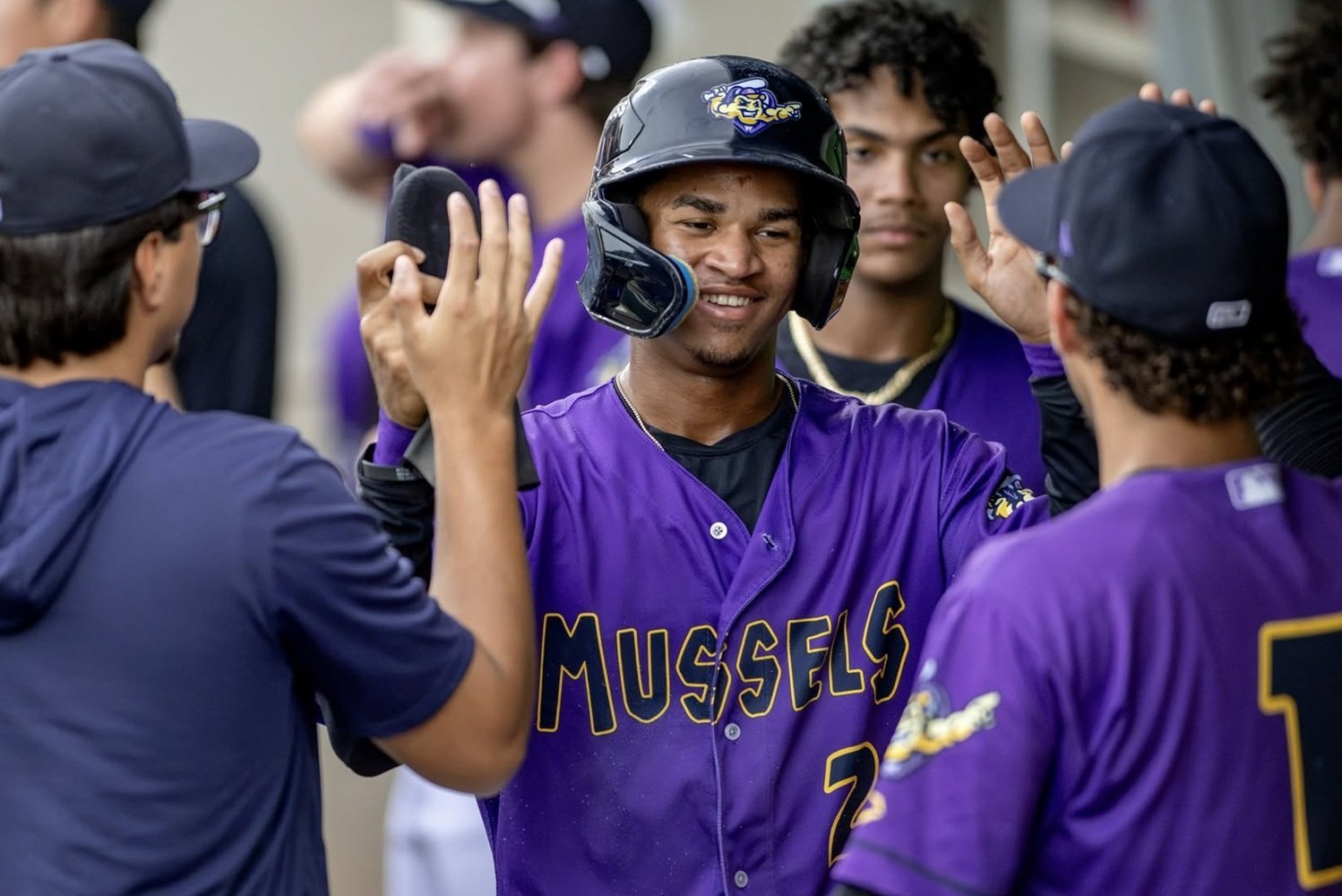 TRANSACTIONS Fort Myers moved RHP Cristian Hernandez to the Development List. He started Game 1 of the Mussels doubleheader on Thursday and tossed three innings. RHPs Max Bayles and Tyler Bryan were assigned to the Mussels from the FCL Twins. Bayles was the Twins 7th-round pick in July out of Santa Clara. Bryan is a non-drafted free agent who pitched collegiately at the University of Houston earlier this year. The Twins signed him on July 22nd and he’s been hanging out, getting his work in at the Twins minor league complex. SAINTS SENTINEL St. Paul 1, Omaha 7 Box Score Cody Morissette hit his 15th Saints home run, a solo shot in the top of the seventh inning. It was the lone run scored by the Saints. The Saints had seven of their hitters with one hit each. They had four walks (three of them by the two batters that went hitless). Aaron Sabato had a single and a walk. David Banuelos walked twice. Alan Roden had a single and was hit by a pitch. Veteran German Marquez was charged with six runs on six hits (including two home runs) over the first six innings. However, just two of the runs were earned thanks to three errors by infielders. Alejandro Hidalgo gave up one run on one hit (a solo homer) over two innings. He walked one and had two strikeouts. WIND SURGE WISDOM Wichita 2, Tulsa 8 Box Score Cory Lewis started for Wichita and worked the first four innings. He gave up two runs (1 earned) on three hits and two walks. He also had six strikeouts. Hunter Gregory came on and gave up three runs on four hits (including two home runs) in the fifth inning. Sam Armstrong gave up three runs on two hits (both homers) and a hit batter over the final three innings. He had five strikeouts. In the top of the fifth inning, Khadim Diaw hit his third home run with Wichita to make it a 2-1 ballgame. In the top of the eighth inning, Brandon Winokur, Garrett Spain, and Kyle DeBarge singled to give the Wind Surge their second run. Of course, by that time, they were down 8-2. Khadim Diaw went 3-for-5 with his third home run. Brandon Winokur was 3-for-5 as well. Marek Houston went 2-for-5. Caden Kendle was 2-for-4. KERNELS NUGGETS Cedar Rapids 5, South Bend 7 Box Score The Kernels got a Quality Start from Reed Moring. The 2025 draft pick gave up two runs on five hits. He had seven strikeouts to go with zero walks. Sixty-one of his 81 pitches (75.3%) were strikes. Finnegin Wall gave up two runs (1 earned) on three hits and two walks in the seventh inning. The Kernels actually scored first. In the top of the first inning, Jacob McCombs scored on a double play ball. In the top of the fourth inning, Jose Salas tripled and then scored on a Byron Chourio single to tie the game at 2-2. The Cubs took the lead at 3-2 through seven innings. Salas started the top of the eighth inning with a single. He moved to second on a groundout and then stole third base. Irvin Nunez singled to drive in Salas and make it 3-3. Yilber Herrera followed with a single. After a pitching change and a strikeout, Vahn Lackey singled to left field to drive in Nunez. Herrera then scored on a wild pitch to give the Kernels a 5-3 lead. Wall faced one batter in the top of the eighth before exiting the game. Yehizon Sanchez came in and that runner scored to make it 5-4. Sanchez then gave up a three-run walk off home run in the bottom of the ninth inning and the Cubs had a win. Yasser Mercedes went 2-for-4 with a walk. Salas was 2-for-5 with a triple. He also stole a base. Vahn Lackey was 1-for-3 with two walks, and he stole his fourth and fifth bases. MIGHTY MATTERS Game 1: Fort Myers 3, Clearwater 9 Box Score The Mussels fell behind early in Game 1 on Thursday. Cristian Hernandez started and gave up three runs on five hits and four walks over three innings. He struck out two. However, Melvin Rodriguez came in for the fourth inning, and he gave up six runs on four hits, a walk, and two hit batters and recorded just two outs. Rainer Marin got the final out of the fourth inning (after allowing two of three inherited runners to score. He also got two outs in the fifth inning, but he gave up a hit and three walks but no runs. Nick McAuliffe got the final out of the fifth inning. Max Bayles became the first 2026 draft pick to pitch in a game this season. He walked three but struck out one in a scoreless inning. The Mussels got on the scoreboard in the top of the third inning. Merphy Hernandez drove in Bryan Acuna with a single to center. At the time, it cut the deficit to 3-1. In the top of the sixth inning, Charlie Scholvin walked. Hernandez hit a double to push Scholvin to third base. Carson Tinney walked to load the bases. Scholvin scored on a wild pitch. With two outs, Quentin Young singled to drive in Hernandez with the third and final run. Hernandez went 2-for-3 with his sixth double. Game 2: Fort Myers 5, Clearwater 6 Box Score Game 2 was wonderful for the Mussels, well, for the first 6 1/2 of the seven innings. Matthew Dalquist started and tossed four scoreless innings. He gave up one hit, walked one and had six strikeouts. Tyler Bryan came on for his professional debut. In 1 2/3 innings, he gave up one hit and two walks but kept the Threshers scoreless. Hendry Chivilli got the final out of the bottom of the sixth. Colby Turner led off the top of the second inning with his third home run. Bryce Fowler followed with a single. With one out, Jimmy Keenan knocked his first professional home run to give his team a 3-0 lead. Ricardo Paez led off the top of the fifth inning with a walk. He went to third on a Merphy Hernandez double. Carson Tinney walked to load the bases. Isaiah Lane walked to make it 4-0. Colby Turner was hit by a pitch which made it 5-0. Heading into the bottom of the seventh inning. Chivilli was back on the mound. The leadoff man reached on an error. That was followed by a ground out. A walk was followed with a line-drive single to lead the bases. Another single and the Threshers were on the board, down 5-1. A wild pitch made it 5-2. Another single made it 5-3. That ended Chivilli’s day. Jake Covey entered the game. A stolen base put runners on second and third. A single to right drove in both runs and the score was tied at 5-5. Two more singles and the game was over, the Mussels being walked off 6-5. The Mussels scored their five runs on seven hits and five walks. Merphy Hernandez led the way again. He was 3-for-4 with his seventh double. He also stole his 49th and 50th bases. Ricardo Paez had a single and a walk. The Mussels went 0-for-6 with runners in scoring position with six left on base. PLAYERS OF THE DAY Hitter(s) of the Day Khadim Diaw (Wichita): 3-for-5, HR(3), 1 R, 1 RBI, K Merphy Hernandez (Fort Myers): 5-for-7, 2-2B(7), 2 R, RBI, 2-SB(50), CS(11) Pitcher(s) of the Day Reed Moring (Cedar Rapids): 6 IP, 5 H, 2 ER, 0 BB, 7 K, 81 pitches, 61 strikes (75.3%). PROSPECT SUMMARY Check out the Prospect Tracker for much more on our Twins Top 20 prospects. See how they did today. #2 - C Vahn Lackey (Cedar Rapids) - 1-for-3, 2 BB, RBI, K, 2-SB(5) (batted second, played catcher) #4 - SS Marek Houston (Wichita) - 2-for-5, K (batted first, played SS) #6 - OF Emmanuel Rodriguez (St. Paul) - 1-for-5, 2 K (batted first, played LF) #11 - C Carson Tinney (Fort Myers) - Game 1: 0-for-2, BB (batted second, DHd); Game 2: 0-for-3, BB, K (batted second, played catcher) #12 - 3B/CF Brandon Winokur (Wichita) - 3-for-5, R (batted third, played 3B) #13 - C/OF Khadim Diaw (Wichita) - 3-for-5, HR(3), R, RBI, K (batted second, played catcher) #18 - 3B/SS Quentin Young (Ft. Myers) - Game 1: 1-for-3, RBI (batted fifth, played 3B); Game 2: 0-for-3, 3 K (batted sixth, played SS) #19 - OF Yasser Mercedes (Cedar Rapids) - 2-for-4, BB, 2 K, (batted third, played RF) UPCOMING PROBABLES Friday, September 4 St. Paul @ Omaha (6:35 pm CT) - LHP Aaron Rozek (3-5, 4.10 ERA) Wichita @ Tulsa (7:00 pm CT) - RHP Preston Johnson (1-3, 3.94 ERA) Cedar Rapids @ South Bend (6:05 pm CT) - RHP Merit Jones (0-1, 6.14 ERA) Ft. Myers @ Clearwater (5:30 pm CT) - RHP Matt Barr (0-1, 6.75 ERA) CURRENT W-L Records Minnesota Twins: 67-73 St. Paul Saints: 76-58 Wichita Wind Surge: 51-76 (Final Game 9/13) Cedar Rapids Kernels: 47-80 (Final Game 9/6) Fort Myers Mighty Mussels: 67-58 (Final Game 9/6) FCL Twins: 33-26 (Season Complete) DSL Twins: 19-35 (Season Complete) Please feel free to ask questions about the teams, the rosters, and discuss today’s games, or anything else Twins minor-league related! View the full article
 -
What are your Marlins vs. Cubs series predictions?
DiamondCentric posted an article in Fish On First
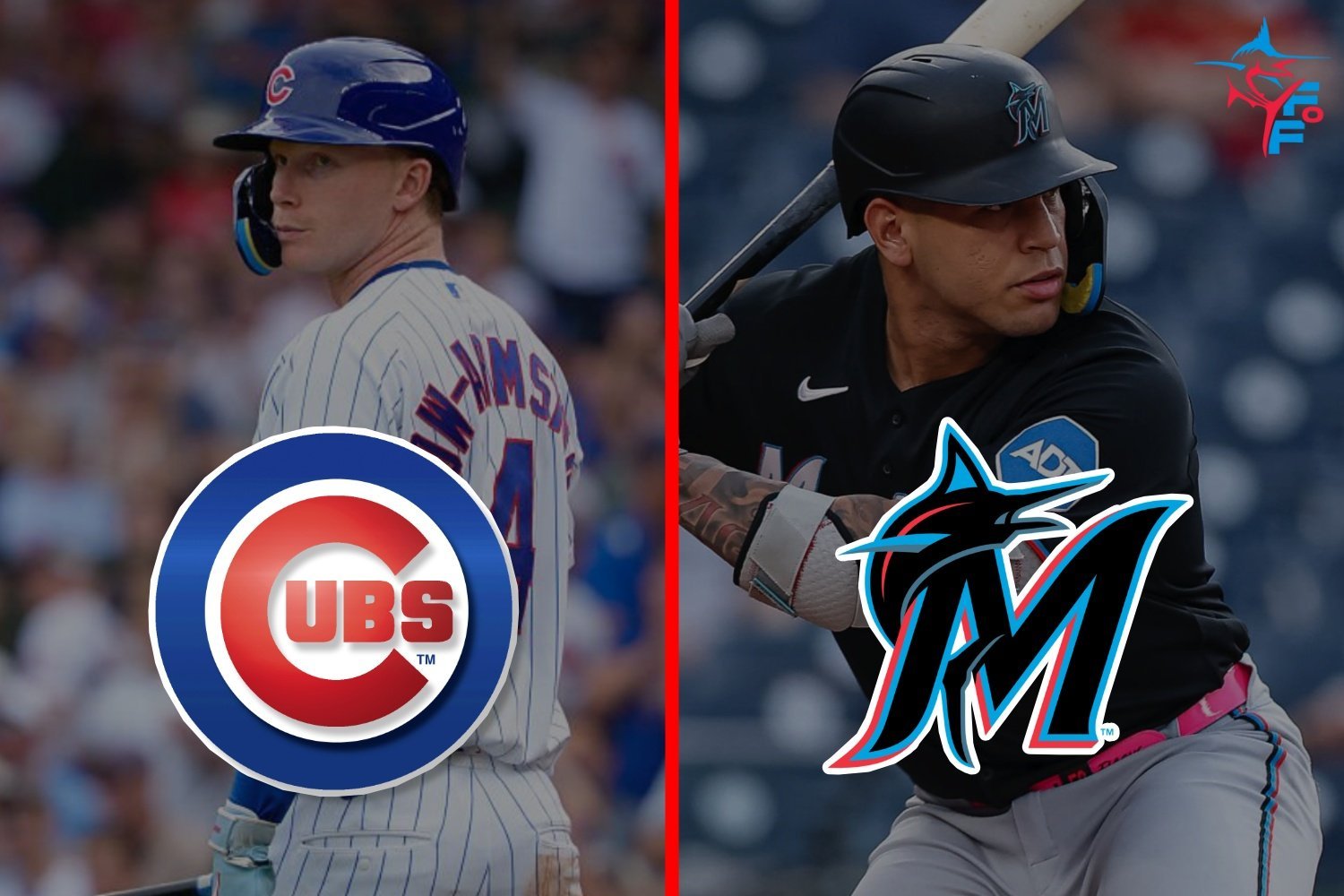 Once again in 2026, I will be monitoring Miami Marlins predictions from our valued SuperSubs, Fish On First staffers and livestream guests. Individual article pages like this one will be created prior to every Marlins series and featured prominently on the FOF site. Consistent participation is key if you want to win this annual contest. Submissions only take a few seconds. Scoring system A "perfect" series is worth three points: Earn one point for predicting which team will win the upcoming series Earn one point for predicting the precise number of victories for each team Earn one point for predicting the “Series MVP” who accumulated the highest win probability added (WPA) during the series as calculated by FanGraphs (could pick a player from either team) FOF SuperSub David Fernandez is currently atop the 2026 season leaderboard, which will be updated between every Marlins series. If you are a SuperSub, leave a comment with your Prediction Time picks on this page, or join the Marlins Discord Server and submit there. We'll feature them on the upcoming Fish On First LIVE episode and track your points throughout the season! Any picks submitted prior to the first pitch of the series opener will be counted. If you are not a SuperSub, please consider signing up here to support the FOF staff. Series preview notes Probable starting pitchers: RHP Janson Junk (MIA) vs. LHP Shota Imanaga (CHC) on Friday RHP Ryan Gusto (MIA) vs. TBD (CHC) on Saturday RHP Tyler Phillips (MIA) vs. TBD (CHC) on Sunday The Marlins rank 15th in MLB with a 100 wRC+ and 14th in MLB with a 4.05 FIP. They are 4-6 in their last 10 games and have a 42-27 record at home this season. The following Marlins players are on the injured list: Anthony Bender (15-day IL), Xavier Edwards (10-day IL), Pete Fairbanks (15-day IL), Ronny Henriquez (60-day IL), William Kempner (60-day IL), Adam Mazur (60-day IL), Andrew Nardi (60-day IL) and Robby Snelling (60-day IL). The Cubs rank first in MLB with a 115 wRC+ and 27th in MLB with a 4.71 FIP. They are 4-6 in their last 10 games and have a 38-31 record on the road this season. The following Cubs players are on the injured list: Tyler Austin (60-day IL), Ben Brown (60-day IL), Edward Cabrera (15-day IL), Hunter Harvey (60-day IL), Porter Hodge (60-day IL), Gavin Hollowell (15-day IL), Cade Horton (60-day IL), Riley Martin (60-day IL), Phil Maton (60-day IL), Shelby Miller (60-day IL), Justin Steele (60-day IL) and Dansby Swanson (10-day IL). View the full article
 -
 The San Diego Padres' four full-season affiliates went just 1-3 Thursday as the Triple-A El Paso Chihuahuas posted the only victory, a 9-3 decision over Las Vegas. The Double-A San Antonio Missions were shut out by Midland 3-0, the High-A Fort Wayne TinCaps bowed to Lansing 8-3 and the Low-A Lake Elsinore Storm tumbled to Inland Empire 11-1. Padres Minor-League Transactions El Paso Chihuahuas placed RHP Ethan Routzahn on the 7-day injured list. El Paso Chihuahuas activated DH Will Wagner from the temporarily inactive list. RHP Garrett Hawkins assigned to El Paso Chihuahuas from San Antonio Missions. San Antonio Missions activated C Oswaldo Linares from the Development List. RHP Carlos Medina assigned to San Antonio Missions from Fort Wayne TinCaps. Lake Elsinore Storm placed RHP Michael Salina on the 7-day injured list. LHP Jeronimo Palmeros assigned to Lake Elsinore Storm from ACL Padres. Gage Workman Drives In 4 As Chihuahuas Fly By Aviators Gage Workman went 3-for-4 with four RBIs, while Carlos Rodriguez and Blake Hunt also had three hits as the host Triple-A El Paso Chihuahuas cruised to a 9-3 victory over the Las Vegas Aviators. Rodriguez and Nick Solak each drove in a pair of runs, while Hunt scored three times. Clay Dungan went 2-for-3 with a walk and two runs scored and Nick Pratto was on base three times with a single and two walks. Chihuahuas right-handed starter Ian Koenig, in his second Triple-A start, struck out a career-high eight over five innings, allowing three runs on three hits with two walks. Right-hander Logan Gillaspie fanned five over three shutout innings, allowing just one hit. Right-hander Hunter Stratton turned in another scoreless inning, his eighth in 10 games since being acquired from the Pittsburgh Pirates at the trade deadline. The Chihuahuas combined to limit the RockHounds to four hits. Mason McCoy had a sacrifice fly and Workman an RBI single to put the Chihuahuas up 2-1 in the bottom of the second. They made it 6-1 in the fourth. Hunt had a leadoff single, Bryce Johnson walked and McCoy loaded the bases on a bunt single. Workman had a sac fly, Rodriguez an RBI single and Nick Solak a two-run single after Rodriguez's 20th steal of the season. After the RockHounds made it 6-3 in the fifth, Workman singled to begin the sixth and scored on Rodriguez's 18th double of the season. In the seventh, Dungan and Hunt singled, Johnson bunted both up a base and Workman drove both home with a single to center. EP_0903.mp4 Player AB R H RBI BB K Mason McCoy, CF 4 1 2 1 0 0 Gage Workman, 2B 4 1 3 4 0 0 Carlos Rodríguez, RF 5 1 3 2 0 1 Nick Solak, DH 5 0 1 2 0 1 Nick Pratto, 1B 3 0 1 0 2 0 Marcos Castañon, 3B 5 0 0 0 0 0 Clay Dungan, SS 3 2 2 0 1 0 Blake Hunt, C 4 3 3 0 0 0 Bryce Johnson, LF 1 1 0 0 1 0 Player IP H R ER BB K HR Ian Koenig 5 3 3 3 2 8 1 Logan Gillaspie 3 1 0 0 0 5 0 Hunter Stratton 1 0 0 0 0 0 0 Missions Blanked By RockHounds Despite matching in the hit column, the host Double-A San Antonio Missions dropped a 3-0 decision to the Midland RockHounds. The Missions were shut out for the ninth time this season. The difference was the Missions got three hits from Romeo Sanabria and two from the red-hot Braedon Karpathios (Padres Mission's No. 9 prospect) but only two from the rest of the lineup, while the RockHounds had six players contribute hits. Missions right-handed starter Abraham Parra gave up three runs (two earned) on three hits over five innings, walking three and striking out four. Right-hander Francisco Pena went two scoreless as did left-hander Harry Gustin, who struck out three. Player AB R H RBI BB K Braedon Karpathios, RF 3 0 2 0 1 0 Alex McCoy, LF 4 0 1 0 0 3 Albert Fabian, DH 3 0 0 0 1 1 Romeo Sanabria, 1B 4 0 3 0 0 0 Ryan Jackson, 2B 4 0 0 0 0 2 Jack Costello, 3B 4 0 1 0 0 0 Justin DeCriscio, SS 4 0 0 0 0 1 Kai Roberts, CF 4 0 0 0 0 2 Oswaldo Linares, C 3 0 0 0 0 3 Player IP H R ER BB K HR Abraham Parra 5 3 3 2 3 4 0 Francis Peña 2 2 0 0 0 1 0 Harry Gustin 2 2 0 0 0 3 0 Yoiber Ocopio Homers For TinCaps, Who Fall To Lugnuts Yoiber Ocopio hit his first High-A home run, but that was the lone highlight for the Fort Wayne TinCaps, who fell to the host Lansing Lugnuts 8-3. Ocopio staked the TinCaps to a 2-0 lead in the top of the second inning, scoring Kerrington Cross, who singled leading off the inning. It was his first homer in 14 games with the TinCaps after hitting five in 66 games with the Low-A Lake Elsinore Storm. TinCaps right-handed starter Bryan Balzer gave up five runs (three earned) on six hits and three walks and two strikeouts over 3⅓ innings. He gave up two runs in the third inning to tie the game and then three in the fourth. The RockHounds added three in the seventh against right-hander Jeferson Villabona. Meanwhile, right-hander Sean Barnett went 1⅔ scoreless innings with two strikeouts, while right-hander Will Varmette had 1⅓ scoreless with three punchouts. FW_0903.mp4 Player AB R H RBI BB K Kasen Wells, CF 4 0 0 0 0 1 Ryan Gerety, LF 4 0 0 0 0 1 Rosman Verdugo, SS 2 0 1 0 2 0 Robbie Lavey, C 4 0 1 0 0 0 Kerrington Cross, 3B 3 1 1 0 1 1 Luke Cantwell, DH 4 0 0 0 0 2 Yoiber Ocopio, 1B 4 1 1 2 0 2 Yimy Tovar, 2B 4 0 0 0 0 1 Dylan Grego, RF 4 0 2 0 0 0 Player IP H R ER BB K HR Bryan Balzer 3 1/3 6 5 3 3 2 0 Sean Barnett 1 2/3 1 0 0 1 2 0 Jeferson Villabona 1 2/3 5 3 3 1 1 0 Will Varmette 1 1/3 0 0 0 0 3 0 Lan-Hong Su Dazzles With 9 K's, But Storm Pounded Right-handed starter Lan-Hong Su struck out nine over 4⅔ innings, but the host Low-A Lake Elsinore Storm didn't produce much offensively in an 11-1 loss to the Inland Empire 66ers. Jose Verdugo had two of the Storm's six hits, while seventh-round draft pick Joe Tiroly drove in the only run, an eighth-inning single that plated second-rounder Elliot Lascelles (Padres Mission's No. 11 prospect). Su, the 19-year-old touted international free agent, has had his two biggest strikeout games of his debut season in his last two starts. He followed up a seven-strikeout performance over three innings Aug. 27 vs. Rancho Cucamonga with two more against the 66ers. He only allowed one hit, a two-run homer to his last batter that broke up a scoreless game. Storm left-hander Rob Evans, the Padres' 12th-round draft choice, made his pro debut, giving up one unearned run in one inning on a hit and a walk with one strikeout. Left-hander Jeronimo Palmeros made his Storm debut after nine games in the Arizona Complex League, allowing three runs on a hit and four walks in one inning. Another player made his pro pitching debut. That was 10th-round draft choice Augie Lopez, a catcher who started the game as the designated hitter. Lopez got the final two outs in the top of the ninth and allowed a run. LE_0903.mp4 Player AB R H RBI BB K Elliot Lascelles, SS 4 1 1 0 0 0 Nu'u Contrades, 1B 3 0 0 0 1 1 Joe Tiroly, 3B 3 0 1 1 1 1 Alex Conover, LF 4 0 0 0 0 1 Chris McHugh, RF 4 0 0 0 0 0 Jose Verdugo, 2B 3 0 2 0 0 0 Jesmaylin Arias, PH 1 0 0 0 0 1 Truitt Madonna, C 4 0 1 0 0 2 Augie Lopez, P 4 0 0 0 0 3 Dawson Willis, CF 3 0 1 0 0 2 Player IP H R ER BB K HR Lan-Hong Su 4 2/3 1 2 2 0 9 1 Yoesmerli Beltre 1/3 2 1 1 0 0 1 Rob Evans 1 1 1 0 1 1 0 Jeronimo Palmeros 1 1 3 3 4 0 0 Albert Roblez 1 1/3 3 3 3 2 3 0 Augie Lopez 2/3 1 1 1 2 0 0 Padres Mission's Top 20 Prospect Performance Ethan Salas: DNP Ryan Wideman: On injured list Coleman Borthwick: In Arizona Kruz Schoolcraft: DNP Ty Harvey: DNP Kale Fountain: Injured, out for season Jorge Quintana: DNP Alex McCoy: 1-for-4, 3 K Braedon Karpathios: 2-for-3, BB Lamar King Jr.: DNP Elliot Lascelles: 1-for-4, 2B, R Tucker Musgrove: On injured list Jagger Haynes: DNP Jake Cunningham: DNP Truitt Madonna: 1-for-4, 2 K Eric Yost: DNP Winyer Chourio: DNP Jesus Castro: DNP Michael Salina: On injured list Rosman Verdugo: 1-for-2, 2B, 2 BB View the full article
 -
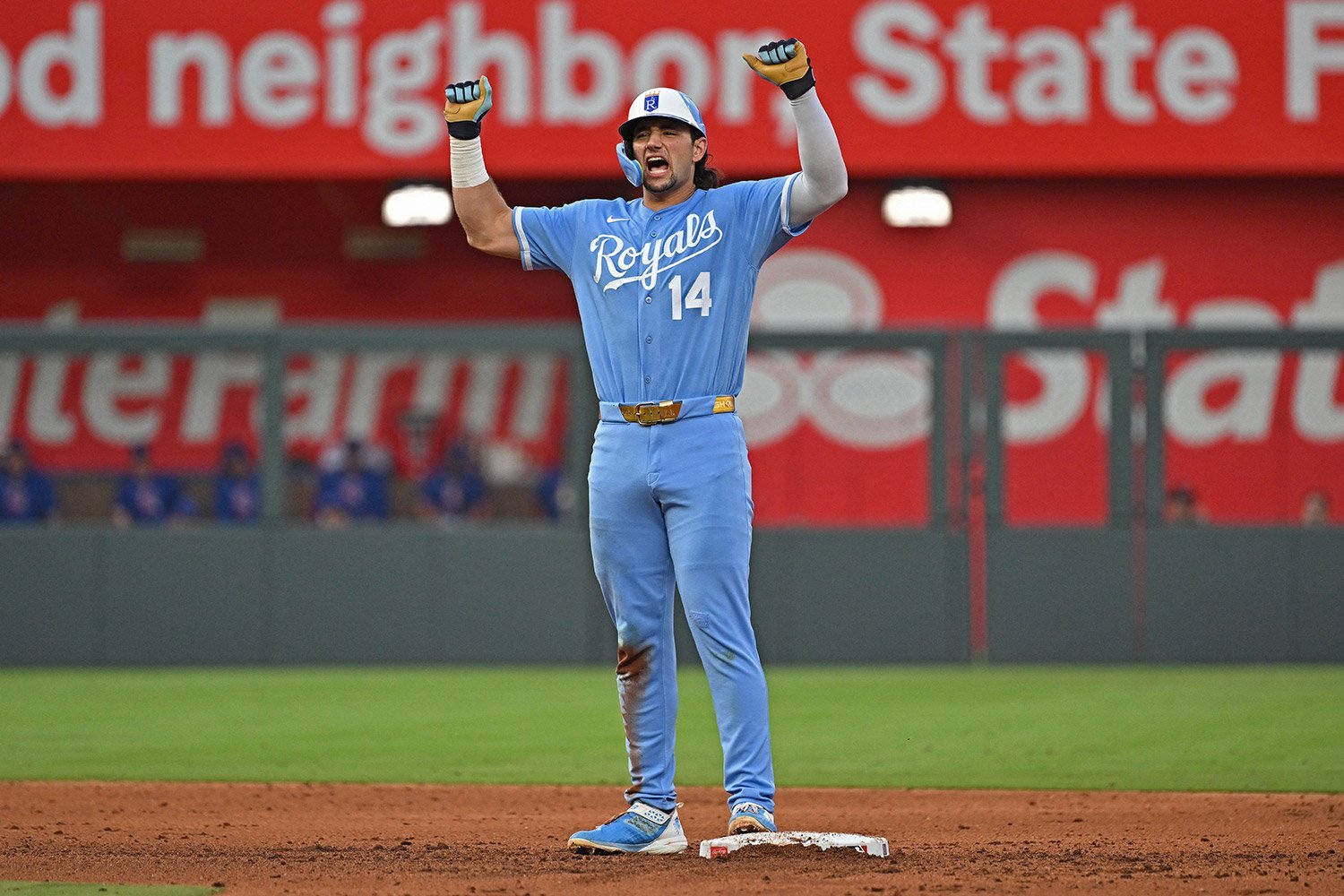 August provided some hope and positivity for the Royals, and it ended up being the first winning month of the season. The Royals finished August 16-11, which included a 16-game stretch where they went 13-3, including a nine-game win streak. With a winning month, there were multiple hitters that deserve to be highlighted, so here is a look at four hitters who deserve to be recognized for their month, most notably Jac Caglianone, who tore the cover off the ball this past month. Hitter Of The Month: Jac Caglianone Caglianone was fantastic in August, playing in 24 games, hitting six home runs, and adding 24 RBIs as well. He also had eight doubles and stole three bases on top of that. His slash line of .411/.429/.684 was otherworldly and deserves to be mentioned first on this list. He has erased any doubts about his future in the Royals lineup and as someone the team can build around going into what the organization hopes will be a bounce-back year into being more consistently competitive. Caglianone will be a big part of any turnaround the organization looks to have. At one point in August, Jac Caglianone hit five home runs over a 12-game period, where he recorded at least one hit in each of those games. He also hit a home run off of one of the best left-handed pitchers in baseball in their first start with his new team as well, which is a positive, especially as a left-handed hitter. The only thing one could nitpick is that Caglianone walked just two times in the month, but when you hit the way he did, taking a walk isn’t something you need to focus too much on. Michael Massey Unfortunately, Massey ended up on the 7-day IL to finish the month, but that doesn’t take away how great his month of August was. Massey played in 19 games, with a slash line of .338/.362/.554. He had three home runs and added three doubles as well. Bobby Witt Jr Witt Jr. continued his stellar year into August, where he hit three home runs over 98 plate appearances, hitting for an OPS of .857 while adding six stolen bases as well. Witt Jr is the player that other pitchers circle in their lineup as the guy to not let beat you, but he still is a pain for them to get out, especially when other Royals players are hitting like they did in August. His strikeout-to-walk ratio was pretty solid for the month, with 18 strikeouts to 14 walks. He also scored 26 runs, which was the most on the team over the month as well. Anytime one player is scoring 26 runs in 25 games played, they must have had a pretty solid month. Vinnie Pasquantino Pasquantino played in just 12 games this past month after being activated off the injured list on August 17. In those 12 games, he did his best Jac Caglianone impression, hitting for a 1.078 OPS with three home runs and four doubles. Pasquantino’s .341 average for the month was second on the team behind Caglianone for players who played in at least 12 games. He showed solid patience at the plate, walking seven times while striking out just twice. While Caglianone deserves the recognition for hitter of the month, the entire offense looked much better and provided hope going into the final month of the season and into the 2027 season. With the Royals on the outside looking in on the playoffs, this past month provided excitement to a fan base that has been mostly disappointed throughout this season. Royals fans can hope for another positive month in September, hoping to build off of that into the offseason and into next season. View the full article
 -
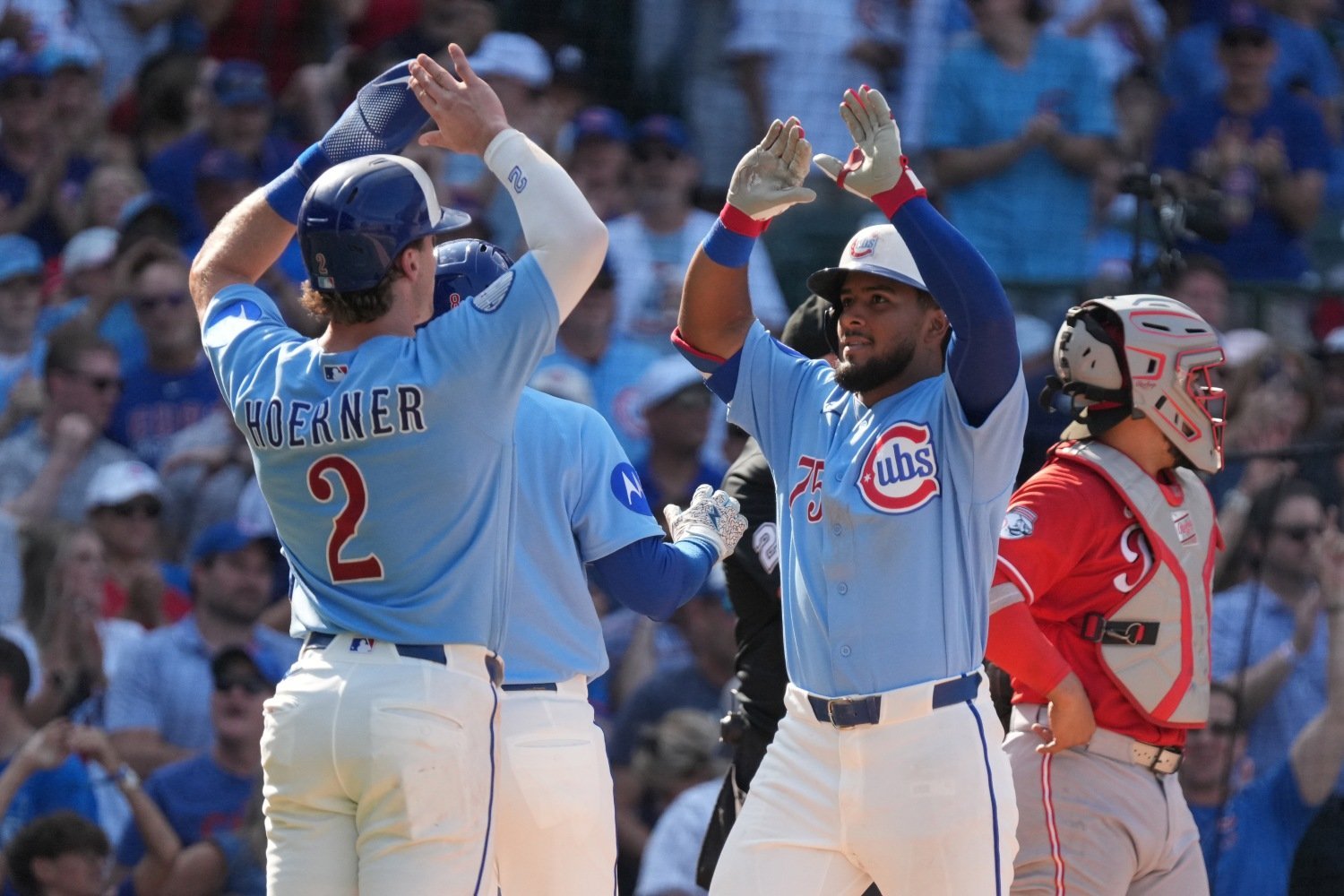 Pedro Ramírez has been one of the cooler storylines for the Chicago Cubs this season. Just 21 years old when the season began, he has since turned himself into a valuable piece of Chicago’s lineup. In 191 plate appearances with the Cubs, Ramírez is hitting .285/.347/.436. For a bottom-of-the-order bat, that’s some pretty impressive production. Considering his age, there should be plenty of room for him to continue growing as a player. The Cubs appear to have found themselves a young player capable of contributing at the major-league level, which is never a bad thing. As good as Ramírez’s bat has been this season, though, there are some questions about his role once the postseason gets underway. Ramírez has spent time at second base recently, with Nico Hoerner currently occupying shortstop in the absence of Dansby Swanson. He’s also moonlighted at third base when Alex Bregman takes a day at designated hitter, but those days are few and far between. He's a much better third baseman than a second baseman, which is unfortunate for him, because the team's need is for a better second baseman. Although he has an outfielder's glove from his time in the minors, he's yet to crack that crowded picture for the parent club. When you start looking at the potential postseason roster, there simply may not be a lot of playing time available for him, assuming Dansby Swanson is activated from the IL before the Wild Card round. If Swanson remains sidelined when the postseason begins, this could become a completely different conversation. Ramírez would have a much clearer path to playing time, and the Cubs could continue using the versatility he's provided throughout the season. But if Swanson is healthy and ready to go before the end of the regular season (which seems likely, given the latest updates on his condition), Ramírez could end up being the odd man out. There might be some regression (or at least rebalancing) forthcoming for Ramírez, anyway. His production has been boosted by success against left-handed pitching, in a very small sample size. Ramírez has just 34 plate appearances against lefties this season, but he owns a .928 OPS in those opportunities. Against right-handed pitchers, that number drops all the way to .718. Scouts and underlying data agree, however, that he's actually a better hitter from the left side, facing righties. If the stronger side for him is one from which he's been a bit exposed, it might mean he's not ready to contribute at the plate this postseason. The Cubs are not going to bench Hoerner, Swanson or Bregman in favor of Ramírez in any game that matters down the stretch—not even once. Ian Happ, Seiya Suzuki, Tyrone Taylor and Pete Crow-Armstrong have the outfield covered, and Michael Conforto (the fifth Beatle of the group) means they can fill the grassy spots plus DH. Matt Shaw is back from his injury, and his skill set overlaps pretty substantially with that of Ramírez. When you zoom out and look at the entire roster, it looks like Ramírez's only role on this team once Swanson returns is as an emergency fill-in. Ramírez has done everything the Cubs could have reasonably asked from him during his rookie season. He's provided quality offensive production, gotten on base at a strong rate, and shown enough versatility to move around the diamond. There’s plenty to like about his long-term future in Chicago. But the postseason is a completely different situation. You’re no longer trying to develop young players or find out what they can become. Every roster decision is about putting the best possible group on the field to win that specific game. When you consider Ramírez’s defensive limitations, his modest production against right-handed pitching, and the sheer number of other options the Cubs have available, it becomes difficult to find a consistent role for him this fall. He might be shuffled to the bottom of the deck down the stretch—an ace in the hole, to be played when the chips are down and things are desperate or to be held for a bigger play next year. View the full article
 -
The Twins Have the Pieces for a Dominant Starting Rotation in 2027
DiamondCentric posted an article in Twins Daily
 To some extent, the Twins’ starting rotation this year was doomed from the start—not in the sense that the rotation wasn’t good enough, or that Minnesota didn’t have enough solid options heading into the season, but in that they were already diminished and destined to lose even more top arms to injury. Before Pablo López could even throw a spring training inning, he went down with an elbow injury that would ultimately cost him the entire season. Just like that, the Twins lost the guy who had been their most established frontline starter and were forced to adjust. Then, in mid-April. Mick Abel was coming off of two scoreless outings and looked like he was beginning to establish himself as another legitimate option in the rotation when he was sidelined with inflammation. That would be the last we would see of Abel this season. You can add Joe Ryan to the list, as well. Ryan was not only healthy for most of the year, but pitching like one of the best starters in the American League through the All-Star break. Then, right in the middle of the Twins’ stretch run, a glute strain (literally) destabilized and (figuratively) derailed him. After a few brutal starts, it landed him on the injured list and put a damper on what had been a legitimately Cy Young-caliber half-season. You can't blame it all on bad luck. Durability has not been a strong suit for Ryan or Abel, and even Bailey Ober and López have long injury histories. Nor could anyone claim to be shocked when David Festa suffered one setback after another, leading to surgery that puts even his readiness for spring training in some doubt. Rather than calling this outcome bad luck, maybe we should say that the team needed a bit of good luck when it came to pitching health—but the baseball gods denied them that. While that has probably been extremely frustrating for the organization (and obviously for fans watching things unfold), there's another way to look at it. Assuming the guys currently recovering are able to get and stay healthy, the problems Minnesota experienced this season might set them up extremely well for next year. In a strange way, you can find more solace in the big, extremely costly individual injuries that sideline some pitchers for an entire season than in things like glute strains or 15-day stints on the shelf with soreness. For most pitchers, surgeries like the ones López and Abel each had this year offer some protection from the same kinds of issues in the short term. The long recovery time is no fun, but the risk of reinjury is very low, for a little bit. Therefore, when such injuries cluster together, you can be moderately hopeful of a compensating healthy campaign for those pitchers the following year—barring setbacks before they get back on the mound, which, of course, is a real worry. Healthy and humming, Ryan, López and Abel comprise a scary trio. And you can add a fourth pitcher to that conversation, in Taj Bradley. Bradley’s season hasn't exactly been consistent. He’ll put together three really good starts, and then seemingly follow them up with three that leave you wondering what happened. But even with those ups and downs, there's a lot to like about the direction in which he's heading. His ERA and expected ERA both sit in the 3.00s, while his strikeout rate is a robust 27.2%. In terms of pure stuff, there is legitimate frontline upside here. He's also gotten better at avoiding the full-fledged blowup outing. Last season, Bradley made 27 starts, and six of them saw him post a Game Score under 30. (Game Score is an old Bill James-built stat designed to evaluate a start at a glance; 50 is average and higher is better.) This season, he's already made 27 starts, and only two of them came in under 30. Twenty of them have had a Game Score of 50 or higher; only 15 of his 27 in 2025 were that good. Bradley took a big step forward in 2026, and another winter of development could allow him to take another step in 2027. López, Ryan, Bradley, and Abel lay the foundation for what might turn into one of the best rotations in the league next season. This season has also seen big progress from Zebby Matthews (whose ERA has come down by just over a run each year of his career, so far) and Connor Prielipp. Both guys have mid-rotation upside, and are sturdy options for the back end of the rotation even right now. Meanwhile, top starting prospect Riley Quick is not so far off on the horizon as not to have a hope of arriving in 2027. Obviously, not everyone is going to stay healthy. Injuries happen, trades will take place, and other moves are going to reshape the roster over the offseason. The team might well retain Ober and/or Dean Kremer, while trading Ryan. The cruel flipside to being hopeful because López and Abel might be sheltered from further injury is the knowledge that next season could be the one in which Bradley, Matthews or Prielipp breaks. There's also no guarantee that every young pitcher takes the developmental step Minnesota is hoping for. That’s just the reality of projecting a rotation this far in advance. But when you look at the talent currently in place, it’s difficult not to get excited. A healthy López, a healthy Ryan. Bradley continuing to develop, Abel returning and building on his upside, and both Prielipp and Matthews competing for opportunities and potentially providing legitimate depth—that's a lot of talent. After everything that went wrong for the Twins’ starting rotation this season, it would be pretty ironic if the injuries and setbacks ultimately created a situation where the group enters 2027 healthier, deeper, and more dangerous than it has been in quite some time. The Twins still have work to do this offseason, and plenty can change between now and Opening Day. But as things currently stand, Minnesota’s projected starting rotation entering the 2027 season looks like it could make good on the promise that never turned into sufficient production for the 2026 squad. View the full article
 -
Can the Blue Jays Reach the Playoffs While Relying on Bullpen Days?
DiamondCentric posted an article in Jays Centre
 The Toronto Blue Jays have posted a 9-7 record in games classified as bullpen days, a surprisingly strong mark for a club that has been forced to improvise. The approach has helped keep the Jays in the playoff race, but whether it remains a viable path to the postseason is another question entirely. Even with one of the better relieving corps in baseball, the Jays just don’t have the offensive firepower to hold off teams like the Guardians. Spencer Miles and Ricky Tiedemann were strong on Tuesday, but as the offense failed to add on runs, the Jays were forced to keep Spencer Arrighetti and Joe Mantiply in the game for a handful of extra batters. Bullpen games for the Jays can feel like throw-away games, and that isn’t ideal during this final stretch. They can almost feel like the Jays aren’t putting forth their best effort because they are more focused on resting leverage arms for winnable games. The fact that the team is above .500 in bullpen days has helped them remain competitive in the fight for the final Wild Card spot. Whether the team can maintain that success if the timelines for Shane Bieber and Trey Yesavage remain uncertain is another story. It was bad timing for the Jays, as they scheduled their bullpen day this week against Gavin Williams, who threw a gem. The challenge for Toronto is that bullpen days require a deep bullpen, an offense capable of creating runs, and careful workload management. Jays starters have been particularly strong the past few weeks, but to expect six or seven innings every time out, especially against teams also vying for the postseason, is a lot to ask. Without extended outings from starters like Dylan Cease and José Soriano (not to mention Max Scherzer), the likes of Tyler Rogers, Braydon Fisher, Mason Fluharty and Louis Varland will need to continue to work close to their capacity. Patrick Corbin was signed by the Jays to be an insurance policy for the starting rotation. His 3-4 record over 19 appearances, including 15 starts, was adequate but not outstanding. With an ERA of 5.51 over that span, he helped the team tread water. Comparing his record with the bullpen day record, you can see why the team hasn’t looked to replace him altogether and instead went to starting by committee. The strongest argument against keeping bullpen days is the strain on the relievers. Toronto's bullpen has been among the busiest groups in baseball, logging more than 550 innings. As innings pile up, even for non-leverage arms, fatigue is a real concern. The key concern for Toronto is whether the bullpen can maintain its effectiveness under such a heavy workload through the season's final month. The Jays bullpen must be getting close to a breaking point where precision, not to mention velocity, may start to dive. At the same time, the importance of every series is starting to grow, so taking a chance on a bullpen day instead of a bona fide starter is a risk. When the season began, it seemed like the Jays would have an abundance of starters, but injuries have taken their toll. Instead, manager John Schneider has had to be creative. With fewer than 30 games left, management has yet another tough decision to make. Can they afford to drop the bullpen days and go with a three- or four-man rotation? The team has three days off in the next three weeks. Are Arrighetti and Jameson Taillon the short-term solution until Bieber and Yesavage come back? The Jays are clearly a bit hesitant to have Arrighetti go two times through an order, perhaps based on reduced velocity and pitch execution. Taillon is expected to return from the injured list and start on Friday. If the Jays can grab a spot in the postseason, they also need to ensure they haven’t depleted their starting rotation or bullpen. While many teams might fear the Jays in a short series, Toronto still needs to rest their arms whenever they can. In order to make the postseason, the Jays don’t need to be perfect, but they do need to outperform their direct competitors. There will be no tapering for this team as every game and every series matters. Taking Cease out of a blowout an inning or two early seems like the right move, but when Fisher throws nearly 30 pitches, that logic falters. Fisher probably isn’t available for a day or two after. John Schneider has been using his bullpen all season as if it was October. He has developed a mini-roster of leverage arms he trusts and has stuck to that strategy since Opening Day. Take, for instance, that in the last 32 games, Jays starting pitching has an ERA of 2.77, while their top six relievers, namely Varland, Rogers, Miles, Fisher, Fluharty and Sewald, have a collective ERA of 1.23. Unsurprisingly, the team has a record of 20-12 during that stretch. In that stretch of games, there have been a handful of bullpen days. Those games have helped the club stay afloat, but they work best as a complement to a stable rotation rather than a long-term solution. Good starting pitching preserves bullpen health, provides predictability, and reduces roster strain. The Jays would undoubtedly welcome additional rotation stability if it became available. The reality, however, is that contenders must often function with imperfect personnel. Adaptability becomes a competitive skill. The Jays have needed to exemplify adaptability throughout the season. The club has cycled through pitchers, adjusted roles repeatedly, along with running a continuous caravan between Buffalo and Toronto. With 36 different pitchers appearing for the team in 2026, there is a sense there might be more to come. The resiliency of the pitching and the coaching staff has so far paid dividends. Wear and tear is the variable that is most concerning this late in the season. The margin for error shrinks as the season progresses. With the return of Yesavage and Bieber on the horizon, the Jays just need those reinforcements to arrive before the strain on the bullpen becomes too great. The occasional bullpen day can be effective, but Toronto's path to October is far safer with starting pitching taking the lead. Stats taken before today's series finale with the Guardians. View the full article
 -
 Joe Ryan’s return to the Minnesota Twins’ rotation may be close. After completing a three-inning rehab start with Triple-A St. Paul on Tuesday night, Ryan appears to have put himself in position to potentially make his return to the Twins before the middle of September. Manager Derek Shelton acknowledged Wednesday that the possibility of Ryan starting during the team’s upcoming road trip to Chicago and Detroit is being discussed. “I think it’s on the table,” Shelton said. “I wouldn’t say 50-50, one way or another, but I don’t think it’s completely off the table.” That represents a significant step forward for a pitcher the Twins have been without since early August. Ryan threw 42 pitches during Tuesday’s outing in Omaha, with 29 of those pitches finding the strike zone. He then added roughly 10 additional pitches in the bullpen. If everything continues to progress as planned, Ryan could be stretched beyond 60 pitches and potentially work four or five innings in his next appearance. Before that happens, Ryan is expected to throw a bullpen session this weekend, most likely while the Twins are in Chicago. His next competitive outing would then likely come either with St. Paul or with Minnesota a couple of days later. That timeline could put a Major League return firmly within reach. The Velocity Question One of the most notable aspects of Ryan’s rehab appearance was his fastball velocity. Ryan sat around 91-92 mph with his fastball in Omaha, well below his 93.4 mph average for the season. On the surface, that could be viewed as a potential concern for a pitcher whose margin for error is already relatively small. Neither Ryan nor Shelton seemed particularly worried about the radar gun, however. The conditions in Omaha were extremely hot, and Ryan acknowledged that he wasn't trying to reach back for the same kind of velocity he would during a regular-season Major League start. More importantly, he came away encouraged by the overall quality of his pitches. That will be the bigger takeaway as Ryan continues building back toward a full workload. After all, velocity wasn't the only issue Ryan was dealing with before landing on the injured list. A Tale of Two Seasons Ryan's first half was everything the Twins could have hoped for. He looked like a legitimate frontline starter, posting an ERA below 3.00 and earning his second career All-Star selection. Then something changed after the All-Star break. Ryan lost all three of his starts following the break and allowed 17 runs over his final 15 1/3 innings. His strikeout numbers also dropped considerably, with just 10 strikeouts against his final 73 batters faced. His final start before the injured list provided another clue. Ryan's four-seam fastball averaged just 92.1 mph that day, his lowest average in a start since early May and more than a mile per hour below his season average. An Important Addition for September Minnesota's postseason chances may be slim, but Ryan's return still carries plenty of importance. The Twins need to determine what their rotation looks like moving forward, and getting Ryan back on the mound would provide valuable information heading into the offseason. The immediate goal isn't necessarily to see Ryan return and suddenly become the first-half ace he was. It's to see the fastball tick back up, watch his delivery become more consistent and allow him to rebuild the foundation that made him so effective before the All-Star break. And if Ryan continues moving in the right direction, his return to the Twins' rotation may not have to wait as long as initially anticipated. View the full article
 -
 On Thursday, the Miami Marlins announced that they have designated infielder Leo Jiménez for assignment. Deyvison De Los Santos is being recalled from Triple-A Jacksonville as the corresponding move. The Marlins acquired Jiménez from the Toronto Blue Jays at the beginning of the MLB regular season in exchange for minor leaguer Dub Gleed. In 66 games with the big league team, Jiménez slashed .199/.306/.259/.565 with two home runs, 14 RBI and posted a 65 wRC+. His playing time mainly came against left-handed pitching. Defensively, he posted minus-7 outs above average and minus-5 defensive runs saved at third base. His poor play on both sides of the ball was valued at -0.9 fWAR overall (worst among Marlins hitters). Jiménez will now go through the waiver process. If he clears, the Marlins can outright him to Triple-A. He would then be eligible for minor league free agency after the season if not selected back to the 40-man roster. Dub Gleed, a corner infielder drafted by the Marlins in 2024, has played at the High-A and Double-A levels with the Blue Jays organization. He's had a productive year, slashing .275/.358/.478/.838 with 18 home runs, 54 RBI and a 120 wRC+. This begins Deyvison De Los Santos' fourth MLB stint of the season. The 23-year-old will be platooned like Jiménez was, getting most of his plate appearances against lefties. He's expected to be with the team through their final 22 games. View the full article
 -
Ethan Salas Proves To Be A Rare Developmental Victory For Padres
DiamondCentric posted an article in Padres Mission
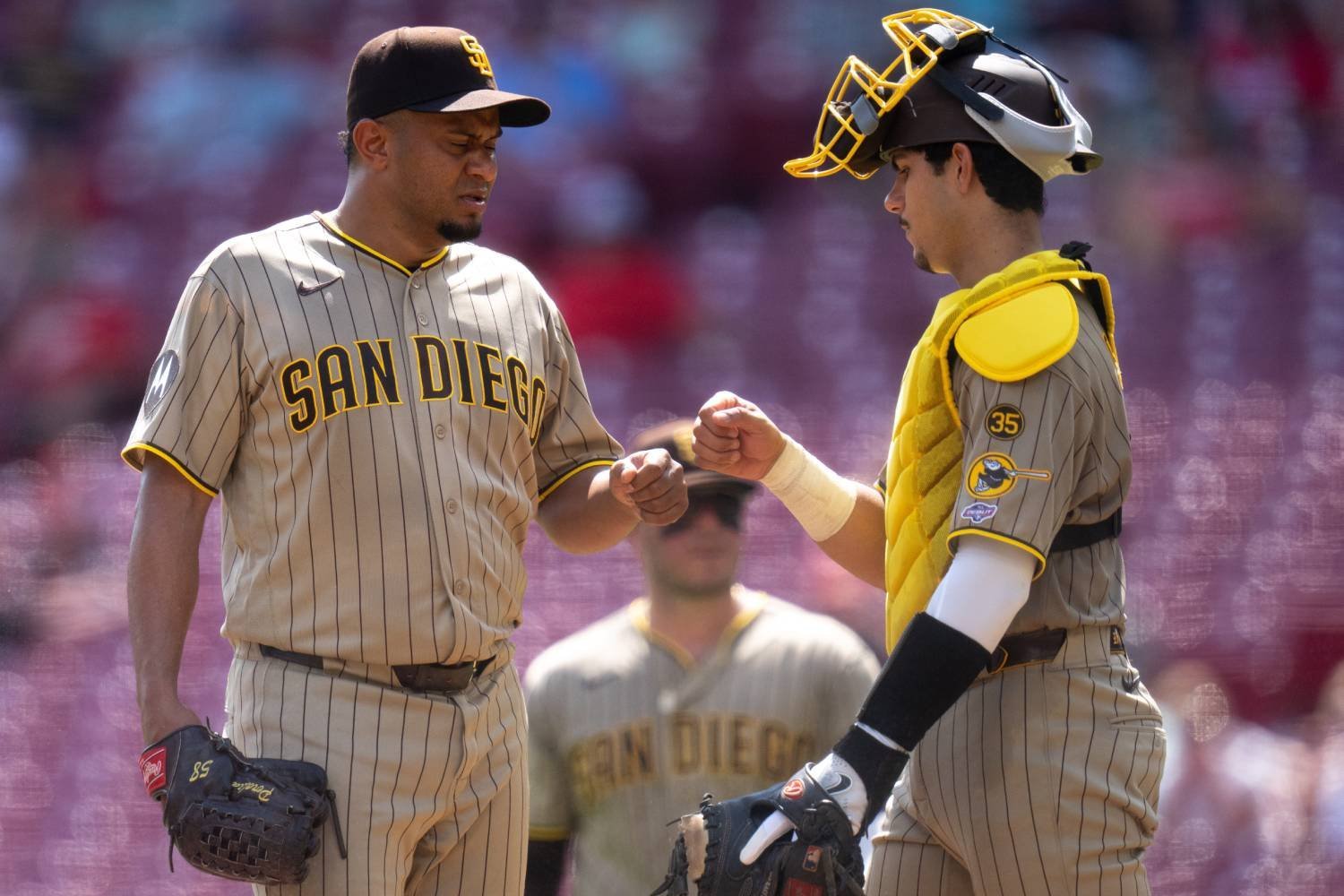 As a result of president of baseball operations A.J. Preller's wheeling and dealing of prospects as if they were cotton candy at a birthday party, the San Diego Padres' minor-league system is the worst in MLB. Still, there have been some small wins for the Friars in recent years, though they're few and far between. Ethan Salas, however, is a huge victory. When Salas, Padres Mission's No. 1 prospect, was called up Tuesday as rosters expanded, then made his MLB debut Wednesday in a 7-3 road loss to the Cincinnati Reds, it was the culmination of a process that began several years ago with scouts watching a young Salas as he grew up in Florida. Because of his family ties to Venezuela, Salas qualified as an international free agent, which made him eligible to be signed as a 16-year-old. Salas was the top international free agent in the 2023 class due to his advanced defensive skills, including a rocket arm, and his ability to hit, including being a left-handed hitter. The Padres then signed Salas for what at the time was a record $5.6 million bonus. The rest of his story is well-known. He made his pro debut at Low-A Lake Elsinore two days before his 17th birthday while many other international free agents were playing in the Dominican Summer League, at least a year or two before coming to the U.S. Yet he was already playing in full-season ball. We know everything that happened after that, but you have to give credit to the Padres for identifying and landing a top talent, then developing him into a major-league player who made his debut as a 20-year-old. But this was one of the few developmental triumphs for the Padres. If you take a look at the current 40-man roster, there are only six other homegrown players. Five of them play significant roles with the team, including Jackson Merrill and right-handed reliever Bradgley Rodriguez. Merrill was the Padres' first-round draft choice in 2021 out of a Maryland high school as a shortstop who was shifted to center in spring training before he made his debut in 2024. Rodriguez was signed as an international free agent in 2021 out of Venezuela as a 17-year-old and worked his way up to making his debut in May 2025, going down after one game and coming back up for six September appearances and then being included on the postseason roster. The other four homegrown players on the 40-man roster are left-handed reliever Adrian Morejon (international, 2016), catcher Luis Campusano (second-round pick, 2016), right-handed reliever David Morgan (undrafted free agent, 2022) and right-handed reliever Alek Jacob (16th-round draft pick, 2021). All are in the majors except for Jacob, who is at Triple-A El Paso. To be fair, Preller has used many of those draft picks, international players and undrafted free agents in trades to improve the roster for a specific season. Also, they missed on some players, already releasing two players from the 2025 draft. Otherwise, the lack of a productive farm system has made the Padres reliant on signing veteran free agents, like third baseman Manny Machado and shortstop Xander Bogaerts, or finding someone on the transaction scrap heap, like first baseman Gavin Sheets, left fielder Luis Rengifo or outfielder Samad Taylor. But now with Salas making his debut and all of the celebration around his call-up, that should send a signal to Preller and the Padres. Fans identified with Salas early and watched him come up, riding the highs and the lows along with him. They could do the same with Kruz Schoolcraft and Coleman Borthwick, two high school pitchers taken in the first round the last two years. Raising these players to become major leaguers also helps with salary. As things currently stand, the first three years, a player makes a minimum salary, then has three years of arbitration. Of the 47 players on the Padres' 40-man roster (players on the 60-day injured list don't technically count), 15 are making some version of the minimum. Conversely, the Los Angeles Dodgers have 20 such players on their 40-man roster, which also has 47 players. I am not saying Preller should abandon his philosophy of trading prospects for MLB roster upgrades, but there can be some restraint. Was sending their five 2024 draft choices, including their second-, third- and fourth-round picks, in a six-player package for a rental first baseman (Ryan O'Hearn) and an average outfielder who had another year on his contract (Ramon Laureano) the right price or an overpay? It felt like a heavy price. Who knows if any of those players amount to much, but what did O'Hearn and Laureano contribute (Laureano's injury aside)? Certainly not anything worth the type of investment made in those prospects. Regardless, Salas' MLB debut Wednesday showed the type of payoff sticking with prospects can benefit a team. Otherwise, you'll be left digging for diamonds in the rough every year. View the full article
 -
Joe Mack interview: Inside his remarkable rookie season
DiamondCentric posted an article in Fish On First
 With September underway, Kevin Barral, Isaac Azout and Ely Sussman discuss where the Miami Marlins stand in the National League Wild Card race. They analyze the usage of the club's starting pitchers, recent call-ups of Jared Serna and Graham Pauley, and how Leo Jiménez has stuck around all season despite such poor production. Then, Joe Mack joins Kevin and Isaac for an exclusive interview. Mack reflects on his developmental journey in the Marlins organization, where he has improved over the course of the 2026 season, using the ABS challenge system, forming relationships with his pitchers and what it feels like to be chasing a playoff spot. You can find Fish Unfiltered and Fish On First LIVE on the Fish On First YouTube channel, Apple Podcasts, Spotify or wherever else you get your pods. The Marlins recalled Mack from Triple-A Jacksonville on May 4 and he's been their primary catcher ever since. Through 87 MLB games played entering Thursday, Mack has slashed .234/.287/.409 with 12 home runs and a 89 wRC+. Thanks to elite defense, his overall contribution to the Marlins has been 2.0 fWAR (tied for third among all of their position players). Mack has caught 20 baserunners attempting to steal, trailing only William Contreras, Freddy Fermin and Patrick Bailey in that category. He has won 61.4% of his ABS challenges. Mack tells Fish Unfiltered that he takes pride in how much he has improved at blocking pitches compared to the previous few seasons. Partially a byproduct of that, the Marlins have thrown only 43 wild pitches as a team this season, a sharp decrease from 65 wild pitches in 2025 before his arrival. The Marlins will have club control of Mack through at least the 2032 season. View the full article
 -
Chicago Cubs Minor League Hitter of the Month: August 2026
DiamondCentric posted an article in North Side Baseball
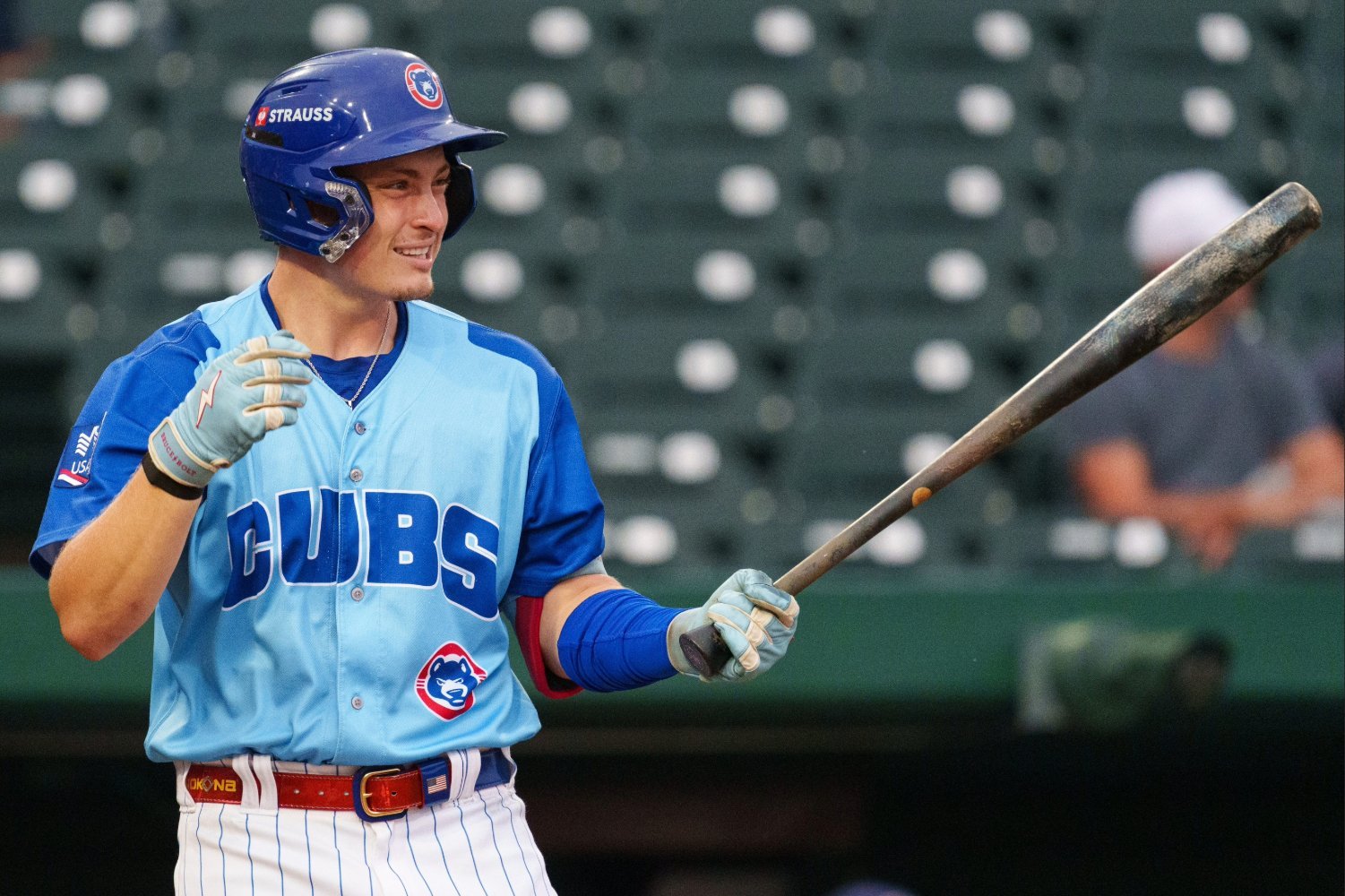 August always marks the last "full" season of the minor leagues. Some teams like the Triple-A Iowa Cubs will wrap up their year on September 18th (as they have not had a good enough season to quality for the International League playoffs), whereas others such as the Double-A Knoxville Smokies will add a few postseason games to their schedule. Regardless, the season is wrapping up for the Cubs' up-and-coming youngsters. So, as we get ready to put the MiLB season to bed soon, let's look at who had big offensive months in August. Ranking Cubs' Best Minor-League Hitters In August Honorable Mention - James Triantos, Triple-A Iowa Cubs James Triantos was called up to the MLB side of things at the end of July and spent a cup-of-coffee with the parent club on the bench. As the 26th man, he wasn't used often and as such, was sent back to Iowa midway through August. Since his return to Triple-A, the utility infielder has been on fire, posting a 143 wRC+, hitting two home runs, and walking seven times in just 39 PAs. Had this been a full-month's worth of plate appearances, he'd be higher than this, but he deserves a mention here for how good he's been since returning. Honorable Mention - Kane Kepley, Double-A Knoxville Smokies Kane Kepley got promoted (finally) from South Bend to Knoxville at the start of the month. On the surface, the outfielder's .206 batting average since his promotion may scare you off; but the good news is that it's hiding some underlying data that's pretty positive. Since getting to Knoxville, Kepley has walked (19 times) more than he's struck out (13 times), and has seven extra-base hits, including three home runs. His 135 wRC+ tells a far different story than the batting average. Obviously, it's best when these things work in tandem, but even so, his positive start despite the talent jump deserves an honorable mention. Third Place - Angel Cepeda, High-A South Bend Cubs Angel Cepeda may have finally seen it "click" for him at the plate at High-A. Cepeda, a former high-profile IFA signing out of Venezuela, has always oozed potential but has yet to fully break out for the organization. Posting a 116 wRC+ on the year last season (with a similar late-season breakout at Myrtle Beach), the hope was that would continue into 2026. While he hasn't been bad, he's flown a bit under the radar as "just good enough." Lately, however, that's changing. While his 114 wRC+ in August is right at his season's number, over his last 45 PA's of the month the shortstop posted a 145 wRC+, highlighted by six long balls. And while I didn't consider it for this list, it's probably important to note that he smashed two more on September 1. Second Place - Ariel Armas, Double-A Knoxville Smokies Ariel Armas is a very good defensive catcher; this much has been known dating back to his days in college when he won an NCAA Gold Glove award for his work behind the dish. Because of his position and defensive acumen, the bar for Armas to clear offensively to remain interesting is very low. The good news for the Cubs is that the 23-year old may be in the midst of a late-season breakout of his own, landing him into the top three for this list. Hitting .289 and four home runs has given the backstop a very promising 121 wRC+ over the month of August, a significant improvement over his 72 wRC+ prior to that. First Place - Josiah Hartshorn, High-A South Bend Cubs Another month and another award for the Cubs' top prospect (ho-hum). Hartshorn has just been amazing this season and better than anyone would have expected. He hit a little bit of a snag for a brief spell in July, but August was a return to form for the Cubs' burly outfielder. Hitting .333, smacking six bombs, and walking 19 times while only striking out 23 times (good for a a 164 wRC+) is a recipe for another award. One more thing; just like Cepeda, Hartshorn went and homered in his first game in September, as well; there's no stopping the guy. There just aren't enough good things or superlatives to lay at his feet. He's probably one of only two hitters system-wide who can even be considered for MiLB hitter of the year (with Owen Ayers) and months like this are exactly why. View the full article
 -
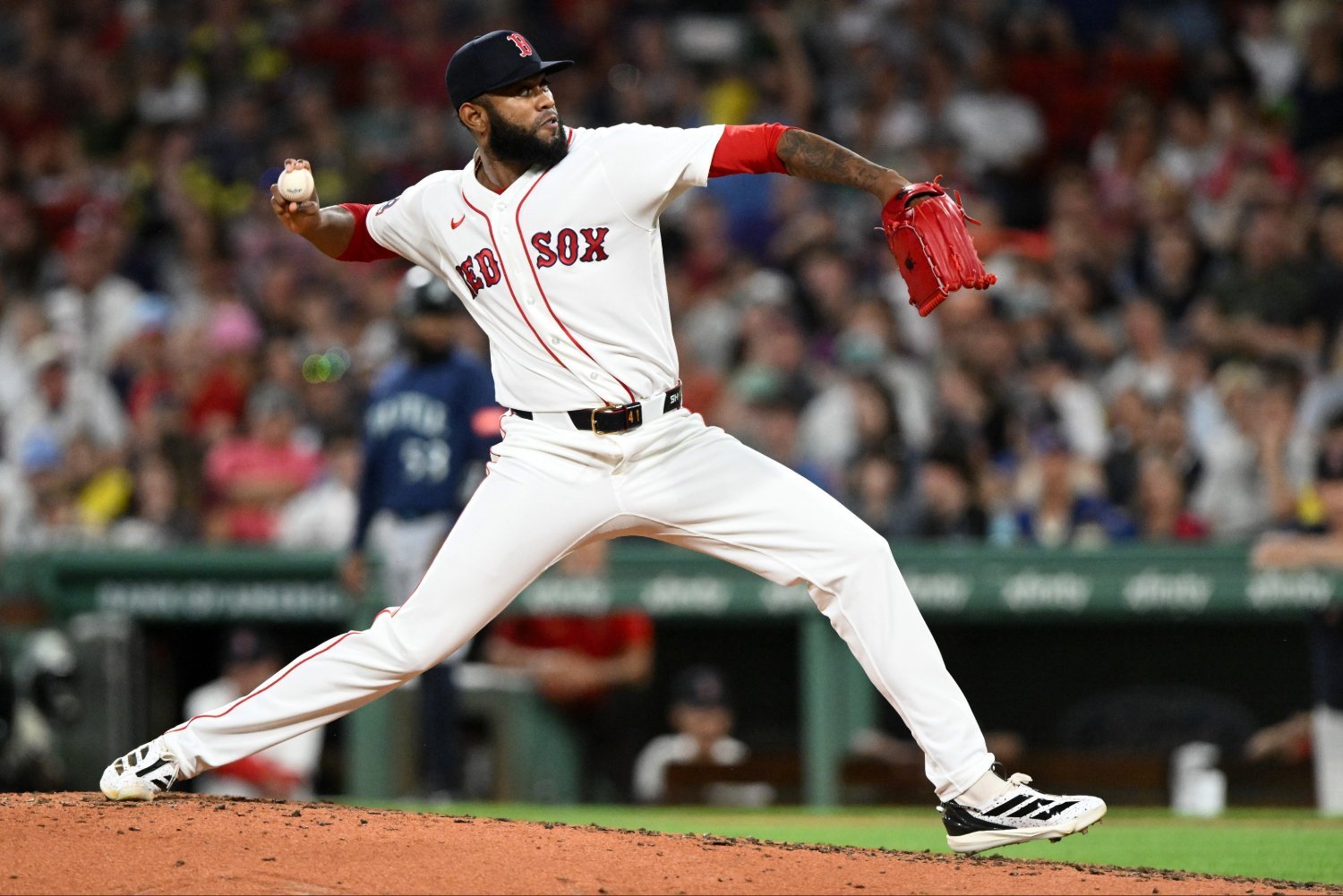 When it seemed that the time to prove his talent had expired, Tyron Guerrero has become one of the main pitching revelations of 2026 for the Boston Red Sox. He has done it at 35 years old, after arriving in Boston with a negative -1.6 bWAR and a career 5.77 ERA in 113 games pitched between the ages of 25 and 28 with the San Diego Padres and Miami Marlins. Guerrero last pitched this past Monday, and then the Red Sox announced that he had been placed on the 15-day injured list due to inflammation in his right shoulder. That night, he was able to record just one out against the Seattle Mariners in his 38th relief appearance of the season. He allowed three hits and an equal number of runs and walked a batter before wasting a two-run lead. Clearly, something was off in his game. In 23 of his 38 relief appearances, he has secured at least one inning without allowing runs or inherited runners to score. In that span, he has accumulated 18 holds, a statistic that, although it does not define a reliever’s dominance by itself, offers another interesting point about how middle relievers get the necessary outs to keep the team with the lead. Every one of Guerrero’s accomplishments, no matter how small it may seem, has meant the biggest leap of his career. I confess that, when the Red Sox began using him, my biggest faith was in the strength of his prodigious arm. So Boston deserves a lot of credit, because Guerrero has brought more than his supersonic velocity with a sinker that averages 100.2 mph, stability and strength to the bullpen. Along with the sinker, he has an uncomfortable 91.5 mph slider that has left the opposition with a .123 average. In all his previous experience, he had thrown only four sinkers. It was in 2018, when he was pitching for the Marlins. So, the experiment worked, and Guerrero has gone through every inning trusting his sinker on 85.7% of his pitches. No reliever who has pitched at least 30 innings this season uses the sinker or another pitch more than Guerrero—the only one who comes close is Kenley Jansen, who throws his cutter 84.6% of the time. As such, the big story here is what Guerrero is accomplishing with his primary lethal weapon. Pitcher L/R Pitches PA Whiff % xBA xSLG K % Guerrero, Tyron RHP 491 130 22.6% .223 .308 21.5% Alvarado, José LHP 606 142 21.6% .272 .394 15.5% Uribe, Abner RHP 481 123 21.0% .264 .346 17.9% Mayza, Tim LHP 486 123 20.2% .228 .318 21.1% Brazobán, Huascar RHP 435 115 19.6% .265 .387 12.2% Morejon, Adrian LHP 548 139 19.3% .265 .335 12.2% O'Brien, Riley RHP 552 150 17.4% .291 .436 18.0% Doval, Camilo RHP 368 103 17.1% .252 .362 12.6% Ashby, Aaron LHP 683 158 16.6% .270 .380 11.4% Thompson, Ryan RHP 409 112 15.6% .295 .374 10.7% Peralta, Wandy LHP 407 110 15.3% .217 .343 10.0% Bazardo, Eduard RHP 622 170 15.2% .279 .444 21.8% Miles, Spencer RHP 433 114 15.1% .233 .311 19.3% Bernardino, Brennan LHP 331 105 15.1% .277 .397 11.4% Kelly, Kevin RHP 490 134 14.8% .304 .440 11.2% Holderman, Colin RHP 424 110 14.2% .286 .437 10.0% Suter, Brent LHP 426 106 13.4% .268 .392 17.9% Moll, Sam LHP 384 104 12.9% .319 .457 7.7% Swanson, Matt RHP 347 114 12.8% .330 .500 14.9% Rogers, Tyler RHP 687 194 12.5% .239 .316 10.8% Ferrer, José A. LHP 659 181 12.3% .263 .409 13.3% Brubaker, JT RHP 445 111 9.9% .317 .516 15.3% Bruihl, Justin LHP 505 135 9.8% .294 .378 6.7% Hill, Tim LHP 590 178 9.7% .272 .408 6.7% Among several elite pitchers with elite pitches, the results show that Guerrero’s great dominance of the sinker has a place at the highest level. He has the highest whiff rate and the lowest xSLG allowed among the 24 relievers who have finished at least 100 plate appearances with a sinker. He also stands out with the second-highest strikeout rate, being surpassed by just 0.3% by the Mariners right-hander, Eduard Bazardo. He also has the second-lowest xBA allowed, behind Padres left-hander Wandy Peralta. And, you know, he has achieved that phenomenal impact throwing the sinker 85.7% of the time, which seems crazy. Now let’s go a little deeper, because the breakdown by profiles takes us to a couple of interesting details. Let’s look at these two graphs. On the left, we have Guerrero’s sinker whiff rates against right-handed hitters. Its power remains in the high-and-inside part of the zone, the same areas where left-handed hitters miss his pitches. There is not enough of a sample to compare the previous sinker that he threw, but this year it excels with -5.2 inches of induced vertical break compared with the MLB average. That is the main effect of his adjustments that is helping limit the impact of his opponents, especially against left-handed hitters, who have a 32.9 whiff% and only a .230 xSLG. On the other hand, right-handed hitters have been more difficult to beat. His whiff rate drops to 10.8%, with a dangerous rise to a .377 xSLG and .339 BABIP. Guerrero still has control against both profiles, but he will need more from his slider and splitter to try to reduce contact. It is possible (if not likely) that Guerrero will be back in a couple of weeks. It does not appear, at least for now, to be an injury that projects a prolonged absence. Boston’s expectation, for now, is that he could return around September 16 or shortly after. His arm has been key and, for the Red Sox, his presence in the late innings of games will be necessary down the stretch of the season. View the full article
 -
Is Connor Prielipp's Innings Limit in the Room With Us Now?
DiamondCentric posted an article in Twins Daily
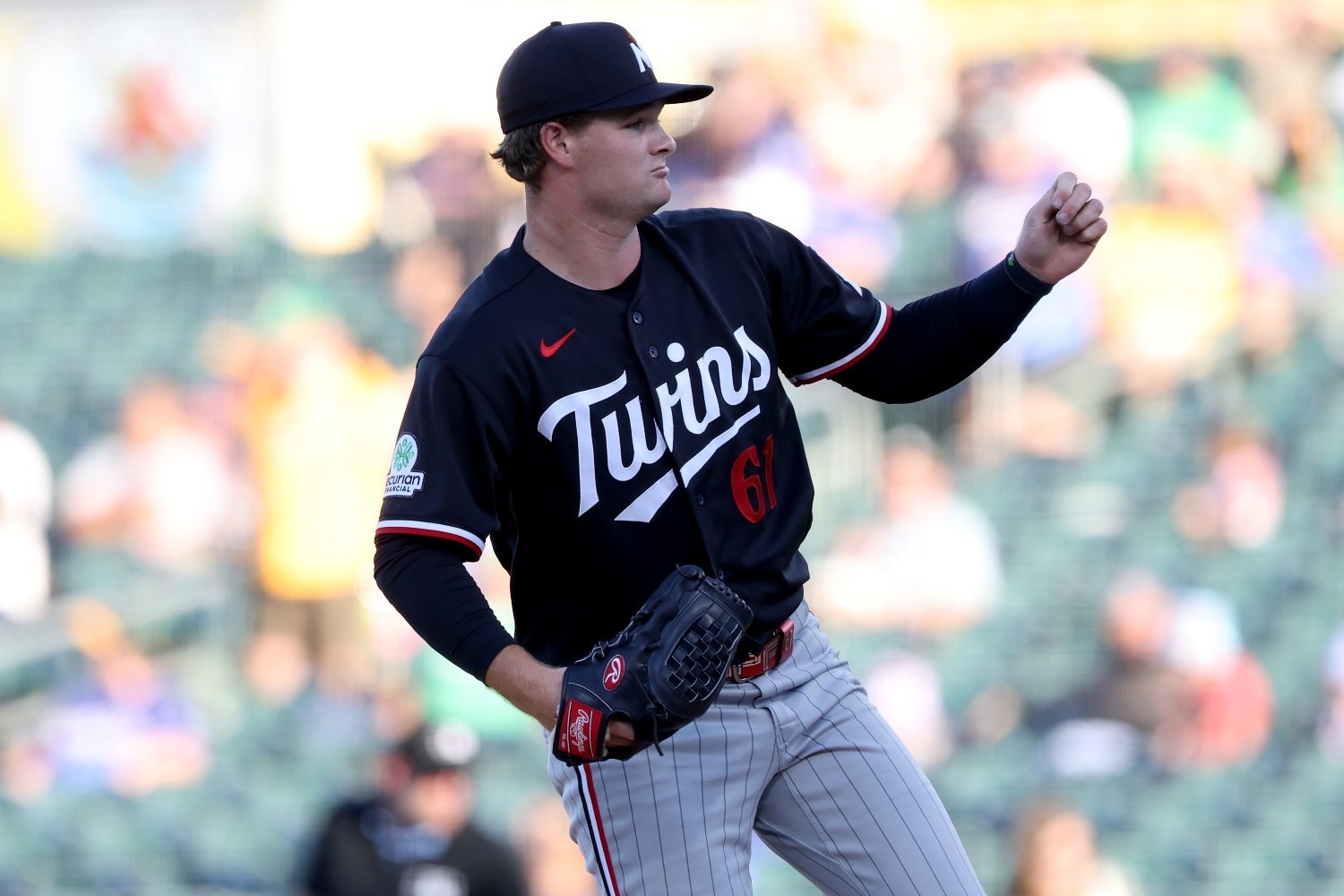 Turn on Twins.TV or the Treasure Island Baseball Network (TIBN) radio feed during a Connor Prielipp-started Minnesota Twins baseball game, and you will quickly hear Cory Provus, Kris Attebery or one of the many talented analysts discuss how well Twins decision-makers are managing Prielipp’s innings this season. On the surface, the assumption that the front office and coaches are carefully monitoring the 25-year-old’s workload makes sense. The University of Alabama product threw only seven innings in his 2021 college campaign before undergoing Tommy John surgery. He then underwent internal brace surgery in 2023, delaying his first extended stint as a starting pitcher in Minnesota’s minor-league system until 2025. Splitting his 2025 campaign between Double- and Triple-A, the hard-throwing southpaw netted 82 2/3 innings pitched over 23 starts, signaling he could soon join the parent club’s starting rotation. That assumption became reality on April 22 of this year, when the former top prospect was recalled from Triple-A, joining the Twins' starting rotation. Despite a brief 15-day IL stint in mid-July, Prielipp has remained a fixture of Minnesota’s rotation since his promotion, starting every fifth or sixth day. You could argue his stint on the IL was more about maintenance than serious injury, and he's twice had his starts pushed back one game, lengthening the rotation. Those are small safeguards for a pitcher with big injury trouble in his recent past, though. Over 19 starts (functionally 20; Andrew Morris opened Prielipp’s last appearance), the lefty has averaged roughly 5 1/3 innings pitched per outing—a rate typical of an unrestricted starting pitcher. In fact, since April 22, Prielipp ranks third among Twins pitchers in innings with 104, trailing only Zebby Matthews (112) and Taj Bradley (126 2/3). Prielipp has thrown more innings than Joe Ryan (98 1/3) and Bailey Ober (87 1/3) during that stretch, though of course he's spent less time on the shelf than they have. Assessing Prielipp’s workload from a league perspective, the hard-throwing lefty ranks 34th in innings pitched among AL starting pitchers, tied with New York’s Gerrit Cole and ranking just ahead of Chicago’s Erick Fedde. Inserting NL starting pitchers, Prielipp ranks 63rd in innings pitched, tied with Cole and Milwaukee’s Dustin May. Does that read as a starting pitcher on an innings limit? Again, I don’t blame Twins broadcasters for assuming that Twins decision-makers were limiting Prielipp’s workload this season. He's had just one campaign resembling a full workload in the past three minor-league seasons. I’m sure they’re monitoring his innings and are in constant communication about how his left arm feels. Yet, to suggest his innings have been limited this season would be incorrect. Going forward, I beg Twins broadcasters (and fans) to resist the urge to suggest Prielipp is pitching under an innings limit. In fact, one could argue it would be more apt to refer to him as one of Minnesota's few workhorses. View the full article
 -
Twins Farm System Finally Having an International Renaissance
DiamondCentric posted an article in Twins Daily
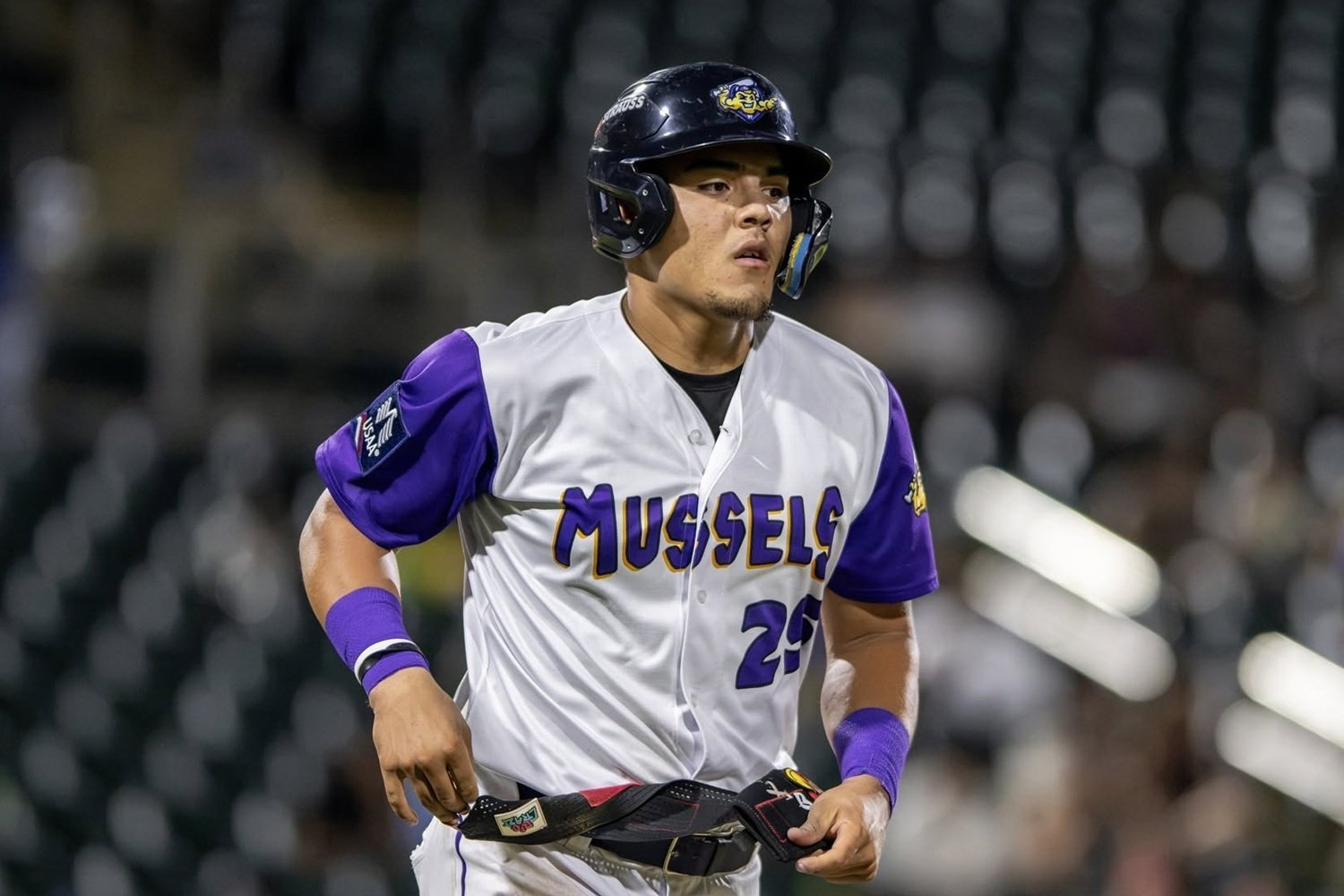 For much of the past decade, the Minnesota Twins haven't exactly been known for developing waves of international position-player talent. There have been individual successes, of course. But compared to some of baseball's better organizations in the international market, the Twins haven't consistently produced prospects who climb through the system and eventually become significant pieces at the major-league level. That could be changing. The Twins have revamped their international operations, and the results are beginning to show up throughout the minor leagues. There are still plenty of questions surrounding these players, but the organization is developing an intriguing collection of athletic position players with offensive upside and defensive versatility. On a recent episode of Inside Twins, Twins Director of Player Development Drew MacPhail discussed some of the changes happening within the organization's player-development system. “The international group does a fantastic job scouting to toolsyness and prioritizing defense as well and kind of projecting out what they might look like as a major leaguer. Defense is a big part of that and I’d give a lot of credit to our PD group. We have really solid basic training at the complexes and put a huge emphasis on the importance of defense as well." MacPhail believes the organization is starting to see the benefits of that approach. “We are starting to see the fruits of that labor of these athletic players that are very routine oriented, have really solid swings, they have twitch, and can play defense.” Several of those players are already putting together impressive seasons. Here are four players who are among the organization’s top ranked position players. OF Yasser Mercedes – Cedar Rapids Kernels .251/.341/.458 (.799), 18 HR, 26 2B, 49 SB, 106 wRC+, 27.9 K%, 11.2 BB% Mercedes has been around longer than most of the names on this list, entering his fifth professional season after signing with the Twins for $1.7 million in January 2022. At the time, Minnesota was betting on an intriguing collection of raw offensive tools from one of the more highly regarded outfielders in that year's international class. His development hasn't been perfectly linear. Mercedes impressed during his first season in the Dominican Summer League before experiencing some struggles in his first taste of stateside baseball. He eventually found his offensive footing again in the Florida Complex League, but moving into the Florida State League exposed some significant swing-and-miss issues. This season has been different. Mercedes opened 2026 by taking a major step forward against FSL pitching. His performance earned him a promotion to High-A Cedar Rapids in May, where he's continued to show a combination of power and speed. The 49 stolen bases stand out, but so do the 18 home runs and 26 doubles. The strikeout rate remains something to monitor, but Mercedes is finally showing the offensive impact the Twins hoped to see when they signed him. At 23 years old, he's also beginning to enter an important stage of his development. OF/3B Luis Fragoza – Cedar Rapids Kernels .311/.404/.551 (.954), 14 HR, 22 2B, 21 SB, 148 wRC+, 26.5 K%, 9.1 BB% If there's one international prospect who has seemingly come out of nowhere this season, it's Fragoza. MacPhail specifically identified him as the clear breakout prospect in the organization during 2026, and the numbers make it easy to understand why. Fragoza signed for just $77,500 during the 2024 international signing period. That was a relatively small investment compared to the seven-figure bonuses given to some of the Twins' other signees that year, including Daiber De Los Santos and Eduardo Beltre. But bonus size doesn't determine where a player eventually ends up. Fragoza posted a respectable .784 OPS during his first professional season in the Dominican Summer League. He struggled to find the same consistency after moving to the Florida Complex League in 2025. The Twins sent him back to the FCL to begin 2026, but he didn't stay there for long. After quickly establishing himself offensively, Fragoza earned a promotion to full-season Fort Myers. He continued to rake with the Mighty Mussels before moving up to Cedar Rapids, where he has remained one of the organization's more productive young hitters. A .954 OPS and 148 wRC+ are difficult to overlook. The versatility also adds to his appeal. Fragoza has experience at both third base and shortstop while bringing enough athleticism to contribute on the bases. There are still questions about how his offensive game will translate as he climbs the ladder, but this has been an impressive breakout campaign. OF Yovanny Duran – Fort Myers Mighty Mussels .273/.408/.419 (.827), 5 HR, 10 2B, 4 3B, 43 SB, 120 wRC+, 23.9 K%, 18.0 BB% Duran represents another example of the Twins getting encouraging returns from their international investment. Minnesota handed out 13 bonuses of at least six figures during the 2025 international signing period, with Santiago Leon and Carlos Taveras leading the way with seven-figure bonuses. Duran received a $277,500 bonus. He's quickly shown why the Twins were willing to make that investment. After a solid debut in the Dominican Summer League, Duran moved stateside and continued producing in the Florida Complex League. He finished sixth in the league with a .943 OPS, just behind Jhomnardo Reyes, who was eventually traded to Baltimore as part of the deal that brought Dean Kremer to Minnesota. Duran has continued that progression with Fort Myers. The .827 OPS doesn't jump off the page quite like Fragoza's does, but the underlying profile is intriguing. Duran has already stolen 43 bases, owns an 18% walk rate and has produced a 120 wRC+. That's a pretty good combination for a young player still learning how to handle professional pitching. His ability to get on base is particularly encouraging. Duran isn't relying solely on batting average to create offensive value, and his speed gives him another avenue to impact games. There's still plenty of development ahead, but he's quickly becoming one of the more interesting players from the Twins' 2025 international class. 3B/SS Enmanuel Merlo – DSL Twins .311/.422/.429 (.851), 3 HR, 6 2B, 3 3B, 5 SB, 115 wRC+, 17.7 K%, 15.1 BB% Merlo is the youngest and least-developed player on this list, but he's also one of the most significant investments the Twins made during the 2026 international signing period. Minnesota entered the signing period with one of baseball's larger international bonus pools, and Merlo received the biggest chunk of that money. The Twins ultimately gave him a bonus of nearly $1.5 million, making him one of 13 players who received at least six figures from Minnesota's 2026 class. His professional career is only beginning. Merlo has spent his first season with the Twins' Dominican Summer League club, where he has already shown an intriguing combination of plate discipline and offensive ability. His .311 batting average is impressive, but the .422 on-base percentage might be even more encouraging. He's also struck out in just 17.7% of his plate appearances while walking 15.1% of the time. For a teenager beginning his professional career, that's an encouraging foundation. There will be plenty of challenges ahead as Merlo eventually moves to the United States and begins facing more advanced pitching. His defensive home also remains something to watch as he develops at third base and shortstop. But the early returns are promising. The Next Wave The Twins aren't suddenly going to become an international-development powerhouse because four prospects are having strong seasons. That's not how player development works. These players are still far away from making their major-league debuts, and there are countless hurdles between the Dominican Summer League and Target Field. Injuries happen. Hitters stop hitting. Pitchers adjust. Defensive limitations become more apparent. Prospects who look like future stars at 18 or 19 sometimes never make it past Double-A. That's why the Twins need to continue building depth rather than relying on any individual player. Still, something appears to be changing. The Twins are finally starting to see some of the fruits of their changes to international scouting and player development. The organization is emphasizing athleticism, defensive ability, swing quality and long-term projection when identifying these players. But for an organization that has been searching for more consistent international success, having this many intriguing players at different stages of development is a very good place to start. What stands out about this group of prospects? Have the Twins solved some of their issues with developing international prospects? Leave a comment and start the discussion. View the full article
 -
 Blue Jays Affiliate Overview (September 1-2) Triple-A Buffalo Bisons Series vs Worcester Red Sox (Boston Red Sox): 0-1 Season Record: 64-68 Double-A New Hampshire Fisher Cats Series vs Birmingham Rumble Ponies (New York Mets): 0-2 Season Record: 56-70 High-A Vancouver Canadians Series vs Tri-City Dust Devils (Los Angeles Angels): 2-0 Season Record: 63-65 Single-A Dunedin Blue Jays Series vs Tampa Tarpons (New York Yankees): 0-1 Season Record: 60-63 FCL Blue Jays: Season Complete DSL Blue Jays Blue: Season Complete DSL Blue Jays Red: Season Complete Triple-A Buffalo Bisons Season Record: 64-68 Series vs Worcester Red Sox (Boston Red Sox) September 1: While the calendar turned over to September, Buffalo opened the final month of baseball with renewed hope they could get back to a .500 record by the end of the season. They began the day just three games under .500 and have a real chance to finish the year over the mark they have hovered just below for most of the season. Both Worcester and Buffalo plated runs in the first inning, with the Red Sox loading the bases and getting a run on a groundball double play. Meanwhile, Buffalo got a double from Rhylan Thomas, then an RBI single by Yohendrick Piñango. The Bisons starting pitcher Josh Stephan induced a second groundball double play in the second inning, but after Worcester scored two on a double by Mikey Romero. The game went back and forth from that point with not a lot of action, that is, until Romy Gonzalez ripped a three-run home run off of Pat Gallagher in the seventh. A two-RBI double and a sacrifice fly off of Buffalo's Sam Gardner and Chase Lee in the ninth gave Worcester a massive 9-1 lead. Buffalo's offense was just stagnant all game, getting just five hits, with Davis Schneider accounting for two of them (a double and a single). The Bisons limped across the finish line in this one, losing 9-1. Double-A New Hampshire Season Record: 56-70 Series vs Birmingham Rumble Ponies (New York Mets) September 1: New Hampshire kicked off their Tuesday night with the series opener against the Binghamton Rumble Ponies. Mason Olson was on the mound and worked a pretty solid appearance over 4.1 innings. He only gave up two hits and one run, but did strike out three. Carter Cunningham drove in the first run with an RBI groundout, and Mathieu Vallee had an RBI single in the fourth inning to put the Fisher Cats up two. Binghamton took the lead with an RBI double from John Bay and a two-run double by Corey Collins in the fifth and seventh innings. A sacrifice bunt would put Binghamton up two, and Vallee would bring that down to one in the ninth inning when he put a ball in play that resulted in an error. New Hampshire lost this one 4-3. Alexis Hernandez went 3-for-5, with a double and two singles. He upped his Double-A batting average to .361. September 2: Johnny King was on the mound for New Hampshire when they took on Binghamton on Wednesday night. King was exceptional, as he put forth his best Double-A start so far. Over five innings and just 71 pitches, he had hitters confused with his pitch mix, and he peppered the zone with fastballs. He allowed just three hits, gave up only one walk, didn't allow a run, and struck out eight hitters. He induced 14 whiffs and caught two of the batters looking for strikeouts. Unfortunately, after King left the game, Angel Obando surrendered a home run to John Bay, which would be the lone run scored in the game. Gage Stanifer came in after Obando and pitched a scoreless inning. Stanifer walked one batter and struck out one as well in his inning. New Hampshire was shut out and only managed six hits on their way to losing this game 1-0. High-A Vancouver Season Record: 63-65 Series vs Tri-City Dust Devils (Los Angeles Angels) September 1: A pair of Canadians (nationality) were vital to this victory. Connor O’Halloran, hailing from Mississauga, Ontario, went four innings of one-run ball, with the one run coming off a solo homer given up to Kendrey Maduro in the first inning. David Calabrese from Richmond Hill, Ontario got on base with a single in the second, and Gable Mitchell took the lead with a two-run homer. The bullpen was also great, as Reece Fields, Dax Dathe and Jack Eshleman combined for five scoreless innings, combining for five strikeouts, only giving up a couple of walks and four hits. Calabrese’s revenge game continued as the former Dust Devil hit a homer for an insurance run to make the final score 3-1. This put the Canadians one win from clinching the final playoff spot. September 2: The Canadians ran away with this one early. Dasan Hill took the bump again, and despite only pitching three innings, he was effective, striking out four batters and allowing one earned run. The offense really had it going, thanks to David Calabrese, who started the game off with one of his four hits with a two-RBI double. Jean Joseph added one of his own, before Dameury Pena capped off the inning with an RBI single for a five-run second inning. Dariel Ramon added an RBI double in the third, then in the fourth inning the Canadians added five more runs to put the game out of reach. Holden Wilkerson gave up four runs in four innings pitched in relief, but with such a large lead it didn’t matter, as the Canadians clinched the best record in the second half in the Northwest League, as well as a playoff berth. Single-A Dunedin Season Record: 60-63 Series vs Tampa Tarpons (New York Yankees) September 1: Postponed September 2, Game 1: Sann Omosako took the loss as the Tarpons shut out the D-Jays in a game that was called due to rain. Omosako pitched five innings of one-run ball as the 20-year-old Brazilian has been pounding the zone as he’s been known for. The Jays could only get three hits on the offensive end, and Karson Ligon’s performance has suffered after his early-season injury, with three earned runs in the sixth given up on four hits and two homers. The Jays lost this one 4-0. September 2, Game 2: Postponed FCL Blue Jays Season Record: 38-20 Season Completed DSL Blue Jays Blue Season Record: 20-35 Season Completed DSL Blue Jays Red Season Record: 33-18 Playoffs (2-1) Season Completed Transactions 09/02/26 Buffalo Bisons sent SS Josh Rivera on a rehab assignment to Dunedin Blue Jays. 09/01/26 RHP José Rodríguez assigned to Buffalo Bisons. 09/01/26 RHP Simeon Woods Richardson elected free agency. 09/01/26 Toronto Blue Jays recalled LHP Ricky Tiedemann from Buffalo Bisons. 09/01/26 Toronto Blue Jays recalled DH Sean Keys from Buffalo Bisons. 09/01/26 LF Rhylan Thomas assigned to Buffalo Bisons from Dunedin Blue Jays. View the full article
 -
 Chicago Cubs Transactions No Roster Moves Justin Steele Makes Rehab Start In Iowa Loss Justin Steele made a rehab start for the Iowa Cubs, and the Cubs lost 6-2 at Columbus. Steele struck out the first batter he faced, gave up a two-out single, and got a flyout to finish a scoreless opening frame. He then retired the first two batters he saw the next time out, the second on a called third strike that came after a successful Iowa challenge. The Clippers followed with a single, a run-scoring double, a fielding error that let a second run in, and an RBI single, and Steele was lifted with two outs recorded. He finished with 1 2/3 innings, four hits, three runs, one earned, no walks, and two strikeouts, facing 10 batters in all. Iowa had staked him to the lead an inning earlier. Chas McCormick reached on an error, James Triantos walked, and after a strikeout, Austin Wynns lifted a sacrifice fly that scored McCormick. Ethan Hearn doubled home Triantos and took third on the throw. Both Iowa runs were unearned, and the Cubs did not score again. Connor Noland gave up five hits, three runs, and a home run across 3 1/3 innings, walking two and striking out two, as Columbus added a run in the third and two more in the fourth. Grant Kipp was the best of the group, throwing two scoreless innings with one hit, one walk, and four strikeouts. Gabe Klobosits finished with a clean inning and two strikeouts. Owen Ayers went 2-for-4 with a double, and McCormick added two hits, including a double, and a run scored. Hearn finished 1-for-4 with a double and an RBI. Iowa totaled six hits, three walks, and two runs, and left eight runners on base. Player AB R H RBI BB K Justin Dean, RF 5 0 0 0 0 0 Owen Miller, LF 4 0 0 0 0 0 Owen Ayers, DH 4 0 2 0 0 1 Chas McCormick, CF 4 1 2 0 0 0 James Triantos, 3B 3 1 0 0 1 1 Ben Cowles, SS 4 0 0 0 0 2 Austin Wynns, C 2 0 1 1 1 0 Ethan Hearn, 1B 4 0 1 1 0 0 Hayden Cantrelle, 2B 3 0 0 0 1 1 Totals 33 2 6 2 3 5 Player IP H R ER BB K HR Justin Steele 1 2/3 4 3 1 0 2 0 Connor Noland 3 1/3 5 3 3 2 2 1 Grant Kipp 2 1 0 0 1 4 0 Gabe Klobosits 1 0 0 0 0 2 0 Totals 8 10 6 4 3 10 1 Brody McCullough Strikes Out 10 In Knoxville Loss Brody McCullough gave the Knoxville Smokies five scoreless innings, but the bullpen could not protect a one-run lead in a 5-1 loss to Chattanooga. McCullough allowed two hits, walked nobody, and struck out 10. Knoxville scored in the first inning. Kane Kepley led off with a triple to right field, and Alex Ramírez singled him home two batters into the game. A pop-out and a flyout followed, Edgar Alvarez walked, and Ariel Armas grounded into a force out to end the inning. That run was the Smokies' only one of the night. The seventh inning turned the game. Chattanooga opened with a walk and a hit batter, then hit a three-run homer to right field for a 3-1 lead. Another hit batter followed before a strikeout and a groundout closed the frame. The Lookouts added single unearned runs in the eighth and ninth. Frankie Scalzo Jr. followed McCullough with an inning of relief, allowing one hit and one walk. Marino Santy gave up three runs on one hit and a walk in an inning, with a strikeout. Tyler Schlaffer worked two innings, allowing two hits and two unearned runs with one walk and three strikeouts. Kepley finished 2-for-4 with a triple, a run scored, and one strikeout. Armas went 1-for-3 with a double. Ramírez was 1-for-4 and drove in the run. Knoxville managed four hits and three walks, struck out 10 times, and left four runners on base. Player AB R H RBI BB K Kane Kepley, CF 4 1 2 0 0 1 Alex Ramírez, RF 4 0 1 1 0 0 Miguel Useche, 1B 3 0 0 0 1 0 Andy Garriola, DH 4 0 0 0 0 2 Edgar Alvarez, 3B 3 0 0 0 1 1 Ariel Armas, C 3 0 1 0 0 1 Carter Trice, LF 3 0 0 0 0 2 Alex Madera, 2B 2 0 0 0 1 2 Karson Simas, SS 3 0 0 0 0 1 Totals 29 1 4 1 3 10 Player IP H R ER BB K HR Brody McCullough 5 2 0 0 0 10 0 Frankie Scalzo Jr. 1 1 0 0 1 0 0 Marino Santy 1 1 3 3 1 1 1 Tyler Schlaffer 2 2 2 0 1 3 0 Totals 9 6 5 3 3 14 1 Justin Stransky's Three-Run Homer Lifts South Bend Justin Stransky hit a three-run homer in the sixth inning, and the South Bend Cubs held on to beat Cedar Rapids 4-3. South Bend broke through in the fifth. Michael Gupton tripled to center field with one out, and Kade Snell singled him home for a 1-0 lead. The sixth produced three more. Jose Escobar drew a walk with one out, Matt Halbach doubled to left field to move Escobar to third, and after a strikeout, Stransky drove a fly ball to left center for a three-run homer and a 4-0 lead. Gupton walked before a strikeout ended the inning. Brayden Spears started and kept Cedar Rapids off the board across four innings, allowing three hits and one walk while striking out five. Braylon Myers followed with 3 2/3 innings, giving up three hits and one run, walking two and striking out five. JP Wheat closed it out with 1 1/3 innings, allowing one hit and two runs on three walks with three strikeouts, working around a rally that pulled the Kernels within a run. Halbach was the top hitter with a 2-for-3 line that included a double and a walk. Stransky went 1-for-4 with the home run and three RBI. Gupton finished 1-for-3 with a triple and a walk, and Escobar was 1-for-3 with a walk. South Bend collected seven hits and six walks, struck out 12 times, committed two errors, and left eight runners on base. Player AB R H RBI BB K Josiah Hartshorn, 1B 2 0 0 0 1 1 Brennan Hudson, 1B 1 0 0 0 0 1 Kade Snell, LF 3 0 1 1 1 1 Angel Cepeda, SS 4 0 0 0 0 2 Logan Poteet, DH 4 0 1 0 0 3 Jose Escobar, 2B 3 1 1 0 1 1 Matt Halbach, 3B 3 1 2 0 1 0 Alexey Lumpuy, CF 2 0 0 0 0 0 Leonel Espinoza, CF 1 0 0 0 1 1 Justin Stransky, C 4 1 1 3 0 1 Michael Gupton, RF 3 1 1 0 1 1 Totals 30 4 7 4 6 12 Player IP H R ER BB K HR Brayden Spears 4 3 0 0 1 5 0 Braylon Myers 3 2/3 3 1 1 2 5 0 JP Wheat 1 1/3 1 2 2 3 3 0 Totals 9 7 3 3 6 13 0 Caden Sorrell Drives In Five As Myrtle Beach Rolls Caden Sorrell drove in five runs, and the Myrtle Beach Pelicans beat Columbia 6-2. The third inning decided it. Juan Cabada walked to start the frame, Juan Tomas doubled to left field to push Cabada to third, and Corey Nunez walked to load the bases. Sorrell then drove a line drive over the right field wall to bring in three more runs. Derik Alcantara added a walk later in the inning. Myrtle Beach tacked on two more in the sixth. Ivan Cespedes singled to center field, Cabada walked, Nunez was hit by a pitch after a strikeout, and Sorrell lined a single to center that scored Cespedes and Cabada. A double play ended the inning. Hayden Frank handled the start, allowing five hits and two runs over five innings with four walks, four strikeouts, and one home run allowed. Ashton Pocol followed with three hitless, scoreless innings, walking two and striking out four. Jordan Henriquez finished with a scoreless inning and a strikeout. Sorrell went 3-for-5 with the home run, five RBI, and two strikeouts. Tomas was 2-for-4 with a double and a walk. Cabada reached on two walks and scored twice, and Nunez had one hit and two walks. Derniche Valdez went 1-for-4, and Cespedes was 1-for-4 with a run scored. The Pelicans piled up eight hits and eight walks, struck out 12 times, and left 11 runners on base. Player AB R H RBI BB K Juan Cabada, 2B 2 2 0 0 2 0 Alexis Hernandez, 2B 0 0 0 0 0 0 Juan Tomas, DH 4 1 2 0 1 2 Corey Nunez, 3B 2 1 1 0 2 1 Caden Sorrell, LF 5 1 3 5 0 2 Darlyn De Leon, CF 4 0 0 0 1 1 Derniche Valdez, SS 4 0 1 0 0 2 Derik Alcantara, RF 2 0 0 0 2 0 Jose Silva, C 4 0 0 0 0 3 Ivan Cespedes, 1B 4 1 1 0 0 1 Totals 31 6 8 5 8 12 Player IP H R ER BB K HR Hayden Frank 5 5 2 2 4 4 1 Ashton Pocol 3 0 0 0 2 4 0 Jordan Henriquez 1 0 0 0 0 1 0 Totals 9 5 2 2 6 9 1 Top-20 Prospect Performance Josiah Hartshorn: 0-for-2, BB, K Cade Townsend: DNP Jaxon Wiggins: DNP Owen Ayers: 2-for-4, 2B, K Kane Kepley: 2-for-4, 3B, R, K Ethan Conrad: DNP Caden Sorrell: 3-for-5, HR, 5 RBI, 2 K Kaleb Wing: DNP Myles Bailey: DNP Brooks Caple: DNP James Triantos: 0-for-3, BB, R, K Will Sanders: DNP Juan Cabada: 0-for-2, 2 BB, 2 R Jostin Florentino: DNP Derniche Valdez: 1-for-4, 2 K Grant Kipp: 2 IP, 1 H, 0 R, 0 ER, 1 BB, 4 K Jose Escobar: 1-for-3, BB, R, K Ariel Armas: 1-for-3, 2B, K Fernando Cruz: DNP Brandon Birdsell: DNP View the full article
 -
 The New York Mets’ Class A minor-league affiliates are wrapping up their seasons this week. The mission for Brooklyn and St. Lucie is to finish strong, since they’ve been out of playoff contention for a while. On Wednesday, St. Lucie showed off a powerful finishing kick. The Mets scored one run in the seventh inning, two runs in the eighth and two more in the ninth to rally from a four-run deficit and walk off Jupiter 6-5. Yovanny Rodriguez’s two-run single in the ninth capped the comeback. This was the second snatch-‘em-back in a row from St. Lucie. On Tuesday, it erased a three-run deficit in the seventh and scored the go-ahead run in the eighth. Whatever the level, it’s all about competing. Elsewhere in the organization: Syracuse’s home game against Rochester was postponed because of rain. It will be made up Friday as part of a doubleheader beginning at 4 p.m. ET. Binghamton shut out New Hampshire 1-0, with John Bay’s home run in the seventh representing the only run. Noah Hall and three relievers combined on a six-hitter. Brooklyn wasn’t so competitive as it lost 5-1 to Frederick. Colin Houck homered for the Cyclones’ only run. Emilio Obispo allowed two runs and two hits over five innings. New York Mets Transactions New York Mets activated RHP Justin Hagenman from the 60-day injured list. New York Mets optioned RHP Dylan Ross to Syracuse Mets. Binghamton Quartet Harmonizes For Shutout Hall started and went the first five innings. He allowed four hits and three walks while striking out three. He had to work out of jams three times, starting with stranding the bases loaded in the first. He stranded two runners each in the third and fourth. Cristofer Gomez followed with two innings of one-hit ball. Bay’s homer made him the winning pitcher. Felipe De La Cruz worked a clean eighth for his third hold, and Bryce Jenkins worked around a hit in the ninth for his first save. Bay smacked a drive into the left-field corner with one out for his third Binghamton homer of the season. Jupiter mistakes got the Mets to 5-4 in the eighth. Toomey led off with an infield single that deflected off the third baseman’s mitt. Two outs later, De Oleo walked. A wild pitch moved the runners up. Vladi Gomez hit an infield single to score Toomey, and De Oleo scored when the shortstop threw the ball away. St. Lucie was down 5-1 in the seventh when the fight began. Jeremy Rodriguez led off with a walk and moved up to second on an errant pickoff throw by the pitcher. Branny De Oleo walked, but two strikeouts followed. Then, more help arrived. A wild pitch moved the runners up a base. Jake Ogden walked to load the bases. Another error on a pickoff throw by the pitcher scored Jeremy Rodriguez to make it 5-2. The totals for those final three frames: five runs, three hits, eight walks, three errors, two wild pitches, a stolen base, six left on. St. Lucie starter Ethan Lanthier allowed all five Jupiter runs on six hits over 4 1/3 innings. He struck out four and walked two. The last two runs scored on a two-run homer. Relievers Ernesto Mercedes, Cesar Rivera, Zach Crotchfelt and Caden Wooster were almost perfect, allowing just two hits, walking none and striking out six over the final 4 2/3 innings. St. Lucie Batting Player AB R H RBI BB K Jake Ogden, LF 3 0 0 0 2 1 Boston Baro, DH 2 1 0 0 3 1 Julio Zayas, 1B 4 1 0 0 1 3 Jack Toomey, RF 4 1 1 0 1 2 Yovanny Rodriguez, C 4 1 1 2 1 2 Jeremy Rodriguez, SS 3 1 1 0 1 1 Branny De Oleo, CF 1 1 1 1 3 0 Vladi Gomez, 2B 4 0 2 1 0 2 Yunior Amparo, 3B 4 0 1 0 0 2 St. Lucie Pitching Player IP H R ER BB K HR Ethan Lanthier 4 1/3 6 5 5 2 4 1 Ernesto Mercedes 1 2/3 0 0 0 0 3 0 Cesar Rivera 1 1 0 0 0 1 0 Zach Crotchfelt 1 0 0 0 0 1 0 Caden Wooster (W, 1-0) 1 1 0 0 0 1 0 Top-20 Prospect Performance Jonah Tong: DNP Jack Wenninger: DNP Elian Peña: 1-for-4, K Mitch Voit: 0-for-4 Ryan Clifford: DNP Nick Morabito: MLB Jonathan Santucci: DNP Carson Wiggins: DNP Jacob Reimer: 2-for-4, 2B, 2 K Aiden Robbins: 1-for-3, BB, K Randy Guzman: DNP Wandy Asigen: DNP Chris Suero: 0-for-4, 2 K Jefferson Rojas: DNP Will Watson: DNP Shane Sdao: DNP Eli Serrano III: 0-for-3, K Antonio Jimenez: DNP Emilien Pitre: DNP Dylan Ross: DNP View the full article
