


DiamondCentric
-
Posts
2,631 -
Joined
-
Last visited
Never
Content Type
Profiles
Forums
Events
News
Tutorials & Help
Major League Baseball Videos
Guides & Resources
Store
Downloads
Gallery
Everything posted by DiamondCentric
-

 Let’s take a look at how the Red Sox farm fared on Saturday evening. Triple-A Worcester Red Sox Series vs. Scranton/Wilkes-Barre RailRiders (New York Yankees): 2-3 Season Record: 65-60 The WooSox couldn’t muster much offense for the second night in a row, losing 9-1. Michael Sansone was back in Worcester on Saturday night following a month-long stint with Portland. The lefty turned in five frames of shoddy work, allowing the RailRiders to take a commanding lead. He let up six runs (one unearned) on six hits and issued one walk. He struck out five before Patrick Halligan took over in the sixth inning. Halligan was slightly better, allowing two runs on five hits across three innings. He punched out four and walked one. First baseman Nathan Hickey took the final inning of the blowout loss, letting up one run on three hits and issuing a walk. He notched one strikeout against former Yankees top prospect Jasson Dominguez. After a disappointing showing on Friday, the WooSox bats weren’t much better on Saturday. Tallying seven baserunners, Worcester was able to score just one run as offensive struggles plagued nearly the entire lineup. Isaiah Kiner-Falefa, who has struggled through his rehab stint thus far, led the way with two hits while Mikey Romero knocked in Worcester’s only run. The run came in the first inning, when Romero recorded an RBI knock, driving Kiner-Falefa home and grabbing an early lead. It was the only lead the WooSox would hold, however, falling in blowout fashion. Double-A Portland Sea Dogs Series @ Richmond Flying Squirrels (San Francisco Giants): 4-1 Season Record: 64-60 Contrary to Worcester’s struggles, Portland’s offensive triumphs kept piling up on Saturday as it won its fourth straight 14-3. Morgan McSweeney turned in his longest, and most successful, start of the season on Saturday. Across five innings, McSweeney let up one run on three hits and issued one walk. He struck out eight, his most this season before Tyler Davis took over. Davis turned in a so-so performance, but held the Flying Squirrels at bay. Davis gave up two runs on four hits across three frames of work. He issued one walk and struck out a pair before Jeremy Wu-Yelland took the ninth inning in perfect fashion, capping off a dominant win. All but one of Portland’s starting nine crossed home on Saturday night as the Sea Dogs racked up 14 runs on 14 hits. Johanfran Garcia notched two homers in the action. Justin Gonzales made it clear that he’s more than ready for the spotlight with a four-hit, two-RBI performance that included an incredible outfield assist in the first inning. The top prospect is batting .441 in Double-A. Surprisingly, the Sea Dogs didn’t put a run on the board until a seven-run outpouring in the sixth inning. Ronald Rosario got the inning started with a two-RBI double to center field, scoring Gonzales. Garcia crossed home shortly after, scoring on Henry Godbout’s first Double-A double. Rosario came all the way home on a wild pitch before Godbout scored on a bases-loaded walk from Caden Rose. A Tyler McDonough walk drove Max Ferguson home before Gonzales knocked in two more on a line-drive single with the bases loaded. Portland pulled ahead in a hurry, and never looked back. In the eighth Garcia would hit the first of two homers, taking his 15th homer of the season way deep to left field. The blast came off the bat at 106 mph and scored McDonough and Gonzales. In the ninth, Nelly Taylor added one more with a solo shot before Garcia went yard again, scoring Rose and Gonzales as the Sea Dogs cruised to a fourth-straight win. High-A Greenville Drive Series vs. Rome Emperors (Atlanta Braves): 3-2 Season Record: 55-67 After two easy wins, the Greenville offense fell flat as it lost 12-2 on Saturday night. Barrett Morgan turned in a great start, chucking 3⅓ innings of hitless ball as he built back from a month-long IL stint. He walked one and struck out four before disaster struck during Adam Bates’ outing. Bates allowed six runs on four hits in just an inning of work, walking a pair and striking out two more. The bullpen struggled to recover after Bates’ appearance as Rome ran away with the win. Luis Cohen entered after Bates and let up three runs on three hits, issuing one walk and striking out another. Matt McShane took the final two innings of Saturday's game and struggled as well. He let up three runs on four hits, issuing one walk and striking out two more. Nazzan Zanetello was responsible for two of Greenville’s six hits while Isiahah Jackson and Givian Sirviania each recorded an RBI in Saturday’s loss. Both runs came in the fifth inning following Rome’s six-run explosion in the top of the inning. With the pressure on, Sirvania scored Zanetello on a groundout before Jackson scored Skylar King on a groundball single to right field. Low-A Salem RidgeYaks Series @ Fayetteville Woodpeckers (Houston Astros): 0-6 Season Record: 52-71 Salem’s offense went quiet in the late stages of Saturday's game, falling 5-4 in a close contest. Sadbiel Delzine turned in another solid start across three innings on Saturday night. The young star let up two runs on three hits, and recorded seven strikeouts across 13 batters faced. Alex Kranzler followed Delzine with an excellent appearance of his own. Kranzler let up one hit and walked one amid two frames of shutout work. He struck out a pair before Cade Vire took over. Vire struggled, allowing three runs (one unearned) across 1⅓ innings as Fayetteville claimed a slim lead. Vire walked two and recorded a pair of strikeouts before Cam Padgett took over. Padgett shut down the Woodpeckers in an attempt to give the Yaks’ offense a chance to come back. Across 1⅔ innings Padgett let up one hit and struck out another, lowering his ERA to 4.22 in the loss. Andruw Musett was responsible for all three of Salem’s RBIs, tallying three hits during Saturday’s game. The Yaks struggled with runners on, going 1-for-10 with runners in scoring position. Colton Coates got the Yaks on the board first, reaching on a throwing error as Wills Maginnis scored. In the fourth, Musett gave Salem a wide lead with a three-run blast, scoring Louis Andujar and Starlyn Nunez. It was all the Yaks could muster, however, letting up four unanswered runs as they fell by one. View the full article
 -
 Alex and Maddie sit down for a bonus episode conversation with MassLive's Chris Cotillo to talk about the upcoming returns of Roman Anthony, Trevor Story, and Isiah Kiner-Falefa. They discuss who on the current roster will likely be optioned to make room for the three guys when they are ready, and talk through what the future for Triston Casas could look like in Boston, how we should temper expectations for the possible return of Tanner Houck, and finally if John Henry is actually at Fenway Park more often or if he has made it a point to be seen more often. Listen on Apple Podcasts: https://podcasts.apple.com/us/podcast/the-talk-sox-podcast/id1783204104 Listen on Spotify: https://open.spotify.com/show/3qPrPXEngu0CxgTmlf0ynm Listen on iHeartRadio: https://www.iheart.com/podcast/263-the-talk-sox-podcast-244591331/ Listen on Pocket Casts: https://pca.st/4tmd121v Watch on YouTube: https://www.youtube.com/@talksox View the full article
 -
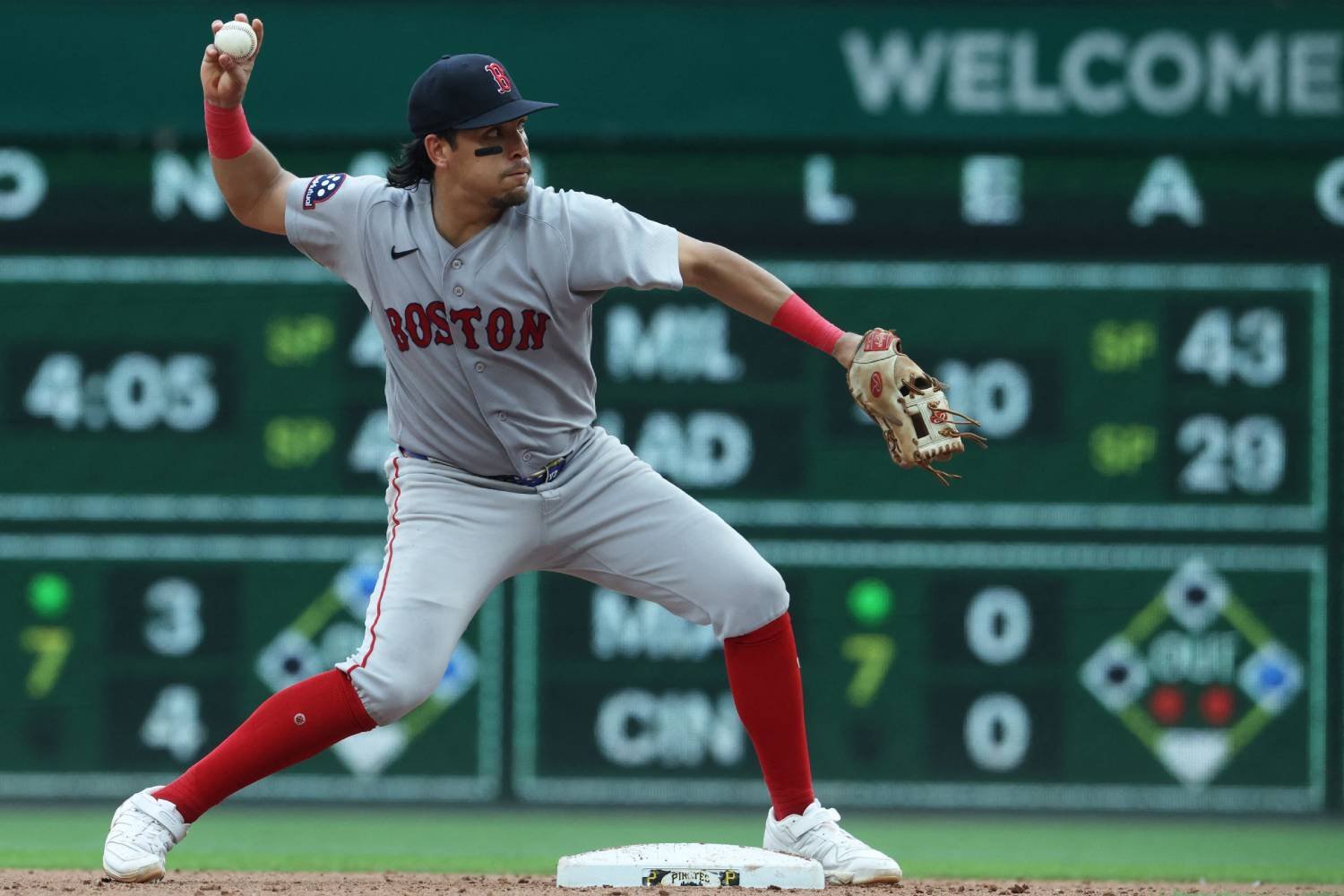 WIth the return of left fielder Roman Anthony and shortstop Trevor Story made official Sunday, the Boston Red Sox optioned catcher-first baseman Mickey Gasper and infielder Anthony Seigler to Triple-A Worcester to make room on the 26-man roster. Anthony and Story were activated from the 60-day injured list and the Red Sox had two open spots on their 40-man roster to accommodate their return. Also, left-handed reliever Raymond Burgos was sent back to Worcester after serving as the extra player in Saturday's doubleheader. Anthony is back after partially tearing a ligament in his right wrist and hand, while Story had surgery to repair a sports hernia. Both have been out since May. Anthony was back in his customary leadoff spot and serving as the designated hitter for Sunday's series finale vs. the Yankees, while Story was at shortstop and batting eighth as the Red Sox look for a split of the four-game set. Gasper has been a solid bat while with the Red Sox this season, putting up a .278/.374/.466 slash line with five homers and 19 RBIs in 45 games. Seigler has been a nice utility player and has a .250/.331/.405 slash line with three homers and 13 RBIs in 48 games. View the full article
 -
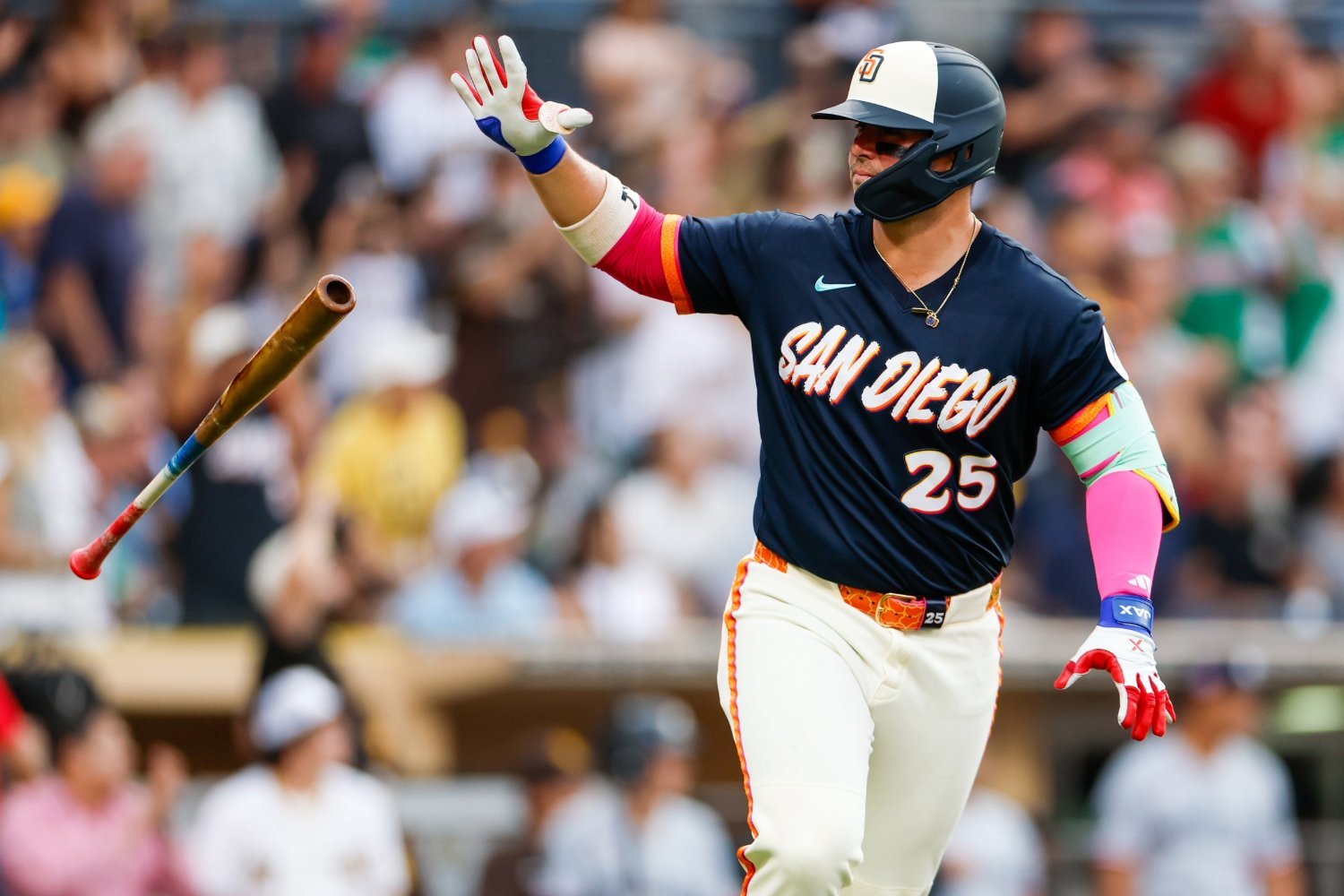 When the San Diego Padres signed Ty France to a minor-league pact in the middle of February, it had the chance to be a good story. While his place on the roster wasn't guaranteed up against multiple players of a similar profile, the former San Diego State Aztec & 2015 Padres draftee had the opportunity for a homecoming after consecutive seasons of plying his trade for multiple teams. That fresh status as a journeyman that France attained across stints with Seattle, Cincinnati, Minnesota, and Toronto were a mixed bag. He'd struggled on both sides of the ball in his final season with the Mariners and post-trade-deadline with the Reds in 2024 before regaining his defensive form (and some of his bat) with the Twins the following year. He spent time on the shelf with the Blue Jays after another deadline deal landed him in a new spot, but reappeared for Toronto in last year's World Series. That February signing back in San Diego came at a time when the team had added (or would add) Miguel Andujar and Nick Castellanos to a roster that already featured Gavin Sheets as a first-base-corner-outfield profile. France, nevertheless, was able to grab a roster spot courtesy of a strong spring and some positional injuries that unfolded during the exhibition season. Not only did he do that, but he's since become a key player in the team's playoff push. Nearly through the end of August, France has contributed a .285/.355/.501 line with a 138 wRC+. In a general sense, it's his best offensive season since 2022, with his .218 isolated power number representing a new career high. Not only has he regained form, he's done so in a way that would put him as the team's top hitter if measured by wRC+. Only Fernando Tatis Jr.'s 124 comes remotely close to matching France's full-season offensive output. Perhaps more importantly, the 32-year-old has been a stabilizing force on the infield. With the Padres featuring one of the league's most improved defensive units, France's name figures to be in the mix for some accolades at the position come season's end. He's third in Outs Above Average among first basemen (with five) with a success rate of 79 percent against an estimated rate of 77 percent. If we flipped the metric to Defensive Runs Saved, France actually leads the position with 12. There isn't any doubt as to France's value to this particular Padres team. But on a minor-league deal that became a one-year MLB pact, there's now a question as to whether the Friars should make this a longer-term arrangement. He has undoubtedly played himself into more earning power his next time out. That much is objective. Not far behind it, though, in the rankings of things considered to be inarguable is the idea that France should be manning the position again in 2027 (or, you know, 2028). The Padres do not have a prospect of which we can speak that is banging on the door of the big-league first base job. Romeo Sanabria represents perhaps the closest name to such a concept, but he has struggled mightily in 80ish plate appearances in El Paso (30 wRC+). Nor is there anyone on the present roster that you'd feel comfortable holding down the gig with any regularity; Jake Cronenworth's profile doesn't fit the position, and Gavin Sheets isn't someone you want to run out against left-handed pitchers. The list of first base free agents this winter is also an uninspiring group as a whole. Given all of that, it'd be really difficult to make a case against retaining Ty France beyond 2026. One images the cost itself wouldn't be prohibitive (especially if new ownership is able to offer an injection of at least some additional financing), nor would the length of a new contract. It really all reads as easy a call as A.J. Preller and co. will have to make this winter. View the full article
 -
 David Shields struck out seven across six innings in Quad Cities' 7-2 win. L.P. Langevin added five strikeouts in two innings. Northwest Arkansas walked off Frisco 8-7 after Javi Vaz drove in three runs. Columbia won 6-5 in eleven innings on Camden Johnson's two-run single, backed by Jose Gutierrez and Jhon Reyes. Omaha lost 7-6 despite home runs from Alejo Lopez, Drew Waters, and Luca Tresh. Mason Black worked 2 1/3 scoreless innings in relief. Kansas City Royals Transactions No Roster Moves Three Omaha Home Runs Are Not Enough In Iowa Lopez led off the game with a home run, and Omaha carried a lead into the fifth inning before falling 7-6 at Iowa. The Storm Chasers built the lead in the second inning. Waters walked and stole second base, Colton Becker singled him home, Becker stole second base, and Elih Marrero doubled Becker in for a 3-1 edge. Omaha added two more in the fourth when Waters and Luca Tresh hit back-to-back home runs for a 5-1 lead. Vince Velasquez could not hold it. He allowed a solo home run in the first inning, a run on a sacrifice fly in the fourth, and then four runs in the fifth, when Iowa put together a solo home run, a run-scoring single, and a two-run home run. Velasquez finished with 4 2/3 innings, seven hits, six runs, no walks, and two strikeouts, and he gave up three home runs. Black followed with 2 1/3 scoreless innings, two hits, and two strikeouts. Lucas Erceg took the loss after allowing two hits and a run in one inning, with the deciding run scoring on a double in the eighth. Omaha pulled even in the seventh when Lopez doubled, and Brandon Drury singled him home. The Storm Chasers put runners on in the ninth on walks to Becker and Drury, but Abraham Toro flied out to end the game. Lopez finished 2-for-5 with a double, a home run, and one RBI. Waters was 2-for-2 with two walks, a home run, and one RBI. Omaha had eight hits, three home runs, four walks, left six runners on base, and went 3-for-10 with runners in scoring position. The Storm Chasers are now 58-70. Player AB R H RBI BB K Alejo Lopez 5 2 2 1 0 2 Carson Roccaforte 3 0 0 0 0 2 Brandon Drury 1 0 1 1 1 0 Abraham Toro 5 0 0 0 0 1 Brett Squires 4 0 0 0 0 1 Drew Waters 2 2 2 1 2 0 Luca Tresh 4 1 1 1 0 2 Jacob Berry 4 0 0 0 0 0 Colton Becker 3 1 1 1 1 0 Elih Marrero 4 0 1 1 0 0 Player IP H R ER BB K HR Vince Velasquez 4 2/3 7 6 6 0 2 3 Mason Black 2 1/3 2 0 0 0 2 0 Lucas Erceg 1 2 1 1 0 1 0 Naturals Walk Off Frisco After Javier Vaz Clears The Bases Northwest Arkansas scored on a wild pitch in the bottom of the ninth inning to beat Frisco 8-7. The Naturals put up three runs in the first. Luke Pelzer singled, Vaz doubled him to third base, and Pelzer scored on a wild pitch that moved Vaz to third base. Sam Kulasingam singled Vaz home, Spencer Nivens singled, and Kulasingam scored from third base when Nivens was caught stealing. Frisco answered with five runs in the fourth on a three-run home run and a two-run home run off Grant Gambrell, who finished with four innings, eight hits, five runs, no walks, and three strikeouts. Frank Mozzicato followed with two scoreless innings, no hits, three walks, and one strikeout. Dennis Colleran Jr. worked two innings and gave up one hit, one run, three walks, and one strikeout. Zachary Cawyer allowed an unearned run and a walk in one inning, blowing the save and picking up the win. Connor Scott homered to cut the deficit to 5-4. Northwest Arkansas took the lead in the seventh. Angel Acosta singled, Hyungchan Um singled, Pelzer was hit by a pitch, and Vaz doubled all three runners home for a 7-5 lead. Frisco tied it with single runs in the eighth and ninth. In the bottom of the ninth, Acosta singled, Alberto Rodriguez and Um moved him to third base on sacrifice bunts, Pelzer was walked intentionally, and Acosta came home on a wild pitch. Vaz finished 2-for-4 with two doubles and three RBI. Acosta was 2-for-4, Um was 2-for-3, and Scott was 2-for-4 with a home run. The Naturals went 3-for-3 with runners in scoring position and stranded four runners. Northwest Arkansas is now 53-70. Player AB R H RBI BB K Luke Pelzer 3 2 1 0 1 0 Javier Vaz 4 1 2 3 0 2 Sam Kulasingam 3 1 1 1 1 2 Spencer Nivens 4 0 1 0 0 3 Connor Scott 4 1 2 1 0 0 Justin Johnson 4 0 0 0 0 1 Angel Acosta 4 2 2 0 0 0 Alberto Rodriguez 2 0 0 0 1 2 Hyungchan Um 3 1 2 0 0 1 Player IP H R ER BB K HR Grant Gambrell 4 8 5 5 0 3 2 Frank Mozzicato 2 0 0 0 3 1 0 Dennis Colleran Jr. 2 1 1 1 3 1 0 Zachary Cawyer 1 0 1 0 1 0 0 Shields Strikes Out Seven As Quad Cities Handles Beloit No. 2 Royals prospect Shields turned in a quality start, and Quad Cities beat Beloit 7-2. Shields worked six innings, allowed three hits and two runs, walked nobody, and struck out seven. The only damage against him was a two-run home run in the fifth inning. His 11 wins are the most of any teenager in the Minor Leagues this season. Ethan McElvain followed with one inning and one hit. Langevin finished with two innings, one hit, and five strikeouts. The River Bandits scored in five different innings on six hits and six walks. Zion Rose walked, stole second base, moved to third base on a balk, and scored on a wild pitch for the first run. Jose Cerice hit a ground-rule double in the fourth and came home on a single by Austin Charles. Quad Cities pushed the lead to 4-2 in the fifth. Nolan Sailors walked and stole second base, Rose singled him home, Rose reached third base on a pickoff error, and Blake Mitchell brought him in on a fielder's choice. Tyriq Kemp doubled home Derlin Figueroa an inning later. Figueroa supplied the last two runs in the seventh. Rose and Ramon Ramirez both walked and moved into scoring position, and Figueroa doubled them both home for a 7-2 lead. Figueroa finished 2-for-4 with a double and two RBI. Rose was 1-for-3 with two walks, one RBI, and three runs scored. Cerice and Kemp each doubled. Quad Cities struck out nine times, went 4-for-14 with runners in scoring position, and left seven runners on base. The River Bandits sport the best record of the Royals affiliates with a 66-54 record after Saturday's win. Player AB R H RBI BB K Nolan Sailors 4 1 0 0 1 2 Zion Rose 3 3 1 1 2 1 Blake Mitchell 4 0 0 1 0 1 Ramon Ramirez 3 1 0 0 1 1 Derlin Figueroa 4 1 2 2 0 1 Jose Cerice 3 1 1 0 0 1 Austin Charles 3 0 1 1 1 0 Tyriq Kemp 4 0 1 1 0 2 Stone Russell 3 0 0 0 1 0 Player IP H R ER BB K HR David Shields 6 3 2 2 0 7 1 Ethan McElvain 1 1 0 0 0 0 0 L.P. Langevin 2 1 0 0 0 5 0 Johnson Walks It Off For Columbia In The Eleventh 2026 9th-round pick Johnson singled home two runs in the bottom of the eleventh inning to give Columbia a 6-5 win over Charleston. Gutierrez gave the Fireflies 5 2/3 innings, allowing three hits and two unearned runs with two walks and four strikeouts. Justin LeGuernic worked 1 1/3 innings and allowed three hits, one run, and struck out three. Jhon Reyes struck out three over two innings and did not allow a hit, though one run scored against him. Moises Amezquita took the win with two innings, one hit, one unearned run, one walk, and two strikeouts. Columbia trailed 3-1 heading to the eighth. JC Vanek was hit by a pitch, No. 5 prospect Sean Gamble moved him to second base on a ground out, and Roni Cabrera singled him home. Tyson Moran walked, Cabrera took third base on a wild pitch, and Connor Rasmussen doubled both runners home for a 4-3 lead. Charleston tied the game in the ninth. Neither team scored in the tenth, and Charleston's zombie runner came around on a single in the eleventh for a 5-4 lead. The Fireflies answered with Rasmussen as their zombie runner. Ricson Gonzalez singled Rasmussen to third base, and Daniel Lopez ran for Gonzalez. Jhonayker Ugarte then walked, and Rasmussen was thrown out at the plate on a force play. Johnson then singled to right field to bring home Lopez and Ugarte. Gonzalez finished 3-for-5. Rasmussen was 2-for-5 with a triple, a double, and two RBI. Johnson had one hit, one walk, two RBI, and four strikeouts. Columbia committed three errors, went 5-for-16 with runners in scoring position, and left eleven runners on base. The Fireflies improved to 63-61 this season with the win. Player AB R H RBI BB K Camden Johnson 5 0 1 2 1 4 JC Vanek 3 1 0 0 1 1 Sean Gamble 3 0 0 0 1 2 Henry Ramos 0 0 0 0 0 0 Roni Cabrera 4 1 1 1 0 2 Tyson Moran 4 1 0 0 1 0 Connor Rasmussen 5 1 2 2 0 1 Ricson Gonzalez 5 0 3 1 0 0 Daniel Lopez 0 1 0 0 0 0 Jhonayker Ugarte 4 1 1 0 1 1 Gabriel Silva 5 0 0 0 0 2 Player IP H R ER BB K HR Jose Gutierrez 5 2/3 3 2 0 2 4 0 Justin LeGuernic 1 1/3 3 1 1 0 3 0 Jhon Reyes 2 0 1 1 0 3 0 Moises Amezquita 2 1 1 0 1 2 0 Top-20 Prospect Performance Kendry Chourio: DNP David Shields: 6 IP, 3 H, 2 R, 2 ER, 0 BB, 7 K Josh Hammond: DNP Blake Mitchell: 0-for-4, 1 RBI, 1 K Sean Gamble: 0-for-3, 1 BB, 2 K Ramon Ramirez: 0-for-3, 1 BB, 1 K Zion Rose: 1-for-3, 1 RBI, 2 BB, 1 K Asbel Gonzalez: DNP Carson Roccaforte: 0-for-3, 2 K Taylor Rabe: DNP Yandel Ricardo: DNP Justin Lamkin: DNP Drew Beam: DNP Michael Lombardi: DNP Jack Slightom: DNP Felix Arronde: DNP Angeibel Gomez: DNP Ben Kudrna: DNP Steven Zobac: DNP Blake Wolters: DNP View the full article
 -
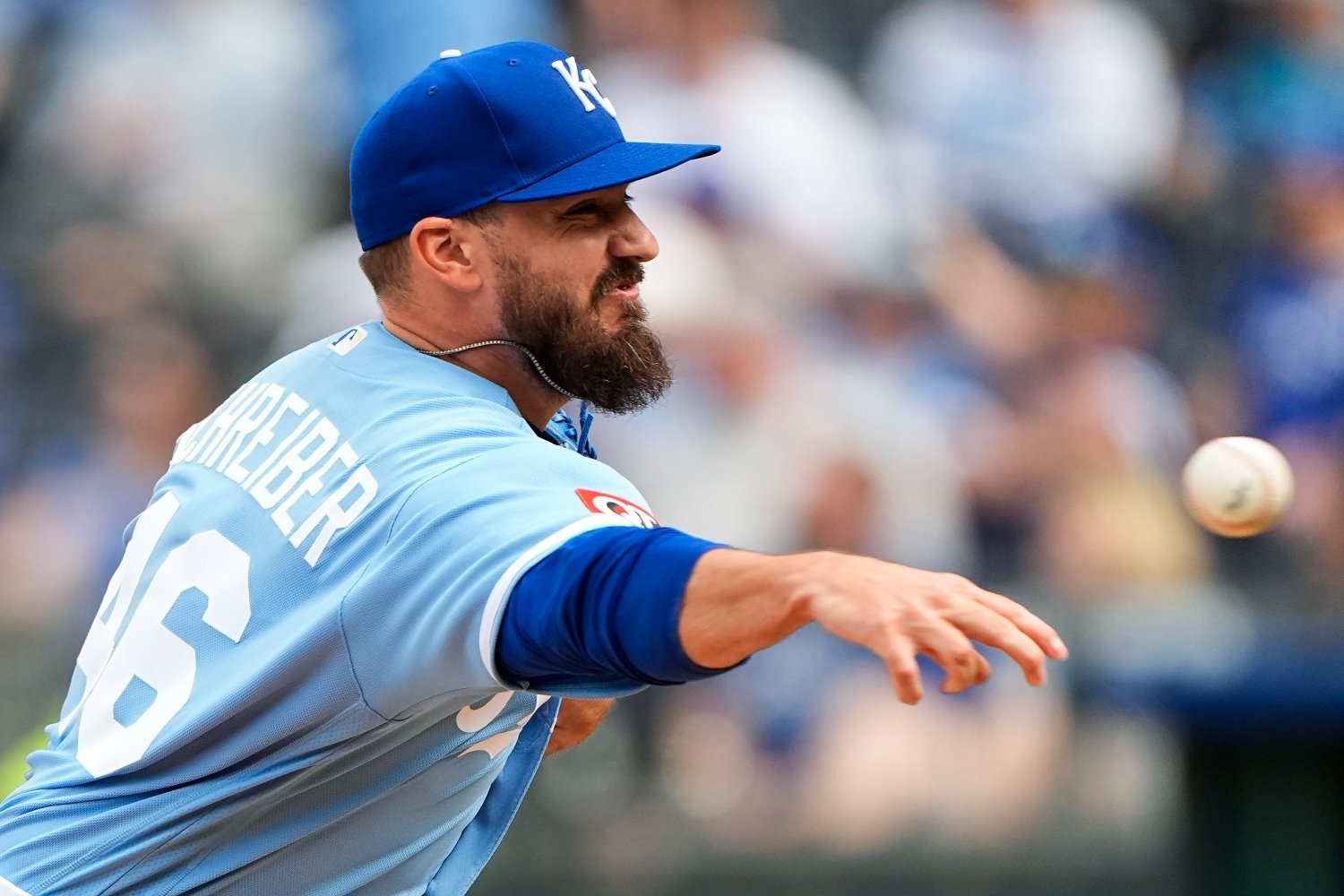 On Saturday, after the Royals' latest victory over the Guardians, MLB Insider Joel Sherman reported that Kansas City had placed veteran reliever John Schreiber on waivers. Schreiber was reportedly pushed to be traded at the Trade Deadline, but the Royals could not find any suitors or a suitable return. While the Royals have won 12 of their last 14, their playoff chances remain slim at 0.2%, according to Fangraphs. Thus, putting Schreiber on waivers allows him to be picked up by another playoff team, saves the Royals $600,000, and frees up a roster spot on the 40-man and 26-man active roster. Teams have 48 hours to claim Schreiber on waivers. If he is not selected, he will remain on the Royals for the remainder of the year. The Reds placed Eugenio Suarez and TJ Friedl recently on waivers, but found no takers. Schreiber came to the Royals from the Red Sox before the 2024 season, when he was traded for pitching prospect David Sandlin (who's currently in the White Sox organization). In 188 games and 165 IP with the Royals, he has posted a 3.71 ERA, 4.02 FIP, and accumulated a 1.1 fWAR. He's seen some regression this year. While his ERA is 3.65, his FIP is 4.88, his K-BB% is 6.9%, and his HR/FB% is 16.7%. Those are all the worst marks in a season of his three-year career with the Royals, and as a result, his fWAR is -0.3. His Statcast percentiles haven't been great either, as he's struggled to generate strikeouts and whiffs this year, even though his barrel rate allowed and GB% are still solid. Those rates and numbers could explain why the Royals couldn't trade Schreiber by the Deadline. MLB rosters expand to 28 on September 1st. Thus, waiving Schreiber could allow them to add another player on the active roster for that stretch run. Storm Chaser righty Lucas Braun and Naturals lefty Hunter Owen are two potential options that the Royals could bring up for the last month of the 2026 season. View the full article
 -
 Tyrone Taylor’s strong start has created an interesting Cubs outfield dilemma. With Matt Shaw nearing a return, what does that mean for Taylor, and could Kevin Alcántara once again be the odd man out? View the full article
 -
Ranger Suárez Is Losing One of His Favorite Weapons on the Mound
DiamondCentric posted an article in Talk Sox
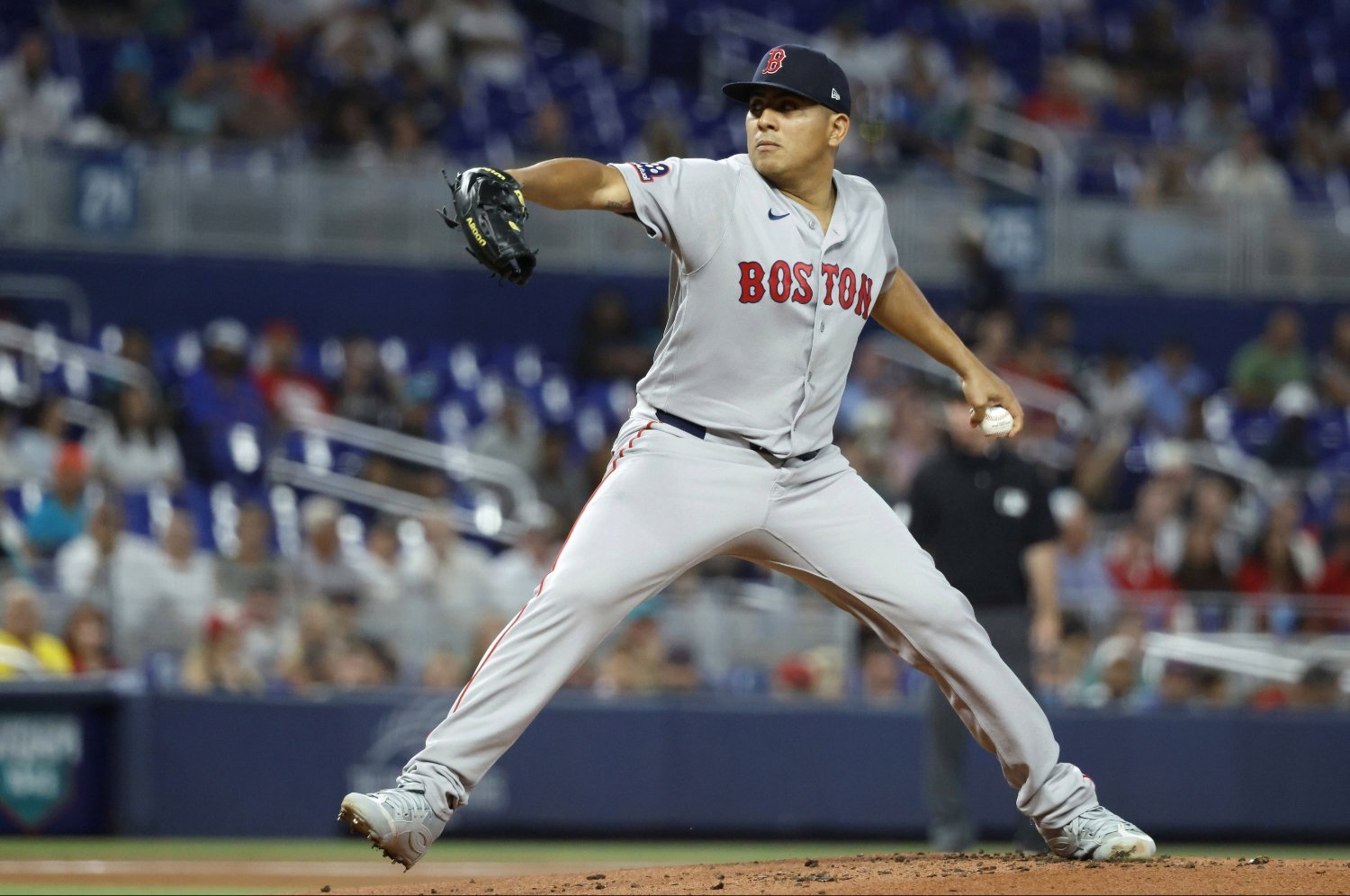 The Boston Red Sox are 5-1 in the six starts since Ranger Suarez returned from the injured list on July 26. In his last three starts, he has started to increase his pitch volume to more than 80. Amid the adjustments during these outings, Suárez has seen his strikeout rate drop by 8.4%, while walks have increased by 2.7%. That lack of strikeouts and the increase in on-base percentage have pushed his FIP to 4.61 during this stretch, well above the 3.25 he recorded in his 17 starts before going on the injured list. Opposing hitters are taking advantage by attacking him more in the strike zone and have improved contact by a slight 3.3%. They are also chasing more (11.1%), due to the mix of his secondary pitches, the cutter, changeup, and curveball. However, there is a problem Suárez has to solve, and it does not exactly correspond to his return: his inconsistency with the sinker. Month/Year RHB% LHB% PA SO% HR xBA xSLG xwOBA Whiff% PutAway% 4 / 2026 68.2% 31.8% 53 17.0% 0 .294 .371 .334 11.1 27.3 5 / 2026 52.0% 48.0% 26 23.1% 1 .262 .377 .325 23.3 33.3 6 / 2026 38.4% 61.6% 28 21.4% 1 .300 .465 .358 13.6 23.1 7 / 2026 45.7% 54.3% 12 8.3% 0 .365 .439 .351 14.3 14.3 8 / 2026 47.8% 52.2% 21 9.5% 1 .398 .568 .446 3.8 11.1 Since last June, Suárez has been using his sinker much more against left-handed hitters. The results we see in this summary are general and show the combined adjustment of both profiles against his sinker. More contact, more power, and fewer swings and misses. The PutAway% from this last month gives us a preview that Suárez has stopped using the sinker as a weapon to finish his most important counts. Since returning from the injured list, the xwOBA has skyrocketed to another level. All of that is clear. But the big difference here is not being made by right-handed hitters. It is left-handed hitters who are getting most of the quality at-bats against Suárez. And that is not the worst part. Over the last four seasons, that trend has continued to increase against the sinker. Period L/R Pitches PA K% BB% HR% xBA xOBP xSLG xwOBA BABIP Whiff% EV (MPH) Hard Hit% Barrel/BBE% 2023-2026 LHP 825 265 13.2 2.6 3.0% .271 .307 .400 .311 .298 12.1 84.0 31.0 5.1 2026 LHP 203 63 17.5 1.6 3.2% .280 .302 .407 .309 .375 17.3 83.4 32.0 6.0 Difference LHP -622 -202 4.3 -1.0 0.2% .009 -.005 .007 -.002 .077 5.2 -0.6 1.0 0.9 This comparison better contextualizes the situation. The expected metrics remain in a similar range, but BABIP has skyrocketed from a not very consistent .298 to a dangerous .375. Suárez has stopped striking hitters out and getting swings and misses at a concerning rate this year, while hitters have made a small jump in the quality of their contact. Run Value/100 pitches probably summarizes it better, taking each of those situations into account. In 2021, the season when the sinker looked like the best pitch in his arsenal, Suárez recorded 2.6 RV/100 with a .202 xBA allowed. Last year, it dropped to -0.3, and this year he is at -0.2, with a .312 xBA, the highest since 2020. That said, let’s look at the next part of the problem: where he throws his sinker and how the opposition is responding. Here we have the 2026 stretch (chart on the left) vs. 2023-2026 when he throws his sinker against left-handed hitters. I don’t think it is difficult to notice where Suárez is having problems: pitches located in the vertical middle part toward the inside of the strike zone. Hitters are destroying his sinker inside because of two key problems: he lost velocity and lateral movement, two characteristics that made it a more difficult pitch to decipher. In 2026, his sinker is averaging just 90.3 mph, and 89.9 since he returned from the injured list. On the other hand, he lost more than two inches of horizontal break toward the hitter’s hands, dropping from 16.0" between 2021-2023 to 13.8" this year, below average. Added to that loss of bite is greater induced vertical break (6.2" IVB), which takes away depth from the “sinking” action. The result of what might look like a slight loss in velocity and break is making a big difference in favor of the hitters, who are taking advantage of the sinker, which now stays in the strike zone for longer periods of time. Ranger Suárez’s next start will be against the Yankees, and it'll be fascinating to see if he tries to buck this recent trend. If he continues to take pressure off the sinker in key situations, he will have to find another way to compensate for it. For the Red Sox, the best news would be for his adjustments to begin giving him the necessary turn to bring back the best version of his arsenal. View the full article
 -
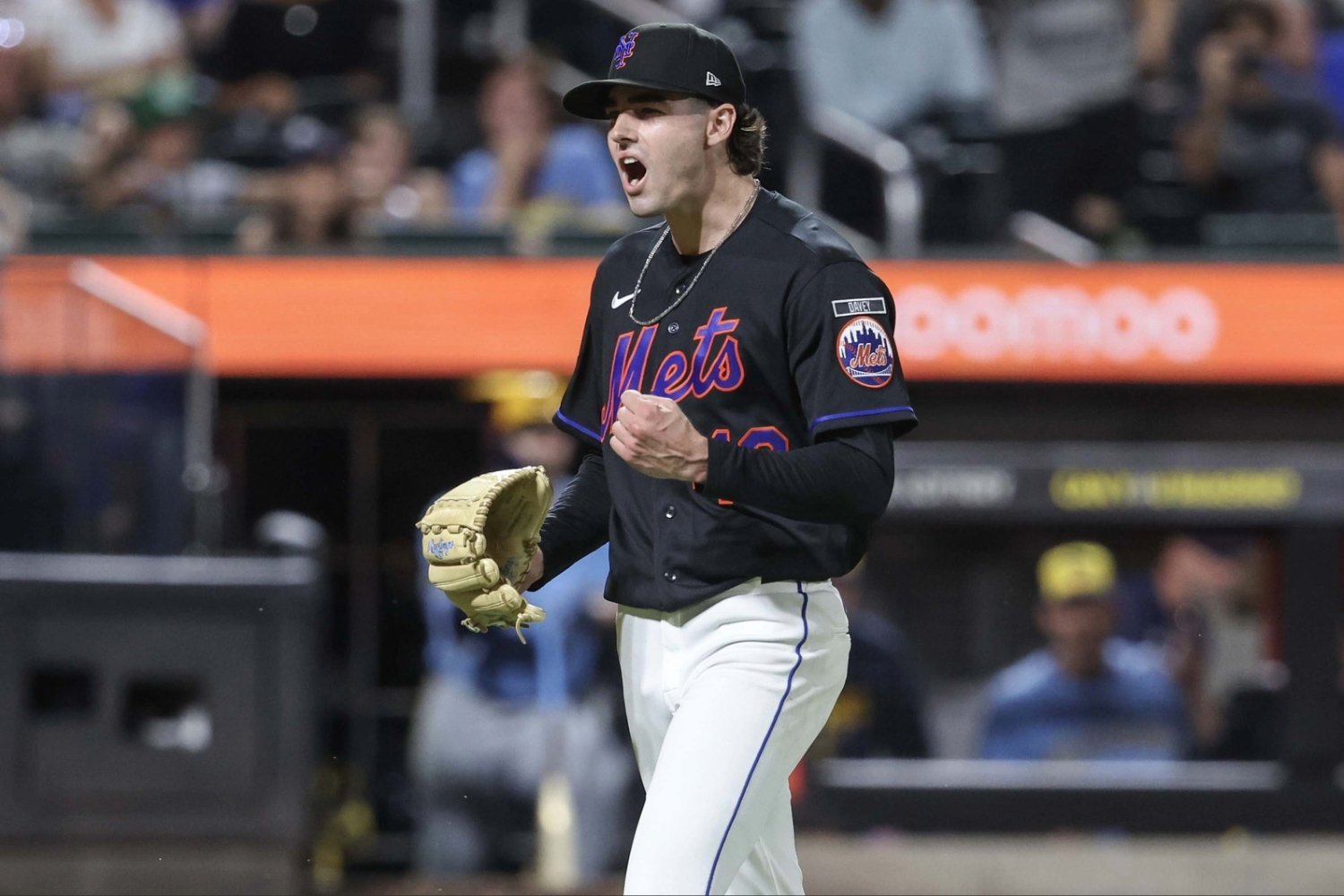 Since Zac Thornton came back from the injured list, he has pitched to a 3-3 record with a 2.42 ERA in 10 starts with the New York Mets. He has achieved part of that dominance with a strikeout rate of 6.4 K/9, the second-lowest among the 14 starting pitchers who have accumulated at least 50 innings and a 2.40 ERA or lower in the same span. Only Brandon Pfaadt, the right-hander of the Arizona Diamondbacks, has had a lower strikeout rate (5.5). I’ll start by saying that I love Thornton and value what he has done to recover and return to the mound. He has personality, attacks the strike zone, and possesses an interesting combination in his stuff. However, although I want to be optimistic, I think he has lived on the tightrope for too long. His four-seam fastball and his sinker do not impose themselves enough to garner tremendous respect. That makes him a vulnerable pitcher and, at the same time, dependent on his defense, which is fatal in many situations where he needs to avoid contact. I firmly believe that this version of dominance that we are seeing will not remain for long if Thornton does not begin to make immediate adjustments. During August, he has thrown fastballs 72.6% of the time when batters have been ahead in the count. What has been the result? He has allowed a .561 xSLG in 25 plate appearances. The distribution of his repertoire reveals a contradiction. Thornton is building his strategy based on the cutter and the four-seam fastball, but those have been the pitches that are generating the fewest swings and misses. Instead, the sweeper and the curveball, which he usually uses to attack the corners and try to get ahead in the count, are his pitches with the best results. That said, there is something very clear here: batters know that Thornton does not have high velocity on his fastball, which gives them some margin of error to better identify his pitches. Where Thornton has the advantage is in the command of his pitches. The +10 run value that Thornton has gotten in the heart of the zone also helps to understand how he is surviving with so few strikeouts. He has generated +6 runs of value when batters swing and another +4 when he decides to attack the zone without being punished, which is allowing him to move ahead in counts. However, we have a bigger problem here: the disadvantage in his profile against right-handed batters. While Thornton has held left-handed batters to a line of .194/.239/.239 and .218 BABIP, right-handers are doing the most damage with a .273/.325/.424 slash and .308 BABIP. The following graphic better describes where his pitches have been more exposed against right-handed batters. Thornton is working the edges of the zone better, where he has limited the average. But in the middle is the warning: they have hit him at just .227, while the xBA is .401. He is getting very favorable results in an area where the quality of the contacts should be favoring the batters much more. He has also had luck when they hit the pitches in the high corners, inside and outside, with differences of .128 and .198, respectively. Once the pitches move away at the edges of the strike zone, the expectations change noticeably. Frequently, right-handed batters are being more aggressive against Thornton the first time they see his pitches in the game. They are also producing more frequently, recording a rate of 16.0 HR/FB%. Then, they have adjusted their swing and, for the second time they face him, their O-Swings% rate has fallen by 8.0%. They hit more line drives as well, yielding a quality in the contact that has also caused the reduction in the K/BB rate from 3.00 to 1.86. So, it is clear that Thornton is not going to overcome most of the problems with his fastball with much more velocity. Although it was good news that his four-seam fastball reached the highest peak in velocity (93.1 mph) during his most recent start, when he threw six innings and left the Milwaukee Brewers at one run this past Tuesday, Thornton will have to redefine his attack strategy, especially against right-handed batters. He has a good reason to trust more in the consistency of his secondary pitches, which could prove the next stage in his evolution as an MLB starter. View the full article
 -
The Twins May Have Waited Too Long on Walker Jenkins
DiamondCentric posted an article in Twins Daily
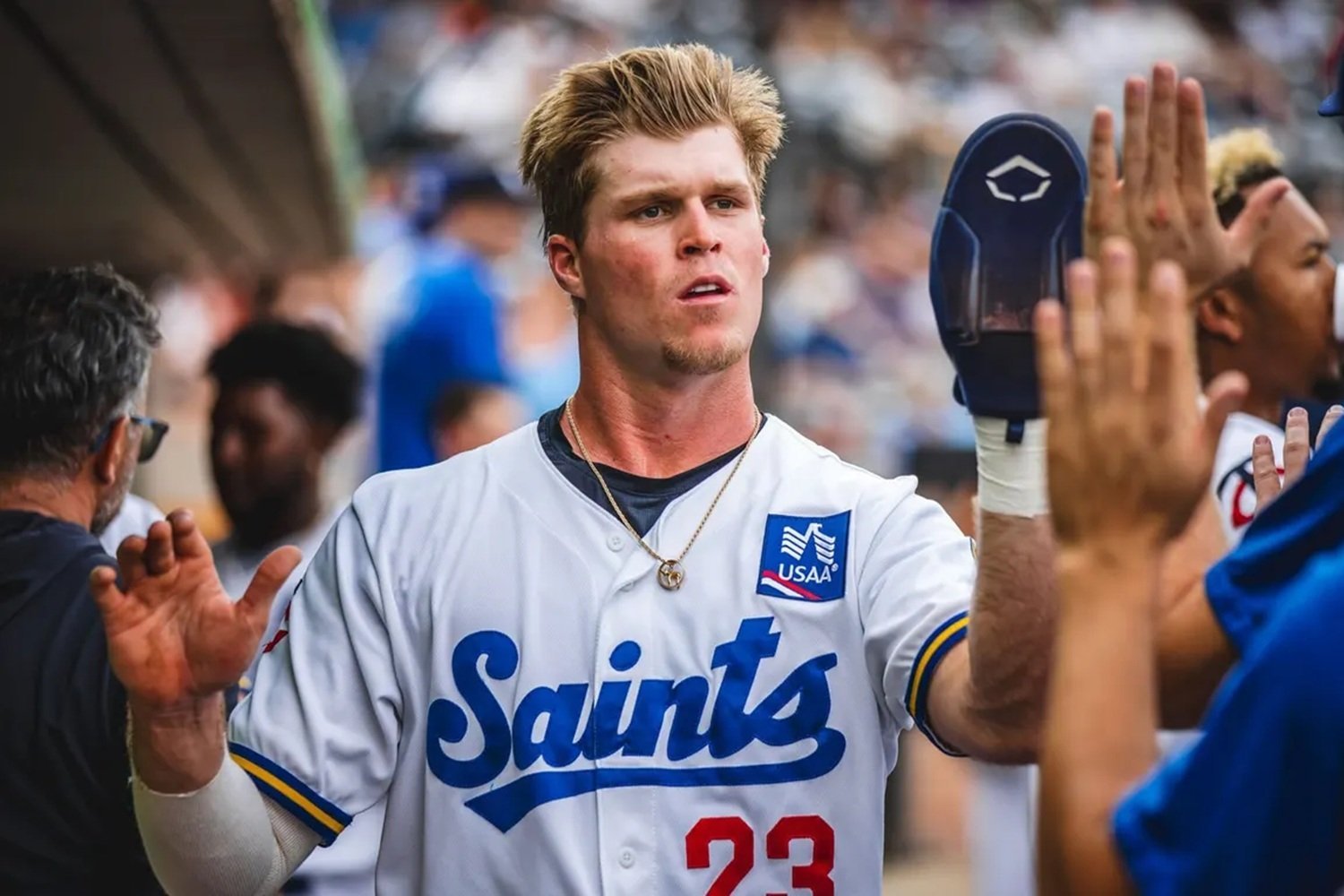 There is no way to know whether Walker Jenkins would have changed the Minnesota Twins' season. That is the uncomfortable part of this conversation. Maybe he would have arrived at Target Field and struggled. Maybe the transition to the majors would have exposed areas of his game that haven't been tested at Triple-A. Maybe he would have needed a few weeks to adjust before becoming the impact hitter everyone expects him to be. Or maybe he would have helped the Twins win just enough games to change the shape of their season. At this point, that possibility is becoming increasingly difficult to ignore. The Twins entered Thursday 64-70, four games behind the Cleveland Guardians for the American League's final Wild Card spot. Their playoff odds have fallen to roughly 10 percent after Minnesota was swept by San Diego and dropped two of three games to the Athletics. And while there are plenty of reasons for the collapse, the Twins' decision to leave Jenkins in Triple-A is one that deserves another look. Not because Jenkins was guaranteed to be a superstar immediately. Because Minnesota had a glaring need for an impact bat, and its best option happened to be putting together one of the best offensive stretches in the organization. The Situation Changed When Jeremy Zoll explained earlier this month why Jenkins had not been promoted, his reasoning was understandable. The Twins wanted to make sure there was a legitimate opportunity for Jenkins to play every day. Calling up a top prospect only to have him sit on the bench isn't particularly beneficial for his development. Zoll also pointed to Kaelen Culpepper's promotion as an example of how opportunity matters when deciding when to move a prospect to the majors. That is a reasonable philosophy. But baseball seasons don't stay static. The situation changed. By the middle of August, Byron Buxton was dealing with another hip issue. The outfield mix became less stable. Minnesota needed offense, and suddenly the theoretical opportunity for Jenkins was sitting right in front of the organization. At the same time, Jenkins was making the decision harder with virtually every game he played. In the first 16 August games, he hit .415/.493/.800 with a 1.293 OPS, seven home runs and six stolen bases. He followed that by continuing to produce during the final week of the month, including another home run on Thursday. At some point, keeping a player in Triple-A stops being about whether he has something left to prove. Jenkins reached that point. Development Matters, But So Does Winning The Twins deserve credit for being deliberate with Jenkins. He missed a significant portion of the season after suffering a shoulder injury, and rushing him back would have been irresponsible. Player development should never be dictated solely by public pressure. But there is a difference between rushing a player and recognizing when a player has become ready. Jenkins' performance suggests he reached that stage. He had already been performing at Triple-A for months, and his August production was not simply a small sample fueled by a few fortunate games. He was showing power, plate discipline, speed and the ability to impact games in multiple ways. The Twins also weren't operating as a rebuilding team. They bought at the trade deadline. They added Jeff Hoffman, Dean Kremer and A.J. Minter because they believed this team had a chance to play meaningful baseball in September. They promoted Culpepper because they believed he could help them win now. That makes the decision to keep Jenkins in Triple-A more difficult to reconcile. You can't spend the final week of July and the first week of August behaving like a team trying to make the playoffs, then suddenly become entirely focused on preserving a prospect's developmental timeline when the roster needs help. Did Jenkins Cost the Twins a Playoff Spot? This is where the argument needs some restraint. Saying Jenkins definitely cost Minnesota a playoff berth would be impossible to prove. The Twins have lost games for countless reasons. Their pitching has been inconsistent. Their best players have dealt with injuries. The schedule hasn't always been kind. And Minnesota has simply played poor baseball for stretches. Jenkins alone cannot fix that. But the question isn't whether Jenkins would have single-handedly carried Minnesota into October. The question is whether he could have provided enough value over the weeks leading into this collapse to make a difference. That's a much more reasonable question. The Twins were sitting in the Wild Card picture just over a week ago. Now they are four games back, with their postseason odds falling from nearly 40 percent to roughly 10 percent in just over a week. When the margin is that thin, one or two wins can completely change the conversation. Maybe Jenkins gives them one extra hit. Maybe he makes one catch. Maybe he takes one extra-base hit away from an opposing pitcher. Maybe he doesn't do any of those things. But Minnesota had an elite prospect producing at a ridiculous level in Triple-A while its major-league outfield was dealing with injuries and inconsistency. At some point, the risk of calling him up becomes smaller than the risk of leaving him there. The Bigger Lesson The Twins shouldn't regret being careful with Jenkins. They should regret not recognizing when the circumstances changed. There is a difference between protecting a prospect and protecting yourself from making a difficult decision. Jenkins' long-term future is far more important than the final 30-plus games of the 2026 season. But the organization also spent much of the summer telling everyone through its actions that it believed this team could contend. That meant maximizing the roster. And Jenkins was becoming increasingly difficult to leave off it. Maybe the Twins eventually call him up and he struggles. Maybe they call him up next week and his arrival comes too late to matter. That's baseball. But when Minnesota looks back at a season that could end just short of the playoffs, Jenkins' time in Triple-A will be one of the obvious "what if?" questions. The answer may never be known. Still, watching the Twins stumble through an injury-plagued August while Jenkins tears apart Triple-A pitching makes one thing increasingly clear: The Twins probably didn't need Walker Jenkins to become a star this summer. They simply needed to find out whether he could help them win. And they may have waited too long to find out. Did the Twins wait too long to call up Jenkins? Leave a comment and start the discussion. View the full article
 -
 Walker Jenkins is officially a Twin, and he’s joining a group that could define Minnesota’s next era. With Kaelen Culpepper, Connor Prielipp, and Andrew Morris already making their mark, the future is arriving sooner than expected. View the full article
 -
 The Sounds and Shuckers grabbed victories. Not so for the Timber Rattlers and Warbirds, as those two squads hope to win their home game finales for 2026 on Sunday. We spotlight Rylan Mills at Wilson. Transactions: OF Luis Matos transferred to AAA Nashville’s 60-day injured list from 7-day injured list RHP Quinton Low transferred to High-A Wisconsin’s 60-day injured list from 7-day injured list Nashville Pre-Game Media Notes (unavailable) Final: Nashville 13, Jacksonville (Marlins) 5 Box Score and Game Log Via the Sounds, game details, and we encourage readers to always review affiliate write-ups as part of their Link Report routine: Sounds Crush Jumbo Shrimp in Lopsided Win As always, nobody competes with the Sounds for details provided. Outside of the "OurSportsCentral" link we provide here, when the summary isn't on the Nashville site, very few eyes have access to it. Please take advantage and complete your review. Always fun when the box score includes four taters: HR: Naylor, B (11, 3rd inning off Milbrandt, 1 on, 2 out); Baddoo (10, 3rd inning off Milbrandt, 2 on, 2 out); Garcia, E (4, 4th inning off Milbrandt, 1 on, 1 out); Quero (14, 9th inning off Miller, G, 1 on, 0 out). Couple of things on the home run video clips - at least three times the Jacksonville booth was in the midst of an interview, so that's always a risk and makes for an awkward replay. Also, Jeferson Quero took advantage of a position player. For this road game, the Sounds socials didn't include the visuals, so click on each name above to view the home runs beyond the one Spencer provides here: Additional Naylor and Ethan Murray RBI knocks were also of the position-player-on-the-mound variety, links provided if you're into the piling on scene. On the mound, RH reliever Kaleb Bowman helped keep LH starter Tate Kuehner's line in check. Eleven rehab appearances for RH reliever Joel Kuhnel, the last ten of them scoreless (game log). Even so, within the next couple of days, his status (likely DFA?) will be determined. For his sake, he's been pulling in MLB pay during the Nashville stint. RHP Tyson Hardin entered in the 6th and finished up, the exact thinking being what - limit innings, prepare for unlikely MLB postseason relief, too early in the AM to overthink it. NOTE: Why our "as it happens" Minor League Forum thread is often appreciated - brief note on 3B Luke Adams' exit as part of the action in the top of the first. Catch up with the latest Biloxi pre-game audio interview archives - Latest with Tech Ops. Intern Nate Sanchez Biloxi Pre-Game Media Notes Final: Biloxi 4, Knoxville (Cubs) 3 Box Score and Game Log Shuckers Walk Off Smokies with Three-Run Ninth Inning - Smith, Hodges allow one run across 4.2 relief innings, Keith records multi-hit night Early, then a long drought, then late! VIDEO: The 9th inning rally included this unique Damon Keith RBI single. Then, this: Andrew Fischer, playing first base, walked and scored in the 9th. He did strike out in his other three at-bats, for those who follow (or choose to ignore) that aspect of his game. Guessing it's close to a 50-50 split on that among Brewers prospect followers. LHP J.D. Thompson has walked 31 and plunked three in 46.1 innings between High-A and AA in his debut season. Work to do this offseason to be sure... Love that the game summary gave proper credit to RH relievers Travis Smith and Garrett Hodges, deservedly so. Luis Pena back immediately after his Friday "funny bone" HBP exit. Wisconsin Pre-Game Media Notes (download link) Final: South Bend (Cubs) 7, Wisconsin 6 Box Score and Game Log Via the Timber Rattlers, game details: Rattlers Comeback Falls Short against South Bend - Cubs hold on for 7-6 win over Wisconsin Tough to see after the mind-numbing late blown lead the night prior - Tough to point this out on a night when Luis Castillo showed off the pop, but there's truth in both these comments as I quote my fellow Link Reporter brethren Joseph and Daniel - On base three times, CF Sawyer Strosnider has cruised to a .323/440/.500 line after his first 75 plate appearances. A June baby, he'll still be just 21 years old when the 2027 season opens. Speaking of youth on his side, fellow 21-year-old Eric Bitonti's OPS sits at .925. The linked game summary above provides additional background. Warbirds pregame audio interviews from this week's final home series of the season: Manager Eddy Morgan Carsten Sabathia III Special Advisor to Player Development and Scouting Julio Borbon Final: Hickory (Rangers) 10, Wilson 7 Box Score and Game Log Wilson Eliminated from Playoffs in 10-7 Loss to Hickory - Mills Hits Second Homer of Series 19-year-old Rylan Mills 11th home run in 204 AB's (slugging .500!), and we could have seen this coming. Via the July 25th, 2025 "Day Two Draft Recap" from @Spencer Michaelis - "Round 18: Rylan Mills, Oran HS (MO) A potential sleeper selection for the Brewers in the 18th round, Mills is a catcher from a small school in Missouri. He is committed to Southeast Missouri State. Mills has posted exit velocities of up to 110 MPH and shown bat speed of up to 83 MPH using Blast sensors. There is tremendous pop in the bat, and he showed it with his 1.794 OPS, and 1.145 slugging percentage in high school his senior year. He had 39 hits, 23 of which were the extra base variety. 10 of those were home runs. Defensively, he looks a little slow on the trigger to make throws but has a strong arm. Cleaning up the footwork and the exchange a bit could lead to consistent pop times under two seconds. The commitment to a smaller school would seem to make it more likely that he will be one of the players to sign from this group of 11-20 selections." Identifying Mills was simply incredible unearthing work by the Brewers scouting staff. "The most interesting story of The Great Lakes Summer Collegiate League related to the MLB Draft may have been when Flag City Sluggers catcher Rylan Mills was selected in the 18th round by the Milwaukee Brewers. Mills is a recent high school graduate, and an incoming freshman commit to Southeast Missouri State University. The Oran High School graduate from Dexter, Missouri is the first ever GLSCL draft pick coming straight out of high school. Mills was selected to participate in the GLSCL Prospect Showcase ahead of the GLSCL All-Star Game at Prasco Park coming up on July 22 (he'll join the Brewers instead)." Here's one of our favorite feature articles from 2026, via Paul Durham of the Wilson Times back on May 28th. Back to Saturday's game: Carsten Sabathia RBI single Moises Polanco sacrifice fly caps the scoring Hickory is now 42-17 in the second half, more impressive than their parent club at Am-Fam this weekend. The top row of highlights here spotlights the Crawdads work against the three Wilson pitchers, as your box score review will show, none shined (Cesar Espinal with two scoreless frames but four walks). Manager Eddy Morgan was ejected right after this Hickory home run, perhaps a strikeout call was missed just prior. August 30th?! How did that happen? You can check out the Shuckers after the big-league game today (5:05 Central start in Biloxi). Have a great Sunday, folks. Organizational Scoreboard including starting pitcher info, game times, MiLB TV links, and box scores Current Milwaukee Brewers Organization Batting Stats and Depth Current Milwaukee Brewers Organization Pitching Stats and Depth View the full article
 -
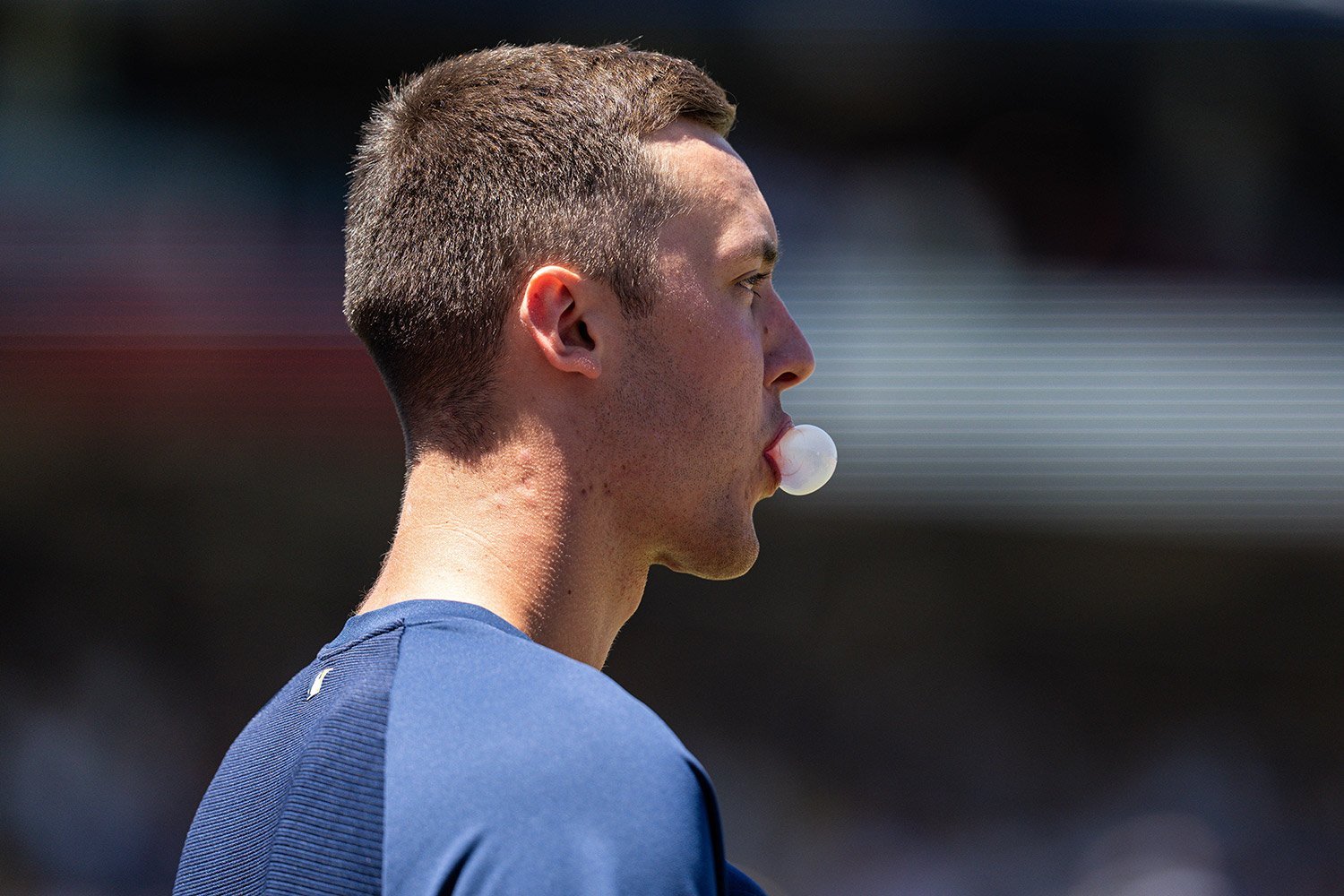 As the calendar is ready to flip over to September, Jacob Misiorowski has done everything the Milwaukee Brewers brain trust has hoped for in the young phenom’s sophomore campaign. The Miz has made 25 starts and will probably make four or five more, depending on how the Brewers want to set up their postseason rotation/manage the flame-throwing right-hander’s workload. His 222 strikeouts lead the majors, as does his ERA+ of 240, FIP of 2.14, WHIP of 0.76, and ERA of 1.73. Although pitcher victories aren’t the premier pitching stat anymore, Miz ranks tied for fourth in the bigs with 14 wins. By any pitching metric, he is near the top, if not the best, pitcher in baseball this year. Will he hear his name announced as the top pitcher in the National League in mid-November at the MLB award show in Las Vegas? Four or five more starts will tell the story. In the 56 years of Milwaukee Brewers baseball, three pitchers have captured the Cy Young Award in their respective league. The Brewers played in the American League before switching to the ‘Senior Circuit’ in 1998. The first hurler to win the award for Milwaukee has his number ‘34’ enshrined among the retired Brewers jerseys at Uecker Field. Four days after he was traded from the San Diego Padres to the St. Louis Cardinals in December 1980, Rollie Fingers came to the Brewers in a blockbuster deal with the Cards that included Ted Simmons, Pete Vuckovich, David Green, Dave LaPoint, Sixto Lezcano, and Lary Sorensen. There was a work stoppage in 1981, but that didn’t keep the mustachioed closer from compiling some stellar numbers in the shortened season. His 28 saves led all of baseball, besting runner-up Chicago’s Bruce Sutter’s total of 25. Not only did Fingers win the coveted pitching award, but he edged out Oakland’s Rickey Henderson for the American League Most Valuable Player honors. The Brewers earned their first postseason nod but lost in five games to the New York Yankees in the ALDS. Fingers lasted only two more seasons, after missing all of 1983 with forearm tendinitis. He retired with 341 career saves. The following season, Vuckovich, fresh off a fourth-place finish in the Cy Young race in 1981 behind Fingers, Oakland’s Steve McCatty, and Detroit’s Jack Morris, won 18 games, and although he posted rather pedestrian peripherals (1.50 WHIP and almost as many walks as strikeouts), earned his own Cy award over Baltimore’s Jim Palmer and Kansas City’s Dan Quisenberry. The Brewers won an exciting ALCS over the California Angels, winning the final three games at County Stadium before losing in seven contests to the Cardinals in their only World Series appearance. Like Fingers, ‘Vuke’ missed one season (1984) and pitched in just 28 games over the next two seasons and retired at the end of spring training in 1986. The third pitcher to be honored was right-hander Corbin Burnes in 2021. Burnes, after switching to a starting role during the shortened 2020 season, was arguably one of the best pitchers in baseball from 2021-2024 and was named to four All-Star teams and earned down-ballot votes in the Cy Young race four times in addition to winning the award in 2021. He also earned votes in the Covid season of 2020 despite only making nine starts among his 12 appearances. In 2021, Burnes posted a major league-leading ERA of 2.42, a FIP of 1.63, and a strikeouts/nine rate of 12.6, along with 234 strikeouts. After being traded to the Baltimore Orioles for DL Hall and Joey Ortiz in early 2024, Burnes won 15 games for the Orioles, was named to the AL All-Star team, and finished fifth in the AL Cy Young balloting. Ten other Brewer pitchers earned Cy Young votes in franchise history. In 1978, Mike Caldwell finished second to New York’s Ron Guidry after winning a franchise-high 22 wins. Throwing 293 1/3 innings, ‘Iron Mike’ tossed six shutouts among his 23 complete games. And just for kicks, he even posted one save across a trio of relief outings. Perhaps the most memorable Cy Young run was accomplished by CC Sabathia when he finished fifth in the NL CY voting in 2008 after coming to the Brewers in a trade from the Cleveland Indians. In just 17 starts over the last three months of the season, Carsten Charles went 11-2 with an ERA of 1.65 with seven complete games and three shutouts, leading the Brewers to the post-season for the first time since the 1982 season. Unfortunately for Milwaukee, the season workload—a career-high 253 innings—wore down the big lefty, and he was only able to last three and two-thirds innings against the Philadelphia Phillies in Game 2 of the NLDS in a 5-2 loss. Other pitchers that have earned votes were Freddy Peralta (2025), Josh Hader (2018), Jimmy Nelson (2017), Yovani Gallardo (2011), John Axford (2011), Ben Sheets (2004), Teddy Higuera (1986, 1987), and Jim Colborn (1973). Can The Miz add his name to the trio of Brewer legends? Time will tell. View the full article
 -
Who belongs on 'Mount Rushmore' of most iconic Marlins players?
DiamondCentric posted an article in Fish On First
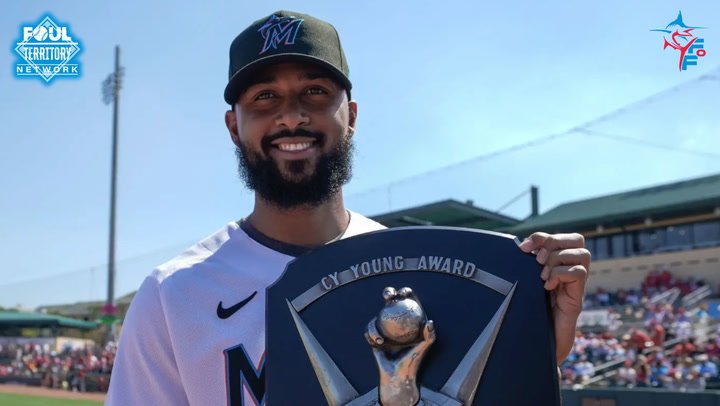 On Fish Unfiltered, Tommy Hutton discusses the top players he has covered during a long career in the Marlins broadcast booth.View the full article
 -
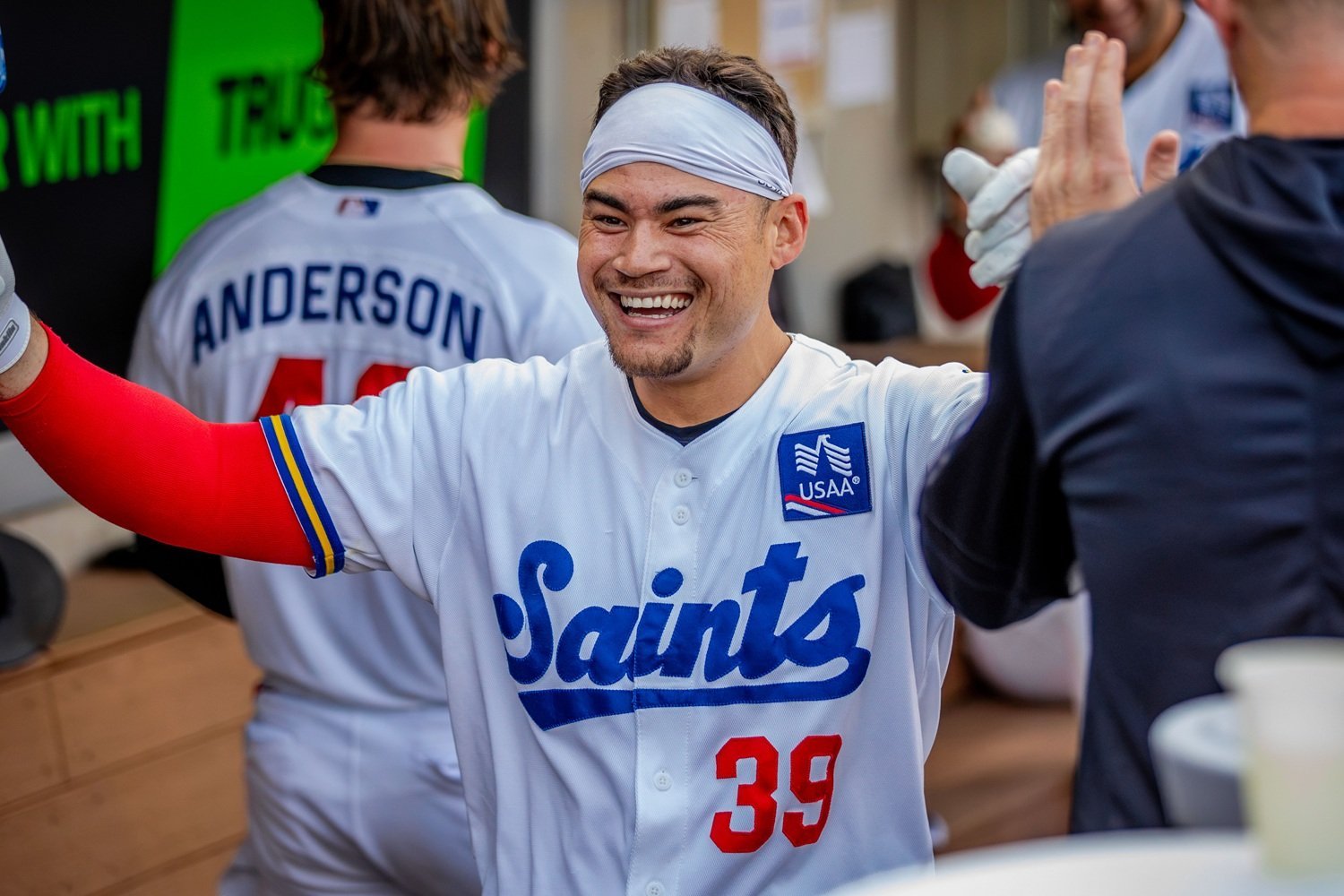 TRANSACTIONS The Saints activated Ian Daugherty from the Development List. RHP Jason Reitz was activated from the Injured List for the Mussels. In addition, OF Ricardo Paez was promoted from the FCL Twins to the Mussels. Kernels OF/1B Jayson Bass was placed on the temporary inactive list. SAINTS SENTINEL St. Paul 8, Toledo 1 Box Score This was a low-scoring affair until the bottom of the fifth inning when Matt Wallner bashed a grand slam to give the Saints some space. They added more. Kala’i Rosario led off the top of the second inning with his fourth Saints home run. After two were out, David Banuelos hit his seventh home run of the season to make it 2-0. Jack Anderson started for the Saints. He gave up one run on four hits and a walk over 4 2/3 innings. He hit 68 pitches and then Matt Bowman came on to get the final out of the fifth inning. He also worked a scoreless sixth inning.Garrett Acton tossed two innings and struck out four batters. Marco Raya pitched a perfect ninth inning to finish out the win. They didn’t need it, and obviously they didn’t know that they didn’t need it, so the Saints kept adding on. With one out in the fifth inning, Banuelos was hit by a pitch. Alan Roden singled, and Gabriel Gonzalez lined a single to left to load the bases. That brought Matt Wallner to the plate, and he took a 2-0 sinker on the inning third of the plate and deposited it over the wall in right field to make it a 6-1 game in favor of the Saints. It marked his 24th home run with the Saints this season as he continues to add to his franchise-leading single-season home run record. In the bottom of the seventh, Wallner came to the plate with Gonzalez at second base after a walk and wild pitch. Wallner lined a single to the opposite field to drive in Gonzalez and make it 7-1. In the bottom of the eighth, Kala’i Rosario came up and hit his second home run of the night and fifth with the Saints. It was a laser at about 112 mph. That gave the Saints an 8-1 lead that they held onto. Wallner was 2-for-3 with a walk, his 24th home run and five RBI (which gives him 70 for the season). Gonzalez went 2-for-3 with a walk. Rosario hit two homers over four at-bats. Banuelos was 1-for-2 with a walk, a hit by pitch, and his seventh home run of the season. Playoff Update: With 19 games left in the season, the Saints are 2.0 games out of the lone second half playoff spot. Home Run Record Update: The Saints have hit 228 home runs this season. The current International League record for single-season home runs by a team is 231. The Saints have 19 games left. WIND SURGE WISDOM Wichita 1, Arkansas 11 Box Score Before the game, Andrew Cossetti was presented the Wind Surge 2026 Harmon Killebrew Award for Community Service. That truly is an honor. In the bottom of the second inning, Cossetti gave his team a 1-0 lead with his 17th home run of the season. After that, the Travelers scored the next, and final, 11 runs of the game. Cory Lewis started. In a season-high 4 1/3 innings, he gave up two runs on four hits and a walk. He had five strikeouts. Hunter Gregory came in and gave up two runs on three hits over 1 2/3 innings. Jaylen Nowlin came in for the seventh inning. He gave up five runs (4 earned) on two hits, three walks, and a hit batter. He recorded just two outs. Kyle Bischoff got the final out of the seventh and worked a scoreless eighth inning. Catcher Luis Hernandez came in to pitch the top of the ninth inning. He gave up two runs on four hits in the inning. Khadim Diaw was back in the lineup. He went 2-for-4 with his eighth double. It marks his 17th multi-hit game since joining Wichita. Garrett Spain went 2-for-4. He's had 25 multi-hit games. Kyle DeBarge went 2-for-4 and stole his 34th base on the season. DeBarge has 24 multi-hit games this season. With Kade Anderson called up by the Mariners, the clear top pitching prospect in the Mariners system is Ryan Sloan. He started this game for Arkansas. He gave up one run on five hits over six innings. He had six strikeouts to zero walks. Like Anderson, you can find Sloan among the top 10 prospects in all of baseball. Marek Houston was out of the Wind Surge lineup for the second straight game. He hasn't played since being ejected in the eighth inning on Thursday. Home Run Record Update: Cossetti's home run gave the Surge 171 homers this season. That ties the franchise's record for homers in a season. The Surge have seven more games to play. Did you Know? Walker Jenkins became the 50th former Wind Surge player to make his MLB debut. KERNELS NUGGETS Cedar Rapids 4, Lake County 10 Box Score Kolten Smith has certainly not been himself since he joined the Kernels, but it’s been especially rough his past three starts. In this game. He tossed a scoreless first inning and completed the first inning for the first time in three starts. However, he gave up four runs in the second and four more runs in the third inning. In total, he gave up eight runs on seven hits (2 homers) and five walks in 2 1/3 innings. Just 36 of his 71 pitches were strikes. Ivran Romero came in and went the next 4 1/3 innings. He came in with the bases loaded and got out of the inning without allowing any of the inherited runners to score. He gave up two runs on five hits and a walk. He struck out two batters. Cleiber Maldonado got the next four outs, three of them on strikeouts. Catcher Irvin Nunez came in and pitched the ninth. He had a 1-2-3 inning with two ground balls and a line out to center. While they found themselves down 8-0 after three innings, the Kernels hitters didn’t give up. In the bottom of the fourth inning, JP Smith led off with a walk. Luis Fragoza singled him to center. The runners advanced on a balk. Following a walk, Byron Chourio and Ramiro Dominguez each drove in a run with a sacrifice fly to make it 8-2. In the bottom of the sixth, Fragoza led off with a single. With two outs, a Dominguez single drove him in. That made the deficit 9-3. With two outs in the bottom of the ninth, Yasser Mercedes clobbered a 2-2 hanger beyond the wall in left field, and completely out of the stadium. It left the bat at 110 mph. Mercedes went 3-for-5, and that was his 10th home run with the Kernels. Fragoza went 2-for-4. Byron Chourio hit his fourth double. Tait fouled for the 23rd time this season. On Sunday, the Kernels will play their final home game of the 2026 season. They are scheduled to play six games in South Bend next week to close out their season. MIGHTY MATTERS Fort Myers, Bradenton (postponed) Box Score For the second straight night, conditions at Hammond Stadium, specifically the rain, caused an unplayable field. Friday’s game was cancelled. The two teams will attempt to play a doubleheader on Sunday afternoon. They will be the final two home games for the Mussels this season. Fort Myers is scheduled for six games in Clearwater next week to conclude their season. PLAYERS OF THE DAY Hitter(s) of the Day Matt Wallner (St. Paul): 2-for-3, BB HR(24), R, 5 RBI Kala’i Rosario (St. Paul): 2-for-2, 2 HR(5), 2 R, 2 RBI, K Yasser Mercedes (Cedar Rapids): 3-for-5, HR(10), R, RBI, 2 K Pitcher(s) of the Day Jack Anderson (St. Paul): 4 2/3 IP, 4 H, 1 R, 1 BB, 4 K Garrett Acton (St. Paul): 2 IP, 0 H, 0 R, 1 BB, 4 K PROSPECT SUMMARY Check out the Prospect Tracker for much more on our Twins Top 20 prospects. See how they did today. (Click on player links in this section to see Twins Daily articles that the player has been tagged in.) #1 - OF Walker Jenkins (Minnesota) - 1-for-3, 2B(1), RBI(1), SB(1) (batted ninth, played CF) #2 - C Vahn Lackey (Cedar Rapids) - 0-for-4, BB, 3 K (batted second, placed catcher) #3 - IF Kaelen Culpepper (Minnesota) - 0-for-4, R, K (batted seventh, played SS) #8 - C Eduardo Tait (Cedar Rapids) - 1-for-4, 2B(23), K (batted third, played DH) #9 - 1B/OF Gabriel Gonzalez (St. Paul) - 2-for-3, BB, 2 R (batted second, played LF) #12 - 3B/CF Brandon Winokur (Wichita) - 0-for-4, K (batted third, played SS) #13 - C/OF Khadim Diaw (Wichita) - 2-for-4, 2B(8) (batted second, played DHd) #19 - OF Yasser Mercedes (Cedar Rapids) - 3-for-5, HR(10), R, RBI, 2 K (batted first, played CF) UPCOMING PROBABLES Sunday, August 30 Toledo @ St. Paul (2:07 pm CT) - LHP Aaron Rozek (3-3, 3.94 ERA) Arkansas @ Wichita (1:05 pm CT) - RHP Riley Quick (0-2, 4.76 ERA) Lake County @ Cedar Rapids (1:05 pm CT) - LHP Cesar Lares (1-6, 11.45 ERA) Bradenton @ Ft. Myers (DH @ 11:05 am CT) - RHP Eric Hammond (1-4, 4.40 ERA), TBD CURRENT W-L Records Minnesota Twins: 64-72 St. Paul Saints: 74-56 Wichita Wind Surge: 51-72 (Final Game 9/13) Cedar Rapids Kernels: 46-77 (Final Game 9/6) Fort Myers Mighty Mussels: 67-55 (Final Game 9/6) FCL Twins: 33-26 (Season Complete) DSL Twins: 19-35 (Season Complete) Please feel free to ask questions about the teams, the rosters, and discuss today’s games, or anything else Twins minor-league related! View the full article
 -
 On a day in which one of the San Diego Padres' teams won the Dominican Summer League championship, the four full-season affiliates went 2-2 Saturday. The Triple-A El Paso Chihuahuas were edged by Oklahoma City 3-2, the Double-A San Antonio Missions prevailed over Springfield 6-2, the High-A Fort Wayne TinCaps fell to Dayton 7-3 and the Low-A Lake Elsinore Storm triumphed over Rancho Cucamonga 4-2. But the biggest system news was Padres Gold repeating as DSL champions, winning 4-2 over the Reds. Padres Minor-League Transactions LHP Sean Fitzpatrick assigned to Lake Elsinore Storm from ACL Padres Ethan Salas Ties It Late, But Chihuahuas Tumble Carlos Rodriguez went 3-for-4 and Ethan Salas tied the game with an RBI single in the top of the eighth inning, but the Triple-A El Paso Chihuahuas gave up a run in the bottom half and dropped a 3-2 decision to the host Oklahoma City Comets. Rehabbing Padres left fielder Samad Taylor went 0-for-3 with two strikeouts in perhaps his final rehab game following the injury to the Padres' Luis Rengifo. Former Padres right-hander Brent Honeywell made his return to the mound in nearly two seasons after signing a minor-league contract with the Friars this week. Chihuahuas left-handed starter Jagger Haynes, Padres Mission's No. 13 prospect, struck out five in five shutout innings, allowing just three hits. Right-hander Hans Crouse pitched a perfect sixth inning, then Honeywell made his first appearance since facing the Padres for the Los Angeles Dodgers at the end of the 2024 season. He gave up two unearned runs on a hit and a walk in one inning. Right-hander Logan Gillaspie pitched the eighth, giving up the go-ahead run. Nick Pratto gave the Chihuahuas an early 1-0 lead with a second-inning RBI single. It stayed that way until the bottom of the seventh, when the Comets scored twice. In the top of the eighth, Sung-Mun Song had a leadoff single. Two outs later, Marcos Castanon singled him to second and Salas, Padres Mission's No. 1 prospect, lined an opposite-field single to left-center off rehabbing Dodgers left-hander Justin Wrobleski that tied the game 2-2. Salas has reached base in 21 of his 23 Triple-A games. But Gillaspie gave up a homer to begin the bottom of the eighth. EP_0829.mp4 Player AB R H RBI BB K Sung-Mun Song, SS 5 1 1 0 0 1 Samad Taylor, LF 3 0 0 0 0 2 Kai Murphy, RF 2 0 0 0 0 0 Carlos Rodríguez, CF 4 0 3 0 0 0 Marcos Castañon, DH 4 0 1 0 0 2 Ethan Salas, C 3 0 1 1 1 1 Nick Solak, LF 3 1 0 0 1 2 Gage Workman, 3B 4 0 0 0 0 3 Nick Pratto, 1B 3 0 1 1 1 1 Bryce Johnson, PR 0 0 0 0 0 0 Clay Dungan, 2B 2 0 1 0 1 1 Mason McCoy, PH 0 0 0 0 1 0 Player IP H R ER BB K HR Jagger Haynes 5.0 3 0 0 1 5 0 Hans Crouse 1.0 0 0 0 0 1 0 Brent Honeywell 1.0 1 2 0 1 0 0 Logan Gillaspie 1.0 2 1 1 0 2 1 Missions Strike Early To Snap 7-Game Skid Braedon Karpathios banged the first pitch of the game off the left-field foul pole and Albert Fabian also went deep, while Ryan Jackson and Romeo Sanabria each had three hits as the Double-A San Antonio Missions beat the host Springfield Cardinals. The victory not only snapped a seven-game losing streak, but the Cardinals' 10-game winning streak as well. Missions left-handed starter Fernando Sanchez allowed only one run over a season-best 5⅓ innings, although he did walk six. Right-hander Johan Moreno went 2⅔ scoreless innings and right-hander Josh Mallitz allowed an unearned run in the ninth. Sanabria, who also doubled, had RBI singles in the first and fourth innings. Fabian hit his 11th homer in the third inning, a two-run shot that made it 4-0. Karpathios, Padres Mission's No. 9 prospect, has 15 home runs. SA1_0829.mp4 SA2_0829.mp4 Player AB R H RBI BB K Braedon Karpathios, RF 5 1 2 1 0 1 Ryan Jackson, SS 4 2 3 0 1 0 Tirso Ornelas, LF 3 0 0 0 1 0 Romeo Sanabria, DH 4 1 3 2 1 1 Jack Costello, 3B 5 0 0 0 0 2 Albert Fabian, 1B 5 2 2 2 0 1 Kai Roberts, CF 4 0 1 0 0 1 Wyatt Hoffman, 2B 4 0 0 0 0 2 Brendan Durfee, C 4 0 0 0 1 2 Player IP H R ER BB K HR Fernando Sanchez 5 1/3 4 1 1 6 2 0 Johan Moreno 2 2/3 0 0 0 2 1 0 Josh Mallitz 1.0 1 1 0 0 0 0 Carlos Rodriguez's 3 Hits Not Enough For TinCaps Carlos Rodriguez went 3-for-4 with two RBIs, but the host High-A Fort Wayne TinCaps couldn't slow down the Dayton Dragons, who came out on top 7-3. The Dragons hit four home runs. Rodriguez had half of the TinCaps' six hits, while the Dragons had 12. It was the 13th multihit game for Rodriguez and third with three hits this year. TinCaps right-handed starter Kannon Kemp struck out seven, but gave up six runs on nine hits and two walks in four innings. Right-hander Carlos Medina went three innings, allowing a run and striking out three. Right-hander Bernard Jose pitched two hitless innings. FW_0829.mp4 Player AB R H RBI BB K Ryan Gerety, LF 2 0 0 0 2 1 Kasen Wells, CF 4 0 1 1 0 0 Rosman Verdugo, SS 4 0 0 0 0 2 Luke Cantwell, 1B 3 1 1 0 1 1 Kerrington Cross, 3B 3 1 0 0 1 1 Carlos Rodriguez, C 4 0 3 2 0 0 Yoiber Ocopio, DH 3 0 1 0 1 1 Yimy Tovar, 2B 3 1 0 0 0 2 Robbie Lavey, PH 1 0 0 0 0 0 Dylan Grego, RF 4 0 0 0 0 2 Player IP H R ER BB K HR Kannon Kemp 4.0 9 6 6 2 7 3 Carlos Medina 3.0 3 1 1 1 3 1 Bernard Jose 2.0 0 0 0 0 1 0 Joe Tirloy Continues Power Surge With First 2-HR Game In Storm Win Seventh-round draft pick Joe Tiroly had the first two-homer game of his pro career and the bullpen pitched 5⅔ scoreless innings as the Low-A Lake Elsinore Storm topped the host Rancho Cucamonga Quakes 4-2. Tiroly, who hit 16 home runs this spring at Virginia, hit solo homers in the third inning and fifth innings, one down the line in left and the second to center, to give him five home runs in 12 games with the Storm since his pro debut Aug. 11. He also homered Friday and has gone deep in three of his last five games. He homered in his very first game, too. Tiroly finished with three hits, also driving in a run with a sixth-inning single. Storm right-handed starter Tyler Schmitt gave up two runs in 3⅓ innings. But the Storm bullpen took over from there, allowing just four hits and no runs the rest of the way. Left-hander Andrew Wright, an undrafted free agent, went 1⅔ innings, while another lefty, eighth-rounder Sean Fitzpatrick, made his pro debut with a strikeout in one inning. Right-hander Jordan Valenzuela then struck out four in two innings and Yoesmerli Beltre pitched a scoreless ninth for his second save with the Storm. LE1_0829.mp4 LE2_0829.mp4 Player AB R H RBI BB K Elliot Lascelles, 2B 3 0 0 0 1 0 Jorge Quintana, SS 4 0 0 0 0 0 Alex Conover, LF 4 0 1 0 0 1 Chris McHugh, RF 4 1 2 0 0 0 Ty Harvey, C 4 0 1 0 0 1 Nu'u Contrades, DH 4 1 1 1 0 0 Joe Tiroly, 3B 4 2 3 3 0 1 Dawson Willis, 1B 4 0 2 0 0 1 Qrey Lott, CF 4 0 3 0 0 1 Player IP H R ER BB K HR Tyler Schmitt 3 1/3 5 2 2 2 1 0 Andrew Wright 1 2/3 1 0 0 1 0 0 Sean Fitzpatrick 1.0 0 0 0 0 1 0 Jordan Valenzuela 2.0 2 0 0 1 4 0 Yoesmerli Beltre 1.0 1 0 0 1 0 0 Padres Gold Wins Second Straight DSL Championship Box score Padres Gold capped an incredible season by winning their second Dominican Summer League championship, beating the Reds 4-2 in the decisive Game 3. Padres Gold are the first DSL team to repeat since the Rangers in 2013-14. Padres Gold had the best record in the regular season at 40-16, while Padres Brown had the worst at 11-44. Center fielder Endy Rio went 2-for-4 with a run scored, while catcher Dayquer Alfonzo, left fielder Cristian Benavides and first baseman Jeanfranco Fernandez each drove in runs for Padres Gold. The Reds took a 1-0 lead in the top of the third innings before Padres Gold took the lead in the bottom of the sixth. Third baseman Dawry Guerrero doubled to center and, after a pitching change, Fernandez followed with an RBI double to tie the game 1-1. Right fielder Gabriel Teran reached on a fielder's choice when the pitcher threw out Fernandez at third and moved to second on a wild pitch. Second baseman Yorvin Morla singled to the pitcher, who had a throwing error that allowed Teran to score the go-ahead run. Padres Gold added two runs in the eighth. Teran drew a leadoff walk and went to second on Rios' one-out single. Alfonzo singled to left to bring in Teran and send Rios to third. Alfonzo ended up on second due to an error by the left fielder. Designated hitter Sebastian Nadales walked to load the bases, then Benavides hit a sac fly to put Padres Gold up 4-1. The Reds got a leadoff homer in the top of the ninth, but right-handed closer Albieris Polanco picked up his third postseason save by retiring the final three hitters. Polanco had three saves in 23 regular-season appearances. Padres Gold right-handed starter Josias Figuereo allowed a run on two hits over three innings, while right-hander Wilfred Paca went 2⅓ scoreless. Right-hander Albert Perez, who was credited with the win, struck out three in 1⅔ innings. Left-hander Guillermo Romero got the first two outs of the eighth inning before giving way to Polanco. Padres Mission's Top 20 Prospect Performance Ethan Salas: 1-for-3, RBI, BB, K Ryan Wideman: On injured list Coleman Borthwick: In Arizona Kruz Schoolcraft: DNP Ty Harvey: 1-for-4, K Kale Fountain: Injured, out for season Jorge Quintana: 0-for-4 Alex McCoy: DNP Braedon Karpathios: 2-for-5, HR, RBI, K Lamar King Jr.: DNP Elliot Lascelles: 0-for-3, BB, SB Tucker Musgrove: On injured list Jagger Haynes: 5.0 IP, 3 H, 0 R, 0 ER, 1 BB, 5 K, 0 HR Jake Cunningham: DNP Truitt Madonna: DNP Eric Yost: DNP Winyer Chourio: DNP Jesus Castro: DNP Michael Salina: DNP Rosman Verdugo: 0-for-4, 2 K View the full article
 -
Roman Anthony, Trevor Story Expected To Rejoin Red Sox On Sunday
DiamondCentric posted an article in Talk Sox
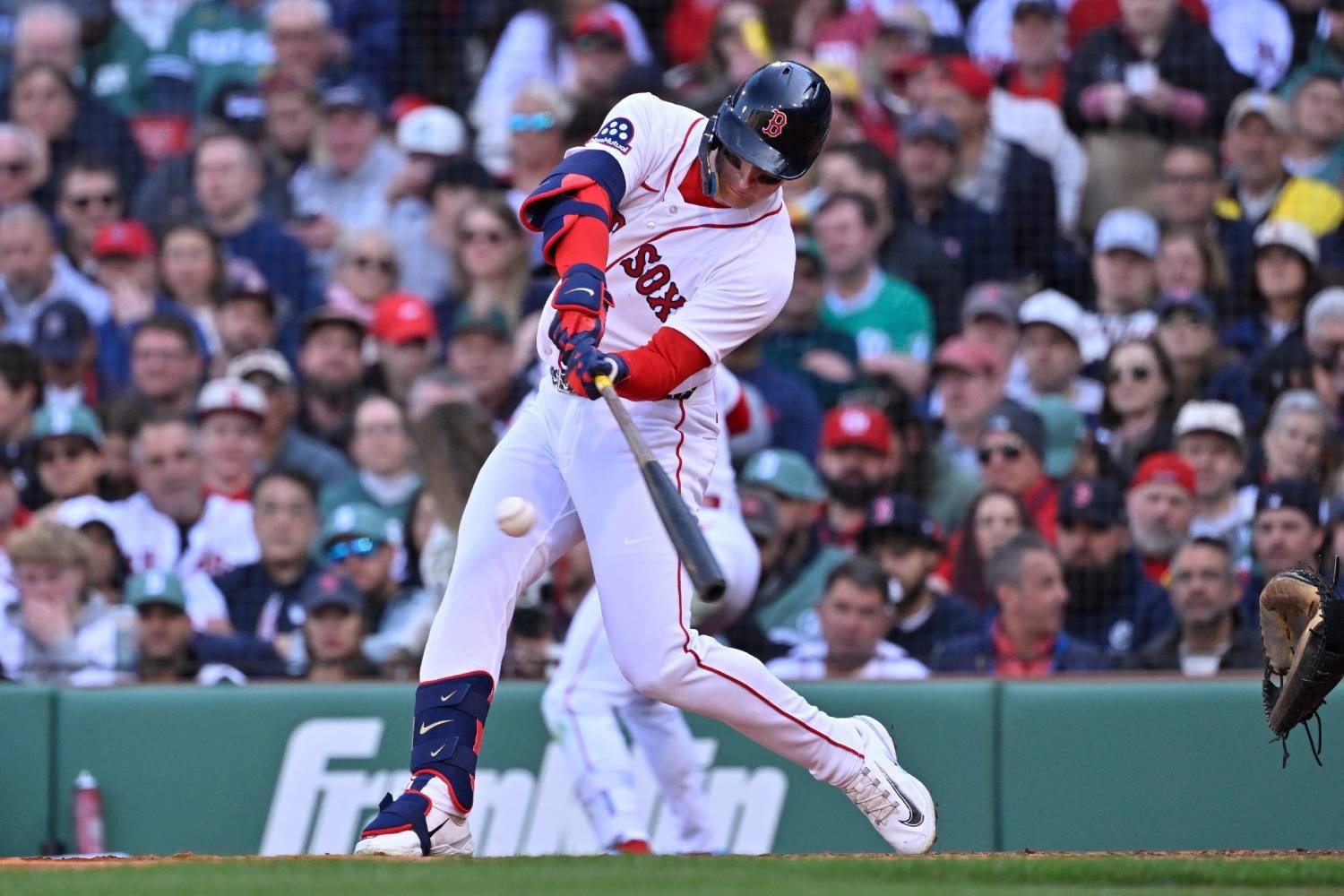 The wait for the return of Roman Anthony and Trevor Story is almost over. Interim manager Jim Tracy said Saturday that the two Boston Red Sox stars will likely come off the injured list Sunday. Who comes off the roster is another question that the Red Sox brass will contemplate overnight. “They’re coming,” Tracy said after the Red Sox lost to the New York Yankees 9-2 to split a doubleheader. The Red Sox won the opener 6-0. The Red Sox remain the No. 2 AL wild card, three games behind the Yankees and six games ahead of the Cleveland Guardians. Anthony, the left fielder, and Story, the shortstop, have been out since May, Anthony with a partially tearing a ligament in his right hand and wrist and Story with a sports hernia that required surgery. Fitting Anthony in doesn't seem problematic as Tracy said he will be put in the leadoff position against right-handed starters. Trade-deadline pickup Eli White started both games Saturday in left field, while Jahmai Jones would bat leadoff vs. left-handers. Anthony had a slash line of .229/.354/.321 with one homer and five RBIs in 30 games before going on the injured list. Story is a little trickier. He will get the opportunity to re-establish himself, but if he continues his early-season struggles, Tracy could opt to go back to Andruw Monasterio, who has helped the Red Sox surge into postseason position. Story has a .206/.244/.303 with three homers and 19 RBIs in 41 games. Another injured player, infielder Isiah Kiner-Falefa, is expected to come off the IL on Tuesday when rosters expand by two. View the full article
 -
 Blue Jays Affiliate Overview (August 27-28) Triple-A Buffalo Bisons Series vs Rochester Red Wings (Washington Nationals): 1-1 Season Record: 63-64 Double-A New Hampshire Fisher Cats Series vs Hartford Yard Goats (Colorado Rockies): 1-1 Season Record: 55-65 High-A Vancouver Canadians Series vs Spokane (Colorado Rockies): 1-1 Season Record: 58-64 Single-A Dunedin Blue Jays Series vs Palm Beach Cardinals (St. Louis Cardinals): 1-1 Season Record: 57-61 FCL Blue Jays: Season Complete DSL Blue Jays Blue: Season Complete DSL Blue Jays Red: Season Complete Triple-A Buffalo Bisons Season Record: 63-64 Series vs Rochester Red Wings (Washington Nationals) August 27: Rochester took the early lead against Buffalo on Thursday, scoring three runs in the bottom of the third inning. The Bisons answered Rochester, scoring two runs on an error in the top of the fifth inning and adding a third run on Josh Smith's bases-loaded walk. The game wasn't tied at three long, as Rochester countered with Trey Lipscomb ripping a ball to right for a three-run home run. Buffalo kept fighting though, getting three runs in the sixth, one on a fielder's choice and two on two RBI groundouts. Buffalo ultimately could not keep the game tied through nine, coughing up a walk-off single in the bottom of the ninth inning to Phillip Glasser. The Bisons fell 7-6 in a game they scored six runs without a single RBI base knock. August 28: Buffalo turned to Jameson Taillon to give their arms a boost, as he made a rehab start on Friday. For the first three innings, he was nearly perfect, only allowing a single in the bottom of the third inning. The fourth inning, however, would be a problem for Taillon. After a walk and a single, Cayden Wallace doubled off of Taillon and brought home one run. Following another walk that would load the bases, Taillon was removed for Sam Gardner, who promptly gave up a bases-clearing three-run double to the first batter he faced. The troubling frame for Buffalo surrendered the lead they had gained the prior half inning. In the top of the fourth, Jay Harry doubled home Yohendrick Piñango and Lenyn Sosa plated Harry on a single to left. In the fifth, with Buffalo down 4-3, Sean Keys ripped a 104.5 mph triple that scored Josh Smith and cut the Rochester lead to one. Rochester would answer the RBI triple with an RBI groundout in the bottom of the fifth inning. As the score sat 5-3, the second half of the game featured a few walks and just a single base-hit by both teams in what became a pitchers' duel by the respective bullpens. Buffalo lost this one 5-3, only managing to get five base knocks on the day. Double-A New Hampshire Season Record: 55-65 Series vs Hartford Yard Goats (Colorado Rockies) August 27: Thursday night saw Johnny King take the mound for New Hampshire against Hartford. King was again masterful on the mound. Despite some baserunners in a few innings, he managed to work through the innings without allowing a run, while getting outs in the strike zone mixed with six strikeouts. He allowed just one hit, an infield single on a soft groundball. He did give up three walks in his four innings pitched, but they were on close pitches that could have gone either way. It was probably his most complete start at Double A. Aaron Parker gave the offense a boost in the first inning, when he launched a mammoth home run to put New Hampshire up three. In the third inning, Carter Cunningham added an RBI double and Mathieu Vallee drove in two runs with a single. New Hampshire held on and won this one 7-3. August 28: Friday night was a rough one for New Hampshire. They jumped out to a 4-1 lead over Hartford in the fourth inning, but things went south from there. Tucker Toman and Eric Snow had RBI singles, and Edward Duran added a sacrifice fly. From there it was almost all Hartford. They put up two runs in the fifth, one in the sixth, and three in the seventh inning. They capped their unanswered run with another one in the ninth inning. Hartford outhit New Hampshire 14-6 on the day, but New Hampshire did add 11 walks; they just couldn't drive them home. New Hampshire lost this one 8-4. High-A Vancouver Season Record: 58-63 Series vs Spokane (Colorado Rockies) August 27: Dasan Hill pitched into the fifth inning for the first time this season, as the lefty that was acquired in the Jeff Hoffman trade struck out six batters, only walking one batter and allowing a single unearned run in the first. The Canadians tied it up with a Jake Casey triple in the second inning, then Casey came up again in the fifth inning with two runners on with no outs, but struck out. In the seventh, Casey came up again with a runner on first and second, but drove in a run to take the lead with his second XBH of the night. That started a big inning, as Ryan Sprock drove in two runs on a single, then Jean Joseph drove in two more on a triple of his own. Casey had his third hit and third RBI of the night with a single in the eighth. Holden Wilkerson was awesome in relief, as he pitched 4.1 two-hit innings, striking out six batters with no runs allowed, allowing the Canadians to win this one handedly 8-1. August 28: This game was an absolute roller coaster, as it seemed like the Canadians would easily cruise to a victory, as they tacked on eight runs in the second inning, with Jaxson West blowing the game open with a grand slam. Spokane did not quit, however, as they halved the lead down to just four against Canadians starter Troy Guthrie. The Canadians' offense kept it pouring in the fourth inning, with another big inning, as they tallied five more runs, with West raising his RBI count to six in just this one game. Troy Guthrie was sent out in the fifth inning and struggled, allowing Spokane to score three runs, knocking him out of the game for Carson Myers, who was able to get out of it. Brandon Barriera’s debut in Vancouver did not go well, as his command lost him; he walked three batters and hit two of them. That resulted in a five-run seventh inning, and Spokane was within just one. Gilberto Batista allowed an RBI double in the eighth, and the game was tied, which resulted in the game going to extra innings. Game stayed even until the 10th inning, when Jack Eshleman allowed the automatic runner to score on a wild pitch, but in the bottom of the 10th, a throwing error from Parker Coddou allowed the ghost runner to score for the Canadians, then Bryce Chance laid down a sac bunt to put Austin Smith on third. This gave Max Viera the opportunity to walk it off, and he did it in absurd fashion, as Justin Loer committed a walk-off balk, for a 15-14 extra innings win. Single-A Dunedin Season Record: 57-61 Series vs Palm Beach Cardinals (St. Louis Cardinals) August 27: The D-Jays jumped out to an early lead with a three-run second inning, thanks to Dean West’s RBI single and Rhylan Thomas’s two-RBI double. The pitching could not withstand the Cardinals’ offense, however, as they tied it up with a three-run homer off the starter Miguel Pantoja. The Jays took the lead right back in the bottom of the second, as Brayden Martin drove in a run on a single and Jake Cook grounded out to score another run. Josbel Garcia got five straight batters out after replacing Pantoja, but then walked the leadoff hitter in the sixth, then allowed three runs to score as he threw a wild pitch, allowed a stolen base, and a couple of doubles. Nolan Higgins replaced him and allowed a homer in the eighth to make it a two-run lead for the Cardinals. That ended up being the final run as the Jays lost 5-7. August 28: Carson Messina was effectively wild, walking three batters in four innings, but only allowing a single run as Giaconino Lasaracina allowed a passed ball in the third inning. Messina’s fastball was great, with a 47.4% whiff rate on the night, as the righty struck out five batters with 14 whiffs total. Lasaracina had his second miscue in the fifth with a throwing error to allow the second unearned run to cross the plate. Rhylan Thomas drove in the first run for Dunedin with a double to bring it within one, but the Jays yet again gave up an unearned run thanks to a Juan Sanchez throwing error, his 27th error of the season, then Brayden Heidel walked in a run which put the Cardinals up three. Jake Bennett came up to the plate with runners on second and third and brought the game within one with a clutch two-RBI single, and Ryan Franden won the game with a two-run blast for his first homer as a professional, as the Jays won this one 5-4. FCL Blue Jays Season Record: 38-20 Season Completed DSL Blue Jays Blue Season Record: 20-35 Season Completed DSL Blue Jays Red Season Record: 33-18 Playoffs (2-1) Season Completed View the full article
 -
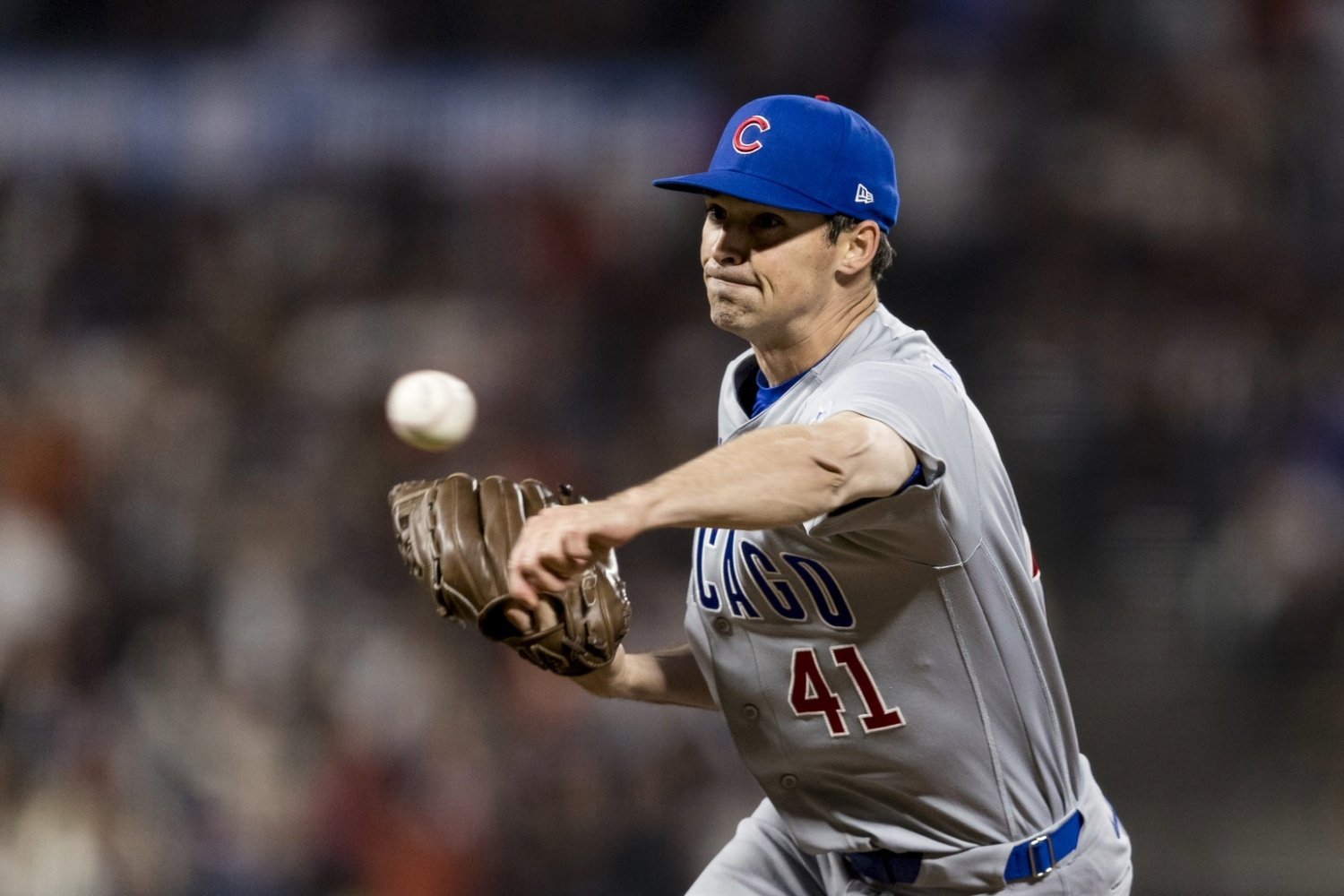 Under Jed Hoyer, the Chicago Cubs have rarely spent significant money on relief pitching in the offseason, rather preferring to spread that money among multiple smaller contracts hoping to hit on at least one. That was their plan this offseason as well, with Phil Maton, Hunter Harvey, Caleb Thielbar, Hoby Milner, and Shelby Miller all getting contracts between $2.5m and $7m while Jacob Webb and Trent Thornton got contracts at $1.5m and $1m respectively. Looking at that list, I am sure you are thinking what I am thinking: Maybe the Cubs should only give out ~$1m contracts? Maton didn’t pitch well and is done for the year, as is Harvey who barely pitched at all. Thielbar has struggled all year and has been dreadful in August. Shelby Miller was always expected to miss this season, the first of a two-year contract, but he may actually play a role down the stretch. Which leads us to the last mid-sized contract they gave out: Hoby Milner. The veteran southpaw pitched okay for the first couple months of the season, but most importantly he was available for the Cubs during their early season injury woes. Then, he went through them himself. Milner was nearly back from an injury that sidelined him for a couple of months when the Cubs put him on waivers. It was a very curious decision, so let’s investigate what it may mean. Milner has made 38 appearances this season for the Cubs, not enough to qualify for some leaderboards, but enough to see some trends. For the first time since 2022, Milner is throwing his sinker more than his sweeper, but both pitches have been at least average. Surprisingly, he has not increased his four-seam usage with a team that throws a ton of four seamers; he still throws his changeup more frequently. Either way, flipping his sinker/sweeper usage shows he bought into what the Cubs asked him to do. While Milner wasn’t elite by any stretch of the imagination, he sported a 3.53 ERA and issued just nine walks in 35.2 innings. He did outperform his FIP and saw a pretty drastic drop of 8-10 percentage points in K% and groundball rate. If he qualified, he would be near the very bottom of the league in strikeout rate, fastball velocity, expected batting average, and expected ERA. Not great! Yet even with those declines, there is still a real argument for the Cubs needing him as we round the final turn into September. The pitching lab's ability to get the most out of pitchers that have been discarded by other teams has been a key to their 2026 performance. The injuries stacked up early and often, yet the Cubs were able to lean on guys like Jacob Webb, Trent Thornton, Ryan Rolison, and Gavin Hollowell. Now with the additions of Ryan Zeferjahn and Aaron Civale and the recent return of Daniel Palencia, the Cubs may feel like they have cultivated some depth in the bullpen, regardless of how they have performed recently. With the way the injury bug has hit the roster all year long, it seems like a risky move to potentially jettison a usable veteran arm. While the Cubs do have many bullpen options, only Ryan Rolison and Caleb Thielbar throw from the left side. On the playoff roster, that list probably will also include David Peterson. Rolison certainly has earned a spot, but there is a strong argument to be made that maybe Caleb Thielbar should not be on the playoff roster, especially if his struggles continue into September. Even though Thielbar has a higher strikeout rate than Milner, he is near the bottom of the league in barrel%. When he doesn’t miss bats, he doesn’t miss barrels. Milner also gives opponents a very different look than the others. While Rolison (48°) and Thielbar (55°) are very over the top with their deliveries, Milner is a true sidearmer at -5°. In a National League where the Dodgers, Braves, and Brewers all have big left-handed bats, I would think the Cubs would want that extra southpaw option and different look. Putting Milner on waivers doesn’t mean he won’t play a role down the stretch. In fact, the very team the Cubs are playing this weekend (the Reds) already have two homers from players who were placed on waivers recently (Eugenio Suarez and TJ Friedl). If no team claims him, he will remain a part of the bullpen, unless he's designated him for assignment. The most likely answer is the Cubs don’t feel they need Milner and are attempting to do some cost saving. They might actually benefit if no team claims him and he remains on the roster. They don’t have an arm angle on the team like his, The way the bullpen is performing right now, they could use every arm they can get. View the full article
 -
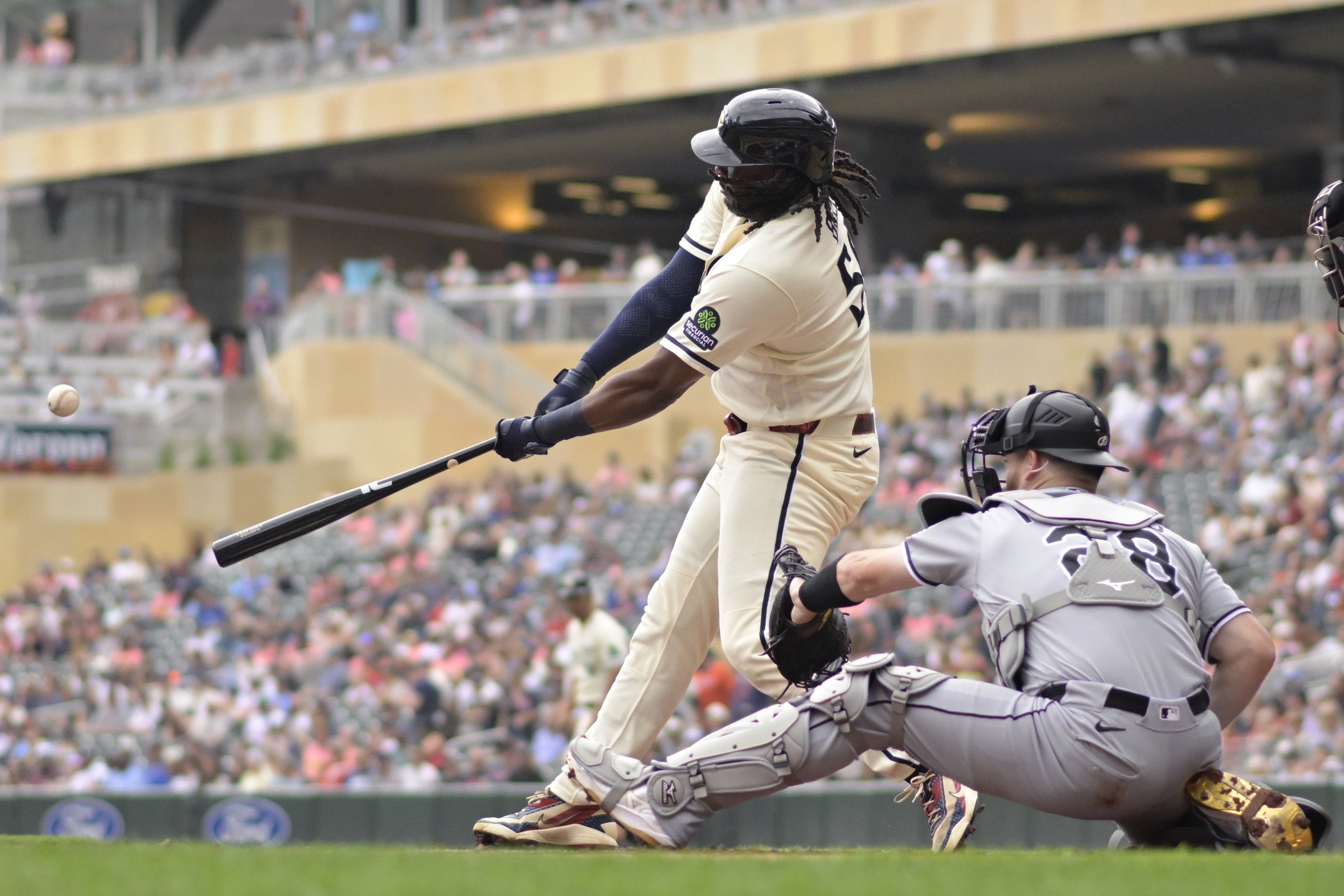 Box Score SP: Bailey Ober - 5 IP, 2 H, 1 ER, 2 BB, 5 K (80 pitches, 53 strikes (72% strikes)) Home Runs: None Bottom 3 WPA: Kaelen Culpepper (-0.17); Brooks Lee (-0.15), Royce Lewis (-0.08) Win Probability Chart (via FanGraphs) The Twins set out to try and get the same momentum during the day game on Saturday that they had Friday night. Bailey Ober, much like his teammate Dean Kremer, had a little trouble finding the strike zone early. He walked the first two hitters, and then Andrew Benintendi dropped a weak single that the infield couldn’t quite handle. The misplay allowed Sam Antonacci to come around and score, giving the White Sox an early 1-0 lead. Ober eventually got his wits about him and escaped the inning, but the White Sox made him work, driving his pitch count all the way up to 28 pitches in the first. Not exactly the start you draw up. The Twins offense, however, wasted no time answering back. Luke Keaschall and Brooks Lee created some traffic for White Sox starter Erik Fedde, and then Fedde made a mistake at the wrong time. An 88-mph changeup landed right in Josh Bell’s sweet spot, and Bell sent a sacrifice fly deep enough to score Keaschall and tie things up at 1-1. Ober came back out for the second looking much more like himself, making quick work of the bottom of the White Sox lineup with a clean 1-2-3 inning. Then the Twins bats got rolling. Trevor Larnach fell victim to a force out, but Kaelen Culpepper and Victor Caratini followed with line drives into the right-field gap, putting runners on the corners for rookie Walker Jenkins. And Jenkins? He was ready for the moment. The rookie grounded to second for a fielder's choice. He hustled out of the box and easily beat the return throw to first base which allowed to score Culpepper. It also marked the first RBI of Jenkins career. The 21-year-old decided he wasn't done making noise, taking advantage of Fedde's timing to swipe his first stolen base. After two innings, the Twins had flipped the script and taken a 2-1 lead. The White Sox came alive in the fourth inning and said, “Not so fast.” A leadoff double by Benintendi set the tone, and a bobbled slow roller by Culpepper off the bat of Chase Meidroth brought Benintendi home. Just like that, a 2-2 ballgame. Ober’s day was officially done after five innings and 80 pitches. Andrew Morris came in to relieve him, but apparently nobody had informed him that Andrew Benintendi was having the game of his life. Like the pitchers before him—and frankly, like everyone for the previous five innings—Morris couldn't get around Benintendi's bat, surrendering a solo home run that gave the White Sox a 3-2 lead. As Derek Shelton noted after the game. It was a 95-mph cutter, three-to-four inches below the zone. All you can do is tip your cap to the cagey veteran. AJ Minter replaced Morris in the eighth, and with one out and two runners on, Benintendi stepped back into the box already 3-for-3 on the day. Naturally, that looked terrifying. But Minter said, not today. He struck Benintendi out, becoming the first Twins pitcher to retire him all afternoon. A much-needed out was followed by a smothered ball from Culpepper to Lee to end the inning and finally give Minnesota a chance to breathe. Unfortunately, the Twins offense spent the seventh and eighth innings doing what it had become far too comfortable doing: absolutely nothing. Every opportunity was squandered, every hit seemed to find a glove, and no matter how much the pitching staff tried to keep the Twins within striking distance, the offense remained on life support. One inning remained. One last chance to wake up. Yoendrys Gómez replaced Minter as the insurance policy—the guy brought in to make sure the White Sox didn't add anything the Twins couldn't overcome. He did his job. The offense, however? Yeah... they never woke up. Maybe Sunday? What’s Next? The Twins finish their second day game with the White Sox on Sunday 1:10 CST. The Twins will send Zebby Matthews (8-8, 4.86 ERA,) against a pitcher the White Sox will determine later. Postgame Interviews Bullpen Availability Chart View the full article
 -
 Let’s check in on the Red Sox farm teams through Friday's action. Triple-A Worcester Red Sox Series vs. Scranton/Wilkes-Barre RailRiders (New York Yankees): 2-2 Season Record: 2-0 The WooSox fell 2-0 as they struggled to generate offense. John Holobetz got the start on Friday night, looking to give the WooSox a series lead. He turned in a quality start, letting up two runs on five hits and issuing one walk. He struck out a pair before John Brebbia took over. Holobetz earned the loss despite the solid start. Brebbia threw a scoreless sixth inning as the bullpen gave the offense plenty of room to run. Brebbia allowed one hit and walked another. He struck out one before Angel Bastrado took the seventh and eighth in scoreless fashion. He K’d two and walked one before Hobie Harris took the final inning. Harris struck out the side, issuing one walk as he completed a great bullpen outing despite the loss. The WooSox reached base just five times on Friday, tallying three hits and drawing two walks in the loss. Franklin Arias accounted for one of the hits, a double in the ninth. Nate Eaton and Romy Gonzales recorded a single each as Worcester fell without much noise. Double-A Portland Sea Dogs Series @ Richmond Flying Squirrels (San Francisco Giants): 3-1 Season Record: 63-60 Portland dominated in a 9-3 win behind a solid start from Devin Futrell. Futrell had allowed two runs in his two previous starts entering Friday, and looked to match his solid outings. He did just that, allowing two runs on four hits in six frames of work. He issued one walk and notched seven punchouts before being replaced by Cooper Adams. Adams followed Futrell with a solid appearance of his own, allowing one earned run on three hits. He struck out four before Erik Rivera took over. Rivera was outstanding as he shut down Richmond, striking out two in a perfect ninth-inning close. The Sea Dogs’ offense was unstoppable on Friday, tallying 17 baserunners and taking control of the game early. In the first, Justin Gonzales scored Tyler McDonough on a line drive to right field before Ronald Rosario drove Gonzales home on a two-run blast. In the second, McDonough followed Rosario with a two-run shot of his own, giving Portland a 5-0 lead early. In the sixth inning, Brooks Brannon joined the two-run homer party, scoring McDonough as he touched them all for the 20th time this season. With a 7-2 lead, Will Turner gave Portland some cushion as he scored Brannon and Henry Godbout on a line drive double to right field. High-A Greenville Drive Series vs. Rome Emperors (Atlanta Braves): 3-1 Season Record: 55-66 A great day from the pitching staff helped Greenville to a 6-2 win on Friday night. Yordanny Monegro made his first appearance of the season on a rehab assignment from Portland. He threw one and ⅔ hitless innings, issuing three walks and striking out three more. Shea Sprague came in next in a bulk relief role. He hurled five and ⅓ innings to the tune of two runs on three hits. He issued a pair of walks and struck out six as he kept Rome’s offense in check, earning his fourth win of the season. Aaron Nixon took the final two innings of Friday’s game, allowing three hits but hindering Rome any further. He struck out three as he closed out the win. Owen Hull and Luke Heyman drove in two runs each as Greenville’s offense triumphed behind a combined effort. Heyman’s contributions came early as he crushed a two-run homer in the first inning, scoring Hull. Hull would follow in Heyman’s footsteps just two innings later, covering a two-run shot of his own with Jake Schaffner aboard. With a 4-1 lead, Yophery Rodriguez kept the inning going, scoring Maximus Martin on a double to right field. In the eighth, Isaiah Jackson added one more as he scored on a wild pitch. Low-A Salem RidgeYaks Series @ Fayetteville Woodpeckers (Houston Astros): 0-5 Season Record: 52-70 Salem’s losing streak reached five as the Yaks fell 6-2 on Friday evening. Leighton Finley turned in an excellent start to kick things off for Salem, shutting down Fayetteville over six frames. He allowed four hits and issued a pair of walks as he struck out nine, his second-most all season and most since late June. Trouble arose when Carson Revay entered the game. He let up four runs (three unearned) on two hits and a pair of walks as the Woodpeckers pulled ahead. Harry Blum entered to quell the storm but was unsuccessful. He allowed two runs on two hits and a pair of walks in just ⅓ of an inning as Fayetteville claimed a solid lead late. Kleyvar Salazar was responsible for both of the Yaks’ runs on Friday as the offense struggled. After being held scoreless for the first five frames, Salazar took one deep into left field, scoring D’Angelo Ortiz as Salem claimed the first lead of the game. Salem wouldn’t score again as they fell for the fifth straight contest. View the full article
 -
Twins Prospect Profile: JP Smith Is Starting to Find His Swing
DiamondCentric posted an article in Twins Daily
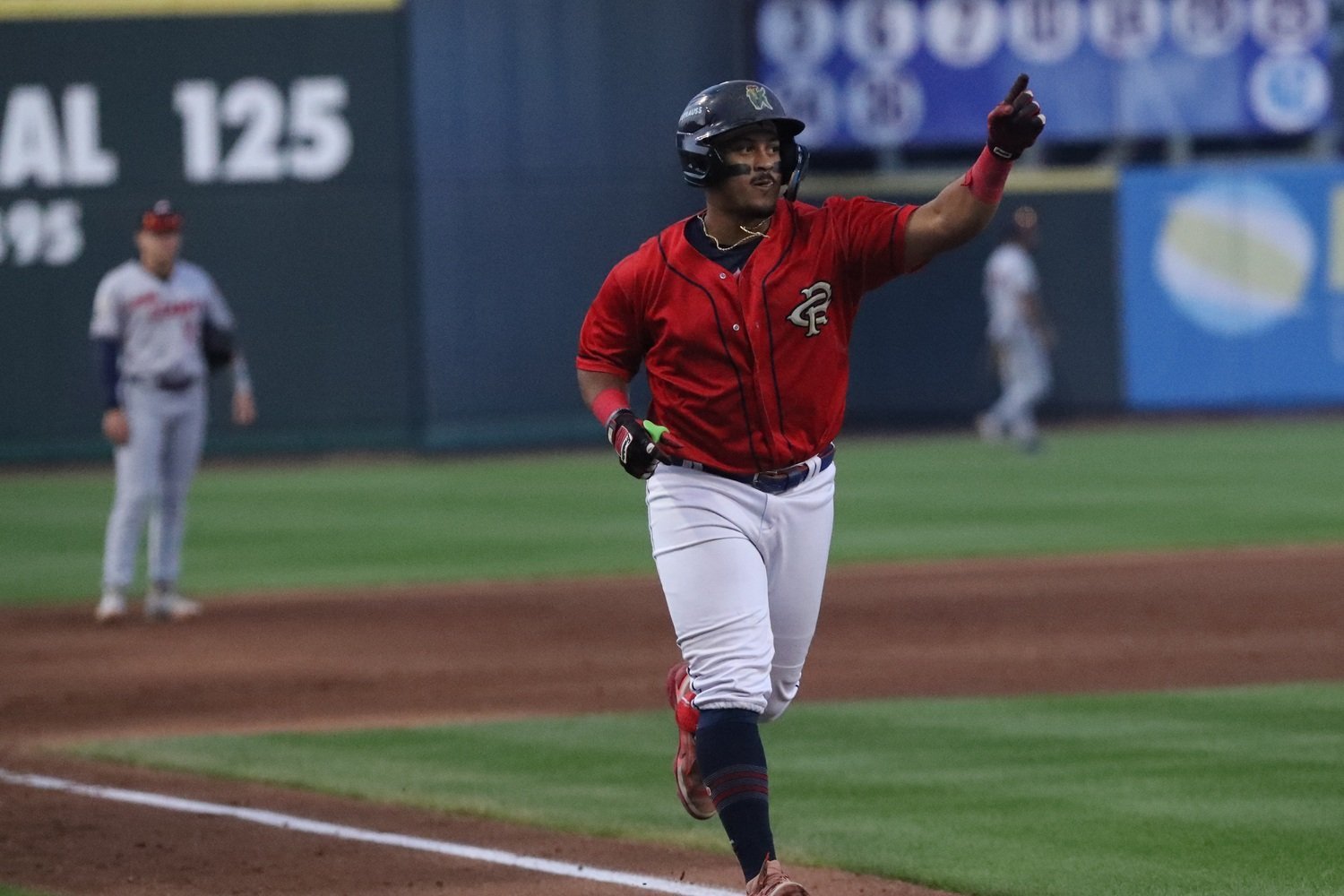 There is a simple reality for prospects who are limited defensively to first base: they have to hit. First base is one of the positions where offensive production carries an especially high burden. A player doesn't necessarily need to be a Gold Glove-caliber defender, but he needs to provide enough at the plate to justify putting his name in the lineup every day. The Minnesota Twins have seen this dynamic play out with former first-round pick Aaron Sabato. Sabato has worked his way to Triple-A, but his offensive production hasn't developed to the point where he looks like part of Minnesota's long-term plans. That brings us to JP Smith. Smith doesn't have Sabato's draft pedigree, but the Twins saw enough offensive potential to select him in the 17th round of the 2025 MLB Draft out of California State University, Sacramento. His professional career got off to a relatively quiet start, but there are signs that Smith is beginning to figure things out. And that's exactly what the Twins need to see from a first-base prospect. MLB Draft and Professional Debut Smith spent three seasons at Sacramento State, where he hit .298/.372/.581 with a .953 OPS. His production was consistently strong during his first two seasons, with a wRC+ above 120 in each year. His final collegiate season wasn't quite as productive. Smith's wRC+ dipped to 105, which may have contributed to him remaining on the board until the 17th round. Still, Minnesota saw enough in the right-handed hitter to give him an opportunity. The Twins sent Smith to Fort Myers after he signed, allowing him to make his professional debut in the Florida State League. He appeared in 24 games and hit .237/.297/.344 with five extra-base hits, a 24.8% strikeout rate, a 6.9% walk rate and an 84 wRC+. Those aren't particularly eye-catching numbers. There was, however, one stretch that offered a glimpse of what Smith could become. At the beginning of August, he was named FSL Player of the Week after going 11-for-23 (.478) over a five-game stretch with five extra-base hits. His overall debut remained unspectacular, but there are some understandable challenges for college players transitioning into professional baseball. Smith had played a full collegiate season, stopped playing during the draft process and then had to ramp back up for his professional debut. A Better Approach Smith struggled out of the gate. Over his first 36 games, he hit .212/.319/.356 with nine extra-base hits. His .675 OPS wasn't what Minnesota wanted to see from a player whose future is tied heavily to his bat. Something started to click over his next 36 games. During that stretch, Smith raised his on-base percentage to .365 and his slugging percentage to .500. More importantly, he hit 10 home runs and four doubles. The power was beginning to show up. But one of the most encouraging developments wasn't necessarily found in his batting average or home-run total. It was his approach. During his professional debut, Smith posted a 34.1% O-Swing rate, meaning he swung at more than one-third of the pitches he saw outside the strike zone. In 2026, that number dropped to 24.3%. Smith was becoming more selective about which pitches he attacked. For a hitter whose value is going to be tied so closely to his offensive production, that development matters. The improved approach helped earn Smith a promotion to Cedar Rapids. Hitting the Next Level Smith hasn't exactly slowed down since arriving in High-A. Through his first 20 games with the Kernels, he's hitting .309/.435/.559 for a .994 OPS. His 145 wRC+ demonstrates just how productive he's been relative to the league. The plate-discipline improvements have continued as well. His walk rate has climbed from 14.7% in his time with Fort Myers to 17.8% in Cedar Rapids, while his strikeout rate has dropped from 20.1% to 15.6%. That's the kind of combination Minnesota wants to see. On August 25, Smith put those skills on display. He went 4-for-6 with a home run and four RBI, providing another reminder that the offensive tools that made him an intriguing draft pick are starting to translate. There is another interesting element to his success this season. Smith has faced older pitchers in more than 70% of his plate appearances, and he's posted a .929 OPS against them. That doesn't mean he's finished developing, but it provides some additional context for his production. He's not simply beating up on pitchers his own age. There is, however, one area where Smith needs to improve. Smith is a right-handed hitter, but left-handed pitching has given him some trouble. In 81 plate appearances against lefties this season, he's hitting .219/.346/.438 with four home runs and two doubles. The .783 OPS isn't terrible, particularly with the power production, but it's noticeably below his overall performance. That will be something to monitor as he continues moving through the Twins system. If Smith wants to become a regular first baseman at the major-league level, he needs to show that he can punish left-handed pitching. For Smith, that makes the progress he's made with his approach particularly important. What Comes Next? It's still far too early to make any definitive predictions about Smith's future. He's played just 20 games at High-A, and there are plenty of challenges ahead. Double-A will provide another significant test. Pitchers will attack his weaknesses more aggressively. His performance against left-handed pitching will be worth watching. The Twins will also want to see whether his improved plate discipline remains consistent as Smith faces better competition. But there is something different about Smith's profile now than there was a year ago. The 17th-round pick isn't just putting up better numbers. He's showing development in areas that can help make those numbers sustainable. He's chasing fewer pitches outside the strike zone. He's walking more. He's striking out less. He's producing power. And he's holding his own against older pitchers. That's a good foundation. Smith's path is also a reminder that prospect development doesn't always happen in a straight line. His first professional season didn't immediately scream future big-leaguer. His first 36 games in 2026 weren't particularly impressive, either. But he kept making adjustments. Smith will need to continue producing as he moves up the organizational ladder, and he'll need to find more success against left-handed pitching. The margin for error will become smaller at every level. Eventually, the Twins will need to determine whether his offensive ceiling is high enough to overcome the limitations of his defensive profile. For now, though, Smith is giving the organization reasons to keep watching. For a player whose future will almost certainly be determined by his bat, that's exactly the kind of progress the Twins want to see. What stands out about JP Smith so far in his career? Leave a comment and start the discussion. The photo of JP Smith at the top of this article is from Dee Malamut of Malamut Photography, specifically last night's Kernels game in Cedar Rapids. You will see Dee at most Kernels home games, and we are lucky enough to be able to use some of his great photos. And, if you're planning on going to Cedar Rapids, or maybe at Twins Fest, you can order some photos from Dee himself. Check out the home page and find links to the 2026 games (and further back). You can also use the search functionality and type in names of current or past Kernels players and find their photos. The current Kernels roster has Top 20 prospects like Vahn Lackey, Eduardo Tait, and Yasser Mercedes. Marek Houston, Riley Quick, Khadim Diaw, Enrique Jimenez, Brandon Winokur are Top 20 prospect who were with the Kernels earlier this year. Caden Kendle and Adrian Bohorquez were in Cedar Rapids until recently. Want to see more Cedar Rapids Kernels photos, check out Friday's Kernels game photos. View the full article
 -
 Chris Suero took a night off from catching on Friday, but not from producing offense for Double-A Binghamton. He slugged a three-run home run in the first inning and laced an RBI single in the third as the Rumble Ponies raced to a 5-1 victory at Reading. Suero made his eighth start of the season in center field. The 22-year-old prospect has also started six games in left field, four at first base and 19 at DH to go with 62 starts at catcher. He's splitting time behind the dish with Kevin Parada as the season winds down. The Ponies are moving him around to keep his bat in the lineup and help him develop as a hitter. In 447 plate appearances, Suero has 18 home runs, 40 extra-base hits and a .778 OPS (111 wRC+), The OPS is bolstered by an extreme 15.2 percent walk rate. Elsewhere in the organization: Syracuse lost 6-4 at Lehigh Valley on a two-run walk-off home run in the bottom of the ninth. Billy Amick delivered a go-ahead two-run single in the sixth and Ronny Mauricio went 3-for-4. Jack Wenninger struck out six in long relief. Brooklyn left 14 runners on base, including the bases loaded in the ninth, and lost at Hudson Valley 5-2. Yonatan Henriquez went 3-for-4 and drove in both Cyclones runs with a double in the third inning. St. Lucie blew a four-run lead and lost at Daytona 6-5. Yovanny Rodriguez drove in three runs and Branny De Oleo homered. New York Mets Transactions New York Mets transferred DH Jorge Polanco from the 10-day injured list to the 60-day injured list. New York Mets optioned RHP Xzavion Curry to Syracuse Mets. New York Mets selected the contract of RHP Chris Devenski from Syracuse Mets. Amick's Hit Goes For Naught In Syracuse Loss Amick put the Mets ahead 4-3 with his two-out hit to right. Nick Morabito led off the inning with a single, Émilien Pitre moved him to second with a sacrifice bunt. Mark Vientos walked. Ronny Mauricio singled to left to load the bases, MJ Melendez's flyout failed to get the run in from third, but Amick delivered, plating Morabito and Vientos for a 4-3 lead. The lead was short-lived. Lehigh Valley tied the game in the bottom half, The score stayed 4-4 until the ninth, when closer Ben Simon surrendered a leadoff single, got a strikeout, and then served up the game-ending homer. Jose Ramos hit his third homer of the year to put the Mets up 1-0 in the third. Mauricio finished 3--for-4. Vientos went 0-for-2 with a walk and a strikeout in his latest rehab outing. He played six innings at third base and committed a throwing error that led to an unearned run. Rehabbing right-hander Justin Hagenman started a piggyback game. He went the first four innings, allowing two runs (one earned) on two hits, with no walks and four strikeouts. He gave up a two-run homer one batter after Vientos' error. Wenninger followed and allowed two runs on three hits over three innings. He walked two to go with the six Ks, Zach Franklin kept the game tied with a scoreless eighth. Syracuse Batting Player AB R H RBI BB K Nick Morabito 5 1 1 0 0 0 Émilien Pitre 3 0 1 0 0 0 Mark Vientos 2 1 0 0 1 1 Nick Lorusso 1 0 0 0 0 0 Ronny Mauricio 4 1 3 0 0 0 MJ Melendez 4 0 1 1 0 0 Billy Amick 4 0 1 2 0 2 Jose Ramos 3 1 1 1 1 0 Hayden Senger 3 0 1 0 0 0 D'Andre Smith 4 0 1 0 0 0 Syracuse Pitching Player IP H R ER BB K HR Justin Hagenman 4 2 2 1 0 4 1 Jack Wenninger 3 3 2 2 2 6 0 Zach Franklin 1 0 0 0 0 2 0 Ben Simon 1/3 1 2 2 1 1 1 Binghamton's Early Runs Hold Up Suero drove in the Rumble Ponies' first four runs with his homer and single. He cleared the bases in the first after Marco Vargas led off with a double and Jacob Reimer walked with one out. He delivered his hit in the third after after Jefferson Rojas reached on a force out and moved to second on a single by Reimer. Eli Serrano III drove in Reimer with a groundout to put Binghamton up 5-1.. Will Watson started and went the first three innings, allowing a run on a hit, with two walks and two strikeouts. Bryce Jenkins was credited with the win for throwing a scoreless fourth. Garrett Stratton got four outs, two via strikeout, for his fifth save. Vargas also tripled and singled in a three-hit night. Binghamton Batting Player AB R H RBI BB K Marco Vargas 5 1 3 0 0 1 Jefferson Rojas 4 1 0 0 1 0 Jacob Reimer 2 2 1 0 2 0 Chris Suero 4 1 2 4 0 0 Eli Serrano III 4 0 0 1 0 3 John Bay 3 0 0 0 1 2 Corey Collins 4 0 0 0 0 2 Kevin Parada 4 0 1 0 0 2 JT Benson 4 0 1 0 0 0 Binghamton Pitching Player IP H R ER BB K HR Will Watson 3 1 1 1 2 2 0 Bryce Jenkins 1 0 0 0 0 1 0 Gabriel Rodriguez 1 0 0 0 1 1 0 Douglas Orellana 2 1 0 0 1 0 0 Carlos Guzman 2/3 1 0 0 2 1 0 Garrett Stratton 1 1/3 0 0 0 1 2 0 Brooklyn Squanders Chances In Loss Brooklyn was 1-for-13 with runners in scoring position, The hit was Henriquez's double, which brought in Sammy Stafura and Ronald Hernandez with two outs to give the Cyclones a 2-0 lead. Stafura doubled with one out and Hernandez walked with two down. Brooklyn stranded two runners in the seventh, two more in the eighth and the three in the ninth. Potential go-ahead runs Daiverson Gutierrez and Antonio Jimenez struck out to end the game. Jose Chirinos started and took the loss. He allowed three runs and six hits over four innings, walking two, striking out five and allowing a home run. Henriquez finished 3-for-4 with a walk. Brooklyn Batting Player AB R H RBI BB K Sammy Stafura 4 1 1 0 1 1 Trey Snyder 4 0 0 0 1 2 Ronald Hernandez 2 1 0 0 2 0 Yonatan Henriquez 4 0 3 2 1 0 John Spikerman 4 0 0 0 1 1 Daiverson Gutierrez 4 0 2 0 1 2 Antonio Jimenez 5 0 1 0 0 2 Chase Meggers 4 0 1 0 0 0 Heriberto Rincon 4 0 1 0 0 3 Brooklyn Pitching Player IP H R ER BB K HR Jose Chirinos 4 6 3 3 2 5 1 Luis R. Rodriguez 1 2/3 1 2 2 2 2 0 Calvin Ziegler 1 1/3 2 0 0 0 3 0 Hunter Hodges 1 1 0 0 1 0 0 St. Lucie Loses Four-Run Cushion In Daytona St. Lucie led 4-0 after four, only to give up five runs and the lead in the fifth. The Mets fought back to tie the game in the seventh, only to have the Tortugas retake the lead in the bottom half.. Rodriguez put the Mets up 2-0 in the first with a one-out single that drove in Jake Ogden and Kuhio Aloy. He made it 3-0 in the third with a sac fly to bring home Ogden. De Oleo belted his eighth homer of the year for a 4-0 Mets lead, but, of course, no lead is safe in Single-A. Daytona put up a five-spot in the fifth against Jonathan Jimenez, the Mets' fourth pitcher in a bullpen game. A single, a walk, a wild pitch, two more singles, another wild pitch, a single plus a throwing error by Aloy, and one last single did the damage. St. Lucie tied the game in the seventh when Ryan Tayman scored on a passed ball, but Brett Banks promptly served up a home run to put Daytona ahead for good. St. Lucie Batting Player AB R H RBI BB K Vladi Gomez 4 0 1 0 1 3 Jake Ogden 5 2 2 0 0 0 Ryan Tayman 4 1 1 0 0 0 Kuhio Aloy 2 1 1 0 3 0 Yovanny Rodriguez 4 0 1 3 0 1 Julio Zayas 4 0 0 0 0 2 Dylan Carey 4 0 0 0 0 0 Branny De Oleo 3 1 1 1 0 2 Wyatt Vincent 3 0 1 0 0 0 Jack Toomey 1 0 0 0 0 1 St. Lucie Pitching Player IP H R ER BB K HR Aidan Keenan 1 1 0 0 0 0 0 Nate Isler 1 1 0 0 1 1 0 AJ Krodel 1 1 0 0 0 0 0 Jonathan Jimenez 2 1/3 5 5 4 2 4 0 Brett Banks 1 2/3 1 1 1 1 2 1 Ernesto Mercedes 1 0 0 0 1 0 0 Top 20 Prospect Performance Jonah Tong: DNP Jack Wenninger: 3 IP, 3 H, 2 R, 2 ER, 2 BB, 6 K Elian Pena: DNP Mitch Voit: DNP Ryan Clifford: DNP Nick Morabito: 1-for-5, R Jonathan Santucci: DNP Carson Wiggins: DNP Jacob Reimer: 1-for-2, 2 BB, 2 R Aiden Robbins: DNP Randy Guzman: DNP Wandy Asigen: DNP Chris Suero: 2-for-4, HR, 4 RBI, R Jefferson Rojas: 0-for-4, BB, R Will Watson: 3 IP, 1 H, 1 R, 1 ER, 2 BB, 2 K Shane Sdao: DNP Eli Serrano III: 0-for-4, RBI, 3 K Antonio Jimenez: 1-for-5, 2 K Emilien Pitre: 1-for-3 Dylan Ross: DNP View the full article
 -
 Chicago Cubs Minor League Report Affiliate Overview Triple-A Iowa Cubs Series vs. Omaha Storm Chasers (Kansas City Royals): Cubs lead, 3-1 Season Record: 55–72-1 Double-A Knoxville Smokies Series at Biloxi Shuckers (Milwaukee Brewers): Tied, 2-2 Season Record: 66–57 High-A South Bend Cubs Series at Wisconsin Timber Rattlers (Milwaukee Brewers): Tied, 2-2 Season Record: 71–49 Single-A Myrtle Beach Pelicans Series at Augusta GreenJackets (Atlanta Braves): GreenJackets lead, 3-1 Season Record: 46–75 Triple-A: Iowa Cubs Season Record: 55–72-1 Series Opponent: Omaha Storm Chasers (58-69) Series Standing: Lead, 3-1 Aug. 28: The Iowa Cubs clinched at least a series split with a 4-3 walk-off victory, in 10 innings, over the Omaha Storm Chasers on Friday night at Principal Park. The two teams traded runs in the first, with the Cubs getting their run on a BJ Murray (2-for-5) solo shot, his 15th of the season. Iowa then went in front 2-1 in the second when Hayden Cantrelle (1-for-3) doubled home a run. The I-Cubs would keep that lead through six innings thanks to 4 1/3 innings of one-run ball from starter Jordan Wicks. Wicks, who would eventually take no decision, allowed seven hits to go along with two walks and two strikeouts. Relievers Shelby Miller and Luis Peralta then combined for 1 2/3 frames of shutout ball, did not allow a hit and whiffed two batters. Omaha would then tie it in the seventh and the game would go to the 10th as neither side found a breakthrough in the eighth or ninth. The Storm Chasers would score once in the 10th and the Cubs would load the bases with one out in their chance in the final frame. Iowa tied the game on a balk and then Ben Cowles (2-for-5) completed the comeback with an RBI-single to make it 4-3. Double-A: Knoxville Smokies Season Record: 66–57 Series Opponent: Biloxi Shuckers (58–62) Series Standing: Tied, 2-2 Aug. 28: The Knoxville Smokies evened their series at the Biloxi Shuckers with a 3-1 victory on Friday night at Keesler Federal Park. The Smokies would score first in the ballgame in the fourth when Ariel Armas (2-for-4) launched a solo home run, his sixth of the season. The Shuckers would tie the game in the fifth before Knoxville would go back in front in the ninth with a pair of runs to make it 3-1, thanks to Andy Garriola’s (1-for-4) two-run single. Garriola now has 80 RBI on the season, good for fifth most in the Southern League. Biloxi would bring the winning run to the plate in the ninth but Tyler Ras would come out of the bullpen to retire the lone batter he faced and earn his seventh save of the campaign and seal the win for the Smokies. Dawson Netz got the start on the mound for Knoxville and took no decision. Netz spun five innings of one-run ball, allowed four hits to go along with one walk and seven strikeouts. Marino Santy and Frankie Scalzo Jr. combined for 3 2/3 scoreless frames in relief, did not allow a hit and whiffed six batters. High-A: South Bend Cubs Season Record: 71–49 Series Opponent: Wisconsin Timber Rattlers (64–55) Series Standing: Tied, 2-2 Aug. 28: The South Bend Cubs evened their series at the Wisconsin Timber Rattlers with a dramatic 10-7 comeback victory on Friday night at Neuroscience Group Field. The Timber Rattlers took an early 7-0 lead after plating three runs in the first and four more in the seventh. The Cubs started their rally with a run in the fourth on a Logan Poteet (2-for-5) RBI-single and then made it 7-4 when Josiah Hartshorn (1-for-4) launched a three-run shot, his 17th long ball at High-A on the season. Edwardo Melendez kept South Bend in the contest thanks to 2 2/3 scoreless frames in relief, allowing one hit and walking one. Trailing by three heading into the ninth, Brennan Hudson (1-for-2) would start the comeback with a two-out single to keep the Cubs alive. A Geuri Lubo (3-for-4) single and an intentional walk to Hartshorn would load the bases, bringing the go-ahead run to the plate. Jose Escobar (0-for-4) and Angel Cepeda (0-for-3) would both draw walks to make it 7-6. Kade Snell (2-for-3) then gave South Bend the lead with a two-run single and Poteet would tack on some insurance runs with a two-run single of his own to make it 10-7. Cole Reynolds would turn in a 1-2-3 ninth to earn the win, improving to 4-2 on the season, and complete his 3 1/3 scoreless outing out of the bullpen. Single-A: Myrtle Beach Pelicans Season Record: 46–75 Series Opponent: Augusta GreenJackets (67–56) Series Standing: Trail, 3-1 Aug. 28: The Myrtle Beach Pelicans dropped their third-straight contest as they were blanked by the Augusta GreenJackets, 8-0, on Friday night at SRP Park. The Green Jackets took a 3-0 lead in the second and never looked back, eventually scoring two in the fifth and three more in the sixth. The Pelicans were held to just two hits in the ballgame, with Jhoander Irigoyen (1-for-3) and Derik Alcantara (1-for-3) picking up the knocks. Myrtle Beach starter Luis Mata took the loss on the mound, falling to 0-2 on the season. Mata allowed three runs on two hits over two innings of work, walked three and struck out two. Sam Mettert was a bright spot out of the bullpen, allowing three hits over 1 2/3 scoreless innings, striking out three and walking none. View the full article
 -
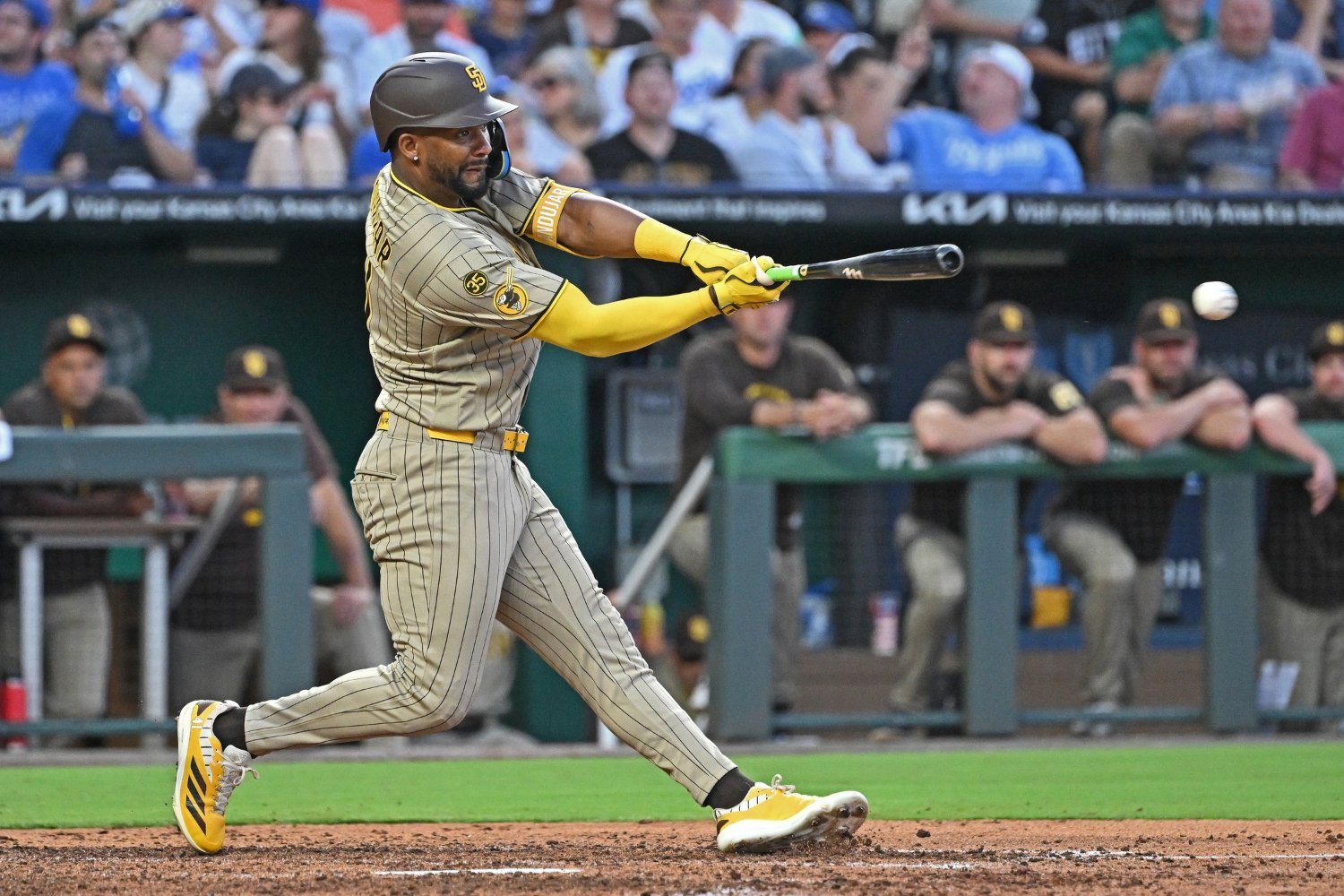 The San Diego Padres are poised to get a couple of regular contributors back into the mix soon. Samad Taylor is on rehab assignment while Miguel Andujar has begun a swinging progression on his way back from a broken wrist. That these two increasingly imminent returns are approaching adds a wrinkle to a roster that already featured another one earlier this week. When the Padres optioned Sung-Mun Song to Triple-A El Paso, they created a roster deficiency in the form of a lack of infield depth. The only supplemental infielder listed on the official roster is Gavin Sheets, who has been used only sparingly at first base for more than a month. Neither of Taylor or Andujar returning changes that calculus; Taylor hasn't appeared on the infield since 2023 and Andujar, while capable of handling an infield corner, is far from an ideal solution beyond the odd appearance once in a blue moon. Which means that the Padres have some additional decisions ahead of them following Song's option. That Taylor is a lock for the roster upon his return speaks to how strong a year he was turning in prior to his stay on the injured list with an oblique injury. He had wRC+'d 135 over a 102 plate appearance sample with six steals courtesy of 93rd percentile sprint speed. Andujar, meanwhile, was always figured to be a key bat as a doubles machine that doesn't strike out a whole lot. Obviously, the expansion of rosters in September does have an impact here. Taylor's return is closer and will likely ignite a decision before we flip the calendar, while Andujar's return could come once there's already more wiggle room with which to work. At the same time, the standard protocol is, generally, a position player and a pitcher get added, bringing the total to 14 each. Many teams are inclined to call up a catcher to provide that position group with a little relief given its intense demand. As such, there's no guarantee that the Padres will use the expansion to answer the questions surrounding the impending roster decisions. Which means that there's a couple of players that could be in danger of losing a roster spot in the coming days or weeks in the way that we just saw Song surrender his. The outfield picture is already particularly crowded, with six players listed on the roster for that position group. Of that group, you have your stars (Fernando Tatis Jr. & Jackson Merrill) and at least one player in Luis Rengifo that appears to have played his way into being a lock for the stretch run on the strength of a 139 wRC+ in the second half (to say nothing of his ability to jump to the infield in a pinch). That leaves Jase Bowen, Austin Hays, and the newly added Dustin Harris as those who could be at risk of finding their way off the roster upon the respective returns of Taylor & Andujar. Bowen has had the longest run on the Padres roster, largely due to his ability to hang in centerfield in Jackson Merrill's stead. Most of his work, though, has come as a late-inning replacement as the team has had to hide his bat as much as possible. His wRC+ is a paltry 32 with a walk rate under three percent against a strikeout rate over 36 percent. There just isn't much offensive upside at present, and the fact that he has options remaining likely means that he'll be the one sent to El Paso first upon the return of the team's two injured players. It's not as if Austin Hays has offered too much certainty either, though. Since his big pinch-hit homer to introduce himself in San Diego, Hays has gone on to hit .250 and reach base at a .308 clip in 24 plate appearances. The fact that he's a right-handed bat more capable of providing power than Taylor, however, could grant him a longer look. He's certain to stick around longer than Bowen, at the very least. Harris has been with the team for the shortest amount of time (two games, seven plate appearances), but was scorching in Triple-A prior to his selection to the roster. He'd slashed a gaudy .350/.422/.617 in 120 plate appearances for the Chihuahuas, which could offer enough intrigue to give him more staying power than even Hays, despite the team's need for a lefty killer off the bench. With Taylor himself a right-handed hitter, they at least wouldn't lose the balance that Hays offers off the bench. Assuming that September is used to recall a catcher or Song, at least two of these names are going to find their way off the roster in the short term. Bowen will, by all accounts, be the first to go. The decision between Hays & Harris isn't going to be an easy one, though, unless one separates himself from the other. Either would have to be designated for assignment and could seek their next bench gig rather than accept an outright assignment back to El Paso. Which means that the Padres have some very real decisions ahead of them as they work to sort out what's left of their outfield-heavy bench in the coming weeks. View the full article
