


DiamondCentric
-
Posts
2,631 -
Joined
-
Last visited
Never
Content Type
Profiles
Forums
Events
News
Tutorials & Help
Major League Baseball Videos
Guides & Resources
Store
Downloads
Gallery
Everything posted by DiamondCentric
-

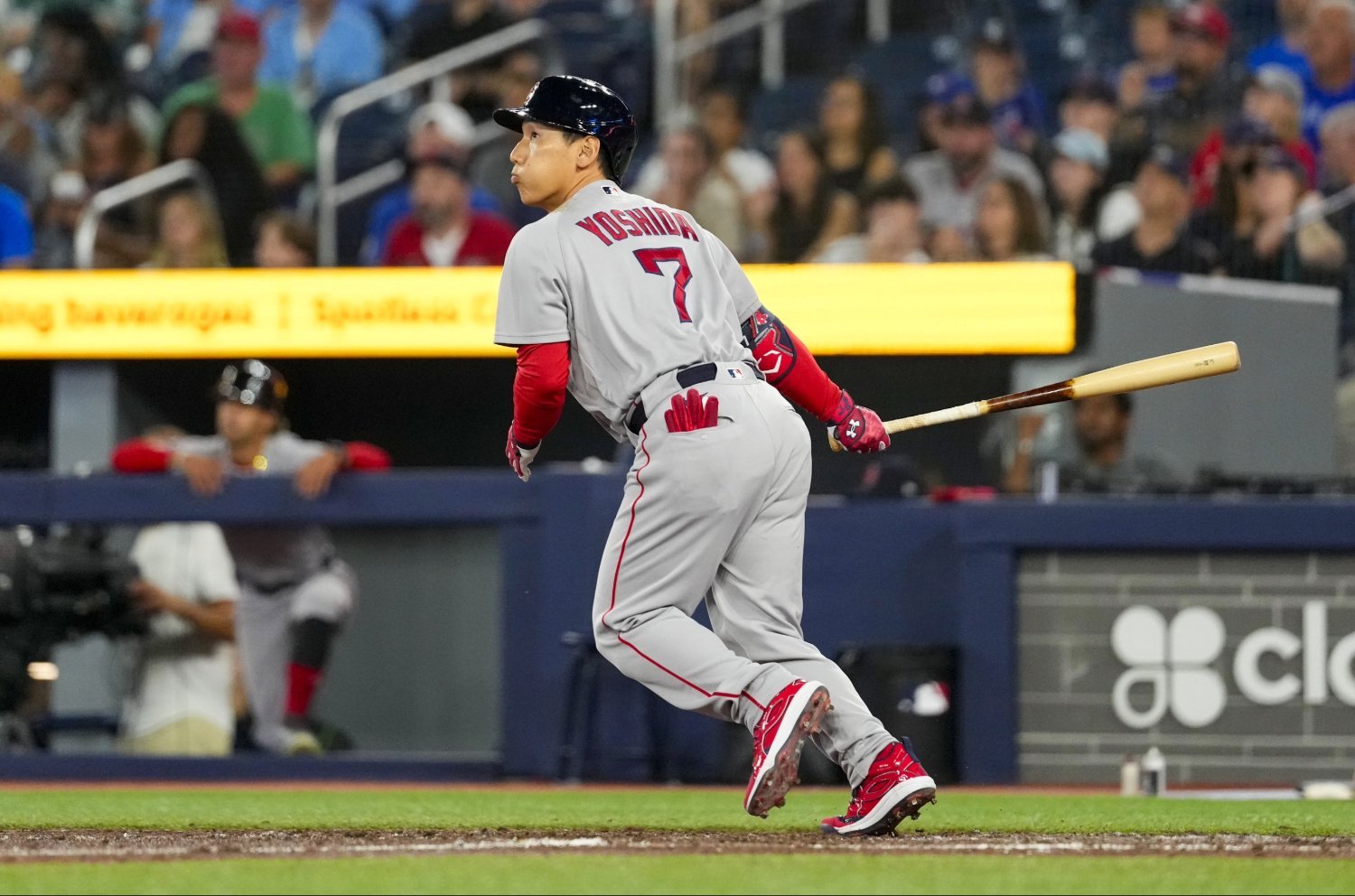 The Boston Red Sox received some injury updates Tuesday afternoon before the second game of their three-game series against the Arizona Diamondbacks. Following the injuries to outfielder Masataka Yoshida and pitchers Garrett Whitlock and Justin Slaten, the three were scheduled for MRIs. Only two of them came back positive. As first reported by MassLive's Chris Cotillo, both Whitlock and Slaten received good news as there was no structural damage, just inflammation, found in both of their MRIs. The two key pitchers of the Red Sox bullpen will remain shut down for now with the length of their downtime unknown. Yoshida, on the other hand, received tough news as his injury turned out to be significant with there being a chance he misses the remainder of the regular season. The loss of Yoshida's bat is a major blow to the Red Sox as they look to make it back to the postseason. In his last 22 games, the outfielder was hitting .292/.361/.403 with five doubles, one home run and 10 RBIs. The Red Sox also gave an update on Tanner Houck, stating that he threw a live bullpen session in Fort Myers and that it is now possible he could return this season. The right-hander underwent Tommy John surgery on August 18, 2025. View the full article
 -
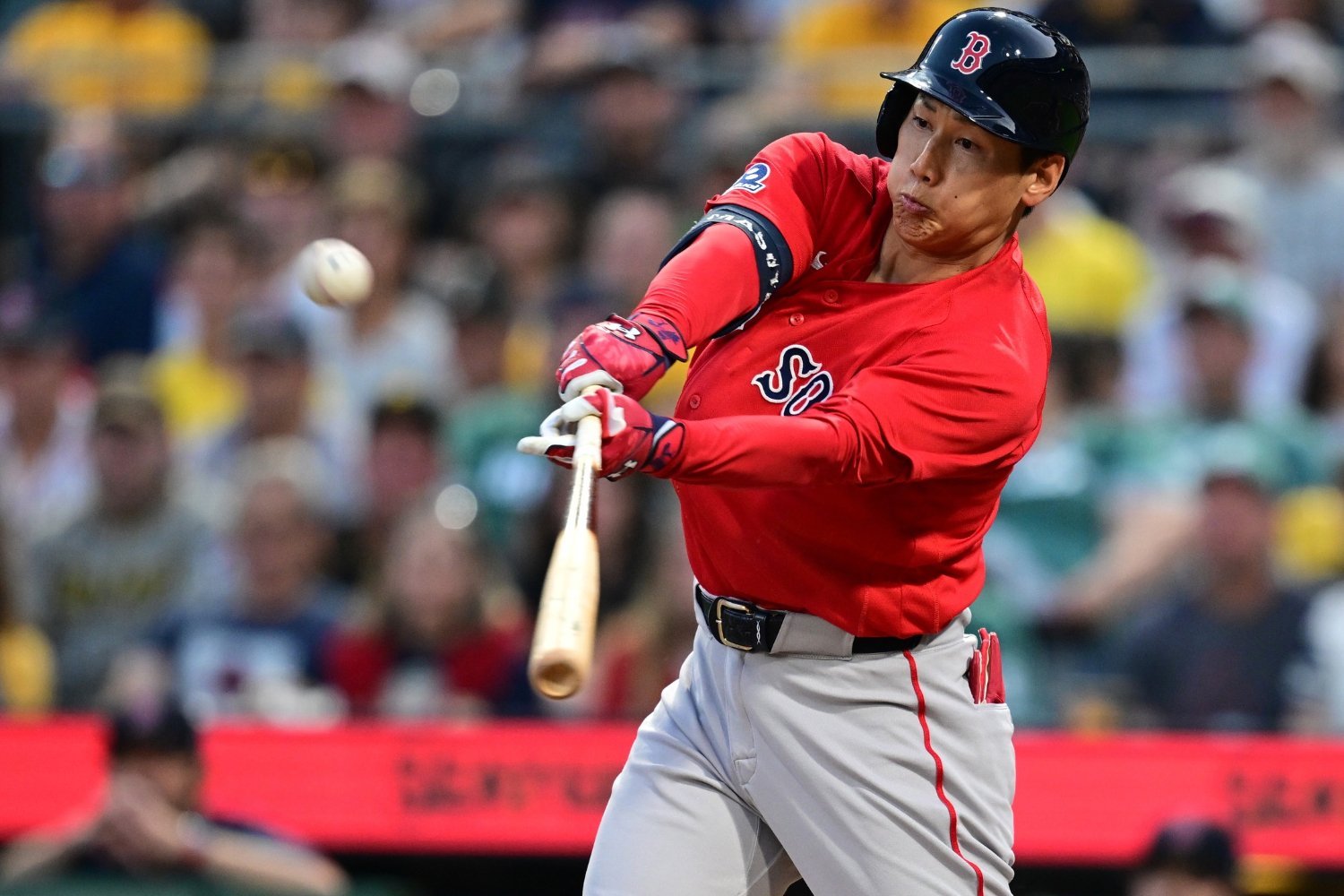 The Boston Red Sox's second-half resurgence has been a full-team effort, but no turnaround has been more remarkable than the revival of the offense. Before their historic winning streak, they had a bottom-10 offense in the league with a 91 wRC+, but since then, they have improved to a top-five offense with a 115 wRC+. But despite their improvements, the team has yet to find a consistent leadoff man. Before his long stint on the injured list, Roman Anthony was the team’s first option, but his injury caused manager Chad Tracy to turn to a committee of options. The manager's most recent choice was second baseman Nick Sogard, but Tracy shook up the lineup after Sogard went 0-for-13 during a three-game losing streak against the Toronto Blue Jays, which paved the way for Masataka Yoshida to take the reins. Known for his elite plate discipline and strong zone recognition, Yoshida seems like an obvious choice on paper. Primarily batting in the middle of the lineup this season, he has been a consistent contributor for the team, batting .274/.347/.399 with 72 hits, 34 runs and 28 RBIs. Yoshida has spent time in each spot in the batting order, but has spent most of his time batting fifth, where his ability to avoid strikeouts and prolong at-bats has made him valuable. But while no one questions his plate discipline, the knock against Yoshida batting leadoff has been the belief that he isn’t aggressive enough. Statistically, however, that couldn’t be further from the truth. This season, Yoshida has a 9.5% walk rate and 11.2% strikeout rate, the best marks of his MLB career. His selective approach at the plate makes him difficult to attack, as he chases pitches outside the strike zone at just a 28.1% rate but still makes contact on 72.4% of those swings. Combined with his 90.7% contact rate on swings at pitches in the strike zone, he rarely lets hittable pitches go to waste. However, just because he has a patient approach doesn't mean he isn’t aggressive when he gets a pitch he likes. In 0-0 or 0-1 counts this season, Yoshida is batting above .350, collecting 13 and 12 hits, respectively. He's batting only .243 from the leadoff position this season, but has been effective when leading off an inning, batting .306 with a .358 OBP. There shouldn’t be a question of whether Yoshida can be a leadoff hitter, but whether the leadoff spot is the best place to maximize his value. Batting him first does negate some of the value created by his contact; he has been particularly effective with runners on base. While he is batting just .200 with runners in scoring position overall, that number jumps to .286 when he bats fifth. So, really, perhaps the best solution is to keep him flexible. If the lineup is struggling to put traffic on the basepaths, batting Yoshida atop the order should help alleviate those issues. If they team is struggling to bring runners home, then maybe it's best to let him hit in the middle of the lineup. In the Red Sox’s most recent series against the Pirates, Yoshida suffered a left hamstring strain that will put him on the injured list and force Tracy to try other options at leadoff (he's gone back to favoring Sogard). That gives Boston additional time to evaluate its options at the top of the lineup and determine where Yoshida should play once he's healthy again. View the full article
 -
Padres' Minority Ownership Group A Mix Of Old, New Individuals
DiamondCentric posted an article in Padres Mission
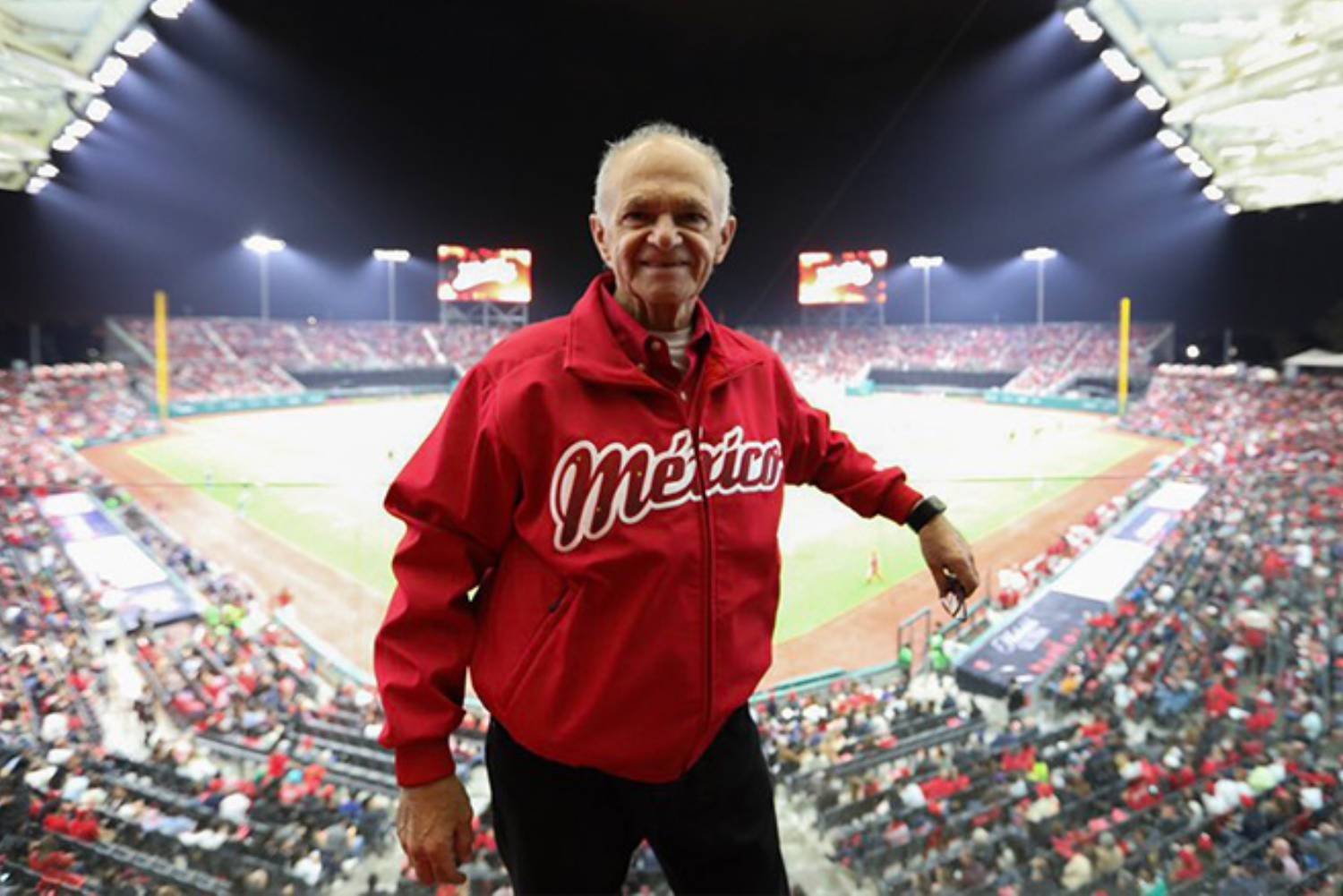 While there are some holdovers retaining a piece of the San Diego Padres under new owners Jose E. Feliciano and Kwanza Jones, there are some new faces, too. Among those staying on are Alfredo Harp Helu, whose previous stake in the Padres was around 20% but according to Dennis Lin of The Athletic, he is increasing that investment. Harp Helu's name is on the Mexico City stadium where the Padres and MLB have played. Members of the Seidler family, who sold the team to Feliciano and Jones for a record $3.9 billion with that transaction approved by MLB owners Monday, will also be sticking around, not an unusual move. However, joining the ownership group are Behdad Eghbali, Feliciano's co-founder of private-equity firm Clearlake Capital, as well as Joey and Jesse Buss, the youngest children of the late Jerry Buss. Joey and Jesse Buss, perhaps coincidental, perhaps not, on Monday announced they were selling the family stake in the NBA's Los Angeles Lakers, which is being contested by sister Jeanie Buss. Feliciano and Jones are expected to have about a 45% interest in the Padres. With the sale expected to close in the next few days following MLB's approval, the couple will be introduced Monday at 1 p.m. at Petco Park. View the full article
 -
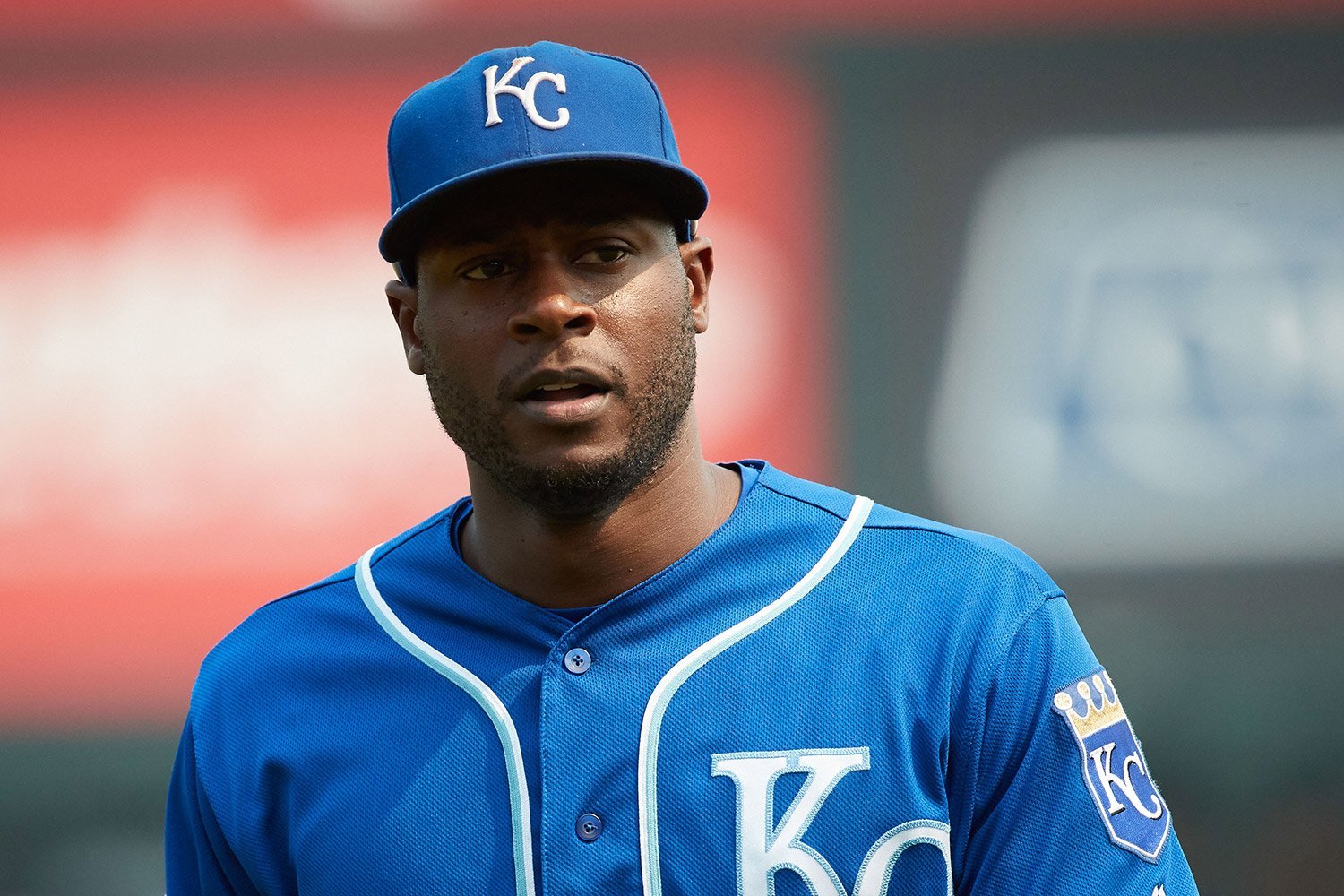
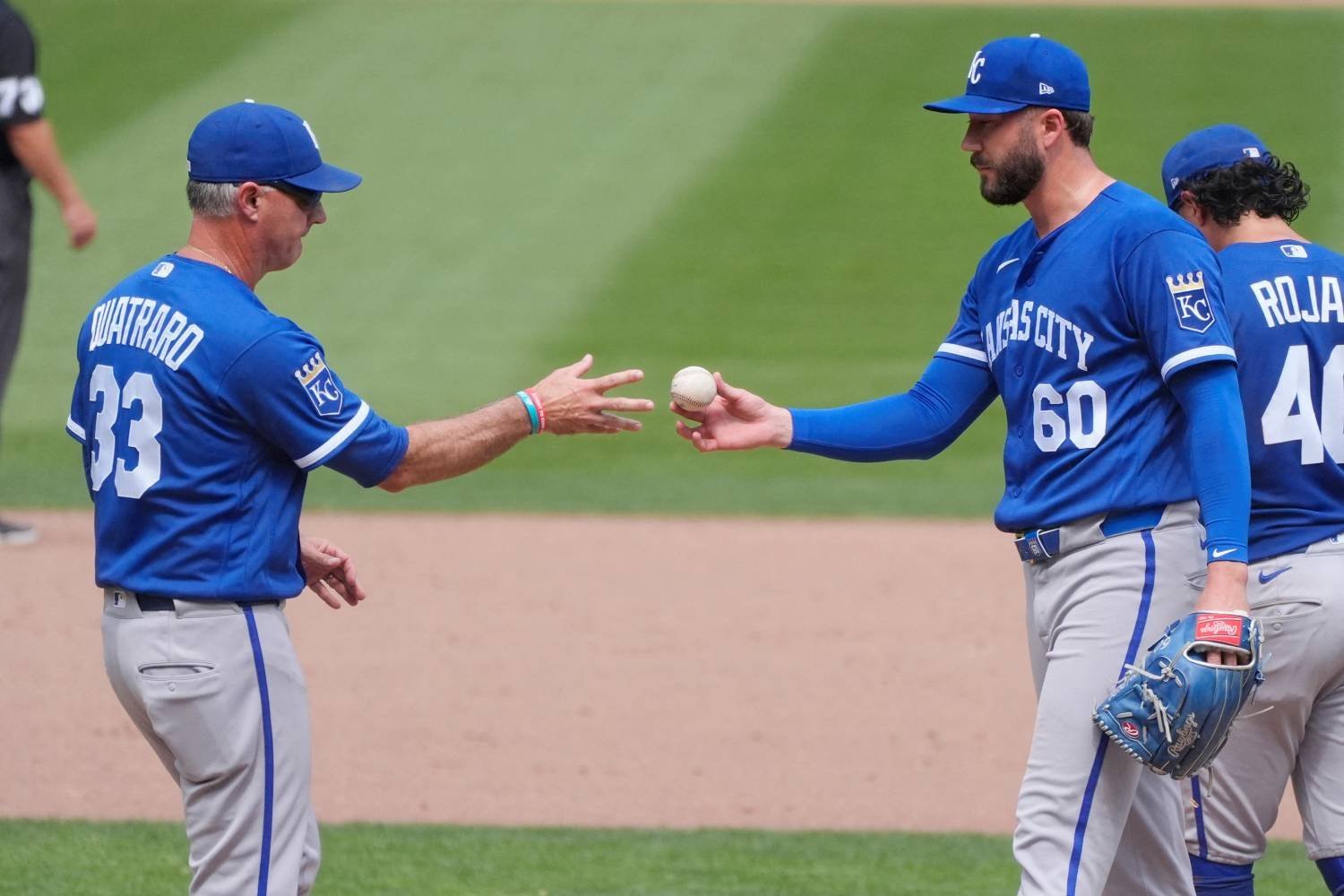 The struggles of Lucas Erceg have resulted in a demotion. The right-handed reliever was optioned to Triple-A Omaha as right-hander Carlos Duran was called up from Omaha. The Royals are hoping Erceg can figure some things out in a less-pressurized environment. In Monday's 9-5 loss to the A's, Erceg gave up a run on a hit and two walks without getting an out in the ninth inning. That leaves him with a 5.57 FIP (6.23 ERA) in 43⅓ innings over 47 appearances with a 13.9% walk rate and 14.9% strikeout rate. Those are not only below last year's marks of 7.2% and 19.3%, but off his career rates of 10.3% and 22.8%. Erceg, formerly the Royals' closer, has 12 saves in 18 chances this season. Duran will be making his season debut for the Royals after having his MLB debut with the A's last year with one-third of an inning, allowing three runs on one hit and three walks. He signed in the offseason with the Los Angeles Dodgers and was added to the 40-man roster in early July before being acquired by the Royals in the Kris Bubic trade at the deadline. In 40 games at Triple-A between the Dodgers and Royals, he has a 3.15 ERA with a 13.9% walk rate and 30.8% strikeout rate. View the full article
 -
Padres Prospect Hot Sheet: Alex McCoy Levels and Powers Up
DiamondCentric posted an article in Padres Mission
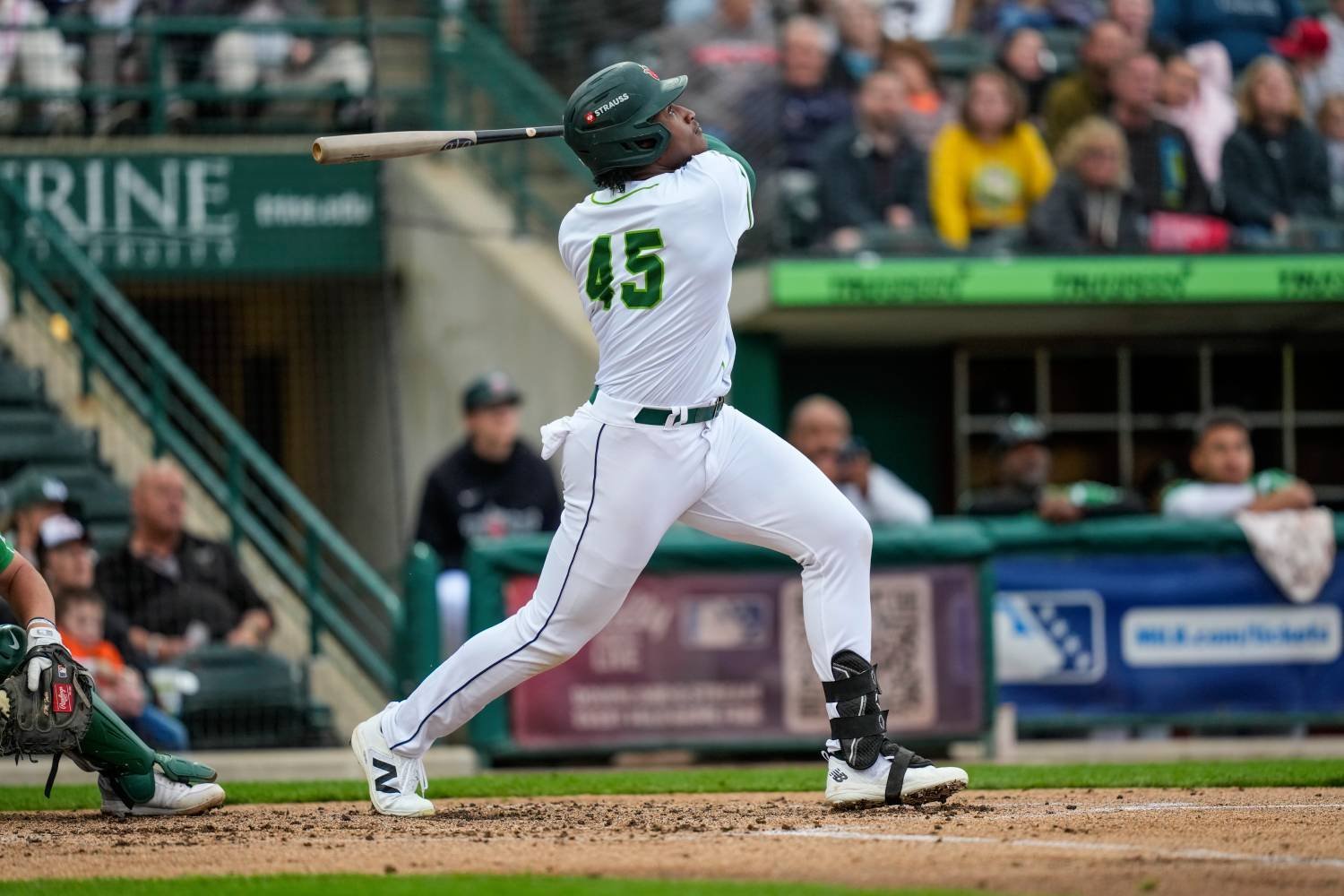 We are back after a two-week absence, one for the trade deadline and the other because I had jury duty. Anyways, let's check in on the San Diego Padres prospects who made a mark in the last week (check out Padres Mission's latest Top 20 rankings as well!). Alex McCoy, OF, Double-A San Antonio Missions Season stats: .277/.356/.491, 100 games, 63 R, 29 2B, 1 3B, 17 HR, 61 RBI, 41 BB, 115 K, 22 SB, 6 CS Talk about having a week. Padres Mission's No. 8 prospect, after going 2-for-4 Tuesday for High-A Fort Wayne, was promoted to Double-A San Antonio, a big enough event in itself. In his debut Friday, the big right-handed hitter crushed a pair of homers and had four RBIs in a 14-12 loss to the Frisco RoughRiders. That was the highlight of a .500/.474/1.000 (9-for-18) slash line with three doubles, eight RBIs, eight runs scored and the two homers. He also stole three bases. He is now up to 17 homers for the season. After starting out the season sizzling with a slash line of .354/.386/.683 in April as the corner outfielder was named Midwest League Player of the Month, he wasn't as productive in the next few months before picking it up in July and being named Midwest League Player of the Week (July 28-Aug. 7). He ranked second in doubles with 27, fourth in hits with 99, third in extra-base hits with 43 and fifth in total bases with 173. That was enough for the Padres to promote him when outfielder Jake Cunningham went on the seven-day injured list with a groin strain. McCoy went 7-for-14 in his first three games with the Missions, including a two-steal game Sunday and a stint in center field. Ethan Salas, C, Triple-A El Paso Chihuahuas Season stats: .301/.377/.465, 86 games, 51 R, 19 2B, 1 3B, 10 HR, 57 RBI, 42 BB, 55 K, 15 SB, 8 CS Padres Mission's No. 1 prospect continues to sizzle since his promotion to Triple-A El Paso. In his third week with the Chihuahuas, the left-handed-hitting catcher put up a slash line of .471/.524/.765 (8-for-17) in five games with two doubles, his career-high 10th homer and eight RBIs. The 20-year-old, the youngest player in Triple-A, had three walks and did not strike out. That pulled his season batting average above .300 for the first time since June 3. Yes, the hype is strong, although he has had a few defensive missteps since coming up from Double-A San Antonio. Salas has a 10-game hitting streak and reached base in all 14 games at Triple-A, putting up a tremendous slash line of .377/.453/.698 with six doubles, a triple and three home runs. His home run Sunday was an opposite-field shot down the left-field line, while he also doubled off the base of the wall in center field. The power comes easy with his swing, which is more of a line-drive tilt with gap power. More power will come as his body matures, but his hit tool has taken a major step forward this season. Bryan Balzer, RHP, High-A Fort Wayne TinCaps Season stats: 7-4, 4.47 ERA, 20 games (18 starts), 88⅔ IP, 75 H, 48 R, 44 ER, 39 BB, 92 K, .230 opponent average In what was perhaps his second- or third-best game of the season, the right-handed starter struck out 10 and allowed just one hit over five innings in the second game of a doubleheader Saturday. He did walk four and hit another, which kept this from being his best game of 2026. His strikeouts and 94 pitches were career highs as he continues to build his prospect profile. He didn't allow a hit until a leadoff double in the fourth, although the walks and the hit batter prevented him from having a clean inning. He did strike out three in the first and third innings and nine of the first 10 outs he recorded were punchouts. Balzer was signed as an international free agent out of Japan in 2023, coming off Tommy John surgery, which delayed his pro debut until 2024. He has appeared in 20 games (18 starts) this year, including eight games (seven starts) with High-A Fort Wayne following a promotion from Low-A Lake Elsinore. Balzer's strikeout rate is up from Lake Elsinore (22.6% to 26.9%), but his walk rate is worse (8.3% to 13.8%). He has mitigated those walks with a .202 opponent batting average with the TinCaps. His ERA sits at 4.47 for the season, including 4.45 at Fort Wayne. His innings are likely to be monitored over the final three weeks as he is at 88⅔ after covering 50 last year. Tyler Schmitt, RHP, Low-A Lake Elsinore Storm Season stats: 8-6, 4.76 ERA, 20 games (17 starts), 87 IP, 80 H, 46 R, 46 ER, 46 BB, 94 K, .246 opponent average Check out the game logs for the right-handed starter and you will be in for a bit of a roller-coaster ride. But there have been more ups than downs for the 2025 17th-round draft choice out of Illinois. When on, Schmitt has been pretty good. That was certainly the case when he piggybacked left-hander Kruz Schoolcraft, Padres Mission's No. 4 prospect, on Saturday with five shutout innings and eight strikeouts. He walked two and allowed three hits. Schmitt's eight punchouts were the most since he had nine and 11 in a three-start span May 30-June 13. In half of his 20 games, he has allowed one or zero runs. He also has four outings where he gave up at least five runs. Walks are his Kryptonite. He had back-to-back starts July 11-18 with no walks, but otherwise has had at least one in every game. This is his first full season in pro ball, so the walks are something that can be ironed out by the 22-year-old. Luis Maracara, RHP, Low-A Lake Elsinore Storm Season stats: 2-3, 6.92 ERA, 15 games (13 starts), 40⅓ IP, 40 H, 35 R, 31 ER, 21 BB, 51 K, .255 opponent average The 18-year-old right-handed starter, signed as an international free agent in 2024 out of Venezuela, has had a mixed bag of results since coming to the U.S. last year. He spent all of 2025 in the Arizona Complex League with a 9.19 ERA in 12 games (four starts) and 32⅓ innings. This year, he began in the ACL and had a 5.94 ERA in seven starts with 23 strikeouts in 16⅔ innings. That earned him a ticket to Low-A Lake Elsinore, where he has appeared in eight games (six starts) with a 7.61 ERA. But he has had some nice outings between the rocky ones. That was evident Sunday. In an 11-7 loss to the Inland Empire 66ers, when Maracara struck out eight over four innings, matching his career high from 2024 in the Dominican Summer League. He allowed a pair of runs on five hits and no walks. With three weeks left plus the California League playoffs still to come, it is certainly something for him to build off. View the full article
 -
Padres' Minor-League Catching Coordinator Snared By ICE
DiamondCentric posted an article in Padres Mission
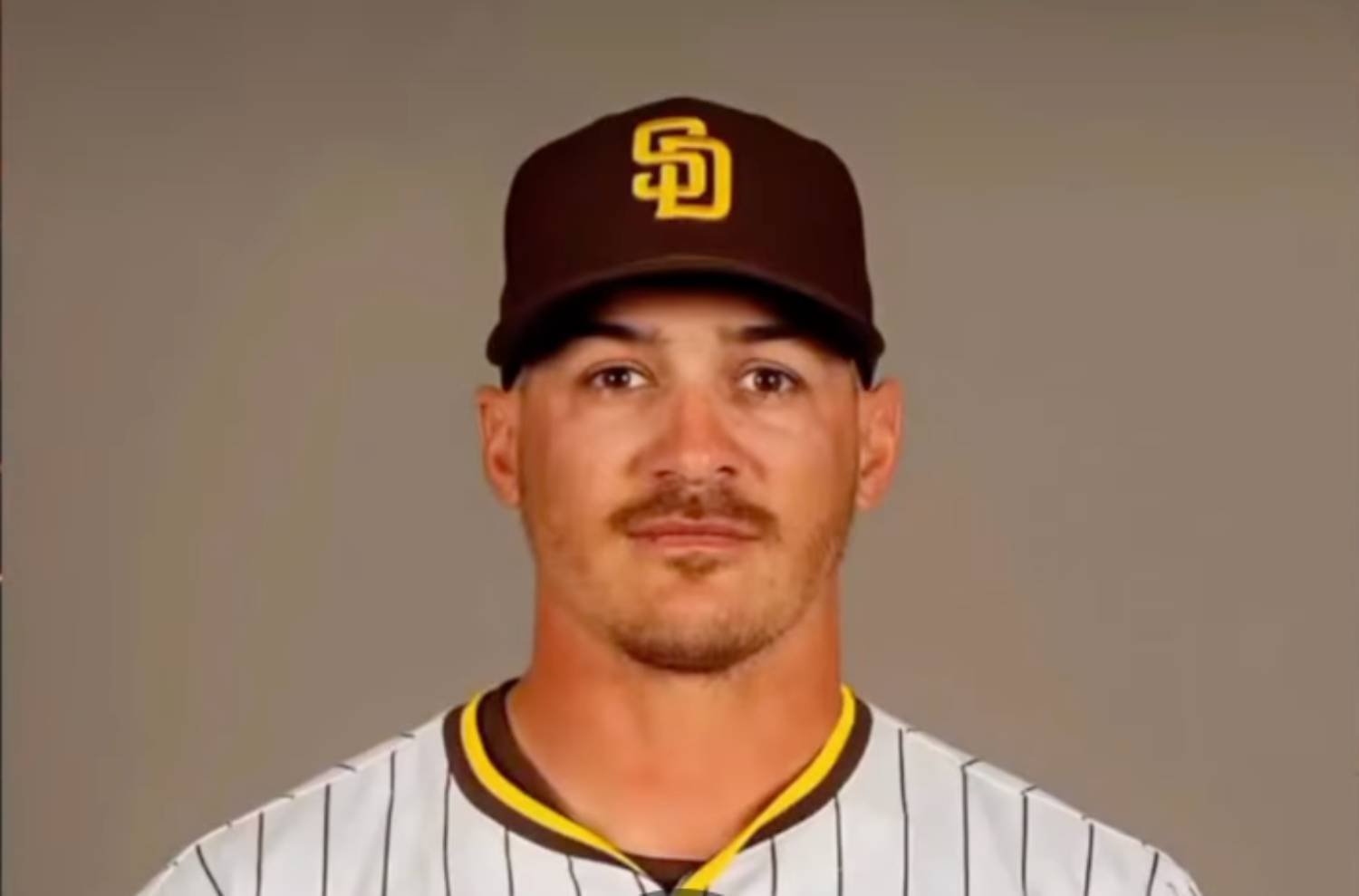 Oswaldo Pirela, the San Diego Padres' minor-league catching coordinator, was taken into custody Sunday in El Paso, Texas, by U.S. Immigration and Customs Enforcement. The San Diego Union-Tribune and The Athletic each confirmed Piera's plight with members of his family. Pirela has a hearing scheduled for next week, the Union-Tribune said. Pirela is Venezuelan with an ongoing asylum case. He has been in the U.S. since 2014 and family members said he has an active work permit. Pirela's brother told The Athletic that Pirela was not carrying his work permit card at the time. The Padres issued a statement Monday: “We recently became aware of the detainment of minor league catching coordinator Oswaldo Pirela in El Paso, Texas. We are working to gather additional information and will not have any further comment at this time.” The Athletic received a statement from Homeland Security on Tuesday: “On August 16, 2026, Border Patrol arrested Oswaldo Jose Pirela Dominguez, an illegal alien from Venezuela, at the El Paso International Airport. He entered the country legally on September 10, 2014, and was granted permission by the Obama administration to remain in the country until February 10, 2018. In violation of our nation’s laws, he overstayed his welcome. When approached by law enforcement officers, he was not in possession of legal documentation granting him status in the country. He will remain in ICE custody pending removal proceedings and will receive due process. To be clear, work authorization or a pending application do NOT confer legal status in the United States.” Pirela was visiting the Padres' Triple-A El Paso Chihuahuas affiliate during their home series against the Salt Lake Bees. He was detained at the El Paso airport around 4 a.m. as he was traveling back to the Phoenix area, where he family lives and the Padres have their minor-league headquarters and spring training site in Peoria, Ariz. With ICE ramping up immigration checks at airports, Pirela and his family came up with a system of checking in during his travel. The family did not hear from him Sunday morning, raising concern. Pirela was the bench coach with the Low-A Lake Elsinore Storm in 2024. He was a minor-league catcher for the Texas Rangers from 2009-11. View the full article
 -
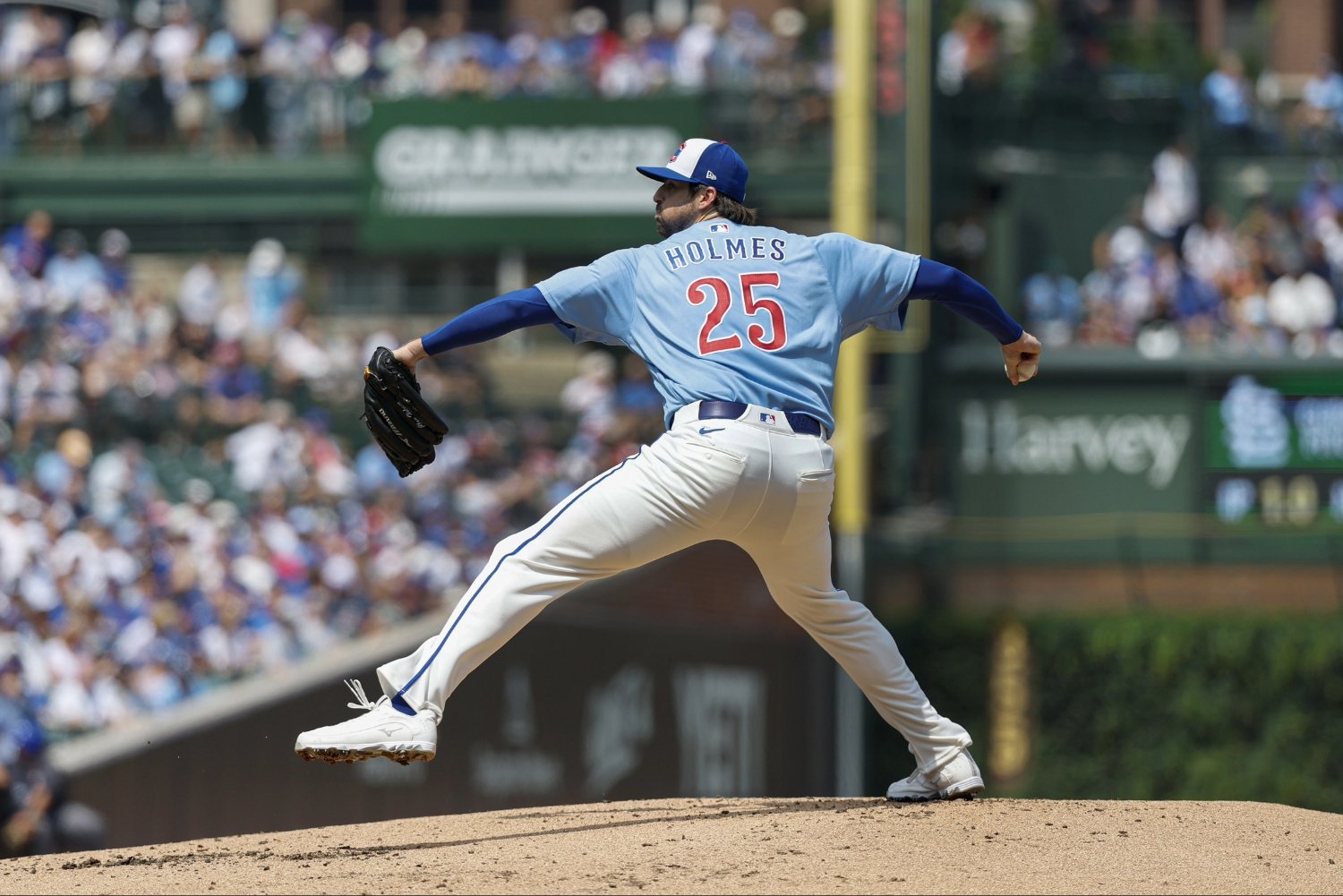 The Chicago Cubs entered Major League Baseball's 2026 trade deadline with as clear of needs as just about any organization in the league. Jed Hoyer's previous track record of addressing needs in more of a tepid fashion than an assertive one didn't lend itself to the idea that the organization would properly go about their business. What transpired, though, was fairly remarkable. Not only did Hoyer and his front office comrades put the Cubs in a position to address their shortcomings, they completely solidified the staff on paper as the team awaits the recovery of various arms suited for various roles. A bench bat was even added for good measure. As a recap, here's where things fell prior to the Aug. 3 deadline for the Cubs: Acquired RHP Kevin Gausman from Toronto Blue Jays in exchange for prospects Brett Bateman & Ty Southisene Acquired RHP Clay Holmes & OF Tyrone Taylor from New York Mets in exchange for prospect Jefferson Rojas Acquired RHP Ryan Zeferjahn from Los Angeles Angels in exchange for Moisés Ballesteros & prospect Mason McGwire Acquired LHP Braxton Garrett from Miami Marlins in exchange for prospects Jonathon Long & Jace Beck The moves that the Cubs made were largely about 2026 (Garrett, Zeferjahn, and their respective team control notwithstanding). While Bateman has since made his big-league debut with Toronto and Ballesteros is back at the top level with the Angels, we're not at a point of re-grading the moves based on the performance of those who departed the organization as part of the transactional spree. As such, we're only interested in the early returns from those acquired. Let's take a quick look at those returns. Kevin Gausman Despite his status as an impending free agent, Gausman was perhaps the most significant addition the team made ahead of the deadline. He's a veteran with postseason experience capable of working deep into ball games. His first start indicated as much, as he threw seven innings while allowing two earned runs against Kansas City back on August 7. His second start didn't land quite as favorably, as he ran up the strikeout numbers (seven) but only worked 4.2 innings while allowing six earned runs. Gausman's splitter has absolutely played in each start, which is hardly a surprise given that its his pitch that has generated the most chase (39.2 percent), whiff (39.8 percent), and groundball action (48.9 percent) of anything else in his arsenal. As long as he's deploying the fastball effectively (something that did not happen against Washington last week), he should be able to provide the Cubs with plenty of much-needed efficiency down the stretch atop their rotation. Clay Holmes Holmes hadn't pitched since May 15 when the Cubs acquired him, as he was recovering from a broken fibula that was the result of a comebacker off his right leg. His return was imminent, though, and his two starts since arriving in Chicago have been a sort of inverse of that of Gausman. He labored through his first start, throwing four innings, allowing six hits and two walks, and being tagged for four runs in a game the Cubs eventually lost. In start No. 2, however, he was brilliant. Against St. Louis over the weekend, Holmes worked into the seventh (6.2 innings), allowed just a single hit and one walk, and kept the Cardinals off the scoreboard. His sinker was out in full force; he threw it 55 percent of the time and generated groundballs on 61.1 percent of the balls in play allowed. That sinker should allow him to continue to find success down the stretch, as he's a groundball machine on the mound throwing in front of an elite infield defense. Ryan Zeferjahn It's a bit more difficult to gauge the early returns on a relief pitcher than it is a starter. Zeferjahn has made six appearances for the Cubs thus far, logging 5.1 innings of work. His ERA sits over eight (8.44) through those initial appearances with a FIP (7.58) that doesn't look much more favorable. However, his strikeout rate is still admirable (25.0 percent) and his walk rate is down a touch (10.7 percent). It's also noteworthy that each of the appearances that Zeferjahn has made to date have come in a game that the Cubs would go on to win. He's allowed runs in three of those six appearances, but none of those clunky outings have come in a way that was damaging to the Cubs' playoff pursuit. Unlike a starting pitcher that has multiple innings at a time, Zeferjahn hasn't had quite the springboard to gaining his footing quite yet, so even through some bad luck (.400 opposing BABIP), we don't yet have a reason to be worried that their big relief acquisition is a dud. Tyrone Taylor Taylor was brought in to, essentially, serve as a fifth outfielder and right-handed bat off the bench. That's the role he's filled thus far. Of his 11 games with the Cubs, he's been a pinch runner once and has pinch hit on three different occasions with only six starts to his name. There hasn't been anything particularly noteworthy on the stat sheet quite yet (47 wRC+), but he's scattered a few hits across his smattering of appearances. He's an especially difficult player to gauge in terms of overall value, but as his sample increases (particularly against left-handed pitching), you'd hope to see the occasional contribution, even if it's not coming with much frequency. Braxton Garrett The only deal the Cubs made with a clear eye on the future (Garrett is under team control through 2028), it was a bit of a surprise that the team added him to the big-league roster so soon after his acquisition. However, that was more about giving their pitching staff some coverage than anything, and he has yet to make his Cubs debut. He's also made just one appearance with Iowa, throwing a pair of innings while walking six and allowing an earned run. Unless he's added back into the mix upon the expansion of rosters, it's unlikely we'll see him again before 2027 as the Cubs work to develop him into a starter worthy of next year's rotation. View the full article
 -
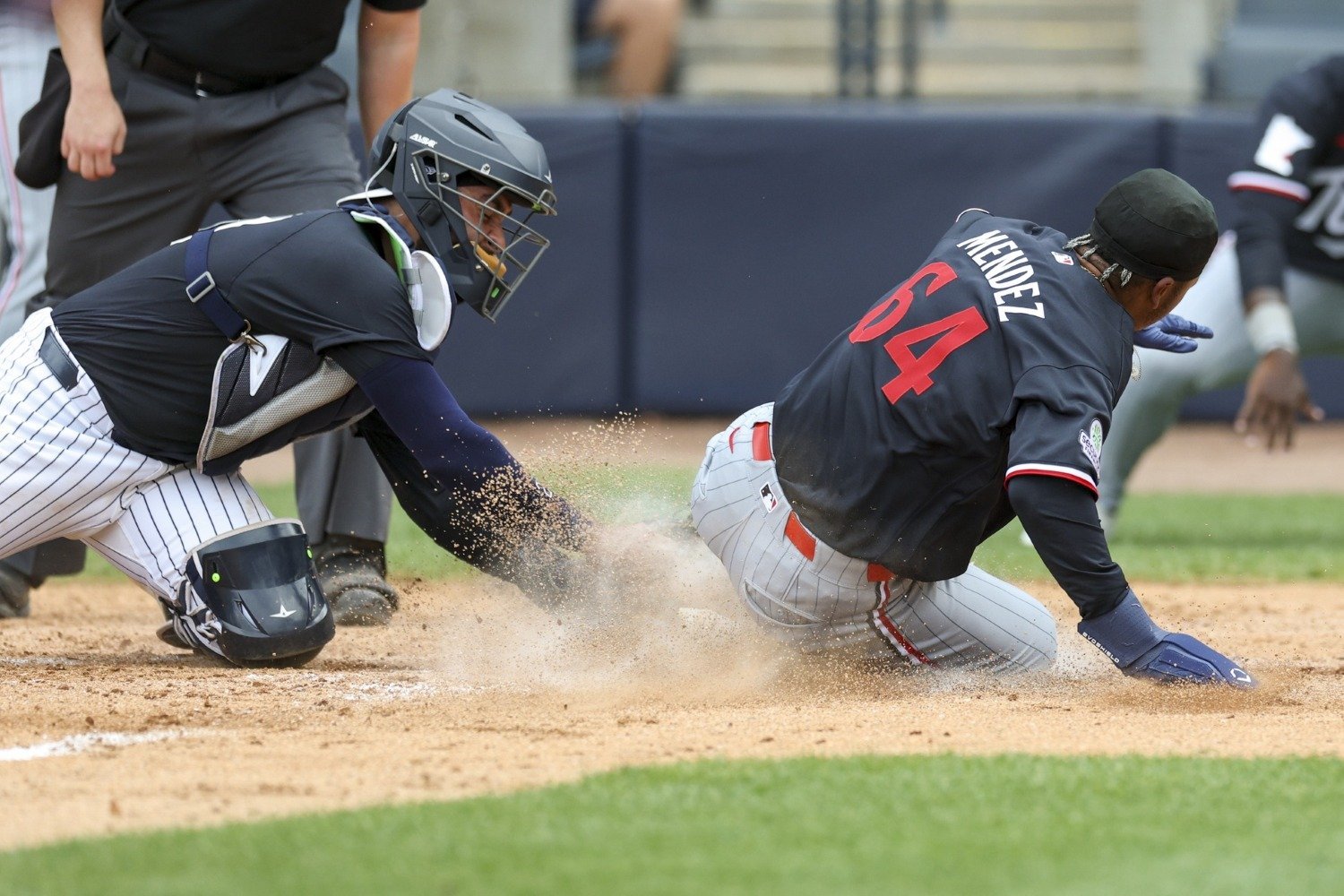 As we approach the final month of the major-league regular season, many teams bring up some of their top prospects for quick looks and for needed boosts in playoff races. September callups allow teams to add two more players to their rosters, going from 26 to 28 players, and a lot of the conversations around the Twins’ organization lately have been focused on two outfielders: Walker Jenkins and Emmanuel Rodriguez. They’re two of the best prospects in the organization. Both are right on the doorstep of the major leagues, and it feels like only a matter of time before the Twins give each of them an opportunity. But there’s another outfielder who doesn’t get mentioned nearly enough, in my opinion, and he’s in a very similar spot. It’s Hendry Mendez. The Harrison Bader trade at last summer’s trade deadline continues to look good. Mendez has done nothing but hit the ball since being acquired from the Phillies—so much so that he’s climbed directly behind Rodriguez in Twins Daily’s prospect rankings. Across 356 plate appearances between Double-A and Triple-A this year, Mendez is slashing .290/.383/.454. When you compare his Triple-A numbers specifically to those of Jenkins and Rodriguez, you might be surprised by just how well Mendez stacks up. His extra-base hit production isn’t quite as high, largely because of Mendez’s 52% ground-ball rate. He isn’t going to provide the same raw power that Rodriguez can, but that doesn’t mean there isn’t plenty to like about his offensive profile. Mendez is getting on base at a higher clip than Jenkins, and his hard-hit rate is also about four percentage points higher. The biggest difference, though, might be his ability to consistently put the bat on the baseball. Rodriguez’s overall contact rate is at just 65% (a major concern, but one for another time). Mendez’s contact rate is up at 82%. That gives Mendez a very different offensive profile from Rodriguez. He may not have the same ceiling in terms of power, but there is considerably less swing-and-miss in his game. That could be valuable for the Twins as they try to figure out what their outfield should look like over the next few seasons. Mendez is also already on the 40-man roster, meaning the Twins face no major friction if they decide to promote him. Even after making the jump from Double-A to Triple-A, he’s continued to produce and put good swings on the ball and post impressive numbers. There’s no reason Mendez has to be viewed as a direct alternative to Jenkins or Rodriguez. The Twins could theoretically bring up multiple young outfielders, especially if they want to use September as an opportunity to get a better look at the players who could be part of the playoff window they hope is opening this season. Each of the three prospects would bring very different things to the table. Jenkins offers the highest overall prospect pedigree, but isn’t on the 40-man and could be stuck in St. Paul for the rest of the year. Rodriguez brings some of the most impressive raw power in the organization, and Mendez brings a more contact-oriented approach with the ability to get on base and consistently make hard contact. That diversity could actually make Mendez an even more interesting piece of the puzzle. The Twins have many decisions to make in their outfield moving forward. Some veterans are likely to be moved, with a wave of prospects getting closer and closer to the major leagues. It's all but guaranteed the outfield will shift to a much younger group in the near future. Jenkins and Rodriguez will probably be at the center of those conversations, but Mendez should be part of them, too. I don’t think the Twins need to rush Mendez to the major leagues, and I wouldn’t argue that he needs to be prioritized over Jenkins or Rodriguez. But if the organization is looking for another young hitter to get a taste of the majors in September, there’s a compelling case to give Mendez a chance. View the full article
 -
Ricky Tiedemann’s Role for the Blue Jays Down the Stretch
DiamondCentric posted an article in Jays Centre
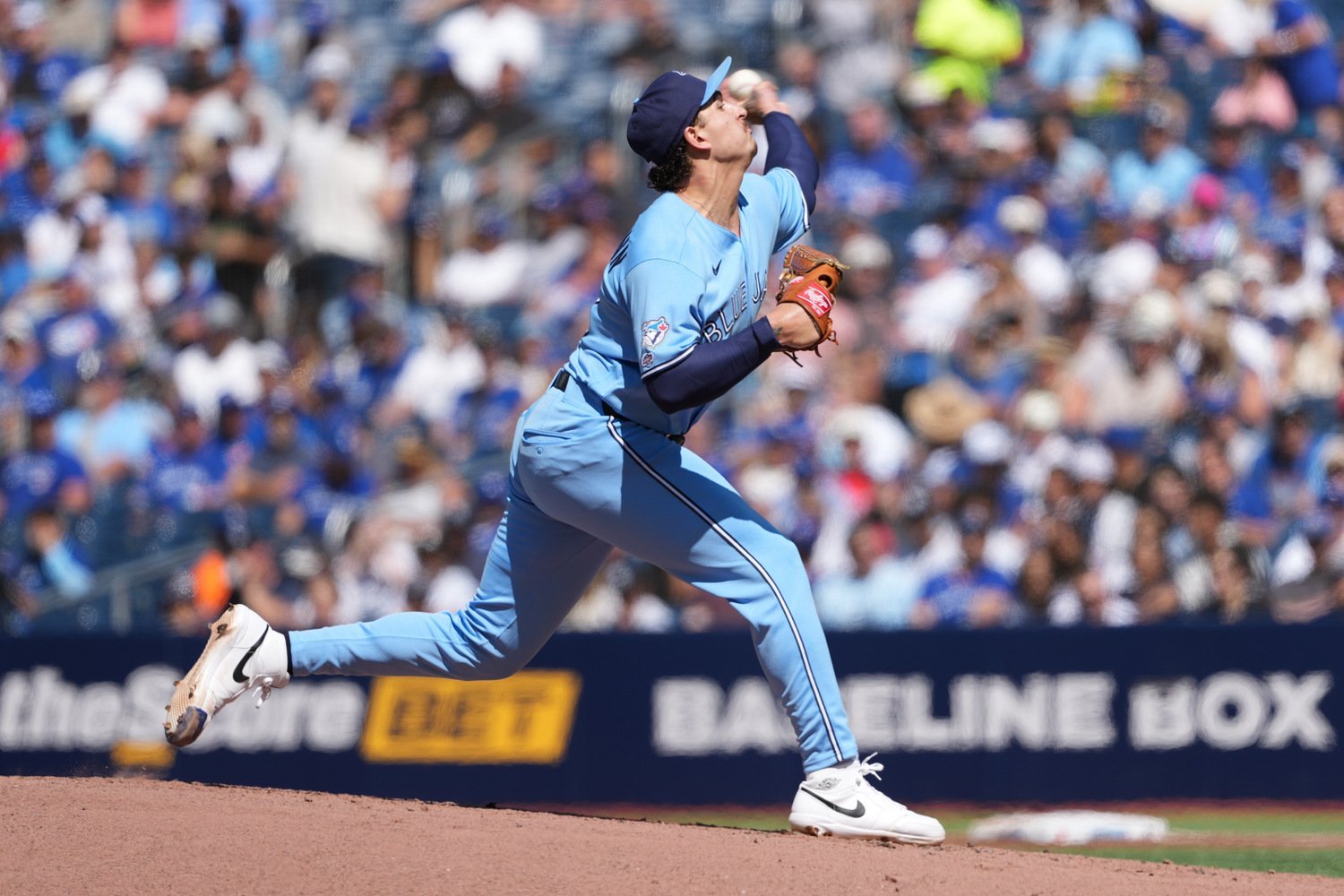 Ricky Tiedemann would likely have made his MLB debut earlier in the season if he hadn't had injury issues. He's a highly talented left-handed pitcher who throws a mid-90s four-seam fastball with a changeup and sweeper. However, he underwent Tommy John surgery in July 2024, forcing him to miss the entire 2025 season, and this season he was briefly shut down in February with elbow discomfort and in early July due to neck discomfort. The lefty prospect finally made his long-awaited MLB debut on August 15 to provide length in a bullpen game. Tiedemann threw 1 2/3 innings, allowing an earned run on two hits and striking out two. He followed opener Braydon Fisher, and after Tiedemann's outing, he passed the ball off to Simeon Woods Richardson in a game that saw the Jays use seven relievers. It was an important game for the Toronto Blue Jays as it led to their second win in the series against the New York Yankees. The rookie's MLB experience was short-lived, as he was sent back down to Triple-A Buffalo the next day. Brendon Little took Tiedemann's spot after being reinstated from the paternity list. The move has nothing to do with how the rookie performed. The demotion likely has to do with keeping the injury-prone southpaw's workload down. Tiedemann only made five minor league appearances after returning on July 25 from his neck injury, with three of those in Triple-A. He also only threw one inning in each outing. So the Blue Jays are protecting a player who has a bright future at the major league level. The team is in a logjam fighting for the last Wild Card berth; six teams are within one game of that final spot. With Toronto in a tight battle, Tiedemann's lack of experience could also be a reason to send him down to the minors. They've elected to use relievers who have MLB experience. The players at the bottom of the bullpen depth chart are Matt Waldron, newly acquired Paul Sewald, and Little. Though they've struggled this season, they have tons of experience at the highest level. However, if their struggles continue, Tiedemann will likely return to the big leagues before the regular season ends. The Blue Jays know Tiedemann is talented, but they have to be careful not to give him a massive workload right now. He showed in a small sample that he could compete, which leaves open a strong possibility we see him again in the final stretch of the season. He has the skills to make a late-season impact similar to Trey Yesavage last season, but Tiedemann won't be stretched out enough to be a starter. His role will be as a long reliever, but with his sweeper that can miss bats, he'd be a solid option in the middle innings. View the full article
 -
 Alex and Maddie sit down and discuss the Red Sox’s recent skid. (Spoiler: they’re unfazed about the Blue Jays and Pirates series.) They answer your forum questions, reviewing the difference in Statcast and Baseball Info Solutions definitions of hard-hit rate. They consider the length of Trevor Story and Roman Anthony’s rehab stints. They’re also reminded of Johan Oviedo’s existence. They talk about Adley Rutschman's transition to Boston and how he’s starting to look like himself again in the first game of the Diamondbacks series. Finally, they predict where Alex Cora will end up managing next year. Listen on Apple Podcasts: https://podcasts.apple.com/us/podcast/the-talk-sox-podcast/id1783204104 Listen on Spotify: https://open.spotify.com/show/3qPrPXEngu0CxgTmlf0ynm Listen on iHeartRadio: https://www.iheart.com/podcast/263-the-talk-sox-podcast-244591331/ Listen on Pocket Casts: https://pca.st/4tmd121v Watch on YouTube: https://www.youtube.com/@talksox View the full article
 -
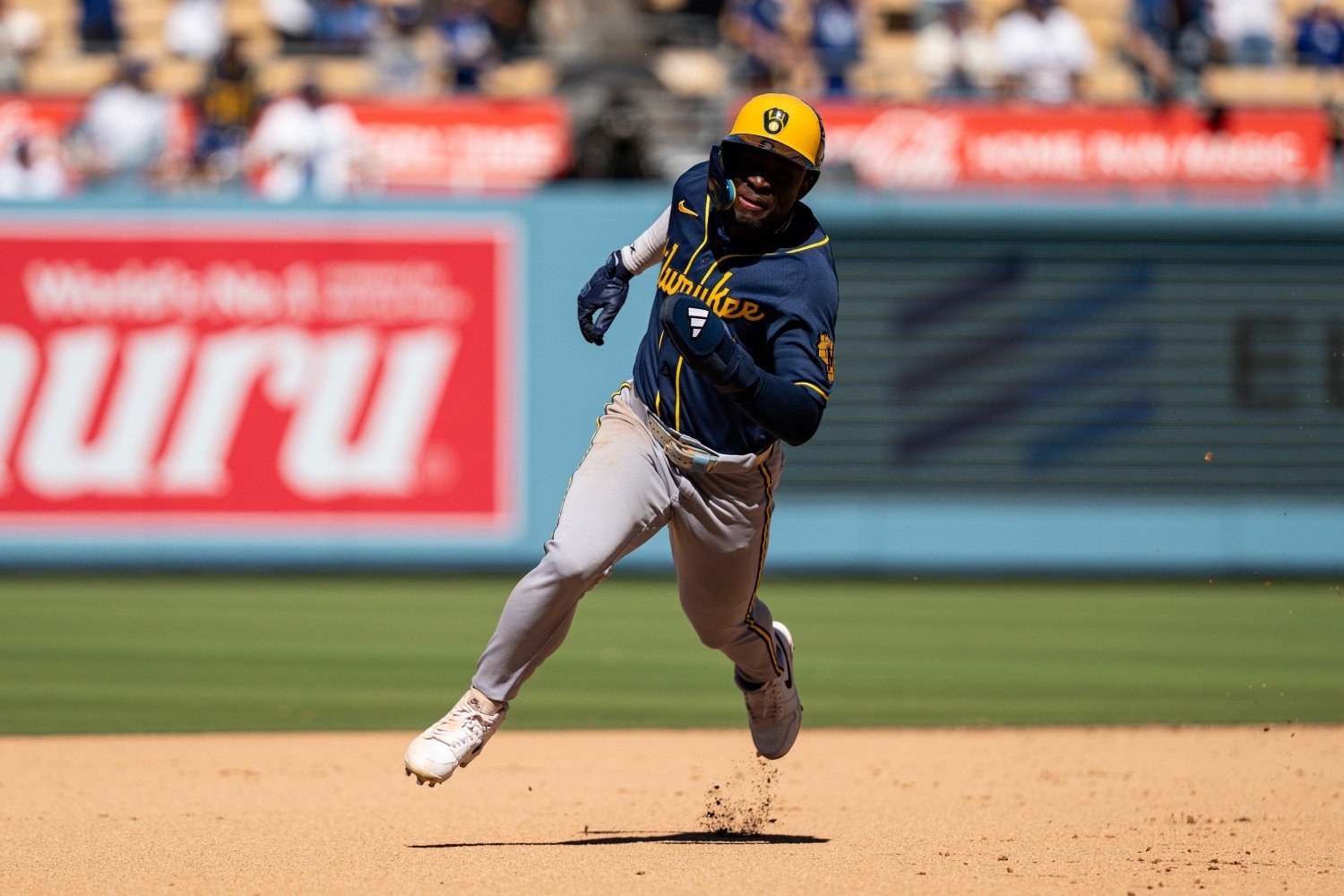 Earlier this season, I wrote about the way Cooper Pratt emerged from his shell after a few weeks in the major leagues. When he first got the call to the bigs, he maintained a very deep contact point and a patient approach. He didn't cut losse with his 'A' swing very often. He was there to provide steady defense at an important position and to be a low-ceiling, high-floor eighth or ninth batter on most days. Once he got to about 80 plate appearances, though, the Brewers allowed him to get more aggressive. This is a pattern you can watch unfold multiple times, as you sift through the slew of young players the team has promoted over the last few years. Joey Ortiz, Brice Turang, and Sal Frelick all went through similar apprenticeships, even after reaching the majors. Jackson Chourio's was a more chaotic first month or two, given that he was a 20-year-old rookie and one of the highest-ceiling prospects in team history, but the same essential principles applied. The Brewers believe a hitter needs time to learn how they'll be pitched in the majors, and what getting hits against that pitching requires. They want them to learn the situational aspects of hitting in that crucible, and to prioritize seeing the ball well and making good swing decisions. Once those hurdles are cleared, the team gives the player the green light to be their more assertive self. That process is still playing out with Luis Lara, even though he's come to bat 98 times since being recalled early last month. Lara is young, and he's small, and his calling card is defense, but that's not why the team has yet to take the training wheels off him. It's simpler than that. Lara is a switch-hitter, which means he's only come up 77 times as a lefty and 21 times as a righty. He's still earlier in that transitional phase than his raw numbers imply. Recently, that's put the player and the team in a tough spot. Frelick has been on the injured list. Christian Yelich is active, but he's clearly in decline. Turang has sputtered a bit and battled nagging injuries, and Pratt, Ortiz and David Hamilton have all been in and out of the lineup with injuries of varying severities. That's created a vacuum where the club's elite offensive production used to be. It would be great if Lara could step forward and fill a portion of it. As far as the Brewers are concerned, though, it's not worth asking their young outfielder to change what he's been doing since coming up. He's not yet having tremendous success, but his approach to date—that deep contact point, very little chase, very little swing-and-miss—fits the roadmap to success. One of the luxuries of being in control of your division, as the Brewers always seem to be, is the ability to keep telling a player like Lara to do what they've been doing—to stay dedicated to development. More than most good teams, the Brewers are willing to give up a run or a win now and then for the promise of a five-fold return on the investment two years later. Lara is in that place right now. That decision is made even easier right now, though, by the fact that Lara has two swings to maintain and two approaches to learn. With a cushion in the NL Central and the best record in the National League, the Crew have been able to eschew the potential to turn the youngster into a more dynamic (but more erratic) offensive presence. They're not ready, yet, to have him start attacking the ball more aggressively or changing what he's looking for. They want him to be the best version of himself next year and in 2028, and that means asking him not to risk too much in pursuit of being the best version of himself in 2026. Before the year is out, that will change. Lara will tap into a little more power and start contributing more to the lineup down the stretch. For now, though, despite the injuries and struggles afflicting the team, Milwaukee is still counseling their rookie to stay within himself and learn the ropes. They've earned the option to do so. Even if he never does fully click this season, they'll be ok—and they'll be better off next season, too, as they pursue what could be a fifth straight division crown. View the full article
 -
David Morgan Belongs In the San Diego Padres' Bullpen
DiamondCentric posted an article in Padres Mission
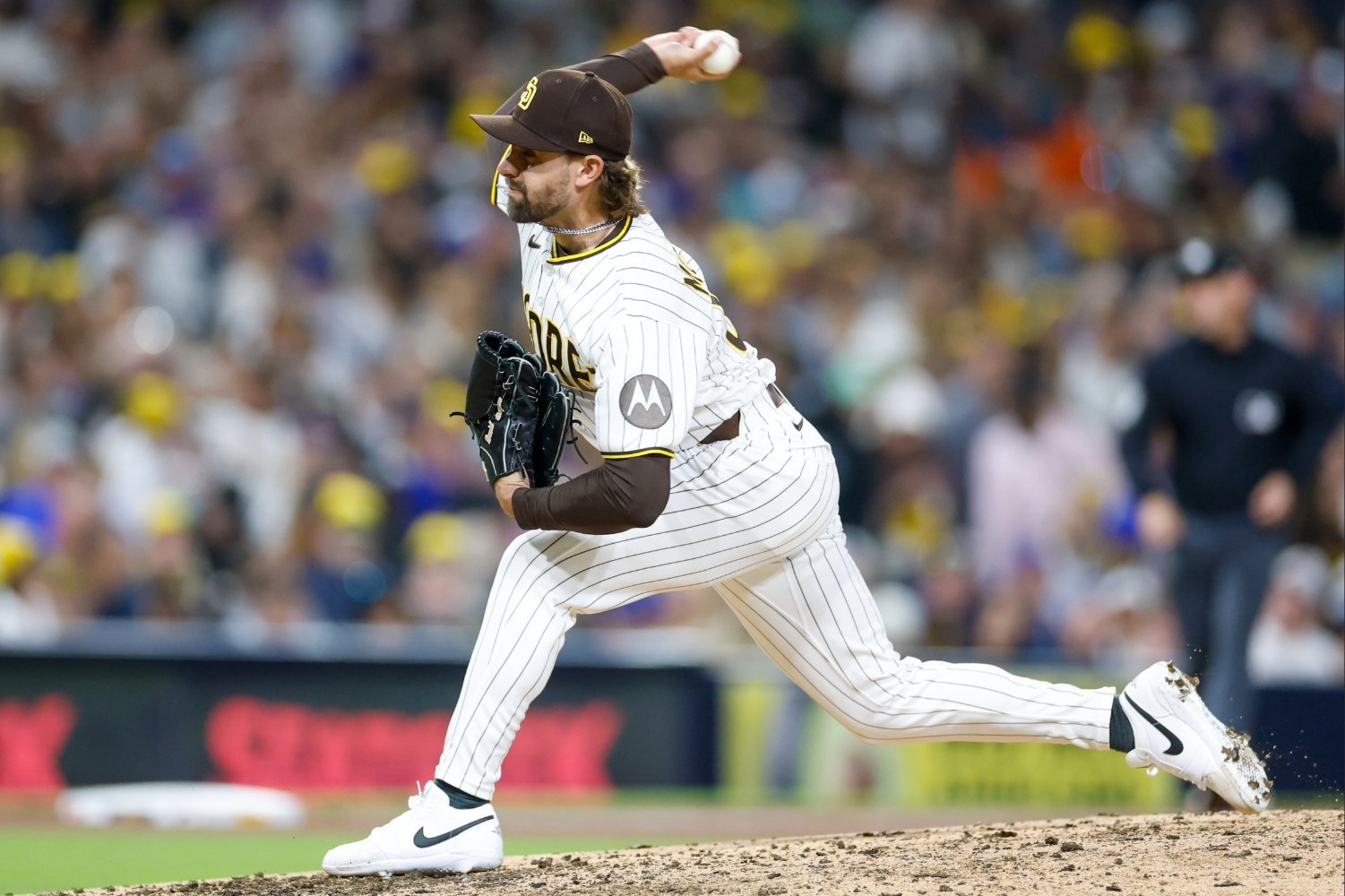 Coming into the 2026 season, there was reason to believe that David Morgan was going to be a key part of an upper-tier San Diego Padres bullpen. He was fresh off a 2025 campaign in which he posted a 2.66 ERA and a strikeout rate that rested a shade over 25 percent. His start to the year had such a trajectory looking very much in play, too (however short-lived it might have been). Through April 12, Morgan made seven appearances for the Padres that included 10.1 innings of work. In that sample, he didn't allow an earned run, got the ball on the ground an obscene 68.2 percent of the time, and had the bullpen's lowest hard-hit rate against at 16.7 percent. There were some warning signs, though, in the form of a strikeout rate that sat over 16 percent and a strand rate that read over 92 percent. By April 17, those problems had caught up with him. Between April 17-28, Morgan made four appearances. He allowed a pair of earned runs in each of the first two, four in the third, and another in the fourth. From there, it was off to El Paso for a month before he came back up for seven appearances in June, at which point knee inflammation landed him on the shelf. Upon his activation last week, the team sent him back to El Paso. How long he could reside in Texas, however, is certainly a matter worth considering. The following is Morgan's percentile distribution from his 15.2 innings in Triple-A this season: To no one's surprise, Morgan has been quite good throughout his time at Triple-A. While he's had to work around some quality contact allowed, the right-hander otherwise turned in very strong work, with a distribution that looks quite similar to what he's posted in roughly 22 big-league innings in 2026: Morgan may not have enough innings to qualify for the actual percentiles, but the visual here is clear enough to indicate that he did just about everything well between his two stints at the top level this season. The groundball rate is a particularly enticing element of his game, alongside the ability to generate a fair bit of swing-and-miss. Even the walk rate could be dismissed rather easily given that 10 of his 13 total walks came in his first nine of 18 appearances thus far, and he had only walked two total over his seven appearances before heading to the injured list. These two images make it clear that his ERA at each level—5.74 in Triple-A & 4.50 with the Padres—are a byproduct of bad luck (a .411 BABIP between the two levels) rather than any fundamental flaw. The issue, then, is that there isn't necessarily room for Morgan. Which leads to a somewhat natural question of: should they make room for Morgan? It's not so much that the team needs David Morgan in their high-leverage mix. They've got Mason Miller at the end of games and Adrian Morejon directly in front of him. Each of Bradgley Rodríguez, Wandy Peralta, and Jeremiah Estrada have handled the late innings well, too. Yuki Matsui remains in the relief mix, with Jason Adam's return also on the horizon. That's a lot of mouths to feed for innings. What's important to consider though is the early strain that the team's deficiency in the rotation put on the bullpen. Miller is less than 14 innings shy of his career-high for relief innings at the top level and 11 games behind his personal record for total appearances. Morejon is roughly just eight frames shy despite 19 fewer games than the season in which he set his innings mark. Rodríguez has already blown away his total across his 55 innings of work. Estrada & Adam have had injury issues, while the general preference is to keep the likes of Matsui & Peralta away from leverage. The re-addition of Morgan to the mix could introduce an arm with upside that helps to take some of the strain off of the relief corps (alongside a rotation that has begun to stabilize since the trade deadline). Of course, then you get into the question of how one makes Morgan fit into the group considering the current roster construction. While the Padres have finally rounded out a starting five without the need for a "chaos" plan, Walker Buehler & Randy Vásquez are still likely only giving you five or six innings in a given start (at most). Does that type of situation make someone like Griffin Canning or Kyle Hart more of a necessity than they might otherwise be considered? And then you get into the imminent return of Joe Musgrove, which was already set to complicate the roster picture by pushing (likely) one of Buehler or Vásquez into at least part-time relief. It's possible that such a situation makes the (re)addition of Morgan a bit more difficult. He's not necessarily an arm that helps you in the volume department, which has been a key role for the Padres this year. Perhaps Musgrove's arrival could actually help that case, with one of the current starters headed to relief as a much more stable presence than either of Canning or Hart, leading to both finding their way out upon the former's return. It's also possible that the team waits until September and the expansion of rosters. Regardless of the logistics required or how the team ultimately decides to go about it, it's clear that there is a benefit to David Morgan being a part of this group in as expedient a fashion as possible. Despite the early blip of bad luck that sunk his numbers a bit and the injury that put him out of the picture entirely, he can work in the middle innings or in leverage with that combination of decent swing-and-miss stuff and upper-tier penchant for groundballs. Given all that, we know we'll see Morgan soon. It's just a question of how and when. View the full article
 -
How to Get the Most Out of Your Aaron Civale
DiamondCentric posted an article in North Side Baseball
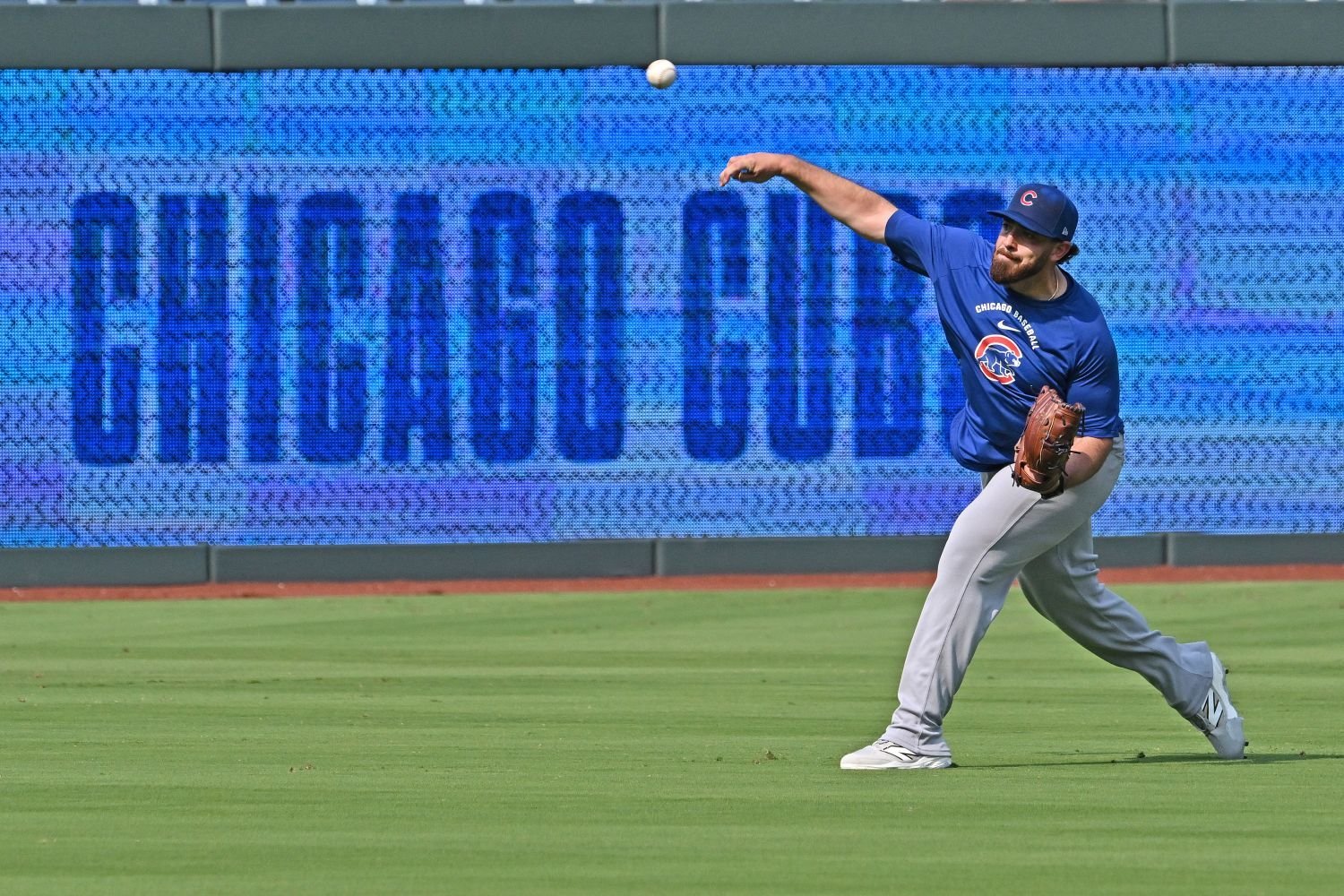 What are the Cubs doing differently—and what had they already done in 2025—that allows Aaron Civale’s best weapons to work again? The answer lies in two things the Cubs have done differently than the Athletics: how and when to use him, and which pitches to put at the center of his repertoire. In his 12 relief appearances with the Cubs over the last two seasons, Civale has posted 0.5 WAR with a 2.28 ERA. In that small sample, he has produced a surprising 14.00 strikeout-to-walk ratio, nearly five times higher than his 3.23 career mark. It’s not hard to understand how the Cubs are getting the best version of Civale again. Much of that performance is only possible because of the role they have given him. With a lower workload, his arsenal tends to be less exposed, and Civale has been able to match up better against certain opponents. Civale’s profile in both roles this season allows us to analyze the time he spent as a starter with the Athletics and his return to the Cubs’ bullpen. TTO TBF xERA xFIP SqUpCon% BlastCon% HardHit% wOBA K-BB% EV 1st Through Order as SP 135 5.76 4.59 37.9% 18.0% 42.3% .389 13.3% 90.0 1st Through Order as RP 59 2.50 3.48 33.3% 13.0% 31.7% .263 25.4% 85.9 2nd Through Order as SP 135 4.97 5.04 40.7% 19.2% 47.2% .393 9.6% 90.9 2nd Through Order as RP 17 8.00 5.24 47.6% 33.3% 53.8% .566 0.0% 92.2 3rd Through Order as SP 57 4.63 6.27 38.4% 20.5% 47.8% .346 1.8% 90.2 Civale’s best version is pretty clear. It only appears when he faces opponents for the first time as a reliever, not only safe from batter familiarity but knowing he doesn't need to pace himself for a long outing. In those situations, he has an excellent xFIP, strikes out more batters, walks fewer, and is less vulnerable to hard contact. Hitters’ best swings are finding his pitches less often, which translates to a lower average exit velocity. What that report doesn’t show are the adjustments the Cubs have been working on with Civale in terms of his actual pitches. All of this has to do with Civale’s three biggest problems in his starts with the Athletics: hitters were destroying his fastball. His rate of allowed fly balls rose to dangerous levels, which created plenty of trouble, especially when he pitched in Sacramento. From all that came a .311/.371/.538 offensive line, with a .909 OPS and .391 wOBA, his worst numbers in a season against left-handed hitters. With the Athletics, Civale’s sinker and four-seam fastball were making up 24.8% of his repertoire and, contrary to the encouraging results he posted in 2025, hitters were feasting on those pitches. The difference is clear in the heat maps from the last two seasons. Civale’s opponents vs. sinkers and four-seam fastballs in 2025 Civale’s opponents vs. sinkers and four-seam fastballs in 2026 Without enough power to frequently generate swings and misses with his sinker and fastball mix, Civale became more exposed, especially when he tried to attack the corners. With the Athletics, his opponents' xSLG jumped from .443 in 2025 to .615 this season. His HardHit% shot up, too, from 40.8% to 61.1%. Since arriving in Chicago, Civale’s adjustments have been put into motion. He's drastically reduced his sinker usage from 19.2% to 6.6%, which is becoming the most important repertoire adjustment. He's distributed those 12.6 percentage points by giving more time to his cutter (4.1%), four-seam fastball (3.1%), slider (1.4%) and curveball (2.3%). After all, we can already see some encouraging results. Split Athletics Cubs Differences% O-Contact% 74.0% 62.5% 11.5% Z-Swing% 62.5% 73.0% 10.5% Contact% 82.5% 76.6% 5.9% SwStr% 8.0% 12.0% 4.0% O-Swing% 33.7% 36.7% 3.0% Z-Contact% 88.9% 87.0% 1.9% Hitters are taking many more swings, and Civale has been taking advantage, reducing contact against pitches outside the zone by 11.5%. The improvements in SwStr% and Z-Contact% are small in percentage terms, but they have been key to limiting contact by 5.9%. Civale has also slightly increased the velocity on all of his pitches, although that figure may be influenced by his new role with fewer pitches per outing. He has also recovered his ground-ball rate, bumping it from 27.0% to 40.0%. In his repertoire, the curveball and cutter remain Civale’s most reliable pitches. If we combine them into a single core, we can see the big differences compared with the rest of his arsenal. Cutter and curveball: .384 xSLG, 38.3 HardHit%, 25.7 Whiffs%, 21.3 K%, 2.3 Miss Distance (in). Sinker and four-seam fastball: .598 xSLG, 58.3 HardHit%, 13.2 Whiffs%, 15.4 K%, 1.1 Miss Distance (in). This strengthens the point we made about Civale’s adjustments in the distribution of his pitches, reducing his sinker usage by 12.6 percentage points. With the cutter and curveball having more presence in his arsenal, the greater probability of generating more swings and misses and making hitters less comfortable in the batter’s box is influencing Civale’s performance with the Cubs. Of course, Chicago is taking advantage of these more frequent appearances and lower workload from Civale, but a couple of inconsistent relief outings could change the outcome of his peripheral numbers. Now, regardless of that, the credit the Cubs deserve is undeniable for finding a way to make a pitcher who seemed finished rise again. Sometimes, the biggest changes aren’t just about redefining a pitcher’s strategy, but about finding the balance to get the best version of him. So far, that’s what the Cubs have done with Civale, and his tools are working again. View the full article
 -
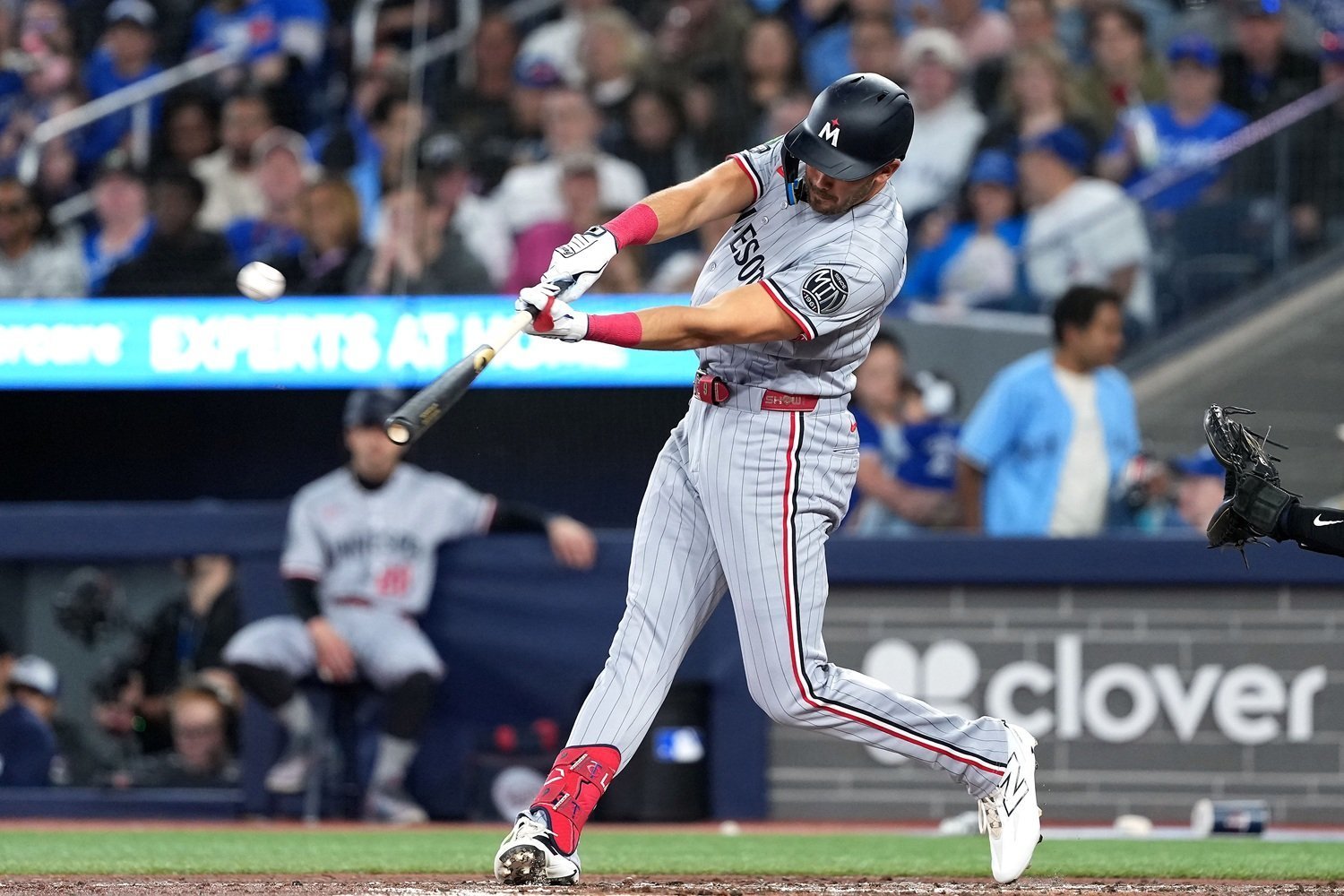 The Minnesota Twins are going to have difficult decisions to make this winter. Some of those decisions will involve players who have struggled. Others could involve players who have actually performed well enough to make their futures more complicated. That's the situation with two of their longest-tenured players: Trevor Larnach and Bailey Ober. The two players are having very different seasons. Larnach is putting together arguably the best offensive campaign of his career, while Ober has continued to struggle to find the form that once made him one of Minnesota's most dependable starters. Yet, their situations have one important thing in common. Both players are entering their final year of team control, and the Twins have to determine whether they still fit into the organization's plans for 2027. Insofar as he can control the situation, Larnach has earned another opportunity with the Twins. Through 101 games, he's hitting .272 with 19 doubles, 10 home runs, 42 RBIs and a .788 OPS. He's become one of the more reliable offensive pieces in Minnesota's lineup, helping them remain in the playoff picture. As has been widely reported, though, the team all but traded him at the deadline, in a move nixed by Astros ownership at the last moment. That makes his situation particularly interesting. Larnach is making $4.475 million this season in his second year of arbitration. FanGraphs has valued his 2026 production at roughly $16 million, illustrating just how much value the Twins have received from him relative to his salary. On the surface, moving on from a productive 28-year-old outfielder doesn't make much sense. The problem is that the Twins may not have an obvious place for his skill set. Minnesota controls Larnach for one more season, and his strong 2026 campaign should result in another raise through arbitration. The Twins could certainly keep him around, but that would mean committing additional money to a player who could become redundant as their top prospects matriculate. Medium-marked teams can't afford to pay market rate for all their production, and Larnach's progress toward free agency is eroding his marginal value. Emmanuel Rodriguez is out of options and will have to be on the Opening Day roster next season (although, of course, he could instead be traded this offseason). Walker Jenkins is nearing his MLB debut and should be a major part of Minnesota's plans moving forward. Alan Roden, acquired at last year's trade deadline, does at least some of what Larnach does, and he's younger and cheaper. That creates a legitimate roster crunch. The Twins don't necessarily need to decide that Larnach isn't good enough. They may instead have to decide whether there is enough playing time available for him, given their medium-term goals and plans. It's been a much less successful campaign for Ober. He entered the season hoping to rebound from a disappointing 2025, and there have been some signs of improvement. His 4.64 ERA and 4.78 FIP (before his start Monday night against Atlanta) are both better than the 5.10 ERA and 4.90 FIP he posted last season. But the overall numbers still aren't where Minnesota needs them to be. Ober has a 91 ERA+, a 16.1% strikeout rate and a 6.0% walk rate. More concerning is the direction his season has taken. Since throwing a complete-game shutout in May and before a short but solid outing Monday, Ober had made nine starts with an ERA approaching 6.00. His velocity has also become a major concern. Ober's average four-seam fastball velocity dropped from 91.7 mph in 2024 to 90.3 mph in 2025 and is just 88.1 mph this season. At those velocities, he has very little margin for error. Opposing hitters are taking advantage. His four-seam fastball has been slugged at a .542 clip this season. Two years ago, Ober generated a 22.2% whiff rate with that pitch. That number has fallen all the way to 14.8% this season. He's never been especially reliant on missing bats with his heater, but the less batters have to worry about that, the harder it is for him to induce whiffs or defensive swings with his secondary offerings. Ober is also heading toward his final year of team control. He's making $5.2 million this season, and FanGraphs has valued his production at $7.8 million. The Twins would probably still have to pay somewhere near that latter figure through arbitration next season, even if his struggles continue. That makes the decision more complicated than simply asking whether Ober can be useful. The Twins have to determine whether he's worth the salary and roster spot that comes with another season of control. This might ultimately be the biggest issue facing Ober. Minnesota already has several pitchers who should have strong claims to rotation spots next season. Taj Bradley, Joe Ryan, Connor Prielipp and Dean Kremer are currently in the rotation, and could remain there. Pablo López and Mick Abel are expected to return as well, assuming their recoveries progress as hoped. Then there's Kendry Rojas, who's likely to continue developing as a starter. David Festa and Zebby Matthews remain part of the equation, though health (Festa) and performance (Matthews) have forced them to the periphery of the picture. Suddenly, there are a lot of names competing for a limited number of spots. The Twins could decide they need another veteran starter. They could also decide that one of their younger pitchers is ready to take on a larger role. Either scenario makes it more difficult to justify holding onto a struggling Ober simply because he has been a longtime member of the organization. Two Different Players, One Difficult Decision Larnach and Ober represent two very different types of offseason decisions. With Larnach, the Twins could be moving on from a player who's finally putting everything together. His production is legitimate, his value is strong, and he’s in his prime. But Minnesota may have younger and more highly regarded left-handed outfielders who need opportunities. With Ober, the concern is almost the opposite. The Twins could be moving on because his performance no longer matches the expectations that come with his salary and roster spot. Neither decision would be easy. The Twins are approaching another important offseason, and the organization needs to figure out what its roster will look like beyond 2026. That means making difficult choices about players who have been around for a long time, even when those players have provided plenty of value. Of course, they don't have to commit themselves to anything now, but every game is another datum in the file, and the decision point has begun to loom large on the horizon. Will Larnach or Ober be on the 2027 Twins roster? Leave a comment and start the discussion. View the full article
 -
 Marek Houston has followed in Kaelen Culpepper's footsteps in 2026, producing at a high level at two different minor league affiliates. Now mashing at Double-A Wichita, Houston has put himself on the doorstep of St. Paul while leaping into industry top 100 prospect lists. When will we see him with the Twins? View the full article
 -
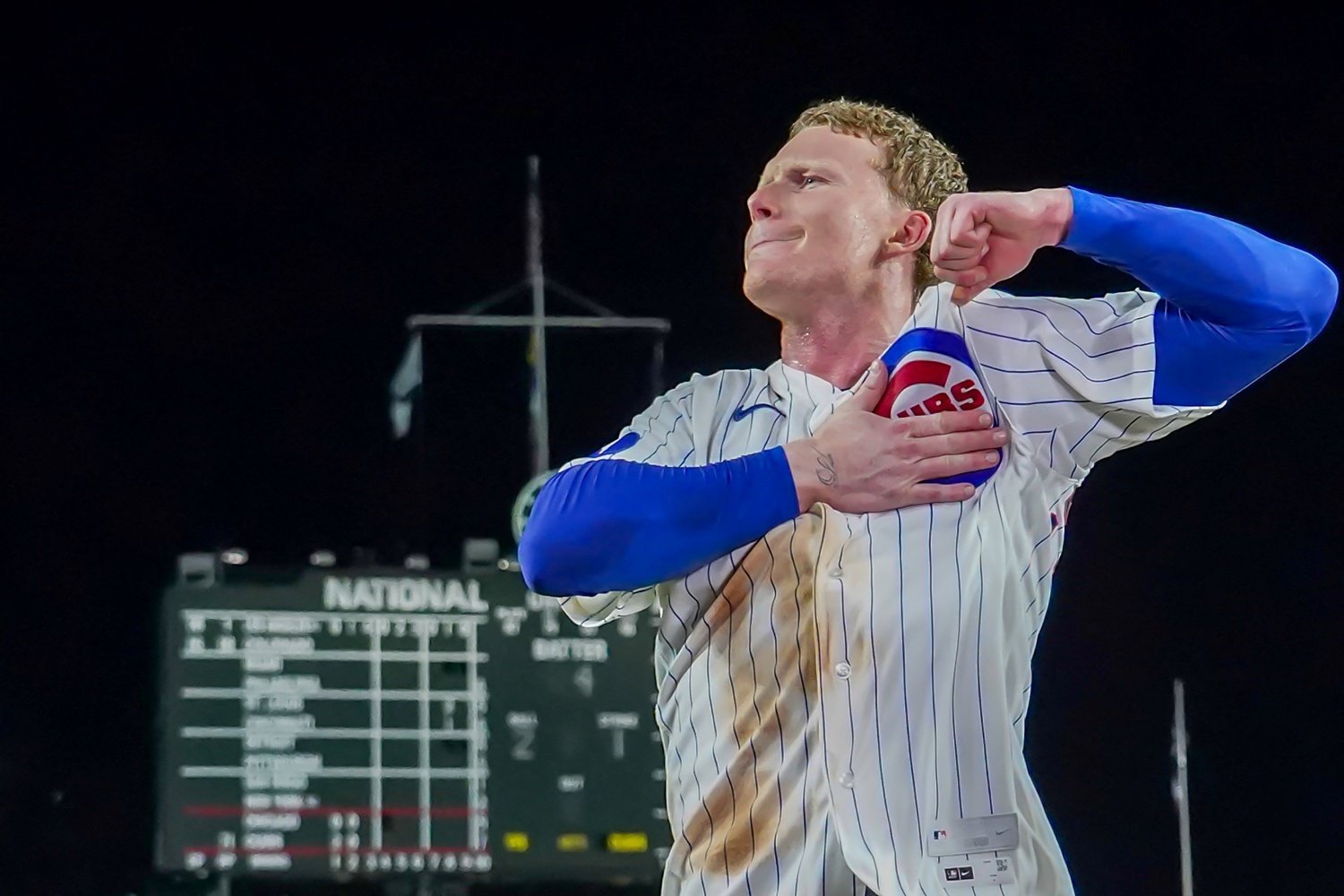 Chicagoans want to win, but they're not as ruthless about it as they think they are. Fans will ultimately line up behind strategies and styles that produce championships, but they respond to some of them much more readily than others. Winning is good. Winning with a seething intensity and a playing style that communicates your desperation to achieve that victory is Chicago sports nirvana. This is what made the Mike Ditka-led Bears so beloved, even after the team broke apart and some of the uglier truths about the culture of that team were exposed. It's what made Michael Jordan one of those rare global superstars just as fiercely beloved at home as abroad. The whole world fell in love with Jordan's smile and his acrobatics and the tongue hanging out as he soared through the air. Chicagoans fell in love with (arguably) the worst part of Jordan, but undeniably the defining part, too: his near-psychotic and unveiled hunger for wins. At their best, sports are art, and athletes communicate something true and emotional and important with their bodies. Jordan captured and acted out the insatiable desire to dominate that defined Chicago (and the United States as a whole) at the moment in time when he was at his best. People (and especially Chicagoans) responded to it. Not every great athlete brings that level of beautiful and apparent ferocity to their craft. When someone does, it elevates them, especially in the eyes of Chicago fans. When they don't, even if they play well, the connections between player and fan seem to burn less bright and flicker out sooner. Pete Crow-Armstrong is a spiritual descendant of Jordan. He plays an exhilarating brand of baseball, fueled by extraordinary talent and physical grace, but he also plays with an urgency that borders on frenzy. His reactions are authentic—he's not throwing his helmet after strikeouts or climbing walls on big opponent homers that sail 50 feet over his head just as eyewash—but they're exaggerated. He's like every other intense competitor in the game right now, only more so. For a long time, that held him back a bit. It showed up in his approach at the plate, making it virtually impossible for him to sustain a decent walk rate and often leading to mishit balls early in counts. It showed up in prolonged slumps born of him working too damn hard and looking like he was suffering perpetual heartburn when that work didn't translate into results. It showed up in him trying to do too much in the field on several plays, and in his inappropriate outburst toward a fan when the Cubs last played the White Sox. But man. When a player—a person—like that achieves just a tiny amount of added maturity and gains enough clarity to convert that intensity into consistency, there is nothing sport can offer to match it. Several times this season—in several big games—you've been able to see Crow-Armstrong furrow his brow and refuse to accept that his team might lose. He's learned the bounds of that mentality; he knows he can't will the team to victory every day. Because his inner fire won't let him accept any loss, though, he's also learned how best to give his team the chance to win even when they don't deserve to. There was that game against the A's in early June, when he was hit by a pitch to lead off the game, stole second, but was stranded on the bases. Later, he lost a ball in the sun and gave the visitors two runs, and suddenly, the Cubs were down 4-0. The very next half-inning, though, he hit a home run to open the scoring for the Cubs. In the bottom of the ninth, he capped a four-run rally with a two-out, walkoff single. Two days later, he hit two solo home runs—the second of them coming with two outs in the bottom of the ninth—to force extra innings in a 2-2 game, which the Cubs then won in the 10th. Earlier this month, he won a showdown with Shohei Ohtani by hitting two homers and a double in his first three plate appearances, one-upping Ohtani's own two-homer day. Days later, he had a single in the bottom of the ninth to set the stage for Alex Bregman's game-tying homer against the Blue Jays, then had another hit, advanced on a throw, stole third and scored on the ensuing error to walk off the game. Other games have offered more subtle moments of winning brilliance. Crow-Armstrong has learned that he can't always hit the home run to save the day. Sometimes, that's an option, and he expects to do it every time. When the opponents work around him or execute perfectly, though, he still finds ways to lengthen the game and give his team a better chance. Some of his walks over the last month, especially, have been of the kind the very best hitters have to accept at times, passing the baton and trusting a teammate. All of that churning progress toward greatness came to fruition Monday night, in (arguably) the most visible way yet. In a game the import of which was impossible to miss, Crow-Armstrong was in control throughout, and he refused to let the Cubs lose. They were playing their first full game without Dansby Swanson, and they were facing the crosstown rival White Sox, who lead the AL Central. August games don't get much bigger, especially given that the Cubs still hope to run down the Brewers in the NL Central. Crow-Armstrong emerged from a slump with a home run in Sunday's loss to the Cardinals, and (he would say later) had been putting in early batting-practice work to address an issue that plagued him early this season, too: hitting underneath the ball and pushing too many fly balls to left field. On the first pitch of the bottom of the first, he took a bite of the fruits of that labor with a home run down the right-field line. Seiya Suzuki went back-to-back with Crow-Armstrong, but then, the Cubs stopped scoring for a while. That was no fault of Crow-Armstrong, who singled in his second at-bat and stole second, but it's what happened. Meanwhile, the White Sox's formidable offense struck back, with two quick baserunners and a three-run homer in the top of the fourth. The Cubs responded by scratching out two runs in the fifth to take a 4-3 lead, but then disaster struck again in the top of the eighth. Ryan Zeferjahn issued a leadoff walk and then, with one out, surrendered a scoreboard-flipping home run to Andrew Benintendi, making it 5-4 White Sox. At that moment, it felt like the Cubs would lose, and it felt like a gut-punch loss that might send the team into a spiral, especially as they play without their sure-handed shortstop in the coming weeks. There was nothing Crow-Armstrong could do about that. The Sox scored five runs on four hits, and the two telling ones flew over the walls. He also couldn't will the team back to even in the bottom of the eighth, but the effort he made was exceptional. After two quick outs, Crow-Armstrong came up against White Sox reliever Trevor Richards and worked a 2-2 count. On a changeup off the outside edge, he flicked a gorgeous line-drive single to left-center—but, by getting out of the box well and using his speed, turned that single into a hustle double. He found something almost instantly on Jordan Hicks, who came in next for the Sox, and was relaying information to Suzuki from second base in the following at-bat, forcing the visitors to have a mound conference to clean things up. Suzuki struck out, though. Crow-Armstrong just couldn't seem to will his team to this particular win. Because he got that hit and lengthened that inning, though, the Sox had to have Hicks come back after sitting down for the top of the ninth. Two walks and a well-placed single allowed the Cubs to push across the tying tally. They left the bases loaded in that inning, and Crow-Armstrong in the on-deck circle—but that also meant he would lead off the bottom of the 10th. When Jacob Webb was able to strand the Manfred Man at second base in the top of that inning, the game felt over. Four pitches later, it was. TzA0cm9fWGw0TUFRPT1fQTFSVUFGTlFVZ3NBQ0FZR1ZnQUhCd0pTQUFNQlVnUUFVMWNNVVZJTkJ3VlVBRk5S.mp4 Crow-Armstrong can be a bit much. He can be vulgar and overbearing. He will accept looking petulant or foolish, at times, because he only really cares about winning and reserves the right to howl at the gods when he can't manufacture a win. Nonetheless, his craftsmanship and his quieter, more mature intensity have been apparent to everyone who's talked to him outside the diamond, ever since he came to the majors. He's learned to take some of the studiousness and precision that guide his pregame work into games, and to be a very specific kind of patient—enough so to earn opportunities to do great big things, but never so much so that even one such opportunity passes him by. He's found the sweet spot that Jordan found, too, where overweening tenacity can be lovable, because it feels like art—like a baring of one's soul that reflects that of the viewer and invites them to feel as deeply as the performer. It's become the best show in baseball, and Monday night was its best episode yet. View the full article
 -
One Shot At Glory: The Royals' One-Time All Stars, Part 3
DiamondCentric posted an article in Royals Keep
 Here it is, the final part of our series on the players who represented the Royals in the All-Star Game just once. As we look at the 2010s and 2020s, we’ll see the franchise’s return to glory. But you might be surprised how many players who were part of that are on this list. Part One: 1969 through 1989 Part Two: 1991 through 2009 Aaron Crow (2011) I think it’s pretty unusual for a rookie to make the All-Star team. For a rookie who is also a middle reliever? Very rare. Yet Crow did just that in his first season. The numbers were plenty good: a 2-1 record, eight holds, and a 1.40 ERA through the end of June. But the convoluted process of picking the team, with every team needing a representative, helped too. Left fielder Alex Gordon didn’t win the players’ vote for a reserve spot. None of the Royals’ starting pitchers were deserving. Closer Joakim Soria might have made a good choice on name recognition, but he struggled enough in the first half of the season that Crow was actually named as closer for about a week, although he didn’t have any save opportunities. So Crow was the pick by AL manager Ron Washington. “Leading up to the day, and knowing every team would get one, I thought for sure it would be Alex Gordon. He’s had a great year. He’s hitting the cover off the ball, and he’s playing great in left field. Hopefully, he gets in with the fan vote because he deserves it. But for me, it probably won’t sink in until I get there, but it’s definitely a surreal feeling right now. It’s something I’ve always dreamed of.” --Crow, quoted by Bob Dutton, The Kansas City Star, July 4, 2011 Gordon did not win the fan vote, so Crow was the Royals’ only representative. Unfortunately, he did not get in the game. Even more unfortunately, his career was cut short by Tommy John surgery after the 2014 season. Billy Butler (2012) Apart from Bo Jackson’s MVP effort in 1989, this might be the most famous entry on this list, at least for Royals fans. With the All-Star Game being held at Kauffman Stadium for the first time since 1973, Kansas City was primed to celebrate whichever of their players made the team. While Gordon again would have been a good choice, Butler turned out to be the only Royal on the team. With a .297/.365/.516 line through the end of June, he was a deserving pick. “It’s going to be fun. I’m so happy that it’s going to be at our ballpark. I know that fans are going to be real happy for me. They’ve always been great to me. It’s just an awesome time for me.”--Butler, quoted by Bob Dutton, The Kansas City Star, July 2, 2012 Of course, the real story turned out to be the Home Run Derby the night before the game. Yankees second baseman Robinson Cano, captain of the AL side in the derby, said before the rosters were announced that he would like to have a Royal on his team. Butler was not necessarily a home run hitter, but in 2012 he was in the middle of a career-high 29-homer season. And it’s the Home Run Derby; sure, you want to win, but it’s an entertainment event as part of an entertainment event. Cano did not pick Butler. For 10 or so minutes, as Cano took his turn in the derby, the boos rained down. Possibly the loudest boos in Kauffman Stadium history. They were only interrupted by raucous cheers when Cano’s hits fell short of the fence. Cano got skunked, the only contestant not to hit at least one homer. Butler downplayed any animosity towards Cano, although he was grateful for the fans’ support. As for the game, Butler grounded out against Cole Hamels in the seventh and struck out in the ninth against Joel Hanrahan. It hardly mattered, as the NL had built up an 8-0 lead before Butler’s first at-bat. This would be Butler’s only All-Star appearance, so, in my mind, the fans booing Cano had a point. Lorenzo Cain (2015) The criminally underrated Cain easily could have been an All-Star in 2014, when he was hitting .315/.351/.440 at the end of June, with his usual excellent defense in center field. But he was passed over. In 2015, Royals fans made sure that he’d be on the team. Kansas City partisans caused quite a stir in the weeks leading up to the game, voting incessantly for the boys in blue; at one point, eight Royals were leading the vote at their position. Eventually, four Royals were voted in as starters, with Cain among them. “If I would have made the All-Star team last year, I probably would have been a little overwhelmed. But just going through that postseason experience, it definitely helped me out tremendously. I’m just enjoying this moment right now. I feel like I’m right where I need to be.”--Cain, quoted by Andy McCullough, The Kansas City Star, July 14, 2015 Batting fifth and playing right field instead of his usual spot, Cain popped up in the first against Zack Greinke, who was traded by Kansas City to Milwaukee in exchange for Cain and the next player on this list. But Cain would collect a single against Madison Bumgarner in the fourth (a bit of revenge for the previous year’s World Series) and an RBI double against Clayton Kershaw in the fifth. That’s a pretty good night. Cain went back to Milwaukee as a free agent before the 2018 season, where he made his second All-Star team that year and finally won his elusive Gold Glove in 2019. Alcides Escobar (2015) Escobar was probably the biggest beneficiary of Kansas City fans’ voting spree for the 2015 All-Star Game. The other three Royals who made the lineup (Cain, Salvador Perez, and Alex Gordon, who ended up missing the game with a groin injury) were, you know, stars. Escobar might seem like a poor choice, but really, there were no standout shortstops in the AL that year, in the post-Derek Jeter void. And he was hitting .281/.316/.367 at the end of June, which isn’t terrible except for the on-base percentage. Also, he was playing great defense; Escobar would win his only Gold Glove at the end of the season. So it was a defensible selection by the fans. It was also exciting for the player. “I’m thinking about the All-Star Game all the time; that’s my dream. Right now I got the opportunity, and right now I feel so happy…I can’t explain my emotions right now.”--Escobar, quoted by Blair Kerkoff, The Kansas City Star, July 6, 2015 While AL manager Ned Yost normally penciled Escobar in at the top of the Royals’ lineup, for this game, he had him hit ninth. So I guess Escobar exceeded expectations by getting one hit, a single off Kershaw, in his two at-bats. But those were his only two at-bats in any All-Star Game, although he played into the 2022 season. Eric Hosmer (2016) Although Hosmer had a terrific year in 2015, once he didn’t get in the game through the fan voting, he was left off the team; likely, all the other Royals who made the team (pitchers Wade Davis and Kelvin Herrera joined the ones mentioned above) made it hard to justify a spot for their first baseman. But when he was hitting .305/.367/.490 through June, he earned a starting spot in 2016. Yost told his first baseman the year before that he would make the team, and had already decided he would push for it in 2016. But it wasn’t necessary, as Hosmer beat Miguel Cabrera by about 220,000 votes. “It’s just a tremendous honor to be recognized by the fans, not only in Kansas City, but throughout the world. And just looking at the roster and going over all the players, it’s an honor to share the same locker room as them and be honored as an All-Star.”--Hosmer, quoted by Rustin Dodd, The Kansas City Star, July 6, 2016 Hosmer made his presence felt in San Diego. Facing his old teammate Johnny Cueto, Hosmer homered with one out in the second to tie the game (Perez would hit a two-run shot later in the inning to give the AL the lead for good). In the third, he collected an RBI single against Jose Fernandez. That all earned him the MVP award, joining Bo Jackson as the only Royals to win the award to date. Hosmer was also the first Royal to hit a home run in the game since Bo did it in 1989. And just like Bo, Hosmer would only appear in one All-Star Game in his career. Jason Vargas (2017) Vargas was the subject of some laughs among Royals fans when the team said they had “a major baseball announcement” after the 2013 season. The announcement turned out to be the signing of a pitcher who went 9-8 with a 4.02 ERA for the Angels the previous season. But when Vargas helped the Royals win the 2014 AL pennant, the signing seemed pretty good. Unfortunately, Vargas suffered a torn UCL in 2015, missing half of that season and most of 2016 after Tommy John surgery. So it was a cool story when he began the 2017 season hot, going 6-3 with a 2.39 ERA through May. Vargas then pitched his way to an All-Star Game appearance with six wins in June, dropping his ERA to 2.22 in the process. “I’ve never been invited before, so I am definitely looking forward to heading out to Miami and taking it all in. To be acknowledged and recognized with the best players in the game is a huge honor.”--Vargas, quoted by Alec McChesney, The Kansas City Star, July 3, 2017 With the lowest ERA in the AL and more wins than anyone in baseball except Clayton Kershaw, Vargas was considered a possibility for the starting nod. But Chris Sale ended up getting that assignment. Vargas came into the game in the fourth inning. Nolan Arenado led off with a single but decided to tag up on a fly ball to center field, and Mookie Betts made a strong throw to second for the double play. Marcell Ozuna grounded out, and that was it. Vargas threw only 10 pitches. Vargas did lead the majors in wins that season with 18, but would only pitch two more seasons. This was his only All-Star appearance, but he can always say he has an ERA of 0.00 in the competition. Andrew Benintendi (2022) The Royals made a pretty good deal when they acquired Benintendi from Boston before the 2021 season, basically giving up nothing and getting a Gold Glove winner in 2021 and an All-Star in 2022. Kansas City was pretty bad in both of those seasons but Benintendi was a good choice for the team, as he was hitting .305/.370/.383 through the end of June, along with the strong defense you’d expect from a Gold Glove winner. It was his first time as an All-Star, although he played in the Futures Game in 2016. “It’s a game you want to play in, a game you grew up watching. So to be a part of it will be fun. I’m definitely going to take it all in and just try to enjoy it as much as possible.”--Benintendi, quoted by Lynn Worthy, The Kansas City Star, July 12, 2022 Benintendi entered the game in the fourth, replacing Giancarlo Stanton just after he hit the game-tying two-run home run that would get him the MVP award. Benintendi grounded out and struck out in his two at-bats. Just over a week later, the Royals traded the pending free agent to the Yankees. He signed with the White Sox after the season. His first two seasons on the South Side were kind of rough, but he’s had a couple of decent ones since then. Still, this remains his only All-Star appearance to date. Seth Lugo, Cole Ragans (2024) Kris Bubic, Carlos Estevez, Maikel Garcia (2025) Michael Wacha (2026) I lumped all these players together since, with the exception of Bubic, they are still Royals, for now anyway. Plus, these ought to be fresh enough in our memories. Will any of them work their way off this list? Garcia seems like a decent bet if he can stay healthy, but the rest might be staying on here. View the full article
 -
 The minor-league season is entering its final stretch, which means there is little time left for prospects to make an impression. For some players, that can create pressure. For others, it provides an opportunity to finish the season with a flourish. This week’s Twins Prospect Hot Sheet features three players doing exactly that. Kendry Rojas is continuing to show why Minnesota believes he can be a starting pitcher, while Luis Fragoza has emerged as one of the most productive hitters in the Florida State League. Meanwhile, Merphy Hernandez is turning his speed into a historic season for the Fort Myers Mighty Mussels. Each prospect is taking a different path, but all three are giving the organization plenty to be excited about. LHP Kendry Rojas — Saint Paul Saints How He Got Here: Rojas consistently moved through the Blue Jays system after signing in 2021. He came to the Twins in last season’s trade for Louie Varland, because Minnesota believed in his upside as a starting pitcher. The transition was not especially smooth after the trade. Rojas struggled in his first taste of Triple-A, but he was only 22 years old and facing some of the best hitters of his professional career. The second time around has been a different story. Rojas has settled in at Triple-A this season, posting a 3.27 ERA while also helping the Twins in a multi-inning role. Hitting the Hot Button: For the second time in a week, Rojas got a start against the Iowa Cubs. He danced around small jams through the first three innings, allowing the leadoff hitter to reach on a single in each inning. Rojas stranded two runners in the first and one in each of the next two innings before retiring the side in order in the fourth. He finished with four scoreless innings, allowing four hits while walking one and striking out five. He needed only 52 pitches to complete those four innings, throwing 40 for strikes. Even more encouraging, Rojas generated 13 swings and misses on 34 swings. Since being demoted at the beginning of August, Rojas has started three games and pitched 11 innings while allowing just one earned run. He's struck out 11 while walking only two, holding opposing hitters to a .180/.220/.256 slash line. That's the kind of stretch that can change the conversation surrounding a young pitcher. Rojas is still just 23 years old, and his ability to handle Triple-A hitters while maintaining starting-pitcher upside makes him an intriguing piece of Minnesota’s pitching puzzle. INF/OF Luis Fragoza — Fort Myers Mighty Mussels How He Got Here: Fragoza received just $77,500 to sign with the Twins in January 2024. A solid debut in the Dominican Summer League at age 17 (where he posted a .784 OPS) brought him Stateside for the Florida Complex League in 2025. That season was more of a struggle. Fragoza posted a .646 OPS while trying to find consistency at the plate. He returned to the FCL in 2026 but quickly earned a promotion to full-season Loa-A Fort Myers. Once he arrived with the Mighty Mussels, Fragoza quickly established himself as one of the most dangerous hitters in the lineup. Hitting the Hot Button: Fragoza was named the Florida State League Player of the Week for the week of August 10, and it's easy to understand why. He led the league with a ridiculous .667/.800/1.583 slash line while producing a 2.383 OPS across five games. He ranked second in the league in home runs (3), walks (7), extra-base hits (5), runs (9), stolen bases (7), and total bases (19) during the week. Nor was that a mere hot five-game stretch. Fragoza has been one of Fort Myers's best hitters throughout the season. Across 59 games, he leads the Mighty Mussels in batting average (.322), slugging percentage (.607), OPS (1.005), and RBIs (51). Fragoza has gone from an intriguing international signing to one of the more productive young hitters in the Twins' lower levels. There's still plenty of development ahead, but his offensive performance this season has made him much harder to overlook. OF Merphy Hernandez — Fort Myers Mighty Mussels How He Got Here: Hernandez was also part of the Twins' 2024 international signing class. He played 49 games in the Dominican Summer League that year, hitting .276/.390/.417 with 36 stolen bases and 12 extra-base hits. His first full taste of Stateside baseball did not go nearly as smoothly. Hernandez played just 16 games in 2025 and struggled at the plate, posting a .589 OPS. Minnesota sent him back to the FCL to begin the 2026 season. That decision appears to have paid off. Hernandez posted a .934 OPS in 10 games before earning a promotion to Low-A Fort Myers. Since then, the speed has become one of the defining aspects of his game. Hitting the Hot Button: Hernandez stole his 40th base of the season earlier this week. That may sound like just another stolen base for one of the organization's fastest players, but it put Hernandez in some pretty impressive company. He became the first Mighty Mussel-era player, dating back to 2020, to reach 40 steals in a season. Only four players in franchise history (since 1992) had previously reached that mark. The most recent was Ben Revere, who stole 45 bases in 2009. Hernandez isn't just collecting stolen bases, either. He's been swinging a hot bat lately, hitting .368/.429/.500 over his last 11 games with three extra-base hits and 14 stolen bases. The combination of speed and improved offensive production makes Hernandez an intriguing player to watch as he continues moving through the system. After struggling during his first Stateside opportunity, he's shown significant growth this season. Rojas, Fragoza, and Hernandez are at very different points in their development, but that's part of what makes this trio so interesting. Rojas is showing that his first Triple-A struggles may have been more about experience than ability. Fragoza has developed into one of the Florida State League's most productive hitters. Hernandez is combining an improving offensive game with game-changing speed and has already put his name in the Fort Myers record book. None of these players is guaranteed to become a major-league contributor. But each is doing something right now that deserves attention. As the minor-league season winds down, these are exactly the types of performances worth watching. What stands out about this trio? Leave a comment and start the discussion. View the full article
 -
 Following the MLB Draft and trade deadline, the Boston Red Sox's farm system looks completely different. While a new draft class has joined the organization, the front office also shipped out quite a few high-ranking prospects in their pursuit of Adley Rutschman. With things having settled down, a new top-20 has been voted upon by both contributors and readers of the site. This new list looks very different from where things were prior to the deadline. Let’s jump into it below. Boston Red Sox Top-20 Prospect List (August 2026) Franklin Arias SS AAA (previously #1) Justin Gonzales OF/1B A+ (previously #5) Franklin Primera C A- (previously #14) Henry Godbout 2B/SS AA (previously #6) Juan Valera RHP A+ (previously #9) Sadbiel Delzine RHP A- (previously #12) Yoeilin Cespedes 2B/SS AA (previously #10) John Holobetz RHP AAA (previously #20) Marcus Phillips RHP A+ (previously #8) Jake Schaffner SS A+ (previously #16) Dorian Soto SS/2B FCL (previously #11) Johanfran Garcia C AA (previously #15) Blake Wehunt RHP AAA (previously unranked) Owen Hull OF A+ (previously #19) Mikey Romero 2B/3B AAA (previously #13) Hayden Mullins LHP AA (previously unranked) Jack Winnay 3B/1B AA (previously unranked) Gerardo Rodriguez C A+ (previously unranked) Yophery Rodriguez OF A+ (previously #17) Luke Heyman C A+ (previously unranked) The list is vastly different from when the month of August began. First off, top prospects Anthony Eyanson, Kyson Witherspoon, Enddy Azocar and Tyler Uberstine are off the list due to their trades to the Baltimore Orioles and Atlanta Braves, respectively. Along with them, Jake Bennett graduated from prospect status and was removed from the list. To fill their vacated spots, pitchers Blake Wehunt and Hayden Mullins joined the ranks at Nos. 13 and 16, respectively. The latter rejoins the list after previously falling out of the top 20 altogether. Catchers Gerardo Rodriguez and Luke Heyman make their debuts on the top 20 at ranks 18 and 20, respectively, while infielder Jack Winnay also makes his debut at rank 17. The biggest ranked improvements belonged to John Holobetz and Franklin Primera as they jumped 12 and 11 spots, respectively. Sadbiel Delzine also saw a significant rise as he went from the 12th-ranked prospect all the way up to sixth. Along with them, Justin Gonzales, Henry Godbout, Juan Valera and Jake Schaffner were a few players that saw their rank improve, the latter going from 16th all the way to 10th. The biggest decrease in ranks belonged to Mikey Romero and Yophery Rodriguez, both of whom dropped two spots respectively. Romero went from being the 13th-ranked prospect down to 15th as his tough season continues. Despite a strong month of June, Romero suffered a rough July. In a small sample size in August, though, he’s looking better, with the highlight being the first-ever six-hit game in Worcester history. For Rodriguez, after a hot start, he fell off with tough months of May and June before a resurgence was seen in July. The outfielder’s biggest area to work on is his consistency as he will go on hot stretches only to fall into longer cold streaks. The rankings this time around are dominated differently than in the past. Whereas pitching was typically near the top of the rankings (headlined by Eyanson and Witherspoon), this time around the top four spots belong to position players and of the top 10, six of them are hitters. Overall, the top-20 list contains certainly favors that type; 14 of the players present are of the position-playing variety. More specifically, middle infield makes up six of those 14, while four catchers are also present on the list. It shows the organization’s focus on developing catchers after not having much minor-league depth at the position last season. One area that the list has remained the same is that Greenville continues to dominate. The High-A organization has eight representatives on the list. Portland is second with five representatives including a couple that were recently promoted from Greenville in Godbout and Cespedes. Worcester has four representatives, while Salem follows behind them with two and the FCL has just one player on the list. Let's wrap things up with our newest additions. Jake Schaffner, SS (High-A Greenville): No. 10 Schaffner is an infielder who played shortstop for North Carolina in 2026 after spending his first two collegiate seasons at NDSU. He's carried over an impressively similar level of production in 2026 against much stiffer opposition. Schaffner hits from the left side. It's an offensive profile predicated on exceptional bat-to-ball skills. His overall contact rate in 2026 sits at ~88%, with a 94% rate in zone. There's some pop in the profile, with six home runs and 42 extra-base hits. All of this is backed up by a strong approach, as Schaffner doesn't chase much and has walked over 13% of the time in 2026. He is a good up-the-middle defender. There's an average arm in there, and while he may move off shortstop eventually, he should be able to stick on the dirt, most likely at second base. Throw in above-average speed and savvy as a baserunner (25 stolen bases in 2026), and there's a promising infield utility profile. Blake Wehunt, RHP (Triple-A Worcester): No. 13 Wehunt has increased his prospect stock this season after showing that his struggles from last season were mostly injury related. Having made just 17 appearances in 2025, Wehunt put up numbers that were inflated from a few bad appearances, namely a 5.68 ERA in just 63 1/3 innings. So far in 2026, though, it’s been a different story. Wehunt has shown an ability to generate strikeouts thanks in part to a four-pitch arsenal made up of a fastball, cutter, sweeper and splitter. Through 17 starts this season, he’s tossed 68 2/3 innings while striking out 82 batters. Pitching from the first base side of the rubber, he throws from a three-quarters arm slot. There is some effort in his delivery but despite that, he seems to repeat it more often than not. He also has plus extension, giving his high-90s fastball a little extra life at the top of the zone. Owen Hull, OF (High-A Greenville): No. 14 Owen Hull is a sharp riser on the college side of the draft after an impressive postseason run as part of North Carolina’s CWS squad. After spending his first two collegiate seasons at George Mason, the 6’4 outfielder made the transition to the ACC look seamless, and set himself up as a day-one pick. Hull hits from the left side, and has a bit of an unorthodox looking swing. There is some swing and miss in the profile, but the damage on contact is impressive. He controls his at-bats well and takes plenty of walks, rarely expanding the zone in collegiate ball. He has a chance to stick in center field with plus speed. It’s a fringe-average arm, but the range and glove will play in center, at least during the onset of his professional career. Hull hit .393/.500/.615 with nine home runs (38 extra-base hits), a 14.8 BB%, a 15.1 K%, and a 146 wRC+ in 2026. Hayden Mullins, LHP (Double-A Portland): No. 16 Entering the Rule 5 Draft, there was a lot of concern that Mullins could be selected after his 2025 season, especially as many felt that his stuff could play well out of the bullpen a role. Instead, he was not selected and returned to the Boston organization for the 2026 season, and he’s looked rather good so far including being part of a no-hitter on April 26. Through 19 appearances (including a Triple-A debut), Mullins has tossed 73 innings and struck out 107 batters. Unfortunately, his control has been an issue as he’s walked 48. Mullins throws from a three-quarters slot and starts on the third base side of the rubber. His motion tends to involve a high leg kick and rotates his hips. He’s also viewed as having good extension, which we all know Craig Breslow loves. He has a five-pitch arsenal that is made up of a four-seam fastball, slider, sweeper, changeup and cutter. Jack Winnay, 3B/1B (Double-A Portland): No. 17 The team’s 13th-round pick in 2025, Winnay was viewed as a corner infielder with power after hitting 35 home runs for Wake Forest in his last two years. A native of Newton, Massachusetts, it seemed to make a nice story. However, he’s broken out in 2026 faster than people may have expected. After 56 games with Greenville where he hit .255/.434/.457 and had more walks than strikeouts (53 to 51), he was promoted to Portland. Overall on the season, he’s hitting .259/.408/.439 with 12 doubles, 15 home runs, 42 RBIs and 70 walks to 83 strikeouts in 93 games. Winnay as a hitter starts with his hands high and likes to extend his arms and pull the ball, especially in the air. The style of hitting he does fits with the model that Craig Breslow wants. So far, he’s showcased solid contact skills and can recognize pitches including secondary offerings. There is some concern when it comes to velocity. His power is where most of his value comes from thanks to above-average raw power to the pull side. Since joining the organization, he’s put it on display in Greenville and then showed no decline when he got promoted to Portland When it comes to defense, he mainly played first base and outfield in college but the Red Sox have been using him at third base since the start of the season with some occasional time at the cold corner. His average arm strength allows him to move back and forth between the corner infield positions. Gerardo Rodriguez, C (High-A Greenville): No. 18 Signed as an international free agent in 2023, Rodriguez played well enough as a 17-year-old in the Dominican Summer League to be brought stateside as an 18-year-old. That season, he mainly played in the Florida Complex League before a late season promotion to end the year with Salem. The 2025 campaign was more of the same, as he split time with Salem and the FCL where he hit a combined .285/.344/.421 with 20 doubles, one triple, three home runs and 43 RBIs in 69 games. The 2026 season has been his breakout year, as he’s played a career high 76 games for High-A Greenville and has hit .254/.332/.363 with 10 doubles, one triple, seven home runs and 35 RBIs while mainly playing catcher and some first base. Offensively he has solid bat speed that goes with a shorter swing path that has allowed for good contact ability. Currently, he’s more of a gap hitter but has shown some power for someone of his size. Defense is Rodriguez’s carrying tool. as he’s shown to be a capable receiver and is good at blocking pitches. He moves well behind the plate and with a strong arm has been able to control the run game thanks to a quick release and great pop times. Luke Heyman, C (High-A Greenville): No. 20 Acquired in an offseason trade with the Seattle Mariners, Heyman is an intriguing prospect due to his bat alone. So far, he’s split the season between Salem and Greenville, appearing in 88 games and hitting .228/.357/.431 with 13 doubles, one triple, 16 home runs and 54 RBIs. He’s also shown an ability to walk, with 61 of them on the season. The real question for him is whether he will remain at catcher or be moved to a different position down the road. Offensively, he has above-average bat speed and when he swings he gets his whole body into it. He improved as a hitter across his college career and continued that improvement into professional ball. Most of his value comes from his power, which will be key if he winds up at first base down the road. View the full article
 -
Luis Torrens Has Morphed Into Baseball's Best Backup Catcher
DiamondCentric posted an article in Grand Central Mets
 The New York Mets will have many questions to answer after the disaster of this season, but they will also have important decisions to make. One of them will be deciding what they will do with backup catcher Luis Torrens, who appeared in some rumors of a possible trade during the trade deadline. Since arriving in New York in 2024, Torrens has fulfilled his role, especially on defense. This year, he ranks fourth in the league with +5 Catcher Framing Runs. When Torrens is behind the plate, Mets pitchers have posted their best ERA (3.63), and their opponents have produced a .234/.313/.374 slash line, the best mark of all catchers on the roster. Over the years, his offensive profile has been very different, from the player who hit 13 home runs and posted a 101 wRC+ with the Seattle Mariners in 2021 to the catcher with a .629 OPS a year ago. It is also worth keeping in mind that he has not been able to get enough playing time as a starter and has not played more than 100 games since that 2021 season. For any player, having to make continuous adjustments while taking on a backup role is a major challenge. However, this season, Torrens has made an interesting improvement in every aspect. By nature, his swing continues to stand out against fastballs, and he has an interesting profile against left-handed pitchers. Handedness wRC+ Hard% IdealAngle% xSLG Barrel% v L 120 32.0% 56.3% .346 10.7% v R 78 32.1% 49.0% .348 6.8% The big difference is his 120 wRC+ against left-handers, but overall, he has a good balance against both profiles. After an inconsistent start at the plate during the first half of the season, Torrens has made a significant turnaround after the All-Star Game. His wRC+ has risen from 69 to 180 in the second half of the season, and he has posted a 1.20 BB/K rate for the first time in his career. The only Mets hitter with more fWAR than Torrens (0.8) during this stretch has been Francisco Lindor (1.2). Even more interesting in this offensive resurgence is seeing how Torrens is expanding the impact of his swing across the strike zone. Although his O-Swing% rate (31.2) is the highest since 2023 (38.6), when pitchers throw him pitches inside the strike zone, he is producing the highest contact rate of his career (87.9). The most revealing adjustment in this new approach from Torrens appears when we look at how his swing is impacting six of the eight areas of the strike zone against fastballs. Let’s compare that sample with 2021, when Torrens hit 13 home runs with the Mariners. 2021 Torrens 2026 Torrens He recorded all of his home runs in the upper two-thirds of the zone. But this season, in what we could call an updated version, Torrens has more reach and fewer limitations within the strike zone. Combined with his defensive gains since arriving in New York, this is now the most valuable version of him we've ever seen—his 1.8 fWAR in 2026 has set a new career high. You never know what the Mets’ next move will be, but it seems reasonable that Francisco Álvarez (115 wRC+) and Torrens should be part of the future plans. As a backup, Torrens has actually outproduced the 1.7 fWAR Álvarez has contributed this year, offsetting his offensive flaws with elite defense that makes him one of the league's best backup catchers. View the full article
 -
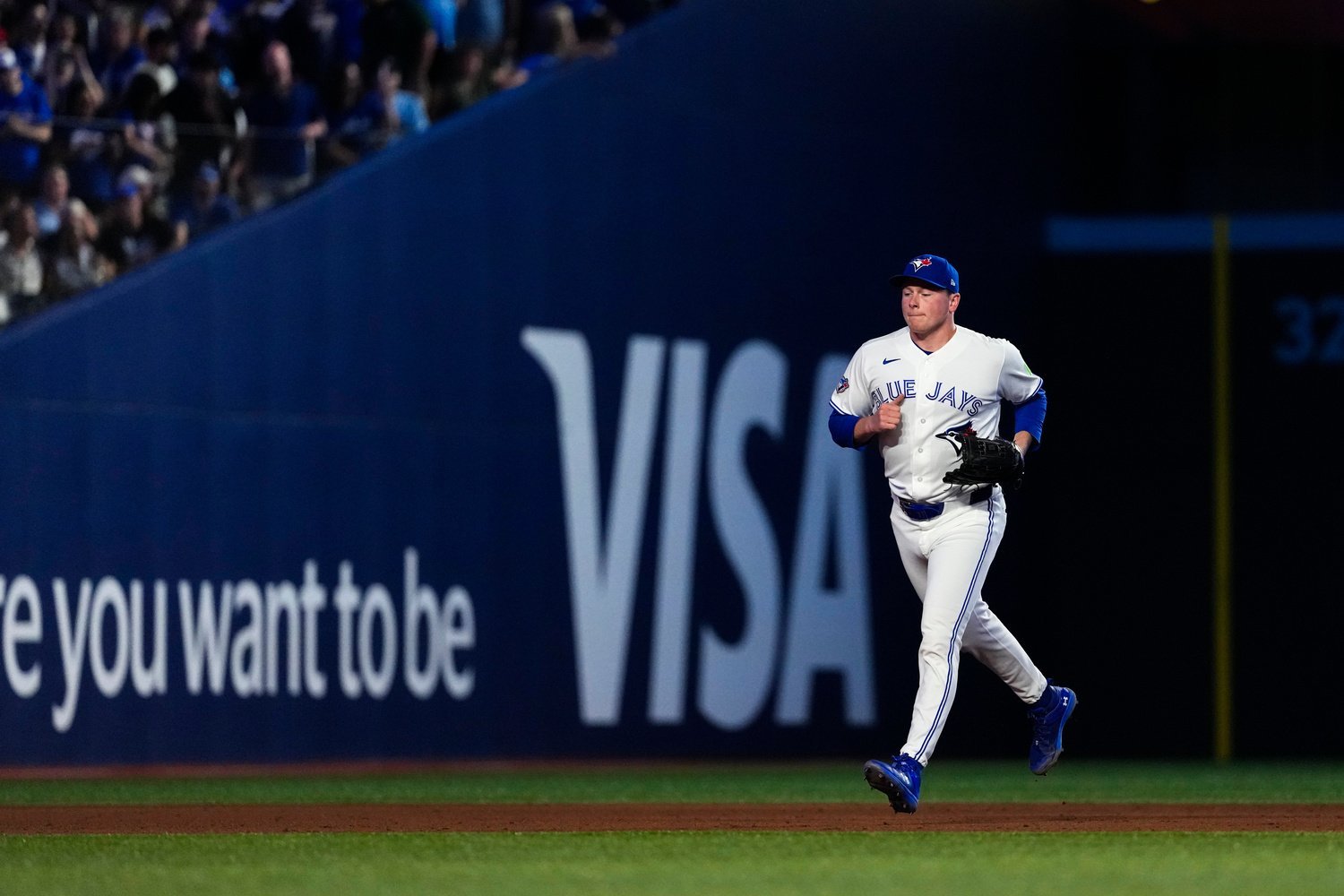 I’m sure you’ve heard by now that Louis Varland has been the best reliever in the American League this season. At least according to ERA, xERA, FIP, fWAR, bWAR, and WPA. He’d likely be up there in saves as well if he didn’t have to wait until his 13th appearance of the season to get his first save opportunity, but right now he’ll settle for third place in the American League with his 28 – eight behind the Rays’ Bryan Baker’s 34, which lead baseball. Aside from his single slip-up against the Chicago Cubs when Alex Bregman hit a homer to snatch another save from Varland’s grasp, the ninth inning has been almost relaxing for Jays fans since Varland took over the closer job full-time towards the end of April. He’s been dominant to a point where it’s hard to quantify how comfortable it feels when Varland is pitching. That's true regardless of how slim the margin is between holding onto a lead for the win or giving up a couple of runs for a loss. That word “dominant” gets thrown around a lot. Sometimes more deservedly than others. If we look back through 50 years of Blue Jays baseball, to this point, Varland’s 2026 is one of a handful of reliever seasons that we can comfortably say has been dominant. All of the following comes with the caveat that Varland is just a little over three-quarters of the way through this season. The reality is, reliever statistics are volatile because of how small the samples they work within are. A few blow-ups or even just a slightly more average finish to 2026 could turn his dominant year into just a good one. With that being said, there’s no other way to start this conversation than by stating the fact that Varland’s current 1.26 ERA and 355 ERA+ are both the best by a Blue Jay in a season in which he saved at least 20 games. ERA is no longer the one-size-fits-all pitching statistic we once considered it to be, especially not for relievers, but it’s impossible to tell the story of an elite pitching season without displaying that a guy made sure that opponents simply couldn’t earn runs against him. If Varland stays on pace, his 2026 will slide ahead of B.J. Ryan’s fabled 2006 for the best ERA among Blue Jays to convert 20 saves. Ryan’s 2006 has been thrown around in conversations as the best Jays closer season of all-time, and looking back at it 20 years later, It’s pretty easy to see why. Best Season ERA By a Blue Jays Pitcher With at Least 20 Saves Player Season Saves Appearances / IP ERA Louis Varland* 2026 28 58 / 64.1 1.26 B.J. Ryan 2006 38 65 / 72.1 1.37 Ken Giles 2019 23 53 / 53 1.87 Tom Henke 1989 20 64 / 89 1.92 Jordan Romano 2022 36 63 / 64 2.11 Duane Ward 1993 45 71 / 71.2 2.13 *Season in progress Ryan racked up 38 saves in 72.1 IP to go along with a 1.37 ERA (335 ERA+), and the deeper you dig, the more impressive it gets. He struck out nearly 32% of the hitters he faced, held opponents to a .169 average and .444 OPS – both the best in a season by a Jays closer – and only gave up five extra-base hits all season. Perhaps the most eye-popping number from Ryan’s ‘06 is the 0.857 WHIP. Part of what makes a fanbase trust a closer is not just if he gets the job done and converts the saves, but how he does it. If there’s a ton of traffic en route to a zero, or he gives up a couple runs and turns a three-run lead into a one-run win, it’s not exactly the same as coming in and retiring three straight to secure a win. No Blue Jays closer has ever had a season where they limited traffic as effectively as B.J. Ryan did in 2006, but Louis Varland is on pace for the franchise’s ninth closer season with a WHIP under 1.000. If Varland can maintain through the rest of the season, he’ll join Ryan’s ‘06, Roberto Osuna’s ‘15, ‘16 and ‘17, Casey Janssen’s ‘12 and ‘13, and Tom Henke’s ‘87 and ‘91. Blue Jays Closers With a WHIP Under 1.000 Closer Season WHIP B.J. Ryan 2006 0.857 Roberto Osuna 2017 0.859 Casey Janssen 2012 0.864 Tom Henke 1991 0.874 Roberto Osuna 2015 0.919 Tom Henke 1987 0.926 Roberto Osuna 2016 0.932 Louis Varland* 2026 0.964 Casey Janssen 2013 0.987 *Season in progress But all eight previous seasons have something in common: They each included at least two blown saves. Putting wins to bed is a closer’s job, and for as dominant as they were, there were slip-ups. A few games where the Jays were just three outs from winning with a lead of three runs or fewer, with the ball in the hands of their most trusted pitcher, but the job didn’t get finished. No Blue Jays closer has ever converted 20 saves in a season without blowing at least one, but two guys have limited it to just one blown save: Jordan Romano in 2021 and Ken Giles in 2019. Varland’s aforementioned blown save to Bregman and the Cubs makes it so he can’t be the first Jays closer to go perfect in save opportunities, but it’s still possible he can become the third to miss just one. Blue Jays Pitchers With at Least 20 Saves and Fewer Than Four Blown Saves Player Season Appearances / IP Saves / Blown Saves Ken Giles 2019 53 / 53 23 / 1 Jordan Romano 2021 62 / 63 23 / 1 Louis Varland* 2026 58 / 64.1 28 / 1 Casey Janssen 2013 56 / 52.2 34 / 2 Tom Henke 1992 57 / 55.2 34 / 3 Roberto Osuna 2015 68 / 69.2 20 / 3 Casey Janssen 2012 62 / 62.2 22 / 3 Tom Henke 1991 49 / 50.1 32 / 3 *Season in progress The crazy part about that, though, is that as of mid-August, Varland has already surpassed Romano’s and Giles’ innings totals from ‘21 and ‘19, respectively. Varland has already thrown 64.1 innings in 58 appearances through 126 Blue Jays games this year, putting him on pace for 82.2 innings for the season. If he surpasses that 80-inning mark, he’ll be the first closer of the 2020s, and fifth since 2010 to get to that mark. A Blue Jay hasn’t gotten to 20 saves and 80 innings since Duane Ward in 1991, when Ward threw 107.1 in 81 appearances. Even if Varland doesn’t quite reach that kind of threshold, doing what he’s doing in this era, on this kind of volume, is almost unheard of. I wanted to lay out as much of a comparison to other elite Blue Jays closer seasons as possible before I broke out WAR, but it’s impossible to have this conversation in 2026 without it. I’m using bWAR rather than fWAR because it’s less predictive and relies more on the actual results, and it is much easier to compare across multiple players and multiple seasons. Louis Varland, with 3.0 bWAR through 126 team games, is already having a top-six Blue Jays closer season of all-time. Henke’s ‘90 and Ward’s ‘93 seasons both saw them finish with 3.0 bWAR. Henke racked up 3.3 in ‘87 and 3.4 in ‘89, and of course B.J. Ryan’s ‘06 is the best in Jays history at 3.6 bWAR. Best Season bWAR By a Blue Jays Pitcher With at Least 20 Saves Player Season Saves Appearances / IP bWAR B.J. Ryan 2006 38 65 / 72.1 3.6 Tom Henke 1989 20 64 / 89 3.4 Tom Henke 1987 34 72 / 94 3.3 Duane Ward 1993 45 71 / 71.2 3 Tom Henke 1990 32 61 / 74.2 3 Louis Varland* 2026 28 58 / 64.1 3.0 *Season in progress Varland’s pace would put him at almost 3.9 bWAR after 162. Louis Varland On-Pace Stats G IP SV K bWAR 75 82 36 102 3.9 Pacing out WAR is basically never that simple, and with closers – whose usage depends pretty heavily on their team being up one, two, or three runs after eight innings – it’s even less simple. There’s still a long way to go, and a lot of things are going to have to continue going right, but if they do, we’re not just talking about one of the best Blue Jays closer seasons of all-time. We’re talking about one of the best closer seasons of this century. At least according to bWAR. Jonathan Papelbon’s 5.0-win 2006 is well out of reach, and Emmanuel Clase’s ‘24 (4.4), Blake Treinen’s ‘18 (4.4), and Mariano Rivera’s ‘04 (4.2) and ‘08 (4.3) likely are too. But if Varland can find a way to 4.0 bWAR, he’ll be just the 10th pitcher to do that and save at least 25 games in a season since 2000. Of course, he’d have to be as good or better in the final quarter of this season as he’s been over the first three. Maybe it's not likely, but Varland has put himself in a spot where it’s possible, and with the Blue Jays finding their second wind in the American League Wild Card race, having Louis Varland to close out some of the tight games they're sure to find themselves in down the stretch is like having an ace in the hole. View the full article
 -
 Bragging rights in the Brewers and Cubs front offices are on the line as Tuesday's Dominican Summer League regular season finales will settle who is crowned the Central Division champ. Both the MKE and CHC teams will qualify for postseason play. Transactions: N/A While there was certainly social media activity regarding the promotions of Luis Pena and the Ebel brothers, no official transactions were posted. They will all be included formally within the Link Report chronicling Tuesday's moves and games. Final: DSL Cubs Blue 2, DSL Brewers Gold 1, seven innings as scheduled Box Score and Game Log Oh, those DSL Standings are now spicy! The Cubs are 1/2 game behind the Golden Boys entering Tuesday's regular season finale. Both teams are going to be in the round-robin portion of the postseason preceding the formal playoff bracket. That being said, bragging rights are still at stake. On Tuesday, Gold hosts a 22-32 Pirates Gold squad, while Cubs Blue hosts a 20-35 Tigers 1 team. The lone earned run 19-year-old RHP Derlin Garcia surrendered was in the 1st inning. In the 4th, a leadoff single blew up quickly after two wild pitches and a wild throw by recently turned 17-year-old catcher Francisco De Marchena allowed the second run to score. Gold scored their lone run in the 6th of this shortened contest on a fielder's choice, with second baseman Leanders Matos providing the lone hit within the inning. Shortstop Ricki Moneys singled to lead off the game but was immediately caught stealing for the 5th time in 32 tries. LF Frandy Lafond singled leading off the 2nd, he was stranded on second base at inning's end and did not return to the field. No indication of injury in the game log, as he only moved from 1st to 2nd when a teammate walked. MiLB posted this article in 2025, we imagine everything carries over into 2026: Playoff format coming to Dominican Summer League "DSL Cup is a playoff format that will see 16 DSL clubs qualify for the two-stage DSL postseason. The eight DSL division winners (based on winning percentage) and the eight teams with the best winning percentage that did not win their division (Wild Card teams) will qualify for the postseason from the 51-team league (31.4% of the league's teams). In Pool Play, the sixteen teams will be divided into four pools of four teams each and will participate in a round-robin competition. The team with the best record in each pool will advance to the Championship Bracket, which will consist of two rounds (best-of-three Semifinal and Final Rounds)." As the standings link above will show, the DSL Brewers Blue Team is also doing well at 31-23, but perhaps just not quite well enough. There are currently fourteen teams with 21 losses or fewer. Two non-division winners have 22 losses. Blue is among five teams at 23 losses. Can't definitively say that Blue has been eliminated, but it seems bleak at best. The Brewers front office may know more, as last week's shift of a handful of strong prospects to Gold's squad targeted the intention to fortify the organization's for-sure island playoff qualifier. Final: DSL Brewers Blue 7, DSL Padres Brown 6 Box Score and Game Log That wild late-inning linescore may give the impression that it was scheduled to be a seven-inning game, but no ghost runners appeared. 17-year-old CF Manny De Los Santos had the honor of ending the game with a bases-loaded single, scoring the one run to seal victory. De Los Santos has a unique .208/.438/.288 line with 28 steals in 30 attempts. De Los Santos has walked or been hit by pitch in 29.2% of his plate appearances. He has also struck out 29.8% of the time, so he sees plenty of pitches. That is quite the profile, and I don't believe we have touched on it often this season. Shortstop Diego Frontado reached base four times (two singles, walk, HBP). One of six players in the league to have double-digit home run totals (his former Blue teammate Leanders Matos and he each have ten), Frontado and his .989 OPS was "left behind" in the player swap of last week to fortify the Gold squad pre-playoffs. Three other Brewers reached base three times as your box score review will reveal. One was RF Enrique Lovera, who had the lone extra-base hit for Blue, a double. This is one of those games where a review of the full game log will entertain as the teams combined to score in ten different half-innings. Colombian RHP Carlos Galindo (hope his family is well given last week's earthquake) earned his 6th win with an adventurous five-inning effort to close things out, giving up runs in three frames. In addition to the final regular season DSL games Tuesday, Nashville, Biloxi and Wilson hit the road to begin new series while Wisconsin settles in for a two-week homestand. Organizational Scoreboard including starting pitcher info, game times, MiLB TV links, and box scores Current Milwaukee Brewers Organization Batting Stats and Depth Current Milwaukee Brewers Organization Pitching Stats and Depth View the full article
 -
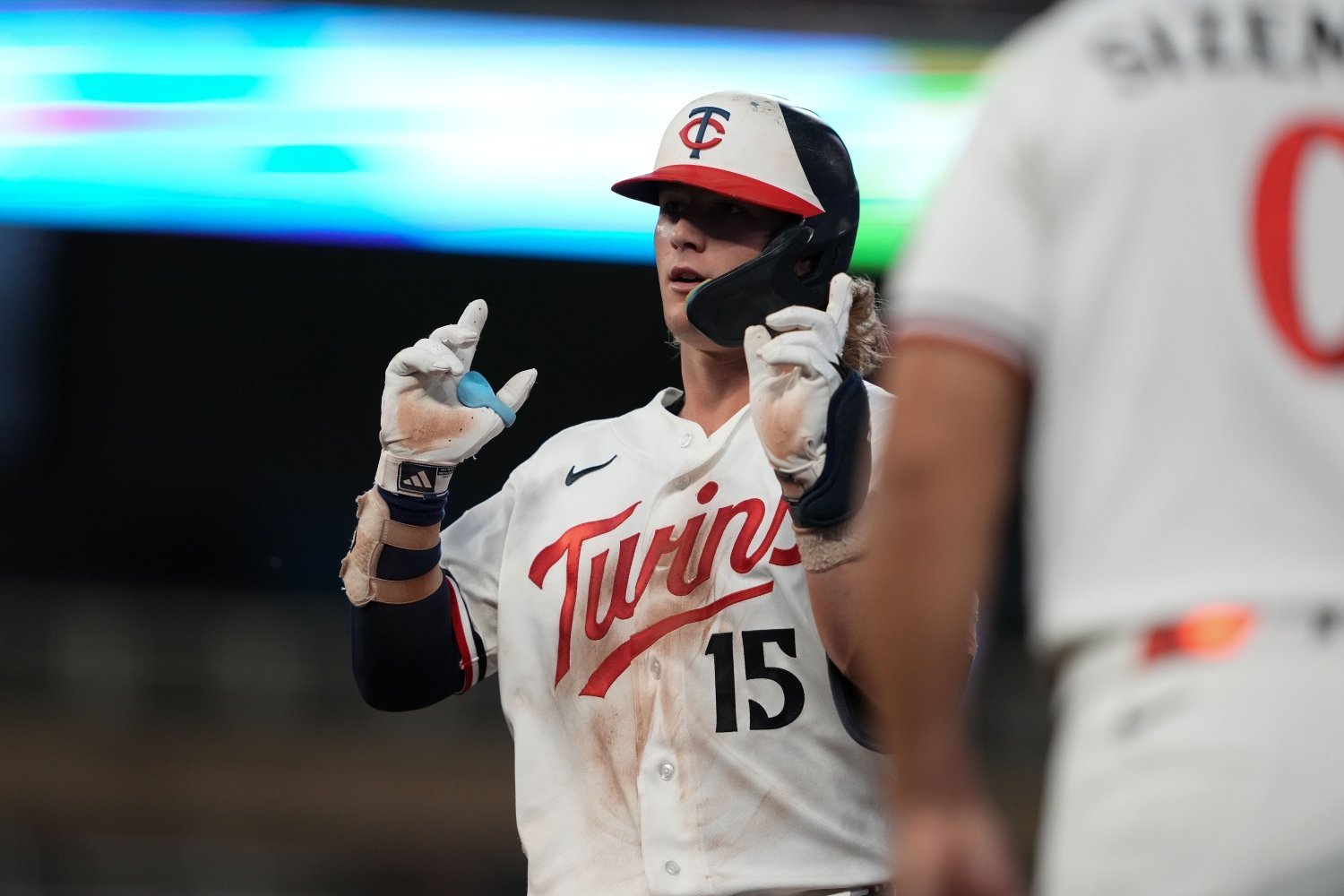 Box Score SP: Bailey Ober 4 1/3 IP, 6 H, 2 ER, 4 K, 1 BB (94 pitches, 62 strikes) HR: None Top 3 WPA: Bell 0.15, Adams 0.14, Hoffman 0.08 Win Probability Chart (via FanGraphs): The Minnesota Twins came into Monday night’s series opener against the Atlanta Braves with plenty of pressure on their shoulders. After being swept by the Philadelphia Phillies over the weekend, the Twins fell six games behind in the American League Central and dropped to five games below .500. They remained just one game out of the AL Wild Card, but with the season quickly running out of runway, another series sweep would have been a difficult hole to climb out of. The Twins were also looking for a bounce-back performance after blowing a five-run lead against the Phillies on Sunday. They got exactly what they needed Monday night, although it certainly did not come easy. The game itself started later than usual after the Twins and Braves called for a preemptive rain delay. The tarps eventually came off, and after waiting an hour, the two teams began the game without a drop of rain falling. The Twins were tasked with facing an old friend in Braves starter Martín Pérez, who spent the 2019 season with Minnesota. It looked like a challenging matchup on paper, especially considering the Twins entered the night ranked 22nd in baseball in OPS against left-handed pitching. They certainly didn't play like it in the first inning. Luke Keaschall got the offense started with a leadoff double, and the Twins quickly loaded the bases after Pérez walked Byron Buxton and Ryan Jeffers. That brought Josh Bell to the plate, and the veteran first baseman delivered with a two-run bloop double down the first base line to give Minnesota an early 2-0 advantage. The Twins weren't finished. Royce Lewis followed with an RBI single, and Kody Clemens added another RBI single to make it 4-0 before the Twins had even recorded their first out. After struggling to generate offense against left-handed pitching all season, Minnesota couldn't have asked for a better start. Bailey Ober took the mound for the Twins looking to rebound from a rough outing against Baltimore last week in which he allowed five earned runs. Ober looked sharp through the first four innings, but things began to unravel in the fifth. Austin Riley led off the inning with a single before reigning Rookie of the Year Drake Baldwin doubled to put two runners in scoring position. Ronald Acuña Jr. then delivered a two-run single to cut the Twins' lead in half. With Acuña on base and just one out, the Twins decided they had seen enough from Ober. The right-hander was pulled after just 4 1/3 innings, leaving Minnesota's bullpen with a tall task: protect a two-run lead for the final 4 2/3 innings. Considering what had happened less than 24 hours earlier, it was easy to wonder if the Twins were about to watch another big lead disappear. Instead, the bullpen saved the day. Taylor Rogers was the first man through the door, and he entered in a difficult situation. Acuña was standing on first base, there was only one out, and the heart of Atlanta's lineup was coming to the plate with the Twins clinging to a 4-2 lead. Rogers worked his way out of the jam to keep the Braves off the board, giving the Twins exactly what they needed after Ober's abbreviated outing. Travis Adams followed and provided perhaps the biggest contribution of the night. Adams has struggled considerably of late, but the Twins needed him to provide length and bridge the gap to the back end of the bullpen. He responded with two scoreless innings, striking out three without allowing a baserunner, allowing Minnesota to preserve its two-run advantage. That set the stage for the bullpen's heavy hitters. Jeff Hoffman, who has quickly become the Twins' most important bullpen piece since arriving at the trade deadline, tossed a scoreless eighth inning, aided by a massive defensive play from Kody Clemens. Then Yoendrys Gómez came in for the ninth and shut the door, albeit not without some nerves, securing a 4-2 Twins victory. After scoring four runs in the first inning, the Twins couldn't push another run across the plate despite creating several opportunities. The biggest came in the bottom of the eighth, when Minnesota loaded the bases with nobody out and had a chance to put the game away, and came away empty-handed. It didn't matter. The four runs Minnesota scored in the opening frame were enough because the bullpen refused to let Atlanta answer. After Ober's early exit, the Twins' relievers combined for 4 2/3 scoreless innings, allowing Minnesota to survive a game that could have easily gone the other direction. The Twins improved to 61-65 with the victory and, thanks to losses by both the Baltimore Orioles and the Texas Rangers and Toronto Blue Jays having the day off, moved to just a half-game back of the AL Wild Card. After the way the weekend went, the Twins desperately needed a win to start this series, and they got exactly that. What's Next The Twins will look to capture a series victory on Tuesday evening at Target Field. The Twins will be facing another old friend in Tyler Mahle, with Zebby Matthews taking the rubber for the Twins. First pitch will be at 6:40 pm (assuming no rain delay this time). Postgame Interviews Bullpen Usage Chart THU FRI SAT SUN MON TOT Morris 0 0 23 28 0 51 Adams 42 0 0 0 18 60 Hoffman 0 0 17 0 20 37 Minter 0 0 12 14 0 26 Rogers 10 0 0 16 11 37 Funderburk 0 0 16 4 0 20 Nance 16 0 0 0 0 16 Gomez 0 0 0 0 19 19 View the full article
 -
 The Miami Marlins needed to catch a break on Monday night to pull off an upset of Cristopher Sanchez and the Philadelphia Phillies. Instead, a missed call denied them of a critical run in a frustrating 6-5 loss. In the top of the seventh inning with the bases loaded, Javier Sanoja hit a ball down the left field line that was originally called foul. After further review, it was ruled a double. Otto Lopez, the runner on first base, would have scored easily on a live ball, but under these circumstances, he was placed at third base. Manager Clayton McCullough went out to argue the call and was immediately ejected. Lopez would be stranded at third at the end of the inning. "I can't go argue a play that went to New York, but my only point was that with two outs, the size of lead that Otto is going to have at first, not being held and going on contact where that ball was going to end up," McCullough told reporters postgame. "I think that he was going to score anyway. Just a little bit more frustration that you see that your call is going to get overturned and what maybe could have been." The explanation McCullough received was that since the ball was called dead so early, "it's really tough to then assume that you know all players continued to go." For Sanoja, he now has recorded 16 RBI with the bases loaded this season, the most by a Marlins hitter in a single season since Justin Bour and Marcell Ozuna, who each had 17 RBI in bases-loaded situations in 2017. He was visibly upset by the call made by umpire Shane Livensparger. "It's extremely frustrating for us," Sanoja said via an interpreter. "I think everyone saw and to ruin a game like that with two teams competing in the same division knowing what we are playing for is frustrating. Unfortunately at the end of the day, the baseball gods spoke and we lost by one run." Despite the call, the Marlins went 3-for-13 with runners in scoring position. Cristopher Sanchez allowed one run on eight hits and walked three. He remains undefeated in eight career outings against Miami. "We put some guys on base and kind of scattered it around, but did like that we stressed him and made him work," McCullough said. "Had some chances and just couldn't really come through with a big blow there on a couple of occasions to potentially flip that game in the more early going." Victor Vodnik worked the bottom of the seventh inning, allowing a bases-loaded walk, making it 5-3. In five appearances with the Marlins, he owns a 4.50 ERA while allowing five walks in six innings. In the top of the eighth, the Marlins kept fighting as Brian Navarreto took Brooks Raley deep for his first home run of the season, making it a 5-4 game. It was also his first run driven in since being called up from Triple-A nearly two months ago. The Phillies tacked on a run in the bottom of the eighth inning and the Marlins responded by making things interesting off Phillies closer Jhoan Duran. A questionable decision in the ninth inning was leaving Leo Jimenez in the game to face Duran and when Owen Caissie was available to pinch hit. Jimenez grounded into a force out to end the game. With the loss, the Marlins drop to 64-62 on the season, three games out of the third National League Wild Card spot and four games behind the Phillies. Lefty Cade Gibson will get the start on Tuesday night, presumably in an opener role with Tyler Phillips following him and handling the bulk of the innings. View the full article
 -
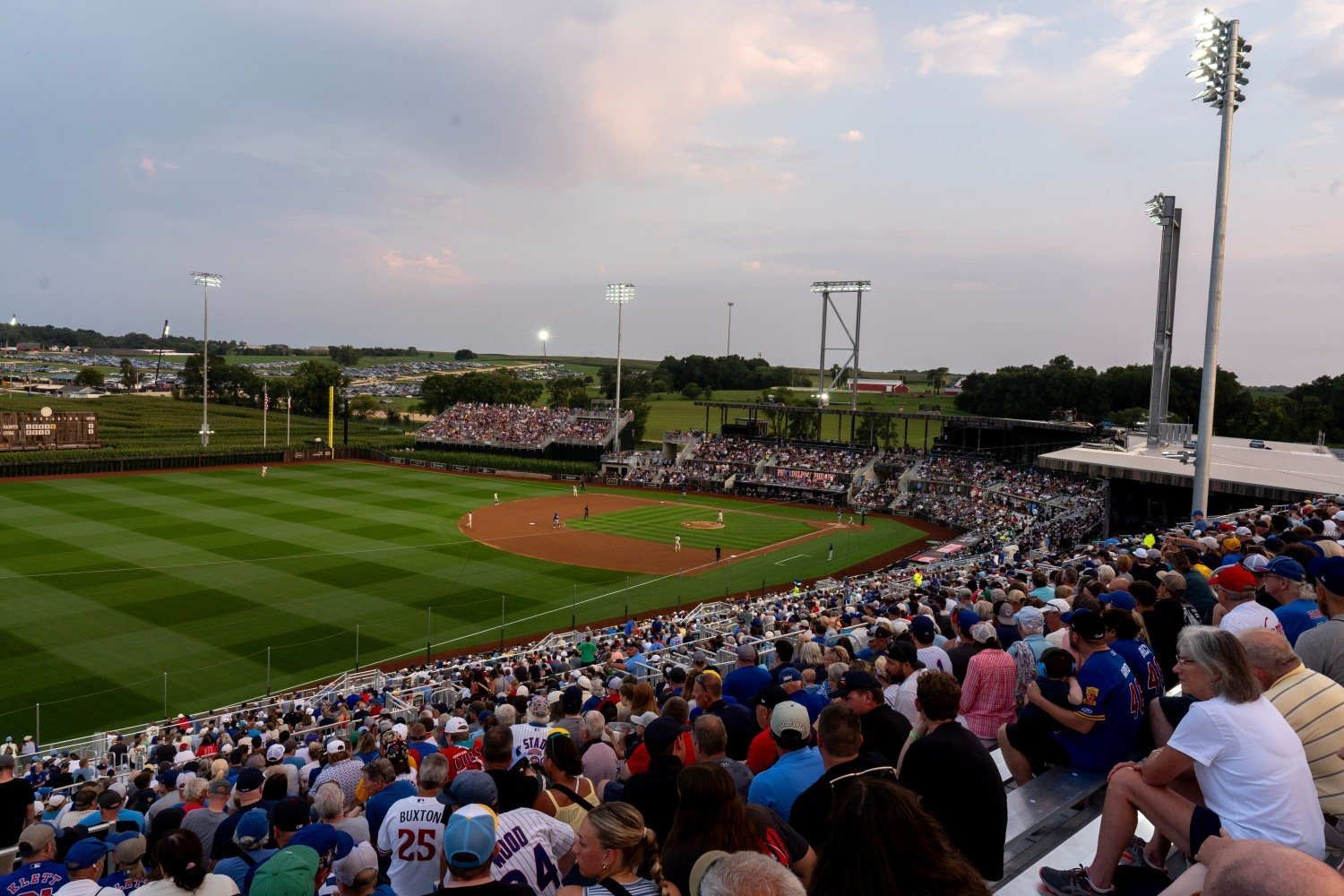 TRANSACTIONS Cedar Rapids Kernels placed RHP Cole Peschl on the 7-day injured list. Fort Myers Mighty Mussels transferred RHP Ramiro Villanueva to the Development List. Minnesota Twins selected the contract of C Alex Jackson from St. Paul Saints. Cedar Rapids Kernels released SS Miguel Briceno. Cedar Rapids Kernels placed C Ricardo Pena on the 7-day injured list. OF Luis Fragoza assigned to Cedar Rapids Kernels from Fort Myers Mighty Mussels. RHP Michael Hilker assigned to Cedar Rapids Kernels from Fort Myers Mighty Mussels. SAINTS SENTINEL The Saints split their series in Iowa against the Cubs, including a 6-3 loss in the Field of Dreams game to start the week. Now they stay on the road as they travel to Columbus, whom they went 4-2 against back in July. The Columbus Clippers boast some of Cleveland’s top talent. Top-50 nationally ranked prospect, 1B/LF Ralphy Velazquez, has hit .264/.348/.494. That only tells part of the story. Velazquez had a slow start after being promoted to Triple-A. Since playing against the Saints last, he has hit .333/.394/.877. The 21-year-old could certainly pose challenges for the Saints' pitching staff. The Clippers also roster two other players on the fringe of their top-10 organizational prospects. C/LF Cooper Ingle had a cup of coffee in the majors this year and is hitting .306/.429/.570 (.999 OPS) in Triple-A. The other prospect to watch is Khalil Watson, who is back at Triple-A after getting some time in the majors like Ingle. In his second year at Triple-A, Watson is hitting .253/.364/.462 (.827 OPS). WIND SURGE WISDOM The Wind Surge were able to split their series 3-3 as they hosted Corpus Christi over the last week. Now Wichita will travel and get their first look at the Texas Rangers' affiliate, the Frisco Rough Riders. On Frisco’s roster is the Rangers' top organizational prospect and borderline top-10 national prospect SS/3B Sebastian Walcott. At Double-A, Walcott has hit .319/.373/.580. Alongside Walcott is top-10 organizational prospect corner infielder Rafe Perich. The switch-hitter is hitting .297/.380/.565 in 60 games this season. KERNEL CHRONICLE Cedar Rapids continues the streak: they also split their series, with the Wisconsin Timber Rattlers. The Kernels will now travel to Beloit to take on a different Wisconsin-based affiliate. In the shortened All-Star week, the Kernels split their four-game series as they hosted Beloit in Cedar Rapids. The Sky Carp have the number seven-ranked organizational prospect according to Fish on First in SS Starlyn Caba. Caba’s defense is strong, but his offense has raised questions as he has hit .236/.390/.388. He has flashed his speed with 20 stolen bases at Triple-A in 2026. The only two other players rostered by Beloit who appear on deeper prospect ranking lists are a pair of 21-year-old pitchers, Liomar Martinez and Nate Payne. MIGHTY MATTERS The Mussels are our streak-breaker, being the only full-season affiliate to win their week's series, going 4-2 against Clearwater. Next up is a trip to the Palm Beach Cardinals, whom Fort Myers split with just a few short weeks ago. The Mussels will take on top-10 organizational prospect SS Yairo Padilla once again. Now playing with Palm Beach for 29 games, Padilla has hit .281/.354/.474 (.828 OPS). At the trade deadline, Palm Beach added a top-50 nationally ranked prospect to their roster. Corner outfielder Alexander Frias came over from the Brewers and has hit .333/.422/.538 (.959 OPS) across all levels of the minors this season, adding another key bat to watch. INF/OF Luis Fragoza FSL Player of the Week If Luis Fragoza keeps having performances like he did this past week, it won’t be long until he hits the Twins Daily Top-20 list. In five games, Fragoza hit at an unreal clip of .667/.800/1.583 (2.383 OPS), with three home runs, nine stolen bases, and seven total extra base hits. Those video game-type numbers made Fragoza the choice for the Florida State League’s Player of the Week Award. His week also offered a positive sign for the 19-year-old prospect who MLB.com has ranked as the Twins number 27 prospect in the system. In case you missed it at the top of the page, on top of this great week on the field, Fragoza was just promoted to High-A and will begin playing with the Cedar Rapids Kernels. DSL TWINS Twins 9, Marlins 7 Box Score The Twins came away with a win over the Marlins, but if you turned your attention away from the game early, you wouldn’t have thought that would wind up being the result. Through five innings, the Marlins were in full control of the game, leading 5-0. Then, in the sixth inning, everything went the Twins way. Emmanuel Merlo got things going with a leadoff walk and advanced to second on a wild pitch. After an Anibal Beltre strikeout, two more walks from Jeferson Abreu and Fabian Ulloa followed to load the bases. Abreu was on base a lot Monday, racking up three total walks. Luis Suarez would break through for the Twins first run with an RBI single. Another wild pitch would plate Abreu for the Twins second run. A pitch would then hit Daiyer Barboza to load the bases once again and set the stage for a big Jendy Martinez at-bat. Martinez sent the ball to right-field for a triple, tying the game 5-5 and erasing the Marlins’ early lead. Martinez also added three walks to his day, reaching base a total of four times for the Twins. There was still only one out in the sixth inning, and the Twins were not finished. After a Jhon Gonzalez strikeout, Martinez would score on a wild pitch to bring the score to a 6-5 Twins lead. Abel Sosa was the next Twin to take a walk. Sosa would advance to third base on an Enmanuel Merlo single in his second at-bat of the inning. In a double steal attempt, Merlo would be picked off at second but created enough time and space for Sosa to score the Twins seventh run of the inning. The scoring continued into the seventh inning; walks and wild pitches fueled two runs being added. Beltre, Abreu, and Suarez would each reach on walks. Fabian Ulloa reached on a fielder’s choice and stole second base for his eighth of the year. Each of those helped set the Twins up for two insurance runs, with Beltre scoring on a wild pitch and Barboza hitting the sacrifice to score Ulloa and give the Twins a 9-5 lead. Jeremy Jimenez, who pitched a scoreless sixth inning, would start the seventh for the Twins. It was a classic bloop-and-a-blast scenario. Jimenez nearly stranded Eliecer Mendoza at first after allowing him a single, but with two outs, Gregori Arias hit his fourth home run of the season for the Marlins to bring the lead to 9-7. Arthur De La Cruz was then brought on to close out the game. Needing just one out, De La Cruz forced Steven Herrera into a ground out to earn the save in the Twins win. Pitchers Emmanuel Mena and Abraham Martinez each did not allow a run while they were on the mound. Mena went 1 ⅓ innings, allowed no hits, three walks, and struck out one batter. Martinez, who was credited with the win, pitched one inning, allowed no hits, and two walks. TWINS DAILY PLAYERS OF THE DAY Jendy Martinez: 1-2, 1 H, 1 R, 3 BB, 3 RBI, 1 3B Emmanuel Mena: 1 ⅓ IP, 0 ER, 0 H, 3 BB, 1 K TOP 20 PROSPECT WEEK IN REVIEW #1- Walker Jenkins (Saints)- .412/.545/.647, .1.193 OPS, 1 2B, 1 HR #2- Vahn Lackey (Mussels)- .154/.200/.462, .662 OPS, 2 3B #3- Kaelen Culpepper (Twins)- .263/.286/.316, .602, 1 2B #4- Marek Houston (Wind Surge)- .238/.273/.238, .511 OPS #5- Riley Quick (Wind Surge)- 4 IP, 4 H, 1 R, 1 ER, 2 BB, 4 K #6- Emmanuel Rodriguez (Saints)- .222/.333/.278, .611 OPS, 1 2B #7- Hendry Mendez (Saints)- .182/.400/.455, .855 OPS, 1 HR #8- Eduardo Tait (Kernels)- .190/.227/.381, .608 OPS, 1 2B, 1 HR #9- Gabriel Gonzalez (Saints)- .000/.300/.000, .300 OPS #11- Carson Tinney (Mussels)- .200/.294/.600, .894 OPS, 2 HR #12- Brandon Winokur (Wind Surge)- .190/.292/.333, .625 OPS, 1 HR #13- Khadim Diaw (Wind Surge)- 1.000/1.000/1.000, 2.000 OPS #15- Ryan Gallagher (Saints)- 5 ⅔ IP, 3 H, 1 ER, 1 BB, 7 K #18- Quentin Young (Mussels)- .235/.350/.529, .879 OPS, 2 2B, 1 HR #19- Yasser Mercedes (Kernels)- .316/.381/.421, .802 OPS, 2 2B TUESDAY’S PROBABLE STARTERS St. Paul Saints @ Columbus- RHP Ryan Gallagher Wichita Wind Surge @ Frisco- TBD Cedar Rapids Kernels @ Beloit- TBD Fort Myers Mighty Mussels @ Palm Beach- TBD DSL Twins @ DSL Cardinals- TBD DSL Cardinals @ DSL Twins- TBD View the full article
