


DiamondCentric
-
Posts
2,631 -
Joined
-
Last visited
Never
Content Type
Profiles
Forums
Events
News
Tutorials & Help
Major League Baseball Videos
Guides & Resources
Store
Downloads
Gallery
Everything posted by DiamondCentric
-

Red Sox Place Yoshida and Slaten on Inured List Before Pirates Finale
DiamondCentric posted an article in Talk Sox
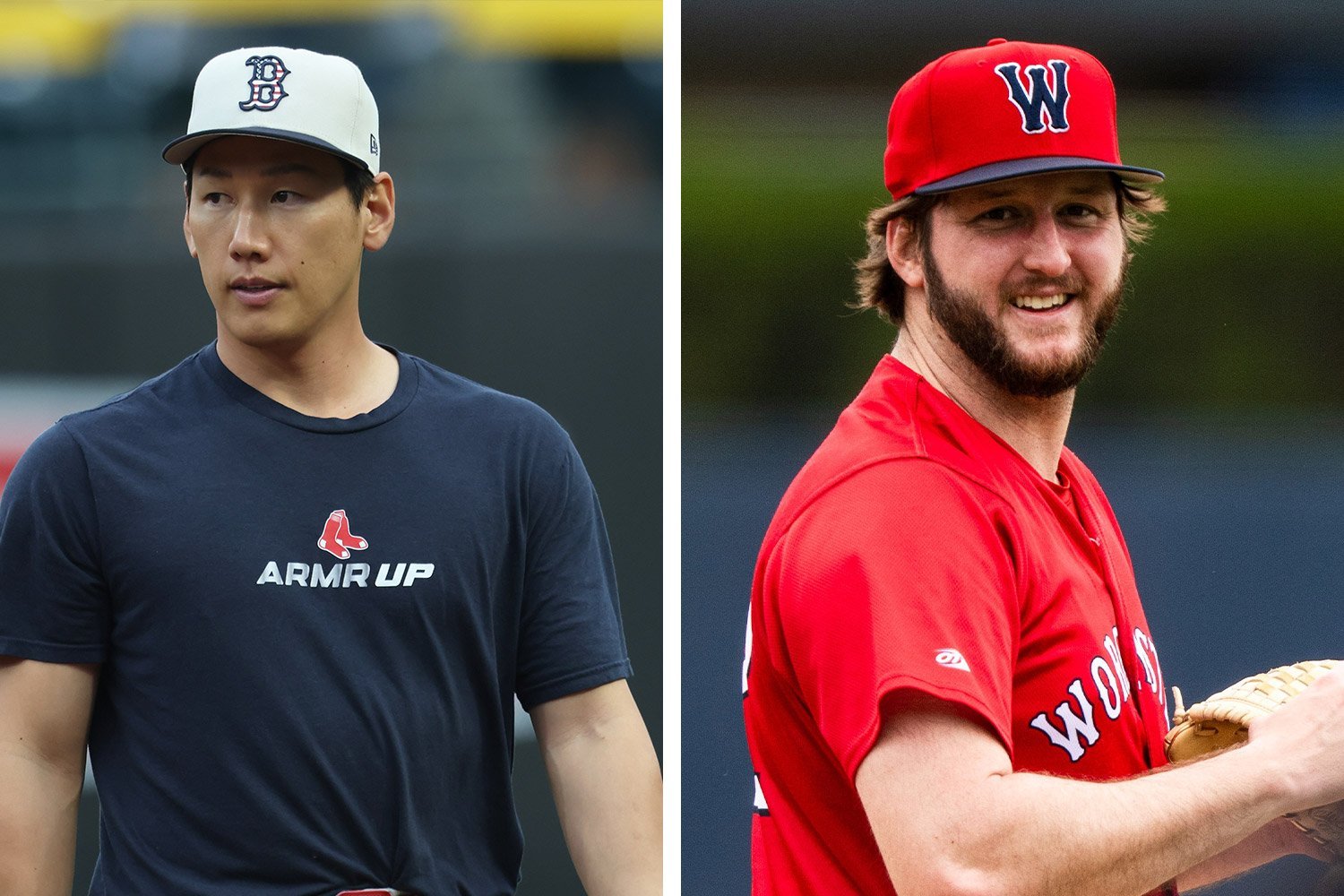 The Red Sox were dealt yet another injury blow on Saturday. Both Masataka Yoshida (hamstring) and Justin Slaten (right elbow soreness) have landed on the injured list before the rubber match against the Pirates on Sunday. To replace them, Mickey Gasper and Raymond Burgos have been called up to the major league roster. We last saw Gasper in June when he was called up amid a torrid streak with the WooSox. He continued that hot streak for a while with the Red Sox but ultimately cooled off against major league pitching. Since being optioned, he’s continued to hit at an incredible clip. He’s slashing .337/.450/.566 with the WooSox this season. It’s unclear just how Gasper will slot into the lineup as of this writing, but he figures to get quite a bit of play at DH while he’s up. Burgos has made two appearances with the Red Sox this season, tossing six combined innings. For the WooSox, he’s sitting at a 5.54 ERA over 65 innings pitched with 54 strikeouts and a 1.62 WHIP. While he doesn’t directly replace Slaten’s backend abilities, he can eat innings, and that’s something the Red Sox are going to need while both Slaten and Garrett Whitlock are on the IL. The Red Sox can’t seem to dodge the injury bug as we cross the midpoint of the month of August. There are reinforcements on the way, but both Chad Tracy and Craig Breslow are in unenviable spots with roster construction right now. View the full article
 -
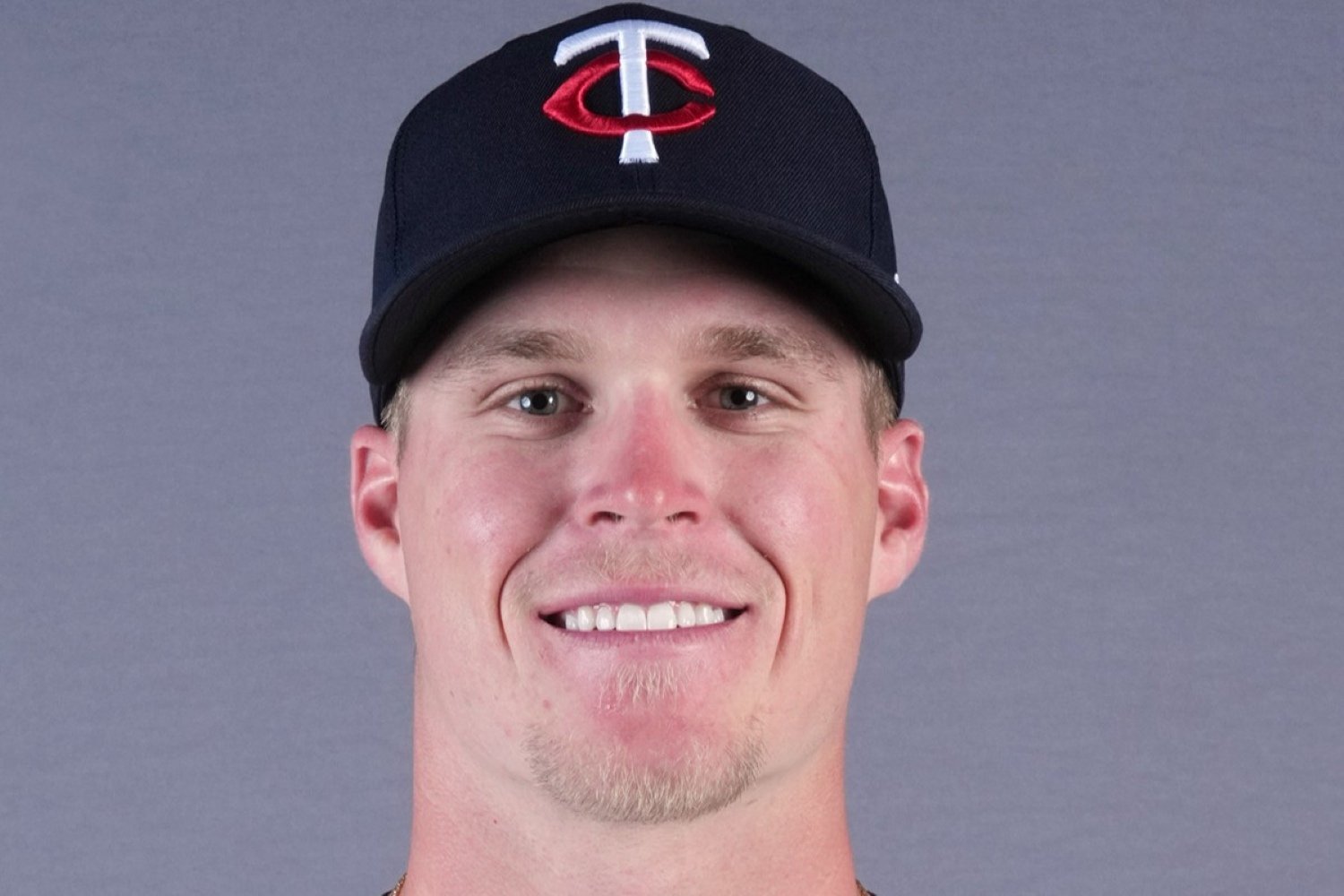 For weeks, Twins fans have been clamoring for the same thing: Call up Walker Jenkins. It is not hard to understand why. Jenkins, the Minnesota Twins' No. 1 prospect and a top-15 prospect in baseball, has been tearing through Triple-A since his promotion. Since July 15, Jenkins has posted a .934 OPS, continuing to show that he has very little left to prove in St. Paul. Meanwhile, the Twins could desperately use the offensive help. Since July 15, Minnesota ranks 21st in Major League Baseball in both OPS and runs scored, and this is a team fighting for a playoff spot with roughly six weeks remaining in the regular season. Despite that, the Twins have held firm with Jenkins in Triple-A. The team has made plenty of other roster moves during that time, including promoting Tristan Gray and later Kaelen Culpepper, but Jenkins has remained in St. Paul. Maybe the Twins genuinely believe he needs more time in Triple-A—that there are still aspects of his game that need to be polished before he makes his major-league debut. I don't necessarily agree with that assessment, but at least it would make sense. If the Twins don't believe Jenkins is ready, there is a baseball reason for keeping him in the minors. There is another possible explanation, however, and it has been speculated about quite a bit: MLB's Prospect Promotion Incentive (PPI). MLB and the MLB Players Association (MLBPA) introduced that incentive as part of the 2022 collective bargaining agreement, in an effort to discourage teams from manipulating the service time of top prospects. Under the PPI, a team can receive an extra draft pick after the first round if a preseason top-100 prospect is promoted early enough to gain a full year of service time and subsequently wins a major award such as Rookie of the Year. The key here is rookie eligibility. A player loses rookie status if they spend 45 active days on the major-league roster or collect 130 at-bats. That has led to the theory that the Twins' plan with Jenkins could be to keep him in Triple-A until late August, call him up once he can no longer reach 130 ABs (the 45-day threshold passed on Friday), and preserve his rookie eligibility for 2027. If Jenkins then wins the Rookie of the Year award next season, the Twins could receive a compensation pick immediately after the first round of the 2028 Draft. If he were to win the MVP (or be a finalist for it) in any of 2027, 2028 or 2029, they'd get one, too. We don't know if that's the reason the Twins have held Jenkins back. There is no way to know what's happening behind closed doors unless someone with the organization says so. But considering everything surrounding this situation, it certainly feels like it could be a major factor. And if it is, I don't think it is a good enough reason. A pick immediately after the first round is certainly valuable. We're talking about a selection that could land somewhere in the mid-30s, and those picks can absolutely turn into quality major-league players. The Twins have also shown throughout their history that they can find talent in that portion of the draft. It's not as though the potential reward is meaningless. The problem is that the Twins would be making a pretty significant bet to get it. First, Jenkins actually has to win Rookie of the Year or become one of the elite players in the league almost immediately after his rookie year; that's far from a guarantee. The 2027 Rookie of the Year race could be extremely competitive, with prospects such as Kade Anderson, Franklin Arias, Leo De Vries, Ryan Sloan and others potentially entering the season with legitimate cases to win the award. We all think highly of Jenkins, and he could absolutely be the best rookie in baseball next season, but an injury or slow start could derail his chances. Another rookie could simply have a better season. If either of those things happens, the Twins have sacrificed weeks of having Jenkins on their major-league roster for a draft pick that would never materialize. That would be a pretty poor trade-off. That brings us to the bigger issue: the Twins aren't playing for 2027 right now. They're playing for 2026. With roughly six weeks remaining in the regular season, Minnesota is still in the playoff hunt. The third Wild Card is within reach, and the AL Central remains wide-open. Nobody knows where this team will be next year, but we do know where it is right now. It has a chance to make the playoffs. If the Twins believe Jenkins can help them win games right now, they should be putting him on the roster and giving themselves the best possible chance to reach October. Instead, if the PPI is indeed a factor, they're sacrificing a meaningful portion of Jenkins' first major-league season in the hopes of acquiring a draft pick more than a year from now. That feels backwards. The value of getting Jenkins onto the roster and helping the Twins make the playoffs is tangible. It could impact the organization immediately. It could change the trajectory of the 2026 season. The value of the PPI pick is entirely speculative. The Twins have to receive the pick. Then they have to select the right player with it. Then that player has to develop. There are a lot of steps between keeping Jenkins in Triple-A today and getting meaningful value from that draft pick years down the road. If Jenkins is suddenly promoted in the coming days, it will only add more fuel to the speculation that the PPI was at least part of the reason he was held back in the first place. He has amassed 122 AB (137 PA) since returning to the St. Paul lineup on July 1, so yes, there's still a chance he would end up surpassing 130 in the majors if called up today. They can avoid that risk by keeping him in the minors even another two or three games. If that was the strategy, though, the Twins have already burned multiple weeks of potential Jenkins production just to position themselves for a potential draft pick. I would have a hard time defending that decision. The Twins have a chance to make the playoffs right now. They have an offensive need right now. They have a prospect who has been performing extremely well at Triple-A. They should be thinking about what can help them win in 2026, not what might give them an extra draft pick in two years. Nobody is going to complain about the Twins receiving an extra pick after the first round if Jenkins wins Rookie of the Year next season. That would be a fantastic bonus. But the bonus should be exactly that: a bonus. It shouldn't be something that influences the construction of the 2026 roster when the team is still in contention for the postseason. What do you think? If the PPI is a significant reason the Twins have held Jenkins back, is that a defensible strategy, or should the Twins have prioritized getting their best prospect onto the Major League roster sooner? View the full article
 -
 Let’s check in down on the farm following Saturday’s action. Triple-A Worcester Red Sox Series vs. Buffalo Bisons (Toronto Blue Jays): 2-3 Season Record: 62-52 Worcester put up a fight but was ultimately let down by the bullpen as the WooSox lost in the tenth frame. Blake Wehunt took the first five innings of Saturday’s contest, finishing with a respectable line of three runs on five hits. Wehunt allowed two walks and struck out just one, his third consecutive start with one strikeout. Sam McWilliams took the sixth inning, spinning a one-hit frame as he earned his first Triple-A hold of the season. McWilliams punched out two before Noah Song got the call. Song took the next two innings, letting up two runs on two hits, walking two and striking out four as Buffalo took the lead. Tyler Samaniego entered next and staved off the Bisons as Worcester forced extras. Samaniego gave up one hit and struck out one before Wyatt Olds took a high-stakes tenth inning. However, Olds couldn’t answer the call as he gave up two runs (one unearned) on two hits, striking out two as Buffalo took a late lead that proved fatal. The WooSox put together an impressive offensive performance despite the late loss, garnering 11 hits and drawing ten walks. Worcester fell far short when it came to driving runs in, going a measly 3-for-18 with RISP and stranding a staggering 17 baserunners. Romy Gonzalez led the way with three RBIs on four hits as he continued to build back to a big league call-up. Gonzalez got the WooSox on the board with an RBI single in the first inning, scoring Mickey Gasper. Down two in the second inning, Brett Harris scored on a wild pitch as Worcester narrowed the gap. Gonzales then drove in Franklin Arias and Nate Eaton as the WooSox took a one-run lead. Down one with runners on the corners in the eighth inning, Mikey Romero blooped a fly ball to shallow left as Mickey Gasper scored, tying the game. Worcester couldn’t compete in the end as they failed to score on multiple occasions, falling by two. Double-A Portland Sea Dogs Series vs. Binghamton Rumble Ponies (New York Mets): 1-4 Season Record: 58-54 Portland lost by double digits for the second time in five games as its August woes continued to pile up. Mike Sansone got the start for Portland, struggling through four frames of shoddy pitching. Sansone let up five runs on six hits and issued three walks. The one positive for the 26-year-old came in the strikeout column, where he compiled six punchouts. Jeremy Wu-Yelland got the ball next, but struggled even more than Sansone. Over one and ⅔ innings, Wu-Yelland let up another five runs on four hits and issued four walks. He struck out two before Steven Brooks took over towards the end of the sixth. Brooks was solid, allowing two unearned runs on two hits as he struck out three in two and ⅓ innings. Erik Rivera took the first two outs of the ninth, allowing two runs (one unearned) on one hit and issuing two walks before outfielder Nelly Taylor took the final out of Saturday’s blowout. Portland was just as unsuccessful on the other side of the ball, scoring just twice as they stranded nine runners. Portland’s pair of runs came in the fourth inning as Max Ferguson scored Yoeilin Cespedes on a ground out and Ahbram Liendo scored Mason White on an RBI single. The Sea Dogs were otherwise silent as they fell without much protest. High-A Greenville Drive Series @ Hub City Spartanburgers (Texas Rangers): 2-3 Season Record: 49-61 Akin to their fellow affiliate teams, the Drive struggled with RISP on Saturday, falling 4-2. Dylan Brown spun an excellent start on Saturday evening, turning in three one-hit innings as he fended off Hub City. He walked two and struck out four before Shea Sprague took over in the fourth. Sprague struggled across four frames, allowing four runs on seven hits. He issued a pair of walks and struck out three more, exiting following the seventh inning. Trennor O’Donnell took the eighth in one-hit fashion, striking out two as he threw the final frame of Saturday’s game. Two-hit games from Justin Gonzales and Carlos Gutierrez marked the headlines in a disappointing day at the dish for Greenville. Going just 1-for-11 with RISP and stranding ten, the Drive couldn’t make it happen in a close game. Both of the Drive’s runs came in the third inning. Gonzales drew a bases-loaded walk before Jake Schaffner grounded out as Antonio Anderson crossed home. Low-A Salem RidgeYaks Series @ Delmarva Shorebirds (Baltimore Orioles): 2-3 Season Record: 49-62 Just like Greenville, Salem mustered just one hit with RISP as the Yaks stranded 11 runners in a 7-3 loss. After spinning a scoreless start last time around, Sadbiel Delzine struggled through a three-inning start on Saturday night. The top prospect let up three runs on six hits as he struck out a pair in his third Low-A start. Barrett Morgan made his first appearance since late June and saw encouraging results. In a two-inning outing, Morgan struck out two and allowed one unearned run on one hit. Cam Padgett made his second appearance with Salem, but was less successful than his first go-around. Padgett let up three earned runs on four hits and issued a pair of walks. He struck out one before Yermain Ruiz struck out two in the final frame of Saturday’s loss. Salem compiled nine hits and drew five walks, but fell short when it came time to drive in runners. D'Angelo Ortiz and Anderson Fermin had two hits apiece, and Josue Brito drew a pair of walks. All of Salem’s runs came late, with Wills Maginnis putting the Yaks on the board with his first professional homer in the eighth inning. Franklin Primera stepped to the plate next and launched a solo shot of his own past the right-field wall as Salem cut the lead to five. Colton Coates recorded his first professional RBI as he drove home D’Angelo Ortiz on a sac fly in the ninth inning. View the full article
 -
 Wisconsin valiantly tried to win the farm differential all by themselves with a 15-3 rout. The rest of the day's schedule was lined with losses, including a 10th in a row for the sagging Shuckers. Transactions: N/A Nashville Pre-Game Media Notes (unavailable) Final: Indianapolis (Pirates) 4, Nashville 3, ten innings Box Score and Game Log Via the Sounds, game details, and we encourage readers to always review affiliate write-ups as part of their Link Report routine: Sounds Fall in Extras for Second Time This Week - Sproat tallies eight strikeouts, allowing one hit through 5.0 scoreless innings Detailed game summary as always. You know, I thought I had fun with wordplay from time-to-time but between Nashville's Social Media Admin (see the two videos within the above link) and the nightly sub-header titles ("Let Me Clear My Sproat", "Tri-Mur"), the Sounds bring their game to try and entertain us nightly. Sal Frelick (right shoulder) walked and stole a base in five plate appearances as the designated hitter, one night after seeing action in right field, a bit too early for back-to-backs on defense, apparently. Would have been sweet for Blake Burke to come up big in the 10th, flyout to center to end the game with the bases juiced as the summary detailed. Looked awkward as heck for Tyler Black in left field in the 6th, thankfully not hurt on this attempted catch - Ghost runner for Indianapolis was still in place with two outs, RHP Blake Holub has been fantastic but was upset with this tiebreaker: Nice glove work earlier in the game from Brock: RHP Brett Wichrowski got an inning of work in on his 24th birthday, seemingly in a bullpen role for the time being. Biloxi Pre-Game Media Notes Final: Pensacola (Marlins) 7, Biloxi 3 Box Score and Game Log Payne Reaches 3 Times in Debut, Shuckers Fall to Blue Wahoos - Guilarte records multi-hit, multi-RBI performance in loss If you think we here on Link Report duty do our best to accentuate the positive, you can imagine the lengths Javik and Max are going to during this ten-game losing streak within their broadcasts and game summaries. We don't know why LF Josh Adamczewski has now missed three games, but the usual cadence of a scheduled Sunday contest followed by the Monday off day means we may not know more until Tuesday, if then. .933 OPS after one AA game for Braylon, that's a small sample we can live with. This is RBI #86 on the season in 102 games for Andrew Fischer - that's impressive regardless of what other aspects of his game folks may focus on. There was a 1970-71 minor leaguer named Gregory Goularte (Twins), that's the closest my last name (Goulart) has come to pro ball. So, despite it not being a match, I'll still smile when a close Venezuelan resemblance of the surname appears in the highlights: Pensacola scored all seven of their runs by the end of the 5th. RHP Bishop Letson only went three innings and threw 51 pitches. This was his 2nd appearance after a three-week injured list stint. RBI single vs. Letson for the first of three Pensacola runs in the 2nd The next run scored on another RBI single that RF Damon Keith then overran for a two-base error In the 3rd, watch as Jesús Made has to spread-eagle 3B Guilarte, leading to Made's 18th error on the season My goodness, Jack Seppings - in his last three outings, two with Nashville, and this one back in Biloxi: 11.1 IP, 6 H, 0 R, 5 B, 8 K LF Mark Coley II was replaced defensively for the top of the 9th by Mike Boeve. Coley had grounded out into a fielder's choice to end the 8th, and the training staff was involved in Coley's removal, though we don't know the nature of the injury (I did check the broadcast archive). Wisconsin Pre-Game Media Notes (download link) Final: Wisconsin 15, Cedar Rapids (Twins) 3 Box Score and Game Log Via the Timber Rattlers, game details (with four videos for your enjoyment): Rattlers Crush Kernels - Bitonti homers twice for Wisconsin in 15-3 win at Cedar Rapids Midwest League second half standings - Beloit sweeps a doubleheader and the T-Rats actually drop a half-game Saturday. Boo! Thanks for saving the minor league Saturday schedule, Rattlers! Here are the videos that aren't tucked within that banger of a game summary by Chris Mehring: That's seven clips altogether, not quite the same as the home game package experience, but very helpful nonetheless! Wisconsin plated 15 runs with Luis Peña and Sawyer Strosnider enjoying an evening off. Manager Nick Stanley also only had to utilize two pitchers in southpaw Wande Torres and RH Daniel Corniel, setting up Sunday's finale nicely. An additional note via Spencer on Bitonti: 22-year-old catcher Yannic Walther's High-A sample size is growing (82 plate appearances), and he padded his Wisconsin OPS nicely to .845 in this one, on base four times. Wilson Pre-Game Media Notes Final: Columbia (Royals) 8, Wilson 5 Box Score and Game Log Columbia Clocks Wilson for Their First Win of the Series - Antunez Records Three Hits Rare hiccup of an outing for 18-year-old RHP Diustin Mayorquin as the game's linescore will show you: 2-2-2-1 is not how one wants to see the early inning runs allowed to appear. You have to go all the way back to May 16th in Maryvale to view anything resembling Saturday's outing for Mayorquin, as the Nicaraguan native's game log will show. The Columbia 'X' admin had a busy night, so you'll be able to see five of Mayorquin's pitches (not in a good way) via that feed. Wilson actually outhit the Fireflies 13-10, but in an extreme rarity for the team that leads the Carolina League in walks drawn by a ton (see here), the Warbirds received zero free passes. As for the good guys, we find: Handelfry Encarnacion's LH swing is fun to watch Carsten Sabathia III's RBI knock, one of two singles on his night (now 6-for-16, one double) Brailyn Antunez scored each of Wilson's three runs, with the Encarnacion double, and Sabathia (twice) driving in Antunez (.400/.507/.817, 1.324 OPS in 73 Wilson plate appearances). Just typing that line for Antunez broke my computer's calculator. This was the night for fine long relief efforts - Jack Seppings and Daniel Corniel as noted above, and RHP Tyler Renz allowed only one run in his four innings here. And as you'll notice below during your box score link clicking, LHP Alexander Mercedes performed admirably as well in the DSL Blue game. Gee, the DSL regular season ends Tuesday, meaning this is the next-to-last Link Report with six games. Love you DSL Blue & Gold, but we won't miss the extra efforts required in our reports, although we are keeping today's updates lean! Final: DSL Rojas (Reds) 4, DSL Brewers Gold 2 Box Score and Game Log As far as DSL games go, I was going to say this was about as clean as they get defensively, over a full nine innings, only one error (Reds, did no damage), But an MLB-quality beauty? No, because Brewers batters drew ten walks, saw Reds' pitchers balk twice and throw two wild pitches, but only scored two runs. Only three singles on the Gold batting hit ledger. Team RISP: 1-for-13. Team LOB: 9. Gold's division lead is 1.5 games (over a Cubs' squad, no less!) Final: DSL LAD Bautista 8, DSL Brewers Blue 1 Box Score and Game Log If the Dodgers were going to take a game Saturday over the Brewers, better that it be this one. 17-year-old Venezuelan RH starter Daniel Munoz managed a scoreless first inning. LA scored six in the 2nd and Munoz did not retire a batter: Walk Infield single HBP Walk Walk Walk Walk Walk RHP Jean Rodriguez did well to strand two of the three runners he inherited. Wilson and Wisconsin play early Sunday afternoon. Biloxi and Nashville host early evening games, and surely the Pensacola and Indianapolis equipment managers won't appreciate the lack of getaway day start times. As for you folks, if you have a Sunday getaway planned, hope it's wonderful! Oh, and Go Brewers in LA! Organizational Scoreboard including starting pitcher info, game times, MiLB TV links, and box scores Current Milwaukee Brewers Organization Batting Stats and Depth Current Milwaukee Brewers Organization Pitching Stats and Depth View the full article
 -
Where Does Khadim Diaw Fit in the Twins' Loaded Catching Depth?
DiamondCentric posted an article in Twins Daily
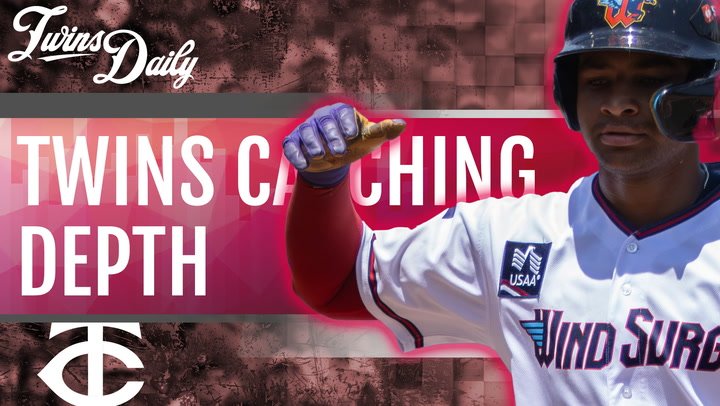 The Twins have arguably the best minor league catching depth in the minors between Vahn Lackey, Eduardo Tait, and Khadim Diaw. Despite struggles controlling the running game, Diaw is showing a polished hit tool, on-base skills, and athleticism in the outfield. What could be his defensive home for the Twins if he continues to hit in the upper levels of the minors? View the full article
 -
Twins Can Still Get Value From Ryan Jeffers This Winter
DiamondCentric posted an article in Twins Daily
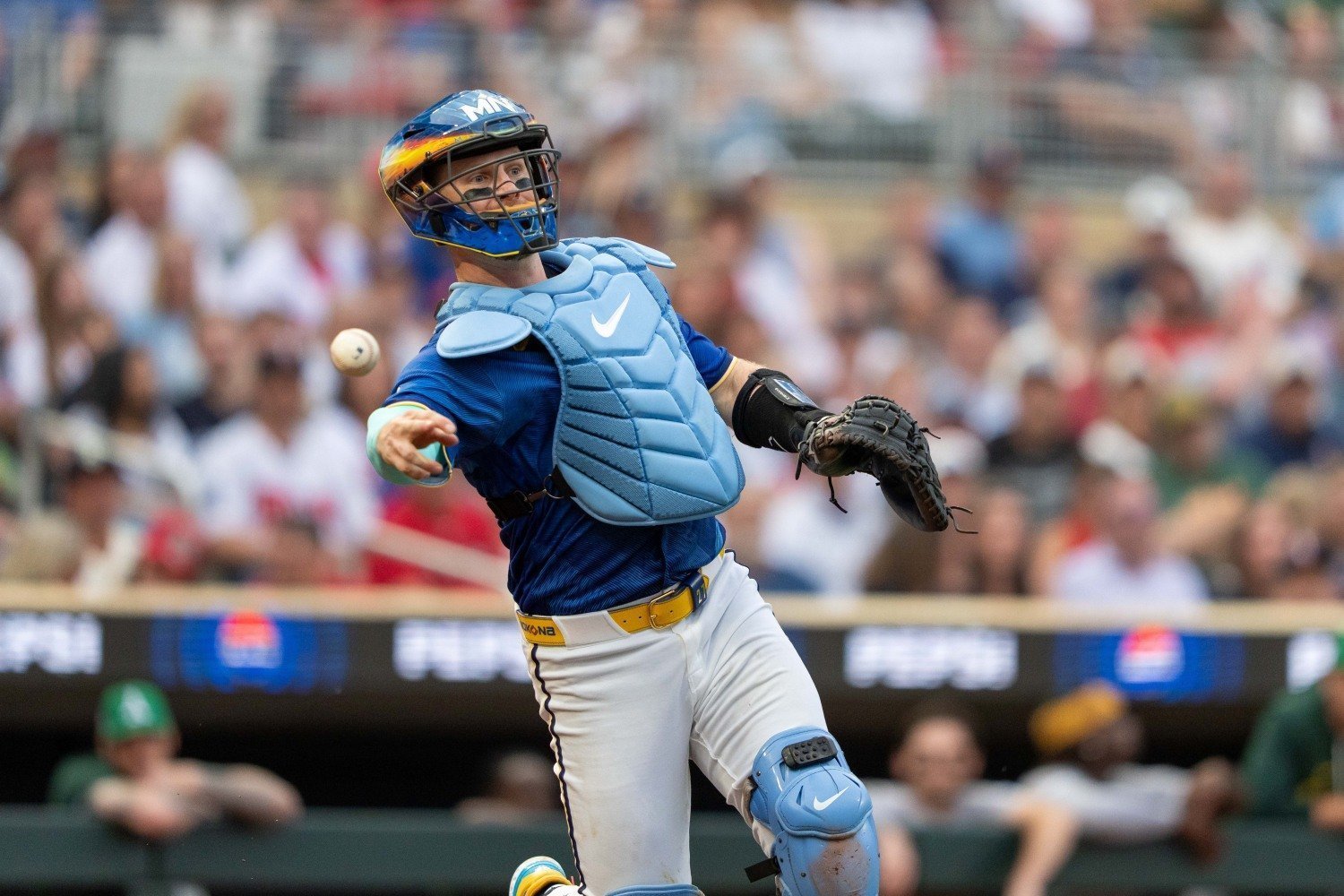 The MLB Trade Deadline has come and gone, and Ryan Jeffers is still wearing a Minnesota Twins uniform. That wasn't necessarily the expected outcome a few weeks ago. Jeffers generated plenty of interest leading up to the deadline, with several contenders reportedly looking for help behind the plate. The Twins had an opportunity to turn their veteran catcher into pitching or another piece that could help the organization now or in the future. Instead, Minnesota ultimately decided to buy at the deadline. Jeffers stayed put. That decision doesn't have to mean the Twins will lose one of their most productive offensive players for nothing, though. There is still a path for Minnesota to get something in return for Jeffers, even if he isn't traded during the regular season. That path is the qualifying offer. The Qualifying Offer Gives the Twins Another Option Free agency isn't usually something teams are thinking about immediately after the trade deadline. There are still two months of baseball to play, and plenty can happen between now and November. But some of the decisions made at the deadline (including the decisions that weren't made) can have consequences well into the offseason. Jeffers is one of those situations. The Twins can extend him a qualifying offer after the season, giving the catcher a one-year contract worth the average salary of MLB's 125 highest-paid players. The value of that offer changes annually, and it was $22.025 million last offseason. This year's figure will be determined later in the year, but will likely be near $24 million. That would be a significant one-year commitment for Minnesota. It would also give the Twins some protection against losing Jeffers for absolutely nothing. If Jeffers accepts the offer, the team gets him back for another season without having to make a long-term commitment. If he declines and signs with another team, the Twins would receive draft-pick compensation. For a player who has established himself as one of baseball's better offensive catchers, that is a pretty appealing safety net. There are some important rules attached to the qualifying offer. A player can only receive one during his career, and he must have spent the entire preceding season with the same organization. Because Jeffers has remained with Minnesota throughout 2026, he would be eligible for the offer. The expiring Collective Bargaining Agreement shouldn't create an issue here, either. The current qualifying-offer rules are already established under the 2022-26 CBA. Jeffers Is Exactly the Type of Player Who Could Receive One The biggest question isn't whether Jeffers is eligible. It's whether the Twins are willing to risk roughly $24 million (or whatever the eventual qualifying-offer value becomes) on one season. There is certainly some risk involved. A qualifying offer is not a small financial commitment. Minnesota would be betting that Jeffers can continue to provide enough offensive production and defensive value to justify a salary that would put him among the more expensive catchers in baseball. For reference, FanGraphs says that Jeffers has been worth over $18 million this season despite missing time on the IL. But the Twins wouldn't necessarily be signing Jeffers because they expect him to be their catcher for the next five years. They'd be buying another year. That's an important distinction. Jeffers has been one of baseball's better-hitting catchers over the past four seasons. His offensive production has made him a valuable player at a position where offense can be difficult to find. If the Twins believe that production is sustainable, bringing him back for one more season could make sense. And if they don't want to pay that price? It isn’t a guarantee. Jeffers can reject the qualifying offer and test free agency. If another team signs him, Minnesota would receive draft compensation in return. There have been multiple reports over the last month that say Jeffers would reject the qualifying offer. Suddenly, the decision to hold onto Jeffers at the trade deadline doesn't look quite as costly. The Twins Still Have Time to Make This Work Minnesota's decision to keep Jeffers could ultimately look different depending on what happens over the final two months of the season. If Jeffers continues producing offensively, his free-agent market could become even stronger. That would make a qualifying offer more likely to be rejected, which is exactly what the Twins would want if they are confident they can collect draft compensation. If his production declines, Minnesota could still make the offer and potentially get him back on a one-year deal. That's what makes the qualifying offer so interesting. The Twins essentially get two paths that can work in their favor. Jeffers accepts: Minnesota gets an established offensive catcher for another season without making a long-term commitment. Jeffers declines: Minnesota gets draft compensation if he signs elsewhere. There is obviously a third possibility where Jeffers accepts the offer and the contract becomes a poor investment. That's the risk the Twins would have to weigh. Still, paying a premium for one season can be preferable to handing out a much longer contract to a player entering his next stage of free agency. The Twins have already seen Jeffers' value on the trade market. Contenders were interested in him before the deadline, but Minnesota couldn't find a deal it liked enough to make. That doesn't mean the value disappeared when the deadline passed. It simply changed forms. The qualifying offer is essentially Minnesota's final opportunity to make sure that doesn't turn into an offseason where the Twins get absolutely nothing in return. After holding onto Jeffers at the Trade Deadline, the qualifying offer should be an easy decision. Minnesota has already determined that Jeffers is valuable enough to keep around for the stretch run. The next step should be making sure that value doesn't simply walk out the door this winter. Should the Twins make Jeffers the qualifying offer? Leave a comment and start the discussion. View the full article
 -
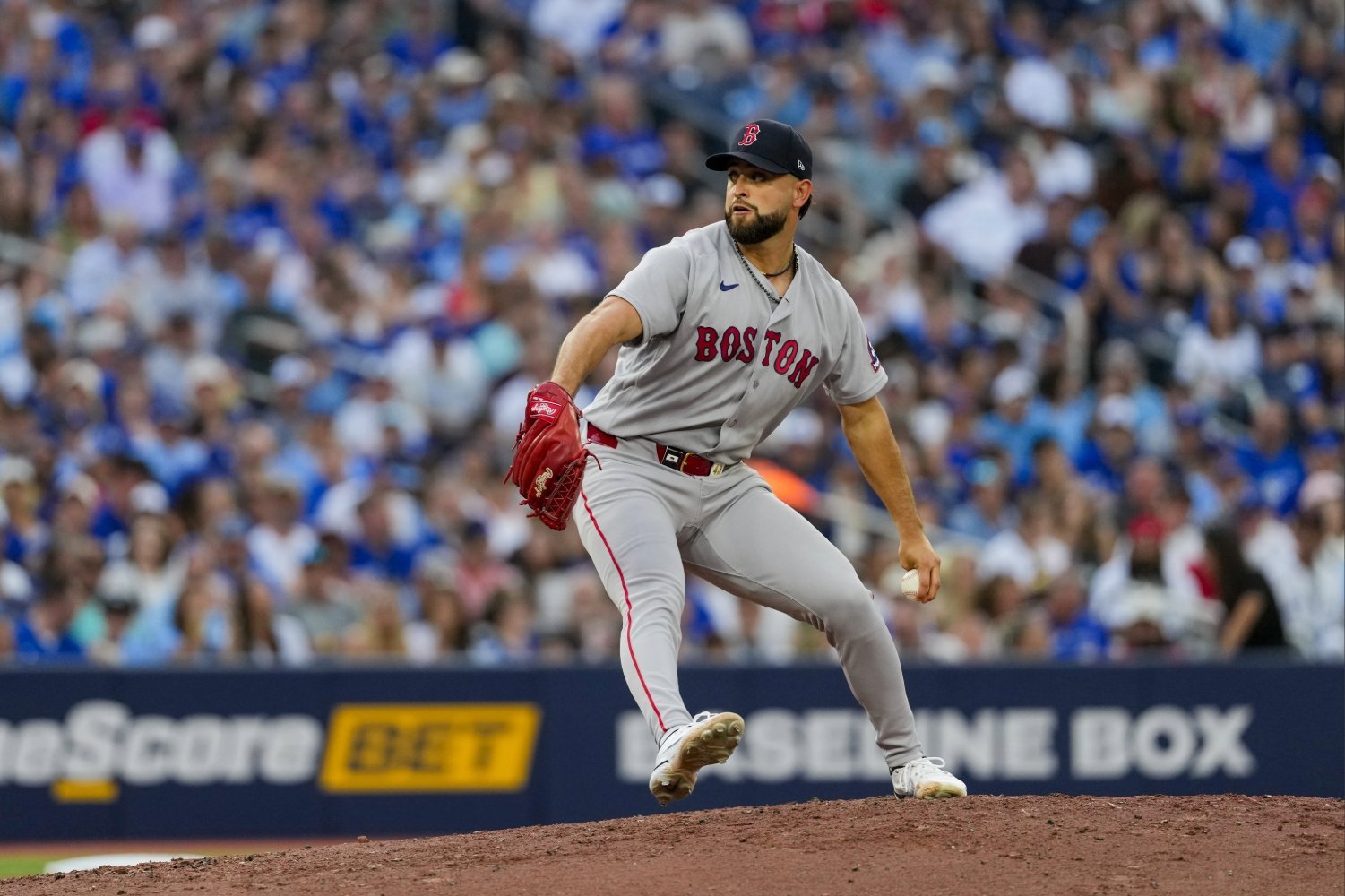 After over two years on the injured list, Patrick Sandoval made his long-awaited return to the major leagues on July 6 when he pitched 4.1 innings against the Chicago White Sox. Signing with the Boston Red Sox in the 2025 offseason, he spent the previous six seasons with the Los Angeles Angels, where he showed high upside as a starter, but saw his production limited by injuries and late call-ups. Eventually, his 2022 breakout season was his first full season in the majors, where he posted a 2.91 ERA and 3.09 FIP in 148.2 innings and recorded a career-high 151 strikeouts. Since returning from injury, Sandoval has been a solid addition to the Red Sox's rotation, compiling a 3.30 ERA and striking out 29 batters in 30 innings. He has consistently ramped up his pitch count in each appearance, with Boston winning in five of his six starts. While he has found early success with his signature changeup, with opponents hitting only .148 against it, Sandoval still needs to improve other areas of his arsenal if he hopes to return to his 2022 form. Patrick Sandoval's Slider Is His Missing Ingredient While his changeup has been his most effective pitch throughout his career, Sandoval has favored his slider this season, throwing it 29.6% of the time. To date, the only other season in which the slider was his most-used pitch was his 2022 breakout season, when opponents hit just .201 against it. However, this season, that average has jumped up to .269, with Sandoval's command appearing to be the biggest difference. Looking at what made the pitch so successful in 2022, Sandoval consistently spotted his slider low or out of the strike zone on two-strike counts, generating a 33.6% whiff rate. His consistency with locating the pitch resulted in a career-high 42.0% chase rate and a 26.9% put-away percentage. This season, Sandoval is attempting to recreate that approach, increasing his slider outside-zone rate from 52.0% in 2022 to 57.5%, yet the results haven’t been the same. In 2026, the southpaw has been less consistent with his spotting, often leaving pitches high in the zone or exaggerated out of the zone. As a result, batters have been less fooled and are chasing the pitch at a career-low 27.5% rate, while his whiff rate has dropped to 30.8% and put-away percentage to 19.4%. The ineffectiveness is especially noticeable when comparing it to his changeup. While its 41.3% whiff rate is down slightly from 44.5% in 2022, Sandoval's put-away percentage has surged from 24.4% to 40.0%, a stark contrast to the effectiveness of his slider. In layman's terms, Sandoval’s ability to deceive batters hasn’t just gone away, as his changeup continues to finish at-bats and generate swings and misses at a higher rate than in 2022. He just needs to be more consistent with his location. The lack of command with the slider is especially daunting given Sandoval's history of having a high walk rate. This season, he has walked batters at a 9.2% rate and has posted a rate north of 9% in all but one season of his career. If hitters continue to lay off his slider outside the zone, Sandoval could find himself in deeper, more unfavorable counts and ultimately allow more baserunners. It's in those spots where he falters, and one blow-up outing or two could change the tune around his standing with the Red Sox. For now, he's become an integral piece of the rotation, covering valuable innings in the wake of injuries and trades that have depleted the team's depth. If he can tighten the spread on his favorite pitch, he might even earn a start or two in the playoffs. View the full article
 -
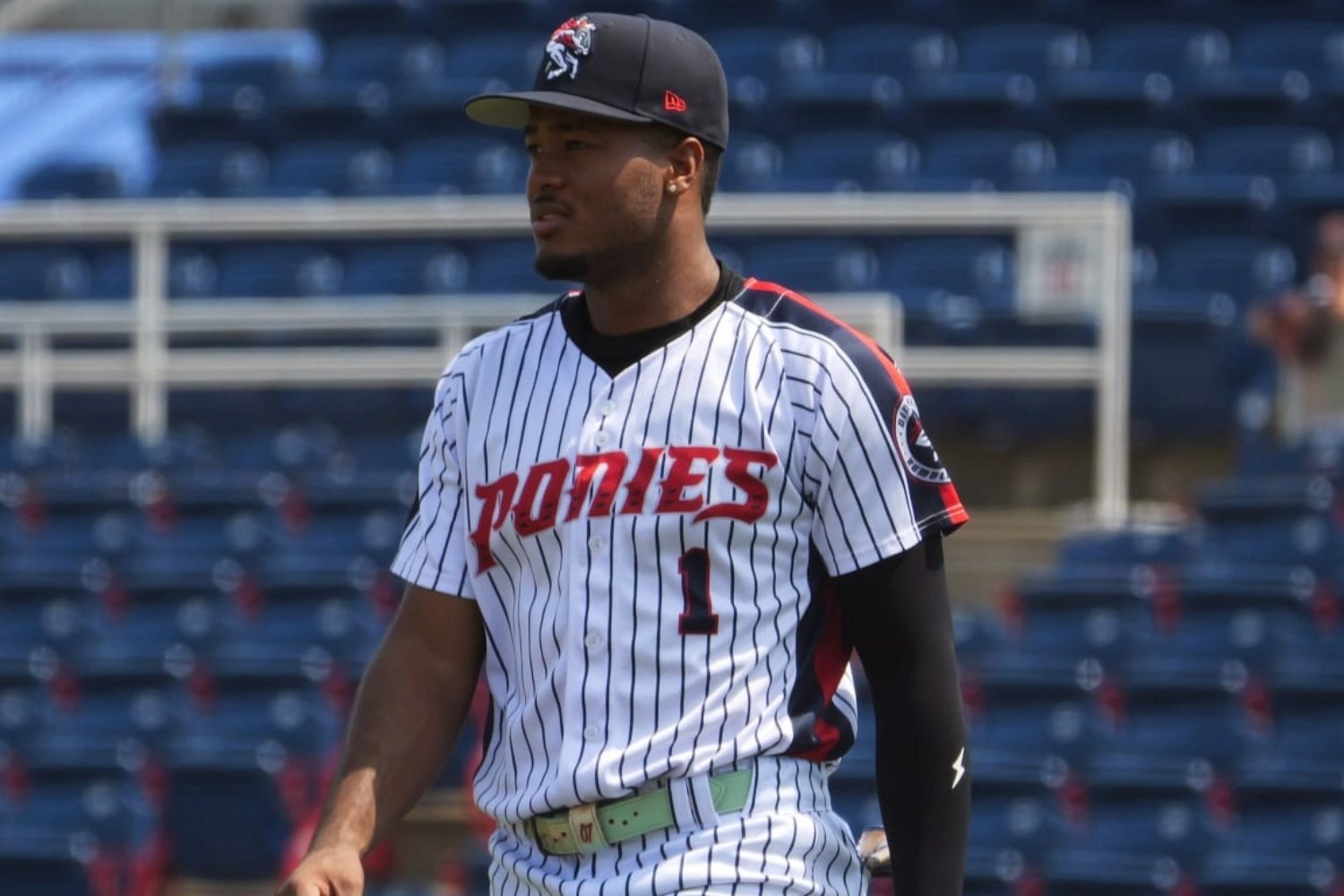 Life may not be great for the New York Mets at the big-league level, but they have a special nucleus forming in the minor leagues. Mitch Voit was already turning heads entering the trade deadline, and Jefferson Rojas is the top dog on a laundry list of 11 new prospects who could make a seismic impact in New York’s farm system. Let’s dive into the latest on Voit and Rojas. Mitch Voit Is Exploding Up Top Prospect Lists Voit is a first-round pick from the 2025 MLB Draft, and he’s quickly gained a reputation for his multi-faceted approach. The former Michigan Wolverine has stolen 42 bases this year, and his strikeout rate (12.0 percent) is far lower than his walk rate (18.0 percent) as we hit the home stretch of the 2026 Minor League Baseball season. The Mets' No. 6 prospect earned the promotion from High-A Brooklyn to Double-A Binghamton a few weeks ago, and he’s really found his stroke ever since leveling up. An Unbelievable Start To Double-A Voit’s productivity over the last two weeks fits the “video-game numbers” hyperbole well, except it isn’t a hyperbole in this case. Voit was slashing just .242/.349/.396 in High-A, but something has seemingly clicked since his call-up. He's 22-for-40 (.550 AVG) with a home run, nine runs batted in, nine extra-base hits and six stolen bags all in 11 games with the Rumble Ponies. His zone-contact percentage of 92.6 percent (96th percentile) is elite, as the 21-year-old is catching any ball in his vicinity clean. His 99th percentile speed rating (per Prospect Savant) is an added bonus to what has been one of the hottest bats in all of Minor League Baseball lately. The sure-handed infielder has played back and forth between the shortstop and second base positions, showing true five-tool upside in just his first full professional season. Jefferson Rojas Was Worth the Price The Mets also traded for one of the top prospects in baseball, acquiring Jefferson Rojas in exchange for right-handed pitcher Clay Holmes and outfielder Tyrone Taylor. New York entered the deadline period well below .500 and acquired more top-30 prospects than any other big-league ball club. Holmes, a rental, and Taylor, a fringe-starting outfielder, is all they had to give up to acquire one of the most talented rising stars in the game. Rojas Can Do It All Rojas immediately earned the nod as the team’s top prospect, per MLB Pipeline, and he’s the 63rd-ranked prospect in all of baseball. Also 21 years old, Rojas has at least a 50-grade pinned to all five of his scouting tools; his hit tool is labeled as one of his best characteristics, with the former Cubs farmhand slashing .267/.335/.455 (.790 OPS) over 96 games between his time with Double-A Knoxville and Double-A Binghamton. The Mets’ top prospect is an aggressive hitter, offering at 71.2 percent of pitches he sees in the zone (76th percentile) and making opposing hitters pay rather often. Rojas has the potential to be more power-oriented out of the two up-and-coming middle infielders, as he’s swatted 15 homers this season already. The Mets' Middle Infield Has A Controllable, Exciting Future What does the future hold for the Mets’ middle infield? With two of their top six prospects tearing it up this year, and getting time together in Binghamton to build a bond on defense, the future in the big apple could be ultra-exciting. There’s a long way to go for a couple of guys who haven’t made their big-league debut yet, but when that time comes, New York has a pair of multi-faceted threats who could terrorize opposing pitching for years to come. View the full article
 -
Are We Seeing A Nate Pearson Renaissance in Kansas City?
DiamondCentric posted an article in Royals Keep
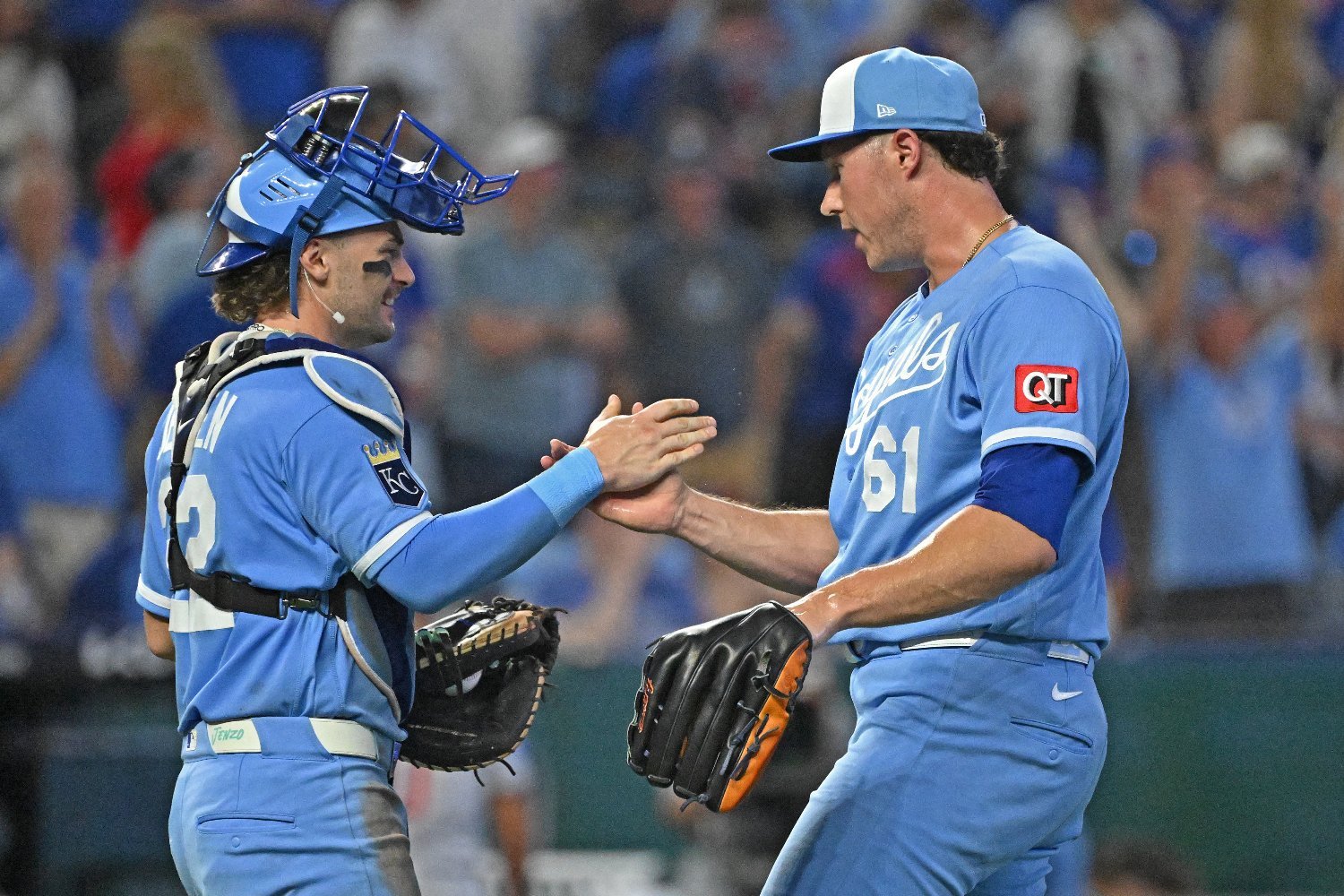 With a bullpen that ranks 29th in bullpen ERA and 30th in bullpen WHIP, the Kansas City Royals have been trying to find answers via various trades and free-agent pickups. One of the most intriguing ones has been righty Nate Pearson, who was acquired on July 22nd for right-handed pitching prospect Max Martin after Pearson was designated for assignment by the Astros on July 19th. Pearson posted respectable numbers in 16 appearances with the Astros this season. In 20 IP, he posted a 3.60 ERA, 1.40 WHIP, and 4.08 FIP. That said, he struggled to strike out batters (19% K%) and also walked more batters than desired (14.3% BB% and 4.8% K-BB%). When looking at his TJ Stats Statcast percentiles summary, Pearson struggled to generate strikes and CSW, despite elite extension and TJ Stuff+ metrics. Pearson ranked in the 86th percentile in extension, 87th percentile in TJ Stuff+, and 92nd percentile in fastball velocity while a member of the Astros. The 29-year-old did a good job of limiting hard hits in Houston, as evidenced by his 31.5% hard-hit rate (89th percentile) and 84.8 MPH average EV (90th percentile). That said, he struggled to find the strike zone consistently (20th percentile zone rate) and generated CSW (26th percentile). With the Astros competing for a playoff spot and upgrading their bullpen at the Trade Deadline, Pearson ended up being the odd man out in Houston. However, the move proved to be an opportunity for the Royals, who traded for the former first-round pick. Since coming over to Kansas City, Pearson hasn't allowed an earned run in eight appearances and 7.2 IP, and his WHIP is 0.65, and his FIP is 2.17. In addition, his K% is up to 28.6%, and he is posting a 21.4% K-BB% with the Royals. The results are better for Pearson with the Royals, and he's maintaining the extension, velocity, and TJ Stuff+ metrics that made him such an intriguing reliever with the Astros, Cubs, and Blue Jays. Here's a look at his Statcast percentiles with the Royals since July 26th, via TJ Stats. Interestingly, Pearson has seen a flip in his hard-hit% and average EV since coming to Kansas City, as they rank in the 4th and 12th percentiles, respectively. However, his zone rate ranks in the 83rd percentile, his CSW ranks in the 58th percentile, and his GB% ranks in the 73rd percentile. Those are all significant upgrades from what he was producing in Houston earlier this season. So what has been the difference for Pearson with the Royals? And can Pearson keep producing like this, not just for the remainder of 2026, but 2027 as well? Let's take a look at the developments that the Royals have seen with Pearson since coming over to Kansas City less than a month ago. Using the Sinker More in Kansas City (Despite Questionable TJ Stuff+) When looking at his pitch mix comparison between his time in Houston and now in Kansas City, there haven't been a ton of differences, as illustrated in his TJ Stuff+ summary comparison below. That said, there are two key changes that have stuck out: he's increased his sinker usage significantly, and his slider has improved significantly with the Royals. Interestingly, the sinker rates well via TJ Stuff+. It has a 92 mark, which is actually five points worse than his mark with the Astros. However, the pitch has been a better zone rate pitch with the Royals (60%) than with the Astros (51.5%), and while it doesn't generate much whiff (14.3% with the Royals; 7.7% with the Astros), it has been a good pitch when it comes to generating weak contact. He allowed a .108 xwOBACON on the sinker in Houston, and that has remained the same in Kansas City, as he has a .199 xwOBACON. With the Astros, he only threw the sinker 9.5% of the time. With the Royals? That sinker usage is up to 20.2%. With a higher usage, he's generating more chase as well, despite it rating worse on a TJ Stuff+ end. The difference with the sinker is that Pearson has made the pitch more horizontal than vertical. With the Astros, Pearson's sinker had 12.4 inches of iVB and 14.8 inches of HB with a spin rate of 2,235 RPM. With the Royals, that iVB is 11.1, the HV is 12.8, and its spin is 2,136 RPM. It's also an offering that has less spin and general movement, and it's located lower in the zone than it was in Houston. Below is a clip compilation of his sinker from an outing in Houston and Kansas City. As Royals fans can see above, Pearson located the sinker higher and more on the edges in Houston. It also clearly had more vertical rise. With Kansas City, the pitch is located more around the knees and in the middle and fades way more toward the hitter than it did in the Astros clip. Throwing a pitch with bad TJ Stuff+ doesn't seem like a recipe for success. However, it seems like throwing the sinker more has led to a more "aggressive" mindset for Pearson, which has helped him throw more strikes and limit walks in Kansas City. More strikes and fewer walks will lead to fewer runs allowed and more strikeouts. Both outcomes are happening for Pearson with the Royals in his short sample so far. Fewer Breaking Balls Being Thrown in Kansas City An interesting trend for Pearson with the Royals is that he's throwing fewer breaking offerings. Those pitches are his slider and his curveball. With the Astros, Pearson's slider and his curve were his second- and third-most-thrown pitches, respectively. He threw the slider 36.1% of the time and the curve 11.6% of the time in Houston. With the Royals, that slider usage has declined to 22.2%, and his curveball usage has fallen to 8.1%. Those are decreases of 13.9% and 3.5%, respectively. What's interesting about the decline in usage is that the pitches haven't gotten worse for Pearson in Kansas City, at least on a TJ Stuff+ end. Pearson's slider has a 115 TJ Stuff+, and his curve has a 105 TJ Stuff+. The curve has declined by one point in the move to KC, but his slider TJ Stuff+ has been three points better with the Royals. Thus, he's doing a lot of the same things theoretically with those breaking pitches since moving to Kansas City. A difference for Pearson and his breaking pitches is that while he's throwing both pitches less, he's throwing them for more strikes. His slider zone% has gone from 45.6% to 54.5%, and his curveball zone% has risen from 27.5% to 37.5%. He's generating fewer whiffs with both pitches in Kansas City (16.7% slider whiff% and 50% curve whiff%), but by throwing the pitch in the zone more, he's keeping hitters honest. They can't lay off those pitches as much as they could in Houston. Here's an example of Pearson's slider generating a swinging strike out of the zone by the Dodgers' Alex Call in an August 11th outing. VndQT3ZfVjBZQUhRPT1fQlZVRFZGRU5CMVlBWGdFSEFnQUhWRlZlQUZnQlVGUUFCRkFGVlFjQUJGSmRCRlJl.mp4 Not only is the pitch on the edge, but if Pearson has been throwing the pitch for strikes, Call has to respect it and try to make contact on it. That wasn't happening in Houston, and it's likely that without the slider zone% change, Pearson wouldn't have gotten Call to chase in a two-strike count. Pearson did something similar with the curve against Pete Crow-Armstrong on August 8th. Crow-Armstrong had to respect the curve because it has been thrown more for strikes, and on an 0-2 count, he chases on a curve down and out of the zone, and Pearson is able to acquire the save. YVlkZEFfWGw0TUFRPT1fQWdJQVZWMVdWd1VBQ2xVRUFnQUhBbFZUQUZrQlZGRUFVUUVEQWxZRVVnZFNCRmRX.mp4 Pearson's breaking offerings still have flaws. He has a .441 xwOBACON with the slider in Kansas City, which is much higher than .377 xwOBACON on his slider in Houston. Still, his more aggressive approach with his breaking pitches has been key to his early success with the Royals. Can Pearson Stay Healthy and Consistent? Pearson has long been a heralded pitching prospect, especially during his tenure in Toronto. He was often listed as the Blue Jays' top prospect, and many scouts thought Pearson could be a prototypical ace when he was drafted 28th overall in the 2017 MLB Draft. Unfortunately, he has struggled to stay healthy, leading to mediocre numbers and long stretches of missed games. After pitching a career-high 66.2 IP with the Blue Jays and Cubs in 2024, he only pitched 14.2 innings with the Cubs in 2025. Pearson underwent an offseason arthroscopic elbow cleanup procedure that kept him out until May 20th, and he just never looked the same last season. He posted a 9.20 ERA and was designated for assignment, then released on September 20th. Pearson hasn't had any major surgeries. However, he seems to get dinged with a lot of minor ones, which have seemed to stunt him from building momentum on the mound. Since debuting in 2020 with Toronto, he has gotten mono (2022), had an adductor strain (2021), and had earlier elbow issues during his rookie season. As a result, Pearson has a career 4.78 ERA and 4.80 FIP in 184.1 IP. Thus, it will be important for Pearson not just to stay healthy, but to continue building positive momentum with each and every relief outing. He has gotten off to a nice start in Kansas City, and he's getting opportunities, especially in high-leverage spots in the 8th and 9th innings. Thus, this is the best spot for Pearson to turn around his career after being more of a middle-innings, mop-up guy in Houston. Then again, consistency hasn't always been Pearson's strong suit. That was on display on Saturday as he gave up a hit, a walk, and a run in a 1-0 loss to the Angels on Saturday night. While the stuff was solid from Pearson as usual, he struggled to throw strikes, as evidenced by his 35% zone rate. Pearson wasn't hit hard on Saturday in the loss (.300 xwOBACON). Unfortunately, he didn't throw enough strikes and wasn't generating the kind of chase (23.1% chase%) or whiffs (11.1% whiff%) to make up for the lack of control. The outing bumped his ERA up to 2.83 and his FIP to 3.57 for the season in 28.2 IP (it was also the first earned run he's allowed as a Royals pitcher). His pitch chart from Saturday's outing also illustrated that while Pearson was hitting the edges with his four-seamer, he was struggling to locate with his other offerings. That was just enough for the Angels to squeak out a victory against a Royals offense that couldn't solve Reid Detmers (11 strikeouts in 8.0 IP) or closer Ben Joyce (two strikeouts). There's no doubt the stuff, velocity, and potential are there for Pearson to be successful. Even though he's nearly 30, he's still a relatively fresh pitcher without a lot of mileage on his arm. Furthermore, he has the kind of velocity and extension that this bullpen needs. His profile is similar to other big arms in the Royals organization like Steven Cruz and Luinder Avila. According to TJ Stats leaderboards, Pearson's 6.8 extension is the best mark of any Royal currently on the Royals 40-man roster, and his TJ Stuff+ of 107 is second-best, behind only Craig Kimbrel (who has yet to pitch for Kansas City). The tools are there for Pearson to succeed, and perhaps Kansas City and its smaller market are the kind of scenery changes that Pearson needs to turn his career around. Will he be a closer or a future setup man for the Royals in 2027? That's undetermined, especially with the Royals likely spending some money in free agency on the bullpen this upcoming offseason. Nonetheless, Pearson is making his early case that he needs to be considered as part of the Royals' bullpen plans beyond 2026. View the full article
 -
Why aren't Marlins calling up Deyvison De Los Santos?
DiamondCentric posted an article in Fish On First
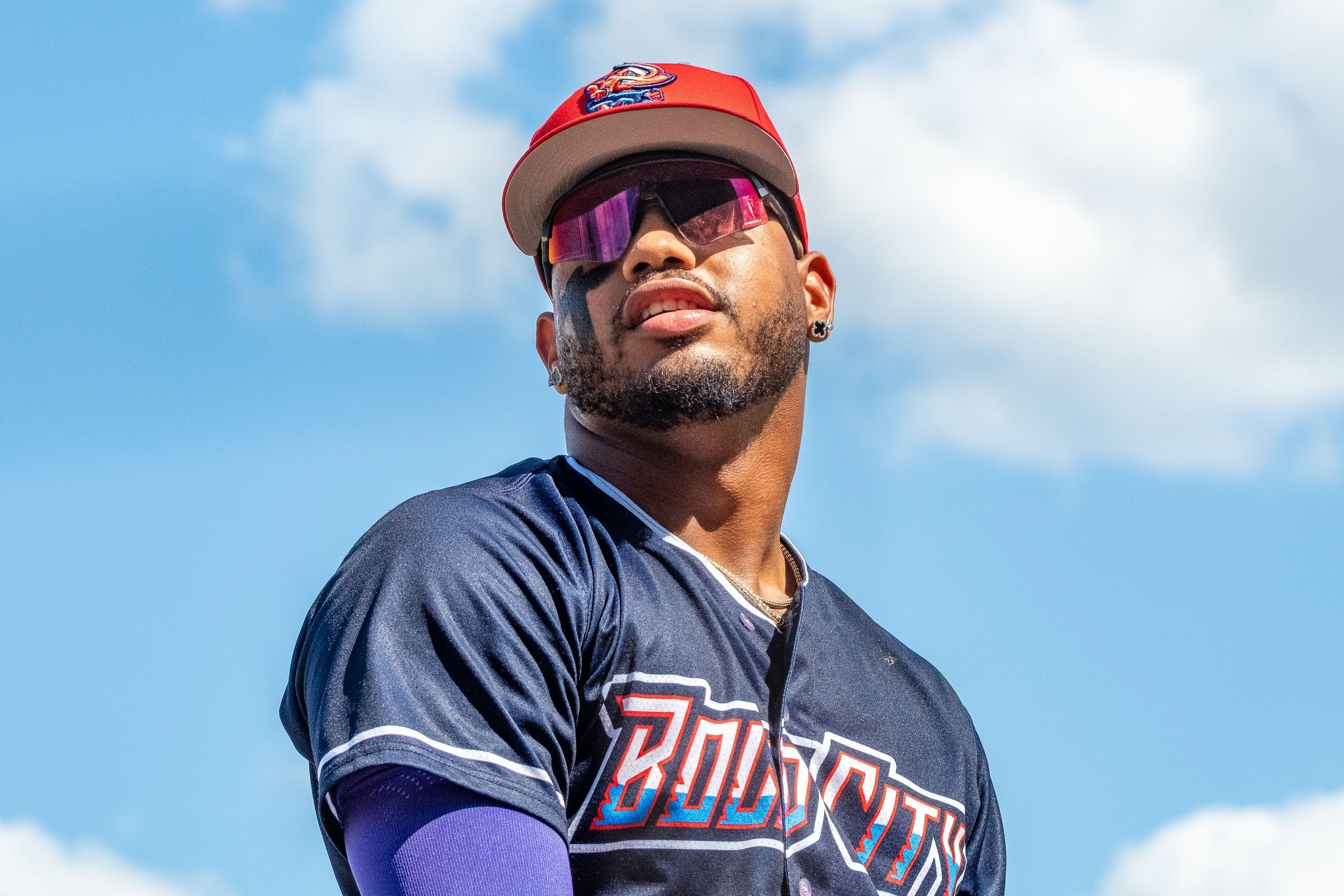 When Deyvison De Los Santos joined the Miami Marlins organization in July 2024, he was mashing in the Triple-A Pacific Coast League and on his way to leading Minor League Baseball in home runs. There was, quite understandably, speculation that he could be a regular in the Marlins major league lineup by the end of that season. Instead, fast-forward more than two full years later, De Los Santos has played a grand total of three MLB games. How is that possible? No question, De Los Santos should be looking in the mirror before pointing fingers at anybody else. His overall production has plummeted compared to what he achieved at age 21, with a drop-off in game power and a troubling tendency to chase pitches out of the strike zone, which opponents have exploited. He arrived with some potential defensive versatility to play either first base or third base, but has failed to become a viable option at the latter. Peaking at No. 3 on the Fish On First Top 30 prospects list, he's no longer ranked at all. De Los Santos has been an afterthought for months since a couple brief stints on Miami's active roster in March/April. However, he's gradually shown legitimate signs of development. In 92 Triple-A games this season, De Los Santos is slashing .276/.339/.480 with 17 home runs and 17 stolen bases. His wRC+ with the Jacksonville Jumbo Shrimp from 2024-25 was merely 86 (with 100 representing league average), but that has surged to a 113 wRC+ in 2026. His current 19.6% strikeout rate is the lowest that he has ever posted in a minor league campaign. June 21 is a key date to circle for De Los Santos. It was coincidentally his 23rd birthday, but more relevant from a baseball career perspective, that was when the Marlins designated Christopher Morel for assignment. A veteran right-handed hitter with a similar offensive profile, Morel was essentially blocking him. Removing that obstacle has brought out the best in De Los Santos—in 37 games since then, his slash line has risen to .295/.370/.550, including nine homers. The Marlins are currently in desperate need of De Los Santos' skill set. With Kyle Stowers recuperating from a hamstring strain, they have a void at first base. View the full article
 -
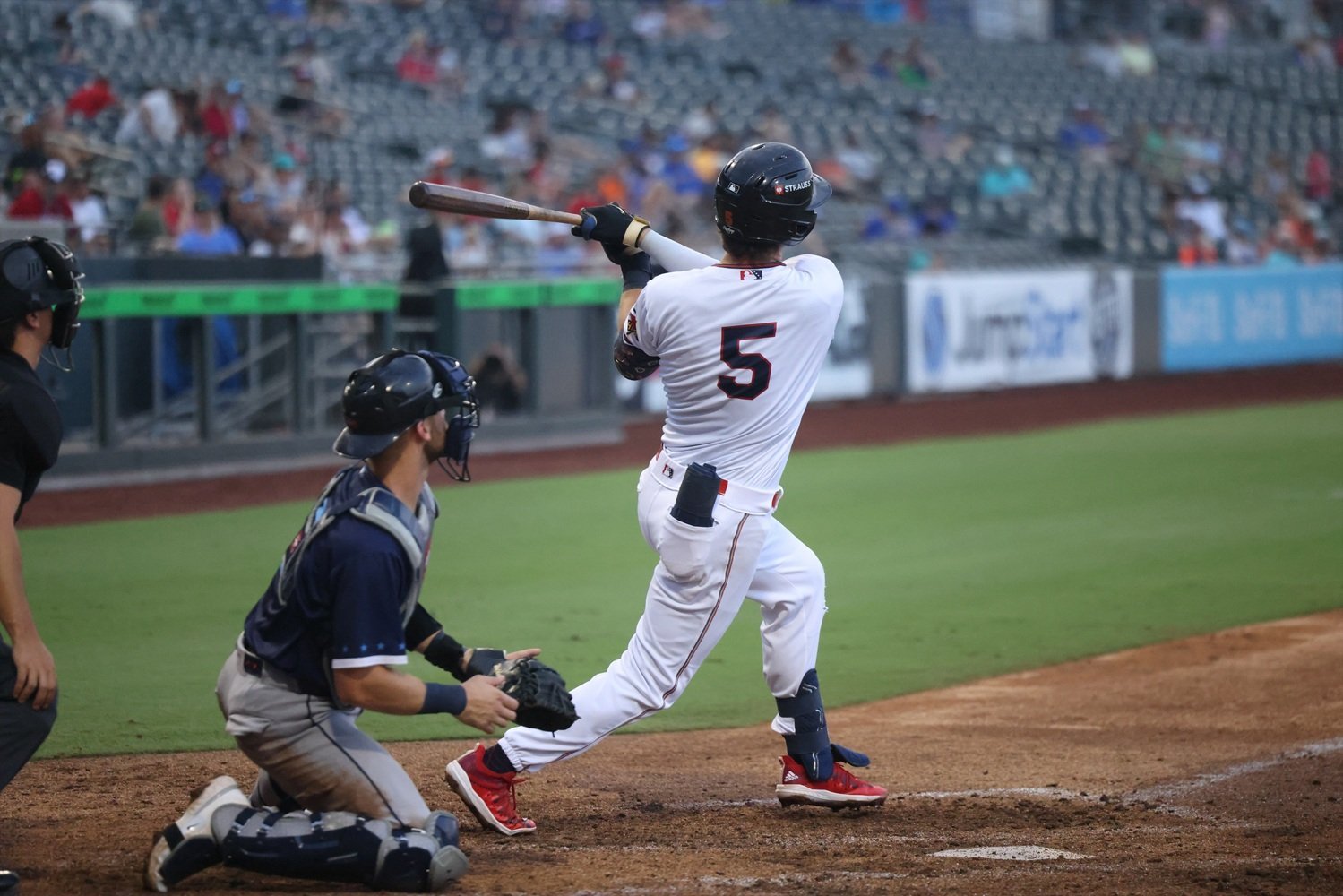 TRANSACTIONS Two straight days with no transactions in the organization? Inconceivable! SAINTS SENTINEL Game 1: St. Paul 6, Iowa 0 Box Score In the first game on Saturday afternoon, the Saints and the Cubs each had six hits. Yet when the seventh inning was complete, the Saints had a nice, 6-0 shoutout win. Lefty Kendry Rojas made his second start of the week for the Saints. He also started the Saints Field of Dreams game on Tuesday night. On Saturday, he threw four scoreless innings. He gave up four hits, walked one and had five strikeouts. What is the most important thing for Rojas in his development? Throwing strikes, right? On this night, 40 of his 52 pitches were strikes (76.9%). Jack Anderson came and had five strikeouts over three scoreless innings. He gave up two hits and walked one. The starter for Iowa was North Side Baseball’s #16 prospect, RHP Grant Kipp. He worked three scoreless, hitless innings. He walked three and had four strikeouts. NSBB’s #4 Cubs Prospect is catcher Owen Ayers. He went 0-for-3 in this game. Veteran Hoby Milner came out of the Cubs bullpen in the fourth inning and started by hitting Emmanuel Rodriguez. Next, he gave up a single to Matt Wallner. With two outs, Tristan Gray singled to drive in Rodriguez with the game’s first run. Cody Morissette followed with an RBI double to make it 2-0. In the sixth inning, the Saints added a run when Tristan Gray stole second and an Ayers throwing error allowed Hendry Mendez to score from third. Then Morissette came to the plate again. This time, he crushed a long home run to give the Saints a 5-0 lead. The Saints added one more in the top of the seventh. Walker Jenkins walked and went to second on a Ben Ross single. Jenkins went to third base on a fly out and then scored on a Matt Wallner sacrifice fly. Morissette went 2-for-3 with his 13th double and 10th Saints home run. He drove in half of the Saints' runs. He was the lone Saints hitter with a multi-hit game or an extra base hit. Aaron Sabato had a single and a walk. Walker Jenkins walked twice. Game 2: St. Paul 5, Iowa 4 Box Score The second game started out a bit different. The Cubs scored four runs in the bottom of the first inning, but the Saints worked their way back with a couple of crooked numbers and came away with a doubleheader sweep in Des Moines. Trent Baker started for the Saints. He gave up four runs (1 earned) in four innings, all in the first inning. He gave up five hits (2 homers), walked none and had six strikeouts. The Saints started to cut into the deficit in the top of the third. Noah Cardenas was hit by a pitch and scored on a Ben Ross double. Emmanuel Rodriguez followed with a double of his own to make it 4-2. Woo-Suk Go walked two batters in a scoreless fifth inning. With two outs in the top of the sixth frame, Kala’i Rosarios singled. He went to second on an infield single by Cory Morissette. Tanner Schobel walked to load the bases. Noah Cardenas came through with a huge, clutch hit. He doubled to left field which cleared the bases and gave the Saints a 5-4 lead. Eric Orze and Julian Merryweather each had two outs in a scoreless inning to give the Saints the sweep. Aaron Sabato went 2-for-4, the lone multi-hit game for the Saints. Ross hit his 21st Saints double, and Rodriguez and Cardenas both doubled for the fourth time. Rodriguez also walked and stole a base. WIND SURGE WISDOM Wichita 6, Corpus Christi 10 Box Score A six-run sixth inning for the Hooks was something that the Surge were unable to overcome. Cory Lewis made the start. He gave up two runs on two hits over 3 2/3 innings. He walked three and had four strikeouts. Darren Bowen came on to get the final four outs of the fourth inning. He pitched a scoreless fifth inning. However, he gave up three runs in the sixth, and Jaylen Nowlin came in and gave up three more before the inning ended. Mitch Mueller struck out two batters in a one-hit inning. William Fleming gave up two runs (1 earned) on four hits over the final two innings. In the bottom of the fourth inning, the Wind Surge tied the game at 2-2, but it was an inning with a couple of big What Ifs. Brandon Winokur led off with a single, but he was caught stealing. Caden Kendle followed with a single. Garrett Spain hit the third straight single. Kendle advanced to third base, but Spain was thrown out at second base for the inning’s second out. Fortunately, Jake Rucker came through with a line drive home run that tied the game at two. When the Surge came up in the bottom of the eighth, they were behind 10-2. They sure attempted a comeback but fell well shy. Jaime Ferrer and Jay Thomason started the innings with singles. The next two batters got out, but Caden Kendle drove in Ferrer with a single. Spain then walked to load the bases. Jake Rucker came up again and came through again. He lined an opposite-field double to clear the bases and cut the deficit to 10-6, but that was as close as they got. Rucker went 2-for-3 with his eighth doubles, his seventh home run, and five RBI. Kendle was 2-for-4. Kyle DeBarge was 1-for-2 with two walks and his 27th stolen base. Andrew Cossetti and Garrett Spain each had a single and a walk. KERNEL NUGGETS Cedar Rapids 3, Wisconsin 15 Box Score The Brewers organization is loaded, and even though the Rattlers roster is missing many of the top prospects that began the season in Wisconsin, but as this game shows, there are more terrific players on the way up. Another rough start for Cesar Lares in his return from Tommy John surgery. In this game, he went one inning and gave up three runs (1 earned) on one hit and three walks. He struck out three. He needed 38 pitches to get through the inning, so that was it for him. Christian Becerra came on and gave up two runs on two hits and two walks in 2 1/3 innings. He struck out two batters. Ross Dunn came in and got two outs. He was charged with three runs on four hits. Both outs were on strikeouts. Cleiber Maldonado walked one and struck out one in his inning. Cody Peschl gave up four runs on five hits (2 homers) and a walk. He struck out two. Brian Zeldin gave up three runs on two hits (1 homer). He walked two and had three strikeouts. It may not have made a difference since the Kernels were down, but they went 1-for-13 with runners in scoring position and left eight on base. The Kernels had eight hits and four walks. Yasser Mercedes went 2-for-3 with a walk, his 19th stolen base, and his 34th stolen base. JP Smith went 1-for-2 with a walk and his fourth Kernels homer before being ejected after a strikeout in the sixth inning. Jose Salas hit his fifth double and was hit by a pitch. Irvin Nunez hit his first double with the Kernels. Quinn McDaniel and Miguel Briceno each had a single and a walk. None of the Brewer Fanatic Top 20 prospects played in this game. #2 Prospect Luis Pena and #16 Prospect Sawyer Strosnider didn’t even play in this game. MIGHTY MATTERS Fort Myers 2, Clearwater 8 Box Score The final score is not at all indicative to how this game played out. The score was 1-0 through seven innings. However, the Thrashers scored seven runs in the top of the eighth inning. With two outs in the bottom of the first inning, Luis Fragoza homered to give the team a 1-0 lead. The Mussels didn’t score again until the bottom of the eighth, after they were behind 8-1. With two outs, Fragoza walked and went to second on defensive indifference. Aidan Teel had an infield single which advanced Fragoza to third. Quentin Young walked to load the bases. Bryce Fowler followed with another walk to drive in the team’s second and final run. Ramiro Villanueva started and gave up one run on three hits over three innings. He had four strikeouts with no walks. Matt Dalquist tossed three scoreless innings. He gave up three hits, walked three and had three strikeouts. Nick McAuliffe pitched a scoreless seventh inning. Then came the eighth inning. McAuliffe faced three batters. All three reached base. Michael Hilker came on and combined they gave up seven runs in the inning. Melvin Rodriguez struck out two in a perfect ninth inning. Fragoza went 2-for-3 with a walk and his 14th home run. He also stole his 13th base. Fowler was 1-for-3 with a walk and his first pro double. Teel was 1-for-3 with a walk. Young walked twice. COMPLEX CHRONICLES DSL Twins 4, DSL Tigers 6 Box Score This was a fantastic game for the Twins… until it wasn’t. Adrian Martinez made the start and gave up one run on three hits and two walks and a hit batter over three innings. He had four strikeouts. The Twins got on the scoreboard in the third inning. Fabian Ulloa singled to start the inning. He stole second. Luis Suarez walked. With one out, Jendy Martinez singled to drive in Ulloa and tie the game at 1-1. The Twins scored twice more, both on wild pitches. The Twins added a fourth run in the fifth inning on a couple of walks and a balk. Sebastian Echevarria walked two and had two strikeouts over two scoreless, hitless innings. Juan Quinones pitched a scoreless sixth inning. He also started the top of the seventh. He gave up three runs and Wisarly Reinoso gave up two more and abruptly the Twins were losing 6-5. They were unable to score in the bottom of the inning to take the loss. Jendy Martinez went 2-for-3 with a walk. Fabian Ulloa was 2-for-3 and stole his seventh base. Jhon Gonzalez was 0-for-1, but he walked three times. PLAYERS OF THE DAY Hitter(s) of the Day Jake Rucker (Wichita): 2-for-3, HBP, 2B(8), HR(7), R, 5 RBI Cody Morissette (St. Paul): Game 1: 2-for-3, 2B(13), HR(10), R, 3 RBI, Game 2: 1-for-3, R. Luis Fragoza (Fort Myers): 2-for-3, BB, HR (14), 2 R, RBI Pitcher(s) of the Day Kendry Rojas (St. Paul): 4 IP, 4 H, 0 R, 1 BB, 5 K, 52 pitches, 40 strikes (76.9%) PROSPECT SUMMARY Check out the Prospect Tracker for much more on our Twins Top 20 prospects. See how they did today. #1 - OF Walker Jenkins (St. Paul) - Game 1: 0-for-2, 2 BB, R, K (batted first, played LF) #3 - IF Kaelen Culpepper (Minnesota) - 2-for-4, 2B(1), K (batted ninth, played SS) #6 - OF Emmanuel Rodriguez (St. Paul) - Game 1: 0-for-3, HBP, R, K (batted third, played CF); Game 2: 1-for-3, BB, 2B(4), RBI, SB(3), K (batted second, DHd) #7 - OF Hendry Mendez (St. Paul) - 0-for-3, BB, K, R (batted sixth, played DH) #8 - C Eduardo Tait (Cedar Rapids) - 0-for-4, 2 K (batted third, played DH) #9 - 1B/OF Gabriel Gonzalez (St. Paul) - Game 2: 0-for-3, BB (batted fourth, played RF) #11 - C Carson Tinney (Fort Myers) - 0-for-4, K (batted second, played catcher) #12 - 3B/CF Brandon Winokur (Wichita) - 1-for-5 (batted second, played SS) #18 - 3B/SS Quentin Young (Ft. Myers) - 0-for-2, 2 BB, 2 K (batted fifth, played 3B) #19 - OF Yasser Mercedes (Cedar Rapids) - 2-for-3, BB, 2B(19), R, SB(34) (batted fourth, played CF) UPCOMING PROBABLES Sunday, August 16 St. Paul @ Iowa (1:08 pm CT) - RHP German Marquez (First Saints start) Corpus Christi @ Wichita (1:05 pm CT) - RHP Ty Langenberg (1-4, 3.58 ERA) Wisconsin @ Cedar Rapids (1:05 pm CT) - RHP Kolten Smith (0-3, 3.32 ERA) Clearwater @ Ft. Myers (11:05 am CT) - RHP Callan Fang (3-3, 4.02 ERA) CURRENT W-L Records Minnesota Twins: 60-64 St. Paul Saints: 68-50 Wichita Wind Surge: 45-66 Cedar Rapids Kernels: 44-67 Fort Myers Mighty Mussels: 61-50 FCL Twins: 33-26 DSL Twins: 17-34 Please feel free to ask questions about the teams, the rosters, and discuss today’s games, or anything else Twins minor-league related! View the full article
 -
 On a rather rough Saturday, the San Diego Padres' four full-season affiliates went 1-3 with another game suspended. The Triple-A El Paso Chihuahuas gave up the lead in ninth of an 8-7 loss to Salt Lake, the Double-A San Antonio Missions were handcuffed by Frisco 7-1, the High-A Fort Wayne TinCaps lost the opener of a doubleheader with Quad Cities 4-2, then had the second game suspended heading into extra innings and the Low-A Lake Elsinore Storm blanked Inland Empire 6-0. Padres Minor-League Transactions San Antonio Missions placed SS Carson Tucker on 7-day injured list San Antonio Missions activated 2B-C Oswaldo Linares from developmental list. Four Walks In Ninth Cost Chihuahuas A Victory After the host Triple-A El Paso Chihuahuas built a 7-4 lead entering the top of the ninth, four walks led to a four-run rally as the Salt Lake Bees pulled out an 8-7 victory. Marcos Castanon homered as part of a two-hit, two-run day, while leadoff hitter Dustin Harris went 3-for-5 with a double and three RBIs and Mason McCoy went 3-for-3 with a walk, three steals and three runs scored for the Chihuahuas, who led 6-2 after four innings. Castanon's homer was a solo shot to center in the second inning, his team-leading 15th of the year, while McCoy now has 30 steals, which is tied for the Pacific Coast League lead. Chihuahuas right-handed starter Jhony Brito went three innings and allowed two runs on five hits with no walks or strikeouts. Right-hander Logan Gillaspie gave up a run over three innings, right-hander Alek Jacob a run in one inning and right-hander David Morgan a clean eighth inning. Right-hander Hans Crouse, who had allowed just three hits and no runs in four one-inning outings since joining the Chihuahuas struggled for the first time, giving up three hits and three walks, leading to four runs while only getting one out. The go-ahead run scored when right-hander Ethan Routzahn came on and struck out the first batter but walked the next one. EP_0815.mp4 Player AB R H RBI BB K Dustin Harris 5 1 3 3 0 1 Bryce Johnson 5 0 1 0 0 2 Carlos Rodríguez 5 0 1 0 0 0 Nick Solak 4 0 0 1 0 2 Gage Workman 5 0 0 0 0 1 Will Wagner 5 0 0 0 0 2 Marcos Castañon 3 2 2 1 1 0 Mason McCoy 3 3 3 0 1 0 Rodolfo Durán 4 1 2 2 0 1 Totals 39 7 12 7 2 9 Player IP H R ER BB K HR Jhony Brito 3 5 2 2 0 0 0 Logan Gillaspie 3 2 1 1 0 1 1 Alek Jacob 1 2 1 1 0 1 0 David Morgan 1 1 0 0 0 1 0 Hans Crouse 1/3 3 4 4 3 0 0 Ethan Routzahn 2/3 0 0 0 1 1 0 Totals 9 13 8 8 4 4 1 Missions' Offense Stuck In Neutral In Loss To RoughRiders Four pitchers held the Double-A San Antonio Missions to six hits and a first-inning run as the host Frisco RoughRiders came away with a 7-1 victory. The Missions' lone run came on Tirso Ornelas' 13th homer of the season with one out in the first inning. The Missions did draw eight walks, including two each by Romeo Sanabria and Wyatt Hoffman, but could create any offense. Missions right-handed starter Matthew Watson allowed four runs in 4⅓ innings, giving up six hits and two walks, striking out six. He was touched for a pair of homers. Right-hander Tucker Musgrove, Padres Mission's No. 12 prospect, followed Watson and gave up an RBI double to the first batter he faced, closing the book on Watson, and then getting two outs. Right-hander Clay Edmondson allowed three runs in two innings and right-hander Sadrac Franco a scoreless eighth. Player AB R H RBI BB K Ryan Jackson 4 0 0 0 1 1 Tirso Ornelas 4 1 1 1 1 1 Alex McCoy 5 0 1 0 0 2 Braedon Karpathios 4 0 0 0 1 4 Jack Costello 5 0 1 0 0 2 Romeo Sanabria 3 0 1 0 2 1 Albert Fabian 4 0 1 0 0 0 Wyatt Hoffman 1 0 0 0 2 0 Anthony Vilar 3 0 1 0 1 2 Totals 33 1 6 1 8 13 Player IP H R ER BB K HR Matthew Watson 4 1/3 6 4 4 2 6 2 Tucker Musgrove 2/3 1 0 0 0 0 0 Clay Edmondson 2 3 3 3 0 2 1 Sadrac Franco 1 0 0 0 1 0 0 Totals 8 10 7 7 3 8 3 Robbie Lavey Homers Again In TinCaps' Loss; Nightcap Suspended What was supposed to be a doubleheader for the High-A Fort Wayne TinCaps ended up being one completed game and another that was on the verge of being finished when a rally and then rain caused the second game to be suspended. The result was a 4-2 loss by the TinCaps, who then took a 2-0 lead into the bottom of the seventh (and final) inning when the host Quad Cities River Bandits got a two-out two-run homer to send it to extras. Only problem was Mother Nature unleashed a torrent of rain, pushing the conclusion of the game to Sunday to be followed by a seven-inning game. In the opener, a makeup of Wednesday's postponement due to a power outage, the TinCaps were stifled to two hits through the first six innings before finally scoring in the seventh. Robbie Lavey, the Padres' fourth-round pick, homered for the second game in a row to break up the shutout, then Dylan Grego singled home Bradley Frye, who had also singled. Lavey went 2-for-4 and now has three hits in his first three games, two of which are long balls that have come in the last two nights. TinCaps right-handed starter Carlos Medina gave up a run in two innings, left-hander Braian Salar had a scoreless third, then right-hander Maikel Miralles gave up three runs (two earned) in 2⅓ innings on four hits and three walks. FW_0815.mp4 Player AB R H RBI BB K Justin DeCriscio 3 0 1 0 0 1 Ryan Wideman 3 0 0 0 0 0 Rosman Verdugo 2 0 0 0 1 2 Robbie Lavey 3 1 2 1 0 0 Kerrington Cross 3 0 0 0 0 1 Bradley Frye 3 1 1 0 0 0 Yoiber Ocopio 2 0 0 0 1 1 Dylan Grego 3 0 1 1 0 2 Conner Westenburg 2 0 0 0 0 1 Luke Cantwell 1 0 0 0 0 0 Totals 25 2 5 2 2 8 Player IP H R ER BB K HR Carlos Medina 2 2 1 1 2 2 0 Braian Salazar 1 0 0 0 1 1 0 Maikel Miralles 2 1/3 4 3 2 3 3 1 Javier Chacon 2/3 0 0 0 1 1 0 Totals 6 6 4 3 7 7 1 Kruz Schoolcraft, Tyler Schmitt Fan 12, Fuel Storm Shutout Left-hander Kruz Schoolcraft and right-handers Tyler Schmitt and Brett Langley combined on an eight-hit shutout, while Ty Harvey and Alex Conover homered as the Low-A Lake Elsinore Storm rolled to a 6-0 victory over the host Inland Empire 66ers. Harvey, who scored twice, and seventh-round pick Joe Tiroly each had three hits, while Yimy Tovar and Jose Verdugo had two. Sixth-rounder Nu'u Contrades and Dawson Willis scored twice. Schoolcraft, Padres Mission's No. 4 prospect, had his start pushed back a day after twisting an ankle at Tuesday's bullpen sessions and went the first three innings, striking out four and allowing four hits. Schmitt, the usual Saturday starter, followed with five tremendous innings, punching out eight while allowing three hits and two walks. Langley took care of the ninth inning, but it wasn't pretty as he loaded the bases on a single and two walks before striking out the final two batters. For Schmitt, it was continued dominance against the 66ers. In three appearances, he has not allowed a run in 17 innings with 22 strikeouts. Harvey got the Storm going when he crushed a 1-0 pitch down the left-field line for a no-doubt solo blast, his second of the season. In the fourth, Contrades singled home Truitt Madonna, who had a leadoff double, and Willis, who reached on an error, to make it 3-0. Verdugo tripled home Harvey in the fifth, Conover led off the seventh with his second pro homer and Qrey Lott tripled home Willis in the eighth. LE_0815.mp4 Player AB R H RBI BB K Nu'u Contrades 5 0 1 2 0 2 Alex Conover 5 1 1 1 0 1 Ty Harvey 5 2 3 1 0 2 Joe Tiroly 5 0 3 0 0 0 Yimy Tovar 5 0 2 0 0 1 Jose Verdugo 5 0 2 1 0 2 Truitt Madonna 4 1 1 0 0 2 Dawson Willis 4 2 1 0 0 1 Qrey Lott 4 0 1 1 0 2 Totals 42 6 15 6 0 13 Player IP H R ER BB K HR Kruz Schoolcraft 3 4 0 0 0 4 0 Tyler Schmitt 5 3 0 0 2 8 0 Brandon Langley 1 1 0 0 2 2 0 Totals 9 8 0 0 4 14 0 Padres Mission's Top 20 Prospect Performance Ethan Salas: DNP Ryan Wideman: 0-for-3 Coleman Borthwick: In Arizona Kruz Schoolcraft: 3 IP, 4 H, 0 R, 0 ER, 0 BB, 4 K Ty Harvey: 3-for-5, HR, RBI, 2 R, 2 K Kale Fountain: Injured, out for season Jorge Quintana: DNP Alex McCoy: 1-for-5, 2B, 2 K Braedon Karpathios: 0-for-4, BB, 4 K Lamar King Jr.: DNP Elliot Lascelles: In Arizona Tucker Musgrove: ⅔ IP, 1 H, 0 R, 0 ER, 0 BB, 0 K Jagger Haynes: DNP Jake Cunningham: DNP Truitt Madonna: 1-for-4, 2B, R, 2 K Eric Yost: DNP Winyer Chourio: DNP Jesus Castro: DNP Michael Salina: On injured list Rosman Verdugo: 0-for-2, BB, 2 K View the full article
 -
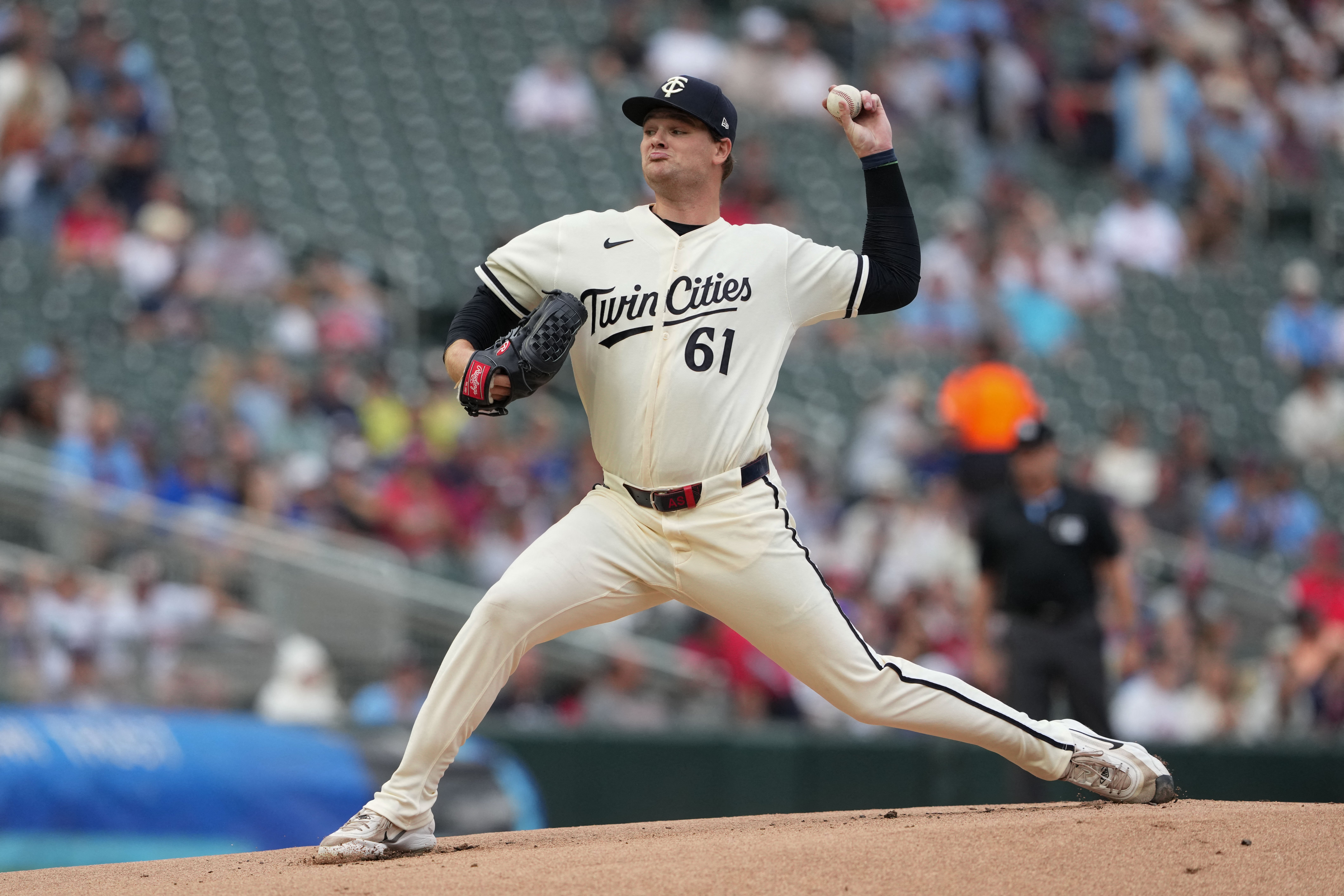 Box Score SP: Connor Prielipp 5.0 IP, 8 H, 8 ER, 4 BB, 6 K (94 pitches, 58 strikes (62%)) Home Runs: N/A Bottom 3 WPA: Prielipp (-0.26), Brooks Lee (-0.28), six Twins batters were between (-0.03 and -0.05) Win Probability Chart (via FanGraphs) The Twins had a full Friday off to contemplate what went wrong in Dyersville, and Saturday night was their chance to prove that they indeed belonged in playoff contention against a quality opponent on their actual home turf. Connor Prielipp looked to take some of the corn sweat steam off of the Phillies lefty bats, while fellow lefty Jesus Luzardo and his 1.14 WHIP hasn't had to sweat much this season and looked to continue that trend against Minnesota's full-righty lineup. Location, Location, Location The Twins starters have been surrendering two runs in the first inning for what seems like a month, but Prielipp put an end to that with a 1-2-3 top of the first. Austin Martin started off the bottom of the first with a ringing double to the wall in left, but Luzardo decided to stop providing center-cut fastballs and struck out Byron Buxton, Ryan Jeffers, and Royce Lewis in order. The Phillies quickly put Prielipp on the ropes in the top of the second. Twins immortality Luiz Arraez kept on raking for his latest team, lacing a single on a hanging slider. Alec Bohm drove a sinker that didn't sink for a double, and Edmundo Sosa drew a four pitch walk to load the bases with nobody out. Even though Prielipp was home, his location was less than desirable for a Twins squad desperate to stay in the thick of the race. Ultimately, Connor was able to dial in and only allow one run on a sacrifice fly, keeping his team in the game early. Again in the bottom of the second, the Twins got a double. This time it came with one out, and Luke Keaschall was the man standing in prime scoring location at second base. There he stayed, as this time it was Brooks Lee and Ryan Kreidler who struck out thanks to Luzardo's superior sweeper location. Greedy Baserunning Leaves Both Teams Unsatisfied Bryce Harper tried to stretch a single into a double in the top of the third, and Martin gunned him down for the third out. In the top of the fourth, Bohm tried to race to third on a grounder to Kaelen Culpepper at short, and Culpeper gunned him down at third to erase a scoring threat. Then in the bottom of the fourth Keaschall found himself at first base this time, and he tried to make it all the way home on a slow gapper from Lee. Keaschall celebrated being called safe, Don Mattingly and the Phillies had the last laugh as the replay showed a bang-bang out instead. The game headed to the fifth inning with the Phillies still nursing a 1-0 lead. It All Falls Apart The momentum seemed to be in the Phillies favor heading into the top of the fifth, but it actually started off well for Prielipp, with a leadoff single looking like it was going to get stranded at first after Connor retired the next two batters. Then there were three straight walks, the last netting Arraez an RBI to make it 2-0. Then two straight singles made it 5-0. Then Prielipp hung a center-cut slider to Bryson Stott, and Stott dented the right field foul pole to make it 8-0. Seven runs with two outs. With the Twins facing an All-Star, it was time to move towards the exits in the fifth. Any Reason to Keep Paying Attention? Not really. Culpepper laced a double in the bottom of the fifth and got stranded. Jeffers hit a double in the bottom of the sixth and didn't get stranded! Lewis hit the toppiest top of the left field wall and the ball bounced back for the Twins' fifth double of the night. When Lewis got stranded at second with nobody out, it marked the last attempt with a runner in scoring position for the Twins, and 1-for-11 night in that situation at that point (eventually they went 1-for-13 with seven of those being via strikeout). Justin Morneau said during the telecast that hitting with runners in scoring position is a different animal and everything changes in those moments. Well those moments are a large animal, that is currently devouring the Twins' season. The team's power outage in August stands in stark contrast to the homerun barrage taking place in St. Paul this month. Will management make a move to bring new blood up into those moments, or just keep hoping that regression can regress both ways in the same season? The Twins bullpen looked solid yet again, a continual bright spot in an otherwise dismal August. Twins fans can only wonder what might have been if Derek Shelton had been ready to go to them a few batters earlier. Like maybe as your starter is actively walking three batters in a row in the fifth with the game still tight? Also, the usage of Minter and Hoffman in a blowout might snipe the club on Sunday should the game remain close. The oddity of the Field of Dreams game and off-day did leave them on the verge of too much rest, but now their availability in a winnable game Sunday is in question. Rogers, Nance, and even Adams were there and ready to be cannon fodder in this blowout. Time will tell if these systemic and managerial non-moves impact past Saturday's defeat. What’s Next? The Twins look to salvage something from this unique and so far lopsided series on Sunday afternoon. The hottest and newest Twins starter, Dean Kremer (2-4, 5.25 ERA, but 1-0 with a 1.50 ERA and 0.58 WHIP across his two Twins outings) will take the hill to make a stand against the Philadelphia bullies. The Phillies' weakest link in the rotation, RHP Andrew Painter (2-8, 6.27 ERA) will look to bring the brooms to Target Field. First pitch is scheduled for 1:10pm CDT. Postgame Interviews Coming Soon Bullpen Usage Spreadsheet TUE WED THU FRI SAT TOT Adams 0 0 42 0 0 42 Hoffman 0 24 0 0 17 41 Morris 0 18 0 0 23 41 Funderburk 22 0 0 0 16 38 Nance 18 0 16 0 0 34 Rogers 18 0 10 0 0 28 Minter 0 9 0 0 12 21 Gomez 0 11 0 0 0 11 View the full article
 -
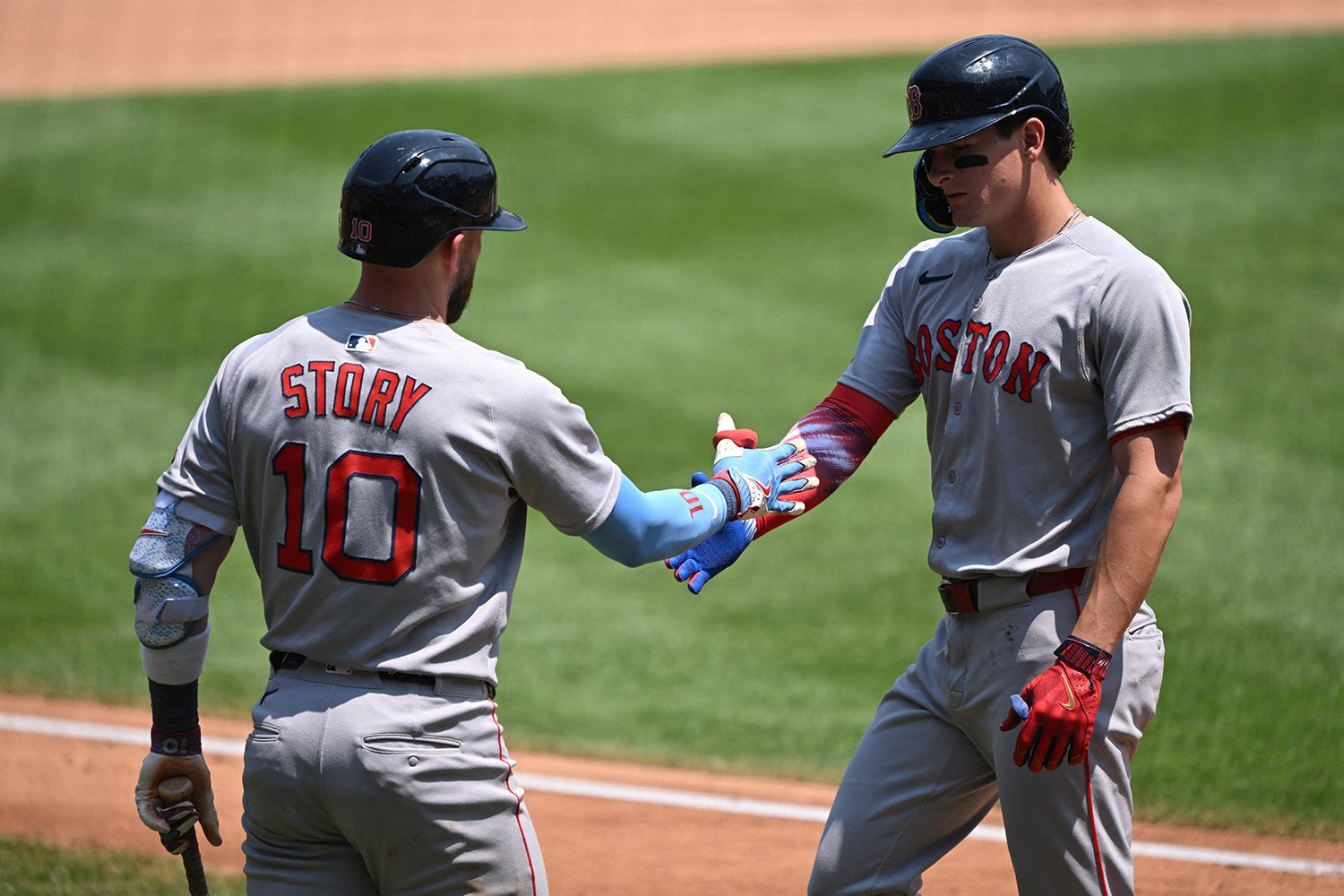 In what could be a huge boon to the Red Sox as they look to bounce back from dropping their last seven of eight games, Roman Anthony, Trevor Story, and Isiah Kiner-Falefa are all set to begin rehab assignments throughout various levels of the organization. First, Story has already reported to Worcester and will start his 20-day clock ticking on Sunday. It will be curious to see if he immediately slides into his usual shortstop position with the quick-rising Franklin Arias manning the position already for the WooSox, or if Story spends some time playing second base. Anthony will report to the Portland Sea Dogs on Tuesday straight from Fort Myers, where he’s been hitting off a high-velocity Trajekt machine to get his timing down. He will also have the typical 20-day ramp-up period before he has to be recalled to the 26-man roster. It’s unclear how much of that window he will need, at least from an offensive standpoint, because he has been consistently taking outfield reps while his partially torn right ring finger tendon was healing. Finally, Kiner-Falefa has also already reported to Worcester but will be the last to start his rehab assignment on Wednesday. He’s rehabbing a left forearm stress reaction that came from him swinging the bat too hard as he started heating up earlier this season. The more difficult part of each one of these guys getting closer to rejoining the Red Sox is how interim manager Chad Tracy will shuffle the lineups on a daily basis. There are a number of guys who have been seeing regular playing time who will either head to the bench in a backup role or could get the call from Craig Breslow that they are headed back to Worcester until rosters expand next month. View the full article
 -
 Butch Huskey, who spent parts of seven seasons in the majors and played his last season with Minnesota in 2000, has died at the age of 54. The New York Mets announced his death Friday. A cause of death was not included in the team's announcement, though Mets vice president of alumni relations Jay Horwitz told The Athletic's Tyler Kepner that Huskey died from a blood clot in his lung. A seventh-round selection by the Mets in the 1989 MLB Draft, Huskey reached the majors in 1993 and spent five seasons with New York. He also played for the Seattle Mariners, Boston Red Sox, Twins and Colorado Rockies. Over his seven-year career, Huskey compiled a .267/.318/.442 slash line with 86 home runs, 98 doubles and 336 RBI. He was a versatile player who saw time at third base, first base and both corner outfield positions. His final season came with Minnesota. Huskey appeared in 64 games for the Twins in 2000, hitting .223/.306/.353 with five home runs and 13 doubles. In July, Minnesota traded him and Todd Walker to Colorado in July for Todd Sears and cash. The move to Colorado gave Huskey an opportunity to finish his career on an impressive note. He played 47 games for the Rockies and posted a remarkable .998 OPS before his major-league career came to an end. Wearing Jackie Robinson's Number Huskey is perhaps best remembered for being one of the final players to wear No. 42 after Major League Baseball retired the number across the sport in honor of Jackie Robinson. When Huskey began his major-league career, he wore No. 10. In 1995, however, he switched to No. 42 as a tribute to Robinson, a number he continued to wear with the Mets, Mariners and Twins. Then, on April 15, 1997, commissioner Bud Selig made one of baseball's most significant announcements at Shea Stadium. Robinson's No. 42 would be retired throughout Major League Baseball. Players already wearing the number were allowed to keep it for the remainder of their careers. That group included Yankees Hall of Famer Mariano Rivera, but Huskey was another prominent player who continued wearing Robinson's number during the transition. His decision to wear No. 42 wasn't something he took lightly. Huskey had learned about Robinson while he was in high school and made a promise to himself. "I told myself if I ever got a chance to play professional baseball, I would wear his number," he told the New York Daily News in 1997. "I think about it quite often … It means a lot to me just to be put in the same sentence with him." Huskey's Final Connection to the Twins Huskey wasn't the last player to wear No. 42 for Minnesota, either. Mike Jackson, a veteran relief pitcher who spent 17 seasons in the majors, wore the number during his time with the Twins in 2002. Jackson appeared in 58 games that season and posted a 3.27 ERA while contributing 1.2 rWAR to a Minnesota team that reached the ALCS. Huskey’s time in Minnesota was relatively short, but his seven-year major-league career provided plenty of memorable moments. Huskey was a powerful, versatile player who carved out a role across several positions, and his decision to wear Robinson's number gave his career an added historical significance. That makes Huskey's name a memorable one in both Mets and Twins history, even more than two decades after his final major-league appearance. View the full article
 -
 Blue Jays Affiliate Overview (August 13-14) Triple-A Buffalo Bisons Series vs Worcester Red Sox (Boston Red Sox): 2-2 Season Record: 58-60 Double-A New Hampshire Fisher Cats Series vs Somerset Patriots (New York Yankees): 0-4 Season Record: 51-59 High-A Vancouver Canadians Series vs Tri-City Dust Devils (Los Angeles Angels): 3-1 Season Record: 52-60 Single-A Dunedin Blue Jays Series vs Tampa Tarpons (New York Yankees): 2-2 Season Record: 52-56 FCL Blue Jays: Season Complete DSL Blue Jays Blue Week Record: 0-3 Season Record: 18-34 DSL Blue Jays Red Week Record: 3-0 Season Record: 31-18 Triple-A Buffalo Bisons Season Record: 58-60 Series vs Worcester Red Sox (Boston Red Sox) August 13: On Thursday, Josh Stephan got a chance to make his second start in the Toronto Blue Jays organization, after his first was one that opened some eyes as to his future role with the team. His second outing definitely did not go as swimmingly as his first; he got rocked hard in this game. From the opening frame onward, he was in trouble. A double, a sacrifice bunt, and a sacrifice fly in the bottom of the first saw Stephan and Buffalo down one quickly. In the second, it was an RBI double and an RBI single that brought in runs for Worcester. Then in the fourth, it was a two-run triple, an RBI single, and a two-run home run that broke the game wide open for Worcester. Stephan would finish the fifth clean, bringing his outing to a close, throwing five innings and giving up eight runs; it certainly was not the second start he or the team was hoping for. Down 8-0, Buffalo finally got on the scoreboard in the sixth, on a Yohendrick Piñango RBI single to left, scoring Sean Keys. Buffalo kept fighting until the end, though, adding two more runs in the ninth from CJ Stubbs’ two-run home run, his sixth of the season for Buffalo. The hole Stephan dug for the Bisons was just too large to climb back out of, as Buffalo lost 10-3. August 14: On Friday, John Klein made his second start in a Buffalo uniform as well; his outing went a little better than his first. Klein didn't make it out of the third inning in his first start. In this one, he completed four innings and gave up just two runs on three hits. Pat Gallagher came on in relief and was lights out, throwing four innings himself, but he didn't allow a run and surrendered just one hit. Peyton Williams would tie the game up at one in the second inning, with a rocket RBI double to center that came off the bat at 111.9 mph. In the third, Yohendrick Piñango joined him with a missile to center, an exit velocity of 106.3 mph, going 433 feet to center for a two-run home run. Ismael Munguia added to the Bisons' lead with an RBI single in the sixth. In the seventh, Sean Keys ripped a solo home run to right, and Rudy Martin Jr. capped off the scoring with a sacrifice fly in the eighth. Buffalo won in a much better all-around performance, 6-2. Double-A New Hampshire Season Record: 51-59 Series vs Somerset Patriots (New York Yankees) August 13: Thursday game between the Fisher Cats and Patriots was a slow burn for both offenses in terms of getting hits. Carlos Rodón was on the mound for the Patriots, getting a rehab start in on his way back to the big leagues. Over 4.1 innings, New Hampshire hitters got nothing off of him, except for two hits and striking out seven times. In the second inning, Rodón got all the offense he needed when Josh Moylan hit a grand slam off Austin Cates. Eric Snow would homer for New Hampshire in the ninth inning, but that was their lone run of the game. New Hampshire lost this one 5-1. August 14: Hits were again at a premium for the Friday contest between New Hampshire and Somerset. Danny Thompson Jr. was on the mound for the Fisher Cats and was fantastic again. He threw his third straight quality start. This time going six innings, only allowing one hit, issuing two walks, and striking out five. A wild pitch and an Eric Snow RBI single had New Hampshire up two by the second inning. Josh Moylan homered for the Patriots, but that was answered by Carter Cunningham driving in a run with an RBI single to left field. Cutter Coffey would bring in a run in the sixth on an RBI groundout. Gage Stanifer came in for the last two innings again out of the bullpen, but things fell apart in the ninth. He had some base runners in the eighth, after a walk and a single, but finished the inning getting a double play. The ninth went horribly wrong, though. Stanifer walked the first two batters and then left a 3-2 fastball over the plate to Omar Alfonzo, who smashed a walk-off three-run home run. New Hampshire lost this one 5-4. High-A Vancouver Season Record: 52-60 Series vs Tri-City Dust Devils (Los Angeles Angels) August 13: The Canadians ran wild on the Dust Devils as they stole a combined six bases, with Ty Southisene and Jaxson West with a pair apiece. Dylan Watts opened the game for the Canadians and went two scoreless innings, despite giving up three walks. Jake Casey started off the scoring for the Canadians with an RBI single in the first inning. The Dust Devils tied it up, but the Canadians took the lead back, capitalizing on a throwing error, as Southisene scored his second run of the game, and Ryan Sprock drove in another run with an RBI triple. Silvano Hechavarria replaced Watts and pitched well heading into the seventh inning, but a passed ball and throwing error allowed three runs to score, losing the lead. Once again, the Canadians took the lead back, as with two outs, Maddox Latta hit a three-run homer. Bryce Chance made it a five-run inning with a two-run double. They had another big inning in the eighth, as this time they scored six runs, capped off by Max Viera’s first homer as a Canadian with a grand slam to make it 14-4, which ended up being the final score. August 14: Mississauga’s very own Connor O’Halloran had his first start in Vancouver since April 13 of last year, and he pitched well despite some obvious rust, as he walked four batters and had two errors, allowing an unearned run to score on a sac fly. Jean Joseph was able to take the lead back in the sixth inning as he hit a two-run bomb, but caused a kerfuffle as he slowly jogged his home run trot, causing the benches to clear for a bit. Bradley Wilson pitched two scoreless innings in his first outing as a Canadian, but the third inning went poorly for him, as the Dust Devils took the lead back with a two-RBI single. Jean Joseph had his third RBI of the night on a sac fly to tie it up in the bottom of the seventh, but the bullpen got burned by a JoJo Parker throwing error, resulting in two unearned runs scoring. The Canadians brought it within one on a wild pitch that scored Austin Smith, but they couldn’t pull off the comeback, losing 5-4. Single-A Dunedin Season Record: 52-56 Series vs Tampa Tarpons (New York Yankees) August 13: The Jays got down early, as Karson Ligon was unable to get out of the second inning, hitting his pitch limit at 44, allowing two runs and three walks. Giacomo Taschin allowed two more runs, leading to a four-run deficit in the third inning. Jake Bennett, an eighth-round pick who signed for just $1,000, tied it up with one swing as his first professional homer was a grand slam. Taschin allowed four homers in a single game, however, and the Jays continued to bleed runs as Isaac Williams allowed three more runs, although not on homers. The only other bright spot was Bennett once again, who homered for the second time, but to no avail, as the Jays lost it 11-7. August 14: After a string of good starts, Carson Messina had another dud, this time not getting out of the first inning, allowing four runs and three walks and no strikeouts. Jake Bennett could not be denied as he hit his third homer of the series, with a 105.6 mph homer to right field to put the Jays on the board. In the fifth inning with the bases loaded, Dean West hit a two-run single to bring it within one, but despite loading the bases once again, they could not score another run, which unfortunately resulted in a loss, as they couldn’t find a solid scoring opportunity after that, and they lost 5- 4. FCL Blue Jays Season Record: 38-20 Season Completed DSL Blue Jays Blue Season Record: 18-34 August 13: Thursday was a rough day all-around for BJB, poor pitching, errors, lack of hitting, all added up to a loss. A fielding error at shortstop by Cristopher Polanco opened up the doors for a three-run inning by the Arizona Black team in the bottom of the first. In the third, a throwing error by third baseman Juarlin Soto led to two more unearned runs scoring. A wild pitch and an RBI groundout got BJB on the scoreboard in the top of the fifth. Michael Mesa and Luis Felipe each had two hits, but nothing would come of them, as BJB got trounced 8-1. August 14: BJB was in a hole early against the Pirates Black team on Friday. They tried to climb out of it with a big five-run inning, which began with Fabian Gonzalez scoring on a wild pitch. Michael Mesa would then double home two runs with a rope knock to right field. Luis Felipe then singled in two runs as well, with a base hit to left. The Pirates team took the lead back in the top of the fifth, before BJB got an RBI single from Juan Caricote to tie the game back up in the bottom half of the inning. It wasn't meant to be for BJB, though. They gave up a two-RBI single and three runs on three wild pitches in the seventh, as they fell 11-6. DSL Blue Jays Red Season Record: 31-18 August 13: Cristhian Duarte had a good game on the mound for BJR on Thursday. Duarte pitched five solid innings, only surrendering one run on five hits, struck out four, and walked none. BJR would take the lead in the first. Aneudi Severino brought home a run on an RBI groundout, followed by Samuel Orellana's RBI double and Luis Nunez's RBI single. Darwin Nuñez would add a run onto BJR's lead in the third from a sacrifice fly that scored Gabriel Porras. BJR almost gave the game away, though, coughing up two unearned runs in the seventh, but they held on for the 4-3 win. August 14: Elaineiker Coronado had himself a game on Friday: three singles, a walk, two RBI, and a run scored. He paced an offense that walked seven times and added six hits. Darwin Nuñez had a two-RBI single in the first inning, Coronado had an RBI single in the second, and another run would cross home on a wild pitch. In the fifth, Elian Reyes brought in two on his single, then two more runs would score on bases-loaded walks. Luis Nunez would cap off the scoring for BJR with a sacrifice fly in the sixth. With all of the runs scored, BJR had an easy win, as Abrahan Diaz was great on the mound. He pitched four scoreless innings and gave up just three hits. BJR cruised to a 9-4 win. View the full article
 -
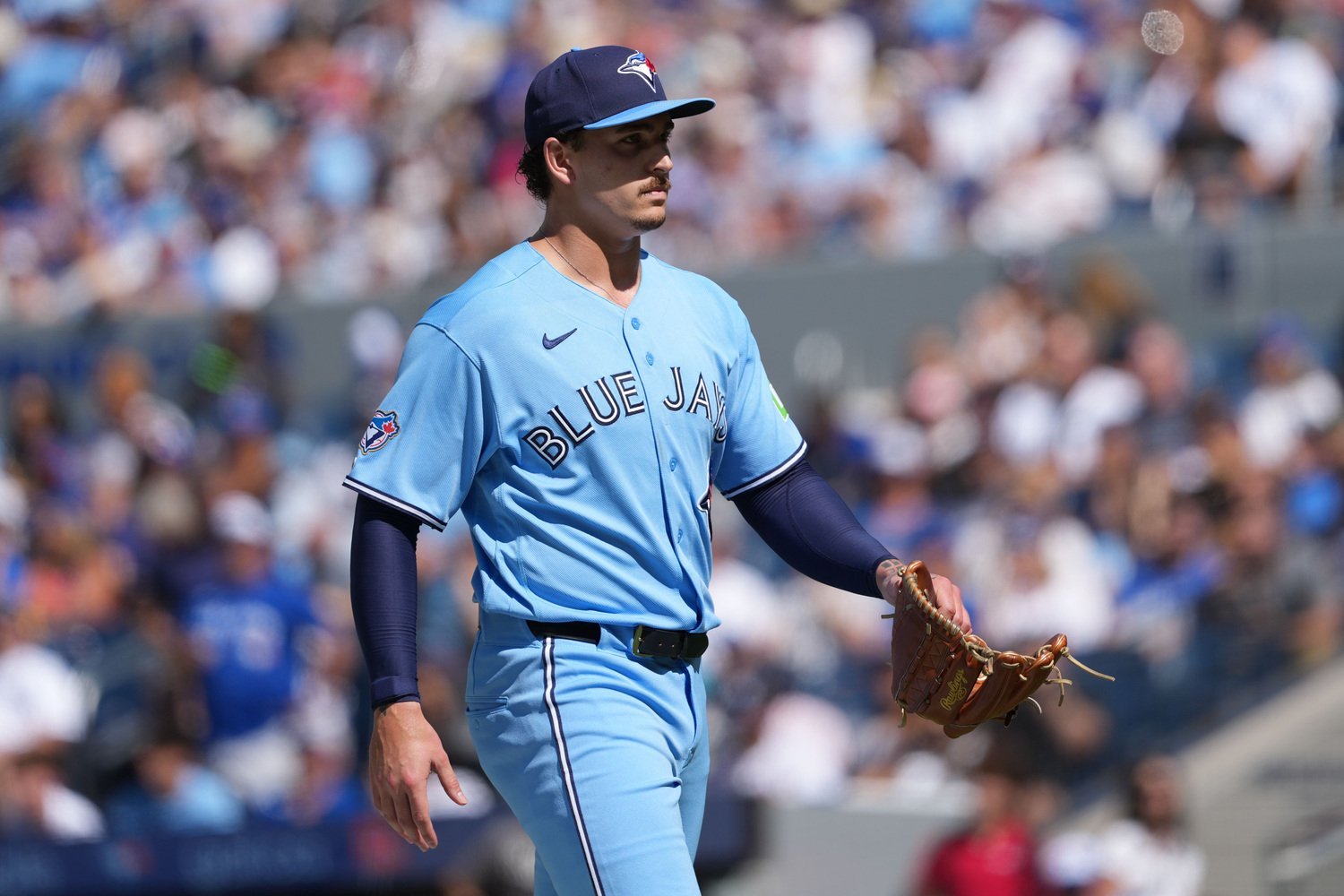 Yeah, I know, I'm a little late to the party on this. But we couldn't just not have anything on the site about all the news from before today's game. Here's the rundown: Ricky Tiedemann was promoted for his MLB debut. Chase Lee was optioned back to Buffalo. That's option number five for Lee this season. Vladimir Guerrero Jr. is in concussion protocol. He's out for at least a week. Daz Cameron had his contract selected from Triple-A Buffalo. He's on the roster now. Lazaro Estrada was designated for assignment. Similar to Lee, he had been optioned the maximum number of times, which limited his flexibility. A player can't be optioned more than five times in a season. Tiedemann made his debut this afternoon, tossing 1.2 innings. He gave up one run on two hits and struck out two. View the full article
 -
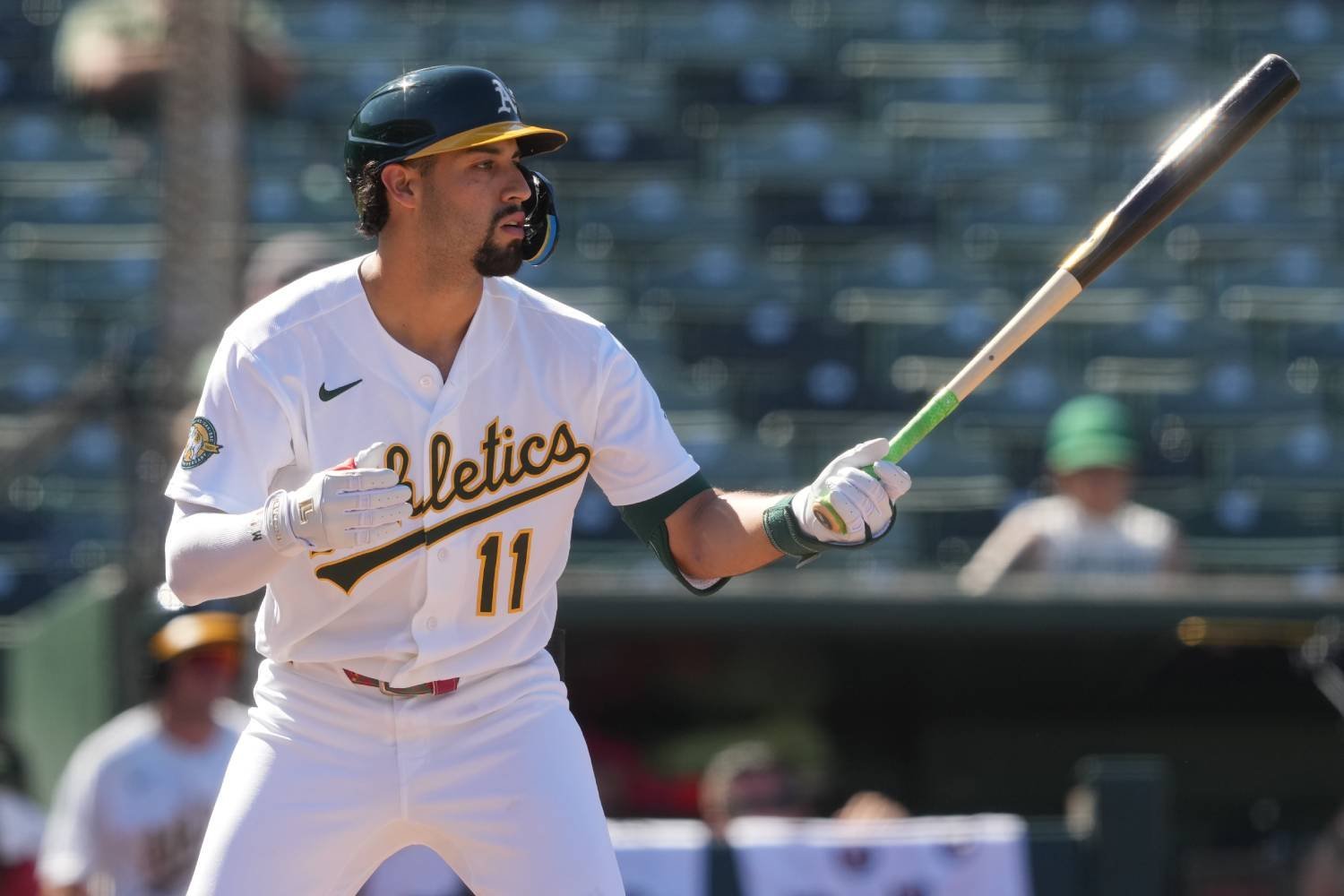 Still looking to shore up their infield depth due to recent injuries, the Milwaukee Brewers have acquired infielder-outfielder Jonathan Ornelas from the A's for cash considerations. Infielder-outfielder Jihwan Bae, who just signed Sunday with the Brewers, was designated for assignment to make room for Ornelas. Ornelas, primarily a shortstop, just re-signed Friday with the A's after being DFA'd himself by the A's a few days earlier. He appeared in six games for the A's, going 2-for-12 with a walk and seven strikeouts. Ornelas has been in 38 MLB over the last four seasons, including 30 with the Texas Rangers, and put together a .200/.257/.231 slash line with no homers and three RBIs, four walks and 27 strikeouts in 71 plate appearances. Bae got into four games and went 1-for-2 with a sacrifice bunt and a run scored. The Brewers' infield depth has been tested with rookie shortstop Cooper Pratt going on the 10-day injured list, then shortstop-third baseman Joey Ortiz battling a neck ailment and now second baseman Brice Turang, who has missed the first two games of the series against the Los Angeles Dodgers due to pain in his left knee. The Brewers are hoping to avoid putting Turang on the IL following an MRI. Prospect Jett Williams is on the minor-league injured list. View the full article
 -
What Happens When the Twins Get Their Hands on a Pitcher
DiamondCentric posted an article in Twins Daily
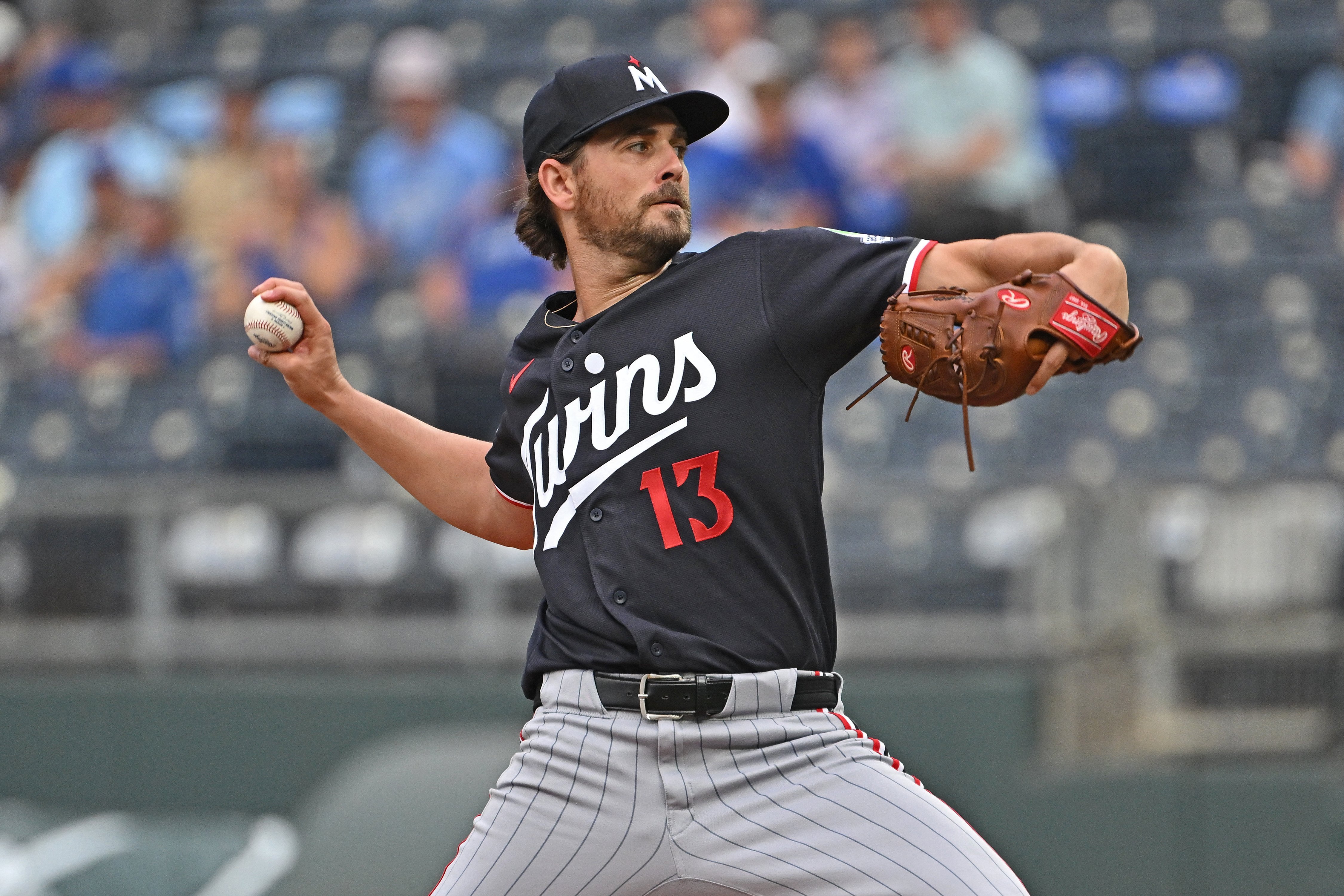 Baseball has released a litany of statistics that has changed the way fans can scout and analyze the game. We now have access to information that, not all that long ago, would have been locked away inside the internal departments of major league organizations. One such metric is arm angle. The concept itself is hardly new. Somewhere between the shin-high grass at Elysian Fields and the modern bullpen, pitching coaches have been encouraging their hurlers to make adjustments to their arm path. It probably comes immediately after the old-timey pitching coach's first instruction: just throw strikes. For those unfamiliar, arm angle measures the angle of a pitcher's arm relative to the shoulder at pitch release. The metric matters in a variety of ways. Teams are interested in outlier arms, particularly those operating at the extreme ends of the spectrum, but arm angle can also help explain how a pitcher imparts spin and creates movement. A lower or higher slot can, depending on the individual pitcher, unlock different characteristics in the arsenal. Forward-thinking teams see this as an opportunity. If a pitcher has an attribute they like but another area they believe can be improved, perhaps there is a player sitting right there waiting to be acquired, tinkered with, and turned into something better. Which brings us to Dean Kremer. The Minnesota Twins targeted the right-hander ahead of the trade deadline after he had put together a pretty good 700-inning career with the Orioles. Of course, the Twins weren't necessarily interested in the version of Kremer that had already accumulated those innings. They saw things in him that they believed they could enhance. One of the low-hanging fruits was his pitch selection. With Baltimore, Kremer was throwing his four-seam fastball around 21% of the time and his sinker around 17%. With the Twins, the four-seam usage has jumped to roughly 39%, while the sinker has fallen to about 6%. This has become something of a Twins go-to move. When they acquired Yoendrys Gomez earlier this year, they also moved him away from his sinker and toward a heavier four-seam diet. We've seen similar ideas play out with other recent acquisitions, including Jeff Hoffman and A.J. Minter. But another change has caught the attention of the stat hounds. Kremer's arm angle has jumped from roughly 42 degrees with Baltimore to 47 degrees with the Twins. That is an interesting development because it puts Kremer's arm slot closer to where it was when he first came up with the Orioles in 2020. It would be easy to look at that and conclude the Twins simply asked him to raise his arm five degrees, but that's not really how pitching mechanics work. The arm is the caboose of the delivery. Everything that happens before it helps determine where that caboose eventually arrives. For Kremer, one of the first things that changed was his hand break, the point in the delivery where a pitcher separates the throwing hand from the glove. copy_DC57A8A0-914C-4BC3-B6C1-8FA341AFCC35.mp4 With Baltimore, Kremer's glove hand would work out and around after the hand break. Now, you'll see it move upward and toward the plate, almost like he is stretching a bow and arrow. It reaches a considerably higher point, creating a different path for the throwing arm to follow. The easiest way I can describe it is that the old movement looked more like a carousel, while the new one has more of a Ferris wheel effect. Naturally, if the wheel is moving differently, the arm is going to arrive at a different angle. I've posted before about the Twins changing a pitcher's posture during his delivery. Mick Abel made a subtle adjustment this spring, while Yoendrys Gomez made a similar change during the season, both keeping their weight farther back toward first base rather than allowing the body to tip toward third. Kremer has some of the same characteristics in his new delivery. This is less about the shoulders themselves and more about keeping the lower half stacked in the glute. With Baltimore, Kremer's weight would tip over his rear knee, allowing some of his momentum to leak toward third base. Again, the body starts working around the ball like a carousel. By keeping the upper half more stacked behind the knee, Kremer is in a better position to drive toward the plate instead, creating the Ferris wheel movement pattern. That can have implications for both command and power. The real story here isn't that Kremer and the Twins made these adjustments and now he's improved. The more interesting story is the complex system that has to exist behind the scenes for an organization to identify a player, determine what it wants to change, communicate those changes to the player, and then actually implement them in the middle of a major league season. That process is particularly interesting when viewed through the lens of Lance Brozdowski's preseason survey of more than 80 MLB staffers. The Twins weren't exactly viewed as the gold standard in pitching acquisition and development. Only four respondents considered Minnesota the best organization in that area, while three considered them the worst. They are not at the Milwaukee Brewers' level of consistently generating top-flight arms, but the Twins have had their successes. And if you zoom out from Kremer, a pattern starts to emerge. Taj Bradley altered his arm action. Simeon Woods Richardson changed his arm slot. Mick Abel tweaked his glove placement to prevent pitch tipping and adjusted his posture. Yoendrys Gomez changed his posture and pitch mix. Now, with Kremer, we're seeing a movement-pattern adjustment that may result in more consistency and power. That doesn't happen by accident. Somewhere inside the Twins' baseball operations department has to be a database, whether literal or figurative, of pitchers whose attributes the organization likes. Not just names and scouting grades, but specific characteristics and potential adjustments. Maybe a pitcher has a good four-seam fastball but doesn't throw it enough. Maybe his arm slot is lower than the organization would prefer. Maybe there is a posture issue, a movement-pattern inefficiency, a pitch-tipping concern or a pitch in his arsenal that isn't maximizing his strengths. Assembling that information likely requires an effort across multiple internal departments. Scouting sees one part of the player. Analytics sees another. Biomechanics can identify something happening in the delivery that isn't obvious on a traditional scouting report, while the coaching staff has to determine whether the proposed adjustment can actually be taught and implemented. That is where Jeremy Zoll and his group come into the picture. As the Twins work the waiver wire or troll the trade market, they presumably have a pretty clear understanding of what they are acquiring and, perhaps more importantly, what they believe they can change once the player gets to Minnesota. The Twins aren't necessarily acquiring the finished product. They're acquiring the ingredients. That's a fundamentally different way of evaluating a player. A pitcher can have a flaw that makes him less attractive to 29 other organizations while simultaneously possessing an attribute that makes him particularly interesting to one team because that organization believes it knows how to fix the flaw. But identifying the change is only half of the equation. At some point, someone has to sit down with the newly acquired pitcher and explain what the organization wants to do and, more importantly, why it believes the change will make him better. This is the part of the Kremer story that would require someone with access and relationships to really uncover. What does that conversation look like? If you rely on reports from former players such as Josh Donaldson, the process can sometimes sound like little more than analytics being dumped on players without much explanation behind it (but that is more likely a Josh Donaldson issue). I personally tend to believe there is considerably more communication happening inside organizations than those accounts would suggest, but there has to be some person or group responsible for taking the information assembled by scouting, analytics and biomechanics and translating it for the player. It has to go deeper than, "Welcome to Minnesota, Dean. We'd like you to throw more four-seamers and raise your arm slot five degrees." There has to be an explanation of why the four-seamer fits, what is happening in the delivery, what the mechanical change is supposed to accomplish, what the player should feel and how much of the change can realistically be implemented during a season. Most importantly, the player has to buy into it. That's what makes the Kremer story so fascinating. We can see the results from the outside. We can see the arm angle move from 42 degrees to 47. We can see the four-seam usage jump while the sinker disappears. We can see the hand break change and the posture become more stable. What we can't see is the organizational process that connected all of those dots. And that's the real story. The Twins didn't acquire Dean Kremer and suddenly discovered that he could throw a baseball differently. They acquired him with a pretty good idea of what they wanted him to become, then went about trying to make those changes happen. For now, the early returns suggest another win for the Twins' pitching development staff. View the full article
 -
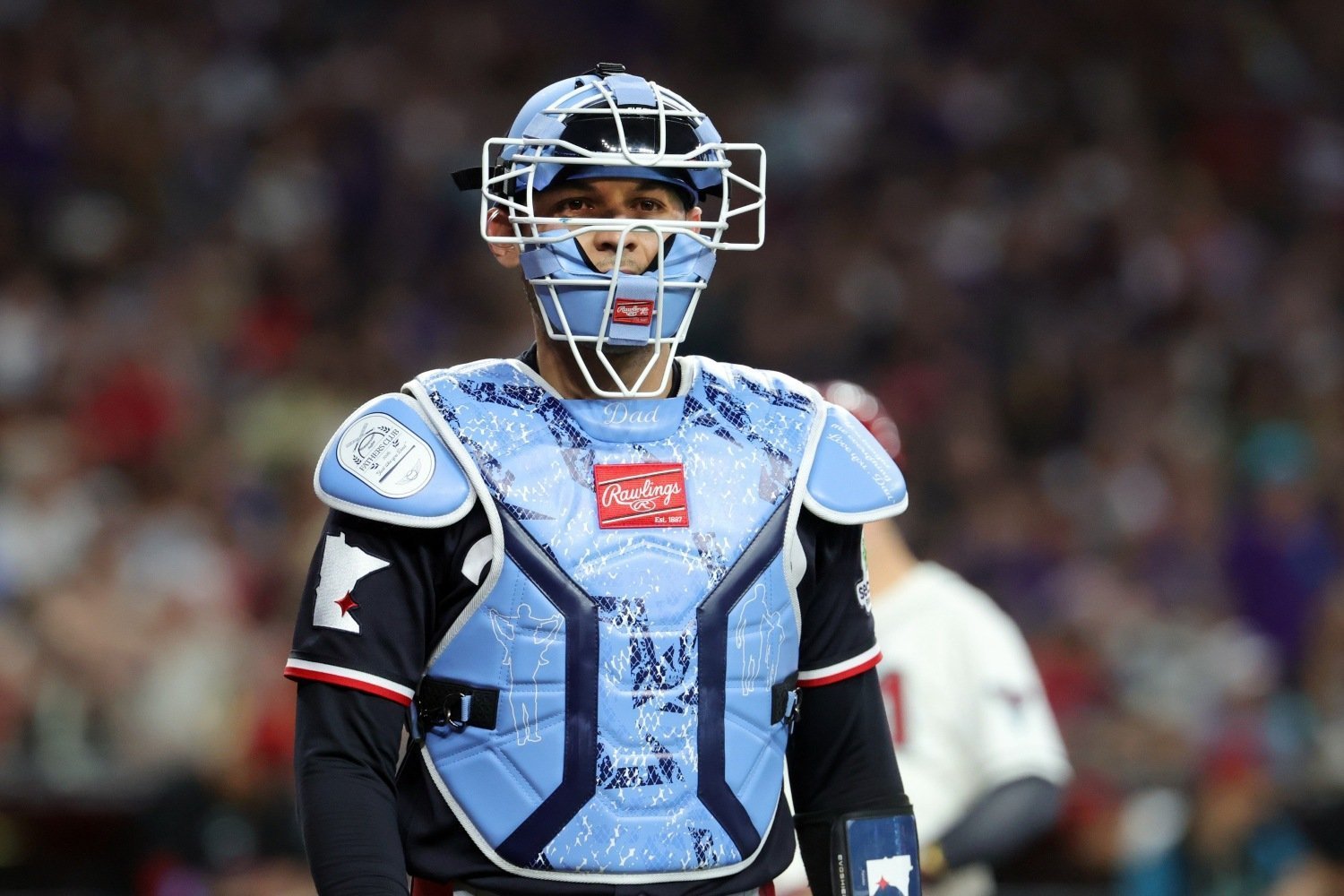 The Minnesota Twins had an unusual roster decision to make following Thursday’s Field of Dreams Game, and the solution was a familiar one. The club designated third catcher Alex Jackson for assignment, bringing its 40-man roster down to 39 players. The timing of the move was dictated by the unique circumstances surrounding Thursday’s matchup with the Philadelphia Phillies. Both teams were allowed to carry a 27th player for the game, essentially giving them the same roster flexibility they would have during a doubleheader. Minnesota used that extra spot to activate Byron Buxton from the 10-day injured list. That temporary roster advantage disappears Friday. The Twins needed to get back to a standard 26-man roster, and Jackson was the player caught in the numbers game. Because he is out of minor-league options, Minnesota could not simply send him back to Triple-A St. Paul without first exposing him to waivers. In many ways, this move has been coming for quite some time. Jackson was called up in May after Ryan Jeffers suffered a hamate fracture. He provided depth behind Victor Caratini while Jeffers recovered, giving Minnesota three catchers on the roster for a stretch of the season. Once Jeffers returned around the All-Star break, however, Jackson's role became increasingly difficult to justify. The Twins have a strong catching tandem with Jeffers and Caratini, and this is a team attempting to maximize every available roster spot during a playoff push. Jackson had not started a game since July 30 and had only one plate appearance in August before Thursday. There simply wasn't much opportunity available. Jackson's surface-level numbers this season were actually respectable. He hit .303 with one home run across 69 plate appearances, but the underlying numbers tell a much different story. He struck out 23 times while drawing just one walk, highlighting the same plate-discipline concerns that have followed him throughout his professional career. The former sixth overall pick has now appeared in parts of seven MLB seasons, but he has never been able to establish himself offensively. Across 189 career games, Jackson owns a .174/.252/.305 slash line and has struck out in nearly 40% of his plate appearances. That makes it difficult for a contender to carry him as a third catcher when there are only so many opportunities to get him into the lineup. The next step will be placing Jackson on waivers, which should happen within the next couple of days. There is a chance he goes unclaimed and returns to Triple-A St. Paul. However, catching depth wears thin at this late point in the season and another team could need a veteran backup option. It would be great for Jackson to stick in the organization as depth, but the big-league roster was suffering with him collecting dust on the bench. View the full article
 -
 Chicago Cubs Minor League Report - August 15 Affiliate Overview Triple-A Iowa Cubs Series vs. St. Paul Saints (Minnesota Twins): Cubs lead, 3-0 Season Record: 48–66-1 Double-A Knoxville Smokies Series vs. Rocket City Trash Pandas (Los Angeles Angels): Smokies lead, 3-1 Season Record: 61–51 High-A South Bend Cubs Series at Great Lakes Loons (Los Angeles Dodgers): Loons lead, 3-1 Season Record: 64–44 Single-A Myrtle Beach Pelicans Series vs. Hill City Howlers (Cleveland Guardians): Tied, 2-2 Season Record: 44–66 Affiliate Highlights Triple-A: Iowa Cubs Season Record: 48–66-1 Series Opponent: St. Paul Saints (66-50) Series Standing: Lead, 3-0 Aug. 14: The Iowa Cubs had their contest postponed due to rain. They go for a series win today with a doubleheader vs. the St. Paul Saints, with first pitch in the opening ballgame set for 4:08 p.m. CT. Double-A: Knoxville Smokies Season Record: 61–51 Series Opponent: Rocket City Trash Pandas (57–54) Series Standing: Lead, 3-1 Aug. 14: The Knoxville Smokies won their third-straight game and earned at least a series split with a 5-4 victory over the Rocket City Trash Pandas on Friday night at Covenant Health Park. The Trash Pandas opened the scoring with a run in their first trip to the plate before Edgar Alvarez (0-for-1) made it 1-1 with a sacrifice fly in the second. Kane Kepley’s (1-for-4) two-run double in the fifth gave Knoxville the lead, and Carter Trice’s (3-for-3) solo blast in the sixth made it 4-1. Trice gave the Smokies an important insurance run in the eighth with a sacrifice fly as Rocket City would score three in the ninth to make it a one-run game, but Grayson Moore was able to get the final two outs of the frame to earn his first save of the season and deliver the 5-4 win for the Smokies. Luis Martinez-Gomez got the start on the mound for Knoxville and earned his first-career Double-A win, improving to 1-3 on the season. Martinez-Gomez allowed one run on three hits over five innings of work, walked three and struck out four. Jackson Brockett turned in three scoreless frames out of the bullpen, allowing three hits while whiffing two without issuing a walk. High-A: South Bend Cubs Season Record: 64–44 Series Opponent: Great Lakes Loons (62–46) Series Standing: Trail, 3-1 Aug. 14: The South Bend Cubs snapped their three-game losing skid with a 6-2 victory over the Great Lakes Loons on Friday night at Dow Diamond. Angel Cepeda (1-for-4) gave the Cubs a 1-0 lead just two batters into the game with a solo home run, his fourth of the season. South Bend broke the game open with four runs in the third, thanks to a bases-loaded walk from Matt Halbach (0-for-3), a run scoring on a catcher’s interference, and two runs scoring on an error. Michael Hallquist (1-for-4) made it 6-0 in the sixth with a solo blast of his own, his sixth of the season. The Loons would score both of their runs in the ninth, but the Cubs were still able to hold on for the win. Alfredo Romero got the start on the mound for South Bend and earned the win, improving to 3-3 on the season. Romero tossed five scoreless innings, allowed just three hits, and struck out three with no walks. Single-A: Myrtle Beach Pelicans Season Record: 44–66 Series Opponent: Hill City Howlers (48–64) Series Standing: Tied, 2-2 Aug. 14: The Myrtle Beach Pelicans dropped Friday night’s contest to the Hill City Howlers, 11-7, at Pelicans Ballpark. The Howlers took a 1-0 lead in the first, but the Pelicans went ahead with two runs in the second, thanks to Derniche Valdez’s (2-for-3) two-run triple. Jhoander Irigoyen (1-for-3) made it 3-1 in the fourth with a sacrifice fly. Hill City rallied for five runs in the seventh to make it 6-3, but Myrtle Beach was able to get one of those runs back in the home half of the frame on a Juan Cabada (0-for-4) sacrifice fly. The Howlers extended their lead to 10-4 with four more in the eighth, but the Pelicans again responded with three runs in the bottom of the inning to make it 10-7. Irigoyen singled home a run, and Derik Alcantara (1-for-1) hit the first professional home run of his career, a two-run shot. Hill City added one more in the ninth, and Myrtle Beach was unable to rally any further. Daniel Avitia got the start on the mound for the Pelicans and took no decision. Avitia tossed five hitless innings, allowed one run, walked two, and struck out five. View the full article
 -
 Triple-A Worcester Red Sox Series vs. Buffalo Bisons (Toronto Blue Jays): 2-2 Season Record: 62-51 Worcester fell 6-2 amidst a rough night at the plate. On the other side of the ball, Gage Ziehl made his second Triple-A start. He turned in a five-inning, three-run effort as he let up six hits. Ziehl issued one walk and struck out five batters before being pulled as his ERA rose to 2.53. Angel Bastardo took the sixth inning, but was pulled after just two outs. Bastardo allowed one run on three hits, issued two walks, and struck out one before being replaced by John Brebbia. Brebbia struggled as well, but he was able to put together a multi-inning appearance. He allowed two runs on three hits, walked one, and struck out another across two and ⅓ innings. Finally, Raymond Burgos came in for a near-perfect ninth inning. He allowed one hit as he struck out two and closed out a loss for Worcester. The WooSox mustered six hits and drew four walks on offense, but fell short when it came time to drive runs home. A 1-for-6 mark with runners in scoring position was good for just two runs as the WooSox lost by four. The team's pair of runs came early. In the first, Romy Gonzales put the WooSox ahead with a sac fly, scoring Braiden Ward. The lead was short-lived as Buffalo led by two the next time Worcester scored. Nate Eaton drove in Tsung-Che Cheng by way of a sacrifice double play as Ward was thrown out at second after a leaping grab by the Buffalo second baseman. Ward stole two bags throughout Friday’s action, ending the day with 53. Ward is just shy of the Worcester record set by David Hamilton with 57 bags stolen in 2023. Double-A Portland Sea Dogs Series vs. Binghamton Rumble Ponies (New York Mets): 1-3 Season Record: 58-53 Portland snapped a three-game skid with a resounding 10-3 win behind a solid start from Devin Futrell. Futrell made his second start at Double-A on Friday evening, turning in a five-inning outing with a solid final stat line. He allowed two runs on five hits, displaying excellent command as he didn’t issue a walk. In addition, Futrell sat down eight on strikes before Cooper Adams took over. Adams pitched through two smooth innings before running into trouble in the eighth. He was pulled after allowing one run on four hits and notching two strikeouts as he was replaced by Tyler Davis. Davis was excellent as he finished the eighth and closed the ninth, allowing one hit and striking out another as he sealed the convincing win. All but one of the Sea Dogs batters recorded a hit on Friday, but each batter reached base safely at least once. Jack Winnay led the way with three hits and two RBIs, and Nelly Taylor backed him up with a three-RBI performance. After Henry Godbout tallied his first Double-A hit in the first inning, Winnay drove him in with a two-run homer. Yoeilin Cespedes tacked on one more as he drove in Brooks Brannon on an RBI single later in the first. Nate Baez capped off the early onslaught with a sac fly to center, scoring Miguel Bleis. Owners of a two-run lead in the fourth, the Sea Dogs pulled way ahead with another four-run inning. Tyler McDonough got it going with a solo shot to lead off the inning before Bleis drove in Winnay on an RBI double. Leading 6-2, Cespedes drove home his second RBI of the night with another single, scoring Bleis. With the bases loaded, Taylor drove in his first run of the day as he drew a walk, scoring Cespedes. Taylor made his mark again in the seventh, crushing a two-run homer to right field as Max Ferguson rounded the bases, capping off the Sea Dogs’ best offensive showing of the series. High-A Greenville Drive Series @ Hub City Spartanburgers (Texas Rangers): 2-2 Season Record: 49-60 An eight-run offensive pop in the fifth inning carried the Drive to an 8-3 win. Jason Gilman turned in a four-inning appearance in his second start at High-A as he struck out seven for the second straight start. Gilman allowed two runs on three hits and issued two walks, but it was a slight improvement over his first start with Greenville. Luis Cohen entered in the fifth inning in search of his first win of the season. He went home happy after earning the win for his bulk relief appearance. It was a deserved win for Cohen, who allowed one unearned run on one hit as he struck out four in one of his most successful appearances of the season thus far. Calvin Bickerstaff took the final two frames of Friday’s contest. Bickerstaff was flawless through the eighth and ninth as his perfect appearance helped secure Greenville’s first win in two games. Stanley Tucker, Gerardo Rodriguez, and Isaiah Jackson all recorded two RBIs on Friday night as Greenville was especially effective with RISP, finishing with a 3-for-5 mark. Maximus Martin got the Drive on the board in the fifth inning, cutting into Hub City’s two-run lead as he drove in Jackson on a groundout to first. Tucker grabbed the lead for Greenville later in the inning, driving in Martin and Yophery Rodriguez on a line drive single to right field. Justin Gonzales kept the momentum going as he scored Tucker on a line drive single of his own. G. Rodriguez scored Gonzales and Carlos Gutierrez with a single to center. G. Rodriguez was then driven home as Jackson capped off the eight-run assault with his 18th homer of the season to right-center. The Drive’s offense stopped altogether after the fifth inning, but it was more than enough to hand them the easy win. Low-A Salem RidgeYaks Series @ Delmarva Shorebirds (Baltimore Orioles): 2-2 Season Record: 49-61 Salem’s bats were hot throughout the evening as the Yaks claimed a 9-3 victory. Salem’s bats weren’t the only thing that went well for the RidgeYaks on Friday. The pitching staff was solid from start to finish as they conceded just three runs. Leighton Finley got the start and hurled four one-run frames, striking out three. Finley issued four walks and allowed five hits, but kept the scoring to a minimum before Nicolas De La Cruz took over. De La Cruz earned the win for his two and ⅔ inning relief job. He allowed two runs on four hits, issued three walks, and struck out a pair as he claimed his fifth win of the season. Wuilliams Rodriguez closed out Friday’s matchup for Salem, walking one and allowing a hit across two and ⅓ innings of outstanding work. The Yaks tallied nine hits and drew seven walks, going 6-for-12 with RISP as they cruised to a dominant win. Andruw Musett led the charge with three RBIs as Kleyver Salazar and Anderson Fermin followed up with two hits apiece. Musett’s RBIs came early as he gave Salem a three-run lead in the second inning. With Andrews Opata and Skylar King aboard, Musett cranked a three-run blast to center field, his third of the year. Salazar added onto the early lead with an RBI single later in the inning, scoring Wills Maginnis from second. In the fifth, Opata made his mark as he drove Salazar home on a standup triple to the gap in right-center. Opata scored as King reached on a fielder’s choice later in the inning. Fermin scored King on a line drive single to cap off the three-run spurt. Maginnis scored Fermin in the eighth inning on a groundball single to left field before Maginnis scored on a Franklin Primera double, rounding out a solid offensive showing. View the full article
 -
The Right-Handed Triple-A Bat the Twins Are Ignoring
DiamondCentric posted an article in Twins Daily
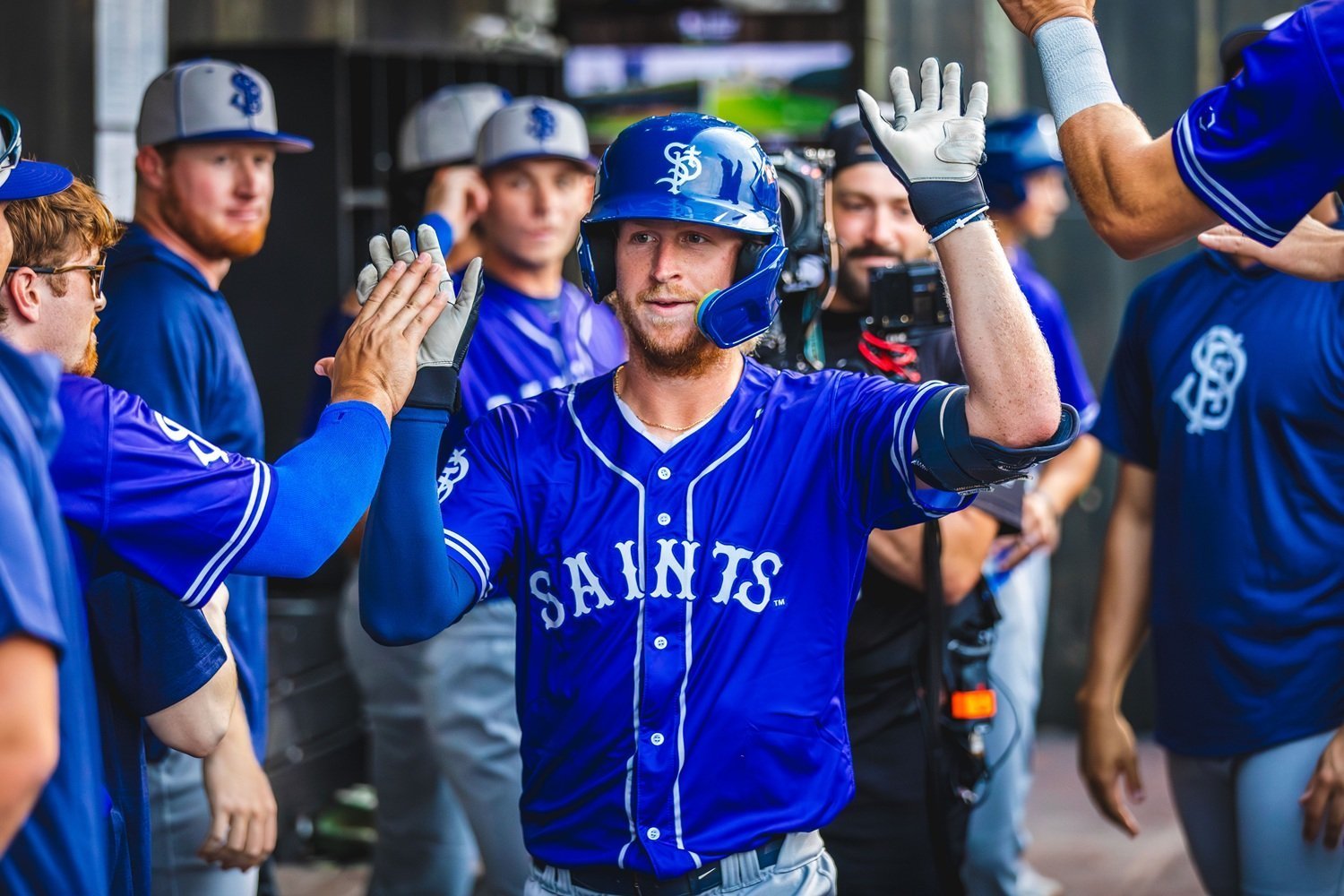 The Twins have plenty of young position players pushing toward the big leagues, but not every prospect receives the same level of attention. Sometimes, a player has to spend years grinding through the organization before putting himself firmly into the conversation. Ben Ross is one of those players. The right-handed hitter has spent most of the past few seasons working to turn his intriguing collection of tools into a more consistent overall package. After struggling at times in Double-A, Ross finally began putting everything together late in 2025. That momentum carried into 2026, when he opened the year by dominating the competition and earning a promotion to Triple-A. Now, he has continued to show that his breakout might be more than a small-sample-size fluke. With the ability to play multiple positions and provide some right-handed pop, Ross has developed into a player who could have legitimate value for Minnesota's big-league roster. A Long Road Through the Twins' System Ross didn't enter professional baseball with the same hype surrounding many of the organization's top prospects. After going largely overlooked coming out of high school in Ohio, he continued his career at Division II Notre Dame College near Cleveland. He quickly established himself there, becoming the first two-time All-American in school history. That performance eventually caught Minnesota's attention, and the Twins selected Ross in the fifth round of the 2022 MLB Draft. He signed for $220,000, coming in below his assigned slot value. The early portion of his professional career was anything but spectacular. Ross showed flashes of the tools that made him an interesting draft selection, but he struggled to produce consistently while moving through the organization. He spent more than a full season at Double-A, where the results didn't always match his underlying potential. That changed as 2025 came to a close. Ross finished that season by hitting .286/.328/.518 (.846) over his final 15 games, collecting three home runs, 12 RBI and five stolen bases. The Twins sent him back to Double-A to begin 2026, and Ross exploded out of the gates, hitting .424/.528/.797 (1.325) in 16 games with the Wind Surge. He added five home runs and 16 RBI while walking in 16.7% of his plate appearances and striking out just 13.9% of the time. That performance forced Minnesota's hand. Ross earned his promotion to Triple-A in late April. The Breakout Has Continued Ross' success didn't disappear when he moved up a level. Through 89 games with the St. Paul Saints, he has hit .258/.367/.475 (.842), and has collected 20 doubles and 13 home runs while posting a 14.3% walk rate. The strikeout rate remains something to monitor at 26.3%, but there are encouraging signs in the overall offensive profile. Ross is showing an ability to impact the baseball while consistently working his way into favorable counts. He's also been heating up again recently. Over his last 12 games, Ross is 14-for-44 with four home runs, three stolen bases and a .954 OPS. That stretch is another reminder that his offensive development hasn't stalled after his promotion from Double-A. More Than Just a Utility Player Calling Ross a utility player is accurate, but it can also undersell what he brings to the table. He's an above-average runner with enough athleticism to move around the diamond. His ability to play multiple positions gives the Twins plenty of flexibility, but there is legitimate offensive potential underneath that versatility. Ross has shown an ability to hit the ball hard (36.8 Hard-Hit%) to all fields and produce extra-base hits. He's also begun tapping into his pull-side power more consistently, which has helped turn some of his hard contact into home runs. His line drive percentage is up 3.7% and his HR/FB rate has increased by 3%. Fastballs have been particularly friendly to him. The challenge will be continuing to handle softer stuff and breaking pitches as he faces increasingly advanced pitching, especially if he eventually earns a regular opportunity in the majors. Still, the offensive profile is considerably more interesting than it was a couple of years ago. Ross has gone from a player trying to establish himself at Double-A to someone who has demonstrated that he can make an impact in Triple-A. That's a significant development for a player who entered the organization without much fanfare. An Opportunity for the Twins The biggest question now is whether the Twins will give Ross a chance to show what he can do in Minnesota. He's already spent significant time developing within the organization. He's experienced the struggles that come with being challenged at Double-A, found a way to adjust, and carried that success into Triple-A. That's exactly the type of developmental progression an organization hopes to see. Ross may never become a star, and the Twins don't need to project him that way. His value could come from becoming a reliable, right-handed bat who can play several positions, provide some power and steal a few bases. Those players can be extremely useful over the course of a 162-game season. With his recent offensive production and defensive versatility, Ross has put himself in position to become more than organizational depth. Whether that opportunity comes later in 2026 or becomes part of Minnesota's plans for 2027 and beyond, the Twins have a player worth keeping an eye on. For years, Ross was working to prove he belonged. Now, he's starting to make a case that the Twins should find a place for him. Should the Twins give Ross a chance at the big-league level? Leave a comment and start the discussion. View the full article
 -
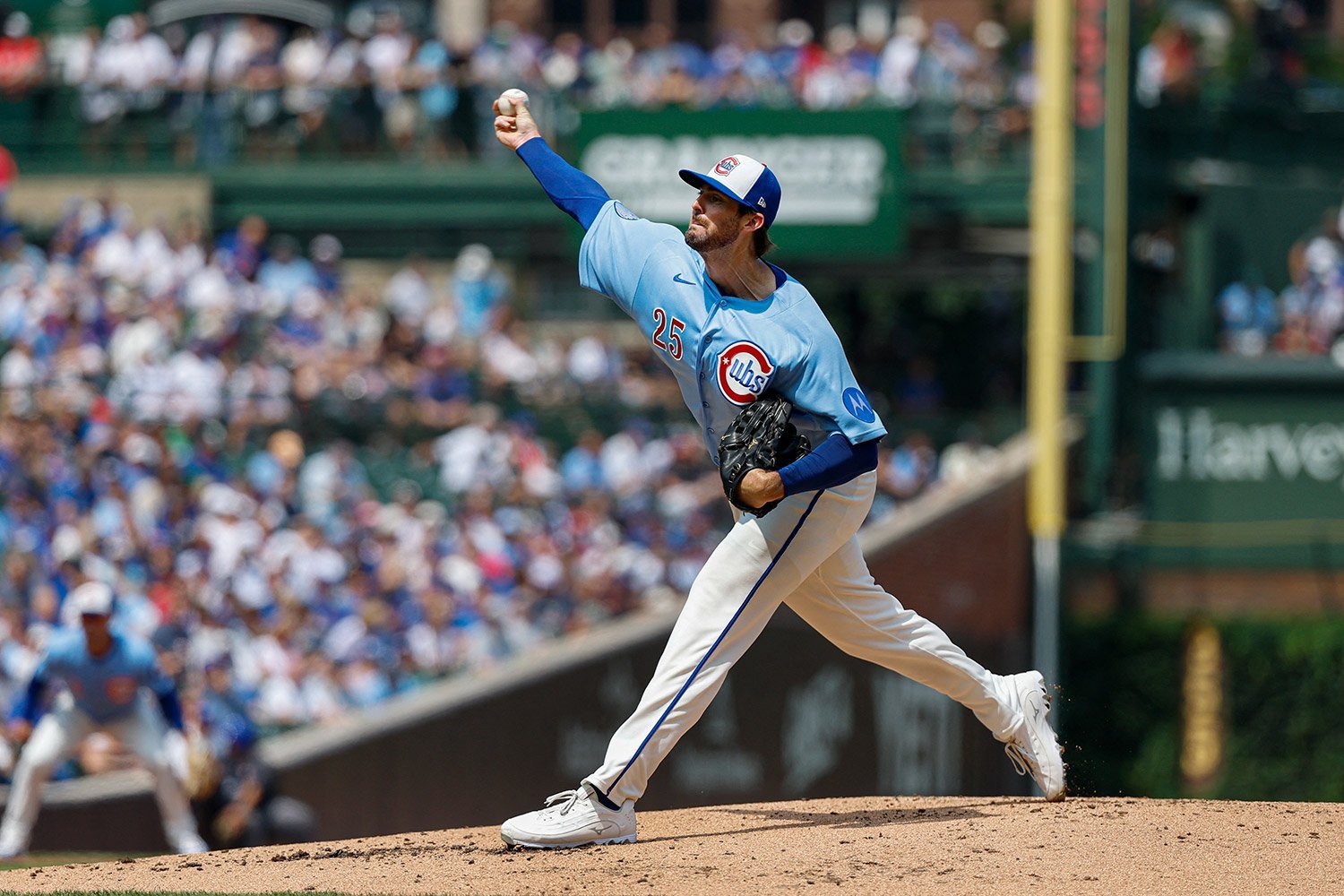 In his second start in Cubbie blue, Clay Holmes took a perfect game into the sixth and allowed just two total base runners through 6 2/3 innings of work. Still on a pitch restriction while ramping up in his return from the broken fibula, Holmes would have completed seven innings if it were not for a two-out walk to Jordan Walker, likely just not wanting to give in or make a mistake to the Cardinal’s best hitter with first base open and a three-run lead. Game score, a relatively simple metric to quantify a pitcher’s performance, had this as the best start of Clay Holmes career. Granted, that really only encompasses 42 starts over the last two seasons after his transition from the bullpen, but it is still worth noting considering it was his second start with the Cubs and he is still getting back into game shape and knocking the rust off. How has he done it? After throwing his sinker 41% of the time in his first start with the Cubs, that number climbed all the way to 55% against the Cardinals. Holmes threw 35 pitches to right-handed hitters yesterday; a whopping 31 of them were either sinkers (17) or sweepers (14). The most interesting change, however, was his sweeper usage against left-handed hitters. Usually his preferred secondary option, of the 45 pitches he threw to lefties, just one (1!) was a sweeper. In his first start, that number was 14. Instead of throwing the sweeper to lefties, Holmes used his curveball as his primary breaking ball against lefties. Before 2026, he hadn’t thrown a curveball against a lefty since 2021. Aside from the pitch mix itself, two things really stand out so far after Holmes’ pair of starts. First, he is getting more drop on his sinker than he has before. Like, ever. He had never had a drop of more than 30 inches in any game in his career, and he has immediately done so in both of his starts with the Cubs. You may see in the above graphic that this is vertical break including gravity, that is because his induced vertical break is actually down, it’s not in a place it has never been before for him, but it certainly isn’t explaining the increased break. So how is he getting more break on his sinker without necessarily inducing more break? Holmes has dropped his arm angle. Coming into 2026, Holmes had only had four career outings where his arm angle was below 40 degrees on sinkers, with just one of them coming as a starter. Although he made just nine starts before the injury this year, five of them featured arm angles below 40 degrees on the sinker. If you squint, you can see the data point from his first start as a Cub, all the way down in the bottom right at 37.2 degrees, a full degree lower than he has ever been. It appears the Cubs saw this early-season trend and wanted Holmes to lean into it, and I would bet that once the data on his arm angle from 8/14 is released, it will look similar. Why does this matter? Well, that extra break he is getting has helped him get his sinker located where it is most valuable. The vertical strike zone is about 1.5 feet off the ground at the bottom to 3.5 feet at the top. Holmes, like most sinker ballers, thrives when he is living in the bottom half of the zone, as he did for much of his career. The difference in 2025 is very noticeable, not a good trend, and combating that was likely why Holmes had dropped his arm angle early in 2026. Zooming in on 2026, Holmes is back to pounding the bottom of the zone with the Cubs. If you want to live at the bottom of the zone, you can’t do much better than that. Holmes won’t be perfect through five in every start, but if he can continue this trend, he will be exactly what the Cubs need going forward. View the full article
 -
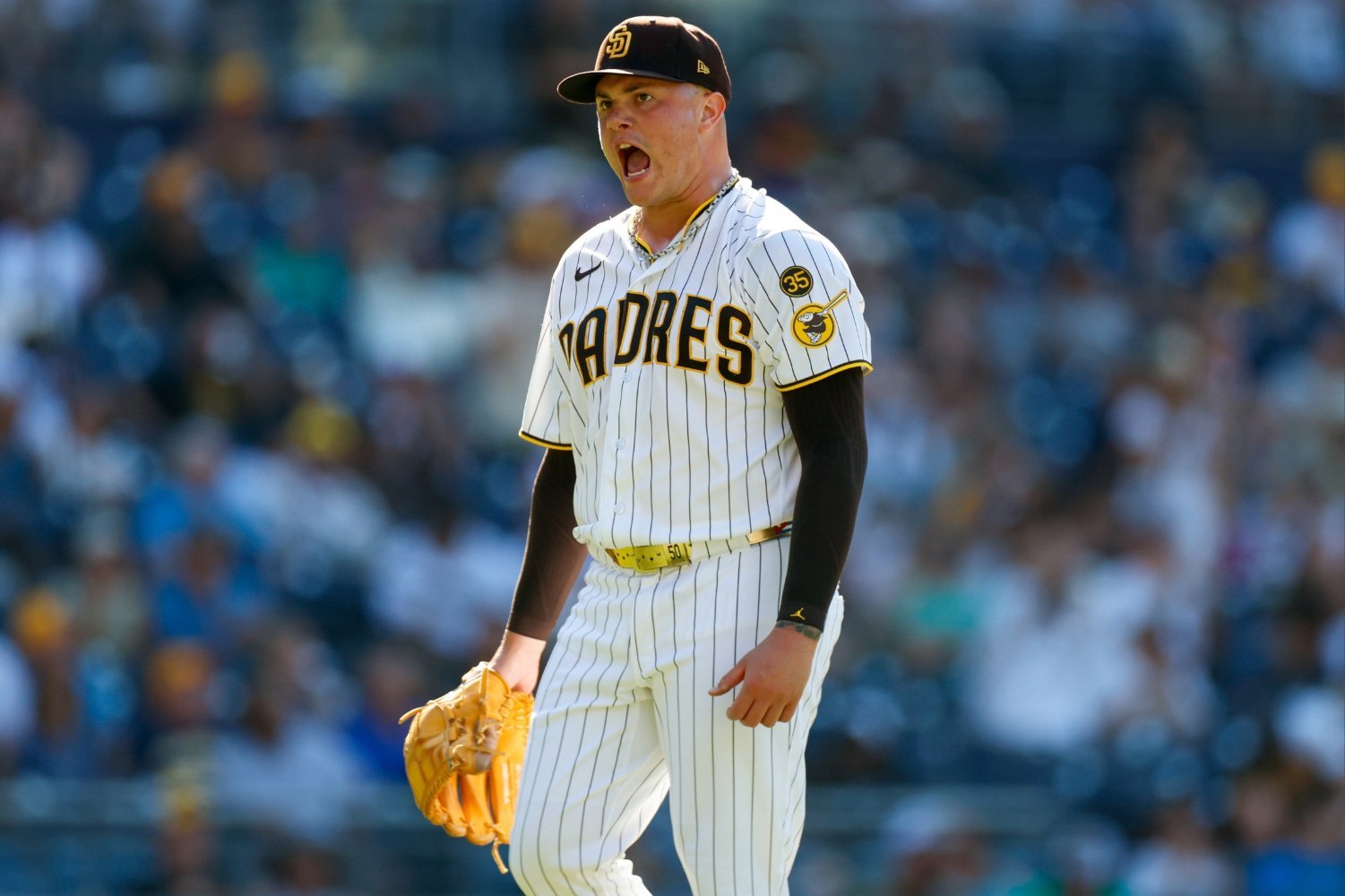 The San Diego Padres sit right in the middle of the Wild Card mix and have been on a surge recently. It’s a good thing that they decided not to sell at the trade deadline, and their decision to hold onto Adrian Morejon looks especially prescient. The Padres might have the best one-two punch to end ballgames between the lethal duo of Morejon and phenomenal closer Mason Miller. The similarities between the pair are actually a lot closer than you may think. Everyone is fascinated with Miller, who’s recorded 30 saves and has pitched to a 0.88 ERA and 0.84 ERA through 51.1 innings. He’s been an electric watch with the combo of his fastball averaging 101.5 mph and the fact that he’s striking out opponents at an incredible 47.4% rate. While Miller leads all qualified relievers with 3.1 fWAR, Morejon sits just two places back with 2.3 fWAR (Louis Varland divides the pair with 2.4 fWAR). Morejon, alongside Miller, is having an incredible season and honestly might be every bit as good as hit superstar teammate. The 2025 All-Star has a 2.76 ERA and 1.09 WHIP over 65.1 innings spanning 56 games. What's Behind Adrian Morejon's Utter Dominance In 2026? If you’ve just happened to stumble across Morejon’s dominance this season, 2026 is actually the third straight season where he’s been one of the better relievers in the game. After making his major league debut during the 2019 season, Morejon posted inconsistent results through the 2023 season due to injuries (including Tommy John surgery in 2021) while also seeing time as both a reliever and starting pitcher. Now, he's settled in as one of the best high-leverage arms in the game. Morejon features a power-sinker that has averaged 99.5 mph and he goes to the pitch 45% of the time. His other three pitches are split pretty fairly consisting of a changeup, slider, and four-seam fastball. His sinker/four-seam duo has been really good this season, earning 10 run value which places him in the 88th percentile. Morejon’s fastball has seen better results than his sinker, even though he’s thrown the pitch over 300 times less. Opponents are hitting just .175 against the offering to go along with a .200 xwOBA. The sinker has also been effective with batters posting a .240 batting average and .293 xwOBA against the pitch. Aside from his primary heaters, Morejon throws a pretty nasty changeup that has accounted for 5 run value landing him in the 92nd percentile. It’s his second-most-used offering at a 22% rate and has limited batters to just a .177 batting average and a .147 xwOBA. Morejon’s slider is a nice change of pace to throw into the mix, but it's certainly his least trustworthy offering. A good reliever will always do a good job limiting hard-contact and keeping the baseball on the ground, and unsurprisingly, Morejon excels in those categories thanks to his aforementioned arsenal. Batters have only managed to make hard-contact 33.1% of the time with an average exit velocity of just 87 mph -- both marks rank above the 84th percentile. He also has really good command of the baseball, only issuing walks at an excellent 6.7% rate. Considering Morejon strikes out 29.9% of opponents -- largely the result of elite chase (37.8%) and whiff (34.3%) rates -- it's safe to say his pristine command is yet another blue-chip tool in his pocket. Having not one but two superstar relievers is a rarity in today's game, but the Padres certainly have their dynamic duo in Morejon and Miller. Come October, that tandem will be front and center in the team's efforts to finally win it all. View the full article
