


DiamondCentric
-
Posts
2,631 -
Joined
-
Last visited
Never
Content Type
Profiles
Forums
Events
News
Tutorials & Help
Major League Baseball Videos
Guides & Resources
Store
Downloads
Gallery
Everything posted by DiamondCentric
-

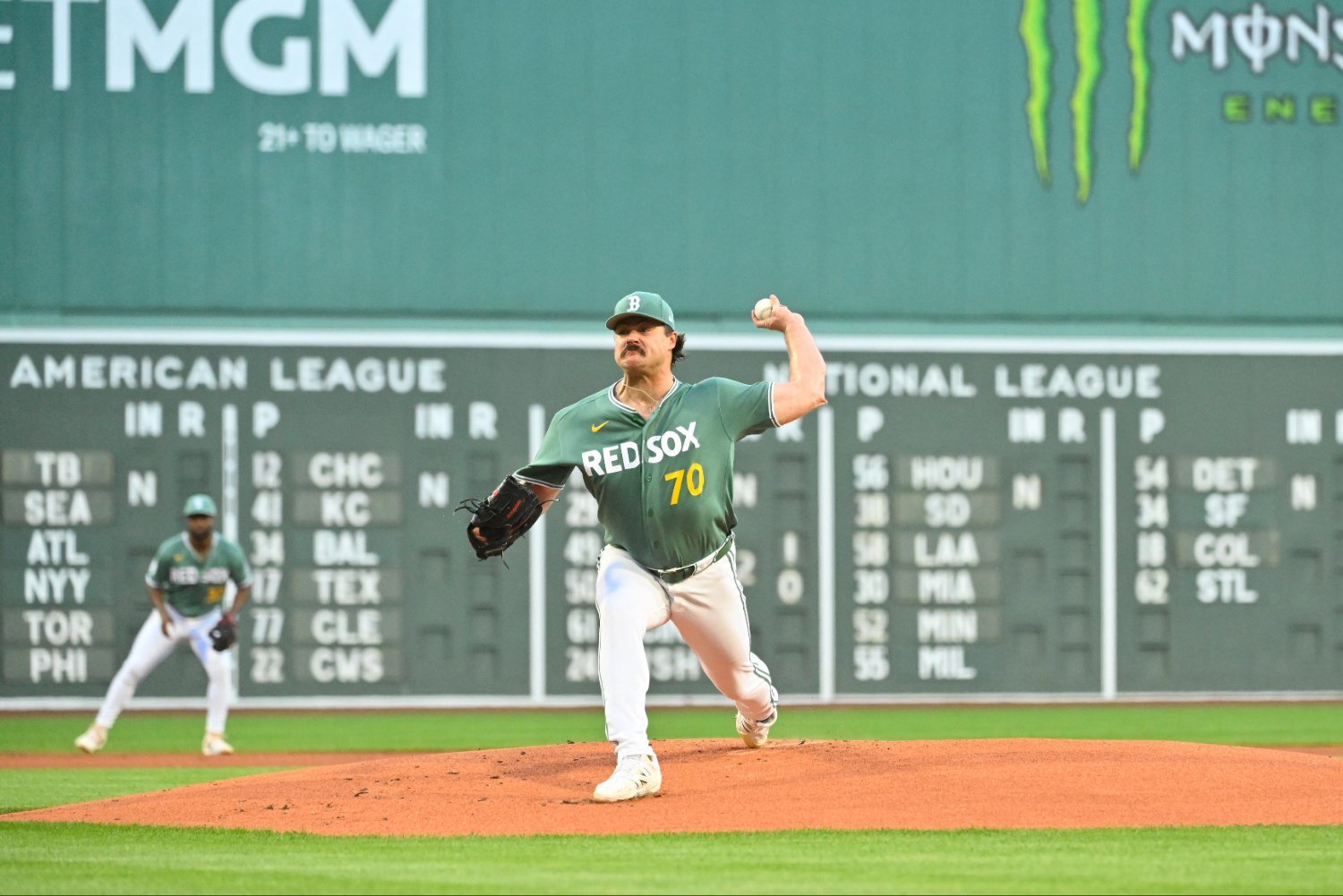 There is a visual trick in baseball that is often mistaken for luck or a hot streak: when a pitcher suddenly looks unhittable, it is rarely because his pitches are moving more. Often, it's because he has taken away the fractions of a second a hitter needs to process the pitch. For weeks, Payton Tolle was the definition of talent tied to his own sequencing mistakes. The towering left-hander had the arm and the imposing presence on the mound, but he kept giving away the initiative within the at-bat; he was falling behind in the count, getting himself into trouble and eventually having to rely on his sinker—a pitch opponents have punished to a .400 wOBA allowed this season—to try to get back into the zone. On August 7 against the Athletics, that self-destructive pattern was eliminated. Tolle faced 20 batters and threw 84 pitches. Over the entire game, he threw only eight pitches with the hitter ahead in the count. The impact of that aggression obviously alters a hitter's approach. When a starter does not give you a 1-0 or 2-0 count, he takes away the ability to patiently wait for a favorable offering. The instruction from the dugout to “wait for the fastball over the middle” becomes unworkable; the hitter stops selecting his zone and starts defending the plate from the very first pitch. By taking control of at-bats early, Tolle’s arsenal takes on a devastating dimension, especially against right-handed hitters, who make up the bulk of opposing lineups. As a left-handed pitcher, Tolle’s accumulated numbers against righties border on absurd: he owns a 32.7% K% (96th percentile in MLB), a 15.9% whiff rate (92nd percentile) and a .242 xwOBA (95th percentile). It is not a coincidence. His arsenal is built to tie up right-handed hitters through a combination of movement and velocity. That strategy begins with his release point. Tolle gets 7.4 feet of extension off the mound, putting him in the 98th percentile in the major leagues. When he fell behind in the count during his previous starts, hitters could tolerate that proximity, because the advantage created by his extension lost some of its effect when they could better anticipate the sequence. But once he got ahead in the count, Tolle increased the velocity of his four-seam fastball from his usual 95.5 mph average to a consistent peak of 98.2 mph. Two extra miles per hour, combined with a release point almost on top of the hitter, reduces the recognition window to a point where the swing comes purely out of self-preservation. And if they do make contact, the ball comes off harmlessly: in his last start, the average exit velocity on Tolle’s four-seamer with two strikes was just 77.4 mph. This is where the pièce de résistance comes into play, with a little something I like to call the "vertical finisher." With the hitter rushed in the box to keep up with 98 mph, Tolle introduces his curveball at 84.2 mph (2,502 RPM) from the same release window. The hitter recognizes the arm path, processes the fastball velocity and starts the bat through the zone. By the time the ball loses its lift and drops toward the ground, the swing is already irreversible. With two strikes against the Athletics, Tolle increased his curveball usage to 24.2% (eight pitches), and the result was absolute: a 100% whiff rate, producing five outright strikeouts (62.5% PutAway%). Add a 90.2 mph cutter that recorded a 75% whiff rate in that same situation, and the map of the at-bat is complete. Of the 14 strikeouts he recorded that day, 13 came through that three-level combination (98-mph high fastball / 90-mph cutter in on the hands / 84-mph curveball down). Baseball often looks for complicated explanations in biomechanics or revolutionary grips when a starter takes a leap forward. Payton Tolle’s reality is simpler and more direct: he shelved the inefficient sinker when he was behind, attacked the zone from pitch one, and used his extension to force hitters into committing early. Once you get a hitter swinging on reaction rather than a pre-planned approach, good results are sure to follow. View the full article
 -
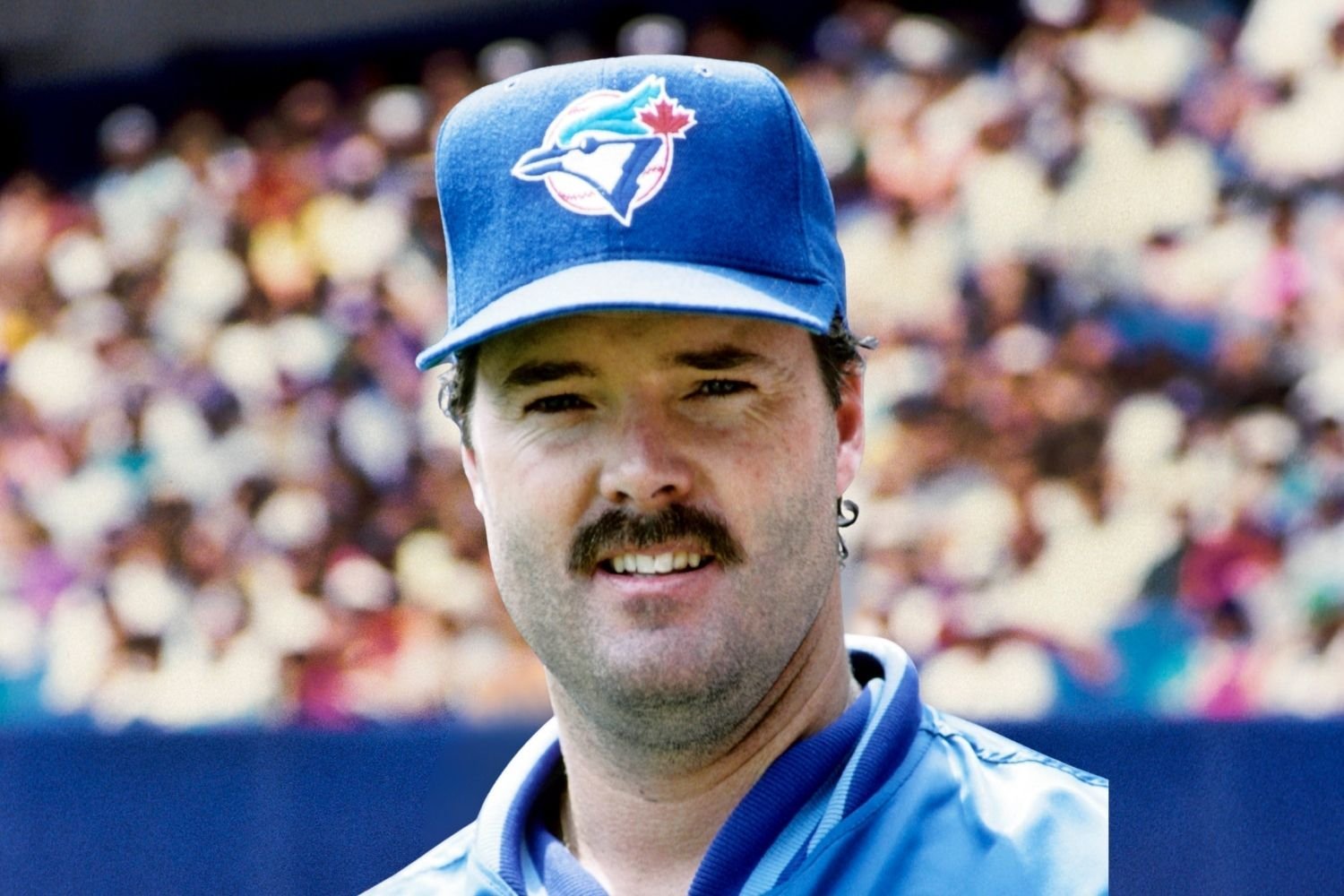 While this season's stretch run isn't shaping up to be as exciting as we all hoped, let's ride the 50th season nostalgia and re-live the stretch run from the Blue Jays' first World Championship year, 1992. Monday, July 27 – off-day The workload of the regular season was catching up to Juan Guzmán. After a dazzling debut in ‘91, Guzmán was following up with a masterful season. He was chosen to the American League All-Star team and went into the break having pitched at least seven innings in eight of his last 10 starts. He entered the All-Star Game in the third inning and quickly struck out Ryne Sandberg and Benito Santiago before loading the bases. After falling behind the count, Guzmán got Barry Bonds to pop up on the third base side for the final out of the inning. Guzmán’s next start with the Blue Jays came four days later in Seattle, where he moved to 12-2 with seven scoreless innings of work. After winning three of four from the Mariners, Toronto would drop two of three against the Angels before sending Guzmán to the mound to open up a series in Oakland. It was a chilly night in the Bay Area, and Guzmán never felt quite right. He left the game in the third inning due to shoulder stiffness and then admitted to having felt “twinges” in the area during his previous two starts. The diagnosis was two separate strains around his shoulder, bumping him from his scheduled start on Wednesday against Kansas City, for which the Blue Jays potentially needed him in the stopper role again. Despite Guzmán’s early departure, Toronto beat the A’s before losing the final three games of the series. Going 5-6 on the road trip, Toronto maintained a four-game lead over Baltimore and Milwaukee but was then facing some concerns around the All-Star pitcher. Down in action in the minor leagues, Carlos Delgado set a Class-A Dunedin record with his 25th home run of the season. His .326 average would have him in the Triple Crown discussion if not for his teammate Rob Butler, who led the Florida State League with a .359 mark. Tuesday, July 28 – 6-4 win vs. Kansas City Kelly Gruber was nervous before the start of Toronto’s week-long homestand. For Gruber, it was his first game back at SkyDome in a month. Having not hit a home run since May, Gruber’s play had gotten him booed before he landed on the injured list. Now? After rumours of him water skiing in Muskoka while he was hurt? Jeff Kent had filled in just fine at the hot corner. “Gruber for rent, keep Kent” read an overhanging sign in the outfield. However, the crowd was still slightly abuzz as Gruber made his way into the batter’s box for the first time. Candy Maldonado had just homered to give Toronto a 2-1 lead, and on the second pitch of his at-bat, Gruber hit a hanging change-up off recent Triple-A call-up Dennis Moeller over the sign calling for his replacement in left field. Gruber called it an “ice-breaker” with the fans. With that home run, along with a couple of stellar defensive plays, he helped Toronto to victory. “Even if Kelly doesn’t hit, he’ll do a lot for this team,” said manager Cito Gaston. The injury diagnosis for Pat Tabler would be a painful one. Over the weekend, Tabler slipped on the grass near the dugout in Oakland. He underwent imaging tests upon returning to Toronto, and they revealed torn cartilage and arthritis in his left knee. It was something Tabler would play through in the final months of his major league career. Wednesday, July 29 – 5-2 loss vs. Kansas City Guzmán had replaced an injured Dave Stieb in the rotation last season, and it would be Stieb taking the ball to replace the now-injured Guzmán. Toronto’s ace of the previous decade was winding down in a number of ways. After back-to-back abbreviated outings had ballooned his ERA to 5.79 in 12 starts through June, Gaston removed Stieb from the Toronto rotation. Pitching out of the bullpen, talk swirled that Stieb may get released. He was far away from his ‘80s dominance, but with an opening, Gaston opted to give Stieb the start instead of bumping up the rest of his rotation to cover Guzmán’s absence. Stieb held down the fort with six solid innings, but Kansas City would bat around on an erratic Mike Timlin in the eighth inning. The Royals scored the go-ahead run on a wild pitch (that was scored a passed ball), and Timlin would later walk Brent Mayne with the bases loaded. The four-run inning left the Blue Jays down 5-1. Toronto loaded the bases in the ninth with one out, but Manuel Lee grounded into a run-scoring fielders’ choice before Devon Whyte ended the game by popping out. The blown lead wasted the final quality start of Dave Stieb’s Blue Jays’ career, and Pat Gillick was going to do something about it. Thursday, July 30 – 3-0 win vs. Kansas City All month, the Blue Jays general manager had been talking to other teams about adding pitching ahead of the trade deadline. It was 50-50 the team made a deal before then, Gillick said, but the availability of a familiar face flipped the coin deal-side up. Late ‘80s sensation Mark Eichhorn had rediscovered his stuff in the Angels’ bullpen, and he was headed back to Toronto for Greg Myers and Rob Ducey. Eichhorn was to pitch ahead of Duane Ward and Tom Henke, relief innings the Blue Jays were wanting to shore up with some better pitching. As excited as Eichhorn was to rejoin the team, it was crushing for the homegrown Ducey. “Right now I can’t really believe I won’t be wearing a Blue Jays uniform,” he said. “Nobody wants to leave a team that has a chance to be in the World Series.” With an extra day of rest, David Wells was as sharp as a starter could be in the shutout of Kansas City. Boomer threw 70 of his 94 pitches for strikes in seven shutout innings that were nailed down by Ward and Henke in the series-clinching victory. At the plate, Maldonado stayed red hot with three more hits. Since the All-Star break, last summer’s stretch-run acquisition was slashing .392/.492/.647. Friday, July 31 – 13-2 win vs. New York Breaking from spring training, the Blue Jays looked to the waiver wire to cover a spot in the bullpen. Toronto claimed 27-year-old Shawn Hillegas from Cleveland, where he had pitched 83 innings the year prior. Hillegas never showed. Toronto suspected the pitcher had a secret deal done with another club, and as soon as Hillegas waited out the five-day deadline to report to the Blue Jays, he signed a minor league deal with the New York Yankees. The cost of not wanting to be a Blue Jay was $60,000 in withheld severance pay. Now, here was a chance to show it was worth it. Or, maybe not. Toronto knocked Hillegas out of the game after three innings, having scored six runs. It was the same number they would put up on the second New York pitcher. Joe Carter snapped a 0-for-20 slump with a long home run, and Pat Borders knocked in five, including a round-tripper off Hillegas. The 13-run outburst rendered a seven-inning gem from Todd Stottlemyre just nice to have, and Gaston used the blowout to get to the end of his bench, including the first appearance of Ed Sprague on the season. Saturday, August 1 – 3-1 win vs. New York It’s a good thing the inning didn’t play out the way Joe Carter had first planned. With the score 1-1 in the eighth, the Blue Jays had runners on the corners with two away and Carter up. On the first pitch, Carter attempted a surprise bunt, but he fouled it off. On the very next offering, Carter drilled a ball to left field. He thought it was out off the bat, but the ball bounced between Mel Hall and the fence for a two-run double. The base hit put Jack Morris in line for the win after he pitched eight solid innings, and the third straight victory was locked down by Henke in the ninth. Sunday, August 2 – 7-6 win vs. New York It had turned into an adventurous weekend defensively for Hall. In the seventh, Hall hit a pinch-hit two-run single to give the Yankees a 5-3 lead. With two on and two out in the bottom half of the frame, it was Roberto Alomar’s turn for the Blue Jays at the plate. Much like he did on Carter’s game-deciding double the day before, Hall had Alomar shaded towards the line in left field. When Alomar hit a ball into the gap, Hall barely caught up to it but had the ball bounce off his glove and onto the turf for a game-tying double. There was nowhere to be positioned for the next hitter. Unlike yesterday, this one was gone for Carter, who became a hero yet again, hitting the ball well over Hall’s head and the left field fence to give the Blue Jays a 7-5 lead. Making his first Blue Jay appearance since 1988, Eichhorn inherited runners and gave up the go-ahead hit to Hall before watching the offence rally to put him in line for the win. “Definitely not the prettiest win, but coming back to score runs like this team can, I might be able to vulture a few,” Ike said. “The last two, three years (with the Angels), this is something I haven’t been used to.” Despite the sweep, Toronto's lead was kept to 4.5 games by Baltimore, who kept pace with their own sweep in Boston, where the Blue Jays would head next. View the full article
 -
 Wednesday saw the San Diego Padres' four full-season affiliates go 1-2 with a postponement. The Triple-A El Paso Chihuahuas pulled out a 5-2 win over Salt Lake, the Double-A San Antonio Missions suffered a 7-3 walk-off loss to Frisco, the High-A Fort Wayne TinCaps were postponed due to a power outage and the Low-A Lake Elsinore Storm were stopped by Inland Empire 3-1. Padres Minor-League Transactions San Diego Padres activated RHP David Morgan from the 15-day injured list and optioned him to El Paso Chihuahuas. Mason McCoy's HR In Seventh Sends Chihuahuas Past Bees Mason McCoy went 2-for-3 with a tiebreaking solo home run in the seventh inning and left-handed starter Jagger Haynes didn't allow an earned run over five innings as the host Triple-A El Paso Chihuahuas beat the Salt Lake Bees 5-2. Haynes did allow two runs in the third inning, but they were unearned due to a fielding error by first baseman Blake Hunt, a throwing error by catcher Ethan Salas, Padres Mission's No. 1 prospect, and a balk. But it was a good outing for Haynes as he gave up four hits and two walks while striking out five. Right-hander Logan Gillaspie went two shutout innings, with right-handers Ty Adcock and Hans Crouse going a shutout inning each. For Crouse, it was his first save since joining the organization Aug. 2 after being released by the Baltimore Orioles and third of the season. Crouse hasn't allowed a run in his four appearances with the Chihuahuas and his last six overall. The Chihuahuas jumped out to a 2-0 lead in the second inning as Rodolfo Duran doubled home Salas, who had walked, with one out, then scored on the back end of a double steal with McCoy, who had singled. It was Duran's second steal of the season. The Bees tied it in the third and it stayed 2-2 until McCoy barely cleared the center-field wall with his ninth homer of the season. The Chihuahuas added two more in the eighth as Clay Dungan doubled, was bunted to second by Bryce Johnson and scored on Carlos Rodriguez's single to left. Rodriguez stole second and Solak notched his 20th double of the season to drive him in. Salas went 1-for-3 with a walk. McCoy also had two steals, giving him a team-high 27, which also is his career high after having 25 in 2023 and 2024. EP_0812.mp4 Player AB R H RBI BB K Bryce Johnson, CF 3 0 0 0 0 1 Carlos Rodríguez, LF 4 1 1 1 0 0 Nick Solak, RF 4 0 1 1 0 0 Dustin Harris, RF 0 0 0 0 0 0 Marcos Castañon, 2B 3 0 0 0 1 1 Ethan Salas, C 3 1 1 0 1 0 Rodolfo Durán, DH 3 1 1 1 0 1 Mason McCoy, SS 3 1 2 1 0 0 Blake Hunt, 1B 3 0 0 0 0 2 Nick Pratto, 1B 0 0 0 0 0 0 Clay Dungan, 3B 3 1 1 0 0 1 Totals 29 5 7 4 2 6 Player IP H R ER BB K HR Jagger Haynes 5 4 2 0 2 5 0 Logan Gillaspie 2 1 0 0 1 0 0 Ty Adcock 1 1 0 0 0 2 0 Hans Crouse 1 1 0 0 0 0 0 Totals 9 7 2 0 3 7 0 Missions Stunned By Walk-Off Grand Slam A nice first seven innings on the mound devolved into a disastrous finish as the Double-A San Antonio Missions gave up two runs in the eighth and then a walk-off grand slam in the ninth as the Frisco RoughRiders rallied for a 7-3 victory. Missions left-handed starter Francisco Sanchez bounced back for a tough return to the mound last week after being hit in the head with a line drive in early June by allowing just a hit in five shutout innings, striking out seven and walking three. Right-hander Tucker Musgrove, Padres Mission's No. 12 prospect, gave up a run in two-thirds of an innning while striking out two, then right-hander Sadrac Franco went 1⅓ scoreless, also fanning two. But right-hander Garrett Hawkins gave up a pair of runs in the eighth to tie it 3-3. MLB veteran right-hander Jose Leclerc came on for the ninth and gave up a single, a forceout grounder, a wild pitch and back-to-back walks to load the bases. Max Wagner then hit a 3-2 pitch out to left-center field for the walk-off slam. The Missions took a 3-0 lead. Carson Tucker had a two-out RBI triple in the third inning, Albert Fabian a sacrifice fly in the fourth and Fabian a run-scoring single in the top of the sixth. SA_0812.mp4 Player AB R H RBI BB K Carson Tucker, SS 4 0 1 1 0 1 Tirso Ornelas, LF 4 0 0 0 0 1 Romeo Sanabria, 1B 4 1 1 0 0 2 Braedon Karpathios, RF 4 0 1 0 0 1 Ryan Jackson, 2B 3 1 1 0 1 0 Albert Fabian, DH 3 0 1 2 0 1 Luis Verdugo, 3B 3 1 1 0 1 2 Kai Roberts, CF 2 0 0 0 0 1 Brendan Durfee, C 3 0 0 0 0 1 Totals 30 3 6 3 2 10 Player IP H R ER BB K HR Fernando Sanchez 5 1 0 0 0 4 0 Tucker Musgrove 2/3 1 1 1 1 2 0 Sadrac Franco 1 1/3 2 0 0 1 2 0 Garrett Hawkins 1 3 2 2 1 0 0 José Leclerc 1/3 2 4 4 2 0 1 Totals 8 1/3 9 7 7 5 8 1 TinCaps-River Bandits Postponed By Power Outage Following a severe storm that hit much of the Midwest led to a power outage in Davenport, Iowa, causing the High-A Fort Wayne TinCaps' game against the Quad Cities River Bandits to be postponed. The game will be made up Saturday as part of a doubleheader. Cameron Nohos Fans 9, But Storm Can't Hang On Against 66ers Right-handed starter Cameron Nohos struck out nine over 5⅔ innings, but the Low-A Lake Elsinore Storm were doomed by a three-run sixth inning as the host Inland Empire 66ers won 3-1. Chris McHugh, the Padres' 11th-round draft choice, followed up a 3-for-4 pro debut Tuesday with a 2-for-4 game, while Jesmaylin Arias also had a pair of hits. The Storm scored its lone run in the third inning. Dawson Willis drew a two-out walk and went to third on Yimy Tovar's single. As Tovar stole second, a throwing error by the catcher allowed Willis to score. Nohos allowed three hits, but walked four in matching his career high of nine punchouts, set in a four-inning outing May 28 in the Arizona Complex League. He has 16 strikeouts in his last two starts and 26 in his last four. Right-hander Rordy Mejia relieved Nohos after a two-out walk. The next batter hit an 0-2 homer that put the 66ers up 2-1. A single and a double made it 3-1. Mejia did strike out three in 2⅓ innings. Player AB R H RBI BB K Nu'u Contrades, 3B 4 0 1 0 0 1 Joe Tiroly, DH 3 0 0 0 1 1 Chris McHugh, 1B 4 0 2 0 0 2 Dawson Willis, CF 3 1 1 0 1 1 Yimy Tovar, 2B 3 0 1 0 1 0 Truitt Madonna, C 4 0 0 0 0 1 Jose Verdugo, SS 4 0 0 0 0 1 Jesmaylin Arias, RF 4 0 2 0 0 1 Qrey Lott, LF 4 0 0 0 0 0 Totals 33 1 7 0 3 8 Player IP H R ER BB K HR Cameron Nohos 5 2/3 3 1 1 4 9 0 Rordy Mejia 2 1/3 4 2 2 0 3 1 Totals 8 7 3 3 4 12 1 Padres Mission's Top 20 Prospect Performance Ethan Salas: 1-for-3, BB, R Ryan Wideman: DNP Coleman Borthwick: In Arizona Kruz Schoolcraft: DNP Ty Harvey: DNP Kale Fountain: Injured, out for season Jorge Quintana: DNP Alex McCoy: DNP Braedon Karpathios: 1-for-4, K Lamar King Jr.: DNP Elliot Lascelles: In Arizona Tucker Musgrove: ⅔ IP, 1 H, 1 R, 1 ER, 1 BB, 2 K Jagger Haynes: 5 IP, 4 H, 2 R, 0 ER, 2 BB, 5 K Jake Cunningham: DNP Truitt Madonna: 0-for-4, K Eric Yost: DNP Winyer Chourio: DNP Jesus Castro: DNP Michael Salina: DNP Rosman Verdugo: DNP View the full article
 -
Twins Minor League Report (8/12): Carson Tinney Calls Game
DiamondCentric posted an article in Twins Daily
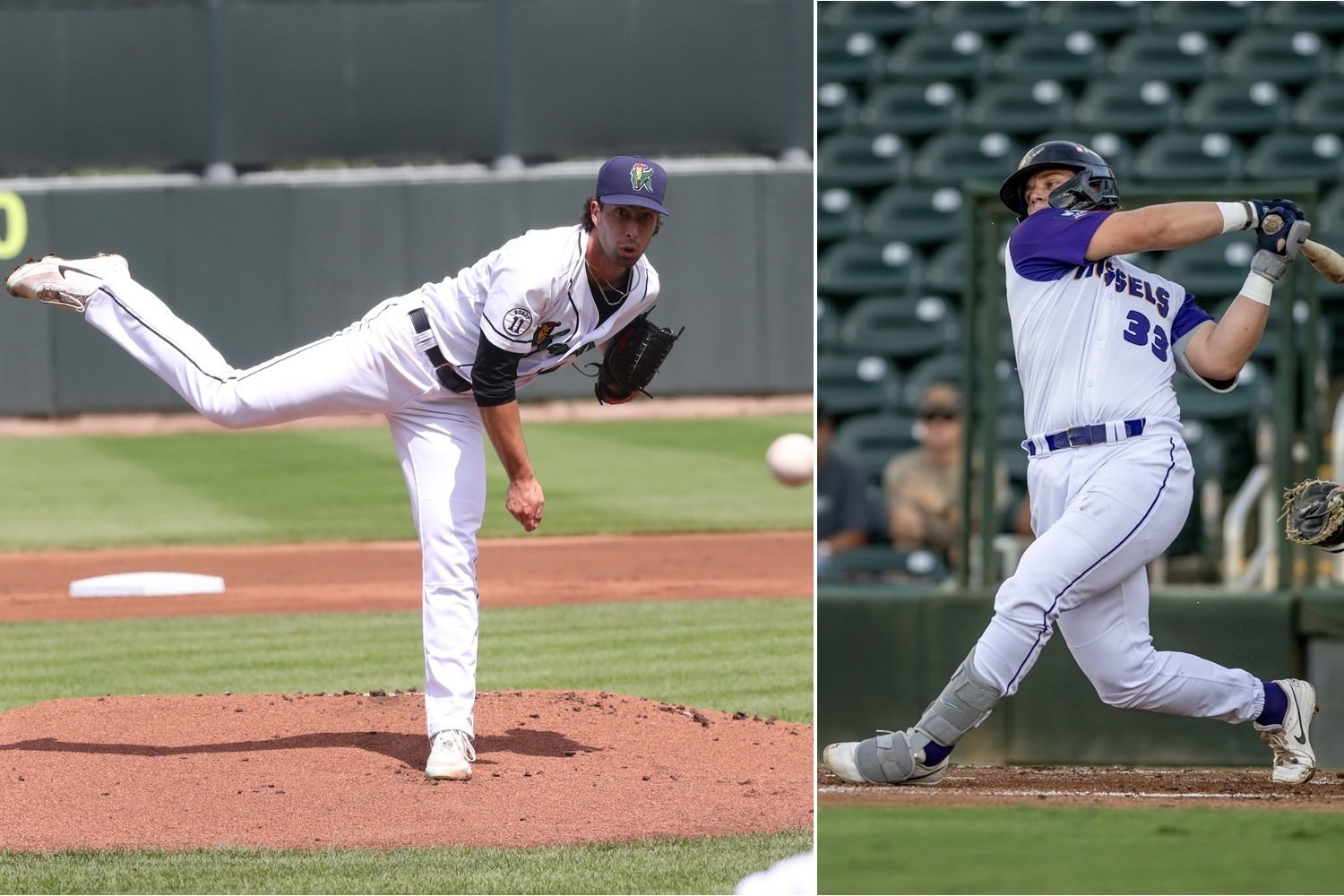 TRANSACTIONS OF Kyler Fedko moved to full-season IL (St. Paul) C Irvin Nunez promoted to A+ Cedar Rapids C Luis Hernandez promoted to AA Wichita RHP Joel Garcia transferred from 7-day IL to 60-day IL (A Fort Myers) C Hideki Prather promoted to A Fort Myers LHP Jake Murray placed on 7-day IL (A Fort Myers) LHP Matthew Becker promoted to A Fort Myers Saints Sentinel St. Paul 6, Iowa 7 Box Score Ryan Gallagher: 5 2/3 IP, 3 H, 1 ER, 1 BB, 7 K HR: Noah Cardenas (10) Multi-hit games: Walker Jenkins (2-for-4, 2B, 2 RBI, BB), Emmanuel Rodriguez (2-for-5, R), Noah Cardenas (2-for-2, HR, 2 R, RBI, BB) A Saints rally fell short on Wednesday. Has Ryan Gallagher figured it out? The righty followed up a modestly positive 4.13 ERA in July with two marvelous August outings, allowing two earned runs across 11 2/3 innings with 16 strikeouts, six hits, and two walks. His Saints season ERA remains impossibly high at 5.67, yet his tepid improvements may have morphed into a full-blown evolution as a pitcher. Hopefully, he can keep the momentum going in the right direction. St. Paul faced off against Braxton Garrett, one of the shiny new toys acquired by the Cubs at the trade deadline. He appeared more mildew-covered and dilapidated than the other arms, as he walked six in an outing where his relationship with the strike zone was cool and distant. Those free passes gave the Saints a first inning run, and they added on with two in the fourth on a slicing Walker Jenkins double to left. The 3-0 good times were soiled with a nightmare outing by Woo-Suk Go, as the righty surrendered a two-run shot in the sixth, then returned for a five-run clubbing in the seventh. Still, the Saints nearly made the comeback. Down 7-3, Noah Cardenas homered to trim the deficit. With the bases full in the ninth, Tristan Gray singled to score two, drawing the game to an agonizing one-run difference. Cody Morissette had a chance. Men were on the corners. He could only ground out to conclude what nearly became an impressive game-winning rally. Iowa catcher Owen Ayers ranks as the second-best prospect in the Cubs system. He walked once in four plate appearances. According to North Side Baseball, Ayers ranks as the Cubs #4 prospect. Wind Surge Wisdom Wichita 9, Corpus Christi 3 Box Score Ty Langenberg: 4 IP, 1 H, 0 ER, 3 BB, 3 K HR: Garrett Spain 2 (19, 20), Brandon Winokur (5) Multi-hit games: Marek Houston (2-for-5, 2 R, RBI), Brandon Winokur (2-for-5, HR, R, 3 RBI), Caden Kendle (2-for-5), Garrett Spain (3-for-3, 2 HR, 3 R, 4 RBI, BB) The Wind Surge bludgeoned their way to victory on Wednesday. Garrett Spain set a season-high in long balls some time ago; he’s now just padding his stats, imparting pain with a left-handed stroke capable of more thump than his 5’9” body would imply. His first souvenir of the night was dug out of the ground and launched out to right, and his second was thunderously launched into the atmosphere as every player, fan, and usher understood the ball was gone the second Spain hit it. Brandon Winokur was in the mood for leaving the yard, too, though he displayed a relative restraint, as he cleared the fence just once. And he sure made it count. Every batter in the Wind Surge lineup reached base at least once. Ty Langenberg hasn’t allowed a run across 13 innings in August. Houston’s third-ranked prospect Jason Schiavone played first and went 0-4, with a pair of strikeouts on Wednesday. Kernels Nuggets Cedar Rapids 6, Wisconsin 5 (13 Innings) Box Score Reed Moring: 6 IP, 3 H, 0 ER, 2 BB, 5 K HR: None Multi-hit games: Eduardo Tait (2-for-5, 2B, R, RBI, BB), JP Smith II (2-for-5), Jose Salas (2-for-6, 2B, RBI) The Kernels reached deep into extra innings to win on Wednesday. The match began with a two-hour rain delay, pushing what was already the longest Kernels game since 2016 to likely be the longest (time-wise) game anyone could remember. Reed Moring spearheaded pitching matters with his finest start as a Kernel. For the second game in a row, he totaled six innings; this time, he held the opposing team scoreless, a feat he hadn’t accomplished since July 11th. The UC-Santa Barbara product struck out five. He walked two. Perhaps he, Cory Lewis, and Ryan Gallagher will grab a celebratory drink and wax poetic about how awesome Barry Zito and Michael Young were. Cedar Rapids started their scoring with two runs in the third, turning an Andy Lugo walk and stolen base into a run on a Jacob McCombs single. Eduardo Tait doubled home a second run. Wisconsin took the lead, yet—once again—Tait drove in McCombs, this time with an eighth inning single. The teams explored what lay beyond the ninth inning. Free runners abounded—a temptation and tantalizing state-allowed opportunity that resulted in zilch for two full frames. Evidently, you can bring a batter to a run-scoring situation, but you cannot make him come through in the clutch. Runs exchanged in the 12th, which necessitated a 13th, which started in the Timber Rattlers’ favor, as they immediately cashed in their free runner, then hit into a double play, effectively neutering their rally. Who cares? The lead was theirs once more. Cedar Rapids started their half of the frame with a lineout and a single, with the latter knotting the game for the umpteenth time of the day. Then, a breakthrough. A lunge too little. Jose Salas stroked a flyball to right field that fell just beyond the outfielder’s grasp. Quinn McDaniel saw the whole thing with perfect clarity. He lurched towards second and bolted the second he saw the ball fall safely, starting a race around the bases that ended in him easily, safely reaching home plate. Wisconsin DH Luis Peña is the 18th-best prospect in MLB, according to Pipeline. He collected two hits and walked once in six plate appearances. According to Brewer Fanatic, Pena ranks #2 in an absolutely loaded Brewers farm system. Mussel Matters Fort Myers 6, Clearwater 5 Box Score Eric Hammond: 4 IP, 4 H, 3 ER, 1 BB, 5 K HR: Carson Tinney 2 (2, 3) Multi-hit games: Carson Tinney (2-for-5, 2 HR, 3 R, 4 RBI), Ramiro Dominguez (2-for-4, R), Bryce Fowler (2-for-4, RBI), Merphy Hernandez (2-for-4) The Mighty Mussels won on a walk off on Wednesday. It started with a Carson Tinney blast; and so, it eventually would end. The first homer gave Fort Myers two runs in the third. It sailed with a majesty common amongst right-handed shots, though the sight will never grow old. Three Clearwater runs in the second meant the home run didn’t give Fort Myers a lead; a fifth inning Bryce Fowler single would knot things, however. Starter Eric Hammond’s early sins gave way to a six-inning shutout streak, with Hammond, Melvin Rodriguez, and Nick McAuliffe combining to keep the Threshers at bay. McAuliffe was the best of the bunch with two empty frames and three strikeouts. Eventually, the pitching performance was rewarded with an offensive breakthrough, as Bryan Acuña gave the Mighty Mussels a short lead on an RBI infield single in eighth. Michael Hilker was summoned for the save. He was unaware of what was waiting for him. A walk and a flurry of singles flipped the script, scoring two in a reversal of fates as the Threshers now commanded a ninth inning advantage. A Yovanny Duran flyout started the rally on a sour note, and a Vahn Lackey triple quickly sweetened the deal. Tinney stepped up to the plate with a simple way to at least tie the game in any way he chose. Presented with this Gordian knot, he decided to cut through the situation, sending a ball soaring through the Fort Myers night for a walk-off. Philadelphia’s 23rd-ranked prospect Matthew Ferrara was the best youngster on the field for Clearwater; he singled and walked in four trips to the plate. TWINS DAILY PLAYERS OF THE DAY Twins Daily Minor League Pitcher of the Day – Reed Moring Twins Daily Minor League Hitter of the Day – Carson Tinney or Garrett Spain, whichever one you think is cooler PROSPECT SUMMARY Here’s a look at how the Twins Daily Top 20 Twins Prospects performed: #1 – Walker Jenkins (St. Paul) - 2-4, 2B, 2 RBI, BB #2 – Vahn Lackey (Fort Myers) - 1-4, 3B, 2 R, BB, K #4 – Marek Houston (Wichita) - 2-5, 2 R, RBI, K #6 – Emmanuel Rodriguez (St. Paul) - 2-5, R, K #7 – Hendry Mendez (St. Paul) - 1-3, RBI, 2 BB #8 – Eduardo Tait (Cedar Rapids) - 2-5, 2B, R, 2 RBI, BB, K #9 – Gabriel Gonzalez (St. Paul) - 1-4, K #11 – Carson Tinney (Fort Myers) - 2-5, 2 HR, 3 R, 4 RBI, #12 – Brandon Winokur (Wichita) - 2-5, HR, R, 3 RBI, K #15 – Ryan Gallagher (St. Paul) - 5 2/3 IP, 3 H, 1 ER, 1 BB, 7 K #18 – Quentin Young (Fort Myers) - 1-4, 2B, 3 K #19 – Yasser Mercedes (Cedar Rapids) - 0-1 THURSDAY’S PROBABLE STARTERS St. Paul @ Iowa (6:38 PM) - RHP Ricky Castro Corpus Christi @ Wichita (6:35 PM) - RHP Riley Quick Wisconsin @ Cedar Rapids (6:35 PM) - RHP Adrian Bohorquez Clearwater @ Fort Myers (6:05 PM) - RHP Matt Barr DSL Twins @ DSL Phillies (10:00 AM) - TBD View the full article
 -
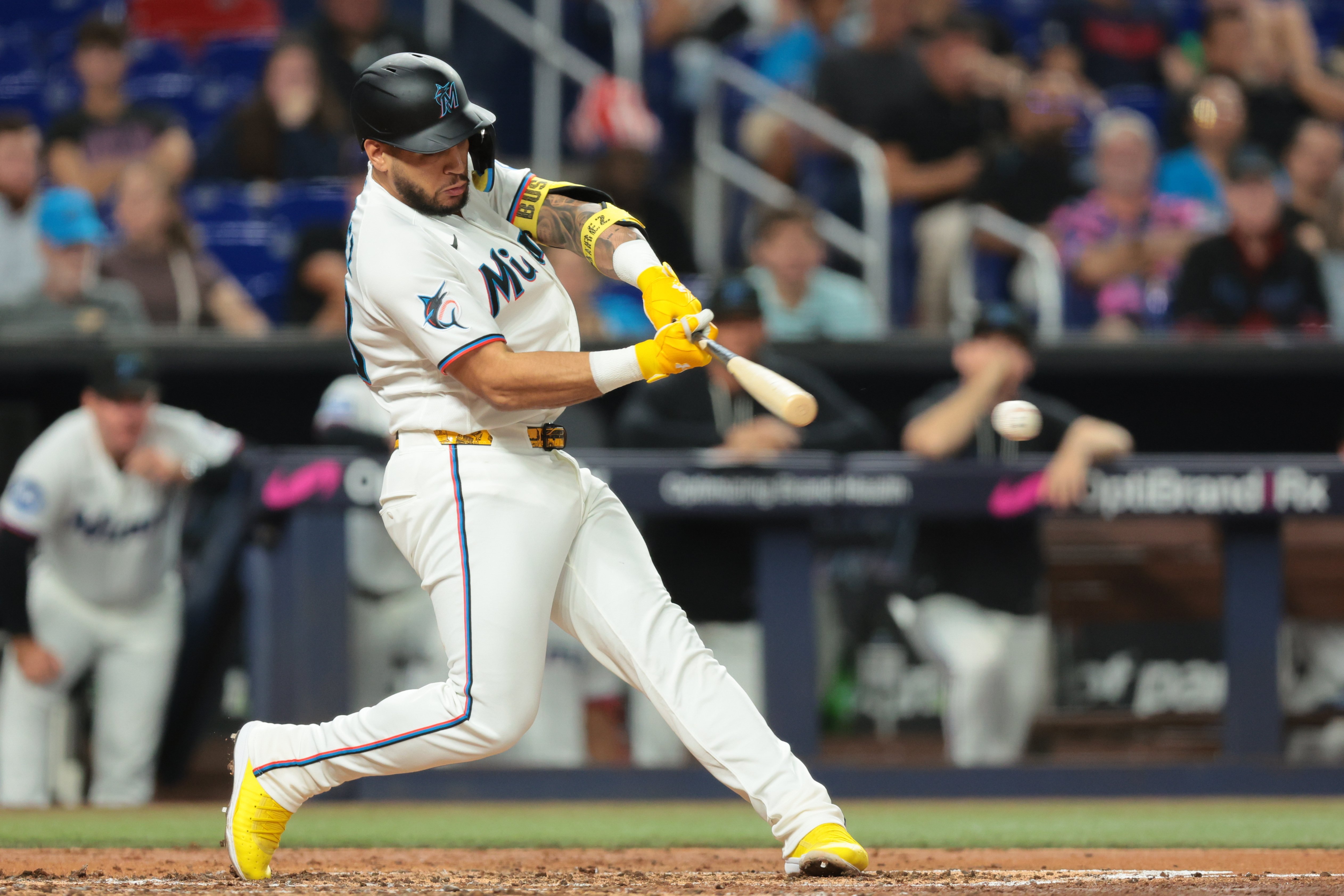 Wednesday night reminded Marlins fans why they originally fell in love with Agustin Ramirez . The 24-year-old slugger went 2-for-5 in Miami’s 8-2 win over the Pittsburgh Pirates, including an RBI double in the third inning that gave the Marlins the permanent lead. With his usual violent swing with a follow-through that looks like he’s twirling the bat backwards, the ball came off his bat at 110.6 miles per hour, past third baseman Nick Gonzales, and rolled to the left field wall. It was part of an inning that saw the Marlins put up four runs on just two hits, three walks, and a hit-by-pitch. Their eight total walks drawn on Wednesday tied a season high, with the other instance coming at the Washington Nationals in June. Ramirez’s single in the second inning left the bat at 107.8 miles per hour. “We still certainly believe in Augustin,” Marlins manager Clayton McCullough said. “He's a good player. He's another one who swings fast and hits the ball hard. We've seen him do things like tonight. So he's certainly very capable, and I think right now we just need contributions from him in as many places as we can get it.” Ramirez, who was brought over as a catcher in a trade with the New York Yankees in 2024 and made his Major League debut in 2025, was sent down to Triple-A Jacksonville in May of this year when his defense was a detriment to the team. To make matters worse, his offense, which was lauded as a plus-plus tool coming up through the minors and his first big league season, was merely average. He only had two home runs in 31 games, and his OPS was just .663. Ramirez was the designated hitter on Wednesday, which has been the norm since being recalled. His only start at catcher in his current Major League stint came on Sunday, and he was pulled after four innings in favor of Joe Mack. President of baseball operations Peter Bendix said after the trade deadline on August 3rd that Ramirez could also see time at first base. Since being called up on August 4th, Ramirez is 5-for-14. The hard-hitting right-hander wasn’t the only one with pop on Wednesday. Already up, 5-2 in the fourth, Griffin Conine hit a solo home run to center field off former Marlin Lake Bachar. It was Conine’s third home run in three games. The 29-year-old was robbed of a home run against Paul Skenes the night prior with a jump at the wall by Bryan Reynolds. He came into Wednesday with a slugging percentage of .577 and a .919 OPS with seven home runs since the All-Star break. Conine said the key lately has been avoiding chasing pitches out of the zone. “I think it's being selective, knowing exactly what I'm looking for,” Conine said. “I think the more time I spend, the more at bats I get, it's like the plan becomes clear of what (the opponent) is trying to do.” Heriberto Hernandez hit a two-run home run in the sixth inning for his team-leading 17th home run of the season. View the full article
 -
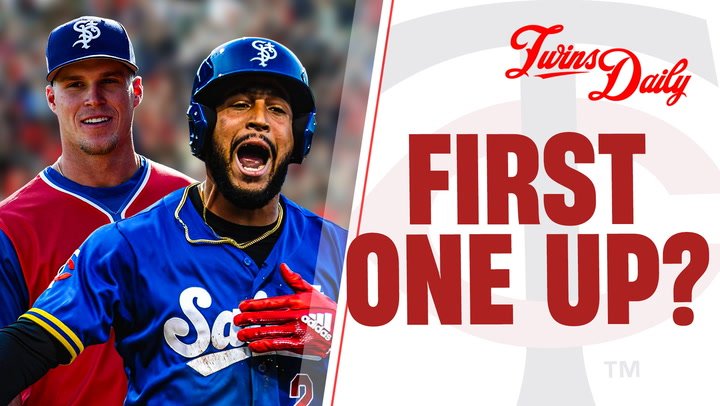 Walker Jenkins and Emmanuel Rodriguez are both making strong cases for a major league promotion. Which highly touted outfielder will the Twins call up first? View the full article
 -
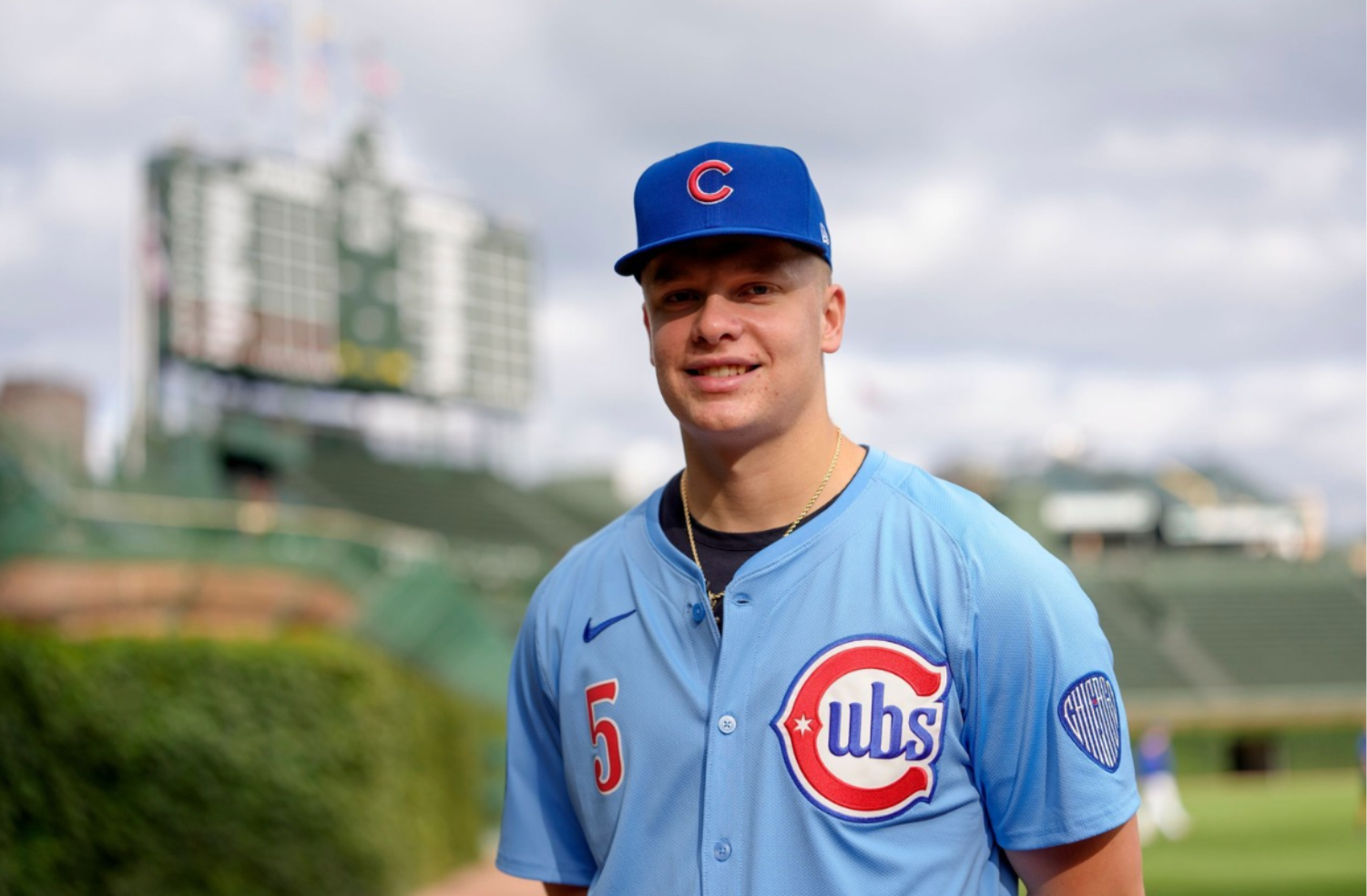 Ethan Conrad is the Chicago Cubs’ first-round pick from the 2025 MLB Draft, and we finally have a decent sample size of professional baseball to work with. Now that he’s healthy and back on the diamond, let’s dive into the early impressions of Conrad, who joined the team just over a year ago. Ethan Conrad's Updated Cubs Scouting Report Conrad is Chicago’s No. 4 prospect, per our updated prospect rankings. The 22-year-old Wake Forest alum was the 17th overall pick in last year’s draft, and he brings a well-rounded skillset to the table. Standing at 6-foot-2 and weighing 220 pounds, his hit and run tools hold the highest grades at 55 apiece. While he has a larger frame, the left-handed hitting outfielder can move, capturing headlines for leading NCAA Division I with 13 triples in his days with Marist. Injuries & Cubs' First-Round History It’s been a little over a year since the former Demon Deacon joined the organization, but a few injuries kept him off the field until he made his debut in June. The outfield prospect had both a torn left labrum and a shoulder dislocation that sidelined him for the majority of his final collegiate season, and a lower-back injury pushed his debut time back as well. The Cubs haven’t had the best luck with first rounders over the past few years. Jordan Wicks (2021) has floated back and forth between the big leagues and Triple-A Iowa, as the southpaw now possesses a 5.72 career ERA in the majors. As for their 2022 first round pick, Cade Horton made a case for National League Rookie of the Year last season. However, the Oklahoma alum is down with a UCL injury that took him out for the year. Matt Shaw was the team’s first round selection in 2023, and he has shown promise on both sides of the baseball through his first two MLB seasons. Cam Smith (2024) is now with the Astros, as the Cubs dealt him in the Kyle Tucker trade last season. This is all to say that there’s pressure on the North Siders to hit with a first round selection. Progress Up To Myrtle Beach Conrad is 30 games into his professional baseball career, and he’s slashing .257/.328/.451 (.779 OPS) over between rookie ball and Low-A Myrtle Beach. The outfielder has five homers, 22 runs batted and 11 extra-base hits, showing the potential to be a potent power bat. He's only managed to steal one base thus far, but he does also have a triple on the season. As he fills out his frame, it’ll be interesting to keep an eye on whether he prioritizes power, speed or can have the best of both worlds. Attacking Early It’s important not to gather too many conclusions from a 30-game sample size, but here are some early takeaways from Conrad’s first real look at Minor League Baseball. For one, he’s jumping on pitches in the zone. Not only does Conrad swing at 75.1% of pitches thrown in the zone (89th percentile), but he’s only whiffing 16.2 percent of the time (92nd percentile). MLB Pipeline describes him as an aggressive hitter who can make up for it with remarkable hand-eye coordination, and so far that has translated to the Low-A level. The Cubs’ rising star also doesn’t strike out a ton, just 20.8 percent of the time. The more he can put the ball in play, the easier it’ll be to justify an attack-oriented approach. Being Picky, Finding Speed Conrad has a long way to go, but seeing him be a little more selective would likely give him more pitches that he can do damage with. The first-year professional walks just 8.9 percent of the time (27th percentile). The more hitters counts he can get into, the greater likelihood he’ll either earn a free pass or see a more appetizing option over the plate. View the full article
 -
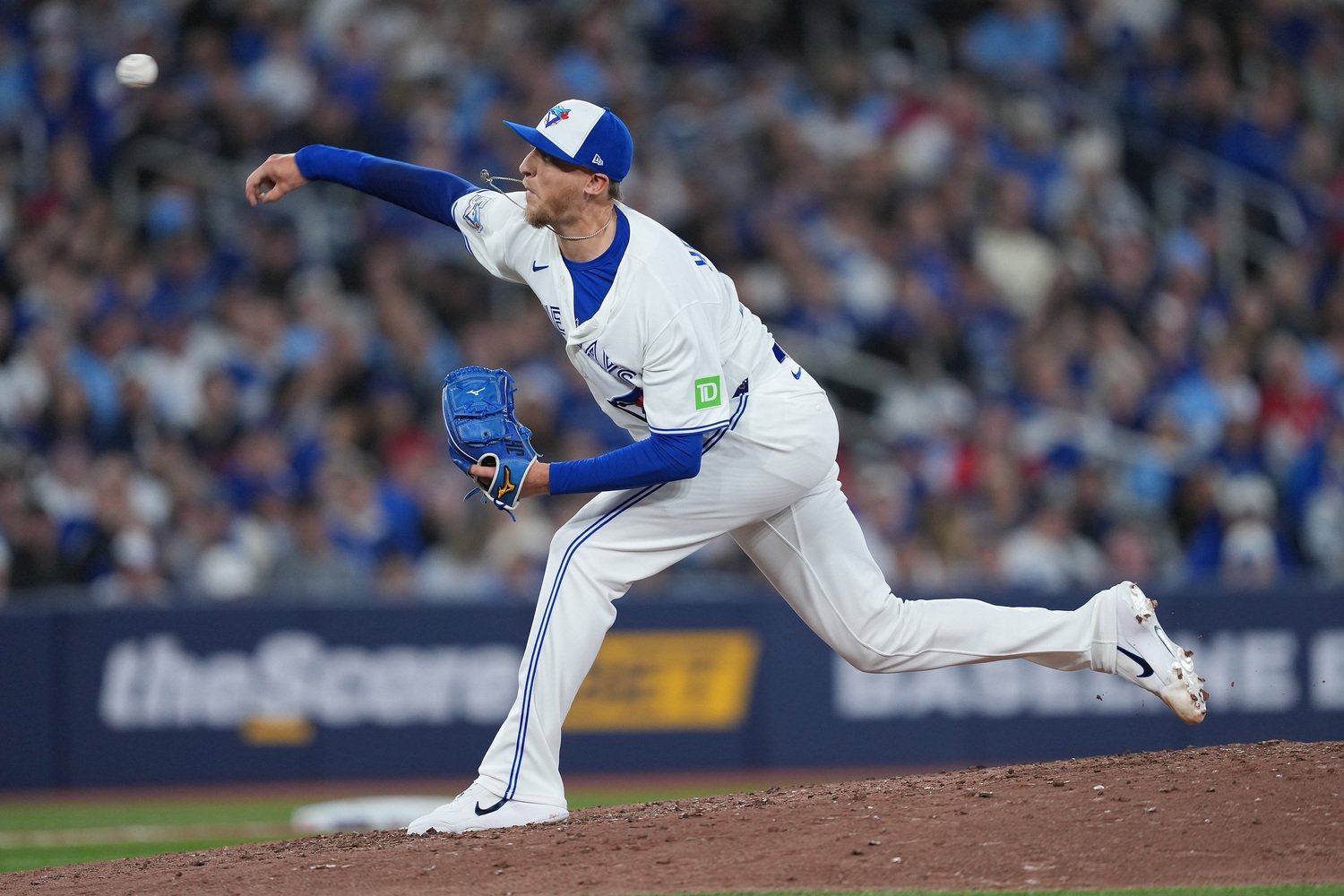 On Monday, the Blue Jays fell victim to a bizarre ruling. Because the Jays failed to record a fourth out, Red Sox baserunner Anthony Seigler scored successfully from third base on a fly ball, even though he never tagged up. Most of the players on the field had no idea what was going on. Even John Schneider – who had seen the same ruling 10 years earlier – was confused. I spent 20 minutes explaining it to my wife, and she said she understood, but I wouldn't blame her if she were lying just to make me stop talking. I think part of the confusion stems from the term "fourth out." The actual wording in the Official Baseball Rules is "apparent fourth out," with scare quotes around the latter two words. If the Blue Jays had made the necessary appeal to third base, they wouldn't have been credited with a fourth out. The original third out would no longer count, and the so-called "fourth out" would replace the preceding out as the official third out of the inning. An inning can't have more than three outs. Ever. But it can have more than three strikeouts. Thanks to another quirky entry in the baseball rulebook, a strikeout isn't always an out. If the catcher doesn't catch strike three (and a double play isn't in order), the pitcher is still awarded a K, but the batter isn't necessarily out. He can take off for first, and the base is his if he makes it there safely. So, hearing the words "fourth out" over and over again made me think back to Opening Day, when Jeff Hoffman put on the most Jeff Hoffman performance imaginable. He blew the save. He earned the win. He gave up a home run. And he struck out four batters in one inning of work. Jeff Hoffman Pitches in 4K Hoffman entered in the top of the ninth. The Blue Jays had a 2-1 lead. The top of the A's order was due up. Nick Kurtz, the reigning AL Rookie of the Year, led off. Hoffman and Alejandro Kirk caught him looking on Toronto's first challenge of the ABS era. Then Shea Langeliers tied the game with a shot to straightaway center. The next three batters all struck out swinging. Tyler Soderstrom swung over a slider, missing by nearly a foot, but the ball bounced past Kirk, allowing Soderstrom to reach first. Thankfully, Brent Rooker and Jacob Wilson embarrassed themselves just as badly, and the Blue Jays walked it off in the bottom of the ninth. Hoffman is one of only two pitchers to throw a four-strikeout inning this season. The other, unsurprisingly, is Mason Miller. The Padres closer leads NL relievers in strikeouts, while Hoffman, now with the Twins, leads relievers in the AL. Before Hoffman, the last Blue Jay to strike out four batters in an inning was Mike Bolsinger. Don't feel bad, I had to Google him too. The soft-tossing righty pitched 11 games for a mediocre Blue Jays team in 2017. On July 18, Bolsinger threw the final 3.1 frames of a 15-inning loss to the Red Sox. Until he gave up a walk-off home run to Hanley Ramirez, his work was impeccable. He retired the first 11 batters he saw. That included four swinging strikeouts in inning 13: Take away that performance, and Bolsinger only struck out 18% of opponents in his brief tenure with the Jays. Hoffman was striking out batters nearly twice as often. Yet, in these two outings, they were very much alike. They're two of just three pitchers to throw a 4K inning in 50 seasons of Blue Jays baseball. The very first Blue Jay to accomplish the feat was Steve Delabar in 2012. (As one would expect, four-strikeout innings are more common these days than they were in the early years of the Blue Jays' existence.) Delabar would pitch 143 games for Toronto from 2012-15, and his 4K inning came just two weeks into his Blue Jays tenure. On August 13, 2012, Delabar threw the final two frames of an extra-innings win over the White Sox. In the first of those innings, he struck out all four batters he faced: Delabar was excellent in his first two years with the Blue Jays. He earned an All-Star nod in 2013, and later that summer, he threw the first immaculate inning (nine pitches, three strikeouts) in franchise history. From the trade deadline in 2012 through the end of the 2013 campaign, his 128 strikeouts ranked second among AL relievers. Unfortunately, he lost his strikeout stuff in 2014 and struggled through his latter seasons in Toronto. Fittingly, the Blue Jays have only had three pitchers throw a 4K inning, but they have had four such seasons in their history. On September 17, 2024, Luis Frías and Erik Swanson combined to pull off the feat. In what would turn out to be his final big league appearance (to this point), Frías struck out three Rangers batters in the bottom of the eighth... but he also gave up a double, a home run, and three walks. With the bases loaded, Swanson came in to record the final out. The Blue Jays have also been on the receiving end of a trio of 4K innings. The most recent was on April 23, 2021, with Tyler Glasnow on the mound. It took Glasnow nine batters to get those four strikeouts (Cavan Biggio, Bo Bichette, Lourdes Gurriel Jr., and Danny Jansen), and the Blue Jays brought four runs across the plate. Several years earlier, Phil Hughes struck out J.P. Arencibia, Adeiny Hechavarria, Anthony Gose, and Brett Lawrie back-to-back-to-back-to-back on September 20, 2012: On September 3, 1996, the Blue Jays' batters were dealt their very first 4K inning. The Royals' Kevin Appier struck out Ed Sprague, Carlos Delgado, Charlie O'Brien, and Alex Gonzalez in a dominant complete-game victory. Four-strikeout innings aren't as rare (or confusing) as fourth-out situations, but they're one of my favourite statistical quirks. I also think it's pretty darn cool that the Blue Jays have now had one of each in the same season. Now all they need is the ultra-rare four-strike at-bat to complete the "four of something that's usually three" challenge. (Unless that challenge really needs four components...?) View the full article
 -
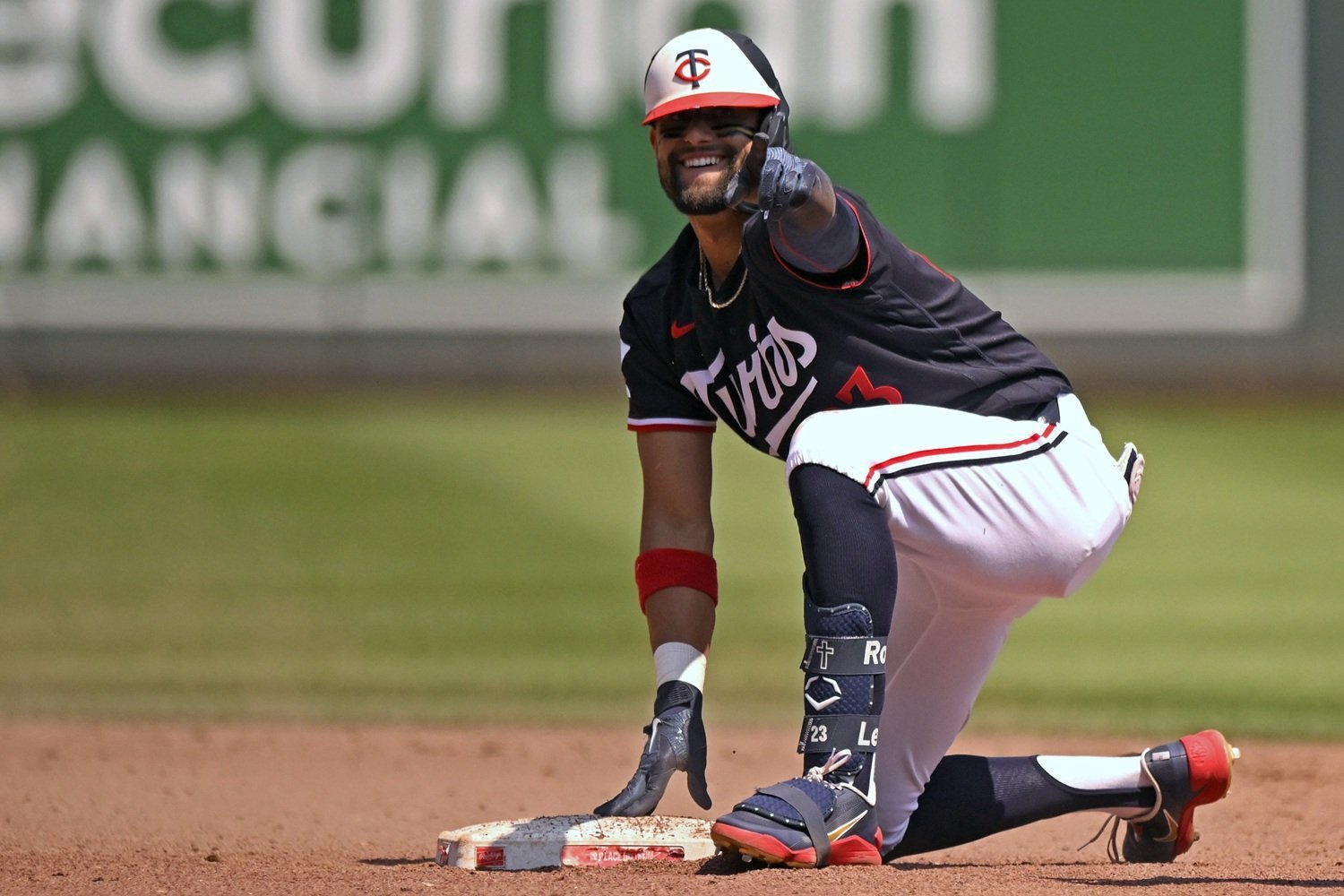 Box Score SP: Zebby Matthews - 5 IP, 6 H, 4 R, 2 BB, 4 K (94 pitches, 60 strikes (64% strikes)) Home Runs: None Top 3 WPA: Alan Roden (0.28), Josh Bell (0.17), Victor Caratini (0.12) Win Probability Chart The Twins entered Wednesday afternoon's series finale against the Orioles needing a win in the worst way. After dropping three straight series, Minnesota had to win the finale to avoid another series loss, and an early deficit against Baltimore made that task even more difficult. For a while, it looked like the Orioles were going to make things even more uncomfortable. Zebby Matthews struggled to find his rhythm early, allowing Baltimore to build a 4-1 lead by the third inning while forcing the Twins to work from behind once again. But Minnesota responded immediately, putting together a four-run third inning and shutting down any Orioles’ momentum. The Twins' offense finished with 14 hits, the pitching staff settled down after the early struggles, and Yoendrys Gómez worked out of a ninth-inning jam to secure a 7-5 victory. After another difficult stretch, this was exactly the type of win Minnesota needed. THE TWINS ANSWERED EVERY TIME BALTIMORE SCORED The biggest takeaway from Wednesday's game might’ve been how quickly the Twins responded whenever the Orioles grabbed control. Baltimore opened the scoring in the first inning after Gunnar Henderson walked, Pete Alonso singled and Jackson Holliday reached on a fielder's choice. Minnesota answered immediately in the bottom half, with Trevor Larnach's smart baserunning helping him advance to second on Royce Lewis' deep flyout before Josh Bell brought him home with an RBI single. Then the Orioles struck again. Dylan Beavers launched a three-run homer in the third inning, turning a 1-1 game into a 4-1 Baltimore lead. The pitch was a two-strike curveball that caught too much of the plate, and Beavers didn't miss it. But the Twins didn't let the deficit linger. Lewis started the bottom of the third with a double before Bell singled to put runners on the corners. Kody Clemens followed with an RBI single, Brooks Lee kept the rally going with another hit, and Luke Keaschall brought home Bell with a sacrifice fly. Victor Caratini then tied the game with an RBI single before Alan Roden smoked a ball off the wall in dead-center field, bringing home Lee and giving Minnesota a 5-4 lead. It was a four-run response to Baltimore's three-run inning, and it completely changed the game. THE OFFENSE KEPT POURING IT ON Once the Twins finally grabbed the lead, their offense didn't let up. Minnesota entered the fifth inning with a one-run advantage, but Caratini and Roden quickly put pressure on Baltimore's bullpen. Caratini opened the inning with a long single off the wall in right before Roden followed with a double, putting runners on second and third with nobody out. Trevor Larnach eventually grounded out, but Caratini scored on the play to extend Minnesota's lead to 6-4. Then Lewis came through again. The Twins' shortstop ripped a splitter down the left-field line for his second double of the afternoon, driving in Roden and pushing the lead to 7-4. Bell finished with three hits, while Roden reached base four times and collected two hits. Lee added multiple hits of his own, and the Twins' lineup finished with 14 hits overall. After a tough night at the plate on Tuesday, Minnesota's offense broke out in a major way when it mattered most. ZEBBY MATTHEWS BATTLED THROUGH A ROUGH START Matthews certainly didn't have his best afternoon, but he deserves credit for settling down after a difficult start. The right-hander issued a leadoff walk to Henderson before Alonso singled, immediately putting runners on the corners. Baltimore took the lead on Holliday's fielder's choice, and Matthews needed 22 pitches just to get through the first inning. Things didn't get much easier in the second. Matthews allowed a pair of two-out singles before finally escaping the inning, pushing his pitch count to 43 through two frames. Then came the three-run homer from Beavers in the third, which put Baltimore ahead 4-1 and brought Matthews to 67 pitches. At that point, Minnesota desperately needed him to find a way to settle down. Luckily, he did. Matthews retired Baltimore in order in the fourth after allowing a leadoff walk, inducing a 6-4-3 double play in the process. He then worked a quick 1-2-3 fifth inning, exiting after 94 pitches with the Twins still holding a three-run lead. It wasn't the most efficient outing, and the early command issues put the Twins in a difficult position. But Matthews kept the Orioles from doing any further damage after the third inning, allowing Minnesota's offense to take over. THE BULLPEN SHUT THE DOOR Once the Twins built their three-run lead, their bullpen did exactly what it needed to do. Andrew Morris entered in the sixth and immediately delivered a clean inning, striking out Dylan Beavers and Leody Taveras while getting Christian Encarnacion-Strand on a groundout. Jeff Hoffman followed in the seventh. After striking out Christian Franklin and getting Carlos Narváez to fly out, Hoffman allowed consecutive two-out walks to Henderson and Alonso, bringing Holliday to the plate as the potential tying run. That's when Kody Clemens made one of the biggest plays of the game. Clemens made a spectacular jumping catch at second base, preventing at least one run from scoring and allowing Hoffman to escape the inning without surrendering the lead. AJ Minter then delivered a dominant eighth inning, needing only nine pitches to retire the Orioles. All nine pitches were strikes, and he struck out Encarnacion-Strand to finish the frame. That left the ninth to Gómez. Things got interesting quickly. Taveras launched a leadoff solo homer to right field on the first pitch he saw from Gómez, cutting Minnesota's lead to 7-5. Franklin then worked a walk, putting the tying run on base with nobody out. But Gómez responded. Pinch-hitter Colton Cowser lined a ball directly back at the right-hander, who caught it before doubling Franklin off first base. Henderson then grounded back to Gómez for the final out, securing the win. After allowing Baltimore to repeatedly put pressure on them early, the Twins eventually settled in and took control. Their offense provided the big response every time the Orioles threatened, while the bullpen made sure the late lead held up. It won't erase the frustration of three straight series losses, but Minnesota avoided another series defeat and moved to 60-62 on the season. More importantly, the Twins showed some of the fight that has been missing during their recent struggles. Baltimore landed the first punch, but Minnesota answered every time, and ultimately walked away with a much-needed series-clinching victory. What’s Next? The Twins will travel to Dyersville, Iowa to take on the Phillies in the 2026 Field of Dreams game tomorrow night. Taj Bradley will toe the rubber for the good guys, and he’ll face off against veteran right-hander Aaron Nola. First pitch is set for 6:30 PM on Netflix. Postgame Interviews Coming soon! Bullpen Availability Chart View the full article
 -
 Chicago Cubs Minor League Report Affiliate Overview Triple-A Iowa Cubs Series vs. St. Paul Saints (Minnesota Twins): Cubs lead, 1-0 Season Record: 46–66-1 Double-A Knoxville Smokies Series vs. Rocket City Trash Pandas (Los Angeles Angels): Trash Pandas lead, 1-0 Season Record: 58–51 High-A South Bend Cubs Series at Great Lakes Loons (Los Angeles Dodgers): Loons lead, 1-0 Season Record: 63–42 Single-A Myrtle Beach Pelicans Series vs. Hill City Howlers (Cleveland Guardians): Howlers lead, 1-0 Season Record: 42–65 Triple-A: Iowa Cubs Season Record: 46–66-1 Series Opponent: St. Paul Saints (66-48) Series Standing: Lead, 1-0 Aug. 11: The Iowa Cubs slugged their way to a 6-3 victory over the St. Paul Saints on Tuesday night at the Field of Dreams in Dyersville, Iowa. The Saints took a 1-0 lead in the first before Greg Jones (1-for-3) evened the contest with a solo shot in the third. St. Paul back in front in the fifth but the Cubs took the lead for good with a five-spot in the home half of the inning. Ben Cowles (1-for-3) and Jordan Nwogu (1-for-3) crushed back-to-back solo shots and BJ Murray (1-for-4) launched a three-run blast to make it 6-2. For Nwogu, it was his first-career home run at the Triple-A level. The I-Cubs got five strong innings from starter Jordan Wicks, who allowed two runs, one earned, on two hits to go along with one walk and two strikeouts. Wicks would pick up the win to improve to 2-9 on the season. The Saints added one more run in the seventh but Ethan Roberts and Gabe Klobosits worked scoreless eighth and ninth innings, respectively, to give Iowa the series-opening victory, with Klobosits earning his third save of the season. Jaxon Wiggins worked a scoreless sixth out of the bullpen, walking one and striking out two. Double-A: Knoxville Smokies Season Record: 58–51 Series Opponent: Rocket City Trash Pandas (57–51) Series Standing: Trail, 1-0 Aug. 11: The Knoxville Smokies fell in their series opener to the Rocket City Trash Pandas, 6-1, on Monday night at Covenant Health Park. Ariel Armas (1-for-4) gave the Smokies the lead with an RBI-double in the second but that would be the only offense in the game for the hosts. The Trash Pandas would take the lead with four runs in the sixth before adding two more in the seventh to go up 6-1, which would go on to be the final score of the ballgame. Knoxville would be held to just five hits on the night, with just one going for extras bases. The Smokies would also go 0-for-5 with runners in scoring position, leaving six runners on base. Edward Cabrera, making his first rehab appearance at Knoxville, tossed five no-hit innings, walked just one batter and struck out seven. Daniel Palencia, also making his first rehab appearance with the Smokies, was tagged with the loss after allowing four runs over six batters faced without recording an out. Palencia walked three batters and struck out one. High-A: South Bend Cubs Season Record: 63–42 Series Opponent: Great Lakes Loons (60–45) Series Standing: Trail, 1-0 Aug. 11: The South Bend Cubs dropped their series opener at the Great Lakes Loons, 6-3, on Tuesday night at Dow Diamond. Logan Poteet (1-for-4) gave the Cubs the lead in the second with a two-run double and Matt Halbach (2-for-4) made it 3-0 with a solo shot in the third, his ninth of the season. The Loons made it a one-run game with two in the fourth and later made it 3-3 with a run in the sixth. Great Lakes took the lead for good with three runs in the seventh and would keep South Bend off the board the rest of the way. Jostin Florentino got the start on the mound for the Cubs and took no decision. Florentino allowed two runs on four hits over four innings of work, walked three and struck out five. Single-A: Myrtle Beach Pelicans Season Record: 42–65 Series Opponent: Hill City Howlers (47–62) Series Standing: Trail, 1-0 Aug. 11: The Myrtle Beach Pelicans opened their series vs. the Hill City Howlers with a 9-4 defeat on Tuesday night at Pelicans Ballpark. Both teams traded runs in the second, with the Pelicans getting their tally via an RBI-single from Corey Nunez (2-for-4). The Howlers broke the contest open with two in the fourth and four more in the fifth to go up 7-1. Hill City added another run in the sixth before Myrtle Beach put three on the board in the eighth. Ethan Conrad (2-for-4) tripled home a pair of runs and Jhoander Irigoyen (2-for-4) singled in another. The visitors would go on to add one more in the ninth to make it 9-4. Edwardo Melendez got the start on the mound for the Pelicans and took no decision. Melendez allowed one run on two hits over three innings of work, walked two and struck out three. Conrad’s two-hit performance extended his career-high hitting streak to five games and now has four-straight multi-hit performances. View the full article
 -
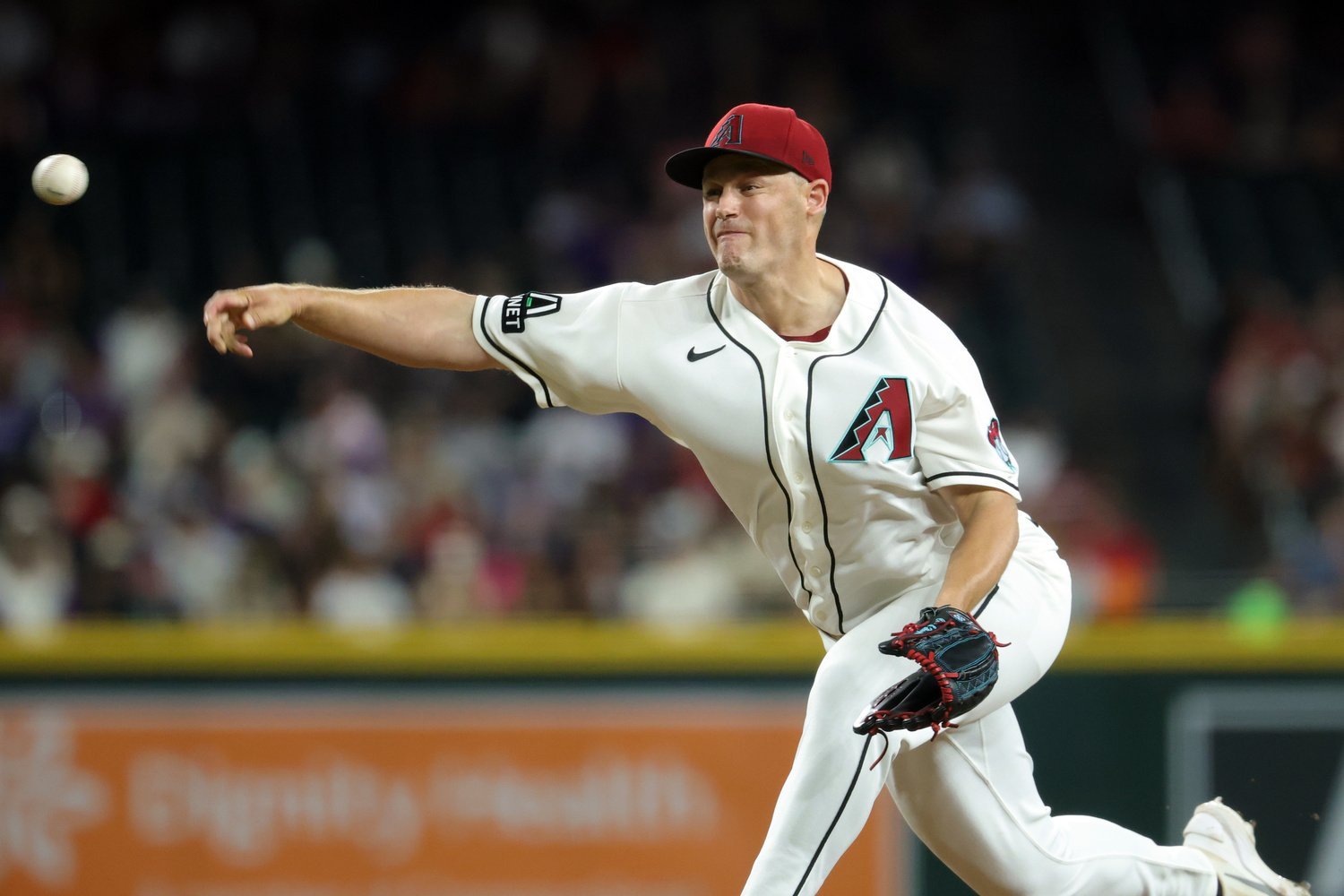 The Toronto Blue Jays have claimed right-handed pitcher Paul Sewald, who was designated for assignment by the Diamondbacks earlier in the week. Sewald, a veteran of 10 MLB seasons, has a 6.23 ERA this season. He has 110 major league saves in his career. The righty will join a Blue Jays bullpen that has thrown more innings as a unit than any team in baseball since August 1 and is in need of reinforcements. Sewald is primarily a fastball-slider pitcher. He had a 3.18 ERA entering June 23rd but has allowed 17 earned runs in 14 innings since then. He now gives John Schneider another veteran option with major league experience in the back end of the bullpen. View the full article
 -
Is Jaxon Wiggins' Command Problem Too Big to Ignore?
DiamondCentric posted an article in North Side Baseball
 Jaxon Wiggins has some of the most electric stuff in the Cubs’ farm system. But is his long-standing command issue finally becoming too big to ignore? View the full article
 -
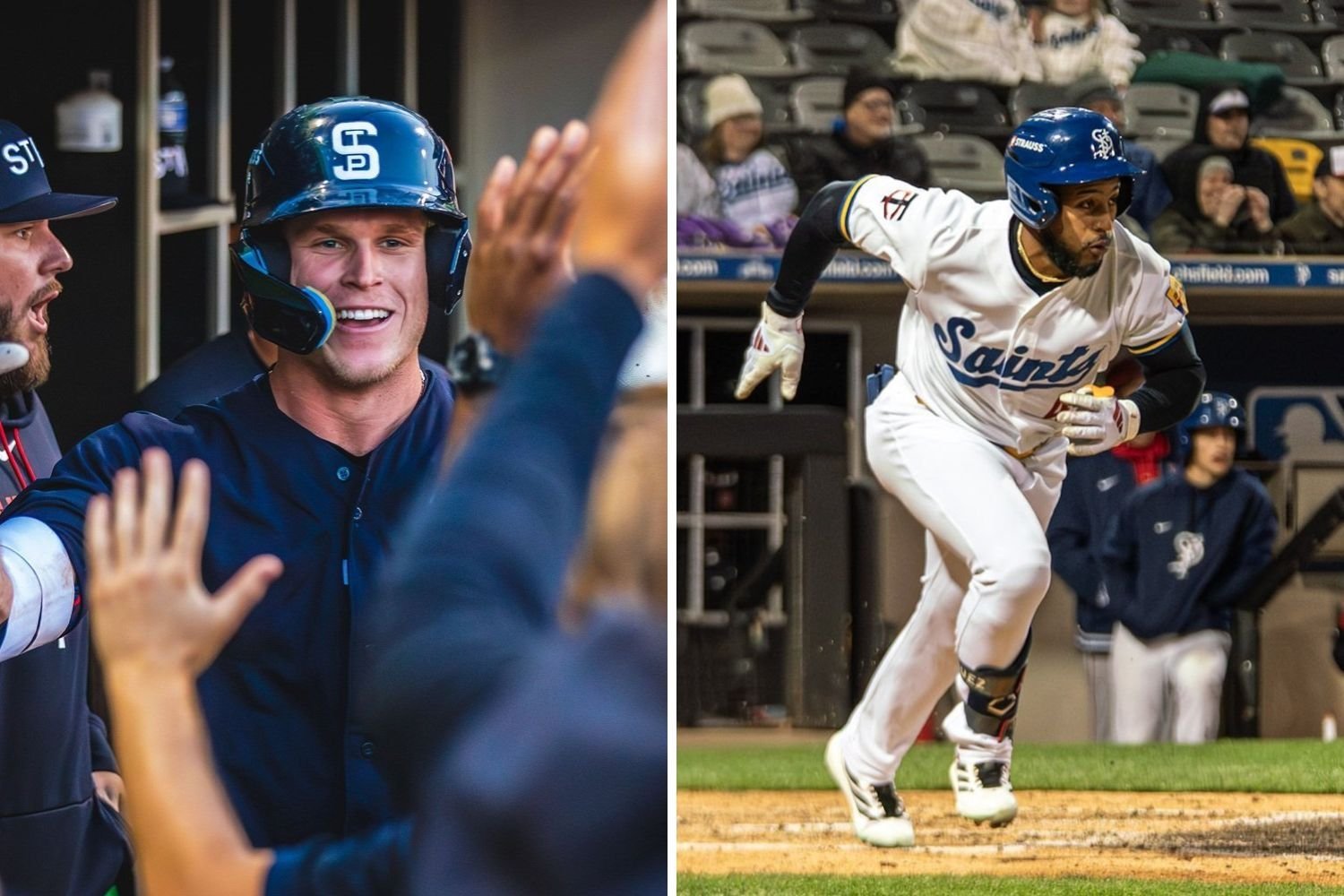 As we’ve already seen this year, the Twins are taking their time when it comes to calling up their top young players. For most of the season, Twins fans have been clamoring to see some of the organization’s best prospects get their chance in the majors. On Friday, we finally got the opportunity to see one of them. The Twins promoted their No. 3 prospect, shortstop Kaelen Culpepper, and he wasted no time getting acclimated to the big leagues. Culpepper homered in his second major league at-bat against Brewers left-hander Shane Drohan, then reached base three times in his second career game. It was an impressive start to what the Twins hope will be a long and productive MLB career. But even after Culpepper's promotion, there are still two names Twins fans have been waiting all year to see. Twins No. 1 prospect Walker Jenkins and No. 6 prospect Emmanuel Rodriguez are both seemingly right on the verge of a major league call-up, and there are a lot of similarities between the two. They’re both outfielders, and both left-handed outfielders (shocker). They can both play all over the outfield, and both have more than held their own at Triple-A. So, with that in mind, who will we see in the majors first? I think you can make a very compelling case for both players, but if I had to make the bet right now, I’d take Rodriguez. There are a couple of different things working in his favor. For one, he’s two years older than Jenkins and has significantly more experience at the professional level. His career Triple-A OPS is 62 points higher than Jenkins’, giving him another advantage when it comes to evaluating which player is more prepared for the majors right now. He's also out of minor league options, meaning this season is his last chance to get major league reps before the Twins' hand is forced. Assuming they plan on keeping him around beyond this year, it would be wise to let him get his feet wet before he's thrust into a more impactful role. There’s also the fact that Rodriguez is already on the Twins’ 40-man roster. The Twins wouldn’t have to make a corresponding move to add Rodriguez to the active roster; they could select his contract and bring him up whenever they feel he’s ready. And considering how well he’s performed at Triple-A, it’s becoming increasingly difficult to argue that he isn’t. Rodriguez is sporting an outrageous .423 on-base percentage across 84 games with the St. Paul Saints. There are still some legitimate concerns about his ability to consistently make contact, but he draws enough walks to (at least partially) offset those concerns. And there’s no questioning the power. Rodriguez recorded the hardest-hit ball ever by a Twins player when he launched a 117.1 mph home run back in April. Ten days later, he broke his own record by hitting a home run at 118.3 mph. That type of raw power is extremely difficult to find. The biggest question with Rodriguez has always been his ability to stay healthy. He’s dealt with more than his fair share of injuries throughout his career, and he’s actually just returning to St. Paul’s lineup after suffering a UCL tear in his thumb. But he’s healthy now, and if he can stay on the field, his major-league call-up could come very soon. Then there’s Jenkins, who is making an increasingly strong case that he deserves to be in the majors, too. In fact, his recent performance is making it difficult to justify keeping him in St. Paul much longer. Since returning from his AC joint sprain on June 13, Jenkins has been outstanding. Across 158 plate appearances, he’s hitting .326 with a .380 on-base percentage, 20 extra-base hits and six stolen bases in seven attempts. And he’s doing all of that at just 21 years old. At times, Jenkins has looked like a man amongst boys in Triple-A. That’s the type of performance you want to see from a prospect ranked as highly as he is, and when your organization’s No. 1 prospect is performing at that level, there’s only so long you can justify keeping him in the minors. But there are a couple of things working against Jenkins when looking at the bigger picture, and those are ultimately the reasons I’d take Rodriguez to get called up first. For one, Jenkins is not currently on the Twins’ 40-man roster. He doesn’t have to be added until after next season, meaning the Twins would have to create a spot for him if they wanted to bring him up now. That could certainly happen; the Twins could move someone to the 60-day injured list, or they could decide that another player is expendable and remove him from the 40-man roster. But it’s still an additional hurdle that doesn’t exist with Rodriguez. There’s also an interesting wrinkle when it comes to the upcoming CBA negotiations. With uncertainty surrounding the next collective bargaining agreement, there’s at least a chance that the 2027 season could be delayed. That makes the Twins’ decision with Jenkins a little more complicated. If they add him to the 40-man roster this year and there’s a lockout next spring, there’s a possibility that Jenkins could lose valuable development time while sitting on the roster instead of continuing to develop in the minor leagues. That by itself probably isn’t enough to keep him in St. Paul if the Twins believe he’s ready for the majors, but it’s another factor the organization has to consider. In an ideal world, both Rodriguez and Jenkins get called up at some point this season, and the 2027 season plays out normally. That would be the best-case scenario for everyone involved. The Twins would get two of their best young talents into the major league lineup, while Jenkins and Rodriguez would get valuable experience heading into what could be a very important offseason for the organization. But if I had to make the bet on which one we see in Minnesota first, I’m taking Rodriguez. It’s not necessarily because he’s more talented than Jenkins, or even because he’s more deserving of a call-up at this exact moment. It’s because the circumstances surrounding Rodriguez make his path to the majors significantly easier. He’s older, more experienced, already on the 40-man roster and producing at an elite level in Triple-A. Jenkins may very well be the Twins’ top prospect for a reason, and if he keeps hitting like this, it’s going to be awfully difficult to keep him down for much longer. But for now, I think Rodriguez has the clearer path. View the full article
 -
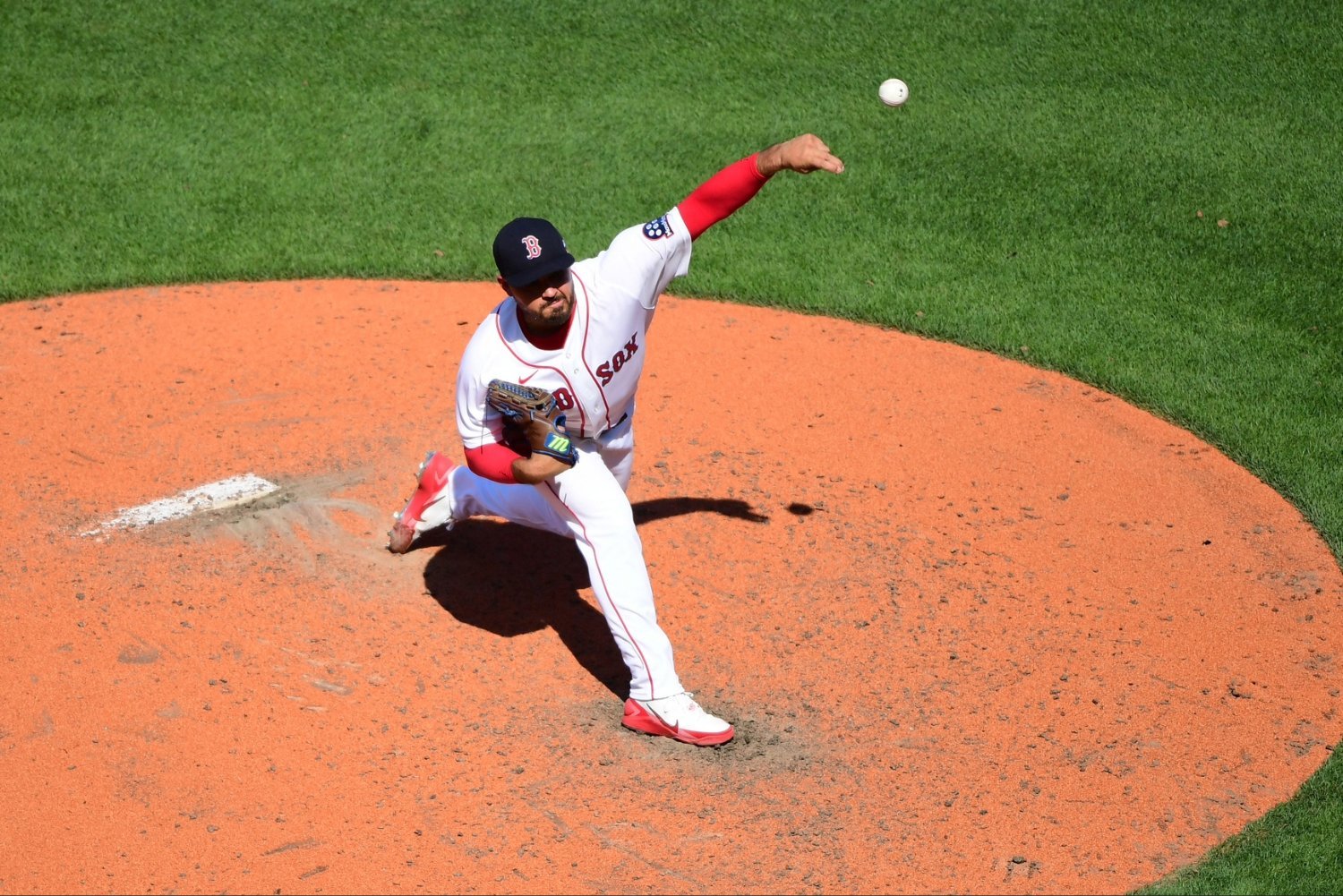 The Boston Red Sox made a change to their pitching staff once more on Wednesday morning, as the team recalled left-hander Alec Gamboa from Worcester (as first reported by the Telegram & Gazette's Tommy Cassell). Gamboa last pitched for Worcester on August 7 and will be able to provide the team with innings out of the bullpen. The left-handed pitcher made his major-league debut this season with Boston and has made seven appearances overall. He's handled 13 innings out of the bullpen, recording one save and allowing just three earned runs while striking out 12 batters. To make room for him on the active roster, the team is expected to designate Seth Martinez for assignment. Martinez pitched in one game for Boston, appearing in the August 11 game against Toronto and tossing one inning while allowing one run on two hits. The Seth Martinez news was first reported by MassLive's Chris Cotillo. This will be the Red Sox fifth transaction for pitching since optioning Greg Weissert to Worcester on August 7. View the full article
 -
 Boston Red Sox Affiliate Recap Triple-A Worcester Red Sox Season Record: 60-50 Facing an 8-0 deficit in the fourth, Worcester made a comeback attempt but failed, falling 9-6 to the Buffalo Bisons (Toronto Blue Jays). The WooSox pitching staff did not help much, but the offense still went 3-for-14 with RISP, showing there were a considerable number of chances to bring in runs. Although he did not bring in any runs, Mickey Gasper did not get out one time in this matchup, going 4-for-4 with a double, three singles, and a walk. After a three-hit performance on Sunday, Kristian Campbell stayed hot with an RBI single to bring in Allan Castro, who also recorded an RBI single of his own. While Franklin Arias and Romy Gonzalez tallied multi-hit days, Mikey Romero brought in three runs for Worcester, a sacrifice fly in the fourth, and a two-run single in the ninth. John Holobetz made his third start for Worcester since his promotion and grinded through his outing. The right-hander had a rough first inning, giving up a three-run bomb, then got out of a massive jam in the second inning. Buffalo slapped three singles to load the bases, then Holobetz punched out the next batter while also drawing a double play to end the inning. He calmed things down the rest of the way but was pulled early due to being on just five days' rest. Standout Performances: Mickey Gasper: 4-for-4, 2B, 2 R, BB Mikey Romero: 1-for-4, 3 RBI Franklin Arias: 2-for-5, 2 R Double-A Portland Sea Dogs Season Record: 57-51 The Sea Dogs suffered their second double-digit loss in the last three games with a 16-4 defeat to the Binghamton Rumble Ponies (New York Mets). Portland’s pitching staff was not sharp once again; Dalton Rodgers and Cooper Adams gave up an absurd 14 runs combined (three unearned), while Tyler Davis allowed two runs across the plate as well. No matter how well the offense could have played, there was just no chance to win for the Sea Dogs. Nate Baez, Jack Winnay, and Brooks Brannon combined for seven of Portland’s eight hits as a team. Despite his team being down by a substantial number of runs, Brannon did what he does best in the eighth, blasting a two-run bomb. Baez provided the last two runs with an RBI single in the fifth and seventh innings. Standout Performances: Nate Baez: 3-for-4, 2 RBI Brooks Brannon: 2-for-4, HR, R, 2 RBI Jack Winnay: 2-for-4, 2B, R High-A Greenville Drive Season Record: 47-58 The game was suspended in the 5th inning due to inclement weather; the game will be completed on August 12. Low-A Salem RidgeYaks Season Record: 47-60 Salem suffered a walk-off, low-scoring 3-2 defeat to the Delmarva Shorebirds (Baltimore Orioles). It was a nail-biter all game; Skylar King started it off with an RBI single to bring in Josue Brito, who was making his Low-A debut as a 19-year-old from Venezuela. The 7th overall pick in the 2026 MLB draft, Eric Booth Jr., also made his pro debut and tied the game 1-1 with an RBI single. The Shorebirds grounded out to third base while also bringing in the go-ahead run to make it a 2-1 game in the third inning. Louis Andujar tied it up once again at 2-2 in the sixth with an RBI single that brought in Franklin Primera, who tallied the only multi-hit game for Salem. Primera extended his hitting streak to nine games while also extending his on-base streak to 18. Salem’s pitching staff was solid, but the offense did not help them enough. Cole Tolbert pitched through three innings in his start, allowing two runs on four hits and three walks. Cam Padgett made his professional debut for the Red Sox organization after his contract was purchased from the West Virginia Black Bears in the MLB Draft League. The 6’3” right-hander tossed two shutout innings with two strikeouts out of the bullpen, followed by Wuilliams Rodriguez throwing two perfect innings. Yermain Ruiz took the loss after giving up the walk-off single in the ninth inning. View the full article
 -
 It's difficult to not write about the Binghamton Rumble Ponies these days. There's so much to cover with this team. There were three discussion topics from their 16-4 drubbing of Portland on Tuesday alone. The first: Binghamton has now won eight in a row, and it is smothering opponents, with a plus-47 run differential (68-21) during the streak.The Rumble Ponies scored four runs in the second inning and seven more in the sixth Tuesday to put the game away. The second: Jefferson Rojas homered for the first time with Binghamton and drove in three runs. He finished a triple shy of the cycle. The organization's biggest trade-deadline acquisition has had three hits in two of his last three games. The third: RJ Gordon put together his third consecutive quality start, and this one might have been the best. He allowed one earned run over seven innings, walked one, struck out seven, and threw 65 of his 95 pitches for strikes. The club isn't close to Eastern League second-half pennant contention. It's six games out of first place at 18-22. But it's playing like a club that can make a huge run in the final month. Elsewhere in the organization: Syracuse hit four home runs as it defeated Jacksonville 6-3. MJ Melendez, Vidal Brujan, Andy Ibáñez and Nick Morabito went deep. Jonah Tong was inefficient in a no-decision. Brooklyn shut out Jersey Shore 4-0. Nicolas Carreno and three relievers combined on a three-hitter. Ronald Hernandez provided the offense with a third-inning grand slam. St. Lucie lost to Jupiter 3-2. Elian Pena hit two solo home runs for the Mets’ offense. Conner Ware took the loss after giving up a go-ahead, two-run homer in the eighth inning. DSL Mets Blue lost 9-3 to DSL Rangers Blue in a game shortened to six innings because of rain. Yeremy Reyes had two hits, an RBI and a run scored. DSL Mets Orange lost 9-1 to DSL Giants Black. Dayron Oramas drove in the Mets’ run. New York Mets Transactions No Roster Moves Home Runs Carry Syracuse Past Jacksonville The Mets went deep in four consecutive innings to take command. Melendez hit a solo shot in the fourth to give them a 2-1 lead. Bruján connected on a two-run blast in the fifth for a 4-1 advantage. Ibáñez homered in the sixth to make it 5-1. Morabito led off the seventh with a solo shot to put Syracuse up 6-1. The only Mets run that didn't come via the home run scored when Melendez tripled home Ryan Clifford in the second inning. Tong needed 94 pitches to get through four innings on a night where the gametime temperature was 97 degrees. He allowed just one run on four hits, but he walked four and struck out six. He threw 53 strikes and 41 balls. The run came on a home run in the second inning. That left the Mets' bullpen to get the final 15 outs. Austin Warren struck out the side in a perfect fifth inning, which earned him the win. Matt Turner gave up two runs in 1 1/3 innings. Brian Metoyer got the last two outs of the seventh. Zach Peek recorded six outs for his first Triple-A save. Player AB R H RBI BB K Nick Morabito 4 1 1 1 1 1 Vidal Bruján 5 1 2 2 0 2 Ronny Mauricio 4 0 0 0 0 1 Eric Wagaman 4 0 1 0 0 1 Ryan Clifford 3 1 0 0 1 1 MJ Melendez 4 1 2 2 0 1 Nick Lorusso 3 0 0 0 0 1 Andy Ibáñez 4 1 1 1 0 0 Hayden Senger 4 1 1 0 0 1 Totals 35 6 8 6 2 9 Player IP H R ER BB K HR Jonah Tong 4 4 1 1 4 6 1 Austin Warren 1 0 0 0 0 3 0 Matt Turner 1 1/3 2 2 2 2 1 1 Brian Metoyer 2/3 1 0 0 0 2 0 Zach Peek 2 1 0 0 0 3 0 Totals 9 8 3 3 6 15 2 Binghamton Piles Up The Runs In Rout Rojas set the offense in motion with his solo homer in the first. Stafura had two hits to go with his HBP. He is slashing .400/.455/.600 in five games with Brooklyn since being acquired from the Pittsburgh Pirates for Luke Weaver at the trade deadline. Player AB R H RBI BB K Sammy Stafura 3 1 2 0 0 1 Aidan Smith 4 0 0 0 0 2 John Spikerman 2 1 0 0 2 2 Ronald Hernandez 3 1 1 4 1 0 Trey Snyder 3 0 0 0 1 2 Yonatan Henriquez 4 0 1 0 0 2 Jamari Baylor 2 0 0 0 2 2 Carter Dierdorf 3 0 0 0 1 3 Antonio Jimenez 2 1 1 0 2 0 Totals 26 4 5 4 9 14 Player IP H R ER BB K HR Nicolas Carreno 6 3 0 0 3 5 0 Calvin Ziegler 1 0 0 0 1 1 0 Gregori Louis 1 0 0 0 0 0 0 Parker Carlson 1 0 0 0 0 0 0 Totals 9 3 0 0 4 6 0 Peña's Homers Not Enough As Jupiter Strikes Late Peña led off the game with a home run to right field, jumping on a hanging breaking ball. He led off the fifth with a drive to almost the same spot, again off a hanging spinner. The hits exited the bat at 101 and 100 mph, respectively. That's impressive stuff for someone who isn't yet a power guy. Peña has seven homers in 419 plate appearances this season. Will Watson (two scoreless innings) and Candido Cuevas (one scoreless inning) handed Ware a lead to begin the bottom of the fourth. Ware allowed a sacrifice fly in the fifth, but he entered the eighth with a 2-1 lead. He walked the No. 8 hitter to lead off the inning, and the No. 9 hitter followed with a line drive to left that cleared the fence. Ware got the next three hitters out to keep it a one-run game. He allowed three hits, walked one and struck out four in his five innings of work. Ryan Tayman went 3-for-3. Eli Serrano III was 2-for-3 with a walk. Player AB R H RBI BB K Elian Peña 5 2 3 2 0 1 Aiden Robbins 4 0 0 0 0 3 Eli Serrano III 3 0 2 0 1 1 John Smith III 4 0 0 0 0 1 Ryan Tayman 3 0 3 0 0 0 Kuhio Aloy 3 0 1 0 1 1 Vladi Gomez 4 0 0 0 0 1 Reed Stallman 4 0 0 0 0 1 Kooper Schulte 4 0 0 0 0 2 Totals 34 2 9 2 2 11 Player IP H R ER BB K HR Will Watson 2 1 0 0 0 1 0 Candido Cuevas 1 0 0 0 1 3 0 Conner Ware 5 3 3 3 1 4 1 Totals 8 4 3 3 2 8 1 Top-20 Prospect Performance Jonah Tong: 4 IP, 4 H, 1 R, 1 ER, 4 BB, 6 K Jack Wenninger: DNP Ryan Clifford: 0-for-3, BB, K Elian Peña: 3-for-5, 2 HR, 2 RBI, K Nick Morabito: 1-for-4, HR, RBI, BB, K Jacob Reimer: 2-for-6, 2 RBI, K Mitch Voit: DNP Jonathan Santucci: DNP Zac Thornton: MLB Chris Suero: 0-for-5, BB, 2 K Will Watson: 2 IP, 1 H, 0 R, 0 ER, 0 BB, 1 K Wandy Asigen: DNP Eli Serrano III: 2-for-3, BB, K Randy Guzman: DNP Dylan Ross: DNP Ryan Lambert: DNP Antonio Jimenez: 1-for-2, 2 BB R.J. Gordon: 7 IP, 5 H, 2 R, 1 ER, 1 BB, 4 K Jonathan Pintaro: MLB Marco Vargas: 3-for-6, 3 RBI, K View the full article
 -
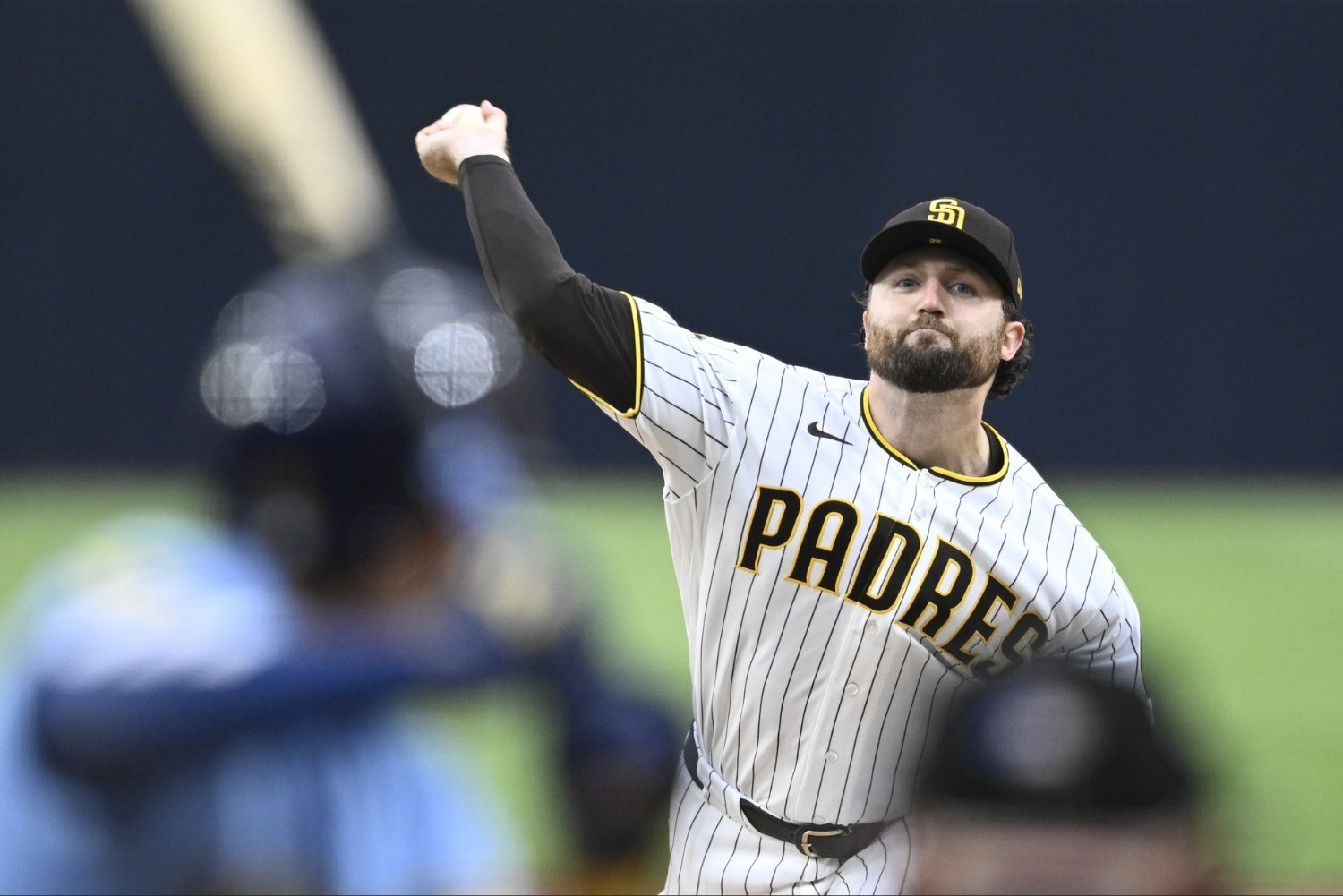 When the San Diego Padres acquired starting pitcher Casey Mize from the Detroit Tigers at the trade deadline, he was part of a pair of moves (in conjunction with Robbie Ray) to stabilize a very fragile rotation for a prospective playoff team. In his first start against the Arizona Diamondbacks back on August 5, though, he was anything but stable. In that first start for the Padres, Mize worked through just 3.1 innings. He allowed nine hits, walked three hitters, and struck out only one on his way to allowing eight runs in a blowout loss against a direct Wild Card competitor. While only one swing found its way over the fence, the Snakes' overall quality of contact provided a big issue for Mize in that debut appearance. It wasn't just that Mize allowed the nine hits. It was what the Diamondbacks' bats were able to create: The Diamondbacks were very active in the zone against Mize, creating their nine hits on 18 batted ball events. The problem lies in the fact that 11 different hitters made hard contact versus Mize, with each of his three most-frequently-used pitches—the four-seam, slider, and splitter—seeing average exit velocities over 90 miles-per-hour. Luckily for both Mize and the Padres, his second start on Monday night went quite a bit better. Against the Milwaukee Brewers in the series opener, Mize worked through six innings. His strikeout number jumped up to six while he scattered five hits and walked only a pair against the team with baseball's best record. While there wasn't a big shift in terms of the usage, the results were far better: Mize's fastball got touched up a decent amount, but he was able to use the slider and splitter more effectively the second time out. It helped that he was up against a team that was a touch less aggressive inside the zone, but his whiff rate graduated from just five percent against Arizona to 17 percent versus Milwaukee. Fewer swings with more effect certainly bodes well for a pitcher trying to bounce back. What was particularly notable was how little changed with the stuff itself. It all boiled down to improved command. Against the Diamondbacks, Mize threw 55 percent of his first pitches for strikes. That number was up to 64 percent in start No. 2. When you're a pitcher working ahead, the entire approach shifts. Mize being able to do so this time out is central to why he was able to find more success. If we want to take it a step further, that first start with the Padres was Mize's first in 10 days. The Tigers had scratched him from a start prior to the trade deadline, leaving a long layoff between his last outing with them against Kansas City (a start which looked eerily similar to Monday's) and that start against Arizona. It doesn't have to be more complicated than that. This most recent iteration of Casey Mize is far closer to the version we should expect to see down the stretch than the one that showed up for his Friars debut last week. View the full article
 -
 The Minnesota Twins are in a tricky position as they try to remain on the fringes of the American League playoff race. Every roster decision carries additional weight, especially when it involves a young pitcher who could help the team in multiple roles. Zebby Matthews currently occupies one of the five spots in Minnesota's starting rotation. But there is a growing argument that his best opportunity to help the Twins down the stretch might come in the bullpen. The question isn't necessarily whether Matthews can move to the bullpen. The Twins could make that decision at any point. The bigger question is whether they should make it now. His body might be starting to provide the answer. Matthews Can't Escape His Foot Problems Matthews' ongoing foot issues continue to complicate his season, and there doesn't appear to be an easy solution. After taking the mound to warm up for the sixth inning on Friday, Matthews exited his start when the blister on his right foot began bleeding. It was the same issue that ended his July 4 outing at Yankee Stadium. "That mound in New York was rock-hard because of how hot it was, and he ripped it open," Derek Shelton said. "We're trying to laser it to get it to the point where it's manageable. It's manageable, but the wear and tear of multiple pitches rips it off." The Twins have attempted to find solutions. Matthews is wearing a pitching toe, an application designed to protect the shoe from wearing through as he drags his foot across the dirt. Unfortunately, the problem keeps returning. Matthews summed up his frustration simply: "We keep covering it, and it keeps ripping." That is a difficult problem for a starting pitcher. Matthews has to take the mound every fifth day, leaving very little time for the injury to heal completely. Instead, he has been forced to pitch through it and hope he can make it through his outing. At some point, the Twins have to consider whether repeatedly asking him to pitch every fifth day is doing more harm than good. When Can the Twins Make the Move? The good news for Minnesota is that there are several paths to moving Matthews into the bullpen. The simplest could come when Joe Ryan returns from his glute strain. Ryan's return could open the door for Matthews to transition into a relief role without forcing the Twins to completely reshape their rotation. There are no guarantees Ryan, who reportedly played catch on flat ground earlier this week, will immediately be ready to take on a full workload, but his return would give Minnesota another established starting option. There are other possibilities, too. Minnesota could use Matthews and Connor Prielipp in a piggyback arrangement. One pitcher could handle the first few innings before handing the ball to the other, allowing the Twins to manage both workloads while reducing the pressure on Matthews to consistently complete five or six innings. The Twins could also simply decide that Matthews' stuff plays better in shorter bursts and move him into a traditional relief role. From a roster standpoint, the Twins have options. When Should the Twins Make the Move? This is where things get more complicated. Matthews' arsenal makes a bullpen transition intriguing even without the foot problems. He has been significantly better the first time through a lineup, allowing a .780 OPS, compared to a .854 OPS the second time batters see him. That's not unusual for a young starting pitcher, but it highlights why his stuff could become more dangerous in a relief role. He also has the type of fastball that could benefit from a little extra velocity. Matthews' four-seam fastball averages 95.2 mph. If a move to the bullpen allows him to push that number higher, even by a couple of ticks, it could make his entire arsenal more effective. That could be especially important considering he's allowed a .505 slugging percentage this season. His slider provides another reason to be intrigued. Matthews throws the pitch more than 20% of the time, and it has produced a 34.5% whiff rate. That's the kind of pitch that could become a major weapon when Matthews doesn't have to worry about conserving it for a longer outing. He has used six pitches this season. As a starter, that versatility is valuable. As a reliever, it might be unnecessary. The Twins could ask Matthews to simplify his approach. Throw his best fastball. Throw his best slider. Mix in whatever else is necessary. Attack hitters knowing he doesn't have to face the same lineup three times. That could turn Matthews into a very different pitcher. And potentially a very effective one. Is It Already Too Late? This is where the playoff race enters the equation. The Twins aren't in a position where they can casually sacrifice innings. Every game matters, and the rotation still needs dependable arms. If Ryan returns healthy, the decision becomes easier. If Ryan isn't ready, Minnesota may need Matthews to remain stretched out. If Ryan struggles after returning, the Twins might also decide they can't afford to remove another starting option from the rotation. But the foot injury changes the equation. If Matthews continues to rip open the same injury every time he takes the mound, the Twins need to ask whether keeping him in the rotation is actually helping the team. There is little value in having Matthews available as a starter if he can't consistently get through his outings. A healthy Matthews throwing two or three high-quality innings out of the bullpen could ultimately provide more value than an injured Matthews trying to grind through five innings every fifth day. That might be the most important consideration of all. Minnesota has already had to ask a lot from Matthews this season because of its pitching injuries. Now, with the playoff race tightening and his foot refusing to cooperate, the Twins need to determine whether continuing to use him as a starter is the best for the player and the team. With Matthews scheduled to start today's series finale against Baltimore, we may have a clearer idea of the best path forward. When should the Twins move Zebby Matthews to the bullpen? Is it already too late? Leave a comment and start the discussion. View the full article
 -
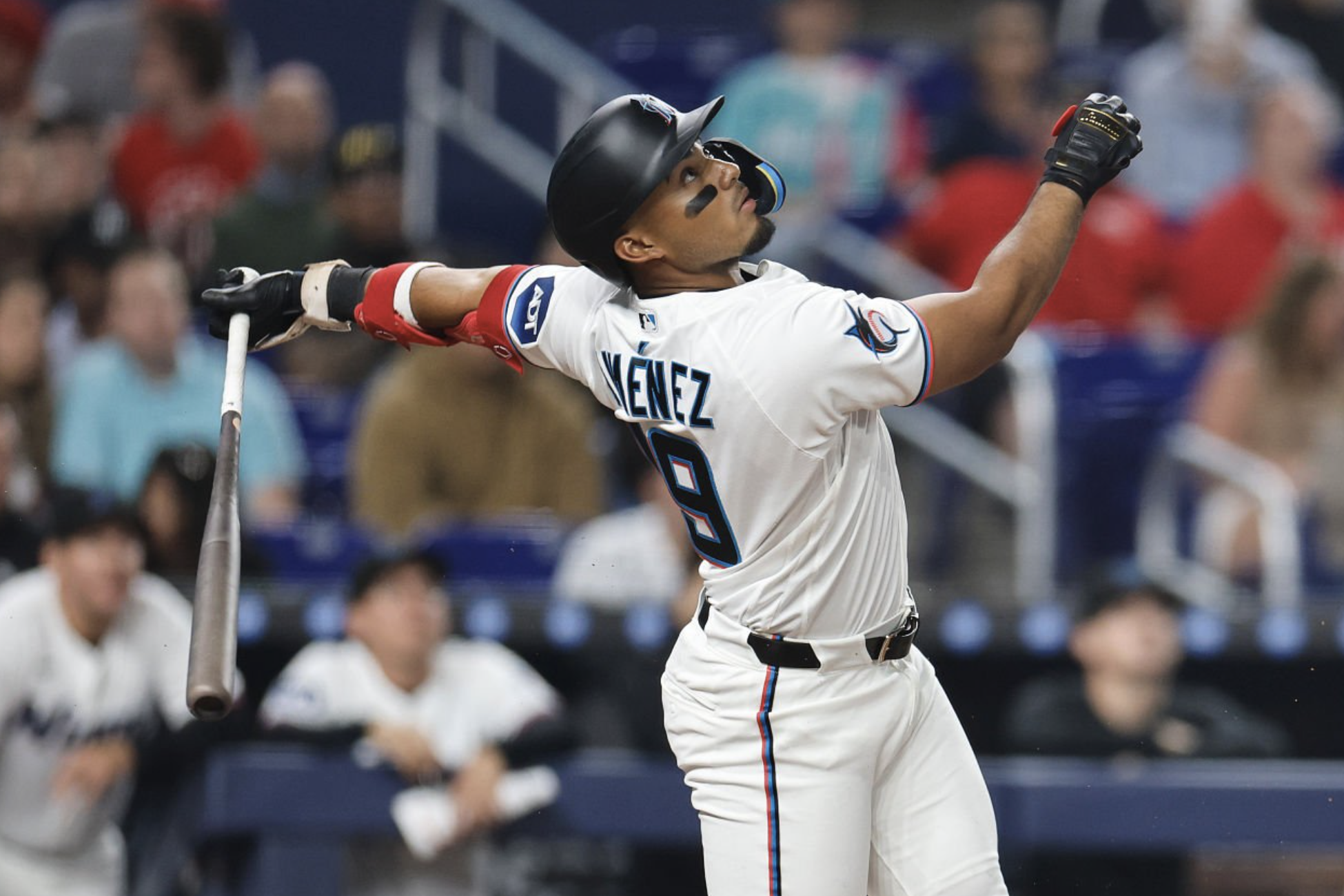 Suffice it to say, this isn't the way anyone associated with the Miami Marlins drew it up a week ago. Not the front office. Not the fans. Certainly not Kyle Stowers , who had really started to look like the hitter that made the All-Star game last season over the past few weeks. No, when the Marlins made the choice to move the seemingly expendable Liam Hicks off the roster at the trade deadline...he really wasn't supposed to be missed. He had only homered twice since June 1st. Griffin Conine, Heriberto Hernandez, and Stowers had all been more productive hitters lately. Joe Mack had firmly established that the Marlins were looking for backup catchers only. In short? Miami was covered on lefty bats, covered on catchers, and covered on thump. The move wasn't popular, but of all the moves that smacked of selling that the Marlins were rumored to be considering, it was seen as the most forgivable amongst the fanbase. Yet in the blink of an eye, or if you prefer, the spasm of a fast-twitch muscle, Kyle Stowers is back on the IL. Which throws the entire Hicks decision tree back under the microscope. From the Marlins perspective, you might have noticed something that I didn't mention Miami having an abundance of, and it probably should have gotten a lot more attention given the fact it's only been a talking point since last November. First basemen. A position so comically overlooked in the offseason that a backup catcher and starting outfielder ended up being major contributors there. And perhaps that last bit is unfair, and the confidence in the ability of Hicks and Stowers to handle the position existed from the jump. At any rate, there is no denying the fact that Miami is now very thin on players with MLB experience at first base. So thin, in fact, that starting Conine there was the first move, despite having only ever played six innings there this season. Beyond Conine, Leo Jimenez and Graham Pauley would appear to be the other options the Marlins are planning on going with for the moment. When two of your solutions each sport a negative WAR on the year, it's a fair bet that's not where the front office wanted to end up. The club is essentially right back to where they were at the beginning of the year, with far more questions than answers at first base. Only now, there is a lot less calendar left to figure those answers out. Of course, that probably feels like a fairly obvious observation. What interests me far more is the level of fan backlash there was in the wake of the Stowers injury. How whatever ire there had been over the Hicks trade was suddenly back, and back tenfold. Because to my mind, that has far more to do with the kind of trade the Marlins made when they sent Hicks to Tampa, rather than the fact he was traded to begin with. If Miami had outright bought at the deadline? Moved Hicks in a deal that brought back either a starting pitcher or a right-handed bat to help this year's MLB roster make a run at the playoffs? If moving Hicks was just the cost of doing business to maximize the roster in the here and now? In that happy scenario, all is basically forgiven. Fan angst would be limited to handwringing over the Marlins being cursed and little more. However, when you sell off a very popular player for yet another prospect package...that's going to leave any organization open to criticism. Especially one with the baggage the Marlins will continue to carry until they are wrapping up their third winning season in a row, with more on the horizon. But that's the fan issue, pure and simple. Again, if someone was going to get traded, Hicks would have been the one voted off the island if Marlins fans were given the voice to do so. Not getting anything back in the return that would help in 2026 though? That's something few fans had contemplated. One night in? So far, so good— Miami is 1-0 without a proven first baseman. No major blunders in the field either. Can that kind of good fortune continue? How much leash the Marlins will give some of those options before turning to some options with much more experience fielding the position professionally if there are struggles? Those questions remain anyone's guess. And the answers could shape the remainder of the season. View the full article
 -
 After acquiring A.J. Minter and Jeff Hoffman at the trade deadline, the Twins bullpen has gone from serviceable (since July 1, at least) to good. Where do the newcomers fall in the bullpen hierarchy? View the full article
 -
Pedro Ramirez Is The Cubs' Modern Day Ben Zobrist
DiamondCentric posted an article in North Side Baseball
 The concept of the super-sub was popularized about 15 years ago with Ben Zobrist. He was famous for playing across the field; a plug-and-play hitter who could hold his own (or better) across the diamond at almost any position outside of pitcher or catcher proved to be an immensely valuable asset. The Cubs brought the switch-hitting Zobrist in for the 2016 World Series run where he continued to gain fame for this style of play. In an ironic (and often forgotten) twist of fate, it was Zobrist who earned 119 starts at second base, pushing Javier Baez into the "Zobrist" role (he started 25+ games at at least three positions that season). As pitching staffs have expanded and benches have shrunk, this archetype of player is in higher demand than ever. And while teams search for this jack of all trades constantly, it's truly hard to find someone capable of doing it all. Entering 2026, the Cubs had thought they had found their modern day version of this in Matt Shaw; a player drafted as a shortstop, converted to third base in the minors, who would then play across the outfield this season. And through the first few weeks of the year, it certainly looked like they had nailed that. Shaw was looking promising defensively in right field and crushing lefties. However, through a series of wrist sprains, a new challenger to the throne has appeared: Pedro Ramirez. While it would be unfair to say that Ramirez came from nowhere, it's probably important to remember that when the first pitch of the regular season was thrown, no one thought this was going to be the case. He was always an interesting prospect, but starting the year with no experience above Knoxville as a borderline organizational top-10 prospect, it seemed unlikely that people would be clamoring to see him start come August of the same year. Yet here we are. Not only did he absolutely smash the competition in Iowa in under 30 games, he's doing similar things in Chicago. So far against some of the best competition the planet has to offer, the rookie has compiled 124 plate appearances and posted a 117 wRC+ in those plate appearances. Overall, he's managed to add 0.8 fWAR in value; in just 45 games, that is a fairly impressive number. While Ramirez hasn't played as many positions as Ben Zobrist (not yet, anyway) his versatility and flexibility gives the Cubs something important: options. You can reasonably start him at second or third against most pitchers to give Nico Hoerner, Dansby Swanson (by sliding Hoerner over to short) and Bregman pseudo days offs at the designated hitter position. He's also started games at DH himself—a 117 wRC+ will allow you to do that. The team has been willing to trust the rookie in some fairly tough spots, too; he's earned playing time against pitchers such as Tarik Skubal and Paul Skenes in the last few weeks alone. YkJMQnpfWGw0TUFRPT1fQVFGUVZ3VUZVUXNBRDFWWFVnQUhCUVpTQUFCVFd3UUFCMVpSVXdJQUJRY0hDVkJY.mp4 One of the ways he's been able to accrue offensive value is by immediately showing a strong plate approach. We have seen rookies come up and struggle recently, even with hitters who have shown an aptitude for making solid contact (notably Matt Shaw and Moises Ballesteros). Instead, Ramirez has managed to put up a sub-20 K%, a decent 8% walk rate, and an excellent 87% zone-contact rate. This is a strong approach coupled with a lot of contact, and it's an excellent sign for a young talent to grasp that part of the game right away. He's also managed to do so while posting pretty decent exit velocities. That may not sound like a win on paper, but many times players achieve high contact rates by trading weak contact for strikeouts, which lowers their exit velocities. Not so much for Ramirez, who's EV's would rate in the top-half of the league (if he qualified). Ramirez has been valuable across the field, as well, which makes him even more useful. It's one thing to be able to stand at a position with a glove in hand, but it's another to excel at those positions. Many times, "versatility" comes with the drawback of not being particularly strong defensively at any single position and being just "okay" at a lot of them. While he hasn't played a ton of innings (and we're still very much in small sample territory here) he's graded out neutral at second and as a +2 DRS at third. The Cubs value defensive ability as much as any team in the league, so by showing he's not only capable at multiple positions, but that he can maintain continuity and quality, it's almost assuredly helped him gain favor with the organization. Another aspect Ramirez has been strong at: baserunning. Sporting a 76th percentile sprint speed, he's added value when on the basepaths. Not only has he added five stolen bases (without being caught once), he's graded out very favorably by FanGraphs' baserunning metrics; adding 1.2 baserunning runs above average. The more places he can impact the game, the more the team can find places to deploy the youngster. Not everything is perfect, however, and frankly, it would be weird if it was. His xwOBA (.298) is much lower than his actual wOBA (.341). His batted ball data is more "good" than "great." His barrel% is very low, he does chase a decent amount, and his expected slugging of .355 leads a lot to be desired. He's also doing this in fairly curated appearances; he's not starting every day and it goes to assume the times he's getting his name penciled into a lineup are for specific reasons that work to his advantage. One example of this is how he has been utilized mostly against right-handed pitchers; his batted ball data in Iowa was much worse against lefties and the Cubs have made sure that roughly 75% of his plate appearances at the MLB level have come against his stronger side. The good news is that we're still talking about a 22-year-old rookie and that much of this data is just in it's infancy. For example, faster players have a tendency to out-play their xwOBA. We're also far too early in the career of Pedro Ramirez to get too stuck into the expected data. He's just barely over the stabilization point (which would take just sheer luck out of the equation) but as a rookie, we know that these things take a bit of an ebb-and-flow as the player learns and adjusts. He will naturally improve on his expected data as he gets comfortable, learns to pull major-league pitching a bit more, and figures out how the best pitchers on the planet look to attack him. Best of all is that while it would have initially seemed like Pedro Ramirez and Matt Shaw would tread much of the same ground, causing them to be superfluous, there is likely enough differentiation that they both can have prominent roles in 2027. Ian Happ and Seiya Suzuki, fixtures of the Cubs' corner outfield spots for the last half-decade (and for Happ, longer than that) are both free agents at years' end. It wouldn't be shocking to see the Cubs to bring back one, but it's unlikely that they bring back both. Either Ramirez or Shaw (or a platoon!) could reasonably be counted upon for a corner spot next year and the other can revert back into the Swiss-Army-knife role due to their versatility. While Moises Ballesteros had entered the 2026 season as the de facto designated hitter, the Cubs' further cleared the runway for both of their versatile infield/outfielders by trading him to the Angels in the Ryan Zeferjahn trade. By moving the left-handed hitting Ballesteros, the Cubs did clear up some overlap in Ramirez and their slugging designated hitter/catcher as both look more useful against the same side of pitching. While it wouldn't be entirely fair to say the Cubs' chose their fighter, it's not a stretch to say they preferred Ramirez thanks to his all-around skillset and versatility. View the full article
 -
4 Things To Watch In The Final Two Months Of The Royals' Season
DiamondCentric posted an article in Royals Keep
 It is safe to say that the 2026 season has not gone the Royals’ way. Even though their playoff chances have evaporated, there are still plenty of reasons to keep watching until all 162 games have been played. For the remaining two months of the season, the focus will shift from wins and losses to how players can position themselves entering next season. Below are a few areas that represent opportunities across all parts of the major league roster. Bullpen Tryouts The weakest output for the Royals this season was their bullpen. They ranked last in key metrics such as fWAR (-3.6), expected ERA (4.95), FIP (5.26), and home runs per 9 innings (1.52). They also ranked in the bottom five in ERA (5.65), BABIP (.306), xFIP (4.81), strikeout rate (19.1%), and walk rate (11.2%). The Royals saw many players lose significant time from injuries, including last season’s save leader, Carlos Estévez, and offseason acquisition Nick Mears. Many established relievers such as Lucas Erceg and Matt Strahm, who was recently designated for assignment, also saw severe regression. The Royals were most active in repositioning their bullpen before and after the trade deadline with the acquisitions of Nate Pearson, Easton McGee, Carlos Duran, Nolan Hoffman, Connor Thomas, Luke Little, and most recently Craig Kimbrel. Currently, Pearson and Kimbrel are on the major league roster, but the other acquisitions are all currently on the 40-man roster and could all see opportunities before the season is over. With one of the few above-average relievers, John Schreiber, set to leave in free agency this off-season, there are very few spots solidified for next season’s bullpen. Can one of these new acquisitions establish themselves as a viable middle relief or even high-leverage option for 2027? The Future of the Offense The Royals saw the emergence of Jac Caglianone as a permanent fixture in the middle of the order. Caglianone showed off his power most recently with a performance of four extra-base hits. He is slashing .264/.317/.480 with a 118 wRC+ and 1.7 fWAR, which is a vast improvement from his 46 wRC+ and -1.6 fWAR from last season. He has also proven to manager Matt Quatraro that he is capable of hitting every day with improved numbers against left-handed pitching, highlighted by his two-run blast against Tarik Skubal on Monday night. In addition to Caglianone, Bobby Witt Jr. has been performing at near-MVP levels this season with his 5.1 fWAR, ranking 3rd among American League position players. Carter Jensen has also had a strong showing in his first full season in the majors. He ranks seventh among all rookies with 1.9 fWAR. There is still a lot of room for him to grow as a hitter, but he is certainly showing the signs of being able to hold his own on a major league roster while assuming the majority of the innings behind the plate. Salvador Perez has shown his age in 2026 with a slash line of .216/.262/.373, with a 71 wRC+ and -1.2 fWAR, but there is still opportunity to add to his Royals legacy. He has already become the Royals all-time leader in home runs. He also just surpassed 1,800 career hits. Even though he still has one year left on his contract, this season may very well be his last as an everyday contributor in the Royals offense. Fans should take the opportunity to enjoy watching a team legend as his role with the Royals begins to change. What can Maikel Garcia and Vinnie Pasquantino contribute for the rest of the season? Garcia, along with Witt, Caglianone, and Jensen, represent the core of the Royals offense for the coming years. Injuries have plagued his 2026 after a breakout in 2025. He is likely to begin his rehab assignment soon, but can he show that he can return to last season’s form? Pasquantino has also faced many injuries, but his future with the Royals is less certain than Garcia's, who received a contract extension last off-season. Pasquantino is also expected to begin his rehab assignment soon. He will look to finish the season strong and find his power swing that has been lacking this season. Strong Pitching Performances Injuries have struck the Royals this season, with multiple starters being shut down for the rest of the season to undergo Tommy John surgery. However, the pitchers who have stayed healthy should still have a lot to show with the season wrapping up. Michael Wacha earned his second career All-Star nod this season and leads the team in pitching fWAR at 2.1. Seth Lugo has also brought much-needed stability to the rotation this season. Neither Wacha nor Lugo was traded before the trade deadline last week despite inquiries from multiple teams. Both are in the later stages of their respective careers, but are slated to be leaders at the top of the rotation in 2027. It will be important for both of them to finish the season strong (and avoid injury) to carry into next season, in which the Royals intend to make a push for playoff contention. Noah Cameron has had a decent sophomore season after finishing fourth in AL Rookie of the Year voting in 2025. He is currently tied with Wacha with 2.1 fWAR to lead Royals pitchers. He has made a recent turnaround after he started calling his own pitches. During the three-game stretch after his adjustment, he allowed only one run in 23 innings while striking out 24 batters. It will also be important for Cameron to finish the season strong and healthy to help the increasingly thin rotation in 2027. New Callups on Offense Last season, the post-deadline period was highlighted by Jensen’s strong major league debut. His performance at the very least instilled confidence in the organization that Jensen was ready for a bigger role with the Royals going into 2026. This season, there are very few options for the Royals to find a similar late-season contributor this year. Gavin Cross has made improvements this season after an uneven start to his time in the Royals’ organization. A mechanical adjustment in his swing led to him finding his power swing again, where he had a stretch in July in which he had a home run streak of six games. After going unselected in the last Rule-5 draft, Cross had a lot to prove this season. Maybe it is time to see what he can do in the Majors. It is worth calling out that Cross has still not yet been given a spot on the 40-man roster, so a potential promotion will have to see a player exit the roster. Other than Cross, there are not too many other options for the Royals to give a try for the remainder of the season. Matthew Lugo was acquired via waivers in June from the Los Angeles Angels. He has slashed .262/.317/.530 with 11 home runs in 47 games in Omaha. He could be another option for an opportunity before the season comes to a close. View the full article
 -
 Twins prospect Emmanuel Rodriguez was activated from the injured list earlier this week and returned to the St. Paul Saints roster after missing more than three months with a thumb injury that required surgery. With less than two months remaining in the season, Rodriguez will look to hit the ground running and make up for lost time. The clock is ticking on his last year in the minors and unfortunately, the Twins have been able to learn very little about the 23-year-old's readiness. Patience is a central aspect of Rodriguez's game. His ability to take pitches and draw walks is almost unparalleled in the professional ranks. It's why has a .425 career on-base percentage in the minors, and a big part of why he's been viewed as one of the better prospects in the game — top 100 entering this year according to Baseball Prospectus (#48), Baseball America (#57) and MLB Pipeline (#74). Twins Daily had him ranked #3 in the Minnesota system, noting that he sported "one of the weirdest, most fascinating offensive profiles in baseball." During his time on the field in 2026, Rodriguez has put that profile on full display, slashing .270/.432/.487 in 34 games spent mostly with the Saints. But the outfielder also missed three months after undergoing surgery for a torn thumb ligament suffered while sliding into first base. It's far from the first time he's dealt with thumb issues in an injury-riddled career, and this latest instance bears extra weight at a time where the Twins really needed to see what they have in Rodriguez. When it comes to their ultra-patient outfield prospect, patience is no longer a luxury the Twins can afford on their end. That's because, as Aaron Gleeman recently covered on his website, Rodriguez will be out of options next spring, meaning the Twins will need to either carry him on the major-league roster or expose him to waivers and lose him. Sometimes in cases like this an extra option year is granted due to time lost on the IL, but Gleeman reports, "a league source with knowledge of the formula used to determine eligibility tells me he wouldn't qualify unless the rules change as part of a new Collective Bargaining Agreement." If that remains true, then the Twin will find themselves in a difficult spot, essentially forced to carry Rodriguez on the active roster out of camp if he's healthy. And if he's on the roster, he's going to need to be starting regularly, in an already-crowded outfield mix that includes Byron Buxton, Trevor Larnach (?), Luke Keaschall, Alan Roden, Austin Martin and soon enough, Walker Jenkins. The implications extend well beyond Rodriguez himself. Knowing they'll have little flexibility with him next spring, should the Twins be more motivated to trade Rodriguez this offseason? Or does his situation make it more important to move another outfielder and clear a runway for him? More immediately, should they accelerate his arrival this season, giving him at least a taste of the majors rather than asking him to break camp next year as an untested rookie with no safety net? That last consideration feels especially relevant given Rodriguez's unusual and volatile offensive profile. The huge power and elite patience give him tremendous upside, but the swing-and-miss could also make for a steep adjustment against major-league pitching. There's a plausible version of his future where Rodriguez becomes a middle-of-the-order force, but getting there might require some ugly stretches along the way. We've arrived at just what makes the lack of options so uncomfortable. What happens if the Twins enter next season expecting to contend and Rodriguez is batting .150 at the end of April? They can't simply send him to St. Paul to work through it. They'd either need to keep absorbing the growing pains or risk losing a talented 23-year-old for nothing. Maybe Rodriguez will make the whole issue moot by hitting his way into the Twins' plans over these final weeks, and leaving little doubt next spring. But after years of patiently waiting for his development to unfold, Minnesota is approaching a point where his roster status could start making decisions for them. The Twins need to use the time they have left this year — and the offseason that follows — to make sure they're not caught without a plan when that clock finally runs out. View the full article
 -
 Freddy Peralta is in the final year of his contract, and it may be tempting for many to want him to don the blue and yellow yet again. This would not work, and it could prove catastrophic for the future of Milwaukee’s rotation if they tried a move like this. Let’s break down Peralta’s 2026 season, and the three different reasons bringing him back would be a poor decision. This is a two-part article: read the counterpoint here. Building A Strong Reputation Before diving into the reasons Peralta shouldn’t be back with the Crew, it’s important to highlight the portfolio he’s built for himself. For years, he has been one of the best pitchers in all of baseball. This is someone who has a career record of 75-51, a 3.79 earned run average, and over 1,200 strikeouts in just north of 1,000 innings. Peralta is a two-time All-Star, and the 30-year-old even surpassed 200 strikeouts in three straight seasons from 2023-2025. A Season To Forget Milwaukee traded Peralta to the New York Mets ahead of this season, losing their ace along with a depth arm in Tobias Myers. In exchange, the Crew got utility Jett Williams and right-handed pitcher Brandon Sproat. Since that deal, Peralta has had one of the worst seasons of his big league career. This year, the now Tampa Bay Rays starter is 5-9 with a 5.37 earned run average, striking out 116 hitters over 117 1/3 innings in 23 starts. Peralta’s 1.52 WHIP is 44 points higher than the value he produced last year in his final campaign with the Brewers. The fastball-heavy hurler has been getting hit hard, allowing 19 homers while allowing a batting average of .260 or better on four of his six pitches. No Guarantee He's "Back" Peralta’s walks are up at 9.2 percent (38th percentile), and his below-average strikeout rate of 21.8 percent (43rd percentile) hasn’t been encouraging either. This is somebody who has lost a tick on his fastball velocity, as his primary offering is gliding in at just an average of 94.2 miles per hour, his lowest mark since 2022. There’s no guarantee he returns to his form with the Brewers; The Cubs tried this with Jake Arrieta, who won a Cy Young with the team in 2016 before having some subpar seasons with the Phillies. When he re-joined the northsiders five years later, his earned run average ballooned up to 7.39, almost three full runs higher than a 4.64 mark a pair of years prior. While it’s fun to imagine Peralta magically returning to form as soon as he dawns his old threads, this is someone on the other side of 30 years old who relies on power and is struggling mightily. Innings Inefficiency Even when Peralta was at his best, the former Brewers’ ace has always had a tough time finishing off hitters. The 30-year-old throws a lower-than-average percentage of pitches inside the zone, leading to a pitches per plate appearance rate north of 4.1. This results in those taxing, 100-pitch starts that sometimes just get Peralta through five innings. That’s how bullpens get taxed, even on some of his better days. Holding Down Controllable Talent As it stands, Milwaukee has one of the better rotations in baseball while still developing more up-and-coming arms. Jacob Misiorowski is competing for an NL Cy Young award, Kyle Harrison has been a remarkable secondary option, and other names like Coleman Crow, Logan Henderson, and more could be controllable, affordable arms that should fill out the rotation. Peralta, even after a down year, will demand more revenue per year than most, if not all, of those players right now. With the salary cap looming, combining production with affordability is of the utmost importance. Unfortunately, Peralta doesn’t provide that combination. View the full article
 -
Going Oppo: This Offseason, Bring Back Freddy Peralta
DiamondCentric posted an article in Brewer Fanatic
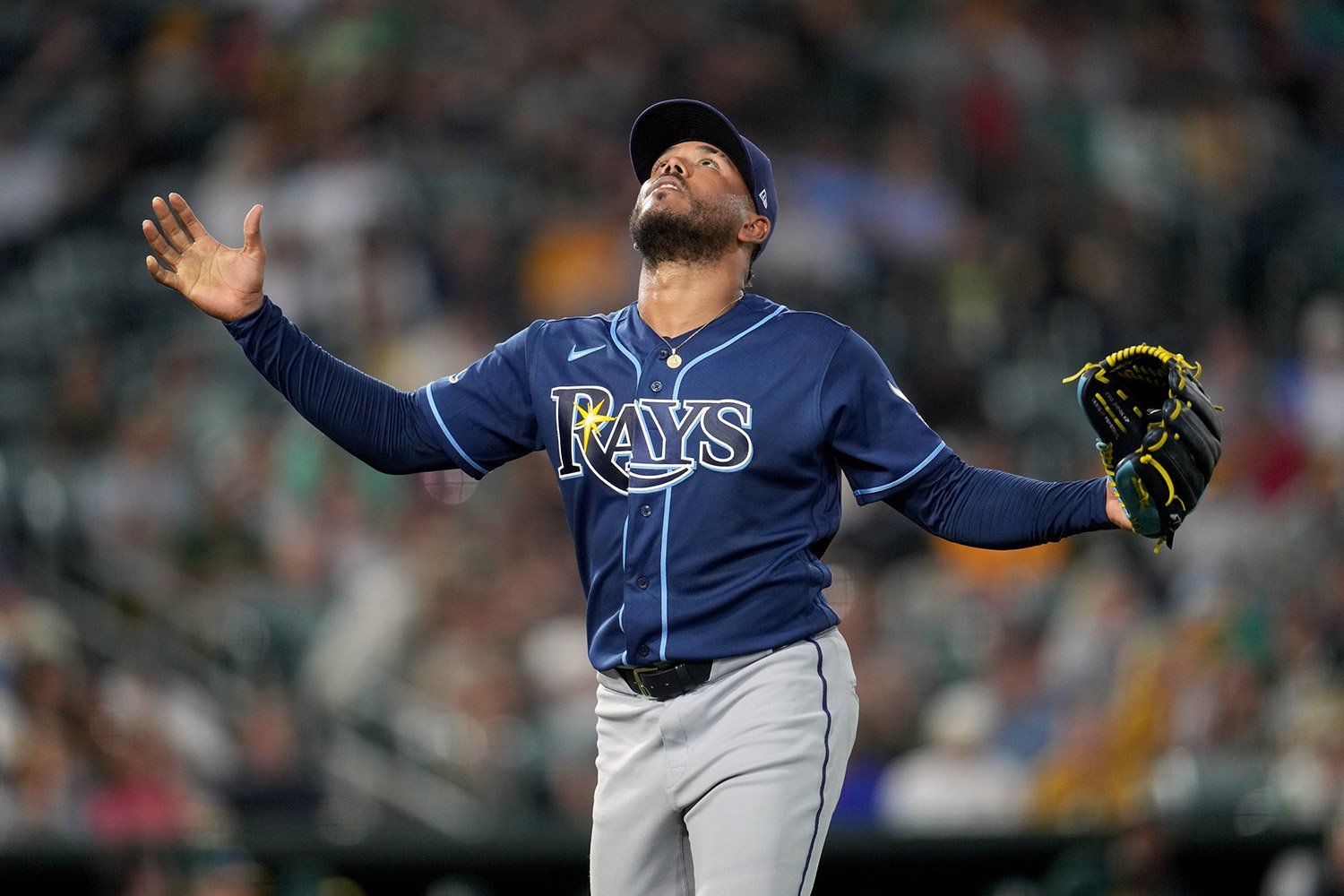 In the 2025-2026 offseason, the Brewers traded Freddy Peralta, acquiring pitcher Brandon Sproat and utility player Jett Williams in return. In the 2026 season, the deal has remained even – Sproat has struggled some with Milwaukee, while Williams is missing time with injury at Triple-A Nashville, and Peralta struggled in New York before a late-season trade to the Tampa Bay Rays. This is a two-part article: read the counterpoint here. Peralta is slated to be a free agent this offseason, and due to being traded, the Rays can’t make a qualifying offer. Should the Brewers pursue a reunion with Peralta? It might be the under-the-radar move of the offseason. For starters, Peralta is a known quantity for the Brewers in an area that the team has considered important: How he fits in the clubhouse. There haven’t been any known complaints, and the Brewers and Peralta were on friendly terms when he was dealt. In fact, Peralta was warmly welcomed by Brewers fans and players when the Mets came to Milwaukee for a three-game series– at least before he was pushed into starting the first game of a series. Granted, when the game started, they hung seven runs on Freddy, but that was business – it was nothing personal. Peralta would also fill a major need for the Brewers in 2027 – the need for a reliable inning eater behind Jacob Misiorowski, Kyle Harrison, and Logan Henderson. At his best, Peralta was a co-ace for the Brewers from 2021-2025. If the Brewers pitching lab can bring him back to that level, Milwaukee goes into 2027 with arguably the best rotation in MLB, which is not a bad thing for October baseball. But even at a slightly lower level, a team that will be wanting to pick up innings to manage the workload for Misiorowski, Harrison, and Henderson, as well as Quinn Priester, who’s recovering from thoracic outlet surgery. In addition, Peralta could slide Brandon Sproat and Robert Gasser to the bullpen, giving the Brewers a couple of options that could soak up more innings while perhaps thriving as high-endurance relievers alongside Shane Drohan, DL Hall, and Chad Patrick. If there is a hiccup, it might be price, but the reunion may actually come a fair bit cheaper than one might think. First, Freddy will be coming off a bit of a down year – and an extended “prove it” deal with Milwaukee could be just what he needs to reset his value. The Brewers could offer $15 million in 2027, and potentially add an enticement in the form of a player option for 2028. In one sense, this could help Milwaukee meet a potential salary floor that has been discussed in the labor negotiations. You’re bringing in one of the more known commodities on the free agent market, one where the relationship has been very good. Milwaukee could benefit, too, getting a second bite at the apple to trade Peralta for yet more of a return after the 2027 season. It’s almost too good to be true, only this could actually happen with very little downside for the Brewers. Fastball Freddy as Milwaukee’s fourth starter in 2027. Who wouldn’t like that sort of reunion? View the full article
