


DiamondCentric
-
Posts
2,631 -
Joined
-
Last visited
Never
Content Type
Profiles
Forums
Events
News
Tutorials & Help
Major League Baseball Videos
Guides & Resources
Store
Downloads
Gallery
Everything posted by DiamondCentric
-

Twins Part Ways With Longtime Scouting Executive Deron Johnson
DiamondCentric posted an article in Twins Daily
 The Minnesota Twins are making another change behind the scenes. The organization has parted ways with longtime scout and former amateur scouting director Deron Johnson, according to Bobby Nightengale Jr. of the Star Tribune. The Twins eliminated Johnson's senior advisor position, bringing an end to more than three decades with the organization. Johnson originally joined Minnesota in January 1994 as an area scout covering Northern California. He eventually moved into a larger role as the club's West Coast supervisor before being promoted to scouting director in September 2007. His tenure leading the amateur scouting department included nine drafts and several notable selections. The first draft under his direction produced Aaron Hicks with the 14th overall pick in 2008. Johnson was also at the helm when Minnesota selected Byron Buxton second overall in 2012. Other first-round selections made while Johnson served as scouting director included Kohl Stewart, Nick Gordon and Tyler Jay. Not every pick developed into a long-term contributor, but Johnson's fingerprints were on a significant portion of the organization's amateur talent pipeline during that era. The Twins moved Johnson into a senior advisory role following the 2016 season. Rather than stepping away from scouting, he continued evaluating talent and contributed to professional, international and minor-league scouting efforts. Now, that position has been eliminated. The timing is notable as Minnesota continues making changes throughout its baseball operations department. The Twins entered the final week of the 2026 season already eliminated from postseason contention, with the organization beginning to look toward what comes next. Johnson's departure also comes on the same day Minnesota selected the contract of Aaron Sabato, the former first-round pick from the 2020 draft, allowing him to make his major-league debut. After 32 years with the Twins and a career that included nearly every level of the scouting department, Johnson's departure represents the end of a significant chapter in Minnesota's front-office history. View the full article
 -
 The Florida Complex League can be a particularly important proving ground for young pitchers. For many of the Twins' youngest arms, it is their first experience facing professional hitters on a regular basis, while also learning how to handle a professional workload and refine their pitches. That makes evaluating FCL pitchers a little different than simply looking at ERA or strikeout totals. Age, competition, command, workload, and how quickly a pitcher earns a promotion can all provide important context when determining which performances stood out the most. The Twins had a handful of young pitchers put together encouraging seasons in the FCL this summer. Some showed the ability to miss bats, others excelled at limiting damage, and a few did enough to earn a promotion to Low-A before the season came to an end. Before getting to the top three, the Twins Daily minor league writers also gave consideration to the following players. Honorable Mentions Halton Hardy: 10 G, 29.1 IP, 4.30 ERA, 1.09 WHIP, 34 K, 8 BB. Geremy Villoria: 6 G, 7 IP, 0.00 ERA, 1.14 WHIP, 5 K, 3 BB. 3. RP Brad Rudis 18 G, 26.1 IP, 3.42 ERA, 1.22 WHIP, 33 K, 16 BB. After going undrafted a year ago coming out of Texas A&M, Rudis put together a quality first season as a professional. His strikeout rate in the Florida Complex League finished at 30%, giving him a solid bat-missing foundation even as he continued to work through some command issues. Rudis also did a very good job of limiting hard contact. He allowed just three extra-base hits over his 26.1 innings, which helped him navigate the FCL despite walking 16 batters. Keeping the ball in the park was an important part of his success. Age was also a factor when evaluating these rankings. Rudis is 23 years old, which is certainly on the older side for an FCL pitcher. That doesn't take away from what he accomplished, but it does provide some additional context when comparing him to much younger pitchers. Still, the Twins clearly believed Rudis had done enough to warrant a tougher challenge. He earned a promotion to Low-A in early August, giving him an opportunity to test his stuff against more advanced competition. 2. RP Jake Covey 10 G, 25.2 IP, 2.81 ERA, 1.33 WHIP, 38 K, 19 BB. Covey is a pretty cool story. After going undrafted last year out of Concordia University Irvine, he retired from baseball with the thought that his playing career was over. That changed when the father of one of his college teammates called him and convinced him to keep playing. The Twins eventually signed Covey to a contract in early June, giving him an unexpected opportunity to begin his professional career. Covey looked pretty darn good once he got that opportunity. He struck out 33% of the batters he faced in the FCL, showing the ability to miss bats despite some command issues. The walks were a concern, but he consistently kept the ball in the park. In fact, Covey didn't allow a single home run over his 25.2 innings. That's particularly impressive for a pitcher who was making his professional debut and still working to refine his command. The Twins rewarded that performance with a promotion to Low-A at the end of the season. After going from retiring from baseball to getting signed in June and then reaching Low-A a few months later, Covey's 2026 season was certainly an interesting one. Hopefully, he can pick up where he left off in 2027. Twins FCL Pitcher of the Year: RP Hendry Chivilli 8 G, 25 IP, 2.52 ERA, 1.24 WHIP, 20 K, 13 BB. Chivilli didn't rack up gaudy strikeout numbers or showcase ridiculously impressive command, but for a 20-year-old pitcher, he looked pretty darn good. Age was once again an important factor in these rankings, and Chivilli was competing against significantly more experienced hitters throughout the season. This was also Chivilli's first full season as a pitcher only. Up until 2024, he was an infielder for the FCL Twins, and he threw just 14.1 innings a year ago. Making the transition from position player to full-time pitcher is no small adjustment, making his performance this season even more encouraging. Chivilli's 2.52 ERA was the best among the three pitchers at the top of these rankings, and he allowed just 25 hits over his 25 innings. The strikeout numbers weren't overwhelming, but he consistently gave the Twins quality innings while continuing to learn a position he is still relatively new to. His performance was good enough to earn a promotion to Low-A in late July, giving him a chance to see how his stuff would play against more advanced hitters. Considering how quickly he has progressed since becoming a full-time pitcher, that promotion was another encouraging sign. The best part might be Chivilli's age. He will still be just 21 years old next season, giving him plenty of time to continue developing both his stuff and his command. A strong start to the year could put him on the radar for more national recognition as he continues climbing through the Twins organization. For all three of the top pitchers, the FCL represented a different point in their development. Rudis was an older undrafted pitcher trying to establish himself after signing as a free agent. Covey was simply trying to restart a career he had already decided was over. Chivilli was learning how to pitch full-time after spending much of his career as an infielder. That context makes the performances of all three more interesting. Each pitcher took a different path to success, and all three ultimately earned promotions to Low-A after proving they could handle the FCL. Now, the challenge gets significantly tougher. The next step will be seeing whether the stuff and development that worked in Fort Myers can translate against more advanced hitters. For Chivilli in particular, the opportunity is especially intriguing given his age and limited experience on the mound. The FCL may only be the beginning of their professional careers, but each of these pitchers gave the Twins another reason to keep an eye on their development moving forward. View the full article
 -
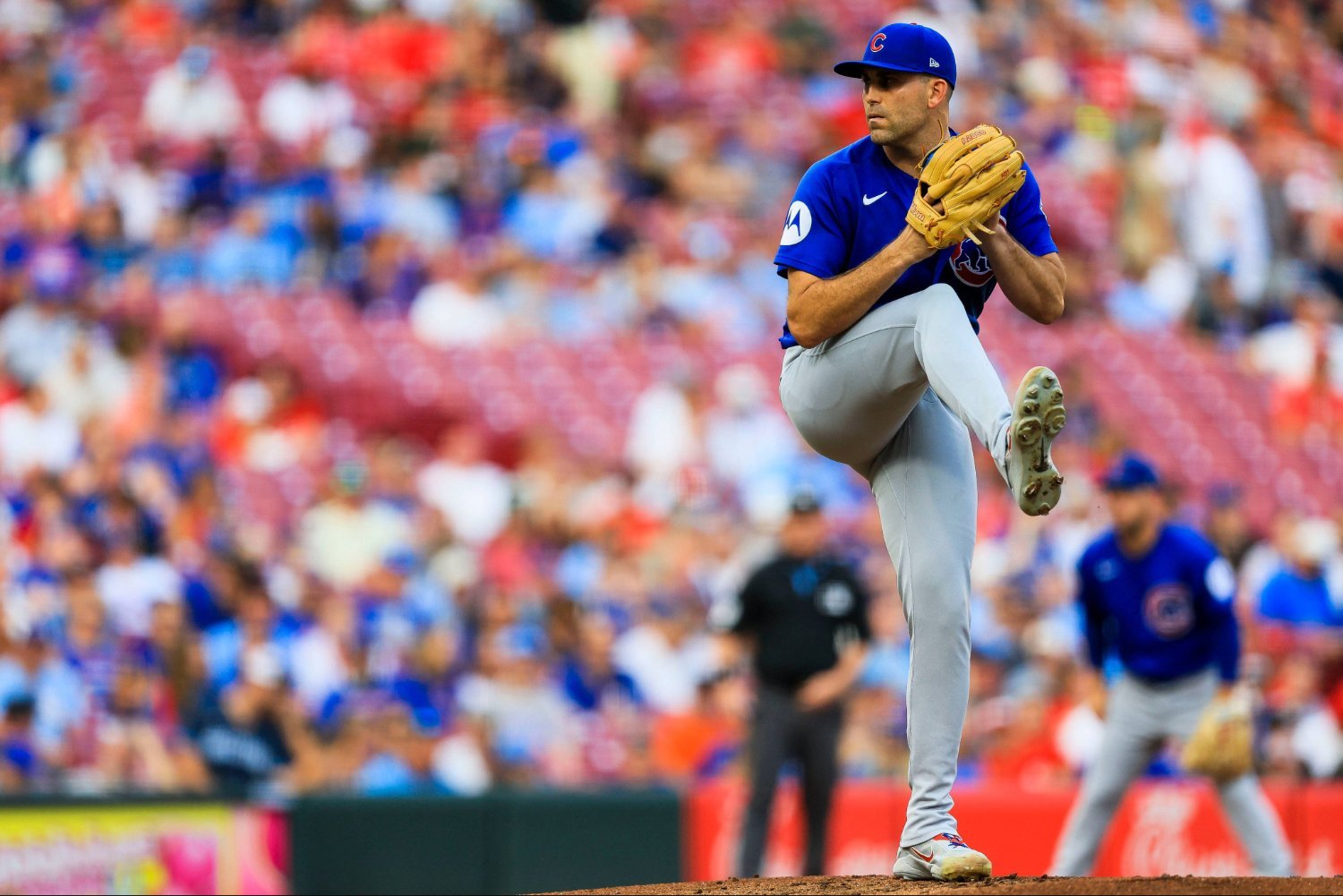 Matthew Boyd is no one’s definition of an ace. He has a career 4.52 ERA, with peripherals to match, and has topped out at 185 innings pitched in a single season. Teams don’t build their rotation around guys like Boyd, but they sure as hell appreciate them when they’re around. As such, the Chicago Cubs are going to need him in order to make a deep run in the postseason. Of all the likely playoff teams, the Cubs’ pitching staff is maybe the single weakest unit; their bullpen has been bad and their starters not much better. While they were active at the trade deadline to bolster their rotation, you can only rebuild so much of a rotation on the fly. Kevin Gausman got homer-itis from Shota Imanaga, and trusting David Peterson and Clay Holmes doesn’t sound particularly enticing, which leaves Boyd as a clear-cut option for the playoff rotation. Boyd is by no means a bad pitcher. Last season, over 179.2 innings, he pitched to a 3.21 ERA, 3.75 xERA, 3.65 FIP, and 4.22 xFIP. Just about every team in baseball would take that from their third starter. Unfortunately, 2026 has been a step back. His ERA and ERA estimators have all risen (4.06 ERA, 4.72 xERA, 4.28 FIP, and 4.30 xFIP), while his innings have decreased (119.2 innings). The good news is that the veteran southpaw has been far better as of late. Over his past five starts, he has a 3.77 ERA, 3.72 xERA, 2.96 FIP, and 3.77 xFIP. Those won’t win you a Cy Young, but they’re good enough to keep the Cubs’ potent offense in the game. Not much has changed for Boyd over the past month, save for one crucial component. Those long lists of ERA estimators are there for a reason, and not just for a word count. Last season, Boyd’s xFIP, which assumes a league-average home run rate on fly balls, was 4.22, and this season it’s 4.30. In many respects, Boyd has pitched about as well as he did last season, just with different home run luck. Over his past five starts, he once again has been hot in the home run department, posting a 4.2% HR/FB, but he has also done a better job keeping the ball out of the air. His flyball percentage of 30.4% is far better than the 39.3% he managed over his first 16 starts. The most pronounced change in his game has been an uptick in his changeup usage. Over his first 16 starts, he threw his changeup 25.8% of the time, but he has ramped its usage up to 33.3% recently. As he has leaned more heavily on his changeup, his fastball and slider have performed better as well. This is all in the realm of a small sample blip, but at least some dots are connecting. Realistically, Boyd’s best bet to help the Cubs make a deep playoff run is to keep the ball in the ballpark and let his excellent defense take care of the rest. Despite a solid walk rate (7.5%), he simply doesn’t strike out enough batters (18.9%) to survive the long ball. It’s not the sexiest postseason plan, but history is littered with magnificent pitching runs that followed it to a tee. Notable Low HR/FB & BABIP Playoff Runs 2002-2025, Best Postseason Pitcher Runs With Sub 8K/9, min 30 IP Pitcher Season IP ERA BABIP HR/FB xFIP Madison Bumgarner 2014 52.2 1.03 0.180 4.60% 3.40 Cliff Lee 2009 40.1 1.56 0.241 0.00% 3.37 Yoshinobu Yamamoto 2025 37.1 1.45 0.210 6.70% 3.33 CC Sabathia 2009 36.1 1.98 0.245 12.50% 3.32 Jon Lester 2016 35.2 2.02 0.250 9.40% 3.55 Cole Hammels 2008 35 1.80 0.233 6.30% 3.40 Jon Lester 2013 34.2 1.56 0.239 9.40% 3.50 Chris Carpenter 2006 32.1 2.78 0.263 12.50% 3.60 Jose Contreras 2005 32 3.09 0.229 8% 3.69 Jordan Montgomery 2023 31 2.90 0.309 8.60% 4.51 Andy Pettitte 2009 30.2 3.52 0.256 15.60% 3.91 Kevin Gausman 2025 30.2 2.93 0.169 10% 4.53 Matthew Boyd isn’t the ideal candidate to be a postseason ace, but as long as he can keep the ball in the yard, he’ll give himself and the Cubs a chance to make some noise. There’s no reason he couldn’t be 2026’s Jordan Montgomery, which could be exactly the kind of revelation that could elevate Chicago into the championship tier of contenders. View the full article
 -
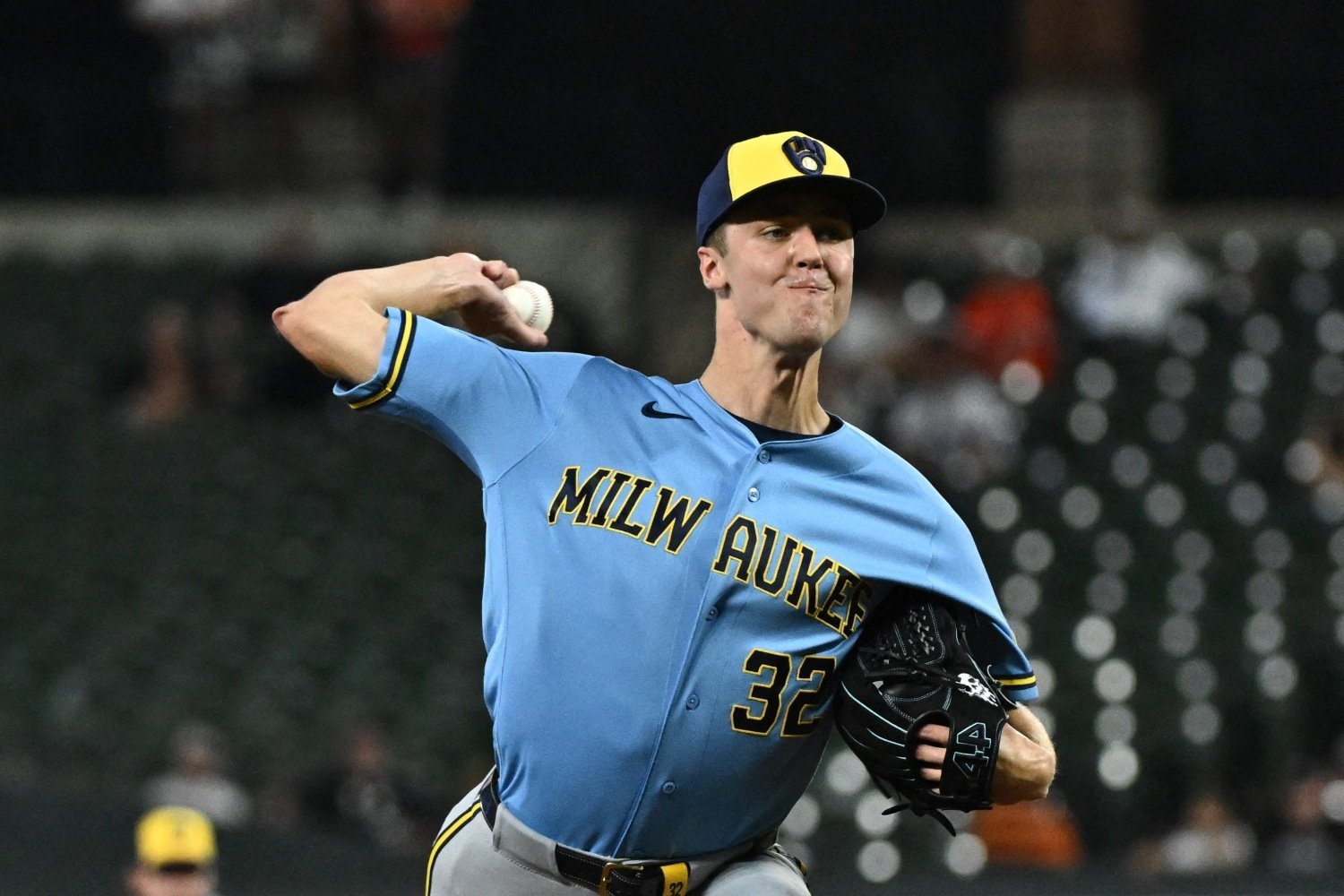 The completeness of Jacob Misiorowski's 2026 dominance is hard to grasp. Few pitchers in the history of the game have overpowered and overmatched opposing batters this thoroughly. The sheer velocity is one thing; the way he gets down the mound and augments it is another. Having figured out how to fill up the strike zone and developed a sufficient arsenal of other trustworthy pitches to keep hitters honest, Misiorowski has become as close to unhittable as any starter has been in at least a decade. So when I tell you there's a dimension of his greatness this year we might not even be appreciating sufficiently, it will probably prompt skepticism. Of all the things Misiorowski is, these days, it's hard to argue for 'underrated'. Tell that to baserunners. The precious few players who reach base against the Brewers ace this year might as well swap out their shin pads and elbow armor for a big old ball-and-chain, because even if they're lucky enough to get to first, they're not going anywhere. All season, runners have attempted three steals against Misiorowski. Here's one of them—for a long time, the only successful one. It came on April 25, against the Pirates. Konnor Griffin is very fast. He's stolen 22 bases in 25 tries this year, and I don't think William Contreras would have thrown him out even if he had thrown through. That's not the point, though. Stealing the base wasn't even the point of Griffin taking off, from the Pirates' perspective. With No. 9 hitter Henry Davis at the plate and two outs, the reason Griffin ran was to try and bait Contreras into throwing to second, so that Pittsburgh might steal a third run in what was one of Misiorowski's most laborious outings of the year. Contreras didn't bite, and Misiorowski never cared whether Griffin went, anyway. Technically, it's a steal, but it hardly feels like an example of the runner winning a battle with the battery. Here's the second time someone tried running on Misiorowski. WU9WUkRfWGw0TUFRPT1fVWxBREFsQlNBMVFBREFkWEFBQUhWUVZXQUFNRVZsRUFBbFFBQUFBR0J3UUhBQUVD.mp4 Between that last attempt and this one, Misiorowski had gone from opening a lot of eyes with his superb velocity to being understood as the best pitcher in the sport. When you get any chance to create chaos or manufacture a run against him, you have to at least consider it. Yet, Ronald Acuña Jr.—no shrinking violet when it comes to attempting a steal—only did so once he thought he had the drop on friend and countryman Contreras, trying a delayed steal based on Contreras staying on one knee as he prepared to throw the ball back to his ace. It wasn't a bad idea, really. It didn't work, though, and the fact that Acuña judged that a better way to try for second than a straight steal is telling, too. Finally, on September 8, someone actually got him. We probably shouldn't be surprised about who it was. akR3T1dfWGw0TUFRPT1fVndKWUFnQlhVQW9BV2dGVVV3QUhBZzRIQUFNRlVsa0FWMUVDQndwVEFBWUFCd3Rm.mp4 When Misiorowski and Pete Crow-Armstrong are locked in any form of battle on the field this season, the main character energy in the air could power a mid-sized American city. It's only fitting that, despite Misiorowski getting the better of most of their matchups, Crow-Armstrong got some revenge immediately after reaching base in this encounter. Crow-Armstrong isn't just a high-volume basestealer; he's exceptionally good at getting leads and avoiding tags. He's stolen 38 bases in 45 tries. Between him and Griffin, the two guys who have stolen against Misiorowski this year are 60-for-70 in total, and again, only Crow-Armstrong's was even a real steal. Misiorowski doesn't have an elite pickoff move. It's fine, but it's not the type of thing that typically freezes runners. He shuts them down differently. It's partially about time, of course. A Misiorowski heater gets to the plate faster than that of any other pitcher in the game, and Contreras has one of the best pop times among catchers. (He's also quite accurate on his throws.) Even before he releases the ball, Misiorowski's delivery is quick, so although he's big, runners have a hard time getting a good lead as he starts his move. He complicates the equation further by varying the amount of time he holds the ball pretty widely; he's especially comfortable with a long hold. Add to that set of hurdles the fact that few pitchers induce more whiffs than Misiorowski, so no runner who takes off can feel very good about being protected by a hitter if the pitch is in a hittable spot. Teams should want to get every 90 feet they can against Misiorowski, but he has a knack for putting an anchor in the seat of runners' pants. It's helped him strand runners at a higher rate than the league average this year. It's helped him avoid big innings. Little though it might seem to matter, in comparison with the way he flummoxes hitters, Misiorowski stumps runners to an extent that only makes his brilliance more valuable. With one start left, Misiorowski has pitched 169 innings this year. No other hurler set to qualify for the ERA title has allowed fewer steals than he has. Only Parker Messick of the Guardians has been equally stingy (two steals), and he's a lefty. No one's been thrown out trying against him, either. In fact, no one but Messick and Misiorowski has allowed fewer than five steals in that much time on the mound. This is one last way in which, in the Year of Jacob Misiorowski, he just keeps finding ways to amaze. View the full article
 -
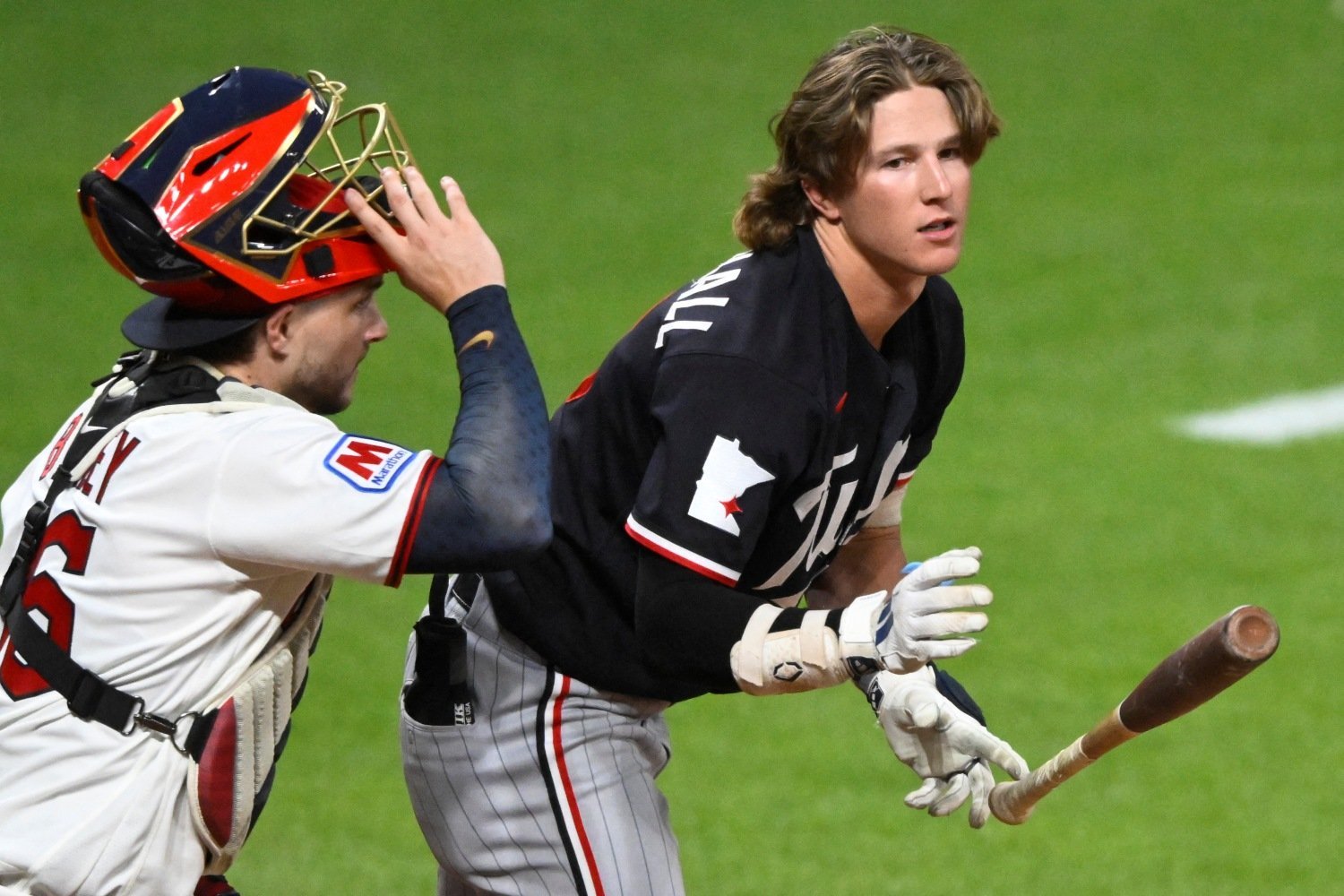 Getting hit by a pitch isn't something a hitter wants to become known for. For Luke Keaschall, however, it's becoming an important part of the package. The Twins' second-year player has spent much of his baseball career finding his way onto first base the hard way. That trend has continued in the majors, where Keaschall recently set a new franchise record by being hit by his 22nd pitch of the season. That record comes with an interesting backstory, because getting hit by a pitch has already cost Keaschall significant time in the majors. During his first week in the big leagues in 2025, Keaschall was hit by an 87-MPH pitch from Kyle Hendricks. The collision fractured his arm and forced him to miss roughly three months. It would have been understandable if that experience changed the way he approached the inside half of the plate. It didn't. Instead, Keaschall has continued doing what he's done throughout his baseball career. Now, he's the Twins' single-season leader in getting plunked. It's Part of His Game Keaschall's 22nd hit-by-pitch of the season came Friday in Anaheim, moving him past Willi Castro's franchise record of 21, set in 2024. Rather than treating the milestone as something particularly strange, Keaschall views it as another consequence of his approach at the plate. "It's part of my game,” Keaschall told reporters. “I've got short levers, so I have to stand on the plate a little closer than other guys to be able to cover [outside pitches]. It's just part of it." That explanation gets to the heart of why Keaschall has been hit so often. His body positioning and swing mechanics require him to crowd the plate. Standing closer gives him a better chance to reach pitches on the outer portion of the strike zone, but it also leaves him less room to avoid an errant pitch aimed for the inner half. There is a tradeoff. Keaschall appears more than willing to accept it. The numbers show this isn't some new development, though. During his sophomore season at the University of San Francisco, Keaschall was hit 19 times in only 57 games. He added another 13 plunkings in 55 games as a junior at Arizona State. Then, in 2024, he was plunked 18 times in 103 minor-league games. This has been following Keaschall around for years. "I've just gotten hit a lot my whole career," Keaschall said. "I land a little more closed with my front foot striding toward the plate, so I don't really bail on pitches like a lot of guys who land more open. I've just always got hit a lot." That's the big thing. Keaschall actually doesn't stand much closer to the plate than an average batter, but with a deep crouch, a high leg kick and a stride that takes him from open in his stance to more closed, he moves toward the plate until very late in his hitting actions. Many hitters are neutral or moving away from the plate earlier than Keaschall is. The right one.mp4 The Injury Didn't Change Him There's some irony in Keaschall breaking a Twins record for hit-by-pitches after a hit-by-pitch nearly derailed his rookie season. The Hendricks pitch was not some minor inconvenience. Keaschall suffered a fractured arm and spent approximately three months away from the Twins. Yet, when he returned, he didn't suddenly start backing away from the plate. That says something about how ingrained this approach has become. Keaschall was already comfortable operating close to the strike zone's edges. His willingness to stand near the plate is connected to the rest of his offensive profile. He wants to control the zone, get on base and put pressure on the defense. Getting hit is simply one way that happens. Protective equipment reduces the physical toll, but it doesn't eliminate the risk. There's still a certain amount of courage involved in repeatedly standing in the same spot after learning firsthand that a pitch can end your season. Not only is Keaschall doing so, but he still moves into the ball the same (arguably ill-advised) way that he did 17 months ago. Here's a side-by-side look at the moment he was hit by the pitch that broke his arm, and at a pitch that hit him against the Angels over the weekend in almost the same spot. The pitch on the right was 10 MPH harder. The pad he now wears spared him another major injury; he's chosen to wear that instead of adjusting the way he hits. When a hitter consistently crowds the plate, the margin for error becomes smaller. Keaschall's style puts him in that territory. Chuck Knoblauch remains the all-time Twins leader with 74 hit-by-pitches during his seven seasons with the organization. César Tovar ranks second with 68. Keaschall has a long way to go before approaching those career totals, but the single-season record is already his. Considering his history, it might not be his last record involving a baseball hitting him. Considering the nature of this approach, though, last year's might also not be the only time it costs him dearly. The July Transformation The most interesting part of Keaschall's 2026 hit-by-pitch total might not be the final number. It's when the plunkings started piling up. Keaschall was hit by only five pitches during his first 81 games of the season. Since July 1, however, he's been a completely different kind of target. Over the 64 games since that date, Keaschall has been hit 17 times, the most in the majors during that span. That's more than three times as many hit-by-pitches as he accumulated during the first half of the season. That's turned an interesting part of his offensive profile into a legitimate weapon. As Keaschall has settled into the major leagues, he's increasingly looked comfortable at the plate. His ability to get on base doesn't rely solely on getting hits. He can draw walks, use his speed, or (apparently) allow pitchers to provide him with a free trip to first base. That's valuable for any hitter. It's especially valuable for someone who could find himself near the top of Minnesota's lineup on a regular basis. What the Hit-By-Pitches Add to His Offensive Profile Obviously, getting on base is good, as long as it doesn't come at the expense of one's bone integrity. Being hit by pitches is an efficient way to pad OBP, too, because rather than requiring one to work a walk by taking four pitches outside the zone, it puts one on base immediately. If you're willing to get hit, you can afford to be a bit more aggressive at the plate (and, hopefully, get more hits, which are still more valuable than walks or being hit) without missing out on chances to reach via pitchers being wild. There is also a secondary benefit. Pitchers know Keaschall is willing to stand close to the plate. That can make the inside portion of the strike zone an important part of every matchup. If pitchers miss their spots, Keaschall can reach base. If they move too far away from the inside edge, he has the plate coverage to handle pitches farther away. The Art of Getting Hit There aren't many players who can say getting hit by a pitch is an intentional part of their offensive identity. Keaschall isn't trying to get hit. He's simply unwilling to move away from the plate just because he might get hit. The 22 hit-by-pitches are a byproduct of his approach, his body positioning and his desire to cover the entire strike zone. After already suffering a serious injury from one of those pitches, Keaschall has shown no interest in changing what has made him successful. He's gambling with his body. As long as he wears the right equipment and wins the bets he's making, though, it's a worthwhile tradeoff. Now, he's in the Twins record book because of it. As Minnesota looks toward the future, Keaschall could become a fixture near the top of the lineup. His ability to reach base, run, battle through at-bats and create pressure on opposing pitchers gives him an intriguing offensive foundation. If he keeps standing close to the plate, there will probably be plenty more free trips to first base along the way. What does this unique skill add to Keaschall's offensive profile? Leave a comment and start the discussion. View the full article
 -
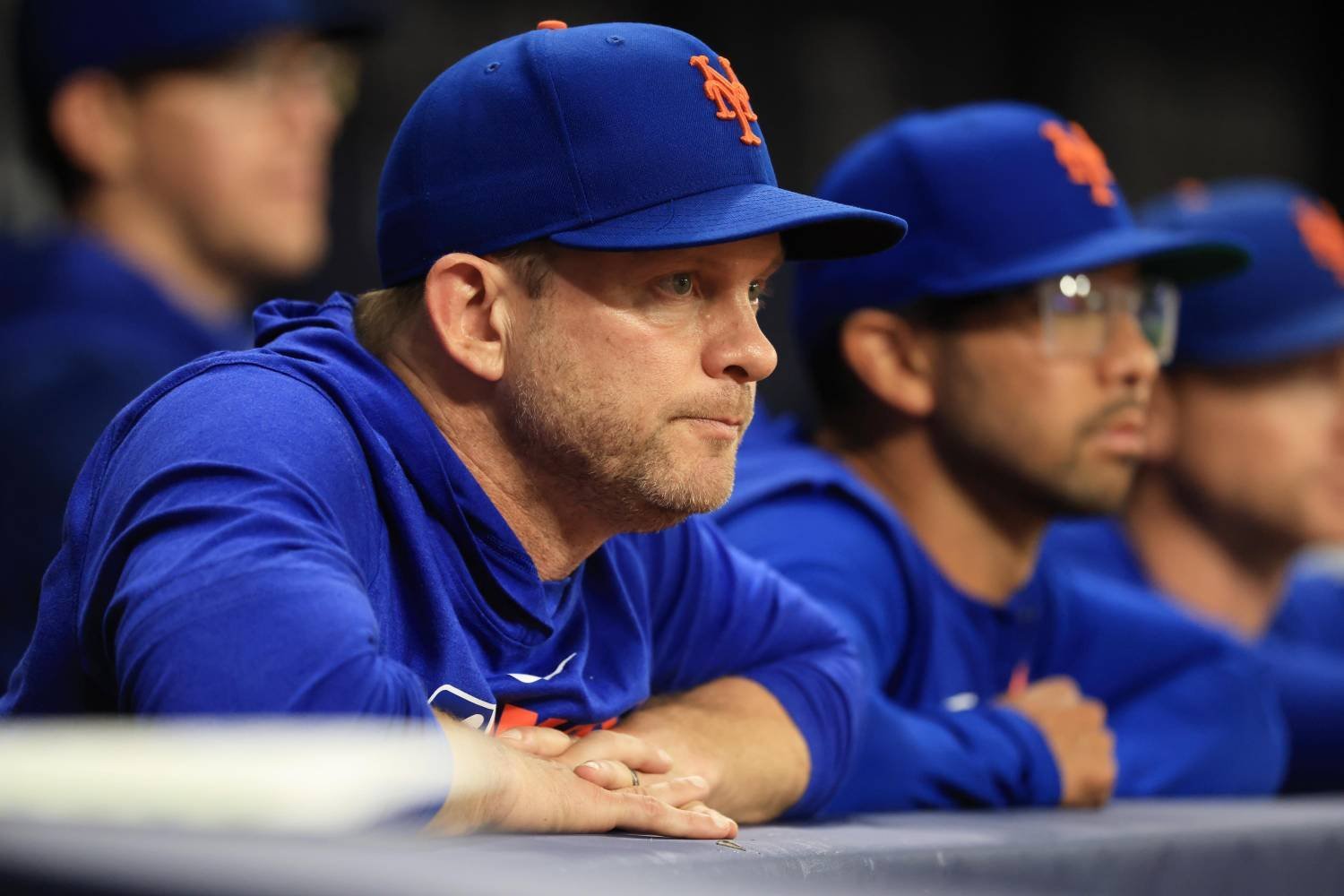 While wins have been few and far between for the New York Mets this season, they scored a huge triumph Tuesday. After changing his initial stance on remaining the manager past the season, Andy Green signed a three-year contract to stay as the Mets' bench boss, the team announced Tuesday. More to come ... View the full article
 -
 Blue Jays Affiliate Overview (September 19-20) Triple-A Buffalo Bisons Series vs Rochester Red Wings (Washington Nationals): 2-4 Season Record: 68-79 Double-A New Hampshire Fisher Cats: Season Complete High-A Vancouver Canadians: Season Complete Single-A Dunedin Blue Jays: Season Complete FCL Blue Jays: Season Complete DSL Blue Jays Blue: Season Complete DSL Blue Jays Red: Season Complete Triple-A Buffalo Bisons Season Record: 68-79 Series vs Rochester (Washington Nationals) September 19: Buffalo had Grant Rogers on the mound Saturday, toeing the opposite rubber as Zak Kent of Rochester. Rogers got into trouble from the start of the game. In the first inning, he gave up two doubles that led to a run and an RBI single, putting the Bisons in a 2-0 hole early. In the second, Rogers almost worked around a lead-off double, but Rochester cashed it in with an RBI single to left. While the first two innings were rocky for Rogers, he settled in and was perfect in the third and fourth innings. Yohendrick Piñango was able to cut into the deficit for Buffalo by blasting a solo home run to lead off the bottom of the fourth inning. The round-tripper was his ninth of the season at Buffalo and came off the bat at 112.4 mph, going 425 feet to right field. Buffalo couldn't keep Rochester in check, though, as they added four more runs and held a 7-1 lead entering the bottom of the ninth. In the final frame of the game, Anthony Santander ripped an RBI double to right, and Daz Cameron knocked him in on a sacrifice fly to right field. Buffalo just could not get the bats going enough to climb out of their early hole; they fell 7-3. September 20: Sunday was the final game of the season for Buffalo, and their bats came to play, but their pitching would ultimately let them down. Yohendrick Piñango cranked out two big blasts, and Josh Rivera also had a home run. The game started with three scoreless innings from Josh Winckowski. Things went south after he left the game, though. John Klein, Daniel Guerra, and Devereaux Harrison all surrendered runs, with Klein and Harrison giving up five each. Sam Gardner even gave up three runs, but all three were unearned. Buffalo scored a bunch of runs in the game, starting with Rhylan Thomas’ two-RBI single in the second and another run when Piñango walked with the bases loaded. In the fourth, it was Piñango's first home run that provided the scoring, a two-run blast to right field. In the seventh, it was a solo shot from Piñango, while in the eighth, Josh Kasevich walked with the bases loaded to bring home a run. Rivera smacked his solo home run in the ninth, which would ultimately be the final run scored for Buffalo on the season. The Bisons fell 15-8, ending their season nine games under .500. Double-A New Hampshire Season Record: 59-74 Season Completed High-A Vancouver Season Record: 64-66 Season Completed Single-A Dunedin Season Record: 62-66 Season Completed FCL Blue Jays Season Record: 38-20 Season Completed DSL Blue Jays Blue Season Record: 20-35 Season Completed DSL Blue Jays Red Season Record: 33-18 Playoffs: 2-1 Season Completed View the full article
 -
Tony Gonsolin Activated From Injured List, Set To Make Royals Debut
DiamondCentric posted an article in Royals Keep
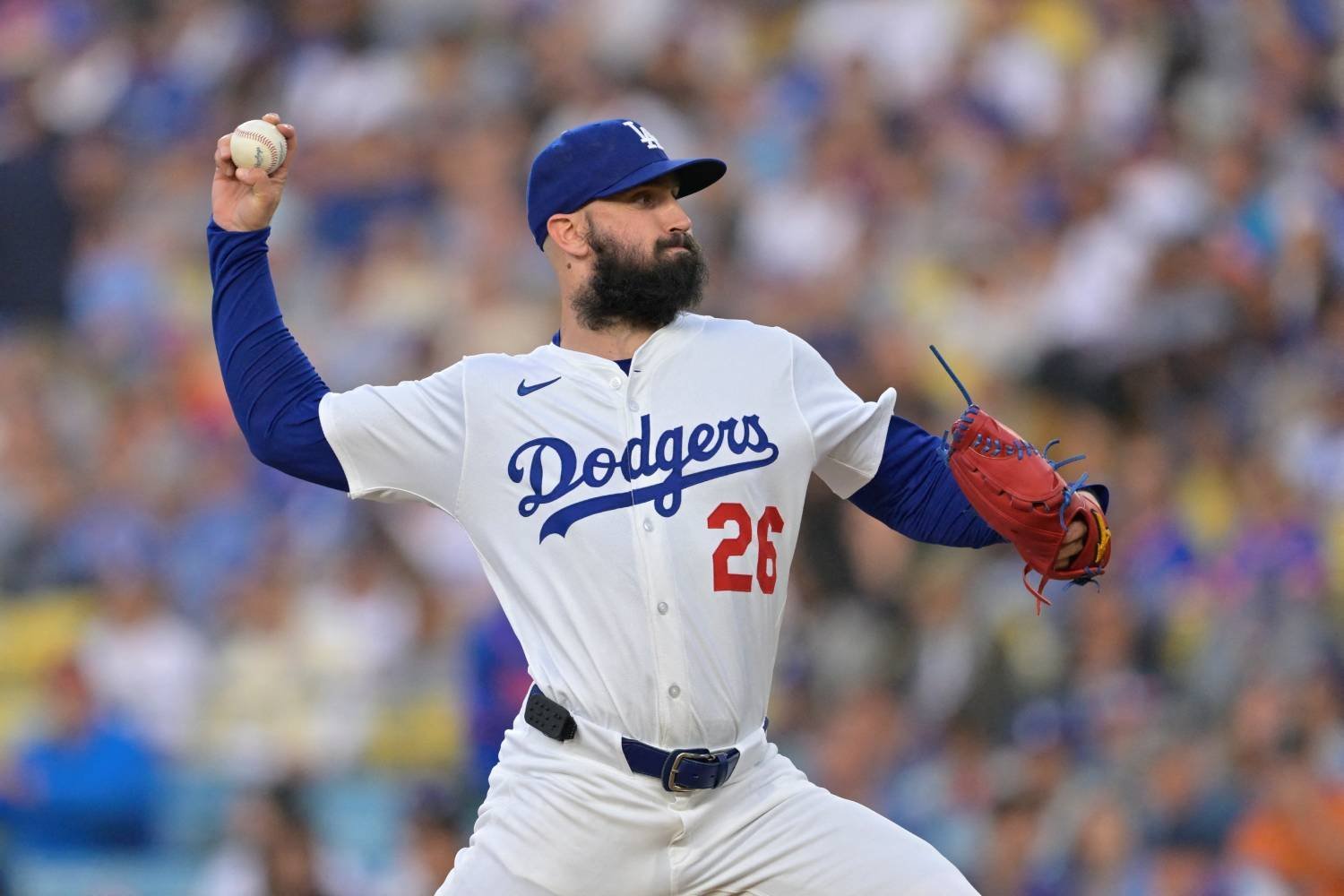 What is the purpose of a player returning for the final six games of the regular season? To prove he is healthy. That is the case with right-handed starter Tony Gonsolin, who was activated Tuesday off the 15-day injured list by the Kansas City Royals. Right-handed reliever Spencer Bivens was optioned to the Arizona Complex League. The minor-league season is complete at all levels, although there are young players and rehabbing players at the various team complexes. The 32-year-old Gonsolin is a unique case in that the Royals signed him Aug. 13 and placed the right-hander on the 15-day injured list. He underwent the internal brace procedure on his right elbow in August 2025 and made four starts, pitching 16⅓ innings at Triple-A Omaha. Gonsolin will most likely make a start Friday against the Cleveland Guardians at home in his lone appearance this year. The Royals currently do not have a starter announced for that game. Gonsolin, who spent his entire career with the Los Angeles Dodgers, signed a prorated $1 million contract for this year with a club option for 2027. Bivens was claimed off waivers from the San Francisco Giants on Sept. 12 after four MLB appearances in two stints, allowing eight runs over five innings with four walks and eight strikeouts. Bivens was optioned to Triple-A Omaha after being claimed. He was called up Saturday but did not appear in either of the two games vs. the Pittsburgh Pirates. View the full article
 -
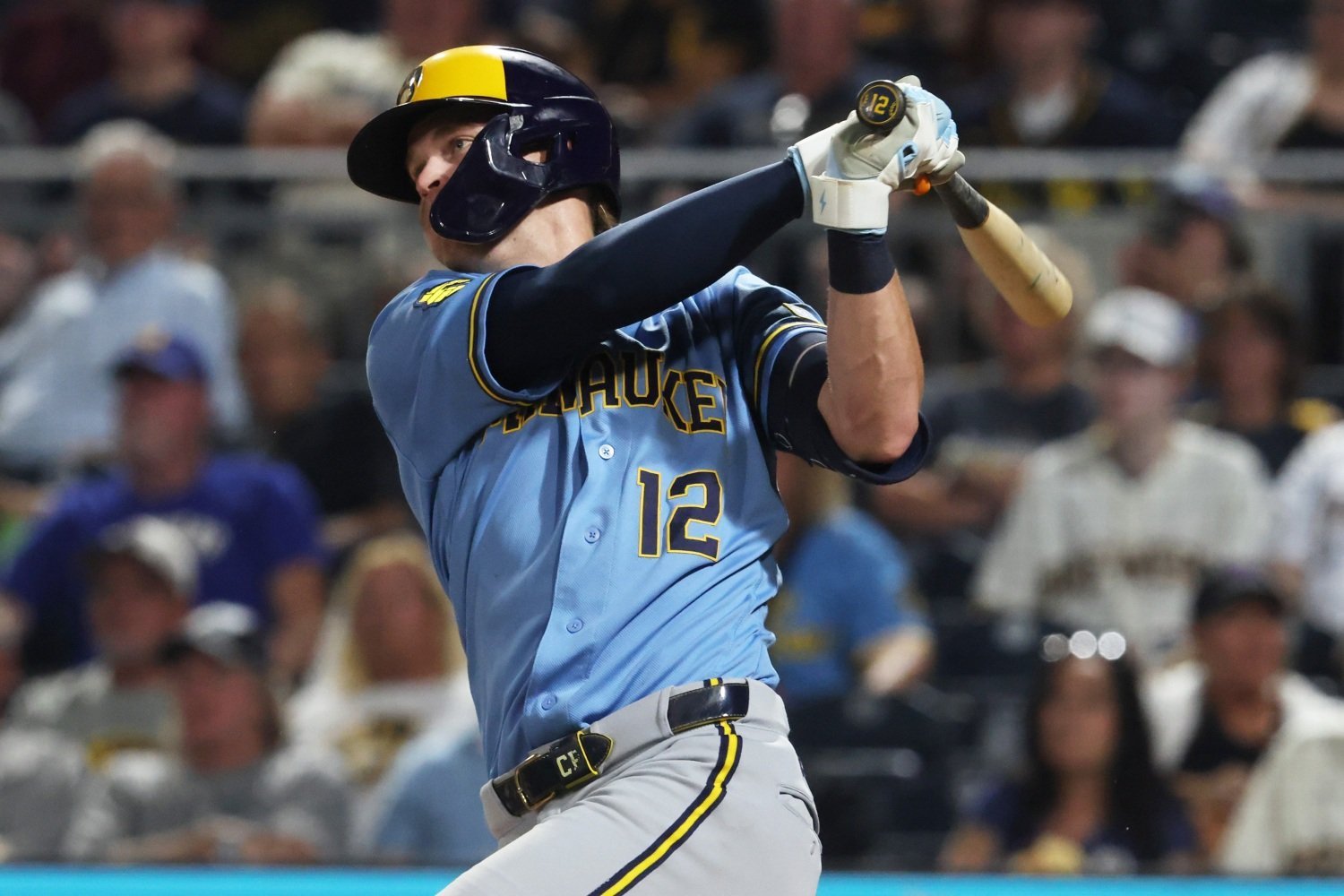 It hasn't been easy, exactly. Life in the majors is not kind to young hitters called up primarily for their glove. Cooper Pratt has only seen an opposing starter for a third time eight times all season. Of his 249 plate appearances, entering Tuesday, 122 have come against relievers. Pratt has already faced 135 different pitchers in the majors. Through his first three seasons, Robin Yount went to the plate 1,661 times and only saw 171 different hurlers. Pratt is being asked to survive a league that's given home no opportunity to get comfortable, partially because he bats at the bottom of one of the league's most potent lineups. He also missed time with a hamstring injury last month, and those he only spent a minimum stint on the shelf, he wasn't quite himself when he returned. Lately, though, he's very much himself. Pratt has hit for almost no power this month, but that's not for a lack of authoritative contact. In fact, he's produced a series of solid line drives and (as a result) a .315/.383/.370 batting line. In 62 trips to the plate, he's struck out just nine times and drawn six walks. It's not just the results that have been pretty. Pratt's process has improved. He's not swinging any faster than he was during the height of summer—if anything, he's slowed down a tick—but he's meeting the ball more squarely and producing more exit velocity as a function of what was possible, given his swing and the speed of the incoming pitch: That recent spike is because, seemingly, Pratt is more confident at the plate. His first-pitch swing rate is down this month, which has allowed him to work into some more favorable counts. When he does swing at that first offering, though, he usually stings it, because he's locked in on one pitch and one spot in those situations. When ahead in the count, Pratt is swinging more often in September than in previous months. When behind, he's swinging less. It's all part of an approach whereby he's gotten more willing to draw walks and to force pitchers into the zone, and more assertive when they do come to him. That maturation is tough for any player to achieve within a season, but it's especially impressive work by a 21-year-old who has gotten so few chances to acclimate to specific pitchers and their plans against him. For reasons both physical and mental, Pratt is much better at delivering the sweet spot to the ball lately than he was when he first came up. His swing speed ticked up after a few weeks in the majors not because he was actively trying to start hitting for power, but because he didn't have a good feel for how he was being pitched, and he needed the extra effort to produce hard-hit balls. Lately, he's looking more like someone who knows what's coming, and that's allowed him to swing smoother and with less conscious effort. He's not jamming himself nearly as much as he was early, and he's on time more often. When he mistimes it, he does so by less than he did earlier in the year. In a perfect world—certainly, in the future the team envisions for Pratt and the one he envisions for himself—he would get a little more bat speed going and start lifting his hard-hit balls to the pull field with some consistency, to give him the power dimension currently missing from his game. That can wait, though. Right now, Pratt is on a roll. He's locked in on what teams are trying to do to him, and he's making sure it doesn't work. He's covering the inner edge of the plate better and using the middle of the diamond. Milwaukee's offense runs more on the strength of the bottom third of its lineup than does any other team's. They need Pratt, Joey Ortiz, Sal Frelick, Luis Lara and/or whoever else is batting in the bottom three spots each day to get on base and create chances for the more well-rounded hitters at the top of the order. Pratt is fulfilling his role beautifully. If this continues into October, he'll be an easy hero to overlook when the team makes a deep run—but very much a hero, nonetheless. View the full article
 -
Minnesota Twins Prospect Retrospective: Aaron Sabato
DiamondCentric posted an article in Twins Daily
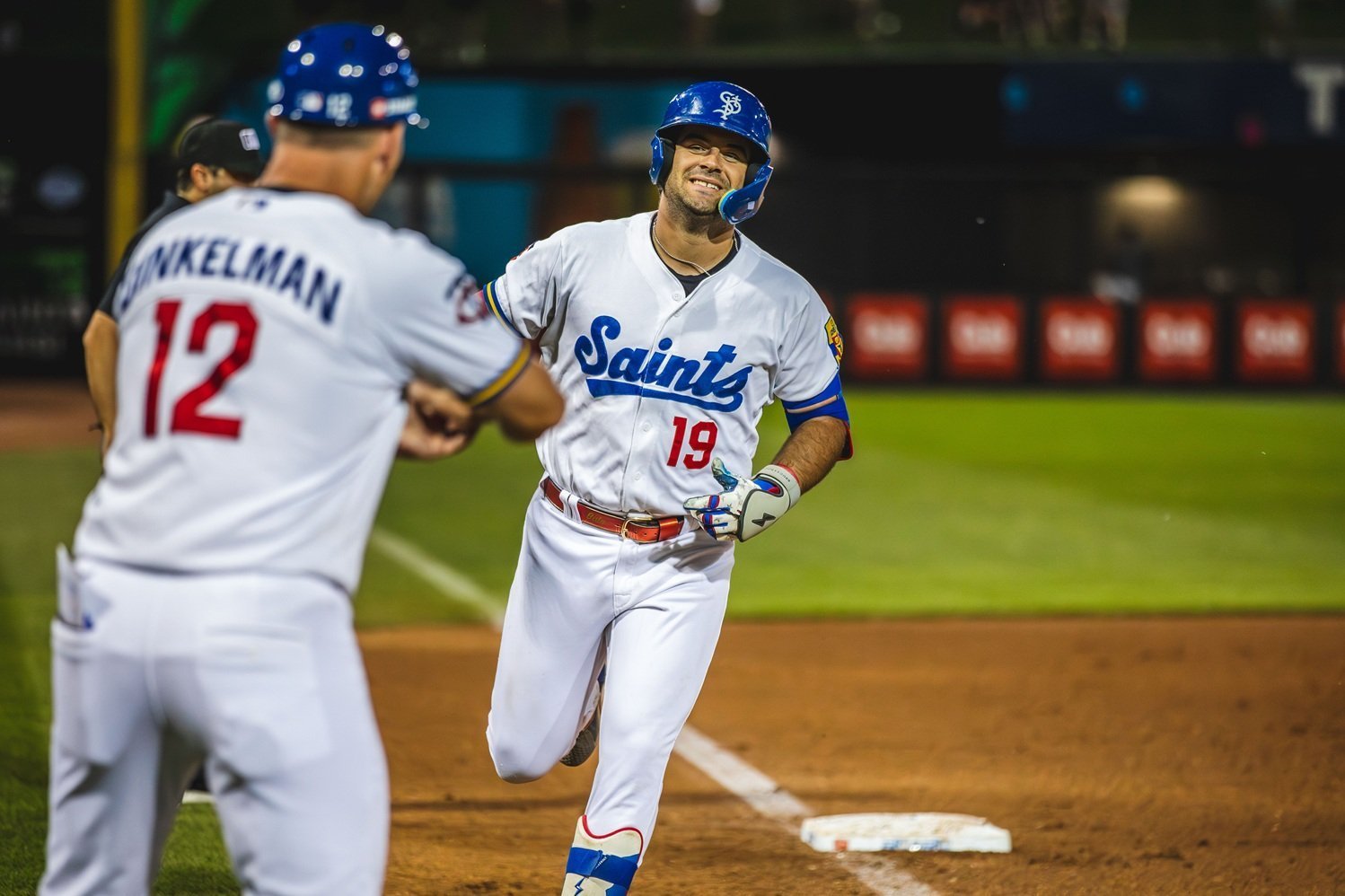 There was a time when Aaron Sabato had one of the biggest offensive upsides in the Minnesota Twins organization. The Twins selected Sabato 27th overall in the 2020 MLB Draft out of the University of North Carolina, betting on a powerful college bat that had produced at one of the highest levels of amateur baseball. The COVID-19 pandemic wiped out his first opportunity to play professionally, but Sabato finally began his climb through the organization in 2021.The journey did not go exactly as planned. There were plenty of home runs and walks along the way, but Sabato also struggled with strikeouts and consistency. His prospect stock declined as he moved through the system, eventually taking him from one of the organization's top prospects to a player fighting simply to get back onto the major league radar. Now, over six years after the Twins drafted him, Sabato is finally getting his chance. Minnesota selected his contract from Triple-A St. Paul on Monday, September 21, giving the 27-year-old his first opportunity in the major leagues. Here's how Sabato's journey unfolded year by year. 2020: Drafted in the First Round Sabato entered the 2020 MLB Draft after a standout career at North Carolina. In his abbreviated 2020 college season, Sabato hit .292/.478/.708 (1.149) with seven home runs and 18 RBI in just 19 games. The year before, he had hit .343/.453/.696 (1.185) with 18 home runs and 63 RBI. The Twins selected him at the end of the first round. There was plenty to like about the profile. Sabato possessed significant raw power, a strong understanding of the strike zone and experience playing first base against quality college competition. But the 2020 season was unlike any other. Because of the COVID-19 pandemic, the minor league season was canceled. Sabato had to wait until the following year to begin his professional career. 2021: The Professional Debut Sabato's first professional season provided both reasons for optimism and some early warning signs. He split the year between Low-A Fort Myers and High-A Cedar Rapids, appearing in 107 games. Overall, he hit .202/.373/.410 (.783) with 19 home runs and a 121 wRC+. The batting average was difficult to overlook, but neither was the plate discipline. Sabato walked 19.8% of the time and showed the power that made him a first-round selection. His 32.1% strikeout rate was also tough to ignore as he was older than the average age of the competition at Low-A, where he played the majority of the season. His transition to Cedar Rapids was particularly encouraging. In 22 games with the Kernels, Sabato hit .253/.402/.613 with eight home runs and 15 RBI. That translated to a 1.015 OPS over his brief time at the higher level. The Twins still had a young first baseman with considerable power and patience. The question was whether he could make enough contact to turn those tools into consistent production. 2022: More Power, Same Questions Sabato returned to Cedar Rapids to begin the 2022 season and continued to show the power that had made him a first-round pick. He hit 17 home runs with the Kernels and posted a .799 OPS across 80 games. Overall, Sabato played 103 games between Cedar Rapids and Double-A Wichita. He hit .215/.336/.438 (.774) with 22 home runs and 75 RBI. The power was still there. So were the strikeouts. Sabato had a 31.8 K% and a 13.2 BB%. His promotion to Double-A also exposed some of the challenges that would follow him throughout his development. In 23 games with Wichita, he hit just .179/.283/.405 (.688). The Twins had a hitter who could change a game with one swing, but getting him to consistently make contact against more advanced pitching remained the major developmental hurdle. 2023: Double-A Reality Check Sabato spent the entire 2023 season with Wichita, giving him his first extended opportunity to settle into Double-A baseball. The results were mixed. He played 77 games and hit .221/.329/.430 (.759) with 12 home runs, 45 RBI and 19 doubles. The 12 home runs were still evidence of the power in his bat, but the overall offensive production wasn't enough to push him toward the upper levels of the organization. Sabato also struck out 101 times in 319 plate appearances (32.3 K%). At this point, the narrative around the former first-round pick had changed. The question was no longer whether Sabato possessed enough power to play professionally. He clearly did. Instead, the organization needed to determine whether his approach would allow that power to translate against major league-caliber pitching. 2024: A Step Back The 2024 season was arguably the most difficult stretch of Sabato's professional career. He returned to Double-A Wichita, appearing in 85 games. Sabato hit just .206/.303/.350 (.653) with 10 home runs and an 83 wRC+. His .644 OPS was a significant step backward from the production he had shown earlier in his career. The power that had once been Sabato's calling card wasn't showing up with the same frequency, and his overall offensive profile left him fighting for relevance within a deepening Twins farm system. For a player drafted in the first round just four years earlier, it was a difficult position. But Sabato wasn't finished. 2025: The Turning Point Something changed in 2025. Sabato split time between Double- and Triple-A, and his offensive production finally started moving back in the right direction. Across 109 games, he hit .261/.327/.481 (.809) with 23 home runs, 18 doubles and a 112 wRC+. His .808 OPS represented a significant improvement from the previous season. More importantly, the home-run power returned. Sabato's 23 homers were his highest total since 2022, while his .261 batting average was easily the best mark of his professional career to that point. He wasn't suddenly viewed as the same prospect he had been after being drafted, but he had established himself as a productive minor league hitter again. That set the stage for 2026. 2026: The Breakthrough Sabato's 2026 campaign in the minor leagues became the strongest argument yet that he deserved another look. Playing 113 games for St. Paul, Sabato hit .273/.349/.528 (.877) with 29 doubles, 25 home runs, and a 121 wRC+. His .877 OPS was easily the highest of his minor league career. Sabato also made some history along the way. On September 11, he hit his 29th double of the season, establishing a new single-season record for the St. Paul Saints. His 25 home runs also tied the franchise's single-season record at the Triple-A level. That production finally forced his way into the major league conversation. Sabato's path to the major leagues is considerably different from what many expected when the Twins selected him in the first round. He entered the organization with a reputation as one of the better power hitters in the 2020 draft class. Instead of quickly climbing toward the majors, he spent six seasons battling through inconsistent production and a strikeout-heavy offensive profile. Sabato kept working his way through the organization. After his production dipped significantly in 2024, he responded with a strong 2025 season and an even better 2026 campaign. Now he gets the reward. Six years after Minnesota called his name in the first round, Sabato has finally reached the destination. The prospect journey is over. Now the major league chapter begins. What stands out about Sabato’s minor league career? Leave a comment and start the discussion. View the full article
 -
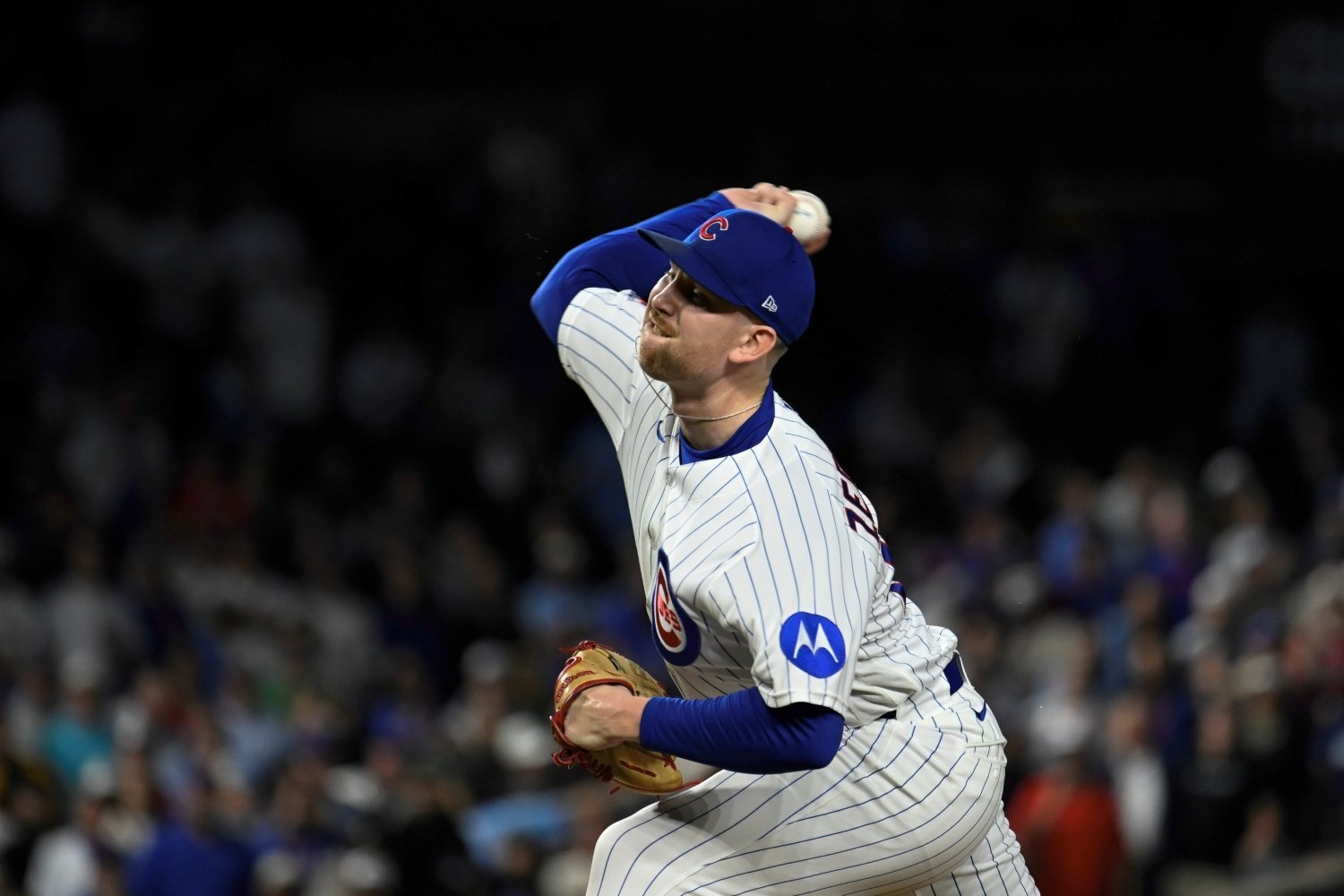 The Cubs’ pitching staff has dealt with more than their fair share of turmoil this season, particularly in the bullpen. Between injuries, inconsistency and a couple of trade deadline additions, this unit has constantly been adjusting throughout the season. With the Wild Card round of the playoffs right around the corner, though, Craig Counsell needs to know exactly whom he can trust when the biggest moments arrive. At this point, the season-long numbers don’t matter much. Right now, it’s about who’s hot, who’s not, and which pitchers can actually be trusted when the game is on the line. Given that premise, who should be the Cubs’ highest-leverage reliever once the postseason begins? For most of the year, that guy has been Jacob Webb. The Cubs haven’t really had a true, set closer since Dnaiel Palencia went down for the first time early this year, but Webb has led the team in both saves and save opportunities. He’s been the closest thing Chicago has had to a traditional ninth-inning option, and for much of the season, he handled that role pretty well. The problem is that Webb hasn’t exactly been trending in the right direction lately. His ERA over the last month sits at a whopping 11.42, while both his walk and strikeout rates have moved in the wrong direction. That's a pretty concerning combination heading into October, especially for a pitcher who has been asked to protect a lot of close leads over the course of the year. He'll probably make the postseason roster, but he can't be treated as a relief ace anymore. Counsell has already moved away from him. Then there’s Palencia, who opened the season with plenty of momentum. He was riding high after recording the save for Team Venezuela in the World Baseball Classic championship game, and dominating that tournament, in general. He looked locked into the closer's gig. Unfortunately, injuries completely derailed his season. Palencia missed most of April before returning in early May, only to go down again in June with a flexor strain. Since returning from that injury, he hasn’t recorded a save and hasn’t been used in many of the highest-leverage situations. That doesn’t necessarily mean the Cubs don’t trust him; they've just been easing Palencia back into things. If he can regain the form he showed earlier in the year, there’s certainly a path toward him reclaiming a late-inning role once the playoffs begin. But I’m not sure he should be the guy Counsell automatically turns to in the biggest spot. You could also make a case for a couple of other names, including Aaron Civale and Ryan Rolison. Both have pitched important innings for the Cubs, and there’s a legitimate argument that either could find themselves in a prominent postseason role. But if I had to pick one pitcher to handle the Cubs’ highest-leverage situations in October, I’d go with Ryan Zeferjahn. Zeferjahn came over at the trade deadline from the Angels in exchange for Moisés Ballesteros and pitching prospect Mason McGwire, and though it hasn't been pretty, it's getting easier to see the move panning out. He’s recorded a pair of saves since arriving in Chicago, but it’s some of his underlying numbers that really stand out. Across 17 1/3 innings in high-leverage situations, Zeferjahn has allowed 11 earned runs. But there’s more to the story. He’s allowed fewer than one baserunner per inning in those situations, while striking out 31.4% of the batters he's faced. His batting average, on-base percentage, and slugging percentage allowed are all better in high-leverage situations than they are in medium- or low-leverage spots. That’s exactly the kind of profile you want from a reliever who's going to be asked to pitch when the game is on the line. And recently, Zeferjahn has simply been better than the other candidates. Over the last month, he’s been far more effective than Webb, Palencia, and Rolison. The Cubs also didn’t trade for Zeferjahn without a reason. The stuff here is electric. He generates an insane amount of swing-and-miss, limits hard contact, and has already shown that he can handle high-leverage innings. Those are the traits that can make a reliever extremely valuable in October, when Counsell can deploy his bullpen based on the situation, rather than sticking to traditional roles. That last part is important, too. The Cubs don’t necessarily need a traditional closer. They need their best reliever available for their biggest moment. If that moment comes in the seventh inning against the heart of the opposing lineup, that’s when Zeferjahn should enter. If it comes in the ninth inning with a one-run lead, he should be the guy getting the ball there, too. Chicago spent most of the season trying to figure out their bullpen. With the playoffs almost here, it’s time to stop worrying about what these guys have done all year and start focusing on who can deliver when everything is on the line. If it were up to me, Ryan Zeferjahn would be that guy—even if that says more about the state of the pen than about Zeferjahn's reliability. View the full article
 -
Padres Are The Team No One Wants To Face In The Postseason
DiamondCentric posted an article in Padres Mission
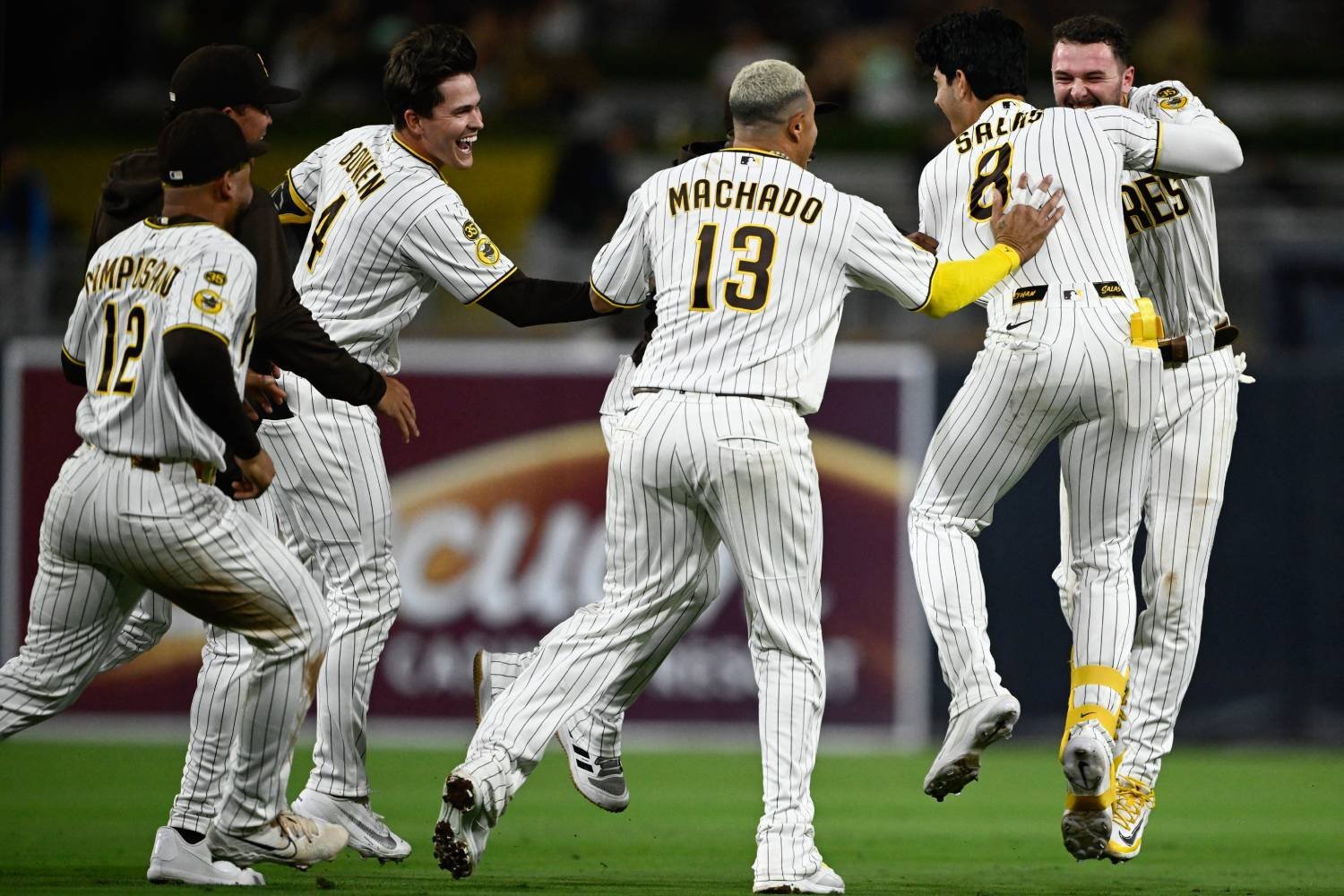 Momentum is usually beneficial in the MLB postseason. Teams that make late runs to get into the dance tend to have a little success, if not make a bit of a run toward a World Series. Since the playoffs expanded to 12 teams (six in each league) in 2022, there has twice been a bottom-two seed make the World Series (Philadelphia Phillies, Texas Rangers) and a third make a League Championship Series (New York Mets) in the first three years of the format. Only last year did that not happen, when the top two seeds in each league made the respective LCS. The pushes by the Phillies, Rangers and Mets can be, at least in part, attributed to having to finish the regular season with playoff-level games. Can the San Diego Padres be that team this year? Most definitely. In fact, the Padres are not just used to playing with a bit of pressure in September, but the Friars have done it over an extended period of time this season. After a terrific April, horrid performances in May and June left the Padres with a 48-48 record at the All-Star break. The talk at the break was whether a Friars team that had inspired no confidence in the moment could make a run to allow president of baseball operations A.J. Preller to work his trade-deadline magic. They went 2-5 immediately out of the break, falling a season-worst three games below .500, but then kicked it into high gear. As a nice bookend to this weekend's sweep of the Miami Marlins, the Padres' push began with a three-game sweep in Miami. Since July 24, the Friars are 37-16, a .698 winning clip, the best record in MLB, one game better than the Tampa Bay Rays, the presumptive No. 1 seed in the AL. That has put the Padres in a very good position entering the final week of the regular season. Currently with a magic number of two to clinch a place in the postseason, the Padres are tied for the top spot in the NL Wild Card race with the Chicago Cubs, one game ahead of the Philadelphia Phillies, who are the likely No. 3 seed due to having a four-game lead over the Arizona Diamondbacks for the final wild card with six games remaining. However, the Padres have reached another gear in the last two weeks, winning 13 of 14 games, which included matching their season high with an eight-game winning streak. That has been fueled by an offense that has reached double digits in hits in 10 of 11 games entering the three-game series that begins Tuesday against the Los Angeles Dodgers. As a team, the Friars have slashed .330/.383/.570 while smashing 20 homers and are averaging 7.3 runs per game. Now, they are allowing 4.5 runs per game, which can't happen in the postseason. And don't expect the Padres to have a .952 OPS as a team once October rolls around. The potential is there for that, though. Throughout the second half, the Padres have brushed off the pressure and performed. It hasn't been as conventional as you would like, but it has worked for them. In the postseason, power and pitching are king. Fernando Tatis Jr. has overcome not hitting a homer in the Padres' first 57 games to hitting 25 over the next 100, just three behind Manny Machado for the team lead. Tatis also has a .285/.355/.468 slash line with 81 RBIs, which is third on the team. While he won't win the award, Tatis will earn down-ballot NL MVP votes due to a .955 OPS in the second half, which is second in MLB to likely MVP Pete Crow-Armstrong of the Chicago Cubs. Jackson Merrill is tied for the second-most RBIs in MLB since the break with 48 while posting a .311/.345/.591 slash line in that same period. Machado still runs into homers on a frequent basis and, along with Tatis, is the player the Padres would most like to see come up in a big situation. Don't forget about Ty France, who might be the team MVP with a career-high 21 homers to go along with 70 RBIs while playing in 127 games. There are other complementary players who have produced at various times throughout the season. Samad Taylor, Dustin Harris and Xander Bogaerts (while technically a core player, he hasn't produced at that level this year) have all had big moments, and there's a lot of reason to believe Ethan Salas and Luis Campusano have some of their own in store. As for the pitching part of the postseason formula, we all know that the Friars' bullpen has three of the best back-end arms and could get another one back any day. Mason Miller, the Padres' lone All-Star, has had a few bumps in the second half, but has a career-high 37 saves. Left-hander Adrian Morejon has elevated his profile this season and forms an amazing 1-2 punch. Right-hander Bradgley Rodriguez, in his first full MLB season, has worked his way into a leverage role, while right-hander Jason Adam could return during the Dodgers series as he comes back from a strained right shoulder. After that, you have a mix of arms that can handle any other early-game situation. In the rotation, right-hander Michael King is the Padres' No. 1, having turned in eight consecutive quality starts and 18 this season. Left-hander Robbie Ray has the profile of a playoff pitcher, able to deal with the pressure of any circumstance, and would start Game 2 or 3. For an NL Wild Card Series, you can piece together a Game 3 featuring some combination of right-handers Nick Pivetta, Walker Buehler or Casey Mize, with right-hander Randy Vasquez able to step in quickly and provide a few innings. It is also possible that Mize doesn't make the postseason roster. That depth, thanks to Preller's acquisition of Ray and Mize at the deadline, is much better than the chaos plan the Padres were employing in late July. For those reasons—the dynamic offense, a terrific bullpen and one top-flight starter—the Padres are a team that will be a threat against any team they face in the postseason. Thanks to certain developments over the weekend, the Padres could have a better shot at winning the No. 1 Wild Card. The Cubs lost star third baseman Alex Bregman for an indefinite period of time when he got drilled by a foul ball while waiting to bat. His left eye is swollen shut, leaving the Cubs without a key bat and a team leader. The Cubs have a home series vs. the Marlins and a road series against the Boston Red Sox left, while the Phillies are home vs. the Milwaukee Brewers and the Rays, the top teams in each league. Yes, the Padres have the two-time defending World Series champion Dodgers on the road before finishing at Petco Park against the Diamondbacks, who could very well be eliminated before that series begins. The Dodgers are in fine-tuning mode after already clinching the NL West and a virtual lock to be the No. 2 NL seed. The rivalry between the Friars and Dodgers will certainly have the attention of L.A. if it can foil the Padres. If the Padres get one of the top two NL Wild Cards and win the opening postseason series, they would be paired against the Dodgers in the NL Division Series. However, with the way the Friars are playing right now, following the pressure to perform since the All-Star break, with the players who are stepping up, the Padres are the most dangerous team entering the MLB postseason. View the full article
 -
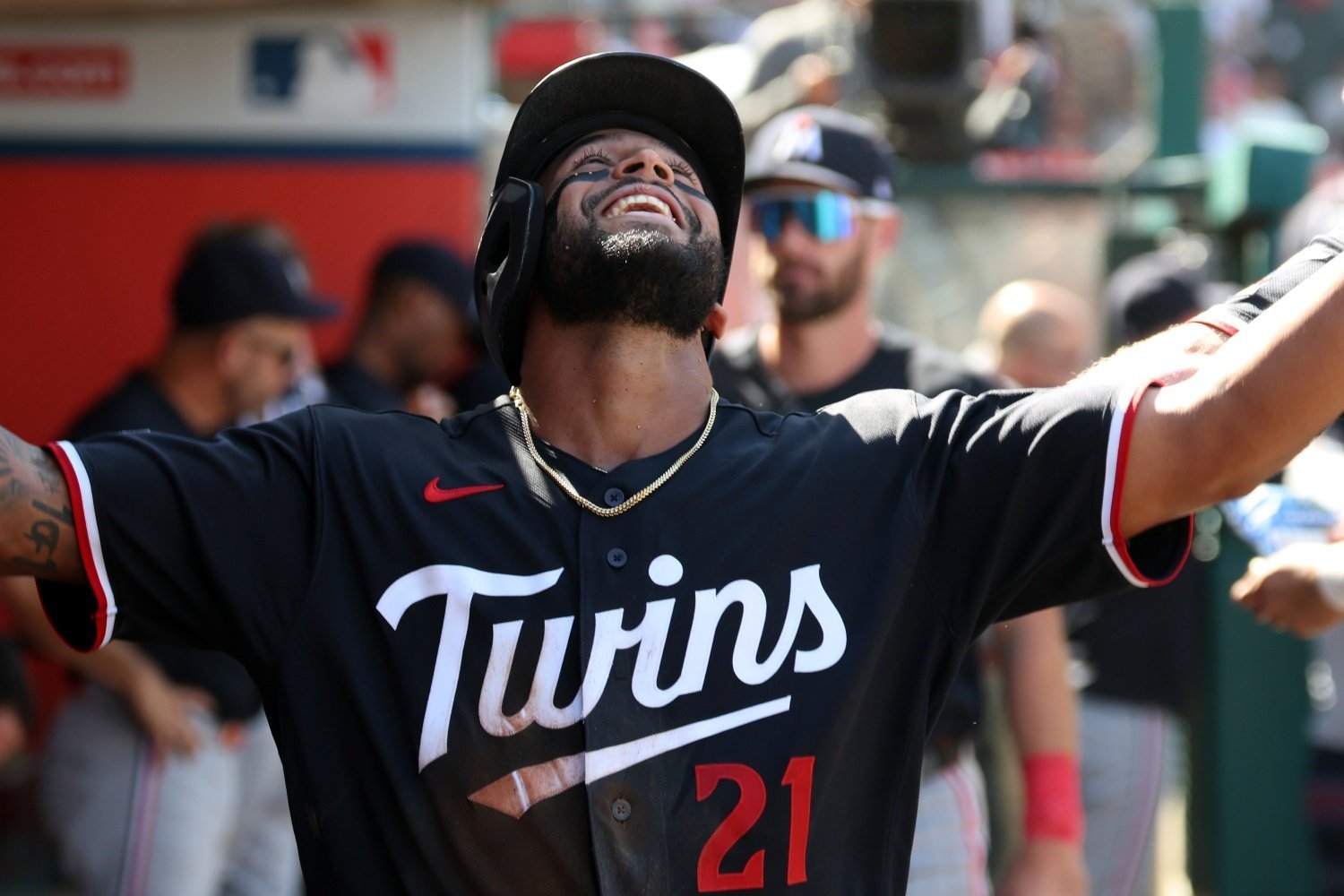 Nobody who arrives in the major leagues wants to be called 'adorable'. That's a word you use for a puppy or a kid. It's good for scarves and craft projects. It fits a brawny young athlete like a mid-2000s NBA draftee's suit. These guys are tenacious and resilient. They're competitive. They're often handsome, but they don't want to be cute. Surely, they don't want to be called 'adorable'. So, to Emmanuel Rodríguez: I'm sorry. I don't mean this as condescending or infantilizing. If I could come up with a better word for this, I would. But the English language hasn't yet found a better term for what happens when Rodríguez connects cleanly on one of his picture-perfect swings and sends a ball sailing toward the gap. It's adorable, man. First, let's go to the tape. Here's Rodríguez hitting a gorgeous two-run triple to flip the scoreboard against the Yankees on September 14. ek13azBfWGw0TUFRPT1fQUZKU1UxMEZBd1VBWFFOUlVnQUhCQVJVQUZrR1VRUUFCbFVIVWdFTUF3SlNDVk5X.mp4 We will—I promise, we will—return to an analysis of Rodríguez's swing itself; that's what I thought this article was going to be all about. But for now, just absorb that, aesthetically. Now, enjoy this double, the very next night. OTdQOEdfWGw0TUFRPT1fQVFrRFhRRlFYZ01BRDFNRkFnQUhCQVlIQUFOUlVnY0FBbGNFQXdRQUNGZFVVMVpV.mp4 I wonder if maybe you've already spotted it, but I won't assume that you have, or demand that you go back and find it. Here's another example, when he doubled (to break a miniature slump) Sunday in Anaheim. QXc3MDJfWGw0TUFRPT1fQlZkV1hBVUNVQVFBQUFRRlZBQUhCRlVIQUZrQkFnQUFWRnhYQndzQkJGRlFVd1JW.mp4 And finally, here's the homer Rodríguez hit late in Monday night's loss to the Giants. What a swing. What a hitter. ZFh2WlBfWGw0TUFRPT1fQmdFQVZnVU5YZ2NBQ0FNQlh3QUhWVkpUQUFNQVVRY0FDd1lOQ0ZjREJsY0FCd3RU.mp4 Already, it's clear that this guy will be a dynamic presence in the Twins lineup. There's some really interesting data on his swing, which we can evaluate sooner and better than ever thanks to Statcast's ever-deepening trove of great numbers. But I don't want to talk about all of that just yet. We need to talk about this, instead. You offer me a better word than 'adorable,' and I'll take it, but I'm defying you. I don't think it exists. When Rodríguez catches the sweet spot—when he really gets through one the way he wants to—he absolutely cannot help himself. Involuntarily (sometimes just momentarily; he occasionally catches himself and shuts it down fast), before he's even done following through but as he sees the ball jump off his bat the way he felt sure it would, he breaks into a big old smile. Hitting in the majors is serious business. It's damn hard, and it's no fun when you're piling up rollover grounders or strikeouts. The culture of the game still expects quite a bit of decorum, really. You're expected to be so intense that you often look dour or angry, even at your moment of triumph. But anyone who's ever picked up a bat and squeezed out the sawdust—anyone who's wiggled their fingers and swished the stick and stepped into a box and waited and watched and given their best pass at a ball—knows the truth under all that professionalism. There's maybe one better feeling in this world than hitting a baseball pure, and if you want to talk about it, you need to open an incognito tab and go discuss it on a very different website. The tactile joy of hitting a ball so cleanly that you don't really feel the contact is as close to the thrill of flight as most of us will ever feel. If you know that feeling, you're either smiling even as you read this, or fighting your own cheek muscles to stop it. Rodríguez knows that feeling when it comes, and he doesn't bother fighting his own face. The delight spreads across his visage, and we all get to share in his moment of happiness. That's a huge part of what being a sports fan should be. It's a wonderful service he's doing for Twins fans, even at the disappointing end of a squandered season. You really don't see this that much. Most hitters can hit a ball 450 feet and maintain a glower. Rodríguez can't. I propose we all agree to nickname him 'Sparkle,' because the flash of his teeth on this handful of swings has been the brightest set of scintillations to hit Twins Territory since the first time the sunlight hit the limestone at Target Field. The best part is that it's utterly unpretentious. Not one bit of it is a put-on; Rodríguez is doing it without making a conscious decision. It's just the love of the game spilling out of him, at the very moment when we all sympathize with that feeling the most. While we're here, let's talk just a little about why he's already cracked five extra-base hits and has gotten so many chances to show off the pearly whites. Rodríguez has an outlier of a swing, in addition to the impressive plate discipline that everyone knew about long before he reached the majors. By and large, the shorter a hitter's swing, the slower it is. Creating torque and bat speed takes space, and most hitters with fast swings also have long ones. Not Rodríguez, though. See that red X in the lower right portion of this chart? That's Rodríguez. For a guy who's so direct to the ball, he's shockingly good at getting the bat moving fast by the time he gets to the hitting zone. The only player with a similarly fast swing who's close to being as short to the ball as Rodríguez is the Brewers' Garrett Mitchell. You might be surprised to hear this about Rodríguez (and Mitchell, for that matter), because in general, short swings are expected to produce high contact rates. Rodríguez (and Mitchell, for that matter) whiffs a lot, which doesn't fit the narrative. The problem is pretty simple: the tradeoff he's making by getting from 0 to 76 MPH in such a short space is that he has fairly little control of the barrel when he gets near the contact point. He also hits it farther in front of his body than most players with short swings, and again, it's not a coincidence. His directness allows him to wait a long time to decide to swing, and contributes to his patience. However, it also means that if he's even slightly wrong about the pitch speed or movement he perceives, he'll be unable to make an adjustment and catch the ball with his bat, let alone his barrel. That might mean a long adjustment curve for Rodríguez as he settles into a full-time job in the majors. Hitting in the majors is hard, and his approach from the minors won't quite work here. However, his swing is a lethal, thrilling thing—and that reaction to the times when it produces the results he's looking for is (sorry) adorable. View the full article
 -
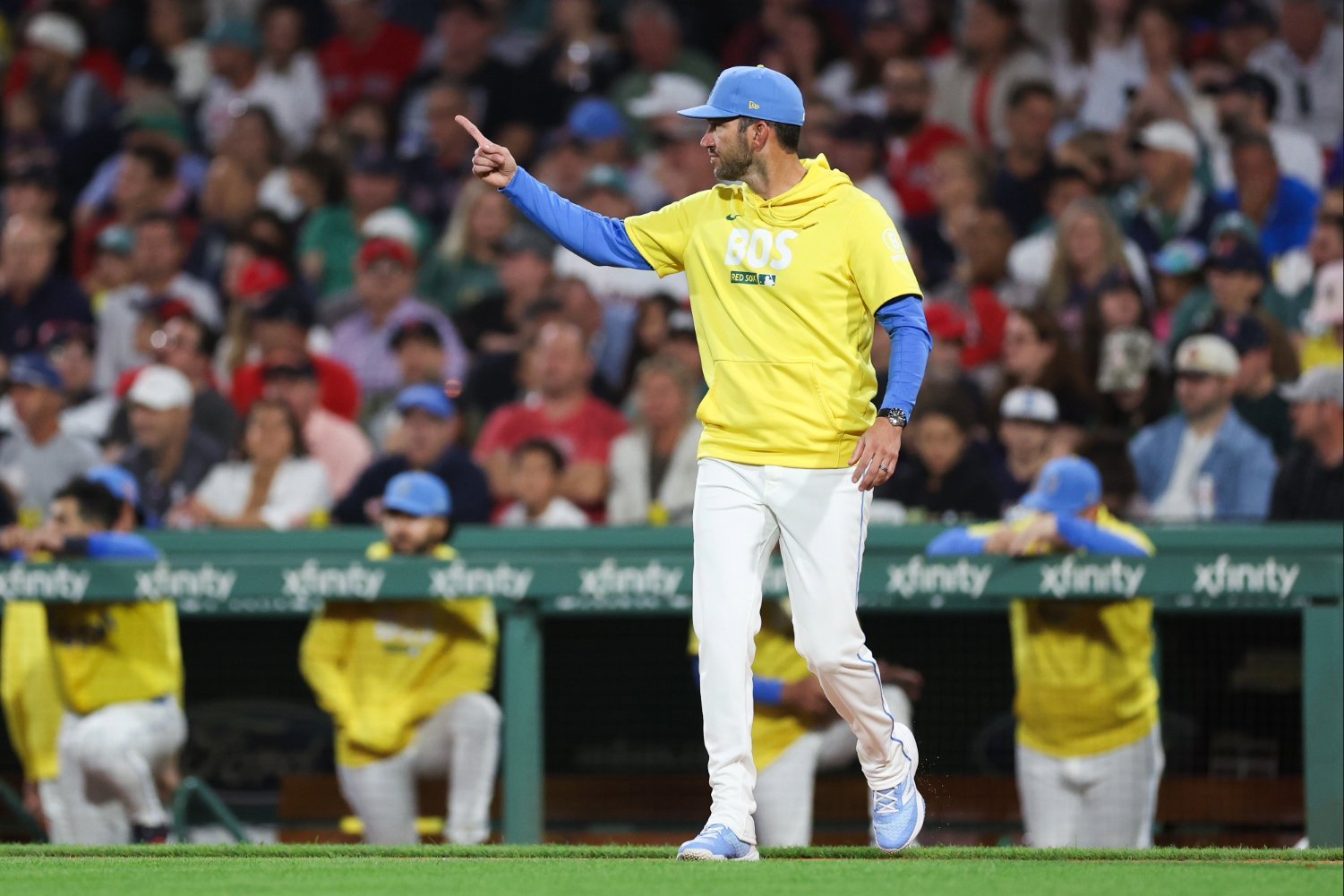 A miraculous post-June turnaround has earned the Boston Red Sox more than just a postseason spot -- it's gifted them a full-time manager as well. According to the team, they've officially removed the "interim" tag from Chad Tracy's business card, signing him to a three-year contract that runs through the 2027-29 seasons. It also comes with a club option for 2030 attached, giving ownership more control over the decision-making process when this deal nears its end. And, as an added bonus, Craig Breslow is officially sticking around for a while longer as well. The options in his contract have been exercised for the 2029 and 2030 seasons, effectively tying him to Tracy for the rest of the decade. More to come. View the full article
 -
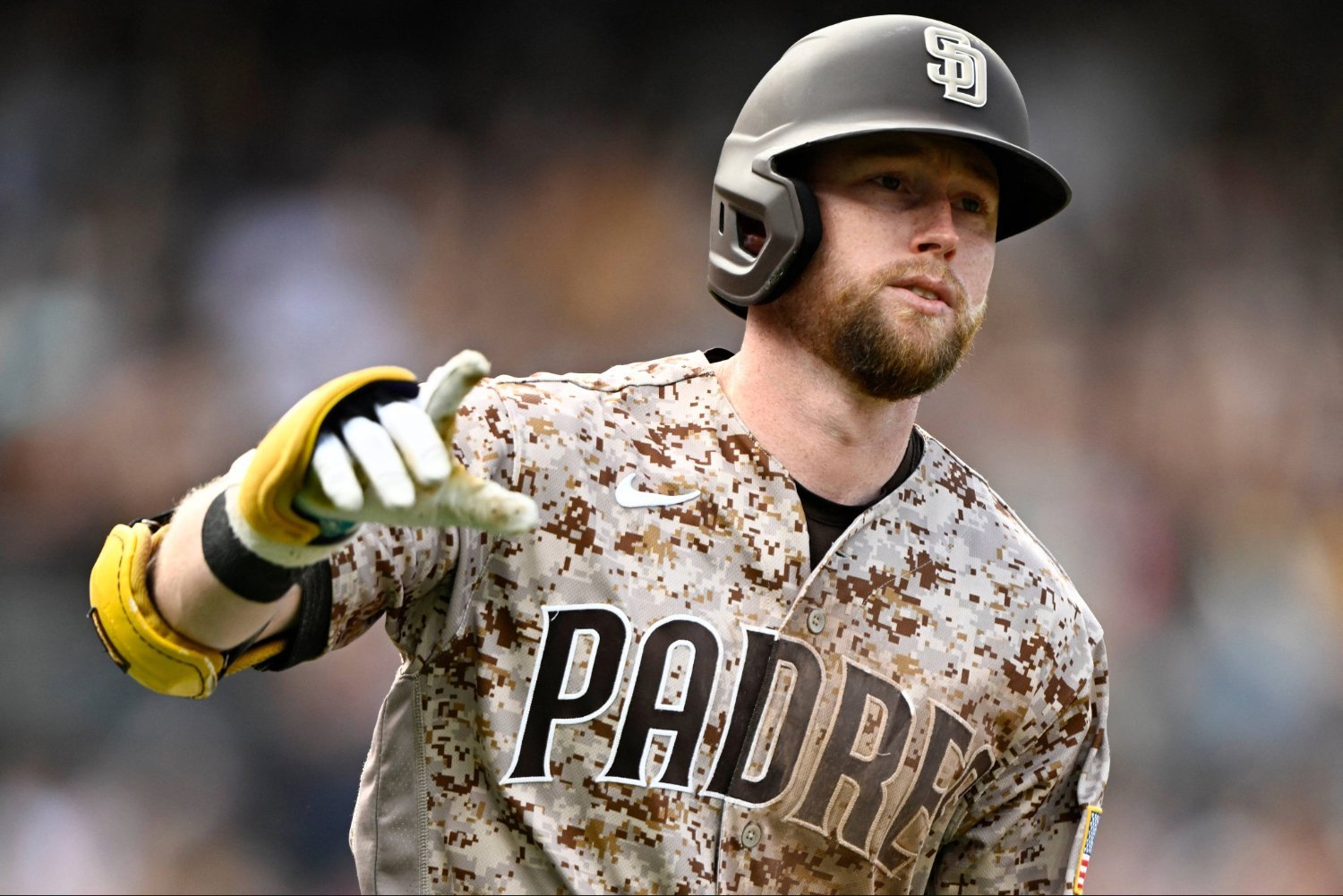 The San Diego Padres are on the doorstep of a third consecutive postseason appearance. Jake Cronenworth could be the separator to get them there. As good as the Padres have been in the second half of 2026, they haven't gotten much from Cronenworth at any point in the year. He missed nearly two months on the concussion-related Injured List, with an otherwise underwhelming .229/.310/.327 line to his name across his 403 plate appearances. A wRC+ of 84, as things currently stand, would represent only the second time in his career he's finished a season below the average threshold of 100, with even Cronenworth's typical on-base bump for the lineup being stifled by a walk rate (8.9 percent) nearly five points below what he turned in last season. To this point, Cronenworth's woes haven't put his playing time in jeopardy. Injuries have left the Padres with less flexibility on the infield than even their already-modest depth would have suggested. While he's moved around a touch more to get guys off their feet, he's been in the mix virtually every day. That left the Friars with a pretty glaring empty spot in their lineup, at least until the past week. Declaring that Cronenworth has been on a tear for a week would be a dramatic understatement. Through his last 31 plate appearances, he's gone for an obscene .464/.516/.786 line with a wRC+ of 259. He's hit a pair of home runs in that stretch and has a .321 ISO overall, accruing 0.7 fWAR in a season where his total number is 0.2. Perhaps most notable is where his contact metrics sit. He's made hard contact 43.5 percent of the time against a 29.5 percent rate for the season, while his 13.0 percent barrel rate far exceeds the 3.7 percent mark he's totaled otherwise. Given the small sample associated with this kind of outburst, it's almost impossible to determine the underlying trend or determine if there's any level of sustainability to it (obviously, the production itself is unsustainable for any player). His swing and approach trends all fall within two or three points of his season-long rates. He's been a touch less aggressive overall, but more aggressive in chasing with improved contact rates across the board. His pitch type tendencies all feature just as much variance as we've seen throughout the year. It's simply too small a sample to make sense of anything. The important thing is that the Padres have another bat providing regular contributions that we haven't seen much from this year. There have been stretches where Cronenworth, perhaps, adds a hit over consecutive games. But we haven't seen anything quite like this from him in 2026. As the sample grows, maybe there's something unfolding that we'll be able to dissect. In the meantime, San Diego can bask in the glow of yet another bat getting hot at an ideal point on the calendar. View the full article
 -
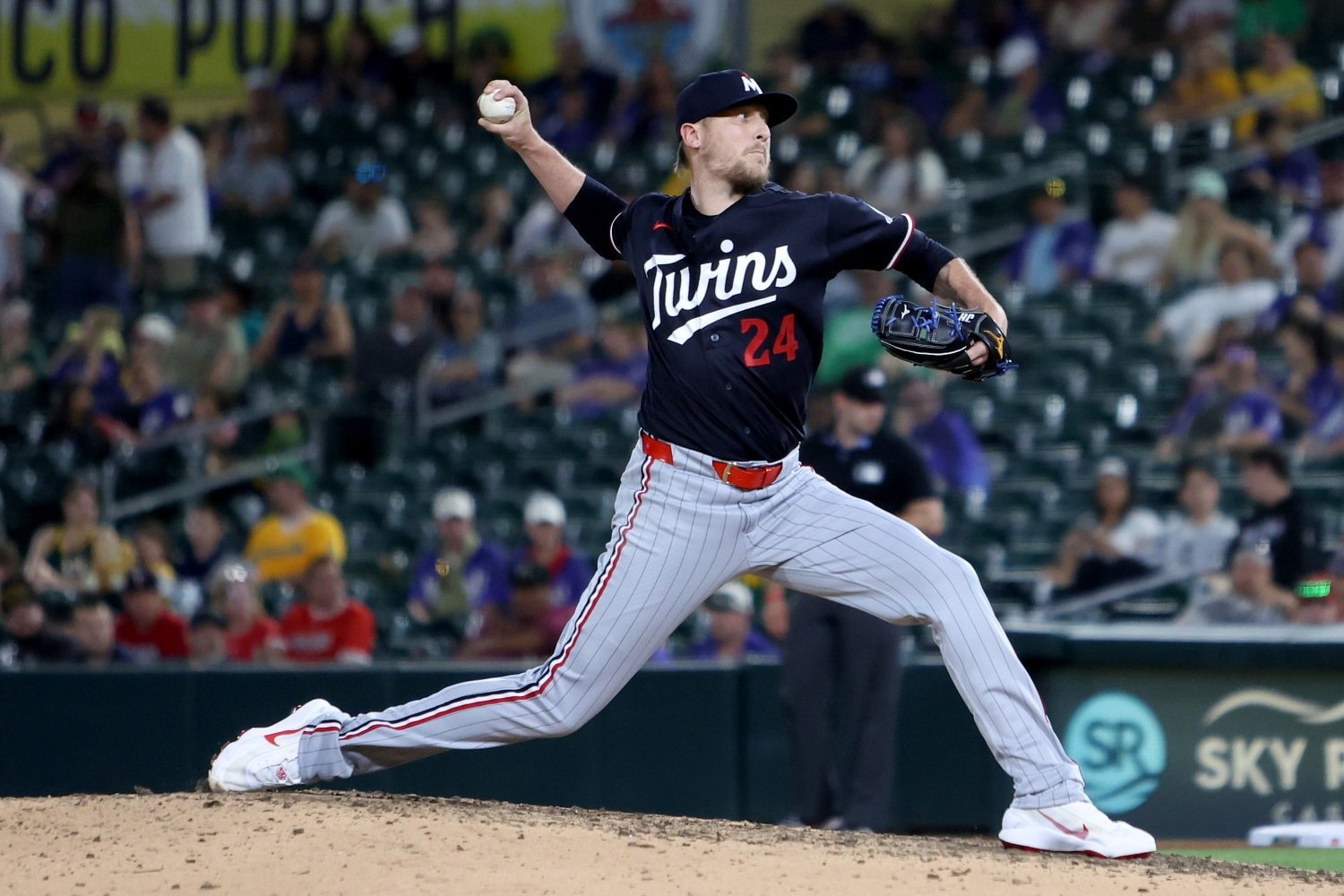 Leading up to the 2026 trade deadline, there was plenty of speculation about what the Twins would do. Ultimately, they wound up being buyers, adding four arms to the pitching staff in an effort to make a playoff push. Unfortunately, the Twins fell short and were eliminated over the weekend. But that’s not necessarily because of the moves they made at the deadline. Most of the players they acquired have actually performed pretty well since arriving in Minnesota, and several of them will remain with the team beyond this season. So now that we’re reaching the end of the season, let’s go back and re-grade each of the Twins’ deadline moves, to see how they look with the benefit of hindsight. Twins receive: RHP Tommy Nance Blue Jays receive: C Ryan Sprock Trade Grade: B Nance was the first addition the Twins made at the deadline, and for a while, this was looking like a complete steal. After arriving from Toronto, Nance put together an excellent month of August. He finished the month with a 1.74 ERA over 10 1/3 innings, striking out 14 batters while walking just two. That looked like exactly what the Twins needed from a bullpen addition. Minnesota had struggled mightily in the first half of the season, but the bullpen turned things around in a major way, and Nance quickly looked like another reliable option. But then September rolled around. He currently owns an 8.64 ERA over 8 1/3 innings this month, and his sudden collapse has felt pretty fitting with the rest of the team. After looking like one of the better relievers in the bullpen, he's struggled to sustain those results down the stretch. Still, I’m going to give this move a B. Nance has multiple years of team control remaining, and if his August numbers are any indication, he’s capable of helping this team. One bad month shouldn’t completely erase what he showed earlier in the season. The Twins also have plenty of catching talent in the minor leagues. While Sprock could certainly turn into something down the road, I’ll take the proven arm with multiple years of control (even if the volatility of relievers of his quality and his age make it unlikely that he sticks around for long). Twins receive: LHP A.J. Minter Mets receive: INF Billy Amick and INF Bruin Agbayani Trade Grade: C The A.J. Minter trade is the one that looks the worst with the benefit of hindsight. Minter was acquired from the Mets in exchange for Billy Amick and Bruin Agbayani, and while I liked the thought process behind the move at the time, it was a deal focused on a goal the team didn't even approximate. Hindsight is always 20/20, but Minter is a free agent after this season. Maybe the Twins bring him back; maybe they don’t. But they traded two infielders with some upside for an aging bullpen arm, while still falling short of the postseason. To be fair, Minter hasn’t been bad. He currently owns a 2.70 ERA with the Twins, giving Minnesota exactly what it hoped to get from him when the trade was made. He's been a reliable left-handed option in the bullpen and addressed an obvious need at the time. The problem is what happens next. If the Twins want Minter back in 2027, they’re going to have to pay him. If they don’t bring him back, Minnesota will have traded two prospects for (essentially) two months of a middle reliever. Amick and Agbayani both have plenty to prove, but they also have upside. That makes it tougher to look at this deal favorably now than it was when the Twins were still fighting for a playoff spot. Twins receive: RHP Dean Kremer Orioles receive: OF Jhomnardo Reyes Trade Grade: A- Kremer had really struggled in Baltimore this year, posting a 6.50 ERA before the trade. Since joining the Twins, however, that number has dropped to 3.80, and he has a 3.82 FIP to go along with it. One of the biggest differences has been his ability to limit hard contact. Kremer has significantly cut back on the amount of hard contact he allows, and the results have followed. The other major factor here is his contract situation. Unlike Minter, Kremer isn’t a rental. He’s under team control for next season as well, meaning (assuming that they tender him a contract and pay him the $7-8 million he's in line to earn) the Twins will have a legitimate starting pitcher who can stabilize the back end of the rotation beyond 2026. That could be especially valuable for a team that has dealt with so many pitching injuries in recent years. The Twins gave up outfield prospect Jhomnardo Reyes in exchange for Kremer. He’s only 18 years old, so it’s far too early to know what he’ll become. There’s definitely a chance Reyes turns into something for Baltimore. But when comparing what an 18-year-old prospect could become to what Kremer has already shown he can provide at the major-league level, I’ll take the back-end starter in this deal. Twins receive: RHP Jeff Hoffman Blue Jays receive: LHP Dasan Hill, RHP John Klein and INF Dameury Pena Trade Grade: B+ The Jeff Hoffman trade was the final move the Twins made at the deadline, and it was also the most expensive deal they made. But Hoffman has been excellent. He currently owns a 2.12 ERA and a 1.98 FIP across 17 innings as a Twin, along with a staggering 26 strikeouts and 10 walks. He has quickly established himself as one of Minnesota’s most reliable late-inning options. He's also under contract beyond this season. The Twins didn’t just acquire a reliever who could help them for two months. They added someone who should continue to be part of their bullpen in 2027. I don’t love giving up Dasan Hill. It’s rare to find left-handed starters with his ability, and there’s certainly a chance he turns into a valuable major-league pitcher. There are also some kinks Toronto will have to work out with him, particularly when it comes to his command. The same thing goes for John Klein and Dameury Pena, the other two prospects the Twins gave up in the deal. All three have some level of upside, and it’s always difficult to know how those prospects will develop once they leave the organization. But I’ll take the proven, controllable late-inning reliever with filthy stuff over what could be with the three prospects. Hoffman has already shown exactly what he can do in Minnesota, and the Twins still get him beyond this season. The Twins ultimately fell short of the postseason, but that doesn’t mean every trade they made at the deadline was a mistake. Three of the four players they acquired are likely to be back next season, and all four have shown something that could make them useful pieces moving forward. That the team fell short is not the fault of the new arrivals, and realistically, there was little more the front office could have done at the deadline to position themselves for success. View the full article
 -
The Cubs May Be Underutilizing Their Best Bullpen Weapon
DiamondCentric posted an article in North Side Baseball
 Since returning to Chicago, Aaron Civale has been a completely different pitcher. With the postseason approaching, it may be time for the Cubs to give him a bigger role. View the full article
 -
Kyle Harrison's Brutal Finish Changes the Brewers' October Plans
DiamondCentric posted an article in Brewer Fanatic
 Kyle Harrison looked like one of the Brewers’ next frontline starters for much of the season, but a brutal stretch since August has changed the equation. With October quickly approaching, Milwaukee may need to find a different way to deploy the left-hander. View the full article
 -
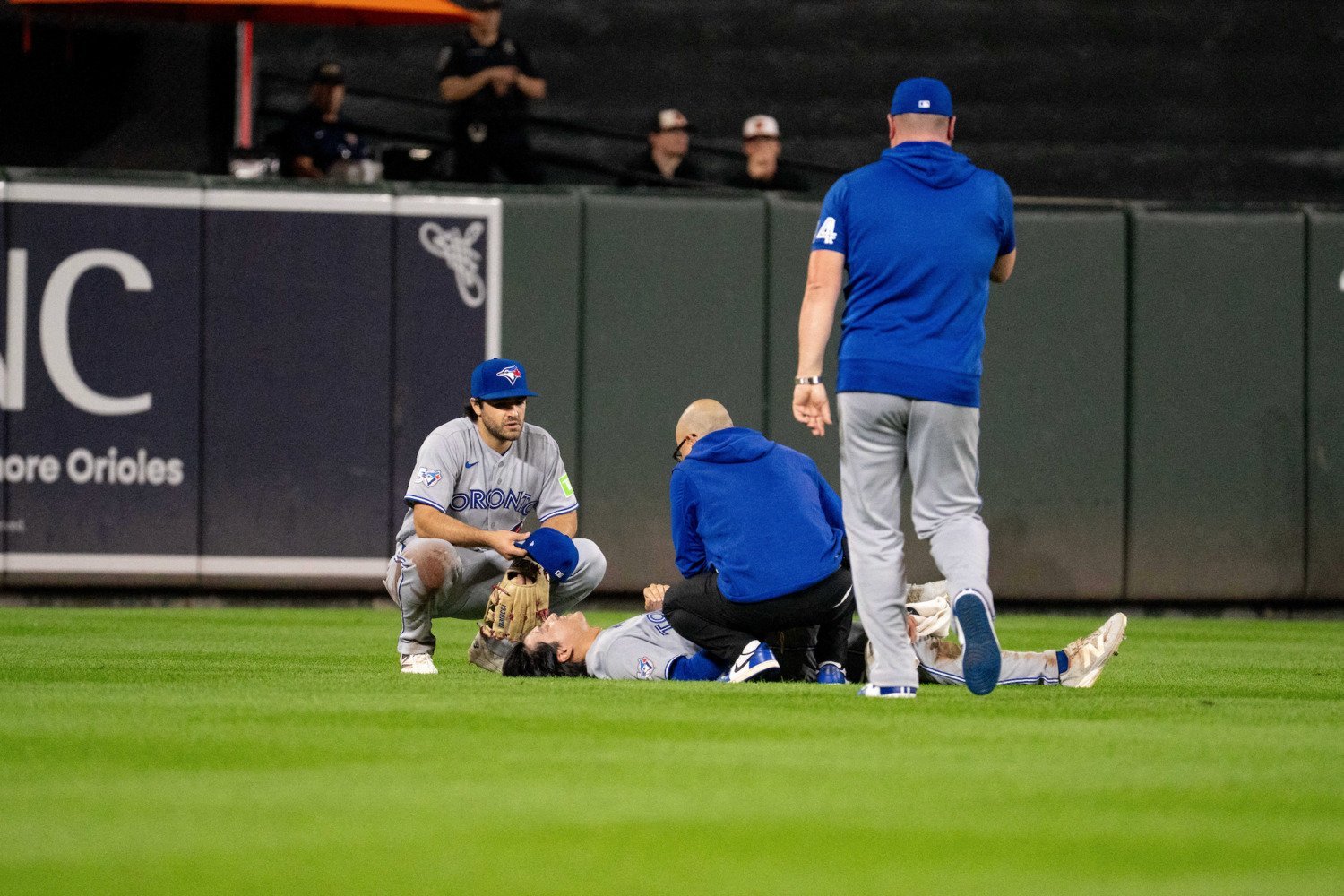 The Blue Jays lost to the Orioles on Monday, falling to 3.5 back in the Wild Card race with five games left in their season. If there was a silver lining to last night's events, it was seeing Trey Yesavage pitch the first two innings; he struck out three and generated six whiffs. The righty had not pitched since August 4, when he exited early with a knee injury. This was, in all likelihood, the final outing of his rookie season, but it was reassuring to see him back on the mound for the Jays. Hopefully, he can have a normal offseason and prepare for a full, healthy campaign in 2027. Here's a quick update on some other Blue Jays dealing with injuries during the final week of the season. Brett Bateman Brett Bateman made a sliding catch to end the second inning on Monday. Unfortunately, he landed and rolled over awkwardly on the wet grass in center field. It quickly became clear from his face that something was wrong. The good news is that Bateman's X-rays were negative. The team is calling the injury "right hip discomfort." According to manager John Schneider, Bateman is day-to-day for now (per Keegan Matheson of MLB.com). The Jays will want to exercise caution here, but from Schneider's comments, I'm optimistic Bateman will play again before the season is over. Dylan Cease I'm less optimistic about this one. Dylan Cease would have been lined up to start on Wednesday in Baltimore, but that won't be happening. His shoulder has been bothering him, and a recent MRI revealed inflammation. Speaking to reporters, including Matheson, Cease described the feeling in his shoulder as "heavy and achy." The righty made it clear that it's "just inflammation" – in other words, he's not concerned he'll need surgery. Still, the Blue Jays have to do everything in their power to keep it from getting to that point. So, if I'm being realistic, I think we've seen the last of Cease in 2026. Presuming the team has been eliminated from postseason contention by the time the Jays return to Toronto for their final series, I don't see why they wouldn't shut Cease down. Ensuring that he's healthy for 2027 is just too important. Vladimir Guerrero Jr. Vladimir Guerrero Jr. left Sunday's game early and did not play last night. He has been nursing some tightness in his lower back. As John Schneider explained, "[Guerrero] was not really getting his normal swing off" on Sunday (per Matheson). Thankfully, this one seems to be another day-to-day situation. Schneider told reporters that "as long as [Guerrero] feels better and isn’t really uncomfortable swinging," he should be back in the Blue Jays' lineup soon. Anthony Santander Things are coming down to the wire for Anthony Santander. The outfielder has been on the injured list all season recovering from shoulder surgery. He's currently on a rehab assignment, and he just played for the Buffalo Bisons in their final three games of the season, going 3-for-10 with four walks and two runs scored. Now, we just have to wait and see if the Jays decide to reinstate him for a brief cameo in 2026. Shane Bieber The Blue Jays are technically still alive in the postseason race. If they somehow make it to the playoffs, Shane Bieber – who's been out since August 20 with teres major inflammation – might be available. However, his regular season is over. View the full article
 -
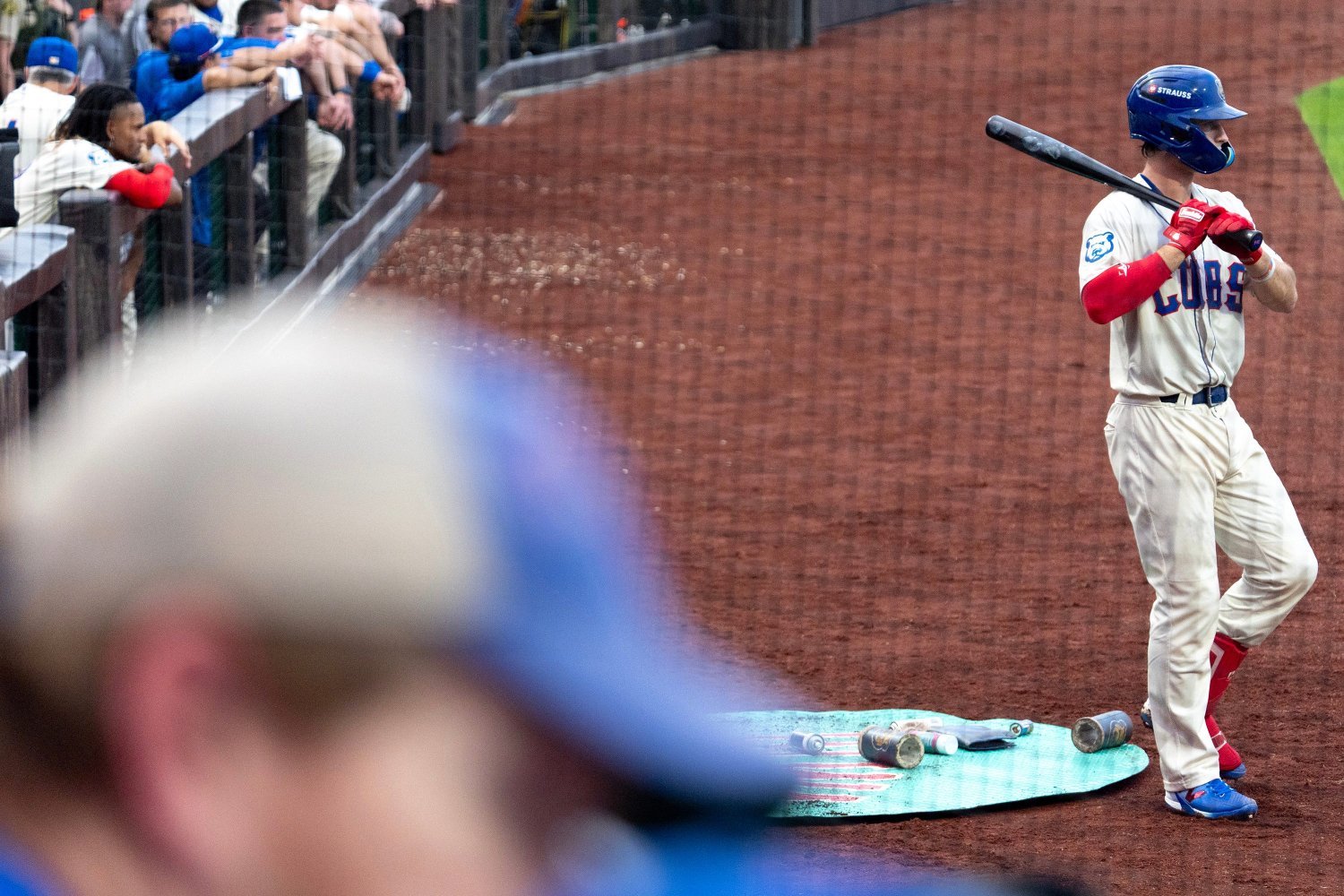 One of the nice things about the MLB Draft is that every class has guys who don’t get picked particularly high, but still find a way to turn themselves into quality big leaguers. Guys like Albert Pujols, Nolan Ryan, and Mike Piazza are three of the most obvious examples. All three were later-round picks who went on to have Hall of Fame careers, proving that where a player gets drafted doesn't necessarily determine where his career is headed. Now, I’m certainly not suggesting that Chicago Cubs catcher prospect Owen Ayers is going to go down as one of the best players to ever do it. But after the year he has put together in the minors, it's becoming increasingly difficult to overlook the possibility that Ayers could eventually become a solid big league backstop. The Cubs selected Ayers in the 19th round of the 2024 MLB Draft, 572nd overall, out of Marshall University. Coming into the 2026 season, it seemed like he was probably destined to be nothing more than organizational depth. That may no longer be the case. Ayers started the year outside of North Side Baseball’s top-20 Cubs prospects. Now, he finds himself all the way up at No. 4. Obviously, there are some caveats here. He’s already 25 years old, making him older than most top prospects. But at the same time, what he has done this season simply is not normal for a catcher. Ayers began the year at High-A South Bend, where he absolutely tore the cover off the ball. He posted a ridiculous 1.341 OPS before earning a promotion to Double-A Knoxville, and he didn’t exactly slow down after moving up. Eventually, he made his way to Triple-A Iowa, where spent the last two months of the season. That meteoric rise, especially at a position that is notoriously slow to develop, has certainly changed the tune around the Cubs' future plans at catcher. On the season as a whole, Ayers hit .289/.403/.526 with 25 home runs and 55 total extra-base hits while stealing 13 bases in 125 games. That’s an absurd offensive profile for a catcher. In fact, do you know how many MLB catchers have hit 20+ home runs with double-digit steals this season? None. He probably isn’t going to steal 13 bases every year if he reaches the major leagues. Catchers generally aren’t asked to run very much, and there is a good chance the Cubs would be more cautious with him if he’s behind the plate every day. Still, it’s worth pointing out that he’s gone 13-for-14 on steal attempts this season. When Ayers does run, he’s been extremely successful, and that could eventually give Craig Counsell another tool to work with int he lineup. If Ayers reaches the majors and proves he can consistently get on base, there’s at least a world where the Cubs could let him use his speed to set the table for the heart of the lineup. And the offensive versatility doesn’t stop there. He’s also a switch-hitter, which gives him another potential advantage as he works his way toward the major leagues. But notably, he’s been significantly better from the left side of the plate against right-handed pitching. Ayers has an OPS just under 1.000 as a left-handed hitter this season, compared to a .785 OPS from the right side. Even more impressive, 22 of his 25 home runs have come from the left side. If he can continue developing, there’s a path for him to eventually become the Cubs’ primary catcher while taking some starts at DH against right-handed pitching. That would give Chicago some additional flexibility without taking his bat out of the lineup completely. The one thing I would like to see Ayers polish up a little bit is his bat-to-ball ability. He’s a very smart hitter who rarely chases pitches outside of the zone, and that’s a really important part of his offensive profile. However, there’s still some swing-and-miss in his game. To me, that doesn’t seem like a huge deal, especially considering how many walks he takes and how much power he has shown. But cutting down on the strikeouts and making a little more consistent contact would go a long way toward making his offensive production more sustainable as he continues climbing the ladder. His bat was not necessarily the reason the Cubs selected him in the 19th round, either. His defense and arm behind the plate were his calling cards coming into professional baseball. Now, he has paired those defensive tools with an offensive breakout that has completely changed the way he should be viewed within the organization. It’s always cool to see a story like Ayers. A late-round draft pick at one of the most difficult positions in baseball has taken a massive step forward offensively and worked his way from High-A to Triple-A in the same season. There are still questions he will have to answer as an older prospect less than 50 games of experience at the highest level of the minor leagues. But after everything Ayers has accomplished in 2026, it’s no longer crazy to wonder if he could eventually become the Cubs’ catcher of the future. View the full article
 -
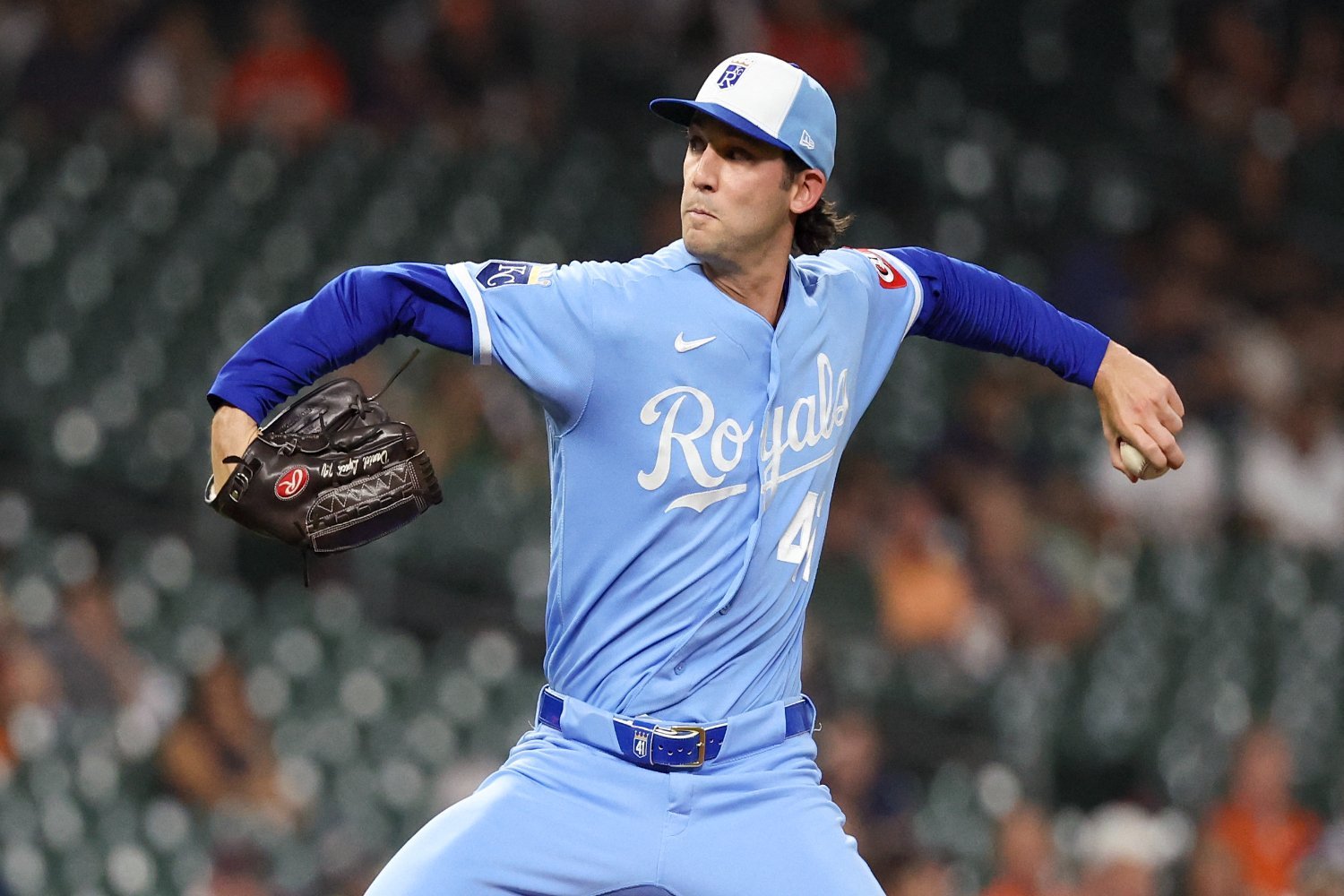 Daniel Lynch IV has been one of the Royals' more interesting pitching stories in 2026. In 2024, after a few spot starts in the rotation, the Royals moved the former Competitive Round draft pick to the bullpen, and the results were pretty stellar. In 16 appearances and 43.1 IP, Lynch posted a 3.32 ERA, 0.99 WHIP, and a 14.4% K-BB%. All three marks were career bests for Lynch at the time, and it seemed like he would be a mainstay in the Royals bullpen for years. Last year, Lynch posted a 3.06 ERA, better than his 2024 mark. However, he regressed in many key categories. His WHIP rose to 1.36, his K-BB% fell to 6.6%, and his 4.76 FIP was 35 points higher than in 2024. While Lynch was a dependable reliever last year, pitching 67.2 innings, he didn't quite seem like a "lights-out" bullpen arm. This season, the former Virginia product has been forced into a hybrid role due to numerous pitching injuries. He made 54 appearances with eight starts and has totaled 76.2 IP, as of Monday, September 21st. In that sample, he sports a solid 3.21 ERA, a 1.07 WHIP, and a FIP of 3.78, which would be a career-best in the latter category if the season ended today. That said, manager Matt Quatraro has leaned on Lynch in the rotation for over a month now, and the results have been interesting, to say the least. While Lynch has seemed to get better with each and every start with the Royals, fans are wondering if Lynch would be better served in the bullpen, especially considering that unit's overall struggles this season. So let's look at what Lynch has done this season as both a reliever and a starter, where he's pitched better, and what Kansas City should do with the 29-year-old lefty this offseason as they prepare for 2027. Lynch's Starter Numbers Pale in Comparison to His Reliever Metrics The Royals were in a bind when Lynch joined the rotation. Not only had they lost Cole Ragans to an elbow injury and surgery, but they also traded away Kris Bubic to the Dodgers. That said, Bubic wasn't contributing much to the rotation anyway, since he hadn't pitched for the Royals since late May (he finally returned to the mound with the Dodgers last week). Add season-ending surgeries for Luinder Avila and Stephen Koelk, and the Royals had no choice but to promote Lynch to the rotation. Here's what the numbers look like for Lynch in reliever and starter splits this season. His career SP/RP splits are a mirror of his 2026 stats. Not only does he give up more homers and walk more batters as a starter, but his career starter FIP of 4.88 is 98 points higher than his career reliever FIP. The Royals need to upgrade their pitching this offseason. They cannot depend on Ragans to produce another healthy 2024 campaign. Michael Wacha has been great, but at his age, it's just a matter of time before he hits the wall. Lastly, Seth Lugo has been one of the worst starting pitchers in the league, if not THE worst, at least based on fWAR. data:image/gif;base64,R0lGODlhAQABAPABAP///wAAACH5BAEKAAAALAAAAAABAAEAAAICRAEAOw== Thus, the Royals need to thank Lynch for stepping up in this trying time. However, Royals President of Baseball Operations JJ Picool needs to move Lynch back to the bullpen this offseason and try to find starting pitcher solutions via trade or free agency to help boost this rotation and get them back to where they were in 2024, when they had two starters finish in the Top 5 in AL Cy Young voting (Lugo and Ragans). The Royals need to approach this offseason like 2012, when they acquired James Shields to bolster the rotation. That kind of move would be welcome in Kansas City and kill two birds with one stone. An "ace" in Kansas City guarantees Lynch a bullpen spot by Spring Training in 2027, but that's not a bad thing, given his strong track record as a reliever. View the full article
 -
 In August, former Phillies front-office wonk Doyoung-Tom Kim released an open-source method for evaluating pitchers' command, calling it OpenCommand. The model has been a hit in analytical circles, both because it seems to be well-designed and because Kim shared the coding and data he used to produce it, encouraging others to utilize and build on his work. Sure enough, after Kim got the ball rolling, others began doing interesting work with the data. For instance, Joshua Rodrigues of Baseball Prospectus wanted to know how often catchers set their targets in the horizontal center of the zone. Once he found that that varies from one catcher (and team) to another, he also found something unsurprising, but interesting: setting more central targets produces more pitches in the zone. And hey, look at that. The Brewers do that more than any other team in the league, by a fair margin. Catchers William Contreras and Gary Sánchez set up in the middle of the plate over 80% of the time; they're demanding that their hurlers fill up the zone. and the pitchers are obliging. A couple of caveats are worth mentioning here. Obviously, not every target is a real, suggested destination for the ensuing pitch. For multiple reasons, catchers sometimes offer decoy targets, or set their glove where the pitcher should "start" the ball, before letting the pitch's movement take it elsewhere. It's also true that the Brewers throw more fastballs than any other team in the league, which means setting a relatively central target, because fastballs are usually intended to be in the zone. There's even a Jacob Misiorowski factor, if you will. If you have Misiorowski (or Trevor Megill, or Abner Uribe, or the good version of Kyle Harrison) firing the ball in, there's little reason to get cute. Ask them to hit the center of the plate; hitters will struggle to handle it even if it's middle-middle. Building on Rodrigues's finding, Lau Sze Yui attempted to model the value of catcher targets. The Brewers don't break the scale on this one; they don't even finish first. They're markedly above-average, though. Yui's work has to apply one theoretical plan to every team, though. It can't quite capture the interaction value of the Brewers setting targets with plenty of zone around them, as part of their overall pitching philosophy. For instance, the Brewers' walk rate this year is not one of the best in the league. At 8.7%, they're close to average. For a team to throw as many fastballs as this one does and still walk this many opponents suggests that their real control is worse than average. Setting central targets and calling pitches that are easy to keep on the plate are probably vital to the team getting the great results they've gotten, overall. The more layers you peel away in search of the Brewers' advantages over the league, the simpler their process seems. There's tons of nuance involved, and it all takes the expertise and skillful personal management of Chris Hook, Jim Henderson and others to accomplish, but the team really does find value on the mound from establishing the fastball and having their catchers set clear targets in the zone for their pitchers to hit. That sounds as old-fashioned as seeing the ball deep and hitting it the other way, but hey, that's how the team's offense keeps beating projections and expectations, too. Modern baseball is unavoidably complex and technological. Teams have to keep doing great research, using advanced tools and evolving. However, much of that work can be put toward the goal of simply executing better on principles as old as the game itself. The Brewers do that better than anyone else, and every fancy new model that rolls out only seems to confirm that the club gets most of its edge from their old-school implementation of new-school notions. View the full article
 -
If the Twins Keep Royce Lewis, Where Should He Play?
DiamondCentric posted an article in Twins Daily
 The Twins have spent much of the 2026 season trying to figure out where Royce Lewis fits. Lewis has spent most of his big-league career at third base, but the Twins have increasingly experimented with him at other positions. He's seen time at second base and first base, and the organization has made it clear that versatility is part of his path forward. If the Twins keep Lewis this offseason, though, they need to do so with a clear vision of his role for next year's team. Lewis cannot spend another season simply bouncing around the diamond without a larger plan. The Twins need to determine which position best fits his defensive abilities; which gives him the best chance to stay healthy and productive; and which one(s) his bat can support, in profile. That last part is particularly important. Lewis entered 2026 with many in the Twins front office hyping him up for a return to the production he had earlier in his career, but his campaign has not gone according to plan. In 119 games, he's hitting .228/.291/.383, with 14 homers, 24 doubles, and an 88 OPS+. That's not the offensive profile Minnesota wants from a player who was once viewed as one of the organization's foundational pieces. After showing real signs of improvement when he returned from the minors and well into August, he's been as bad down the stretch as he was in April and May. So, where does he go from here? Second Base Gives Lewis More Defensive Value There is an argument that second base is the natural landing spot for Lewis if the Twins decide to keep him. He has lateral quickness, soft hands and a modicum of speed. Those traits are more valuable at second base than at first. The defensive requirements are different, but second base allows Lewis to use some of the athleticism that made him such an intriguing prospect in the first place. The Twins have already seen him handle the position; he played there a lot for a three-week span from the All-Star break through early August. He returned to the position Saturday in Anaheim. Minnesota had also used him at second in St. Paul during his minor-league stint. At the big-league level, he's played 106 1/3 innings at second (almost all of them this year) with 1 OAA, his only position this season with a positive total. The problem is that Lewis hasn't accumulated enough second-base innings to know exactly what the long-term defensive results would look like with as much certainty as one might prefer. As a second baseman, though, his bat would also be a plus. This year, the league's keystoners have batted .248/.317/.380. That's better than Lewis's full-season line, but already, the only way the team retains him is if they believe in the version of him who batted .256/.313/.436 in his first 300 plate appearances afrer making it back from St. Paul. If the Twins don't think his bat easily clears the bar at second, the rest of this conversation is moot. First Base Takes Pressure Off the Glove, Not the Bat At first base, Lewis doesn't have to make nearly as many difficult plays. That sounds obvious, but it matters. The Twins can live with a player who's merely adequate defensively at first base if he is providing significant offensive production. Lewis has shown flashes that suggest he can be a very good receiver of throws. Statcast's first-base receiving data has credited him with positive value (2 OAA) in that area. However, his overall defense at first has been worth -3 OAA, as he has tried to learn the nuances of a new position on the fly. But first base comes with another problem. The offensive expectations increase. A .700 OPS might be survivable from a middle infielder, if the defense is good enough. It's much harder to justify from a first baseman. First basemen have hit .256/.337/.438 league-wide this year; only for a month or two has Lewis managed to meet that standard. The Twins don't need Lewis to become a Gold Glove first baseman. They need him to become a productive hitter. If he's playing first base every day (or anywhere near that), the offensive bar becomes considerably higher. That creates an interesting offseason question. Would Lewis benefit from knowing that he is playing second base every day and having the freedom to concentrate on rebuilding his offensive game? Or would moving to first allow him to focus less on difficult defensive responsibilities and put more energy into becoming the hitter Minnesota believes he can be? As is so often true with Lewis, there's no easy answer. The Position Could Affect His Offensive Development This might be the most overlooked part of the discussion. Position does not directly determine how well a player hits. But expectations, workload and defensive responsibilities can affect how a player approaches his development. Lewis has already gone through a significant adjustment period this season. He was optioned to Triple-A in May after struggling at the plate, then returned after hitting .340/.417/.868 in 2 1/2 weeks with St. Paul. When he returned, the Twins didn't simply hand him back his old third-base job. Instead, they began treating him as a more versatile player. If Minnesota decides Lewis is its second baseman, he can spend the winter preparing specifically for second base. If the Twins decide he's a first baseman, he can spend the winter becoming as polished as possible at that position. The worst outcome would be spending another season without a clear answer. Lewis Should Get the Chance to Earn Second Base If the Twins keep Royce Lewis, second base should be his primary position. That spot gives Minnesota a chance to take advantage of more of Lewis's athletic ability, while allowing his bat to develop without the offensive expectations attached to first base. There's also a bigger roster-building benefit. A Lewis-Kaelen Culpepper-Brooks Lee combination around the infield gives Minnesota three players with different defensive skill sets. If Lewis can become even an average second baseman, the Twins could have a relatively athletic infield with legitimate defensive upside. First base can then be filled by someone whose offensive profile better matches the position's expectations. That might be the most important consideration of all—though it assumes the team is proactive enough to go sign a productive first baseman this offseason. Lewis needs an opportunity to settle into a position, prepare for it during the offseason, and spend an entire season learning how to play it at the highest level. If that position is second base, the Twins would be asking Lewis to prove that his athleticism can translate to the middle infield. If it's first base, they would be asking him to prove that his bat can carry the position. For a player whose future with the organization remains one of the biggest questions of the offseason, choosing the right defensive home could be just as important as figuring out what went wrong offensively in 2026. Should Lewis be Minnesota’s starting second baseman in 2027? Leave a comment and start the discussion. View the full article
 -
 Now a member of the Hall of Fame, outfielder Andre Dawson spent 21 years in Major League Baseball with four different teams, including his final two seasons as a member of the Florida Marlins. On this day 30 years ago, Dawson hit the last of his 438 career home runs in Florida’s 6-0 win over the Houston Astros. On the mound, Rick Helling had allowed just one hit and two walks through eight innings at Joe Robbie Stadium on Sept. 22, 1996. After Kurt Abbott singled and Charles Johnson walked with two outs in the bottom of the eighth, interim manager John Boles had a decision to make as the pitcher’s spot was up. Boles had Dawson grab a bat. Facing Xavier Hernandez, Dawson was able to get ahead in the count, 3-1. The fifth pitch was a fastball that was left up and the legend didn’t miss it. Managing to keep it to the right of the foul pole, Dawson blasted a no-doubter into the left-field seats for a three-run blast, doubling the Florida lead to 6-0. Prior to Dawson’s exclamation point, all of the offense had come in the first inning. After a Gary Sheffield sacrifice fly plated Luis Castillo for the first run, Greg Colbrunn singled home Édgar Rentería before scoring on Joe Orsulak’s RBI triple to make it 3-0. From there, Houston starter Darryl Kile settled in, holding the Marlins scoreless over the next five innings while striking out 10. Helling fanned five before Chris Hammond worked a scoreless ninth for Florida. An eight-time All-Star, the 1977 National League Rookie of the Year and the 1987 National League MVP, Dawson finished his career with nearly 2,800 hits. “The Hawk” would become the first Marlins player to be inducted into the Hall of Fame in 2010. His final home run came as a member of the Fish and on this day three decades ago. View the full article
 -
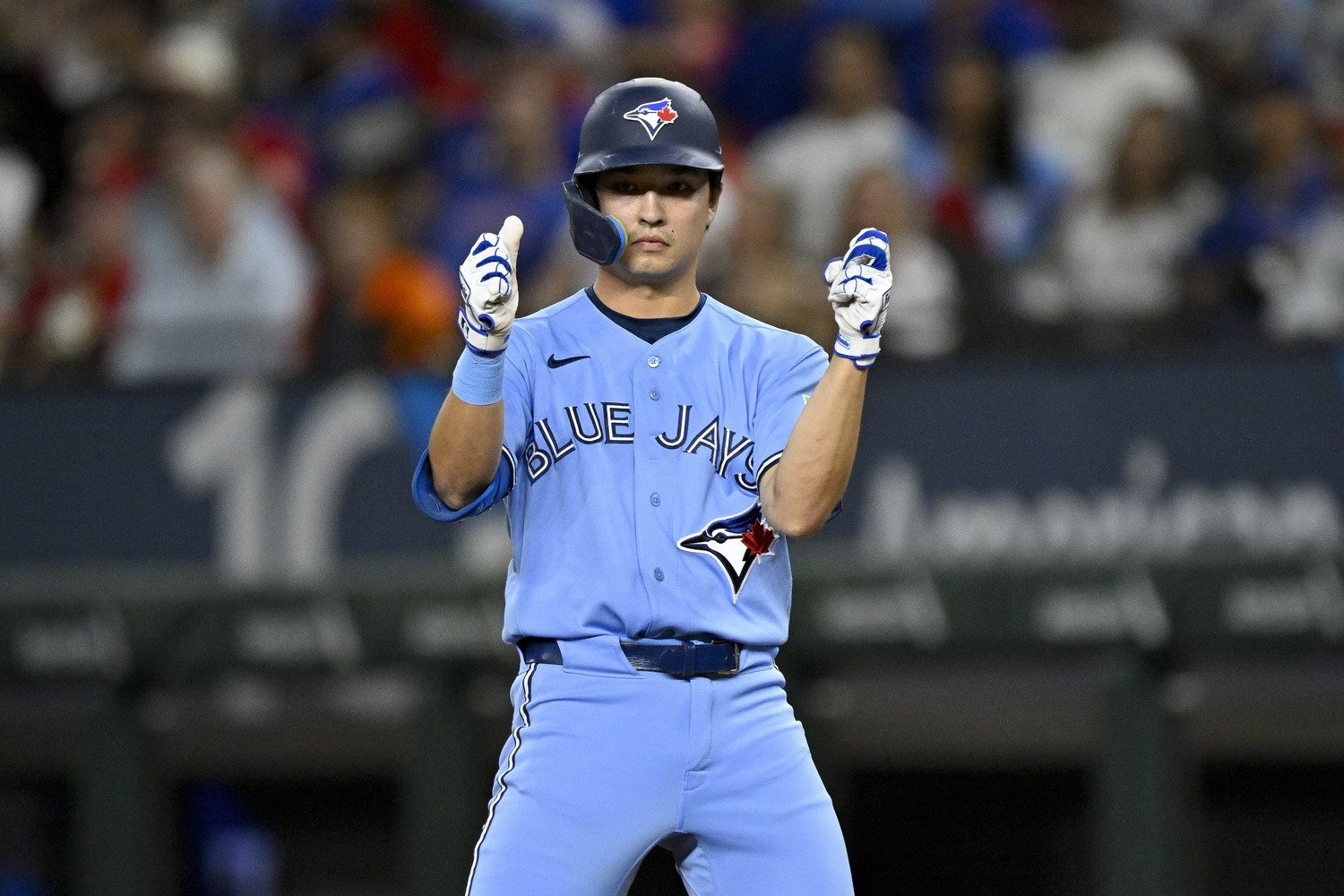 Editor's Note: This piece was written before Bateman exited last night's game due to injury. If this marks the end of his season, there's no question his debut campaign was a success. Some questioned the Toronto Blue Jays' decision to acquire Brett Bateman in the trade that sent Kevin Gausman to the Chicago Cubs. The Blue Jays desperately needed power and MLB-ready arms, but they acquired a contact-hitting, speed-based player who matched the profile of players already on the 26-man roster. Bateman was the 20th-ranked prospect in the Cubs’ organization and was thought to hopefully make an impact in 2027. However, injuries and poor play in the majors kept the prospect to just two games with Triple-A Buffalo. Since the rookie made his MLB debut on August 7, Toronto is 19-18. He’s been an everyday leadoff hitter, providing a consistent on-base threat from the left side of the plate – the kind of player the Blue Jays lacked in the role. Heading into Monday's game, he had slashed .322/.393/.416 with 26 runs, two home runs, 11 knocked in, and three stolen bases. Bateman has also been an upgrade over Daulton Varsho in center field. Compared to the other 24 batters in the majors currently who were traded at the deadline, Bateman has the highest fWAR rating. Liam Hicks of the Tampa Bay Rays is the only player remotely close to the Blue Jays rookie. Bateman also ranks tied for fourth among center fielders since August 7; Varsho ranks last among 20 qualified players. Hitters Traded at the Deadline Player Team fWAR Brett Bateman TOR 1.6 Adley Rutschman BOS 0.3 Luis Arraez PHI 0.4 Luis García Jr. NYY 0.6 Tyrone Taylor CHC 0.9 Liam Hicks TBR 1.3 Heliot Ramos NYY -0.3 Lars Nootbaar ARI 0.3 Taylor Ward SEA -0.8 Daulton Varsho HOU -0.3 Jo Adell CLE 0.3 Moisés Ballesteros LAA -0.6 Nathaniel Lowe CLE 0.1 Brenton Doyle CWS -0.1 Josh Smith TOR 0.7 Eli White BOS 0.1 Rece Hinds BAL -0.1 Hunter Feduccia LAD 0.2 Lane Thomas ATL -0.1 Bo Naylor MIL 0.1 Jake Rogers CHW -0.1 Logan O'Hoppe TEX 0.0 Jahmai Jones BOS 0.8 Ben Rortvedt LAD -0.2 The Blue Jays got a jolt after Bateman joined the lineup, getting back into the postseason picture. However, those hopes are nearly erased with six games remaining. They’re three games behind the Chicago White Sox for the third Wild Card spot, which is essentially a four-game deficit with the White Sox owning the tiebreaker. The best bet is that the Cleveland Guardians, who have a one-game lead in the AL Central, falter, since the Blue Jays own the tiebreaker over them. The Guardians finish the season with two road series against the Boston Red Sox and Kansas City Royals. The White Sox have an easier route to the postseason: a road series against the Royals and a home series against the Rockies. It's highly unlikely either falters enough for the Blue Jays to overtake them, but matchups with the Baltimore Orioles and Cincinnati Reds give Toronto an opportunity. However, looking at next season, if Bateman continues his success, the team has a piece they can rely on for a nearly everyday leadoff hitter. View the full article
