


DiamondCentric
-
Posts
2,631 -
Joined
-
Last visited
Never
Content Type
Profiles
Forums
Events
News
Tutorials & Help
Major League Baseball Videos
Guides & Resources
Store
Downloads
Gallery
Everything posted by DiamondCentric
-

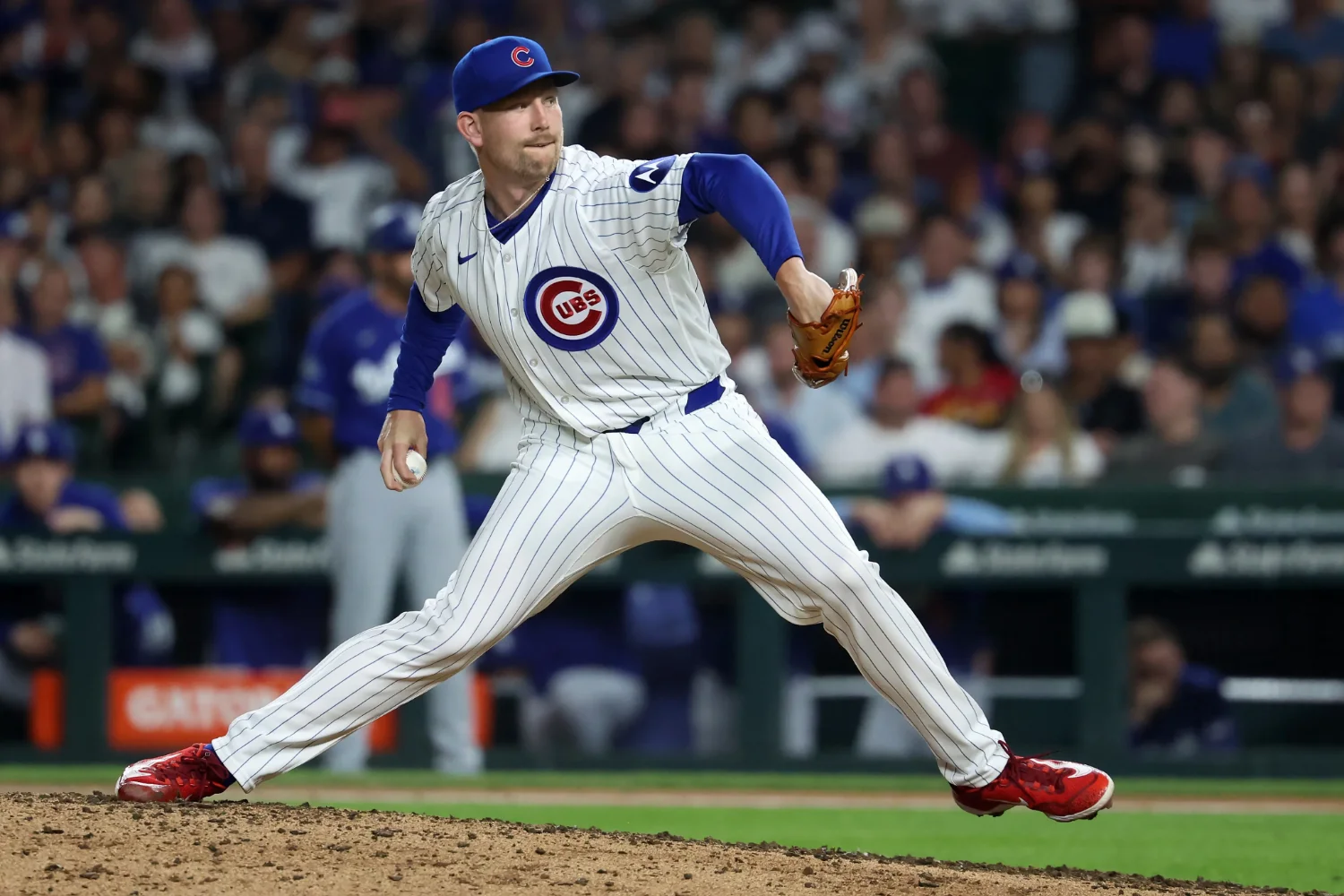 The 2026 MLB trade deadline is now in the rearview mirror. This deadline will be memorialized by the Dodgers acquisition of two-time reigning AL Cy Young Award winner Tarik Skubal and what this means for the future of baseball. There was plenty of action around the rest of the league though, especially amongst the NL Central, where the three buyers, the Brewers, Cubs and Pirates, combined for 12 trades. To nobody’s surprise, the Cubs made four additions to their pitching staff, the clear weakness of the team. They made the most significant upgrades to their rotation, adding Kevin Gausman from the Blue Jays and Clay Holmes from the Mets. They also added Ryan Zeferjahn, one of the best relief arms on the market, from the Angels. They plucked the change-of-scenery, bounce-back candidate Braxton Garrett from the Marlins as well, although his role is a bit more ambiguous. The front office’s mission was to add two starters and a reliever, and they did just that. The starting rotation could evolve into another strength of this team over the next two months, but it remains to be seen how much one reliever addition will benefit the bullpen, whose 4.65 xERA ranks 26th in baseball. Speaking of bullpen additions, their divisional competitors made some significant upgrades as well. The Brewers, who were already fourth in team bullpen xERA at the time of the deadline, acquired the Rockies’ best relief arm in former starter Antonio Senzatela, as well as southpaw groundball specialist JoJo Romero from the Cardinals. The Pirates, who also have a bullpen xERA in the bottom third of the league, but still better than the Cubs, completely overhauled their pen. They added one of the best relievers on the market in Luke Weaver from the Mets. They also brought in two former closers in Kirby Yates from the Angels and Camilo Doval from the Yankees. If that wasn’t enough, they added one of the Marlins’ more dependable arms in Lake Bachar. Here is the outlook for each of these teams’ bullpens post-deadline, as we look at how these new arms will fit in with the incumbents. Ranking NL Central's Best Bullpens After Trade Deadline Brewers The Brewers already had a trifecta of relievers already with an xERA under 3.00. Closer Trevor Megill and flamethrower Abner Uribe have allowed three home runs all season, and all three have come from Uribe. Yes, Megill, despite a rocky start to the season, has not allowed a home run. Shane Drohan, a rookie lefty acquired in the Caleb Durbin trade, has enjoyed a breakout season with a 2.39 xERA while limiting walks and hard contact. He has bounced between the rotation and the bullpen this season. He has been used exclusively as a starter of late, but the return of Kyle Harrison may send him back to the 'pen. Fellow southpaw Aaron Ashby is still one of the most consistent left-handed relievers in the game, and has an elite K/9 at just above 12. Their “lower leverage” arms in Grant Anderson, DL Hall, and Chad Patrick would be amongst their best if they were on almost any other team across the league. That speaks to the depth of this unit, and it just got deeper with the additions of Senzatela and Romero. The unit with the third highest fWAR in baseball is likely to continue to dominate late in games. For what it's worth, their starters have the lowest xERA in baseball. This is why they are in contention for the best record in the league for the second straight season, and have the third highest odds to win the World Series. Pirates Likewise, it is a great time to be a fan of Pennsylvania sports. The city of Philadelphia now has LeBron James, and Pittsburgh acquired Luke Weaver and friends. After adding four new relievers, the Pirates are looking to make their first legitimate push for the postseason in a decade. Even though they are below .500 Paul Skenes has not been Paul Skenes this season, with an ERA in the high-threes and a fastball sitting in the mid-90s, but the Buccos are going for it anyway while adding three controllable arms (four if you count Brandon Eisert, who was traded for before the draft, but in the minors currently) and Kirby Yates. The bullpen already had a knack for missing bats, with Yohan Ramirez, Gregory Soto, Mason Montgomery and Evan Sisk all having a K/9 over 10. In fact, the 'pen as a whole is fifth in baseball in that stat, but they are also fifth in BB/9. Weaver (who may slot into the closer role) and Bachar should provide quality innings while issuing less walks than guys like Ramirez, who has been their most-used reliever to this point. Another name to highlight here is Carmen Mlodzinski, who was bumped from the rotation after the return of Jared Jones. He has impressed to the tune of a sparkling 2.15 ERA as a reliever, but his xERA over 4.00 helps explain why GM Ben Cherington felt pressure to add more right-handers. Overall, this is probably the most improved bullpen in baseball. We will see how far it takes them, but baseball is definitely better when the Pirates are trying. Cubs Finally, we have the Cubs, who added one definitive reliever in Ryan Zeferjahn, and one possible reliever in Braxton Garrett. We should have clarity soon on how Craig Counsell chooses to deploy Garrett, but if he can become the next broken starter turned relief ace, it would be a huge win for Hoyer and Carter Hawkins. The Cubs have searched all season to find a high-leverage right-handed reliever to fill the void left by Brad Keller. Ben Brown looked to be the answer, but due to the myriads of injuries, he was needed in the rotation, where hopefully he will continue to shine after returning from his own neck injury. Zeferjahn fills this role and more. With a 33% strikeout rate, and a walk rate just under 14%, he should become that anchor in the back end that the Cubs were hoping Daniel Palencia would be. Speaking of Palencia, who has been hampered by injuries all season, he can step into a more complementary role. Jacob Webb has been a solid low-cost addition, and newly acquired Tyler Ferguson has a 3.52 xERA in 15 games. Although he has been nothing short of awful, the return of Phil Maton will at least provide a bit more depth, and Hunter Harvey might return before all is said and done. As a whole, the right-handed part of the bullpen is something to feel good about. The main critique of the Cubs’ deadline approach is the failure to land a lefty reliever. We saw Brooks Raley, A.J. Minter, the aforementioned JoJo Romero, Caleb Ferguson, Erik Miller, and Brent Suter all find new homes. The fact that the Cubs will be relying on Ryan Rolison, Hoby Milner, and Caleb Thielbar as their go-to lefties for the rest of the season should rightfully make fans nervous. None of these guys are bad, but a contending team with a properly built bullpen would consider these guys a fine second- or third-tier lefty. So, is there hope that Braxton Garrett becomes a high-leverage option? Or are they counting on a bullpen role for Justin Steele? The Cubs made a great move for Zeferjahn, regardless of how you feel about Moises Ballesteros, but the bullpen makeover seems like an assignment that wasn’t quite completed, leaving them looking up at their division counterparts. View the full article
 -
Mets Fans Should Board Jefferson Rojas' Hype Train Right Now
DiamondCentric posted an article in Grand Central Mets
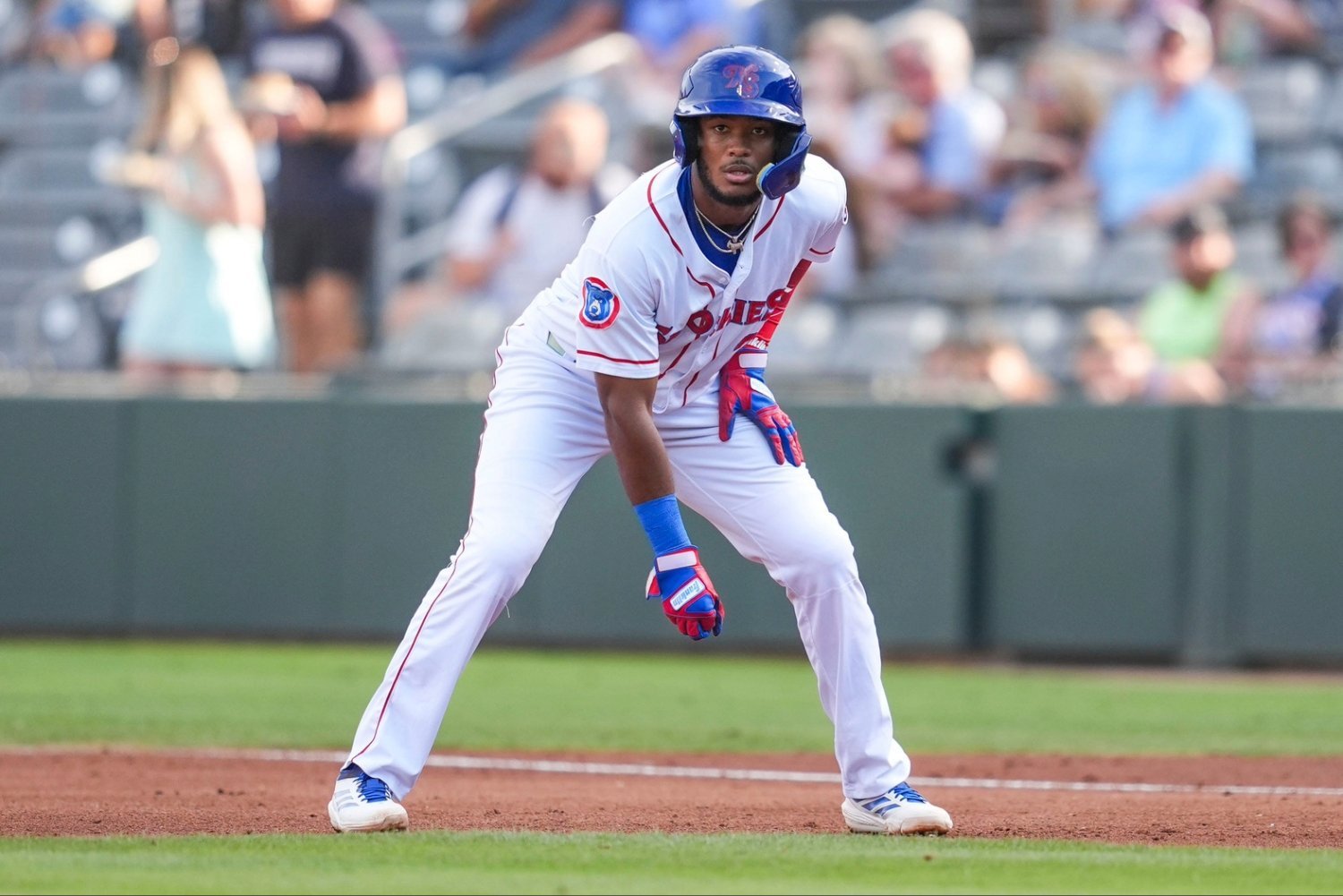 The New York Mets went through with their projected fire sale before Monday’s trade deadline, offloading multiple players and netting some interesting pieces for the future. One of those transactions saw them flip starting pitcher Clay Holmes and outfielder Tyrone Taylor in exchange for Cubs’ infield prospect Jefferson Rojas. The Mets made some questionable deals, such as the Luke Weaver trade, but getting Rojas in exchange for a 33-year-old injured pitcher and a part-time outfielder was a coup. What exactly are they getting in the 21-year-old infield prospect? Jefferson Rojas Is Equipped To Be An All-Around Star With Mets The Dominican shortstop, who has mostly played third base this season, is slashing a cool .270/.339/.461 with 15 home runs and 17 stolen bases in Double-A, walking 9.0 percent of the time with a 16.4 percent strikeout rate. His wRC+ is a solid 114, which is quite strong for a 21-year-old in Double-A. The 15 round-trippers already represent a career-best for him, and that’s not all: he also has 19 doubles and a triple. Evidently, Rojas has some power, and he is still young enough to think that he could add more beef to his frame and get a bit more power. Rojas hits lots of line drives (22.6 percent), which is excellent for his batting average prospects, and he has been hitting fewer ground balls, too. Little by little, he is learning to hit the ball hard in the air. MLB Pipeline had this to say about his defensive home, speed, and athletic tools: “Rojas has average speed with good instincts and picks his spots to steal bases. There's some question about his long-term position after he split time between shortstop and second base last year before seeing the majority of his action at third base in 2026. He's an average defender with quick hands and a solid arm capable of making throws from a variety of angles.” It looks like he could be a shortstop early in his career, with a move to third base at some point likely in the cards. He won’t be a liability with a glove on his hand, and he might even become an above-average defender if he slides to second or third. Rojas is athletic but isn’t quite a burner on the bases. Despite this, he has shown he can be an effective, smart baserunner who could steal 15-20 bases per year at peak. The potential for him to become a perennial 20-20 threat from a premium position is there. Rojas went from the Cubs, where he was the second-best prospect behind outfielder Josiah Hartshorn, to the Mets, where he is the clear-cut top guy ahead of Jonah Tong, Jonathan Santucci, and Elian Peña, among others. The Mets are not going to rush him this year, but it will be interesting to see if they challenge him with a move to Triple-A at some point in 2026. In any case, Rojas looks like a future regular on the left side of New York’s infield, or possibly second base. There is a good chance Rojas makes his MLB debut at some point in 2027, probably in the second half if all goes well. Holmes has been excellent in Queens, and Taylor has had his moments, but it’s easy to see why the Mets are being lauded for getting this trade across the finish line. View the full article
 -
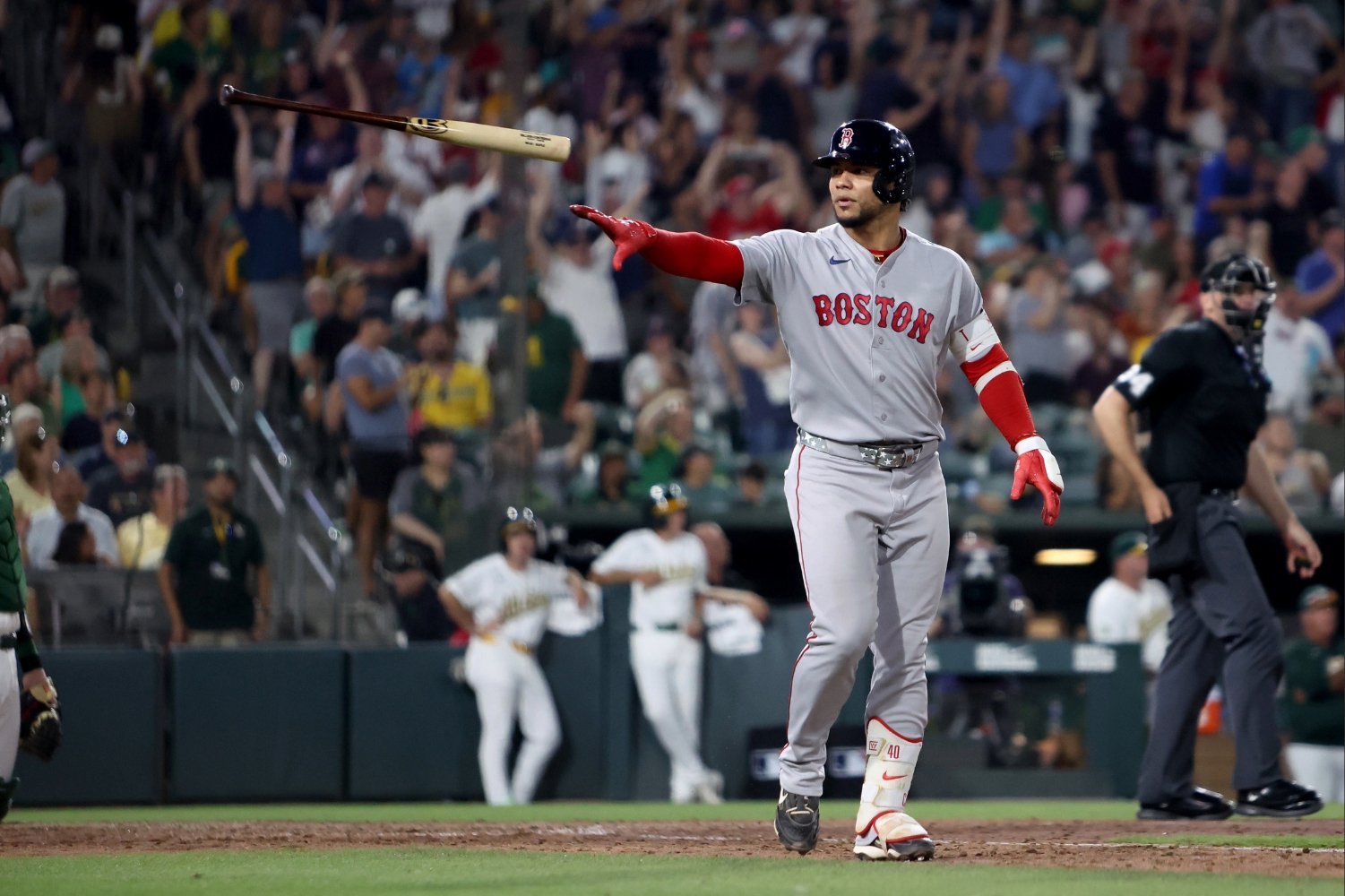 As the calendar turned to July and the Boston Red Sox boarded a plane heading west to Anaheim, fresh off a series loss at home to the Washington Nationals where they were outscored 18-3 in the final two games, it felt like everyone was ready to pull the plug. The Sox found themselves 11 games under .500, 14.5 games back in the AL East, and 6.5 games out of the third Wild Card spot needing to jump six teams to even sniff a postseason berth. The task seemed daunting and borderline impossible to say the least, but as the age-old saying goes; the rest is history. All Boston proceeded to do since was go on one of, if not the best, runs the club and MLB have ever seen; one that included a 15-game win streak, an .840 win percentage which was the best for a month in franchise history. They became the first team in MLB history to enter a calendar month 10+ games under .500 and leave it 7+ games over .500 via ESPN’s Sarah Langs. Likewise, they became the first team in MLB history to in one month win 20+ games, have a 15+ game winning streak, have 10+ comeback victories, sweep a 9+ game road trip, and have a .900+ road win percentage via OptaStats on X. For a more in-depth look at what has led to the Red Sox’s historic turnaround, let’s dive in to how the offense, rotation, and bullpen graded out for July. Grading Every Red Sox Player In July Offense For months, it’s been well documented that if the Red Sox were to make any noise this season, let alone turn this thing around, it was going to have to be the offense that, outside of Wilyer Abreu, Willson Contreras, and Ceddanne Rafaela, needed to start pulling its weight. July saw just that, as Boston’s offense finished within the top-10 league wide in AVG, OBP, SLG, OPS, wRC+, BABIP, BB%, Runs, Home Runs, Hits, Doubles, WAR, and AVG with RISP w/2 Outs. In other words, it was by far the team's best performance of the season. Perhaps the most surprising, and arguably refreshing, of all of the top-10 finishing stats came from the change in approach at the plate. The Sox ended July first in all of baseball in Sac Bunts with 13, an astonishing note when you realize they had 11 for the entire season prior to. This new “Next Man Up” approach and mentality the team took on not only allowed for the likes of Willson Contreras (1.117 OPS, 208 wRC+, 5 HR, 14 RBI) and Ceddanne Rafaela (.303/.321/.523/.844, 5 HR, 19 RBI) to continue their stellar seasons, but also allowed for the emergence of heroes new and old. If you were to pick an offensive MVP for the month and had to exclude Contreras and Rafaela, the favorite has to be Andruw Monasterio, who has had some hiccups in the field filling in as the full-time shortstop after Tsung-Che Cheng was optioned back to Worcester. And yet, he continued to come up with clutch hit after clutch hit in July, slashing .338/.413/.631/.1.044 with 12 of his 22 hits going for extra bases while also driving in 11. Some love should be thrown Cheng’s way as well while highlighting standout performances, as he managed to accumulate a .740 OPS and 115 wRC+ in just nine games while also making a few game saving plays at short during Boston’s historic 15-game win streak. July also saw Caleb Durbin continue to put his early season struggles behind him as he has quickly become one of the Red Sox's most well-rounded players, finishing the month with an .802 OPS, three homers, and nine runs batted in while factoring in stellar defense at third. Masataka Yoshida once again has started to make his usual second half push after slashing .300/.364/.450/.814 with two home runs and nine runs batted in, providing some stability to the top of Boston’s lineup. And even newcomer Jahmai Jones, whose addition seemed to be heavily questioned when he was brought in from the Tigers, has provided an immediate spark, homering in his first at-bat as a Red Sox en route to a 1.467 OPS and 244 wRC+ to go along with two home runs and five RBI in just nine games. As we move into August, the hope is the offense can continue to succeed with this more small-ball approach. Losing Curtis Mead to a fractured wrist after just two at-bats certainly doesn't help, though Adley Rutschman should provide a huge jolt when healthy. Getting Wilyer Abreu (90 wRC+) and Jarren Duran (40 wRC+) back on track wouldn’t hurt either. In what was a stunning and unprecedented turnaround that nobody could have foreseen happening, Boston’s offense gets its best grade of the season thus far, a well-deserved A-. Position Players Name March / April May June July Wilyer Abreu A+ B C+ C Tsung-Che Cheng N/A N/A C A+ Willson Contreras A A+ B A+ Jarren Duran F A D- D+ Caleb Durbin D+ D A+ A- Nate Eaton N/A N/A C+ F Romy González N/A N/A C D Brett Harris N/A N/A N/A C Jahmai Jones N/A N/A N/A A+ Andruw Monasterio C D+ D A+ Carlos Narváez C- C- F D- Ceddanne Rafaela B A A- A+ Anthony Seigler N/A N/A A+ C Nick Sogard N/A B- N/A C Connor Wong B- B A C Masataka Yoshida B- C+ D A- Rotation If you were to tell me early this season the Red Sox were going to go on an epic win streak that helped save their season and turn them into one of the most dangerous teams in baseball, there's no doubt I would have guessed the rotation had done its best Superman impression. And yet, while this turn through the rotation wasn’t bad by any means, it wasn’t as dominant as we’ve seen in past stretches either, leading to somewhat of a mixed bag of results. Boston’s best starter by far for July may have been its least likeliest, as rookie Jake Bennett burst onto the scene to the tune of a 4-1 record, 2.20 ERA, and .208 average against over a team high 32.2 innings pitched. The same cannot be said about fellow rookie Payton Tolle however, as although his strikeout numbers were still impressive, leading the rotation with a 32.7 K% in 23.2 innings, a six-run blow up over three innings versus the Nationals, a four-run outing over 5.2 against the Orioles, and a shortened 3.2 innings outing against the Mets stemming from an innings limit left Tolle with an uncharacteristically high 4.94 ERA for the month. As for the veterans, Sox fans got their long-awaited look at Patrick Sandoval for the first time, who put up a respectable 3.32 ERA over four starts, but is clearly being eased back into things given his just 19 innings of work. Ranger Suarez was limited to just three starts and 11.1 innings due to a groin strain, finishing with a below-average 4.76 ERA but elite 1.33 FIP. Then there’s the 36-year old Sonny Gray who may be starting to show his age a bit. While his first three starts of July against the Angels, Mets and Rays were excellent, posting a 1.50 ERA while allowing just three earned runs and 14 hits over 18 innings, his final two against the Blue Jays and Athletics were anything but. In those starts, Gray posted a 6.75 ERA over 12 innings, allowing 17 hits and nine earned runs. Add in three rough appearances for Eduardo Rivera (9.45 ERA on 6.2 IP) and the numbers don’t look as great as they have prior on paper. It will be interesting to see how the Red Sox handle the rotation going forward with some clear signs of possible fatigue starting to set in. For now though, the rotation still grades out at a respectable B+. Pitchers Name March / April May June July Jake Bennett N/A C A A+ Sonny Gray C+ A+ A+ B+ Eduardo Rivera A+ N/A N/A F Patrick Sandoval N/A N/A N/A B Ranger Suarez B+ B- A+ B- Payton Tolle B A+ B+ B- Bullpen Much like the offense, I was hard-pressed to find anything the Red Sox bullpen really struggled with for July, leading to top-10 finishes league wide in every statistical category except for strikeouts, where they finished 11th. Of those standout categories were the ones the Sox's 'pen lead all of baseball in, including a 1.75 ERA, 2.94 FIP, 89.2 LOB%, 13 Saves, and 2.1 WAR. The story starts with the fact that the Red Sox have assembled a four-headed behemoth of Tyron Guerrero, Justin Slaten, Garrett Whitlock, and Aroldis Chapman that all spell certain doom for any team having to face them in the later innings. While Guerrero (0.87 ERA, .211 AVG, 5.0 BB%), Whitlock (0.73 ERA, .147 AVG, 0.0 BB%) and Chapman (0.75 ERA, .209 AVG, 34.7 K%) all picked up where their dominance left off in June, the biggest boost to the pen came in Slaten once again finding his nasty side, racking up a 1.08 ERA and .161 average against in 8.1 innings after posting marks of 9.00 and .415 in nine innings in June. July also not only saw the returns to form of Jovani Moran (2.38 ERA, .154 AVG, 11.1 IP) and Greg Weissert, who outside of one three-run blow up versus Toronto managed to have nine scoreless appearances out of his 11 for the month, but the return of Brayan Bello to the big-league club. This time fully working as a reliever, Bello picked up right where he left off in terms of confusing fans and overpowering hitters tossing 13.2 innings out of the 'pen to the results of a 1-0 record, 0.66 ERA and .191 average against in three appearances. While there may be some signs of possible fatigue or slippage in the rotation, the same cannot be said about Boston’s bullpen that only seems to be growing stronger as the season moves forward. With all parties quite literally firing on all cylinders, the Sox's pen earns its best grade of the season by far with a resounding A+. Pitchers Name March / April May June July Brayan Bello F B+ F A+ Aroldis Chapman A A+ D A+ Danny Coulombe F F- A- C Alec Gamboa N/A A A A Tyron Guerrero N/A C A+ A+ Jovani Morán A C+ B A Tyler Samaniego A C- B N/A Justin Slaten A- B+ D A+ Ryan Watson F B- B+ B- Greg Weissert D- C- C A- Garrett Whitlock B+ B A+ A+ View the full article
 -
How Brewers Are Determining Playing Time on Left Side of Infield
DiamondCentric posted an article in Brewer Fanatic
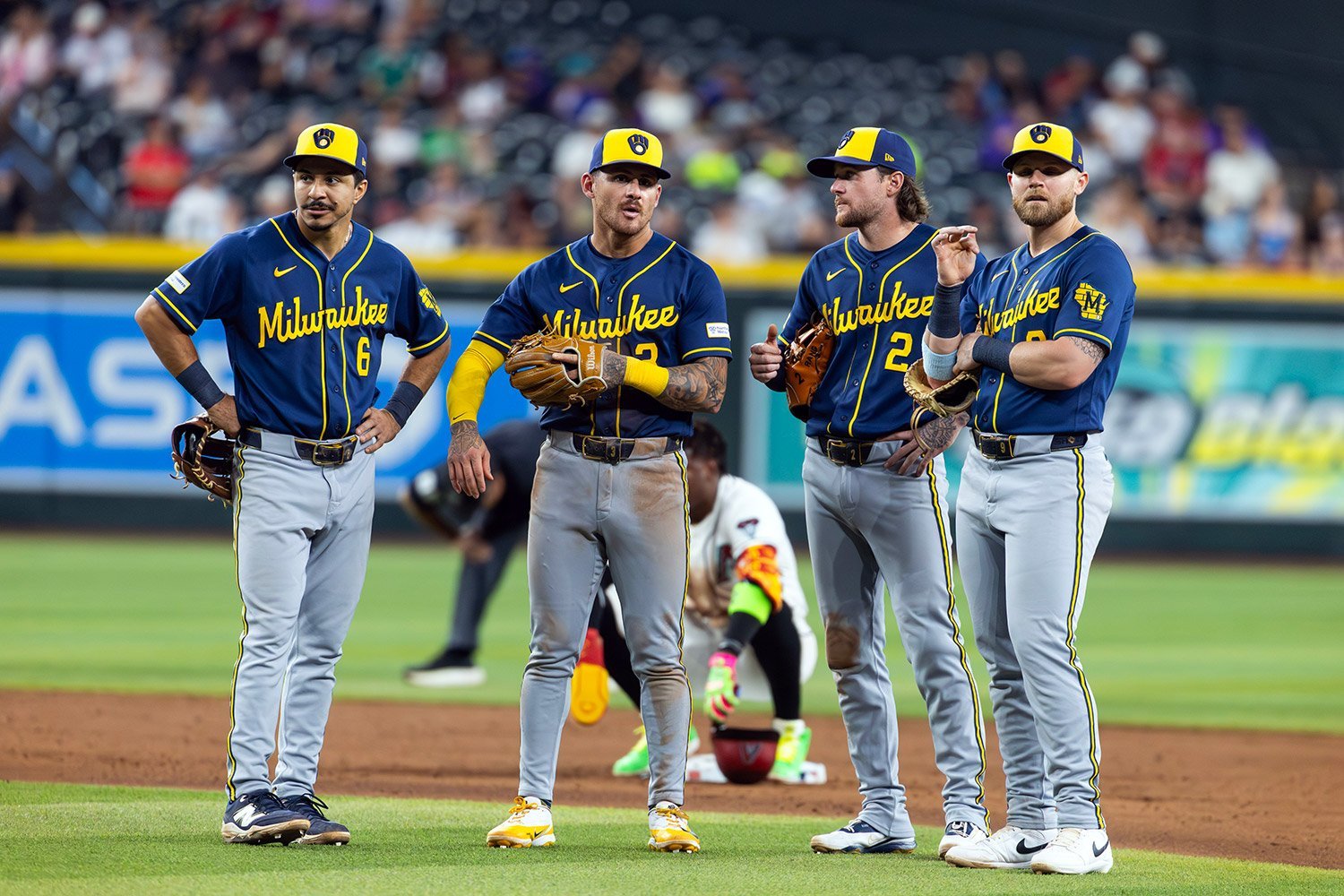 When David Hamilton returned from the injured list amid hot streaks by Joey Ortiz and Cooper Pratt, Pat Murphy said the intention was to find playing time for all three, hinting that the Brewers would handle the left side of the infield with more nuance than a straight platoon between Hamilton and Ortiz at third base. However, since Hamilton's activation, he's started 10 of Milwaukee's 11 games against a right-handed starter. Ortiz, meanwhile, has drawn just one start at third base against a right-hander. His other two starts against righties have come at Pratt's expense at shortstop. It's the latest sign that the Brewers as an organization remain bullish on the athletic Hamilton's potential, even as he's made very few strides in harnessing that athleticism for more than a couple of plays or at-bats at a time. Earlier in the week, Murphy shed more light on how the Brewers are handling Ortiz. As they have with Andrew Vaughn, they're shielding him from right-handed arsenals with more horizontal movement. "It's a type of righty," Murphy said. "There are righties that have [a] great two-seam, great sweepers. You don't play Joey as much against them." Those east-west pitches, Murphy explained, can exploit recurring issues with Ortiz's front side as he strides toward the pitcher. After he gets busted inside with a two-seamer, he opens up early to cheat to it, leaving him unable to stay on a breaking ball moving away from him. "If you're one of those hitters where wherever the pitcher's going, your eyes go there and don't respond to the other side [of the plate], it's more that than it is [your swing]," Murphy said. "So the swing decisions are affected more when a guy's bearing in on you … You have to be way, way convicted on what you're going to do with that. But in Joey's case, he had that habit for a long time of just his front side going, because he wanted so much to get to how he was being attacked, and it didn't serve him." Statistically, that doesn't bear out cleanly. In 2026, Ortiz has fared a bit better against right-handed sinkers than right-handed four-seamers, and he's been passable against sweepers. In a much larger sample for his career, though, Ortiz has done his best work against more vertical right-handed pitches like four-seamers and curveballs, while struggling against sinkers, short sliders, and sweepers. The Brewers urge their hitters to take pitches they would struggle to hit before they get to two strikes. For Ortiz, that means keeping his focal point toward the outer third of the plate. His swing length is a bit longer (7.5 feet, according to Statcast) than the league average (7.3 feet), and his hands can sometimes lag behind the rest of his body when he opens up. Staying on pitches middle or away can help keep everything in sync. "Now he's understanding, 'I got to take that and rely on what I can [hit] out over,'" Murphy said. "Or when [the pitcher] mistakes the two-seamer [over the middle], it's staying closed and staying linear, so he can handle everything else." Bat tracking data reveals Ortiz's inconsistency in keeping himself closed on sweepers. His overall rate of early swings and flails away from the ball are both around the league average, but he's more prone to extreme flails and very early swings than the average right-handed hitter against a righty sweeper. Ortiz's last two starts against right-handers have come against Tyler Mahle and Bubba Chandler, both of whom lean mostly on four-seam fastballs without much arm-side run. That could change if he becomes more consistent against side-to-side right-handers, but as long as the Brewers continue to believe in Hamilton and the rest of the infield remains healthy, adhering to arsenal matchups will remain the playbook. View the full article
 -
Jesús Sánchez Is One Adjustment Away From Breaking Out
DiamondCentric posted an article in Jays Centre
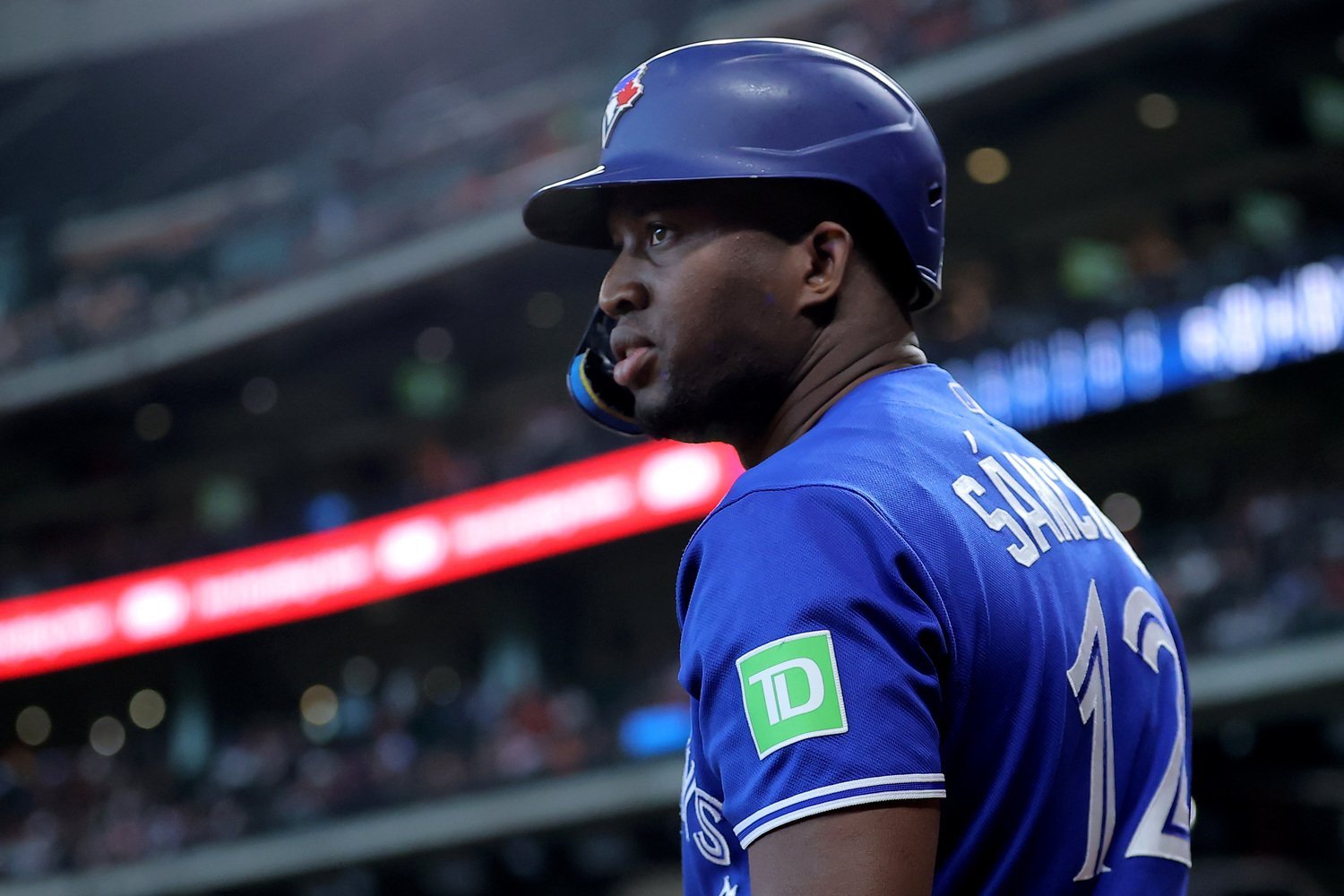 Jesús Sánchez is one of the most interesting players in baseball because he’s quietly one of the most violent hitters in the game. The Toronto Blue Jays’ outfielder checks off a lot of boxes, and with the right adjustments, he could turn from a promising talent into one of the best power hitters in MLB. Stats updated prior to first pitch on August 7. Jesús Sánchez’s Background Sánchez is a seven-year MLB veteran, and up until 2025, he spent every one of those seasons with the Miami Marlins. The 28-year-old outfielder has gained a reputation as a slugger, being someone who is willing to sacrifice his walk and strikeout numbers for more power. This is his first season with the Jays, and so far, the corner fielder is slashing .268/.310/.434 with eight homers and 32 runs batted in. Sánchez has only played in 78 games, yet he finds himself fourth on the team in long balls behind only Kazuma Okamoto (24), George Springer (12) and Ernie Clement (9). Toronto could desperately use a power surge from someone, and Sánchez has the profile to play that role. A Model of Consistency For one, he’s been consistent. Between 2021 and '25, Sánchez hit anywhere from 13 to 18 home runs each season. This includes a 13-homer season with the Marlins in which he played just 98 games; he was on pace for 21 long balls over 162 games that year (this would’ve been a career best). The real question is this: Does Sánchez have what it takes to take that next step? His advanced analytics certainly imply that he can be the bruiser in a lineup. Violent Underlying Metrics Looking under the hood at his 2026 stats, this is someone who can lay into a baseball. The veteran outfielder has a 46.3 percent hard-hit rate, putting him in the 79th percentile among all major leaguers. This is a remarkable sign for a team that is watching Vladimir Guerrero Jr. struggle mightily with just six homers in 108 contests. He’s also barrelling the ball up at an extremely high rate of 11.4 percent, good enough for the 74th percentile. His 73.7 mph bat speed is also well above the league average. Yet, through just about half a season’s worth of games, Sánchez has left the ballpark only eight times. Why is that? Let’s bring in one of the best bashers in the game, Junior Caminero, for a case study comparison. Caminero is the bat speed king, sending his barrel across the plate at a rapid 79.8 miles per hour (100th percentile). His 50.7 percent hard-hit rate (92nd percentile) is also one of the best in baseball. The Tampa Bay Rays’ third baseman has some marginal advantages on Sánchez, but are they enough to give him a 25 home run advantage over the Jays outfielder? Not on their own. What Needs To Change? What does Sánchez need to do to be closer to Caminero’s side of the home run spectrum? It’s not a launch angle issue, as Caminero is actually hitting the ball lower on average (9.4) than the Jays outfielder (10.7). The sea parts in the plate discipline category. Sánchez strikes out 22.2 percent of the time, while Caminero’s mark is just 18.3 percent. Sánchez only walks in 4.4 percent of plate appearances, while Caminero draws a free pass 12.2 percent of the time. While pitchers may respect Caminero’s power more, and therefore are more careful around the zone, it’s a symbiotic relationship. The Rays’ slugger simply gets into more hitter-friendly counts, meaning he’s more likely to see a ball over the plate. Sánchez is ultra aggressive, and with that being in his scouting report, opposing pitchers can stay away from his bat more. Even when he makes contact, it may not be on the quality of pitches that Caminero, the more patient between the two hitters, sees. Sánchez's out-of-zone swing percentage is 38.5 percent (9th percentile), so pitchers have no real incentive to lay a ball over the plate. If he can become more selective at the plate, he’ll have a better chance to put that violent swing to work. View the full article
 -
Twins Minor League Report (8/7): Did JP Smith Homer Again Today?
DiamondCentric posted an article in Twins Daily
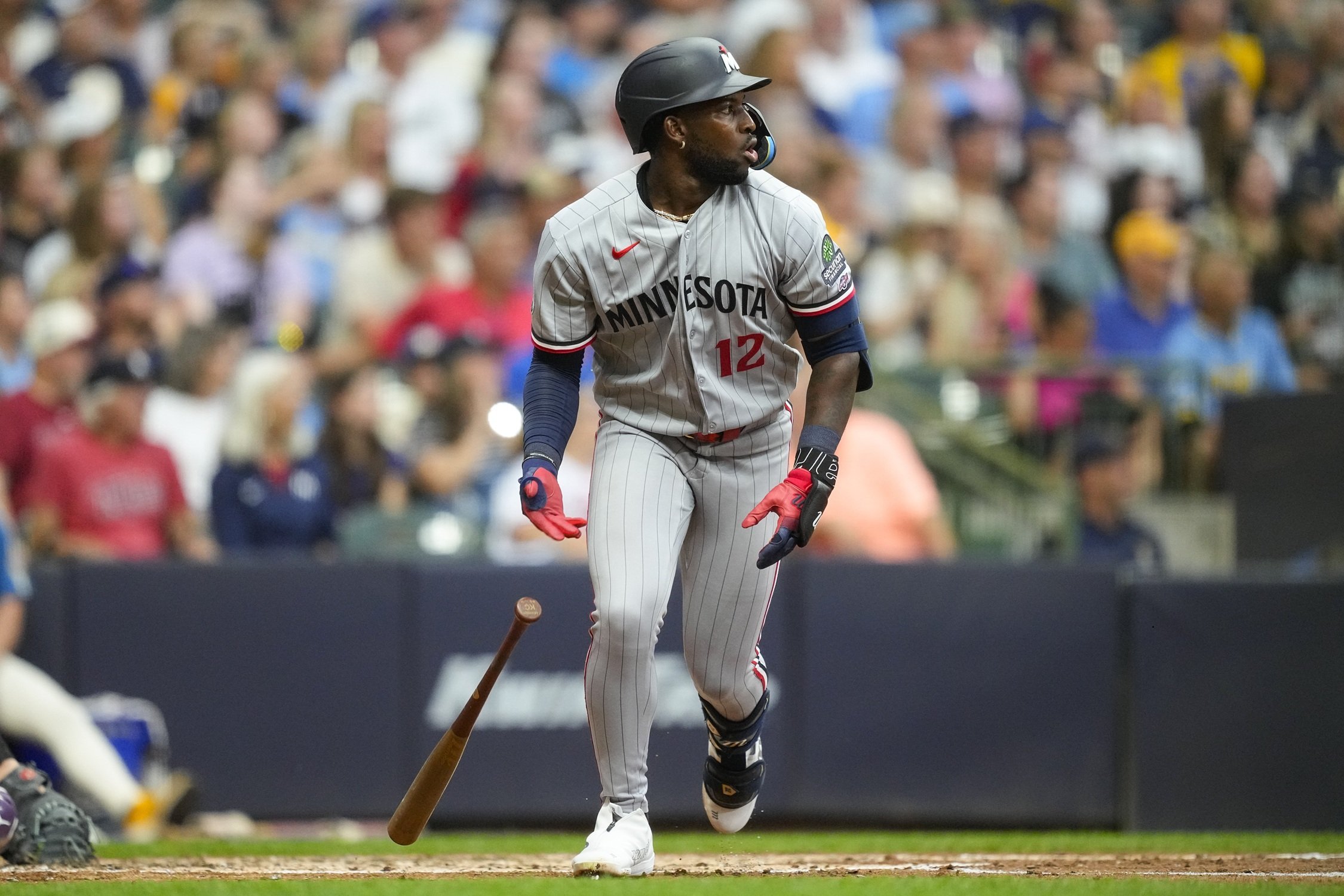 You won't find too many photos of players in big-league uniforms in the Twins Minor League Reports. We are thankful for the photographers in the various minor-league cities who help us get photos of the minor leaguers in their minor league uniforms. However, once in a while it's good to remember what goal each and every minor league baseball player aspires to, and that's to get to the big leagues. On Friday, Kaelen Culpepper got that opportunity. He found out the night before. Let his family know so they could make arrangements to get to Milwaukee. He met the team in Milwaukee and found himself in the Twins lineup, playing shortstop and batting seventh. And in his second at-bat, he crushed a ball for his first hit, his first home run, his first run scored, and his first RBI. TRANSACTIONS There were several transactions throughout the organization. The Twins placed RHP Joe Ryan on the injured list and recalled RHP Zebby Matthews. The big news was that the Twins called up shortstop Kaelen Culpepper to make his big-league debut. To make room on the 26-man roster, infielder Tristan Gray was optioned to St. Paul. To make room for Culpepper on the 40-man roster, RHP Taylor Rashi was DFAd. Just days after being DFAd and subsequently released, the Twins brought RHP Cody Laweryson back on a minor-league contract and assigned him to the Saints. He’s on the Injured List with a right shoulder impingement. Down in Ft. Myers, RHP Jake Covey joined the Mussels from the FCL Twins roster. To make room, RHP Dylan Questad was released. The 21-year-old from Waukesha was the Twins fifth-round pick in 2023 from Waterford High School. In the 2024 FCL, he posted a 10-48 ERA . In 2025 at Fort Myers, he went 4-7 with a 6.87 ERA. He then went to the AFL and had a 15.19 ERA in 5 1/3 innings. He pitched to a 11.81 ERA over 15 games with the Mussels. SAINTS SENTINEL St. Paul 4, Louisville 1 Box Score There wasn’t much offense at CHS Field on Friday night. The Saints had just five hits in the game, but they had a couple of really big hits. The Bats, well, they did even less. The Saints got on the scoreboard first in the bottom of the fourth inning. With Matt Wallner on base, Aaron Sabato drilled his 21st home run to make it 2-0. Two innings later, Ben Ross was on base when Wallner drilled his 21st Saints home run of the season and gave the Saints a 4-0 lead. Meanwhile, the Saints pitchers were nearly unhittable, literally. Kendry Rojas made the start for St. Paul and faced just nine batters over three perfect innings. He had five strikeouts. Ricky Castro came in to start the fourth inning. With one out, he issued a walk but quickly got out of that inning. That was the lone baserunner over three scoreless innings. You see what was going on. However, in the top of the seventh, Castro gave up a leadoff, line-drive single. It was immediately followed by another single. Castro then coaxed a double play that scored a run, but it was followed by a strikeout and the threat ended. Next up was Jack Anderson. He gave up a two-out single in the eighth inning and a two-out walk in the top of the ninth inning, but he gave up no runs and held the team’s 4-1 win for the final two innings. Wallner was 2-for-2 with a walk and was hit by a pitch. He hit his 21st home run and stole his sixth base. He now has 60 RBI. Sabato hit his 21st homer and he’s got 64 RBI. Cody Morissette had the only other extra base hit, his 12th double. Noah Cardenas reached twice, on a single and a walk. WIND SURGE WISDOM Wichita 3, NW Arkansas 6 (8 innings) Box Score The Surge jumped to an early lead but immediately gave it back. The Royals affiliate added two more and then the rains came. It was called with two outs in the bottom of the eighth, giving the Naturals the 6-3 win. Andrew Cossetti led off the top of the second inning with a walk. With one out, Kyle DeBARge singled him to second. With two outs, Jake Rucker drilled his sixth Surge homer of the season to give Wichita a 3-0 lead. Riley Quick was on the mound for the Surge. Given the early lead, Quick gave up a single and a walk. However, he got a strikeout and an infield pop out without runners advancing. However, he followed that with a second walk. Then came a two-out, two-run single. Even then, the Surge still had the lead. However, the next play involved both a fielding error and a throwing error which let one more run score and kept the inning going. One more single and the Surge found themselves down 4-3. To his credit, Quick was able to complete four innings. Two of the four runs ere unearned. He gave up four hits, walked two and had two strikeouts. Paulshawn Pasqualotto came on and was charged with two runs on three hits and a walk over two innings. He had three strikeouts. William Fleming struck out two batters in a scoreless seventh inning. Kyle Bischoff got two outs in the eighth inning before the rains came and the game was called. The Surge had six hits and two walks. Cossetti had both walks. Marek Houston hit his 10th double, and Brandon Winokur hit his first Double-A double. Cedar Rapids 15, Peoria 2 Box Score I know what you’re thinking. Same thing I was thinking. Did JP Smith hit another home run today? Well, we will get to that. In his first Midwest League start, Merit Jones tossed four shutout innings. He gave up two hits, walked three and had four strikeouts. The Kernels got on the board first in the top of the fifth when Yasser Mercedes drove in Jose Salas on a double. Emmanuel Rodriguez drove in Mercedes with a single to give the Kernels a 2-0 lead. Ross Dunn came in for the bottom of the fifth inning. He hit a batter, got a fly out, walked a batter, got a line out. The Cubs scored their first run on a Dunn throwing error. He then gave up an RBI single that tied the score at 2-2. Michael Ross came in and got the final out. The Kernels came back right away in the top of the sixth inning. With two on and two outs, Jose Salas hit his fifth home run since returning to the Kernels. Later in the inning, Rodriguez walked with the bases loaded to make it 6-2 Kernels. Teams like adding some insurance runs in the late innings. JP Smith led off the top of the ninth inning with a walk. With one out, Quinn McDaniel walked. Salas drove in a run with a double. With two outs, McDaniel scored the team’s eighth run on a wild pitch. Ricardo Pena and Yasser Mercedes walked to load the bases. After a pitching change, Rodriguez had another bases-loaded RBI walk. Eduardo Tait followed with a single to drive in the 10th run. That brought JP Smith to the plate, and brings us back to our question at the beginning of this section. To this point, the answer was No. But then… Following the Smith grand slam, Jayson Bass followed with his first Kernels home run. Michael Ross came up big. He worked the final 4 1/3 innings and gave up no runs, just one hit, just one walk, and he had four strikeouts. The Kernels had 15 runs on 12 hits, two hit batters, and 11 walks. JP Smith was 2-for-4 with two walks and his third home run. It was his third straight game with a homer and three homers in four Kernels games. Yasser Mercedes went 2-for-3, walked twice, was hit by a pitch, and hit his 17th double. Emmanuel Rodriguez was 1-for-3 with two walks and was hit by a pitch. Jose Salas was 2-for-4 with a walk, his second double, and his fifth home run. Ricardo Pena was 1-for-3 with two walks. Eduardo Tait went 2-for-6 with his 21st double. MIGHTY MATTERS Game 1: Fort Myers 6, Bradenton 4 Box Score I’ve never claimed to be cool. However, in the Mussels game, I found this strange, even if it really isn’t. Fort Myers scored zero runs in the top of the first. Bradenton scored one run in the bottom of the first. Fort Myers scored two runs in the top of the fourth, and then Bradenton scored three runs in the bottom of the fourth. The Mussels scored four runs in the top of the fifth. Apparently, neither team wanted to put a five on the scoreboard, so the Mussels won 6-4. Matt Barr made the start in Game 1. In three innings, he gave up four runs (2 earned) on four hits and two walks. He struck out two batters. Matthew Dalquist worked the final four innings without giving up any more runs. He gave up two hits, walked one, and he had three strikeouts. In the top of the fourth inning, Luis Fragoza led off with a single. With one out, Quentin Young came up and crushed a first-pitch home run. The ball left his bat at a 30-degree angle and at 115.8 mph and traveled 412 feet from home plate. Down 4-2, the Mussels came to the plate in the top of the fifth. With one out, Bryce Fowler walked. Isaiah Lane tripled to drive in Fowler. Carson Tinney walked. With two outs, Yovanny Duran came to the plate and hit his first Florida State League home run to give his team a 6-4 lead. He took a 2-2 sinker above the strike zone and lined it at 99.6 mph 382 feet. Lane went 2-for-4 and it was his second triple. Tinney walked twice. Fragoza and Fowler each had a single and a walk. Game 2: Fort Myers 3, Bradenton 7 Box Score There weren’t any obvious strange, random number sequences in the Game 2 summary, and frankly, it wasn’t as good of a game for the Mussels. Through 3 1/2 innings, they held a 3-1 lead, but the Marauders scored the final six runs in this game. The third Mussels run came in the top of the fourth inning when Aidan Teel stole second and Merphy Hernandez stole home. The Mussels took a 2-1 lead in the top of the second when Merphy Hernandez drove in Ramiro Dominguez and Irvin Nunez with a single. The Mussels scored their three runs on six hits and four walks. Teel was 0-for-1, but he walked three times. Dominguez was 2-for-3 with his 22nd double. He also had two stolen bases and has 21 on the season. Hernandez was 2-for-3.He stole three bases and has 33 on the season. Cristian Hernandez started and gave up an unearned run on one hit and two walks. He had five strikeouts. Adam Falinski gave up one run on four hits over 1 2/3 innings. Melvin Rodriguez went 1 1/3 innings and gave up five runs (4 earned) on five hits. Brent Francisco got the final two outs. PLAYERS OF THE DAY Hitter(s) of the Day Jose Salas (Cedar Rapids): 2-for-4, BB, 2B(2), HR(6), 3 R, 4 RBI, K Pitcher(s) of the Day Kendry Rojas (St. Paul): 3 IP, 0 H, 0 R, 0 BB, 5 K, 39 pitches, 27 strikes (69.2%) Merit Jones (Cedar Rapids): 4 IP, 2 H, 0 R, 3 BB, 4 K, 63 pitches, 34 strikes (54.0%) PROSPECT SUMMARY Check out the Prospect Tracker for much more on our Twins Top 20 prospects after seeing how they did today. Help us update the Top 20 prospects list now that the trade deadline is passed. #1 - OF Walker Jenkins (St. Paul) - 0-for-4, K (batted first, played CF) #2 - C Vahn Lackey (Fort Myers) - Game 2: 0-for-3, BB, 2 K (batted second, played catcher) #3 - IF Kaelen Culpepper (Minnesota) - 1-for-4, HR(1), R, RBI (batted seventh, played SS) #4 - OF Emmanuel Rodriguez (St. Paul) - Rehab in Cedar Rapids: 1-for-3, 2 BB, HBP, R, 3 RBI (batted second, LF) #5 - SS Marek Houston (Wichita) - 1-for-4, 2B(10), K (batted first, played SS) #6 - RHP Riley Quick (Wichita) - 4 IP, 4 H, 4 R, 2 ER, 2 BB, 2 K, 52 pitches, 31 strikes, 59.5% #7 - C Eduardo Tait (Cedar Rapids) - 2-for-6, 2B(21), R, RBI, 2 K (batted third, catcher) #8 - LHP Kendry Rojas (St. Paul) - 3 IP, 0 H, 0 R, 0 BB, 5 K, 39 pitches, 27 strikes, 69.2% #10 - OF Hendry Mendez (St. Paul) - 0-for-4 (Batted fifth, played LF) . #13 - C Carson Tinney (Fort Myers) - Game 1: 0-for-2, 2 BB, R, K (batted third, DH) #14 - C/OF Khadim Diaw (Wichita) - 0-for-4, K (batted second, DH) #15 - 3B/CF Brandon Winokur (Wichita) - 1-for-4, 2B(1), 2 K (batted third, played CF) #17 - 3B/SS Quentin Young (Ft. Myers) - Game 1: 1-for-3, HR(14), R, 2 RBI, K. (batted sixth, played 3B), UPCOMING PROBABLES Saturday, August 8 Louisville @ St. Paul (6:37 pm CT) - RHP Trent Baker (3-3, 5.80 ERA) Wichita @ NW Arkansas (6:05 pm CT) - RHP Chris Vallimont (1-3, 3.86 ERA) Cedar Rapids @ South Bend (6:05 pm CT) - RHP Justin Mitrovich (1-0, 3.55 ERA) Ft. Myers @ Bradenton (5:05 pm CT) - TBD DSL Rockies @ DSL Twins (DH @ 9:00 am CT) - No Game CURRENT W-L Records Minnesota Twins: 58-59 St. Paul Saints: 65-46 Wichita Wind Surge: 40-64 Cedar Rapids Kernels: 40-64 Fort Myers Mighty Mussels: 56-48 FCL Twins: 33-26 DSL Twins: 13-31 Please feel free to ask questions about the teams, the rosters, and discuss today’s games, or anything else Twins minor-league related! View the full article
 -
 Friday saw the San Diego Padres' four full-season affiliates go 3-1 with the Triple-A El Paso Chihuahuas stopping Reno 8-6, the Double-A San Antonio Missions striking late for a 6-2 win over Springfield, the High-A Fort Wayne TinCaps getting drubbed by West Michigan 14-4 and the Low-A Lake Elsinore Storm pulling out a 10-8 win over Ontario. Padres Minor-League Transactions San Diego Padres signed free-agent LF Dustin Harris to a minor-league contract and assigned him to El Paso Chihuahuas. Ethan Salas Drills First Triple-A Homer In Chihuahuas' Victory Top prospect Ethan Salas hit his first Triple-A homer, a three-run blast, as the El Paso Chihuahuas scored eight runs in the first three innings for an 8-6 victory over the host Reno Aces. Salas, Padres Mission's No. 1 prospect, had two hits and a walk, going deep in his seventh game since being promoted from Double-A San Antonio, where he hit seven homers. His eight homers this year are one shy of the nine he hit in his debut season of 2023. Salas' three-run homer came during a five-run third inning and was pulled down the right-field line, hitting a 1-2 pitch of right-hander Ashton Izzi. Marcos Castanon (two RBIs) and Clay Dungan also homered for the Chihuahuas, while Carlos Rodriguez went 3-for-5 with a run scored. After the Aces jumped out to a 2-0 lead in the bottom of the first, Castanon hit a one-out two-run homer and Dungan a two-out solo shot to go ahead 3-2 in the second. Dustin Harris, who was released by the Padres from Triple-A on Wednesday and re-signed Friday, and Rodriguez began the third with a single, then Rodolfo Duran singled home Harris. That put two runners on for Salas, who cranked his homer to make it 7-2. Will Wagner doubled, Castano singled and Nick Pratto hit a sacrifice fly to make it 8-2, capping the five-run surge. Chihuahuas right-handed starter Sean Boyle allowed three runs in 4⅔ innings on three hits, including a homer, and four walks with three strikeouts. Right-hander J.P. France, who was released from Triple-A by the Houston Astros, made his Chihuahuas debut by retiring the only batter he faced. Left-hander JP Sears, back in Triple-A following his demotion from the Padres, then gave up three runs in two-third of an inning. Right-hander Alek Jacob picked up his seventh save of the season. EP_0807.mp4 Player AB R H RBI BB K Bryce Johnson 4 0 1 0 1 1 Dustin Harris 5 1 1 0 0 0 Carlos Rodríguez 5 1 3 0 0 0 Rodolfo Durán 5 1 2 1 0 1 Ethan Salas 4 2 2 3 1 0 Will Wagner 3 1 1 0 1 0 Marcos Castañon 5 1 2 2 0 1 Mason McCoy 0 0 0 0 0 0 Nick Pratto 4 0 1 1 0 1 Clay Dungan 5 1 1 1 0 0 Player IP H R ER BB K HR Sean Boyle 4 2/3 3 3 3 4 3 1 J.P. France 1/3 0 0 0 0 0 0 JP Sears 2/3 2 3 3 1 2 0 Ty Adcock 1 1/3 1 0 0 0 3 0 Hans Crouse 1 1 0 0 1 2 0 Alek Jacob 1 1 0 0 0 0 0 Braedon Karpathios Sparks 4-Run Eighth With Go-Ahead Double Braedon Karpathios had the first of three RBI doubles to snap a tie during a four-run eighth inning as the host San Antonio Missions rallied for a 6-2 win over the Springfield Cardinals. Karpathios, Padres Mission's No. 12 prospect, had a pair of RBI doubles as well as a walk and scored a run, while Albert Fabian also had two hits and drove in a run. Missions right-handed starter Eric Yost went six-plus innings and gave up two runs (one earned) on five hits, including a homer, and three walks while striking out six. Right-hander Tucker Musgrove came on with the bases loaded in the seventh and hit a batter with one out to tie the game 2-2, then got a groundout and his second strikeout to end the inning. Right-hander Josh Mallitz tossed two scoreless innings, allowing a hit and striking out two, and earned the win. In the eighth, Jake Cunningham walked and went to second on a wild pitch before scoring on Karpathios' go-ahead double that one-hopped the wall down the right-field line. After a groundout moved Karpathios to third, he scored on Fabian's single to center. Luis Verdugo and Wyatt Hoffman then had back-to-back RBI doubles to put the Missions up 6-2. SA_0807.mp4 Player AB R H RBI BB K Carson Tucker 4 1 0 0 1 2 Tirso Ornelas 3 1 1 0 0 1 Jake Cunningham 3 1 1 0 1 2 Braedon Karpathios 3 1 2 2 1 0 Jack Costello 4 0 1 1 0 0 Albert Fabian 4 0 2 1 0 1 Kai Roberts 0 1 0 0 0 0 Luis Verdugo 3 1 1 1 0 2 Wyatt Hoffman 3 0 1 1 1 2 Brendan Durfee 4 0 0 0 0 1 Player IP H R ER BB K HR Eric Yost 6 5 2 1 3 6 1 Tucker Musgrove 1 0 0 0 0 2 0 Josh Mallitz 2 0 0 0 1 2 0 TinCaps Get Hammered By Whitecaps Three pitchers gave up four earned runs as the host High-A Fort Wayne TinCaps allowed 16 hits and seven walks in a 14-4 loss to the West Michigan Whitecaps. Luke Cantwell drove in a pair of runs, while Ryan Wideman (Padres Mission's No. 4 prospect) and Justin DeCriscio each had two hits, with Wideman driving in a run and DeCriscio scoring twice. TinCaps right-handed starter Mikael Miralles went four innings, allowing five runs (four earned) on seven hits and two walks with a pair of strikeouts. After left-hander Braian Salazar pitched a scoreless fifth, right-handers Will Koger (no outs recorded) and Nick Falter (two innings) each allowed four runs, while right-hander Will Varmette gave up a run in the ninth. West Michigan scored twice in the first, once in the second and twice in the fourth to go up 5-1, then opened it up with five in the sixth. The TinCaps scored three in the seventh to pull within 11-4. FW_0807.mp4 Player AB R H RBI BB K Justin DeCriscio 5 2 2 0 0 2 Ryan Wideman 5 0 2 1 0 0 Kerrington Cross 3 0 0 0 1 3 Luke Cantwell 3 0 1 2 1 1 Lamar King Jr. 4 0 1 0 0 1 Carlos Rodriguez 4 0 0 0 0 0 Bradley Frye 4 1 2 0 0 2 Conner Westenburg 4 0 0 0 0 2 Kasen Wells 3 1 0 1 1 0 Player IP H R ER BB K HR Maikel Miralles 4 7 5 4 2 2 0 Braian Salazar 1 1 0 0 0 2 0 Will Koger 0 0 4 4 3 0 0 Nick Falter 2 4 4 4 2 1 1 Will Varmette 2 4 1 1 0 2 0 Ty Harvey's 5 RBIs, Contributions From Draftees Power Storm Once down 6-0, the host Low-A Lake Elsinore Storm put together a late surge, including scoring twice in the bottom of the eighth, for a 10-8 victory over the Ontario Tower Buzzers. Nu'u Contrades, the sixth-round draft pick in his third pro game, scored the go-ahead run on a wild pitch and Ty Harvey, Padres Mission's No. 7 prospect, had a sacrifice fly for the insurance run. https://padresmission.com/san-diego-padres-top-prospect-rankings/ty-harvey-r138/ Harvey had two hits and drove in five runs, while Dawson Willis homered off the scoreboard, Yimy Tovar had two hits and scored twice and Dylan Grego had a pair of hits for the Storm. Contrades walked twice and scored twice, while fourth-round pick Alex Conover scored three times. The Storm stole six bases, two by Conover. Storm left-hander Adler Cecil, making his first home start and second appearance, was pitching about 20 minutes away from where he went to high school at Temecula Valley. But it didn't go well as he coughed up six runs (five earned) on three hits and four walks with six strikeouts in 2⅔ innings. Right-hander Florangel Vasquez, just promoted from the Arizona Complex League after striking out 42 in 30⅓ innings, went 2⅓ shutout innings, allowing two hits and two walks with two strikeouts. Left-hander Ryan Reed, last year's 15th-round draft pick, appeared in his first Storm game of the season after two outings last year, going two scoreless innings, while Brandon Langley finished up the final two innings, giving up two runs. The Storm trailed 6-0 after a five-run top of the third by the Tower Buzzers, then made it 6-3 in the bottom half on Harvey's two-run single and Jose Verdugo's sac fly. Willis got the comeback in full swing when he blasted an opposite-field solo homer, his fourth, off the scoreboard in right-center, then Qrey Lott made it 6-5 with a run-scoring groundout. Harvey had another big hit in the seventh, a go-ahead two-run opposite-field double off the tall wall in right field and Verdugo added an RBI single. The Tower Buzzers tied it up in the top of the eighth, yet the Storm came right back in the bottom of the inning. Contrades led off the eighth with a walk, Conover was hit by a pitch and two wild pitches brought in Contrades with the go-ahead run and put Conover on third. After a strikeout and a pitching change, Harvey hit a sac fly to center that brought in Conover. LE1_0807.mp4 LE2_0807.mp4 Player AB R H RBI BB K Nu'u Contrades 3 2 0 0 2 1 Alex Conover 2 3 1 0 0 0 Yimy Tovar 4 2 2 0 1 1 Ty Harvey 4 1 2 5 0 1 Dawson Willis 5 1 1 1 0 3 Jose Verdugo 3 0 1 2 0 0 Truitt Madonna 2 1 1 0 2 1 Dylan Grego 4 0 2 0 0 2 Qrey Lott 4 0 0 1 0 2 Player IP H R ER BB K HR Adler Cecil 2 2/3 3 6 5 4 6 1 Florangel Vasquez 2 1/3 2 0 0 2 2 0 Ryan Reed 2 1 0 0 1 1 0 Brandon Langley 2 3 2 2 2 2 0 Padres Mission's Top 20 Prospect Performance Ethan Salas: 2-for-4, HR, 3 RBI, BB Kash Mayfield: Traded Miguel Mendez: Traded Ryan Wideman: 2-for-5, 2B, RBI Kruz Schoolcraft: DNP Jorge Quintana: DNP Ty Harvey: 2-for-4, 2B, 5 RBI, 1 K Kale Fountain: Injured, out for season Tucker Musgrove: 1 IP, 0 H, 0 R, 0 ER, 0 BB, 2 K, 0 HR Coleman Borthwick: In Arizona Lamar King Jr.: 1-for-4, 2B, 1 K Braedon Karpathios: 2-for-3, 2 2B, 2 RBI, BB Jagger Haynes: DNP Alex McCoy: DNP Truitt Madonna: 1-for-2, 2 BB, 1 K Jesus Castro: DNP Garrett Hawkins: DNP Elliot Lascelles: In Arizona Winyer Chourio: DNP Rosman Verdugo: DNP View the full article
 -
Aggressive baserunning costs Marlins in another close loss
DiamondCentric posted an article in Fish On First
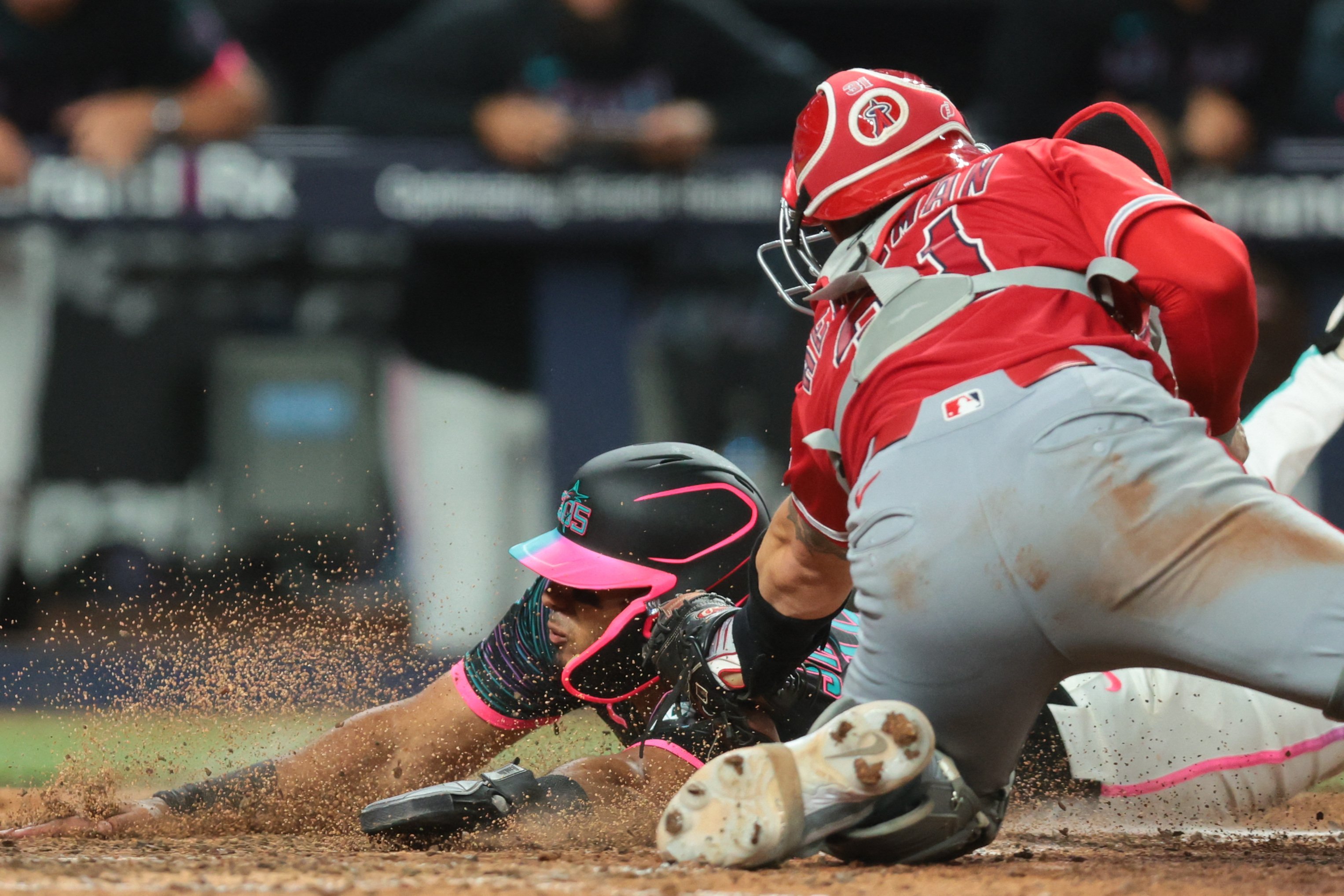 MIAMI, FL — With two outs in the bottom of the ninth inning, the Miami Marlins find themselves trailing 4-3. There is a runner on first (Leo Jiménez) and Javier Sanoja hits a double down the left field line that left fielder Jose Siri grabs. Known for his aggressive sends, third base coach Blake Lalli goes for the tie and waves Jiménez home. Instead, Jiménez gets thrown out and the game is over. "Good with the send there," Marlins manager Clayton McCullough said. "It took a really nice throw from a guy running a long way for it to pick it up there, and tough angle to make that throw home going back across. I love the aggressiveness by Blake and really have since he's been our third base coach. I think he does a great job of balancing aggressiveness in there. Two outs and a chance to tie it up, so all good with me." This is the second time in a week that the Marlins have ended a game by making an out on the bases. On Tuesday against the Atlanta Braves, with two outs in the top of the ninth, the Marlins went for a double steal, resulting in Jakob Marsee being thrown out at third. In a lower leverage but still significant moment during Friday's game, the Marlins had Esteury Ruiz running on contact from third base with no outs in the bottom of the third. He was thrown out as well and Miami didn't score in that inning. According to Baseball-Reference, the Marlins are second in the majors in outs made on the bases with 49 and are now tied for second with 17 outs at home plate. The Marlins out-hit the Angels, 12-6, but they also left 13 runners on base. Going into Friday's game, the Marlins ranked 22nd in wRC+ (98) with runners in scoring position. "I thought we put some good at-bats together," McCullough said. "Was that kind of a game where both sides just missed opportunities. It's not about who gets the most hits in a game—it's about scoring more runs and they did that." Mike Trout, one of the greatest to ever do it, took Marlins starting pitcher Tyler Phillips deep in the top of the first inning, giving the Angels an early 1-0 lead. Phillips would cruise the rest of the way, going four-plus innings and striking out four in the process. In the top of the fifth, Phillips allowed a base hit to catcher Tyler Heineman and with 61 pitches, McCullough made his way to the mound and took Phillips out of the game. Michael Petersen entered in his place and recorded three outs, despite walking Trout. With only a few exceptions, the Marlins have not trusted Phillips to provide length since being converted into a starter. He has only completed six innings twice in 13 starts. "I'd like to fight for it a little bit more, but I am still young in this game and do understand where I stand this year," Phillips said. "Wasn't built up to be a starter out of spring and didn't prepare in the offseason to be a starter. If there is any management there, whatever it is, doesn't matter to me. My goal is to go out there and throw the ball until my manager comes out and takes it from me." The Marlins did take the lead in the bottom of the fifth inning when Kyle Stowers knocked in an RBI single driving in Jakob Marsee. Stowers finished with four hits, tying his season-high. Everything went downhill for the Marlins in the top of the seventh inning with Josh Ekness on the mound. He walked Josh Lowe, Tyler Heineman moved Lowe to second on a sac bunt and Wade Meckler grounded out, moving Lowe to third. With a runner on third and two outs, Mike Trout hit a 56.7 mph grounder straight to Ekness, which he bobbled, allowing the ball to get past him and Lowe scored on the error. Florida Atlantic alum Nolan Schanuel took Ekness deep on the second pitch of the next at-bat for a two-run homer, his seventh of the season, giving the Angels a 4-2 lead. With the loss, the Marlins have now dropped four straight games and are a game below .500 at 58-59. Sandy Alcantara will take the mound on Saturday afternoon at 4:10 pm. View the full article
 -
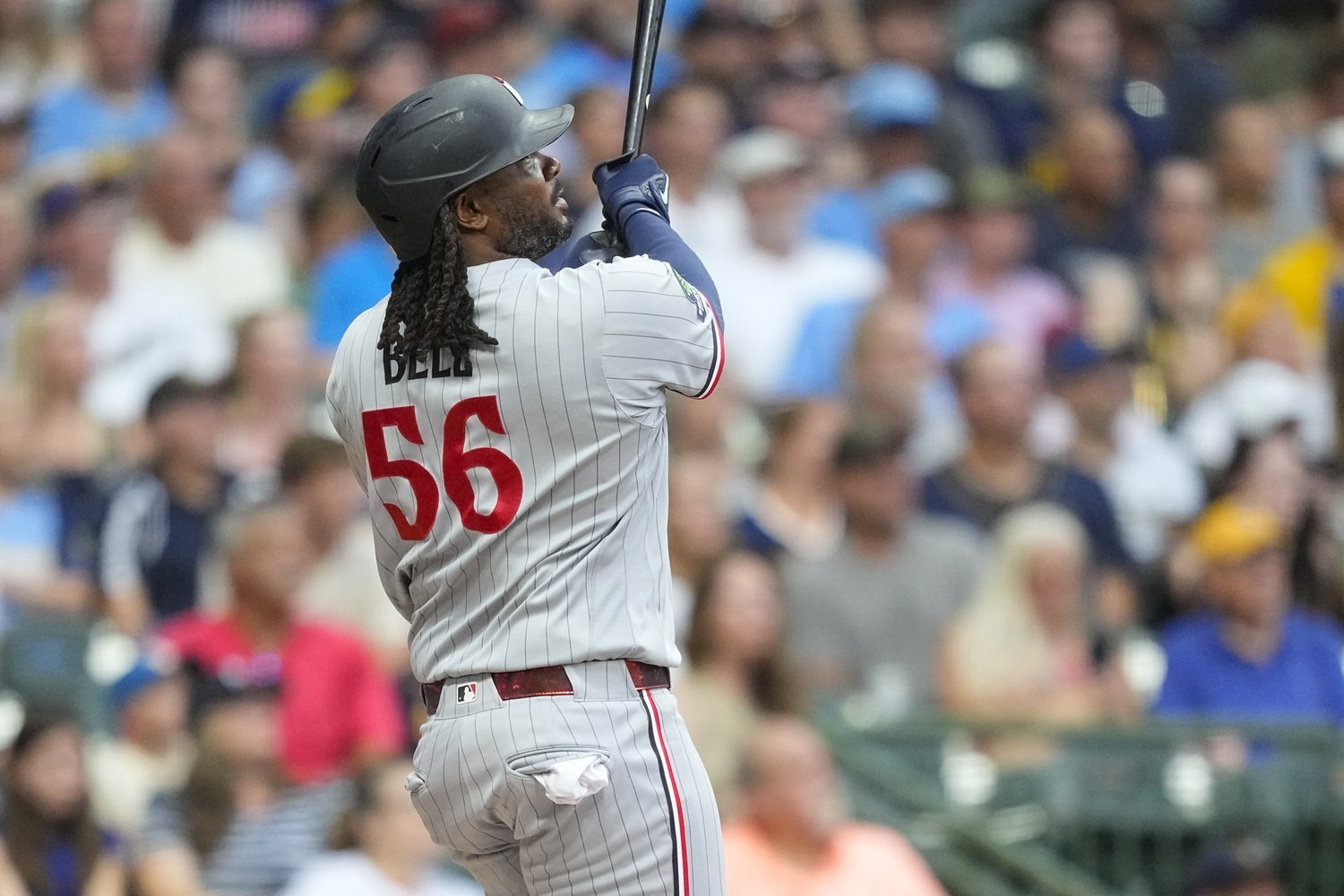 Box Score SP: Zebby Mathews 5 IP, 6 H, 6 ER, 2 BB, 4 K (83 pitches, 50 strikes (66% strikes) Home Runs: Josh Bell (15), Kaelen Culpepper (1) 3 WPA: Josh Bell (0.32); Royce Lewis (0.15); Yeondrez Gomes (0.09) Win Probability Chart (via FanGraphs) Every game for the Twins has the pressure of competing for a postseason spot, as they entered today just a half-game out of the last Wild Card spot in the American League. But this game had an extra layer: after a long-awaited call-up, the Twins have promoted Kaelen Culpepper to the 26-man roster. Make the two extra layers: since Joe Ryan was placed on the 10-day injured list, Zebby Matthews returned to the rotation to try and finish his season on a strong note. The Twins threatened early but couldn't capitalize in the top of the first with a walk, a stolen base and a single. Milwaukee answered in the bottom half, with Brice Turang striking out before Jackson Chourio launched a solo home run to give the Brewers a 1-0 lead. Milwaukee added three more runs in the bottom of the inning. Christian Yelich singled and Luis Lara walked before a Royce Lewis fielding error allowed David Hamilton to reach and Yelich to score. Turang then delivered a two-run double, scoring Lara and Hamilton to push the Brewers' lead to 4-0. Chourio grounded out to end the inning, leaving Milwaukee with a commanding early advantage. But the Twins responded in their half of the third with a two-out, two-run home run from Josh Bell, scoring himself and Ryan Jeffers. Bell went four-for-five on the night as he shakes his midseason slump. Zebby stayed locked in after his rough start and worked quickly through the Brewers lineup and gave the offense every chance to keep the pressure on Milwaukee. The Twins took advantage of those clean innings from Mathews and struck back with a solo-homerun from Culpepper on his second at-bat, making the game a one run game 4-3. Then Austin Martin doubled, driving home Victor Caratini, but Ryan Kreidler was thrown out at the plate. Still, it was a new game at 4-4. In the fifth, the offense continued with a string of singles that scored two, giving the Twins a 6-4 lead. But the Brewers were not giving up. They loaded the bases with no outs, and a sac-fly to Martin gave the Brewers a run back. Garrett Mitchell "singled" on a ground ball to Culpepper who was slow to deliver the ball to first base. That tied the game, but Matthews' fourth strikeout got the Twins out of the inning. The Twins responded. With two outs, Jeffers got his tenth double of the season. Lewis also doubled, scoring Jeffers. Then a sharp line drive double from Bell scored Lewis, and the Twins put up a two-spot for the fourth straight inning, taking the lead again 8-6. It appeared the momentum was not going to switch off and on, just back and forth. Tommy Nance replaced Mathews for the sixth inning, but not for production; Mathews came out of the game for a blister that had formed on his foot. Nance gave up a leadoff single, but retired the next two batters before being replaced by AJ Minter to face lefty Brice Turang who struck out to end the inning. Then the Twins revamped bullpen held the lead. Jeff Hoffman pitched the seventh, Andrew Morris pitched the eigtht, and Yoendrys Gomez got his sixteenth save in the ninth to help the Twins take the first win of the series. What’s Next? The Twins will send Taj Bradley to the mound (9-4, 3.69 ERA) facing Robert Gasser (LHP)(3-4, 4.48 ERA) at 6:10 Saturday night. They will again try to find their way into the last Wild Card spot, as they remained a half game behind the Texas Rangers, who also won on Friday. Postgame Interviews View the full article
 -
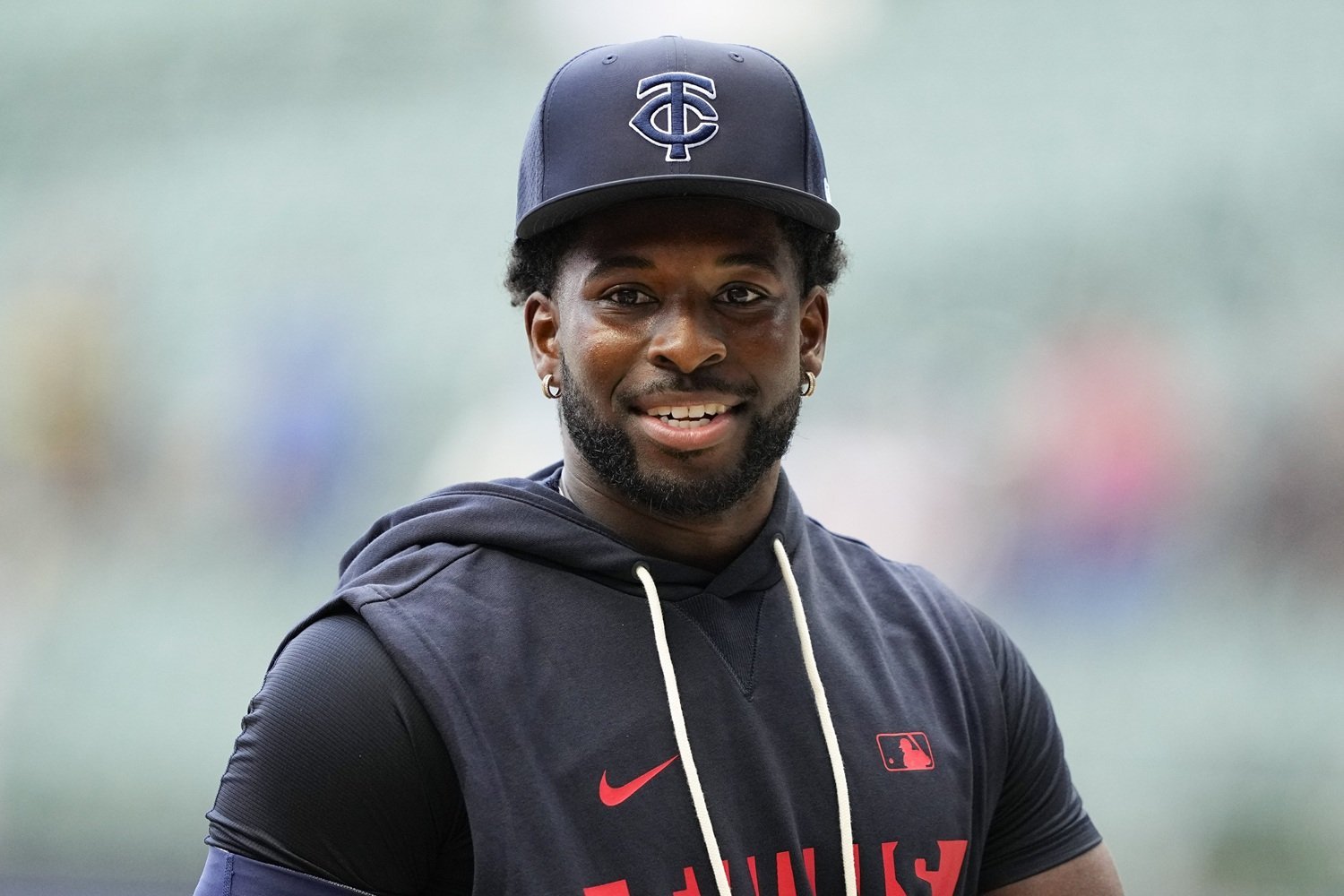 Activated off the 7-day Triple-A IL on July 24 from a left hip strain that sidelined him for over two weeks, Minnesota Twins third-ranked prospect Kaelen Culpepper struggled upon rejoining St. Paul’s lineup, hitting .179/.207/.214 with a 2 wRC+ over 28 plate appearances. Minnesota's top pick in the 2024 draft quickly changed course, however, hitting .412/.474/.706 with a 199 wRC+ over his next 21 plate appearances, putting together one of the best three-game stretches of his 2026 campaign. In response, the Minnesota Twins purchased Culpepper’s contract from Triple-A on August 7, with him making his major league debut against Milwaukee that night. Culpepper was in the shower when he realized something was going down. “Our clubby told me to go into (Brian Dinkelman’s) office, and I walked in, and all staff was in there; coordinators were in there. I kind of knew what was going on. He broke the news to me. I got pretty emotional. I started crying and stuff.” His sentimental state continued as he entered Minnesota’s dugout. “(I) felt welcomed, for sure. Everyone’s focused, of course, but so many congratulations. I feel very comfortable. The last couple of hours were very hectic, you know what I mean? I’m just excited to get the first at-bat out of the way for sure.” The 23-year-old popped out to Brewers first baseman Jake Bauers in his first at-bat. However, manager Derek Shelton is confident about Culpepper’s ability to contribute at a high level at the plate. “He’s definitely made strides (at the plate). There’s still gonna be room for improvement at the major league level, but I think all the challenges we’ve thrown at (Kaelen) organizationally this year, he’s done a really nice job…there’s bat speed there. There’s an ability to impact the baseball.” Shelton was quickly proven right, as Culpepper homered off Milwaukee left-handed starting pitcher Shane Drohan in his second major league at-bat, with the ball traveling 390 feet at 100.2 MPH off the bat: Culpepper homering in his major league debut is indicative of the offensive potential the right-handed bat has demonstrated since Minnesota drafted him 21st overall in the 2024 MLB Amateur Draft. He hit 20 home runs between High- and Double-A in 2025, sporting a near-elite average exit velocity and barrel rate at both levels. He maintained an elite average exit velocity and barrel rate at Triple-A while refining his approach and swing decisions against advanced pitching. Culpepper has all the tools necessary to become one of Minnesota’s most productive hitters immediately. Shelton is also optimistic about Culpepper in the field. “I think right now (he’s) just going to be playing shortstop. I mean, I think with our club, we’ve got to know that you can play multiple positions. He’s played second and third in St. Paul. But I think right now in the short term, it would just be short. But, I mean, hell, we’ve watched guys go to positions that I don’t—I mean, if you would have told me Alex Jackson was going to start two games at first base a month ago, I would have told you that you were crazy.” Regardless of where the consensus Top 100 prospect plays, Shelton believes he will play a meaningful role in Minnesota’s ability to return to the postseason for the first time since 2023. “He’s very ready…he’s become a better defender. I mean, this is a kid that has some tools. It’s why he’s so highly touted. He’s back healthy, he’s playing well, so we felt it was the right time to bring him to the big leagues.” View the full article
 -
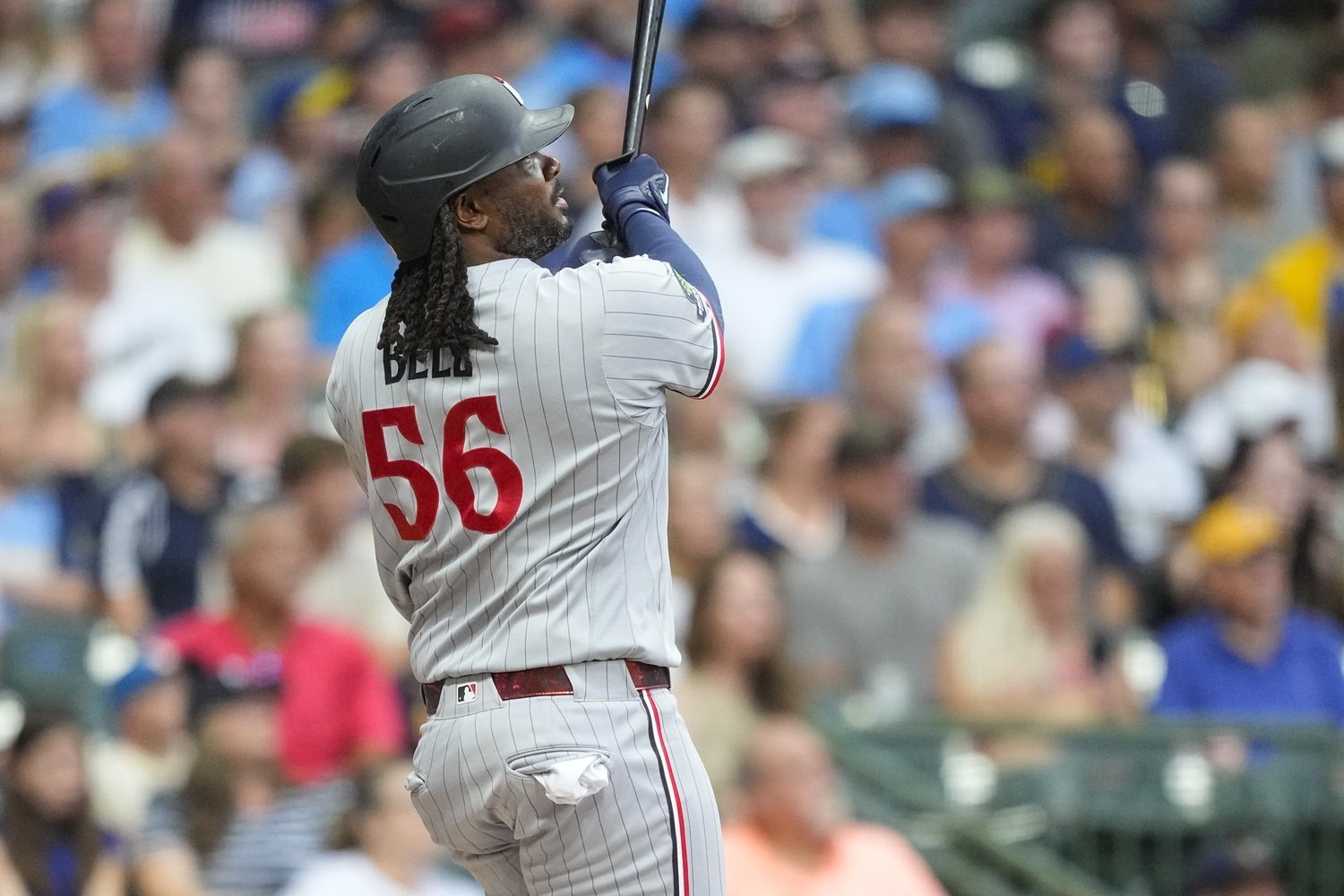 Box Score SP: Zebby Mathews 5 IP, 6 H, 6 ER, 2 BB, 4 K (83 pitches, 50 strikes (66% strikes) Home Runs: Josh Bell (15), Kaelen Culpepper (1) 3 WPA: Josh Bell (0.32); Royce Lewis (0.15); Yeondrez Gomes (0.09) Win Probability Chart (via FanGraphs) Every game for the Twins has the pressure of competing for a postseason spot, as they entered today just a half-game out of the last Wild Card spot in the American League. But this game had an extra layer: after a long-awaited call-up, the Twins have promoted Kaelen Culpepper to the 26-man roster. Make the two extra layers: since Joe Ryan was placed on the 10-day injured list, Zebby Matthews returned to the rotation to try and finish his season on a strong note. The Twins threatened early but couldn't capitalize in the top of the first with a walk, a stolen base and a single. Milwaukee answered in the bottom half, with Brice Turang striking out before Jackson Chourio launched a solo home run to give the Brewers a 1-0 lead. Milwaukee added three more runs in the bottom of the inning. Christian Yelich singled and Luis Lara walked before a Royce Lewis fielding error allowed David Hamilton to reach and Yelich to score. Turang then delivered a two-run double, scoring Lara and Hamilton to push the Brewers' lead to 4-0. Chourio grounded out to end the inning, leaving Milwaukee with a commanding early advantage. But the Twins responded in their half of the third with a two-out, two-run home run from Josh Bell, scoring himself and Ryan Jeffers. Bell went four-for-five on the night as he shakes his midseason slump. Zebby stayed locked in after his rough start and worked quickly through the Brewers lineup and gave the offense every chance to keep the pressure on Milwaukee. The Twins took advantage of those clean innings from Mathews and struck back with a solo-homerun from Culpepper on his second at-bat, making the game a one run game 4-3. Then Austin Martin doubled, driving home Victor Caratini, but Ryan Kreidler was thrown out at the plate. Still, it was a new game at 4-4. In the fifth, the offense continued with a string of singles that scored two, giving the Twins a 6-4 lead. But the Brewers were not giving up. They loaded the bases with no outs, and a sac-fly to Martin gave the Brewers a run back. Garrett Mitchell "singled" on a ground ball to Culpepper who was slow to deliver the ball to first base. That tied the game, but Matthews' fourth strikeout got the Twins out of the inning. The Twins responded. With two outs, Jeffers got his tenth double of the season. Lewis also doubled, scoring Jeffers. Then a sharp line drive double from Bell scored Lewis, and the Twins put up a two-spot for the fourth straight inning, taking the lead again 8-6. It appeared the momentum was not going to switch off and on, just back and forth. Tommy Nance replaced Mathews for the sixth inning, but not for production; Mathews came out of the game for a blister that had formed on his foot. Nance gave up a leadoff single, but retired the next two batters before being replaced by AJ Minter to face lefty Brice Turang who struck out to end the inning. Then the Twins revamped bullpen held the lead. Jeff Hoffman pitched the seventh, Andrew Morris pitched the eigtht, and Yoendrys Gomez got his sixteenth save in the ninth to help the Twins take the first win of the series. What’s Next? The Twins will send Taj Bradley to the mound (9-4, 3.69 ERA) facing Robert Gasser (LHP)(3-4, 4.48 ERA) at 6:10 Saturday night. They will again try to find their way into the last Wild Card spot, as they remained a half game behind the Texas Rangers, who also won on Friday. Postgame Interviews View the full article
 -
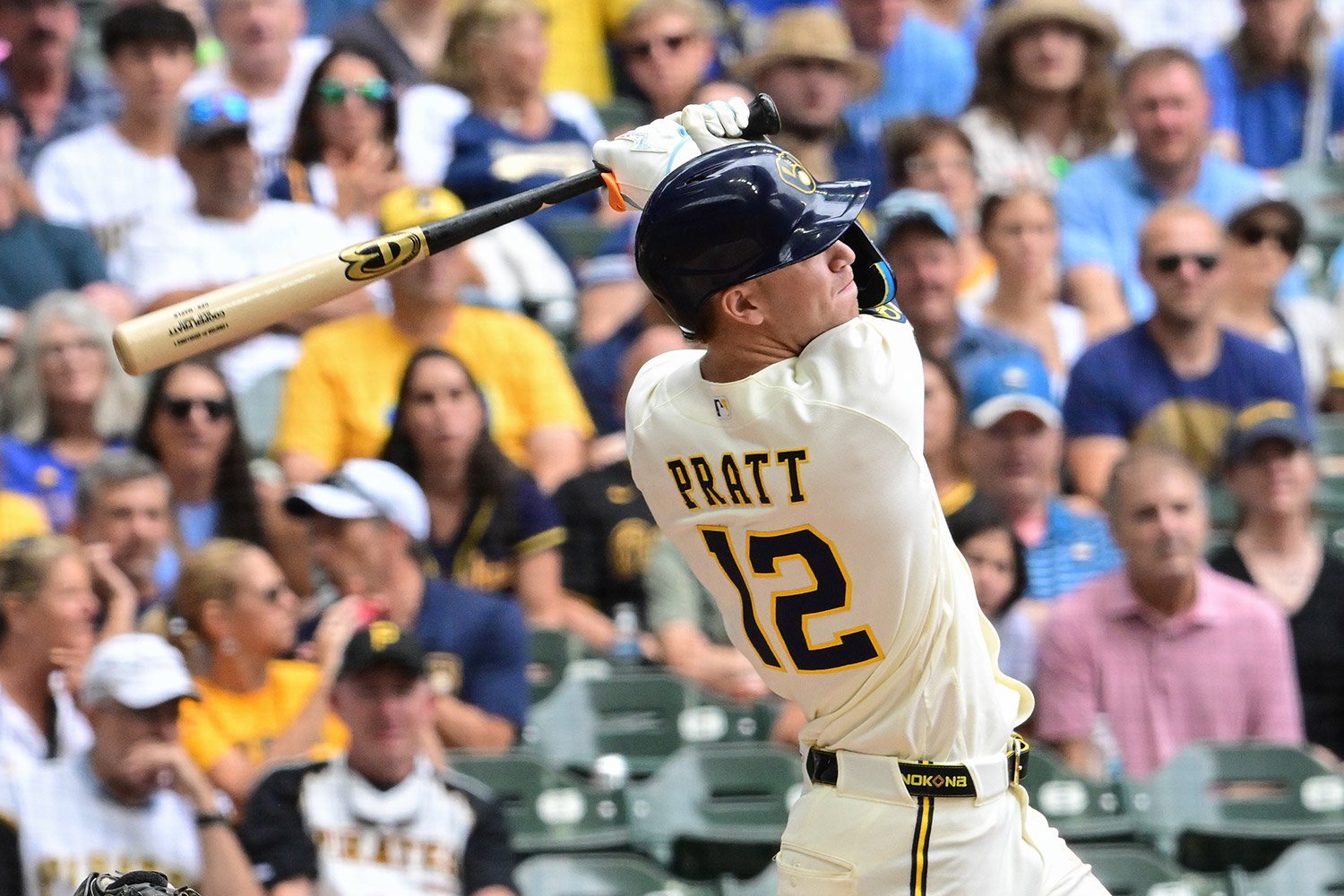 Cooper Pratt has had quite the year. The Milwaukee Brewers’ fourth-ranked prospect (per Brewer Fanatic) has inked a long-term extension, made his MLB debut, and now he’s quickly turning into the most dangerous type of hitter there is: someone who excels at everything. Let’s break down how Pratt is already adjusting to the big leagues in a way that could make him a key piece when postseason baseball rolls around. Cooper Pratt’s Background Pratt is a 21-year-old infielder for the Brewers, and he’s done nothing but impress since the team selected him in the sixth round of the 2023 MLB Draft. Pratt holds a hefty frame, standing at 6-foot-4 and weighing 210 pounds despite profiling as a shortstop, a position that demands the fleet of foot. The former sixth-round pick has overcome that, swiping 58 bases between the 2024 and 2025 minor league seasons. His glove (60) and fielding (60) have profiled as the infielder’s best tools, as he’s managed to work his way all the way up to a major league debut this season. This isn’t an easy feat considering the fierce competition from Jesus Made and Luis Pena, fellow infield prospects who are climbing the ladder with Pratt. Pratt Locked Down Matt Arnold has proven himself as someone who knows talent analysis, and he’s nailed the hires to build the best farm system in baseball. With that being said, when the Crew signs someone to an eight-year, $50.75 million contract, it’s for good reason. The budding shortstop is locked down until at least 2033 before a club option can kick in over the next couple of years. This is similar to what the Brewers have done with Luis Lara, an outfielder who also debuted this year and inked a seven-year, $31 million deal taking him through 2032 ahead of a club option. The Surface Level Numbers Are Promising So far, Pratt has passed the eye test, and he’s come a long way from someone who slashed just .238/.343/.348 with the Double-A Biloxi Shuckers a season ago. One of Milwaukee’s greenest infielders is currently slashing .289/.371/.391 with a .762 OPS over 42 games with the group. Pratt has slugged two home runs, driven in 17 baserunners, and has 18 walks to 29 strikeouts with 10 stolen bases already. Taking A Deeper Dive Take a more granular look at Pratt’s early performance, and you’ll be even more impressed. The Magnolia Heights H.S. alum has a 137 wRC+ since the start of July, implying that he’s been a far better all-around hitter than the average major leaguer (with 100 being the mean value). Like most players on the Brewers, he takes his walks, earning a free pass 12.2 percent of the time. That mark, along with his 19.6 percent strikeout rate, is both well above league average. Pratt has had success against fastballs, even getting a bit unlucky with a .258 batting average that’s eight points below his expected value. The real difference has been his success against breaking balls, a pitch type that he’s gone 17-for-38 (.447 AVG) against with five extra-base hits, including a home run. Pratt, even at his young age, is already identifying which breaking balls aren’t worth offering at and which to attack. What’s His Long-Term Role? What will Pratt do long term, and can he keep this productivity up? Unlike batting average on balls in play, metrics like low chase rates, high walk rates, and a prominent indication that he can identify pitches well are all sustainable traits. This isn’t someone who is hitting into luck. In fact, he’s done all of this despite having a below-average bat speed of 70.3 miles per hour. Pratt is still very young, and he could easily fill out more of his frame as the years go by. He may need to be flexible, though, as baseball’s top prospect in Made could be up in the big leagues as soon as this year. We’ve seen Pratt play around the infield, so it shouldn’t be much of an issue. Wherever he plays on defense, this is someone who has the right habits at the plate and could be a difference-maker for years to come. View the full article
 -
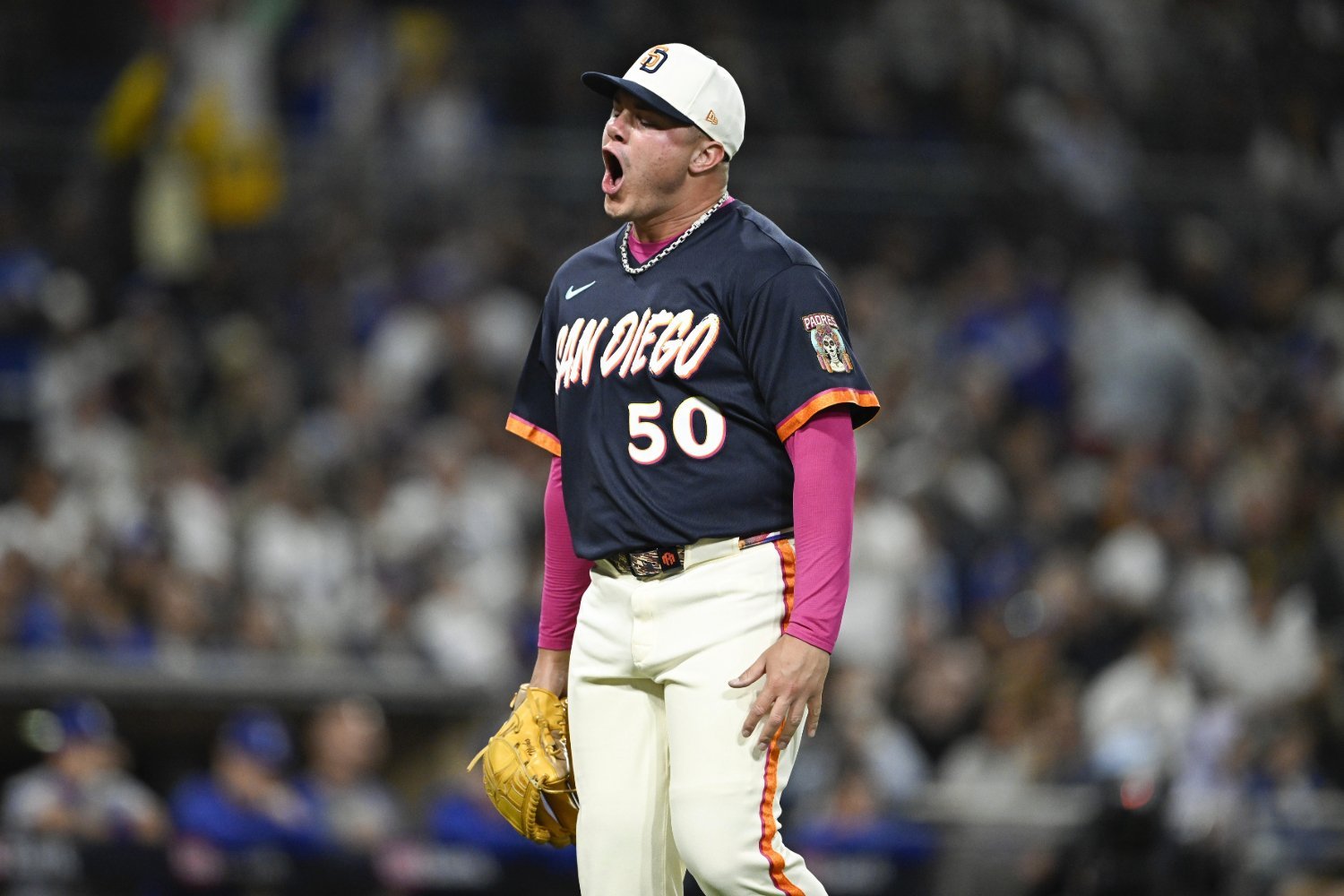 For most of July, talk surrounding the San Diego Padres was centered off-the-field, rather than on it. Rumors of what the Friars would or would not do in the looming MLB trade deadline were swirling, with San Diego holding prized jewels in the bullpen. Amidst the trade speculation, pitching performances helped keep the Padres afloat in the NL Wild Card race, posting a 13-13 record in July. Ranking Padres' Best Pitchers In July #3: Adrian Morejon, Relief Pitcher In an overall underwhelming year, one aspect of the team has remained consistent for the Padres: the bullpen. In July, Adrian Morejon continued to show why he is a critical piece to San Diego’s biggest strength. The southpaw posted a 2.57 ERA and 1.50 WHIP in 14.0 innings pitched in the month. Morejon was a name that came up in trade deadline rumors, with reports of the Padres rejecting a trade offer from the Yankees. Ultimately, the team wisely opted to hold onto him, hoping to make a serious run at a championship prior to his impending trip into free agency at the conclusion of the season. #2: Michael King, Starting Pitcher This has been yet another year where injuries have decimated the rotation for the Padres. The exception, however, has been Michael King. In July, King continued to establish himself as San Diego’s ace in 2026, posting another month of solid numbers. In 29.0 innings pitched, the right-hander dealt a 2.79 ERA and 1.14 WHIP, both better than his season-long totals. King, for the most part, was safer than his relief pitching counterparts in trade discussions. His consistency in July helped steady the ship for the Padres, who hope to rely on him for the postseason push ahead. He also has some reinforcements to support his cause in Casey Mize and Robbie Ray. #1: Mason Miller, Relief Pitcher At the start of July, it would have come as a surprise to see Mason Miller’s name still on the Padres roster come August. His name was swirling in trade rumors, with many speculating that San Diego would cash in on its most valuable asset. However, that was not the case, and Miller pitched another brilliant month. In July, he owned a 0.82 ERA and 0.64 WHIP in 11.0 innings pitched, also going seven-for-seven in save opportunities. Miller’s performance in July earned him the NL Reliever of the Month award. Despite the noise from the trade deadline, Miller stayed on course. By not shipping him away for assets, A.J. Preller made it clear that he sees Miller as a part of the team's future and a crucial piece for the remainder of 2026. With him and Morejon closing out games, it's not difficult to understand that line of thinking. View the full article
 -
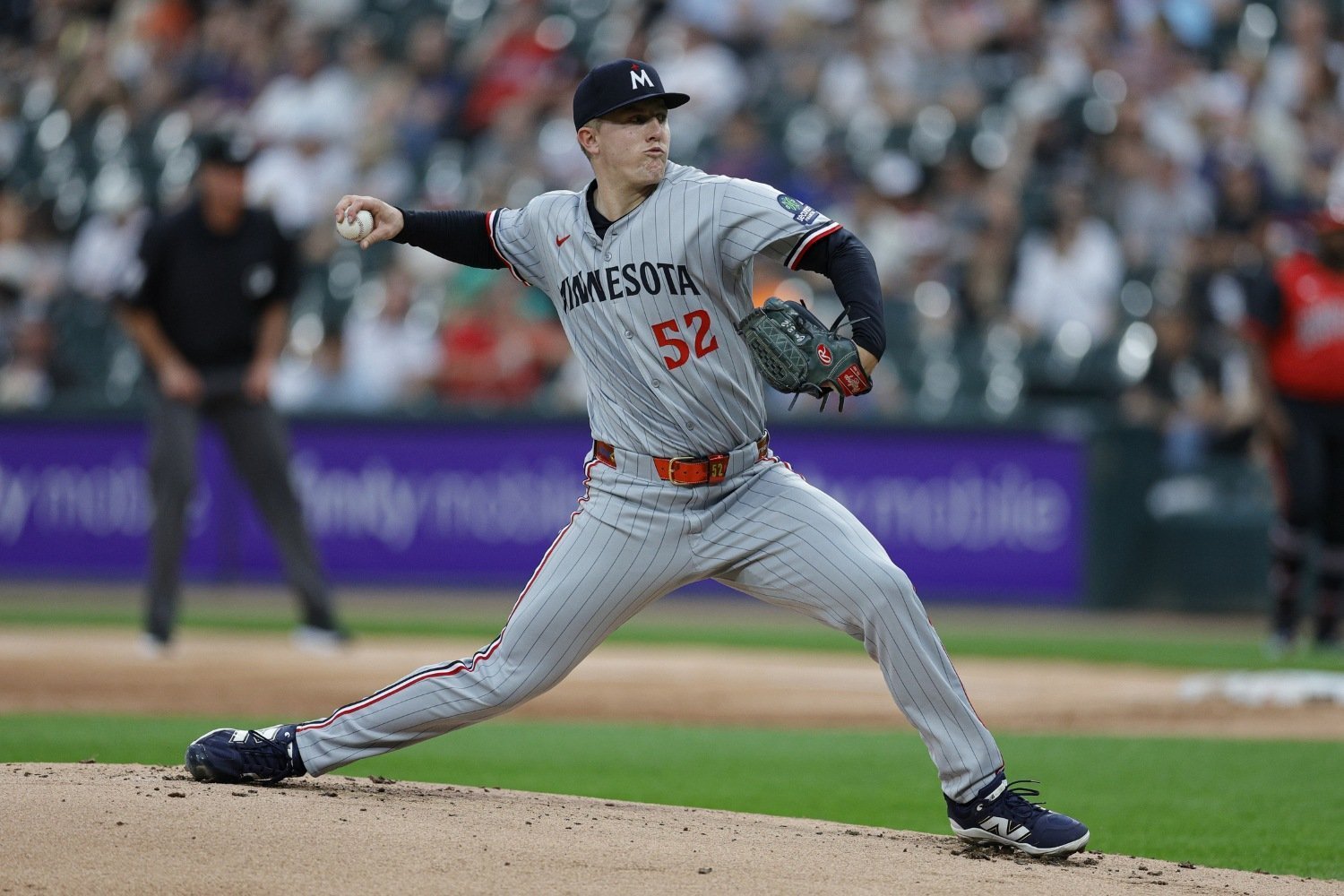 The Minnesota Twins made all the rumored moves official. Minnesota announced Friday that it has selected the contract of top prospect Kaelen Culpepper while also recalling right-handed pitcher Zebby Matthews from Triple-A St. Paul. To make room on the active roster, infielder Tristan Gray has been optioned. The Twins also placed right-hander Joe Ryan on the 15-day injured list with a mild left glute strain. His IL stint can be backdated to Wednesday, meaning he would be eligible to return on August 20, although that’s an off day for the Twins. Culpepper's promotion gives the Twins another opportunity to see one of their most highly regarded young players at the major-league level. The former first-round pick has continued to work his way toward becoming a regular contributor in Minnesota, and his debut comes at a time when the club is trying to keep pace in the American League playoff race. The move also required Minnesota to clear a spot on its 40-man roster. Right-handed reliever Taylor Rashi was designated for assignment to make room for Culpepper. Minnesota acquired Rashi from the Arizona Diamondbacks in a cash transaction in June after Arizona had designated him for assignment. At the time, the Twins were searching for additional bullpen options, but Rashi never made a major-league appearance for the organization. He instead spent his time with Triple-A St. Paul, where he logged 17 innings and posted a 4.76 ERA. Rashi struck out 28.7% of the batters he faced while walking 11.3%. The Twins have added several other bullpen options since acquiring Rashi, making his path to the majors even more difficult. Minnesota acquired Jeff Hoffman, Tommy Nance and A.J. Minter in separate moves during the deadline period, significantly changing the makeup of its relief corps. Ryan Lands on Injured List The bigger concern for Minnesota is what Ryan's absence means for the rotation. Manager Derek Shelton told reporters that Ryan would be placed on the injured list after being diagnosed with a mild left glute strain. The Twins had also sent Ryan for testing on his back earlier this week, but the glute issue appears to be the primary culprit. The timing is unfortunate for a pitcher who had been one of Minnesota's best performers during the first half. Ryan earned his second career All-Star selection. Since returning from the break, however, something has clearly been off. His first start of the second half was particularly rough. Ryan surrendered an MLB-record six home runs against a Cleveland lineup that was the AL’s worst home run hitting team. The Twins subsequently pushed his next start back because of arm fatigue. Across his last three starts, Ryan has allowed 17 runs over 15 1/3 innings while striking out just 10 of the 73 hitters he has faced. Minnesota has lost each of those three games. His velocity has also dipped. Ryan's four-seam fastball averaged just 92.1 mph in Tuesday's start at Kauffman Stadium. That was his lowest average in a start since early May and well below his 93.4 mph average for the season. Matthews Gets Another Opportunity With Ryan unavailable, the Twins will turn back to Matthews. The right-hander has been recalled from St. Paul and is scheduled to start Friday's series opener against the Milwaukee Brewers. Matthews had recently been pushed out of Minnesota's starting rotation following the club's acquisition of Dean Kremer from Baltimore. Among the Twins' regular starters, Matthews had posted the weakest results, carrying a 5.22 ERA across 81 innings. His final start before being optioned was actually one of his better performances of the season. Matthews struck out a career-high 10 batters in a 5-3 victory over Seattle, although he still allowed three runs over five innings and surrendered his 16th home run of the season. Now, he'll have another opportunity to show that he can turn those encouraging peripherals into better overall results. For a Twins team trying to remain in the postseason picture, Ryan's health will obviously be the biggest factor. But Matthews has an important opportunity in front of him, while Culpepper gets another chance to establish himself in the majors. It's another significant roster shuffle for a Minnesota club that has undergone plenty of changes over the past several weeks. View the full article
 -
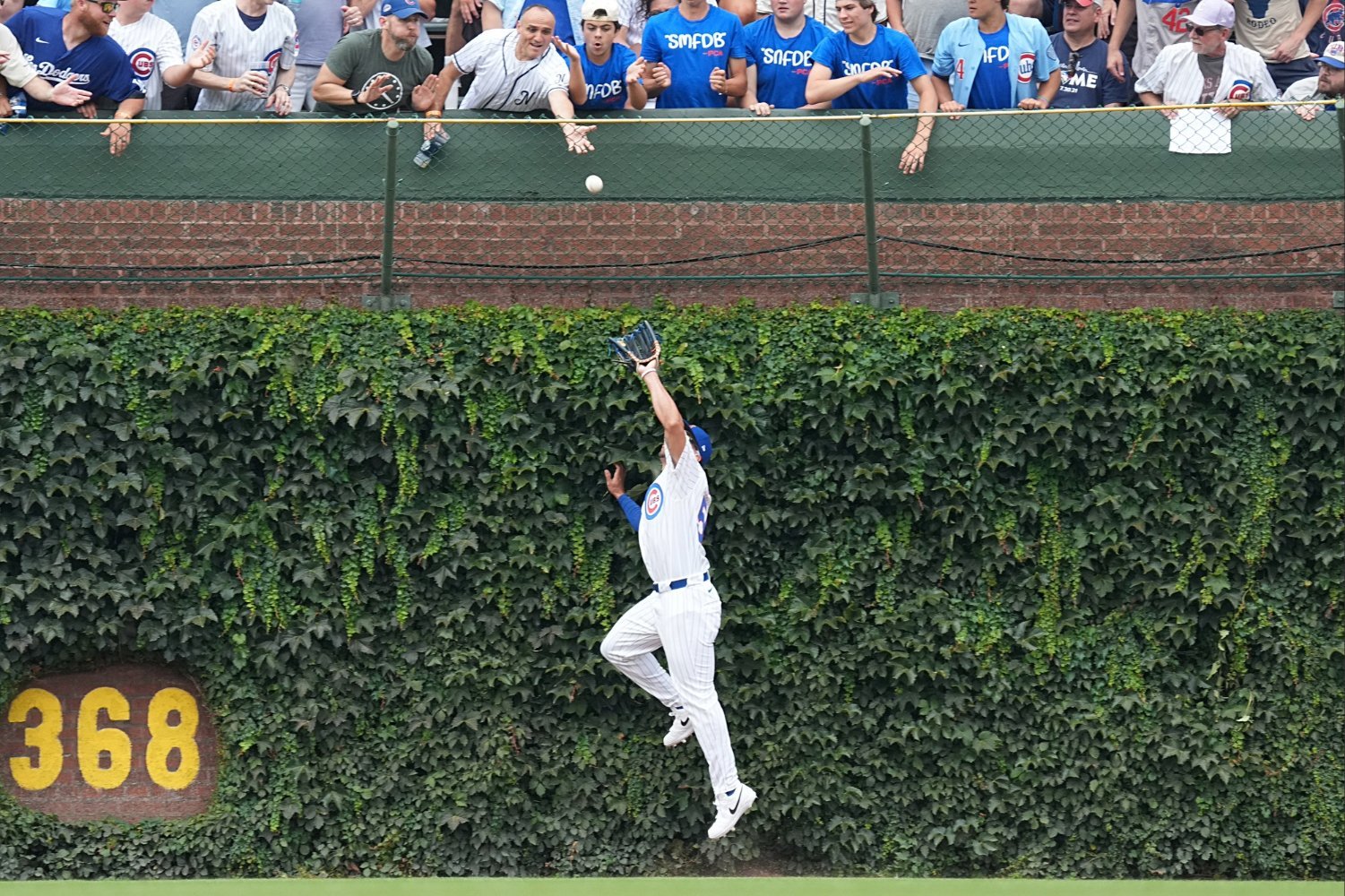 The Chicago Cubs were one of the more active teams at this year’s MLB Trade Deadline, and one of their bigger splashes was acquiring Clay Holmes and Tyrone Taylor from the Mets. They pulled this move off in the final few hours, and while Holmes is the headliner of the deal, Taylor deserves some attention for what he’s been up to this year and what he can offer. Let’s break down what he can bring to the table. Understanding Tyrone Taylor's Fit With Cubs Taylor is now with his third organization. The 32-year-old outfielder was originally drafted by the Milwaukee Brewers, as the Crew selected him in the second round of the 2012 MLB Draft. Taylor was picked right out of high school and eventually made his debut in the 2019 MLB season. Over what is now an eight-year career, the former Met has 60 home runs, 41 stolen bases and is slashing .238/.292/.422 (.714 OPS). Milwaukee then dealt Taylor in 2023. The Mets were in the market for pitching, so the Brewers gave them Adrian Houser, throwing in Taylor in exchange for pitching prospect Coleman Crow. Flashing Speed One of the first aspects you’ll notice about Taylor is his quickness. It’s apparent in the outfield and on the bases, as the veteran can cover plenty of ground with what serves as his main appeal now. Taylor, even when he isn’t an everyday player, has managed to establish a presence on the bases. Last year, he stole 12 bases in 113 games. It isn’t a high mark, but with the new disengagement rules being employed, we could see him be more aggressive depending on the situation. Referencing a larger sample size from last year, the Cubs’ newest outfielder logged a sprint speed of 29.3 ft/s, good enough to put him in the 94th percentile. Taylor was also touted as one of the best defenders in baseball last year, when he was on the field. His arm value of +5 (98th percentile) is top-tier, with a three outs above average (OAA) range rating being very respectable in the 84th percentile. As Taylor has progressed through the big leagues, his speed, and how he weaponizes it on defense, has been his best attribute. Pull-Side Thump The Brewers couldn’t get the veteran outfielder to stick in his time in Milwaukee, and the Mets, in the midst of a rebuild, were clearly aiming to offload him too. That being said, he is quietly putting up one of his best seasons at the plate from a power perspective. In just 67 games, Taylor has hit 10 of his 35 hits out of the yard. His career-high home run mark is 17, a value he hit back in the 2022 season. He’s currently on pace for just under 30 homers in a 162-game season. When taking a look at his spray chart, it’s clear that this is someone who is at their best when they can clip the ball out in front. The California native has hit all 10 of his round-trippers to left field this year, using an 11.9 percent barrel percentage to do so. Taylor’s 19.5 percent strikeout rate is admirable, but he’s never walked above the league average mark in his career, so it’s a tough sell to etch out an everyday spot for someone with an on-base percentage below .300. Where Does He Belong? Taylor will likely go back and forth with veteran Michael Conforto for the fourth outfield spot. Conforto has nine home runs and 24 RBI while slashing .231/.325/.456 this season, starting the year off red-hot before coming down to earth. The Cubs already have two elite defenders up the middle with Dansby Swanson and Nico Hoerner. Pete Crow-Armstrong could very well be on his way to another Gold Glove in center field, and having someone like Tyrone Taylor on the bench should keep the defense flowing even when the superstar sits. View the full article
 -
Boston Red Sox Minor League Hitters of the Month: July 2026
DiamondCentric posted an article in Talk Sox
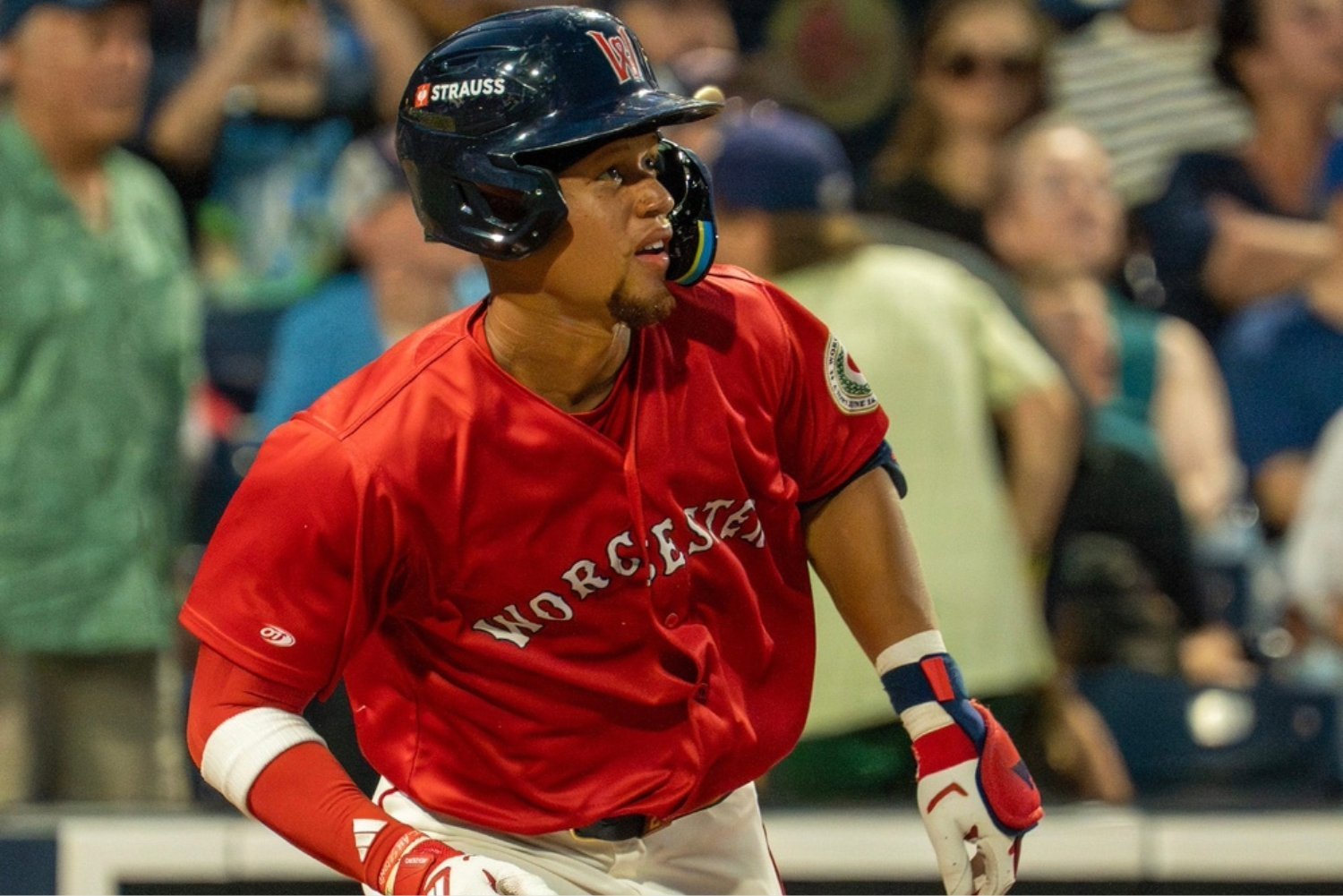 In the blink of an eye, baseball season is more than over halfway over. The Boston Red Sox's farm system has had a lot of bright spots and breakouts throughout the season, especially in July. However, Craig Breslow traded a good chunk of prospects to acquire major-league talent, most notably top prospects Anthony Eyanson, Kyson Witherspoon, and Enddy Azocar, who were all shipped to the Baltimore Orioles in a blockbuster deal for catcher Adley Rutschman. That depletion of talent will be felt in the years to come, and it makes our jobs slightly harder in the present. Thankfully, they still have a deep farm system, including the stars with the highest potential ceilings, Franklin Arias and Justin Gonzales. Let's give some flowers to the organization's best MiLB hitters from last month. Ranking Red Sox's Best Minor-League Hitters in July Honorable Mention: Justin Gonzales (High-A Greenville) The 19-year-old from the Dominican Republic has been very consistent all season, taking walks and not striking out a lot. Gonzales had a cold month of June, batting .183, but still managed 18 walks and 21 strikeouts in 71 at-bats. He then made a complete turnaround at the plate in July, slashing .306/.442/.565 in 62 at-bats. The right-hander provided five homers and 11 RBIs for Greenville, including a stretch where he smacked a homer in three straight games. It seems the Red Sox developmental staff wanted Gonzales to lift the ball more, since that was what he lacked; now he has hit the most homers in a month this season. Honorable Mention: Kristian Campbell (Triple-A Worcester) Drafted out of Georgia Tech, Campbell shined right out of the gate in the 2025 MLB season. It did not take long for Boston to ink him to an 8-year, $60 million deal. The Marietta, Georgia native figured out the struggles of a major leaguer, not being able to find his footing after a hot start, which led to a demotion to Triple-A. It took a while for Campbell to have the big month he has been hunting for, but it finally came in July. Batting under the Mendoza Line the prior two months, the righty turned it up, earning himself a .379 batting average while taking almost as many walks as strikeouts (13/17 BB/K ratio). Kristian was not finding extra-bases by any means, but he was getting on base at a phenomenal clip with a .507 OBP, higher than all his WooSox teammates. Most Red Sox fans are still rooting for Campbell to pan out and make it back to Boston; hopefully this is the stepping stone for what more is to come. #3: Louis Andujar (Low-A Salem) Signing for just $20,000 out of the Dominican Republic in 2025, Andujar was a name worth paying attention to in the Red Sox Florida Complex League in 2026, slashing an impressive .404/.483/.731 at just 18 years old. Andujar deserved a promotion and struggled mightily in his first taste of Low-A. Through his first 16 games, the infielder posted a slash line of .083/.179/.100, but the potential was still there, waiting for a breakout to come. After a great month of May, Louis fell back down to Earth in June. Like all the best prospects, he took the adversity in stride and came back swinging once again in July with a slash line of .329/.405/.658. With a Salem team that was slugging at an elite rate, the third baseman led the RidgeYaks in home runs with five, while being top five in almost every possible hitting category, including hits, runs, RBIs, BB, AVG, OBP, SLG, and OPS. Listed as a shortstop, Andujar has been playing third base for most of his time with Salem. Still very young, he'll enter some serious prospect conversations if he can keep up his hot hitting. #2: Brooks Brannon (Double-A Portland) Brannon has been showing off his power all season for the Portland Sea Dogs. Although he had a bit of a cool June, the power still carried over to July, slugging a team-leading seven long balls. He has spent all his time this season at first base and as a designated hitter and has been hitting his way into relevancy; he was finding extra bases at an elite level last month, leading the entire Red Sox organization (yes, even the big-league club) with 15 extra-base hits, seven homers, and tied with 19 RBIs. The only major flaw in his game that still needs development is his swing and misses; his walk-to-strikeout ratio has looked identical every month this season. If he cleans that up, a trip to Boston will be in his near future. #1: Kleyver Salazar (Low-A Salem) Signing as an international free agent from Venezuela, Salazar was seen as someone with a solid defensive profile but made very inconsistent contact at the plate. That problem showed in 2025 in Salem, where he slashed .215/.327/.276 through 99 games. Now in 2026, the catcher has looked completely different in the box, basically increasing all his stat totals from the prior season by a wide margin. However, he took it to the next level in July. Salazar posted an absurd .507 OBP, higher than every player in Low-A and 100 points higher than any of his teammates with a minimum of 50 at-bats. Not only did Salazar post his best OBP, but he also racked up the most runs, RBIs, hits, and extra-base hits he has ever tallied in a month. Not to mention, his .386 average and 1.139 OPS completely shattered his personal bests. Although not seen as a top Red Sox prospect on most lists, Salazar’s consistency has him looking like an underrated diamond in the rough that fans will get to know sooner or later. View the full article
 -
 The New York Mets were clear sellers at this year’s MLB trade deadline, and one of their earliest moves was dealing reliever A.J. Minter to the Minnesota Twins for some prospect help. Among the returnees is a farmhand by the name of Billy Amick, an infielder who is having an unbelievably impressive season. Let’s dive into what he brings to the table, and how he may be able to help the Mets down the road. Billy Amick's Updated Mets Scouting Report Amick is a 23-year-old corner infielder prospect and is one of New York’s newest up-and-coming talents. The Mooresville, NC native played his college baseball at the University of Tennessee and was a member of the 2024 College World Series winning squad. After spending a pair of seasons with Clemson, the third baseman held a potent bat with the Volunteers in his one and only year with the group. Amick made a profound impact in his final collegiate season, thrashing 23 homers with 65 runs batted in while slashing .306/.387/.639 for an impressive 1.026 OPS. That campaign was enough to make him a second-round pick, as the Twins selected Amick 60th overall in the 2024 MLB Draft. A Power Surge In 2026 The third baseman made plenty of progress in 2025, climbing from rookie ball up to High-A Cedar Rapids, but this season, he’s tapped back into the power many saw at Tennessee. Amick is slashing .224/.341/.502 with 26 home runs and 80 runs batted in over 91 games played. The powerful third baseman is on pace to eclipse 30 homers in just his second full season in the professional ranks, and his .842 OPS shows this is someone who can be a problem as he makes his way up the minor-league ladder. A Closer Look At The Damage It’s one thing to hit a ton of homers, but let’s take a look under the hood to see just how productive of a batter Amick is. The 23-year-old is getting out in front of the baseball plenty, logging a 28.6 percent pull-air percentage, good enough for the 93rd percentile in Double-A. Building off of that, the former Twins prospect is also putting the ball on the ground just 28.6 percent of the time (96th percentile). Someone who can lift the ball to the outfield consistently can move runners over instead of eliminating a pair of them in one swing. On top of his power, Amick has also made for a consistent on-base presence, drawing a 13.2 percent walk rate (73rd percentile). Room For Improvement While the third baseman has generated plenty of opportunities, whether it be from a clobbered baseball or one of many free passes he’s earned this season, the Mets up-and-coming infielder still has his faults. He isn’t chasing out of the zone much, yet Amick has 38.6 percent whiff rate (8th percentile). Cross reference this metric with the fact he’s swinging at 68 percent of offerings in the zone, and you get a 72 percent zone contact rate that’s one of the lowest in all of Minor League Baseball. Amick has the right idea; he’s swinging at quality pitches, but he’s getting fooled on pitch type/location. No matter how powerful he is or how often he gets on base, it'll be tough for him to make a mark while he's striking out in 30% of his trips to the plate. Expectations With Mets While Amick is far from perfect, the pop and potential are there. The Mets have struggled mightily at the plate this year, and their slugging is a big reason why; New York is 24th in slugging percentage (.387) and 27th in OPS (.692). If Amick keeps these power numbers up and can cut down on the swing and miss in his game, he could be a perfect in-house solution to that problem. View the full article
 -
 The Miami Marlins emerged from the MLB trade deadline with an all-too-familiar flat performance on the road against the Atlanta Braves. AJ Ramos, Isaac Azout and Kevin Barral discuss the lowlights from that three-game sweep, share their final thoughts on the club's deadline moves and look ahead to the next three games against the Los Angeles Angels, who enter Friday with the worst record in Major League Baseball. You can find Fish Unfiltered and Fish On First LIVE on the Fish On First YouTube channel, Apple Podcasts, Spotify or wherever else you get your pods. It's also been a notable week for former Marlins first-round draft picks. Jacob Berry, their 2022 first-rounder, was traded to the Kansas City Royals for cash considerations. This year's first-rounder, Jacob Lombard, made his minor league debut on Tuesday, hitting a home run for Low-A Jupiter. View the full article
 -
Minnesota Twins Prospect Retrospective: Kaelen Culpepper
DiamondCentric posted an article in Twins Daily
 The Minnesota Twins didn’t have to wait long to find out what they had in Kaelen Culpepper. Selected 21st overall in the 2024 MLB Draft, Culpepper entered professional baseball with plenty of questions about where he would ultimately play defensively, but there was considerably less uncertainty about his offensive foundation. He had already shown at Kansas State that he could make consistent contact, control the strike zone, and provide enough power to make opposing pitchers pay. Two years into his professional career, Culpepper has continued checking boxes. The 23-year-old has moved quickly through the Twins' system, reaching Triple-A after just 59 games at Double-A to close out the 2025 season. He has dealt with an injury setback along the way, but his overall performance has kept him near the top of Minnesota's prospect rankings. Now, with another strong season in St. Paul, Culpepper is set to make his big-league debut. A First-Round Pick With Plenty of Experience Culpepper wasn't a player who suddenly emerged during his draft year. He stepped into a prominent role at Kansas State immediately, spending his first two collegiate seasons at third base before moving over to shortstop as a junior. That final season proved to be a memorable one. After leading the U.S. collegiate national team in batting the previous summer, Culpepper returned to Manhattan and posted a .328/.419/.574 (.993) slash line with a 127 wRC+. That performance made him the first position player in Kansas State history to be selected in the first round. The Twins ultimately grabbed him late in the first round, 21st overall, a selection that may have surprised some observers at the time. Culpepper didn't need long to make the organization feel good about the decision. His first full professional season took him all the way to Double-A, while he also earned a spot in the Futures Game. Between Cedar Rapids and Wichita, he slashed .289/.375/.469 (.844) with 20 home runs, 25 steals, and a 133 wRC+ across 517 plate appearances. He showed a combination of offensive skills that helped accelerate his prospect stock. The Bat Has Continued to Develop One of the most appealing aspects of Culpepper's profile has remained the same since his college days: He puts the bat on the baseball. Culpepper carried that contact-oriented approach into professional baseball. He has consistently kept his strikeout totals manageable, posting a 17.6% strikeout rate across his first three minor-league seasons. In 2026, that figure rose a little to 18.7%. He also isn't locked into trying to pull everything. Culpepper's bat speed allows him to drive the ball to all parts of the field, and he has shown an ability to handle fastballs particularly well. He has a 45.5% hard hit percentage and a 45.0 Pull%, down 3.6% compared to 2025. His in-zone contact skills give him a strong offensive floor, while his developing power provides another dimension to the profile. There is still some room for improvement. Culpepper can become too aggressive against breaking balls and other softer offerings outside the strike zone. In 2026, he improved his O-Swing% by nearly two percent. He also put the ball on the ground roughly half the time in 2025. However, he has a 43.9% groundball rate this year, resulting in more flyballs. The power is already there, though. His 20/20 season in 2025 wasn't a fluke, and he has continued to show the ability to turn his bat speed into home run power, particularly when he gets the opportunity to pull the baseball. Another Strong Season in St. Paul Culpepper began 2026 at Triple-A St. Paul, and he hasn't looked out of place against the highest level of competition in the Twins' system. Through 74 games, he has produced a 116 wRC+ with 14 home runs and 17 stolen bases. His .845 OPS has come with success against both right- and left-handed pitching, giving Minnesota another reason to believe his offensive game can translate to the majors. His season hasn't been completely smooth. A glute injury sidelined Culpepper in mid-June, and his first attempt to return lasted only two games before he was placed back on the injured list. When he finally returned to the Saints' lineup in late July, he wasn't immediately back to his previous level. That changed quickly. Culpepper has started to heat up again in August, going 7-for-21 with four extra-base hits over his first five games of the month. Getting back into an offensive rhythm at this point in the season is particularly important as the Twins evaluate whether he's ready for his next challenge. Where Does He Play? The biggest question surrounding Culpepper's long-term outlook isn't necessarily his bat; it's his defensive home. Culpepper has spent the majority of his professional career at shortstop, and there's plenty to like about his work there. His arm strength is good enough for the position, and he has developed into a capable defender at a premium spot. The question is whether his range will ultimately hold up at shortstop in the majors. Culpepper doesn't possess the quickest first step, and that lack of initial burst can limit his ability to cover ground. That's why the Twins have continued giving him opportunities elsewhere. He has experience at second and third base, and those reps are likely to remain valuable as he progresses. For now, though, shortstop remains the most obvious path. Minnesota has a need at the position, and Culpepper has spent enough time there to make the organization comfortable with giving him an extended look. His versatility only makes him more valuable, especially for a team that has spent the past several seasons searching for consistency on the left side of the infield. Culpepper has established himself as one of the organization's best young players. Now he needs to turn his Triple-A success into major-league consistency. If the bat continues to produce and the defensive questions don't become too significant, the Twins may have found their next everyday shortstop. What stands out about Culpepper’s time in the minors? Leave a comment and start the discussion. View the full article
 -
 Brett Bateman, 24, was one of the two prospects that the Toronto Blue Jays acquired in the trade that sent Kevin Gausman to the Chicago Cubs. Bateman is replacing Luis Urías, who was placed on the 10-day injured list with a strained quad. Rudy Martin Jr. was designated for assignment to clear a spot on the 40-man roster. In Triple A this season, Bateman slashed .311/.429/.416 with 61 runs, three home runs, 33 knocked in, and 20 stolen bases. He adds more depth in the outfield and a left-handed bat off the bench. He could platoon in center field with Myles Straw, so he may not have to wait long to make his debut. View the full article
 -
 Robbie Ray’s surface numbers show a starter with a 3.08 ERA; his expected metrics reveal a pitcher with a 4.51 FIP trying to avoid a collapse. Without the overpowering fastball that defined his past, the 34-year-old left-hander has reinvented his arsenal to force rushed decisions in the batter’s box. In San Diego, the key will not be how many strikeouts he can accumulate, but how long he can maintain this disruption of hitters’ timing before the quality of contact catches up with him. The transformation begins with the loss of velocity on his fastball. With his four-seam fastball dropping to an average of 93.2 mph in 2026, hitters gained something they previously did not have: time. With a few extra hundredths of a second, batters can identify the pitch better, track it deeper into the plate, and delay their swing decisions. Once that urgency disappears, the pitcher’s advantage begins to erode. That temporal advantage reduced the impact of his fastball, the pitch that carried his identity for years. With a fastball that no longer creates the same level of threat, opponents are making contact inside the zone (Z-Contact%) 91.5% of the time and chasing fewer pitches outside of it. That forces Ray to attack the corners more often, and when he misses by only a small margin, counts extend and walks rise to 11.1%. That is where the real challenge of this version of Robbie Ray emerges. However, the reason to believe he can hold up in San Diego lies in the restructuring of his secondary pitches. Since his fastball no longer beats hitters as frequently as it once did, Ray has shifted more of his arsenal toward his changeup and knuckle curve. The former has limited opponents to a .196 batting average. The latter disrupts swing timing. Tracking data shows that 65.9% of swings against his curveball occur with hitters ahead of the pitch (Early%). In other words, batters are committing to their swings before recognizing the pitch’s final trajectory. Conditioned by the fastball, they accelerate their bodies too early. That timing disruption helps explain the pitch’s 35.1% Over%. The metric confirms that the barrel of the bat passes over the baseball when the hitter triggers the swing too early. Rather than chasing swings and misses, Ray’s objective with this profile is to limit the quality of contact by forcing weak contact above the barrel. That type of contact would not be equally sustainable in every environment. But Petco Park changes part of the equation. A pitcher with only a 36.3% ground-ball rate has room to survive thanks to the ballpark’s dimensions and its long-standing ability to suppress airborne damage, acting as a natural filter that can turn those harmless fly balls into routine outs for the outfielders. The Padres did not acquire the Robbie Ray who dominated hitters with a 96 mph fastball and won a Cy Young award. They acquired a pitcher who now needs to win each plate appearance in a completely different way. As long as he can continue disrupting the timing of opposing hitters, his ERA will have a chance to challenge a much less optimistic FIP. If he stops doing it, that margin will shrink and the results will begin to look more like the underlying metrics. View the full article
 -
Toronto Blue Jays Minor League Pitchers of the Month - July 2026
DiamondCentric posted an article in Jays Centre
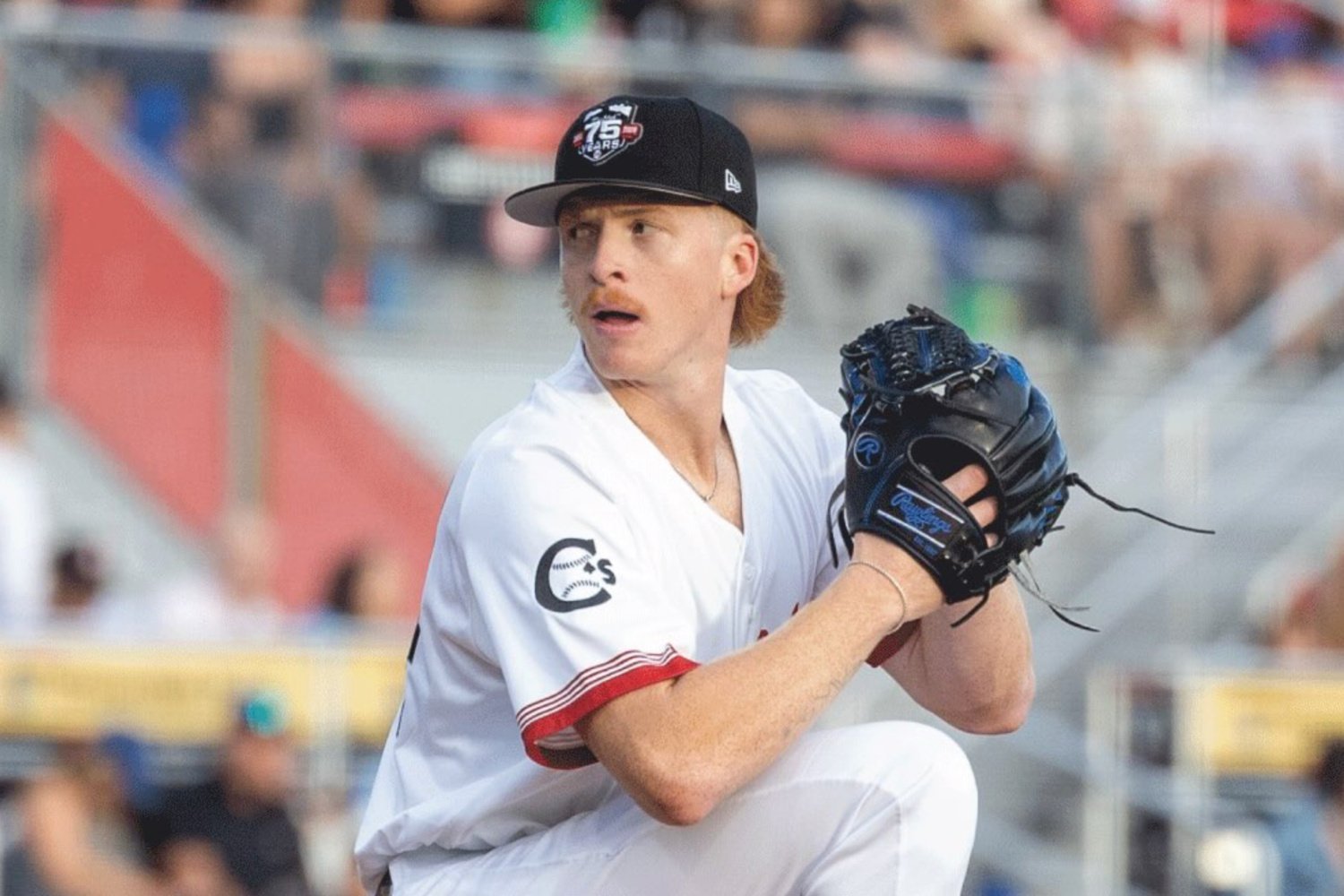 I know, I know. It's late to be publishing any sort of "player of the month" content for July. But the trade deadline was a little later this year, and I figured that was slightly more important to cover. Still, I wanted to make sure Jays Centre acknowledged all of the Blue Jays' best performances in July, so I'm writing this up today. Let's get right to it. Honourable Mention: Chad Dallas - Buffalo/Toronto I try to avoid including guys who have already debuted in the majors on these lists. However, Chad Dallas gets a shoutout for pitching to a 1.46 ERA in three minor league outings last month, as well as tossing a scoreless inning (and earning his first big league hold) for the Blue Jays on July 10. No. 5: Denis Samudio - Dunedin Denis Samudio struck out 28 batters in 17 innings last month. That's a 38.9% strikeout rate. He racked up more strikeouts than hits, walks, hit-by-pitches, and wild pitches combined. The 21-year-old certainly wasn't perfect, as his 4.24 ERA and 4.33 FIP will attest, but how can you not be impressed by a strikeout total like that? The Royals sent Samudio to the Blue Jays in June in exchange for Connor Seabold. He's still a lottery ticket, but so far, he's looking like a great return for a pitcher the Jays designated for assignment. No. 4: Javen Coleman - New Hampshire/Buffalo Javen Coleman struck out 18 of the 49 hitters he faced in July (36.7%) with a 4.50 strikeout-to-walk ratio. He also earned four saves while pitching to a 3.09 ERA. He has run into a little more trouble since a mid-July promotion to Triple-A Buffalo, but that's to be expected. Instead of punishing him for his struggles at the highest minor league level, I'm choosing to give him credit for earning a promotion in the first place. No. 3: Jack Eshleman - Vancouver I try to focus on more than just ERA when it comes to picking pitchers of the month, particularly for the minor leaguers. I also try to prioritize top-ranked prospects and players in the higher levels when I'm having trouble making a decision. Having said all that, I can't ignore Jack Eshleman's 1.23 ERA in July, especially when it wasn't a super strong month for pitching in the system. The 22-year-old made six relief appearances in the month, five of which were at least two innings long. From June 30 to July 23, he pitched 12 consecutive scoreless innings. No. 2: Austin Marozas - Dunedin/Vancouver/New Hampshire The Blue Jays signed a 26-year-old Austin Marozas out of independent ball last summer. He pitched well for the New Hampshire Fisher Cats before landing on the injured list in mid-May. The righty started his rehab stint in the FCL on June 20, and over the next few weeks, he worked his way back to New Hampshire, stopping in Dunedin and Vancouver along the way. From June 20 to July 31, he produced a 2.96 ERA in 27.1 innings, striking out 36. His 5.26 ERA on the season is less than inspiring, but that number drops to 3.72 if you remove his two disastrous outings before he hit the IL. Even better, his strikeout rate improves to 28.7%, and his K-BB% improves to 17.3%. Mazoras will face his fair share of bumps in the road (like his first start in August), but he has been a great story so far, and hopefully, his story is just beginning. No. 1: Johnny King - Vancouver Johnny King had another strong month in July, striking out 25 and walking eight over four starts. Jays Centre's No. 2 prospect struggled with control at times, but the southpaw never gave up more than three earned runs in an outing, and the Canadians won all four games he started. In other words, Johnny King was Johnny King. There's not much more to say. View the full article
 -
Might Be Something There With This Former First-Round Pick
DiamondCentric posted an article in Twins Daily
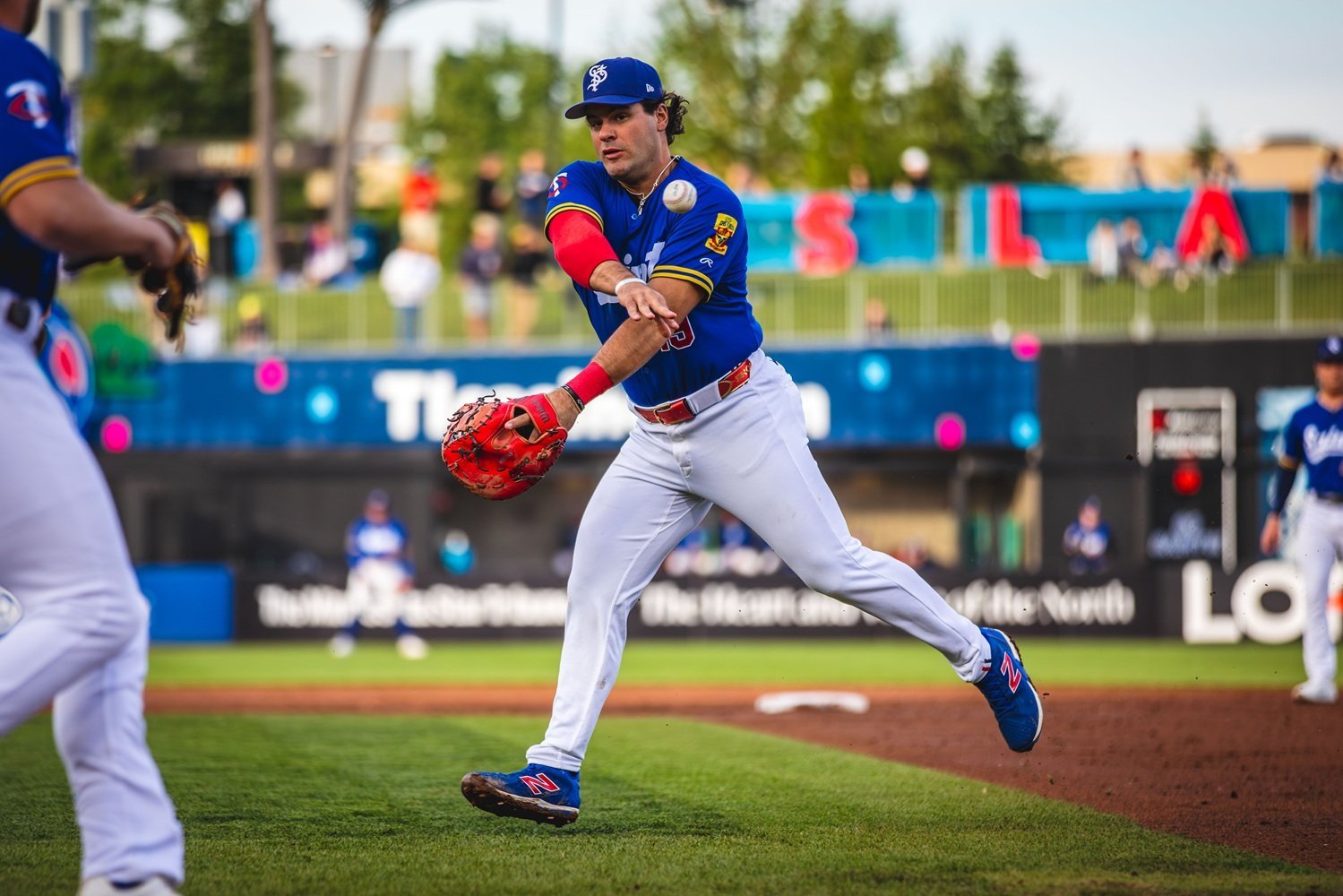 The Twins selected Aaron Sabato with the 27th pick in the 2020 MLB Draft, and the first baseman has had a rough go of it in the seven seasons since then. However, now might be the time to finally give him the call. When you draft a player with the First Base Only tag, he has to hit. Sabato was the highest-drafted first baseman in 2020—a draft mired by the uncertainty of only having a few weeks of scouting for players whose seasons were shut down in March—mostly because Spencer Torkelson was drafted as a third baseman. Unfortunately, Sabato’s minor league career is littered with not hitting. Or at least not hitting enough. He’s got a pretty standard first-base-only profile: a lot of strikeouts, a lot of homers, a low batting average, and enough walks to keep his on-base percentage above water. That batting average has, for the most part, been low enough to keep him from being taken seriously as a prospect. Across six minor league seasons, he’s mustered just a .230 average and has struck out over 30% of the time. That type of hitter generally doesn’t have a long major league career, or one at all. But Sabato has managed to hang around in the Twins organization, and every season, he’ll have a few weeks in a row that lead fans to think he might finally be putting it together. This season is as close as we’ve gotten to the fabled “putting it together.” Sabato began the 2026 season—his age-27 season—with Triple-A St. Paul. He played sparingly, in just four of the team’s first 17 games, registering 14 plate appearances and striking out in seven of them. Then he started getting opportunities. Starting with a three-hit night on April 16, he played nine of the team’s final 13 April games, slashing .310/.375/.621 (.996) with three doubles and two home runs across 32 plate appearances. And he really hasn’t looked back. Since April 16th, when he started playing consistently, he’s hitting .293 with 47 extra-base hits (20 home runs) and an OPS of .961. Even factoring in those bad first handful of games, his OPS sits at .936. The International League is a high-offense league, so raw OPS can be deceiving, but he sits about 30% above league average by wRC+. His .287 batting average at Triple-A in 2026 is the best mark at any level of his career, outside of his .305 average in 39 games at Double-A last season. His next-best year-end average in a sample of more than 50 games was .245 last season at Triple-A. His wRC+ has only been this high twice—in 39 games at Double-A last season and in 22 games at High-A in 2021. This might be a fluke, or it might be a player in the prime of his career having found an approach that clicks. He’s managed to produce against fastballs, off-speed, and breaking pitches alike—though he’s absolutely feasted on fastballs, with a .326 average and .433 wOBA. He’s still swinging and missing plenty, but he’s cut his strikeout rate down to 24% this year (which will increase if he gets a call-up). He’s cut down his walks over the last two years, but that has been a product of a more aggressive approach with pitches both inside and outside of the zone. Even with a reduced walk rate, the improvement in his batting average has given him a .356 OBP on the year, better than any season of his career outside of Single-A. And he’s pulling the ball more than he ever has, with a pull air percentage of 17%, which is merely on the higher side of average (72nd percentile), but the best mark of his career. And contextually, he’s a great fit for the Twins right now. Sabato has a staggering 1.243 OPS against lefties this season, slashing .364/.470/.773 against southpaws. The major league club, on the other hand, ranks in the bottom five in baseball against left-handed pitchers in batting average, OPS, wRC+, and wOBA. It’s dire, with only five Twins with more than 10 plate appearances who have been league-average or better performers against lefties (wRC+, where 100 is average, in parentheses): Ryan Jeffers (165), Austin Martin (124), Royce Lewis (117), Byron Buxton (104), Kody Clemens (103). And it’s not even close after that. The next-best hitter is Josh Bell, who has a .667 OPS that’s 14% below league average. Right now, Victor Caratini is being trusted with first base against lefties, and he’s following close behind with a .607 OPS against southpaws this season, 21% below league average. The two have accounted for 64% of the team’s plate appearances against lefties at first base and designated hitter. It would be foolish to sit here and say “Well Sabato couldn’t be worse!” because he absolutely could. If he’s walking less and his strikeout rate jumps in his transition to the majors, he can absolutely be worse. If MLB pitchers can attack him with offspeed and breaking pitches for strikes, they’ll take away his biggest strength, demolishing fastballs. And even when he gets fastballs, it’s unclear that he’ll be able to keep up with MLB velocity, as the average fastball he’s seen thus far this season is around 94 MPH. But the bar for him to clear isn’t that high. If he were to muster just league-average offense against lefties, he would be a significant addition to this lineup. And there’s plenty of room for him. Tristan Gray and Alex Jackson are currently on the big-league roster (or at least one of them is, pending Kaelen Culpepper's corresponding move), but they are rarely playing. Gray has started just three of nine games since replacing an injured Byron Buxton a week and a half ago. Jackson has started three games since Ryan Jeffers returned from injury on July 10th, two of which were at first base against a lefty (in very limited action versus lefties, Jackson has a .382 OPS across 24 plate appearances). It’s rare that a team could reasonably have room for a first baseman who would strictly fill the short side of a platoon, but the Twins are in that position now. Even after Culpepper's promotion, or if Walker Jenkins were to be called up, there could still be room for someone like Sabato to try to keep the line moving against lefties, if they valued a platoon hitter and didn’t bite on one of several potential right-handed bats currently designated for assignment. Or perhaps he could be their September position player call-up when the roster expands by one hitter and one pitcher. Sabato doesn’t have a high ceiling in the majors, and projection systems like ZiPS don’t forecast him being even an average hitter at a position you need to hit. But right now, what’s the risk in giving him a shot a few times a week against left-handed pitchers? And it would be fun—if you dig big dudes who ding dongs, anyway. View the full article
 -
 Chicago Cubs Transactions Chicago Cubs signed free agent RHP Andrew Wantz to a minor league contract. Chicago Cubs optioned RHP Tyler Ferguson to Iowa Cubs. Chicago Cubs recalled LHP Braxton Garrett from Iowa Cubs. Kansas City Royals claimed LHP Luke Little off waivers from Chicago Cubs. Iowa Cubs Lose On A Two-Out Walk-Off Single In Indianapolis Iowa lost 3-2 to Indianapolis, with the winning run scoring on a two-out single in the ninth inning. The Cubs out-hit the Indians 7-6 and drew six walks, but they struck out 10 times and left eight runners on base. Iowa took the lead in the second inning. Chas McCormick walked, advanced to second base on a wild pitch, stole third base, and came home on Jordan Nwogu's sacrifice fly to center field. That 1-0 margin held into the seventh, when Indianapolis loaded the bases against Andrew Wantz on singles by Duce Gourson and Derek Berg and a hit batsman. Wantz then hit Mitch Jebb to force in the tying run and walked Billy Cook to force in a second run, and Indianapolis led 2-1. The Cubs answered in the eighth. Hayden Cantrelle singled to right field, BJ Murray walked, and Owen Miller singled to right field to score Cantrelle and tie the game 2-2. In the ninth, Gabe Klobosits retired the first two hitters before Dominic Fletcher tripled to center field. Klobosits intentionally walked Jebb, and Cook lined a single to right field to end it. Cantrelle led the offense with three hits in four at-bats, and Ben Cowles added two hits. Connor Noland opened with three scoreless innings, allowing one hit with two strikeouts, and Ethan Roberts and Jayden Murray followed with three more scoreless innings. Wantz was charged with the blown save, and Klobosits took the loss. Player AB R H RBI BB K Ben Cowles 5 0 2 0 0 2 Owen Ayers 3 0 0 0 1 0 BJ Murray 3 0 0 0 1 2 Owen Miller 4 0 1 1 0 1 Chas McCormick 1 1 0 0 2 1 Ethan Hearn 4 0 0 0 0 2 Jordan Nwogu 1 0 0 1 2 0 Ed Howard 4 0 1 0 0 2 Hayden Cantrelle 4 1 3 0 0 0 Player IP H R ER BB K HR Connor Noland 3 1 0 0 1 2 0 Ethan Roberts 1 1 0 0 1 2 0 Jayden Murray (H, 5) 2 0 0 0 1 1 0 Andrew Wantz (BS, 2) 1 2 2 2 1 2 0 Gabe Klobosits (L, 0-2) 1 2/3 2 1 1 1 1 0 Knoxville Homers Four Times In A 7-3 Win At Chattanooga Knoxville beat Chattanooga 7-3 behind four home runs and 10 hits. The Smokies drew only one walk, but they made their contact count, leaving just three runners on base. Miguel Useche opened the scoring with a solo home run in the second inning. Chattanooga took the lead in the third, when Kien Vu walked, Jay Allen II homered to right center field for two runs, and Carlos Sanchez followed with a solo home run to right field for a 3-1 lead. The Smokies took that lead back in the fifth. Edgar Alvarez walked, Karson Simas doubled to left field to put runners on second and third, and Drew Bowser hit a three-run home run to left field for a 4-3 lead. Dom Krupinski followed with a triple, though he was stranded. Knoxville added insurance twice. Alvarez homered to right field in the seventh, and in the eighth Alex Ramírez singled and Andy Garriola hit a two-run home run to left field, his 19th of the season, for the 7-3 final. Simas finished with three hits in four at-bats, and Bowser drove in three runs. Brody McCullough earned the win with five innings, allowing three runs on three hits with two walks, two strikeouts, and two home runs. Connor Schultz was the difference from there, striking out six over three hitless innings for the hold, and Kenyi Perez finished with a scoreless ninth. Ariel Armas went hitless in four at-bats. Player AB R H RBI BB K Dom Krupinski 5 0 1 0 0 1 Alex Ramírez 4 1 1 0 0 0 Andy Garriola 4 1 1 2 0 0 Miguel Useche 4 1 1 1 0 0 Ariel Armas 4 0 0 0 0 1 Edgar Alvarez 3 2 1 1 1 1 Karson Simas 4 1 3 0 0 0 Alex Madera 4 0 1 0 0 1 Drew Bowser 4 1 1 3 0 2 Player IP H R ER BB K HR Brody McCullough (W, 1-2) 5 3 3 3 2 2 2 Connor Schultz (H, 2) 3 0 0 0 1 6 0 Kenyi Perez 1 0 0 0 2 1 0 South Bend Cubs Break Through In The Eighth To Win Game One South Bend beat Cedar Rapids 4-1 in the first game of the doubleheader, scoring three times in the eighth inning to pull away. The Cubs collected eight hits and left six runners on base, while Cedar Rapids left eight. South Bend scored first in the opening inning. Angel Cepeda doubled to center field, moved to third base when Kade Snell reached on a throwing error, and scored on Josiah Hartshorn's sacrifice fly to center field. Cedar Rapids tied it in the second on JP Smith II's solo home run to left center field, and the game stayed 1-1 into the eighth. The Cubs then put together their best inning of the day. Cepeda singled to center field, Kade Snell singled to left field, and Hartshorn singled to left field to score Cepeda. Jose Escobar loaded the bases with a single, Matt Halbach hit a sacrifice fly to right field to score Snell, and Alexey Lumpuy doubled to center field to bring in Hartshorn while also making a great plays defensively in centerfield. Lumpuy got his first hit in High-A ball. That's a lot of Lumpuy but it's important to document firsts. Here's some of his performance from yesterday: Sadly, Lumpuy was thrown out trying to reach third base, but the damage was done and South Bend led 4-1. Cepeda finished with two hits, a double, and two runs scored. Hartshorn went 2-for-2 with a walk and two RBI, and Escobar added two hits. Braylon Myers started and allowed one run on one hit over three innings, though he walked four. JP Wheat followed with two hitless innings, and Brayden Spears took the win with four innings of two-hit, scoreless relief. Player AB R H RBI BB K Angel Cepeda 4 2 2 0 0 1 Kade Snell 4 1 1 0 0 0 Josiah Hartshorn 2 1 2 2 1 0 Jose Escobar 4 0 2 0 0 0 Matt Halbach 2 0 0 1 1 0 Alexey Lumpuy 4 0 1 1 0 2 Geuri Lubo 4 0 0 0 0 2 Brennan Hudson 3 0 0 0 0 3 Justin Stransky 3 0 0 0 0 1 Player IP H R ER BB K HR Braylon Myers 3 1 1 1 4 3 1 JP Wheat 2 0 0 0 3 1 0 Brayden Spears (W, 7-2) 4 2 0 0 0 1 0 South Bend Drops Game Two After A Four-Run Cedar Rapids Sixth Cedar Rapids beat South Bend 4-2 in the seven-inning nightcap, breaking the game open with three runs in the sixth inning. The Cubs managed only three hits and left three runners on base. JP Smith II gave Cedar Rapids the lead with a solo home run to left field in the fourth inning, his second of the year and his second home run of the day. South Bend tied it in the fifth, when Lumpuy doubled and came home on Michael Hallquist's sacrifice fly to center field. The sixth inning decided it. Adam Stone hit Jayson Bass and Jose Salas with pitches to put two runners on, and Quinn McDaniel singled to center field to score Bass. Salas then scored from third base on a pickoff error at first base, and Miguel Briceno singled to center field to bring in McDaniel for a 4-1 lead. South Bend got one back in the bottom of the sixth on Kade Snell's solo home run to left center field, his seventh of the season, but the Cubs did not score again. Cole Peschl struck out three in the seventh inning to close it out. Snell and Lumpuy accounted for two of South Bend's three hits, with Michael Carico adding the other. Nazier Mulé was strong in the start, striking out six over five innings and allowing one run on four hits. Stone took the loss, giving up three runs, two of them earned, over two innings. Player AB R H RBI BB K Angel Cepeda 3 0 0 0 0 2 Kade Snell 3 1 1 1 0 1 Matt Halbach 3 0 0 0 0 0 Jose Escobar 3 0 0 0 0 0 Logan Poteet 2 0 0 0 1 2 Alexey Lumpuy 3 1 1 0 0 1 Michael Carico 3 0 1 0 0 0 Michael Hallquist 2 0 0 1 0 1 Brennan Hudson 2 0 0 0 0 2 Player IP H R ER BB K HR Nazier Mulé 5 4 1 1 2 6 1 Adam Stone (L, 5-2) 2 2 3 2 0 2 0 Myrtle Beach Pelicans Postponed The Pelicans' game at Columbia was postponed by rain and has been rescheduled. Top 20 Prospect Performance Jefferson Rojas: DNP Pedro Ramirez: DNP Jaxon Wiggins: DNP Josiah Hartshorn: 2-for-2, 2 RBI, BB Kevin Alcantara: DNP Ethan Conrad: DNP Kane Kepley: DNP Owen Ayers: 0-for-3, BB Jonathon Long: DNP Kaleb Wing: DNP James Triantos: DNP Brooks Caple: DNP Mason McGwire: DNP Ty Southisene: DNP Will Sanders: DNP Juan Cabada: DNP Eli Lovich: DNP Ariel Armas: 0-for-4, K Jostin Florentino: DNP Grant Kipp: DNP View the full article
 -
 Boston Red Sox Affiliate Recap Triple-A Worcester Red Sox Season Record: 58-48 The WooSox surge in the late innings turned this game into a 10-4 victory over the Lehigh Valley IronPigs (Philadelphia Phillies). Worcester’s first two runs of the game came from a Tsung-Che Cheng sacrifice bunt to bring in Vinny Capra in the third, while Kristian Campbell added on in the fourth with a deep off-the-wall RBI double, scoring Allan Castro to make it a 2-1 game. Nathan Hickey recorded a three-hit game while Castro and Capra both had multi-hit days, including a two-run double from Castro and a two-run Capra bomb in the sixth, giving Worcester a comfortable 6-2 lead. Some more insurance came in the seventh after Jason Delay brought in Braiden Ward with a single, 7-2. In his last at-bat, Franklin Arias’ hitting streak stayed alive; a two-run single to left field extended it to eight games. Immediately after, a wild pitch from the IronPigs pitcher plated Ward once again, putting the game completely out of reach, 10-4. The WooSox pitching staff was serviceable; Eduardo Rivera was the starter on the mound, tossing 3 ⅔ innings of one-run ball with two strikeouts. Seth Martinez came in after and allowed one run as well through 2 ⅓ innings while also earning the win. Osvaldo Berrios threw a shutout seventh inning with two strikeouts, and Wyatt Olds' outing was not perfect, but it was enough to make it through the game, giving up two runs on four hits through two innings. Standout Performances: Vinny Capra: 2-for-3, HR, 3 R, 2 RBI, BB Allan Castro: 2-for-4, 2B, 2 R, 2 RBI Nathan Hickey: 3-for-4, R Double-A Portland Sea Dogs Season Record: 55-49 The Sea Dogs went down quietly with a 5-2 defeat to the New Hampshire Fisher Cats (Toronto Blue Jays). Portland tallied just three hits as a team while scoring two runs. Johanfran Garcia’s RBI double in the sixth and Miguel Bleis’ RBI single in the ninth provided their only runs of the game, with Ronald Rosario recording the last hit for the Sea Dogs. Hayden Mullins had an outstanding game on the mound, striking out eight Fisher Cats while giving up just one run through 4 ⅔ innings. Cooper Adams took the loss as he allowed four runs in the sixth to make it 5-1, giving New Hampshire the best chance to take the game away. Tyler Davis calmed things down with 2 ⅓ shutout innings, but it did not matter in the end. High-A Greenville Drive Season Record: 47-55 A dominant performance by Greenville’s pitching staff led to a 4-2 victory over the Hudson Valley Renegades (New York Yankees). The Drive racked up 10 hits but had a tough time with runners in scoring position, going 4-for-14, but they still needed just four runs to take the win. In his first Greenville at-bat, Carlos Gutierrez, who was part of the Marcelo Mayer trade, smacked a double and came around to score. The entire lineup recorded a hit, with Ronny Hernandez providing the only multi-hit game, one of which was an RBI single in the second inning to tie it 1-1. Former UNC teammates Jake Schaffner and Owen Hull gave Greenville a 3-2 lead in the third with an RBI single (Schaffner) and a sacrifice fly (Hull). Gerardo Rodriguez gave the Drive their last run of the game with a single that brought in Hull in the seventh. The MVP award of the game can be shared between Jacob Mayers and Brady Tygart. Mayers started on the mound and was solid enough to keep Greenville’s lead intact, allowing two runs through four innings while striking out four. Boston’s 2024 12th-round pick Brady Tygart was absolutely dominant in his first start for the Drive since his promotion. The Arkansas product delivered five strong shutout innings with just one hit allowed and three strikeouts. Standout Performances: Brady Tygart: 5 IP, 1 H, 0 ER, 1 BB, 3 K Ronny Hernandez: 2-for-4, RBI Low-A Salem RidgeYaks Season Record: 45-59 The RidgeYaks blew a two-run lead in the late stages of the game and nearly came back, falling just short 10-9 to the Fayetteville Woodpeckers (Houston Astros). Salem’s bats were hot, doing the most they possibly could to save the pitching staff. Anderson Fermin's two-run single put them on the board, and D'Angelo Ortiz doubled home the tying run in the fourth, 3-3. Fayetteville nudged ahead 4-3 in the fifth, but Henry Godbout scored on a fielding error in the bottom half to knot it once again. Now in the sixth, Fermin and Ortiz both came around to score on a bases-loaded Godbout hit by pitch and a Starlyn Nunez sacrifice fly, giving Salem their biggest lead in the game, 6-4. The RidgeYaks pitching staff lost it in the seventh. A hit batter, two-run single, RBI single, and a two-run double turned a two-run lead into a 10-6 hole. Salem got three back in the bottom half, including Skyler King scoring on a passed ball, making it a close 10-9 game, but the game went quiet afterward to end it. Out of the four pitchers sent to the mound for Salem, Wuilliams Rodriguez had the only shutout appearance, tossing two perfect innings with one strikeout, giving the Yaks offense a chance to come back. View the full article
