Jump to content
DiamondCentric

DiamondCentric

Site Manager
  • Posts

    2,631
  • Joined

  • Last visited

    Never

Everything posted by DiamondCentric

  1. MIAMI, FL — On Thursday, the Miami Marlins announced their Opening Day roster for the 2026 season. Here are the 13 pitchers and 13 position players who will be active for Friday night's regular season opener against the Colorado Rockies: .marlins-roster { font-family: Arial, sans-serif; max-width: 900px; margin: auto; border: 2px solid #00A3E0; border-radius: 10px; overflow: hidden; } .marlins-header { background-color: #000000; color: #00A3E0; text-align: center; padding: 15px; font-size: 22px; font-weight: bold; } .roster-container { display: flex; flex-wrap: wrap; } .roster-column { flex: 1; min-width: 300px; padding: 15px; } .column-title { background-color: #00A3E0; color: #000; padding: 10px; font-weight: bold; text-align: center; border-radius: 5px; margin-bottom: 10px; } .player { background-color: #111; color: #fff; padding: 8px; margin: 5px 0; border-left: 4px solid #00A3E0; border-radius: 4px; font-size: 14px; } .player span { color: #00A3E0; font-weight: bold; } Miami Marlins 2026 Opening Day Roster Position Players Agustín Ramírez (C) Liam Hicks (C) Jakob Marsee (OF) Griffin Conine (OF/1B) Owen Caissie (OF) Heriberto Hernández (OF) Otto Lopez (INF) Xavier Edwards (INF) Graham Pauley (INF) Javier Sanoja (INF/OF) Connor Norby (INF/OF) Christopher Morel (INF) Austin Slater (OF) Pitchers Sandy Alcantara (RHP) Eury Pérez (RHP) Max Meyer (RHP) Chris Paddack (RHP) Janson Junk (RHP) Pete Fairbanks (RHP) Calvin Faucher (RHP) Tyler Phillips (RHP) Anthony Bender (RHP) Andrew Nardi (LHP) John King (LHP) Lake Bachar (RHP) Michael Petersen (RHP) Starting rotation Sandy Alcantara (starting Friday) Eury Pérez (Saturday) Max Meyer (Sunday) Chris Paddack (Monday) Janson Junk (Tuesday) For Alcantara, this will mark his franchise-leading sixth Opening Day start. His last one start was coming off of Tommy John surgery, where in 4 ⅔ innings of work, he surrendered two runs on two hits, walked four and struck out seven in what was a walk-off winner for the Fish. This will be the first time that Pérez is included on the Marlins Opening Day roster. He broke through to the big leagues in the middle of the 2023 season. He missed all of 2024 after undergoing Tommy John, and in 2025, rehabbing from surgery kept him on the injured list until June. In 20 starts last season, Pérez pitched to a 4.25 ERA and 3.67 FIP in 95 ⅓ innings pitched. Meyer will be the team's third starter. He got off to an amazing start in 2025, posting a 2.10 ERA through his first five starts of the season. However, in his final seven starts before landing on the injured list with a left hip impingement which later required season-ending surgery, he posted a 7.10 ERA. This spring, the former first-round pick tossed seven shutout innings, striking out 12 in the process. Last season between the Minnesota Twins and Detroit Tigers, Paddack had a 5.35 ERA and 5.03 FIP in a career-high 158 innings pitched. This spring, the 30-year-old made five spring training starts and allowed one earned run in 13 innings of work, while striking out 12. He will get the series opener against the Chicago White Sox. Junk, who won the fifth spot in the rotation over Braxton Garrett (optioned to Triple-A), threw a pitch design session on Thursday at loanDepot park for his final tune-up. This spring, Junk dealt with a ankle injury that kept him out for a bit, but still made four starts, allowing 10 runs (nine earned), with most of those coming in his final start against the St. Louis Cardinals. Bullpen Pete Fairbanks (closer) Calvin Faucher Tyler Phillips Anthony Bender Andrew Nardi John King Lake Bachar Michael Petersen Petersen is the lone reliever who's making his first Opening Day roster. Acquired from the Atlanta Braves last season, he posted a 3.97 ERA in 11 ⅓ innings pitched for the Marlins. This spring, Petersen struck out seven in 8 ⅔ innings of work. He is likely will be used in lower-leverage situations, but the fastball, which has topped out at 100 mph, will be a big weapon this season. This will mark Fairbanks' sixth Opening Day, but his first as a member of the Marlins. This spring, Fairbanks made six appearances, allowing just one hit and striking out eight in the process. John King, the second reliever Miami signed this offseason, quietly had a great spring, throwing eight innings of one-run ball, while striking out nine. Position players Catchers: Agustín Ramírez, Liam Hicks Infielders: Christopher Morel, Connor Norby, Xavier Edwards, Javier Sanoja, Graham Pauley, Otto Lopez Outfielders: Jakob Marsee, Austin Slater, Griffin Conine, Owen Caissie, Heriberto Hernández Ramírez was called up in April of last season and in 136 games, he slashed .231/.287/.413/.701 with 21 home runs, 67 RBI and a 91 wRC+. He participated in the World Baseball Classic, representing the Dominican Republic, so he only played in eight Grapefruit League games, collecting two hits. Similar to Ramírez, Hernández did not make the Opening Day roster in 2025, but was called up soon after. He slashed .266/.347/.438/.784 with 10 home runs, 45 RBI and a 118 wRC+. The Marlins will likely make room in Friday's starting lineup for Hernández since lefty Kyle Freeland will get the start for the Rockies. Norby missed Opening Day last season after suffering a left oblique strain. This season, he will play a combination of third base, first base and left field. Clayton McCullough told Fish On First that Javier Sanoja will be the starting third baseman on Friday. Norby had an encouraging spring, slashing .310/.326/.476/.802 with two home runs and three RBI. Still prospect-eligible, Owen Caissie was acquired in the trade that sent Edward Cabrera to the Chicago Cubs. He spent some time in the World Baseball Classic for Canada, where he went 7-for-17 with a home run and five RBI. Injuries Kyle Stowers and Esteury Ruiz were both expected to break camp with the team before suffering a right hamstring strain and left oblique strain, respectively. They will begin the season on the 10-day IL (retroactive to March 22). Stowers told the media on Thursday that he is progressing well. Ruiz will be out for 6-8 weeks and no recent update has been provided on him. View the full article
  2. The St. Paul Saints will open their 2026 campaign on the road in Indianapolis, but the spotlight will follow them wherever they go. This is not just another Triple-A roster. It is a collection of impact prospects, near-ready contributors, and experienced depth that could significantly shape the Minnesota Twins' season. With a new manager at the helm and one of the most talent-rich groups in Minor League Baseball, St. Paul enters its sixth season as the Twins Triple-A affiliate with expectations that stretch well beyond development. Brian Dinkelman takes over as manager after earning a promotion from Double-A Wichita. He steps into the role previously held by Toby Gardenhire, who joins Derek Shelton’s major league staff with the Twins. Dinkelman will be supported by a coaching group that includes hitting coaches C.J. Baker and Shawn Schlechter, as well as pitching coaches Carlos Hernandez and Ryan Ricci. The continuity in player development remains strong, but the voice leading the clubhouse will be new. The roster itself is what demands attention. St. Paul opens the year with 27 players, just one shy of the league limit, and features four Top 100 prospects recognized by both Baseball America and MLB Pipeline. Twins Daily’s own rankings are even more telling, with eight of the organization’s top 20 prospects assigned to this club, including the top three names in the system. 2026 St. Paul Saints Opening Day Roster (Twins Daily Prospect Rankings in parentheses) Starting Pitchers (5): RHP Andrew Morris (#12), LHP Connor Prielipp (#5), RHP Zebby Matthews, RHP John Klein, LHP Christian MacLeod The starting rotation brings both upside and immediate relevance. Prielipp headlines the group and is lined up to take the ball on Opening Day. His combination of stuff and pedigree makes him one of the most intriguing arms in the system. Last season, he posted a 4.03 ERA (3.52 FIP) with a 27.0 K% and 8.5 BB%. Matthews narrowly missed a spot in the Twins rotation to Mick Abel and now serves as high-end depth, ready if the big-league club needs innings. Morris may not carry the same hype, but his steady progression could earn him a look in Minnesota this summer. In 2025, he had a 4.09 ERA (4.27 FIP) with a 22.4 K% and a 7.0 BB%. Klein offers flexibility as a starter or long reliever, and it helps that he is a member of the 40-man roster if the Twins need him. MacLeod provides experienced depth and finished last season with the Saints. Relief Pitchers (7): RHP Dan Altavilla, RHP Trent Baker, RHP Andrew Bash, RHP Matt Bowman, RHP Raul Brito, RHP Grant Hartwig, RHP Marco Raya (#15), RHP Eduardo Salazar In the bullpen, the Saints could function as a pipeline for a Twins relief corps that still has questions. Raya, now transitioning into a full-time relief role, is the top-ranked prospect in the group and could move quickly if his stuff plays up in shorter outings. Veterans like Altavilla and Bowman bring big league experience and were on the fringes of the roster this spring. Altavilla pitched well for Israel in the WBC, and that could help him earn a call-up early in the season, while Baker continues to position himself as a viable option. This unit may not remain intact for long, given the likely need for reinforcements in Minnesota. Catchers (3): David Bañuelos, Noah Cardenas, Alex Jackson Behind the plate, Jackson stands out as a key depth piece. Acquired in the offseason in a trade with Baltimore, he gives the organization a strong defensive option at Triple-A. There was some question about whether the Twins could carry three catchers to start the year. Instead, Jackson will be the next man up if Ryan Jeffers or Victor Caratini gets hurt. Bañuelos and Cardenas round out the group, offering stability and familiarity with the pitching staff. Infielders (6): Orlando Arcia, Kaelen Culpepper (#2), Aaron Sabato, Tanner Schobel, Eric Wagaman, Ryan Kreidler The infield mix is a blend of upside and opportunity. Culpepper jumps to Triple-A after less than 60 games at Double-A, a clear signal of how highly the organization views him. He was the organization’s minor league player of the year in 2025 when he posted a 138 wRC+ between High- and Double-A. If Brooks Lee struggles early, Culpepper could force the issue quickly. Sabato, a former first-round pick, returns with his power potential still intact and has shown flashes at the Triple-A level. Schobel continues to provide defensive versatility as he can play nearly every position. Arcia, Kreidler, and Wagaman are all veterans who hovered on the edge of the big-league roster during camp and could each see time in Minnesota at some point this season. Outfielders (5): Kyler Fedko, Gabriel Gonzalez (#7), Walker Jenkins (#1), Alan Roden, Emmanuel Rodriguez (#3) The outfield might be the crown jewel of the entire roster. Jenkins and Rodriguez headline the group as two of the best prospects in baseball, both with the potential to impact the Twins' lineup in the near future. Jenkins reached Triple-A during his age-20 season while posting a 135 wRC+. Rodriguez has played parts of the last two seasons in St. Paul, where he had a 134 wRC+ in 2025. Injuries are the only thing that has held either of them back in their professional careers. Gonzalez and Fedko are coming off strong seasons and add further depth. Gonzalez was Twins Daily’s Minor League Hitter of the Year after he moved from High-A to Triple-A with a 148 wRC+. Fedko hit 28 homers and stole 38 bases in 130 games last season. Roden’s impressive spring suggests he may not be in St. Paul for long. It is a collection of outfield talent rarely seen at the Triple-A level, and it gives the Saints a lineup capable of overwhelming opposing pitching on any given night. There are also notable names sidelined to begin the year. Matt Canterino continues his recovery from shoulder surgery, while Cory Lewis (right rotator cuff), Kendry Rojas (right hamstring strain), and Julian Merryweather (left hamstring strain) are working back from their own injuries. Their eventual returns could further strengthen an already deep roster. The Saints open the season at Victory Field against the Indianapolis Indians (Pittsburgh Pirates) on Friday, March 27 at 5:35 p.m. (CT). The Saints home opener is Tuesday, March 31 against the Worcester Red Sox (Boston Red Sox) at 6:37 p.m. While the wins and losses in Triple-A matter, the bigger picture is clear. This roster is built to support the Twins, and it would not be surprising if many of these names play meaningful roles in Minnesota before the season is over. What stands out about the Saints' roster? Who will be the first player called up to the Twins? Leave a comment and start the discussion. View the full article
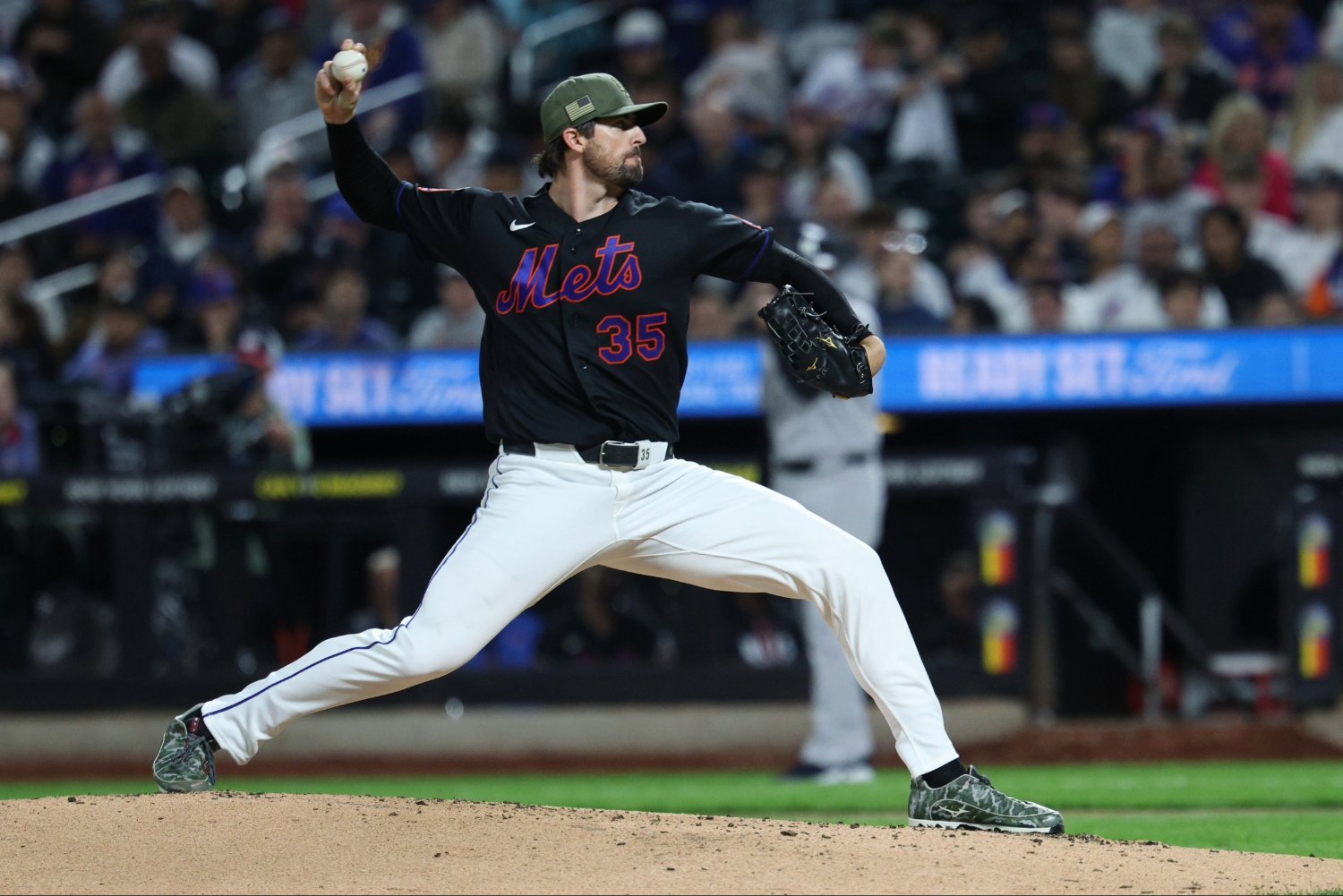
  3. Marlins outfielder Kyle Stowers speaks with the media prior to Opening Day to provide an update on his injury rehab.View the full article
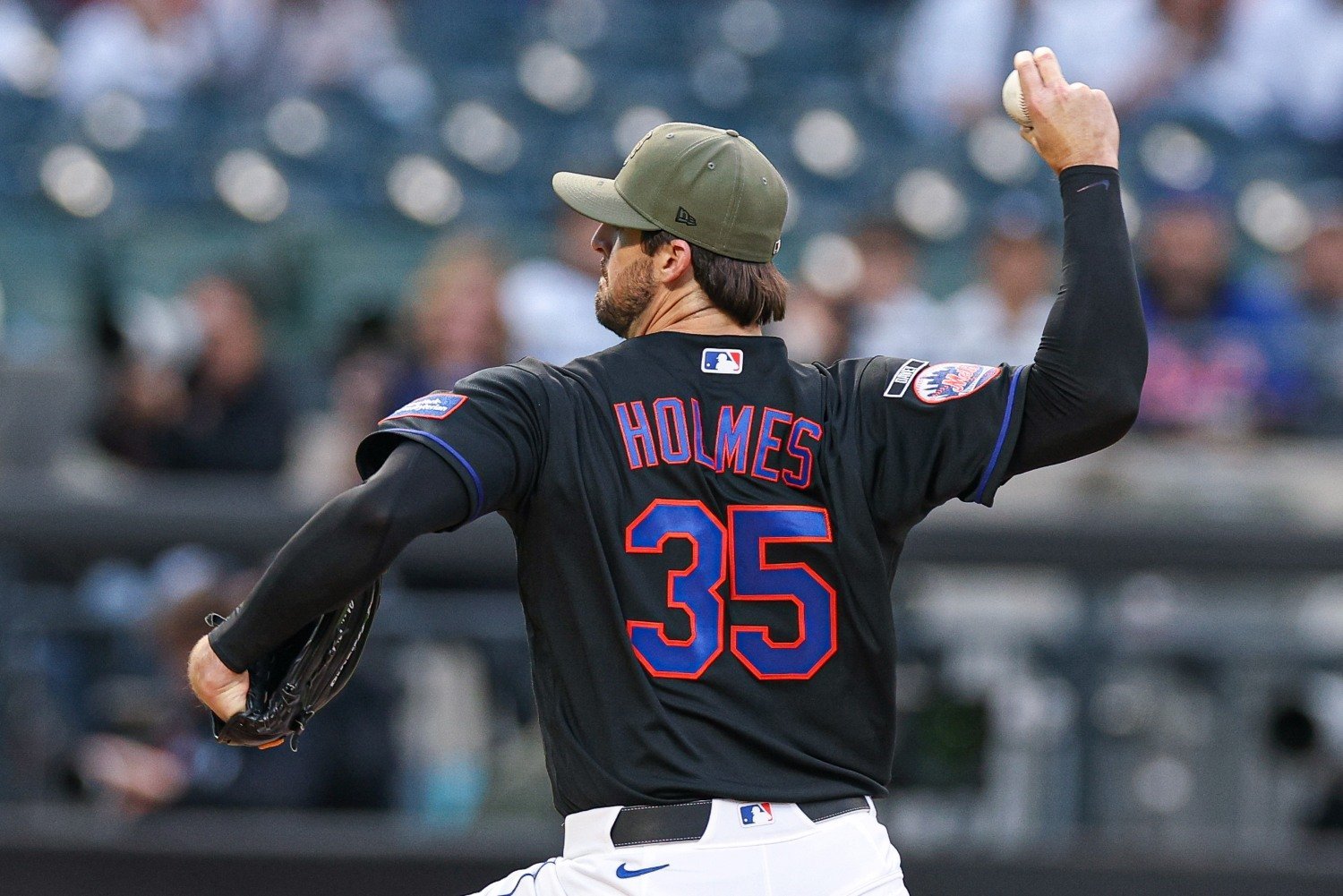
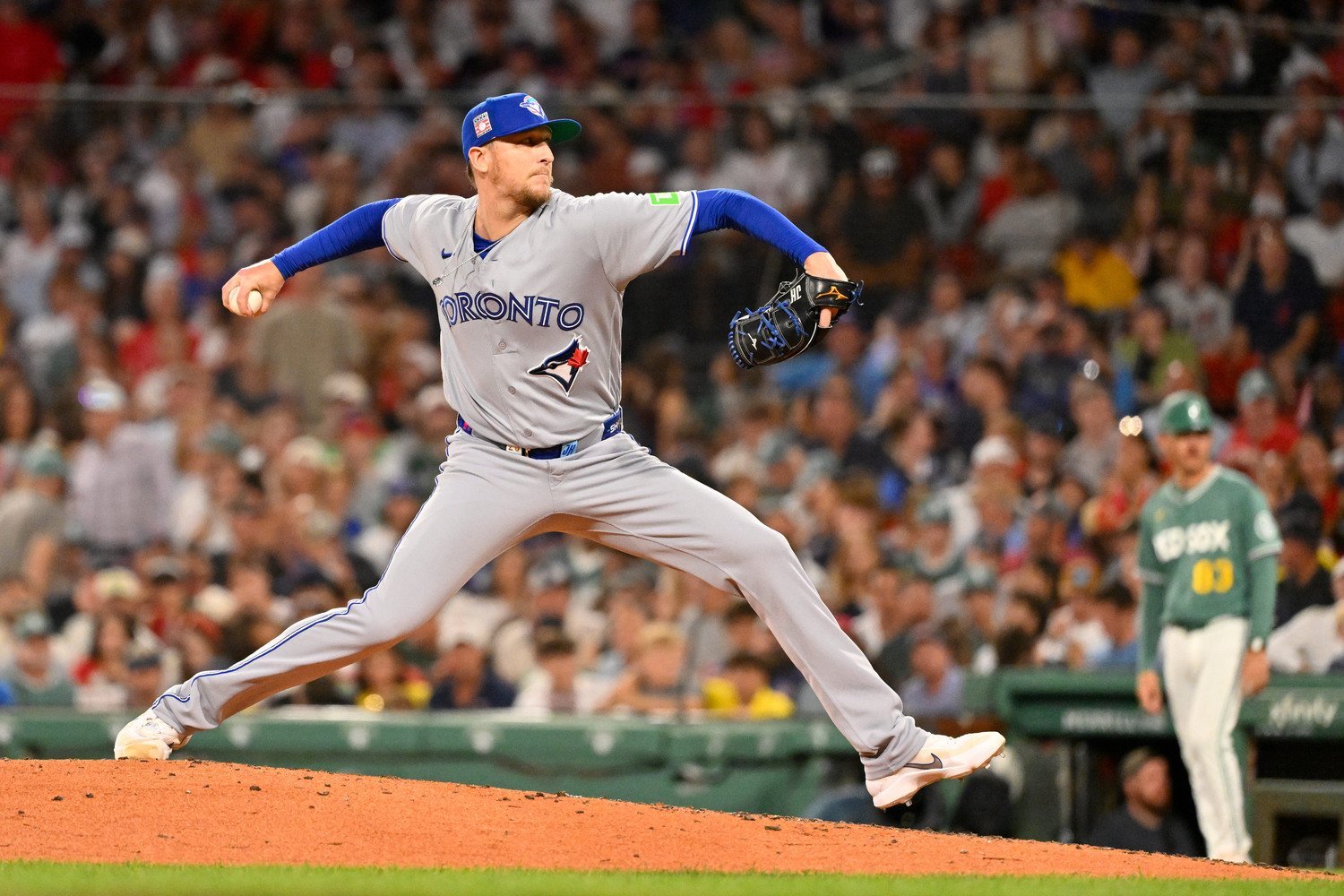
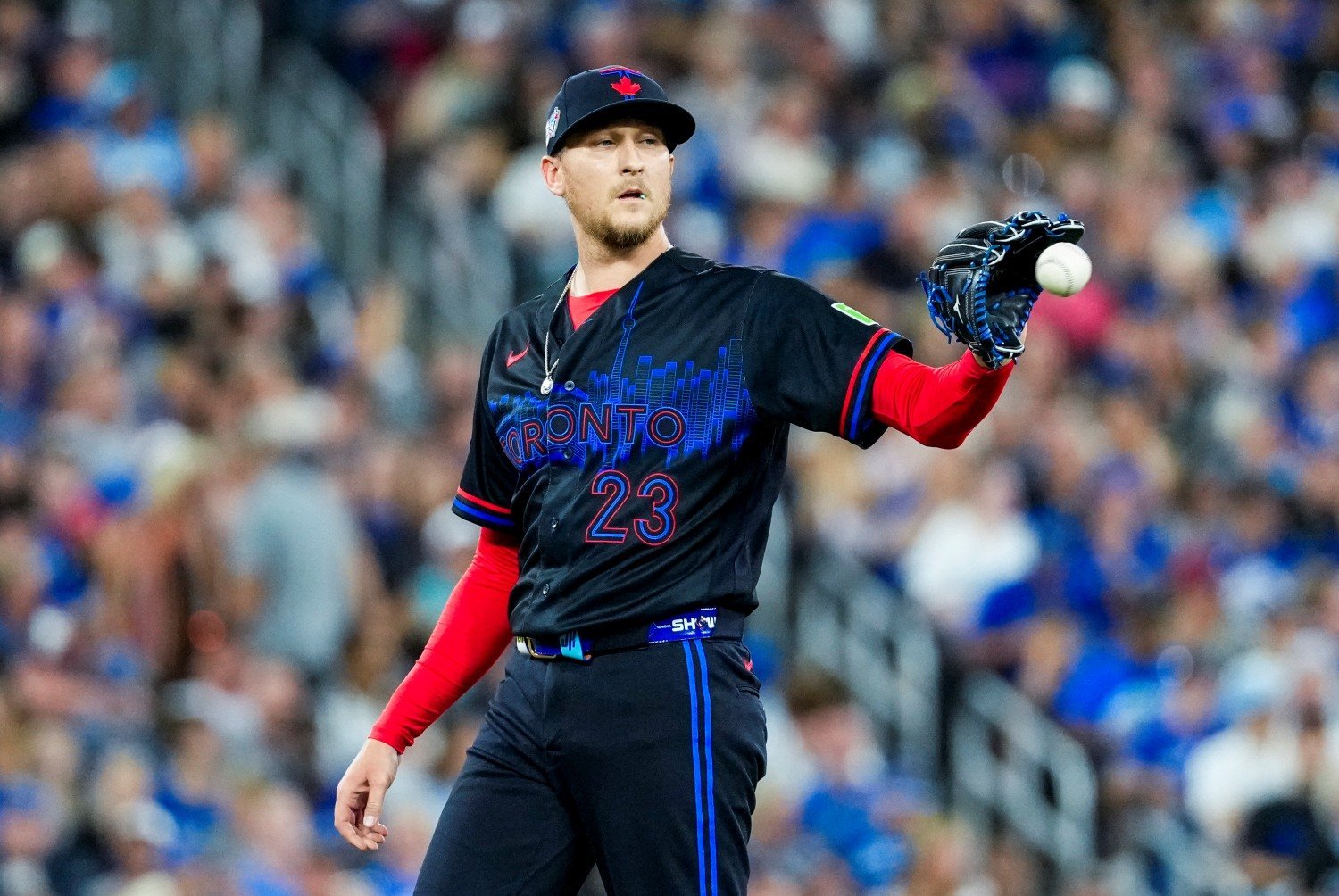
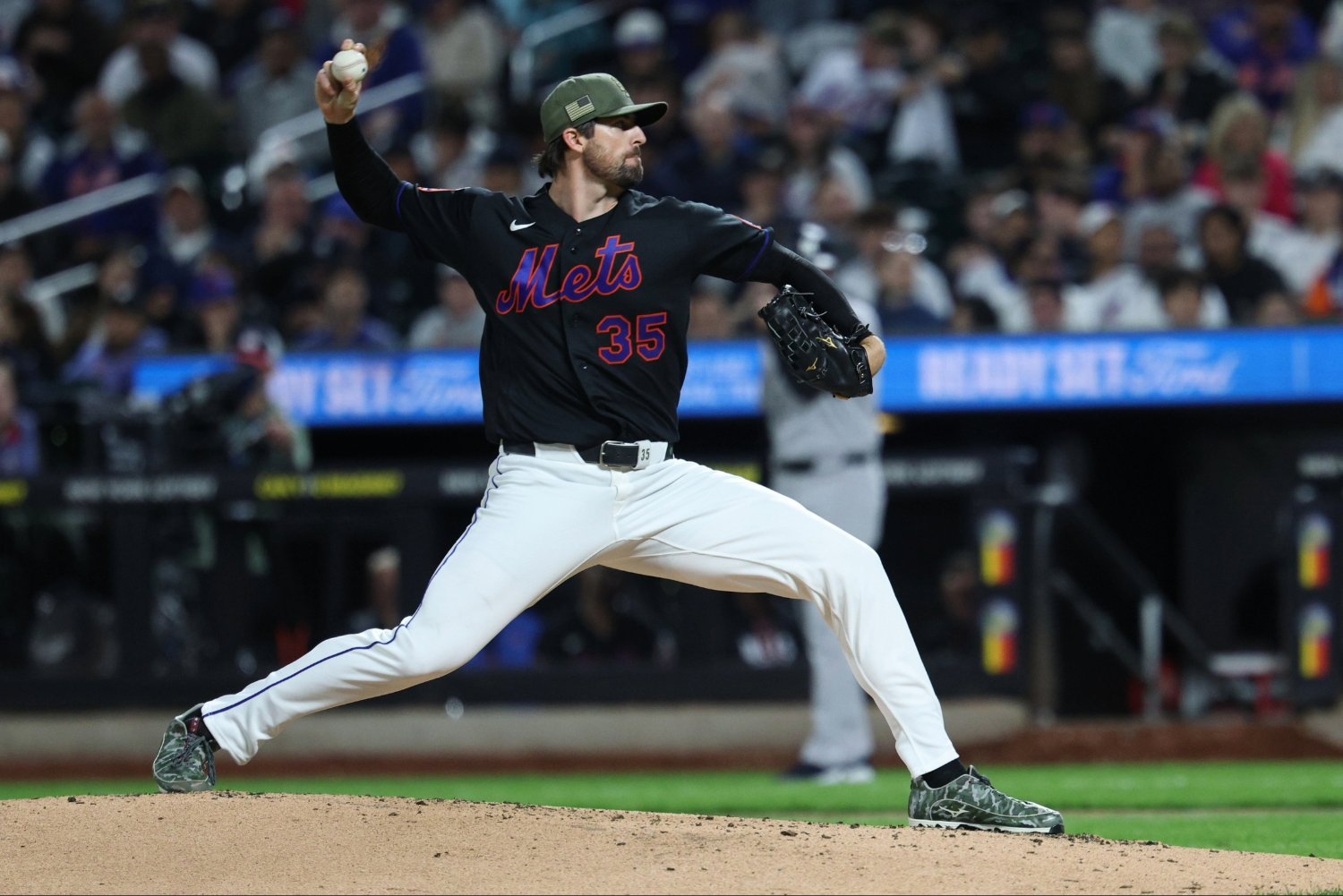
  4. Pitching is an art and a science, but even more so, it's a game of adjustments. Getting ahead and staying ahead of hitters requires constant self-awareness from pitchers with respect to their strategy and plan of attack. Tinkering with one's arsenal can permanently alter the course of one's career for the better, like it did, for example, when former Blue Jay R.A. Dickey picked up a knuckleball in the 2000s. More often than that, learning to throw different pitch types can be just the subtle change pitchers need to stay competitive: Sweepers, cutters, and kick changeups became trendy for a reason. With a month of spring training games having come and gone, here is a profile on every new pitch of note that we saw down in Dunedin in 2026, and how it affects the outlook of those that deployed them. Dylan Cease: Changeup It took until his final preseason start on Sunday, but we finally saw the changeup that Dylan Cease has wanted to add to his arsenal for a long time. According to Statcast, he threw 11 of them on Sunday in the Blue Jays' 14-1 drubbing of Tampa Bay, and it returned a 57% swing-and-miss rate to help him cap off a spring training that saw him record a 0.93 ERA, 30.8% K rate, and a 7.7% BB rate in 9.2 IP. Think he's ready to go? Assuming Cease is comfortable enough to take this pitch with him into the regular season right away, it won't be your conventional changeup. It has the vertical carry of a fastball (17.7" iVB) but averaged 87 MPH, a velocity he'll no doubt be happy with, considering every other attempt he has made at a changeup at the MLB level has been around 20 MPH slower than his four-seamer; too big of a gap to fool anyone. It averaged ~9" of arm-side movement, which, again, isn't notable for a changeup but notably separates from the cutting action on his fastball. Another good sign from Sunday was his ability to command it: 8 of his 11 changeups landed in the strike zone, a promising development for a starter who has been plagued by location issues before. As expected, we've seen Cease divert away from the fastball-slider combo that was nearly exclusive for parts of 2025. His combined usage of those two pitches was just 62% this spring, down from 83% last year. The knuckle curve he began toying with in his final starts with the Padres is now a clear tertiary pitch for him against left-handed batters, and against righties, he was throwing a lot more sinkers and sweepers, relying on the four-seamer much less. Cease has always had strong peripherals because the specs on his hard fastball and bullet slider are excellent in a vacuum and allow him to miss plenty of bats. To this point, he has had trouble living up to them because of the lack of diversity in his arsenal. This spring was the least predictable Cease has been since his early days in Chicago. His much-anticipated regular season debut will come Saturday vs the A's. Dylan Cease Usage Splits, 2025 by Half vs. Spring Training (Statcast) Pitch Type First Half 2025 Second Half 2025 2026 ST FF 41.0% 43.4% 31.8% SL 47.2% 33.8% 31.2% Others 11.8% 22.8% 37.0% Brendon Little: Slider, Four-Seam Fastball The Blue Jays bullpen's lefty workhorse has long had the kind of stuff that perplexes batters, but he tapered off in a bad way to end 2025 after losing the strike zone and running out of gas in general. Even if a reliever has two distinct offerings with plus-plus bat-missing potential, it becomes compromised when hitters know he can't consistently throw them for strikes and doesn't have another weapon to turn to. Naturally, then, Little showed up to camp with a repertoire that effectively doubled in size: He'll still be the sinker-curveball guy we've come to know, but he now boasts a gyro slider and a traditional four-seamer as well. Many instances of a pitcher adding to their arsenal happen because the pitcher is looking to address a specific platoon matchup, often opposite-handed hitters. This is not the case with Little; in fact, his approach against lefty hitters changed more drastically this spring than his strategy against righties. Specifically, he used his new slider almost in perfect tandem with his sinker against same-handed opponents, essentially removing the curveball from the picture entirely. It's already obvious that stuff models are going to love this pitch: It sat 90-91 MPH with plenty of spin and true bullet action. That's not far off from the specs of Tarik Skubal's slider for the sake of comparison. As we know, though, it would be premature to mention anything else about those two sliders in the same breath unless Little can throw it for strikes. Against lefties, it had a 33% zone rate, which is around the same as his knuckle curve was last year. However, he also used it sparingly against righties, a situation where he was able to find the zone more (50%). Overall, it generated a 73% (!!!) swing and miss rate this spring. Intriguing, to say the least. Brendon Little Usage vs. LHB, 2025 vs. Spring Training (Statcast) Pitch Type 2025 2026 ST Sinker 52.8% 40.5% Knuckle Curve 41.9% 9.5% Slider - 35.7% Four-Seam Fastball - 14.3% Cutter 5.3% - The four-seamer was, along with the slider, a tertiary weapon against righties but also saw some occasional left-on-left usage. Even after considering its lower arm slot, its movement patterns won't be surprising for hitters (13.4" iVB, 6.8" arm-side), but it did average 97 MPH and touched 98 during game action. If this pitch ends up being successful, it won't be on account of its raw traits. There's nothing too special about an upper-90s fastball with dead zone movement in today's MLB. What it does have is big-time trajectory separation from his sinker, and it will also force hitters to think about the upper half of the strike zone when Little is on the mound. Having a nasty sinker, curveball, and slider is great, but it also tells the hitter he's about to see a lot of pitches down, which doesn't leave much to have to guess on. If Little uses this fastball occasionally and can steal a strike to keep opponents off balance, it will make the rest of his arsenal play up. Mason Fluharty: Changeup Much like Brendon Little, Fluharty is a lefty reliever and a recent graduate from the Jays' prospect ranks with a 2-pitch arsenal (lacking a traditional four-seam fastball) and impressive stuff but less impressive command. He could throw strikes more frequently than Little by the end of the season, so he was squarely within the circle of trust by the time the World Series rolled around, but his cutter-sweeper repertoire lacks diversity. It's pretty rare for any MLB reliever to not have a pitch that moves arm-side, and while Fluharty was a unicorn that way in 2025, he flashed a changeup for the first time during camp this year. Initially classified as a sinker by Statcast, Fluharty's changeup sat at 88 MPH with ~5" of iVB and ~11" of run and became his new secondary against righties. He threw his cutter 67% of the time in that situation last year, but the changeup gives him another path to go down early in counts and forces hitters to stay on top of both sides of the plate. The movement and spin characteristics of this pitch compare pretty closely to the changeup that now-AL East rival Ryan Weathers threw when he was with the Marlins in 2025, which generated a swing and miss rate over 40%, an xwOBA under .300, and got above-average grades from both Stuff+ and PitchingBot's stuff model on Fangraphs. Mason Fluharty (2026) vs. Ryan Weathers (2025) changeup specs comparison (Statcast) Pitcher MPH iVB Arm-side HB RPM Mason Fluharty 87.3 4.9" 11.1" 1,980 Ryan Weathers 88.2 2.7" 12.5" 1,862 It should be noted that only five of the 15 changeups Fluharty threw this spring were in the zone (33%), but it got a 40% chase rate in a small sample, so hitters, at least for now, haven't figured out how to handle it. It was responsible for the lone preseason extra base hit he gave up, but on balls in play, it had the lowest exit velocity of the 3 pitches in his arsenal, and generating weak contact was already something he was great at in 2025. Louis Varland: Changeup Varland throwing changeups is not a completely new development. He leaned on it more down the stretch after getting traded to Toronto at the deadline, and by the postseason, it was a clear tertiary pitch behind that lethal fastball-curveball combo. This year, though, he has made significant adjustments to its shape: It now profiles more like a kick change, with more downward movement and less spin than the 2025 iteration. Louis Varland Changeup Specs, 2025 vs. Spring Training (Statcast) Category 2025 2026 ST MPH 91.8 91.8 iVB 4.7" 1.5" Arm-side HB 14.1" 12.2" RPM 1,741 1,563 Unsurprisingly, lefties saw their fair share of these new-and-improved changeups from Varland over the course of the spring. While it was delightful seeing him unleash adrenaline-fueled mid-90s changeups in the postseason, this newer variant got outstanding preseason results (50% swing and miss, .233 wOBA, -20° launch angle). From a usage perspective, he won't look all that different from the end of 2025, nor does he have to: Varland already has excellent stuff that he can throw for strikes, and refining one of his secondaries to give him another viable strikeout pitch in weak side matchups is a low-risk, high-reward maneuver. Braydon Fisher: Cutter At the very start of camp, The Athletic's Mitch Bannon reported that Braydon Fisher was looking to add a cutter in response to the lack of chase his curveball got from lefties as the season went on. While this would've been an interesting development, the jury is out on whether it will actually come to fruition in the regular season because he threw just 3 cutters out of the 110 total pitches he threw in the spring. Of course, this isn't to say Fisher is the same guy he was at the end of 2025. He's pushed his fastball usage against lefties by quite a bit, using it and the slider at a combined rate of over 70% in those matchups, a stark contrast to last year when he used the curveball 50% of the time. Competition for bullpen reps will be steep early in the season in Toronto, but Fisher is doing his part to ensure that last year was no mirage. View the full article
  5. Our final pre-Opening Day episode of Fish Unfiltered is an absolute banger. AJ Ramos, Isaac Azout and Kevin Barral break down the Miami Marlins' Opening Day roster. Then, Marlins manager Clayton McCullough joins for an exclusive interview, covering his spring training takeaways, lineup decisions, leadership style and more. You can find Fish Unfiltered and Fish On First LIVE on the Fish On First YouTube channel, Apple Podcasts, Spotify or wherever else you get your pods. Among the nuggets that McCullough shared with us, Javier Sanoja will be Miami's starting third baseman on Friday against the Colorado Rockies. He and Graham Pauley will platoon at the hot corner for the near future, with Connor Norby mainly playing first base on days that he starts while also contributing at the corner outfield spots. View the full article
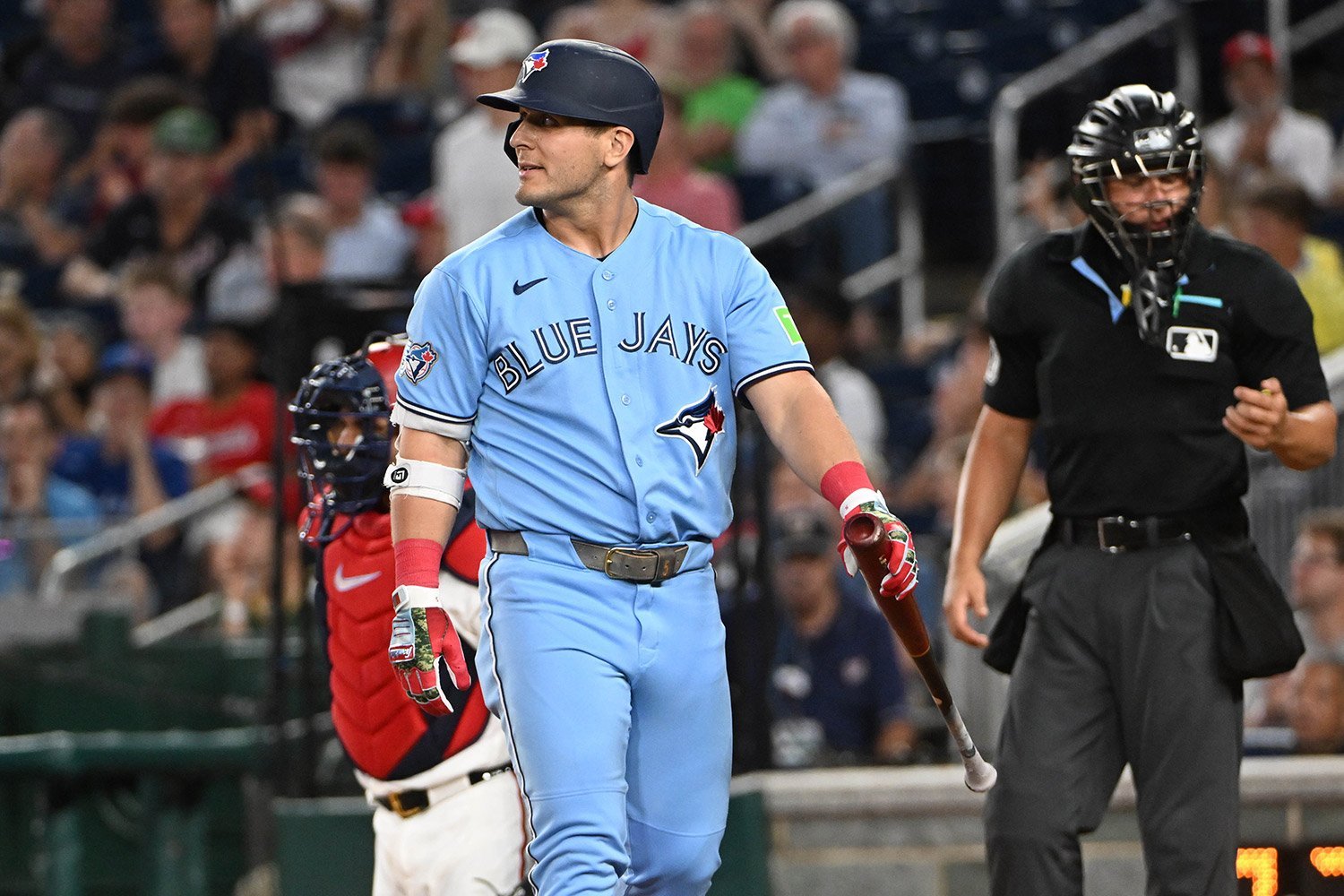
  6. After a very encouraging finish to spring training, Marlins manager Clayton McCullough explains how he plans to utilize Connor Norby at the start of the regular season.View the full article
  7. Those Twins debuts from last year included position players Carson McCusker, Luke Keaschall, and Ryan Fitzgerald, while Pierson Ohl, Cody Laweryson, and Travis Adams did so as pitchers. In a bit of an odd year as far as these predictions go, only Keaschall and Adams were detailed in this column before the start of last season. Keaschall was one of the standouts of spring training in 2026, and Cody Laweryson won one of the last Opening Day bullpen spots. Adams looks like he’ll start in St. Paul, Carson McCusker chose to continue his baseball career in Japan, Pierson Ohl was traded to the Colorado Rockies, and Ryan Fitzgerald latched on with the defending champion Los Angeles Dodgers. While the star power present in those 2025 debuts could be considered a little lacking, I have good news. Many of the Twins' top prospects sit at the top of their farm system heading into 2026 and could provide jolts of excitement into Target Field throughout the summer. So, who are some of the prospects who could make their MLB debuts this year and become the Next Minnesota Twins? ON THE 40-MAN ROSTER: After undertaking one of the largest sell-offs of major-league talent in MLB history at last year's trade deadline, the Twins' 40-man roster includes several new additions, all poised to contribute in the majors for the first time. There is a plethora of both pitching and hitting reinforcements, as well as potential star power included. Emmanuel Rodriguez, OF (23 years old on Opening Day) - Twins Daily’s #3 Prospect Despite dealing with injuries that have kept him out of action for significant periods of time over the past two seasons, Rodriguez has been pushed up the ladder aggressively thanks to his loud tools. Those include almost unheard-of plate discipline (20.6% walk rate in 2025), light-tower power (peak exit velocity of 117 MPH), and athleticism to play center field at a high level in the majors. While all those walks have produced elite on-base percentages when he’s played (.429 with the Saints last year), he does have the caveat of it being tied to a strikeout rate that is worrisome (31.8%). Is he an Adam Dunn or Joey Gallo type player who can play solid outfield defense? Or more like Edouard Julien? The Twins likely will start finding out if he stays healthy in 2026. John Klein, RHP (23) The big right-hander and native of Brooklyn Park, Minn. put his name on the prospect map with a solid 2025 season, operating as a swing-man with the Wichita Wind Surge. In 24 double-A appearances that included 11 starts, he posted a 3.12 ERA and struck out 95 hitters over 80 2/3 total innings. After being promoted to the Saints, that ERA took a big hit, but some of the underlying metrics still stood out, including a 3.30 FIP and nearly 30% strikeout rate after moving up. His fastball sits in the 95 MPH range and his slider has shown improvement while in the system. There’s a solid reliever profile in here and perhaps even more velocity to be unlocked after settling fully into that role. Connor Prielipp, LHP (25) - TD’s #5 Prospect Prielipp resided in the “Dark Horse” category of this list last year as he entered the season finally healthy after a second elbow procedure. While he didn’t reach the majors, the most important thing was that he didn’t miss a start and eclipsed his entire innings total since being a freshman at Alabama. While his numbers won’t pop out at you from his time in major-league camp this spring, the “stuff” I talked about in his prospect profile linked above is still the calling card. The addition of a curveball also sounds like another weapon that could push his ceiling further up. There will still be some form of innings limit on Prielipp in 2026, so unless he’s dominant from the jump in Triple-A, his debut is more likely to happen as a reliever. That’s also not a bad thing, if the outcome is another Glen Perkins. Gabriel Gonzalez, OF (22) - TD’s #7 Prospect If Twins fans were disappointed by the season Gonzalez put together in 2024 after coming over from the Seattle Mariners in the Jorge Polanco trade, they should be equally excited by what he did in 2025 when he took home Twins Daily’s Minor League Hitter of the Year award. Starting with Cedar Rapids, he improved his OPS by over 200 points from the prior year to earn a promotion to Wichita. Then he hit even better there, to get bumped to St. Paul for the final 34 games of the season. He batted well over .300 at each stop, and tallied 38 doubles and 15 home runs in 123 total games, good for an OPS of .909 overall. It was a year-long hot streak and one of the standout hitting performances in all of the minor leagues. He is limited to the corner outfield and won’t impress any more there than current Twins options, but he is a right-handed hitter among the glut of lefties the Twins currently deploy. If he keeps hitting, he will find a role with the Twins in 2026. Andrew Morris, RHP (24) - TD’s #12 Prospect Morris was a solid pick to make his debut last year after a breakout 2024 season, but was derailed early in the summer by a forearm strain. He came back and ended the season with a solid stretch in Triple-A, pitching to a 3.45 ERA and 29-to-4 strikeout to walk ratio over his final 31 1/3 innings. There may be a better relief pitcher here than a starter. He reminds me a lot of Louis Varland, who made his debut as a starter before evolving into a legitimate relief option in the majors. However, Pablo López's and other starter injuries opened a bigger door for opportunity in the rotation, and Morris should begin the season high on the pecking order for rotation reinforcements. Marco Raya, RHP (23) - TD’s #15 Prospect Poised to be unleashed as a reliever after spending almost all of his time in the farm system as an innings-limited starter, Raya will look to thrive in a new role this year. He has always shown glimpses, with a mid 90s fastball that could tick up further in shorter stints and an excellent breaking ball to fool hitters. The issue, like many young hurlers, has been controlling it consistently. He will need to cut down the walks to truly break through, but the hope is that being able to focus on his best pitches as a reliever will assist in that department. Kendry Rojas, LHP (23) - TD’s #8 Prospect The Twins targeted the talented lefty as the main part of their return for Varland at the 2025 trade deadline, but got mixed results after he came over. He was perhaps pushed to Triple-A too early by both the Toronto Blue Jays and the Twins after coming over, but there is a lot to like about the 23-year-old. He has demonstrated an increase in velocity this spring (averaging 96+ MPH), and his slider and changeup show signs of being above-average offerings. He will start the year among a potentially solid Saints pitching rotation, giving him the chance for spot-start opportunities from day one. Hendry Mendez, OF/1B (22) - TD’s #16 Prospect Mendez was having a solid season in the Philadelphia Phillies farm system before being traded to the Twins for Harrison Bader. Then he turned it up to 11 after joining the Wind Surge. In 33 games for Wichita, he slashed .324/.461/.450, good for a 159 wRC+ that rivaled the aforementioned Gonzalez in the Texas League. For his career, he has walked nearly as often as he has struck out, displaying a plus hitting aptitude. He also had an excellent, albeit brief, appearance in the Arizona Fall League last year, collecting six hits, including the first home run of the AFL season. While he has been a corner outfielder, the intent in 2026 appears to be to give him time at first base and some potential position flexibility. TOP PROSPECTS: While I’ve already written about seven players who reside in Twins Daily’s Top 20 Prospect Rankings because they are on the 40-man roster, it is the two names below that sit atop that list at number one and two. Fans of the St. Paul Saints will see them both starting the season at CHS Field in 2026. Walker Jenkins, OF (21) - TD’s #1 Prospect Jenkins is the obvious crown jewel of the Twins farm system, ranking universally in the top 20 of national rankings and as high as fifth heading into 2026. The only thing holding him back has been the familiar injury bug, which again has reared its head during spring training with a hamstring issue. When he is on the field, he is a special talent. Jenkins is built for the game of baseball, standing at a listed 6-foot-3 and a strong and lean 210 pounds. He has the speed, instincts, and arm to stick in center field, but would also profile as a plus defender in a corner. But that’s not why he is so highly regarded. It’s the smooth left-handed swing, natural power, and contact profile that put him into elite prospect territory. If you were building a No. 3 hitter in a lab, Jenkins could be the blueprint. Those are lofty expectations and the power potential does have legitimate questions, but a hitter is a hitter. That would be my best explanation for what I have seen from Jenkins. In a purely Twins comparison, he is more of a pure hitter mold of Joe Mauer than the power potential of a Justin Morneau. A bit of a middle-ground there is where I think Jenkins can end up, which is a cornerstone player to usher in this next wave of players. Kaelen Culpepper, SS (23) - TD’s #2 Prospect Culpepper began last year with some questions to answer as the 21st pick of the 2024 MLB draft. Could he stick at shortstop? Could he hit for power? Would the athleticism carry him? Consider those questions answered. Starting in Cedar Rapids, he posted a 147 wRC+ that ranked in the top five in the Midwest League among players with at least 240 plate appearances, before being promoted to the Wind Surge. He barely slowed down, posting a 129 wRC+ mark in his 59 games there, batting .285/.367/.460. That performance pushed him into national top 100 lists heading into this season. In addition to the hitting, his defense also took a step forward and quieted any concerns about his ability to stick at shortstop. If he wasn’t impacting a game with a big home run, he was probably doing something slick on defense. TRIPLE-A DEPTH: If you haven’t already gotten the gist by now, there is a ton of prospective talent sitting at the top of the farm system heading into this season. The St. Paul Saints could truly have a special Triple-A roster in the early going. But there are plenty of other names filling out their lineup and pitching staff that are one call away as well. Christian MacLeod, LHP (25) This big left-hander has been a favorite of mine since shoving for the Kernels and Wind Surge during the 2024 season. Zebby Matthews (and Andrew Morris) got most of the hype for pitching at the top three levels of the farm system that year, but that is also something MacLeod accomplished. During the 2025 seasons he continued that dominance with Wichita for half the season (2.63 ERA), before finally being promoted to St. Paul. He pitched mostly in a bullpen role there, and that looks like the plan for 2026, which gives him a good opportunity as the Twins look to build a new bullpen from scratch. Kyler Fedko, OF (26) A late bloomer who had a true breakout season last year, finishing second in Twins Daily’s 2025 Minor League Hitter of the Year voting. No matter who you are, 28 home runs in a season will get you noticed, and that tally ranked seventh in all of the minor leagues. In addition to the power, Fedko also displayed great patience (14.2% walk rate) and surprising speed on the basepaths (38 steals in 46 attempts). DARK HORSE: The best recent example of a true “Dark Horse” I can provide is Zebby Matthews, from the 2024 season. He rose all the way from Cedar Rapids to pitch for the Twins late in the year behind a massive uptick in performance from prior seasons. It’s certainly a long shot that anybody in this section makes their debut, but there always seems to be a surprise or two. Riley Quick, RHP (21) - TD’s #11 Prospect Following the footsteps of Connor Prielipp as a prospect from the University of Alabama who has had Tommy John surgery, Quick was selected by the Twins in the first round of the 2025 draft. Like his lefty counterpart, Quick has big “stuff”, including a high-90s fastball and a plus slider. He is a “helium” type prospect who, if nothing else, could rise a lot higher on prospect lists as the season goes on if things fall into place. DON’T FORGET ABOUT: This section is for prospects that may have been lost in the shuffle. They were perhaps highly regarded at one point, missed time due to injury, or lost some of their luster for whatever reason. Despite any of that, they have shown flashes and could be an option to fill in gaps during the long MLB season. Kala’i Rosario, OF (23) A former Midwest League MVP and AFL Home Run Derby champion, Rosario finished second in the Twins system to Fedko with 25 homers during the 2025 season. The month of August was an especially high note, where he slugged 11 home runs in 27 games, good for a 1.135 OPS over that timeframe. Aaron Sabato, 1B/DH (26) Former first-round pick hit .305 with nearly a 1.000 OPS in Wichita to earn promotion to Triple-A in 2025. However, a path to major-league playing time is severely limited as a pure first baseman or designated hitter. Tanner Schobel, IF (24) Infielder was the Twins’ 2nd-round draft pick in 2022 after a breakout performance with Virginia Tech, where he hit .362 with 19 home runs. That type of power hasn’t translated to pro-ball, but he can play multiple positions and posted an OPS of .837 in Wichita before finishing the 2025 season with the Saints. Cory Lewis, RHP (25) A prospect darling in prior seasons, thanks in part to his unique knuckleball, Lewis had a rough introduction to Triple-A last year and is dealing with a shoulder injury this spring. Perhaps the two were connected, but if he can come back healthy and rediscover his form, he could find himself in the mix for bullpen or spot-start roles. These names are all part of the next wave of Twins prospects that fans could see at Target Field for the first time during the 2026 season. When do you think the top prospects could make their debuts? Who are some other names that I may have missed? Let’s go Twins! View the full article
  8. Spring training is supposed to be about ramping up, refining mechanics, and building momentum toward Opening Day. For David Festa, it has instead become another exercise in patience. Festa felt discomfort in the back of his right shoulder during a bullpen session on February 24, a moment that immediately raised concern given the neurological thoracic outlet syndrome that cut short his 2025 campaign. This time, however, the news carried a different tone. An MRI revealed that the issue is unrelated to last fall’s diagnosis. Instead, Festa is dealing with a rotator cuff impingement, a far more familiar and, importantly, manageable obstacle. According to Dan Hayes of The Athletic, Festa remains several weeks away from leaving Florida as he continues his recovery process. That timeline is not insignificant, especially for a Twins club already navigating early-season pitching uncertainty, but the right-hander’s outlook provides reason for encouragement. “Honestly, it feels better than I probably expected,” Festa said. “I never want to make too much of it because it’s light catch from a shorter distance, but I feel like the arm’s moving cleaner.” At the moment, Festa is playing catch at 90 feet, a modest but meaningful step in the progression. The long-term plan remains fluid. Festa intends to build up like a starting pitcher, which aligns with how the organization has developed him to this point. There have been no formal discussions about a defined role, but the reality is difficult to ignore. The Minnesota Twins are already dealing with the loss of Pablo López for the season, and pitching depth will be tested early. That creates an interesting tension. On one hand, Minnesota would prefer to preserve as much starting depth as possible. Festa, once viewed as arguably the organization’s top pitching prospect, fits into that equation when healthy. On the other hand, shoulder issues have a way of reshaping development paths. If the Twins need immediate innings and Festa proves healthy but not fully stretched out, a move to the bullpen could be a practical solution. It is not as though Festa lacks the tools to succeed in that role. Over the last two seasons, he has posted a 5.12 ERA with a 4.27 FIP, backed by a strong 25.7 K% and a manageable 8.3 BB%. Those numbers suggest a pitcher whose underlying skills are more intriguing than the surface results. Shorter outings could allow his stuff to play up while limiting exposure and workload. Still, the organization will not rush that decision. Health comes first, and Festa will need to demonstrate that he can handle a consistent throwing program before anything else is considered. For now, the focus remains simple. Keep progressing. Keep building. Keep listening to the arm. If Festa continues on his current trajectory, he could still factor into Minnesota’s plans at some point this season. Whether that comes as a starter or in a relief role will depend on timing, health, and organizational need. What matters most is that the early signs suggest this setback is just that, a setback, not a turning point. In a season where pitching depth is already under strain, the Twins will take every bit of good news they can get. Festa’s recovery may not solve everything, but it is a step in the right direction at a time when those steps are especially important. View the full article
  9. After an offseason of waiting, Opening Day is finally here. The Milwaukee Brewers will host the Chicago White Sox on Thursday at 1:10 p.m. CT at American Family Field, to begin the 2026 season. The Brewers have high expectations, having won the last three NL Central championships, but they also enter the season with several questions. As such, here are three reasons why the Brewers will again finish atop the Central—and three reasons they could fall short. The Brewers will win the Central because ... The young starting pitchers step up With a recent history of pulling the most out of pitchers, the Brewers' four young starters—Jacob Misiorowski, Chad Patrick, Brandon Sproat and Kyle Harrison—will elevate their performances and carry the Crew to a fourth consecutive Central championship. Misiorowski has the ability to become an NL Cy Young contender with his 31.9% strikeout rate, which is nearly 50% better than the MLB average. The key for Misiorowski will be his control, as he walked 11.4% of hitters as a rookie, a full three percentage points worse than the MLB average. He did have a nice opponent batting average of .214. Patrick feels like the most stable of these four, so simply repeating last year's 3.53 FIP and improving his .248 opponent batting average would suffice. Sproat has the potential to be surprising. He was very good from a metrics point of view in his four-game MLB debut with the New York Mets, not only limiting hard contact but also inducing groundballs. That fits into the Crew's defensive scheme very well. But the biggest step will be taken by Harrison. Acquired from the Boston Red Sox in the six-player Caleb Durbin deal, Harrison unveiled a kick-change late last year and took another step with it this spring, notching eight strikeouts in his first spring outing. That pitch will turn into a monster for the left-hander, who will finish behind only Misiorowski on the club in strikeouts. All of this by the young starters will also invigorate veteran Brandon Woodruff. Jackson Chourio becomes a superstar Jackson Chourio has had a very nice first two years, becoming the youngest player in MLB history with back-to-back 20-homer, 20-stolen base seasons. His slash lines have been remarkably similar, going .275/.327/.464 as a rookie to .270/.308/.463 in his sophomore season. But there is more to unlock in Chourio. He has a quick bat and speed that reminds many of Ronald Acuña Jr. He also plays with the joy of a Julio Rodríguez. Dreaming on Chourio being a 30-30 player isn't hard. But what if Chourio ramped up his game to 35 homers and 40 stolen bases? That would also come with taking his batting average up to the .290 or .300 level. Chourio has shown more discipline this spring in drawing walks, which will force pitchers to attack him more, leading to more hits and being able to utilize his speed on the basepaths. Chourio has an electric smile and talent to match. It is time to put that on display for all of MLB to see. Hopefully, his hand injury will be only a brief and unimportant setback on that journey. Garrett Mitchell plays 145 games The wait for the Garrett Mitchell breakthrough has been agonizing, because the reason he hasn't been on the field is for what feels like a series of unrelated injuries. But 2026 is the year in which Mitchell avoids any health issues and more than doubles the number of games he has played in his first three-plus seasons with the Brewers (141). The center fielder with the sweet swing can be a dynamic force for the Brewers with his power and speed combination. In 2024, when he played in a career-high 69 games, he hit eight homers and stole 11 bases. That would put him around a 20-20 pace if he played in 145 games and hits in the .275 range. Combine that with what Chourio and William Contreras can do offensively, and the Brewers will be lighting up scoreboards around MLB this year. The Brewers won't win the Central because ... Brandon Woodruff's shoulder falls apart It gives me no pleasure to write this. Yet, it is the thought that every one of us has as Brandon Woodruff begins 2026 with the Brewers. The sturdy right-hander hasn't had a full spring training, only making two starts and going five innings as he makes his way back from the strained right lat that knocked him out of commission in mid-September. The Brewers signaled early in spring training that Woodruff was going to be slow-played this season, not emphasizing getting him to full speed for Opening Day. Instead, they're making sure (as much as they can) that he will be around for Game 162 and the postseason. Of course, the lat injury followed the right shoulder surgery (anterior capsule) he had at the end of the 2023 season and which kept him out all of 2024. His 2025 debut was delayed by other injuries, including being drilled by a comebacker in a minor-league rehab game. While he deserves a much better ending considering his performance history, his season, probably his final one in Milwaukee, will come to an end early as his right shoulder gives out one more time. Brice Turang and Sal Frelick regress offensively One of the keys to the Crew's offense in 2026 was that second baseman Brice Turang and right fielder Sal Frelick, both 2024 Gold Glove winners, were no longer black holes with the bat. Turang, in particular, has shown remarkable progress at the plate in each of the last two seasons. Turang jumped from .218 as a rookie in 2023 to .254 in 2024 and up to .288 last year—not to mention the late-season power surge he experienced with 10 blasts in August and six homers in 2023 and seven in 2024. He finished with 18 in 2025. Frelick, meanwhile, has gone from .246 to .259 to .288. While not as dramatic as Turang's climb, the growth of both offensively was why the Brewers clicked last year. But if Turang goes back to hitting single-digits in home runs and he and Frelick drop down to .260 or less, the Crew's offense will be in trouble in 2026. Luis Rengifo is a bust at third base If things go right for the Brewers, they just need Luis Rengifo to be himself in 2026. They don't need him to shoulder the burden of the offense, just match his career slash line of .250/.307/.382 with maybe 10 homers. That was close to the output of Durbin last year. But Rengifo has played more often at second base than third base in his career, and he will be at the hot corner only with the Crew. Last year, he had a career-high 76 appearances at third, as well as 74 at second. At third, Rengifo had -5 Defensive Runs Saved, which ranked 166th out of 176 MLB third basemen. He had a poor season at the plate last year with the Los Angeles Angels, slashing .238/.287/.335 and striking out 19.2% of the time. While that strikeout rate is just a bit worse than the MLB average, it was his highest since going down on strikes 20% of the time in 2021. Rengifo struggled this spring, hitting .244 (11-for-45) while hitting three homers and driving in five. If he struggles to the point of needing to release him, that could pave the way for Jett Williams to possibly come up—but a lot of damage could be done before then, and the NL Central is unforgiving. View the full article
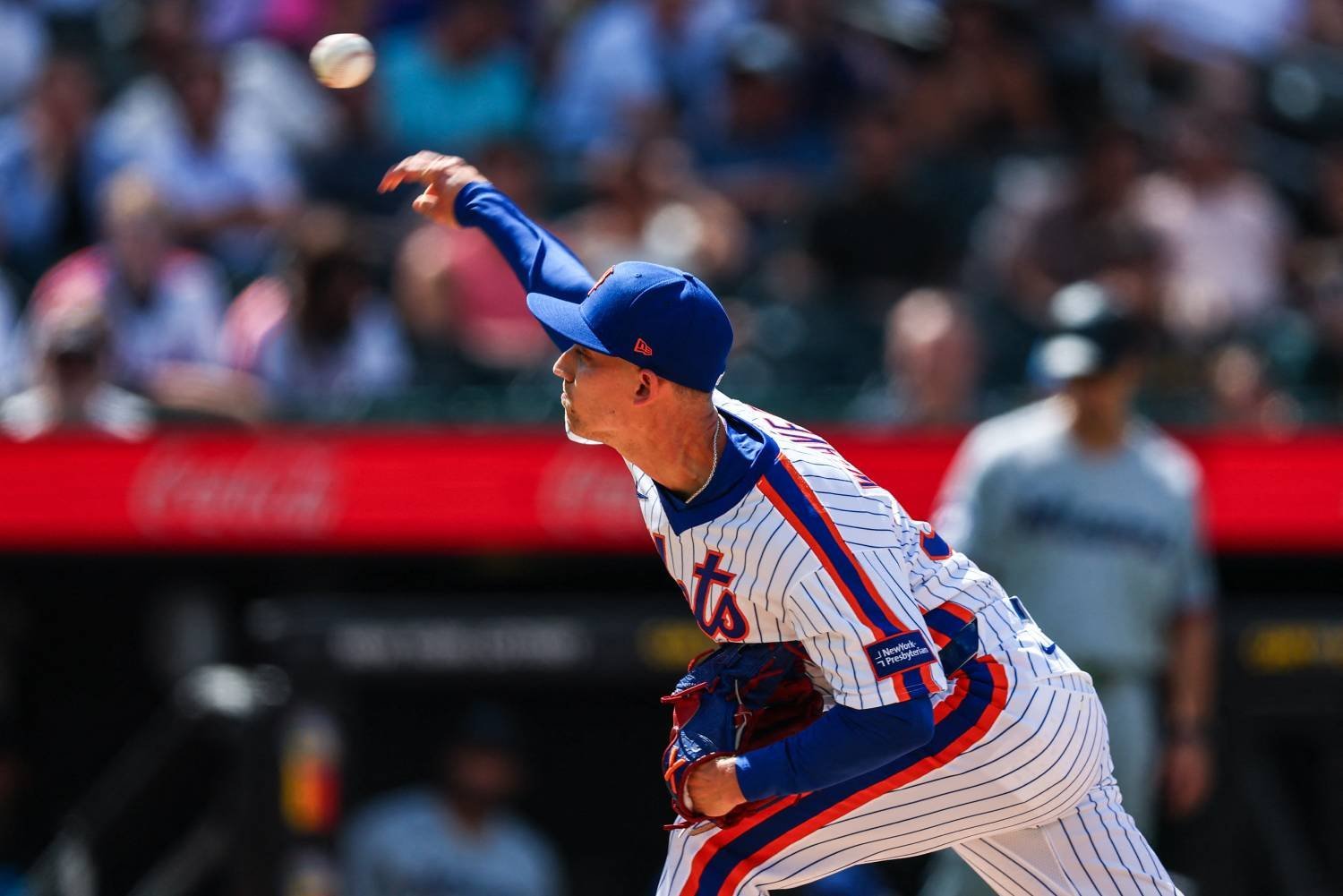
  10. As confirmed by New York Mets manager Carlos Mendoza, Carson Benge not only made the roster, but he also will be the starting right fielder against the Pittsburgh Pirates on Opening Day. The Mets are placing a lot of trust in the 23-year-old rookie to hold down the right field spot for the 2026 season, especially after it was announced that offseason signee Mike Tauchman will undergo surgery following a meniscus tear. Benge now has the job security and all the tools to put together a strong rookie season in 2026. The only question is how good (or bad) could this season be for him? Carson Benge's Optimistic 2026 Outlook It is not crazy to say that Benge has one of the best foundations a rookie could have: plus defender, 60-grade arm, and a 60-grade hit tool. He has the potential to be a five-tool player in this league. In the spring, Benge slashed .366/.435/.439 with a .874 OPS in 46 plate appearances. According to Prospect Savant, in the minor leagues last year Benge had a 94th percentile xSLG, 94th percentile barrel rate, and he finished in the 92nd percentile in spring speed. In the best-case scenario, you are looking at a potential Gold Glove candidate who can finish with a 20 homers and 20 steals. In said scenario, Mendoza would have flexibility to bat Benge anywhere in the lineup. The top prospect certainly has proven in the minors and spring training that his hit tool is consistent enough to produce in the majors. This spring, Benge had a 140 WRC+. In the minors last season, Benge produced a 150 WRC+ in 116 games across A+, AA and AAA. He has positively affected every team he has been on, consistently getting on base, playing good defense and not striking out. It's the profile of a mature veteran, one which will hopefully translate right away. Carson Benge's Pessimistic Outlook There are three potential flaws that could sink his rookie campaign.. The first being that he has proven to be a slow adjuster. Through his first five games in Double-A, he went 3-21 for a .142 batting average. Likewise, his promotion to Triple-A did not end up going well for him. For the Syracuse Mets, he slashed .178/.272/.311 in 103 plate appearances. For Benge to be the five-tool player he is believed to be, he would need to produce power, something which has been inconsistent throughout his professional career. He had one lone home run this spring, and in 519 plate appearances in the minors last year, he produced 15 home runs. While his hard-hit rates are high, he has been unable to get under the ball enough to put balls over the fence. According to Prospect Savant, Benge had a 73rd percentile Max Exit Velocity and a 31st percentile Pull Air %. There's clearly some untapped potential in that department. My last point, and the common question the Mets community has about Benge, is his habit of hitting on top of the ball. Benge posted a 70% groundball rate this spring after sitting at 42% last year. In conjunction with the discussion about power, there's clearly an evolution that needs to take place in his contact profile. If there's no evolution on that front, though, is his current form sustainable? Now that is a major question and definitely something to follow this season. We see Luis Arraez consistently have 40% or higher groundball rates and he wins batting titles. We have also seen Brett Baty really struggle with getting on top of the ball and rolling over for outs, a problem Baty (mostly) fixed last season. Benge’s main criticism across advanced metrics sites has been that while he can be a five-tool player, none of his tools are great. However, to have five good tools is really impressive. You can count on four of them right out of the gate: speed, fielding, arm strength, and hitting for average. That fifth tool, hitting for power, could make or break whether we get best-case scenario Carson Benge, or the worst case. View the full article
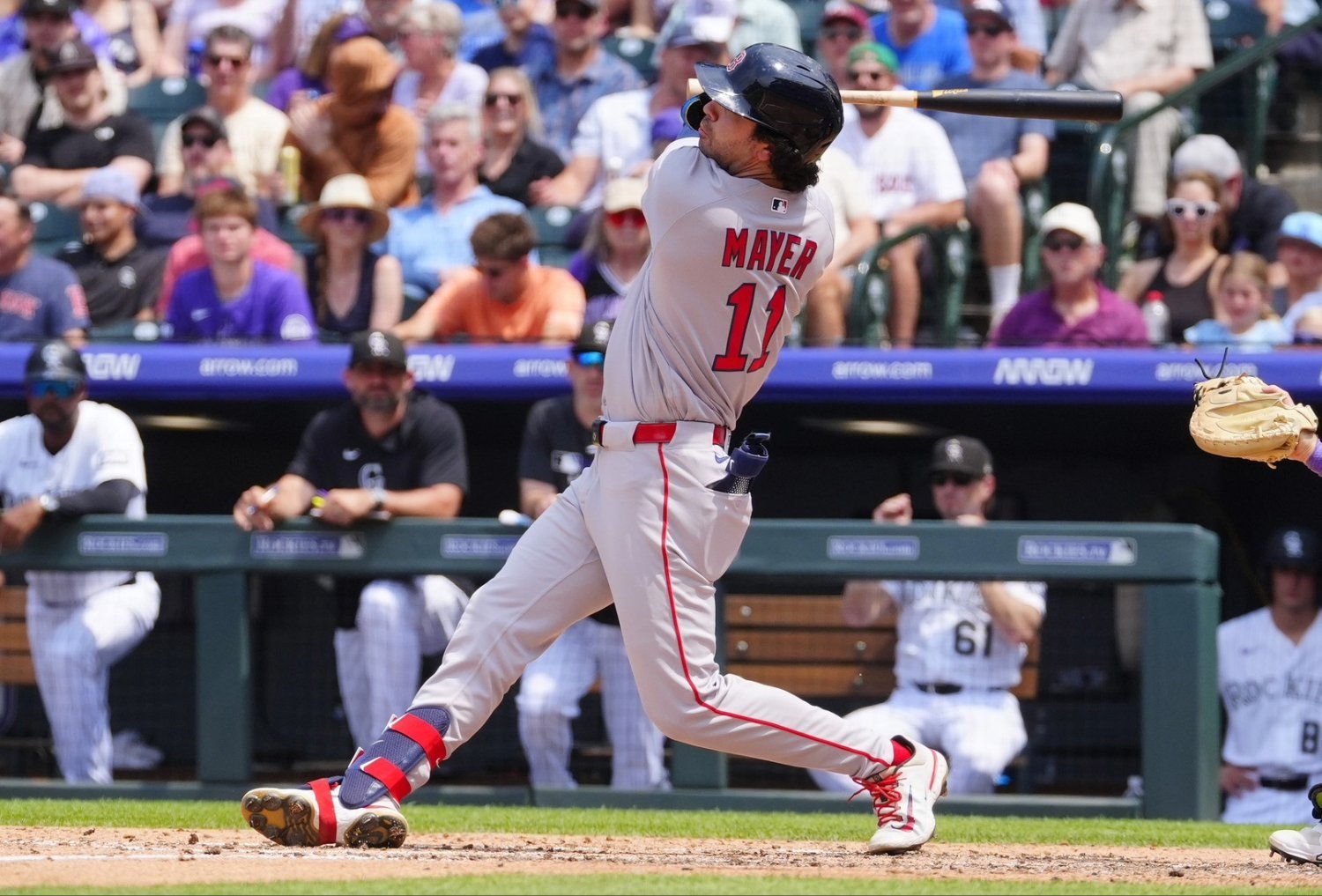
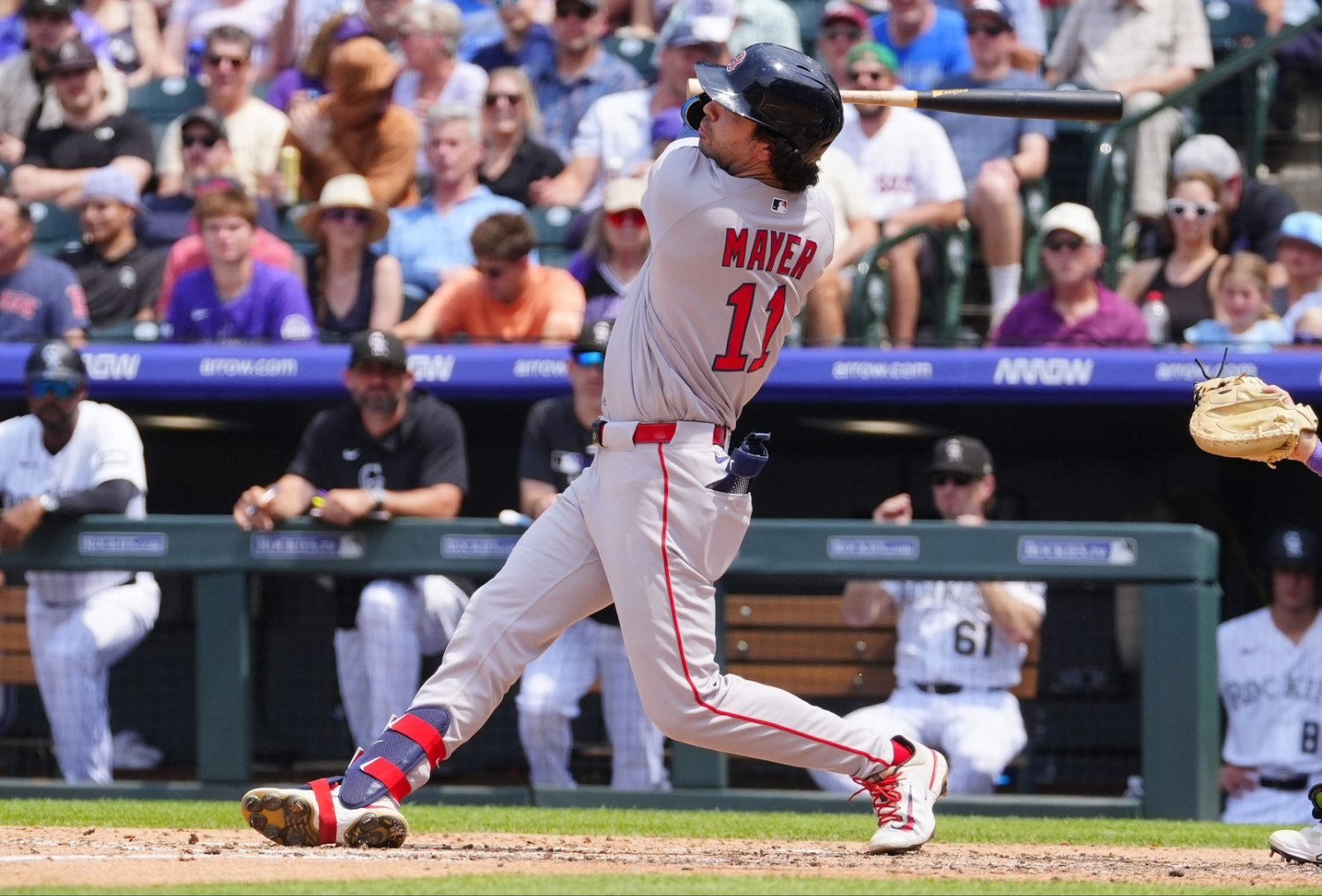
  11. What can you expect from the 2026 Red Sox? Luke Fitzpatrick breaks down the squad and makes some predictions for the season. Two players to hit 30+ bombs? Only one starter with a sub-3.50 ERA? An All-Star season from Wilyer Abreu? What about Marcelo Mayer? Will fans be disappointed in Caleb Durbin in 2026? All that and more right here. View the full article
  12. The San Diego Padres entered the 2025-26 offseason with questions abounding throughout several aspects of their roster. Corner outfield was not among those questions, however. On one hand, it helps when you have Fernando Tatis Jr. holding down one side of the outfield grass. While it didn’t come without frustrating stretches, Tatis reestablished himself as one of the premier players in Major League Baseball courtesy of a 6.1 fWAR figure that ranked 10th among big league regulars. The other side of the outfield remained a struggle for much of the year. What began as a platoon between Jason Heyward and Connor Joe quickly devolved. Neither was long for the roster, and the Padres spent much of the rest of the first half watching the adventures of Gavin Sheets and a rotating cast of other reserves. At the trade deadline, A.J. Preller was able to address the spot with a move that stabilized the position in the form of Ramón Laureano. While Laureano would miss the postseason because of a finger injury, he turned in strong enough numbers down the stretch that made exercising his $6.5 million club option an easy call. That’s the duo bookending Jackson Merrill for much of 2026. Unlike last year, though, the team actually boasts some depth. Each of Sheets, Miguel Andujar, and Nick Castellanos can handle a corner for a spell, with the team also aiming to expand the versatility of Sung Mun Song to get his bat in the lineup as frequently as possible. As far as positional groups on this roster go, the brass shouldn’t have a difficult time feeling confident about this group. Padres Corner Outfielders At A Glance Starters: Ramón Laureano (LF), Fernando Tatis Jr. (RF) Backups: Gavin Sheets, Miguel Andujar, Nick Castellanos, Bryce Johnson Depth: Alex Verdugo, Sung Mun Song Prospects: Tirso Ornelas, Braedon Karpathios LF fWAR Ranking Last Year: 21st (1.3) RF fWAR Ranking Last Year: 5th (6.1) LF fWAR Projection This Year: 19th (1.8) RF fWAR Projection This Year: 2nd (5.4) The Good The outfield corners might just represent the most stable aspects of the 2026 roster. Everywhere else you look, there are significant question. The infield has them. The pitching staff certainly has them. Outside of the bullpen, you have to feel the best about what this duo in the corners offers the team. Tatis finished a season healthy. While he may have been held back by a nagging injury or two in the summer, he appeared in 155 games, hit 25 homers, stole 32 bases, and brought elite defense to right field. If he can recoup some value on the power side — and indications are that some mechanical settling should help him to do just that — then the momentum he built up for Dominican Republic in the World Baseball Classic could very well carry over into the regular season. The same could be said of Laureano. His 2025 season was his best across the board since 2019, including an isolated power figure that was 35 points better than any individual mark he'd posted in the years since. If his growth in the approach is for real, it could yield real power dividends for a team that needed to scrape it from anywhere they could find it last season. The improved depth also marks a positive for this group. The following is a list of players that appeared in either corner for the Padres in 2025 beyond their two projected starters: Gavin Sheets (64 games in LF) Jason Heyward (30 games in LF, four games in RF) Brandon Lockridge (30 games in LF, three games in RF) Bryce Johnson (26 games in LF, 10 games in RF) Tyler Wade (17 games in LF, three games in RF) Oscar González (14 games in LF, five games in RF) Tirso Ornelas (five games in LF) Trenton Brooks (two games in LF) Jose Iglesias (one game in LF) Connor Joe (one game in LF) Three of those players remain in the organization. The combination of Sheets, Andujar, and Castellanos may not offer much on the defensive side, but each raises the floor of this position group significantly in the event of an injury or a day off. There's also a chance that Sung Mun Song could provide a higher quality of defense once he gets a little more work on the grass, as the team has expressed a desire to maximize his versatility. The Bad As stable as the group looks on paper, there's a certain streakiness and a mild uncertainty that could manifest for the Padres' corner outfielders in 2026. After a torrid start to last year, Tatis' wRC+ in May was just 74. He recovered some offensive value in June, but with an ISO of just .102. He repeated the trend between July and August before tapping back into his aggression and posting big power numbers in September. While Laureano wasn't prone to the same type of month-to-month variance, he did bookend the year with a brutal showing. His wRC+ with Baltimore in April was 74 before posting an 83 in September, after which point the finger injury shut him down. Any player is prone to a stretch of poor production. That's not unique to Tatis or Laureano. The reason you worry is because neither has a recent track record of genuinely sustained success. In fact, their career paths are somewhat similar given injury and prior suspensions for performance-enhancing drugs. You feel good about Tatis given where the upside was before 2022 and what the skill set has always been. You feel less sure about Laureano given the career stagnation that unfolded between 2019 and 2025 before he broke back out in the latter season. The defense represents a much more tangible concern, at least in left field. Laureano's metrics don't look nearly as favorable as they did early in his career, bottoming out with a -9 Outs Above Average that sat in just the second percentile. Only five outfielders graded worse by way of OAA than Laureano did, even if his arm strength remains potent. Perhaps even worse is the fact that Nick Castellanos was one of those five, tying Juan Soto's -12 OAA as the work mark among all outfielders that qualified. If we were to expand that to a minimum of 50 outfield attempts, Andujar's -3 led the group in being ranked 135th out of 183, while Sheets' -5 ranked 160th. It's not as if the Padres are a reputable defensive club to begin with, but it'll be interesting to see how well the offensive upside can compensate for the defensive shortcomings. The Bottom Line That the concerns are rooted in the abstract and hypotheticals more than any tangible concern speaks to the strength the San Diego Padres feature in the corners of their outfield, especially in comparison to what the situation looked like last year. Corner outfield defense doesn't bear the same negative impact that it may in other areas, so even that doesn't represent a significant reason for worry over what the pair of starters and their trio of reserves could look like in 2026. Ultimately, when you're talking about a position that features one of the 10 or so best players in baseball and another coming off a breakout season, you're in a good spot. The Padres are, in fact, in a good spot here. Fernando Tatis Jr.'s stock is pointing up after a good season and an even stronger showing in the WBC, while a full season with a healthy Laureano should be massive for the lineup at large. View the full article
  13. Jays Centre is taking a close look at every position on the Toronto Blue Jays heading into the 2026 season. Check out prior entries in the series here: Catcher First Base Second Base Shortstop Third Base Left Field Right Field DH Toronto Blue Jays Center Fielders at a Glance Starter: Daulton Varsho Backup: Myles Straw Depth: Nathan Lukes, Jonatan Clase Prospects: RJ Schreck, Jace Bohrofen Blue Jays Center Field fWAR in 2025: 4th out of 30 (4.4) Blue Jays Center Field FGDC Projection for 2026: 12th (3.0) For the 2021-2025 period, Toronto’s fWAR production from center fielders ranks sixth-highest (16.2 fWAR). The best fWAR during these seasons was generated by the Mariners (23.8); the next-closest was the Yankees (22.3). During those seasons, Toronto’s highest ranking was fourth place in 2025; the lowest in 2024 (21st). Overall, exceptional performance. So, what does 2026 look like for Toronto’s center fielders? The Good Oh, yes, there are tables! The first is a summary of FanGraphs Depth Charts' 2026 projection for Toronto’s outfielders. According to Depth Charts’ estimate, Blue Jays center fielders will produce the 12th-highest fWAR among MLB teams. That projected performance lags two of Toronto’s American League East rivals: the Yankees (3.9) and Red Sox (3.7). There are good reasons to believe that Toronto’s center fielders will perform better than the projected 3.0 fWAR. More on this later. 2026 Projected fWAR LF RF CF OF Daulton Varsho 2.7 2.7 Nathan Lukes 0.6 0.4 0.2 1.2 Myles Straw - - 0.1 0.1 Jesús Sánchez 1.2 0.2 1.4 Addison Barger 1.0 1.0 Davis Schneider 0.4 0.4 George Springer 0.1 0.6 0.7 Projected 2026 total 2.4 2.3 3.0 7.7 2025 total 2.6 1.9 4.4 8.9 Toronto's Projected Rank - 2026 11 12 12 14 Toronto's Rank - 2025 13 13 4 7 Source: Depth Charts courtesy of FanGraphs The second table shows the career and 2025 OAA and FRV values for the center fielders. Last season, due to injuries (shoulder and hamstring ailments), Varsho accumulated 550 innings in center field for the Blue Jays. That innings number was 38% of Toronto’s center field total (1,438). Defensively, Straw was superb, as evidenced by his 16 OAA/1200 and 16 FRV/1200 scores. Concerning Lukes, his OAA in center field was -1 in 214 innings, but his FRV was zero because his throwing added one run. Hence, Lukes’ overall center field performance was average. Center Field Innings Center Field OAA Per 1200 Center Field FRV Per 1200 Career 2025 Career 2025 Career 2025 Daulton Varsho 2,375 550 16 20 17 13 Nathan Lukes 246 214 -15 -6 -15 0 Myles Straw 4,695 532 9 16 9 16 Source: FanGraphs Regarding Varsho, his decline in arm strength was an issue in 2025. Consider the next table. Please note that the innings shown for each player reflect innings played at all positions (Baseball Savant does not separate the Arm Value numbers by position). However, the Arm Strength numbers shown in the table concern only center field play. After the 2024 campaign, Varsho underwent shoulder surgery and did not play again until April 29, 2025. Upon his return, it was evident that Varsho’s arm strength, which was below average before 2025, was weaker. His Arm Strength was 83.7 mph in 2024, but averaged 73.7 mph in 2025. Among the 44 center fielders with at least 100 throws, Varsho’s 2025 73.7 mph ranked last. In 2024, his arm strength ranked 50th out of 54 center fielders. Outfield Innings Arm Value Per 1200 Fielder Runs Arm Strength (mph) Career 2025 Career 2025 Daulton Varsho 4,330 550 2 -4 -2 73.7 Nathan Lukes 1,150 909 6 5 4 87.0 Myles Straw 4,931 698 0 0 0 82.9 MLB Center Fielder Average 89.6 Source: FanGraphs & Baseball Savant More Good In 2025, Toronto batters had 6,180 plate appearances, 1,680 (26%) of which were against left-handed pitchers. Blue Jays’ center fielders produced a 103 wRC+ (ninth-highest) versus lefties. Overall, Toronto’s center fielders posted a 113 wRC+ (fourth-best), including a 116 wRC+ when facing right-handers (MLB’s 10th best). At the player level, when playing center field, the details are as follows: The standout was Lukes, who posted a 141 wRC+, followed by Varsho (125) and Straw (88). Concerning plate appearances when facing left-handed pitchers, Lukes, Varsho, and Straw had plate appearances totals of 10, 55 and 94, respectively. Their wRC+ scores were 132, 101, and 105, respectively. Regarding wRC+ results against right-handed pitchers, Lukes, Varsho, and Straw generated wRC+ scores of 142, 131 and 88, respectively. They produced their wRC+ numbers in 99, 209 and 123 plate appearances, respectively. For the three center fielders, those 2025 wRC+ numbers are noticeably better than their career splits (when playing all positions). Consider the next table. Career Plate Appearances Career wRC+ LHP RHP Total LHP RHP Overall Daulton Varsho 532 1,855 2,387 90 101 99 Nathan Lukes 72 488 560 83 109 106 Myles Straw 707 1,572 2,279 74 83 80 Source: FanGraphs Let’s look on the bright side. It would be nice if Lukes and Straw replicated their 2025 wRC+ numbers this upcoming season. However, the critical center field bat for the Blue Jays is Varsho. Suppose we are witnessing the emergence of Varsho as an above-average MLB hitter. Before 2025, Varsho generated career wOBA, xwOBA and wRC+ scores of .308, .295 and 96, respectively. In 2025, he produced a .345 wOBA, .327 xwOBA and 123 wRC+. The Depth Charts projected fWAR includes a .315 wOBA for Varsho (in 2025, the MLB average wOBA was .313). Suppose the new Varsho produces a .327 wOBA (his 2025 xwOBA) in 2026; his fWAR estimate rises from 2.7 to 3.2. Furthermore, the Depth Charts' 2.7 fWAR figure includes a 4.5 Def for Varsho. Suppose Varsho plays 1,220 innings in center field in 2026, which corresponds to a 2.0 Positional Adjustment. Accordingly, Varsho’s projected Fielding Runs number is 2.5 (4.5 Def less 2.0 positional adjustment). That Fielding Runs number seems low. In 2025, Varsho’s Fielding Runs figure was 3.9 in 550 innings. In 2024 and 2023, his Fielding Runs were 13.7 and 11.4, respectively. If Varsho’s 2026 Fielding Runs are, for example, 10.0, his projected 2026 fWAR increases from 2.7 to 3.5. Together with the estimated 0.5 fWAR bump from the .327 wOBA, Varsho’s 2026 fWAR would be 4.0 (all other things being equal). Suppose Varsho’s 2026 fWAR is 4.0. Toronto’s estimated total center field fWAR rises from 3.0 to 4.3. A 4.3 fWAR would move the Blue Jays’ center field group back up to the fourth-highest fWAR ranking, which it held in 2025. The Bad The key to Toronto’s 2026 center field success is Varsho. If his arm strength does not return to its 2024 level, Varsho’s defensive production will suffer. Furthermore, if Varsho does not remain a very good MLB hitter this season, as he was in 2025, Toronto’s center field crew will underperform at the plate. The Last Word FanGraphs Depth Charts' 2026 center field projection places Toronto at 12th (3.0 fWAR), which lags the team's fourth-best ranking from 2025. I believe the FGDC estimate is on the low side. If Varsho plays a full season and replicates his 2025 hitting and fielding performance, the Blue Jays should have one of the top center field crews in MLB. Defence, particularly with Varsho and Straw, should be elite. The critical question is whether their bats can excel like they did last season. View the full article
  14. The Boston Red Sox have announced that southpaw Connelly Early has made the Opening Day roster and the big league squad's starting rotation. This comes after an impressive 2025 showing from the former fifth-rounder who ultimately carried his momentum into a sharp spring training performance. How did Early earn this spot over other arms like Payton Tolle? We break it all down in this video! View the full article
  15. On the morning of Opening Day, the vibrant joy of the new season has been scumbled by a dark cloud. Jackson Chourio hit the injured list in the hours leading up to the Brewers' season opener, with a fractured hand that's expected to cost him the first month of the campaign. Chourio, 22, was perhaps the best breakout candidate on the team entering the season, with a chance to consolidate the impressive but inconsistent successes he enjoyed over his first two years in the majors and blossom into a superstar. That's still possible, but it's on hold now. Predictably, the roster move the team made brings Blake Perkins back to the majors, days after he was optioned to Triple-A Nashville to make way for Brandon Lockridge on the Opening Day roster. In the short term, it's neither Perkins nor Lockridge who's most likely to get extra playing time in Chourio's absence. That beneficiary will be Jake Bauers, who might play less at first base over the first few weeks than initially believed. Instead, he could spend more time in left field. Against righties, Garrett Mitchell and Bauers will probably start in center and left, respectively. Perkins and Lockridge could man those positions against lefties. Milwaukee has great positional depth this year—a luxury they haven't enjoyed in the past. To lose Chourio right off the bat hurts, but it also makes it easier for manager Pat Murphy to keep the hot spring bats of both Andrew Vaughn and Bauers in the lineup and in rhythm. The injury traces, as it turns out, all the way back to when Chourio was hit by a pitch in an exhibition with Team Venezuela, before the official start of the World Baseball Classic, as reported by Brewer Fanatic's Jack Stern. Because he's played through the injury for the last three weeks, it hasn't had adequate time to heal, but the hope is that he'll make a full recovery in short order. In the meantime, the team will get an earlier and fuller chance to see what they have in Lockridge and how sustainable Bauers's late-season surge from 2025 than they expected or wanted. View the full article
  16. Sweet Lou and Ol Gregg review the Opening Day roster, make bold predictions, and guess Twins award winners. Why does Lou think the Twins' new motto should be "Okay, now a silly one??" and what product is Gregg trying to hock on the podcast listeners? Listen and find out! Listen using Apple Podcasts: https://podcasts.apple.com/us/podcast/the-twins-off-daily-podcast/id1741266056 Listen using Spotify: https://open.spotify.com/show/4tb78XlurcPTYYSsARdbD7 Listen using iHeartRadio: https://www.iheart.com/podcast/263-the-twins-off-daily-podcas-167548600/ Listen using Pocket Casts: https://pca.st/nvclbt0w Watch on YouTube: https://www.youtube.com/@twinsdaily View the full article
  17. Opening Day is here, which means it’s time to hand out some preseason awards for the Minnesota Twins. From a bold MVP pick to a breakout arm and a major bounce-back candidate, these are the names that could define the Twins’ 2026 season.View the full article
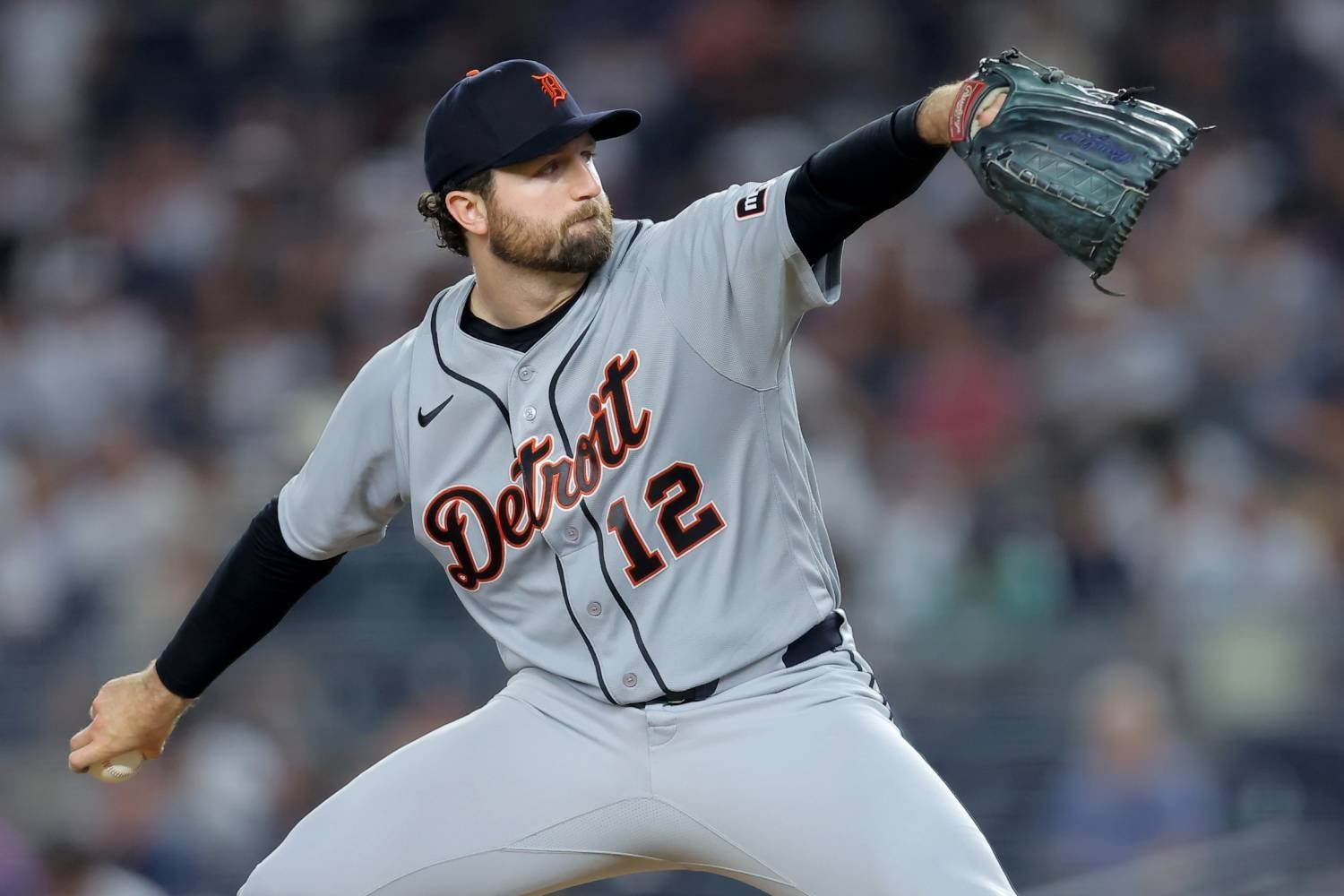
  18. The wait is finally over. The San Diego Padres will be back on the field at Petco Park on Thursday afternoon, playing host to Tarik Skubal and the Detroit Tigers. It was a long wait for the announcement of the roster, but we now have clarity as to what the on-field team will look like early on. Of course, even upon the return of Joe Musgrove, Sung Mun Song, et al, there's a slight tempering of expectations as to where the Padres could fall when 2026 comes to a close. FanGraphs, for example, figures them for fourth in the division with an 80-82 record. Baseball Prospectus is slightly more optimistic in projecting them to finish third and just a hair behind the San Francisco Giants (81.4 win projection). The Padres and their limited financial wiggle room with which to make improvements this winter will have a lot to do in order to drive more optimism around their fortunes. Nevertheless, this is still a team that features Fernando Tatis Jr., Manny Machado, and Jackson Merrill at the top of their lineup, as well as the league's most dominant bullpen. With good supplemental production from the lineup and in the rotation, it shouldn't be too difficult for those projections to change quickly. Of course, they'll stare down Skubal to start the year. Getting runs across against the reigning two-time American League Cy Young winner is no easy feat for a team that finished in the bottom half of the league in offensive production versus left-handed pitchers. Nevertheless, this is a different group with different leadership, so there's nothing to stand on as far as what carryover could look like in that department. Beyond that, let's talk about what else you need to know ahead of Opening Day 2026. Opening Day Roster Catchers: Freddy Fermin, Luis Campusano Infielders: Gavin Sheets, Jake Cronenworth, Xander Bogaerts, Manny Machado, Miguel Andujar, Nick Castellanos, Ty France Outfielders: Fernando Tatis Jr., Jackson Merrill, Ramón Laureano, Bryce Johnson Starting Pitchers: Nick Pivetta, Michael King, Randy Vásquez, Germán Marquez, Walker Buehler Relief Pitchers: Mason Miller, Adrian Morejon, Jeremiah Estrada, David Morgan, Wandy Peralta, Kyle Hart, Bradgley Rodriguez, Ron Marinaccio As far as lineup construction goes, Gavin Sheets is going to get the bulk of the work at first base when a right-hander is on the mound. He can also work as the designated hitter or fill in somewhere in an outfield corner on occasion. Against a lefty, though, it's anybody's guess. France just won a Gold Glove. Miguel Andujar hits lefties well. Nick Castellanos had a nice spring and adjusted well to the position. There's going to be a heavy rotation between that spot, the DH, and as an occasional corner outfielder throughout that group, so the early part of the season will inform how Craig Stammen could rotate it out as we progress through 2026. The starting staff is another notable element here. Each of Marquez and Buehler got rotation spots with Joe Musgrove starting the season on the Injured List. Randy Vásquez doesn't have the most stable track record, even if he finished the 2025 season on a high note. King was prone to health and efficiency woes last year. It's perhaps the most concerning element of the roster, one that will have to be heavily support by the dominance of the relief corps. Opening Day Injured List Joe Musgrove (Starting Pitcher) Matt Waldron (Starting Pitcher) Griffin Canning (Starting Pitcher) Jason Adam (Relief Pitcher) Yuki Matsui (Relief Pitcher) Will Wagner (Utility) Sung Mun Song (Utility) There's plenty of depth upon which the Padres will rely on before long that's starting the year on the shelf. Song will be a key component in supplementing at least three spots with both his glove and his bat. Musgrove will be crucial as an innings-eater while each of Waldron and Canning represent important depth in the rotation. Adam will add another upper-tier arm to the late innings while Matsui is likely to supplant Hart as a middle-relief lefty upon his return. There isn't anything overly concerning here, but it's a decent volume of regular contributors that they'll start without. Major Storylines First Base/Designated Hitter Hodgepodge: We've already discussed it, but how playing time is distributed between Sheets, Castellanos, Andujar, and France will be a fascinating development to watch early on. Starting Pitcher Innings: Starting pitchers, in general, don't work too deep into games early in the season as they continue to build up their workload for the stretch run. But being able to work deep enough for the Padres to deploy their bullpen to its benefit and not leave the early part of the season completely overworked is going to be key. On-Paper vs. Real Life: Fernando Tatis, Manny Machado, and Jackson Merrill are the three best players on this team. Yet Tatis disappeared for stretches while Merrill fought through multiple injuries in 2025. They need each to be closer to the on-paper version of themselves than the iteration we saw at various points last year. Song's (Eventual) Arrival: Whenever Sung-mun Song makes his debut, it's likely we start seeing him worked in the lineup on a near-daily basis given his utility. How the offensive profile — which included a 25-homer, 25-steal campaign in his last season in the KBO — translates will tell us a lot about how much value he can add to the run production that we know is so crucial for this team to find success. Game Info: Detroit Tigers at San Diego Padres Starting Pitchers: Tarik Skubal (DET) vs. Nick Pivetta (SD) Time: 4:10 PM ET/1:10 PM PT Location: Petco Park; San Diego, CA Broadcast: PADRES.TV, Detroit SportsNet, MLB app View the full article
  19. Projection systems are taking a cautious view of the 2026 Twins. Both FanGraphs and Baseball Prospectus peg Minnesota as a 78-win team, a number that reflects tempered expectations and lingering questions about the roster. It's the worst preseason outlook those outlets have given the organization since 2017, when the club was trying to recover from a 103-loss season. That comparison is not as discouraging as it might sound. In fact, it might be the most optimistic signal available. The 2017 Twins entered the year with little momentum and even less outside belief, after a disappointing 2016 that triggered major organizational change. A new front office group took over, expectations were reset, and most assumed a lengthy rebuild was ahead. Instead, that team flipped the narrative almost immediately. Minnesota improved by 26 games, finishing 85-77 and securing a Wild Card berth in a season that reshaped the trajectory of the franchise. It was not supposed to happen that quickly, but a combination of internal growth, timely performances, and a few unexpected breakouts made it possible. Turnarounds like that are rare and difficult to predict. However, the current version of the Twins is navigating a similarly uncertain moment. With changes in leadership and questions about how the roster will come together, there's plenty of room for skepticism. There is also, as 2017 showed, a clear path for a team to outperform expectations if the right pieces click at the right time. A Rotation Anchor at the Top One of the biggest reasons the 2017 Twins exceeded expectations was the stability provided by their ace. Ervin Santana delivered one of the best seasons of his career that year, taking the ball every fifth day and giving the team a chance to win. Across 33 starts, he posted a 3.28 ERA and racked up an MLB-leading five complete games and three shutouts, with 167 strikeouts. In an era when pitchers rarely finish what they start, Santana was a throwback presence who set the tone for the staff. The 2026 Twins need a similar impact from Joe Ryan. Last season, he produced a strong overall campaign worth 4.6 rWAR, although his performance dipped in the second half. Minnesota does not necessarily need complete games or shutouts to match Santana’s influence. What they do need is consistency at the top of the rotation and the kind of reliability that allows the rest of the staff to fall into place. If Ryan can take another step forward and remain a steady force, the Twins' rotation suddenly looks far more capable than the projections suggest. Byron Buxton, Then and Now The 2017 season also marked a breakout year for Buxton, though it looked very different from the version fans saw in 2025. At age 23, Buxton was still developing as a hitter, finishing with a 93 OPS+. However, his value came from elite defense and game-changing speed in center field. Over 140 games, he accumulated 5.0 rWAR and established himself as arguably the best defender in baseball, earning both a Gold Glove and the American League Platinum Glove Award. Fast-forward to 2026, and Buxton is no longer just a defensive standout. He's coming off one of the most impressive seasons of his career. In 2025, he posted 4.9 rWAR, while slashing .264/.327/.551 with 35 home runs and 24 stolen bases. The Twins are hoping that version of Buxton continues to show up on the field regularly. In 2017, Buxton’s emergence gave the team energy and identity. In 2026, his leadership and star-level production could play the same role. Veterans Stepping Up Another underrated part of the 2017 turnaround was the performance of the established players. Brian Dozier and Joe Mauer both produced more than 4.0 rWAR that season, giving the Twins a strong veteran foundation around their younger players. That level of production was harder to find on the 2025 roster. Buxton was the only Twins position player to clear the 4.0 rWAR mark, with Harrison Bader finishing next at 2.7. For Minnesota to exceed expectations this year, a few experienced hitters will likely need to deliver standout seasons. Josh Bell was brought in to add power to the middle of the lineup, even if his defensive limitations cap his overall value. Ryan Jeffers is another player who could take a step forward, especially if he receives a heavier workload behind the plate. Matt Wallner also has the kind of power that can change games quickly, and a big home run total could elevate his impact across the season. The 2017 team showed that a few strong veteran performances can stabilize a roster that is still finding its identity. Young Talent Emerging The final piece of the puzzle in 2017 was a wave of younger players beginning to establish themselves. José Berríos provided a boost in the rotation behind Santana, with the rotation’s second-highest WAR (1.9 rWAR). Miguel Sanó delivered power with 28 home runs and 3.0 rWAR. Jorge Polanco and Max Kepler both hit over 30 doubles and combined for 3.4 rWAR. Together, they signaled that the next core of Twins baseball was arriving. The 2026 Twins are hoping to see a similar trend. Mick Abel already forced the team’s hand this spring by earning a rotation spot after an impressive camp. If he performs well during the season, he could provide the same kind of lift Berrios offered that year. On the offensive side, Luke Keaschall will be asked to build on the momentum from his rookie breakout. Meanwhile, the organization has several high-end prospects pushing toward the big leagues, including Emmanuel Rodriguez, Gabriel Gonzalez, and Walker Jenkins. If even one or two of those players make an impact during the summer months, Minnesota’s lineup could look very different by the end of the season. No two seasons unfold the same way, and expecting a repeat of the 2017 turnaround would be a tall order. Still, that year proved that projections are not destiny. A strong ace, a star player leading the way, productive veterans, and young talent emerging at the right time can quickly change the outlook of a season. The 2026 Twins may start the year with modest expectations, but the organization has seen firsthand how quickly things can flip. If the right pieces fall into place, Minnesota could once again turn skepticism into a playoff chase. Do you see connections between the 2017 Twins and the current roster? Leave a comment and start the discussion. View the full article
  20. Every Brewers fan dreams that the regular season begins on a high note. A fast start in the opening month is still a small sample size, but it sure can be exciting. Here is a look at some of the best month-long performances from March and April. Best Team Hitting: .848 OPS in 1987 It is no surprise that the Brewers' best start to a season was in 1987. The famed 13-game winning streak was largely fueled by a historically good month offensively. Rob Deer paced Milwaukee with 9 home runs and a 1.215 OPS through April. Paul Molitor also produced a .395 batting average during the first 21 games. Memorable moment: Dale Sveum's walk-off home run on Easter Sunday is iconic (43% WPA). The most pivotal moment of the game happened earlier in the inning, though, when Rob Deer smashed his second home run of the day, tying the score at 4-4 (48% WPA). Best Team Pitching: 2.27 ERA and .566 OPS allowed in 1976 Fifty years ago was certainly a different era for baseball. The 1976 Brewers pitching staff struck out only 44 batters in all of April. In fairness, Milwaukee played only 12 games that month. At the same time, that strikeout rate equates to an anemic 3.7 SO/9 IP, which was somehow not the worst in the league that month. Jim Colborn, Jim Slaton, and Bill Travers did not miss many bats, but their batted balls allowed did not miss many gloves, either. The Brewers' pitching staff benefitted from a .226 BABIP that April, the lowest BABIP allowed over a single month in franchise history. All told, this team was Milwaukee's best at limiting earned runs, baserunners, and extra base hits over the first month of the season. Memorable moment: Jim Slaton outduels Catfish Hunter as the Brewers beat the Yankees 5-0 on Opening Day. Hank Aaron records three RBI on the day for Milwaukee to begin his farewell season. Best Individual Hitting: 1.276 OPS by Eric Thames in 2017 (103 PA) Eric Thames had a remarkable stint in the KBO League, averaging over 40 home runs per season before joining Milwaukee in November 2016. Thames did not miss a beat during his first month for the Brewers, hitting .345 wth 11 homers over 103 April plate appearances. Christian Yelich later went on to hit 14 HR in April 2019, but Thames still holds the team record for highest OPS for a season's opening month (minimum 90 PA). Memorable moment: Eric Thames hits two home runs in the first two innings off Amir Garrett as the Brewers beat the Reds 11-7 on April 24 at Miller Park. Thames also recorded two walks and three runs scored on the evening. Best Relief Pitching: .258 OPS allowed by Nick Mears in 2025 (11.1 IP) Milwaukee has had historically good relief pitchers in recent memory. Surprisingly, the lowest OPS allowed in April by a Brewer reliever belongs to Nick Mears (minimum 10 IP). Mears struck out eight batters, allowed two walks, one earned run, and zero extra base hits to open the 2025 season. Mears was amazingly effective but not flashy. The flashiest start to a season by a Milwaukee reliever was Josh Hader in 2018. Hader struck out 39 batters over 18 innings that April. Only Tommy Pham's wall-scraping HR off Hader prevented Josh from earning the title of lowest OPS allowed to open a season. Memorable moment: Nick Mears inherited two baserunners with nobody out in the bottom of the sixth inning on April 30 against the White Sox. Three pitches later, Mears recorded three outs and kept the game tied at 3-3. The average leverage index for Mears' appearance was a very high 2.62. If Milwaukee lost this game to Shane Smith, the damage to the Brewer Fanatic psyche would have been incalculable. Best Starting Pitching: .350 OPS allowed by Brandon Woodruff in 2021 (29 IP) Milwaukee's big three starting pitchers of Brandon Woodruff, Corbin Burnes, and Freddy Peralta did not disappoint to start the 2021 season. Burnes recorded a major league record 58 strikeouts before issuing his first walk on May 13. However, the stingiest starting pitcher in franchise history in April is Brandon Woodruff. In April 2021, Woodruff allowed only one extra base hit over 29 IP. Memorable moment: Brandon Woodruff throws seven scoreless innings, allowing just one hit against the Cubs at Wrigley Field on April 7. Lorenzo Cain hits his second home run of the game in the tenth inning, propelling Milwaukee to a 4-2 victory. View the full article
  21. From the moment it became clear that the Boston Red Sox would enter the 2025 season with Alex Bregman as their starter at third base and Rafael Devers as their designated hitter, close observers of the team have fretted over Masataka Yoshida's role in Boston. Yoshida is a left-handed-hitting outfielder -- unfortunately for him, the fourth-most valuable such player on the 2026 Red Sox roster. He's also expensive, with a contract that pays him $18 million per season, with two seasons still to run. Over and over during this offseason, we have heard that with Roman Anthony, Jarren Duran, Wilyer Abreu, and Ceddanne Rafaela ahead of him on the depth chart, there is no clear path to meaningful playing time for Yoshida, barring injury. That phrase, barring injury, is thrown in, seemingly as an afterthought, when discussing the barriers to playing time Yoshida faces, as if injuries were a remote contingency. In 2025, there was no real role for Abraham Toro, Nate Eaton, or Nick Sogard on the Red Sox roster, barring injury. They combined for 416 plate appearances over the course of the season. David Hamilton, who was supposed to be a bench player, appeared in 91 games and came to the plate 194 times. In baseball, injuries happen. Assuming that Triston Casas is able to return to form later in the 2026 season, the five outfielders and two first basemen (Casas and Willson Contreras) on this roster appear to give them one more player than they can accommodate with regular playing time. Many have suggested that the team should trade Yoshida, who is coming off a season in which he was mostly hurt, and who has not been able to put together a complete season since 2023. There is little reason to trade for a player who has such uncertain value. Even a true salary dump seems unlikely to be an available option for the Red Sox. Some have even argued that the best thing to do would be simply to release the outfielder. Yoshida's time with the Red Sox has not been as successful as anyone wished, but it has consistently been the case that, when he is right, Yoshida has been a productive major-league hitter. In both 2024 (an OPS of .898 in July and .877 in August) and 2025 (an .837 OPS in September), there have been periods where looks like a true middle-of-the-order bat. He has spent so much time either being injured or working his way back from injury, it is easy to forget what Yoshida is capable of. His recent performance on the World Baseball Classic stage has helped remind fans that this isn't someone who is simply payroll fodder. The idea that Yoshida has no role on this team is based on two parts: Yoshida's modest value as a player and the fact that he is buried on the depth chart. However disappointed in his performance in a Red Sox uniform fans may be, this is an asset with some value. For his part, manager Alex Cora has been quoted both reminding us what Yoshida has been through the last two years and saying that on this team, if you hit, he will find a way to let you play. What about the other piece of the equation? Is Yoshida truly blocked from regular playing time by the other four Sox outfielders? With Roman Anthony locked in as the left fielder, that removes one spot from the equation. Wilyer Abreu and Jarren Duran will soak up the majority of time in right field and DH, respectively, and it doesn't help Yoshida's case that both are more proven left-handed hitters. Ceddanne Rafaela has his ups and downs -- in June (.870 OPS) and July (.852) of 2025, he went on an extended heater, but his April (.598) and May (.698) and his work down the stretch (a .583 OPS for August and .669 in September) tell the tale of what was at times a tough watch -- but his elite center field is far too valuable to sit. So, how might a healthy Yoshida get meaningful playing time in 2026? 1. Injuries: as noted above, there are always injuries. 2. Some kind of rotation: most players benefit from a day off or two per week. Playing the hot hand(s), the individual matchups, giving players a breather -- organically, we could see Yoshida getting 2-3 starts per week. 3. Yoshida could be showcased in hopes of facilitating a trade. Opinions of Craig Breslow's trades vary somewhat, but he seems very cognizant that the players throughout the system are assets with value to be managed efficiently. To get any kind of return in a Yoshida trade, the Red Sox will have to re-establish his value. Cora may be relatively aggressive in the first 6-8 weeks of the season in feeding Yoshida at bats. Mid-May is about the point when injury or underperformance may create a Masa-sized hole in some team's lineup. One way or another, the proposition that Yoshida has no role on this team strikes me as both short-sighted and unrealistic. Bring back the golden barbells! View the full article
  22. Charles McAdoo is a pure slugger at the minor league level, and with Rule 5 Draft eligibility knocking, there are questions about whether he can make it to the big leagues in time to stay with the Blue Jays. Shortly after heading into Toronto's system as the return compensation in the Isiah Kiner-Falefa trade, McAdoo logged a career high in stolen bags. What will he achieve in 2026? We break it all down in this video!View the full article
  23. The Miami Marlins surprised pretty much everybody in 2025, placing third in the National League East division despite an extremely inexperienced and inexpensive roster. Will they take another step forward this season, stagnate or regress? On the eve of Opening Day, Fish On First staffers were invited to answer five of my burning questions about the state of the franchise. Thanks to Louis Addeo-Weiss, Isaac Azout, Kevin Barral, Alex Carver, Jeremiah Geiger, Sean McCormack, Daniel Rodriguez and Hector Rodriguez for their participation in the following roundtable. 1. What do you think was the most interesting move that the Marlins made during the 2025-26 offseason? Ely Sussman: I did not expect the Marlins to pay up for a "Proven Closer" like Pete Fairbanks. His $13 million guarantee nearly matches what every other major league free agent signing of the Peter Bendix era has combined to receive. Even accounting for the pre-existing relationship that Fairbanks and Bendix have with each other, it’s a strange way to allocate the club’s limited resources. For this contract to yield any surplus value for the Marlins, the 32-year-old must be healthy and even better than his 2025 form. Louis Addeo-Weiss: Depends on how you define interesting? It’s “interesting” that the team signed a marquee reliever in Fairbanks, but also “interesting” decision to sign Paddack for different reasons. Isaac Azout: “Most interesting” would have to be the Ryan Weathers trade. While I don’t disagree with the premise, I found the timing of the move peculiar. Sure, Weathers could get hurt early yet again and the organization would be left with nothing but their dick in their hand, but it seemed to me his upside was more valuable to Miami than whatever he could return on the market at the time. Still, Peter Bendix was able to acquire four relatively decent pieces for a high-upside yet unknown quantity in Weathers. However, if Weathers performs the way we know he’s capable of in just the first half, he'd be one of the most valuable trade chips in the league. I didn’t loathe the move, but it was by far the most interesting one. Kevin Barral: John King was a solid signing. He isn’t talked about a lot because of the strong spring other pitchers are having, but King has been good and will be used quite a bit as one of two left-handed pitchers in the bullpen. Alex Carver: Chris Paddack. The Marlins put a ton of confidence in Paddack to regain the form they thought they had when they drafted him in 2015 by giving him $4 million and all but guaranteeing him a rotation spot. He came back to Miami after one of his worst career seasons, but the Marlins believed in their ability to get the most out of what has become their prototype pitcher: large frame with a deep arsenal. Paddack bought in to what the Marlins are doing developmentally, including calling pitches from the dugout and the work they are doing with pitch design and had a fantastic spring training campaign, holding down a sub-1.00 ERA and 12/3 K/BB. The 30-year-old enters the season with all gears turning. He could wind up being a steal. Jeremiah Geiger: Signing Christopher Morel to a one-year, $2 million contract. This is a true boom-or-bust signing. The Marlins hope that Morel can return his 2023 form—when he hit 26 HR with the Cubs—and solve the organization’s first base issue. If he doesn’t work out, the Marlins could easily cut ties. Sean McCormack: Trading Edward Cabrera for Owen Caissie and prospects. Daniel Rodriguez: The most interesting move to me was Ryan Weathers since he had the lefty upside in the rotation and trading him came a bit out of left field. Hector Rodriguez: Trading Ryan Weathers to the Yankees for four prospects. I’m a fan of Weathers’ upside, but I understand that the injury history is a concern. It’ll be interesting to see what the Marlins pitching staff looks like without him and Edward Cabrera. 2. Any players returning from the 2025 Marlins who you believe will be significantly improved this season? Ely: The no-brainer pick here is Sandy Alcantara. He allowed 107 runs last season—the most by a Marlins pitcher since 2011—but his command improved and luck evened out during the second half of the season. Conservatively, he should be a strong No. 3-caliber starter this year. The case for Eury Pérez is also pretty obvious given the fantastic quality of his stuff. My bolder pick is Agustín Ramírez. I think he'll be the best offensive player on the team. Louis: Otto Lopez. I can’t imagine he’ll produce as feebly against LHP the way he did in 2025. Isaac: Sandy Alcantara is my first and most obvious choice, so I’ll go in a different direction. Eury Pérez returned from Tommy John surgery last season, and while the surface stats weren’t magnificent, the stuff certainly was. I not only think Pérez will be the best pitcher on this roster, but I also think he has an outside chance to be a National League Cy Young Award candidate. Kevin: I think a full season of Xavier Edwards at second base can be very exciting. He mentioned how that move to second in the middle of the season allowed him to focus more on the offensive side of things. Edwards was a Gold Glove finalist and I think with a full season under his belt at the position, you can see him have a career year. Alex: Sandy Alcantara. After his lost 2024 season, evaluators didn’t expect Sandy to post another Cy Young-caliber campaign last season, but it would’ve been hard to expect him to struggle as much as he did. Sandy’s 2025 was downright ugly as he posted a 5.36 ERA, more than a full run higher than his 2023 totals. His FIP weighed in at 4.28, though. Much of Sandy’s troubles could be attributed to him being unable to command the bottom half of the zone, leading to 46.5% ground ball rate, the lowest he’s posted since 2019. Cutting the usage of his staple slider in favor of a curveball proved to be a disadvantageous change. Back to his norms this spring and during the World Baseball Classic, Sandy posted a 16/2 K/BB and held down a 2.63 FIP in Grapefruit League action. Fully healthy and back to his roots, I expect the Sandy of old will be back in 2026. Jeremiah: It’s no secret that Sandy Alcantara struggled during the first half of last season, posting a ghastly 7.22 ERA before the All-Star break. But he finished strong, with 3.33 ERA in his last 13 starts. I expect him to have a much more consistent 2026. Sean: Otto Lopez. Daniel: Jakob Marsee. He will be the best player on the Marlins with improved offense and defense as the team's everyday center fielder. Hector: Otto Lopez. His glove is already very good, but I want to see his offense take another step in the right direction. He played well in the World Baseball Classic and spring training. I think we could see him have a breakout season. 3. If you ran the Marlins front office, which player would you be most focused on signing to a long-term contract extension? Ely: Joe Mack. There is hardly any precedent for signing pre-arb catchers to extensions, much less ones who haven't even debuted, and that should keep the price down relative to other positions. Mack is a defensive savant who is capable of hitting at an above-average level at his peak. A modest guarantee between $35-45 million with multiple club options could give the Marlins control of him for nearly a decade. In general, it's ridiculous that the Fish have gone this long without extending anybody. Most other low-revenue franchises have gotten the memo that these investments are vital to sustainable winning. Louis: Jakob Marsee. Isaac: Have to double down here. Eury Pérez’s combination of youth, stuff, control, and size makes him a prime extension candidate for any front office. Kevin: Eury Pérez. He will be worth a lot of money if he has a breakout season. The Marlins extension rumors we heard during the offseason haven’t resulted in anything during the spring. It could’ve been all smoke, but Pérez needs to be locked up. Alex: The Marlins have found a way to work magic with left-handed-hitting outfielders. Jakob Marsee was no exception. After earning his way onto the roster thanks to a breakout showing in Triple-A, Marsee matriculated about as best as he possibly could’ve when he slashed .292/.363/.478 in his first 55 MLB games. With a patient, balanced approach, good speed, and the ability to hold down all three outfield spots, he’s looking like a real threat for annual 20/20 campaigns. He’s also four years younger than teammate Kyle Stowers, while being cut from the same cloth that awarded Stowers All-Star honors last season. With another good showing during the first half this year, it would behoove the Marlins to get Marsee on paper. Jeremiah: I would be focused on signing Jakob Marsee to an extension. The outfielder can do it all, offensively and defensively, and was a revelation after making his debut last season. His plate discipline is among the best in baseball. Sean: Robby Snelling. Daniel: Eury Pérez without a doubt. Hector: Eury Pérez. With his talent and youth, I would like to lock him into a team-friendly deal and try to keep him in a Marlins uniform for his prime seasons. 4. Entering the 2026 season, what is this team's biggest strength and biggest weakness? Ely: For the first time in forever, the Marlins should have elite plate discipline. The team made a leap from worst chase rate in MLB during the 2024 season to a top-10 mark in 2025. Kudos to the player development department on that. Specifically, increased playing time for Jakob Marsee, Griffin Conine and Graham Pauley will boost their collective walk rate. Miami's biggest weakness is first base. This is going to be a trainwreck. Louis: Strength—rotation and corresponding depth. Weakness—lack of power throughout, only magnified by the Kyle Stowers injury. Isaac: I would have said the lineup as the team’s biggest weakness, but the organization has proven its ability to mix and match hitters to put them in the best position to succeed. Instead, I’ll narrow it down to the corner-infield spots. First base was a disaster all spring long on both sides of the ball, and I’m still not fully convinced on Connor Norby at third. I expect Graham Pauley to ultimately win the job sometime in late April. The strength looks like the bullpen. I thought it was a strength last season, and they added two quality arms in Pete Fairbanks and John King, one from each side. Along with Calvin Faucher, Tyler Phillips, and some potential high-leverage options waiting in Jacksonville, they could shorten games for this team in a very real way. Kevin: Biggest strength remains the starting pitching and the depth that follows it. Having a rotation of Sandy Alcantara, Eury Pérez, Chris Paddack, Max Meyer and Janson Junk is up there for the best in the NL. Having depth pieces such as Braxton Garrett, Ryan Gusto and Bradley Blalock who can come up if needed are always great to have. Then you have Robby Snelling and Thomas White who are on the cusp of a big league debut. The biggest weakness is at first base. Christopher Morel’s spring training was disappointing despite looking good early on. The first base options behind Morel aren’t bad—there's just a lot of questions regarding their defensive ability at the position. Alex: In multiple ways, the strength of the organization is starting pitching. With an already solid rotation anchored by a former Cy Young winner and a kid who made his starting pitching debut at 18, the Marlins also have two top-100 prospects knocking on the door. Behind them, multiple more young arms litter Miami’s organizational top 30 prospects. The biggest weakness of the organization is corner infield talent. The Marlins will enter the year with a rotation of players who have barely, if at all, played first base. Connor Norby will begin the year as primarily a third baseman, but he may eventually move off the spot if stark improvements are not made. The upper levels of the minors provide little answers for these issues. Deyvison De Los Santos is much more of a bat than a first baseman and will need to bounce back in a big way after a very disappointing 2025. Finding a formidable starting MLB third baseman in the MiLB ranks is a tough exercise; the first name that comes to mind is Aiva Arquette, who has a long way to grow. These are positions and depth the Marlins will need to upgrade drastically. Jeremiah: The strength for the Marlins is their young offensive core. Agustín Ramírez, Jakob Marsee, and Kyle Stowers will all be looking to improve upon good offensive years. Top prospect Owen Caissie will be getting plenty of playing time as well. The weakness is the back half of the rotation. Can Chris Paddack rebound after an awful 2025? Will Max Meyer prove he can stick as a starter? Time will tell. Sean: Biggest strength is the upcoming Triple-A talent, such as Joe Mack, Snelling, White, and Kemp Alderman, with the biggest weakness being the corner infield talent at the major leagues and minor leagues. Daniel: Strength—the outfield with around 4-5 players who realistically could play the position. The bullpen stands out as a clear weakness for Miami. When a team makes the largest bullpen signing in franchise history, it’s usually a direct response to instability in that area. Rather than adding depth to an already strong unit, the move signals that the team is trying to fix a problem. Hector: I think Miami’s biggest strength is their speed. They have a lot of good baserunners who can swipe bags and cause havoc on the base paths. As for their weakness, I think it’s depth in their starting rotation. Sandy and Eury can be an excellent 1-2 punch, but I have less faith in the rest of the rotation. It’ll be interesting to see how Robby Snelling and Thomas White perform if they get their shot in The Show this season. 5. Predict the Marlins' win-loss record and team MVP Ely: The Marlins will finish 78-84. Better run differential than last season, but slightly worse overall record, and they won’t be mathematically alive for a postseason berth quite so deep into September. My team MVP is Eury Pérez. We have seen him look utterly unhittable at times; in 2026, he’ll be doing that much more consistently. Louis: 74-88. Marsee. Isaac: The Marlins will go 80–82. I have Eury Pérez as their MVP, but I’ll go with Otto Lopez here. A Gold Glove–caliber shortstop, I think he’ll break out even more with the bat and find himself regularly hitting at the top of the lineup going forward. Kevin: 82-80 and the MVP will be Jakob Marsee. Alex: With several of their top prospects very close to making their MLB debuts and having exercised good strategy to fill in around what worked well for them last season, the Marlins are looking like a scrappy and potentially surprising team in 2026 as their competitive window starts to fully open. Health permitting, I have the Marlins playing meaningful games once again in September and looking good doing it. 83-79. Jeremiah: I predict the Marlins to finish 82-80, and Kyle Stowers to be the Marlins MVP. Sean: 75-87 and team MVP is Sandy Alcantara. Daniel: 84-78. MVP Jakob Marsee. Hector: 83-79. My team MVP is Otto Lopez. He might not be the Marlins All-Star, but I think he’ll finish the season with the highest WAR on the roster. View the full article
  24. MIAMI, FL — Less than 24 hours after it was reported that the Miami Marlins agreed to a one-year major league deal with right-handed hitting outfielder Austin Slater, he took the field for his new team in a workout at loanDepot park. "Really excited to have Austin join our club," said Marlins manager Clayton McCullough on Wednesday. "Saw him for a number of years as an opponent and he'll bring a real high quality at-bat versus left, something that historically he's done. Expect him to start versus left, also be a real weapon off the bench versus left-handed relievers. He's got the ability to play very solid defense in the outfield as well. We think this really rounds out our roster nicely and provides myself with a lot of options, and someone that has done this for a very long time at a high level." To add Slater to their 40-man roster, the Marlins placed starting pitcher Adam Mazur on the 60-day IL as he underwent Tommy John surgery earlier this month. For his career against left-handed pitchers, Slater has slashed .267/.357/.430/.787 with 30 home runs and 112 RBI. With the White Sox, Slater did post a wRC+ of 100 (right at league average), but it was his Yankees tenure that dropped his overall wRC+ to 78 on the season. He owned a .726 OPS against left-handed pitching this past season between both organizations. This offseason, Slater signed a minor league deal with the Detroit Tigers and in 15 spring training games, he slashed .267/.389/.467/.856 with one home run, four RBI and a 126 wRC+. Despite the strong spring, Slater was informed that he did not make the Tigers Opening Day roster and triggered his opt-out. Slater described the last couple days as "a lot of chaos." "I was able to go home for a little bit, so that was nice and relaxing," Slater told the media. "See my son and my wife and my parents, kind of get re-grounded, and now it's time to go. Kind of a quick reset. Luckily, it wasn't too long. Still feel like I'm in baseball shape and ready to go." Prior to the Slater signing, the Marlins player with the most MLB service time was Sandy Alcantara (seven years and 100 days). Pete Fairbanks, who the Marlins signed this offseason, was the oldest player on the roster at age 32. Slater now takes over as the team leader in both categories. "Being on a young team and being able to help guys out in any way I can, whether it's tips or just mindset or whatever it might be, I find that really exciting," Slater said. "Then also just the opportunity to play and contribute on a big league team. Those were key factors, and I had a familiarity with (general manager) Gabe Kapler here and his time in San Francisco, and he helped me a ton in my career. I'm hoping to make some adjustments and keep going." Defensively, Slater has always been either league average or just about league average in the outfield. Although he's been used most often in center field in the past, most of his time with the Marlins will be spent in the corner outfield spots, with Jakob Marsee handling center. The Marlins are set to face two left-handed starters this weekend in Kyle Freeland (Friday) and José Quintana (Sunday). Slater is highly likely to be in the lineup for those matchups. "I don't think we're going to need to ease him in," McCullough said. "He was in camp the whole time and had a few days off, but he'll have a chance today to get a little bit of work, moving around some today and tomorrow. He will have the chance to get some work and get some at-bats, and he'll be ready for Friday." View the full article
  25. On Wednesday morning, the Kansas City Royals announced their Opening Day roster for Friday's contest against the Atlanta Braves at Truist Field in Atlanta. It was expected that the Royals would announce their roster today, especially with the requirement to do so at least 48 hours before their first game. There aren't a lot of surprises with the Opening Day roster, especially with this Royals team looking to return to the postseason after missing out a year ago. However, there are some key takeaways from the roster announcement, which also included a few transactions on the 40-man roster. Here are four takeaways from the Royals' Opening Day roster and the corresponding roster moves announced today by Kansas City. The Royals Kept Lange and Falter Because of the "Option" Game Righty Alex Lange and lefty Bailey Falter made the Opening Day roster for the Royals, even though they are both coming off mixed Spring Training campaigns. In nine appearances and nine innings pitched, Lange posted a 9.00 ERA and 1.56 WHIP. He had a 2.88 FIP, which was good, but he also sported a 9.8% K-BB% and 57.3% strike%, both mediocre marks. He also allowed a 12% barrel rate and 48% hard-hit rate, which are concerning as well. That said, he did showcase some strong whiff rates, velocity, and groundball rates, as illustrated in his TJ Stats summary below. As for Falter, he was a bit of the opposite of Lange this spring. His stuff and whiff rates weren't as impressive. However, he limited hard contact and walks and demonstrated good extension on his pitches in Cactus League play with the Royals. As seen above, he ranked only in the 31st percentile for fastball velocity, the 10th percentile for whiff rate, and the 27th percentile for groundball percentage. That's not exactly the profile that one wants to see from a reliever, regardless of their role in the bullpen. An interesting dilemma for Falter is how he will adapt to a relief role with the Royals. Prior to coming to Kansas City, he primarily pitched as a starter with the Pirates. Unfortunately, with a crowded Royals rotation, he will start as a long reliever, with the ability to spot start if necessary. Lange could probably use some time to continue to refine his command, especially since he is coming off an injury in 2024 and only pitched one inning at the Major League level in 2025. As for Falter, he may need more time to develop as a reliever, especially when it comes to playing his stuff up more in limited-inning outings. His 99 TJ Stuff+ this spring ranked in the 52nd percentile. Unfortunately, Lange and Falter are both out of Minor League options. Thus, to keep them on the 40-man roster, they both need to be on the active roster. While they haven't had great Spring Training campaigns by any means, they certainly did enough to merit longer looks, even if there may be marginally better options in Triple-A, like Luinder Avila, Steven Cruz, and Ryan Bergert. At this time of the year, the "option" game often carries a bigger weight, especially since teams do not want to lose possible MLB contributors for nothing on the waiver wire or in free agency. Thus, Lange and Falter will get a little more time at the beginning of the season to show if they can find their roles on the Royals' pitching staff this season, and, perhaps, beyond. Tolbert's One Tool Wins Out Over More "Veteran" Utility Options The Royals opted to add Tyler Tolbert to the Opening Day roster over other non-roster invitee "utility" options. The 28-year-old utility player had an encouraging MLB rookie debut in 2025. In 57 plate appearances, he hit .280 with a .701 OPS and stole 21 bases on 23 attempts. At the very least, Tolbert showed that he could be a pinch-runner off the bench who could also play multiple positions in the field in a pinch. Unfortunately, it wasn't a great Spring Training for Tolbert. In 33 plate appearances, the Royals speedster hit .226 with a .563 OPS.. He also struck out eight times and only walked twice. His Statcast percentiles were also pretty mediocre this spring, especially in the exit velocity and hard-hit categories, as seen below. Tolbert ranked in the 30th percentile in barrel rate, 10th percentile in average EV, 9th percentile in Max EV, and 3rd percentile in hard-hit rate. Furthermore, he ranked in the 39th percentile in chase rate, 37th percentile in K%, and 22nd percentile in BB%. There just wasn't a whole lot to be encouraged about with Tolbert from a batted-ball end in Arizona. That said, he stole five bases on five attempts. At the very least, he demonstrated in Cactus League play that he can be that pinch-running weapon off the bench that wouldn't require a lot of at-bats. Josh Rojas, Kevin Newman, Abraham Toro, and Brandon Drury all have Major League experience, and all showed flashes of promise in Cactus League play. Rojas posted a .381 wOBA while Toro posted a .429 wOBA between his time with the Royals and Team Canada in the WBC (56 plate appearances). Newman and Drury were less impressive at the plate, as they posted wOBA marks of .275 and .246, respectively. That said, both Newman and Drury have succeeded in utility infielder roles for their previous clubs. It seemed like there was a real chance that Rojas would make the Opening Day roster. In 48 plate appearances, he only hit .244, but he had a .354 OBP and .842 OPS. He also had a .244 ISO and 14.6% BB% to just a 20.8% K%. Furthermore, his Statcast summary looked a whole lot better than Tolbert's this spring, as illustrated below. Instead of Rojas' better overall profile, the Royals opted to go with Tolbert's one premium tool (baserunning). It will be interesting to see whether Rojas will stay with the Royals organization or opt to join another organization that may offer a clearer path to Major League playing time in 2026. Massey Still Not Ready for Opening Day There was some hope that Michael Massey would be ready for Opening Day, even after suffering a calf injury roughly a couple of weeks ago. On March 21st, Anne Rogers of MLB.com mentioned that Massey would play in Minor League games while the Royals played the Rangers in Arlington, Texas, and that they would make a decision based on how he fared in those contests back in Arizona. Apparently, Massey wasn't ready to play Major League games just yet, and the Royals opted to add him to the IL, along with Stephen Kolek and James McArthur. I'm guessing that the Royals are going to play it safe with Massey this season, who's struggled with injuries over his career. Since debuting in 2022, he's only had one season where he's had 400 or more plate appearances (2024). Last year, in 277 plate appearances, he only hit .244 with a .581 OPS. While he regressed in performance and some skills, injuries also played a role in his overall 2025 campaign. Massey looked like he was ready for a bounce-back campaign this spring prior to his calf injury. In 24 plate appearances, he hit .364 with a .962 OPS. That included a home run, a .182 ISO, and two walks to four strikeouts. He also showed some intriguing Statcast percentiles in Arizona, according to TJ Stats. Massey still whiffed a lot (37th percentile), and he didn't barrel a whole lot of balls (21st percentile). However, he pulled the ball effectively (98th percentile PullAir%) and launched it well (91st percentile LA SweetSpot%), while hitting it hard (98th percentile hard-hit rate). It's likely that if Massey were healthy, he would've gotten the Opening Day roster nod over Tolbert. Massey's availability and his proximity to returning could be why the Royals opted to go with Tolbert over Rojas. Yes, Rojas was a better player this spring than Tolbert. However, if Massey is ready to come back quickly after his injury, it would make more sense to option Tolbert to Omaha than to DFA Rojas. Kansas City may be better off holding on to Rojas, with him substituting for Massey if injuries mount or if something else happens to another player. That would guarantee Rojas a longer stint at the Major League level in 2026 with the Royals. The Waters Era Likely Done in Kansas City In addition to the Massey comment, Rogers mentioned in the same Twitter thread that the Royals were contemplating adding Drew Waters to the Opening Day roster. As seen in the transaction announcement in the previous section, the Royals opted to keep Nick Loftin on the Opening Day roster and designated Waters for assignment. I never understood the "buzz" about keeping Waters on the roster this spring. In 208 games and 684 career plate appearances (all with the Royals), the 27-year-old outfielder has a career .234 average, 84 wRC+, and 0.7 fWAR. He's shown flashes of power, speed, and defense, but there's been no consistency with the former Braves draft pick. In 219 plate appearances last year, his most since 2023, he hit .243 with a 66 wRC+ and accumulated a -0.6 fWAR. His wRC+ and fWAR were career-worst marks. When it comes to this spring, Waters failed to turn heads in a "make or break" Spring Training. In 36 plate appearances, he hit .188 with a .531 OPS. He struck out 22.2% of the time and only had a .094 ISO. Furthermore, his percentiles were pretty lackluster, except for his xwOBA, 90th EV, and LA Sweet-Spot%. Loftin didn't show much in terms of his exit velocity and barrel rates this spring, which has been an issue for the former Baylor product over his career (.103 career ISO). However, his plate discipline was much better this spring than Waters', and the Royals likely valued that skill set over anything Waters provided. Here's a look at what Loftin did Statcast-wise this spring, via TJ Stats. Loftin had a whiff% ranking in the 78th percentile, a K% ranking in the 77th percentile, and a BB% ranking in the 59th percentile. Those are all better marks than what Waters produced in those categories in Cactus League play. Both Loftin and Waters are 27 years old. However, Loftin has 257 fewer plate appearances than Waters at the Major League level. If one of these guys deserves one last shot to prove himself as an MLB player in 2026, it is Loftin rather than Waters simply because the Baylor product has gotten as many chances with the Royals as Waters. View the full article
×
×
  • Create New...