


DiamondCentric
-
Posts
2,631 -
Joined
-
Last visited
Never
Content Type
Profiles
Forums
Events
News
Tutorials & Help
Major League Baseball Videos
Guides & Resources
Store
Downloads
Gallery
Everything posted by DiamondCentric
-

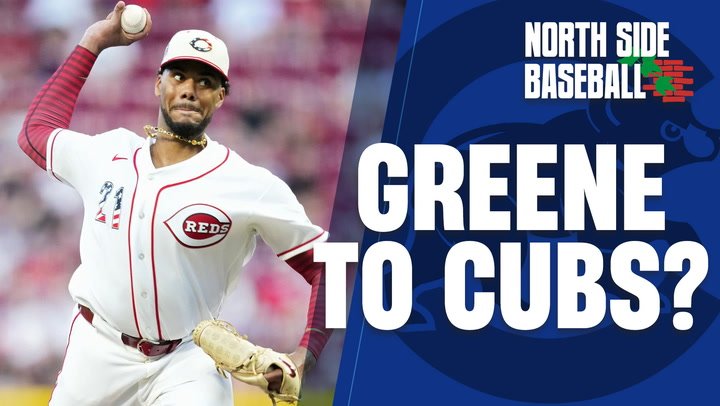 An intradivisional blockbuster involving Hunter Greene feels almost impossible. But if the Reds decide to listen, the Cubs may have exactly what it takes to make a deal happen. View the full article
 -
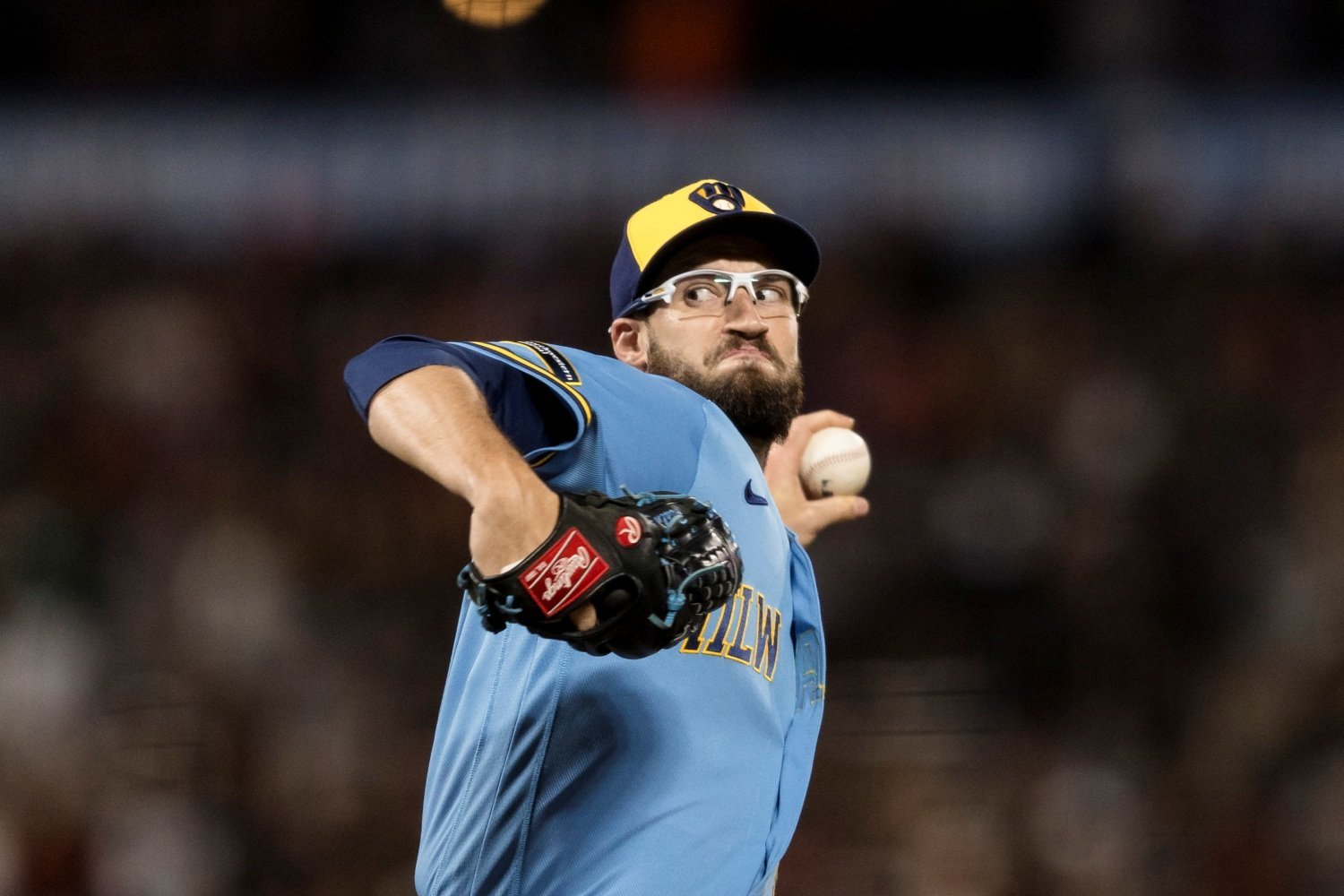 Just as a team will sometimes rest their starting catcher on the day before an off day, the Brewers chose an opportune moment to push back Shane Drohan in the team's starting rotation. Drohan will get two extra days between outings this way, after Milwaukee called up Thomas Pannone to make a spot start Wednesday. The team will have an off day in Los Angeles Thursday before starting a weekend series with the Angels in Anaheim on Friday, and the bump gives Drohan and all of the team's other starters some breathing room. This is the massaging of workloads they've talked about all year. This is the luxury afforded to a team on pace for 100 wins and an easy division title, even after an ugly loss Wednesday. However, that loss did end up exposing some real cracks in the team's foundation for success. Pannone was serviceable, but Pat Murphy treated the outing more like the first phase of a bullpen game than like a true spot start, pulling the peripatetic lefty after just 56 pitches and three innings of three-run ball. At Triple-A Nashville, Pannone had made eight straight appearances with at least 80 pitches thrown and had gotten at least 16 outs in the last four. He was working on seven days' rest. Though the game might have gotten away from Milwaukee in the middle innings if Pannone had been left in a while, that option was available. Murphy, with his steadfast belief in trying to win every game, eschewed it. That meant calling upon Chad Patrick to pitch the fourth and fifth, and to start the sixth. He survived the first two of those frames without allowing a run, and the Brewers chipped away at the Giants' lead in the meantime. When the bottom of the sixth began, it was 3-2 in favor of the home side. Patrick, however, wasn't fooling San Francisco at all. The Giants only swung at 18 of his 47 pitches, and didn't whiff even once in those 18 tries. Patrick has been working through mechanical issues lately, and he's not the same weapon the team often enjoyed when he was assigned to the bullpen late last year. In the sixth, he ran out of ways to gut it out, and left without getting an out. Trying to throw a hat on a firehose, Murphy turned to Aaron Ashby, Somewhat like Patrick, Ashby is showing signs of wearing and buckling under heavy use recently, and Wednesday became the latest and most glaring example. Ashby faced six batters, threw 24 pitches, recorded one out, and left the game in the care of Bryse Wilson—a sure sign that the horses were out of the barn. Uncharacteristically sloppy defense behind them hurt the Brewers hurlers, but the day was a reminder that the team has real needs to address before Monday's trade deadline, even if they're less urgent than those of some of their rivals. Another starting pitcher would be a huge addition; it would obviate things like Wednesday's Pannone start. The team doesn't want to overexpose its young and inexperienced arms, but to shield them from overuse, they need to have good alternatives to whom to turn. The game also underscored the need for at least one reliever, to bolster a bullpen with similar problems to the starting staff's: a lot of guys nearing workload thresholds beyond which they're likely to become less effective. It's easy to forget, because the team never plays quite as deep into October as fans would like, but the Brewers have extra taxes to pay the pitching gods because of the extra innings they must throw each fall. Their season goes anywhere from one to three weeks past the end of the regular campaign, which means a few extra miles on the odometer of any pitcher whom they keep around for multiple seasons and a few fewer days to rest before spring training rolls back around. Ashby and Patrick are in that situation; so are Abner Uribe and Jacob Misiorowski. Turnover is needed; so is reinforcement. The Brewers entered spring training with so much pitching depth it felt almost redundant, but they need to make multiple additions over the next four days to ensure that they won't peter out in the NLCS again this time. Ashby and Patrick can still be superb pitchers in the roles Murphy has carved out for them, but they need a bit of a break, just as Drohan and the other starters on the staff do. Unless and until more talent pours through the door, it's harder to find those breaks for the team's vital relievers. View the full article
 -
Minor League Report: Promotions, Promotions, & More Promotions
DiamondCentric posted an article in Talk Sox
 In this week's episode, Nick talks about the recent promotions that took place, specifically the ones of Franklin Arias, Blake Wehunt, and Mason White. He also goes into detail about Arias' first two games in Worcester and what the prospect seems like from first impressions. He then talks about how some members of the 2025 Draft Class, such as Anthony Eyanson, Jack Winnay, and Kyson Witherspoon, are doing this season. Listen on Apple Podcasts: https://podcasts.apple.com/us/podcast/the-talk-sox-podcast/id1783204104 Listen on Spotify: https://open.spotify.com/show/3qPrPXEngu0CxgTmlf0ynm Listen on iHeartRadio: https://www.iheart.com/podcast/263-the-talk-sox-podcast-244591331/ Listen on Pocket Casts: https://pca.st/4tmd121v Watch on YouTube: https://www.youtube.com/@talksox View the full article
 -
Gavin Cross Stands to Benefit the Most From the Trade Deadline
DiamondCentric posted an article in Royals Keep
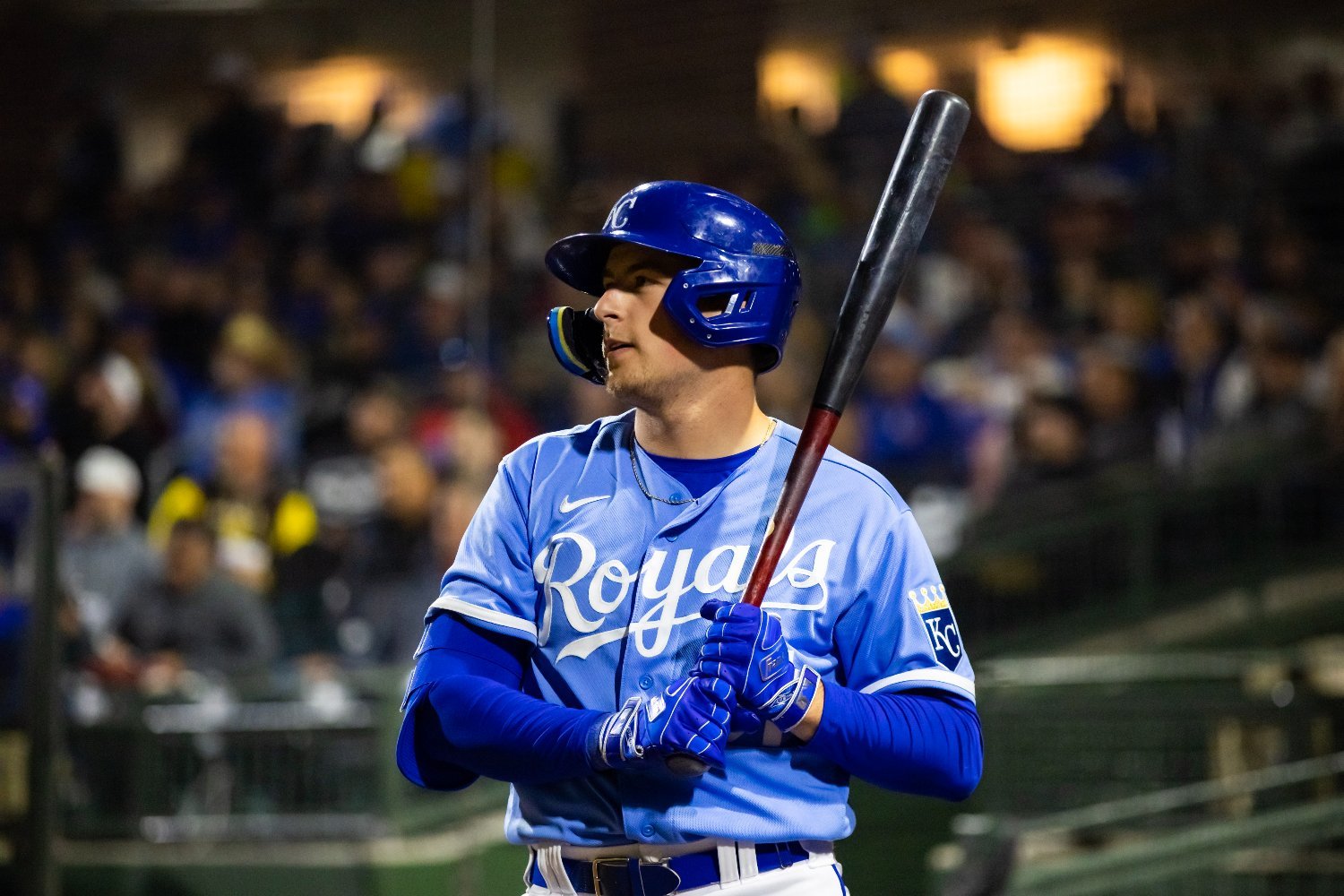 There may not be a hotter hitter in Omaha, and maybe the International League in general, than outfielder Gavin Cross. The 9th overall pick in the 2022 MLB Draft by the Kansas City Royals, Cross has been on fire at the plate. Over the past 30 days, Cross is hitting .340 with a 1.063 OPS in 102 plate appearances. He also has seven home runs and 22 RBI. Last week, the former Virginia Tech outfielder had an incredible stretch in Salt Lake City against the Bees. Not only did he hit .444 with 12 hits, but he also had nine runs scored, 10 RBI, and home runs in five consecutive games. As a result, Cross was named the International Player of the Week. If that wasn't enough, Cross extended his home run streak to six games with a homer on Sunday in the series finale against St. Paul at Werner Park in Omaha. Due to a slow start, Cross's numbers haven't been overly impressive in Omaha this year. In 91 games and 353 plate appearances this year, he is hitting .249 with a .736 OPS and 91 TJ Bat+. That includes 11 home runs, 48 runs scored, 40 RBI, and 21 stolen bases. Those numbers aren't much different from what he did in Double-A Northwest Arkansas in 2025. In 114 games and 507 plate appearances with the Naturals last year, Cross hit .241 with a .704 OPS and 92 TJ Bat+. He also had 17 home runs, 75 runs scored, 64 RBI, and 23 stolen bases. A big issue for Cross the past two years has been the strikeouts. He had a 26.4% K% in 2025 with the Naturals, and he has a 27.2% K% with the Storm Chasers this year. That said, Cross has made some adjustments at the plate, resulting in improved performance. That was profiled in a recent piece on MLB Pipeline. It appears that the addition of a toe tap, rather than a leg kick, was the major adjustment Cross made in late May. Here's what Cross said in the Pipeline piece. It's been theorized that Cross adjusted May 21st and 24th. Since May 26th, the 25-year-old outfielder is hitting .307 with 10 home runs, 34 runs scored, 29 RBI, and a .912 OPS. Granted, the approach is a little free-swinging, as evidenced by a 24.5% K% and 0.30 BB/K ratio. That said, not only have the numbers been better since Memorial Day, but the Statcast percentiles have also been impressive. When looking at Cross' percentiles from before the adjustment (left) and after (right), he has pulled the ball more in the air, is hitting the ball harder, barreling more balls, and making more contact while swinging less. That is not just a recipe for success in Triple-A but also one that could translate well to the Major Leagues. Thus, when will Cross see a call-up to the Major Leagues? Cross will likely get that opportunity after the Trade Deadline, when many key outfielders are moved. Thomas and Marte's Likely Departures Should Clear the Way for Cross On Wednesday night before the Royals' second game against the Twins, MLB insider Mark Feinsand reported that the Royals were going to hold onto some key players at the Deadline, including Michael Wacha, Seth Lugo, Daniel Lynch IV, and Alex Lange. However, two names that weren't mentioned were outfielders Lane Thomas and Starling Marte. Thomas may be the Royals' best and most sensible trade chip. He's on a one-year deal and will be a free agent after this year. Furthermore, he's been performing well in his first season in Kansas City, with 10 home runs, a .325 OBP, and .721 OPS in 317 plate appearances. He doesn't hit for a high average (.229), and the barrel and K rates haven't been great this year. That said, his Statcast profile is impressive, especially for a guy who can play all three outfield positions. As for Marte, he's been strictly limited to a platoon role, which explains his 142 plate appearances, his lowest total since the 2020 COVID-affected season. In that small sample, he's hitting just .258 with a .630 OPS, and the Statcast profile is pretty lackluster, especially compared to what he had done in the past with clubs like the Mets, Diamondbacks, A's, Marlins, and Pirates. Marte hits the ball hard and has been able to barrel the ball well despite the few plate appearances. However, he hasn't been able to pull the ball, doesn't walk, and doesn't launch it well enough to be effective. As a result, his 79 wRC+ ranks in the 33rd percentile, which isn't great, even for a platoon player. Thomas will likely be traded by next Monday's Deadline. Marte may be traded, but if he isn't, he probably will be designated for assignment. By August 4th, the Royals should have two outfield spots open. Unless they get an outfielder from another organization in a trade return, Cross should be the most sensible candidate to get a promotion to Kansas City, especially with John Rave already up due to Vinnie Pasquantino being added to the IL. Other outfielders in Omaha could be called up to Kansas City instead of Cross. That said, the former Hokie has the best combination of skills and upside of the current Storm Chasers outfield group. Does Cross Being a Lefty Hurt His Chances? The main roadblock for Cross' promotion right now may be because he's left-handed and the Royals are flush with lefties on their 40-man roster. In addition to Rave, Josh Rojas (on the MLB roster), Brett Squires (another call-up candidate), and Abraham Toro (who's been very good in Omaha this year) are left-handed hitters. Kyle Isbel, who's on a rehab in Omaha, is also left-handed and should return soon. Thus, the Royals may be better served by promoting a right-handed bat, especially if Thomas and Marte, both righties, are traded away. When looking at his Statcast splits via TJ Stats, Cross is clearly a stronger hitter against righties than lefties. Interestingly enough, his Pull Air% is the same against both lefties and righties, and he actually makes more contact on pitches in the zone and strikes out less against lefties. That said, in terms of exit velocity, barrel ability, launch angle, and hard-hit rate, Cross is CONSIDERABLY more effective against right-handed pitchers. However, Kansas City may be worrying about "splits" less during a lost season like this one. Going into Wednesday's game against Minnesota, the Royals are 45-63 with 0.2% odds to make the postseason. Yes, there will be occasions for playing the splits, which manager Matt Quatraro is prone to do (like many MLB managers, frankly). However, I think the splits matter less during a season like this. What matters most is evaluation, and Cross is a player worth evaluating. Cross is also worth evaluating, as he will be Rule 5-eligible again this year. He was Rule 5 eligible last year, but went unselected, mostly because teams are unwilling to pounce on a hitter in the December Draft who has an OPS under .730 in Double-A. Conversely, what Cross is doing in Triple-A feels legitimate, and it's easier for a team to give him an active roster spot and see if he can figure it out, like some recent Rule 5 success stories like Akil Baddoo and Ryan Noda. The Royals may not want to risk losing Cross, especially if they are not able to replace Thomas this offseason with a free-agent outfielder replacement. Outfielders Isaac Collins and Jac Caglianone seem to be set for the 2027 Opening Day roster. However, the Royals may be tempted to trade Kyle Isbel, who is good but may be limited in terms of ceiling. Cross is athletic enough to play center field and maybe platoon with a right-handed center fielder, whether in the organization or via a trade or free agency. Cross hasn't had the best career as a prospect in the Royals system. His best season as a prospect came in 2024 in Double-A, as he hit .261 with a 114 wRC+ in 436 plate appearances. Unfortunately, he regressed in a repeat of Double-A in 2025, hitting .241 with a 92 wRC+. It seems like Cross is looking more like his 2024 self and at a higher level to boot. With the Royals 18 games under .500, Kansas City needs to give Cross his chance in August or September, even if it is in a limited role. View the full article
 -
Twins Missed a Golden Opportunity with Byron Buxton Roster Move
DiamondCentric posted an article in Twins Daily
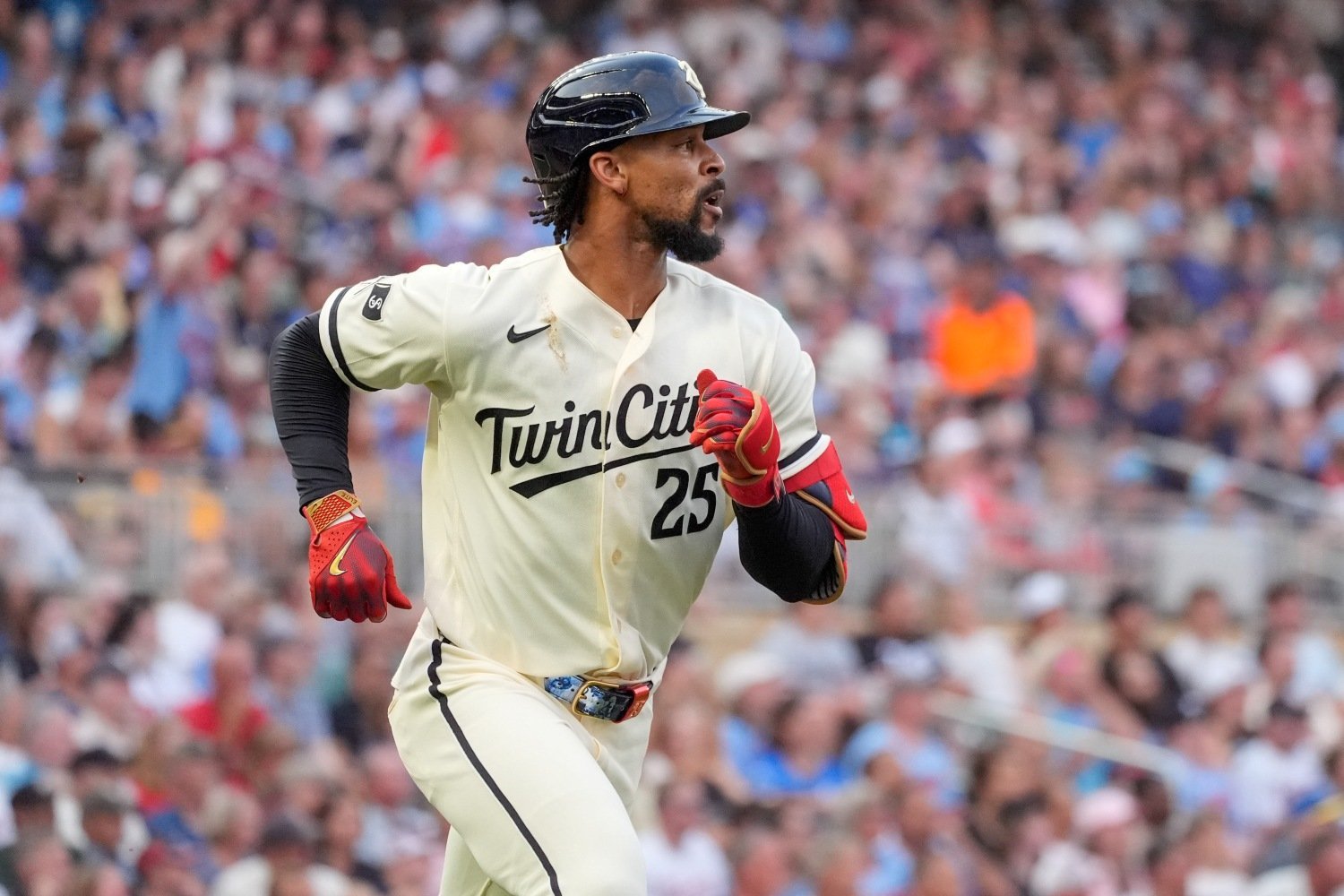 Byron Buxton's exit from Tuesday night's game against the Kansas City Royals immediately became the biggest storyline surrounding the Twins. After leaving in the fifth inning because of discomfort during his second plate appearance, the club officially placed him on the injured list Wednesday with a hip impingement. That decision wasn't surprising. Buxton has been ailing since before the All-Star break, and he needed an injection Wednesday that would have sidelined him for at least a week, anyway. The corresponding roster move, however, was extremely surprising. Rather than using Buxton's absence as an opportunity to add an impact player or someone capable of filling the obvious void in center field, the Twins called up Tristan Gray. It was a move that continued one of the more confusing trends of Minnesota's season. Gray simply has not earned another opportunity at the major-league level, but he's getting one, anyway. He owns a .604 OPS this season, and if you remove his hot opening week, that number drops to .580. Defensively, he's struggled at shortstop, posting -4 Outs Above Average according to Baseball Savant. He currently owns both a negative fWAR and negative Win Probability Added. Nothing about Gray's performance this season suggests he deserves another call-up. Yet the Twins continue to show an unusual amount of faith in him. Earlier this year, Gray remained on the roster much longer than many expected. While he was with the club, he started far more games at shortstop than his production warranted. Now, with Buxton landing on the injured list, Gray was once again the organization's choice—this time, over some much more compelling alternatives. Buxton's injury leaves a massive hole in center field. Luke Keaschall is now the closest thing to an everyday option, but he has played just 11 games at the position and has not exactly looked comfortable there. That inexperience showed up again on Wednesday when he misplayed a carom off the wall, allowing Salvador Perez to take an extra base. Beyond Keaschall, the Twins technically have Alan Roden, Ryan Kreidler, and Kody Clemens who can handle center field, but their usage throughout the season suggests the coaching staff does not view any of them as legitimate options. Manager Derek Shelton said after the game Wednesday night that Kreidler could see more time in center, but that Keaschall would keep getting most of the run. That's exactly why this felt like the perfect opportunity to promote Walker Jenkins. Jenkins is widely regarded as one of baseball's top prospects and projects to be a cornerstone of the Twins' future. He's capable of playing center field and has looked every bit like himself since returning from injury. Since rejoining Triple-A St. Paul at the end of June, Jenkins has posted an .858 OPS, while continuing to show the all-around offensive skill set that made him one of the game's top prospects. There was a natural opening on the roster at a position that matched his defensive ability, for a team desperately looking for an offensive spark heading into one of the biggest stretches of its season. Everything seemed to be lining up for Jenkins. Some have pointed to the 40-man roster as the reason Minnesota chose not to make the move, but that explanation doesn't really hold up. The Twins have multiple players occupying 40-man roster spots who are not part of the immediate picture, and someone like Mike Paredes could have been transferred to the 60-day injured list to create space if necessary. If the organization truly believes Jenkins needs more development time, that is a separate conversation. But even then, Gray doesn't feel like the best alternative. Matt Wallner has been on a tear with St. Paul, posting a 1.089 OPS since the beginning of June. Gabriel Gonzalez has offensive upside while providing the right-handed hitting the Twins are losing with Buxton's injury. Kyler Fedko may not have impressed during his first taste of the majors, but he offers legitimate center field defense and speed off the bench—two things that became much more valuable the moment Buxton hit the injured list. Each of those players would have addressed a roster need more directly than Gray. Instead, the Twins once again chose a player whose overall production has been below replacement level. It's a particularly frustrating decision given where the Twins sit on the calendar. Every game matters as the trade deadline approaches. The front office is focused on buying, but how aggressively they do so could be calibrated by the way they play this week. Calling up Jenkins could have energized the clubhouse, excited a fan base looking for something to rally around, and filled an obvious positional need. Instead, the Twins made one of the least inspiring roster moves they could have made. What do you think? Should the Twins have promoted Walker Jenkins, or was Tristan Gray the right choice? Leave a comment below and start the conversation! View the full article
 -
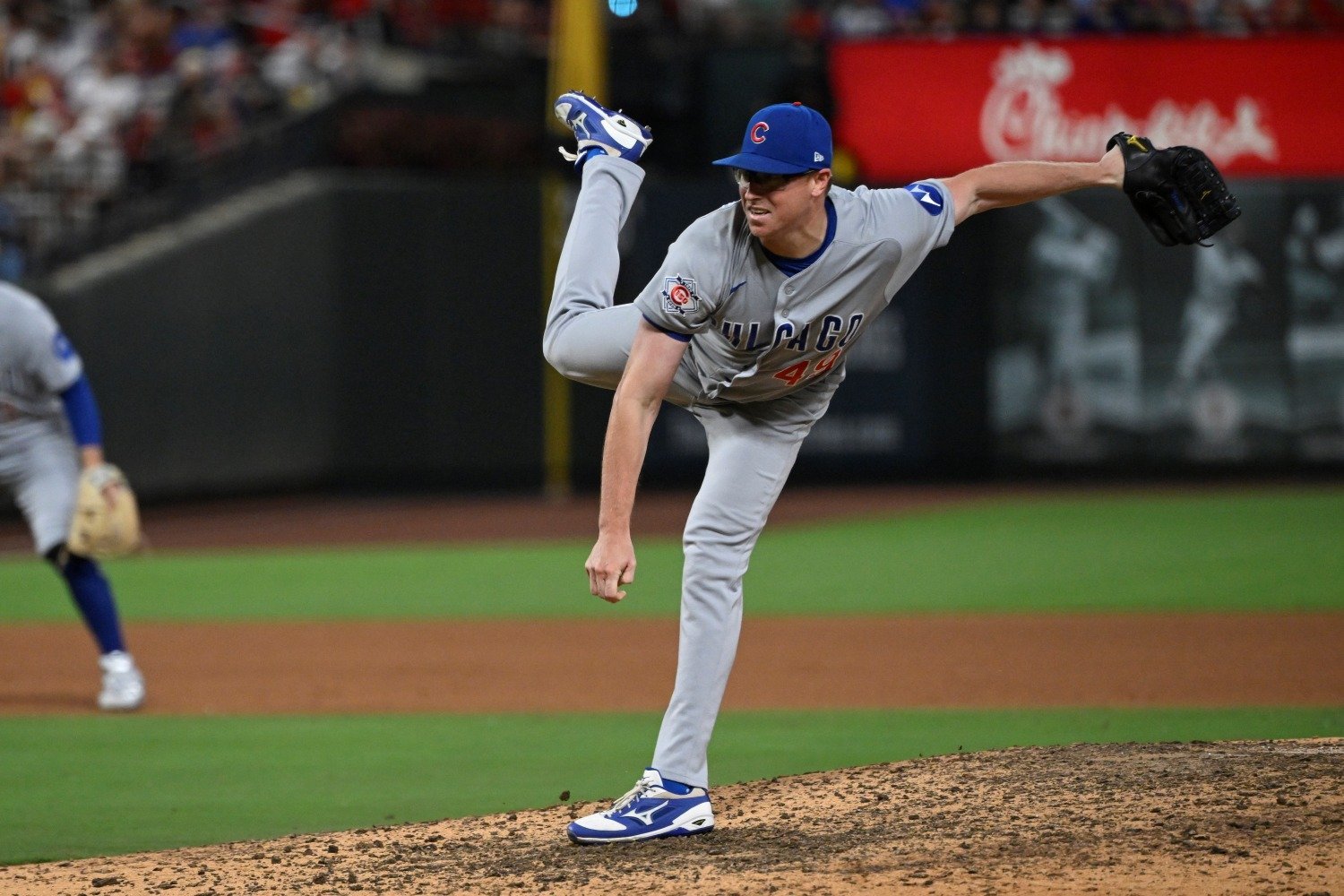 You could feel it coming. All night, in St. Louis Wednesday night, Pete Crow-Armstrong was just missing the big hit. He was getting off his 'A' swing, but not quite getting to his spot on time. In hitting, that's no small thing, but if you can generate the swing path and direction and bat speed that Crow-Armstrong was generating consistently Wednesday, you're dangerous. Eventually, as he has done all year, he was going to get that wrinkle ironed out and put an equally lethal swing on one, but not mishit it. It was just (pun intended) a matter of time. When it did happen, his timing—in a broader, different sense—could not have been better. The Cubs slogged to a scoreless draw through nine innings in the third game of their four-game set against the Cardinals. It took some brave escape-craft from Matthew Boyd to gut out seven frames, then sparkling showings from two vital relief arms (Jacob Webb and Caleb Thielbar) to push the game to extras. The offense was utterly stalled, though, and needed someone to come up with a thunderbolt. All year, that's what Crow-Armstrong has done, and he did it again. On an 0-1 pitch, Cardinals hurler Luis Gastelum got his changeup to dip just below the zone. It just needed to dip much farther. Crow-Armstrong sliced cleanly through the ball and hit a screaming, no-doubt, rising rocket of a homer to right-center. He knew it was gone the moment he made contact; he pimped the daylights out of it as he rounded the bases. He's earned every drop of that celebration, too. In late and close situations this year, he's batting .370/.453/.630, with three home runs, three doubles, and a triple in 64 plate appearances. Once he reaches base, in those spots, he's 6-for-6 stealing bases. In high-leverage at-bats, his OPS is 1.056. In medium-leverage ones, it's .996. Those types of splits don't tell us as much as we sometimes tell ourselves they do, about a player's character or clutchness, but it's a fact that Crow-Armstrong has been excellent when the team has needed him most this season. Ah, but you could also feel it coming, couldn't you? Boyd had spun his seven great innings, and Webb and Thielbar had taken their turns. Even as Crow-Armstrong homered, Trent Thornton was warming up to pitch the 10th inning. Unfortunately, that made sense. Here's the whole Cubs bullpen right now, from most to least trusted by Counsell: Webb Thielbar Ryan Rolison Thornton Gavin Hollowell Tyler Ferguson Aaron Civale Jake Woodford Rolison would have been working for a third time in four days, and the first two batters he would have faced (Lars Nootbaar and JJ Wetherholt) had just seen him Monday night. Hollowell and Ferguson also each pitched earlier in the series, so Thornton was the freshest of the three right-handed middle relievers. But Thornton isn't viable in high-leverage spots, and he rapidly showed why. To be fair, he got a little bit unlucky, in that one can normally expect better defensive support from Nico Hoerner than Thornton got to start the inning. On a 2-2 pitch, he executed a 96-MPH fastball above the zone to Nootbaar, who flattened out completely to reach the ball and hit it straight down. He hit it sharply, but it was a high chopper that ran out of steam as it bounced past Thornton. Hoerner raced to his right, but he slightly misread the ball. Had he seen the way the ball was dying after the high arc of its initial bounce, he would have realized he could make the play on his feet, then turn or jump-throw to retire Nootbaar. Instead, thinking it would maintain its speed more, Hoerner dove. He was able to knock it down, but only that. Keeping the ball on the infield stopped the automatic runner from scoring, but that run didn't matter. The play was to get there without going to the ground, leaving time to retire Nootbaar. Because the Cubs had shaded Nootbaar to pull, Dansby Swanson even would have had a chance to flag the ball down and throw for the out, had Hoerner not intercepted the ball. That read all has to happen in the blink of an eye, though, and Hoerner was fooled. The rest of the mess would be Thornton's own making. He walked Wetherholt, putting the winning run on base and the tying one into scoring position. After falling behind 3-0, he worked back to a full count with a pair of fastball strikes, but then he lost Wetherholt. He started Jordan Walker with two non-competitive misses, too, and this time, he got lucky: Walker bailed him out with a terrible 2-0 swing on a sweeper well out of the zone, then tapped out on another, much closer one, giving the Cubs one out and keeping the double play in order for Iván Herrera. Thornton just isn't the right guy to get that twin killing. Instead, on the first pitch, Herrera laced a double to the gap in left-center, bringing around the tying and winning runs with one stroke. When Crow-Armstrong homered, this game had a chance to be one of the best wins of the Cubs' season. Barely 10 minutes later, it was one of their worst losses, instead. The Sword of Mulholland has hung over Thornton all year. Entering Wednesday, he had a 2.50 ERA for the year, but his expected ERA was 5.13, because he has struck out just 15 of the 127 batters he's faced. Like former Cubs lefty Terry Mulholland, he just can't miss enough bats to be viable when the game is tight and the margin for error grows thin. That he's in the top half of the team's de facto bullpen hierarchy right now screams out the danger the team still faces. This is not the same pleasantly patchwork kind of relief corps the Cubs have so famously cultivated over the last handful of seasons. They're simply bad. This feels like the kind of bullpen fringe contenders used to assemble during the years just after the rapid expansion of the 1990s. Webb, Thielbar and Rolison are credible big-league relievers. Civale, Woodford and Thursday starter Javier Assad are fine long relievers, and that's what Colin Rea can become if the team makes multiple upgrades to its starting rotation before the trade deadline, too. However, none of those four long men has meaningful upside if condensed into a short relief role, and modern bullpens need five or six guys you can trust in short relief. No good team in the history of the sport has needed three or four you can use to sponge up innings in blowouts. Hollowell, Thornton and Ferguson represent the team's bigger batch of attempts to find a diamond in the rough for the year, and all of them (like Corbin Martin and Ethan Roberts, among others) have failed. From a playoff-ready bullpen, the Cubs are currently missing (approximately) the best, third-best and fifth-best arms. Adding a starter this week will allow them to shift someone into relief, but the Chicago front office has to add at least one high-end reliever and at least one supplemental arm capable of missing bats and/or keeping the ball on the ground in medium-leverage spots. A heavy lift awaits that front office over the next 100 hours or so. They have to get this right, and it's not going to be easy. As Wednesday reminded them forcefully, though, there's no alternative. The Cubs' current pitching staff is just plain insufficient. They need a lot of help, so they don't waste huge hits like Crow-Armstrong's—or, widening the lens a bit, the huge season Crow-Armstrong is having and the opportunity that has given them. View the full article
 -
 Columbia turned an eight-run second inning, built on home runs from Yandel Ricardo, Sean Gamble, and JC Vanek, into a 9-8 escape at Augusta. Omaha wasted six sparkling innings from Mason Black, tying the game in the seventh before losing 4-3 on a ninth-inning home run. Northwest Arkansas managed only six hits at Tulsa and fell 6-2. Quad Cities left 11 runners on base and struck out 12 times in a 3-0 shutout loss to Dayton. Kansas City Royals Transactions Kansas City Royals placed 1B Vinnie Pasquantino on the 10-day injured list. Right wrist soreness. Kansas City Royals recalled RF John Rave from Omaha Storm Chasers. Black Dominates, But Chasers Drop 4-3 Decision To St. Paul Black gave Omaha nearly everything it needed, and the Storm Chasers still could not close it out, falling 4-3 to St. Paul. Black worked six innings, allowed just one hit and one run, walked three, and struck out four. St. Paul scratched out a run in the first on a sacrifice fly to center field. Omaha answered with two in the fifth. Brandon Drury opened the inning with a walk, Elih Marrero doubled him to third, and Alejo Lopez lifted a sacrifice fly to right field to bring Drury home. Marrero then scored from third on a wild pitch during Kyle Isbel's bunt single, and Omaha led 2-1. The seventh turned the game around. Matt Moore allowed three consecutive singles without retiring a batter, the third tying the score, and he was charged with a blown save. Ben Sears entered, recorded a lineout and a strikeout, gave up a two-out double that pushed St. Paul ahead 3-2, then struck out the final batter of the inning. Omaha came right back in the bottom half. Drury walked again, Lopez walked with two outs, and Isbel singled to right field to bring Drury home, with a throwing error from right field moving Isbel up to second base, and the game was tied 3-3. Justin Topa could not hold the tie. He surrendered a one-out solo home run in the ninth, retired the next hitter on a lineout, walked a batter, allowed a single, and picked a runner off first base to end the inning. Omaha went down in order in the ninth. Isbel finished 3-for-4 with an RBI, Marrero went 2-for-4 with a double, and Drury reached twice on walks and scored twice. The Storm Chasers collected six hits and three walks, and struck out seven times. Omaha went 1-for-4 with runners in scoring position and left seven runners on base. They are now 49-54. Player AB R H RBI BB K Kyle Isbel 4 0 3 1 0 1 Stone Russell 1 0 0 0 0 1 Jack Pineda 4 0 0 0 0 0 Brett Squires 4 0 1 0 0 1 Drew Waters 4 0 0 0 0 1 Matthew Lugo 3 0 0 0 0 1 Brandon Drury 2 2 0 0 2 1 Peyton Wilson 4 0 0 0 0 1 Elih Marrero 4 1 2 0 0 0 Alejo Lopez 2 0 0 1 1 0 Totals 32 3 6 2 3 7 Player IP H R ER BB K HR Mason Black 6 1 1 1 3 4 0 Matt Moore 0 3 2 2 0 0 0 Ben Sears 1 1 0 0 0 2 0 Jose Cuas 1 1 0 0 0 2 0 Justin Topa 1 2 1 1 1 0 1 Totals 9 8 4 4 4 8 1 Roccaforte And Johnson Homer, But Naturals Fall 6-2 In Tulsa Carson Roccaforte, the Royals' No. 9 prospect, wasted no time, leading off the game with his 23rd home run of the season, but Northwest Arkansas never built on that start and lost 6-2 at Tulsa. Hunter Owen took the loss after 4 2/3 innings in which he gave up nine hits, four runs, and three home runs, though he did not walk a batter and struck out six. Tulsa answered Roccaforte's leadoff shot with a solo home run in the first, added two more on a home run in the second, and pushed the lead to 4-1 with another solo home run in the fifth. The Naturals had their best early chance in the opening inning. After Roccaforte's home run, Luke Pelzer singled, but a double play and a strikeout ended the threat. Canyon Brown singled in the third and doubled in the fifth, and Spencer Nivens drew a walk in the seventh, yet Northwest Arkansas never had more than one runner on base after the first. Tulsa put the game away in the seventh, when Caden Monke walked two batters, gave up a two-run home run, and allowed a single in two-thirds of an inning. Brandon Johnson had been sharp before him, retiring four batters in a row over 1 1/3 scoreless innings with two strikeouts, and Zachary Cawyer worked 1 1/3 innings without allowing a run. Justin Johnson provided the only other offense, hitting a solo home run in the eighth, his third of the year. Brown finished 2-for-3 with a double, and Roccaforte went 2-for-4. The Naturals totaled six hits, one walk, and seven strikeouts. They went 0-for-1 with runners in scoring position and left three runners on base. They are now 40-56. Player AB R H RBI BB K Carson Roccaforte 4 1 2 1 0 1 Luke Pelzer 4 0 1 0 0 1 Sam Kulasingam 4 0 0 0 0 1 Spencer Nivens 3 0 0 0 1 1 Daniel Vazquez 4 0 0 0 0 0 Omar Hernandez 3 0 0 0 0 0 Connor Scott 3 0 0 0 0 2 Canyon Brown 3 0 2 0 0 1 Justin Johnson 3 1 1 1 0 0 Totals 31 2 6 2 1 7 Player IP H R ER BB K HR Hunter Owen 4 2/3 9 4 4 0 6 3 Brandon Johnson 1 1/3 0 0 0 0 2 0 Caden Monke 0 2/3 2 2 2 2 1 1 Zachary Cawyer 1 1/3 1 0 0 1 0 0 Totals 8 12 6 6 3 9 4 River Bandits Strand 11 Runners In 3-0 Shutout Loss To Dayton Quad Cities put 11 runners on base and never got one of them home, dropping a 3-0 decision to Dayton. Tanner Jones deserved better after his solid outing. The right-hander went 5 2/3 innings, allowed four hits and two runs, walked nobody, and struck out six, with both runs coming on solo home runs in the third and the sixth. He was charged with the loss and fell to 3-6 for the season. The River Bandits had chances in every stretch of the game and could not convert any of them. Asbel Gonzalez led off the sixth with a double and Blake Mitchell walked behind him, putting two on with nobody out, but a strikeout, a flyout, and a groundout ended the inning. Gonzalez singled to open the eighth and Mitchell walked again, and again the inning died on two strikeouts and a groundout. The ninth brought one last opportunity. Trevor Werner singled with one out, and after a strikeout, Nolan Sailors singled to move Werner to third. A strikeout ended the game. Kamden Edge was excellent in relief, retiring four batters over 1 1/3 innings without allowing a hit while striking out two. Nick Conte worked the final two innings and allowed one run, which came on a two-out single in the eighth. Gonzalez led the offense at 2-for-5 with a double, and Mitchell reached base twice on walks. Jose Cerice, Tyriq Kemp, Werner, and Sailors each singled. Quad Cities managed six hits and four walks, and struck out 12 times. The River Bandits stranded 11 runners and went 1-for-14 with runners in scoring position. They are now 46-48. Player AB R H RBI BB K Nolan Sailors 4 0 1 0 1 2 Asbel Gonzalez 5 0 2 0 0 2 Blake Mitchell 2 0 0 0 2 0 Jose Cerice 4 0 1 0 0 2 Derlin Figueroa 4 0 0 0 0 2 Erick Torres 4 0 0 0 0 0 Tyriq Kemp 4 0 1 0 0 1 Trevor Werner 3 0 1 0 0 0 Angel Acosta 3 0 0 0 1 3 Totals 33 0 6 0 4 12 Player IP H R ER BB K HR Tanner Jones 5 2/3 4 2 2 0 6 2 Kamden Edge 1 1/3 0 0 0 1 2 0 Nick Conte 2 2 1 1 1 2 0 Totals 9 6 3 3 2 10 2 Fireflies Ride Eight-Run Second To Wild 9-8 Win At Augusta Columbia scored nine runs in the first two innings, then held on for dear life, beating Augusta 9-8. Henry Ramos started it with a leadoff home run in the first, his sixth of the year. The second inning was an avalanche of runs for Columbia. Connor Rasmussen reached on an error, Ricson Gonzalez was hit by a pitch, and Gabriel Silva moved both runners up with a sacrifice bunt. Ramos then tripled home two runs, No. 3 prospect Josh Hammond walked, and No. 11 prospect Ricardo hit a three-run home run for a 6-0 lead. No. 5 prospect Gamble followed with a home run, Vanek homered on the next at-bat, and Roni Cabrera doubled. Rasmussen struck out but reached first base on a passed ball that moved Cabrera to third, Gonzalez walked, and Silva singled home Cabrera to cap an eight-run inning and make it 9-0. Randy Ramnarace started and gave Columbia 2 2/3 innings, allowing one hit while walking two and striking out four, and he was charged with the run Augusta scored on a triple in the third. Adrian Belen worked 1 1/3 innings, allowed two hits, and earned the win. Augusta got most of it back in the sixth. Jesus Oliveira walked four batters in the inning, one of which forced in a run, and Michael Braswell III balked home another before a groundout, a single, and a single made it a five-run inning and a 9-6 game. Augusta added single runs in the seventh to put the Green Jackets in striking distance. Thankfully for the Fireflies, Andy Basora recorded a hold in the eighth, and Manuel Colon retired all three hitters he faced in the ninth for his first save. Ramos finished 3-for-5 with three RBI, Cabrera went 3-for-5 with a double, and Vanek was 2-for-4. Columbia's staff issued 10 walks. The Fireflies went 3-for-8 with runners in scoring position and stranded eight runners. With the win, Columbia improved to 51-47 this season. Player AB R H RBI BB K Henry Ramos 5 2 3 3 0 0 Josh Hammond 4 1 1 0 1 0 Yandel Ricardo 5 1 1 3 0 1 Sean Gamble 4 1 1 1 0 2 JC Vanek 4 1 2 1 1 2 Roni Cabrera 5 1 3 0 0 1 Connor Rasmussen 5 1 0 0 0 3 Ricson Gonzalez 2 1 0 0 2 0 Gabriel Silva 3 0 1 1 0 1 Totals 37 9 12 9 4 10 Player IP H R ER BB K HR Randy Ramnarace 2 2/3 1 1 1 2 4 0 Adrian Belen 1 1/3 2 0 0 1 1 0 Jesus Oliveira 1 1/3 0 4 4 4 0 0 Michael Braswell III 1 2/3 4 2 2 1 1 0 Andy Basora 1 2 1 1 2 1 0 Manuel Colon 1 0 0 0 0 1 0 Totals 9 9 8 8 10 8 0 Top-20 Prospect Performance Kendry Chourio: DNP David Shields: DNP Josh Hammond: 1-for-4, BB Blake Mitchell: 0-for-2, 2 BB Sean Gamble: 1-for-4, HR, RBI, 2 K Ramon Ramirez: DNP Zion Rose: DNP Asbel Gonzalez: 2-for-5, 2B, 2 K Carson Roccaforte: 2-for-4, HR, RBI, K Taylor Rabe: DNP Yandel Ricardo: 1-for-5, HR, 3 RBI, K Justin Lamkin: DNP Drew Beam: DNP Michael Lombardi: DNP Jack Slightom: DNP Felix Arronde: DNP Angeibel Gomez: DNP Ben Kudrna: DNP Steven Zobac: DNP Blake Wolters: DNP View the full article
 -
 When The Police said they were “sending out an SOS to the world” their hope was that someone would get their message in a bottle. The message I’m sending out to Craig Breslow on behalf of all Boston Red Sox fans in the form of an SOS is a simple one: "Secure One Starter." After witnessing the Red Sox end up with Dustin May in the dying seconds of the MLB trade deadline last year, it was refreshing to see Craig Breslow take a more proactive approach in addressing one of the club’s biggest needs this season, acquiring right-handed power bat Curtis Mead from the Nationals in exchange for left-handed starter Connelly Early. While a risky one given that this is Mead’s first true breakout season and Early had quickly developed into a fan-favorite pitcher, the move showed Breslow was willing to be more on the attack rather than waiting around for the perfect deal to develop only to end up with scraps when it’s all said and done. [Though, of course, injury news regarding both players has sent that deal into baseball purgatory.] As fans and reporters now speculate what could be coming next for the Sox, both Jeff Passan and Alex Speier have given some insights into their next target, with Passan taking to X to answer a fan trade question with a somewhat vague “there will be more”, and Speier joining the NESN booth during Monday night’s game versus the Athletics to inform viewers that the team is interested in pitching, specifically rotation depth, which they were already looking into before trading Early. The idea of adding to the bullpen for some needed depth was also brought up in the discussion between Speier and NESN’s Mike Monaco and Lou Merloni, prompting Merloni to agree and remind viewers that you can never have too many bullpen arms. And while that statement does ring true and is a definite area the Sox should look to add to, their next pivotal addition should come via adding another arm to the starting rotation. While some fans may think that a group that has featured arguably the best five-man attack in baseball in Sonny Gray, Ranger Suarez, Payton Tolle, Jake Bennett, and Patrick Sandoval doesn’t need to be the primary focus over adding another bat— specifically at the shortstop or catcher positions—or taking some stress off the likes of Aroldis Chapman and Garrett Whitlock with an acquisition for the back-end of the bullpen, it never hurts to have more pitching. There are plenty of examples to point to as to why Breslow’s next move should come via adding another arm, preferably of the solidified veteran variety, to said rotation. For starters (no pun intended), it would be in the club’s best interest to avoid another situation like 2025, where the Red Sox were in need of rotation depth and Breslow, after balking at adding Joe Ryan or Merrill Kelly, had to settle for the disaster that was Dustin May. Sure it gave the Sox depth, but once he was injured, joining the likes of Richard Fitts, Hunter Dobbins, Tanner Houck, and eventually Lucas Giolito, it left Boston heading into their playoff series against the Yankees with Garrett Crochet and a prayer. This time around, the options are definitely better equipped in terms of experience, with Ranger Suarez (42.2 postseason innings) and Sonny Gray (30.1 innings) better suited to ease in postseason newcomers Tolle, Sandoval, and Bennett, who have one-third of an inning pitched in the playoffs between the three. With age comes experience, and an additional rotation arm can ease the workload of Gray, something that Chad Tracy and Andrew Bailey will surely like to do for the 36-year old who has been a workhorse thus far, tallying 106.2 innings over 19 starts. When it comes to Suarez, his concerns lie in the health department, an area where the Red Sox have already felt the impact with uncertain futures for Tanner Houck, Kutter Crawford, Johan Oviedo, and most importantly Crochet, who Speier says could come back and pitch out of the bullpen toward the end of the season, if he comes back at all. Suarez has already been on two IL trips thanks to hamstring and groin injuries, so much like Gray, he could benefit from a smaller workload to stay fresh for the postseason push. There's also the impending threat of an innings limit for most of the young contingent in the rotation, all of whom have already surpassed or are close to resetting their career high in terms of workload. When it comes to evaluating and ultimately choosing the arm he best thinks suits Boston’s rotation, Breslow necessarily doesn’t need to hit a massive home run and mortgage the future for a ‘1C’ type to replace Crochet and supplement Gray and Suarez. However, he also can’t once again panic or settle for a May type that ends up not helping the club in any capacity either. How adequately the front office performs that balancing act could determine the fate of the 2026 season. View the full article
 -
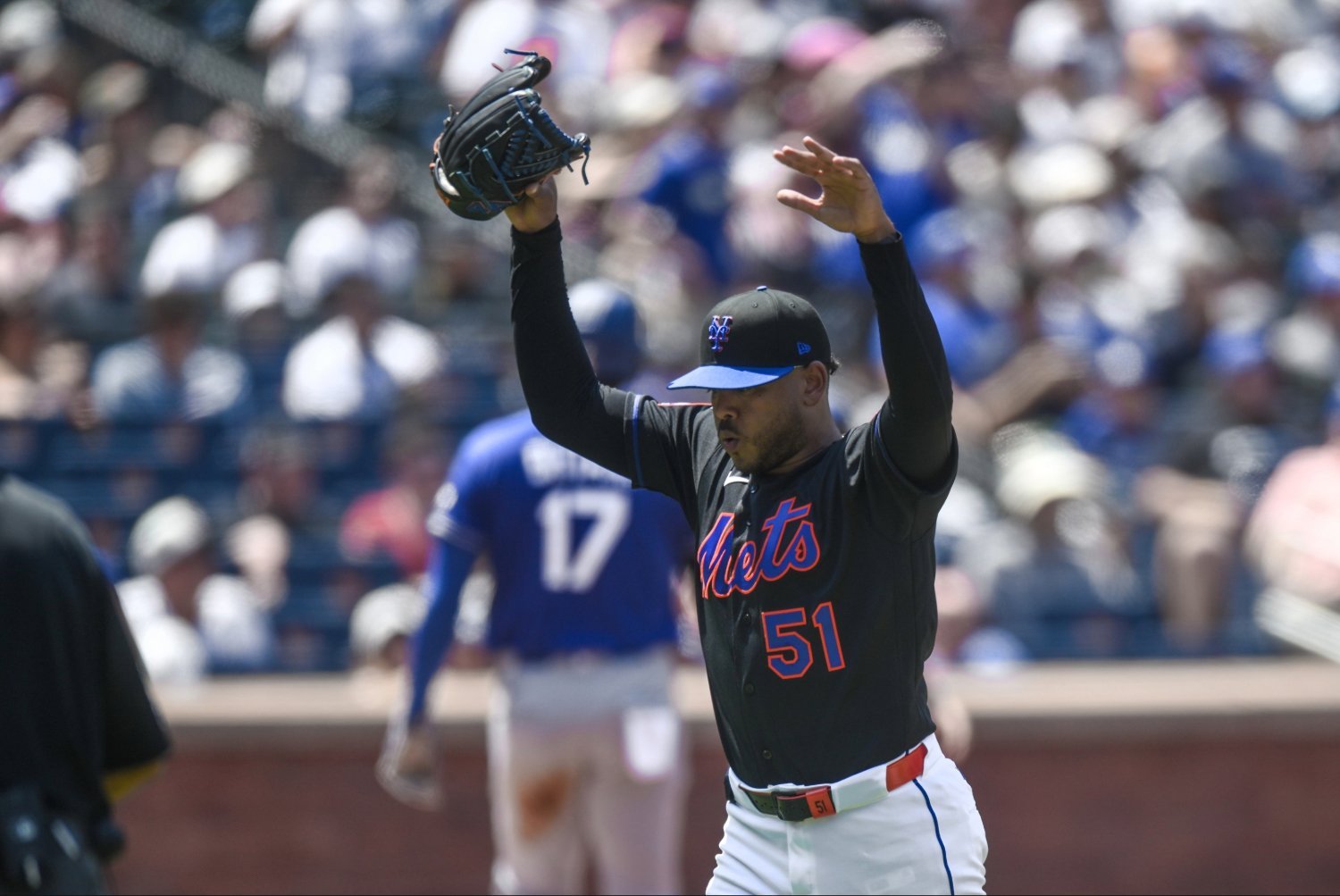 The New York Mets’ January acquisition of Freddy Peralta was supposed to be the beginning of a long and fruitful partnership. In the final year of an incredibly team-friendly deal, Milwaukee dealt their top-of-the-rotation force to the Mets for Brandon Sproat and Jett Williams, both top-100 prospects. The expectation in Queens was that the Mets would compete, Peralta would shove, and extension talks would be a breeze. Well, you know what they say about the best-laid plans of mice and the Mets. Neither team nor player have had the season they envisioned. The Mets are poised to be sellers at the trade deadline, and Peralta, quite candidly, mused that he had thrown his last pitch for the franchise. While January plans have a way of melting in the July heat, New York should still be optimistic about landing a sizable return for Peralta, should they trade him. First and foremost, the 2026 trade deadline is shaping up to be a sellers' market. According to FanGraphs playoff projections, 21 teams have a 10% or better playoff odds, and 20 teams, if you round up for the Padres at 14.7%, are at 15% and above. That’s nearly two-thirds of the league, and many of the de facto eliminated teams have next to no interesting pitching to offer (hello, Athletics and Rockies). Second, with the Tigers surging, Tarik Skubal may never hit the trade block, which means Peralta could end up being the most accomplished starter to move. Despite a lackluster ERA (4.99) this season, Peralta has been incredibly durable (30-plus starts 2023-2025), has a very recent track record of success (3.40 ERA 2023-2025), is only making $8 million this season, and his xERA of 3.84 is much more in line with his career ERA of 3.74. Nearly every team could afford to add Peralta’s salary, and just about every contender could use another pitcher who can start a playoff game. While the bidding for the 30-year-old wouldn’t incite the frenzy a Skubal sweepstakes would, if he’s the best or second-best starting pitcher on the market, the Mets will field multiple competitive offers. And solid starting pitching, even rentals, almost always lands real prospects. Using the past two trade deadlines as a proxy, there have been about eight trades for either a starting pitcher with a similarly sterling track record as Peralta or who was in the midst of a strong season. *Stats at time of the trade, FanGraphs WAR From this group of eight trades, 16 prospects of note (40-grade on 80-point scale or better) were secured, with three 50-grade prospects moved, and on average, teams acquired two 45-grade prospects. Considering the Mets had to part with two 50-grade prospects for a full season of Peralta, likely landing two 45-grade or one 50-grade farmhand for less than half a season of his services indicates his value hasn’t diminished as precipitously as his ERA has ballooned. *Prospects grades are via FanGraphs from their season update, or their final grade if they graduated prior to the trade without an extended, continuous run in the majors On top of the prospects that ended up being moved, solid major-league contributors (2026 All-Star Miguel Vargas went to Chicago in the Erick Fedde trade), lottery ticket teenage arms, and cash were liberally sprinkled throughout. None of these were blockbusters, but organizations have become much more tightfisted with their top prospects when acquiring rentals. Any team that makes a serious run for Peralta will have to be confident in two things. First, that his ERA is largely a result of bad luck (.319 BABIP and 68.4% Left-on-Base%), and second, that they can get his pitches back to where they were in Milwaukee. As for the first part of the equation, just about every front office will point to to explain away his 4.99 ERA. Peralta has a career BABIP of .271 and LOB% of 74.8%, and even with some decline, he hasn’t suddenly become the most hittable pitcher in the league. This confluence of bad luck will keep his market relatively stable, as most teams should view his floor as at least a backend starter who will take the bump every fifth day and pitch to around a 4.00 ERA. That’s not a splashy acquisition, but for any team with question marks in their rotation, it can be the difference between making or missing the playoffs. The second part of the equation is where a team could end up convincing themselves that they’re landing a real front-of-the-rotation force. This season, Peralta’s strikeout percentage has slumped to a career low 22.1%, while his walk rate (9.4%) is almost a dead ringer for his career average (9.3%). Usually a decline in strikeouts comes from diminished stuff, which has been the case for Peralta, but not in the hugely concerning way. His average four-seam velocity of 94.2 MPH is down a bit from his 94.8 MPH average in 2025, but he was a wildly effective pitcher in 2024 and 2023 when the pitch averaged 94.4 and 94.3 MPH, respectively. His secondaries have similarly lost a bit of velocity, outside of his curve, which has sped up, but they’re all thrown in velocity bands where he has had tons of success. Clearly, arm strength isn’t the primary reason his stuff has fallen off. Two things have changed dramatically this season for Peralta, and it’s likely why he has lost some swing and miss. He has drastically lowered his arm angle, while also losing a significant amount of extension. Fluctuations in arm angle and extension are just the reality of not being a robot, but 2026 sticks out like a sore thumb. More extension is generally better, with a few notable exceptions. Arm angle, on the other hand, will impact pitch shape and approach angle, which may or may not end up being a positive, and in Peralta’s case, it has largely been a flop. His fastball has gone from possessing outlier shape to having much more average movement, and it has also seen his breaking ball shape converge. The reason why Peralta made these changes is uncertain. It might have been a conscious decision to try and chase better pitch characteristics. It could be a breakdown in mechanics, or he could be pitching through a minor ailment. Regardless, any team that trades for Peralta will want to know the why, and they’ll certainly have a plan in place to remedy it. Despite a disappointing season, Peralta’s trade value hasn’t suffered the same fate as his results. If he had a repeat performance of 2025, his value would undoubtedly be higher, but 2025 saw him way outperform his ERA estimators. Fortunately, front offices don’t care much for ERA these days, which means the right-hander's value is largely static from this winter. So, while the Mets are unlikely to recoup two top-100 prospects, that mostly comes down to them getting Peralta’s first 20 starts of the season. View the full article
 -
Miami Marlins guide to the 2026 MLB trade deadline
DiamondCentric posted an article in Fish On First
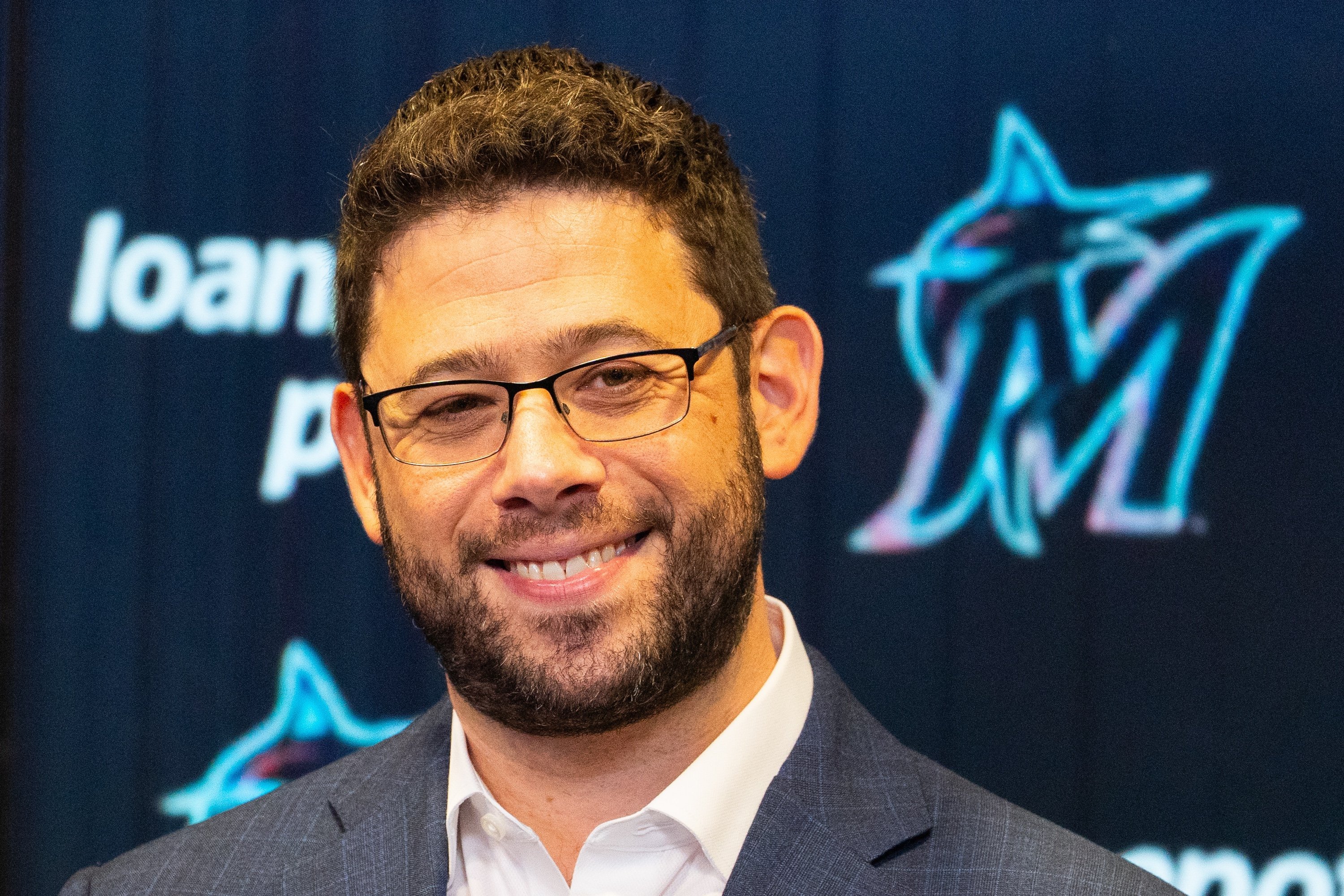 We are fast approaching one of the most exciting milestones on the calendar: Major League Baseball’s trade deadline. This season, MLB teams have until Monday at 6:00 pm ET to make deals involving their big leaguers. The Miami Marlins are in a complicated position, as we will explain below. Where the team stands The Marlins started the second half of the season on a bad note, being swept by the Milwaukee Brewers, Houston Astros and San Diego Padres coming out of the All-Star break. They have bounced back since then with a sweep of the Philadelphia Phillies. If the season were to end today, the Chicago Cubs, Phillies and Arizona Diamondbacks would make the postseason as National League Wild Card teams over them. They are 8.5 games back of the Atlanta Braves for the NL East lead. Marlins Chairman, Principal Owner & Control Person Bruce Sherman recently told Fish On First that Marlins president of baseball operations Peter Bendix has the green light to go ahead and add to the current roster. "Look what we did in 2023–we took on a lot of money,” Sherman said. “I think Josh Bell and Jake Burger made a difference in us getting to the playoffs." Team needs The names mentioned in this portion of the article are hypothetical targets/good fits with the current roster, not names Fish On First can confirm are of interest to the Marlins. More than anything the Marlins need a third baseman, preferably a right-handed hitting one. Marlins third basemen have a 56 wRC+, the worst in baseball and have hit four home runs (second-fewest in MLB). One name that stands out if the Texas Rangers are willing to move him is Ezequiel Duran. In 87 games, he is slashing .270/.324/.436/.760 with 10 home runs, 50 RBI and a 112 wRC+. On the defensive side, Duran is elite, with plus-nine outs above average and he can play a variety of other positions. He would be a valuable weapon against left-handed pitchers, whether that be as a starter or pinch-hitter late in games. It is clear that the Marlins need a backend starter. Janson Junk's inconsistency this season is not going to cut it. The Marlins bullpen has been weakened by injuries. Josh Ekness is on the verge of returning from the 60-day IL, but Anthony Bender, William Kempner and Andrew Nardi are all further away. Pete Fairbanks has struggled as the Marlins closer this season, posting a 6.75 ERA and 5.06 FIP. If the Marlins want a left-handed option, Adrian Morejon of the San Diego Padres makes a lot of sense. In 44 appearances, Morejon has posted a 3.42 ERA, 2.40 FIP, 10.44 K/9 and 2.16 BB/9. He is a pending free agent. Morejon has primarily been used as a setup man in front of Padres star closer Mason Miller. In Miami, he'd be fully qualified to close out games himself. What we are hearing - Fish On First can report that the Marlins will be holding onto Sandy Alcantara. The team is in a position to compete and Alcantara is one of the most important pieces to that. In his last eight starts, Alcantara has a 7-1 record with a 3.09 ERA and 3.07 FIP. In game one of any postseason series, Alcantara will get the ball. On Fish Unfiltered, Sherman said "I'm looking forward to seeing him pitch for the rest of the year." - Sources tell Fish On First that the Marlins are searching for a "Tyler Phillips replacement"—meaning a pitcher capable of both starting games and pitching out of the bullpen. The expectation is that Phillips will remain in the rotation, but if Miami acquires a veteran starter, a move back to the bullpen could become a possibility for him. - The Marlins will look to trade Braxton Garrett at this trade deadline. In 14 appearances (13 starts) in the minor leagues, Garrett has a 1.52 ERA, 3.86 FIP, 9.76 K/9 and 3.30 BB/9. Garrett was called up earlier in the season, but in his two starts, he allowed a combined seven earned runs and eight walks. The Marlins believe that if he remains in Triple-A continuing to succeed, then they can garner somewhat of a nice return. - Although discussions have been light, the Marlins have shown some interest in Boston Red Sox closer Aroldis Chapman. The 15-year veteran has a 2.28 ERA, 2.46 FIP, 11.39 K/9, 3.90 BB/9 and 19 saves on the season. Chapman's 19 saves are third-most in the American League. With the struggles of Pete Fairbanks this season, adding someone like Chapman will add some firepower to the backend of the bullpen and a left-handed option that can get the ninth. One thing to note is that if Chapman reaches 40 innings, he will have a contract for 2027 worth $13M. View the full article
 -
 Blake Burke continues his assault on the record books, DL Hall and Brandon Lockridge take steps towards MLB returns. Transactions: LHP DL Hall sent on a rehab assignment by MLB Brewers to High-A Wisconsin LHP Thomas Pannone selected by MLB Brewers from AAA Nashville RHP Garrett Stallings optioned to AAA Nashville from MLB Brewers INF/OF Eric Brown Jr. placed on AAA Nashville’s 7-day injured list retroactive to July 27 LHP Russell Smith placed on ACL Brewers' full season injured list 2B Dylan O'Rae placed on AA Biloxi's 7-day injured list INF Daniel Guilarte assigned to AA Biloxi from High-A Wisconsin INF Filippo Di Turi transferred to A+ Wisconsin from Low-A Wilson RHP Enniel Cortez reinstated from the 7-day Injured List at Low-A Wilson RHP Grant Hill assigned to ACL Brewers RHP Brady Smith assigned to ACL Brewers Russell Smith last pitched for Biloxi in 2024. He technically was rehabbing on the ACL roster this season, thus the notation above. Grant Hill and Brady Smith joined the other 15 draft picks that signed contracts and were assigned to ACL Brewers (paper moves since the Arizona Complex season is complete). Game Action: Nashville pre-game media notes Charlotte (White Sox) 12, Nashville 5 Box Score & Game Log Sounds Drop Second Straight to Charlotte Despite Three Early Homers - Wilken adds his 11th home run of the season for the Sounds NOTE: Brandon Lockridge, Andrick Nava and Brock Wilken are featured in videos with the linked report The Sounds jumped out to an early lead when the rehabbing Lockridge hit a solo homer in the bottom of the first and Nava followed suit in the second. Starter Tyson Hardin surrendered his first home run since June 20, a two-run shot that tied the game in the top of the third. Eduardo Garcia took the lead back with the Sounds' third solo shot of the game. Hardin would go on to give up seven more runs in the top of the fourth to finish his outing. Possibly his last start in the Brewers organization if he were to end up as part of a trade deadline package for a difference-making MLB player. Lockridge added an infield single in the ninth inning to register his second consecutive two-hit game. The home run was Lockridge’s first in over a year, and first with the Brewers organization. Lockridge could be primed to join the big-league Brewers for the second trade deadline in a row. Wilken hit his 11th home run of the season as part of a 1-4, 2K night. Cameron Wagoner pitched a scoreless eighth inning, striking out two and walking one. Wagoner topped out at 98.8 MPH. Biloxi pre-game media notes Montgomery (Rays) 9, Biloxi 8, ten innings Box Score & Game Log Burke Sets New Single-Season, Career Home Run Records in Extra-Innings Loss - Brewers No. 14 prospect continues tear with eight home runs, 17 RBI across last five games Curt Hogg of the Milwaukee Journal Sentinel said it best: Blake Burke is going to hit. One day after tying the Shuckers team record for home runs in a season, Burke added two more to set a new standard and bring his season total to 29 and his career Biloxi total to 40, also a team record. Burke added a double just for fun, finishing 3-5 with five RBI. Might be time for this Volunteer to return to his Mountain Home. Biloxi had eleven total hits in the game including two each from Jesús Made, Josiah Ragsdale and Josh Adamczewski. Made and Adamczewski each had a double, Josh A. with a sacrifice fly as well. Ragsdale is almost as scorching hot as Burke; he hit his 8th home run in the last nine games. Unfortunately, this is the second consecutive one-run game with the Shuckers on the wrong side of the ledger. Theo Gillen, who has ascended to top 10 prospect status on most lists, stayed hot hitting two home runs for the Knights. Gillen participated in the Futures Game with Jesus Made during the All-Star week. The other three Biscuits home runs can be viewed via Montgomery's 'X' feed. Catcher Matthew Wood had an RBI single, walked, and contributed on defense as well. Wisconsin pre-game media notes Lansing (Athletics) 5, Wisconsin 3 Box Score & Game Log Lansing Hands Wisconsin a Tough Loss DL Hall made his fourth minor league rehab appearance on Wednesday and was an incredibly tough-luck loser. Hall struck out the first two batters he faced and then induced a soft pop fly that fell just inside the line along with left fielder Tyler Rodriguez, the play ended up being scored as an inside-the-park home run. Hall struck out the next batter to finish his outing with three strikeouts and one HR/ER allowed. Starter J.D. Thompson pitched four innings, giving up only a walk and striking out five. The outing looks like a step forward following his missed time earlier in the season. The game got away from the T-Rats with Daniel Corniel giving up four runs in four innings, allowing six hits, including a home run, with four strikeouts and no walks. Eric Bitonti made his thirteenth start of the year at third base and hit his 16th home run of the season, finishing 1-3 with a walk. Braylon Payne led off and went 2-5, with two singles. Wilson pre-game media notes Wilson 9, Fredericksburg (Nationals) 1 Box Score & Game Log Walks Will Wilson to Win - Warbirds Take 12 Free Passes Wilson scored nine runs on nine hits with only one extra base hit - walking twelve times will help move runners around. The Nationals walked in five straight runs in the 8th inning! Brady Ebel led the Warbirds to their second win of the series going 3-4 with a double, two runs, two RBI, and two SB (33 on the season). Third baseman Juan Ortuno had a fun walk in the park, making five plate appearances without registering an at bat, walking five times, scoring twice and registering an RBI. Three highlights from the Wilson four-run 5th inning: Brady Ebel RBI double Alexander Frias RBI single Juan Martinez two-RBI single Four Warbirds pitched in the game, giving up just the one run, and striking out only four, while walking eight and giving up six hits. DSL Rays 9, DSL Brewers Blue 6, seven innings Box Score & Game Log Shortstop Diego Frontado hit a three-run homer, his seventh of the season, finishing 1-3. Leanders Matos went 0-2 with two walks and his 16th stolen base of the season. Brewers pitchers walked 11 while only striking out five and earning all nine runs allowed. Brewers batters had just six hits. Trailing 9-1 heading to the final inning (the 7th), DSL Blue managed to actually bring the tying run to the plate but fell short. Thursday's slate sees both DSL teams in early action while the four full-season squads continue their respective homestands in the evening. The Sounds are scheduled to face old friend Shane Smith with recent trade acquisition Colton Gordon set to make his third Nashville start. The big-league club is off. Organizational Scoreboard including starting pitcher info, game times, MiLB TV links, and box scores Current Milwaukee Brewers Organization Batting Stats and Depth Current Milwaukee Brewers Organization Pitching Stats and Depth View the full article
 -
 Wednesday saw the San Diego Padres' four full-season affiliates go 2-2, with the Triple-A El Paso Chihuahuas losing to Albuquerque 9-7 in 10 innings, the Double-A San Antonio Missions falling to Amarillo 7-6, the High-A Fort Wayne TinCaps prevailing over Great Lakes 5-4 in 10 innings and the Low-A Lake Elsinore Storm blanking Stockton 4-0. Padres Minor-League Transactions C Ethan Salas assigned to El Paso Chihuahuas from San Antonio Missions. RHP José Leclerc assigned to San Antonio Missions from El Paso Chihuahuas. San Antonio Missions placed SS Francisco Acuna on the 7-day injured list. San Antonio Missions activated C Colton Vincent from the Development List. Ethan Salas Has Spectacular Triple-A Debut, But Chihuahuas Lose In 10 Ethan Salas made a splashy Triple-A debut by coming up a homer shy of the cycle, but it was a losing first game with the host El Paso Chihuahuas, who gave up four runs in the top of the 10th in a 9-7 loss to the Albuquerque Isotopes. Salas, Padres Mission's No. 1 prospect, was promoted to El Paso from Double-A San Antonio following Tuesday's series opener. The 20-year-old, the youngest player in Triple-A this season, made an immediate impact, going 3-for-4 with a walk, two RBIs and a run scored. Batting fifth and playing designated hitter after making the trip from Amarillo, Salas hit an opposite-field double down the left-field line on the second pitch he saw at Triple-A. After a passed ball, Salas would score on a Romeo Sanabria single to left. He grounded out to second in the fourth, then hit a two-run triple to right-center in the sixth that put the Chihuahuas up 5-2. Salas walked on eight pitches with one out in the eighth, the singled to left with no outs in the 10th. He was stranded on third to end the game. Salas had the only two Chihuahuas extra-base hits in their 11 hits. Chihuahuas right-handed starter Jhony Brito went four innings, surrendering two runs on five hits with no walks and four strikeouts. Right-hander Miguel Cienfuegos went the next 2⅔ innings, not allowing a hit but giving up two runs on three walks and a strikeout. Right-hander Ethan Routzahn got the next four outs, allowing a run on two hits with a walk and three punchouts. Right-hander Alek Jacob pitched the 10th, giving up four runs (three earned) on four hits, striking out one. Marcos Castanon went 2-for-5 with two RBIs and two runs scored, Blake Hunt had two hits and two RBIs, Carlos Rodriguez two hits and a run scored and Nick Solak scored twice. After giving up four runs in the top of the 10th and with Solak as the automatic runner, Castanon lined a single to center to score Solak. Salas singled to left, then Mason MCCoy popped out to third and Hunt singled home Castanon. Pinch-hitter Will Wagner struck out to end the game. EP_ES_0729.mp4 Player AB R H RBI BB K Dustin Harris 5 0 0 0 0 0 Carlos Rodríguez 4 1 2 0 1 1 Nick Solak 4 2 1 0 0 1 Marcos Castañon 5 2 2 2 0 1 Ethan Salas 4 1 3 2 1 0 Mason McCoy 4 1 0 0 1 2 Romeo Sanabria 4 0 2 1 1 2 Blake Hunt 5 0 2 2 0 1 Bryce Johnson 0 0 0 0 0 0 Clay Dungan 4 0 0 0 0 0 Will Wagner 1 0 0 0 0 1 Player IP H R ER BB K HR Jhony Brito 4 5 2 2 0 4 0 Miguel Cienfuegos 2 2/3 0 2 2 3 1 0 Ethan Routzahn 1 1/3 2 1 1 1 3 1 Alek Jacob 2 4 4 3 0 1 0 Pair Of Homers Not Enough As Missions Come Up Shy Braedon Karpathios and Albert Fabian homered, while Jose Verdugo had a pair of doubles, but the Double-A San Antonio Missions came up short in a 7-6 loss to the Amarillo Sod Poodles. Ryan Jackson also had two hits for the Missions, who put together a ninth-inning rally that fizzled. Missions right-handed starter Matthew Watson went 3⅔ innings, coughing up five runs on eight hits and three walks with no strikeouts. After 1⅓ scoreless innings from right-hander Sadrac Franco, MLB veteran right-hander Jose Leclerc, activated off the 60-day injured list and assigned to the Missions before the game, gave up two runs on three hits with no walks and a strikeout. Right-hander Josh Mallitz retired six of the seven batters he faced, walking one and striking out three. San Antonio, playing its first game without Ethan Salas on the roster this year, jumped out to a 3-0 lead after two innings. Karpathios, Padres Mission's No. 15 prospect, cranked his 10th homer of the season, a two-run shot, in the first, and Fabian blasted his eighth leading off the second. But the Sod Poodles scored five runs across the third and fourth innings to claim a 5-3 advantage. The Missions tied it in the sixth on Jackson's RBI double and Fabian's sacrifice fly, but the Sod Poodles answered again with two in the bottom of the sixth to grab a 7-5 lead. The Missions made it 7-6 in the top of the seventh on Carson Tucker's RBI single, but couldn't advance the runners from first and second with no outs as the next three batters were retired. There was one more chance in the ninth as Brendan Durfee singled with one out and was replaced by pinch-runner Kai Murphy. Tucker walked, then Tirso Ornelas and Jake Cunningham struck out to end the game. SA_0729.mp4 Player AB R H RBI BB K Carson Tucker 4 0 1 1 1 1 Tirso Ornelas 5 0 0 0 0 2 Jake Cunningham 4 2 1 0 1 2 Braedon Karpathios 4 1 1 2 0 2 Ryan Jackson 4 1 2 0 0 1 Albert Fabian 3 1 1 2 0 1 Luis Verdugo 4 0 2 0 0 0 Kai Roberts 4 1 1 0 0 1 Brendan Durfee 3 0 1 0 1 0 Kai Murphy 0 0 0 0 0 0 Player IP H R ER BB K HR Matthew Watson 3 2/3 8 5 5 3 0 0 Sadrac Franco 1 1/3 2 0 0 0 1 0 José Leclerc 1 3 2 2 0 1 0 Josh Mallitz 2 0 0 0 1 3 0 Lamar King Jr., Winyer Chourio Lift TinCaps To Win In 10th Lamar King Jr. had a tiebreaking single in a three-run top of the 10th inning and right-hander Winyer Chourio pitched the final five innings, striking out eight, as the High-A Fort Wayne TinCaps held off the host Great Lakes Loons 5-4 for their fifth straight victory. Ryan Wideman, the minors' stolen base leader, swiped his 15th with the TinCaps and 58th of the season. Left-hander Luis Gutierrez, on a rehab assignment from Double-A San Antonio, made his longest start since being sidelined in April with a shoulder injury. The 22-year-old, in his third rehab outing, went two hitless innings, walking two and striking out three. Right-hander Carlos Medina followed with three shutout innings, allowing three hits and two walks with three strikeouts. Chourio, Padres Mission's No. 19 prospect in just his second relief appearance in 17 games this year, allowed all four runs (three earned) on six hits and a walk with those eight punchouts, his most since a June 23 promotion from Low-A Lake Elsinore. It was 0-0 through five innings with the TinCaps getting RBI singles from Kasen Wells and King in the sixth and seventh, which were offset by a two-run bottom of the seventh by the Loons. In the 10th with Luke Cantwell the automatic runner, King rifled a single to left off the shortstop's glove, bringing in the go-ahead run. After a passed ball, Zach Evans drew a one-out walk, with Wells and Justin DeCriscio delivering consecutive run-scoring singles to make it 5-2. Chourio stayed out for the bottom of the 10th, but gave up a single, a wild pitch and walk and then a two-run single to trim the TinCaps' lead to 5-4. But he escaped further damage with two fly outs and a strikeout to secure the win. FW_0729.mp4 Player AB R H RBI BB K Justin DeCriscio 5 0 1 1 0 2 Ryan Wideman 6 0 1 0 0 1 Alex McCoy 3 1 1 0 2 1 Luke Cantwell 5 0 1 0 0 3 Jack Costello 0 1 0 0 0 0 Rosman Verdugo 3 1 0 0 2 3 Lamar King Jr. 5 1 2 2 0 1 Kerrington Cross 4 0 0 0 1 3 Zach Evans 3 1 1 0 2 1 Kasen Wells 4 0 2 2 1 0 Player IP H R ER BB K HR Luis Gutierrez 2 0 0 0 2 3 0 Carlos Medina 3 3 0 0 2 3 0 Winyer Chourio 5 6 4 3 1 8 0 Adler Cecil Has Memorable Storm Debut In 2-Hit Shutout Left-handed starter Adler Cecil made his Low-A debut by combining with two other pitchers on a two-hit shutout in the Lake Elsinore Storm's 4-0 triumph over the host Stockton Ports. George Bilecki homered as part of a three-hit day for the Storm, while Bradley Frye also had three of Lake Elsinore's nine hits. Cecil, a 21-year-old 19th-round draft choice who went to high school just down the road from Lake Elsinore at Temecula Valley, allowed just one hit, a leadoff single in the third, in 4⅓ innings, walking three and striking out five. He joined the Storm over the weekend after making nine starts and four relief appearances in the Arizona Complex League, posting a 4.79 ERA in 41⅓ innings, with 22 walks and 70 strikeouts. Left-hander Cal Riehl got the final two outs in the fifth, the big right-hander Cameron Nohos went the final four shutout innings, allowing one hit and punching out six with a walk. The Storm scored twice in the third inning on Conner Westenburg's RBI bunt single and a sacrifice fly by Ty Harvey, Padres Mission's No. 7 prospect. Bilecki hit a one-out solo homer in the sixth, his sixth homer this year, and Frye singled, went to second on a walk, stole third and scored on a wild pitch in the eighth. Player AB R H RBI BB K Conner Westenburg 4 0 1 1 0 2 Ty Harvey 4 0 0 1 0 1 Bradley Frye 4 1 3 0 0 1 Yoiber Ocopio 3 0 0 0 0 1 Jose Verdugo 4 0 1 0 0 1 Truitt Madonna 4 0 0 0 0 0 Yimy Tovar 4 0 0 0 0 0 George Bilecki 4 2 3 1 0 1 Dylan Grego 3 1 1 0 1 1 Player IP H R ER BB K HR Adler Cecil 4 1/3 1 0 0 3 5 0 Cal Riehl 2/3 0 0 0 0 1 0 Cameron Nohos 4 1 0 0 1 6 0 Padres Mission's Top 20 Prospect Performance Ethan Salas: 3-for-4, 2B, 3B, 2 RBI, BB, R Kash Mayfield: DNP Miguel Mendez: DNP Ryan Wideman: 1-for-6, SB, K Kruz Schoolcraft: DNP Jorge Quintana: DNP Ty Harvey: 0-for-4, RBI, SF, K Kale Fountain: Injured, out for season Tucker Musgrove: DNP Coleman Borthwick: In Arizona Lamar King Jr.: 2-for-5, 2 RBI, R, K Braedon Karpathios: 1-for-4, HR, 2 RBI, R, 2 K Jagger Haynes: DNP Alex McCoy: 1-for-3, 2 BB, SB, R, K Truitt Madonna: 0-for-4 Jesus Castro: DNP Garrett Hawkins: DNP Elliot Lascelles: In Arizona Winyer Chourio: 5 IP, 6 H, 4 R, 3 ER, 1 BB, 8 K, W Rosman Verdugo: 0-for-3, 2 BB, R, SB, 3 K View the full article
 -
Rival Front Offices See Path To Fixing Mets' Freddy Peralta
DiamondCentric posted an article in Grand Central Mets
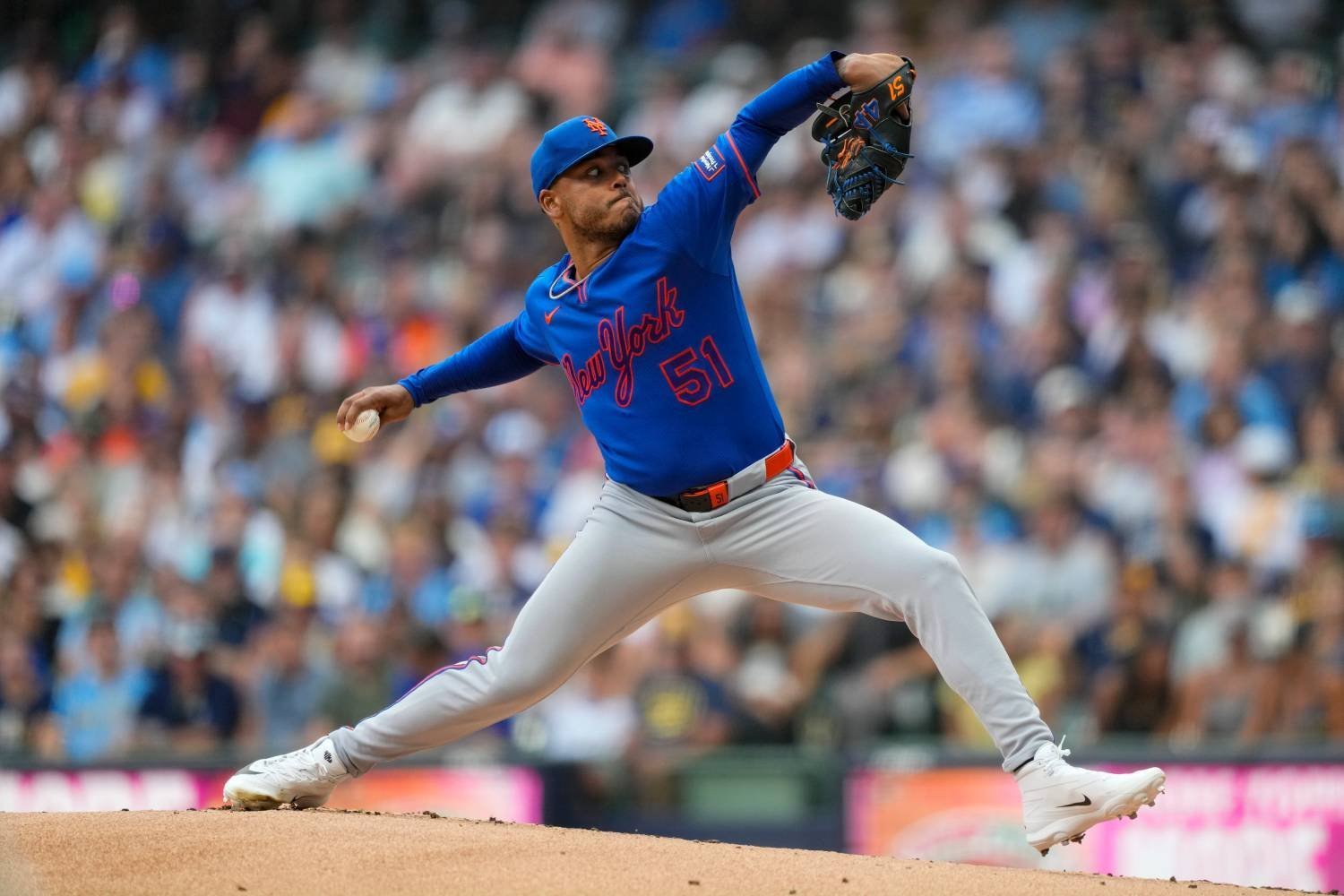 While the New York Mets can't get rid of Freddy Peralta fast enough, other teams see the right-handed starter as someone who can be fixed before the postseason. At least that is the opinion of several executives who spoke with The Athletic's Will Sammon. From Sammon's piece, which was published Wednesday: "Multiple evaluators who scouted Peralta’s most recent outings reported no questions about his stuff or health. Execution and controlling counts, however, are problems. Compared to his previous seasons, Peralta is losing early count leverage more often, and it’s hurting him. "Whether it’s arrogance, desperation, a commentary on modern pitching or a combination of all three, high-ranking officials from multiple teams see Peralta as a puzzle they can solve with usage changes or pitch shape adjustments." Others feel it might not be quite so simple to correct the problems afflicting Peralta, who has a 4.47 FIP (4.99 ERA) and posting a 3.64 FIP (2.70 ERA) last year with the Milwaukee Brewers. "Beyond that, though, as the same evaluator put it, 'the metrics are the metrics.' And some of those metrics are not great. Peralta’s extension is down nearly half a foot, which is not something, generally speaking, that is easily fixable during a season. Peralta’s average velocity on his four-seam fastball is also down from 94.8 mph last year to 94.2 mph. Evaluators said Peralta can change some movements for, perhaps, modest improvements. But it’s tough to draw up a clear path toward regaining his fastball." Peralta is still a highly sought-after pitcher, although his performance with the Mets has brought on some questions that could linger into his free agency. View the full article
 -
What are your Marlins vs. Mets series predictions?
DiamondCentric posted an article in Fish On First
 Once again in 2026, I will be monitoring Miami Marlins predictions from our valued SuperSubs, Fish On First staffers and livestream guests. Individual article pages like this one will be created prior to every Marlins series and featured prominently on the FOF site. Consistent participation is key if you want to win this annual contest. Submissions only take a few seconds. Scoring system A "perfect" series is worth three points: Earn one point for predicting which team will win the upcoming series Earn one point for predicting the precise number of victories for each team Earn one point for predicting the “Series MVP” who accumulated the highest win probability added (WPA) during the series as calculated by FanGraphs (could pick a player from either team) FOF staffer Jeremiah Geiger is currently atop the 2026 season leaderboard, which will be updated between every Marlins series. If you are a SuperSub, leave a comment with your Prediction Time picks on this page, or join the Marlins Discord Server and submit there. We'll feature them on the upcoming Fish On First LIVE episode and track your points throughout the season! Any picks submitted prior to the first pitch of the series opener will be counted. If you are not a SuperSub, please consider signing up here to support the FOF staff. Series preview notes Probable starting pitchers: RHP Eury Pérez (MIA) vs. RHP Nolan McLean (NYM) on Thursday RHP Janson Junk (MIA) vs. RHP Freddy Peralta (NYM) on Friday RHP Tyler Phillips (MIA) vs. LHP Zac Thornton (NYM) on Saturday TBA (MIA) vs. TBA (NYM) on Sunday The Marlins rank 16th in MLB with a 100 wRC+ and 12th in MLB with a 4.05 FIP. They are 3-7 in their last 10 games and have a 21-31 record on the road this season. The following Marlins players are on the injured list: Anthony Bender (15-day IL), Owen Caissie (10-day IL), Josh Ekness (60-day IL), Ronny Henriquez (60-day IL), William Kempner (15-day IL), Adam Mazur (60-day IL), Andrew Nardi (60-day IL) and Robby Snelling (60-day IL). The Mets rank 24th in MLB with a 94 wRC+ and 11th in MLB with a 4.02 FIP. They are 5-5 in their last 10 games and have a 24-31 record at home this season. The following Mets players are on the injured list: Reed Garrett (60-day IL), Justin Hagenman (60-day IL), Clay Holmes (60-day IL), Tylor Megill (60-day IL), Dedniel Núnez (60-day IL), Juan Soto (10-day IL), Mark Vientos (10-day IL) and Austin Warren (15-day IL). View the full article
 -
Cubs Jump Into Conversation For Tigers' Tarik Skubal
DiamondCentric posted an article in North Side Baseball
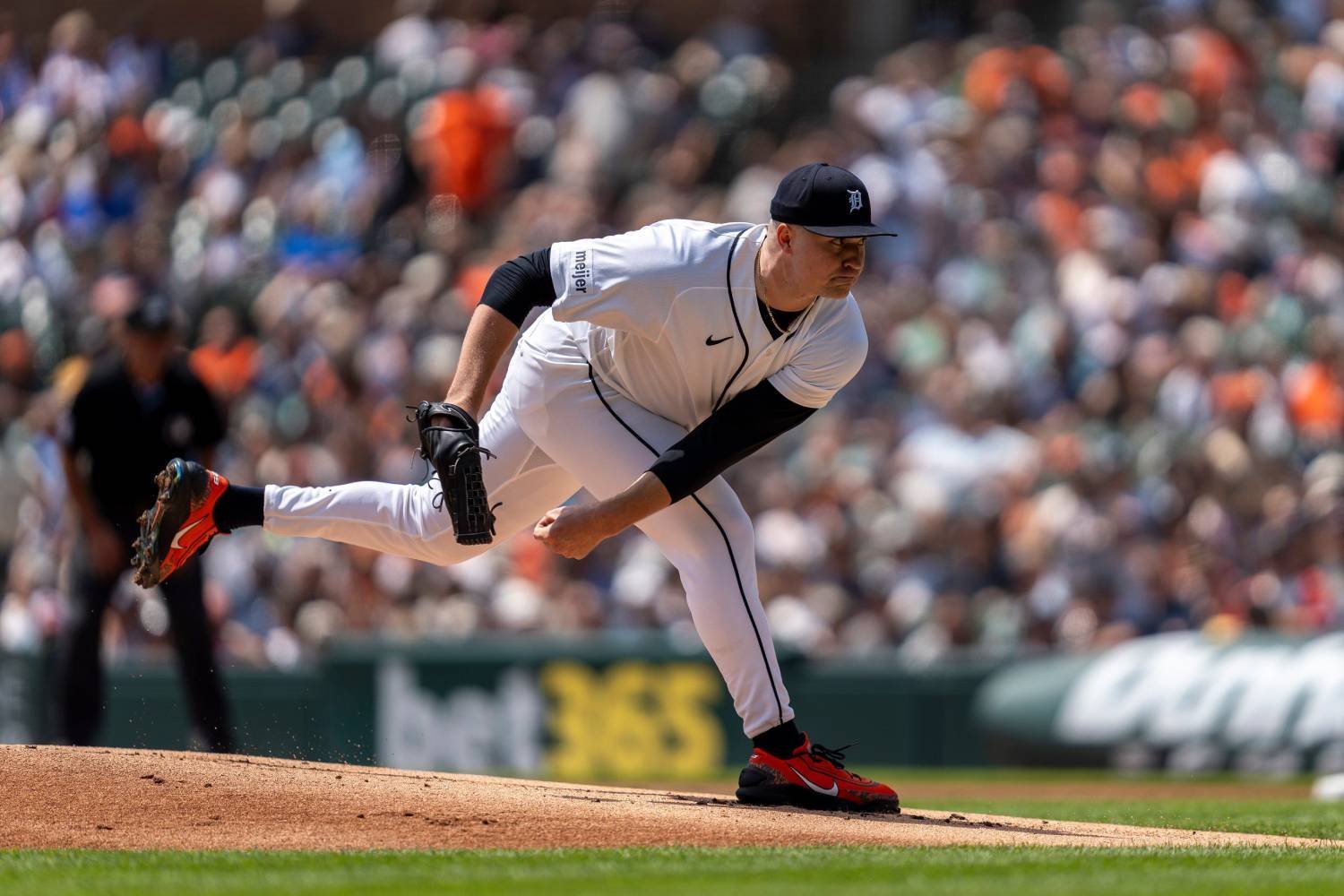 The Chicago Cubs are a contender ... for Tarik Skubal. Desperate for starting pitching due to a slew of injuries and poor performances, the Cubs have joined the fray in pursuit of Skubal, the reigning two-time AL Cy Young Award winner for the Detroit Tigers. That is according to a new report Wednesday by Patrick Mooney of The Athletic. Skubal possibly made his last start for the Tigers in a 10-9 loss in 12 innings to the Baltimore Orioles, a game that the Tigers led 7-0 when the big left-hander exited. It left the Tigers with a 51-58 record and 4½ games out of the final AL wild-card spot, although they would have to get past five teams to grab that last berth. The Cubs (61-47), who have 12 pitchers in the injured list, are in second place in the NL Central, three games behind the three-time defending division champion Milwaukee Brewers, but lead the NL wild-card standings 4½ games ahead of the Arizona Diamondbacks and Philadelphia Phillies, who are tied. While Skubal would make a difference in the regular season, he would be a bigger presence in the postseason. An obstacle for the Cubs would be the package they could put together compared to the Brewers and Los Angeles Dodgers, just two of the contenders vying for Skubal. Both of those teams have better farm systems, meaning the Cubs might need to give more higher-end prospects to be in the mix, including Northside Baseball's No. 1 and two prospects, Double-A shortstop Jefferson Rojas and High-A outfielder Josiah Hartshorn. The Tigers are also seeking a young MLB-ready pitcher, which the Cubs don't truly possess. Skubal is a free agent after the season and making $32 million this season. View the full article
 -
Twins Minor League Report (7/29): Hendry Mendez Comes up Clutch
DiamondCentric posted an article in Twins Daily
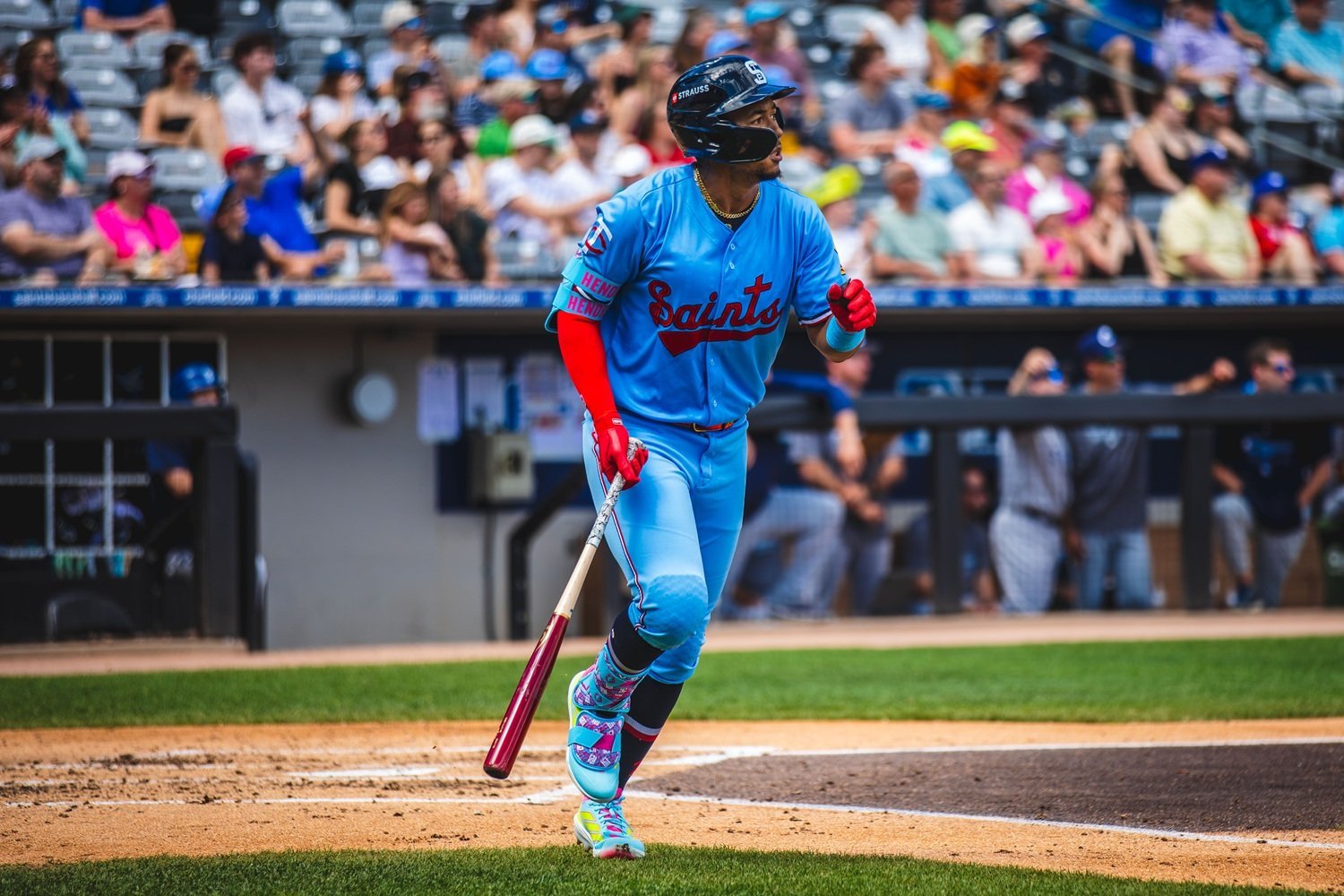 TRANSACTIONS With Byron Buxton going on the injured list, INF Tristan Gray recalled by Twins LHP Michael Carpenter sent to A Fort Myers on Minor League Rehab. RHP Jason Reitz was placed on the 7-Day Injured List. Saints Sentinel St. Paul 4, Omaha 3 Box Score Trent Baker: 3 IP, 2 H, 0 ER, 0 BB, 2 K HR: Hendry Mendez (6) Multi-hit games: Kaelen Culpepper (2-for-4), Hendry Mendez (2-for-4, HR, R, 2 RBI), Cody Morissette (2-for-4, 2B, RBI) The Saints struck late to win on Wednesday. A rain delayed the start of the game, though the drizzle and mist did nothing to dampen a Saints offense that scored immediately. Walker Jenkins walked and Kaelen Culpepper shot a single to right. Up with a chance to strike first, Matt Wallner opted for a cool, democratic sacrifice fly to usher his leadoff comrade home. Though they may have been undampened initially, the lineup quickly turned soggy; the bats fell cold for five tortuous frames in which they squelched and pleaded, yet no Saints runner advanced beyond first base. Only twice did a runner even reach safely; both times a double play curtly cut their adventure down. All the while, the pitching effort started by Trent Baker and continued by Garrett Acton wobbled and toppled. Ruddy Gomez—new to AAA baseball and its details and differences—greeted the level with a walk. A double and sacrifice fly branded him with his inaugural earned run. A wild pitch made it two. C.J. Culpepper’s one earned run a frame later proved to be good news, relatively. Fortunately, by the time of Culpepper’s lapse, the game was simply tied. Hendry Mendez sat on a lethargic breaker from veteran Matt Moore—yes, that one—and drove the offering into right field for an RBI. Then Cody Morissette pounced on a sky-high heater and bludgeoned the wall for a run-scoring double. Tied, Mendez acted. Though you do not see it. Justin Topa explains enough: with a smooth transition from pitched ball to snapped head, he reveals that something has happened, and that something was a solo homer shot the other way to give the Saints a lead they would not relinquish. Rehabbing big leaguer Garrett Acton fired a clean frame, striking out one over 14 pitches. No member of the Royals’ top 30 prospect list played in the game on Wednesday. Wind Surge Wisdom Wichita 4, Springfield 7 Box Score Preston Johnson: 4 IP, 6 H, 3 ER, 0 BB, 5 K HR: None Multi-hit games: Khadim Diaw (2-for-4, RBI), Kala’i Rosario, (2-for-4, R) The Wind Surge stumbled in the seventh to fall on Wednesday. First inning two-run blasts don’t tend to help winning. More at 11. The opening blast, hit by Deniel Ortiz, stuck Wichita in a deficit they would actually climb out of—before slipping and plunging back down into the depths dug by themselves early on. A third run came in the third. A counterattack the Wind Surge broke the seal in the fourth, with a Brandon Winokur single dawning the scoring before the bats returned with trio in the fifth. Marek Houston netted a pair with a double smoked down the left field line, and Khadim Diaw followed his friend with a liner beyond the third baseman to score Houston. An empty sixth perhaps fed Wichita a false confidence; as the seventh crushed their hopes for a glorious comeback win. The Cardinals struck with vigor, doubling around the field, taking hit by pitches, and reaching two outs before destroying the Wind Surge’s dreams with a back-breaking two-run homer. In response, two Wichita attempted rallies came up short. The smacker of that two-run homer was the 12th-ranked prospect in all of baseball, catcher Rainiel Rodriguez. He accrued three hits in the game. Kernels Nuggets Cedar Rapids 6, Peoria 10 Box Score Kolten Smith: 4 IP, 3 H, 1 ER, 2 BB, 5 K HR: Jose Salas (4) Multi-hit games: Dameury Pena (2-for-3, R, RBI, 2 BB), Eduardo Tait (2-for-5, 2 RBI), Andy Lugo (2-for-4, 2 2B, RBI) The Kernels fell apart and lost on Wednesday. Well, it wasn’t Kolten Smith’s fault. The righty enjoyed perhaps his finest start as a Kernel. He navigated a shaky first and nurtured his outing accordingly, turning what could have been a dead-on-arrival start into four respectable frames. He allowed one earned run. He struck out five. And the Kernels had the lead. Two arrived in the first on a Danny De Andrade double; one came in the second thanks to an Eduardo Tait single. Andy Lugo added a fourth run with an RBI double. Then the trouble started. Cleiber Maldonado started the downfall, though none could have known it at the time, as his work resulted in only one run. Reed Moring suffered the brunt of the collapse. In his Cedar Rapids debut, nonetheless. Four homers. Eight earned runs. Scores in every inning he oversaw except for one. Some part of him likely wanted to crawl into some unseen hiding place, but he took the violence naked and blatant in front of all to see. Better luck next time, youngster. Chiefs starter Yhoiker Fajardo clocks in as the ninth-best prospect in the Cardinals’ system. He surrendered four earned runs in three innings. Mussel Matters Fort Myers 5, Palm Beach 19 Box Score Michael Carpenter: 1 IP, 3 H, 1 ER, 1 BB, 1 K HR: JP Smith II (13, 14) Multi-hit games: Emmanuel Rodriguez (2-for-5, 2B, R), JP Smith II (2-for-4, 2 HR, 2 R, 3 RBI), Bryan Acuña (2-for-4, R) The Mighty Mussels were decimated on Wednesday. Amazingly, the Cardinals racked up 29 hits without hitting a home run. Every Fort Myers pitcher allowed at least one earned run. This concludes the pitching portion of the writeup. Rehabbing prospect Emmanuel Rodriguez DH’d after playing left field for a portion of Tuesday’s Mighty Mussels game. He whiffed thrice—perhaps his famous sweeping stroke is still a touch slow—but earned two hits, including a triple. JP Smith II had the game of the day at the plate. He sent a fastball beyond the center field wall in the fourth and then made the batter’s eye his target once more with a blast in the eighth. Palm Beach’s leadoff hitter, Sebastian Dos Santos, is the 12th-best prospect in the Cardinals system. He played shortstop and collected four hits. TWINS DAILY PLAYERS OF THE DAY Twins Daily Minor League Pitcher of the Day – Kolten Smith Twins Daily Minor League Hitter of the Day – JP Smith II PROSPECT SUMMARY Here’s a look at how the Twins Daily Top 20 Twins Prospects performed: #1 – Walker Jenkins (St. Paul) - 0-2, R, 2 BB, K #3 – Kaelen Culpepper (St. Paul) - 2-4, K #4 – Emmanuel Rodriguez (Fort Myers) - 2-5, 3B, R, 3 K #5 – Marek Houston (Wichita) - 1-5, 2B, R, RBI, 2 K #7 – Eduardo Tait (Cedar Rapids) - 2-5, 2B, 2 RBI #8 – Kendry Rojas (Twins) - 3 IP, 4 H, 0 ER, 2 BB, 4 K #10 – Hendry Mendez (St. Paul) - 2-4, HR, R, 2 RBI #14 – Khadim Diaw (Wichita) - 2-4, RBI #15 – Brandon Winokur (Wichita) - 1-4, RBI, 2 K #17 – Quentin Young (Fort Myers) - 1-3, BB, 2 K THURSDAY’S PROBABLE STARTERS ST. Paul @ Omaha (7:05 PM) - RHP Ryan Gallagher Wichita @ Springfield (7:05 PM) - RHP Chris Vallimont Peoria @ Cedar Rapids (6:35 PM) - RHP Adrian Bohorquez Palm Beach @ Fort Myers (6:05 PM) - RHP Jason Reitz DSL Rangers Red @ DSL Twins (10:00 AM) - TBD View the full article
 -
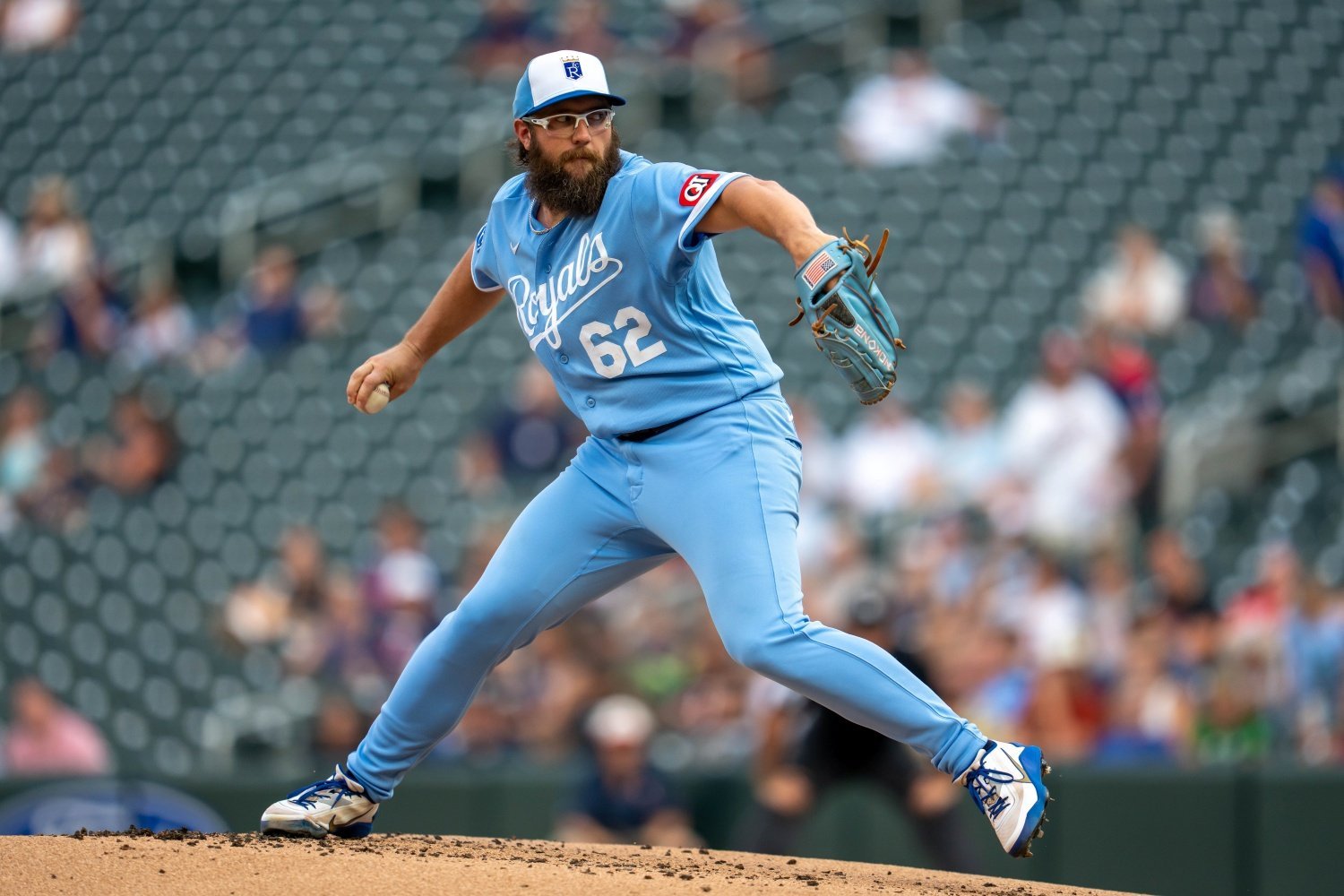 Box Score SP: Joe Ryan - 6 IP, 7 H, 4 R, 4 ER, 1 BB, 4 K (93 pitches, 60 strikes, (64.5% strikes)) Bottom 3 WPA (via FanGraphs): Joe Ryan (-0.14), Victor Caratini (-0.09), Trevor Larnach (-0.08) Win Probability Chart (via FanGraphs) The Twins got back to .500 Tuesday night, for the first time since early April. Baseball never lets anyone spend very long digging themselves, though. The Twins sent All-Star Joe Ryan to the mound Wednesday, hoping to reassert themselves as a winning team, outright. The Royals countered with old friend Randy Dobnak, who faced off against the Twins for the first time in his six seasons in the big leagues. Ryan started strong, striking out two in a one-two-three top of the first inning. That was a relief, after he'd given up six home runs in a start in Cleveland and had this outing pushed back twice to allow time to recover from fatigue and to address some mechanical issues. But the relief didn't last. The Royals led off with two singles in the top of the second inning and had runners on first and third with no outs. Bearing down, Ryan induced weak contact three times in a row to escape the jam. He wasn’t so lucky in the top of the third inning, however. Tyler Tolbert led off with a solo home run to give the Royals a 1-0 lead. The Royals added a second run in the top of the fourth inning after a Salvador Perez lead-off triple (yes, you read that correctly) and a Nick Loftin sacrifice fly. It probably shouldn't have been a triple; Luke Keaschall misplayed the ball. But Ryan still gave up the hard contact, and this time, he couldn't wriggle off the hook. The Royals added to their lead in the top of the fifth on a Carter Jensen double. Later in the inning, Jac Caglianone added a two-out RBI single, giving the Royals a 4-0 lead. Meanwhile, Dobnak was able to stymie the Twins offense over seven innings, recording just four strikeouts, but plenty of soft contact. The hard-hit balls were often hit right at fielders, so the offense didn’t make much noise, with just five baserunners in those seven innings. The bats weren’t able to do anything against the Royals bullpen, either, as Daniel Lynch IV and Steven Cruz each threw a scoreless inning to complete the shutout. On a positive note, Kendry Rojas came into the game in relief and threw three shutout innings, recording four strikeouts and two walks. This could be a positive over the next couple of days, as it gave the rest of the bullpen a rest. Rojas is settling into the majors nicely, and will fit even better into the bullpen hierarchy if and when the team improves the relief corps later this week. Other Notes: Byron Buxton was placed on the injured list before Wednesday’s game with a hip injury. It's the same hip that has sidelined him earlier this year. Tristan Gray was called up to replace Buxton on the roster for the time being. No timeline has been given on how long Buxton may be sidelined this time. What’s Next? The Twins and Royals will play the rubber match of the series tomorrow at 12:40 PM CT, with Bailey Ober (7-3, 4.56 ERA) pitching for the Twins. The Royals will turn to sophomore southpaw Noah Cameron (5-8, 4.93). BULLPEN CHART SAT SUN MON TUE WED TOT Morris 26 0 0 0 0 26 Adams 0 15 0 11 0 26 Rojas 56 0 0 0 52 108 Funderburk 0 17 0 27 0 44 Rogers 30 0 0 0 0 30 Nance 13 15 0 0 0 28 Anderson 0 0 0 13 0 13 Gomez 8 0 0 0 0 8 View the full article
 -
Luis Campusano Has Forced Padres' Hand Behind the Plate
DiamondCentric posted an article in Padres Mission
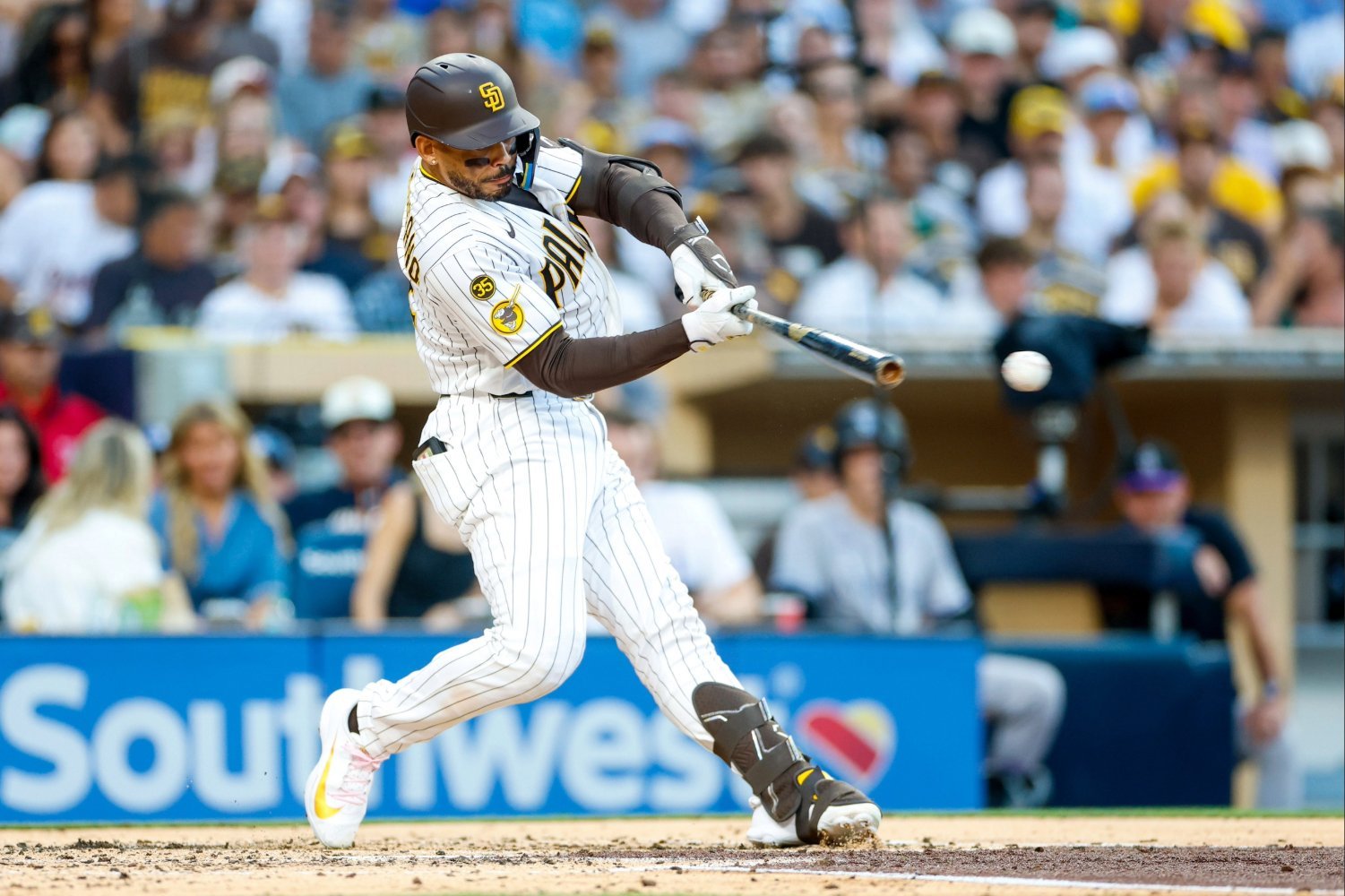 The concept of a mess is not unique to any particular facet of the 2026 San Diego Padres roster. They've struggled to piece together starts on the mound, have received mixed performances from virtually every hitter, and have had to handle injury issues with nearly everyone of note. The result of so much clutter, though, is that the mess behind the plate has gone somewhat overlooked. Freddy Fermin entered the season as the team's No. 1 catcher. After sending Stephen Kolek & Ryan Bergert to the Kansas City Royals prior to last year's trade deadline, it was clear that A.J. Preller was acquiring his top option for the handful of years Fermin remains under team control. With the team unable (or unwilling) to add a suitable backup last winter, Luis Campusano was set to assume duties as the No. 2. As we sit here at the end of July, that's still how things look. Getting here, though, is where the mess comes in. The Padres rank 16th in the league in fWAR accrued by their catchers (1.3). Much of that is propped up by the defensive work of the group, given that the team sits 21st in wRC+ (79) and in the bottom five teams in the league in terms of batting average (.187) and on-base percentage (.283). Fermin has played in only 66 games. He missed time in June while out on the concussion injured list before heading back to the regular IL earlier this month with a head contusion. Campusano missed two months with a fractured toe and has logged time in just 34 contests. That meant that the team's catching picture also featured Rodolfo Durán for 36 games and Blake Hunt for another two over the course of this season. With things now settled back into featuring Fermin & Campusano, the conversation can take on another turn in pondering whether it should be Campusano atop the depth chart with Fermin as the backup. Such a conversation would be a far cry from where we found ourselves last winter. Fermin as the starter was a sentiment that went undisputed given his defensive competence and a solid stretch of play upon his acquisition from Kansas City. At the same time, few believed that Campusano merited such a guarantee as the Friars' top reserve behind the plate, as he struggled to realize his offensive upside and was coming off some woeful defensive marks the last time we saw him log regular work at the major-league level back in 2024. It speaks to the gravity of the struggles of the former and the growth of the latter, then, that we're even entertaining this conversation. But that's where we find ourselves with a No. 1, in Fermin, that has worked to a line of only .164/.259/.276, with a 54 wRC+. While he's posted a career-best 9.6 percent walk rate, he's struck out at his highest clip since 2023 (19.8 percent). There's been the occasional impact, indicated by a .112 ISO that is better than either of the last two years, but his offensive performance has been too riddled with soft contact and strikeouts for it to have any sort of sustained realization. On the other side of things, Campusano is in the midst of an offensive breakout. It remains a small sample given the injury (107 plate appearances), but his line reads .286/.393/.505 with a gaudy 152 wRC+. His 23.4 percent strikeout rate is reasonable against a 14 percent walk rate, especially when you factor in the power output. Had he been healthy over a full season, we'd likely be framing Campusano as one of the team's best hitters in 2026. As it is, his offensive output is one that far exceeds that of his counterpart behind the plate. General narratives around each player would tell us that a justification for keeping Fermin entrenched as the starter over Campusano would be due to his defense. Fermin's chops with the glove have, historically, been far better than the work we've seen from his teammate. After all, the last time we saw Campusano behind the plate regularly was when he turned in a -13 Fielding Run Value. This season, Fermin has a FRV of +5. He's been good across the board, turning in at least average marks in each phase that is considered for the position (framing, blocking, throwing). On the other hand, Campusano is at -4 FRV. He's improved his framing metric from -8 to -4 while providing exactly average work with respect to blocking and throwing. In choosing to give more runway to Campusano as the starter over Fermin, you'd be sacrificing some defense. However, it's important to note that such sacrifice is not remotely what it would have been two years ago. You lose something of note when it comes to framing, very little in the other two areas, and then more than make up the difference offensively considering where the two currently reside with the bat. The extent to which Craig Stammen is willing to explore that tradeoff remains to be seen. For what it's worth, FanGraphs likes Campusano's share of the work behind the plate to exceed that of Fermin's, giving him 48 percent of the time to Fermin's 42 percent start share. Baseball Prospectus, though, has Fermin at 55 percent of the work to Campusano's 30. Here in reality, they've split the work evenly over the last six contests. It's entirely possible Stammen is ready to lean into a new workload distribution. Depending on what goes down over the next week leading up to the trade deadline, simply inserting Campusano into the starting lineup more frequently could be one of the biggest additions the Padres make. View the full article
 -
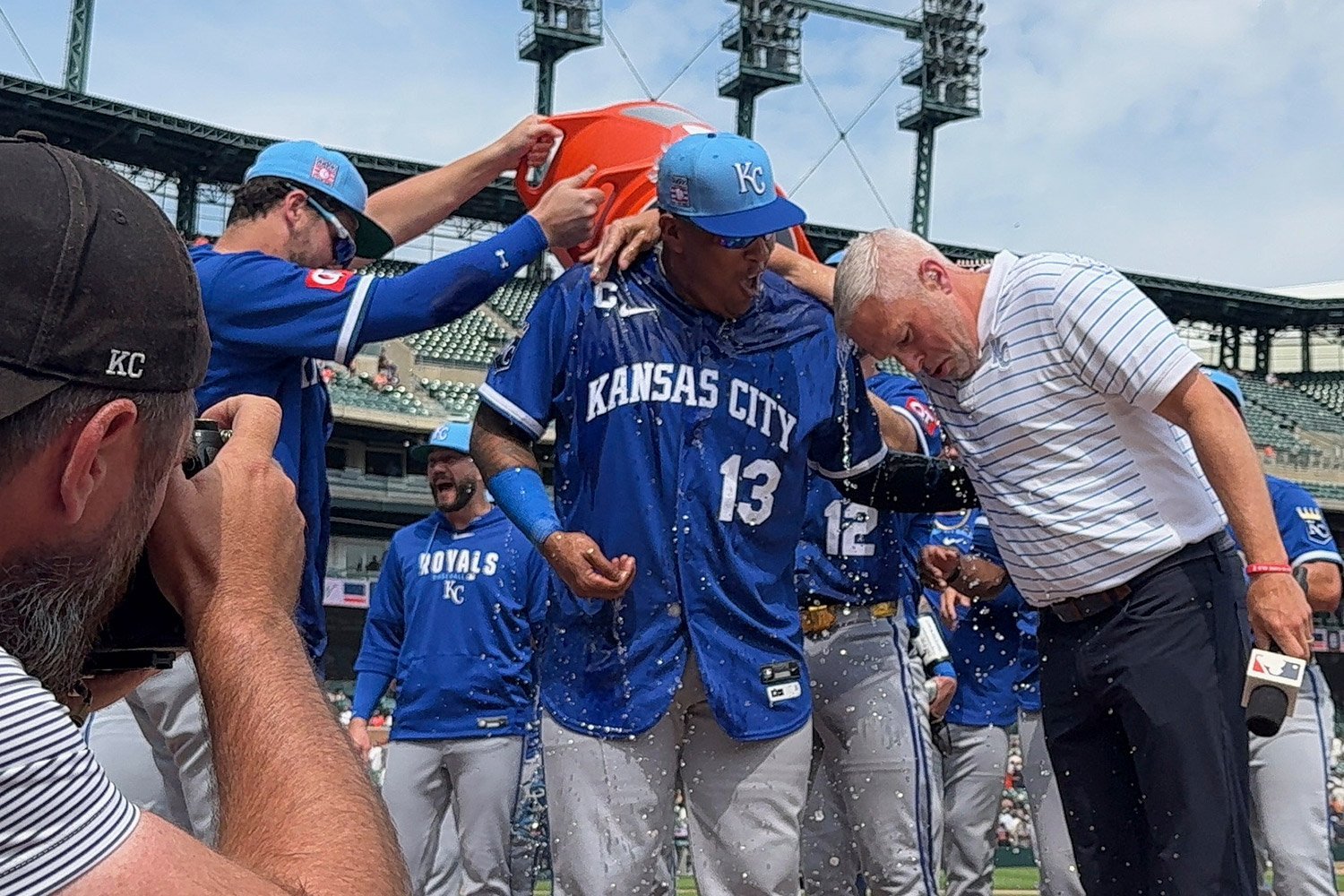 For over three decades, George Brett stood alone atop the Royals’ all-time home run leaderboard. On Saturday, the crown was claimed by Salvador Perez when he launched the 318th home run of his career to become the franchise’s new home run leader. Comparing Perez’s and Brett’s careers head-to-head is nearly an impossible task. Brett is undoubtedly one of the greatest third basemen of all time, while Perez is a vastly different player who built his legacy as a consistent presence behind the plate. Still, it is interesting to compare how their career numbers stack up in their routes to the same metric. Brett was not particularly known for his home run swing, so it was impressive for him to keep this record for as long as he did. Many losing seasons and a stadium that suppressed homers probably also had a lot to do with it. Perez’s path to the Royals home run crown was done in 900 fewer games and around 4,300 fewer plate appearances. It was an impressive feat from a position that usually requires some sort of scheduled rest. This season, he has even ceded the lion’s share of the starts behind the plate to rookie Carter Jensen. With his career winding down, though still with one more year on his contract, it is worth looking at key milestones along Perez’s home run journey. No. 1 | August 8, 2011 vs Max Scherzer | Comerica Park Perez swung at a 2-2 94mph fastball from Scherzer and sent it over the left-center wall at Comerica Park. At just 21 years old, Perez would have many more where that came from. No. 100 | June 10, 2017 vs Brad Hand | Petco Park Right where it all began with a deep drive to left field at Comerica Park, Perez stands alone at the top of the Royals leaderboard above the legendary George Brett. 2026 has been another disappointment in a season where the Royals cannot find a winning groove, but moments like this for a Royals legend like Perez are a reminder that even during frustrating seasons, there are still opportunities to find joy and witness unforgettable moments. View the full article
 -
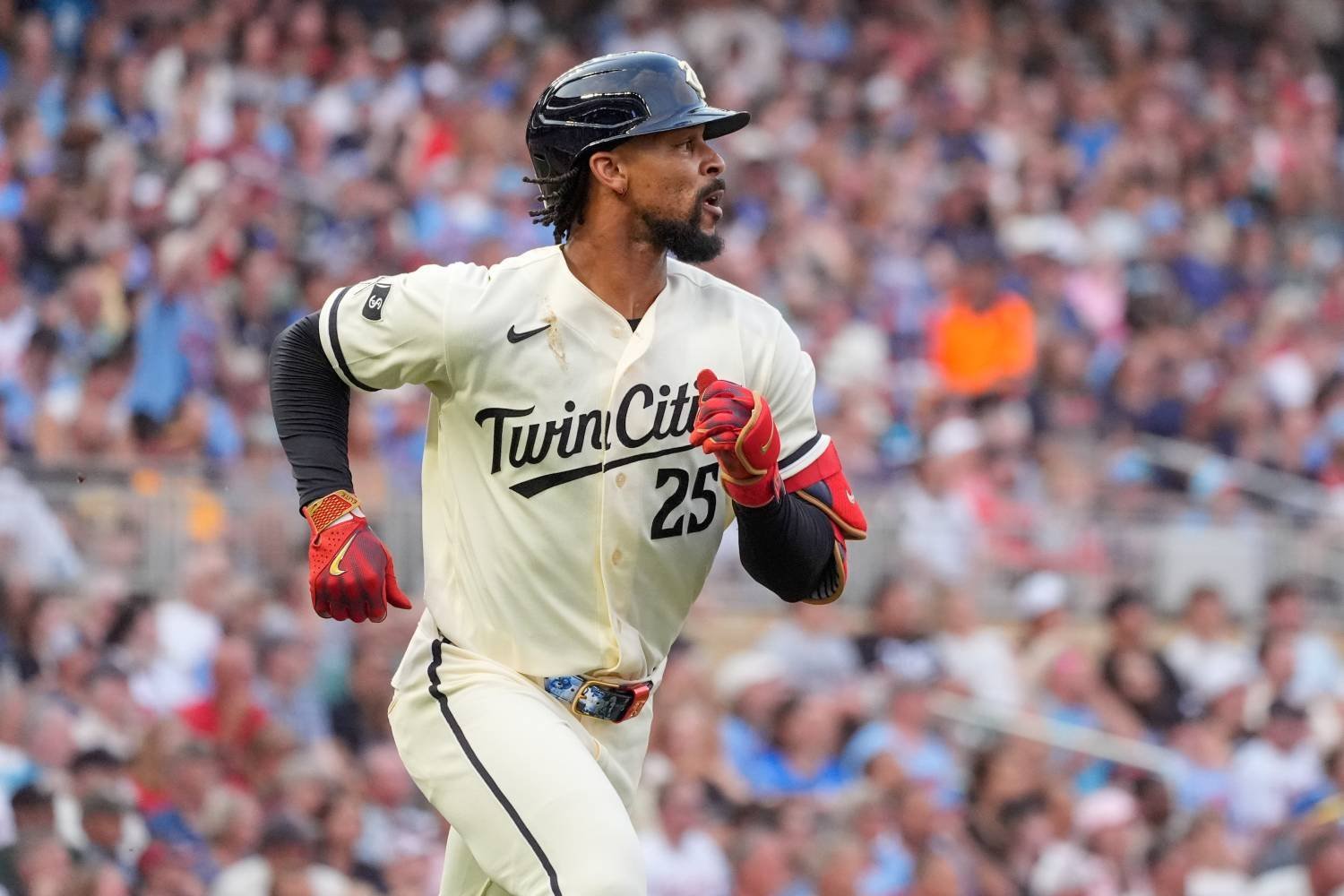 For the second time this month, Byron Buxton is being sidelined by a hip injury. It couldn't come a worse time for the Minnesota Twins. The Twins placed the All-Star center fielder on the 10-day injured list Wednesday due to a right hip impingement. Infielder Tristan Gray was called up from Triple-A St. Paul. Buxton has been bothered for most of the last three months with the hip issue, but he played through it before landing on the IL on July 6 with a strained right hip. He came back July 20 and played in seven games since, hitting just .160 in that span. Without Buxton, the Twins are down their biggest bat as they make an unexpected push toward a postseason spot. He is slashing .263/.320/.544 with 25 homers and 45 RBIs in 82 games. Gray is back from Triple-A, where he has been since July 20 as he went down when Buxton came back. Gray has a slash line of .232/.271/.333 with four homers and 29 homers in 63 games with the Twins. View the full article
 -
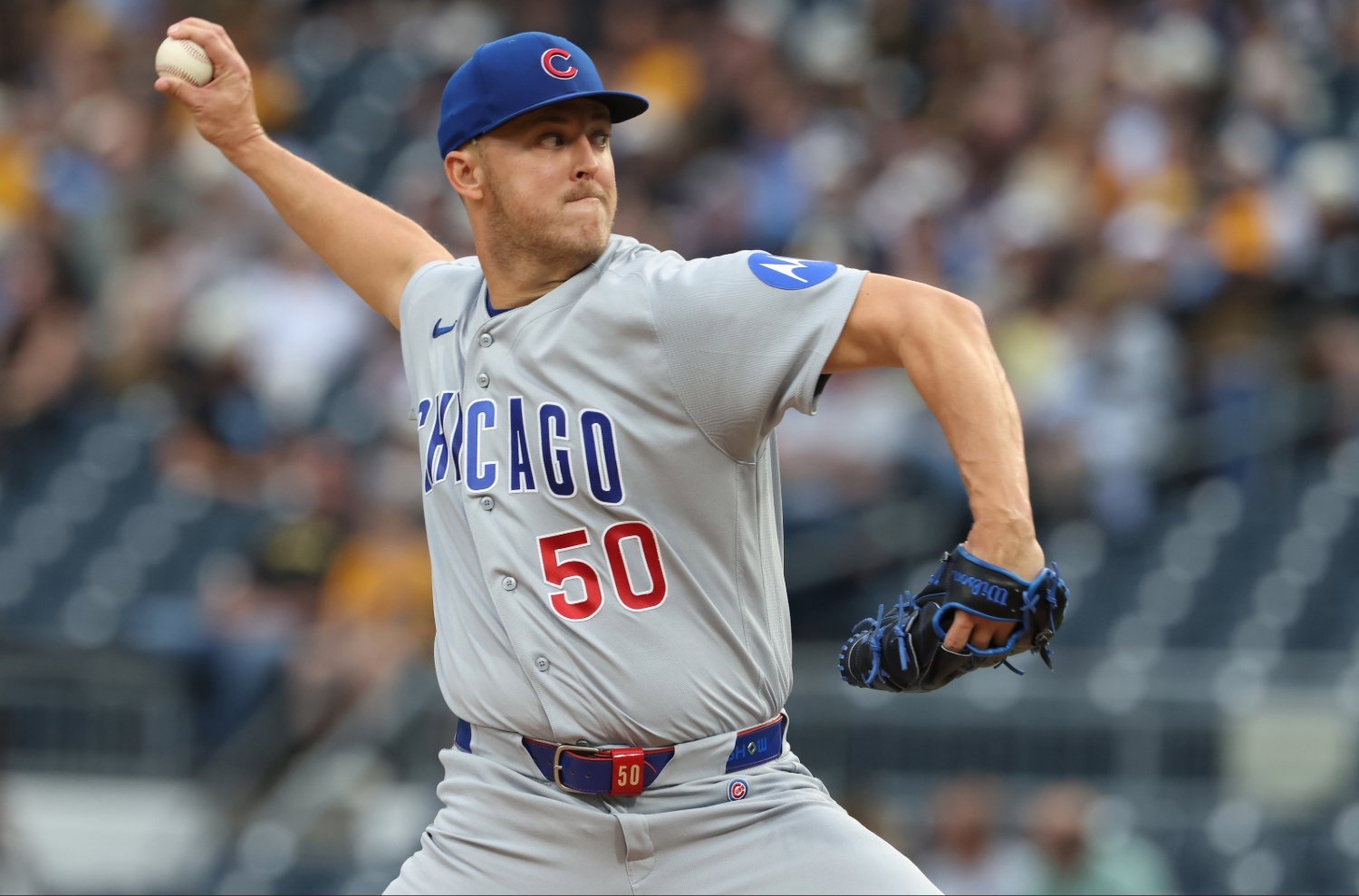 Four years and $68 million. That is what it took for the Chicago Cubs to sign Jameson Taillon prior to the 2023 season. After more than 3.5 seasons with the club, he has now been designated for assignment. In all likelihood, he has pitched his last game for the North Siders. How did it end up like this? Taillon signed with the Cubs during an offseason that had a healthy middle tier of starting pitching options: Kodai Senga was coming over to MLB from NPB, and Taijuan Walker, Chris Bassitt, Zach Eflin, and Tyler Anderson all also switched teams via free agency. If we compare the results of each of those guys, who all received somewhat similar contracts, since then, it seems that Taillon’s output was about right on the mark. Player Innings Pitched K% ERA FIP FanGraphs WAR Contract Bassitt 597 2/3 21.6% 4.02 4.19 7.6 3yr/$63m Eflin 418 22.0% 3.94 3.77 7.5 3yr/$40m Senga 325 2/3 26.5% 3.73 4.21 4.3 5yr/$75m Taillon 525 1/3 19.8% 4.21 4.71 3.9 4yr/$68m Anderson 456 2/3 18.3% 4.53 5.02 2.7 3yr/$39m Walker 402 2/3 16.9% 5.13 5.38 1.3 4yr/$72m Taillon ranks fourth out of six on this list in ERA, FIP, and fWAR, while coming in second in innings pitched. His 525 ⅓ innings pitched by far led the Cubs during this timeframe, and his 3.9 fWAR ranked fifth. The Cubs needed a reliable innings eater, and they got a reliable innings eater. Accidentally, I have stated the actual problem at hand here. Make no mistake, the Jameson Taillon contract wasn’t ideal. It never was. But the contract itself wasn’t the issue. The issue was that the Cubs needed to make that deal. The issue was that they needed a reliable innings eater via free agency because they have done such a lackluster job at developing pitching themselves. This has been a known issue for the Cubs for some time now. From 2023-2026, 15 pitchers have started at least five games for the Cubs. Only five of them did so on arbitration or pre-arbitration salaries: Player Innings Pitched K% ERA FIP FanGraphs WAR Justin Steele 330 2/3 24.4% 3.18 3.24 7.9 Javier Assad 277 1/3 18.3% 3.60 4.74 1.8 Ben Brown 157 25.1% 4.30 3.66 3.0 Cade Horton 121 1/3 19.8% 2.52 3.61 2.2 Jordan Wicks 83 2/3 18.4% 5.92 5.08 0.2 Consider what Justin Wrobleski is giving the Dodgers this season. Or what Emmet Sheehan gave them last season. Or what Shane Drohan is giving the Brewers right now. Each of those guys has offered extremely reliable innings at pre-arbitration salaries. The Cubs have failed to consistently produce that. Hopes are still high for four of the five guys on the list above; the list simply needs to be longer than four names. In my opinion, the real issue with the pitching development in the organization hasn’t been the lack of top-tier pitching prospects. Those guys are few and far between, and the Cubs have so rarely taken pitching in the first round of the draft over the past decade anyway. Rather, it’s been the complete lack of consistently developing guys that can piece together Jameson Taillon level production at those inexpensive, early-career salaries. This allows you to avoid these types of contracts for mid-tier free agent starting pitchers. The past four seasons, the Cubs needed Jameson Taillon to do exactly what he did: prevent runs at a league-average rate, and do so over a lot of innings. If they can start producing more pitchers that are capable of doing that themselves, then hopefully we can stop watching contracts reach unsatisfying conclusions like this one did. View the full article
 -
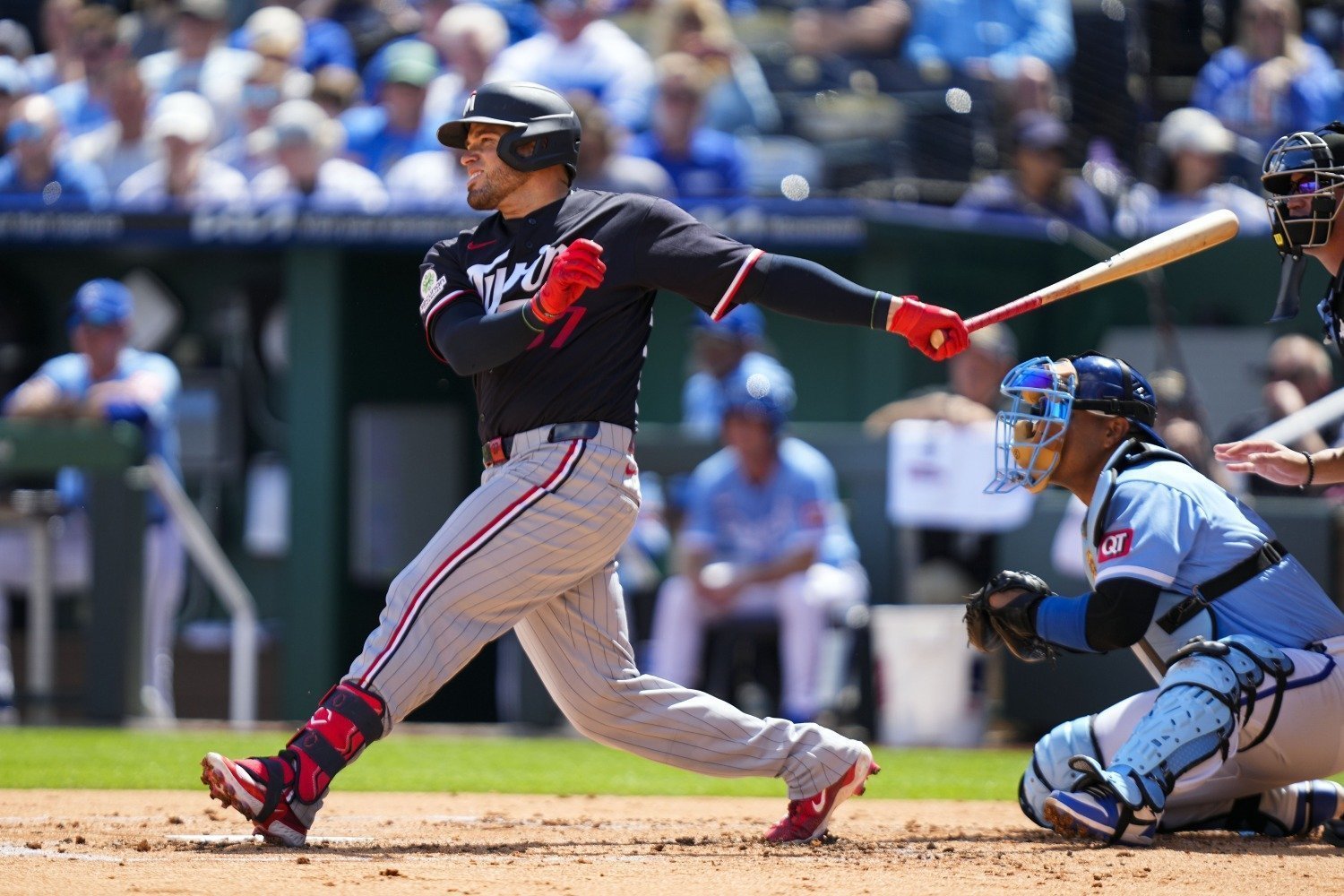 Before the trade deadline arrives, much of the focus (understandably) centers on the biggest names expected to change uniforms. For the Minnesota Twins, that conversation has almost exclusively revolved around Ryan Jeffers. He's an impending free agent; he's having the best offensive season of his career; and nearly every contender looking for catching help has been connected to him in one way or another. But what if the Twins found another way to capitalize on the catching market? The market for catchers has only become more competitive in recent days. Multiple playoff contenders (including the Yankees, Rays, Red Sox, and White Sox) are searching for help behind the plate, and one of the biggest alternative options disappeared when Athletics All-Star Shea Langeliers suffered a season-ending torn meniscus in his right knee. With Langeliers off the board, the demand has only increased. Jeffers has quietly assembled the finest offensive season of his career. Entering the stretch run, he's hitting .283/.390/.532 with nine home runs and a .922 OPS, establishing himself as one of baseball's best offensive catchers. His combination of power, patience, and ability to control the strike zone makes him an attractive fit for virtually any contender looking to upgrade behind the plate. The timing couldn't be better from a trade-value standpoint. Jeffers is scheduled to become a free agent after the season, meaning the Twins must determine whether they view him as part of their long-term plans or whether now is the time to maximize his value. Losing him in free agency for nothing would be a difficult outcome. If another club is willing to pay a premium today, that merits at least some consideration. With Langeliers no longer available, Jeffers arguably becomes the best catcher realistically available at the deadline. There are certainly bigger names floating around the rumor mill. Diamond Centric currently ranks Jeffers as the No. 42 overall trade candidate, while listing Adley Rutschman, Hunter Goodman, and Francisco Alvarez ahead of him among available catchers. The difference, however, is years of club control. All three of those catchers remain under team control beyond 2026, making them significantly more expensive acquisitions. Teams would have to surrender considerably more prospect capital to pry them away. It also means their current clubs don’t need to be in a hurry to trade them away. That scarcity could actually strengthen Minnesota's negotiating position. For clubs looking to improve immediately without emptying their farm system, Jeffers may represent the most realistic and impactful addition available. The surprise trade candidate could be Victor Caratini, if the Twins decide they don't want to part with Jeffers, or if the offers fail to meet their asking price. Caratini isn't nearly the offensive force Jeffers has become, but he's an experienced switch-hitting catcher with postseason experience, who remains under contract next season. Caratini is owed a $6.5-million base salary in 2027 and has a $12-million mutual option for 2028. As is often the case with mutual options, the far more likely outcome is the Twins paying the $3.5-million buyout, rather than both sides exercising the option. In effect, they owe the veteran backstop $10 million for next season. Moving Caratini would accomplish more than simply addressing another team's catching need. It would also create additional payroll flexibility heading into next season. Those savings could potentially help Minnesota pursue a reunion with Jeffers, or simply provide more room to address other roster needs over the winter. Caratini doesn't offer Jeffers's offensive upside. Through 78 games, he owns a .684 OPS and a 92 OPS+, making him a below-average hitter. However, contenders often prioritize reliability and versatility at catcher over offensive production alone, especially if they're looking for a second catcher or platoon option. Defensively, Caratini has graded as an above-average framer and blocker, helping his pitchers steal strikes and limit damage on balls in the dirt. The biggest concern has been controlling the running game. He has been charged with -6 runs in caught stealing above average and owns one of the slowest pop times among major-league catchers, making him vulnerable against aggressive baserunning clubs. Still, experienced catching is one of the hardest commodities to acquire in late July, and Caratini checks enough boxes to draw interest from clubs needing dependable depth behind the plate. Jeffers remains the obvious name to watch over the next several days, and for good reason. He's playing the best baseball of his career at precisely the right time, and the market for catching has only become thinner following Langeliers's injury. However, trading Caratini would give the Twins financial flexibility while still allowing them to keep one of the league's hottest offensive catchers for a potential stretch run or future extension. It would be a less headline-grabbing move, but one that could quietly position the organization for both the remainder of this season and next year. As a last resort, of course, they could trade Alex Jackson, instead. Moving Jackson wouldn't save them much money, but it would alleviate the crunch created by carrying three catchers and clarify some players' roles. At this point, trading Jeffers feels unlikely. Trading Jackson would be an extremely minor move, but it's probably necessary—unless the front office finds a happy medium by dealing Caratini. Does it make sense to trade Caratini instead of Jeffers? Leave a comment and start the discussion. View the full article
 -
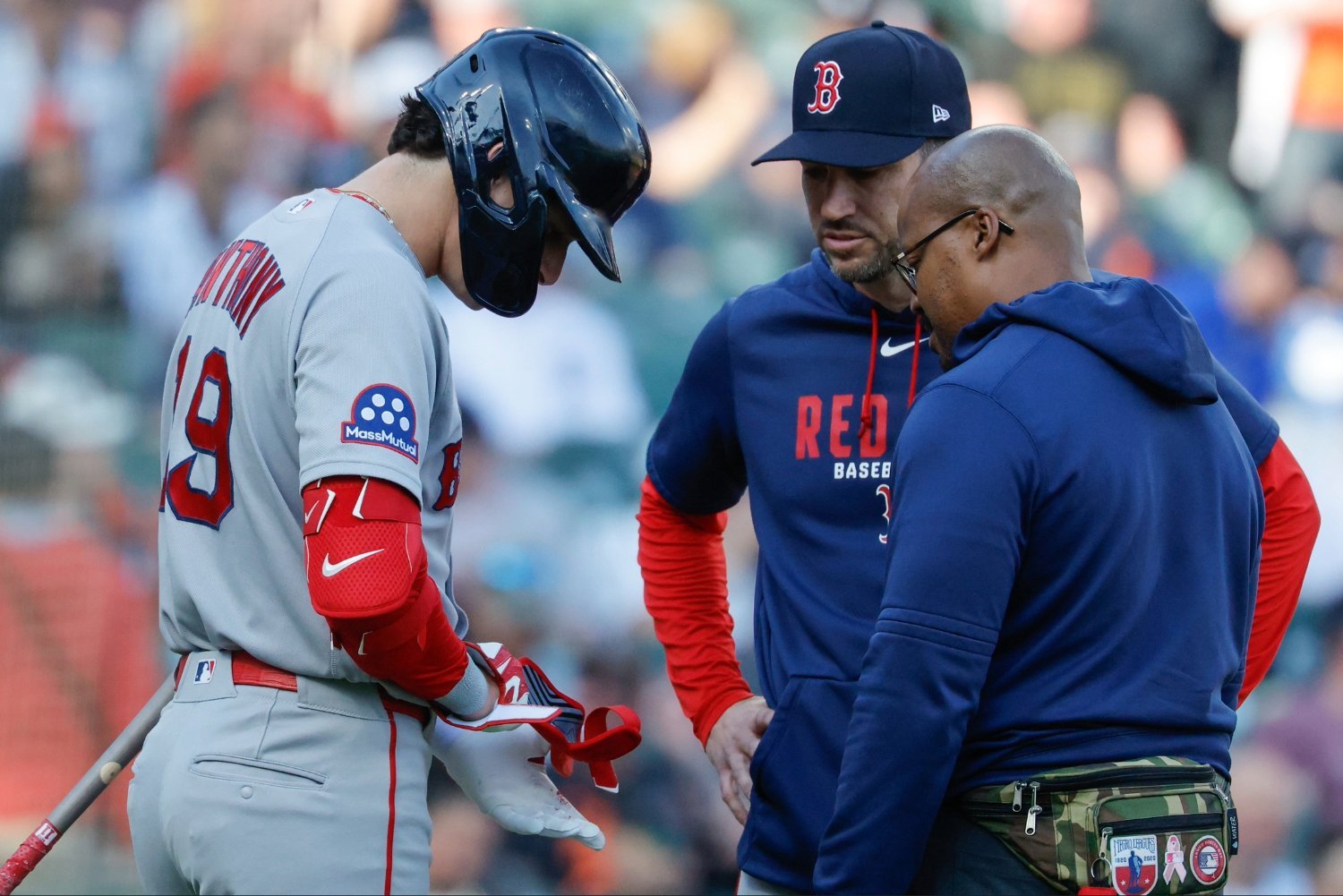 Boston is one of the premier healthcare cities in the United States. It’s home to three medical schools. Massachusetts General is regarded as one of the best hospitals in the world. Brigham and Women’s Hospital and Beth Israel Deaconess Medical Center aren’t far behind. Both are elite healthcare institutions in their own right. (Grey's Anatomy taught me all I need to know about medical programs.) Fenway Park sits 2.2 miles from Mass General's main campus. The Boston Red Sox have access to some of the best doctors in the world, and somehow fans can’t get a clear answer on what’s wrong with the team’s players. Why has the team’s medical staff dropped the ball multiple times in 2026? Consider the communication surrounding Garrett Crochet, Roman Anthony, and Curtis Mead’s injuries. Garrett Crochet On April 29, Garrett Crochet was placed on the 15-day injured list with left shoulder inflammation. Earlier that month, the Minnesota Twins (yes, the Twins) annihilated Crochet, scoring 11 runs off of him (10 earned) across 1 ⅔ innings. Former manager Alex Cora claimed Crochet was healthy. On June 2, Crochet revealed he underwent an MRI and said he was “feeling much better than I was a couple days ago, which is positive, but ultimately just waiting to see what the imaging reveals”. Later that day, interim manager Chad Tracy told reporters that the MRI showed “a very low-grade lat strain” and said, “Crochet will be able to resume throwing as soon as he is asymptomatic.” The southpaw subsequently shut down his throwing program for two weeks. Ten days later, Crochet said he thought he was “getting close to throwing”. He continued, “I think we all, you guys included, from the information that I was receiving and relaying to you, wouldn't have expected the shoulder to keep me out as long as it has.” Roughly one week ago, Crochet said it’s up in the air whether he’ll pitch again in 2026, “It’s tough to say, I’m not going to make a claim like that… I understand why you ask the question… it’s just completely different from the original diagnosis”. He also spoke to Tim Healey of The Boston Globe and said he’s not cleared to throw and that he would need six weeks to build up before throwing again. He lamented, “What the [expletive] is the point of building up the strength now?” Roman Anthony On May 4, Roman Anthony tore the carpometacarpal (CMC) joint in his right ring finger. The injury was initially labeled as a right wrist sprain. Post-game, Tracy told reporters, “Imaging tonight was negative, but we are gonna send him back to Boston to see our hand specialist just to let him look at it and make sure… I think the whole point is to get him back with our specialist to see him and see how he is. If everything’s good, we’ll get him back here. But we’ve got to get him back there first.” Later that month, Anthony shut down his hitting program, citing discomfort in his wrist. In mid-June, he reportedly felt pain after he swung a fungo bat. Anthony was transferred to the 60-day injured list on June 28. In early July, news broke that he moved his rehab program to Fort Myers, Florida. Curtis Mead Mead abruptly left Monday’s game after being hit on the hand in his second at-bat with the Red Sox. Post-game, Tracy told reporters, “He’s sore… We’re just going to take it day to day and see how he feels coming in (Tuesday). A little sore but at least right now it looks like we dodged a bullet maybe.” Come Tuesday evening, Tommy Cassell reported that Nick Sogard was being called up from Triple-A Worcester to join the team in Sacramento. The injury is a fractured left wrist, with a recovery time between six and eight weeks depending on the severity of the injury. Alex Speier reported he flew back on Tuesday night to meet with the team’s hand specialist. The medical equipment in a ballpark isn't up to par with what you'd find at a hospital. Bone injuries, especially small ones, can be tough to spot on an X-ray and take multiple reviews by practitioners. (When I found out that I broke the growth plate in my right shoulder, the doctors had already sent me home from the hospital.) Mead might be the exception here, but that doesn't excuse Crochet's shoulder injury evolving into a lat strain or Roman Anthony's wrist injury becoming a torn CMC joint overnight. Teams get unlucky with injuries. The funny thing is that the Red Sox aren’t the unluckiest team in baseball. (Check out our sister site, North Side Baseball, if you want to see a team utterly plagued by injuries this season.) Boston ranks sixth on Baseball Prospectus’s Hurt Scale with 12 players. They went on a 15-game win streak sans Roman Anthony and Garrett Crochet, the two superstars expected to lead the team to the postseason. What separates the Red Sox is a lack of transparency from the exam room to what players themselves and the public are being told. The Red Sox need to do better. Three shifting narratives demonstrate a pattern and a lack of transparency. I can’t diagnose whether it starts with the front office or the medical staff, but this is unacceptable from an organization with their resources. Something has to change if they want to maintain credibility with the media and their fans. View the full article
 -
Royals Place Vinnie Pasquantino On Injured List With Wrist Soreness
DiamondCentric posted an article in Royals Keep
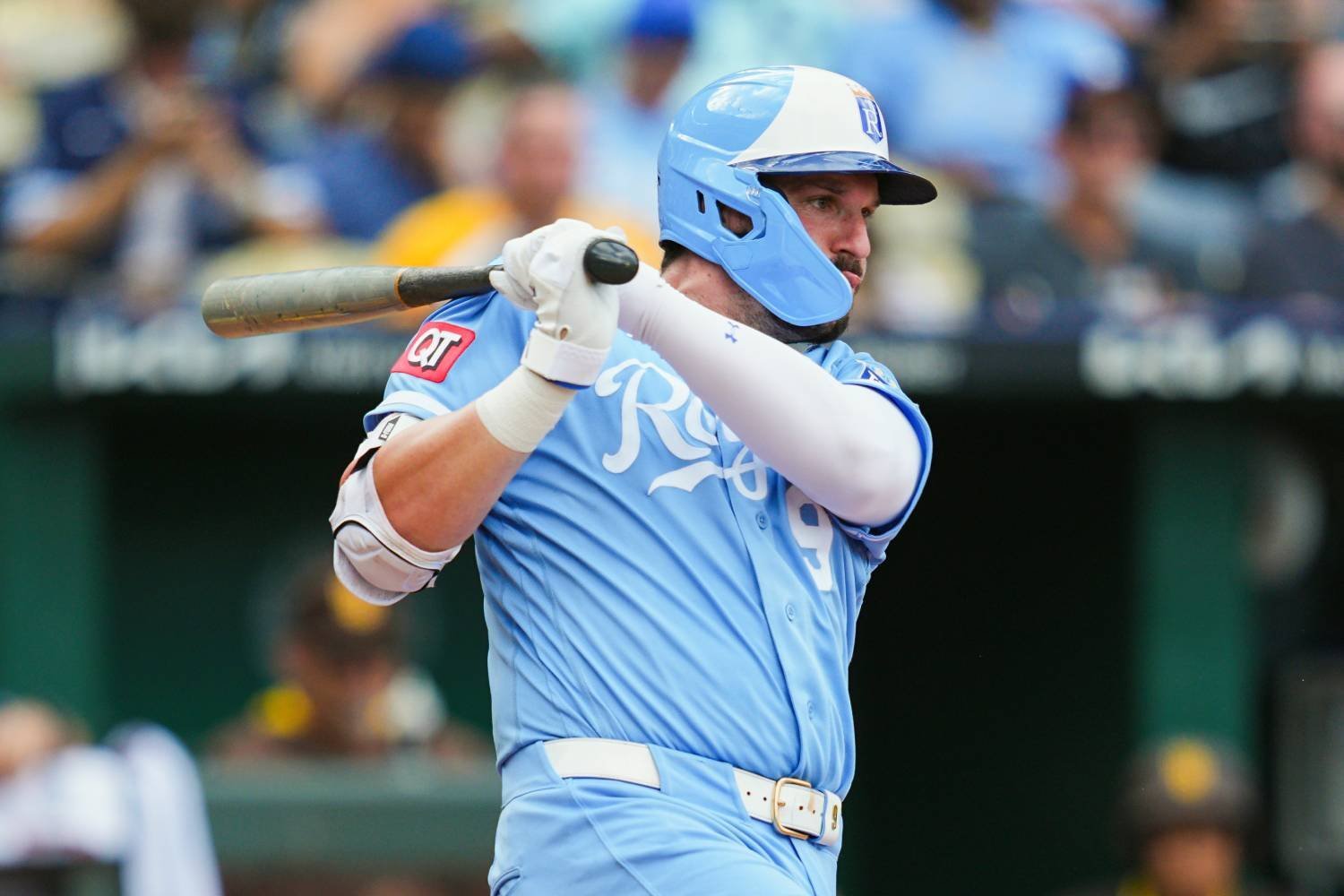 The unfortunate 2026 of Vinnie Pasquantino has another chapter. The Kansas City Royals placed the slugging first baseman on the 10-day injured list with soreness in his right wrist and called up outfielder John Rave from Triple-A Omaha. Pasquantino had been back off the IL for about three weeks following a fractured right hamate bone, the same hand now experiencing soreness. Pasquantino left Tuesday's 3-2 loss to the Minnesota Twins with the injury, which bothers him when he swings. By that tone, this would seem to be a fairly minimal stay on the IL. The left-handed hitter is slashing just .232/.318/.345 with his power production down notably. He has just six homers and 33 RBIs in 79 games after having 32 homers and 113 RBIs in 160 games last year. Rave is up for the second time this season, having gone 4-for-18 with a homer among four extra-base hits and one RBI. View the full article
 -
 Fish On First staffers react to the latest Miami Marlins series and prepare you for what lies ahead. Wednesday's show was hosted by Jeremiah Geiger and featured panelists Ely Sussman and Sean Millerick. The following topics were covered: Griffin Conine's late-game heroics against the Phillies Sandy Alcantara's unique place in Marlins history How the Marlins should approach the trade deadline Reports of them "listening" on Otto Lopez, Liam Hicks and others Previewing and predicting the next series against the New York Mets You can find Fish Unfiltered and Fish On First LIVE on the Fish On First YouTube channel, Apple Podcasts, Spotify or wherever else you get your pods. Our next FOF LIVE episode will be on Sunday at approximately 6:30 p.m. ET following the Marlins-Mets series finale. View the full article
