


DiamondCentric
-
Posts
2,631 -
Joined
-
Last visited
Never
Content Type
Profiles
Forums
Events
News
Tutorials & Help
Major League Baseball Videos
Guides & Resources
Store
Downloads
Gallery
Everything posted by DiamondCentric
-

 Jacob Reimer is making his way back from a groin injury that kept him out of action for about a month. He took another step forward Sunday. The No. 6 prospect in Grand Central Mets' Top 20 reached base three times and drove in two runs in his first game with St. Lucie as the Mets outslugged Fort Myers 11-8. He played nine innings at third base. Reimer joined St. Lucie after playing in three games for the FCL Mets last week. He went on the seven-day injured list in mid-June with Double-A Binghamton. The 22-year-old corner infielder had put himself high on the prospect list with a big 2025 season, but he was having a tough time at Double-A this year prior to the injury. He was sporting a .723 OPS and five home runs in 50 games for the Rumble Ponies. He was striking out at 26.6 percent rate. Elsewhere in the organization: Syracuse lost its series finale to Scranton/Wilkes-Barre 3-2. Christopher Morel accounted for both Mets runs with an RBI double and a solo home run. Jack Weisenburger opened and threw three perfect innings. Binghamton downed Portland 8-4. Jose Ramos went 4-for-5 with a home run and three RBIs, and the Rumble Ponies' bullpen threw 4 1/3 scoreless innings of relief. Brooklyn rolled past Jersey Shore 6-1. Jose Chirinos struck out six over four scoreless innings, while Mitch Voit had two hits and two RBIs to lead the Cyclones' attack. Both DSL Mets clubs were off. The FCL Mets' season has concluded. New York Mets Transactions No Transactions. Morel Provides The Offense In Syracuse's Loss Morel gave the Mets a 1-0 lead in the first when he doubled home Nick Morabito, who had singled and moved to third on a single by Ronny Mauricio. He homered in the ninth to cut the Mets' deficit to one. In 16 games with Syracuse, Morel has five homers and a 1.114 OPS over 61 plate appearances. Scranton/Wilkes-Barre scored twice in the fourth to take a 2-1 lead. The second run came home on a throwing error charged to Christian Arroyo as he tried to turn a double play, although it appeared as if Morel missed the throw at first base. The RailRiders added insurance in the eighth with a solo home run. Weisenburger struck out two and threw 21 of his 30 pitches for strikes. Joey Gerber followed him in the fourth and gave up the RailRiders' first two runs. Xzavion Curry, back from New York, worked two innings in relief. Rehabbing right-hander Dedniel Núñez struck out one in a hitless inning. Player AB R H RBI BB K MJ Melendez 4 0 0 0 0 2 Nick Morabito 4 1 1 0 0 1 Ronny Mauricio 4 0 1 0 0 0 Christopher Morel 4 1 2 2 0 2 Ryan Clifford 4 0 0 0 0 3 Christian Arroyo 3 0 1 0 1 1 Zack Short 3 0 0 0 0 2 Hayden Senger 3 0 0 0 0 1 Cristian Pache 2 0 1 0 0 0 Totals 31 2 6 2 1 12 Player IP H R ER BB K HR Jack Weisenburger 3 0 0 0 0 2 0 Joey Gerber 1 2 2 1 1 1 0 Xzavion Curry 2 1 0 0 1 0 0 Dedniel Núñez 1 0 0 0 0 1 0 Jefry Yan 1 2 1 1 0 2 1 Totals 8 5 3 2 2 6 1 Ramos Rakes In Binghamton Win Ramos was in the middle of all of the Rumble Ponies' offense. He singled and scored in the third as they tied the game 3-3. He doubled home John Bay and Matt Rudick in the fourth to break a 4-4 tie. He belted a two-run homer, his 15th of the season, in the eighth to close the scoring. Starter Bryce Conley struck out eight over 4 2/3 innings, but a pair of home runs and four walks made the pitching line look ugly. He was charged with four runs (all earned). The 'pen picked him up in a big way. Justin Armbruester struck out three over 1 1/3 innings. Carlos Guzman and Brian Metoyer each struck out one in a hitless inning, and Saul Garcia worked a scoreless ninth. Bay, Rudick, Chris Suero, Corey Collins and Wyatt Young each had two hits. The Rumble Ponies collected 15 in all, Player AB R H RBI BB K Chris Suero 5 1 2 0 0 1 John Bay 3 2 2 0 2 0 Nick Lorusso 3 0 0 0 2 2 Corey Collins 5 1 2 0 0 0 Jose Ramos 5 3 4 3 0 1 Matt Rudick 5 1 2 1 0 0 Vincent Perozo 4 0 0 0 0 4 Jaylen Palmer 4 0 1 2 0 1 Wyatt Young 4 0 2 0 0 0 Totals 38 8 15 6 4 9 Player IP H R ER BB K HR Bryce Conley 4 2/3 2 4 4 4 8 2 Justin Armbruester 1 1/3 0 0 0 0 3 0 Carlos Guzman 1 0 0 0 0 1 0 Brian Metoyer 1 0 0 0 0 1 0 Saul Garcia 1 1 0 0 0 0 0 Totals 9 3 4 4 4 13 2 Brooklyn Pitching On Point At Jersey Shore Cyclones pitchers struck out 15 batters in the victory, Chirinos set the tone with his six over the first four innings, He allowed one hit and two walks. Bryce Jenkins, Rafi Vazquez and Gregori Louis each struck out three out of the 'pen. Brooklyn got back-to-back RBI doubles from Ronald Hernandez and Yairo Cuevas in the fourth to take a 2-0 lead. Hernandez's double drove home Andy Ibáñez, who is rehabbing in the Mets' system. Ibáñez played third base and went 2-for-4. The Cyclones put the game away with four runs in the seventh. Cuevas walked, AJ Salgado singled, and Sam Biller walked to load the bases with no outs. Mitch Voit lined a single to left to score Cuevas and Salgado. Voit stole second, and then D'Andre Smith hit a sacrifice fly to right, scoring Biller. The catcher tried to throw Voit out at third but threw the ball away, allowing Voit to come home for a 6-0 lead. Player AB R H RBI BB K Mitch Voit 5 1 2 2 0 2 D'Andre Smith 3 0 0 1 0 0 Andy Ibáñez 4 1 2 0 0 1 Yonatan Henriquez 4 0 0 0 0 1 Daiverson Gutierrez 4 0 0 0 0 1 Ronald Hernandez 4 1 1 1 0 0 Yohairo Cuevas 2 1 1 1 1 1 AJ Salgado 4 1 1 0 0 1 Sam Biller 3 1 1 0 1 2 Totals 33 6 8 5 2 9 Player IP H R ER BB K HR Jose Chirinos 4 1 0 0 2 6 0 Bryce Jenkins 1 2/3 2 0 0 2 3 0 Rafi Vazquez 1 1/3 4 1 1 0 3 0 Gregori Louis 2 1 0 0 2 3 0 Totals 9 8 1 1 6 15 0 St. Lucie Returns The Favor Against Fort Myers One day after giving up an eight-run inning, the Mets put up an eight-spot of their own. This big inning erased a 5-0 deficit in the second. Randy Guzman started the rally with a walk. Julio Zayas and Chase Meggers followed with singles. Branny De Oleo walked to force home Guzman. Jeremy Rodriguez singled to score Zayas. After a flyout, Reimer was hit by a pitch to force in Meggers. Trey Snyder then walked to score De Oleo, Guzman singled to center, bringing home Rodriguez and Reimer. Zayas singled to center, scoring Snyder and Guzman, for an 8-5 lead. The Mets added three more in the third on an RBI single by Elian Peña, Reimer's RBI double and a sacrifice fly by Snyder. Bulk reliever Conner Ware the beneficiary of all this support. He was lights-out in his four scoreless innings of work, striking out eight, walking one and allowing one hit. St. Lucie fell into an early hole as another opener failed to get out of the first inning. Nathan Hall recorded just one out. He was charged with three runs on two hits and two walks. Zack Mack was charged with the other two runs. Rodriguez finished 4-for-4 with an RBI and two runs scored. Player AB R H RBI BB K Elian Peña 5 1 2 1 0 1 Jacob Reimer 3 2 1 2 1 0 Marco Vargas 3 0 0 0 0 1 Taylor Darden 2 0 0 0 0 1 Trey Snyder 2 1 0 2 1 0 Randy Guzman 3 2 1 2 1 1 Julio Zayas 4 1 2 2 0 1 Chase Meggers 4 1 1 0 0 1 Branny De Oleo 3 1 0 1 1 0 Jeremy Rodriguez 4 2 4 1 0 0 Totals 33 11 11 11 4 6 Player IP H R ER BB K HR Nathan Hall 1/3 2 3 3 2 0 0 Zack Mack 1 2/3 4 2 1 0 2 0 Conner Ware 4 1 0 0 1 8 0 Luis Sotillo 2 2 3 3 2 2 0 Elwis Mijares 1 0 0 0 0 1 0 Totals 9 9 8 7 5 13 0 Top-20 Prospect Performance Jonah Tong: DNP Jack Wenninger: DNP Ryan Clifford: 0-for-4, 3 K Elian Pena: 2-for-5, RBI, K Nick Morabito: 1-for-4, K Jacob Reimer: 1-for-3, 2B, 2 RBI, BB, HBP Mitch Voit: 2-for-5, 2B, 2 RBI, 2 K Jonathan Santucci: DNP Zac Thornton: MLB Chris Suero: 2-for-5, K Will Watson: DNP Wandy Asigen: DNP Eli Serrano III: DNP Randy Guzman: 1-for-3, 2 RBI, BB, K Dylan Ross: DNP Ryan Lambert: DNP Antonio Jimenez: DNP R.J. Gordon: DNP Jonathan Pintaro: DNP Marco Vargas: 0-for-3, K View the full article
 -
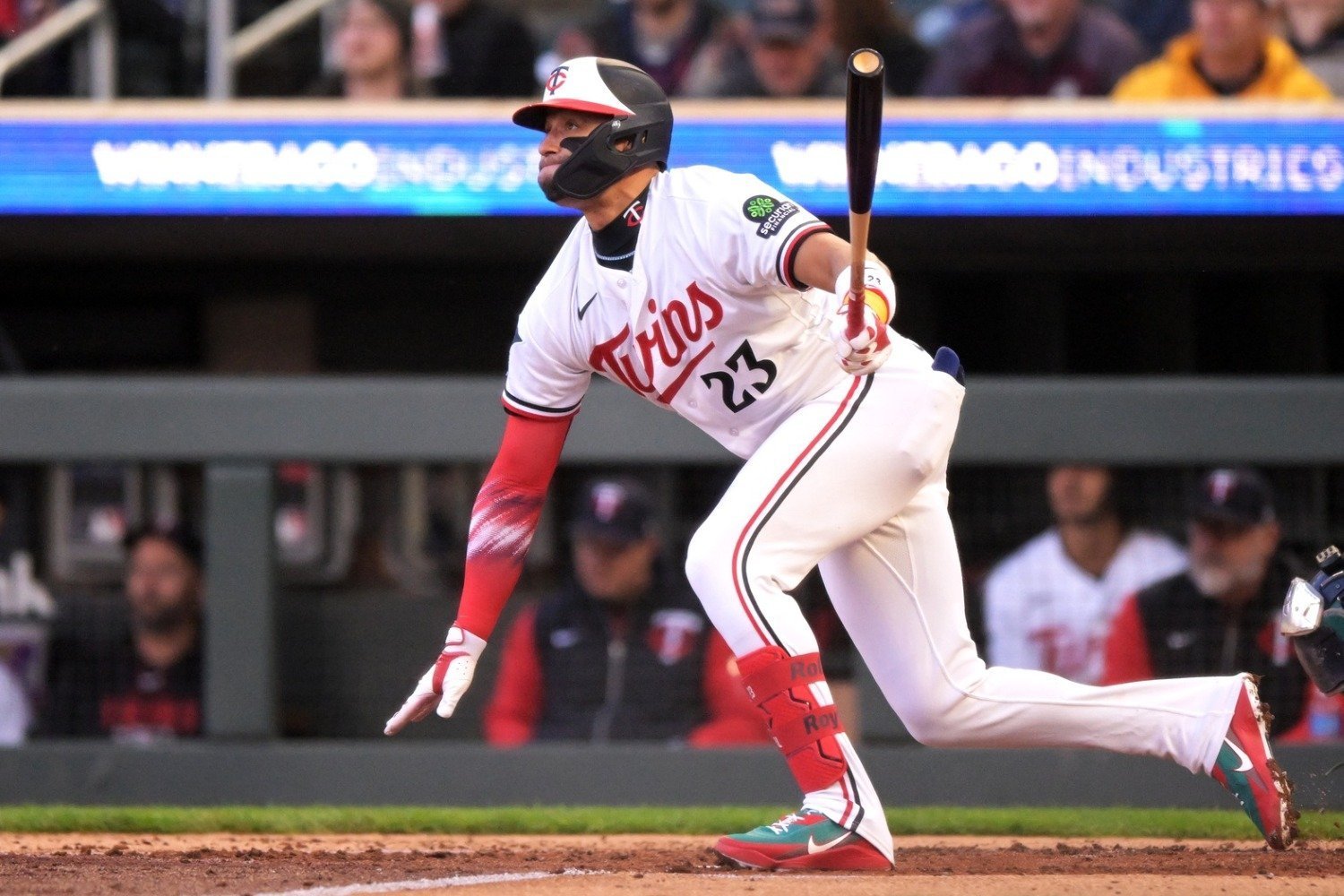 The Minnesota Twins don't have to make a decision about whether they are buyers or sellers in a vacuum. The calendar is making the decision for them. The August 3 trade deadline is just a week away, and Minnesota remains in the American League playoff race. That wasn't necessarily the expectation when the season began, but the Twins have played well enough to make the front office consider adding pieces, instead of simply looking toward the future. That doesn't mean every player on the roster is untouchable. In fact, Minnesota could potentially make a move that improves the team while also dealing from an area of depth. With that in mind, it's time to hand out some trade deadline superlatives. Most Likely to Be Traded: Ryan Jeffers Jeffers has arguably been the most logical trade candidate on Minnesota's roster for months. That's not necessarily a reflection of his value to the Twins. It's a reflection of his contract situation and the organization's catching depth. Jeffers is a pending free agent, making him one of the few players Minnesota can move without sacrificing multiple seasons of team control. He also plays a premium position, has experience as an everyday catcher, and could interest contenders looking for an upgrade behind the plate. Recent reporting has connected him to teams such as the Yankees or Rays, while the Twins have also been linked to potential bullpen upgrades in a deal involving their catcher. Minnesota wouldn't have to completely abandon its postseason ambitions to make the move, either. The Twins have options behind Jeffers, including Victor Caratini and Alex Jackson. That's what makes Jeffers different from someone like Joe Ryan. Trading Ryan would fundamentally change the rotation. Trading Jeffers would hurt, but the Twins could survive it. If Minnesota receives a controllable bullpen arm in return, the move could make sense, even if the Twins continue trying to win in 2026. Biggest Surprise Trade: Royce Lewis If the Twins trade Lewis, it would set off a torrent of debate among fans. Lewis was the first overall pick in the 2017 MLB Draft. He was supposed to be part of the organization's long-term core, and there were still hopes entering 2026 that he could reclaim some of the star potential he showed during his breakout 2023 season. Instead, the former top prospect has continued to battle inconsistency, and Minnesota has already shown a willingness to send him to Triple-A when his performance hasn't matched expectations. That doesn't mean the Twins should give him away. In fact, that would be the biggest problem with trading Lewis right now. His value isn't what it once was, and another organization would be buying into the possibility of a rebound rather than paying for a proven middle-of-the-order bat. Still, Lewis is an intriguing trade chip because another team could believe it has the environment to unlock something Minnesota hasn't been able to consistently find. A Lewis trade would also signal something larger. Minnesota would be admitting that the former No. 1 overall pick is no longer a necessary piece of the organization's next competitive window. That would be a stunning development, at least to some fans. Best Value Acquisition: Dustin May If the Twins want to add starting pitching without paying the premium attached to the biggest names on the market, May could make plenty of sense. The Cardinals acquired May as part of their rotation plans, but his 2026 season hasn't been dominant. He's posted a 4.59 ERA with a 3.15 FIP, numbers that could make him considerably more attainable than some of the marquee pitchers available. That's exactly why he could be interesting. Minnesota doesn't necessarily need to acquire a pitcher who has to immediately become a de facto ace. The Twins need more reliable innings and another arm capable of taking meaningful starts down the stretch. May has enough track record and underlying ability to make a rebound plausible, while the price should be considerably lower than what teams would pay for a pitcher such as Tarik Skubal. May is currently ranked as DiamondCentric's 43rd-best trade candidate: This is the type of move that could fit Minnesota's situation perfectly. The Twins can improve without sacrificing the upper levels of their farm system. If the organization believes its pitching infrastructure can help May find another level, he becomes even more intriguing. Sleeper Bullpen Pickup: Huascar Brazobán The Twins don't need to make every move a headline. Brazobán could be the kind of under-the-radar bullpen addition that makes a bigger impact than expected. Minnesota's bullpen has been one of the obvious areas of need heading into the deadline, and the Twins have already shown they are willing to add relief help rather than wait for internal solutions. Brazobán makes sense because the price should be much more manageable than it would be for one of the market's premier closers. The Twins don't necessarily need another traditional ninth-inning arm. They need more pitchers who can take important innings without forcing the coaching staff to overextend its top relievers. DiamondCentric ranks Brazobán as the 56th-best trade candidate: That's where Brazobán could fit. The Mets have plenty of reasons to consider selling, and their roster could look considerably different by the deadline. A pitcher like Brazobán could become available as part of that reshuffling. For Minnesota, this would be the type of transaction worth pursuing. Don't overpay for a reliever. Don't sacrifice a top prospect. Find a pitcher with enough stuff to make a difference and give the coaching staff another option in the late innings. It's about augmentation, not transformation. That's an important distinction for an organization that has already gone through a dramatic roster transformation. Minnesota has rebuilt its farm system, added young talent and unexpectedly found itself back in the playoff picture. Another massive selloff doesn't make much sense, but going all-in on one season could be equally dangerous. That's why Jeffers remains so fascinating. He's one of the few players Minnesota could move without completely changing its roster construction. Lewis would be the surprise, May represents the type of calculated pitching gamble that could work, and Brazobán could be the quiet bullpen addition that helps make everything else work. The Twins don't need to make five trades before August 3. They need to identify which one or two moves can make this surprising season last a little longer. What other superlatives would you add to the list? Biggest trade mistake? Leave a comment and start the discussion. View the full article
 -
 Jason Wang and Jake McKibbin talk about what Milwaukee could get up to at the deadline given their historic season thus far. Apple Podcasts: https://podcasts.apple.com/us/podcast/the-brewer-fanatic-podcast/id1740648724 Spotify: https://open.spotify.com/show/5CY8mWsQayqjDXqw9OT2Td iHeartRadio: https://www.iheart.com/podcast/263-the-brewer-fanatic-podcast-166534588/ Pocket Casts: https://pca.st/ommzz627 Watch On YouTube: https://www.youtube.com/@brewerfanatic View the full article
 -
Cubs Week in Review: A .500 Week, as Division Drifts Away
DiamondCentric posted an article in North Side Baseball
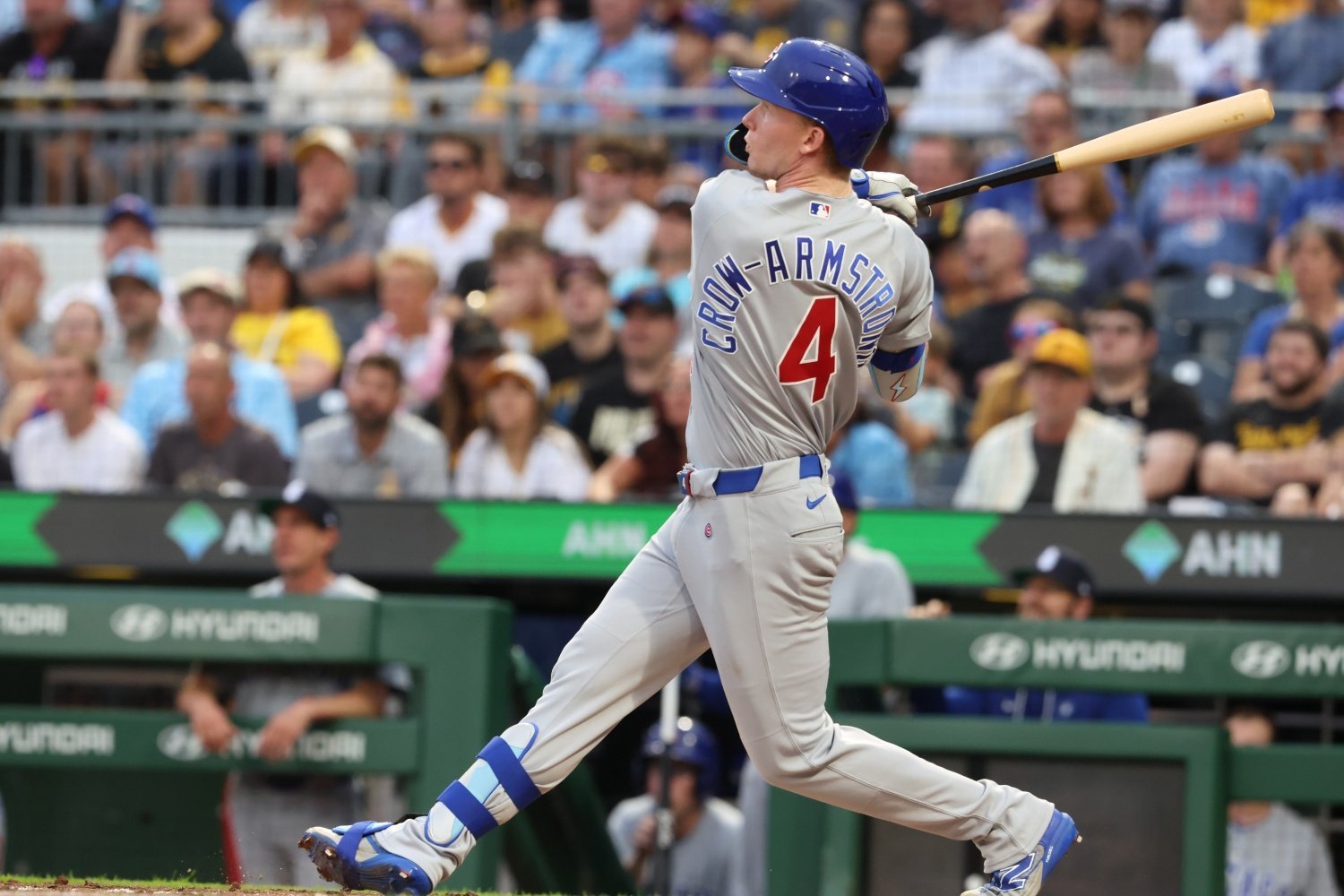 Were one to create an unofficial tagline for the 2026 Chicago Cubs, it might read: "Death, taxes, and losing to mediocre teams they have no business losing to." Okay, so maybe that one doesn't quite roll off the tongue, but the North Siders have formed a bad habit of playing down to the level of their weaker competition, at least periodically. Featuring series with both the American League and National League Central, that theme was the throughline for the week of baseball that was. First, the North Siders welcomed the Detroit Tigers to 1060 W. Addison for a rematch of the 1945 World Series. Mired in the unenviable drama surrounding their ace Tarik Skubal, AJ Hinch's squad is in "win-to-survive" mode, and that's exactly what they did in the first of a three-game set at Wrigley. A back-and-forth contest swung in favor of the home team late, with third baseman Alex Bregman at the plate with two outs and the bases loaded. A poor swing decision on what would have been ball four sent the game to extra innings. A clutch swing from All-Star catcher Dillon Dingler (and, excruciatingly, a Nico Hoerner error) doomed the Cubs in a disappointing 8-6 defeat. The next night, the Cubs struck back with one of their signature offensive outbursts, coasting to an 11-2 win over the visiting Tigers. A six-run first (paired with an impressive 6 2/3 performance from David Peterson) guaranteed Craig Counsell's squad the desired rubber match. Rapidly ascending to the top of the WAR ranks and enjoying an MVP-like second half, Pete Crow-Armstrong led the way with another great offensive day. Making the North Siders' pitching situation even more complex, starter Colin Rea's dud in Game 3 of his club's tilt with the Tigers sunk the home nine. Despite another five-inning appearance, Rea was anything but sharp, coughing up four earned runs and two long balls. Keider Montero of Detroit enjoyed one of his better outings of the 2026 campaign, going 5 1/3 innings in which he set down eight Cubs via the strikeout. While Wrigley Field spent the weekend going "Bananas", the North Siders arrived in Pittsburgh for their three-game showdown with the Pirates. Matthew Boyd took the ball in the opener, and as he has of late, he dazzled in seven full innings of work. Crow-Armstrong's solo shot in the sixth inning knotted the game at 1-1, paving the way for heroics from Dansby Swanson and Seiya Suzuki in extras. While redemption games are to be expected from a club like Chicago, doing it in such a fashion, on the road, bodes well for the team's prospects in contests with much more on the line. Riding a high from the night before, the Cubs could do no wrong in their series-clinching 11-0 rout of the Bucs in the second game of the series. A four-hit day from Crow-Armstrong, including his 23rd homer of the season, fueled a punishing offense. With the game well in hand, lauded prospect James Triantos relished the milestone moment of collecting his first hit in the majors. Southpaw Shota Imanaga turned in six innings of scoreless work, providing further evidence of his rediscovered stability on the mound. With their sixth straight series win on the road secured, the North Siders had designs on a sweep in the series finale. The deservedly maligned former Pirate Jameson Taillon was unable to do his part. Known for giving up home runs early in contests, Taillon yet again saddled his team with a considerable 7-1 deficit after surrendering a grand slam to Ryan O'Hearn. The big fly was the 25th home run Taillon has given up in 76 innings pitched in 2026. A furious rally from the Cubs, including a two-run blast from Seiya Suzuki, fell short, as Pittsburgh seized a narrow 8-7 triumph. The trade deadline will bring into focus this team's fate for the remainder of the 2026 campaign. Before that, however, the squad arrives in St. Louis to do battle with Jordan Walker and the hated Cardinals in another divisional series. A return home will mark the arrival of the Bronx Bombers for a three-game series. While whatever comes after next Monday will certainly shape the discourse surrounding this team, this clubhouse has demonstrated that if and when they take the field in October, they have just as much chance of going on a run as any of the other top challengers for the Fall Classic. View the full article
 -
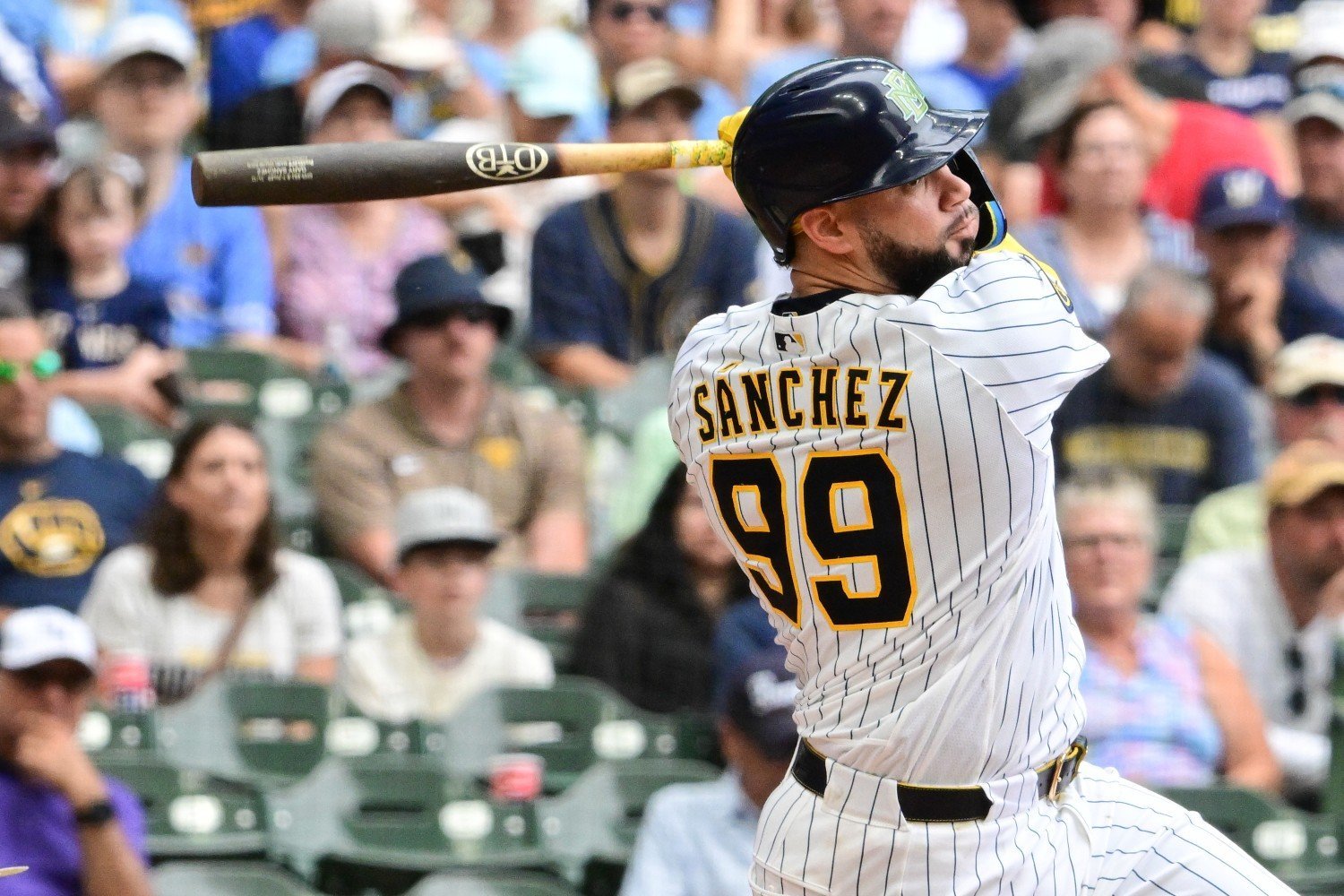 The Brewers have been seen as a buyer in the trade market by most in MLB, but they may actually be able to do a bit of smart selling and come out ahead. All it takes is figuring out where other teams are desperate for help in a place where the Brewers have depth. For some contenders, that help is desperately needed behind the plate; that's where Milwaukee comes in. They have an asset two top AL contenders really need, in the form of Gary Sánchez. Where might the Crew be able to get a haul for Sánchez? Let’s break it down. New York Yankees The Bronx Bombers have a lot of good players, but behind the plate, the production has bombed in a bad way for them. Their primary catcher, Austin Wells, is posting a .524 OPS. Backups J.C. Escarra and Ali Sánchez haven’t done much better. In fact, as of Friday’s games, Sánchez has more home runs (eight) and RBIs (25) than the entire Yankees catching corps combined (six and 24). Seems like the Yankees need some help. A semi-frequent trade partner of Brian Cashman of late, the Brewers could be in position to lend that assistance. It's a complicated idea, because Sánchez came up with the Yankees and was put through the media wringer there, but the Yankees always have great organizational pitching depth; the Brewers could be pleased even to scoop away a second-tier arm from Cashman. Seattle Mariners You’d think with Cal Raleigh, the Mariners wouldn’t need help at catcher. Well, this year, Raleigh’s OPS+ has dropped by 103 points (to 65) after a season in which he hit 60 home runs. Mitch Garver is 35, and his OPS+ is 76. By comparison, Joey Ortiz has a 79 OPS+ after his hot streak. Sounds like it would behoove the Mariners to address the position before the trade deadline. The Brewers could send them Sánchez and, again, would look to raid a good pitching pipeline in a low-grade way. Replacing The Kraken One issue, of course, comes to mind: Once you’ve dealt the backup catcher, particularly for prospects, you need to replace him. William Contreras’s durability has been impressive, but he did seem to run out of gas in past seasons. Fortunately, the Brewers have an option at Triple-A Nashville for the spot. It's not top prospect Jeferson Quero. Quero’s had some injury trouble the last three seasons, but he’s also had a good bat and his defense has been touted for a long time. Unfortunately, he hasn't caught in over a month, so clearly, there's some lingering issue there, physically. He can't come up and be a catcher in the majors; he's not even catching in the minors. Darrien Miller, however, has had an offensive breakout this season and hasn’t missed a beat in the small sample size at Nashville after posting big numbers in Biloxi. Miller’s long shown excellent OBP skills and is competent behind the plate, giving him a decent floor as a lineup extender. His lefty bat could also complement Contreras and Quero down the road. If the Brewers are willing to roll the dice on the long-time backstop in Miller, trading Sánchez could be a way to keep boosting the farm system without taking a significant bite out of the big-league team. Think of all the extra ABS challenges that would remain available, too. Do you think the Brewers should trade the Kraken? Let us know in the comments below! View the full article
 -
 The Boston Red Sox acted well ahead of the trade deadline, dealing southpaw Connelly Early for a power-hitting infielder in Curtis Mead. Why did the Sox make this deal with the Washington Nationals? In this video, we'll dive into Boston's strengths as a pitching staff, their surplus of lefties, and the desperate need for more power in a lineup that is aiming to contend for a postseason run. Enjoy! View the full article
 -
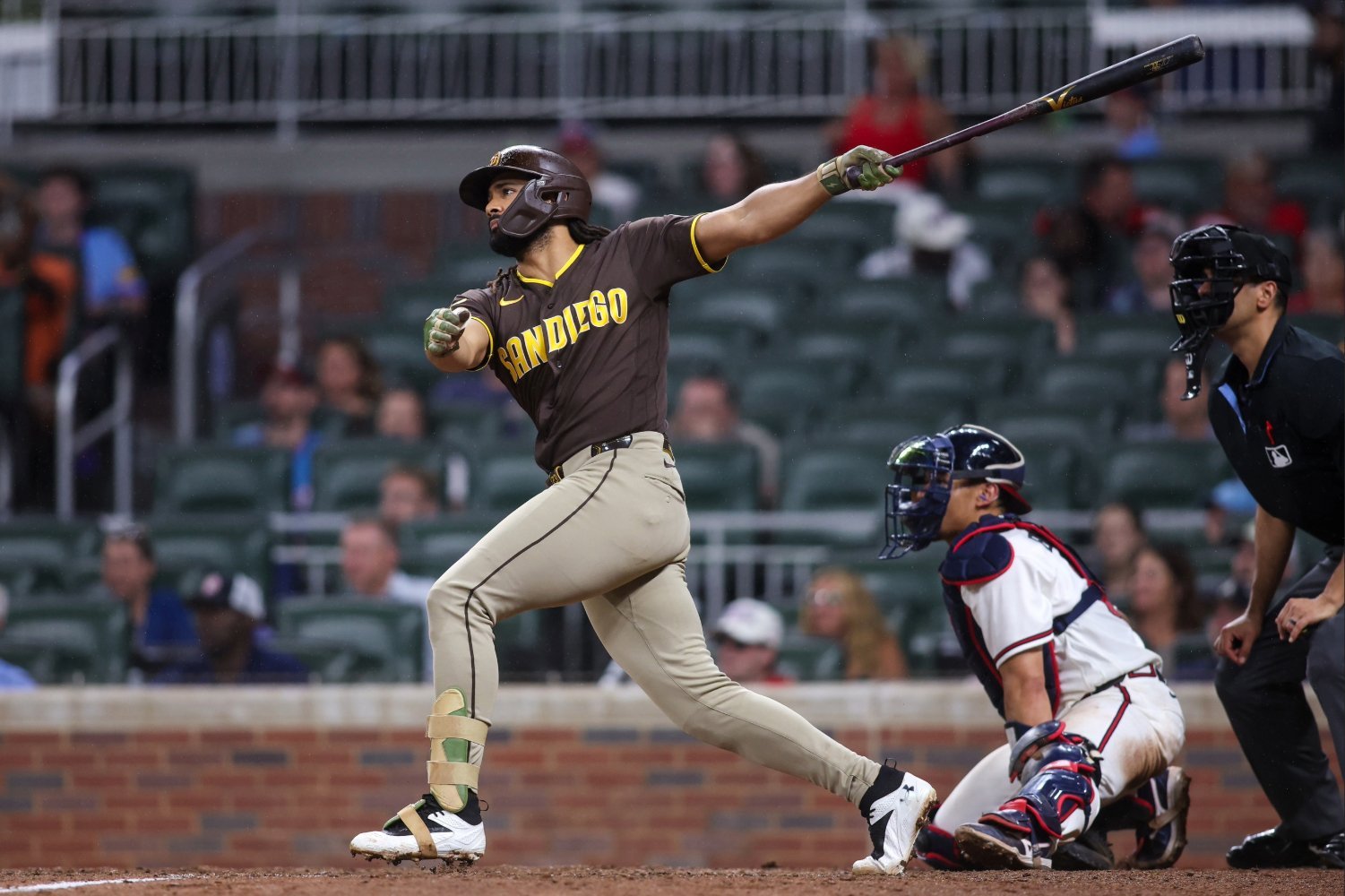 There has been no shortage of weird and/or frustrating storylines for the San Diego Padres in 2026. Exceeding almost all of them, though, was the perplexing manner of Fernando Tatis Jr.'s early season power outage. It wasn't that Tatis was slumping across April and May. In fact, he was quite good. His batting average ran at .250 and .284 each month, respectively, while reaching base at rates of .323 and .360 over that span. Even better was the fact that he progressively cut down his strikeout rate between the two, maintained a walk rate over nine percent, and was a contributor on the basepaths. Of course, the broader narrative centered around the fact that, within all of that, his power was nowhere to be found. In the season's opening month, Tatis Jr's isolated power number read just .036. He followed that up with a .069 mark in May. As far as the raw count goes, he had four extra-base hits in March/April and three in May. Most notable was the fact that he went more than 50 games and well over 200 plate appearances before his first home run of the season, which occurred in May 30. That's two months of no long balls for the Padres hitter with the highest upside and a track record of upper-tier offensive performance. Theories abounded for what was causing such a stifling of the power side of his game. Most of them centered around something mechanical, notably in the form of timing or his swing path. The quality of contact was there all season, but the results didn't follow in terms of the impact. Until June and now into July. Tatis' more comprehensive skill set has continued to manifest over these last two months. His line included a .318 average & .356 on-base percentage in June and a .265 average & .365 OBP thus far in July. The power, however, is what has been particularly notable. After a minimal output on the ISO side in the first two months, Tatis Jr saw that figure climb to .191 in June. It's at .193 this month, highlighted by the longest home run in Major League Baseball in 2026 last week. A 27-degree launch angle, 111 MPH off the bat with a bat speed of 82.2 MPH culminating in 474 feet of power. Tatis appears to be back in a real John Wick sort of way. That's just the latest example, though, as Tatis' raw numbers featured nine doubles and four homers in June before his nine extra-base hits in July so far. Which means that after eight total extra-base hits spread across the first two months, he's more than doubled it since. With such a turnaround in this facet of his game, there are obviously going to be some embedded mechanical tweaks. For Tatis, the most notable ones have come in the form of his footwork. This is his stance through the end of May: And this is Tatis in June and through the first three weeks of July: The change is apparent in that his stance has become something much more akin to what we've seen from him in previous seasons with the open stance. So it's no surprise that his pull rate is up near 50 percent (49.1) in July after lingering in the low-30s in May & June. In addition to opening back up, Tatis has adjusted his swing path. Through the end of April, his attack angle was six degrees, rising to seven by the end of May. In these last two months, it's up at eight. His rate of an ideal attack angle has risen about eight percent between those two-month splits, resting at 59.5 percent in the latter half of the season so far. His bat speed is also up between each segment, rising from 74.5 MPH in the first two months to 76.8 MPH in the latter two. We know that Pull-AIR% has become a crucial component for hitters to generate power. Tatis' 7.8 percent rate in that regard was the Padres' worst through the end of May. It's at 11.1 percent since the start of June. That hasn't put him into elite company by any means, but it's not as if the launch angle itself has seen a dramatic steepening, either. This is all about margins. Tatis has been a very good hitter in 2026. He's just had to do his damage more methodically thanks to a power outage. His mechanics early sacrificed nearly all of the power for the sake of line drive contact. It was an overcorrection with an unknown origin. The changes we're seeing got him opened up and just level enough to begin tapping into more regular power. It's the slight changes across his attack angle and bat speed that have allowed him to rediscover elements of his power without the expense of everything else he was doing well. The line-drive hitter is still there in between the manifestation of impact contact, but that also shouldn't be looked upon as a negative either. Instead, we're looking at a player who made just enough of an adjustment to continue his crucial role as a top-of-the-order hitter capable of hitting or walking his way on base for (in an ideal world) the other drivers of the offense coming up behind him, especially when you factor in his baserunning prowess. This is the purest form of Fernando Tatis Jr. The exceptional hitter and threat on the bases capable of extreme power when the opportunity presents itself. As the Padres attempt to remain afloat in the National League playoff picture, it couldn't have come at a more ideal time. View the full article
 -
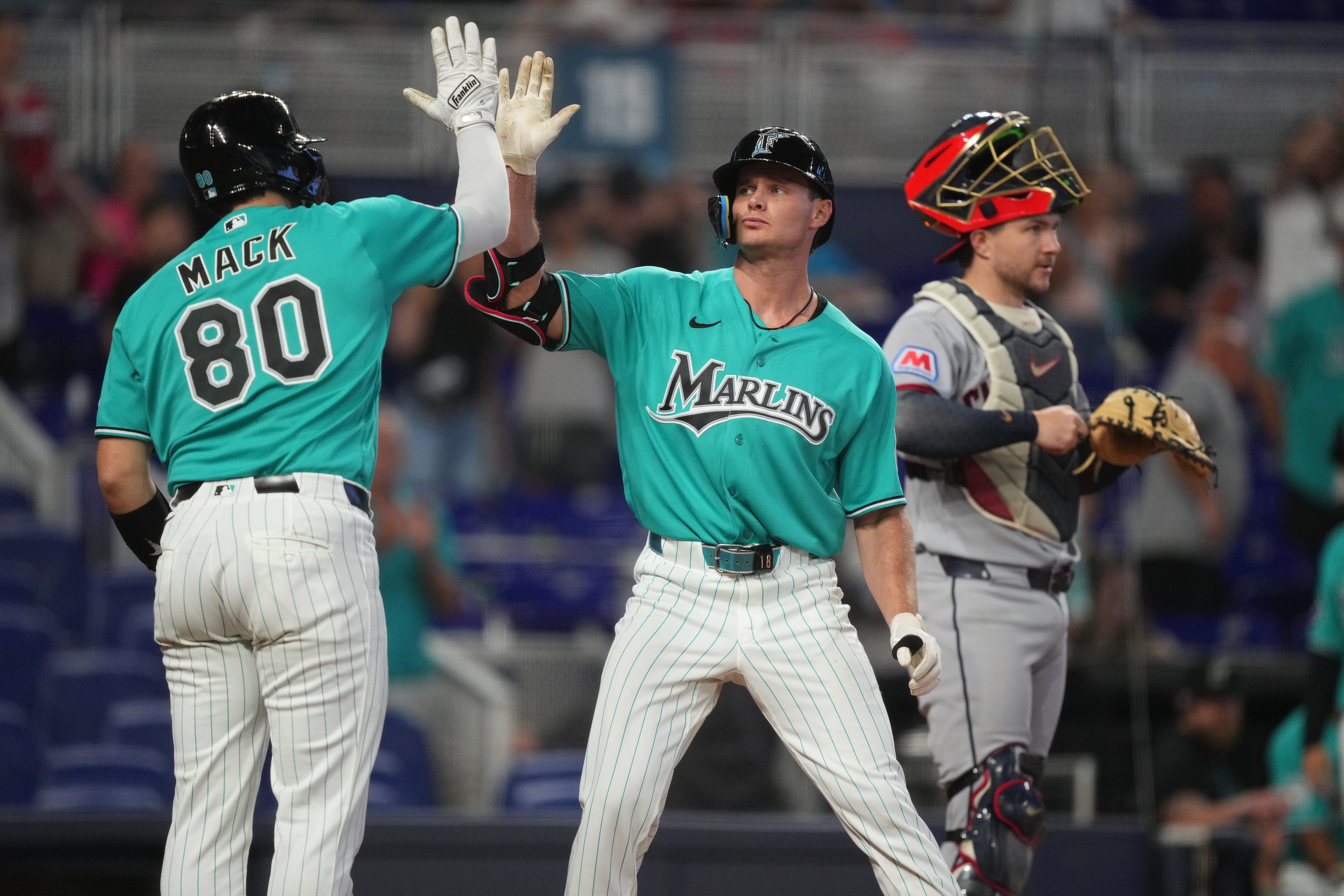 Outfielder Griffin Conine will always have a home in South Florida, where he was born and raised and where his father serves as a special assistant to Miami Marlins owner Bruce Sherman. However, he is among many potential trade candidates for the Marlins over the next week. The team enters Monday at 52-54, needing to jump over five other National League wild-card contenders to get back into postseason position. In order to maximize their chances of winning in 2027 and beyond, they may have to be sellers at this deadline. It's also a bit too soon for the Arizona Diamondbacks to decide on their deadline approach, but they have been trending in the opposite direction as winners of 10 of their last 14 games. Adding outfield depth around All-Star Corbin Carroll would give them a great chance of returning to October for the first time since 2023. Mock trade proposal Diamondbacks receive: OF Griffin Conine Marlins receive: 3B/1B LuJames Groover and RHP Anderson Cardenas Conine has been limited to 39 games this season due to a hamstring injury. When healthy, he has played the best baseball of his career, slashing .260/.353/.510/.863 with seven home runs, 16 RBI and a 135 wRC+. The 29-year-old is best utilized in the corner outfield spots and also can contribute at first base in emergencies. Defensive metrics are split on his glovework—for his career, Conine has plus-four defensive runs saved and minus-two outs above average. With that being said, there is reason to believe Conine may be expendable to the Marlins. His spot on the Opening Day roster was in doubt until last-minute injuries to Kyle Stowers and Esteury Ruiz. He has been in the lineup consistently against right-handed pitchers since returning from the IL, but fellow lefty corner outfielder Owen Caissie is nearing a return from his own injury. Caissie is five years younger than Conine. It's also worth noting that 16 of the 20 position players on Miami's 40-man roster have been acquired by president of baseball operations Peter Bendix. Conine is one of the few holdovers inherited from the previous front office. Even with Carroll, the Diamondbacks rank 24th among MLB teams in outfield wRC+ (91). Conine would specifically serve as an upgrade over struggling veteran Max Kepler (66 wRC+ in 21 games). Very importantly, Conine is not yet eligible for arbitration and would be under club control through the 2030 season. Going back to Miami in this proposal would be LuJames Groover, the fifth-ranked Dbacks prospect, per Baseball America. Groover, a 24-year-old infielder, was a 2025 Futures Game selection. He reached the big leagues this season, but struggled in 15 games. In Triple-A, where he has played 70 games, he is slashing .327/.418/.487/.905 with six home runs, 51 RBI and a 119 wRC+. Groover could be a key piece of the Marlins offense moving forward as they have lacked right-handed production at first base and third base. Along with Groover, the Marlins acquire right-handed pitcher Anderson Cardenas in the trade. In 52 ⅔ innings this season between the complex league and Low-A, he has a 3.25 ERA, 3.97 FIP, 11.96 K/9 and 4.27 BB/9. Cardenas will likely wind up as a full-time reliever moving forward in his career. Although it would disappoint fans to move on from a second-generation Marlin who has succeeded in his limited MLB reps, this is a good opportunity to balance the club's offense and sell high on Conine before strikeout issues potentially catch up to him. View the full article
 -
Rays Could Be Perfect Trade Deadline Partner for Two Veteran Twins
DiamondCentric posted an article in Twins Daily
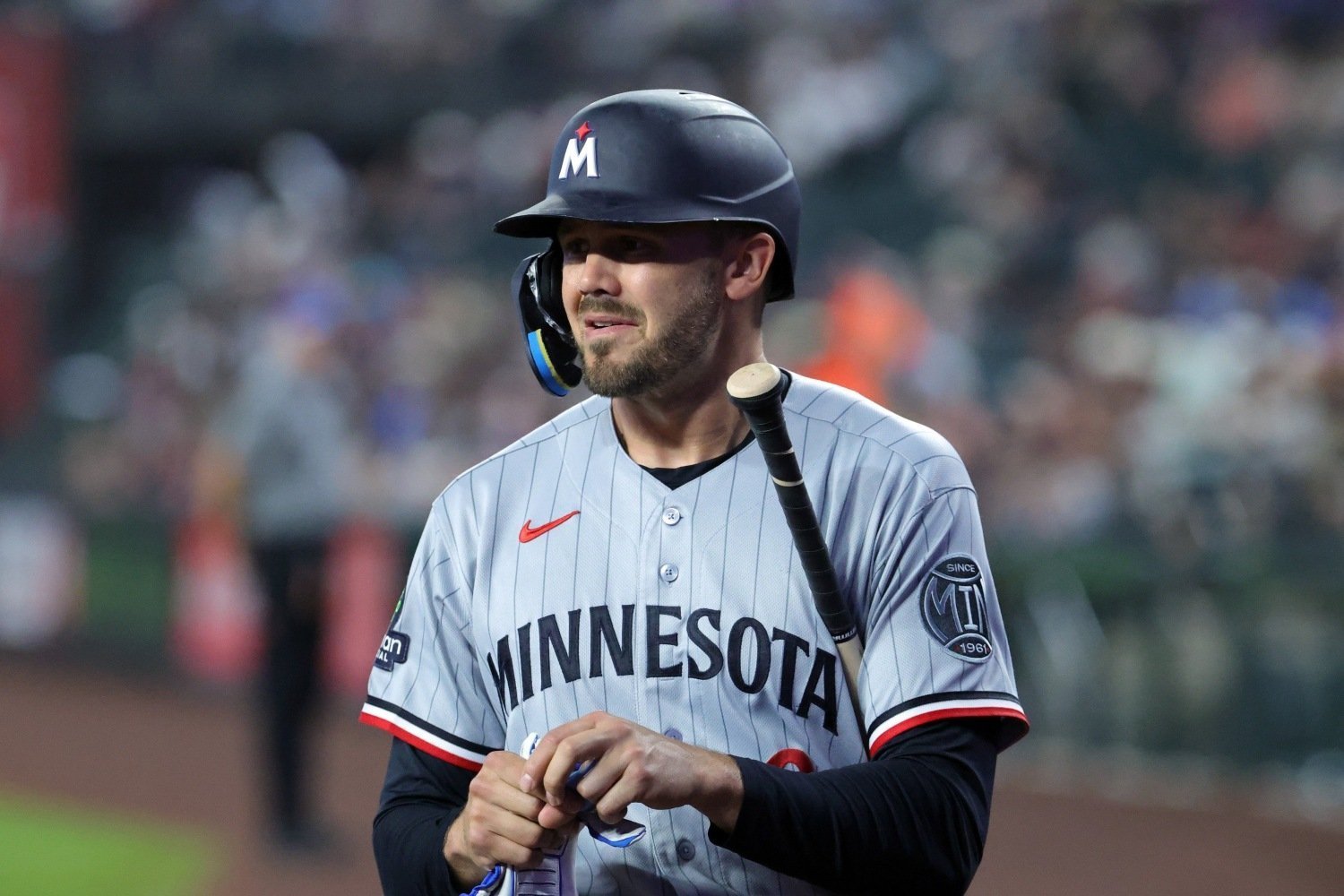 The Minnesota Twins enter the trade deadline in an unusual position. They're still trying to compete in 2026, but that doesn't necessarily mean every veteran on the roster is untouchable. Multiple reports suggest the Twins could remain active sellers around the margins, even if they don't launch another deadline fire sale. Dan Hayes of The Athletic noted that the Tampa Bay Rays have been scouting Minnesota heavily in recent weeks, making them one of the more intriguing potential trade partners. If the Rays are looking to add offense for a postseason push, two Twins stand out as logical fits: Ryan Jeffers and Trevor Larnach. Rather than weakening Minnesota's roster, moving either (or even both) could allow the organization to lean into areas of organizational strength while addressing bigger needs. The Rays Need More Middle-of-the-Order Production Tampa Bay has rarely been afraid to make creative deadline moves, especially when they can acquire controllable hitters at reasonable salaries. Larnach checks nearly every box. The 29-year-old is putting together the best offensive season of his career, hitting .293/.381/.457 (.842) with eight home runs, 19 doubles, and a career-high 135 OPS+. His improved approach has been just as impressive as the production. He's walking 11.4% of the time while cutting his strikeout rate to a career-low 17.4%. Like most left-handed hitters, Larnach has struggled against southpaws, batting just .167/.268/.333 in 42 plate appearances. However, his production against right-handed pitching has been elite. His .313/.398/.475 line versus righties would immediately lengthen Tampa Bay's lineup and give the Rays another middle-of-the-order bat capable of getting on base consistently. Just as importantly, Larnach remains affordable. He's earning $4.475 million this season and remains under team control through arbitration next year, making him attractive for a club that consistently looks for value. Minnesota Has Plenty of Internal Replacements Trading Larnach becomes much easier because of the Twins' depth. Matt Wallner looked overmatched during his early-season stint, hitting just .167/.259/.292 before being optioned to Triple-A in May. Since returning to St. Paul, however, he's looked much more like the player Minnesota expected. Over 243 plate appearances, Wallner owns a .284/.374/.602 line with 19 home runs. Alan Roden has also forced his way into the conversation. Acquired in last year's Louis Varland trade, Roden hit .272/.397/.512 at Triple-A before earning another opportunity with Minnesota. Despite posting those numbers, he's received only 37 plate appearances since being promoted to the Twins in early July. Then there's Walker Jenkins. The former No. 5 overall pick has quickly reminded everyone why he's considered one of baseball's premier prospects. Jenkins has touched Triple-A pitching with a .267/.371/.432 line and looks increasingly ready for an extended opportunity in the major leagues. With three legitimate corner outfield options waiting behind Larnach, the Twins are in a position where dealing from depth could improve other parts of the roster without sacrificing offensive production. Jeffers Could Bring Back Significant Value Jeffers presents a different but equally compelling trade case. Bobby Nightengale recently reported there's a growing belief around baseball that Jeffers could be available even if Minnesota doesn't fully commit to selling. That makes sense. Jeffers is an impending free agent who has elevated his offensive game this season. Across 186 plate appearances, he's hitting .293/.395/.535, with nine home runs. His elite plate discipline stands out even more than the power, as his 14.4% walk rate nearly matches a career-low 16.6% strikeout rate. His offensive production has been 64% better than league average, according to wRC+. This year's breakout only strengthens what has already been an impressive offensive résumé. Dating back to the start of 2023, Jeffers owns a .259/.346/.446 line for a 122 wRC+, making him one of baseball's better offensive catchers over that span. For comparison, major-league catchers are hitting just .229/.304/.380 this season. Few contenders have enough offense behind the plate, and Jeffers would instantly become one of the better bats available at the position. Caratini Gives Minnesota Flexibility Trading Jeffers would have been much more difficult earlier in the season. Victor Caratini has changed that equation. After a slow start, the veteran took advantage of increased playing time while Jeffers recovered from a hamate fracture. Since May 20, Caratini has hit .273/.342/.460, with six home runs, eight doubles, a 8.9% walk rate, and an 19.6% strikeout rate over 158 plate appearances. Minnesota also has Alex Jackson on the roster to provide quality defense as a backup catcher, giving the Twins a capable tandem if Jeffers is moved. Caratini is signed through 2027, making him more than just a short-term stopgap. That contract provides the Twins with the flexibility to maximize Jeffers's trade value while maintaining stability behind the plate. Why Tampa Bay Makes Sense The Rays have consistently targeted hitters who control the strike zone, possess positional flexibility, and remain affordable through arbitration or short-term contracts. Both Larnach and Jeffers fit that profile. For Minnesota, Tampa Bay has one thing the Twins desperately need: bullpen depth. The Rays have built a reputation for developing power arms and routinely possess relievers who become attractive trade chips at the deadline. Even if bullpen help isn't the centerpiece of a deal, the Rays also have one of baseball's deeper farm systems, giving Minnesota multiple avenues to improve its long-term outlook. The fit is obvious from both sides. Moving Jeffers or Larnach wouldn't necessarily signal that the Twins are giving up on 2026. Instead, it would represent a front office willing to capitalize on organizational depth. Minnesota has viable replacements waiting at both catcher and corner outfield. Caratini has shown he can handle a larger workload behind the plate, while Wallner, Roden, and Jenkins all deserve opportunities to establish themselves in the outfield. If Tampa Bay is indeed one of the clubs most interested in adding offense, the Rays could offer exactly what Minnesota needs in return. The result could be one of the rare deadline trades where both teams improve their present while the Twins also look to strengthen their future. Can the Twins and Rays align on a trade before the deadline? Can Minnesota trade Jeffers and stay competitive? Leave a comment and start the discussion. View the full article
 -
 The Mariners are reportedly open to trading breakout right-hander Emerson Hancock at the deadline, and the Cubs could be a match — Chicago has been fielding interest in outfielder Seiya Suzuki as they look to retool. A Hancock-for-Suzuki swap would give Seattle the middle-of-the-order bat it has lacked all year while restocking Chicago's rotation. Nothing's close yet, but with both sides known to be active before August 3, it's a rumor worth keeping an eye on. View the full article
 -
 Owen and Jesse are scratching and clawing to find positives at this point in the season, especially after the Jays drop two of three to the Red Sox. They talk about Kevin Gausman's bounce-back performance in what could have been his final start as a Blue Jay, and the legacy that he'll be leaving behind if he is, in fact, traded in the next week. They talk about Shane Bieber's trade value in comparison to Gausman's before getting into George Springer's value in a potential trade. Of course, Owen and Jesse have thoughts from the actual baseball that was played this weekend and have tons of praise for Dylan Cease's historic one-hit, 12-strikeout, complete-game shutout. They finish by previewing the upcoming series against baseball's best offense in the Washington Nationals. Listen on Apple Podcasts: https://podcasts.apple.com/us/podcast/the-jays-centre-podcast/id1846108462 Listen on Spotify: https://open.spotify.com/show/3Bi7SzfpcqMo5xYWnbCeoL Listen on iHeartRadio: https://www.iheart.com/podcast/263-the-jays-centre-podcast-300304824/ Listen on Pocket Casts: https://pca.st/2qk9wqxd Watch on YouTube: https://www.youtube.com/@jayscentre View the full article
 -
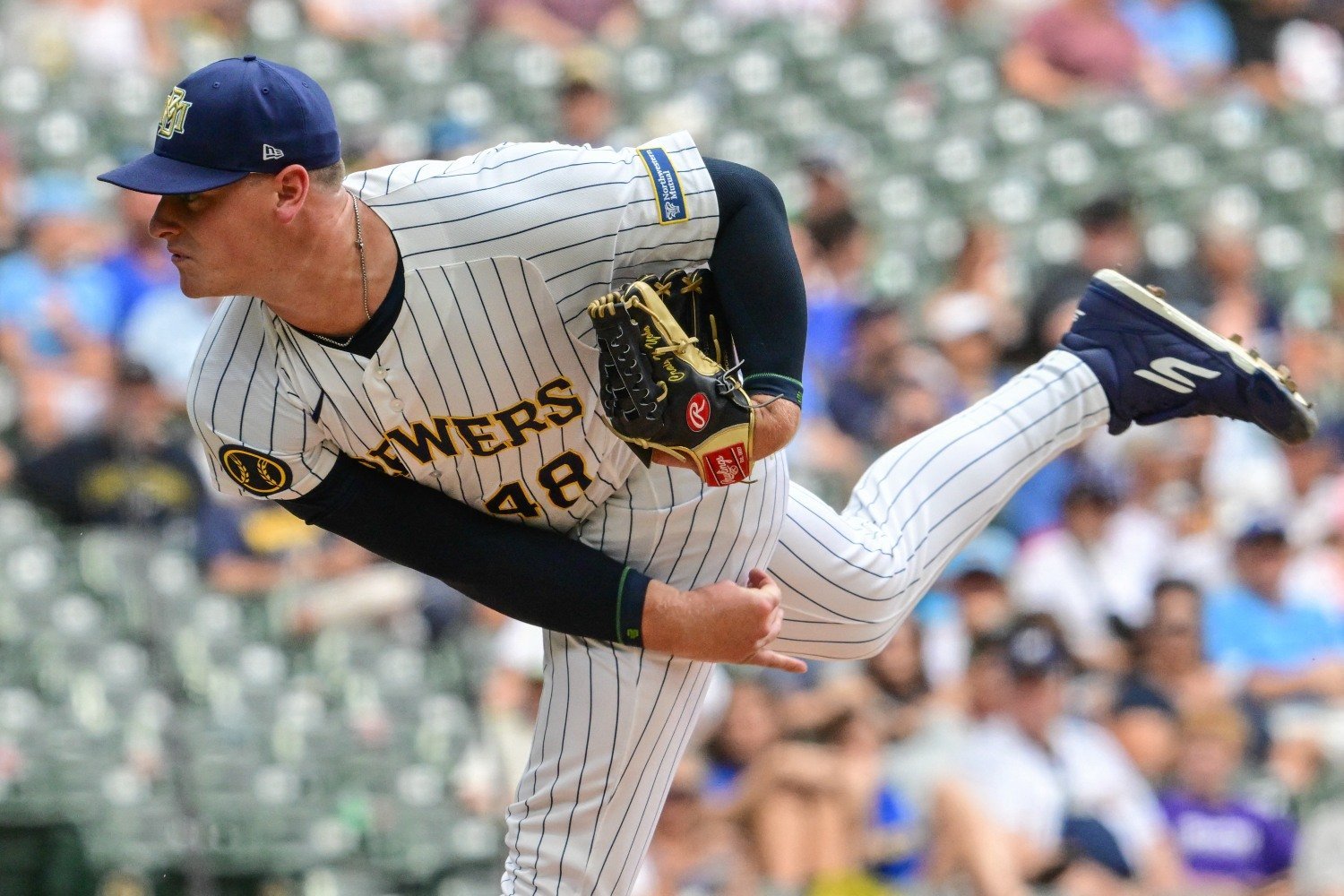 Craig Yoho ascended so quickly to the big leagues as a reliever that it's easy to forget he's only in his fourth season as a pitcher. A position player for most of his injury-riddled college career, the 26-year-old didn't move to the mound until 2023 at Indiana and was drafted by the Brewers that summer. He's now trying to find his footing in the majors in just his third full professional season. "This is, what, my third-and-a-half year pitching, something like that?" Yoho said at his locker in the Milwaukee clubhouse over the weekend. "So there's still a lot of stuff I'm learning about myself and stuff in the game of baseball that I haven't experienced yet. It's been, in a way, just a learning experience through it all." Yoho's elite movement, particularly the screwball-like shape of his changeup, helped him tear through college and minor-league hitters with ease. In the majors, he's encountered more first-time challenges. Some of the lessons have been mechanical, but most have related to the mental game and his daily work with the Brewers' big-league pitching coaches. "Just going in each and every day, understanding the work I need to put in to be ready to go that night, and just having the right mindset of going into the game," Yoho said. He's also learning the best way to use his arsenal. The pitches Yoho originally threw after converting to pitching were effective until he reached the majors, so he never needed to think much about which pitches he should throw to perform at the game's highest level. That changed after Yoho struggled to a 7.27 ERA, 6.48 FIP, and 6.61 SIERA in 8 ⅔ innings in his debut season last year. Late in the year, he experimented with a shorter slider to replace his curveball, but he ditched it when it started to blend with his cutter. He made a grip change this year to give his changeup even more depth, increasing its induced vertical break from -3 inches to -4.4 inches. During his most recent stint in Triple-A Nashville, Yoho made his most substantial yet simplistic change: he added a sinker and has since used it as his primary fastball instead of his four-seamer. "I decided to start pitching my last year of college, and [the four-seam was] the grip I chose," Yoho said. "It wasn't necessarily like a rhyme or reason to it. So, for the most part, my arsenal hadn't changed since the day I picked up a baseball." The four-seamer moved inconsistently because it wasn't the best fastball grip for Yoho. He's an extreme pronator, which means his palm turns outward, away from his body and over the top of the baseball as he releases it. That allows him to create the sideways spin that makes his changeup drop and fade, but it also produces a four-seamer with lots of arm-side run and very little carry, instead of a normal four-seamer that looks like it's rising due to more vertical backspin. In other words, Yoho's four-seamer is a worse version of a sinker with less sink. Why not add a real sinker instead? "It's always crossed my mind because his four-seam is kind of like a two-seam anyway, so might as well just get some depth to it," Brewers pitching coordinator Jim Henderson said. "It's something I've thought about pretty much every offseason, but hadn't actually done anything with," Yoho said. "I always kind of wondered if it would actually help my arsenal or not." At the beginning of July, he finally added the sinker. Yoho is using a standard two-seam grip with his fingers riding along the parallel laces of the ball, with the friction of those seams allowing him to rip the ball off his fingertips more comfortably than he can with a four-seam grip. "The hand coming off the ball feels great," he said. Unsurprisingly, the sinker has nearly the same amount of run as Yoho's four-seamer, but it has more depth. It has averaged 6.7 inches of induced vertical break, while the four-seamer has averaged 11.4 inches (excluding his outings at Coors Field, where the ball moves less due to the high altitude). Yoho has still mixed in some four-seamers to show hitters slightly different versions of two similar fastballs. In addition to generating more sink to induce more ground balls, Yoho and the Brewers are hoping that more consistent movement will help him throw more fastballs for strikes. "I got to start my line a little bit more on my glove side, just so that way when the ball runs, it comes back [into the strike zone]," Yoho said. "With the four-seam, I felt like sometimes it would come back a lot, sometimes it wouldn't as much, and so it was a little bit working against what I was trying to do. So the two-seam has helped kind of clean some of that up." "I like it because I think it's a training tool for his mechanics," Henderson said. "When you throw sinkers back-door [to righties], you can't come out of your delivery." The improved control has yet to materialize, as Yoho has thrown fewer sinkers in the strike zone (47.7%) than four-seamers (52.6%). That's what Henderson and lead pitching coach Chris Hook are monitoring most. Their main message to Yoho has been that he must force hitters to honor his fastball in the zone to get chases and early swings against his changeup. "If he commands the fastball, if they have to respect the fastball, then the changeup, no matter what [the velocity] is, is going to have them out in front," Henderson said. One of the reservations the Brewers have with Yoho's changeup is its low velocity, which can give hitters time to recognize the pitch and take it for a ball or foul it off, even if they were initially fooled by it. During the second half of July, his changeup has gone from sitting around 77 mph to more than 80 mph. That velocity bump wasn't by design, but it's a welcome improvement. "Movement's great, but when it's big and it's early, big-league hitters are good enough to spoil it or take pitches that aren't tracking [in the zone]," Henderson said. "So for him to be able to sell it a little bit more with some velo is good if he can maintain movement, and then there's still the Bugs Bunny one that can mess different hitters up." Yoho has done a solid job of missing barrels this year, posting a 29.1% whiff rate and 32.6% hard-hit rate. However, his current success is not sustainable. He's allowed three home runs and walked 10.8% of batters faced while benefitting from a .116 batting average on balls in play. For those reasons, his 4.84 FIP and 3.90 SIERA are both higher than his 3.32 ERA. As a result, the Brewers have used him mostly in a low-leverage role. Yoho still profiles as a potential trade candidate with a murky future in Milwaukee, but he's trying to adapt and do what he can to become a reliable member of the bullpen. "It hasn't really been a conversation about roles," Yoho said. "Honestly, from pitch one, I'm ready to go, to the last pitch of the game." View the full article
 -
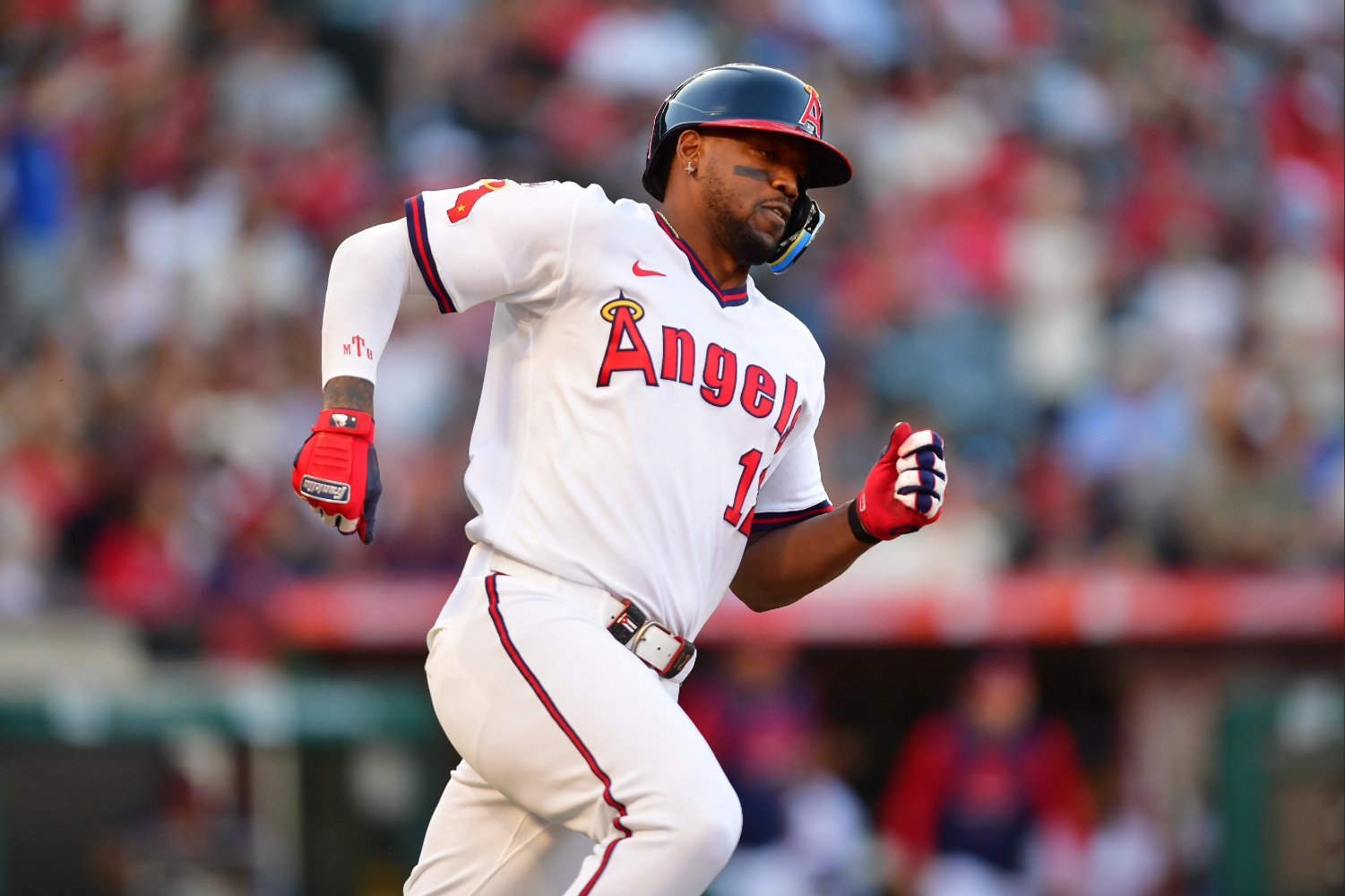 As the trade deadline approaches, there isn't any doubt that pitching remains at the forefront of the Chicago Cubs' needs. A staff decimated by various injuries will likely need multiple additions if they're to reach October at all, let alone hang with their fellow National League contenders. That doesn't mean it will be a pitching exclusive deadline for the Cubs, though, as some supplementary offense couldn't hurt. Should that be the case, an old friend could wind up being a target in the form of Jorge Soler. It's been a decade since we saw Soler in Chicago. He's been on a journey since, with turns in Kansas City, Atlanta (twice), Miami, San Francisco, and Anaheim. Currently logging plate appearances for a listless Angels squad, he stands to be one of a number of veterans finding their way to new teams before Aug. 3. Whether or not the Cubs should be that new team for Soler, however, is another matter entirely. On paper, a pursuit of Soler would be a sensible fit. There are some financial ramifications on an AAV of roughly $12 million, but a right-handed bench bat capable of supplying power is something the Cubs could use. Their current group of starting righties — Seiya Suzuki, Nico Hoerner, Dansby Swanson, Carson Kelly, and Alex Bregman — provides only modest collective power, save Suzuki and the occasional stretch of torrid play from Swanson. None of the present right-handed (or righty-capable) bench consisting of Miguel Amaya, James Triantos, or Pedro Ramírez offers much on the power side, either. Soler, in theory, could help that dynamic. The "theory" portion, however, is where we begin to run into some issues. Soler's performance each of the last two years is that of a below-average hitter. He went for a wRC+ of 88 in 2025 and is at 85 thus far in 2026. Worse yet, the power hasn't manifested within his high-strikeout tendencies. He posted a .172 ISO last season before managing just .167 this year. In reality, we haven't seen Soler at the peak of his power potential since 2023, with 2024 providing our last glimpse into a hitter capable of exceeding a .200 ISO. Also working against him is the fact that he hasn't been particularly good this year against left-handed pitching. His wRC+ against pitchers of the opposite handedness in 2026 is just 67, against a 91 mark against righties. Only one of his 11 home runs this season has come against a left-handed pitcher. He was a bit more balanced in 2025, but not in a way that indicated him to be any sort of lefty masher. The last time we saw that kind of skill set was 2024. Statistically, it's a difficult move to justify. There's likely something of an argument to be made for organizational context, wherein the player is simply not performing because he's part of a woeful organization. However, the profile itself simply does not fit: Soler's percentile distribution indicates that this is a player who swings a lot, swings hard, and features minimal contact. The Cubs are, somewhat famously, an organization that trades bat speed for efficiency within their contact. Soler would actively work against that preferred profile. To say nothing of a near-inability to play the field, limiting the flexibility with which Craig Counsell would have to maneuver his roster in rotating through the designated hitter slot. Reunions can be a fun concept in the abstract. And when you talk about a team like the 2016 Cubs, those opportunities for bringing back an active player are waning to the point of almost being impossible. However, we haven't seen Soler at his best for a few years at this point. It's difficult to see the Cubs being so interested in pursuit of a reunion in their own right. It's simply too difficult a move to justify. Soler actively works outside of the profile the Cubs prefer from their hitters, without the power we're accustomed to seeing from him to compensate his current state. View the full article
 -
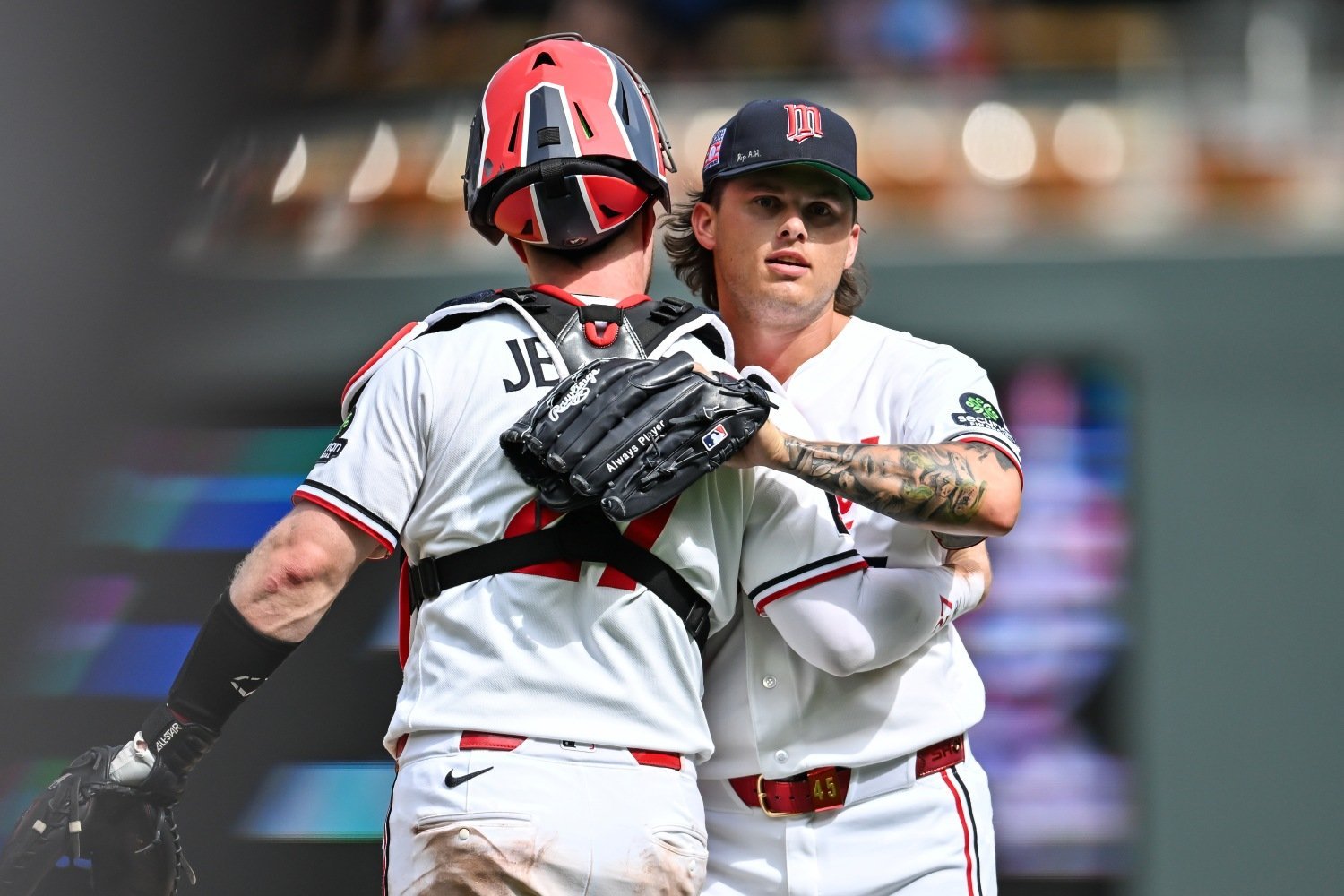 It wasn't equivocal, and it wasn't compulsory. This April, as part of a slow-motion goodwill tour in which he's tried to rebuild the fan base's faith in (or even tolerance for) his family, Tom Pohlad piped up. He gave Dan Hayes of The Athletic a quote that left little wiggle room. That even seemed to be by design. You can't gain much goodwill by going halfway. "As we go throughout the year and more opportunities present themselves for us to put action to words, so long as we do that, I’ll be happy," Pohlad said. And later: "We owe it to our fan base as much as we owe it to [Derek Shelton], [Jeremy Zoll] and the players, to do everything we can to improve our team at that point.” We should presume he meant it, because whatever goodwill (and time) it did buy him was nowhere near worth the backlash he'll receive if he goes back on that asseveration. However, it was an easy time to say those words. The Twins were 13-17 when Hayes's article ran, which was right on schedule; most fans, pundits and projection systems forecasted a losing season for them. In fairness, they're still sub-.500, too. Since that day, however, they've gone 40-37, and they find themselves right in the thick of the race for the AL Central, as well as a possible Wild Card berth. They've proved themselves resilient, and they've played near the top of their spectrum of possible outcomes based on their talent. Unequivocally, this team is in position to buy at next week's MLB trade deadline. It's time, in other words, for Pohlad to pony up. In fact, the baseball gods have offered him no quarter. Although this team (frankly) is not all that good, they're also plainly not bad, and they're playing in one of the weakest divisions and leagues in recent memory. They have a glaring need for pitching help, and a strong farm system with which to pursue it. They have, by any reasonable reckoning, plenty of money to spend. The stars all aligned. The dictate is clear, and Pohlad's own words have painted him into a corner. Admittedly, it would be strange (and ill-advised) for the team to go all-in and trade top prospects to bolster this squad. They're just entering a competitive window, not peaking or trying to maximize the final phase of a cycle. They can get better easily, though, and Pohlad's money can do a lot of that work. Here are five guys they could acquire, for whom the prospect cost could be minimized if the Twins take on the salaries involved. Kevin Gausman is a tough, durable veteran starter—someone who could start a playoff game and give the Twins a chance to win even against a tough lineup. He's an impending free agent and is still owed over $7 million. If the Twins are willing to take on that money, he wouldn't cost that much, and he could be a difference-maker for them both in the regular season and come october. A major bullpen upgrade is the most obvious way the Twins could get better this week. Weaver is under contract for 2027, too, so while he would cost a good prospect or two, he could help them not only this year, but next. He's an ideal fit for their situation, as long as Pohlad is willing to shell out the relatively high financial cost for a non-closer. It's a similar situation to that of Weaver, but Antonio Senzatela offers the bonus of not being obligated to pay up for 2027. The salary taken on for this season wouldn't be terribly onerous, and if it pans out well, the team could elect to bring him back at a moderate price. Dustin May could be a huge upside play for the Twins, and although the mutual option on his deal for 2027 is almost certain not to be mutually exercised, even a fistful of starts that get the team over the hump and into the postseason could be a huge windfall. The Cardinals will want something good for May, but his salary does give the Twins leverage, if they're willing to eat that money. This should, at this point, be the bare minimum. The Twins need help in the bullpen. Andrew Kittredge is one of several available right-handed hurlers who could assume a high-leverage role for them and slightly upgrade the relief corps, and who are making somewhere between $7 million and $12 million. If the Twins don't at least trade for someone like Kittredge, Pohlad will have failed to keep his promise to the fan base and to the team. The good news is that this team is in the hunt. The even better news is that the season has left much less uncertainty than one might have worried it would even a month ago. The only bad news is for Pohlad, and then only for his bottom line. He said he wants to help Zoll make this team better. Now, he gets to prove that he meant it. View the full article
 -
 For the week, Biloxi (4-2) was a series winner, while Nashville (2-4), Wilson (2-4) and Wisconsin (1-5) fell short. Transactions: RHP Garrett Stallings recalled to MLB Brewers from AAA Nashville Note: The MLB Draft signing deadline is today, Monday July 27th at 4:00pm CST, with the Brewers presumably negotiating with four remaining picks. Game Action: Nashville Pre-Game Media Notes Final: Nashville 8, Sugar Land (Astros) 1 Box Score Via a Sounds’ press release, game details: Sounds Pull Away from Space Cowboys for Second Straight Win Though Nashville also out-hit the Space Cowboys 11-4, this game was closer than a first glance at the box score might suggest. The Sounds held a 2-1 lead as rehabbing LHP DL Hall (2 IP, 0 R, 2 Ks) worked around two one-out walks in the 6th inning and RHP Cameron Wagoner (2 IP, 0 R, 2 Ks) did the same for a one-out double in the 7th frame. Leadoff OF Luis Matos (2-for-4, triple, double, walk, 2 RBIs) paced the offense by reaching base three times, the first on his RBI triple in the 3rd inning. After DH Jeferson Quero’s two-out RBI single in that same inning, Nashville did not collect its next base knock until 1B Luke Adams’ RBI single five innings later, helping spark the team’s six-run, six-hit eighth inning to put the game out of reach. On the mound, it was a bullpen game through and through, as no Sounds pitcher exceeded 38 pitches, with starting RHP Lyon Richardson (3 IP, 0 R, 2 H, 1 BB, 0 Ks) efficiently covering the first three frames. Sounds’ Extras: Eight Nashville hitters collected at least one hit and six of them contributed at least one RBI. Quero (2-for-5, RBI) and 2B Ethan Murray (2-for-4, RBI) joined Matos in the multi-hit club, while OF Tyler Black (1-for-4, walk, SB) and Adams (1-for-4, HBP, RBI) each came aboard twice. Hall’s velocity peaked at 96.7mph in his third rehab outing, while Wagoner touched 98mph against old friend Raynel Delgado. RHP Reiss Knehr conceded a homer to Delgado in his sole inning of work, while RHP Blake Holub handled the 9th inning in just 10 pitches. Next week’s outlook: Nashville (56-46) come back home to take on White Sox affiliate Charlotte (55-47), with the first of six games commencing on Tuesday. Biloxi Pre-Game Media Notes Final: Biloxi 13, Chattanooga (Reds) 7 (in 10 innings) Box Score Via the Shuckers’ website, game details and we encourage readers to review affiliate write-ups as part of their Link Report routine: Burke Continues Tear at Erlanger Park with Stunning Sunday Performance – Shuckers earn comeback win with nine runs between 9th, 10th innings, smash four home runs What an exciting Sunday contest, with the first six homers of the game going out as solo shots before 3B Andrew Fischer (2-for-6, HR, 2 RBIs) and DH Blake Burke (3-for-6, 2 HR, 5 RBIs) opted for clutch multi-run blasts in the 9th and 10th innings, respectively. OF Josh Adamczewski exited after a hit-by-pitch in the 8th inning, but it looked to Forum viewers like the move was only precautionary. The pitch bounced off the ground and hit his right leg just above his shin guard and below the knee. He left after one pitch to OF Josiah Ragsdale, who had an active day with a 2nd inning homer, 6th inning walk, stolen base and two runs scored. 20-year-old starting RHP Manuel Rodriguez had no-hit the Lookouts over six innings on Tuesday, but three of their left-handed hitters got a measure of revenge on Sunday with homers in the 2nd, 3rd and 4th innings. That said, Rodriguez (5 IP, 5 R, 9 H, 3 BB, 1 K) actually battled hard, escaping a bases loaded, one-out situation in the 3rd inning (K, GIDP) and stranding two more baserunners the next inning, before uncharacteristic back-to-back walks in the 5th inning cost him two key runs. Fischer sparked Biloxi’s comeback effort with a leadoff single in the 6th inning which ultimately produced one run (but runners at 2nd and 3rd with one out were stranded), before Burke’s first pitch, two-out blast the following inning narrowed Chattanooga’s advantage to a single run. Down 6-4 in the 9th inning, SS Jesus Made’s one-out double put Chattanooga in the unenviable position of facing Burke (RBI single) and Fischer (two-run homer for Biloxi’s first lead since the 2nd inning). Fischer’s impressive shot came in a 2-2 count. All Mike Boeve did on Sunday was get on base every single time (3-for-3, 2 walks) and drive in two runs, including a leadoff RBI single in the top of the 10th inning. Oh and he also stole two bases to give him 12 on the season. While RHP Sam Garcia got caught up in the early solo homer mania (2 IP, 1 R – a homer, 1 K), the trio of RHPs Edwin Jimenez, Will Childers and Stiven Cruz did not allow any earned runs over the final three innings. Shuckers’ Extras: Four plays after Fischer’s 9th inning heroics, he threw a ball away for his 7th error (although his player profile is showing six errors) in 25 Biloxi contests, contributing to an unearned run off of Childers to send the game to extra innings. In all, that’s Fischer’s 15th error of 2026 in 74 games played. Five Shuckers had multi-hit games, inclusive of Made (2-for-5, double, sac fly, RBI) and OF Mark Coley II (2-for-5). C David Garcia also contributed an RBI double. Next week’s outlook: Biloxi (52-40) return home to battle Rays’ affiliate Montgomery (48-47) for six games, with the series kicking off on Tuesday. Wisconsin Pre-Game Media Notes Final: South Bend (Cubs) 8, Wisconsin 3 Box Score Via the Timber Rattlers’ website, game details: South Bend Takes Series Finale – Cubs break 3-3 tie with three runs in bottom of the sixth to beat Rattlers Wisconsin’s top of the order of DH Luis Pena (2-for-3), OF Braylon Payne (3-for-4) and 2B Daniel Dickinson combined on a 6-for-11 afternoon with a double, two RBIs and a stolen base, while the rest of the lineup went 1-for-20 as the team fell to a defeat for the 8th time in nine games. Down 3-0 when starting RHP Ethan Dorchies allowed a leadoff triple in the bottom of the 5th inning, the Timber Rattlers didn’t fold, with RHP Jason Woodward inducing a ground out and Dickinson producing a line-out, throw-out double play to spark the club. The linked game report includes Dickinson’s two-run single which scored Pena and Payne and he scampered home on a wild pitch to tie it three batters later. Unfortunately, a one-out hit-by-pitch on a 2-2 count in the bottom of the 6th inning kerfuffled Woodward (1 2/3 IP, 3 R, 3 H, 0 BB, 1 HBP, 1 K), who gave up hits to the next three batters as Wisconsin found itself behind by three runs again. Timber Rattlers’ Extras: With the trio of Pena-Payne-Dickinson due up in the 7th inning, Pena was instead substituted to give DH/C Edgardo Ordonez (0-for-2) his first playing time in six weeks. We’ve no reason to believe Pena’s exit was anything more than some scheduled rest, but will watch his status. RHP Jose Nova nearly had a solid relief shift, retiring five of the first six batters he faced before conceding a two-run homer in the bottom of the 8th inning. Next week’s outlook: Wisconsin (49-42) host Athletics’ affiliate Lansing (40-53) for six games, with the series starting on Tuesday. Wilson Pre-Game Media Notes Final: Wilson 6, Charleston (Rays) 3 Box Score Via the Warbirds’ website, rain out details: Big Sixth Inning Propels Wilson Past Charleston – Antunez hits Home Run in Wilson Debut Hits are apparently over-rated, as Wilson had none through 6 1/3 innings on Sunday, but still led 5-2 by that point thanks to seven walks and a catcher’s interference in their five-run sixth inning. Making his Low-A debut after a recent promotion from the ACL Brewers, 18-year-old OF Brailyn Antunez (1-for-2, HR, 3 walks, RBI) tried to restore sanity by homering in the following frame, with 2B Juan Martinez (1-for-4, walk, 2 SBs) following with a single for the team’s only two hits. Trailing 2-0, Wilson’s first run came on a strike out (catcher’s throwing error) and their second was via the catcher’s interference, but we can credit 1B Frederi Montero with drawing the “game-winning” walk which gave the Warbirds a 3-2 advantage. Wilson’s four-man pitching brigade was solid across the board, with RHPs Hayden Robinson (4 IP, 2 R (1 ER), 4 H, 2 BB, 5 Ks) and Miqueas Mercedes (3 2/3 IP, 1 R, 1 H, 2 BB, 1 K) handling the bulk work, while RHPs Eric Prado and Joshua Quezada retired four of the final five batters to close out the win. Warbirds’ Extras: Wilson batters drew 14 walks, while their pitchers only issued four, enabling the team to emerge victorious despite being out-hit 6-2. SS Brady Ebel joined Antunez in the three-walk club and also stole two bases. Trying to collect all the “firsts” he could in his Carolina League debut, right fielder Antunez also earned an outfield assist in the 3rd inning by throwing out a baserunner at first base on a fly ball 9-1-3 double play. Next week’s outlook: Wilson (49-45) return home to battle Nationals’ affiliate Fredericksburg (60-36) for six games, commencing on Tuesday. We hope that you enjoy the Minor League Link Report. On Monday, the Brewers’ Dominican Summer League affiliates play three games, including a doubleheader for DSL Brewers Gold against DSL Clubs Blue which starts at 9:00am CST. The Milwaukee Brewers also play at the Giants at 8:45pm CST. Organizational Scoreboard including starting pitcher info, game times, MiLB TV links, and box scores Current Milwaukee Brewers Organization Batting Stats and Depth Current Milwaukee Brewers Organization Pitching Stats and Depth View the full article
 -
Red Sox's Trade Deadline Wishlist Following Curtis Mead Blockbuster
DiamondCentric posted an article in Talk Sox
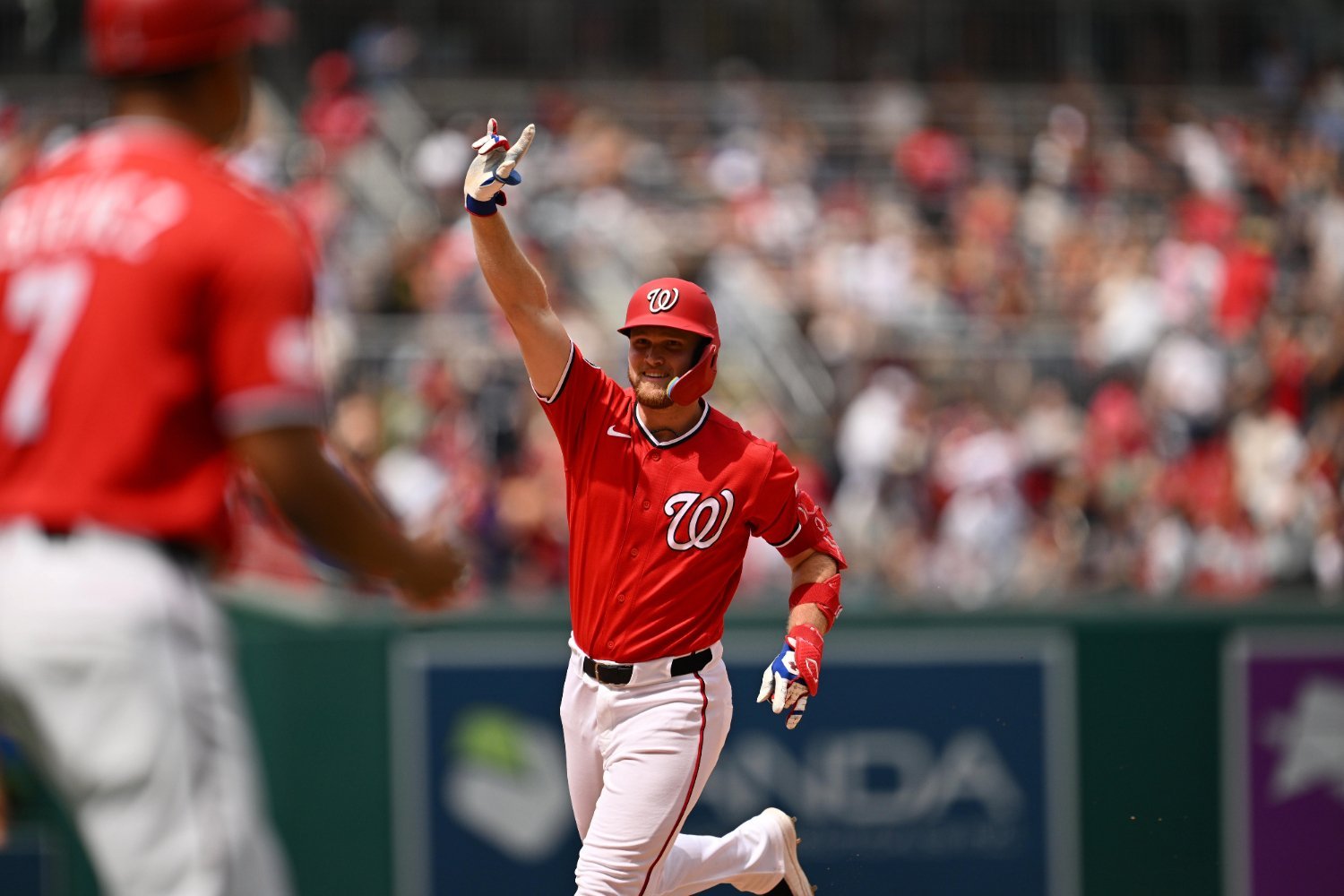 The first domino has fallen. After months of being involved in mock trades and rumors, pitcher Connelly Early was traded to the Washington Nationals for infielder Curtis Mead over the weekend. A former top-40 prospect, Mead has enjoyed a breakout season in 2026. He’s blasted 17 round-trippers and his underlying metrics suggest that his swing is built for Fenway. Mead’s wRC+ of 134 is good for third on the Boston Red Sox behind Jahmai Jones (in a small sample) and Willson Contreras. He checks the box for a right-handed impact bat, but the roster still has plenty of needs, including potentially another right-handed slugger. While the market for catchers is still largely abstract, there are a few names that could catch chief baseball officer Craig Breslow's eye. Carlos Narvaez and Connor Wong have split time behind the plate this season, but between Narvaez’s regression as a hitter and Wong’s inconsistency, it wouldn’t be a surprise to see the Red Sox make a big splash. Following Shea Langelier's injury, the Sox could turn their sights to Colorado's Hunter Goodman, Minnesota’s Ryan Jeffers, or New York’s Francisco Alvarez for some more thump in the lineup. Goodman is having a career year and the Rockies would demand a king's ransom in exchange for the 26-year-old who has three more years of team control. However, Goodman already has 31 homers on the year and would slot in as the Red Sox's best hitter not named Contreras. A slightly more realistic avenue would be the Twins’ Ryan Jeffers. Coming off of a two-month absence due to a hamate bone injury, Jeffers is one of the best rental hitters on the trade market; he's batting close to .300 and would be a worthy addition to the lineup. A free agent after the 2026 season, he wouldn’t be as expensive as Goodman, but the Red Sox would still have to pay a pretty penny. A more under-the-radar candidate would be New York’s Francisco Alvarez. Batting .260 with 12 homers on the year, Alvarez has an OPS of .740 with average defensive metrics. Trading for Alvarez would take a haul due to his immense upside, but he’s under control until 2029 and could help give the Red Sox long-term stability behind the dish. Elsewhere on the roster, Mead will plug in at second base, giving the Red Sox a plethora of infield utility options, but none with consistent or outstanding offensive numbers. Should the team stay complacent at catcher, they could pursue an upgrade at shortstop. Between Trevor Story’s season hampered by injury and Marcelo Mayer’s consistent struggles, an upgrade might be necessary. According to Bob Nightingale of USA Today, the Red Sox would “love” to acquire either the Angel’s Zach Neto or the Astro’s Jeremy Peña. Boston checked in on both players this past offseason, but now a trade seems more likely with the poor offensive production at the position so far this season. Neto is batting .236 with 19 bombs this year and a .771 OPS. While his career high 31.5% strikeout rate is worrying and his defense leaves something to be desired, he’s hit at least 23 homers in the last two seasons and is on pace to surpass that again this season. His swing would fit at Fenway, as all but four of his homers in 2026 have been hit to left field. Peña is another interesting trade candidate. Despite missing the first month of the season due to injury, the Astros’ infielder is having the best year of his career at the plate with a .315 batting average and a .849 OPS. Peña has no issue getting on base, but with just 28 RBIs and nine homers this season, he lacks the pop the Red Sox might be seeking. The Red Sox have also loosely been tied to Nationals’ shortstop C.J. Abrams, but it’s hard to see the Nationals giving up their young star for anything less than a king's ransom. As enticing as a shortstop trade might be, the Red Sox might be reluctant to go big with top prospect Franklin Arias waiting in the wings in Worcester. Boston could try and swing a trade for a rental bat at shortstop before calling on Arias in the coming seasons. The only other position of immediate need for Boston is in the bullpen. Although the Red Sox have one of the best bullpens in the game, a high-leverage reliever to eat late innings is always beneficial, especially if they part ways with Aroldis Chapman. If the Mets decide to blow it all up, a pair of solid relievers could be on the market. Luke Weaver has been nothing short of outstanding in his first year in Queens. A 1.98 ERA through 41 innings speaks for itself, but when you add in a 0.805 WHIP and an xERA of 2.80, you get one of the best relief arms on the market. Right-handed relief isn’t a necessity for Boston, and the Mets would demand a high return, but with a lack of left-handed relief pitching on the market, acquiring Weaver could make Boston’s pen the best in the sport. A.J. Minter is another potential trade chip from the same source. In 22 games this season, Minter has recorded a 2.45 ERA and an impressive 1.045 WHIP. A look under the hood is slightly more worrisome as an xERA of 3.71 dictates some amount of luck is baked into his results. His groundball rate is also 10% lower than the past two seasons. Despite the concerns and being a step down from Weaver, Minter is still a quality arm and could be a more affordable option. Additionally, Minter fills the left-handed relief role the Red Sox are hungry for. Acquiring players at any of the three positions would be a boon at the trade deadline, making a scorching hot Red Sox squad more dangerous in advance of the postseason. View the full article
 -
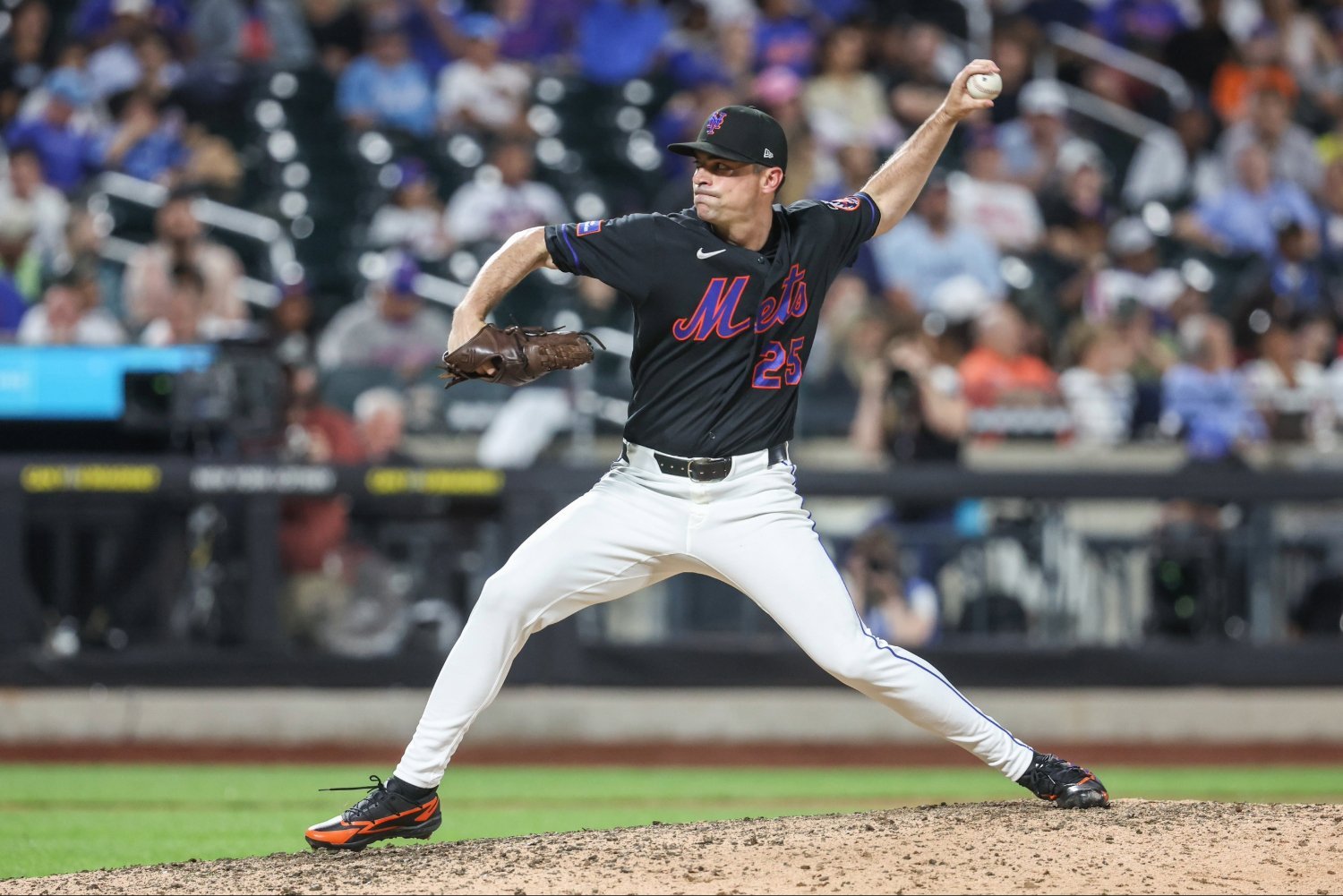 Despite having the second-highest payroll in the league, the New York Mets have not been able to put it together this season and currently sit 18 games under .500. What seemed to be a promising offseason after they brought in Freddy Peralta, Bo Bichette, and Luis Robert Jr., it’s shaping up to be another disappointing season after barely missing the postseason in 2025. With the trade deadline looming closer on Aug. 3, the Mets have found themselves in a position to be sellers while having quite a few pieces to be moved. Freddy Peralta and Tyrone Taylor are obvious candidates considering they are both on expiring contracts, but they also have a pair of relievers in A.J. Minter and Brooks Raley who would fill short-term needs in contenders' bullpens. Out of all players on the Mets roster, Minter and Raley surely have the highest chance to finish the season with another club. Being able to find good lefty relievers can sometimes be a tough task, making their respective strong seasons extremely attractive on the trade market. A.J. Minter, LHP After a dominant stretch with the Atlanta Braves from 2017 through 2024 where he posted a 3.28 ERA and 1.20 WHIP, Minter has carried over his success to the Mets since joining the club for the start of the 2025 campaign. He signed a two-year, $22 million contract leading up to the start of last season, but his year was cut short after just 13 appearances when he suffered a season ending lat injury in his throwing arm. Minter’s 2026 campaign had a delayed start while continuing to recover from his injury, but he’s since pitched to a solid 2.45 ERA across 22 innings after making his season debut on May 26. While his 2.45 ERA looks promising, his FIP sits a bit higher at a 4.11 mark due to already surrendering four home runs and only striking out 20.5% of batters. Putting that aside, the veteran has done an exceptional job controlling counts, hence his 2.3% walk rate. He won’t get hit very hard and does a good job inducing chases outside the zone, but his stuff isn’t very overwhelming and doesn’t get that many ground balls. For a veteran like Minter who’s constantly shown the ability to be reliable at the major-league level, he will be a very popular name thrown around in trade talks and teams will value what he brings to the table. That he's a southpaw capable of shutting down left-handed hitters only boosts his stock further. A top-10 organizational prospect and a low-level flier would be a reasonable price to set. Brooks Raley, LHP Raley, similar to Minter, has battled a pretty significant injury in recent times -- in May of 2024, he underwent Tommy John surgery which limited him to 32.2 between the 2024 and 2025 seasons. Since being activated last July, Raley has returned to being one of the better relievers in the game. In 37.2 innings this year spanning 42 games, Raley owns a 2.15 ERA and 1.17 WHIP while also accumulating 1.3 bWAR. The best part about Raley’s profile is his elite ability to not give up many hard-hit balls. His 4.9% barrel rate ranks in the 88th percentile while his 31.1% hard-hit rate places him in the 91st percentile -- between the pairing of those elite metrics, Raley has only allowed two home runs so far this season. He’s a deceptive lefty who throws across his body with a pretty flat 32° release point. It works well for someone who relies heavily on a sweeper and cutter. While his stuff isn’t going to generate much chase or swing and miss, Raley’s blend of breaking balls and a flat arm slot makes it hard for batters to square up. He also comes at a cheaper salary than Minter ($4.75 million compared to $11 million), meaning he could garner a slightly larger return package, though it should be comparable. View the full article
 -
 A decades-long obsession has turned into an official partnership. I am thrilled to announce that Fish On First is now a Baseball Reference Brand Ambassador! Throughout my entire career covering the Miami Marlins and for many years prior to that as an avid baseball fan, BR has been—without exaggeration—my most-visited website. All year-round, there is a tab on my browser reserved for BR so that I can immediately pull up an MLB or MiLB player's page, check league leaderboards or run an obscure Stathead query (save 20% on an annual subscription when you enter discount code FOF at checkout). From the beginning, this research tool has been absolutely indispensable to FOF, elevating the quality of our original articles and social media posts with good, bad and goofy Marlins stats discovered through BR and Stathead. As a Brand Ambassador, I'm proud to highlight the vast variety of information that's accessible to you. Even right now, when the vibes around the Fish are as rancid as could be, you will find great insights and entertainment within the pages of Baseball Reference. Also, collaborating with them moving forward will introduce more fans to our comprehensive Marlins coverage. Thanks again to the BR community for welcoming FOF. View the full article
 -
 Sunday wrapped up another series for the four full-season San Diego Padres affiliates, who finished with a sweep of the day's action. The Triple-A El Paso Chihuahuas beat Las Vegas 15-9, the Double-A San Antonio Missions blanked Frisco 6-0, the High-A Fort Wayne TinCaps prevailed over Lake County 7-5 and the Low-A Lake Elsinore Storm held on for a 2-1 win over Visalia. Padres Minor-League Transactions San Antonio Missions activated C Brendan Durfee from the 7-day injured list. San Antonio Missions transferred C Colton Vincent to the Development List. Blake Hunt's 2 HRs, Nick Solak's 4 Hits Lead Chihuahuas' Charge Box score Blake Hunt homered twice and drove in five and Nick Solak went 4-for-6 as the Triple-A El Paso Chihuahuas used a nine-run third inning to dump the host Las Vegas Aviators 15-9. The Chihuahuas (44-57, 9-17) snapped a four-game losing streak, bookending the six-game series with wins. Hunt had three hits, Solak (two doubles) drove in two and scored three times, Mason McCoy went 2-for-4 with a walk, two RBIs and two runs scored, Carlos Rodriguez had two hits, two RBIs and two runs scored and Bryce Johnson had two hits, a walk, an RBI and two runs scored. Will Wagner homered and Romeo Sanabria walked twice, had a hit and scored twice. Solak had multiple hits in four of the five games he played this week, going 11-for-25 (.440) with three doubles, a triple and a homer. Facing former Cy Young Award winner Dallas Kuechel, who just signed a minor-league contract with the A's, the Chihuahuas welcomed the left-hander back to pro ball with three runs in the first. John walked, stole second and came in on Rodriguez's third triple of the season. Solak then doubled home Rodriguez and two outs and a wild pitch later, McCoy plated Solak. After Las Vegas got one in the bottom of the first, Hunt hit his first homer of the game leading off the top of the second. With Kuechel now out after two innings, the Chihuahuas quickly put this one out of reach with nine runs in the third, sending 14 hitters to the plate. Wagner hit a two-run homer, Hunt a three-run shot (his seventh of the year), Rodriguez had an RBI single, Solak a run-scoring double, Marcos Castanon drew a bases-loaded walk and McCoy had an RBI double. Missions right-handed starter Sean Boyle gave up five runs in 5⅔ innings. Rehabbing Padres right-handed reliever Jeremiah Estrada faced just two batters in replacing Boyle, walking one and striking out one. EP1_0726.mp4 EP2_0726.mp4 Eric Yost's 6 Shutout Innings Fuel Missions Box score Right-handed starter Eric Yost pitched six shutout innings, Jake Cunningham drove in three runs and Braedon Karpathios hit a two-run homer as the host Double-A San Antonio Missions blanked the Frisco RoughRiders 6-0. The Missions (44-52, 13-14 second half) won three of the six games in the series and shut out the RoughRiders after being blanked on back-to-back nights Thursday and Friday. Yost only gave up three hits while walking two and striking out five. He has allowed just three runs over his last 15 innings, striking out 17, lowering his ERA to 3.11. Left-hander Harry Gustin, right-hander Tucker Musgrove (Padres Mission's No. 9 prospect) and right-hander Garrett Hawkins each pitched a scoreless inning to finish. Chris Sargent had a pair of hits for the Missions, who scored four runs in the third and two in the eighth. Carson Tucker had a sacrifice fly and Cunningham a bases-clearing double in the third, with Karpathios (Padres Mission's No. 12 prospect) hitting his two-run blast in the eighth. It was Karpathios' nine homer of the year. SA_0726.mp4 Zach Evans' HR, Ryan Wideman's 3 SBs, Jack Costello's 4 RBIs Lift 'Caps Box score Zach Evans cracked a tiebreaking two-run homer in the eighth inning as the host High-A Fort Wayne TinCaps overcame giving up a five-run third inning to pull out a 7-5 victory over the Lake County Captains. The TinCaps' third straight victory gave them four wins in the six-game series. The TinCaps are 41-54, including 14-15 in the second half. Ryan Wideman (Padres Mission's No. 4 prospect) had three hits, three runs scored and three stolen bases, boosting is minors-leading total to 57, Jack Costello had three hits and drove in four and Justin DeCriscio also homered for the TinCaps, leading off the bottom of the first with his ninth of the season. MLB reliever Jose Leclerc, on a rehab assignment from Triple-A after having surgery on his right shoulder in August, started and went one perfect inning, striking out one. This was Leclerc's third appearance of the week for the TinCaps after six in the Arizona Complex League. He has three scoreless innings, giving up just one hit with no walks and two strikeouts. Right-hander Abraham Parra followed and gave up all five runs in 1⅔ innings. But after that, right-handers Luis German (2⅓ innings), Will Varmette (2⅔) and Nick Falter (1⅓) combined for seven strikeouts over the final 6⅓ innings. After the Captains' five-run third, the TinCaps came back with a pair in the bottom half on Costello's two-run double with two outs that made it 5-3. Costello trimmed it to 5-4 on a one-out RBI single in the fifth and then tied it in the seventh with another run-scoring single with two outs. Evans made Costello's work pay off by launching a 2-0 pitch deep to left, snapping a 5-5 tie. It was his third homer of the year. The series drew 40,057 fans to Parkview Field, the third-largest attendance figure for the franchise since the new six-game set went into effect in 2021. That included a crowd of 8,048 Thursday, the fourth-largest attendance of the night across all the minors and the first of three sellouts this week. FW_0726.mp4 Luis Maracara, Relievers Combine On 2-Hitter In Storm Win Right-hander Luis Maracara and two relievers combined on a two-hitter, while Yoiber Ocopio and Truitt Madonna homered as the host Low-A Lake Elsinore Storm edged the Visalia Rawhide 2-1. With their third straight win, the Storm (50-46, 11-19) won four of six in the series. In his third start and fifth appearance for the Storm since coming up from the Arizona Complex League, the 18-year-old went a season-high five innings and matched his season best with five strikeouts. He walked two and the only hit he allowed was a leadoff homer in the fifth inning on an 0-2 pitch that tied the game 1-1. Right-hander Brandon Langley struck out six in 2⅓ hitless innings and right-hander Sean Barnett picked up his second save of the season and of his career with one hit over the final 1⅔ innings, striking out two. Ocopio had staked the Storm to a 1-0 lead with a one-out homer, his fifth this year, in the bottom of the second. After the Rawhide tied it on a homer in the fifth, the Storm regained the lead in the bottom half on Madonna's second homer of the year. Madonna was in his second game back after a week in the ACL. LE1_0726.mp4 LE2_0726.mp4 View the full article
 -
What are your Marlins vs. Phillies series predictions?
DiamondCentric posted an article in Fish On First
 Once again in 2026, I will be monitoring Miami Marlins predictions from our valued SuperSubs, Fish On First staffers and livestream guests. Individual article pages like this one will be created prior to every Marlins series and featured prominently on the FOF site. Consistent participation is key if you want to win this annual contest. Submissions only take a few seconds. Scoring system A "perfect" series is worth three points: Earn one point for predicting which team will win the upcoming series Earn one point for predicting the precise number of victories for each team Earn one point for predicting the “Series MVP” who accumulated the highest win probability added (WPA) during the series as calculated by FanGraphs (could pick a player from either team) FOF staffer Jeremiah Geiger is currently atop the 2026 season leaderboard, which will be updated between every Marlins series. If you are a SuperSub, leave a comment with your Prediction Time picks on this page, or join the Marlins Discord Server and submit there. We'll feature them on the upcoming Fish On First LIVE episode and track your points throughout the season! Any picks submitted prior to the first pitch of the series opener will be counted. If you are not a SuperSub, please consider signing up here to support the FOF staff. Series preview notes Probable starting pitchers: RHP Tyler Phillips (MIA) vs. RHP Zack Wheeler (PHI) on Monday RHP Sandy Alcantara (MIA) vs. RHP Aaron Nola (PHI) on Tuesday TBA (MIA) vs. LHP Jesús Luzardo (PHI) on Wednesday The Marlins rank 15th in MLB with a 100 wRC+ and 12th in MLB with a 4.06 FIP. They are 1-9 in their last 10 games and have a 32-22 record at home this season. The following Marlins players are on the injured list: Anthony Bender (15-day IL), Owen Caissie (10-day IL), Josh Ekness (60-day IL), Ronny Henriquez (60-day IL), William Kempner (15-day IL), Adam Mazur (60-day IL), Andrew Nardi (60-day IL) and Robby Snelling (60-day IL). The Phillies rank 29th in MLB with a 90 wRC+ and fifth in MLB with a 3.81 FIP. They are 4-6 in their last 10 games and have a 29-22 record on the road this season. The following Phillies players are on the injured list: Tanner Banks (60-day IL), Adolis García (60-day IL), Brad Keller (60-day IL), Rafael Marchán (10-day IL), Johan Rojas (60-day IL), Garrett Stubbs (10-day IL) and Lou Trivino (15-day IL). View the full article
 -
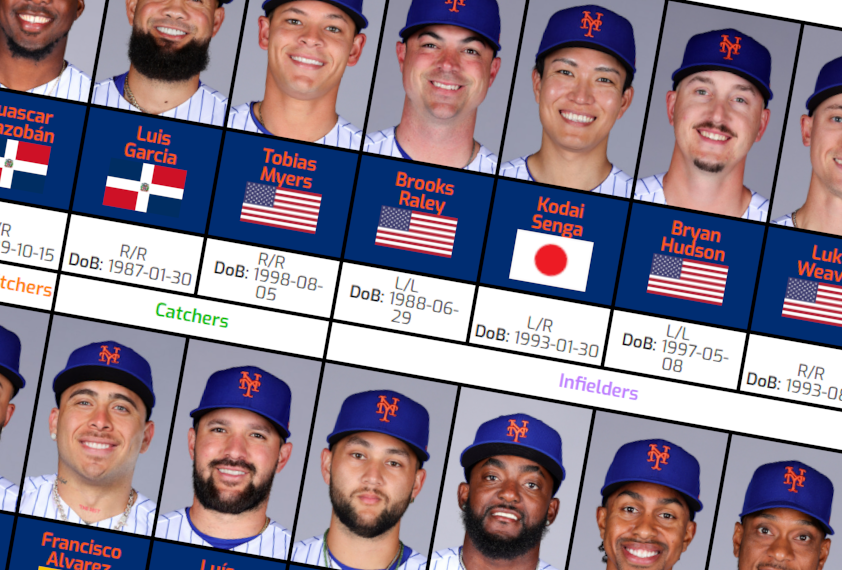 As one of the most potentially transforming trade deadlines in team history looms, the Mets management is forced to play it all Nick Fury-like, continuing to act as though the world intends to spin on. This includes a massive day of signing their draft picks, and parliament of players who went undrafted. Transactions, 7/12/2026 COMING Sent to Binghamton on Rehab Assignment Infielders Marcus Semien R/R DoB: 1990-09-17 High Level: MLB (2026) Marcus Semien's rehab assignment was a new sort. As in rehabs at the very bottom of the ladder, where a player alternates between the low-A St. Lucie Mets and the Rookie-level FCL Mets in order to avoid any road trips, Marcus bounced the one-hour path between Syracuse and Binghamton. It was erratic from a transaction standpoint, but allowed him to avoid any road trips with either squad. Transactions, 7/15/2026 COMING Cleared Waivers and Outrighted to Syracuse Relief Pitchers Dan Hammer R/R DoB: 1997-09-10 High Level: MLB (2026) Dan Hammer! Sledge! Hammersmith Odeon! Der Hammermeister! He was called up to the Mets and DFA'd the next day without appearing, joining the likes of Terrel Hansen and Dylan Ross on the all-time roster of phantom Mets. It's not the worst club to be in, but once you are in it, you'd sure like to get out of it, and Hammer Time has that door unlocked to him, as he returns to Syracuse unclaimed. Giving up no runs in 3 1/3 innings since reporting back to The 'Cuse, as the Mets contemplate a massive bullpen selloff, certainly keeps that within the realm of possiblity. In fact, considering that, of the 10 outs he has recorded since his Salt City return, eight have been via strikeout, it is fair to say that he is hammering at that door. Transactions, 7/15/2026 COMING Transferred from Syracuse to FCL Mets on Rehab Assignment Signed as First-Round Selection (27th Overall) out of Arkansas, Assigned to FCL Mets Relief Pitchers Dedniel Núñez Carson Wiggins R/R DoB: 1996-06-05 High Level: MLB (2026) R/R DoB: 2005-06-01 High Level: MLB (2026) After being drafted July 11, Carson Wiggins took all of four days to sign with the Met. It's always odd how post-draft signings don't tend to get announced until the first-rounder is in the fold. It would seem that an organization would be happy to pick at the lower-hanging fruit while the big guy plays hard to get, but that's often not how it turns out. At one level, it can be argued that first guy sets the market for the guys that follow, but we suspect it's more likely true that a team doesn't like the image it projects when it's publicly known that the later-round guys are on board but the top guy is not. As a reliever, Carson has an opportunity for a quick path to the Major Leagues, though none of that is certain. If it works out that way, however, it gives himself and fellow first-rounder Carson Benge a chance to establish themselves as Generation Carson, and Flushing as Carson City. Dedniel Núñez has been bouncing around the organization on rehab assignments and re-assignments and resets since July 2, and one suspects this will continue up to the longest possibility, at which point the roster should have slots opening up or, more likely, he gets a standard minor-league assignment in order to continue working his way back to you, babe. In the meantime, he's kind of like the Mitch McConnell of relievers. He's supposedly active, although there are precious few updates. Transactions, 7/16/2026 GOING COMING Designated for Assignment Signed as Undrafted Amateur Free Agent out of Western Michigan U., Not Yet Assigned Ended Rehab Assignment and Activated from IL Signed as Undrafted Amateur Free Agent out of Michigan Not Yet Assigned Infielders Starting Pitchers Infielders Outfielders Zack Short Sam Carlisle Marcus Semien Keegan O'Hearn R/R DoB: 34848 High Level: MLB (2026) R/R DoB: 2004-03-12 High Level: Division I (2026) R/R DoB: 1990-09-17 High Level: MLB (2026) L/L DoB: 2004-03-12 High Level: Division I (2026) Zack Short started five games with the Mets this season. They won the first back in mid-June 9-1 and lost the subesequent four, with Zack going 1-for-13 over the five. On this last assignment with the Mets, he inexplicably started all three games against Boston. All the games were winnable, but all were lost as Boston ran the table against the Mets as part of a 15-game winning streak. We come not to bury Zack here, as he was put in an unfair situation. It's hard to say what the Mets were thinking, but it sure has helped turn Boston's season around, so ... yay? Exciting to see the non-drafted free-agents pouring in. The first two come from The University of Michigan and The University of Western Michigan, so you know that Chad Langley, the scout who covers the upper Midwest for the Mets, has been a busy little beaver. Keegan O'Hearn here is a curiousity, apart from being a Canadian with two last names. Keegan spent most of his college career as a decidely ineffective relief pitcher, did not hit at all in 2026, and had only 41 plate appearances in 2025, but is reportedly signed as an outfielder. He is, as such, the opposite of Marcus Ward, drafted as the Mets as a pitcher, despite being featured as (and widely scouted as) a batter in high school. Transactions, 7/17/2026 COMING Signed as International Amateur Free Agent out of The Dominican Republic, Assigned to DSL Orange Transferred from Binghamton to Syracuse on Rehab Assignment Starting Pitchers Outfielders Biguey Santana Luis Robert, Jr. R/R DoB: 2008-01-10 High Level: Academy (2026) R/R DoB: 1997-08-03 High Level: MLB (2026) It's never a bad time to continue scouting in the Caribbean lands. Biguey Santana becomes the latest Dominican righthander to take a paycheck from the Mets. Unfortunately for those who embrace symbolic nomenclature (and we're looking at you, William Shakespeare), at 5'10" and 175, he is not a particularly big guey. Luis Robert joins Marcus Semien on the list of 2025-2026 offseason acquisitions, creeping through rehab assignments, hoping to rejoin a Met season that all good sense says is too late to save. But fight we must. Transactions, 7/18/2026 COMING Sent to Brooklyn on Rehab Assignment Acquired from Southern Maryland (Atlantic League) for Cash, and Assigned to Brooklyn Starting Pitchers Relief Pitchers Clay Holmes Rafi Vazquez R/R DoB: 1993-03-27 High Level: MLB (2026) L/R DoB: 1997-12-12 High Level: Atlantic League (2026) Clay Holmes — there's a rehabber with the potential to make a difference, but probably not for the Mets. And his torrid efforts to recover from a leg fracture are ironically probably not for the Mets' benefit — at least on the field — but rather to get in shape enough to be a valuable enough commidity to garner the Mets talent at the trade deadline. It's a rotten world that treats players so much more as commodities than people, that they begin to only understand themselves that way. It's been a long journey just to get a lousy sniff of affiliated ball for Rafi Vazquez. A single season of only six appearances in college, he quit the game for a full four years, before giving it a go in the indies, Two years each in Atlantic and Pioneer, with a single season in Frontier and USBL, he becomes the third player to join the organization this season from the Southern Maryland Blue Crabs, following Jamari Baylor and Taylor Darden. Southern Maryland Manager Brett Jodie told the Mets they got the best pitcher in The Atlantic League, and following his 1.01 ERA in 35 2/3 innings, with 41 strikeouts against nine walks, who's going to argue. What that translates to in affiliate ball is yet to be seen, but welcome to the organization, Rafi! You almost singlehandedly transformed the children's music recording industry back in the nineties. Transactions, 7/19/2026 COMING Transferred from FCL Mets to Syracuse on Rehab Assignment Cleared Waivers and Sent to Syracuse Relief Pitchers Infielders Dedniel Núñez Zack Short R/R DoB: 1996-06-05 High Level: MLB (2025) R/R DoB: 34848 High Level: MLB (2026) Zack Short went unclaimed and returned to Syracuse, and Dedniel Núñez jumped teams one more time in his extended rehab assignment, because here at Mets Roster Central, we are committed to bringing you the least surprising news. Transactions, 7/20/2026 GOING NEUTRAL COMING Demoted to Syracuse Transferred from Outfield Signed as Undrafted Amateur Free Agent out of Boston College, Assigned to FCL Mets Signed as 10th-Round Selection (300th Overall) out of Dartmouth, Assigned to FCL Mets Signed as Seventh-Round Selection (210th Overall) out of Stanford, Assigned to FCL Mets Infielders Starting Pitchers Eric Wagaman Jared Young A.J. Coloarusso Nate Isler Aidan Keenan R/R DoB: 1997-08-14 High Level: MLB (2026) L/R DoB: 1995-07-09 High Level: MLB (2026) L/L DoB: 2003-12-29 High Level: Division I+ (2026) R/R DoB: 2004-10-25 High Level: Division I (2026) R/R DoB: 2005-03-07 High Level: Division I+ (2026) COMING Signed as Sixth-Round Selection (181st Overall) out of Auburn, Assigned to FCL Mets Signed as Fourth-Round Selection (120th Overall) out of Texas A&M, Not Yet Assigned Signed as 14th-Round Selection (420th Overall) out of Troy, Assigned to FCL Mets Signed as 17th-Round Selection (510th Overall) out of Arkansas, Not Yet Assigned Signed as 16th-Round Selection (480th Overall) out of LSU, Assigned to FCL Mets Starting Pitchers Relief Pitchers Alex Petrovic Shane Sdao Zach Crotchfelt Cooper Dossett Gavin Guidry R/R DoB: 2004-05-27 High Level: Division I+ (2026) L/L DoB: 2003-09-29 High Level: Division I+ (2026) L/L DoB: 2003-10-03 High Level: Division I+ (2024) R/R DoB: 2004-04-10 High Level: Division I+ (2026) R/R DoB: 2003-07-14 High Level: Division I+ (2026) COMING Signed as 15th-Round Selection (450th Overall) out of Missouri-St. Louis, Assigned to FCL Mets Signed as Eighth-Round Selection (240th Overall) out of Mississippi, Assigned to FCL Mets Signed as 12th-Round Selection (360th Overall) out of UC Santa Barbara, Assigned to FCL Mets Signed as Fifth-Round Selection (152d Overall) out of Florida, Assigned to FCL Mets Signed as 13th-Round Selection (370th Overall) out of Notre Dame HS (CA), Assigned to FCL Mets Relief Pitchers Catchers Dustin Hagens, Jr. Landon Koenig AJ Krodel Luke McNeillie Jacob Madrid R/R DoB: 2005-01-05 High Level: Division II (2026) R/R DoB: 2004-11-23 High Level: Division I+ (2026) R/R DoB: 2005-05-11 High Level: Division I (2026) L/R DoB: 2005-03-17 High Level: Division I+ (2026) R/R DoB: 2007-11-02 High Level: HS (2026) COMING Signed as Ninth-Round Selection (270th Overall) out of Cal Poly, Assigned to FCL Mets Signed as Undrafted Amateur Free Agent out of Nebraska, Assigned to FCL Mets Signed as Undrafted Amateur Free Agent out of Pitt, Assigned to FCL Mets Signed as Undrafted Amateur Free Agent out of Finger Lakes Community College, Assigned to FCL Mets Signed as Undrafted Amateur Free Agent out of Miami, Assigned to FCL Mets Catchers Infielders Ryan Tayman Dylan Carey Carter Dierdorf Danny Melendez Jake Ogden R/R DoB: 2005-08-26 High Level: Division I+ (2025) R/R DoB: 2023-07-26 High Level: Division I+ (2025) L/L DoB: 2003-08-04 High Level: MLB (2025) R/R DoB: 2003-07-23 High Level: MLB (2025) R/R DoB: 2004-01-20 High Level: MLB (2025) COMING Signed as 20th-Round Selection (600th Overall) out of Iowa, Assigned to FCL Mets Cleared Waivers and Assigned to Syracuse Signed as Undrafted Amateur Free Agent out of Missippi State, Assigned to FCL Mets Signed as 11th-Round Selection (330th Overall) out of Arkansas, Assigned to FCL Mets Signed as Third-Round Selection (92nd Overall) out of Texas, Assigned to FCL Mets Infielders Outfielders Kooper Schulte Zack Short Reed Stallman Kuhio Aloy Aiden Robbins R/R DoB: 2003-12-08 High Level: Division I+ (2026) R/R DoB: 34848 High Level: MLB (2026) L/L DoB: 2003-03-04 High Level: Division I+ (2026) R/R DoB: 2005-07-13 High Level: Division I+ (2026) R/R DoB: 2005-01-14 High Level: Division I+ (2026) COMING Ended Rehab Assignment and Activated from IL Signed as 19th-Round Selection (570th Overall) out of Central Florida, Assigned to FCL Mets Signed as Undrafted Amateur Free Agent out of Boston College, Assigned to FCL Mets Outfielders Luis Robert, Jr. John Smith III Jack Toomey R/R DoB: 1997-08-03 High Level: MLB (2026) R/R DoB: 2003-11-19 High Level: Division I (2026) R/R DoB: 2003-05-18 High Level: Division I+ (2026) Here's where the rubber meets the road — Signing Day! Not only do the Mets pull in most of their draft choices today — most of which were pitchers — but they also land several undrafted college players to round out their ranks of position players. As with their draftees, a disproportionate number of their undrafted from the top four conferences — The ACC, The SEC, The Big 10, and The Pac 12. (Too much wealth concentrated among the privileged few — what is destroying America is also poisoning college baseball.) At the big league level, this pile of transactions features the relaunching of the Luis Robert missile. Luis has been flexing his power muscles and covering his position in center (not as well as AJ Ewing, but still). This has created a lot of trade speculation. With him, Tyrone Taylor, and Ewing all swinging the bat well, this has left the Mets strangely flourishing in center field, if not a whole lot of other places. This massive inking of draftees has left only one Mets pick unsigned — that would be 18th-round high-schooler (we hate the word "prepster") Marcus Ward. Marcus, as noted above, was listed as an outfielder by scouting services with scant reference to his pitching sideline, but drafted as a pitcher by the Mets. So with folks disagreeing about what he is, he appears to be college bound. Among the non-draftees brought in by the Mets are two starting pitchers (A.J. Collarusso and Sam Carlisle), four infielders (Dylan Carey, Carter Dierdorf, Danny Melendez, Jake Ogden, and Reed Stallman) one outfielder (Keegan O'Hearn and Jack Toomey). This is to offset the cartload of relief pitchers they went hard after in the draft. Lots of fun here. Especially notable is Danny Melendez who played a little juco ball at Finger Lakes Community College. With JC data not kept in baseball-reference database, their only record of him is in a very obscure summer collegiate league. His picture suggests a guy who makes up for a modest athletic ability by being a committed gym rat, and unsurprisingly, his major is physical education. If he is ever deployed to the Mets dugout, we suspect it is more likely to be as a trainer than as a player. A.J. Colarusso is Bahston all the way, born in Leominsta, educated at Grahton, and on to the NCAA with Bahston College. The lefthander is a threat to break the embargo on periods used in the name "A.J." by recent Mets. Carter Dierdorf is no known relation to Dan Dierdorf (or Gary Carter, for that matter). Our second BC Eagle, Jack Toomey, puts the lie to the myth of the slow lumbering firstbaseman. He led his team in triples and stole 18 bases in 19 attempts. That, along with his .997 OPS is intriguiging, especially since it came in a highly competitive conference. (BC is in the ACC? Who knew?) His father played hockey and golf in college, so you know he's a low-ball hitter. Transactions, 7/21/2026 GOING COMING Demoted to Syracuse Released Promoted from Syracuse Relief Pitchers Infielders Relief Pitchers Xzavion Curry Nick Roselli Daniel Duarte R/R DoB: 36003 High Level: MLB (2026) L/R DoB: 37711 High Level: MLB (2026) R/R DoB: 1996-12-04 High Level: MLB (2026) As the Mets do a standard Xxavion Curry-for-Daniel Duarte swap at the big-league level, let it not be overlooked that they released NIck Roselli for a second time this season. The former Binghamton University infielder made it back to his college town, but continued to post the sub-.500 OPS's that got him released the first time. Is this finally it for the on-again/off-again relationship between Nick and the Mets? If we learn nothing else from Bull Durham, let us learn that minor-league soap operas are the best soap operas. Transactions, 7/22/2026 GOING Released Infielders Yonny Hernandez S/R DoB: 35919 High Level: MLB (2026) After the Mets cut loose Nick Roselli a second time, they found that releasing minor-league infielders was something they could get used to. But Yonny Hernandez would be the first to tell you that he's no Nick Roselli. While Nick languished in the lower minors, Yonny was a AAA player with 69 games of MLB experience. While Nick was having a dreadful season with OPS's in the 400s, Yonny was cruising along with a .305 / .394 / .385 // .779 slash line in 268 plate appearances. He stole 11 bases in 13 attempts also. There was no small amount of heroics! That, along with his MLB experience, suggests he could be of use to someone somewhere. One is left to guess he requested a release. Such situations are so vexing. Transactions, 7/23/2026 COMING Transferred from Brooklyn to Syracuse on Rehab Assignment Starting Pitchers Clay Holmes R/R DoB: 1993-03-27 High Level: MLB (2026) The record does not show ever appeared for Brooklyn in his rehab assignment there. He went and threw two and a third innings (yielding two runs, as he had some uncharacteristic trouble finding the plate) in his lone appearance so far for Syracuse, so it appears the Mets are accelerating his rehab to try to get him wrapped in time for the trade deadline. Transactions, 7/25/2026 GOING NEUTRAL COMING Placed on 10-Day Injured List with Strained Left Calf Transferred from Infield Promoted from Syracuse Outfielders Outfielders Infielders Juan Soto Brett Baty Eric Wagaman L/L DoB: 1998-10-25 High Level: MLB (2026) L/R DoB: 1999-11-13 High Level: MLB (2026) R/R DoB: 1997-08-14 High Level: MLB (2026) We know we are in the minority, but Mets Roster Central is fine proceeding without Juan Soto for the time being. The team's offensive numbers with and without him provide a stark contrast and deeply underscore what he brings to the table. But we cannot bring ourselves to ignore the lackadaisical defense and the jogging to first followed by right turns to the dugout before reaching the bag. We know less of him means more of the 2026 versions of Jorge Polanco and Brett Baty, and that is a massive loss of productivity to the lineup. It's undeniable. But while less measurable, the damage an indifferently engaged superstar brings to the esprit de corps is also undeniable. We got young players here, as well as young fans. Even Francisco Lindor, blessed with the nickname Mr. Smile, seems depressed. Escape clauses aside, Juan, you are signed through 2039. Show us some emotion in the meantime. Your 2026 New York Mets Starting Pitchers Sean Manaea Nolan McLean Freddy Peralta Christian Scott Zach Thornton R/L DoB: 1992-02-01 R/R DoB: 2001-07-24 R/R DoB: 2996-06-04 R/R DoB: 1999-06-15 L/L DoB: 2002-01-17 Relief Pitchers Huascar Brazobán Xzavion Curry A.J. Minter Cionel Pérez Brooks Raley Kodai Senga Luke Weaver R/R DoB: 1989-10-15 R/R DoB: 36003 L/L DoB: 1993-09-02 R/L DoB: 35176 L/L DoB: 1988-06-29 L/R DoB: 1993-01-30 R/R DoB: 1993-08-21 Relief Pitchers Catchers Infielders Devin Williams Francisco Alvarez Luís Torrens Bo Bichette Francisco Lindor Jorge Polanco Marcus Semien R/R DoB: 1994-09-21 R/R DoB: 2001-11-01 R/R DoB: 1996-05-02 R/R DoB: 1998-03-05 S/R DoB: 1993-11-14 S/R DoB: 1999-11-13 R/R DoB: 1990-09-17 Infielders Outfielders Jared Young Eric Wagaman Brett Baty Carson Benge A.J. Ewing Luis Robert, Jr. Tyrone Taylor L/R DoB: 1995-07-09 R/R DoB: 1997-08-14 L/R DoB: 1999-11-13 L/R DoB: 2003-01-20 L/R DoB: 2004-08-10 R/R DoB: 1997-08-03 R/R DoB: 1994-01-22 Also on 40-Player Roster Starting Pitchers Relief Pitchers Clay Holmes Tylor Megill Jonah Tong Xzavion Curry Reed Garrett Joey Gerber Justin Hagenman R/R DoB: 1993-03-27 R/R DoB: 1995-07-28 R/R DoB: 2003-06-19 R/R DoB: 36003 R/R DoB: 1993-01-02 R/R DoB: 1997-05-03 R/R DoB: 1996-10-07 Relief Pitchers Catchers Tobias Myers Dedniel Núñez Jonathan Pintaro Dylan Ross Austin Warren Jefry Yan Hayden Senger R/R DoB: 1998-08-05 R/R DoB: 1996-06-05 R/R DoB: 1997-11-07 R/R DoB: 2000-09-01 R/R DoB: 1996-02-05 L/L DoB: 35294 R/R DoB: 1997-04-03 Infielders Outfielders Ronny Mauricio Mark Vientos MJ Melendez Nick Morabito Juan Soto S/R DoB: 2001-04-04 R/R DoB: 1993-12-11 L/R DoB: 1993-11-29 R/R DoB: 2003-05-07 L/L DoB: 1998-10-25 Your Mets Coaching Staff Interim Manager Bench Coach Pitching Coach Hitting Coord. Third Base Coach First Base Coach Bullpen Coach Ass't Pitch. Coach Andy Green Kai Correa Justin Willard Jeff Albert Tim Leiper Gilbert Gomez José Rosado Dan McKinney DoB: 1977-07-07 DoB: 1989-07-14 DoB: 1990-09-09 DoB: 1992-08-16 DoB: 1996-07-19 DoB: 1992-03-08 DoB: 1974-11-09 DoB: 1989-06-06 Hitting Coach Strategy Coach Catching Coach Coaching Assistant Bat'g Pract. Pitcher Equip. Manager Bullpen Catcher Bullpen Catcher Troy Snitker Danny Barnes J.P. Arencibia Rafael Fernandez Kevin Mahoney Kevin Kierst Eric Langill Dave Racaniello DoB: 1988-12-05 DoB: 1989-10021 DoB: 1986-01-05 DoB: 1988-08-03 DoB: 1987-05-11 DoB: 1964-07-09 DoB: 1979-04-09 DoB: 1978-06-03 Your Mets Training Staff Director of Player Health Head Athletic Trainer Assistant Athletic Trainer Recond. Coordinator Recond. Therapist Head Performance Coach Assistant Performance Coach Performance Coordinator Soft Tissue Specialist Brian Chicklo Joseph Golia Bryan Baca Sean Bardanett Josh Bickel Dustin Clarke Tanner Miracle Jeremy Chiang Hiroto Kawamura DoB:1972-07-17 DoB:1978-??-?? DoB:Circa 1980 DoB:1988-06-23 DoB:1996-??-?? DoB:1987-??-?? DoB:1991-??-?? DoB:????-??-?? DoB:1962-07-19 View the full article
 -
Marlins looking like sellers during epic 2nd-half slump
DiamondCentric posted an article in Fish On First
 Fish On First staffers react to the latest Miami Marlins series and prepare you for what lies ahead. Sunday's show was hosted by Alex Carver and featured panelists Ely Sussman, Kevin Barral, Sean Millerick, Nate Karzmer and Alex Krutchik. The following topics were covered: Another sweep sets Marlins franchise record for consecutive losses Clayton McCullough on the hot seat Eury Pérez showing continued growth as a pitcher Contract extension candidate Joe Mack? Jakob Marsee still making physical, mental errors Previewing and predicting the next series against the Philadelphia Phillies You can find Fish Unfiltered and Fish On First LIVE on the Fish On First YouTube channel, Apple Podcasts, Spotify or wherever else you get your pods. Our next FOF LIVE episode will be on Wednesday at approximately 4:00 p.m. ET following the Marlins-Phillies series finale. View the full article
 -
 The Weekly Nutshell: Resilience was the defining characteristic of this Twins team in the early part of the season, and it's a trait that's sticking with them as the second half unfolds. They looked to be on the ropes in Cleveland after dropping the first two games, but rallied to take the next two, including a marathon 12-inning victory in the finale. Friday's opener against the Athletics was a gut punch — a shutout loss against a bad team with a bad pitching staff — but the Twins rebounded to take the series and move back within a game of .500. The rest of the American League shows signs of awakening for the stretch run, including a Boston team that has streaked into the Wild Card picture and a Detroit team that is slowly closing the gap in the Central. But the Twins are doing enough to hang around and make a strong case for adding at the deadline as they remain within striking distance of a postseason spot (one game out) and even the division (three and a half out). Weekly Snapshot: Mon, 7/20 through Sun, 7/26 *** Record Last Week: 4-3 (Overall: 53-54) Run Differential Last Week: -6 (Overall: -30) Standing: 3rd Place in AL Central (3.5 GB) Latest Game Results Game 101 | CLE 13, MIN 4: Ryan Clobbered for Six Home Runs in Crushing Defeat Ryan: 4 IP, 8 ER, 10 H, 0 BB, 3 K, 6 HR Game 102 | CLE 5, MIN 2: Lineup Goes Silent vs. Lefty Starter, Contention Hopes Fade Offense: 9 K, 1 BB, 0-5 RISP Game 103 | MIN 10, CLE 6: Bats Break Out to Snap Losing Streak at Four Games Lee: 2-5, HR, 4 RBI Game 104 | MIN 3, CLE 1 (12): Twins Outlast Guardians in Duel, Salvage Series Split Bradley: 7 IP, 1 ER, 2 H, 3 BB, 5 K Game 105 | ATH 2, MIN 0: Offense Manages Only Two Hits in Ugly Shutout Loss Caratini: 0-4, 3 K Game 106 | MIN 2, ATH 0: Rojas Steps Up in Emergency Start to Spearhead Victory Rojas: 4 IP, 0 ER, 1 H, 1 BB, 5 K Game 107 | MIN 11, ATH 8: Big Early Lead Holds Up in a Sloppy Sunday Matinee Jeffers: 3-5, 3 RBI NEWS & NOTES He wasn't quite ready to go coming out of the All-Star break, but it didn't take too much longer for Byron Buxton, who was activated on Monday ahead of a key series in Cleveland. Somewhat surprisingly, infielder Tristan Gray was the man optioned to make room, meaning that Alan Roden stays on the roster for now while the Twins continue to carry three catchers. They've had to get creative in trying to find playing time for all three backstops — on Sunday, Alex Jackson made his first professional start at first base. On Tuesday, recent waiver pickup Jack Anderson was called up to join the Twins bullpen, swapping places with another recent acquisition in Woo-Suk Go who was sent to Triple-A. Anderson was excellent across three appearances, allowing zero runs in 3 ⅓ innings, but nonetheless returned to the minors on Sunday to make room for the activation of Cole Sands, who had rough re-entry after being down for three months (0.1 IP, 5 ER). Meanwhile, Mike Paredes went on the injured list with an oblique strain, with Connor Prielipp activated to start the finale against the Athletics. Sidelined for a couple weeks by a blister on his finger, Prielipp looked great in his return, allowing one run on two hits in 5 ⅔ innings. One other note on Go: prior to making in his first appearance at Triple-A on Friday, he was ejected when a foreign substance was discovered on his glove. As a result, he received a 10-game suspension, which he began serving on Saturday. You don't see that too often. We'll see how long he is for the 40-man roster following an unimpressive stint with the big-league club. HIGHLIGHTS Taj Bradley bounced back from a rocky outing at Wrigley with another gem on Thursday, helping the Twins earn a series split against Cleveland via seven frames of one-run ball. Bradley kept pace with a dominant Gavin Williams and paved way for an extra-innings win. It was the third time in his past four starts that Bradley has pitched seven innings while allowing two runs or fewer, and the Twins are 13-7 when he takes the mound this year, winning seven of the last eight. On Saturday, Paredes was the scheduled starter but a last-minute scratch after an oblique injury popped up pregame. This forced Kendry Rojas into action as an emergency starter and the left-hander stepped up in a big way, tossing four shutout innings with just one hit and one walk allowed. When he's in the zone, he's effective, and that was the case in this one. Rojas gave way to a bullpen that shut down the A's over the final five innings, allowing only two hits. The relief corps also came through brilliantly behind Bradley in Thursday's finale against Cleveland: Andrew Morris, Yoendrys Gómez, Tommy Nance, Taylor Rogers and Anderson combined in that one for five innings of scoreless, one-hit ball, with each of the latter three stranding an auto-runner in extra innings. Anderson closed out the 12th and became the 12th Twins pitcher to record a save this year. The bullpen has certainly had its share of ups and downs, and that was the case last week, but they have delivered some absolutely critical performances. Here in July the relievers have played a big role in keeping Minnesota's season alive, entering play on Sunday with a 2.64 ERA and the second-highest WPA in the American League this month. At the plate, Trevor Larnach put together another stellar stretch, collecting seven hits and five RBIs in 17 at-bats. He contributed the go-ahead hit on Thursday, lacing an RBI single in the top of the 12th in a tough matchup against a left-handed reliever. The outfielder shows no signs of slowing down, with a .974 OPS here in July after posting a .918 mark in June. He's batting .404 with a 1.061 OPS with runners in scoring position. An intriguing deadline figure, to be sure. Roden also provided more clutch moments. His game-tying RBI single off Cade Smith in the eighth inning of Thursday's game made possible the eventual win in extras. He drove in the only two runs in Saturday's 2-0 victory on one swing in the sixth inning. Roden hasn't been terribly productive overall, batting .219 with no extra-base hits through 13 games, but he's made an outsized impact in leverage and the underlying numbers are pretty good. I'm definitely interested to see more; he just needs steady playing time, which is a little hard to come by with Larnach and Luke Keaschall manning the outfield corners while Austin Martin also vies for opportunities. This logjam is part of what makes Larnach in intriguing deadline figure. LOWLIGHTS Fresh off appearing in the All-Star Game, Joe Ryan opened up the biggest series of the Twins season with one of the worst performances in franchise history. Ryan was pounded for six home runs in four innings, surrendering 10 hits and eight earned runs against one of the least powerful lineups in baseball. Just an astonishing clunker at the most inopportune of moments. Days later, Ryan had his planned second start of the week pushed back due to arm fatigue, which might help explain the brutal results on Monday. The Twins offense has been a signature strength this season, but has tailed off since the All-Star break. The lineup was quiet last week outside of double-digit efforts on Wednesday and Sunday, and has scored two or fewer in five of 10 contests since the break. Their susceptibility to left-handed starters remains a glaring issue as the Twins were stifled by Parker Messick in a 5-2 loss on Tuesday, and then by Jacob Lopez (who entered the game with a 6.64 ERA) in Friday's 2-0 loss. Byron Buxton has been slow to get going since his return from the IL, with four singles in 23 at-bats. He hasn't homered since June 22nd. Josh Bell has cooled off considerably after surging into the break — he went 4-for-24 and on Thursday had one of the worst games at the plate you will see (0-for-5 with four strikeouts and a GIDP). Ryan Kreidler was 1-for-18 on the week and had a .322 OPS in July before breaking out with two doubles and a triple on Sunday. Perhaps the most concerning offensive laggard is Victor Caratini. The pendulum has swung again for the streaky hitter, with a scorching month of June giving way to an ice-cold July. He's slashing .229/.260/.292 this month and the past week saw him go 3-for-17 with six strikeouts and no walks. With buzz building around Ryan Jeffers as a trade candidate, Caratini could be positioned as primary catcher for the rest of this year and into the next. The Twins need him to lock in and help get the offense back into a more consistent place. TRENDING STORYLINE With his 22nd start of the season pushed back to this Wednesday against Kansas City, Ryan will likely take the mound just once more ahead of the trade deadline. It's an outing that looms large. Every game feels weighty on its own for the team, given the stakes at this stage of the season, and the right-hander himself has much to prove coming off an alarmingly bad start in Cleveland. He's got a history of drop-offs in the second half, and that performance coming out of the break is certainly not going to help him shake the rep. From my view, the decision to trade or not trade Ryan is THE biggest story of this deadline, with major implications on the team's course going forward. Rumors of a rejected offer from the Red Sox last year that supposedly included Payton Tolle and Franklin Arias underscore the kind of system-transforming haul that Minnesota's #1 starter could potentially command if the front office chooses to lean further into the rebuild and capitalize on a sell-high situation. Will they choose that path? And will potential suitors feel confident enough in Ryan's outlook the rest of the way to pay a price justifying such a move? The coming week could prove fairly decisive on both fronts. LOOKING AHEAD Following a day off on Monday, the Twins will pick up their homestand with another bottom-tier team rolling into town. The Royals are in last place at 45-62, and are currently lacking their best player with Bobby Witt Jr. on the injured list. A series win would put Minnesota at the .500 mark entering a crucial showdown in Seattle against a Mariners team that is neck-and-neck in the Wild Card race. The Twins will have their hands full in that one with match-ups against three of the AL's best starting pitchers on the docket. TUESDAY, JULY 28: ROYALS @ TWINS — RHP Seth Lugo v. RHP Taj Bradley WEDNESDAY, JULY 29: ROYALS @ TWINS — RHP Randy Dobnak v. RHP Joe Ryan THURSDAY, JULY 30: ROYALS @ TWINS — LHP Noah Cameron v. RHP Bailey Ober FRIDAY, JULY 31: TWINS @ MARINERS — RHP Zebby Matthews v. RHP Bryan Woo SATURDAY, AUGUST 1: TWINS @ MARINERS — LHP Connor Prielipp v. RHP Logan Gilbert SUNDAY, AUGUST 2: TWINS @ MARINERS — RHP Taj Bradley v. RHP George Kirby View the full article
 -
The Cubs Lineup Isn’t Good Enough to Go All-In
DiamondCentric posted an article in North Side Baseball
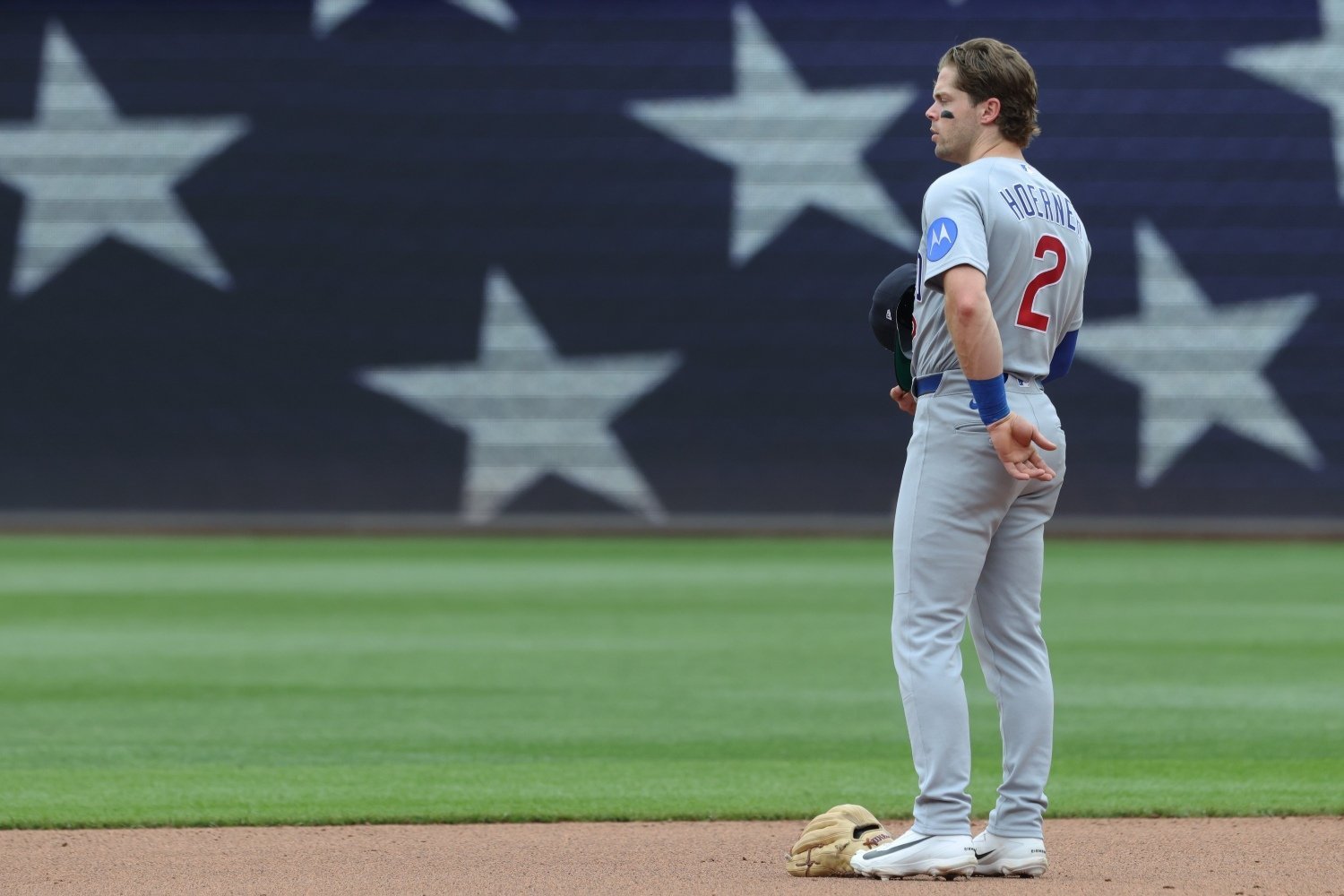 There is a narrative about the Cubs position players that doesn’t seem to jibe with reality. Common Cubs fan knowledge states that this is an elite position-player group. And yes, when you look at WAR, the Cubs look great. The defense truly is elite. But they simply don’t have the offensive talent—or at least the demonstrated capacity for present production—to justify a heavy investment in this season. Historically, teams need at least one elite bat to contend. Pete Crow-Armstrong has been that, and is a legitimate MVP candidate. But the rest of the lineup features only one player with a 120 wRC+. That’s simply not enough offense—not enough high-end hitting talent—to reach their postseason goal. Other contenders this year have more players who have reached this stat, which basically means the player is 20 percent better than a league-average hitter. The Dodgers have six; the Brewers have eight; and the Rays four. Even more, the Dodgers feature a certain two-way legend with a lofty 162, and Junior Caminero in Tampa is over 150. There are reasons why these teams come through more often and win at a higher rate. They simply have more offensive talent. Last year was more of the same. Toronto and Seattle each had seven players exceed this mark. The Brewers and Phillies checked in with four. The trend is established; the Cubs' hitting doesn’t measure up to recent contenders. Other champions with 85-95 wins (the range in which the Cubs are likely to fall) also had several more bats over a 120 wRC+. The 2021 Braves and 2019 Nationals, both Wild Card entrants, each had five players exceed the mark. Last year’s Dodgers had five, and of course, Ohtani put up a 172. The 2015 Royals are often held up as an example of a champion without a superstar, but they had seven players clear the 120 mark. High-end hitting is essential for October success, and the Cubs are not performing at that level. All of this has to be considered in the context of the broader roster, of course. Entering Sunday, the Cubs led the majors in non-pitcher Wins Above Average (WAA), according to Baseball Reference, at 10.3. Crow-Armstrong has accounted for 5.0 of that himself, though, and as we know, much of the other value comes from the great defense of Michael Busch, Nico Hoerner, Alex Bregman, Dansby Swanson, and Ian Happ. More importantly, their pitchers have dug a hole the position players have had to climb out of. They've been worth -5.6 WAA. In short, take away Crow-Armstrong, and the roster as a whole is underwater, at -0.3 WAA. With the three best pitchers the team has had active at any point this season (Cade Horton, Daniel Palencia and Ben Brown) all on the injured list indefinitely or out for the year, it's unlikely that they'll turn that around with their current personnel. There is no realistic way the Cubs can fill their holes at starting pitcher, the bullpen, and add a true middle-of-the-order bat. Balancing the roster by deepening the lineup would be massively costly. Given this reality, it doesn't make sense to gut the farm for a one-time effort. Bregman will continue to hit in the middle of the order, because projections say he’s the most likely to produce numbers at that spot. Despite many online clamoring for a lineup change, there really isn’t a move to be made that would push them ahead of Milwaukee or the Dodgers. The best course of action is hoping the highest-paid players on the team (Bregman and Swanson) return to their normal levels of production—not to mention Hoerner and Happ. Jed Hoyer was lauded for his efforts to build a complete roster in the offseason, eschewing waiting for a deadline addition. That team hasn't materialized, and the underperformers in the offense are a reason why. Unless the highly-paid bats come to the grill and start frying some tasty stats, the Cubs should just let it ride. View the full article
 -
'It sucks': Twelfth straight loss sets Marlins franchise record
DiamondCentric posted an article in Fish On First
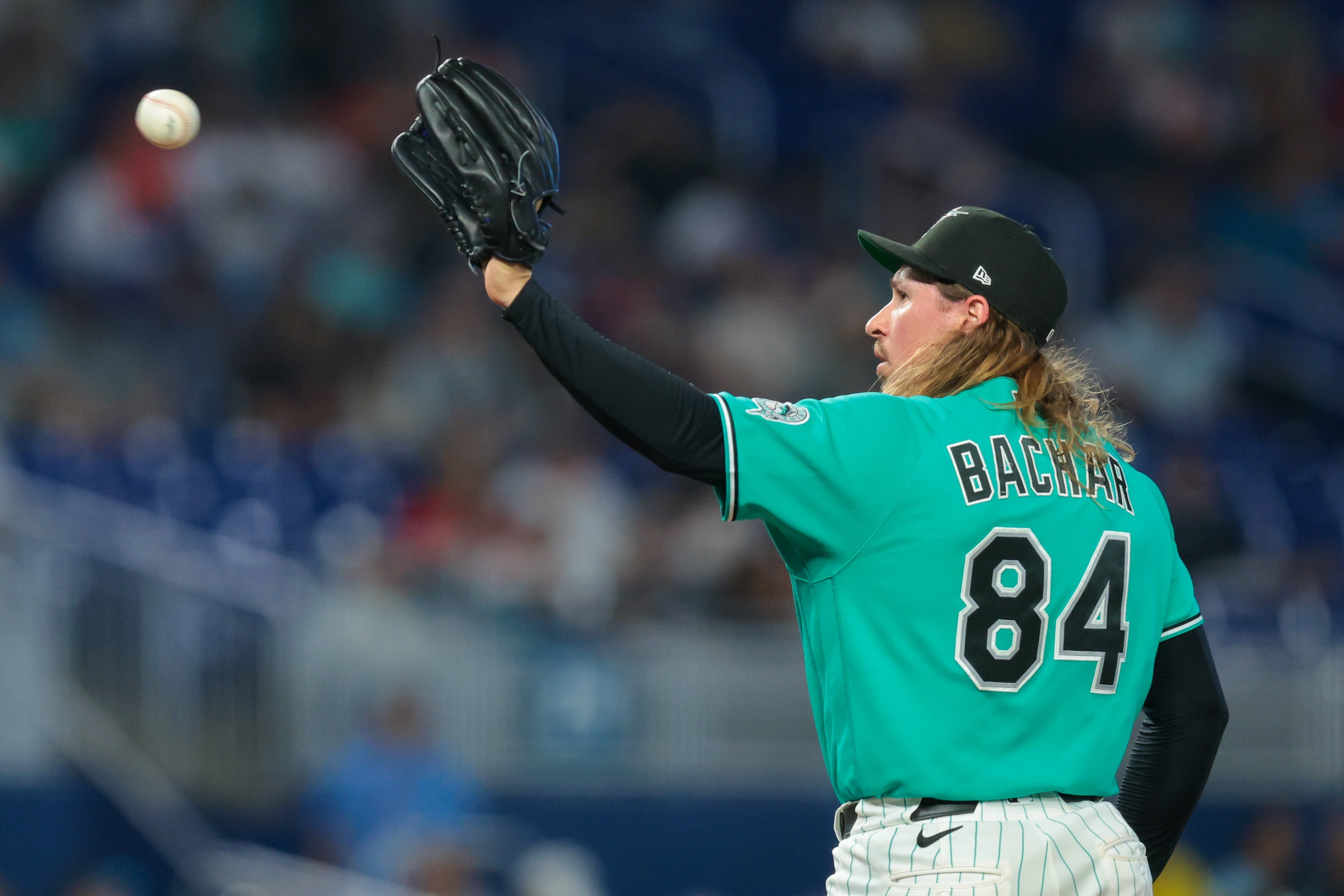 MIAMI -- In retrospect, it was too good to be true. The dark clouds that surrounded loanDepot park throughout Sunday afternoon cleared up to reveal a Miami skyline beaming in the July sun, serving as a light at the end of the tunnel for the 21,675 inside. The Marlins, amidst their dreadful eleven-game skid, stood a mere six outs away from avoiding infamy and crawling back to a respectable .500 even after a streak of such magnitude. While all signs pointed to a picture-perfect conclusion of a forgettable two weeks, the young Fish were instead gut-punched as hard as ever. Two homers in four swings from a duo of San Diego stars off Lake Bachar left Miami in disarray and without the lead they had held since the second inning. Minutes later, their fate was decided. A 5-3, franchise-record-setting twelfth consecutive loss in such brutal fashion has a team that was on top of the world less than a month ago desperately trying to stay afloat. "There's no hiding from it," Marlins skipper Clayton McCullough said postgame. "Does anybody feel good? Certainly not. But to come in here each day and cry about it or make excuses, I don't know what that's going to do. We have a very prideful group that is certainly upset, frustrated, angry about how things are going, but we're the only ones that can change that. When you turn it around and come back tomorrow, it's going to be staring at us again; we just got to meet this head-on and continue. For me, there's really no other choice." While McCullough's group jumped out to an early 3-0 lead, issues that continue to plague his club in this stretch showed their head late -- inefficient offense and a bullpen missing Anthony Bender. Following Kyle Stowers ' lead-extending blast in the third, the rest of Miami's offense mustered up two hits the rest of the contest. Through all twelve of their defeats, the Marlins have scored more than three runs in just two games. As a team, they rank bottom three in hits, average and OPS. Janson Junk , who tied his season high in strikeouts with six and conceded just one run through four and two thirds was more than good enough for Miami to win. Unfortunately, while four relievers combined to forfeit a single hit, Bachar was dinged for the remaining four of the five Friar runs in that back-breaking eighth. "It sucks," Junk said of the skid. "It's not fun going through it, but we just got to take it day by day." Although the aforementioned light seems as far away as ever, McCullough believes not only his players, but staff can pull themselves out of this rut against the terrifying trio of Zack Wheeler, Aaron Nola and Jesus Luzardo in their next three games. Game one against division rival Philadelphia is set for 6:40 pm EST Monday night. "I think more than just encouraged and continue to be that I watch how our staff approaches each day like nothing has changed," said McCullough. "Is that to say that guys feel great right now in (the clubhouse)? No, everybody's beat up right now. I mean that's just the reality when your job when you are frustrated at work and things aren't going well, you feel like s**t, and that's where a lot of guys are. But you know what? Every day, they come back here, guys are showing up, they're ready, guys are coming in still getting prepared, and you know when that game starts, all 26 of our players, every member of our staff believes that we're going to win that day's game. So, that for me is the encouraging part. As difficult as this has been, that each day when we come in, we're very much believing that you know today is going to be the day that we we turn it around." View the full article
