


DiamondCentric
-
Posts
2,631 -
Joined
-
Last visited
Never
Content Type
Profiles
Forums
Events
News
Tutorials & Help
Major League Baseball Videos
Guides & Resources
Store
Downloads
Gallery
Everything posted by DiamondCentric
-

 Noah Hall is repeating a level this year. He may have finally found a way to progress through the system. The Brooklyn right-hander has now logged two consecutive scoreless outings after blanking Wilmington on three hits over six innings Tuesday. He struck out seven and walked three in a no-decision. He tossed 5 1/3 innings of one-hit ball as a bulk reliever at Frederick on July 1. Hall, 25, is in his fourth season in the Mets' organization and his third with the Cyclones. New York selected him in the seventh round of the 2023 MLB Draft out of the University of South Carolina. He debuted in 2024, and showed enough to be assigned to the Arizona Fall League. Last year, he posted a 2.72 ERA over 112 2/3 innings with Brooklyn. But he was sent back to the Cyclones for 2026, and he has regressed hard. His ERA is 5.19 even after the scoreless streak. Control has been a major issue -- he has a 15.8 percent walk rate to go with a 22.6 percent strikeout rate in 76 1/3 innings. He threw 53 of 89 pitches (59.6 percent) for strikes Tuesday. Elsewhere in the system . . . Syracuse’s game at Norfolk was postponed because of inclement weather. The Mets will play a doubleheader Wednesday. Binghamton broke a tie with six runs in the eighth inning and went on to down Hartford, 10-4. The go-ahead run scored on a throwing error during a stolen-base attempt. JT Schwartz homered in the first to open the scoring. St. Lucie routed Jupiter, 11-2. Antonio Jimenez led off the game with a home run and finished 4-for-6 with four runs scored. Starter Jose Lopez allowed one hit over four innings but walked four. The FCL Mets walked off the FCL Cardinals, 1-0. Heriberto Rincon drove in the winning run with a two-out double in the bottom of the seventh. Four Mets pitchers combined on a two-hit shutout. Eris Albino struck out three in three innings of relief. DSL Mets Blue lost to the DSL Marlins, 5-4. The Mets scored all their runs in the bottom of the first. Michalle Mercedes stroked a two-run single to give them a 4-0 lead. DSL Mets Orange broke a scoreless tie with three runs in the sixth and then pulled away for a 7-1 win over the DSL Angels. Abner Meza started and threw five scoreless innings to earn the win. Wandy Asigen doubled, drove in a run and scored a run. Mets Transactions New York Mets designated RHP Guillo Zuñiga for assignment. New York Mets activated 1B Jorge Polanco from the 60-day injured list. New York Mets designated RHP Alex Carrillo for assignment. New York Mets sent CF Luis Robert Jr. on a rehab assignment to Binghamton Rumble Ponies. New York Mets selected the contract of RHP Matt Seelinger from Syracuse Mets. New York Mets optioned SS Ronny Mauricio to Syracuse Mets. Rumble Ponies Erupt Late To Beat Yard Goats Binghamton capitalized on Hartford mistakes in the eighth to break a 4-4 deadlock. Wyatt Young walked and Kevin Villavicencio reached on a fielding error to put runners at the corners with no outs. Villavicencio then stole second, and a throwing error by catcher Cole Messina allowed Young to score the go-ahead run. Villavicencio advanced to third on the error. Chris Suero walked, and then Jose Ramos doubled home both runners to make it 7-4. Nick Lorusso followed with a double to drive in Ramos for an 8-4 lead. Sacrifice flies by JT Schwartz and Kevin Parada capped the rally. Starter Channing Austin allowed no hits in 2 2/3 innings but walked three. Douglas Orellana was credited with the win despite allowing a run on two hits and two walks in his inning of work. Player AB R H RBI BB K Chris Suero 4 2 0 0 2 1 Jose Ramos 4 2 2 2 2 2 Nick Lorusso 5 1 1 1 1 2 JT Schwartz 3 2 1 4 1 2 Kevin Parada 2 0 1 1 2 0 Vincent Perozo 4 0 0 0 1 2 Matt Rudick 4 1 1 0 1 2 Wyatt Young 4 1 1 0 1 0 Kevin Villavicencio 4 1 2 1 0 0 Player IP H R ER BB K HR Channing Austin 2 2/3 0 0 0 3 2 0 Justin Armbruester 1/3 0 0 0 0 0 0 Brendan Girton 2 4 2 2 1 4 0 Felipe De La Cruz 1 2 1 1 1 0 0 Douglas Orellana 1 2 1 1 2 0 0 Garrett Stratton 1 0 0 0 0 1 0 Saul Garcia 1 1 0 0 1 2 0 Cyclones Waste Hall's Gem In Loss To Blue Rocks Brooklyn's offense managed just three hits and struck out nine times, but thanks to Hall's pitching, the Cyclones led, 1-0, after six. Ronald Hernandez singled home Mitch Voit, who had walked, in the sixth. Wilmington answered with two runs in the seventh -- on a sacrifice fly and an RBI single -- against Kevin Herget. Parker Carlson and Gregori Louis kept the game at 2-1 with two innings of scoreless relief. Daiverson Gutierrez collected two of Brooklyn's three hits. Player AB R H RBI BB K Mitch Voit 3 1 0 0 1 0 Yonatan Henriquez 4 0 0 0 0 1 Ronald Hernandez 4 0 1 1 0 1 Corey Collins 2 0 0 0 1 1 JT Benson 4 0 0 0 0 1 Daiverson Gutierrez 3 0 2 0 0 0 Yohairo Cuevas 3 0 0 0 0 2 Colin Houck 3 0 0 0 0 1 Sam Biller 3 0 0 0 0 2 Player IP H R ER BB K HR Noah Hall 6 3 0 0 3 7 0 Kevin Herget 1 3 2 2 0 0 0 Parker Carlson 1 0 0 0 0 1 0 Gregori Louis 1 0 0 0 0 2 0 Jimenez Stays Hot As St. Lucie Routs Jupiter Jimenez has seven hits in his last 10 at-bats, four for extra bases, after his four-hit night against the Hammerheads. He doubled twice Tuesday to go along with his leadoff home run. He also stole two bases. The Mets broke the game open with a four-run sixth after the first two batters were retired. Branny De Oleo singled home a run, Jimenez scored on a wild pitch, and AJ Salgado plated the final two runs with a single to put St. Lucie up, 7-2. De Oleo finished with three RBIs, while Julio Zayas walked four times. Zack Mack earned the win with two scoreless innings of relief. Player AB R H RBI BB K Antonio Jimenez 6 4 4 1 0 1 Branny De Oleo 5 1 2 3 0 1 Trey Snyder 4 2 1 0 1 3 Julio Zayas 2 2 0 0 4 1 AJ Salgado 5 0 2 2 0 1 Simon Juan 3 0 1 0 1 0 Chase Meggers 4 0 0 1 1 2 Taylor Darden 4 0 0 0 1 2 Jeremy Rodriguez 3 2 0 0 2 1 Player IP H R ER BB K HR Jose Lopez 4 1 2 2 4 4 0 Zack Mack 2 0 0 0 2 2 0 Miguel Mejias 1 1/3 1 0 0 2 1 0 Elwis Mijares 1 2/3 0 0 0 1 2 0 Top-20 Prospect Performance Jonah Tong: DNP Jack Wenninger: DNP Ryan Clifford: DNP Elian Pena: DNP Nick Morabito: DNP Jacob Reimer: DNP Mitch Voit: 0-for-3 Jonathan Santucci: DNP Zach Thornton: DNP Chris Suero: 0-for-4, K Will Watson: DNP Wandy Asigen: 1-for-2, RBI, 2B, BB Eli Serrano III: DNP Randy Guzman: DNP Dylan Ross: DNP Ryan Lambert: DNP Antonio Jimenez: 4-for-6, HR, 2 2B, K R.J. Gordon: DNP Jonathan Pintaro: DNP Marco Vargas: DNP View the full article
 -
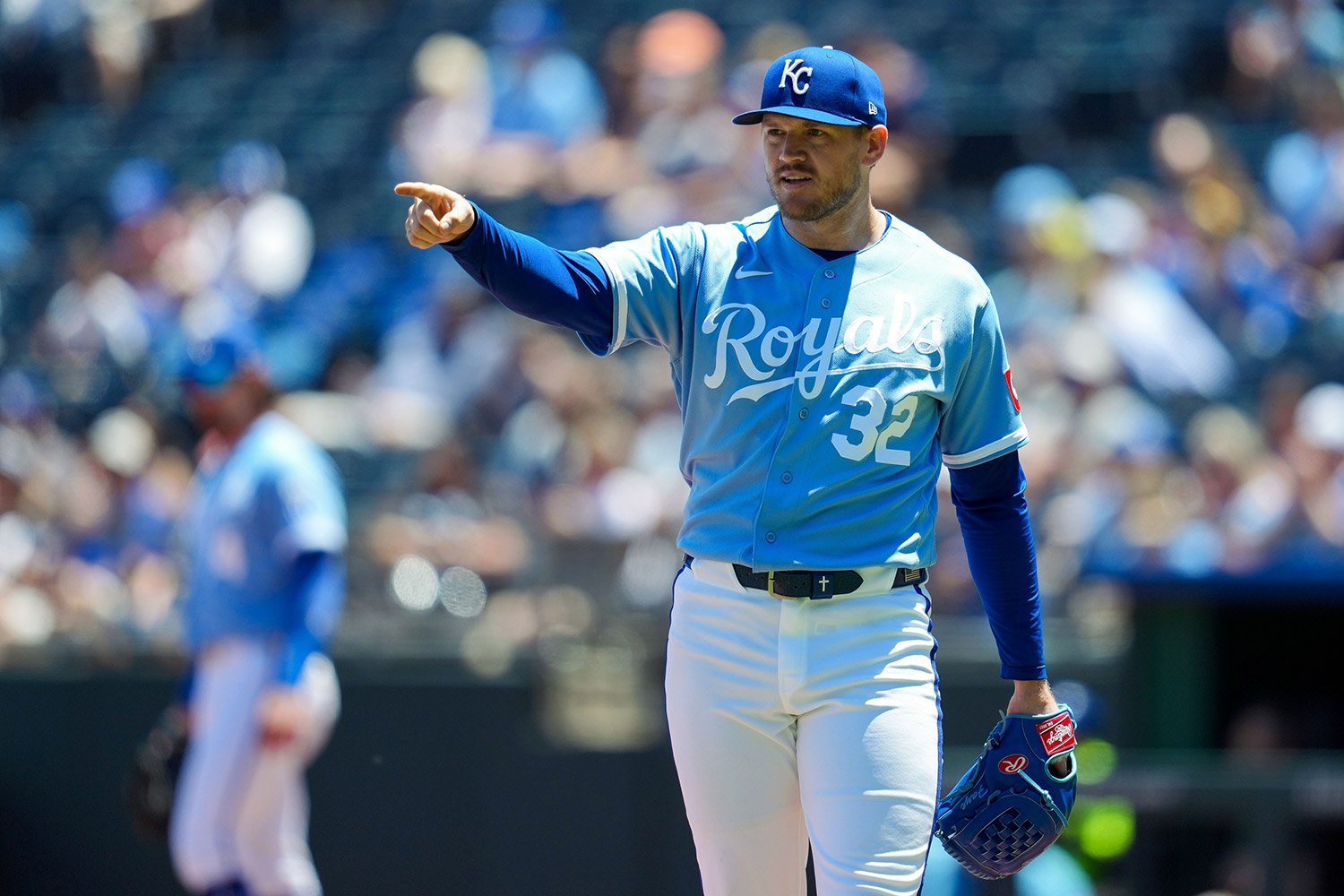 Stephen Kolek owns one of the lowest strikeout rates among Kansas City starters. His K% sits at 9.9 against lefties and 10.0 against righties, second-worst in the rotation in both splits. Yet his slider still generates whiffs at a level comparable to some of the best relievers in the league. In 2026, it has produced a 42.7% whiff rate and a 34.1% strikeout rate. Isolated, it belongs in a different profile. A pitch mix is not a collection of stuff but a sequence in which each pitch gives meaning to the next. In 2025, Kolek's sinker and changeup provided that structure. Neither dominated, but both shaped at-bats. The sinker generated ground balls (64.7% GB), while the changeup neutralized lefties (.049 AVG, 26.2% K). Together, they forced hitters to cover the lower half of the zone, opening lanes for the four-seam and slider. In 2026, that foundation is gone. Both pitches have lost their ability to alter swing decisions. The changeup no longer punishes zone contact, and the sinker no longer consistently drives the ball into the ground. Pitch Type Chase% 2025 Chase% 2026 BA 2025 BA 2026 Sinker 24.7% 22.2% .267 .304 Changeup 32.3% 29.6% .049 .310 Without that base, the rest of the arsenal flattens. The four-seam fastball is no longer protected vertically; its ground-ball rate drops from 47.2% to 30.3%, while usage rises to 27.7%. Hitters no longer need to respect the bottom of the zone. Pitch Type Usage 2025 Usage 2026 Whiff% 2026 K% 2026 Sinker 24.1% 22.0% 6 6.6 Changeup 11.6% 12.5% 18.4 16.1 4-Seam 25.6% 27.7% 18.1 7.5 Slider 23.4% 16.8% 42.7 34.1 The slider remains the only elite pitch in the mix. But it no longer shapes at-bats because the pitches surrounding it aren't fooling batters. The slider's usage has declined, and its role as a finishing weapon has lessened. Kolek's start against Tampa Bay made it visible. Three runs in the second inning, 42 pitches to escape it. The problem was not execution, but duration. No at-bat was forced into early commitment. The results by times through the order confirm the pattern: TTO FIP AVG SLG HardHit% 1st Time 3.82 .250 .408 34.9 2nd Time 4.51 .243 .392 23.0 3rd Time 6.11 .298 .574 46.2 Each pass through the lineup strips another layer of flexibility. By the third time, hitters are no longer predicting a sequence; they are attacking isolated pitches. Without sinker or changeup-shaped counts, the four-seam becomes predictable, and the slider becomes detached. The mix stops functioning, weakening all of Kolek's offerings. In the end, the data does not describe a decline in stuff. It describes a pitch mix that no longer forces decisions. And when that happens, the outcome is already simplified before the pitch is thrown. Kolek still has a dominant weapon, but he no longer has a working system. View the full article
 -
 Taj Bradley tied his career high in a start against the Astros, posting 11 strikeouts. There's still one adjustment that could take his game to another level. View the full article
 -
Jackson Merrill's Issues With Fastballs Finally Have An Origin
DiamondCentric posted an article in Padres Mission
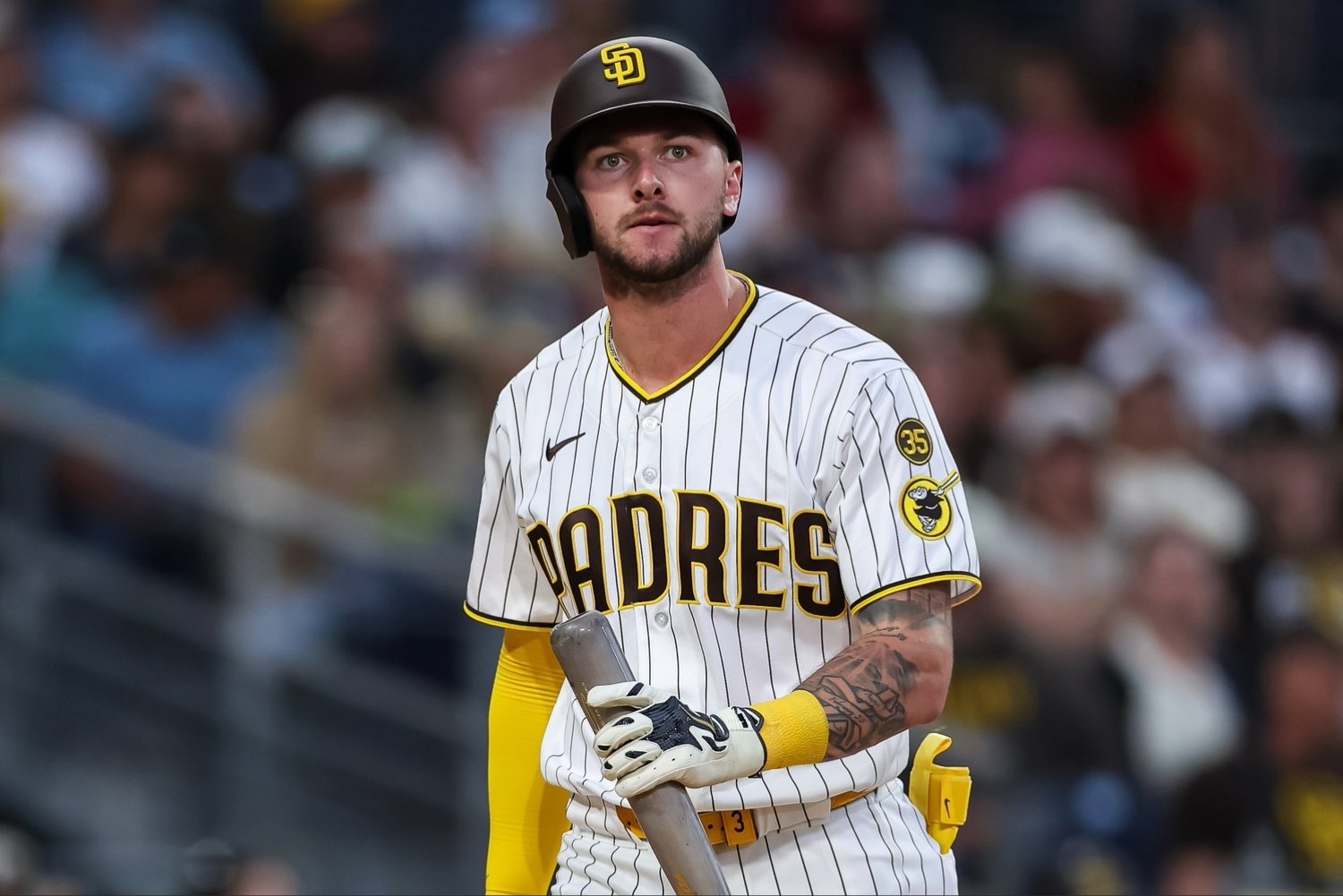 Jackson Merrill's 2026 season has been a never-ending offensive spiral. Our @Gottie Chavez first looked at the San Diego Padres' center fielder back in April when it was becoming clear that he was struggling with timing against four-seam fastballs, feeding into a slow start. Then ,we were back in the Merrill business in May, when @N.B. Lindberg dove into Merrill's struggles that originated in the heart of the zone. He was expanding the zone early with little to compensate when he was working on pitches in the friendlier portions of it. In the month since the latter examination, things haven't gotten much better for Merrill in any respect. Sure, there was a decent blip of a bump in the power numbers — specifically against breaking pitches — but he has otherwise continued to spiral out of control at the plate. His numbers remain pinned down, with a .217/.273/.357 line and a 75 wRC+ to his name through more than three months in the books. The latest turn in Merrill's struggles comes courtesy of Timothy Jackson of Baseball Prospectus, who further established that Merrill isn't locked into an issue with his approach, but rather in his mechanics. As it turns out, there's a relationship between all of these pieces. If one were to watch Jackson Merrill log a plate appearance or two over the course of a game, the eye test might indicate it was, in fact, his approach at the center of his 2026 issues. It's an easy conclusion to draw, especially when the player has seen his strikeout rate increase for a third consecutive season. Merrill's K% sits at 25.8 this year, more than three points above his 2025 rate and over eight percentage points higher than it was in his breakout rookie campaign of 2024. Declaring it to be an approach issue based on that, however, neglects the other side of the story. A rising strikeout rate points us in an approach-related direction, especially when we saw Merrill's swing and chase rates each rise slightly between 2024 and 2025. That's not what's happening here, though. Instead, the outfielder is actually swinging less than even his rookie year, at a 54.8 Swing%. His 35.4 percent swing rate on pitches outside of the strike zone is less than a point above his rookie year and a three-point cut from last year's rate. And while his batting line looks egregiously worse than an injury-riddled 2025 season, the contact rates look quite similar across the board. Instead, where Merrill's issues live is in the blend of both making contact and making it of a certain quality based on his timing. Or, you know, a fusion of each of the pieces mentioned above. While that could be an approach issue, Merrill's problem is becoming more visibly of the mechanical variety. In those instances where he does make contact, Merrill is still doing so with authority. His 45.7 percent hard-hit rate is in the 74th percentile and comfortably above the league average of 39.1 percent. His bat speed being up from the last two years (73.5 MPH) likely helps, but that development on its own is not enough to drive production, especially because some other factors are helping to negate that. For one, Merrill's swing has gotten steeper. His 39-degree tilt is a couple degrees higher than each of the last two years, while his average attack angle was 10 degrees last year and is at nine in 2026 after being at six in 2024. At the same time, his swing has also gotten slightly longer, leading him to make contact farther out in front of the plate and, more importantly, farther away from his body. A long, upper-cut swing isn't going to be a BABIP darling. Which feeds into how Statcast's new data, which Jackson mentions in his work, illustrates the problem as a mechanical flaw rather than something rooted in the approach. Let's focus just on the fastballs here, though: The above is Merrill against fastballs in 2024, illustrated in red, and here in 2026 represented by that teal color. Our middle image there shows that he's closer to on time than he was even in 2024. No doubt that the swing speed has helped him there. However, the left graph indicates he's catching things closer to the end of the bat with greater regularity while ending up under fastballs more frequently. The result is a flyball rate to the opposite field at a 47.2 percent clip. Merrill was at roughly 32 percent in 2024. There's been a push to invest in fly balls to the pull side by myriad hitters across the baseball landscape the last couple of years. The rationale is obvious, in that pull side power is your greatest opportunity to create the highest quality of contact and, subsequently, create impact. Merrill is closer to on-time than he was in 2024, but he's squaring the ball up and creating fewer blasts while hitting just .071 on such contact. Therein lies our problem. Merrill has fallen just enough out of whack mechanically that he's unable to compensate no matter how hard he swings. As our writers here at Padres Mission posited earlier this year, it's very much a fastball issue. We just have more clarity on it now. Sure, there are some other factors weighing him down, embedded into the approach and against other pitch types. But as a major-league hitter, there's a better-than-not chance that your greatest success is going to come on fastballs. Merrill can't do that right now. As Jackson indicated in his piece, though, that doesn't mean that Merrill stopped being a good hitter. Nor does it mean the changes being made are intentional. Regardless of their origin, though, they're holding him back and he's going to have to find a new way to compensate to get back. It's not the approach and it's not solely bad luck. Once mechanics and, as a result, the fastball issue are sorted, we can worry about the rest. View the full article
 -
Minnesota Twins Minor League Hitters of the Month: June 2026
DiamondCentric posted an article in Twins Daily
 June featured no shortage of standout performances throughout the Twins organization. Every affiliate had players who put together compelling cases for recognition, making this one of the toughest months yet to narrow down to just four hitters. Several top prospects continued their ascent, while a few under-the-radar names forced themselves into the conversation with dominant stretches at the plate. Before getting to this month's winners, a handful of players just missed the cut. Here are a few honorable mentions before getting into June’s top hitters. Honorable Mentions Yilber Herrera (FCL Twins): 15 G, .375/.519/.525 (1.044), 1 HR, 1 2B, 1 3B, 13 BB, 8 K Marek Houston (Cedar Rapids Kernels/Wichita Wind Surge): 19 G, .356/.484/.493 (.977), 2 HR, 4 2B, 15 SB, 19 BB, 15 K Jay Thomason (Cedar Rapids Kernels/Wichita Wind Surge): 22 G, .392/.479/.506 (.985), 2 HR, 3 2B, 12 SB, 13 BB, 17 K Kala’i Rosario (Wichita Wind Surge/St. Paul Saints): 20 G, .329/.472/.543 (1.015), 4 HR, 3 2B, 16 BB, 20 K 4. Luis Fragoza – Fort Myers Mighty Mussels June Stats (20 G): .329/.382/.634 (1.016), 6 HR, 7 2B, 6 SB, 5 BB, 23 K Fragoza opened the season in the Florida Complex League but didn't stay there long. After posting an .830 OPS and reaching base at nearly a .420 clip in 10 games, the Twins challenged the 19-year-old with a promotion to Low-A. Rather than slowing down, he elevated his game. His six home runs and seven doubles ranked among the organizational leaders during June, while his combination of power and speed made him one of the most exciting hitters in the lower levels of the system. Even more impressive is the context behind those numbers. Fragoza has accumulated only 11 plate appearances against younger pitchers all season, meaning nearly every at-bat has come against older competition. Despite that, he owns a .607 slugging percentage and .991 OPS against older pitchers. There is still room for refinement. His 26.1% strikeout rate since arriving in Fort Myers is something the Twins will undoubtedly continue monitoring. However, when evaluating age, level, and production together, Fragoza is beginning to look like another prospect who deserves significantly more attention on Twins top prospect lists. 3. Khadim Diaw – Cedar Rapids Kernels/Wichita Wind Surge June Stats (19 G): .352/.495/.535 (1.030), 3 HR, 4 2B, 16 BB, 11 K Diaw's season has steadily trended upward. After producing a .720 OPS in April, he took a noticeable step forward in May before putting everything together in June. He reached base at an incredible .495 clip while displaying outstanding strike-zone discipline, drawing 16 walks compared to only 11 strikeouts. That performance earned him a promotion to Double-A Wichita, where he remains two years younger than the average Texas League player. Throughout the season, more than two-thirds of his plate appearances have come against older pitchers, yet he has still managed an .822 OPS in those matchups. Perhaps the biggest sign of his maturation has come in high-leverage situations. With two outs and runners in scoring position, Diaw has slashed .333/.472/.524 (.996), consistently delivering quality at-bats instead of expanding the strike zone. If this offensive approach continues, he could reach Triple-A before the season’s end. 2. Matt Wallner – St. Paul Saints June Stats (22 G): .315/.390/.730 (1.120), 11 HR, 4 2B, 30 RBI, 7 BB, 28 K Sometimes the biggest story isn't about development, because it's about reminding everyone that you belong in the big leagues. For the second time in three seasons, Wallner earned International League Player of the Month honors after putting together one of the most dominant offensive months anywhere in Minor League Baseball. The 28-year-old slashed .315/.390/.730 (1.120) with 11 home runs, four doubles, 28 RBI, and 23 runs scored in 22 games. He led the International League in home runs, RBI, runs scored, total bases, and slugging percentage while ranking among the league leaders in nearly every major offensive category. His month featured back-to-back home run games four different times, including a three-homer explosion on June 4 against Indianapolis. He also collected hits in 17 of his 22 games and produced nine multi-hit performances. Since being optioned on May 15, Wallner has done everything possible to force his way back into Minnesota's plans. Across 42 games, he is hitting .282/.367/.607 (.974) with 15 home runs and 42 RBI while becoming the Saints' Triple-A franchise home run leader. Since that date, only a handful of hitters across the International League have matched his combination of power production and run creation. 1. Ryan Sprock – Fort Myers Mighty Mussels June Stats (21 G): .400/.535/.600 (1.135), 2 HR, 1 3B, 7 2B, 21 BB, 5 K June belonged to Ryan Sprock. The Fort Myers catcher was named the Florida State League Player of the Month after producing one of the most complete offensive performances by any Twins prospect this season. Sprock led the league in batting average (.400), on-base percentage (.535), hits (30), and OPS (1.135), while also finishing fifth in RBI. Just as impressive was his elite command of the strike zone, drawing 21 walks while striking out only five times. His consistency was remarkable. Sprock recorded six multi-hit games, highlighted by a four-hit performance on June 9. He also opened the month with an 18-game hitting streak, batting .446 with a 1.237 OPS during that stretch. The streak raised his season average from .259 to .323, became the longest in the Florida State League this season by five games, and ranked as the third-longest hitting streak in Fort Myers franchise history. Power often grabs headlines, but Sprock's advanced approach, elite contact skills, and exceptional plate discipline made him the organization's most impressive hitter during the month of June. Choosing just four players from June's performances was no easy task. Several honorable mentions could have easily landed on this list, and a number of other Twins prospects put together breakout months that deserve recognition. From teenagers like Fragoza announcing themselves as emerging prospects to Wallner proving he has little left to accomplish in Triple-A, the organization received offensive production at every level. Sprock ultimately earns the top spot thanks to a historic month in the Florida State League, but every player featured here gave Twins fans another reason to be excited about the talent moving through the system. Do you agree with the rankings above? Add your own ballot in the comments. View the full article
 -
 The Boston Red Sox are in the midst of another disappointing season, yet find themselves only four games out of the American League's final wild card spot. Whether they buy, sell, or stand pat at the deadline remains to be seen, but there will be a market for some of their players. Jarren Duran is one of those players, and Chandler Rome of The Athletic is reporting that the "[Houston] Astros focus at the trade deadline is a left-handed hitting outfielder." If the Red Sox don't find any prospects that strike their fancy, the Astros do have more left-handed relievers than one bullpen realistically needs. This could allow the Red Sox to deal from the Major League roster while also bolstering another position group, especially if they decide to move Aroldis Chapman. However, even if they were to move Chapman, their bullpen isn't necessarily in need of more southpaws. Like much of the Red Sox offense, Duran has struggled this year, slashing .201/.261/.364 this year with 13 home runs and 14 stolen bases across 82 games. He has two more years of team control. Do you think the Red Sox should trade Duran? Join the conversation in the comments! View the full article
 -
 While the Toronto Blue Jays are not out of the playoff picture by any means, they could look to do a soft sell at the trade deadline and move some expiring contracts to retool for 2027. Daulton Varsho is one of those expiring contracts, and Chandler Rome of The Athletic is reporting that the "[Houston] Astros focus at the trade deadline is a left-handed hitting outfielder." If the Blue Jays don't find any prospects that strike their fancy, the Astros do have more left-handed relievers than one bullpen realistically needs. This could allow the Blue Jays to deal from the Major League roster while also bolstering another position group for a playoff push. However, their bullpen isn't necessarily in need of more southpaws, either. Varsho has been a little underwhelming this year, slashing .242/.309/.398 this year with just seven home runs and seven stolen bases across 79 games. Do you think the Blue Jays should trade Varsho? Join the conversation in the comments! View the full article
 -
 Trevor Larnach is in the midst of a career year, having gone from non tender candidate to an above average hitter and serviceable left fielder in a matter of months. Is now the right time to move on from him and create an opening for a top prospect? Chandler Rome of The Athletic is reporting that the "[Houston] Astros focus at the trade deadline is a left-handed hitting outfielder." While their farm system isn't strong, the Astros have a bevy of southpaw relievers that they could look to move...something the Minnesota Twins are in need of. Though the Minnesota Twins may not be true "buyers" at the deadline, they will seemingly be in the playoff hunt in the second half of the season. If they were to make a move, it would make sense for them to deal from a position of depth to strengthen the weakest position group on the roster. For Larnach, he is currently slashing .247/.326/.412 with 13 home runs and a pair of stolen bases across 75 games. Though it's still not great, he has improved his defensive contributions this season to a more serviceable level. Having been a league average (or slightly better) hitter for years now, the improved defense has made him a more reliable everyday player. He is controllable through 2027. Should the Minnesota Twins look to trade Trevor Lawrence? Join the conversation in the comments! View the full article
 -
Twins to Sign LeBron James, End GOAT Debate Once and For All
DiamondCentric posted an article in Twins Daily
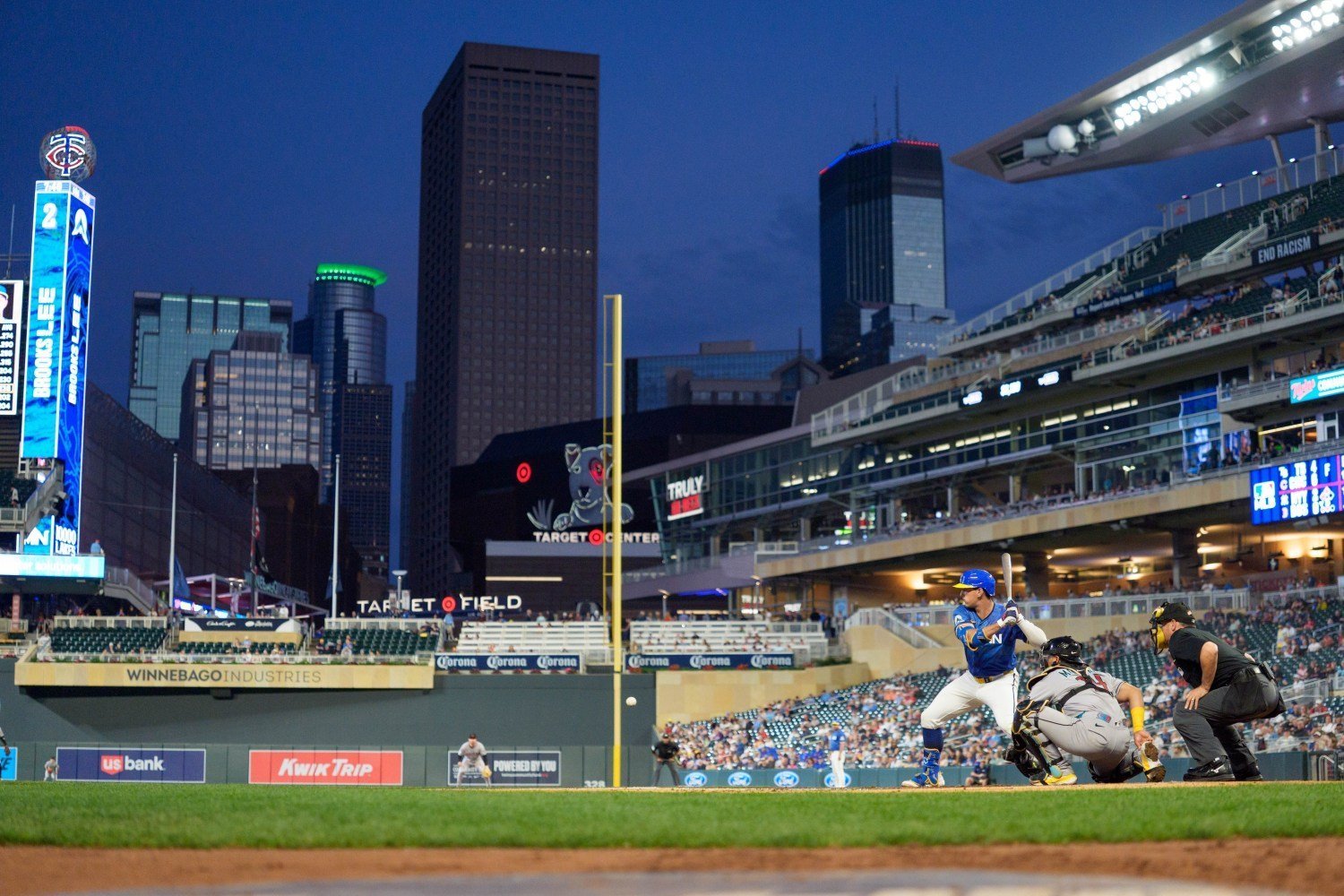 Every summer, NBA free agency creates enough rumors to keep every insider, podcast host, and random guy with a blue checkmark employed. This year has been no different. Every contender has reportedly been "monitoring" LeBron James, and every fan base has convinced itself that the league's all-time leading scorer is just one cryptic social media post away from joining its favorite team. They're all wrong. According to sources that definitely aren't standing outside Target Field wearing fake mustaches, the Minnesota Twins have quietly emerged as the favorites to land James. The move isn't about championships. It isn't about money. It isn't even about legacy. It's about ending the greatest debate in sports history. For decades, sports fans have argued whether James or Michael Jordan deserves the title of the greatest basketball player of all time. Championships. MVPs. Longevity. Peak dominance. Advanced metrics. None of it has settled the discussion. James has reportedly concluded there's only one way to break the tie: Become a better professional baseball player than Jordan. Jordan famously walked away from basketball after the 1993 NBA Finals to play Double-A baseball in the Chicago White Sox organization. Considering he hadn't played competitive baseball since his youth, the experiment was ambitious. In 127 games, Jordan hit .202/.298/.266, with 17 doubles, three home runs, 30 stolen bases, and enough strikeouts to convince everyone that basketball might actually be his best sport. Respectable? Sure. Untouchable? Not exactly. James reportedly believes he can top those numbers with a few months of batting practice and "watching some YouTube videos." Sources inside baseball say Minnesota wasn't James's first call. They simply the first team willing to answer. The Twins see an opportunity that extends beyond baseball. "Attendance has been a topic around here," one anonymous front office executive said, while pretending to reorganize sunflower seeds in the clubhouse. "We're pretty confident LeBron would help with that." The executive admitted there are still baseball questions. "Has he faced 98 mph with ride at the top of the zone? No. Can he read a slider? Probably not. But have you seen him chase down a fast break? That's basically tracking a fly ball." The Twins also aren't worried about where James would hit in the lineup. "We're already leading the American League in runs scored," another club official shrugged. "If LeBron hits ninth and occasionally runs into one, we'll survive." Members of James' inner circle insist this has been brewing for years. "LeBron has already conquered basketball," one longtime associate reportedly said. "Now, he wants to conquer an entirely different sport just to make everyone on sports talk TV panic." Another confidant claimed James has spent the last several offseasons preparing. "People thought he was watching baseball for fun. He was actually scouting Michael Jordan's stat line." When asked whether James had ever faced professional pitching, the source paused. "How hard could it be?" The baseball implications are impossible to ignore. Would James become an All-Star? Probably not. Would he make awkward catches that become viral highlights? Almost certainly. Would opposing pitchers suddenly become nationally famous after striking him out? Without question. Most importantly, the Twins would become the only organization capable of claiming it resolved the greatest basketball debate ever. If LeBron James can slug four home runs, steal 31 bases, and finish with a .557 OPS, social media may never recover. And somewhere, Michael Jordan might start looking up independent league tryout dates. View the full article
 -
Gary Sánchez is an ABS Menace, and He Must Be Stopped
DiamondCentric posted an article in Brewer Fanatic
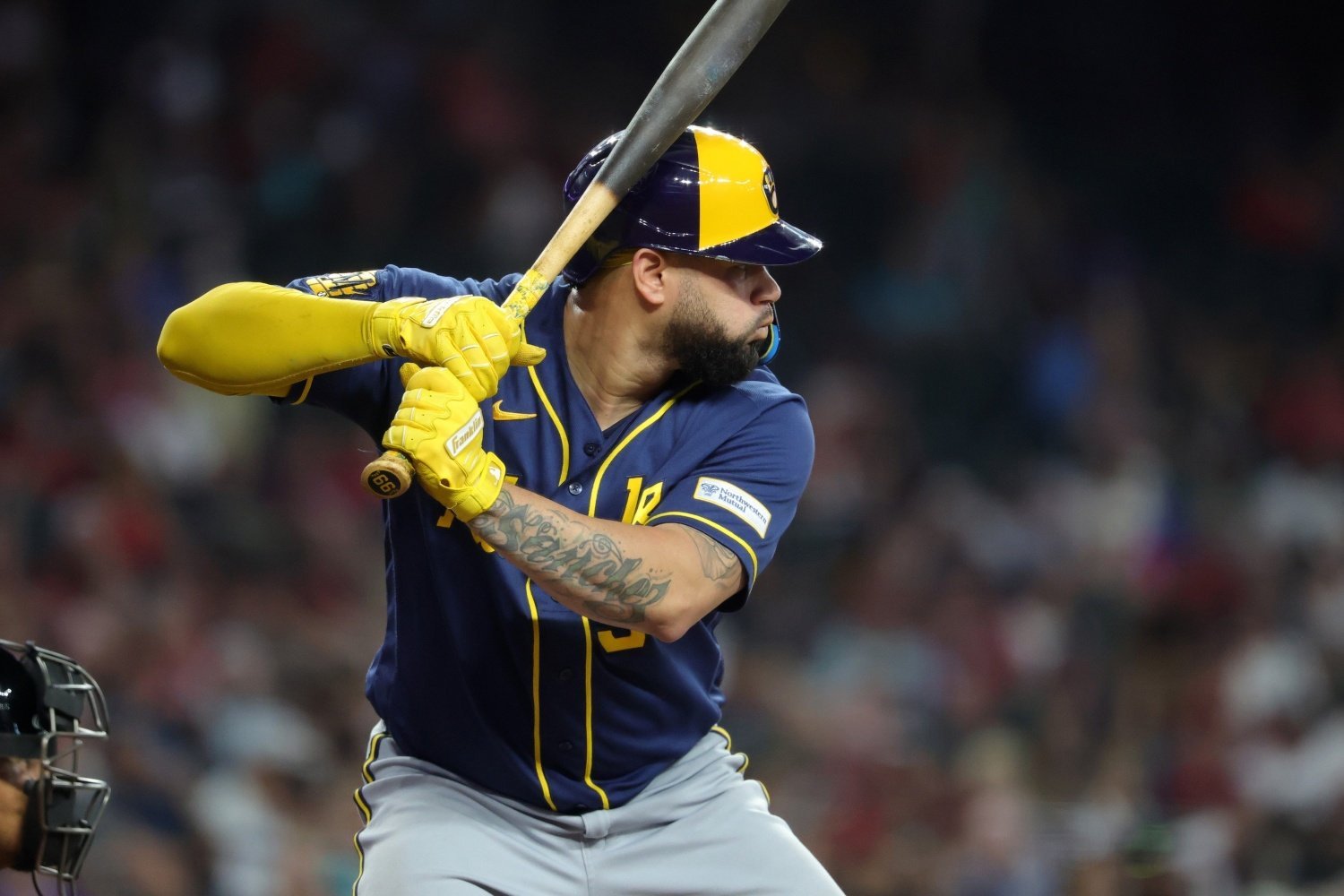 Gary Sánchez has been a welcome surprise for the Brewers this season. Coming in with a penciled-in role as the backup catcher, Sánchez was thrust into increased playing time by early injuries and has performed admirably, slashing .218/.364/.451 (good for a 122 OPS+) in 165 plate appearances. However, Sánchez has one characteristic that sticks out in a bad way: his ABS challenges. While his bat has more than justified his increased role, Sánchez's decision-making when it comes to challenging ball and strike calls has been a surprising weakness. ABS is a new, developing part of the game, and it's crucial to look at Sánchez’s rates to think about a change for the rest of the season. Behind the plate, Sánchez has challenged 33 times, good for 42nd among catchers. He’s won 19 of them, a 58% clip, gaining four strikeouts and flipping two walks in the Brewers’ favor. On the surface, these results are solid. However, his volume stands out. Sánchez owns the 7th-highest challenge rate in baseball, at 3.6%; he is one of the most aggressive catchers when it comes to initiating reviews. That may not be an issue with Sánchez; it appears to be more of a Brewers philosophy. William Contreras is ninth in MLB in challenge rate, and the Brewers as a team have challenged the most so far this year. If Sánchez's aggressiveness behind the plate appears to be a product of team philosophy, the same can't be said for his approach in the batter's box. He leads the league in lost challenges with 14 in 24 attempts. His challenge rate is 7th-highest at 17.1%, despite an expected challenge rate of 4.8%, suggesting he is challenging pitches far more often than the quality of the calls warrants. That aggressiveness has had a noticeable impact on Milwaukee's overall challenge profile. The Brewers have issued just 60 hitter challenges all season, the fewest in baseball, and Sánchez alone accounts for 24 of them, 40% of the team's total. For a player who isn't in the lineup every day, that's a remarkable share of the club's challenges. Of course, the stakes of a missed challenge aren't enormous. Unlike an error or a strikeout, an unsuccessful review doesn't directly cost a run. But because each team has a limited number of challenges, using one on a pitch with little chance of being overturned can prevent a teammate from overturning a truly egregious missed call later in the game. That's where challenge discipline becomes just as important as challenge accuracy. The moral of the story isn't that Sánchez should stop challenging altogether. In fact, his work behind the plate shows he has a decent feel for challenging pitches as a catcher. Instead, the issue lies in the batter's box, where he's been far too willing to gamble on close calls. If Sánchez can become more selective at the plate, the Brewers can preserve more challenges for situations where they're likely to make a meaningful difference. Given their elite discipline as a team, available challenges late in ball games can be crucial to overturn bad calls that damage Milwaukee in clutch situations. It would be an adjustment for Sánchez, but one that could remove one of the few blemishes from an excellent season for Milwaukee’s veteran backup catcher. View the full article
 -
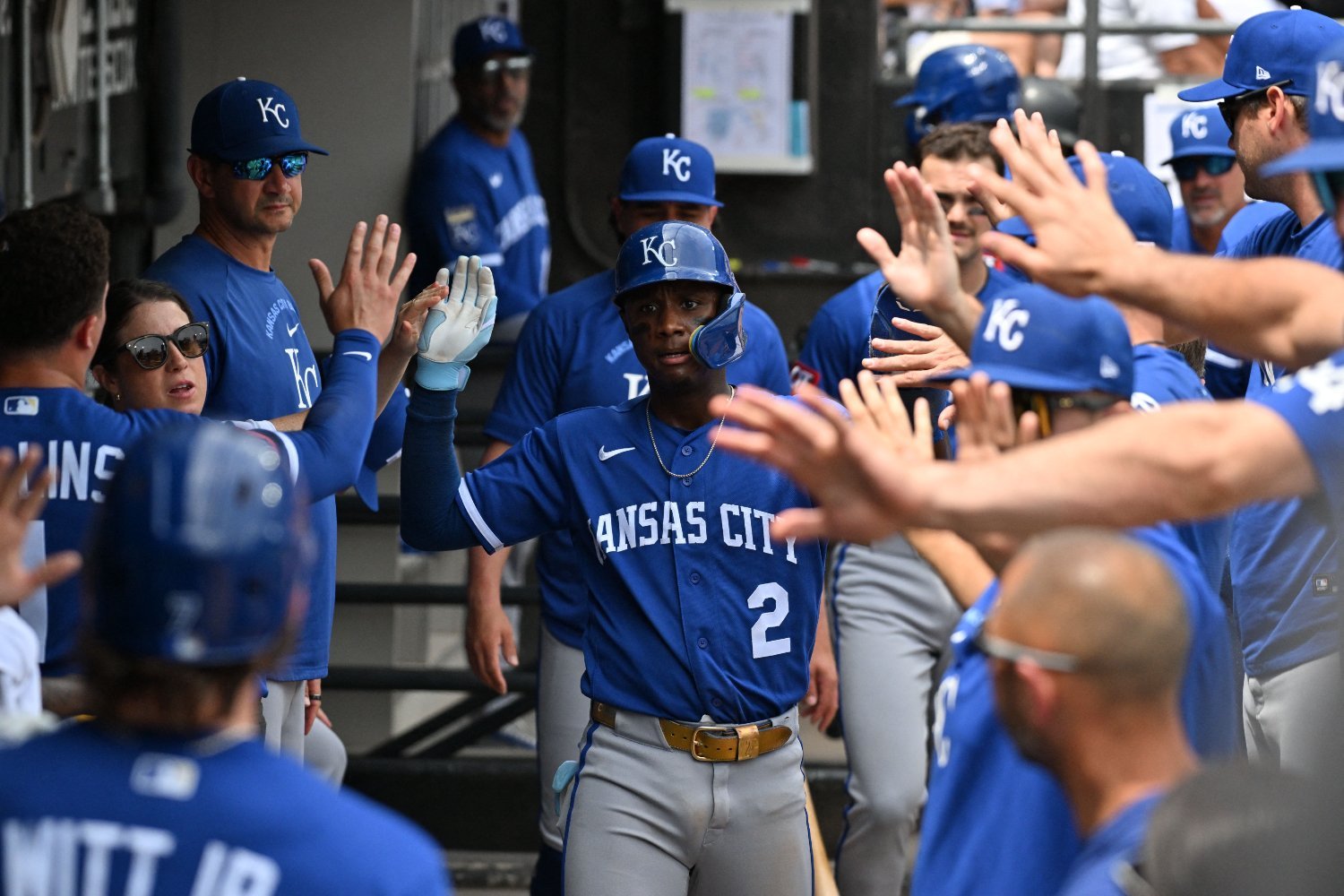 The Royals' offense has come alive over the past two games. After beating the Phillies 15-1 on Monday, Kansas City erupted for 16 runs in a 16-12 victory over the Mets, another NL East foe, on Tuesday. The Royals overcame a rough start by Seth Lugo, who allowed nine runs (six earned) on nine hits and two walks over 4.1 IP. The subpar outing raised his ERA to 4.56 for the season, not exactly what Royals fans want to see, especially with him being seen as a possible Trade Deadline candidate. The biggest story to emerge, though, from this two-game scoring outburst has been Tyler Tolbert, a utility player for the Royals. The 28-year-old collected 12 consecutive hits, tying an MLB record set by Detroit's Walt Dropo in 1952. In addition to 12 consecutive hits, Tolbert becomes the third player in MLB history to have back-to-back five-hit games. The other two players? Roberto Clemente in 1970 and Hi Myers in 1917. While many baseball fans are familiar with Clemente, Myers was a center fielder who played for the Brooklyn Robins from 1909 to 1922 and the St. Louis Cardinals from 1923 to 1925 (he also finished the 1925 season with the Cincinnati Reds). It's been a wild ride for Tolbert, who made the Opening Day roster but was optioned to Omaha on April 19th and played in Triple-A for over a month. The Royals recalled him on May 22nd, and he's been on the active roster ever since. However, his role has been limited, as he has played only 32 games and had 48 plate appearances before Tuesday's game. Going into the July 4th game against the Phillies, Tolbert was hitting .200 with a .475 OPS. Before Saturday's game at Kauffman Stadium, he had been hitless in his previous three starts. On July 4th, Tolbert went 2-for-2 with two singles and two stolen bases. He then went on to have back-to-back five-hit games on Monday against the Phillies and Mets. Over those two games, he also hit his first two home runs of the year, including a key two-run off the Mets' Kodai Senga that got the Royals on the board. After this three-game stretch, Tolbert is now hitting .396 with a .976 OPS in 54 plate appearances (his streak ended in the ninth on Tuesday with a pop-up to right field). It's definitely been one of the most impressive hitting stretches in Royals history. That said, could this be a sign of things to come for Tolbert, or is this just a flash in the pan that is the tip of the iceberg for the former 13th-round pick? Tolbert Showing He Can Be More Than a Pinch Runner Tolbert made the Opening Day roster and played in 64 games last year, but he was mostly utilized as a pinch runner. He had only 57 plate appearances, a sign he didn't see many starts in his rookie debut in 2025. That said, the Royals utility player excelled on the basepaths in his limited role. He stole 21 bases on 23 attempts in 2025. His stolen-base total was the third-highest on the team last year. Only Bobby Witt Jr. (38) and Maikel Garcia (23) had more, and they played in nearly 100 more games than Tolbert. Beyond the stolen bases, Tolbert showed surprising production in limited action. He hit .280 with a .701 OPS. That included a home run, six RBI, and 19 runs scored. That said, while he launched the ball well and made consistent contact, he struggled to generate much exit velocity or barrel balls in his rookie debut, as evidenced by his Statcast summary below via TJ Stats. This year, Tolbert has produced more of the same in terms of batted-ball profile, even amidst this historic streak. While he is now hitting .396, 116 points higher than his average a year ago, and has a TJ Bat+ of 122, 29 points higher than his mark in 2025, the hard-hit, barrel, and exit-velocity metrics aren't all that improved, as illustrated below. As of Tuesday, his barrel rate ranks in the 22nd percentile, his hard-hit rate in the 23rd percentile, his pull air rate in the 19th percentile, and his average EV in the bottom 3rd percentile. Last year, his barrel rate ranked in the 16th percentile, his hard-hit rate in the 37th percentile, his average EV in the 23rd percentile, and his pull air rate in the 11th percentile. Thus, while he has seen some improvement in certain categories, he has also seen regression in others (barrel rate and average exit velocity). Regarding his bat, Tolbert has been on a heater, but it likely won't last over an extended sample. However, he has demonstrated that he may deserve more starts in the future, especially against left-handed starting pitchers. He could be a guy who could see time in left or right field against lefties, which hasn't always been the case for Tolbert this season. In terms of fielding, the former Alabama-Birmingham product (and Alabama native) has produced a -1 OAA, with that negative mark coming at second base. He hasn't played extended innings at any position this year, as he has floated among second base, shortstop, and all three outfield positions. He's not a Gold Glover by any means. That said, he is serviceable and can hold his own at any of those positions. He has also looked better at shortstop in spot starts while Witt nurses a minor knee injury. Below is an example of the chemistry he showed with second baseman Michael Massey in a win against the St. Louis Cardinals at Kauffman Stadium last month. This historic feat by Tolbert is well deserved, especially for a player who has grinded in the Minor Leagues as much as he has. He didn't debut in the Major Leagues until he was 27, and he was Rule 5-eligible in a couple of drafts. And yet, despite those long odds, Tolbert locked in for three games and may have earned a semi-regular role for the remainder of the 2026 season. He may not be part of this team long-term, or even in 2027, depending on how the Trade Deadline and offseason shake out. However, he has proven that he can excel in the Majors and boost a lineup and ballclub overall in a bench role. Thankfully, that's happening now with the Royals. That is much needed for the morale of this club and fanbase, which is 38-54 after Tuesday's series-opening victory over the Mets. View the full article
 -
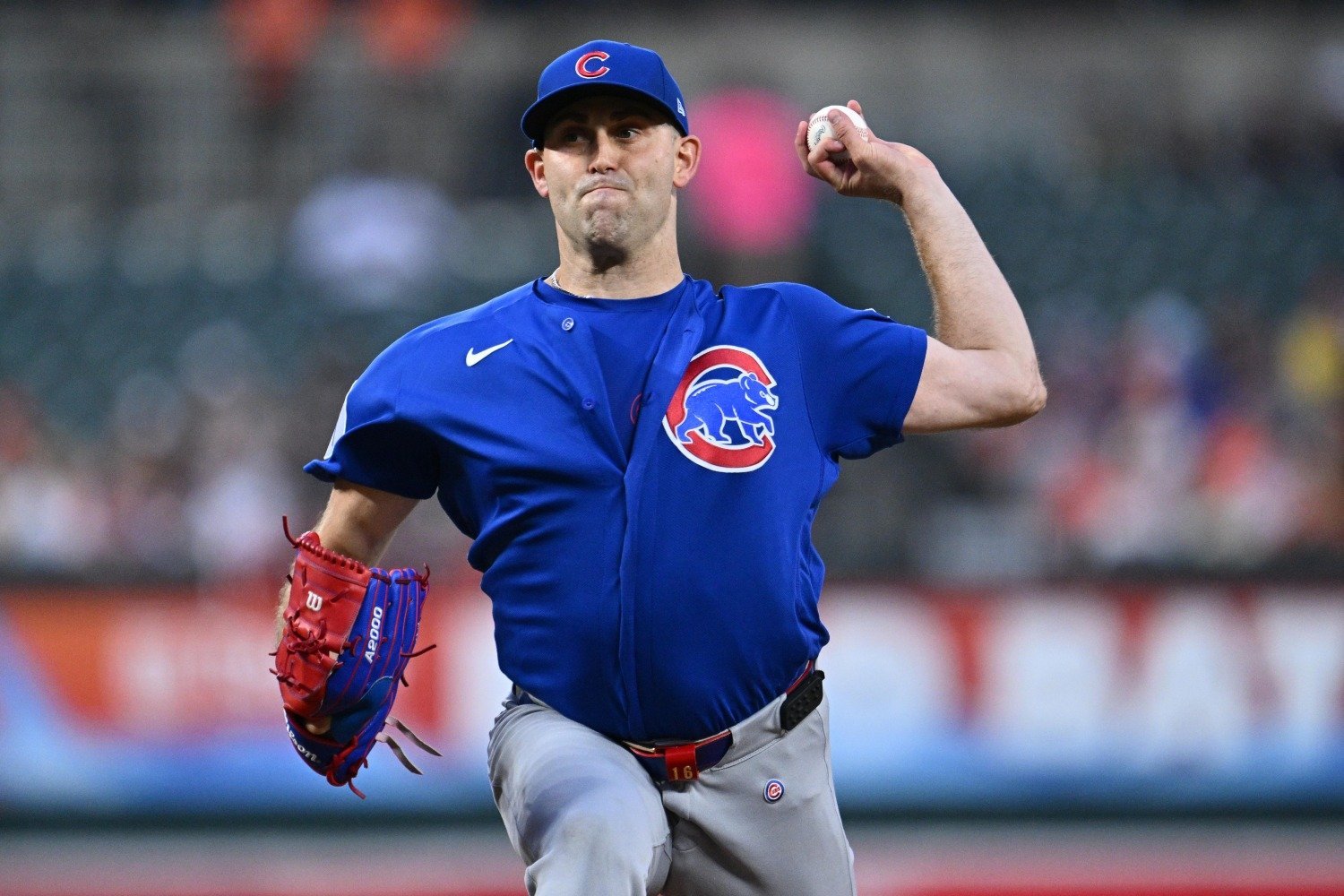 The Cubs hoped Matthew Boyd would be their third starter most of the time this year. They entered the campaign with Cade Horton penciled in as the ace, and hopes were high for the electric arm of Edward Cabrera. Ideally, Justin Steele would have returned around this time, slotting back into his old place near the front of the rotation. Ben Brown emerged as a top-tier starter this spring. As good as Boyd was in 2025, the plan was to have him surrounded by hurlers of similar or higher caliber. Plainly, that's not how things have turned out. Horton had Tommy John surgery. Steele had a setback (or two), and is unlikely to pitch in the majors this season. Cabrera sproinged two leg muscles on one stretch at the first-base bag and could be out until September. Brown suffered a recurrence of a previous neck issue, and he, too, might return only near the end of the season. At this point, Boyd is the unquestioned leader of this group, and barring a major acquisition before August 3, he'll be that guy for a while. That makes his outing Tuesday night in Baltimore especially important. Boyd fanned seven and allowed just five baserunners in six shutout innings, as the Cubs won 5-2 to keep pace in the NL playoff race. It was, by far, the best outing of Boyd's oft-interrupted, uneven season. It was also a reminder that he's capable of turning in starts like this on a regular basis. On Monday at Baseball Prospectus, I introduced a metric that uses Statcast's new swing timing and miss distance data to rate pitchers on their ability to disrupt swings. The stat is called Swing Disruption+ (I'm not good at branding), and it contains three components. Off Barrel+: How well a pitcher stays off the center of hitters' barrels, limiting damage on contact Upset Timing+: How well the hurler induces hitters to swing either too early or too late. Changed Eye Levels+: How well the pitcher uses vertical movement and deception to get above or below bats, maximizing swing-and-miss. These correlate, of course, to Statcast's data itself, which breaks down swings into being centered, off the end of the bat or up the handle; being on time, early or late; and being lined up, over or under the ball. By weighing each of the components appropriately and making a few adjustments that reflect the asymmetrical value of inducing errors in the two potential directions in each dimension, I turned them into Swing Disruption+, which correlates as well with overall performance as you could hope, given that it only measures the skill of manipulating swings and leaves out the question of the strike zone. Of the 368 pitchers who had 200 or more swings against them entering Sunday's games, Boyd ranked 10th in Swing DIsruption+, at 123, where 100 is average and higher is better. He's elite at upsetting timing (148), and above-average at both moving off the center of the barrel (116) and getting above or below bats (109). He doesn't do it in the most conventional way, but Boyd is elite at messing with swings. After multiple stints on the injured list, Boyd is finally finding a rhythm this year. If he can maintain it and stay healthy the rest of the way, yes, he can be a frontline starter for a playoff team. He showed how dominant he can be Tuesday night, and we have better insight than ever into what he does to flummox opposing batters. The Cubs need more help, but Boyd is good enough to be the ace of this team, under the circumstances. View the full article
 -
 The 2026 MLB Draft gets underway on Saturday, and for the first time since 2017, the Twins will execute their strategy without Derek Falvey leading the room. That responsibility now belongs to Jeremy Zoll, who took over when Falvey parted ways with the team at the end of January. Every front office has certain player traits it values more than others. Sometimes it's power. Sometimes it's athleticism. Sometimes it's command over velocity. Over the last decade, Falvey's drafts revealed a few clear patterns. The question now is whether those patterns continue under Zoll, or whether we start to see some subtle philosophical changes. If you look back at the Falvey era, one trend stands out: the Twins heavily prioritized premium defensive positions in the first round. Seven of their nine first-round picks under Falvey were either shortstops, starting pitchers, or center fielders. The only exceptions were Trevor Larnach and Aaron Sabato. That's not exactly a surprising strategy. Premium positions are generally viewed as the most valuable, because those players can always move down the defensive spectrum if necessary. A shortstop can become a second or third baseman; a center fielder can move to a corner outfield spot; and a starting pitcher can always end up in the bullpen. The opposite isn't true. It's a philosophy that plenty of organizations share. Whether those choices have produced the results the Twins hoped for is another discussion. Some picks have become potential cornerstones of the organization, while others have fallen well short of expectations. Larnach has developed into a solid major-league left fielder. Walker Jenkins still looks every bit like one of baseball's top prospects. Kaelen Culpepper and Marek Houston have both gotten off to impressive starts in professional baseball and appear to have bright futures. On the other hand, Royce Lewis and Brooks Lee haven't quite lived up to the lofty expectations that come with being top-10 overall selections, while Aaron Sabato still hasn't reached the majors and Keoni Cavaco is now playing independent baseball. Every organization misses in the draft, so this isn't about saying Falvey's approach was right or wrong. The more interesting question is whether Jeremy Zoll shares those preferences. That starts with this year's draft. There's a very good chance the Twins continue targeting premium positions in the first round. In fact, this year's class almost sets up perfectly for that. The top two players on many draft boards are prep shortstop Grady Emerson and UCLA shortstop Roch Cholowsky. Another prep shortstop, Jacob Lombard, has also been linked near the top of the draft, while high school right-hander Jackson Flora is another player who could hear his name called early. If the Twins stick to the same positional philosophy they've shown over the last decade, they'll have plenty of options. Where things could become more interesting is how Zoll values certain player traits. One thing that always stood out during the Falvey era was the type of hitters the Twins seemed to gravitate toward. They consistently targeted players with advanced hit tools and raw power, but with questions about either their ability to access that power in games or their plate discipline. Jenkins fits that description; so does Lee. Luke Keaschall and Houston fall into that category, as well. None of those players entered the draft with massive power projection. Instead, they profiled as hitters who consistently put the ball in play and hit line drives. That's been a pretty clear organizational preference. The same could be said on the pitching side. Falvey's front office often leaned toward high-upside arms, even if they came with a little more risk. Riley Quick, Dasan Hill, Charlee Soto, James Ellwanger–they're all talented pitchers with legitimate upside, but each entered pro ball carrying some significant level of uncertainty. Maybe it was inconsistent command, an injury history, or maybe they were simply raw and needed significant development. Whatever the case, it always seemed like the Twins believed in their pitching development group and their ability to maximize those arms once they entered the organization. That confidence showed up in the players they selected. Will Zoll see things the same way? Personally, I don't think we should expect a complete overhaul. The Twins still have Sean Johnson leading the scouting department, and much like Falvey did, Zoll will likely rely heavily on the evaluations coming from that group. It's not as though Johnson is suddenly going to throw out years of scouting philosophy because there's a new president of baseball operations. Organizations don't typically operate that way. But at the same time, every executive has certain traits they value a little more than someone else. Maybe Zoll is more willing to chase power at the plate, and maybe he prefers pitchers with cleaner deliveries and better command over pure velocity. Beyond skill sets, there are questions of draft philsophy to consider, more broadly. Will Zoll have a different idea of how best to spread the money the team spends among its picks in the top 10 rounds? Will he have a firmer or more flexible stance with players and agents demanding huge bonuses? That's what makes this weekend's draft so intriguing. It's the first real opportunity to see Zoll put his fingerprints on one of the most important responsibilities that comes with running a baseball organization. The people making many of the evaluations are still in place. The overall philosophy has produced plenty of talented prospects, even if not every first-round pick has worked out. There may be some subtle tweaks, and there may be a different emphasis on certain player traits. But if you're expecting Zoll to completely reinvent the Twins' draft strategy in his very first year, you're probably going to be disappointed. The differences, if they exist, will probably be much smaller than that. View the full article
 -
 Quad Cities starter David Shields struck out seven over five innings, and Luke Pelzer's grand slam headlined a seven-run sixth in a 14-4 rout of Peoria, with Asbel Gonzalez collecting four hits and Blake Mitchell homering. Mitch Spence fanned seven for Omaha in a 5-4 loss at Louisville. Jhosmmel Zue homered for Columbia, while Chase Jessee tossed scoreless relief for Northwest Arkansas, though both clubs absorbed lopsided defeats. Royals Transactions San Francisco Giants claimed RHP Eric Cerantola off waivers from Kansas City Royals. Storm Chasers' Late Rally Falls Short In Louisville The Omaha Storm Chasers built an early lead but could not hold it in a 5-4 loss to the Louisville Bats. Omaha scored first in the opening inning, when Vinnie Pasquantino singled home Matthew Lugo. The Storm Chasers grabbed the lead in the second, when Gavin Cross drove a two-run homer to right-center field that scored Peyton Wilson and pushed Omaha ahead 3-2. Louisville answered with a run in the third to tie it, then took the lead with two runs in the sixth. took the lead back in the seventh, when Lugo singled to bring in Andrew Velazquez, but the rally stalled there. Lugo finished 2-for-5 with a run and an RBI, Pasquantino went 2-for-3 with a walk and an RBI, and Cross drove in two. Wilson and Luca Tresh each added a double, though Omaha struck out ten times and stranded seven runners. Starter Spence worked 4 2/3 innings, allowing three runs, walking three, and striking out seven. Génesis Cabrera took the loss after surrendering two runs in the sixth. Scott Barlow and Anthony Gose combined for two scoreless innings to finish the game, striking out three between them, but Omaha's offense could not push across the tying run. The Storm Chasers are now 38-49 this season. Player AB R H RBI BB K John Rave 5 0 1 0 0 1 Matthew Lugo 5 1 2 1 0 1 Vinnie Pasquantino 3 0 2 1 1 0 Rudy Martin Jr. 0 0 0 0 0 0 Abraham Toro 4 0 1 0 0 0 Brett Squires 4 0 0 0 0 3 Peyton Wilson 4 1 1 0 0 1 Gavin Cross 4 1 1 2 0 1 Luca Tresh 3 0 1 0 1 1 Andrew Velazquez 3 1 0 0 1 2 Totals 35 4 9 4 3 10 Player IP H R ER BB K HR Mitch Spence 4 2/3 5 3 3 3 7 2 Dan Altavilla 1/3 0 0 0 1 0 0 Génesis Cabrera 1 1 2 2 3 1 0 Scott Barlow 1 0 0 0 2 2 0 Anthony Gose 1 0 0 0 0 1 0 Totals 8 6 5 5 9 11 2 Naturals Manage Only One Run In Wichita Blowout The Northwest Arkansas Naturals managed only one run in a 12-1 loss to the Wichita Wind Surge. Their lone tally came in the second inning, when Spencer Nivens tripled and later scored on a sacrifice fly by Colton Becker. The offense never found a rhythm after that, finishing with five hits and stranding six runners. Jack Pineda went 2-for-4 with a stolen base, and Carson Roccaforte, Sam Kulasingam, and Nivens each added a hit. Kulasingam's double and Nivens' triple were the Naturals' only extra-base hits, and the lineup struck out eight times while drawing just two walks. Daniel Vazquez, Connor Scott, and Alberto Rodriguez were held without a hit. Starter Hunter Owen struggled, allowing nine runs on ten hits over 2 2/3 innings, with no walks and three strikeouts. Wichita broke the game open with five runs in the third. The Naturals bullpen offered a bright spot: Jessee followed with 2 1/3 scoreless innings and two strikeouts, and Brandon Johnson added 1 2/3 scoreless frames with a strikeout, while Justin Johnson closed with a scoreless inning. The bullpen kept the score from climbing further, but the early damage was too much to overcome. The Naturals stranded six runners and went 0-for-4 with runners in scoring position. Northwest Arkansas is now 32-48 this season. Player AB R H RBI BB K Carson Roccaforte 4 0 1 0 0 0 Jack Pineda 4 0 2 0 0 0 Sam Kulasingam 4 0 1 0 0 2 Spencer Nivens 4 1 1 0 0 1 Daniel Vazquez 4 0 0 0 0 1 Colton Becker 3 0 0 1 0 0 Connor Scott 4 0 0 0 0 2 Alberto Rodriguez 2 0 0 0 1 1 Canyon Brown 2 0 0 0 1 1 Totals 31 1 5 1 2 8 Player IP H R ER BB K HR Hunter Owen 2 2/3 10 9 9 0 3 2 Chase Jessee 2 1/3 3 0 0 0 2 0 Anthony Simonelli 1/3 4 3 3 0 0 0 Brandon Johnson 1 2/3 1 0 0 2 1 0 Justin Johnson 1 0 0 0 1 0 0 Totals 8 18 12 12 3 6 2 River Bandits Erupt For Seven-Run Sixth To Rout Peoria The Quad Cities River Bandits broke a tight game wide open with a seven-run sixth inning on their way to a 14-4 win over the Peoria Chiefs. Leading 3-2 entering the frame, Quad Cities strung together the rally: Jose Cerice tripled home Tyriq Kemp, Angel Acosta singled in Cerice, and Ramon Ramirez singled to bring in Acosta before Pelzer capped the inning with a grand slam that scored Gonzalez, Mitchell, and Ramirez. The River Bandits kept pouring it on in the seventh, when Gonzalez singled home Cerice and Mitchell launched a three-run homer. Gonzalez led the way at 4-for-5 with a double, Cerice went 3-for-5 with a double and a triple, and Ramirez added two hits and two RBIs. Pelzer drove in six, and Mitchell homered with three RBIs. Leadoff man Nolan Sailors set the table by scoring three times with two walks and a stolen base. Starter Shields set the tone by striking out seven over five innings while allowing two runs, one earned, on six hits with no walks. Kamden Edge and Aiden Jimenez each turned in scoreless relief with two strikeouts apiece, and Shields' outing gave the offense plenty of room to work as Quad Cities piled up fourteen hits. The River Bandits stranded eight runners and went 7-for-16 with runners in scoring position. This victory was their fifth straight, improving their record to 38-40 this season. Player AB R H RBI BB K Nolan Sailors 3 3 0 0 2 0 Asbel Gonzalez 5 3 4 1 0 0 Blake Mitchell 3 2 1 3 2 2 Ramon Ramirez 3 1 2 2 0 1 Luke Pelzer 3 1 1 6 2 1 Derlin Figueroa 5 0 0 0 0 4 Tyriq Kemp 5 1 1 0 0 3 Jose Cerice 5 2 3 1 0 1 Angel Acosta 5 1 2 1 0 0 Totals 37 14 14 14 6 12 Player IP H R ER BB K HR David Shields 5 6 2 1 0 7 0 Aiden Jimenez 2 0 0 0 2 2 0 Ryan Ure 1/3 2 2 2 2 0 0 Kamden Edge 2/3 0 0 0 0 2 0 Cory Ronan 1 1 0 0 0 0 0 Totals 9 9 4 3 4 11 0 Zue's Three-Run Homer Not Enough For Fireflies Jhosmmel Zue's three-run homer highlighted a five-run night for the Columbia Fireflies, but it was not enough in a 14-5 loss to Salem. Columbia trailed 8-2 in the fifth when Stone Russell walked, and Henry Ramos doubled ahead of Zue, whose home run to left field cut the deficit to 8-5. The Fireflies had scored twice in the fourth, when Zue came home on an error, and Connor Rasmussen scored on a sacrifice fly by Ivan Sosa. Salem pulled away with six runs in the eighth to put the game out of reach. Zue finished with a homer, three RBIs, two walks, and a stolen base. Sean Gamble went 2-for-4 with two steals, and Ramos added two hits. Columbia drew eleven walks but left eleven runners on base, unable to string enough together against Salem. The Fireflies went two-for-eight with runners in scoring position on Tuesday. Starter Ryan McDonagh allowed four runs over three innings, walking one and striking out six. Henson Leal was tagged for six runs in 1 2/3 innings, while Luis Valdez and Randy Ramnarace combined for three scoreless frames out of the bullpen. Josh Hammond, Yandel Ricardo, and Angel Ramirez each drew a walk but went hitless, and the Fireflies' early deficit proved too deep despite the fifth-inning push. With the loss, the Fireflies fall back to .500 at 41-41. Player AB R H RBI BB K Josh Hammond 4 0 0 0 1 0 Sean Gamble 4 0 2 0 1 1 Yandel Ricardo 4 0 0 0 1 2 Stone Russell 2 1 0 0 3 1 Henry Ramos 4 1 2 0 1 0 Jhosmmel Zue 3 2 1 3 2 1 Angel Ramirez 4 0 0 0 1 1 Connor Rasmussen 2 1 0 0 1 1 Ivan Sosa 3 0 0 1 0 1 Totals 30 5 5 4 11 8 Player IP H R ER BB K HR Ryan McDonagh 3 7 4 4 1 6 2 Brandon Herbold 1 1/3 4 4 4 2 0 0 Luis Valdez 1 2/3 2 0 0 1 0 0 Henson Leal 1 2/3 6 6 6 0 5 0 Randy Ramnarace 1 1/3 2 0 0 1 2 0 Totals 9 21 14 14 5 13 2 Top-20 Prospect Performance Kendry Chourio: DNP David Shields: 5 IP, 6 H, 2 R, 1 ER, 0 BB, 7 K (W) Josh Hammond: 0-for-4 Blake Mitchell: 1-for-3, HR, 2 K Sean Gamble: 2-for-4, 1 K Ramon Ramirez: 2-for-3, 2B, 1 K Drew Beam: DNP Carson Roccaforte: 1-for-4 Asbel Gonzalez: 4-for-5, 2B Yandel Ricardo: 0-for-4, 2 K Michael Lombardi: DNP Ben Kudrna: DNP Justin Lamkin: DNP Felix Arronde: DNP Blake Wolters: DNP Steven Zobac: DNP Austin Charles: DNP Daniel Vázquez: 0-for-4, 1 K Kamden Edge: 2/3 IP, 0 H, 0 R, 0 ER, 0 BB, 2 K Warren Calcano: 1-for-4 View the full article
 -
Could the Blue Jays' 2026 Deadline Be a Teoscar Redux?
DiamondCentric posted an article in Jays Centre
 Stop me if you’ve heard this one. As the trade deadline approached, the Jays were struggling. They were multiple games under .500, largely due to multiple injuries to key players, and so far behind the AL East leaders that a serious run for the division title was beyond a long shot. But the Jays had a very good starting pitcher on an expiring contract, and the team favoured to win the World Series needed one. And that team had a strong young slugging outfielder in their minor league system, MLB-ready but blocked, not only by the three excellent outfielders already on their major league team, but also by an uber prospect ahead of him in the minors. The Jays needed more offence. So, they traded a half-year of their pitching stud for the young outfielder. Am I talking about the Francisco Liriano trade for Teoscar Hernández in 2017? Or a Kevin Gausman trade to the Dodgers in 2026? Hear me out. It is entirely possible that the Jays find another gear in the remainder of July and play themselves into a Wild Card position. But if they don’t – if they are still 10+ games out of first place in the AL East and multiple games out of the last Wild Card with several teams to overcome – then selling becomes an option they would have to consider. And possibly their greatest trade chip would be Kevin Gausman, with his excellent career record and solid 3.83 ERA over 56 postseason innings pitched. There would be multiple teams interested, but one of the most intriguing would be the Dodgers. The Dodger Outfielders The Dodgers have three good outfielders in Teoscar Hernández, All-Star Andy Pages and sixty-million-dollar man Kyle Tucker, all of whom are performing well and signed through 2027. Their “fourth outfielder,” Tommy Edman, is hitting for a 165 wRC+ so far in 2026. So, the need for outfield help at the MLB level is minimal. That means that the many outfielders in their minor league system who rank among Baseball America’s Top 100 Prospects are blocked… and potentially available. The Pipe Dream Josue De Paula (BA #4 Overall, Scouting Grades – Hit: 60, Power: 60, Run: 40, Field: 45, Arm: 50) is currently hitting .321/.419/552 in Double A and is widely considered to be MLB-ready. He might be available in a Skubal trade, but it is unlikely that the Dodgers would part with a player with a Baseball Trade Values value of $54 million for a half-year of Gausman. Still, his combination of power and upside would make him an ideal target if somehow the Jays could pry him free. The Centre Fielder Mike Sirota (BA #12 overall, Scouting: 55/50/60/55/55) not only has plus bat speed and the potential for 60-grade raw power, with a 90th percentile exit velocity of 107 mph, but he is also a consistent centre fielder with plus speed and an above-average arm. Given that the Jays may lose Daulton Varsho to free agency and that Myles Straw still struggles with the bat, a hard-hitting centre fielder might be the best of all options. Sirota has a BTV trade value of $37 million – high, but with Pages under team control, he might be available for a package of Gausman + prospects. Unfortunately for Toronto, Sirota has recently elevated his profile with a 68-game on-base streak, which could elevate Los Angeles’ asking price if he is even still available. Hope That Swings Eternal A more plausible target is Zyhir Hope (BA #55 Overall, Scouting Grades: 40/60/55/50/50). He has plenty of bat speed and raw power, but his inconsistency makes it unclear whether he is MLB-ready, and he has struggled against left-handed pitching (a concept with which Jays fans will be painfully familiar!). Still, so far in 2026 he is batting .289/.363/.505 in Double A for a 124 wRC+ and has been said to have 40-homer potential if his flaws could be fixed – a scouting report very similar to Teoscar’s in 2017. The Dark Horse James Tibbs III (BA Dodgers #12, Scouting: 50/45/40/45/50) was considered a 40-grade prospect going into 2026, ranking #26 on the Dodgers’ top 30 prospects list. He has been called a fringe-average corner outfielder and emergency first baseman, with a fair amount of skills, though he had yet to find a way to put them all together. Then came 2026. In 382 PA, Mister Tibbs (sorry!) is hitting .284/.406/.559 with a .385 xwOBA and a 143 wRC+. His ISO has gone from a cromulent .182 to a holy-cow-Batman .275. Tibbs would be something of a gamble, as his MiLB career wRC+ is a meager 93. But the Jays have not been afraid of helium plays in the past, and Tibbs’ trade cost should be far less than the other candidates. The Bottom Line It has been said that the definition of a good trade is where each party receives something that is of greater value to them than to the trading party. Tibbs is far down the Dodgers’ outfield depth chart (as Teoscar was for the Astros in 2017), but LA could strongly use another proven playoff starter. If (big if) the Jays are out of contention at the deadline, their thoughts should shift from 2026 to 2027. A young, cheap, controllable, power-hitting outfielder would fill an important hole. View the full article
 -
New York Mets Minor-League Hitters of the Month: June 2026
DiamondCentric posted an article in Grand Central Mets
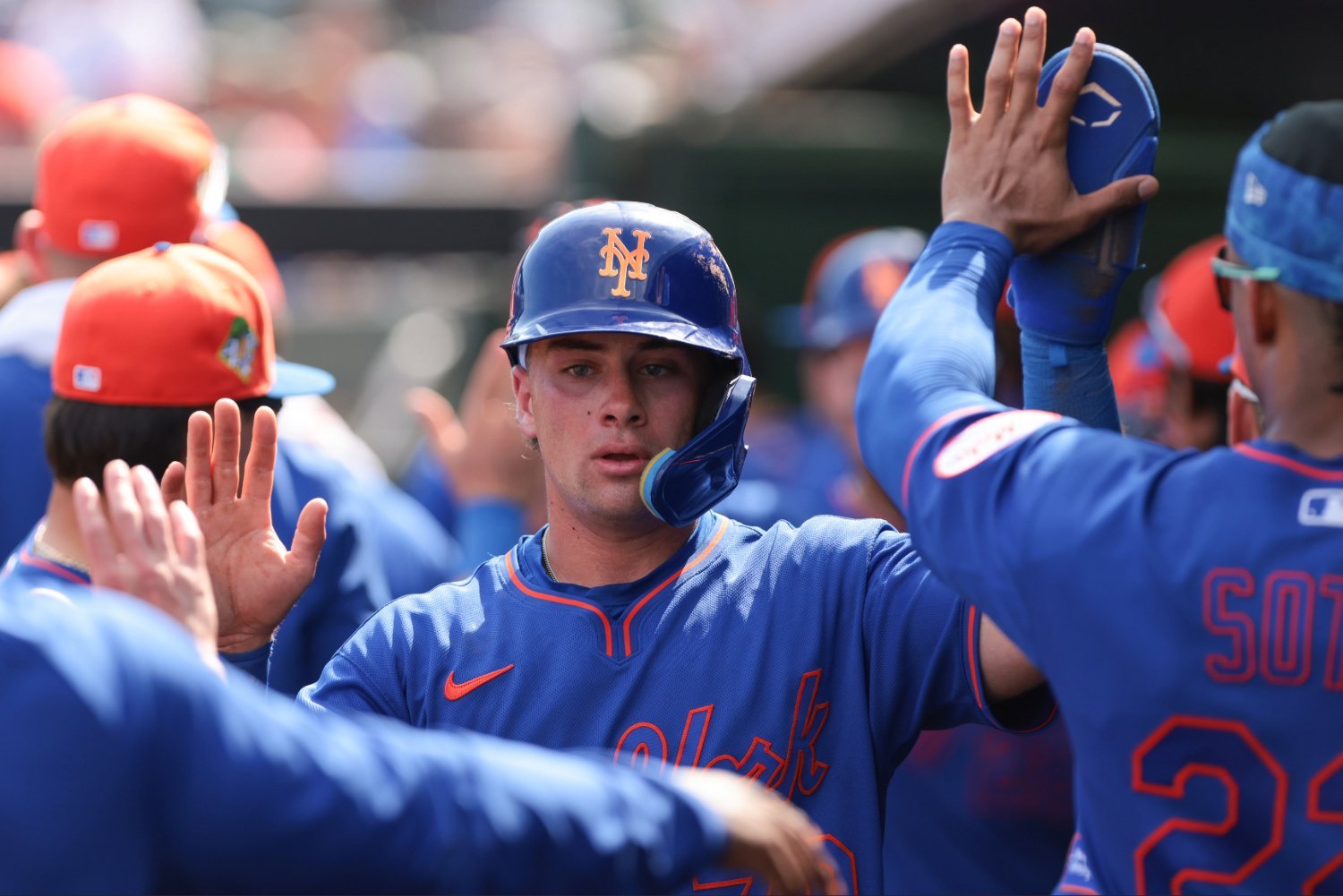 Breaking news: hot boy summer is in full swing. You hadn't noticed? Well, if April showers brought May flowers, the June heat gave the New York Mets' farm system a heartbeat. Sometimes, it's a struggle to find players to talk about in this space, but we're overflowing with options this month. Yonny Hernandez provided a .931 OPS, with nine doubles and a 10:9 K:BB ratio, at Triple-A Syracuse; meanwhile, 2024 sixth-round pick Corey Collins posted 18 RBI and a .409 OBP for High-A Brooklyn. Normally, they'd get their own section. Instead, they're honorable mentions. The guys below? They CRUSHED it. Monthly stats referenced are from milb.com at the player's listed level. Prospect Rankings are from Grand Central Mets. Ranking Mets' Best Minor League Hitters from June 4. Nick Morabito - AAA (Syracuse, No. 5 Prospect) If you read our latest prospect ranking update, you know that June was not the... strongest month, we'll say, for the Mets' top three prospects. Thankfully, Morabito stood out as a better-performing higher-end farmhand. In May, his OBP (.344) was higher than his slugging percentage (.342). He changed that in June. G (AB) Slash Line (OPS) XBH (HR) R RBI 24 (92) .304/.390/.478 (.868) 9 (3) 18 7 The 23-year-old -- whose sprint speed is in the 96th percentile, per Prospect Savant -- also went 11-for-11 on stolen base attempts last month. He could have dwelled on his 12 plate appearance, nine-strikeout sample with the big-league club (May 19-25) when he returned to Syracuse. Instead, he got back on the horse. Another opportunity in New York could be right around the corner. 3. Mitch Voit - High-A (Brooklyn, No. 7 Prospect) Prior to June, Voit hadn't posted a month in MiLB with an OPS greater than .700 (min. 5 games). Something clicked for the No. 38 overall pick of the 2025 MLB Draft last month, though, which allowed him to produce the best 20-game stretch of his brief career. G (AB) Slash Line (OPS) XBH (HR) R RBI 21 (82) .305/.426/.476 (.902) 8 (3) 19 13 Voit tallied 44 strikeouts and 15 walks combined across April and May. In June, he recorded 13 of each. Maintaining the latter ratio could be the key for him getting to Binghamton by season's end. 2. JT Benson - High-A (Brooklyn) Benson was our top MiLB Hitter of the Month in May. He has raked from the moment he arrived in the Mets' system earlier this year. His promotion from St. Lucie didn't change a thing. G (AB) Slash Line (OPS) XBH (HR) R RBI 19 (66) .288/.405/.652 (1.057) 12 (5) 14 14 The Louisville product earned his step-up in competition after 33 games at Single-A. His OPS in those contests was .939. His OPS through 33 games at Brooklyn? A nearly identical .938. He has all the momentum in the world right now; there's no telling when (if?) his train will stop chugging right on down the tracks. 1. Nick Lorusso - AA (Binghamton) You can't knock Lorusso for anything in June. The 2023 ninth-round pick (Maryland) led all qualifying Rumble Ponies in just about everything, including hits, home runs, RBIs, average, on-base percentage and slugging percentage. The only thing he didn't do was hit a triple. G (AB) Slash Line (OPS) XBH (HR) R RBI 19 (73) .315/.398/.616 (1.014) 12 (5) 14 18 Lorusso's OPS, which he raised a whopping .337 points from May, was eighth-best in the Eastern League for the month of June. He pulled off a similar feat last year, going from a .618 OPS in June to a .984 OPS in July. This time, he's hoping to avoid the .461-point OPS drop that followed his 2025 outburst. But no matter what transpires for him going forward, he'll always be our June 2026 MiLB Hitter of the Month. Honorable Mentions: Yonny Hernandez (AAA, Syracuse), Corey Collins (High-A, Brooklyn) View the full article
 -
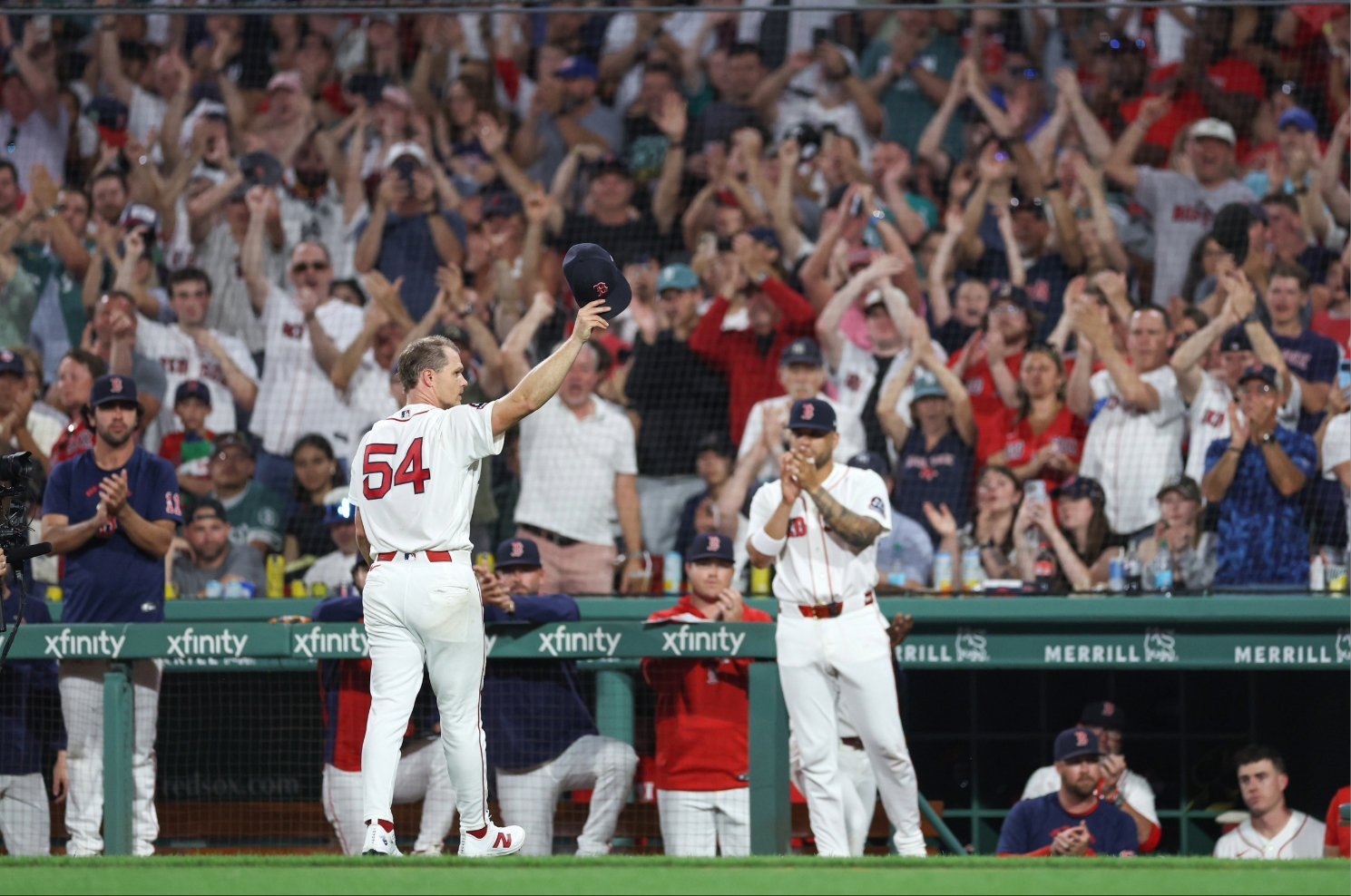 Even after a sweep of the lowly Angels, this Boston Red Sox team is stuck in last place in the AL East and is on the outside looking in at a Wild Card race of mostly .500 teams in front of them. While Alex Spier has reported that the team is likely to wait until after the All-Star Break to make a decision on if they should buy or sell, the timing is right to begin exploring deals for veteran players that can be traded for a haul as the deadline approaches. Obviously, teams are going to call about closer Aroldis Chapman and set-up man Garrett Whitlock, but the ace in the hole for the Red Sox will be none other than Sonny Gray. Gray has been the anchor of the starting rotation pretty much all season, even when Garrett Crochet was healthy, so it may seem a bit counterintuitive to trade him when he’s been such an important piece to this team. The rationale behind it is pretty simple though: He’s going to be the second-best starter available on the trade market, behind back-to-back Cy Young winner Tarik Skubal. The Red Sox are going virtually nowhere this year and should have an eye on competing in 2027, whenever that season does get underway in a post-lockout world. Moving on from Gray will allow the team to retool and add pieces who can contribute as soon as next season. Gray currently holds a 10-1 record over 89.2 innings with a 2.61 ERA, 22.8 K%, 6.4 BB%, 3.6 FIP, and a 1.6 fWAR. He’s been nothing short of elite. He’s worth a great quote at the end of each game and has the type of pitch mix that can play over the next couple of seasons as he gets older. He’s not going to light up the radar gun, but his off-speed and breaking pitches give batters fits on a nightly basis. The lone hangup for Gray could potentially be the club option attached to his current contract. In the trade that brought him from St. Louis to Boston, the Cardinals paid down $20 million of the remaining $31 million so, for this season, the team that trades for Gray will only be on the hook for what’s left of the $11 million the Red Sox are paying him. Where it gets tricky though, is next year’s option. Gray’s contract holds a $30 million mutual option with a $10 million buy out. That’s a lot of money on either side of the decision for a 37-year-old. To improve the return, Boston may need to help pay down some of that opt-out money. The good news is that there are some semi-recent trades of top of the line starters who are in the final year of their contract that we can look to maybe point us in the right direction as to what a return for Gray may look like. Ironically, they both feature former Red Sox players. Let’s turn the clock back to 2014 and 2015. Trade 1 Boston Red Sox Receive: OF Yoenis Cespedes, 2015 competitive balance draft pick Oakland A’s Receive: SP Jon Lester, OF Jonny Gomes, Cash considerations Trade 2 Tigers Receive: LHPs Daniel Norris, Matthew Boyd, Jairo Labourt Blue Jays Receive: David Price Let’s start with the trade the Red Sox made. It’s not a direct comparison since Gomes was included in the deal, but there’s a chance there could be a package with a current Red Sox outfielder to get a very similar deal done. The Sox received an All-Star outfielder in Cespedes, who was on the next-to-last year of his contract in 2014. He fit the mold of what the current team is looking for; an offensive force that required opposing pitchers to rethink how they were going to approach the guys in the lineup around him. The Red Sox, even being as far down in the standings as they are, are looking for the impact right-handed bat they were unable to put next to Willson Contreras in the offseason. Using Gray as the centerpiece of a trade could net them that, plus some given today’s improved market for sellers thanks to the introduction of a third Wild Card spot. Looking at the Price trade, the return was centered around Norris, who was the top overall prospect for the Jays. Labourt was the 13th ranked while Boyd clocked in as the 29th ranked prospect in their system. Turning Price into a number one prospect and two additional top 30 prospects was solid work by Dave Dombrowski, who was promptly fired a few days after the trade. While it’s possible Craig Breslow could be looking at the same fate as Dombrowski in 2015, if he can turn Sonny Gray into a haul of pitchers like Dombrowski did back then, he may extend his stay in Boston by another season. Again, the trade market is drastically different now than it was 10+ years ago, but that should mean that Craig Breslow can capitalize even more on Gray’s value as we near the dog days of summer. While the veteran right-hander would be fun to watch through the end of the season here in Boston, the value he brings to such a downtrodden team is being an elite rental starter. There should be no shortage of suitors attempting to pry him out of town. View the full article
 -
 Transactions: Milwaukee Brewers recalled LHP Robert Gasser from ACL Brewers. Milwaukee Brewers sent RHP Carlos Rodriguez on a rehab assignment to Nashville Sounds. Milwaukee Brewers selected the contract of LF Greg Jones from Nashville Sounds. Milwaukee Brewers optioned CF Blake Perkins to Nashville Sounds. Milwaukee Brewers recalled CF Luis Lara from Nashville Sounds. Game Action: Nashville pre-game media notes Charlotte (White Sox) 8, Nashville 2 Box Score As always, you are encouraged to read the official round-up from the team’s site: Early Slam Quiets Sounds in Series Opener - Matos earns his second straight multi-hit game, his 9th of the season for Nashville With all the aforementioned transactions, shuffling players to and from the big-league club, the shorthanded Sounds fell to Charlotte 8-2 in their series opener Tuesday night. The Sounds fell behind 5-0 after two innings and never really threatened to make it a game, despite collecting eights hits and four walks. As a team, the Sounds were 0-for-7 with RISP. Luis Matos provided the lone extra-base hit for the Sounds with this home run, courtesy of the Nashville X account: The Sounds’ other run came on an Eddys Leonard GIDP. Carlos Rodriguez made his second rehab start and didn’t make it through two full frames. Rodriguez left with the bases loaded, due in part to an error. Peter Strzelecki then came on and allowed a grand slam to the first batter he faced. The only positive appearance on the mound for the Sounds was from Blake Holub who struck out the side in the 8th inning. The loss drops the Sounds to 7-6 in the second half and 50-38 overall. RHP Tyson Hardin (3-1, 3.67 ERA) will look to get the Sounds back on track on Wednesday. Biloxi pre-game media notes Knoxville (Cubs) 9, Biloxi 4 Box Score Fischer Stars in Return to Knoxville, Shuckers Fall to Smokies - Shuckers extend home run streak to second-longest in Southern League during Digital Stats Era Biloxi dropped their first game in their series in Andrew Fischer and Blake Burke’s return to Knoxville, where they played at the University of Tennessee. The game got off to a promising start when Fischer just missed another home run when he laced a ball to center for a triple. Fischer came around to score on a Mike Boeve sac fly to give the Shuckers an early 1-0 lead. Matthew Wood added his 12th home run of the year to make it 2-0 Shuckers, highlight here courtesy of the Shuckers’ X account: After Knoxville responded with a solo home run in their half of the fifth, Josh Adamczewski launched his second AA home run of the season: Unfortunately, the wheels fell off for Biloxi in the 6th, when Knoxville rallied for a six-run frame and put the game out of reach. Fischer was once again the story of the Shuckers’ offense. Fischer had three extra-base hits, two of which he banged off the wall, narrowly missing out on adding to his home run total. Check out all of Fischer’s hits here: Adamczewski was the only other Shucker with two hits. As a team, the Shuckers went 1-for-8 with RISP. On the mound, both Manuel Rodgriguez (5ER in 5.1IP) and Anthony Flores (4ER in 2.1 IP) were roughed up. Although not charged with any errors officially, the defense wasn’t super clean behind them. Adamczewski took a circuitous route on what looked like a catchable ball that led to a double early in the game. Ragsdale had a chance to make a great catch at the wall and missed it in the big six run rally. The Shuckers also allowed five stolen bases, including a double steal of home. The Shuckers are now 8-5 in the second half and 43-35 on the season. RHP Travis Smith (0-1, 6.75 ERA) is scheduled to make his second start and fifth appearance at AA in Wednesday’s game. Wisconsin pre-game media notes Beloit (Marlins) 7, Wisconsin 2 Box Score Sky Carp Take Tuesday’s Series Opener from Wisconsin - Rattlers fall behind early and can’t come back in game one Continuing the theme of tough nights in the system on Tuesday, Wisconsin was soundly beaten 7-2. Wisconsin managed just five hits (one double) but did draw eight walks. However, the team was just 1-for-9 with RISP and struck out 12 times, resulting in a fangless offensive attack on Tuesday. The Rattlers fell behind 2-0 after two innings. Starter Ethan Dorchies (4.1IP 3H 2ER 2BB 3K) held the game in check from there, but was pulled in the fifth at 82 pitches. Chandler Welch came on and struck out three in 1.2IP. However, Quinton Low couldn’t make it through his inning, and when the dust settled after a homer, bases loaded walk and wild pitch, the Rattlers trailed 5-0. Luis Pena had the only RBI of the night for Wisconsin on a single. You can check out all the highlights, or lack thereof below: Wisconsin is 11-4 in the second half and tied for first place in the second half standings. RHP Daniel Corniel (0-1, 1.93 ERA) is listed as the probable starter for Wednesday’s game. Wilson pre-game media notes Wilson 10, Fayetteville (Astros) 9, F/11 Box Score Di Turi Secures Walk Off Win Over Fayetteville Wilson made things much more difficult than it needed to be in their extra innings affair on Tuesday night. Wilson blew separate leads of four and three runs, but still pulled out the victory in their 10th walk-off win of the season. Brady Ebel got the scoring started for Wilson with an RBI double. Pedro Ibarguen knocked in two with a chopper to give the Warbirds an early 4-0 lead: After Fayetteville knotted the game at 5-5, Frederi Montero provided the big fly, a three-run home run that looked like it would give Wilson the win: However, Fayetteville rallied for three runs in the top of the 9th to eventually send the game to extra innings. After a scoreless 10th, Fayetteville actually took the lead with a run in the 11th. Juan Ortuno responded by lacing a double to tie the game. Ortuno led the Warbirds with three hits and four funs scored. Then, with the rain pouring down, and with just a few dozen fans still in the park, Filippo di Turi walked it off for Wilson with a single. Di Turi had only entered the game in the 10th after Juan Martinez left the game when he banged knees covering a bunt at first base. The Wilson pitching staff struggled with control all night combining to walk 16 batters. Starter Miqueas Mercedes, who turned 20 on Tuesday, threw four one-run innings, despite four walks. Mercedes struck out six on his birthday. The two relievers (Enniel Cortez and Ismael Yanez) that followed Mercedes walked a whopping 10 men in just 4.1 combined innings. Eric Prado did great work to earn the win, working around the Manfred Man in the extra innings and allowing just one unearned run in 2.2IP. With the win, Wilson cuts Fayetteville’s lead to just one game in the second half standings. RHP Jacob Morrison (0-1, 4.58 ERA) toes the slab for Wilson on Wednesday. ACL Reds 9, ACL Brewers 4 Box Score The ACL Brewers, in the theme of the day, fell behind early and never threatened to make the game close, falling 9-4 in the desert. The pitching staff struggled early and often, starting with opener Rob Zastryzny, who took the loss after recording just two outs and surrendering two earned runs in the opening frame. The Brewers' bullpen couldn't quite stop the bleeding, allowing a pair of home runs and a total of seven earned runs over the course of the night, playing from behind the entire night. Offensively, the Brewers showed some flashes, putting together a seven-hit performance led by multi-hit games from right fielder Gerlyn Payano and first baseman Ramon Flores. Flores sparked the lineup by scoring twice, while Payano drove in a run with a third-inning triple. The highlight of the night for the Brewers offense came late from Engel Paulino, who launched his sixth home run of the season in the top of the eighth. Despite those bright spots, missed opportunities and defensive miscues hindered the Brewers' comeback efforts. The lineup struggled mightily with RISP, going just 1-for-10 and leaving nine runners stranded on base. Coupled with two throwing errors in the field that led to a pair of unearned runs for the Reds, the Brewers simply couldn't string together enough clean innings to close the gap, dropping their season record to 24-25. DSL Brewers Gold 4, DSL Cubs Blue 2 Box Score The DSL Brewers Gold put together a complete team effort to secure a 4-2 victory over the DSL Cubs Blue, bringing their season record to an even 13-13. The story of the day was the Brewers' stellar pitching staff, which combined to hold the Cubs to just a single hit (thought they walked seven) over seven innings. Reliever Paul Hoff (4IP 0H 1ER 4BB 6K) earned his second win of the season with a strong middle-innings performance, while Wandy Cabrera shut the door late to lock down his second save, stifling any hopes of a Cubs comeback. The Brewers' offense broke the game open with a decisive three-run outburst in the top of the fourth inning. Josue Rodriguez delivered the biggest hit of the game, smashing a clutch two-run triple to right field that brought home Angeni Fernandez and Carlos Done. Moments later, Rodriguez showcased some sharp baserunning by hustling home to score on a wild pitch during Manny De Los Santos's at-bat, extending the lead to 3-0. Fernandez and Rodriguez paced the Brewers with two hits apiece. An insurance run in the top of the fifth inning on a single from Enrique Oropeza provided some extra breathing room for the Brewers. The Gold squad has now run off wins in nine of their last 10 games. They reached the .500 mark for the first time all season after an 0-4 start and after being as many as eight games below .500. DSL Padres Gold 7. DSL Brewers Blue 5 (game called after the top of the 9th) Box Score The DSL Brewers Blue suffered a frustrating, weather-shortened 7-5 defeat against the DSL Padres Gold, with a late-game rally that was ultimately cut short. The Brewers dug themselves an early hole, surrendering a run in the first inning and falling victim to a costly four-run fifth inning by the Padres. Starter Luis Aguayo absorbed the loss despite pitching fairly well (3IP 3H 1ER 0BB 3K). Despite trailing 5-0, the Brewers showed plenty of resilience and steadily chipped away at the lead. They got on the board in the bottom of the fifth on a Cristian Montilla infield single. Then added another run in the sixth courtesy of a solo blast by Enrique Lovera. After the Padres extended their lead to 7-2 in the eighth, the Brewers mounted a three-run response in the bottom of the frame, narrowing the gap to just two runs. Just as momentum seemed to be swinging in their favor, Mother Nature intervened. The game was abruptly called due to lightning after the top of the ninth inning, completely stripping the Brewers of their final chance to complete the comeback in the bottom of the ninth. It was a bitter pill to swallow for a squad that had fought back within striking distance before the weather locked in the final score. Montilla and Leanders Matos each had multi-hit days for the Brewers. The newly turned 17 year-old Matos’ OPS on the season is an absurd 1.076. Wilmer Duarte had a rough day on the mound, surrendering six earned runs and hitting four batters in three innings of work. The trio of Lonell Downs, Merwin Manrique, and Manuel Moreno (season debut) all tossed scoreless innings in their appearances for the Brewers. With the loss, the Brewers Blue fell to 15-12 on the season. Wednesday features just the four full-season affiliates, as the rookie ball squads all have the day off. Wilson and Wisconsin get things started with day games at 10AM and 12PM CT respectively. Organizational Scoreboard including starting pitcher info, game times, MiLB TV links, and box scores Current Milwaukee Brewers Organization Batting Stats and Depth Current Milwaukee Brewers Organization Pitching Stats and Depth View the full article
 -
San Diego Padres full-season affiliates began a new week by going 1-3. The Triple-A El Paso Chihuahuas posted the only win, beating Oklahoma City 8-5, while the Double-A San Antonio Missions were pounded by Midland 11-1, the Fort Wayne TinCaps blanked by West Michigan 3-0 and the Low-A Lake Elsinore Storm falling to Rancho Cucamonga 6-2. Padres Minor-League Transactions San Diego Padres recalled RHP Jhony Brito from El Paso Chihuahuas. San Diego Padres optioned RHP Alek Jacob to El Paso Chihuahuas. RHP Johan Moreno assigned to El Paso Chihuahuas from San Antonio Missions. RHP Eric Yost assigned to San Antonio Missions from El Paso Chihuahuas. El Paso Chihuahuas activated RHP Logan Gillaspie from the 7-day injured list. El Paso Chihuahuas released RHP Triston McKenzie. RHP Landry Jurecka assigned to ACL Padres from San Antonio Missions. RHP Clark Candiotti assigned to Fort Wayne TinCaps from San Antonio Missions. LHP Jamie Hitt assigned to San Antonio Missions from Fort Wayne TinCaps. LHP Ryan Och assigned to San Antonio Missions from Fort Wayne TinCaps. Fort Wayne TinCaps activated RHP Kannon Kemp from the 60-day injured list. Fort Wayne TinCaps released LHP C.J. Widger. All Chihuahuas Contribute Offensively, Win On 7-Run Second Inning Marcos Castanon had two hits and two RBIs, including being one of six players to drive in a run during a seven-run second inning that vaulted the Triple-A El Paso Chihuahuas to an 8-5 victory over the Oklahoma City Comets. The seven runs equaled the most the Chihuahuas have scored in any inning this year. Padres right-handed starter Matt Waldron worked three hitless innings with no walks and three strikeouts in his fifth rehab outing as he comes back from a right brachialis muscle injury. His rehab assignment ends next week, with his last start coming up Sunday. Waldron has allowed four runs in 15 innings, with five walks and 10 strikeouts. Four of those walks came in one game. Waldron threw just 30 pitches, including 20 strikes. Luis Rengifo also had two hits, a walk, an RBI and a run scored as the Chihuahuas got hits from seven of their nine batters and seven also scored a run. Mason McCoy scored twice, but didn't have a hit as he walked twice. McCoy and Carlos Rodriguez each had two of the Chihuahuas' season-high eight stolen bases. In the big second inning, in which the Chihuahuas sent 13 batters to the plate, Bryce Johnson, Nick Pratto and Rengifo had consecutive RBI singles, then Castanon had his two-run single to make it 5-0. Will Wagner added his own run-scoring single and Carlos Rodriguez capped the rally with a bases-loaded walk to put the Chihuahuas up 7-0. Nick Solak added a run-scoring double in the third inning. EP_0707.mp4 Player AB R H RBI BB K Luis Rengifo 4 1 2 1 1 1 Mason McCoy 3 2 0 0 2 1 Nick Solak 5 0 1 1 0 2 Marcos Castañon 5 1 2 2 0 1 Will Wagner 4 0 1 1 1 0 Blake Hunt 3 1 1 0 2 0 Carlos Rodríguez 4 1 1 1 1 0 Bryce Johnson 4 1 1 1 1 1 Nick Pratto 5 1 1 1 0 1 Totals 37 8 10 8 8 7 Player IP H R ER BB K HR Matt Waldron 3 0 0 0 0 3 0 Miguel Cienfuegos 1 0 0 0 0 1 0 Logan Gillaspie 1 1 0 0 0 0 0 Justin Yeager 2 1 1 1 2 1 0 Ethan Routzahn 1/3 0 4 4 4 0 0 Misael Tamarez 1 2/3 1 0 0 0 2 0 Missions Hammered By RockHounds Right-handed starter Ian Koenig was roughed up for five runs in two innings as the Double-A San Antonio Missions were rocked by the Midland RockHounds 11-1. Former Padres prospect Leo De Vries went 2-for-4 with a double, RBI and a run scored for the RockHounds. Carson Tucker had two of the seven hits by the Missions. The lone run came in the sixth inning as Ethan Salas, Padres Mission's No. 1 prospect, singled and went to third on a double by Tucker. After a lineout, Jake Cunningham sent Salas home with a sacrifice fly to right field. Koenig gave up those five runs on seven hits with no walks and one strikeout. Right-hander Bernard Jose walked four and gave up two runs over the next 2⅔ innings with three strikeouts, while right-hander Sadrac Franco allowed three runs on four hits in one inning. Right-hander Clay Edmondson surrendered a run on two hits and two walks with one strikeout in 1⅓ innings. Catcher Chris Sargent pitched a perfect ninth. SA_0707.mp4 Player AB R H RBI BB K Ethan Salas 5 1 1 0 0 0 Carson Tucker 4 0 2 0 0 1 Tirso Ornelas 3 0 1 0 0 0 Wyatt Hoffman 0 0 0 0 0 0 Jake Cunningham 3 0 1 1 0 0 Braedon Karpathios 3 0 0 0 1 0 Ryan Jackson 4 0 0 0 0 2 Albert Fabian 4 0 1 0 0 1 Francisco Acuna 3 0 0 0 1 2 Luis Verdugo 4 0 1 0 0 0 Totals 33 1 7 1 2 6 Player IP H R ER BB K HR Ian Koenig 2 7 5 5 0 1 0 Bernard Jose 2 2/3 2 2 2 4 3 0 Sadrac Franco 1 4 3 3 0 2 0 Clay Edmondson 1 1/3 2 1 1 2 1 0 Chris Sargent 1 0 0 0 0 0 0 TinCaps Blanked Again, Held To 4 Hits By Whitecaps After putting up 13 runs in a 14-inning victory Saturday, including scoring in the final five innings, the High-A Fort Wayne TinCaps turned in their second straight scoreless performance as the host West Michigan Whitecaps prevailed 3-0. The TinCaps had just four hits, including two by Justin DeCriscio, as they were shut out for the eighth time this year. This was the 14th multihit game for DeCriscio since being promoted May 12 and he has reached base in 15 of his last 17 games. Right-handed starter Kannon Kemp, the Padres' eighth-round draft choice in 2023, came off the 60-day injured list following an oblique injury in spring training and made his TinCaps debut. The 21-year-old went three innings, allowing two runs on two hits with two walks and two strikeouts. Right-hander Clark Candiotti, just demoted from Double-A San Antonio, pitched a scoreless fourth inning and right-hander Matthew Watson, traditionally a starter, pitched the final four innings, allowing a run on three hits with a pair of walks and three punchouts. FW_0707.mp4 Player AB R H RBI BB K Ryan Wideman 4 0 0 0 0 2 Justin DeCriscio 4 0 2 0 0 0 Alex McCoy 4 0 0 0 0 1 Kavares Tears 3 0 0 0 0 2 Rosman Verdugo 3 0 1 0 0 1 Lamar King Jr. 2 0 0 0 0 0 Carlos Rodriguez 3 0 1 0 0 0 Jack Costello 3 0 0 0 0 0 Zach Evans 3 0 0 0 0 0 Totals 29 0 4 0 0 6 Player IP H R ER BB K HR Kannon Kemp 3 2 2 2 2 2 0 Clark Candiotti 1 1 0 0 0 0 0 Matthew Watson 4 3 1 1 2 3 0 Jorge Quintana Has 3 Hits, But Storm Otherwise Silenced Jorge Quintana had three hits, but right-handed starter Jesus Castro gave up a four-run second inning as the Low-A Lake Elsinore Storm fell to the host Rancho Cucamonga Quakes 6-2. Quintana, Padres Mission's No. 6 prospect, has started July off strong, going 6-for-13 in four games, including a double Tuesday to go along with a triple and homer. He also had two three-hit games in May. Unfortunately, that was half of the Storm's hits on this day. https://padresmission.com/san-diego-padres-top-prospect-rankings/jorge-quintana-r133/ Castro lasted five innings and gave up five runs on eight hits with no walks and three strikeouts. Right-hander Carson Swilling went two scoreless innings with three punchouts and left-hander Cal Riehl pitched the eighth, allowing a run. The Storm's runs came on a double steal in the second, with Jose Verdugo swiping home for his 24th steal this year, and the eighth, with Quintana doubling home Dylan Grego. LE_0707.mp4 Player AB R H RBI BB K Bradley Frye 4 0 0 0 0 2 Jorge Quintana 4 0 3 1 0 0 Dawson Willis 3 0 1 0 1 1 Yoiber Ocopio 3 0 0 0 1 1 George Bilecki 3 0 0 0 0 2 Yimy Tovar 1 0 0 0 0 1 Qrey Lott 0 0 0 0 0 0 Jose Verdugo 4 1 1 0 0 0 Truitt Madonna 2 0 0 0 2 1 Conner Westenburg 4 0 0 0 0 1 Dylan Grego 4 1 1 0 0 1 Totals 32 2 6 1 4 10 Player IP H R ER BB K HR Jesus A. Castro 5 8 5 5 0 3 0 Carson Swilling 2 1 0 0 0 3 0 Cal Riehl 1 2 1 1 1 0 0 Padres Mission's Top 20 Prospect Performance Ethan Salas: 1-for-5 Kash Mayfield: DNP Miguel Mendez: DNP Ryan Wideman: 0-for-4, 2 K Kruz Schoolcraft: DNP Jorge Quintana: 3-for-4, 2B Ty Harvey: On injured list Kale Fountain: Injured, out for season Braedon Karpathios: 0-for-3 Jagger Haynes: DNP Lamar King Jr.: 0-for-2 Tucker Musgrove: DNP Truitt Madonna: 0-for-2, K Alex McCoy: 0-for-4, K Jesus Castro: 5 IP, 8 H, 5 R, 5 ER, 3 K Rosman Verdugo: 1-for-3, K Garrett Hawkins: DNP Eric Yost: DNP Michael Salina: DNP Winyer Chourio: DNP View the full article
-
 TRANSACTIONS The Minnesota Twins selected the contract of the recently acquired RHP Woo-Suk Go as well as recalled OF Alan Roden from the St. Paul Saints. RHP Cole Sands was also sent on a rehab assignment with St. Paul. Also, in Triple-A RHP Paulshawn Pasqualotto was sent back to Wichita as LHP Aaron Rozek was activated from the temporarily inactive list. RHP Julian Merryweather was sent on a rehab assignment with Fort Myers. SAINTS SENTINEL St. Paul 7, Iowa 4 Box Score As the Saints have been known to do this season, they jumped on Cubs pitching early to build a big lead, then let John Klein and the pitching staff do the rest. In the top of the second walks to Aaron Sabato and Orlando Arcia along with a single from Kala’i Rosario loaded the bases with one out. Cody Morissette delivered a sac fly for the game's first run, before Ben Ross launched a two-run double off the tall wall in center field 3-0 lead. In the third the rehabbing Ryan Jeffers led off the inning by launching his second home run during his cameo with the Saints to make it 4-0. They added three more runs in the inning as Sabato (walk), Arcia (single), and Gabriel Gonzalez (RBI single) followed by reaching base. Rosario added an RBI single and later scored on a double steal that included a throwing error for a 7-0 lead. The bats went quiet from there, but there was no worry as starting pitcher John Klein was locked in. After a leadoff double to start the game, he retired the next eight hitters, and didn’t have much trouble until the fourth. A leadoff double and an error led to his only real blemish on the pitching line, an unearned run. In all he completed five innings to earn his second win of the season. He scattered four hits, walked one, and struck out four, throwing 49 of his 70 pitches for strikes (70%). Cole Sands came on for the sixth to start his rehab assignment, retiring the Cubs in order on 12 pitches. C.J. Culpepper (1 1/3 IP, ER, BB, 2 K), Grant Hartwig (1/3 IP, 2 H, BB), and Taylor Rashi (1 1/3 IP, 3 H, 2 ER, K) held off the Cubs the rest of the way. Walker Jenkins (2-for-5) and Rosario (2-for-4, 2 R, RBI, SB) had multiple hits. Matt Wallner added a double. Sabato (0-for-3, 2 R, 2 BB, K), Arcia (1-for-4, 2 R, BB), and Rosario all scored two runs. WIND SURGE WISDOM NW Arkansas 1, Wichita 12 Box Score The NW Arkansas Naturals came to Wichita and ran into a Wind Surge that would have blown down some of their trees back in The Natural State. Wichita jumped out to a 9-1 lead after three innings and led to a position player taking the mound late. The first gust came from Marek Houston on the first pitch of the game from the Naturals. He took an inside pitch out to the berm in left field for his first home run with the Wind Surge, and sixth of the season. He wasn’t done, either. In the bottom of the second, Garrett Spain led off with his 14th double and Kyle DeBarge followed with a single and subsequently stole second base. Caden Kendle delivered a sac fly for his first RBI in Double-A, and Quinn McDaniel later followed with a double to drive in their second run of the inning. That brought up Houston, whose RBI single made it 4-1 Wichita. The bottom of the third is where the straight-line winds peaked. Khadim Diaw and Billy Amick hit back-to-back singles to lead it off. Two strikeouts later, Kendle launched his first home run with Wichita, scoring all three of them. Singles from Caleb Roberts and McDaniel led into Houston, who lined one down the left field line, got a fortunate bounce off the wall, and stretched it all the way into a triple with hustle, making it 9-1. Preston Johnson got the start for Wichita and kept the Naturals floundering over his four innings. He allowed just one earned run on three hits, while striking out four and landing 44 of his 62 pitches for strikes (71%). Darren Bowen was the first reliever summoned and went the next two innings to be credited with the win. He allowed one hit, walked one, and struck out one to improve to 4-0 on the season. The trio of Nick Mikolajchak (1 IP, BB), Jacob Webb (1 IP, H, 2 K), and Kyle Bischoff (1 IP, K) all added a scoreless inning to run this one out. The Wind Surge added another three runs in the bottom of the sixth to turn this one into a mercy-rule affair. Brandon Winokur led off with a triple for his first hit in Double-A, and scored on a sac fly from Diaw. Amick (single), Spain (double), and DeBarge (2-run single) finished it off. Despite finishing a double shy of the cycle (3-for-5, R, 3B, HR, 4 RBI) Houston didn’t even lead the team in hits. That was Amick, who finished 5-for-5 with two runs scored. Spain (2-for-5, 2 R, 2 2B, 3 K), DeBarge (2-for-4, R, 2 RBI, BB, K, SB), Kendle (2-for-3, R, HR, 4 RBI, BB), and McDaniel (2-for-4, 2 R, 2B, RBI, BB, K) all had two hits apiece as well, with the Wind Surge tallying 18 total in the game. KERNELS NUGGETS South Bend 7, Cedar Rapids 5 (10 innings) Box Score The Kernels struck first in the bottom of the third inning after Henry Kusiak delivered a two-out double. Yasser Mercedes followed with an RBI single for a 1-0 lead. It stayed that way until the top of the fifth as starting pitcher Xavier Kolhosser kept the Cubs in check for the first three innings. He gave up just two hits and struck out one, throwing 44 pitches (29 for strikes). Nick Trabacchi came on to start the fourth and though he walked a pair of hitters, delivered a scoreless frame. In the fifth, that luck ran out as three singles and a double turned into a 3-1 Cubs lead. Trabacchi was charged with three earned runs on four hits and two walks in his 1 2/3 innings. Christian Becerra got the final out of the fifth and added a scoreless sixth, despite walking the bases loaded. In the bottom of the fifth, Cedar Rapids answered the South Bend rally with four runs of their own to take back the lead. Dameury Pena and Jose Salas got it started with a pair of walks. Rayne Doncon and Kusiak added RBI singles to tie it, then Jacob McCombs tacked on two more with a single of his own to make it 5-3 after five. In the top of the seventh Nolan Santos came on from the bullpen and the Cubs pounced. A single, double, and single before he recorded an out shrunk their lead to one, before a sac fly tied it up at five. To his credit he kept it that way into the ninth inning, finishing 2 2/3 innings in his outing. He gave up two earned runs on three hits and two walks, striking out one. With the go-ahead run on second base with two outs in the ninth, the Kernels went to Mitch Mueller, who recorded the final out and gave the Kernels lineup a chance. Graham Brown did his job by getting on base with a single to leadoff. Doncon did his with a sacrifice bunt that put him in scoring position, bringing up Kusiak. His single was hit a bit too hard into center field so Brown had to be held at third, before the next two batters went down to send it to extras. With the Manfred man on second base, a steal attempt went south for the Kernels as an error led to the runner scoring to give the Cubs the lead. They added a solo home run later in the frame to give themselves a two-run cushion. Mueller finished 1 1/3 innings, and was charged with two runs (none earned) to take the loss as Cedar Rapids went down in order to end the game. Kusiak led the way for the offense, reaching base each time he came up. He finished 3-for-3 with two runs scored, a double, RBI, and a walk. McCombs finished 2-for-5 with a pair of RBI and added his 10th double of the season. MUSSEL MATTERS Bradenton 4, Fort Myers 3 Box Score Ramiro Villanueva made the start for the Mighty Mussels but was only able to complete one-plus inning as his pitch count got run up to 36 (with 20 going for strikes) early. He was charged with two earned runs on four hits and two walks, with one of those runs coming in each of the first and second innings. He was relieved by Nick McAuliffe who only was able to go one inning himself, as the game was delayed in the top of the third. McAuliffe allowed one hit and struck out one. The rehabbing Julian Merryweather came on when play resumed and added a scoreless inning, though dealt with some traffic on the bases. He allowed two hits, walked one, and struck out two. Fort Myers got on the scoreboard in the bottom of the fourth as walks to JP Smith and Byron Chourio, and a single from Irvin Nunez loaded the bases with one out. All they were able to get however, was a sac fly from Ricardo Paez that made it 2-1 Marauders. Merit Jones came out of the bullpen for the top of the fourth and completed the next three innings. He scattered four hits and two walks to the tune of just one earned run thanks to four strikeouts. Eric Hammond finished the final three innings for the pitching staff, allowing one earned run on two hits and two walks. He struck out three. The Mighty Mussels put together a two-out rally in the bottom of the seventh, but it wasn’t quite enough to complete a comeback. Miguel Briceno delivered a two-out double to get it started. Ramiro Dominguez followed with an RBI single to make it 4-2. A single from Jayson Bass got them within one before Bradenton recorded the final out of the inning. Paez led off the bottom of the ninth with a single and moved into scoring position on a walk to Merphy Hernandez, who represented the winning run. But a flyout and two strikeouts followed to send the Hammond Stadium faithful home disappointed. Dominguez (2-for-4, R, 2B, RBI, K) and Bass (2-for-5, 2B, RBI, K) each had two hits in the loss. COMPLEX CHRONICLES FCL Rays 3, FCL Twins 2 (7 innings) Box Score Twins starting pitcher Cristian Hernandez nearly escaped a bases loaded jam to begin this one, getting two outs after loading the bases, but a walk and two-run single put the Rays up 3-0 after the top of the first. He settled in from there, putting up zeroes over his next three innings being effectively wild. In four total he was charged with those three earned runs on three hits and five walks, while striking out five. Right-handed reliever Carter Holjes finished off the final three scoreless innings, allowing just one hit and one walk, and striking out three. After falling behind, the Twins offense responded in the bottom of the third. Daiber De Los Santos led off with a single, stole second base, and later scored on an RBI single from Jhomnardo Reyes. In the bottom of the fifth they added another run on a passed ball after De Los Santos and Yovanny Duran hit back-to-back singles to start it. But that was as close as they could get. Duran and De Los Santos each finished 2-for-3. Yilber Herrera added a double. DOMINICAN DAILY Game 1: DSL Twins 10, DSL Phillies 13 (7 innings) Box Score The two teams combined to use 11 pitchers in this one, which was the completion of a game that was suspended back on June 25th. The Phillies jumped out to a 7-0 lead against Twins pitchers Yolcar Garcia (1 2/3 IP, 5 H, 7 ER, 3 BB, 2 K) and Juan Germosen (1/3 IP, BB). In DSL rule quirks anybody who is a fan of Minnesota’s Town Ball Leagues will recognize, Germosen came into the game for the final out of the first inning, and Garcia reentered the game as the pitcher for the start of the second. When they resumed play this morning Yosangel Braffit (2 1/3 IP, 4 H, 6 R (4 ER) 3 BB), Nolwer Barboza (2/3 IP), and Aldwin Morillo (1 IP, H, BB, K) finished off the rest of the game. The Twins lineup scored their first two runs in the top of the fourth inning thanks to Abel Sosa's RBI single. A throwing error on a pickoff attempt scored the other. In the fifth Enmanuel Merlo launched a three-run homer. In the sixth three balks helped contribute to a four-run frame but Sosa also delivered another RBI single. Fabian Ulloa added an RBI single in the seventh. Game 2: DSL Phillies 12, DSL Twins 6 (6 innings) Box Score While the two teams were able to get in both of their games while dealing with the weather, this one was also cut short due to it. The Phillies again bludgeoned Twins pitching, with starter Jeremy Jimenez (2 2/3 IP, 3 H, 3 R (2 ER), BB, 2 K) and relievers Sebastian Echavarria (2 1/3 IP, 4 H, 4 ER, 2 BB, K) and Herkyn Taveras (1/3 IP, 5 H, 5 ER, 2 BB) all suffering from some bruises. The hitters again fared better, with Daiyer Barboza (2-for-3, R, 2B, K, 2 SB) and Juan Holmann (2-for-2, 2 R, HR, RBI) collecting a pair of hits, and the team recording nine total. Jefferson Abreu added a home run to the effort, driving in two. TWINS DAILY MINOR LEAGUE PLAYERS OF THE DAY Pitcher of the Day – John Klein, St. Paul Saints (W, 5 IP, 4 H, ER, BB, 4 K) Hitter of the Day – Marek Houston, Wichita Wind Surge (3-for-5, R, 3B, HR, 4 RBI) PROSPECT SUMMARY Check out the Prospect Tracker for much more on our Twins Top 20 prospects after seeing how they did today. #1 - OF Walker Jenkins (St. Paul): 2-for-5, K #4 - C Eduardo Tait (Cedar Rapids): 0-for-4, BB, 2 K #5 - SS Marek Houston (Wichita): 3-for-5, R, 3B, HR (1), 4 RBI #10 - OF Gabriel Gonzalez (St. Paul): 1-for-5, RBI, K #12 - 3B/CF Brandon Winokur (Wichita): 1-for-5, R, 3B, K #13 - C/OF Khadim Diaw (Wichita): 1-for-4, R, RBI #14 - 3B/SS Quentin Young (Fort Myers): 0-for-4, 2 K #17 - RHP C.J. Culpepper (St. Paul): 1 1/3 IP, ER, BB, 2 K #18 - OF Yasser Mercedes (Cedar Rapids): 1-for-4, RBI, 2 K #19 - 1B/3B Billy Amick (Wichita): 4-for-5, 2 R #20 - 2B/OF Kyle DeBarge (Wichita): 2-for-4, R, 2 RBI, BB, K, SB (20) WEDNESDAY’S PROBABLE STARTERS St. Paul @ Iowa (12:08 PM CDT) - LHP Aaron Rozek (4-1, 2.97 ERA) NW Arkansas @ Wichita (7:05 PM CDT) - RHP Chris Vallimont (0-1, 5.40 ERA) South Bend @ Cedar Rapids (12:05 PM CDT) - RHP Riley Quick (0-2, 4.34 ERA) Bradenton @ Fort Myers (6:05 PM CDT) - RHP Jason Reitz (0-1, 2.86 ERA) Please feel free to ask questions and discuss Tuesday’s games! View the full article
 -
Struggling Marsee walks it off for the now 50 win Marlins
DiamondCentric posted an article in Fish On First
 MIAMI, FL - Of all the positives that you can mention during the Marlins three-city roadtrip, Jakob Marsee, who went 5-40 with one home run, was not one of them. Despite the struggles, he has been an everyday player. Even when he was hit in the knee during the final game of the roadtrip against the Athletics, he was back in the lineup hitting seventh on Tuesday night and he would be on the right side of luck, having a multi-hit performance and walking it off for the Marlins to defeat the Seattle Mariners, 6-5, reaching 50 wins on the season. "I just know I can help the team win and hate not playing," Marsee said postgame. "Our trainers do such a good job to help us get back on the field and everything throughout the game as well, so I just want to help the team win any way I can, and any chance I can be in the lineup I want to play." In the bottom of the 10th inning with runners on the corners and one out, Marsee hit a towering RBI single that he had originally thought was a home run, but as he said postgame, "we only needed a run." "We all know how much he's been grinding this year offensively, and to come through there in that spot and get himself in a good count, get a pitch elevated and drive it to the outfield, I know that had to feel good for him," manager Clayton McCullough said postgame. "We talk a lot about how much Marsee does within the game, and for him to come through offensively, couldn't be prouder of him. He just keeps hanging in there and came through." This season, Marsee is slashing .196/.318/.299/.617 with 5 home runs, 24 RBI, 18 stolen bases and a 77 wRC+. Although the numbers haven't been there offensively, Marsee has continued to provide a 12.6% walk rate, speed on the bases, and above average defense in center field. Those other parts of his game are the reason he is still at the Major League level. In terms of expected batting average (.218), he has been a bit unlucky, but he hasn't been hitting the ball as hard as last season. He went from a 41.4% hard hit rate in 2025 to 34.4% in 2026. "It's been tough," Marsee said. "This game is really frustrating. You feel like you do a lot of things right, and things don't go your way. Just a tough game in general. When you have a great group that makes it so much fun to come to the yard every day, they really have had my back the whole time, and we've been winning, so that's all I care about. I'm glad we've been winning games throughout the process." Miami at one point led this game 4-0, and with how the team was clicking, a shutout was in their future. Max Meyer made his second to last start before the break, going five innings, allowing two runs on four hits (one home run), two walks and struck out four. In the bottom of the fifth inning, he surrendered a home run to Cole Young, his 10th of the season, making it 4-2. Meyer, who is slated to start in Sunday's series finale against the Cleveland Guardians, will not pitch in the All-Star Game, but will go to Philadelphia and be part of all the festivities taking place. Major League Baseball made the official announcement prior to the game that Meyer, Jacob Misiorowski and Paul Skenes all will not pitch in the Midsummer Classic. The Marlins All-Star was not able to record an out in the top of the sixth inning, leaving the game with the bases loaded for Michael Petersen. The UK native went in there, induced a force out, struck out Cal Raleigh swinging, and induced another force out to get out of the inning unscathed. "Big Mike has been more than a key contributor, he's been a fantastic piece in our bullpen this year," McCullough said. "I've asked a lot from him in some really tight spots, coming in with a lot of runners on base, and today, bases loaded nobody out... You give up one run there, you're actually like, 'okay, that's most likely going to happen,' but Mike has just been filling it up with premium stuff and he's did it on the entire road trip, and really now through this run we've been having, we've leaned on him a lot and he's really performed." After Petersen, McCullough turned to John King, who in an inning of work surrendered one run on one hit. The one run he surrendered was actually given up by Calvin Faucher, who inherited a runner from King in the eighth . Faucher then hit J.P. Crawford, struck out Dominic Canzone swinging, surrendered an RBI double to Raleigh, and an RBI single to Josh Naylor, tying the game, 4-4. Faucher went on to throw a wild pitch with the bases loaded, bringing in the go-ahead run for the Mariners and allowing them to take a 5-4 lead in the top of the eighth. In the bottom of the inning, the Mariners brought in lefty Gabe Speier and Miami brought in Heriberto Hernandez to pinch hit for Griffin Conine. On the sixth pitch of the at-bat, Hernandez took Speier 422 feet deep to the left field concourse to tie the game, 5-5. For Hernandez, this was his 12th home run of the season, and his third pinch-hit home run. He is now tied with Justin Bour (2018) and Preston Wilson (1999) for the second-most pinch-hit home runs by a Marlins player in one season, trailing only Curtis Granderson’s four in 2019. Hernández's four career pinch-hit home runs are tied for the second-most in franchise history with Granderson, Wes Helms, and Cody Ross, trailing Bour's five. "Bert in ways is conducive for being a good pinch hitter," McCullough said... "He's got a short swing, got power, very aggressive and usually in pinch hitting, there's not a lot of time to try to work an at-bat. The deck is stacked against you, and to come up there, ready to hit, and he can hit velocity and some mistakes spin in the strike zone, seeing him do that versus left, it was a really good at-bat. It's not being lost how difficult it is, but I think Bert after a year plus of having done this with some regularity, is accustomed to what he needs to do to get himself prepared for that moment." The Mariners, who going into the series had a 3.55 ERA from their starting pitching, fifth best in MLB, saw starting pitcher Bryan Woo struggle. The Marlins offense, which has been red hot, tacked on four runs on nine hits (one home run). Owen Caissie got the scoring started in the bottom of the second inning with his 12th HR of the season. Caissie is now slashing .239/.297/.459/.756 with a 101 wRC+. He is one of four Marlins to have hit double-digit home runs. The struggling Jakob Marsee connected on a much needed RBI single in the bottom of the third, extending the Marlins lead, 3-0. A sacrifice fly from Kyle Stowers in the fourth inning made it a 4-0 lead. Behind the plate, Joe Mack continues to not only throw runners out, but now made a little bit of history. In the top of the fourth inning, Mack threw out Randy Arozarena for his 17th caught stealing of the season, tying him with Milwaukee Brewers backstop William Contreras for most in the majors. He would be the first Marlins catcher since Charles Johnson (1997) to lead the Majors in caught stealings. Johnson finished that season tied with Seattle's Dan Wilson and Pittsburgh's Jason Kendall. "It's no coincidence that our defense in a lot of ways has picked up since Joe's arrival," McCullough said. "We knew he had that type of pedigree and ability of throwing out runners. He had some great blocks as well with some runners on base." With the win, the Marlins improve to 50-42 on the season. The St. Louis Cardinals were swept in their doubleheader against the Milwaukee Brewers, falling two games behind Miami for the third National League Wild Card Spot. The Marlins now also find themselves three games back of the National League East division lead as the Braves have lost three straight games. First pitch with Tyler Phillips on the mound on Wednesday is at 6:40 pm EST. View the full article
 -
 MIAMI, FL — Of all the positives that you can mention during the Marlins three-city roadtrip, Jakob Marsee, who went 5-40 with one home run, was not one of them. Despite the struggles, he has been an everyday player. Even when he was hit in the knee during the final game of the roadtrip against the Athletics, he was back in the lineup hitting seventh on Tuesday night and he would be on the right side of luck, having a multi-hit performance and walking it off for the Marlins to defeat the Seattle Mariners, 6-5, reaching 50 wins on the season. "I just know I can help the team win and hate not playing," Marsee said postgame. "Our trainers do such a good job to help us get back on the field and everything throughout the game as well, so I just want to help the team win any way I can, and any chance I can be in the lineup I want to play." In the bottom of the 10th inning with runners on the corners and one out, Marsee hit a towering RBI single that he had originally thought was a home run, but as he said postgame, "we only needed a run." "We all know how much he's been grinding this year offensively, and to come through there in that spot and get himself in a good count, get a pitch elevated and drive it to the outfield, I know that had to feel good for him," manager Clayton McCullough said postgame. "We talk a lot about how much Marsee does within the game, and for him to come through offensively, couldn't be prouder of him. He just keeps hanging in there and came through." This season, Marsee is slashing .196/.318/.299/.617 with 5 home runs, 24 RBI, 18 stolen bases and a 77 wRC+. Although the numbers haven't been there offensively, Marsee has continued to provide a 12.6% walk rate, speed on the bases, and above average defense in center field. Those other parts of his game are the reason he is still at the Major League level. In terms of expected batting average (.218), he has been a bit unlucky, but he hasn't been hitting the ball as hard as last season. He went from a 41.4% hard hit rate in 2025 to 34.4% in 2026. "It's been tough," Marsee said. "This game is really frustrating. You feel like you do a lot of things right, and things don't go your way. Just a tough game in general. When you have a great group that makes it so much fun to come to the yard every day, they really have had my back the whole time, and we've been winning, so that's all I care about. I'm glad we've been winning games throughout the process." Miami at one point led this game 4-0, and with how the team was clicking, a shutout was in their future. Max Meyer made his second to last start before the break, going five innings, allowing two runs on four hits (one home run), two walks and struck out four. In the bottom of the fifth inning, he surrendered a home run to Cole Young, his 10th of the season, making it 4-2. Meyer, who is slated to start in Sunday's series finale against the Cleveland Guardians, will not pitch in the All-Star Game, but will go to Philadelphia and be part of all the festivities taking place. Major League Baseball made the official announcement prior to the game that Meyer, Jacob Misiorowski and Paul Skenes all will not pitch in the Midsummer Classic. The Marlins All-Star was not able to record an out in the top of the sixth inning, leaving the game with the bases loaded for Michael Petersen. The UK native went in there, induced a force out, struck out Cal Raleigh swinging, and induced another force out to get out of the inning unscathed. "Big Mike has been more than a key contributor, he's been a fantastic piece in our bullpen this year," McCullough said. "I've asked a lot from him in some really tight spots, coming in with a lot of runners on base, and today, bases loaded nobody out... You give up one run there, you're actually like, 'okay, that's most likely going to happen,' but Mike has just been filling it up with premium stuff and he's did it on the entire road trip, and really now through this run we've been having, we've leaned on him a lot and he's really performed." After Petersen, McCullough turned to John King, who in an inning of work surrendered one run on one hit. The one run he surrendered was actually given up by Calvin Faucher, who inherited a runner from King in the eighth . Faucher then hit J.P. Crawford, struck out Dominic Canzone swinging, surrendered an RBI double to Raleigh, and an RBI single to Josh Naylor, tying the game, 4-4. Faucher went on to throw a wild pitch with the bases loaded, bringing in the go-ahead run for the Mariners and allowing them to take a 5-4 lead in the top of the eighth. In the bottom of the inning, the Mariners brought in lefty Gabe Speier and Miami brought in Heriberto Hernandez to pinch hit for Griffin Conine. On the sixth pitch of the at-bat, Hernandez took Speier 422 feet deep to the left field concourse to tie the game, 5-5. For Hernandez, this was his 12th home run of the season, and his third pinch-hit home run. He is now tied with Justin Bour (2018) and Preston Wilson (1999) for the second-most pinch-hit home runs by a Marlins player in one season, trailing only Curtis Granderson’s four in 2019. Hernández's four career pinch-hit home runs are tied for the second-most in franchise history with Granderson, Wes Helms, and Cody Ross, trailing Bour's five. "Bert in ways is conducive for being a good pinch hitter," McCullough said... "He's got a short swing, got power, very aggressive and usually in pinch hitting, there's not a lot of time to try to work an at-bat. The deck is stacked against you, and to come up there, ready to hit, and he can hit velocity and some mistakes spin in the strike zone, seeing him do that versus left, it was a really good at-bat. It's not being lost how difficult it is, but I think Bert after a year plus of having done this with some regularity, is accustomed to what he needs to do to get himself prepared for that moment." The Mariners, who going into the series had a 3.55 ERA from their starting pitching, fifth best in MLB, saw starting pitcher Bryan Woo struggle. The Marlins offense, which has been red hot, tacked on four runs on nine hits (one home run). Owen Caissie got the scoring started in the bottom of the second inning with his 12th HR of the season. Caissie is now slashing .239/.297/.459/.756 with a 101 wRC+. He is one of four Marlins to have hit double-digit home runs. The struggling Jakob Marsee connected on a much needed RBI single in the bottom of the third, extending the Marlins lead, 3-0. A sacrifice fly from Kyle Stowers in the fourth inning made it a 4-0 lead. Behind the plate, Joe Mack continues to not only throw runners out, but now made a little bit of history. In the top of the fourth inning, Mack threw out Randy Arozarena for his 17th caught stealing of the season, tying him with Milwaukee Brewers backstop William Contreras for most in the majors. He would be the first Marlins catcher since Charles Johnson (1997) to lead the Majors in caught stealings. Johnson finished that season tied with Seattle's Dan Wilson and Pittsburgh's Jason Kendall. "It's no coincidence that our defense in a lot of ways has picked up since Joe's arrival," McCullough said. "We knew he had that type of pedigree and ability of throwing out runners. He had some great blocks as well with some runners on base." With the win, the Marlins improve to 50-42 on the season. The St. Louis Cardinals were swept in their doubleheader against the Milwaukee Brewers, falling two games behind Miami for the third National League Wild Card Spot. The Marlins now also find themselves three games back of the National League East division lead as the Braves have lost three straight games. First pitch with Tyler Phillips on the mound on Wednesday is at 6:40 pm EST. View the full article
 -
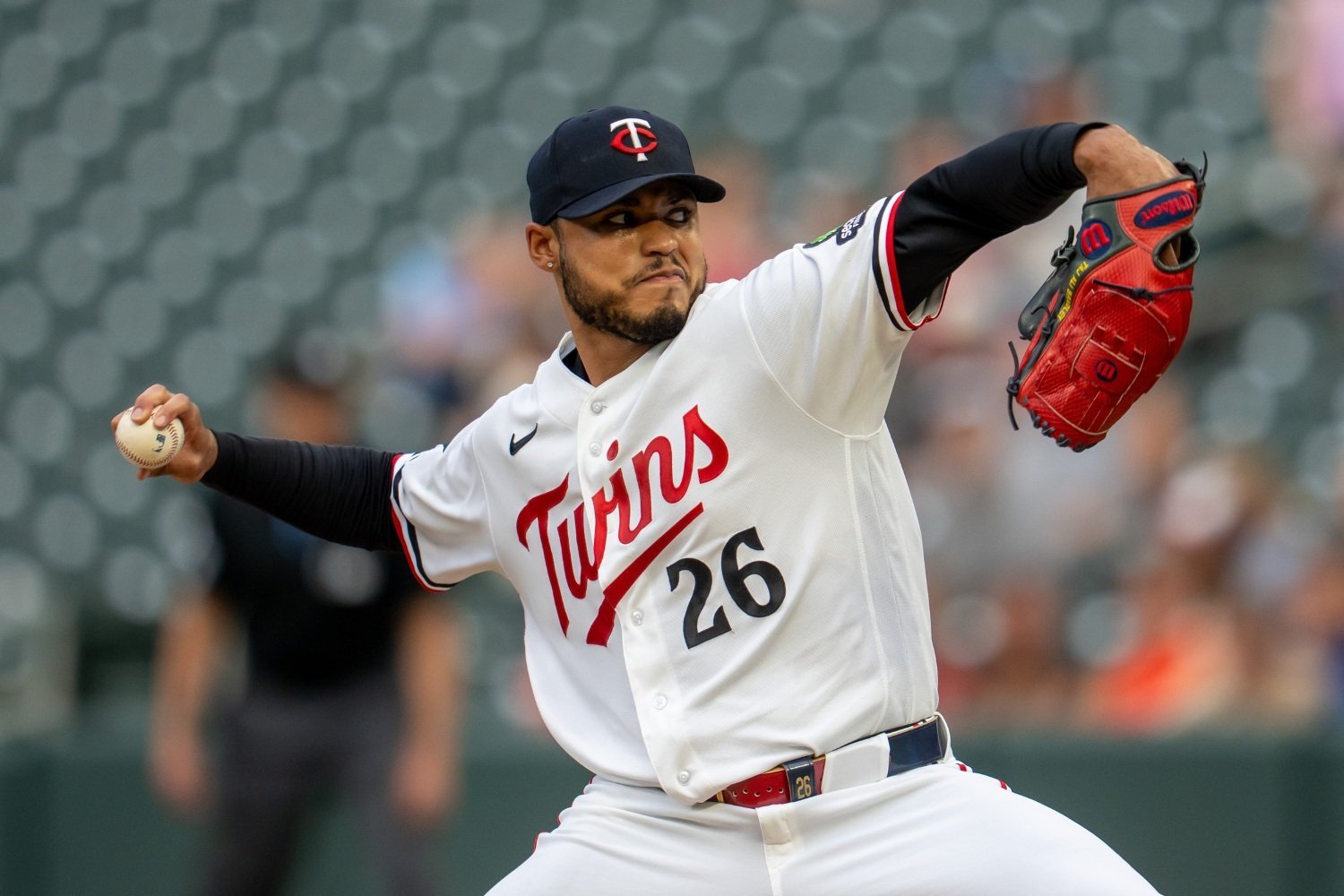 Box Score SP: Taj Bradley 7.0 IP, 3 H, 1 ER, 0 BB, 10 K (101 pitches, 67 strikes (66%)) Home Runs: N/A Top 3 WPA: Bradley (0.36), Kody Clemens (0.14), Ryan Kreidler (0.10) Win Probability Chart (via FanGraphs) The Twins lost their All-Star, Byron Buxton, to a hip strain on Tuesday, right as their division rivals rolled into Target Field. Minnesota's suddenly swinging merry band of Triple-A players would have to step up to keep the happy music playing against a tough young lefty in Joey Cantillo, who hadn't allowed more than two runs in an outing since early June. The Twins also had a young hurler on a bit of a hot streak in Taj Bradley. The stage was set for a classic low-scoring, one-run ballgame. Sharp Bradley + Sloppy Guardians = 2-1 Twins Lead Bradley was in complete command over the first four frames, save for one low fastball that Rhys Hoskins deposited into the bullpen just left of dead center field in the second. The righty racked up seven strikeouts on only 55 pitches through the fourth, setting himself up for a lengthy outing. In the bottom of the second inning, the Cleveland infield took turns trying to give the Twins back the lead. The frame started with Kody Clemens reaching on a boot by the All-Star Travis Bazzana, and he moved to second on a poor fielder's choice attempt by usually-elite shortstop Brayan Rocchio on a slow chopper by Ryan Kreidler. Next, Luke Keaschall hit a grounder to first baseman Kyle Manzardo, who promptly didn't throw to second, and then didn't get the out at first because Cantillo wasn't covering. With the bases loaded and nobody out, Kyler Fedko had his hero moment. Fedko continued his 0-for-career with a strikeout, threatening the whole situation in a must-win game. Luckily, Austin Martin connected with a sacrifice fly to tie the game, and Brooks Lee delivered yet again with a seeing-eye single up the middle to snatch the lead back, 2-1. Rocchio couldn't snag a smash grounder to start the bottom of the third, and then third baseman Daniel Schneemann got into the mix of sloppiness by butchering a hot grounder from Kreidler for a double to put runners at second and third with only one out. Keaschall failed to connect, setting up Fedko for hero moment number two. Cue the 0-16 memes. It was still 2-1 Twins after multiple threats, and it would remain that way as the teams rolled into the middle innings. Bradley Continues to Deal, Clemens Delivers Insurance Bradley kept the Guardians off the scoreboard through the seventh inning. That included stranding a leadoff double in that final frame to complete his night with 10 strikeouts and 23 whiffs—and, most importantly, only one run allowed. Meanwhile, the Twins' bats couldn't muster anything of note without Guardians help, until Josh Bell started the bottom of the seventh with a ringing single up the middle. With two outs and a lefty on the mound, Clemens went the other way for a deep fly ball that Steven Kwan couldn't snowcone. As Kwan kicked the ball around for a bit, the young-at-heart Bell scampered home and Clemens celebrated the new 3-1 lead on third base. All-Star Kody Clemens? Andrew Morris, Taylor Rogers, and Yoendrys Gómez took care of business in the eighth and ninth innings, and a tense, close, important game against the Guardians was never really in doubt for the Twins. That was a sentence I've been waiting my whole life to type. Kudos to Rogers for passing Caleb Thielbar for the most appearances at Target Field by any Twins hurler. Also, kudos to Derek Shelton for pulling Rogers after a two-out walk put the tying run at the plate. This win needed to happen, and the Twins did what they needed to do to secure it. What’s Next? The Twins look to win the series on Wednesday night, sending lefty Connor Prielipp (2-5, 4.96 ERA) to the mound in search of some revenge for an earlier loss in Cleveland. The Guardians will counter with righty Slade Cecconi (4-6, 4.44 ERA), who hasn't faced the Twins yet this season. First pitch is scheduled for 6:40 pm CDT. Postgame Interviews Bullpen Usage Spreadsheet FRI SAT SUN MON TUE TOT Morris 0 5 17 0 13 35 Raya 0 35 0 0 0 35 Rogers 0 12 0 0 17 29 Orze 28 0 0 0 0 28 Funderburk 21 0 0 0 0 21 Adams 0 19 0 0 0 19 Gómez 0 0 14 0 3 17 Go 0 0 0 0 0 0 View the full article
 -
Will Cubs End The First Half On A High Note?
DiamondCentric posted an article in North Side Baseball
 The Chicago Cubs continue their roller coaster ride of a first half. With the All-Star break approaching, will the Cubs finish things strong? Listen on Apple Podcasts: https://podcasts.apple.com/us/podcast/the-north-side-baseball-podcast/id1798599313 Listen on Spotify: https://open.spotify.com/show/75wMGhBwlrDDYPt3kaF453 Listen on iHeartRadio: https://www.iheart.com/podcast/263-the-north-side-baseball-po-268998437/ Listen on Pocket Casts: https://pca.st/eey7h6ih Watch on YouTube: https://www.youtube.com/@northsidebaseball View the full article
 -
 The long road back for Jhony Brito has officially taken him to Petco Park. The Padres called up the right-hander from Triple-A El Paso on Tuesday and optioned right-hander Alek Jacob back to Triple-A. Brito, one of the five players the Padres acquired from the New York Yankees in the Juan Soto trade in 2024, is back in the majors with the Friars for the first time since that 2024 season. Brito began the 2025 season by having an internal brace procedure on his right elbow and flexor tendon surgery that April. He began a rehab assignment in early May and pitched well in the minors before being activated from the 60-day injured list and being assigned to El Paso. In four starts for the Chihuahuas, Brito has a 0.96 ERA in 18⅔ innings with nine walks and 19 strikeouts. Brito is expected to make his season debut in a relief role Tuesday against the Arizona Diamondbacks, following starter German Marquez. Jacob was called up Friday and appeared in just one game, tossing a much-needed three innings in Monday's series-opening 8-0 loss to the D'backs. View the full article
