


DiamondCentric
-
Posts
2,631 -
Joined
-
Last visited
Never
Content Type
Profiles
Forums
Events
News
Tutorials & Help
Major League Baseball Videos
Guides & Resources
Store
Downloads
Gallery
Everything posted by DiamondCentric
-

Red Sox Minor League Recap: Worcester Drops Fifth Straight
DiamondCentric posted an article in Talk Sox
 Boston Red Sox Farm System Snapshot Triple-A Worcester Red Sox Series vs. Rochester Red Wings (Washington Nationals): 0-5 Season Record: 23-25 Worcester’s skid reached five as the WooSox lost 7-5. Michael Sansone got the start, looking to put Worcester back in the win column amid a four-game losing streak. Unfortunately for Sansone, things went downhill early. Over a five and ⅓ inning appearance, Sansone allowed four runs on four hits and a walk, allowing a two-run home run in the first. In the sixth, he turned the ball over to Eduardo Rivera who wasn’t much better. He struck out four, same as Sansone, but allowed another three runs on two hits and three walks. After one and ⅔ innings he was relieved by Noah Song. Song was excellent in his closing position. Executing two hitless innings and K’ing two. Despite a strong backend, it wasn’t enough to keep it close enough for the offense. The offense looked better than it has as of late, totaling ten hits and drawing four walks. In 15 opportunities with runners in scoring position, the WooSox converted four times. Facing a six-run hole in the sixth, Vinny Capra drove in the WooSox first runs of the day on a single, scoring Max Ferguson and Nate Eaton. Mikey Romero added another run in the seventh, scoring Jason Delay on a sac-fly. Later in the inning, Kristian Campbell drove in Nathan Hickey with a single, adding another run. In the eight, Max Ferguson scored Matt Lloyd on a single to center field, marking the final run of the evening for Worcester. Eaton, Campbell, and Lloyd each collected multi-hit games as the offense started to look better. Double-A Portland Sea Dogs Series vs. Reading Fightin Phils (Philadelphia Phillies): 4-1 Season Record: 21-22 Portland’s four-game win streak came to an end as they lost 7-3. Jedixson Paez put together one of his best outings of the season, pitching three perfect innings to start the game. He K’d four as he lowered his ERA to 4.22. In immediate relief, Dalton Rogers nearly matched Paez. He put together a near-perfect three innings of his own, allowing a walk as he struck out three. However, it all went south for the Sea Dogs when Joe Vogatsky entered the game. Vogatsky was lit up over just ⅔ innings. He allowed five hits and six runs as Reading blew the game open. Finally in damage control, Max Carlson took the mound. He allowed another run as he struck out three to close the game. Two excellent outings from Paez and Rogers were wasted as Vogatsky let the game slip through his fingers. Portland’s offense, including Franklin Arias, was hot despite the lopsided final score. The Sea Dogs had 12 hits, but didn’t draw a walk all game. Additionally, they struggled to drive runners in, going 1-for-7 with RISP and stranding nine runners. The only two runs came early. In the third, Nate Baez got things started with an RBI single to drive in Arias. Arias scored again in the sixth on a single from Tyler McDonough. The bats were ineffective from that point on despite lots of baserunners. Baez had three hits, while Johanfran Garcia and Arias had two apiece. High-A Greenville Drive Series @ Frederick Keys (Baltimore Orioles): 1-1 Season Record: 16-25 Greenville’s game was cancelled yet again, marking the third straight contest postponed by inclement weather. Low-A Salem RidgeYaks Series @ Hill City Howlers (Cleveland Guardians): 2-3 Season Record: 19-25 Salem fell short by just one run, losing 5-4 on Saturday evening. Leighton Finley was excellent in his starting appearance. He notched five frames of work, allowing three hits and striking out six opponents. He lowered his ERA to 3.41. Harry Blum couldn’t keep the positive momentum rolling, however. He faltered in his two-inning appearance, allowing four runs (one unearned) on just two hits and three walks. Blum got Saturday’s loss, and Adam Bates got a blown save for his final inning of work. Blum allowed an additional run on two hits and two walks. His ERA rose to a sky-high 10.07 as he continued to struggle to turn his season around. The offense fell just short on Saturday as 17 of the 32 at-bats resulted in a strikeout for Salem. After a six-inning pitching duel, Kleyver Salazar broke the game open with a one-run double to score Starlyn Nunez. After advancing to third on Salazar’s double, Andrews Opata scurried home on a wild pitch to give Salem a two-run advantage. After allowing five unanswered runs, Enddy Azocar came to the plate with two on in the ninth. Looking to shorten the lead, the right-handed Azocar drove in two on an opposite field triple. However, the RidgeYaks failed to capitalize on the prime opportunity to tie the game. View the full article
 -
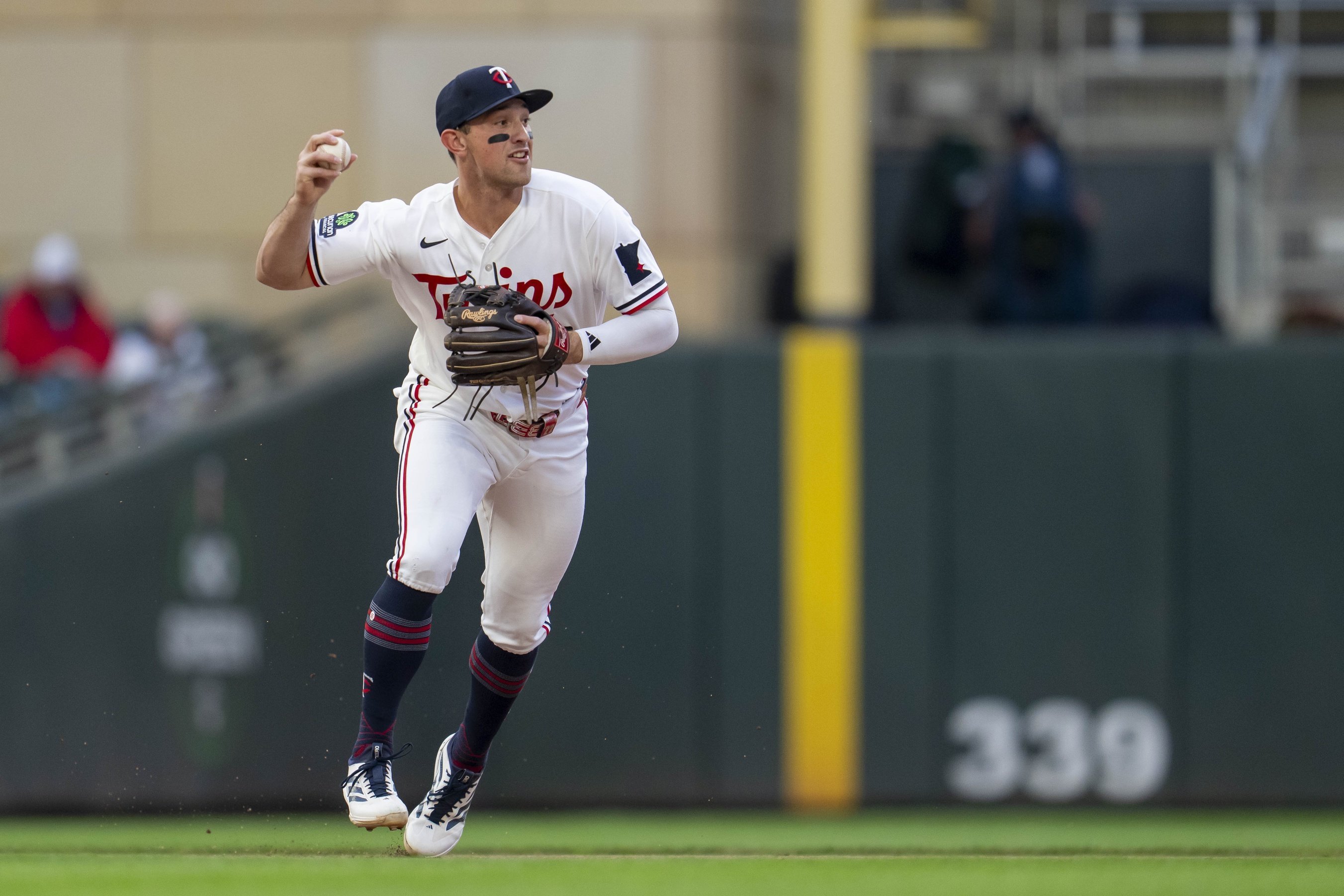 On Friday, May 22nd, in Boston, Brooks Lee played a position other than shortstop for the first time since July 28th, 2025. Carlos Correa, the Twins’ starting shortstop between 2022 and mid-2025, left the following day’s game with a migraine and never played a game for Minnesota again. Since July 29th, Lee has started at shortstop in 95 games. But those days may be close to being over. There are a number of factors at play here. First, Lee himself. When Lee was drafted eighth overall in 2022, scouts believed he could be a serviceable MLB shortstop, with a pro arm and sure hands, but a lack of range. Since then, his defensive outlook has diminished, and it has felt like Lee has been asked to play shortstop out of necessity. He has turned in some good plays, but he seems overmatched, with -8 outs above average (OAA) in 1,193 innings at the position, and -5 OAA just this season alone (390 innings). He’s graded out at second and third base as an approximately average-to-slightly-below-average fielder, and one of those two positions is likely where he needs to settle if he wants a multi-year career as a starting player. However, to this point, Minnesota has relied on him at shortstop due to a dearth of other options. Tristan Gray, the team’s utility infielder through the first two months of the 2026 season, is a 30-year-old out of his athletic prime who can play some shortstop but shouldn’t be counted on as the team’s everyday shortstop, nor has he been playing every day at any position. However, the team recently called up another utility infielder, Ryan Kreidler, who has a much different profile than Gray. Kreidler, despite his hot start at the plate (.313/.405/.656 with 3 home runs in 37 plate appearances), is not a good hitter. He’s been among the worst hitters in baseball during his five-year MLB career. However, he’s a bona fide shortstop. Prior to Friday’s game, he had played five games in center field and five games at third base, only starting at shortstop in a game Lee did not play. Friday, though, he played shortstop, the position where he’s most valuable, for the first time getting precedence over Lee. And Saturday, he started at the hot corner again. In fact, on the broadcast, Cory Provus noted that the club has made it clear that Lee will spend a lot of time at third in the near future. This alignment makes the most of both players’ skill sets when both are on the dirt. Kreidler is the best shortstop on the team, so it makes sense to play him at the toughest position. Lee has a profile best served at third base, given his lack of range. Honestly, the Twins’ third utility infielder, Orlando Arcia, should also get precedence over Lee at short. Neither Kreidler nor Arcia nor Gray is likely to be the long-term answer at shortstop, though. Instead, this move also appears to be clearing a path for Twins Daily’s #2 prospect, shortstop Kaelen Culpepper, to make his debut in the not-so-distant future. Culpepper, the 21st overall pick in 2024, has been heating up at Triple-A St. Paul over the last few weeks, with an OPS over .900 over the past month. Culpepper started the season slowly, getting his first taste of Triple-A pitching this season. He’s also bounced around the diamond this spring, but two-thirds of his appearances have been at shortstop. Culpepper is more athletic and rangy than Lee with a plus arm, though there are questions about whether he has enough range to cut it as an MLB shortstop long-term. If he’s merely average, though, he’s a better option than Lee. Jamie Cameron wrote a great profile on Culpepper earlier this month that I encourage you to read. Long-term, the Twins probably hope a player like Twins Daily's #7 prospect Marek Houston will take over shortstop duties and move Culpepper to second or third base, but by all indications, the Twins seem to prefer Culpepper over Lee at short, necessitating a move to third (or second) base at some point for the three-year veteran. And the Twins recently reduced their 40-man roster to 39, designating Luis Garcia for assignment Saturday morning, which opens the door to add Culpepper to both the active and 40-man roster without much resistance. There’s another name at play, though—the reason third base is open for Lee to play, at least sporadically for now. Royce Lewis, the Twins’ starting third baseman (when healthy) since 2023, was demoted to Triple-A earlier this week after mustering just a .539 OPS in his first 119 plate appearances of 2026. For the foreseeable future, he will be in St. Paul (which also cuts into Culpepper’s time playing positions beyond shortstop), leaving major league playing time available at third base. It’d be a bit surprising if Lee exclusively played third for the time being, though the Twins don't currently have a player who plays third but doesn't play shortstop on their roster. It’s unclear whether—or if—Lewis will return to major-league action, or at what position. As bad as Lee has looked early this season at shortstop, Lewis looked as bad or worse at third base. It’s possible that Lewis, along with getting his hitting back on track, may need to learn to play another position to get back up to the majors, but that conversation is months away. As a caveat, the Twins have another struggling infielder—Luke Keaschall—to worry about. Perhaps Lee or Culpepper (or Arcia or Gray) might also be asked to man the keystone at some point, which complicates this analysis. But for right now, it looks like we’re in the early stages of Brooks Lee’s short tenure as Minnesota’s shortstop coming to an unceremonious end, and the newly-vacated hot corner is as good a place as any to let him settle in, so long as he shows something at the plate*. *it’s unclear that he’s shown enough at the plate yet View the full article
 -
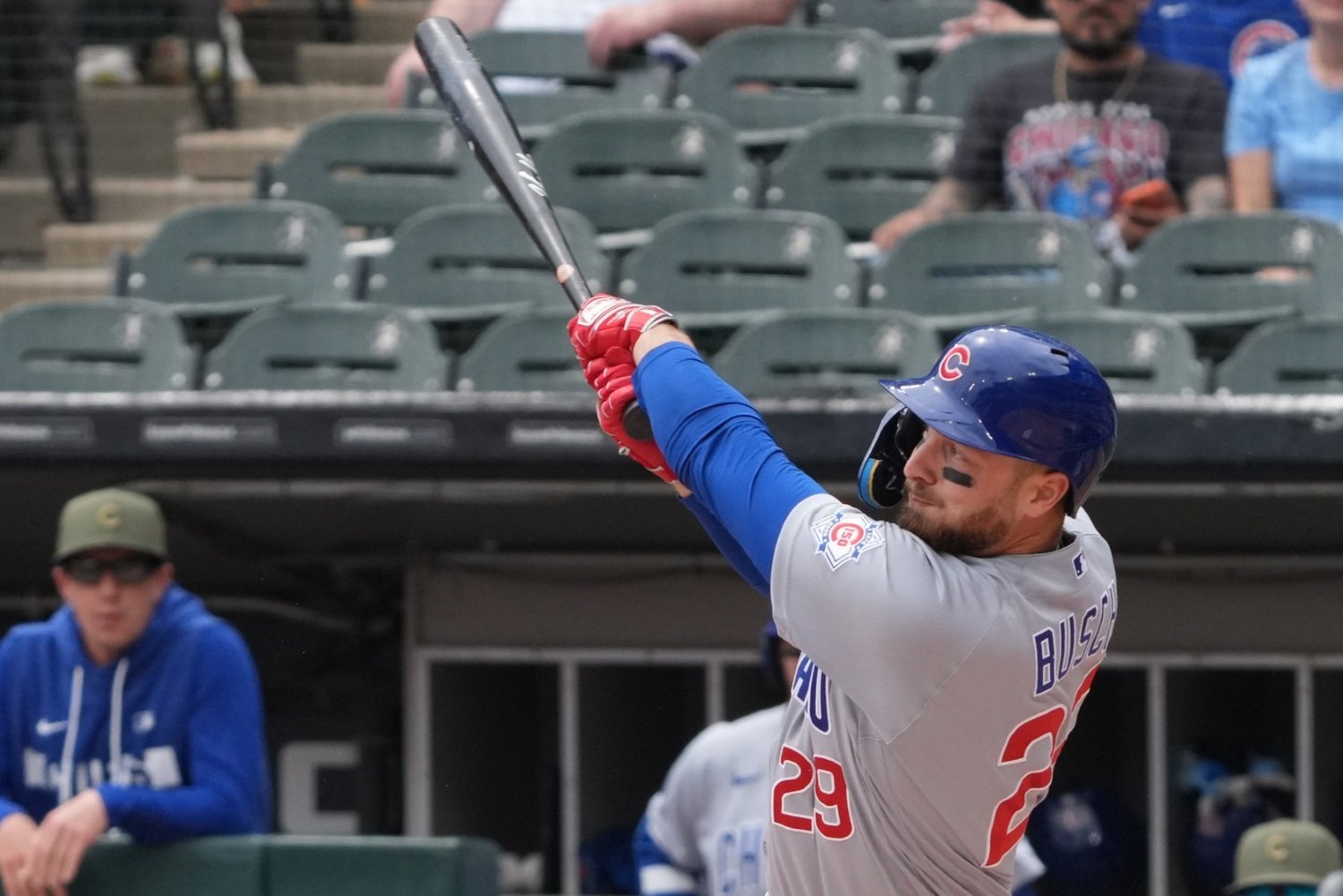 The Cubs offense got off to a great start. They batted .261/.353/.427 as a team through the end of April, and scored nearly 5.5 runs per game. That was never going to prove sustainable, of course. The only two teams in Cubs history to score at that kind of pace all year were the 1929 and 1930 clubs, and in those years, offense was at such a frenzy that they could hardly help it. It didn't have to get this bad, though. Since May 1, the Cubs are batting .202/.306/.331. That's why they're currently mired in a stretch of seven straight losses, and 11 in their last 13 games. Technically, none of that is Michael Busch's fault. In fact, his was the last piece of slumbering lumber to limber up this spring. He had a .576 OPS through the end of April, but is batting .275/.440/.493 in May. That's a tremendous line, indicative of a player who has tapped into the value of a shrunken strike zone and become an unstoppable OBP guy. He's walked 19 times and struck out just 20 times in 91 plate appearances this month, entering Sunday's games. Even over the last four contests, in which he's gone 0-for-13, he's managed a pair of free passes. However, something really is amiss with Busch, even now. He's missing some serious bat speed, and more than that, the timing and angle of his swing are a hair off. He's still making good swing decisions, which has kept him afloat in the OBP department, but the power that made him such a dynamo at the top of the lineup last season is absent. Can he get it back? Well, firstly, of course he can. What we really want to know is how likely he is to actually do it, and to estimate that, we need to reacquaint ourselves with Busch's swing a bit. As you surely remember, last year, he found something that turned him from a good hitter with slightly above-average power to a borderline All-Star who hit 34 homers. He actually swung a tick less fast than he had in 2024, but he made more solid contact, thanks to a superb bat path that matched a well-organized plan of attack. He hit the ball hard, and he hit it hard in the air, often to the pull field. This season, that's just not happening. Busch's average exit velocity is down from 92.2 MPH in 2025 to 88.5. His average exit velocity on batted balls in the launch angle sweet spot (8°-32°) is down 2.4 MPH. His average launch angle on hard hit balls (95+ MPH) is down 5°. As good as Busch has been in May, it's still mostly because he's drawing walks and putting the ball in play. There's little sign of the power he had in 2025. Here, in two videos, is why. The first is a home run Busch hit against Miles Mikolas last year, on the 4th of July. WU9rbDJfV0ZRVkV3dEdEUT09X1ZWTlZBVjBCVXdFQUNWRlJYd0FIQWxkUUFGbFhCd1VBVkZRTkJBY0ZVd0FHVXdJQQ==.mp4 The second is a similar pitch from last month, on which he hit a well-struck but harmless flyout. TUFYS05fWGw0TUFRPT1fQmxWUVUxWldVd0VBWEZzS0FnQUhCUVJTQUZoVEFsa0FBMU1CQUFRSENWQUhWZ2RU.mp4 The telling moment in the two swings comes, perhaps unsurprisingly, just as he's making contact. To illustrate the difference, I've added an arc to each, going from his belt buckle to his left elbow by way of his armpit. Now, to be clear, that arc is not quite how any hitter would or should think about the problem in Busch's swing this year. Nobody's mental cue for a successful power stroke is the angle of this imagined arc. But it does a fine job of highlighting what's happening. Busch's hands get farther from his body earlier in his swing this season. He's not tucking his back elbow in and powering his swing by forcing that top hand through a firm front side, the way he did last year. That's led to a slight flattening of his swing. In the above examples, there's another key variable. Last year's homer came when Busch was ahead in the count, 1-0. He could sit on a fastball in and be ready to turn on it, with his front shoulder rolling backward and his torso twisting at top speed to power a short stroke with lots of long-ball potential. This season's pitch came with two strikes, so part of the reason Busch is letting his hands get away from his body is to cover the outer edge. He can't be as aggressive with that turn of his upper half, either, because he has to respect the possibility of a breaking ball a bit more. This is a real difference, but if it were an isolated case, it wouldn't be especially telling. It's not isolated, though. In fact, here's Busch getting all over a two-strike pitch that was a bit away from him (and harder) last year. eHk5b0RfVjBZQUhRPT1fVWdRRkFGSlNVQXNBRGdZTFVRQUhBZ2RYQUFBRlVRTUFDZ1lOVWdVQVYxY0FWVmNG.mp4 And here's him scorching a ball, but to the big part of the field, on a 1-0 count, just this Friday. YVlkam5fV0ZRVkV3dEdEUT09X1VGZFFVRk1NVWdjQVhWUlFVQUFIQUFaVUFGa0RBVkVBQUFNQkNRc0VWMVVIVkZOVw==.mp4 Once again, we'll look at the moment of contact on each swing. Even when he extends his arms, this year, Busch is going around his front side, more than through it. Some of the difference lies in him letting energy flow through his whole frame better, from his feet to the end of his bat, but some, again, lies in him flattening out slightly. He's a bit more focused on hitting the ball, this year, and a bit less focused on hitting the ball hard, in the air, to a productive part of the park. The specifict of the focus and conviction he had at the plate last year is just not quite as fine this spring, and the results have spoken to that. If his bat speed remains down—and it's markedly down, about 1.5 MPH from last year—he might have to make a larger adjustment to his plan at the plate than he's made so far. He saw a surge in bat speed once the weather ceased to be frigid, but he's plunged back down on that front over the last fortnight. He'll need to organize his zone differently, if he's no longer able to rotate as quickly as he did last season and/or if the flattening of his bat path is permanent. Otherwise, some of his best contact will continue to be wasted, and Busch will settle back into being what he was in 2024. That was a solid hitter, but the Cubs' offense needs him to be more than that. They're relying on him much more now than they were in 2024, when they platooned him and when they had Cody Bellinger to help them punish righties. Busch doesn't have to hit 34 home runs again, but walking at a career-high rate isn't worth it if he trades in his power in the process. Right now, that's exactly what he's doing, because his swing isn't right. View the full article
 -
 All that the San Diego Padres' top prospect had to do was improve in two areas: quality contact and staying healthy. Through 34 games with the Double-A San Antonio Missions, Ethan Salas has accomplished just that. In this video, we break down the adjustments Salas has made and when to expect his big-league debut. View the full article
 -
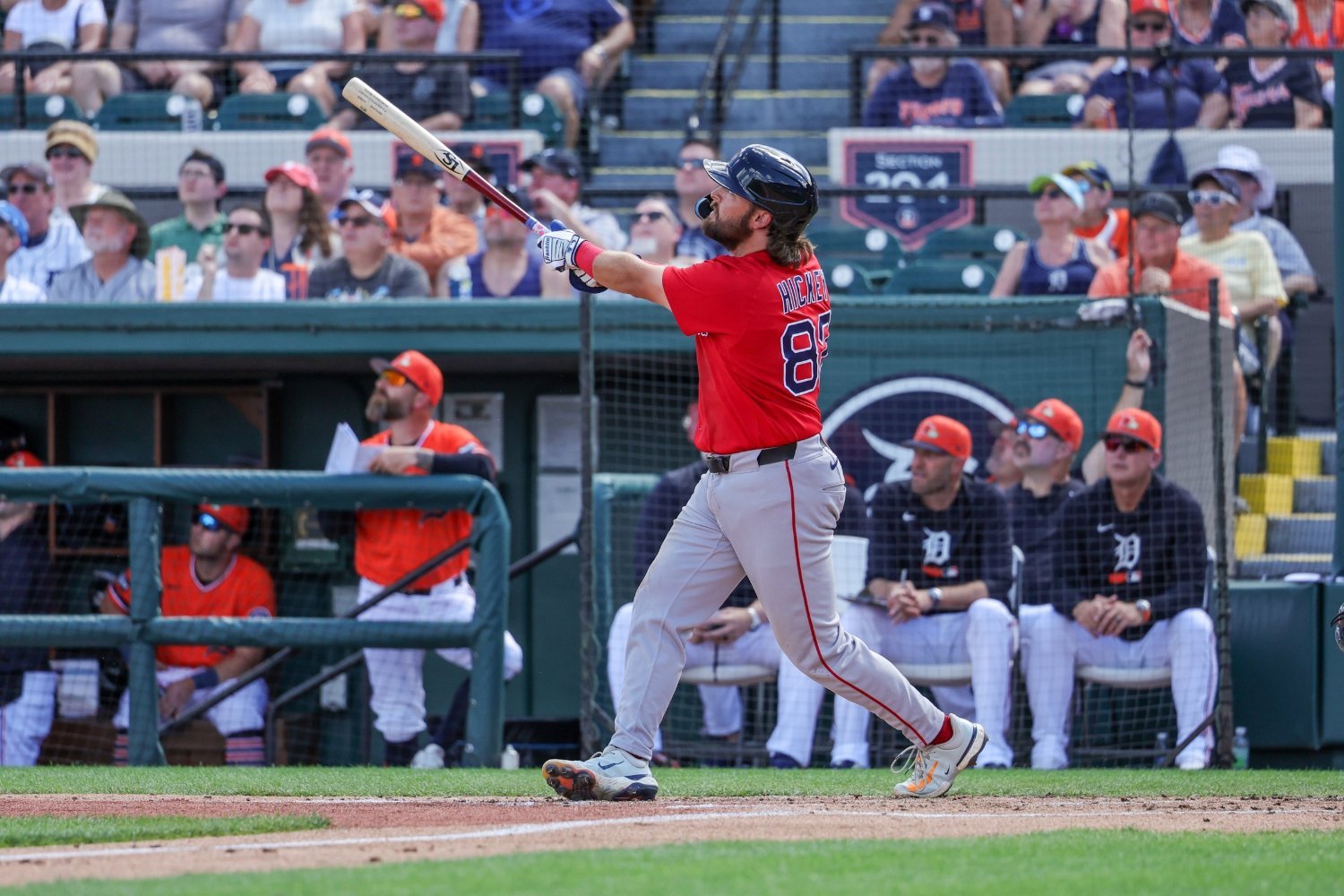 Worcester, MA — They say baseball can be like a whirlwind. It's a hectic sport than can change on a dime A prime example is how the WooSox had a player go from not being on the active roster to being the pitcher of record in the same day. In the span of a few hours, acting manager Iggy Suarez had to quickly alter his game plan; starting the day, the Worcester Red Sox had activated Matt Lloyd off of the injured list and in response moved Nathan Hickey to the development list. That was quickly changed as Roman Anthony was placed on the injured list by Boston. Needing a bat, the organization recalled Mickey Gasper to the big-league club and opened a roster spot once more for Hickey. “It happened quick. I mean, that move was made earlier and then we go out for B.P [batting practice] and the Mickey move happened. We had the [roster] spot so Hickey comes back,” Suarez explained. The acting manager admitted that right away he deals with the admin part of the roster when this happens, as the farm director had to get league approval to activate Hickey off the developmental list. It’s been a long season for Boston Red Sox prospect Nathan Hickey. The former catcher turned first baseman has not played often on the team due to a crowded infield that has forced Nick Sogard and Mickey Gasper over to the cold corner (prior to their promotions). And with Matt Lloyd off the injured list playing time is still hard to come by. The former fifth-round pick out of the University of Florida has made it into 18 games, hitting just .200/.327/.422 with a double, three home runs and six RBIs. In 2025, Hickey was a big piece in the lineup for Worcester, as his 17 home runs were second on the team while leading the offense with 75 RBIs. But with the prior need to keep 40-man roster guys such as Sogard and Gasper in the lineup, he has often been the odd-man out. Despite that, he’s found a way to stay ready while unlocking a new and unexpected part of his game: emergency pitcher. With the WooSox always in need of pitching help, the team has turned to position player pitching when the game has either gotten out of control or the team has run out of available pitchers for the game. In both situations, it’s been Hickey who has stepped up and pitched. So far in 2026, he’s pitched in four games, giving the team 3 1/3 innings while allowing just one run on three hits and two walks. He also struck out one batter. In Hickey’s latest outing, he pitched the 12th inning of the May 7 game against Scranton, earning the win. Hickey has found enjoyment out of pitching, having offered to go in and pitch when the team needed help. But despite being a position player, Hickey doesn’t pitch like one. So far on the season, he’s topped out at 87 mph and hasn’t thrown the usual eephus pitch like others in his situation; he genuinely tries to sequence his way through opposing lineups. “I was just flicking it. In high school I’m pretty sure I was up to 95 [mph] so I can get it up there. But I’m not, it’s been cold, so I’m out there shivering. I’m trying to throw the ball,” Hickey admitted with a laugh. “I’m not trying to throw it by anybody. Just get it in the zone and if I throw it too soft, I feel like I won’t have any idea where it’s going.” It isn’t often that teams turn to a position player to pitch. It’s even rarer when both teams are forced to use a position player. In his lone inning Hickey out-dueled Edinson Duran to claim the win. Hickey, however, didn’t even realize it, as the thought of winning was more important than earning the win. “[Not] until the game was over and then like four guys came out and were like ‘Hey bro, you got the win’ and I was like, oh, that’s fine. I mean it was cool,” Hickey admitted with a smile. To say it hasn’t been the season Hickey predicted it would is fair. However, his importance to the team is well known, whether on the mound or at-bat. Especially for Suarez as he handles the current roster crunch. “He’s like, ‘Hey, so what’s the plan today?’ I was like you. Are you ready? How’s the arm feel? Good, he’s throwing. Always an option, he knows that,” Suarez joked when asked before the May 22 game if Hickey would be available for innings if needed. Despite the consistent presence as an emergency pitcher, Suarez still makes it a priority to give him a heads up before the game. “Seriously, like, just be ready in case. If things get sideways and we mess around with a tied game late and we got no more, you know, you’re gonna be the guy. Again, we don’t want to ambush those guys all of a sudden by going ‘Hey, Hickey, warm up’. So, he’s following along to the game, and we realize we’re running out of pitching. He’ll start loosening.” But despite that, there’s always one consistent with Hickey’s pitching and the team. “He’s always available,” Suarez admitted with a large smile. View the full article
 -
Padres Have Intriguing Catching Prospects Beyond Ethan Salas
DiamondCentric posted an article in Padres Mission
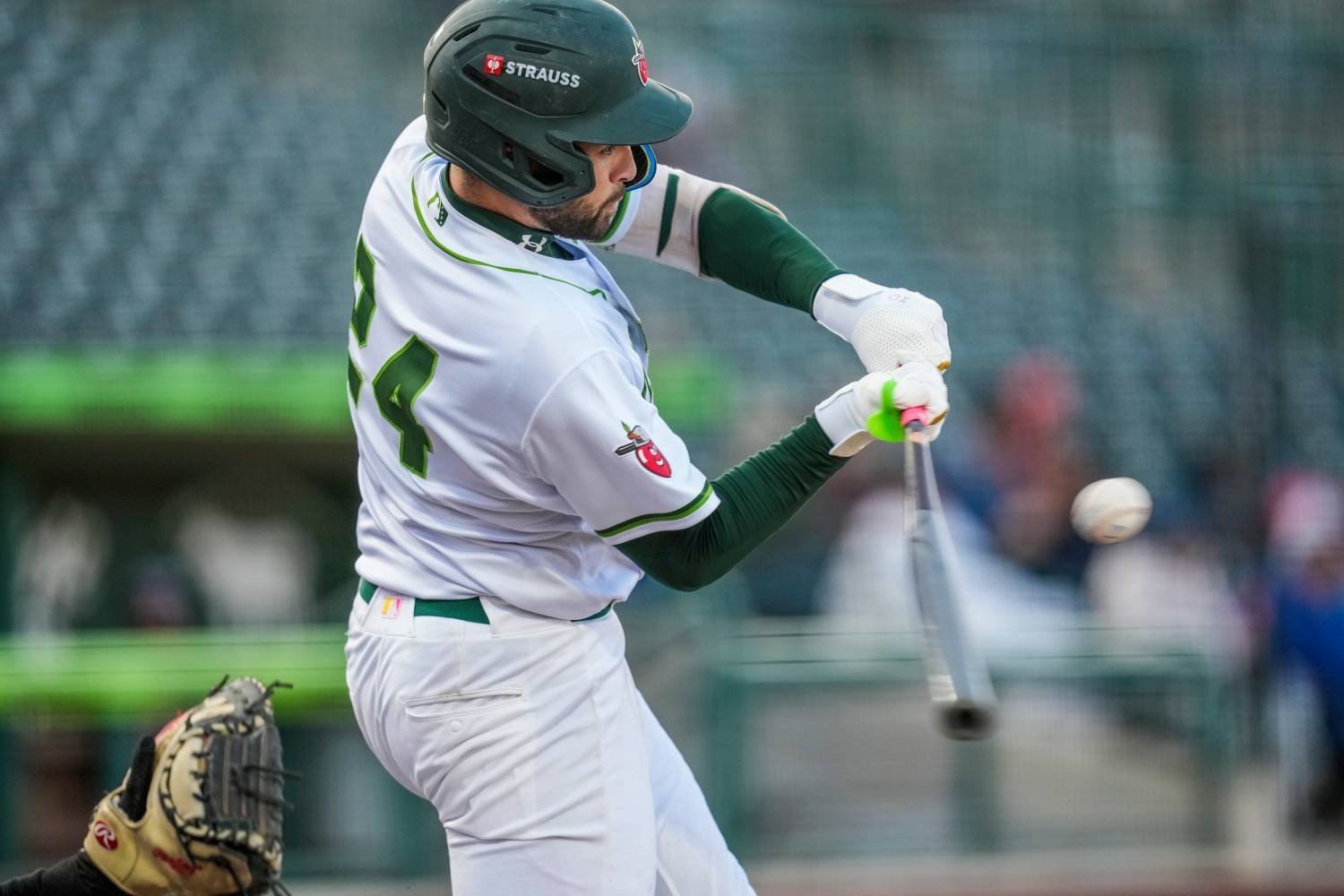 When Rodolfo Duran was called up by the San Diego Padres to replace injured catcher Luis Campusano a couple weeks ago, there were some who clamored for Ethan Salas to get the call instead. After all, Salas, Padres Mission's No. 1 prospect, is the future of Friars backstops. In fact, president of baseball operations A.J. Preller is on record from a recent radio appearance as saying that Salas could handle a major-league pitching staff right now. Salas' defense has never been a question. More so, it has been Salas' offensive ability, which helped make him the No. 1 prospect in the 2023 international free-agent class, that has been questioned. After a good debut as a 16-year-old in 2023, the left-handed hitter's offense took a step back in 2024, where he had a .206/.288/.311 slash line with four homers and 53 RBIs with nine steals with the High-A Fort Wayne TinCaps. Despite that production, the Padres kept challenging Salas and promoted him to the Double-A San Antonio Missions for 2025. But his season ended after just 10 games due to a stress reaction in his lower back. This year, though, Salas has regained his offensive prowess. Through Thursday, Salas with slashing .299/.368/.496 with six homers, 24 RBIs and nine stolen bases. The Padres likely want Salas to continue to experience offensive success, which is why he remains at Double-A. A promotion to the Triple-A El Paso Chihuahuas will come, perhaps by the end of June at the latest. That also helped Salas jump up national top-100 lists after falling back in 2025. Baseball America has Salas at No. 22, while MLB Pipeline checks in at No. 52. At a premium position such as catcher, having one tremendous prospect is a boon. But it doesn't end there for the Padres. In fact, the Friars have more top-end depth behind the plate than any of the other 29 MLB teams. And that isn't even taking Duran into consideration since he is no longer a prospect after 11 seasons in the minors. With Salas at Double-A San Antonio, the Padres also have key prospects at High-A Fort Wayne and with the Low-A Lake Elsinore Storm. Those would be Lamar King Jr. at Fort Wayne, as well as Ty Harvey and Truitt Madonna at Lake Elsinore. Harvey is No. 7 on Padres Mission's Top 20 prospect list, King is No. 10 and Madonna No. 13. Here is a look at the three prospects beyond Salas (all stats updated prior to this weekend's games): Ty Harvey, Low-A Lake Elsinore Storm A fifth-round draft choice in 2025 out of Inspiration Academy in Florida, the 19-year-old had a brief cameo with the Storm last year, appearing in seven games. This is his first full season in the pros, with that being interrupted by a quad injury that cost him three weeks from April 14-May 4. He recently rejoined the Storm, going 6-for-14 in his first four games following a rehab assignment in the Arizona Complex League. Harvey has bounced between catcher and DH, even seeing a game at first base, just to get his bat into the lineup and with having two superb catchers at Lake Elsinore. The 6-foot-1, 215-pound Harvey was drafted due to his power bat and his excellent arm. Those skills are what earned him a scholarship to Florida State, but the Padres gave him a $1.5 million signing bonus to pull him away from college. His offensive skills have certainly been on display in his young pro career, with a slash line of .345/.465/.431 this year in 19 games. He has yet to homer, but does have five doubles, nine RBIs and five stolen bases. He has also shown patience at the plate by drawing 20 walks, although he has struck out 28 times. The quad injury means that Harvey is likely to spend the entire season with the Storm, unless he hits his way to Fort Wayne. KING_C_0521.mp4 Lamar King Jr., High-A Fort Wayne TinCaps The 22-year-old is in his fourth season of pro ball after being drafted in the fourth round out of Calvert Hall College High School in Maryland in 2023. Most notably, he is the son of former NFL defensive end Lamar King, a first-round draftee who had 12 sacks in five seasons (1999-2003) with the Seattle Seahawks, so you can see where the younger King gets his 6-foot-3, 215-pound physique from. The Padres were able to pull King away from a commitment to Georgia Tech for a signing bonus of $502,800. His draft profile was more of a power threat, but King has shown a keen ability to get on base and make contact, drawing 20 walks in 37 games with the TinCaps after 44 in 105 games in 2025 between Lake Elsinore and Fort Wayne. His career got off to a rough start with a concussion and dislocating his right (throwing) shoulder while sliding, which led to surgery that ate into his 2024 season. That shoulder injury has also led to speculation that King could be a better fit at first base. This year, he has thrown out six of 24 base stealers (25%) in 15 games behind the plate. He has also played first base in eight games and been the designated hitter 13 times. King does have three homers to go along with a .258/.371/.391 slash line in 37 games. He has also stolen nine bases in 10 tries after swiping 21 in 24 attempts in 2025, during which he had a slash line of .274/.353/.384 with four homers and 44 RBIs in 105 games. His athleticism behind the plate makes him an attractive prospect, but needs more work behind the plate if that is where he is going to end up. HARVEY_C_0521.mp4 Truitt Madonna, Low-A Lake Elsinore Storm Yet another physical specimen at 6-foot-2 and 215 pounds, the 11th-round draft pick in 2025 out of Ballard High School in Seattle signed with the Padres for $654,000 instead of going to UCLA. Madonna is more raw offensively than Harvey and King, but does hit the ball with power to all fields when he does make contact. Madonna benefited from Harvey's injury to see most of the time at catcher and is second on the Storm with 12 doubles, while putting up a .271/.366/.421 slash line in 38 games with 27 RBIs and nine stolen bases in 13 attempts. He has struck out a lot, going down 47 times while drawing 21 walks. His 2026 has come after some time at the end of 2025 at Lake Elsinore, where he had a .185/.267/.278 slash line in 14 games with no homers and five RBIs. Had had six walks and 23 strikeouts. MADONNA_C_0521.mp4 He doesn't have a terrific arm and is a little more rigid in his movements, which puts him behind Harvey and King. But if he is able to solve his strikeout problem and if the power comes about, there is a possibility of a position chance (he has also played a bit at first base this year) to keep his prospect shine going. View the full article
 -
Devin Williams & Luke Weaver Are Transforming Mets' Bullpen
DiamondCentric posted an article in Grand Central Mets
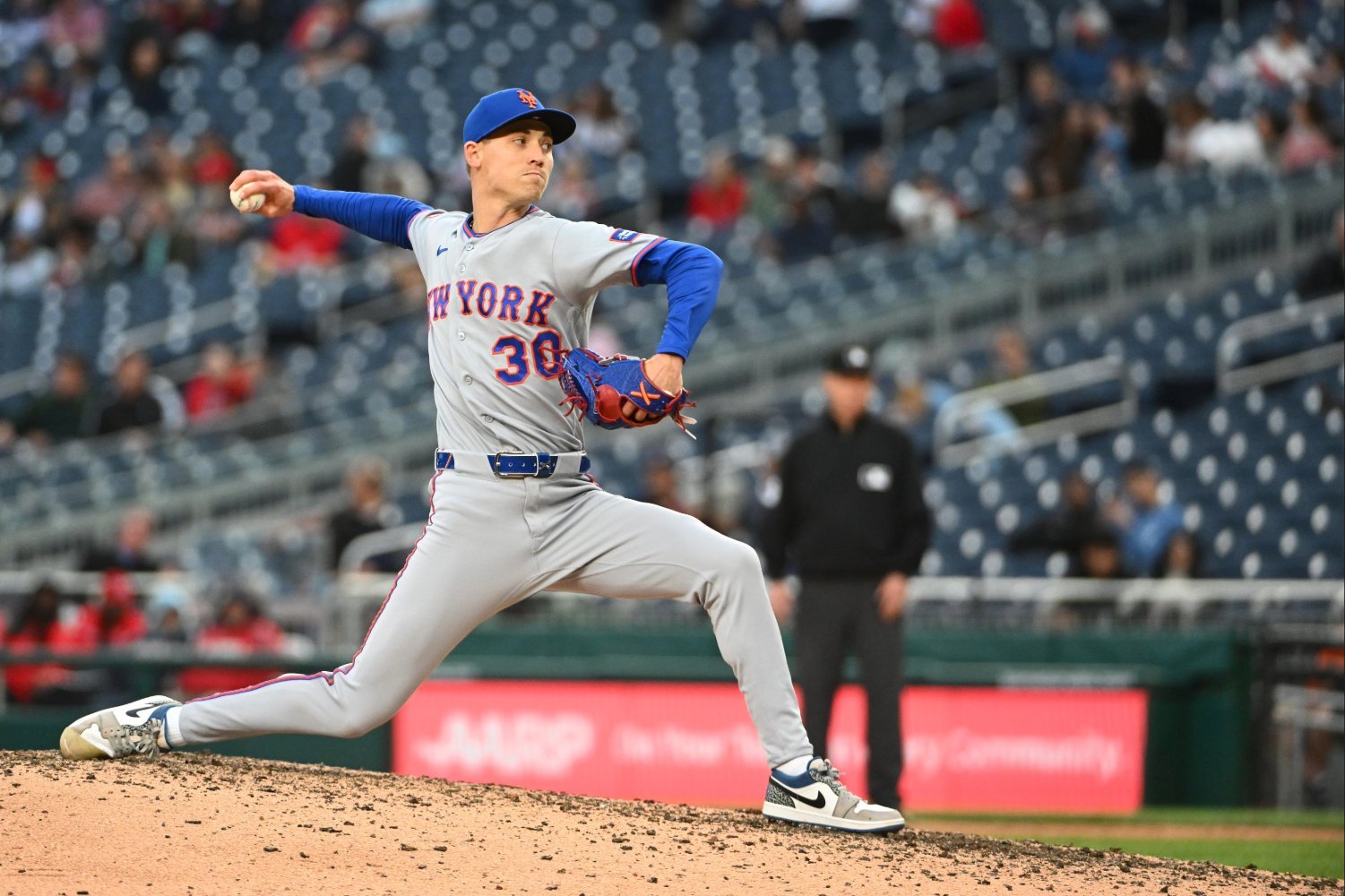 Devin Williams slapped Mark Vientos on the shoulder and roared toward the Mets dugout last Sunday at Citi Field while the crowd showered him with applause. Austin Wells had grounded into a double play. Vientos’ lightning-quick play at first base to start the classic “3-6-3” double play with shortstop Bo Bichette ended the Yankees’ rally and left them scoreless in the top of the tenth inning. The revamped Williams once again exceeded expectations. He did it by retiring all three hitters he faced to earn his sixth save of the season — his fourth consecutive hitless appearance. Then, after Tyrone Taylor’s dramatic game-tying homer in the bottom of the ninth on Sunday made it 6-6, Williams delivered again in the biggest moment, giving the Mets a chance to win the Subway Series at home. And they did. Carson Benge hit a walk-off grounder, and the Mets defeated the Yankees 7-6 in the series finale. The Yankees have not won the Subway Series since sweeping the Mets in 2017. Every pitch carries pressure, every inning feels heavier, especially after the Mets’ rocky start in April. For much of April, the Mets bullpen created a strange feeling: too much talent to look this vulnerable. It was not a velocity issue. It was not a lack of stuff. It was something harder to identify at first glance — and far more dangerous for a contender. Their top relievers had lost the ability to control how hitters reacted against them. Swings no longer looked uncomfortable. At-bats stopped feeling rushed. Opposing lineups entered the late innings believing they could survive them. And in modern baseball, especially for teams built to compete in October, that changes everything. A dominant bullpen shortens games. It allows managers to aggressively navigate the first six innings knowing the game can effectively end in the seventh. That is exactly what the Mets stopped having for several weeks. Devin Williams looked like a pitcher trapped between two versions of himself. Luke Weaver, whose recent reinvention had quietly become one of the most fascinating stories among relievers, began losing the depth and precision that allowed him to avoid damage. The result came quickly: too many extended innings, too much hard contact, and too many situations where every lead started feeling fragile. But May has looked completely different. And the numbers help explain why. Improvements From Devin Williams and Luke Weaver Split Pitcher Rslt G Dec IP H R ER HR BB SO SO% GB% BF ERA Last 10 games Devin Williams 8-2 9 W-L:2-0,Sv:4 9 2/3 2 0 0 0 2 11 40.7% 43.8% 27 0.00 Previous 6 games Devin Williams 3-3 6 W-L:1-1,Sv:1,BSv:1 4 13 8 8 1 4 9 31.0% 26.1% 29 18.00 Last 8 games Luke Weaver 8-0 6 W-L:0-0,Hld:3 9 1/3 6 0 0 0 4 14 37.9% 44.4% 29 0.00 Previous 7 games Luke Weaver 1-6 7 W-L:1-1,BSv:2,Hld:1 7 9 8 8 2 2 5 15.6% 50.0% 32 10.29 The statistical differences are dramatic enough to feel almost unreal. Williams went from allowing eight runs in four innings to stringing together double-digit nearly flawless appearances. Weaver went from a stretch where hitters were barreling baseballs consistently to a scoreless run while nearly doubling his ability to generate swings and misses. A large part of the Mets’ collapse in April felt inevitable whenever Williams and Weaver struggled. The results are there. Williams’ rough outings were part of a 3-3 stretch for the club in the six appearances before his current streak of nine nearly perfect relief outings. Weaver’s struggles came within an even more chaotic stretch, with the Mets going 1-6. And it makes sense: Weaver pitches before Williams. If he falters, Williams often never becomes an option because the scoreboard changes and the Mets’ chances of winning disappear before the ninth inning arrives. But the most important development is not simply the reduction in damage. It is the way both pitchers regained control of at-bats. When Williams struggled, his innings felt long. Hitters no longer looked uncomfortable working from behind in counts. The changeup still moved, but something fundamental had disappeared: the visual effect of his entire arsenal. His famous changeup has always been devastating, but it never worked in isolation. The pitch survives because of the threat of the fastball. That is exactly what the newest data shows. How They Are Reclaiming Their Dominance Pitcher Total Pitch Pitch% BA ISO xBA xOBP xSLG BABIP Whiffs% Barrel% K% Williams, Devin 274 FF 16.1 .000 .000 .093 .194 .171 .000 52.9 0 44.4 Williams, Devin 274 CH 12.4 .000 .000 .091 .167 .113 .000 47.6 0 41.7 Weaver, Luke 311 CH 13.8 .067 .000 .097 .203 .131 .125 32.3 0 41.2 Weaver, Luke 311 FF 17.4 .333 .000 .215 .294 .240 .600 3.8 0 40 Weaver, Luke 311 FC 7.4 .500 .000 .495 .495 .565 .500 60 0 0 The table explains something essential about Williams: his dominance returned once he reestablished vertical aggression with the fastball. During April, too many fastballs drifted into neutral zones, particularly at heights where hitters could stay balanced and recognize the changeup early. The result was devastating for a pitcher whose effectiveness depends on sequential deception. The new whiff chart against the four-seam fastball reveals a completely different reality. Williams has returned to attacking above the strike zone, especially in the upper inside quadrants, where swing-and-miss rates have exploded. Entire zones are now producing extreme whiff percentages, completely changing the dynamic of the at-bat. That happens because the fastball does not necessarily need to generate weak contact to dominate. Its effect comes from accelerating decisions. When the fastball explodes at the top of the zone with vertical life, hitters feel forced to begin their swing earlier. And that is where Williams’ real trick appears: the changeup comes out of the exact same visual tunnel before disappearing beneath the bat too late for hitters to adjust. Williams had allowed an astonishing .857 BABIP during the previous six-game stretch. His weapons were completely disconnected. Now, opponents have dropped to a .071 BABIP against him. It is not only that he is striking hitters out and generating elite swing-and-miss rates with the fastball. He is also eliminating damaging contact. That is why both pitches are functioning so aggressively at the same time. The fastball owns a 52.9% whiff rate. The changeup sits at 47.6%. Neither pitch has allowed a barrel. Hitters are making the wrong decisions from the very beginning of the at-bat. That difference may look subtle from the outside, but it completely transforms the offensive experience against a reliever. In April, hitters looked like they were waiting for mistakes. Now they look reactive. Weaver found his adjustment from a different place, but one equally important. His problem was never the total absence of swings and misses. The issue emerged when he lost the ability to control the type of contact he allowed. Too many changeups stayed over the plate or entered trajectories where hitters could fully extend their arms. The exit velocity chart against the changeup clearly shows how he corrected that. The weakest contact consistently appears below the strike zone, especially on the lower outer edge, where exit velocities collapse to minimal levels. There are balls coming off the bat at 75 and 77 mph — essentially dead contact from the moment of impact. That reflects exactly who Weaver needs to be in order to dominate. Unlike Williams, Weaver does not survive by destroying timing. He survives by manipulating the contact plane. Even during his worst stretch, his ground-ball profile remained alive, producing a 50% ground-ball rate. When the changeup finishes low, it forces hitters to either pound the top half of the baseball or swing over it entirely. The damage disappears because the swing never finds the correct angle. And the chart also reveals where the problem existed during his rough stretch. The only area where the changeup was truly punished came on pitches located low and inside, where exit velocities climbed above 90 mph. That small location mistake was enough to completely alter his innings. Now he is avoiding that zone entirely. And that explains why the Mets are beginning to recover something far more important than attractive statistics: they are recovering the feeling of control at the end of games. With the Williams-Weaver duo dominating, the Mets bullpen has improved to a 2.44 ERA during the month of May. Now the problems lie elsewhere. Without the blowups from Tobias Myers and Craig Kimbrel, that bullpen ERA drops all the way to 1.30. And that is the key here: Williams has restored fear from the top of the strike zone. Weaver has returned to eliminating damage from the bottom. Together, they are rebuilding the emotional structure every bullpen needs if it hopes to get to and survive October. View the full article
 -
 The St. Lucie Mets erased an early deficit with back-to-back seventh-inning home runs from AJ Salgado and Branny De Oleo to beat Palm Beach 4-2. Nicolas Carreno fired four scoreless innings with seven strikeouts, and Elwis Mijares followed with three hitless frames for the win. Binghamton fell 5-1 to Richmond as Brendan Girton walked seven in 2 2/3 innings, with Nick Lorusso providing the lone run on a solo homer. The Triple-A Syracuse game was postponed, and the High-A Brooklyn game was canceled. Mets Transactions New York Mets recalled RHP Jonathan Pintaro from Syracuse Mets. New York Mets optioned LHP Zach Thornton to Syracuse Mets. Third-Inning Walks Bury Rumble Ponies In Richmond The Binghamton Rumble Ponies fell 5-1 to the Richmond Flying Squirrels on Saturday, undone by a five-run third inning. Starter Brendan Girton lasted 2 2/3 innings, allowing five runs on two hits while issuing seven walks and striking out four to take the loss and drop to 1-3. The damage came with two outs. Girton walked the bases full before issuing another walk that forced in the first run. A wild pitch brought home a second run, and a two-run double then pushed the lead to 4-0. Douglas Orellana entered in relief, and an inherited runner scored on an RBI single to make it 5-0. Nick Lorusso supplied Binghamton's only offense, lining his seventh home run of the season in the fourth inning. Vincent Perozo had the most productive day at the plate, going 2-for-2 with a double and a walk. Wyatt Young added a single and a stolen base, and Jacob Reimer collected the Rumble Ponies' other hit. The bullpen kept Richmond off the board after the third. Orellana finished 2 1/3 innings without allowing a run, Saul Garcia followed with two scoreless innings and four strikeouts, and Guillo Zuñiga worked a clean eighth despite issuing two walks. Binghamton struck out 14 times and left nine runners on base in the loss. Player AB R H RBI BB K Chris Suero (DH) 4 0 0 0 1 3 Jacob Reimer (3B) 4 0 1 0 0 1 Eli Serrano III (LF) 3 0 0 0 1 1 D'Andre Smith (CF) 4 0 0 0 0 2 Nick Lorusso (2B) 4 1 1 1 0 2 JT Schwartz (1B) 4 0 0 0 0 2 Vincent Perozo (C) 2 0 2 0 1 0 TT Bowens (RF) 3 0 0 0 1 2 Wyatt Young (SS) 4 0 1 0 0 1 Player IP H R ER BB K HR Brendan Girton (L) 2 2/3 2 5 5 7 4 0 Douglas Orellana 2 1/3 1 0 0 1 1 0 Saul Garcia 2 1 0 0 0 4 0 Guillo Zuñiga 1 1 0 0 2 2 0 Salgado And De Oleo Power Seventh-Inning Comeback For St. Lucie The St. Lucie Mets rallied past the Palm Beach Cardinals 4-2 on Saturday behind back-to-back seventh-inning home runs from AJ Salgado and Branny De Oleo. Starter Nicolas Carreno set the tone with four scoreless innings, scattering two hits while issuing two walks and striking out seven. The game remained scoreless through five. Palm Beach pushed across an unearned run in the top of the sixth on an error during a double steal, but St. Lucie answered in the bottom half. Francisco Toledo walked, advanced on a single by Elián Peña, and scored on a Jeremy Rodriguez double play to tie it at one. Palm Beach grabbed a 2-1 lead in the seventh on a run-scoring force out. St. Lucie responded immediately. Salgado tied the game with his seventh home run of the season, and after Jamari Baylor walked and Chase Meggers reached on a force out, De Oleo blasted his fourth home run of the year to put the Mets in front 4-2. Elwis Mijares closed out the win with three hitless innings, striking out five and improving to 3-3. Josh Blum tossed a clean fifth, and Ernesto Mercedes pitched into the seventh. Toledo finished 1-for-2 with a double and a walk, Peña reached base twice, and Randy Guzman added a hit and a stolen base. St. Lucie left five runners on base. Player AB R H RBI BB K Elián Peña (SS) 3 0 1 0 1 1 Jeremy Rodriguez (2B) 4 0 0 0 0 1 Randy Guzman (RF) 4 0 1 0 0 1 Yohairo Cuevas (CF) 3 0 1 0 1 0 AJ Salgado (LF) 3 1 1 1 1 1 Jamari Baylor (DH) 3 0 0 0 1 3 Chase Meggers (1B) 3 1 0 0 0 0 Branny De Oleo (3B) 3 1 1 2 0 2 Francisco Toledo (C) 2 1 1 0 1 0 Player IP H R ER BB K HR Nicolas Carreno 4 2 0 0 2 7 0 Josh Blum 1 1 0 0 0 0 0 Ernesto Mercedes 1 1 2 0 3 1 0 Elwis Mijares (W) 3 0 0 0 0 5 0 Top-20 Prospect Performance Carson Benge: DNP A.J. Ewing: DNP Jonah Tong: DNP Elian Pena: 1-for-3, BB, K Jack Wenninger: DNP Ryan Clifford: DNP Jacob Reimer: 1-for-4, K Nick Morabito: DNP Mitch Voit: DNP Jonathan Santucci: DNP Chris Suero: 0-for-4, BB, 3 K Zach Thornton: DNP Wandy Asigen: DNP Will Watson: DNP Eli Serrano III: 0-for-3, BB, K Randy Guzman: 1-for-4, SB, K Ryan Lambert: DNP Dylan Ross: DNP Antonio Jimenez: DNP R.J. Gordon: DNP View the full article
 -
Minnesota Twins Prospect Retrospective: Gabriel Gonzalez
DiamondCentric posted an article in Twins Daily
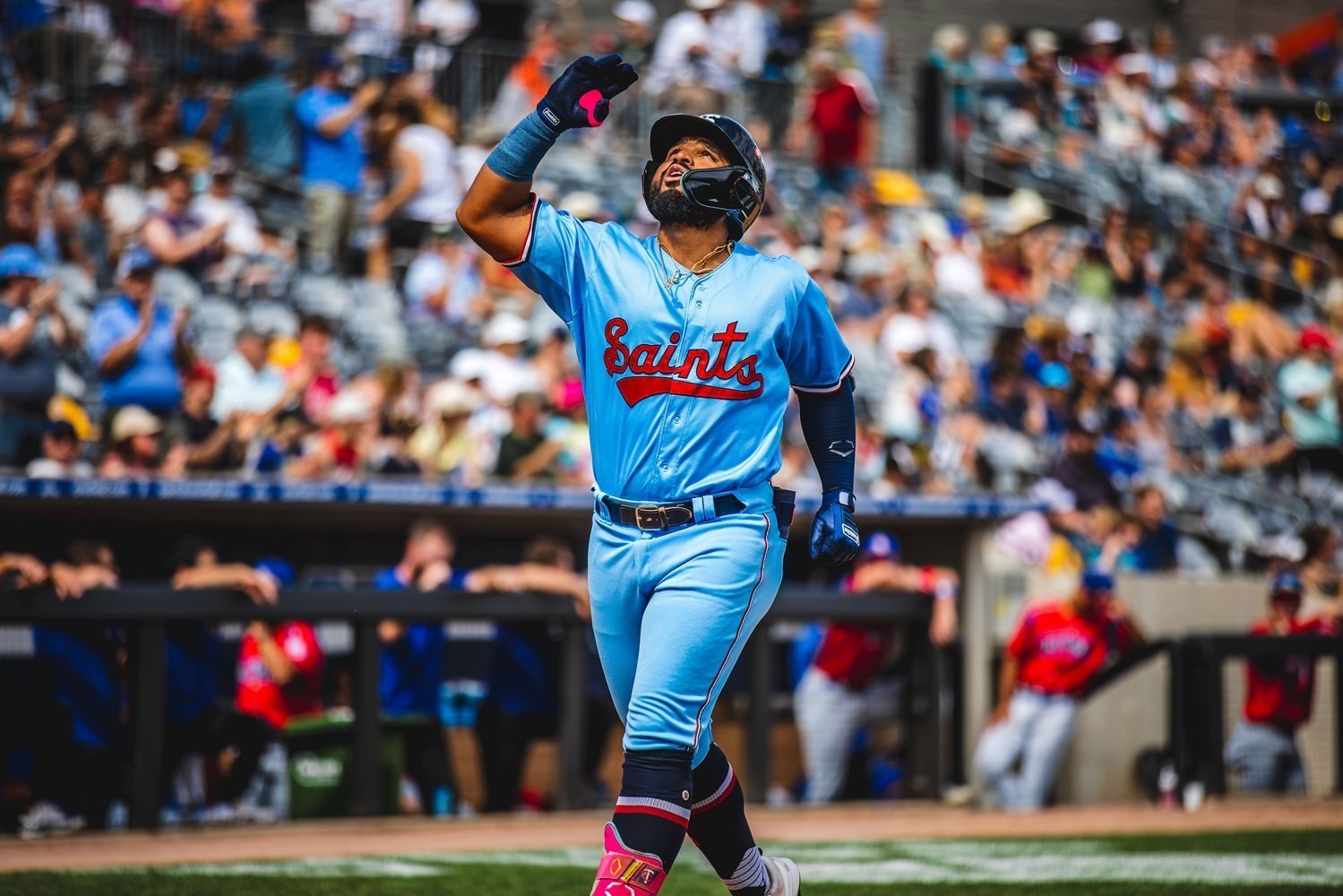 When the Twins acquired Gabriel Gonzalez as part of the deal that sent Jorge Polanco to the Seattle Mariners, the move felt like a classic upside bet. Gonzalez had already built a reputation as one of the better pure hitters in Seattle’s system, and the Twins were betting that offensive foundation would eventually carry him to the major leagues. Five years after signing with Seattle for $1.5 million during the 2021 international class, that projection still looks very much alive. From the moment Gonzalez entered pro ball, the bat stood out. He wasted little time showing why the Mariners were willing to invest heavily in him, posting an .892 OPS in the Dominican Summer League during his professional debut. When he arrived stateside in 2022, the production continued against more advanced pitching as he put together an .879 OPS while continuing to show advanced contact ability for a teenager. The breakout fully arrived in 2023. At just 19 years old, Gonzalez climbed to High-A and looked completely comfortable despite being one of the youngest hitters at the level. Across 116 games, he slashed .298/.361/.476 (.837) with 18 home runs and 23 doubles. The age context made those numbers even more impressive. Gonzalez was roughly 3.5 years younger than the average player in High-A and only faced younger pitchers in three plate appearances all season. That kind of performance typically launches a prospect into another tier nationally. Instead, Gonzalez’s momentum stalled after the trade to Minnesota ahead of the 2024 season. Transitions are not always seamless for young prospects, and Gonzalez never seemed fully settled during his first year in the Twins organization. A nagging back injury didn’t help matters, and his overall production dipped noticeably. In 81 games, he posted a .707 OPS with a 106 wRC+, solid numbers on the surface but well below the expectations attached to his prospect status. For some hitters, a season like that can completely derail development. Instead, 2025 became a reminder of why evaluators remained so high on Gonzalez’s offensive upside. The Twins sent him back to High-A Cedar Rapids to open the season, and he responded immediately. Gonzalez hit his way through three levels at just 21 years old, eventually finishing the season in Triple-A while earning a spot on the 40-man roster during the offseason. What stood out most was how stable the production remained throughout the climb. Gonzalez hit over .315 at every stop in 2025 and consistently drove the baseball into the gaps. His 38 doubles highlighted how frequently he found quality contact, and his .909 OPS finished as the best mark among the organization’s top offensive prospects. Even more impressive was how he handled advanced competition. Gonzalez faced older pitchers in all but 30 plate appearances and still hit .338/.405/.527 (.932) against them. He also punished left-handed pitching to the tune of a 1.022 OPS with a .592 slugging percentage, an encouraging development for a right-handed corner outfielder whose offensive profile will always carry the burden of producing impact at the plate. That offensive profile starts with elite contact ability. Even during his disappointing 2024 campaign, Gonzalez rarely looked overmatched in the batter’s box. Entering the 2026 season, he carried a career strikeout rate of just 15.3%, a remarkable number considering how aggressively he has been challenged throughout his career. Aggression will probably always be part of the package. Gonzalez likes to swing, and he still chases too many secondary pitches outside the zone, especially softer breaking stuff. The difference in 2025 was that he began pairing those natural bat-to-ball skills with more mature at-bats and sneaky power production. He trimmed the strikeout rate even further (14.5%) while slightly increasing his walk rate (9.1%), giving evaluators more confidence that the approach can work against upper-level pitching. While other outfield prospects in the organization may offer louder raw tools, Gonzalez’s blend of contact ability, approach, and extra-base production gives him one of the safer offensive floors in the system. The remaining question is whether the defense reaches an acceptable level. Gonzalez has worked extensively on his conditioning over the last couple of seasons, and the improvements have helped him become more playable in the outfield corners. He is unlikely to become a standout defender, but if he can settle in as an average corner outfielder, the bat has enough upside to make him an everyday player at the major league level. Now, after reestablishing himself with one of the best offensive seasons in the minors, Gonzalez once again looks like one of the more important young bats in the organization. The road has not been perfectly linear, but the underlying traits that made him such an intriguing international signing are still very much intact. And at only 22 years old, there may still be another level for him to reach. What stands out about Gonzalez during his professional career? Leave a comment and start the discussion. View the full article
 -
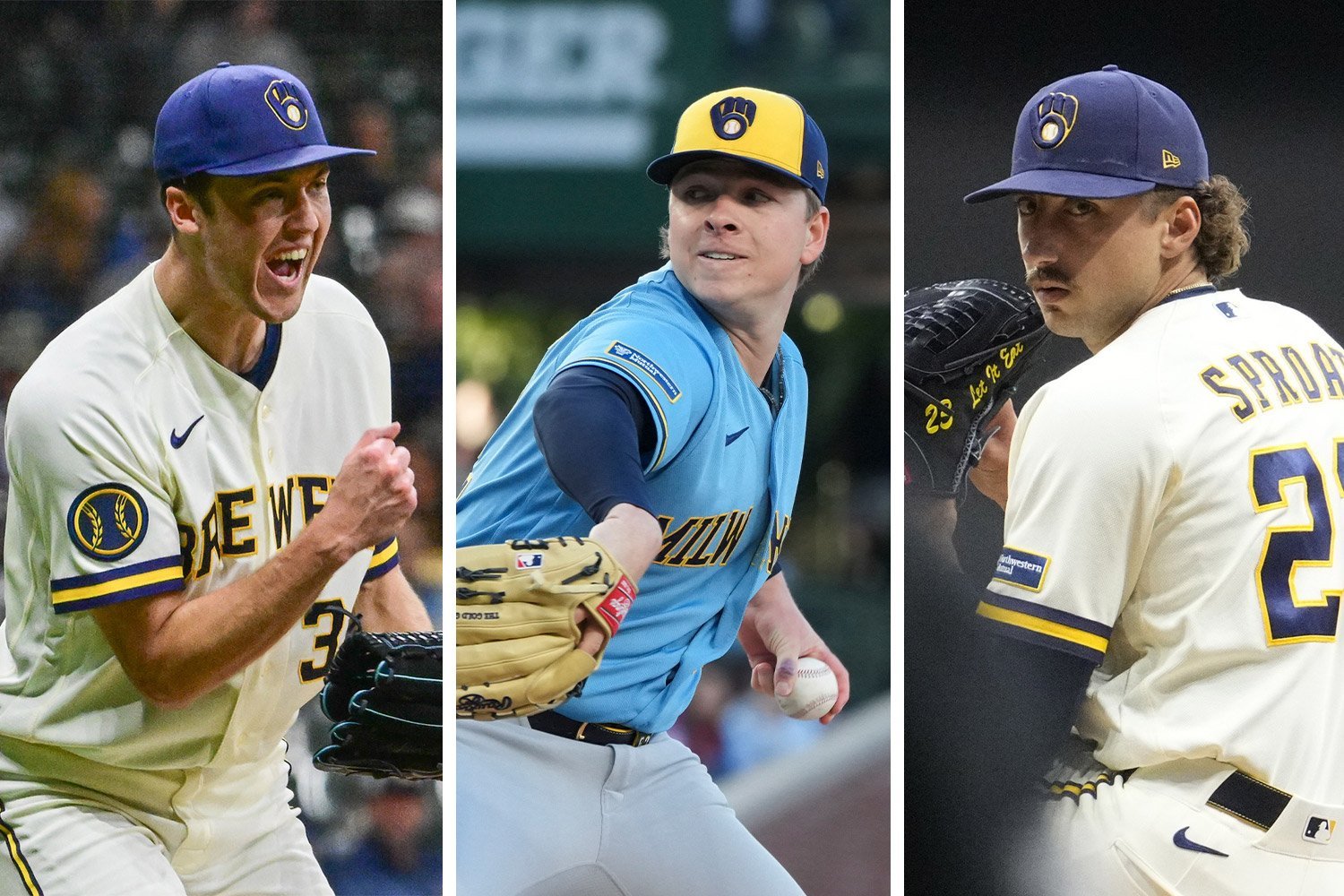 The Milwaukee Brewers are not building a dominant rotation around a single pitch. They are building it around an entire laboratory of elite weapons. While much of MLB remains obsessed with pure velocity or extreme “stuff” arsenals, Milwaukee is developing something far more complex: a collection of pitches that dominate in completely different ways. Some destroy plate appearances through nearly unsustainable swing-and-miss rates. Others survive through contact manipulation, constant discomfort, or the inability of hitters to elevate the baseball with authority. And perhaps the most interesting part is that the collective results are now beginning to tell a historic story. Stats in this article are through Friday, August 22nd. The Brewers reached Game 47 of the 2026 season at 29-18, marking the ninth time in franchise history they have led the division at this point of the year. But when compared to the other eight Brewers teams that also occupied first place after 47 games, something even more revealing appears: none combined such a high winning percentage (.617) with such dominant run prevention (3.18 ERA). That matters. Because every previous team on that list eventually played meaningful October baseball. From the division champions of 2011, 2018, 2021, 2023, 2024, and 2025, to the 1982 American League pennant winner, each of those starts evolved into a legitimately competitive season. And this current group is outperforming nearly all of them in the area that most consistently sustains real success: pitching. Span Started Span Ended Final Record Rank Postseason G W L WL% ERA HR% SO% BB% 26/3/2026 20/5/2026 29-18 1 47 29 18 .617 3.18 2.0% 26.8% 9.2% 29/3/2018 20/5/2018 96-67 1 Division Champ 47 28 19 .596 3.47 2.7% 22.7% 9.4% 29/3/2024 20/5/2024 93-69 1 Division Champ 47 27 20 .574 4.02 3.2% 21.0% 9.0% 11/4/1981 1/6/1981 62-47 1 Division Champ 47 27 20 .574 3.61 1.4% 12.1% 7.3% 30/3/2023 22/5/2023 92-70 1 Division Champ 47 25 22 .532 4.23 3.7% 20.6% 8.9% 1/4/2021 24/5/2021 95-67 1 Division Champ 47 24 23 .511 3.79 3.4% 27.7% 9.2% 31/3/2011 22/5/2011 96-66 1 Division Champ 47 24 23 .511 3.73 2.4% 20.5% 7.8% 9/4/1982 1/6/1982 95-67 1 AL Pennant 47 23 24 .489 4.08 2.1% 11.8% 8.0% 27/3/2025 18/5/2025 97-65 1 Division Champ 47 22 25 .468 4.14 3.0% 21.0% 9.9% The difference shows up even deeper inside the secondary numbers. This staff is striking out 26.8% of opposing hitters — one of the best marks of any team on this list — while suppressing home-run damage better than almost every modern Brewers club before it. This does not feel like a first-place team built on opportunistic offense or a favorable stretch of scheduling luck. It looks like a roster whose entire identity begins on the mound. And that is where a closer look at their best pitches begins to explain why Milwaukee feels different. The slider of Jacob Misiorowski is performing as the most valuable breaking ball in baseball through pure physical intimidation. Kyle Harrison dominates with two opposite weapons: a four-seam fastball built on swing-and-miss and a slurve that almost completely erases hard contact. Chad Patrick has transformed an apparently less explosive cutter into one of the most efficient pitches in MLB. Trevor Megill, meanwhile, is throwing a curveball at an absurd frequency without hitters finding answers. What connects all of those pitches is not shape. It is outcome. Milwaukee is not simply collecting good arms, the organization is building one of the most fascinating pitching ecosystems in the league, where every pitch seems to solve the same problem from a completely different geometric angle. Pitch Type: Slider Top-40 Run Value Pitchers: Jacob Misiorowski (1) Jacob Misiorowski’s slider does not merely lead Brewers pitchers. Right now, by Run Value, it is literally the most valuable slider in all of baseball. And the most impressive part is that it does so without necessarily dominating every traditional category usually associated with a devastating pitch. First place in Run Value (+10) already places him ahead of names like Jacob deGrom, Dylan Cease, and Chris Sale. But once you dig deeper into the details, something even more interesting appears: Misiorowski creates run prevention through an extremely rare combination of weak contact, aggressive command, and difficulty allowing hitters to elevate the ball. His 23.4% hard-hit rate allowed is one of the best marks anywhere on the leaderboard and clearly superior to most elite sliders surrounding him. Among pitchers with significantly positive Run Value, very few combine that level of contact suppression with such overwhelming overall effectiveness. Even dominant arms like Chase Burns, Andrés Muñoz, or Max Meyer allow considerably more hard contact. And that is one of the defining characteristics of this slider: it does not need to rely exclusively on whiffs to destroy plate appearances. His 25.8% whiff rate is excellent, but not historically absurd. In fact, it sits well below monsters like Mason Miller or Chase Burns, both comfortably above 50%. Yet Misiorowski turns the slider into an elite weapon because hitters simply cannot damage it when they do make contact. A .102 batting average allowed, and .169 slugging percentage against are outrageous numbers for a secondary pitch thrown nearly 25% of the time. Even more revealing: the expected metrics fully support the dominance. This does not look fluky. The xSLG (.227) and xwOBA (.186) continue to place him among the absolute elite. The difference may lie in how the pitch feels inside an at-bat. Many sliders dominate through accumulated swings and misses. Misiorowski’s also dominates through intimidation. Hitters rarely elevate it with authority, rarely square it up out front, and consistently seem more focused on surviving the plate appearance than attacking the pitch. That combination is often what defines truly special pitches. Pitch Type: Four-Seam Fastball Top-40 Run Value Pitchers: Kyle Harrison (11), Jacob Misiorowski (18) The most interesting part is not simply that Kyle Harrison ranks 11th and Jacob Misiorowski 18th in total Run Value among four-seam fastballs. What is truly revealing is that they arrived there through completely different paths. Harrison has a more “stable” four-seam fastball built around contact suppression. Misiorowski has a four-seamer that functions like pure physical violence. Harrison’s fastball produces better traditional contact results: a .227 batting average allowed, .330 slugging percentage, and .292 wOBA. The hard-hit rate allowed is also remarkably low (31.6%), especially for someone throwing the pitch nearly 60% of the time. That speaks to a very difficult combination to find: volume, confidence, and relatively controlled damage. But the real heart of Harrison’s profile lies in the swing-and-miss ability. His 33.5% whiff rate and 36.7% strikeout rate turn that four-seamer into a direct dominance tool. It is not merely a fastball designed to get ahead in counts. It is a fastball capable of ending at-bats by itself. The contrast with Misiorowski is fascinating. Because Misiorowski allows more slugging (.296), more wOBA (.290), and far more hard contact (42.9%). In theory, that should dramatically reduce the pitch’s value. Instead, the opposite happens: the four-seam fastball remains elite because the swing-and-miss level is absurd. His 45.1% whiff rate is one of the most extreme marks anywhere in baseball. And the 47.2% strikeout rate against the pitch feels pulled directly from a video game. Those are numbers that usually belong to devastating sliders, not a fastball thrown more than 60% of the time. That is the fundamental conceptual difference between the two: Harrison owns a dominant four-seam fastball because he blends whiffs with healthy contact suppression. Misiorowski owns a dominant four-seam fastball because he simply removes hitters before they can inflict meaningful damage. And that explains why the risk profiles differ as well. Harrison appears statistically more sustainable. His expected numbers align with the actual production, and the hard contact allowed remains manageable. There are clear structural foundations behind the success. With Misiorowski, everything exists on the edge of chaos. Even his expected metrics remain excellent (.195 xBA and .275 xwOBA), but the level of hard contact allowed suggests that when hitters do connect, they usually hit the ball very hard. The entire model depends on the fastball remaining nearly impossible to reach consistently. And honestly, that may be enough. Because a four-seam fastball generating whiffs above 45% simply breaks normal evaluation rules. At that point, you are no longer discussing “a good fastball.” You are talking about a weapon that completely alters the geometry of the plate appearance. What makes it even more impressive is that both pitchers arrived in the same statistical neighborhood using opposite roads: Harrison through contact management and efficiency; Misiorowski through pure aerial destruction. Pitch Type: Cutter Top-40 Run Value Pitchers: Chad Patrick (4), Brandon Sproat (18) Chad Patrick’s cutter belongs in an entirely different category. It does not dominate through explosive raw stuff, but through the combination of location, angle, and weak contact. And yet the result remains among the best in the league. Patrick ranks fourth in MLB in total Run Value among cutters with at least 130 pitches thrown, and the profile perfectly explains why. Hitters are batting just .155 against it while producing only a .207 slugging percentage — absurdly low numbers for a pitch he throws 41.4% of the time. That matters tremendously: this is not a situational cutter used to steal strikes. It is one of the foundational pillars of his entire arsenal. The most fascinating aspect is how two worlds coexist inside the pitch. On one hand, it generates legitimate swing-and-miss: a 33.1% whiff rate and 26.4% put-away rate. But it also suppresses damage extremely well when hitters make contact. The hard-hit rate allowed sits at only 34.1%, clearly below many elite cutters around baseball. That combination is rare. Normally, cutters that miss this many bats eventually pay for it with loud contact when hitters connect. Patrick is avoiding both outcomes simultaneously. It also helps that the expected metrics support much of the production. A .250 xwOBA remains excellent, even if it sits somewhat above the actual .193 mark. This does not look like a pitch surviving solely on luck. The case of Brandon Sproat is completely different. His cutter still carries positive Run Value and ranks 18th in MLB, but the profile is far more unstable. The 24.7% whiff rate is solid, though far from Patrick’s impact, and hitters have inflicted considerably more damage upon contact: a .469 slugging percentage and .339 wOBA allowed. What is interesting is that the expected metrics do suggest room for improvement. His xBA (.238) and xwOBA (.331) are better than the actual outcomes, a sign he has probably allowed somewhat more damage than deserved. But even then, the cutter still does not show the same consistent ability to suppress hard contact or dominate counts. The primary difference between the two lies in stability. Patrick’s cutter already functions as a fully consolidated elite-level weapon. Sproat’s still feels like a pitch with brilliant flashes that has not yet fully mastered contact quality when hitters avoid the swing-and-miss. Pitch Type: Slurve Top-40 Run Value Pitchers: Kyle Harrison (1) Kyle Harrison’s slurve not only leads MLB in total Run Value among pitchers with at least 150 offerings of the pitch. It also owns one of the most destructive profiles in the league, regardless of breaking ball category. Hitters are batting just .116 against it and slugging only .140, nearly absurd numbers for a pitch that Harrison throws 27.4% of the time. This is not some hidden secondary weapon reserved for certain counts. It is a central component of his repertoire, and still nobody is punishing it. The most impressive aspect is probably the blend of swing-and-miss and total hard-contact suppression. His 30.3% whiff rate and 32.6% strikeout rate show real put-away ability, but the truly outrageous figure appears in the hard-hit rate: just 10.7%. That number is almost surreal in today’s offensive environment. Even many of MLB’s best breaking balls allow significantly more loud contact when hitters manage to connect. Harrison is eliminating both outcomes simultaneously: swings and misses and damage on balls in play. And the expected metrics fully support the dominance. The .161 xBA, .188 xSLG, and .188 xwOBA are absolute elite-tier indicators. There do not appear to be meaningful regression signals hiding beneath the surface. Compared to the league’s other high-value slurves, the difference becomes obvious. Michael Soroka generates elite swing-and-miss numbers — 36.9% whiffs and a 38.7% strikeout rate — but allows substantially more hard contact and overall damage when hitters connect. Sean Newcomb actually falls into negative Run Value territory despite maintaining some whiff ability. Harrison, meanwhile, combines everything simultaneously: swings and misses, strikeouts, weak contact, and dominant expected outcomes. That is what transforms the slurve into one of the single most effective pitches anywhere in MLB this season. Pitch Type: Curveball Top-40 Run Value Pitchers: Trevor Megill (6) Trevor Megill’s curveball may be one of the least discussed pitches among MLB’s dominant relievers this season. The numbers suggest it deserves far more attention. Megill ranks sixth in total Run Value among all curveballs in baseball, but the underlying profile is even more impressive than the ranking itself. Hitters are batting just .125 against the pitch and slugging only .156, while producing a ridiculous .157 wOBA. And the most striking part is that this is not an occasional curveball used merely to disrupt timing. Megill throws it 42% of the time — an extraordinarily high usage rate for such a dominant breaking ball. That completely changes the conversation. Hitters know it is coming; they see it constantly, and they still cannot damage it. The swing-and-miss profile lives in absolute elite territory. His 48.4% whiff rate is one of the most extreme figures anywhere in baseball among high-volume curveballs, paired with a 37.1% strikeout rate and 29.5% put-away rate. Essentially, when Megill needs to finish an at-bat, the curveball becomes the primary weapon. But perhaps the most important detail is that the dominance does not rely solely on whiffs. The expected metrics fully sustain the performance: a .119 xBA, .147 xSLG, and .151 xwOBA. Those are absurdly low figures even inside the league’s elite breaking-ball group. In fact, when compared with other top curveballs around the leaderboard, Megill stands out because of the pitch’s complete balance. Ben Brown generates more overall whiffs, Spencer Arrighetti allows even less hard contact, and Tyler Glasnow posts an outrageous strikeout rate, but very few combine usage volume, swing-and-miss ability, and total damage prevention the way Megill currently does. That is what makes this curveball far more than a quality secondary pitch. It is functioning as one of the most dominant individual offerings in all of MLB, regardless of role or pitcher archetype. Pitch Type: Sinker Top-40 Run Value Pitchers: DL Hall (36), Abner Uribe (39) DL Hall’s sinker does not rank among the league’s most dominant offerings because of whiffs or strikeouts, but it does show intriguing signs of damage suppression. Opponents are batting just .150 against it and have produced virtually no extra-base damage (.150 SLG), which helps explain why the pitch maintains positive Run Value despite far less favorable underlying metrics. In fact, the contrast is sharp: the xwOBA climbs all the way to .418 and the xSLG to .403, signals that the contact quality allowed has been considerably more dangerous than the surface numbers indicate. Even so, Hall has managed to avoid catastrophic damage while keeping the hard-hit rate at a respectable 33.3%. The case of Abner Uribe appears more stable and aligns more closely with what teams usually seek from a power reliever’s sinker. His 64.1% usage rate clearly establishes it as the centerpiece of his arsenal, and while the numbers are not spectacular, they remain solid across multiple areas: a .233 batting average allowed, .301 wOBA, and respectable ability to generate swings and misses (17.7%) and strikeouts (19.1%). He does not dominate the league in weak contact, either, but the 38.2% hard-hit rate remains manageable considering the violence of the repertoire. Between the two, Uribe’s sinker appears more sustainable; Hall’s, meanwhile, still seems to rely more heavily on current outcomes than on underlying contact-quality indicators. Behind Milwaukee’s best start in decades (29-18, 3.18 ERA) sits a pitching arsenal that is dominating MLB from every possible angle. With seven unique pitchers spread across six distinct pitch types inside the Top 40 — including the most valuable slider in baseball (Misiorowski, +10), the top slurve in its category (Harrison, .116 average allowed), an elite cutter (Patrick, .155 average allowed), and a curveball producing a microscopic .157 wOBA (Megill) — the Brewers are not building around a single pitch. They are building an entire laboratory where every weapon solves the same problem from a different geometric direction. View the full article
 -
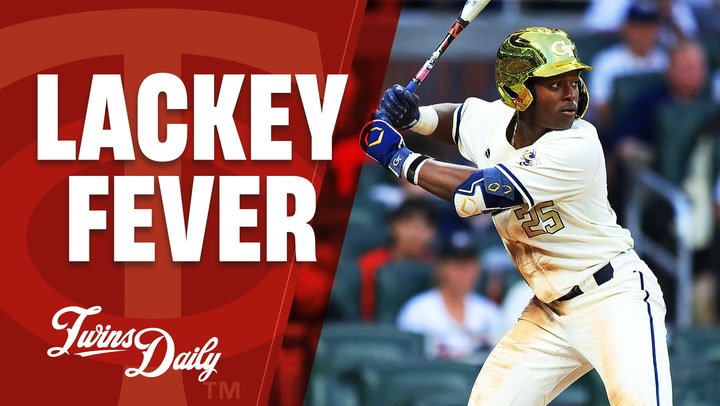 Early mock drafts have the Twins picking Georgia Tech catcher Vahn Lackey third overall, but with the draft still two months away and plenty of baseball to be played between now and then. Are Twins fans becoming too attached to him as their first pick in the 2026 draft class? Jamie and Jeremy find out. View the full article
 -
 Transactions: Nashville Sounds activated RHP Will Childers from the 7-day injured list. Nashville Sounds transferred CF Jordyn Adams to the Development List. Biloxi Shuckers activated C Edgardo Ordonez from the Development List. DSL Brewers Gold released RHP Albert Vargas. We touched on Vargas' brief Brewers career here. Nashville Pre-Game Media Notes Final: Nashville 6, Durham (Rays) 3 Box Score and Game Log Via the Sounds, game details, and we encourage readers to always review affiliate write-ups as part of their Link Report routine: Four-Run Sixth Fuels Sounds 6-3 Victory Against Bulls - Hardin Earns First Career Triple-A Win Saturday Night Three video clips within that linked summary. Repeating from the summary - "HARD-WIN: Tyson Hardin earned his first career Triple-A win in Saturday night's 6-3 victory over the Durham Bulls, posting 5.2 innings of work, allowing a run on four hits and punching out seven Bulls batters. Prior to Saturday's win, Hardin made his first career Triple-A start for the Sounds at First Horizon Park last Sunday and posted a seven-inning quality start against the I-Cubs." LHP Rob Zastryzny retired the lone man he faced to end the 6th (lineout to 3rd base). There was no one on base, Hardin had just exited at 83 pitches. That's back-to-back appearances for Rob Z. in what may have been his final test before MLB activation Monday. Speaking of southpaw relievers, I'm counting Brian Fitzpatrick's spring training innings in big league camp (he wasn't even a camp invite) because that's where he initiated his mark on big-league coaching eyes this spring. So, for 2026, it's one earned run allowed in 24.2 IP, 26 K's, 7 BB. Not counting Rob Z., five other relievers appeared as your box score review showed. Not used among true relievers: Bowman, Bukauskas, Fernandez, Knehr, McGee. That's just to point out that Manager Rick Sweet's current mix of arms is very long on bullpen types. Southpaw Thomas Pannone makes his 2nd start of the series on traditional four days' rest on Sunday, he allowed four runs in four innings Tuesday (an eventual 6-5 Nashville win). I'm of the opinion that a box score can be appreciated a bit more by noting who didn't play - for this night, it was Eddys Leonard, Akil Baddoo, Jeferson Quero and Freddy Zamora with a bench view of the contest. Luis Lara, what can we say? Now, his base hit was an infield single (74.8 MPH) and his sacrifice fly was a "get-the-job-done" variety flyout at 84 MPH, but he also walked twice. Add it all up and his OPS rose from .945 to .949. All nine Nashville knocks were singles, two belonged to Cooper Pratt and one to Jett Williams, for all you big-league roster tracking hopefuls. Each of the two youngsters struck out twice, part of 16 on the night for Sounds batsmen. Williams played center field here, with Ethan Murray making his 6th start at third base. Catch up with the latest Biloxi pre-game audio interview archives - Manager Mike Guerrero's chat from last night just added Biloxi Pre-Game Media Notes Final, completion of Thursday's suspended game: Biloxi 7, Birmingham (White Sox) 6, 11 innings Box Score and Game Log All-Around Effort Leads Shuckers to Sweep over Barons - Made records second walk-off, goes back-to-back with Burke, DeBerry continues dominance I invite you to revisit all the details my co-worker Daniel provided in his Friday morning review of the first 10+ innings of this game. Pulled from the game summary above: "The first two batters for Biloxi were retired in the home half of the 11th until Jheremy Vargas picked up an infield single, Dylan O’Rae scored the automatic runner Darrien Miller on a base hit to bring the game within one, and Jesús Made delivered the dagger with a 2-RBI hit for his second walk-off knock in three games." That tells me that Jheremy Vargas (pinch-hitting for Eric Brown, Jr.) gets co-game MVP, it was do-or-die to keep things alive. Same goes for Dylan O'Rae, though his RBI base hit is no longer archived. What is archived, that would be Jesus Made's two-run walk-off, here's the traditional view and as for the field level: Final, regularly scheduled game: Biloxi 7, Birmingham 4 Box Score and Game Log MiLB kept this as a nine-inning affair, as they should have. Sometimes these nightcaps after suspended games are cut to seven frames, but Game One was deep in. Always fun to see a 2016 Brandon Woodruff reference in the game summary, be sure you catch that! Whether you're a fan of the "X" platform of simply tolerate it, you're asked to visit the Shuckers' feed for more Jesús Made (including a Shohei Ohtani reference), a bunch of Blake Burke (say that three times fast), even more Cameron Wagoner references beyond what we're posting below, and "on-fire Elmo". Did we mention you'll find the Made-Burke back-to-back blasts there, though this particular Made HR may not quite qualify as a "blast". Mike Boeve's sacrifice fly can be viewed here. Right fielder Damon Keith turns 26 on Thursday and continues to push for his AAA debut with a double and two singles, OPS .925 (.305/.383/.542). Made is now 18-for-23 in SB attempts, Blake Burke 13-for-17. However, as the Shuckers were seeking insurance runs in the 8th, it wasn't the best inning on the basepaths for the dynamic pair. The game log will fill you in. By the way, this was a particularly strong and entertaining night for our "as it happens" Minor League Forum thread - often the case during a big-league Brewers blowout loss. And yes, starter Jaron DeBerry had a fantastic night. Wisconsin Pre-Game Media Notes (download link) Final: Wisconsin 11, Great Lakes (Dodgers) 4 Box Score and Game Log Via the Timber Rattlers, game details: Wisconsin Scores Early and Late to Get by Great Lakes - Fischer homers and drives in three for Rattlers Chris Mehring's summary linked above is packed not only with four video clips but all kinds of tidbits worth your while beyond the game action. The MiLB highlight clips that are saved within the "VIDEO" sub-header of any linked box score are awesome. You get chronological order of all the action, both teams, ad-free, one convenient spot. It's a tremendous benefit to fans. By checking out the opponent's highlights as well, you can catch some of the mistake pitches from the Brewers arms, or perhaps they were beaten on a play regardless of a well-placed pitch. Plus, this is worth noting - this was a road game, so all the audio from those clips is from the home team perspective, and on a night like Saturday, what fun is that? So, as you watched the game summary videos in Chris' report, we get his calls. That takes some coordination and effort, and whether that's Chris himself or someone back in Appleton, it's appreciated. Here's the one highlight not within the game summary: Braylon Payne was idle for a second consecutive game, and yes, we're guilty of reading too much into such things. Eric Bitonti and Marco Dinges were among the bench players here, scheduled days off, though we're still hopeful to see Dinges defensively behind the plate again by Tuesday, it's been an extended stretch of DH-games only for him. Josh Adamczewski singled but also walked four times. He turned 21 literally two weeks ago and he's now flashing a .325/.456/.581 line (1.037 OPS). My goodness, this Brewers system is beyond ridiculous. A bit of perspective - yes, the defensive value differs, but the Tigers' Kevin McGonigle's 2025 line which included the Midwest League and also 46 games of AA action was .305/.408/.583, as Biloxi certainly awaits Adamczewski. Only on a roster with beast-mode Andrew Fischer, and anticipated exciting return of Luis Pena, and Adamczewski would Josiah Ragsdale's season be undersold. Check out his May splits! By the way, switch-hitting INF/OF Luiyin Alastre since re-joining Wisconsin April 28th (16 games): .282/.462/.462 (.924 OPS). T-Rat arms with a very mixed bag: 10 walks, 12 strikeouts, two wild pitches and a 3.00 ERA plus the "W" on the night. Your box score review will fill you in. Postponed, rain: Delmarva (Orioles) at Wilson Doubleheader Sunday starting at 11:05 Central. Final: ACL Padres 4, ACL Brewers 2, seven innings as scheduled Box Score and Game Log Luis Pena squeezed a bunch more into the shortened game, including his first defensive action at shortstop. 92.5 MPH ground ball single to LF in the 1st. Stole 2nd base, thrown out at 3rd base. Side note - we see caught stealing's at 3rd base when there's already two men out, like, all the time, especially at the lower levels. It's all about the attempt repetition and not the situational awareness. Pena would strike out swinging in his next two at-bats. Pena led off the bottom of the 7th - doubles on a ground ball to shortstop, deflected by the third baseman. Pena lifted for a pinch-runner at this point, no mention of an injury delay. The A-Crew managed only five hits but drew nine free passes (8 BB's, 1 HBP). That all led to an 0-for-11 afternoon with RISP, ugh. 18-year-old infielder Moises Polanco (turns 19 in six days) has only played in seven games but is making the most of his time. He reached in all three trips here and sports a pretty .450/.593/.600 line (1.193 OPS). Polanco is coming off a darn fine repeat DSL season where he OPS'd .853. Please find more playing time, thanks. RH starter Hayden Robinson pitched on four days' rest and though he's allowed a home run in each of his three mound efforts thus far, this was better work than Tuesday's. The better bounce back effort was by 18-year-old Nicaraguan RHP Diustin Mayorquin, who was surprisingly touched up one week ago exactly. And yes, remember the name (posts are from earlier this month): Five games on tap for Sunday with the Wilson double dip. Maryvale boys working on their Sunday golf games as is the norm. Blessings and sincere appreciation to the families of those who lost those who made the ultimate sacrifice. Organizational Scoreboard including starting pitcher info, game times, MiLB TV links, and box scores Current Milwaukee Brewers Organization Batting Stats and Depth Current Milwaukee Brewers Organization Pitching Stats and Depth View the full article
 -
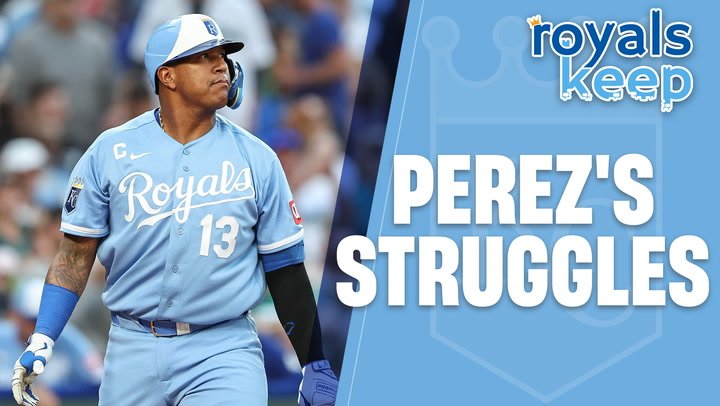 When all is done and over with, Salvador Perez will go down as one of the great major league backstops to ever pick up a bat. He has given the Kansas City Royals 15 years of consistency, but he is struggling mightily in 2026. In this video, we'll dive into why Perez is having so much trouble and what adjustments he needs to make to keep his game competitive at 36 years old. View the full article
 -
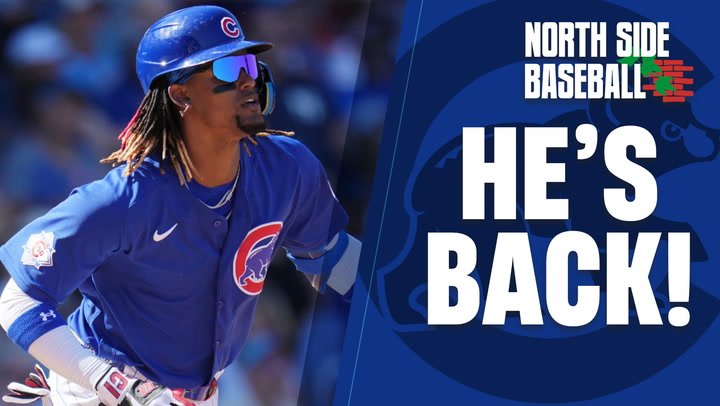 The Chicago Cubs have called up their fourth-ranked prospect in Kevin Alcantara. This is the third time in as many seasons that the speedy outfielder will make the jump from Triple-A to the big leagues. What does the 'Jaguar' need to do to make Wrigleyville his permanent home? We break it all down in this video. View the full article
 -
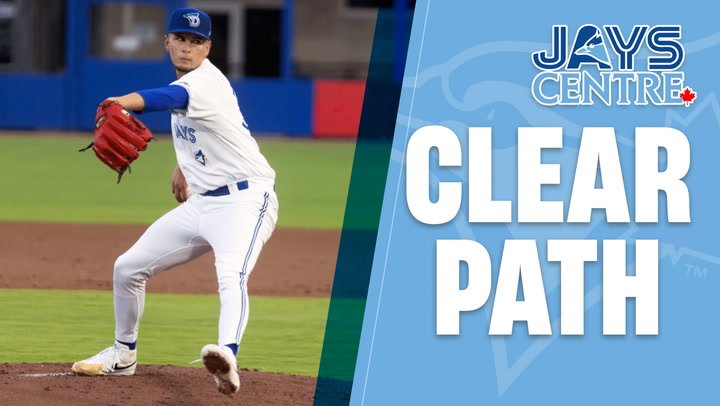 After having Tommy John surgery that led to a hiatus in 2025, Toronto Blue Jays top 30 prospect Nolan Perry looks like a new man. In this video, we'll break down Perry's arsenal, his change in velocity post-surgery, the key to an insane strikeouts-per-nine innings mark, and ultimately when to expect his major league debut. Enjoy! View the full article
 -
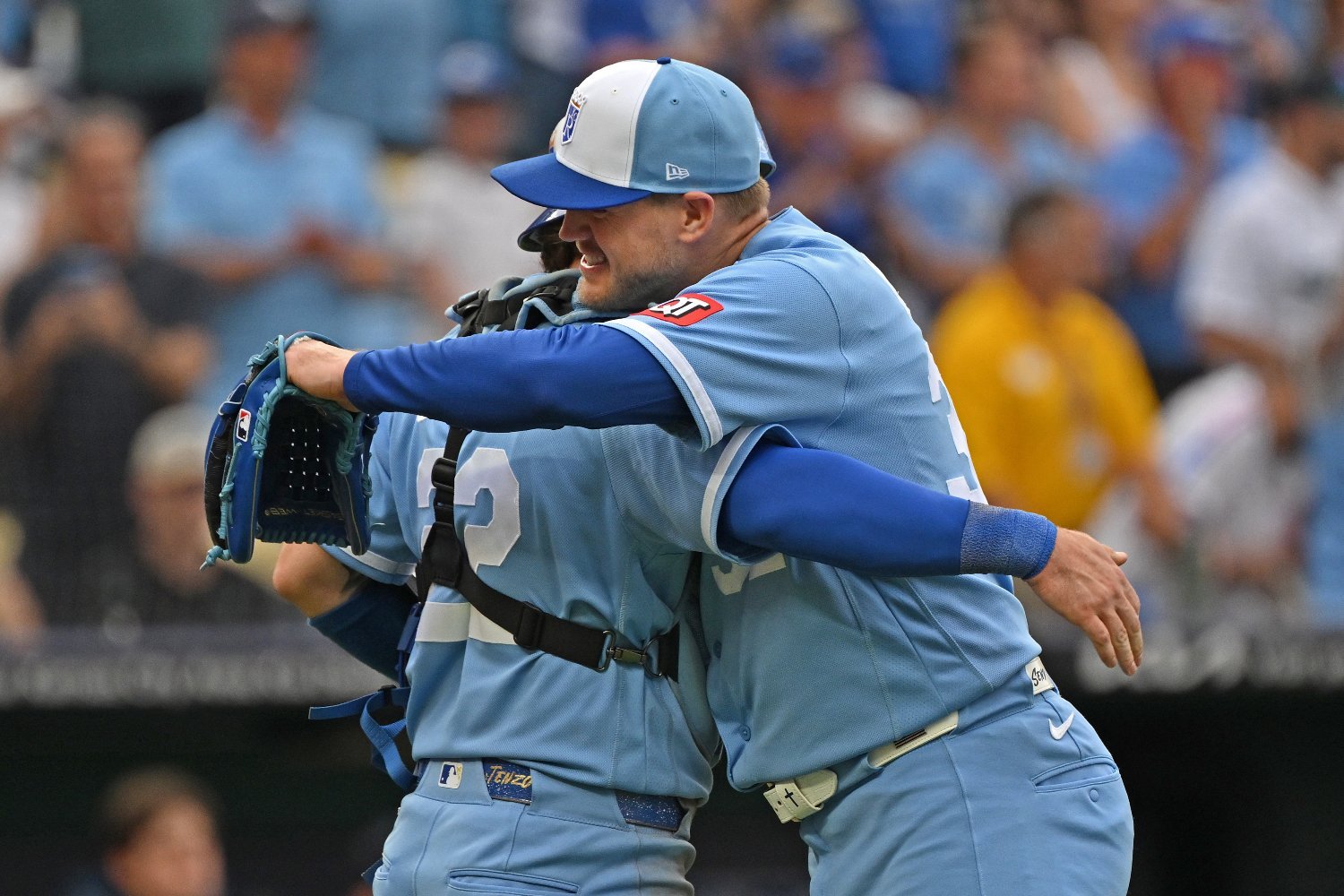 After losing four in a row and 10 out of their last 11 games, the Kansas City Royals were looking for a spark on Saturday afternoon at Kauffman Stadium. Nearly 26,000 fans were in attendance, primarily to celebrate "Star Wars Day at the K". That massive attendance helped create an environment far from the sparse, lifeless crowds of the Red Sox series earlier in the week. Furthermore, the Kansas City branch of the "Tarps Off" crew was in full force in the 427-429 sections of the K, which helped bring energy to the stadium in the later innings. Below is a progression of how it grew over the course of the game (from my vantage point in section 418). However, the main spark on Saturday in the Royals' 5-0 victory over the Seattle Mariners? It was starting pitcher Stephen Kolek, who not only pitched a four-hit shutout but also accomplished the first Royals shutout since Brad Keller did it back in 2020. (That's right, it's been six years since a Kansas City pitcher produced a complete game shutout.) The Royals now sit at 21-31 and will look to take the series from the Mariners in the Sunday finale. A victory over the Mariners tomorrow would not only improve their record to 5-1 against them, but it would also build some much-needed momentum for the three-game series against the New York Yankees, which begins on Memorial Day. Let's take a look at not only Kolek's masterful performance on Saturday at the K, but what he's done since joining the Royals last year. Furthermore, I will also dive into his outlook with this club for the remainder of the 2026 season, as they look to get back into playoff contention. Kolek Works Efficiently in Shutout Win What's most remarkable about Kolek's performance against Seattle on Saturday was that it wasn't an outing with a ton of strikeouts. He only struck out two batters, both coming in the 8th and 9th innings, respectively. That said, Kolek's ability to work efficiently and quickly through at-bats, especially in the early innings, helped keep his pitch count reasonable for a shot at the shutout. In his stellar outing, Kolek threw 108 pitches and didn't throw more than 18 pitches in an inning. Furthermore, he maintained a consistent velocity throughout each inning, which helped him remain effective against a dangerous Mariners lineup. Below is his pitch count and velocity by inning, via Baseball Savant. After an eight-pitch first inning, Kolek threw more than 14 pitches in an inning only once, which was 18 in the fifth inning. Even though he gave up four hits and a walk, the 29-year-old was able to navigate through innings with runners on base thanks to stellar defense by the Royals. They turned two double plays in the game, including a key 3-2-5 in the 2nd that prevented Luke Raley from scoring at third with less than two outs. When looking at Kolek's TJ Stuff+ summary from this outing, it didn't have the "look" of a traditional shutout. The former Texas A&M product didn't generate a ton of chase or whiff in this outing, as illustrated by his overall 24% CSW. Additionally, he had only a 46.3% zone rate, which is slightly below the league average. And yet, despite these issues and a mediocre TJ Stuff+ profile, he limited hard contact (via xwOBACON), which proved to be the most important trait today. Kolek generated a .227 overall xwOBACON with his four-seamer (.143) and sinker (.165), his two most-thrown pitches on Saturday, both sporting xwOBACON marks under .200. He had an overall TJ Stuff+ of 96 on Saturday, with only his slider sporting a TJ Stuff+ over 100. That seemed to affect his ability to generate chase (25.9%) and whiff (14%), but did not prevent him from achieving efficient results. The former Dodgers 11th-round pick was fearless in the zone, as illustrated in his pitch type chart below. However, as seen in his corresponding pitch description chart, Seattle hitters were unable to consistently square up on Kolek's pitches, even if they primarily sat in hittable areas of the strike zone. A big key for Kolek was that he was able to generate contact that just wasn't barreled by Mariners hitters on Saturday. Even though his velocity wasn't elite, Seattle seemed to struggle with timing. As a result, a lot of balls were hit in the air and to right-center, especially. That helped Kolek produce many flyball outs, as seen in the spray chart below from today's game via Savant. Only one ball was hit with authority, which was a double by Raley (who had three hits of the Mariners' four hits against Kolek). Everything else? Well, the Mariners ended up hitting a lot of groundballs and flyballs to the right side of the field. Furthermore, not many of those balls were hit all that hard. That is illustrated in his radial chart below via Savant. Much has been made of Seth Lugo and his pitch efficiency in his 2+ seasons in Kansas City. However, on Saturday, Kolek showed that he may be the Royals' most efficient pitcher in the rotation, and his shutout, the first for Kansas City in six seasons, illustrated that. Kolek Has Thrived In Kansas City (And His Fastball Improvement Has Been Key) When the Royals acquired Kolek and fellow Padres pitcher Ryan Bergert from San Diego in exchange for catcher Freddy Fermin at last year's trade deadline, the Royals knew they were getting a pitcher with some big-league success. Kolek pitched 79.2 innings with the Padres in 2025 before getting traded over to Kansas City. In 14 starts, he posted a 4.21 ERA, 1.31 WHIP, and 4.28 FIP. He also generated a 16.7% K%, 7.7% BB%, and 8.9% K-BB% with San Diego. Even though he started in Triple-A Omaha, when Kolek made his Royals debut, he proved to be even more effective down the stretch in 2025. In five starts and 33 IP, he posted a 1.91 ERA, 0.76 WHIP, and 2.71 FIP. His K% remained stable at 16.8%, but his BB% dropped to 4%, thus increasing his K-BB% to 12.8%. As a result, in 112.2 IP, he posted a 3.51 ERA, 1.14 WHIP, 3.83 FIP, and 10% K-BB%. He did this with slightly subpar TJ Stuff+ (96), as well as mediocre chase (26.3%) and whiff (17.7%) rates. However, his ability to fill the strike zone and generate weak contact on his key pitches proved to be key to success, especially with a diverse seven-pitch mix. This season, his second in Kansas City, he has kept the same formula, albeit with more efficiency. Kolek has gotten rid of the curveball and improved his overall TJ Stuff+ and ability to limit hard-contact, while maintaining solid zone rates. That has resulted in his posting a 2.77 ERA and 0.85 WHIP over 26 IP with the Royals this season. The four-seamer has seemed to be key to his success this year. The TJ Stuff+ difference isn't all that great, but it is better in 2026 (91) than it was in 2025 (90). However, the biggest improvement in the pitch is that he's throwing it in the strike zone more (60.9% to 52.5% in 2025) and generating more chases (33.3% to 17.1% in 2025). It has become more of a vertical offering in 2026, as the iVB went from 12.9 last year to 13.3 this year, and his HB on the pitch went from 8.2 to 6.7. It is also generating more spin, as its 2,243 RPM is higher than the four-seamer's 2,176 RPM in 2025. Below is a clip compilation of Kolek's four-seamer with the Padres back in May of 2025 and his four-seamer this year against the Cardinals. Both produce whiffs up in the zone, but there is much better velocity and vertical movement on the 2026 four-seamer than the 2025 version. Even though it's not an elite pitch based on TJ Stuff+, the four-seamer has shown enough improvement and effectiveness to be not just a solid offering but also to set up the other five pitches in his repertoire. The growth of Kolek's four-seamer is another success story for this pitching-coaching team, especially for assistant pitching coach Mike McFerrin, who primarily works with pitchers to improve the shape of their pitches. What Will Kolek's Outlook for the Remainder of 2026 Be? Kolek was called up to replace Cole Ragans, who landed on the IL due to left elbow impingement. That said, Ragans made a rehab start on Saturday against St. Paul, and he looked good overall, with solid TJ Stuff+ and chase numbers, in addition to three strikeouts and just three hits and one run allowed in 4.1 IP. Based on this rehab outing, it's likely that Ragans will return to the rotation soon. However, even if Ragans returns, Kolek will not lose his place in the rotation. With Kris Bubic also on the IL, Kolek will have more time as a starter, but when Bubic is ready to come off the IL as well, the Royals will have a dilemma on their hands. First off, even when Bubic returns, Kolek needs to remain in Kansas City. He has proven that he is a valuable member of this pitching staff, regardless of role. That said, he has proven that he may deserve a regular spot in the rotation, even with Ragans and Bubic healthy (as Jack Johnson of Locked On Royals stated on Twitter). Noah Cameron has looked better recently and produced a quality start in his last outing on Friday against Seattle. Unfortunately, he didn't get any run support and, as a result, got the no-decision. Still, his TJ Stuff+ summary from Friday's game looked solid and demonstrated that Cameron may be on the upswing after a slow start. Thus, the Royals may be forced to move Bubic back to the bullpen, a role he hasn't had since 2024. While Bubic has been serviceable as a starter this year, he hasn't been as dominant as he was in 2025, when he made his first All-Star team. His ERA is 4.11, his WHIP is 1.23, and his FIP is 3.77 in 50.1 IP. That said, while those are solid numbers, the zone, chase, and xwOBACON have been average to slightly below this year, as illustrated in his TJ Stuff+ summary below. Would the Royals be better off moving Bubic to the bullpen? That would allow him to not just stabilize the bullpen a bit (it's unlikely Carlos Estevez returns to 2025 form or at all), but allow his stuff to play up more. Furthermore, that would also preserve his health, which is something he's struggled with in the past (he had Tommy John surgery in 2023). Then again, that may be too bold a move, especially with Ragans' own checkered injury history. If Ragans goes down, they will need Bubic in the rotation again. Regardless, the decision isn't IF Kolek will be in Kansas City. It will be whether he is in the rotation or the bullpen after Ragans and Bubic return from the IL. That's a good place for the Royals to be, especially considering how hard their pitching depth has been hit early in the year. View the full article
 -
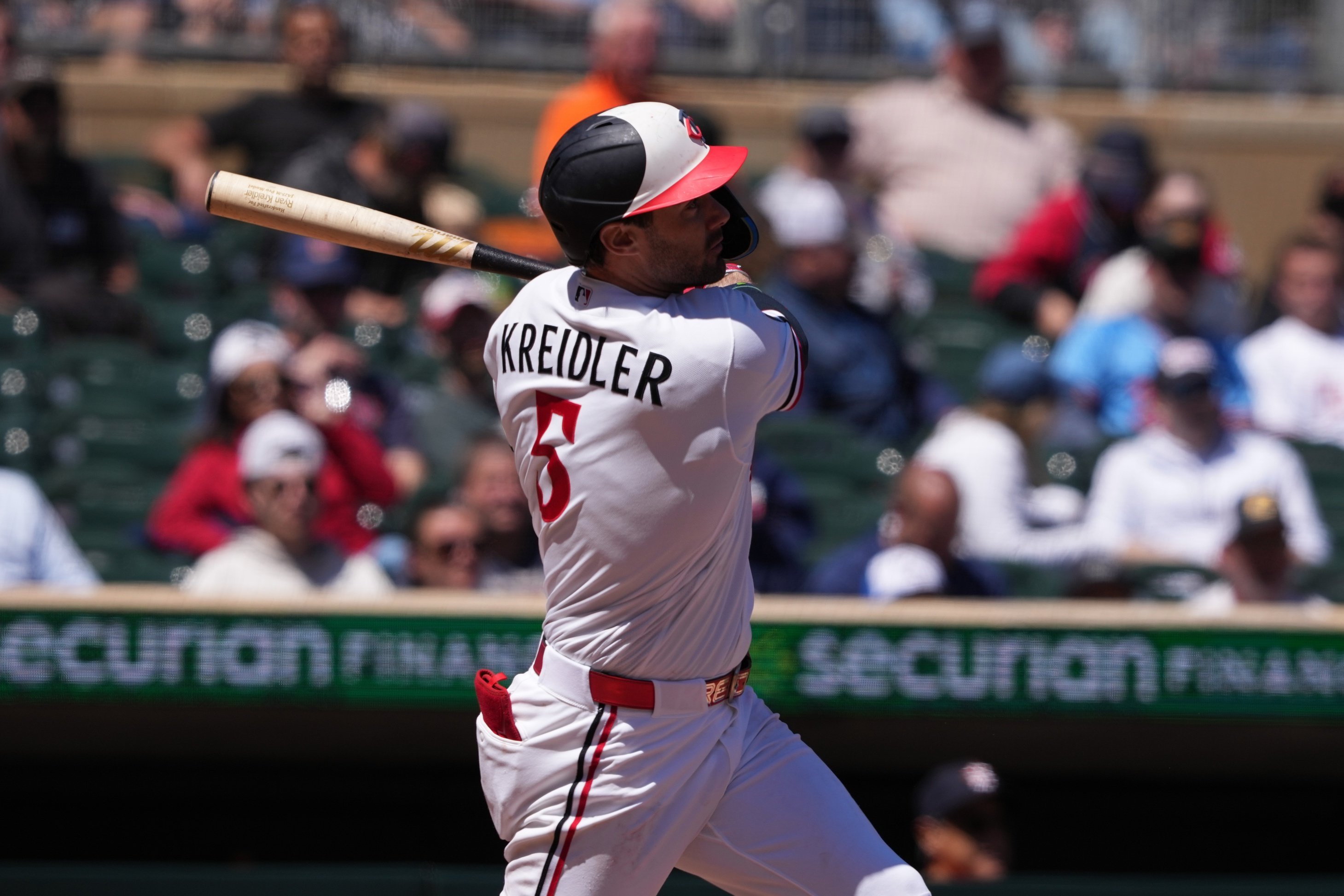 In 2012, the Twins acquired a 23-year-old infielder named Eduardo Escobar, part of the return for two months of a severely diminished Francisco Liriano at the trade deadline. At the time, Escobar was not all that highly regarded, and his initial run with Minnesota in 2012 and 2013 (negative-0.2 fWAR in 80 games) did little to bolster his rep. To his great credit, though, Escobar developed into a highly useful player for the Twins. He didn't get much hype in an organization that was anticipating the arrival of premier prospects like Byron Buxton and Miguel Sanó, but Escobar was one of the team's better regulars over the next several years, posting solid offensive numbers as a versatile, shortstop-capable fielder. Escobar was amidst a career year in 2018 when the Twins cashed him in for Jhoan Durán in one of the best moves of the Derek Falvey era. Durán, much like Escobar, would become an example of how key contributors can be uncovered in unlikely places. They don't always have to be top draft picks like Buxton or high-profile international signings like Sanó. Which brings us to present day. As the Twins rebuild and set their sights on future improvement, there's understandably a lot of focus on those top prospects who will hopefully help elevate the club over the next few years: Walker Jenkins, Emmanuel Rodriguez, Kaelen Culpepper and Gabriel Gonzalez, who made his Twins debut on Friday night against Boston. There's also plenty of attention being paid to Royce Lewis and Matt Wallner — former top prospects whose ability to reboot and rebound in Triple-A feels very weighty at the moment. While these rising and reeling talents all plug away in the minors, there are a number of players currently on the MLB roster who are making their own cases to play a role going forward, as the team hopefully transitions into a more competitive state. Acquired via waivers, minor-league deals or low-scale trades, none of these players have anything promised. They need to fight for their MLB futures, and that's exactly what makes their stories compelling to follow this summer. Kody Clemens The Twins acquired Clemens in exchange for cash considerations last April, jumping the waiver line for a player who was potentially headed to the minors at age 28. He impressed enough over the remainder of the season to earn another chance this year, but had much to prove. He largely slumped through the first month, but Clemens has come on in a big way. He heated up in late April and is has an OPS over .800 here in May. While bigger names have fizzled, Clemens has sizzled enough to expand his role, best demonstrated on Friday night when started in right field and batted seventh against a left-handed starter at Fenway. He's held his own against southpaws, which is one thing helping his case. Clemens has also been not just good but excellent defensively at first base, and he saw time at second as well before getting his first starting outfield nod over the weekend. That's the kind of flexibility that helps a good (if streaky) hitter and valued clubhouse presence stick around. Clemens is arbitration eligible for the first time in the coming offseason, and could be retained year-to-year at a reasonable cost through 2029. He's not gonna be a star but he could definitely be a stable roster fixture for a while. Ryan Kreidler Willi Castro is another example of the player type we're talking about. He was acquired as an unheralded minor-league free agent in 2023 — envisioned as a speedy light-hitting utilityman, if he made the team — but turned himself into a quality regular and even an All-Star. It's hard to look at Kreidler and not see the parallels. Both players ranked #7 in the Tigers system, per MLB Pipeline, before debuting in the majors. (Castro in 2019, Kreidler in 2022.) Both fell out of favor in Detroit after failing to hit in parts of four seasons. Both got scooped up by the Twins for essentially nothing. Castro proved to be a find. And while it's still very early, Kreidler is trending in the same direction. He's already hit three home runs in 11 games with the Twins, which is more than he totaled (two) in 89 games with the Tigers. Much like a younger Castro, Kreidler offers considerable value if he hits at all, because he can play center field and shortstop. In fact, he's probably the team's best defender at short, evidenced by Derek Shelton's decision to start him there (with Brooks Lee at third base) over the weekend. He's not going to maintain a 1.000+ OPS but the offensive bar for Kreidler to be a valuable multi-year roster asset is not high. He won't even be arb-eligible until after next season. Tristan Gray Many middling talents like Gray never get much of an extended opportunity in the majors. The 30-year-old admitted to reporters ahead of this season that he was considering retirement before catching on with the Twins and holding down a roster spot. This is his chance. We'll see what he can do with it. Gray's had some nice moments this year but overall hasn't been terribly effective. It can be hard when you're playing sporadically and constantly feeling like your roster spot is at risk. For now, the Lewis demotion lessens those impediments for Gray, whose spot should be secure and his role expanded in the coming weeks. Can he show enough to convince the Twins he might be worth keeping around cheaply as a backup infielder or potential platoon partner? It's going to require his power showing up more consistently to offset a poor plate approach. Gray, currently away from the team on paternity leave, has just one extra-base hit in his 57 plate appearances. Alex Jackson The loss of Ryan Jeffers opens the door for Jackson to try and play his way into Minnesota's catcher setup in 2027. He's been stashed at Triple-A, third on the depth chart, up until the starter went down with a hamate fracture this past week, forcing the Twins to confront the reality of a Jeffers-less future behind the plate. Jackson could be part of it. He's got MLB experience and is still two years away from free agency. Like Kreidler, he offers enough defensive value in a limited role to justify rostering without a great deal of offensive production. But he's got to at least hit a little, and the .527 career MLB OPS up to this point won't cut it. He posted a career-high 111 OPS+ in Baltimore last year and has flashed pop at Triple-A with the Saints, albeit with a .295 OBP. Jackson got the start at catcher on Friday (going 0-for-4 with three strikeouts) and figures to play semi-regularly over the next couple of months. Will he establish himself as a credible option to share time with Victor Caratini in 2027 after Jeffers presumably moves on? The dilemma here is that if Jackson plays well enough to earn a spot in the team's 2027 plans, it decreases his odds of getting through waivers again when Jeffers returns. But you cross that bridge when you get there. Yoendrys Gómez The advantage of having a wide-open bullpen, as the Twins do this year, is that you can audition intriguing arms and hopefully run into a few overlooked useful pieces along the way. In the past we've seen Minnesota use this method to come upon multi-year contributors like Brandon Kintzler, Casey Fien and Jared Burton. The relievers who've rotated through their bullpen carousel so far this year, like Zak Kent and Garrett Acton, have failed to capture the imagination. Gómez, their latest waiver-wire pickup, is a little more interesting. I certainly don't want to blow out of proportion his tiny sample of work with the Twins, but in eight appearances, he's looked legitimately good with seven strikeouts and just one hit allowed in 6 ⅓ innings. His appearance in last Wednesday's series finale against Houston, striking out five of seven batters faced, was an eye-opener. The fact that he's appeared on five different MLB teams since the start of last year could be viewed as a negative, a sign of his perceived dispensability, or a more positive indicator of the intrigue that numerous different front offices — including the Dodgers, Yankees and Rays — have seen in him. There's nothing stopping the Twins from giving Gómez a more extended look than any of those other clubs saw fit. The Twins whiffed on almost all of their minor-league bullpen signings, from Liam Hendriks and Andrew Chafin to Matt Bowman and John Brebbia, so they really could use a hit on a random find like Gómez. Or Cody Laweryson, or Eric Orze. This relief corps needs all the help it can get going forward. View the full article
 -
 The Omaha Storm Chasers rallied past St. Paul 7-6, with Dustin Dickerson driving in four runs and Luca Tresh adding three RBIs and a home run. David Shields was nearly untouchable for Quad Cities, blanking Beloit over six innings with five strikeouts in a 5-2 win. Sean Gamble and Josh Hammond paced Columbia's 6-4 win at Augusta, while Jordan Woods struck out eight in five innings. The Naturals trailed Amarillo 4-2 when rain suspended play. Royals Transactions Kansas City Royals designated C Elias Díaz for assignment. Kansas City Royals signed free agent RHP Luke Jackson to a minor league contract. Kansas City Royals recalled 2B Tyler Tolbert from Omaha Storm Chasers. Dickerson, Tresh Combine For Seven RBIs In Storm Chasers' 7-6 Win The Omaha Storm Chasers held off a late charge to beat the St. Paul Saints 7-6 on the road, powered by big nights from Dickerson and Tresh. Dickerson finished 2-for-4 with a double, a home run, and four RBIs. Tresh went 3-for-4 with a home run and three RBIs. Cole Ragans, on rehab from Kansas City, allowed one run on three hits across 4 1/3 innings, walking one and striking out three. Omaha grabbed the lead in the top of the second. Brett Squires singled, Abraham Toro walked, and Dickerson followed with a two-run double to right field that made it 2-1. Tresh stretched the lead to 4-1 in the top of the sixth with a two-run home run to center that scored Drew Waters. The bullpen could not hold the cushion. Henry Williams entered in the sixth and gave up a solo home run, three consecutive walks, and a two-run single as the Saints tied the game at four, then surrendered another solo home run in the seventh that put Omaha behind 5-4. Williams finished with five hits and four earned runs allowed across 2 1/3 innings. Kameron Misner walked to open the eighth, and with two outs, Tresh singled to left to score Misner and tie the game at five. In the top of the ninth, Gavin Cross singled and Dickerson followed with his first home run of the season, a two-run shot to left field that gave Omaha a 7-5 lead. Eric Cerantola walked two in the bottom of the ninth and yielded a run on a groundout, but closed out the win with a strikeout. The Storm Chasers stranded five and committed no errors. Player AB R H RBI BB K Josh Rojas, 3B 5 0 1 0 0 0 John Rave, DH 3 0 0 0 2 0 Kameron Misner, RF 4 1 0 0 1 3 Drew Waters, CF 4 1 1 0 0 1 Brett Squires, 1B 3 1 1 0 0 1 Luca Tresh, C 4 1 3 3 0 0 Gavin Cross, LF 4 1 1 0 0 0 Abraham Toro, 2B 3 1 0 0 1 3 Dustin Dickerson, SS 4 1 2 4 0 0 Player IP H R ER BB K HR Cole Ragans 4 1/3 3 1 1 1 3 1 Andrew Pérez 2/3 0 0 0 0 0 0 Henry Williams 2 1/3 5 4 4 4 2 2 Luke Jackson 2/3 0 0 0 0 0 0 Eric Cerantola 1 0 1 1 2 2 0 Rain Suspends Naturals' Comeback Bid Trailing Sod Poodles 4-2 The Northwest Arkansas Naturals trailed the Amarillo Sod Poodles 4-2 when rain suspended play before the bottom of the fourth inning. Connor Scott went 2-for-2 with two RBIs to lead the offense. Daniel Vazquez, Jorge Alfaro, and Omar Hernandez each added a double. Leadoff hitter Carson Roccaforte singled in the first. Hunter Owen started and allowed four earned runs on three hits across three innings, walking two and recording no strikeouts. All four runs came in a single inning. Northwest Arkansas opened the scoring in the top of the second. Vazquez doubled to center with one out, then Scott lined an RBI single to left to score him before being thrown out trying to advance. Amarillo answered in the bottom of the inning, stringing together four hits and a sacrifice fly against Owen to plate four runs and grab a 4-1 lead. The Naturals cut the gap to 4-2 in the top of the fourth. Alfaro doubled to center with one out and later scored on another Scott single to left. Rain halted play before Amarillo could bat in the bottom half, leaving the visiting Naturals trailing by two with five and a half innings still scheduled to be played. Northwest Arkansas finished the partial game with seven hits, three doubles, no errors, and two runners left on base. Player AB R H RBI BB K Carson Roccaforte, CF 2 0 1 0 0 0 Spencer Nivens, LF 2 0 0 0 0 1 Sam Kulasingam, RF 2 0 0 0 0 0 Jorge Alfaro, DH 2 1 1 0 0 1 Daniel Vazquez, SS 2 1 1 0 0 1 Connor Scott, 1B 2 0 2 2 0 0 Colton Becker, 3B 2 0 0 0 0 2 Omar Hernandez, C 1 0 1 0 0 0 Justin Johnson, 2B 1 0 0 0 0 1 Player IP H R ER BB K HR Hunter Owen 3 3 4 4 2 0 0 Shields, Pelzer Power River Bandits Past Sky Carp 5-2 The Quad Cities River Bandits leaned on a Quality Start from Shields and a power surge from cleanup hitter Luke Pelzer to beat the Beloit Sky Carp 5-2 at home. Shields turned in six innings of one-hit shutout ball, walking one and striking out five. Pelzer finished 2-for-4 with a home run, three RBIs, and a stolen base. Ramon Ramirez went 1-for-4 with an RBI double and two RBIs. Quad Cities jumped ahead in the bottom of the first. Leadoff hitter Nolan Sailors drew a walk, and after two outs, Pelzer drove a two-run home run to left center to make it 2-0. Shields then carried that lead deep into the game, allowing only one base hit through six innings. Beloit chipped back in the seventh, scoring once off reliever Josh Hansell. The visitors tied it in the eighth when Hansell walked a batter, then Kamden Edge entered and gave up a single and an RBI groundout that brought the inherited runner home. Hansell was charged with two earned runs and two walks across 1 1/3 innings, though he also struck out three. The River Bandits answered immediately in the bottom of the eighth. Angel Acosta walked to open the inning and moved to second on a Sailors groundout. Blake Mitchell walked, and a passed ball pushed Acosta to third. Ramirez then drilled a two-run double to left to score Acosta and Mitchell, and Pelzer followed with an RBI single to center that brought Ramirez home for a 5-2 lead. Edge worked the final 1 2/3 innings on two hits without allowing a run to close out the win. The River Bandits stranded four. Player AB R H RBI BB K Nolan Sailors, CF 2 1 0 0 2 1 Blake Mitchell, C 3 1 0 0 1 1 Ramon Ramirez, DH 4 1 1 2 0 1 Luke Pelzer, LF 4 1 2 3 0 1 Jose Cerice, 1B 3 0 0 0 0 0 Derlin Figueroa, 3B 4 0 0 0 0 1 Erick Torres, RF 2 0 0 0 1 1 Tyriq Kemp, SS 3 0 0 0 0 2 Angel Acosta, 2B 1 1 0 0 2 0 Player IP H R ER BB K HR David Shields 6 1 0 0 1 5 0 Josh Hansell 1 1/3 2 2 2 2 3 0 Kamden Edge 1 2/3 2 0 0 0 1 0 Four-Run Seventh Pushes Fireflies Past GreenJackets 6-4 The Columbia Fireflies broke open a 1-1 game with a four-run seventh inning and held on for a 6-4 road win over the Augusta GreenJackets. Hammond and Gamble each delivered two-RBI doubles in the rally. Hammond finished 2-for-5 with two doubles and two RBIs. Gamble went 2-for-4 with a double, two RBIs, and a walk. Woods worked five innings of one-run, eight-strikeout relief, allowing three hits and two walks. Kendry Chourio opened the game with two scoreless innings on one hit, three strikeouts, and no walks. Columbia got on the board first in the top of the fourth. Hammond doubled to left, moved to third on a Brooks Bryan single, and scored when Hyungchan Um lined an RBI single to center. Augusta answered in the bottom of the fifth, scoring once on a pair of singles and a walk to tie the game at one, with the run charged to Woods. The Fireflies blew it open in the seventh. With one out, JC Vanek walked. Connor Rasmussen struck out, but Roni Cabrera kept the inning alive with a double to left to put runners at second and third. Henry Ramos walked to load the bases. Gamble then doubled to right to score Vanek and Cabrera, and Hammond followed with another double to center that brought home Ramos and Gamble for a 5-1 lead. Ramos added an RBI single in the ninth that scored Rasmussen. The bottom of the ninth turned tense. Andy Basora walked the bases loaded with no one out and was lifted for Jhon Reyes. A wild pitch let one run score, and a two-run double cut the lead to 6-4, but Reyes retired the next three Augusta hitters to lock in the win. Columbia stranded six and committed no errors. Player AB R H RBI BB K Henry Ramos, LF 4 1 1 1 1 1 Sean Gamble, CF 4 1 2 2 1 2 Josh Hammond, SS 5 1 2 2 0 2 Brooks Bryan, DH 3 0 1 0 1 1 Hyungchan Um, C 4 0 1 1 0 2 Stone Russell, 3B 4 0 0 0 0 1 JC Vanek, 1B 2 1 0 0 1 1 Connor Rasmussen, 2B 3 1 0 0 1 1 Roni Cabrera, RF 4 1 1 0 0 0 Player IP H R ER BB K HR Kendry Chourio 2 1 0 0 0 3 0 Jordan Woods 5 3 1 1 2 8 0 Andy Basora 1 0 3 3 3 2 0 Jhon Reyes 1 1 0 0 0 1 0 Top-20 Prospect Performance Kendry Chourio: 2 IP, 1 H, 0 R, 0 BB, 3 K David Shields: 6 IP, 1 H, 0 R, 1 BB, 5 K Sean Gamble: 2-for-4, 2B, 2 RBI, BB, 2 K Blake Mitchell: 0-for-3, BB, K Josh Hammond: 2-for-5, 2 2B, 2 RBI, 2 K Ramon Ramirez: 1-for-4, 2B, 2 RBI, K Drew Beam: DNP Asbel Gonzalez: DNP Ben Kudrna: DNP Carson Roccaforte: 1-for-2 Yandel Ricardo: DNP Felix Arronde: DNP Blake Wolters: DNP Michael Lombardi: DNP Luinder Avila: DNP Steven Zobac: DNP Frank Mozzicato: DNP Daniel Vazquez: 1-for-2, 2B, K Warren Colcano: DNP Shane Panzini: DNP View the full article
 -
Tyler Phillips takes over open Marlins rotation spot
DiamondCentric posted an article in Fish On First
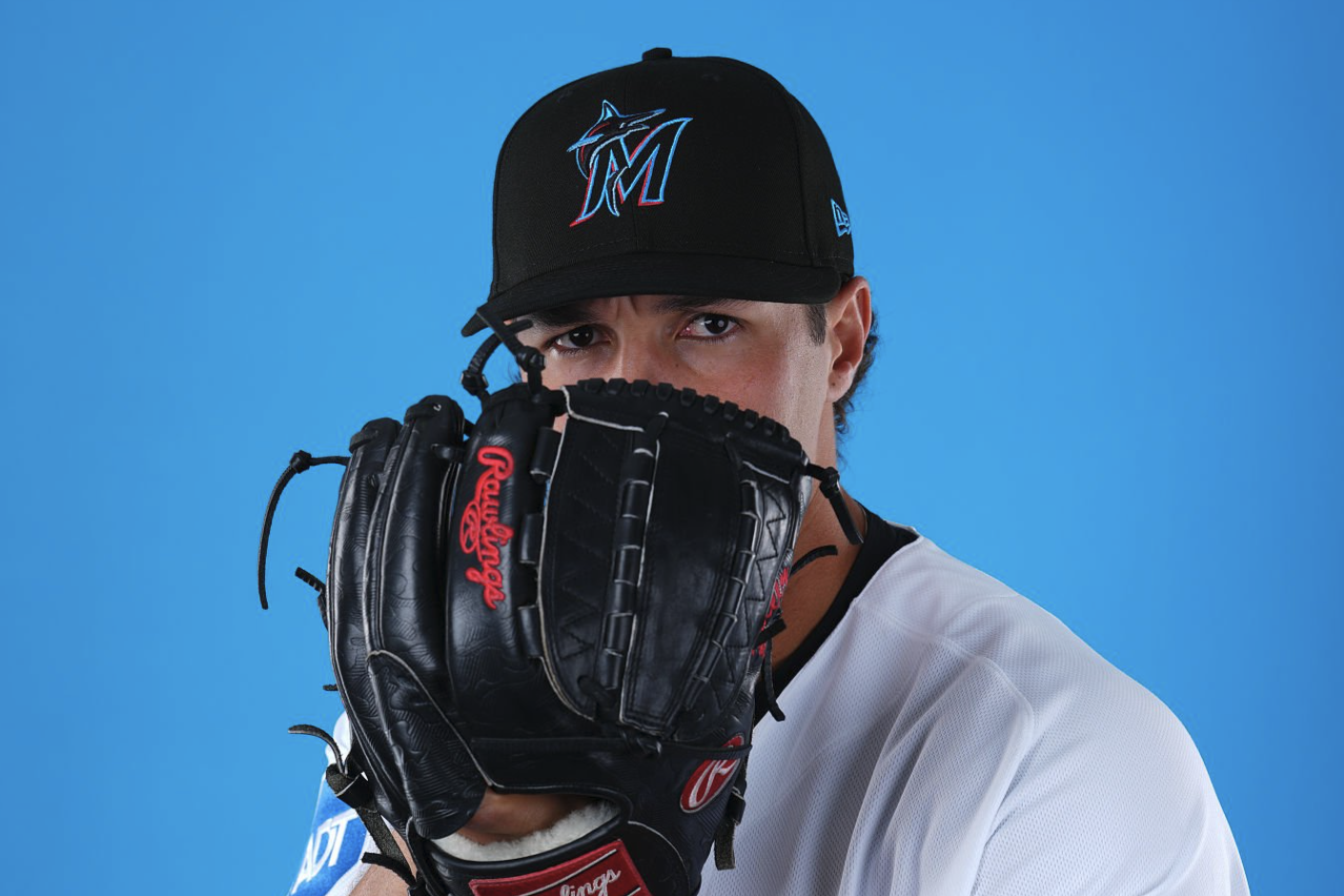 "I don't think I'm gonna change anything." And why would you if you're Tyler Phillips? Phillips has been the Miami Marlins' best right-handed relief pitcher this season, and that was also true throughout the second half of 2025. Beginning on Sunday, that production is being rewarded with a starting rotation spot. The 28-year-old will pitch less frequently in this new role and shoulder a heavier workload when he does take the mound, but he told the media at loanDepot park he expects to attack opposing hitters with the same approach that served him so well out of the bullpen. Phillips' spot originally belonged to free agent acquisition Chris Paddack. The Marlins booted him to make room for highly touted prospect Robby Snelling, who lasted just one start before blowing out his elbow. Then Braxton Garrett got his opportunity...and quickly squandered it, landing barely half of his pitches for strikes en route to a pair of early exits. Paddack, Snelling and Garrett combined for a staggering 8.10 ERA. Miami went 0-9 in their starts. The bar for Phillips to clear is laughably low. The way that the Marlins used Phillips during the past two months has been head-scratching. His results are brilliant (1.20 ERA in 30.0 IP), but they've often come in meaningless situations. In 11 of his 15 appearances, he took the mound with his club trailing, hence why he has accrued a modest total of 0.18 win probability added, per FanGraphs. Instead of inserting him to put out fires, he was cast as a glorified mop-up guy. Phillips has had only three days' rest since his previous outing. Against the New York Mets, don't expect him to be stretched far beyond his season-high of 52 pitches. But by mid-June, we should have a clear idea of how well he's suited to a starting role. View the full article
 -
 Nick Solak and Will Wagner homered as the Triple-A El Paso Chihuahuas fell to Round Rock 7-5. Romeo Sanabria hit a homer as part of a four-hit night as the Double-A San Antonio Missions lost 7-5 to Frisco. The High-A Fort Wayne TinCaps were blanked by Dayton 5-0 and the Low-A Lake Elsinore Storm suffered a 6-2 loss to Visalia. Padres Minor-League Transactions No roster moves. Nick Solak's 3-Run Homer Wasted As Chihuahuas Crumble Late Despite a five-run third inning, the host Triple-A El Paso Chihuahuas saw the Round Rock Express score four times in the final two innings, including three in the top of the ninth for a 7-5 loss. Nick Solak had three hits, including a three-run homer, and Will Wagner also homered for the Chihuahuas. El Paso left-handed starter Marco Gonzales went 4⅔ innings, allowing two runs on five hits and four walks while striking out three. Gonzales gave up a run in the top of the first, but the Chihuahuas came back and scored all their runs in the third inning. Solak blasted his three-run shot to left-center, his fourth of the year and second in as many games, with no outs and Wagner cranked his first of the year one out later to make it 4-1. Mason McCoy reached on an error and Carlos Rodriguez doubled him home to put the Chihuahuas up 5-1. Round Rock got one in the fourth, one in the sixth and another in the eighth to pull within 5-4. Right-hander Alek Jacob came on for the Chihuahuas in the top of the ninth and, after one out, he walked four straight hitters to push in the tying run and ended his night. A two-run single followed for the decisive runs. EP_0523.mp4 Player AB R H RBI BB K Samad Taylor 4 1 1 0 1 1 Marcos Castañon 3 1 1 0 1 1 Nick Solak 3 1 2 3 0 0 Jase Bowen 4 0 0 0 0 1 Will Wagner 4 1 2 1 0 1 Mason McCoy 3 1 0 0 1 1 Carlos Rodríguez 4 0 1 1 0 1 Nate Mondou 4 0 0 0 0 1 Victor Duarte 4 0 1 0 0 3 Player IP H R ER BB K HR Marco Gonzales 4 2/3 5 2 2 4 3 0 Sean Boyle 2 1 1 1 0 0 1 Kyle Hart 1 1/3 2 1 1 0 2 0 Alek Jacob 1/3 0 3 3 4 0 0 Michael Flynn 2/3 1 0 0 0 0 0 Missions Watch Early Lead Go Away In Loss To RoughRiders Romeo Sanabria matched his career high with four hits, including a homer, and Ethan Salas equaled his season best with three hits, but the Double-A San Antonio Missions watched an early 4-0 lead evaporate in a 7-5 loss to the Frisco RoughRiders. Padres right-handed starter Jhony Brito made his second rehab appearance as he makes his way back from Tommy John surgery. Brito went 3⅓ innings, allowing three runs on six hits with three walks and one strikeout. Brito faced 19 hitters and threw 68 pitches, 40 for strikeouts. He induced nine groundouts in his 10 outs. Salas and Sanabria got the Missions going in the top of the first with one-out singles, with Tirso Ornelas doubling home Salas and Albert Fabian singling home Sanabria for a 2-0 edge. In the third, Salas had a leadoff double and Sanabria hit a first-pitch two-run homer, his fourth long ball of the year and first since May 12. Frisco got two back in the bottom of the third and another in the fourth to make it 4-3. The Missions went up 5-3 in the sixth as Francisco Acuna singled, stole second and went to third on Chris Sargent's sacrifice bunt. Carson Tucker then lofted a sac fly to plate Acuna. But the RoughRiders took control of the game with a four-run seventh against Missions right-hander Clark Candiotti, who got just one out while allowing three hits and two walks in his third Double-A appearance. Salas, Padres Mission's No. 1 prospect, had his third three-hit game of the season and eighth of his career. He had a career-high four hits in 2023 for Low-A Lake Elsinore. Sanabria has had four hits in a game seven times before in his career, including three in 2025. SA_0523.mp4 Player AB R H RBI BB K Carson Tucker 4 0 0 1 0 2 Ethan Salas 5 2 3 0 0 0 Romeo Sanabria 5 2 4 2 0 1 Tirso Ornelas 4 0 2 1 1 0 Albert Fabian 5 0 1 1 0 3 Ryan Jackson 3 0 1 0 1 1 Kai Roberts 3 0 0 0 1 1 Francisco Acuna 4 1 1 0 0 2 Chris Sargent 3 0 1 0 0 0 Player IP H R ER BB K HR Jhony Brito 3 1/3 6 3 3 3 1 0 Andrew Thurman 2 2/3 0 0 0 1 2 0 Clark Candiotti 1/3 3 4 4 2 1 0 Francis Peña 1 1/3 1 0 0 3 2 0 Harry Gustin 1/3 0 0 0 1 1 0 TinCaps' Offense Flames Out Against Dragons The host High-A Fort Wayne TinCaps had another rough go of it at the plate, notching just three hits in being shut out by three Dayton Dragons pitchers in a 5-0 loss. Alex McCoy doubled, while Lamar King Jr. and Rosman Verdugo singled to account for the TinCaps' hits. McCoy leads the Midwest League with 15 doubles and 24 extra-base hits. TinCaps right-handed starter Abraham Parra allowed three runs on four hits and a pair of walks with four strikeouts. Right-hander Ty Adcock, on a rehab assignment from Triple-A, made his second appearance and was one of three TinCaps relievers who didn't allow a run. Adcock gave up two hits and struck out one. Left-hander Javier Chacon went two innings, allowing one hit and a walk with four strikeouts. Dayton scored one run in the second, two in the fifth and two in the ninth. Player AB R H RBI BB K Justin DeCriscio 3 0 0 0 1 1 Rosman Verdugo 4 0 1 0 0 2 Lamar King Jr. 4 0 1 0 0 2 Alex McCoy 4 0 1 0 0 0 Jake Cunningham 3 0 0 0 1 1 Jack Costello 3 0 0 0 1 0 Carlos Rodriguez 2 0 0 0 1 1 Zach Evans 3 0 0 0 0 1 Kasen Wells 3 0 0 0 0 2 Player IP H R ER BB K HR Abraham Parra 5 4 3 3 2 4 0 Javier Chacon 2 1 0 0 1 4 0 Ty Adcock 1 2 0 0 0 1 0 Jeferson Villabona 2/3 2 2 2 2 2 0 Luis Germán 1/3 0 0 0 1 0 0 Yoiber Ocopio Homers, But Storm Overrun By Rawhide Yoiber Ocopio came off the bench to record two hits, including a homer, but the Low-A Lake Elsinore Storm dropped a 6-2 decision to the Visalia Rawhide. Ryan Wideman didn't get a hit, but he did steal his minors-leading 33rd base after reaching on a fielder's choice in the top of the fifth. Visalia scored a run in the first and third innings, three in the fifth and another in the sixth. Ocopio entered the game after Ty Harvey was injured during a catcher's interference play in the fifth inning. He singled in his first at-bat in the sixth inning, then homered in the eighth inning, a solo for his third homer of the season and second in three games. His single led off the sixth and he went to third on a wild pitch and to third on Truitt Madonna's single. Jorge Quintana drove him in with a grounder. Storm right-handed starter Tyler Schmitt gave up five runs on 10 hits and a walk with two strikeouts in 4⅓ innings. LE_0523.mp4 Player AB R H RBI BB K Ryan Wideman 5 0 0 0 0 2 Kerrington Cross 3 0 1 0 1 1 Bradley Frye 4 0 1 0 0 1 Ty Harvey 2 0 0 0 0 1 Yoiber Ocopio 2 2 2 1 0 0 Truitt Madonna 4 0 1 0 0 1 Jorge Quintana 4 0 1 1 0 1 Dylan Grego 4 0 1 0 0 1 Qrey Lott 4 0 1 0 0 2 Conner Westenburg 3 0 1 0 0 1 Player IP H R ER BB K HR Tyler Schmitt 4 1/3 10 5 5 1 2 1 Joseph Herrera 1 2/3 2 1 1 1 2 0 Sean Barnett 2 1 0 0 1 3 0 Top 20 Prospect Performance Ethan Salas: 3-for-5, 2B Kash Mayfield: DNP Miguel Mendez: DNP Kruz Schoolcraft: DNP Ryan Wideman: 0-for-5, 2 K Jorge Quintana: 1-for-4, K Ty Harvey: 0-for-2, K Kale Fountain: DNP Braedon Karpathios: DNP Lamar King Jr.: 1-for-4, 2 K Jagger Haynes: DNP Alex McCoy: 1-for-4, 2B Truitt Madonna: 1-for-4, K Tucker Musgrove: DNP Garrett Hawkins: DNP Michael Salina: DNP Eric Yost: DNP Rosman Verdugo: 1-for-4, 2 K Bryan Balzer: DNP Deivid Coronil: DNP View the full article
 -
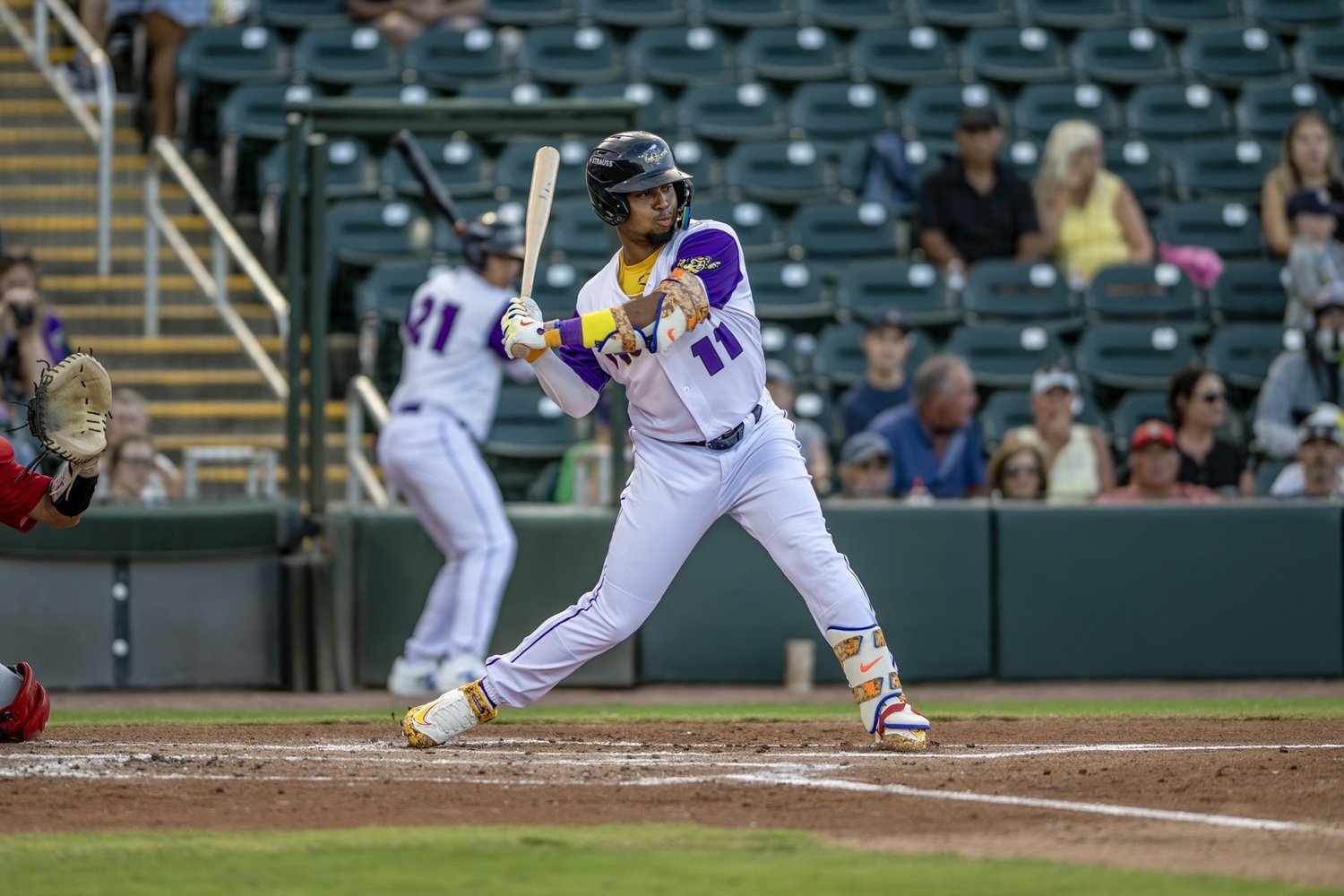 TRANSACTIONS RHP Hendry Chivilli was promoted to Fort Myers from the FCL Twins. SAINTS SENTINEL St. Paul 6, Omaha 7 Box Score Most important, it was great to see Kaelen Culpepper back in the Saints lineup on Saturday after this scare on Saturday night. (Reminder: in the first inning, he stole second. On the head-first slide, his helmet came off his head, hit second base, bounced up and hit the sliding Culpepper under the jaw causing a cut. They were unable to stop the bleeding, so he came out of the game.) Also nice to see, Culpepper led off the bottom of the first by hitting his 10th home run of the season, a blast at 103.3 mph to center. Mike Paredes made the Saints start. He gave up two runs (both in the top of the second) on four hits and a walk. Andrew Bash had a walk and a strikeout over his scoreless fifth inning. A rehabbing Cody Laweryson gave up two runs on two hits (including a homer) over two innings. The Saints were down 4-1 going to the bottom of the sixth innings. Royce Lewis led off with a home run. Hendry Mendez and Kyler Fedko followed with walks. Matt Wallner also walked which gave the Saints bases loaded and no one out. The next two batters were called out on strikes. Fortunately, Ricardo Olivar picked up his teammates with a big, game-tying, two-run single to right field. With one out in the bottom of the seventh inning, Lewis stepped to the plate and launched his second home run of the day for the Saints. Five of his six Saints hits this season have gone over the fence. With the 5-4 lead, Brian Dinkelman turned things over to Alejandro Hidalgo. He made his Saints debut and gave up three runs on three hits and two walks over the final two innings. He struck out three batters. In the bottom of the ninth inning, Lewis and Hendry Mendez walked to start the inning. On a strikeout, both runners advanced a base on a wild pitch. Lewis scored on a Matt Wallner ground out to make it 7-6, and that’s how the game ended. Lewis went 2-for-4 with a walk and two home runs. Olivar also had two hits in the game and two big RBI. He also stole a base. Check out one of our sister sites, Royals Keep, for more on the Kansas City Royals organization. Here are their Top 20 Royals prospects. WIND SURGE WISDOM Wichita 5, Tulsa 3 Box Score At the 7th-Inning Stretch, the hometown team from Wichita was tailing 3-1. In their half of the seventh, they surged into the lead with a three-run inning to take a 4-3 lead. Billy Amick led off with a homer, his second of the game and 13th of the season. Murphy Stehly singled with one out and later stole second. With two outs, Harry Genth tied the game 3-3 with a double. He scored one batter later when Jose Salas lined a single to right to give that 4-3 lead. With two outs in the bottom of the eighth frame, Billy Amick walked. Poncho Ruiz gave the team an insurance run with a double to center to make it 5-3. Sam Armstrong started the game on the bump. He was charged with two runs on just one hit. He walked three and had four strikeouts over the first four innings. Jake Higginbotham tossed two scoreless relief innings and had four strikeouts. Ricky Castro struck out three batters over 1 2/3 innings. He gave up one run on four hits and a walk. Sam Ryan got the final four outs to earn his second save of the season. He gave up two hits and a walk but not runs. Two of the outs came via the strikeout. Billy Amick went 2-for-3 with a walk, his 12th and 13th homers. The first one gave the Surge a 1-0 lead in the bottom of the second inning. Ruiz has seen an uptick in playing time since Ricardo Olivar moved up to St. Paul. He went 2-for-4 with a key RBI. KERNELS CHRONICLE Cedar Rapids 2, Peoria 7 Box Score It was another tough start for right-hander Ivran Romero. In three innings, he gave up five runs on six hits. He walked two and had two strikeouts. Christian Becerra tossed the next 2 2/3 innings and gave up three hits and a walk, but no runs. He left with the bases loaded in the sixth inning, but Cole Peschl left them all stranded. He then gave up two runs on two hits (both homers) over the final two innings. He struck out four batters. The Kernels actually took the game’s first lead. In the top of the second, Khadim Diaw hit his second homer of the season to give them a 1-0 lead. Jump to the top of the seventh. The Kernels are down 5-1. With one out, Quinn McDaniel tripled and then scored on a Rayne Doncon single to left to make it 5-2. Diaw went 3-for-4 with the homer. McDaniel went 2-for-4 with the triple. The latter went 14-for-26 (.538) with a double, two triples, and two home runs in six games at Fort Myers. He is now 6-for-11 (.545) with a triple over his three games with the Kernels. MIGHTY MATTERS Ft. Myers 4, Dunedin 6 Box Score The Mussels were down 4-0 through six innings. Thy scored four runs the rest of the way, but it wasn’t enough. Justin Mitrovich started and gave up one run on three hits and a walk over 2 2/3 innings. Chivilli made his Mussels debut. He gave up three runs (2 earned) on seven hits over 2 2/3 innings. He struck out two and issued no walks. Jake Murray came in and over the next 2 1/3 innings, he gave up two runs on one hit. He walked three and had four strikeouts. He left with the bases loaded. Xavier Kolhosser allowed two runs to score on one hit before a strikeout ended that eighth inning. Down 4-0, Ryan Sprock led off the top of the seventh inning with a single. He scored on Jayson Bass’s fifth home run of the season. Down 6-2 heading for the ninth inning, Jayson Bass led off with a walk. Quentin Young reached on a fielding error. With one out, Byron Chourio doubled to drive in Bass with the team’s third run. Young scored on a Bryan Acuna groundout. The Dunedin Blue Jays are the Low-A affiliate of the Toronto Blue Jays. Check out our sister site at Jays Centre. Here are their rankings of the Top 20 Blue Jays prospects. COMPLEX CHRONICLE FCL Twins 19, FCL Red Sox 2 Box Score This game was over shortly after it even got started. They scored four runs in the first inning, two more runs in the second inning, and ten (10!) runs in the third inning to take a 16-0 lead. And then over the final four innings, the Twins scored three runs, one more than the Red Sox. The Twins scored their 19 runs on 13 hits, 14 walks and two hit batters. The team went 7-for-21 with runners in scoring position and left 11 runners on base. So, let’s start with pitching. 19-year-old Santiago Rojas tossed three scoreless innings to start the game. He gave up no hits, walked two and had four strikeouts. Josh Walker, a lefty signed two weeks ago, gave up one hit, hit a batter, and walked two batters. However, he gave up no runs. All four outs he recorded were on strikeouts. Yoel Roque came in with two runners on base and one out in the fifth inning and kept both from scoring. He pitched a scoreless sixth inning and then gave up two runs in the seventh frame. Jhomnardo Reyes led the offense by going 4-for-6 with two doubles, a triple, four runs and five RBI. Yovanny Duran led off and went 2-for-5 with a walk and three runs scored. Miguel Caraballo went 2-for-4 with three runs scored. He also stole three bases. Teillon Serrano went 1-for-2 with three walks. He was hit by a pitch and scored twice. Daniel Pena went 1-for-1, with three walks and a stolen base. Yilber Herrera walked four times. Jose Barrios added a double. Anatomy of a 10-run inning: (Leading 6-0.) Almanzar hit by pitch. Herrera walk. Barrios RBI double. Duran RBI single. Caraballo reach on Catcher’s Interference. Reyes 3-RBI triple. Serrano hit by pitch. D Pena walk. Wild Pitch) Paez walk. Almanzar RBI walk. (Pitching Change) Herrera RBI walk. Two runs scored on a fielding error. Strikeout. Fly out. (Leading 16-0.) PLAYERS OF THE DAY Hitter of the Day Jhomnardo Reyes (FCL Twins): 4-for-6, 2-2B(3), 3B(2), 4 R, 5 RBI, 2 K Royce Lewis (St. Paul): 2-for-4, BB, 2 HR(5), 2 RBI, 3 R, K. Billy Amick (Wichita): 2-for-3, BB, 2 HR(13), 3 R, 2 RBI, K. Pitcher of the Day Santiago Rojas (FCL Twins): 3 IP, 0 H, 0 R, 2 BB, 4 K, 51 pitches, 31 strikes (60.8%) Jake Higginbotham (Wichita): 2 IP, 1 H, 0 R, 0 BB, 4 K, 27 pitches, 19 strikeouts (70.4%) PROSPECT SUMMARY Check out the Prospect Tracker for much more on our Twins Top 20 prospects after seeing how they did today. #1 - OF Walker Jenkins (St. Paul) - 7 Day Injured List (left shoulder) #2 - IF Kaelen Culpepper (St. Paul) - 1-for-5, HR(10), R, RBI (batted first, played SS) #3 - OF Emmanuel Rodriguez (St. Paul) - 7 Day Injured List (thumb) - Had surgery. #4 - LHP Connor Prielipp (Minnesota) - 4 IP, 7 H, 6 R, 5 ER, 3 BB, 1 K, 85 pitches, 49 strikes (57.6%). #5 - C Eduardo Tait (Cedar Rapids) - 0-for-3, BB, K (batted third, catcher). #6 - LHP Dasan Hill (Cedar Rapids) - Did Not Pitch. #7 - SS Marek Houston (Cedar Rapids) - 0-for-3, BB, K, SB(10) (batted first, played SS) #8 - RHP Riley Quick (Cedar Rapids) - Did Not Pitch. #9 - LHP Kendry Rojas (Minnesota) - 3 IP, 1 H, 0 R, 1 BB, 3 K, 45 pitches, 27 strikes (60.0%) #10 - OF Gabriel Gonzalez (Minnesota) - Did Not Play. #11 - RHP Charlee Soto (Cedar Rapids) - Injured List #12 - RHP Andrew Morris (Minnesota) - 2/3 IP, 1 H, 1 ER, 3 BB, 0 K, 32 pitches, 15 strikes (46.9%) #13 - OF Hendry Mendez (St. Paul) - 0-for-2, 3 BB, R, (batted third, DH) #14 - 3B/SS Quentin Young (Ft. Myers) - 1-for-4, R, E (batted fifth, played SS) #15 - 3B/CF Brandon Winokur (Cedar Rapids) - 1-for-4, K (batted second, played CF) #16 - RHP Ryan Gallagher (St. Paul) - Did No Pitch. #17 - RHP C.J. Culpepper (St. Paul) - Did Not Pitch. #18 - RHP James Ellwanger (Ft. Myers) - 60 Day Injured List (right elbow sprain) #19 - C/OF Khadim Diaw (Cedar Rapids) - 3-for-4, HR(2), R, RBI, K (batted fifth, played DH) #20 - 2B/SS/CF Kyle DeBarge (Wichita) - 0-for-3, BB, 2 K (batted first, played 2B).. UPCOMING PROBABLES Sunday, May 24: Omaha @ St. Paul (5:07 pm CT) - RHP Ty Langenburg (1-0, 3.00 ERA) Tulsa @ Wichita (4:05 pm CT) - TBD Cedar Rapids @ Peoria (6:35 pm CT) - RHP Riley Quick (0-1, 2.79 ERA) Ft. Myers @ Dunedin (11:00 am CT) - TBD CURRENT W-L Records Minnesota Twins: 25-27 St. Paul Saints: 25-24 Wichita Wind Surge: 20-23 Cedar Rapids Kernels: 23-21 Fort Myers Mighty Mussels: 24-20 FCL Twins: 9-7 DSL Twins: 0-0 (season begins Monday, June 1) Please feel free to ask questions about the teams, the rosters, and discuss today’s games, or anything else Twins minor-league related! View the full article
 -
Led by Meyer and Hicks, Marlins clinch series win over Mets
DiamondCentric posted an article in Fish On First
 MIAMI, FL — Thanks to two home runs by Liam Hicks and another Max Meyer quality start, the Miami Marlins defeated the New York Mets Saturday afternoon by a final score of 4-1. Marlins manager Clayton McCullough said that Meyer was able to get through seven shutout innings even without his best stuff. "I think he's been sharper and crisper in some other outings," McCullough said, "but I think he threw some insane sweepers today, and they did a good job of using his fastball appropriately. I just felt like today was more of a grind for him, even though it wasn't a lot of traffic." Meyer allowed just one hit and walked three. He also struck out eight, one shy of his season-high. Through 11 starts this season, Meyer now has a 2.52 ERA, 3.00 FIP, 10.09 K/9 and 3.26 BB/9. Meyer's sweeper (32% usage) and four-seam fastball (27%) complemented each other very well. "I think we can feel when they're starting to sit spin," Meyer said. "I was able to get some ride on a couple heaters when I needed to and freeze them up on a few heaters when I needed to. I got to get that going for next outing." The Marlins jumped on New York Mets starter Freddy Peralta early. In the bottom of the second inning, with runners on second and third, Owen Caissie drove both of them in on a double. Cassie has quietly found consistency at the plate after going through an extended slump during most of April and early May. Since the beginning of the series against the Minnesota Twins (5/13), he entered Saturday's game slashing .300/.391/.600/.991 with two home runs and five RBI. Liam Hicks notched his first career multi-homer game, hitting his 10th of the season in the bottom of the third inning and his 11th in the bottom of the fifth. That gave Miami a 4-0 lead. Hicks and CJ Abrams of the Washington Nationals continue to duel for the RBI leader in baseball. Abrams currently has the most with 45, while Hicks is in second with 44. On Sunday, the Marlins will have Tyler Phillips start the game. That would have been Braxton Garrett's rotation spot, but he was optioned to Triple-A earlier in the week. Once a starter at the beginning of his MLB career, Phillips will now get an opportunity go out there every fifth day, per McCullough. "We believes he has the pitches and the ability to start it," McCullough said. "He's done it in the past, something we had spoken with him about last year and had stretched him out some on the fly. As circumstances have happened in recent weeks, felt like he's been throwing the ball terrifically. His arsenal is much deeper, better than it was in the past. With how the splits come along and the velocity he's been showing, I think he has the pitch mix to go and do this." In 15 appearances out of the bullpen in 2026, Phillips has a 1.20 ERA, 3.43 FIP, 8.10 K/9 and 4.80 BB/9. The right-hander has a five-pitch mix, primarily throwing his sinker and splitter. He has only maxed out at 52 pitches this season, so it will take multiple outings for him to be stretched out for a typical starter's workload. The Marlins will go for their second series sweep of the season on Sunday at 1:40 pm. Christian Scott will start for the Mets. View the full article
 -
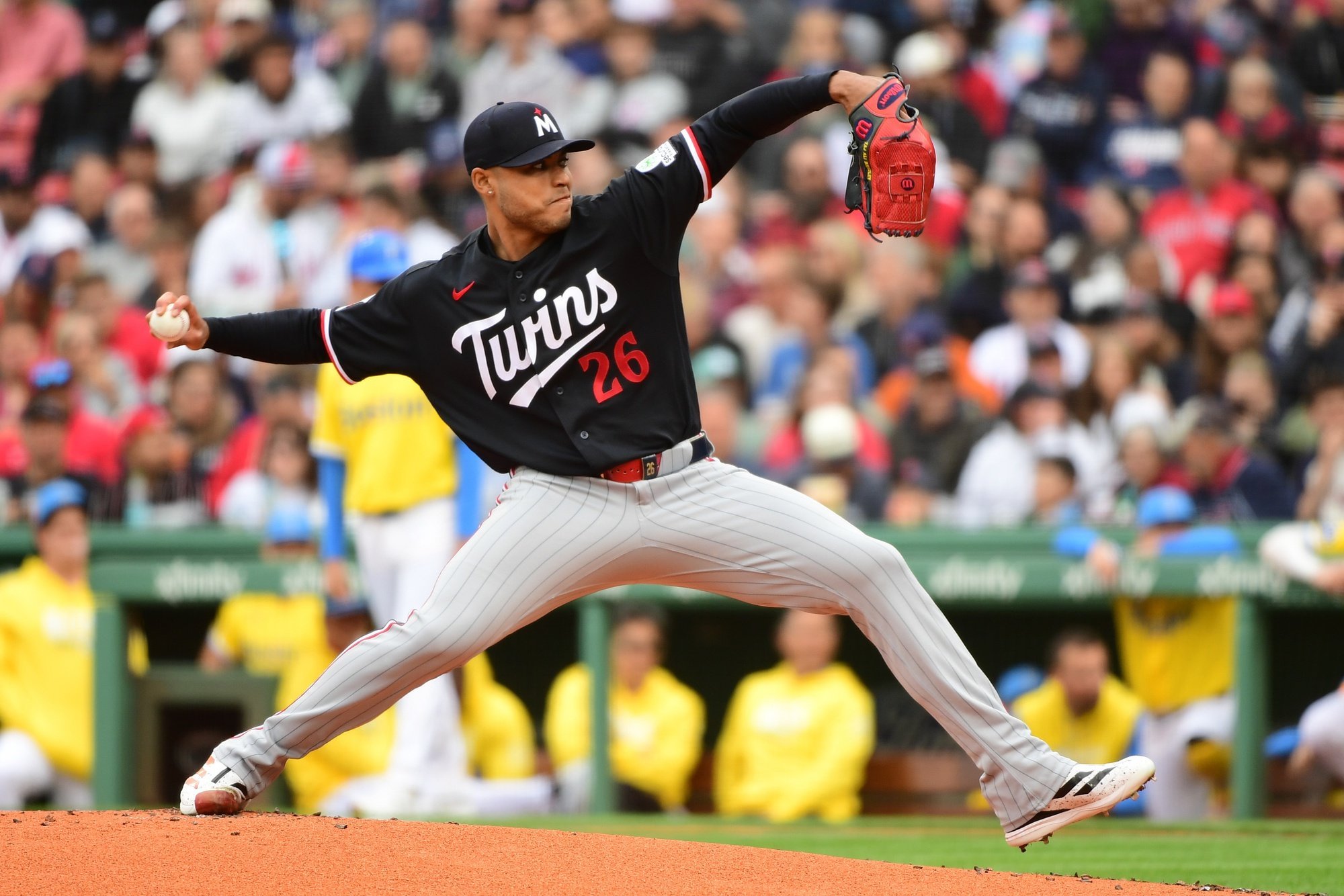 Box Score SP: Taj Bradley 5.0 IP, 3 H, 1 ER, 2 BB, 7 K (73 pitches, 48 strikes (66%)) Home Runs: N/A Top 3 WPA: Taylor Rogers (0.18), Bradley (0.17), Kendry Rojas (0.17) Win Probability Chart (via FanGraphs) The Twins welcomed back their flamethrower phenom Taj Bradley to the mound at Fenway Park on Saturday afternoon. In a matinee that got pretty heated, Bradley and the Twins kept their cool and stayed hot in Boston. Starting Hot The Red Sox sent a familiar face out as an opener, with lefty Jovani Moran getting the first frame against his former squad. Moran got ahead of Byron Buxton 0-2 to lead things off, but Buck stroked a single to get the offense rolling. Trevor Larnach roped a single of his own to start off his four-hit day, and then Austin Martin took Moran to the gap to get the Twins on the board at 1-0. Bradley's Heater A Josh Bell sacrifice fly spotted Bradley another run to work with, and he worked with the lead quite well. After facing some rehab time for a pectoral muscle issue over the past two weeks, Bradley looked to return to his dominant ways. The first three innings saw little resistance from the Boston bats, with Taj alternating between low-90's movement and 99 mph heaters. The fourth inning saw the Red Sox get their first hit, and eventually their first run as a Ceddanne Rafaela double plated Mickey Gasper. Willson Contreras tried to follow Gasper home, but Martin threw a bead to Orlando Arcia, who in turn threw a pea to Victor Caratini for the tag at home. That play not only kept the Twins in the lead, but it also set a fire under the Twins offense as Caratini took exception to Contreras' bump at the plate, and Contreras took exception to any human interaction that ensued. With the bullpens and benches all lathered up, the top of the fifth inning began with the third of Larnach's four hits. Martin followed with an infield hit up the middle to put runners at first and second with nobody out. Bell stepped to the plate after having been the first man off the bench to skirmish in the previous inning, and he ironically exposed Contreras with a grounder to first that ate up the normally elite defender to load the bases against righty bulk man Brayan Bello. Kody Clemens failed to make them pay by flying out to shallow left, but Caratini hit a fly ball to right jussssssst far enough to score Larnach on a sweet slide to make it 3-1. Arcia then hit a grounder that was headed for out number three until Bello mindlessly reached behind his back and deflected the ball into no mans land. Martin scored, and the Twins bullpen got itself a three-run lead to work with. Rojas Holds the Fireline, and Morris Pours on Gas Bradley wasn't going to go very deep into the game in his first outing back, and Kendry Rojas was ready and waiting to keep the heaters coming. Rojas surrendered only one hit and struck out three over his three innings of work, and it looked like the Twins were on their way to an easy road victory. Then Andrew Morris took the hill for the bottom of the ninth, and Contreras laced a lead-off single into left. Morris followed by walking Rafaela on five pitches. Now the Twins were feeling the heat, and the tying run stepped into the box in the form of young Nick Sogard. Sogard took a 95 mph heater, and then popped up a changeup to ease some of the tension. Masataka Yoshida pinch hit, and Arcia made a slick play on a grounder up the middle to take out the runner at second to get the Twins within one out of a big win. Connor Wong was next man up, and he worked a walk on a full count to load em up. Derek Shelton stuck with the rookie Morris in this new-to-him crucial spot. The first two pitches to Isiah Kiner-Falefa were not close, and Morris was limited to heaters only to finish off the game. On a full count, Morris yanked a fastball into the ground to walk in the second run for the Red Sox. With the tying run on second, Shelton went to lefty Taylor Rogers to face the dangerous lefty Jarren Duran. Rogers got ahead 0-2, and for the sixth, seventh, eighth and ninth times on the evening the Red Sox got down to their final strike. This time, Rogers caught Duran looking on a top shelf sweeper. Duran challenged, but the Twins victory got "confirmed." Thank you homeplate umpire Jen Pawol for doing your job well, as the Twins didn't have a challenge left in the tank had you botched that call. Twins Territory owes you a $2 beer next time you come to Target Field! What’s Next? The Twins look to get out the brooms at Fenway for the first time since 2015. The Bearded Nightmare (5-2, 3.63 ERA) looks to keep the good times rolling in Bean Town. Facing Bailey Ober will be former Twins ace Sonny Gray (5-1, 2.93 ERA) who is 1-2 with a non-stellar 7.20 ERA against his former team since leaving via free agency after the 2023 season. First pitch is scheduled for 12:35pm CDT. Postgame Interviews Bullpen Usage Spreadsheet TUE WED THU FRI SAT TOT Gómez 0 36 0 13 0 49 Adams 19 0 0 29 0 48 Rojas 0 0 0 0 45 45 Morris 0 10 0 0 32 42 Banda 16 0 0 14 0 30 Orze 0 0 0 14 0 14 Rogers 0 0 0 0 6 6 Woods Richardson 0 0 0 0 0 0 View the full article
 -
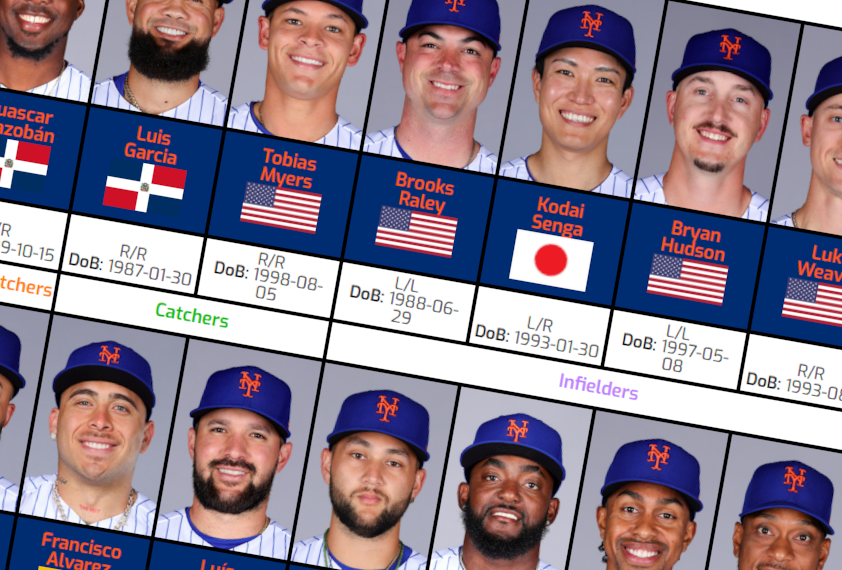 It was fun while it lasted — four rookies in the rotation. FOUR! But that bloated the rotation beyond the pentatonic standard, and one had to be farmed out. Transactions, 5/23/2026 GOING NEUTRAL COMING Demoted to Syracuse Transferred from Bullpen Promoted from Syracuse Starting Pitchers Relief Pitchers Zach Thornton Jonah Tong Jonathan Pintaro L/L DoB: 37273 High Level: MLB (2026) R/R DoB: 2003-06-19 High Level: MLB (2026) R/R DoB: 1997-11-07 High Level: MLB (2025) Seeing Zach Thornton go down is sub-optimal. The initial upside of it, however is that it creates rotation room for Jonah Tong — suggesting that his initial appearance out of the bullpen was a one-off. It wouldn't have been the first time that the quest for ever-more, ever-stronger bullpen has ensnared a top starting prospect. Tong even committed the cardinal sin of of doing well his first time out of the bullpen, which the likes of Grant Roberts, Aaron Heilman, Seth Lugo, and Robert Gsellman will tell you is the fastest way to lose control of the narrative. But the opening now is in the rotation. Hopefully, Jonah can plant his Canadian flag there, at least until Kodai Senga is ready to perform. Making his 2026 debut in the bullpen is Jonathan Pintaro. Jonathan's last name means painter in Italian and they painted it in Spanish and door in Ndebele, and he has been painting the back door nicely for Syracuse, with a 2.81 ERA and 32 strikeouts in 25 2/3 innings. I mean, we were hoping they'd call up Stan Musial, but he was apparently not available. Your 2026 New York Mets Starting Pitchers Nolan McLean Freddy Peralta David Peterson Christian Scott Jonah Tong R/R DoB: 2001-07-24 R/R DoB: 2996-06-04 L/L DoB: 1995-09-03 R/R DoB: 1999-06-15 R/R DoB: 2003-06-19 Relief Pitchers Huascar Brazobán Sean Manaea Tobias Myers Jonathan Pintaro Brooks Raley Austin Warren Luke Weaver R/R DoB: 1989-10-15 R/L DoB: 1992-02-01 R/R DoB: 1998-08-05 R/R DoB: 1997-11-07 L/L DoB: 1988-06-29 R/R DoB: 1996-02-05 R/R DoB: 1993-08-21 Relief Pitchers Catchers Infielders Devin Williams Hayden Senger Luís Torrens Bo Bichette Brett Baty Vidal Brujan MJ Melendez R/R DoB: 1994-09-21 R/R DoB: 1997-04-03 R/R DoB: 1996-05-02 R/R DoB: 1998-03-05 L/R DoB: 1999-11-13 S/R DoB: 1998-02-09 L/R DoB: 1993-11-29 Infielders Outfielders Marcus Semien Mark Vientos Carson Benge A.J. Ewing Nick Morabito Juan Soto Tyrone Taylor R/R DoB: 1990-09-17 R/R DoB: 1993-12-11 L/R DoB: 2003-01-20 L/R DoB: 2004-08-10 R/R DoB: 2003-05-07 L/L DoB: 1998-10-25 R/R DoB: 1994-01-22 Also on 40-Player Roster Starting Pitchers Relief Pitchers Clay Holmes Tylor Megill Kodai Senga Zach Thornton Alex Carrillo Daniel Duarte Reed Garrett R/R DoB: 1993-03-27 R/R DoB: 1995-07-28 L/R DoB: 1993-01-30 L/L DoB: 2002-01-17 R/R DoB: 1997-06-06 R/R DoB: 1996-12-04 R/R DoB: 1993-01-02 Relief Pitchers Catchers Infielders Justin Hagenman A.J. Minter Dedniel Núñez Dylan Ross Francisco Alvarez Francisco Lindor Ronny Mauricio R/R DoB: 1996-10-07 L/L DoB: 1993-09-02 R/R DoB: 1996-06-05 R/R DoB: 2000-09-01 R/R DoB: 2001-11-01 S/R DoB: 1993-11-14 S/R DoB: 2001-04-04 Infielders Outfielders Jorge Polanco Luis Robert, Jr. Jared Young S/R DoB: 1999-11-13 R/R DoB: 1997-08-03 L/R DoB: 1995-07-09 Designagted for Assignment Relief Pitchers Outfielders Craig Kimbrel Austin Slater R/R DoB: 1988-05-28 R/R DoB: 1992-12-13 Your Mets Coaching Staff Manager Bench Coach Pitching Coach Hitting Coordinator Third Base Coach First Base Coach Bullpen Coach Ass't Pitching Coach Carlos Mendoza Kai Correa Justin Willard Jeff Albert Tim Leiper Gilbert Gomez José Rosado Dan McKinney DoB: 1979-11-27 DoB: 1989-07-14 DoB: 1990-09-09 DoB: 1992-08-16 DoB: 1996-07-19 DoB: 1992-03-08 DoB: 1974-11-09 DoB: 1989-06-06 Hitting Coach Strategy Coach Catching Coach Coaching Assistant Bat'g Practice Pitcher Equipment Manager Bullpen Catchers Bullpen Catchers Troy Snitker Danny Barnes J.P. Arencibia Rafael Fernandez Kevin Mahoney Kevin Kierst Eric Langill Dave Racaniello DoB: 1988-12-05 DoB: 1989-10021 DoB: 1986-01-05 DoB: 1988-08-03 DoB: 1987-05-11 DoB: 1964-07-09 DoB: 1979-04-09 DoB: 1978-06-03 Your Mets Training Staff Director of Player Health Head Athletic Trainer Assistant Athletic Trainer Reconditioning Coordinator Reconditioning Therapist Head Performance Coach Assistant Performance Coach Performance Coordinator Soft Tissue Specialist Brian Chicklo Joseph Golia Bryan Baca Sean Bardanett Josh Bickel Dustin Clarke Tanner Miracle Jeremy Chiang Hiroto Kawamura DoB: 1972-07-17 DoB: 1978-??-?? DoB: Circa 1980 DoB: 1988-06-23 DoB: 1996-??-?? DoB: 1987-??-?? DoB: 1991-??-?? DoB: ????-??-?? DoB: 22846 View the full article
 -
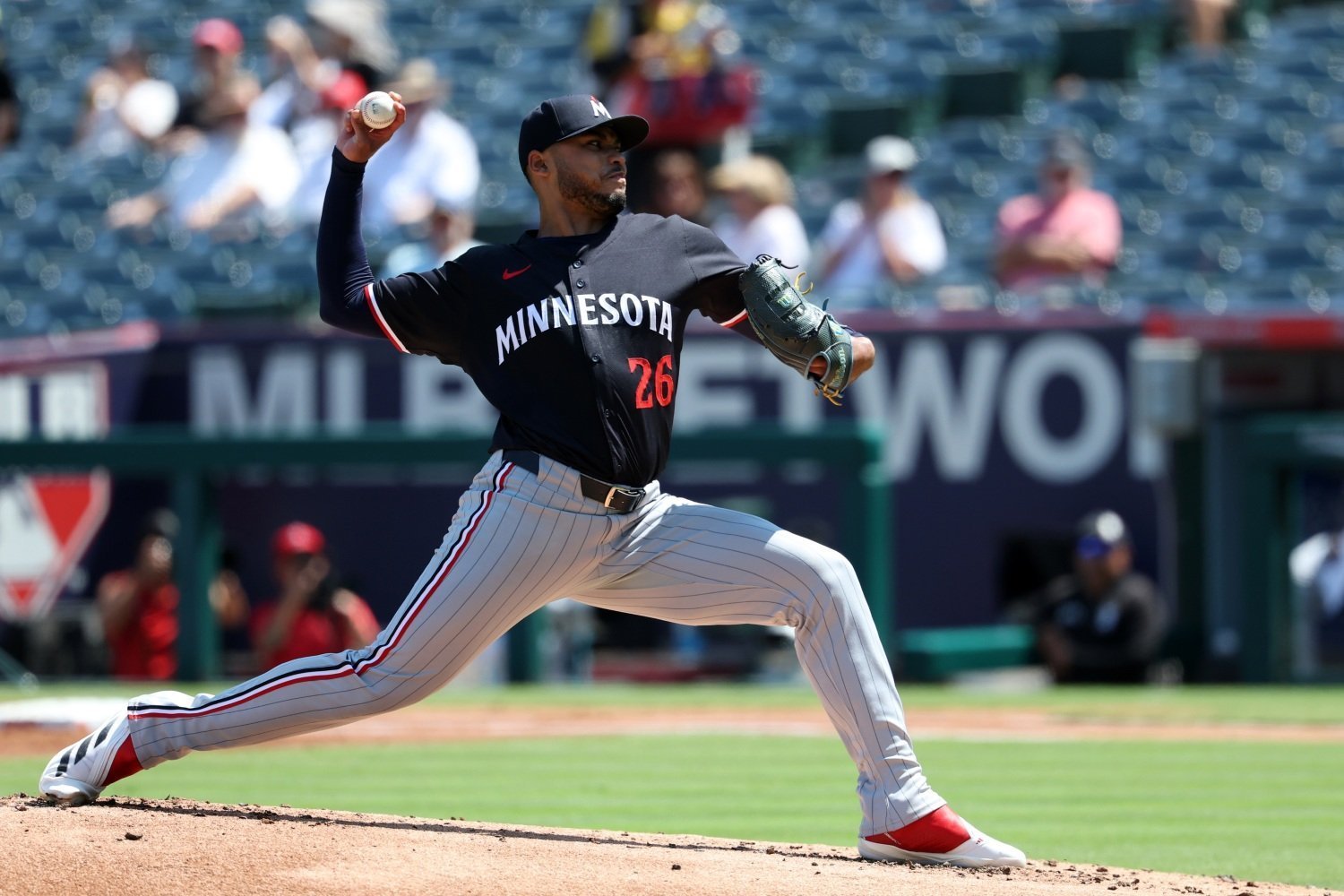 The Twins welcomed an important piece back to their rotation on Saturday, activating Taj Bradley from the 15-day injured list ahead of Minnesota’s matchup against the Boston Red Sox. Bradley is projected to start on Saturday after missing just over two weeks with a pectoral issue. To clear a roster spot, the Twins designated veteran reliever Luis Garcia for assignment, marking another abrupt stop in what has become a turbulent 2026 season for the longtime right-hander. Bradley’s IL move was backdated to May 6, allowing the Twins to bring him back after only a slightly extended minimum stay. The organization appeared to take a cautious approach with the injury from the start, and Bradley only needed one rehab outing with Triple-A St. Paul before being deemed ready to return. Outside of the brief injury interruption, Bradley has been one of the steadier arms in Minnesota’s rotation this season. Through eight starts covering 47 innings, the 25-year-old owns a 2.87 ERA while striking out 26.1% of opposing hitters. His walk rate sits at 8.5%, a touch higher than ideal, though still manageable considering the swing-and-miss ability he brings to the mound. Advanced metrics suggest some regression could eventually come, as Bradley’s 3.48 FIP points to a little help from an elevated 84.3% strand rate. Even so, the Twins have gladly taken the production. With injuries testing the club’s pitching depth throughout the first two months of the season, Bradley has helped stabilize a rotation that has rarely been at full strength. Meanwhile, Garcia’s tenure with the Twins may already be finished. Minnesota signed the 39-year-old to a minor league contract after he was cut loose by the New York Mets in April. The Twins selected his contract not long after, hoping the veteran could provide innings in a taxed bullpen, but the results never materialized. Across nine appearances with Minnesota, Garcia struggled to a 10.38 ERA over 8 2/3 innings. Combining his time with both the Mets and Twins this year, he posted a 9.00 ERA with six walks and six strikeouts in 15 total innings. Financially, the move carries little risk for Minnesota. Garcia signed a one-year, $1.75 million contract with New York during the offseason, leaving the Mets responsible for nearly all of the remaining salary. The Twins only owed him a prorated portion of the league minimum while he occupied a spot on the active roster. Given both his performance and contract situation, Garcia appears likely to clear waivers. If that happens, free agency would probably be more appealing than accepting an outright assignment to Triple-A. Now, he heads back into roster limbo once again as the Twins continue searching for stability behind a pitching staff that has already been forced to absorb plenty of turnover this season. View the full article
