


DiamondCentric
-
Posts
2,631 -
Joined
-
Last visited
Never
Content Type
Profiles
Forums
Events
News
Tutorials & Help
Major League Baseball Videos
Guides & Resources
Store
Downloads
Gallery
Everything posted by DiamondCentric
-

 Boston Red Sox Affiliate Recap (September 19) Triple-A Worcester Red Sox Series vs. Durham Bulls (Tampa Bay Rays): 3-2 Season Record: 76-67 The WooSox couldn’t replicate their offensive prowess from Friday, falling in an extra-innings battle 4-3. Gage Ziehl made the final start of his first season in the Red Sox organization, turning in a solid six-frame appearance. He allowed a pair of runs (one unearned) on four hits as he issued a walk. He struck out three before Tanner Houck took over. Houck was making his fourth rehab appearance of the season in search of a postseason call-up. He was solid through the first three innings of his outing, but let up the go-ahead run in the top of the tenth. He let up two runs (one unearned) on two hits and struck out a pair in the 3⅓ inning relief appearance as he earned the loss. Sam McWilliams entered for the final two outs of the tenth, letting up a hit but striking out two. After a Friday night onslaught that featured a little bit of offense from everyone, the WooSox were entirely reliant on Franklin Arias on Saturday evening. Arias didn’t disappoint with three RBIs on a pair of hits, but he had no run support from the rest of the lineup. He gave the WooSox a one-run lead in the third, drilling his sixth Triple-A homer of the season to left field as Braiden Ward crossed home. In the fifth, Arias would give the WooSox the lead again. He scored Nathan Hickey on a single as Ward advanced to third. With a chance to walk it off in the ninth, Arias pulled a ball that looked good off his bat, but it would eventually fly foul to the dismay of the Polar Park patrons. Arias couldn’t do it all himself, as evidenced by the close loss. View the full article
 -
 Chicago Cubs Transactions No Roster Moves Triple-A: Iowa Strikes First And Finishes Late In 6-4 Win At Omaha Iowa put up four runs in the first inning and held on for a 6-4 win at Omaha. BJ Murray Jr., Owen Miller, and Kevin Alcantara opened the game with three straight singles, Chas McCormick followed with a two-run double, Owen Ayers drew a walk, and Jackson Cluff grounded out to score McCormick for a 4-0 lead. The Cubs added two more in the fourth. James Triantos and Austin Wynns singled, Justin Dean reached on a force out, and Murray lined a two-run single to center to make it 6-0. Murray finished 2-for-5 with two RBIs. Andrew Wantz gave Iowa five innings, allowing one run on three hits with two walks and four strikeouts. Evan Taylor followed with two innings, giving up three runs on four hits with three strikeouts, as Omaha cut the deficit to 6-4 on a run-scoring double and a two-run home run. Gavin Hollowell then struck out four over 1 1/3 innings without allowing a hit, and Jaxon Wiggins entered with a runner on first and no room for error. Wiggins got a ground ball that Owen Miller turned into a shortstop-to-first double play to end it and give Wiggins his first save. McCormick was the offensive standout with three hits, a double, and two RBI, and Miller added two hits. Iowa finished with 12 hits, three walks, and eight runners left on base. Player AB R H RBI BB K BJ Murray Jr., DH 5 1 2 2 0 1 Owen Miller, SS 5 1 2 0 0 0 Kevin Alcantara, RF 4 1 1 0 1 2 Chas McCormick, LF 5 1 3 2 0 0 Owen Ayers, 1B 3 0 1 0 2 1 James Triantos, 2B 4 1 1 0 0 0 Jackson Cluff, 3B 4 0 0 1 0 1 Austin Wynns, C 4 0 1 0 0 1 Justin Dean, CF 4 1 1 0 0 0 Totals 38 6 12 5 3 6 Player IP H R ER BB K HR Andrew Wantz (W, 5-1) 5 3 1 1 2 4 1 Evan Taylor 2 4 3 3 0 3 1 Gavin Hollowell (H, 3) 1 1/3 0 0 0 1 4 0 Jaxon Wiggins (S, 1) 2/3 0 0 0 0 0 0 Totals 9 7 4 4 3 11 2 Top-20 Prospect Performance Josiah Hartshorn: DNP Cade Townsend: DNP Jaxon Wiggins: 2/3 IP, 0 H, 0 R, 0 ER, 0 BB, 0 K, SV Owen Ayers: 1-for-3, 2 BB, K Kane Kepley: DNP Ethan Conrad: DNP Caden Sorrell: DNP Kaleb Wing: DNP Myles Bailey: DNP Brooks Caple: DNP James Triantos: 1-for-4, R Will Sanders: DNP Juan Cabada: DNP Jostin Florentino: DNP Derniche Valdez: DNP Grant Kipp: DNP Jose Escobar: DNP Ariel Armas: DNP Fernando Cruz: DNP Brandon Birdsell: DNP With the minor-league calendar winding down, this may be my last recap of the year. Thank you for checking in on the Cubs' farm system all season long. We appreciate every one of you who read along. See you next season. View the full article
 -
 The race will go down to the final day, thanks to a dramatic finish Saturday night. Syracuse was two outs from elimination in the race for the International League’s second-half championship when D’Andre Smith clubbed a two-run, walk-off home run in the bottom of the ninth inning to beat Lehigh Valley 5-4. The win kept the Mets half a game behind first-place Rochester with only Sunday’s games remaining. The Red Wings would have clinched the title with a Syracuse loss. They beat Buffalo 7-3 on Saturday afternoon and then followed along as Indianapolis, Scranton/Wilkes-Barre and Worcester took themselves out of contention with losses and made it a two-team race. Here’s how the remaining clubs stand entering play Sunday: TEAM W L PCT GB Rochester 44 30 .595 -- SYRACUSE 43 30 .589 0.5 The Mets will be able to scoreboard-watch from the clubhouse and dugout to start Sunday. First pitch of Rochester at Buffalo is scheduled for 12:05 p.m. ET. The Mets and IronPigs will start at 1:05 p.m. ET in Syracuse. The second-half champion will face first-half winner Memphis in the best-of-three IL Championship Series beginning Tuesday night in Memphis. If the Mets are the opponent, they will be competing for the city’s ninth IL playoff crown and its first in half a century. The then-Chiefs won it all in 1976 as the Yankees’ Triple-A affiliate. That club was managed by Hall of Famer Bobby Cox and included a 25-year-old left-handed reliever named Ron Guidry. Smith Keeps The Dream Alive The Mets fell behind 4-3 in the top of the ninth on a Lehigh Valley sacrifice fly. Hayden Senger struck out to lead off the bottom half. Zack Short walked, and Smith followed with his sixth Triple-A homer, a 375-foot drive to left. The Mets took a 3-0 lead in the second on Short’s bases-loaded double. Billy Amick led off the inning with a double and moved to third on a fly out by Jose Ramos. Ryan Clifford walked and Senger reached on catcher’s interference to load the bases. Short then drove a ball to the gap in right-center to clear the bases. Lehigh Valley answered with a solo home run in the third and pulled even at 3-3 in the fifth on a bases-loaded walk and a sacrifice fly. Dan Hammer started another bullpen game for the Mets and allowed one hit over two scoreless innings with two strikeouts. Eight Mets pitchers in all took the mound. The last one, Chayce McDermott, was credited with the win after allowing the go-ahead run in the ninth. Short had two of the Mets’ eight hits. Syracuse Batting Player AB R H RBI BB K D'Andre Smith 5 1 1 2 0 0 Jefferson Rojas 4 0 0 0 0 2 MJ Melendez 4 0 1 0 0 1 Vidal Bruján 3 0 1 0 0 0 Billy Amick 4 1 1 0 0 3 Jose Ramos 3 0 1 0 1 0 Ryan Clifford 2 1 0 0 1 0 Eric Wagaman 1 0 0 0 0 1 Hayden Senger 3 1 1 0 0 1 Zack Short 3 1 2 3 1 0 Syracuse Pitching Player IP H R ER BB K HR Dan Hammer 2 1 0 0 0 2 0 Ofreidy Gómez 1 1 1 1 0 0 1 Matt Seelinger (H, 3) 1 1 0 0 0 3 0 Garrett Stratton 0 1 1 1 0 0 0 Ryan Lambert (BS, 3) 1 2 1 1 1 1 0 Matt Turner 2 1 0 0 1 2 0 Zach Franklin 1 0 0 0 1 2 0 Chayce McDermott (W, 3-1) 1 3 1 1 0 1 0 New York Mets Transactions New York Mets activated LHP Cionel Pérez from the 15-day injured list. New York Mets optioned RHP Cameron Weston to Syracuse Mets. Top-20 Prospect Performance Jonah Tong: MLB Jack Wenninger: DNP Elian Pena: DNP Mitch Voit: DNP Ryan Clifford: 0-for-2, BB Nick Morabito: MLB Jonathan Santucci: DNP Carson Wiggins: DNP Jacob Reimer: DNP Aiden Robbins: DNP Randy Guzman: DNP Wandy Asigen: DNP Chris Suero: DNP Jefferson Rojas: 0-for-4, 2 K Will Watson: DNP Shane Sdao: DNP Eli Serrano III: DNP Antonio Jimenez: DNP Emilien Pitre: DNP Dylan Ross: DNP View the full article
 -
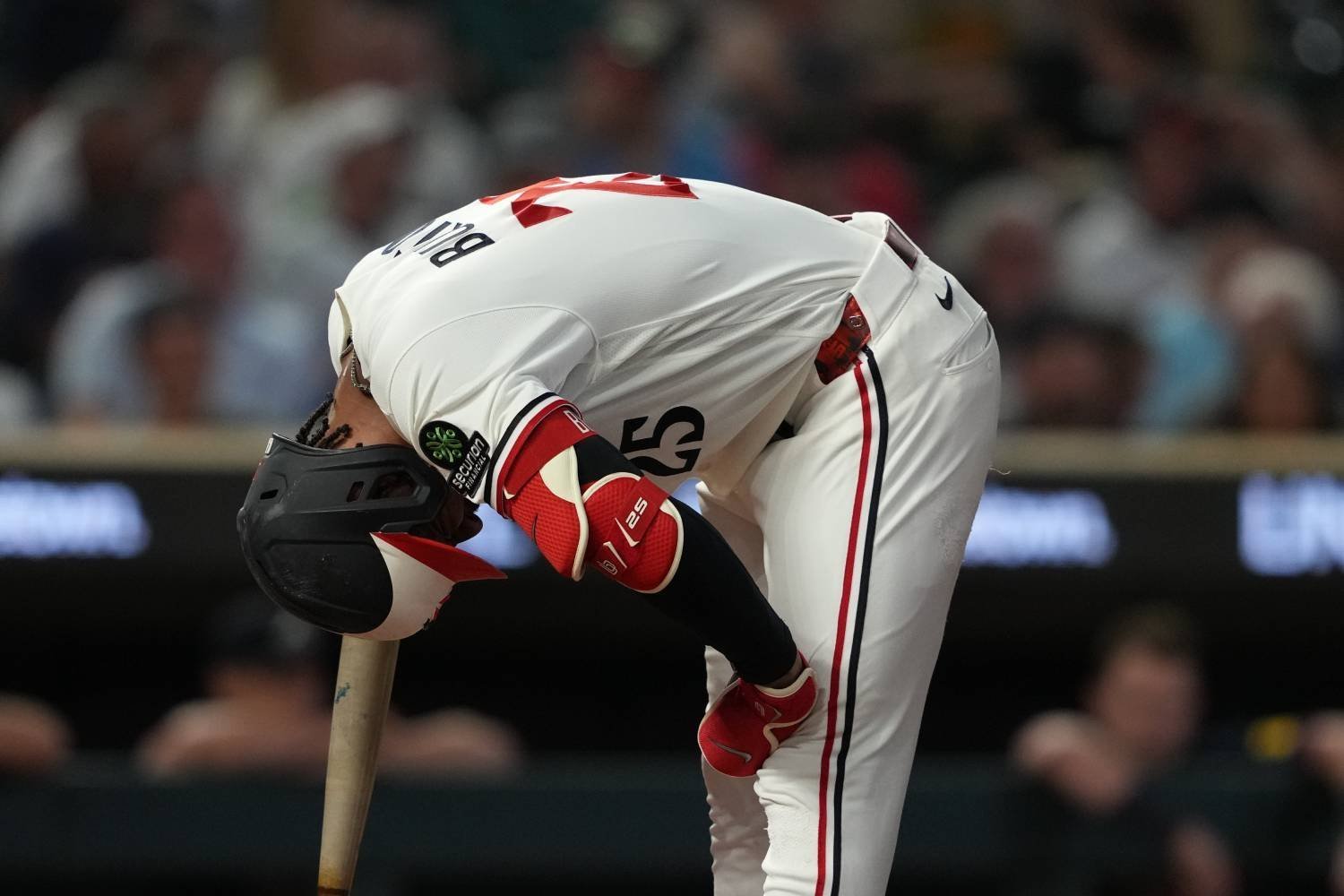 There are plenty of ways for a baseball team to prepare for the 2027 season. The Minnesota Twins have apparently found a new one: hoping theres less of one. With the 2026 season limping toward its conclusion, the Twins have watched another year of injuries, rehab assignments, mysterious soreness and players disappearing from the lineup at inconvenient times. At this point, the organization may be looking at the looming collective bargaining negotiations and thinking there's a silver lining. Maybe the lockout will shorten the season. Why play 162 games when 120 might do? "We've been studying the data," one anonymous Twins executive said. "Every time we play a baseball game, theres a chance someone gets hurt. Therefore, fewer baseball games means fewer opportunities for injuries. We're really excited about this innovative strategy." It's difficult to argue with the math. Byron Buxton's 2026 season is ending in familiar fashion. Injured. The Twins' longtime superstar has dealt with injuries throughout his career, and another abbreviated season has once again raised questions about how much Minnesota can realistically expect from him over a full schedule. Maybe the answer is simple. Don't have a full schedule. "If Byron only had to play 100 games, we'd expect him to play 100 games," the anonymous executive said. "If he had to play 80, we'd expect him to play 80. We're currently exploring whether baseball would allow us to schedule him for approximately 47 games and call that a season." Buxton's availability has become one of the biggest variables surrounding the Twins. A shortened season wouldn't magically eliminate injuries, but it could reduce the physical toll associated with playing nearly every day for six months. The Twins could even introduce a revolutionary new concept: rest. "That's a bold proposal," the executive said. "We're still running it through baseball operations." One Half of Baseball Might Be Perfect for Joe Ryan. He's also provided Minnesota with an interesting annual puzzle. When Ryan is rolling, he looks like a top-of-the-rotation starter. Unfortunately, his recent track record has included a noticeable difference between the first half and second half. This year is no exception. So perhaps the Twins have found the solution. Only play one half. "Joe has demonstrated that he can be extremely effective for half a season," a Twins pitching coach said. "We've decided to stop asking him to pitch the other half. It's really more of a workload-management decision than anything else." Imagine the possibilities. Opening Day arrives. Ryan dominates. He takes the mound every fifth day. He continues pitching well. The great thing is that the lockout means there really is only one half of baseball. "Joe finished with a 3.17 ERA in the first half," the coach said. "We don't see any reason to complicate things by introducing a second half." The proposal could also eliminate the dreaded September collapse. There would be September baseball, but Ryan would feel like it's only July. Problem solved. Earlier this year, a source said, the Twins considered not telling Ryan about the All-Star break and hoping he wouldn't notice it was happening, since the break seems to trigger his annual collapse. That became unworkable once he was selected to pitch in the exhibition. A truncated season without an All-Star Game would solve the problem for them. The Twins also have another reason to embrace a shortened schedule. Their young players keep getting hurt. Walker Jenkins and Emmanuel Rodriguez represent two of the organization's most important young offensive pieces. Both have dealt with significant injuries during their development, creating understandable concerns about how their bodies will hold up over a full major-league schedule. A shorter season could limit some of that exposure. Rodriguez wouldn't have as many opportunities to injure his thumb. Jenkins wouldn't have as many opportunities to sprint into an outfield wall. "There's a lot of strategy involved," another anonymous executive said. "If Walker plays 100 games, there are 62 fewer games in which he can collide with something." That is the kind of forward thinking the Twins need. The organization could even install fewer walls. "We've discussed removing the outfield walls entirely," the executive said. "But MLB has some concerns." There is, unfortunately, one major flaw in this master plan. The Twins don't actually control whether the 2027 season gets shortened. The collective bargaining agreement expires after the 2026 season, meaning labor negotiations will determine whether baseball experiences another lockout and whether games are ultimately missed. But that isn't stopping Minnesota from dreaming. "We've reviewed every possible scenario," the anonymous executive said. "A normal 162-game season is obviously the most challenging. A 154-game season would be manageable. A 140-game season would be better. At 120, we're talking about a really exciting competitive window." At 100 games, the Twins reportedly believe their injury situation could become "elite." At 81 games, Minnesota would only have to survive one half of baseball. At 60 games, Buxton might actually be available for most of them. And at 30 games? Well, nobody knows what happens then. But the Twins would probably have a very healthy roster. "Thirty games sounds fantastic," the executive said. "We'd probably still have six starting pitchers." Obviously, a shortened 2027 season would create enormous problems for the sport. Players would lose games and salary opportunities, fans would lose baseball, and the competitive balance of the season would be dramatically altered. "We're not saying we want a lockout," the anonymous executive said. "We're simply saying that if baseball happened to lose a few months, we'd be prepared to make the most of the situation." And if the Twins eventually decide they need to shorten the season even further, there's always one final option. Just don't play. "We're still evaluating it," the executive said. View the full article
 -
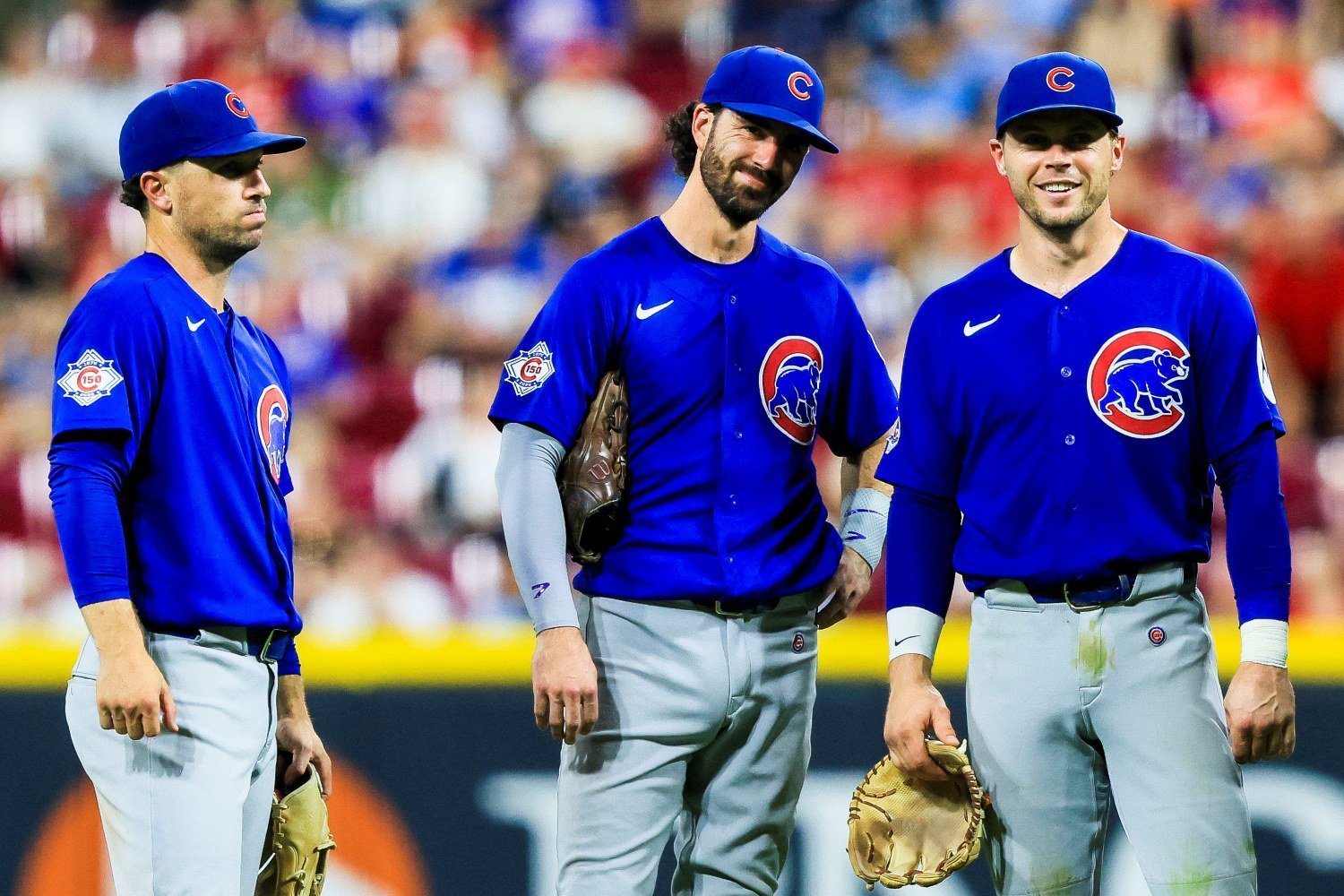 Just in time for a potential postseason run, Dansby Swanson is back. The Cubs’ starting shortstop and defensive stalwart returned to the lineup on Friday in Cincinnati after missing roughly one month with an oblique injury. The Cubs should be incredibly grateful he made a return so quickly. When he went down with his injury, our own Matthew Trueblood wrote that “although Swanson has been his inconsistent self at the plate this year, his value as a defender at shortstop is virtually unparalleled.” It wasn't hard to see that value (or, rather, the lack thereof) during his absence. Exactly how much did his one month on the injured list end up hurting the North Siders? We can reach a rough approximation of this using the Fielding Run Value stat at Baseball Savant. In the 125 games that they played prior to Swanson’s injury, the Cubs led all of baseball in this statistic, having saved 61 runs above average. That was a whopping 23 runs more than the second-place Cardinals. In their 27 games without him, they saved seven runs above average, just eighth-best in baseball. They went from saving almost half of a run per game (above average) to about a quarter of a run. That feels like a significant drop. Defense, much like baseball as a whole, is very much a team endeavor, even though it's often perceived as individual effort. Shortstop is certainly one of the most important defensive positions out there, though there are still eight other guys that all have a job to do. Is it fair to pin this entire defensive drop off on the absence of Swanson? Position FRV/game with Swanson FRV/game without Swanson C 0 -0.04 1B 0.02 -0.04 2B 0.06 0 SS 0.09 0.07 3B 0.03 0.04 LF 0.02 0.15 CF 0.21 0.15 RF 0.06 0 The void that Swanson leaves at shortstop isn’t felt quite as acutely as the downstream effects are. The Cubs were fifth in FRV from their shortstops prior to Swanson going down, and in the month since, they only dropped to eighth. It’s the slide of Nico Hoerner from second base to short that really hurts. Pedro Ramírez has had a fine rookie season, and he filled in admirably in Hoerner’s stead, but the Cubs went from eighth in FRV at second base when Hoerner was the primary player at the keystone, all the way down to 18th with Ramírez as the primary guy. One way we can attempt to further isolate this is by seeing how often the Cubs defense turned groundballs into outs. According to FanGraphs, the Cubs allowed a .219 batting average on groundballs with Swanson in the fold, and that jumped to .229 in the month that he was on the injured list. That doesn't capture the value that also leaked away due to more errors (Hoerner committed three while playing shortstop; Swanson has only committed seven in about five times the playing time) or due to double plays not being turned, but it gives us some inkling. Defense is really hard to measure, especially in such small sample sizes, but I come away from this with two takeaways: The Cubs should be very grateful to have Nico Hoerner. He accepted his shift to second base four years ago without blinking. The shift from the left side of the infield to the right side is something we’ve seen lesser shortstops create drama over. Not this one, and as a result, the Cubs have essentially a shortstop at each middle infield position. When one goes down, the other can move over. The Cubs should also be extremely glad to have Dansby Swanson back. There was a noticeable decline in how this group graded out without their shortstop. It might feel marginal, and it is. However, playoff games are won on the margins. Their pitching depth is still in doubt, and they might yet have to play the Wild Card Series on the road. Positionally, though, the Cubs are back to full strength, and the difference between being without Swanson and having him back can't be overstated. View the full article
 -
How Hard Should Brewers Try to Lock Down Home-Field Advantage?
DiamondCentric posted an article in Brewer Fanatic
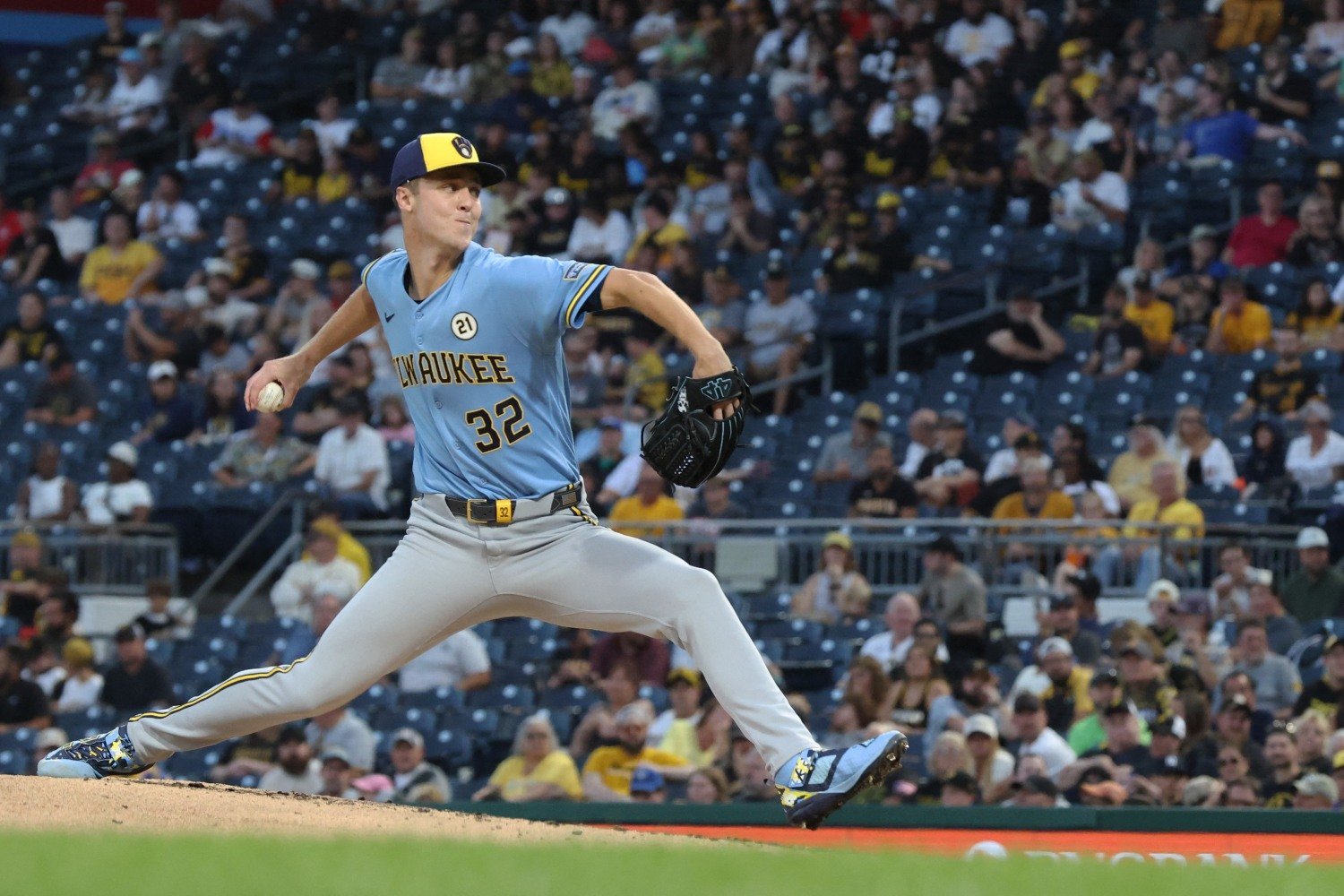 Relentlessness is the Brewers' ethos, and relentless winning is their defining tendency. They haven't been able to help themselves, even since clinching their fourth straight NL Central title earlier this week. With a pair of wins over the Baltimore Orioles already this weekend, Milwaukee has not only all but knocked the O's from their AL Wild Card picture, but positioned themselves to sail comfortably to one of the byes through the first round of the postseason. Right now, the Crew has the best record in baseball, with a two-game edge on the Dodgers for home-field advantage throughout the playoffs and another game over the Rays, the only real threat from the American League to seize the top overall seed in the sport. They lead the team from the suburbs northwest of Atlanta by six games, which is important. To be guaranteed a bye to the NL Division Series, the Brewers just have to avoid giving up six games in that particular race. They won't own the tiebreaker, in the extremely unlikely event that the teams end in a tie, so their magic number to clinch a bye is 2, but there's an awful lot of baseball left to drop that to zero. It could happen as soon as tonight. Obviously, it'd be great—on multiple levels—to secure home-field advantage for every possible series. Firstly, for fans, home playoff games are a different and more wonderful thing than ones played on the road. The city buzzes in a different way. There are more team colors on the street. There's greater energy around the event. You're less likely to be saddled with an undesirable start time (specifically, a late-night West Coast one). Home playoff games are also worth huge money for Mark Attanasio, and although he could and should invest even more in the team, Attanasio has done a reasonably good job of using rising revenues to sustain his team's success. On the field itself, being at home is a tangible advantage for this year's Brewers team—a huge one. They're 52-26 at Uecker Field this year, outstripping a still-impressive 45-32 on the road. The difference is, if anything, even more pronounced than those records make it appear, though. At home, Milwaukee has scored 430 runs (5.5 per game), compared to 271 allowed (3.5 per game). In away games, they've scored just 369 times (4.8) and allowed 329 opponent tallies (4.3). No team has scored more or allowed fewer at home this year. Four teams have scored more on the road, though, and eight have allowed fewer. The difference between being 2.0 runs per game better than your competition and being 0.5 runs per game better is—well, this is one of those times when I don't have to do any fancy analysis or contextualizing. It's as big as it sounds. So, yes, beating out the Dodgers and Rays for the top overall spot would be terrific. Let's add one more layer to that, too: Jacob Misiorowski and the mound. With his freakish explosion down the mound, Misiorowski lands at a point beyond the reach of almost every other pitcher in the league, and when the Brewers play anywhere but Milwaukee, there are often mound maintenance issues. Misiorowski's RA9 (runs allowed per nine innings; think ERA but with all runs, rather than just "earned" ones) is 2.11 at home and 2.58 on the road. He's struck out 41.4% of opposing batters at The Ueck. Elsewhere, that number is 34.6%. His walk rate is 5.6% at home; it's 7.7% on the road. Typically, we might dismiss these splits as fickle or fluky, but Misiorowski is an atypical pitcher. Don't expect host teams against whom Misiorowski pitches in October to go terribly far out of their way to make sure the mound is perfectly suited to him before a start, either. Once the game begins, the pitcher has the right to ask for work to be done to get the mound right, but a pitcher who feels uncomfortable at first has to choose between looking a bit weak or finicky and pitching through that discomfort. This is a mind game Misiorowski has to be ready to win when he does pitch anywhere but at home this fall, but plainly, the best-case scenario for the Brewers is one in which he pitches as many home games as possible. If Misiorowski starts Game 1 of the NLDS, his second start in that series would come only if it reaches Game 5. If it comes to that (and if he wins that game for the Crew), he won't be available until Game 3 of the NLCS, which will be a home game for the lower-seeded team. If the Brewers win the NLDS in four or fewer, however, Misiorowski could be ready to pitch Game 1 of the NLCS. That's a home game for the higher-seeded side. In either case, his second start in such a series would come in the opposite vanue. The above makes clear how hard it is to predict and assess whether the Brewers should push hard for home-field advantage. If they do go to a Game 5 in the NLDS (as they did last year), it might almost be better if they met the Dodgers in the NLCS and Los Angeles had the home-field advantage. That would put Misiorowski on the mound in Milwaukee for Game 3. That this team plays better at home is above dispute. The crowd at The Ueck is a creature to be feared, especially when there's blood in the water. The fans smell it as sharply as the team does. On balance, though, having the bye is a great enough advantage, and the plan for the Crew the rest of the way should be to take it easy. In all likelihood, they'll coast right into home-field advantage, anyway. Pat Murphy has embedded winning so deeply in the habits and mindset of his team that they hardly ever lose a substantial number of games in a row. They also have (arguably) the deepest roster in baseball. They can and should rest some players over the coming days, not for long stretches, but for a day here and there. Brice Turang has rounded into form nicely since the knee injury through which he played unproductively for a while, but another day or two of rest over the final week would be good. Ditto for William Contreras, and for Jackson Chourio, and for just about everyone on the position-player side of the roster. Murphy is already doing some of this. His lineup Saturday wasn't the one he'd have penned if the game were do-or-die. Nor were his pitching decisions what they otherwise would have been. He's helming the team smoothly toward the regular season's finish line. The real work begins again in 13 days. For now, though the Crew are a much better team at home, they needn't worry about which games they'll play there next month. They just need to keep everyone healthy and get them ready to play as many games as possible in the playoffs, regardless of venue. View the full article
 -
Aaron Civale Has Earned A Bigger Role In Cubs’ Bullpen
DiamondCentric posted an article in North Side Baseball
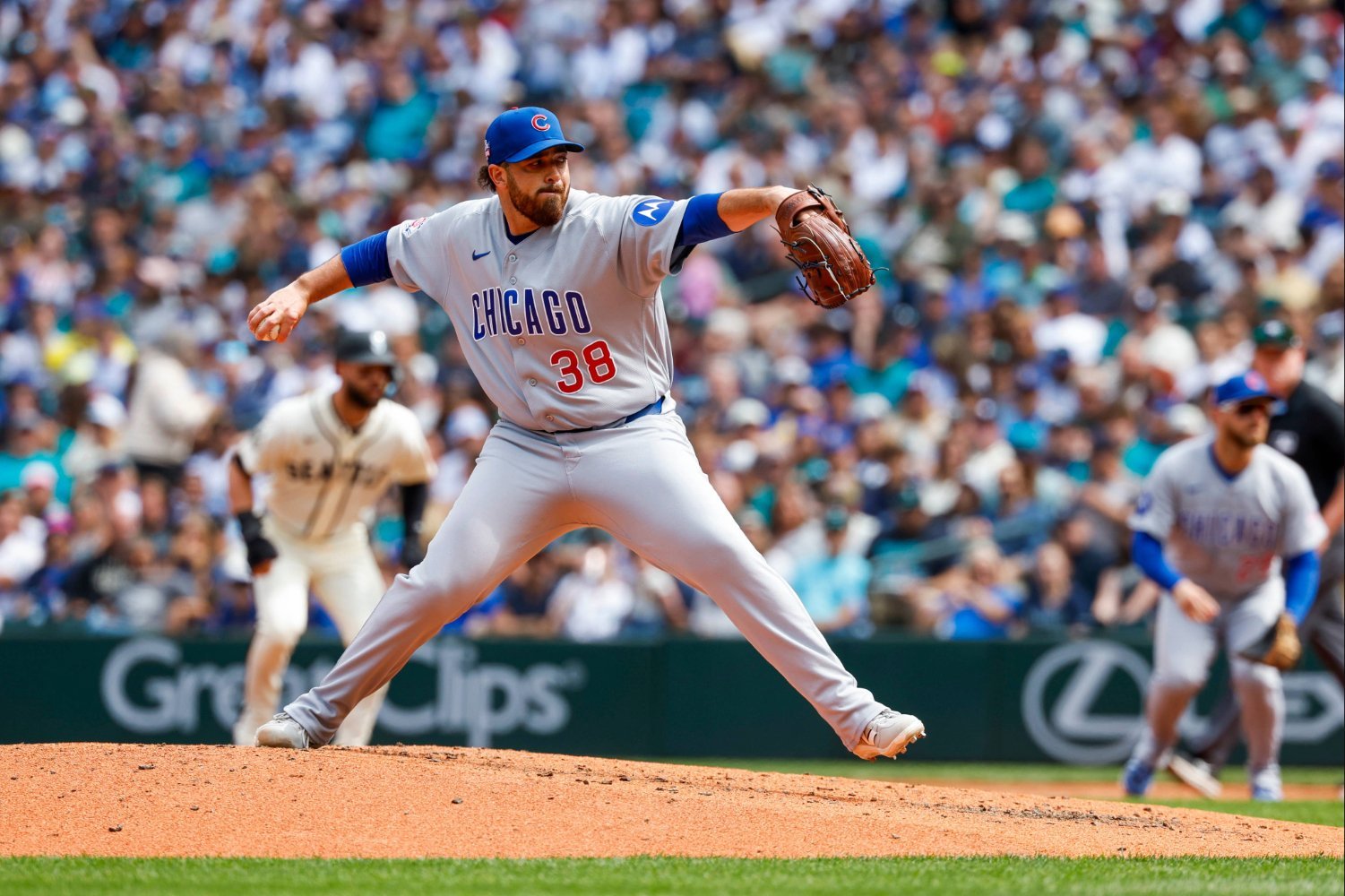 It’s no secret that the Chicago Cubs’ offense has been elite this season. But as September nears its end and postseason baseball gets closer and closer, the importance of quality pitching gets magnified. Obviously, it’s a great thing to be able to score a ton of runs over the course of a 162-game season. But it’s another thing entirely to consistently prevent them when every game starts carrying significantly more weight. And compared to the other playoff teams in the National League, Chicago has allowed the most runs this season with 674. Of course, it doesn't help that the pitching staff has dealt with more than its fair share of injuries throughout the year, forcing Craig Counsell and the front office to constantly shuffle things around. But October baseball doesn’t care about injuries or bad luck from earlier in the season. The Cubs are going to need some arms to step up in the playoffs, and veteran right-hander Aaron Civale has a very strong case to be one of those guys. Civale had a really strong stint with the Cubs last season, so after leaving to sign with the A’s this offseason, a reunion made plenty of sense. Chicago eventually acquired him from Oakland in mid-to-late July, right around the trade deadline. Still, there wasn’t exactly a ton of excitement surrounding his encore. That’s understandable when you consider some of the other additions the Cubs made around the deadline. Kevin Gausman and Clay Holmes understandably received much more attention, while Civale felt more like a depth addition than somebody who would have a significant role in the postseason. Perhaps there should’ve been a little more excitement. Over the last month, Civale has allowed one singular earned run across 17 innings of work. He’s allowing fewer than one baserunner per inning on average while striking out a batter per inning as well. Clearly, the Cubs have been able to unlock something with Civale that other teams simply haven’t. Going back to his brief stint in Chicago last season, Civale posted a 2.08 ERA. Granted, that came over just 13 innings, so it’s obviously a small sample size. But it was still a drastic improvement from what he did elsewhere, as he posted a 5.37 ERA with the White Sox and a 4.91 ERA with the Brewers. Fast-forward to this season, and Civale is sporting a 1.42 ERA as a Cub compared to a 5.42 mark with the A’s. At this point, it’s difficult to chalk that up entirely to coincidence. He's been a much different pitcher with the Cubs than he has been elsewhere, and there’s a pretty obvious reason why: He’s been used out of the bullpen. For most of his career, Civale has been a starter. But Chicago has moved him into a relief role, and it appears to have been a pretty significant change for him. He can attack hitters more aggressively without having to worry about pacing himself through five or six innings, and the results have been pretty hard to argue with. Which brings up an interesting question heading into the postseason. How much should the Cubs trust Civale in the later innings of close games? Civale hasn’t been utilized much in high-leverage situations since joining Chicago, and on the surface, that might seem like a pretty obvious reason for Counsell to continue using him in more of a middle-relief role. After all, Civale has allowed six earned runs over six innings in high-leverage situations this season. But the underlying numbers tell a somewhat different story. Those six runs have come on just four hits and one walk, and his batting average, on-base percentage, and slugging percentage allowed in high-leverage spots are all lower than his marks in medium and low-leverage situations. Meanwhile, some of the pitchers Counsell has been relying on later in games haven’t exactly been at their sharpest recently (I’m looking at you, Jacob Webb). That doesn’t mean Civale suddenly needs to become Chicago’s closer. The Cubs have other options for the ninth inning, and Counsell has handled his bullpen with more intent than just "riding the hot hand" all year long. But the right-hander has earned an opportunity to be trusted in the later innings of tight games more than he has been to this point. The Cubs spent much of the season searching for reliable pitching, and they may have found one of their most intriguing bullpen pieces in a pitcher who was already familiar with the organization. Counsell and the Cubs obviously know more about their pitching staff than I do, and they’ll ultimately do whatever they feel gives them the best chance to win. But if it were up to me, Civale would absolutely be one of the late-inning options down the stretch. Because if the Cubs are going to make what they hope is a deep playoff run, they’re going to need more than just their offense to carry them. And right now, Civale looks like an arm worth trusting when the games matter most. View the full article
 -
Vinny Capra Has Been Worcester Red Sox's Unsung MVP In 2026
DiamondCentric posted an article in Talk Sox
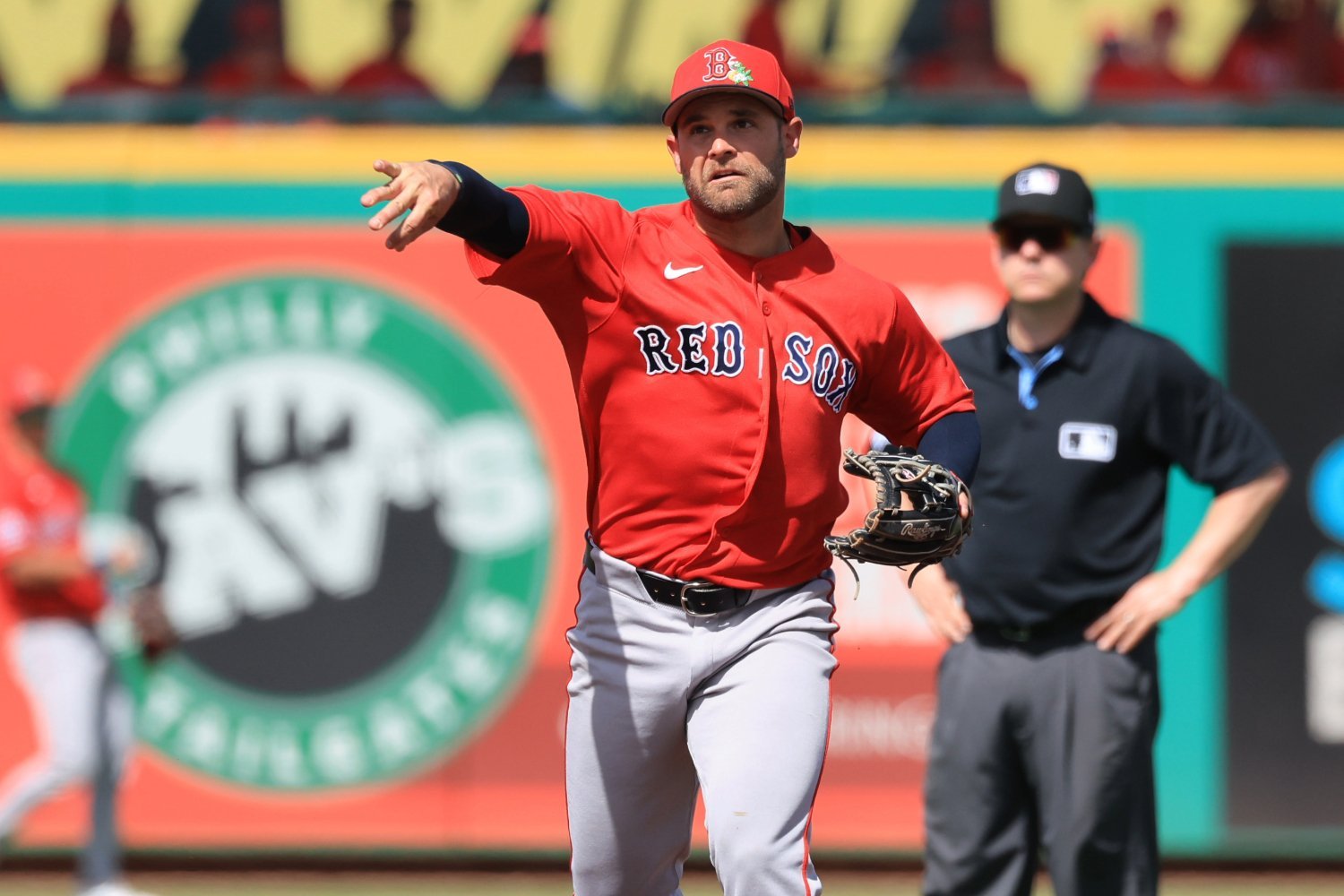 “He’s one of the quiet leaders, led by example. He’s having a pretty good year, too. When you have guys like that who lead that core group, it’s impressive. You always root for guys like that,” Worcester acting manager Iggy Suarez raved about infielder Vinny Capra. When the Boston Red Sox signed Capra to a minor-league deal on Thanksgiving, there was little thought given to it. The 30-year-old veteran infielder was coming off of a season split between the Milwaukee Brewers and Chicago White Sox where he hit a combined .125/.157/.177 in 47 games. He was signed to be depth, to play in Worcester and in the event they needed to add a player to the major-league roster who could play second base, third base or shortstop, he would be the stopgap for the team. Instead, he has turned into so much more for a burgeoning Triple-A club. A team that is currently in contention for playoff baseball, Worcester has relied on several players this season, but none quite as much as Capra. Appearing in 85 games (second-most on the team), Capra has been clutch both at the plate and in the field. His 21 doubles and 51 RBIs lead the team, and his eight home runs are tied for fourth. His 49 walks are second on the team while his .282 batting average and .809 OPS are the best on the team for players with at least 200 at-bats. One could argue he’s been the MVP of the team. He’s been a sparkplug, hitting no matter which spot in the lineup he’s been asked to slot into. Defensively, he bounced around the infield, eventually becoming the team’s starting shortstop after Nick Sogard and Tsung-Che Cheng were brought up to Boston. He proved to be a sure-handed option there, making just four errors in 135 chances. “I like shortstop a lot, just being involved in a lot is what I kind of enjoy. Being involved in plays even when the ball’s not hit to me, just moving around. Stuff like that keeps me occupied a little bit more,” Capra told me. One of his defining moments came on August 6; with the Red Sox ahead 4-2 in the 6th inning, Capra broke the game open with his eighth home run of the season, a two-run shot that gave the team some breathing room on their way to a 10-4 win. “He’s been consistent all year. So when he did that, I was like, I’m not surprised,” acting manager Iggy Suarez stated. All season it felt that when Worcester needed a big hit, he was the one coming through. The veteran has gone under the radar for most of the season despite a hot start to the season. After a month of April that saw him slash .322/.468/.542, Capra struggled for May as his numbers regressed to that of .227/.298/.320 with some fans wondering why he had not been replaced in Worcester by top prospect Franklin Arias. Since then, he’s been one of Suarez’s most consistent players, hitting .273/.356/.403 across 68 games. His bat kept the team afloat while they needed offense and his glove helped fill any defensive holes the team had to deal with. Now, with reinforcements having joined the team, Capra remains a key player for the team as they push towards their first playoff appearance since moving to Worcester. “Just trying to be consistent,” Capra admitted when asked about his approach at the plate. “Just trying to go out there each night and do what I can to help the team win. So, whatever happens the previous day or previous two days just try to forget about it if it’s bad and build on it if it’s good.” His underlying metrics also point to someone who is having an incredible year. Despite rather lackluster exit velocities (his average sitting at 87.6 mph), he has been one of Worcester’s best when it comes to putting the ball in play. His strikeout and walk rates put him in the top third of Triple-A (20.2% and 12.7%, respectively). It’s clear that Capra has taken to the organizational philosophy of pulling the ball, as he’s done so on 45.3% of his batted balls this year. Of those, 22.3% were in the air. Adhering to the Red Sox's offensive gameplan has helped to create the fantastic offensive season he’s put together. With the season nearly at a close, Capra will likely become a free agent at the conclusion of the season. Likely a one-year player with Worcester, he has left his mark on the team and has made a case for the season’s MVP. Wherever he may end up in 2027, that organization will be acquiring a class act and solid veteran presence. View the full article
 -
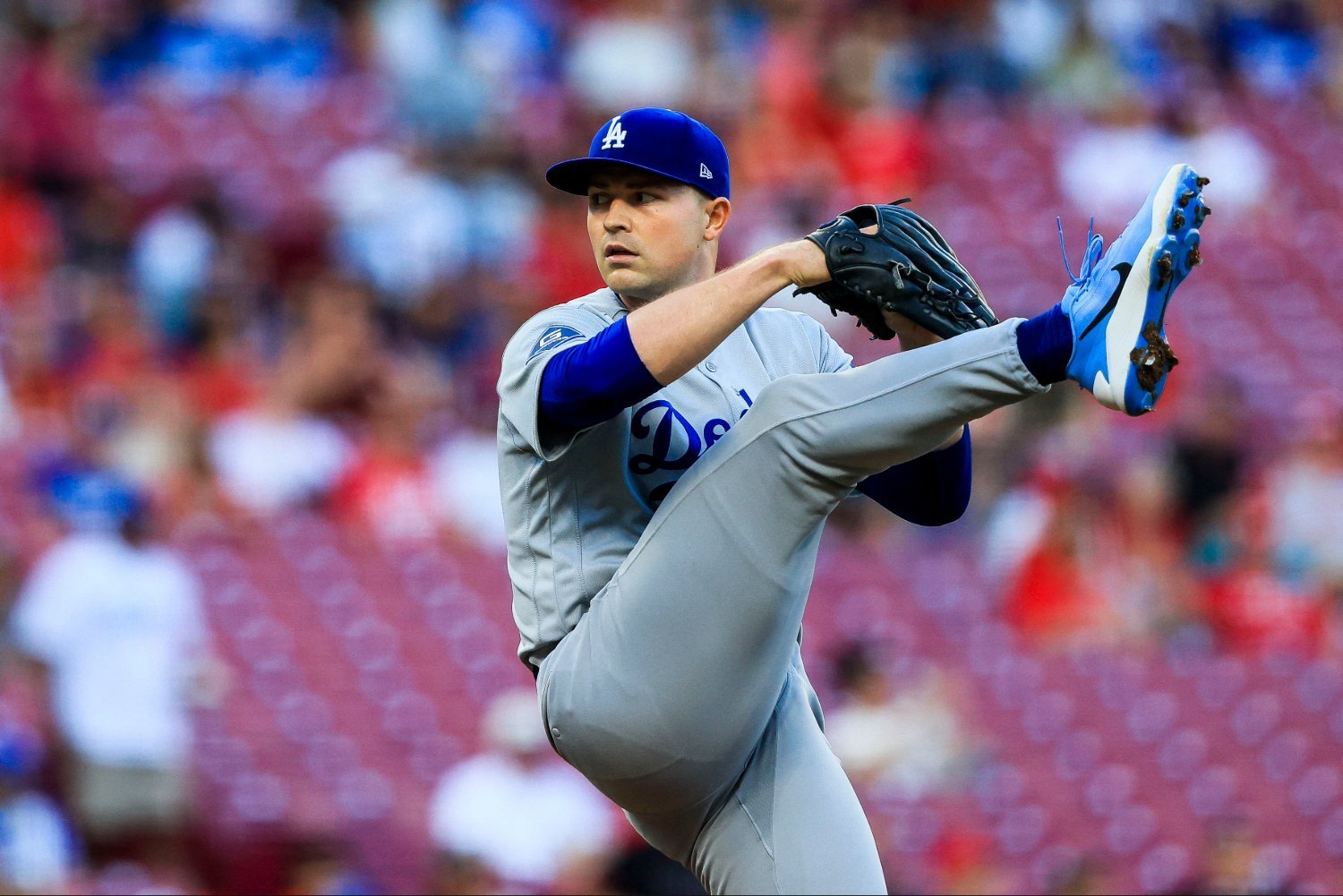 Frontline starting pitching has not been a strength for the New York Mets ever since Jacob deGrom exited the team following the 2022 season. They thought the problem was solved when they acquired Freddy Peralta last offseason, but it did not pan out. This offseason, the Mets have another opportunity to swing big on a pitcher who could change their fortunes, as Tarik Skubal is set to hit free agency. The two-time Cy Young award winner will become available this winter after being traded to the Los Angeles Dodgers at the trade deadline. In eight starts with the Dodgers, Skubal owns a 2.52 ERA with a 167 ERA+. They'll obviously make a compelling offer to keep him in Los Angeles, but finances (they currently have $159.2 million dollars allotted for starting pitchers on the roster) and the impending lockout could harm their pursuit. Skubal will have many suitors once he lands on the market, so Mets owner Steve Cohen will have to shell out more money than the rest to land Skubal. The southpaw is represented by Scott Boras, who Steve Cohen is no stranger to when it comes to negotiating on big-time players. Cohen and Boras were engaged in the Juan Soto sweepstakes before agreeing to record-setting terms. Scott Boras is all about using past contracts to up the price on his clients and this case will be no different. Skubal will be hitting the market at age 30, the same age that Max Fried was when he signed an eight-year, $218 million dollar contract with the New York Yankees. Other comparable contracts include Max Scherzer’s seven-year, $210 million dollar deal with the Washington Nationals that he signed at age 30 and Gerrit Cole’s nine-year, $324 million dollar deal with the Yankees that he signed at age 29. Skubal’s injury history could affect his final price tag, but he should blow past Cole's number when all is said and done. It wouldn't be too surprising if he becomes the first pitcher to ever receive $400 million guaranteed, which is an astounding number for someone who will take the mound roughly 30 times per season if he remains healthy. With the end of the current Major League Baseball Collective Bargaining Agreement coming up on December 1, players and big-market teams will attempt to get big money deals done quickly. In that case, Cohen will have to act quickly if he wants any chance to land his ace. Next season, the Mets will already have three starting pitching spots locked up in Nolan McLean, Zac Thornton and Christian Scott. One of Jonah Tong and Sean Manaea will be vying for that fifth starting spot if the Mets were to land Skubal, who would be the ace lefty this team has not had since Johan Santana left the team in 2012. That being said, long-terms deals are not usually David Stearns’ type of thing. In recent years, Stearns has been known to only do short-term, high average annual value deals, like Frankie Montas’s two-year, $34 million deal and Sean Manaea’s three-year, $75 million deal. Just like he and Cohen did for Soto, an exception will need to be made if the hope is to land the game's best pitcher in Skubal. View the full article
 -
Reviewing Minnesota’s Post-Hype Prospects 2026 Performance
DiamondCentric posted an article in Twins Daily
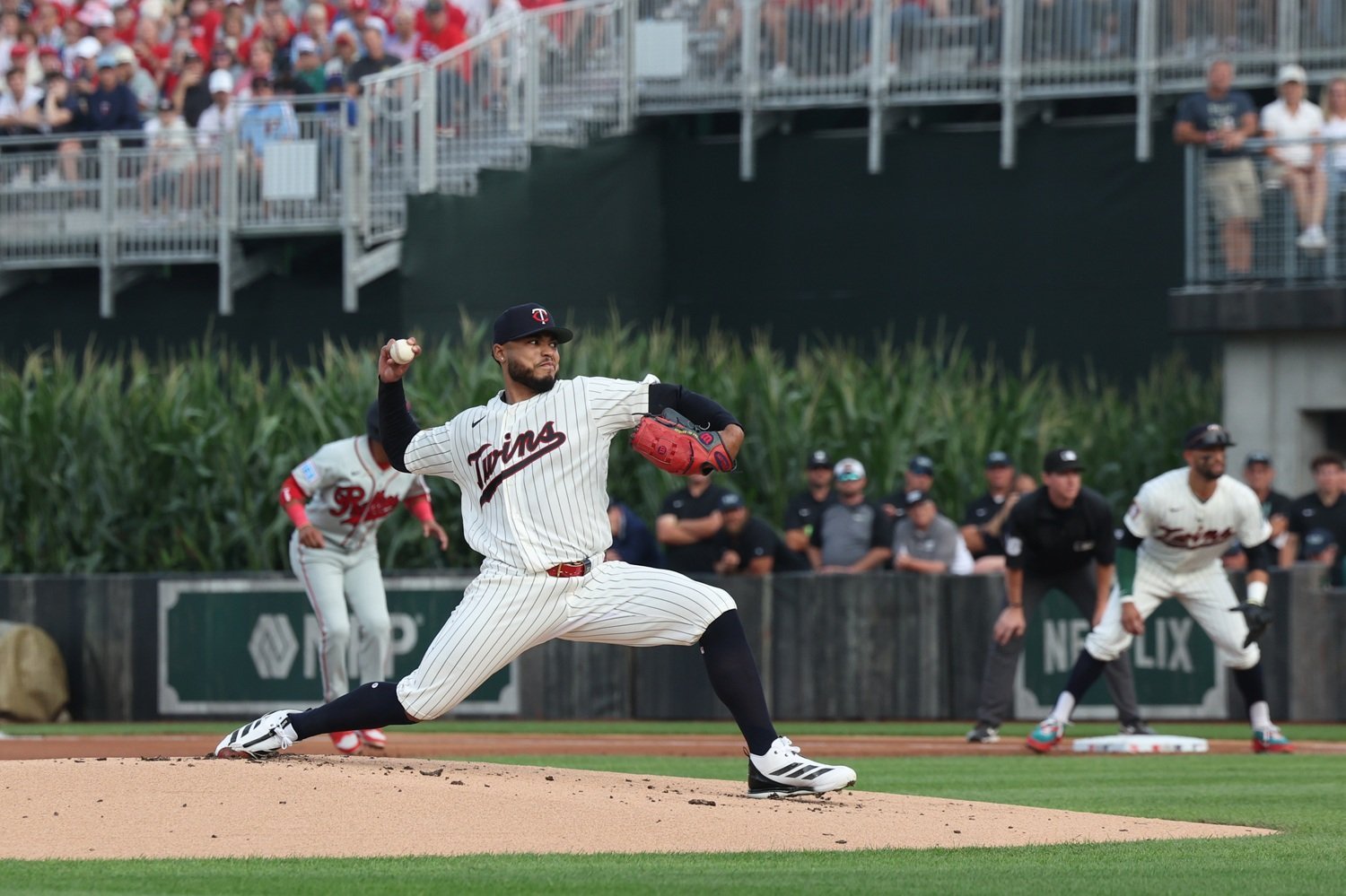 Entering the 2026 season, I ranked the Minnesota Twins’ post-hype prospects based on several factors. The list considered each player’s previous prospect pedigree, where they stood in their development, their expected role with the Twins, their potential impact on this year’s roster, and how important they could be to the organization’s long-term plans. Now, as the 2026 season winds to a close, it is becoming increasingly clear that this group does not look quite as much like the foundation of the Twins’ next competitive team. Some players have taken meaningful steps forward, while others have seen their stock fall considerably. With that in mind, here is a reranking of the eight players featured in the preseason article. 8. SP Simeon Woods Richardson Preseason Rank: 6 Woods Richardson’s 2026 season could hardly have gone worse. The right-hander pitched poorly enough to finish with -1.3 rWAR, eventually getting dropped from the Twins’ 40-man roster and claimed off waivers by the Toronto Blue Jays. A player who once looked like one of Minnesota’s more dependable young starting pitchers is now with his third organization of the season. There was plenty of reason to believe Woods Richardson could settle into the middle of Minnesota’s rotation entering the season. Instead, everything fell apart in 2026. That makes him an easy choice for the bottom of this list. 7. OF Matt Wallner Preseason Rank: 2 Wallner was one of the biggest disappointments among the group. After entering the season with the potential to become a legitimate 30-home-run threat, Wallner stumbled out of the gate. In 34 games, he posted -1.3 rWAR and a 55 OPS+. The Twins eventually demoted him to Triple-A in the middle of May. Wallner has gotten much closer to that 30-homer mark as the season progressed, but most of that production has come in a St. Paul Saints uniform. At this point, it is difficult to see where Wallner fits into Minnesota’s long-term plans. His power remains intriguing, but the overall offensive profile and defensive limitations have made it increasingly difficult for the Twins to give him a consistent role. 6. OF Trevor Larnach Preseason Rank: 8 Larnach moves up the rankings, but there is an important caveat. This is largely a product of the players above him falling out of favor rather than Larnach suddenly establishing himself as a cornerstone player. He has posted a 116 OPS+ this season, which is better than his 105 OPS+ for his career. That is certainly respectable production, but there still needs to be more from a left-handed corner outfielder who is protected from facing left-handed pitching and provides little defensive value. The Twins have plenty of decisions to make with their outfield this winter, and it is difficult to see Larnach having a clear path to significant playing time in 2027. 5. OF Austin Martin Preseason Rank: 7 Martin also climbs the rankings, although much like Larnach, the move has more to do with what happened to the players around him. In 112 games, Martin has posted a 93 OPS+. His second half has been particularly underwhelming, as he is hitting .190/.314/.328 (.642) with six extra-base hits in 28 games. There is at least one intriguing piece of the puzzle. Martin has posted a .799 OPS against left-handed pitching, giving the Twins a potential platoon option. That could be enough to earn him a backup outfield role next season. It is not the outcome many envisioned when Martin arrived in Minnesota, but it would at least give him a path to remaining on the roster. 4. IF Royce Lewis Preseason Rank: 1 I bought into the Royce Lewis hype. The Twins spent the winter talking up Lewis, and I naively bought into the messaging. Unfortunately, his performance early in the season did little to justify that optimism. Like Wallner, Lewis struggled enough that Minnesota eventually sent him to Triple-A. He responded by going on a tear in St. Paul, earning his way back to the big leagues. The results since his return have been better, but not nearly good enough for the role the Twins need him to fill. In 82 games since returning, Lewis is hitting .254/.311/.431 (.742). That might be acceptable for some positions, but it is not enough production from a first baseman. The Twins will have a significant decision to make with Lewis this winter. His talent is becoming less evident, but the organization needs to determine whether there is enough remaining upside to justify giving him another opportunity. 3. SP Zebby Matthews Preseason Rank: 3 Matthews is probably the most interesting player on this list heading into the offseason. There was a stretch in August when he looked like one of the best young pitchers in the American League. He posted a 2.90 ERA and 1.13 WHIP while holding opponents to a .633 OPS. There was a legitimate argument for Matthews to win the American League’s Pitcher of the Month award. He went 5-0 during August, and the Twins won just 10 games during the entire month. That is a remarkable run for a young pitcher trying to establish himself. Matthews has run out of gas in September, much like the rest of Minnesota’s roster. Still, August demonstrated why the Twins remain interested in his future. The biggest question heading into the offseason could be whether Matthews belongs in the rotation or whether his skill set would be better utilized in the bullpen. 2. IF Brooks Lee Preseason Rank: 4 Many fans will remember Lee’s first half for his struggles at shortstop. He finished with -6 Outs Above Average at the position, creating plenty of questions about where he would ultimately fit defensively. The second half of the equation has been much more encouraging. Lee has hit 20-plus home runs for the first time in his career, and his move to third base has been a revelation. He has posted 5 OAA at the hot corner, giving Minnesota a much clearer picture of where he belongs defensively. Offensively, Lee remains one of the streakier hitters in the organization. His splits as a switch-hitter are particularly interesting, as he has struggled considerably more from the right side. His OPS from that side is 212 points lower. Still, there is enough here to believe Lee has a future with the Twins. Assuming nothing changes this winter, it looks like Lee will be penciled into the starting third-base job for 2027. 1. SP Taj Bradley Preseason Rank: 5 Bradley has been the biggest surprise of this group. He is having a tremendous season and should win the Twins’ Pitcher of the Year award. Through 29 starts, Bradley has posted a 3.81 ERA, 110 ERA+, 27.3 K% and 10.3 BB%. There were flashes of this pitcher during his time with Tampa Bay, but Bradley never consistently put everything together with the Rays. He has done that in Minnesota. Bradley has accumulated 3.8 rWAR for the Twins this season, while Griffin Jax has posted -0.1 rWAR with Tampa Bay. Obviously, there is plenty of time remaining on both players’ careers, but at this point, the Twins are the clear winners of that trade. More importantly, Bradley has established himself as one of the most important pieces of Minnesota’s pitching staff moving forward. That makes him the clear No. 1 on this year’s post-hype prospect rankings. The biggest takeaway from this reranking is just how much the picture has changed in one season. Lewis went from No. 1 to No. 4. Wallner dropped from No. 2 to No. 7. Meanwhile, Bradley jumped from No. 5 all the way to No. 1, while Lee and Matthews have both strengthened their cases to remain part of the organization’s future. That is ultimately what makes post-hype prospects so fascinating. Their prospect status may have faded, but they still have an opportunity to rewrite the story once they reach the major leagues. For some members of this group, 2026 was the year they finally established themselves. For others, it may have been the season that ended their time as legitimate pieces of the Twins’ future. How do you view the re-rankings? How would you rank this group? Leave a comment and start the discussion. View the full article
 -
 The role that AAA baseball holds in an organization's hierarchy has evolved over the decades, at least from a fan perspective. We dig into that a bit as Nashville is set to end its season Sunday. Transaction: Milwaukee Brewers sent LHP Rob Zastryzny outright to Nashville Sounds. At this point purely a paper move, as Rob Z would likely reject the assignment to get an earlier start on minor league free agency, or the Brewers would release him to accommodate the same. Is it possible he accepts the assignment and then stays in the Brewers' "stay ready" camp they are maintaining during the postseason, perhaps. (Andrew Fischer mentioned he is among the invitees). Nashville Pre-Game Media Notes (unavailable) Final: Memphis (Cardinals) 9, Nashville 3 Box Score and Game Log NOTE: The video feed was down for this game, so there are no highlights to view (or lowlights, for that matter) - Via Cory Hilborne, Nashville's Communications Manager Sounds Drop Fourth Straight to Redbirds Jonathan Ornelas Records Second Straight Multi-Hit Game NASHVILLE – Nashville dropped their fourth straight to the Memphis Redbirds with a 9-3 loss on Saturday night at First Horizon Park. After Nashville regained a one-run lead in the bottom of the fifth, the Redbirds scored seven unanswered to give Nashville its eighth series loss of the year. The four-game losing streak is tied for the longest of the year for Nashville and their first four-game slide since June 12-16. After Jonathan Ornelas led off the game with his fourth straight at-bat with a hit since the third inning on Friday night, Brandon Lockridge put the Sounds in front by a pair of runs with a two-run blast and his first home run since July 29 vs. Charlotte. After that, Memphis' starter Josh Fleming retired 12 straight before Ramon Rodriguez reached first on the lone Redbirds error of the game. Three straight singles followed including an RBI single for Ornelas to give the Sounds a 3-2 lead after the Redbirds plated an unearned run off Nashville starter Bryse Wilson in the second inning and a Jimmy Crooks sac fly in the fifth off Kaleb Bowman. The Redbirds answered the Nashville run in the bottom of the fifth with a leadoff home run off Bowman in the top of the sixth and added two more runs in the seventh off four hits with Grant Anderson on the mound in his second rehab appearance of the week. They added three more runs in the eighth off Carlos Rodriguez on a pair of hits and ended the game with at least one run in five straight innings on a leadoff homer in the top of the ninth off Sounds reliever Blake Holub. Akil Baddoo ended a run of nine straight Sounds batters retired with a one-out single in the bottom of the ninth but saw each of the next two retired by Hancel Rincon. The final game of the 2026 season is on-deck tomorrow as the Sounds look to avoid ending the year on a season-long five-game losing streak while the first-half Champion Redbirds await their opponent in the International League Championship Series. Rochester, Syracuse, and Indianapolis are all still alive to secure the second half championship entering the final day of the regular season. First pitch of Sunday's season finale is scheduled for 5:05 pm at First Horizon Park. POSTGAME NOTES: SOUNDS SO CRISP: Brandon Lockridge clubbed his second homer in two seasons for the Sounds with a two-run blast to left field in the bottom of the first inning, finishing the game with a 1-for-3 night and two RBI. His first homer of the season was on July 29 against the Charlotte Knights when he was on a Major League Rehab assignment. Lockridge is one homer shy of hitting the half-century mark (49) for his minor league career. Saturday night was his first multi-RBI game since September 3 against Louisville and third overall in 24 games with Nashville. CONSISTENT: Jonathan Ornelas tallied his second consecutive multi-hit game, finishing Saturday night 2-for-4 with a double, RBI, and run scored. It's the seventh time Ornelas has collected two or more hits in at least two straight games this year. He collected his first double with the Sounds Saturday and was the 16th overall this season between Triple-A Scranton/Wilkes-Barre, Las Vegas and Nashville, which is the fifth-most in a season of his professional career. YOU AND THE 6: Eduardo Garcia extended his hit and on-base streak to six consecutive games, going 1-for-3 on Saturday night. His six-game hitting streak is the longest of his 2026 season after posting a five-game streak earlier this season with Double-A Biloxi. Over his last six games since September 11, he is hitting .316 (6-for-19) with a home run and two RBI. Over the final month of the regular season, Garcia leads the club in OBP (.340) and T-1st in HR (2). He ranks 2nd in SLG (.405) and OPS (.745) and 4th in AVG (.262) and hits (11). *** Yet another bullpen game, and there was really no choice in the matter. Refresh yourself with a review of the Nashville roster on the pitching side. There is not a semblance of a rotation available. I fear this is the new reality of baseball as a whole, but in particular AAA baseball, in future seasons. It's not aesthetically pleasing in the slightest, and it's not just a yearning for a more traditional landscape in this regard. Overall, the Sounds have been successful in 2026, tied for the 6th best record currently among twenty teams. But at any point, did the Nashville season generate true excitement? Here's the complete statistical position player page, and the pitcher page. Personally, I found full enjoyment in detailing Luis Lara's exploits through 78 AAA games. Beyond that, it's very tough to say. For other notes, the long-awaited return of Jeferson Quero to see action behind the plate regularly never developed. His continued biceps issue ramifications are certainly of concern long-term. Bryse Wilson pitched well, Carlos Rodriguez was given another chance and did not. Neither did Grant Anderson, who missed out on the clinching celebration and now perhaps a postseason spot as well. The Sounds' free agents to be entering Sunday's finale - Nashville: UT Jihwan Bae RHP J.B. Bukauskas RHP Gerson Garabito INF/OF Eduardo Garcia OF Jacob Hurtubise RHP Reiss Knehr OF Luis Matos C Andrick Nava UT Jonathan Ornelas LHP Thomas Pannone RHP Lyon Richardson RHP Carlos Rodriguez C Ramon Rodriguez INF Freddy Zamora Game One of the Southern League Championship Series is at 6:35 Central and is free to watch here, audio-only version here. Go Shuckers! Coleman Crow gets the start for the Sounds in their finale (5:05 Central). Organizational Scoreboard including starting pitcher info, game times, MiLB TV links, and box scores Current Milwaukee Brewers Organization Batting Stats and Depth Current Milwaukee Brewers Organization Pitching Stats and Depth View the full article
 -
2026 Twins Daily Dominican Summer League Pitchers of the Year
DiamondCentric posted an article in Twins Daily
 Many things can be said about the Twins 2026 Dominican Summer League (DSL) season, but "Outstanding Pitching Performances" wasn't one of them. Granted, these youngsters were getting their first taste of professional ball in a new environment. Statistics need to be taken with a grain of salt at this level (ERA is inflated due to usage patterns), while progress throughout the season reigns supreme in our analysis. Also, the Twins invested heavily in offensive prospects, and for the most part went bargain hunting in the pitching department (stop me if you've heard that one before...). That being said, a few young hurlers separated themselves above the field and hope to inject some life into the rotations and bullpens of the Twins minor league system for years to come. Let's start with a couple of honorable mentions before getting to the top pitchers. Honorable Mention RHP Alam Soriano (19): 2-2, 7.39 ERA, 11 G, 1 GS, 28 IP, 30 H, 14 BB, 26 K RHP Miguel Martinez (19): 0-2, 6.92 ERA, 11 G, 3 GS, 26 IP, 26 H, 23 BB, 30 K RHP Enmanuel Mena (18): 1-3, 7.41 ERA, 10 G, 5 GS, 17 IP, 22 H, 12 BB, 21 K #2 (tie): RHP Yolcar Garcia (18): 1-1, 7.45 ERA, 11 G, 5 GS, 29 IP, 28 H, 13 BB, 26 K. The Twins look for improvement, and the young righty Garcia steadily lowered his WHIP throughout the season while also showing an ability to keep the ball in the ballpark. At 6'0" and 177 pounds, this Venezuelan prospect has a frame for continued growth and has already shown an ability to go at least four innings in a couple of outings. #2 (tie): RHP Adrian Martinez (17): 1-2, 6.67 ERA, 11 G, 10 GS, 29 2/3 IP, 27 H, 28 BB, 35 K. Martinez registered the highest signing figure ($100,000) from the 2026 pitching class of international prospects, and the young Venezuelan showed continued improvement as well. Command issues sent his ERA climbing throughout the season, but he lowered his opponents batting average from .302 in June to .167 in August. He led the DSL Twins in strikeouts and WHIP, and he shows potential as a either a starter or a high-leverage bullpen arm. At 6'0" and 195 pounds, he's already a grown man amongst his peers, but his next stage of growth in accuracy and durability will determine how high up the organizational system he climbs in the near future. 2026 Minnesota Twins Dominican Summer League Pitcher of the Year #1: RHP Fernando Hernandez (20): 0-1, 4.05 ERA, 7 G, 7 GS, 13 1/3 IP, 13 H, 2 BB, 16 K A couple of things immediately strike you about this 5' 10", 169-pound hurler from Venezuela. First, he's 20 years old in a league of 17-year-olds. Second, he has the command that one would expect from more experience and maturity of frame and technique. In limited action, Hernandez struck out over a batter an inning, while only walking two...TWO batters for the entire season. In a league where that ratio is usually 50/50 at best, Hernandez is an albatross. Hernandez was forced to miss the middle of the season, but he didn't miss a beat until his final outing of the season in which he surrendered four runs over a couple of innings. If you take that game out of the mix, his statistics sing even more loudly with only two runs surrendered over the other six games. His ERA is almost three runs lower than the next tier of pitchers on the team, and his age might actually increase his ability to rise quickly through the Twins system in 2027. In a season where there was much that didn't go the DSL Twins' way, Hernandez served up some hope for an organization in desperate need of reinforcements. Congratulations to Hernandez and the rest of the international prospect pitchers mentioned here on a strong debut pro season, and best of luck and health to each of them! View the full article
 -
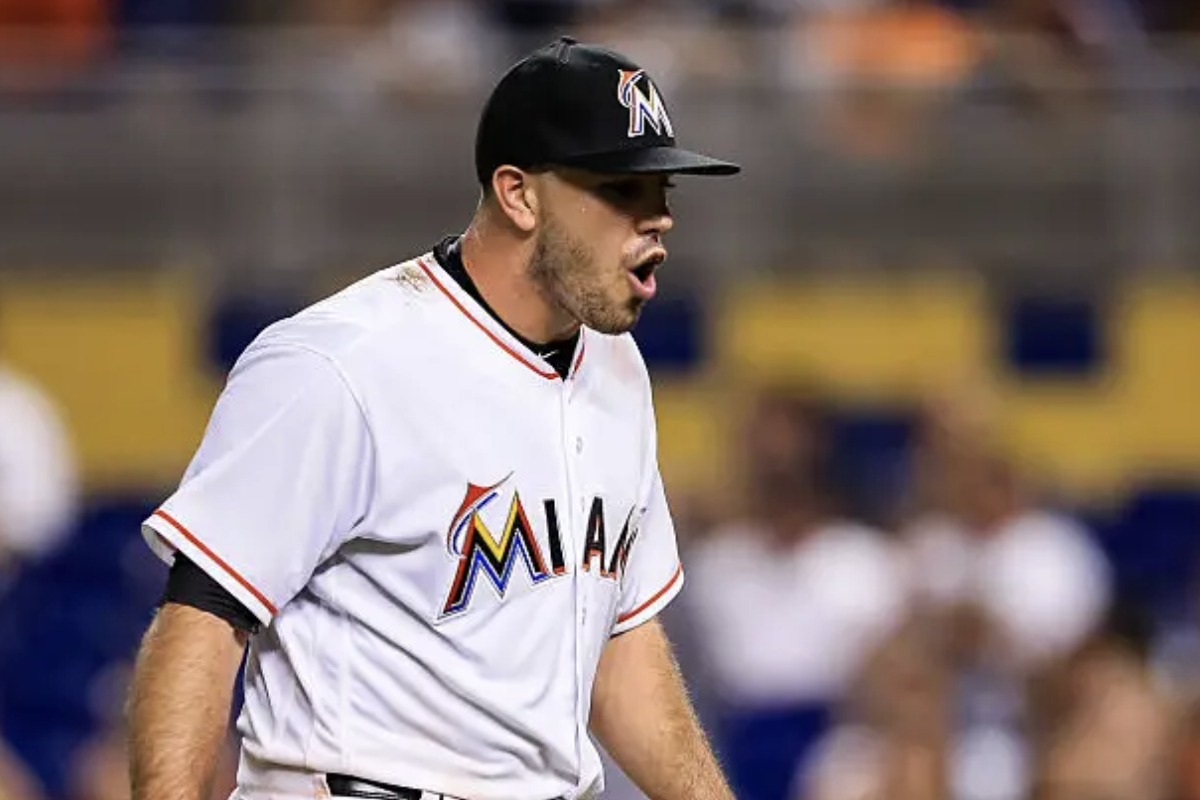 Nearly a decade after his passing, José Fernández’s death in a boating accident that killed him and two others remains a tragedy that, by all accounts, could have been avoided. One thing that the 6-foot-3, 240-pound right-hander left behind, however, was great memories for baseball fans. On this day 10 years ago, Fernández took the mound for the final time and he did not disappoint. Over eight innings, Fernández allowed just three hits in the Miami Marlins’ 1-0 win over the Washington Nationals. Already the owner of the Marlins’ single-season strikeout record as he took the hill at Marlins Park on Sept. 20, 2016, Fernández was able to work around a one-out double by Washington’s Stephen Drew in the top of the first. Fernández avoided damage by retiring Bryce Harper and Anthony Rendon, which began a streak of 19 straight retired batters for the Miami starter. As good as Fernández was, however, Washington’s Tanner Roark was about as good for most of the night. For 5 2/3 innings, Roark had kept the Marlins off the scoreboard and held to just two hits. In the bottom of the sixth, he made his only critical mistake of the night. Facing Giancarlo Stanton, Roark was able to get ahead with a first pitch that was fouled off. But his second pitch was up in the zone, and Stanton went the other way and over the wall in right field for the go-ahead home run. Up 1-0, that’s all the offense that Fernández would need. In the top of the eighth, the Nationals made their biggest threat of the night, but Fernández was left in to put out the fire. After striking out Clint Robinson to open the frame, Fernández surrendered consecutive singles to Wilson Ramos and Brian Goodwin. With runners at the corners and one out, Fernández dug deep and struck out Danny Espinosa swinging. He was then able to get Daniel Murphy to ground out to end the inning and Fernández’s evening. On 111 pitches, Fernández allowed just the three hits without yielding a walk. He finished the night with 12 strikeouts. In the top of the ninth, David Phelps was able to finish what Fernández started. After yielding a one-out single to Drew, Phelps fanned Harper and then got Rendon to ground out to end the contest and collect the save. Over four seasons, Fernández was a two-time All-Star and finished with a 38-17 record and splendid 2.58 ERA. His final start was an absolute gem. It came on this day a decade ago. View the full article
 -
Angels 6, Twins 5: A Roller Coaster of a Game Ends in Defeat
DiamondCentric posted an article in Twins Daily
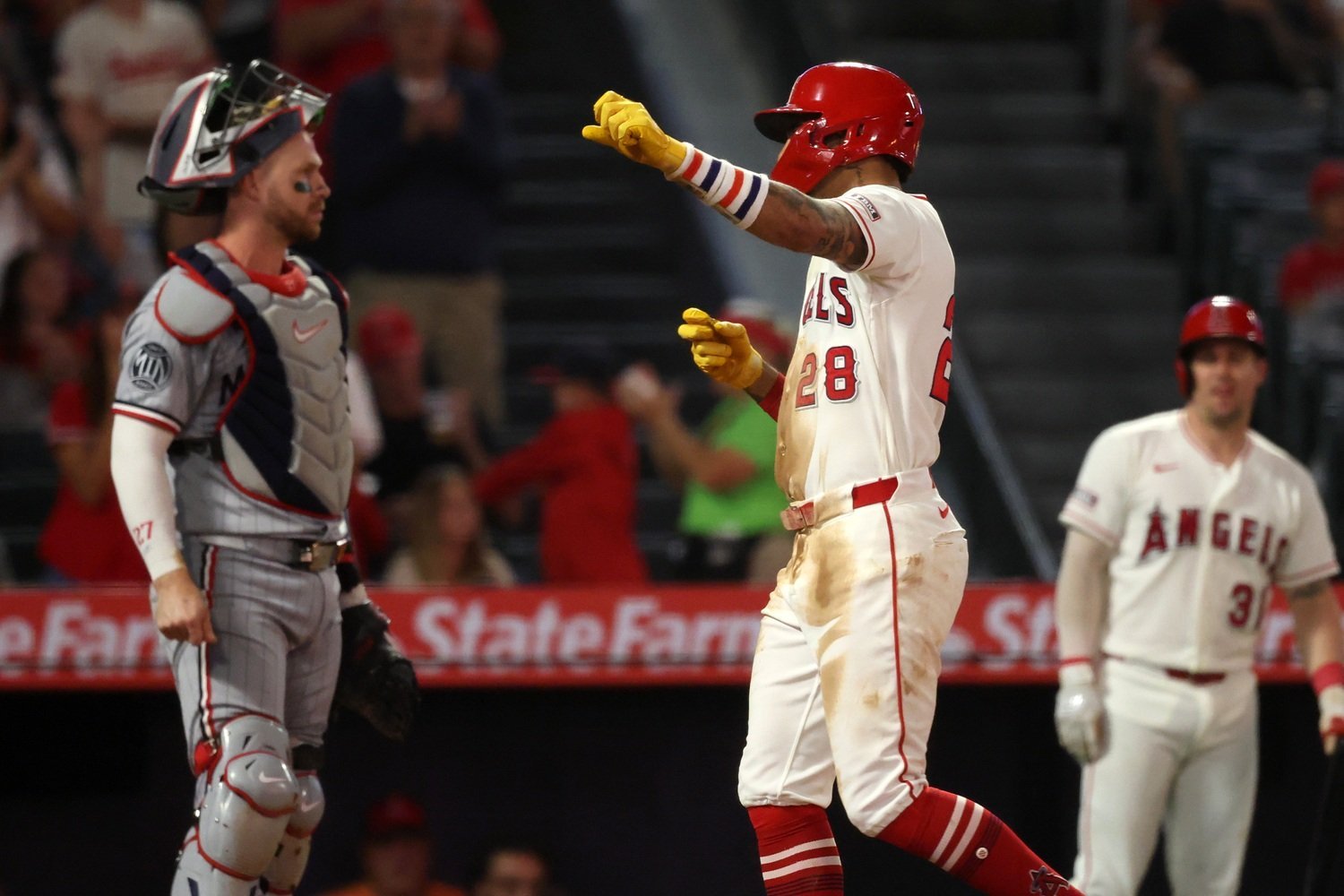 Box Score SP: Joe Ryan - 5 IP, 7 H, 2 R, 2 ER, 1 BB, 5 K (99 pitches, 66 strikes (66.7% strikes)) Bottom 3 WPA (via Fangraphs): Yoendrys Gómez (-0.32), Royce Lewis (-0.32), A.J. Minter (-0.30) Win Probability Chart (via FanGraphs): After splitting the first two games of the series, the Twins and Angels both sent All-Stars to the mound, with the Twins turning to Joe Ryan and the Angels sending lefty Reid Detmers to the mound. The Angels got a couple runners on in the first inning but were unable to scratch a run across after Ryan gave up a single and hit a batter before getting out of danger with a fly out to left field to keep the game scoreless. In the second inning, both teams got a two-out hit, but were unable to get a rally going, as both Ryan and Detmers got the next hitter to end their respective innings on the mound. Unfortunately, the Twins lost ball-strike challenges in both the top and bottom halves of the second inning, which left them without a challenge for the entirety of the game. The Twins were the first ones to get on the scoreboard. With Walker Jenkins on second base, Luke Keaschall switched places with him. With Zach Neto and Mike Trout getting on base, Joe Ryan did his best tightrope act getting a flyout and an inning-ending double play to keep the score at 2-0. In the top of the fourth inning, the Twins extended their lead on a Victor Caratini two-out single to score Brooks Lee, giving the Twins a three -run lead. In the bottom half of the inning, Ryan attempted to pitch around runners on base for the fourth inning in a row, but the Angels lineup finally got to him on a home run off the bat of center fielder Jose Siri which cut the Twins lead to 3-2. Ryan Kreidler must have been feeling left out. The Twins shortstop led off the fifth inning with a home run on the first pitch of the inning. In the bottom of the fifth, the Angels got a couple more runners on base but were not able to get the hit when they needed it, keeping the score at 4-2. Each team got runners on base in the next couple of innings, but the score didn’t change until the top of the eighth, when Cartini came through for the second time in the game, with a one-out RBI single, scoring pinch runner Ben Ross to give the Twins an insurance run and a 5-2 lead. The Angels offense made some noise in the bottom of the eighth, most notably from pinch hitter Adam Frazier, who doubled in two runs with one out off struggling reliever Yoendrys Gómez. Derek Shelton turned to Kody Funderburk to get out of the jam. He came in with runners on first and second and one out to face Mike Trout. Funderburk proceeded to get Trout to ground into an inning-ending double play, holding the Twins lead heading into the final inning. A.J. Minter came in to close the game and got the first batter of the inning. Unfortunately, he was not able to close the game out. Vaughn Grissom was able to lift one into the seats in right center tying the game at five. Minter was able to get out of the inning with the game still tied, sending the Twins and Angels to extra innings, for the second time in the series. In the top of the 10th inning, Ben Ross was the Manfred Man. Brooks Lee was able to line out to right field, deep enough for Ross to reach third base with one out. The next batter, Royce Lewis, lifted a ball to shallow right field. Ben Ross tagged up, but Josh Lowe threw him out trying to score the go-ahead run. In the bottom of the inning, Lowe was not able to get the job done, bunting a 2-2 pitch from Taylor Rogers foul for the strikeout. The Twins decided to intentionally walk Jose Siri. The Angels pinch-hit Oswaldo Peraza against Taylor Rogers. With Peraza batting, the Angels executed a double steal, which made it appear the Angels would scratch across the winning run. However, Rogers struck out Peraza to set up a showdown with Zach Neto with two outs and runners on second and third. Rogers won the battle, striking out Neto to send the game into the 11th inning. The Twins were unable to score in the top of the 11th off of reliever Tayler Saucedo, giving the Angels another opportunity to walk it off in the bottom of the inning. The Twins wisely walked Trout to start the inning, and Rogers, who went back out to pitch his second inning, was able to get Wade Meckler to fly out to right for the first out of the inning. Unfortunately, Rogers hit Vaughn Grissom on an 0-2 count to load the bases. Derek Shelton came out to the mound and subbed in Kody Clemens for Walker Jenkins to have a five-man infield. Rogers struck out Moises Ballesteros for the second out, but the game ended with the next pitch, with Christian Moore hitting a ground ball back up the middle, which went off of Rogers and stopped in no man's land between the mound, home plate and third base and the Angels walked off the Twins for a 6-5 win in 11 innings. Post Game Interview What’s Next? The Twins will finish the series against the Angels tomorrow for the series finale. The pitching matchup will have the Twins send Dean Kremer (3-5, 5.35 ERA) to the mound while the Angels will send RHP Ryan Johnson (5-8, 4.88 ERA). Kremer is coming off of two solid starts, against the Tigers and Yankees. Against Detroit, he threw five innings, giving up two earned runs while striking out three and against the Yankees, he threw 5 2/3 innings, giving up one run and striking out five. After the series finale tomorrow, the Twins will finish their final road trip of the year with three against the San Francisco Giants before finishing the season with a three-game series at home against the Texas Rangers. Twins Bullpen Usage Chart TUE WED THU FRI SAT TOT Nance 0 14 0 23 0 37 Morris 30 0 13 0 15 58 Minter 0 22 14 0 8 44 Gomez 10 24 18 0 24 76 Adams 0 34 0 10 0 44 Rogers 38 0 0 0 26 64 Hoffman 0 16 5 0 19 40 Funderburk 0 4 1 0 2 7 View the full article
 -
 San Diego Padres Transactions El Paso Chihuahuas placed RHP Trevor Gott on the 7-day injured list. RHP Abraham Parra assigned to El Paso Chihuahuas from San Antonio Missions. Chihuahuas Explode For 7-Run Sixth To Ground Comets The Tripe-A El Paso Chihuahuas saved one of their biggest innings of the season for their next-to-last game of the season. Bryce Johnson's bunt single and an error snapped a tie that fueled a seven-run sixth inning in the host Chihuahuas' 14-8 triumph over the Oklahoma City Comets. Rehabbing Padres left fielder Miguel Andujar went 2-for-4 with an RBI and two runs scored as he gets ready to return to the MLB lineup. Andujar is 11-for-36 (.306/.316/.444) in nine rehab games, with five doubles and five RBIs. Gage Workman drove in four runs with a pair of singles, Nick Pratto went 3-for-4 with a double, three RBIs and two runs scored, while Johnson, Nick Solak and Mason McCoy also had a pair of hits. McCoy walked twice, scored three times and stole his 40th base, extending his career best. Solak also doubled and walked twice, scoring two runs. The Chihuahuas had a bullpen game, with left-hander JP Sears starting and going just one inning, then 20-year-old right-hander Abraham Parra made his Triple-A debut and was torched for five runs in 1⅔ innings on six hits and a walk. Right-hander Daison Acosta went 2⅓ innings, giving up a run, while right-hander Ty Adcock struck out three in two scoreless innings and right-hander Alek Jacob gave up two runs in the final two innings. Oklahoma City led 5-1 entering the bottom of the fourth. Workman had a two-run single, Victor Duarte a sacrifice fly and Rosman Verdugo an RBI single to tie it, then Andujar put the Chihuahuas up with a line-drive single to center, scoring Johnson. The Comets tied it in the top of the fifth before the Chihuahuas took over with a seven-run bottom of the sixth. Two runs came in as Johnson put down a nice bunt that he beat out, but the pitcher threw past the first baseman, putting the Chihuahuas up 8-6. Marcos Castanon singled home a run, then Pratto had a two-run double to left and Workman a two-RBI single to right for a 13-6 advantage. EP1_0919.mp4 EP2_0919.mp4 EP3_0919.mp4 Player AB R H RBI BB K Mason McCoy 4 3 2 0 2 0 Bryce Johnson 4 1 2 2 0 0 Miguel Andujar 4 2 2 1 1 0 Nick Solak 3 2 2 0 2 0 Marcos Castañon 4 2 1 1 1 0 Nick Pratto 4 2 3 3 0 0 Gage Workman 5 1 2 4 0 2 Victor Duarte 4 0 0 1 0 3 Rosman Verdugo 5 1 2 1 0 1 Totals 37 14 16 13 6 6 Player IP H R ER BB K HR JP Sears 1 0 0 0 0 1 0 Abraham Parra 1 2/3 6 5 5 1 1 2 Daison Acosta 2 1/3 1 1 1 2 0 0 Ty Adcock 2 1 0 0 0 3 0 Alek Jacob 2 2 2 2 3 1 0 Totals 9 10 8 8 6 6 2 Padres Mission's Top 20 Prospect Performance Ethan Salas, C: 1-for-1, RBI Ryan Wideman, CF: Season complete Coleman Borthwick, RHP: Season complete Kruz Schoolcraft, LHP: Season complete Ty Harvey, C: Season complete Kale Fountain, OF: Season complete Jorge Quintana, SS: Season complete Alex McCoy, LF: Season complete Braedon Karpathios, RF: DNP Lamar King Jr., C: Season complete Elliot Lascelles, SS: Season complete Tucker Musgrove, RHP: Season complete Jagger Haynes, LHP: DNP Jake Cunningham, OF: Season complete Truitt Madonna, C: Season complete Eric Yost, RHP: Season complete Winyer Chourio, RHP: Season complete Jesus Castro, RHP: Season complete Michael Salina, RHP: Season complete Rosman Verdugo, SS: 2-for-5, 1 K View the full article
 -
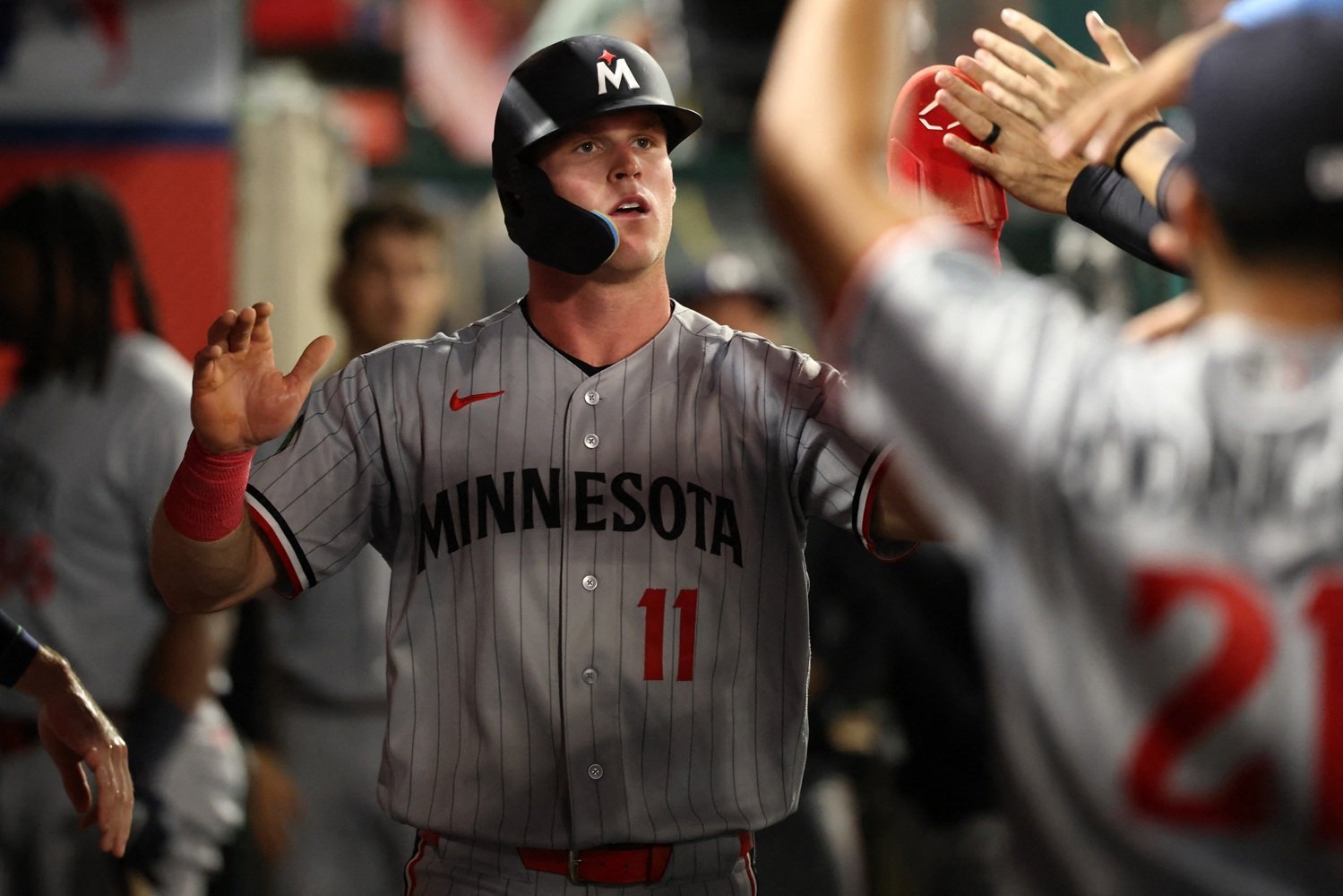 TRANSACTIONS There were no transactions in the Twins organization on Saturday. SAINTS SENTINEL St. Paul 0, Columbus 4 Box Score The St. Paul Saints offense has been a juggernaut throughout most of the 2026 season. Coming into Saturday’s game, the Saints 250 home runs placed them one over the 249 homers hit by Greensboro Grasshoppers, the High-A affiliate of the Pittsburgh Pirates. The next three teams on the team home run leaderboard are the Chicago Cubs (211), New York Yankees (209), and Scranton/Wilkes Barre RailRiders (209), the Yankees Triple-A affiliate. With one more game to go, 13 players have hit 10 or more home runs for the Saints in 2026. Aaron Sabato and Matt Wallner are tied at the top with 25 home runs. Kyler Fedko his 17 homers. Gabriel Gonzalez and Cody Morissette each have hit 16 home runs. Ben Ross hit 15, and Kaelen Culpepper hit 14. Noah Cardenas hit 13 long balls while Orlando Arcia and Walker Jenkins hit a dozen each. Emmanuel Rodriguez and Kala'i Rosario each have 11 Saints homers. Finally, Royce Lewis had 10 home runs in 15 games for the Saints. Alan Roden may have joined that list, but he and his nine Saints homers were called up to the big leagues this weekend. Hendry Mendez can join the list if he hits two homers on Sunday. In addition, the Saints came into Saturday’s game leading the 20-team International League in Runs Scored (836). So, their performance in their penultimate game of the 2026 season was certainly not indicative of their season. On Saturday night in Columbus, the Saints had four hits and no walks. With two outs in the bottom of the eighth inning, Tanner Schobel knocked his 18th double of the season. It marked the first time that the Saints had a runner reach second base in the game. It was followed by a ground out which made them 0-for-1 with Runners in Scoring Position in the game. In fact, the top of the second and third innings ended with double plays. The Saints ended the game with just two runners left on base. Jack Anderson made the start. The right-hander went four innings and gave up four runs (3 earned) on seven hits and a walk. He had three strikeouts. Paulshawn Pasqualotto struck out one batter over two perfect innings. Matt Bowman gave up a hit and a walk in a scoreless seventh inning. Eric Orze struck out one batter in a quiet eighth frame. The Saints are now 82-66, tied with the Memphis Redbirds for the best overall record in the International League West Division. The Redbirds grabbed the IL’s first-half playoff spot. The Saints finished the first half at 42-32, 4.5 games back of Memphis. In the second half, the Saints are 40-34. That’s three games behind Indianapolis in the division, and four games behind East-leading Rochester who is currently in the lead for the second playoff spot. They currently have a ½-game lead over the Syracuse Mets. Hitter of the Day: Tanner Schobel (St. Paul): 1-for-3, 2B(5), 1 RBI. Pitcher of the Day: Paulshawn Pasqualotto (St. Paul): 2 IP, 0 H, 0 ER, 0 BB, 1 K, 23 pitches, 16 strikes (66.7%) PROSPECT SUMMARY Check out the Prospect Tracker for much more on our Twins Top 20 prospects. See how they performed. #1 - OF Walker Jenkins (Minnesota) - 2-for-3, BB, R (batted eighth, played CF) #6 - OF Emmanuel Rodriguez (Minnesota) - 0-for-1, K (Pinch Hit in 7th, stayed in LF) #7 - OF Hendry Mendez (St. Paul) - 0-for-4 (batted second, played LF) #9 - 1B/OF Gabriel Gonzalez (St. Paul) - 1-for-4 (batted first, played RF) UPCOMING PROBABLES Sunday, September 20 St. Paul @Columbus (6:05 pm CT) - LHP Aaron Rozek (4-6, 4.37 ERA) CURRENT W-L Records Minnesota Twins: 72-82 (in progress) (Final Game 9/27) St. Paul Saints: 82-66 (Final Game (9/20) Wichita Wind Surge: 55-81 (Season Complete) Cedar Rapids Kernels: 48-82 (Season Complete) Fort Myers Mighty Mussels: 68-60 (Season Complete) FCL Twins: 33-26 (Season Complete) DSL Twins: 19-35 (Season Complete) Please feel free to ask questions about the teams, the rosters, and discuss today’s games, or anything else Twins minor-league related! View the full article
 -
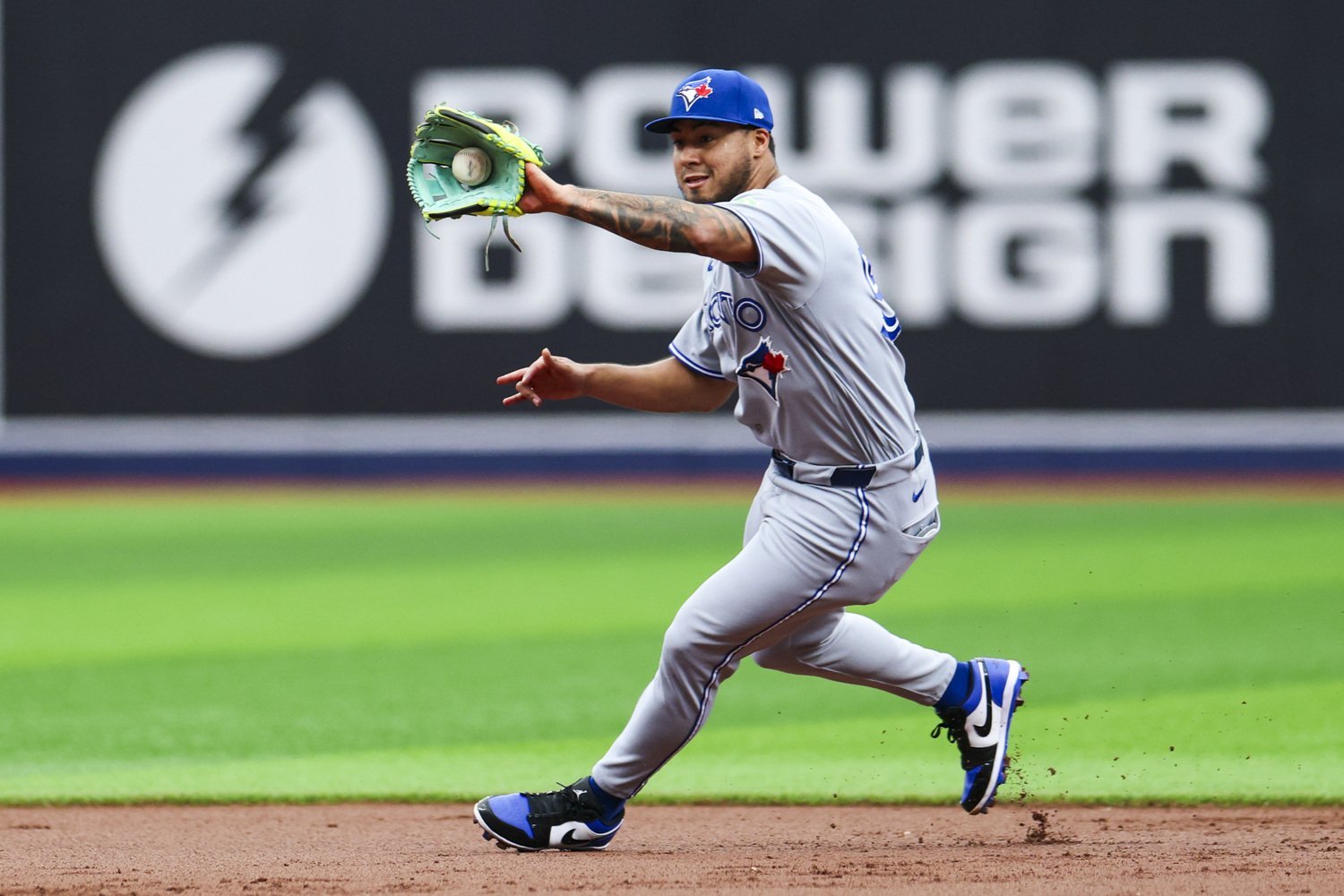 The Blue Jays released infielder Lenyn Sosa yesterday, a month after they sent him outright to Triple-A Buffalo. He's now a free agent. Toronto acquired Sosa from the White Sox in April. He appeared in 28 games for the Jays, splitting his time between first and second base. He slashed .188/.205/.275 with a -0.5 fWAR. In late May, Sosa landed on the injured list, and he never made it back to the majors. In 17 games for the Buffalo Bisons, he hit .257 with an 87 wRC+. View the full article
 -
 Boston Red Sox Affiliate Recap Triple-A Worcester Red Sox Series vs. Durham Bulls (Tampa Bay Rays): 3-1 Season Record: 76-66 Strong performances on both sides of the ball were the key as Worcester trounced Durham 16-1 amid a playoff push. Michael Sansone lasted just 3⅔ innings his last time out, surrendering six runs in a loss. On Friday, Sansone erased any bad memories, spinning an outstanding six-frame outing. He allowed one run on one hit, striking out five as he shut down the Bulls. Devin Sweet took over in the seventh, following in strong fashion. He walked one and struck out another in an inning of hitless relief. Angel Bastardo followed Sweet with a similar line, walking one as he too stumped Durham. Osvaldo Berrios was called up for the final frame on Friday, but he couldn’t keep up the bullpen’s hitless day. He allowed two hits and struck out a pair, sealing an easy win for Worcester. Allan Castro was responsible for nearly half of Worcester's offense on Friday. His seven RBIs tied the WooSox single-game record. Amid rumors of a late-season call-up, Braiden Ward made his case on Friday evening with a record-tying performance of his own. The speedster went 5-for-5 with three RBIs, tying the WooSox record with five runs in the win. The pair got started early as Castro tagged a double to left field, scoring Ward. With Castro and Mikey Romero aboard, Nathan Hickey launched his eighth homer of the season to right field. An inning later, Franklin Arias built on the early lead with a single to right, scoring Max Ferguson. Just like the inning prior, Castro drove in Ward, this time on a sac fly to center. Arias would then come around on a Romy Gonzalez double. With a seven-run lead in the third inning, the WooSox didn’t slow down. Ward scored Nate Baez with a single before Arias drove in Ferguson on a groundout. To cap off the inning, Castro drove in Ward for the third consecutive inning, this time on a homer to left. In the fifth, Ward decided it was his turn to go deep. He hit a solo homer to right, bringing the WooSox total to 13. With the bases loaded in the seventh, who else would step to the plate but Castro. He put a bow on the blowout with a bases-clearing double, scoring Ward, Tsung-Che Cheng and Juan Montero. If the WooSox want to make the playoffs, they will need to win both of their final games and need Syracuse, Rochester, and Indianapolis to lose their last games. Worcester will also need Scranton/Wilkes-Barre to lose one of their final two. View the full article
 -
 Chicago Cubs Minor League Report (September 19) Affiliate Overview Triple-A Iowa Cubs Series at Omaha Storm Chasers (Kansas City Royals): Cubs lead, 3-0 Season Record: 62–81-1 Double-A Knoxville Smokies 2026 Season Record: 73-64 High-A South Bend Cubs 2026 Season Record: 77–51 Single-A Myrtle Beach Pelicans 2026 Season Record: 50–77 Triple-A: Iowa Cubs Season Record: 62–81-1 Series Opponent: Omaha Storm Chasers (64-80) Series Standing: Lead, 3-0 Sept. 18: The Iowa Cubs swept their doubleheader on Friday at the Omaha Storm Chasers, winning the opener, 2-1, and the nightcap, 10-2. The sweep pushed their winning streak to four games, their longest such streak since also winning four-straight from Aug. 26-29, also against the Storm Chasers. Game 1: The Cubs earned a 2-1 victory in their doubleheader opener, claiming a third-straight win. Chas McCormick (0-for-3) brought in a run with a groundout in the first and Austin Wynns (1-for-2) doubled the lead with a solo shot in the second, his first homer of the season. Justin Steele started on the mound for the I-Cubs and spun two scoreless frames, firing five strikeouts and walking just one. Grant Kipp followed in relief and would eventually pick up the win, improving to 4-0 on the year, thanks to three innings of one-run ball, giving up one hit, walking one and punching-out three. The Storm Chasers would score their lone tally of the contest in the fourth inning but Tyler Ferguson would keep them off the board over the final 1 1/3 innings to pick up his third save of the campaign and give Iowa the lead. Game 2: Iowa earned a 10-2 game in the doubleheader nightcap to push their winning run to four games and claim a series win. The Cubs took a 2-0 lead in the fourth thanks to an RBI-single from Jordan Nwogu (2-for-4) and an RBI-double from Jackson Cluff (1-for-3). Omaha pulled a run back in the fifth but the Cubs answered with eight in the sixth to take a 10-2 lead. Chas McCormick (2-for-4) doubled in a run and later scored on a pick-off error. Ben Cowles (2-for-3) singled in one and Hayden Cantrelle (0-for-3) drew a walk with the bases loaded two batters later. BJ Murray (1-for-3) put the exclamation point on the frame with a grand slam, upping his home run total to 17 and his RBI total to 72. The Storm Chasers would add a tally in the seventh to make it 10-2. Braxton Garrett got the start on the mound for Iowa and earned the win, improving to 7-6 on the year. Garrett allowed one run on five hits over five innings of work, walked five and struck out six. Double-A: Knoxville Smokies 2026 Season Record 73-64 The Knoxville Smokies' season came to an end on Thursday following a 13-3 defeat to the Rocket City Trash Pandas in Game 2 of the Southern League Division Series. The Smokies finished the regular season with a 73-64 record, the second-best mark in the league. High-A: South Bend Cubs 2026 Season Record: 77–51 The South Bend Cubs season came to an end on Sept 11, falling to the Quad City River Bandits in game 2 of the Midwest League Division Series. The Cubs finished the regular season with a 77-51 record, a league best mark. Single-A: Myrtle Beach Pelicans 2026 Season Record: 50–77 The Myrtle Beach Pelicans’ season came to an end on September 4 after both of their contests on September 5 and September 6 were rained out. The Pelicans finished the 2026 season with a 50-77 record. View the full article
 -
2026 Padres Affiliate Season Recap: Low-A Lake Elsinore Storm
DiamondCentric posted an article in Padres Mission
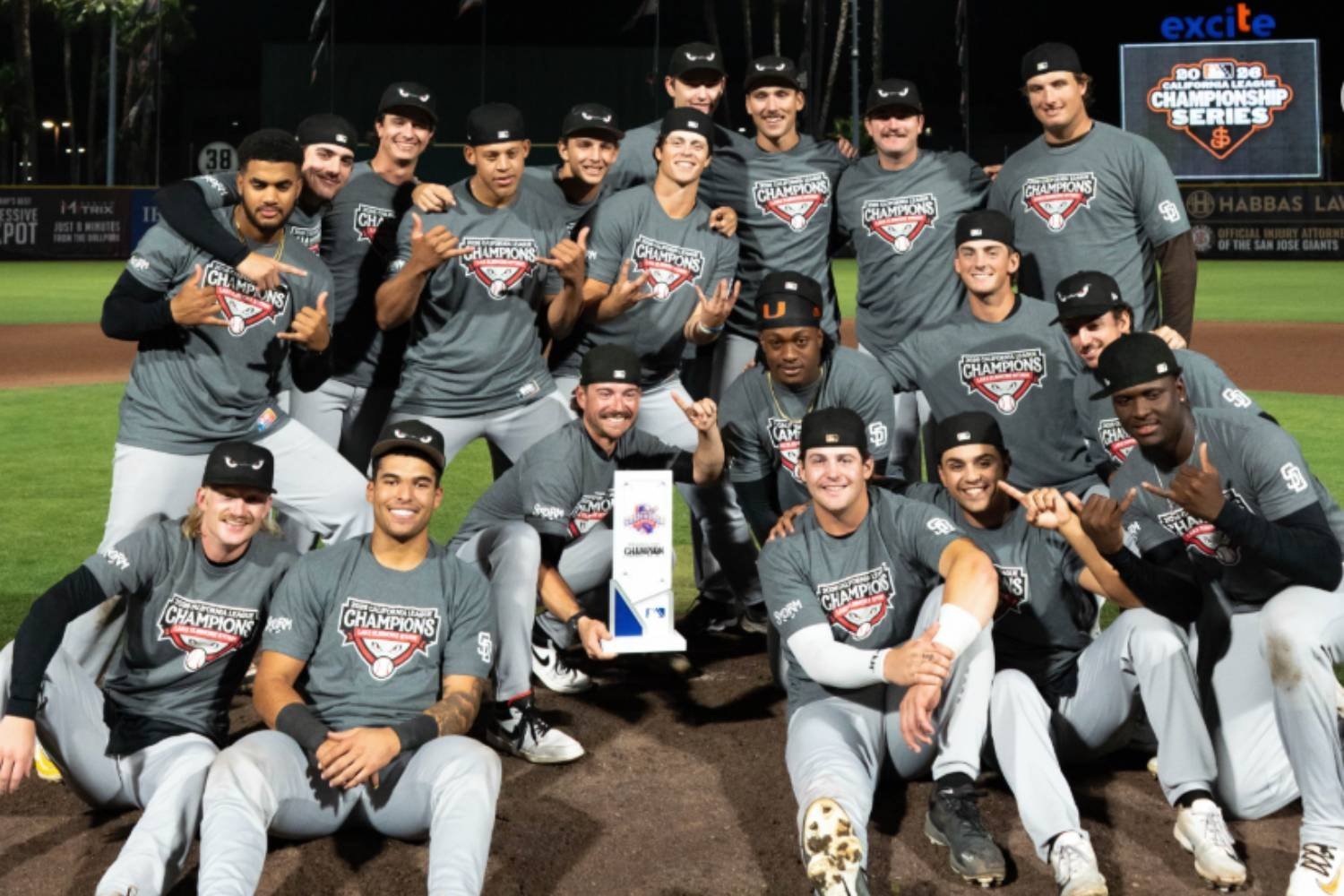 The Lake Elsinore Storm had speed to burn—and burn it they did. All the way to a championship. The Storm compiled the fourth-most steals in minor-league history with 357 during the regular season. It paid off with a first-half title in the California League’s South Division as the Storm went 39-27. The second half was a much different story, as the Storm went 27-38, including 11 straight losses, and finished last in the division. But a slew of 2026 draft picks were added to the roster in the final few weeks of the season and injected a spark into the team, who knocked off the second-half South winner Ontario Tower Buzzers (Los Angeles Dodgers affiliate) in the Cal League Division Series. Then, the Storm impressively beat the San Jose Giants in the best-of-three Cal League Championship Series despite being no-hit in Game 2. For his work, Brallan Perez was named the Cal League’s Manager of the Year. The Storm had three standout starters in right-handers Winyer Chourio, Jesus Castro and Tyler Schmitt, with Chourio getting a midseason promotion to High-A Fort Wayne after a 3.31 ERA and 74 strikeouts in 51⅔ innings. Offensively, the Storm had a strong first half with the bats of center fielder Ryan Wideman (.314/.389/.504), first baseman Luke Cantwell (.328/.475/.496) and third baseman Kerrington Cross (.313/.467/.608) leading the way. Wideman stole 43 bases before a midseason promotion and led the minors in that category for much of the season before slowing down in the second half and hitting the injured list. He finished with 65 steals in 109 games and moved up to Padres Mission's No. 2 prospect. With the change in personnel and reversal of fortunes in the standings, the Storm ended up in the middle of the pack in batting average (fifth of eight teams) and ERA (also fifth). Power was not a big part of the Storm’s offense until late in the season. They finished last in the Cal League with 96 homers—22 behind the next-worst team—but 28 of those came in the final 31 regular-season games. That was in large part due to the draft picks who joined the Storm. Seventh-round draft pick Joe Tiroly hit seven in 17 games to end the season, which puts him fourth on the team-wide season leaderboard. Other draft picks to make their pro debuts in the final weeks with the Storm were first-rounder Coleman Borthwick (Padres Mission's No. 3 prospect), second-rounder Elliot Lascelles (Padres Mission's No. 11 prospect), fifth-rounder James Guyette, sixth-rounder Nu’u Contrades, eighth-rounder Sean Fitzpatrick, ninth-rounder Benjamin Stubbs, 10th-rounder Augie Lopez, 11th-rounder Chris McHugh, 12th-rounder Rob Evans and 16th-rounder Albert Roblez. Some pitchers that popped as the season progressed include right-handed starter Lan-Hong Su, who initially had some notable struggles upon his promotion, then struck out eight over three innings in the Cal League clincher. Left-hander Adler Cecil was a strikeout machine, fanning 112 in just 64⅔ innings. His 112 punchouts were fourth-most in the Padres’ system despite pitching less than half of the innings of two of the three pitchers ahead of him and two-thirds of the other. There was a big injury loss early in the season when Kale Fountain, who was transitioning from a corner infielder to a corner outfield spot, crashed into the fence in foul territory and needed season-ending shoulder surgery. Lake Elsinore Storm 2026 Stat Leaders League: California League South Division First half: 39-27, first place, 3 games ahead, plus-74 run differential Second half: 27-38, fourth place, 10½ GB, minus-64 run differential Hitting leaders (20 games minimum) Average: Luke Cantwell .328, Ryan Wideman .314, Kerrington Cross .313 Slugging percentage: Cross .608, Justin DeCriscio .544, Wideman .504 OPS: Cross 1.075, Cantwell .971, DeCriscio .907 Runs: Bradley Frye 65, Qrey Lott 60, Conner Westenburg 60 HRs: Cross 11, Quintana 9, Lott 8 RBIs: Jose Verdugo 54, Jorge Quintana 52, Truitt Madonna 45 Pitching leaders (10 games minimum) ERA: Nick Falter 3.02, Winyer Chourio 3.31, Jeferson Villbona 3.86 Strikeouts: Tyler Schmitt 106, Jesus Castro 100, Kruz Schoolcraft 82 WHIP: Villabona 1.10, Falter 1.14, Chourio 1.22 Opponent average: Chourio .204, Carson Swilling .206, Jordan Valenzuela .208 Wins: Schmitt 8, Bryan Balzer 6, Javier Chacon 4, Will Koger 4, Brandon Langley 4 Saves: Koger 6, Langley 3, Ethan Long 3 View the full article
 -
 Blue Jays Affiliate Overview (September 16-18) Triple-A Buffalo Bisons Series vs Rochester Red Wings (Washington Nationals): 2-2 Season Record: 68-77 Double-A New Hampshire Fisher Cats: Season Complete High-A Vancouver Canadians: Season Complete Single-A Dunedin Blue Jays: Season Complete FCL Blue Jays: Season Complete DSL Blue Jays Blue: Season Complete DSL Blue Jays Red: Season Complete Triple-A Buffalo Bisons Season Record: 68-77 Series vs Rochester (Washington Nationals) September 16: Buffalo sent Josh Stephan to the mound to take on Rochester Wednesday evening. Stephan had a perfect 1-2-3 inning in the first, getting a flyout, lineout, and strikeout. Hopes were high that he would have a strong start after a string of rough ones. The second inning was nearly a repeat of the first, two flyouts and another strikeout in a three-up, three-down frame. The third inning was another stellar one, as Stephan induced two groundouts and registered his third strikeout of the game, completing the first three innings perfectly. The quest for perfection would end in the fourth, as would any hopes of a stellar game. Stephan opened up the frame by hitting a batter, then gave up three singles and a walk leading to two runs. A third run would score and tie the game up at three on an RBI groundout. Buffalo had taken the early lead thanks to a two-RBI single by Peyton Williams and an RBI single by Josh Kasevich. In the bottom of the fourth, Rhylan Thomas singled home Shawn Ross to give the Bisons the lead again, but back-to-back home runs to open up the fifth and an RBI single gave the lead to Rochester for good. Stephan ended up throwing 4.2 innings and coughing up six runs on the day. The Buffalo bats stayed quiet the rest of the game, as their bullpen surrendered more runs. The Bisons lost in a runaway game, 12-4. September 17: The Thursday matchup between Buffalo and Rochester was a pitcher's duel. Richard Gallardo was on the mound for Buffalo and threw a quality start. He went six innings, allowed seven hits, gave up three runs, and struck out three. Daniel Guerra came on next and starred over 1.2 innings with his elite fastball. He gave up two doubles, but struck out three, and his command was better, not walking anyone. His cutter was still a bit wild at times. He definitely showed improvement from his last appearance. Lazaro Estrada finished things off with 1.1 innings, giving up one hit and no runs. Unfortunately for Buffalo, the bats weren't as good. Lenyn Sosa drove in the lone run on a double-play groundout. Jay Harry, Josh Kasevich, and Rhylan Thomas had two hits apiece. Buffalo lost this one 3-1. September 18: Buffalo's offense had a monumental task ahead of them on Friday evening: They had to solve the massive Jarlin Susana problem that faced them on the opposing mound. Susana throws gas like very few in all of baseball can. He routinely tops 100 mph and can run it up even higher on the radar gun; it's what has propelled him to being one of the top pitching prospects in baseball. On Friday night, however, Buffalo worked him over from the start of the game. In the first inning, Daz Cameron walked, Jay Harry singled, and Josh Kasevich walked to load the bases up. They couldn't cash in any of the base runners though, as Susana got RJ Schreck to fly out to end the threat. In the second inning, Nick Goodwin doubled to lead off the inning, unfortunately for Buffalo, Susana quickly squashed that threat with a groundout and two strikeouts. Buffalo opened up the third inning with Rhylan Thomas walking and Daz Cameron singling on a ground ball up the middle. Harry then ripped a line drive to left field for a two-RBI double. After Susana was removed in the inning, Peyton Williams roped a 112.5 mph double to right field that scored two more. Buffalo would add more runs in the eighth on back-to-back home runs by Schreck and Goodwin, then an RBI single from Cameron. The game was never really in question after the big Buffalo third inning, as CJ Van Eyk threw a gem, seven innings, giving up just two hits, one run, and striking out two. The Bisons rolled to a 7-1 win. Double-A New Hampshire Season Record: 59-74 Season Completed High-A Vancouver Season Record: 64-66 Season Completed Single-A Dunedin Season Record: 62-66 Season Completed FCL Blue Jays Season Record: 38-20 Season Completed DSL Blue Jays Blue Season Record: 20-35 Season Completed DSL Blue Jays Red Season Record: 33-18 Playoffs: 2-1 Season Completed View the full article
 -
Can the Brewers Finally Hit When It Matters Most?
DiamondCentric posted an article in Brewer Fanatic
 The Brewers’ offense came up painfully short in last year’s NLCS against the Dodgers, with Brice Turang, Christian Yelich, and Sal Frelick among those who struggled at the plate. With another postseason run approaching, can this group make sure history doesn’t repeat itself? View the full article
 -
In Hindsight, Bringing Back Trevor Larnach Was The Right Decision
DiamondCentric posted an article in Twins Daily
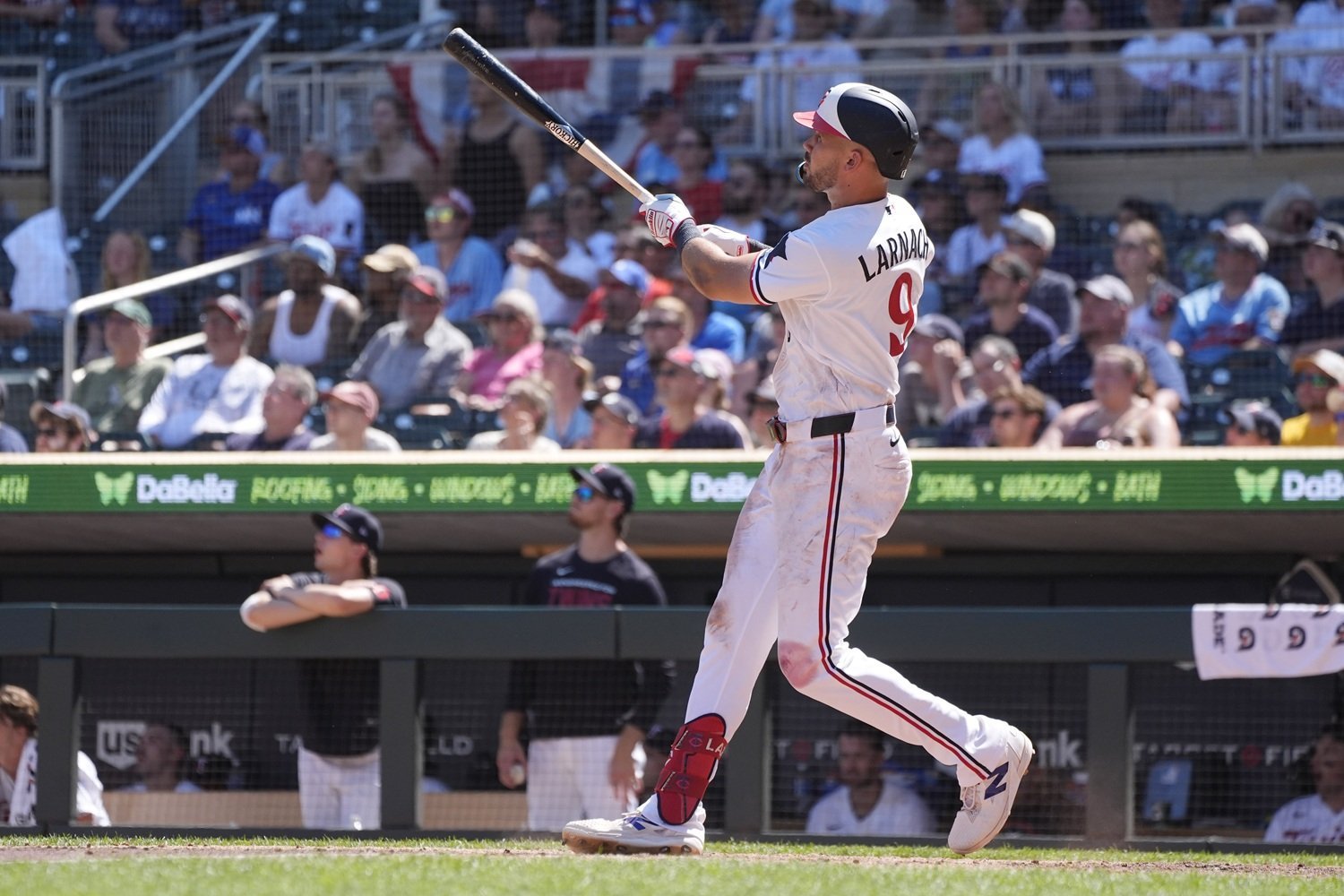 The Twins announced Friday that they were placing Trevor Larnach on the injured list with left wrist soreness, effectively bringing an end to his 2026 season with just nine games remaining on the schedule. Barring something unexpected, it also appears likely to bring an end to Larnach's time with the Twins. Larnach will have another year of arbitration remaining this offseason, but after his salary climbs from $4.475 million in 2026 to what could be somewhere in the $6.5 million to $7 million range, it is difficult to see Minnesota making that commitment to a player who has spent much of his career as a platoon outfielder. But before we close the book on Larnach's time in Minnesota, it is worth looking back at the decision the Twins made last January to bring him back in the first place. At the time, there was plenty of uncertainty surrounding whether Larnach was a player worth bringing back via arbitration. He had been a solid, but not spectacular, player for the Twins, entering the offseason with a career 102 OPS+ and coming off a 2025 season in which he posted a 101 OPS+. There was little reason to expect a major offensive breakout, and the Twins had limited money to spend after another offseason in which payroll flexibility was going to be at a premium. That made the Twins' decision to offer Larnach arbitration and bring him back for $4.475 million a surprising one. There were two obvious questions surrounding the decision. Did the Twins really need another left-handed outfielder on their roster, and was Larnach worth using a meaningful chunk of their limited payroll? Regarding the roster, Minnesota already had a number of left-handed outfielders on the 40-man, including Hendry Mendez, James Outman, Alan Roden, Emmanuel Rodriguez and Matt Wallner. Walker Jenkins was not yet on the 40-man roster but was clearly part of the Twins' near-term plans as well. The organization had plenty of players who could potentially fill the role Larnach had occupied, and several of them were younger and considerably cheaper. That made Trevor Larnach something of a luxury. If one of those players could provide similar production, the Twins could save the money, give a younger player an opportunity and use the roster spot somewhere else. For a team that didn't have much payroll flexibility, that seemed like a pretty reasonable argument. Then there was the money. Larnach's $4.475 million salary represented a meaningful investment for a Twins team that had very little to spend. Even if the Twins believed Larnach could be a useful player, there was a legitimate question about whether that money could be better spent somewhere else. Minnesota needed help in multiple areas of the roster, and spending nearly $5 million on a player who had never produced more than a 116 OPS+ in a season was hardly an obvious decision. The 2026 season, however, showed that neither of those concerns ended up being much of a problem. Start with the roster. Larnach ended up being by far the best left-handed outfielder on the Twins' roster. James Outman was designated for assignment early in the season. Alan Roden looked overmatched time and time again, posting a season-long OPS+ of 84 as of the time of this writing. Matt Wallner was sent to Triple-A early in the season because of his struggles. Emmanuel Rodriguez struggled with injuries, while Walker Jenkins showed why relying on young players to immediately establish themselves at the major league level can be risky. The supposed glut of left-handed outfielders never materialized into a player who forced the Twins to regret keeping Larnach around. Instead, Larnach was the one who established himself as the most reliable option of the group. The financial side of the decision also looks different with the benefit of hindsight. The Twins didn't actually have another $4.475 million to spend if they had let Larnach walk, because they still would have needed to pay the league minimum to whoever replaced him on the roster. That means the real amount available to redirect elsewhere was roughly $3.7 million. Could the Twins have used that money on another player? Sure. But realistically, what were they going to get for it? Another bullpen arm was probably the most obvious possibility, particularly considering how much the Twins struggled with pitching throughout the season. But Taylor Rogers signed with Minnesota for just $2 million. For another $1.5 million on top of that, they weren't suddenly going to be shopping for an impactful reliever. And then there was what Larnach actually did on the field. Larnach put together the best offensive season of his career. He posted a 121 OPS+, five points better than his previous career high of 116 in 2024 and finished with a career-best 2.2 fWAR. His home run rate was lower than in previous seasons, but he made up for some of that lost power by cutting down on his strikeouts while posting career highs in batting average and on-base percentage. Larnach sacrificed some power in favor of better plate discipline and getting on base more often. For a Twins team that struggled with pitching all season, Minnesota needed to rely on its bats to win them ball games, and Larnach certainly did his part. According to FanGraphs, his 2.2 fWAR was worth approximately $17.9 million in value this season, while his 0.49 Win Probability Added ranked fourth on the Twins. There were certainly some negatives. Larnach struggled defensively, posting career lows with -8 Defensive Runs Saved and -5 Outs Above Average. His offensive production also fell off considerably in the second half, with his .830 first-half OPS dropping to .703 in the second half. The wrist injury that ultimately ended his season may have contributed to those struggles, but regardless the drop-off happened. Still, Larnach was equally as productive in the first half as he was disappointing in the second. Whatever the reasons for his late-season decline, the season as a whole represented the best offensive performance of his career, and the Twins got it for $4.475 million. The Twins had questioned whether they needed Larnach when they already had so many left-handed outfielders. Those players never surpassed him. They questioned whether they could better use his salary elsewhere. There were no real alternatives for Larnach's salary number. And they questioned whether Larnach could take his offensive game to another level, which he certainly did. That doesn't necessarily mean the Twins should bring him back again. Larnach will have another year of arbitration remaining next season, and his salary will likely jump into the $6.5 million to $7 million range. I don't expect the Twins to make that commitment. At that price, the calculus is different, particularly given his defensive limitations and the questions raised by his second half. Additionally, Emmanuel Rodriguez and Walker Jenkins have made the Majors and will be in the plans on Opening Day Next season. Last January, bringing Trevor Larnach back looked like a questionable use of limited payroll and a roster spot that could have gone to one of the organization's younger left-handed outfielders. After watching the season play out, it looks like the Twins made the right decision. For this season, bringing Trevor Larnach back was worth it. What do you think? Was bringing Trevor Larnach back for the 2026 season the right decision for the Twins? Leave a comment below and start the conversation! View the full article
 -
 The Boston Red Sox's offense is going through one of its worst collective slumps of the entire season in terms of run production, the worst news just a few series remain before the regular season ends. It is almost certain that they will face the New York Yankees again in the Wild Card Series, as happened last year, in a series where two of the most dominant pitching staffs in the league will face each other. To determine who earns the pass to the Division Series, the offense will be a key point, especially in a best-of-three clash. In nine of their first 15 games of September, the Red Sox have gone hitless or with just one hit with runners in scoring position. They have a 3-9 record in those games and have combined for just 5-for-57 with RISP, with 18 strikeouts and 10 walks. This stretch of inconsistencies is not new; Between March and June, when the team played to a 37-47 record with a minus-10 run differential, the average number of runs scored per game was 4.0. So far in September, they have recorded 3.6. What makes the lack of timely hitting even more concerning is that the Red Sox’s success has been based precisely on taking advantage of key moments and making the most of them. This season, they have accumulated 25 wins while scoring four or fewer runs, and in only four of those games have they gone hitless with runners in scoring position. It is clear that this team can win games in many ways, but Boston’s chances of success are reduced to a minimum when they cannot get hits in RISP situations. The statistic is devastating: they have lost 24 of the 28 games in which they have been unable to get hits in that situation. To continue going deeper into this situation, I divided two key stretches of Boston’s season: a first period, when they played to a 34-8 record and the team completed the great comeback before the end of the first half of the season, between June 19 and August 7, and a second stretch from August 8 until now. I chose the offensive statistics only in high-leverage situations, and it turns out that, since August 7, the Red Sox have posted the worst BABIP in the league (.184), and have fallen to 29th in batting average with just .180, line drive percentage (12.0%) and hard-hit rate (25.0%). On the other hand, while the team was on its winning streak in the first period, the Red Sox led the league in slugging (.606), ISO (.269), placed second in OPS (1.001) and wRC+ (167), and third with the highest contact rate against pitches in the strike zone (91.5%). PERIOD PA BB% K% AVG OBP SLG OPS ISO BABIP wOBA wRC+ Soft% Hard% O-Contact% Z-Contact% JUN 19 - AUG 7 130 10.8% 16.2% .337 .395 .606 1.001 .269 .349 .411 167 9.5% 40.0% 44.4% 91.5% SINCE AUG 8 165 9.7% 20.6% .180 .272 .374 .646 .194 .184 .272 75 17.9% 25.0% 63.3% 88.8% Here, we can reach more interesting conclusions by comparing both periods for the Red Sox in high-leverage situations. In this second stretch, the loss of impact and production has been evident. Strikeouts have gone up by 4.4 percentage points, which has been joined by a higher amount in soft-contact percentage (8.4% difference), along with the 15-point drop in hard-hit rate. Yes, the rate of contacts outside the strike zone has risen by 18.9%, but it has not been able to result in hard contact that generates production. Although the offensive samples are smaller when we analyze the hitters individually, the chaos is perfectly illustrated. Hitter PA Jun 19–Aug 7 PA Since Aug 8 Key Change Ceddanne Rafaela 14 .429 AVG / .429 OBP / .929 SLG / 1.357 OPS / 278 wRC+ 14 .100 / .143 / .100 / .243 OPS / -74 wRC+ -1.114 OPS / -352 wRC+ Wilyer Abreu 17 .300 / .385 / .900 / 1.285 OPS / 209 wRC+ 12 .188 / .235 / .375 / .610 OPS / 62 wRC+ -.675 OPS / -147 wRC+ Caleb Durbin 13 .500 / .600 / .750 / 1.350 OPS / 278 wRC+ 17 .100 / .250 / .400 / .650 OPS / 52 wRC+ -.700 OPS / -226 wRC+ Andruw Monasterio 7 .444 / .500 / 1.111 / 1.611 OPS / 333 wRC+ 14 .000 / .000 / .000 / .000 OPS / -100 wRC+ -1.611 OPS / -433 wRC+ Masataka Yoshida 12 .273 / .333 / .455 / .788 OPS / 117 wRC+ 4 .000 / .000 / .000 / .000 OPS / -100 wRC+ -.788 OPS / -217 wRC+ Jarren Duran 11 .250 / .286 / .250 / .536 OPS / 22 wRC+ 17 .143 / .250 / .429 / .679 OPS / 65 wRC+ +.143 OPS / 43 wRC+ Willson Contreras 5 .500 / .714 / .750 / 1.464 OPS / 301 wRC+ 22 .182 / .357 / .455 / .812 OPS / 132 wRC+ -.652 OPS / -169 wRC+ Nick Sogard 14 .333 / .500 / .333 / .833 OPS / 155 wRC+ 16 .118 / .250 / .353 / .603 OPS / 67 wRC+ -.230 OPS / -88 wRC+ What I like most about these samples is that the number of at-bats adjusts to a similar sample of at-bats in any short postseason series. The collapse has been so significant that only Jarren Duran has a slight improvement with 143 points of OPS and 43 points of wRC+, although the mark of 65 since August 8 remains mediocre. At the same time, the numbers during the winning streak provide a little encouragement, and they marked a moment when the Red Sox seemed unstoppable. It is clear that they can do it again. But this is not about some hitters getting hot; the offense as a whole needs to function as it did in its best version of the season, building runs, running the bases intelligently, and connecting the key hits in clutch situations. View the full article
 -
 The doubts surrounding Casey Mize are impossible to hide and are generating more concerns as the postseason approaches. The pitcher who seemed like a revelation when the Detroit Tigers needed him most in the first half of the season has fallen off in this second stretch. = The problems began right when he arrived in San Diego at the trade deadline. Since then, Mize has been unable to make the turnaround that is expected. The opposition is managing to hit his pitches inside the strike zone 10.1% more, and that impact has been key to raising the .601 OPS from the first half to a .821 OPS since the All-Star break. The Mize of the almost unhittable arsenal with fastball, slider, slurve and split finger who moved through lineups between April and July has now seen his K/BB rate pulverized with a puzzling 11.1% drop. Since arriving in San Diego, the Padres have modified the way he uses his repertoire depending on the hitter’s handedness and the count situation. Between June and July, Mize’s sinker and slider had a slight decline in their expected metrics, and that may have alerted the Friars' coaching staff. In a way, there have been some interesting improvements that we will explore here, even though the overall results still do not show them. The most interesting question (with the playoffs in mind) is whether the Padres really found a structure that can make the right-hander more effective. Situation vs. LHH before vs. LHH SD vs. RHH before vs. RHH SD All counts — Splitter 29% 35% 16% 8% All counts — Slider 28% 27% 24% 36% All counts — Sinker 1% 0% 25% 15% Two strikes — Splitter 40% 49% 24% 19% Two strikes — Four-seam 38% 41% 27% 45% The changes show that San Diego is trying to get Mize to change the attack with his pitches depending on the matchup and the moment of the at-bat. Against left-handed hitters, Mize saw his K/9 fall in July to his worst rate of the entire season. So the splitter, with which he recorded 52% of his strikeouts, went from 29% to 35% usage. With the change, it is acquiring more importance when he has the advantage in the count, from 44% to 51% when he is ahead, and from 40% to 49% in two-strike counts. Against right-handers, the adjustment is different. The slider went from 24% to 36% overall usage, while the sinker fell from 25% to 15%. And when he gets to two strikes, the four-seam fastball went from 27% to 45%. The splitter is where the plan with the Padres is finding the most interesting results. Splitter August September BA .333 .176 SLG .481 .176 EV 84.3 mph 80.9 mph Whiff 11.1% 38.9% PutAway 8.3% 25.0% The formula is beginning to give results beyond just whiff rates. The splitter is limiting the impact on all the important indicators, and PutAway% reveals that Mize is using it in more decisive situations. Continuing with the adjustments, the slider presents a different evolution, but also a relevant one. In August, it allowed a .412 batting average, .647 slugging and .445 wOBA. In September, those numbers have fallen to .273, .364 and .276. The whiff rate, however, barely changed: 17.1% in August versus 17.9% in September. The improvement of the slider has been reflected more against right-handers, but Mize has had inconsistencies against left-handers, allowing .539 slugging in 13 at-bats. It is a small sample that we still have to follow, because before arriving in San Diego they had hit .182 against him in 44 at-bats. Finally, let's analyze what the four-seam fastball brings us. Four-seam August September BA .179 .261 SLG .462 .565 EV 93.8 mph 95.0 mph Whiffs 5.7% 9.5% PutAway 11.6% 18.5% In this month of September, Mize has not been able to continue with the adjustments from August, but he has generated more swings-and-misses and finished at-bats with more strikeouts. For that reason, the monthly change is not enough to define it as a weak point within the new plan. The most interesting question appears when we observe what is happening according to the hitter’s handedness. Four-seam with Padres LHB RHB K% 19.4% 21.9% Whiffs 4.7% 11.7% BAA .209 .138 SLG .328 .310 GB/BIP 21.8% 9.0% There are two key details here: the batting averages have gone down, but it has not been because Mize is finding more vulnerable points to generate swings and misses. In fact, if we analyze his profile overall, we can see that his Flawed Swing% with the fastball has fallen from 3% to 0% since he arrived in San Diego. Of course, he can be dominant without generating flawed swings, but when you reach the point of barely getting any, it is obvious that hitters are not feeling surprised and probably are not even concerned with the fastball or the environment in which he is throwing it. Now, what is positive is that the dominance is coming through a reduction in contact quality. Against right-handers, the fastball is allowing just a .138 batting average, despite generating a meager 11.7% whiff rate. Against left-handers, that falls even further to 4.7%, but the ground-ball rate rises to 21.8%, an important point in Mize’s favor. As revealing as the samples are, we still need to see many more adjustments, as Mize continues to be unable to find a consistent finish to the at-bats in his favor. The postseason is getting closer and closer, and the Padres need the dominant Mize from the first half of the season to survive a brutal National League gauntlet. It's a question of if he can put everything together in time October. View the full article
