


DiamondCentric
-
Posts
2,631 -
Joined
-
Last visited
Never
Content Type
Profiles
Forums
Events
MLB News, Rumors & Analysis
DiamondCentric Tutorials & Help
Major League Baseball Videos
MLB Fan Guides & Resources
Store
Downloads
Gallery
Everything posted by DiamondCentric
-

Offseason Primer: The State of the Chicago Cubs' Outfield
DiamondCentric posted an article in North Side Baseball
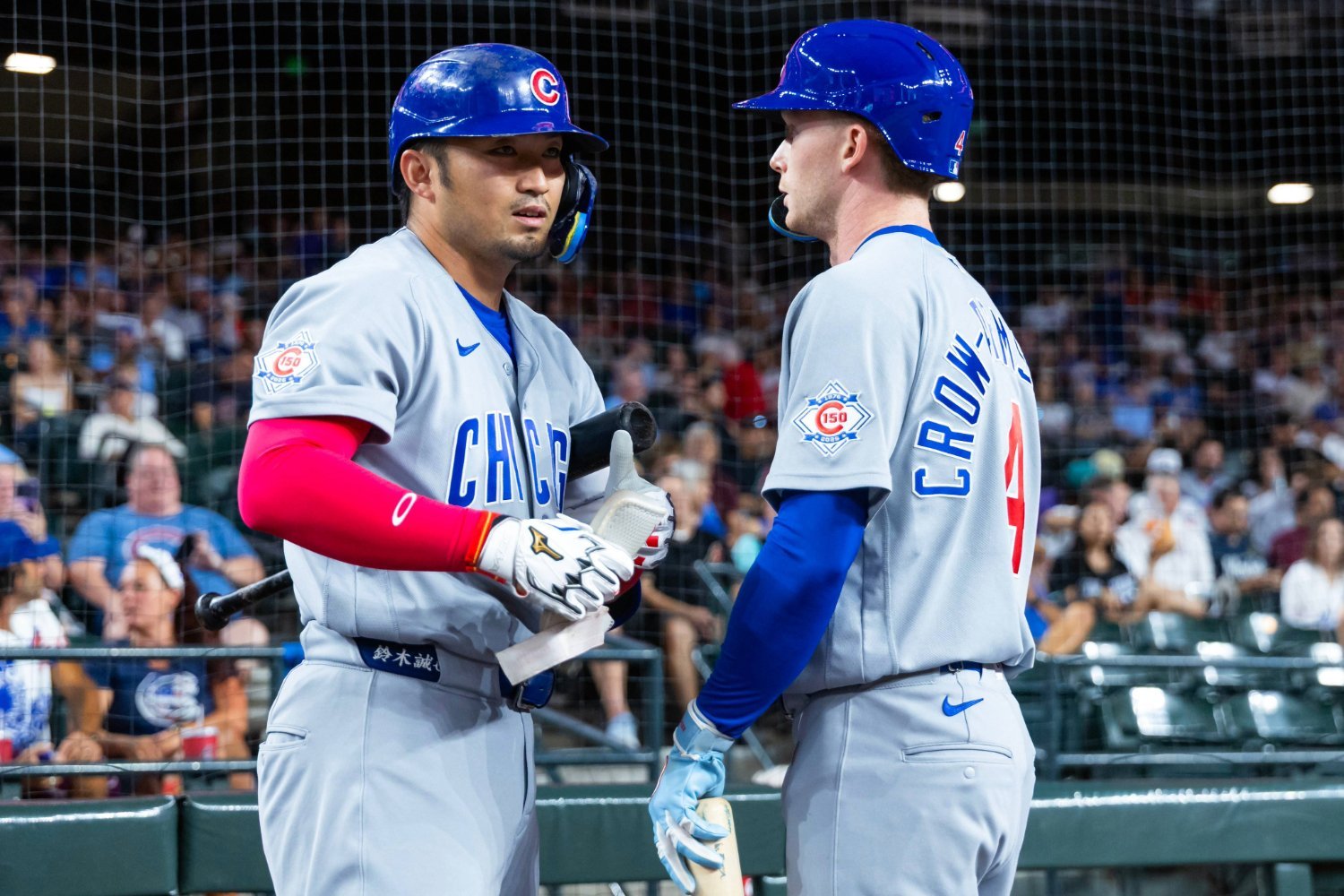 With the World Series officially in the rearview, Major League Baseball's offseason is upon us. The lockout looms, but as we act under the assumption that we'll still get some level of baseball next season, the Chicago Cubs will need to reconstruct their roster to try and keep pace with the new champion residing in their division. Today, we'll take a look at the situation on the outfield grass, recapping their 2026, examining significant roster decisions, and attempt to map out how the team could address their soon-to-be shortcomings on either side of Pete Crow-Armstrong. Chicago Cubs' 2026 Outfield Recap It'd probably be pretty easy to make the case that the Cubs' outfielders represented their best position group in 2026. Of course, having the runaway National League Most Valuable Player in Pete Crow-Armstrong holding things down in center certainly helps. He went for 45 homers, 41 steals, and drove his walk rate to more than double anything we'd seen in the two seasons prior (11.4 percent). Toss in his elite brand of defense and you have a player that finished at an obscene 10.6 fWAR. It's almost impossible to overstate just how good Crow-Armstrong was in 2026. It's not as if the two bookending him in the outfield were slouches, either. Ian Happ had the weaker season; while he posted a fourth consecutive 20+ home run campaign, his strikeout rate nearly touched 30 percent (29.7). His defense, though, was actually better by most metrics than it normally has been during this run of Gold Glove awards. Seiya Suzuki (somewhat quietly) had an exceptional year, with a 25-point bump in batting average (.270) wrought by some batted ball fortune (.330 BABIP) and a slight uptick in his characteristically strong walk rate (12.8 percent). That helped to compensate some for the fact that he lost nearly 30 points on his isolated power figure (.204). That trio was supplemented by some surprising quality on the bench as well. Michael Conforto didn't quite sustain the torrid pace he set forth in April, but his 119 wRC+ was his highest since 2021. Trade deadline acquisition Tyrone Taylor was quite good in his short time too, slashing .351/.390/.500 across roughly 80 plate appearances. Matt Shaw's offensive upside remains to be seen, but he was out there on regular occasions as well (when healthy). Ultimately, this was a very good phase of the roster that now faces a great deal of uncertainty in the coming months. 2027 Roster Decisions Ian Happ: Free Agent Seiya Suzuki: Free Agent Tyrone Taylor: Free Agent Michael Conforto: Free Agent The situation for the Cubs in the outfield reads as fairly black and white. Two of their three starters are free agents. Their two primary supplementary bats are also set to test the market. Whether even one of these bats could return is anybody's guess and feeds into a number of questions. Could Happ find himself priced out of Chicago? Will the Cubs actually push to bring him back at all considering his glaring shortcomings and increasingly specific skill set (defense and occasional power)? Do they even have a remote chance of bringing back Seiya Suzuki? Could either of Taylor or Conforto return as bench pieces or might they try to latch on for more playing time elsewhere? There are decisions to be made here only in the sense of whether the Cubs would be willing to keep up with the potential spending of other teams, particularly in the cases of Happ & Suzuki. The outfield market in free agency is pretty bleak, so they might have a tough time doing so considering their much more glaring needs on the mound. 2027 Outlook Pete Crow-Armstrong is your starting center fielder, and that's kind of it. There are other bodies on the 40-man roster that could find themselves in the mix on some level. Shaw, Kevin Alcántara, BJ Murray Jr., and Justin Dean are still a part of the organization. Whether the Cubs are interested in handing the bulk of the time to any of those players, however, is also uncertain. The organization likes Shaw, but it's difficult to see his limited offensive ceiling playing in an outfield corner on a full-time basis. Alcántara has tools & athleticism, but his alarming strikeout numbers make regular work for him unlikely. Murray's offensive output is varying levels of fine, but his outfield glove is pretty limited; he profiles more for the corner infield. Dean is a pure bench bat. Considering all of that, it's an outlook that reads rather bleak on either side of Crow-Armstrong. As such, if there are additions to be made to the positional side, they'll likely be in this phase before anywhere else, even accounting for the team's uncertainty behind the plate sans Carson Kelly. What Might the Team Add to the Mix? The Cubs need to look to add at least one everyday outfielder. Defense will be a priority for any addition, as the team features that as a pillar of their positional construction. That does leave the door open for either of Happ or Suzuki to return from a personnel standpoint, especially considering the latter's defensive rebound in 2026. Beyond that? It's tough to project. Are they a player for someone like Teruaki Sato? Are they willing to sacrifice defense in the name of offensive upside and pursue a name like Randy Arozarena? Otherwise, it's the trade market where the team may have to dedicate some resources. What the team could add to the mix is an easy proposition. The direction in which they will actually travel, however, is another matter entirely. General Outlook The 2027 outfield represents a difficult situation for Jed Hoyer to navigate. None of the non-Crow-Armstrong names on the 40-man inspire much confidence as an Opening Day option. There are too many limiting factors on the offensive side to allow for much appeal. The free agent market is questionable, at best. Trade targets will, of course, reveal themselves as the winter progresses on either side of the impending lockout, but the Cubs also aren't going to be the only team looking for some outfield help. There will be additions here, but exactly how the organization goes about acquiring them is a complete mystery. View the full article
-
Offseason Primer: The State of the Chicago Cubs' Outfield
DiamondCentric posted an article in North Side Baseball
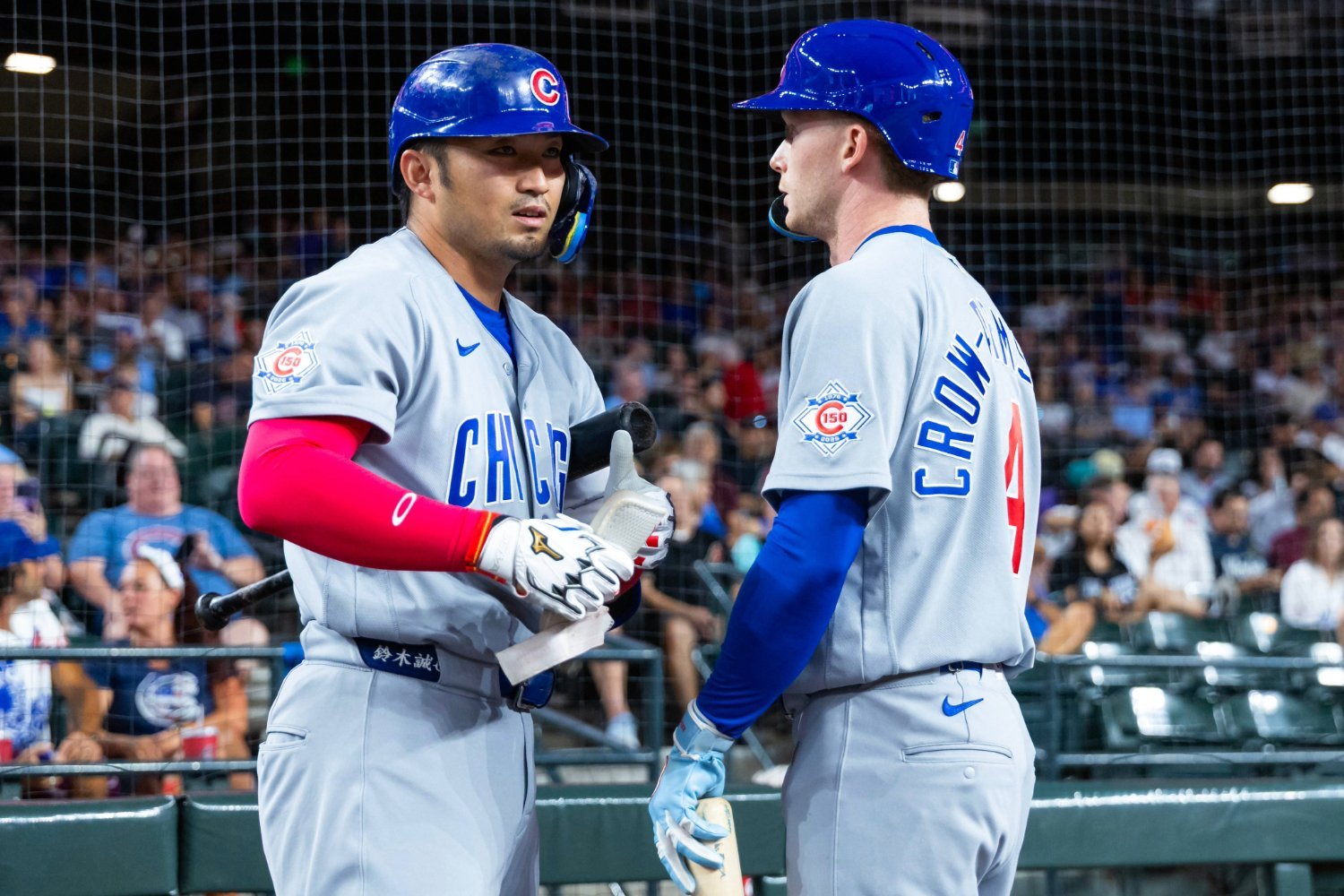 With the World Series officially in the rearview, Major League Baseball's offseason is upon us. The lockout looms, but as we act under the assumption that we'll still get some level of baseball next season, the Chicago Cubs will need to reconstruct their roster to try and keep pace with the new champion residing in their division. Today, we'll take a look at the situation on the outfield grass, recapping their 2026, examining significant roster decisions, and attempt to map out how the team could address their soon-to-be shortcomings on either side of Pete Crow-Armstrong. Chicago Cubs' 2026 Outfield Recap It'd probably be pretty easy to make the case that the Cubs' outfielders represented their best position group in 2026. Of course, having the runaway National League Most Valuable Player in Pete Crow-Armstrong holding things down in center certainly helps. He went for 45 homers, 41 steals, and drove his walk rate to more than double anything we'd seen in the two seasons prior (11.4 percent). Toss in his elite brand of defense and you have a player that finished at an obscene 10.6 fWAR. It's almost impossible to overstate just how good Crow-Armstrong was in 2026. It's not as if the two bookending him in the outfield were slouches, either. Ian Happ had the weaker season; while he posted a fourth consecutive 20+ home run campaign, his strikeout rate nearly touched 30 percent (29.7). His defense, though, was actually better by most metrics than it normally has been during this run of Gold Glove awards. Seiya Suzuki (somewhat quietly) had an exceptional year, with a 25-point bump in batting average (.270) wrought by some batted ball fortune (.330 BABIP) and a slight uptick in his characteristically strong walk rate (12.8 percent). That helped to compensate some for the fact that he lost nearly 30 points on his isolated power figure (.204). That trio was supplemented by some surprising quality on the bench as well. Michael Conforto didn't quite sustain the torrid pace he set forth in April, but his 119 wRC+ was his highest since 2021. Trade deadline acquisition Tyrone Taylor was quite good in his short time too, slashing .351/.390/.500 across roughly 80 plate appearances. Matt Shaw's offensive upside remains to be seen, but he was out there on regular occasions as well (when healthy). Ultimately, this was a very good phase of the roster that now faces a great deal of uncertainty in the coming months. 2027 Roster Decisions Ian Happ: Free Agent Seiya Suzuki: Free Agent Tyrone Taylor: Free Agent Michael Conforto: Free Agent The situation for the Cubs in the outfield reads as fairly black and white. Two of their three starters are free agents. Their two primary supplementary bats are also set to test the market. Whether even one of these bats could return is anybody's guess and feeds into a number of questions. Could Happ find himself priced out of Chicago? Will the Cubs actually push to bring him back at all considering his glaring shortcomings and increasingly specific skill set (defense and occasional power)? Do they even have a remote chance of bringing back Seiya Suzuki? Could either of Taylor or Conforto return as bench pieces or might they try to latch on for more playing time elsewhere? There are decisions to be made here only in the sense of whether the Cubs would be willing to keep up with the potential spending of other teams, particularly in the cases of Happ & Suzuki. The outfield market in free agency is pretty bleak, so they might have a tough time doing so considering their much more glaring needs on the mound. 2027 Outlook Pete Crow-Armstrong is your starting center fielder, and that's kind of it. There are other bodies on the 40-man roster that could find themselves in the mix on some level. Shaw, Kevin Alcántara, BJ Murray Jr., and Justin Dean are still a part of the organization. Whether the Cubs are interested in handing the bulk of the time to any of those players, however, is also uncertain. The organization likes Shaw, but it's difficult to see his limited offensive ceiling playing in an outfield corner on a full-time basis. Alcántara has tools & athleticism, but his alarming strikeout numbers make regular work for him unlikely. Murray's offensive output is varying levels of fine, but his outfield glove is pretty limited; he profiles more for the corner infield. Dean is a pure bench bat. Considering all of that, it's an outlook that reads rather bleak on either side of Crow-Armstrong. As such, if there are additions to be made to the positional side, they'll likely be in this phase before anywhere else, even accounting for the team's uncertainty behind the plate sans Carson Kelly. What Might the Team Add to the Mix? The Cubs need to look to add at least one everyday outfielder. Defense will be a priority for any addition, as the team features that as a pillar of their positional construction. That does leave the door open for either of Happ or Suzuki to return from a personnel standpoint, especially considering the latter's defensive rebound in 2026. Beyond that? It's tough to project. Are they a player for someone like Teruaki Sato? Are they willing to sacrifice defense in the name of offensive upside and pursue a name like Randy Arozarena? Otherwise, it's the trade market where the team may have to dedicate some resources. What the team could add to the mix is an easy proposition. The direction in which they will actually travel, however, is another matter entirely. General Outlook The 2027 outfield represents a difficult situation for Jed Hoyer to navigate. None of the non-Crow-Armstrong names on the 40-man inspire much confidence as an Opening Day option. There are too many limiting factors on the offensive side to allow for much appeal. The free agent market is questionable, at best. Trade targets will, of course, reveal themselves as the winter progresses on either side of the impending lockout, but the Cubs also aren't going to be the only team looking for some outfield help. There will be additions here, but exactly how the organization goes about acquiring them is a complete mystery. View the full article
-
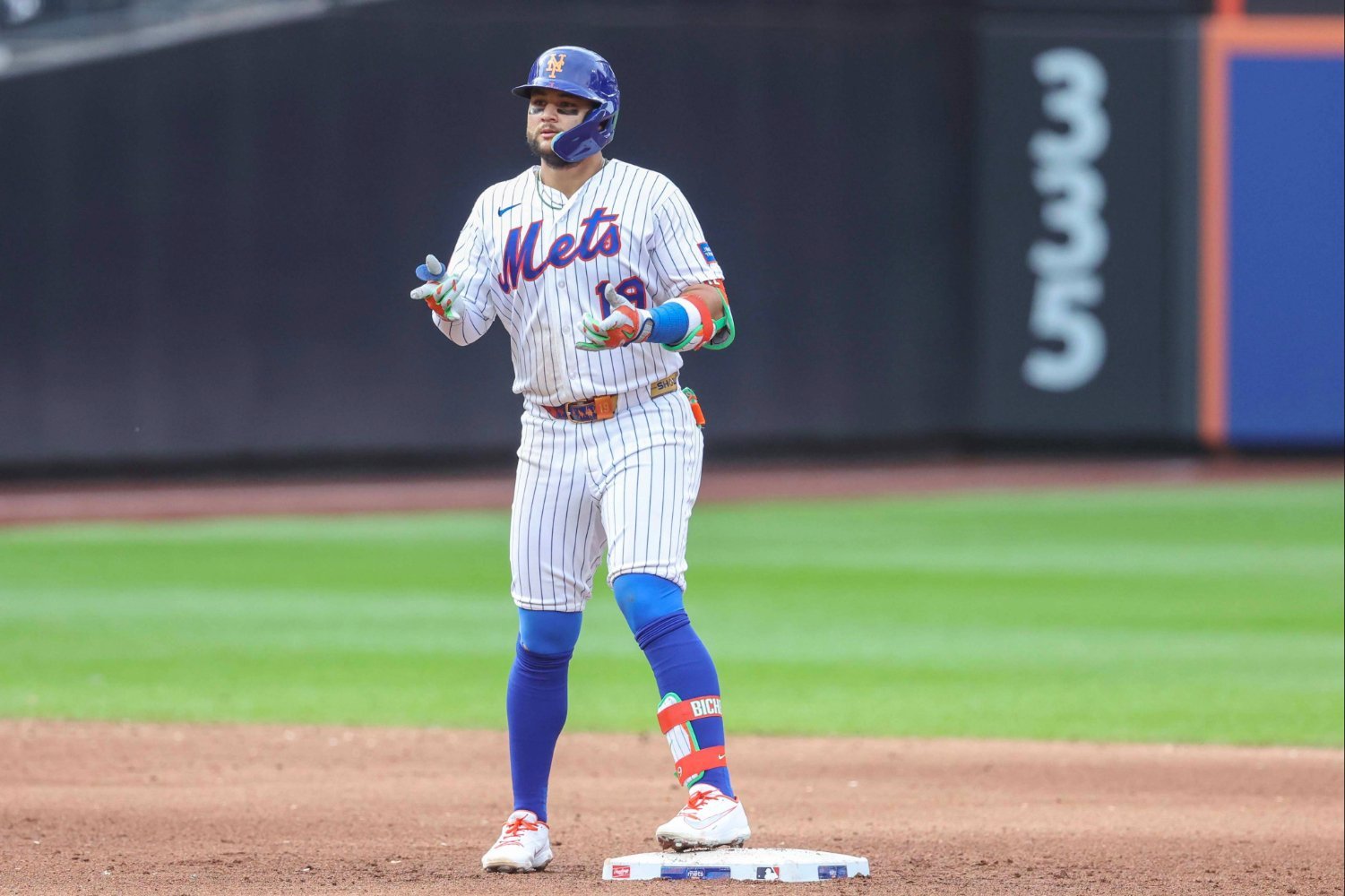 Bo Bichette is making the easy play. He's opting into a $42 million salary for the 2027 season to remain with the New York Mets, electing not to test the free-agent market. He restored some of his market value with hot streaks in June and August after a poor April and May, but with baseball's economic future unknown, $42 million guaranteed after an 0.7 bWAR campaign seemed impossible to pass up. The Mets surely planned for an offseason in which with their third baseman stayed. But will the decision be a drag on those plans? Let's try to answer that question with other questions. Where Does Mets' Payroll Stand After Bo Bichette's Contract Decision? Well, the simple analysis is that the Mets' payroll might be busted, which is weird to say when Steve Cohen is writing the checks. The top of the roster is much pricier with Bichette back; the nine largest contracts have a combined average annual value (AAV) of $208.8 million for luxury-tax calculations, per Cot's Contracts. Four of those contracts are close to untradeable: Marcus Semien ($24 million AAV), Sean Manaea ($22 million), Jorge Polanco ($20 million), and Kodai Senga ($15 million). Add the $6 million they're sending the Pittsburgh Pirates to cover half of Luke Weaver's 2027 salary, and the Mets are at $214.8 million with 17 spots to fill on the 26-man Opening Day roster. MLB Trade Rumors projects the Mets' 10 arbitration-eligible players will make $19 million in '27. Those players, plus the club's pre-arb core -- Nolan McLean, Carson Benge, A.J. Ewing, Christian Scott and Zac Thornton -- will fill most of the open spaces, but upgrades are needed, and that will cost money. Cohen sounded unsure in the summer about spending big this offseason. He said 2027 will be a "weird year." He alluded to Bichette's opt-in. Labor talks were hanging over the discussion, too. A real payroll limit may be forced upon Cohen if the owners defeat the players in negotiations for a new collective bargaining agreement. The Mets can therefore use this winter to reset the payroll and then charge ahead under the new system. Are the Mets' Pitching Plans Destroyed? Not really. Tarik Skubal and Sandy Alcantara appear spoken for with the Dodgers and Marlins, respectively, and other free-agent starters can give the Mets the innings they need. Michael King, Sonny Gray, Trevor Rogers and old friend Freddy Peralta are all on the market. The Mets reportedly scouted Japanese star Kaima Taira, who is waiting to be posted by his NPB club. There's the trade market, too. Joe Ryan from the Twins? Bryce Miller or George Kirby from the Mariners? Reid Detmers from the Angels? A reunion with Jacob deGrom? Team president David Stearns should have the organizational depth to deal for those types of arms after collecting 11 prospects at the deadline. As for the bullpen, Stearns might be wise not to spend a lot on it. He should pursue a setup arm/backup closer after Devin Williams ($15 million tax figure) turned in a shaky first season with the club, but David Bednar will cost a bundle after his big year with the Yankees and Adrian Morejon's market could overheat. The Mets got by with a cheap relief corps after the trade deadline. Daniel Duarte and Nate Lavender emerged from the group that was assembled in August. Dedniel Nunez appeared to regain his pre-surgery form. Jefry Yan proved to be a fun wild card. Dylan Ross and Jack Weisenburger were called up for brief looks. Reed Garrett worked his way back from Tommy John surgery. Stearns can keep stockpiling interchangeable arms to supplement those on the 40-man. Are the Mets Out of the Teruaki Sato Derby? That's assuming they're in it. Sato is seen as a bat-first third baseman/right fielder. Carson Benge occupies right field and Bichette's opt-in decision was seen as a mere formality. In other words, there has never been a natural position fit with Sato in New York. But Sato's bat is quite enticing. Could the Mets move pieces to accommodate it? Maybe Benge could move to left field and Juan Soto could finally become an everyday DH. Maybe Bichette could move to second base and the club could dump Semien's remaining $48 million via trade or release. Still, that's a lot of hypotheticals to consider for one guy. And the Mets would still be competing with clubs that don't need to jump through as many hoops to add Sato. The rest of the free-agent market, plus the trade market, can make up for not signing him. View the full article
-
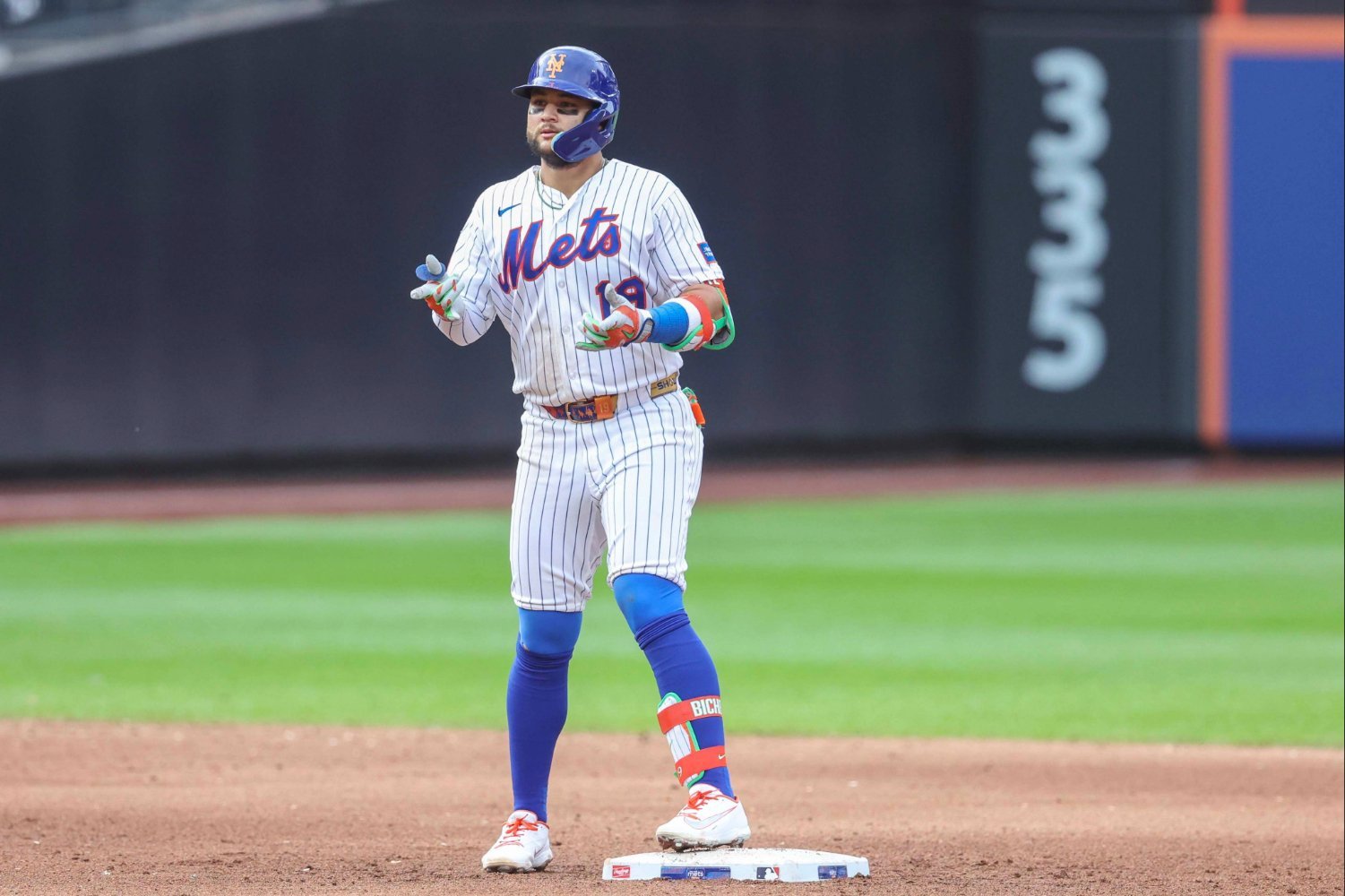 Bo Bichette is making the easy play. He's opting into a $42 million salary for the 2027 season to remain with the New York Mets, electing not to test the free-agent market. He restored some of his market value with hot streaks in June and August after a poor April and May, but with baseball's economic future unknown, $42 million guaranteed after an 0.7 bWAR campaign seemed impossible to pass up. The Mets surely planned for an offseason in which with their third baseman stayed. But will the decision be a drag on those plans? Let's try to answer that question with other questions. Where Does Mets' Payroll Stand After Bo Bichette's Contract Decision? Well, the simple analysis is that the Mets' payroll might be busted, which is weird to say when Steve Cohen is writing the checks. The top of the roster is much pricier with Bichette back; the nine largest contracts have a combined average annual value (AAV) of $208.8 million for luxury-tax calculations, per Cot's Contracts. Four of those contracts are close to untradeable: Marcus Semien ($24 million AAV), Sean Manaea ($22 million), Jorge Polanco ($20 million), and Kodai Senga ($15 million). Add the $6 million they're sending the Pittsburgh Pirates to cover half of Luke Weaver's 2027 salary, and the Mets are at $214.8 million with 17 spots to fill on the 26-man Opening Day roster. MLB Trade Rumors projects the Mets' 10 arbitration-eligible players will make $19 million in '27. Those players, plus the club's pre-arb core -- Nolan McLean, Carson Benge, A.J. Ewing, Christian Scott and Zac Thornton -- will fill most of the open spaces, but upgrades are needed, and that will cost money. Cohen sounded unsure in the summer about spending big this offseason. He said 2027 will be a "weird year." He alluded to Bichette's opt-in. Labor talks were hanging over the discussion, too. A real payroll limit may be forced upon Cohen if the owners defeat the players in negotiations for a new collective bargaining agreement. The Mets can therefore use this winter to reset the payroll and then charge ahead under the new system. Are the Mets' Pitching Plans Destroyed? Not really. Tarik Skubal and Sandy Alcantara appear spoken for with the Dodgers and Marlins, respectively, and other free-agent starters can give the Mets the innings they need. Michael King, Sonny Gray, Trevor Rogers and old friend Freddy Peralta are all on the market. The Mets reportedly scouted Japanese star Kaima Taira, who is waiting to be posted by his NPB club. There's the trade market, too. Joe Ryan from the Twins? Bryce Miller or George Kirby from the Mariners? Reid Detmers from the Angels? A reunion with Jacob deGrom? Team president David Stearns should have the organizational depth to deal for those types of arms after collecting 11 prospects at the deadline. As for the bullpen, Stearns might be wise not to spend a lot on it. He should pursue a setup arm/backup closer after Devin Williams ($15 million tax figure) turned in a shaky first season with the club, but David Bednar will cost a bundle after his big year with the Yankees and Adrian Morejon's market could overheat. The Mets got by with a cheap relief corps after the trade deadline. Daniel Duarte and Nate Lavender emerged from the group that was assembled in August. Dedniel Nunez appeared to regain his pre-surgery form. Jefry Yan proved to be a fun wild card. Dylan Ross and Jack Weisenburger were called up for brief looks. Reed Garrett worked his way back from Tommy John surgery. Stearns can keep stockpiling interchangeable arms to supplement those on the 40-man. Are the Mets Out of the Teruaki Sato Derby? That's assuming they're in it. Sato is seen as a bat-first third baseman/right fielder. Carson Benge occupies right field and Bichette's opt-in decision was seen as a mere formality. In other words, there has never been a natural position fit with Sato in New York. But Sato's bat is quite enticing. Could the Mets move pieces to accommodate it? Maybe Benge could move to left field and Juan Soto could finally become an everyday DH. Maybe Bichette could move to second base and the club could dump Semien's remaining $48 million via trade or release. Still, that's a lot of hypotheticals to consider for one guy. And the Mets would still be competing with clubs that don't need to jump through as many hoops to add Sato. The rest of the free-agent market, plus the trade market, can make up for not signing him. View the full article
-
Marlins pick up Sandy Alcantara's club option for 2027 season
DiamondCentric posted an article in Fish On First
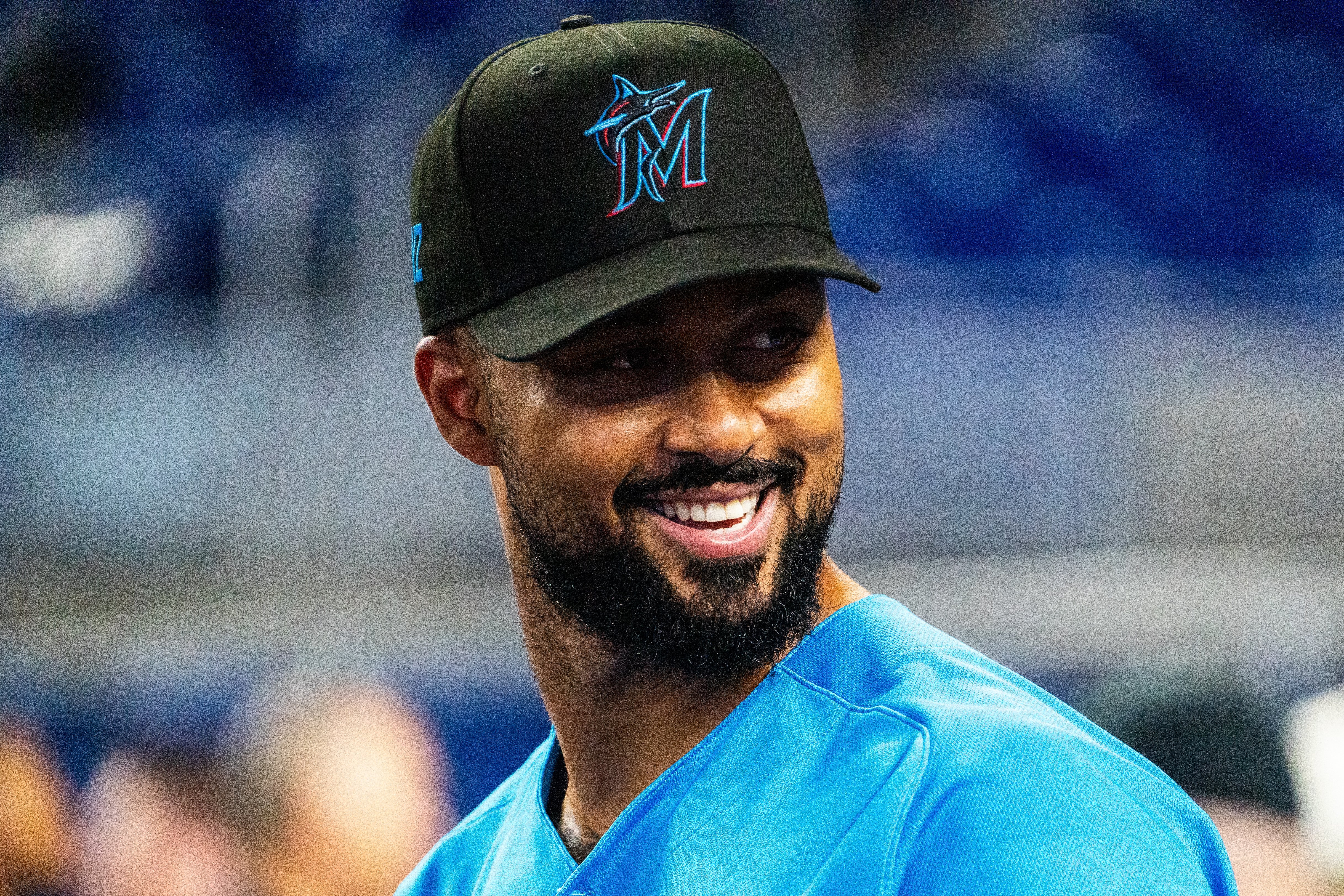 As expected, the Miami Marlins announced on Friday that they have picked up Sandy Alcantara's $21M club option for the 2027 season. Alcantara signed a five-year, $56M extension with the Marlins in 2022. This option represents the end of that contract. Barring a trade, it will mark the highest single-season salary that the club has ever played active player. Alcantara, 31, is set to enter his 10th season with the Marlins and his ninth separate season making a regular season appearance (he missed all of 2024 while rehabbing from Tommy John surgery). Only Luis Castillo had a tenure of equal length with the organization. This past season, Alcantara pitched to a 3.87 ERA, 4.08 FIP, 6.43 K/9 and 2.48 BB/9 in 214 innings pitched, which led all of Major League Baseball. During the span of his extension, he has won the 2022 National League Cy Young Award and posted a 3.80 ERA, 3.80 FIP, 7.3 K/9 and 2.4 BB/9 in 802 innings pitched while throwing an MLB-high 10 complete games. Also, Alcantara owns the franchise records for career innings pitched, starts and strikeouts. Picking up the option was a no-brainer. Miami's alternative would have been to pay a $2M buyout to Alcantara, making him a free agent. Along with Alcantara, the current projected Marlins Opening Day starting rotation for 2027 includes Eury Pérez, Max Meyer, Janson Junk and Tyler Phillips. View the full article
-
Marlins pick up Sandy Alcantara's club option for 2027 season
DiamondCentric posted an article in Fish On First
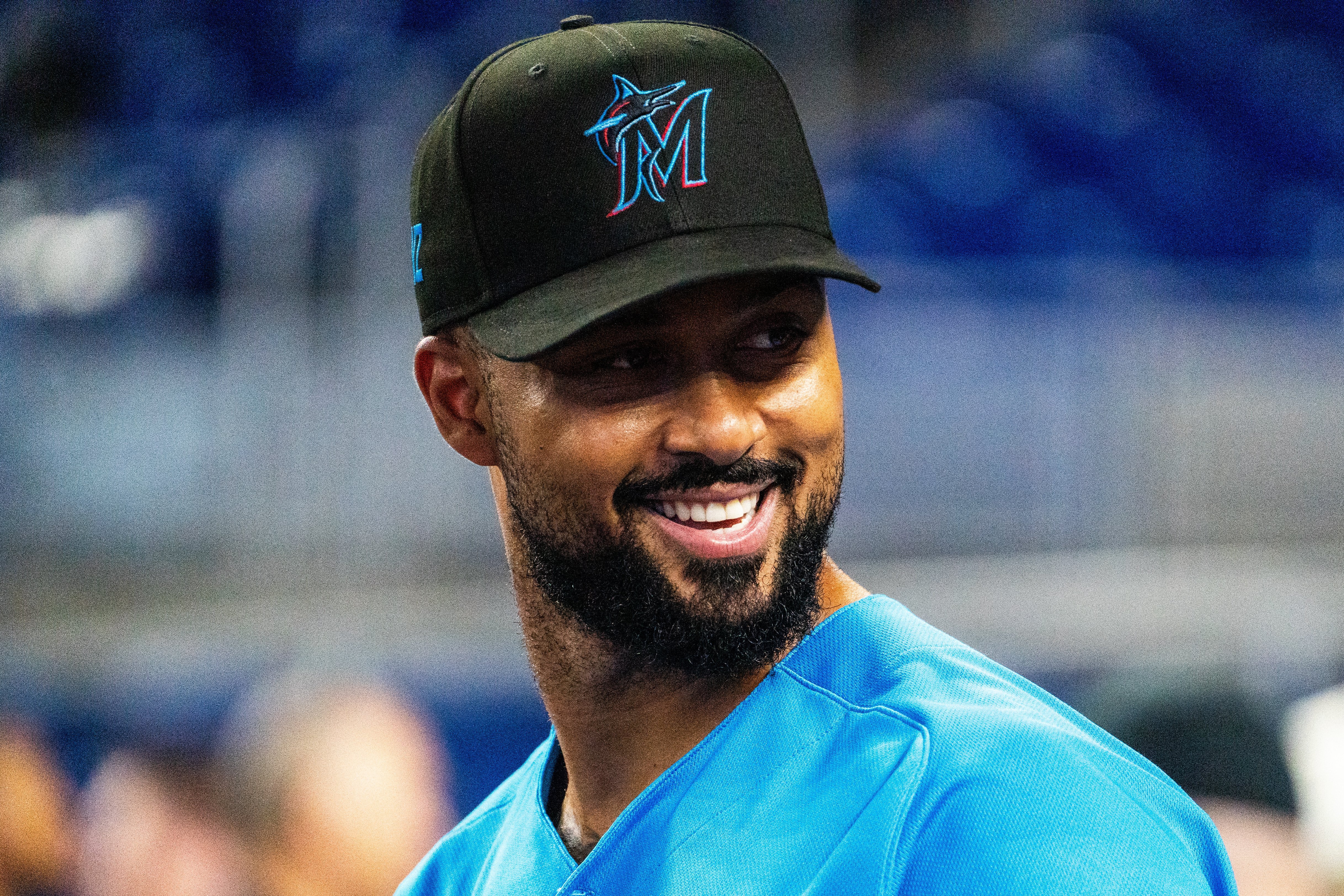 As expected, the Miami Marlins announced on Friday that they have picked up Sandy Alcantara's $21M club option for the 2027 season. Alcantara signed a five-year, $56M extension with the Marlins in 2022. This option represents the end of that contract. Barring a trade, it will mark the highest single-season salary that the club has ever paid an active player. Alcantara, 31, is set to enter his 10th season with the Marlins and his ninth separate season making a regular season appearance (he missed all of 2024 while rehabbing from Tommy John surgery). Only Luis Castillo had a tenure of equal length with the organization. This past season, Alcantara pitched to a 3.87 ERA, 4.08 FIP, 6.43 K/9 and 2.48 BB/9 in 214 innings pitched, which led all of Major League Baseball. During the span of his extension, he has won the 2022 National League Cy Young Award and posted a 3.80 ERA, 3.80 FIP, 7.3 K/9 and 2.4 BB/9 in 802 innings pitched while throwing an MLB-high 10 complete games. Also, Alcantara owns the franchise records for career innings pitched, starts and strikeouts. Picking up the option was a no-brainer. Miami's alternative would have been to pay a $2M buyout to Alcantara, making him a free agent. Along with Alcantara, the current projected Marlins Opening Day starting rotation for 2027 includes Eury Pérez, Max Meyer, Janson Junk and Tyler Phillips. View the full article
-
 Over four years have passed since the last time the Miami Marlins faced the prospect of an upcoming MLB lockout. Bruce Sherman remains the owner. The Marlins aspirations are essentially the same—have a winning record and make the playoffs. It's also anyone's guess when Miami will next play a baseball game. Other than that? Everything has changed. No more Derek Jeter. No more Kim Ng. Miami's roster is in a far better place. Perhaps more importantly, this CBA deadline brings a much higher likelihood of real change to the game's financial landscape. Then again, Miami's entire approach to team building has changed dramatically since then. In short, it may well be a fool's errand to try to draw any concrete lessons for this Marlins offseason from that of 2021-2022. However, that doesn't mean it can't be informative either. After all, Sherman is still the man cutting the checks. His memory of how things went last time around will undoubtedly play a part. Same goes for that of other senior officials, with new President of Baseball Operations Peter Bendix foremost among them. So let's start with Sherman and the headliners of that offseason, namely the best and worst decisions of his ownership era. Right before the start of the last MLB lockout, the Marlins announced two eleventh hour moves. One of those was an extension for Sandy Alcantara, which he is about to enter the last year of provided Miami exercises their club option next week. Unfortunately, the other was the signing of free agent Avisail Garcia to four-year, $56 million deal that the team just finished paying off. Obviously, the outcomes of those two decisions couldn't have been more different. Before breaking down the potential lessons, I'd be remiss not to note that both of them did equally check one box the Marlins could try to check again this November: Spending. Even heading into the last CBA, the pressure was on Miami to spend more. That will arguably be even more true heading into 2027. Therefore, a big expenditure of some kind on the Marlins part shouldn't come as a surprise. But what will that look like? On the Sandy side, could Sherman be well disposed to greenlighting another club friendly extension? Either that, or doubling down on his prior investment with another Alcantara extension? Sandy has proven a sound investment, and for the first time in years, the Marlins have multiple young players with proven resumes worth a long-term commitment. Yet on the Garcia side, it also feels safe to assume that the Marlins won't be rushing into any big free-agent deals. Miami hasn't done it since, and I have long said the Garcia deal broke Sherman as a free-agent spender. The Miami Herald's Barry Jackson reported last week that the team would not sign any "marquee 30-plus free-agents to enormous deals." While I can understand some Marlins fans pushing back on "marquee" and "enormous" as it relates to the Garcia contract, I'm just not sure Bruce Sherman would be among them. The "30-plus" reference comes across to me as just as much of an arrow pointing right at the Garcia blunder as it does an age-line delineating what players the Marlins will and won't go after. In short, I'd bet heavily on an extension or two, but wouldn't count on a true free-agent splurge. Trades could be a different story though. The Marlins acquired Jacob Stallings and Joey Wendle in the month leading up to the last CBA deadline. The Wendle move could be particularly worth dwelling on, as it was one of six trades that the Tampa Bay Rays made during that span—something that probably didn't escape the notice of then Rays employee Peter Bendix. He was promoted from Vice President of Baseball Development to General Manager that offseason, so obviously played some role in those moves. One of which, by the way, included the trade that brought a young prospect named Junior Caminero to Tampa. In my opinion, it all points to a busy month for the Marlins. View the full article
-
The Royals May Have Found A Gem In Lefty Justin Lamkin
DiamondCentric posted an article in Royals Keep
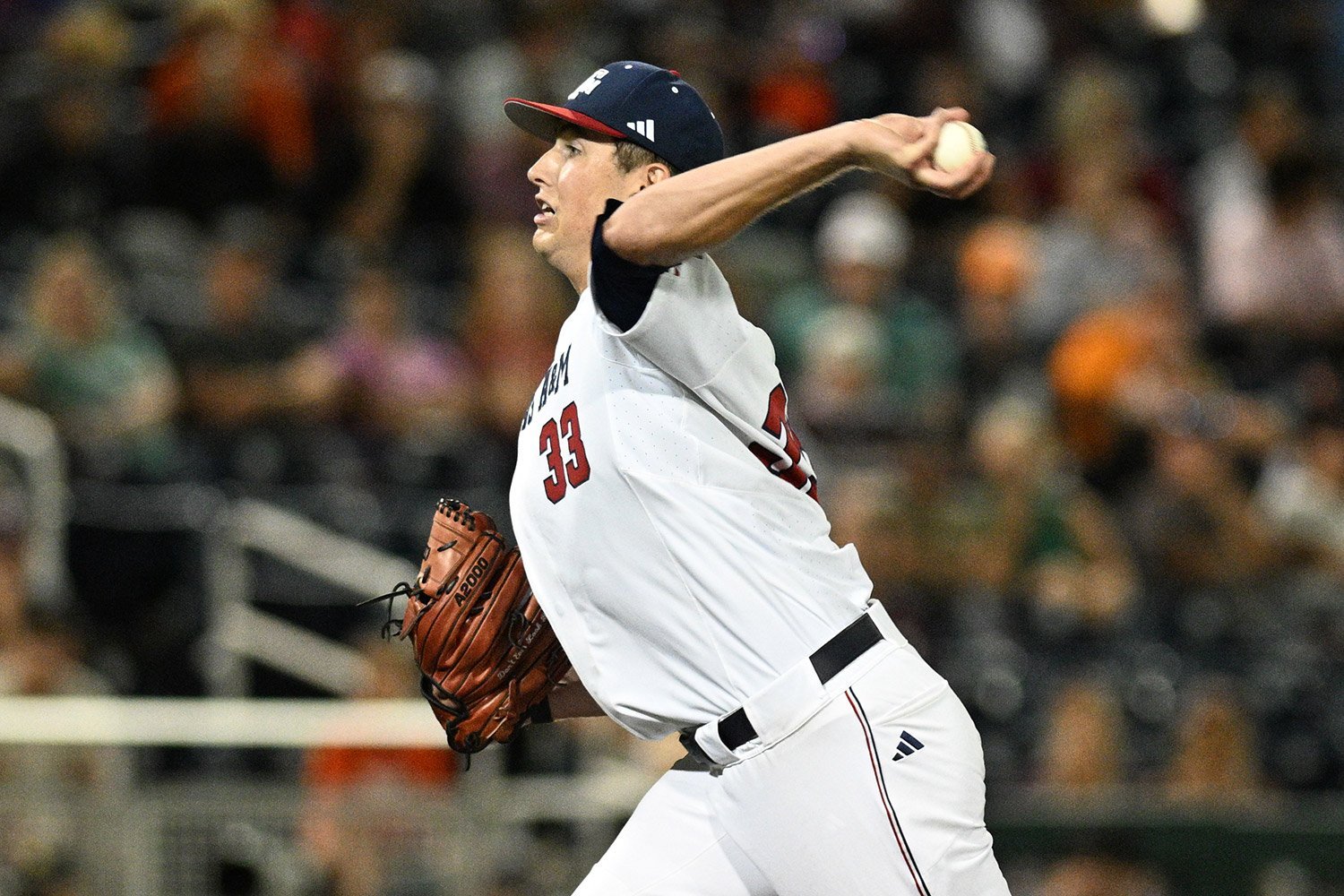 The Kansas City Royals’ farm system is full of guys who, in my humble opinion, deserve more national attention. None more so than pitcher Justin Lamkin. The 6-foot-4, 210-pound left-hander was selected 71st overall by Kansas City in the 2025 MLB Draft out of Texas A&M, and he currently ranks as the Royals’ No. 12 prospect. While a shoulder injury cut his first full professional season short, he showed plenty of reasons to be excited about his future. Lamkin began the 2026 season with High-A Quad Cities, where he got his first taste of professional baseball. Across six starts, Lamkin posted a 1.27 ERA and 0.92 WHIP while racking up an outrageous 34.9% strikeout rate. It didn't take long for the Royals to decide he was ready for a bigger challenge, earning a promotion to Double-A Northwest Arkansas. He made two starts with the Naturals, allowing five earned runs over 11 1/3 innings. The jump to Double-A is widely considered one of the most difficult transitions in the minor leagues, so it's not surprising that his ERA climbed to 3.97. However, his ability to miss bats remained just as impressive. His strikeout rate remained exactly the same at 34.9%. Yes, that came across just two starts, so it's a small sample size. But the fact that he continued to rack up strikeouts against more advanced competition is certainly encouraging. Unfortunately, Lamkin's season ended early due to left shoulder impingement. The good news is that he's healthy again and pitching in the Arizona Fall League, where he's continuing to show what makes him such an intriguing prospect. So, what made Lamkin so successful in 2026, and how can he take another step forward next season? Lamkin's Pitch Arsenal Lamkin has two pitches that give him a really strong foundation: his four-seam fastball and his slider. He's not a flamethrower by any means, sitting in the low 90s with his fastball. But his ability to command the pitch is impressive for a 22-year-old, and his 6-foot-4 frame allows him to get good extension down the mound. That helps his fastball play up, making it more difficult for hitters to square up than the velocity alone might suggest. The overall shape of the pitch isn't anything spectacular, but that's not necessarily a problem. Just as dads everywhere tell their children, he’s a pitcher, not a thrower, and there's a difference between the two. A fastball with elite velocity and movement is great, but it doesn't do a pitcher much good if he can't consistently locate it. Lamkin's ability to put his fastball where he wants it gives him a solid foundation to build upon, especially when paired with a secondary pitch that can keep hitters guessing. That's where his slider comes into play. Lamkin's slider has relatively tight movement, but what makes it effective is how he tunnels it with his fastball. He starts the two pitches in similar locations before they separate, making it difficult for hitters to distinguish between them early in their swings. It's an effective pitch against both left-handed and right-handed hitters, and it's widely considered his best secondary offering. Depending on who you ask, it might even be better than his fastball. He also has a changeup that remains a work in progress, giving him another avenue to attack hitters as he continues to develop. But there's another pitch in his arsenal that really caught my attention: his curveball. He didn't throw a curveball in college, adding it to his repertoire last offseason. Unfortunately, the shoulder injury limited the time he had to refine the pitch during the regular season. However, he's been using it quite a bit in the Arizona Fall League, and the early results are intriguing. Lamkin In The Arizona Fall League Across his first two AFL starts, Lamkin has thrown his curveball just over 31% of the time, according to MLB.com's Sam Dykstra. That's significant usage for a pitch he only recently added to his arsenal, and it's been effective, too. Hitters have swung at the curveball 17 times, coming up empty on seven of those swings. That's a 41.2% whiff rate, giving Lamkin another pitch that can generate swings and misses. And that's where things get really interesting. Hitters already struggled to make contact against Lamkin in 2026, recording just a 66.1% contact rate. His ability to miss bats was one of the biggest reasons for his early success, and adding another legitimate swing-and-miss pitch could make him even more difficult to handle. The key is that his curveball moves differently and comes in at a different speed than his slider. Rather than simply giving hitters another version of the same pitch, it forces them to account for a different look. When you combine that with a well-commanded fastball and an effective slider, there's a lot to like about the foundation he's building. Expectations For Lamkin In 2027 Of course, we need to see Lamkin stay healthy next season. That's the biggest priority after his shoulder injury limited him to just eight regular-season starts. Before worrying about another pitch or a potential promotion, he needs to show he can take the ball consistently and continue developing. Still, the fact that Kansas City was willing to move him to Double-A after just six professional starts says something about how the organization views him. The Royals clearly believe he's capable of handling advanced competition, and his swing-and-miss numbers suggest that confidence wasn't misplaced. This is a prospect who could have generated considerably more national attention if he had stayed healthy throughout the 2026 season. Instead, he's flying a little under the radar, even as he continues to show off an exciting combination of command and swing-and-miss stuff. I think the Royals have something special here. Lamkin still has plenty of development ahead of him, particularly with his changeup and newly added curveball, but the ingredients are there for him to become a very interesting starting pitching prospect. If he can remain healthy this offseason and carry his progress into 2027, we could see him take another significant step forward. And if that curveball continues to develop into a legitimate weapon, don't be surprised if Lamkin takes another step forward next year, potentially even all the way to Kauffman Stadium. View the full article
-
The Royals May Have Found A Gem In Lefty Justin Lamkin
DiamondCentric posted an article in Royals Keep
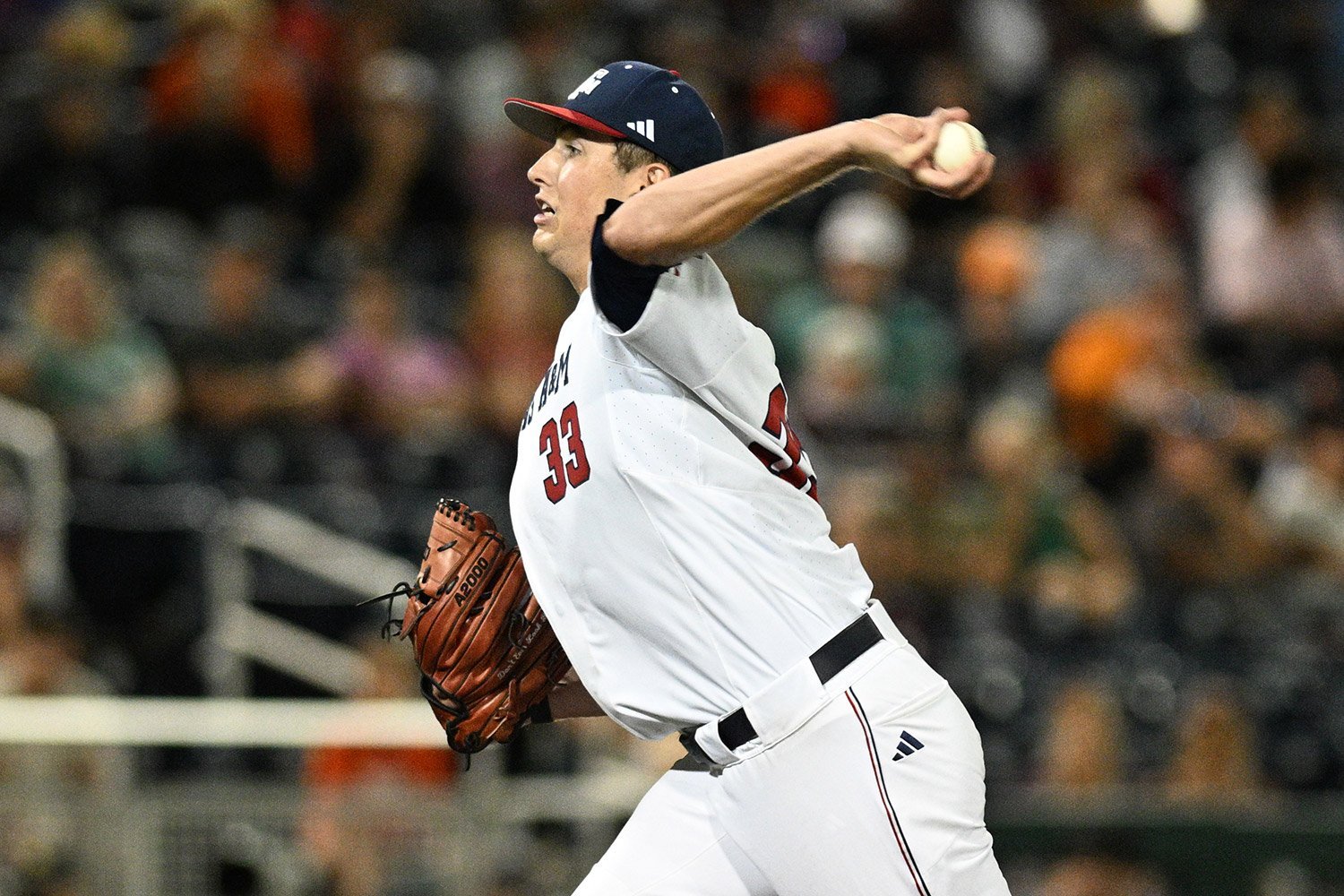 The Kansas City Royals’ farm system is full of guys who, in my humble opinion, deserve more national attention. None more so than pitcher Justin Lamkin. The 6-foot-4, 210-pound left-hander was selected 71st overall by Kansas City in the 2025 MLB Draft out of Texas A&M, and he currently ranks as the Royals’ No. 12 prospect. While a shoulder injury cut his first full professional season short, he showed plenty of reasons to be excited about his future. Lamkin began the 2026 season with High-A Quad Cities, where he got his first taste of professional baseball. Across six starts, Lamkin posted a 1.27 ERA and 0.92 WHIP while racking up an outrageous 34.9% strikeout rate. It didn't take long for the Royals to decide he was ready for a bigger challenge, earning a promotion to Double-A Northwest Arkansas. He made two starts with the Naturals, allowing five earned runs over 11 1/3 innings. The jump to Double-A is widely considered one of the most difficult transitions in the minor leagues, so it's not surprising that his ERA climbed to 3.97. However, his ability to miss bats remained just as impressive. His strikeout rate remained exactly the same at 34.9%. Yes, that came across just two starts, so it's a small sample size. But the fact that he continued to rack up strikeouts against more advanced competition is certainly encouraging. Unfortunately, Lamkin's season ended early due to left shoulder impingement. The good news is that he's healthy again and pitching in the Arizona Fall League, where he's continuing to show what makes him such an intriguing prospect. So, what made Lamkin so successful in 2026, and how can he take another step forward next season? Lamkin's Pitch Arsenal Lamkin has two pitches that give him a really strong foundation: his four-seam fastball and his slider. He's not a flamethrower by any means, sitting in the low 90s with his fastball. But his ability to command the pitch is impressive for a 22-year-old, and his 6-foot-4 frame allows him to get good extension down the mound. That helps his fastball play up, making it more difficult for hitters to square up than the velocity alone might suggest. The overall shape of the pitch isn't anything spectacular, but that's not necessarily a problem. Just as dads everywhere tell their children, he’s a pitcher, not a thrower, and there's a difference between the two. A fastball with elite velocity and movement is great, but it doesn't do a pitcher much good if he can't consistently locate it. Lamkin's ability to put his fastball where he wants it gives him a solid foundation to build upon, especially when paired with a secondary pitch that can keep hitters guessing. That's where his slider comes into play. Lamkin's slider has relatively tight movement, but what makes it effective is how he tunnels it with his fastball. He starts the two pitches in similar locations before they separate, making it difficult for hitters to distinguish between them early in their swings. It's an effective pitch against both left-handed and right-handed hitters, and it's widely considered his best secondary offering. Depending on who you ask, it might even be better than his fastball. He also has a changeup that remains a work in progress, giving him another avenue to attack hitters as he continues to develop. But there's another pitch in his arsenal that really caught my attention: his curveball. He didn't throw a curveball in college, adding it to his repertoire last offseason. Unfortunately, the shoulder injury limited the time he had to refine the pitch during the regular season. However, he's been using it quite a bit in the Arizona Fall League, and the early results are intriguing. Lamkin In The Arizona Fall League Across his first two AFL starts, Lamkin has thrown his curveball just over 31% of the time, according to MLB.com's Sam Dykstra. That's significant usage for a pitch he only recently added to his arsenal, and it's been effective, too. Hitters have swung at the curveball 17 times, coming up empty on seven of those swings. That's a 41.2% whiff rate, giving Lamkin another pitch that can generate swings and misses. And that's where things get really interesting. Hitters already struggled to make contact against Lamkin in 2026, recording just a 66.1% contact rate. His ability to miss bats was one of the biggest reasons for his early success, and adding another legitimate swing-and-miss pitch could make him even more difficult to handle. The key is that his curveball moves differently and comes in at a different speed than his slider. Rather than simply giving hitters another version of the same pitch, it forces them to account for a different look. When you combine that with a well-commanded fastball and an effective slider, there's a lot to like about the foundation he's building. Expectations For Lamkin In 2027 Of course, we need to see Lamkin stay healthy next season. That's the biggest priority after his shoulder injury limited him to just eight regular-season starts. Before worrying about another pitch or a potential promotion, he needs to show he can take the ball consistently and continue developing. Still, the fact that Kansas City was willing to move him to Double-A after just six professional starts says something about how the organization views him. The Royals clearly believe he's capable of handling advanced competition, and his swing-and-miss numbers suggest that confidence wasn't misplaced. This is a prospect who could have generated considerably more national attention if he had stayed healthy throughout the 2026 season. Instead, he's flying a little under the radar, even as he continues to show off an exciting combination of command and swing-and-miss stuff. I think the Royals have something special here. Lamkin still has plenty of development ahead of him, particularly with his changeup and newly added curveball, but the ingredients are there for him to become a very interesting starting pitching prospect. If he can remain healthy this offseason and carry his progress into 2027, we could see him take another significant step forward. And if that curveball continues to develop into a legitimate weapon, don't be surprised if Lamkin takes another step forward next year, potentially even all the way to Kauffman Stadium. View the full article
-
 With the 2026 World Series wrapped up, Fish On First staffers prepare you for what comes next. Thursday's show was hosted by Ely Sussman and featured panelists Kevin Barral and Jeremiah Geiger. This podcast is brought to you by Jet Ski Rentals of South Florida—offering Miami’s best jet ski and boat adventures. With six jet ski locations and over 120 boats, there’s something for every style and every budget. They’re reservation-based only. To inquire, call 305-990-2192, or check them out online at SFJetskiRentals.com. Make sure to use promo code FISHONFIRST to receive 10% off your next booking. You can find Fish Unfiltered and Fish On First LIVE on the Fish On First YouTube channel, Apple Podcasts, Spotify or wherever else you get your pods. On Friday morning, the exercising of Sandy Alcantara's club option became official. View the full article
-
 With the 2026 World Series wrapped up, Fish On First staffers prepare you for what comes next. Thursday's show was hosted by Ely Sussman and featured panelists Kevin Barral and Jeremiah Geiger. This podcast is brought to you by Jet Ski Rentals of South Florida—offering Miami’s best jet ski and boat adventures. With six jet ski locations and over 120 boats, there’s something for every style and every budget. They’re reservation-based only. To inquire, call 305-990-2192, or check them out online at SFJetskiRentals.com. Make sure to use promo code FISHONFIRST to receive 10% off your next booking. You can find Fish Unfiltered and Fish On First LIVE on the Fish On First YouTube channel, Apple Podcasts, Spotify or wherever else you get your pods. On Friday morning, the exercising of Sandy Alcantara's club option became official. View the full article
-
Forum Friday: Mo Bichette, 21, Community Awards
DiamondCentric posted an article in Grand Central Mets
 The forums remained active as fans discussed several key topics. This week's Forum Friday highlights three threads: one examining Bo Bichette's contract decision, another celebrating Francisco Lindor's Clemente Award, and a lighthearted look at the site's Community Awards for the 2026 season. Are you exhausted by algorithmic internet "discussion"? Tired of seeing posts that are meant only to anger you, bait you into a response, or find yet another way to extract your personal data? Come join the conversation on the human-moderated Grand Central Mets forums, where you can talk Mets baseball without the constant barrage of misinformation, hot takes and loudmouths. Joining is free: create an account at diamondcentric.net, then use that same login here to comment. Mo Bichette? Discusses Bo Bichette’s decision to opt in or out of his contract, with posters noting he could earn $47 million for 2027 or $84 million if staying through 2028, or take a $5 million bonus and enter free agency at age 29. Some compared him to Roberto Alomar, questioning his production, while others saw him as overpaid but valuable. Most agreed the Mets need improvements at first base, second base, and DH, but felt contention would require better performances from current players. 21 Discusses Francisco Lindor winning the Roberto Clemente Award, which grants him the right to wear a "21" on his cap permanently. Members praised Lindor's legacy, calling him a future Hall of Famer and a Mets legend, and expressed hope he stays with the team. Some compared past trade discussions to absurd proposals, emphasizing Lindor's value. Others highlighted his character and the significance of the award, with many agreeing that trading him would be a mistake. Grand Central Mets’ Community Awards: 2026 MLB Season A thread on Grand Central Mets celebrated the 2026 season’s most popular posts and blogs, highlighting a non-baseball post about a member upgrading his car, which became the most popular post. The runner-up was a return post by a member starting a game thread. Fans discussed the criteria for popularity, with some joking about continuing to post and others questioning the process. Most seemed to accept the choices, though a few expressed confusion over how the selections were made. It's another great day to be a Mets fan at Grand Central Mets! View the full article
-
Forum Friday: Mo Bichette, 21, Community Awards
DiamondCentric posted an article in Grand Central Mets
 The forums remained active as fans discussed several key topics. This week's Forum Friday highlights three threads: one examining Bo Bichette's contract decision, another celebrating Francisco Lindor's Clemente Award, and a lighthearted look at the site's Community Awards for the 2026 season. Are you exhausted by algorithmic internet "discussion"? Tired of seeing posts that are meant only to anger you, bait you into a response, or find yet another way to extract your personal data? Come join the conversation on the human-moderated Grand Central Mets forums, where you can talk Mets baseball without the constant barrage of misinformation, hot takes and loudmouths. Joining is free: create an account at diamondcentric.net, then use that same login here to comment. Mo Bichette? Discusses Bo Bichette’s decision to opt in or out of his contract, with posters noting he could earn $47 million for 2027 or $84 million if staying through 2028, or take a $5 million bonus and enter free agency at age 29. Some compared him to Roberto Alomar, questioning his production, while others saw him as overpaid but valuable. Most agreed the Mets need improvements at first base, second base, and DH, but felt contention would require better performances from current players. 21 Discusses Francisco Lindor winning the Roberto Clemente Award, which grants him the right to wear a "21" on his cap permanently. Members praised Lindor's legacy, calling him a future Hall of Famer and a Mets legend, and expressed hope he stays with the team. Some compared past trade discussions to absurd proposals, emphasizing Lindor's value. Others highlighted his character and the significance of the award, with many agreeing that trading him would be a mistake. Grand Central Mets’ Community Awards: 2026 MLB Season A thread on Grand Central Mets celebrated the 2026 season’s most popular posts and blogs, highlighting a non-baseball post about a member upgrading his car, which became the most popular post. The runner-up was a return post by a member starting a game thread. Fans discussed the criteria for popularity, with some joking about continuing to post and others questioning the process. Most seemed to accept the choices, though a few expressed confusion over how the selections were made. It's another great day to be a Mets fan at Grand Central Mets! View the full article
-
 The Brewers are World Champions! This week's Forum Friday highlights discussions on Jesus Made's potential extension, plans for the St. Pete/Tampa area, recommendations for the best Brewers-related song, and where this team ranks among World Series champions. Are you exhausted by algorithmic internet "discussion"? Tired of seeing posts that are meant only to anger you, bait you into a response, or find yet another way to extract your personal data? Come join the conversation on the human-moderated Brewer Fanatic forums, where you can talk Brewers baseball without the constant barrage of misinformation, hot takes and loudmouths. Joining is free: create an account at diamondcentric.net, then use that same login here to comment. Where does this team rank in past WS Champions Members debated where the 2026 Brewers rank among World Series champions since 2000, citing their 103 wins, 11-2 playoff run, and what they called the best bullpen ever. Some placed them between the 1976 Reds and 1998 Yankees, while others argued they belong in the top 5 since 2000. A few compared them favorably to the 2006 Cardinals, though opinions varied on how strong that team actually was. Jesus Made Extension? A discussion on whether Jesus Made should sign an extension similar to those of Jackson Chourio, Cooper Pratt, and Luis Lara, focusing on his potential as a future starting third baseman. Posters compared Made favorably to Jose Ramirez at a similar stage in his career, citing strong stats and a high ceiling. Some argued the Brewers should offer him the third base job to secure the deal, while others questioned the timing due to the potential lockout and uncertainty around service time rules. St Pete / Tampa / Clearwater Check Ins Members discussed plans for spending the day in St. Pete, Tampa, and Clearwater ahead of Game 4, noting the expected increase in Brewers fans and the popularity of Ferg’s as a pregame gathering spot. Some mentioned tailgating in Tampa, though it paled in comparison to Milwaukee. Others shared experiences from the previous day, highlighting the lively atmosphere at Ferg’s and the growing number of Brewers fans in the area. There was also mention of ticket availability being limited and more expensive than the day before. What's the Best Brewer Related Song? Asked for recommendations on the best Brewers-related song, sparking a discussion that included "Rockin’ Robin," a possible Yount adaptation, "Brewer Fever," and the viral "Milwaukee Brewers" song from this postseason. Members also mentioned Celine Dion’s "My Heart Will Go On" and a local radio jingle. While some praised nostalgic and catchy tunes, others found the viral song grating. The consensus leaned toward older, more iconic tracks, with mixed feelings on newer efforts. It's another great day to be a Brewers fan at Brewer Fanatic! View the full article
-
 Talk Sox's forums remained active as fans turned their attention to the Red Sox's future. This week's Forum Friday highlights four threads, including discussions on the team's pre-offseason challenges, projections for the 2027 roster, analysis of the 2026 postseason, and a roundup of injury concerns and non-tender risks. Are you exhausted by algorithmic internet "discussion"? Tired of seeing posts that are meant only to anger you, bait you into a response, or find yet another way to extract your personal data? Come join the conversation on the human-moderated Talk Sox forums, where you can talk Red Sox baseball without the constant barrage of misinformation, hot takes and loudmouths. Joining is free: create an account at diamondcentric.net, then use that same login here to comment. Red Sox Pre-Offseason Mega Thread The Red Sox Pre-Offseason Mega Thread sparked discussion about the team's recent performance, with posters criticizing the lack of offensive depth and the impact of injuries, particularly focusing on Roman Anthony's finger injury. Many expressed disappointment over missed opportunities to sign players like Alonso and Bregman, arguing that the team took cheaper options instead. There was debate over the effectiveness of the front office's decisions, with some defending the moves while others called for more investment. A Realistic View at the 2027 Red Sox Part I Members discussed the 2027 Red Sox roster, focusing on injuries, free agent losses, and potential additions. They debated whether to retain Gray or replace him, with some favoring Arias for defensive improvement at shortstop. There was disagreement on whether the team should prioritize acquiring power hitters or rely on internal development. Some believed the focus should be on improving the offense through conditioning and coaching, while others felt the team needed to make trades for impact bats. 2026 MLB post-Red Sox postseason thread Fans discussed the low-scoring nature of the 2026 LDS, citing 54 runs and 117 hits across 10 games, with teams averaging 2.7 runs and 5.85 hits per game. The thread also covered defensive metrics, comparing players like Durbin, Abreu, and Rafaela, and debated the Red Sox's second base struggles, referencing past trades and players like Pedey, Mead, and Chisholm. Most agreed that the 2B position has been a long-term issue, with mixed opinions on potential fixes and player performances. Red Sox Roundup, Oct 12: Offseason Questions, Injury Concerns, Non-Tender Risks The Talk Sox forums debated the Red Sox's 2026 season, injury concerns, and potential non-tender candidates like Duran, Mead, and others. Posts highlighted the team's offensive depth issues, with Monasterio, Yoshida, and Sogard ranked 6-8 in plate appearances, and discussed possible upgrades at second base and DH. Most agreed that addressing the lack of power and improving depth were critical, with some suggesting Mead as a potential 2B or DH. It's another great day to be a Red Sox fan at Talk Sox! View the full article
-
 Talk Sox's forums remained active as fans turned their attention to the Red Sox's future. This week's Forum Friday highlights four threads, including discussions on the team's pre-offseason challenges, projections for the 2027 roster, analysis of the 2026 postseason, and a roundup of injury concerns and non-tender risks. Are you exhausted by algorithmic internet "discussion"? Tired of seeing posts that are meant only to anger you, bait you into a response, or find yet another way to extract your personal data? Come join the conversation on the human-moderated Talk Sox forums, where you can talk Red Sox baseball without the constant barrage of misinformation, hot takes and loudmouths. Joining is free: create an account at diamondcentric.net, then use that same login here to comment. Red Sox Pre-Offseason Mega Thread The Red Sox Pre-Offseason Mega Thread sparked discussion about the team's recent performance, with posters criticizing the lack of offensive depth and the impact of injuries, particularly focusing on Roman Anthony's finger injury. Many expressed disappointment over missed opportunities to sign players like Alonso and Bregman, arguing that the team took cheaper options instead. There was debate over the effectiveness of the front office's decisions, with some defending the moves while others called for more investment. A Realistic View at the 2027 Red Sox Part I Members discussed the 2027 Red Sox roster, focusing on injuries, free agent losses, and potential additions. They debated whether to retain Gray or replace him, with some favoring Arias for defensive improvement at shortstop. There was disagreement on whether the team should prioritize acquiring power hitters or rely on internal development. Some believed the focus should be on improving the offense through conditioning and coaching, while others felt the team needed to make trades for impact bats. 2026 MLB post-Red Sox postseason thread Fans discussed the low-scoring nature of the 2026 LDS, citing 54 runs and 117 hits across 10 games, with teams averaging 2.7 runs and 5.85 hits per game. The thread also covered defensive metrics, comparing players like Durbin, Abreu, and Rafaela, and debated the Red Sox's second base struggles, referencing past trades and players like Pedey, Mead, and Chisholm. Most agreed that the 2B position has been a long-term issue, with mixed opinions on potential fixes and player performances. Red Sox Roundup, Oct 12: Offseason Questions, Injury Concerns, Non-Tender Risks The Talk Sox forums debated the Red Sox's 2026 season, injury concerns, and potential non-tender candidates like Duran, Mead, and others. Posts highlighted the team's offensive depth issues, with Monasterio, Yoshida, and Sogard ranked 6-8 in plate appearances, and discussed possible upgrades at second base and DH. Most agreed that addressing the lack of power and improving depth were critical, with some suggesting Mead as a potential 2B or DH. It's another great day to be a Red Sox fan at Talk Sox! View the full article
-
 The North Side Baseball forums remained active as fans turned their attention to the postseason and the Cubs' future. This week's Forum Friday highlights four threads: discussions on the Brewers' playoff run, debates over the Cubs' potential free-agent and trade targets, analysis of the team's offseason budget, and conversations about the Cubs' 2026 AFL roster and draft strategy. Are you exhausted by algorithmic internet "discussion"? Tired of seeing posts that are meant only to anger you, bait you into a response, or find yet another way to extract your personal data? Come join the conversation on the human-moderated North Side Baseball forums, where you can talk Cubs baseball without the constant barrage of misinformation, hot takes and loudmouths. Joining is free: create an account at diamondcentric.net, then use that same login here to comment. Non-Cub Playoff Megathread Chit-Chat Posts centered on the Braves' 3-run home run in the 8th inning and the sparse attendance in Atlanta, with many noting the Brewers' 9-1 playoff record and their ability to overcome early deficits. Fans discussed Milwaukee's aggressive hitting, including Front Row Amy's enthusiastic presence, and compared the Brewers' resilience to the 2016 Cubs' playoff runs. Some praised the drama and unpredictability of the series, while others expressed frustration with the Brewers' tendency to give up early runs. Cubs Pre-Offseason Mega Thread The Cubs Pre-Offseason Mega Thread sparked discussion on the team's prospects, with members debating potential free-agent signings and trade targets. Many focused on the rotation, suggesting signings like Peralta, Holmes, or Peterson, while others questioned the viability of players like Steele, Cabrera, and Horton. There was consensus that the Cubs lack the capital to pursue Detmers, with some advocating for cheaper, moldable starters instead. Opinions split on Horton's future, with some believing he should remain a starter and others pushing for a bullpen role. Cubs Offseason Mega Thread Cubs fans discussed the team's offseason plans, focusing on free agency and trades, especially for starting pitchers and corner outfielders. Posts mentioned potential free agents like Skubal, Rogers, and Arozarena, with some suggesting the Cubs might target one high-end bullpen arm. There was debate over the team's budget, with some estimating the 2027 salary threshold at around $250 million and others predicting closer to $270 million. AFL 2026 Discusses the Cubs' 2026 AFL roster and draft strategy, focusing on potential rotation members like Townsend, Florentino, Mule, Reid, Coppola, and Chase Meyer. Posts debate whether the Cubs should prioritize drafting more pitchers to address attrition, with some arguing for a balanced approach and others pushing for a pitcher-heavy strategy. The forum notes the return of international talent and suggests the Cubs may lean toward more pitching in the draft, though opinions remain split on the optimal balance. It's another great day to be a Cubs fan at North Side Baseball! View the full article
-
 With no Twins games this week, the forums remained active as fans turned their attention to the World Series. This week's Forum Friday highlights five threads, including debates on World Series games, the potential extension of prospect Vahn Lackey, Rocco Baldelli's exit from the Mariners' managerial search, and discussions on the Brewers' and Rays' performances. Are you exhausted by algorithmic internet "discussion"? Tired of seeing posts that are meant only to anger you, bait you into a response, or find yet another way to extract your personal data? Come join the conversation on the human-moderated Twins Daily forums, where you can talk Twins baseball without the constant barrage of misinformation, hot takes and loudmouths. Joining is free: create an account at diamondcentric.net, then use that same login here to comment. WORLD SERIES GAME#4 10/27/26 Posters debated the World Series Game 4, focusing on Griffin Jax's performance as a starter and the Rays' chances against the Brewers. Some noted Jax's 3.12 ERA as a starter compared to 8.23 as a reliever, while others questioned his strike zone control. Discussion also centered on the Brewers' strategy, with some suggesting a bullpen game and others criticizing Tropicana Field's artificial crowd noise. Most agreed the game was competitive, with some predicting a Brewers win. The Pros and Cons of the Twins Extending Top Prospect Vahn Lackey Minnesota Twins fans debated whether the team should extend a long-term contract to Vahn Lackey, a 21-year-old catcher and third overall pick in the 2026 draft, before he reaches the majors. Members cited the growing trend of early extensions, noting teams like the Brewers have done so successfully, but many questioned the Twins' readiness, citing poor development and evaluation track records. WORLD SERIES GAME#5 10/28/26 Fans debated the World Series Game 5 between the Brewers and Rays, with many expressing hope for a Game 6 or 7. Comments focused on Milwaukee’s performance, with praise for pitcher Mitch Moehler’s effectiveness and criticism of Tampa’s struggles, including sloppy fielding and a tired Blake Snell. Some noted the Rays’ new Tropicana Field turf, made of coconut husks, and compared it to past home-field advantages. While some expressed disappointment in the Twins’ lack of success, others celebrated the Brewers’ historic run. WORLD SERIES GAME#3 MILWAUKEE@TAMPA 10/26/26 Fans debated the World Series Game 3 between Milwaukee and Tampa, focusing on Milwaukee’s fundamentals, Freddy Peralta’s performance, and Tampa’s defensive struggles. Many praised Milwaukee’s disciplined approach and luck, while others criticized Tampa’s errors and lack of power. Some argued the NL’s overall superiority this season, while others emphasized the role of luck and inches in close games. The discussion split between those who preferred fundamental play and those who valued power and excitement. Former Twins Manager Rocco Baldelli Pulls Out of Mariners Manager Search Former Twins manager Rocco Baldelli withdrew from the Mariners' managerial search due to family reasons, reigniting discussions about his tenure with the Twins. Regulars noted his early success, including a 101-win season and three playoff appearances, but also criticized his late-game decisions and reliance on analytics. Some believed his style clashed with the Twins' roster, while others suggested he may have been following front office directives. It's another great day to be a Twins fan at Twins Daily! View the full article
-
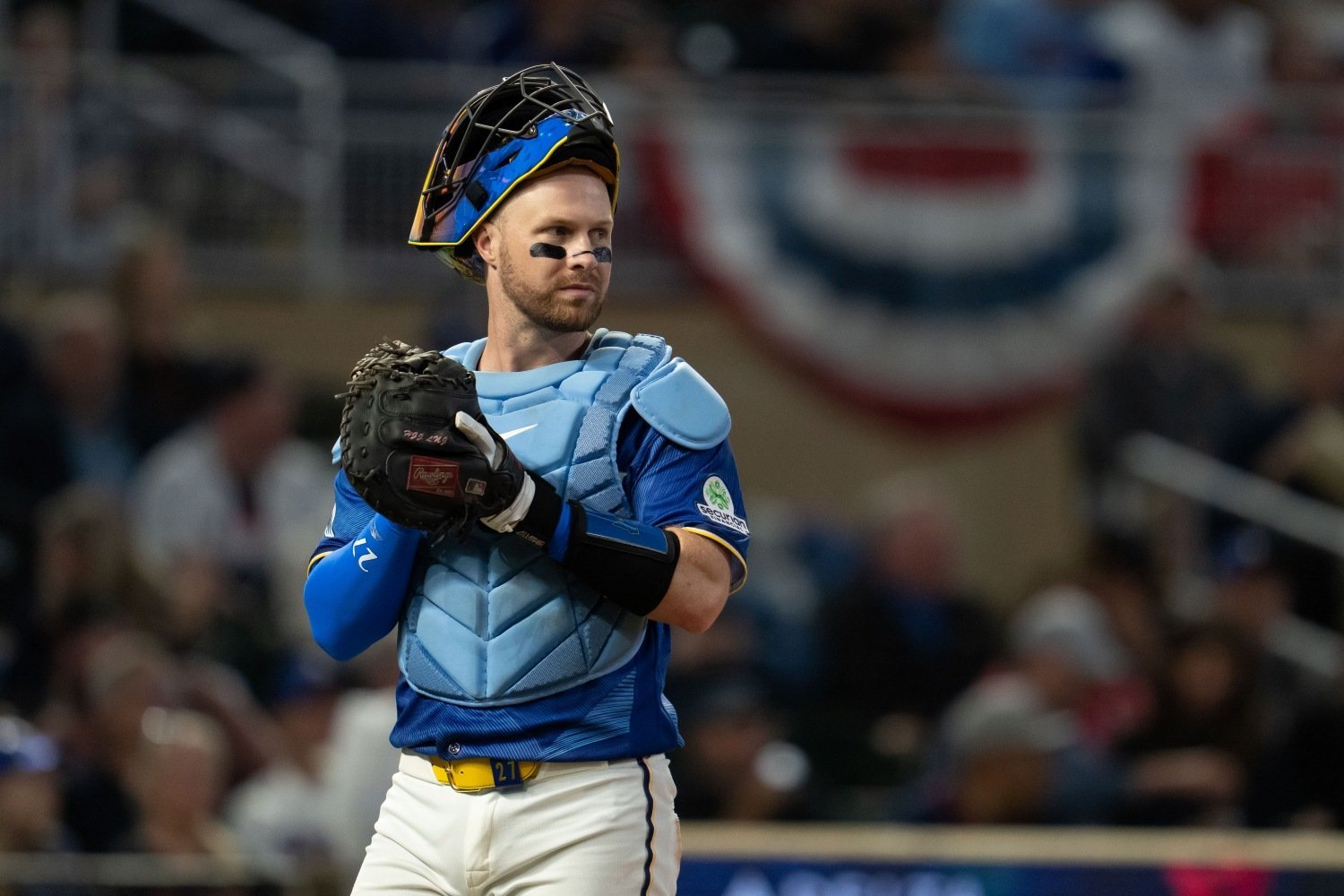 The MLB offseason is here, and teams have until 4 PM Central time on Monday to extend qualifying offers to eligible free agents. That's also when the exclusive negotiating window between players and their previous teams expires, opening free agency in full. For the Twins, that means that they need to decide whether to issue that offer to catcher Ryan Jeffers. If he were to accept it, he would receive $23.15 million on a one-year deal. If he declined, the Twins would receive a 2027 draft pick if and when he signs with another team. Jeffers, 29, batted .256/.353/.461 in his walk year, with 14 home runs, 46 walks and 66 strikeouts in 369 plate appearances. It was the second-best offensive season of his career, trailing only 2023, and most fans expect the Twins to make at least a nominal effort to retain him by extending the QO on the back of that strong performance. That might well happen. However, there are a few things pushing against the simple logic of his good performance, as the team weighs its options with regard to what would be a major investment. Jeffers's Doubtful Durability and the Twins' Payroll Utility As the offseason begins, one still-unanswered question is how much the team is willing to back up owner Tom Pohlad's big talk about spending more on payroll than they have over the last two seasons. Based on their end-of-season press conference, the team wants fans to expect significant outlays and a boost to somewhere north of $135 million in spending in 2027. A pessimist might point out, though, that they have every reason to raise expectations that way in October and November. Many ticket sales for the following season (especially season-ticket and group sales, which are teams' major revenue drivers) happen during that early phase of the offseason, so setting high expectations can be helpful even if you're unable (or unwilling) to deliver on them. Presumably, the team has at least some good-faith intention to spend this winter, but they also have plenty of money spoken for already, and that needs to inform their decisions this winter. Pablo López is due $21.5 million in 2027, and while there's optimism (at the moment) that he'll be ready for Opening Day, the reality of recent cases in which pitchers underwent second Tommy John surgeries is that most aren't back on the mound and up to speed until 16 or 17 months after their operation. Justin Steele had surgery in April 2025 and didn't pitch at all in the majors in 2026. Jordan Montgomery had it shortly before Steele and only made it back to the bigs the following August. López had his operation in February, so barring a significant setback, he should be on the mound before the end of June, but that's different than giving the team a full complement of front-of-the-rotation innings. López's case is similar to that of Byron Buxton, who faces a long recovery from surgery on the labrum in his hip. The team hopes he'll be back for Opening Day; the smart money says he won't be. Buxton's base salary for 2027, as with the other years of his contract, is $15 million. The club is also sending $10 million to the Astros again next year, to defray the costs of the Carlos Correa contract they dumped at the 2025 trade deadline. That's nearly $50 million that the team will spend next year on players who either won't play for them or can't be counted upon for a full season's work. A good over/under for batters faced by López is 600. A good one for Buxton's plate appearances is 400. That's not much volume in return for what looks likely to be a third of their payroll. Paying Jeffers another $23 million and change would risk exacerbating that problem. Though he did cobble together 465 plate appearances in 2024 and 464 in 2025, he's never been a durable, high-volume player. Over the last five seasons, there have been 79 player-seasons in which a catcher caught at least 800 innings for their team. Jeffers has never reached that milestone. It's possible that changes next year. Carson Kelly, for instance, had never gotten to 800 innings in a season before joining the Cubs two years ago, and caught more than 860 in each of the last two years, in his early 30s. It's never wise to bet on a catcher becoming suddenly more durable as they cross into their 30s. Can the Twins afford to pay QO-level money for a player who is unlikely to qualify for the batting title? When he's on the field, Jeffers is generally good, but he's not a plus defensive catcher, and if were a semi-regular designated hitter, he wouldn't be an especially impressive one. It might be that the money they're already spending on players who can't stay on the field makes it impossible to justify doing more of the same. The Twins' Approach to Keeping Catchers Fresh Of course, one thing that held down Jeffers's playing time totals during his Twins tenure was outside his control. In the last two seasons of Rocco Baldelli's tenure, the team used the most careful alternating pattern of catcher starts in the history of the sport. Jeffers would start one day; Christian Vázquez would start the next. That worked nicely, too. It exposed the weakness of Vázquez's bat, but it also protected each backstop from overuse and reduced their risk of injury. Neither has otherwise ever been as healthy or as consistent as they were under that playing-time arrangement. That setup allowed Jeffers to get the playing time he did at DH, too. It was part of why the team spent a significant amount on their second catcher again last winter, replacing Vázquez with Victor Caratini. They believe in playing-time parity at catcher, as much as the roster allows, so they try to have a stronger-than-average second option at the position. The natural extension of that mindset, though, is that you don't pay market rates for your first catcher, because other teams will price that player in a way very different from you. They're thinking of using them for 25 more games behind the plate than you are. They're planning on giving them at least 50 more plate appearances than you are. In this case, that means (simply) that paying $23 million for a first catcher is incompatible with the team's approach to the position. That approach isn't set in stone. Derek Shelton, unlike Baldelli, is a former catcher, and he was much more willing to let his backstops play several days in a row in 2026. Then again, that got them into some trouble, in multiple ways, so the organization might try to nudge him back toward their preferred style in 2027. One argument here would be to extend the QO, knowing other teams might see Jeffers as a more important and high-volume piece than the Twins do, and then let him walk away. The risk that Jeffers might accept the offer is not minimal, though. Even fellow Scott Boras client Nick Martinez accepted one for 2025. The Twins can't give a QO unless they're willing to actually pony up that money for Jeffers. Besides, the rest of the league might like to play Jeffers more, but they're unlikely to be keen on giving up a draft pick to do it. Players with durability or role-size questions are exactly the types who often get stranded on the market if they have a QO attached to them. That's why similar hitters to Jeffers, like Trent Grisham and Gleyber Torres, each took the QO last fall. Kelly, the aforementioned comp to Jeffers as a late-blooming catcher, signed with the Cubs for just $11 million over two years, and had no draft compensation encumbrance. The market might dry up as soon as Jeffers is tagged with that offer, so again, the Twins have to anticipate that he might accept it, and plan their choice about whether to give it accordingly. Losing Jeffers for nothing would hurt. It's why he was viewed as a trade candidate right up to the deadline in August, despite the Twins assuming a buying posture. However, the Twins can't extend the QO just because the alternative is painful. They have to view the offer as the right choice, weighing the upside and risks of each option. That might lead them to what would be a very unpopular choice. They can't worry about that. They have to make the right one. View the full article
-
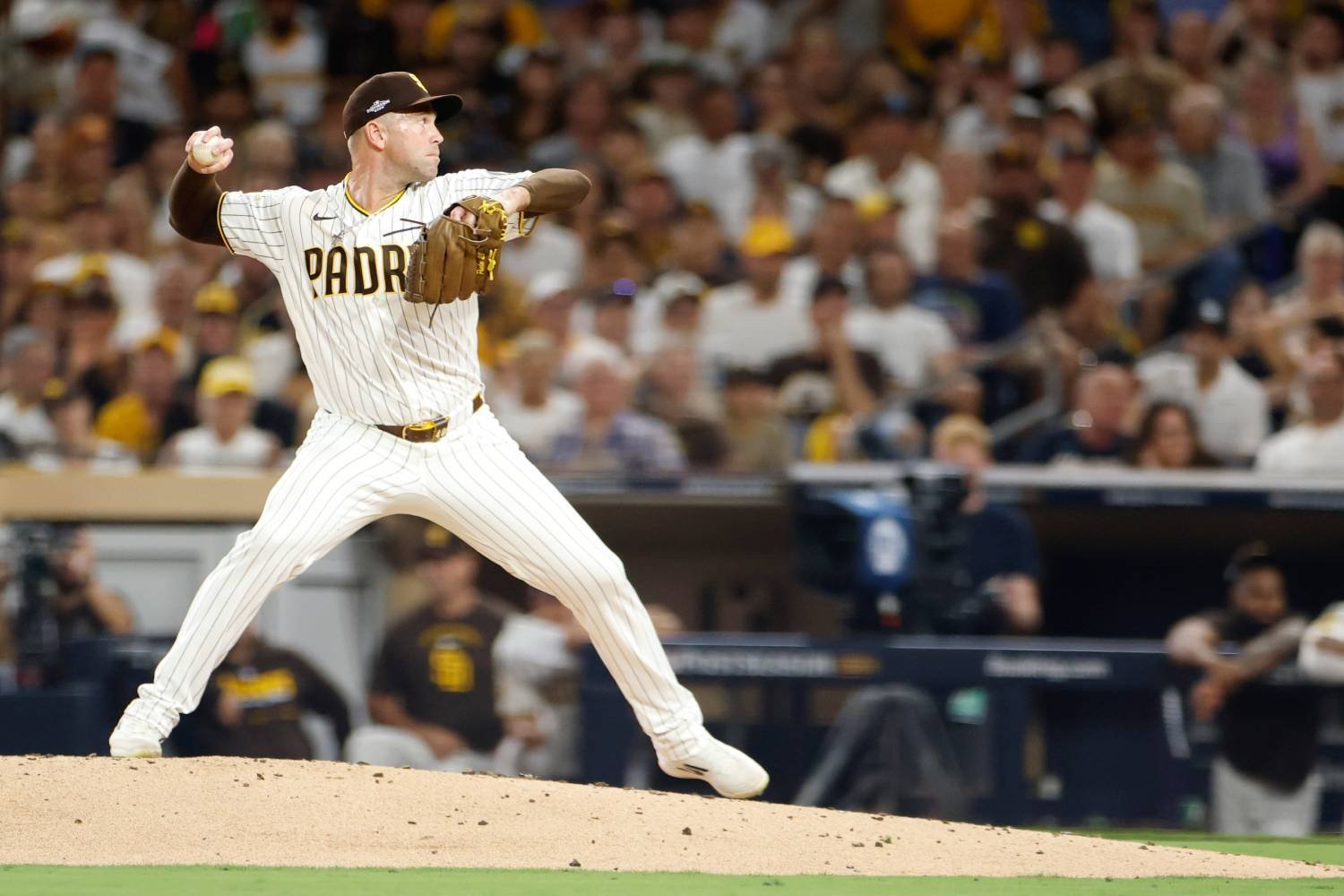 While we have covered four of the biggest free-agent decisions the San Diego Padres will have to make this offseason, there are plenty more players whose statuses vary at this point in time. For these 13 players, we are going to address them all one one lump sum. Don’t read too much into that; any could return, especially not knowing the financial outlay new owners Jose E. Feliciano and Kwanza Jones are willing to put forth in their first offseason. Nine of those players are pitchers, which is always a volatile part of any MLB team’s roster. For this exercise, I will split the players up into true free agents and those with contract-option decisions. Previous free-agent-to-be articles: Adrian Morejon Michael King Ty France Nick Pivetta San Diego Padres' Impending Free Agents Jason Adam: The right-handed reliever is probably not returning, although that could change if left-handed setup man Adrian Morejon doesn’t make a quick decision to stick around. Adam could make around $10 million a season on the open market. Walker Buehler: The right-handed starter would be welcomed back with open arms after what he did for the Padres in 2026. While his role varied this year, he should be penciled in as the No. 5 starter for 2027. Casey Mize: Padres fans won’t believe the contract the right-handed starter will get in free agency this year. It certainly won’t be based on what he did for the Friars after being acquired from the Detroit Tigers. Robbie Ray: Having just recently turned 35, the left-handed starter could return, but certainly not at the $25 million salary he had this year. More likely to find a better payday elsewhere. Luis Rengifo: The left fielder’s torn left ACL complicates his story. He probably won’t be back until midseason 2027, so there could be a two-year deal for him that gives him a smaller salary for next year and something in the $5 million range for 2028 if the Padres want to keep him around. Austin Hays: Apparently one of the favorites of president of baseball operations A.J. Preller, the outfielder is an outside possibility to return, but maybe only on a minor-league deal as the Padres aim to prioritize the playing time for Dustin Harris and/or Samad Taylor. Ramon Laureano: The 32-year-old outfielder might get a decent contract from someone, but that likely won’t be the Padres after he missed most of this season due to right hip surgery. San Diego Padres Players With Contract Options Griffin Canning: The right-hander has a mutual option for $5 million in 2027 with a $1.5 million buyout. Mutual options are almost universally declined. He could return on a smaller deal with the flexibility to be in the bullpen or rotation. He probably wants to start, which might not fit for a Padres rotation needing more certainty. Lucas Giolito: The right-handed starter has a mutual option for $8 million in 2027 with a $1.5 million buyout. After a disastrous year with the Padres due to injury, he might want to simply try elsewhere. But if the Padres do bring him back (depending on his health), it should with visions as him as the No. 5 starter. Kyle Hart: The left-hander has a club option for $2.5 million in 2027 with a $200,000 buyout. He seemed to find his niche with the Padres this season as the early cleanup reliever. There's no reason why the Padres shouldn’t bring Hart back at that price. Yuki Matsui: The left-handed reliever controls his fate with a player option for 2027 at $6.5 million and player option for 2028 at $7 million. Once envisioned as the Padres’ closer of the future, Matsui finally seemed to realize his potential this season and was very reliable down the stretch. He probably wouldn’t make much more on the open market, so sticking with a situation he knows makes sense. Wandy Peralta: The 35-year-old left-handed reliever has a player option for 2027 at $4.45 million in what could be his final year with the Padres. Like the previous two years, odds are he will exercise his right to call San Diego home for another year. Miguel Andujar: The designated hitter/outfielder has a mutual option for $8 million in 2027 with a $2.5 million buyout. The option will be declined, but it wouldn’t be surprising for him to come back on deal similar to what he got from the Padres last offseason ($4 million guaranteed for one year). View the full article
-
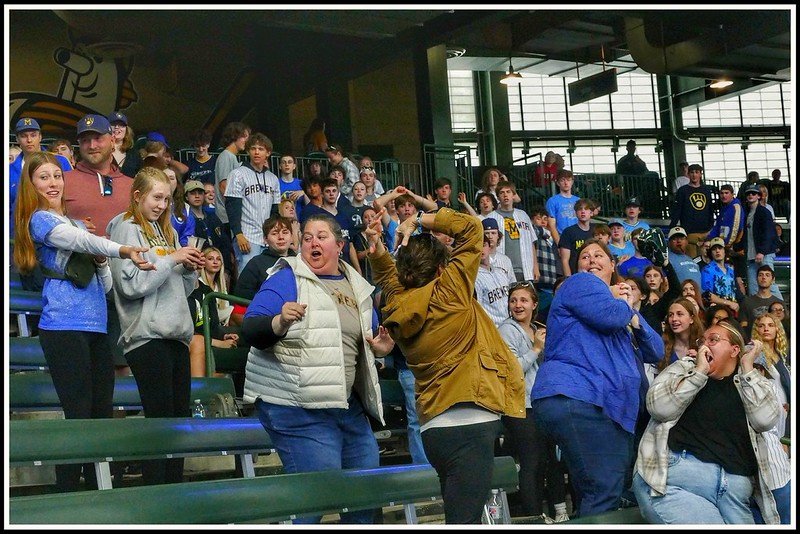 Observing the resounding goodwill nationwide for his favorite team’s first World Series title, Milwaukee Brewers fan Kyle Matzdorf couldn’t help but be awestruck. “Everyone’s happy for me,” said Matzdorf. “Even my Chicago friends are texting congrats. This kind of outpouring just never happens. Winning the whole thing is good enough on its own, but when people you haven’t seen since high school are sending their love, it’s incredible.” Matzdorf’s allegiance to a different Wisconsin professional sports franchise offers a different perspective. “Whenever the [Green Bay] Packers are eliminated from the playoffs, I basically need to throw my phone in a lake,” said Matzdorf, who was born in Eau Claire but now lives and works in St. Paul. “Everyone I went to college with in Minnesota sends me highlights of the game, reminds me of previous playoff losses, and encourages me to cry into my Packers stock certificate. It’s laminated, so I don’t know why they think an owner like me would be able to do that? “And the Bears fans are even meaner.” Matzdorf, 41, noticed the difference most starkly when the Brewers swept the Los Angeles Dodgers in the NLCS. “I watched the game at the bar in my Robin Yount jersey and people were high-fiving me all night, telling me how much they loved watching us knock out the Dodgers," he said." I don’t think I paid for a drink the whole night. “Last Sunday, I go to the same bar to watch the Packers game in my lucky Bart Starr jersey and a cheesehead autographed by Dorsey Levens and the whole bar is just so rude to me. Before I could explain to them how Packers fans are superior to other fans because of our championship tradition, small community of loyal owners, and impossibly long season ticket waiting list, patrons told me to go perform intimate acts with various woodland creatures. The bartender poured a Budweiser on my head. I was mocked. I was mocked and ridiculed. For no reason other than liking a team that is better than all other teams.” When asked if these differing reactions will cause him to reconsider how he approaches his fandom, Matzdorf is noncommittal. “I obviously prefer the World Series reaction to the Packers one, but I’m leaving the door open to being just as haughty, insufferable, and aggravating to others during baseball season,” said Matzdorf. “As much joy as I’m feeling right now, my friends who are fans of lesser franchises don’t know how much pity I have for them. What's the fun in that? They have a right to know what it’s like to be a real winner like me, don’t they? “I’m leaving all my options on the table.” Image license here. View the full article
-
Nine Hitters, Nine Moments, One World Series Winning Team
DiamondCentric posted an article in Brewer Fanatic
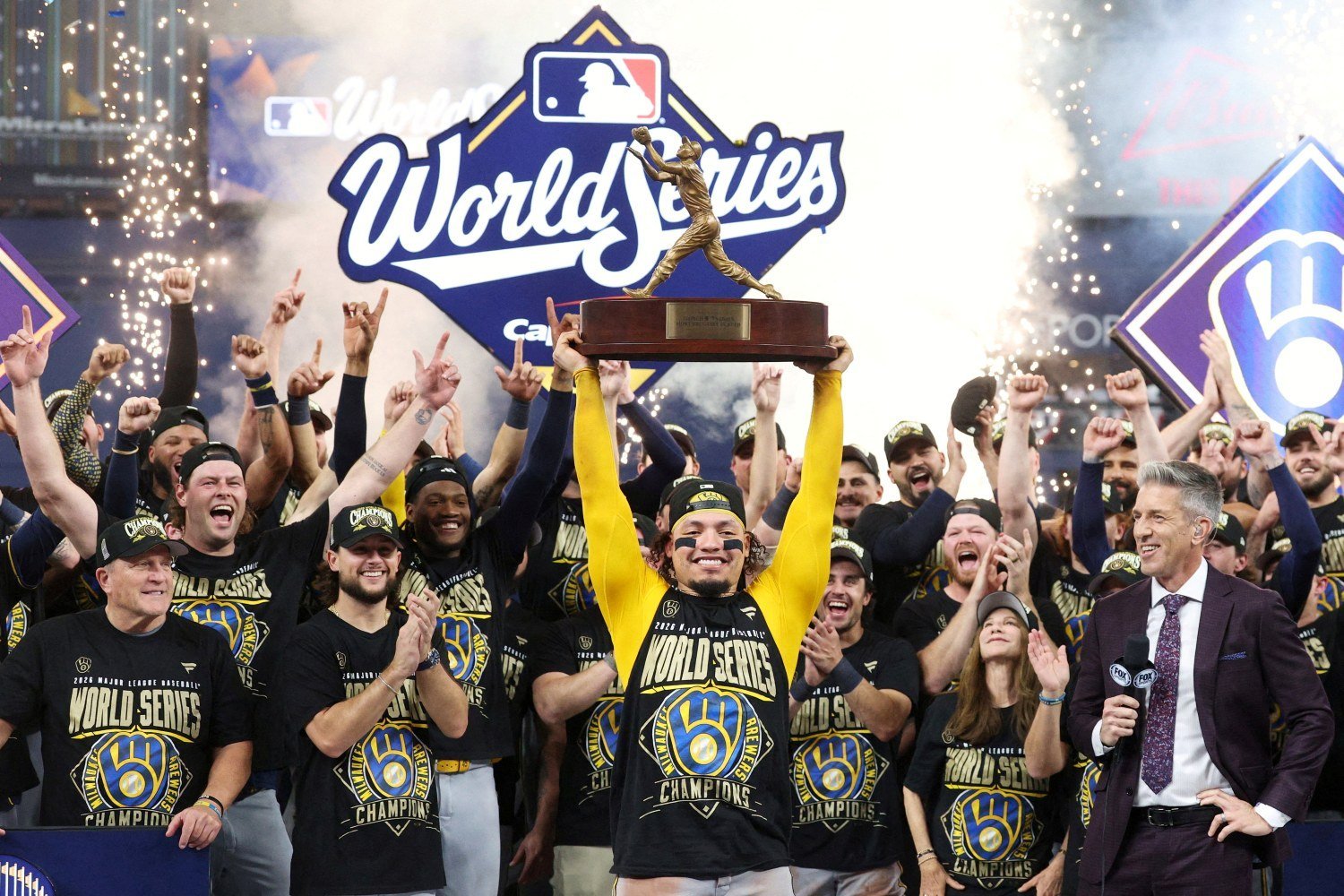 The Milwaukee Brewers have long been viewed by the national media as a lineup without star power. Perhaps that's one of the reasons the “small ball” narrative became so prevalent during the World Series broadcasts, despite plenty of evidence that this team was far more than an outmatched, plucky little brother who fluked their way to the Fall Classic. Jake Bauers had the second-highest wRC+ in the National League this season. Jackson Chourio hit 25 home runs in the regular season, despite missing time due to a broken hand. Brice Turang is one of the most complete players in baseball. William Contreras, when he's dialed in, is perhaps the best catcher in the sport. The Brewers had plenty of players capable of changing a game with one swing. The difference was that they didn't have to rely on one or two specific sluggers to do it. Even more impressive, every hitter in their starting lineup for each World Series game produced a signature moment at the plate during this postseason. Each of them deserves their flowers—particularly those who came into October with question marks hanging over them. Without further ado, let's revisit the moments that made each hitter's postseason so extraordinary. Jackson Chourio: The Walk-Off It feels like a lifetime ago now, but this was the most pivotal moment of the Brewers' World Series run. Without it, Milwaukee would have faced a decisive Game 5 against the Padres, losing the opportunity to line up its rotation for the NLCS and potentially leaving Jacob Misiorowski even more fatigued for the later rounds. We'll never know how differently the postseason might have unfolded without that swing. This was the moment this run began to feel different from those of previous years. Facing the best closer in baseball, with the bases loaded, two outs and the Brewers trailing by a run, Chourio found himself in the sort of situation every kid dreams about in the backyard, facing down their parents or siblings. He fouled off a 104-MPH fastball from Miller down and away, then took a wicked, perfectly located slider below the strike zone without even twitching. At 2-2, that refusal to chase forced Miller back over the plate. Chourio was ready. ZFhPT1hfV0ZRVkV3dEdEUT09X1VnTldCUVVDQlFzQVhsRUtWZ0FIQUFCVUFGZ0FCd0FBQUYxV0JnUlhDVkJTQWd0WA==.mp4 The Brewers' comeback crew was off to a fine start, and this was the first of many signature moments to come in October. As a side note, can you HEAR that crowd pop? Brice Turang: The NLCS Tonesetter The Brewers' offense was catatonic in last year's NLCS against the Dodgers. Against Tarik Skubal, they appeared to be heading down the same path. The two-time American League Cy Young Award winner was mowing down hitters, confounding Milwaukee's typically astute plate discipline as the Dodgers held a 1-0 lead. The game was beginning to feel eerily like Game 1 in 2025. Then Brice Turang stepped to the plate, having fouled the previous pitch off his knee. He'd also struggled against left-handed pitching during the regular season, posting a .620 OPS against southpaws. SzRaZWdfV0ZRVkV3dEdEUT09X0FnZ0RYRmRSQUZRQURnQUtBQUFIVWxRQUFBTlFCd0lBVXdNQUJGWURCRkpjQmdOZg==.mp4 Turang took a perfectly located sinker on the edge of the strike zone. The pitch moved like a bowling ball in on him, yet he managed to take it the other way for a potentially series-changing home run. The Brewers later drew a walk, stole second base and scored on a Luis Lara single up the middle to take a 2-1 lead. In doing so, they achieved something they couldn't manage in four games the previous year: beating the Dodgers. Jake Bauers - The Systematic Grinding Of Blake Snell From one Cy Young Award winner to the next, Blake Snell was cruising through the Brewers' lineup over the first six innings. Aside from a first-pitch Jackson Chourio home run, Snell had Milwaukee in disarray. Dave Roberts trusted him to face the lineup for a third time, in a way Kevin Cash hadn't in the 2020 World Series. Down 2-1 in Game 3, with the Dodgers looking to re-establish their authority, the Brewers had Christian Yelich on base in front of Bauers after an Andrew Vaughn walk. What followed was one of the greatest plate appearances you'll see in the playoffs. After a similar plate appearance had worn down Yoshinobu Yamamoto in Game 2, this was even more emphatic, with Bauers capping it off with a home run. Eleven pitches ground down Snell until he finally got to the fastball he was sitting on the entire plate appearance. When it came, Rake Bauers didn't miss. Snell had been worn down so much that, with the broadcast barely paying attention to the next plate appearance, Garrett Mitchell followed up with a home run of his own. Back-to-back home runs off Snell. The game had been turned on its head. William Contreras - The Slaughtering of Morejon Once again, we return to the first series of October baseball. In fact, we return to the very first game. Locked in a 2-2 tie in the seventh inning, with Adrian Morejon and Mason Miller looming, the Brewers found themselves in a tricky situation against two of the best relievers in baseball. This was the back end of a bullpen many considered untouchable. William Contreras disagreed. ZzZZWVdfV0ZRVkV3dEdEUT09X0JRTUVWUUFOQUFjQUFRUldWUUFIVWdjRUFBTUFCVkFBQlFFR0NWRU1BUUJkVXdSUg== (1).mp4 Morejon looked his usual steady self as Contreras worked the count to 3-2. Then came a well-located fastball on the outer third of the strike zone. Contreras didn't need to do anything spectacular; he simply guided his barrel to the ball. The swing was easy and smooth, and the ball flew into the right-field stands. The Brewers wouldn't look back. Against the hottest team in baseball, and a popular pick to win the World Series, Milwaukee had stamped its authority. Christian Yelich - A Captain Leading By Example in the World Series The Brewers had finally done it. After eight playoff runs in nine years, they were in the Fall Classic. Some nerves undoubtedly awaited, but the captain led from the front. After a plethora of misfortune and hard-hit outs against both the Dodgers and Padres, some of that fortune turned back his way again in Game 1 of the Series. Facing a stingy Nick Martinez, Yelich came to the plate batting third in the first inning, with Jackson Chourio on first base and one out. Martinez is one of the best pitchers in baseball at generating weak contact, but Yelich had other ideas. WEQ4azNfV0ZRVkV3dEdEUT09X1V3RlpVbEZYQUFZQUNnQldWd0FIVlZKWEFBTU5CVllBVjEwQVZBZFRBZ0ZUQVFBRA==.mp4 He crushed a 103-MPH triple into the right-centee-field gap, eventually coming around to score himself. Those were the only runs the Brewers managed against Martinez, making the hit critical in helping Milwaukee get off on the right foot. Garrett Mitchell - Left-on-left crime We could look at Mitchell's home run off Blake Snell in Game 3 of the NLCS, but he had an even more pivotal hit in Game 4. The Dodgers had raced to a 4-0 lead early via a Shohei Ohtani home run, and it looked as though the sleeping giants were about to wake up. Surely there was only so long the Brewers could keep them in check. Instead, Milwaukee shut them down and gradually chipped away at the deficit. Jake Bauers and William Contreras doubles helped bring the Brewers level by the sixth inning. Dave Roberts then brought Tanner Scott, one of the best left-handed relievers in baseball, out of the bullpen to face Mitchell. Given Mitchell's struggles against high fastballs, it looked like a strong matchup for the Dodgers. Scott made one mistake in a 3-2 count, trying to avoid walking Mitchell. That confidence in his fastball came back to bite him. OTdsTmdfV0ZRVkV3dEdEUT09X0FGQllWQUJRQlZNQURRWURYd0FIQUZRSEFGbFVBZ1VBQlZWUkNRb0RBVmRUVkZGVw==.mp4 Mitchell crushed the pitch 409 feet into the right-field bleachers. With that, the air was sucked right out of Dodger Stadium. This was the moment the Brewers clinched their appearance in the World Series, righting the wrongs of 2025. Sal Frelick; Did that say 400+ ft to Center Field? Sal Frelick might need shoulder and knee surgery in the offseason. Not that he cared. He flew around the outfield like the Tasmanian Devil, while proving to be one of the most impactful hitters in the World Series. None of those contributions was quite as big as this one, though. Trailing 4-3, the Brewers were attempting to come back from another 4-0 deficit. They'd knocked Drew Rasmussen out of the game early, and Ian Seymour was in to face the left-handed portion of the lineup. Seymour challenged Frelick with fastballs over and over again. Eventually, he paid for it. WU9najJfV0ZRVkV3dEdEUT09X0FWQUFCMUpYQlFVQURsVUVYd0FIQ0ZjQUFBQlFCZ2NBQWxFRUJ3ZFhCRkZRVmdkZQ==.mp4 Frelick isn't a player known for prodigious power. Jake Bauers said he'd never seen him hit one out to center field, even in batting practice. Pat Murphy has told him that fly balls to center are automatic outs, and that has generally proved to be the case. Not that day. Frelick roasted a ball with the second-fastest swing of his career, launching a home run to tie the game at 4-4. It gave the Brewers a platform for yet another comeback win and sucked the energy right out of the Tampa roster. He almost did it again in his next plate appearance, too. With a body in need of significant repair, you have to marvel at the resilience and fortitude of Salvatore Frelick. Cooper Pratt - Almost THE Moment Cooper Pratt posted the highest OPS of any hitter in the World Series. He was also this close to producing the moment that would have been replayed across the country had the Brewers held on. It was the top of the 12th inning in Game 4 of the World Series, with Milwaukee trying to clinch a sweep. Pratt stepped in against Ian Seymour once again, having hit safely in each of his previous three plate appearances and brimming with confidence. Qnc0V25fV0ZRVkV3dEdEUT09X1ZRRlRYVndOQndvQUNRRlJWUUFIQmxVRkFGaFdXMU1BVTFVQ0JncFRWd1pSVWdSUw==.mp4 It's the sort of situation people dream about as children. Pratt had just four months of regular-season experience and only four plate appearances above Double-A before entering 2026. The rookie showed no fear whatsoever. He turned on a 2-2 sweeper and pulled it high and majestically over the left-field wall, prompting Joe Davis to deliver a call reminiscent of Bob Uecker. Unfortunately, the Brewers couldn't hold on in the bottom of the 12th inning. Still, Pratt's home run, along with his hit to drive in the first runs of Game 5, showed the character of the young rookie. He made some mistakes this October—uncharacteristic defensive ones, and some plate appearances where he looked overmatched and overwhelmed. Somehow, on the biggest stages of them all, Pratt rebounded on every occasion. David Hamilton: Power Hitter David Hamilton. A player whose defense under pressure had been questionable this season. A bat that had rarely produced much more than the occasional strong bunt and plenty of ground balls. Coming into October, it seemed as though Joey Ortiz would get the lion's share of the playing time. But as the game sped up on the Brewers' primary third baseman, Hamilton stepped in and shone against right-handed pitching. Taking Edwin Diaz deep in Game 4 of the Championship Series was memorable in itself, delivering the final blow against the vaunted Dodgers roster. Hamilton had also produced a three-hit game earlier in the series. But perhaps his most consequential moment, at least until the late 12th-inning comeback, came in Game 4 of the World Series. The Brewers had hit Griffin Jax hard. They'd hit plenty of the Rays' pitchers hard, too, but had just two runs to show for it. One of those came from Hamilton, who helped set the stage for what could have been Cooper Pratt's career-defining moment. Qnc0V25fV0ZRVkV3dEdEUT09X0JBRUZWRlFBVUFFQVdWTUNYd0FIQWdaVkFGa0dBVkVBVmdGV0NBc0VBZ1JWVmdKUw==.mp4 Hamilton turned on a high fastball up and in, a location in which he hadn't recorded a single extra-base hit all season, and crushed it 391 feet to tie the game in the fifth inning. It felt as though the Brewers were about to stage yet another comeback win to bookend their postseason. Alas, it wasn't quite to be. Still, Hamilton produced a multitude of big performances in October, and they should give him plenty of confidence heading into 2027. Everybody Played a Part The Brewers faced several top-heavy lineups this postseason. These were teams that looked to their biggest names and brightest stars at the top of the order to drive their offences. Milwaukee had plenty of thump at the top of its own lineup, but it was the production across the board that won them the World Series. No individual shouldered the burden across all three series. Every regular position player had a big moment that influenced the team's path to glory. That's Brewers baseball. Teams win trophies, not individuals, and your Milwaukee Brewers are the best team in all of baseball. View the full article
-
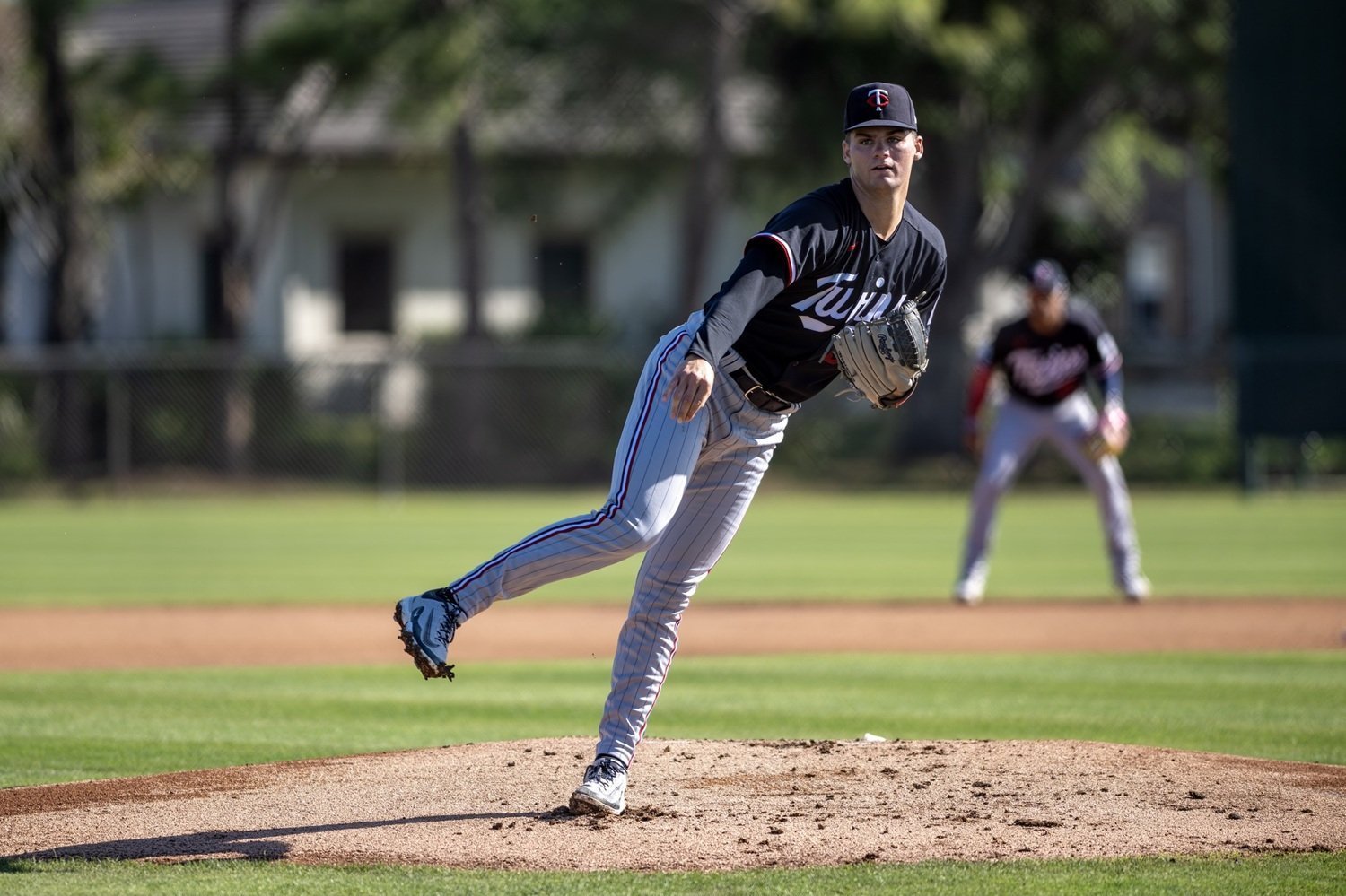 The Minnesota Twins have one of baseball’s highest-ranked farm systems. The organization has produced homegrown position players who have become important parts of its major-league roster, and its farm system continues to feature several intriguing young hitters. However, the pitching side of the equation looks considerably less encouraging. Minnesota has some interesting arms working their way through the minor leagues, but it lacks the same collection of high-end pitching prospects. With several established starters approaching free agency, the organization needs to determine whether its current approach to developing pitchers is producing enough quality talent. The problem might not be an immediate crisis, but it deserves attention. The Prospect Pipeline Leans Toward Hitters Minnesota's farm system has plenty of position-player talent. Walker Jenkins, Vahn Lackey, Kaelen Culpepper, Emmanuel Rodriguez, and Marek Houston headline a group that gives the organization reasons to feel optimistic about its offensive future. The pitching side doesn't feature the same depth of nationally recognized talent. None of Minnesota's leading pitching prospects has established the same top-tier prospect profile as the organization's best young hitters. Riley Quick ranks as Twins Daily's No. 5 prospect, followed by Charlee Soto at No. 10 and Ethan Wachsmann at No. 14. Each offers something worth developing, but all three are at different stages of the process. Quick has advanced to Double-A and remains an intriguing arm with significant potential. Soto has reached High-A, while Wachsmann is still working through the early stages of his professional development. Their paths toward the majors will require patience, continued development, and plenty of things to go right. There is nothing inherently wrong with having pitching prospects who need time. Young arms are difficult to project, and injuries can derail even the most promising careers. However, the Twins need more than a handful of intriguing possibilities. They need multiple pitchers to emerge as legitimate candidates for the front of a major league rotation. A strong farm system can survive losing individual prospects to injuries, trades, or disappointing performances. The concern arises when an organization lacks enough high-end alternatives to absorb those setbacks. The 2026 Numbers Raise Questions Prospect rankings provide one way to evaluate a farm system, but performance data can offer a different perspective on how an organization develops talent. Baseball America's 2026 farm system Statcast rankings examined organizational performance using Stuff+ and other underlying metrics. Its pitching analysis considered factors such as velocity, movement, extension, and release characteristics to evaluate the quality of pitches thrown throughout the minor leagues. Minnesota finished below average in organization-wide Stuff+, with only eight organizations ranking behind the Twins. That's a troubling result for a team that needs to develop more impact arms internally. There was a more encouraging finding. Minnesota ranked among the top 10 organizations in the minors in strike percentage. That contrast is worth examining. The Twins' minor league pitchers showed an ability to throw strikes, but their overall pitch characteristics did not measure up particularly well against those of other organizations. Throwing strikes matters. Pitchers who consistently fall behind in counts put themselves at a disadvantage, create unnecessary walks, and force themselves to work harder to finish at-bats. However, throwing strikes alone does not guarantee success. Pitchers also need offerings that generate swings and misses, weak contact, and opportunities to get hitters out without relying on balls finding gloves. Stuff+ is not a complete evaluation of pitching development, and one season of organizational data cannot establish that a development system is broken. Still, the difference between Minnesota's strike-throwing performance and its overall stuff suggests an area worth investigating. Can the Twins do a better job helping pitchers improve their velocity, movement, pitch shapes, and secondary offerings? Are they identifying the right arms in the draft? Are their development methods helping pitchers turn raw tools into effective major league pitches? Those questions deserve serious consideration. The 2028 Rotation Is Already a Concern The major league rotation adds urgency to the conversation. Pablo López, Joe Ryan, Bailey Ober, and Dean Kremer are all eligible to become free agents after the 2027 season. As previously noted, that puts Minnesota in a position where it could face substantial turnover in its starting rotation after next season. The Twins do not necessarily need to lose all four pitchers. Contract extensions, trades, and other roster decisions could change the picture. Nevertheless, the possibility of losing multiple established starters creates a significant challenge. Minnesota has several internal candidates who could help fill those future openings. Taj Bradley, Connor Prielipp, Zebby Matthews, and Mick Abel represent different options for the organization to evaluate. Other young pitchers could also emerge during the 2027 season. The key is getting some of those arms to take meaningful steps forward. If Bradley establishes himself as a dependable rotation piece, Prielipp builds on his major league opportunities, and Matthews or Abel takes another developmental step, the Twins could enter 2028 with a stronger foundation. But those outcomes cannot simply be assumed. The organization needs to see progress. It also needs more prospects pushing from the lower levels of the minors, creating competition and giving the front office additional options when injuries or free agency affect the major league roster. Without that pipeline, the Twins could be forced to search externally for multiple rotation pieces at the same time. That is an expensive proposition, particularly for a franchise that does not consistently operate with the payroll flexibility of baseball's biggest spenders. Something Has to Change The Twins do not necessarily need to abandon their current approach to pitching development, but they should be willing to examine it closely. Perhaps the answer starts with the draft. Minnesota could place a greater emphasis on selecting pitchers with the physical tools and underlying metrics that project to produce major league success. That does not mean reaching for a pitcher simply because the organization needs more arms. It means finding the right balance between immediate value and the long-term need to develop quality starters. The organization could also examine its minor league development practices. If Minnesota's pitchers are consistently throwing strikes but not producing above-average stuff, the coaching staff should investigate how to help those players get more out of their raw abilities. Pitch design, velocity development, secondary offerings, and individualized development plans all deserve attention. There is no single solution to producing major league pitching. Injuries and the inherent volatility of young arms will always complicate the process. Even the best development systems experience failures. However, the Twins cannot afford to have too many failures in this area. Organizations with substantial payrolls can sometimes compensate for weak internal pitching development by signing established starters. Minnesota has fewer opportunities to take that route without sacrificing resources elsewhere on the roster. That makes homegrown pitching especially important. The Twins have reason to feel optimistic about their young position players, but the organization needs its pitching pipeline to catch up. The next season will provide opportunities for several internal candidates to establish themselves, while the next wave of prospects continues working through the minors. If those pitchers progress, Minnesota could enter 2028 with a more manageable rotation outlook. If they do not, the front office will face an increasingly difficult task. The Twins do not need every pitching prospect to become a star. They need to develop enough dependable starters to keep the major league rotation competitive without constantly shopping for expensive replacements. That is the challenge facing Minnesota. The organization has found ways to develop hitters. Now it needs to prove it can do the same with pitchers. What changes can the Twins make to help their pitching pipeline? Leave a comment and start the discussion. View the full article
-
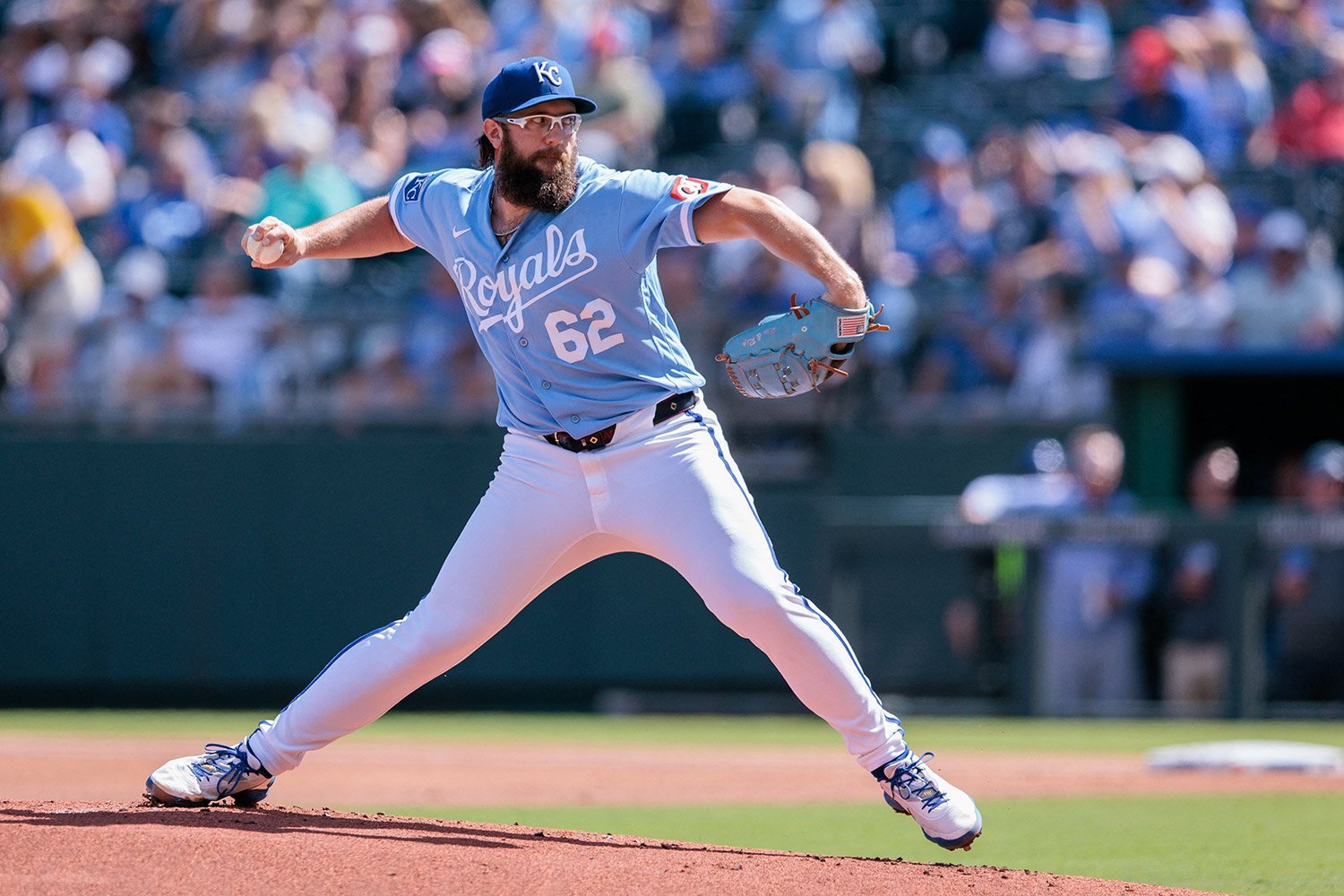 There is something we cannot avoid when Randy Dobnak pitches: the feeling of danger surrounding all his pitches, because the league knows he cannot generate enough swings and misses, since velocity is not his primary weapon of destruction. So every matchup is the complete opposite of a power-versus-power battle. It is Dobnak trying to locate his sinker on the corners, throwing his changeup to induce groundballs, and constantly trying to disrupt the hitter’s timing. He has a slider that sometimes turns into a sweeper because of the combination of its velocities and movements, and although I found it fun to follow him, it is impossible not to wonder how long his luck could last. When I talk about “luck,” I mean the way Dobnak has escaped many difficult situations, even when hitters have had some success hitting his pitches. The clearest example is his sinker, the pitch he threw the most—using it 38.6% of the time—and with which he finished 141 plate appearances against the opposition. Dobnak finished with a +5 Run Value and ranked in the 82nd percentile of the league. That sounds great, and to some extent, he deserves credit for it, since he finished with an xFIP even higher than established starters such as Seth Lugo (4.49) and Michael Wacha (4.39), but hitters posted a .346 xBA and .466 xSLG against him, with a 49.6 Hard Hit% and just 7.4 Whiffs%. Granted, those expected averages are far from convincing us that Dobnak will be able to sustain a similar pace in the future, especially if he remains in the starting rotation. With the exception of his fastball (+1 RV with just .224 xBA allowed in only 33 plate appearances), all his other pitches were vulnerable and finished with negative Run Value marks. But nothing defines Dobnak better than this Swing Timing + Miss Distance table. Here are the pitchers with the highest Perfect Contact%, and precisely the sinker, Dobnak’s best weapon, is leading the report that includes the pitch types of qualified pitchers across the entire league. Hitters have made perfect contact nearly 50% of the time, with an 83% Lined Up, another metric that indicates the latent danger Dobnak has managed to survive. Yes, there is definitely more to see. And I think this will surprise you as much as it surprised me when I discovered it midway through my research on Dobnak’s challenges. Let’s look at the opposition’s averages in each zone, against both left-handed and right-handed hitters. I’m sure you’ve already noticed this craziness. Haven’t you? Have you seen the batting average righties posted against Dobnak’s pitches right down the middle? They hit .000. As you will almost certainly suspect, it came in a small sample of just 17 pitches and six at-bats, which makes me think more about how careful he was against both righties and lefties to avoid pitches right down the middle. Another trend reflected in both graphs shows how vulnerable Dobnak was in the lower zones and when he tried to throw pitches inside. It is difficult to overcome all those problems when you do not have enough velocity on your fastball. Dobnak finished the season with the most innings (74 ⅓) and starts (13) of his career, contributing 0.7 fWAR with a 3-5 record and a 3.51 ERA, considerably below his 4.85 xERA. His fastball continued to lose average velocity, from the 93.8 mph it reached in 2021 to its lowest point this year, 92.3 mph. That said, I think Dobnak deserves a spot on the pitching staff for 2027, and then we will see if he can survive in the same way again, avoiding hard contact—he finished in the 91st percentile in Barrel%—and with a high 51.2% groundball rate allowed, which placed him in the 88th percentile across the entire league and saved him many times when he had his back against the wall on the mound. View the full article
-
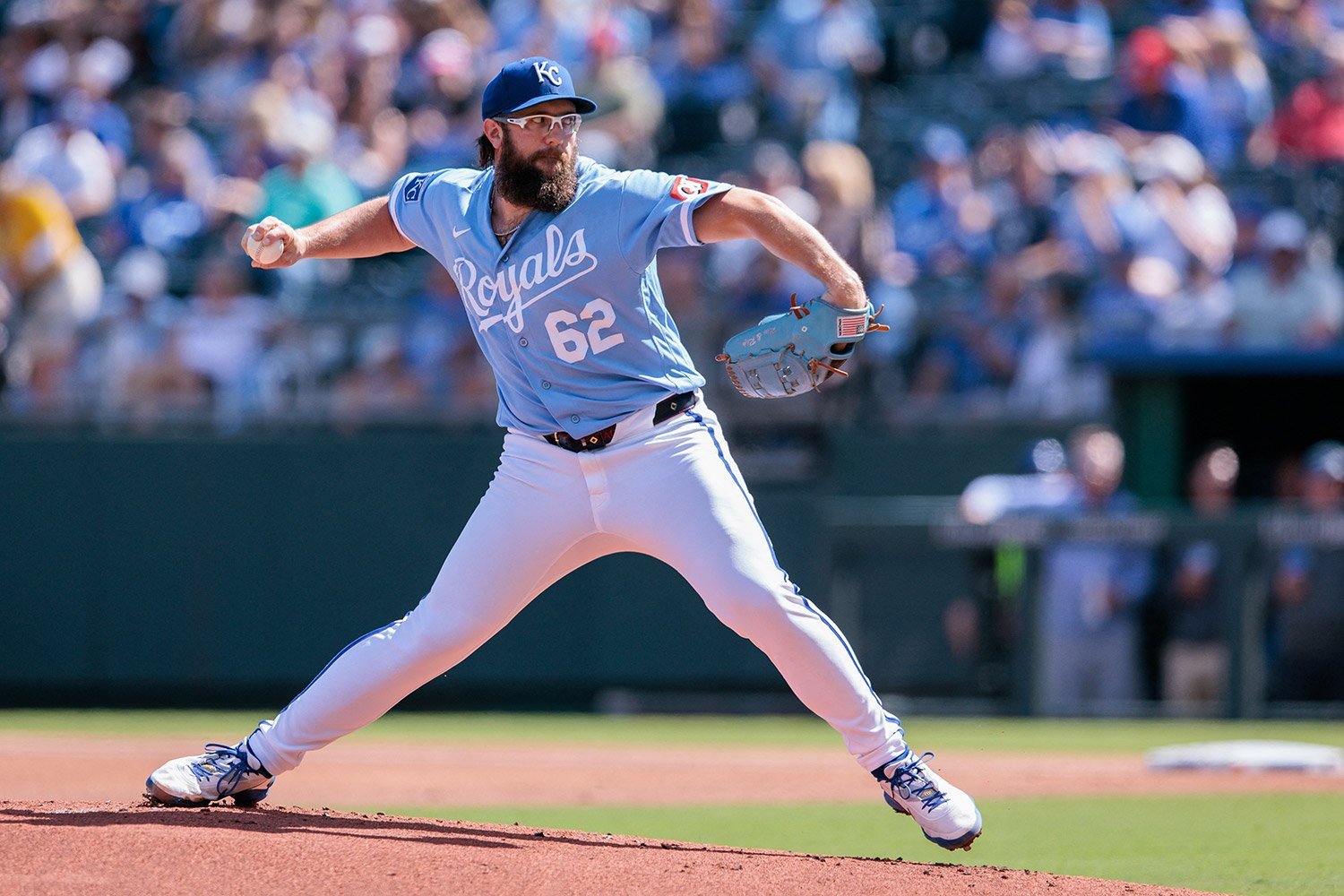 There is something we cannot avoid when Randy Dobnak pitches: the feeling of danger surrounding all his pitches, because the league knows he cannot generate enough swings and misses, since velocity is not his primary weapon of destruction. So every matchup is the complete opposite of a power-versus-power battle. It is Dobnak trying to locate his sinker on the corners, throwing his changeup to induce groundballs, and constantly trying to disrupt the hitter’s timing. He has a slider that sometimes turns into a sweeper because of the combination of its velocities and movements, and although I found it fun to follow him, it is impossible not to wonder how long his luck could last. When I talk about “luck,” I mean the way Dobnak has escaped many difficult situations, even when hitters have had some success hitting his pitches. The clearest example is his sinker, the pitch he threw the most—using it 38.6% of the time—and with which he finished 141 plate appearances against the opposition. Dobnak finished with a +5 Run Value and ranked in the 82nd percentile of the league. That sounds great, and to some extent, he deserves credit for it, since he finished with an xFIP even higher than established starters such as Seth Lugo (4.49) and Michael Wacha (4.39), but hitters posted a .346 xBA and .466 xSLG against him, with a 49.6 Hard Hit% and just 7.4 Whiffs%. Granted, those expected averages are far from convincing us that Dobnak will be able to sustain a similar pace in the future, especially if he remains in the starting rotation. With the exception of his fastball (+1 RV with just .224 xBA allowed in only 33 plate appearances), all his other pitches were vulnerable and finished with negative Run Value marks. But nothing defines Dobnak better than this Swing Timing + Miss Distance table. Here are the pitchers with the highest Perfect Contact%, and precisely the sinker, Dobnak’s best weapon, is leading the report that includes the pitch types of qualified pitchers across the entire league. Hitters have made perfect contact nearly 50% of the time, with an 83% Lined Up, another metric that indicates the latent danger Dobnak has managed to survive. Yes, there is definitely more to see. And I think this will surprise you as much as it surprised me when I discovered it midway through my research on Dobnak’s challenges. Let’s look at the opposition’s averages in each zone, against both left-handed and right-handed hitters. I’m sure you’ve already noticed this craziness. Haven’t you? Have you seen the batting average righties posted against Dobnak’s pitches right down the middle? They hit .000. As you will almost certainly suspect, it came in a small sample of just 17 pitches and six at-bats, which makes me think more about how careful he was against both righties and lefties to avoid pitches right down the middle. Another trend reflected in both graphs shows how vulnerable Dobnak was in the lower zones and when he tried to throw pitches inside. It is difficult to overcome all those problems when you do not have enough velocity on your fastball. Dobnak finished the season with the most innings (74 ⅓) and starts (13) of his career, contributing 0.7 fWAR with a 3-5 record and a 3.51 ERA, considerably below his 4.85 xERA. His fastball continued to lose average velocity, from the 93.8 mph it reached in 2021 to its lowest point this year, 92.3 mph. That said, I think Dobnak deserves a spot on the pitching staff for 2027, and then we will see if he can survive in the same way again, avoiding hard contact—he finished in the 91st percentile in Barrel%—and with a high 51.2% groundball rate allowed, which placed him in the 88th percentile across the entire league and saved him many times when he had his back against the wall on the mound. View the full article
