


DiamondCentric
-
Posts
2,631 -
Joined
-
Last visited
Never
Content Type
Profiles
Forums
Events
MLB News, Rumors & Analysis
DiamondCentric Tutorials & Help
Major League Baseball Videos
MLB Fan Guides & Resources
Store
Downloads
Gallery
Everything posted by DiamondCentric
-

Gleeman & The Geek: Twins' Key Players: Staying Or Leaving?
DiamondCentric posted an article in Twins Daily
 You can listen by downloading us from: iTunes, Spotify, YouTube, iHeartRadio, Stitcher, GleemanAndTheGeek.com, or by clicking this link, or by watching/listening below. 0:00 Intro: Black Stack beer and the end of the Twins season 1:16 Twins finish 77-85: met expectations, but the third straight late-season collapse 3:43 Offseason preview: key dates, the Pohlad press conference, and who's staying or leaving 4:41 Thank you, listeners: Aaron Gleeman's year leaving The Athletic and going independent 7:03 John Bonnes on independent publishers and the G&TG community 13:17 MLB offseason schedule: free agency opens after the World Series 13:47 Qualifying offer deadlines and how a QO affects a free agent's market 15:46 Arbitration tender deadline: keep or cut for Royce Lewis, Bailey Ober, Trevor Larnach 17:11 MLB lockout on November 30: no winter meetings, no Rule 5 draft? 18:50 Flashback: the 2021 lockout day, Byron Buxton's extension and Dylan Bundy 19:59 If a lockout cancels 2027, what happens to Pablo Lopez's contract? 22:52 GM meetings in November could replace the winter meetings 24:47 Both Gleeman and The Geek heading to the GM meetings? 32:10 Twins end-of-season press conference with Tom Pohlad, Jeremy Zoll, Derek Shelton 33:06 Pohlad skips the spin: "Our roster wasn't built for a 162-game season" 34:37 Pohlad backs Zoll and Shelton, blames the ownership mess 35:40 Could the Twins have made moves last winter? 37:40 Pitching coach Pete Maki fired 39:31 Twins payroll: Pohlad won't commit to a number or even a range 41:06 The baseline: why the first $105 million is already spoken for 42:58 Why the Twins should level-set payroll expectations with fans 44:40 Pohlad's words sound good, now he has to back them up 47:02 A one-month window and a weak free agent class 49:01 Is Jeremy Zoll more aggressive than Derek Falvey? 51:27 The lockout doesn't stop moves: lessons from the 2021 November frenzy 55:34 Staying or leaving: rating the Twins players whose futures are in doubt 57:36 Byron Buxton is staying (stop asking) 58:33 Ryan Jeffers: free agency and the qualifying offer decision 1:03:20 Why a qualifying offer to Jeffers is a low-risk move 1:09:02 Josh Bell: good bat, but no fit at first base or DH? 1:12:18 AJ Minter: the best fit of the Twins' free agents 1:19:05 Taylor Rogers: end of the line for a Twins bullpen great 1:21:25 Trevor Larnach: the left-handed logjam and an $8 million arbitration raise 1:29:23 Bailey Ober: the velocity is gone and the strikeouts are falling 1:34:38 Joe Ryan: trade him now with one year left, or keep him? 1:39:53 Pablo Lopez returning from Tommy John surgery 1:40:23 Royce Lewis: two and a half years of struggles at the plate 1:43:56 John and Aaron disagree: is Royce Lewis staying or leaving 1:49:55 Austin Martin and Matt Wallner 1:50:27 Wrap-up: Patreon mailbag next week View the full article
-
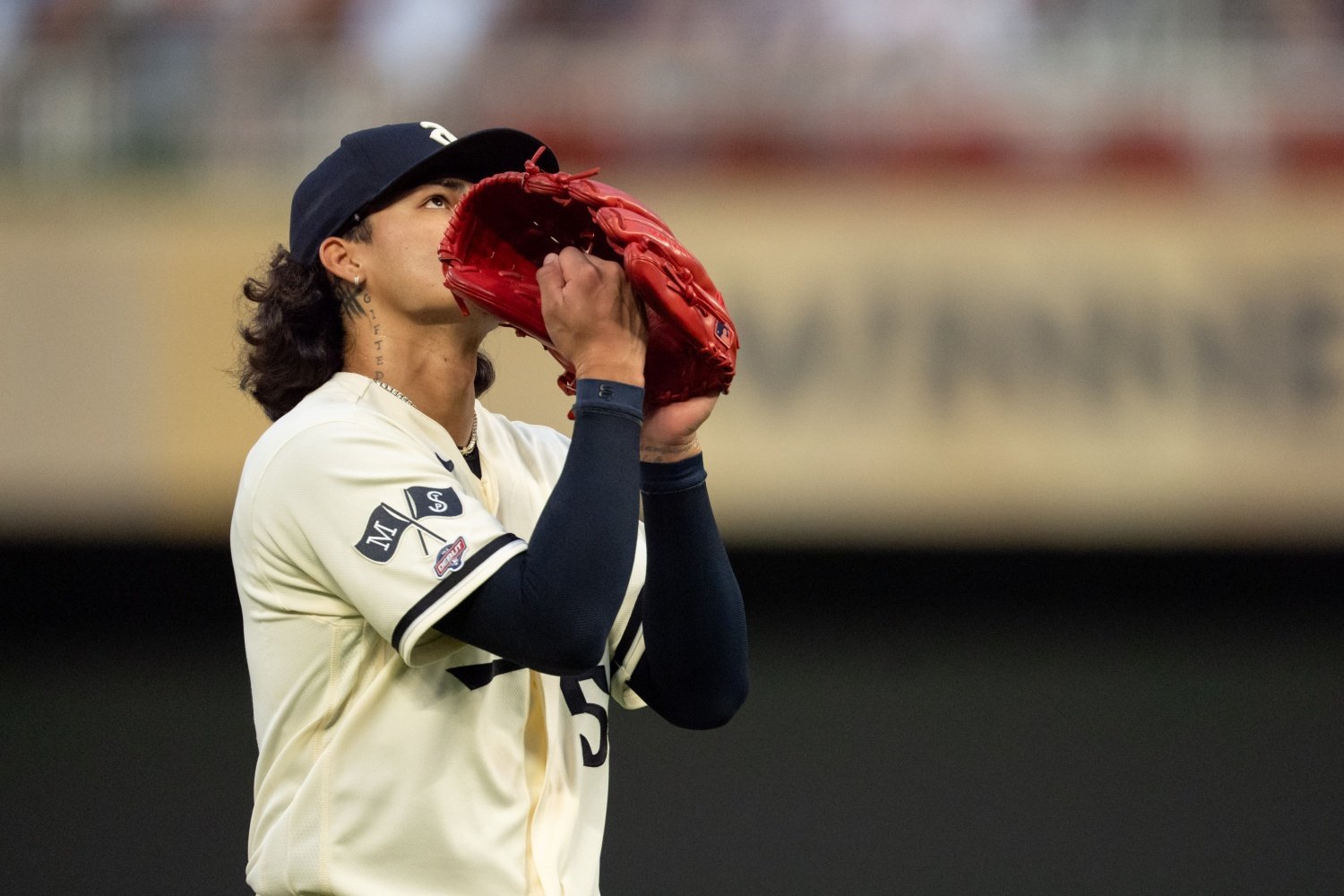 The Minnesota Twins’ farm system looked a lot different at the end of 2026 than it did at the beginning. A number of top prospects made their way to Target Field this season, with names like Walker Jenkins, Kaelen Culpepper, and Emmanuel Rodriguez all reaching the majors. There was also plenty of movement throughout the organization, as players climbed levels, battled through injuries, and either strengthened or weakened their standing within the system. With all that movement came changes in the Twins’ prospect rankings. Let’s take a look at a couple of the biggest risers and fallers in the organization over the course of the year, starting with the risers. Hendry Mendez Mendez entered the season ranked as Twins Daily’s No. 16 prospect, but he now sits all the way up at No. 7. It’s easy to see why. Across 102 games between Double-A Wichita and Triple-A St. Paul, Mendez slashed .281/.374/.430, good for an .804 OPS. While the power numbers don’t immediately jump off the page—he hit 12 home runs and recorded just 31 total extra-base hits—power has never really been the main selling point of his game. Instead, Mendez has built his profile around making consistent contact and controlling the strike zone, and those skills took a noticeable step forward this season. His 91.4% zone contact rate is excellent, and his 23% chase rate points to a hitter who understands the strike zone and rarely expands it. That combination is a strong foundation for offensive success, especially for a player who already puts plenty of balls in play. There’s a very good chance Mendez makes his major-league debut in 2027, and if those bat-to-ball skills translate the way the Twins hope they will, he could make an impact fairly quickly. Riley Quick Quick entered the year as the Twins’ No. 11 prospect and now finds himself firmly inside the top five. Considering the questions surrounding him entering the season, that’s a significant jump. The Twins selected Quick 36th overall in the 2025 draft, but there was understandable uncertainty due to his limited collegiate workload and previous Tommy John surgery. This year didn’t erase every concern, but it answered quite a few of them. Quick threw 81 2/3 innings across Low-A, High-A, and Double-A, striking out 110 hitters in the process. His 30.6% strikeout rate showcased exactly why the Twins were so intrigued by his upside in the first place. The swing-and-miss stuff was obvious. That said, there’s still work to do. Quick posted a 13.4% walk rate, and command remains the biggest hurdle standing between him and the major leagues. He also struggled after reaching Double-A, finishing with a 6.68 ERA at the level. Still, those concerns shouldn’t overshadow the overall picture. For a pitcher making his first full season of professional starts after Tommy John surgery, this was a successful year. And with a strong 2027 season, Quick could find himself pitching at Target Field sooner rather than later. It was an encouraging year for Mendez and Quick, but unfortunately, it wasn’t all good. Let’s take a look at a couple of fallers. Eduardo Tait Tait entered the season as Twins Daily’s No. 4 prospect, but he’ll finish the year at No. 8. That drop stands out even more when considering that Connor Prielipp, Dasan Hill, and Kendry Rojas — three of the four players ranked immediately behind him entering the year — all lost their prospect eligibility. Even with openings near the top of the rankings, Tait slid four spots. Over 116 games with High-A Cedar Rapids, Tait slashed .221/.281/.418, producing a .699 OPS. Those are underwhelming numbers for one of the organization’s top offensive prospects, but there’s also reason to believe the season wasn’t quite as disappointing as the stat line suggests. His strikeout rate improved slightly compared to 2025, and his walk rate moved in the right direction as well. Tait also finished with a .243 BABIP, which suggests he may have suffered from some poor batted-ball luck. With a few more balls finding grass, his season could have looked considerably different. Still, prospect rankings are heavily influenced by production, and Tait’s overall numbers simply weren’t strong enough to maintain his previous standing. Marco Raya Raya entered the season ranked as the Twins’ No. 15 prospect, but despite making his major league debut this year, he now sits outside the organization’s top 20. He did pitch well in his brief time with the Twins, allowing two earned runs over six innings, but his Triple-A season told a different story. Across 64 1/3 innings with St. Paul, Raya posted a 5.32 ERA while allowing 14 home runs. It marked the second straight season with an ERA north of five, and that's started to reshape what his future role looks like. That doesn’t mean there weren’t positives. Raya improved his strikeout rate from 22.6% in 2025 to 27.8% this year, and his walk rate dropped from 12.6% to 9.1%. Those are meaningful steps in the right direction. But keeping the ball in the park remains a major issue. At this point, it’s still very possible that Raya can carve out a role in the Twins’ bullpen, and there’s enough arm talent to believe he can contribute in the majors. However, the hope of him developing into a quality starting pitcher has faded considerably. That makes 2027 an important season for Raya, and in many ways, for several players throughout the system. Prospect rankings can change quickly. One strong season can send a player soaring up the board, while one disappointing year can create new questions. The Twins saw plenty of both in 2026, and the answers those players provide next season will go a long way toward shaping the future of the organization. View the full article
-
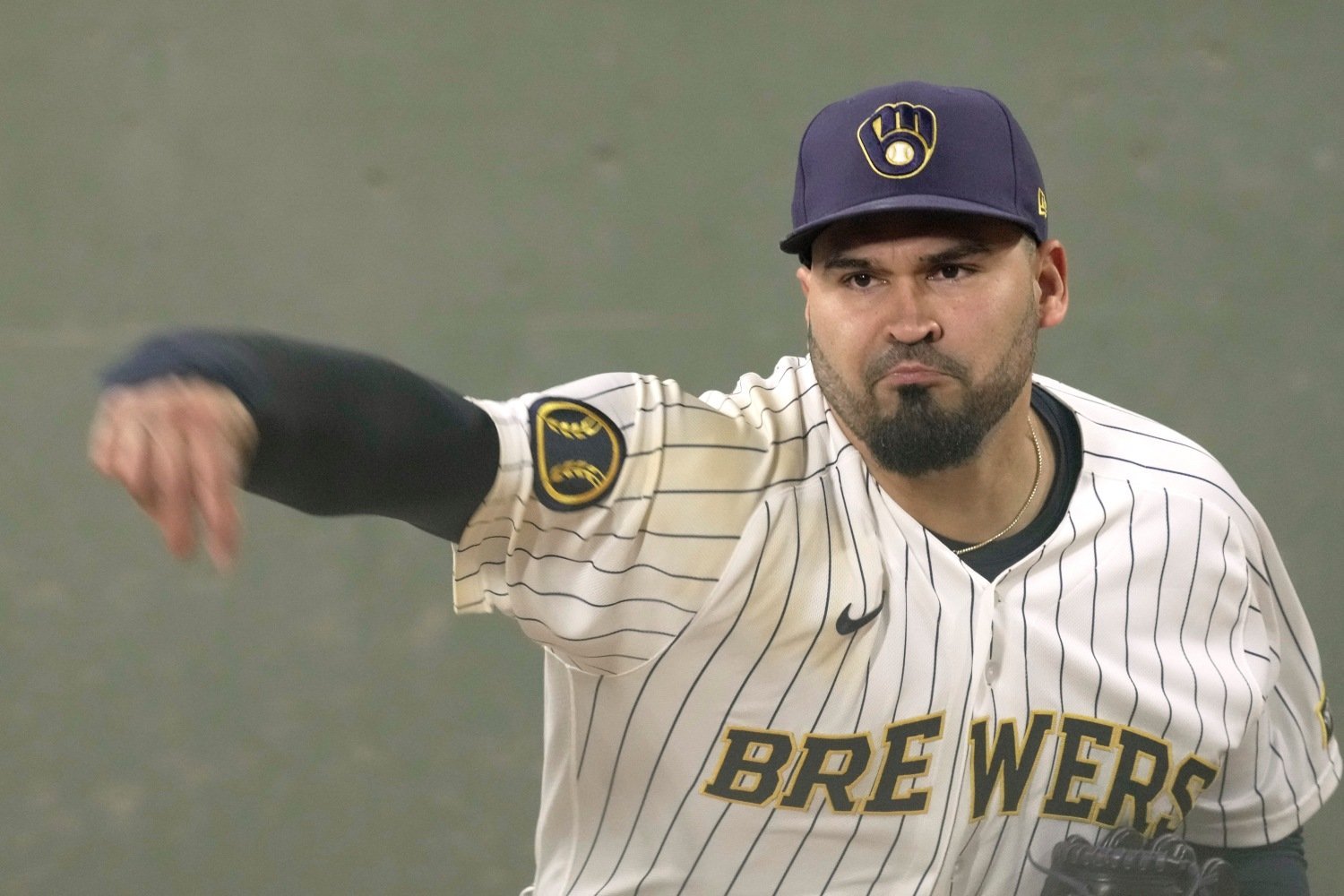 When they arrived ahead of the MLB trade deadline, Dustin May and Antonio Senzatela looked like matches made in heaven for the Milwaukee Brewers. Each had a three-fastball mix of the kind the Brewers adore, while both had breaking balls (albeit with differing degrees of feel) to keep hitters from simply selling out for velocity. The problem, as you'll have heard about extensively if you tune in to the Brewer Fanatic Podcast every Friday, is what happens when a pitcher becomes too predictable. If hitters know they're getting a fastball (and know roughly how fast that fastball is going to arrive), they can get their 'A' swing off without having to worry about looking foolish out in front of a breaking ball. The ability to vary shapes on the heater becomes problematic when they're all you have—when everything a pitcher throws lives in a similar velocity band. Rather than having to account for different speeds and shapes, hitters can get their foot down, time themselves for the fastball, and let it rip. Antonio Senzatela: What's A Breaking Ball? Senzatela is the better example of the two, if only because there's slightly less nuance to the problem. Comparing his pitch usage before and after joining the Brewers showcases it pretty clearly. He's gone from around 80% fastball usage with the Rockies to 95% fastballs with the Brewers. Previously, roughly one in five pitches was a breaking ball. With the Brewers, it's one in 20; that means a hitter can go through an entire plate appearance without having to account for one. At that point, the breaking ball is barely part of the hitter's attack plan. Since being dealt to Milwaukee, Senzatela has scrapped his slider and his changeup. For that matter, he's also dramatically reduced his four-seamer usage. His cutter has sharp break that distinguishes it from the sinker and four-seamer, but it's only a few miles per hour slower than they are. There's a movement differential, but not a velocity one. The swing data shows exactly what that predictability is doing. Hitters are swinging harder more often, and they're no longer finding themselves swinging underneath the fastball as frequently: You'd expect this, not only based on the elimination of the curve (and its velocity gap) but based on the absence of the four-seamer, which is the version of the fastball hitters would typically swing underneath. With the Rockies, Senzatela saw about 38% of swings at fastballs end up underneath the meat of the ball. With the Brewers, that number has dropped to around 20%. Part of that comes from the change in usage to a more sinker-heavy arsenal compared to a four-seam-heavy one, but that doesn't explain the whole problem. Because batters aren't worrying about changes of speed, they're swinging faster, on average, and a higher percentage of their swings are full, convicted ones. The data are telling us everything Spencer and Jack have been talking about on the aforementioned podcast: without the curveball, Senzatela isn't doing enough to push hitters off their timing, and that's affecting the performance of his fastball. Even if he uses it purely as a waste or chase pitch, a breaking ball forces the hitter to account for a different speed and shape. The swing can become so out of time that, when the fastball comes back into the zone, the hitter has less chance of squaring it up, having lost the rhythm of their timing mechanism. There is some compensation for this, of course. The lateral movement profiles of his sinker and cutter mean that more of opponents' swings lately have found them making contact off the barrel, be it at the end of the bat or up toward the handle. That should produce plenty of weak contact. If batters can swing 2 MPH harder, though, that offsets the loss of efficiency of contact, and the ball gets hit hard just as often. Senzatela's breaking ball is by no means a great pitch on its own. That's part of why the Brewers have distanced themselves from it. He doesn't have much feel for spinning it, and that creates problems, but it's an important cog to make sure the wheel turns smoothly. It needs to be reintroduced to generate whiffs; weak contact isn't a sufficient goal. Whether he pivots his arsenal ahead of the NLDS will be fascinating, especially for a Brewers team that has some questions in right-handed middle relief. Dustin May - Stuff+ Matters, But So Does Command The Brewers have made similar tweaks with Dustin May. He's using more fastballs than ever, up from 67% to 74%, but most of the tinkering has come from how he's redistributed those fastballs. May has leaned more on his cutter and sinker with the Brewers (until his last start, at least), while slightly reducing the four-seam fastball. Here's how his pitch mix looks in St. Louis compared to Milwaukee: The biggest downgrades have come on the sweeper and four-seamer. I've gone into depth about May effectively being two different pitchers, with a low arm slot for his two-seamer and sweeper. Both pitches break so much from that slot that they can be relatively easy to pick up early in the ball's flight, and that may partially explain why he hasn't recorded a single swing-and-miss on his sweeper against a right-handed hitter since joining the Brewers. The Brewers have moved him toward a curveball, something that tunnels better with his four-seamer and cutter, but May has also struggled to command it consistently. That's where the raw stuff can become a little misleading. The movement is outrageous, but if the breaking ball isn't landing close enough to its intended spot, hitters can simply spit on it and sit on the fastball. That's one reason why the expected run value on batted balls has skyrocketed with the Brewers. There is some good news. For the first time since June, hitters have been off-time on his breaking pitches. The problem is that without being able to command those pitches, or tunnel them effectively with the fastballs, May has been forced to lean too heavily on the fastballs themselves. That's where the predictability comes in. Hitters have a higher fast-swing rate in September, they're making more competitive swings overall, and May is struggling to disrupt their timing in the way someone with his stuff typically could. The stuff hasn't disappeared. He's just not consistently using it in a way that forces hitters to account for it. He's beginning to find some comfort with the curveball, though, and that could go a long way. In his final outing on Saturday, May used his pitches in a way that more closely resembled his Cardinals usage, with some fascinating results. He used the curveball 15% of the time, generating some ugly swings and misses, while using the four-seamer to attack hitters at the top of the strike zone. That might be the way forward for May. The curveball doesn't need to become his best pitch; it just needs to be good enough, and well-commanded enough, to make hitters respect it. If he has the confidence to continue throwing it, the rest of the picture might start to come together. There is enough stuff to create disruption for May, but he isn't consistently commanding or using it well enough to actually create that disruption. Without it, hitters are finding it too easy to get on time and on plane with his three-fastball mix, and that's why we're seeing him blow between hot and cold within an outing. The Brewers have plenty of fastballs capable of getting outs. The question, particularly with May and Senzatela, is whether they're giving hitters enough reason to worry about everything else. A breaking ball doesn't have to be a putaway pitch to be valuable. Sometimes, it just has to be good enough (and well-commanded enough) to make a hitter hesitate. Once a hitter knows he can sit on the fastball, all that velocity and movement becomes a lot easier to handle. View the full article
-
 Ian Happ has been a polarizing figure with Cubs fans. He's top 10 in team history for home runs, but leaves fans feeling there's more untapped potential in the bat. Happ will be a free agent in a month, and it feels like he won't be returning to the North Side in 2027. View the full article
-
 Jack and Spencer preview the NLDS against the Padres, including roster predictions and storylines to watch. Apple Podcasts: https://podcasts.apple.com/us/podcast/the-brewer-fanatic-podcast/id1740648724 Spotify: https://open.spotify.com/show/5CY8mWsQayqjDXqw9OT2Td iHeartRadio: https://www.iheart.com/podcast/263-the-brewer-fanatic-podcast-166534588/ Pocket Casts: https://pca.st/ommzz627 Watch On YouTube: https://www.youtube.com/@brewerfanatic View the full article
-
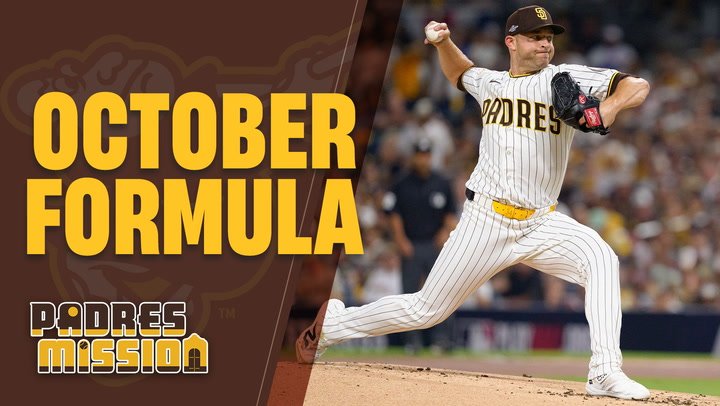 San Diego looked like a team in complete control against Chicago in the Wild Card, and there were a few clear reasons why. Those same strengths could determine how far the Padres go in October.View the full article
-
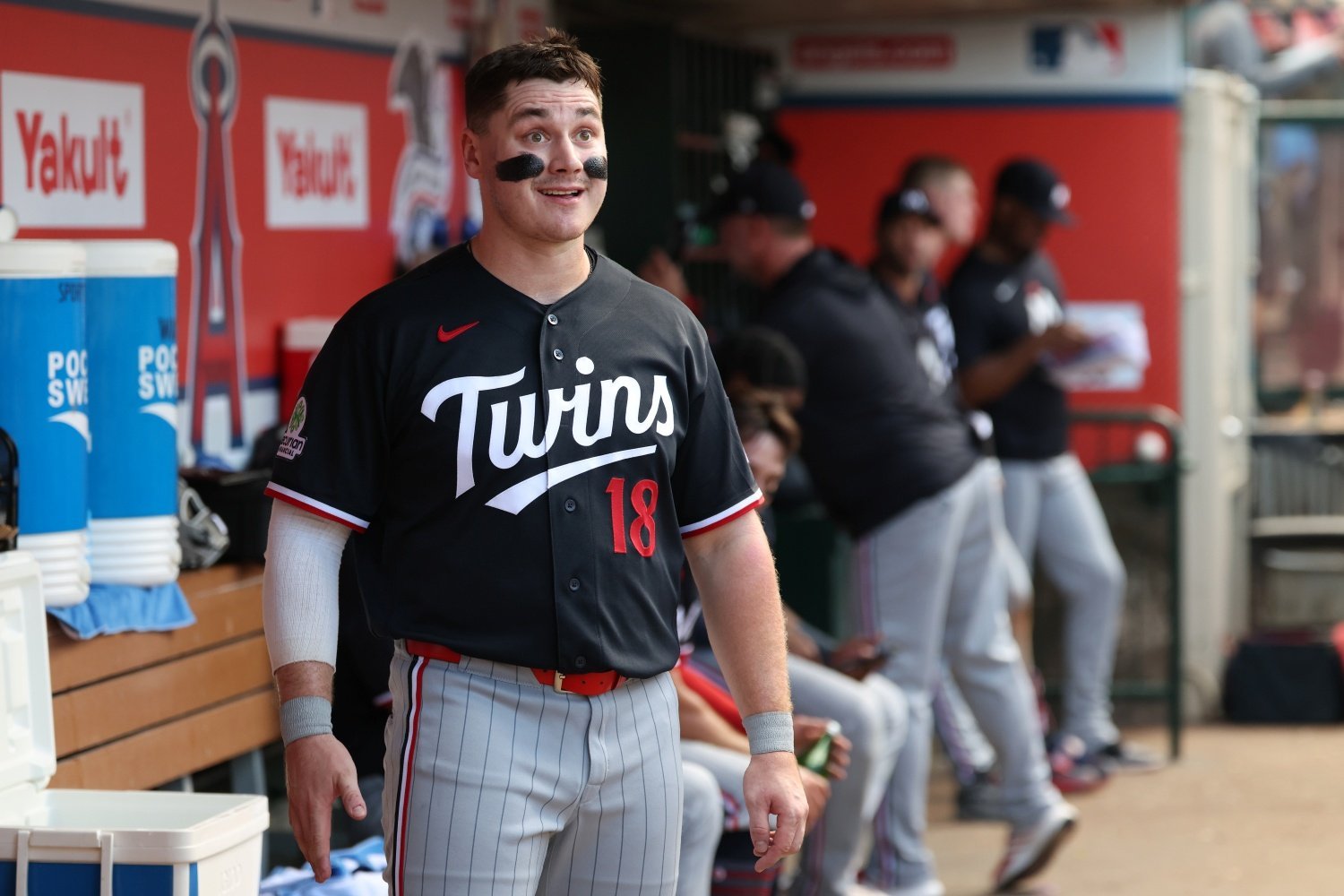 Alan Roden has had a Twins career that has been very unfair to Alan Roden, starting the moment many Twins fans learned that he existed. Twins historians may recall the 2025 trade deadline, during which the Twins made nine trades, the last of which sent then-setup man Louis Varland to Toronto. Roden was the second piece of the return for Varland (and Ty France), arriving in Minnesota alongside lefty pitching prospect Kendry Rojas. Fans were predisposed to dislike Roden for having the temerity to have been traded for a hometown kid, but he didn’t help himself much on the field. In 12 games, he mustered just a .463 OPS, then he sprained his thumb sliding into the wall chasing a foul ball. He missed the rest of that season. And Roden wasn’t in a position to struggle. At the time of his acquisition, he was just one of many left-handed corner outfield options, alongside (but not limited to) Trevor Larnach, Matt Wallner, James Outman, Walker Jenkins, and Emmanuel Rodriguez. He was thrust into a situation where he not only needed to fight for playing time in the present, but also had to fend off higher-profile prospects on his heels. After roster decisions and injury delayed Roden’s 2026 MLB season, he struggled out of the gate, with another OPS under .500 through his first eight games. However, even with a demotion and inconsistent playing time, he finished the season strong, slashing .317/.403/.450 and posting more walks than strikeouts over his last 24 games, to end the season with a .769 OPS in 32 games—15-20% better than average. It was fewer than 100 plate appearances, but it offered a glimpse of the player the Twins thought they had acquired from Toronto: a solid defensive corner outfielder with great strike-zone control and a little gap power. It’s not a high ceiling, but it’s easy to see how a player like Roden can be a solid, everyday player who helps teams win games. However, everyday play in the outfield probably isn’t feasible in Minnesota next season, even assuming that Larnach has played his last game in a Twins jersey (which, given the club’s history, might be a big assumption). Roden will be jockeying for playing time with fellow lefties Jenkins and Rodriguez, the latter of whom is out of options and will need to be on the big-league roster. Furthermore, Byron Buxton and Luke Keaschall will see a good share of time in the outfield. You might even say that the outfield is crowded before considering Roden. But there is some playing time to be spared. Jenkins, Rodriguez, Buxton, and Keaschall all have checkered injury histories, and it’s safe to assume there will be at least a couple of trips to the injured list from that group. Once you factor in rest days and a potentially fluid designated hitter spot, it’s not difficult to see some playing time every week. But at this point, he’s slotted in as the fifth outfielder. However, there might be another lane to playing time for Roden. Prior to his surprise selection in the third round of the 2022 draft, Roden was viewed primarily as a first baseman, having logged 39 appearances there as a 22-year-old junior at Creighton, compared to 15 games in the outfield. He also split time between the outfield and first base his draft summer in the Cape Cod League. As a pro, Roden has only logged one inning at first base, and he’s listed at 5-foot-11, but he’s got some athleticism, and it’s not hard to imagine him over there after watching France and Kody Clemens (both within an inch of Roden, height-wise) playing first base for the past two seasons. Even if Roden’s a bit rusty around the bag, the Twins have been successful in recent years in improving first base defense in players like Clemens and France, the latter of whom won a Gold Glove after years of being regarded as a poor defender. Carlos Santana also won his first Gold Glove at first base as a Twin, and they converted players like Luis Arraez into passable first basemen. This isn’t advocating for Roden to be an everyday first baseman or anything. But if the Twins want to get him on the field as much as is reasonably possible as a bench player, this is one way. A couple of outfield starts paired with a game at first base each week allows the Twins to play Roden about 50% of the time. Given Rodriguez’s lack of experience and Buxton’s recovery from offseason hip surgery, the Twins probably need to count on Roden even more at the beginning of the season than almost any other team’s fifth outfielder. And that day-to-day playing time can go up when any of the four guys ahead of him miss time later on. Nonetheless, it's difficult to see Roden carving out a consistent three-game-per-week role without a little time on the dirt, and he has real experience playing first base. If his true talent level is close to what he showed in 32 games this season, he’s a player that the Twins should want in the lineup—and he’d be a luxury to have on the bench. Of course, that’s assuming his true talent level is close to what we saw late this season. Roden as the backup first baseman (in addition to his work in the corners) makes sense with the roster as currently constructed, given that Royce Lewis is penciled into that spot and hits right-handed. Roden, a lefty, giving him a day off against righties would help Lewis’s numbers. But it remains to be seen if Lewis is indeed in that role next season. His production since the summer of 2024 certainly hasn’t earned it. If the everyday first baseman is instead Kody Clemens, a fellow lefty, it doesn’t make as much sense, unless the Twins play Clemens at second base on days Roden starts against a righty. Similarly, many of the potential bats that the Twins could add in free agency to replace Lewis in some form (such as Jake Bauers, Brandon Lowe, Nathaniel Lowe, Jazz Chisholm Jr., Jeff McNeil, or even Arraez) are left-handed. Adding a lefty infielder probably precludes Roden from any time on the dirt. But if they were to instead acquire a righty like Rhys Hoskins, Alec Bohm, or Gleyber Torres, Roden playing some first base could be valuable. Even without a little work at first base, Roden seems to be a valuable role player on next year’s team who could be thrust into more action at any time. But being able to add a bit of time at first base would immensely benefit his career and the Twins’ roster flexibility. Only read this if you won’t take it more than 10% seriously: Alan Roden was a high school catcher. The Twins have a very murky catching picture next season. Of course, they shouldn’t have him also come to camp with a catcher’s mitt. But maybe. View the full article
-
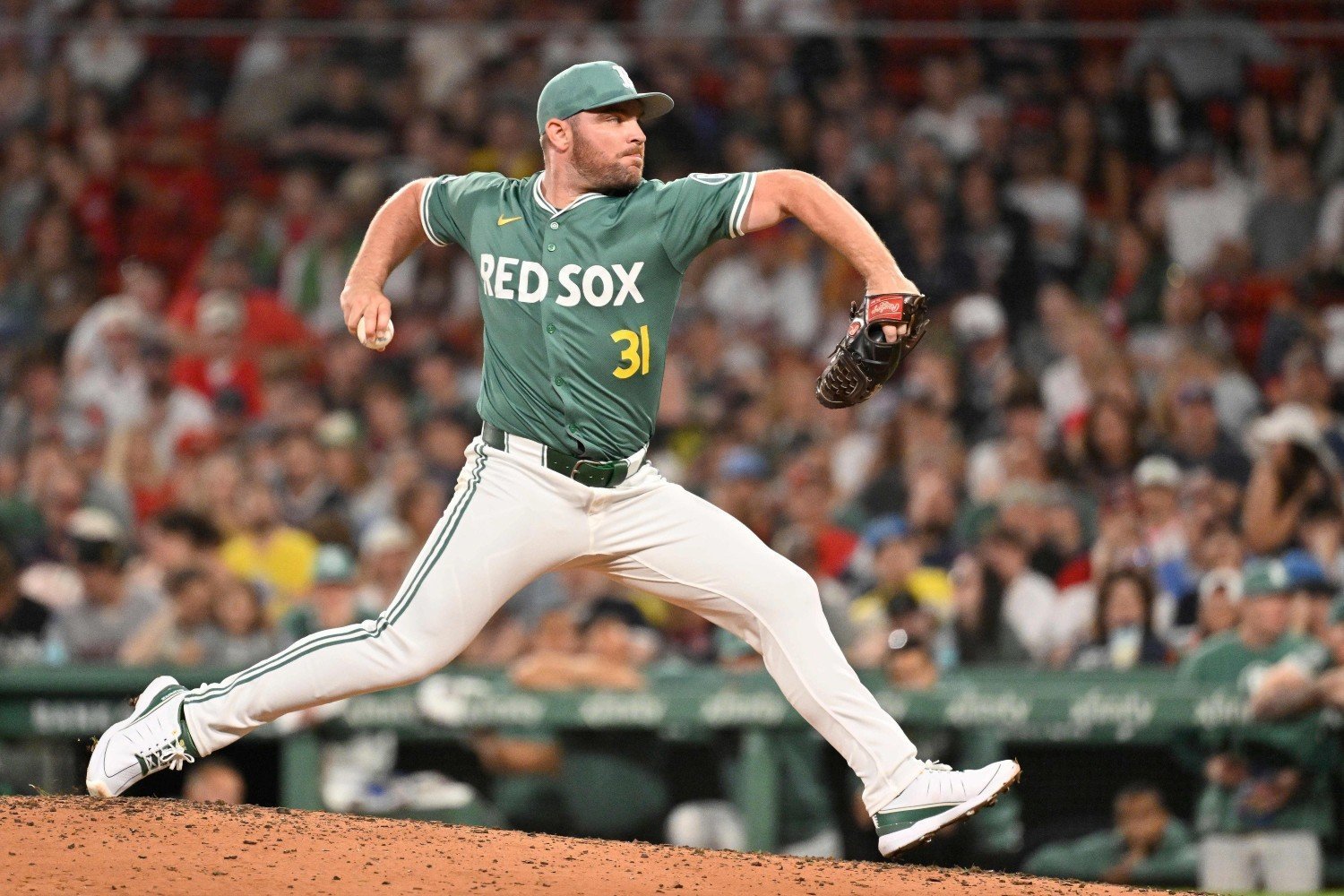 Liam Hendriks announced his retirement this week after a 14-year Major League career that included three All-Star selections, back-to-back AL Reliever of the Year awards, and a remarkable comeback from cancer. For the Minnesota Twins, however, Hendriks’ retirement also offers a reminder of what might have been. The Twins signed Hendriks as an international free agent in 2007, and the Australian right-hander eventually reached the majors with Minnesota in 2011. Unfortunately, the version of Hendriks the Twins saw was not the one who would eventually become one of baseball’s best relievers. From 2011 through 2014, Hendriks bounced between the Twins, Royals, and Blue Jays while making 39 appearances, including 34 starts. Across 188 2/3 innings, he posted a 5.92 ERA. Minnesota eventually moved on, and Hendriks continued searching for a role that would unlock his considerable talent. That answer came in Toronto. In 2015, the Blue Jays moved Hendriks into the bullpen full-time. The results were immediate. He posted a 2.92 ERA with a 27.2% strikeout rate and a 4.2% walk rate across 64 2/3 innings. Suddenly, the pitcher who had struggled to establish himself as a starter looked like a legitimate weapon coming out of the bullpen. The Blue Jays traded him to Oakland that offseason, and Hendriks eventually developed into one of the premier closers in the sport. From 2019-20, he posted a 1.79 ERA with a 38% strikeout rate and a 5.7% walk rate over 110 1/3 innings. That success earned Hendriks a three-year, $54 million contract with the White Sox before the 2021 season. He rewarded Chicago by becoming an elite closer and earning consecutive All-Star selections. He would make three All-Star teams overall and win AL Reliever of the Year honors in both 2020 and 2021. Of course, Hendriks' career became about much more than baseball. He battled non-Hodgkin's lymphoma in 2023, returned to the mound later that season, and won AL Comeback Player of the Year. Tommy John surgery and additional elbow problems eventually limited his ability to continue his career. Hendriks finishes with a 3.88 career ERA, a 26.7% strikeout rate and 6.0% walk rate over 663 2/3 innings. As a reliever, he posted a 3.16 ERA. For the Twins, there is an obvious what-if attached to Hendriks' career. Minnesota had the pitcher first. What it never found was the role that allowed him to thrive. Hendriks needed a move to the bullpen to become the pitcher he was always capable of being. The Twins never gave him that opportunity before moving on, leaving them to watch from afar as their former international signing developed into an All-Star closer. His career ultimately became a remarkable story of perseverance, reinvention and resilience. For Minnesota, it also remains a reminder that sometimes the biggest challenge isn't finding talent. It's figuring out where that talent belongs. View the full article
-
Michael Busch’s Breakout Season Now Feels Like an Outlier
DiamondCentric posted an article in North Side Baseball
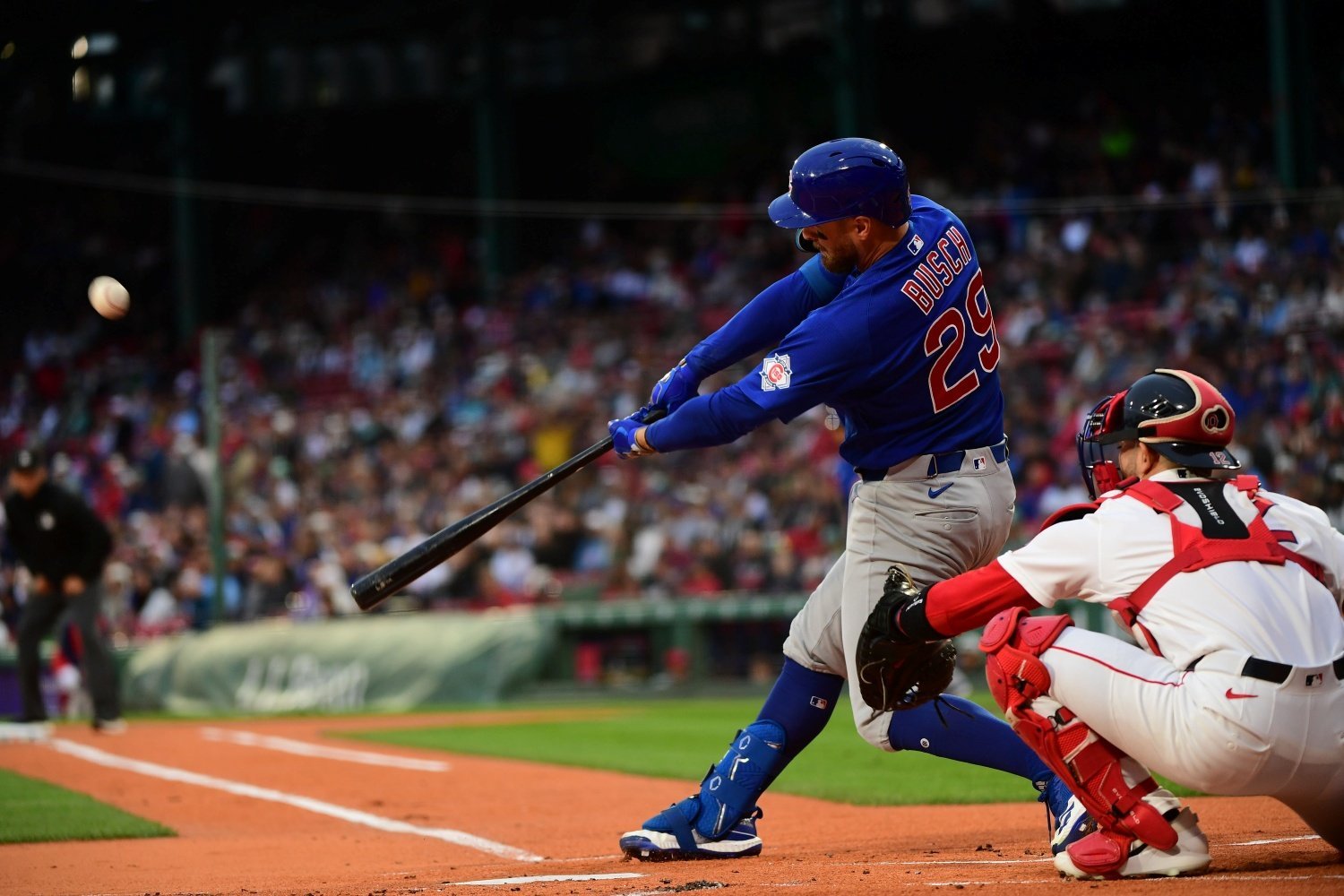 The Cubs’ season has come to an end, in disappointing fashion. Unfortunately, that word can also be used to describe the 2026 season of first baseman Michael Busch. After receiving MVP votes after an exceptional 2025 campaign, Busch took a step (or two) backward this season. There were some positives to take away from his year, but the overall numbers suggest the Cubs may have to start wondering whether last season was the beginning of something special, or simply an outlier. In 2025, Busch hit .261 with a .343 on-base percentage and a very strong .523 slugging average. He hit 34 home runs, which ranked sixth among all National League hitters. At the time, it looked like the Cubs had a star on their hands. But a lot can change in a year. This season, Busch’s batting average dropped to .242. His on-base percentage actually climbed to .352 (thanks in large part to a significant increase in his walk rate), but he slugged just .393. For a first baseman, that's anemic. A .745 OPS will certainly play, and with a 106 OPS+, he was still an above-average hitter this season. But it’s still a massive step backward from what Busch did a year ago, and some of the underlying numbers indicate that his production should have been even worse. Busch’s expected batting average was just .233, which puts him in the 23rd percentile among all big-league hitters. A year ago, there weren’t many hitters who punished baseballs quite like Busch did. His average exit velocity and barrel rate were both in the 90th percentile or higher, while his hard-hit rate was also in the top quartile of the league. When he got his bat on the ball, good things happened. That just wasn’t the case this season. His barrel rate dropped all the way to the 60th percentile, while both his average exit velocity and hard-hit rate fell below league-average marks. He went from consistently making some of the best contact in baseball to making relatively ordinary contact, and that difference showed up in the results. Someone like Busch, who doesn’t have the fastest bat in the world, needs to lean into his pull side to be as efficient as possible when it comes to producing power. That’s exactly what we saw from him in 2025, when both his fly-ball rate and pull rate reached career-high levels. When he was getting the ball in the air and pulling it, he was extremely dangerous. This year, though, he was getting on top of the ball more often, and his pull rate dropped to a career-low 40%. He still managed to hit 20 home runs, but it’s pretty clear when looking at the numbers that the decline in his pull-side power had a major impact on his overall production. I've done quite a bit of bashing so far in this article, so I feel like I should note that there were some positives, too. His walk rate jumped from 9.5% to 13%, which is a significant improvement—and something that could be especially valuable if he can pair it with the power production we saw in 2025. He also played strong defense at first base, giving the Cubs value on both sides of the ball. But offensively, his 2026 season lines up much more closely with his career numbers outside of that incredible 2025 campaign. Maybe 2025 was the real Michael Busch finally breaking out. Maybe this season was simply a down year for a player who still has plenty of room to grow. There’s really no way to know for sure right now. What we do know is that Busch showed us a very high ceiling last season. If he can get back to pulling the ball in the air like he did in 2025 while maintaining the double-digit walk rate he posted this year, there’s still "All-Star" written all over his offensive profile. But until we see him do that again, it’s fair to wonder if we’ve already seen Busch at his peak—and whether his decline phase is worthy of a locked-in lineup spot next year. View the full article
-
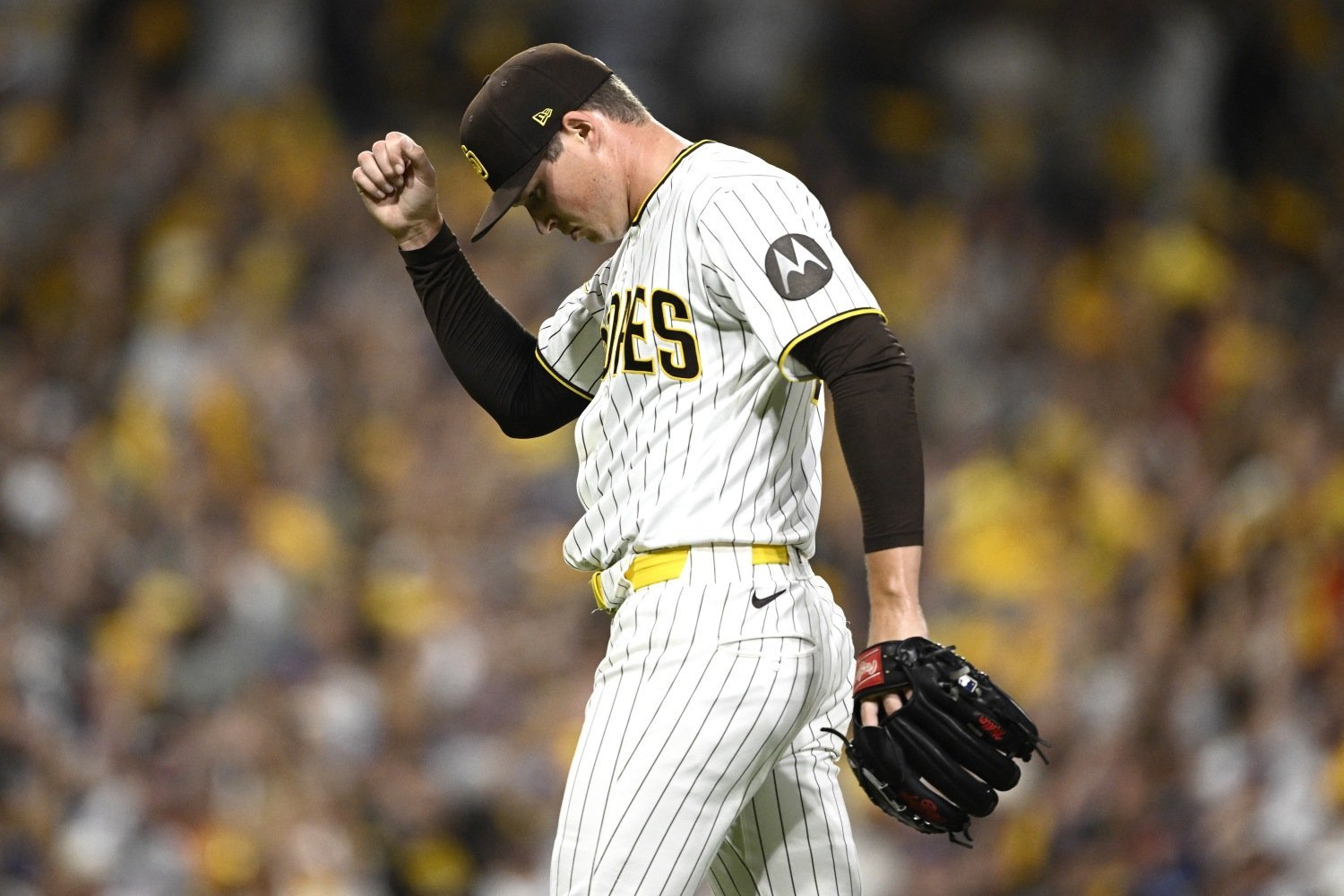 With their slumping offense and weak pitching staff, the Chicago Cubs would have been a better NLDS matchup for the Brewers. Instead, they'll face the red-hot San Diego Padres, who disposed of the floundering Cubs with ease in the NL Wild Card Series. The Padres swept the then-injury-riddled Brewers in San Diego when the teams last met in August, but on paper, Milwaukee is the better team. Their offense is better (107 wRC+ vs. 102 wRC+). Their pitching staff is deeper. By Defensive Runs Saved, they've been better in the field. Even San Diego's bullpen might not be much better than Milwaukee's, but it's their undisputed strength and what makes them a greater threat than the Cubs. Padres relievers led all teams in fWAR during the regular season, thanks to their three-headed monster in the late innings. Closer Mason Miller led all relievers in fWAR; left-hander Adrian Morejon ranked fourth; and rookie Bradgley Rodriguez ranked 26th. The trio threw 4 ⅔ scoreless innings in the Wild Card Series and combined for 9 shutout frames against the Brewers this year. Grabbing early leads will be paramount in the five-game series, but at some point, the Brewers will probably have to make a dent in that bullpen. That's a daunting task, but Milwaukee's offense may be as equipped as any to wear down San Diego relievers. Many of the Padres' key relievers succeed by forcing opponents to expand the strike zone. Their bullpen ranked just 26th in zone rate, throwing 46.5% of pitches over the plate, but led baseball with a 32.4% chase rate. The arms the Brewers will see most in the next week—Miller, Morejon, Rodriguez, Jason Adam, and Yuki Matsui—are all chase merchants. {C}%3C!%2D%2Dtd%20%7Bborder%3A%201px%20solid%20%23cccccc%3B%7Dbr%20%7Bmso-data-placement%3Asame-cell%3B%7D%2D%2D%3E--> Reliever Zone% Chase% K% BB% Mason Miller 45.1% 36.1% 47.4% 9.6% Adrian Morejon 48.7% 38.3% 30.4% 8.0% Bradgley Rodriguez 48.9% 34.4% 26.9% 6.6% Yuki Matsui 42.6% 31.5% 26.2% 13.8% Jason Adam 46.1% 34.1% 15.5% 7.0% The Brewers, meanwhile, have been baseball's most patient offense for the second straight year. Their 26.6% chase rate this year was the lowest in baseball. That's because they emphasize swing decisions (and, specifically, the value of swinging only at hittable strikes) above all else. Swinging at the right pitches will be even more important in the postseason, where the Brewers will face some of the game's best pitching. "If you try to force something in this setting, it doesn't work, I don't think," Pat Murphy said earlier this week. "I think it is magnified, and I think we've got to double down even more on that ball-strike. You're facing the best pitchers, so the run expectancy is going to be down, right? So it becomes magnified." That's easier said than done, though. The Brewers chased 29.3% of pitches outside the zone against the Padres' bullpen this year, including a combined 30.5% chase rate against Miller, Morejon, and Rodriguez. All three rely heavily on their secondary stuff. Miller threw more sliders than fastballs this year; Morejon threw his changeup 36% of the time to right-handed batters; and Rodriguez threw his changeup 43% of the time. The Brewers are actually more selective against secondary pitches than most of the league, but like all teams, they chase those pitches more than they chase heaters, because they have more movement than fastballs. Furthermore, when pitchers attack the Brewers with non-fastballs, they go from one of baseball's best offenses to an average one. On a rate basis, their run value against fastballs was near the top, but they were middle-of-the-pack against breaking balls and changeups. {C}%3C!%2D%2Dtd%20%7Bborder%3A%201px%20solid%20%23cccccc%3B%7Dbr%20%7Bmso-data-placement%3Asame-cell%3B%7D%2D%2D%3E--> Pitch Group Run Value/100p Rank Fastballs 0.196 3rd Breaking 0.162 11th Offspeed 0.169 12th The Padres could also adjust their approach against a passive Milwaukee lineup. Facing the similarly patient Cubs on Wednesday night, Miller threw his fastball 63% of the time and tried to attack the zone more aggressively. The Brewers should be able to play the waiting game with Adam and Matsui, but Miller, Morejon, and Rodriguez all have good enough fastballs to live over the heart of the plate when they choose. {C}%3C!%2D%2Dtd%20%7Bborder%3A%201px%20solid%20%23cccccc%3B%7Dbr%20%7Bmso-data-placement%3Asame-cell%3B%7D%2D%2D%3E--> Reliever 4-Seam Stuff+ Sinker Stuff+ Mason Miller 105 Adrian Morejon 127 129 Bradgley Rodriguez 108 101 Yuki Matsui 96 94 Jason Adam 90 If the Brewers influence the Padres' best arms to throw more fastballs for strikes, they must be ready to attack. That wasn't always the case in the regular season; their 69% swing rate on fastballs in the heart of the zone was the second-lowest in baseball. When they did swing at those pitches, though, their 0.855 run value per 100 pitches ranked second. With better starting pitchers and a better overall lineup, the Brewers should be able to gain an upper hand on the Padres. Once San Diego goes to the bullpen, it will be strength against strength. The series may hinge on the Brewers forcing Padres relievers to change their approach and taking advantage of more in-zone fastballs than most teams get. View the full article
-
Which Young Twins Should Get an Extension This Winter?
DiamondCentric posted an article in Twins Daily
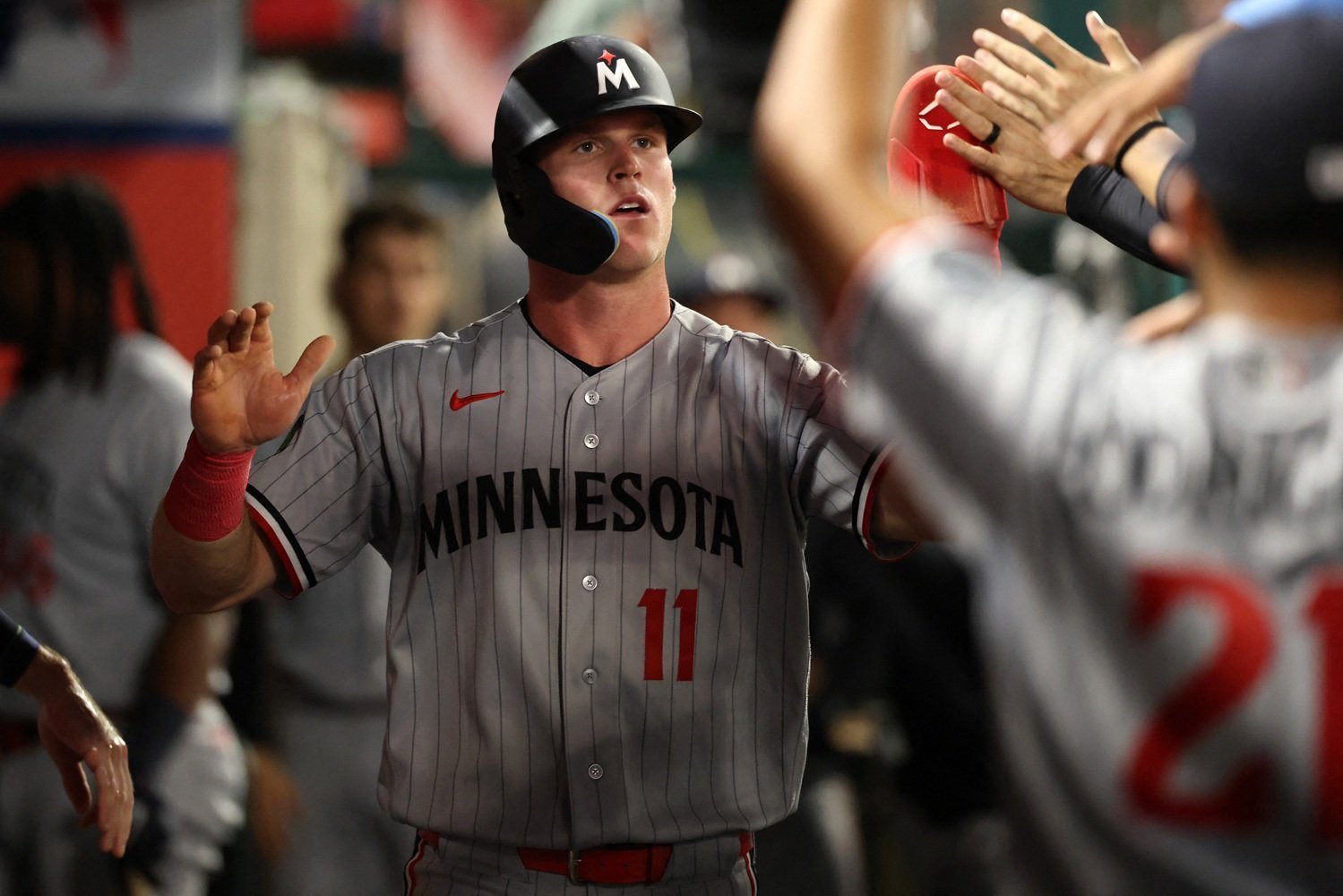 Major League Baseball has increasingly become a league where teams are willing to bet on young players before the players have had much opportunity to cash in on their potential. That trend has accelerated in recent years. Teams have handed out long-term contracts to players with very little service time, and some have even made commitments before a player reaches the majors. In 2026 alone, Colt Emerson, Cooper Pratt and Luis Lara signed extensions before making their MLB debuts, while several other highly regarded young players received significant guarantees almost immediately after reaching the majors. The strategy is relatively simple. A team gives a young player financial security early, while potentially buying out arbitration seasons and some free-agent years at a lower cost than the player might command after establishing himself as a star. The Minnesota Twins have watched that trend from the outside. This winter, they could finally decide to participate. General manager Jeremy Zoll said the organization plans to explore contract extensions with some of its young players during the offseason. Zoll also explained why he prefers to have those discussions away from the regular season. “As it pertains to extension conversations, that’s definitely something we’re going to explore this offseason and going forward,” said Zoll. “I know there have been in-season extensions around the league. Personally, I don’t think it serves anyone particularly well to potentially create a distraction for players during the season on those fronts. So those will be things we’ll engage in this offseason and we’ll see how that all shakes out.” That leaves a fascinating question for the Twins. Who exactly should they be talking to? The Twins Have Seen Both Sides of This Equation There is an obvious appeal to getting ahead of the market. If a player becomes a star, the price is going to increase dramatically. If the Twins can identify that player early enough, they could potentially secure several years of production at a manageable cost. But the organization also has plenty of evidence for why patience can be valuable. As explored earlier this year, the Twins had opportunities to make long-term commitments to players such as Royce Lewis, Jose Miranda and Matt Wallner when their perceived values were significantly higher. Lewis looked like an obvious extension candidate following his spectacular 2023 campaign. He hit .309/.372/.548 with 15 home runs and a 149 OPS+ in 58 games before starring in the postseason. Today, Lewis is coming off a disappointing 2026 season in which he hit .227/.287/.380 with a 86 OPS+ and 0.9 WAR. Miranda provides another cautionary tale. After posting a 114 OPS+ as a rookie in 2022, his production collapsed in 2023 (55 OPS+) before rebounding in 2024 (112 OPS+). There were flashes of his strong bat-to-ball skills, but he never put it all together at the big-league level. He was eventually out of the organization and played the entire season in the minors this year. Wallner provides another example of the uncertainty surrounding young players. His power looked like something the Twins could build around, but injuries and strikeouts have prevented him from establishing himself as a consistent everyday player. In 2026, he hit just .167/.259/.292 with a 55 OPS+ in 34 games before being demoted to Triple-A for the remainder of the season. The lesson isn't that extensions are bad. It is that the Twins need to be extremely selective about which players receive them. That brings us to this winter's potential candidates. Taj Bradley The case for an extension: Bradley might have the strongest argument among Minnesota's young pitchers. The 25-year-old right-hander made 31 starts and threw 178 1/3 innings in 2026, posting a 3.73 ERA, 3.82 FIP and 205 strikeouts. He produced 4.4 WAR while becoming one of the most important pieces of Minnesota's rotation. There is also a reason to believe the best is still ahead as he is only 25-years old. Bradley has already demonstrated the ability to miss bats while carrying a starter's workload, and he has three years remaining before free agency. The case against an extension: Pitching is inherently risky, particularly when discussing a multi-year commitment. Bradley has only one season at this level of workload and production. His 1.22 WHIP and 76 walks also show there is still room for improvement. The Twins would be buying into both his 2026 breakout and the expectation that he can sustain it. Luke Keaschall The case for an extension: Keaschall looks like exactly the type of player teams target with early extensions because he is under team control through 2031. At 23, he followed his impressive 2025 debut with a full 2026 season in which he hit .282/.374/.407 with 10 home runs, 20 stolen bases and 2.2 WAR. His 120 OPS+ shows his offensive production was comfortably above league average. More importantly, Keaschall's game isn't dependent on one tool. He provides on-base ability, speed while still having room to develop more power. The Twins can plug him into the top of the lineup for the foreseeable future. The case against an extension: His power profile is still somewhat uncertain. Ten home runs in 620 plate appearances isn't overwhelming, and his .407 slugging percentage leaves some questions about his long-term offensive upside. His defensive metrics also weren't particularly strong across his various positions in 2026. An extension would be betting that Keaschall's overall offensive profile continues to develop. Walker Jenkins The case for an extension: Jenkins may have the highest offensive ceiling of anyone on this list. The fifth overall pick in 2023 entered 2026 as one of baseball's top prospects and ultimately reached the majors at age 21. Before his promotion, Jenkins produced a .323/.417/.559 line with 14 home runs, 17 stolen bases and a 151 wRC+ across 73 minor-league games. His major-league debut was much more modest, as he hit .226/.293/.393 with a 91 OPS+ in 93 plate appearances. But that small sample doesn't erase the larger body of work. Jenkins remains one of the organization's most intriguing long-term building blocks. The case against an extension: This is precisely where the Lewis lesson comes into play. Jenkins has barely begun his major-league career. The Twins would be committing significant money based primarily on prospect pedigree and minor-league performance rather than established MLB production. There is also the Scott Boras factor. Jenkins' representation could make an early deal more difficult to negotiate, particularly if the player believes his eventual earning power could be enormous. Connor Prielipp The case for an extension: Prielipp's underlying numbers provide more optimism than his ERA. The left-hander finished 2026 with a 4.87 ERA but a 3.73 FIP over 125 2/3 innings. He struck out 128 hitters while allowing only 14 home runs. Considering his lengthy injury history, simply completing a full season while establishing himself as a major-league starter represents an important step forward. If the Twins believe his FIP is more representative of his future performance, there could be an opportunity to buy low before his results catch up with his underlying skills. The case against an extension: This is a much larger projection than Bradley. Prielipp still hasn't demonstrated sustained major-league success, and his 1.29 WHIP and 4.87 ERA leave plenty of uncertainty. He also has a history of significant injuries, which makes a long-term pitching commitment particularly complicated. There is a reasonable argument for simply letting Prielipp prove more before committing. Kaelen Culpepper The case for an extension: Culpepper's 2026 season provided two encouraging data points. First, he dominated Triple-A, hitting .271/.367/.478 with 14 home runs and 17 stolen bases in 74 games. Then he reached Minnesota and held his own, hitting .274/.328/.393 with a 102 OPS+ over 33 games. The combination of shortstop defense, athleticism and offensive upside makes Culpepper an intriguing long-term piece. The case against an extension: He has only 128 major-league plate appearances. That's not enough information to know whether his offensive production will translate over a full season. His 28 strikeouts against just six walks in 128 plate appearances also highlight areas that need improvement. Culpepper may be a player the Twins should monitor closely rather than rush to sign. Emmanuel Rodriguez The case for an extension: Rodriguez remains one of the organization's highest-upside offensive players. He reached the majors in September after another productive minor-league season (140 wRC+) and made his debut at 23. His combination of power, plate discipline and athleticism has made him one of the more intriguing prospects in the system for several years. The Twins would be buying before Rodriguez has had a chance to establish himself as a major-league hitter. That's exactly what makes an early extension potentially valuable. The case against an extension: There simply isn't enough MLB evidence yet. Rodriguez went 8-for-45 with two home runs and a .178/.229/.400 line during his brief major-league debut. That obviously isn't enough to make a judgment about his future, but it demonstrates how much uncertainty remains. There are also questions about whether his long-term defensive home will maximize his value. The offensive upside is exciting, but the Twins would be paying for potential. Where Should the Twins Start? There is no reason for Minnesota to hand out extensions simply because other teams are doing it. The purpose of an early extension is to identify a player before the market catches up and create cost certainty before arbitration and free agency become expensive. But the Lewis, Wallner, and Miranda examples demonstrate how quickly that calculation can change. Bradley has the strongest major-league track record of this group. Keaschall has the largest body of MLB work among the position players. Jenkins has perhaps the greatest long-term ceiling. Prielipp represents an intriguing buy-low opportunity, while Culpepper and Rodriguez remain higher-risk bets on potential. The Twins don't need to pick just one. But they also don't need to force the issue with all six. Zoll has made it clear that extensions will be part of the offseason conversation. Now the difficult part begins: deciding which young players have shown enough to justify turning potential future value into guaranteed money today. For a franchise trying to build its next competitive window, those decisions could be among the most important of the winter. What player or players should the Twins approach for contract extensions this winter? Leave a comment and start the discussion. View the full article
-
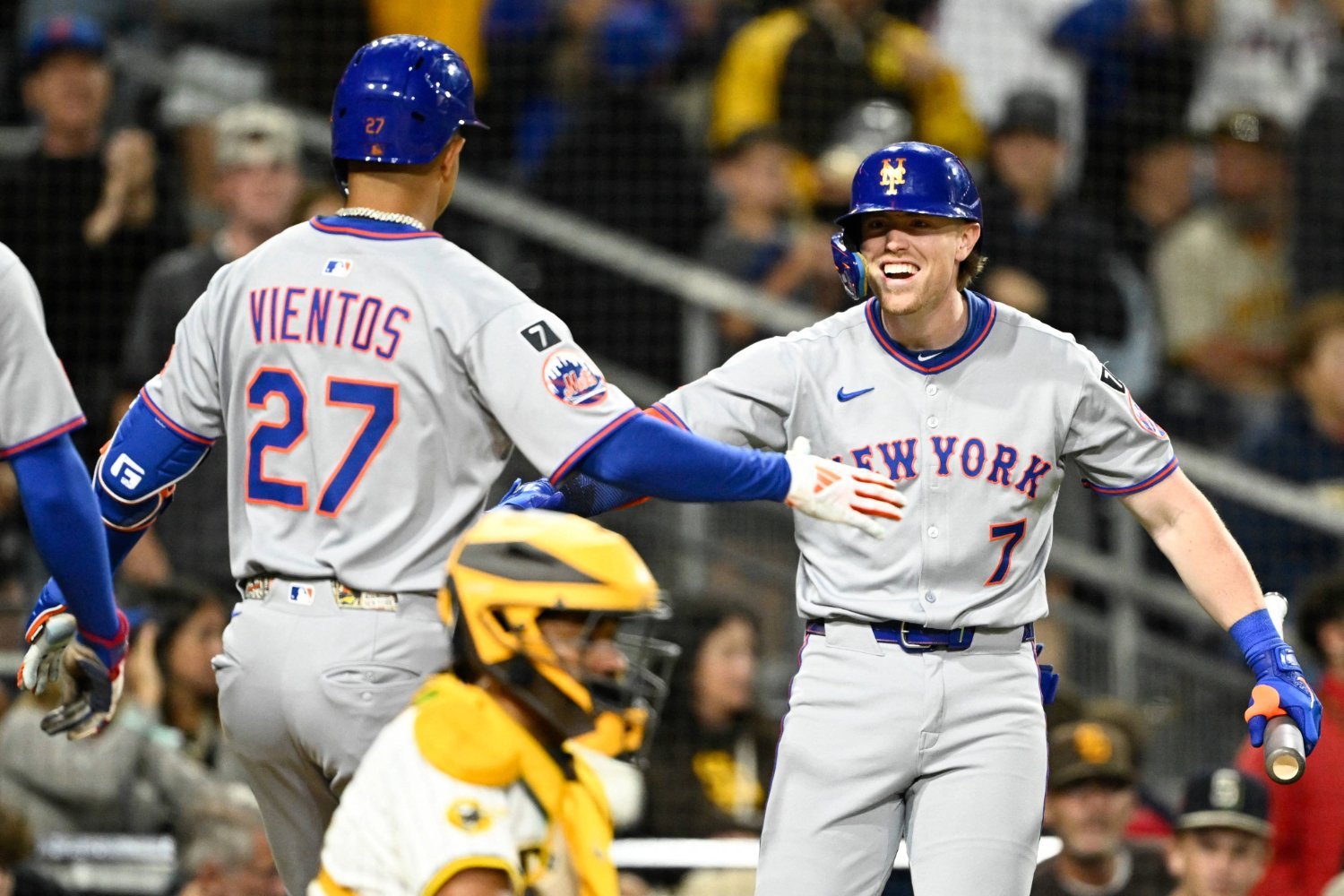 The nickname aged poorly. The "Baby Mets" -- Francisco Alvarez, Brett Baty and Mark Vientos -- have not matured into foundational players. There's an excellent chance the trio will be broken up in the offseason. Perhaps all three will go. This winter would be a good time for it to happen. Baseball economics is a driver in that supposition. Alvarez, Baty and Vientos are all arbitration-eligible for 2027, and no matter what MLB's salary system will be after the lockout, shelling out low seven figures to veteran players who had respective bWARs of 0.7, 1.6 and minus-1.2 this year is not good business. How long does the front office allow itself to be teased? How tightly should it hug these homegrown products? Team president David Stearns has shown that he isn't sentimental about players, and he inherited this lot to begin with. On a human level, it feels like everyone could stand a change of scenery. All three players' careers have stalled after they've put in so much effort to improve. After this year's results, Stearns can't be certain that a breakthrough is coming. He started hedging last offseason when he shifted Baty and Vientos to bench roles in the aftermath of signing Jorge Polanco and Bo Bichette as free agents. Let's dig into where the "Baby Mets" are falling short, and who could be next up to fill their spots. Francisco Alvarez Alvarez has the best chance of staying because of his position, but remember, his name was floated in trade rumors during the summer. Also recall the Mets signed Luis Torrens to a two-year, $11 million extension on May 2, and while there was a trend the past few years of teams paying good money for veteran backups, that still is a lot for a No. 2. But it's quite economical for a No. 1, and Torrens looked the part for much of this season (2.1 fWAR this season). So, where is Alvarez lacking? To start, his focus on patching the down-and-away hole in his swing, with help from special assistant J.D. Martinez, has had an odd effect: his hole now is velocity. He improved from a .190 average against sliders and .152 against sweepers in '25 to .258 and .231, respectively, in '26, but he plummeted from .343 against four-seamers in 2025 to .231 in this year. That's more than statistical noise when each pitch has a decent-sized sample for both years. GCM's Yirsandy Rodriguez has a full breakdown of how Alvarez has regressed at the plate and what it means for the Mets' catching situation going forward. The defensive numbers remained mixed. His throwing has improved incrementally, according to Baseball Savant metrics, but he will never match Torrens' throwing ability. His framing took a hit in the first year of ABS challenges, and his blocking hit rock bottom at the first percentile. His health history cannot be ignored, either. There was a thumb sprain in 2024, a hamate fracture and thumb UCL sprain in 2025, and a meniscus tear in 2026. Catchers take a pounding behind the dish, of course, but Alvarez's availability has been too limited. He has played in 100, 76 and 113 games in the past three seasons. If Stearns feels he can only save money at the margins of the payroll, then he could finally go through with an Alvarez trade, give Torrens the majority of starts and sign a cheap, defense-first backup, ideally one who bats left-handed to complement the righty-swinging Torrens. Brett Baty Baty teased the front office again with another strong second half at the plate (.838 OPS, seven home runs in 49 games). The season-long bat speed (87th percentile) and exit velocity (73rd percentile) are tempting, as well. But a lack of progress against left-handers (.500 OPS, zero home runs in 91 plate appearances) and lackluster overall production (91 wRC+, 11 home runs in 143 games) signal he's just a platoon player. A check of some Baty numbers paints a clear picture of why he hasn't broken through. First, spin still vexes him. He couldn't figure out the sweeper, and so pitchers threw it more than ever to him this year. He posted a minus-4 run value on the pitch, with a .162 average and .216 slugging percentage. The slider was a problem, too, with a .167 average and .333 SLG (minus-1 run value). Those two deficiencies helped to cancel out the +3 run value and .446 SLG against four-seamers. Second, despite the exit velocity and the 73rd-percentile launch angle-sweet spot percentage, the slug just wasn't there. His SLG dropped from a career-high .435 in 2025 to .371 this year. His extra-base-hit total remained flat (33 and 34 the past two years). After four-plus seasons in the majors, that's not a good sign. And while he has the athletic ability to play multiple positions, he's not quite a glove-first player. His best work this year came at his natural position, third base, and it was modest. He registered +2 defensive runs saved (DRS) and +1 out above average (OAA). Among players with 450 or more innings at the position, he was tied for 14th in both DRS and OAA. He was a good-enough fill-in when Bo Bichette slid over to shortstop to cover for the injured Francisco Lindor. Baty did show promise at second base, with +3 OAA and +3 fielding run value (FRV). The latter number was tied for 14th among all MLB second basemen. His work at first base and the outfield were limited, but not bad (2 DRS/-1 OAA at first, 2 DRS/-1 OAA in the outfield). All of which is to say that Baty is versatile enough to keep but still a borderline call. The Mets enter the offseason with replacement utility options, starting with Christopher Morel, who has more power. They could finally give Ronny Mauricio a full season in the role, although he, too, might be on the outs after not getting a September call-up until Jared Young suffered a concussion and went on the injured list. They have deadline acquisition Emilien Pitre and waiver claim Christian Cairo at Triple-A as well, but Pitre probably needs more time there after a late promotion. A club could do worse than to dream on a first-round draft pick who will turn 27 in November, and hope he finally figures it out to become a solid third baseman. Stearns should be making that pitch to interested parties about Baty over the next couple months. Mark Vientos Manager Andy Green was blunt about Vientos' future with the Mets when the club recalled the infielder from a minor-league rehab stint in late August. "I still think there's a very bright future out there for him, if he wants to go grab a hold of it. That's on him," Green said. "When he gets back in the box, take advantage of the at-bats you do get and prove you deserve more at-bats." Vientos got exactly 30 ABs in 12 games from Aug. 31 through Sept. 24. He homered twice and struck out eight times, or about what would be expected from him. That sample doesn't forgive the entire 2026 body of work. The exit velocity, hard-hit rate, and line-drive rate all fell from 2025 despite fast bat speed. His ground-ball rate ticked up two points. Also as you would expect from Vientos, the chase rate moved up as his season sputtered and frustration grew. To his credit, the whiff percentage ticked slightly downward. But in the end, we're talking about marginal statistical moves that landed within his career norms. Therefore, Vientos' main value for 2027 and beyond, as Rodriguez noted last week for GCM, is as a platoon masher against left-handed pitching. But this is a player who showed two years ago that he could be more. Right now, he's just a guy who could maybe rotate with Polanco and Young. Could a Vientos-Baty utility platoon play? The Mets would be pairing a 121 wRC+ against left-handers (Vientos) with a 103 wRC+ against right-handers (Baty) in that scenario, and maybe both would see a boost with more defined roles, but those numbers don't scream that it should be tried. In theory, Morel, Eric Wagaman or a cheap offseason pickup could fill the Vientos role and Mauricio can fill the Baty role. Vientos still has trade value because his slug will entice a team to give him a fresh start. But will Stearns be reluctant to deal a player with 30-home-run power a year after letting Pete Alonso walk? Maybe, but Stearns saw Vientos struggle badly in the field at first base (minus-10 OAA), and run prevention is still important in Queens. And there aren't full-time DH at-bats available with Polanco, Juan Soto and even Lindor needing them. View the full article
-
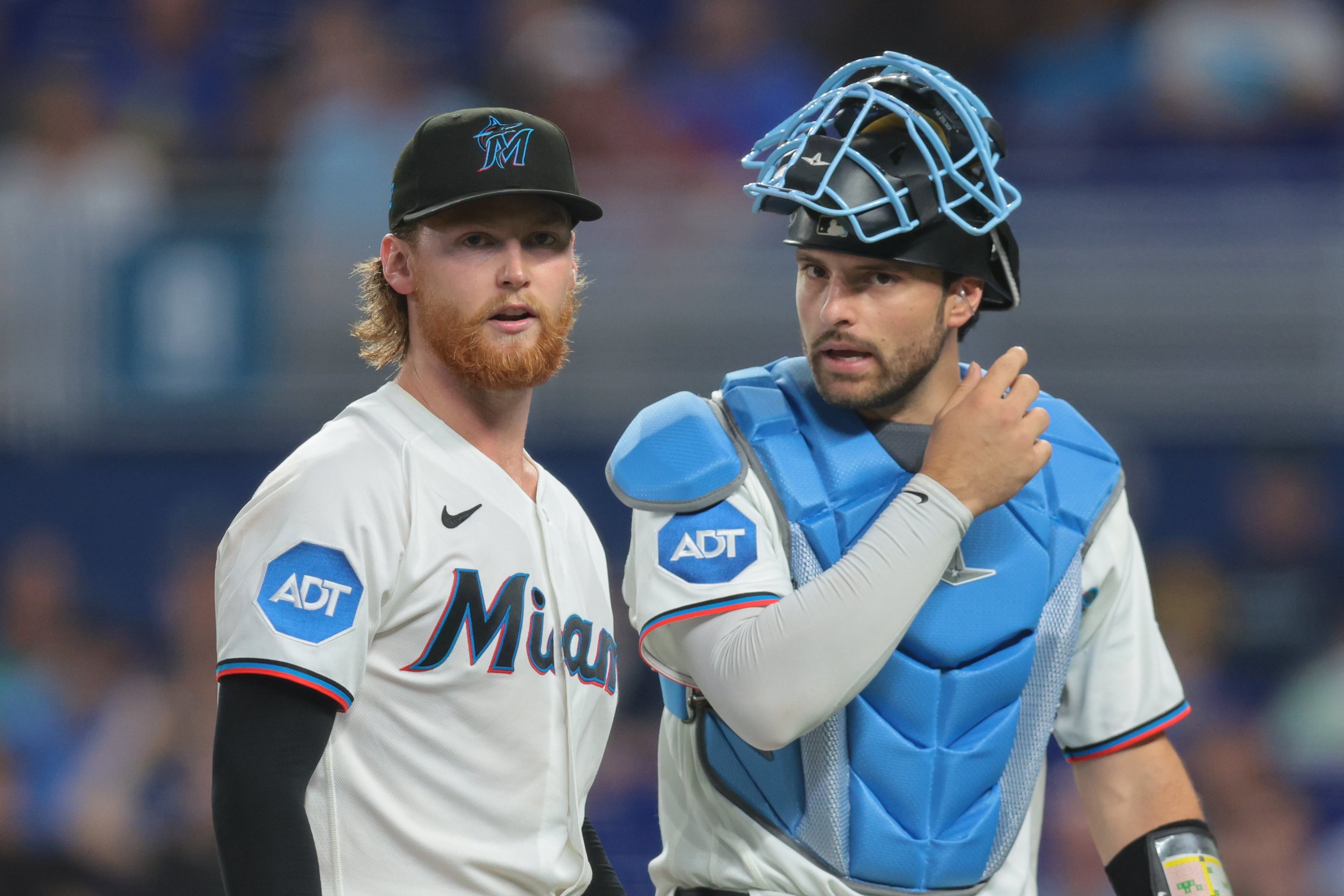 There are no more meaningful Miami Marlins games for (at least) the next six months, but Fish On First's coverage continues interrupted. At the conclusion of the 2026 regular season, FOF staffers were invited to answer five of my burning questions concerning both the state of the franchise and Major League Baseball as a whole. Thanks to Louis Addeo-Weiss, Isaac Azout, Kevin Barral, Alex Carver, Sean McCormack, Sean Millerick, Daniel Rodriguez and Hector Rodriguez for their participation in the following roundtable. 1. What were the main weaknesses/issues that held the Marlins back from reaching the postseason this year? Ely Sussman: This had the potential to be a great run prevention team. Instead, they placed near the middle of the pack due to a lack of swing-and-miss from their pitching staff. Eury Pérez helped a bit from that standpoint, as did Michael Petersen and Pete Fairbanks (although he performed terribly overall). That's about it. Overall, Marlins pitchers ranked 23rd in Major League Baseball in whiff rate. All of the balls in play put enormous pressure on Miami's defense. They need to generate more strikeouts moving forward. The Marlins were also constantly hamstrung by a thin bench. Leo Jiménez and Brian Navarreto both occupied active roster spots for the majority of the season as the front office was complacent about extending opportunities to more talented prospects or seeking upgrades from outside the organization. Sean Millerick: In many ways, it's a tie between a punchless offseason and the most poorly timed losing streak in franchise history. Yet the shorter, and perhaps fairer, answer is depth. Even if everything worked out for Miami in 2026, they would have been hard-pressed to make some real noise this year. As we all know, that is not what happened. I'm not sure there was a moment this season the Marlins had more than three starting pitchers you felt confident in, and there were a lot of stretches where that number dropped to two. That lack of starting pitching depth eventually dragged the bullpen down with it. Even if the practice of pulling starters early is going to be a permanent thing, improving the caliber and depth of the starting pitcher foundation is arguably Miami's top priority for 2027. Louis Addeo-Weiss: Lack of starting pitching depth. Hector Rodriguez: Bullpen. They couldn’t stay consistently healthy. They had some key bullpens arm go down with injuries and Pete Fairbanks having a rough season didn’t help. Kevin Barral: It's tough to not look at the team's struggles against left-handed pitching. The Marlins posted a .685 OPS against lefties this season. On top of that, their struggles on the road also killed them, going 33-48. Isaac Azout: Lack of starting pitching depth was a major issue. The Marlins lost Paddack, Snelling, White and Meyer and brought in zero outside help to replace those innings, leaving the rotation extremely thin down the stretch. The second-half regressions from Otto Lopez and Xavier Edwards also hurt them immensely, and, of course, trading your RBI leader while sitting just 1.5 games back didn’t help. The midseason injury to Anthony Bender further hurt them. Alex Carver: Depth. Injuries to roster mainstays Max Meyer, Anthony Bender, Owen Caissie and others as well as top prospects ready to contribute such as Thomas White and Robby Snelling had Miami searching for innings and ABs in far-off places. The Marlins put a lot of faith in depthier arms such as Dax Fulton, Tyler Zuber and Ryan Gusto and uninspiring bats such as Leo Jiménez. All in all, the timing of prospects fully maturing and the frequency with which injuries struck the team canceled out their playoff hopes. Daniel Rodriguez: The biggest issues were injuries and bullpen instability. The losses of Max Meyer and other key starters had a ripple effect on the 'pen, while injuries to position players forced frequent lineup changes. There weren't enough players who could be trusted to win close games. Sean McCormack: Bullpen, lack of star power, managerial decisions, and lack of pitching depth. 2. Which injured Marlins player are you most excited to see get back to full strength next year? Ely: To be consistent with my response to the previous question, I gotta go with Ronny Henriquez. In 2025, he racked up the third-highest strikeout total for a reliever in Marlins history. He and Petersen could be an elite high-leverage duo, helped by how they give opposing batters vastly different looks (the 6'7" Petersen towers over the 5'10" Henriquez). Having undergone elbow surgery in the middle of the 2025-26 offseason, Henriquez should have no restrictions come Opening Day. Millerick: Pete Fairbanks. I know Ronny Henriquez is the chalk answer here, and trust me, I'm ecstatic about the prospect of his return. However, I am terrified that his return will be just the excuse the Marlins front office needs not to invest at all in the bullpen this offseason. A front office that re-signs Fairbanks in free agency to a cheaper, prove-it deal? That would show a clear commitment to winning. Plus, it could work out, giving Miami one more elite weapon. Until then, it's one more veteran voice around a team that will remain relatively young. Win-win move. Louis: Max Meyer to see if 2026 was merely an aberration. Hector: Max Meyer. It looks like he has finally taken the next step in the development. If the Marlins can get Max, Eury, and Sandy together for a full season, that’s a nasty rotation considering the starting pitching depth with guys like Robby Snelling and Thomas White. Kevin: A full season of Max Meyer excites me. I wonder what his second half would've looked like because he certainly underwent the right changes in his pitch mix to become a better pitcher. Isaac: Ronny Henriquez. Very intrigued to see what his second season with Miami looks like. Max Meyer as well. Alex: Thomas White. For good reason, hype was very high surrounding the Marlins’ top prospect as spring training got underway only for his season to be cut short due to injury. If White returns at full strength, it shouldn’t be long until he’s ready to contribute to the big league club. A dazzling mix of size and stuff, White has future ace potential and could be exactly what the Marlins need to push their pitching staff over the hump and into the playoffs. Daniel: Max Meyer. Even though we got to see All-Star level pitching from Meyer and over 100 innings this season, we still didn’t get to see it over a full season. I’m really looking forward to seeing what he can do next year. McCormack: Robby Snelling. 3. Any specific pending free agents you'd like the Marlins to target this offseason? Ely: Bolster the starting rotation with Robbie Ray. He's been very durable outside of 2023 elbow surgery and difficult to hit. Even if Ray flops for whatever reason, there is a path for the former AL Cy Young Award winner to salvage some value as a left-handed reliever. Ray's age (35) and league-leading walk total should limit him to a short contract. I'm sold on Javier Sanoja as an everyday player, which means finding somebody to take over the classic utility player responsibilities. Edmundo Sosa would be very solid on a two-year deal. In addition to providing defensive versatility, he has slugged over .420 in four consecutive seasons. Sosa comes with some legitimate upside if the Marlins can find a way to tame his overaggressiveness at the plate. Millerick: Ty France. Miami should have signed him last year, and they still should, even off a career year. He's not going to be able cash in that much, and he'd still be the best first baseman on the Marlins. Then, at the other end of the career-year spectrum, give me some Kevin Gausman. The man is up there with Sandy Alcantara when it comes to the trick of being physically present every fifth day and racking up innings. This was his worst season since 2019, so he'll come at a discount. For the bullpen, how about Brent Suter—a veteran, capable lefty reliever with a proven track record? If we're being extra greedy and hopeful about a spike in payroll, make a run at Seiya Suzuki, and if that fails, bring Luis Arraez home. A real backup catcher ought to be on the shopping list, too. Louis: I’ll give you two, one pitcher and one position player. Pitching-wise, I’d learn towards Adrián Morejón. For a position player, I’d lean towards Seiya Suzuki, where he would certainly prove an upgrade at DH over Agustín Ramírez, and could moonlight in the corner OF spots when needed. Honorable mention: David Bednar. Hector: Jake Bauers. He’s coming off a very strong season and the Marlins need someone to play first base unless the plan is to have Stowers there for the future. Kevin: The Marlins need another right-handed power hitter. Targeting someone like Randy Arozarena would be fun. He is coming off his sixth straight 20/20 season and in 2026, he posted a career-high 148 OPS+. Maybe it's dreaming big, but the thought of Arozarena in the middle of the Marlins order is exciting. A more realistic target is someone like Eugenio Suárez. After an amazing 2025 season, Suarez's production heavily dropped, but he still managed to hit 26 home runs with a 104 OPS+. It would be much cheaper than Arozarena, but easily would help this team in the power department and especially against left-handed pitching. Isaac: In a relatively weak free-agent class, I'd like to see Miami shore up third base and potentially the back end of the rotation. Eugenio Suárez and Bailey Ober feel like realistic options for Miami this offseason. If they want to go a hair sexier, Nick Pivetta. Alex: Alec Bohm had a down contract year, but he’s two seasons removed from a 2.8 bWAR season. The Marlins are in short supply of both righty sluggers and corner infielders, especially at the harder-to-fill hot corner. Bohm presents a true power threat from the right side who can hold down third base at least at replacement level. The Marlins should be all-in on Bohm if they are serious about competing in 2027. Daniel: Ryan Mountcastle. He is coming off an injury-plagued year, so the Marlins can get him for cheap. Eugenio Suárez fits as a vet power bat for the lineup. McCormack: Yoán Moncada, Andrew Vaughn if non-tendered by the Brewers, or a starter (Freddy Peralta?) 4. Which teams will reach the 2026 World Series and who will win it all? Ely: The New York Yankees and Milwaukee Brewers. For the first time in franchise history, the Brewers win a ring. Millerick: Time to run back the 2020 World Series without the asterisk: Dodgers over Rays. I was tempted to zag and pick another NL club...and then Mookie Betts started heating up. The Dodgers are simply the other side of the coin when it comes to the depth issues that plagued Miami this season, being able to stash arms like Tyler Glasnow and Blake Snell until playoff time comes around. While every Marlins fan would love for the Marlins to be able to start doing Dodgers things, the Rays are the more realistic model. It'll be a tight series—Tampa is very good and is one of the smartest teams in baseball. Unfortunately, and stop me if you've heard this, the Dodgers are smarter and more talented. Pat Riley can get ready for some royalty checks, because the three-peat is coming. Louis: Brewers-Rays, and I have Milwaukee winning in six. They’re the team of the year, so it’s only fitting. Hector: Brewers versus Yankees. Brewers win in six games. Kevin: I am a big fan of the Tampa Bay Rays and what they have done so far. I think the additions of Liam Hicks and Freddy Peralta really put them above the rest of the American League. That along with the core of Junior Caminero, Yandy Diaz and Jonathan Aranda will have them in the World Series. On the other side, it's tough to pick against the Dodgers. They will have most of their pitching back and Shohei Ohtani, in an injury-riddled season, is still one of the best performers in the postseason. Milwaukee is a close second, but it'll be the Dodgers facing the Rays in the postseason with Tampa winning in seven games. Isaac: The Brewers will defeat the Rays in the 2026 World Series, only complicating CBA negotiations even further ahead of Dec. 1. Alex: Dodgers and Yankees. Dodgers win it all in five games. Daniel: Dodgers-White Sox. Dodgers in six. 5. MLB owners are pushing hard for there to be a salary cap in the league's new collective bargaining agreement. Are you for or against a cap? Ely: Some kind of substantial reform to the league's economic model would be welcome. As things currently stand, teams like the Marlins simply have no chance to win the bidding on established stars. I'm not particularly enthusiastic about a hard team cap, but how about installing a maximum salary for individual players and limiting the number of "max players" allowed on each team while boosting the minimum salary? I have a hard time believing that the players' union would sign off on that, but think it'd be a step in the right direction. Millerick: Emphatically, unequivocally for. End the perception among fans that the Marlins exist to be a farm team for baseball's richer teams. Money doesn't guarantee a championship, but this is entertainment, and I'll be more entertained if the Marlins have roughly the same odds of landing a big free agent as any other team. Give me a cap, and I'll save my fretting over salary restrictions for many, many other segments of society. Louis: I’m for a reasonable cap, but more in favor a salary floor. That being said, I think a salary cap would prove an absolute disaster for members of the players' association. Hector: I am for whatever guarantees that we have baseball in 2027. I am only okay with a salary cap if it includes a high salary floor that forces cheap owners to actually invest on their MLB roster. Kevin: I am against a cap. Although I can understand why there is a case for it, the need for a floor is far larger than for the cap. If you get to a floor, small-market teams will spend more and compete more. Isaac: I’m generally not in favor of formal salary cap or floor, but I can certainly understand why so many are. I’d rather see no deferrals, more teeth put behind the existing “soft cap” so teams can’t operate as far over it as the Dodgers have, and better revenue sharing with much more specific rules on how that money can be spent. Alex: The Marlins fan in me would be in favor of both a floor and a cap. While I believe teams should be financially responsible for fielding a competitive team and product for the benefit of fans, small-market teams will only be willing to spend so far. A salary floor and cap would draw competition closer while keeping the on-field product consumable. Daniel: I’m in favor of a salary cap if it is paired with a meaningful salary floor. The Marlins currently operate with different financial restraints from some of the league’s highest-spending teams, so having both a floor and a ceiling could create more competitive balance while still requiring teams to invest in their rosters. McCormack: Against the cap. View the full article
-
Elder Millennial Books Colonoscopy Upon Seeing Nick Punto
DiamondCentric posted an article in Twins Daily
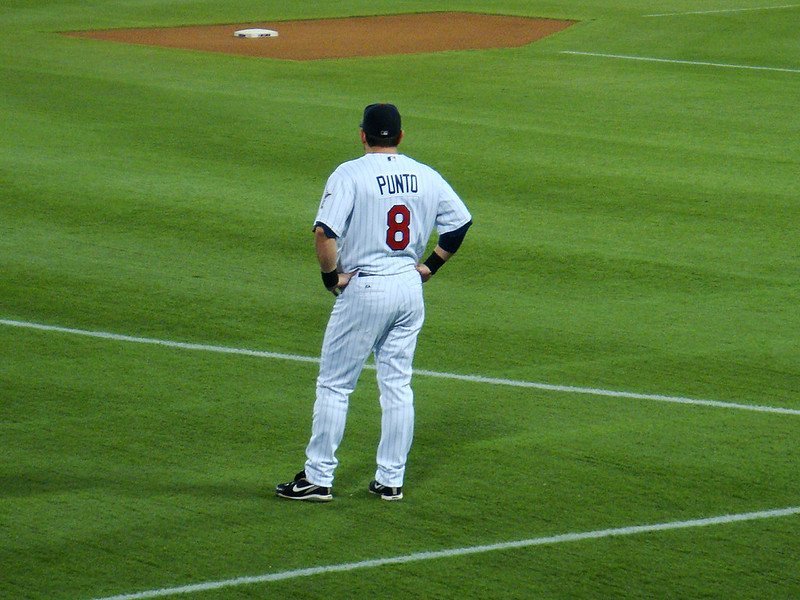 Troy Milbank was watching the San Diego Padres close out the Chicago Cubs on Wednesday night when he noticed something on the home team’s bench. Or rather, someone. “Holy [EXPLETIVE], that’s Nick Punto,” exclaimed the 46-year-old father of three in his Roseville living room, startling Bosco, the family dog. “LNP is coaching for the Padres!” His excitement soon turned to bewilderment when the camera gave him a closer look. “They did a tight shot of Little Nicky Punto and he’s got a full beard with a ton of gray hair,” said Milbank, who works as an engineer for 3M. “I swear it was just yesterday that he was one of the Piranhas. And then I remembered that both my parents are dead and 2006 was twenty years ago.” After processing the cruel, inevitable passage of time for a moment, Milbank did the only thing he could think to do: He went online and scheduled a colonoscopy. “I’m in good health overall, even if my cholesterol is a bit high,” said Milbank. “But my doctor said they’re lowering the advised age to get your colon checked to 45. I know the prep kinda sucks and I was dragging my feet a bit. Nick Punto looking like one of my dad’s buddies from the Navy got me right with God in a hurry. I’ll [EXPLETIVE] my brains out for a day if that means I can see my grandkids grow up.” The former Twin’s advanced age wasn’t Milbank’s only surprise. “My wife Ashleigh looked up from her book when I shouted. She saw him, whistled, and called him a ‘zaddy.’ I don’t know how to react to that. My bride of 21 years has erotic thoughts about old-ass Nick Punto. It’s been a surreal 24 hours.” Image license here. View the full article
-
Padres Found Their October Formula In Beatdown of Cubs
DiamondCentric posted an article in Padres Mission
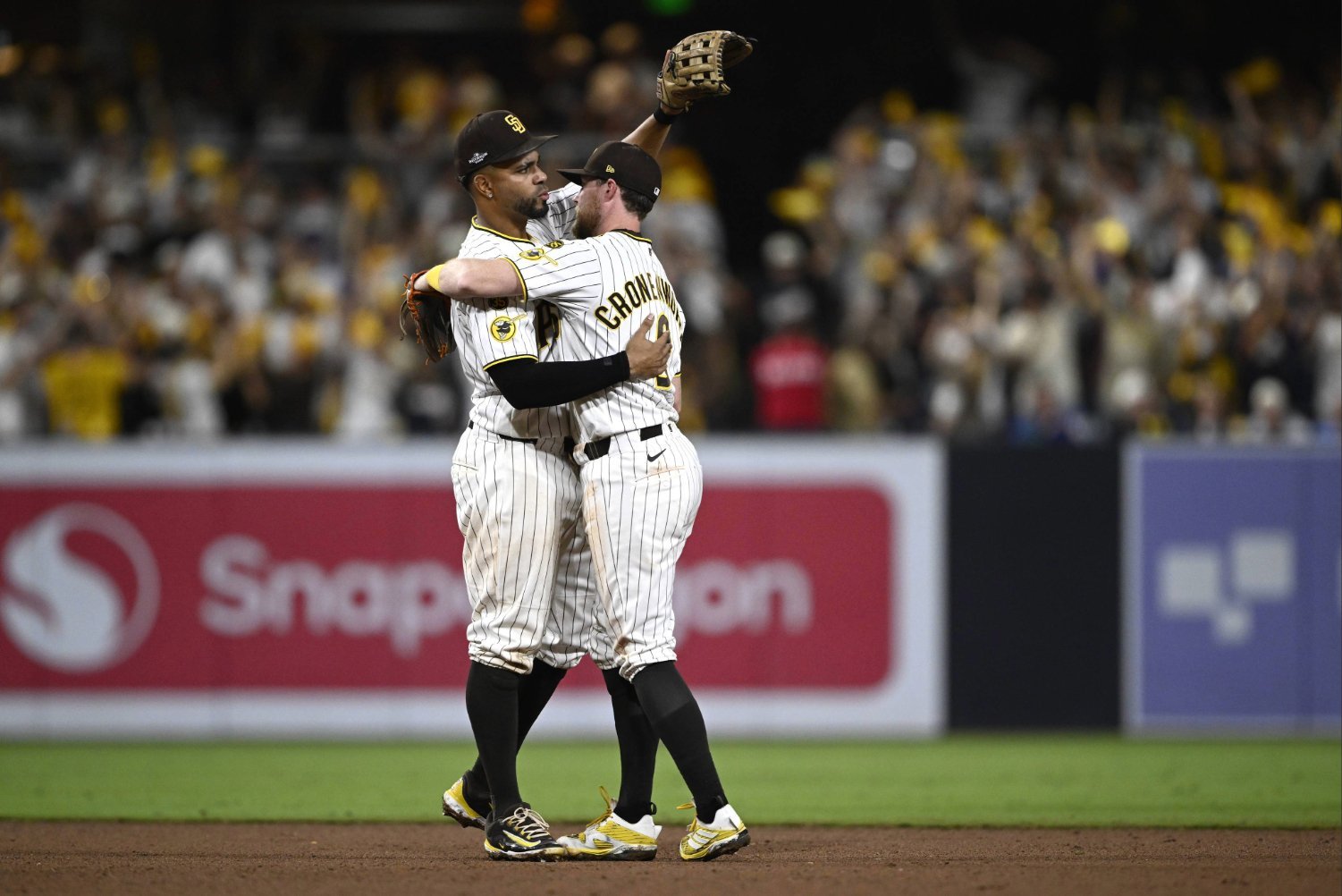 The Wild Card Round couldn’t have gone much better for the San Diego Padres. They followed up an 8-0 win in Game 1 with a 4-1 victory last night, and for the entirety of the series, they just looked in control. From the pitching staff to the offense, the Padres got contributions from just about everywhere. Baseball is a team game, and these were a pair of team wins. So, here are a few of the things that led to San Diego’s success in the Wild Card Round, and what the Friars will need to continue doing if they’re going to take down the Milwaukee Brewers in the NLDS. Padres Must Keep Capitalizing on Opportunities For starters, the Padres did a really good job of capitalizing when they had opportunities. Across both games, San Diego went 5-for-11 with runners in scoring position. The Cubs, meanwhile, went just 2-for-15. That’s a pretty significant difference, and it was reflected on the scoreboard. In Game 2 especially, the Padres were able to take advantage of some early opportunities, and Chicago never recovered. Xander Bogaerts drove in a run with an RBI single, and Ethan Salas followed with a sacrifice fly to give San Diego a 2-0 lead. Then, Gavin Sheets delivered the biggest blow of the night. His two-out, two-run homer in the fourth inning completely stole any momentum the Cubs had built and put the Padres firmly in control. In the postseason, these are the kinds of moments that can completely flip a game upside down. A team can dominate for six innings, fail to capitalize on a couple of opportunities, and suddenly find themselves trailing because the other side took advantage of their chances. The Padres avoided that in the Wild Card Round, and if they’re going to take down the Brewers, they’ll need to continue doing the same thing. Padres' Pitching Takes Center Stage It also helps when your pitching staff holds the best offense in baseball to one combined run over two games. The Cubs came into this series having scored more runs than any team in the league, with 850 on the season. For a Padres pitching staff that, primarily in the starting rotation, had some inconsistencies throughout the year, this was quite the statement. Michael King was nothing short of brilliant in Game 1. He took a no-hitter into the seventh inning against one of the best lineups in baseball, allowing the Padres to cruise to an 8-0 victory while keeping their bullpen almost entirely out of the game. That turned out to be especially important heading into Game 2. Nick Pivetta was never going to be someone San Diego could realistically expect to work deep into the game, so having a fresh bullpen behind him was going to be crucial. And that’s exactly what the Padres had. Their bullpen combined for 5 2/3 scoreless innings last night, backing up a strong start. That’s a pretty good formula for postseason baseball. The Padres’ pitching staff deserves major credit for what it accomplished against the Cubs, and if the Friars are going to take down the No. 1 from Milwaukee, they're going to need more of the same. Padres' Offensive Game Plan Must Stay Consistent Against Brewers The last thing that really impressed me about the Padres was how aggressively selective their offense was. I don’t know if that’s actually a term, but if it’s not, it should be. The Cubs’ starting pitchers were fairly efficient in this series. Matthew Boyd made it through four innings on just 58 pitches, while Kevin Gausman lasted 3 1/3 innings on 51 pitches. Based on those pitch counts, both starters were on track to potentially work fairly deep into their respective games. The Padres’ bats didn’t let them. San Diego didn’t seem interested in simply running up the pitch count for the sake of running up the pitch count. When the Padres got a pitch they could hit, they were aggressive. And when they didn’t, they were willing to wait. That approach clearly worked. They hit more home runs in the series (four) than they drew walks (three), and they essentially killed two birds with one stone. They got the Cubs’ starting pitchers out of the game earlier than Craig Counsell probably wanted, forcing the bullpen to cover a significant portion of both games. But they jumped on mistakes early in counts as well. The Padres didn’t need to manufacture a ton of offense against the Cubs. They simply took advantage of the opportunities that were presented to them, and the result was a lineup that significantly outperformed the best offense in baseball during the regular season. Now, the job is far from finished for the Padres. They’ll head to Milwaukee this weekend to kick off the NLDS against what was the best team in baseball this year. But they have the formula to pull off the upset, which might just earn them a date with the Dodgers in the NLCS. View the full article
-
 It's every human's greatest (if, at times, subconscious or unwanted) wish to be understood—to have others really see us as we see ourselves and grasp what we believe gives life its meaning. The great danger of being a parent lies in either being too successful at imprinting your understanding of the world on your child (thereby passing down to them your biases, your shortcomings and your ossifications of thought, and making a clone of yourself, which will become an ill-adjusted being in a world very different from your own), or in feeling an eternal frustration that grows from the inability to communicate to someone so close that essential self-understanding that must be communicated to bring happiness. I have always feared the former, more than the latter. I don't want my kids to be too much like me; I try to teach them mostly by pointing out my own mistakes and demanding that they avoid repeating them. Sometimes, though, that internal truth breaks containment, even when we don't want it to. In ways big and small, conscious and utterly accidental, we bare our souls to one another and a certain transference happens, whether we like it or not. In early August 2018, a YouTube user uploaded this highlight video of Javier Báez's season to that point. I loved it. Absent-mindedly, because my 5-year-old liked baseball and wanted something to watch, I showed it to him, too. It was one of those moments. My son has never been the same; that video rewired his personality. Since then, he's been not only a rabid baseball fan, but a tenacious player—and on and off the diamond, this is the energy he seems to bring to life. It's a relief, in one way, because that's not the energy I bring to life, so he's certainly carving his own identity, but I lose some sleep over the possibility that I've turned him into a demon as obsessed with excellence and domination and creativity as Báez was in his best season, with (surely) less talent to give it all the proper outlets. When the Cubs traded Báez a few years later, I was sad, and my son was even sadder. Of course, the playstyle on that tape was never going to age especially well, and Báez's more-bad-than-good years since have eased the pain of knowing the Cubs dealt him away, but the joy and ferocity of his game (at its best) was still absent from Cubdom, and the loss was felt, however inevitable I might have known it to be. Right away, though, my son latched onto Pete Crow-Armstrong. The same sizzling intensity bends the light all around Crow-Armstrong, making him shimmer and raising the temperature (for good and ill) every time he's on the field. I was a bit slower to take the same depth of enjoyment from his game, because some of the rough edges around the game felt less endearing in Crow-Armstrong's case than in Báez's. Once I saw him reinvent himself at the plate (for the first time, way back in mid-2024), however, I was on board. He was adaptable, after all. He was intelligent, after all. He might even be more talented than Báez, and capable of applying that talent a bit more judiciously to his game. That, of course, is what we've seen over the last two years. It was fun when Crow-Armstrong took off like a shot in 2025 and surpassed 20 homers and 20 steals before the All-Star break, but you could sense the recoil coming, and sure enough, he had a miserable final two months at the plate. The real breakout—the moment he went from a lovable star with two-way value to a generational guy—finally came this spring, as he adjusted to the bat speed he'd added over the offseason and altered his approach. That's when Crow-Armstrong became a player as winning-focused, clutch, and electrifying as Báez had been, although in a different way. The internet has changed (read: worsened) over the last eight years, and no good analog for that Báez highlight reel is easy to find for Crow-Armstrong. Because everyone is desperately trying to monetize YouTube traffic for themselves, and because viewing hours determine monetization rates and pull in the money, you can watch four-minute highlights from MLB's official channel that include just one at-bat and the ensuing home-run trot, or 25-minute compilations of plays made by simply stringing together the full versions of original 30-second clips, but you won't find sleek, well-produced highlight videos as readily. So be it. I want to offer just one brief set of clips that illustrate the point, as a way of celebrating and remembering the magical season that just came to an end. There's a big, grandiose way to do this, and maybe we'll do it another time. Today, we're doing the cozy minimalist version. Yes, there were a couple of months early this year when Crow-Armstrong played arguably the best defense in center field that the game has ever seen. Yes, there was a month in which he had an OPS of 1.249. Yes, there was one week in which he almost single-handedly won the Cubs four games, and yes, there were individual games scattered throughout the calendar in which he took the spotlight in ways we've hardly seen before. But I just want to talk about one game, in which he started the day 0-for-3 and the Cubs were slouching toward a 2-0 loss. The date was August 6, which was supposed to be an off day. Because rain had postponed the team's series finale against the Blue Jays in June, though, Toronto had come back to town on a mutual blank space in the teams' schedules. It could have been a really tough moment in the team's season, but instead, they were riding high. Crow-Armstrong had won them a game against the Yankees over the weekend, and he'd just won them one the previous night against the Dodgers, showing Shohei Ohtani who was boss in the last moment at which anyone wondered which of the two would be the MVP of the National League. It was a day game after a night game, though, and Crow-Armstrong went 0-for-3 through the first seven innings, with a strikeout. David Peterson pitched well, but gave up one run in the first, and the Jays tacked on a second tally in the seventh. Their near-automatic closer Louis Varland came on to save the game in the bottom of the ninth, with the cushion of that late run making things much less stressful. Crow-Armstrong wasn't even the tying run, when he led off the inning. Varland went right after his superstar opponent, getting ahead 0-2. Then, Crow-Armstrong slammed into one. This was not one of his most vicious swings. It doesn't look like a case of cutting down with two strikes, but it was that, a little bit. He made sure he would connect solidly, rather than swinging for the fences (as he did for much of the year). The ball half-split the gap, too, and he probably could have had second on the play. Not playing for stats, though, he held at first, knowing his run meant too little to risk an attempt to advance. That set up Alex Bregman's dramatic, game-tying two-run homer, which sent the game to extra innings. The Cubs should probably have won in 10 innings, but it went to 11. They held Toronto scoreless in the top half of each frame, so when Crow-Armstrong stepped in to lead off the bottom of the 11th, Carson Kelly stood at second base, carrying the winning run. He had a tough assignment, taking on lefty Brendon Little, and Little tried to leverage his platoon advantage. He also tried not to give Crow-Armstrong any chance to win the game for the Cubs—so much so that he threw him neither a fastball nor a strike the entire at-bat. Every past version of Crow-Armstrong gets himself out in that situation, probably via strikeout. This version, though, showed a well-considered blend of intelligence and aggressiveness. He wasn't going to passively accept a walk. He felt he had a chance to win the game for the team. Nor, however, would he unduly expand his zone and leave Kelly at second with one down. He took two balls and fouled off a few two-strike offerings. Finally, on a 2-2 curveball that didn't dip quite low enough, he hit it right back through the box for a single. It could, even, have been the game-winner. As it happened, though, Kelly shouldn't even have tried to score. He didn't get a clean enough break from second, and Myles Straw (who has a strong arm and charged the ball perfectly) got off too good a throw. The slow-footed Cubs catcher should have held at third, where a whole lot of possible things might have brought him home to walk it off. Instead, he ran into a pivotal first out. Crow-Armstrong hadn't been anticipating a celebration or thinking too conservatively, though. The throw came through to the plate and thwarted Kelly, but when it did so, Crow-Armstrong advanced to second. Thus, the winning run was right back in scoring position—and now, it was a guy who was utterly determined to score it. Few runners try to steal third with a lefty in the batter's box. Pitchouts are vanishingly rare in the modern game, but catchers have a clear lane to make a short throw when a lefty is at bat. All year, the league only attempted 70 steals of third from the seventh inning on. At that moment, in early August, the Cubs had only attempted one such steal all season. Here it is: TDY1VnFfV0ZRVkV3dEdEUT09X1VnUllYRkJRQndBQUQxc0JWZ0FIVkFGUUFBTUZVbFVBQTFKV1ZRVUdWVllFVkFSZQ==.mp4 Yep, it was Crow-Armstrong, and it came when the situation demanded it—putting him at third with less than two outs, when he carried the tying run in the final inning of the game. In that contest, the Cubs stranded him there and lost; they let Crow-Armstrong down a lot this year. But he hadn't been afraid then, and he wouldn't be afraid this time, either. This time, things broke just right for Chicago. Crow-Armstrong had the base stolen, anyway, but then the ball trickled away. It didn't even go that far; this was no airmailed ball into the left-field corner. It was enough, though. As soon as it began to roll away, Crow-Armstrong was off toward the plate. He had willed his team to a fourth straight win. It looked like the Summer of PCA might never end. Baseball doesn't always reward such courage, even when paired with great talent. But the game is at its best when someone has the temerity and the instincts to get a delicate thing like that right. In fact, life is at its best in moments like that, when someone takes a bold chance in the service of both themselves and others and it pays off. The magic of Crow-Armstrong, this year, was distilled as gorgeously in that moment as in any other play he made—in the field, at bat, or on the bases. It felt a whole lot like when Báez scintillated with the same clutchness and fire and unstoppable talent, eight years ago. I hadn't even initially thought of this, but now that I have, I feel compelled to include it. There was another moment akin to this one, in a way, from earlier in my baseball season—way earlier, back on May 20. It wasn't Crow-Armstrong making this particular play, but I had a better seat for it. I know I don't want my children's personalities to be as closely wired to sports as mine was when I was their age. I don't know whether I want them to view Crow-Armstrong (whom I have found thoughtful, sharp and generous in my few interactions with him, and whom most people say means well even off the field) as a role model, except in the limited context of the game. However, what Crow-Armstrong has tapped into over the last three seasons in Chicago is the same vein of positive intensity that Báez brought years ago, and the legacy of that kind of intensity—of that level of care put into one's work, with a fierce joy held right at the surface and a focus on how what you're doing serves those around you—is a profoundly positive one. It runs deeper than wins and losses, and it extends even beyond a bitter playoff disappointment. The Summer of PCA will, in some ways, never end, even if there aren't great music videos out there of his highlight-reel plays. Sports fans are edified by consuming this kind of baseball. The benefits might even spill beyond the foul lines. View the full article
-
The 7 Biggest Decisions for the Twins’ Offseason: Trading Joe Ryan
DiamondCentric posted an article in Twins Daily
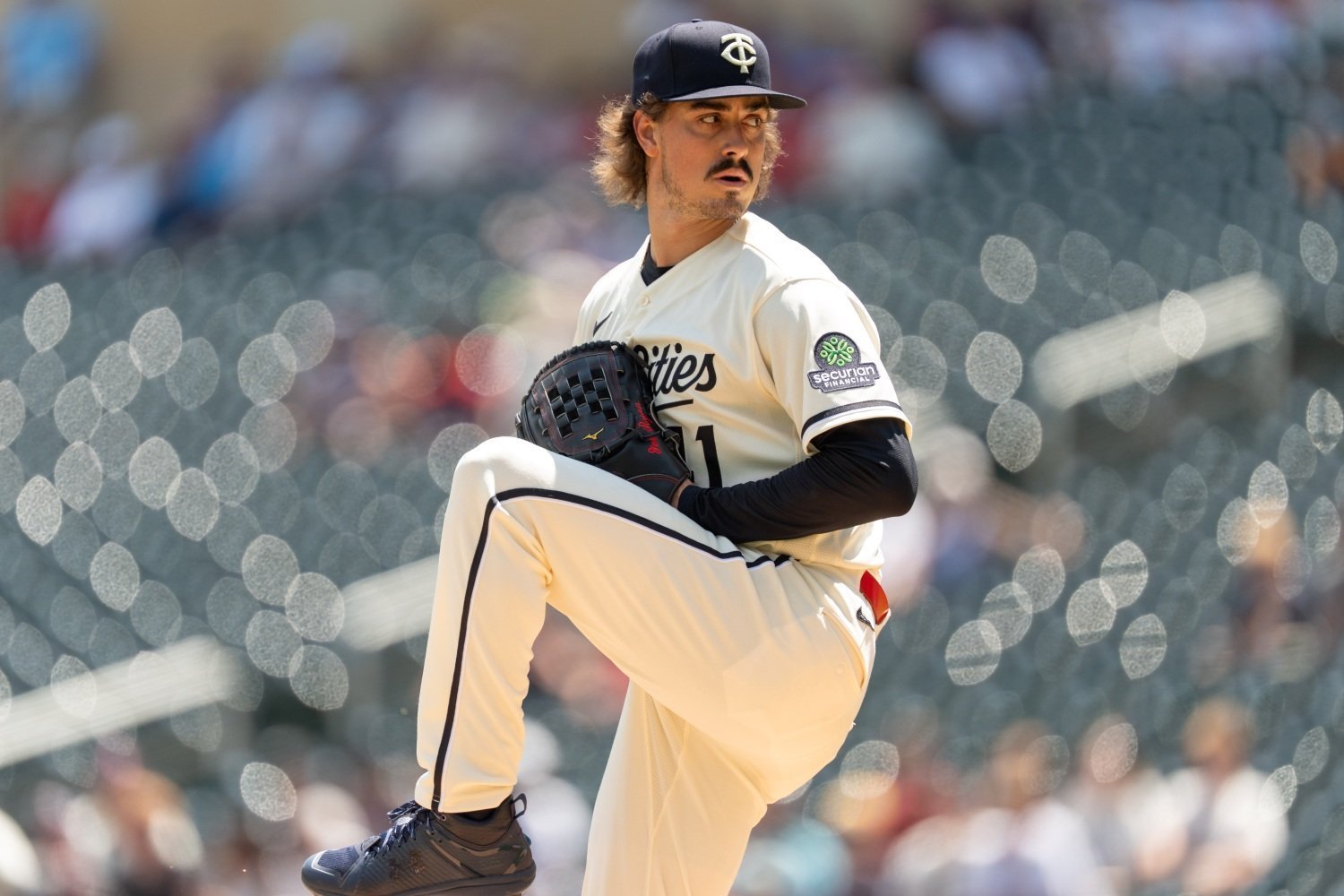 The Minnesota Twins entered the 2026 season expecting Joe Ryan to anchor their starting rotation. He was coming off his first All-Star season, had established himself as one of the American League’s top starters, and remained under team control through 2027. Things didn't go according to plan. Ryan battled injuries and struggled during the second half of the season. He finished the year after missing time with a left glute strain. For the season, he posted a 3.79 ERA (112 ERA+) with 159 strikeouts and 31 walks over 144 2/3 innings. Now the Twins have a decision to make. Minnesota is open to trading one of its starting pitchers this offseason, with Ryan, Bailey Ober, Pablo López and Dean Kremer all entering the final year of their current team-control windows. General manager Jeremy Zoll specifically discussed the possibility of turning pitching depth into help elsewhere on the roster. That makes Ryan one of the seven biggest decisions facing the Twins this winter. The Pros of Trading Joe Ryan The biggest argument for trading Ryan is that the Twins need help in other areas. Minnesota has a considerable amount of starting pitching depth. Ryan, Ober, López, Kremer, Taj Bradley, Connor Prielipp, Zebby Matthews and Mick Abel all could factor into the rotation next season. That doesn't mean all eight will be healthy or effective, but it does give Zoll something the organization desperately needs: options. If another team values Ryan more highly than Minnesota does, the Twins could turn one starting pitcher into multiple pieces for a roster with other holes. Ryan also has significant trade appeal because of his track record. He’s been an All-Star (or borderline All-Star) for multiple seasons while averaging a 111 ERA+, 3.81 FIP, and 2.6 rWAR since 2022. Even after his difficult second half, opposing teams would have plenty of reasons to believe in a rebound. The Twins could also be selling before Ryan reaches free agency after the 2027 season. If Minnesota believes Ryan's value is unlikely to increase significantly over the next year, this could be the opportunity to maximize his trade value. The Cons of Trading Joe Ryan The obvious problem is that good starting pitching is difficult to find. Trading Ryan would remove a pitcher who has already demonstrated that he can be a quality major-league starter. Even if his 2026 season wasn't what anyone wanted, there is still a strong argument that the Twins should bet on a bounce-back campaign rather than sell low. There is also risk in assuming that the current depth will remain intact. López and Abel are returning from elbow surgery. Prielipp has battled injuries throughout his professional career. Matthews has yet to establish himself as a consistent major-league starter. Ober continues to struggle with velocity. Suddenly, that impressive depth chart can look much thinner. There is another consideration: Ryan's value may not be particularly high right now. I recently noted that injuries and his second-half struggles complicated what had once been a straightforward trade decision. Trading him simply because the Twins have too many pitchers would make little sense if the return doesn't address a significant need. The organization also needs to determine whether it is trying to compete in 2027. If the answer is yes, removing an established starter creates another problem that Zoll must solve. What Would the Timeline Look Like? The Twins shouldn't feel pressure to trade Ryan simply for the sake of making a move. The best opportunity could come early in the offseason, particularly if another club loses a starter in free agency or decides it needs rotation help. Minnesota can listen to offers before the market fully develops and determine whether Ryan's value is strong enough to justify a trade. The timing of this offseason could be particularly important because the collective bargaining agreement is set to expire December 1, creating the possibility of a lockout. Zoll has already indicated that Minnesota doesn't intend to sit around waiting for the offseason to develop. That makes the weeks before the potential lockout especially important. If the Twins receive a significant offer, they could move Ryan before December 1. If the offers aren't compelling, there is little reason to force the issue. Minnesota could also revisit the situation after the lockout or closer to spring training. A team could lose a starter to injury, miss out on a free agent, or decide it needs another rotation arm. Those developments could change Ryan's market. The key is patience. Trading Joe Ryan would be one of the biggest moves Jeremy Zoll could make during his first full offseason running the Twins' baseball operations department. There are legitimate reasons to consider it. Minnesota has starting-pitching depth, Ryan has only one potential season of control remaining after 2026, and the Twins need to improve other areas of the roster. But there are equally legitimate reasons to keep him. Ryan is only 29 years old, has already shown the ability to pitch at an All-Star level, and could be poised for a bounce-back season. Trading him after a difficult second half could also mean selling at a less-than-ideal moment. The question isn't simply whether the Twins should trade Ryan. The bigger question is what another team would be willing to give up for him. If the return can address one of Minnesota's biggest weaknesses while maintaining the organization's ability to compete in 2027, Zoll will have a fascinating decision to make. If not, keeping Ryan and betting on a rebound might be the better path for a team that still needs quality starting pitching. Either way, Ryan's name belongs near the top of the Twins' offseason decision list. Will the Twins trade Ryan this winter? Leave a comment and start the discussion. View the full article
-
 A. Bartlett Giamatti’s poem “Green Fields of the Mind” describes my feelings for the end of this season better than I ever could—it’s designed to break your heart. The prose of the former commissioner is one that most baseball fans know: “The game starts in the spring, when everything else begins again and blossoms in the summer, filling the afternoons and evenings and as soon as the chill rains come, it stops and leaves you to face the fall alone.” Giamatti wrote the poem to describe the end of the 1977 season, one in which the Boston Red Sox had to beat Baltimore in order for the season to continue into the postseason. And if they win, Giamatti wrote, “(S)chool would never start, rain would never come, and the sun would warm the back of your neck forever.” Fast-forward nearly a half-century and Giamatti’s words of continue to ring true. The 2026 Red Sox were at points dire and at others almost indescribable. The end, however, was as abrupt as it was nearly 50 years ago. “Today, a (Wednesday) of rain and broken branches and leaf-clogged drains and slick streets, it stopped and summer was gone.” When the Red Sox season ends, I’m usually bummed for a little bit of time. I don’t follow hockey or basketball as much and even so, those sports don’t play almost every day like baseball does. You can set your watch to it; more often than not during the summer, the Red Sox are playing at 7:05 at night. But at a point, usually after New Year’s, you start thinking about it again. Spring training is close. Who are the Sox signing? Who have they signed? Who is coming back and is everyone healthy? As Giamatti writes, everything else begins again. But this year, something is lurking that could have baseball fans facing the fall alone for a while: the Collective Bargaining Agreement between the owners and the players. It runs out on December 1, as the cold of winter really starts to descend on the Northeast, and both sides seem to be dug in—which means the Wild Card Series loss to the Yankees might be the last time we see the Red Sox for a while. And that really bums me out and leaves me with an empty feeling. And with the uncertainty of what’s to come, it’s going to be a sad offseason, however long it ends up. “…and just when you need it the most, it stops.” When will we see the Red Sox step on the field again? Nobody knows, and that’s the emptiest feeling of all. View the full article
-
The 5 Players Bolted Down in the 2027 Minnesota Twins Lineup
DiamondCentric posted an article in Twins Daily
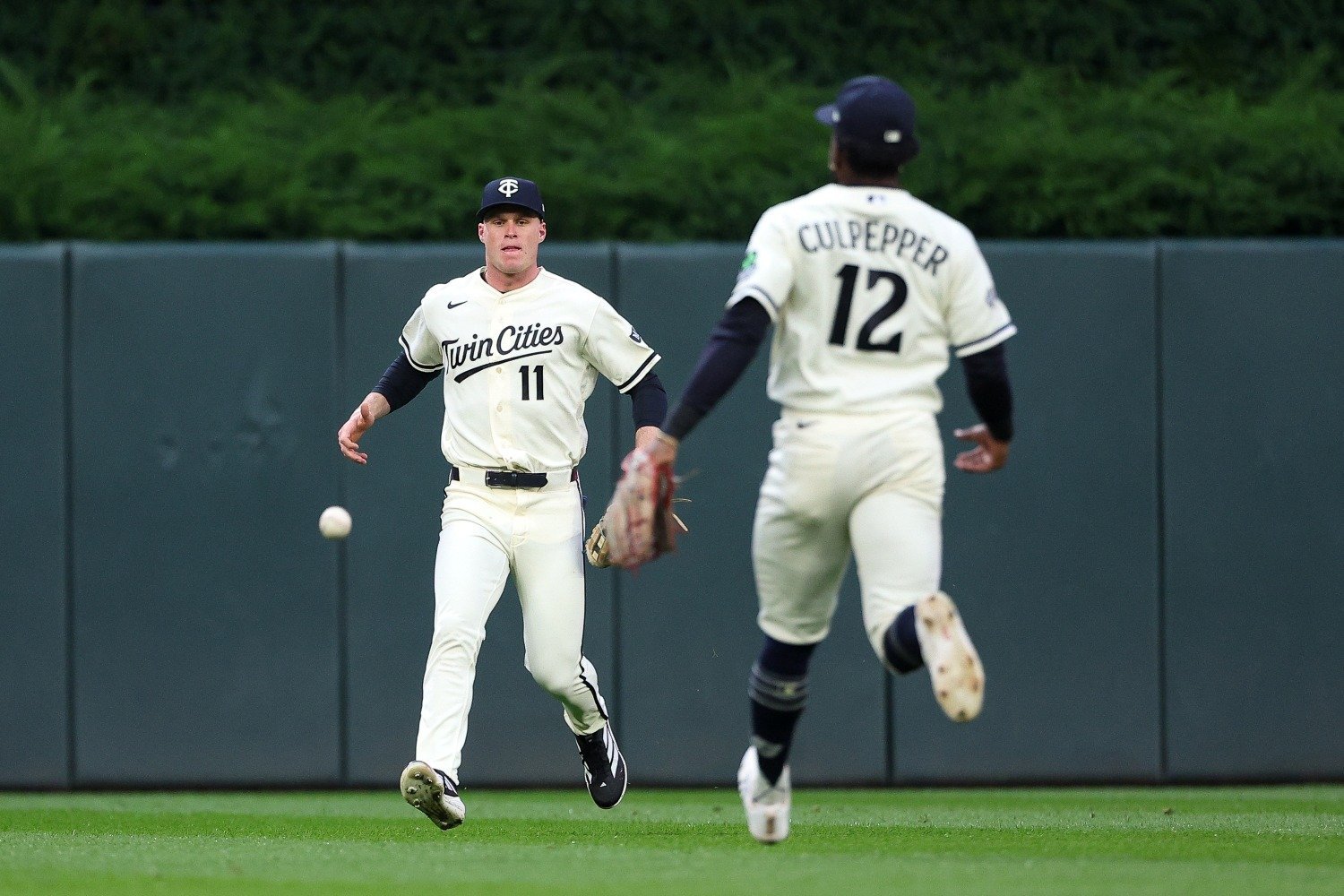 There’s a lot of uncertainty about Twins baseball right now, and a ton of questions about the hitting group manager Derek Shelton will have at his disposal next spring. About a month ago, I posted on Twitter the group I believe will almost certainly be locked into the Twins lineup next year (spoiler below). Now that the season is over, let’s go through those names. But first, defining what I mean by bolted down: I’m just going to say beyond a reasonable doubt as my standard. There might be a world in which any of these names are traded over the offseason, or the Twins might acquire players that squeeze someone on this list out of a starting job, but it’s so unlikely that it’s not worth considering. Likewise, I probably failed to include someone that you’re confident will be an everyday player. If they’re not on the list, though, I can easily envision a scenario in which they aren’t an everyday player for the Twins next season (when healthy). Let’s dig in. Infield: Brooks Lee Brooks Lee is probably the lowest-ceiling inclusion on this list. However, it’s very difficult to see him not penciled into the Opening Day lineup next season. He was a league-average hitter this season, with a .728 OPS and a low-OBP profile bolstered by a career-high 24 home runs. After being moved off shortstop midway through the season, Lee settled in well at third base, posting 6 outs above average (OAA) in about 100 games at the hot corner. A league-average bat with above-average defense at third base is a valuable secondary piece, and there’s some hope that the 25-year-old can continue to develop at the plate with better plate discipline and consistent pop. It’s very difficult to see the Twins moving on from Lee. I have him listed as a general infielder, though, because there’s a world in which he’s playing second base, instead, should the Twins bring in a third-base-only option. It’s unlikely, but hey, reasonable doubt. You might have expected Royce Lewis or Kody Clemens to appear here. Clemens is the more likely to return, but it’s hard to see both of them back in 2027, at least as everyday players. Maybe one of them is at first or second base, but the offseason was probably a failure if the Twins didn’t upgrade at either position. Neither is expensive, but neither is young, either. There are just too many ways that either could find themselves out of the picture to make this list. Shortstop: Kaelen Culpepper Kaelen Culpepper is the Twins' shortstop—at least for now. He'll still be rookie-eligible next year, after 128 plate appearances in which he slashed .274/.328/.393. Culpepper showed flashes that should get Twins fans excited for his career prospects, and there's no one crowding him out of shortstop at this point. He had moments that showed why some are skeptical about his shortstop defense, but he did enough, along with a league-average bat (which is a great thing!), to solidify his spot next season. Perhaps he has a sophomore slump that necessitates a detour to Triple-A, and maybe fellow prospect Marek Houston moves him to second or third base, but it’s very unlikely he won’t be the Opening Day shortstop. Outfield: Walker Jenkins Walker Jenkins, the Twins' No. 1 prospect, struggled in his first taste of the bigs, beginning his career 4-for-45 and making me nervous about my initial prediction. Over his final 10 games, though, he slashed .385/.400/.615. It’s clear that the global top-15 prospect will very much be in the picture next season. It’s unclear whether the Twins prefer him in right or left field, and that’s probably dependent on who the other corner outfielder is. Jenkins exclusively played center field in the majors, filling in for the sidelined Byron Buxton. When Buxton is unavailable, Jenkins is the likely fill-in. The other corner position? There are too many names to feel confident in any of them being the everyday guy. Emmanuel Rodriguez, Luke Keaschall, or even Alan Roden could be slotted into that other spot. Rodriguez has to be on the roster (or someone else’s) because he’s out of options and held his own in limited late-season MLB action, but it’s possible the Twins aren’t ready to foist him into everyday action quite yet. (Leadership did name him as part of the core around which they're building for next year, though, so he's closing in on this list.) Center Field: Byron Buxton Speaking of outfielders, Byron Buxton is the most obvious name on the list, when healthy. Being realistic, if he’s available, he’s playing. And yes, until further notice, he’s the center fielder. This almost isn’t even worth discussing. Yes, he’s coming off of labrum repair, and there’s uncertainty about his status, but if he’s healthy, he’s playing. You can’t stop it from happening. ????: Luke Keaschall Finally, Luke Keaschall. He’s probably going to be hitting leadoff. I have no idea where he’s going to play, though. The two most likely options are a corner outfield spot or a designated hitter role. Shoot, maybe even first base. I don’t know where he’s playing, but I know he will be at the top of the batting order. After a dreadful start in 2026, Keaschall rebounded to finish the season slashing .282/.374/.407, about 20% better than an average hitter. Although most designated hitters or left fielders have more power in their profiles, Keaschall’s overall line is more than sufficient to occupy one of those spots, making him a lock for next season. He added power as the season progressed, anyway. For the other four positions, your guess is as good as mine. But these five guys are locks. Potpourri This was put together with a focus on the lineup against right-handed pitching. Jenkins might not play every day against lefties. However, there’s not a platoon partner for him set in stone, either. Austin Martin got off to a great start in 2026, but he hit just .164 in the second half when he was mostly facing lefties. Gabriel Gonzalez or Aaron Sabato could factor in, but the Twins showed very little interest in playing them down the stretch. The catcher position is a mystery. Victor Caratini is under contract for next season, and it’s unlikely that the Twins cut him or find a trade partner willing to take on the $10 million he’s owed after barely playing enough late in 2026 to call him a second catcher. There’s reasonable doubt that he’s the everyday catcher, even if that is the most likely scenario. The Twins could get Ryan Jeffers back on a qualifying offer or pursue a different catcher in free agency that clears Caratini’s bar. So then, are you in agreement with this assessment? Do you have someone else bolted down, or do you think the screws are looser on any of the names I gave here? View the full article
-
 You don’t have to look far to find something that went wrong with the 2026 Toronto Blue Jays. Bryan Jaeger gave us his list of five things, and honestly, I admire his restraint. That list could sprawl if we let it. As the season went on and various people in my life checked in on my mental health after a mounting number of crushing defeats, I grew fond of using the phrase “You can’t be a .500 team if you don’t lose half your games.” The glass-half-full side of that, of course, is that you’ve gotta win half too. (“You can’t be a .488 team if you don’t lose 83 games” doesn’t quite have the same poetic feel to it.) Last year’s offseason was the shortest in franchise history, and with the looming labour stoppage, the upcoming one could be one of the longest – so let’s look on the bright side and remember the good times. 1. Offseason Signings The best Blue Jay on each side of the ball this season was a player that didn’t suit up for Toronto last season. Dylan Cease was the prize of the offseason, signing a seven-year, $175 million contract and immediately started making it look like a bargain. He flirted with no-hitters and put himself squarely into the AL Cy Young discussion. His 5.5 fWAR puts Cease into a tie with Kevin Gausman’s 2022 as the best pitching season by a Blue Jay in the last 17 seasons. His K/9 (12.782) and H/9 (5.759) are the new single-season high-water marks for the franchise. Kazuma Okamoto had a stretch of six seasons hitting 30-plus home runs in Japan for the Yomiuri Giants, but there were questions of how he would perform in North America. Well, his 33 homers this year were more than double the next closest Jay. His 113 wRC+ was the highest of any Jay to appear in at least half of Toronto’s games this season. He also turned one of the prettiest double plays I’ve ever seen. He is certainly in the discussion for the best rookie season in franchise history, and the good news is that the performance looks sustainable. 2. Solidifying the Endgame Tyler Rogers could have easily been highlighted in the section above. His arrival and then pairing with Louis Varland to handle the eighth and ninth innings brought a level of comfort and confidence that I don't think we've had since the days of Ward and Henke. Rogers made 74 appearances, notched 33 holds and picked up four saves for good measure. He only surrendered two homers all season and has just a delightful delivery to go along with it. Varland wasn’t immediately given the closer’s role, but once he took it, there was no question about who deserved it. He racked up 35 saves (top 10 Jays season) to go along with five early-season holds. 3. Honouring the Past With this being the 50th anniversary of the franchise, there were a number of ways the organization celebrated the history of the club. The two biggest were absolute home runs: the Joe Carter statue and the Hall of Excellence. The statue is something we have been clamouring for as fans for quite some time. It took them a long time to get it in place, but now that it’s here, it’s perfect. It’s a gathering point on game days, and it's a tourist attraction when the Jays are out of town. It’s an incredible addition to the space outside of the stadium. The Hall of Excellence was something I was a little more skeptical of when it was announced. I thought that taking the Level of Excellence away or altering it from something that could be seen from almost every seat in the building and moving the focus to a corner of the concourse would take the shine away from the great names that have been put in place. I am happy to say that I was wildly wrong with that take. The Hall is incredibly well done, and I could easily spend more time there. Each section is outfitted with memorabilia specific to each inductee. I’m a sucker for analog notes, so my two favourite features are Carlos Delgado’s notebook (open to his 4-HR day) and Buck Martinez’s scorecard from last year’s ALCS Game 7. You can also find the ball from Dave Stieb’s no-hitter, José Bautista’s bat flip bat, Paul Beeston’s custom-made “Labatt 80” beer can, plus a display case for all of the Silver Slugger and Gold Glove awards. It’s awesome. 4. Saying Hello After the ‘25 playoff run, I was a big proponent of running it back with the same roster. Re-sign every free agent and take the same guys through it again. That kind of illogical homerism is just one of the reasons I was not given the GM role. Kevin Gausman was traded at the deadline, in another move that I would not have made as GM. That trade brought Brett Bateman (and Ty Southisene) to Toronto. Two prospects that did not immediately inspire much confidence and slotted into the low end of the Jays' top 20 prospects list. Fast forward to the end of the season and Bateman has already endeared himself to fans. Over just 41 games, Bateman posted a 138 wRC+, good for best on the team (among batters with more than 25 PA) and a 1.9 fWAR, which placed him behind only Alejandro Kirk in the second half of the season. Charles McAdoo’s second-half wRC+ of 117 was another boon to the lineup in desperate need of a kick. Then there was Spencer Miles, arguably the most valuable pitcher on the roster not named Varland or Cease. The Rule 5 selectee did everything that was asked of him and more. Those are three of the players I am most excited to see next season, and I have already started seeing their jerseys showing up in the stands. 5. Saying Goodbye Game 162 might have been our last chance to see both George Springer and Max Scherzer in a Jays uniform, and the fans were given two great chances to show their appreciation. In comments leading up to the game and afterwards, it certainly sounded like Springer is headed for retirement. Scherzer ended the season ninth on the all-time strikeout list, but only three behind Justin Verlander and 17 behind Don Sutton – that might be enough for Mad Max to run it back one more time. If he does, I would love it to be here, but it’s tough to predict at this point. Springer hit a single in the third inning and advanced to second on an error. He was then lifted for pinch runner Sean Keys and given the opportunity to (slowly) walk off the field, for maybe the last time, to the loud ovation given by the Toronto crowd. Six seasons with the Jays, one of the biggest swings in franchise history, and a place amongst the favourite players of the modern era. Similarly, Scherzer walked off to his own ovation – but not before sending manager John Schneider back to the dugout empty-handed after ‘refusing’ to come out in the 7th inning, harkening back to his start in Seattle during last year’s ALCS. In the eighth, he relented after 114 pitches, his most as a Blue Jay and his most since 2020. When Scherzer first signed in Toronto, there were questions of how much the future Hall of Famer still had to offer. Safe to say that Mad Max gave it everything, every time. View the full article
-
Shane Drohan is a Sinker Guy Now. Will It Work in October?
DiamondCentric posted an article in Brewer Fanatic
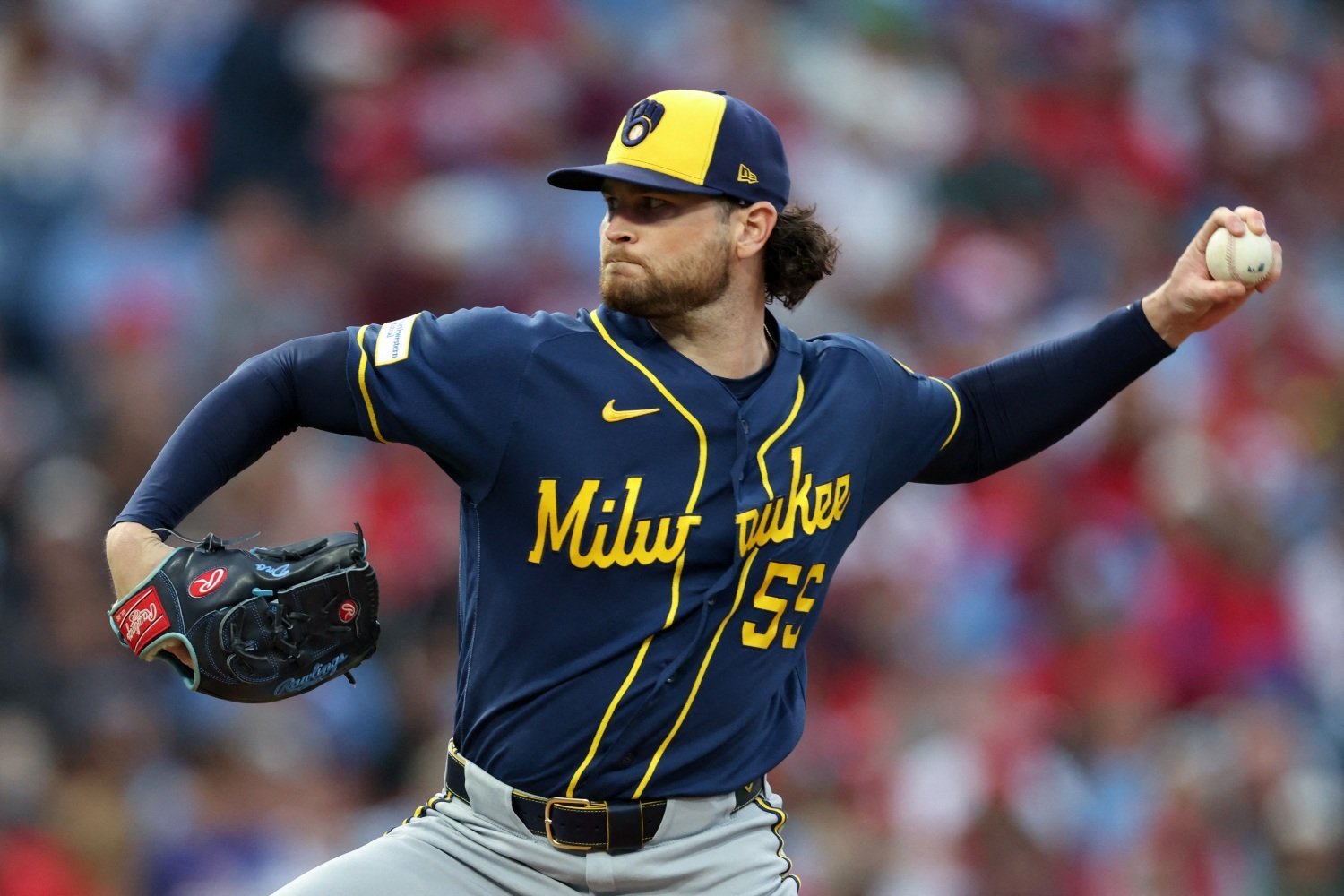 Shane Drohan ended his season where he found the most success as a rookie: the bullpen. The 27-year-old was a full-time starter from June through the second week of September, but he excelled as a long reliever in May, and three of his last four outings came out of the bullpen. He posted a 1.47 ERA, 2.44 xERA, 2.19 FIP, and 19.8% strikeout-minus-walk percentage in 14 relief appearances, and he projects as a multi-inning bullpen weapon for the Brewers in the postseason. A starter for most of his baseball life, Drohan now feels just as comfortable in the bullpen. Middle relievers never know when they might be called into a game and must be ready at a moment's notice. That experience taught the meticulous Drohan that he can succeed without a strict, delicately timed pregame routine. "I learned that I don't need as much pregame or a neurotic routine to succeed," he said. "I felt like being in the bullpen really taught me that. I throw three to four hours before the game, and then you're just sitting in there, and then the phone rings, and you get to go in. It's eight to 12 pitches, and you're in the game. If you would have asked me that a couple years ago, because I'd been starting my whole life, I would have been like, 'No way.'" Converted starters often benefit from emphasizing their two best pitches in shorter relief outings. For Drohan, those pitches have been his riding four-seam fastball and his tight, gyro-spin slider, which posted the highest run values in his arsenal this year. Opponents managed just a .278 wOBA against his four-seamer and a .218 wOBA against his slider. The Brewers took the opposite approach, though: throwing Drohan's worst pitch more. Early in the year, they added a sinker as a secondary fastball to help him pitch to both sides of the plate. It didn't work. The sinker's -6 run value made it Drohan's least effective pitch, and opponents slugged a whopping .762 against it in August. Yet, the Brewers doubled down, making the sinker his new primary fastball in September instead of the dominant four-seamer. More accurately, the Brewers didn't double down on a bad pitch, but on a bad pitch that was improving. Throughout the year, Drohan has steadily slashed the induced vertical break of his sinker (for fastballs, a higher number indicates more carry, and a lower number means more sink) and added more arm-side run. That made the sinker an effective fastball in September, the first month since May in which it posted a positive run value. Month IVB HB SLG Run Value April 9.9 16.2 .667 0 May 8.9 15.8 .385 1 June 8.1 14.5 .633 -2 July 7.8 16.7 .571 -2 Aug 7.3 17.3 .762 -5 Sept 6.6 18.2 .350 2 "I feel like now it's like a true sinker, with a good amount of run," Drohan said. "I feel like the last couple weeks, it's been running a lot." In a five-out save in Sunday's regular-season finale, all 13 of Drohan's fastballs were sinkers. A few were among his heaviest sinkers of the season, including this first-pitch sinker to Nolan Gorman with 5.5 inches of induced vertical break and 19.4 inches of arm-side run: QXc3ZU9fWGw0TUFRPT1fVlFBSEJsRU5WUVFBQ2xJSFZnQUhDUUJmQUZsUVZRSUFWbFVOQ0ZGVUNRY0VWZ0pl.mp4 There are a few ways to throw an effective sinker, each utilizing a different combination of spin rate and spin direction. Most pitchers run their fingers parallel to the baseball's two narrow seams and cut the ball enough to create seam-shifted wake, an imbalance of air pressure on each side of the ball that pushes it down and to the arm side. Others who keep their hand behind the ball through release rotate it to a one-seam grip to create that imbalance. The rarest option is pronating with a standard two-seam grip to produce screwball-like spin, which doesn't need seam-shifted wake to create a sinker shape. Drohan's hand doesn't work in any of those ways. He can't pronate. He naturally cuts his fastball ever so slightly, but not enough to create significant seam-shifted wake. That meant finding the right grip took time. Drohan originally used a one-seam grip, which didn't create much movement and made him overthink how he was releasing the ball. He unlocked the extra sink after switching to a traditional two-seam orientation during the second half—which coincided with a dropping of his arm slot. That's changed the spin direction on the sinker out of his hand, in concert with the grip adjustment. "I felt like when I was doing [the one-seam] grip, I was trying to find the right wrist position for it, and then when I went to the traditional two-seam, it just went," he said. There's just one change from a standard two-seamer: Drohan isn't touching any seams. That's because he has long fingers, which let him snap off the seams to generate high spin rates on all of his pitches. That spin creates carry on his four-seamer and sharp downward bite on his breaking balls, but Drohan wants his sinker to spin less so that it sinks more. He runs his pointer and middle fingers between the two seams so they touch only the white of the ball. "I feel like it just lines up with my long-ass fingers better like that," Drohan said. "The pitches that you want to kill vert, for me at least, I've always felt more comfortable the less seams I feel." The early version of Drohan's sinker was effectively a worse version of his four-seamer. It had slightly more run, allowing him to pitch lefties inside, but its induced vertical break was just a couple of inches off his main fastball. Its movement sat between the carry of the four-seamer and the depth of a true sinker, making it a very flat fastball that played right into hitters' swing paths. Now, the sinker has more separation as a distinct fastball that can miss barrels. Below, note the greater space between the red and orange clusters on the righthand graph. It's also become the pitch he commands best, which is the biggest reason he's throwing it more. Drohan's four-seam command and shape deteriorated throughout the summer, culminating in a .754 wOBA and 3 home runs against it in September. Its induced vertical break averaged a season-low 13.5 inches. Meanwhile, he threw his improved sinker in the strike zone 64% of the time, the highest rate in his arsenal. Even though his sinker became more consistent down the stretch, Drohan's four-seamer still flashed more upside, and he'll need it to be his best self in the postseason. Opponents still hit his sinker at an average exit velocity of 92.9 mph in September. According to Statcast bat tracking, they made more perfect contact (swings that were on time with the barrel aligned with the ball) against it than the four-seamer, which is still a swing-and-miss pitch at the top of the zone. FanGraphs's Stuff+ model also rates the four-seamer as the slightly superior fastball. Pitch Type Perfect Contact% Perfect Contact% (MLB Avg) Whiff% Stuff+ Sinker 39% 29% 18% 108 Four-Seamer 20% 24% 25% 109 Drohan began the regular season as a four-seam guy. He ended it as a sinker guy. In October, he needs to be both. "We'll see what happens," Drohan said, regarding his pitch usage in the postseason. "I've always been a four-seam guy, but it's kind of a cool surprise to see that I can throw both, which is tougher for the hitter." View the full article
-
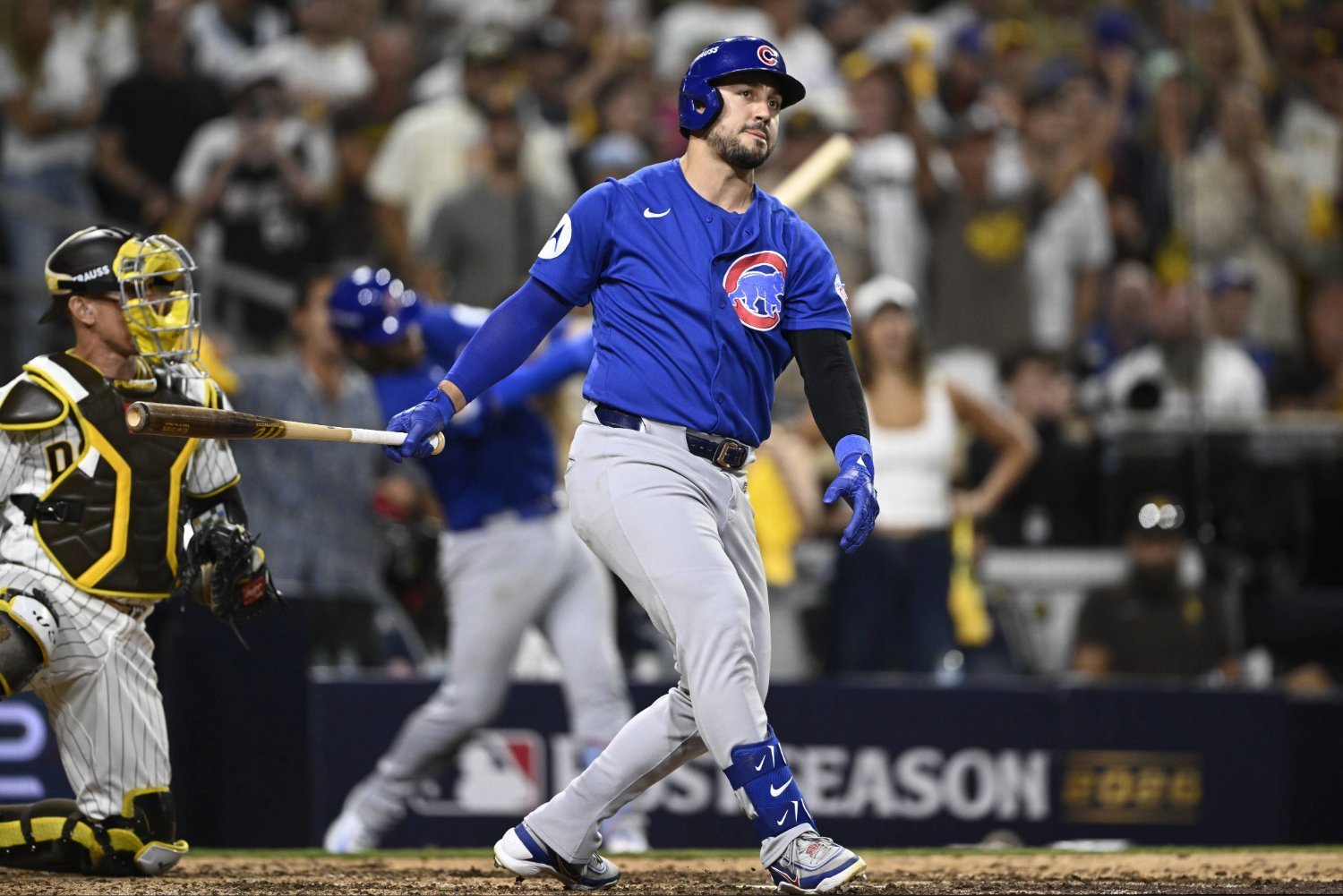 In a manner that felt so similar to Tuesday night’s debacle, the Chicago Cubs were immediately thrown into an overwhelming situation in Wednesday night’s Game 2 against the San Diego Padres. Following a first-pitch ball, Pete Crow-Armstrong missed two very hittable four-seam fastballs in the middle of the zone. Ahead in the count 1-2, Nick Pivetta came back with a curveball that, to anyone watching the broadcast, appeared to clearly clip the inside corner of the plate: Now, it’s easy for me to say that that pitch was clearly a strike. I am watching at home, with the benefit of the strike zone overlayed on my television screen. This is, surely, much harder in real time. In Crow-Armstrong’s defense, there have certainly been more egregious challenges this season. The challenge system, though, isn’t always about being right or wrong so much as it is challenging at the correct times. The star center fielder was correct on 50 percent of his challenges this season, slightly above the average rate for a hitter of 49 percent, according to Baseball Savant. Fielders, though, notch an overturn 58 percent of the time, and Carson Kelly, the Cubs’ catcher last night, won 69 percent of his challenges. Suddenly, the Cubs were not only down an out, but a challenge as well. That might feel like a small thing, and it is, but every one of those little small things matters in the playoffs. The real concern might have been what that challenge said at that moment: the Cubs were pressing. This didn’t seem like the presumptive MVP issuing a challenge because he thought that the pitch was a ball; it felt like he was grasping at straws, and hoping that the pitch was a ball, when deep down, he knew that it wasn’t. Let’s fast-forward a couple of innings to the top of the third. After a leadoff walk to Matt Shaw and a line drive single from Carson Kelly, the Cubs were mounting what was their first real offensive threat of the entire series. Dansby Swanson was in the driver’s seat, ahead in the count 3-1. Given that Swanson is a fastball hitter, and Pivetta a fastball pitcher, this felt like an opportunity for the Cubs to truly do some damage. The Cubs’ shortstop, then, swung at this pitch: To twist the knife on that, here is a contour map of Swanson’s slugging percentages against four-seam fastballs this season, via FanGraphs: Given that he was ahead in the count 3-1, Swanson had zero need to chase a pitch outside of the strike zone. He should have been looking for a fastball out over the plate, in that big red, and even blue, area of the chart above. Under no circumstances should you be swinging at fastballs off of the outside corner. Still, the count was now 3-2. The shortstop was still breathing in a meaningful way. There was another pitch yet to come: Yikes. The 3-1 pitch was, at least, in the vicinity of the strike zone. You could convince me it was close to being a strike, and I can assign some benefit of the doubt on that. That 3-2 pitch, though, was never close. It was low enough to be in what is considered the chase zone, and typically, you get chases down there on breaking balls, not fastballs. Fastballs, much more typically, get chases up and out of the zone. In fact, this season, pitchers threw 6,655 four-seam fastballs in the chase zone below the strike zone. Only 295 of those generated swings, according to Baseball Savant. That’s a swing rate of just 4.4 percent. Swanson himself saw 11 of those pitches, and didn’t swing at any of them. Until Wednesday night. This, it should be noted, is pretty atypical of Swanson. While not exactly Juan Soto in terms of patience, he chases pitches outside of the strike zone less often than the average hitter. Looking at where the Padres’ catcher, Ethan Salas, is set up prior to the pitch, it seems that Pivetta was willing to challenge Swanson with the fastball. A walk there would have loaded the bases with nobody out and Crow-Armstrong coming to the plate, followed by Alex Bregman. Pivetta didn’t execute his pitch. Swanson, in turn, also didn’t execute. He was simply way too over-aggressive. I am going to be cliché for a moment and reference one of the most famous baseball movies of all time, The Sandlot. When Benny first brings Smalls to play baseball with his friends, they all learn pretty quickly that Smalls can’t catch the ball. Benny, in a pep talk to Smalls, lays things out pretty clearly to the baseball newbie. “Man, this is baseball. You gotta stop thinking. Just have fun. If you were having fun, you would have caught that ball.” I cannot recall a baseball team making the playoffs look less fun than the 2026 Chicago Cubs. You might argue that the Houston Astros outdid them just a few hours earlier; I’d argue right back that that Astros team, at 81-81 and being the worst team by record to ever make the postseason, had no legitimate expectations. This Cubs team did. They looked like a team that was pressing. They looked like a team that was trying too hard. Baseball simply isn’t a sport conducive to that. It’s a sport where you just have to make a bunch of really small, correct decisions consecutively. Sometimes, they might not pay off, but in the long run, they usually do. The beauty and the agony of playoff baseball is that those small decisions don’t always pay off in such a small sample size; the Cubs, though, can’t even claim themselves victims of small sample size. They simply didn’t make many of those decisions correctly. In a different world, we might be talking about how Pivetta lost control in the third inning, and the Cubs took advantage to force a Game 3. In the real world, however, the Cubs didn’t make those small decisions correctly. The Padres, on the other hand, sure looked like a team that was having fun. From the first pitch that Fernando Tatis Jr. saw on Tuesday night, to Joe Musgrove serving as a human victory cigar, to Mason Miller shutting the door on the series, they played loose. They played with exuberance and joy. The Cubs now face a long and cold offseason about what could have been. View the full article
-
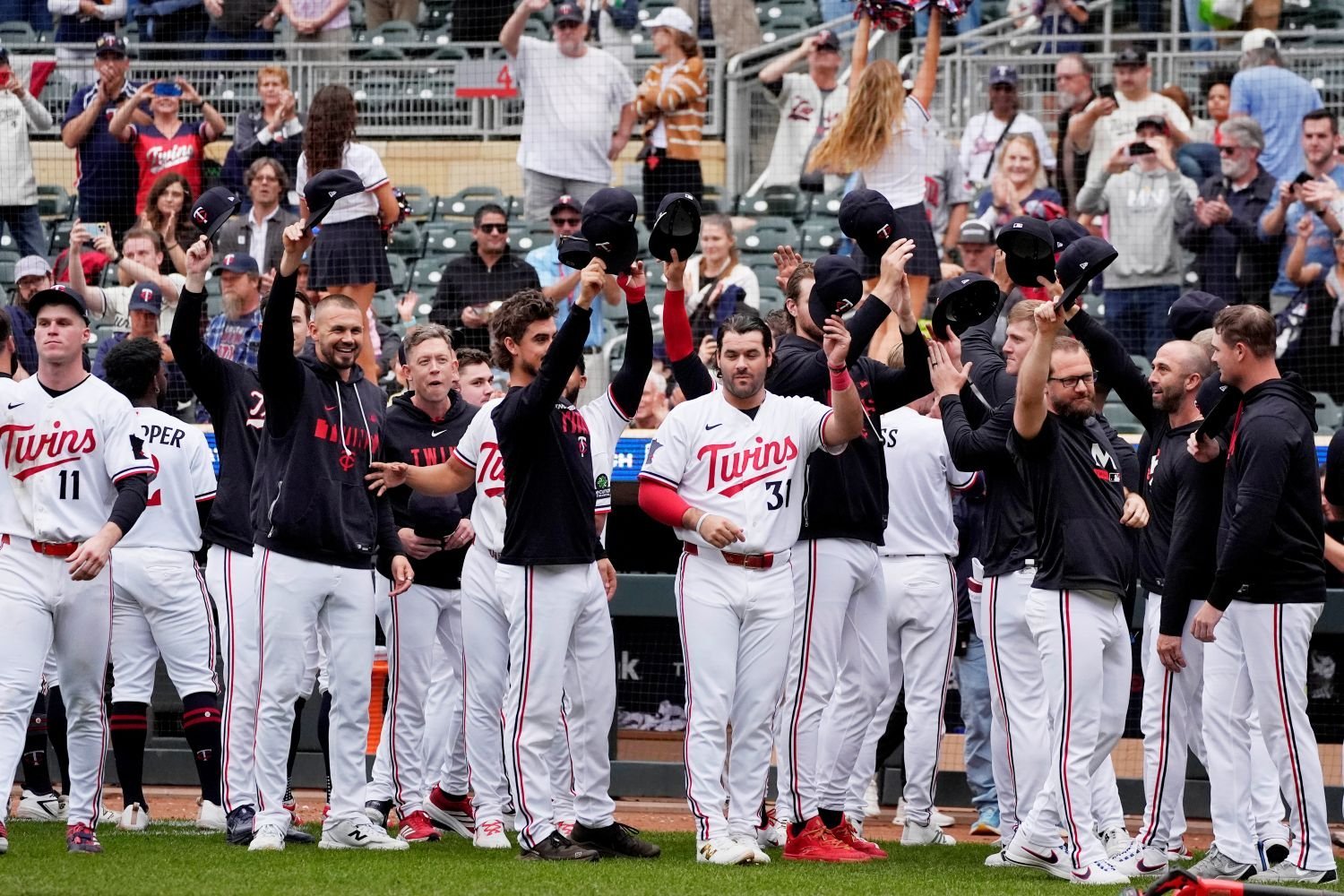 There was a time when showing up to Target Field was simply part of being a Twins fan. That relationship has changed. The 2025 trade deadline fire sale damaged whatever goodwill remained between the Pohlad family and a frustrated fan base. Minnesota traded 11 players in roughly 96 hours, cutting approximately $26 million from the payroll while ownership was exploring a potential sale of the franchise. The result was a baseball operation that looked less interested in winning in 2025 than in preparing for an uncertain future. Then, the Pohlads decided to keep the team. Tom Pohlad eventually stepped into the main leadership role, replacing Joe Pohlad as the club's chairperson, and one of his central messages was that the organization needed to rebuild its relationship with fans. But here we are at the end of another season, and an important question remains: Have the Pohlads actually earned back that trust? There is a case to be made that they have started the process. There is also plenty of evidence that the job is far from finished. Attendance Tells the Story The most obvious place to look is the turnstiles. The Twins entered 2026 with attendance already in a difficult position. The 2025 season drew 1.769 million fans, the lowest total at Target Field since the stadium opened in 2010. In 2026, those totals dropped further, to 1.74 million, down roughly 350 per game. However, the Twins were using a variety of tactics to keep those numbers as high as possible. The numbers improved during the summer, but they never became anything close to a ringing endorsement from the fan base. By season’s end, the Twins were averaging 21,486 fans per home game, still ranking in the bottom six in baseball. Minnesota did its best to provide cheaper concessions, promotions and ticket incentives designed to get more people through the gates. Those numbers matter, because attendance is not just an accounting figure. It's feedback. Fans can complain on social media. They can boo. They can stop buying jerseys. They can stop renewing season tickets. Or they can simply stay home. The Twins have been seeing plenty of the latter. The 2026 Trade Deadline Changed the Conversation The strongest argument in the Pohlads' favor came in August. After years of payroll criticism and the previous summer's roster teardown, the Twins became legitimate buyers at the trade deadline. Minnesota added Tommy Nance, A.J. Minter, Dean Kremer and Jeff Hoffman, addressing obvious weaknesses without trading away the organization's elite prospects. That was a significant departure from what fans had seen one year earlier. Tom Pohlad also backed up his words with money. The Twins took on more than $8 million in prorated salary for the remainder of 2026 through those additions, while also assuming significant future commitments. Hoffman has an $11 million salary for 2027, with Toronto covering $3.75 million, and Kremer is expected to receive a raise through arbitration. Pohlad didn't stop there. He said the Twins' 2027 payroll will be higher, not that ownership merely hoped it would be higher. He also said Minnesota needs to invest in the roster if the organization wants to consistently compete in the postseason. Fans had spent years hearing about sustainability, flexibility and staying competitive. Now, the owner was directly saying the organization needed to spend more. After the deadline, Pohlad even suggested the organization had "earned some credibility." That may be true. But credibility is not the same thing as trust. This Is Where Ownership Still Has Work to Do Trust is not rebuilt with one good month. It's rebuilt through consistency. That means the 2027 payroll has to demonstrate that the Twins are willing to spend enough to address multiple areas of the roster. So when Pohlad says payroll will increase, the obvious follow-up question is: By how much? A $10 million increase tells one story. A $30 million increase tells another. Something more is in order, if Pohlad wants to accomplish a full-fledged transformation of the relationship between his franchise and their fans—and it sure sounds like he does. "I understand patience in this market has run out, and I can assure you we have a sense of urgency," Pohlad said Tuesday, at the team's end-of-season press conference. "The work to build on the foundation we laid this year began (Monday). We will assess every part of our organization to get better. We will raise the standard for how we support our players on the field. And we will exhaust our energy to invest meaningfully in this team. Our goal this offseason is to field a roster next spring where making the playoffs isn't a hope, it's the expectation that everybody agrees is realistic." Money alone will not guarantee a postseason berth. Baseball does not work that way. Ask Steve Cohen and the New York Mets about that. But Twins ownership has spent years asking fans to believe that the organization wants to compete. At some point, the roster has to reflect that belief. The Young Core Gives Ownership a Chance There's another reason this conversation is different from a year ago. The Twins have young players worth building around. Walker Jenkins, Kaelen Culpepper, and Emmanuel Rodriguez have arrived. Brooks Lee continues to develop. Luke Keaschall has shown flashes. Several other young players could become important pieces of the next competitive roster. That gives Jeremy Zoll and the Twins front office something valuable: a foundation. Now, ownership has to decide how aggressively it wants to build on that foundation. The 2025 version of the Twins asked fans to accept a teardown. The 2026 version asked fans to believe the teardown was over. The 2027 version needs to show it. "We intend to take the offseason and meaningfully invest," Pohlad said Tuesday. "I know everybody in this room wants me to define what meaningfully is, and I understand that that’s a subjective word. But I am confident that [Jeremy Zoll], if he has conviction about a move that’s going to improve this roster and help us accomplish our goals, that this ownership group is prepared to support him with the financial resources he needs.” For Zoll's part, there does seem to be an understanding that the young core makes it the right time to move—though his focus is on sustainability. "I think that’s something we’re really excited about, is this idea of a young core that is going to allow us to have a lot of talent on the field that then we can supplement and build around," Zoll said. "How that exactly falls, we want to do everything we can to make significant improvements to the roster this year, but it’s not just about 2027. This is about sustained success; this is about building a perennial contender." Pohlad sounded more eager—more desperate—to win than Zoll did. That might mean that the owner will, in an inversion of the usual Twins process, be pushing his front office to spend more than it wants to. Rebuilding trust will take time—maybe more of it than Pohlad would prefer. And it will take action. Fans do not need another promise that the Twins want to be competitive. They need to see what that promise looks like when the offseason begins. They need to see ownership invest. They need to see the front office given the freedom (and maybe even a nudge) to improve the roster. They need to see the organization build around its young core, instead of continually asking fans to wait for the next window. Most importantly, they need to believe that the goal is not simply to field a respectable team. The goal is to win. Now comes the part where those words have to become reality. The 2026 deadline gave Twins fans a reason to reconsider their opinion of ownership. The offseason will determine how much that opinion actually changes. The Pohlads have begun the process of rebuilding trust. They have not finished it. What can the Pohlads do this winter to regain the trust of fans? Leave a comment and start the discussion. View the full article
-
 Despite the mini-mutiny we saw in the locker room at the end of Game 2, Chad Tracy is the correct choice to lead the Boston Red Sox for the foreseeable future. He was able to get the team to find their identity and rattle off a massive win streak from the end of June through the beginning of August that invigorated a fan base that had very little to look forward to through much of the first half of the season. He will be in the Manager of the Year conversation and luckily for him, those votes have already been cast. Thus, his shortcomings in the Wild Card Round won’t work against him amongst the voters. Before I dive too far into this, Chad Tracy is not on the hook for the offense’s poor performance in the series. Ultimately, the lineup’s inability to score runs was their downfall. Tracy can’t make the lineup hit, he’s not responsible for Roman Anthony’s incessant hand injury, or the small defensive lapses that allowed the Yankees to stay on base when innings should have been over. Where he shoulders the bulk of the blame though, is in his bullpen mismanagement for both games. He seemed to be managing scared. We can start with Payton Tolle’s start in Game 1. He wasn’t quite fooling the Yankees’ lineup, only notching four strikeouts in the 4.2 innings he was on the bump, but he was pitching well and his velocity hadn’t begun to drop in the fifth. Tolle only threw 83 pitches before Tracy made the slow trek to the mound, motioned for Erik Miller, and asked Tolle for the ball with Ben Rice due up. Rice hits fastballs really well and struggles with sinkers. Sinkers are Miller’s speciality, but Miller has been struggling mightily throughout the month of September. In his last seven appearances alone, he recorded an 8.53 ERA over 6.1 innings while allowing six hits, six earned runs, seven walks, and seven strikeouts. Due to injuries in the bullpen, he was unable to be moved from his high-leverage role, but it was clear he was struggling and shouldn’t be trusted against the big bats of the Yankees. Miller promptly left a sinker down the middle of the plate and Rice deposited it into the seats to fire up a restless crowd. Jake Bennett has pitched well against the Yankees this season and was just sitting in the bullpen, watching Miller deliver a meatball to Rice. Why not turn to the rookie if the decision was to follow up Tolle with another lefty? The move to go to Greg Weissert, Wyatt Olds, and Alec Gamboa can be mostly explained away. Even Tracy himself admitted that he stayed away from the back end of his bullpen, and a returning Garrett Crochet, because a loss is a loss in the postseason. It doesn’t matter if it’s by two or nine, it counts just the same. He’s right, but the issue comes with how quick of a hook he had for Tolle. The hulking southpaw has the best stuff on the pitching staff and instead of letting him go at least five full innings (he’s gone into at least the sixth inning in 14 of his 26 starts), Tracy waved the white flag at about the halfway point of the game. That’s fine for a series in the middle of June in Seattle. It’s unacceptable for game one of the Wild Card Series against your biggest rival. Arguably more egregious in that game, though, was the decision to bring Brayan Bello into a lose-lose situation in the eighth inning. He was brought in to try and induce an inning-ending double play and stop the bleeding for the Red Sox. Instead, he melted down and allowed a grand slam to Rice that put the game fully out of reach. Bello has struggled through parts of this season with his mental makeup and bringing him in in that situation, in the place he had the shortest leash of his career last year, only set him up for failure. Once again, where was Bennett? If a loss is a loss in the postseason, why not let Gamboa continue to wear it? Why risk Bello coming apart at the seams and setting him back after he worked so hard to reestablish himself as a reliever? Game 2 started off better, at least from a pitching management standpoint. Tracy seemed content in letting Sonny Gray be Sonny Gray. He gave up his signature solo home run, but was pitching well through his 4.2 innings, when Tracy once again stepped out of the dugout, motioned for Miller, and asked for the ball from Gray. We all already know that Miller allowed two hits and runs crossed the plate, again. Then, in a last-ditch effort to save the series, Tracy turned to Crochet, who was the victim of terrible decision-making by Adley Rutschman. The skipper relented and went to Garrett Whitlock, who looked like he was just going through the motions, Gamboa for the second night in a row, and Aroldis Chapman because why not at that point. Tracy’s poor management of his bullpen, and failure to trust his starters to go deep into games that they were well-equipped to go deep into, set the tone for this series. Throughout the season, Tracy was incredibly successful at pushing the right buttons with the bullpen. This time, it appears the moment got to him. I fully believe in Chad Tracy—he's the right guy for this job, despite what some folks in the locker room had to say. Still, he is going to be kicking himself for quite a while when he reflects on how this season ended. View the full article
-
 The Minnesota Twins headed into the 2026 season with gaping hole at the back end of their bullpen. Trading away Jhoan Duran, Louis Varland and Griffin Jax left them deprived of proven options for the late innings. In the early going, it hurt them. Though the course of the year, the Twins did establish some solid options to handle high leverage for 2027. Andrew Morris and Yoendrys Gómez thrived in the setup and closer role for much of the year before nosediving down the stretch. Jeff Hoffman looked brilliant after being acquired at the deadline, but ended the year sidelined by a forearm injury. There's much more to work with now than there was a year ago, but that's not necessarily saying much. If the Twins want to invest boldly and aggressively this offseason, as Tom Pohlad insisted in a year-ending press conference on Tuesday, one of the most obvious places to do so is by spending on a late-inning arm, and perhaps even a closer who can push everyone else down the pecking order. There are a number of options in this year's free agent class who fit that billing, including Bryan Abreu, whom the Twins nearly acquired at the deadline. But there's another name that really stands out as a fit, in part because of his connection to Minnesota's manager. David Bednar emerged as an All-Star closer under Derek Shelton's watch in Pittsburgh, posting a 3.01 ERA with 146 saves over four-and-a-half seasons with the Pirates. Bednar was traded to the Yankees at last year's deadline, and played out his final year of team control in New York this year, notching 35 saves with a 2.47 ERA as closer. Dating back to his breakout season in 2021, Bednar ranks fourth among MLB relievers in fWAR, trailing only Emmanuel Clase, Josh Hader and Duran — three of the best closers in this generation. He's got the fifth-most saves, and his record of success was interrupted only by a random down year in 2024, from which he's bounced back fully. At 32, Bednar will be one of the top relievers on the market. There will be plenty of teams vying for his services, including the Yankees who've experienced his excellence first-hand. Outbidding the field will require the Twins to pony up, and in that regard, would be a strong follow-through on Pohlad's big talk. It would surely make Shelton a happy camper. Not many things went right during his time in Pittsburgh, but Bednar played a big role in any success they had, ranking behind only Paul Skenes and Bryan Reynolds in Win Probability Added over Shelton's managerial tenure. He was not shy about his "When you have stability at the end of the game when you have the opportunity to win, it's something that you lean on," Shelton said in 2022. "We've leaned on David … But that stability at the end of a game is extremely important for a young club.” Last year, when Bednar was traded from Pittsburgh to New York, Shelton gave a scouting report to C.J. Nitowski of MLB Network Radio and praised the right-hander's elite makeup and overpowering arsenal. I don't know how much Shelton's history with Bednar should really factor into the equation of targeting him as a free agent, but the reality is that he stands out as an ideal pickup even with that aside. He checks every box in the Twins should be looking for with a big bullpen splash: Proven track record of success and durability? Check. Plenty of closing experience, including in the postseason? Check. A big enough name to satisfy the standard of ambition and aggressiveness that Pohlad promised? Check. Bednar won't come cheaply, and that's kind of the point. If the Twins are serious about wanting to invest, this is the caliber of free agent they should be pursuing: established, durable, dominant and capable of immediately upgrading a clear area of need. The Shelton connection only makes the fit cleaner. He already knows what it feels like to hand Bednar a late lead and trust that the game is going to end there. Bringing that certainty to Minnesota would strengthen the bullpen, clarify everyone's role and give Pohlad a meaningful early opportunity to put some substance behind his promise of a different kind of offseason View the full article
