


DiamondCentric
-
Posts
2,631 -
Joined
-
Last visited
Never
Content Type
Profiles
Forums
Events
News
Tutorials & Help
Major League Baseball Videos
Guides & Resources
Store
Downloads
Gallery
Everything posted by DiamondCentric
-

Sean Manaea’s Biggest Problem Is Now A Bigger Mets Problem
DiamondCentric posted an article in Grand Central Mets
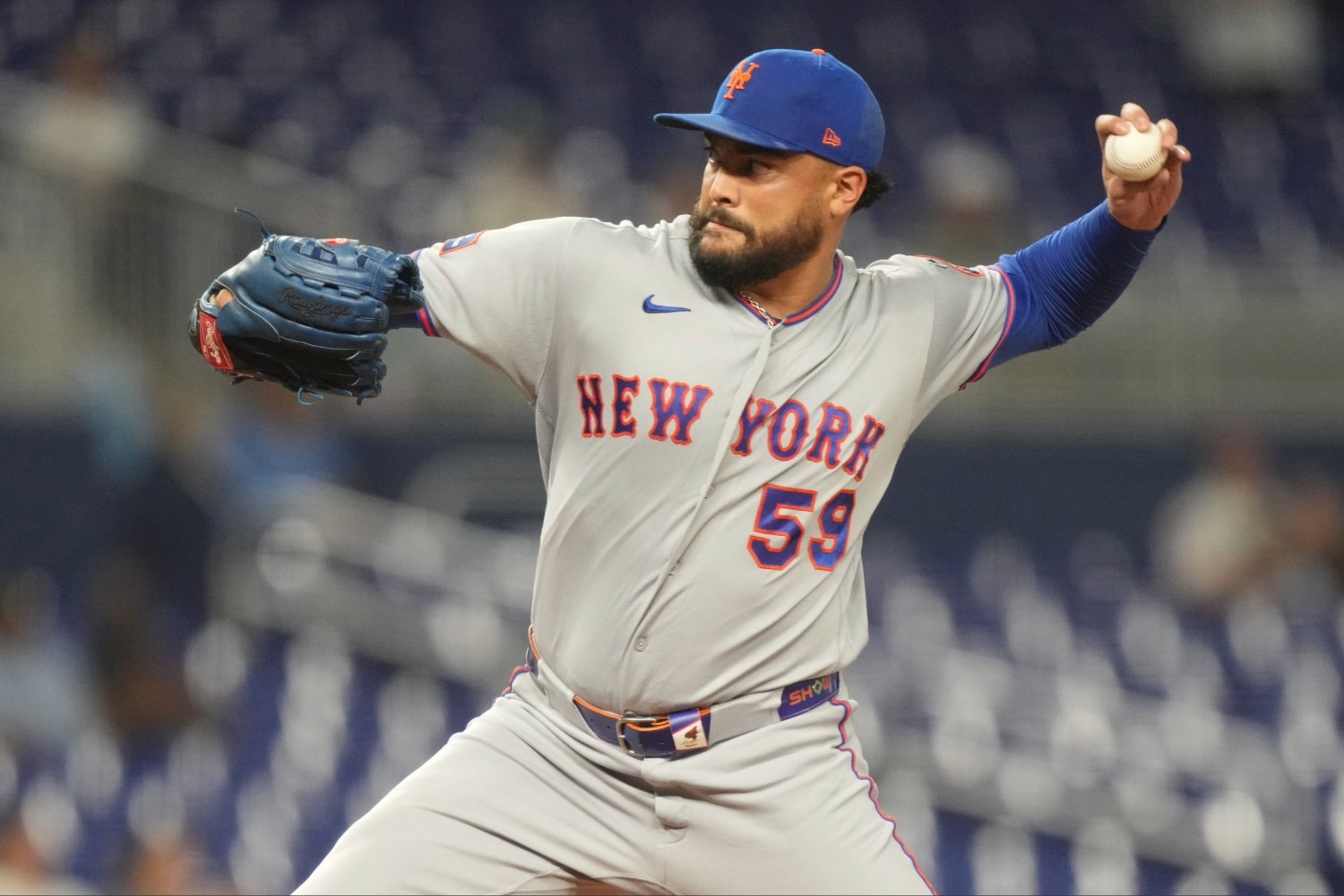 There is a problem that has chased Sean Manaea for almost his entire career, but it's reached a new level in his last two seasons: the inability to survive when he falls behind in the count. This season, Manaea has allowed the fourth-highest OPS+ (129) among qualified pitchers with at least 180 batters faced, only behind Spencer Arrighetti (151), Shota Imanaga (142), and Joey Cantillo (136). Against Manaea, the big difference has been marked by right-handed hitters. This season, he has posted the lowest K/BB rate (11.4) and the worst xFIP (4.93) against them. His ability to generate ground balls has also fallen from 51.4 GB% against lefties to 33.7% against righties, who are also managing to make contact with pitches outside the strike zone 16.7% more than lefties. Behind all these inconsistencies appears the most concerning point about the 34-year-old left-hander with 11 seasons: his four-seam fastball is not adding the value he needs to avoid depending so much on the sweeper. Manaea has allowed 21 home runs this season and 14 of them have come against his fastball. Opponents are slugging .472 against him, the second-highest mark of his entire career since the .503 he allowed in 2016. Manaea’s inability against right-handed hitters carries the most weight in the offensive disaster he has allowed in his last two seasons with the New York Mets. If we compare the span of these two most recent seasons with the two previous ones, 2023-2024 vs. 2025-2026, we can find several interesting trends. It is important to keep in mind the notable differences between the 2023 Manaea with the Giants and 2024 in his first season with the Mets, and then the one we have seen over these last two years, when he missed practically the first half of the 2025 season. 2023-2024: 19-12, 3.85 ERA, 3.86 FIP and 3.1 bWAR 2025-2026: 7-11, 5.06 ERA, 4.46 FIP and –0.3 bWAR According to Baseball Reference data, these last two seasons mark the first time in Manaea’s entire career with two consecutive seasons of negative WAR. FanGraphs gives him much more credit, placing him at 0.4 fWAR in 2025 and 0.8 in 2026. However, it is clear that this decline from Manaea puts him in the worst stretch of his career, two seasons after posting 2.8 fWAR in 2024, the second-highest of his career. That said, let’s now get into the big challenge that Manaea is failing to overcome. Here is an interesting summary of the offense in the two periods against right-handed hitters when he falls behind in the count. Period Pitch % PA K% HR% BA OBP SLG BABIP Hard Hit% Whiffs% 2023-2024 18.7% 282 12.8% 1.8% .235 .461 .393 .261 42.6% 21.7% 2025-2026 17.5% 172 9.3% 4.1% .354 .515 .622 .362 43.4% 15.8% There are major differences that are notable: the growth in Manaea’s home run rate, and how, with a hard-hit rate that has increased by just 0.8%, right-handers have unleashed more contact and power. The 5.9% decline in the whiff rate does not go unnoticed, but the result of the at-bat suggests a much more difficult problem to reverse. The two graphs on the left belong to the 2023-2024 stretch, and the other two to the most recent one. In the first, we can observe more dominance from Manaea in several of the zones where he recorded the highest percentage of pitches. The high pitches, inside and on the outside corner worked for him. Everything changed in the following stretch. That similar tendency to throw the fastball against right-handers at a high point outside the zone, well inside or far and outside, is being destroyed this time. There are several reasons pointing to Manaea’s problem, beginning with the loss of 2.5 mph on his fastball over the last three seasons, from 93.8 mph (2023) to 91.3 mph in 2026. Another concerning point here is the loss of total vertical drop on his fastball, which has increased from 20.0” in 2023 to 22.2” this year. His Induced Vertical Break also dropped to the lowest point (10.7”) of his career since 2016 (10.5”), and this is causing his high fastballs to drop more than before and run the risk of staying in the strike zone or being more reachable by right-handed hitters. If there is something that has characterized Manaea throughout his career, it has been his ability to provide deep starts, but he has always been a pitcher prone to allowing home runs. That story has not changed this season. In nine of his last 12 outings, he has allowed at least one home run, despite completing five innings or more in 11 of them. The reality is that he has not worked in any role, and he has been part of another inefficient investment by the Mets. And the worst part is that they do not have much to do about it, beyond working to see if he can make the adjustments, perhaps finding another role for him on the pitching staff for next season or, most complicated of all, trying to get rid of his contract. With $25 million remaining for 2027, that will prove to be an entirely different problem. View the full article
 -
 Manuel Rodriguez tossed five shutout innings and Jesus Made drove in Biloxi’s first run in their nail-biting win. Brandon Sproat and Cameron Wagoner looked good in the Nashville ‘pen, but the offense was stifled. For the week, Biloxi was able to earn a 3-3 draw in its series, while Nashville (2-4) fell short. Transactions: N/A Game Action: Nashville Pre-Game Media Notes Final: Durham (Rays) 7, Nashville 2 Box Score Via the Sounds’ website, game details and we encourage readers to review affiliate write-ups as part of their Link Report routine: Sounds Drop Series Finale Against Durham - Jeferson Quero recorded his 68th RBI of the season for Nashville Old friend Jared Oliva stole the show, delivering a leadoff infield single to end starting LHP Thomas Pannone’s perfect streak, smacking a two-run homer to push Durham’s lead to 4-0 in the second inning, then reaching via bunt single in the 4th inning to trigger a two-out, three-run barrage. By contrast, the Sounds produced just two hits, though they did put the leadoff man on base in five of the nine innings. Each of OF Brandon Lockridge (1-for-3, double, walk, RBI) and OF Jacob Hurtubise (0-for-2, walk, HBP) reached base twice to attempt to spark the offense. OF Tyler Black doubled to continue his hot streak (.946 OPS in last 91 plate appearances) by doubling and scoring in the sixth inning, as Nashville cut the deficit to 7-2, but a 349-foot fly out by C Andrick Nava stranded the bases loaded. Sounds’ Extras: Another bright spot was RHP Brandon Sproat (2 1/3 IP, 0 R, 0 H, 1 BB, 1 HBP, 1 K), who bounced back from his rough Wednesday relief effort, retiring the first five batters he faced and touching a peak velocity of 99.3mph. LHP Jared Koenig (2/3 IP, 0 R, 0 Ks) and RHP Cameron Wagoner (1 IP, 0 R, 3 Ks) joined Sproat in the hitless, scoreless relief effort, with Wagoner reaching 98.7mph on the radar gun. Next week’s outlook: Nashville (78-65) return home for their final series of the 2026 campaign, hosting Cardinals’ affiliate Memphis (79-65) for six contests starting from Tuesday evening. Biloxi Pre-Game Media Notes Final: Biloxi 2, Pensacola (Marlins) 1 Box Score Via the Shuckers’ website, game details: Rodriguez Wins Franchise-Record 13th Game in Shuckers Regular Season Finale - Biloxi Concludes 2026 Campaign and Collects More Records After missing three contests, 19-year-old SS Jesús Made (1-for-3, RBI, SB) returned from his “prolonged breather”, delivering a sacrifice fly to open the scoring in Biloxi’s tight victory to close out their 2026 regular season. Although he was pitching on four days’ rest, 21-year old RHP Manuel Rodriguez (5 IP, 0 R, 5 H, 0 BB, 5 Ks) delivered his best start since mid-July, limiting the formidable Pensacola offense to just four singles as he earned his 13th win of the 2026 season. Batting in the nine hole, C Darrien Miller (2-for-3, walk) contributed offensively and defensively, throwing out an attempted basestealer in the first inning and reaching base three times himself. Singling to open the 5th inning and scoring on OF Braylon Payne’s sac fly was the key insurance run the Shuckers needed to ultimately hold on. Biloxi’s 0-for-9 production with runners in scoring position put extra pressure on their bullpen, but RHP Garrett Hodges (1 IP, 0 R, 0 Ks) was ultimately able to close out the win. Hodges was in quite the jam in the bottom of the 9th, as the first two hitters reached base via hit-by-pitch and bunt single. However, he caught the next bunt attempt for the first out before inducing a fly out and pop out to earn the save. Shuckers’ Extras: Kudos to RHP Peyton Niksch (3 IP, 1 R, 3 H, 1 BB, 1 HBP, 2 Ks) for solid middle relief work, particularly by working out of a bases loaded, one-out jam in the 6th inning (pop out, ground out). OF Josh Adamczewski (2-for-4, double) joined Miller in the multi-hit club, while leadoff 2B Dylan O’Rae singled and stole his 63rd base of his terrific 2026 season. Next week’s outlook: Biloxi (66-68) and Pensacola (79-58) play a best-of-three Southern League playoff semifinal series, with action commencing Tuesday evening in Florida. We hope that you enjoy the Minor League Link Report. Monday is a day off for the minor league affiliates and the Milwaukee Brewers, who play at the Pirates on Tuesday evening. Organizational Scoreboard including starting pitcher info, game times, MiLB TV links, and box scores Current Milwaukee Brewers Organization Batting Stats and Depth Current Milwaukee Brewers Organization Pitching Stats and Depth View the full article
 -
What are your Marlins vs. Diamondbacks series predictions?
DiamondCentric posted an article in Fish On First
 Once again in 2026, I will be monitoring Miami Marlins predictions from our valued SuperSubs, Fish On First staffers and livestream guests. Individual article pages like this one will be created prior to every Marlins series and featured prominently on the FOF site. Consistent participation is key if you want to win this annual contest. Submissions only take a few seconds. Scoring system A "perfect" series is worth three points: Earn one point for predicting which team will win the upcoming series Earn one point for predicting the precise number of victories for each team Earn one point for predicting the “Series MVP” who accumulated the highest win probability added (WPA) during the series as calculated by FanGraphs (could pick a player from either team) FOF SuperSub David Fernandez is currently atop the 2026 season leaderboard, which will be updated between every Marlins series. If you are a SuperSub, leave a comment with your Prediction Time picks on this page, or join the Marlins Discord Server and submit there. We'll feature them on the upcoming Fish On First LIVE episode and track your points throughout the season! Any picks submitted prior to the first pitch of the series opener will be counted. If you are not a SuperSub, please consider signing up here to support the FOF staff. Series preview notes Probable starting pitchers: RHP Sandy Alcantara (MIA) vs. RHP Corbin Burnes (AZ) on Monday RHP Janson Junk (MIA) vs. TBA (AZ) on Tuesday RHP Zac Gallen's turn in the rotation RHP Ryan Gusto (MIA) vs. TBA (AZ) on Wednesday RHP Merrill Kelly's turn in the rotation The Marlins rank 14th in MLB with a 100 wRC+ and 17th in MLB with a 4.13 FIP. They are 3-7 in their last 10 games and have a 29-43 record on the road this season. The following Marlins players are on the injured list: Anthony Bender (15-day IL), Owen Caissie (10-day IL), Ronny Henriquez (60-day IL), William Kempner (60-day IL), Adam Mazur (60-day IL), Andrew Nardi (60-day IL) and Robby Snelling (60-day IL). The Diamondbacks rank 24th in MLB with a 95 wRC+ and 23rd in MLB with a 4.33 FIP. They are 6-4 in their last 10 games and have a 42-33 record at home this season. The following Diamondbacks players are on the injured list: Tyler Locklear (60-day IL), Cristian Mena (60-day IL), Ryne Nelson (60-day IL), A.J. Puk (60-day IL), Andrew Saalfrank (60-day IL) and Ryan Thompson (60-day IL). View the full article
 -
 A second San Diego Padres affiliate moved closer to a league championship as another full-season team had its regular season come to end Sunday. The Low-A Lake Elsinore Storm won Game 1 of the California League Championship Series 10-1 over San Jose, while the Triple-A El Paso Chihuahuas lost 1-0 to Tacoma and the Double-A San Antonio Missions won its final game of the season 11-10 over Amarillo. Padres Minor-League Transactions San Diego Padres sent RHP Jason Adam on a rehab assignment to El Paso Chihuahuas. LHP Benjamin Stubbs assigned to Lake Elsinore Storm from ACL Padres. RHP Jack Pineau assigned to Lake Elsinore Storm from Fort Wayne TinCaps. RHP Luis Maracara assigned to ACL Padres from Lake Elsinore Storm. LHP Zack Qin assigned to ACL Padres from Lake Elsinore Storm. CAL LEAGUE CHAMPIONSHIP SERIES Tyler Schmitt, Adler Cecil Lead Storm To Game 1 Victory Right-handed starter Tyler Schmitt and three relievers combined to hold the league's highest-scoring team off the board until the ninth inning, while fourth-round draft choice Alex Conover hit a two-run homer in the first and drove in four runs to fuel the host Low-A Lake Elsinore Storm to a 12-0 victory over the San Jose Giants in Game 1 of the best-of-three California League Championship Series. The Storm can win their second Cal League title in five years with a win in Game 2, which is Tuesday in San Jose. Game 3, if necessary, is Wednesday. The Storm have won four Cal League titles overall (1996, 2001, 2011, 2021). The 2001 title was shared with the Giants after the playoffs were canceled in the wake of the Sept. 11 attacks. Schmitt went 4⅓ scoreless innings, striking out three while allowing four hits and three walks. Right-hander Jack Pineau, an undrafted free agent, struck out one in two-thirds of an inning, before giving way to left-hander Adler Cecil, who punched out five and allowed two hits and two walks over final three innings and left-hander Benjamin Stubbs, the Padres' ninth-round draft choice, made his pro debut in the ninth. He allowed a run on a chopper after loading the bases with a single and two walks, but then got a game-ending 4-6-3 double play. Conover had two hits and a walk to go along with his four RBIs, the most he has driven in during his 23-game career. Qrey Lott was 3-for-3 with a walk, a triple, two RBIs and a run scored, seventh-round draft choice Joe Tiroly went 3-for-5 with a double, an RBI and run scored, second-rounder Elliot Lascelles (Padres Mission's No. 11 prospect) was 2-for-5 with an RBI and a run scored and Jose Verdugo went 2-for-4 with a walk, an RBI and two runs scored. Ty Harvey (Padres Mission's No. 5 prospect) walked three times and scored twice. The Storm did most of their offensive damage early. Lascelles had a leadoff double in the bottom of the first, then Conover launched his homer with one out to stake the Storm to a 2-0 lead. Sixth-round draft pick Nu'u Contrades reached on an error by the shortstop, went to second on a groundout and scored on a Verdugo single to make it 3-0. The Storm added two more in the second as Harvey drew a leadoff walk, Lott singled and Tiroly punched an opposite-field single to right to bring in Harvey. A wild pitch plated Lott for a 5-0 lead. It became 6-0 in the third as Lott tripled home Verdugo. In the sixth, Conover singled home Tiroly, who had doubled. Three more runs came in the seventh as Lott was hit by a pitch with the bases loaded following three walks, Lascelles had an infield single to bring in another and Conover grounded out to bring in the 10th run. The Storm made it 12-0 in the eighth as Lascelles singled to left, bringing in Jorge Quintana and Harvey. LE1_0913.mp4 LE2_0913.mp4 LE4_0913.mp4 Player AB R H RBI BB K Elliot Lascelles, 2B 6 1 3 3 0 1 Joe Tiroly, 1B 5 1 3 1 0 1 Alex Conover, LF 4 1 2 4 1 1 Nu'u Contrades, DH 4 1 0 0 1 1 Jorge Quintana, 3B 4 1 0 0 1 1 Jose Verdugo, SS 4 2 2 1 1 1 Dawson Willis, CF 4 1 0 0 1 0 Ty Harvey, C 2 3 0 0 3 0 Qrey Lott, RF 3 1 3 2 1 0 Totals 36 12 13 11 9 6 Player IP H R ER BB K HR Tyler Schmitt 4 1/3 4 0 0 3 3 0 Jack Pineau 2/3 0 0 0 0 1 0 Adler Cecil 3 2 0 0 2 5 0 Benjamin Stubbs 1 2 1 1 2 0 0 Totals 9 8 1 1 7 9 0 Miguel Andujar Gets A Hit, Jason Adam Perfect; Chihuahuas Fall 1-0 In a rare Pacific Coast League 1-0 game, the Triple-A El Paso Chihuahuas came up on the short end despite allowing just four hits in the loss to the host Tacoma Rainiers. The Chihuahuas (58-86, 23-46 second half) went 2-4 in the six-game series. The Chihuahuas will wrap up their regular season at home against Oklahoma City. Miguel Andujar, in perhaps his final rehab outing as he returns from a fractured right wrist, went 1-for-5 and is 6-fo-21 (.286) with four doubles and an RBI in five games. He played designated hitter in four games and left field in the other. Padres right-hander Jason Adam made his first and perhaps only rehab appearance, pitching a perfect sixth inning, striking out one. Adam threw 11 pitches, seven for strikes. Adam got a strikeout looking, a groundout to third with a terrific play at first on an off-target throw and a popup behind third. Chihuahuas left-handed starter JP Sears allowed two hits over 2⅔ innings, right-hander Logan Gillaspie allowed the only run on a homer in his 2⅓ innings. After Adam, Brent Honeywell allowed a hit in his one inning and right-hander Garrett Hawkins gave up a hit and a walk in one inning. The only run of the game came in the fourth on Connor Joe's 10th homer of the year. Bryce Johnson had two hits and a walk for the Chihuahuas, while Nick Pratto had a single and two walks. EP_0913.mp4 Player AB R H RBI BB K Bryce Johnson, CF 4 0 2 0 1 2 Miguel Andujar, DH 5 0 1 0 0 0 Carlos Rodríguez, LF 3 0 0 0 1 0 Marcos Castañon, 2B 3 0 0 0 1 0 Nick Pratto, 1B 2 0 1 0 2 0 Gage Workman, SS 4 0 0 0 0 2 Braedon Karpathios, RF 4 0 0 0 0 2 Rosman Verdugo, 3B 4 0 1 0 0 2 Anthony Vilar, C 1 0 0 0 1 0 Nick Solak, PH 0 0 0 0 1 0 Totals 30 0 5 0 7 8 Player IP H R ER BB K HR JP Sears 2 2/3 2 0 0 2 2 0 Logan Gillaspie 2 1/3 1 1 1 0 1 1 Jason Adam 1 0 0 0 0 1 0 Brent Honeywell 1 1 0 0 0 0 0 Garrett Hawkins 1 0 0 0 1 2 0 Totals 8 4 1 1 3 6 1 Missions Have A Blast, Bash 4 HRs In Season Finale A frustrating season had a happy conclusion as the Double-A San Antonio Missions erupted for four homers and 17 hits, hanging on for an 11-10 victory over the host Amarillo Sod Poodles, snapping a seven-game losing streak. The Missions won just the final game of the series to finish with a 59-79 record, including 28-41 for last place in the five-team Texas League South Division. The Sod Poodles won the second-half title at 41-28. Romeo Sabria went 3-for-4 with a homer, a walk, two RBIs and two runs scored, Albert Fabian went 3-for-6 and Luis Verdugo also had three hits with a homer, three RBIs and two runs scored for the Missions. Kerrington Cross hit his first Double-A homer as part of a two-hit, three-RBI day and Justin DeCriscio also went deep for the first time at Double-A, finishing 2-for-4 with a walk, two RBIs and two runs scored. Missions right-handed starter Victor Lizarraga gave up five runs over four innings on eight hits, including a pair of homers. Right-hander Sadrac Franco, right-hander Johan Moreno and left-hander Igor Gil each pitched a scoreless inning, while right-hander Josh Mallitz gave up three runs and right-hander Carlos Medina two runs as each had an inning. The Missions were up 11-5 entering the bottom of the eighth, with Medina getting the final out after yielding a two-run homer with two outs and then stranding the tying run at second for his first Double-A save. SA1_0913.mp4 SA2_0913.mp4 SA3_0913.mp4 SA4_0913.mp4 Player AB R H RBI BB K Romeo Sanabria, DH 4 2 3 2 1 0 Alex McCoy, CF 6 1 1 1 0 2 Albert Fabian, LF 6 0 3 0 0 1 Kerrington Cross, 1B 6 1 2 3 0 3 Jack Costello, RF 5 1 1 0 0 0 Justin DeCriscio, SS 4 2 2 2 1 1 Ryan Jackson, 2B 4 1 0 0 1 1 Luis Verdugo, 3B 5 2 3 3 0 0 Oswaldo Linares, C 4 1 2 0 1 2 Totals 44 11 17 11 4 10 Player IP H R ER BB K HR Victor Lizarraga 4 8 5 5 0 1 2 Sadrac Franco 1 0 0 0 1 1 0 Johan Moreno 1 0 0 0 0 1 0 Josh Mallitz 1 3 3 3 0 1 0 Igor Gil 1 2 0 0 0 2 0 Carlos Medina 1 3 2 2 1 0 1 Totals 9 16 10 10 2 6 3 Padres Mission's Top 20 Prospect Performance Ethan Salas: 1-for-2, 3B, K Ryan Wideman: On injured list Coleman Borthwick: DNP Kruz Schoolcraft: DNP Ty Harvey: 0-for-2, 3 BB Kale Fountain: Injured, out for season Jorge Quintana: 0-for-4, BB, K Alex McCoy: 1-for-6, RBI, 2 K Braedon Karpathios: 0-for-4, 2 K Lamar King Jr.: DNP Elliot Lascelles: 3-for-6, 2B, 3 RBI, K Tucker Musgrove: On injured list Jagger Haynes: DNP Jake Cunningham: DNP Truitt Madonna: DNP Eric Yost: DNP Winyer Chourio: DNP Jesus Castro: DNP Michael Salina: On injured list Rosman Verdugo: 1-for-4, 2 K View the full article
 -
 Jake McKibbin and Jason Wang discuss an outstanding week by the Brewers, who went nearly undefeated against the Cubs and Reds. Apple Podcasts: https://podcasts.apple.com/us/podcast/the-brewer-fanatic-podcast/id1740648724 Spotify: https://open.spotify.com/show/5CY8mWsQayqjDXqw9OT2Td iHeartRadio: https://www.iheart.com/podcast/263-the-brewer-fanatic-podcast-166534588/ Pocket Casts: https://pca.st/ommzz627 Watch On YouTube: https://www.youtube.com/@brewerfanatic View the full article
 -
Twins Minor League Report (9/13): Kendry Rojas Returns to the Mound
DiamondCentric posted an article in Twins Daily
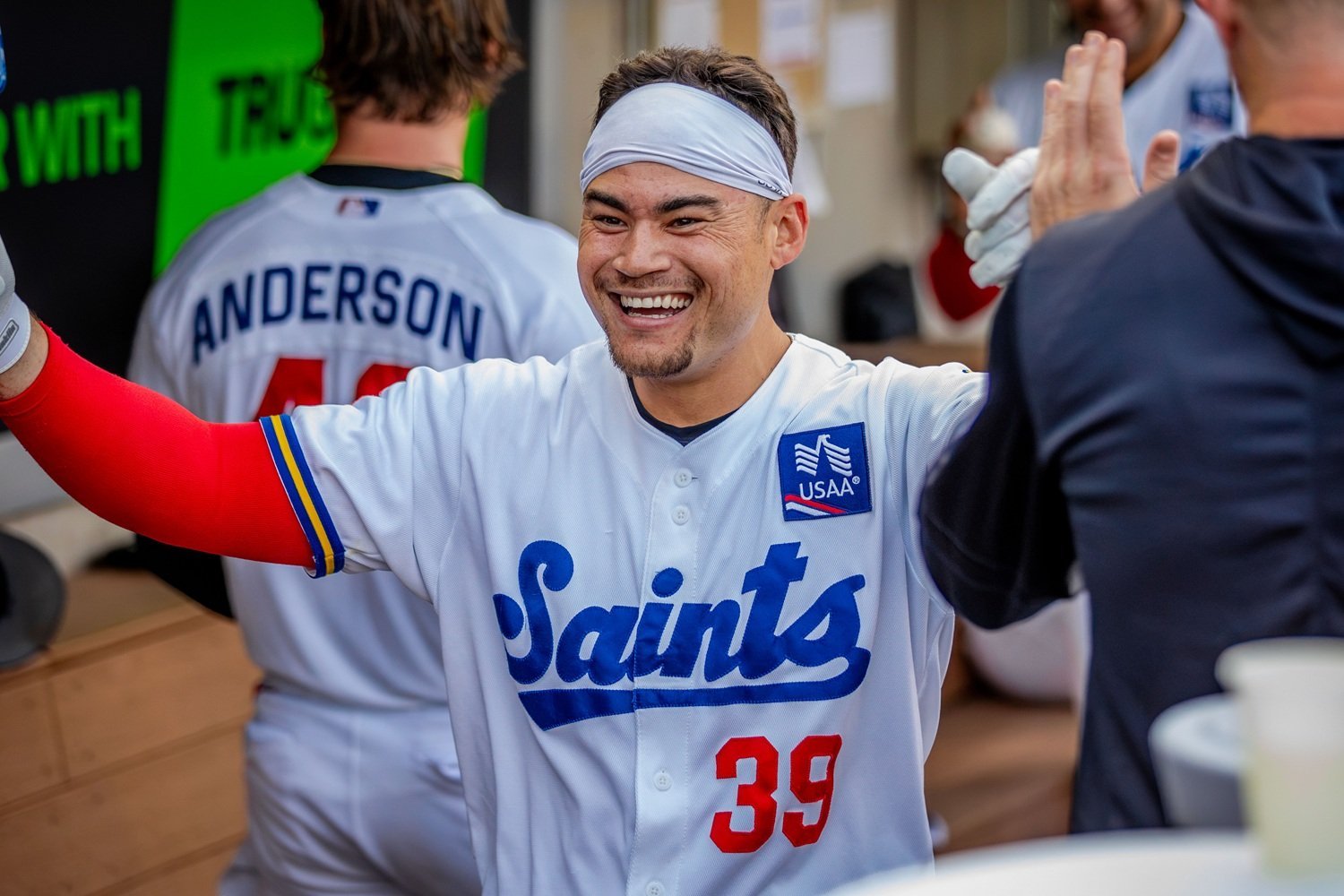 TRANSACTIONS LHP Kendry Rojas activated from IL (AAA St. Paul) C Ian Daugherty transferred to Development List (AAA St. Paul) Saints Sentinel St. Paul 6, Syracuse 5 Box Score Kendry Rojas: 2 IP, 0 H, 0 ER, 1 BB, 1 K HR: Kala’i Rosario 2 (10, 11), Aaron Sabato (25) Multi-hit games: Kala’i Rosario (2-for-4, 2 HR, 2 R, 3 RBI) The Saints eeked out a win in their home finale on Sunday. Kendry Rojas! He’s back! The lefty appeared in a game for the first time since suffering a right oblique strain during his outing on August 21st. He looked normal, which is about all you can ask from a pitcher returning from injury, tossing two scoreless innings with a strikeout and a walk. He topped out at 96.7 MPH. 18 of his 28 pitches went for strikes. Rojas’ exit portended a tough day for Trent Baker. The righty allowed a flurry of free passes and hard contact, totaling four earned runs in just two innings. After Baker, though, was a masterclass, with Paulshawn Pasqualotto, Eric Orze, and Marco Raya delivering suffocating, overwhelming pitching performances. Pasqualotto struck out four over two, Orze collected a pair in one frame, and Raya opted to let his defense have more fun; he punched out one batter in his inning. Overall, the three completed four perfect innings. St. Paul’s offense on Sunday was… condensed. Effective enough. Kala’i Rosario blasted a solo shot in the fourth to break the seal, and more blasts in the fifth completed the run barrage. First, Aaron Sabato tucked a three-run shot around the fair side of the right field foul pole, then Rosario exited the building again, with a two-run shot cracked over the famous CHS field wall in right. Rosario presents a conundrum for the Twins this offseason. He’s Rule 5 eligible, and though the franchise finds outfielders in great abundance, 24-year-olds at AAA with his raw pop don’t grow on trees. Might they look to protect him? And how much does the looming lockout affect their plans? We shall see. Émilien Pitre, a wonderful name, is ranked as the 10th-best prospect in the Mets’ system. The second baseman went 0-for-3 with a walk. Wind Surge Wisdom Wichita 8, Frisco 10 Box Score Preston Johnson: 3 IP, 7 H, 6 ER, 3 BB, 2 K HR: None Multi-hit games: Marek Houston (3-for-6, 2 R), Garrett Spain (3-for-6, 2 2B, R, RBI), Brandon Winokur (4-for-6, 2B, 2 R, 3 RBI), Kyle DeBarge (2-for-4, R, RBI, BB), Danny De Andrade (2-for-4, R), Luis Hernandez (2-for-4, RBI, BB) The Wind Surge ended their season with a loss. It was a hitting clinic for Wichita. And they weren’t here for extra-base knock: like Motown before them, hit singles were the target. 14 of them marked an incredible day of line drives, grounders with eyes, dying quails, and whatever else is needed to rack up such an overwhelming total. Wichita scored in seven separate innings. Brandon Winokur was the biggest fueler of the onslaught, collecting four hits and three RBIs. He was also the lone highlight the WInd Surge Twitter account decided to post. Lest you think the offense was all about hits, they also ran wild on the bases, with the team netting seven steals on the day. Kyle DeBarge swiped four bases; Quinn McDaniel, Jaime Ferrer, and Andrew Cossetti—yes, Andrew Cossetti—totaled the other three steals. Cossetti’s was his 13th in 376 minor league games. It was just that kind of day. Unfortunately, Wichita didn’t find such luck on the mound, a curse that befall them all year as they ended with the second-worst ERA in the Texas League. Preston Johnson was worked for six runs in three innings, and Cory Lewis fared only a little better, surrendering four in four frames. Tippy-top prospect Sebastian Walcott—ranked ninth overall by MLB.com—played shortstop and singled once in three at-bats. Kernels Nuggets The Kernels season has ended. Come back in 2027 to read more about them. Mussel Matters The Mighty Mussels season has ended. Come back in 2027 to read more about them. TWINS DAILY PLAYERS OF THE DAY Twins Daily Minor League Pitcher of the Day – Paulshawn Pasqualotto Twins Daily Minor League Hitter of the Day – Kala’i Rosario PROSPECT SUMMARY Here’s a look at how the Twins Daily Top 20 Twins Prospects performed: #1 – Walker Jenkins (Twins) - 0-4, 3 K #4 – Marek Houston (Wichita) - 3-6, 2 R, 2 K #6 – Emmanuel Rodriguez (Twins) - 1-4, 2 K #9 – Gabriel Gonzalez (St. Paul) - 0-3, BB, K #12 – Brandon Winokur (Wichita) - 4-6, 2B, 2 R, 3 RBI MONDAY’S PROBABLE STARTERS No games in the Twins’ system are scheduled for Monday. View the full article
 -
 The Weekly Nutshell: The past week felt like an official turning of the page. There are still 13 games left to be played in the 2026 season, but focus is shifting to 2027 as the reality of a missed playoff bid sets in. Following a seventh consecutive week in which the Twins failed to post a winning record, they are now a season-high nine games below .500, with their postseason odds down to 1.7%. While the stakes have faded, the intrigue hasn't entirely disappeared. A third top prospect joined the big-league team this week, giving the Twins and their fans a meaningful glimpse at a young core that could shape the next era. At this point, the final two weeks are less about where the Twins finish in 2026 and more about what they can learn for 2027. Weekly Snapshot: Mon, 9/7 through Sun, 9/13 *** Record Last Week: 2-4 (Overall: 70-79) Run Differential Last Week: -14 (Overall: -62) Standing: T-3rd Place in AL Central (6.0 GB); 5.5 games out of WC Latest Game Results Game 144 | DET 5, MIN 4: Twins Keep Things Close But Fall Short in Ryan's Return Ryan: 4 IP, 3 R (2 ER), 3 H, 1 BB, 7 K Game 145 | MIN 3, DET 2: Bullpen Backs Up Kremer with Four Hitless Innings in Win Twins bullpen: 4 IP, 0 R, 0 H, 1 BB, 4 K Game 146 | DET 7, MIN 2: Pitchers Walk 8, Lineup Can't Mount Rally in Lifeless Loss Matthews: 2.1 IP, 5 ER, 2 H, 4 BB, 2 K Game 147 | CLE 5, MIN 2: Tie Game Slips Away in Erratic Ninth Inning for Gómez Gómez: 0.1 IP, 3 ER, 2 H, 2 BB Game 148 | MIN 4, CLE 3: Rodriguez Homers in Debut, Bullpen Holds Slim Lead Twins bullpen: 3.2 IP, 0 R, 0 H, 2 BB, 8 K Game 149 | CLE 9, MIN 2: Non-Competitive Loss Pushes Twins Closer to Elimination Ryan: 4 IP, 4 ER, 7 H, 1 BB, 1 K NEWS & NOTES Sidelined for almost all of August by a glute injury, Joe Ryan was activated from the injured list on Monday to start the series opener in Detroit. Reliever Garrett Acton was optioned to the minors in a corresponding move. Ryan made two starts over the course of the week, looking reasonably sharp in the first and much less so in the second. He should be in line to make two more turns before season's end. Another injured player returned a few days later when Austin Martin was activated, bumping Gabriel Gonzalez off the roster and overtaking his role as righty-hitting corner outfielder. Then, on Saturday, the big news of the week: Emmanuel Rodriguez was promoted from Triple-A, adding another top prospect to the Twins roster alongside Walker Jenkins and Kaelen Culpepper. Rodriguez's arrival displaced Ben Ross, who like Gonzalez had seen very little usage during his short time with the Twins. For Byron Buxton, an outcome that already seemed highly likely has now been made official: he's shutting it down for the season. Buxton is slated to undergo arthroscopic surgery next Friday on his problematic right hip, and the team hopes he'll be ready for spring training. We can only hope that this procedure proves anywhere near as effective as the one he had for his knee after the 2023 season. HIGHLIGHTS Batting ninth in his major-league debut on Saturday, Rodriguez wasted little time making his presence known. In his very first at-bat, he sent a pitch from Franco Aleman over the fence in left center for a solo home run. Rodriguez became the first Twins player to homer in his first MLB at-bat since Eddie Rosario, whom he coincidentally drew comparisons to when originally signed out of the Dominican Republic as a teenager. Kody Clemens also supplied some power, launching two home runs among his seven hits and driving in five. He's up to 26 long balls this season, and will certainly draw some consideration for team MVP as we reflect back on the season. The overall results are more solid than spectacular, but no other position player has matched his combination of availability and performance. Taj Bradley has done that on the pitching side, though. He did miss a few starts in May with a pec issue, but Bradley has been healthy enough to throw 165 innings over 29 starts and he's been very good through most of it. That includes his latest outing on Friday, which saw the right-hander shut out Cleveland over six innings of one-hit ball. He handed out four walks but also struck out six, giving him the fifth-highest strikeout total (190) in the American League. On the surface, it appears Griffin Jax has had a fairly similar season in Tampa, with a 3.99 ERA and some success in the transition from reliever to starter. But Jax has thrown just 99 innings while dealing with elbow discomfort. His underlying metrics aren't nearly as strong, explaining why Bradley has a healthy advantage in Wins Above Replacement. Most importantly, the Twins have control of Bradley for the next three seasons while Jax is now just a year from free agency. Not every decision from last year's deadline looks great in hindsight, but the Bradley trade looks like a slam-dunk win after year one. So how about this year's deadline? It's unfortunate that the front office's acquisitions aren't contributing in the stakes we would have hoped for, but they are contributing. Tuesday's win over Detroit was exactly the type that Minnesota's front office likely envisioned as a post-deadline standard. Five solid innings from Dean Kremer, followed by a lockdown performance from the relief corps: four hitless innings, including one apiece from A.J. Minter and Jeff Hoffman. Those two also protected a one-run lead in the final two innings of Saturday's win, with Minter becoming the 12th Twins pitcher to record a save this season. Hoffman has been utterly phenomenal in September, with just one hit and one walked allowed across five scoreless innings. He has struck out 10 of the 17 batters he's faced. It's very reassuring to have him back in the mix for 2027, especially as some of the bullpen's previous fixtures falter down the stretch. I'd also love to see the Twins make an effort to bring back Minter as a free agent. He has a 1.56 ERA in 18 appearances since being acquired. LOWLIGHTS Minnesota's offense is sputtering to the finish line. They scored four or fewer runs in every game last week, and eight of their past nine. Jenkins continues to look overmatched in his first go at the big leagues. He came through with his biggest hit yet as a Twin on Monday, ripping a two-run double to cut down a late deficit in Detroit, but otherwise was 0-for-13 with six strikeouts. Culpepper also cooled off a bit, with three singles in 15 at-bats, and he got hit in the upper back by a pitch on Saturday night that forced him out of the game. X-rays came back negative but Culpepper sat out Sunday's finale against the Guardians. Through the ups and downs — certainly more downs than ups in Jenkins' case — I'm still glad and appreciative to see these prospects getting a chance to acclimate themselves in the majors at the tail end of a lost season. Same now goes for Rodriguez, who is 2-for-8 through two games. In fact, I'll voice that even more strongly with Emma, since going back to the minors to start next year isn't an option for him. The sample will be small, but at least he'll be able to gain some idea of what he needs to work on to hit the ground running as a big-leaguer in 2027. As we look toward a hopefully brighter future spearheaded by the likes of Jenkins, Culpepper and Rodriguez, we're also led to wonder whether Royce Lewis is going to be a part of it. He represents a key decision point for the front office heading into this offseason, and isn't make a convincing case for himself. Lewis was 2-for-20 with a single, a double, a walk and six strikeouts. He continues to put forth brutally ugly at-bats, frequently lapsing into guesswork at the plate, and has homered just once in his past 33 games. This has been arguably Lewis' worst season and yet it has also been his healthiest season, as he's reached career highs in games played (114) and plate appearances (462). Incidentally, he left Sunday's game with a shoulder injury, so we'll see if those numbers are final. The question the Twins need to ask: is there any valid reason to believe he's going to be significantly better next year? If he's not, there isn't much an argument for keeping him around, even at a relatively modest arbitration price tag. Looking over Minnesota's projected 2027 lineup, there is no more obvious place to aim for an upgrade than first base. TRENDING STORYLINE Sunday's starting outfield gave us a potential glimpse into the next era for the Twins: Rodriguez in left, Jenkins in center, Luke Keaschall in right. It's got the makings of a solid defensive alignment with tantalizing offensive upside. Keaschall has already tapped into his, with a .392 wOBA since the start of July that ranks top-10 in baseball. Jenkins has shown glimpses amidst a slow start to his career, and Rodriguez started things out with a bang on Saturday. Of course it remains to be seen how all three of these players will fit into the short-term outfield picture alongside Buxton, but for now it's all just about getting Buck right physically. Throw in Culpepper at short, plus Connor Prielipp wrapping up his rookie season in the rotation, and there is plenty of future-facing motivation to tune in for these final 13 games, especially compared to September of last year when the team was running out the string with mostly veteran placeholders. The ending of this season brings a better sense of direction and momentum, but how the Twins — and specifically these players — finish undoubtedly have an effect on the vibe going into the winter. With a likely lockout looming, we may have to hold onto this final batch of games for quite a while. LOOKING AHEAD It's a full slate in the second-to-last week of the 2026 season, kicking off with Minnesota's toughest remaining matchup: three games at home against the dreaded Yankees. With contention already an afterthought, they can't hurt us anymore, so there's that. Now all but assured of a losing record, at this point I'm now mainly just curious to see if the Twins will finish closer to their preseason Vegas over/under (72 wins) or their FanGraphs projection (77 wins). MONDAY, SEPTEMBER 14: YANKEES @ TWINS — RHP Will Warren v. RHP Bailey Ober TUESDAY, SEPTEMBER 15: YANKEES @ TWINS — LHP Max Fried v. RHP Dean Kremer WEDNESDAY, SEPTEMBER 16: YANKEES @ TWINS — LHP Carlos Rodon v. RHP Zebby Matthews THURSDAY, SEPTEMBER 17: TWINS @ ANGELS — RHP Taj Bradley v. RHP Walbert Urena FRIDAY, SEPTEMBER 18: TWINS @ ANGELS — LHP Connor Prielipp v. RHP Grayson Rodriguez SATURDAY, SEPTEMBER 19: TWINS @ ANGELS — RHP Joe Ryan v. LHP Reid Detmers SUNDAY, SEPTEMBER 20: TWINS @ ANGELS — RHP Bailey Ober v. RHP Ryan Johnson View the full article
 -
Honoring Dontrelle Willis & Marlins-Dodgers series reaction
DiamondCentric posted an article in Fish On First
 Fish On First staffers react to the latest Miami Marlins series and prepare you for what lies ahead. Sunday's show was hosted by Ely Sussman and featured panelist Isaac Azout. The following topics were covered: Dontrelle Willis being inducted into the Marlins Legends Hall of Fame Agustín Ramírez clinches series over Dodgers with walk-off home run Javier Sanoja has been Miami's second-half MVP Otto Lopez a serious challenger to Luis Arraez for National League batting title Owen Caissie lands on injured list just as Xavier Edwards returns Deyvison De Los Santos still buried on the bench Previewing and predicting the next series against the Arizona Diamondbacks You can find Fish Unfiltered and Fish On First LIVE on the Fish On First YouTube channel, Apple Podcasts, Spotify or wherever else you get your pods. Our next FOF LIVE episode will be on Thursday at approximately 6:30 p.m. ET on the off day following the Marlins-Diamondbacks series finale. View the full article
 -
Brewers Week in Review: A Statement of a Homestand
DiamondCentric posted an article in Brewer Fanatic
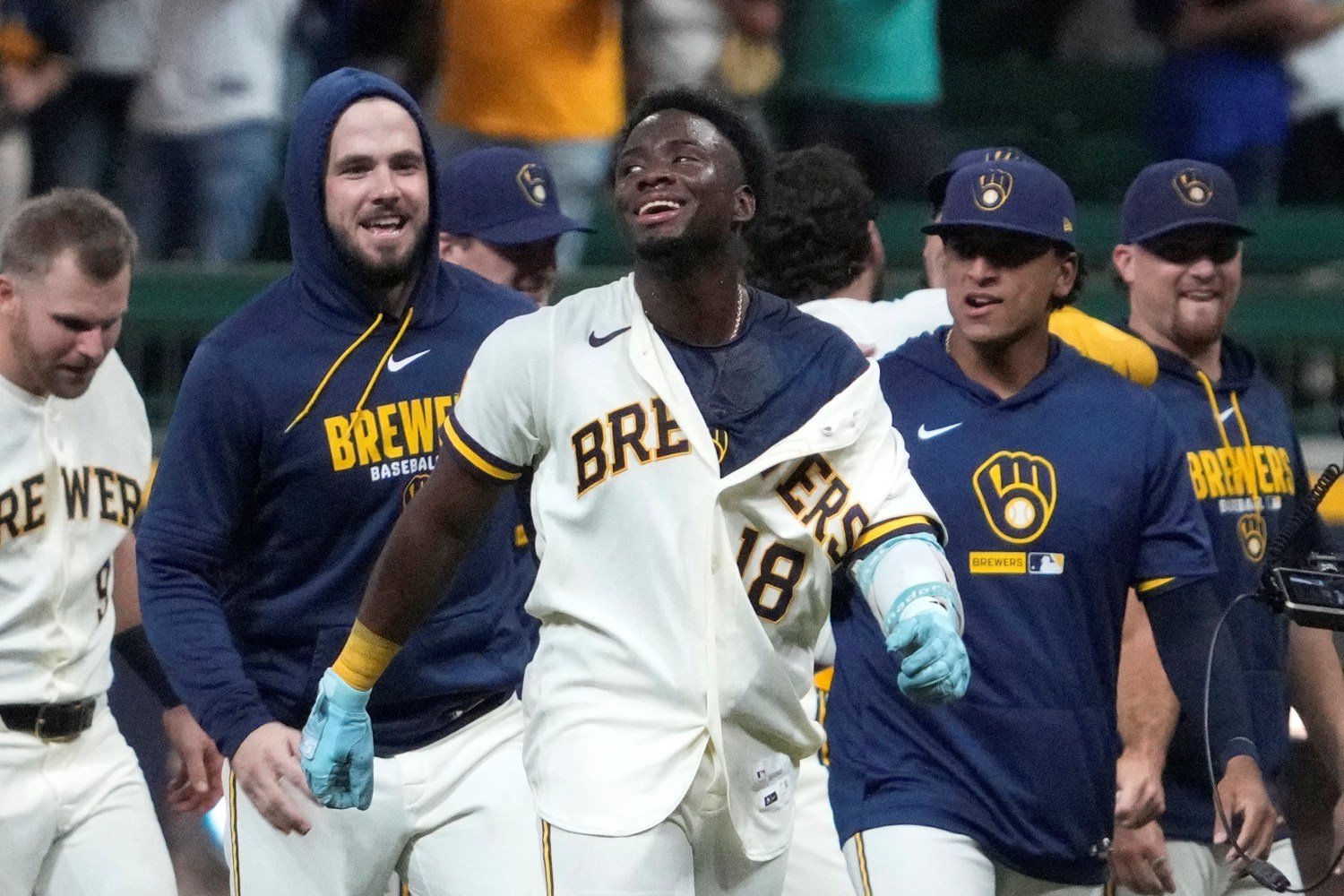 Weekly Snapshot: Record Last Week: 5-1 (Overall: 93-57) Runs Scored Last Week: 52 Runs Surrendered Last Week: 25 Standing: 1st in NL Central Game 145 (9/07) | MIL 4, CHC 3 Game 146 (9/08) | MIL 4, CHC 3 Game 147 (9/09) | MIL 8, CHC 6 Game 148 (9/11) | MIL 20, CIN 0 Game 149 (9/12) | MIL 13, CIN 9 Game 150 (9/13) | CIN 4, MIL 3 Game 145 | Brewers 4, Cubs 3 MIL Starter: Robert Gasser (4.2 IP, 3 H, 2 BB, ER, 5 K) Top Performers: Jackson Chourio (H, 2 RBI) The week started with the final regular-season meetings against the Cubs. The first matchup in that set saw Robert Gasser match up with Matthew Boyd at American Family Field. The Cubs twirler was dominant early, getting through seven innings of one-run ball. Craig Counsell rolled Boyd back out for the eighth—a decision that would be costly, as Boyd left without recording an out in the frame. Instead, he left two runners on base, whom the Brewers cashed in against the Chicago bullpen. The Crew held on to win from there, thanks in no small part to great outfield defense. Luis Lara’s leaping grab (+2.5 WP%) Game 146 | Brewers 4, Cubs 3 MIL Starter: Jacob Misiorowski (6.1 IP, 4 H, 2 BB, ER, 9 K) Top Performers: Jackson Chourio (4 H, 2B, HR, 2 RBI) Brice Turang (3 H, BB, 2B, RBI) DL Hall (1.2 IP, 0 H, BB, 0 ER, K) Jacob Misiorowski faced the Cubs for a second consecutive week on Tuesday, and redeemed himself after a rocky outing against Chicago at Wrigley Field. The Brewers' bats were quiet outside of Brice Turang and Jackson Chourio, though, and despite Misiorowski’s strong outing, Chicago carried a 3-1 lead into the 9th. Chicago’s closer Jacob Webb recorded the first two outs of that frame, but a pinch-hit single from Christian Yelich and a game-tying home run from Jackson Chourio sent the game to the 10th, where Luis Lara walked the contest off with a single. Jackson Chourio’s game-tying home run (+49.0 WP%) Game 147 | Brewers 8, Cubs 6 MIL Starter: Logan Henderson (5.0 IP, 2 H, BB, 1 R, 6 K) Top Performers: Jackson Chourio (3 H, HR, 2 RBI) William Contreras (2 H, HR, 3 RBI) Christian Yelich (H, HR, 3 RBI) The Brewers completed their second sweep of the Cubs in 2026 on Wednesday, jumping all over Kevin Gausman. Meanwhile, Logan Henderson was brilliant, only allowing an unearned run in his five innings of work. The large lead would evaporate late, as a Brandon Sporat implosion allowed the Cubs to bring the tying run to the plate in the 9th, but Abner Uribe mopped up the mess and closed out the game. Yeli’s 3-run bomb (+24.1 WP%) Game 148 | Brewers 20, Reds 0 MIL Starter: Dustin May (6.0 IP, 2 H, BB, 0 ER, 6 K) Top Performers: Jackson Chourio (4 H, 2 2B, 2 RBI) Brice Turang (3 H, BB, HR, 4 RBI) William Contreras (2 H, HR, 6 RBI) After an off day on Thursday, the Reds were in town on Friday with Dustin May on the slab to oppose them. May was brilliant, throwing six scoreless innings, but it was the Brewers' bats who stole headlines by hanging 20 runs on the Reds, highlighted by another 4-hit day from Chourio and six RBIs from William Contreras. With the win, Milwaukee secured their eighth playoff berth in nine years—no small feat, but not the prize on which this club is now focused. Luis Lara’s home run robbery (+0.1 WP%) Game 149 | Brewers 13, Reds 9 MIL Starter: Shane Drohan (3.2 IP, 5 H, 2 BB, 5 ER, 4 K) Top Performers: Garett Mitchell (4 H, 2B, HR, 4 RBI) Cooper Pratt (3 H, 2B, 3 RBI) William Contreras (H, 2 BB, HR, 3 RBI) The bats were not dormant after Friday’s 20-run outburst, as the Brewers put up 13 runs in Saturday’s contest en route to a 13-9 win. Those combined 33 runs over two days totaled a franchise record for any two-game stretch, although that fact did hide poor outings from both Shane Drohan and Kyle Harrison. William Contreras’ 3-run home run (+28.9 WP%) Game 150 | Reds 4, Brewers 3 MIL Starter: Robert Gasser (5.0 IP, 3 H, 2 BB, ER, 5 K) Top Performers: Joey Ortiz (H, HR, 2 RBI) Jake Bauers (H, HR, RBI) JoJo Romero (1.2 IP, 0 H, 0 BB, 0 ER, K) Chase Burns stood in the way of a Brewers sweep on Sunday, and despite a big swings from Jake Bauers and Joey Ortiz, the Reds were able to outlast Gasser and the Brewers bullpen, sneaking out a 4-3 win on Sunday. Joey Ortiz's 2-run homer (+17.7 WP%) Transactions: 09/10/26 - Optioned RHP Brandon Sproat to AAA Nashville. 09/10/26 - Recalled RHP Garrett Stallings from AAA Nashville. 09/09/26 - Sent LHP Rob Zastryzny on a rehab assignment to AAA Nashville. 09/07/26 - Placed RHP Grant Anderson on the 15-day injured list with right bicep inflammation. 09/07/26 - Recalled RHP Brandon Sproat from AAA Nashville. Looking Ahead: Tuesday, 9/15 - Brewers @ Pirates - 5:40 PM CDT Wednesday, 9/16 - Brewers @ Pirates - 5:40 PM CDT Thursday, 9/17 - Brewers @ Pirates - 11:35 AM CDT Friday, 9/18 - Brewers @ Orioles - 6:05 PM CDT Saturday, 9/19 - Brewers @ Orioles - 3:05 PM CDT Sunday, 9/20 - Brewers @ Orioles - 6:20 PM CDT View the full article
 -
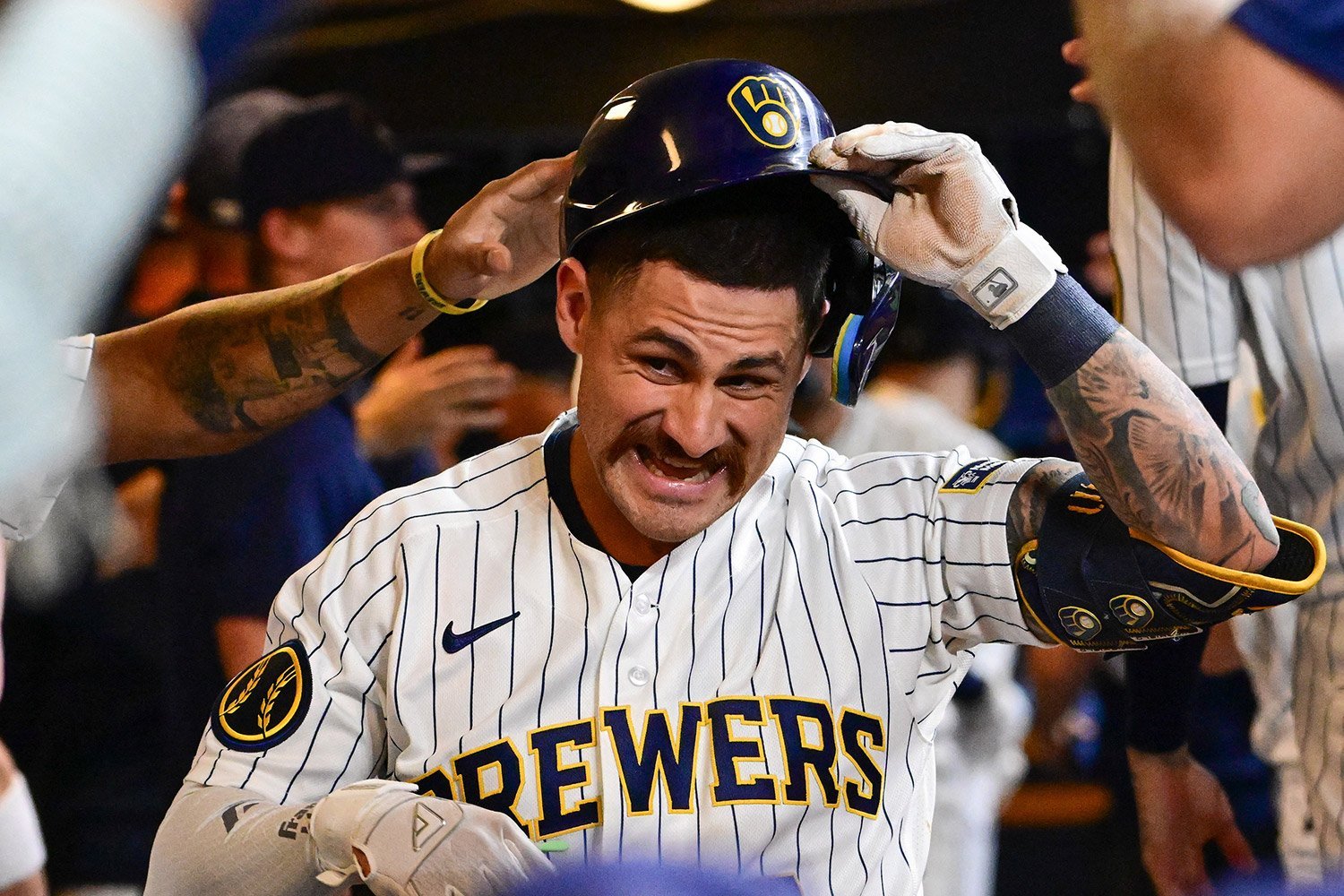 Weekly Snapshot: Record Last Week: 5-1 (Overall: 93-57) Runs Scored Last Week: 52 Runs Surrendered Last Week: 25 Standing: 1st in NL Central *** Game 145 (9/07) | MIL 4, CHC 3 Game 146 (9/08) | MIL 4, CHC 3 Game 147 (9/09) | MIL 8, CHC 6 Game 148 (9/11) | MIL 20, CIN 0 Game 149 (9/12) | MIL 13, CIN 9 Game 150 (9/13) | CIN 4, MIL 3 *** Game 145 | Brewers 4, Cubs 3 MIL Starter: Robert Gasser (4.2 IP, 3 H, 2 BB, ER, 5 K) Top Performers: Jackson Chourio (H, 2 RBI) The week started with the final regular-season meeting against the Cubs, and it saw Robert Gasser matched up with Matthew Boyd at American Family Field. And it was the Cubs twirler who was dominant early, getting through seven innings of one-run ball. Craig Counsell would roll Boyd back out for the 8th, a decision that would be costly as Boyd would leave without recording an out, and then, after his exit, the Brewers would leave the inning with the lead. It’s a lead that’d hold, as Trevor Megill would shut the door in the 9th with the help of his defense. Luis Lara’s leaping grab (+2.5 WP%) Game 146 | Brewers 4, Cubs 3 MIL Starter: Jacob Misiorowski (6.1 IP, 4 H, 2 BB, ER, 9 K) Top Performers: Jackson Chourio (4 H, 2B, HR, 2 RBI) Brice Turang (3 H, BB, 2B, RBI) DL Hall (1.2 IP, 0 H, BB, 0 ER, K) Wednesday’s contest saw Jacob Misiorowski face the Cubs for his second straight start, redeeming himself from a rocky start at Wrigley Field by pitching into the sixth inning in Milwaukee. The Brewers bats were quiet outside of Brice Turang and Jackson Chourio, though, and despite Miz’s strong outing, Chicago carried a 3-1 lead heading into the 9th. Chicago’s closer Jacob Webb recorded the first 2 outs of that bottom frame, but a pinch-hit single from Christian Yelich followed by a game-tying home run from Jackson Chourio sent the game to the 10th, where Luis Lara then walked the contest off with a single. Jackson Chourio’s game-tying home run (+49.0 WP%) Game 147 | Brewers 8, Cubs 6 MIL Starter: Logan Henderson (5.0 IP, 2 H, BB, 1 R, 6 K) Top Performers: Jackson Chourio (3 H, HR, 2 RBI) William Contreras (2 H, HR, 3 RBI) Christian Yelich (H, HR, 3 RBI) The Brewers completed their second sweep of the Cubs in 2026 on Wednesday, and they did so by jumping all over Kevin Gausman. Meanwhile, Logan Henderson was brilliant, only allowing an unearned run in his five innings of work. The large lead would evaporate late as a Brandon Sporat implosion allowed the Cubs to bring the tying run to the plate in the 9th, but Abner Uribe mopped up the mess and closed out the game 8-6. Yeli’s 3-run bomb (+24.1 WP%) Game 148 | Brewers 20, Reds 0 MIL Starter: Dustin May (6.0 IP, 2 H, BB, 0 ER, 6 K) Top Performers: Jackson Chourio (4 H, 2 2B, 2 RBI) Brice Turang (3 H, BB, HR, 4 RBI) William Contreras (2 H, HR, 6 RBI) After an off-day on Thursday, the Reds were in town on Friday with Dustin May on the slab to oppose them. Quietly, he was brilliant, throwing six scoreless innings, but it was the Brewers' bats who stole headlines by hanging 20 runs on the Reds, highlighted by another 4-hit day from Jackson Chourio and six RBIs from William Contreras. Luis Lara’s home run robbery (+0.1 WP%) Game 149 | Brewers 13, Reds 9 MIL Starter: Shane Drohan (3.2 IP, 5 H, 2 BB, 5 ER, 4 K) Top Performers: Garett Mitchell (4 H, 2B, HR, 4 RBI) Cooper Pratt (3 H, 2B, 3 RBI) William Contreras (H, 2 BB, HR, 3 RBI) The bats were not dormant after Friday’s 20-run outburst, as the Brewers put up 13 runs in Saturday’s contest en route to a 13-9 win. Those combined 33 runs over the past two days totaled a franchise record for any two-game stretch, although that fact did hide poor outings from both Shane Drohan and Kyle Harrison. William Contreras’ 3-run home run (+28.9 WP%) https://www.mlb.com/video/brady-singer-in-play-run-s-to-william-contreras-enq0zx?partnerId=web_multimedia-search_video-share Game 150 | Reds 4, Brewers 3 MIL Starter: Robert Gasser (5.0 IP, 3 H, 2 BB, ER, 5 K) Top Performers: Joey Ortiz (H, HR, 2 RBI) Jake Bauers (H, HR, RBI) JoJo Romero (1.2 IP, 0 H, 0 BB, 0 ER, K) Chase Burns stood in the way of a Brewers sweep on Sunday, and despite a couple of big swings from Jake Bauers and Joey Ortiz, the Reds were able to outlast Robert Gasser and the Brewers bullpen, sneaking out a 4-3 win on Sunday. Joey Ortiz's 2-run homer (+17.7 WP%) Transactions: 09/10/26 - Optioned RHP Brandon Sproat to AAA Nashville. 09/10/26 - Recalled RHP Garrett Stallings from AAA Nashville. 09/09/26 - Sent LHP Rob Zastryzny on a rehab assignment to AAA Nashville. 09/07/26 - Placed RHP Grant Anderson on the 15-day injured list with right bicep inflammation. 09/07/26 - Recalled RHP Brandon Sproat from AAA Nashville. Looking Ahead: Tuesday, 9/15 - Brewers @ Pirates - 5:40 PM CDT Wednesday, 9/16 - Brewers @ Pirates - 5:40 PM CDT Thursday, 9/17 - Brewers @ Pirates - 11:35 AM CDT Friday, 9/18 - Brewers @ Orioles - 6:05 PM CDT Saturday, 9/19 - Brewers @ Orioles - 3:05 PM CDT Sunday, 9/20 - Brewers @ Orioles - 6:20 PM CDT View the full article
 -
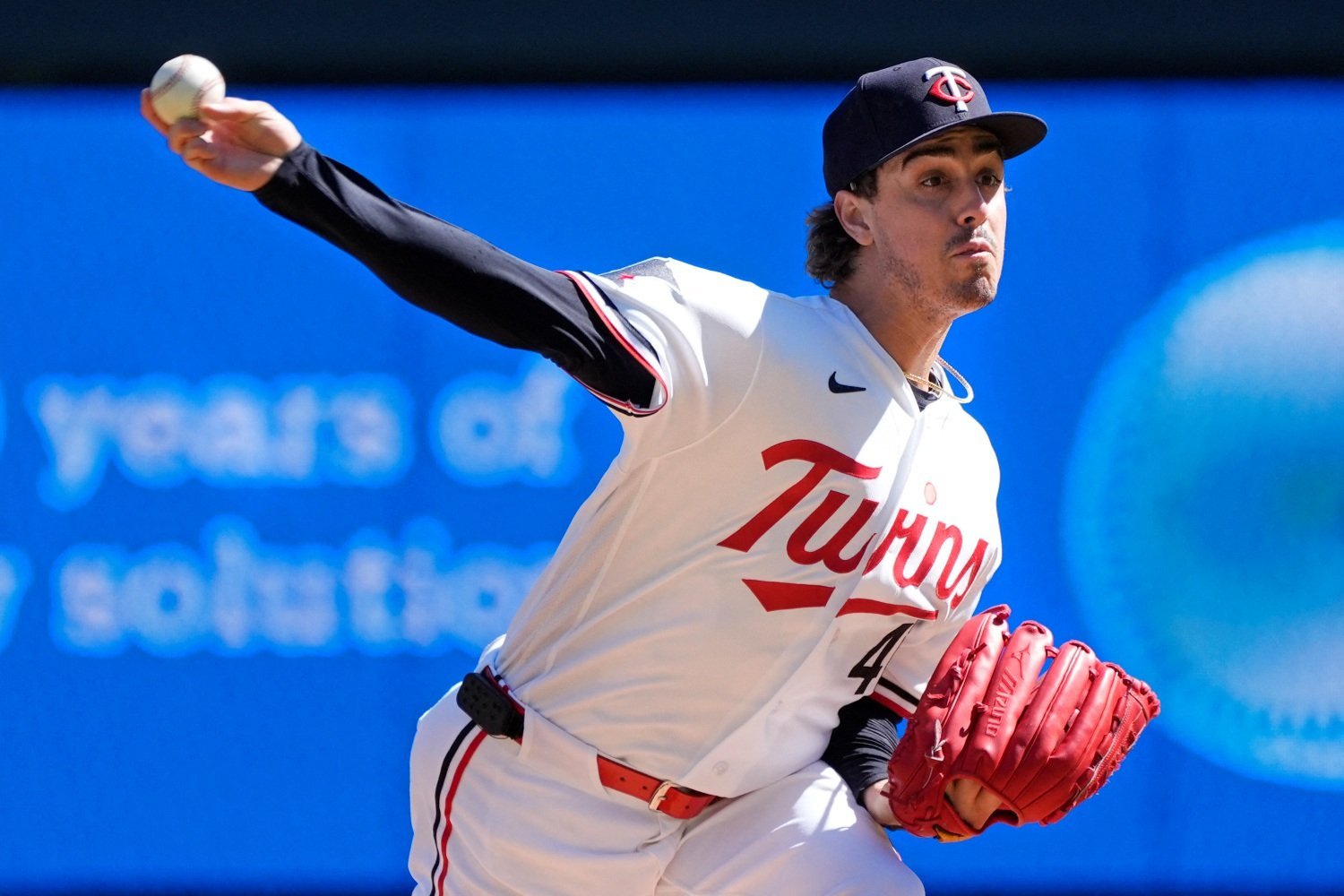 Box Score: Starting Pitcher: Joe Ryan: 4 IP, 7 H, 4 ER, 1 BB, 1 K (84 Pitches, 51 Strikes, 60.7%) Home Runs: Trevor Larnach (13) Bottom 3 WPA: Ryan (-0.23), Ryan Jeffers (-0.09), Brooks Lee (-0.09) Win Probability Chart (Via BaseballSavant): The Twins are playing out the string here, in their fifth consecutive series against an AL Central opponent. They already lost three and needed a win Sunday to avoid dropping a fourth—an uninspiring response to a last chance to save your season. The lineup is a little thin, the rotation banged up, and the bullpen over-leveraged. Speaking of that banged-up rotation, Joe Ryan made his second start since returning from the IL—and immediately allowed a home run to Steven Kwan. The diminutive Kwan is a master of the ambush, but that was still a discouraging start to the day. The fastball he hit out was clocked at 92.5 MPH. Two more runners reached base in the first frame, and three more got on in the second as Ryan struggled with his command. He was able to bear down and get weak contact when he needed it. He seemed to be throwing a little of everything, just to get a sense of what he had working with his fastball—which didn't seem to be much. That bit him in the third, when Ryan tried to sneak a fastball by Jo Adell, who was ready and clobbered a middle-in fastball (again under 93 MPH) 450 feet to the third deck in left field. Meanwhile, Tanner Bibee took the mound for the Guardians and looked in control, despite some recent struggles and tepid run support from his offense. His north-south approach didn’t result in a hit for the Twins until the third inning, when Luke Keaschall grounded a ball to the hole at shortstop that Brayan Rocchio couldn't quite make the highlight-level play on. Kody Clemens followed with a double the opposite way to score the Twins first run. These are the Guardians, though, so naturally, they responded right away. Rocchio was hit by a slider at his feet with one out; Kwan doubled him home; and Travis Bazzana singled home Kwan. The pitch to Kwan was a hanging slider. The pitch to Bazzana was a fastball not elevated nearly enough, at 94 MPH. That was the end for Ryan, after 84 stressful pitches. Travis Adams came on in relief for the fifth inning and allowed a single to Nathaniel Lowe, before a double to Angel Martinez. He recovered to induce a pop-up from Angel Genao, before Patrick Bailey lined a ball right to Brooks Lee at third. Lee converted it into an easy double play. It looked like Adams might escape another jam in the sixth, after he began the inning by allowing a single to Rocchio and walking Kwan. He got Chase DeLauter to ground into an easy double play, but then hung a slider on the inner half to Bazzana, who unloaded for a two-run home run to right-center field. Suddenly, it was 6-1 Guardians. Trevor Larnach did smoke a home run in the seventh on a high, inside fastball from Bibee, but the Twins were unable to threaten any additional damage. Taylor Rogers and Tommy Nance combined to allow three more runs in the ninth, as if the Guardians would have any need for such insurance. Stuff I’m Tracking: You wonder what the plan is for Ryan the rest of the year. If he keeps getting knocked around, his trade value will continue to plummet. Maybe that's okay; it justifies keeping him around. He’ll probably have another good first half in his free-agent year. The Twins could then flip him, if they can convince another team to ignore his track record of performance after the All-Star break. Walker Jenkins has one hit in 34 plate appearances since collecting his first home run off a position player. I like the way Emmanuel Rodriguez takes pitches. He seems to have an understanding of what pitchers are trying to do to him, but it will be interesting to see if he makes enough contact for any of that plate discipline to matter. Rocchio is such a fascinating player. He makes plays at shortstop that defy belief, and accumulates clutch hits at a rate that makes you question how somebody with so much talent has never sniffed a .700 OPS. He also makes boneheaded plays at confounding moments that drive Guardians fans crazy—although him screening Keaschall making the turn at second base on Friday worked to his advantage for some reason. Is he the LaMelo Ball of baseball? Two of the most impactful bats in the Twins lineup are Clemens and Lee, and neither has an OBP north of .300. That will have to improve as both hitters are closer to Rougned Odor than Andre Dawson in terms of the low-OBP, high-SLG archetype of hitter. Royce Lewis exited the game with a shoulder injury, and you wonder if that's it for him this year. He stayed healthy for the most part, but overall, he put up a .690 OPS. He had just one month with an above-average OPS (.841 in June). This will be the third offseason in a row where we'll be hoping for a bounce back, with little evidence to believe it can actually happen. What’s Next: The Twins welcome the Yankees to Target Field for a three-game series, beginning with Will Warren (10-6, 4.05 ERA) taking on Bailey Ober (7-5, 4.28 ERA). These Yankees are much more about their pitching than their offense, with Max Fried, Cam Schlittler, Gerrit Cole and the triumphant return of Carlos Rodón (not to mention the steady work of Warren and Ryan Weathers). I still hate the way their lineup is built and cannot wait to see them fold again in the playoffs. Postgame Interviews: Coming Soon Bullpen Usage Chart: WED THU FRI SAT SUN TOT Adams 42 0 0 0 36 78 Nance 24 0 24 0 21 69 Funderburk 22 0 15 22 0 59 Rogers 16 0 0 0 22 38 Minter 0 0 17 16 0 33 Hoffman 0 0 10 16 0 26 Gomez 0 0 21 0 0 21 Morris 0 0 0 17 0 17 View the full article
 -
 Boston Red Sox Affiliate Recap Triple-A Worcester Red Sox Series @ Lehigh Valley IronPigs (Philadelphia Phillies): 2-3 Season Record: 72-65 Despite outhitting Lehigh Valley 8-7, Worcester failed to capitalize with runners in scoring position as it lost 7-5. Michael Sansone struggled through a 3⅔ inning start, allowing six runs on five hits and issuing four walks. He struck out three, but was unable to quell an offensive uprising. Patrick Halligan took over with two outs in the fourth and was much better. He issued a walk but kept the IronPigs hitless over 1⅓ innings, striking out a pair. John Brebbia came in next, throwing a frame of one-run ball. He gave up a pair of hits and issued another pair of walks, but kept the game within reach. Then, Angel Bastardo threw ⅔ of an inning of hitless relief, walking one before being replaced by Hobie Harris. Harris closed the eight-inning matchup with ease, walking one and striking out another over an inning and ⅓. Braiden Ward led the WooSox offense with three hits and two runs while Allan Castro led the way with two RBIs. Castro’s first RBI came in the first inning when he took a ball deep to center field, giving Worcester an early one-run advantage. Down 4-1 in the fourth, Tsung-Che Cheng drove in Max Ferguson on a triple before scoring on a Tomas Nido groundout. Down by one, Ward would even the score with a solo shot to right center. Down three in the seventh, Castro scored Ward on a groundout, but the WooSox couldn’t catch the IronPigs as they fell 7-5. Double-A Portland Sea Dogs Series vs. Binghamton Rumble Ponies (New York Mets): 4-1 Season Record: 71-65 Portland finished the season with a win in what was supposed to be its penultimate game of the 2026 season, as its season finale was canceled due to rain. It was a low-scoring affair as the Sea Dogs beat out the Rumble Ponies 1-0 in a pitching battle. Morgan McSweeney made his final start of the year a good one, and maybe his best. He spun seven shutout frames, letting up just four hits and a walk. He struck out five as he ended the season on a high note. Steven Brooks finished the Sea Dogs season in perfect fashion. He hurled two perfect frames and struck out four. Portland’s offense wasn’t as outstanding as the pitching, but it got the job done. Ahbram Liendo was the only Sea Dog to record a multi-hit game as only seven batters reached. Will Turner, Brooks Brannon, and Caden Rose each recorded a hit. Turner hit out of the leadoff spot, and wasted no time putting Portland on the board. His leadoff homer in the first inning proved to be the difference as neither team could put a run across home in the ensuing eight frames. View the full article
 -
 Syracuse got another big night at the plate from MJ Melendez as its defeated St. Paul 9-7 on Saturday. Melendez homered twice for a second consecutive game and drove in three runs. His first homer proved to be the game-winning hit as it broke a 7-7 tie in the seventh inning. His second was an insurance tally in the top of the ninth. Melendez also drove in a run with a groundout in a three-run Syracuse first inning. He is 8-for-18 (.444 average) with four home runs and 10 RBIs in the first five games of the series, which will conclude Sunday afternoon. Billy Amick homered against his former organization (Minnesota Twins), while Ronny Mauricio (two hits, two RBIs) and Vidal Brujan (three hits, RBI) also had big games. While the Triple-A team was scoring in bunches, the Double-A squad was failing to score at all. Binghamton was shut out 1-0 at Portland. The game's only run came on a leadoff home run in the bottom of the first. The Rumble Ponies will conclude the -- series and their season -- Sunday afternoon in Maine, New York Mets Transactions No Roster Moves. Melendez Decides Slugfest For Syracuse Melendez launched his 21st and 22nd homers with Syracuse in his final two trips to the plate. His first-pitch dinger in the seventh put the Mets up 8-7. The Mets acquired the 22-year-old right-hander from the Chicago White Sox in the Huascar Brazoban trade. Chicago drafted him in the fifth round last year out of Oklahoma State. He was a teammate of Nolan McLean and Carson Benge with the Cowboys. The Chicago and New York organizations both were careful with his workload in his debut season; Davis pitched 83 1/3 innings over 24 games (23 starts). His surface numbers between High-A to Double-A were just OK: a 4,94 ERA, 24.4 percent strikeout rate, 9.6 percent walk rate, 4.1 percent home run rate and .800 opponents’ OPS. Davis got no support from his offense in this one, try as it might. The Rumble Ponies stranded runners in each of the first four innings and had two more runners thrown out on the bases. Binghamton Batting Player AB R H RBI BB K Mitch Voit 4 0 1 0 0 0 Marco Vargas 4 0 1 0 0 1 Jacob Reimer 4 0 0 0 0 1 Chris Suero 2 0 0 0 1 1 Eli Serrano III 3 0 1 0 0 0 John Bay 3 0 1 0 0 1 Jamari Baylor 3 0 0 0 0 1 JT Benson 3 0 0 0 0 2 Eddinson Paulino 3 0 0 0 0 2 Binghamton Pitching Player IP H R ER BB K HR Gabe Davis 4 2/3 4 1 1 1 3 1 Bryce Conley 2 2/3 1 0 0 1 5 0 Bryce Jenkins 2/3 0 0 0 0 1 0 Top-20 Prospect Performance Jonah Tong: MLB Jack Wenninger: DNP Elian Pena: DNP Mitch Voit: 1-for-4 Ryan Clifford: DNP Nick Morabito: MLB Jonathan Santucci: DNP Carson Wiggins: DNP Jacob Reimer: 0-for-4, K Aiden Robbins: DNP Randy Guzman: DNP Wandy Asigen: DNP Chris Suero: 0-for-2, BB, K Jefferson Rojas: DNP Will Watson: DNP Shane Sdao: DNP Eli Serrano III: 1-for-3 Antonio Jimenez: DNP Emilien Pitre: 2-for-4, RBI, BB, K Dylan Ross: 1 IP, 1 H, 0 R, 0 ER, 1 BB, 1 K, W View the full article
 -
Storm Aim For Cal League Title, Face San Jose In Game 1 Today
DiamondCentric posted an article in Padres Mission
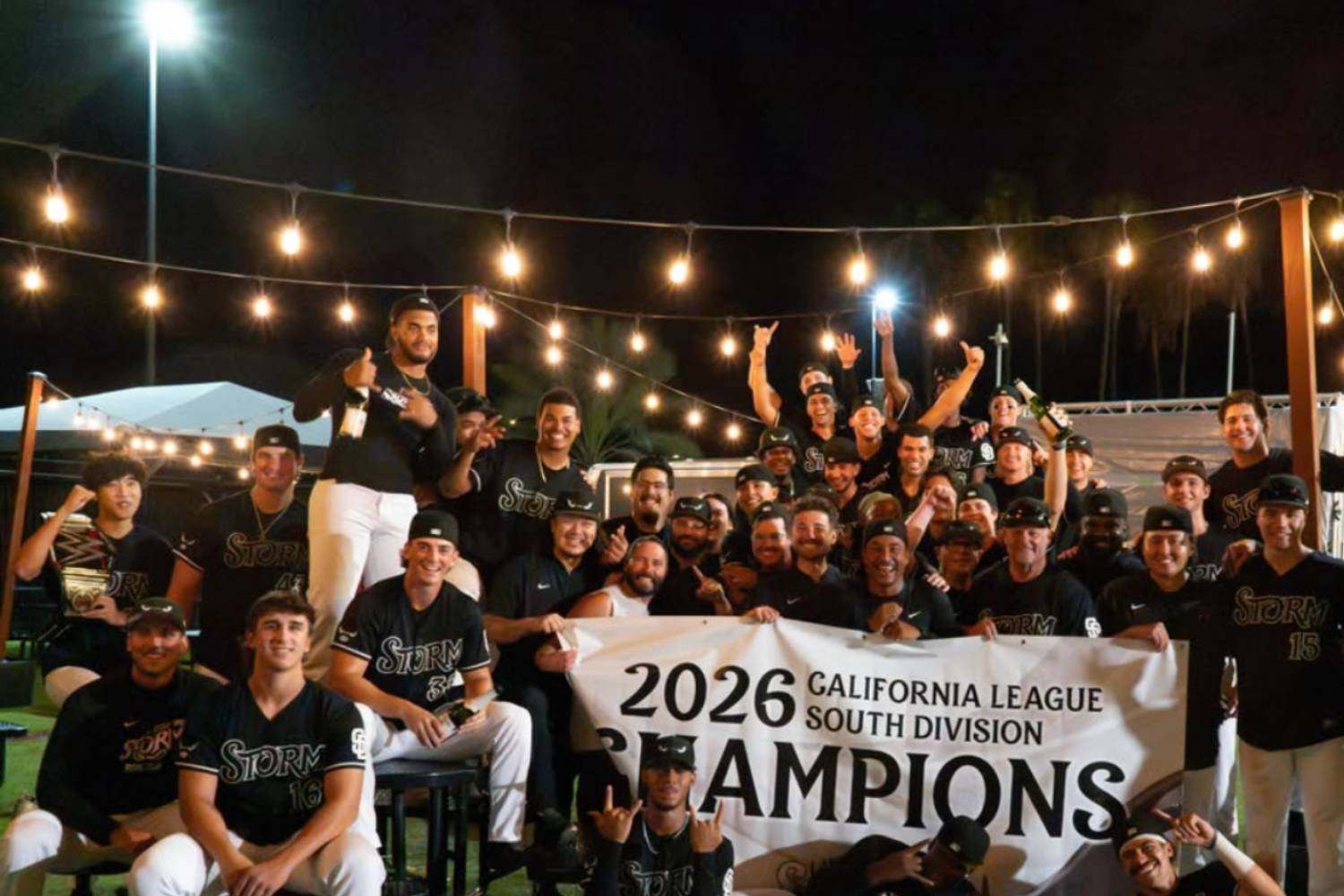 The Lake Elsinore Storm are looking to add another California League championship to their trophy case. The Storm host the San Jose Giants on Sunday at 4:35 p.m. at The Diamond in Game 1 of the best-of-three Cal League Championship Series. Game 2 will be in San Jose on Tuesday at 6:30 p.m., while Game 3, if necessary, is Wednesday at 6:30 p.m. Right-hander Tyler Schmitt will start for the Storm. The 22-year-old has a 4.76 ERA with a 12.7% walk rate and 24.4% strikeout rate in 23 games. He finished with 106 strikeouts. He did not pitch in the South Division Series. The Storm won the first-half South Division title, then finished last in the second half. Still, they swept the Ontario Tower Buzzers, a Los Angeles Dodgers affiliate who won the second half. The Giants present a much bigger task. San Jose won both halves of the North Division and then swept the Stockton Ports in the Division Series. The Storm and Giants also met a few weeks ago, with the Giants winning all six games of the series as part of a 20-2 finish to the regular season. The Storm last won the Cal League title in 2022 and lost in the Championship Series in 2024 to the Modesto Nuts. The Giants are in the postseason for the seventh straight season and are led by the San Francisco Giants' No. 1 prospect, shortstop Josuar Gonzalez. He slashed .357/.444/.566 with three homers, 35 RBIs and 13 steals in 31 games with San Jose. The Giants led the Cal League in runs scored this season. The Storm offense had a good Division Series with a 10-9 victory in Game 1 and 6-1 triumph in the clincher. Sixth-round draft pick Nu'u Contrades went 5-for-7 with a double and two RBIs, while fourth-rounder Alex Conover went 5-for-8 with two doubles and three RBIs. The Game 2 starter for the Storm is likely to be right-hander Jesus Castro, who turned in a strong performance in Game 1 of the Division Series. View the full article
 -
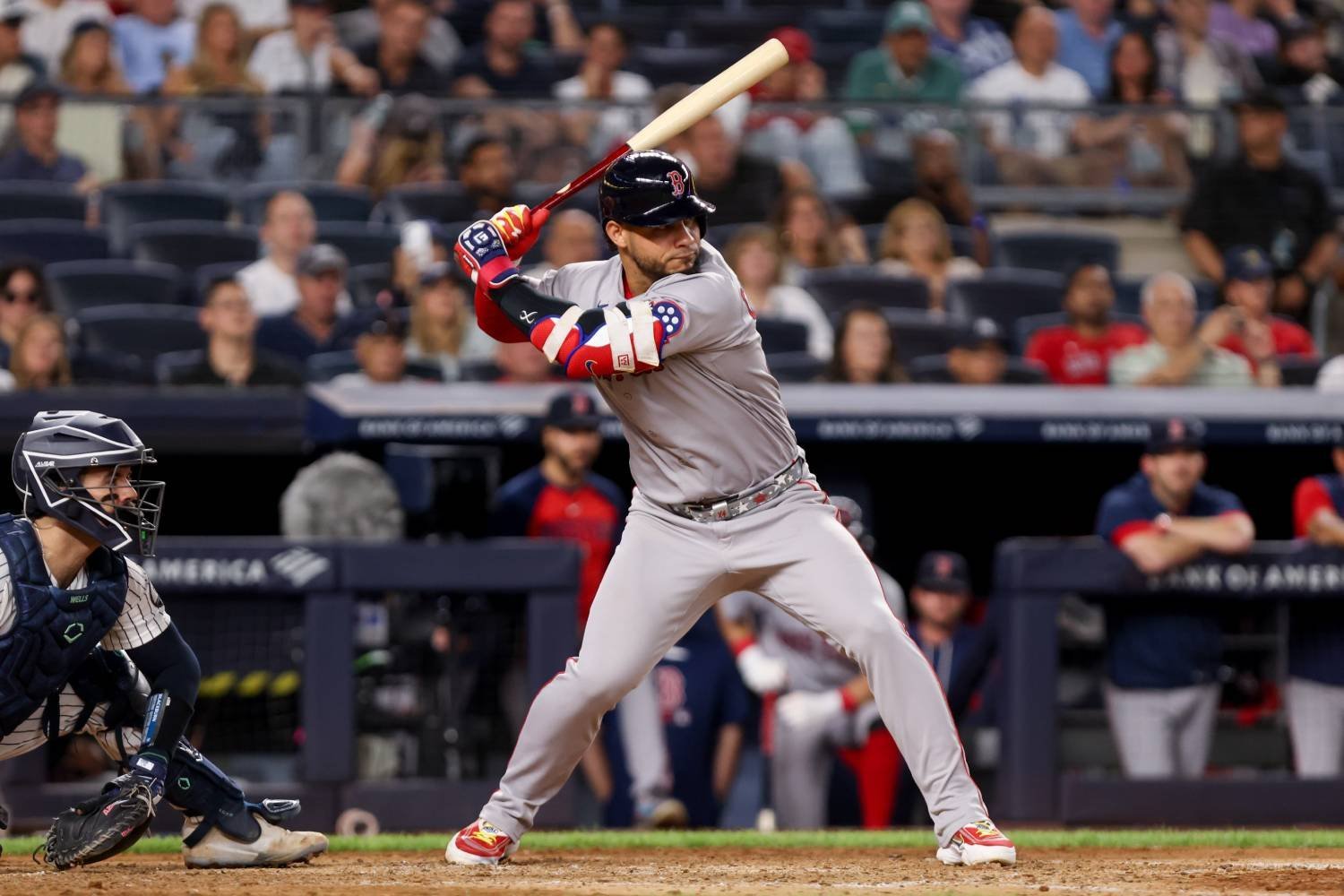 The Boston Red Sox have one of their biggest bats back for the final two weeks of the season. First baseman Willson Contreras was activated from the 10-day injured list Sunday by the Red Sox, who placed infielder Anthony Seigler on the 10-day IL with inflammation in his right wrist. The Red Sox face the Kansas City Royals in the finale of a three-game series. The Red Sox appear destined to enter the postseason as the AL's No. 2 wild card (No. 5 seed). They trail the New York Yankees, who hold the No. 1 wild-card spot, by 4½ games and have a four-game advantage over the Cleveland Guardians, currently the No. 3 wild card. Contreras is back following a strained left hamstring that landed him on the IL on Aug. 31. Contreras is in the midst of a career year with a .274/.384/.516 slash line with 26 homers and 79 RBIs. Seigler was injured in Saturday's 5-1 victory over the Royals. He has a .247/.327/.400 slash line in 49 games, having just come up a few days prior from Triple-A Worcester. View the full article
 -
 Chicago Cubs Transactions Chicago Cubs activated RHP Edward Cabrera from the 15-day injured list. Chicago Cubs placed RHP Trent Thornton on the 15-day injured list. Left ankle sprain. Iowa Cubs: Six-Run Fourth Wiped Out By Six-Run Fifth In 9-7 Loss Iowa scored six runs in the fourth inning, gave all of them back in the fifth, and lost 9-7 to the Toledo Mud Hens. The Cubs led 1-0 after the second, and Toledo tied it in the third. The fourth was the big inning. Owen Ayers opened with a single, and Chas McCormick followed with a two-run home run, his 14th. Owen Miller reached on an error, James Triantos doubled for the 30th time this season, and Jordan Nwogu tripled to left to bring home both runners. Jackson Cluff walked, Justin Dean singled Nwogu home, and Kevin Alcántara singled Cluff in. Six runs crossed on six hits, and Iowa led 7-1. The fifth undid it. Luis Peralta walked the first man he faced, gave up a single, then surrendered a three-run home run. Two more singles and a walk loaded the bases, and Antoine Kelly came on. A groundout brought in a run, and a two-out double drove in two more to tie the game 7-7. Andrew Wantz started and went 3 1/3 innings, allowing one run on three hits with four walks and three strikeouts. Doug Nikhazy struck out two over two scoreless innings. Tyler Ferguson gave up a two-run home run in the ninth, and that was the difference. Nwogu finished 2-for-4 with three runs batted in, McCormick and Dean each had two hits, and Triantos reached twice with a double and a walk. Iowa left eight men on base. Iowa Cubs Notable Defense Iowa played the game without an error. Kevin Alcántara performed a clean defensive pick. Iowa Cubs Hitting Player AB R H RBI BB K Justin Dean, CF 5 0 2 1 0 2 Kevin Alcántara, 1B 5 0 1 1 0 2 Owen Ayers, C 3 1 1 0 2 2 Chas McCormick, RF 5 1 2 2 0 0 Owen Miller, 3B 5 1 1 0 0 0 James Triantos, 2B 4 2 1 0 1 1 Jordan Nwogu, LF 4 1 2 3 0 1 Ethan Hearn, DH 4 0 0 0 0 2 Jackson Cluff, SS 2 1 1 0 2 0 Iowa Cubs Pitching Player IP H R ER BB K HR Andrew Wantz 3 1/3 3 1 1 4 3 1 Luis Peralta 1 4 5 5 1 1 1 Antoine Kelly 1 2/3 1 1 1 2 1 0 Doug Nikhazy 2 1 0 0 1 2 0 Tyler Ferguson 1 3 2 2 0 2 1 Knoxville Smokies: Late Birmingham Rally Ends A Tie Game, 5-2 Knoxville tied the game in the sixth inning, then gave up three runs in the eighth and lost 5-2 to the Birmingham Barons. Dawson Netz gave the Smokies a strong start, working 3 2/3 innings and allowing two runs on two hits with one walk and six strikeouts. Both runs came in the fourth, when a two-out walk, a double, and a two-run single put Birmingham ahead 2-0. Luis Martinez-Gomez followed with 3 1/3 scoreless innings, giving up one hit with three walks and five strikeouts. The offense answered in the sixth. Ariel Armas was hit by a pitch to open the inning, and Carter Trice tripled him home for his third triple of the year. Alex Madera walked, and Angel Cepeda tied the game with a sacrifice fly to center. Edgar Alvarez then reached on a fielder's choice with Madera thrown out at the plate, and Karson Simas flied out in foul ground to end the threat. Frankie Scalzo Jr. took over in the eighth and allowed a leadoff home run, a walk, and back-to-back singles before a force out brought in the fifth run. He finished with one inning, three runs on three hits, two walks, and two strikeouts. Knoxville managed three hits, all of them by Trice and Cepeda. Trice was 2-for-3 with a triple, a double, a walk, and a run scored. The Smokies drew six walks, struck out ten times, and left nine men on base. Knoxville Smokies Hitting Player AB R H RBI BB K Alex Ramírez, RF 5 0 0 0 0 1 Josiah Hartshorn, 1B 4 0 0 0 1 2 Kane Kepley, CF 4 0 0 0 0 1 Ariel Armas, C 2 1 0 0 1 1 Carter Trice, LF 3 1 2 1 1 1 Alex Madera, 2B 2 0 0 0 2 2 Angel Cepeda, 3B 3 0 1 1 0 0 Edgar Alvarez, DH 3 0 0 0 1 1 Karson Simas, SS 4 0 0 0 0 1 Knoxville Smokies Pitching Player IP H R ER BB K HR Dawson Netz 3 2/3 2 2 2 1 6 0 Luis Martinez-Gomez 3 1/3 1 0 0 3 5 0 Frankie Scalzo Jr. 1 3 3 3 2 2 1 South Bend Cubs: No Game Scheduled South Bend did not play. No game was scheduled. Myrtle Beach Pelicans: No Game Scheduled Myrtle Beach did not play. No game was scheduled. Top-20 Prospect Performance Josiah Hartshorn: 0-for-4, BB, 2 K Cade Townsend: DNP Jaxon Wiggins: DNP Owen Ayers: 1-for-3, 2 BB, 2 K Kane Kepley: 0-for-4, K Ethan Conrad: DNP Caden Sorrell: DNP Kaleb Wing: DNP Myles Bailey: DNP Brooks Caple: DNP James Triantos: 1-for-4, 2B, BB, K Will Sanders: DNP Juan Cabada: DNP Jostin Florentino: DNP Derniche Valdez: DNP Grant Kipp: DNP Jose Escobar: DNP Ariel Armas: 0-for-2, BB, HBP, K Fernando Cruz: DNP Brandon Birdsell: DNP View the full article
 -
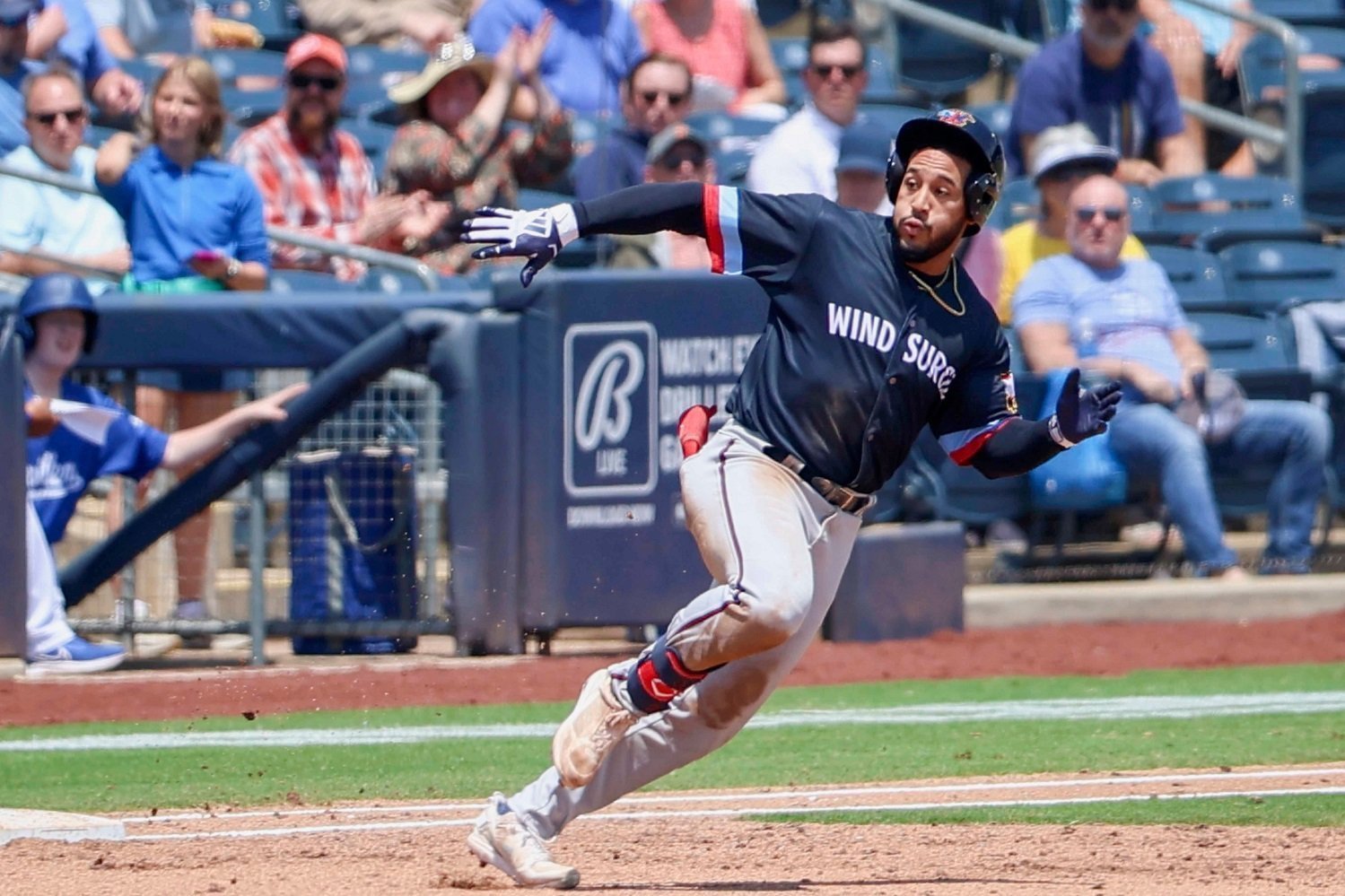 The Minnesota Twins have finally seen the payoff from one of their biggest international investments of the past decade. Emmanuel Rodriguez signed with the Twins on July 2, 2019, receiving a $2.5 million signing bonus as one of the organization's top targets in that year's international class. More than seven years later, Rodriguez finally reached the major leagues, making his debut Saturday against Cleveland and launching a 420-foot home run in his first career plate appearance. That debut was the culmination of a developmental journey filled with impressive offensive performances, significant injuries and plenty of patience. Here is how Rodriguez's career has unfolded, season by season. 2021: Professional Debut Following the lost 2020 season, Rodriguez finally took the field in 2021 with the Florida Complex League Twins. The 18-year-old played 37 games and hit .214/.346/.524 (.870) with 10 home runs, 23 RBI and nine stolen bases. His .870 OPS and 132 wRC+ showed why the Twins were so excited about his offensive potential. There was also an obvious concern. Rodriguez struck out 36.6% of the time. That number was significant, but it was difficult to ignore the combination of power and patience. He walked 23 times in 153 plate appearances (15.5 BB%) while hitting 10 home runs in only 37 games. The Twins had their first real glimpse of the player Rodriguez could become. 2022: The Breakout This was the season when Rodriguez went from an interesting prospect to a legitimate organizational star. At just 19 years old, Rodriguez dominated Single-A Fort Myers. In 47 games, he hit .272/.492/.551 with a 1.043 OPS. He hit nine home runs, drove in 25 runs and stole 11 bases. The most impressive number might have been his walk rate. Rodriguez walked 28.6% of the time. His 197 wRC+ was extraordinary, especially for a teenager playing full-season professional baseball. His combination of power and plate discipline suddenly made him one of the most exciting hitters in the Twins system. Unfortunately, the season ended prematurely. Rodriguez suffered a torn meniscus in his left knee in June and was eventually placed on the 60-day injured list. The injury prevented him from building on his breakout season, but it did not erase what he accomplished. 2023: Patience and Power at Cedar Rapids Rodriguez moved to High-A Cedar Rapids in 2023 and played the most games of his professional career to that point. He appeared in 99 games, hitting .240/.400/.463 (.863) with 16 home runs, 55 RBI and 20 stolen bases. He also walked 92 times. That walk total was the most in the Twins organization. Rodriguez's batting average wasn't particularly impressive, but the overall offensive package remained extremely valuable. His .400 on-base percentage demonstrated the elite plate discipline that had become one of his defining traits. The Twins also saw more of his athleticism. He stole 20 bases and continued to receive praise for his ability to cover ground in center field. The organization was beginning to see a potential everyday major league outfielder, assuming Rodriguez could stay healthy. 2024: The Lost Opportunity If there is one season that illustrates the frustrating side of Rodriguez's development, it is 2024. He opened the season with Double-A Wichita and immediately showed why the Twins were so high on him. In 37 games with the Wind Surge, Rodriguez hit .298/.479/.621 with eight home runs, 20 RBI and nine stolen bases. His 1.100 OPS was impossible to ignore. The Twins promoted him to Triple-A St. Paul, where he played seven games before another injury interrupted his season. Overall, Rodriguez hit .280/.459/.567 with a 1.026 OPS. He hit nine home runs, drove in 27 runs and stole nine bases despite appearing in only 47 games. The biggest problem was his right thumb. Rodriguez dealt with multiple setbacks involving the thumb throughout the summer. He eventually returned to the field, but another flare-up ended his season in September. There was a very real possibility Rodriguez could have reached the majors during the second half of 2024 if he had remained healthy. Instead, the season became another example of what made evaluating him so difficult. The talent was obvious. Keeping him on the field was the challenge. 2025: More Injuries, More Production Rodriguez entered 2025 on the doorstep of the majors and ranked as a top-20 overall prospect by Baseball America and Baseball Prospectus. He opened the year at Triple-A St. Paul, but injuries once again limited his availability. He appeared in 52 games for the Saints and hit .258/.429/.423 (.853) with six home runs, 27 RBI and nine stolen bases. His .852 OPS was solid, but the more important number was his .429 on-base percentage. It wasn't the type of season expected from a prospect with his pedigree, but there were still plenty of reasons for optimism. His plate discipline remained exceptional, and his ability to reach base continued to separate him from many of the other young hitters in the organization. By this point, injuries had become as important to Rodriguez's prospect story as his statistics. 2026: Finally, Target Field Rodriguez began 2026 back at Triple-A St. Paul, and he missed roughly three months because of a torn UCL in his left thumb. When he returned, he quickly reminded everyone why the Twins had continued to believe in him. With the Saints, Rodriguez hit .262/.414/.500 (.914) in 49 games, hitting 11 home runs, driving in 33 runs and stealing seven bases. He also hit for the cycle on September 1. Since August 12, he had hit .289 with a .928 OPS while drawing 18 walks. That late-season surge finally forced the Twins' hand. After years of injuries, rehab assignments, prospect rankings and questions about whether he could ever stay healthy long enough to reach the majors, Rodriguez finally arrived. The Bigger Picture Rodriguez's minor league career is difficult to summarize with one statistic. There have been seasons when the batting average was underwhelming. There have been enormous strikeout totals. There have also been extraordinary walk rates, massive raw power, strong on-base percentages and impressive production against increasingly advanced competition. Most importantly, there has been consistency in one area. When Rodriguez has been healthy, he has generally produced. Now, after signing with the Twins in 2019, losing the 2020 season, making his debut in 2021, breaking out in 2022, battling through injuries in 2023, 2024 and 2025, and finally putting together another strong run in 2026, Rodriguez has reached the destination. The next chapter is no longer about projecting what Rodriguez might become. It is about finding out what he can become in the major leagues. What stands out about his performance in the minors? Leave a comment and start the discussion. View the full article
 -
Cubs’ Biggest Prospect Risers and Fallers in 2026
DiamondCentric posted an article in North Side Baseball
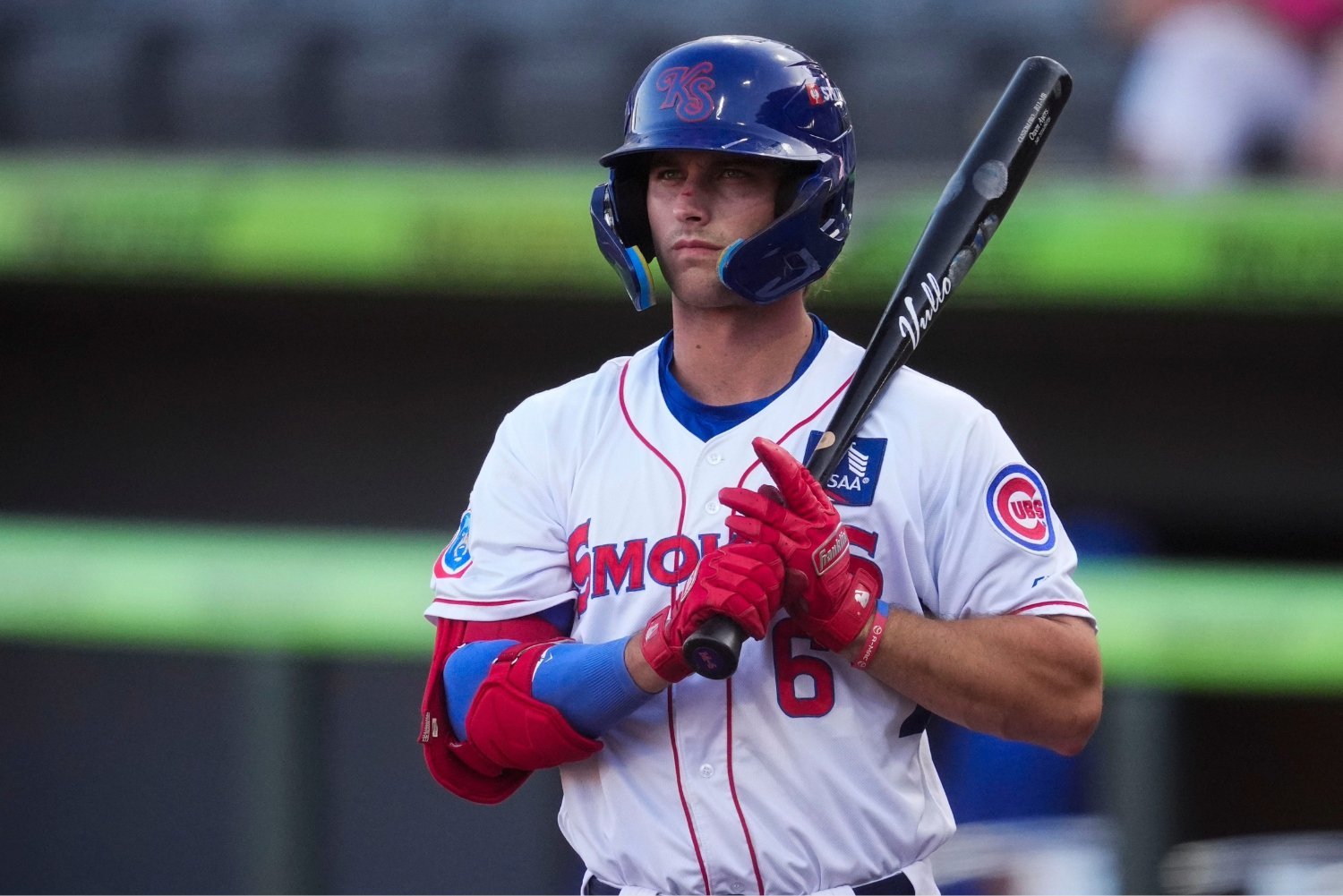 The 2026 MLB regular season is quickly coming to an end, and it’s been quite the eventful year for the Chicago Cubs. The major-league roster is currently in a fight to hold onto its Wild Card spot, with the Cubs hoping all of the work they’ve put in throughout the season will be enough to get them back to the postseason. But while there’s obviously plenty of attention on what’s happening at the major-league level, there’s also been a ton of movement throughout the farm system. Some prospects had breakout seasons and saw their stock skyrocket as a result. Others struggled, dealt with injuries, or simply didn’t take the steps forward that many expected, causing them to slide down the prospect rankings. And then there are guys like Moisés Ballesteros, who began the year as North Side Baseball’s top prospect before being traded at the deadline. With all of that movement, it feels like a good time to take a look at some of the biggest risers and fallers in the Cubs’ prospect rankings this season. Cubs' Biggest Prospect Risers (2026) The biggest riser has to be catcher Owen Ayers. The backstop started the season outside of North Side Baseball’s top 20 prospects. Now, he sits at No. 4. That’s a pretty significant jump, but it’s also one that Ayers has earned. After starting the year at High-A South Bend, he will finish the season in Triple-A Iowa barring a September call-up. That means he’s gone from outside the top 20 to knocking on the door of the major leagues in a matter of months. And the dude has done nothing but rake. Across 118 games between his three different stops this season, Ayers is hitting .295 with a .409 on-base percentage and a .952 OPS. Those numbers are impressive enough on their own, but his overall profile makes his breakout season even more intriguing. Ayers has shown some impressive athleticism for a catcher, stealing 13 bases while also continuing to develop into a legitimate power threat. His power production has grown exponentially throughout the year, giving the Cubs another reason to believe he could eventually be more than just a defense-first catcher. There’s still plenty that needs to happen before Ayers can establish himself as a long-term major league catcher, but it’s hard not to get excited about where he is right now. If everything continues trending in the right direction, we could hopefully see him in Chicago early next season. Another massive riser is Josiah Hartshorn. Hartshorn opened the year as North Side Baseball’s No. 9 prospect. Now, he’ll finish the year at the very top. That kind of jump doesn’t happen without a really impressive season, and Hartshorn has certainly provided one. In his first year in the Cubs’ system, the 19-year-old is hitting .289 with a .411 on-base percentage and a .940 OPS across 122 games between Low-A and High-A. There’s a lot to like about his offensive profile. He can hit for power, as evidenced by his 54 extra-base hits. He’s also shown a patient approach at the plate and enough athleticism to steal bases when he reaches. Put all of that together, and it’s easy to understand why his stock has risen so dramatically. There’s obviously still a long way to go, especially considering he has yet to play above High-A. But Hartshorn has put himself in a position where the Cubs have to start thinking seriously about his long-term future. He’ll only be 20 years old next season, so expecting him to reach the majors anytime soon would be aggressive... though he's certainly on the 2027 radar after exploding so thoroughly here in 2026. Cubs' Biggest Prospect Fallers (2026) As for a couple of prospects who saw their stock decline, let’s start with pitcher Brandon Birdsell. The 26-year-old began the season as the Cubs’ No. 11 prospect and currently comes in at No. 20. A lot of that has to do with the fact that he hasn’t played at all in 2026. He underwent elbow reconstruction surgery last summer, and he’ll now enter next season at 27 years old. That’s obviously not an ideal combination for a prospect who is trying to establish himself as a legitimate option for the Cubs’ future. Still, I think it’s too early to write him off. Birdsell looked solid in 2025 when healthy, and the biggest question right now is simply whether he can get back on the mound and stay there. That makes 2027 a very important year for him. Then there’s Jaxon Wiggins. Wiggins isn’t necessarily a faller because he dropped dramatically in the prospect rankings. He went from No. 2 at the beginning of the year to No. 3 currently. But if Wiggins were a stock, his value has crashed. Coming into the season, he looked like someone who could potentially develop into a frontline starter. Instead, he’s now being used as a reliever at Triple-A Iowa, and he has not looked good in that role. Wiggins owns an 8.24 ERA and a 2.02 WHIP across 31 2/3 innings at Triple-A. Perhaps most concerning, he has walked 31 batters during that stretch. The swing-and-miss stuff is still there, which is at least something to hold onto. Unfortunately, the control simply hasn’t been. Like Birdsell, though, it’s still too early to completely write him off. There’s a reason the Cubs viewed him as one of their best prospects coming into the season, and one bad year doesn’t erase all of the talent that got him there. But for someone a lot of Cubs fans, myself included, expected to be making an impact in the majors by now, this has been an extremely disappointing season for Wiggins. View the full article
 -
San Diego Padres 2026 Minor-League All-Star Roster
DiamondCentric posted an article in Padres Mission
 While the San Diego Padres front office constantly reshapes its major-league roster through blockbuster trades and aggressive deadline deals, the true heartbeat of the organization relies on what's brewing down on the farm. Even with constant promotions and prospect movement shifting the landscape, tracking the standout performers across the minor-league affiliates reveals a system packed with high-OBP bats, gap-to-gap pop, and a pitching staff that proves the future in San Diego has plenty of depth. From elite foundational talents anchoring the diamond to breakout risers who forced their way into everyday roles, putting together a complete 2026 Minor League All-Star squad showcases a roster more than capable of driving the future in San Diego. San Diego Padres System Minor League All-Star Roster (2026 Season) Starting Lineup (9) Ethan Salas (C) 2026 Minor League Stat Line (San Antonio / El Paso) 348 AB | 103 H | 10 HR | 61 RBI | 17 SB | .296 AVG | .374 OBP | .822 OPS Profile: Anchors the organization behind the plate with elite defensive presence and a polished .296 batting clip, driving 61 runs across 96 games. Has received his long awaited big league call-up. Nick Solak (1B) 2026 Minor League Stat Line (Triple-A El Paso): 425 AB | 131 H | 16 HR | 78 RBI | 7 SB | .308 AVG | .374 OBP | .866 OPS Profile: A potent offensive force in the Pacific Coast League, providing El Paso with a .308 average, robust slugging, and consistent run production. Marcos Castañon (2B) 2026 Minor League Stat Line (Triple-A El Paso): 415 AB | 117 H | 17 HR | 67 RBI | 4 SB | .282 AVG | .329 OBP | .777 OPS Profile: Delivers gap-to-gap pop and steady middle-infield execution at the highest level of the minor league system. Mason McCoy (SS) 2026 Minor League Stat Line (Triple-A El Paso): 350 PA | 11 HR | 59 RBI | 17 SB | .272 AVG | .354 OBP | .450 SLG Profile: Combines top-tier defensive range at shortstop with high-IQ base running and timely run production. Kerrington Cross (3B) 2026 Minor League Stat Line (Lake Elsinore / Fort Wayne / San Antonio): 387 AB | 105 H | 24 2B | 17 HR | 61 RBI | 64 BB | .271 AVG | .411 OBP | .501 SLG | .912 OPS Profile: Put together a breakout campaign highlighted by an elite .411 on-base percentage and heavy extra-base power across the lower minors. Alex McCoy (LF) 2026 Minor League Stat Line (Fort Wayne / San Antonio): 452 AB | 124 H | 30 2B | 18 HR | 69 RBI | 48 BB | .274 AVG | .353 OBP | .465 SLG | .818 OPS Profile: Showcases power-threat capabilities out of the outfield with 30 doubles and consistent offensive pressure across High-A and Double-A Ryan Wideman (CF) 2026 Minor League Stat Line (Lake Elsinore / Fort Wayne): 451 AB | 129 H | 24 2B | 6 HR | 59 RBI | 65 SB | .286 AVG | .350 OBP | .406 SLG | .756 OPS Profile: Dynamic speed threat patrolling center field with an impressive 65 stolen bases and a reliable .286 batting average. Braedon Karpathios (RF) 2026 Minor League Stat Line (San Antonio / El Paso): 404 AB | 120 H | 17 HR | 73 RBI | 60 BB | .268 AVG | .353 OBP | .444 SLG | .797 OPS Profile: Texas League standout featuring a disciplined plate approach, low chase rates, and consistent middle-of-the-order run production. Jake Cunningham (DH) 2026 Minor League Stat Line (Fort Wayne / San Antonio): 339 AB | 96 H | 18 2B | 19 HR | 61 RBI | 44 BB | .283 AVG | .369 OBP | .516 SLG | .885 OPS Profile: Erupted with a .516 slugging clip and 19 home runs, slotting directly into the designated hitter role to maximize raw power output. Bench Players (4) Blake Hunt (C) 2026 Minor League Stat Line (Triple-A El Paso): .301 AVG | .381 OBP | .617 SLG | 11 HR | 32 RBI Profile: Highly efficient backup option providing elite catching depth and loud offensive impact in a shortened Triple-A sample. Was recently released in a bit of a surprise move. Justin DeCriscio (INF) 2026 Minor League Stat Line (Lake Elsinore / Fort Wayne / San Antonio): 445 AB | 120 H | 12 HR | 57 RBI | 21 SB | .270 AVG | .356 OBP | .778 OPS Profile: High-contact infield operator capable of filling multiple defensive positions cleanly while maintaining strong on-base metrics. Carlos Rodríguez (OF) 2026 Minor League Stat Line (Triple-A El Pas0): 442 AB | 139 H | 6 HR | 72 RBI | 21 SB | .314 AVG | .377 OBP | .809 OPS Profile: Displays exceptional hit-tool consistency with a .314 average, 139 total hits, and dependable speed on the base paths. Bradley Frye (UT) 2026 Minor League Stat Line (Lake Elsinore / Fort Wayne): 353 AB | 97 H | 5 HR | 52 RBI | 30 SB | .275 AVG | .371 OBP | .753 OPS Profile: Gritty utility asset offering defensive versatility across the diamond alongside 30 stolen bases and a disciplined .371 OBP. Starting Rotation (6-Man) Luis Gutierrez 2026 Minor League Stat Line: 29.0 IP | 3.41 ERA | 1.31 WHIP | 38 SO Profile: Sinker-heavy profile generating extreme ground-ball inducement to navigate deep into games. Eric Yost 2026 Minor League Stat Line: 106.0 IP | 4.67 ERA | 1.42 WHIP | 104 SO Profile: High-spin secondary offerings driving elite swing-and-miss totals and strikeout volume. Jesus Castro 2026 Minor League Stat Line: 90.1 IP | 4.18 ERA | 1.31 WHIP | 100 SO Profile: Exceptional sequencing depth and control execution keeping hitters off balance through extended outings. Carson Montgomery 2026 Minor League Stat Line: 93.0 IP | 4.65 ERA | 1.32 WHIP | 80 SO Profile: Efficient control profile leaning on soft-contact management and low walk indicators. Jagger Haynes 2026 Minor League Stat Line: 126.0 IP | 4.93 ERA | 1.38 WHIP | 112 SO Profile: Power-arm profile paired with an expanding secondary mix to rack up high whiff totals. Jhony Brito 2026 Minor League Stat Line: 66.2 IP | 3.11 ERA | 1.20 WHIP | 44 SO | 4-1 W-L Profile: Mix-and-match approach prioritizing high execution rates and strategic pitch location. View the full article
 -
Twins Get Scare As Kaelen Culpepper Leaves Game After HBP
DiamondCentric posted an article in Twins Daily
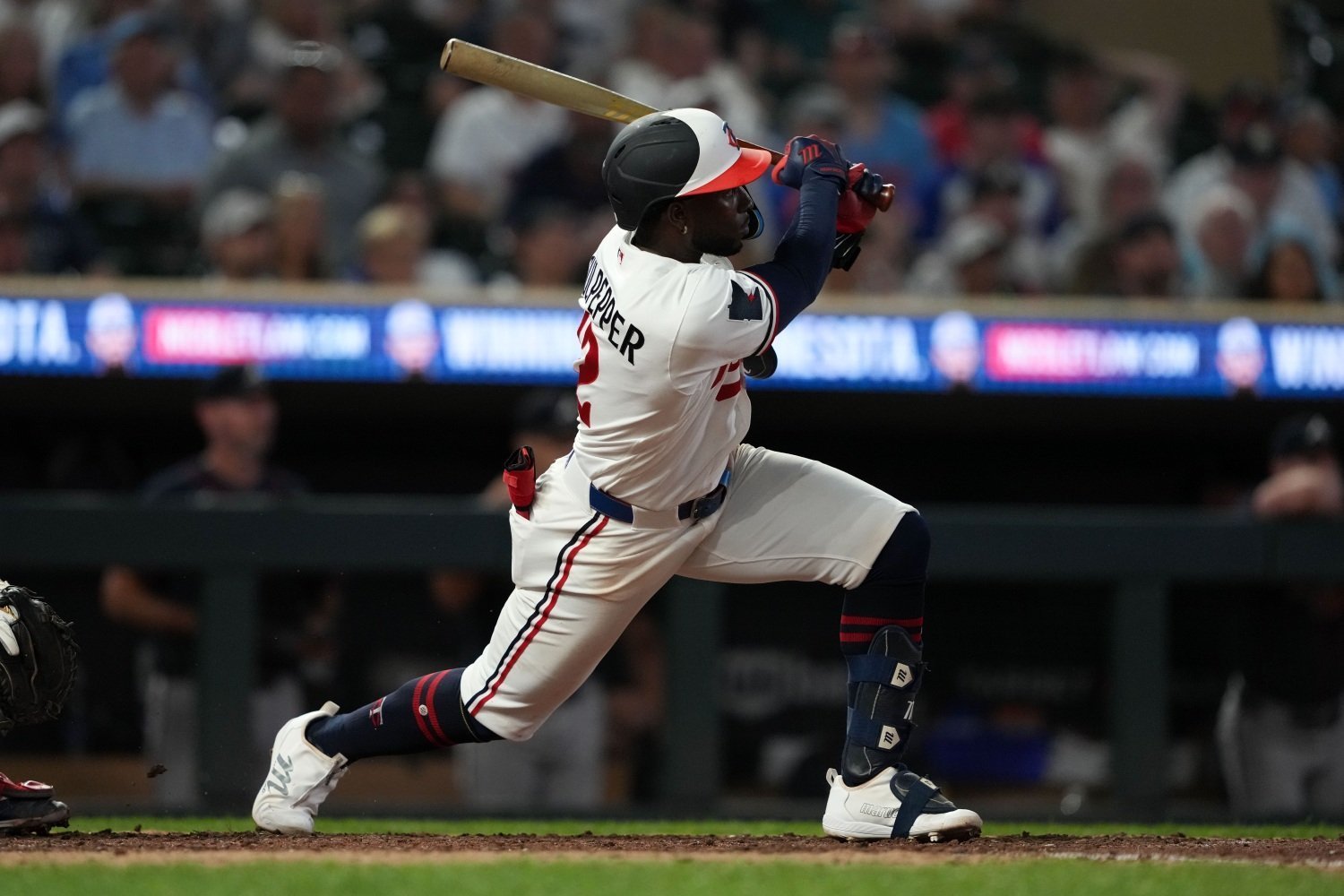 Kaelen Culpepper had a scary moment in what was an exciting inning for young Twins players. Emmanuel Rodriguez had homered in his first big-league at-bat earlier in the frame. Then Culpepper was hit by a pitch. Guardians reliever Franco Aleman fired a 95.3 mph fastball that struck Culpepper in the upper back and shoulder area. The right-handed hitter immediately went to the ground in pain, creating an understandably concerning scene for the Twins. Culpepper eventually got back to his feet and began making his way toward first base under his own power. He made it roughly halfway down the line before stopping. The Twins training staff attended to him before the club removed him from the game. Ryan Kreidler entered as a pinch-runner for Culpepper and took over at shortstop. Fortunately, the initial testing provided some good news. The Twins announced that Culpepper suffered a right shoulder contusion. X-rays were negative for a fracture, and the rookie is considered day to day. That designation should provide some relief, especially considering the timing of the injury. Culpepper was also hit by a pitch during Friday’s loss to Cleveland, making Saturday’s incident his second consecutive game taking a pitch. Culpepper has quickly established himself as an important part of the Twins’ future since making his Major League debut on August 7. He is hitting .286 across his first 30 games and has provided the club with another young player capable of handling a premium defensive position. The Twins have spent recent weeks of this season looking toward the future, and Culpepper represents an important part of that future. His development over the final weeks of the season can help Minnesota determine how he fits into the organization’s plans moving forward. For now, though, the biggest concern is simply making sure Culpepper is healthy. The initial diagnosis is encouraging. A shoulder contusion can still require some time away, particularly for a player who needs to throw across the diamond every day, but the absence of a fracture is the news everyone in Twins Territory wanted to hear. After the excitement surrounding Rodriguez’s first career homer, the Twins quickly went from celebration to concern. Thankfully, Saturday’s scare appears to be just that: a scare. View the full article
 -
The Brewers Have Everything They Need to Win It All
DiamondCentric posted an article in Brewer Fanatic
 Despite playing in the smallest market in baseball, the Milwaukee Brewers have assembled a championship-caliber roster. That was evident earlier this week when they hosted the Chicago Cubs for a three-game series. Not only did Milwaukee sweep its division rivals (who are also looking to make a deep postseason run), but the Brewers never wavered when things got tight. Two of the three games were decided in the eighth inning or later, including an extra-inning win. Those are the types of games where the best teams in baseball find a way to get it done, and Milwaukee did exactly that. At this point, it’s difficult to argue that the Brewers aren’t one of those teams. The team has done their best to obliterate any lingering doubts, too, with a two-day barrage at the expense of the Reds since the Cubs left town. Milwaukee currently owns the best record in baseball. Of course, having the best record in baseball doesn’t automatically mean a team is built for October. Plenty of regular-season juggernauts have fallen short once the postseason began. But when looking at this Brewers roster from top to bottom, it’s hard not to see a team that has everything it needs to go out and win a World Series. The Misiorowski (and Co.) Factor Even in last year’s NLCS, when the Brewers were swept by the Dodgers, Milwaukee allowed just 15 combined runs over four games against the best offense in baseball. The problem was that the Brewers were held to just four total runs themselves. That was last year, though, and I’d argue Milwaukee’s pitching staff has done nothing but improve since then. Obviously, Jacob Misiorowski can shut down any lineup on any given night. He’s the heavy favorite for the NL Cy Young Award, and rightfully so. The right-hander has allowed more than three earned runs in a game just once all season. That’s an absurd level of consistency from a pitcher who has quickly established himself as arguably the most dominant arm in the league. And it doesn’t stop there. Logan Henderson has broken out as a rookie, giving the Brewers another potential frontline starter heading into October. If Kyle Harrison can get back on track, the trio of Misiorowski, Henderson and Harrison could give Pat Murphy a filthy rotation to work with when the postseason arrives. From there, Murphy has options. Shane Drohan, Dustin May and Robert Gasser can all be deployed depending on the matchup, the series situation and how the rotation lines up. Having that kind of depth gives Milwaukee something that becomes incredibly valuable in October: flexibility. Meanwhile, the bullpen keeps humming along. Trevor Megill, Abner Uribe, Aaron Ashby, Chad Patrick and JoJo Romero give Murphy a collection of arms he can use in different situations and against different portions of opposing lineups. He doesn’t need one guy to dominate every time a game gets to the late innings. He can play the matchups. Overall, this pitching staff has been lights out all season, and until we see otherwise, there’s no reason to believe October will be any different. A Different Kind of Lineup Danger Of course, pitching alone isn’t going to win Milwaukee a championship. The Brewers also have the lineup necessary to give their pitchers leads to work with; that was on full display against the Cubs earlier this week. Jackson Chourio was a nightmare for Chicago throughout the series, and that's carried right into the weekend. Brice Turang has rediscovered his form, as he recovers from a knee injury he played through for a while. William Contreras and Garrett Mitchell are the wild cards of this lineup, and they're getting hot at the right time. Jake Bauers has become a left-handed slugger so reliable it's easy to take him for granted. Last year, however, the Brewers found out the hard way that the regular season and postseason are two very different animals. They were held to just one run in each of their four NLCS games against the Dodgers, and that ultimately ended what had been a tremendous season. If Milwaukee is going to get over the hump this time around, it’s going to be the bats that have to step up and get it done. The pitching staff has already shown it can keep a championship-caliber offense in check. Now, the lineup needs to prove it can produce when the margin for error gets as small as it does in October. That’s the biggest question hanging over this team. There’s a reason the Brewers have the best record in baseball. They’ve been one of the most complete teams in the league all season; they have enough pitching to survive a postseason series and a lineup capable of putting crooked numbers on the board when things start clicking. More importantly, this is a team that already knows what it feels like to come up short. After getting swept in the NLCS last October, Milwaukee has spent the entire 2026 season putting themselves in position to have another shot. Now, with the best record in baseball and a roster that looks even more complete than it did a year ago, the Brewers are running out of excuses. They're running out of ways to lose playoff series. It's time to win some and make this the year. View the full article
 -
Royals Claim Former Giants Pitcher Spencer Bivens Off Waivers
DiamondCentric posted an article in Royals Keep
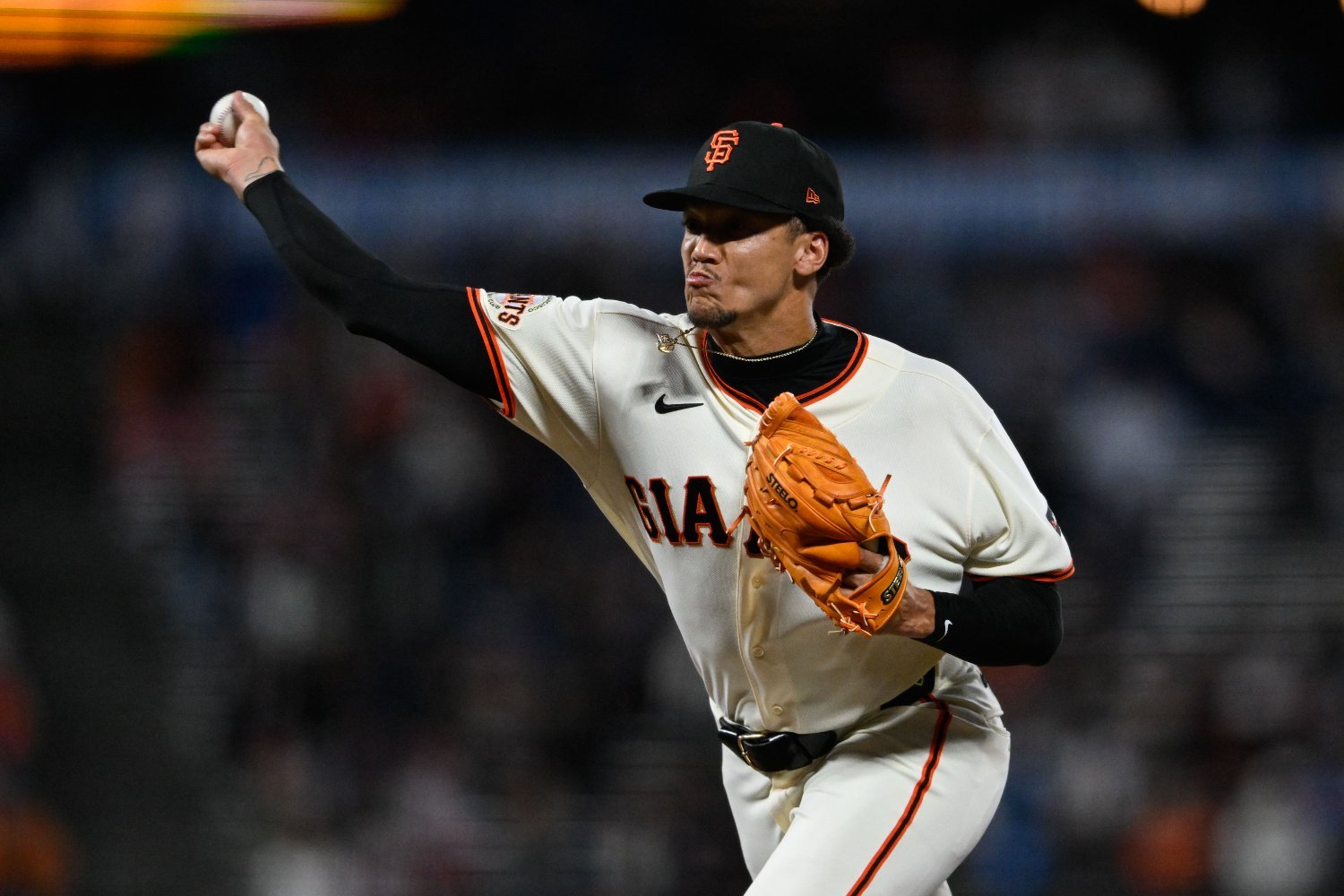 On Saturday, the Royals claimed former San Francisco Giants reliever Spencer Bivens off waivers. Kansas City promptly optioned him to Omaha, according to the team's social media. Bivens was a productive reliever for the Giants in 2024 and 2025 before being designated for assignment on September 9th. In 2024, his rookie year, he posted a 3.14 ERA and 1.19 WHIP in 27 appearances and 48.2 IP. Last year, he posted a 4.00 ERA and 1.33 WHIP in 54 appearances and 81.2 IP. While his ERA was higher, his 3.72 FIP last year was better than his 4.72 FIP in 2024. When looking at his Statcast percentiles, Bivens showed a strong ability to generate weak contact and chase as a reliever. Nivens ranked in the 88th percentile in GB%, 80th percentile in average EV allowed, 67th percentile in hard-hit%, and 66th percentile in O-Swing% last year. This year, in limited action, he posted a 14.40 ERA and 3.00 WHIP. However, he generated a 4.90 FIP, 26.7% K%, and 13.3% K-BB%. While he saw decreases in his O-Swing%, GB%, and average EV, he showed much stronger CSW% and whiff%. He also has three above-average pitches TJ Stuff+ wise: the sinker (102), sweeper (107), and cutter (102). Bivens has two Minor League options remaining and is still in pre-arbitration. He likely will compete for a Royals bullpen spot in 2027. View the full article
 -
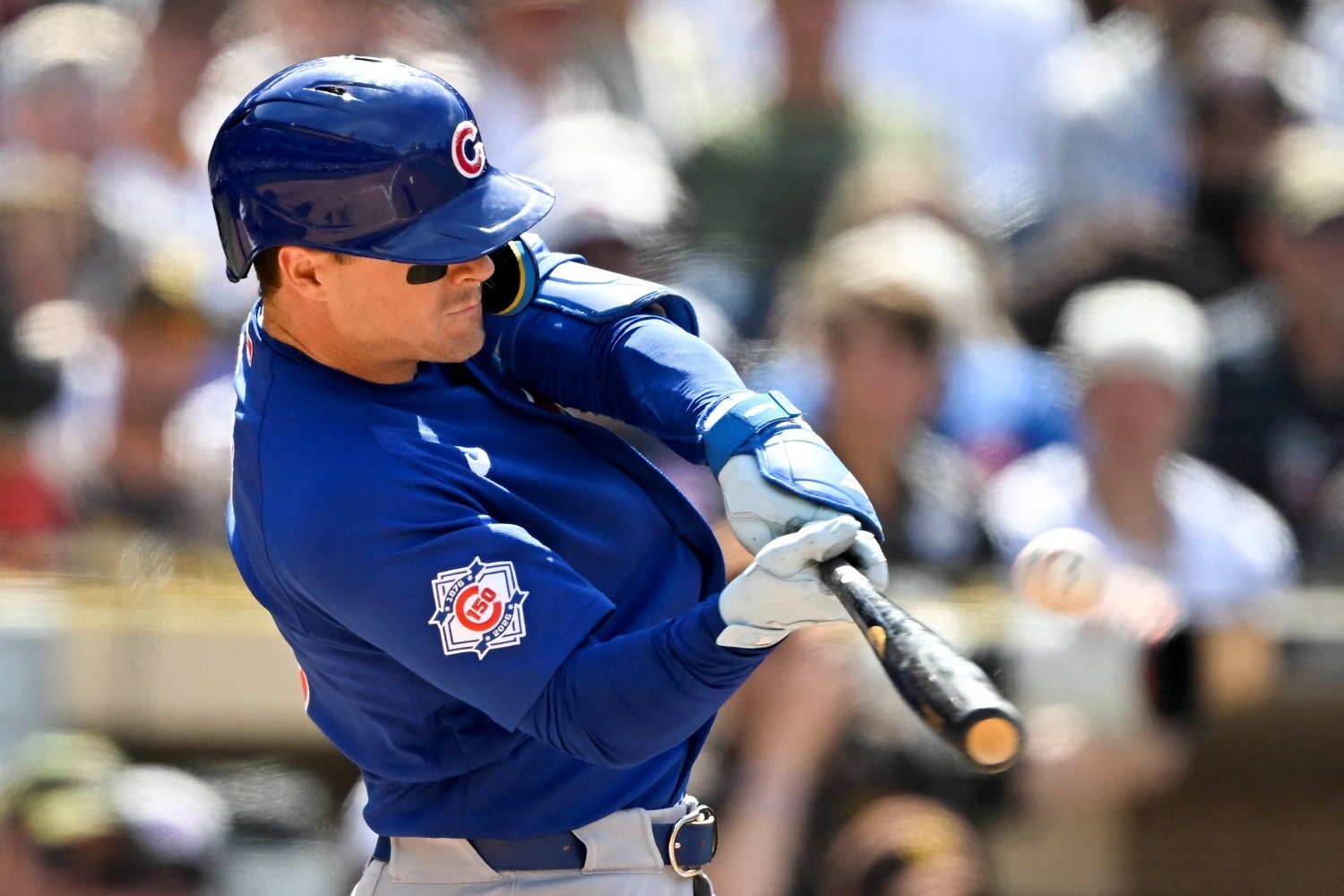 The Cubs needed a close win like Saturday's desperately, but they were trending toward yet another close loss, instead. The bullpen hadn't cracked, this time; it was the Dansby Swanson-less defense (a Nico Hoerner error opened the door for the Pirates in the top of the sixth) and a terribly timed hanger from Clay Holmes. How it happened mattered little, though. It was 3-2 Pittsburgh, and Chicago needed to flip that score somehow. Pedro Ramírez got the rally started. He led off the bottom of the eighth with a line-drive double, on the latest beautiful piece of hitting from the rookie. Tyrone Taylor flied out, though, and Pete Crow-Armstrong struck out looking. Suddenly, after having the tying run in scoring position with nobody out, the Cubs needed a hit to push it home. Or did they? Alex Bregman was hit by a pitch. Seiya Suzuki pinch-hit for Michael Busch against the left-handed Gregory Soto and drew a walk. The bases were loaded. Due next, however, was Ian Happ, whose helplessness against left-handed pitchers this season has been a source of constant trouble for the team. Craig Counsell pulled the trigger on a second straight pinch-hit move, calling upon Matt Shaw. It was the right move, but hardly an inspiring one. Shaw stepped in batting a solid .237/.324/.428 on the season, but without a truly big hit all season. Since returning from the injured list in late August, he was batting .182, with a home run off position player Andrew Vaughn last week but little evidence that he can handle real pitchers. The ensuing plate appearance turned out to be, by far, Shaw's biggest single contribution to the team all season. According to Baseball Reference's Win Probability Added, the RBI walk he drew to tie the game increased the Cubs' chances of winning by 0.269. He's only had one other at-bat that produced a WPA over .200—a sixth-inning go-ahead triple against the Rockies in mid-June, on a ball I'm still not sure was correctly ruled fair. N3l6akdfWGw0TUFRPT1fQXdWVkFBRlFVd1FBV1FFS1Z3QUhBRlFFQUZrRlZGY0FWZ2NGQUFVREJWQlJDVk1B.mp4 A five-pitch walk is an unsexy signature plate appearance in a season; Shaw is a very unsexy player right now. He was called up too soon last March, to a team that hadn't adequately addressed their lineup depth after trading Cody Bellinger and failing in their first effort to land Alex Bregman. He's been a mess ever since, trying to manage multiple changes to his stance, mechanics and timing at the plate and getting comfortable at new defensive positions along the way. A certain amount of talent is obvious when you watch Shaw play. He's made some unexpectedly good plays in the outfield last year, after becoming a plus defender at third on the fly last year. He's fast. He had a short but intriguing power binge last summer. On the whole, though, he's a mess of a player: still very much a project, two full seasons into his big-league career. What the Cubs needed in that moment, though, was a player who would make the right swing decisions and come through. Against the erratic Soto, that meant being patient. It also meant not letting him lure Shaw out of the zone with his good breaking ball. The stern test came on a 1-1 pitch, when Soto successfully executed a back-foot slider. ZzZ3TWFfWGw0TUFRPT1fVUFKVlZBQUdWVlFBWFFZR1V3QUhCUWNEQUZnRUJnUUFDZ0JSQjFGVFZRUUJBRk5V.mp4 Shaw's biggest play of the year was not swinging at that pitch—though he almost did. That, interestingly, is characteristic. Early last month, Daine Medlock of Sports Info Solutions published a study of checked-swing behavior among batters, using proprietary data kept by SIS on checked swings. At that time, Shaw ranked second in the majors in the frequency with which he started his swing, but checked it, doing so on 6.9% of all pitches he saw. Only Cleveland's Daniel Schneemann did it more often. Medlock's study is worth your time; the findings are nuanced but compelling. In short, batters broadly tend to produce checked swings (whether they're successful at holding up or not) more often if: They're aggressive within the strike zone They're disciplined when it comes to pitches outside the zone They don't make much contact on their out-of-zone swings That makes sense. For most players, even takes are active moments. A big-league batter will rarely see a pitch on which they don't get their lower half and their hands started. If the hitting supercomputers that are their eyes and brains think the pitch will be in their hitting zone, they use those preliminary movements to generate a full swing. If they quickly perceive that it's not what they're looking for, they hit the kill switch and stop their momentum. A checked swing (successful or otherwise) is, of course, what happens when something in between those two options happens. Two things produce them: A hitter with a lot of early movement in their swing—what batters call the "load"; and Late recognition of a pitch type, spin direction or speed difference that takes them from wanting to swing to not wanting to. Those two things are related, of course. While a good swing needs early momentum (and some players need bigger movements than others to produce a competitive hack), big moves tend to make it harder to recognize a pitch early. One way or another, though, the hitter who starts a swing by letting their bat get out from behind their body but stops it before following through has been at least slightly fooled. Hitters who are patient within the zone will do this rarely; they're later in pulling the trigger than others. They don't let the hands really get moving until they're pretty sure they have their pitch, and thus, when they do, they're likely to swing all the way through. For the opposite reasons, the same is true of guys who often chase outside the zone. Those are hitters who cut it loose without making especially precise calculations of pitch location; they're hungry. They're swinging to produce damage, and that means swinging with such conviction that a checked swing is almost impossible, and not worth attempting. If checked swings are mainly the demesne of guys who swing a lot within the zone and little outside it, then it shouldn't surprise us much to learn that they don't make much contact on out-of-zone swings, either. You check your swing when you think a pitch isn't a strike because you realize that, if that's true, you're not very likely to touch it. What's peculiar is, Shaw really doesn't fit these descriptors. His in-zone swing rate is lower than the league average; his out-of-zone swing rate is higher. He makes contact on more of his out-of-zone swings than most hitters, not fewer. That he shows up so near the top of the leaderboard, then, tells us there's something to his game (and to the nature of checked swings) that defies simple pairings of variables. As I've already said, part of that unexplained departure is the fact that Shaw is still searching for comfort and an identity in the big-league batter's box. The study found (unsurprisingly, if you think about the rest of the work) that checked swings have a negative correlation with overall offensive value. Good hitters check their swings less often; bad hitters check it more often. Shaw's raw numbers this year look fine, but he's still not a good hitter, by any means. However, on the biggest pitch he's seen this year, the skill the moment needed was the ability to check a swing and earn an advantage in the count. Shaw did it. From here, his development needs to take him in a direction where he can win games in more convincing ways, and where checked swings are less prominent parts of his approach. For one game, though, he made the most of the tendency and came up huge. View the full article
 -
 Omaha dropped a 5-1 decision at Indianapolis despite four scoreless relief innings from Hunter Owen, Lucas Erceg, and Matt Moore, who combined for seven strikeouts and no walks. Lucas Braun struck out seven in four innings. Northwest Arkansas lost 8-4 to Tulsa after Felix Arronde allowed seven runs, though Frank Mozzicato followed with two hitless innings. Alberto Rodriguez homered and drove in two, and Angel Acosta added a solo home run in the ninth. Kansas City Royals Transactions Kansas City Royals claimed RHP Spencer Bivens off waivers from the San Francisco Giants. Kansas City Royals optioned RHP Spencer Bivens to Omaha Storm Chasers. Omaha Bullpen Holds The Line In A 5-1 Loss At Indianapolis Braun struck out seven over four innings and did not walk a batter, but Indianapolis reached him for eight hits and five runs, four of them earned. Two of those hits left the ballpark. Braun also got some help from his outfield defense, especially in the first inning. The Indians pulled away in the fourth. A fielding error by Jacob Berry put the first runner of the inning aboard, an RBI double followed, and a two-run home run came next. Those three runs turned a one-run game into a 5-0 game. Omaha answered in the sixth. Gavin Cross singled with one out, Abraham Toro singled him to second base, and Brett Squires lined a single to left field to bring Cross home. However, Carson Roccaforte struck out to end the inning, and Omaha did not score again. The bullpen gave up nothing over the last four innings. The recently called-up Owen worked 1 2/3 scoreless innings with two hits allowed and three strikeouts. Erceg followed with 1 1/3 hitless and scoreless innings and two strikeouts. Lastly, Moore finished with a scoreless inning and two strikeouts. None of the three walked a batter. Alejo Lopez led the offense with two hits in three at-bats. Luca Tresh doubled, and Cross, Toro, Squires, Roccaforte, and Peyton Wilson each had one hit. Squires drove in the only run. Omaha drew no walks, struck out 13 times, went 2-for-6 with runners in scoring position, and left six runners on base. The Storm Chasers are now 64-76. Player AB R H RBI BB K Javier Vaz 2 0 0 0 0 2 Colton Becker 2 0 0 0 0 1 Gavin Cross 4 1 1 0 0 0 Abraham Toro 4 0 1 0 0 2 Brett Squires 4 0 1 1 0 3 Carson Roccaforte 4 0 1 0 0 1 Luca Tresh 4 0 1 0 0 2 Peyton Wilson 4 0 1 0 0 1 Jacob Berry 3 0 0 0 0 1 Alejo Lopez 3 0 2 0 0 0 Totals 34 1 8 1 0 13 Player IP H R ER BB K HR Lucas Braun 4 8 5 4 0 7 2 Hunter Owen 1 2/3 2 0 0 0 3 0 Lucas Erceg 1 1/3 0 0 0 0 2 0 Matt Moore 1 0 0 0 0 2 0 Totals 8 10 5 4 0 14 2 Northwest Arkansas Homers Twice In The Ninth In An 8-4 Loss To Tulsa Arronde allowed nine hits and seven runs over four innings, walking three and striking out five. Two of the hits he allowed were home runs. He was helped by some defense in the first inning by outfielder Luke Pelzer. Tulsa did its damage against Arronde, the Royals' No. 16 prospect, in the third and the fourth. In the third, a single, another single, and a walk loaded the bases with one out, and then an RBI single, a sacrifice fly, and a two-run double brought in four runs. The fourth opened with a home run, and after a single, a second home run made it a seven-run game. Northwest Arkansas got on the board in the eighth. Connor Rasmussen doubled with one out, Alberto Rodriguez singled him in, and Sam Kulasingam followed with a single. After a pop-out, Connor Scott singled to right field to score Rodriguez. Justin Johnson walked to load the bases, and a strikeout ended the inning. The Naturals added two more in the ninth to make things interesting. First, Acosta homered with one out for his second homer in as many nights. Rodriguez, who had entered the game in the leadoff spot for Pelzer, homered two batters later. Kulasingam walked, but a fly ball by Spencer Nivens to center field ended the game. The rest of the pitching staff beyond Arronde gave the offense a chance. Anthony Simonelli allowed a run on one hit and a walk in one inning. James McArthur, on a rehab assignment, worked a scoreless inning with a walk and a strikeout. Former 1st-round pick Mozzicato struck out three over two hitless and scoreless innings. Finally, Tommy Molsky finished with a scoreless inning. Rodriguez finished 2-for-2 with a home run, two RBI, and two runs scored. Johnson had two hits and a walk, Acosta homered, and Rasmussen doubled. Northwest Arkansas drew four walks, went 2-for-6 with runners in scoring position, and left eight runners on base. The Naturals fell to 56-79 for the season. Player AB R H RBI BB K Luke Pelzer 3 0 0 0 0 1 Alberto Rodriguez 2 2 2 2 0 0 Sam Kulasingam 4 0 1 0 1 1 Spencer Nivens 4 0 1 0 1 0 Connor Scott 4 0 1 1 0 2 Justin Johnson 3 0 2 0 1 0 Canyon Brown 3 0 0 0 1 1 Hyungchan Um 4 0 0 0 0 1 Angel Acosta 4 1 1 1 0 1 Connor Rasmussen 4 1 1 0 0 1 Totals 35 4 9 4 4 8 Player IP H R ER BB K HR Felix Arronde 4 9 7 7 3 5 2 Anthony Simonelli 1 1 1 1 1 1 0 James McArthur 1 0 0 0 1 1 0 Frank Mozzicato 2 0 0 0 0 3 0 Tommy Molsky 1 0 0 0 1 0 0 Totals 9 10 8 8 6 10 2 Top-20 Prospect Performance Kendry Chourio: DNP David Shields: DNP Josh Hammond: DNP Blake Mitchell: DNP Sean Gamble: DNP Ramon Ramirez: DNP Zion Rose: DNP Asbel Gonzalez: DNP Carson Roccaforte: 1-for-4, 1 K Taylor Rabe: DNP Yandel Ricardo: DNP Justin Lamkin: DNP Drew Beam: DNP Michael Lombardi: DNP Jack Slightom: DNP Felix Arronde: 4 IP, 9 H, 7 R, 7 ER, 3 BB, 5 K Angeibel Gomez: DNP Ben Kudrna: DNP Steven Zobac: DNP Blake Wolters: DNP View the full article
 -
Cubs Prospects Who Soared, 2 Who Slipped in 2026
DiamondCentric posted an article in North Side Baseball
 Owen Ayers and Josiah Hartshorn emerged as two of the Cubs’ biggest prospect winners in 2026. Meanwhile, Brandon Birdsell and Jaxon Wiggins saw their stock take a hit in very different ways. View the full article
