


DiamondCentric
-
Posts
2,631 -
Joined
-
Last visited
Never
Content Type
Profiles
Forums
Events
MLB News, Rumors & Analysis
DiamondCentric Tutorials & Help
Major League Baseball Videos
MLB Fan Guides & Resources
Store
Downloads
Gallery
Everything posted by DiamondCentric
-
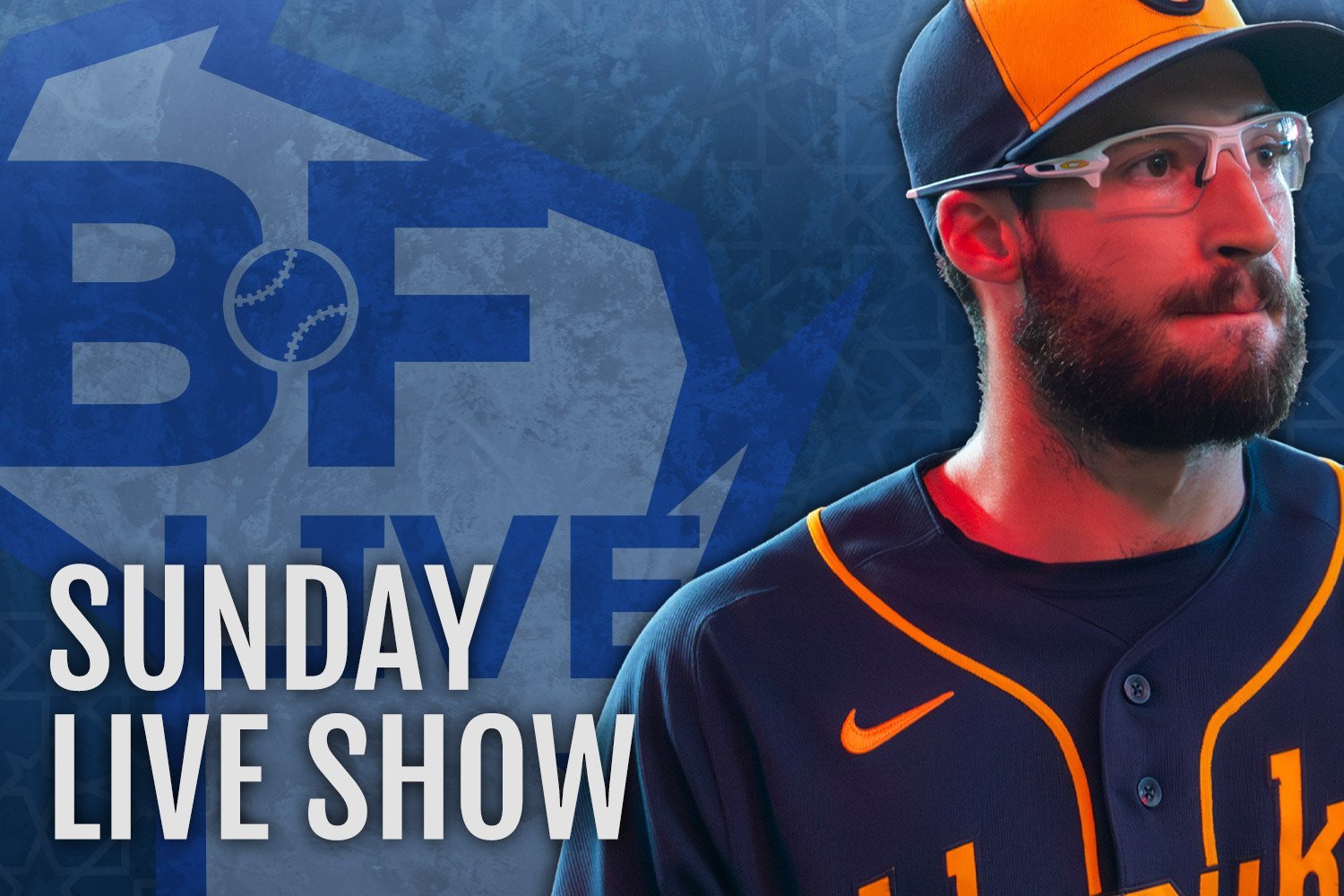 Jake & Jason discuss the Brewers 2-0 lead as they head to Tampa Bay hoping to continue their momentum towards the first World Series in franchise history Apple Podcasts: https://podcasts.apple.com/us/podcast/the-brewer-fanatic-podcast/id1740648724 Spotify: https://open.spotify.com/show/5CY8mWsQayqjDXqw9OT2Td iHeartRadio: https://www.iheart.com/podcast/263-the-brewer-fanatic-podcast-166534588/ Pocket Casts: https://pca.st/ommzz627 Watch On YouTube: https://www.youtube.com/@brewerfanatic View the full article
-

Cito Gaston: 11 Year MLB Player, & Championship Skipper
DiamondCentric posted an article in Jays Centre
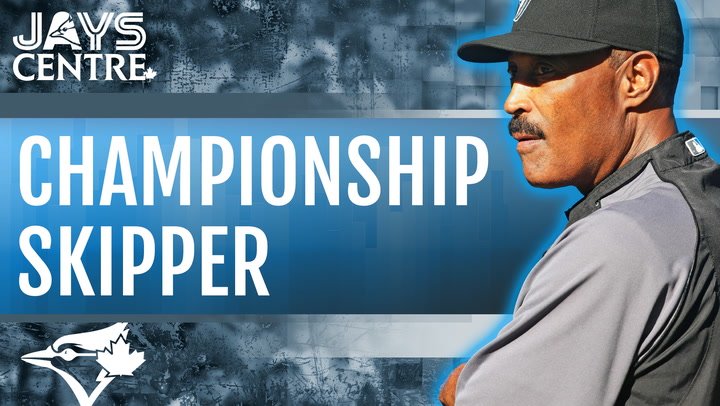 Cito Gaston played 11 seasons in MLB before his legacy as a manager for the Toronto Blue Jays. Gaston's most productive year was with the San Diego Padres; while his career was more that of a journeyman, he broke out hugely offensively in 1970. View the full article
-
Red Sox Arizona Fall League Week In Review: Cool Nights In the Desert
DiamondCentric posted an article in Talk Sox
 The third full week of the Arizona Fall League is officially in the books as the Mesa Solar Sox went 2-3. They currently have a 6-9-1 record, saddling them at fifth place in the standings, just 3.5 games back of the first-place Scottsdale Scorpions. If the season were to end today, Mesa would be matched up against the Salt River Rafters in the first round of the playoffs. Though, when it comes to the AF, people are less interested in the playoffs and more interested in how their favorite team’s prospects are doing out in the Arizona heat. This week we saw some Boston Red Sox representatives perform consistently, while others continued to either fall into a cold streak or struggle. Antonio Anderson 1B/3B/DH The top performer from the Red Sox appeared in three out of his team’s five games while continuing his steady offensive performance. Despite his numbers technically dropping overall on the season, he still managed to put up a stat line of .300/.462/.500 with a triple and one RBI. He also displayed his understanding of the strike zone by walking three times. His only extra-base hit of the week came in the form of an RBI triple in the first inning of Mesa’s October 19 game against the Surprise Saguaros. Not waiting around, Anderson jumped on a 94.9 mph fastball from Texas Rangers’ 17th-ranked prospect Jacob Johnson. The hit drove in the first run of game and had an exit velocity of 98.8 mph. His second hit of the week was a line drive single hit at 103 mph off his bat. He hit a 95-mph fastball from the Kansas City Royal’s 16th-ranked prospect Hiro Wyatt. Anderson’s final hit came in the first inning of Mesa’s October 22 game against the Glendale Desert Dogs. In a 2-1 count, he took an 86.6 mph changeup that was down and away and singled. The hit had an exit velocity of 95.8 mph. The hit came against the Atlanta Braves’ eighth-ranked prospect Briggs McKenzie. So far on the fall season, Anderson is slashing .333/.480/.615 with three doubles, one triple, two home runs and 10 RBIs in 11 games. Mason White 2B/SS White made three appearances this week, playing shortstop twice and second base once while having his best week offensively. He hit .222/.385/.222, going 2-for-9, though both of White’s hits came in the first game of the week against Surprise. He also drove in two runs, walked once, and stole a base. His first hit came against Johnson, taking an 88-mph cutter that was on the inner third of the plate and dropping it into left field for a single. The hit had an exit velocity of 71.1 mph. His second hit came from a 91.9 mph cutter that was hit off of Rangers prospect Alejandro Chiquillo. The hit was a ground ball single to right field and had an exit velocity of 80.8 mph. Sandwiched in between the two hits was a sacrifice fly where he took a 93.6 mph fastball on the outer part of the plate and drove it out to left field. The batted ball had an exit velocity of 85.2 mph and came against Philadelphia Phillies prospect Keegan Batka. Overall, White is hitting .184/.347/.263 with one home run and three RBIs. Nazzan Zanetello 2B/SS/3B/OF Zanetello appeared in three games this week, looking better at the plate as the season moves along. Going 2-for-7, he finished the week with a slash line of .286/.500/.286 as he also walked three times and stole a base. He scored three runs for good measure. Zanetello’s first hit of the week came in Mesa’s October 20 game against Surprise. In the eighth inning, the utility player took a 3-1 fastball on the outer third of the plate and deposited it into left field. The fastball had a velocity of 93.7 mph, and his exit velocity was 103.6 mph. The hit came off of San Francisco Giants’ prospect Alexander Fuentes. His second hit of the week came on October 24 against the Peoria Javelinas in the second inning. Taking a 97.4 mph sinker, Zanetello hit it to the second baseman at 92 mph. It came against the San Diego Padres’ 30th-ranked prospect, Kannon Kemp. Defensively, Zanetello made all three of his appearances at second base. Overall, he has appeared in 11 games and is hitting .171/.356/.314 with one triple, one home run, and four RBIs. He has also stolen three bases. Harry Blum Blum made one relief appearance for Mesa this week, pitching a scoreless inning while working around a hit and a walk. He also managed to strike out three batters. Unfortunately, he allowed an inherited runner to score. Entering the top of the seventh inning with runners on first and third, Blum immediately struck out his first two batters. The first out came on a 90.8 mph cutter and the second out on a 91.9 mph cutter. After surrendering the two-out double, he followed it up with a walk before getting his third strikeout of the game on a 91.1 mph cutter. Blum’s velocity peaked at 95.7 mph and he generated seven whiffs. So far on the season, Blum has appeared in four games and has an 0-1 record with a 2.08 ERA. He’s tossed 4 1/3 innings, allowing one run on five hits and six walks while striking out seven. Madinson Frias Frias made one appearance during the week and tossed 2 2/3 scoreless innings while working around several baserunners. In the outing, he allowed two hits and four walks but also struck out three batters. Entering the game in the top of the fourth inning, Frias provided length for Mesa as he pitched into the sixth inning. His first inning of work also saw him pitch out of a two-out, bases-loaded jam as he struck out Peoria’s Brandon Eike and preserve a 3-2 lead at the time. In the fifth, Frias tossed a 1-2-3 inning. His velocity peaked at 96.9 mph on his sinker. He also generated five whiffs. On the season, Frias has appeared in three games, making one start. He has an 0-1 record with a 4.91 ERA in 7 1/3 innings. He’s allowed four runs on nine hits (one being a home run) and seven walks while striking out seven. Nicholas Judice Judice made one appearance for Mesa this week as he allowed one run on two hits and a walk in one inning. The right-hander got the first batter he faced out before a single was followed by a wild pitch. With a runner on second and one out, Judice induced a ground ball to shortstop and got the second out of the inning before things started to get busy on the basepaths. A two-out walk was followed by a single to center field to score Chase Harlan from second base. Judice buckled down after that and got the final out of the inning. His velocity topped out at 93.3 mph on his sinker and he generated four whiffs. Judice has made three appearances on the season and has a 9.00 ERA in four innings. He’s allowed four runs on four hits (one being a home run) and two walks while striking out four batters. Trennor O’Donnell O’Donnell provided Mesa with a scoreless inning while working around a walk and striking out two. Entering in the eighth inning, the right-hander got two quick outs before allowing a walk to Wyatt Sanford. He followed that up with his second strikeout of the inning. O’Donnell topped out at 94 mph on his fastball and generated three whiffs. So far on the season, he has made three appearances and has a 5.40 ERA in five innings. He’s allowed three runs on three hits (one being a home run) and two walks while striking out five. Caden Vire Vire did not get into a game during the third week of the season. This is the second straight week he did not make an appearance. Vire has made two appearances on the season and has a 5.40 ERA in 1 2/3 innings. He’s allowed one run on one hit and three walks while striking out one batter. View the full article
-
 Week 3 of the Arizona Fall League is in the books, with San Diego Padres prospects playing for the Peoria Javelinas in the showcase event. Each week, we will take a look back at how the Padres' prospects fared. With an extra day off last week, the Javelinas played five games. There are another two-plus weeks left in the regular season, which includes the Fall Stars Game, then the playoffs. For last week's recap, check here. For Week 1, check here. Ty Harvey, C The catcher, Padres Mission's No. 5 prospect, had a nice 3-for-9 week in three games. He was behind the plate for two of them and the designated hitter in between, continuing the pattern of alternating between the two roles. Harvey had two more stolen bases, giving him nine in the Arizona Fall League, just one off the league lead. The 20-year-old had an especially nice game Thursday, going 2-for-4, including a two-run single in a five-run eighth inning of a 12-11 win over Surprise. He also had a successful automated ball-strike challenge behind the plate. He has had a tough time at the plate with a .182/.325/.182 slash line featuring 14 strikeouts in 33 at-bats. Justin DeCriscio, SS It is pretty telling that, in a group of All-Stars, DeCriscio seems to be settling in defensively at shortstop, which is where he played in the three games he was in last week. While he also hasn't been that good at the plate overall (.212/.366/.333), he had a pair of two-hit games as part of a 4-for-9 week. The 2025 10th-round draft pick had his best offensive game Tuesday vs. Salt River, going 2-for-4 and smacking his first homer in the AFL, a three-run shot. He hit 13 homers in 121 games between three levels in his first full season of pro ball. DeCriscio also walked twice, but was nabbed trying to steal twice as well. Winyer Chourio, RHP The right-handed starter had another choppy outing in his lone start of the week. On Tuesday against Salt River, Padres Mission's No. 17 prospect tossed three innings, allowing three runs on two homers (the only hits he surrendered), walking one and striking out three. The homers he gave up were to Dax Kilby, one of the New York Yankees' top prospects, and Jack O'Dowd, who leads the AFL with five homers. Chourio, who turns 23 on Nov. 4, has allowed five runs over 8⅔ innings for a 5.19 ERA with seven walks and six strikeouts. Igor Gil, LHP The left-handed reliever hadn't pitched in just over a week, then appeared in Saturday's game, going one inning, allowing a run on a hit with two walks, no strikeouts and a wild pitch. He has been an early innings option in his four AFL appearances. In those games, he has five walks and four strikeouts while allowing three runs in 4⅓ innings for a 6.23 ERA. Kannon Kemp, RHP The right-hander started Saturday's game against Mesa and was followed by Gil. Kemp struggled with his control, walking three and giving up three hits and three runs in 2⅓ innings, striking out three. Of his 54 pitches, 29 were strikes. Kemp has struck out 14 over 11 innings in his four starts, but also allowed eight runs on 12 hits and six walks for a 6.55 ERA. Francis Pena, RHP Another bright spot for the Padres in the AFL is this right-handed reliever. Although he will be 26 in January, Pena is putting himself in position to possibly make his MLB debut in 2027. Still, in his lone game last week, Pena needed to get just one out and allowed a hit, while also seeing two inherited runners score. While just one game shy of the most appearances in the AFL at five, Pena has yet to allow an earned run (yes, he gave up an unearned run) over 5⅓ innings, allowing four hits and two walks with four strikeouts. He was at Double-A San Antonio all of 2026, so a trip to Triple-A El Paso is likely in the cards for him next season. Jordan Valenzuela, RHP The 21-year-old, who only pitched in 21 games at Low-A Lake Elsinore in full-season ball this year, pitched a scoreless inning in his only game this week. He allowed a hit, but no walks and struck out one. It was the first scoreless outing in his four appearances in the AFL. View the full article
-
Jett Williams's Pop Headlines Week 3 Brewers AFL Performances
DiamondCentric posted an article in Brewer Fanatic
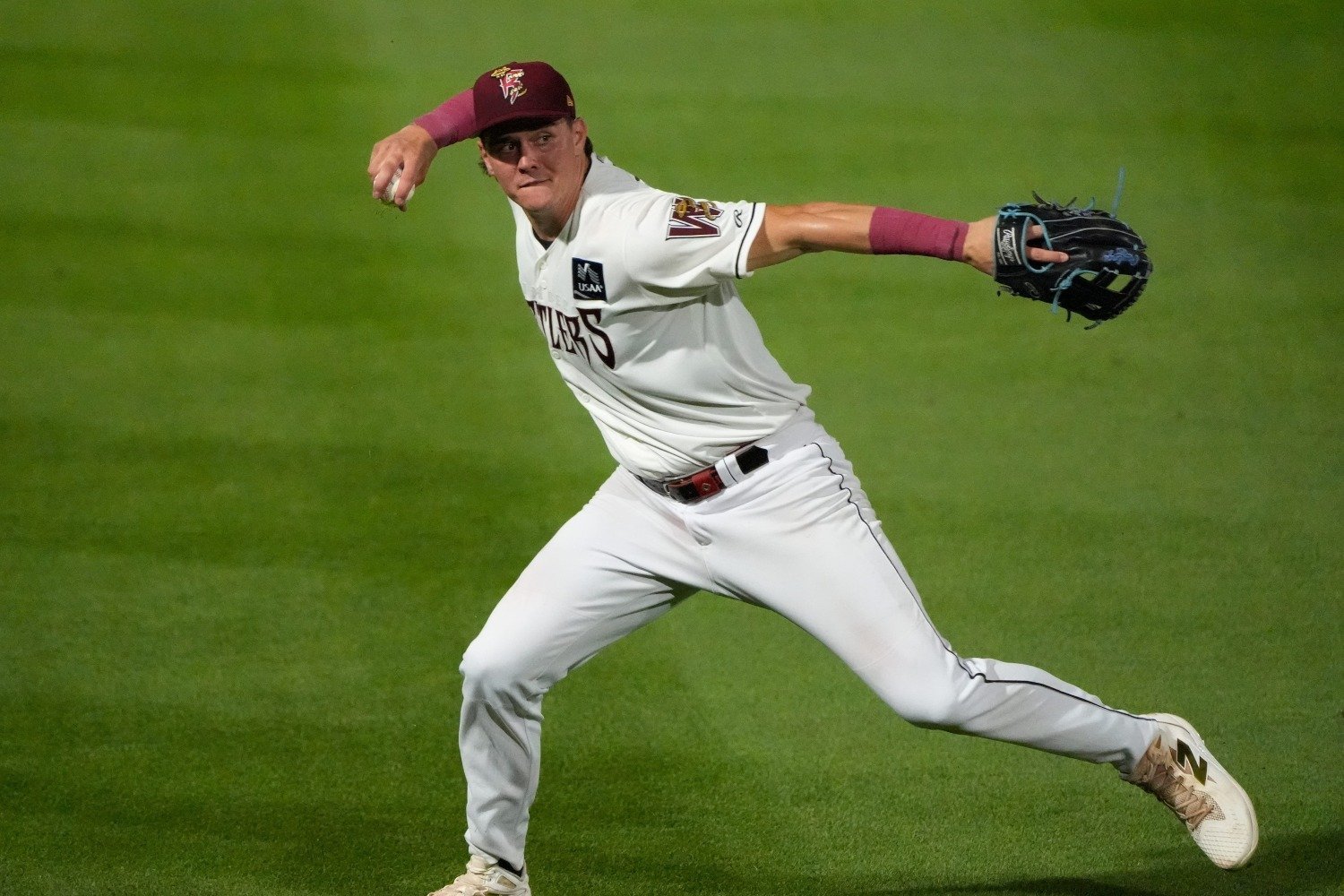 Week 3 of the Arizona Fall League has come and gone, and while the Brewers are one of the last two teams left standing at the big-league level, their farm system continues to prove itself in the form of a strong showing with the Scottsdale Scorpions. Let’s dive into some of Milwaukee’s contributors and what their performance implies about their progress. Jett Williams Earns Brighter Days After a tumultuous start to his fall league tenure, the Brewers’ no. 12 prospect (per Brewer Fanatic) has found his power stroke. Jett Williams went yard Saturday night for his first homer of the fall, lifting a ball out to straightaway center field. Williams was part of the return package for Freddy Peralta, whom the team dealt to the Mets before he landed in Tampa to help the Rays to the World Series. Entering Saturday’s contest, the 2022 first-round pick stole five bases in his first nine AFL games, displaying the speed and dynamism that still give him a high ceiling as a prospect. His zone-contact percentage, walk rate, and whiff rate all imply he can be a pesky on-base presence, too, despite his .232 batting average in Triple-A Nashville this year. The plate discipline and speed are a given. If three extra-base hits (a double, triple and home run) in 10 Fall League games are indicative of any power upside, that’s an added bonus. Eric Bitonti Shows Pop Over First 50 Plate Appearances The Arizona Fall League usually doesn’t allow for a very large sample size, as the season is just a month and change long. Eric Bitonti, however, is making the most of the opportunity. The 2023 third-round pick has two home runs, eight runs batted in, seven runs, two doubles, seven walks and three stolen bags, all in a 12-game sample. Bitanti is slashing .256/.360/.442 over that span. The 20-year-old has grown leaps and bounds from where he was even a year ago. Bitonti played 119 games in Low-A Carolina in 2025, and he sacrificed his average (.238) for power (19 home runs) in what was just his age-19 season. This year, Bitonti started in High-A Wisconsin and lit the world on fire. The corner infielder throttled 25 homers with 88 runs batted in, to the tune of a .270/.391/.525 slash line, before spending a week with Double-A Biloxi. He is very much a true slugger, still accepting a high whiff rate in exchange for one of the better Pull Air percentages (25.2%) in the minors. His next step is cutting down on the swing-and-miss—an achievable feat considering he chases less than the average minor-league hitter. Peyton Niksch As everything stands through the first three weeks, Peyton Niksch is still one of the more impressive prospects on the Scorpions. So far, he has 10 strikeouts to only three walks and three hits allowed in 9 2/3 innings. The 22-year-old righty has a minuscule 0.62 WHIP, following a season where he played across three levels, clocking a sub-3 ERA in Low-A (2.70) and High-A (1.13) before running into some trouble in Double-A (8.63). Keeping the walks down and preventing the home run ball (two allowed in AFL play) will be paramount in his development. View the full article
-
Brewers-Rays World Series Game 3 Matchup By The Numbers
DiamondCentric posted an article in Brewer Fanatic
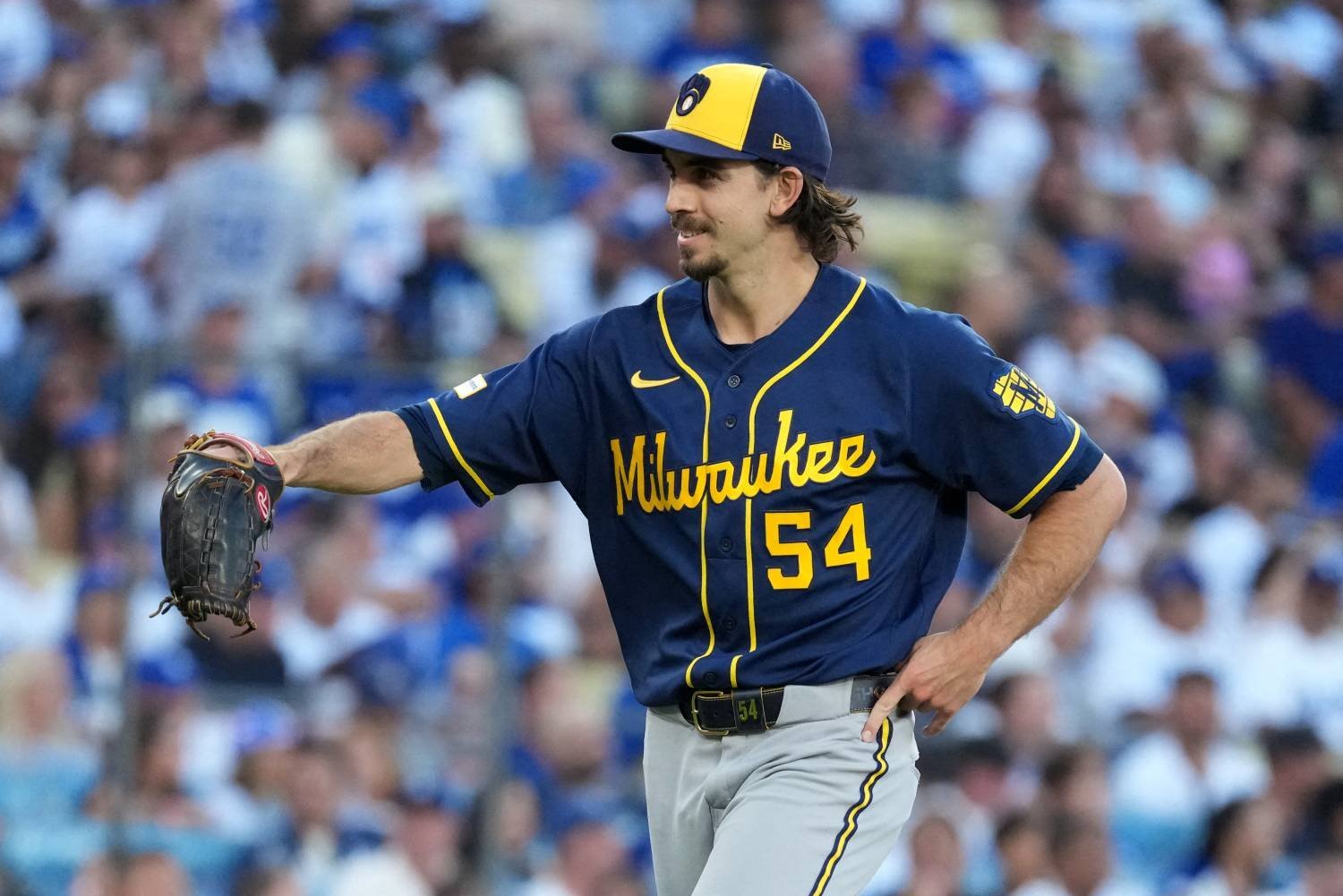 After winning the first two games of the 2026 World Series at home, the Milwaukee Brewers look to move closer to their first championship in franchise history as the series shifts to St. Petersburg, Fla., for the next three games vs. the Tampa Bay Rays. It will be Robert Gasser, the only left-hander expected to start for either team in the best-of-seven series, who will go for the Brewers in Game 3 on Monday (7 p.m. CT, Fox). After starting the clinching Game 4 in the NL Division Series vs. the San Diego Padres, this is the same assignment Gasser had in the NL Championship Series against the Los Angeles Dodgers. He has gone a combined nine innings, allowing just one run on six hits with two walks and a strikeout. That run came on a homer by Fernando Tatis Jr. The left-hander went five innings against the Dodgers after logging four against the Padres. Gasser has been more of a steady presence in the Brewers' rotation in 2026, although he finished strong, including seven shutout innings vs. the Baltimore Orioles in his next-to-last start of the regular season. He had a 4.24 FIP and 3.87 ERA with a 7.6% walk rate and 22.2% strikeout rate during the regular season. Gasser posted a 1.67 ERA in his final six appearances (five starts) of the regular season. Gasser has zero history vs. the Rays, but has faced one Tampa Bay hitter before. That is catcher Liam Hicks, who was with the Miami Marlins in Gasser's July 19 start at American Family Field. Hicks hit a shallow fly to left and struck out swinging in his two plate appearances. Gasser has been better at home than the road this season (3.40 ERA vs. 4.36 ERA). Including the postseason, the Brewers are 15-7 when Gasser starts. Jonathan Aranda, who went 3-for-3 in Game 1 with a walk, is 4-for-7 in the World Series, while Chandler Simpson is 3-for-8, Victor Mesa Jr. 2-for-6, Junior Caminero 2-for-7 and Jonny DeLuca 2-for-8. The Rays have struck out 19 times in the two games. Robert Gasser vs. Tampa Bay Rays: Current Batters Table Rk Player B PA AB H 2B 3B HR RBI BB SO BA OBP SLG OPS SH SF IBB HBP GIDP 1 Liam Hicks L 2 2 0 0 0 0 0 0 1 .000 .000 .000 .000 0 0 0 0 0 Provided by Stathead: Found with Stathead. See Full Results. Generated 10/25/2026. If you would have said at this time last year that the Brewers were in the World Series and Freddy Peralta was starting Game 3, you would have been very excited for that to happen. Well, no one is looking forward to the right-hander starting Game 3 against the Brewers. A fan favorite during his eight seasons with the Brewers, Peralta was traded to the New York Mets before the season started, then to the Rays at the trade deadline. After struggling with the Mets, Peralta has regained his Fastball Freddy persona with the Rays. He is a more well-rounded pitcher since the time where he only threw fastballs, just different versions. While also featuring a changeup, curve, slider and sweeper, Peralta has relied on his four-seamer more in the postseason. And his velocity is up, too. After using his four-seamer 53% of the time between the two teams, that usage is up to 67.1% in four postseason appearances (three starts), while seeing his velocity jump from 94.3 to 96.9 mph. Peralta had a 3.93 FIP (3.25 ERA) in his 10 starts with the Rays to go along with a 6.9% walk rate, the best of his career even in a small sample size, and 19.7% strikeout rate, his worst mark. He has walked seven and struck out 12 in the postseason. Peralta did face the Brewers in July with the Mets. The Brewers knocked their former ace around for seven runs in 5⅓ innings, including home runs by Cooper Pratt and Andrew Vaughn in what would be an 8-3 Milwaukee win. Pratt went 3-for-3 and Garrett Mitchell 2-for-3. The Brewers have worked the Rays for nine walks in the the first two games. The Rays issued the fewest walks in MLB during the regular season. Freddy Peralta vs. Milwaukee Brewers: Current Batters Table Rk Player B PA AB H 2B 3B HR RBI BB SO BA OBP SLG OPS SH SF IBB HBP GIDP 1 Bo Naylor L 6 5 1 0 0 0 0 1 2 .200 .333 .200 .533 0 0 0 0 0 2 William Contreras R 5 5 1 0 0 0 0 0 3 .200 .200 .200 .400 0 0 0 0 0 3 Jake Bauers L 3 2 0 0 0 0 0 1 1 .000 .333 .000 .333 0 0 0 0 0 4 Jackson Chourio R 3 2 0 0 0 0 0 1 1 .000 .333 .000 .333 0 0 0 0 0 5 Garrett Mitchell L 3 3 2 1 0 0 1 0 0 .667 .667 1.000 1.667 0 0 0 0 0 6 Cooper Pratt R 3 3 3 0 0 1 1 0 0 1.000 1.000 2.000 3.000 0 0 0 0 0 7 Brice Turang L 3 3 1 1 0 0 1 0 0 .333 .333 .667 1.000 0 0 0 0 0 8 Christian Yelich L 3 3 1 1 0 0 0 0 0 .333 .333 .667 1.000 0 0 0 0 0 9 David Hamilton L 2 2 0 0 0 0 0 0 2 .000 .000 .000 .000 0 0 0 0 0 10 Joey Ortiz R 2 2 0 0 0 0 0 0 2 .000 .000 .000 .000 0 0 0 0 0 Provided by Stathead: Found with Stathead. See Full Results. Generated 10/25/2026. View the full article
-
 The third week of the Arizona Fall League has come to a close and we have reached the halfway point of the annual fall showcase. The Surprise Saguaros are 10-6, tied for the best record in the AFL. The week started out rocky for Surprise, losing two straight before picking a win Wednesday against the Mesa Solar Sox. Limiting runs was difficult this week for the Saguaros, but none of the five New York Mets pitchers had that same issue. Also, for the second time this fall, a Met hit a home run and had a monster day at the plate. With three weeks of play remaining, there's still ample time for each player to keep their strong fall seasons going. Bruin Agbayani 2B/SS/3B Agbayani turned in his first positive week of the AFL, reaching base five times and logging two RBIs. Agbayani left his mark on both sides of the field in Saturday’s 5-3 win over the Salt River Rafters. In the 1st inning, with two outs and a runner on second, Agbayani made a leaping grab at second base to strand the runner and help his fellow Met Peyton Prescott escape the inning unharmed. In the 4th, Agbayani showcased his speed to beat out the throw to first and record an RBI groundout. Agbayani continued to showcase his speed in the 7th, when he recorded an infield single. He also recorded a stolen base. His other hit of the week came on a 101 mph RBI double that helped the Saguaros defeat the Solar Sox. Boston Baro SS/3B/2B Baro was the only Mets prospect to play in Thursday’s matchup against the Peoria Javelinas, but he made sure the team was well represented. In the 6th inning against Orioles Prospect Braxton Bragg, Baro sent a 93 mph sinker over the center field fence for a three run home run. His goal this fall was to hit for more power than he did in the minor leagues last season, and this was proof that the work he's putting in is paying off. Baro also recorded an RBI single and a steal of home plate on a throwing error to bring his game total to 2-5, HR, 4 RBIs, 2 runs, SB. For good measure, he also recorded an opposite-field RBI single in Tuesday’s loss to the Glendale Desert Dogs. Cole Mathis 1B/DH Mathis’s big play of the week came on a two-RBI double in the win over the Solar Sox. His double came on a 91 mph cutter at his knees that he golfed out in the outfield that scored Bruin Agbayani and Royals prospect Zion Rose. Mathis also recorded a walk and a run scored to help lift the Saguaros to a win. Mathis only played twice this week, going 0-4 in Monday’s game. RHP Irving Cota Cota’s lone outing of the week came Saturday against the Rafters, when he went 3.1 innings and gave up five hits with two coming around to score. In the bottom of the 7th, Cota let a slider creep too close to the middle of the plate and Yankees prospect Kyle West hit it 112 mph and 406 feet for a solo home run. Cota was mostly unhittable up until this point. The Mets will hope this is a one-off outing and the right-hander will go back to being as dominant and he was in previous outings next week. RHP Brendan Girton Like Cota, Girton only pitched once, with his outing coming on Tuesday. The inning was scoreless, yielding two strikeouts in the process. Girton is one of two Mets prospects to not give up a run yet in the fall, pitching 3.1 inning scoreless with five strikeouts. RHP Ryan Lambert Lambert is the other Met prospect to not give up a run yet this fall, and that is still ongoing after his scoreless outing on Tuesday. Lambert has pitched four innings of work with five strikeouts. Going from a down year in 2026 to a four-game scoreless streak is such a positive turnaround for Lambert. RHP Peyton Prescott In his fourth start for the Saguaros, Prescott pitched 2.1 innings of scoreless work, only allowing one walk and one hit. Prescott’s 3.68 ERA in 7.1 innings of work with six strikeouts is something to be happy about for the Mets, but they would like him to cut down on the walks too (he has five this fall). RHP Calvin Ziegler Ziegler’s lone outing came and went without much fanfare, going 0.2 innings and giving up a walk and an unearned run. He is the only Mets pitcher that has struggled in the AFL so far, currently boasting an ERA of 15.00. For Ziegler’s sake, here's hoping that the second half of the Arizona Fall League is better than the first. View the full article
-
Three Free-Agent Starters Who Could Fix The Mets' Rotation
DiamondCentric posted an article in Grand Central Mets
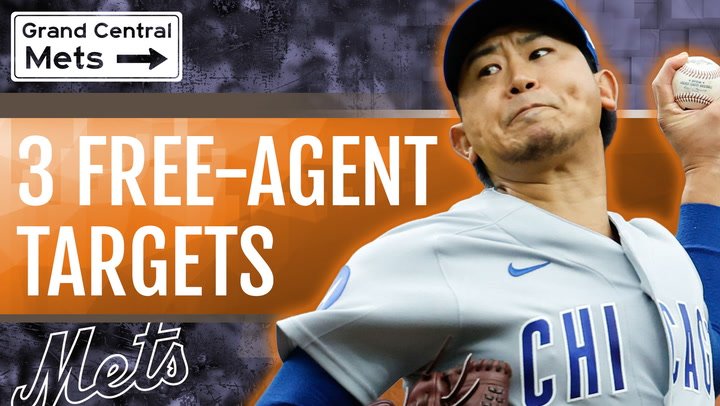 The Mets have options when it comes to upgrading their rotation this winter. Shota Imanaga offers stability, Foster Griffin brings an intriguing new profile, and Brandon Woodruff could provide significant upside if he stays healthy. View the full article
-
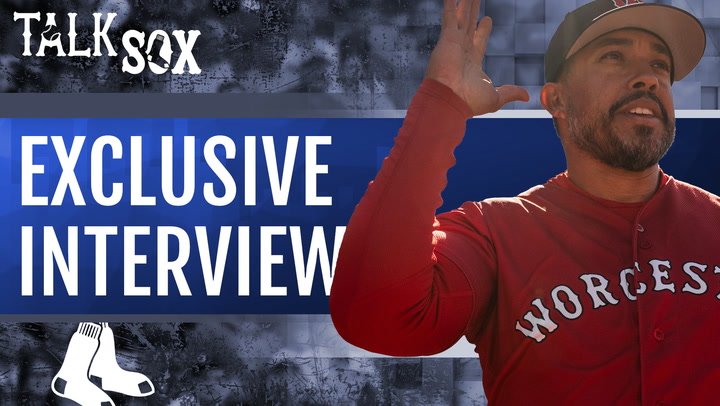 During the season Nick had a chance to sit down and talk with Woosox acting manager Iggy Suarez, talking about his time in the system starting with what his draft experience was like to him rejoining the organization as a coach. Now having won 500 games in the Boston organization since joining them as a coach, 2026 has been a special season for Suarez. View the full article
-
Could Paul Goldschmidt Give the Twins a Platoon Solution?
DiamondCentric posted an article in Twins Daily
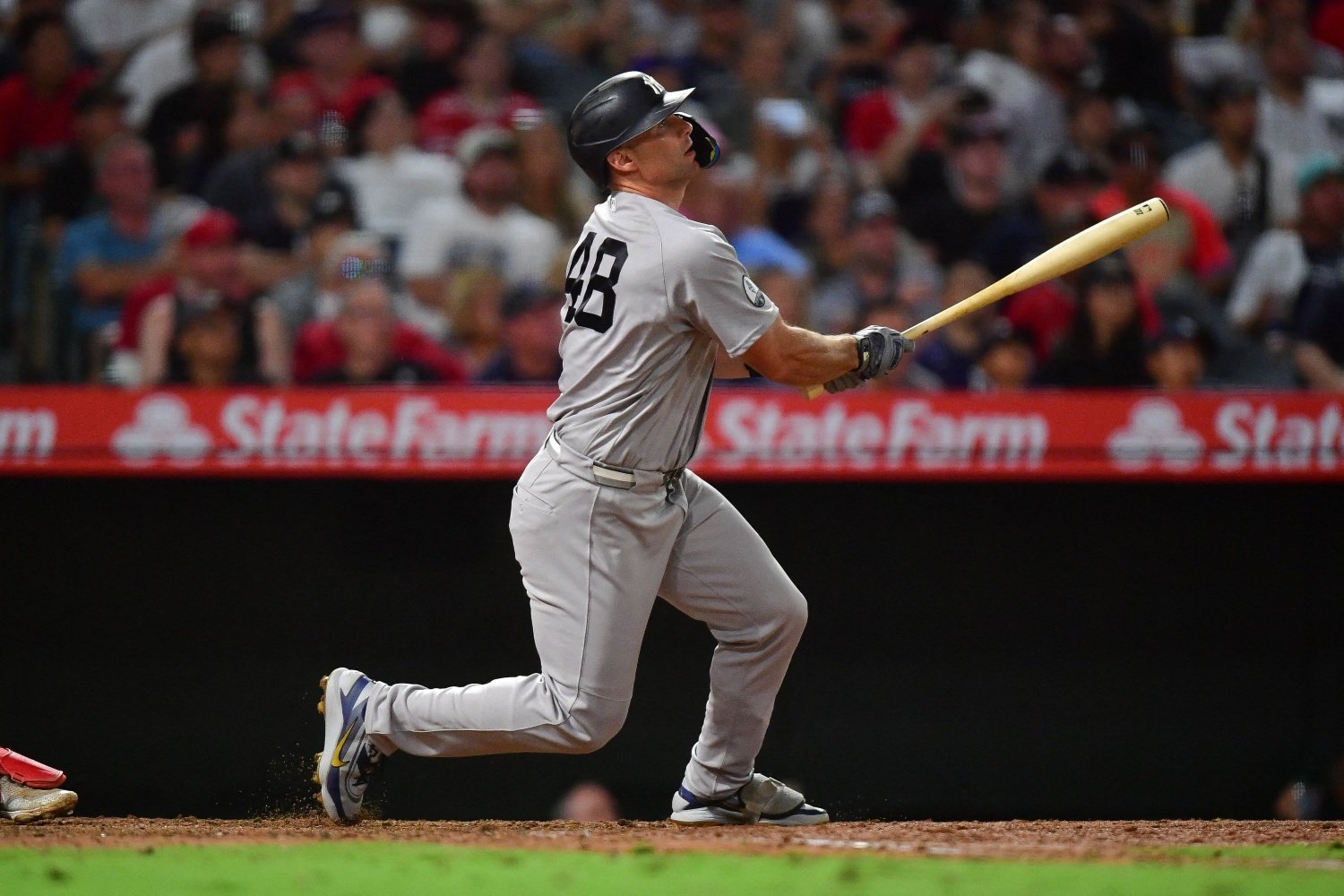 The Minnesota Twins could use additional right-handed power and veteran leadership as they prepare for the 2027 season. Paul Goldschmidt might not be the everyday first baseman he once was, but the former National League MVP could fill a valuable role for a team looking to get more production out of its lineup. Goldschmidt is coming off his 16th major-league season, and he has expressed interest in continuing his career. At 39 years old, he's unlikely to command a lengthy contract, making him a potential low-cost option for Minnesota. The Twins could use him as a designated hitter, a first baseman, and a platoon partner for some of their younger hitters. There are questions about how much Goldschmidt has left offensively, particularly against right-handed pitching. However, if Minnesota is willing to embrace a limited role for the veteran, he could provide value without requiring a significant financial commitment. Goldschmidt's Background Goldschmidt has put together a remarkable major-league career. Over 16 seasons, he's hit 390 home runs and driven in 1,284 runs. With 65.1 career bWAR, he's firmly in the conversation for eventual Hall of Fame recognition. His list of accomplishments includes the 2022 National League MVP Award, seven All-Star selections, five Silver Slugger Awards, and four Gold Glove Awards. He spent the 2026 season with the New York Yankees, after signing a one-year, $4-million contract in February. He appeared in 105 games, batting .252/.313/.452, with a .765 OPS, 18 home runs, 13 doubles, one triple, and 52 RBIs. Those numbers constitute a solid offensive season, particularly for a player approaching 40 years old. Goldschmidt also continued to provide value defensively at first base, recording 6 Defensive Runs Saved (DRS), according to Sports Info Solutions. The veteran has signed one-year contracts in each of the past two offseasons, and another short-term agreement appears likely this winter. That arrangement could appeal to the Twins, if they want to add an experienced contributor without making a long-term financial commitment. A Natural Platoon Fit Goldschmidt's splits against left-handed and right-handed pitching tell the story of the role he could fill in Minnesota. Against southpaws in 2026, Goldschmidt hit .299/.393/.573 with 11 home runs in 183 plate appearances. He remained a dangerous hitter against left-handed pitching, combining power with an ability to reach base. Against right-handers, however, he posted a .213/.239/.351 slash line in 197 plate appearances, with a 26.9% strikeout rate. His overall production still resulted in a 111 wRC+ across 380 plate appearances, indicating that he was an above-average offensive contributor. For reference, Josh Bell, whom the Twins used at DH this season, had a 106 OPS+. The Twins have several left-handed hitters who could benefit from a platoon arrangement. Walker Jenkins and Emmanuel Rodriguez both hit from the left side, and Goldschmidt could give Minnesota an experienced right-handed option to face tough left-handed pitchers. Kody Clemens is another left-handed hitter, although his performance could give him a regular opportunity against southpaws. Rather than asking Goldschmidt to handle an everyday workload, the Twins could deploy him at first base or designated hitter when a left-handed starter takes the mound. He could also provide occasional starts against right-handed pitchers when the matchup (or a needed day of rest for a regular) calls for it, but he'd largely be a platoon bat. The Yankees used Goldschmidt in a similar fashion, leaning on his production against left-handed pitching instead of expecting him to carry (or even be in) the lineup every day. Minnesota could follow that blueprint and give its younger hitters opportunities to develop, while building a more dangerous lineup against southpaws. Does His Production Translate Outside New York? One potential concern with Goldschmidt's 2026 season is how much Yankee Stadium contributed to his offensive numbers. The ballpark can be favorable to certain hitters, particularly those who can take advantage of its dimensions. However, Goldschmidt actually produced better numbers away from home. He posted an .825 OPS on the road, compared to a .694 OPS at home. That difference suggests his offensive production was not simply the result of playing in a favorable home environment. A move to Minnesota would introduce a different set of ballpark factors, but his road performance offers some encouragement that he could remain productive in the right situations. Still, Minnesota would need to be realistic about his limitations. His struggles against right-handed pitching make him a less appealing everyday option, and his age increases the possibility of declining production. The Twins should not sign Goldschmidt expecting him to play even as much as he did in 2026. Instead, they need to view him as a specialized hitter whose value comes from favorable matchups and a carefully managed workload. A Veteran Presence for a Young Twins Team Goldschmidt's potential value extends beyond the numbers on his baseball card. Minnesota could enter 2027 with a roster built around young players who are still establishing themselves at the major-league level. Adding a veteran with 16 seasons of experience could provide a useful presence in the clubhouse. Goldschmidt has played in postseason games and experienced the demands of playing for teams with championship aspirations. He could share that experience with younger players while helping them navigate the daily routines and challenges of a full major-league season. The Twins must be careful not to let the appeal of veteran leadership outweigh the importance of on-field production. Goldschmidt would need to accept a platoon role, and Minnesota would need to resist the temptation to give him regular at-bats against right-handed pitchers simply because of his reputation. The Final Call Goldschmidt would not solve every problem in the Twins' lineup, but he could address a specific need. His performance against left-handed pitching in 2026 makes him an attractive platoon candidate, while his defensive ability and extensive major league experience offer additional benefits. Minnesota should explore the possibility if Goldschmidt is willing to accept a limited role and the price remains reasonable. The Twins could pair him with younger left-handed hitters, use him at first base and designated hitter, and add a respected veteran to a developing clubhouse. At 39, Goldschmidt is no longer an everyday lineup anchor. He can still be a productive piece when deployed strategically, and that's precisely the kind of role the Twins should consider this offseason. A short-term agreement could give Minnesota a useful right-handed bat without sacrificing opportunities for its young core or committing significant resources beyond 2027. Is Goldschmidt a good fit for the Twins? Leave a comment and start the discussion. View the full article
-
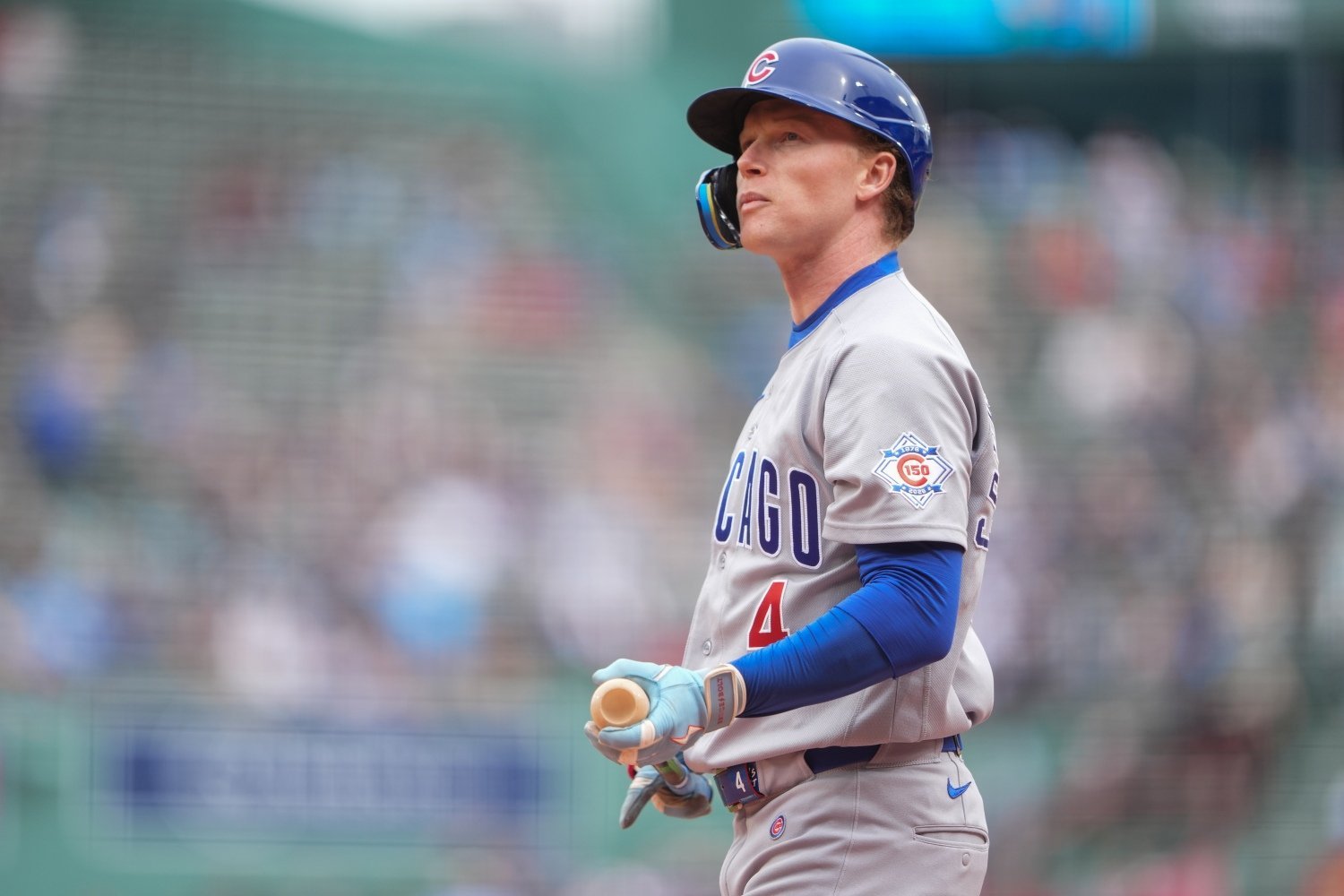 Depending on when you're scrolling through this article, there are only a handful of baseball games remaining in 2026. Whether the Brewers or Rays win the Fall Classic, a prolonged lockout looms, putting "wait 'til next year" in some question. It's an uneasy time for Cubs fans, who are digesting a meal that ended on a sour note: the 2026 season, with all its ups and (excruciating) downs. Did Craig Counsell's club accomplish what they set out to do this year? Of course not. That's especially apparent when you hold it up against the resounding success of the team from the town he left behind. Winning it all or not can't be the sole criterion, though. Cubs fans are right to be disappointed, but they need not be downtrodden. The Lovable Losers can't quite shake that sobriquet, but 2026 contained plenty of good things amid the frustrations. A fairer standard for measuring a season is the simplest test: did they win more than they lost? For the fourth year in a row, the Cubs passed that muster. Finishing with a record of 89-73, the North Siders were in playoff position most of the year and made it to the tournament relatively comfortably. On two separate occasions (although both came very early), Chicago rattled off 10-game winning streaks, humming along in a fashion that suggested they were the class of professional baseball. Concluding on the final day of September, the club's "October run" lasted just two days out on the West Coast, in San Diego. Neither game even offered much to feel excited or hopeful about. Perhaps a heavy workload brought on by a pitching staff ravaged by injuries caught up to Matthew Boyd, who looked worn and shaky in his Wild Card Series start. However, this still marked the Cubs' second-straight playoff appearance. The staff was out of depth, and even their best arms seemed out of gas. There were, however, some heroic performances this season that will be remembered for years, even if they couldn't sustain themselves into the postseason. No effort from any individual player was more Herculean than that of presumptive National League MVP Pete Crow-Armstrong. At age 24, Crow-Armstrong became the best player in the majors and carried the Cubs to the playoffs almost on his own. The campaign he orchestrated (a 40/40 season while delivering the elite defense we've come to expect) was one of the most enjoyable to watch from an individual Cubs player. We should all want more. Hopefully, Cade Horton. Ben Brown and the full complement of the squad's best will demonstrate the team's full potential in 2027 and beyond. But in the meantime, please don't let good be the enemy of great. Acknowledge the failures of what was left unsettled, and prepare for the dawn of a new day. View the full article
-
Padres Free-Agent Case: Adrian Morejon Is Due For A Big Payday
DiamondCentric posted an article in Padres Mission
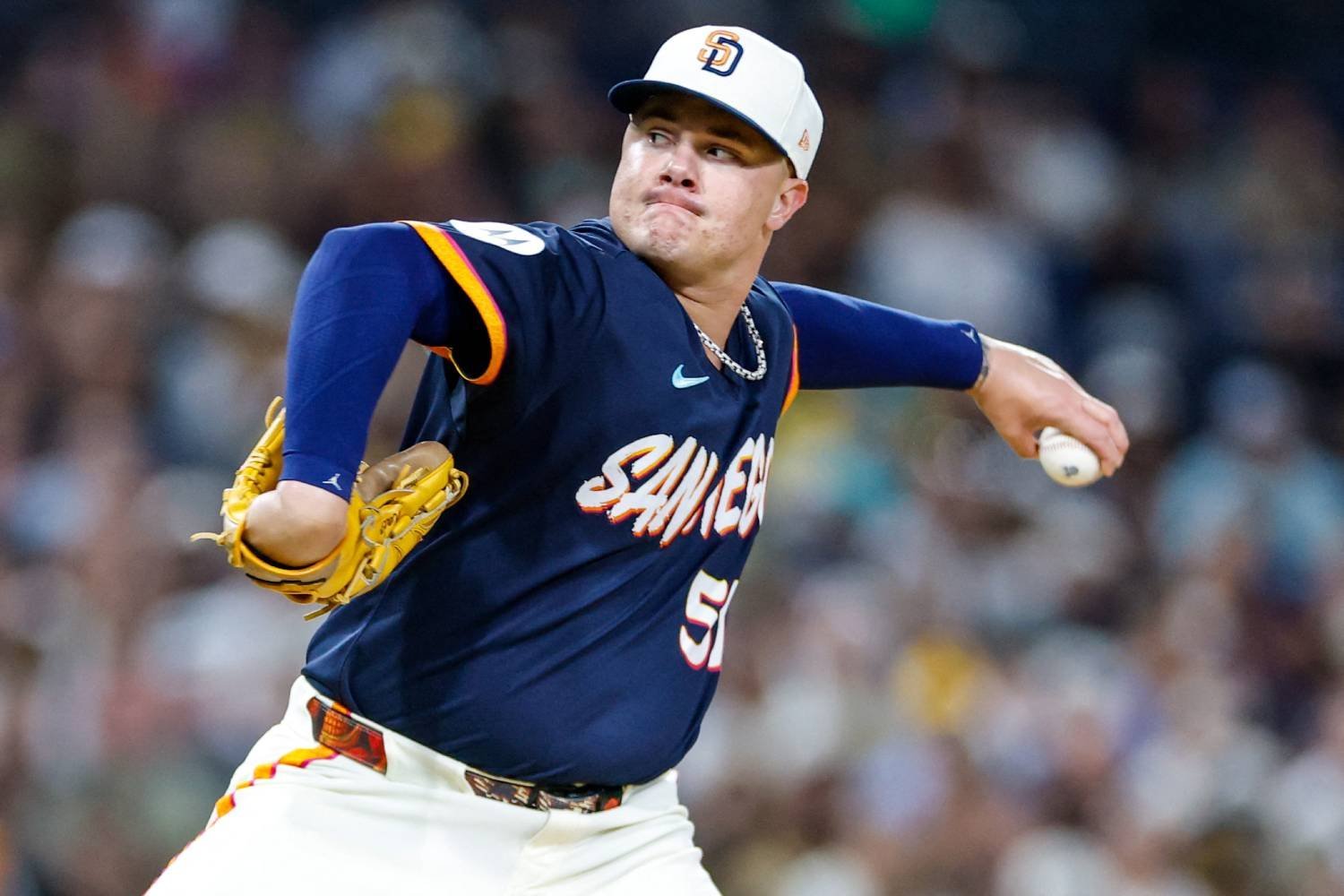 There are three major questions for the San Diego Padres entering the offseason after their elimination from the NL Division Series by the pennant-winning Milwaukee Brewers. Each of Michael King, Ty France and Adrian Morejon have different scenarios regarding their future with the Friars. King, the right-handed starter who blossomed into a staff leader if not an ace, can opt-out of his contract. France, signed to a minor-league deal, emerged as the Padres’ everyday first baseman after nearly being cut in spring training and feels like a lock to return. Then there is Morejon. The left-handed reliever is hitting the open market for the first time as a free agent. While he would love to return to the Padres, he is already a coveted late-inning bullpen arm that other contenders will pursue heavily if allowed. Adrian Morejon's 2026 Season At A Glance To understand how we got here, we need to take a look at Morejon’s 2026. Depending on how you like to look at things, he has been one of the top left-handed setup relievers over the past three seasons. While many of his metrics were at elite levels in 2026, his 2025 was statistically better. He had a 2.37 FIP (2.83 ERA) this year compared to a 2.28 FIP (2.08 ERA) in 2025. His appearances were nearly identical (76 in 2026 to 75 last year), both times finishing nine games and notching three saves. Where the statistical differences came was in his innings total, jumping from 73⅔ in 2025 to 86 this year, with a dramatic increase in strikeouts from 70 to 107 and strikeout rate from 24.5% to 30.4%. His walks increased nearly 50% from 17 to 28 and his walk rate spiked in tandem from 5.9% to 8%. He also hit five batters this year after plunking none in 2025 and only two previously in his career. Metrically, Morejon was in the red in 13 of the 16 Statcast categories for pitchers, all at the 90th percentile or better and six in at least the 97th percentile. That included a chase rate of 38.4% that was in the 99th percentile. Last year, only Morejon was in the 90th percentile or higher in eight categories and four at the 97th percentile or better. That year saw Morejon rank in the 99th percentile for hard-hit rate (30.7%) and 98th for average exit velocity (85.9 mph). His chase rate in 2025 was at 32.1%, which was in the 87th percentile. Most notably, his four-seam fastball velocity jumped from 96.5 mph to 99.3 mph and his sinker from 97.7 to 99.5 mph. Why the Padres Should Re-sign Adrian Morejon There is no question that the Padres should re-sign Morejon. It will come down to whether they can. Morejon has been with the Padres since the Cuban signed as an international free agent in 2016. He is a rare homegrown Friar at the MLB level. Bringing back Morejon is a no-brainer from the point of view of keeping the dynamic pairing of him with superstar closer Mason Miller intact, not to mention young right-hander Bradgley Rodriguez, who was a rookie this year. Being a left-hander probably elevates his value a bit as well. Morejon will be pursued as a closer by some teams and as a set-up guy by most others. While you can never count out the Los Angeles Dodgers, other contenders will be more motivated, which will increase his cost. Spotrac has Morejon with a projected value next season of just under $8.7 million, though that's far lighter than the actual terms he'll receive in free agency (Spotrac tends to undervalue non-closers). Is that something new owners Jose E. Feliciano and Kwanza Jones can afford? Most definitely. Morejon’s return will give the Padres three major weapons at the back end of the bullpen, a unit that was most responsible for holding the team together and getting them to the postseason. Why the Padres Should Not Re-sign Adrian Morejon This will all come down to a financial decision. Miller is projected to make $8.1 million in arbitration. Players don’t really get jealous of another’s contract, it is more of whether the Padres would fork out at least $17 million for two relievers, a position that is underpaid due to its volatility. Again, Morejon. who turns 28 in February, won’t get $8.7 million, as the Spotrac projection states. He will get more. Consider what the big-name closers get. Former Padres left-hander Josh Hader got five years, $95 million from the Houston Astros. Right-hander Edwin Diaz has two of the top deals for a closer. First, he got a five-year, $102 million deal from the New York Mets, then a three-year, $69 million contract from the Dodgers last offseason. Hader’s deal came as a 29-year-old, while Diaz’s Mets deal was when he was 28 and, after opting out, his Dodgers pact came at 32. Those are the top three average annual values for a closer contract ($19M, $20.2M, $23M). Without any semblance of a track record as a closer, Morejon would be hard-pressed to reach that level. The top-paid setup guy in 2026 was another former Friar, Robert Suarez, who inked a three-year, $39 million contract with Atlanta last offseason. But the question comes back around to whether the Padres will commit at least $21 million to their top two relievers, a number that will grow as Miller’s salary increases in 2028 and 2029 through arbitration. The Bottom Line Could the collective-bargaining agreement negotiations work in the Padres’ favor? Most certainly. The fact also is that Padres president of baseball operations A.J. Preller has already certainly at least gauged what Morejon’s agent is feeling from a marketplace perspective. This is the time of year where agents show their value to their clients. Morejon’s agent may already know of which teams are interested in his client through whatever back channels are tapped. Along with that comes parameters for salary numbers. But the only team that can negotiate with Morejon at the moment is the Padres. They hold that right through five days following the World Series. After that, it is a free-agent free-for-all. Preller also has a nuclear option available to him: the qualifying offer. Preller giving Morejon the qualifying offer would lock the reliever in at a reported $23.15 million for 2027 and allow Morejon to hit free agency again after next year. With as much volatility as is expected with the shortened negotiating window due to the lockout, Preller should have the advantage in contract talks. If Preller feels that Morejon could be hitting the market, he might hit the qualifying offer button and take all the drama out of the situation. Only a handful of relievers have received a qualifying offer: Hader, Diaz and Raisel Iglesias among the recent ones. While all three of those relievers rejected the qualifying offer and found homes elsewhere, Morejon isn’t getting a $23.15 million payday elsewhere and would return in a heartbeat to the Padres, trying again next offseason when more is known about the financial landscape under a new CBA. Otherwise, Preller can use the Suarez deal and the four-year, $72 million deal the Dodgers gave Tanner Scott as templates. Four years feels right, which would mean something in the neighborhood of a $60 million package. This will be the first test of the financial commitment Feliciano and Jones have for the Padres. Without signing a single free agent, the Padres are projected to have a 2027 payroll of $220 million. That includes all the arbitration projections. Even with a tight budget facing them, the smart bet is that Morejon returns one way or another. View the full article
-
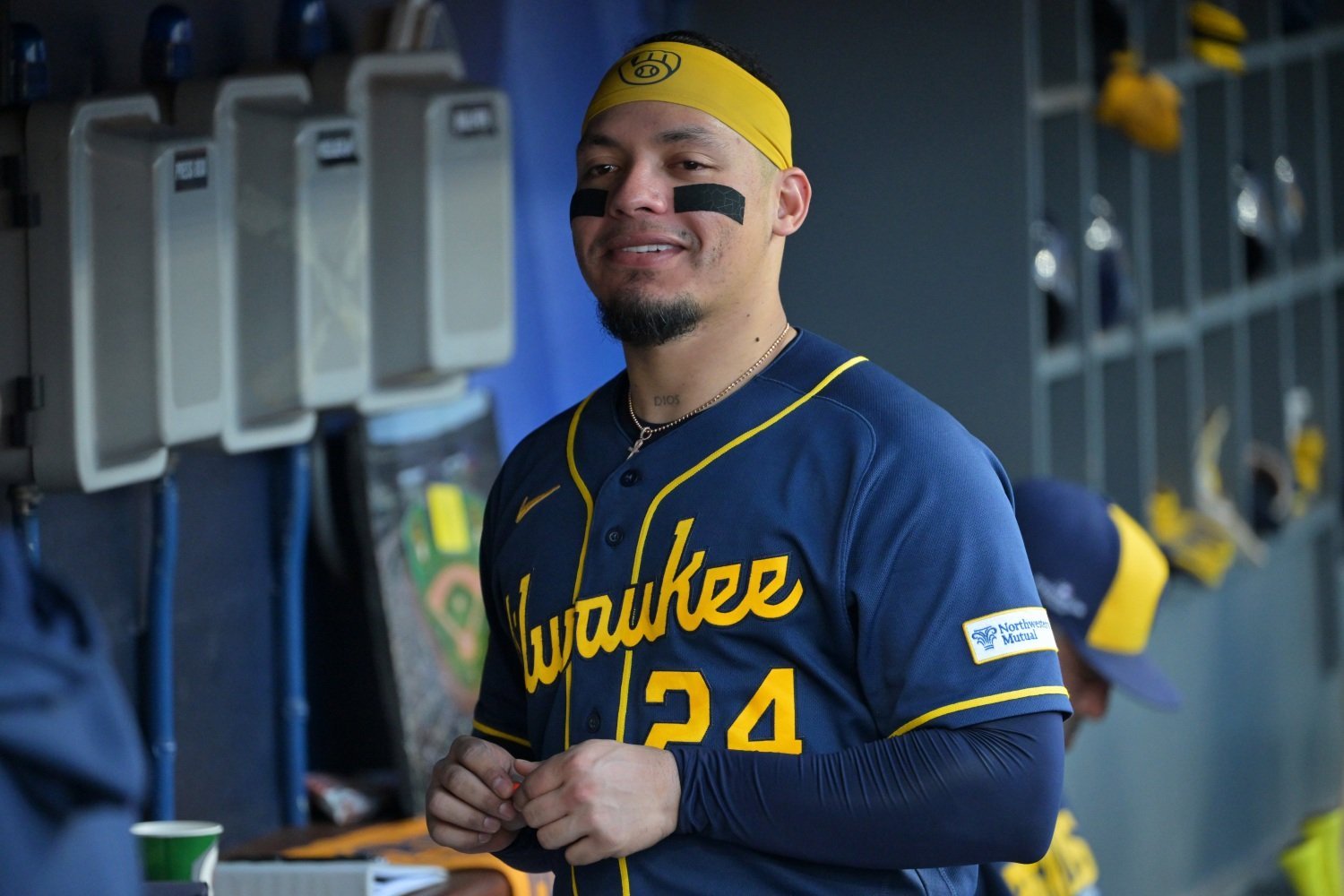 The timestamp on the tweet, which I only found out about hours later, was 7:36 PM CT. That's when Kevin Gausman, who pitched most of the last half-decade for the Blue Jays and was dealt to the Cubs just before this year's trade deadline, sent his first social-media missive since a thought about hockey two weeks earlier. It reads like it might have been intended as a direct message—like he was having a conversation already. Maybe that's true; maybe it's not. Either way, it caught the eyes of many fans, but no one made much sense of it. Twitter is a disaster these days. The replies devolved almost immediately into either pointless name-calling or pleas for the beloved veteran to reverse his recent decision to put his house on the market in Toronto, and to re-sign with the Blue Jays. Seriously, what was once Twitter is useless, anymore. Being a relatively healthy human being, though, Gausman seems to spend relatively little time on the app, so maybe he hasn't noticed how futile it is to cast interesting pearls before the bots. Again, maybe it's not even that, but that he has a relationship with someone that runs through Twitter DMs and just entered this thought in the wrong pop-up text box. Anyway, here's what he said: This was just when Logan Henderson was getting done walking Victor Mesa Jr. to lead off the top of the second inning. You can make a case that it was sent at the very lowest moment of the game for the Brewers. Yes, they'd given up four first-inning runs, as the Rays teed off on Henderson, but then they'd responded with a two-run boutade of their own. They needed Henderson to do what Drew Rasmussen hadn't: provide a shutdown inning and maintain the momentum they had just generated. That walk to Mesa was a very bad omen. It reads like Gausman is suggesting that the Rays knew what was coming. Pitch-tipping is a constant topic of conversation around the game these days, and as hard as Tampa battered Henderson to begin the game, maybe they really did have something on him. If he subsequently cleaned that up, it would explain how the Rays went from hammering him to barely touching him (or anyone else) the rest of the night. Gausman is very familiar with the Rays, having pitched so long in the AL East, so there might be a firm foundation for his suspicions along those lines. If you imagine that we parachuted into an ongoing discussion of pitch-tipping in the context of this game, the tweet makes plenty of sense. But Gausman is branching that conversation off in a new direction. The long-time hurler seems to be instinctively defending his brethren. He's implying that even if the Rays have something that's telling them what's coming, it might not be Henderson's fault. The other party involved—the one who might be guilty, since Gausman is exculpating Henderson—is catcher William Contreras. One of baseball's unwritten rules is that batters aren't supposed to peek at the catcher to get a clue about the likely location of the upcoming pitch. Hitters break that rule all the time. Even if they didn't, though, imagine you're in a tense and high-energy environment, and someone is just a few feet behind you, shuffling and leaning and moving. You're going to feel them. You're going to catch a glimpse of their shadow (yes, there are shadows on a big-league field, even ones we don't always see on TV broadcasts and ones cast by stadium lights, rather than the sun). Hitters often know where a catcher is. That's why many catchers set decoy locations or wait as long as possible before getting into their final stance to receive a pitch, even with the bases empty. The gist of Gausman's gossipy note, in my opinion, is that Contreras was giving away either pitch type or location based on his setup for each pitch in the sequence from Henderson to Mesa. Let's test that claim. Let's take a still-frame look at each pitch in the sequence, at the same moment in Henderson's delivery—and then process some information about what Mesa might have gleaned from that moment. Pitch No. 1: Changeup Away - Called Strike This is, for the moment, just our baseline. We're establishing what it all looks like. Pitch No. 2: Changeup Down and Away - Ball Ok, something different is happening here. Both knees are down for this pitch; that's unusual. We'll keep an eye on it. Pitch No. 3: Fastball Up and Away - Ball At first glance, this is very similar to the first pitch, but you can spot some important (though subtle) differences. Contreras is setting a higher target, but sitting lower to the ground. His body position does say, if you're looking for clues, that he's about to try to get on top of a riding fastball and hold it in place at the top of the strike zone. Pitch No. 4: Fastball Inside - Ball The other thing Gausman could have been implying, for what it's worth, is that Henderson losing pitches at the edges of the zone is not necessarily his fault, because Contreras might not be framing them well enough—or that the way he's setting up is not conducive to Henderson throwing strikes. On this pitch, Henderson misses all the way across the plate from his intended target, but it almost nips the inside edge—close enough to doing so that Contreras even challenged the call, albeit unsuccessfully. Note that this is the first pitch of the sequence in which Contreras's left knee is down, but his right one is up. Pitch No. 5: Fastball, Up and Away - Ball 4 Here, we return to the default fastball receiving stance, when the target is up and away from a lefty: down low in the crouch, glove high. There are some very good takes in this sequence by Mesa. Of the four balls, at least two were the type of pitch that often gets a swing. It's possible he had an inkling of what was coming, one way or another. Is Gausman right to suggest that Contreras might be to blame for that? Here's everyone's favorite answer: Maybe. That's the best I can do. I would lean toward 'no,' but 'yes' is on the table, even if it's way down at the other end of it. Here's the essential breakdown. When a lefty batter is at the plate and a righty hurler is throwing them a four-seam fastball, Contreras has his right knee down and his left knee up 78% of the time. It's the other way around 17% of the time. That's a fairly significant shift since 2025, when the split was 66% and 26%—and in the playoffs, it's been much more extreme. In October, right-handed Brewers pitchers have thrown 173 four-seamers to left-handed batters, and Contreras has been in the right-knee-down stance 92% of the time, against just 5% left-knee-down. That's worth knowing. It only matters, though, if there's some separation we can detect between that tendency and the stances Contreras uses on other pitches Henderson might have thrown Mesa. There isn't. When righty hurlers thrown lefty batters changeups, Contreras shifted from a 67/27 split last season to an 82/16 split this year. This month—you'll never guess—the split is 92/5. On cutters, it was a 72/21 split in 2025 and an 88/8 split in 2026. Of the 55 cutters righty Brewers have thrown to lefties in the playoffs, Contreras has gone right-knee-down, left-knee-up 55 times—every single time. Contreras has made a major shift toward using the right-knee-down stance this year, across all pitch types and target locations, so there's not much to read into things in that sense. He does go with both knees down much more often on changeups than on fastballs. Specifically, we might speculate that he goes to that stance when the changeup is supposed to be down below the zone, whereas (as we see on the first pitch, above) he'll keep the left knee up when the goal is to throw it for a strike. He extends his leg farther more often on the changeup than on fastballs. There are subtle differences one could learn to spot, and yes, they can be spotted even by a hitter in the box, if they know what to feel or look for. Contreras isn't giving away the game, either via framing or tipping his pitchers' hands. There's something there, maybe, but it's tiny. This isn't why the Rays were all over Henderson early in Game 2, and it's not a weakness in Contreras's game. There's a tendency that might be very slightly exploitable, but Contreras has become flexible and unpredictable enough to minimize the risk of that exploitation. Whether this is what Gausman was talking about or not, there's very little chance (though not quite none) the Rays were getting the drop on Milwaukee at any point via the man behind the dish. View the full article
-
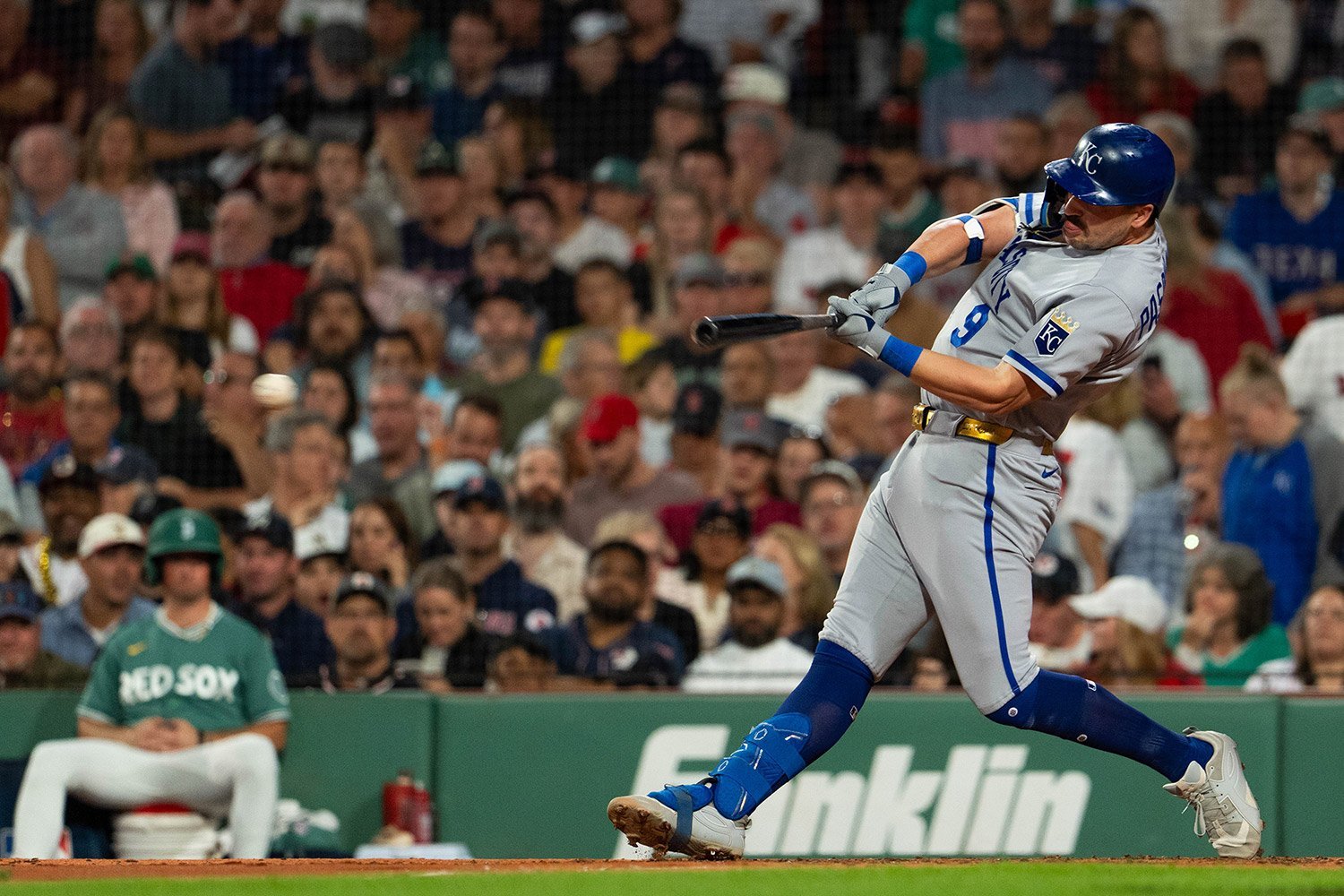 Throughout the first half of the season, it felt as if Vinnie Pasquantino was far away from the hitter who, in 2025, became the third left-handed hitter in Royals history to have a 30-home-run, 30-double season. That season, he also hit home runs in five consecutive games, from August 18-22. Vinnie got off to a slow start and then missed 40 games due to two separate stints on the injured list: first, from June 14 to July 9, with a fracture of the right hamate bone; then, from July 29 to August 16, with discomfort in his right wrist. The only month in which he recorded more than 100 wRC+ during the first half was June, with 118, when his slugging seemed to awaken as he surpassed .400 for the first time, reaching .426. However, he fell back to 95 wRC+ in July and finished that first stretch with a line of just .222/.308/.345, six home runs, 32 RBIs, and 80 wRC+. Last year, in what could be considered the best season of his career, Pasquantino reached the All-Star Game break with 15 home runs, 56 RBIs, and 109 wRC+. Much of the trouble was due to the combination of breaking pitches, especially sweepers and sliders. Vinnie did not hit any home runs in 72 plate appearances that ended with a breaking pitch, while his BABIP fell to .145, his xBA to .209, and his xSLG remained at just .320. The problem was not limited to his expected statistics: the quality of his contact also suffered, with a Barrel/BBE rate of 3.6%. This is where part of the problem that followed Vinnie throughout that first stretch begins to emerge: his lack of consistency against left-handed pitchers. It has always been one of his weaknesses, and opponents keep going back to it. In his career, Pasquantino averages just 81 wRC+ against lefties, with a batting line of .236/.293/.368. He has had only one season in which he produced consistently against them: precisely his debut season in the Major Leagues, in 2022, when he recorded an .854 OPS and 148 wRC+, although in just 65 plate appearances. At that point, the season seemed irrecoverable. However, Pasquantino managed to make adjustments against left-handed pitchers and completely changed the course of his campaign. He finished the second half with a .294/.374/.563 line and 157 wRC+. In addition, he tied for second in MLB with 22 RBIs in September and, even more revealingly, put together good at-bats against lefties. From June 3 through the end of the season, Pasquantino tied for fifth in the American League in OPS, at .902, among hitters with a minimum of 200 at-bats. He trailed only four players, including the leader, Yordan Alvarez, at 1.013. His 15.2% whiff rate in 2026 ranked in the 92nd percentile, an improvement over his 18.2% mark in 2025. After being reinstated from the injured list on August 17, he struck out just 16 times in 145 plate appearances. His 11.0% strikeout rate ranked seventh in the American League, behind Chandler Simpson's 5.4% mark. Let’s now analyze some of his tendencies and how his approach at the plate may have led him to achieve these results. Season PA BB% K% AVG OBP SLG OPS ISO BABIP wOBA wRC+ O-Swing% Z-Swing% Swing% O-Contact% Z-Contact% Contact% Zone% SwStr% 1st Half 83 7.2% 24.1% .145 .217 .184 .401 .039 .196 .190 11 31.5% 63.50% 47.7% 72.5% 85.8% 81.5% 50.8% 8.8% 2nd Half 50 8.0% 12.0% .311 .360 .556 .916 .244 .316 .389 149 33.0% 66.70% 50.5% 75.9% 92.2% 87.1% 52.2% 6.5% The statistics in this table compare the first and second halves of the season, exclusively against left-handed pitchers. As you can see, the jump in production was brutal: he went from 11 wRC+ to 149, with an increase of .372 points in slugging and .515 in OPS. Vinnie changed the course of his at-bats by being a little more aggressive against pitches both inside and outside the zone. His contact improved in both metrics, with increases of 3.4 and 6.4 percentage points, respectively, while he reduced his SwStr% rate by 2.3 percentage points. Remember his problems against breaking balls during the first half? He pulverized them in the second half, and raised his xBA to .319 and his xSLG to .876, with a Barrel/BBE rate of 44.4%. Let’s now look at Pasquantino’s two heat maps. On the left, we have Vinnie’s results against breaking pitches during the second half of the season; on the right, his report against left-handed pitchers over that same period. The first map shows his aggressiveness and the damage he managed to do in the lower part of the zone, as well as against pitches that moved away from him and sought to attack the outer corners. I love Vinnie’s swing when he is in sync and identifies those pitches well: he lets them travel, as he usually does, and then unleashes his swing. In the other map, the offensive heat is concentrated in a point farther away, near the outer corner. I reviewed all of Vinnie’s at-bats against lefties since the All-Star break. We have already seen some of the most revealing statistics, but I wanted to dig deeper into what he accomplished when he hit the ball to the opposite field or found a pitch he could punish. He was also devastating. In the second half of the season, he hit just 26 balls of that type: 18 to his pull side and eight to the opposite field. He recorded a .375 BABIP in both groups, with 143 and 286 wRC+, respectively. Granted, it is a small sample. But it is part of a much more revealing picture and helps explain one of the factors that set Pasquantino’s season on a path toward a very different outcome at the plate. View the full article
-
Why Minnesota Twins Must Find a New Approach with Joe Ryan
DiamondCentric posted an article in Twins Daily
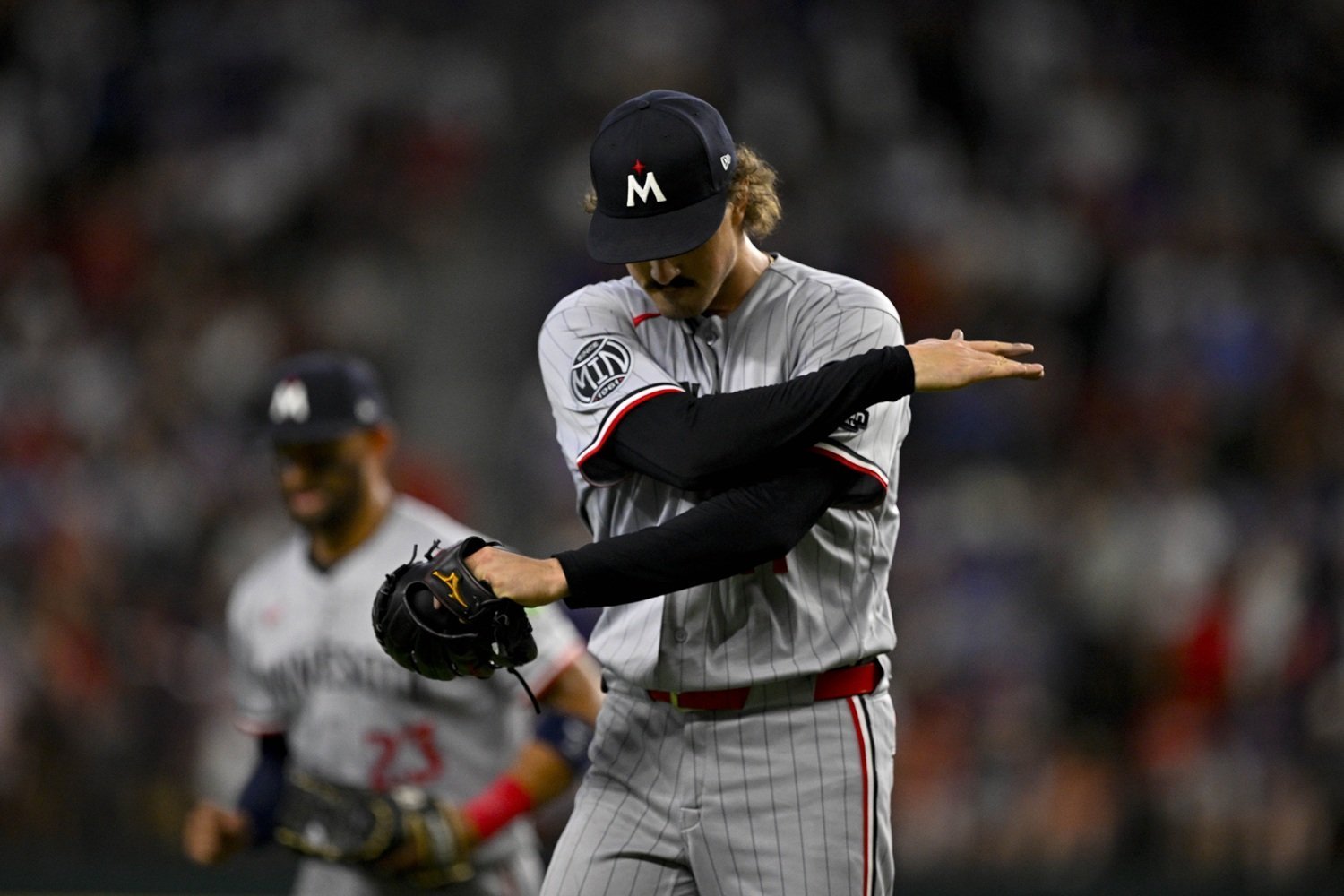 Joe Ryan has become one of the Minnesota Twins' most important starting pitchers, but his latest season repeated a troubling pattern. He dominated early, earned another All-Star selection, then struggled to stay healthy and effective down the stretch. The Twins face an important decision this offseason, as Ryan enters the final year of team control in 2027. Trading him could make sense if Minnesota falls out of contention, but keeping him would give the club an established starter capable of anchoring its rotation. Assuming they keep him at least through the winter, the Twins need a better plan for getting Ryan through an entire season. His late-season struggles have become too consistent to ignore, and hoping for a different outcome in 2027 is not a strategy. Ryan's 2026 Season Was a Tale of Two Halves Ryan looked like a frontline starter during the first half of 2026. He posted a 2.85 ERA, struck out 28.4% of opposing batters, and gave Minnesota a reliable presence at the top of its rotation. Everything changed after the break. In his first post-All-Star start against Cleveland, Ryan surrendered a career-high six home runs. He then allowed four earned runs in each of his next two outings, before landing on the injured list with a left glute strain. Ryan returned in September, but he struggled to regain his previous form. In seven second-half starts, he recorded a 6.82 ERA in 34⅓ innings, allowing 26 earned runs. His overall numbers were respectable, with a 3.79 ERA, 159 strikeouts, and a 1.16 WHIP in 144⅔ innings. Still, the dramatic split between his first and second halves left the Twins with plenty of questions heading into the offseason. A Recurring Problem for Ryan Ryan's struggles are not limited to 2026. Since becoming a regular major-league starter, he's consistently been less effective after the break. In 2022, Ryan's ERA increased from 2.99 in the first half to 4.14 afterward. The following season, it climbed from 3.70 to 6.09. In 2024, he posted a 3.53 first-half ERA before recording a 3.98 ERA in four second-half starts, with a shoulder strain ending his season early. The pattern continued in 2025, when Ryan went from a 2.72 first-half ERA to a 4.67 mark after the break. Then came the dramatic decline in 2026. Injuries have played a role, including groin, shoulder, and glute problems. However, health has not been the only concern. Ryan has also endured stretches when opposing hitters have punished some uncharacteristic mistakes. Whether the problem stems from fatigue, mechanical adjustments, or opponents becoming more familiar with his approach, Minnesota needs to investigate the underlying causes. Five seasons of similar results suggest the organization should do more than wait for things to improve. How the Twins Can Manage Ryan Differently Minnesota should begin the 2027 season with an individualized plan for monitoring Ryan's workload, mechanics, and recovery. That means establishing his normal velocity and delivery patterns during spring training, then tracking changes throughout the year. If his command, fastball velocity, or mechanics begin to deteriorate, the coaching and medical staffs should investigate before allowing the problem to carry into multiple starts. The Twins should also be more willing to provide extra rest during the summer. If their rotation depth allows it, they could use a six-man rotation for stretches around the break. A planned additional day of rest could be more useful than waiting until an injury forces him onto the injured list. Ryan made five of his first eight and seven of his first 14 starts in 2026 on four days' rest. That's still considered regular rest, but in reality, the league made 48% more starts on five days' rest than on four in 2026. With a league schedule that includes more off days than in the past, even without running a true six-man rotation, it's often possible to give a starter five days between outings. The Twins should put Ryan on a strict five-day schedule, to see if it allows him to hold up better late in the campaign. Just as importantly, Minnesota should establish clear guidelines for responding to physical warning signs. If Ryan reports discomfort or the staff detects a meaningful change in his delivery, they should consider skipping a start instead of automatically sending him back out after five days. The goal would not be to impose an arbitrary innings limit, but to prevent manageable problems from becoming month-long absences or strings of blowup starts. The Twins should also avoid overworking Ryan simply because he's one of their best starters. A deeper rotation would allow them to distribute innings more evenly, keeping Ryan fresher for the final two months. That approach requires the organization to prioritize September effectiveness over maximizing every regular-season start. Ryan's contract situation adds another layer to the discussion. MLB Trade Rumors projects his final arbitration salary at $9.6 million, and his remaining team control could make him attractive to other clubs. If Minnesota is not positioned to contend, the front office will have to weigh his trade value against the benefits of retaining an established starter. If they want to move him in July, they need to give suitors a reason to believe he'll remain viable in August and September. The Breaking Point in 2027 Ryan remains capable of being a major asset for Minnesota. His first half in 2026 demonstrated that, but the repeated second-half decline has become a legitimate concern—a source of both frustration and real damage to the franchise. There is also the looming cloud of a potential MLB lockout that could impact the season’s start. If negotiations carry into the spring, the start of the season could be pushed back. For Ryan, that might be helpful, because it could limit his innings load and put him in a better position to finish the season on a high note. On the other hand, a shortened season would also be a condensed one, and fewer off days would mean less opportunity to give the hurler five days between appearances. With his final season of team control approaching, Ryan's future in Minnesota remains uncertain. Whatever the organization decides, it shouldn't allow another season to follow the same, familiar script. A healthier, more effective Ryan down the stretch could make a significant difference in the Twins' 2027 season. What else could the Twins do with Ryan to impact his second-half performance? Leave a comment and start the discussion. View the full article
-
Boston Red Sox Arbitration Decisions & Projections: Triston Casas
DiamondCentric posted an article in Talk Sox
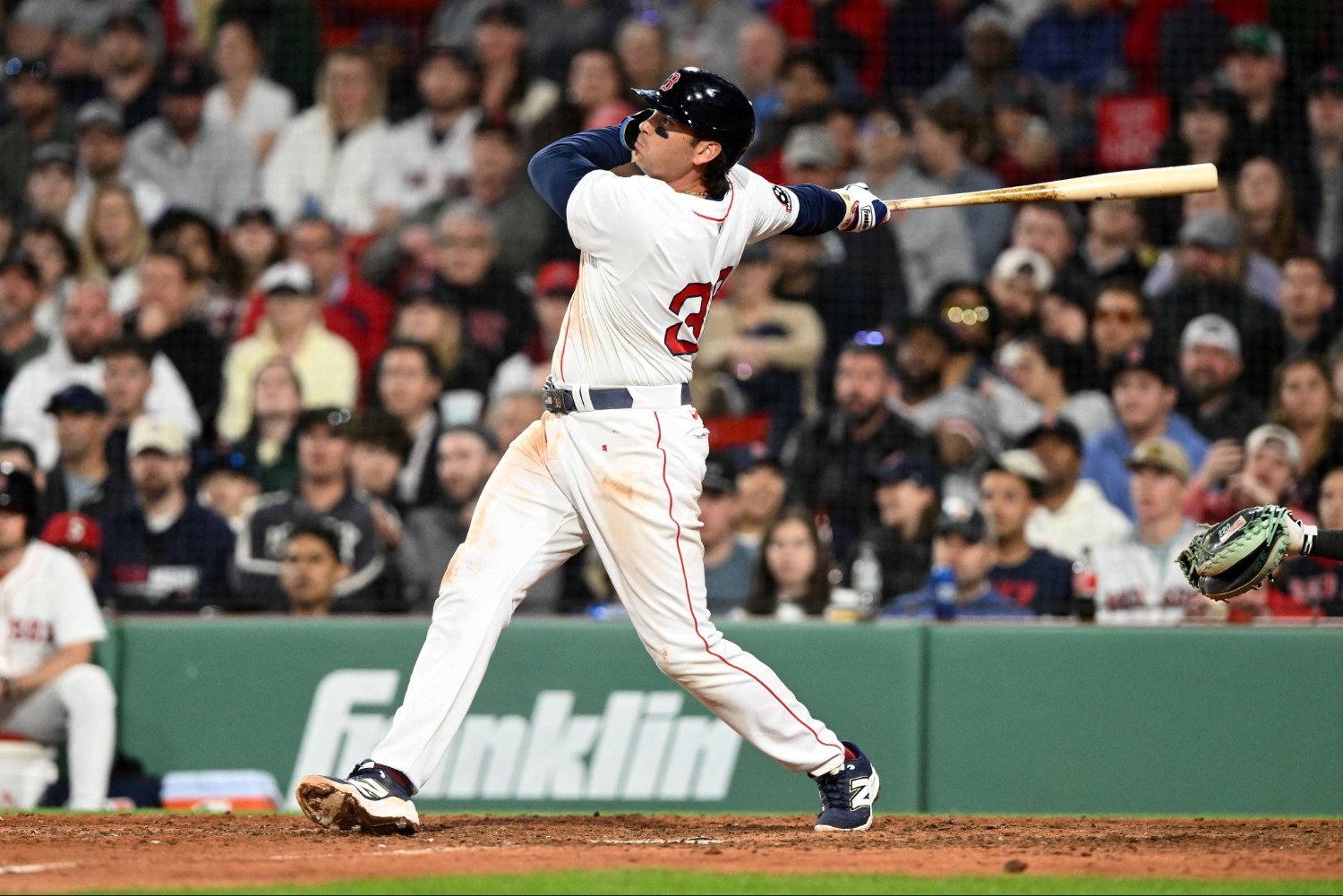 It’s impossible to talk about Triston Casas without mentioning injuries. Boston’s first-round pick in 2018 and a once-highly touted prospect, Casas has largely faded into the background of the Red Sox organization. It’s not without reason. He has played just one full season since his debut, and with last season’s emergence of Willson Contreras as the team’s primary first baseman and most prominent power bat, it’s hard to see where Casas fits. But when Casas has played, he’s displayed the power he advertised as a prospect, and has been a productive hitter. He debuted in 2022, earning a late-season call-up. He played in 27 games, and while his .197 average doesn’t scream success, he had flashes of brilliance. Five home runs, 12 RBIs and a .766 OPS isn’t too shabby for his first month of MLB action. He played 132 games in 2023, compiling an impressive first full season and finishing with 24 homers, good for second on the team. He tallied 113 hits and a solid .263 average to go alongside a .856 OPS. There was plenty of reason to be optimistic and believe that the Red Sox had finally found their first baseman, a position in limbo since Kevin Youkilis in the late 2000s. After an excellent start to 2024, that hope came crashing down when he suffered torn rib cartilage. He returned in late August and finished with a respectable line given his 99 missed games. He hit 13 homers and drove in 32 runs to the tune of a .241 batting average and a .800 OPS. But after the late-season return, Casas struggled to get back on the field. It took just 29 games in 2025 for him to suffer another injury, this one a ruptured left patellar tendon that took him out for the rest of the season. In April 2026, disaster struck again. While rehabbing his knee, Casas suffered an abdominal/intercostal strain that landed him on the 60-day IL. He ramped up his recovery, but in July underwent arthroscopic surgery for a left wrist injury, which sidelined him for the season. His luckless career has been derailed by near-constant injuries, but Casas is expected to return to the field sometime in 2027. However, his position has been filled by Contreras, and it remains to be seen if Casas will be able to return to his 2023 level of production. If he can, Boston would greatly benefit from having another consistent bat to deploy at DH or off the bench. Triston Casas' Arbitration Summary Age on Opening Day 2027: 27 Service time: 4 years, 32 days 2022 Salary: $199,226 2023 Salary: $732,500 2024 Salary: $760,000 2025 Salary: $774,000 2026 Salary: $1,610,000 2027 Salary (Projection): $1.7 million Red Sox 1B Depth: Willson Contreras – MLB Mickey Gasper – MLB/Triple-A Nick Sogard – Triple-A Why the Red Sox Should Tender Casas A Contract Casas is only making $1.7 million this season, a drop in the bucket for the Red Sox's payroll And let’s not forget that Casas was a real threat in 2023. He’s cheap, he can produce, and there’s little pressure for him to come back like there was before Boston acquired Contreras. This past season proved that the organization need some more thump in the lineup, and there’s a lack of true power on the open market this offseason. Casas can fit that mold, and with Contreras entering his age-35 season, Casas could still be a first base option if he can return to form. Why the Red Sox Should Non-Tender Casas Let’s face it: Casas can’t stay on the field, and even if he’s able to, Boston has found its first baseman in Contreras. Casas' strikeout rate has never dipped below 24.1%, and by the time he’s fit to play, it’ll have been four years since his last full season. It’s discouraging to say the least, and that isn’t considering another freak injury that he’s prone to. With his cheap contract and decent upside, Casas could be a trade chip should the Red Sox look to close the book on his injury-filled tenure without going down the non-tender path. Prediction There’s no real downside to tendering Casas a contract, other than him continuing to occupy a 40-man roster spot, especially given the incredibly cheap price tag. If, and it feels like a big if, he can return to his 2023 form, he can be a real weapon off the bench for a team that is searching for power wherever it can be found. There’s little expectation for him to return to that form, of course, and he’ll benefit from having the space to rehab with such little pressure. In the event that he can’t return to form, the Red Sox will only be $1.7 million in the hole and can cut him with little repercussion. Perhaps this is the nostalgia talking, but the Red Sox should tender him a contract. The upside is there, and the price is too low to pass up. View the full article
-
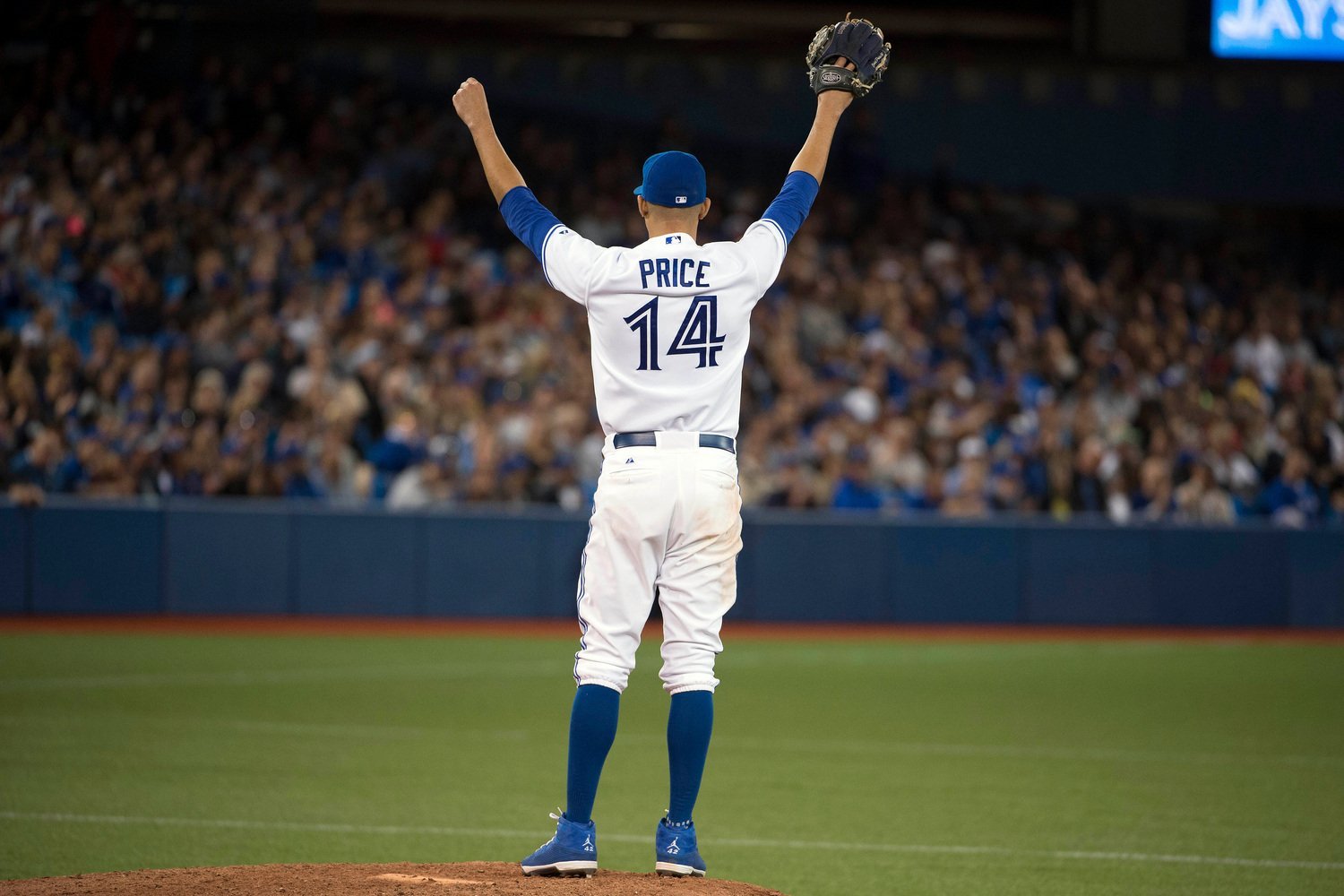 Dylan Cease had one of the best pitching seasons in recent Blue Jays history. For a time, it looked like he might challenge for this year’s Cy Young Award, but after some shoulder fatigue and a couple of less-than-stellar starts down the stretch, he ceded ground to Cam Schlittler of the Yankees and looks destined for a second place finish. The Jays have had four Cy winners in their 50-year history: Pat Hentgen, Roger Clemens, Roy Halladay and Robbie Ray. If Cease finishes second, he would be in even rarer company – only three Jays have ever been runner-up. Let’s take a look at them. 2015 - David Price David Price had an incredible 2015. He went 18-5 and posted the best ERA in the American League (2.45). He also led the league in fWAR (6.7) and was a full win ahead of Cy Young winner Dallas Keuchel. Keuchel, for his part, was an arguably deserving recipient. He put up 20 wins (voters still like those, regardless of the lack of control top pitchers have on their run support) and led the league in innings pitched (232 to Price’s 220.1) and WHIP (1.017 to 1.076). Price had the better FIP of the two (Price’s 2.78 over Keuchel’s 2.91), but both were behind Chris Sale’s 2.73. Sale also led the league in strikeouts (274) and finished fourth in the voting. Of course, if you were a Jays fan in 2015, you’ll remember that Price didn’t spend the full season in Toronto. On July 30, the Blue Jays sent Matthew Boyd, Jairo Labourt and Daniel Norris to the Tigers in exchange for Price. If there were a half-season Cy Young Award, the post-trade Price would have had it locked up. From July 30 to the end of the season, Price led everyone in wins (going 9-1), ERA (2.30), FIP (2.22) and fWAR (2.6), was second in strikeouts (87) and spearheaded Toronto’s playoff push (they were six games back of the division lead at the time of the trade and would go on to win the division by six games). Price had also won a Cy Young previously while with Tampa Bay. There have been 140 Cy Young Awards given out since the inception of the honour, and only 23 pitchers have won it multiple times. This speaks to the difficulty of winning the award, certainly, but I can’t help but wonder if there is a bias amongst voters that skews against pitchers that have won before. 2008 - Roy Halladay Speaking of guys that had won before, Roy Halladay received his first Cy Young Award in 2003. He would get four first-place votes in 2008 but finished second behind winner (and future Halladay teammate) Cliff Lee. Doc’s snub here is much less egregious than Price’s. Lee had the edge in both ERA and FIP, and despite Halladay hitting the 20-win mark, Lee had him bested there too with 22 wins. Halladay unsurprisingly led the league in innings pitched (246), complete games (9) and shutouts (2). He also had the league’s best WHIP (1.053) and was third in strikeouts (206); teammate AJ Burnett led the league with 231, while Lee finished ninth with 170. Again, it’s tough to knock Lee’s credentials on the season. He also had the Halladay-like story of having been sent down to the minors the previous season before coming back up and dominating. I’ll twist myself into knots arguing that a Jay got robbed here and there, but in this case I think the voters got it right. 1987 - Jimmy Key In ‘87, Jimmy Key led the league in both WHIP (1.057) and ERA (2.76). At the time, those were also good for the best single-season WHIP and second-best ERA (behind Dave Stieb’s 1985 ERA of 2.48) in Jays history. Key’s 7.4 bWAR was the high-water mark of his career, and while it was undoubtedly his best season as a Jay, it wasn’t enough to take home the hardware. Key received four first-place votes, and three other pitchers, all with ties to Toronto, also garnered top spot consideration. Former Jay Doyle Alexander got one, and future Jay Dave Stewart got a pair. Another future Jay, Roger Clemens, got 21 and took home the ‘87 Cy. Clemens’ 20 wins (tied with Stewart) and otherworldly 18 complete games and seven shutouts highlighted his case. Of course, with the power of hindsight and the (alleged) PED use, maybe there is a case to be made to vacate that Cy and award it belatedly to Key. We’ll save the relitigation for another article, but we also can't ignore the bias (ignorance?) of those voting for the award. On paper, 1987 represents the closest the Jays franchise had gotten to a Cy Young Award (Hentgen's win was still almost a decade away), but of course by that point Dave Stieb should have had a pair of wins and arguably as many as four. The whims of the BBWAA can be confounding at the best of times – but that just gives us more fodder to be angry about all these years later. On the off chance that the writers get it wrong again and Cease falls down to third, he would join a group of five other Toronto starters: Kevin Gausman in 2023, Alek Manoah in 2022, Hyun Jin Ryu in 2020, Halladay in 2008 and David Wells in 2000. Pretty good company in their own right. With the contract Cease has signed, we should expect to see his name here a few more times. View the full article
-
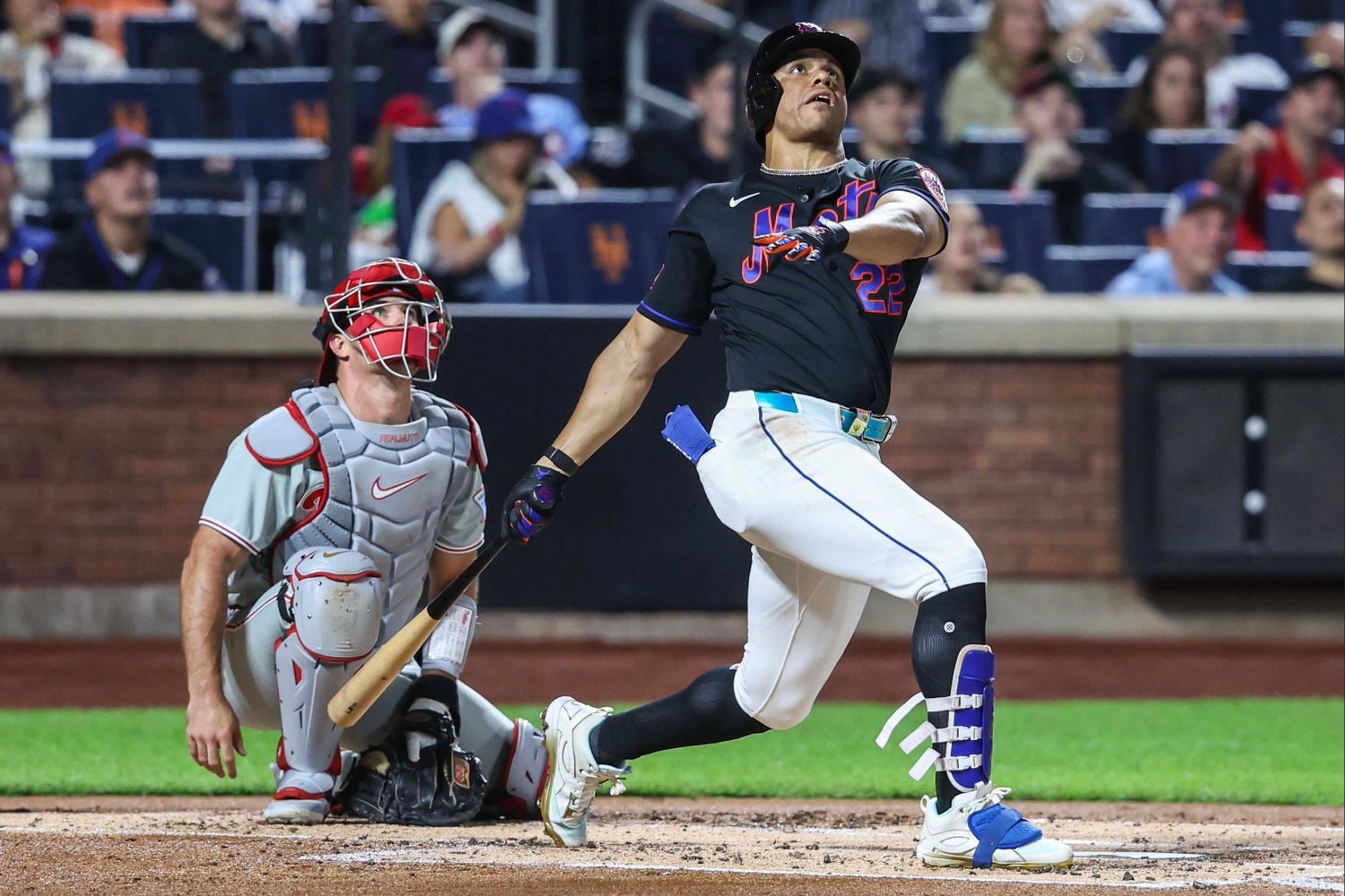 The 2026 campaign was kind of a mess for the New York Mets, but Juan Soto remained highly effective at the plate even while playing through many maladies that robbed him of several games and could have affected his performance. For reference, here’s a list of some of Soto’s 2026 injuries: an illness, back tightness, two different left calf strains that required trips to the injured list, an ankle injury after fouling off a ball in the area, and forearm tightness. Yes, that’s just in one season. The fact that he played 111 games was nothing short of amazing. Soto’s 3.1 fWAR represented his lowest output since the pandemic-shortened campaign of 2020. However, he was far from a bad player, even in a mediocre collective season for New York. The All-Star outfielder hit .275/.393/.515 with 27 home runs, a 147 wRC+ that’s right on par with his career mark of 150, a 16.2 percent walk rate, and a 13.5 percent strikeout rate in 482 plate appearances. No matter how you slice it, he remains the same historically great hitter he was before joining the Mets. Juan Soto Is A True Statcast Darling Per Statcast, Soto placed in the 96th percentile in Batting Run Value, but was in the 25th percentile in Baserunning Run Value, and even worse in Fielding Run Value, in the 15th percentile. He actually improved his defense in comparison to 2025, but his contribution on the basepaths fell off a cliff, probably a direct consequence of all the lower-body ailments and a desire to preserve his health when he was playing. Soto is so consistently good offensively, even in an injury-riddled year, that his Statcast profiles from 2025 and 2026 look awfully similar, baserunning drop-off notwithstanding. By now, the book is out on him as a hitter: bat-to-ball skills, power, elite discipline, and the consistency to contend for All-Star games and Silver Sluggers every year. Unless he dramatically improves his defense, an MVP seems to be a difficult proposition in a league that seems to value WAR more and more every season, competing with unicorns like Shohei Ohtani and two-way monsters like Pete Crow-Armstrong. However, there's an awfully good case to be made that, as far as pure hitting ability goes, he remains in a tier of his own. Mets Have An Elite Offensive Performer In His Prime Since the start of the 2020 campaign, only Aaron Judge (187) and Yordan Alvarez (165) have a higher wRC+ than Soto’s 160 mark. He has been even better than Ohtani, who is fourth on that list with a 158 wRC+. Back to the 2026 Mets, Soto’s 111 games were still enough for him to rank second in fWAR behind Carson Benge, as well as first in home runs, wRC+, and walk rate. For good measure, he also finished fourth in stolen bases (nine), second in batting average (.275), first in OBP (.393), first in slugging percentage (.515), second in RBIs (68), and first in OPS (.908) among his teammates. No other Mets player finished with an OPS higher than .794, which shows you the kind of lineup protection the future Hall of Famer was working with. At 28 years old, Soto remains in his physical prime, and his offensive game hasn’t slowed down one bit. In 2027, if and when baseball gets going again, we should all witness even better numbers if health is on his side. View the full article
-
How many Gold Glove awards are in Joe Mack's future?
DiamondCentric posted an article in Fish On First
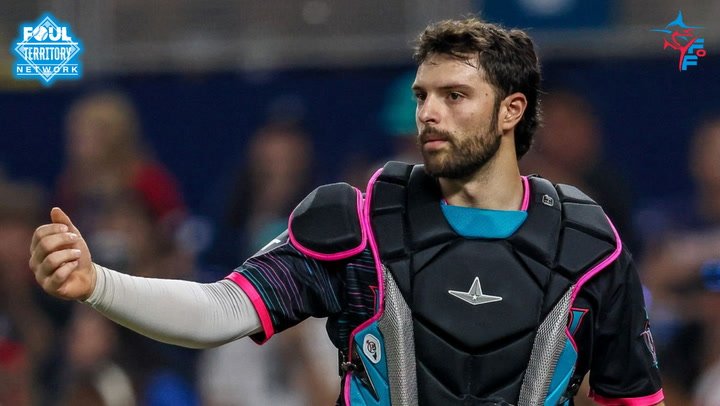 Marlins catcher Joe Mack surprisingly isn't even a finalist for the 2026 NL Gold Glove. Fish Unfiltered discusses why he may have been snubbed and details all the ways that he makes a positive defensive impact. View the full article
-
How many Gold Glove awards are in Joe Mack's future?
DiamondCentric posted an article in Fish On First
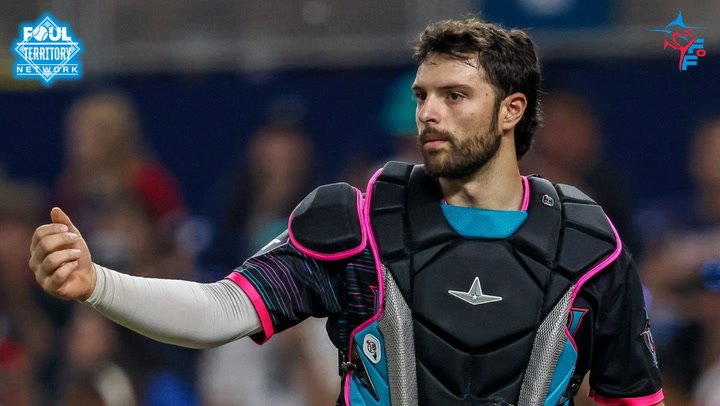 Marlins catcher Joe Mack surprisingly isn't even a finalist for the 2026 NL Gold Glove. Fish Unfiltered discusses why he may have been snubbed and details all the ways that he makes a positive defensive impact. View the full article
-
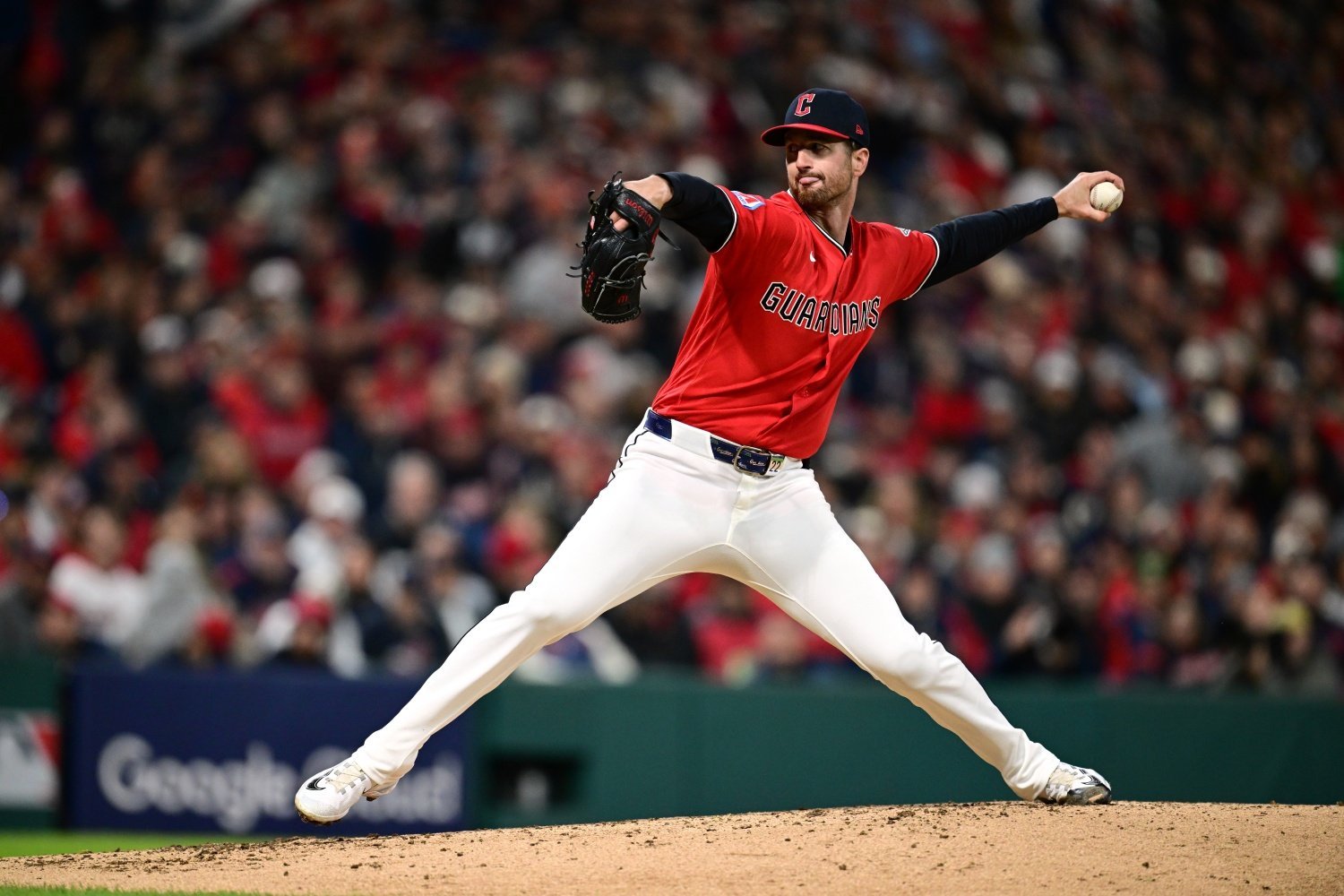 As the Minnesota Twins look ahead to the 2027 season, the rosters of the 2026 American League playoff teams offer several options to consider this offseason. With teams evaluating their own rosters and making changes for the year ahead, Minnesota could look to capitalize on opportunities to add experienced players who would fill specific needs. From bolstering the bullpen to shoring up position-player depth, these six players stand out as targets the Twins could pursue from this year’s American League postseason field. White Sox: OF Randal Grichuk A true platoon bat, Grichuk could help the Twins as an upgrade over unsatisfying righty corner outfield options Austin Martin and Gabriel Gonzalez. The 35-year-old has a career .839 OPS versus left-handed pitching, and was even better in 2026, slashing .327/.371/.655 with 11 home runs in 178 plate appearances. Grichuk would not be a big-name addition, but he could provide valuable at-bats for a 2027 outfield corps comprised of left-handed batters Emmanuel Rodriguez, Walker Jenkins, and Alan Roden, with Kody Clemens also in the mix. Red Sox: SS Isiah Kiner-Falefa While Kiner-Falefa doesn’t provide much offensive value with a career 81 OPS+, the 31-year-old plays good defense. He was worth 8 Outs Above Average in 2026, and he doesn't strike out much at the plate—just 14.8% of the time this season. While a career-high walk rate (10.4%) may not stick moving forward, Kiner-Falefa is a fine defender and would be a good emergency fill-in for Kaelen Culpepper in 2027. Yankees: RP David Bednar Bednar turned it around after a disastrous 2024 season put his future in jeopardy. Since a mid-2025 trade to the Yankees, he has a 2.39 ERA with 111 punchouts and just 28 walks over 94 innings. He boasts a 1.01 WHIP and a 2.61 FIP. His struggles from 2024 seemingly behind him, Bednar throws plenty hard (96.1 MPH on the fastball), while inducing a ton of chases and weak contact. He's as reliable a ninth inning as you'll find and has a relationship with Derek Shelton already, having spent 2021 through 2025 in Pittsburgh under Shelton. Astros: RP Enyel De Los Santos Relievers Bryan Abreu and Steven Okert have been connected to the Twins often as fans look toward the offseason, but De Los Santos would be a much cheaper option than those two. While his 4.79 ERA does not look good, his FIP (4.11) and xERA (3.42) look significantly better. The 30-year-old has bounced around, as Minnesota would be his ninth team in MLB, but he could be a solid option. He limits both walks and barrels much better than an average hurler. Guardians: SP Foster Griffin Griffin came back from Asia to little fanfare, but he put together one of the best seasons among impending free-agent starters. He doesn’t throw the ball particularly hard, topping out in the low 90s. His primary pitch is his cutter, which he throws about a third of the time, and he mixes in a sweeper, four-seamer, changeup, and sinker to keep batters uncomfortable. The 31-year-old commands the ball well, which helps him limit hard contact. He did considerably worse after a trade from the cellar-dwelling Nationals to the pitching-savvy Guardians, but that may have been a product of bad luck. His FIP while with the Nationals was 4.10 to his 3.06 ERA, while in Cleveland, it dropped to 3.54, against a 5.19 ERA. The Twins could look to pounce, as the rotation behind Joe Ryan, Pablo López, and Taj Bradley has major question marks, but starting pitching is expensive, and another domino would have to fall. Still, Griffin would be a welcome addition to the staff, giving Minnesota a reliable innings-eater who could stabilize the back of the rotation. Rays: UTIL Jorge Mateo The cheapest option on the list, Mateo has been a poor offensive player over his entire MLB career, slashing .219/.264/.356 for a 74 OPS+. However, he does provide defensive versatility and speed. He has 125 career stolen bases, something the Twins could use: they ranked 20th in stolen bases this season. Like Kiner-Falefa, Mateo could give Minnesota a veteran option to provide shortstop depth behind Culpepper while offering flexibility across multiple positions. None of these players qualify as franchise-altering acquisitions, but each could address a need for the Twins heading into 2027. Minnesota has several avenues to add a platoon bat, improve the bullpen, or provide speed off the bench, and exploring the rosters of the teams that outperformed them in 2026 could be a good place to start the offseason. The Twins should be competing in the American League Central in 2027, so they ought to at least take note of the players their top rivals are set to lose. View the full article
-
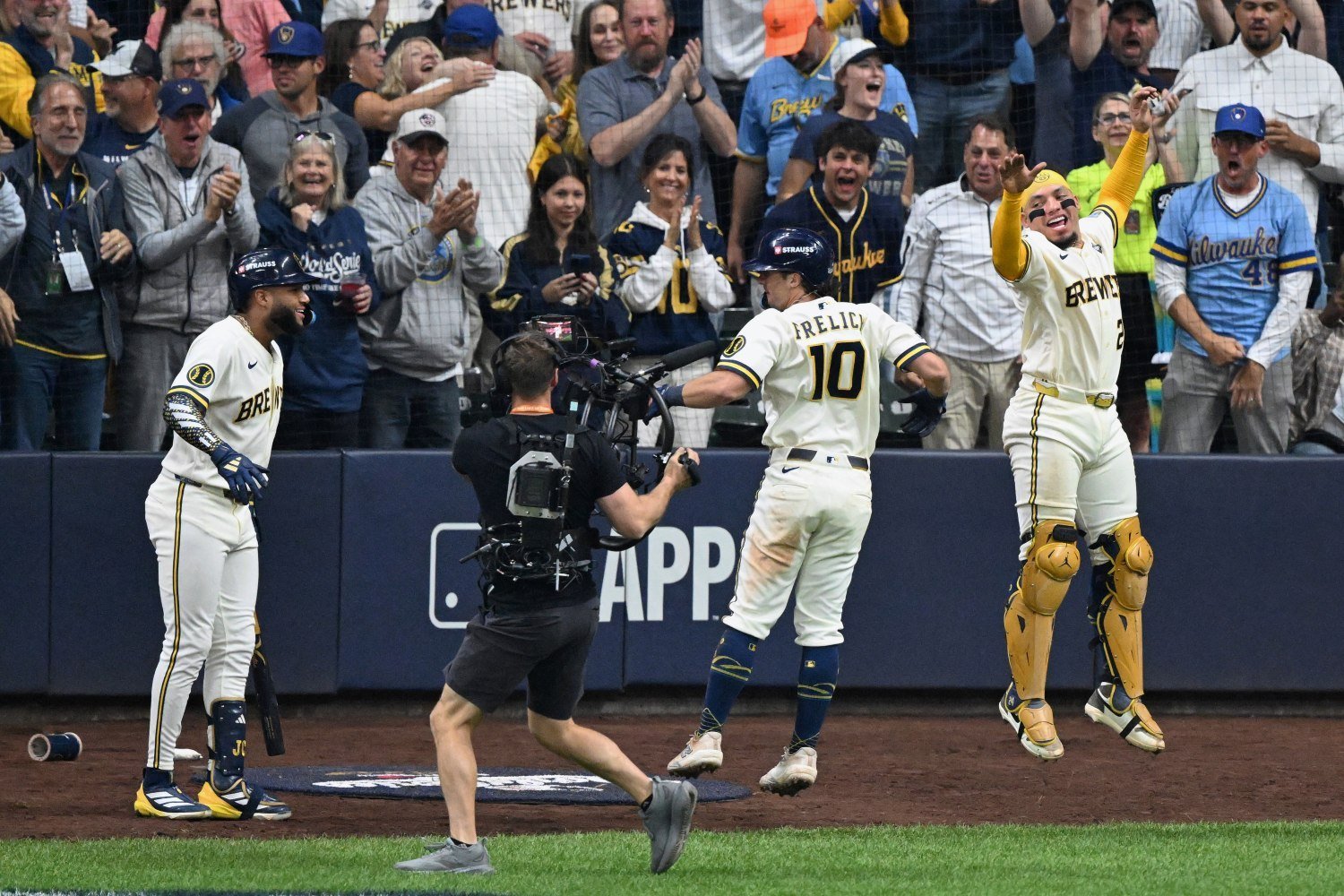 Dugouts are just social constructs, man. They're not prisons. They can only box you in if you're willing to curl up and fit your emotions into a box. William Contreras is no fetal or fearful man; he's free. All month, Contreras has been right in the middle of the Brewers' offensive attack, but even when he hasn't been on the bases or in the box when the telling blow has been struck, he's put grass under his cleats. He wants the championship on which this team is closing in—wants it so badly the desire for it is snapping through his veins like electricity. Asking him to stand still (or even to confine his bouncing enthusiasm to the dugout railing) would be cruel, so the Brewers aren't even bothering. You probably saw Contreras get his whole body into the effort of coaching (and, really, living vicariously throuygh) Sal Frelick as Frelick raced home with the winning run on Jackson Chourio's walk-off single in NLDS Game 2. It was delightfully unsubtle. ZFhPT1hfV0ZRVkV3dEdEUT09X1VnTldCUVVDQlFzQVhsRUtWZ0FIQUFCVUFGZ0FCd0FBQUYxV0JnUlhDVkJTQWd0WA==.mp4 That's miles from being the only example of the phenomenon, though. Contreras is the team's top cheerleader—or rather, importantly, their true field general. Even when his lineup spot is several at-bats away and his shin guards are still on, he's on the field seemingly every time a Brewers batter does something praiseworthy, delivering the first high fives and stomping the turf between the dugout and the home-plate area, extending the territory that is decisively and inviolably the Brewers', slowly building an empire that (by the end of each game) stretches from foul line to foul line and beyond. Over and over, he shows up, like a seasoned photo-bomber making himself part of every moment of triumph. After Cooper Pratt scored in the fourth inning of Game 2, Contreras was on the field, welcoming and congratulating him. When Sal Frelick hit the game-tying homer in the bottom of the sixth, the first player to greet him was David Hamilton, due up next. The second was Contreras, whom you can see waiting at the fringe of the grass at the end of the video of Frelick's bomb. WU9najJfV0ZRVkV3dEdEUT09X0FWQUFCMUpYQlFVQURsVUVYd0FIQ0ZjQUFBQlFCZ2NBQWxFRUJ3ZFhCRkZRVmdkZQ==.mp4 In the bottom of the seventh, when Cooper Pratt drove in Brice Turang with the go-ahead run and officially turned comeback into march toward victory, Contreras was on the field again to receive Turang. In fact, as Turang comes to the dugout, you can see Contreras behind him, sauntering back from his mission of encouragement and celebration, acting like his second baseman's bodyguard or escort. This might seem unimportant, and in and of itself, perhaps it is. In reality, though, the significance of Contreras's omnipresence runs much deeper than attaboys. It's an expression of the depth of his reservoirs of energy and intensity. When the team is on defense, Contreras is behind the plate, managing and leading his pitchers and coordinating the fielders arrayed in front of him. When they're on offense, if he can't be found at bat or on the bases, he's parked next to Pat Murphy, Jason Lane and Daniel Vogelbach—a de facto coach, or at least a facilitator. He's lost his 'OFF' switch. For as long as this team is playing, he'll be taking as much of the field under his feet as the rules allow, at every moment. By rights, he should be tired right now. He's doing something players just don't do anymore. Contreras is one of just two catchers since 2018 to play 120 or more games at catcher in three consecutive seasons, after Cal Raleigh did so from 2023 through 2025. Even Raleigh caught about 100 fewer innings over his three-year iron man stretch than Contreras has, though, counting the playoff innings for each. Contreras also catches more than most starters during spring training. He went to (and won) the World Baseball Classic this spring. Since the start of 2024, he's caught 200 more innings than anyone else in the league, and when he's not catching, he's often serving as the designated hitter. He and Jason Kendall are the only players with three or more seasons of 640-plus plate appearances while playing 100 or more games at catcher in the Wild Card Era, and Kendall never played in the postseason in such a season. Counting his playoff appearances, Contreras will come to bat over 690 times this year, for the third time in a row. This isn't an unusual workload for a modern catcher. This is, in a sense, an unprecedented workload for a catcher, ever. Yet, look at him. He couldn't be further from tired. In the late stages of the season, he got better at challenging pitches via the ABS system. He struggled with blocking pitches for much of the year, and that carried over into October, but over the last several games, he's been a brick wall. He's thrown out four would-be basestealers. He's on the field even when no one asked him to be. And there's one more thing. Of the prominent hitters on the two World Series teams, only two Rays part-timers (whose October samples are small and selective) have added more bat speed, relative to the way they were swinging all season. Contreras has added a full 1.0 MPH of average bat speed since the lights came up for the big show that is the postseason. That's not normal, and for a guy wearing seven solid months of bruises already and leading the league in workload at the most demanding and draining defensive position, it should be practically impossible. It wasn't always like this. Having energy and intensity is one thing; sustaining it over the grueling test of a big-league season (and postseason) is another. Murphy acknowledged, in March 2025, that Contreras had worn down mentally at the end of 2024. That wasn't his first rodeo, but he was still learning. There was a lot to figure out, and not all of it was yet in sight for a young, endlessly ambitious player. But the manager and the organization talked him through it all. They accepted his grand vision and allowed him to pursue it. They gave him the tools to become as exceptional as he strives to be. Injuries have slowed him down at times, though they haven't taken him off the field, as they often do other catchers. He's learned an enormous amount about the mental and physical demands of doing what he wants to do over a seven-month season, though, and on the doorstep of a title, he's putting all those lessons into action. The team named Christian Yelich their captain last month, but Contreras is taking each game and each moment on his own shoulders. He's become the kind of fierce, tireless, demanding leader who can turn a great team into something greater: a champion. View the full article
-
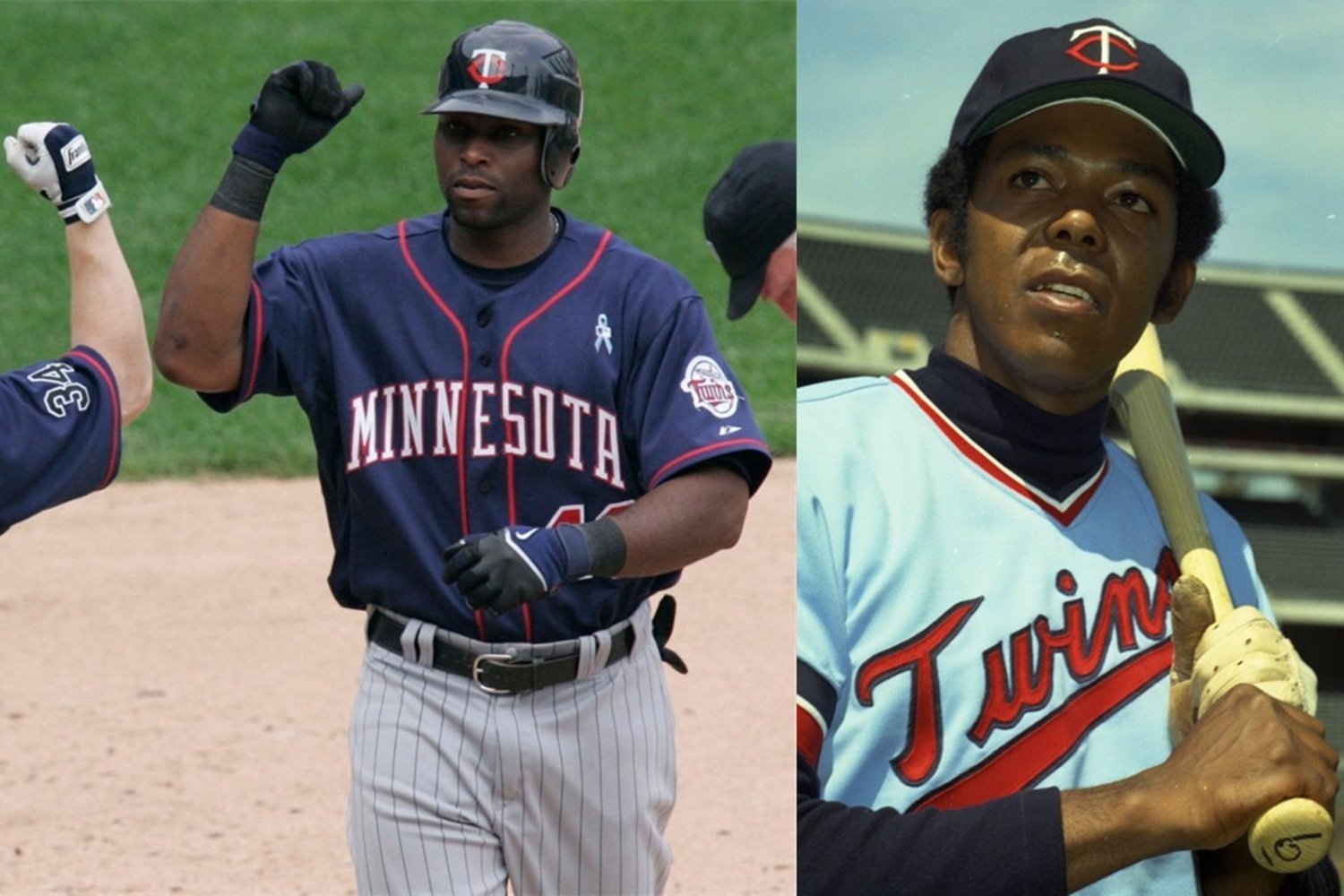 The Sporting News has been examining the 140 greatest baseball players of all time through an unconventional approach. Rather than ranking every player on a single list, the publication has divided its selections into 14 positionless rooms, each “representing and articulating varying archetypes of greatness.” Each room contains 10 players whose careers share a common thread, offering a different way to consider what makes a player historically significant. The publication explained its philosophy by stating, “Our ‘rooms’ serve not only to honor the game’s greatest players, but to contextualize their standing in baseball history — for better or worse.” From a Minnesota Twins perspective, this series identifies two players for each of the 14 rooms. Some former Twins might fit into different categories when viewed through a national lens, but their careers still connect to the themes behind each room. The goal is to explore how these players shaped the franchise and why their contributions deserve to be remembered. This installment focuses on four players who left lasting marks on Twins history in different ways. Brad Radke and Jim Perry made reliability a defining part of their careers, while Tony Oliva and Torii Hunter developed connections with fans that extended well beyond the baseball diamond. Stalwarts The Sporting News describes its Stalwarts as players who made excellence routine. Their careers were defined by steadiness and certainty rather than a handful of spectacular seasons. These players became dependable fixtures, providing the type of production their teams could count on year after year. For the Twins, Brad Radke and Jim Perry fit this category. Radke became a reliable rotation anchor during Minnesota's return to contention in the early 2000s, while Perry established himself as one of the franchise's most dependable starters during the late 1960s and early 1970s. Brad Radke Radke spent his entire 12-year major league career with the Twins, making him one of the most recognizable players from the franchise's transition from the struggling teams of the 1990s to its run of division titles in the following decade. Radke finished his career with 148 wins, 139 losses and a 4.22 ERA across 2,451 innings. He made one All-Star appearance, in 1998, but his career value extended far beyond that single honor. He was the type of pitcher who gave Minnesota a chance to win whenever he took the mound. His best season came in 1997, when Radke went 20-10 with a 3.87 ERA. He won 12 consecutive decisions at one point and finished third in American League Cy Young Award voting. The accomplishment was especially impressive because Minnesota finished with only 68 wins that season. Radke accounted for nearly one-third of the team's victories. Radke's career became defined by what followed. From 1998 through 2001, he made between 32 and 34 starts each season and won between 12 and 15 games annually. He routinely surpassed 200 innings, giving the Twins a dependable presence at the front of their rotation even as the organization worked to rebuild its roster. He wasn't a power pitcher who overwhelmed hitters with triple-digit fastballs. Radke relied on command, an effective changeup and his ability to keep hitters off balance. When opposing batters adjusted to one pitch, he found ways to adjust in return. His approach allowed him to remain productive even as baseball's offensive environment changed. Radke became particularly important as Minnesota developed into a contender. The Twins won their division in 2002, 2003, 2004 and 2006, and Radke was a central part of those teams. His experience provided stability for a rotation that helped the franchise return to the postseason after years of struggles. His career ended after the 2006 season, but his reputation as a dependable starter remains part of his legacy. Radke never won a Cy Young Award or received the national attention given to some of his contemporaries. He did, however, provide Minnesota with more than a decade of consistent starting pitching. That makes him a natural fit for the Stalwarts room. Radke's greatness was not built on a few spectacular moments. It came from repeatedly taking the ball, delivering competitive outings and giving his team a chance to win. Jim Perry Jim Perry's Twins career included one of the franchise's most significant individual pitching achievements, but his broader body of work also makes him a strong candidate for the Stalwarts category. Perry pitched in the major leagues from 1959 through 1975, compiling 215 wins and 174 losses. He spent time with Cleveland and Detroit in addition to Minnesota, but his most celebrated seasons came with the Twins. Perry became a regular member of Minnesota's rotation in the late 1960s and emerged as one of the American League's most reliable starters. He won 20 games in 1969, finishing with a 20-6 record, before producing an even better campaign the following season. In 1970, Perry went 24-12 with a 3.04 ERA and earned the American League Cy Young Award. Minnesota won 98 games and captured the AL West title, and Perry played a significant role in the club's success. He became the first Twins pitcher to win the Cy Young Award and one of the most accomplished starters in franchise history. Although that Cy Young season stands out, Perry's career was about more than one award. He had already demonstrated his ability to handle a heavy workload, and his back-to-back 20-win seasons established him as a dependable option for a team regularly competing for division titles. Perry's accomplishments also placed him in a unique baseball family. His younger brother, Gaylord Perry, would win two Cy Young Awards of his own, making them the only brothers to receive the honor. For Minnesota, Jim Perry represents an important era in franchise history. The Twins were building a winning identity in the American League, and Perry helped give them a dependable rotation presence during that period. His 1970 award offered a defining moment, but the consistency that preceded and surrounded that achievement is what makes him a Stalwart. Beloved The Sporting News describes its Beloved room as a group of players who built a lasting connection with fans. Their greatness was forged through that relationship, creating a legacy that extended beyond statistics and individual awards. The Twins have had several players who became fan favorites, but Tony Oliva and Torii Hunter stand out. Oliva's relationship with Minnesota has spanned generations, while Hunter's energy, defensive brilliance and personality made him one of the defining figures of the franchise's return to contention in the 2000s. Tony Oliva Oliva's connection with Minnesota began when he arrived from Cuba in the early 1960s. He quickly established himself as one of baseball's premier hitters, winning the American League Rookie of the Year Award in 1964 and capturing batting titles in each of his first two full major league seasons. Oliva spent his entire 15-year playing career with the Twins, finishing with a .304 batting average, 220 home runs, 947 RBI and 1,917 hits. He was selected to eight consecutive All-Star Games from 1964 through 1971 and won three American League batting titles. His offensive production helped Minnesota capture the 1965 American League pennant, the franchise's first since moving to Minnesota. His career might have produced even greater numbers if not for a series of knee injuries. Oliva missed most of the 1972 season and spent his final years primarily as a designated hitter before retiring after the 1976 campaign. Despite those setbacks, he became one of the most respected players of his generation. For Twins fans, Oliva's legacy goes beyond his playing statistics. Known affectionately as “Tony O,” he remained connected to the organization long after his final at-bat. He worked as a coach, served as an ambassador for the franchise and became a familiar presence at Target Field and community events throughout Twins Territory. His long-awaited election to the National Baseball Hall of Fame in 2021, followed by his induction in 2022, was an emotional moment for Minnesota fans who had spent decades arguing that he deserved baseball's highest honor. Oliva had remained a loyal member of the organization, sharing stories, signing autographs and connecting with generations of supporters. That bond makes Oliva an obvious choice for the Beloved room. His playing career gave fans plenty to celebrate, but his warmth and loyalty helped turn him into something more than a former star. He became an enduring representative of the franchise and the community it serves. Oliva's story also demonstrates how a player's relationship with fans can grow long after his playing career ends. His Hall of Fame induction validated his accomplishments on the field, but his place in Minnesota sports history had been secure for years. Torii Hunter Hunter brought an unmistakable energy to the Twins. Whether he was tracking down a ball in center field, celebrating with teammates or interacting with fans, Hunter played with a personality that made him one of the franchise's most recognizable figures. Minnesota selected Hunter in the first round of the 1993 MLB Draft, and he eventually developed into one of baseball's premier defensive outfielders. He won nine Gold Glove Awards during his career and earned five All-Star selections. His defensive reputation became a defining part of the Twins' identity as the franchise returned to contention in the early 2000s. Hunter's breakout season came in 2001, when he hit 27 home runs, drove in 92 runs and won his first Gold Glove. He became an All-Star in 2002, the same year he made one of the most memorable defensive plays in baseball history by robbing Barry Bonds of a home run during the All-Star Game. That catch helped introduce Hunter to a national audience, but his connection with Twins fans had already been growing. His enthusiasm on the field matched his outgoing personality off it, and he became a central figure during Minnesota's run of four division titles between 2002 and 2006. Hunter's production also made him much more than a defensive specialist. He hit 192 home runs and drove in 711 runs in 1,234 games with Minnesota during his two stints with the club. His combination of power, speed and elite defense made him a valuable contributor throughout his time in a Twins uniform. After leaving Minnesota following the 2007 season, Hunter spent time with the Los Angeles Angels and Detroit Tigers before returning to the Twins for one final season in 2015. His return gave fans an opportunity to reconnect with a player who helped define an important era in franchise history. Hunter announced his retirement that October after 19 major league seasons. His legacy in Minnesota is about more than nine Gold Gloves or five All-Star selections. Hunter was a leader during the club's resurgence, a fan favorite who played with visible joy and a recognizable face who represented the franchise throughout the region. Hunter fits the Beloved category because his relationship with fans became inseparable from his baseball identity. His energy and personality helped make him a favorite in the clubhouse and in the stands, and his return in 2015 underscored the connection that remained even after years away. Four Different Paths to Greatness Radke, Perry, Oliva and Hunter represent different sides of Twins history, but they all left lasting legacies. Radke and Perry demonstrated the value of dependable starting pitching. Radke provided Minnesota with a reliable presence through its rise from rebuilding team to division winner, while Perry helped anchor a rotation during one of the franchise's earliest successful eras. Oliva and Hunter built their legacies through a different kind of consistency. Both delivered memorable on-field performances, but their connection with fans and their continued association with the organization made them more than former players. The Sporting News' room concept offers a useful reminder that baseball greatness can take many forms. Some players are remembered for historic peaks, while others build their reputations through dependable production or lasting relationships with the people who watch them play. For the Twins, all four players belong in the conversation. Their careers show how consistency can become a form of greatness and how a player's bond with fans can last long after his final game. Who else should be added to these rooms? Leave a comment and start the discussion. View the full article
-
 Jack and Spencer discuss the Brewers' Game 2 win, coming back from a 4-0 early deficit against the Rays, capped by Sal Frelick's improbable game-tying home run and Cooper Pratt redeeming himself with a go-ahead RBI single. Players discussed are Aaron Ashby, William Contreras, Cooper Pratt, and Sal Frelick. Apple Podcasts: https://podcasts.apple.com/us/podcast/the-brewer-fanatic-podcast/id1740648724 Spotify: https://open.spotify.com/show/5CY8mWsQayqjDXqw9OT2Td iHeartRadio: https://www.iheart.com/podcast/263-the-brewer-fanatic-podcast-166534588/ Pocket Casts: https://pca.st/ommzz627 Watch On YouTube: https://www.youtube.com/@brewerfanatic View the full article
-
Caleb Durbin Gave the Red Sox Exactly What They Traded For
DiamondCentric posted an article in Talk Sox
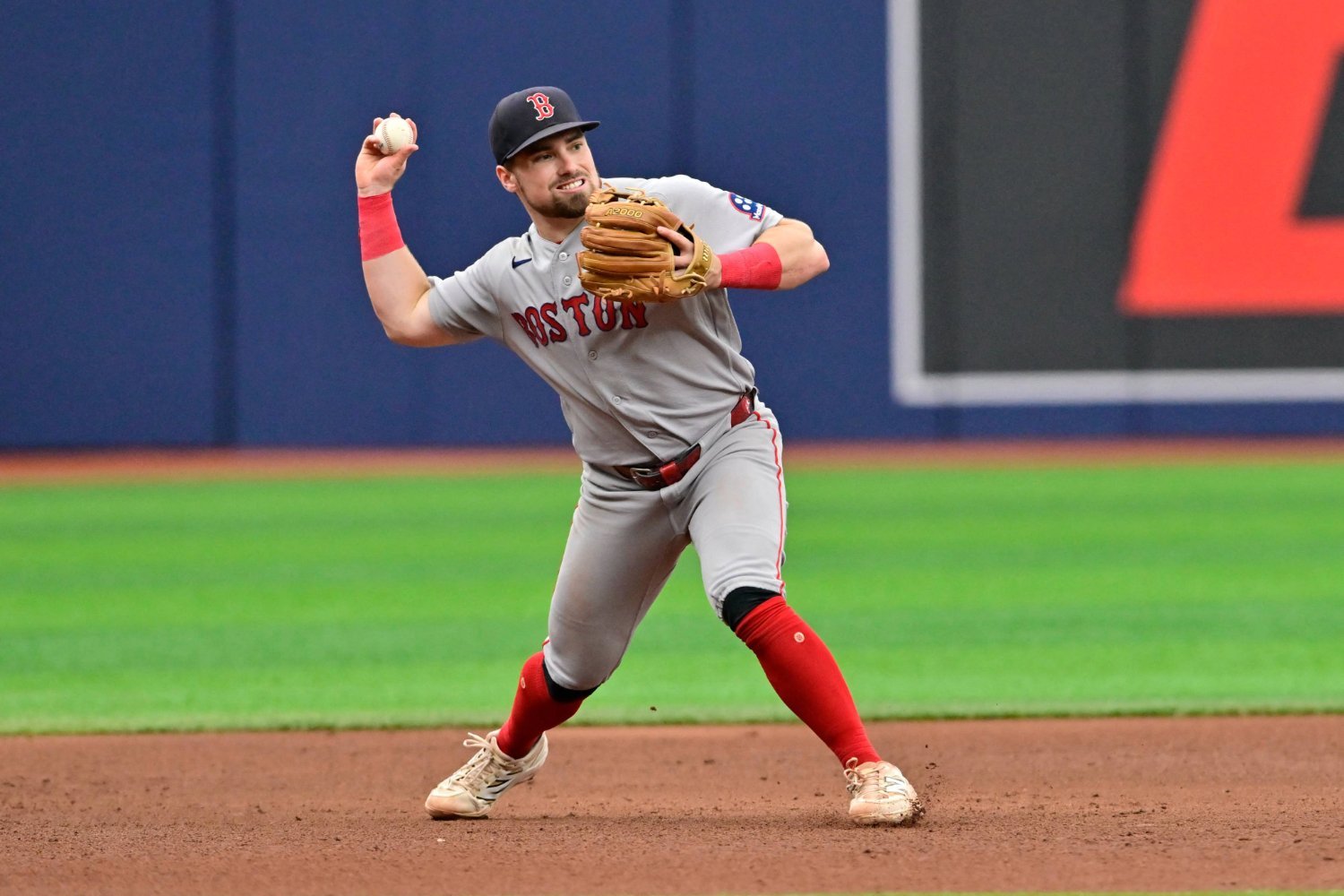 In baseball, there is an old saying that the second year is even more difficult than the rookie one; there's a reason the "sophomore slump" still exists in our lexicon today. For Boston Red Sox third baseman Caleb Durbin, his start to Year 2 was puzzling, but he managed to find his rhythm before it was too late. Durbin entered May 28 batting just .163, with a .241 on-base percentage and a .479 OPS in 48 games. Even so, he improved his plate discipline, a step that helped him achieve better pitch selection and turned him into one of the most productive hitters in clutch situations for the rest of the season. After opening with just 48 and 43 wRC+ in March/April and May, respectively, he raised his wRC+ to 163 in June—his highest point of the entire season—and the only considerable drop he experienced came in September, when he fell to 99. Between May 28 and the end of the season, Durbin hit .283/.369/.435, with 12 home runs among his 30 extra-base hits and a .803 OPS in 105 games, ranking among the American League’s best hitters in several categories. He finished the season with a .248/.332/.378 slash line, 13 home runs, 64 RBIs, 20 stolen bases in 26 attempts, and 3.1 fWAR, surpassing his 2.7 mark in his first year. However, he could not avoid his major contact problems against fastballs, part of what prevented his season from being even more productive. This is not a new challenge for Durbin, as his inconsistency against high velocity has been his Achilles’ heel for several reasons. The main one remains his poor bat speed, finishing in the 6th percentile last year and the 13th this season. Despite improving from 67.9 mph with the Milwaukee Brewers in 2025 to 71.8 mph with his adjustments in Boston, his swing continued to look limited. Therefore, the league’s strategy was reasonable. In 2026, pitchers attacked him with more fastballs than in 2025, increasing the percentages from 57.3 to 60.3, and his whiff rate skyrocketed from 6.0% to 15.3%, with many more strikeouts (18.4 K% compared to 5.7%). Still, he graded out positively by run value, and we can attribute that to the fact that he was one of the league’s best hitters in clutch situations. With runners in scoring position, he hit .288 and recorded a .816 OPS in 125 at-bats, with three home runs and 50 RBIs—he also hit two grand slams. When Durbin recorded at least one RBI, he helped his team win 34 out of 46 games. Even with his problems against fastballs, we can see Durbin in the 88th percentile in whiff% and the 91st in K%, figures similar to those from his first year (plus an added advantage in his plate discipline, finishing in the 45th percentile in BB%). His power could improve in the future, but that would involve some changes to his swing and moving away from what he has been able to do best: putting the ball in play. That's only half of where his value comes from, too. Durbin was recently selected as one of the three Gold Glove finalists at third base this season, and he led the American League at the position in Fielding Run Value (+6) and Outs Above Average (+6), two stats that make him a strong favorite to win the award. I know the last impression Durbin left us with was disappointing, when we saw him struggle against the New York Yankees’ pitching until finishing 0-for-7 in the Wild Card Series. But he's becoming a more complete player in front of our eyes, with a chance to be one of the league's best third basemen before long. View the full article
